Most traders want to learn algo trading as a beginner the right way. But most resources either oversimplify it or throw you into the deep end with no structure.
Here is a stat worth sitting with. SEBI's own data shows 90% of retail traders end up losing money. If you have followed influencers, taken courses, or tried popular strategies and still find yourself in that 90%, the problem is probably not your strategy. It is your system.
This post walks you through the exact framework that helped Chintan, founding member of AlgoTest, go from a loss-making trader in 2021 to consistently profitable. No magic strategy. No secret indicator. Just a repeatable, institution-grade system that any retail trader can follow.
If you are tired of occasional wins and consistent losses, keep reading.
The 5-Step Framework That Can Change Your Trading
Ideation
Strategy Creation
Backtesting
Forward Testing
Live Execution
Let’s go through each step, with a real-world example of a simple intraday theta decay strategy.
Step 1: Ideation
An idea is born from observing the market. For example:
Mornings and closings tend to be volatile.
Some influencers mention a profitable triangle strategy.
You notice theta decay works best in sideways markets.
In our case, we want to test a safe short strangle strategy that avoids the volatile opening and closing minutes.
Step 2: Strategy Creation
Let’s turn this idea into a strategy:
Instrument: Bank Nifty Options
Entry: 10:15 AM
Exit: 3:15 PM
Sell Legs: OTM Call and OTM Put, each with a premium > ₹50
Protection Layer 1: Intraday only (no overnight risk)
Protection Layer 2: Fixed stop-loss (e.g., 25% per leg)
Protection Layer 3: Hedges (buy cheap OTM options to define risk)
Protection Layer 4: Run only on two days, Tuesday and Wednesday (highest theta decay days)
Step 3: Backtesting
Backtesting allows us to simulate how this strategy would have performed in the past. On AlgoTest, we tested this setup from 2021 to today.
Initial Results (without costs):
Win rate: 60%
Max Drawdown: ₹11,000
ROI: ~30–40% annually
But here’s the catch: Most beginners stop here and think they’ve found a golden strategy.
Costs Change Everything
Add these:
Brokerage: ₹20/order
Slippages: 0.5% on both entry and exit
STT + Charges: All included
After adding real-world costs, the profit curve drops significantly. In fact, if your broker charges high fees, the strategy may become loss-making.
But with a zero brokerage broker and realistic slippage, it still delivers a solid 20–30% annually.
Lesson: Always backtest with costs. Otherwise, you’re fooling yourself.
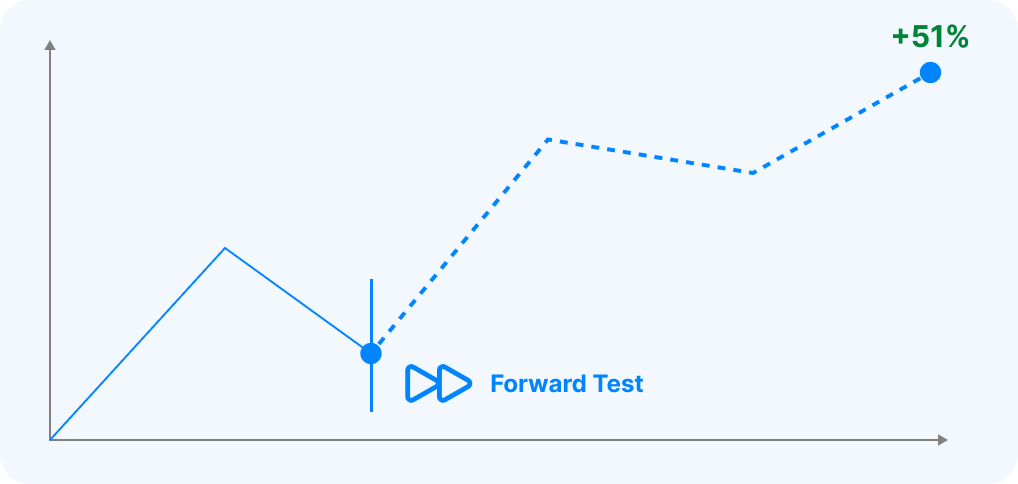
Step 4: Forward Testing
Before going live, test your strategy in real-time using paper trading (aka forward testing). This risk-free phase helps you understand:
Execution speed
Slippages
Platform behavior
If the forward test aligns with the backtest, you're good to go live.
Step 5: Live Execution
Once confident:
Choose a broker (5paisa, Flyers, etc.)
Activate the strategy on AlgoTest
Keep the quantity low (1 lot)
Only trade on selected days
And yes, remember to log in to your broker daily before the market opens to ensure execution.
Why Most People Fail (Even With Good Strategies)
Most traders don’t fail because their strategy is bad. They fail because they don’t follow a repeatable algo trading process.
They don’t follow a proper framework.
They take random trades without rules, position sizing, or risk limits. In algorithmic trading, the framework matters as much as the setup.They skip backtesting.
A strategy might “look good” on charts, but without backtesting, you don’t know how it performs across different market conditions. Backtesting helps you understand win rate, drawdowns, and whether your logic actually works.They ignore costs.
Brokerage, slippage, and taxes add up fast, especially in options algo trading.A strategy that works on paper can fail in real markets if you don’t account for costs properly.They never forward test.
Backtests can be misleading. Forward testing (testing in live market conditions without risking real capital) is what helps validate if your strategy holds up outside historical data.They trade daily instead of selectively.
Not every day is a trading day. Many traders overtrade, forcing setups even when the market doesn’t support them. Good algo trading strategies know when not to trade.
Even the best strategy can fail if your execution is flawed.
That’s why systematic execution matters because consistency is what separates random results from repeatable performance.
The Framework at a Glance
Final Thoughts
Your journey from the 90% losing club to the 10% profitable traders starts with a simple decision: to follow a framework.
You don’t need a magic formula.
You need discipline, testing, and a willingness to learn.
So stop chasing random tips.
Start building your own strategies, one idea at a time.
Want to build and test your own strategy like I did? Come join me in my upcoming webinar. Book your seat here!