General

Sensex Expiry Day: Date, Timing & 2026 Trading Guide

If you trade options, knowing the Sensex expiry date and timing is essential. As expiry approaches, time decay and option sensitivity can increase, making price movements more significant for your position.

Sensex weekly options currently expire on Thursday. We'll cover the Sensex expiry schedule, timing, what happens to options on expiry, trading strategies, key risks, and how you can backtest an expiry strategy before trading it live.

What Is Sensex Expiry Day?

Sensex expiry day is the day when a Sensex derivatives contract reaches the end of its trading life and is settled according to the applicable exchange and clearing rules.

For options traders, expiry matters because there is limited time left for the expected move to happen. This can make factors such as time decay, delta and gamma more important, particularly for options close to the money.

If you’re new to options trading, start with our options education guide to understand the key concepts covered in this article.

When Is Sensex Expiry Day?

The Sensex weekly expiry day is Thursday.

Under SEBI's current framework, each exchange can offer one weekly benchmark index options contract, with the expiry day set as either Tuesday or Thursday. BSE uses Thursday for its Sensex weekly options.

The regular schedule is:

  • Sensex weekly expiry, Thursday.

  • Nifty 50 weekly expiry, Tuesday.

The exact expiry date can change because of trading holidays or exchange announcements. Always check the latest Sensex contracts listed by BSE before trading.

Sensex 2026 Expiry Schedule at a Glance

Contract

Expiry schedule

Sensex weekly options

Thursday

Sensex monthly contracts

Last week of the month, generally Thursday

Holiday on expiry day

Check the applicable BSE notice

Exact expiry date

Confirm the current contract on BSE

BSE's live derivatives page lists the actual Sensex contracts and their expiry dates. This is the most reliable source to check before placing an expiry-day trade.

What Time Does Sensex Expire?

BSE's regular equity market trading session runs from 9:15 AM to 3:30 PM. Sensex derivatives follow the applicable exchange trading and settlement rules, so you should check the contract specifications before trading.

If you have an open position on expiry day, do not wait until the final few minutes to decide what to do. Set your exit rules in advance and account for the faster price changes that can occur near expiry.

If you also trade Nifty options, see our guide to Nifty expiry day to understand its expiry schedule, key rules and trading considerations

What Happens on Sensex Expiry Day?

As expiry approaches, an option has very little time left to gain or retain value. This can make option premiums more sensitive to movements in the Sensex.

Four factors become particularly important.

Time Decay

Options lose time value as expiry approaches. The effect can become more noticeable when there is very little time left.

For an option buyer, the expected move needs to happen within a limited time. If the Sensex stays flat, the premium can decline even if your market view is still correct.

Delta

Delta shows how much an option's price can change when the underlying moves.

Near expiry, options close to the money can become highly sensitive to movements in the Sensex. A small move in the index can therefore have a noticeable effect on your position.

Gamma

Gamma measures how quickly an option's delta changes when the underlying moves.

Gamma can become particularly important near expiry, especially for at the money options. This means your position's sensitivity can change quickly during a fast market move.

Implied Volatility

Implied volatility reflects the market's expectations of future price movement and affects option premiums.

A change in implied volatility can increase or reduce an option's premium even when the Sensex itself has not moved much.

For a deeper explanation of delta, gamma, theta and other option Greeks, read our guide on [how to use option Greeks in trading].

Why Is Sensex Expiry Day Important for Options Traders?

Sensex expiry day is different because your option has very little time left to work. So, getting the direction right is not enough. The timing and size of the move also matter.

Before entering a Sensex expiry trade, consider:

  • Direction, do you expect the Sensex to rise, fall or stay range bound?

  • Magnitude, how large does the move need to be?

  • Timing, how quickly do you expect it to happen?

  • Strike selection, is the option suited to your market view?

  • Risk, how much are you willing to lose?

  • Exit, when will you close the trade if your view is wrong?

For example, if you buy a call expecting a breakout, a late move may not give the option enough time to gain value. This is why a cheap expiry option is not necessarily a good opportunity.

Define your entry, strike, stop loss, target and exit time before trading.

Then backtest the strategy across multiple Sensex expiry sessions to see how it performs in different market conditions.

Sensex Expiry Day Trading Strategies

There is no single best Sensex expiry strategy. Your choice should depend on your market view, expected volatility and risk tolerance.

Here are some common approaches.

1. Long Call or Put

Buy a call when you expect the Sensex to rise, or a put when you expect it to fall.

This approach depends heavily on timing because the option has very little time left to gain value.

Before entering, define your:

  • Entry condition.

  • Strike selection.

  • Stop loss.

  • Target.

  • Maximum loss.

  • Exit time.

2. Long Straddle

A long straddle involves buying a call and put with the same strike and expiry.

You may use it when you expect a large Sensex move but are unsure about the direction.

The Sensex needs to move enough to cover the premium paid for both options. If the market stays quiet, both options can lose value quickly.

3. Short Straddle

A short straddle involves selling a call and put with the same strike and expiry.

It can benefit when the Sensex remains within a narrow range, but a sharp move can result in significant losses.

Before using one, understand the:

  • Maximum potential loss.

  • Margin requirement.

  • Stop loss.

  • Position size.

4. Iron Condor

An iron condor uses four options to create a defined risk and reward structure.

You may consider it when you expect the Sensex to remain within a specific range. However, the position can still lose money if the index moves beyond your expected range.

5. Rules Based Directional Strategy

You can build a directional strategy around predefined market conditions.

For example, you could buy a call when the Sensex breaks a specific level and exit using a fixed target or stop loss.

Your rules could include:

  • Entry condition.

  • Strike selection.

  • Stop loss.

  • Target.

  • Maximum trades.

  • Position size.

  • Mandatory exit time.

Defining these rules in advance can help you avoid making emotional decisions during a fast expiry session.

How to Backtest a Sensex Expiry Strategy
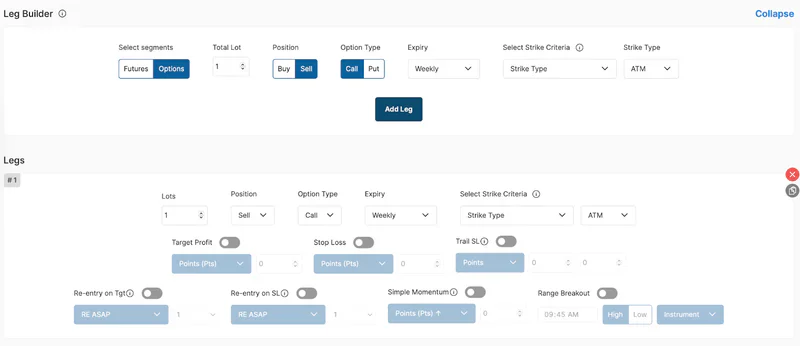
An expiry strategy can perform well on one session and fail on another. Backtesting helps you evaluate the same rules across multiple historical expiry sessions and market conditions.

For example, you could test a Sensex option buying strategy with:

  • Entry at a specific time.

  • Predefined strike selection.

  • Fixed stop loss and target.

  • Maximum number of trades.

  • Exit before the market close.

You can then compare different entry times, strikes, stop losses and targets and review metrics such as:

  • Win rate.

  • Average profit and loss.

  • Maximum drawdown.

  • Profit factor.

  • Number of trades.

  • Best and worst expiry sessions.

The goal is not to find a strategy that wins every expiry. It is to understand its risk, consistency and behaviour across different market conditions.

Learn how to Backtest Option Trading Strategies

Backtest With AlgoTest

sensex expiry day
Backtest settings | AlgoTest dashboard
sensex expiry day
Backtest results | AlgoTest

You can use AlgoTest to define and backtest Sensex expiry strategies using specific entry, strike selection, risk management and exit rules.

For example, you can compare whether entering a strategy at 9:30 AM, 10:00 AM or 11:00 AM produces different results. You can also test different stop loss and target combinations.

After backtesting, you can forward test the strategy to evaluate how your rules behave in live market conditions before considering live execution.

Check out how you can master backtesting on AlgoTest

Sensex Expiry Day Risks You Should Know

Expiry trading can offer short term opportunities, but fast price movements can also increase losses.

Before trading Sensex expiry, understand these key risks.

Rapid Premium Movement

Option premiums can change quickly when the Sensex moves. A position can turn profitable or move into a loss within a short period.

Time Decay

If you buy an option and the expected move does not happen in time, time decay can reduce its value. This effect becomes more important as expiry approaches.

Gamma Risk

Options close to expiry can become highly sensitive to movements in the Sensex. A small move in the index can cause a significant change in an option's delta.

Short Option Risk

Selling options can expose you to significant losses during a sharp market move. A high probability of profit does not mean the trade has low risk.

Overtrading

Fast markets can encourage you to take more trades than planned. Set your position size, maximum number of trades and loss limit before the session begins.

Related: 5 Mistakes Traders Make in Algo Trading

7 Things to Remember on Sensex Expiry Day

Before trading Sensex options on expiry, remember:

  1. Check the exact contract expiry date on BSE.

  2. Confirm the applicable expiry and trading schedule.

  3. Define your maximum loss before entering.

  4. Do not choose an option simply because its premium looks cheap.

  5. Use a position size that matches your risk limits.

  6. Backtest your strategy across multiple expiry sessions.

  7. Follow your predefined entry and exit rules, even when the market moves quickly.

If you are evaluating the best platforms for algo trading, check out this blog!

Sensex Expiry vs Nifty Expiry

Sensex and Nifty have different weekly expiry days under the current framework.

Factor

Sensex

Nifty 50

Exchange

BSE

NSE

Weekly expiry

Thursday

Tuesday

Weekly benchmark index options

Sensex

Nifty 50

Exchange expiry day framework

Thursday

Tuesday

SEBI allows each exchange to offer one weekly benchmark index options contract. The current framework also requires equity derivatives on an exchange to follow the exchange's designated Tuesday or Thursday expiry day.

This difference is useful when you plan your weekly options activity.

You should also check the latest exchange contract specifications because expiry rules and contract details can change.

Related: BSE Sensex Option Chain Explained: How to Read, Analyse & Trade Using Live Data

Where Can You Check the Latest Sensex Expiry Dates?

For the latest Sensex expiry dates and rules, use primary sources:

  • BSE, for current Sensex contracts and expiry dates.

  • SEBI, for the regulatory framework governing equity derivative expiry days.

Check the BSE Sensex derivatives contracts before trading and refer to SEBI's Final Settlement Day, Expiry Day for Equity Derivatives Contracts for the current expiry framework.

Conclusion

Sensex weekly options expire on Thursday, but you should always confirm the exact contract date on BSE before trading.

Knowing the expiry date is the first step. Knowing how your strategy performs on expiry day matters more.

Join 45,000+ traders using AlgoTest to build, test, and automate rule based trading strategies. Get 25 backtests free and start testing your next strategy today.

Additional Resources

📚 Product Documentation

Trading Tools

Disclaimer: This article is for educational purposes only and does not constitute investment or trading advice.

Frequently Asked Questions

What is Sensex expiry day?
Sensex expiry day is the day when a Sensex derivatives contract reaches its expiry. Sensex weekly options currently expire on Thursday under the current expiry framework.
What is the Sensex weekly expiry day?
The Sensex weekly expiry day is Thursday. You should still check the latest BSE contract details before trading because exchange holidays or contract changes can affect individual expiry dates.
When is Sensex expiry in 2026?
Sensex weekly options are scheduled to expire on Thursdays in 2026. For the exact expiry date of a contract, check the latest Sensex contracts listed by BSE before placing a trade.
What are the Sensex expiry dates in 2026?
Sensex weekly options generally expire every Thursday. However, the exact listed contracts can change because of exchange holidays and contract schedules, so you should verify the current expiry dates on BSE.
What time does Sensex expire?
Sensex derivatives are traded during the regular BSE market session, which runs from 9:15 AM to 3:30 PM under the standard trading schedule. Check the applicable contract specifications and exchange notices before trading.
Is Sensex expiry weekly or monthly?
Sensex has weekly benchmark index options as well as contracts with longer expiries. Weekly Sensex options expire on Thursday, while other contracts follow their applicable expiry schedule.
Is Sensex expiry day risky?
Yes. Option premiums can move quickly near expiry because time decay, delta, gamma and implied volatility can have a significant effect on option prices. Short option strategies can also carry substantial risk during sharp market moves.
Can you trade Sensex options on expiry day?
Yes, you can trade Sensex options during the applicable trading session on expiry day. However, you should understand the contract specifications, liquidity, risks and your broker's order execution rules before trading.
Can you backtest Sensex expiry strategies?
Yes. You can define rules for entry, strike selection, stop loss, target and exit and test the strategy across historical expiry sessions. Backtesting can help you understand how a strategy performed across different market conditions before considering live trading.