If you are new to the stock markets, figuring out the best type of trade is probably the first hurdle for you.
Should you choose the rapid-fire pace of intraday trading or hold the position to capitalize on larger market trends? You must define a clear strategy that fits your capital, your temperament, and your daily schedule.
We'll break down the four main types of trading in the Indian stock market, weigh their pros and cons, and look at how you can systemize your approach so you aren't just trading on gut feeling.
1. Intraday Trading (Day Trading)
The Definition:
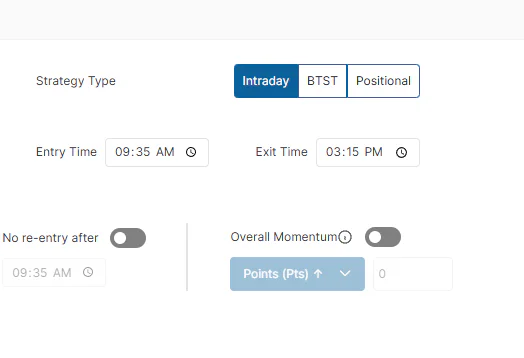
Intraday trading is exactly what it sounds like: you buy and sell stocks within the same trading session. When the closing bell rings at 3:30 PM, you have zero open positions.
How it Works in Practice:
Imagine you buy shares of Reliance at ₹2,900 at 10:00 AM because you spot a breakout. By 2:15 PM, it hits ₹2,930, and you square off your position. You capture that ₹30 move without ever taking delivery of the shares in your demat account. Brokers also give you high leverage for intraday, meaning you can trade larger quantities with less capital.
Pros:
Zero Overnight Risk: You sleep peacefully knowing a global market crash at 2 AM won’t wipe out your portfolio at tomorrow's open.
Capital Efficiency: Leverage allows you to maximize smaller accounts.
Daily Returns: Potential to lock in profits every single day.
Cons:
Mental Burnout: Staring at tick-by-tick data all day is emotionally exhausting.
High Costs: More trades mean more brokerage and STT (Securities Transaction Tax) eating into your margins.
Best For: Full-time market participants, scalpers, and those with iron-clad emotional discipline.
Also Read: Essential Intraday Trading Tips Every Trader Should Know
2. Swing Trading
The Definition:
Swing trading is the "sweet spot" for many. You buy a stock and hold it for a few days to a few weeks to capture a short-to-medium-term price "swing."
How it Works in Practice:
Instead of tracking every minute, you look at daily or hourly charts. You might notice a stock is bouncing off a major support level. You buy it on Monday and hold it until the following Wednesday when it hits your target resistance level.
Pros:
Time Freedom: You don't need to be glued to your screen during market hours.
Better Risk-Reward: Captures larger price movements compared to intraday noise.
Chart-Friendly: Works beautifully with standard technical analysis and momentum indicators.
Cons:
Overnight Gap Risk: A bad earnings report after market hours can cause the stock to open way below your stop-loss.
Capital Lock-up: Your money is tied up for days or weeks.
Best For: Working professionals who can check charts after hours or during a lunch break.
Related: Swing Trading Strategies, Tips, and Insights
3. Positional Trading

The Definition:
Positional trading (often blending into investing) involves taking a position and holding it for months or even years. You are riding the macroeconomic trends and business cycles.
How it Works in Practice:
You combine technical analysis (like moving averages) with fundamental analysis (like quarterly earnings or sector growth). If you believe the EV sector is booming, you might buy an auto stock and hold it for 18 months to capture a 50%+ move.
Pros:
Low Stress: Day-to-day market volatility doesn't matter.
Compounding: Captures massive, wealth-building trends.
Low Fees: Minimal brokerage costs due to infrequent trading.
Cons:
Patience Required: You have to sit through boring consolidation phases and market corrections without panicking.
High Capital Requirement: Since you don't use intraday leverage, you need larger capital to make meaningful absolute returns.
Best For: Long-term wealth builders, passive investors, and beginners learning market cycles.
4. Futures & Options (F&O)
The Definition:
F&O are derivative contracts. You aren't buying the actual company stock; you are trading a contract whose value is derived from an underlying asset (like Nifty 50, BankNifty, or a specific stock).
Futures: An obligation to buy/sell at a specific price on a future date.
Options: The right (but not obligation) to buy/sell at a specific price.
How it Works in Practice:
This is the playground of advanced strategies. You might buy a Call option if you think the market will rally, or sell a Straddle if you expect the market to stay perfectly sideways to collect premium through theta (time) decay.
Pros:
Incredible Versatility: You can make money if the market goes up, down, or even nowhere at all.
Hedging: You can protect your long-term portfolio by buying put options.
High ROI: Options buying requires very little capital for potentially massive percentage returns.
Cons:
High Complexity: You are fighting against time decay, implied volatility, and sudden price spikes.
Capital Wipeout Risk: Unhedged option selling or reckless option buying is the fastest way to blow up a trading account.
Learn more about Futures and Options here.
The following two types of trading do not meet the traditional trading definition but are the fastest-growing segments in the 2026 market, as they solve the two biggest problems for retail traders: Time and Emotion.
5. Algo Trading: Rules Over Emotions
The Definition:Algorithmic trading (or "Algo Trading") uses computer programs to execute trades based on a predefined set of rules.
You don't click "Buy" or "Sell" manually; the software does it for you when your specific conditions (like a price crossover or a volume spike) are met.
Why It’s Exploding in 2026: In today's high-speed markets, a human can't compete with the execution speed of a machine.
More importantly, an algo doesn't get "scared" when the market dips or "greedy" when it rallies—it just follows the math.
Pros: * Consistency: It executes your plan 100% of the time without hesitation.
Speed: Captures opportunities in milliseconds that a human would miss.
Backtesting: You can "time-travel" and see how your rules would have performed over the last 5 years.
Cons: * Technical Setup: Traditionally required coding (though tools like AlgoTest have made this "No-Code").
Monitoring: You still need to ensure your internet and broker API connections are stable.
Also Read: Algo Trading India (2026): How to Build, Backtest & Automate Strategies
6. Social Trading: The "Marketplace" of Experts
The Definition: Social trading lets you see what successful, experienced traders are doing, and if you like their results, automatically mirror their moves or choose their strategy in your own account.
Bridging the Gap: AlgoTest Marketplace & Crypto Bazaar
AlgoTest Marketplacechanges the game for retail investors.
RA Algos (SEBI-Registered Experts): Instead of following "tips" from unverified Telegram groups, you can access the RA Algos section.
These are strategies built by SEBI-registered Research Analysts.
You can browse their verified P&L, see their drawdowns, and subscribe to their logic.
Read more about RA Algos here.
Crypto Bazaar: For those looking to diversify beyond the Indian stock market, the Crypto Bazaar offers a similar ecosystem for digital assets. You can find high-performing crypto strategies that run 24/7.
How to Use the Trading Marketplace Effectively:
Browse & Discover: Look through the marketplace to find an expert whose risk profile matches yours.
Backtest & Forward Test: Don't just take their word for it. AlgoTest allows you to backtest the expert's strategy on historical data or forward test (paper trade) it in live markets without risking real money. Deploy: Once you're confident, link your broker and let the strategy run. You are essentially "hiring" an expert's logic to work for you.
There is no "best" style, but there is a smartest way to trade. In 2026, the most successful traders are moving toward a hybrid model: they use Positional trading for long-term wealth, and Algo or Social trading via platforms like AlgoTest to capture short-term alpha without the emotional stress.
Ready to see which strategy fits you? Explore the RA Algos Marketplace and start your free first backtest today.
Quick Comparison: Which is right for you?
Final Thoughts
There is no definitive "right" way to trade only what aligns with your lifestyle.
If you have a demanding 9-to-5, Swing or Positional trading is your best bet.
If you love fast-paced environments and have the screen time, Intraday might suit you.
If you love math, strategy, and leverage, F&O is the ultimate frontier.
But whatever path you choose, remember that the modern market is unforgiving to the unprepared. Systematic trading beats emotional trading. Start by defining your style, building a thesis, and running your ideas through a backtester to confirm your edge.
Ready to stop guessing and start trading with data? Create your free account on AlgoTest and get 25 backtests per week.