Futures and Options (F&O) Algo Trading in India
Futures and Options algo trading in India is growing fast. And for good reason.
The F&O market moves quickly. Prices shift in seconds. Manual trading struggles to keep up.
Algo trading solves this by executing your strategy automatically the moment your conditions are met. No hesitation. No screen-watching all day.
In this guide:
How algo trading works in the F&O market
Strategies traders actually use
SEBI's regulatory framework for Algo Trading India
How beginners can get started
What is Algo Trading in India?
Algo trading refers to the use of automated trading programs that execute buy or sell orders based on predefined rules.
These algorithms analyse market conditions such as:
Price movements
Volatility levels
Technical indicators
Time-based triggers
Once the conditions are met, the algorithm automatically places trades through a broker connection.
With the growth of broker APIs and automated trading platforms, algorithmic trading in India is no longer limited to institutional investors. Retail traders can now create, backtest, and deploy automated strategies for futures and options trading in India.
What is Futures and Options Trading in India?
Futures and Options are derivative contracts, meaning their value is derived from an underlying asset such as stocks, indices, commodities, or currencies.
The F&O trading India segment allows traders to take positions based on expected price movements without directly owning the underlying asset.
Derivatives are widely used for:
Speculation on market movements
Hedging existing investments
Building structured trading strategies
Understanding the difference between futures and options is essential before exploring futures and options algorithm trading in India.
Options Contracts
Options provide traders with the right, but not the obligation, to buy or sell an asset at a predetermined price before or on expiry.
Two primary types of options exist:
Call Option – Right to buy the asset
Put Option – Right to sell the asset
Options are widely used in F&O algo trading in India because they allow traders to create strategies designed for bullish, bearish, or range-bound markets.
Futures Contracts
A futures contract is a standardised agreement to buy or sell an asset at a predetermined price on a specific future date.
Key features of futures trading include:
Standardised contract sizes
Margin-based trading
Obligation to honour the contract at expiry
Futures are commonly used in algorithmic trading in India for directional strategies because they closely track the price movement of the underlying asset.
Learn everything about Futures and Options here.
Why Algo Trading in India is Growing
The popularity of algo trading platforms in Indiahas increased rapidly as more traders adopt systematic trading methods.
Several factors have contributed to this growth.
Faster Trade Execution
In derivatives markets, prices can change quickly. Algorithms can place orders instantly when conditions are met, helping traders respond faster to market movements.
Removal of Emotional Bias
Manual trading often leads to impulsive decisions driven by fear or greed. Algorithmic trading in India allows traders to follow predefined rules consistently.
Strategy Testing with Backtesting
Before deploying capital, traders can test strategies using historical data. Backtesting helps evaluate performance across different market conditions.
Accessibility for Retail Traders
Earlier, algo trading in India required programming skills and institutional infrastructure. Today, no-code platforms allow traders to build and automate strategies without coding.
How Futures and Options Algo Trading Works
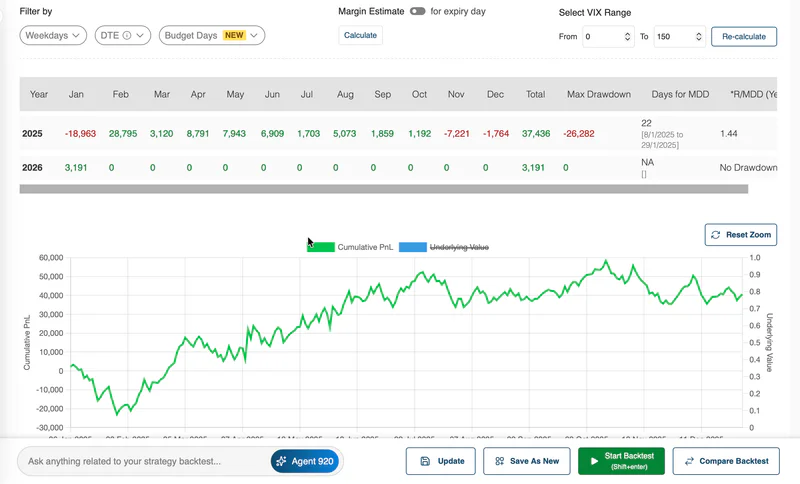
Futures and options algo trading follows a systematic workflow that helps traders move from discretionary trading to rule-based execution.
1. Strategy Development
The first step is creating a rule-based trading strategy.
Strategies may be based on:
Price action
Volatility conditions
Technical indicators
Time-based setups
Common strategies used in F&O algorithmic trading include short straddles, spreads, and trend-following futures systems.
2. Backtesting
Backtesting allows traders to evaluate how a strategy would have performed using historical data.
This process helps analyse:
Profitability
Drawdowns
Risk exposure
Consistency across market conditions
Backtesting is an essential step for traders exploring algo trading in India because it helps identify potential weaknesses before live deployment.
Also read: Is backtesting helpful for retail traders
3. Paper Trading
Paper trading, aka forward testing, allows traders to run strategies in real-time market conditions using virtual capital.
This step helps verify execution behaviour and identify issues before deploying real capital in automated trading India systems.
4. Live Algorithmic Execution
Once a strategy performs well in testing, traders can connect their broker account and allow the algorithm to automatically execute trades.
The system continuously monitors the market and places orders when predefined conditions are met.
This automation makes futures and options algo trading in India more scalable and efficient.
Popular Algo Trading Strategies for F&O
Certain strategies are particularly suitable for automation in derivatives trading.
1. Short Straddle
A short straddle involves selling both call and put options at the same strike price. Traders benefit from time decay when markets remain range-bound.
2. Iron Condor
The iron condor is a multi-leg options strategy designed to profit from low volatility.
3. Short Strangle
This strategy involves selling out-of-the-money call and put options, expecting the market to stay within a defined range.
4. Trend-Based Futures Strategies
Futures contracts can be traded using trend-following indicators such as moving average crossovers or breakout systems.
These strategies are commonly automated by traders using algorithmic trading platforms in India.
SEBI Regulations for Algo Trading in India
Algo trading in India is regulated by the Securities and Exchange Board of India (SEBI).
Key aspects of the regulatory framework include:
Algorithmic trades must be executed through SEBI-registered brokers
Exchange rules and compliance requirements must be followed
Broker APIs are typically used to connect trading algorithms to exchanges
Retail traders typically access algorithmic trading in India through broker APIs or trading platforms that provide automated strategy execution.
Also Read: Is SEBI banning algo trading in India
Risks of Futures and Options Algo Trading
While algo trading in India offers efficiency and automation, it also comes with certain risks.
Over-Optimised Strategies
Strategies optimised heavily for historical data may not perform well in live markets.
Slippage
Execution prices may differ from expected prices due to liquidity and market volatility.
Technical Failures
System errors, internet issues, or API outages can disrupt automated trading systems.
Leverage Risk
Since futures and options trading in India involves margin trading, losses can accumulate quickly without proper risk management.
Also read: Is Algo Trading Profitable in India in 2026? SEBI Rules, AI and Risk Management
How to Start Algo Trading in India
Traders interested in algorithmic trading in India can follow a structured approach.
Step 1: Understand F&O Trading
Learn the basics of futures and options, including volatility, strike selection, and derivatives pricing.
Step 2: Define Strategy Rules
Create clear entry, exit, and risk management rules.
Step 3: Backtest Strategies
Use historical market data to evaluate performance.
Step 4: Paper Trade First
Test strategies in simulated conditions before trading live.
Step 5: Start with a Small Capital
Begin with limited exposure and scale gradually.
The Future of Algo Trading in India
As trading technology evolves, algo trading in India is becoming increasingly accessible.
Several trends are shaping the future of automated trading:
No-code strategy builders
AI-driven trading tools
Advanced backtesting platforms
Better broker API integrations
These developments are enabling retail traders to adopt systematic and data-driven trading approaches in the derivatives market.
Futures and Options AlgoTrading with AlgoTest
The growth of derivatives markets has made futures and options trading in India an important part of modern trading strategies.
When combined with automation, algorithmic trading in India allows traders to build rule-based systems that improve discipline, speed, and efficiency.
However, successful algorithmic trading still requires:
Strong understanding of derivatives
Robust strategy development
Strict risk management
By combining market knowledge with automated execution, traders can participate in India’s F&O markets with a more structured, systematic approach.
Sign up now on AlgoTest and explore algo trading for free. Also, get 25 backtests free/week.
Also Read