Quick answer: No, SEBI is not banning algo trading in India. What happened is the opposite. SEBI built a legal framework so that more retail traders can participate in automated trading safely and confidently.
If you landed here after hearing rumours or reading a confusing headline, you are not alone. Let's break this down clearly, step by step.
What Is Algo Trading and Why Does It Matter in India
Algo trading means using a program to place trades automatically based on fixed rules. You set the conditions upfront: a price level, a time trigger, an indicator signal.
The system does the rest, without manual intervention.
In India, this was once a tool only big institutions could use. Today, any retail trader with a broker API can automate their strategy. That shift in scale is exactly what pushed SEBI to act.
Algo trading now accounts for over 60% of India's market volume, making a clear regulatory framework not just helpful but necessary. If you're new to algo trading in India and want to understand how traders build, test, and automate strategies, explore our comprehensive guide to Algo Trading Indiabefore diving deeper into the latest SEBI regulations.
What SEBI Actually Did in 2025
In February 2025, SEBI released its circular on safer participation of retail investors in algorithmic trading. This was not a ban. It was a regulatory reset that finally brings retail algo trading under the same umbrella as institutional trading.
Why Did SEBI Step In?
Fast growth brought fast problems. Unregulated platforms, hidden strategies, and guaranteed return promises flooded the market. In late 2024, SEBI issued show-cause notices to over 120 brokers linked to exactly this kind of activity.
SEBI's move was not to shut algo trading down. It was to clean it up.
What the New SEBI Algo Trading Rules Actually Say
Let's go through each rule one by one so you know exactly where you stand.
1. Open APIs Are No Longer Allowed
Earlier, brokers offered open APIs that anyone could plug into and start firing orders. That era is over. Now you need a static IP address that is whitelisted with your broker. It sounds technical but the idea is simple: every algo order must trace back to a real, verified person.
2. Every Algo Order Needs a Unique ID
Think of it like a license plate for your trade. Every automated order now gets an exchange-assigned Algo ID so regulators can trace exactly which algorithm placed it. You can check NSE's operational guidelines if you want to dig into how this works at the exchange level.
3. Low-Frequency Traders Do Not Need to Register
Here is the part that will relax most of you. If your strategy places fewer than 10 orders per second, you do not need to register your algo anywhere.
A moving average strategy, an ORB setup, an options play at market open, none of these come close to that limit.
4. High-Frequency Algos Need Exchange Approval
If you are running something that fires more than 10 orders per second, you need to register it with the exchange through your broker before it goes live. No exceptions.
5. White Box vs Black Box: Two Types of Algos
SEBI now puts every algo into one of two buckets. White box algos are transparent; the logic is open, documented, and reviewable.
These have a straightforward approval process. Black box algos keep their logic hidden. If a provider is selling you a black box strategy, they must hold a SEBI Research Analyst license. If they cannot show you that, walk away.
6. Your Self-Built Algo Stays Personal
If you coded your own strategy, you are free to run it for yourself and your immediate family.
What you cannot do is rent it out, sell access to it, or distribute it to other traders without going through the formal empanelment process with an exchange.
7. Brokers Are Now Accountable
Brokers must approve every algo, keep a five-year audit trail, and handle all grievances. If something goes wrong, they are accountable.
What This Means If You Are a Retail Algo Trader in India
For most retail traders, this framework changes less than you think and protects you more than you realise.
The retail trader who builds a clear, rule-based strategy for personal use has the least friction. The new rules hit hardest at unregulated vendors who were selling opaque strategies with no oversight.
What You Should Do Before April 1, 2026
The full framework becomes mandatory for all brokers on April 1, 2026. Here is what you need to do based on your situation.
If you trade manually with no API, these rules have no immediate impact on you. Continue trading as normal.
If you use a broker API for personal automation under 10 OPS, check with your broker that your API key is tied to a static whitelisted IP.
Most major brokers have already rolled out the infrastructure for this.
Log in to your broker's developer console and confirm your IP whitelisting status.
If you subscribe to a third-party algo service, ask your provider these four questions before April 1:
Are you registered with the relevant stock exchange as an algo provider?
Is your strategy classified as white box or black box?
If it is black box, do you hold a SEBI Research Analyst license?
Is your fee arrangement with the broker fully disclosed?
If they cannot answer all four clearly, treat that as a red flag and find a compliant provider.
For context, AlgoTest is empanelled with both NSE and BSE, so if you are looking for a starting point, that box is already checked.
Is Algo Trading Legal in India in 2026?
Yes, completely. Algo trading in India is legal and backed by SEBI, NSE, and BSE. The 2025 framework makes it more structured, not more restricted.
The Indian algo trading market was valued at USD 562 million in 2024 and is set to grow at 9.5% annually through 2033. SEBI is not here to shut that down. They are here to make sure it grows the right way.
Here's a complete breakdown of algo trading platforms to help you evaluate and make the right decision.
How AlgoTest Fits Into This Framework
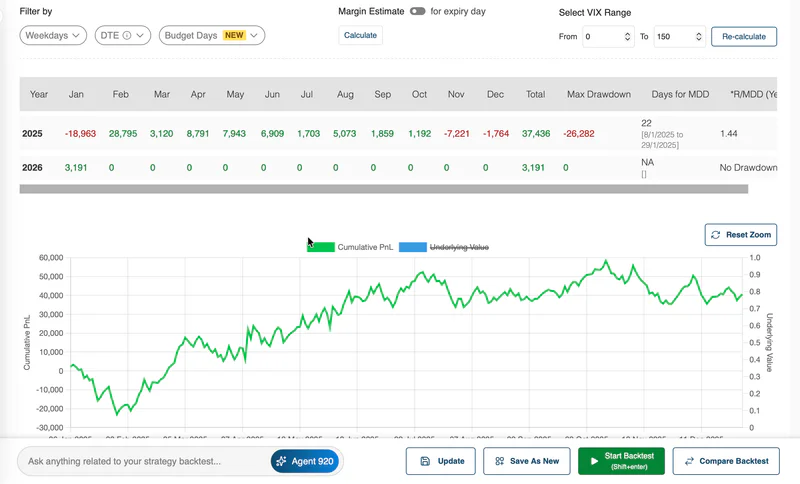
Every strategy you build on AlgoTest is a white box algo by design. You define the entry, the exit, the position sizing.
The logic is fully visible at every step. That is exactly what SEBI's framework is built to support.
When you backtest your options trading strategy on AlgoTest, paper trade, and eventually deploy through a registered broker, you are operating entirely within the regulatory structure SEBI has put in place. No grey areas. No compliance headaches.
Want to get started without spending anything? Here is a step-by-step guide on how to backtest for free and see how your strategy holds up on historical data before going live.
A Complete Timeline: Algo Trading Regulation in India
The Bottom Line
SEBI is not banning algo trading in 2026. It is regulating it. That is a good thing.
The new framework legitimises retail automated trading, holds brokers accountable, and protects everyday traders from bad actors. If you trade with a transparent, rule-based strategy through a compliant broker, you are on solid legal ground.
The "ban" narrative comes from misread headlines. The reality is a regulated, growing market that is more accessible to systematic traders than ever before.
Ready to build your own strategy within this framework? Start with a free backtest on AlgoTest and see what rule-based trading looks like in practice.
This article is for informational purposes only and does not constitute financial or legal advice. Always refer to SEBI's official circulars and consult a qualified professional for compliance-related decisions.