# About
Name: AlgoTest Blog
Description: Stay ahead with the AlgoTest Blog, your source for simplified algo trading insights, strategy backtesting, platform tips, and market updates.
URL: https://algotest.in/blog
# Navigation Menu
- Home: https://algotest.in/blog/
- Docs: https://docs.algotest.in
- Search: https://algotest.in/blog/search
- Start Algo Trading: https://algotest.in/register?utm_source=blogs&utm_medium=organics&utm_campaign=seo
# Blog Posts
## Butterfly Option Strategy: 4 Ways to Build the Same Payoff
Author: AlgoTest
Author URL: https://algotest.in/blog/author/algotest/
Published: 2026-06-24
Category: General
Category URL: https://algotest.in/blog/category/general/
Meta Title: Butterfly Option Strategy: Call, Put & Iron Butterfly Explained
Meta Description: Learn the four ways to build a butterfly option strategy, including call butterflies, put butterflies, and iron butterflies. Compare payoff, capital requirements, risks, and how each structure behaves before expiry.
Tags: trading strategies, options trading
Tag URLs: trading strategies (https://algotest.in/blog/tag/trading-strategies/), options trading (https://algotest.in/blog/tag/options-trading/)
URL: https://algotest.in/blog/butterfly-option-strategy-call-put-iron-butterfly/
The butterfly option strategy is a popular way to trade range-bound markets with defined risk and defined reward. Most traders learn the standard butterfly setup, but few realize that the same payoff can be created using four different option structures.
Each construction has its own advantages, capital requirements, and risk profile before expiry, even though they produce nearly identical outcomes at expiration.
We'll break down the four ways to build a butterfly spread and explain how to choose the right one for your trading style.
## What Is a Butterfly Option Strategy?
A butterfly option strategy (or butterfly spread) is a **defined-risk, defined-reward, market-neutral options strategy** built using three strike prices that are equally spaced apart. It's constructed entirely with calls, entirely with puts, or a mix of both, all expiring on the same date.
Structurally, a butterfly is just two vertical spreads stitched together:
- A [**bull spread**](https://docs.algotest.in/product-blogs/options-trading-terms/#46--call-spread) between the lowest and middle strike
- A [**bear spread**](https://docs.algotest.in/product-blogs/options-trading-terms/#48-bear-butterfly-spread) between the middle and highest strike
Combine the two, and you get the strategy's signature shape on a payoff chart: flat near the bottom, rising to a peak at the middle strike, then tapering back down. That tent-like shape, with a body in the middle and wings on either side, is exactly why it's named after a butterfly.
### How a Long Call Butterfly Looks in Practice
Take a long call butterfly on NIFTY, three strikes apart and equally spaced:
- **Buy 1 lower-strike call** (e.g., 24,800)
- **Sell 2 middle-strike calls** (e.g., 24,900)
- **Buy 1 higher-strike call** (e.g., 25,000)
This position profits if NIFTY settles near 24,900 at expiry. If NIFTY finishes below 24,800 or above 25,000, the trade incurs a loss, but that loss is capped at the net premium (debit) paid to enter the trade.
There's no scenario where you lose more than what you put in. Remember that each leg here is traded in lots, not individual contracts, so the actual premium paid or received scales with NIFTY's lot size.
The maximum profit is realized if the index expires **exactly at the middle strike**. The further the price drifts from that point in either direction, the smaller the profit, until it disappears entirely past the outer strikes.
[Try AlgoTest Strategy Builder for Free](https://algotest.in/feature/strategy-builder?utm_source=blog&utm_medium=organic&utm_campaign=seo&utm_source=blog&utm_medium=organic&utm_campaign=seo)
## The Four Ways to Build the Same Butterfly
Most traders learn a butterfly as a single strategy. In reality, the same butterfly payoff can be created using four different option structures.
That's because both the bull spread and bear spread that make up a butterfly can be built using either calls or puts.
Construction
How it's Built
Cash Flow
All-Call Butterfly
Call bull spread + call bear spread
Debit
All-Put Butterfly
Put bull spread + put bear spread
Debit
Iron Butterfly
Put spread + call spread with short ATM straddle
Credit
Mixed Butterfly
Call bull spread + put bear spread
Debit
At expiry, all four structures produce nearly identical payoff profiles. The reason is put-call parity, which keeps equivalent call and put combinations aligned. If one butterfly structure became significantly cheaper or more expensive than another, arbitrage opportunities would quickly bring prices back in line.
### Why Construction Matters
If the payoff is almost identical at expiry, why should you care about the structure?
Because the trading experience before expiry can be very different.
Factors that change across constructions include:
- Capital required to enter the trade
- Margin blocked by the broker
- Early assignment risk on short options
- Sensitivity to time decay and volatility changes
For example, an iron butterfly typically requires less upfront capital because it is entered for a credit, while some debit-based butterfly structures can be more capital intensive.
The academically preferred construction combines a call bull spread with a put bear spread. While this structure is often considered cleaner from a theoretical perspective, it usually requires the highest capital outlay.
As a result, most traders prefer simpler and more capital-efficient alternatives such as the all-call butterfly, all-put butterfly, or iron butterfly.
The best structure is not always the one that looks best on paper. It is the one that fits your capital, margin requirements, and trading style.
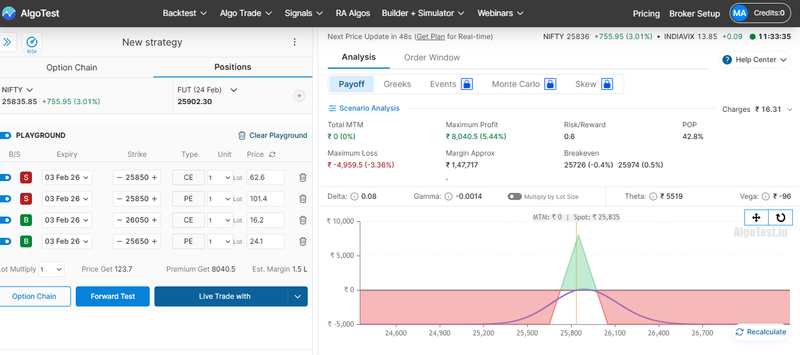
Before choosing a butterfly construction, many traders compare the payoff, margin impact, and risk characteristics of each version using [AlgoTest's Strategy Builder.](https://algotest.in/feature/strategy-builder?utm_source=blog&utm_medium=organic&utm_campaign=seo&utm_source=blog&utm_medium=organic&utm_campaign=seo) Seeing the structures side by side often makes the differences much easier to understand than reading about them in theory.
[Sign up and try free backtesting](https://algotest.in/feature/backtest?utm_source=blog&utm_medium=internal&utm_campaign=seo&utm_content=feature&utm_term=backtest&utm_source=blog&utm_medium=internal&utm_campaign=seo&utm_term=backtest&utm_content=feature)
## Max Profit, Max Loss, and Breakeven
For a standard long butterfly with strikes A (lower), B (middle), and C (upper), equally spaced:
- **Max profit** = (B minus A) minus net premium paid, realized if the underlying expires exactly at strike B
- **Max loss** = net premium paid, realized if the underlying expires at or beyond strike A or strike C
- **Lower breakeven** = A + net premium paid
- **Upper breakeven** = C minus net premium paid
For an iron butterfly (the credit version), the math flips: max profit is the net credit received, and max loss is the difference between strikes minus that credit.
Related: [5 Best Strategy Builders for Options Trading in India (2026)](https://algotest.in/blog/best-strategy-builders-for-options-trading-in-india/)
## When Does a Butterfly Spread Make Sense?
A butterfly isn't a directional bet. It's a **volatility bet**. Specifically, it profits when realized volatility comes in lower than what the options market is pricing in. You're saying: "I think this stays in a range, and the market is overpricing the chance that it doesn't."
It tends to make sense when:
- You expect the underlying to consolidate near a specific level into expiry
- [Implied volatility](https://algotest.in/blog/implied-volatility-and-how-to-read-and-compute-iv) is elevated, which is common ahead of events like the Union Budget, RBI policy announcements, or major quarterly results, and you expect IV to cool off as the event passes
- You can enter at a favorable risk-reward ratio. Many traders look for setups where potential reward is roughly 1:3 or better relative to risk
- You want defined risk on both sides, with no chance of an unlimited loss
It tends to _not_ make sense when you have a strong directional view, since the structure is specifically built to be neutral and caps your upside even if you happen to be right about direction.
## Butterfly vs. Iron Condor vs. Straddle
It's easy to confuse a butterfly with other range-bound strategies, so here's the quick distinction:
- [**Iron condor**:](https://algotest.in/blog/how-to-use-strategy-builder-iron-condor/) Similar tent-shaped payoff, but with a flat top instead of a peak. Wider profit zone, lower max profit per point
- [**Short straddle**:](https://algotest.in/blog/6-popular-algo-trading-strategies-for-retail-traders-in-india) Unlimited risk if the market moves sharply, unlike a butterfly's capped loss
- **Iron butterfly**: Functionally the same payoff as a regular butterfly, just built for a credit instead of a debit, using both calls and puts
If you're choosing between these, the real question isn't which one looks better on paper. It's which one fits your view on _how wide_ you expect the range to be, and how much capital you're willing to commit to find out.
Check out AlgoTest documentation to learn more about [Option trading strategies](https://docs.algotest.in/financial-education/options-strategies/)
## The Real Question: Should You Even Use a Butterfly Here?
Most of the decision-making around butterflies has very little to do with which of the four constructions to use, and everything to do with a more fundamental question: **does this market environment actually support a range-bound, low-volatility trade right now?**
That's not something you can answer by reading a definition. It's something you answer by looking at how NIFTY, BANKNIFTY, or SENSEX have actually behaved around similar conditions, including IV levels, time to expiry, and recent realized volatility, and how a butterfly structure would have performed across those conditions historically.
## Compare Butterfly Constructions Before You Trade
Understanding that all four butterfly constructions have similar expiry payoffs is one thing. Knowing which version works best for your trading style is another.
The differences in capital requirements, margin usage, and risk characteristics only become clear when you test them on real market data.
Instead of choosing a structure based on theory alone, you can compare different butterfly constructions using AlgoTest's Strategy Builder.
With [AlgoTest,](https://algotest.in/?utm_source=blog&utm_medium=internal&utm_campaign=seo&utm_content=main-page&utm_term=algotest&utm_source=blog&utm_medium=internal&utm_campaign=seo&utm_term=algotest&utm_content=main-page) you can:
- Build all-call, all-put, and iron butterfly strategies without coding
- Compare payoff diagrams side by side
- Backtest different constructions on historical NIFTY, BANKNIFTY, SENSEX, or stock option data
- Analyse metrics such as win rate, drawdown, and consistency across multiple expiry cycles
- Forward test/paper trade strategies before deploying real capital
This makes it easier to answer the question that matters most: not whether a butterfly strategy works in theory, but which butterfly construction works best for your market view and risk profile.
Related: [Options Trading Strategies](https://algotest.in/blog/options-trading-strategies/)
## Key Takeaways
- A butterfly spread is a defined-risk, market-neutral strategy built from three equally spaced strikes, combining a bull spread and a bear spread
- All four constructions (all-call, all-put, iron butterfly, and the mixed debit version) pay off nearly identically at expiry, a direct result of put-call parity
- The real differences show up _before_ expiry: capital efficiency, margin, and early exercise risk vary meaningfully across constructions
- Butterflies work best when you expect low realized volatility and a range-bound move, not when you have a directional view
- Understanding the strategy on paper and knowing how it performs in real market conditions are two different things. Backtesting closes that gap
Join [AlgoTest](https://algotest.in/?utm_source=blog&utm_medium=internal&utm_campaign=seo&utm_content=main-page&utm_term=algotest&utm_source=blog&utm_medium=internal&utm_campaign=seo&utm_term=algotest&utm_content=main-page) as we simplify algo trading for Indian Retail Traders.
Free Sign up
_This article is for educational purposes only and does not constitute investment, financial, or trading advice._
# FAQs
Q: Is a butterfly option strategy profitable?
A: A butterfly option strategy can be profitable when the underlying expires close to the middle strike price. The maximum profit is capped and is realized only if the market stays within a specific range. If the underlying moves beyond the outer strikes, the loss is limited to the premium paid to enter the trade.
Q: What is the difference between a butterfly spread and an iron condor?
A: A butterfly spread has a single strike where maximum profit occurs. An iron condor has a wider profit zone between two strikes, making it more forgiving if the market moves slightly. In exchange for that wider range, the iron condor generally offers a lower maximum reward.
Q: Can a butterfly spread be built with puts instead of calls?
A: Yes. A put butterfly spread can create a payoff profile that is very similar to a call butterfly spread using the same strikes and expiry. The main differences are in pricing, margin requirements, and how the position behaves before expiry.
Q: Is an iron butterfly the same as a regular butterfly?
A: At expiry, an iron butterfly and a regular butterfly can have nearly identical payoff profiles. The key difference is in construction. An iron butterfly uses both calls and puts and is typically entered for a net credit, while a standard butterfly is usually entered for a net debit using only calls or only puts.
Q: How do I choose the right butterfly construction?
A: The best butterfly construction depends on your capital requirements, margin availability, and comfort with assignment risk. Many traders compare different butterfly structures using backtesting and payoff analysis before deciding which version suits their trading style and market view.
---
This blog is powered by Superblog. Visit https://superblog.ai to know more.
---
## Opstra Strategy Builder vs AlgoTest Strategy Builder: Which One Should You Use in 2026?
Author: AlgoTest
Author URL: https://algotest.in/blog/author/algotest/
Published: 2026-06-18
Meta Title: Opstra vs AlgoTest: Which Strategy Builder Wins in 2025?
Meta Description: Compare Opstra Strategy Builder vs AlgoTest Strategy Builder for 2025. See pricing, features, IV skew tools, Monte Carlo, broker support, and more.
URL: https://algotest.in/blog/opstra-strategy-builder-vs-algotest/
In India, the two most-searched tools are **Opstra Strategy Builder** and [AlgoTest Strategy Builder](https://algotest.in/feature/strategy-builder?utm_source=blog&utm_medium=organic&utm_campaign=seo&utm_source=blog&utm_medium=organic&utm_campaign=seo). Both appear similar on the surface, but the real differences become clear only when you examine pricing, analysis depth, user workflow, and the level of control they provide a trader in live markets.
Whether you are hedging, creating multi-leg spreads, or stress-testing volatility scenarios, your [strategy builder](https://algotest.in/feature/strategy-builder?utm_source=blog&utm_medium=organic&utm_campaign=seo&utm_source=blog&utm_medium=organic&utm_campaign=seo) decides how confidently you can trade.
If you’ve ever Googled “ **opstra strategy builder**”, “ **option strategy builder**”, or “ **opstra strategy builder vs algotest**”, this guide will help you decide exactly which tool is right for you in 2026.
## **What Traders Expect From an** [**Option Strategy Builder**](https://algotest.in/blog/option-strategy-builder-strategies-that-win/)
Before we compare Opstra and AlgoTest, it’s important to understand what actually matters in a strategy builder:
- Ability to create multi-leg strategies quickly
- Clean IV and skew visibility
- Real-time Greeks
- Scenario analysis and stress testing
- Integration with live trading workflows
- Transparent pricing
- Smooth broker connectivity
- A learning curve that doesn't push you away
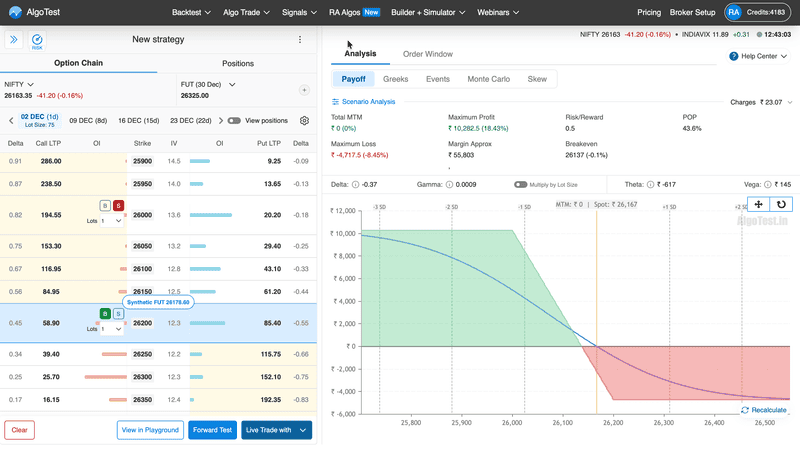
[**AlgoTest Strategy Builder**](https://algotest.in/feature/strategy-builder?utm_source=blog&utm_medium=organic&utm_campaign=seo&utm_source=blog&utm_medium=organic&utm_campaign=seo) was built with these exact expectations in mind, using thousands of trader feedback points, which is why the tool has become a top pick among beginners, discretionary traders, and systematic traders alike.
Related: [How to use the algoTest strategy builder for a monthly iron condor](https://algotest.in/blog/how-to-use-strategy-builder-iron-condor)
## **Strategy Builder: Quick Introduction**
[Monte Carlo Analysis](https://docs.algotest.in/strategy-builder/creating-managing-strategies/basic-strategy-creation/#step-5) offers two major option-trading products:
- [**Strategy Builder**](https://algotest.in/blog/algotest-option-strategy-builder-the-right-one/) → for building, analyzing, and deploying strategies
- **Option Simulator** → for historically testing your trades (like a replay of your decisions)
We focus **only** on the [Strategy Builder](https://algotest.in/feature/strategy-builder?utm_source=blogs), with occasional references to the [simulator](https://algotest.in/feature/simulator?utm_source=blogs) where it adds value to your trading workflow.
## **Opstra Option Strategy Builder vs AlgoTest Strategy Builder: The 2025 Comparison**
### **1\. Pricing & the Free Trial**
### **AlgoTest**
- **Full 1-week free trial**
- **No restrictions**
- Unlimited strategies
- Unlimited trade creations
- Unlimited Strategy Builder usage
- Unlimited historical-option testing via the simulator
- No requirement to link a broker to experience the tool
### **Opstra**
- No comparable unrestricted trial
- Many features require paid access
- Fewer advanced tools in the free version
For traders exploring free strategy-building tools, AlgoTest’s one-week unrestricted trial provides much deeper access than what Opstra offers for free.
### **2\. Workflow: Integration With Option Simulator**
This is the single biggest difference in 2025.
### **AlgoTest**
Seamless workflow:
1. Build your strategy in Strategy Builder
2. Send it directly to Option Simulator
3. Replay markets candle-by-candle
4. See how your strategy would have behaved
5. Edit → Resimulate → Improve → Push to execution
This **Strategy Builder → Simulator → Live Trading** workflow is unique to AlgoTest.
No other platform, including Opstra, offers this degree of integration.
### **Opstra**
- No simulator integration
- Backtesting is limited
- Forces traders to jump between tools/platforms manually
For traders who iterate and refine strategies, this is a major deal-breaker.
### **3\. Broker Integrations**
### **AlgoTest**
- Connects with multiple brokers
- Direct trade placement from Strategy Builder
- Unified workflow regardless of broker
### **Opstra**
- Limited to one broker
- No consistent execution experience
If you actively trade multi-broker setups or shift brokers frequently, [AlgoTest](https://algotest.in/?utm_source=blog&utm_medium=internal&utm_campaign=seo&utm_content=main-page&utm_term=algotest&utm_source=blog&utm_medium=internal&utm_campaign=seo&utm_term=algotest&utm_content=main-page) is hands-down more flexible.
Refer to our [Strategy Builder documentation](https://docs.algotest.in/strategy-builder/setting-up/) for a comprehensive guide on using the tool.
### **4\. Advanced Analysis Tools: A Huge Gap**
This is where AlgoTest Strategy Builder pulls ahead decisively.
### **AlgoTest Offers**
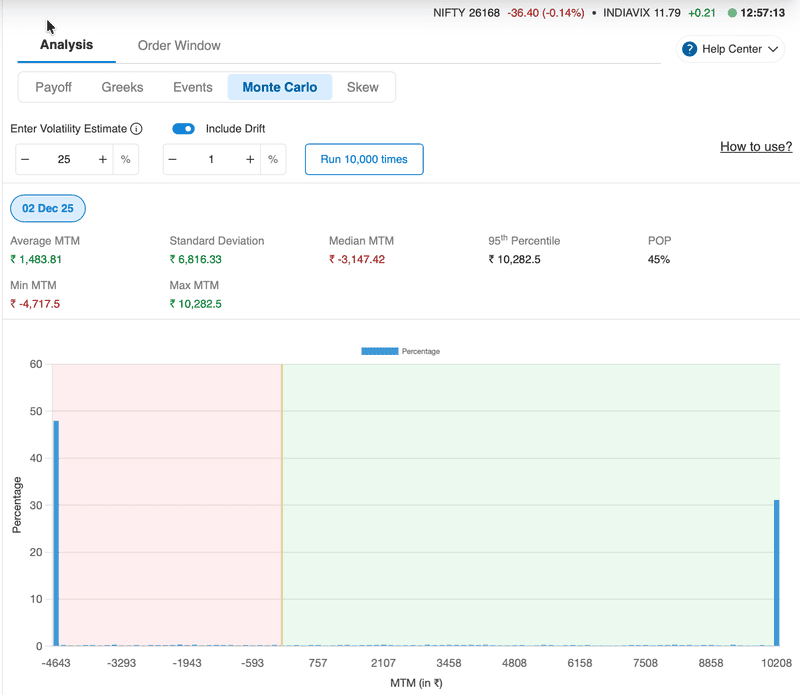
#### **Monte Carlo Analysis**
Test your strategy across thousands of randomized paths to understand:
- payoff distribution
- drawdown possibilities
- tail-risk behavior
- probability of ruin
Opstra: **Not available**
**Event Volatility Analysis**
See how IV behaves around: RBI Policy, Fed meetings, Union Budget, Earnings & Vol-heavy days
Opstra: **No event vol analysis**
#### **IV Skew (Fixed Strike & Floating Strike)**
AlgoTest gives traders:
- **Fixed Strike Skew**
- **Floating Strike (Fixed Delta) Skew**
This is one of the most-requested features in the Indian options community, and AlgoTest is currently the **only platform that displays both views live** for all optionable stocks and indices.
Floating strike IV lets traders:
- compare maturities more intuitively
- understand real volatility surfaces
- avoid misinterpretation caused by strike shifts
**Opstra Option Strategy Builder:**
- Only a surface chart (difficult to interpret)
- No fixed delta (floating strike) view
- No clean 2D skew comparison
AlgoTest intentionally keeps the skew **human-friendly**, acknowledging real-market imperfections, without over-smoothing illiquidity gaps.
#### **UI & Ease of Use**
AlgoTest Strategy Builder’s interface is designed around:
- quick leg creation
- one-click adjustments
- real-time payoff and Greeks
- synchronized charts and data
- minimalist, clutter-free interactions
Opstra strategy builder is functional, but feels dated and requires more clicks to do the same actions.
### **Speed, Accuracy & Real-Time Data**
AlgoTest’s introduced:
- faster refresh cycles
- improved option chain architecture
- refined error-handling
- better liquidity controls
- cleaner IV curve generation
For active intraday traders using Strategy Builder to adjust deltas or roll legs, the speed difference is noticeable.
Related: [Master the Option Strategy Builder : AlgoTest Tutorial](https://algotest.in/blog/option-strategy-builder-algotest-tutorial/)
## **Should You Use AlgoTest Strategy Builder or Opstra Option Strategy Builder in 2026?**
### **Choose AlgoTest Strategy Builder if you want:**
- The **best free trial** among [Indian algo providers](https://algotest.in/?utm_source=blog&utm_medium=internal&utm_campaign=seo&utm_content=main-page&utm_term=algotest&utm_source=blog&utm_medium=internal&utm_campaign=seo&utm_term=algotest&utm_content=main-page)
- A tool built specifically for **modern discretionary & systematic traders**
- Superior IV/skew visualization
- Advanced analytics (Monte Carlo, event vol)
- Integration with a professional-grade simulator
- Multiple broker connectivity
- A single, predictable workflow from idea → execution
- AI-powered strategy creation with [Signals AI](https://algotest.in/register?redirect_to=%2Fsignals%2Fchat&utm_source=blog&utm_medium=organic&utm_campaign=seo&utm_source=blog&utm_medium=organic&utm_campaign=seo)
### **Choose Opstra Option Strategy Builder if you want:**
- A basic, lightweight option-analysis tool
- Minimalistic requirements
- Occasional use without deeper analysis
- You prefer their older surface-based IV visualization
## **Where AlgoTest Fits in a Trader’s Journey**
[AlgoTest Strategy Builder](https://algotest.in/feature/strategy-builder?utm_source=blog&utm_medium=organic&utm_campaign=seo&utm_source=blog&utm_medium=organic&utm_campaign=seo) is intentionally designed to be a **complete strategy lifecycle tool**:
1. **Build** → Create multi-leg strategies
2. **Analyze** → Greeks, IV, skew, scenarios
3. **Stress-Test** → Monte Carlo, event volatility
4. **Simulate (Optional)** → Replay your trades in the Option Simulator
5. **Execute** → Send orders to your broker
6. **Review** → Come back, refine, resimulate, retest
If you're looking for a tool that grows with you as your trading becomes more mature, [AlgoTest](https://algotest.in/?utm_source=blog&utm_medium=internal&utm_campaign=seo&utm_content=main-page&utm_term=algotest&utm_source=blog&utm_medium=internal&utm_campaign=seo&utm_term=algotest&utm_content=main-page) is built exactly for that.
**Conclusion**
Both Opstra and AlgoTest have played important roles in India’s option trading ecosystem. But the question in 2025 is no longer “which one shows option data better?” it is:
**Which Strategy Builder helps you trade better, refine better, and improve faster?**
On that dimension, **AlgoTest Strategy Builder is undeniably ahead**, thanks to:
- advanced analysis
- cleaner skew visibility
- multi-broker support
- unrestricted free trial
- direct simulator integration
For beginners, discretionary traders, and serious professionals, [AlgoTest Strategy Builder](https://algotest.in/feature/strategy-builder?utm_source=blog&utm_medium=organic&utm_campaign=seo&utm_source=blog&utm_medium=organic&utm_campaign=seo) is the most complete and powerful choice in 2026.
Join AlgoTest and explore how you can build, backtest, and automate strategies.
Free Sign Up
### **FAQ:**
### **1\. What is the difference between AlgoTest and Opstra Strategy Builder?**
AlgoTest offers advanced analysis tools like Monte Carlo, event volatility, fixed-strike and floating-strike IV skew, plus multi-broker integrations and a full one-week free trial. Opstra provides basic analysis but lacks these advanced features and wider broker support.
### **2\. Which strategy builder is better for beginners in 2025?**
AlgoTest Strategy Builder is better for beginners because it’s more intuitive, provides unrestricted free trial access, and offers scenario analysis, payoff charts, and clean IV/skew visualisations.
### **3\. Does AlgoTest offer a free trial for its Strategy Builder?**
Yes. AlgoTest provides a full **1-week unrestricted free trial**, unlimited strategy creation, analysis, and simulator usage, without requiring broker integration.
### **4\. Can I connect my broker to AlgoTest?**
Yes. AlgoTest supports multiple brokers and lets you execute trades directly from the Strategy Builder, making it suitable for active and intraday traders.
### **5\. Does Opstra Option Strategy Builder have Monte Carlo or event volatility analysis?**
No. Opstra does not offer Monte Carlo simulations or event volatility tools. These advanced analytics are exclusive to AlgoTest’s Strategy Builder.
### **6\. Which tool has better IV skew visualization?**
AlgoTest provides both **fixed strike** and **floating strike (fixed delta)** IV skew views, which are more intuitive for comparing maturities. Opstra only offers a surface-style IV chart.
### **7\. Is AlgoTest better for discretionary traders?**
Yes. AlgoTest’s Strategy Builder integrates directly with its Option Simulator, allowing discretionary traders to test, replay, and refine trades more efficiently than on Opstra.
### **8\. Is there a mobile app for strategy building?**
Yes. AlgoTest supports strategy building on mobile, and ClickTrade (AlgoTest’s execution app).
---
This blog is powered by Superblog. Visit https://superblog.ai to know more.
---
## Why Algorithmic Trading Is the Only Serious Path Forward in F&O Markets
Author: AlgoTest
Author URL: https://algotest.in/blog/author/algotest/
Published: 2026-06-12
Category: RA Algos
Category URL: https://algotest.in/blog/category/ra-algos/
Tags: algo trading india, ra algos
Tag URLs: algo trading india (https://algotest.in/blog/tag/algo-trading-india/), ra algos (https://algotest.in/blog/tag/ra-algos/)
URL: https://algotest.in/blog/algorithmic-trading-for-futures-and-options-market/
_A data-driven case for systematic trading in Indian derivatives_
### The Hard Truth: 90%+ of F&O Traders Lose Money
Let us begin with a statistic that should make every F&O trader pause.
According to a **SEBI study covering FY22-FY24**, more than **90% of individual equity F&O traders lost money** over a three-year period. This is not a bad run of luck. This is a structural, recurring outcome - and understanding why it happens is the first step toward doing something about it.
The SEBI data also reveals who is on the winning side:
**Player Type**
**Algo Share of Profits**
**Gross Profits FY24**
Foreign Portfolio Investors
**97%**
₹28,000 Crore
Proprietary Traders
**96%**
₹33,000 Crore
_Source:_ [_SEBI study on individual F&O traders, FY22–FY24 (September 2024)_](https://aibi.org.in/Sebipr/Updated_SEBI_Study_Reveals_93_percentage_of_Individual_Traders_Incurred_Losses_in_Equity_F&O_between_FY22_and_FY24.pdf)
The message is unambiguous: **the money lost by retail manual traders is largely captured by automated, well-capitalised algorithmic players.** This is not a level playing field - unless you arm yourself with the same tools.
## Four Reasons Why Manual Trading Fails Structurally
The losses retail F&O traders suffer are not random. They trace back to four recurring structural failures:
### 1\. Financial Illiteracy About Options
A large proportion of retail traders enter F&O without understanding how options are priced, how Greeks behave across time and [volatility](https://algotest.in/blog/implied-volatility-and-how-to-read-and-compute-iv) regimes, or what a truly favourable risk-reward set-up looks like. They are not trading, they are guessing, and the market charges a steep fee for guesswork.
### 2\. Strategy Hopping and Lack of Discipline
Every strategy goes through losing phases. That is not a sign of a broken strategy. It is the nature of probabilistic outcomes. Manual traders, however, abandon strategies mid-drawdown and chase the next "hot" approach they see on YouTube or Telegram. The result: they never allow any single strategy enough trade repetitions to manifest its statistical edge.
### 3\. Unvalidated Strategies
Trading a strategy that has never been backtested is equivalent to launching a product without market research. Backtesting over a representative historical period including multiple market cycles, volatility spikes, and trending and range-bound phases which is the only way to distinguish a genuine edge from a lucky streak.
Related: [Why do we need backtesting for trading strategies?](https://algotest.in/blog/why-do-we-need-backtesting)
### 4\. Absent or Inadequate Risk Management
F&O positions can move sharply against you in minutes. Without pre-defined stop-losses, position sizing rules, and maximum daily loss limits, a single bad day can wipe out weeks of gains. Capital preservation is the first job of any serious trader; profit generation comes second.
## The Algorithmic Advantage: Why Machines Win in F&O
Algorithmic trading uses computer programs to execute trades based on pre-defined, rule-based conditions while eliminating emotional decision-making and ensuring absolute consistency in strategy execution. Here is what that translates to in practice:
• **Discipline & Consistency:** Trades execute exactly as programmed. There is no deviation because of fear, greed, fatigue, or FOMO. The same set of rules that worked in backtesting is applied trade after trade, without exception.
• **Speed & Precision:** Options windows open and close in seconds. An algorithm captures the precise entry and exit conditions that a manual trader might miss while hesitating or watching a news ticker.
• **Continuous Market Surveillance:** Markets move in pre-open sessions, during global events, and across overnight positions. An algo monitors and responds to conditions continuously which a human simply cannot.
• **Rigorous Backtesting:** Before a single rupee of live capital is deployed, an algo strategy can be tested against years of historical data to validate its performance, maximum drawdown, win rate, and risk-adjusted returns.
• **Automated Risk Management:** Stop-losses, trailing profit locks, and position-sizing rules execute automatically at the moment they are triggered and not five minutes later when a trader finally looks at the screen.
• **Scalability:** A well-designed algo can manage multiple positions, across multiple instruments, simultaneously which is something no individual trader can replicate manually.
Learn more: [9 Steps to Build a Profitable Algo Trading Strategy in India](https://algotest.in/blog/9-steps-to-build-a-profitable-algo-trading-strategy/)
## Algo Trading and Options: A Natural Fit
Of all asset classes, **options demand the highest precision** and therefore benefit most from automation. [Options Greeks](https://docs.algotest.in/financial-education/options/greek-interactions/#greek-interactions-in-options-trading) (Delta, Theta, Vega) change continuously. Volatility regimes shift without warning. Intraday liquidity windows are narrow. These are exactly the conditions where human cognitive limitations become expensive and algorithmic consistency becomes profitable.
Consider Theta which is the daily time-decay component and is one of the most **predictable, reliable edges available in options markets**. An option seller collecting Theta benefits from this mathematical erosion every single day, regardless of market direction, as long as the market remains within a defined range.
But to harvest Theta systematically, you need consistent, emotion-free execution which is precisely what an algorithm provides.
Manual traders, by contrast, frequently exit profitable option-selling positions prematurely during sharp intraday moves hence surrendering Theta gains out of fear. Algorithms do not blink.
## The Melting Sensex Strategy: Algo Discipline in Action
The **Melting Sensex STBT Strategy** is a live example of these principles applied systematically to BSE Sensex options. It is a **Short Straddle / Iron Condor approach** designed to profit from time decay and delta erosion in range-bound or neutral market conditions.
**Strategy Highlights:**
• Index: BSE Sensex which high liquidity, active options chain.
• Session: Entered at 9:40 AM, closed by 9:30 AM the following morning (STBT: Sell Today, Buy Tomorrow).
• Overnight Advantage: Carries positions overnight to maximise Theta and Delta decay so earning on both time and directional convergence.
• Smart Hedging: Hedges protect overnight risk without the cost of full intraday hedging, improving capital efficiency.
• Capital Requirement: ₹5,00,000 per 2 lots which is accessible to serious retail traders.
• Multi-layer Risk Framework: Individual position stop-losses, trailing profit locks, and time-based exits operate as a complete protection system.
The strategy does not rely on market prediction. It relies on **statistical behaviour and mathematical certainty of time decay** which is executed consistently, without exception, by an algorithm.
Check out my strategies on [RA Algos by AlgoTest](https://algotest.in/feature/ra-algos)
## India's Markets Are Automating Fast - Don't Get Left Behind
In the United States, algorithms account for approximately **60–75% of total equity trading volume**. India is tracking that same trajectory: today [algo trading](https://algotest.in) represents **40–55% of total market volume and rising**, driven by expanding API access, co-location infrastructure, and NSE's 2025 retail algo framework.
This is not a future trend. It is the present reality. Manual traders are competing against increasingly sophisticated automated systems. The question is not whether to adopt algorithmic trading but it is how quickly you can make the transition.
## The Bottom Line
If you are serious about F&O trading and not as a pastime, with a legitimate wealth-creation aim, there is one unavoidable conclusion:
_Discretionary trading, operating without backtested systems and disciplined rule-based execution, is structurally disadvantaged in today's markets. Algorithmic trading is not a shortcut. It is the standard that serious market participants must meet._
Our approach is built on exactly this philosophy. Bringing institutional rigour and quantitative discipline to individual investor portfolios. The Melting Sensex strategy is one live expression of that commitment.
If you would like to explore how systematic, algo-driven strategies can work for you, we invite you to attend our webinar. Take the first step from discretionary to disciplined.
Sign up now
**Vishal Trehan \| SEBI RA: INH000016816** is a quantitative market practitioner specialising in data-driven research and algorithmic strategies. Vishal brings 14 years of corporate experience in consulting, banking, and private equity, combined with nearly a decade of direct market exposure to help you build sustainable wealth with confidence.
_Disclaimer: This content is for educational purposes only and does not constitute investment advice. F&O trading involves significant risk. Past performance of any strategy does not guarantee future results. Please consult your financial advisor before investing._
---
This blog is powered by Superblog. Visit https://superblog.ai to know more.
---
## What is the Impact of Slippage on an Algo?
Author: AlgoTest
Author URL: https://algotest.in/blog/author/algotest/
Published: 2026-06-11
Category: RA Algos
Category URL: https://algotest.in/blog/category/ra-algos/
Meta Description: Learn how slippage impacts algo trading performance, what causes it, and how AlgoTest helps you simulate realistic trading conditions with manual slippage adjustments for better decision-making.
Tags: algo trading india, ra algos
Tag URLs: algo trading india (https://algotest.in/blog/tag/algo-trading-india/), ra algos (https://algotest.in/blog/tag/ra-algos/)
URL: https://algotest.in/blog/what-is-the-impact-of-slippage-on-an-algo/
## What is the Impact of Slippage on an Algo?
When evaluating [Algos on AlgoTest](https://algotest.in/ra-algo), it's crucial to understand one subtle but powerful factor that can influence your real-world returns: **slippage**. While it may sound like a small technical detail, slippage can meaningfully impact how an algo performs when deployed live. Let's walk through what it means, why it happens and how AlgoTest helps you account for it properly.
### **What is Slippage?**
Simply put, **slippage** is the difference between the price you intended to buy or sell at and the actual price at which your trade gets executed.
For example, imagine an [RA Algo](https://algotest.in/ra-algo) signals a buy at ₹500 for a stock. But by the time your order hits the market, the price has moved slightly and you end up buying at ₹502. That ₹2 difference is your slippage.
Similarly, if you wanted to sell at ₹1000 but your order gets filled at ₹998, you faced a negative slippage of ₹2.
While slippage amounts may seem minor on a single trade, they add up significantly over hundreds or thousands of trades, which is typical in systematic trading.
### **What Causes Slippage?**
Several factors contribute to slippage, and they often interplay with one another:
1. **Market Volume and Liquidity:** If the stock or instrument you're trading doesn't have enough buyers and sellers available at your target price, your order may "walk the book," meaning it gets filled at worse prices.
2. **Order Size:** Larger orders can move the market themselves, especially in less liquid instruments. When many contracts or shares need to be filled, the execution price can slip.
3. **Latency:** Even though [AlgoTest](https://algotest.in/?utm_source=blog&utm_medium=internal&utm_campaign=seo&utm_content=main-page&utm_term=algotest&utm_source=blog&utm_medium=internal&utm_campaign=seo&utm_term=algotest&utm_content=main-page) is designed for fast execution, there will always be slight delays due to internet speed, broker routing, and exchange processing.
4. **Market Volatility:** In fast-moving markets (like around news events or during opening/closing minutes), prices can change rapidly. Even a few seconds' difference can create noticeable slippage.
Understanding these factors helps set realistic expectations when analyzing any [RA Algo's backtested or live results.](https://algotest.in/blog/difference-between-backtesting-forward-testing-and-live-execution-in-ra-algos)
## How AlgoTest Helps: Manual Slippage Adjustment
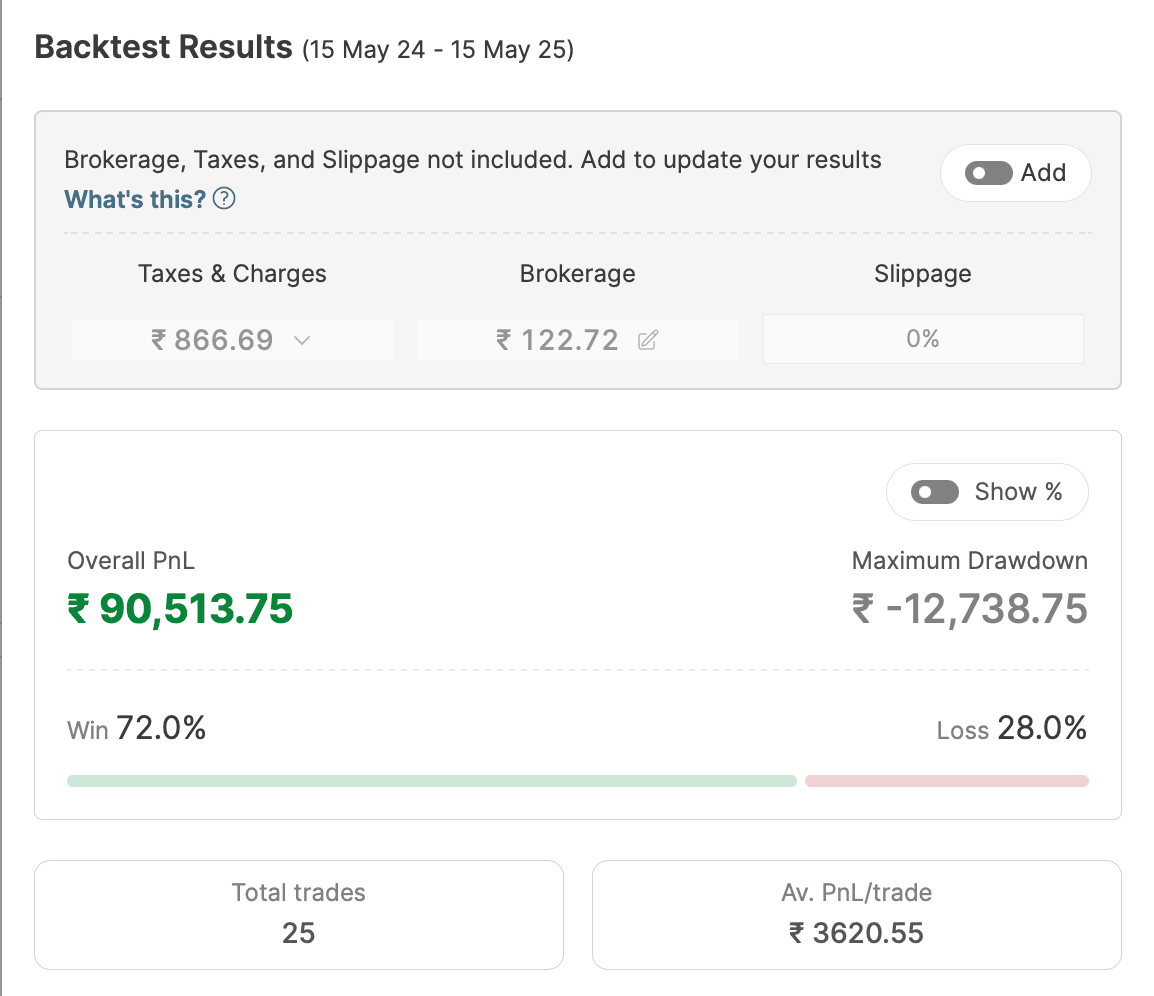
AlgoTest takes slippage seriously. That's why, when you review or backtest an [RA Algo](https://algotest.in/ra-algo), you have the ability to **manually input a slippage estimate**.
This simple yet powerful feature lets you:
1. Simulate more realistic trading conditions.
2. Avoid overestimating potential returns.
3. Understand the robustness of an algo even with minor execution inefficiencies.
By entering a slippage value (for example 1% percentage), you can see how the algo's metrics, like returns, drawdowns, and win ratio, would change if you experienced that level of slippage consistently.
Related: [What is the Algo Trading Marketplace on AlgoTest](https://algotest.in/blog/algo-trading-marketplace-india)
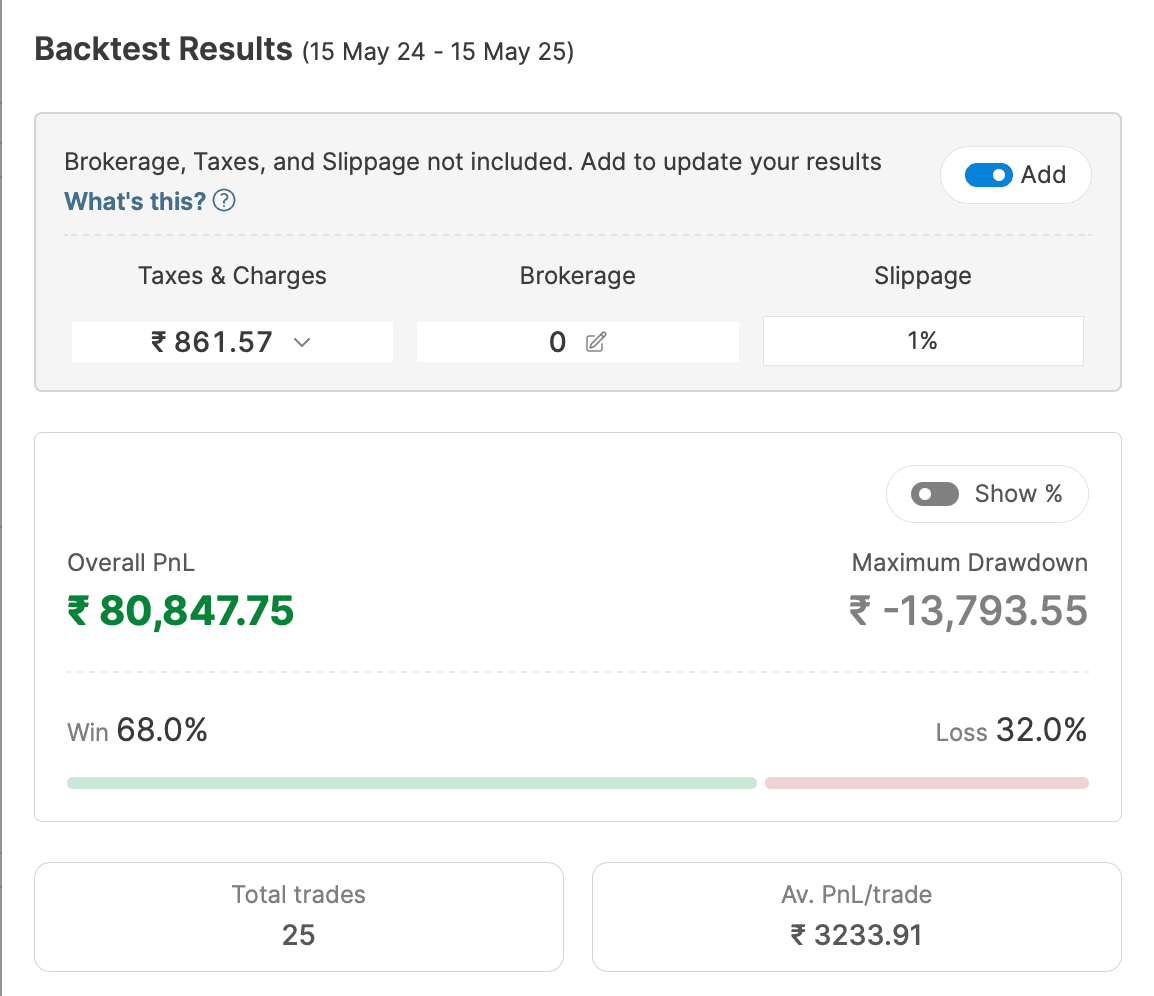
This gives you a much clearer, more conservative view of performance before you decide to deploy live.
### **Conservative vs Aggressive Slippage Estimates**
One common question is: **"How much slippage should I assume?"**
The answer depends on your approach and risk tolerance, but here are some general guidelines:
#### **Conservative Approach:**
1. Assume higher slippage, especially for instruments with lower liquidity or during volatile sessions.
2. This helps you prepare for worst-case scenarios and reduces the risk of unpleasant surprises.
3. Example:
1. Nifty Selling - 0.5% slippages
2. Nifty Buying - 1% slippages
3. Sensex Selling - 1% slippages
4. Sensex Buying - 1.5% slippages
#### **Aggressive Approach:**
1. Assume minimal slippage, betting on optimal market conditions and excellent broker execution.
2. This can show more optimistic results but carries the risk that real-world performance might disappoint.
3. Example: For Nifty options with high liquidity, you might assume 0.5-1 percentage slippage.
**Tip:** When in doubt, lean towards conservative estimates, especially if you're new to algorithmic trading. It's better to be pleasantly surprised than to be caught off guard.
### **Why Factoring Slippage Matters for RA Algos**
Since RA Algos are execution-only, meaning they handle entries, exits, and risk management without disclosing full internal logic, it becomes even more important to:
1. **Trust the research** (all algos are by SEBI-registered Research Analysts and vetted)
2. **Prepare for real-world frictions** like slippage, brokerage fees, and latency
Slippage directly affects your net profitability. For instance, an algo showing 20% annual return with no slippage might only yield 15% once realistic slippage is factored in. That's a material difference, especially over longer periods and larger capital deployments.
AlgoTest ensures transparency by showing backtested results with all trading costs considered. But your personal slippage experience could still vary depending on broker, internet speed, and market conditions. Always use the manual slippage feature to personalize your expectations.
Related: [Why do we need backtesting?](https://algotest.in/blog/why-do-we-need-backtesting)
### **Key Takeaways**
1. **Slippage is normal** and unavoidable in live trading, but you can plan for it.
2. **Volume, volatility, latency, and order size** are key drivers of slippage.
3. **AlgoTest lets you adjust slippage manually** during backtesting, helping you model real-world outcomes.
4. **Use conservative slippage assumptions** to protect yourself from overly optimistic expectations.
5. **Past performance includes costs,** but real-world execution can still differ slightly, always be prepared.
By understanding and proactively accounting for slippage, you'll set yourself up for a more confident, informed trading experience with RA Algos.
Ready to explore? Remember, each [RA Algo](https://algotest.in/ra-algo) card on AlgoTest transparently displays the margin requirement, historical drawdown, and other vital metrics, all designed to help you make the best decision for your journey into systematic, research-backed trading.
[Sign up and get 25 free backtests.](https://algotest.in/register?utm_source=blog&utm_medium=organic&utm_campaign=seo&utm_source=blog&utm_medium=organic&utm_campaign=seo)
# FAQs
Q: What is a reasonable slippage assumption for Nifty options?
A: For highly liquid Nifty options, traders often assume around 0.5% slippage for selling and 1% slippage for buying. The actual slippage experienced may vary depending on market conditions.
Q: Should I use conservative or aggressive slippage estimates?
A: Conservative estimates are generally recommended, especially for new traders. They help create realistic expectations and reduce the risk of overestimating potential returns.
Q: Does slippage affect backtesting results?
A: Yes. Ignoring slippage can make backtest results appear better than what is achievable in live markets. Including slippage provides a more accurate picture of an algo's potential performance.
Q: What factors have the biggest impact on slippage?
A: The most important factors include market liquidity, volatility, order size, broker execution quality, internet speed, and exchange processing delays.
Q: Why is slippage important when evaluating RA Algos?
A: Slippage directly impacts real-world profitability. Factoring it into your analysis helps you better understand the difference between backtested results and live trading performance.
```
Q: What is slippage in algo trading?
A: Slippage is the difference between the expected price of a trade and the actual execution price. It occurs when market prices change between the time an order is placed and when it is filled.
Q: Why does slippage occur in algorithmic trading?
A: Slippage can occur due to low liquidity, high market volatility, large order sizes, internet latency, broker routing delays, and exchange processing times.
Q: How does slippage affect algo trading performance?
A: Slippage can reduce profits and increase losses. While the impact may seem small on individual trades, it can significantly affect overall returns when an algo executes hundreds of trades.
Q: Can slippage be completely avoided?
A: No, slippage is a normal part of live trading and cannot be eliminated entirely. However, traders can reduce its impact by trading liquid instruments and using realistic slippage assumptions during backtesting.
Q: How does AlgoTest help account for slippage?
A: AlgoTest allows users to manually input a slippage estimate when analyzing or backtesting an RA Algo. This helps simulate more realistic market conditions and provides a better understanding of potential live performance.
---
This blog is powered by Superblog. Visit https://superblog.ai to know more.
---
## Essential Intraday Trading Tips Every Trader Should Know
Author: AlgoTest
Author URL: https://algotest.in/blog/author/algotest/
Published: 2026-06-11
Category: General
Category URL: https://algotest.in/blog/category/general/
Meta Description: Learn the best intraday trading tips, strategies, and risk management techniques to improve your trading performance and maximize profits in the stock market.
Tags: algo trade, algo trading india
Tag URLs: algo trade (https://algotest.in/blog/tag/algo-trade/), algo trading india (https://algotest.in/blog/tag/algo-trading-india/)
URL: https://algotest.in/blog/essential-intraday-trading-tips-for-traders/

**Intraday trading**, also known as **day trading**, involves buying and selling financial instruments, such as stocks, currencies, or commodities, within a single trading day. This fast-paced and volatile market requires traders to have a deep understanding of market dynamics, **intraday trading strategies**, and **risk management** strategies. In this blog, we will explore essential **intraday trading tips** that every trader, especially in the **Indian stock market**, should know to maximize their profits and manage their risks effectively.
The **stock market trading** landscape in India has witnessed significant growth and evolvement, offering opportunities for savvy **day traders** to capitalize on short-term price movements. By mastering the art of [**intraday trading**](https://docs.algotest.in/signals/pinescripts/supertrend_strategy#how-effective-is-supertrend-for-intraday-trading), traders can potentially generate consistent returns and navigate the dynamic nature of the market.
If you're new to the markets, understanding the different [types of trading in the stock market](https://algotest.in/blog/types-of-trading-in-stock-market/?utm_source=chatgpt.com&utm_source=chatgpt.com) can help you decide whether intraday trading aligns with your goals and risk appetite.
## **What is Intraday Trading?**
Intraday trading refers to buying and selling stocks on the same day. Assume Mr. Prakash buys stock in a company. 'Intraday' needs to be specifically mentioned in the portal. 'Day trading' is another term for intraday trading. Trading stocks on the same day allows traders to profit from the fluctuations in share prices throughout the day. Intraday happens on the same day before the market closes.
For example, if the stock opens trading at Rs 2000 in the morning. Soon it climbs to 2550 in an hour or two. If you bought 2000 shares in the morning and sold them at 2550, you would earn a profit of Rs 11,00,000. This is called intraday trading.
[**Try Free Backtesting Now**](https://algotest.in/feature/backtest?utm_source=blog&utm_medium=internal&utm_campaign=seo&utm_content=feature&utm_term=backtest)
## **Understanding Intraday Trading**
Successful **intraday trading** begins with a deep understanding of the various strategies that can be employed. By familiarizing themselves with [**intraday trading**](https://docs.algotest.in/signals/pinescripts/supertrend_strategy#how-effective-is-supertrend-for-intraday-trading), traders in the **Indian stock market** can enhance their decision-making process and increase their chances of achieving consistent profits.
### **Mastering Technical Analysis**
Delving into the realm of **technical analysis** can provide traders with valuable insights into the market's behavior. Familiarizing yourself with candlestick patterns, moving averages and support/resistance levels can help you identify trading opportunities and make more informed decisions, ultimately enhancing your **intraday trading strategies**.
Traders also commonly use indicators such as VWAP, RSI, EMA, MACD, and Bollinger Bands. Learn more about the [best indicators for intraday trading](https://algotest.in/blog/5-best-indicators-for-intraday-trading/?utm_source=chatgpt.com) and how they can improve trade entries and exits.
### **Identifying Market Trends**
Recognizing the **market trends**, whether bullish or bearish, is a crucial step in determining the optimal entry and exit points for your intraday trades. By closely monitoring technical indicators and analyzing the underlying factors driving the market, traders can make better decisions and capitalize on the prevailing **stock market trading** conditions.
### **Analyze the Market in Past Charts**
Traders can analyze past [charts](https://algotest.in/bankex-index-chart?utm_source=blog&utm_medium=internal&utm_campaign=seo&utm_content=product-feature&utm_term=index-chart) to understand market behavior at different times of the day. This analysis helps them identify patterns and potential opportunities.
### **Creating an Intraday Trading Strategy**
A trading strategy is a defined approach that outlines entry and exit points for trades. It creates a roadmap for making informed decisions about buying and selling.
**Benefits of a Trading Strategy:**
- **Discipline:** A strategy helps maintain discipline by establishing clear guidelines for entering and exiting trades, reducing impulsive decisions.
- **Consistency:** By following a plan, traders can ensure a consistent approach to the market, minimizing emotional influences.
- **Performance Tracking:** A strategy allows traders to track their performance and assess its effectiveness over time.
Before risking capital, it's important to validate your setup using historical data. Explore some of the most popular [intraday trading strategies](https://algotest.in/blog/best-intraday-trading-strategies-rules-tips/?utm_source=chatgpt.com) used by active traders.
### **Developing a Risk Management Plan**
Implementing a robust **risk management** plan is essential in intraday trading. This includes the use of **stop-loss orders** to limit potential losses, as well as careful position sizing to ensure that your exposure to the market is within your risk tolerance. By prioritizing risk management, traders can protect their capital and minimize the impact of market volatility on their trading [portfolio](https://algotest.in/portfolio?utm_source=blog&utm_medium=internal&utm_campaign=seo&utm_content=product&utm_term=portfolio).
[**Try Free Backtesting Now**](https://algotest.in/feature/backtest?utm_source=blog&utm_medium=internal&utm_campaign=seo&utm_content=feature&utm_term=backtest)
## **Best Intraday Trading Strategies**
Intraday trading is about buying and selling stocks within the same day. It's all about timing and understanding the market. Here are some popular strategies beginners can use:
- **Moving Average Crossover:** This strategy uses technical indicators to identify trends. When two moving average lines cross each other, it can signal a change in trend and a potential buying or selling opportunity.
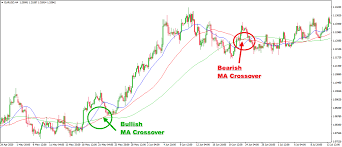
Image via [Forex](https://www.google.com/imgres?q=Image%20explaining%20Moving%20Average%20Crossover%20Strategy&imgurl=https%3A%2F%2Fforextraininggroup.com%2Fwp-content%2Fuploads%2F2021%2F05%2F3-SMA-Crossover-Indicator-1024x441.png&imgrefurl=https%3A%2F%2Fforextraininggroup.com%2Fmoving-average-crossover-entry-techniques%2F&docid=RxSUp8XlK-A8tM&tbnid=_TcNXLQ9g1DGBM&vet=12ahUKEwiujpXJ3puGAxW_4zgGHcI5BpcQM3oECBQQAA..i&w=1024&h=441&hcb=2&ved=2ahUKEwiujpXJ3puGAxW_4zgGHcI5BpcQM3oECBQQAA)
- **Reversal Trading:** This strategy involves buying stocks that have recently gone down in price (and vice versa) in the hope that the trend will reverse.
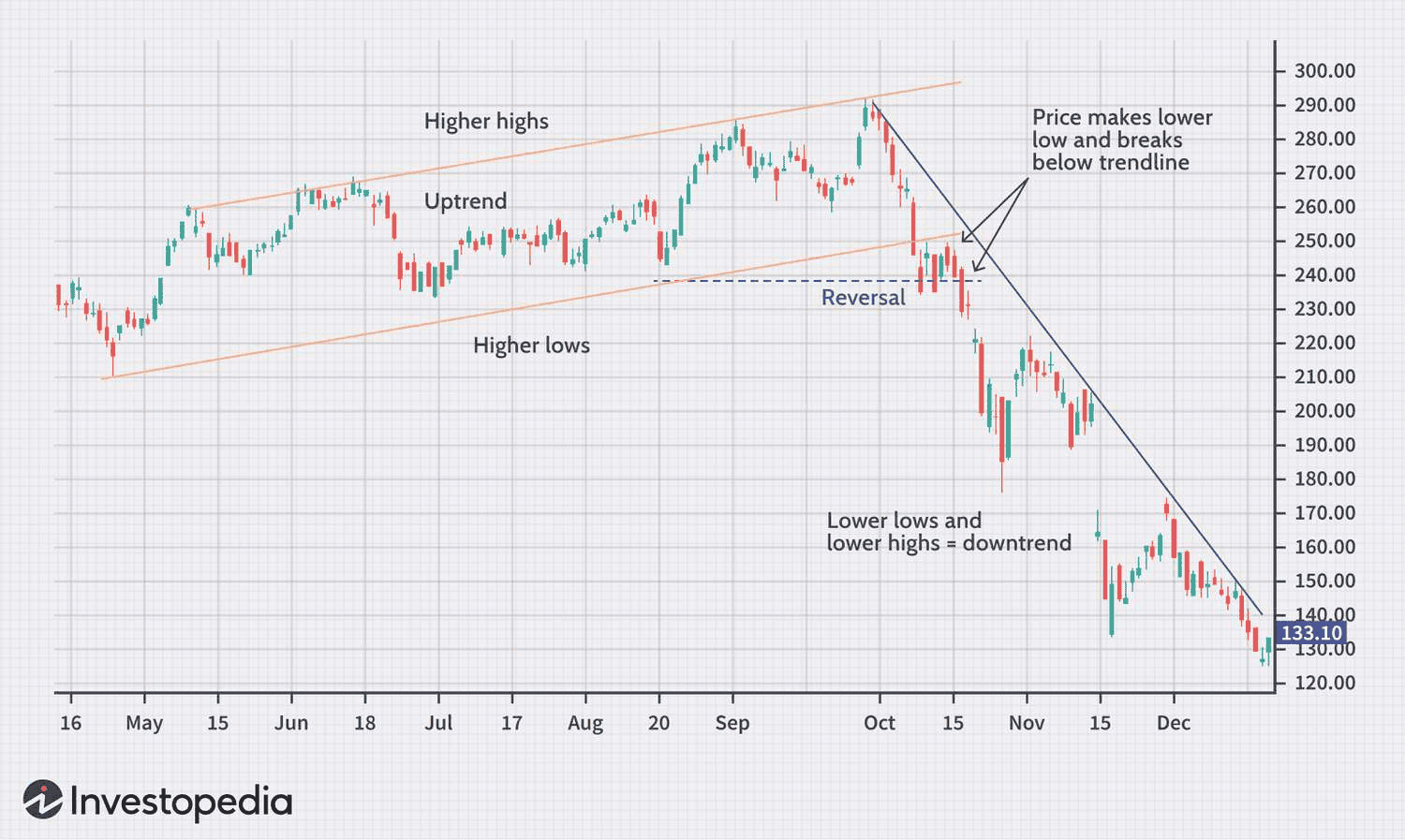
Image via [Investopedia](https://www.investopedia.com/thmb/T-U0w5vJxWMs83ngfBAmqcC9dJ4=/1500x0/filters:no_upscale():max_bytes(150000):strip_icc()/dotdash_Final_Reversal_Sep_2020-01-3289881e14af48f3a33d232f2f45d949.jpg)
- **Momentum Trading:** This strategy involves buying stocks that are already moving up (or down) in the hope that they will continue to move in that direction.
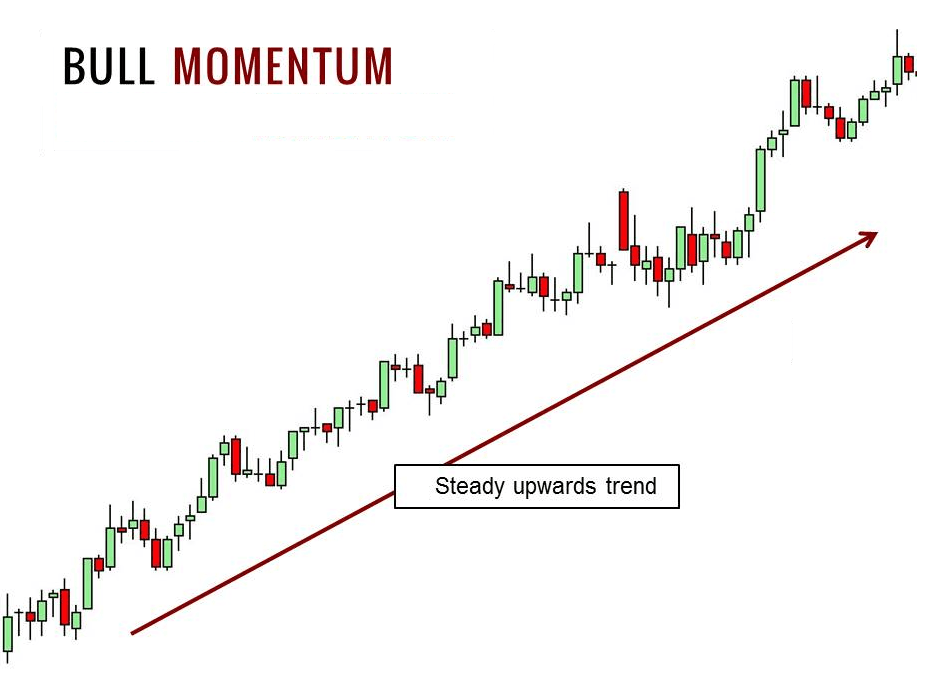
Image via [Medium](https://miro.medium.com/v2/resize:fit:1200/1*NlMLNE9nJ4zOTGT2_gL-pw.png)
- **Gap and Go Trading:** This strategy focuses on stocks that "gap up" or "gap down" in price, meaning they open significantly higher or lower than the previous day's closing price. Traders look to capitalize on this momentum.
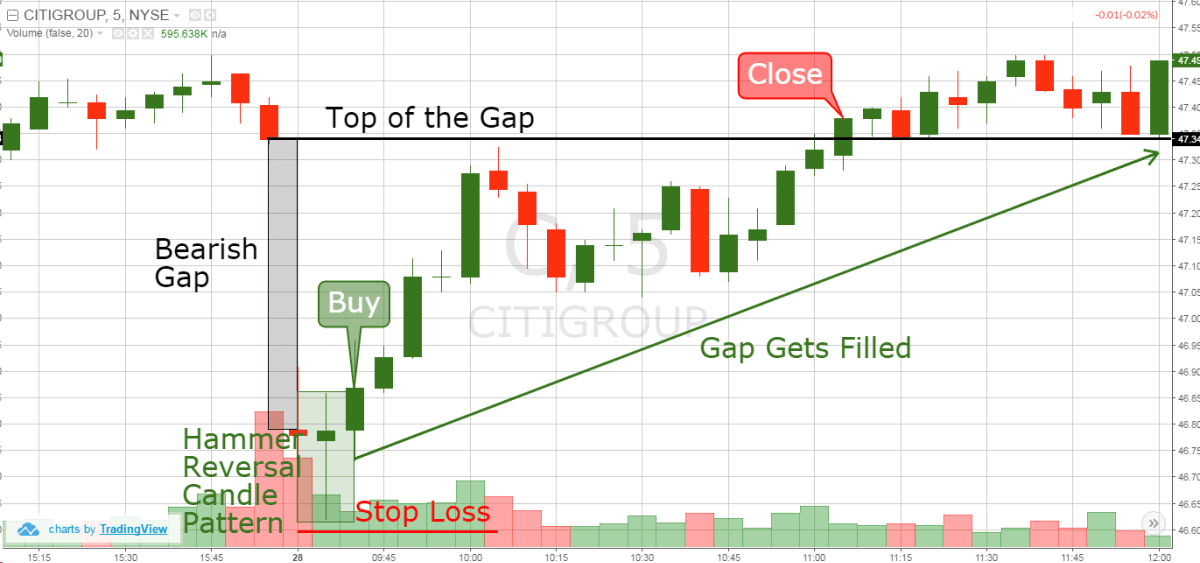
Image via [Blueberry Markets](https://bbm-web-news-assets.s3.ap-southeast-2.amazonaws.com/market-analysis/news/wp-content/uploads/2024/03/12033951/Gap-and-go-trading-strategy.png)
- **Bull Flag Trading:** This strategy identifies a specific chart pattern that suggests a stock's uptrend will continue.
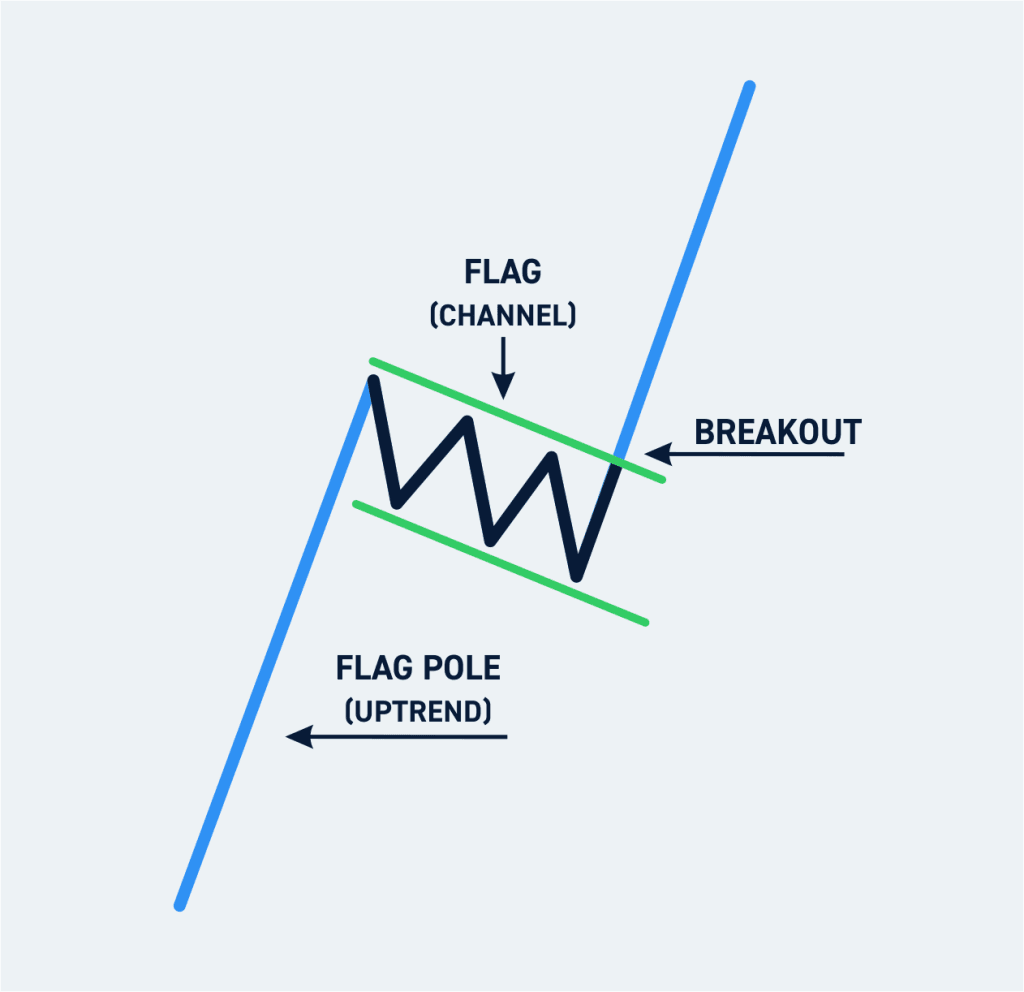
Image via [Centerpoint Securities](https://centerpointsecurities.com/wp-content/uploads/2022/03/Bull-Flag-Pattern-1024x992.png)
- **Pullback Trading:** This strategy involves buying stocks that have recently dipped in price after a strong uptrend. Traders are hoping to buy the stock at a discount.
Image via [Instagram](https://encrypted-tbn0.gstatic.com/images?q=tbn:ANd9GcQUNwZ2D29CMaXgc-DT19SM975w-Z4QjcfFTXIhk0s49g&s)
- **Breakout Trading:** This strategy involves buying (or selling) a stock when it breaks above (or below) a certain price level, suggesting a potential big move in price.
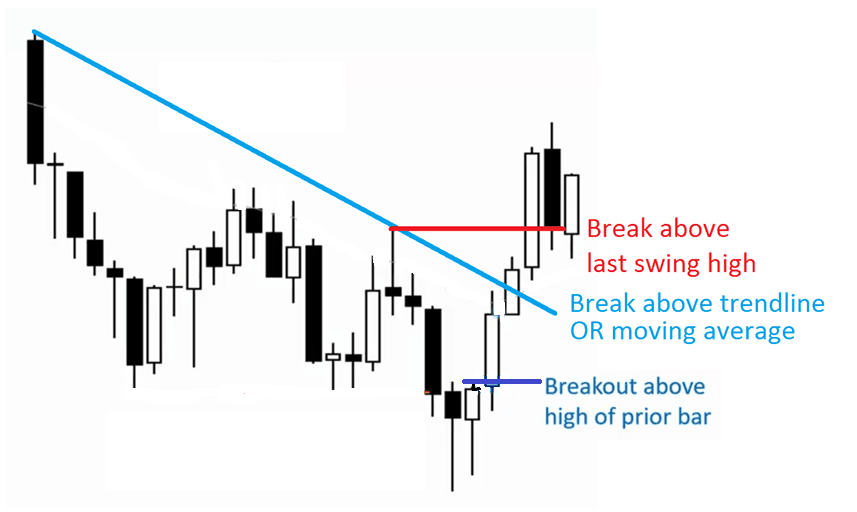
Image via [Dot Net Tutorials](https://dotnettutorials.net/wp-content/uploads/2020/02/word-image-143.png)
- **Pivot Point Strategy:** This strategy uses technical indicators to identify potential support and resistance levels, which can help traders decide where to buy or sell a stock.
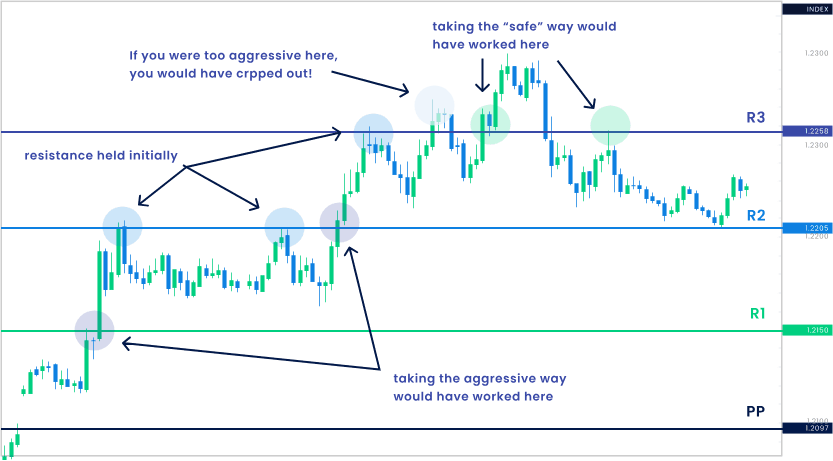
Image via [Blueberry Markets](https://blueberrymarkets.com/static/assets/img/learn/intermediate/pivot-point-strategies/pivot-point-strategies-graphic-02.svg)
- **CFD Trading:** Intraday trading is fast-paced, and making a profit demands much understanding. However, products like CFD are trader-friendly and simple to use. The CFD represents the difference between a trade's entry and exit positions.
CFD stands for contracts for difference, a derivative instrument that allows you to speculate on various global markets, including indexes without having to own the underlying asset.
CFDs are leveraged products, which means you may enter a trade by making a modest deposit, known as a margin. Here your profit and loss are computed based on the total amount of your investment, so keep in mind that leverage can amplify earnings.
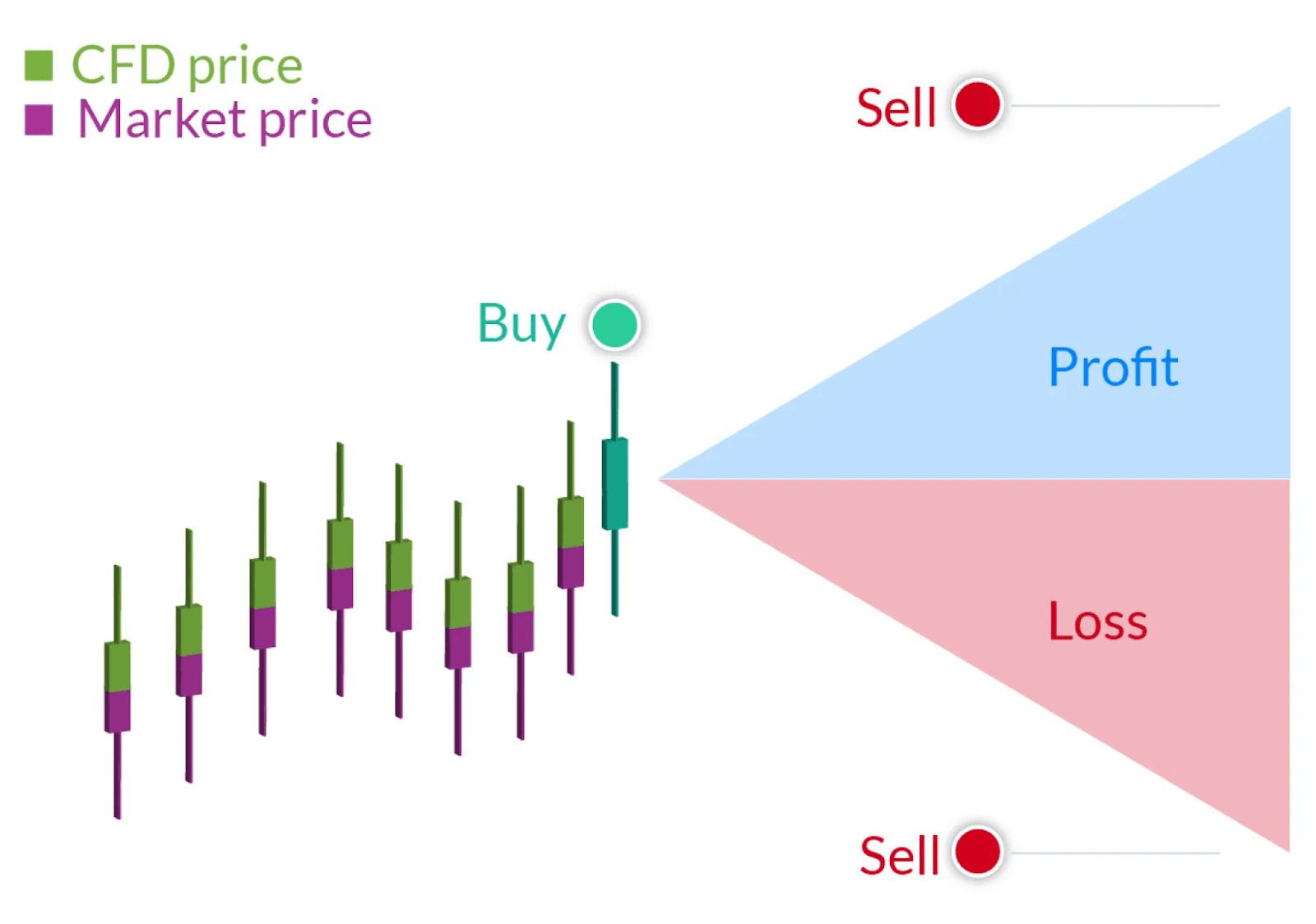
Image via [Skilling.com](https://images.ctfassets.net/hzjmpv1aaorq/46Vqwl1eYBCvMeBoQbkuZl/2b9f12d85b88436baf6bc12044cb31e4/priceArt.webp?q=70)
- **Scalping:** This strategy involves making many small trades throughout the day, trying to profit from tiny price changes. This is a fast-paced and tricky strategy.
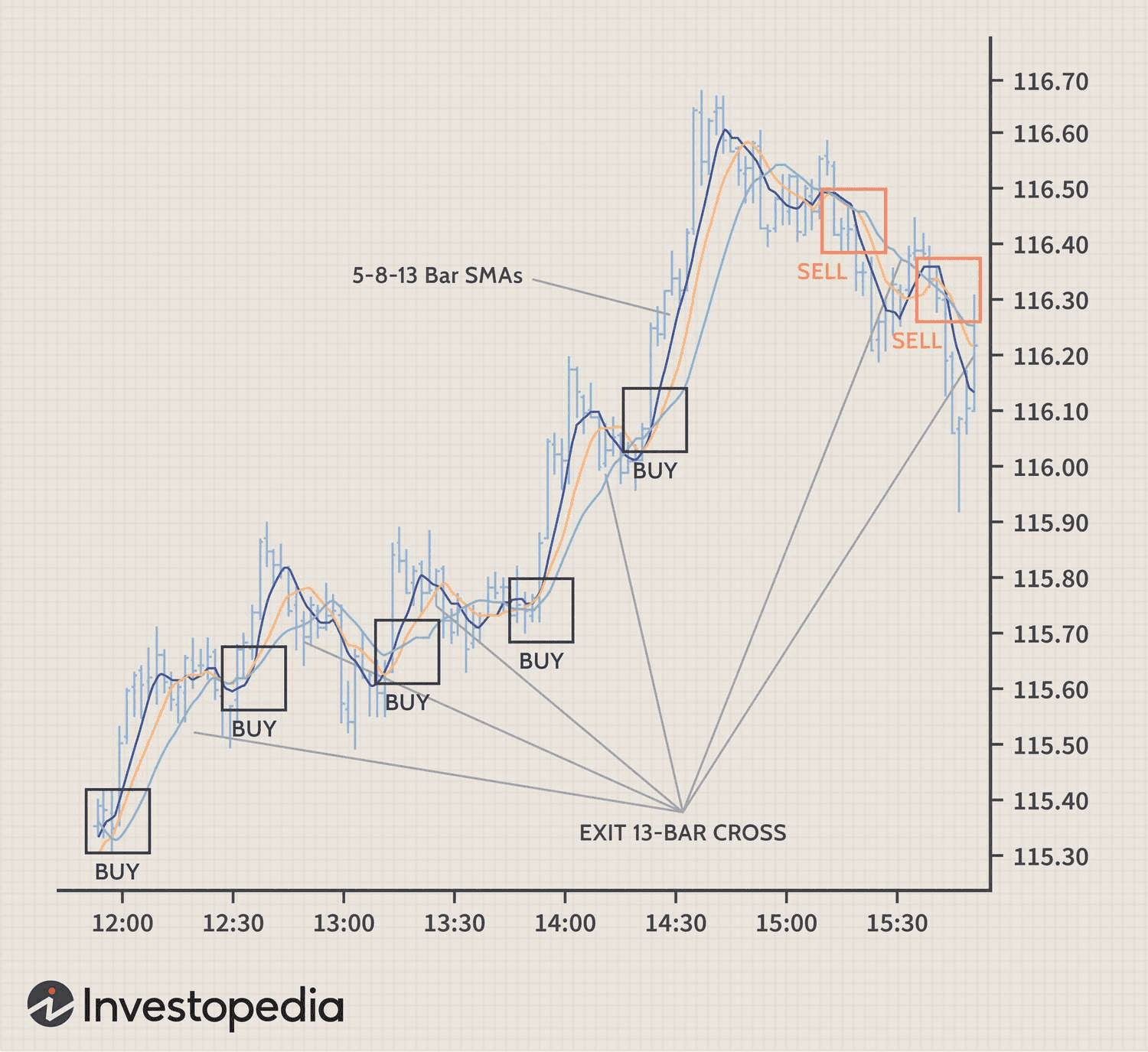
Image via [Investopedia](https://www.investopedia.com/thmb/eI9wbDnQn-2C7LRbi5pq0oOySyM=/1500x0/filters:no_upscale():max_bytes(150000):strip_icc()/dotdash_Final_Top_Indicators_for_a_Scalping_Trading_Strategy_Sep_2020-01-c530bea4f4a84a34a89a4d74fdae1be8.jpg)
[**Try Free Backtesting Now**](https://algotest.in/feature/backtest?utm_source=blog&utm_medium=internal&utm_campaign=seo&utm_content=feature&utm_term=backtest)
Many traders now use systematic trading approaches to automate risk controls and execution. Here's a complete guide to [algo trading in India](https://algotest.in/blog/algo-trading-india/?utm_source=chatgpt.com).
## **Intraday Trading Tips for Maximizing Profits**
To maximize your profits in **intraday trading**, it's crucial to utilize **leverage** responsibly. While **leverage** can amplify your gains, it can also magnify your losses if not managed properly. Implementing **stop-loss orders** can help you cut your losses and limit your downside risk. Additionally, **diversifying your** [**portfolio**](https://algotest.in/portfolio?utm_source=blog&utm_medium=internal&utm_campaign=seo&utm_content=product&utm_term=portfolio) by trading a mix of financial instruments, such as stocks, currencies, and commodities, can help you mitigate overall market risk and potentially increase your chances of **profit maximization**.
Here are some helpful tips for intraday trading in the Indian stock market:
**1\. Pick Stocks That Trade Often (Liquid Stocks)**
Imagine you buy something at a store, but then nobody wants to buy it from you later. That would be frustrating! In intraday trading, you need to buy stocks that are easy to sell again by the end of the day. These are called liquid stocks, and they trade a lot throughout the day. Typically, large, well-established companies (large-cap) have a lot of trading activity.
**2\. Set Stop Losses to Limit Your Losses**
Let's say you buy a cup of coffee for 10 rupees, expecting the price to go up. But what if the price suddenly drops? A stop-loss order is like an automatic "sell" instruction you give to your broker. If the stock price falls below a certain point (like 8 rupees in our coffee example), your stop-loss order kicks in and you sell the stock automatically. This helps you limit how much money you could lose if the stock price goes against you.
**3\. Avoid Risky Rollercoaster Stocks (Volatile Stocks)**
Some stocks are like crazy rollercoasters, with prices going up and down dramatically. While these can be tempting for potentially high profits, they're also riskier for beginners. It's better to stick with stocks whose prices are more stable until you get more experience.
**4\. Look for Stocks That Move Together (Correlated Stocks)**
Imagine you're buying apples at the market. If the price of apples goes up, the price of bananas might go up too, because they're both fruits. In intraday trading, you can look for stocks that tend to move in the same direction as certain sectors or indexes (like the Nifty 50). This can help you predict how a stock might move based on the bigger market trends. There are websites like the NSE that can help you see which stocks are moving with the market.
**5\. Choose Companies That Are Open About Their Business (Transparent Stocks)**
Imagine buying a used car, but the seller won't tell you anything about its history. Not a good idea! When choosing stocks for intraday trading, it's important to pick companies that are transparent about their business. This means they share a lot of information about what they're doing, so you can make informed decisions. Avoid companies that seem secretive or don't share much information.
**6\. Be Cautious with News-Driven Stocks**
Some stocks are very sensitive to news events. If there's good news, the stock price might shoot up. But if there's bad news, the price could plummet. While this can be a way to make quick profits, it's also very risky. The news might not always play out the way you think, so be careful when trading stocks that rely heavily on news events.
[**Try Free Backtesting Now**](https://algotest.in/feature/backtest?utm_source=blog&utm_medium=internal&utm_campaign=seo&utm_content=feature&utm_term=backtest)
## **Conclusion**
Ready to test your intraday trading ideas? With AlgoTest, you can backtest strategies on historical data, paper trade them in real-time, and automate execution without coding. If you're just getting started, check out our guide on [how to do algo trading in India](https://algotest.in/blog/how-to-do-algo-trading-step-by-step-beginner-checklist/?utm_source=chatgpt.com) and learn how traders are using [algorithmic trading in India](https://algotest.in/blog/algo-trading-india/?utm_source=chatgpt.com) to build more systematic trading workflows.
P.S - [AlgoTest](https://algotest.in/?utm_source=blog&utm_medium=internal&utm_campaign=seo&utm_content=main-page&utm_term=algotest) (an intuitive algo-trading platform) allows you [backtest](https://algotest.in/feature/backtest?utm_source=blog&utm_medium=internal&utm_campaign=seo&utm_content=feature&utm_term=backtest), [forward test](https://algotest.in/feature/forward-test?utm_source=blog&utm_medium=internal&utm_campaign=seo&utm_content=feature&utm_term=forward-test) and automate your strategies. A trader receives 25 [free backtesting credits](https://algotest.in/feature/backtest) every week to backtest 25 strategies for free. One can set up their broker, successfully run [forward testing](https://algotest.in/feature/forward-test?utm_source=blog&utm_medium=internal&utm_campaign=seo&utm_content=feature&utm_term=forward-test), and launch [live](https://algotest.in/feature/live?utm_source=blog&utm_medium=internal&utm_campaign=seo&utm_content=feature&utm_term=live) trade with 50+ brokers.
## **FAQ**
### **What is intraday trading?**
Intraday trading, also known as day trading, involves buying and selling financial instruments, such as stocks, currencies, or commodities, within a single trading day.
### **How can traders maximize their profits in intraday trading?**
To maximize profits, traders should utilize leverage responsibly, implement stop-loss orders, and diversify their [portfolios](https://algotest.in/portfolio?utm_source=blog&utm_medium=internal&utm_campaign=seo&utm_content=product&utm_term=portfolio) by trading a mix of financial instruments.
### **What is the importance of risk management in intraday trading?**
Effective risk management is crucial in intraday trading to protect capital and minimize potential losses. This includes the use of stop-loss orders and proper position sizing.
### **How can traders stay ahead in the fast-paced world of intraday trading?**
Traders can stay ahead by continuously educating themselves on the latest market trends, honing their technical analysis skills, and implementing disciplined **trading strategies** with a focus on risk management.
---
This blog is powered by Superblog. Visit https://superblog.ai to know more.
---
## TradingView vs GoCharting vs Signals AI: Best Platform for Indian Traders?
Author: AlgoTest
Author URL: https://algotest.in/blog/author/algotest/
Published: 2026-06-10
Category: General
Category URL: https://algotest.in/blog/category/general/
Meta Description: Compare TradingView, GoCharting, and Signals AI for Indian traders. Covers charting, order flow, and no-code automation. See which platform fits your workflow
Tags: algo trading, indicators
Tag URLs: algo trading (https://algotest.in/blog/tag/algo-trading/), indicators (https://algotest.in/blog/tag/indicators/)
URL: https://algotest.in/blog/tradingview-vs-gocharting/
TradingView, GoCharting, and Signals AI are not direct substitutes. Each one serves a different stage of the trading workflow.
TradingView is a tool for market analysis and charting. GoCharting is the tool for understanding market structure, particularly in options and order flow. [Signals AI](https://algotest.in/register?redirect_to=%2Fsignals%2Fchat&utm_source=blog&utm_medium=organic&utm_campaign=seo&utm_source=blog&utm_medium=organic&utm_campaign=seo) is the tool for converting trading ideas into testable, automated signals.
Most traders get stuck trying to make one [algo platform](https://algotest.in/?utm_source=blog&utm_medium=internal&utm_campaign=seo&utm_content=main-page&utm_term=algotest&utm_source=blog&utm_medium=internal&utm_campaign=seo&utm_term=algotest&utm_content=main-page) do all three jobs. This article breaks down what each platform actually does well, where it hands off, and how to build a workflow around the right combination.
## Quick Comparison Table
Platform
Best For
TradingView
Advanced charting and technical analysis
GoCharting
Order flow analysis and options trading
Signals AI
AI-powered signal creation and automation
## TradingView Overview
TradingView is a widely used charting platform among retail traders globally. It gives you access to detailed charts across equities, F&O, crypto, and forex, along with thousands of community-built indicators and Pine Script for writing custom strategies.
If charts and technical analysis are central to your process, TradingView is hard to beat.
**Strengths**
- Industry-leading multi-timeframe charts
- Large library of community scripts and indicators
- Pine Script for building custom indicators and strategy logic
- Alert system with webhook support for automation
- Coverage across multiple asset classes, including Indian markets
**Limitations**
Building a fully automated workflow on TradingView often requires Pine Script, alerts, webhooks, broker connectivity, and sometimes additional middleware depending on your broker and execution requirements.
TradingView does support direct broker integrations for select brokers, but the end-to-end setup still involves multiple moving parts. For traders who want to move quickly from idea to execution, that friction is real.
**Best For:** Technical analysts and indicator-driven traders who are comfortable with or willing to learn Pine Script.
Related: [Best TradingView Alternatives in India](https://algotest.in/blog/best-tradingview-alternatives)
## GoCharting Overview
GoCharting is built around data that most charting platforms do not prioritise: options chains, order flow, open interest, and footprint charts. It is designed for traders who want to understand what is happening beneath price action, not just read candles and indicators.
**Strengths**
- Options chain integration with Greeks and OI data
- Footprint charts and order flow analysis
- Open interest analytics for F&O traders
- Strong focus on Indian market instruments
**Limitations**
While GoCharting offers alerts and advanced market analysis tools, traders looking to systematically generate, test, and automate strategies often need additional workflows or integrations. It is a strong decision-support platform, but the path from analysis to automated execution is not built in.
**Best For:** Options traders and order-flow traders who need deep market structure data.
Related: [TradingView vs Tickertape vs Signals AI](https://algotest.in/blog/tradingview-vs-tickertape)
## Signals AI Is More Than Signal Generation
Most traders assume the hardest part of algorithmic trading is spotting a setup. In reality, the hard part is turning that setup into a strategy you can test, validate, and run consistently without writing code or managing multiple tools.
Traditionally, that requires:
- Writing strategy logic in Pine Script or Python
- Configuring alerts and webhooks
- Setting up an execution bridge or relay bot
- Connecting a broker API
- Testing whether each part of the chain works reliably
Signals AI removes those steps.
You describe your trading idea in plain language. Signals AI converts it into structured signal logic. You backtest it on historical data, run it in paper trading to validate performance in live conditions, and automate execution through AlgoTest, all within a single workflow.
The full path looks like this:
Idea → Signal → Backtest → Paper Trade → Automate → Execute
No Pine Script. No webhook configuration. No relay bot. No separate execution bridge.
Read [how to create, validate, and automate trading signals with AI on AlgoTest](https://algotest.in/blog/how-to-create-trading-signals-ai)
### Natural Language Signal Creation
You enter a prompt like:
- "Generate signals when price closes above VWAP and RSI crosses 60."
- "Flag bullish breakout setups after the first 30 minutes of the session."
Signals AI reads the prompt and builds the signal logic for you. It supports 20+ indicators, including RSI, [EMA](https://algotest.in/blog/automate-ema-indicator-without-coding), MACD, [Bollinger Bands,](https://algotest.in/blog/bollinger-bands-strategies-for-indian-traders) and SuperTrend. You can combine them with AND/OR logic and set independent entry and exit conditions.
Read more: [5 Best indicators for intraday trading](https://algotest.in/blog/5-best-indicators-for-intraday-trading)
### No-Code Strategy Building
You do not need Pine Script, formula syntax, or a third-party automation tool. If you prefer a visual layout, a canvas lets you drag and drop indicator nodes and connect them with logic conditions. Both paths produce the same output: a signal ready to backtest.
[Sign up and get 25 free backtests](https://algotest.in/feature/backtest?utm_source=blog&utm_medium=internal&utm_campaign=seo&utm_content=feature&utm_term=backtest&utm_source=blog&utm_medium=internal&utm_campaign=seo&utm_term=backtest&utm_content=feature)
### One Platform, End to End
For most retail traders, there is a long gap between spotting a repeatable pattern and running it as an automated strategy. [Signals AI](https://algotest.in/feature/signals/indicators?utm_source=blog&utm_medium=organic&utm_campaign=&utm_source=blog&utm_medium=organic) is built to close that gap without requiring you to learn a new coding language or maintain a multi-tool stack.
## TradingView vs GoCharting vs Signals AI: Full Feature Comparison
Feature
TradingView
GoCharting
Signals AI
Advanced Charts
Yes
Yes
No
Order Flow Analysis
No
Yes
No
Footprint Charts
No
Yes
No
AI Signal Creation
No
No
Yes
Natural Language Strategy Building
No
No
Yes
Backtesting
Limited
Limited
Yes
No-Code Workflow
No
Partial
Yes
Third-Party Integrations Required
Often
Sometimes
No
Automation Ready
Partial
Partial
Yes
Options Strategy Automation
Limited
Limited
Yes
## The Real Bottleneck in Trading Is Not Analysis
Most active traders can spot a setup. They know what RSI divergence looks like. They can read a support level. They understand when a breakout is real or a false move. The analysis part is rarely the problem.
The real bottleneck is what comes after:
- Can you define your setup in clear, testable rules?
- Can you check whether those rules hold up across hundreds of historical trades?
- Can you execute those rules consistently without second-guessing every entry?
This is where charting platforms and automation platforms diverge. A chart shows you what the market is doing. An [automation platform](https://algotest.in/?utm_source=blog&utm_medium=internal&utm_campaign=seo&utm_content=main-page&utm_term=algotest&utm_source=blog&utm_medium=internal&utm_campaign=seo&utm_term=algotest&utm_content=main-page) helps you act on it systematically.
## Why Traders End Up Using Multiple Tools
The typical Indian algo trader using TradingView is not running one tool. They are running five.
TradingView handles the charts. Pine Script handles the strategy logic. A webhook service routes the alert. A relay bot like Algomojo or AutoTrader translates it into an order. The broker API executes it. Five separate moving parts, each with its own configuration, its own failure points, and its own maintenance overhead.
When everything works, the setup is fine. When something breaks at 9:15 AM, you are debugging across three dashboards while a live position runs against you.
The Signals AI workflow replaces that chain with a single platform:
Signal Idea → Signals AI → Backtest → Automation → Execution
One login. One dashboard. One place to debug if something looks off. That is the practical difference, not just a feature comparison.
Read [product documentation](https://docs.algotest.in/Signals-AI/) to understand the complete workflow
## A Typical TradingView Workflow
Here is what building an automated strategy on TradingView actually looks like:
1. Form a trading idea
2. Write the logic in Pine Script
3. Set up an alert condition
4. Configure a webhook to a third-party tool
5. Connect a broker API
6. Execute the trade
Each step requires a different skill. Pine Script has a learning curve. Webhooks require technical setup. For traders with a programming background, this is manageable. For most retail traders, it is a significant barrier.
## A Typical GoCharting Workflow
GoCharting is built around reading market structure and making manual decisions:
1. Analyse options chain data
2. Review order flow and open interest
3. Identify a trade opportunity
4. Execute through your broker platform
This is a solid workflow for experienced options traders who know how to interpret footprint charts and OI shifts. But it is oriented toward manual decision-making, not rule-based signal generation or automated execution.
## How Signals AI Simplifies the Process
Signals AI is built around a shorter workflow:
1. Describe your trading idea in plain language
2. Signals AI generates the signal logic
3. Backtest the signal on historical data through AlgoTest
4. Automate execution
You stay focused on the strategy itself. The platform handles the translation from idea to testable rules. This matters for traders who have developed an edge through market experience but do not have the technical background to convert that edge into code.
## Can You Automate Trading Without Coding?
This is one of the most common questions from Indian retail traders who want to run systematic strategies but do not have a programming background.
The honest answer depends on which [algo trading platform](https://algotest.in/?utm_source=blog&utm_medium=internal&utm_campaign=seo&utm_content=main-page&utm_term=algotest&utm_source=blog&utm_medium=internal&utm_campaign=seo&utm_term=algotest&utm_content=main-page) you use.
For traders who have a clear trading idea but no interest in learning Pine Script or managing API connections, [Signals AI](https://algotest.in/register?redirect_to=%2Fsignals%2Fchat&utm_source=blog&utm_medium=organic&utm_campaign=seo&utm_source=blog&utm_medium=organic&utm_campaign=seo) is currently the most direct path to algorithmic trading without coding in India.
## Which Platform Should You Choose?
**Choose TradingView if:**
- Charts and indicators are the foundation of your process
- You use or plan to learn Pine Script
- You want access to a large community script library
**Choose GoCharting if:**
- You trade F&O actively and rely on options chain data
- Order flow and open interest are part of your trading edge
- Footprint charts are important to your analysis
**Choose Signals AI if:**
- You want to create signals without writing code
- You want to backtest trading ideas quickly without a technical setup
- You want to automate strategy execution through a single platform
## Final Verdict
TradingView helps you analyse markets. GoCharting helps you understand market structure. Signals AI helps you turn those insights into strategies that can be tested and automated.
If you want to create, backtest, and analyse trading signals without coding, [**AlgoTest's Signals**](https://algotest.in/feature/signals/indicators?utm_source=blog&utm_medium=organic&utm_campaign=seo&utm_source=blog&utm_medium=organic&utm_campaign=seo) Backtest feature provides a simple workflow to test your ideas before going live.
Join us as we simplify [**algo trading**](https://algotest.in/?utm_source=blog&utm_medium=internal&utm_campaign=seo&utm_content=main-page&utm_term=algotest&utm_source=blog&utm_medium=internal&utm_campaign=seo&utm_term=algotest&utm_content=main-page) for indian retail traders.
Free Sign Up
# FAQs
Q: Is Signals AI a charting platform?
A: No. Signals AI is a signal creation and automation tool. It does not replace TradingView or GoCharting for charting but works as the layer that converts trading ideas into testable signals and automated strategies.
Q: Do I need to know Pine Script to use Signals AI?
A: No. Signals AI is designed to work without any coding. You describe your trading idea in plain language and the platform generates the signal logic.
Q: Which platform is best for options trading in India?
A: GoCharting is the strongest option for order flow and options chain analysis. Signals AI also supports options trading use cases, particularly for traders who want to automate F&O strategies without writing code.
Q: Can I use TradingView and Signals AI together?
A: Yes. Many traders use TradingView for charting and market analysis, then use Signals AI to build and automate strategies based on those insights.
Q: What is the main difference between TradingView and Signals AI?
A: TradingView is built around charting and technical analysis. Signals AI is built around turning trading ideas into automated signals. TradingView requires Pine Script for custom automation. Signals AI works through natural language prompts with no code required.
---
This blog is powered by Superblog. Visit https://superblog.ai to know more.
---
## TradingView vs Tickertape vs Signals AI: Which Platform Should Indian Traders Use?
Author: AlgoTest
Author URL: https://algotest.in/blog/author/algotest/
Published: 2026-06-08
Category: General
Category URL: https://algotest.in/blog/category/general/
Meta Description: Compare TradingView, Tickertape, and Signals AI for charting, stock research, backtesting, and automation. Find the right platform for your trading style.
Tags: algo trading india, indicators
Tag URLs: algo trading india (https://algotest.in/blog/tag/algo-trading-india/), indicators (https://algotest.in/blog/tag/indicators/)
URL: https://algotest.in/blog/tradingview-vs-tickertape/
As a trader, you've probably used TradingView, Tickertape, or both.
Maybe you use Tickertape to find opportunities and TradingView to analyze charts. But when it comes to turning an idea into a backtested and automated strategy, things can get complicated quickly.
You need indicators, alerts, scripts, integrations, and sometimes even coding.
We'll compare TradingView, Tickertape, and [Signals AI](https://algotest.in/feature/signals/indicators?utm_source=blog&utm_medium=organic&utm_campaign=seo&utm_source=blog&utm_medium=organic&utm_campaign=seo) to see which platform is best suited for creating, testing, and automating trading signals.
## What Is TradingView?
TradingView is a charting and technical analysis platform. It is the most widely used charting tool among retail traders globally.
**What it does well:**
TradingView gives you over 100 built-in indicators, a highly customizable chart interface, and access to data across stocks, indices, forex, crypto, and commodities. You can also use Pine Script to build custom indicators and strategies.
**Where it falls short for Indian retail traders:**
To build a custom trading signal on TradingView, you need to write Pine Script. That means learning a programming language just to code a basic RSI crossover strategy.
Backtesting on TradingView is powerful but limited by your subscription tier. Free users get up to 5,000 historical bars. Even the premium plans cap out before you can run a meaningful multi-year intraday backtest. For automation, TradingView relies on alerts and webhooks that you must connect to a third-party broker integration yourself.
The full TradingView-to-broker automation path looks like this: Pine Script, alert, webhook, broker API, execution. Each step adds setup time, cost, and a potential point of failure.
Related: [How to Build, Backtest & Automate Without Coding or TradingView](https://algotest.in/blog/trading-signals/)
## What Is Tickertape?
Tickertape is a stock research and screening platform built for Indian investors. It has grown to over 6 million users and focuses on fundamental data and portfolio analysis.
**What it does well:**
Tickertape gives you a stock screener with over 200 filters across 4,600 Indian stocks, mutual fund research, portfolio tracking, and the Market Mood Index (MMI) for sentiment tracking. It also covers insider and bulk deal data, analyst forecasts, and peer comparisons.
**Where it falls short for active traders:**
Tickertape is built for investing, not active trading. There is no strategy builder, no backtesting workflow, and no automation. If you want to turn a technical setup into a live trade, Tickertape is not the tool for that.
Related: [Master the Option Strategy Builder: AlgoTest Tutorial](https://algotest.in/blog/option-strategy-builder-algotest-tutorial/)
## What Is Signals AI?
Signals AI is [AlgoTest's](https://algotest.in/?utm_source=blog&utm_medium=internal&utm_campaign=seo&utm_content=main-page&utm_term=algotest&utm_source=blog&utm_medium=internal&utm_campaign=seo&utm_term=algotest&utm_content=main-page) indicator-based strategy builder. It is designed for traders who want to create, backtest, and automate trading signals without writing code or connecting multiple tools.
The entire workflow, from idea to live execution, happens inside one platform.
## How Signals AI Works
### Step 1: Describe your strategy in plain English
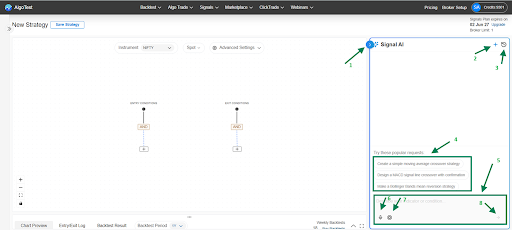
You type your strategy idea in natural language. The Signals AI agent converts it into structured trading logic automatically. For example:
"Buy when RSI crosses above 30 and price is above the 200 EMA. Exit when RSI hits 70 or price falls 2% from entry."
That is a complete, testable signal. No Pine Script. No formulas. No developer needed.
### Step 2: Refine on the visual canvas
If you want to adjust the logic manually, you can use the drag-and-drop strategy canvas. You add indicators, set comparison operators, and combine conditions using AND/OR logic blocks. You can also configure time-based exits, set the maximum number of concurrent open trades, and limit daily entries.
Related: [How to Create Trading Signals with AI](https://algotest.in/blog/how-to-create-trading-signals-ai/)
### Step 3: Preview signals on the chart
Before running any backtest, you can see exactly when the strategy would have entered and exited on a historical chart. This helps you spot obvious errors in your logic early.
### Step 4: Run a backtest
Connect your strategy conditions to an [AlgoTest backtest.](https://algotest.in/feature/backtest?utm_source=blog&utm_medium=internal&utm_campaign=seo&utm_content=feature&utm_term=backtest&utm_source=blog&utm_medium=internal&utm_campaign=seo&utm_term=backtest&utm_content=feature) Results come back in under 30 seconds. Historical data is built in, so you do not need a separate subscription or manual data import.
Backtest results include win rate, max drawdown, profit factor, year-wise returns, and a cumulative P&L curve compared against the underlying asset.
### Step 5: Paper Trade before going live
Run the strategy in live market conditions using paper trades (known as forward testing on the platform). This tests your execution logic, timing, and slippage assumptions without risking real capital.
Check out the [best paper trading websites](https://algotest.in/blog/paper-trading-websites-india/) in India
### Step 6: Go live with one click
When you are ready, click Algo Trade. The strategy starts executing automatically through your connected broker account. No chart watching. No manual order entry.
Read the [Signals AI documentation](https://docs.algotest.in/Signals-AI/) for a complete step-by-step walkthrough.
## What Makes Signals AI Different from TradingView and Tickertape
### 5 data types for signal generation
Most signal platforms only let you generate signals on spot charts. Signals AI supports five data types:
- Spot charts (default): the underlying index or stock price
- Futures charts: signal generation on monthly or next monthly futures data
- Options charts: signals on a rolling option chart itself, not just the underlying
- Synthetic futures: for traders who want exposure without using spot or futures data directly
Generating signals directly on an ATM options chart is something TradingView cannot do natively.
### No dependency on TradingView or Chartink
The TradingView webhook path works, but it requires an active TradingView subscription, knowledge of Pine Script, alert maintenance, and a broker integration layer. Signals AI removes all of that. You build, test, and deploy without leaving AlgoTest.
### Supported indicators
Signals AI supports RSI, MACD, SuperTrend, [EMA](https://algotest.in/blog/automate-ema-indicator-without-coding), SMA, VWAP, [Bollinger Bands](https://algotest.in/blog/bollinger-bands-strategies-for-indian-traders), ATR, [ADX](https://algotest.in/blog/how-to-automate-adx-indicator), Stochastic, CCI, and more. You can combine multiple indicators with logical operators to build layered entry and exit conditions.
### Built for Indian markets
Signals AI connects to 50+ Indian brokers. It is designed for Nifty, BankNifty, and F&O traders who want intraday automation without a developer.
[Join us now](https://algotest.in/feature/signals/indicators?utm_source=blog&utm_medium=organic&utm_campaign=seo&utm_source=blog&utm_medium=organic&utm_campaign=seo) and get priority access
## Feature Comparison
Feature
TradingView
Tickertape
Signals AI
Advanced charting
Yes
Basic only
Limited
Stock screener
Limited
Yes (200+ filters)
No
Fundamental analysis
No
Yes
No
Signal creation
Requires Pine Script
No
Yes, no code needed
AI strategy generation
No
No
Yes
Visual drag-and-drop builder
No
No
Yes
Backtesting
Yes (bar limits apply)
Limited
Yes (built-in data)
Forward testing
No
No
Yes
Live automation
Via webhooks + third party
No
Yes, direct broker execution
Indian broker integration
No
No
50+ brokers
Coding required
Yes (Pine Script)
No
No
## Which Trading Platform Is Right for You?
The right platform depends on how you trade.
**Choose TradingView if:**
- You rely heavily on technical analysis and charting
- You trade across multiple asset classes such as stocks, forex, crypto, commodities, and indices
- You want access to advanced indicators, drawing tools, and custom scripts
- You are comfortable using Pine Script to create custom strategies and signals
- You don't mind connecting additional tools for automation and execution
TradingView remains one of the most popular charting platforms globally and is widely used by traders who prioritize technical analysis and customization.
**Choose Tickertape if:**
- You primarily invest in Indian stocks and mutual funds
- You rely on fundamental analysis and stock screening
- You want portfolio tracking, analyst estimates, and market sentiment data
- You use screeners to discover investment opportunities
- You are not looking to build or automate trading strategies
Tickertape is designed for research and investing, offering stock screeners, mutual fund analysis, portfolio tracking, and market insights for Indian investors.
**Choose Signals AI if:**
- You want to create trading signals without writing code
- You want to backtest and forward test strategies before deploying capital
- You want to automate indicator-based trading strategies
- You prefer a visual strategy builder instead of Pine Script
- You want to move from a strategy idea to live execution within a single workflow
Signals AI is designed for traders who want to build, test, and automate rule-based trading signals without having to stitch together multiple platforms.
**Bottom line:** If your priority is charting, go with TradingView. If it's research and stock discovery, choose Tickertape. If your goal is to create, backtest, and automate trading signals with minimal setup, [Signals AI](https://algotest.in/feature/signals/indicators?utm_source=blog&utm_medium=organic&utm_campaign=seo&utm_source=blog&utm_medium=organic&utm_campaign=seo) is the better fit.
## Simplifying Algo Trading for Retail Traders in India
Algo trading shouldn't require coding, APIs, webhooks, and multiple subscriptions just to automate a simple strategy.
That's what AlgoTest is changing.
With Signals AI, you can describe a strategy in plain English, refine it visually, backtest it, forward test it, and deploy it live all from a single platform. No Pine Script. No complex integrations. No developer required.
Whether you're trading stocks, indices, or options, [AlgoTest](https://algotest.in/?utm_source=blog&utm_medium=internal&utm_campaign=seo&utm_content=main-page&utm_term=algotest&utm_source=blog&utm_medium=internal&utm_campaign=seo&utm_term=algotest&utm_content=main-page) is built to make algorithmic trading accessible to retail traders.
**Ready to build, backtest, and automate your first trading signal?**
Sign up with the link below.
Get 25 Free Backtests
# FAQs
Q: Can I use Signals AI without a TradingView subscription?
A: Yes. Signals AI is entirely self-contained. You do not need TradingView, Pine Script, webhooks, or any third-party platform. You build, backtest, and automate trading signals entirely within AlgoTest.
Q: Which indicators does Signals AI support?
A: Signals AI supports RSI, MACD, SuperTrend, EMA, SMA, VWAP, Bollinger Bands, ATR, ADX, Stochastic, CCI, and more. You can combine multiple indicators using AND/OR logic to build complex entry and exit conditions.
Q: Can I backtest strategies on Signals AI for free?
A: You can try Signals AI for free on AlgoTest. Backtesting with historical data requires the 6-month plan. Forward testing and live execution are available on the 1-month plan.
Q: Does Signals AI work for options trading?
A: Yes. Signals AI supports signal generation on options charts, including rolling ATM option charts. You can generate entry signals based on SuperTrend or any supported indicator plotted directly on an options chart.
Q: How is Signals AI different from TradingView alerts and webhooks?
A: TradingView alerts with webhooks require Pine Script, alert setup, webhook management, and a third-party broker integration. Signals AI handles the full workflow inside AlgoTest. There is no Pine Script, no webhook, and no separate broker API setup needed.
---
This blog is powered by Superblog. Visit https://superblog.ai to know more.
---
## 5 Best Indicators for Intraday Trading
Author: AlgoTest
Author URL: https://algotest.in/blog/author/algotest/
Published: 2026-06-06
Category: indicators
Category URL: https://algotest.in/blog/category/indicators/
Meta Description: Discover the 5 best indicators for intraday trading, including VWAP, RSI, EMA, MACD, and Bollinger Bands. Learn setups, combinations, and how to backtest strategies before trading live.
Tags: algo trading, indicators
Tag URLs: algo trading (https://algotest.in/blog/tag/algo-trading/), indicators (https://algotest.in/blog/tag/indicators/)
URL: https://algotest.in/blog/5-best-indicators-for-intraday-trading/

There are hundreds of indicators available for intraday trading, but only a handful are widely used by active traders because they consistently help identify trends, momentum, and volatility.
We'll break down five of the most popular intraday trading indicators, VWAP, RSI, EMA, MACD, and Bollinger Bands, what each indicator does, when it works best, and how to combine them into a simple trading setup that can be backtested before going live.
## What Are the Best Indicators for Intraday Trading?
The best indicators for intraday trading are VWAP, RSI, EMA, MACD, and Bollinger Bands. VWAP is best for identifying trend direction, RSI for momentum, EMA for trend confirmation, MACD for momentum shifts, and Bollinger Bands for volatility-based setups.
Indicator
Best For
Works Best In
VWAP
Trend direction
Trending markets
RSI
Momentum
Range-bound markets
EMA
Trend confirmation
Strong trends
MACD
Momentum shifts
Trend reversals
Bollinger Bands
Volatility
Breakouts and mean reversion
## How We Selected the Best Indicators for Intraday Trading
We selected these five indicators based on:
- Popularity among active traders in Indian equity and F&O markets
- Applicability across stocks and options
- Ease of use for traders at different experience levels
- Ability to be backtested on historical data using an [algo trading software](https://algotest.in/?utm_source=blog&utm_medium=internal&utm_campaign=seo&utm_content=main-page&utm_term=algotest&utm_source=blog&utm_medium=internal&utm_campaign=seo&utm_term=algotest&utm_content=main-page)
- Consistent performance across different market conditions
### Quick Verdict Table
Indicator
Best For
Difficulty
VWAP
Trend Trading
Easy
RSI
Momentum
Easy
EMA
Trend Confirmation
Easy
MACD
Momentum Shifts
Medium
Bollinger Bands
Volatility Trading
Medium
## VWAP Indicator
**What it does:**
VWAP (Volume Weighted Average Price) tracks the average price of an asset weighted by volume. Since it resets at the start of every trading session, it is designed specifically for intraday trading.
**Best use:**
Trend-following trades in Nifty and BankNifty, where institutional participation makes VWAP a reliable benchmark.
**Simple setup:**
- Price above VWAP = Bullish bias
- Price below VWAP = Bearish bias
- Use VWAP as a dynamic support and resistance level for pullback entries
**Strategy tip:**
Wait for the first 15-30 minutes after market open. Once VWAP is established, look for the price to pull back to VWAP and form a reversal candle before entering.
**Advantages:**
- Combines price and volume into a single indicator
- Widely used by institutional traders
- Easy to interpret for beginners
**Limitations:**
- Can lag during extremely volatile events such as budget announcements or RBI policy days
**Example VWAP Trade Setup**
Parameter
Value
Instrument
Nifty
Timeframe
5-minute
Entry
Price closes above VWAP after a pullback
Stop Loss
Below VWAP
Exit
1:2 Risk-Reward
**Backtest Before Trading:**
Before using a VWAP strategy live, test it across different market conditions. With [AlgoTest's Signals Backtest](https://algotest.in/feature/signals/indicators?utm_source=blog&utm_medium=organic&utm_campaign=seo&utm_source=blog&utm_medium=organic&utm_campaign=seo), you can evaluate how VWAP-based entries perform on historical Nifty and BankNifty data.
## RSI Indicator
**What it does:**
RSI (Relative Strength Index) measures momentum by tracking the speed and magnitude of price movements. It ranges from 0 to 100.
**Best use:**
Identifying overbought and oversold conditions and confirming momentum during trends.
**Simple setup:**
- RSI above 70 = Overbought
- RSI below 30 = Oversold
- RSI above 50 = Bullish momentum
- RSI below 50 = Bearish momentum
**Best settings for intraday trading:**
- RSI 9 or RSI 10 on a 5-minute or 15-minute chart
- RSI 14 for slower-moving setups
**Advantages:**
- Effective for spotting momentum shifts
- Useful for identifying divergence
- Works well alongside VWAP and EMA
**Limitations:**
- Can remain overbought or oversold during strong trends
- Should not be used as a standalone entry signal
**Backtest Before Trading:**
Try combining RSI with VWAP or EMA and test the setup using AlgoTest to see how it performs across trending and sideways markets.
## EMA Indicator
**What it does:**
The Exponential Moving Average (EMA) tracks price while giving more weight to recent data, making it more responsive than a Simple Moving Average (SMA).
**Best use:**
Trend confirmation and pullback entries during trending markets.
**Simple setup:**
- 9 EMA above 21 EMA = Bullish trend
- 9 EMA below 21 EMA = Bearish trend
- Enter on pullbacks in the direction of the trend
**Best settings for intraday trading:**
- 9 EMA and 21 EMA on a 5-minute or 15-minute chart
- 20 EMA as a broader trend filter
**Advantages:**
- Reacts quickly to price changes
- Simple and effective trend indicator
- Works across stocks, futures, and options
**Limitations:**
- Produces false signals in sideways markets
- Requires confirmation from indicators like VWAP or RSI
**Backtest Before Trading:**
EMA crossover strategies can look attractive on charts but often behave differently across market conditions. Backtesting on AlgoTest can help identify periods where the strategy performs best.
Related: [How to Automate EMA Indicator without Coding](https://algotest.in/blog/automate-ema-indicator-without-coding)
## MACD Indicator
**What it does:**
MACD (Moving Average Convergence Divergence) measures momentum by comparing two moving averages. It helps traders identify potential trend reversals and momentum shifts.
**Best use:**
Spotting momentum changes before they become obvious on price charts.
**Simple setup:**
- MACD line crossing above the signal line = Bullish momentum
- MACD line crossing below the signal line = Bearish momentum
- Shrinking histogram bars often indicate weakening momentum
**Best settings for intraday trading:**
- Standard settings: 12, 26, 9
- Works well on 15-minute charts
**Advantages:**
- Helps identify momentum shifts early
- Histogram provides additional confirmation
- Useful during trending markets
**Limitations:**
- Can lag behind price action
- Less effective during highly volatile sessions
**Backtest Before Trading:**
On [AlgoTest](https://algotest.in/?utm_source=blog&utm_medium=internal&utm_campaign=seo&utm_content=main-page&utm_term=algotest&utm_source=blog&utm_medium=internal&utm_campaign=seo&utm_term=algotest&utm_content=main-page), you can compare MACD strategies across different timeframes and market conditions before deploying them in live markets.
Read the [Signals AI product documentation](https://docs.algotest.in/Signals-AI/) to understand the complete setup.
## Bollinger Bands Indicator
**What it does:**
Bollinger Bands use a 20-period moving average and standard deviation to measure volatility. The bands expand during volatile periods and contract when volatility falls.
**Best use:**
Breakout trading and mean reversion setups.
**Simple breakout setup:**
- Wait for a Bollinger Band squeeze
- Enter long when price breaks above the upper band
- Enter short when price breaks below the lower band
**Simple mean reversion setup:**
- Upper Band + RSI above 70 = Potential short setup
- Lower Band + RSI below 30 = Potential long setup
**Advantages:**
- Adapts to changing volatility
- Useful for identifying breakout opportunities
- Popular among options traders
**Limitations:**
- Does not predict direction on its own
- Requires confirmation from RSI, volume, or price action
**Backtest Before Trading:**
[Volatility-based strategies](https://algotest.in/blog/implied-volatility-and-how-to-read-and-compute-iv) often behave differently across stocks, indices, and options. Backtesting [Bollinger Band](https://algotest.in/blog/bollinger-bands-strategies-for-indian-traders) setups on [AlgoTest](https://algotest.in/register?utm_source=blog&utm_medium=organic&utm_campaign=seo&utm_source=blog&utm_medium=organic&utm_campaign=seo) can help determine when breakout or mean-reversion approaches are more effective
## Best Indicator Combinations for Intraday Trading
Objective
Combination
Trend + Momentum
VWAP + RSI
Trend + Confirmation
EMA + MACD
Volatility + Reversal
Bollinger Bands + RSI
No indicator is 100% accurate. Accuracy depends on market conditions, your timeframe, and your risk management rules. Use combinations that serve different purposes, and test them before trading live.
For a deeper look at how these setups work in practice, read our guides on \[ [Intraday Trading Strategies](https://algotest.in/blog/best-intraday-trading-strategies-rules-tips)\] and \[ [Risk Management in Algo Trading\].](https://algotest.in/blog/algo-trading-profitable-india-2026)
## Why Backtesting Intraday Indicators Matters
Backtesting helps you understand how an indicator-based strategy performs across different market conditions. Instead of relying on assumptions, you can evaluate your setup using historical data and assess whether it has an actual edge before risking real capital.
Before trading any indicator setup live, test it on historical data. Check these four metrics:
- Win rate
- Maximum drawdown
- Profit factor
- Risk-reward ratio
A setup that looks clean on a recent chart may fall apart during sideways conditions or high-volatility expiry weeks. [Backtesting](https://algotest.in/feature/backtest?utm_source=blog&utm_medium=internal&utm_campaign=seo&utm_content=feature&utm_term=backtest&utm_source=blog&utm_medium=internal&utm_campaign=seo&utm_term=backtest&utm_content=feature) shows you exactly where the strategy holds up and where it breaks down.
[AlgoTest's Signals Backtest](https://algotest.in/feature/signals/indicators?utm_source=blog&utm_medium=organic&utm_campaign=seo&utm_source=blog&utm_medium=organic&utm_campaign=seo) tool lets you build indicator-based conditions on historical Nifty and BankNifty data and run backtests without writing code.
You can review a full trade log, drawdown, win rate, and profit factor directly on the platform.
\[ [Why should we backtest strategies?](https://algotest.in/blog/why-do-we-need-backtesting)\]
## Best Indicators for Intraday Trading in Stocks vs Options
Your choice of indicator should also reflect whether you are trading stocks or options.
Trading Style
Recommended Indicators
Intraday Stocks
VWAP, EMA, RSI
Intraday Options Buying
VWAP, RSI, Bollinger Bands
Intraday Options Selling
VWAP, EMA, MACD
For intraday stock trades, VWAP and EMA give you a clear picture of trend and entry timing, with RSI confirming momentum. For options buying, Bollinger Bands help you spot low-volatility setups where premium is cheaper before a potential expansion.
For options selling, EMA and MACD help you identify stable trending conditions where collecting premium carries lower directional risk.
For more on applying these in real trades, read \[ [Option Trading Strategies](https://algotest.in/blog/options-trading-a-comprehensive-guide-with-algorithmic-strategies)\]
## Conclusion
Each of the five indicators serves a specific purpose. VWAP for trend direction. RSI for momentum. EMA for trend confirmation. MACD for early momentum shifts. Bollinger Bands for volatility.
Use two or three indicators together rather than stacking five or more on a single chart. Each one in your setup should do a different job.
If you want to create, backtest, and analyse trading signals without coding, [**AlgoTest's Signals**](https://algotest.in/feature/signals/indicators?utm_source=blog&utm_medium=organic&utm_campaign=seo&utm_source=blog&utm_medium=organic&utm_campaign=seo) Backtest feature provides a simple workflow to test your ideas before going live.
Join us as we simplify [algo trading](https://algotest.in/?utm_source=blog&utm_medium=internal&utm_campaign=seo&utm_content=main-page&utm_term=algotest&utm_source=blog&utm_medium=internal&utm_campaign=seo&utm_term=algotest&utm_content=main-page) for indian retail traders.
Free Sign Up
# FAQs
Q: Which indicator is best for intraday trading?
A: VWAP is one of the most widely used indicators for intraday trading because it combines price and volume in a single line. For trend-following trades, EMA is a popular choice, while RSI and MACD are useful for measuring momentum. The best indicator ultimately depends on your trading style and the current market conditions.
Q: Is RSI good for intraday trading?
A: Yes. RSI is effective for identifying momentum shifts and overbought or oversold conditions on short timeframes. It works best when combined with a trend indicator such as VWAP or EMA rather than being used as a standalone signal.
Q: Which EMA is best for intraday trading?
A: The 9 EMA and 21 EMA combination is one of the most commonly used setups for intraday trading on 5-minute and 15-minute charts. Many traders also use the 20 EMA as a standalone trend filter to identify the overall market direction.
Q: Can indicators guarantee profits?
A: No. Indicators help traders identify higher-probability trading opportunities, but they cannot guarantee profits. Long-term success in intraday trading depends on a tested strategy, disciplined risk management, and consistent execution over a large number of trades.
---
This blog is powered by Superblog. Visit https://superblog.ai to know more.
---
## How to Backtest Indicator Strategies Before Going Live
Author: AlgoTest
Author URL: https://algotest.in/blog/author/algotest/
Published: 2026-06-03
Category: Backtest
Category URL: https://algotest.in/blog/category/backtest/
Meta Description: Learn how to backtest indicator strategies using historical data. Discover key performance metrics, avoid common mistakes, and backtest trading signals with AlgoTest.
Tags: algo trading india, indicators
Tag URLs: algo trading india (https://algotest.in/blog/tag/algo-trading-india/), indicators (https://algotest.in/blog/tag/indicators/)
URL: https://algotest.in/blog/how-to-backtest-indicator-strategies-before-going-live/
You built a trading strategy. Maybe it looked great on a few charts, or maybe it worked well in a handful of recent trades.
The problem is that a few good trades do not tell you whether a strategy actually works. Many traders go live too early, only to discover that their strategy struggles when market conditions change.
That is where backtesting comes in. It shows you how your strategy would have performed on historical data before real money is on the line.
This article explains what backtesting indicator strategies involve, what metrics you should focus on, common mistakes to avoid, and how to backtest trading signals using [AlgoTest.](https://algotest.in/?utm_source=blog&utm_medium=internal&utm_campaign=seo&utm_content=main-page&utm_term=algotest&utm_source=blog&utm_medium=internal&utm_campaign=seo&utm_term=algotest&utm_content=main-page)
## What Is Indicator Strategy Backtesting?
When you trade using technical indicators, your entry and exit decisions come from those indicators. Common examples include RSI, MACD, Moving Averages, [EMA](https://algotest.in/blog/automate-ema-indicator-without-coding), VWAP, [Bollinger Bands,](https://algotest.in/blog/bollinger-bands-strategies-for-indian-traders) [ADX](https://algotest.in/blog/how-to-automate-adx-indicator) and SuperTrend.
Indicator strategy backtesting is the process of applying those trading rules to historical market data to see how the strategy would have performed in the past.
Instead of guessing whether a signal works, you can test it against real market conditions.
For example, you might create a strategy that:
- Buys when RSI falls below 30
- Exits when RSI rises above 60
Or:
- Buys when the 20 EMA crosses above the 50 EMA
- Exits when the crossover reverses
A backtest runs these rules on historical data and shows the results. This helps you evaluate whether the strategy has a real edge before risking capital.
For options traders, this matters even more. [Options strategies](https://algotest.in/blog/how-to-backtest-options-trading-strategies-with-examples) are sensitive to volatility, time decay, and strike selection. A strategy that looks profitable on a chart can behave very differently in live markets.
## Why Backtesting Indicator Strategies Matters
Many traders skip backtesting because they want to start trading quickly.
The problem is that live trading becomes much more expensive when you are testing ideas with real money.
A proper backtest helps you:
- Check whether your strategy has an edge across a large number of trades
- Understand how it performs during different market conditions
- Measure potential drawdowns and losing streaks
- Compare multiple trading signals before choosing one
- Build confidence in your trading plan
A backtest cannot predict the future. What it can do is help you make decisions using data instead of assumptions.
[Get Free Backtests](https://algotest.in/feature/backtest?utm_source=blog&utm_medium=internal&utm_campaign=seo&utm_content=feature&utm_term=backtest&utm_source=blog&utm_medium=internal&utm_campaign=seo&utm_term=backtest&utm_content=feature)
## Key Metrics to Look at in Your Backtest Results
When reviewing a strategy, many traders focus only on total profit.
That is a mistake.
A profitable strategy can still be difficult to trade if the drawdowns are too large or the risk is too high.
These are the metrics that deserve your attention.
### Win Rate
This is the percentage of trades that closed in profit.
A high win rate looks attractive, but it does not guarantee a profitable strategy.
Many successful strategies have modest win rates but strong risk-reward ratios.
### Risk-Reward Ratio
This compares your average winning trade to your average losing trade.
A strategy with a 2:1 risk-reward ratio earns two units for every one unit risked.
The higher this number, the less dependent you are on maintaining a high win rate.
### Maximum Drawdown
Maximum drawdown measures the largest decline from a peak before the strategy recovered.
This is one of the most important risk metrics because it shows the worst period you would have experienced while trading the strategy.
### Average Profit and Loss Per Trade
Review how much the average winning trade generates compared to the average losing trade.
This helps you understand whether the strategy's economics make sense over the long term.
### Winning and Losing Streaks
Every strategy experiences periods of consecutive wins and losses.
Knowing these streaks helps you set realistic expectations and avoid abandoning a strategy during temporary rough patches.
Check out [5 Best Indicators for Intraday Trading](https://algotest.in/blog/5-best-indicators-for-intraday-trading/)
### Year-Wise Returns
Looking at total profit alone can be misleading.
Year-wise returns show whether the strategy performed consistently across different market environments.
### Cumulative PnL vs Underlying
This compares your strategy's performance with the underlying asset or index.
It helps you understand whether the strategy is genuinely adding value or simply benefiting from a strong market trend.
Related Read: \[ [Backtest comparison on AlgoTest](https://algotest.in/blog/backtest-comparison-algo-trading)\]
## Common Backtesting Mistakes to Avoid
Backtesting is powerful, but only if done correctly.
These are some of the most common mistakes traders make.
### Overfitting the Strategy
Overfitting happens when you keep tweaking settings until the backtest looks perfect.
The strategy ends up fitting past data rather than capturing a repeatable market behaviour.
As a result, performance often collapses in live markets.
### Using Too Few Trades
A strategy tested over 20 or 30 trades does not provide enough evidence.
The larger your sample size, the more reliable your conclusions become.
### Ignoring Costs
Brokerage charges, taxes, and slippage can significantly reduce profitability.
Always account for trading costs when evaluating results.
### Testing Only One Market Condition
A strategy that works in a trending market may fail in a sideways market.
Review performance across multiple years and market environments.
Related Read: \[ [Top Trading Mistakes New Traders Make](https://algotest.in/blog/5-mistakes-traders-make-in-algo-trading)\]
## How to Backtest an Indicator Strategy Step by Step
The goal of backtesting is simple.
You create a set of trading rules, apply them to historical data, and analyse the results.
The process generally looks like this:
1. Define your entry and exit conditions.
2. Select a historical testing period.
3. Run the strategy on historical data.
4. Analyse performance metrics.
5. Refine the strategy if necessary.
6. Forward test before going live.
If you are doing this manually, the process can take hours.
This is why many traders use dedicated strategy [backtesting software](https://algotest.in/blog/best-backtesting-software-for-options-trading-in-india) to automate testing and performance analysis.
## How to Backtest Trading Signals with AlgoTest
[AlgoTest](https://algotest.in/?utm_source=blog&utm_medium=internal&utm_campaign=seo&utm_content=main-page&utm_term=algotest&utm_source=blog&utm_medium=internal&utm_campaign=seo&utm_term=algotest&utm_content=main-page) allows you to create indicator-based signals, connect them to options strategies, and run historical backtests without writing code.
If you are looking for a simple way to backtest trading signals, the Signals Backtest feature lets you create, test, and analyse strategies from a single dashboard.
Related Read: \[ [How to Build Indicator-Based Signals with Signals AI](https://algotest.in/blog/how-to-create-trading-signals-ai)\]
### Step 1: Open BackTest Result
After setting up your signal strategy, click BackTest Result.
Use the Maximise option if you want a full-screen view.
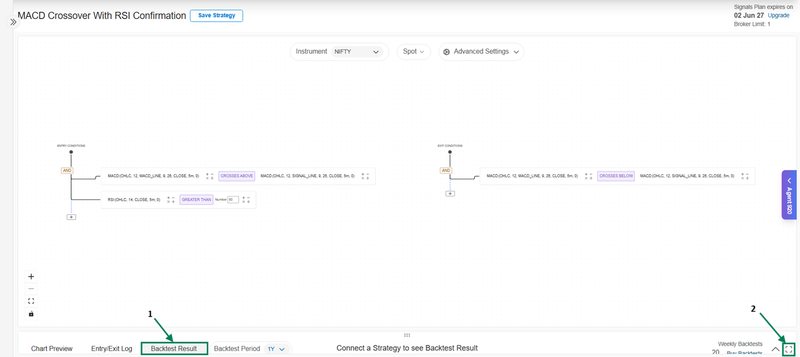
### Step 2: Connect a Strategy
Click Connect Now.
You can either:
- Create a new strategy
- Use an existing strategy from your [AlgoTest account](https://algotest.in/register?utm_source=blog&utm_medium=organic&utm_campaign=seo&utm_source=blog&utm_medium=organic&utm_campaign=seo)
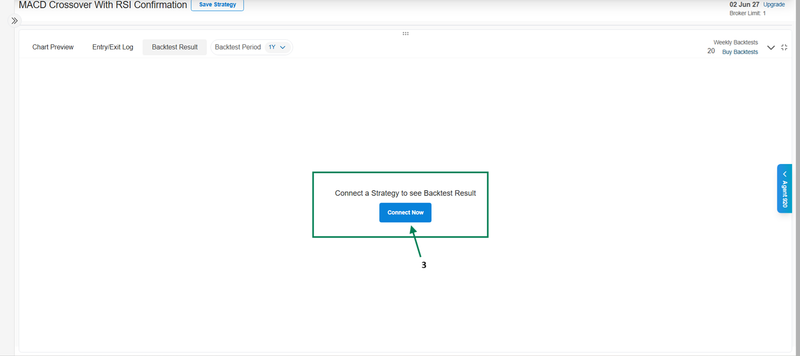
### Step 3: Build Your Strategy
Click Create Strategy to open the Strategy Builder.
Under Index and Timings, select:
- Index
- Strategy Type, Intraday or Positional
- Entry Time
- Exit Time
In the Leg Builder, configure:
- Segment
- Expiry
- Lots
- Position
- Option Type
- Strike Criteria
- Strike Type
After completing the setup, click Add Leg.
You can also configure:
- Target Profit
- Stop Loss
- Simple Momentum
For advanced risk management, use:
- Overall Stop Loss
- Overall Target
- Lock Profit
- Trail Stop Loss to Entry Price
Click Save and Continue once the strategy is ready.
Related Read: \[ [Signals AI Backtest Documentation](https://docs.algotest.in/Signals-AI/Signals-Backtest/)\]
### Step 4: Run the Backtest
Select your preferred backtest period.
Then click Signal BackTest.
The platform will process the historical data and generate performance reports.
### Step 5: Read the Results
AlgoTest provides a detailed view of strategy performance.
You can review:
- Year-wise Returns
- Cumulative PnL vs Underlying
- Maximum Drawdown
- Monte Carlo Analysis
- Total Profit and Loss
- Number of Trades
- Win Rate
- Risk-Reward Ratio
- Winning and Losing Streaks
- DTE and Weekend Filter Performance
- Downloadable Trade Logs in CSV Format
Related Read: \[How to Analyse Backtest Reports\]
### Step 6: Refine and Save
Review the results carefully.
If needed, adjust your rules and run another backtest.
Once you are satisfied with the performance, save the strategy and prepare it for forward testing or live deployment.
## What to Do After the Backtest
A good backtest is the beginning, not the finish line.
1. Before risking capital, run the strategy in a forward testing (paper trading) environment and monitor how it performs in real-time market conditions.
2. Start with smaller position sizes.
3. Track whether live performance remains consistent with your backtest expectations.
4. Review the strategy periodically because market conditions evolve over time.
Related Read: \[ [Algo Trading step by step guide](https://algotest.in/blog/algo-trading-india)\]
## The Takeaway
Creating a trading signal is easy.
Knowing whether it actually works is the hard part.
Backtesting indicator strategies helps you evaluate performance, understand risk, and identify weaknesses before you trade with real money.
Instead of relying on assumptions, you can use historical data to make informed decisions.
If you want to create, backtest, and analyse trading signals without coding, [AlgoTest's Signals](https://algotest.in/feature/signals/indicators?utm_source=blog&utm_medium=organic&utm_campaign=seo&utm_source=blog&utm_medium=organic&utm_campaign=seo) Backtest feature provides a simple workflow to test your ideas before going live.
Join us as we simplify algo trading for indian retail traders.
Free Sign Up
# FAQs
Q: What is indicator strategy backtesting?
A: Indicator strategy backtesting is the process of testing trading rules based on technical indicators using historical market data. It helps you understand how a strategy would have performed before using it in live markets.
Q: Why is backtesting important before live trading?
A: Backtesting helps you evaluate profitability, win rate, drawdown, risk-reward ratio, and overall strategy performance. It allows you to identify weaknesses before risking real money.
Q: Which indicators can be backtested?
A: Most technical indicators can be backtested, including RSI, MACD, Moving Averages, VWAP, Bollinger Bands, SuperTrend, and custom combinations of multiple indicators.
Q: What is a good win rate for a trading strategy?
A: There is no ideal win rate. A strategy with a lower win rate can still be profitable if its average winning trade is significantly larger than its average losing trade.
Q: What metrics should I review in a backtest?
A: You should review total profit and loss, win rate, risk-reward ratio, maximum drawdown, number of trades, average profit and loss per trade, and winning and losing streaks.
Q: Can I backtest trading signals without coding?
A: Yes. Platforms like AlgoTest allow you to create indicator-based trading signals, connect them to strategies, and run backtests without writing code.
Q: What should I do after completing a backtest?
A: After a successful backtest, you should forward test the strategy in real-time market conditions before deploying it with actual capital.
---
This blog is powered by Superblog. Visit https://superblog.ai to know more.
---
## Nifty Midcap 150: Complete Stocks List, Weightage, and Trading Guide (2026)
Author: AlgoTest
Author URL: https://algotest.in/blog/author/algotest/
Published: 2026-06-02
Category: General
Category URL: https://algotest.in/blog/category/general/
Meta Description: Explore the Nifty Midcap 150 stock list, top companies, sector allocation, weightage, index methodology, and trading opportunities in one guide.
Tags: algo trade, algo trading india
Tag URLs: algo trade (https://algotest.in/blog/tag/algo-trade/), algo trading india (https://algotest.in/blog/tag/algo-trading-india/)
URL: https://algotest.in/blog/nifty-midcap-150/

Looking for the Nifty Midcap 150 stock list? This guide covers the index's constituents, sector allocation, weightage, historical returns, and the key details every investor and trader should know.
## What Is the Nifty Midcap 150 Index?
The Nifty Midcap 150 is a stock market index that tracks the performance of 150 mid-sized companies listed on the National Stock Exchange (NSE).
These companies are ranked between 101 and 250 by market capitalisation within the Nifty 500 universe, placing them between India's large-cap and small-cap stocks.
The index is weighted using the free-float market capitalisation method, meaning only publicly tradable shares are considered when calculating index values.
As of March 30, 2026, the Nifty Midcap 150 accounted for approximately 18.18% of the NSE's total free-float market capitalisation, making it one of the most important benchmarks for tracking India's mid-cap segment.
### Quick Reference
Parameter
Detail
Number of Stocks
150
Rank of Companies
101 to 250 (by full market cap in Nifty 500)
Index Calculation Method
Free-Float Market Capitalisation
Index Base Value
1,000 (April 1, 2005)
Rebalancing Schedule
Semi-annual (cut-off dates: January 31 and July 31)
NSE Code
NIFTY MIDCAP 150
## Top Nifty Midcap 150 Companies by Weightage
The table below shows the top 10 companies in the [Nifty Midcap](https://algotest.in/nifty-midcap) 150 index by weightage, sourced from the latest NSE Indices fact sheet.
Note: The full index has 150 companies. Weightages change with market movements and with each semi-annual rebalancing. The table below reflects the most recent factsheet available at the time of writing. Always check the latest Nifty Midcap 150 factsheet at niftyindices.com for current weightages before making any decisions.
#
Company
Sector
Weightage (%)
1
BSE Ltd
Financial Services
4.21%
2
Multi Commodity Exchange of India (MCX)
Financial Services
1.87%
3
Federal Bank
Financial Services
1.77%
4
Suzlon Energy
Renewable Energy
1.72%
5
GE Vernova T&D India
Capital Goods
1.59%
6
Hero MotoCorp
Automobile
1.58%
7
Bharat Heavy Electricals Ltd (BHEL)
Capital Goods
1.51%
8
IndusInd Bank
Financial Services
1.50%
9
PB Fintech (Policybazaar)
Financial Services
1.44%
10
Indus Towers
Telecom
1.42%
Source: [NSE Indices factsheet.](https://niftyindices.com/reports/index-factsheet) Constituents and weightages change periodically due to index rebalancing and market movements. Refer to the latest Nifty Midcap 150 factsheet at niftyindices.com for current data.
## Nifty Midcap 150 Sector Breakdown
The Nifty Midcap 150 provides exposure to companies across a wide range of industries, making it one of the most diversified ways to participate in India's mid-cap segment. Financial services and capital goods form a significant portion of the index, while sectors such as information technology, healthcare, consumer goods, chemicals, automobiles, and industrials also have meaningful representation.
Some of the major sectors represented in the index include:
- Financial Services
- Capital Goods
- Information Technology
- Healthcare
- Chemicals
- Automobiles
- Consumer Goods
- Metals & Mining
- Power & Utilities
- Telecom
This diversified sector mix helps reduce dependence on any single industry while providing exposure to multiple growth areas of the Indian economy.
[Midcap Nifty Option Chain](https://algotest.in/midcapnifty-option-chain)
> **Note:** Sector allocations change over time due to market movements and periodic index rebalancing. Refer to the latest Nifty Midcap 150 factsheet for the most up-to-date sector composition.
## How the Nifty Midcap 150 Index Works
The Nifty Midcap 150 is reviewed and rebalanced twice a year to ensure it continues to represent India's mid-cap segment.
The index is derived from the Nifty 500 universe and includes companies ranked between 101 and 250 based on full market capitalisation. During each review, companies may be added or removed depending on their market-cap ranking and eligibility criteria.
Key points of the selection process include:
- Companies must be part of the Nifty 500 universe.
- Eligible companies are selected based on full market capitalisation rankings.
- Companies whose rankings fall significantly may be removed from the index.
- Newly listed companies may be considered based on a shorter listing history if they meet eligibility requirements.
This periodic review helps keep the index aligned with the evolving mid-cap market and ensures it reflects the performance of leading mid-sized companies in India.
Related: [Midcap Nifty full guide](https://algotest.in/blog/nifty-midcap-the-complete-guide/)
## Nifty Midcap 150 Historical Performance
Historically, the Nifty Midcap 150 has delivered higher long-term returns than many large-cap benchmarks, although those returns have come with greater volatility.
Mid-cap stocks tend to be more sensitive to economic cycles and market sentiment. As a result, the index has experienced deeper drawdowns during market corrections but has also participated strongly in market recoveries and growth phases.
For investors, this highlights an important trade-off: the potential for higher returns often comes with higher short-term risk. Those with a longer investment horizon may be better positioned to ride out market fluctuations and benefit from the growth potential of mid-cap companies.
> **Note:** Past performance is not indicative of future results. Investors should refer to the latest Nifty Midcap 150 factsheet for up-to-date performance data and risk metrics.
## Nifty Midcap 150 vs Nifty Midcap 100 vs Nifty Midcap 50
All three indices track India's mid-cap segment, but they differ in the number of stocks they include and the breadth of exposure they provide.
Index
Number of Stocks
Exposure
Nifty Midcap 50
50
Concentrated exposure to larger mid-cap companies
Nifty Midcap 100
100
Broader mid-cap exposure
Nifty Midcap 150
150
Widest coverage of the mid-cap segment
The Nifty Midcap 50 contains a smaller group of mid-cap stocks and is more concentrated. The Nifty Midcap 100 expands that universe, while the Nifty Midcap 150 offers the broadest representation of India's mid-cap market.
For investors seeking diversified exposure to mid-cap companies across sectors, the Nifty Midcap 150 provides the most comprehensive coverage. Because it includes a larger number of stocks, it can reduce concentration risk compared with narrower mid-cap indices.
For traders, the narrower mid-cap indices may be useful for tracking market sentiment and identifying opportunities within leading mid-cap stocks.
## How to Trade and Backtest Midcap Nifty Strategies
While investors use the Nifty Midcap 150 for long-term exposure to India's mid-cap segment, traders often look for opportunities in the Midcap Nifty ecosystem through systematic and rules-based trading.
Mid-cap stocks and indices typically experience higher volatility than large-cap benchmarks, creating opportunities for momentum, breakout, trend-following, and options trading strategies.
One way traders participate in this segment is through the Midcap Nifty index, which has actively traded derivatives contracts on the NSE. These contracts can be used to implement a wide range of options strategies, including:
- [Short straddles](https://algotest.in/blog/how-to-backtest-rolling-straddles-with-indicators) and short strangles
- Iron condors
- Directional debit spreads
- Trend-following strategies
- Volatility-based trading setups
Before deploying any strategy with real capital, it is important to evaluate how it would have performed historically. This is where options backtesting and strategy testing become valuable.
AlgoTest is a no-code algo trading platform that allows traders to build, backtest, paper trade, and automate options trading strategies without programming knowledge.
With AlgoTest, traders can:
- Create multi-leg options strategies using a visual [strategy builder](https://algotest.in/feature/strategy-builder?utm_source=blog&utm_medium=organic&utm_campaign=seo&utm_source=blog&utm_medium=organic&utm_campaign=seo)
- [Backtest strategies](https://algotest.in/feature/backtest?utm_source=blog&utm_medium=internal&utm_campaign=seo&utm_content=feature&utm_term=backtest&utm_source=blog&utm_medium=internal&utm_campaign=seo&utm_term=backtest&utm_content=feature) using historical market data
- Analyze metrics such as drawdown, win rate, risk-reward ratio, and profit factor
- [Paper trade strategies](https://algotest.in/blog/paper-trading-websites-india) in live market conditions
- Automate execution through [integrated broker connections](https://algotest.in/blog/best-brokers-for-algo-trading-in-india)
Whether you are exploring [algo trading in India](https://algotest.in/?utm_source=blog&utm_medium=internal&utm_campaign=seo&utm_content=main-page&utm_term=algotest&utm_source=blog&utm_medium=internal&utm_campaign=seo&utm_term=algotest&utm_content=main-page), testing index options strategies, or building a systematic trading approach, backtesting can help you understand the risks and performance characteristics of a strategy before deploying it in live markets.
## Summary
The Nifty Midcap 150 is one of the most-watched midcap indices in India. It covers 150 companies ranked just below the large-cap segment, and it spans sectors from banking and capital goods to IT and pharmaceuticals.
If you are an investor, index funds and ETFs linked to this index give you a low-cost way to participate in the midcap segment. Expense ratios on available ETFs start at around 0.21%.
If you are a trader, the broader midcap universe gives you a range of stocks and index instruments to work with. You can test your strategies on historical data using [AlgoTest](https://algotest.in/?utm_source=blog&utm_medium=internal&utm_campaign=seo&utm_content=main-page&utm_term=algotest&utm_source=blog&utm_medium=internal&utm_campaign=seo&utm_term=algotest&utm_content=main-page) before running them in the live market.
Join us and get 25 backtests free/week.
Sign up
Disclaimer: _This article is for educational and informational purposes only. It does not constitute investment advice, financial advice, or a recommendation to buy or sell any securities. Nifty Midcap 150 constituent data and weightages change regularly. Always refer to the official NSE Indices factsheet at niftyindices.com for the most current information._
Data sources: NSE Indices Limited ( [niftyindices.com](https://niftyindices.com/)), smart-investing.in, Kotak Neo, BMSmoney.com, Bajaj AMC, Value Research, Zerodha Fund House, Groww. Data referenced is the most recent available at the time of writing (June 2026).
# FAQs
Q: What is the Nifty Midcap 150?
A: The Nifty Midcap 150 is a stock market index that tracks 150 mid-sized companies listed on the National Stock Exchange (NSE). The index is derived from the Nifty 500 universe and represents companies ranked between 101 and 250 by market capitalisation. It is maintained by NSE Indices and serves as a benchmark for India's mid-cap segment.
Q: How many companies are in the Nifty Midcap 150?
A: The index contains 150 companies. Its constituents are reviewed periodically and may change during scheduled rebalancing exercises conducted by NSE Indices.
Q: Which companies are included in the Nifty Midcap 150?
A: The index includes 150 mid-cap companies from sectors such as financial services, capital goods, healthcare, information technology, consumer goods, automobiles, and industrials. The constituent list is reviewed periodically and can change over time.
Q: When is the Nifty Midcap 150 rebalanced?
A: The Nifty Midcap 150 is reviewed and rebalanced twice a year. NSE Indices evaluates eligible companies based on its index methodology and announces any constituent changes before they take effect.
Q: What is the difference between Nifty Midcap 50, Nifty Midcap 100, and Nifty Midcap 150?
A: The main difference is the number of stocks included. Nifty Midcap 50 tracks 50 mid-cap companies, Nifty Midcap 100 tracks 100 companies, and Nifty Midcap 150 tracks 150 companies. The Nifty Midcap 150 provides the broadest exposure to India's mid-cap segment among the three indices.
Q: How has the Nifty Midcap 150 performed historically?
A: Historically, the Nifty Midcap 150 has delivered strong long-term returns, although it has also experienced higher volatility than large-cap indices. Like all equity investments, returns can vary significantly across market cycles, and past performance does not guarantee future results.
Q: Can I invest in the Nifty Midcap 150?
A: You cannot invest directly in the index itself. However, you can gain exposure through index mutual funds and exchange-traded funds (ETFs) that track the Nifty Midcap 150.
Q: Can I trade and backtest Midcap Nifty strategies on AlgoTest?
A: Yes. AlgoTest allows traders to build, backtest, paper trade, and automate options trading strategies using a no-code interface. Traders can evaluate strategy performance, analyze risk metrics, and test systematic approaches before deploying them in live markets.
Q: What are the major sectors represented in the Nifty Midcap 150?
A: The index includes companies from a diverse range of sectors, including financial services, capital goods, information technology, healthcare, consumer goods, chemicals, automobiles, metals and mining, power, and telecom. This broad sector representation helps provide diversified exposure to India's mid-cap market.
Q: Is the Nifty Midcap 150 suitable for long-term investing?
A: The Nifty Midcap 150 is often used by investors seeking exposure to growing mid-sized companies. While mid-cap stocks can offer higher growth potential than large-cap stocks, they may also experience greater volatility. Investors should consider their investment horizon and risk tolerance before investing.
---
This blog is powered by Superblog. Visit https://superblog.ai to know more.
---
## 7 Bollinger Bands Strategies for Indian Traders: Intraday, F&O and Swing
Author: AlgoTest
Author URL: https://algotest.in/blog/author/algotest/
Published: 2026-05-31
Category: indicators
Category URL: https://algotest.in/blog/category/indicators/
Tags: algo trade, algo trading india
Tag URLs: algo trade (https://algotest.in/blog/tag/algo-trade/), algo trading india (https://algotest.in/blog/tag/algo-trading-india/)
URL: https://algotest.in/blog/bollinger-bands-strategies-for-indian-traders/

Each Bollinger Bands strategy works in a specific type of market. Use the wrong one and even a solid indicator will work against you.
We'll cover 7 Bollinger Bands strategies used by Indian traders across intraday, F&O, and swing trading. For each strategy you get the market condition it suits, entry and exit rules, and the instruments it works best on.
## What Are Bollinger Bands?
Bollinger Bands are a [volatility indicator](https://algotest.in/blog/understanding-india-vix-a-comprehensive-guide-for-traders) with three lines plotted on your price chart.
- The middle band is a 20-period Simple Moving Average of the closing price.
- The upper band is the middle band plus 2 standard deviations.
- The lower band is the middle band minus 2 standard deviations.
The bands expand when volatility rises and contract when the market is quiet. About 95% of price action stays within the bands. When price breaks outside them, that is the signal worth acting on.
## Quick Reference: All 7 Strategies at a Glance
Strategy
Market Condition
Best Instrument
Timeframe
1\. Bollinger Squeeze Breakout
Low volatility before big move
Nifty, BankNifty
5 min, 15 min
2\. Bollinger Bounce
Sideways, ranging market
Stocks, indices
15 min, 1 hour
3\. Middle Band Trend Follow
Strong uptrend or downtrend
Stocks, Nifty
1 hour, daily
4\. BB and RSI Confluence
Overbought or oversold reversals
Any liquid instrument
15 min, 1 hour
5\. Band Walk
Price hugging the outer band
BankNifty, Nifty
5 min, 15 min
6\. BB and MACD for F&O
Breakout with momentum confirmation
Nifty, BankNifty options
15 min
7\. 5-Minute Intraday Breakout
Active intraday sessions
Nifty, BankNifty, F&O
5 min
_You can build and backtest all 7 of these on_ [_Signals AI on AlgoTest_](https://algotest.in/feature/signals/indicators?utm_source=blog&utm_medium=organic&utm_campaign=seo&utm_source=blog&utm_medium=organic&utm_campaign=seo) _using a visual AI condition builder, no coding or TradingView integration required._
## Strategy 1: Bollinger Squeeze Breakout
The Bollinger Squeeze happens when the upper and lower bands come very close together. It means volatility has compressed and a large price move is building.
The squeeze itself does not tell you the direction. You wait for the breakout candle to confirm.
Entry rules:
- Watch for the bands to reach their tightest point in recent sessions.
- Long entry: price closes above the upper band on a 5-minute or 15-minute candle.
- Short entry: price closes below the lower band.
- Confirm with rising volume. A breakout on thin volume is less reliable.
Exit rules:
- Exit when price closes back through the middle band against your position.
- Stop goes just inside the squeeze range on the opposite side of your entry.
Best for: Nifty and BankNifty on 5-minute and 15-minute charts. Works well during low-activity pre-market sessions before a directional move develops.
## Strategy 2: Bollinger Bounce
This is the mean reversion setup. Price stretches toward an outer band and then reverts toward the middle.
It works when the market is moving sideways and the bands are flat. In that condition, price tends to oscillate between the two outer bands.
Do not use this when the middle band is sloping. A sloping middle band means the market is trending, and fading the outer bands in a trend will get you stopped out repeatedly.
Entry rules:
- Price touches or closes below the lower band. Look for a reversal candle such as a hammer or doji. Enter long.
- Price touches or closes above the upper band. Look for a bearish reversal candle. Enter short.
- Target the middle band as your exit.
- Stop goes just beyond the band you entered from.
Best for: Stocks and indices on a 15-minute or 1-hour chart during flat, range-bound sessions.
Related: [Build, Backtest & Automate Trading Signals Without Coding or TradingView](https://algotest.in/blog/trading-signals/)
## Strategy 3: Middle Band Trend Follow
In a trending market, the middle band acts as a moving support or resistance line.
During an uptrend, price often pulls back to the 20 SMA and then resumes the move higher. You enter on that pullback instead of chasing an extended candle. The key condition is a clearly sloping middle band. If it is flat, this setup is not valid.
Entry rules:
- In an uptrend, wait for price to pull back and touch the middle band.
- Enter long when a bullish candle forms at or near the 20 SMA.
- In a downtrend, wait for a rally to the middle band. Enter short on a bearish candle.
- Exit when price closes on the opposite side of the middle band.
Best for: Daily and hourly charts on large-cap and [midcap](https://algotest.in/blog/nifty-midcap-the-complete-guide) stocks during strong sector trends. Also works on Nifty during sustained directional sessions.
Related: [How to Automate ADX Indicator Strategy Without Coding](https://algotest.in/blog/how-to-automate-adx-indicator/)
## Strategy 4: BB and RSI Confluence
Bollinger Bands do not measure momentum. RSI adds that layer.
When price hits the lower band and RSI is below 30 at the same time, two independent signals agree. That reduces the chance of acting on a false move. The same logic applies in reverse for shorts.
Use this when market conditions are choppy and you need a higher-confidence setup before entering.
Long entry rules:
- Price touches or closes below the lower Bollinger Band.
- RSI is below 30 on the same candle.
- Enter long on the open of the next candle.
- Stop just below the recent swing low.
- Minimum target is the middle band. Extended target is the upper band.
Check out [5 Best Indicators for Intraday Trading](https://algotest.in/blog/5-best-indicators-for-intraday-trading/)
Short entry rules:
- Price touches or closes above the upper band.
- RSI is above 70 on the same candle.
- Enter short. Stop above the recent swing high.
Best for: Any liquid instrument. Works well on Nifty, BankNifty, and large-cap stocks on a 15-minute or 1-hour chart.
Related: [EMA Indicator Strategy: How to Automate It Without Coding](https://algotest.in/blog/automate-ema-indicator-without-coding/)
## Strategy 5: Band Walk
When price starts walking along the outer band, the usual rules stop working.
In a strong uptrend, price can close near or above the upper band on two, three, or more consecutive candles without reverting. Traders who short every upper band touch get stopped out over and over because they are fading a trend, not a reversal.
The band walk tells you: the trend is strong enough that mean reversion is not the right play.
How to identify it:
- Two or more consecutive candle closes at or above the upper band in an uptrend.
- The middle band is steeply sloped and rising.
- Volume supports the move.
How to trade it:
- Stop fading the outer band.
- Wait for a pullback to the middle band. That is your entry in the trend direction.
- Stay in the trade as long as price does not close on the wrong side of the middle band.
- That close is your exit.
Note: The difference between Strategy 3 and this one is recognition. Strategy 3 is your standard trend-follow pullback entry. Strategy 5 is what you apply when you notice price is already walking the outer band and you need to confirm you are in a band-walk environment before entering.
Best for: BankNifty and Nifty on 5-minute and 15-minute charts during strong directional sessions.
Related: [Best Paper Trading Apps for Indicator Algo Strategies in India](https://algotest.in/blog/paper-trading-apps-for-indicator-algo-strategies-in-india/)
## Strategy 6: BB and MACD for F&O
F&O trades need more than a price signal. You also need momentum confirmation, because entering an option in the wrong direction means losing on the trade and on time decay.
This strategy combines Bollinger Bands for price location and MACD for momentum direction. When both point the same way, the setup is stronger.
Use this during mid-week sessions, typically Tuesday and Wednesday, when option premiums are reasonable and directional moves tend to be cleaner. Avoid using this setup on expiry day, where gamma-driven whipsaws can invalidate signals quickly.
Long entry rules:
- Price closes above the upper Bollinger Band.
- MACD line is above the signal line, or crosses above it on the same candle.
- Enter a Nifty call option or long future.
- Target 20 to 30 points on Nifty, 50 to 70 points on BankNifty.
Short entry rules:
- Price closes below the lower band.
- MACD line crosses below the signal line.
- Enter a put option or short future.
- Exit when price reverses back through the middle band or when MACD crosses against you.
Use Offset 1 on both indicators to act on confirmed, closed candles only.
Best for: Nifty and BankNifty on a 15-minute chart.
## Strategy 7: 5-Minute Intraday Breakout
This is one of the most used intraday setups with Bollinger Bands. The rules are clear and easy to follow consistently.
You go long when price closes above the upper band. You go short when price closes below the lower band. All positions are closed before 3:15 PM to avoid end-of-session volatility and overnight risk.
Use this between 9:15 AM and 11:30 AM when intraday volume and directional moves on NSE are strongest.
Entry rules:
- 5-minute chart on Nifty, BankNifty, or a liquid NSE stock.
- Long: candle closes above the upper band. Enter on the next candle open.
- Short: candle closes below the lower band. Enter on the next candle open.
- Stop: 50% of the current band width from your entry price.
- Exit: target the middle band or use a trailing stop. Close all positions by 3:15 PM regardless.
Recommended settings:
- Period: 20
- Standard deviations: 2
- Source: Close
- Candle type: OHLC
This strategy has clear, rule-based conditions. That makes it one of the easiest to backtest and automate on Indian market data.
Related: [Best Intraday Trading Strategies, Rules and Tips](https://algotest.in/blog/best-intraday-trading-strategies-rules-tips/)
## How to Choose the Right Bollinger Bands Strategy
Ask yourself three questions before every trade.
### Is the market trending or ranging?
Check the slope of the middle band. Flat middle band means range conditions, use the Bollinger Bounce. Sloping middle band means trend conditions, use the Middle Band Trend Follow or Band Walk.
### What is your timeframe?
For intraday sessions, use the 5-minute breakout or the Squeeze. For swing trades on stocks, use the Middle Band Trend Follow on a daily or hourly chart.
### Are you trading spot or F&O?
For F&O, use strategies with momentum confirmation. Clear entry points and targets in points matter more when time decay is working against you.
Quick guide:
- Flat bands, no direction: Bollinger Bounce
- Bands squeezing, big move expected: Bollinger Squeeze Breakout
- Strong trend, middle band sloping: Band Walk or Middle Band Trend Follow
- Choppy market, need more confirmation: BB and RSI Confluence
- F&O intraday trade: BB and MACD or 5-Minute Breakout
## 5 Bollinger Bands Strategy Mistakes to Avoid
1. Shorting every upper band touch in a trend. Price can walk the upper band for multiple sessions. Check the middle band slope first. If it is rising, the bounce setup is not valid.
2. Using the same settings across all timeframes. A 20-period band on a 1-minute chart behaves very differently from a daily chart. Test your settings on the specific instrument and timeframe before trading live.
3. Entering a squeeze without waiting for breakout confirmation. The squeeze signals a move is building. It does not tell you which direction. Wait for a candle to close clearly outside the band before you enter.
4. Ignoring the middle band. The 20 SMA is a key support and resistance level on its own. Where price sits relative to it tells you trend direction and helps you pick between a bounce setup and a trend-follow setup.
5. Skipping the backtest. Every strategy here can produce losses in the wrong market condition. Test on at least 3 to 6 months of historical data for your instrument and timeframe before risking real capital.
## Execute Your Bollinger Bands Strategy with Signals AI
Running these strategies manually means you will miss trading signals. You step away from the screen, you hesitate on an entry, or you override a clear rule and the move is already done.
[Signals AI on AlgoTest](https://algotest.in/feature/signals/indicators?utm_source=blog&utm_medium=organic&utm_campaign=seo&utm_source=blog&utm_medium=organic&utm_campaign=seo) lets you build any of the 7 strategies above using a visual condition builder. No coding required.
You define your entry and exit conditions, backtest on Indian market data, and deploy live with direct broker connectivity.
Read the [product documentation on Signals AI](https://docs.algotest.in/Signals-AI/) to see how to configure each parameter including band type, standard deviations, source, and offset.
Join us as we simplify [**algo trading for retail traders in India.**](https://algotest.in/?utm_source=blog&utm_medium=internal&utm_campaign=seo&utm_content=main-page&utm_term=algotest&utm_source=blog&utm_medium=internal&utm_campaign=seo&utm_term=algotest&utm_content=main-page)
Free Sign Up
## Frequently Asked Questions
### Which Bollinger Bands strategy works best for Nifty intraday trading?
The 5-minute breakout is a proven Bollinger Bands strategy for Nifty intraday. You go long when price closes above the upper band and short when it closes below the lower band. Close all positions by 3:15 PM. Test on at least 3 months of intraday data before trading it live.
### What are the best Bollinger Bands settings for intraday trading in India?
The standard settings work as a solid baseline. Use a period of 20, standard deviations of 2, source as close, and OHLC candles on a 5-minute chart. For scalping on a 1-minute or 2-minute chart, reduce the period to 10 or 14 for faster reactions.
### Do Bollinger Bands strategies work in Indian markets?
Yes. Bollinger Bands work on any liquid market including Nifty, BankNifty, and NSE stocks. The variable is not the indicator. The variable is which strategy you apply and whether it matches the current market condition. A bounce strategy in a trending market will lose consistently. Match the strategy to what the market is doing.
---
This blog is powered by Superblog. Visit https://superblog.ai to know more.
---
## Best Paper Trading Apps for Indicator Algo Strategies in India
Author: AlgoTest
Author URL: https://algotest.in/blog/author/algotest/
Published: 2026-05-29
Category: indicators
Category URL: https://algotest.in/blog/category/indicators/
Meta Description: share a meta description1:16 PMClaude responded: 155 characters.Learn which paper trading apps in India support indicator-based strategies like RSI, MACD, and SuperTrend. Compare top platforms and see how to paper trade your algo strategy without coding.
Tags: algo trading india, indicators
Tag URLs: algo trading india (https://algotest.in/blog/tag/algo-trading-india/), indicators (https://algotest.in/blog/tag/indicators/)
URL: https://algotest.in/blog/paper-trading-apps-for-indicator-algo-strategies-in-india/
Standard paper trading apps give you virtual money and a chart. You place buy and sell orders manually, just like you would in real trading.
That works if you are learning how markets move.
It does not work if your strategy depends on indicator conditions.
What you actually need is a software that:
- Reads your indicator logic, such as RSI levels, MACD crossovers, Bollinger Band touches, or SuperTrend flips
- Monitors live market data and places virtual trades automatically when conditions are met
- Logs every entry, exit, and P&L with timestamps
- Works without coding or a live broker connection
Very few [algo trading platform](https://algotest.in/?utm_source=blog&utm_medium=internal&utm_campaign=seo&utm_content=main-page&utm_term=algotest&utm_source=blog&utm_medium=internal&utm_campaign=seo&utm_term=algotest&utm_content=main-page) s in India do all of this. Let's take a look at them.
## Best Apps for Paper Trading Indicator Algos in India
### 1\. AlgoTest Signals AI
**Best for**: Testing indicator-based strategies without coding or TradingView integration
Signals AI is built specifically for indicator-based strategies. You build your strategy using a drag-and-drop condition builder, backtest it on historical data, and then paper trade it on live markets. When you are confident, you deploy it live.
This is how algo trading works. You define the logic once. The platform monitors the market and executes trades automatically based on your indicator conditions.
Here is how the workflow runs on AlgoTest:
1. Open [Signals AI](https://algotest.in/feature/signals/indicators?utm_source=blog&utm_medium=organic&utm_campaign=seo&utm_source=blog&utm_medium=organic&utm_campaign=seo) and create a new strategy using the condition builder. Select your indicator, set the condition, and combine rules with AND or OR logic. Example: "Enter long when RSI crosses above 30 and price is above the 200 EMA. Exit when RSI hits 70."
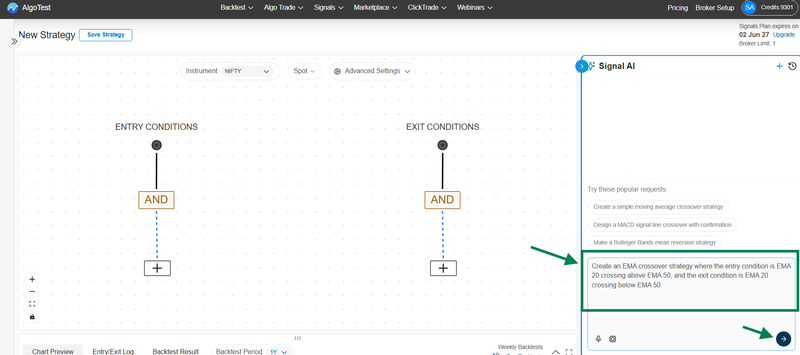
2. Use the Signals AI Agent if you prefer. Describe your strategy in plain English and the AI builds the conditions for you on the strategy builder.
3. Run a backtest. AlgoTest logs every trade with P&L, win rate, and drawdown. You can download the full report as a CSV.
4. Click Forward Test (Internal term for paper trading). The strategy deploys immediately and starts listening to live market data. Virtual trades are placed automatically. No broker account is needed.
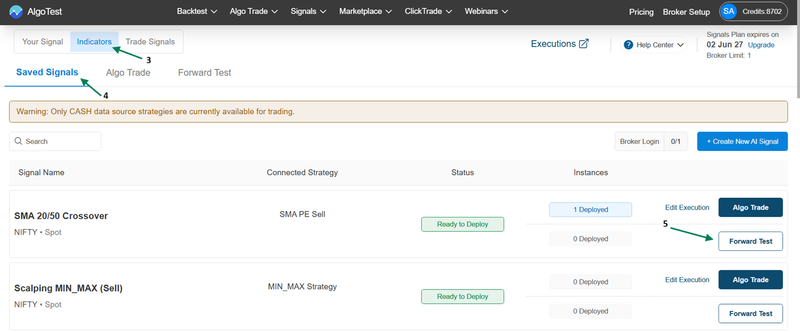
5. Monitor live performance under Indicator, Forward Test. Every entry and exit is logged with price, timestamp, and P&L.
AlgoTest supports 15-plus indicators natively for strategy building:
- RSI, [EMA](https://algotest.in/blog/automate-ema-indicator-without-coding), SMA, MACD
- [Bollinger Bands](https://algotest.in/blog/bollinger-bands-strategies-for-indian-traders/), SuperTrend
- VWAP, Williams %R, and more
You can also connect your TradingView indicators to AlgoTest. Set up an alert in TradingView, connect it to AlgoTest, and [paper trading runs from there](https://algotest.in/blog/how-to-perform-paper-trading-with-tradingview-using-signals). This is useful if you already have a custom Pine Script strategy.
One limitation to know: daily timeframe strategies and above are not currently supported for paper trading on AlgoTest. You can still backtest them, but automated live paper trading runs on intraday and positional timeframes.
Key features:
- No-code drag-and-drop strategy canvas
- AI agent that builds conditions from plain English
- 15-plus indicators supported natively
- Paper trading on Indian F&O: NIFTY, BANKNIFTY, SENSEX, individual stocks
- Real-time P&L tracking with no broker needed
- TradingView alert integration for custom Pine Script indicators
- Free to start
\[Related Read: [Trading Signals: Build, Backtest & Automate Without Coding or TradingView](https://algotest.in/blog/trading-signals/)\]
### 2\. Streak
**Best for**: No-code indicator paper trading within the Zerodha ecosystem
Streak by Zerodha is a no-code strategy builder that supports indicator-based paper trading on live market data. You build your conditions, set paper trading mode, and Streak monitors the market and executes virtual trades when your rules are met.
The paper trading logs are detailed. You can see exactly which condition triggered each entry or exit.
The main limitation is cost. Paper trading on Streak sits behind a monthly subscription, currently at Rs. 690 per month. Streak also supports equity and futures well, but its options support is more limited than AlgoTest's.
Key features:
- No-code condition builder
- Supports RSI, MACD, Moving Averages, Bollinger Bands
- Paper trading on live market data
- Works on equity and futures, limited options
- Paid: Rs. 690 per month
\[Related Read: [AlgoTest vs Streak](https://algotest.in/blog/algotest-vs-streak)\]
### 3\. TradingView
**Best for**: Building and visualizing indicators, used alongside AlgoTest for automated paper trading
TradingView has the best charting tools available to Indian traders. You get 400-plus built-in indicators, Pine Script for custom strategies, and a paper trading mode with $100,000 in virtual capital, which is roughly Rs. 85 lakh.
The limitation is that TradingView's paper trading is manual. When your indicator fires, you still have to place the order yourself. The platform does not execute virtual trades automatically based on your indicator conditions.
For automated indicator-based paper trading, you connect TradingView alerts to AlgoTest. AlgoTest handles the virtual trade execution on your Indian F&O instruments.
Key features:
- 400-plus built-in indicators and Pine Script for custom logic
- Paper trading with $100,000 in virtual capital
- Manual execution only, trades are not placed automatically
- Requires a paid plan (Essential or above) to run active alerts
- Best used as your indicator development environment, paired with AlgoTest for paper trading execution
\[Related Read: [TradingView alternatives in India](https://algotest.in/blog/best-tradingview-alternatives)\]
### 4\. Sensibull
Best for: Options structure testing, not indicator-triggered strategies
Sensibull is built for testing options strategies such as straddles, iron condors, and spreads. It shows you how a structure behaves under different market conditions using live data.
It does not support indicator-based triggering. If your strategy is "buy an ATM call when RSI crosses above 30," Sensibull cannot paper trade that automatically. It is the right tool for structure-based options testing, not for indicator strategy validation.
Key features:
- Options structure builder for straddles, strangles, spreads, and more
- Practice trade mode with virtual positions and real market data
- Payoff graphs and Greeks analysis
- No automated indicator-based triggering
- Free for Zerodha users, paid plans from Rs. 800 per month
\[Related Read: [Sensibull vs AlgoTest](https://algotest.in/blog/algotest-vs-sensibull) \]
## Quick Comparison
App
Automated indicator paper trading
No-code
Indian F&O
Free
AlgoTest Signals AI
Yes, fully automated
Yes
Yes
Yes
Streak
Yes, fully automated
Yes
Partial
No, Rs. 690/month
TradingView
No, manual only
No, Pine Script required
Limited
Basic tier only
Sensibull
Not applicable
Yes
Yes
No, Rs. 800-plus/month
## How to Paper Trade an Indicator Strategy on AlgoTest
This is the step-by-step workflow if you want to try it today.
Step 1: Go to [AlgoTest](https://algotest.in/?utm_source=blog&utm_medium=internal&utm_campaign=seo&utm_content=main-page&utm_term=algotest&utm_source=blog&utm_medium=internal&utm_campaign=seo&utm_term=algotest&utm_content=main-page) and open Signals AI. Create a new strategy.
Step 2: Use the condition builder to add your indicator rules. Set your entry conditions, add AND or OR logic, and define exit conditions. Or describe your strategy in plain English and let the AI agent build it for you.
Step 3: [Run a backtest.](https://docs.algotest.in/Signals-AI/Signals-Backtest/) Check the win rate, average return per trade, and drawdown. If the logic looks off, adjust it before testing on live markets.
Step 4: Click Forward test (Paper Trade). The strategy deploys immediately and listens to live market data. Virtual trades are placed automatically. No broker account is required.
Step 5: Monitor your live results under Indicator, Forward Test. Each entry and exit is logged with the exact price, time, and P&L.
Step 6: Run it for three to four weeks. Watch how it performs on trending days, flat sessions, and event-driven days such as RBI policy announcements or results days. Then decide if it is ready for [Algo Execution.](https://docs.algotest.in/Signals-AI/Signals-Deployment/Algo-Trade/)
This is the standard algo trading workflow used by retail traders on AlgoTest. Build the logic, paper trade it safely, then move to live algo trading when the results hold up.
\[Related Read: [Algo Trading India: Complete Guide for Retail Traders](https://algotest.in/blog/algo-trading-india/)\]
## Backtesting vs Paper Trading: What Is the Difference
A backtest shows you how your indicator strategy would have performed on historical data. It helps you validate the logic before you spend time testing it live.
But backtests have a known problem. Your strategy was built while looking at that historical data. There is always a risk of overfitting. A 70% win rate on a backtest does not guarantee the strategy will work going forward.
[Paper trading](https://algotest.in/paper-trading) closes that gap. You run the same strategy on live market data that it has never seen before. Trades execute in real time, with no hindsight. The results are much closer to what you will see in live trading.
The right sequence is:
1. Backtest to validate your indicator logic
2. Paper trade on live markets to validate real-world performance
3. Deploy live once both results align
Skipping paper trading and jumping from backtest to live trading is one of the most common mistakes indicator traders make in India.
## Conclusion
Most paper trading apps in India are built for manual order placement. If you rely on indicator conditions to enter and exit trades, you need a platform that executes virtual trades automatically.
AlgoTest [Signals AI](https://algotest.in/feature/signals/indicators?utm_source=blog&utm_medium=organic&utm_campaign=seo&utm_source=blog&utm_medium=organic&utm_campaign=seo) does this end-to-end. No code required. Paper trade on Indian F&O instruments, then move to live algo trading when your results hold up.
[AlgoTest](https://algotest.in/?utm_source=blog&utm_medium=internal&utm_campaign=seo&utm_content=main-page&utm_term=algotest&utm_source=blog&utm_medium=internal&utm_campaign=seo&utm_term=algotest&utm_content=main-page) is simplifying algorithmic trading in India for retail traders. Build, backtest, paper trade, and algo trade option strategies without coding.
Free Sign Up
Related: [Best Paper Trading Websites in India (2026)](https://algotest.in/blog/paper-trading-websites-india)
# FAQs
Q: What is the difference between paper trading and forward testing?
A: They mean the same thing. Forward testing is the term used in algo trading circles. Paper trading is the more common consumer term. Both involve running your strategy on live market data with virtual capital.
Q: Can I paper trade an RSI or MACD strategy without coding?
A: Yes. AlgoTest Signals AI and Streak both let you build and paper trade indicator-based strategies without writing any code. AlgoTest also has an AI agent that builds your conditions from a plain English description.
Q: Is AlgoTest paper trading free?
A: Yes. Paper trading on AlgoTest Signals AI is free to start. You do not need a broker account.
Q: Do I need a TradingView subscription to paper trade on AlgoTest?
A: Not if you use AlgoTest's native Signals AI builder. It supports RSI, EMA, MACD, Bollinger Bands, SuperTrend, VWAP, and Williams %R directly. The TradingView connection is optional, and is useful only if you have a custom Pine Script indicator. That integration does require a paid TradingView plan.
Q: How long should I paper trade before going live?
A: At least three to four weeks, across different market conditions. Include a trending week, a range-bound week, and at least one event-driven day. You are looking for consistency between backtest results and live paper trading results, not just profits.
Q: Can I paper trade options strategies on AlgoTest?
A: Yes. AlgoTest supports NIFTY, BANKNIFTY, SENSEX, and individual stock options. Indicator-triggered options entries, such as buy an ATM call when RSI crosses above 30, are a primary use case.
Q: Can I run multiple paper trading strategies at the same time?
A: Yes. AlgoTest lets you deploy multiple strategies in paper trading mode simultaneously. This is useful when comparing variations of the same logic, such as RSI 30 versus RSI 35 as the entry threshold.
---
This blog is powered by Superblog. Visit https://superblog.ai to know more.
---
## How to Analyze Trading Signals on Charts Before Automating Them
Author: AlgoTest
Author URL: https://algotest.in/blog/author/algotest/
Published: 2026-05-27
Category: Signals
Category URL: https://algotest.in/blog/category/signals/
Meta Description: See exactly where your trading signals fire on a real chart. AlgoTest Signals AI lets you verify entry and exit signals, overlay technical indicators, and review signal logs before you backtest or go live.
Tags: algo trading, algo trading india
Tag URLs: algo trading (https://algotest.in/blog/tag/algo-trading/), algo trading india (https://algotest.in/blog/tag/algo-trading-india/)
URL: https://algotest.in/blog/how-to-analyse-trading-signals-on-charts/
You’ve built your trading signal. The logic looks solid.
But many traders jump straight to backtesting without checking how the signal actually behaves on a real chart.
Because conditions alone don’t tell the full story.
An EMA crossover in a sideways market is very different from the same crossover at the start of a strong trend. The logic may be identical, but the context isn’t.
That’s where [Signals AI](https://algotest.in/feature/signals/indicators?utm_source=blog&utm_medium=organic&utm_campaign=seo&utm_source=blog&utm_medium=organic&utm_campaign=seo) helps. With **Chart Preview** and **Entry Exit Logs**, you can see exactly where your signals triggered, how the strategy behaved, and whether the logic is working as intended, before you backtest or risk capital.
## View Entry and Exit Signals Directly on Charts
Once your conditions are set in Signals AI, go to the Chart Preview section.
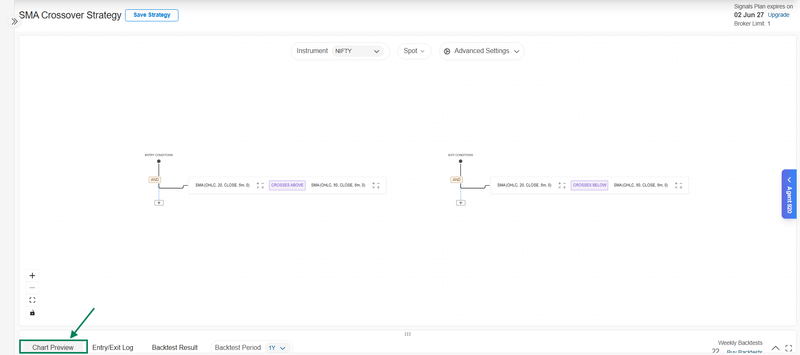
Here, you can see the price movement of your selected instrument with your entry and exit signals marked directly on the chart.
**What you can view:**
**Entry signals:** Exact points where your strategy generated a buy or sell signal
**Exit signals:** Where trades closed due to a stop loss, target, or exit condition
**Price action context:** See how the market was moving around each signal to judge whether the entry made sense
If a signal fires during a sharp downtrend when your strategy was meant to capture upward momentum, you’ll spot it instantly, without digging through raw data.
You can also expand the chart for a detailed view or minimize it while refining your strategy on the canvas.
## Analyze Trading Signals Across Multiple Timeframes
The same strategy behaves differently depending on the timeframe.
Chart Preview lets you switch between them with one click, without rebuilding the strategy.
Here is how each timeframe changes signal behavior:
- **1-minute chart:** high-frequency signals, useful for scalpers, but prone to noise in choppy sessions
- **5-minute or 15-minute char** t: fewer signals, better quality for most intraday traders, cleaner trend context
- **1-hour or daily chart**: signals fire less often, each one carries more weight, better suited for swing traders
Switch timeframes in [Chart Preview](https://docs.algotest.in/Signals-AI/Signals-Visualization/Chart-preview/) and see how the same indicator logic behaves across each interval. Decide which timeframe fits your trading style before you commit to a backtest.
## Overlay Technical Indicators for Better Signal Context
Chart Preview lets you add technical [indicators](https://algotest.in/blog/best-indicator-for-option-trading) directly on top of your signal chart.
This is where you validate that your conditions are actually producing signals at the right moment. You are not checking indicators separately from your buy and sell signals. You see both together on one chart.
How traders use indicator overlays:
### EMA Overlay
Confirm that the signal marker lines up with the actual EMA crossover point. If it fires one or two candles late, the condition needs adjusting.
### RSI Overlay
Check whether entry signals trigger when RSI is in a favorable zone or already overbought or oversold.
### MACD Overlay
See whether the MACD histogram confirms the direction at the time of entry.
### VWAP Overlay
Check if intraday entries are happening above or below the volume-weighted average price.
If you are using [AlgoTest as a TradingView alternative](https://algotest.in/blog/best-tradingview-alternative-in-india) for signal building and verification, this is the equivalent of running your indicator analysis and signal check in the same window instead of switching between tools.
## Track Exact Entry and Exit Signals with Timestamps
The Entry and Exit Logs record every signal trigger your strategy generates, with the exact date and time of each event.
What the logs show:
- **Entry Log**: every timestamp where your strategy generated an entry signal, each row is one trade initiation
- **Exit Log**: every timestamp where the strategy closed a trade and the reason, stop loss, target, or exit condition
- **Timestamps**: exact date and time of every trigger so you can cross-reference each signal with what the market was doing at that moment
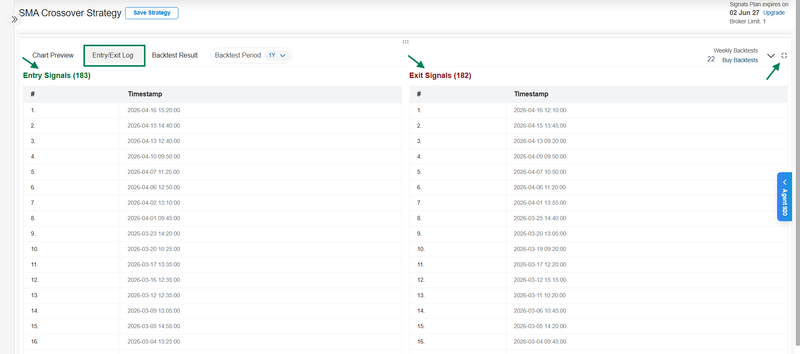
This is a key difference from [algo platforms](https://algotest.in/blog/8-best-algo-trading-platforms-in-india-2026) that only send you a signal alert. An alert tells you a condition fired. The log tells you when it fired, how often it fired, and whether the pattern is consistent across different market sessions.
A strategy that generates 35 entry signals in one session is a very different system from one that generates 4. The log shows you this before you run a single backtest.
Related: [Learn how to create trading Signals on AI](https://algotest.in/blog/how-to-create-trading-signals-ai/)
## Spot False Triggers and Strategy Issues Faster
Chart Preview and the logs together expose the most common signal problems before they cost you anything.
Common issues you can catch and fix:
- **Too many signals:** your conditions are too loose for the selected timeframe. Visible immediately in the log as signal clusters during flat sessions.
- **Delayed entries**: the signal fires two or three candles after the actual indicator crossover. Visible on the chart when the marker appears well after the move has started.
- **Wrong exits**: the exit condition closes the trade too early. Visible on the chart when the exit marker is followed by continued price movement in your intended direction.
- **Noisy triggers:** signals fire during sideways price action where no real trend exists. Visible when you overlay a [trend indicator](https://algotest.in/blog/automate-ema-indicator-without-coding) like EMA or VWAP and see signals firing against the trend direction.
Each of these can be fixed on the canvas. Adjust the condition, go back to Chart Preview, and check again. The iteration loop is fast.
Read the [Signals AI documentation](https://docs.algotest.in/Signals-AI/) for a complete breakdown of every feature.
## Analyze, Refine, Then Backtest and Deploy
Signals Visualization is not the final step. It is the step that makes every step after it more reliable.
The workflow:
1. Analyze your trading signals on the chart
2. Check the entry and exit log for frequency and consistency
3. Identify issues and refine conditions on the canvas
4. Preview again until the chart and log both look right
5. Move to backtest with a strategy you have already validated visually
6. Forward test, then deploy live to your broker through AlgoTest
No external tools. No TradingView subscription. No webhook setup. Everything from signal creation to live execution runs inside one platform.
The full workflow is covered in the [Signals AI overview blog.](https://algotest.in/blog/trading-signals/)
Join us as we simplify [algo trading in India](https://algotest.in/?utm_source=blog&utm_medium=internal&utm_campaign=seo&utm_content=main-page&utm_term=algotest&utm_source=blog&utm_medium=internal&utm_campaign=seo&utm_term=algotest&utm_content=main-page) for retail traders.
Free Sign Up
# FAQs
Q: What is chart preview in trading signals?
A: Chart preview shows you exactly where your entry and exit signals fire on a real historical chart. You can see whether your trading signals are triggering at the right time before you run a backtest or go live.
Q: How do I analyze entry and exit signals on a chart?
A: In AlgoTest Signals AI, go to the Chart Preview section after building your strategy. Your buy and sell signals appear as markers directly on the candles where they triggered. You can overlay technical indicators like EMA, RSI, MACD, and VWAP to check if signals are firing in the right market context.
Q: What is an entry exit log in trading?
A: An entry exit log records every signal your strategy generates with an exact timestamp. It shows when each trade was initiated and when it was closed, so you can verify how often your signals fire and whether the pattern is consistent across different sessions.
Q: Can I check trading signals across different timeframes?
A: Yes. AlgoTest Chart Preview lets you switch between timeframes, from 1-minute to daily, without rebuilding your strategy. The same indicator logic can behave very differently on a 1-minute chart versus a 15-minute chart.
Q: Do I need TradingView to verify my trading signals?
A: No. AlgoTest Signals AI has built-in chart preview and signal logs. You can build, verify, and analyze your trading signals entirely within AlgoTest without a TradingView subscription or any third-party tool.
---
This blog is powered by Superblog. Visit https://superblog.ai to know more.
---
## How to Create Trading Signals with AI
Author: AlgoTest
Author URL: https://algotest.in/blog/author/algotest/
Published: 2026-05-26
Category: Signals
Category URL: https://algotest.in/blog/category/signals/
Meta Description: Create AI trading signals without coding using Signals AI. Build strategies in plain English, customize with indicators, backtest, and automate execution easily.
Tags: algo trading india
Tag URLs: algo trading india (https://algotest.in/blog/tag/algo-trading-india/)
URL: https://algotest.in/blog/how-to-create-trading-signals-ai/
If you want to create trading signals with AI, you no longer need Pine Script, coding knowledge, or third-party integrations. [Signals AI](https://algotest.in/feature/signals/indicators?utm_source=blog&utm_medium=organic&utm_campaign=seo&utm_source=blog&utm_medium=organic&utm_campaign=seo) lets you describe your strategy in plain English, build it visually, and deploy it, without writing a single line of code.
Most traders assume signal automation is only for developers. It is not. Here is how to do it from scratch.
## What Is AI Trading Signal Creation?
AI trading signal creation means converting a trading idea into structured entry and exit rules using artificial intelligence.
You describe what you want. The AI translates it into executable logic. This cuts setup time, removes technical complexity, and makes automated trading accessible to anyone.
You do not need to know how to code, set up webhooks, or understand broker APIs to get started.
## Step 1: Describe Your Strategy in Plain English
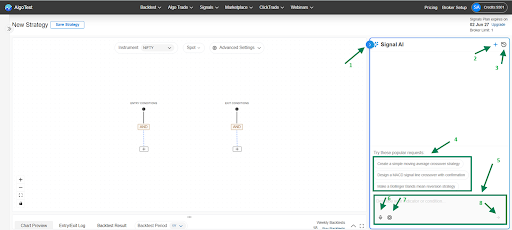
The [Signals AI chatbot](https://docs.algotest.in/Signals-AI/Signals-Creation/Signals-AI-Chatbot/) is where you start. Type your strategy as you would explain it to another trader. The AI reads your input and builds the entry and exit conditions automatically.
You can also refine it through follow-up prompts. Type "change the timeframe to 15 minutes" and it updates instantly. No need to rebuild from scratch every time you want to adjust a condition.
Other things the chatbot supports:
- Suggested Prompts for ready-made strategy templates
- History tab to access and reuse previous strategies
- Voice input in Hindi, English, Gujarati, and Marathi
- AI model selection: Fast, Advanced, Super, or Pro based on strategy complexity
## Step 2: Select Your Instrument
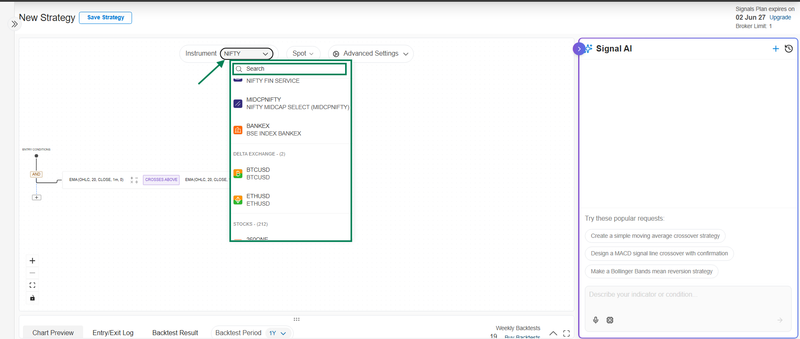
[Signals AI](https://algotest.in/feature/signals/indicators?utm_source=blog&utm_medium=organic&utm_campaign=seo&utm_source=blog&utm_medium=organic&utm_campaign=seo) supports signal creation across three asset categories, so you can run the same workflow whether you trade indices, stocks, or crypto.
**Indices:** NIFTY, BANKNIFTY, SENSEX, MIDCPNIFTY, FINNIFTY, BANKEX
**Stocks:** All NSE Futures and Options enabled stocks
**Crypto:** BTCUSD, ETHUSD
## Step 3: Pick Your Indicators
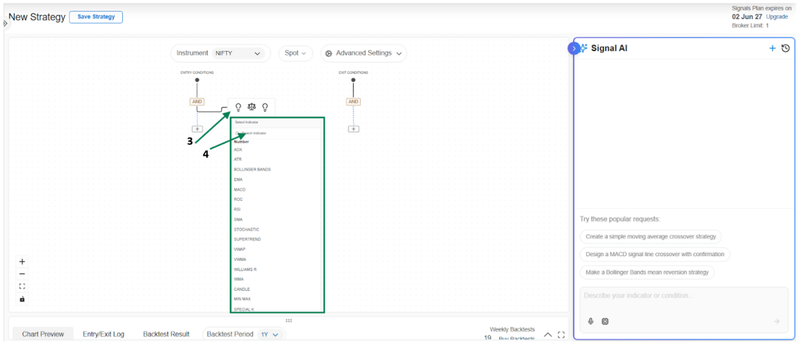
Choose from [trend and momentum indicators](https://docs.algotest.in/Signals-AI/Signals-Creation/Indicators/) to define your signal logic. These can be used individually or combined for multi-condition strategies.
**Trend:** [EMA,](https://algotest.in/blog/automate-ema-indicator-without-coding) SMA, WMA, VWMA, SuperTrend, [ADX,](https://algotest.in/blog/how-to-automate-adx-indicator) VWAP
**Momentum:** RSI, MACD, Stochastic, ROC, Williams %R, Bollinger Bands, ATR
## Step 4: Fine-Tune on the Canvas
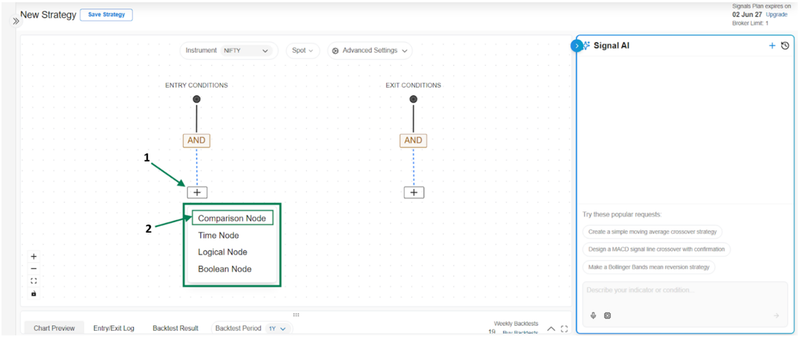
The [AI canvas](https://docs.algotest.in/Signals-AI/Signals-Creation/Signals-Canvas/) is a visual, no-code strategy builder and the most important part of the workflow.
Every indicator is a node. You add nodes, set parameters, and connect them with comparison operators to define when your strategy enters and exits. What the AI generates in seconds, the canvas lets you control precisely.
Here is what you can do:
### Set entry and exit conditions
Each rule connects two indicator nodes with a comparison: Crosses Above, Crosses Below, Greater Than, Less Than, and so on. Entry conditions open a trade. Exit conditions close it.
### Combine conditions with AND / OR logic
You are not limited to one condition per rule. Stack multiple conditions together. For example: entry when EMA 20 crosses above EMA 50 AND RSI is above 55. AND requires all conditions to be true. OR requires anyone to be true. This filters out weak signals and improves accuracy.
### Add a time-based exit
For intraday strategies, add a time-based exit node to close the position at a fixed time regardless of indicator conditions. Useful for squaring off before market close.
### Build from scratch or refine AI output
The canvas works both ways. Most traders let the AI generate the base logic and use the canvas to fine-tune. That combination is faster than building manually and more precise than relying on AI alone.
This is particularly useful in the context of algo trading in India, where intraday strategies require tight execution rules and precise condition management. The canvas makes that level of control available without writing a single formula.
_Go through_ [_the Signals AI Product documentation_](https://docs.algotest.in/Signals-AI/) _for a complete walkthrough._
## Step 5: Configure Data Points
Each indicator node lets you control what data it reads. This makes signal conditions more precise.
You can set:
- Price source: open, high, low, or close
- Timeframe and candle interval
- Offset to reference a previous candle's value instead of the current one
Getting these right is what separates a well-timed signal from one that triggers late or at the wrong price.
## Step 6: Control Signal Behaviour with Advanced Settings
Two settings control how your signal executes once conditions are met.
**Max Concurrent Signals** defines how many trades can be active at the same time. Set to 1 and a new entry will not trigger until the previous position exits. Set to Unlimited and the strategy can take multiple entries whenever conditions are met.
**Max Signals in a Day** caps the total number of entries per session. This prevents overtrading when conditions trigger repeatedly in a volatile market.
## Why This Works Better Than Traditional Signal Building
Traditional signal building means writing code, debugging it, connecting broker APIs, and maintaining alerts every time something breaks.
[Signals AI](https://algotest.in/feature/signals/indicators?utm_source=blog&utm_medium=organic&utm_campaign=seo&utm_source=blog&utm_medium=organic&utm_campaign=seo) replaces that with three steps: describe your strategy, refine it visually, and configure execution rules. A strategy that previously took days to build and test now takes minutes.
Related: [Trading Signals: Build, Backtest & Automate Without Coding or TradingView](https://algotest.in/blog/trading-signals/)
## What Comes After Signal Creation?
Once your signal is built, the next steps are:
- **Chart Preview:** See where your signals would have triggered on historical charts before risking capital (learn more: [How to Analyze Trading Signals on Charts)](https://algotest.in/blog/how-to-analyse-trading-signals-on-charts/)
- [**Backtesting**](https://algotest.in/blog/why-do-we-need-backtesting) **:** Run the strategy against historical data to review win rate, drawdown, slippage, and P&L
- **Forward Testing:** Run in live market conditions without committing full capital
- **Live Automation:** Deploy for automated execution once the strategy is ready
Related: [10 Best TradingView Alternatives in 2026](https://algotest.in/blog/best-tradingview-alternatives/)
## Start Building Trading Signals with AI
Signal automation is not just for developers. Whether your strategy is a simple EMA crossover or a multi-condition momentum setup, Signals AI gives you the tools to build it fast and refine it precisely.
Describe your strategy, use the canvas to get it right, and go live with confidence. The first signal takes a few minutes. Everything after that is just iteration.
Simplifying [algo trading for retail traders in India.](https://algotest.in/?utm_source=blog&utm_medium=internal&utm_campaign=seo&utm_content=main-page&utm_term=algotest&utm_source=blog&utm_medium=internal&utm_campaign=seo&utm_term=algotest&utm_content=main-page)
Join us
_Trading in derivatives involves significant risk of loss. AlgoTest does not provide financial advice. Backtest results are based on historical data and do not guarantee future performance._
# FAQs
Q: What is AI trading signal creation?
A: AI trading signal creation is the process of converting a trading idea into executable entry and exit rules using artificial intelligence. Instead of coding strategies manually, you describe your logic in plain English, and the AI translates it into structured trading conditions.
Q: Do I need coding knowledge to create trading signals with Signals AI?
A: No. Signals AI is built for no-code strategy creation. You can create, refine, test, and automate trading signals without knowing Pine Script, APIs, or any programming language.
Q: Which instruments can I create trading signals for?
A: Signals AI supports multiple asset classes, including indices like NIFTY, BANKNIFTY, SENSEX, MIDCPNIFTY, FINNIFTY, and BANKEX, NSE F&O-enabled stocks, and crypto instruments like BTCUSD and ETHUSD.
Q: What indicators are available in Signals AI?
A: Signals AI supports a wide range of technical indicators, including EMA, SMA, WMA, VWMA, SuperTrend, ADX, VWAP, RSI, MACD, Stochastic, ROC, Williams %R, Bollinger Bands, and ATR.
Q: Can I modify strategies after the AI creates them?
A: Yes. Signals AI includes a visual no-code canvas where you can fine-tune entry and exit conditions, adjust parameters, combine conditions with AND/OR logic, and add time-based exits for better strategy control.
Q: Can I create multi-condition trading strategies?
A: Yes. You can combine multiple indicators and conditions using AND/OR logic to build advanced strategies, such as EMA crossover confirmation with RSI or other momentum indicators.
Q: Does Signals AI support backtesting?
A: Yes. Once your trading signal is created, you can backtest it using historical market data to evaluate performance metrics such as win rate, drawdown, slippage, and overall profitability.
Q: Can I automate live trade execution with Signals AI?
A: Yes. After validating your strategy through backtesting and forward testing, you can deploy it for live automated execution.
Q: Is Signals AI suitable for beginners?
A: Yes. Signals AI is designed for both beginners and experienced traders who want to build automated trading signals without technical complexity or coding barriers.
Q: How is Signals AI different from traditional signal-building methods?
A: Traditional signal building often requires coding, API integrations, and ongoing maintenance. Signals AI simplifies the process with AI-powered strategy generation, visual editing, and built-in automation workflows.
---
This blog is powered by Superblog. Visit https://superblog.ai to know more.
---
## Trading Signals: Build, Backtest & Automate Without Coding or TradingView
Author: AlgoTest
Author URL: https://algotest.in/blog/author/algotest/
Published: 2026-05-24
Category: Signals
Category URL: https://algotest.in/blog/category/signals/
Meta Description: Build, backtest, and automate trading signals without TradingView or coding. Create AI-powered indicator strategies, verify them, and execute live with AlgoTest.
Tags: algo trading india, indicators
Tag URLs: algo trading india (https://algotest.in/blog/tag/algo-trading-india/), indicators (https://algotest.in/blog/tag/indicators/)
URL: https://algotest.in/blog/trading-signals/
Build trading signals, backtest them, and automate live execution, without coding, TradingView, Chartink, or third-party integrations. Signals AI brings the entire workflow into one platform.
## Why Automating Trading Signals Feels Harder Than It Should
Your strategy may be simple.
RSI crosses above 60. SuperTrend turns green. MACD confirms momentum.
The signal is clear.
But things can break in manual execution.
By the time you spot the setup, switch to your broker terminal, and place the trade, the move may already be gone. If you're away from the screen, you might miss the trade entirely.
So you try to automate trading signals. But then the setup gets too complicated.
**TradingView alert → Pine Script → webhook → broker integration → execution**
Yes, it works.
But it also means dealing with:
- a paid TradingView subscription
- Pine Script setup
- webhook configuration
- external integrations
- monitoring in case alerts fail
For traders who simply want a no-code way to automate trading signals, that’s far more setup than it should take.
Learn how to [create trading signals with AI](https://algotest.in/blog/how-to-create-trading-signals-ai/)
## A Simpler Way to Build and Automate Trading Signals
[AlgoTest Signals AI](https://algotest.in/feature/signals/indicators?utm_source=blog&utm_medium=organic&utm_campaign=seo&utm_source=blog&utm_medium=organic&utm_campaign=seo) lets you build indicator-based trading signals, verify them on a real chart, backtest them against actual market data, and deploy them live to your broker. All inside one platform.
No TradingView. No ChartInk. No PineScript. No webhooks. No third-party integrations.
AlgoTest is an [algorithmic trading platform](https://algotest.in/?utm_source=blog&utm_medium=internal&utm_campaign=seo&utm_content=main-page&utm_term=algotest&utm_source=blog&utm_medium=internal&utm_campaign=seo&utm_term=algotest&utm_content=main-page) built for Indian markets. It supports NIFTY, BANKNIFTY, FINNIFTY, MIDCAPNIFTY, SENSEX, BANKEX, stock options across NIFTY500, futures, and crypto. It connects with 50-plus broker APIs.
## How Signals AI Works
Here is how the full workflow runs, using one example.
You want to buy a NIFTY ATM Call when SuperTrend turns green and RSI crosses above 55 on a 15-minute chart. You describe that in plain English to the AI agent. It builds the logic for you.
You open Chart Preview, see exactly when that combination fired historically, and check if the entries look right.
You connect it to an ATM Call Buy strategy, run the [backtest,](https://algotest.in/feature/backtest?utm_source=blog&utm_medium=internal&utm_campaign=seo&utm_content=feature&utm_term=backtest&utm_source=blog&utm_medium=internal&utm_campaign=seo&utm_term=backtest&utm_content=feature) and see the win rate, drawdown, and average return. If the numbers hold up, you deploy it live.
That is the full workflow. Here is what each step does.
Check out [5 Best Indicators for Intraday Trading](https://algotest.in/blog/5-best-indicators-for-intraday-trading/)
### Step 1. Describe Your Strategy to the AI Agent
Type your strategy in plain English.
For example: "Enter long when SuperTrend is green and RSI crosses above 55 on a 15-minute NIFTY chart. Exit when SuperTrend turns red."
The [AI agent](https://algotest.in/blog/best-tradingview-alternative-in-india/) builds the conditions for you automatically. You review and adjust if needed. You do not need to understand the canvas to get started.
### Step 2. Or Build It Manually on the Canvas
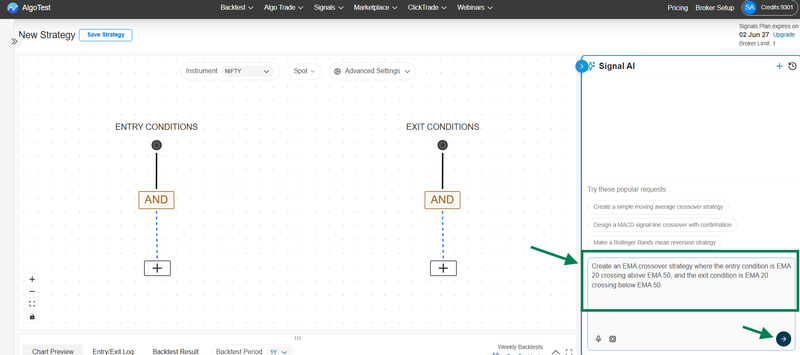
If you want more control, use the visual canvas directly. Each indicator is a block. You connect blocks to define your entry and exit logic, the same way you would write a rule on paper.
You can build trading signals using indicators like:
- RSI
- MACD
- SuperTrend
- EMA and SMA
- VWAP
- Bollinger Bands
- ATR
- Stochastic
- CCI
- ADX
You also control the timeframe, candle type, maximum positions open at once, and maximum entries per day.
### Step 3. Verify on the Chart
Go to the [Chart Preview](https://docs.algotest.in/Signals-AI/Signals-Visualization/Chart-preview/) section. It shows you exactly where your trading signals would have triggered on a real historical chart, with your indicator overlays visible.
If signals are firing at the wrong time or in bad market conditions, adjust your conditions and preview again. You catch the obvious problems here before any money is at risk.
### Step 4. Check the Entry and Exit Log
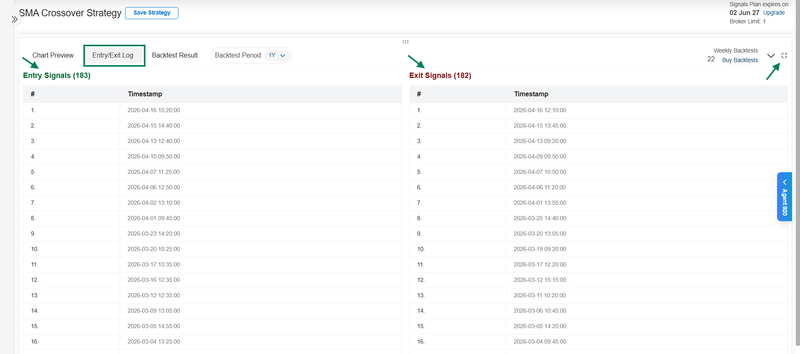
The signal log records every trigger point with a timestamp and the condition that fired it.
A strategy that fires 40 times a day on a 1-minute chart is very different from one that fires twice on a 15-minute chart. You want to know this before you backtest, not after.
Related: [Learn how to analyse trading signals on charts](https://algotest.in/blog/how-to-analyse-trading-signals-on-charts/)
### Step 5. Backtest Against Real Market Data
This is where Signals AI is different from most signal tools.
Most platforms tell you when a signal fired. They stop there. Signals AI goes further. You connect an actual execution strategy to your signals and [run a full backtest](https://algotest.in/feature/backtest?utm_source=blog&utm_medium=internal&utm_campaign=seo&utm_content=feature&utm_term=backtest) of what would have happened if that trade actually executed.
For example, your signal is EMA 20 crossing above EMA 50 on a 15-minute chart. You connect it to a NIFTY ATM Put Sell with a 50% stop loss and a 10% trailing stop. The backtest simulates every entry and exit, with slippage, taxes, and brokerage included. You can also filter by trading day. Maybe you do not want to trade on zero DTE or specific weekdays. You set that and re-run.
The output gives you win rate, average risk to reward, maximum drawdown, and cumulative P&L. You are not guessing at performance. You are seeing it.
Backtesting is available on the 6-month plan.
Related: [How to Backtest Indicator Strategies Before Going Live](https://algotest.in/blog/how-to-backtest-indicator-strategies-before-going-live/)
### Step 6. Deploy Live
Save the strategy and go live. When your indicator conditions fire in real time, AlgoTest executes the trade on your broker account automatically.
No manual order placement. No chart watching. No execution delays.
Read the full [Signals AI documentation](https://docs.algotest.in/signals/) to understand every feature before you start.
Watch the video for a complete walkthrough.
## Build Trading Signals on Option Charts and Combined Premiums
Most signal platforms only work on spot or futures charts. Signals AI lets you generate trading signals on five different data types.
- **Spot charts**. The underlying index or stock price. This is the default.
- **Futures charts**. Signal generation on monthly or next monthly futures data.
- **Option charts**. Generate signals on a rolling option chart itself, not the underlying. For example, plot SuperTrend on a rolling ATM Call chart and take trades based on that.
- **Synthetic futures**. For traders who want exposure without using spot or futures data directly.
- **Combined premium charts**. You combine the premiums of two option legs, for example a rolling ATM Call and a rolling ATM Put, to create a live straddle chart. Indicators are plotted on this combined chart and signals are generated from it. The system handles strike selection, expiry rollover, and ATM recalculation automatically.
No other platform currently lets you [backtest trading signals](https://docs.algotest.in/Signals-AI/Signals-Backtest/) on a combined premium chart.
For options traders running systematic strategies, this is a step up from anything available on TradingView or ChartInk.
If you do not want to build a strategy yourself, Shared Signals is the quicker option.
Subscribe to a pre-built signal based on strategies like SuperTrend or VWAP, created by AlgoTest or other users. Then:
- Set your instrument
- Define your quantity
- Set your stop loss and target
- Go live
AlgoTest handles the execution. No alerts, no webhooks, no setup complexity.
Check out the [best Paper trading apps for Indicator algo strategies](https://algotest.in/blog/paper-trading-apps-for-indicator-algo-strategies-in-india/)
## Who can use Signals AI
Signals AI works well for:
- Traders who have an indicator strategy and want to automate it without code
- Options traders who want to trigger ATM straddles, strangles, or directional positions based on exact indicator conditions
- Traders who cannot watch the market during trading hours
- Anyone who wants to validate a strategy with backtesting before risking capital
Related: [How to Backtest Rolling Straddles with Indicators](https://algotest.in/blog/how-to-backtest-rolling-straddles-with-indicators/)
## AlgoTest Signals AI vs TradingView vs Manual Trading
AlgoTest Signals AI
TradingView and Webhook
Manual Execution
No coding required
Yes
No, needs PineScript
Yes
AI builds the strategy for you
Yes
No
No
Visual chart verification
Yes
Yes
No
Backtest before going live
Yes
Limited
No
Auto-executes on your broker
Yes
Yes, via webhook
No
No external platform needed
Yes
No, needs TradingView
Yes
Accounts for slippage in backtest
Yes
No
No
The TradingView and webhook path work. But it has an ongoing cost, a PineScript learning curve, and alert maintenance. Signals AI does all of this inside one platform without any of that.
## Pricing
Signals AI is part of the AlgoTest Signals plan.
1-Month Plan
6-Month Plan
Price
Rs. 1,600
Rs. 7,000
AI signal creation
Unlimited
Unlimited
Indicators and canvas builder
Yes
Yes
Chart preview and signal logs
Yes
Yes
Forward testing
Yes, up to 10
Yes, up to 50
Live execution
Yes, up to 10
Yes, up to 50
Backtesting with full reports
No
Yes
Dedicated relationship manager
No
Yes
If you want to run signals live or forward test without backtesting first, the 1-month plan covers that. If you want to validate your strategy with a full backtest before going live, you need the 6-month plan.
## Start Automating Your Trading Signals
You can try [Signals AI for free on AlgoTest](https://algotest.in/feature/signals/indicators?utm_source=blog&utm_medium=organic&utm_campaign=seo&utm_source=blog&utm_medium=organic&utm_campaign=seo). You do not need a TradingView subscription, a developer, or any prior experience with automation.
Describe your strategy, verify it on the chart, run a backtest, and see exactly how it performed before you trade it live.
Join us as we simplify [algo trading for retail traders in India.](https://algotest.in/?utm_source=blog&utm_medium=internal&utm_campaign=seo&utm_content=main-page&utm_term=algotest&utm_source=blog&utm_medium=internal&utm_campaign=seo&utm_term=algotest&utm_content=main-page)
Free Sign up
_Trading in derivatives involves significant risk of loss. Backtest results are based on historical data and do not guarantee future performance. AlgoTest is a strategy-building and automation platform and does not provide financial advice._
# FAQs
Q: Can I automate trading signals without TradingView?
A: Yes. Signals AI lets you build, verify, backtest, forward test, and automate trading signals entirely within AlgoTest. No TradingView subscription, Pine Script, webhooks, or third-party integrations required.
Q: Which indicators can I use to build trading signals?
A: Signals AI supports popular technical indicators like RSI, MACD, SuperTrend, EMA, SMA, VWAP, Bollinger Bands, ATR, ADX, Stochastic, CCI, and more. You can combine multiple indicators to create custom trading signal logic.
Q: Can AI create trading signals for me?
A: Yes. Simply describe your strategy in plain English, and Signals AI’s AI agent converts it into structured trading logic automatically. You can also refine or modify your strategy using follow-up prompts.
Q: Do I need coding knowledge to automate trading signals?
A: No. Signals AI is built for no-code trading signal automation. You can create strategies visually using the drag-and-drop canvas or let the AI agent generate the logic for you.
Q: Do I need to backtest before going live?
A: Backtesting is optional, but strongly recommended. It helps you evaluate your strategy’s historical performance with metrics like win rate, drawdown, slippage, taxes, and profit/loss before deploying real capital.
Q: Can I backtest trading signals with actual execution strategies?
A: Yes. Signals AI goes beyond signal generation by letting you connect your signals to actual trading strategies, including options, futures, and directional setups, so you can test execution performance, not just signal accuracy.
Q: Can I create trading signals on option charts or combined premiums?
A: Yes. Signals AI supports signal creation on spot charts, futures charts, option charts, synthetic futures, and combined premium charts, making it useful for advanced options trading strategies.
Q: Is Signals AI only for options traders?
A: No. Signals AI works for index futures, stock futures, options across NIFTY and BANKNIFTY, NIFTY500 stocks, and even crypto trading workflows.
Q: What makes Signals AI different from traditional trading signals software?
A: Most trading signals tools only generate alerts. Signals AI lets you create custom signals, verify them visually, backtest with real execution logic, forward test in live conditions, and automate execution—all within one platform.
---
This blog is powered by Superblog. Visit https://superblog.ai to know more.
---
## EMA Indicator Strategy: How to Automate It Without Coding
Author: AlgoTest
Author URL: https://algotest.in/blog/author/algotest/
Published: 2026-05-22
Category: indicators
Category URL: https://algotest.in/blog/category/indicators/
Meta Description: Learn how to automate the EMA indicator strategy in India without coding. Set up EMA 20/50 crossover conditions, backtest on Nifty, and deploy live on AlgoTest Signals AI.
Tags: algo trading india, indicators
Tag URLs: algo trading india (https://algotest.in/blog/tag/algo-trading-india/), indicators (https://algotest.in/blog/tag/indicators/)
URL: https://algotest.in/blog/automate-ema-indicator-without-coding/
The EMA indicator is one of the most widely used trend-following tools in trading. The 20/50 crossover keeps it simple. Two lines, one signal. When EMA(20) crosses above EMA(50), you enter. When it crosses below, you exit.
The problem is executing it consistently by hand. You miss signals when you step away. You hesitate when the move looks extended. By the end of the week, your results do not match your rules.
That is an execution problem, not a strategy problem. This guide shows you how to fix it by automating the EMA indicator strategy on [AlgoTest Signals AI,](https://algotest.in/feature/signals/indicators?utm_source=blog&utm_medium=organic&utm_campaign=seo&utm_source=blog&utm_medium=organic&utm_campaign=seo) no coding required
## What Is the EMA Indicator?
EMA stands for Exponential Moving Average. It calculates a running average of price but gives more weight to recent candles. This makes it faster to respond to price changes than a Simple Moving Average, which is why most intraday traders prefer it.
Two EMAs together are more useful than one. A shorter EMA reacts quickly. A longer EMA reflects the broader trend. When the shorter crosses above the longer, momentum is shifting up. When it crosses below, momentum is shifting down.
Learn how to [create trading signals with AI](https://algotest.in/blog/how-to-create-trading-signals-ai/)
## Why the EMA 20/50 Crossover Works for Intraday Trading
The 20 EMA tracks short-term momentum. The 50 EMA tracks the medium-term trend. When EMA(20) crosses above EMA(50), short-term momentum has shifted above the medium-term trend, confirming bullish conditions. The reverse signals bearish momentum.
One thing to know upfront: EMA is a lagging indicator. It confirms a move after it has started. You will not catch the very first candle of a trend, and that is fine. The goal is to be on the right side of a confirmed move, not to be first.
Check out [5 Best Indicators for Intraday Trading](https://algotest.in/blog/5-best-indicators-for-intraday-trading/)
## What You Need Before Automating the EMA Indicator Strategy
Lock down four things before you build anything.
- **Fast EMA:** Period 20. This is your short-term momentum line.
- **Slow EMA:** Period 50. This is your medium-term trend line.
- **Entry:** EMA(20) crosses above EMA(50) on a 5-minute candle.
- **Exit:** EMA(20) crosses below EMA(50).
Both use Close as the price source and OHLC candles on a 5-minute timeframe. These match the default settings in the AlgoTest Signals AI documentation, so your screenshots will line up exactly. If you have been tracking EMA crossovers manually on a charting platform, [AlgoTest](https://algotest.in/?utm_source=blog&utm_medium=internal&utm_campaign=seo&utm_content=main-page&utm_term=algotest&utm_source=blog&utm_medium=internal&utm_campaign=seo&utm_term=algotest&utm_content=main-page) is one of the [best TradingView alternatives in India](https://algotest.in/blog/best-tradingview-alternative-in-india/) that takes you from chart-watching to full automation.
For the full range of EMA indicator parameter options, including candle types, price sources, and offset settings, the complete documentation covers all of it.
Related: [7 Bollinger Bands Strategies for Indian Markets](https://algotest.in/blog/bollinger-bands-strategies-for-indian-traders/?utm_source=blog&utm_medium=internal&utm_campaign=seo&utm_term=algotest&utm_content=main-page)
## How to Automate the EMA Indicator Crossover Strategy on Signals AI
[AlgoTest Signals AI](https://algotest.in/feature/signals/indicators?utm_source=blog&utm_medium=organic&utm_campaign=seo) lets you build and automate indicator-based strategies through a visual condition builder. No Pine Script, no Python, no broker API setup. Everything from signal creation to backtesting to live execution runs inside one platform built for [algo trading in India](https://algotest.in/?utm_source=blog&utm_medium=internal&utm_campaign=seo&utm_content=main-page&utm_term=algotest&utm_source=blog&utm_medium=internal&utm_campaign=seo&utm_term=algotest&utm_content=main-page).
Here is the step-by-step process.
### Step 1: Create a New Signal
Log in to AlgoTest and open Signals AI. Click Create Signal. Name it something you will recognise easily, like "EMA-20-50-Crossover-5min", especially if you plan to run multiple signals at the same time.
Set your timeframe to 5 minutes. This matches the EMA crossover strategy setup used in the Signals AI documentation.
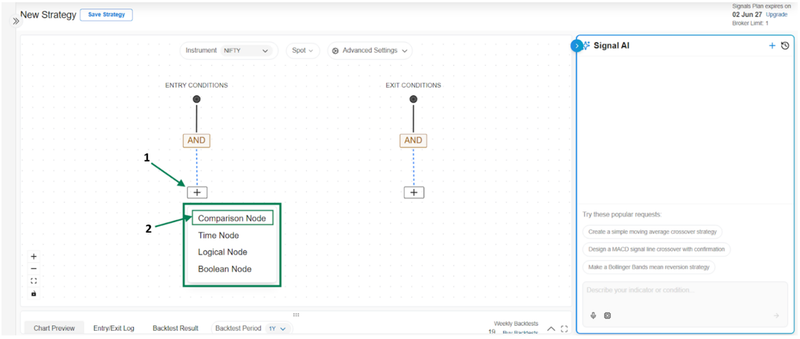
### Step 2: Add the Fast EMA
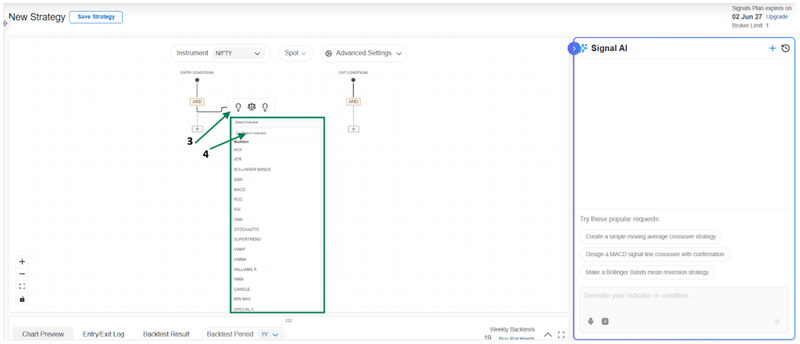
Under Entry Condition, click the plus sign and select Comparison Node. Search for EMA and select it.
Set the indicator inputs as follows.
- Candle Type: OHLC
- Source: Close
- Period: 20
- Timeframe: 5 minutes
Save the settings. This is your fast EMA, the short-term line that reacts quickly to price movement.
### Step 3: Set the Comparison and Add the Slow EMA
After setting the fast EMA, select Crosses Above as your comparison operator.
Now add the slow EMA. Follow the same process, search for EMA and set the inputs as follows.
- Candle Type: OHLC
- Source: Close
- Period: 50
- Timeframe: 5 minutes
Save. Your entry condition is now complete. EMA(20) crosses above EMA(50) on a 5-minute chart.
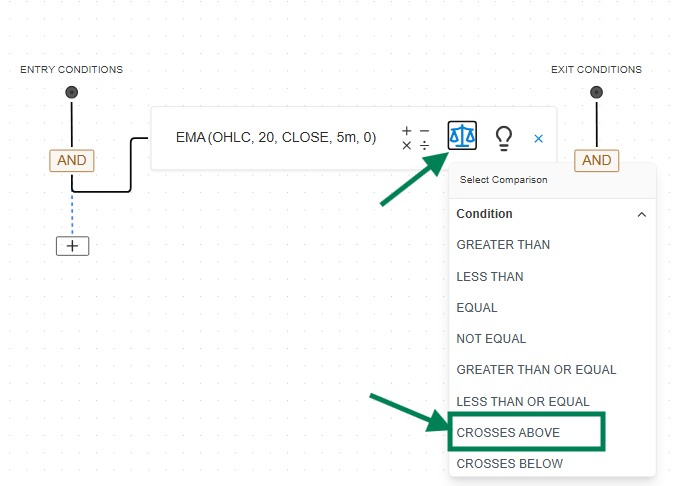
### Step 4: Build Your Exit Condition
Under Exit Condition, repeat the same process.
Add EMA(20) with the same settings as before. Set the comparison to Crosses Below. Then add EMA(50) with the same inputs.
Your exit condition is now set. When EMA(20) drops below EMA(50), the position closes automatically. The entry and exit are mirror images of each other, one crossover gets you in, the opposite crossover gets you out.
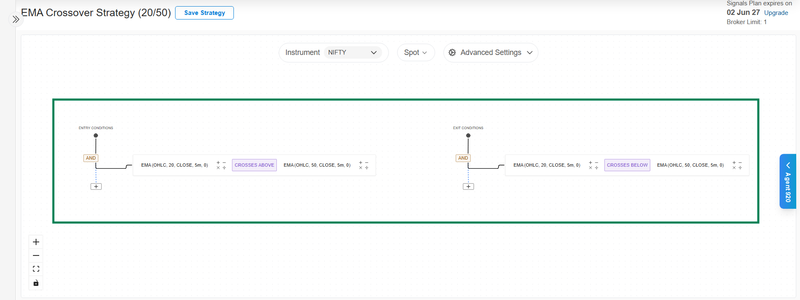
[Read the documentation for a step-by-step walkthrough.](https://docs.algotest.in/Signals-AI/Signals-Creation/Indicators/Trend-Indicators/)
### Step 5: Backtest the Strategy
Do not go live before you backtest. This is the step that tells you whether the strategy holds up on real data.
Run the backtest on at least 12 months of historical data. Look at how the strategy performs across different market conditions, strong trending periods, choppy sideways phases, and high-volatility events like RBI announcements or Budget day. EMA crossover strategies tend to perform well in trending markets and give back gains during ranging ones. Your backtest will show you exactly where that happens.
Look at these numbers specifically.
- **Win rate:** EMA crossover strategies do not need a high win rate. What matters is whether winning trades are significantly larger than losing ones.
- **Profit factor:** A profit factor above 1.5 is a reasonable starting benchmark. Below 1 means the strategy is losing money overall.
- **Maximum drawdown:** How far does the equity curve fall before recovering? If the drawdown is uncomfortable, you will abandon the strategy at the worst moment.
- **Performance in flat markets:** This is where EMA indicator strategies typically struggle. If results improve significantly when you filter out low-volatility periods, add a trend-strength filter. ADX is the most practical one to test here. If you set a condition that requires ADX to be above 25 before any EMA crossover signal fires, you filter out most of the false signals in ranging conditions. See this guide on [how to automate an ADX indicator strategy](https://algotest.in/blog/adx-indicator/) for the exact setup.
> Related Read [How to Backtest Rolling Straddles with Indicators](https://algotest.in/blog/how-to-backtest-rolling-straddles-with-indicators/)
### Step 6: Run a Forward Test First
Before committing real capital, run the strategy in [forward testing](https://algotest.in/feature/forward-test?utm_source=blog&utm_medium=organic&utm_campaign=seo&utm_source=blog&utm_medium=organic&utm_campaign=seo) mode for two to four weeks. This shows you how the EMA crossover performs in live market conditions, not just historical data.
Watch for signal frequency. If you are seeing far more or fewer signals than the backtest suggested, review your conditions. Also, check for slippage on your chosen instrument. Liquid instruments like Nifty keep slippage low, which is why they are a good starting point for EMA-based automation.
Check out the [best Paper trading apps for Indicator algo strategies](https://algotest.in/blog/paper-trading-apps-for-indicator-algo-strategies-in-india/)
### Step 7: Deploy and Automate Live
Once your forward test holds up, deploy the strategy live. AlgoTest connects to your broker directly. When EMA(20) crosses above EMA(50) on the 5-minute chart, the platform fires the order automatically. When EMA(20) crosses below EMA(50), it exits.
You can monitor everything from your dashboard, adjust settings, run multiple signals across different instruments, or pause the strategy at any time.
This is what [algorithmic trading in India](https://algotest.in/?utm_source=blog&utm_medium=internal&utm_campaign=seo&utm_content=main-page&utm_term=algotest&utm_source=blog&utm_medium=internal&utm_campaign=seo&utm_term=algotest&utm_content=main-page) looks like when done systematically. Clear rules, tested on real data, executed without emotion.
## Common EMA Indicator Mistakes to Avoid
**Using the EMA indicator alone in choppy markets.** EMA crossovers generate false signals when the market is ranging. The 20 and 50 EMAs will keep crossing back and forth without any real trend behind the move. Consider adding a trend filter like ADX to confirm the trend is strong before a signal fires. For a full walkthrough on setting up ADX as a filter, see this guide on [how to automate an ADX indicator strategy in India](https://algotest.in/blog/how-to-automate-adx-indicator).
**Changing the period settings too often.** It is tempting to keep optimising after every losing trade. Stick with 20 and 50 for a meaningful backtest period before making changes. Frequent adjustments introduce overfitting and the EMA indicator strategy stops working in live conditions.
**Ignoring the timeframe.** EMA(20) and EMA(50) on a 5-minute chart behave very differently from the same settings on a 1-hour chart. Be specific about your timeframe and backtest that exact combination before going live.
**Skipping the forward test.** A backtest tells you how the strategy performed historically. A forward test tells you how it behaves now. Both matter. Do not skip the forward test just because your backtest looks good.
## Start Automating Your EMA Indicator Strategy
If you are ready to stop watching two lines on a chart manually and start running a system that acts for you, [Signals AI on AlgoTest](https://algotest.in/feature/signals/indicators?utm_source=blog&utm_medium=organic&utm_campaign=seo) is where to build it. Set up your EMA indicator conditions, backtest them on real Indian market data, and deploy live without writing a single line of code.
Free Sign Up
> Related Reads:
>
> [10 Best TradingView Alternatives](https://algotest.in/blog/best-tradingview-alternatives/?utm_source=blog&utm_medium=organic&utm_campaign=seo)
>
> [AI-Based Algo Trading in India](https://algotest.in/blog/ai-algo-trading-india/)
>
> [Best Indicator for Options Trading](https://algotest.in/blog/best-indicator-for-option-trading/)
# FAQs
Q: What is the EMA indicator and how does it work?
A: EMA stands for Exponential Moving Average. It calculates a running average of price but gives more weight to recent candles, making it faster to respond to price changes than a Simple Moving Average. Most intraday traders prefer it because it picks up momentum shifts sooner. The 20/50 crossover is the most common setup: when EMA(20) crosses above EMA(50), it signals bullish momentum. When it crosses below, it signals bearish momentum.
Q: How do I automate an EMA indicator strategy in India without coding?
A: You can automate an EMA indicator strategy using AlgoTest Signals AI. It has a visual condition builder where you set your entry condition as EMA(20) crossing above EMA(50) and your exit as EMA(20) crossing below EMA(50). The platform connects directly to your broker and executes trades automatically when those conditions are met, no Python, no Pine Script, no API setup required.
Q: What is the best EMA crossover setting for intraday trading in India?
A: The EMA 20/50 crossover on a 5-minute chart works well for most intraday setups on Indian indices like Nifty and BankNifty. EMA(20) reacts quickly to short-term momentum while EMA(50) reflects the medium-term trend. Together they filter out a lot of the noise that shorter period combinations tend to produce.
Q: What is the difference between EMA and SMA?
A: Both calculate a moving average of price, but EMA gives more weight to recent candles while SMA treats all candles equally. This makes EMA faster to respond when price starts moving. For intraday trading where timing matters, EMA picks up momentum shifts earlier than SMA, which is why most active traders prefer it.
Q: Is the EMA indicator good for algo trading in India?
A: Yes. The EMA indicator generates clear, rule-based conditions, a crossover either happens or it does not. That makes it straightforward to automate on platforms like AlgoTest Signals AI. It works especially well on liquid Indian instruments like Nifty and BankNifty where signals execute cleanly with minimal slippage.
Q: How do I backtest an EMA crossover strategy on Nifty?
A: On AlgoTest, you set up your EMA(20) and EMA(50) conditions in Signals AI and run a backtest on Nifty data. Choose your timeframe, define your entry and exit rules, and the platform runs the strategy across historical data. Pay close attention to how it performs during flat, low-momentum periods, this is where EMA strategies typically give back gains.
Q: Why does the EMA 20/50 crossover generate false signals?
A: False signals happen when the market is ranging rather than trending. In a sideways market, EMA(20) and EMA(50) keep crossing back and forth without any real directional move behind them. The most effective fix is adding an ADX filter. If you require ADX to be above 25 before any crossover signal fires, you cut out most of the false signals in choppy conditions.
---
This blog is powered by Superblog. Visit https://superblog.ai to know more.
---
## How to Automate ADX Indicator Strategy Without Coding
Author: AlgoTest
Author URL: https://algotest.in/blog/author/algotest/
Published: 2026-05-20
Category: indicators
Category URL: https://algotest.in/blog/category/indicators/
Meta Description:
Learn how to automate an ADX indicator strategy on Nifty without coding. Set up entry, exit, backtest, and deploy live using AlgoTest Signals AI in 7 steps.
Tags: algo trade, algo trading india
Tag URLs: algo trade (https://algotest.in/blog/tag/algo-trade/), algo trading india (https://algotest.in/blog/tag/algo-trading-india/)
URL: https://algotest.in/blog/how-to-automate-adx-indicator/
Most traders who use the ADX indicator already know the rules by heart. ADX above 25, +DI crosses above -DI, you enter. Clean and logical.
The problem is not understanding it. The problem is sitting there all day waiting for three conditions to line up at the same time, and then actually pulling the trigger when they do.
You miss one signal because you stepped away. You second-guess another because the move looked too fast. By the end of the week, your results look nothing like what your rules should have produced.
This guide fixes that. Here is how to automate the ADX crossover strategy on Nifty using AlgoTest Signals AI, from setting up the conditions to deploying it live, without writing any code.
## Why Automating the ADX Indicator Manually Does Not Work
The ADX indicator has three components: the ADX line, the +DI line, and the -DI line. A good ADX strategy requires all three to align before you act. ADX above a threshold and a DI crossover in the right direction, both at the same time.
Monitoring all three in real time, across Nifty, BankNifty, or any stock, is harder than it sounds. You will catch some signals and miss others. Your entries will be inconsistent. And inconsistency is what kills the edge of any rule-based strategy.
The other issue is emotion. Even when you see the signal clearly, you hesitate. The market has moved a bit already. You wonder if it is too late. You skip the trade. Then it runs without you.
Automation removes all of this. Your rules fire exactly when the conditions are met, every single time, whether you are at your desk or not.
Learn how to [create trading signals with AI](https://algotest.in/blog/how-to-create-trading-signals-ai/)
## What You Need Before Automating the ADX Indicator Strategy
Before you touch any algo trading platform, get your rules on paper first. Not roughly. Precisely.
The ADX crossover strategy has four things you need to nail down before you build anything.
**Threshold.** The standard is ADX above 25. That is your minimum bar for a trend worth trading. Some traders push this to 30 to cut down on weaker signals. Either works, but pick one and do not keep changing it every time a trade does not go your way.
**Entry.** You go long when ADX(14) is above 25 and +DI(14) crosses above -DI(14). Both conditions need to be true at the same time. One without the other is not a signal.
**Exit.** You close the position when +DI(14) crosses below -DI(14). That crossover tells you the bullish move that got you in has run its course. No need to overthink the exit here, the rules are clean.
**Instrument and timeframe.** This guide uses Nifty cash data on a 5-minute chart. That is the same setup used in the AlgoTest Signals AI examples, so if you are following along with the screenshots, everything will line up exactly.
Once these four things are locked in, you are ready to build.
Related: [7 Bollinger Bands Strategies for Indian Markets](https://algotest.in/blog/bollinger-bands-strategies-for-indian-traders/?utm_source=blog&utm_medium=internal&utm_campaign=seo&utm_term=algotest&utm_content=main-page)
## How to Automate Your ADX Strategy on Signals AI
[Signals AI](https://algotest.in/feature/signals/indicators?utm_source=blog&utm_medium=organic&utm_campaign=seo&utm_source=blog&utm_medium=organic&utm_campaign=seo) is built specifically for [algo trading in India](https://algotest.in). You can automate strategies directly from a visual builder, no Pine Script, no Python, no API integration required. Everything from signal creation to backtesting to live execution happens inside one platform.
Here is the step-by-step process.
### Step 1: Create a New Signal
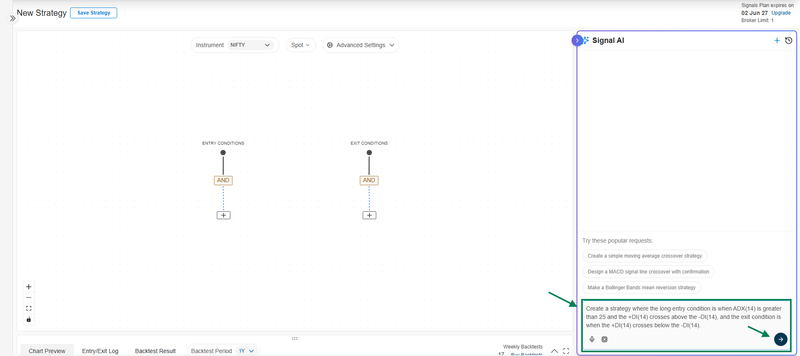
[Log into AlgoTest](https://algotest.in/feature/signals/indicators?utm_source=blog&utm_medium=organic&utm_campaign=seo&utm_source=blog&utm_medium=organic&utm_campaign=seo) and open Signals AI. Click Create Signal. Name it something specific, like "ADX-Crossover-Nifty", so you can identify it easily when you have multiple signals running.
Select Nifty as your instrument and set the timeframe to 5 minutes. This matches the ADX crossover strategy example in the Signals AI documentation.
### Step 2: Add the ADX Indicator
Go to Indicators, select Trend Indicators, and choose ADX. Set the period to 14. This is the default setting that Wilder originally recommended, and it works well across most Indian index instruments.
You will see three separate outputs available: the ADX line, +DI, and -DI. Each one can be used independently as a condition in your logic.
### Step 3: Build Your Entry Conditions
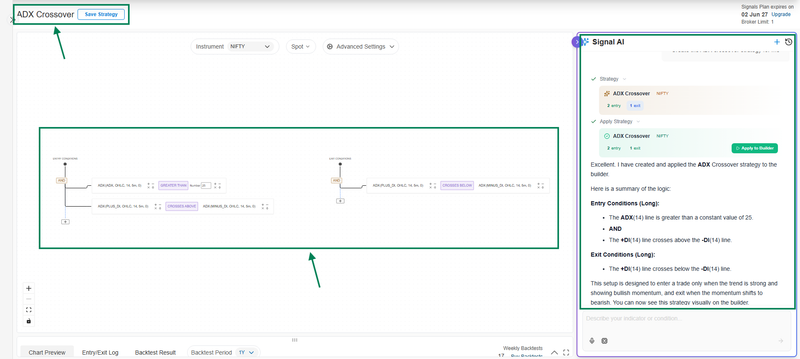
Use the condition builder to define your entry. The long entry condition from the doc is:
- ADX(14) is greater than 25
- AND +DI(14) crosses above -DI(14)
Both conditions must be true at the same time for the signal to trigger. The ADX filter confirms the trend is strong enough to act on. The +DI crossing above -DI confirms the direction is bullish.
You can also combine the ADX indicator with RSI or MACD for additional confirmation.
> 📖 Related Read [Best Indicators for Options Trading in India](https://algotest.in/blog/best-indicator-for-option-trading/) A practical guide on which indicators pair well together for Indian options strategies.
### Step 4: Build Your Exit Conditions
The exit condition for this strategy is straightforward. The long position closes when:
- +DI(14) crosses below -DI(14)
That is the only exit condition in the base strategy from the doc. When +DI drops below -DI, the bullish momentum that triggered your entry has reversed. The strategy closes the position at that point.
This keeps the logic clean and easy to follow in the condition builder. Your entry and exit are mirror images of each other: you enter on a +DI crossover up, and you exit on a +DI crossover down.
### Step 5: Backtest the Strategy
This is the most important step before you deploy anything live.
Run a backtest across at least 12 months of historical data. AlgoTest gives you access to years of historical data on Indian instruments, so you can stress-test across multiple market conditions, including trending phases, choppy sideways periods, and high-volatility events like Budget day or RBI policy announcements.
Look at these numbers specifically.
- **Win rate:** ADX strategies do not need a very high win rate if the average winner is significantly larger than the average loser. Above 40 percent is a reasonable starting benchmark, not a hard rule.
- **Profit factor:** A profit factor above 1.5 is a general benchmark worth targeting. Anything below 1 means the strategy is losing money overall.
- **Maximum drawdown:** How deep does the strategy fall before recovering? If the drawdown is larger than you can stomach, you will shut it off at the worst possible time.
- **Performance in low-ADX periods:** This is where most ADX indicator strategies leak. Check how the strategy performs when ADX stays below 20. If results improve significantly by filtering those periods out, add that filter to your live conditions.
> 📖 Related Read [How to Backtest Indicator-Based Strategies on AlgoTest](https://algotest.in/blog/how-to-backtest-rolling-straddles-with-indicators/) A step-by-step walkthrough on reading backtest results and avoiding common testing mistakes.
### Step 6: Run a Forward Test (Paper Trade)
Before going live with real capital, run the strategy in [Forward testing](https://docs.algotest.in/Signals-AI/Signals-Deployment/Forward-Test/) mode for two to four weeks. This is called forward testing, and it gives you a read on how the strategy behaves in current market conditions, not just historical ones.
Watch for signal frequency. If you are getting far more or far fewer signals than your backtest suggested, something in your conditions may need adjusting. Also watch for slippage. Liquid instruments like Nifty and BankNifty minimize this, but illiquid stocks can show very different live results compared to a backtest.
Check out the [best Paper trading apps for Indicator algo strategies](https://algotest.in/blog/paper-trading-apps-for-indicator-algo-strategies-in-india/)
### Step 7: Deploy and Automate Live
Once your forward test results hold up, deploy the [strategy live.](https://docs.algotest.in/Signals-AI/Signals-Deployment/Algo-Trade/) AlgoTest connects directly to your broker, with integrations across 60 plus brokers in India including Zerodha, Angel One, and Upstox.
When the ADX conditions you defined are met, the platform fires the order automatically. You do not need to be watching the screen. You do not need to approve each trade manually. The rules run exactly as you set them up.
You can monitor live signal performance from your dashboard, adjust thresholds, pause the strategy, or run multiple signals across different instruments simultaneously.
This is what systematic [algo trading in India](https://algotest.in) actually looks like in practice. A defined rule set, validated on real data, running automatically without emotional interference.
Product Documentation: [Signals AI](https://docs.algotest.in/Signals-AI/)
## Common Mistakes to Avoid
**Skipping the backtest.** It is tempting to build the signal and go live immediately. Do not. An untested ADX strategy in a ranging market will bleed your account before you understand what is happening.
**Setting the ADX threshold too low.** ADX above 20 sounds reasonable but it lets in too many weak signals. Start at 25. Test 30. See which produces better risk-adjusted returns on your specific instrument.
**Using ADX alone.** ADX tells you the trend strength. It does not tell you direction or momentum. Always pair it with at least one directional filter, the DI lines at minimum, and consider adding RSI or MACD as a secondary confirmation layer.
**Ignoring the timeframe.** A 5-minute ADX strategy on Nifty will generate very different signals than a 1-hour ADX strategy on the same instrument. Be deliberate about which timeframe you are targeting and backtest that specific combination.
Related Read: [How to backtest rolling straddles with Indicators](https://algotest.in/blog/how-to-backtest-rolling-straddles-with-indicators/).
## Start Automating Your ADX Indicator Strategy
If you are ready to move from watching charts manually to running a system that executes for you, Signals AI on AlgoTest is where to start. Build your ADX indicator conditions, backtest them on real Indian market data, and deploy live, all without writing any code.
> 📖 Further Reading [How AlgoTest is Simplifying Algo Trading in India](https://algotest.in/blog/how-algotest-is-simplifying-algo-trading-in-india/)
>
> 📖 Further Reading [AI-Based Algo Trading in India](https://algotest.in/blog/ai-algo-trading-india/)
Get Started
# FAQs
Q: Can you automate an ADX indicator strategy without coding?
A: Yes. Platforms like AlgoTest Signals AI let you build and automate ADX-based strategies using a visual condition builder. You define your rules, such as ADX above 25 and +DI crossing above -DI, and the platform executes them automatically. No Python, no Pine Script, no API setup required.
Q: What is the best ADX indicator setting for intraday trading in India?
A: The default period of 14 works well for most intraday setups on Indian indices like Nifty and BankNifty. On a 5-minute chart, ADX(14) gives you enough sensitivity to catch intraday trends without reacting to every small move. You can test shorter periods like 7 if you want faster signals, but expect more false positives.
Q: What does ADX above 25 mean in trading?
A: It means the market is in a strong trend, either up or down. The ADX line itself does not tell you the direction. It only tells you the trend has enough strength to trade. Below 20, the market is likely ranging and trend-following strategies tend to underperform.
Q: How do you set entry and exit conditions for an ADX crossover strategy?
A: The entry fires when ADX(14) is greater than 25 and +DI(14) crosses above -DI(14). Both conditions must be true at the same time. The exit fires when +DI(14) crosses below -DI(14), which signals the bullish momentum has reversed. These two rules form the complete base strategy.
Q: How do I backtest an ADX indicator strategy on Nifty?
A: On AlgoTest, you set up your ADX conditions in Signals AI and run a backtest on Nifty cash data. You pick your timeframe, define entry and exit rules, and the platform runs the strategy across historical data. Look at profit factor, drawdown, and how the strategy performs during low-ADX periods specifically.
Q: Is the ADX indicator good for algo trading in India?
A: Yes, because it is rule-based. ADX generates clear, measurable conditions, ADX above a threshold and DI crossovers, which makes it straightforward to automate. It works well on liquid Indian instruments like Nifty and BankNifty where signals execute cleanly without significant slippage.
Q: What is the difference between ADX, +DI, and -DI?
A: ADX measures how strong the current trend is. +DI measures the strength of upward price movement. -DI measures the strength of downward price movement. You need all three together. ADX tells you if a trend is worth trading. The DI lines tell you which direction it is moving.
---
This blog is powered by Superblog. Visit https://superblog.ai to know more.
---
## Looking for Free Algorithmic Trading Software? Start with AlgoTest
Author: AlgoTest
Author URL: https://algotest.in/blog/author/algotest/
Published: 2026-05-19
Category: General
Category URL: https://algotest.in/blog/category/general/
Meta Description: Looking for free algorithmic trading software in India? Build, backtest, and paper trade options strategies without coding using AlgoTest.
Tags: algo trade, algo trading india
Tag URLs: algo trade (https://algotest.in/blog/tag/algo-trade/), algo trading india (https://algotest.in/blog/tag/algo-trading-india/)
URL: https://algotest.in/blog/algorithmic-trading-software/
If you want to get started with algorithmic trading but do not want to spend money upfront on expensive tools, you are in the right place.
Maybe you are looking for an Indian software that lets you build, analyze, and backtest strategies for free. Maybe you want instant access to option chain data, a visual strategy builder instead of coding, and the flexibility to pay only when you are actually ready to scale.
Whether you are an experienced trader refining your edge or a beginner retail trader exploring systematic trading for the first time, [AlgoTest](https://algotest.in) is worth a look.
## What Is Algorithmic Trading?
Algorithmic trading means using a fixed set of rules to decide when to buy or sell. Instead of making decisions based on how you feel in the moment, you write down your rules in advance. Your system follows those rules every single time.
For example, your rule might be: sell a Nifty straddle at 9:20 AM, exit if profit hits 50%, and close the trade by 3:00 PM no matter what. That is an algorithm. It is just a repeatable process written as clear steps.
## What Makes AlgoTest Different?

Many [algorithmic trading platforms](https://algotest.in/blog/8-best-algo-trading-platforms-in-india-2026) claim to simplify trading.
But once you sign up, many either feel too generic, too technical, or too expensive too quickly.
AlgoTest feels different because it is clearly built for **Indian options traders**, not as a broad trading tool trying to serve everyone.
If your trading revolves around structured options strategies, this becomes obvious pretty quickly.
Instead of piecing together separate tools for strategy building, analysis, execution testing, and monitoring, you get everything in one place.
That makes the workflow much cleaner.
## AlgoTest Features
### Strategy Builder (No Coding Needed)
If coding has been the reason you never tried algorithmic trading, this solves that problem.
AlgoTest provides a visual [strategy builder](https://algotest.in/feature/strategy-builder?utm_source=blog&utm_medium=organic&utm_campaign=seo&utm_source=blog&utm_medium=organic&utm_campaign=seo) that lets you create rule-based strategies without writing code.
You can define:
- entry logic
- strike selection
- stop losses
- targets
- time-based exits
- re-entry rules
- hedge positions
- execution logic
This makes building structured options strategies much easier.
Whether you trade:
- short straddles
- iron condors
- short strangles
- ratio spreads
- directional option strategies
…the setup feels intuitive instead of technical.
### Advanced Backtesting
This is where most serious traders spend time.
A strategy that looks profitable in theory can completely fail in reality.
AlgoTest lets you [backtest your strategies](https://algotest.in/feature/backtest?utm_source=blog&utm_medium=internal&utm_campaign=seo&utm_content=feature&utm_term=backtest&utm_source=blog&utm_medium=internal&utm_campaign=seo&utm_term=backtest&utm_content=feature) against years of historical market data, so you can evaluate performance across different market phases before risking actual capital.
That means you can study:
- profit consistency
- max drawdowns
- win rate
- losing streaks
- monthly performance
- trade-level breakdowns
- portfolio-level analytics
This matters because a strategy with high returns but terrible drawdowns may not actually suit your risk appetite.
Backtesting helps you see the full picture.
### Paper Trading in Live Markets
Historical data tells you one story.
Live execution tells you another.
AlgoTest lets you [paper trade](https://algotest.in/blog/paper-trading-websites-india) using virtual capital in live market conditions so you can observe how your strategy behaves without financial risk.
This is especially useful for validating:
- execution timing
- discipline
- real-time behavior
- strategy confidence
Many traders skip this step.
That usually gets expensive.
Check out the [best Paper trading apps for Indicator algo strategies](https://algotest.in/blog/paper-trading-apps-for-indicator-algo-strategies-in-india/)
### Algo Trading Automation
Once your strategy is tested and validated, you can move toward automation.
Instead of manually watching every setup, predefined strategy rules can handle execution systematically.
This helps reduce emotional decision-making and improves consistency.
For traders moving from discretionary execution to systematic trading, this is a natural next step.
### Signals AI (One of the Most Interesting Features)
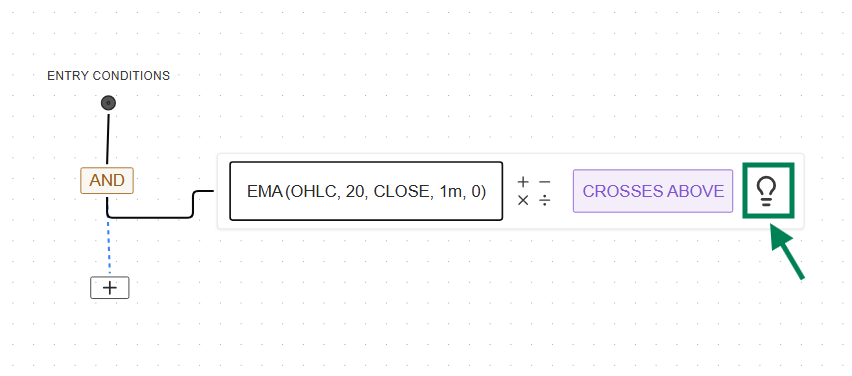
This is where AlgoTest becomes much more than a backtesting platform.
If you like indicator-based trading strategies, [Signals AI](https://algotest.in/feature/signals/indicators?utm_source=blog&utm_medium=organic&utm_campaign=seo&utm_source=blog&utm_medium=organic&utm_campaign=seo) makes strategy creation dramatically easier.
Instead of manually defining complicated technical conditions or relying on third-party tools, you can build strategies directly inside AlgoTest.
For example, you can create logic around:
- RSI
- MACD
- Supertrend
- moving averages
- breakout conditions
- custom indicator combinations
And the interesting part?
You can describe your strategy in plain English.
Signals AI helps convert that into a testable workflow.
From a single dashboard, you can:
- build strategies
- backtest them
- paper trade them
- deploy them
No coding.
No TradingView-to-execution juggling.
No patchwork integrations.
If you are a trader who thinks in setups rather than code, this makes a huge difference.
Related Read: [Best TradingView Alternative in India](https://algotest.in/blog/best-tradingview-alternative-in-india)
### Options Greeks Analytics
If you trade options seriously, price movement alone is not enough.
Risk exposure matters.
AlgoTest includes built-in Greeks analytics so you can better understand how your positions behave.
Track exposure across:
- Delta
- Gamma
- Theta
- Vega
This becomes especially useful when managing structured multi-leg positions.
### Margin Estimation Tools
One common frustration for options traders?
Building a strategy and then realizing the margin requirement makes it impractical.
AlgoTest helps estimate margin requirements upfront so you can plan realistically.
That saves time and helps avoid poor capital planning.
### Order Execution Flexibility
Different strategies need different execution logic.
AlgoTest supports multiple execution approaches so traders can align order behavior with strategy requirements instead of forcing one rigid workflow.
That flexibility matters as strategies become more advanced.
### Trader Community + Learning Resources
For beginners, tools alone are not enough.
Learning support matters.
AlgoTest also gives access to:
- trader community discussions
- educational resources
- documentation
- strategy guidance
That makes the learning curve less intimidating for newer traders.
## Why AlgoTest Works Well for Retail Options Traders in India
The biggest problem with many trading tools is fragmentation.
One tool for charts.
Another for backtesting.
Another for alerts.
Another for execution.
Another for analysis.
That creates friction.
AlgoTest simplifies that into a much more practical workflow.
Idea → Build → Test → Analyze → Paper Trade → Automate
That is a much cleaner way to approach algorithmic trading.
## How to Get Started with Algorithmic Trading
Step 1. Create your free account at [https://algotest.in](https://algotest.in). No credit card needed.
Step 2. Pick your instrument, Nifty, BankNifty, or FinNifty, and set your date range. Use at least one to two years of data.
Step 3. Build your strategy using the visual builder. Set your legs, entry time, strike method, and exit conditions.
Step 4. Run the backtest. Check the equity curve, drawdown periods, and month-by-month consistency. Do not just look at total profit.
Step 5. Paper trade for at least 30 to 50 signals before you risk real capital.
Read this guide to understand the [step-by-step algo trading checklist](https://algotest.in/blog/how-to-do-algo-trading-step-by-step-beginner-checklist)
## Mistakes to Avoid in Algorithmic Trading
Do not tweak your strategy until the backtest looks perfect. That fits the past, not the future. Validate on a date range you have not touched.
Always add slippage to your test. Execution spreads are wider than the backtest assumes. A small slippage input changes your results significantly.
Do not test only recent data. A strategy that worked in 2021 may break when India VIX hits 25 or 30.
- Keep some data aside for validation. Do not optimize on 100 percent of it.
- Always include realistic slippage before reading P&L results.
- Test across different market conditions, not just the easy ones.
- Paper trade for one to two months before using real money.
For a full breakdown of the advantages and risks, read this:
**The Bottom Line**
AlgoTest is one of the best free tools available for retail traders in India right now. It handles the data, the backtest engine, and the analytics so you can focus on your strategy.
Pair it with Signals AI for live market intelligence. Together, they give you a full no-cost setup for building and running systematic options strategies.
You do not need a big budget or a coding background. You just need a clear idea and the discipline to test it properly.
Get started for free: [https://algotest.in](https://algotest.in)
This article is for educational purposes only. Nothing here is financial advice. Always do your own research before deploying any trading strategy with real capital.
# FAQs
Q: What is the best free algorithmic trading software in India for options traders?
A: If you are looking for free algorithmic trading software in India specifically for options trading, AlgoTest is a strong option. It offers a no-code strategy builder, advanced backtesting, paper trading, options analytics, and Signals AI for building indicator-based strategies without needing third-party tools.
Q: Can beginners use AlgoTest for algorithmic trading?
A: Yes. AlgoTest is beginner-friendly because you do not need coding knowledge to get started. The visual strategy builder makes it easy to create, test, and analyze options strategies, making it suitable for retail traders exploring algorithmic trading for the first time.
Q: Does AlgoTest support options strategy backtesting?
A: Yes. AlgoTest allows you to backtest options strategies using historical market data so you can evaluate performance across different market conditions before deploying real capital.
Q: Can I automate trading strategies on AlgoTest?
A: Yes. Once your strategy is tested and validated, AlgoTest supports automation so you can execute trades systematically based on predefined rules instead of relying on manual intervention.
Q: What is Signals AI in AlgoTest?
A: Signals AI is AlgoTest’s indicator-based AI strategy builder that lets traders create strategies in plain English, backtest them, paper trade them, and deploy them from a single dashboard without coding or third-party integrations.
Q: Does AlgoTest provide paper trading?
A: Yes. AlgoTest offers paper trading so traders can simulate strategies in live market conditions using virtual capital before committing real money.
Q: Is AlgoTest only for experienced traders?
A: No. AlgoTest works for both experienced and beginner traders. Experienced traders can validate and automate structured options strategies, while beginners can use it as an accessible entry point into systematic trading.
Q: Does AlgoTest provide options Greeks analysis?
A: Yes. AlgoTest includes options Greeks analytics, allowing traders to track Delta, Gamma, Theta, and Vega to better understand risk exposure across their positions.
---
This blog is powered by Superblog. Visit https://superblog.ai to know more.
---
## 10 Best TradingView Alternatives in 2026
Author: AlgoTest
Author URL: https://algotest.in/blog/author/algotest/
Published: 2026-05-18
Category: Signals
Category URL: https://algotest.in/blog/category/signals/
Meta Description: Looking for the best TradingView alternative in India? Compare 10 platforms including Koyfin, GoCharting, Chartink, and AlgoTest Signals AI. Find the right tool for charting, backtesting, and algo trading in India.
Tags: algo trading, indicators
Tag URLs: algo trading (https://algotest.in/blog/tag/algo-trading/), indicators (https://algotest.in/blog/tag/indicators/)
URL: https://algotest.in/blog/best-tradingview-alternatives/

TradingView is a great charting tool. But it does not backtest your strategies. It does not automate your trades. And if you are an Indian trader, you are probably switching between TradingView, Chartink, and your broker app just to place one trade.
There are better options. This article covers 10 TradingView alternatives in 2026, what each one does well, and where it stops short.
## Quick Comparison
Platform
Real-Time Data
Backtesting
No-Code Automation
Indian Markets
Third-Party Integration Needed
AlgoTest Signals AI
Yes
Yes
Yes
Yes
No
Koyfin
Yes
No
No
Limited
Yes
Investing.com
Partial
No
No
Yes
Yes
StockCharts
Delayed
No
No
No
Yes
Finviz
Delayed
No
No
No
Yes
GoCharting
Partial
No
No
Paid only
Yes
MetaTrader 4/5
Yes (broker)
Limited
No (requires coding)
No
Yes
ProRealTime
Yes
No
No
No
Yes
Chartink
Yes
No
No
Yes
Yes
Webull
Yes
No
No
No
Yes
## Feature Comparison of Tradingview Alternatives
### 1\. AlgoTest Signals AI
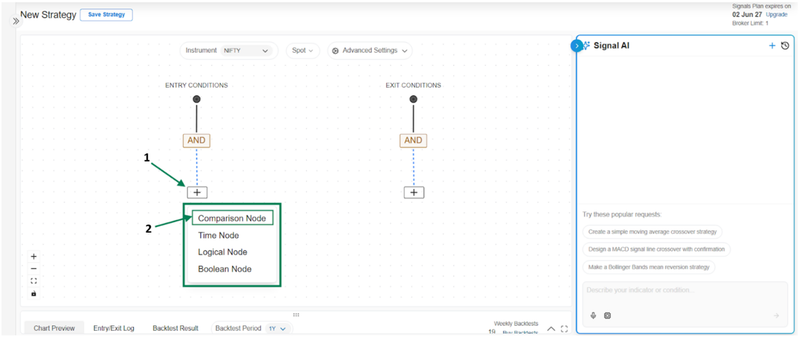
[Signals AI](https://algotest.in/feature/signals/indicators?utm_source=blog&utm_medium=organic&utm_campaign=seo&utm_source=blog&utm_medium=organic&utm_campaign=seo) is an indicator-based strategy builder built for Indian traders. You [build strategies](https://algotest.in/feature/strategy-builder?utm_source=blog&utm_medium=organic&utm_campaign=seo&utm_source=blog&utm_medium=organic&utm_campaign=seo), [backtest](https://algotest.in/feature/backtest?utm_source=blog&utm_medium=internal&utm_campaign=seo&utm_content=feature&utm_term=backtest&utm_source=blog&utm_medium=internal&utm_campaign=seo&utm_term=backtest&utm_content=feature), paper trade, and automate them from one dashboard, without writing any code and without connecting to a third-party tool.
It supports 60 or more Indian brokers including Zerodha, Angel One, and Upstox. AlgoTest has processed over 20 million backtests and has more than 35,000 traders on the platform.
What you get:
- Describe your strategy in plain English and the AI builds the logic for you
- Drag-and-drop condition strategy builder if you prefer to set rules manually
- Chart Preview to verify entry and exit signals visually before backtesting
- Backtest on real historical data to check performance before risking capital
- [Forward Test](https://algotest.in/feature/forward-test?utm_source=blog&utm_medium=organic&utm_campaign=seo&utm_source=blog&utm_medium=organic&utm_campaign=seo)(paper trade) in live market conditions with no real money
- One-click live deployment through your connected broker
- No third-party charting or screening tool needed
Where it falls short:
- Currently focused on Indian markets, not built for global assets
- Futures and options backtesting is expanding, check the latest on the platform
AlgoTest is the most complete [platform for algo trading in India.](https://algotest.in/?utm_source=blog&utm_medium=internal&utm_campaign=seo&utm_content=main-page&utm_term=algotest&utm_source=blog&utm_medium=internal&utm_campaign=seo&utm_term=algotest&utm_content=main-page) It covers the full workflow, from building a strategy to backtesting, paper trading, and live execution.
Learn how to [create trading signals with AI](https://algotest.in/blog/how-to-create-trading-signals-ai/)
### 2\. Koyfin
Koyfin is built around financial data. You get charts, dashboards, and macro data across stocks, ETFs, forex, crypto, and global indices from over 40 countries. It is trusted by over 500,000 investors and 30,000 financial advisors.
It is useful for research and market overview, not for building or automating trading strategies.
What you get for free:
- Real-time and near-real-time data across multiple asset classes
- Over 500 financial metrics
- Side-by-side asset comparison
Where it falls short:
- No backtesting or automation
- Requires other tools to act on any signals you find
- Advanced features require a paid plan
### 3\. Investing.com
Investing.com covers global stocks, indices, commodities, currencies, ETFs, bonds, and futures. Its charting tool is built on TradingView's engine, so the interface will feel familiar.
It works well for quick reference and basic charting. It is not reliable enough for serious strategy testing.
What you get for free:
- Wide global market coverage
- Standard indicators and drawing tools
- Chart templates after free registration
Where it falls short:
- Some price data is indicative, not precise
- Limited historical data
- No backtesting or automation
Check out [5 Best Indicators for Intraday Trading](https://algotest.in/blog/5-best-indicators-for-intraday-trading/)
### 4\. StockCharts
StockCharts has served over 1.9 million investors for more than 25 years. It is best known for SharpCharts and its educational resource, ChartSchool. It suits beginners learning technical analysis.
The free plan is limited and US-focused. It is not a practical option for Indian traders.
What you get for free:
- Real-time US market data via BATS
- Up to 3 indicators and 3 overlays per chart
- Strong educational content
Where it falls short:
- No intraday charts on the free plan
- No automation or backtesting
- Not relevant for Indian markets
If you are new to algo trading, read our beginner's guide on [algo trading in India](https://algotest.in/blog/algo-trading-india/) before you start building.
### 5\. Finviz
Finviz is a stock screener first, charting tool second. It is useful for scanning US equities by technical conditions and spotting patterns across a large number of stocks quickly.
The free plan has 15-minute delayed data. There is no Indian market coverage.
What you get for free:
- Pattern recognition across NYSE, NASDAQ, and AMEX
- Heat maps and stock screener
- Forex, futures, and crypto coverage
Where it falls short:
- All data is delayed on the free plan
- No Indian markets
- No backtesting or automation
### 6\. GoCharting
GoCharting offers more chart types than most free platforms. Heikin Ashi, Renko, and Hollow Candlestick charts are available. Crypto and forex data are real-time on the free plan. NSE data is available but end-of-day only unless you pay extra.
What you get for free:
- Real-time crypto and forex data
- Multiple chart types
- Indian market data in end-of-day format
Where it falls short:
- NSE real-time costs $17 per month extra
- No backtesting or automation
- Limited to 2 charts per tab
### 7\. MetaTrader 4 and 5
MetaTrader is the standard platform for forex traders. It includes 30 built-in indicators, thousands of community-built custom ones, and real-time data through your broker. MT5 also supports stocks and commodities.
You can automate strategies on MetaTrader, but only if you know how to write code in MQL. It is not built for Indian equity or F&O markets.
What you get for free:
- Real-time data via broker connection
- 30 built-in indicators plus 2,000 or more custom ones
- Nine timeframes from 1 minute to monthly
Where it falls short:
- Automation requires coding
- Not suitable for Indian equity and F&O markets
- Feature availability depends on your broker
### 8\. ProRealTime Web
ProRealTime gives you unlimited indicators and up to 20 simultaneous charts on its free plan. The data comes directly from exchanges. It covers stocks, futures, options, forex, crypto, indices, bonds, and commodities.
It is one of the strongest free charting tools available. But it stops at charting.
What you get for free:
- Unlimited indicators with flexible layouts
- Exchange-sourced real-time data
- Auto-trend detection and Fibonacci tools
Where it falls short:
- Alerts are locked behind the paid plan
- No automation or backtesting
- No Indian market coverage
### 9\. Chartink
Chartink is built for Indian markets. It scans NSE and BSE stocks using technical conditions in real-time during market hours. Many Indian traders use it to find setups based on RSI, moving averages, volume, and more.
It is a useful screener. But it does not test whether your screener logic actually works, and it does not place trades for you.
What you get for free:
- Real-time screeners for Indian equities
- Technical condition-based scanning
- Community screeners and alerts
Where it falls short:
- No backtesting
- No automation
- Basic charting only
If you want to understand what a complete trading setup looks like, read our guide on [algo trading software in India](https://algotest.in/blog/10-best-algo-trading-software-in-india-2025/).
Related: [Chartink vs TradingView: Detailed Comparison](https://algotest.in/blog/chartink-vs-tradingview)
### 10\. Webull
Webull is a brokerage app with charting built in. Because the broker and chart are in the same app, you can move from analysis to trade without switching platforms. A paper trading mode is included.
It is not available for Indian traders.
What you get for free:
- Real-time data with a brokerage account
- Standard charting with indicators
- Built-in paper trading
Where it falls short:
- Not available in India
- No backtesting or automation
- Limited to Webull's supported markets
### The Takeaway
Most platforms on this list have this in common.
- They cover one part of the workflow, charting, screening, or data, but not all three.
- You still need to switch between tools to find a setup, verify it, and place the trade.
- None of them let you backtest and automate in the same place without coding, except [AlgoTest](https://algotest.in/?utm_source=blog&utm_medium=internal&utm_campaign=seo&utm_content=main-page&utm_term=algotest&utm_source=blog&utm_medium=internal&utm_campaign=seo&utm_term=algotest&utm_content=main-page) Signals AI.
- Most are built for global markets and do not cover Indian equities and F&O.
- If you are not watching the screen when a signal fires, the trade does not happen.
If you want to go from a trading idea to automated execution without switching platforms or writing code, AlgoTest Signals AI is the only tool on this list that does that for Indian markets.
Get Started for Free
**_Product Documentation_** \- [Signals AI](https://docs.algotest.in/Signals-AI/)
**_Related Reads_**
[How to Backtest Strategies](https://algotest.in/blog/how-to-backtest-options-trading-strategies-with-examples/)
[How to Backtest Rolling Straddles with Indicators](https://algotest.in/blog/how-to-backtest-rolling-straddles-with-indicators/)
[Option Strategy Builder: Build, Test & Optimize Winning Trades with AlgoTest](https://algotest.in/blog/option-strategy-builder-strategies-that-win/)
Disclaimer: This article is for educational purposes only and does not constitute financial advice. Algorithmic trading involves risk. Past backtest performance does not guarantee future results. Please ensure compliance with SEBI regulations and your broker guidelines before deploying any automated strategy.
# FAQs
Q: What is the best TradingView alternative in India?
A: AlgoTest Signals AI is the best TradingView alternative for Indian traders. Unlike TradingView, it lets you build indicator-based strategies, backtest them on real historical data, paper trade, and automate live trades through your broker, all from one platform without any coding. Other options like Chartink work well as screeners and GoCharting covers charting, but neither offers backtesting or automation for Indian markets.
Q: Is there a free alternative to TradingView in India?
A: Yes, several free alternatives to TradingView work in India. GoCharting offers real-time crypto and forex charts for free, with NSE end-of-day data. Chartink provides free real-time screeners for NSE and BSE stocks. Investing.com offers basic charting for free across Indian and global markets. AlgoTest Signals AI has a free tier that lets you build strategies, verify signals on a chart, and run backtests without paying anything upfront.
Q: What is the best TradingView alternative for backtesting?
A: AlgoTest Signals AI is the strongest TradingView alternative for backtesting, especially for Indian markets. You can build a strategy using a no-code builder or plain English, then backtest it against over 7 years of historical data. TradingView's built-in backtesting via Pine Script requires coding knowledge and is limited in depth for Indian F&O data. AlgoTest is purpose-built for Indian equities and options backtesting.
Q: Which is better, MT5 or TradingView?
A: It depends on what you trade. MT5 is better for forex and commodity traders who need automated execution and are comfortable writing code in MQL. TradingView is better for technical analysis, charting, and manual traders across multiple asset classes. For Indian equity and F&O traders, neither is ideal. AlgoTest Signals AI offers no-code automation and backtesting built specifically for Indian markets, which neither MT5 nor TradingView provides out of the box.
Q: What is the number one trading app in India?
A: For algo trading and strategy automation in India, AlgoTest is one of the most used platforms with over 25,000 active traders and 20 million backtests processed. For broker apps, Zerodha Kite and Angel One are among the most popular for order execution. The right app depends on your need. If you want to build, backtest, and automate strategies without coding, AlgoTest Signals AI covers the full workflow in one place.
Q: Is TradingView alternative open source available?
A: There are some open source charting libraries like Lightweight Charts by TradingView and Apache ECharts, but these are developer tools, not ready-to-use trading platforms. For retail traders who want a working platform without setup or coding, open source options are not practical. Tools like AlgoTest Signals AI, GoCharting, and ProRealTime offer free tiers that are far easier to use than any open source alternative.
Q: What is Koyfin and how does it compare to TradingView?
A: Koyfin is a financial data and charting platform used by over 500,000 investors and 30,000 financial advisors. It is stronger than TradingView for macro data, earnings tracking, and cross-asset dashboards. TradingView is stronger for technical analysis and charting depth. Neither platform offers backtesting or trade automation. For Indian traders who want to go beyond charting and actually automate strategies, AlgoTest Signals AI is a more complete option.
Q: Is GoCharting a good free alternative to TradingView?
A: GoCharting is a decent free alternative to TradingView for chart variety. It offers Heikin Ashi, Renko, and Hollow Candlestick charts, and real-time data for crypto and forex on the free plan. For Indian market traders, NSE real-time data costs extra. It does not offer backtesting or strategy automation, so you still need separate tools to act on what you see on the chart.
---
This blog is powered by Superblog. Visit https://superblog.ai to know more.
---
## Best AI-Based TradingView Alternative in India
Author: AlgoTest
Author URL: https://algotest.in/blog/author/algotest/
Published: 2026-05-15
Category: Signals
Category URL: https://algotest.in/blog/category/signals/
Meta Description: Tired of TradingView's webhook mess? AlgoTest Signals AI lets you build, backtest, and execute trading strategies using AI — no Pine Script, no relay bots. Here's an honest look at why 1,000+ Indian traders have switched.
Tags: algo trading india, indicators
Tag URLs: algo trading india (https://algotest.in/blog/tag/algo-trading-india/), indicators (https://algotest.in/blog/tag/indicators/)
URL: https://algotest.in/blog/best-tradingview-alternative-in-india/
Signals AI is the best AI-based TradingView alternative for Indian traders in 2026. It lets you describe your strategy in plain English and run backtests in minutes, depending on strategy complexity. and execute trades directly through your broker. No Pine Script, no relay bots, no stitching three tools together.
If you have spent more time debugging your setup than actually trading, this is worth a read.
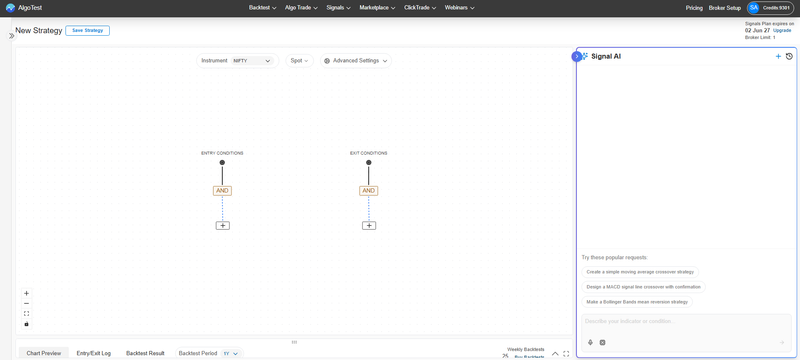Signals AI canvas
## Why Traders Are Looking for a TradingView Alternative
TradingView is excellent for charts. There's no argument there.
But if you're an Indian trader who wants to actually **automate your strategy and trade live**, TradingView was never really built for that. You end up with something like this:
1. Write your strategy in Pine Script (a coding language most traders don't know)
2. Set up webhook alerts manually
3. Route them through a relay bot like Algomojo, AutoTrader, or similar
4. Connect that to your broker
5. Pray the whole chain stays online when the market opens at 9:15 AM
It's not really an automated system. It's four tools held together with hope.
And when something breaks, which it does, then you're debugging across three dashboards during the most stressful 15 minutes of your trading day.
Learn how to [create trading signals with AI](https://algotest.in/blog/how-to-create-trading-signals-ai/)
## What is an AI-based trading platform?
An [AI-based trading platform](https://algotest.in/feature/signals/indicators?utm_source=blog&utm_medium=organic&utm_campaign=seo&utm_source=blog&utm_medium=organic&utm_campaign=seo) lets traders build strategy logic using plain English or a visual interface, without coding. The AI converts your idea (like "buy when RSI crosses 30 and price is above 200 EMA") into structured signal conditions that can be backtested and executed automatically.
The key difference from traditional platforms is accessibility. You do not need to know Pine Script, Python, or any technical language. The AI handles the translation from idea to logic.
This matters especially in India, where most retail traders come from non-technical backgrounds but still want to test and automate their setups.
**Related read:** [How AI is Changing Algo Trading in India](https://algotest.in/blog/ai-algo-trading-india)
## What is Signals AI?
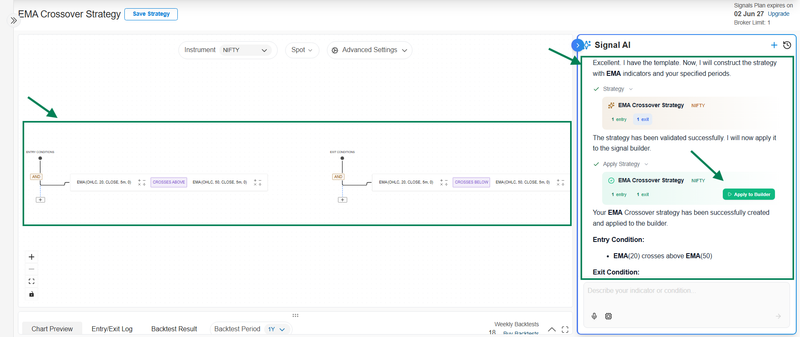
[Signals AI](https://algotest.in/feature/signals/indicators?utm_source=blog&utm_medium=organic&utm_campaign=seo&utm_source=blog&utm_medium=organic&utm_campaign=seo) is built specifically for Indian traders who want to go from strategy idea to live execution, without piecing together multiple tools.
In one line: Build your signal, backtest it, paper-trade it (forward test), and run it live. All in one place.
Here is what that looks like in practice.
### 1\. The AI Signal Agent - Plain English, Real Logic
This is the part most traders find surprising when they first use it.
You type something like:
> _"Buy when RSI crosses above 30 and price is above 200 EMA. Exit when RSI hits 70 or price drops 2% from entry."_
The AI breaks it down into:
- **Entry:** `RSI(14) crossover 30 AND Close > EMA(200) → BUY`
- **Exit:** `RSI > 70 OR −2% from entry → EXIT`
That's a complete signal, ready to backtest. No Pine Script. No formulas. Just describe what you want to do, and the AI builds it.
It supports **15+ technical indicators** including RSI, EMA, SMA, MACD, Bollinger Bands, SuperTrend, and Williams %R. You can combine them with AND/OR logic, set separate entry and exit conditions, and refine everything on a visual canvas.
Signals can also adapt to rolling ATM strikes and expiries automatically, removing manual chart maintenance.
**Who this is for:** Any trader who has a clear idea of what they want to trade but has no interest in learning to code.
### 2\. The Visual Canvas — When You Want More Control
Not every trader wants to type their strategy out. Some prefer to see it visually.
The Canvas lets you drag and drop indicator nodes, connect them with logic conditions, and wire up your complete strategy without writing a single line of code. Think of it as a flowchart builder for trading strategies.
You can:
- Combine multiple indicators with AND/OR conditions
- Set independent entry and exit rules
- Add filters to avoid bad market conditions
- Tweak individual parameters (like RSI period or EMA length) directly on the canvas
It's especially useful when your strategy involves more than two conditions and you want to see the full logic laid out clearly.
### 3\. Build Trading Signals on More Than Just Spot Charts
Signals AI supports signal generation on:
- spot charts
- futures charts
- option charts
- synthetic futures
- combined premium charts
### 4\. multilingual + voice AI input
Users can:
- type prompts
- voice prompts
- multiple languages
**You can type or speak your strategy idea in plain English (and supported local languages).**
### Step 1: Backtesting — Validate Before You Risk a Rupee
Most traders skip backtesting because it is too painful on traditional platforms. On TradingView, you need Pine Script, manual data handling, and often a paid plan just for enough historical bars.
On [AlgoTest Signals AI](https://algotest.in/feature/signals/indicators?utm_source=blog&utm_medium=organic&utm_campaign=seo&utm_source=blog&utm_medium=organic&utm_campaign=seo), you connect your indicator-based signal to a strategy, select your backtest period, and hit run. Results come back in under 30 seconds. Historical data is included. No separate subscription needed.
**What the backtest results cover:**
**Year-wise Returns:** See how your strategy performed in each individual year. This helps you spot whether your edge holds up across different market conditions or whether it only worked during a specific trend.
**Cumulative P&L vs. Underlying Value** This chart compares your strategy's total profit over time against the underlying asset's price movement.
**Max Drawdown:** Say your strategy grows your capital to ₹1 lakh, then drops to ₹83,000 before recovering. That ₹17,000 drop is your max drawdown. It tells you how much you would have lost at the worst point during the backtest. You can also run a [Monte Carlo Analysis](https://docs.algotest.in/Time-Based-Algo-Trading/Backtest-Analysis-and-Pricing/monte-carlo-drawdown/) to see how the strategy holds up across different market scenarios.
**Strategy Stats at a Glance**
Metric
What It Tells You
Net P&L
Total profit or loss over the backtest period
Win Rate
Percentage of trades that were profitable
Average Profit / Loss
Typical outcome per trade
Risk-Reward Ratio
How much you make vs. how much you risk
Max Drawdown
Worst drop before recovery
Winning / Losing Streaks
Longest consecutive wins or losses
Total Trades
Volume of signals generated
**Smart Trade Logs** Every trade is logged in a day-wise format. You can sort by PnL or date, and download the full report as a CSV file. No spreadsheet setup needed.
Once the numbers look solid, fine-tune the strategy if needed. When you are satisfied, save it and move to paper trading.
> **Related Read:** [Backtesting in Signals AI](https://docs.algotest.in/Signals-AI/Signals-Backtest/)
### Step 2: Paper Trading (aka forward testing) Test in Live Markets, Without Real Money
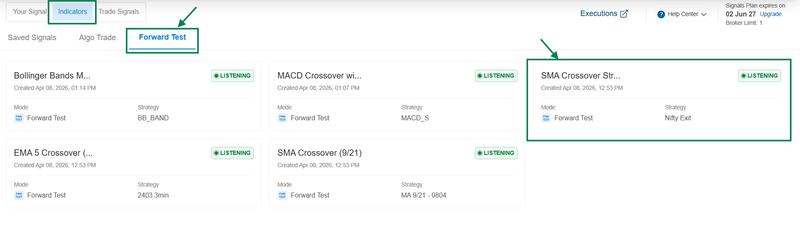
Paper trading (also called forward testing) bridges the gap between historical results and live performance. It lets you run your strategy in real market conditions using live price data, without placing actual orders.
[**_Learn more about paper trading_**](https://algotest.in/paper-trading)
### How to start paper trading on Signals AI:
Go to Signal Dashboard → Indicator → Saved Signals, find your strategy, and click Forward Test. The strategy deploys immediately and starts listening to live market signals.
You will see it appear under Indicator → Forward Test with the status showing as 1 Deployed.
**Controls while paper trading:**
- **Pause Listening:** Temporarily stop the strategy from monitoring signals
- **Start Listening:** Resume monitoring when you are ready
- **Logs:** View a full activity log of every signal event
- **Debug:** Copy strategy details for troubleshooting if something looks off
- **Delete:** Stop and remove the paper trade instance when done
Once you have watched the strategy run through a few real sessions and the results match your expectations, you are ready for the final step.
> **Related read:** [Best Paper Trading Websites in India.](https://algotest.in/blog/paper-trading-websites-india)
### Step 3: Live AlgoTrade — Real Execution, Full Automation
From Saved Signals, configure your Execution Settings, click AlgoTrade, connect your broker, and hit Deploy. The strategy starts running under Indicator → AlgoTrade. That is it.
**Execution Settings (one-time setup):**
You set these once before going live. No daily configuration needed.
- Entry and exit order types (Limit or Market)
- Trade monitoring method (LTP or Candle Close)
- Execution timing, buffers, and delays
- Auto Square-Off for end-of-day risk control
- Execution days (Weekdays or DTE-based)
The same controls from paper trading carry over: Pause Listening, Start Listening, Logs, Debug, and Delete. All major Indian brokers are supported. No relay bot required.
> Read the [Product Documentation](https://docs.algotest.in/Signals-AI/) for a detailed walkthrough of each stage.
## TradingView vs Signals AI: Quick Comparison
TradingView
AlgoTest Signals
Strategy Builder
Pine Script (coding required)
AI Agent + Visual Canvas (no code)
Backtesting Speed
Slow, manual setup
Under 30 seconds
Historical Data
Limited on free plan
Included
Backtest Depth
Basic stats only
Year-wise returns, Monte Carlo, CSV logs
Paper Trading
Not available
Built-in, with full controls
Live Execution
Webhook to Relay Bot to Broker
Direct broker connection
Execution Settings
Manual webhook configuration
One-time setup, runs automatically
Indian Broker Support
Via third-party relay
Native support
Debugging
Across 3 tools
Single dashboard with logs
Best For
Charting and analysis
Full algo trading workflow
## Why Signals AI for Indicator-Based Strategies?
Signals AI is a good fit if you:
- Have a clear strategy idea but do not want to code it
- Are already using TradingView with a relay bot and want to simplify
- Want to backtest ideas properly before putting capital at risk
- Need paper trading to validate performance in live conditions before going live
- Trade Indian indices or equities and need reliable automated execution
- Are new to [algo trading](https://algotest.in/blog/definition-of-terms-used-in-backtesting-platform) and want a structured, step-by-step workflow
It is probably not the right move if you:
- Only need charts and technical analysis. TradingView is still excellent for that
- Have a complex strategy that depends on very specific indicators, not yet on [AlgoTest](https://algotest.in/login)
- Prefer writing and maintaining full code-based strategies
Check out the [best Paper trading apps for Indicator algo strategies](https://algotest.in/blog/paper-trading-apps-for-indicator-algo-strategies-in-india/)
## Final Thoughts
The TradingView plus webhook plus relay bot setup has been the standard for Indian algo traders for years. It works, until it does not. And when it breaks, it always seems to break at the worst time.
[AlgoTest Signals AI](https://algotest.in/feature/signals/indicators?utm_source=blog&utm_medium=organic&utm_campaign=seo&utm_source=blog&utm_medium=organic&utm_campaign=seo) replaces that chain with a single, end-to-end workflow: It's a reliable way to build, validate, and run a strategy without stitching tools together.
> **Join us now and get priority support.**
>
> Free Sign up
# FAQs
Q: Does AlgoTest Signals work completely without TradingView?
A: Yes. It is a self-contained platform. You build, validate, and execute entirely within AlgoTest Signals. No external tools are required.
Q: Do I need to know Pine Script or coding?
A: No. The AI Agent lets you describe your strategy in plain English. The Canvas gives you a visual way to build logic without writing any code.
Q: What is paper trading and how does it work on AlgoTest?
A: Paper trading lets you run your strategy in live market conditions without placing real orders. On AlgoTest Signals, you deploy your saved signal for paper trading in one click. It starts monitoring live price data immediately, so you can see exactly how your strategy behaves before going live.
Q: Which brokers are supported for live trading?
A: All major Indian brokers. You connect once through the Execution Settings, and trades route directly to your broker without any relay setup.
Q: How detailed are the backtest results?
A: Very detailed. You get year-wise returns, cumulative PnL vs the underlying asset, max drawdown with Monte Carlo analysis, win rate, risk-reward ratio, streaks, and a full day-wise trade log downloadable as a CSV.
Q: Is backtesting on AlgoTest reliable?
A: The platform uses historical market data included in the plan. As with any backtest, results reflect past conditions and do not guarantee future performance, which is why paper trading is the recommended next step before going live.
Q: What are Execution Settings and do I need to configure them every day?
A: Execution Settings define how your strategy places orders — order type, timing, buffers, auto square-off, and more. You configure them once per strategy before going live. After that, the strategy runs automatically without any daily setup.
---
This blog is powered by Superblog. Visit https://superblog.ai to know more.
---
## Setting Up Strategy Builder Alerts on AlgoTest
Author: AlgoTest
Author URL: https://algotest.in/blog/author/algotest/
Published: 2026-05-09
Category: Product
Category URL: https://algotest.in/blog/category/product/
Meta Description: Learn how to set up, edit, and manage alerts on AlgoTest's option strategy builder. Get notified via Email or Telegram for MTM and Delta changes in real time.
Tags: algo trading india, option strategy
Tag URLs: algo trading india (https://algotest.in/blog/tag/algo-trading-india/), option strategy (https://algotest.in/blog/tag/option-strategy/)
URL: https://algotest.in/blog/option-strategy-builder-alerts/
Constantly watching your screen for MTM changes or Delta shifts is not a practical way to trade. Strategy Builder Alerts fix this by sending you notifications the moment a condition you set is triggered.
You can receive alerts via **Email, Telegram, or Web** for individual strategies or groups of strategies. This guide covers everything you need to set them up and manage them.
## What You Can Set Alerts For
- MTM (Mark-to-Market) targets or thresholds
- Delta changes
- Other key strategy events you configure
## Setting Up Alerts on a New Strategy
You can add alerts while creating a strategy. Alerts work for both forward testing and live algo trading.
1. Log in to your AlgoTest account.
2. Go to **ClickTrade →** [**Strategy Builder**.](https://algotest.in/strategy-builder)
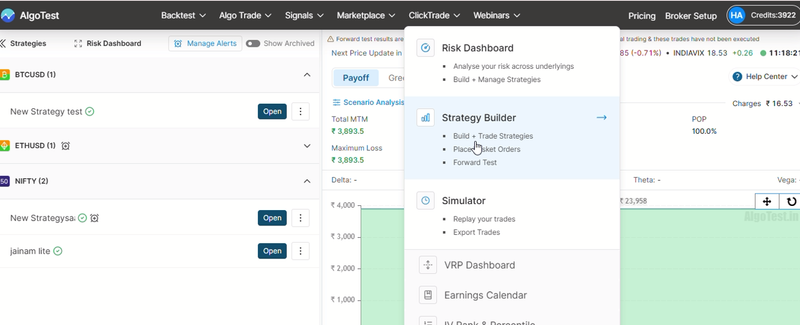
3\. Create your own strategy or choose a prebuilt template. (New to the platform? Read the [option strategy builder tutorial](https://algotest.in/blog/option-strategy-builder-algotest-tutorial/) first.)
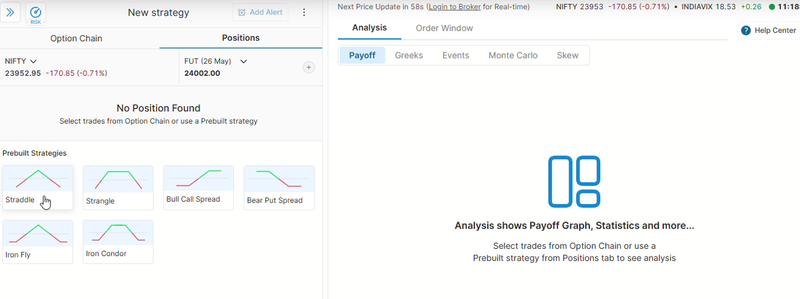
4\. Select **Forward Test** or **Live Trade**.
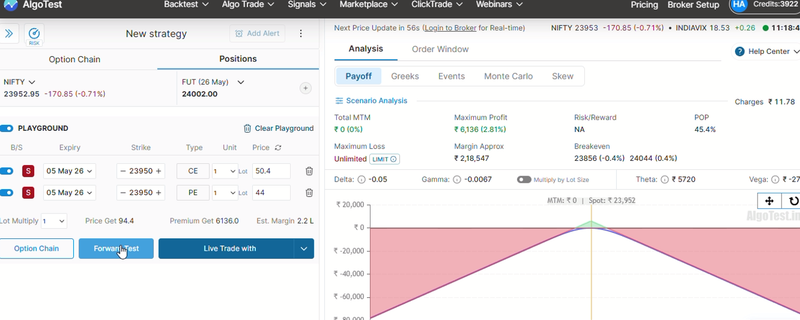
5\. Click on **Add Alert**.
6\. Select the parameters you want alerts for.
7\. Connect your **Email or Telegram** to receive notifications.
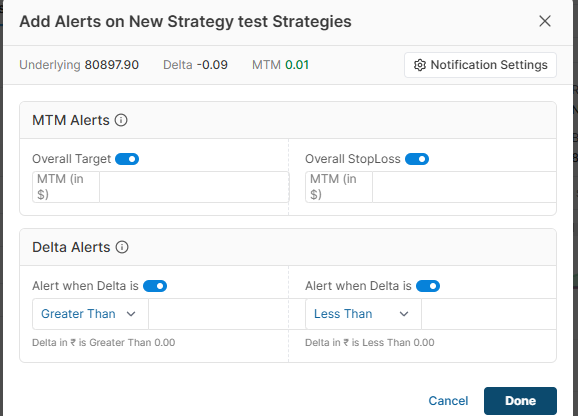
## Adding or Editing Alerts on Existing Strategies
You can add or update alerts on strategies you have already created.
1. Open the **Strategy Builder dashboard** and select a strategy from the top-left.
This is useful when conditions change. For example, if you run a [delta neutral strategy](https://algotest.in/blog/delta-neutral-strategies-with-algotest/), you can tighten the Delta threshold alert closer to expiry without rebuilding the strategy.
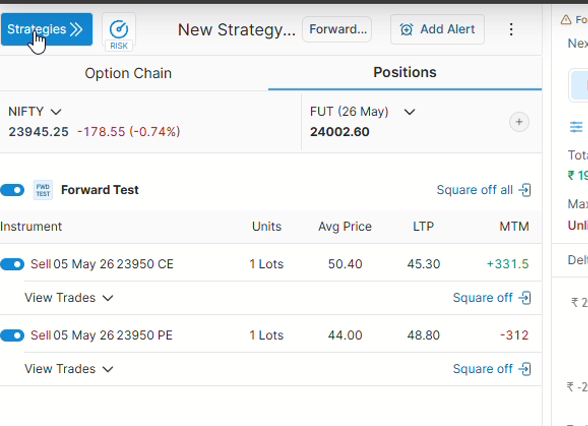
2. Click **Edit Alerts**.
3. Add, modify, or delete alert parameters as needed.
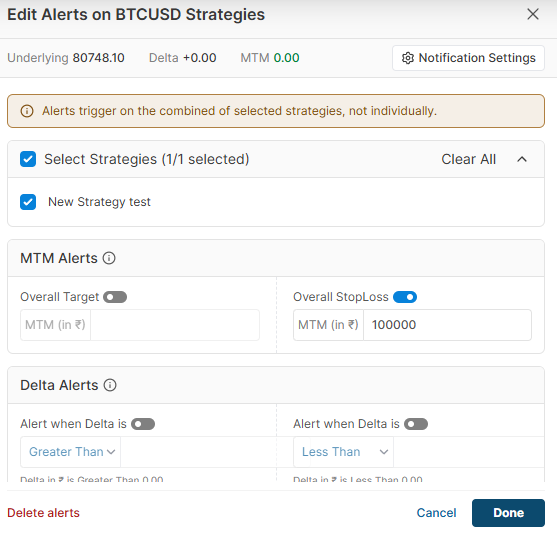
## Setting Alerts for a Group of Strategies
AlgoTest's [option strategy builder](https://algotest.in/blog/option-strategy-builder-strategies-that-win/) lets you monitor the combined P&L and Delta of multiple strategies together using group alerts.
### Key things to know
- Group alerts and individual alerts work **independently**.
- A group alert monitors the **combined** performance of all selected strategies, not each strategy individually.
- **Example:** Now the user can add alerts on a combination of strategies, which means the overall pnl and delta of the combined strategy will be monitored. The alert you are applying will not apply to the strategy individually.
- For example, if you set an MTM target alert of 500rs, it will only trigger when the profit of all strategies selected in the group goes to 5000rs
This is especially useful when you run [multi-leg options strategies](https://algotest.in/blog/how-to-use-strategy-builder-iron-condor/) across different instruments, where the net position matters more than any single strategy's P&L.
### Steps
- From the **Strategy Builder dashboard**, select multiple strategies.
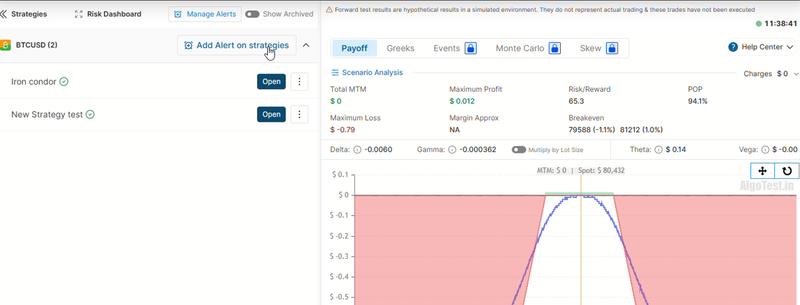
- Click **Add Alerts on Strategies**.
- Configure parameters and connect Email or Telegram.
### **Managing Alerts**
You can view, track, and manage all alerts from a single place. The " Manage Alerts " button is also available on the strategy sidebar
1. Go to the **Risk Dashboard** from the Strategy Builder.
2. Add or edit alerts directly from this section.
3. Click on **Manage Alerts** to view:
- Pending alerts
- Triggered alerts
- Alert details (instrument, strategy, timestamp, type, values)
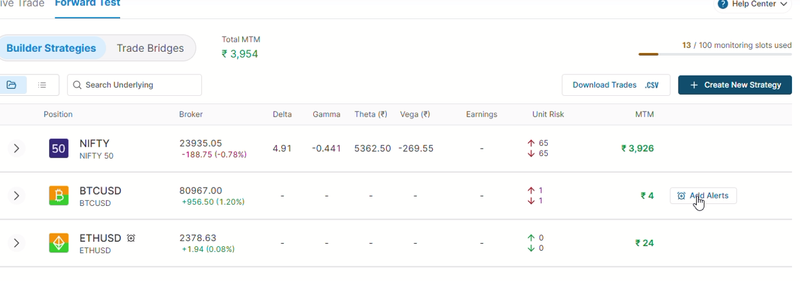
- You can go to Manage Alerts directly from 'group of strategies' as well.
## Quick Reference
What you want to do
Where to go
Add alerts to a new strategy
Strategy Builder → Add Alert
Edit alerts on an existing strategy
Strategy Builder → Select Strategy → Edit Alerts
Apply alerts to multiple strategies
Select multiple strategies → Add Alerts on Strategies
View all alerts
Strategy Sidebar → Manage Alerts, or Risk Dashboard
For any queries, reach out via [AlgoTest's Telegram support channel](https://docs.algotest.in/getting-started/join-telegram/#1AlgoTestRealtimeExecutionHelpline).
## Conclusion
Setting up alerts takes under a minute and removes the need to monitor your strategies manually.
AlgoTest's [option strategy builder](https://algotest.in/blog/option-strategy-builder-strategies-that-win/) is built for traders who want full control over their strategies, from creation and forward testing to live [algo trading](https://algotest.in/blog/algo-trading-india) and real-time monitoring.
Features like Strategy Builder Alerts, the Risk Dashboard, and group strategy management are part of what make it one of the most complete strategy builder tools available for Indian options traders. If you are not already using it, [get started on AlgoTest](https://algotest.in/login) and set up your first alert today.
**Related reads:**
- [Option Strategy Builder: Build, Test & Optimize Winning Trades](https://algotest.in/blog/option-strategy-builder-strategies-that-win/)
- [Opstra vs AlgoTest: Which Strategy Builder Wins in 2025?](https://algotest.in/blog/opstra-strategy-builder-vs-algotest/)
- [How to Create a Delta Neutral Strategy Using AlgoTest](https://algotest.in/blog/delta-neutral-strategies-with-algotest/)
# FAQs
Q: What are Strategy Builder Alerts on AlgoTest?
A: Strategy Builder Alerts are notifications you can set up on individual strategies or groups of strategies inside AlgoTest's option strategy builder. They notify you via Email, Telegram, or Web when conditions like MTM targets or Delta changes are triggered.
Q: Can I set up alerts on both forward testing and live trading strategies?
A: Yes. Alerts work on both forward test and live algo trading strategies in AlgoTest's strategy builder.
Q: What is the difference between individual alerts and group alerts?
A: Individual alerts monitor a single strategy. Group alerts monitor the combined P&L and Delta of all selected strategies together. They work independently of each other.
Q: Will a group alert trigger if one strategy in the group hits the target?
A: No. A group alert only triggers when the combined performance of all selected strategies meets the condition you set, not when any single strategy hits it.
Q: Where can I manage all my alerts in one place?
A: You can access Manage Alerts from the Strategy Sidebar or
---
This blog is powered by Superblog. Visit https://superblog.ai to know more.
---
## How to Backtest Rolling Straddles with Indicators
Author: AlgoTest
Author URL: https://algotest.in/blog/author/algotest/
Published: 2026-05-05
Category: Signals
Category URL: https://algotest.in/blog/category/signals/
Meta Description: Learn how to build a Straddle Chart for Nifty, apply the VWAP Indicator on combined premium, and backtest rolling straddles on AlgoTest without coding.
Tags: algo trading india, indicators
Tag URLs: algo trading india (https://algotest.in/blog/tag/algo-trading-india/), indicators (https://algotest.in/blog/tag/indicators/)
URL: https://algotest.in/blog/how-to-backtest-rolling-straddles-with-indicators/
Most traders hit a wall when their expertise reaches a certain level and they want to backtest complex strategies. A strategy like rolling straddles combined with indicators makes this even harder.
Where do you get a historical Straddle Chart for Nifty? How do you apply indicators like the VWAP Indicator on option structures? How do you combine signals and position management into a realistic backtest?
This is exactly where most workflows break down.
In this guide, we will cover:
- What is a rolling straddle?
- How to create a Straddle Chart (combined premium)?
- How to use the VWAP Indicator on a Straddle Chart?
- How to backtest everything properly using Signals AI on [AlgoTest](https://algotest.in)?
## The Problem with Backtesting Option Strategies
Backtesting indicator strategies on spot charts is straightforward. [Options charts](https://algotest.in/blog/options-charts) are fundamentally different.
A typical trader workflow looks like this:
- View an indicator on TradingView
- Manually track option premiums
- Approximate entries and exits
- Estimate P&L
This leads to:
- Inaccurate results
- No way to account for real world costs and slippage
- No way to test variations like rolling strikes
- No access to reliable historical data
What is missing is a true [Straddle Chart](https://docs.algotest.in/charts/#charts-on-algotest) combined with indicator logic and position management, all in one place.
Learn how to [create trading signals with AI](https://algotest.in/blog/how-to-create-trading-signals-ai/)
## What is a Straddle Chart (Combined Premium)?
A Straddle Chart represents the combined premium of the ATM Call and ATM Put of the same expiry, recalculated continuously based on the current ATM strike. This is also called a Combined Premium Chart.
Why does this matter?
- Option strategies depend on premium movement and volatility, not just spot price
- Instead of analyzing the Nifty index price, you analyze the Nifty Straddle Chart, which is the combined premium behavior of the ATM straddle
## **What is a Rolling Straddle?**
A straddle involves selling or buying both the ATM Call and ATM Put simultaneously. A rolling straddle takes this further:
- The ATM strike keeps updating as the market moves
- ATM is defined as the nearest strike to the spot or futures price
- A consistent rounding rule is applied, for example 50 point strikes in Nifty
Why rolling matters:
- Keeps the position relevant to the current market price
- Captures theta decay efficiently
- Adjusts dynamically with changes in prices or volatility
This is why most professional options traders prefer rolling ATM straddles over fixed ones.
## **Why Use the VWAP Indicator on a Straddle Chart?**
Most traders apply indicators like VWAP, RSI, and EMA only on spot charts. That is a significant limitation.
When you apply the VWAP Indicator on a Straddle Chart:
- You track mean reversion in the combined premium
- The VWAP Indicator reflects whether the premium is trading high or low relative to its session average
- You generate far more relevant entry and exit signals for options strategies
Example logic:
- Entry: Combined premium closes below the VWAP Indicator
- Exit: Combined premium closes above the VWAP Indicator
This is more meaningful than applying the VWAP Indicator to the spot chart alone, because the signal is grounded in actual premium behavior on the Nifty Straddle Chart.
## Introducing Signals AI on AlgoTest: The Missing Layer
To solve this entire workflow, you need:
- [Signal generation](https://algotest.in/blog/how-to-create-trading-signals-ai/)
- [Visualization](https://algotest.in/blog/how-to-analyse-trading-signals-on-charts)
- Position management
- Backtesting
All in one place. This is exactly what [Signals AI](https://algotest.in/feature/signals/indicators) on AlgoTest provides.
[AlgoTest](https://algotest.in) is built specifically for options traders who want to move beyond manual approximation and test strategies with precision.
### Step 1: Build Your Signals Using AI
Instead of writing code, you simply describe your logic in plain English inside AlgoTest.
Example:
- Entry: Candle closes below VWAP
- Exit: Candle closes above VWAP
- Timeframe: 5 minutes
The AI on AlgoTest:
- Understands your intent
- Builds the entry and exit logic automatically
- Applies the correct conditions
- Eliminates manual errors and speeds up signal creation
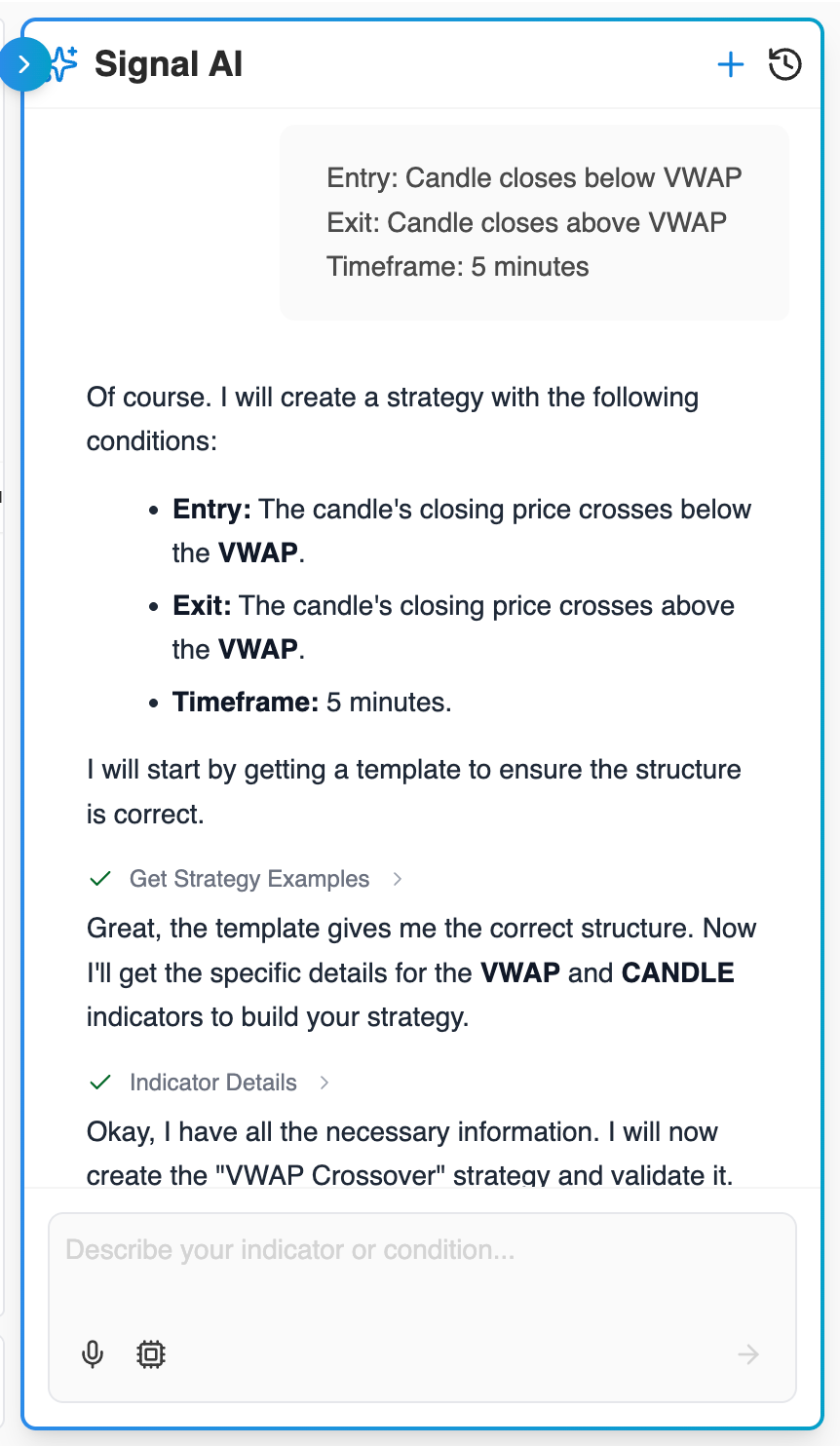
### Step 2: Create a Straddle Chart (Nifty Combined Premium)
Inside Signals AI on AlgoTest, you can:
- Select Combined Premium
- Choose the Straddle template
- Define ATM strikes, weekly expiry, and rolling logic
The result is a real Rolling Straddle Chart for Nifty built on actual historical option data, not a spot chart.
**Step 3: Add the VWAP Indicator**
Once the Straddle Chart is set up, you apply the VWAP Indicator directly to it.
For example:
- Add the VWAP Indicator
- Set a 5-minute timeframe
Your chart now becomes a Rolling Straddle Chart with a VWAP Indicator overlay. This combination of Nifty Straddle Chart and the VWAP Indicator is where real trading insights come from.
Other [indicators](https://algotest.in/blog/best-indicator-for-option-trading) available on AlgoTest include RSI, EMA, and Supertrend, all can applied directly to the combined premium chart.
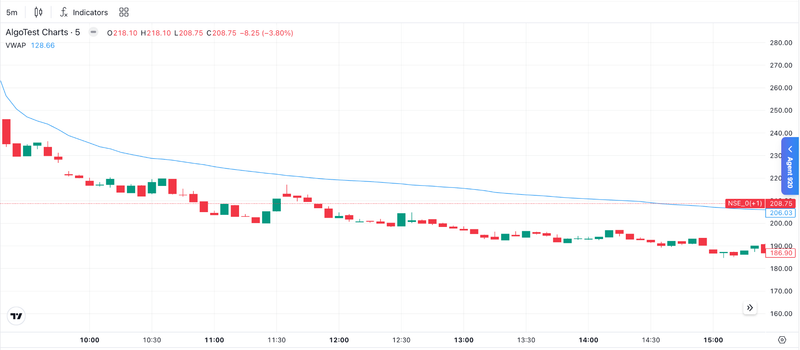
### Step 4: Define Entry and Exit Conditions
AlgoTest lets you define granular conditions:
**Entry Conditions**
- Candle closes below the VWAP Indicator
- Time is before 3:15 PM
**Exit Conditions**
- Candle closes above the VWAP Indicator
- Or time equals 3:15 PM
You can also:
- Add AND/OR logic
- Combine multiple indicators
- Set filters like maximum trades per day
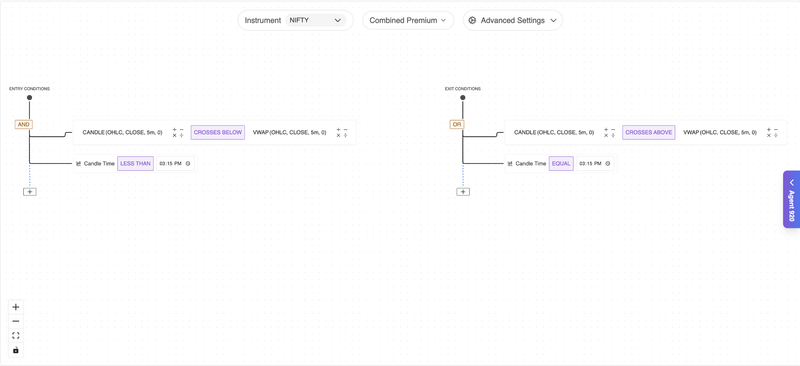
### Step 5: Visualize Signals on the Straddle Chart
Once your logic is defined, AlgoTest plots the entry and exit signals directly on the Straddle Chart. You can:
- See exactly when signals triggered on the Nifty Straddle Chart
- Analyze how often they triggered across historical data
- Check whether the logic makes sense before combining with [Option Strategy](https://algotest.in/blog/option-strategy-builder-strategies-that-win)
This step ensures you are not guessing. You are seeing the VWAP Indicator signals firing on actual combined premium data.
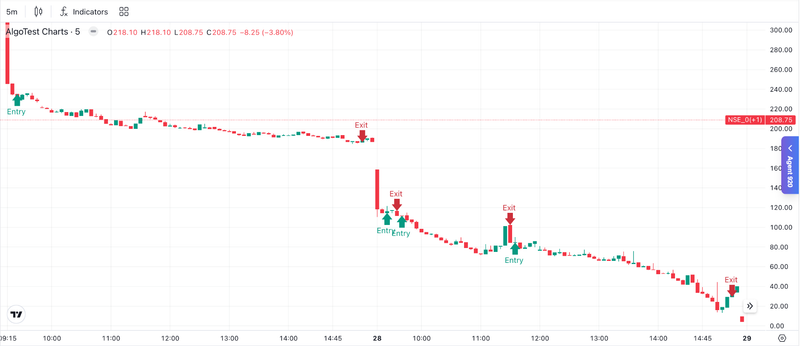
### Step 6: Backtest the Option Strategy on AlgoTest
Now you connect your signal to an actual trading strategy. For example:
- Sell ATM Call and Put
- Add a stop loss, such as 50% on individual legs
- Enable trailing stop-loss to breakeven
Then backtest on AlgoTest:
- Over 1 year, 2 years, or up to the last 7 years
- With slippage, brokerage, taxes, and all charges factored in
Related: [How to Backtest Indicator Strategies Before Going Live](https://algotest.in/blog/how-to-backtest-indicator-strategies-before-going-live/)
What you get:
- Overall P&L
- Maximum drawdown
- Win rate
- Risk-reward ratio
This is [real backtesting](https://algotest.in/blog/guide-to-backtesting-trading-strategies), not an Excel approximation.
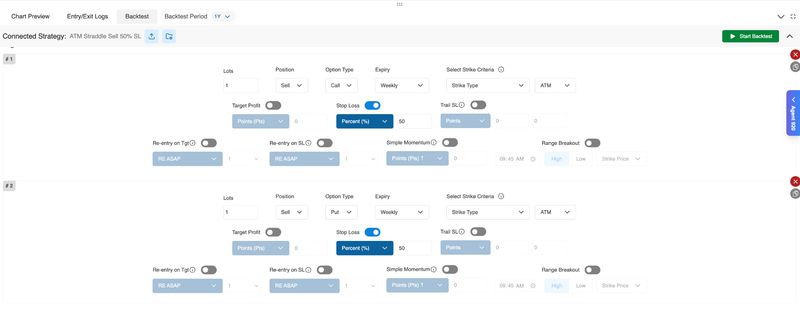
## **Why This Workflow Changes Everything**
**Traditional workflow:**
- Apply indicator to spot chart
- Guess the trade
- Manually track option premiums
- Backtest in a spreadsheet or with custom code
**AlgoTest workflow:**
- Apply the VWAP Indicator to the Straddle Chart
- Generate a signal
- Connect it to a strategy
- Run a full backtest
All connected within a single platform.
Related Read: [Best AI-Based Tradingview Alternative In India](https://algotest.in/blog/best-tradingview-alternative-in-india/)
**Advanced Flexibility on AlgoTest**
You can also:
- Use fixed strikes instead of rolling
- Change the number of trades per day
- Apply filters like 0 DTE (expiry day) or specific weekdays
- Test indicators beyond VWAP: RSI, Supertrend, EMA crossovers, all on the Straddle Chart.
Check out this video for more details
## **Key Takeaways**
If you want to properly backtest option strategies:
- Stop relying solely on spot charts
- Use Straddle Charts built on combined premium data
- Apply the VWAP Indicator to the premium, not the spot price
- Combine signal generation with realistic execution and [backtesting](https://algotest.in/feature/backtest)
- Use [AlgoTest](https://algotest.in/) to do all of this without writing a single line of code
## **Final Thoughts**
The biggest gap in trading is not strategy. It is execution and validation. When it comes to options, that gap becomes even wider.
With AlgoTest's Signals AI, you can:
- Build strategies using plain English
- Visualize them on actual Straddle Charts
- Apply the VWAP Indicator to combined premium data
- Run rigorous backtests with real-world costs
All within a single platform.
If you are serious about Nifty options trading, start thinking beyond spot charts. Start thinking in Straddle Charts, VWAP Indicators, and proper backtesting on AlgoTest.
Join Now
# FAQs
Q: What is a Straddle Chart and why is it used in options trading?
A: A Straddle Chart, also called a Combined Premium Chart, plots the sum of the ATM Call and ATM Put premium for a given expiry. It is used because options strategies depend on premium movement and volatility, not on the index price alone. Analyzing a Straddle Chart gives a more accurate view of strategy behavior than a spot chart.
Q: What does Straddle Chart Nifty specifically refer to?
A: Straddle Chart Nifty refers to the combined premium chart of the Nifty ATM Call and ATM Put for a given expiry. In a rolling version, the ATM strike updates continuously as Nifty moves, so the chart always reflects the current at-the-money straddle premium. AlgoTest generates this chart from actual historical option data.
Q: Why should I apply the VWAP Indicator to a Straddle Chart instead of the spot chart?
A: Applying the VWAP Indicator to a Straddle Chart lets you track whether the combined premium is trading above or below its session average. This is more meaningful for options traders because the entry and exit signals are based on actual premium behavior, not index movement.
Q: What is the VWAP Indicator and how does it work on a Straddle Chart?
A: VWAP stands for Volume-Weighted Average Price. The VWAP Indicator calculates the average price weighted by volume over a session. When applied to a Straddle Chart, it reflects the average combined premium for that session. Traders use it to identify mean-reversion opportunities and generate entry and exit signals based on whether the straddle premium is elevated or depressed.
Q: What is a rolling straddle and how is it different from a standard straddle?
A: A standard straddle uses a fixed ATM strike. A rolling straddle continuously updates the strike to the current ATM as the market moves. This keeps the position aligned with the market price, improves theta decay efficiency, and adjusts dynamically with volatility and direction.
Q: Can I backtest VWAP-based straddle strategies on AlgoTest without knowing how to code?
A: Yes. AlgoTest's Signals AI lets you describe your strategy in plain English. The platform builds the signal conditions, applies them to the Straddle Chart with the VWAP Indicator overlay, and runs a backtest with real-world costs including slippage, brokerage, and taxes.
Q: How accurate is the backtesting on AlgoTest for Nifty straddle strategies?
A: AlgoTest uses actual historical option data to construct the Straddle Chart and run backtests. It accounts for slippage, brokerage, and statutory charges, and supports testing across multiple years of data. This makes results significantly more reliable than manual approximations.
Q: What other indicators can I use on a Straddle Chart on AlgoTest?
A: In addition to the VWAP Indicator, AlgoTest supports RSI, EMA crossovers, Supertrend, and many other indicators applied directly to the Straddle Chart. You can combine multiple indicators using AND/OR logic to build more sophisticated conditions.
---
This blog is powered by Superblog. Visit https://superblog.ai to know more.
---
## Algo Trading Software Price: Cost to Start Algo Trading in India
Author: AlgoTest
Author URL: https://algotest.in/blog/author/algotest/
Published: 2026-05-03
Category: General
Category URL: https://algotest.in/blog/category/general/
Meta Description: Compare algo trading software prices in India (2026) across AlgoTest, Tradetron, Zerodha Streak, AlgoBulls, uTradeAlgos, and QuantMan. Get real platform costs, credit breakdowns, hidden fees, and find the best algorithmic trading platform for your budget.
Tags: algo trading, algo trading india
Tag URLs: algo trading (https://algotest.in/blog/tag/algo-trading/), algo trading india (https://algotest.in/blog/tag/algo-trading-india/)
URL: https://algotest.in/blog/algo-trading-software-price/
In India, some algo trading platforms charge ₹300/month. Others charge ₹15,000. A few call themselves "free" while billing you separately for backtesting, live deployment, and data feeds.
Let's break down what each major [algo trading software in India](https://algotest.in/?utm_source=blog&utm_medium=internal&utm_campaign=seo&utm_content=main-page&utm_term=algotest&utm_source=blog&utm_medium=internal&utm_campaign=seo&utm_term=algotest&utm_content=main-page) actually costs, what you get, and which one makes sense for your trading style.
## What Does It Actually Cost to Start Algo Trading in India?
You can start [algo trading in India](https://algotest.in/blog/algo-trading-india) for ₹0. But running a proper setup with live deployment, backtesting, and reliable execution typically costs between ₹499 and ₹2,500/month for a retail trader.
The total cost of an algorithmic trading setup includes more than just the platform fee. Here is the full picture:
- **Platform subscription or credits:** The base price you pay the software provider
- **Backtesting fees:** Many platforms charge separately for backtesting runs or historical data access
- **Live deployment charges:** The cost to keep a strategy running live in the market
- **Broker API access:** Most major Indian brokers (Zerodha, Dhan, Angel One, Fyers) offer API access free or at low annual cost (₹0 to ₹2,000/year)
- **Market data fees:** Real-time NSE and BSE data for options can add ₹0 to ₹500/month depending on your broker
- **Brokerage per order:** Flat ₹20/order at most discount brokers, which adds up if your strategy is high-frequency
Knowing this upfront saves you from picking the cheapest-looking platform and then discovering the actual bill later.
## Top Algo Trading Platforms in India: Pricing Comparison (2026)
Platform
Free Plan
Starting Paid Price
Live Deployment Included
No-Code Builder
Best For
**AlgoTest**
Yes (25 backtests/week, permanent)
₹499/month
Yes
Yes
Options traders, retail
**Tradetron**
Yes (paper trading only)
₹300/month
Paid plans only
Yes
Strategy marketplace users
**Zerodha Streak**
7-day trial
~₹500/month
Yes (Zerodha only)
Yes
Zerodha users, beginners
**AlgoBulls**
Yes (limited)
₹1,180/month
Yes
Yes (and coding)
Python-friendly traders
**uTradeAlgos**
Yes (currently free)
₹999/month\*
Yes
Yes
Simplicity-focused traders
**QuantMan**
7-day trial
₹1,300/month
Yes
Yes
Beginners, retail traders
\*uTradeAlgos premium paid plans are in limited rollout as of April 2026. Check their official site for the latest status.
## Platform-by-Platform Breakdown
### AlgoTest: Best Value for Options Traders
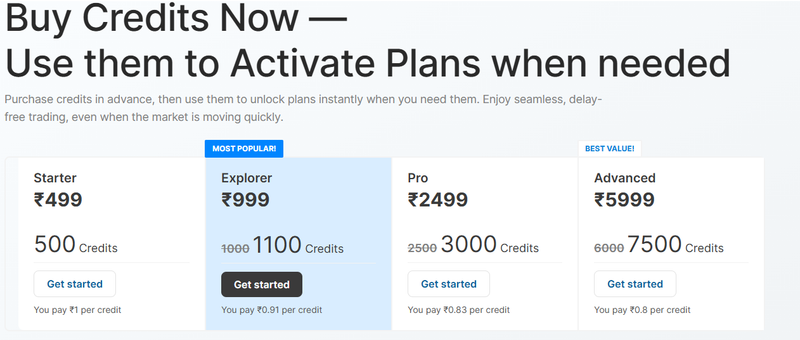
[AlgoTest](https://algotest.in/login) is built specifically for Indian retail options traders. The platform focuses on Nifty, Bank Nifty, Fin Nifty, and Sensex options strategies. It runs on a credits wallet system where you buy credits and spend them across backtesting, forward testing (paper trading), and live deployment.
**Credit packages:**
Plan
Price
Credits
Starter
₹499
500 credits
Explorer
₹999
1,100 credits
Pro
₹2,499
3,000 credits
Premier
₹5,999
7,500 credits
**How credits work:**
- 1 backtest (limited mode) = 1 credit. Credits carry no expiry date.
- Unlimited backtesting for 7 days = 499 credits
- Unlimited backtesting for 30 days = 1,599 credits
- Forward testing or paper trading = 50 credits per strategy per 28-day cycle
- Live deployment = 100 credits per strategy per 28-day cycle
- Signals Plan = ₹1,299 for 28 days, with unlimited live trades, unlimited forward tests, and up to 100 concurrent executions
**Free access:** AlgoTest gives every user [25 free backtests](https://algotest.in/feature/backtest) per week, permanently. This is not a trial. It does not expire.
**Why the pricing works:** Most platforms lock live trading behind mid or premium plans. AlgoTest includes live deployment at the ₹499 Starter level. A trader running 5 live strategies for 28 days spends 500 credits on deployment. The Starter pack covers that at ₹499 total. That works out to roughly ₹100 per deployed strategy per month.
The billing cycle runs on 28 days. Credits added mid-cycle are pro-rated, so you pay only for the days remaining.
Check out the [pricing page](https://algotest.in/pricing) for all products.
### Tradetron
Tradetron offers a no-code visual strategy builder and a marketplace where traders subscribe to strategies built by other users or SEBI-registered analysts.
**Monthly pricing (Indian exchange set):**
Plan
Price
Live Deployments
Private Strategies
Free
₹0
1 (paper only)
10
Starter
₹300
1 live
Unlimited
Retail
₹1,200
5 live + 2 stockbags
Unlimited
Retail+
₹2,500
12 live + 4 stockbags
Unlimited
Advanced
Up to ₹15,000
Higher volumes
Unlimited
Tradetron also offers quarterly billing (7% savings) and annual billing (17% savings).
**Practical note:** The free plan works for testing. You get paper trading and up to 10 private strategies at no cost. But as your strategy count grows, you move up tiers faster than expected. A trader starting at ₹1,200/month who runs a full setup can land at ₹2,500 to ₹4,000/month before brokerage.
Related: [Best Tradetron alternatives in 2026](https://algotest.in/blog/best-tradetron-alternatives-in-2026)
### Zerodha Streak: Best for Zerodha Users
Streak is not owned by Zerodha. It is a separate company that Zerodha has invested in and integrated with its Kite platform. For Zerodha users, this makes it the smoothest entry into automated trading with no separate broker setup required.
**Pricing (April 2026, approximate):**
Plan
Monthly Price
Free Trial
7 days
Basic
~₹500/month
Premium
~₹900/month
Ultimate
~₹1,400/month
Annual billing reduces the effective monthly cost. Streak's pricing ranges between ₹350 and ₹1,400/month based on plan and billing duration.
**The limitation to know:** Streak works within the Zerodha ecosystem. If you trade with multiple brokers or plan to move away from Zerodha, you would need to rebuild your strategies on a different platform. Not a problem for committed Zerodha users, but worth knowing before you invest time building strategies here.
Related: [Zerodha Streak vs AlgoTest](https://algotest.in/blog/algotest-vs-streak)
### AlgoBulls: Best for Python-Based Developers
AlgoBulls serves both retail and institutional traders. It offers no-code tools for non-technical users alongside full Python-based strategy development for developers. Among Indian platforms, it is one of the few that supports end-to-end programmatic strategy building.
**Pricing:**
- Free plan with limited features
- Paid plans starting at ₹1,180/month
- Enterprise (Odyssey) plan at custom pricing for institutions and brokerages
AlgoBulls also supports AI-assisted strategy generation. You describe the market logic and the platform structures it for deployment. For developers who want more control than a drag-and-drop builder allows, this is a solid choice.
### uTradeAlgos: Clean UI, Growing Platform
uTradeAlgos is a newer platform focused on retail traders who want clean tools without a steep learning curve. It integrates exclusively with Share India broker and covers NSE and BSE across equities, futures, and options.
**Pricing:**
- Currently free for all users (as of April 2026)
- Paid plans in limited rollout, starting at approximately ₹999/month
- 7-day free trial available
The platform includes AI-based strategy building, pre-built strategies called uTrade Originals, and multi-leg options support. The current free access period is worth using if you want to evaluate the platform before any cost commitment.
### QuantMan: Best No-Code Platform for Beginners
QuantMan is built around a drag-and-drop no-code interface and targets retail traders who want to automate strategies without writing any code.
**Pricing:**
Plan
Monthly Price
Free Trial
7 days
Basic
₹1,300/month
Premium
₹3,300/month
**What the platform includes:**
- Drag-and-drop strategy builder with 80+ technical indicators
- Backtesting on historical data with optimization tools
- Paper trading environment
- Live deployment via broker API (Zerodha, Angel One, Fyers, and others)
- Pre-built strategy templates including Straddle, Strangle, Iron Condor, Bull Call Spread, and Bear Put Spread
QuantMan targets traders who find other platforms too technical. The interface is clean and the onboarding is straightforward. The trade-off is that it does not match the depth of options analytics or backtesting granularity that more specialized platforms offer.
At ₹1,300/month for a beginner-focused product, it is worth [comparing against AlgoTest](https://algotest.in/blog/algotest-vs-quantman), which includes live deployment starting at ₹499/month.
## Point-by-Point Comparison: What Actually Matters
### 1\. Entry Cost to Start Live Trading
- AlgoTest: ₹499/month, live deployment included from the first plan
- Tradetron: ₹300/month (Starter), limited to 1 live deployment
- Zerodha Streak: ~₹500/month, works directly within Kite
- AlgoBulls: ₹1,180/month, higher entry with broader development tools
- uTradeAlgos: Free currently, paid plans at ~₹999/month incoming
- QuantMan: ₹1,300/month (Basic), no-code builder included
### 2\. Free Tier Quality
- AlgoTest: 25 free backtests per week, permanent, no card required
- Tradetron: Functional free plan with paper trading and 10 private strategies
- Zerodha Streak: 7-day trial only, no ongoing free access
- AlgoBulls: Limited free access with feature restrictions
- uTradeAlgos: Currently fully free (temporary, paid plans rolling out)
- QuantMan: 7-day trial only, no ongoing free access
### 3\. Options Trading Focus
- AlgoTest: Built specifically for multi-leg [options strategies](https://algotest.in/blog/options-trading-strategies) on Indian indices
- Tradetron: Supports options but not an options-first platform
- AlgoBulls: Supports options but not the primary focus
- Zerodha Streak: Covers basic options strategy automation
- uTradeAlgos: Supports multi-leg options strategies
- QuantMan: Supports options including Straddle, Strangle, and Iron Condor setups
### 4\. Broker Compatibility
- AlgoTest: 40+ [Indian brokers](https://algotest.in/blog/best-brokers-for-algo-trading-in-india) including Zerodha, Angel One, Fyers, Dhan
- Tradetron: Multiple broker partners across India
- Zerodha Streak: Primarily Zerodha, limited multi-broker support
- AlgoBulls: Multiple Indian brokers
- uTradeAlgos: Share India (exclusive integration as of April 2026)
- QuantMan: Zerodha, Angel One, Fyers, and additional broker integrations
### 5\. No-Code Strategy Builder
All six platforms offer [no-code strategy building](https://algotest.in/blog/option-strategy-builder-algotest-tutorial). AlgoTest, Tradetron, and Streak have the most mature builders. AlgoBulls additionally supports Python for traders who want full programmatic control.
AlgoTest also offers an [indicator-based strategy builder,](https://algotest.in/feature/signals/indicators?utm_source=blog&utm_medium=organic&utm_campaign=seo&utm_source=blog&utm_medium=organic&utm_campaign=seo) where you can automate, paper trade and deploy strategies without integrating with third-party tools like TradingView.
## Hidden Costs to Budget For
Your platform subscription is just one line item. Factor in these as well:
- **Broker API access:** Free at most Indian discount brokers. Some charge up to ₹2,000/year. Confirm with your broker before choosing a platform.
- **Brokerage per order:** At ₹20/order flat (Zerodha, Upstox, Dhan), a strategy placing 10 orders per day costs ₹200/day in brokerage alone.
- **Slippage:** Not a fee but a real performance cost. If your backtested strategy assumes perfect fills, live results will differ. Platforms that model slippage in backtesting give you a more realistic picture before going live.
- **Marketplace strategy subscriptions:** On Tradetron, subscribing to a strategy from another trader or SEBI-registered analyst carries a separate fee set by the creator. On [AlgoTest Marketplace](https://algotest.in/blog/algo-trading-marketplace-india), you can pick, backtest and paper trade [RA Algos](https://algotest.in/blog/what-is-ra-algos-and-how-it-works-on-algotest) using your credits.
- **STT, GST, exchange charges:** These apply to every trade regardless of platform. Factor them into your per-trade cost before sizing strategies.
## Which Platform Should You Choose?
**New to algo trading:** Start with AlgoTest's free tier (25 backtests/week, permanent) or Tradetron's free plan with paper trading. Both cost nothing to start.
**Active options trader:** AlgoTest is the most specialized platform for Nifty, Bank Nifty, and Fin Nifty options. The credit system scales with how much you actually use it.
**Already a Zerodha user:** Streak connects directly to your Kite account with zero additional broker setup.
**Developer or quant trader:** AlgoBulls supports Python-based strategy development end-to-end. The best option if you want to write and deploy custom code.
**Complete beginner who wants zero complexity:** QuantMan's drag-and-drop builder and pre-built templates get you running without any technical background.
## Final Word
[Algo trading software in India](https://algotest.in/blog/10-best-algo-trading-software-in-india-2025) ranges from free to ₹15,000/month. The right price is not the lowest or the highest. It is the one that matches your strategy, your trading capital, and how seriously you plan to use the platform.
Use free tiers to test. Build and validate your strategy before going live. Upgrade only when your current plan is the actual bottleneck.
The platform is just infrastructure. The edge comes from the strategy behind it.
Get 25 Free Backtests
_Sources:_ [_AlgoTest pricing documentation_](https://docs.algotest.in/getting-started/pricing-breakdown/) _(algotest.in), Tradetron pricing page (tradetron.tech/pages/pricing), Zerodha Streak pricing (streak.tech), AlgoBulls pricing (algobulls.com), uTradeAlgos platform FAQ (utradealgos.com), QuantMan pricing verified via Techjockey and quantman.trade. Prices verified as of April 2026. Always check official platform pages before purchasing, as pricing may change._
# FAQs
Q: Is algo trading legal in India for retail traders?
A: Yes. SEBI permits retail traders to build and run algorithmic trading strategies through broker APIs. Since 2025, SEBI requires all algorithms distributed by brokers to clients to carry a unique strategy ID registered with the exchange. Retail traders running personal strategies within their own accounts have more flexibility, but high-order-volume activity above exchange-defined thresholds requires registration.
Q: What is the minimum budget to start algo trading in India?
A: You can start for ₹0 using AlgoTest's permanent free tier or Tradetron's free paper trading plan. For live trading with a basic setup of 1 to 2 strategies, budget around ₹499 to ₹1,200/month for the platform, plus brokerage charges per order.
Q: Do I need coding knowledge to use these platforms?
A: No. AlgoTest, Tradetron, Zerodha Streak, uTradeAlgos, and QuantMan all offer no-code strategy builders. AlgoBulls supports both no-code and Python-based development. Coding knowledge helps with advanced customization but you do not need it to get started on any platform listed here.
Q: Which algo trading platform is best for Nifty and Bank Nifty options?
A: AlgoTest is the most purpose-built platform for Indian index options strategies. It supports multi-leg setups, slippage-adjusted backtesting, and live deployment on Nifty, Bank Nifty, Fin Nifty, and Sensex options.
Q: What is the difference between backtesting and live deployment cost?
A: Backtesting uses historical data to simulate how a strategy would have performed in the past. Most platforms charge for this separately or include a limited number of free backtests. Live deployment means your strategy runs in real time and places actual orders. Live deployment typically costs more than backtesting on a per-strategy basis.
Q: Are there fully free algo trading platforms in India?
A: AlgoTest offers 25 free backtests per week permanently. Tradetron has a free plan with paper trading. uTradeAlgos is currently free for all users. These free tiers work well for learning and testing. Live trading with real money usually requires a paid plan.
Q: Can I run strategies on multiple algo trading platforms at the same time?
A: Yes. Many traders use more than one platform. For example, using AlgoTest for options strategy development and Tradetron for subscribing to strategies from other traders is a practical combination. Each platform connects to your broker independently.
---
This blog is powered by Superblog. Visit https://superblog.ai to know more.
---
## What is Square Off in Trading?
Author: AlgoTest
Author URL: https://algotest.in/blog/author/algotest/
Published: 2026-04-30
Category: General
Category URL: https://algotest.in/blog/category/general/
Meta Description: Learn what square off means in options trading, how auto square off works on NSE, what happens if you don't exit before expiry, and how to avoid common mistakes that cost traders money.
Tags: algo trading india, options trading
Tag URLs: algo trading india (https://algotest.in/blog/tag/algo-trading-india/), options trading (https://algotest.in/blog/tag/options-trading/)
URL: https://algotest.in/blog/what-is-square-off-in-trading/
Most traders learn what "square off" means after they make a mistake with it. Let's make sure that's not you.
Whether you just opened your first F&O account or you've been trading for a while but never fully understood this term, this guide breaks it down simply. No jargon overload. No fake data. Just what you actually need to know.
## Square Off Meaning in Trading
Square off means closing an open trade by executing the opposite transaction of the same quantity.
That's the whole definition. If you bought, you sell to square off. If you sold (shorted), you buy back to square off. Once done, your position becomes zero and your profit or loss is realized.
Think of it like a parking ticket. You took the spot (opened a trade). Squaring off means you've paid up, packed up, and driven away. The spot is no longer yours.
In the share market, square off applies across intraday trades, futures, and options. But in options trading specifically, it carries a lot more weight, because options have expiry dates and the consequences of not squaring off can get expensive fast.
## How Square Off Works in Options Trading
Options work differently from stocks. Every position you take has a direction and a lifespan. Squaring off reverses that direction with the same strike price, same expiry, and same quantity.
Here is a simple breakdown:
Your Original Trade
How You Square Off
Bought a Call Option (Long CE)
Sell the same Call Option
Bought a Put Option (Long PE)
Sell the same Put Option
Sold a Call Option (Short CE)
Buy back the same Call Option
Sold a Put Option (Short PE)
Buy back the same Put Option
The rule is straightforward: same strike, same expiry, same quantity, opposite direction.
On NSE, this process happens through your broker's trading terminal. You find your open position, click sell (or buy), and the position closes. Most brokers also show your realized P&L the moment you square off.
## Why Square Off Matters More in Options
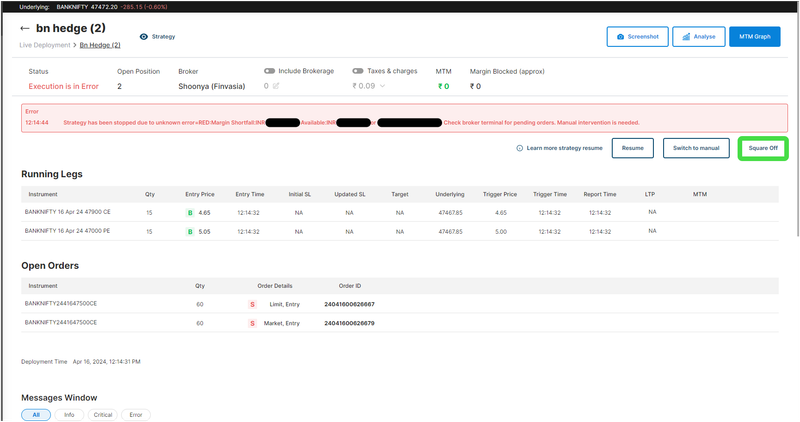Square off feature in AlgoTest
People often treat square off as a boring formality. It is not. In options trading, it directly affects how much money you keep or lose. Here is why.
### Theta Eats Your Premium Every Single Day
Options lose value daily because of time decay, which traders call theta. If you buy an option and hold it without a clear exit plan, theta quietly reduces your premium even when the stock price does not move.
Squaring off at the right time locks in your profit or caps your loss before theta does further damage. According to NSE's options education material, time decay accelerates significantly in the last week before expiry. Holding options without a plan in that window is a fast way to watch value disappear.
> **Related Read:** [5 Expert Tips for Mastering Expiry Day Trading](https://algotest.in/blog/expiry-day-trading-expert-tips/)
### Expiry Risk Can Actually Cost You Shares
If you hold a stock option that expires in the money and you do not square off, physical settlement kicks in. SEBI mandated physical settlement for stock F&O contracts through a circular in 2018, which means you either deliver shares or receive them, depending on your position.
This catches a lot of traders off guard. You thought you were just trading premium, and suddenly your broker is asking for full delivery margin. Squaring off before expiry avoids this entirely.
Index options like Nifty and Bank Nifty are cash settled, so expiry there is not a physical delivery risk. But the P&L is still final at expiry price, and you lose control of your exit if you wait until then.
> **Related Read:** [How to Choose the Right Expiry Date for Options](https://algotest.in/blog/stay-informed-choosing-right-expiry-date-options/)
### Liquidity Gets Thin and Spreads Widen
Options near expiry or deep out of the money have very few buyers and sellers. When liquidity drops, the bid-ask spread widens, which means you end up selling cheaper or buying more expensive than the fair price. Traders call this slippage.
Squaring off during active market hours, when volume is healthy, gives you a cleaner exit at a better price.
> **Related Read:** [How to Read Nifty Option Chain Like a Pro](https://algotest.in/blog/how-to-read-nifty-option-chain-step-by-step-for-traders/)
### It Frees Up Your Margin Immediately
For option sellers, a large chunk of capital sits blocked as margin for as long as the position is open. The moment you square off, that margin is released and becomes available for new trades. This matters a lot for traders who work with limited capital.
> **Related Read:** [How Margin Works in Options Trading](https://algotest.in/blog/margin-calculator-by-algotest/)
## Types of Square Off in Options Trading
Not all square offs look the same. Here are the main types you will come across:
**Intraday Square Off:** You open and close an options position within the same trading day. Common for traders taking short-term directional bets on index options based on news, levels, or price action.
**Positional Square Off:** You hold the options position for multiple days or weeks, then square off when your target or stop-loss is hit. Common in swing trading and hedging strategies.
**Partial Square Off:** You close only part of your position. For example, you bought 5 lots of Nifty options and square off 3 lots at your profit target, letting the remaining 2 lots run. This is a practical risk management tool.
**Auto Square Off:** If you do not close your intraday position yourself, your broker closes it for you, automatically, near market close. This is called auto square off.
> **Related Read:** [Build and Test Your Options Strategy Before Going Live](https://algotest.in/blog/option-strategy-builder-strategies-that-win/)
## Auto Square Off: What Every Options Trader Must Know
Auto square off is where many new traders get surprised. And not in a good way.
On NSE, the market closes at 3:30 PM. Most brokers in India execute auto square off for open intraday F&O positions between 3:20 PM and 3:25 PM. If you have not closed your position by then, the broker closes it at whatever market price is available at that moment.
Two problems come with this. First, you have no control over the execution price. In a volatile session, this can result in a significantly worse exit than if you had squared off ten minutes earlier yourself. Second, brokers charge an auto square off penalty, typically between Rs. 20 and Rs. 50 per order, on top of normal brokerage.
You pay more. You get a worse price. Both at once.
The fix is simple: always square off your own intraday positions before 3:15 PM. Do not hand that control to your broker.
> **Related Read:** [How to Backtest Your Exit Rules Before Trading Live](https://algotest.in/blog/how-to-backtest-options-trading-strategies-with-examples/)
## What Happens If You Don't Square Off an Options Position?
This is the question most options guides skip. Let's answer it clearly.
**If the option expires Out of the Money (OTM):** The option expires worthless. Buyers lose the premium they paid. Sellers keep the premium they collected. The position closes automatically. No action needed.
**If the option expires In the Money (ITM) and it's a Nifty or Bank Nifty option:** These are cash settled. NSE calculates the intrinsic value at expiry and settles your P&L directly in your account. You still do not need to square off, but you also lose the ability to choose your exit price.
**If the option expires ITM and it's a stock option:** Physical settlement applies as per SEBI's circular. As a call buyer, you receive shares. As a call seller, you deliver shares. If you do not have the shares or the capital, your broker may levy penalties and handle the short delivery, which is expensive.
The clear takeaway here: for stock options, always square off before expiry unless you specifically want physical settlement.
> **Related Read:** [Bank Nifty Expiry Day Explained: Date, Rules and Best Strategies](https://algotest.in/blog/bank-nifty-expiry-day/)
## Common Square Off Mistakes Options Traders Make
**Waiting until 3:25 PM to exit:** Liquidity is thin, spreads are wide, and you end up with a worse price than you deserved. Exit when the market is still active.
**No exit plan before entering:** Many traders plan their entry carefully and forget about the exit entirely. Know your take-profit level and stop-loss before you buy the first lot.
**Averaging a losing options position:** This works sometimes in stocks. In options, it rarely works because of time decay. Adding to a losing options position hoping for a reversal is how traders go from a small loss to a large one.
**Ignoring auto square off charges:** These charges are small individually but add up over time. More importantly, the poor execution price that comes with auto square off hurts more than the fee itself.
## Quick Practical Tips for Squaring Off in Options
Set price alerts on your broker app at your target level so you never miss an exit window.
For intraday trades, aim to square off between 3:00 PM and 3:15 PM at the latest.
If you bought an option and 50 to 60 percent of the premium has eroded but price has not moved, square off. Theta is doing the damage, and it will not stop.
Use Good Till Triggered (GTT) orders where your broker supports them. They help automate exits without you having to watch the screen constantly.
For option sellers near expiry, square off even if the option looks safely OTM. The gamma risk in the last few hours of expiry can cause violent price moves.
> **Related Read:** [Best Indicators to Time Your Options Exit Better](https://algotest.in/blog/best-indicator-for-option-trading/)
> **Related Read:** [Practice Squaring Off Without Risking Real Money](https://algotest.in/blog/paper-trading-websites-india/)
## Square Off vs Exit: Is There a Difference?
Traders use both terms interchangeably, and for practical purposes, they mean the same thing.
Technically, "exit" is a broader term that can refer to closing any position in any asset. "Square off" specifically refers to offsetting a position with an equal and opposite trade in derivatives markets. In everyday options trading on NSE or BSE, both mean the same outcome: your position closes, your P&L is realized, and your margin is released.
## Summary
Concept
What to Remember
Square off meaning
Close your open position with an opposite trade
Intraday square off
Exit before 3:15 PM, ideally before auto square off window
Auto square off time NSE
Around 3:20 to 3:25 PM, broker-initiated
Partial square off
Close part of your position to manage risk
Not squaring off at expiry
Index options settle in cash. Stock options require physical delivery
Square off charges
Normal brokerage plus penalty if broker squares off for you
Square off vs exit
Same outcome, different terminology
The traders who last in options trading are not always the smartest ones in the room. They are usually the most disciplined about exits. Squaring off on time, with a plan, is the simplest discipline you can build.
**Sources:**
\- NSE India, Options Trading and Expiry Settlement Guidelines: [nseindia.com](http://nseindia.com)
\- SEBI Circular on Physical Settlement of Stock Derivatives (SEBI/HO/MRD/DP/CIR/P/2018/167): [sebi.gov.in](http://sebi.gov.in)
\- NSE Market Timings and Trading Hours: nseindia.com/trade/trading-hours
# FAQs
Q: What is square off in trading?
A: Square off means closing an open trade by placing the opposite transaction of the same quantity. If you bought, you sell to square off. If you sold, you buy back. Once done, your position is zero and your profit or loss is realized.
Q: What is the auto square off time on NSE?
A: Most brokers in India execute auto square off for open intraday F&O positions between 3:20 PM and 3:25 PM. If you have not closed your position by then, the broker closes it at the available market price and charges a penalty on top of normal brokerage.
Q: What happens if you don't square off an options position?
A: It depends on whether the option is in the money or out of the money at expiry. OTM options expire worthless and close automatically. ITM index options like Nifty and Bank Nifty are cash settled. ITM stock options trigger physical settlement, which means you either deliver or receive shares. Not being prepared for this can result in penalties.
Q: What is the difference between square off and exit?
A: Both terms mean closing an open position. Exit is a broader term used across all asset types. Square off specifically refers to offsetting a position with an equal and opposite trade in derivatives markets. In practice, they lead to the same outcome.
Q: What are square off charges?
A: When you square off your own position, you pay normal brokerage charges. If your broker auto squares off your intraday position, an additional penalty of roughly Rs. 20 to Rs. 50 per order is charged on top of brokerage. The bigger cost is usually the poor execution price, not the fee itself.
Q: What is partial square off in options trading?
A: Partial square off means closing only a part of your open position. For example, if you hold 5 lots and square off 3, the remaining 2 lots stay open. Traders use this to lock in partial profits while keeping some exposure on a running trade.
Q: Is it necessary to square off options before expiry?
A: For index options like Nifty and Bank Nifty, it is not mandatory since they are cash settled. For stock options, it is strongly recommended. If a stock option expires in the money and you have not squared off, physical delivery of shares is triggered, which requires capital you may not have planned for.
Q: Why does squaring off early give a better price?
A: Liquidity in options drops as the session progresses, especially near expiry. Thinner liquidity means wider bid-ask spreads, which directly affects the price you get when exiting. Squaring off during active market hours, when volume is higher, gives you a cleaner execution at a fairer price.
---
This blog is powered by Superblog. Visit https://superblog.ai to know more.
---
## Is Options Trading Profitable in India? Data vs Reality
Author: AlgoTest
Author URL: https://algotest.in/blog/author/algotest/
Published: 2026-04-29
Category: General
Category URL: https://algotest.in/blog/category/general/
Tags: algo trading india, options trading
Tag URLs: algo trading india (https://algotest.in/blog/tag/algo-trading-india/), options trading (https://algotest.in/blog/tag/options-trading/)
URL: https://algotest.in/blog/is-options-trading-profitable/
Most people who search "is options trading profitable" have just watched a reel showing Rs. 2 lakh gains in a week, or an influencer dramatically talking about their losses.
Neither tells you the full story.
As a retail trader, what you actually need is a clear, data-backed answer on whether options trading works, and what it genuinely takes to profit from it.
That is exactly what this article gives you.
## Is Options Trading Actually Profitable in India?
**Yes, but only for a small percentage of traders.**
SEBI's 2024 study found that 91.1% of individual F&O traders in India lost money in FY24. The average net loss was Rs. 1.1 lakh per person, per year. That is not a rumor. That is from SEBI's own published report covering over 1 crore individual traders.
The 9% who do profit are not lucky. They trade differently. Let's break it down.
## How Is Options Trading Different from Buying Stocks?
**Options are not stocks. Treating them the same is the fastest way to lose money.**
When you buy a stock, you own a piece of a company. Time is on your side.
With options, you are buying a contract. It gives you the right (not the obligation) to buy or sell an asset at a fixed price, called the **strike price**, before a fixed date called the **expiry**. You pay a fee called the **premium** for this right.
Three forces make options work differently from stocks.
## What Is Time Decay and Why Does It Hurt Option Buyers?
**With each passing day, your option loses a small amount of value. Even if the market does not move.**
This daily erosion is called **Theta**. Think of it like ice melting in your hand. The longer you hold, the less you have left.
If you buy a weekly Nifty call on Monday and the market stays flat, by Thursday, you have lost a meaningful portion of your premium. Not because the market moved against you. Just because time passed.
This is the number one reason beginners lose money in options. Understanding how to read premium behavior before entering a trade can save you from this trap. A straddle chart is one practical way to track whether time decay is dominating the market on a given day.
[Learn how to use a straddle chart for intraday options trading.](https://algotest.in/blog/how-to-use-a-straddle-chart-for-intraday-options-trading/)
## What Is Implied Volatility and What Is an IV Crush?
**Implied Volatility (IV) tells you how much movement the market is expecting. When IV is high, options are expensive. When it drops suddenly, option values fall fast.**
This sudden drop is called an **IV Crush**. It usually happens right after a major event like an RBI policy announcement or quarterly earnings.
A trader buys a call before the Budget expecting a big move. The stock moves 1.5% in the right direction. The option still loses value. Why? Because the market had already priced in a 3% move. Once the event passed, IV collapsed and took the premium down with it.
This surprises most beginners. Now it will not surprise you. For a full breakdown of how IV works and how to read it, [this guide on implied volatility covers ATM IV, interpretation, and calculation.](https://algotest.in/blog/implied-volatility-and-how-to-read-and-compute-iv/)
## How Does Leverage Work in Options?
**Options give you high leverage. A 2% move in Nifty can mean a 40 to 70% change in your option's value.**
This is why people love options. And why accounts get wiped out fast. Leverage amplifies everything, including mistakes.
[Learn more about options here.](https://docs.algotest.in/financial-education/options/)
## Who Actually Makes Money in Options Trading?
**Mostly option sellers, not buyers.**
SEBI's FY24 data shows that proprietary traders who mostly sell options using algorithmic strategies were profitable in over 97% of cases. Individual retail buyers were largely losing.
The logic is simple. When you sell an option, you collect premium upfront. Time decay works in your favor. You profit as long as the market does not make a large move before expiry.
Buyers need three things to go right at the same time: direction, size of move, and timing. Get one wrong and you lose.
This does not mean buying options never works. High-conviction directional trades with tight timing can work well. But the default lean of profitable retail traders is toward selling, with defined risk on the other side.
[Here is a deeper look at how to optimize selling strategies with options.](https://algotest.in/blog/optimize-sales-with-algotest-option-strategy-builder/)
## What Options Strategies Actually Work?
The right strategy depends on what you expect the market to do. Using the wrong strategy for the market condition is like wearing a raincoat in a desert.
Here is a simple breakdown.
### Bull Call Spread: Good for Beginners with a Bullish View
This is one of the cleanest beginner strategies because you know your maximum loss before you enter.
Say Nifty is at 22,000. You buy the 22,000 Call at Rs. 200 and sell the 22,500 Call at Rs. 80. Your net cost is Rs. 120. If Nifty crosses 22,500 at expiry, your maximum gain is Rs. 380. If it falls below 22,000, you lose Rs. 120 and nothing more.
Clean, defined, no surprises. You can explore more strategies like this across different market views in [this overview of options trading strategies.](https://algotest.in/blog/options-trading-strategies/)
### Iron Condor: For Sideways Markets
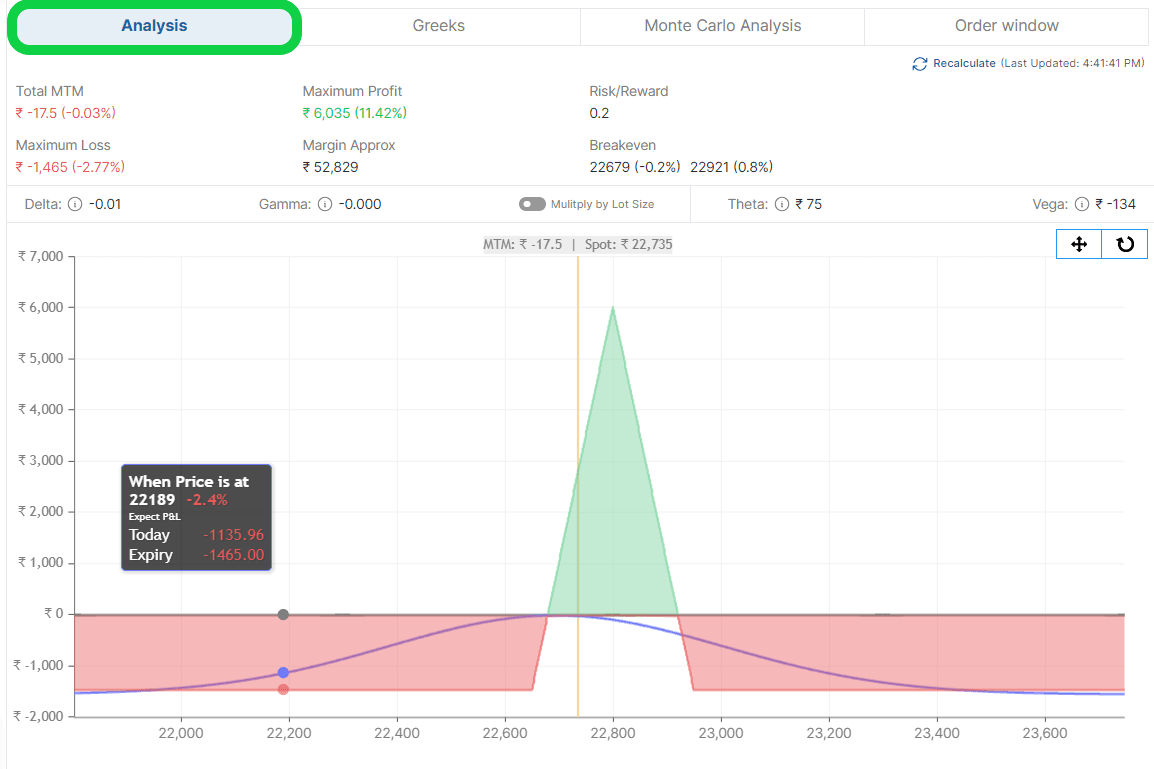
**The Iron Condor works best when you expect the market to stay within a range till expiry.**
You sell an out-of-the-money call and an out-of-the-money put, then buy further out-of-the-money options to cap your risk. You collect net premium and profit as long as the market stays inside your defined range.
On Indian indices like Nifty or Bank Nifty, this can generate consistent returns during low-volatility periods. But it needs active monitoring. If the market breaks out hard, you need a clear exit plan. For a step-by-step walkthrough of building this on a real platform, [see how to set up a monthly Iron Condor using AlgoTest's Strategy Builder.](https://algotest.in/blog/how-to-use-strategy-builder-iron-condor/)
### Bear Put Spread: For a Moderately Bearish View
**Use this when you expect a measured decline, not a crash.**
You buy a put at a higher strike and sell a put at a lower strike. The sold put reduces your net cost and makes it easier to reach breakeven.
## Why Do Most Options Traders Lose Money?
**Most losses are not bad luck. They are the same mistakes made repeatedly.**
**Buying cheap out-of-the-money options** hoping for a big payoff. These expire worthless most of the time. The low price reflects the low probability.
**Ignoring India VIX before entering a trade.** Most beginners never check it before placing a trade.
**Oversizing positions.** Because options need less upfront capital, traders put far more at risk than they realize. One bad day can cause serious damage.
**No exit plan.** Every trade needs a predefined stop-loss and a target before you enter. "I will exit when it feels right" is not a plan.
**Trading around events without understanding IV crush.** Buying options before Budget day, RBI policy, or earnings results without knowing how IV collapse works has cost thousands of retail traders real money.
## What Returns Can You Realistically Expect?
**Skip the promises of 10x monthly returns. Here is what consistent, disciplined traders actually achieve.**
Beginners in their first year should focus on not losing big. Treat it as paid learning. Intermediate traders with one to three years of experience can realistically target 15 to 30% annualised returns on their options capital. Advanced full-time traders sometimes achieve more, but that requires large capital and years of structured practice.
For context, the Nifty 50 index has historically returned around 12 to 14% annually. Beating that consistently through options requires real skill, not just activity.
## Is Options Trading Right for You?
**Options are not for everyone. Knowing this before you start saves you real money.**
You are probably ready if you already understand how stock markets work, you can absorb potential losses without financial stress, and you have at least Rs. 2 to 3 lakhs in capital. Smaller amounts make position sizing impractical.
Wait if you are completely new to investing, if you need this money to work urgently, or if you cannot actively monitor positions around weekly expiry.
## Should You Backtest Your Options Strategy Before Going Live?
**Yes, always. Skipping this step is one of the most expensive mistakes new traders make.**
Backtesting means running your strategy on historical data to see how it would have performed in the past. It does not guarantee future results, but it helps you spot obvious weaknesses before they cost you real money.
Many traders also paper trade their strategies in live market conditions before committing capital.
If you want to practice strategies risk-free before going live, [this roundup of the best paper trading websites in India](https://algotest.in/blog/paper-trading-websites-india/) compares the top platforms you can start with today.
## How Is Options Trading Taxed in India?
**Options profits are treated as business income in India and taxed at your applicable income tax slab rate.**
You file ITR-3 as an active F&O trader. Losses can be offset against other business income in certain cases. STT applies on options contracts at the time of sale. Keep a detailed trade log throughout the financial year.
If your trading income is significant, a CA who understands F&O taxation is worth the cost.
## Options Trading on AlgoTest
While the industry average sat at 9% profitable traders in FY24, **45% of** [**AlgoTest**](https://algotest.in) **users ended the same year in profit.** Not because the platform trades for you, but because it forces you to build, test, and validate a strategy before putting real money on the line.
That edge is learnable. Here is where to start:
1. Learn the basics: calls, puts, strike price, expiry, and the key [option Greeks](https://docs.algotest.in/financial-education/options/greek-interactions/#greek-interactions-in-options-trading)
2. Start with defined-risk strategies like spreads before touching naked options
3. Check India VIX before every trade
4. Never risk more than 2 to 3% of your capital on a single trade
5. [Backtest your strategy](https://algotest.in/blog/step-by-step-guide-on-how-to-backtest-for-free) and paper trade it before going live
6. Track every trade with notes on what worked and why
The market will always be there. The capital you protect while learning is what funds the trades that actually make you money.
[**Start with free backtests on AlgoTest**](https://algotest.in/login) and see how your strategy would have actually performed before risking a single rupee.
**Sources:**
- SEBI Study on F&O Traders (2024): sebi.gov.in
- India VIX Data: NSE India (nseindia.com)
- Nifty 50 Historical Returns: NSE India
- F&O Taxation Guidelines: Income Tax Department (incometaxindia.gov.in)
_Disclaimer: This article is for educational purposes only. Options trading involves substantial risk. Please consult a SEBI-registered investment advisor before making financial decisions._
# FAQs
Q: Should I backtest my options strategy before trading live?
A: Yes, always. Backtesting runs your strategy against historical data so you can see how it would have performed before risking real capital. It will not guarantee future results but it helps you spot obvious weaknesses early. After backtesting, paper trading in live market conditions is the next step before committing actual money.
Q: Is options trading profitable for beginners in India?
A: It can be, but most beginners lose money in the early stages. SEBI's FY24 study found that 91% of individual F&O traders lost money. Beginners are better off paper trading first, starting with defined-risk strategies like spreads, and treating the first few months as a learning phase rather than an income phase.
Q: How much money do I need to start options trading in India?
A: You can technically start with Rs. 10,000 to Rs. 15,000 for buying options, but that makes meaningful position sizing very difficult. A more practical starting capital is Rs. 2 to 3 lakhs. This gives you enough room to manage risk properly without putting your entire capital on one or two trades.
Q: Is it better to buy or sell options as a retail trader?
A: Most consistent retail traders lean toward selling options rather than buying. Sellers collect premium upfront and benefit from time decay. Buyers need direction, timing, and magnitude all correct at the same time. That said, buying works well when you have strong directional conviction and implied volatility is low.
Q: What is the biggest reason most options traders lose money?
A: Ignoring time decay and implied volatility. Most beginners buy options and wait, not realizing that every passing day erodes the premium value even when the market does not move. Trading around events like earnings or RBI policy without understanding IV crush is another very common and costly mistake.
Q: What is a safe options strategy for someone just starting out?
A: Bull Call Spreads and Bear Put Spreads are the most beginner-friendly strategies because your maximum loss is fixed before you enter the trade. These are called defined-risk strategies and they are far safer than buying naked calls or puts, where losses can be unpredictable.
Q: How is options trading income taxed in India?
A: Options trading profits are classified as business income in India and taxed at your applicable income tax slab rate. You are required to file ITR-3 as an active F&O trader. Losses can be offset against other business income in certain cases. Always maintain a trade log throughout the year and consult a CA if your trading income is significant.
Q: What is India VIX and why does it matter for options trading?
A: India VIX measures the market's expected volatility over the next 30 days. When VIX is above 20, options premiums are expensive and conditions generally favor option sellers. When VIX is below 13, options are cheaper and better suit buyers with a clear directional view. Checking VIX before entering any trade is a simple habit that most beginners skip and profitable traders never do.
---
This blog is powered by Superblog. Visit https://superblog.ai to know more.
---
## Option Premium Explained: How the Black-Scholes Option Pricing Model Values Nifty Options
Author: AlgoTest
Author URL: https://algotest.in/blog/author/algotest/
Published: 2026-04-28
Category: Product
Category URL: https://algotest.in/blog/category/product/
Tags: option strategy, options trading
Tag URLs: option strategy (https://algotest.in/blog/tag/option-strategy/), options trading (https://algotest.in/blog/tag/options-trading/)
URL: https://algotest.in/blog/black-scholes-option-pricing-model/
Every options trade starts with one question: Is this premium worth it?
Whether you are selling covered calls on Nifty or buying puts before an event, the premium is the price you pay or collect. Get it wrong and you are trading blind. Understand it and you have an edge most retail traders never build.
This guide covers what option premium is, what moves it, and how to calculate it instantly using [AlgoTest's Black-Scholes calculator](https://algotest.in/black-scholes).
## What Is Option Premium?
Option premium is the price a buyer pays to get an options contract. It is also the amount a seller receives for taking on the obligation that comes with it. The buyer pays it upfront. It is non-refundable.
When you see Nifty 24,000 CE trading at Rs. 180, that Rs. 180 is the premium. The buyer loses it if the trade goes against them. The seller keeps it if the option expires worthless. Both sides are pricing the same risk, just from opposite sides of the trade.
## The Two Components of Option Premium
Every option premium has two parts. Understanding each one separately is what separates informed traders from the rest.
### 1\. Intrinsic Value
Intrinsic value is the in-the-money portion of a premium. It only exists when the option has real value right now, not just at expiry.
**For a Call Option:** Intrinsic Value = Spot Price minus Strike Price (if positive; otherwise zero)
**For a Put Option:** Intrinsic Value = Strike Price minus Spot Price (if positive; otherwise zero)
Example: Nifty is at Rs. 24,200. A 24,000 CE has intrinsic value of Rs. 200. A 24,500 CE has zero intrinsic value because it is out-of-the-money (OTM).
OTM and ATM options carry zero intrinsic value. Their full premium is made up of extrinsic value.
### 2\. Extrinsic Value (Time Value)
Extrinsic value is what the market pays on top of intrinsic value. It is the price of possibility. It reflects three things:
- **Time remaining to expiry:** More time means more chances for the market to move in your favour.
- [**Implied Volatility (IV)**](https://algotest.in/blog/implied-volatility-and-how-to-read-and-compute-iv/) **:** Higher IV means a higher chance of a large move, so the premium goes up.
- **Interest rates:** A smaller factor, but it matters for longer-dated options.
**Extrinsic Value = Option Premium minus Intrinsic Value**
An ATM option close to expiry with low IV might carry Rs. 20 of extrinsic value. The same strike with 30 days left during a high-volatility period could carry Rs. 150. Same strike, very different price. The market's expectation of movement has changed.
## The 5 Factors That Drive Option Premium
### 1\. Underlying Price (Spot)
This is the most direct driver. When the spot price rises, call premiums go up and put premiums go down. The speed of this change is measured by **Delta**.
### 2\. Strike Price
The further OTM your strike, the cheaper the premium. But a cheaper premium also means a lower chance of expiring in-the-money (ITM). ATM strikes carry the highest extrinsic value because the outcome is the most uncertain.
### 3\. Time to Expiry
Time works in the seller's favour. As expiry approaches, [time value drops](https://algotest.in/blog/stay-informed-choosing-right-expiry-date-options/), and it drops fast in the final days before expiry. This decay is measured by **Theta**. For [Nifty weekly options](https://algotest.in/blog/bank-nifty-expiry-day/), Theta decay on ATM strikes speeds up sharply in the last 2 to 3 days.
### 4\. Implied Volatility (IV)
IV is the most important factor after spot price. It shows the market's expectation of future movement, based on current option prices. When IV rises, all option premiums go up, even if the spot has not moved. This sensitivity is measured by **Vega**.
When you buy options before a Union Budget or RBI policy event, you are often paying for [high IV](https://algotest.in/blog/what-is-ivp-and-ivr-and-how-to-use-ivp-and-ivr/). If [IV crush](https://algotest.in/blog/iv-vs-rv-and-trading-edge-with-vrp/) hits after the event, the premium falls even if your directional view was right.
_Implied volatility is derived from option prices and reflects what the market is already pricing in, not a forecast._
### 5\. Interest Rates
Higher interest rates slightly increase call premiums and slightly decrease put premiums. For short-dated Indian index options, this effect is small. It matters more for longer-duration trades. This sensitivity is captured by **Rho**.
## How to Calculate Nifty Option Price Using the Black-Scholes Option Pricing Model
The Black-Scholes option pricing model is the standard formula used to price European-style options. You give it five inputs and it gives you the theoretical fair value of a call or put. All index options in India, including Nifty and BankNifty, are European-style, which makes Black-Scholes the right model to use.
**The five inputs:**
- **S:** Current spot price of the underlying
- **K:** Strike price of the option
- **T:** Time to expiry, expressed in years
- **r:** Risk-free interest rate (typically the 91-day T-bill rate, around 6.5% in India)
- **sigma:** Implied volatility
The model outputs both the theoretical premium and all the Greeks (Delta, Gamma, Theta, Vega, Rho). This gives you a full picture of your risk, not just a price.
**A quick example:** Nifty is at Rs. 24,200. You want to price the 24,000 CE with 15 days to expiry, IV at 14%, and a risk-free rate of 6.5%. Plug these five inputs into the Black-Scholes formula and you get the theoretical call premium. You can then compare it to the [market price](https://algotest.in/blog/how-to-read-nifty-option-chain-step-by-step-for-traders/) to see if the option is overpriced or underpriced.
The math inside the formula is complex. But you do not need to do it by hand.
## Use AlgoTest's Black-Scholes Calculator to Price Options Instantly
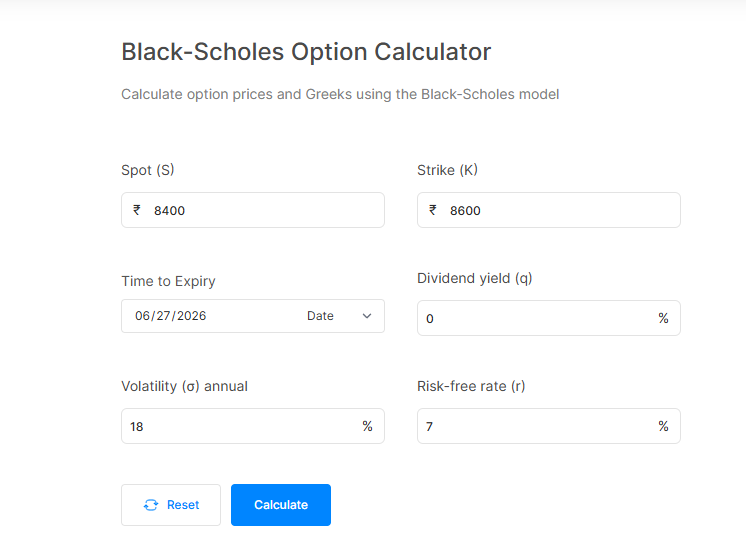Black-Scholes Option Calculator
AlgoTest's [**Black-Scholes Calculator**](https://algotest.in/black-scholes) does the full calculation for you. Enter your five inputs, click calculate, and you get:
- **Theoretical Call and Put premiums:** The fair value based on Black-Scholes inputs
- **Full Greeks table:** Delta, Gamma, Theta, Vega, and Rho for both the call and the put
- **Instant sensitivity check:** Change any input and see how the premium and risk metrics shift
This is the same approach professional options traders use to check whether a market price is rich or cheap [before placing a trade](https://algotest.in/blog/option-strategy-builder-strategies-that-win/).
Want to go deeper on the model first? Read AlgoTest's [full guide to the Black-Scholes model](https://algotest.in/blog/black-scholes-model/). It covers the formula, the assumptions behind it, its limitations, and how to read the outputs correctly.
[**Open the Black-Scholes Calculator on AlgoTest**](https://algotest.in/black-scholes)
## Intrinsic vs. Extrinsic Value: A Quick Reference
Intrinsic Value
Extrinsic Value
**What it measures**
In-the-money portion
Time value plus volatility premium
**OTM options**
Zero
100% of the premium
**ITM options**
Positive
Premium remaining above intrinsic
**Affected by spot move**
Directly
Indirectly, via Delta and Vega
**Affected by time**
No
Yes, decays toward zero at expiry
**Affected by IV**
No
Yes, rises when IV goes up
## Why Mispriced Premiums Cost Traders Money
Many retail options buyers overpay for premium, especially around events. High IV before a news event can make options look cheap on a directional basis. But if IV collapses after the event (IV crush), the premium falls even if the spot moves the way you expected. You can be right about direction and still lose money.
Knowing what is inside the premium before you trade it is the difference between a good trade and a losing one.
AlgoTest's Black-Scholes calculator lets you test this [before you enter a position](https://algotest.in/blog/how-to-use-a-straddle-chart-for-intraday-options-trading/). Plug in a lower IV to simulate what the premium might look like after the event. Most retail platforms do not make this kind of pre-trade analysis easy. AlgoTest does.
[Sign up and try free backtesting.](https://algotest.in/backtest)
## The Bottom Line
Option premium is not complicated once you break it down. It has two parts: intrinsic value and extrinsic value. Five inputs drive it. And the Black-Scholes option pricing model can calculate it in seconds.
The traders who make consistent money in options know whether the premium they are paying or collecting is fair, too high, or too low before they trade.
**Use AlgoTest's** [**Black-Scholes Calculator**](https://algotest.in/black-scholes) **to price your next Nifty or BankNifty trade correctly.**
# FAQs
Q: What is a Black-Scholes calculator and how is it used in India?
A: A Black-Scholes calculator takes five inputs (spot price, strike price, time to expiry, risk-free rate, and implied volatility) and outputs the theoretical price of a call or put option. In India, it is widely used to price Nifty, BankNifty, and stock options. AlgoTest offers a free Black-Scholes calculator at algotest.in/black-scholes.
Q: Is there a free Nifty option price calculator I can use?
A: Yes. AlgoTest's Black-Scholes calculator works for Nifty and BankNifty index options. It gives you the theoretical call and put premium along with all five Greeks. You can access it for free at algotest.in/black-scholes.
Q: Can I calculate option premium without using the Black-Scholes model?
A: You can calculate intrinsic value by hand. But extrinsic value needs a model to account for time, volatility, and interest rates. Black-Scholes is the most widely used model because it gives a direct answer, not an estimate. For European-style options like Nifty, it is the right tool.
Q: Does the Black-Scholes option pricing model work for Indian index options?
A: Yes. All index options in India, including Nifty 50 and BankNifty, are European-style options. The Black-Scholes option pricing model is designed for European-style options. For individual stock options in India, which are American-style, Black-Scholes is still a useful guide but may slightly undervalue the option because it does not account for early exercise.
Q: What does it mean when the market premium is higher than the theoretical premium?
A: It means the option is trading rich. This usually happens when IV is high, demand is strong, or a major event is coming up. Sellers may find this attractive. Buyers should be careful about overpaying.
Q: What happens to option premium as expiry gets closer?
A: Time value decays, slowly at first and then quickly in the final days. On expiry day, an OTM option's premium goes to zero. An ITM option's premium converges toward its intrinsic value. This is why Theta decay is one of the most important risks for options buyers.
Q: How do the Option Greeks connect to premium?
A: Each Greek measures how much the premium changes when one input changes. Delta measures the change from spot price. Theta measures the change from time. Vega measures the change from volatility. Rho measures the change from interest rates. Gamma measures how fast Delta itself changes. AlgoTest's Black-Scholes tool shows all five Greeks alongside the premium so you can see the complete risk picture at once.
---
This blog is powered by Superblog. Visit https://superblog.ai to know more.
---
## How to Start Trading Without Investment in India
Author: AlgoTest
Author URL: https://algotest.in/blog/author/algotest/
Published: 2026-04-27
Category: General
Category URL: https://algotest.in/blog/category/general/
Meta Description: Want to start trading without investment in India? Learn how to use paper trading, backtesting, and contests to build your skills with zero financial risk.
Tags: algo trade, algo trading india
Tag URLs: algo trade (https://algotest.in/blog/tag/algo-trade/), algo trading india (https://algotest.in/blog/tag/algo-trading-india/)
URL: https://algotest.in/blog/trading-without-investment/

If you're itching to get into the markets but the thought of losing hard-earned cash is holding you back, you are definitely not alone. Trading without investment is more possible today than ever before, and there are legitimate ways to learn, practice, and even earn without putting your own capital at risk.
Let's break down exactly how you can start trading without investment, the best apps to use, and what you can realistically expect.
## What "Trading Without Investment" Actually Means
Let’s be clear: it doesn't mean free money.
It means using tools that don't require your own capital upfront, such as [paper trading](https://algotest.in/blog/paper-trading-websites-india), strategy [backtesting,](https://algotest.in/feature/backtest) trading contests, and indirect earning methods. You use these tools to build a process, so when you _are_ ready to invest real money, you aren't just guessing.
## 5 Ways to Start Trading Without Investment in India
### 1\. Start with Paper Trading
This is where every serious trader begins. Paper trading apps simulate real markets using virtual money.
- **For Chart Traders:** TradingView is the global standard for charting and offers built-in paper trading.
- **For Beginners:** Moneybhaigives you ₹1 Crore in virtual cash and a leaderboard to track progress. FrontPage is great for social learning and community insights.
- **For F&O Traders:** If you want to trade options, [**AlgoTest**](https://algotest.in) offers an excellent paper trading feature built specifically for Indian markets (Nifty, Bank Nifty). It lets you execute and track strategies in live market conditions without risking a single rupee.
_The limitation:_ No emotional pressure. You won't feel the same way when real money is on the line.
### 2\. Systematic Strategy Testing
Moving from "gut feelings" to data is a major step for any trader. Instead of placing manual trades, you can use [algorithmic software](https://algotest.in) to see how a set of rules would have performed in the past.
- **Indicator-Based:** Tools like **Streak** or **Quantman** allow you to create simple logic based on technical indicators.
- **Data-Driven Execution:** **AlgoTest** offers a [no-code](https://algotest.in/blog/sebi-registered-analyst-strategies) environment to backtest historical data and transition those ideas into live paper trades. This helps verify if a strategy’s success is based on skill or just luck before you commit capital.
### 3\. Explore Social Trading & Marketplaces
You don’t need to start from scratch. Several platforms let you learn from experienced traders or test ready-made strategies:
- **FrontPage & TradingView:** Great for community discussions and sharing chart setups.
- **AlgoTest Marketplaces:** You can explore pre-built strategies via [**RA Algos**](https://algotest.in/blog/what-is-ra-algos-and-how-it-works-on-algotest) or check out crypto setups in the [**Crypto Bazaar**.](https://algotest.in/crypto-marketplace) You can test everything virtually before ever going live.
Related: [5 best Algo Trading Courses in India](https://algotest.in/blog/5-best-algo-trading-courses-in-india-to-learn-in-2025)
### 4\. Participate in Trading Contests & Challenges
If you have developed a solid strategy but lack the funds to trade it, you can look for platforms that reward performance.
- **Broker Contests:** Many Indian brokers occasionally run "Leagues" where top virtual traders win cash prizes.
- **Proprietary Firm Challenges:** Global "Prop Firms" allow you to trade their capital if you can pass a strict evaluation. While these often have an entry fee, they are a legitimate path for skilled traders to manage large accounts without personal risk.
### 5\. Generate Indirect Trading Income
If you understand the markets but don't have the balance to trade, your knowledge itself becomes the asset. Many traders fund their first accounts through:
- **Educational Content:** Writing market summaries or technical analysis for blogs and social media.
- **Referral Programs:** Most reputable platforms and brokers offer incentives for bringing in new users.
- **Technical Roles:** Assisting others in automating their strategies or providing data analysis for trading groups.
Related: [Options education for beginner to intermediate traders](https://docs.algotest.in/financial-education/#-options-education)
### **How Traders Typically Progress**
Don't rush the process. Successful traders usually follow a specific path:
1. Start with paper trading to understand basic mechanics.
2. Learn options trading and strategy building.
3. Move to [algo trading](https://algotest.in) and automated trading to remove emotion.
4. Test everything using backtesting and live paper simulation.
5. Deploy strategies with real capital using brokers like Zerodha, Upstox, or Angel One.
Related: [Trading app without Investment](https://algotest.in/blog/best-virtual-trading-apps-in-india)
## **Common Mistakes of Trading Without Investment**
It’s easy to think that trading without money is a shortcut to success, but there are a few things most beginners overlook. If you want to actually make progress, keep these points in mind:
- **Virtual money doesn't feel "real":** Paper trading is great for learning the ropes, but it won’t make your heart race. You don’t truly know your trading personality until real money is on the line.
- **Blindly copying others usually fails:** If you follow a strategy without understanding _why_ it works, you won't know when to stop using it if the market changes.
- **There’s no "quick" side income:** Whether you’re creating content or joining contests, earning without capital takes months of showing up every day. It’s a marathon, not a sprint.
- **The learning curve is real:** Be honest with yourself. Use this "free" phase to make all your mistakes now, so you don't make them later with your savings.
### **Final Takeaway**
You don’t need money to start trading. You need a process.
Use freemium tools to learn market behavior, backtest your ideas, and build confidence through paper trading before risking capital. Treat this no-investment phase as a foundation. The goal is to build a tested, rule-based approach so when you are finally ready to trade with real money, you are executing a proven plan.
[Join AlgoTest](https://algotest.in/login) for free and start your trading journey now.
---
This blog is powered by Superblog. Visit https://superblog.ai to know more.
---
## Master the Option Strategy Builder : AlgoTest Tutorial
Author: AlgoTest
Author URL: https://algotest.in/blog/author/algotest/
Published: 2026-04-24
Category: Product
Category URL: https://algotest.in/blog/category/product/
Meta Description: Learn how to use Option Strategy Builder on AlgoTest to create, backtest, and optimize options trading strategies. Step-by-step guide for beginners and traders.
Tags: algo trading india, option strategy
Tag URLs: algo trading india (https://algotest.in/blog/tag/algo-trading-india/), option strategy (https://algotest.in/blog/tag/option-strategy/)
URL: https://algotest.in/blog/option-strategy-builder-algotest-tutorial/

## Want to build and automate your **options trading strategies without coding**?
This guide shows you how to use the [**AlgoTest Strategy Builder**](https://algotest.in/feature/strategy-builder) to create, **backtest**, and deploy strategies in minutes.
Instead of guessing, you can test your ideas on historical data, optimize them, and go live with confidence all on one [**algo trading platform**.](https://algotest.in)
By the end, you’ll know how to build and analyze your first **options strategy** using a simple, no-code approach.
## Understanding Options Trading and Strategies
Before using an **options strategy builder**, it’s important to understand the basics of [**options trading and strategies**.](https://algotest.in/blog/options-trading-strategies)
Options trading involves buying and selling contracts that give you the right (but not the obligation) to buy or sell an asset at a specific price (strike price) before a certain date (expiry).
Traders use **options trading strategies** for multiple purposes, including hedging risk, speculating on price movements, and generating income.
A key tool in building these strategies is the [**option chain**](https://algotest.in/blog/how-to-read-and-analyse-sensex-option-chain). It displays all available option contracts for an underlying asset, including strike prices, expiry dates, and premiums. By analyzing the option chain, traders can identify opportunities and design strategies based on their market outlook and risk appetite.
Using a platform like **AlgoTest Strategy Builder**, you can take this data and easily create, test, and optimize your **options strategies** in a structured, data-driven way.
Want to dive deeper into **options trading**? [Check out this detailed guide.](https://docs.algotest.in/financial-education/#-options-education)
## The Basics of Options Trading
**Options trading** involves buying and selling contracts that derive their value from an underlying asset like stocks, indices, or ETFs. Instead of trading the asset directly, traders deal in contracts that give them the right to buy or sell at a predetermined price within a specific time frame.
There are two main types of options contracts:
- [**Call options**:](https://algotest.in/blog/put-call-parity-for-traders) Give you the right to _buy_ an asset at a fixed price before expiry
- **Put options**: Give you the right to _sell_ an asset at a fixed price before expiry
Traders use these contracts to take positions based on market direction, volatility, and risk tolerance. By combining different contracts, you can create structured **options trading strategies** designed for specific outcomes such as profit generation, hedging, or income.
Related: [How to Backtest Options Strategies in India (2026 Guide)](https://algotest.in/blog/how-to-backtest-options-trading-strategies-with-examples/)
## Why Use Options Trading Strategies?
**Options trading strategies** are popular because they offer flexibility, risk control, and multiple ways to profit in different market conditions.
Here’s why traders use them:
- **Leverage:** Control larger positions with relatively smaller capital, increasing profit potential (and risk)
- **Flexibility:** Build strategies for bullish, bearish, or sideways markets using combinations like spreads, straddles, or iron flies
- **Risk Management:** Hedge your portfolio and limit downside risk with structured strategies
- **Income Generation:** Earn regular income through strategies like covered calls or selling options
Using a platform like **AlgoTest Strategy Builder**, traders can easily create, **backtest options strategies**, and optimize them based on data, making trading more systematic and less reliant on guesswork.
## Introduction to AlgoTest Strategy Builder
Now that you understand the basics of **options trading strategies**, let’s explore how to build and optimize them using the **AlgoTest Strategy Builder**.
[AlgoTest](https://algotest.in) is a powerful **options strategy builder and backtesting platform** that allows traders to design, test, and automate their strategies without coding. Whether you’re a beginner or an experienced trader, it helps you move from idea to execution using a structured, data-driven approach.
With AlgoTest, you can create strategies, [**backtest them using historical data**](https://algotest.in/feature/backtest), forward test in live market conditions, and fine-tune performance all in one place. This simplifies the strategy-building process and helps traders make more informed and consistent decisions.
In the next section, we’ll explore the key features that make AlgoTest Strategy Builder a preferred choice for options traders.
## Key Features of AlgoTest Strategy Builder
The **AlgoTest Strategy Builder** offers a range of features that make it a comprehensive tool for building and optimizing **options trading strategies**:
- **User-Friendly Interface:** A simple, intuitive interface that makes it easy to create and manage strategies—even for beginners
- **Pre-built Strategy Templates:** Access ready-made templates for popular **options strategies** that can be customized based on your trading goals
- **Strategy Optimization Tools:** Adjust key parameters like strike prices, expiry dates, and position sizing to improve performance and risk-reward
- **Backtesting & Forward Testing:** Test your strategies on historical data and validate them in real-time market conditions before going live
These features make AlgoTest a reliable **algo trading software** for traders looking to build, test, and automate their strategies efficiently.
Related: [How to Use AlgoTest Strategy Builder for a Monthly Iron Condor](https://algotest.in/blog/how-to-use-strategy-builder-iron-condor/)
## Benefits of Using AlgoTest Strategy Builder for Options Trading
Using the **AlgoTest Strategy Builder** can significantly improve how you create, test, and execute your **options trading strategies**. Here are the key benefits:
- **Customization:** Easily build and customize your own **options strategies** based on your market outlook and trading goals. Adjust parameters like strike prices, expiry dates, and position sizing to match your strategy.
- **Backtesting & Forward Testing:** Test your strategies using historical data and validate them in real market conditions. This helps you identify what works before risking real capital.
- **Strategy Optimization:** Fine-tune your strategies using built-in optimization tools. Modify key variables to improve risk-reward and overall performance.
- **Data-Driven Decisions:** Analyze important metrics like profit/loss, drawdown, and risk to make more informed trading decisions instead of relying on guesswork.
By using a **no-code options strategy builder** like [AlgoTest,](https://algotest.in/login) traders can build, **backtest options strategies**, and deploy them with greater confidence and consistency.
## Getting Started with AlgoTest Strategy Builder
Now that you understand the key features and benefits of AlgoTest Strategy Builder, let's get started with the platform. In this section, we will guide you through the process of creating your account and navigating the interface. By the end of this section, you will be ready to start building your first options strategy using AlgoTest Strategy Builder.
### Creating Your Account
To get started with AlgoTest Strategy Builder, you need to create an account on the platform. Here's how you can do it:
1. Visit the [AlgoTest website](https://algotest.in/) and click on the "Sign Up" button.
2. Fill in the required information, including your name, email address, and password.
3. Read and accept the terms and conditions of the platform.
4. Click on the "Create Account" button to complete the registration process.
Now you are ready to log in to AlgoTest Strategy Builder and start building your options strategies.
### Navigating the Interface
After creating your account, you can log in to the AlgoTest website and start exploring the platform. The interface is designed to be user-friendly and intuitive. Here are some key sections and features you will find in the interface:
- **Dashboard**: The [dashboard](https://algotest.in/dashboard) provides an overview of your account, including your portfolio, active strategies, and performance metrics.
- **Strategy Builder**: The [strategy builder](https://algotest.in/strategy-builder) is where you will create and customize your options strategies. You can choose from a variety of strategy templates or create your own from scratch.
- **Backtesting**: The [backtesting](https://algotest.in/backtest) section allows you to test the performance of your strategies using historical data. You can analyze the profitability and risk of your strategies before executing them in the live market.
- **Forward Testing**: The [forward-testing](https://algotest.in/forward-test) section allows you to paper-trade your strategies to examine the strategy's capacity to react to changing market conditions as well as its long-term profitability.
- **Market Analytics**: The [market analytics chart](https://algotest.in/chart) section provides market data and analytics, helping you stay updated on market trends and make informed trading decisions.
By familiarizing yourself with these sections and features, you can navigate the AlgoTest Strategy Builder interface effectively and confidently build your options strategies. In the next section, we will dive into the details of building your first options strategy using AlgoTest Strategy Builder.
Related Read: [Full Algo Trading in India Guide: How to build, backtest and automate strategies](https://algotest.in/blog/algo-trading-india)
## Building Your First Options Strategy: A Beginner’s Guide
Now that you’re familiar with the platform, it’s time to build your first **options trading strategy using AlgoTest Strategy Builder**.
This step-by-step guide will help you create, structure, and prepare your strategy for **backtesting and execution** whether you’re a beginner or an experienced trader.
## What You Need to Get Started
Before building your **options strategy**, make sure you have the following in place:
- **Define Your Trading Goals:**
Start with a clear objective are you aiming for income generation, risk management, or capital growth? Your goal will determine the type of **options trading strategy** you build.
- **Choose the Underlying Asset:**
Select an asset such as an index (Nifty, Bank Nifty) or stock F&O. Analyze basic price trends, volatility, and market conditions to align your strategy with the current outlook.
- **Set Strategy Parameters:**
Decide key inputs like strike prices, expiry dates, and position size. These directly impact your **risk-reward profile** and overall strategy performance.
- **Access the Strategy Builder:**
Log in to AlgoTest and navigate to the **options strategy builder**. This is where you’ll create, customize, and manage your strategy.
Once these essentials are in place, you’re ready to build and **backtest your options strategy** step by step using AlgoTest.
#### Step 1- Go to the \[ [Algotеst](https://algotest.in/)\] website, sign up for a free account, and log in to your account.
#### Step 2 - Now click on “Strategy Builder” as shown in the image below :

#### Step 3 - You will get an interface as shown in the image below.
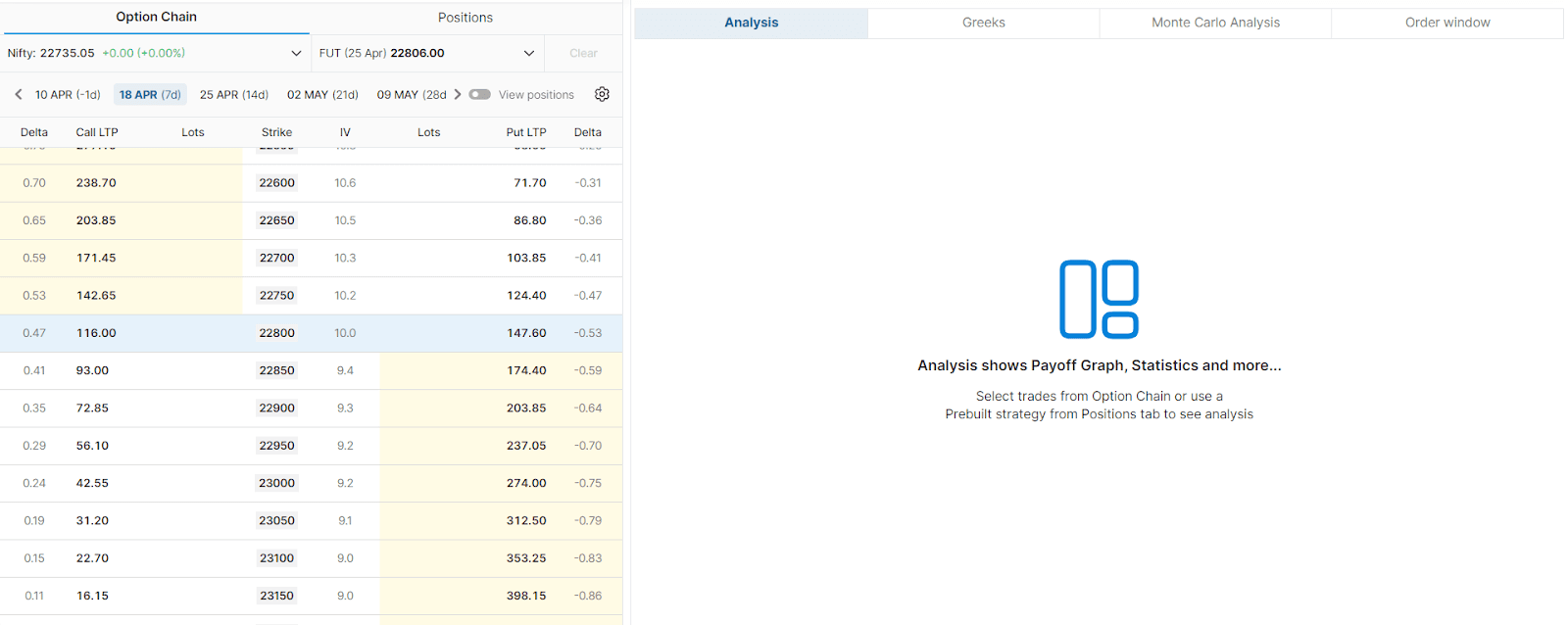
#### Step 4 - Now add the legs from the option chain according to the strategy that you want to build.
Assume if we want to build an iron fly we will sell ATM CE and ATM PE and buy OTM CE and OTM PE from the option chain as shown in the image below
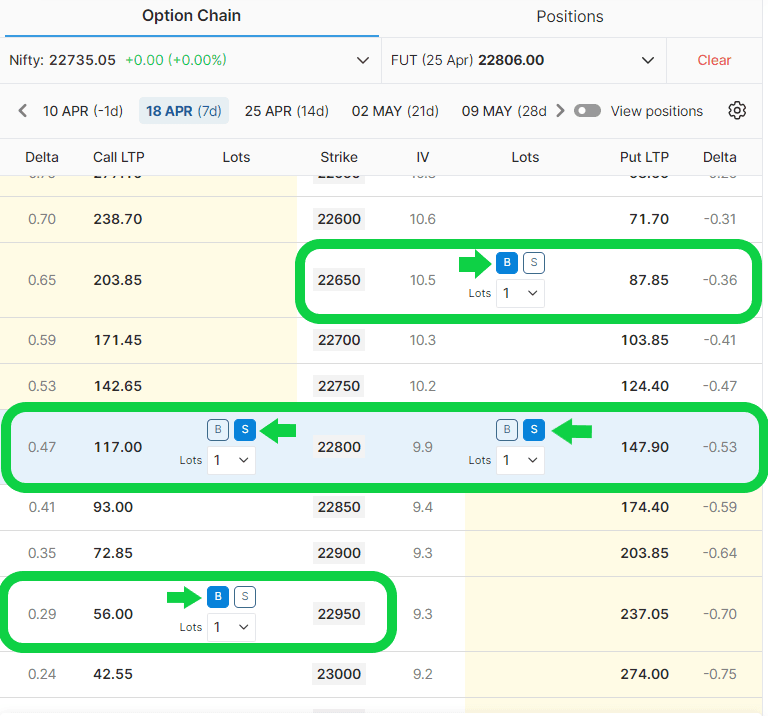
#### Step 5 - You can analyze your strategy using the different tools provided by AlgoTest.
##### **In the Analysis section**
- Strategy Builder provides you tools like Payoff graph, Maximum Profit, Maximum Loss, Risk Reward, Breakeven Point, etc to analyze your strategy. A payoff graph is a very useful tool that helps you to determine how your position is going to end till expiry concerning the underlying move.
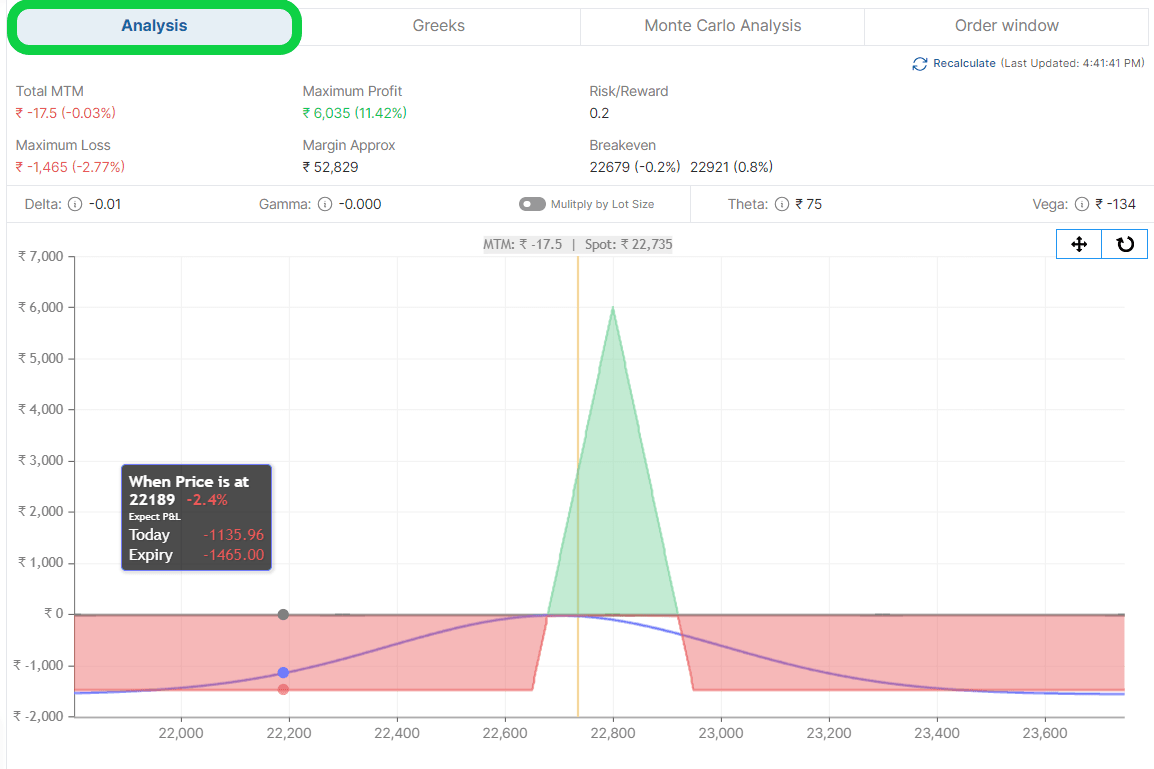
##### In the Greeks section
- Strategy Builder provides you with information about Option Greeks like Delta, Theta, Gamma, IV, Vega, etc. for your positions as shown in the image below.
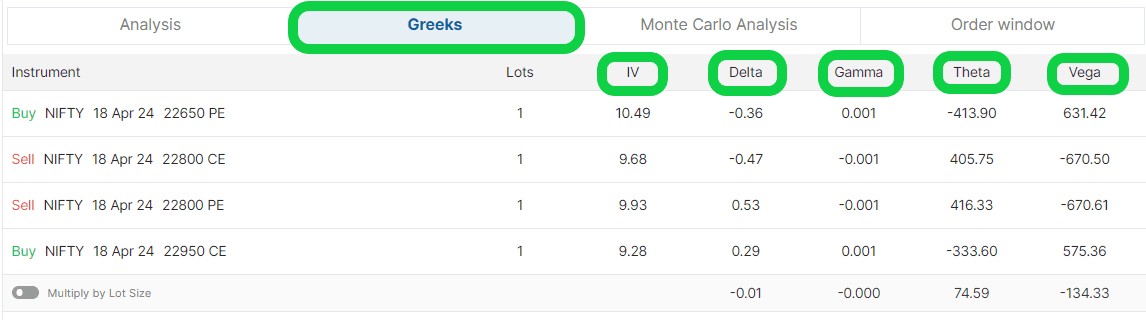
##### In the Monte Carlo Analysis Section
- Your PnL will depend highly on the underlying index's path. Monte Carlo Analysis is an advanced method to see how your strategy will perform on average across 10000 different price paths that the underlying could take until expiry. You can access this feature by clicking on “Monte Carlo Analysis” as shown in the image below.
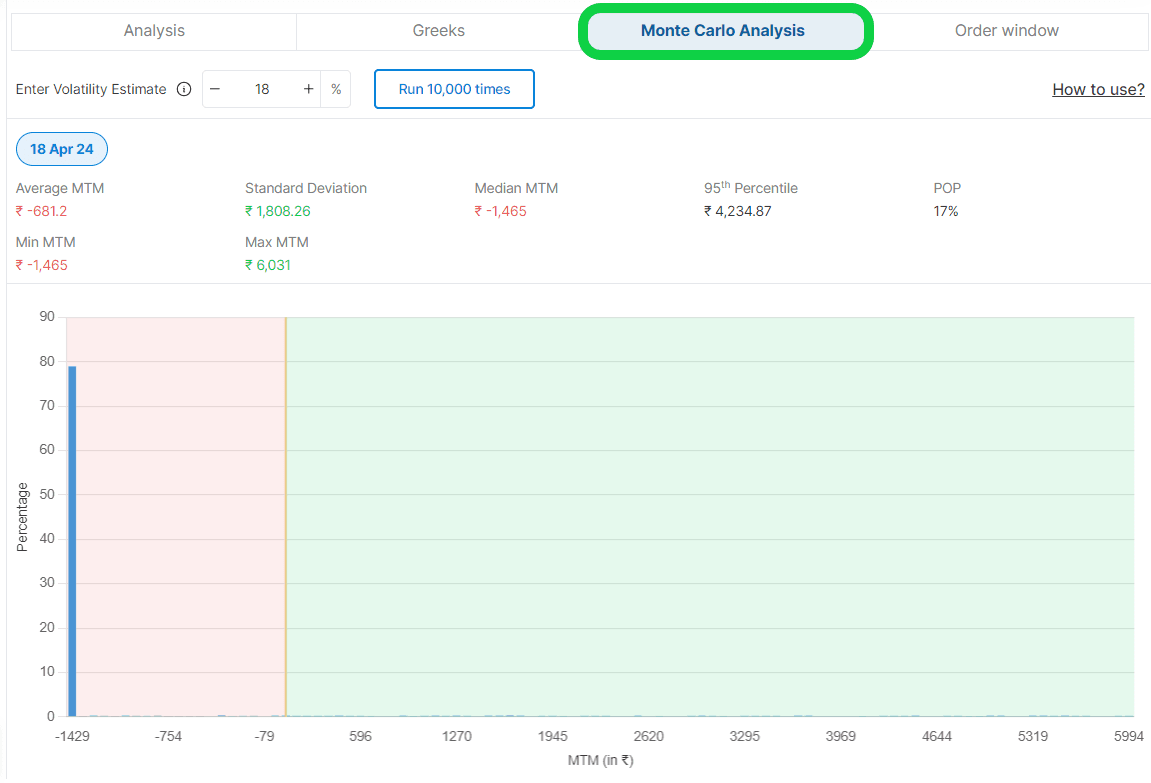
- Now Assuming that we want to execute our Iron Fly then we have two options if we want to paper trade our strategy or want to execute on broker. To execute your strategy for live trade your broker should have logged into your AlgoTest account. To learn how to set up a broker [Click Here.](https://docs.algotest.in/category/broker-setup)

##### To Execute your strategy for live trading
- Click on the “Live Trade with” button as shown in the image below.
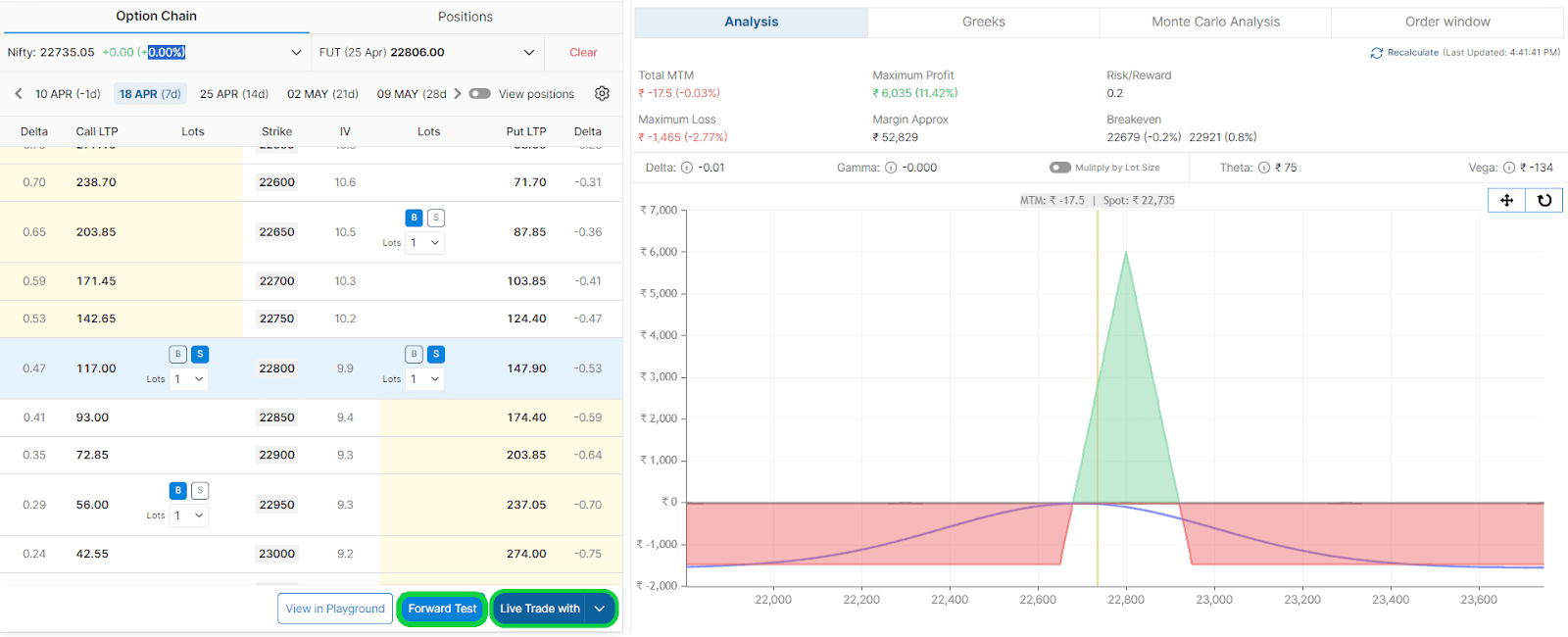
- It will ask to select Broker. Select broker and save the strategy with a random name.
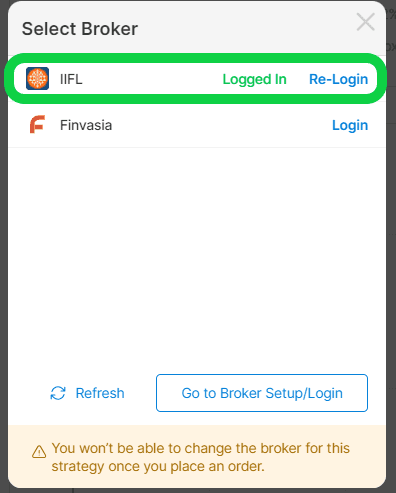
- Now click on “Place All Orders” to execute our strategy. We also have the option to choose if we want to set the order type as limit or market.
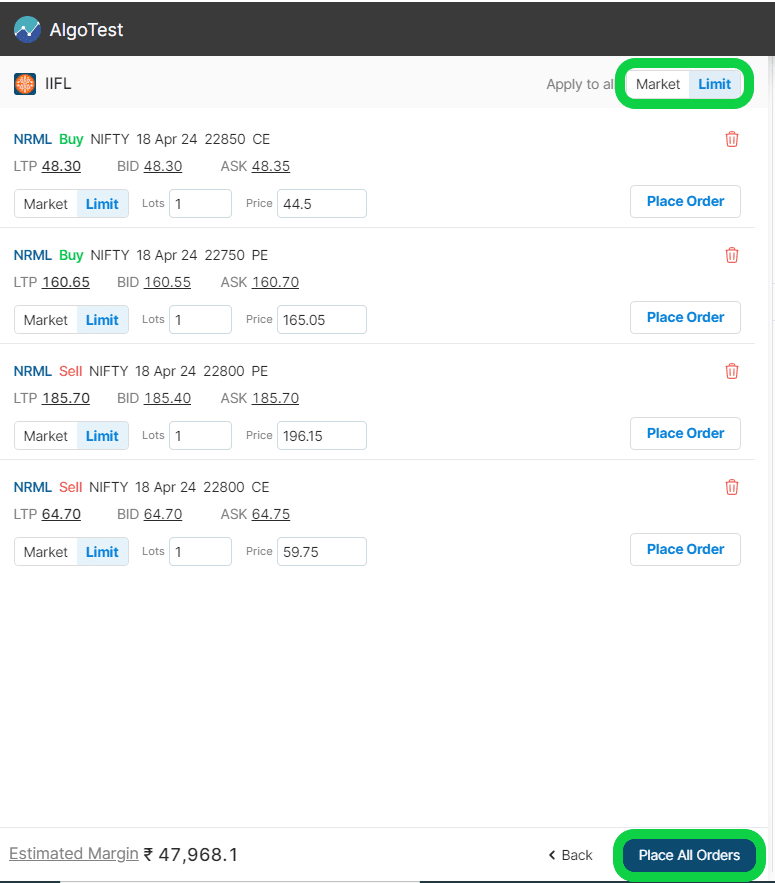
- You can manage your position on the “positions” tab. Here you get options to add another trade or squareoff existing positions as shown in the image below.
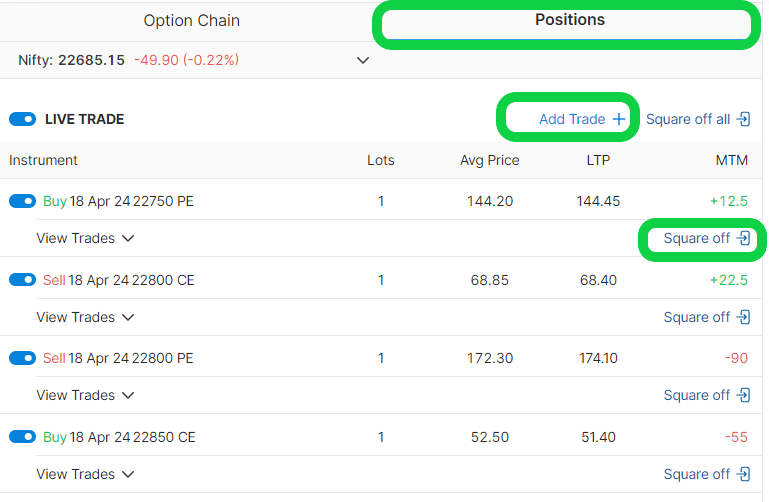
- You can check the status of orders in the order window as shown in the image below :
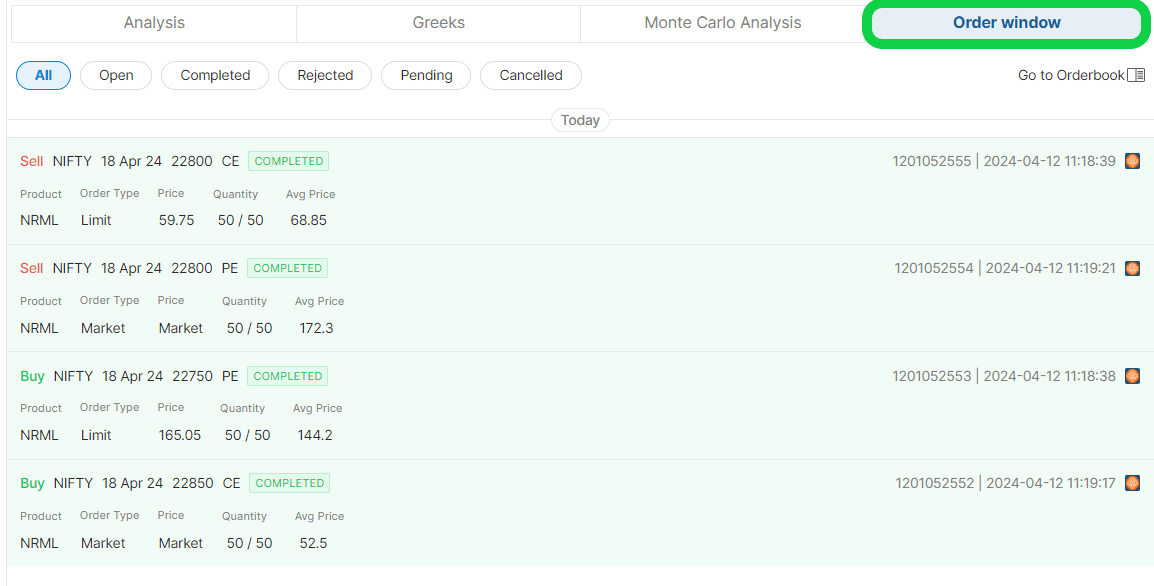
- You can track your positions by various information provided in the analysis tab as shown in the image below :
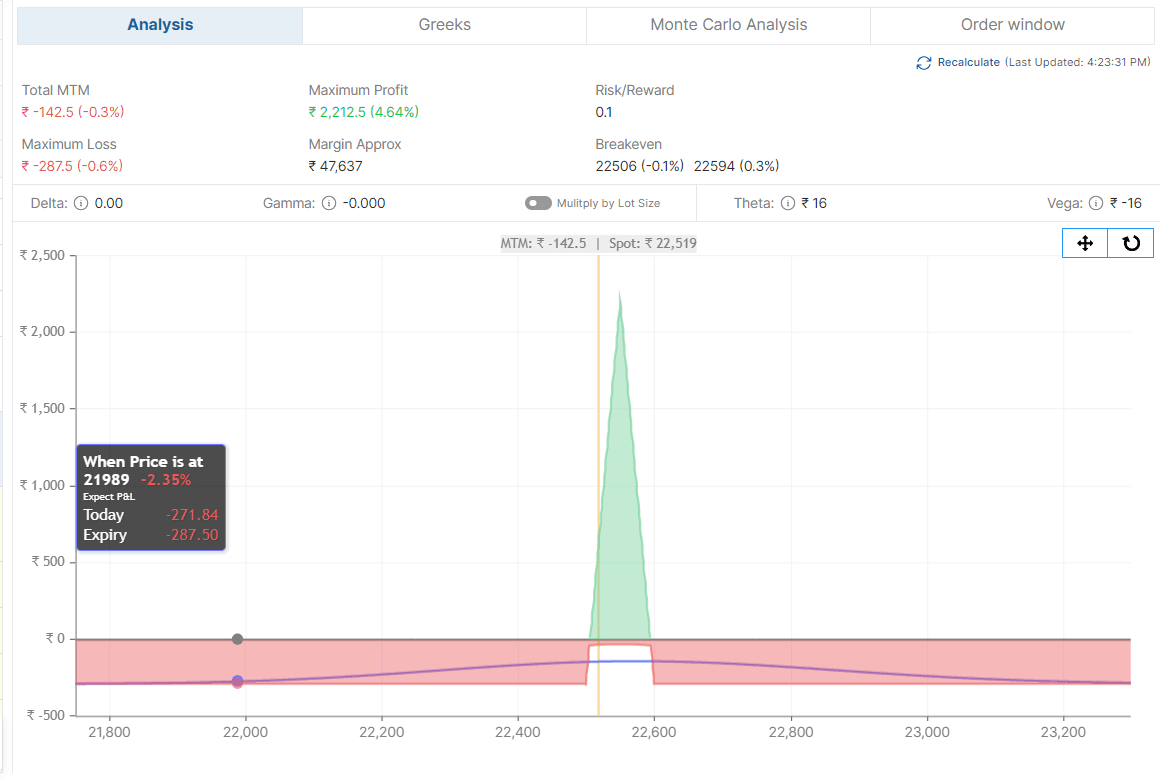
## Testing and Optimizing Your Options Strategy
Once you’ve built your **options trading strategy**, the next step is to test it before risking real capital. Using the **AlgoTest Strategy Builder**, you can **backtest options strategies** on historical data and forward test them in live market conditions.
This helps you evaluate how your strategy performs across different scenarios and identify potential risks. By testing first, you move from guesswork to **data-driven trading decisions**.
## Adjusting Parameters for Optimization
After testing your strategy, you can optimize it for better performance. AlgoTest allows you to adjust key parameters such as:
- Strike prices
- Expiry dates
- Position sizing
By analyzing backtest results, you can refine your **risk-reward ratio** and improve consistency. Continuous optimization helps you build more robust and profitable **options strategies**.
## Taking Your Strategy Live
Once your strategy is tested and optimized, you can deploy it in live markets directly from AlgoTest.
Before going live:
- Ensure your strategy aligns with your risk tolerance
- Stay updated with market conditions
- Start with controlled position sizing
A well-tested strategy increases confidence and reduces emotional decision-making during live trading.
## Paper Trading vs Real Trading
Understanding the difference between **paper trading and live trading** is essential:
- **Paper Trading:**
Test and validate your strategy without risking real money. Ideal for beginners and strategy refinement.
- **Real Trading:**
Execute trades in live markets using real capital, where profits and losses are actual.
Using **AlgoTest Strategy Builder**, you can simulate strategies through paper trading before moving to real execution.
Related: [Best websites for paper trading in India](https://algotest.in/blog/paper-trading-websites-india)
## Monitoring Your Strategy Performance
After deploying your strategy, continuous monitoring is key. Track important metrics like:
- Profit and loss (P&L)
- Drawdown
- Risk exposure
AlgoTest provides real-time analytics to help you evaluate performance and make necessary adjustments. Regular monitoring ensures your **options trading strategy** stays aligned with market conditions.
## Conclusion
Building a successful **options trading strategy** requires the right tools and a structured approach. With **AlgoTest Strategy Builder**, you can create, **backtest, optimize, and automate options strategies** without coding.
Whether you’re a beginner or an experienced trader, using a **no-code options backtesting platform** helps you trade with more confidence, consistency, and control.
Start using AlgoTest today to build smarter, data-driven trading strategies.
Start Free Backtesting
## Frequently Asked Questions
### Can beginners use an Option Strategy Builder effectively?
Yes, beginners can effectively use an Option Strategy Builder with proper guidance. Understanding basic options concepts and risk management is essential. Start with simple strategies and gradually progress to more complex ones as you gain experience and confidence in using the Option Strategy Builder tool.
### What if My Strategy Is Not Performing as Expected?
If your options strategy is not performing as expected, reviewing and analyzing the strategy's performance is important. Consider forward-testing the strategy again with different parameters or adjusting the strategy parameters using the optimizer tools in AlgoTest Strategy Builder. This will help you identify any potential issues and make necessary adjustments to improve the strategy's performance.
### Can we do paper trading in Strategy Builder?
At this time, AlgoTest's Strategy Builder functionality does offer paper trading. However, paper trading is a valuable tool for testing your strategies before deploying them with real capital.
### Can we use Strategy Builder for executing trades on the broker end?
Yes, we use Strategy Builder for executing trades on the broker end.
---
This blog is powered by Superblog. Visit https://superblog.ai to know more.
---
## 5 Best Options Backtesting Platforms in India (Free & Paid Compared)
Author: AlgoTest
Author URL: https://algotest.in/blog/author/algotest/
Published: 2026-04-23
Category: Backtest
Category URL: https://algotest.in/blog/category/backtest/
Meta Description: Compare the best options backtesting platforms in India including free tools like Algotest, Opstra, and Python. Test strategies, reduce risk, and trade smarter.
Tags: algo trading india, backtesting
Tag URLs: algo trading india (https://algotest.in/blog/tag/algo-trading-india/), backtesting (https://algotest.in/blog/tag/backtesting/)
URL: https://algotest.in/blog/free-options-backtesting/
The best free options backtesting platforms in India are AlgoTest, Opstra Definedge, Sensibull, Streak, and Python with NSE data. Each lets you test options strategies on historical NSE data before risking real capital.
Why backtest? The market doesn't care about your logic and most traders find this out the expensive way.
Backtesting lets you pressure-test an idea on years of historical data before you commit real margin. The best part? Several platforms let you do this for free.
Here's what each tool offers and where it falls short.
### Options Backtesting Platform Comparison
Platform
Backtesting
No-Code
Instruments
Live Deployment
Starts At
Best For
Algotest
Yes — intraday + EOD (7.5+ yrs)
Yes
6 NSE indices + 500 stocks
Yes (60+ brokers)
₹499/month (25 free/week)
Full test-to-deploy workflow
Opstra
Yes — EOD (limited free tier)
Yes
Indices + ~53 stocks
No
Paid (demat required)
Cross-checking strategies
Sensibull
Paid plan only
Yes
Indices + stocks
Yes
Free + broker plans
Beginners & visualisation
Streak
Yes — indicator-based (limited options)
Yes
Equities + F&O
Yes (Zerodha only)
Free for Zerodha users
Backtest-to-live algo
Python + NSE Data
Yes — fully custom (manual setup)
No
Any NSE instrument
Yes (via API)
Free (time-intensive)
Developers & custom logic
## Key Takeaways from Comparison
- **Algotest & Opstra** → Best free tools for options-specific backtesting
- **Sensibull** → Great for learning, not full testing
- **Streak** → Better for execution than analysis
- **Python** → Maximum flexibility, but requires effort
If you're just starting out and want one tool to begin with, [AlgoTest](https://algotest.in) covers the most ground for free before you need to consider upgrading anything.
## 1\. AlgoTest
Built specifically for options traders and [algo trading in Indian markets](https://algotest.in/?utm_source=blog&utm_medium=internal&utm_campaign=seo&utm_content=main-page&utm_term=algotest&utm_source=blog&utm_medium=internal&utm_campaign=seo&utm_term=algotest&utm_content=main-page), this is one of the most complete tools if you want to backtest without coding.
### What you can do:
- Backtest multi-leg strategies (straddles, strangles, iron condors)
- Select strikes using delta, ATM offset, or fixed levels
- Set time-based entries and exits
- View detailed trade logs, drawdown, and performance metrics
- Can backtest indicator-based strategies on [Signals AI](https://algotest.in/feature/signals/indicators?utm_source=blog&utm_medium=organic&utm_campaign=seo&utm_source=blog&utm_medium=organic&utm_campaign=seo)
### Why traders use it:
You get serious backtesting capabilities without needing technical skills.
### Limitation:
- The free plan has limits on the historical range and daily runs
**Best for:** Traders who want structured options backtesting without complexity
> [Sign up and Get free backtests](https://algotest.in/feature/backtest)
## 2\. Opstra
A strong mix of strategy analysis and backtesting.
### What you can do:
- Test common strategies like straddles and iron condors
- Analyze payoff and volatility
- Run tests across expiry cycles
### Why traders use it:
Good for validating ideas before executing them elsewhere.
### Limitation:
- Limited historical data in free plan
**Best for:** Cross-checking and strategy research
Related Read: [AlgoTest vs Opstra](https://algotest.in/blog/algotest-vs-opstra)
## 3\. Sensibull
If you're new to options, this is one of the easiest tools to start with.
### What you can do:
- Build strategies visually
- View payoff graphs and breakeven points
- Understand risk before trading
### Why traders use it:
Simple interface, easy learning curve.
### Limitation:
- Full backtesting requires a paid plan
**Best for:** Beginners
Related: [AlgoTest vs Sensibull](https://algotest.in/blog/algotest-vs-sensibull)
[Sensibull vs Opstra: Features, backtesting and best platform](https://algotest.in/blog/opstra-vs-sensibull)
## 4\. Streak
More focused on automation than deep backtesting.
### What you can do:
- Create rule-based strategies
- Backtest equities and futures
- Deploy directly to broker
### Important note:
Options backtesting is limited compared to dedicated tools.
### Limitation:
- Not ideal for serious options strategy testing
**Best for:** Traders moving toward live algo execution
Related: [Streak vs AlgoTest: Head to Head Comparison](https://algotest.in/blog/algotest-vs-streak)
## 5\. Python + NSE Data (DIY)
This is the most flexible option — but requires effort.
### What you can do:
- Build fully custom strategies
- Use libraries like pandas or backtrader
- Work with NSE Bhavcopy data
### Important note:
- NSE data is **end-of-day (EOD)**
- Not suitable for intraday strategies
### Limitation:
- Requires coding + data cleaning
**Best for:** Advanced traders and developers
> **Related read:**How to read Options data on AlgoTest
## What Is Options Backtesting?
Options backtesting means taking a trading strategy and running it against historical price data to see how it would have performed in the past.
Think of it this way: you want to sell a Bank Nifty straddle every Monday at 10:15 AM and exit it at 3:15 PM. Before you risk ₹50,000 of margin on this, wouldn't you want to know if this idea made money over the last two years? Backtesting answers exactly that.
It's not a crystal ball - past performance doesn't guarantee future results. But it does help you avoid strategies that have a clear structural problem. If a strategy loses money 80% of the time historically, that's a big red flag.
> **Related read:** [9 Steps to Build an Algo Trading Strategy from Scratch](https://algotest.in/blog/9-steps-to-build-a-profitable-algo-trading-strategy)
### How Options Backtesting Works (Step by Step)
Here's the basic process, whether you're using a platform or building something yourself:
1. **Pick your strategy** — For example: Sell Nifty 50-delta call + put on expiry day, exit at 50% profit or 2x loss.
2. **Define the rules clearly** — Entry time, strike selection method, exit conditions, position sizing.
3. **Feed in historical data** — The platform pulls past NSE options data (open, high, low, close, OI for each strike).
4. **Run the simulation** — The tool goes through the historical period day by day and applies your rules.
5. **Read the results**: win rate, average profit/loss per trade, max drawdown, Sharpe ratio.
6. **Refine the strategy** — Adjust and re-test. Don't overfit to past data.
The tricky part with options (compared to stocks) is that each expiry has hundreds of strikes, and the data requirements are massive. This is why quality historical options data is expensive and why truly free platforms often have limitations.
Related: [Best backtesting software for Options Trading](https://algotest.in/blog/best-backtesting-software-for-options-trading-in-india/)
## Key Benefits of Backtesting Options Strategies
- **Reduces costly mistakes** — You find the flaws before real money is involved
- **Builds confidence** — When you know a strategy has worked historically, you're less likely to panic-exit during a drawdown
- **Helps compare strategies** — Test a Nifty strangle vs. an iron condor on the same historical period and pick the one with better risk-adjusted returns
- **Speeds up learning** — You can simulate years of trading in hours
### Real-World Use Case: India-Based Scenario
Say you've heard about the "sell Nifty straddle on Thursday morning and exit before Friday expiry" approach. Instead of putting ₹1.5 lakh of margin on the line and hoping for the best, you run a backtest on Algotest for the last 52 weekly expiries.
The results show:
- 38 profitable trades, 14 losing trades
- Average profit: ₹4,200 per lot
- Three trades with losses exceeding ₹15,000
- Maximum drawdown during a high-volatility period: ₹42,000
Now you have actual data. You can decide whether to add a stop-loss, reduce position size during high-VIX weeks, or drop the strategy entirely. That's the real value, not guessing, just testing.
Related read: [5 Mistakes Traders Make in AlgoTrading](https://algotest.in/blog/5-mistakes-traders-make-in-algo-trading)
## Risks and Limitations in Backtesting
Backtesting is useful but it's not perfect. A few things to watch out for:
- **Survivorship bias** — Historical data may not include illiquid strikes that were hard to trade in real-time
- **Execution gap** — Your backtest assumes perfect fills. In reality, slippage on options can be significant, especially on deep OTM strikes
- **Overfitting** — If you tweak your strategy too many times to fit past data, it may fail completely going forward
- **Data quality** — Free data sources sometimes have gaps or errors. Always sanity-check your backtest results
- **Greeks don't backtest perfectly** — Theta decay, IV changes, and skew shifts are hard to model accurately in simple backtesting tools
Related: [Master Backtesting on AlgoTest](https://docs.algotest.in/Time-Based-Algo-Trading/How-to-Master-Backtesting-on-AlgoTest/)
## Backtest Options Strategies with AlgoTest
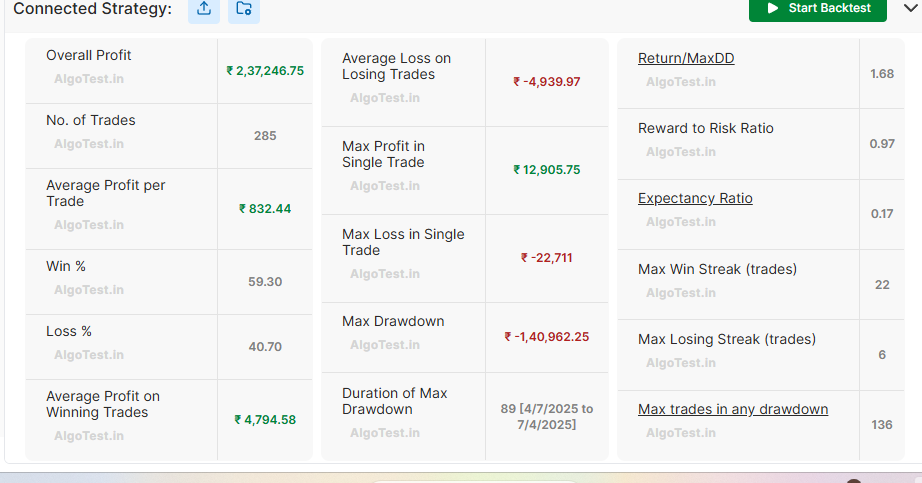
Serious traders don’t guess, they test first. Backtesting helps you validate a strategy before using real capital.
If you trade NSE options (Nifty, Bank Nifty, FinNifty, etc.), AlgoTest gives you a complete workflow:
**strategy → backtest → paper trade → live deployment**
For AlgoTrading, read this **\[** [comparison of the best algo trading platforms in India\]](https://algotest.in/blog/8-best-algo-trading-platforms-in-india-2026)
### Why use AlgoTest
- No-code strategy builder **\[** [**step-by-step guide**](https://algotest.in/blog/option-strategy-builder-algotest-tutorial) **\]**
- Multi-leg backtesting with 7.5+ years of NSE data
- Compare strategy variations side-by-side
- Realistic results (includes slippage & costs)
- [Paper trading](https://algotest.in/blog/paper-trading-websites-india) \+ live deployment (60+ brokers)
- Covers 6 indices + 500 stock options
- Clear performance analytics
**Pricing:** Starts at ₹499/month
**Best for:** Traders who want a simple, full test-to-deploy setup.
Start backtesting for free
# FAQs
Q: Can I automate my trading after backtesting?
A: Yes, platforms like Algotest and Streak allow traders to move from backtesting to live automated trading using broker integrations.
Q: What data is used for options backtesting in India?
A: Most platforms use historical NSE options data, including price, volume, and open interest, to simulate past trades.
Q: Is options backtesting useful for algo trading?
A: Yes, options backtesting is essential for algorithmic trading as it helps validate strategies before deploying them in live markets.
Q: How much historical data is needed for reliable backtesting?
A: Ideally, traders should test strategies across multiple market conditions using at least 1–3 years of historical data.
Q: What is the best options backtesting platform in India?
A: Some of the best options backtesting platforms in India include Algotest, StockMock, Opstra, and Sensibull. These tools allow traders to test options strategies on historical NSE data before trading live.
Q: Are there free options backtesting platforms in India?
A: Yes, platforms like Algotest, StockMock, and Opstra offer free plans with limited features. Traders can also use Python with NSE data for completely free options backtesting.
Q: Can I backtest Nifty and Bank Nifty options strategies?
A: Yes, most options backtesting platforms in India support Nifty and Bank Nifty strategies, including intraday and expiry-based setups.
Q: Do I need coding knowledge for options backtesting?
A: No, many platforms like Algotest and StockMock offer no-code strategy builders. However, advanced traders may use Python for more customization.
Q: How accurate is options backtesting?
A: Options backtesting provides useful insights, but results may differ in live trading due to slippage, brokerage costs, and market conditions.
Q: Which platform is best for beginners in options trading?
A: Sensibull is best for beginners due to its simple interface and visual strategy builder, while Algotest is better for deeper backtesting.
Q: What is the best options backtesting platform in India?
A: Some of the best options backtesting platforms in India include Algotest, StockMock, Opstra, and Sensibull. These tools allow traders to test options strategies on historical NSE data before trading live.
Q: Are there free options backtesting platforms in India?
A: Yes, platforms like Algotest, StockMock, and Opstra offer free plans with limited features. Traders can also use Python with NSE data for completely free options backtesting.
Q: Can I backtest Nifty and Bank Nifty options strategies?
A: Yes, most options backtesting platforms in India support Nifty and Bank Nifty strategies, including intraday and expiry-based setups.
Q: Do I need coding knowledge for options backtesting?
A: No, many platforms like Algotest and StockMock offer no-code strategy builders. However, advanced traders may use Python for more customization.
Q: How accurate is options backtesting?
A: Options backtesting provides useful insights, but results may differ in live trading due to slippage, brokerage costs, and market conditions.
Q: Which platform is best for beginners in options trading?
A: Sensibull is best for beginners due to its simple interface and visual strategy builder, while Algotest is better for deeper backtesting.
Q: Can I automate my trading after backtesting?
A: Yes, platforms like Algotest and Streak allow traders to move from backtesting to live automated trading using broker integrations.
Q: What data is used for options backtesting in India?
A: Most platforms use historical NSE options data, including price, volume, and open interest, to simulate past trades.
Q: Is options backtesting useful for algo trading?
A: Yes, options backtesting is essential for algorithmic trading as it helps validate strategies before deploying them in live markets.
Q: How much historical data is needed for reliable backtesting?
A: Ideally, traders should test strategies across multiple market conditions using at least 1–3 years of historical data.
---
This blog is powered by Superblog. Visit https://superblog.ai to know more.
---
## SEBI Registered Research Analysts: Top RAs on AlgoTest
Author: AlgoTest
Author URL: https://algotest.in/blog/author/algotest/
Published: 2026-04-21
Category: RA Algos
Category URL: https://algotest.in/blog/category/ra-algos/
Meta Description: Discover RA Algos by SEBI registered research analysts on AlgoTest. Backtest, forward test for free, and trade using expert-built, compliant strategies.
Tags: trading strategies, ra algos
Tag URLs: trading strategies (https://algotest.in/blog/tag/trading-strategies/), ra algos (https://algotest.in/blog/tag/ra-algos/)
URL: https://algotest.in/blog/sebi-registered-research-analysts/
## Who Are SEBI Registered Research Analysts?
A SEBI registered research analyst is an individual or entity authorized by the Securities and Exchange Board of India to provide investment research, recommendations, and insights in the financial markets.
To get registered, analysts must:
- Meet strict qualification criteria
- Follow compliance and disclosure norms
- Maintain transparency in their recommendations
In a market full of unverified tips and “finfluencers,” SEBI registration acts as a reliability filter.
That’s exactly why AlgoTest brings you [**RA Algos**](https://algotest.in/blog/what-is-ra-algos-and-how-it-works-on-algotest/), a curated strategy marketplace built by expert, verified traders.
With RA Algos, you don’t just follow strategies; you **validate them yourself**. Backtest on historical data, forward test in real-time for free, and only then take them live with confidence.
Discover smarter, data-backed trading today.
Explore RA Algos here: [https://algotest.in/ra-algos](https://algotest.in/ra-algos)
## Featured SEBI Registered Analysts on AlgoTest
### 1\. Raghav Malik (SEBI INH000021553)
Raghav Malik is a former professional options trader and also the founder of AlgoTest with experience in high-speed US markets, where success depends on discipline, mathematical precision, and strong risk control.
As a SEBI registered research analyst, he focuses on simplifying professional trading concepts and helping Indian traders avoid common retail mistakes.
[Explore his strategies here.](https://algotest.in/ra-algos/613f68a1fc3cb913f0804e9f)
### 2\. Mohit Goyal (SEBI INH000024019)
Mohit Goyal is a Chartered Accountant with over 14 years of experience, specializing in financial analysis, valuation, and market behavior.
His approach is data-driven and risk-conscious, focusing on transparency, consistency, and disciplined investing.
[Explore his strategies here.](https://algotest.in/ra-algos/693a6d9f60dd9de46682724b)
### 3\. TRADERS CIRCUIT (SEBI INH000019859)
TRADERS CIRCUIT is a research-driven entity focused on structured and systematic trading strategies across index markets.
Their approach emphasizes disciplined execution and rule-based systems designed for consistency in trading.
[Explore his strategies here.](https://algotest.in/ra-algos/6923fb0a665ff991dc77c45a)
### 4\. Utkarsh Bhargava (SEBI INH000021225)
Utkarsh Bhargava is known for a simplified and focused approach to trading in derivatives.
His strategies reflect clarity, discipline, and structured execution.
[Explore his strategies here.](https://algotest.in/ra-algos/64480b32f5820fca67460758)
### 5\. Sasikumar Peyyala (SEBI INH000019327)
Sasikumar Peyyala is a SEBI registered research analyst with over 9 years of experience, specializing in AI and machine learning-driven trading strategies.
With a strong background in quantitative analysis and algorithmic trading, he focuses on building data-driven models to simplify complex market decisions.
[Explore his strategies here.](https://algotest.in/ra-algos/6762b6c09504c5c16fdfd688)
### 6\. Latesh Narula (SEBI INH000016269)
Latesh Narula is a SEBI registered research analyst with over 18 years of trading experience and a strong focus on options and algorithmic trading.
With a deep foundation in finance and quantitative research, he builds data-driven strategies focused on risk-adjusted returns.
[Explore his strategies here.](https://algotest.in/ra-algos/683ea36f1cb34a4fe1f5cb4d)
### 7\. Hitesh Somani (SEBI INH000010645)
Hitesh Somani focuses on structured intraday trading strategies, particularly in the Sensex segment, with an emphasis on systematic execution.
His approach revolves around consistency and disciplined rule-based trading across different market sessions.
[Explore his strategies here.](https://algotest.in/ra-algos/689c79550737592d1c016d4d)
### 8\. Vimal K Mutha (SEBI INH200007724)
Vimal K Mutha focuses on options-based trading strategies across Nifty and Sensex, with an emphasis on systematic execution.
His approach is centered around structured setups and disciplined risk management in derivatives trading.
[Explore his strategies here.](https://algotest.in/ra-algos/6826deab3956a91bed8243f6)
### 9\. Ravi Raja (SEBI INH000024347)
Ravi Raja focuses on quantitative and directional trading strategies across indices, including intraday and short-term setups.
His approach is built around structured systems and disciplined execution for active traders.
[Explore his strategies here.](https://algotest.in/ra-algos/654cd6e2a645d7e5e805ec37)
### 10\. Sparsh Jindal (SEBI INH000015367)
Sparsh Jindal specializes in options selling and theta-based strategies in the derivatives market.
His approach emphasizes consistency, structured execution, and disciplined risk management.
[Explore his strategies here.](https://algotest.in/ra-algos/652e6bc41951b14c6f88d247)
### 11\. Multyfi (SEBI INH000013475)
Multyfi, led by Rachit Chawla, focuses on quant-based trading strategies across equity, F&O, and commodities.
Their approach is fully system-driven, combining data-backed models with structured execution.
[Explore his strategies here.](https://algotest.in/ra-algos/63689cd22a490f37ec694f4a)
### 12\. Vishal Trehan (SEBI INH000016816)
Vishal Trehan brings experience across consulting, banking, and private equity, with a transition into systematic trading.
His approach focuses on rule-based strategies to eliminate emotional bias and ensure disciplined execution.
[Explore his strategies here.](https://algotest.in/ra-algos/67d9659a078547cf69df7396)
### 13\. Prashant Pareek (SEBI INH000021216)
Prashant Pareek focuses on building structured trading strategies across indices and midcap segments.
His approach emphasizes systematic execution and risk-managed trading frameworks.
[Explore his strategies here.](https://algotest.in/ra-algos/69283efd7f678598655bcef1)
### 14\. Vivek Prashant (SEBI INH200006929)
Vivek Prashant is a SEBI registered research analyst with over 10 years of experience in financial markets.
He specializes in structured derivatives trading with a focus on disciplined execution.
[Explore his strategies here.](https://algotest.in/ra-algos/6949049d0f9cb70ec5e78ed1)
### 15\. Amit Goenka (SEBI INH000017930)
Amit Goenka is a full-time trader and SEBI registered research analyst with extensive experience in options trading since 2007.
His approach is built on a deep understanding of options behavior and structured trading strategies.
[Explore his strategies here.](https://algotest.in/ra-algos/613f68a1fc3cb913f0804e9f)
### 16\. Finkhoz (SEBI INH000022297)
Finkhoz focuses on index-based trading strategies with a structured and systematic approach.
Their strategies are designed for disciplined execution with clearly defined setups and risk parameters.
[Explore his strategies here.](https://algotest.in/ra-algos/62861b6f30e4326d9abb3275)
## Explore All RA Strategies
To view, compare, and deploy strategies from all SEBI registered analysts on AlgoTest, visit:
[https://algotest.in/ra-algos](https://algotest.in/ra-algos)
## Official SEBI Research Analyst List
To verify any research analyst, you can refer to the official list published by the
[Securities and Exchange Board of India.](https://www.sebi.gov.in/sebiweb/other/OtherAction.do?doRecognisedFpi=yes&intmId=14)
This helps ensure:
- The analyst is officially registered
- Their registration number is valid
- They follow regulatory compliance
Related: [Crypto Marketplace](https://algotest.in/crypto-marketplace)
## Final Thoughts
SEBI registered research analysts bring credibility, structure, and accountability to the trading ecosystem. Platforms like Algotest make it easier to access verified experts and their research-backed strategies.
However, always remember:
- Backtested results are not guarantees
- Markets are dynamic
- Risk management is essential
The goal is not just to find strategies but to follow disciplined, transparent, and well-researched systems.
Related: [Demystifying RA Algos](https://algotest.in/blog/research-analysts-demystified-what-your-finfluencer-needs-to-do-now-sebi)
[A complete guide to the Algo Strategy Marketplace](https://algotest.in/blog/algo-trading-marketplace-india)
[AlgoTest VS Univest](https://algotest.in/blog/ra-algos-vs-univest)
[AlgoTest vs Stratzy](https://algotest.in/blog/ra-algos-vs-stratzy)
# FAQs
Q: What are RA Algos on AlgoTest?
A: RA Algos are ready-made trading strategies created by expert and verified traders, available on AlgoTest’s marketplace for users to explore and trade.
Q: Can I test RA Algos before using them in live markets?
A: Yes, you can backtest RA Algos on historical data and forward test them in real-time for free before deploying them live.
Q: Do I need prior trading experience to use RA Algos?
A: No, RA Algos are designed to be beginner-friendly while still offering value to experienced traders through data-backed strategies.
Q: Are the traders behind RA Algos verified?
A: Yes, all strategies listed under RA Algos are created by expert and verified traders to ensure credibility and reliability.
Q: How can I start using RA Algos?
A: Simply explore the RA Algos marketplace on AlgoTest, choose a strategy, test it, and start trading once you are confident.
---
This blog is powered by Superblog. Visit https://superblog.ai to know more.
---
## Nifty OI Data Explained: How to Read Open Interest Step by Step
Author: AlgoTest
Author URL: https://algotest.in/blog/author/algotest/
Published: 2026-04-20
Category: option chain
Category URL: https://algotest.in/blog/category/option-chain/
Meta Description: Learn how to read Nifty OI data, option chain, PCR, and build profitable strategies using real examples and AlgoTest backtesting.
Tags: nifty, options trading
Tag URLs: nifty (https://algotest.in/blog/tag/nifty/), options trading (https://algotest.in/blog/tag/options-trading/)
URL: https://algotest.in/blog/how-to-read-nifty-oi-data/
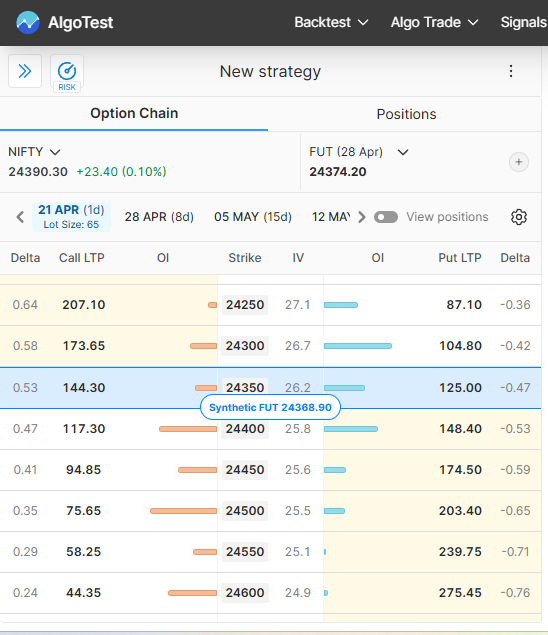
Open Interest (OI) is one of the most widely referenced data points in Nifty options trading, yet it remains misread by many traders. Understanding what OI data is, where to find it, and how to interpret it can materially sharpen trade decisions, particularly for those who already understand the basics of options.
This article walks through the structure of Nifty OI data, how to read the option chain, and how to apply OI signals in a practical trading context.
## What Is Open Interest?
Open Interest refers to the total number of active options contracts that have not yet been closed, exercised, or expired. Every options contract has two parties, a buyer and a seller. When a new contract is created between them, OI increases by one. When either party exits the position, OI decreases by one.
OI is distinct from volume. Volume counts every trade executed during a session. OI counts only the contracts still open at any given point. A high-volume day does not necessarily mean high OI, it could simply mean a lot of positions were opened and closed within the same session.
For Nifty traders, OI is significant because it reflects where money is committed across different strike prices. Large institutional participants, FIIs, proprietary desks, and hedgers tend to hold sizable positions. Where they choose to deploy capital across strikes carries directional information.
Related: [How to Read Nifty Option Chain Like a Pro (with Live OI Example)](https://algotest.in/blog/how-to-read-nifty-option-chain-step-by-step-for-traders/)
## Where to Access Nifty OI Data
Nifty OI data is available on the [NSE website](https://www.nseindia.com/option-chain) under the Derivatives section. The primary tool is the Nifty Option Chain, which displays all active strikes for the current and upcoming expiries.
The columns that matter most for OI analysis are:
- **OI** — total outstanding contracts at that strike
- **Change in OI** — net increase or decrease in OI during the current session
- **LTP (Last Traded Price)** — current premium for that option
- **Volume** — number of contracts traded in the current session
Strikes are listed from lowest to highest in the centre column. Calls are on the left side of the table; Puts are on the right. The current Nifty spot price determines which strikes are in-the-money (ITM), at-the-money (ATM), and out-of-the-money (OTM).
For a more advanced view with OI visualisation, real-time Greeks, and built-in analysis tools, you can use the [AlgoTest Nifty Option Chain](https://algotest.in/feature/strategy-builder) alongside your NSE data.
Read More: [**Getting Started with Algo Trading in Nifty Futures**](https://algotest.in/blog/getting-started-with-algo-trading-in-nifty-futures/)
## The Four OI and Price Combinations
The most foundational framework in OI analysis is the relationship between price movement and OI movement. Each combination signals a different market condition.
These four scenarios apply to both the Calls and Puts side of the option chain. Reading them together gives a clearer picture of who is in control, buyers or sellers.
Here's the table in clean markdown:
Price
OI
Signal
Interpretation
↑ Rising
↑ Rising
Long build-up (Bullish)
Fresh money entering on the buy side. New longs being added. Trend has buying support behind it.
↓ Falling
↑ Rising
Short build-up (Bearish)
New short positions being added. Bears are building conviction. Downtrend likely to continue.
↑ Rising
↓ Falling
Short covering (Cautiously bullish)
Shorts are exiting, driving prices up. No fresh buying yet — rally may lack sustained strength.
↓ Falling
↓ Falling
Long unwinding (Cautiously bearish)
Existing longs cutting positions. Selling pressure driven by exits, not new shorts entering.
Paste-ready. Works in WordPress, Notion, or any markdown-supported CMS directly.
## Understanding Put-Call Ratio (PCR)
The Put-Call Ratio is calculated by dividing the total Put OI by the total Call OI across all strikes for a given expiry.
### PCR = Total Put OI ÷ Total Call OI
PCR is a sentiment indicator. It reflects the relative positioning between put writers and call writers, two of the most capital-heavy participants in the market.
**Interpreting PCR values:**
- **Above 1.2** — Put writing is dominant. Sellers expect Nifty to hold or move up. Generally read as bullish market sentiment.
- **Between 0.8 and 1.2** — Balanced positioning. No strong directional bias from OI data alone.
- **Below 0.8** — Call writing is dominant. Sellers expect Nifty to remain flat or decline. Generally read as bearish sentiment.
PCR should not be used in isolation. A very high PCR (above 1.5) can sometimes indicate excessive complacency, which may precede a correction. Context - including recent price movement, VIX levels, and upcoming events always matters.
Also read: [Sensex Option Chain Explained: How to Read, Analyse & Trade Using Live Data](https://algotest.in/blog/how-to-read-and-analyse-sensex-option-chain/)
## How to Identify Support and Resistance Using OI (Nifty Option Chain Analysis)
The strike with the highest Put OI is commonly referred to as the **Put Wall** or OI-based support. The logic: put writers at that strike have a financial interest in Nifty staying above that level. They tend to defend it by adding to their positions as Nifty approaches.
The strike with the highest Call OI is the **Call Wall** or OI-based resistance. Call writers at that strike benefit from Nifty closing below it at expiry. This concentration of selling pressure acts as a ceiling.
**Practical example:** If Nifty is at 24,050 and the highest Call OI sits at the 24,200 CE while the highest Put OI sits at 23,800 PE, the implied OI range for the week is 23,800–24,200. Nifty often gravitates toward the centre of this range heading into expiry — a concept related to max pain theory.
This range shifts intraday as OI changes. Monitoring Change in OI, not just absolute OI, allows traders to detect when a wall is being reinforced or broken down.
> **Want to see how OI walls interact with your options strategy before placing a trade?** The [AlgoTest Strategy Builder](https://algotest.in/feature/strategy-builder) lets you visualise how OI positioning at specific strikes impacts your payoff, Greeks, and probability of profit — in real time, with no coding required.
## Reading Change in OI: The Most Important Column
Absolute OI shows where positions exist. Change in OI shows what is happening right now.
If the 24,200 CE has an absolute OI of 90 lakh contracts but a Change in OI of −15 lakh, it means call sellers at that level are exiting. The wall is weakening. If Nifty is simultaneously rising toward 24,200, this is a potential breakout setup — sellers are unwinding, which reduces the overhead resistance.
Conversely, if Change in OI is strongly positive at a strike while price approaches it, the wall is being reinforced. Sellers are adding to their positions. In this scenario, the level is more likely to hold.
This dynamic is most visible in the final 90 minutes of an expiry session, when positions are adjusted rapidly.
## Expiry Thursday: A Step-by-Step Nifty OI Scenario
On weekly expiry days (Thursday for Nifty), OI data becomes particularly actionable. By 2:00 PM, most large participants have decided whether to roll positions or let them expire.
Consider this scenario: Nifty opens at 24,100 on expiry Thursday. The Call Wall at 24,200 CE holds 80 lakh contracts. The Put Wall at 24,000 PE holds 65 lakh contracts. PCR is 1.1, mildly bullish.
By 11:30 AM, the 24,200 CE shows a Change in OI of −12 lakh. Call sellers are buying back their positions. At the same time, Nifty pushes toward 24,180 with above-average volume on Nifty futures.
This combination - declining OI at the Call Wall, price moving toward the level, and above-average volume- is often a precursor to a breach. Traders tracking a change in OI would have this context well before the breakout confirmed on the price chart.
## Key Metrics to Check Before the Session Opens
A structured pre-market OI review takes under 10 minutes and covers five inputs:
1. **Overall PCR** — establishes the directional bias for the day
2. **Call Wall and Put Wall strikes** — identifies the implied trading range
3. **Nifty spot vs. the walls** — determines proximity to key OI levels
4. **ATM strike Change in OI from prior close** — shows overnight institutional positioning
5. **India VIX** — elevated VIX (above 15–16) increases hedging activity, which can distort OI signals
These five data points give a foundational view before charts are even opened.
Read More: [Bank Nifty Expiry Day Explained (2026): Date, Rules & Best Strategies](https://algotest.in/blog/bank-nifty-expiry-day/)
## Common Errors in OI Analysis
### Using absolute OI without tracking Change in OI
A strike with large OI that hasn't moved in three sessions may reflect stale positioning. What matters is fresh movement — new additions or exits happening today.
### Treating OI signals as standalone trade triggers
OI data reflects positioning, not certainty of direction. It must be read alongside price action, volume, and volatility before a trade decision is made.
### Ignoring expiry context
OI dynamics behave differently on expiry day versus three weeks before expiry. Near expiry, positions are squared off rapidly and key levels shift faster. Applying a mid-series OI read to an expiry-day setup leads to misinterpretation.
## Validate Your OI-Based Strategy Before Going Live
Reading OI is the first step. The second is testing whether an OI-based strategy would have worked historically before committing real capital.
The [AlgoTest Backtester](https://algotest.in/feature/backtest) lets you run multi-year simulations on Nifty options strategies with real slippage, brokerage, and taxes included. If you've built an approach around PCR levels, Call Wall breakouts, or expiry-day OI shifts, you can quantify its historical edge in seconds, not days.
[Start backtesting free — 25 backtests per week, no credit card required.](https://algotest.in/feature/backtest)
## Start Using Nifty OI Data in Your Trading Routine
Nifty OI data is freely available on NSE and requires no paid subscription to access. The skill lies in reading it consistently, tracking Change in OI in real time, cross-referencing PCR, and confirming with price-volume action before acting.
For intermediate traders, building a daily pre-market OI habit is the most practical starting point. Over time, what looks like noise starts to reveal clear patterns: where institutions are positioned, which levels are genuinely defended, and where a move has real momentum behind it versus where it's likely to stall.
Once you have read, the next step is stress-testing it. The [AlgoTest Strategy Builder](https://algotest.in/feature/strategy-builder) lets you visualise how your OI-based setup interacts with your payoff and Greeks before placing a trade. Pair that with the [AlgoTest Backtester](https://algotest.in/feature/backtest) to quantify the historical edge of your full strategy across multiple years of Nifty data, with slippage and brokerage factored in.
Get 25 free backtests every week
_Options trading involves significant market risk. OI analysis is one input in a broader decision-making process. Past patterns in OI data do not guarantee future price outcomes._
# FAQs
Q: What is Nifty OI data and why does it matter for traders?
A: Nifty OI data refers to the total number of active options contracts across all strikes that have not yet been closed or expired. It matters because it shows where institutional money is committed — helping traders identify key support, resistance, and directional bias before placing a trade.
Q: How do I read Nifty open interest data from the option chain?
A: Open the NSE option chain and focus on three columns — OI, Change in OI, and LTP. The strike with the highest Call OI acts as resistance (Call Wall) and the strike with the highest Put OI acts as support (Put Wall). Track Change in OI intraday to see whether these walls are being reinforced or broken down.
Q: What is the difference between OI and volume in Nifty options?
A: Volume counts every contract traded during a session, including positions opened and closed on the same day. OI counts only contracts that remain open at any point. A high-volume day with falling OI means most positions were squared off intraday — no real directional commitment was made.
Q: What is a good Put-Call Ratio (PCR) for Nifty?
A: A PCR above 1.2 is generally considered bullish, as it indicates more put writing relative to call writing. A PCR below 0.8 is considered bearish. A PCR between 0.8 and 1.2 suggests a balanced market with no strong directional bias from OI data alone.
Q: What is the best Nifty OI analysis tool available in India?
A: The NSE website provides free live Nifty OI data through its option chain. For a more advanced view with OI visualisation, Greeks, payoff analysis, and strategy building, the AlgoTest Strategy Builder is one of the most comprehensive Nifty OI analysis tools available, with a free tier that includes 25 backtests per week.
Q: How do I use Nifty OI data on expiry day?
A: On expiry day, focus on Change in OI at the ATM and near-ATM strikes. If Call OI at the Call Wall is falling while price moves toward it, sellers are covering — a potential breakout signal. If Put OI is increasing at a strike below current price, that support level is being actively defended. OI shifts happen faster near expiry, so check the data every 30 minutes rather than once before the session.
Q: What does short covering mean in Nifty OI data?
A: Short covering occurs when price rises while OI falls. It means traders who had sold (shorted) Nifty options or futures are buying back their positions to exit. The price rise is driven by exits, not fresh buying — which means the rally may not sustain unless new long positions start building alongside it.
Q: Can I backtest a strategy based on Nifty OI data?
A: Yes. Once you have identified an OI-based setup — such as a Call Wall breakout or a PCR reversal signal — you can validate it historically using the AlgoTest Backtester. It runs multi-year simulations on Nifty options strategies with real slippage, brokerage, and tax costs included, giving you a data-backed view of your strategy's edge before going live.
```
---
This blog is powered by Superblog. Visit https://superblog.ai to know more.
---
## Fully Automated Trading Software in India (2026): SEBI-Compliant Platforms, Costs & How to Start
Author: AlgoTest
Author URL: https://algotest.in/blog/author/algotest/
Published: 2026-04-18
Category: General
Category URL: https://algotest.in/blog/category/general/
Meta Description: Learn how fully automated trading software works in India, which platforms are SEBI-compliant in 2026, and how to start algo trading step by step — without coding skills.
Tags: algo trade, algo trading india
Tag URLs: algo trade (https://algotest.in/blog/tag/algo-trade/), algo trading india (https://algotest.in/blog/tag/algo-trading-india/)
URL: https://algotest.in/blog/fully-automated-trading-software-in-india/

Fully [automated trading software in India](https://algotest.in/?utm_source=blog&utm_medium=internal&utm_campaign=seo&utm_content=main-page&utm_term=algotest&utm_source=blog&utm_medium=internal&utm_campaign=seo&utm_term=algotest&utm_content=main-page) lets retail traders execute NSE/BSE orders automatically using pre-programmed rules, with no manual clicking required.
By connecting to SEBI-registered brokers via APIs, these platforms eliminate emotional bias and improve execution speed. As of April 1, 2026, all automated trading must comply with SEBI's new algo framework, including a mandatory Algo-ID for every trade.
## What Is Fully Automated Trading Software?
Simply put, it's software that places buy and sell orders on your behalf — based on rules you set in advance.
You define the logic. The software executes it. No hesitation, no second-guessing, no staring at charts all day.
Think of it this way: the algorithm is the brain, the automated software is the hand that clicks "buy."
### Algorithmic Trading vs. Automated Trading — What's the Difference?
These terms get used interchangeably, but there's a subtle difference:
- **Algorithmic trading** = the strategy or logic (e.g., "sell when RSI crosses 70")
- **Automated trading** = the system that executes that logic without manual intervention
One is the recipe. The other is the chef who cooks it while you sleep.
## Why Are Traders Switching to Fully Automated Trading Software?
Most retail traders lose money not because their strategy is wrong, but because they don't follow it consistently. Emotions and doubt get in the way.
Automation fixes that.
- **No hesitation** — never miss a Bank Nifty breakout because you blinked
- **Zero emotional bias** — the system doesn't panic, overtrade, or freeze
- **Runs 24/7** — machines don't get tired or distracted
- **Scale without effort** — run multiple strategies simultaneously across Nifty, Bank Nifty, and individual stocks
And here's a stat worth knowing: algorithmic trading now accounts for **up to 73% of trading volume in stock futures** on Indian exchanges. The machines are already in the game. The question is whether you're using them too.
## SEBI Algo Trading Rules 2026
SEBI's algo trading framework became fully mandatory on **April 1, 2026**. Here's what changed:
- **Algo-ID required:** Every automated order needs a unique exchange-issued ID. No registration, no trading.
- **Compliant brokers only:** Non-compliant brokers were barred from onboarding new API clients from January 5, 2026.
- **Black box providers need an RA licence:** Third-party algo providers must now be SEBI-registered and disclose performance data — goodbye "guaranteed returns" scammers.
- **Static IP + 2FA:** Mandatory security requirements for all platforms.
Is this good or bad? Good. It cleans up the market and protects your capital. If you're already on a compliant platform, nothing changes. If you're not — switch now.
Read the [Full guide on SEBI rules here](https://algotest.in/blog/is-sebi-banning-algo-trading-in-india)
## Best Fully Automated Trading Software in India (2026)
Don't want to code your own system from scratch? These are the leading plug-and-play platforms for retail traders in India right now.
### 1\. AlgoTest
Best for: **Options traders who want speed and backtesting depth**
[AlgoTest](https://algotest.in/login) is a favourite in the options trading community. It offers millisecond-precision backtesting on strategies like Nifty straddles and Iron Condors, and connects to multiple brokers simultaneously. If you're serious about [F&O algo trading India](https://algotest.in/blog/futures-options-algo-trading-india), start here.
### 2\. Tradetron
Tradetron is a good no code algo tradig platform that lets you build strategies using a drag-and-drop interface. You can also subscribe to strategies built by experienced quants. If you want to automate without writing a single line of code, Tradetron is an accessible option.
### 3\. Streak
Streak integrates directly with Zerodha and Angel One. It's built for traders who think in terms of RSI, MACD, and moving averages — not code. Simple to set up, reliable execution.
### 4\. Quantiply
Built specifically for Indian options traders. If you want to automate strategies like the 9:20 AM Short Straddle, Quantiply keeps it simple and execution-focused.
Related: [Top 10 Algo Trading Platforms in India](https://algotest.in/blog/top-10-algo-trading-software-india/)
## Common Automated Trading Strategies in India
What kind of strategies actually work with automated software? Here are the most popular ones retail traders use:
### Intraday Scalping
Capturing small price moves in Nifty or Bank Nifty throughout the day. Requires fast execution — this is where automation really earns its keep.
### F&O Algo Trading — Options Selling
Automating Short Straddles, Iron Condors, or Strangles to systematically earn from time decay (Theta). One of the most popular use cases for retail algo traders in India.
### Trend Following
Using indicators like Supertrend or moving averages to enter and exit trades automatically. No manual monitoring needed.
### Arbitrage
Profiting from tiny price differences between NSE and BSE. Requires speed — practically impossible to do manually.
Also read: [9 Steps to Build a Profitable Algo Trading Strategy in India](https://algotest.in/blog/9-steps-to-build-a-profitable-algo-trading-strategy/)
## Key Features of Algo Trading Software in India
Not all software is equal. Whether you are choosing a third-party platform or building your own, here’s what actually matters:
**Must-Have Features:**
- **Reliable Broker Integration:** The software must stay connected to your [broker’s API](https://algotest.in/blog/trading-api-brokers-india) without constant reconnections.
- **Fast Execution Speed:** In the world of **algorithmic trading**, a delay of 500 milliseconds can be the difference between profit and slippage.
- [**Backtesting**](https://algotest.in/feature/backtest) **Accuracy:** You need high-quality, tick-by-tick historical data to trust your strategy's results.
- [**Paper Trading**](https://algotest.in/blog/paper-trading-websites-india) **Mode:** Test your logic in live markets with virtual money before risking real capital.
**Nice-to-Have Features:**
- [**Strategy Marketplace**](https://algotest.in/blog/algo-trading-marketplace-india) **:** Access to quants who share their proven logic.
- **Mobile Access:** A "kill switch" on your phone to stop all algos during an emergency.
- **Analytics Dashboard:** Clear data on your Win-Rate, Max Drawdown, and Profit Factor.
## Best Brokers for Automated Trading in India
To run an automated system, you need a broker that provides a robust API (Application Programming Interface).
1. **Zerodha (Kite Connect):** The industry standard, though they charge a monthly fee for API access.
2. **Dhan (DhanHQ):** Very popular because they offer a **free API** for retail traders.
3. **Fyers:** Known for stable connectivity and excellent documentation for developers.
4. **Angel One:** A great choice for those looking for a mix of traditional broking and modern tech.
Read More: [Best Brokers for Algo Trading in India](https://algotest.in/blog/best-brokers-for-algo-trading-in-india)
## The Real Costs of Automated Trading in India
Automation isn't free. Beyond your trading capital, you need to budget for:
- **API Charges:** Ranges from ₹0 (Dhan) to ₹2,000/month (Zerodha).
- **Platform Fees:** Subscription costs for tools like AlgoTest or Tradetron.
- **Slippage:** The difference between your "intended" price and the "actual" price executed due to market speed.
- **STT and Taxes:** Standard government charges still apply to every automated trade.
Related: [Algo Trading India Guide: How to build, backtest and automate strategies](https://algotest.in/blog/algo-trading-india)
## How to Start Automated Trading in India (Step-by-Step)
**Step 1: Define your strategy in exact rules** You cannot automate "gut feeling." Write your logic in absolute terms — for example: "Sell at 9:20 AM if VIX is above 15." If you can't write it down clearly, you can't automate it.
**Step 2: Choose a SEBI-compliant platform** Pick a platform that supports Algo-ID tagging under the 2026 framework. [AlgoTest](https://algotest.in/login) is a strong all-in-one choice for most traders.
**Step 3: Backtest —** run your rules through at least 3–5 years of historical data. Don't skip this. A strategy that looks good on paper but hasn't been backtested properly will hurt you live.
**Step 4: Paper trade first** Use the paper trading India mode for at least 10 live sessions with virtual money. Confirm that your logic works before real money is on the line.
**Step 5: Go live with 1 lot** Start small, just 1 lot. Make sure your broker API, platform, and strategy are communicating correctly before you scale up.
Related: [Step-by-Step Algo Trading Framework](https://algotest.in/blog/how-to-do-algo-trading-step-by-step-beginner-checklist)
## Is Fully Automated Trading Software Profitable in India?
Here's what SEBI's own data shows: **over 90% of retail F&O traders consistently lose money**, with net losses widening 41% to ₹1.05 lakh crore in FY25. Many of those losses came from unregulated "black box" algorithmic platforms making impossible promises.
That era is over under the 2026 framework.
So, can automation make you profitable? Yes, if your strategy has a genuine edge. Automation ensures you execute that edge consistently, every single time, without emotion getting in the way.
But if your strategy doesn't work, an algorithm will just help you lose money faster. Automation amplifies consistency — it doesn't create strategy.
**The honest answer:** start with a proven edge, test it thoroughly, then let the machine do the rest. That's the only way this works long-term.
Sign up on AlgoTest to begin [algo trading in India](https://algotest.in/?utm_source=blog&utm_medium=internal&utm_campaign=seo&utm_content=main-page&utm_term=algotest&utm_source=blog&utm_medium=internal&utm_campaign=seo&utm_term=algotest&utm_content=main-page) and get 25 free backtests.
Free Signup
Read more: [Is algo trading profitable in India: SEBI rules, risks and AI](https://algotest.in/blog/algo-trading-profitable-india-2026)
# FAQs
Q: Is fully automated trading software legal in India?
A: Yes — fully legal for retail traders. As of April 1, 2026, all automated trades must use a SEBI-compliant broker, carry a unique Algo-ID, and meet security requirements like static IP and 2FA.
Q: Do I need coding skills to use automated trading software?
A: No. A platform like AlgoTest is built specifically for no-code algo trading in India — drag-and-drop strategy builders, no programming required.
Q: What is an Algo-ID under SEBI's 2026 rules?
A: An Algo-ID (also called Strategy ID) is a unique identifier that SEBI now requires on every order placed by an algorithm. It acts as a digital fingerprint for each trade, allowing regulators to trace any market activity back to the specific strategy that generated it.
Q: How much capital do I need to start?
A: There's no regulatory minimum for capital. But practically, most traders start with at least ₹1–2 lakh to cover margins, fees, and enough room to absorb early drawdowns without wiping out.
---
This blog is powered by Superblog. Visit https://superblog.ai to know more.
---
## The 920 Straddle Strategy Defined
Author: AlgoTest
Author URL: https://algotest.in/blog/author/algotest/
Published: 2026-04-17
Meta Description: Learn how to create, backtest, paper trade, and automate the 920 Straddle strategy in AlgoTest. Validate performance with historical data and deploy confidently in live markets.
URL: https://algotest.in/blog/the-920-straddle-strategy-defined/
The 920 Straddle is a popular intraday options trading strategy activated around 9:20 AM. It involves simultaneously buying or selling an At-The-Money (ATM) call and put option of the same underlying asset with the same expiration. This approach capitalizes on significant market moves in either direction post the market opening volatility.
### **Meet AlgoTest**
[AlgoTest](https://algotest.in/?utm_source=blog&utm_medium=internal&utm_campaign=seo&utm_content=main-page&utm_term=algotest&utm_source=blog&utm_medium=internal&utm_campaign=seo&utm_term=algotest&utm_content=main-page) is an advanced [Algo trading platform](https://algotest.in/blog/8-best-algo-trading-platforms-in-india-2026) that empowers traders to automate, test, and execute trading strategies with precision. It's where the complexity of the market meets the simplicity of technology.
## **Creating & Backtesting a 920 Straddle Strategy**
### **The Backbone of Strategy Testing: Backtesting**
Backtesting is the cornerstone of strategy validation. It assesses the viability of a trading strategy by simulating its performance using historical data. This evaluation helps traders gauge potential profitability and risk.
### **Crafting and Validating a 920 Straddle in AlgoTest**
Creating a 920 Straddle within AlgoTest is seamless. Traders can set their parameters, and with a few clicks, backtest their strategy against historical market data.
AlgoTest's robust analytics provide detailed insights into the strategy's performance, allowing for fine-tuning before taking it live.
[Get 25 Free Backtests](https://algotest.in/feature/backtest?utm_source=blog&utm_medium=internal&utm_campaign=seo&utm_content=feature&utm_term=backtest&utm_source=blog&utm_medium=internal&utm_campaign=seo&utm_term=backtest&utm_content=feature)
### **Steps to Create & Backtest a Strategy in Algotest?**
What we are going to do is create a famous 920 short straddle strategy with 25% SL in Algotest. To create a strategy for Algotest, we will follow a simple set of steps. Here is a general guide:
- Create an account at [https://algotest.in](http://algotest.in).
- You will get 25 free backtests every week.
- To Create a strategy, first Click on **Create Strategy** on the AlgoTest dashboard as shown in the image below.
- It will open a new strategy creation page as shown in the image below
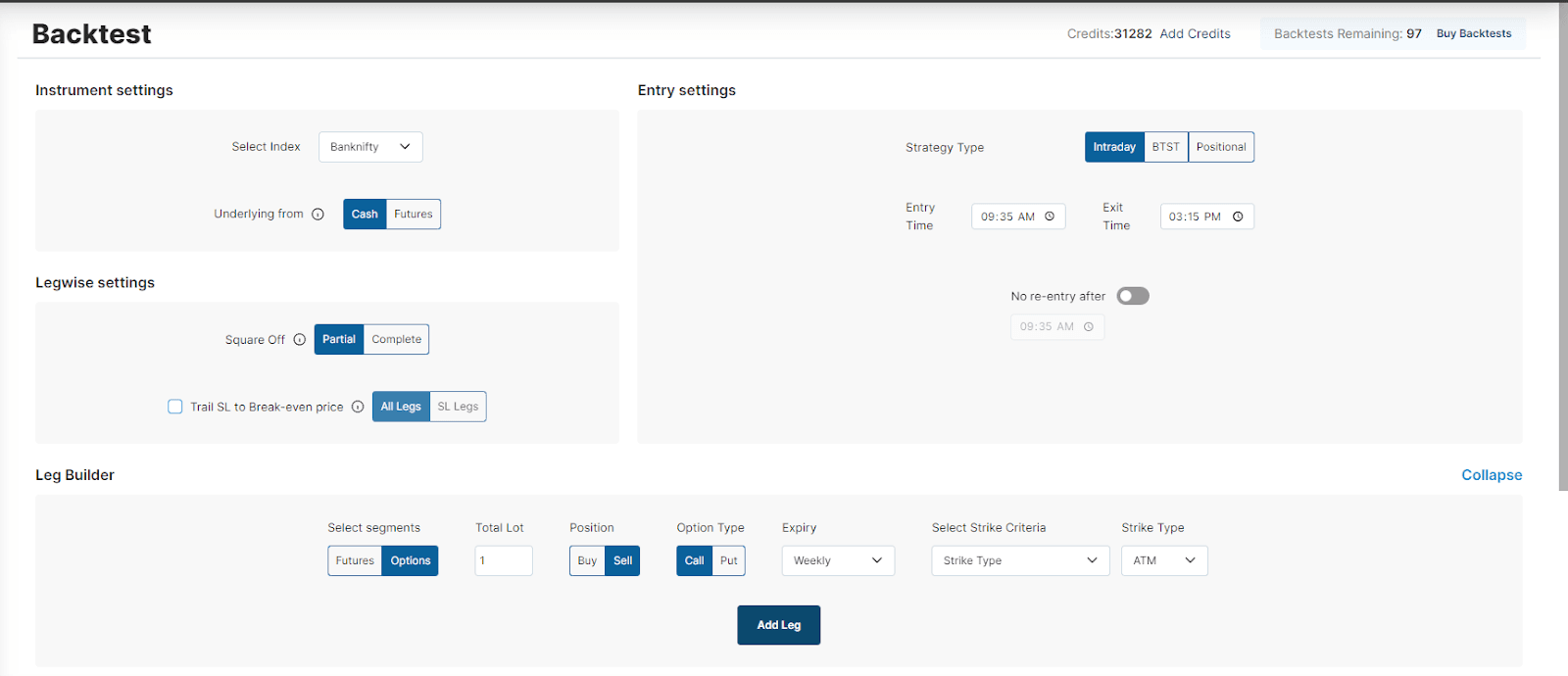
- Let me explain some of the features of the Instrument Settings & Entry Settings Section you should know about to create this strategy.
**Strategy Type**:\- Intraday/BTST/Positional:- We have the option if we want to create an Intraday strategy or positional.
**Entry Time**:\- The time at which we want to enter our strategy.
**Exit Time**:\- The time at which we want to exit our positions.
**Select Index**:\- Here we can select the instrument ( For example nifty/bank nifty/Sensex etc)
**Underlying from:**\- Cash/futures:- If we select cash it means our strikes will be selected based on index spot price or futures price.
- According to our Strategy, we are going to enter—
Strategy Type:- Intraday
Entry Time:- 9:20
Exit Time:- 3:10
Index:- Nifty
Underlying:- Cash
- Set up these as shown in the image below
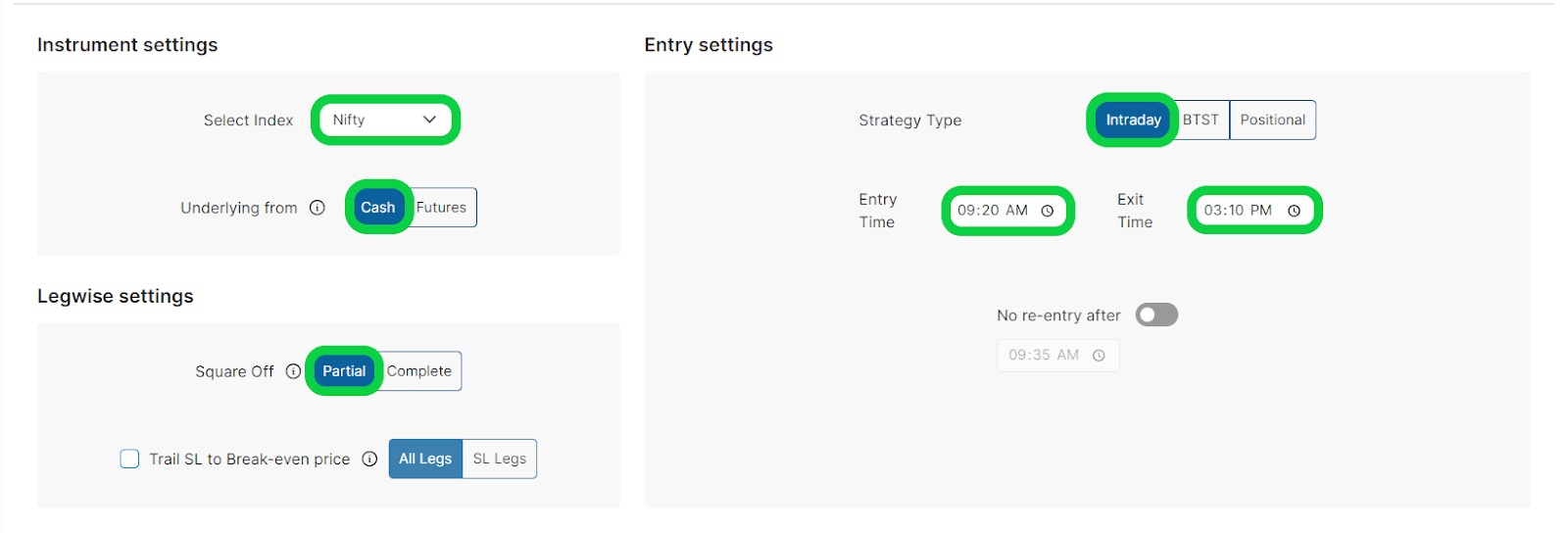
- Let me explain some more features of Leg Builder you should know about to create this strategy.

Select Segments:- You can select segments between Options/Futures
Total lot:- Enter the Quantity
Position:- Can select if you want to buy an option/futures or sell an option/futures
Option Type:- Can select between Call/put
Expiry:- Option to select if you want to trade this week's expiry/ next week's expiry/ monthly expiry
Select Strike Criteria:- Different Methods to select a strike
- Now we have to add a call leg from the leg builder. So, According to our Strategy, we are going to enter
Select Segments:- Options ( Because we want to trade in options)
Total Lot:- 1 (Quantity we want to test with 1 lot)
Position:- Sell (We are Selling a Straddle here.)
Option Typing:- Call (First we add a Call leg then in the next step we will add a Put leg)
Expiry:- Weekly (We want to trade only in the current week's expiry)
Select Strike Criteria:- Strike Type – ATM (We want to sell ATM Call)
- Set up the above settings as shown in the image below.

- After setting up the condition as shown in the above image, click on Add Leg. It will show you the interface as shown in the below image.
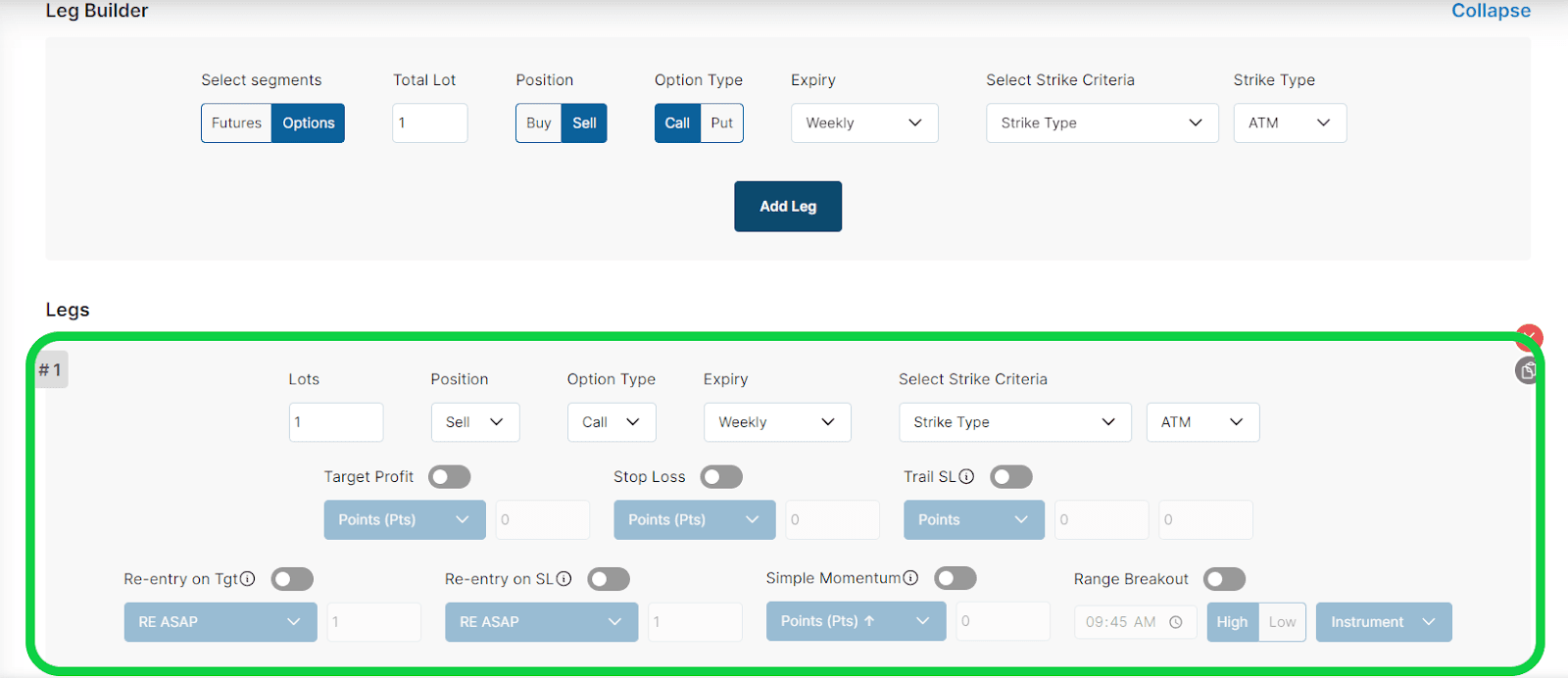
- In the above settings, we have added a sell ATM Call leg from leg builder. Now we are going to add a Sell ATM Put Leg from Leg Builder. So enter the below settings in Leg Builder & click on add leg.
Select Segments:- Options ( Because we want to trade in options)
Total Lot:- 1 (Quantity we want to test with 1 lot)
Position:- Sell (We are Selling Call & Put so selecting Sell here)
Option Typing:- Put (Want to Add Put Leg Now)
Expiry:- Weekly (We want to trade only in the current week's expiry)
Select Strike Criteria:- Strike Type – ATM ( We want to Sell Straddle so selected ATM)
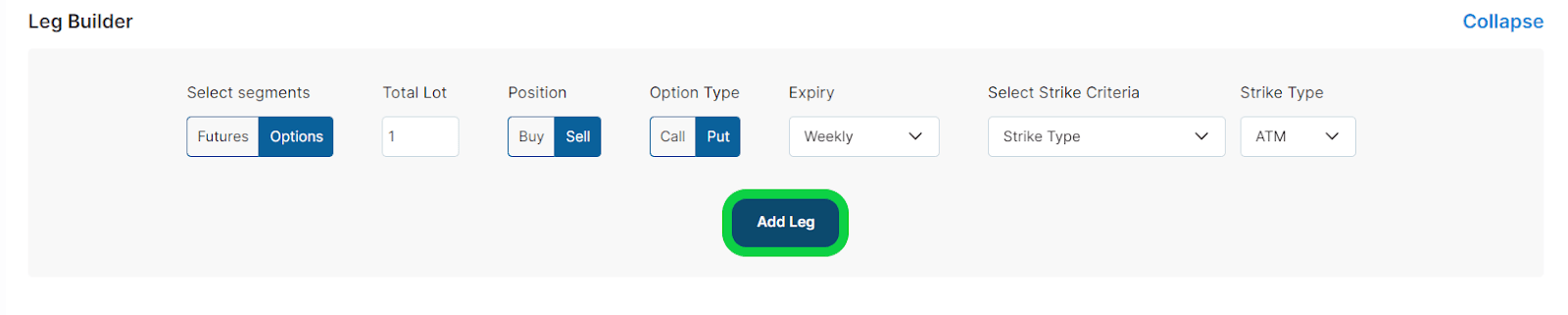
- After Clicking on Add leg, it will show you the interface as shown in the image below
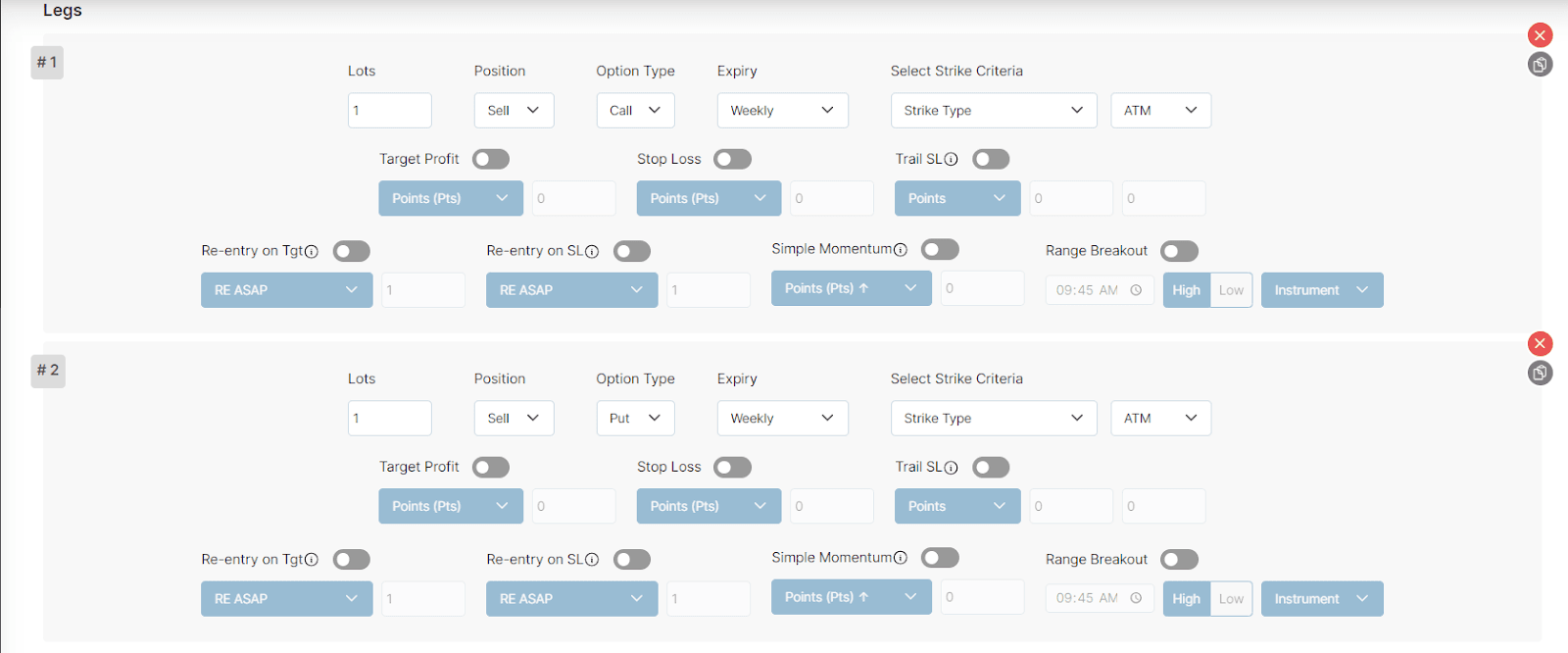
- Now we are going to set a stop-loss for both of these legs. For this, click on the stop loss icon as marked in the image below, and select Percentage. Then, Enter 25 in the percentage field as shown in the below image.
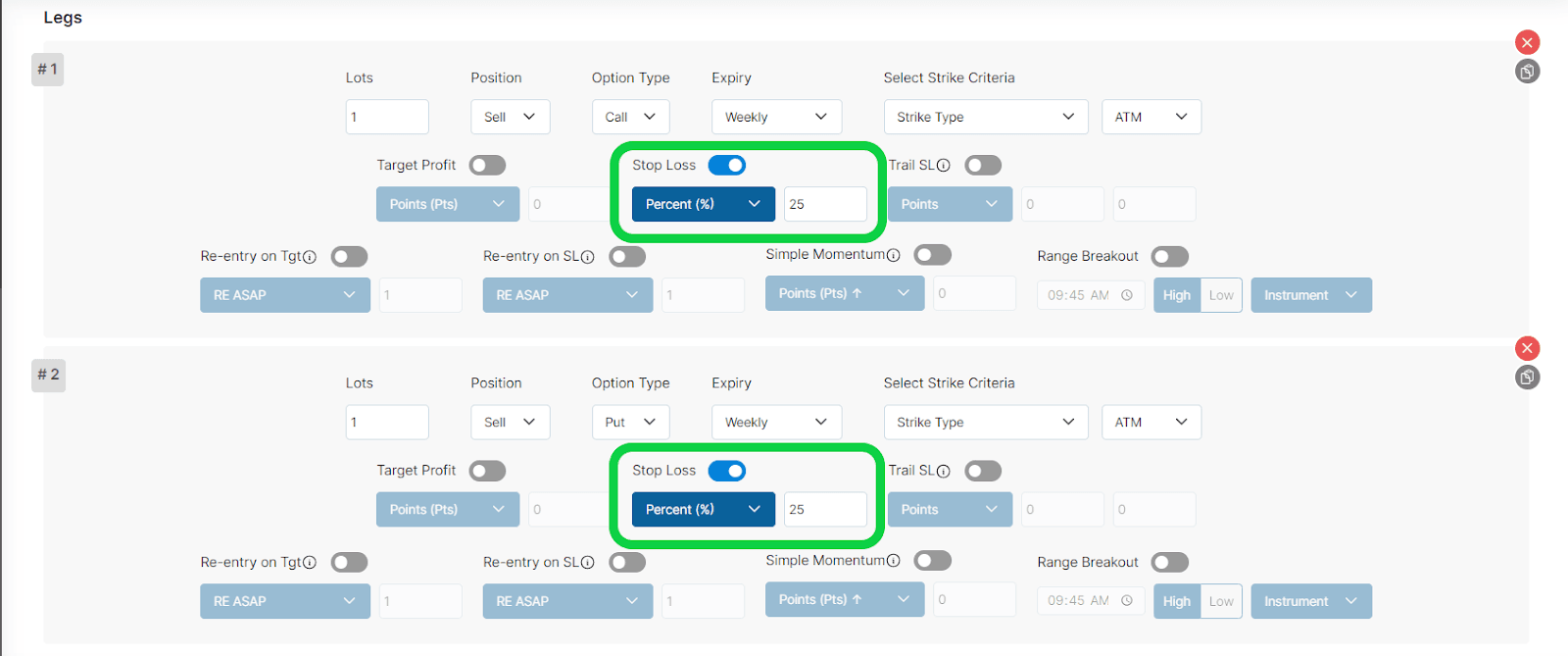
- So now we can save our strategy. Click on the save button on the bottom right & save this strategy with any name(for example 920 straddle) you like. Now to Backtest this strategy select the time for which you want to backtest and click on backtest as shown in the image below.

- It will show you the backtest results and stats of this strategy as shown in the image below. To know how to interpret these stats please [click here](https://docs.algotest.in/backtest/backtesting-terms/).
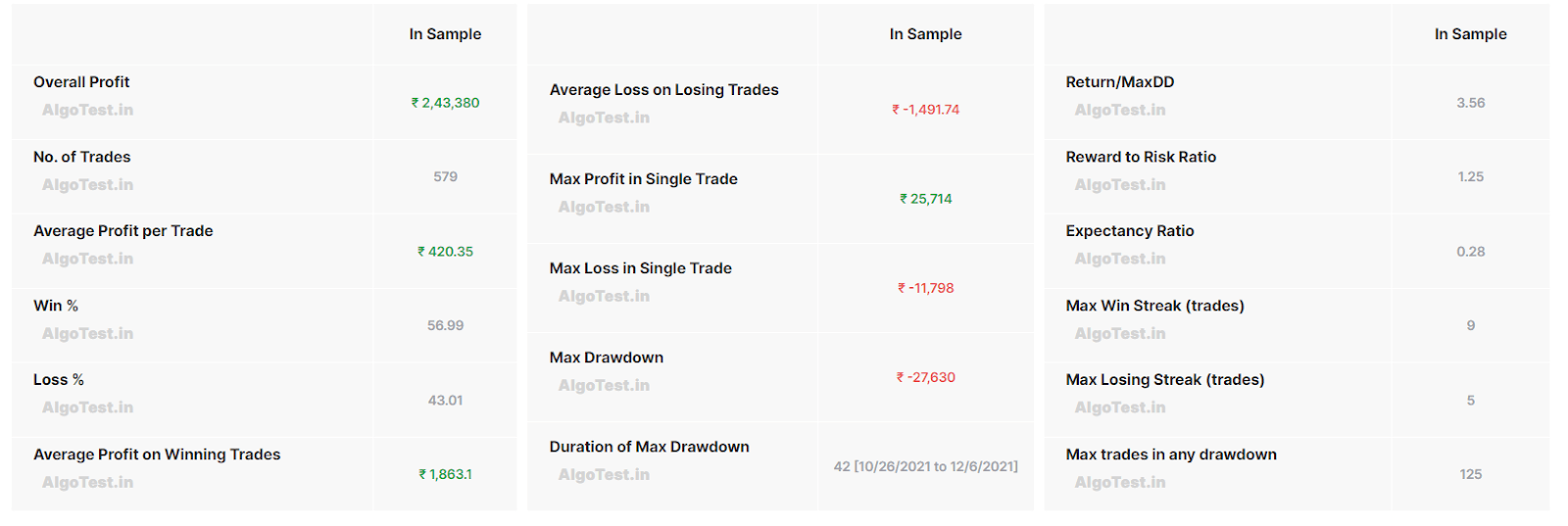
## **III. Forward Testing the 920 Straddle Strategy**
### **Forward Testing: The Rehearsal Before the Show**
Forward Testing, or Paper Trading, is the next logical step. It's a risk-free way to test a strategy in real time without putting actual capital on the line.
### **Test Driving the 920 Straddle in Market Conditions with AlgoTest**
AlgoTest's simulated trading environment mimics live markets, enabling traders to forward test their 920 Straddle. It's a real-time rehearsal that builds confidence in the strategy's real-world applicability.
### **How to do Paper Trading/Forward Test in AlgoTest**
#### **Requirements**
##### **AlgoTest Account**
You need to have an AlgoTest account to do a forward test. If you don’t have an AlgoTest account, you can create one by clicking on [this link.](https://algotest.in)
##### **A Strategy**
You need a strategy on AlgoTest that you want to deploy for Forward Testing.
##### **Forward Test Execution Plan**
To do a Forward Test on AlgoTest you need to buy a Forward Test Execution Plan. To know about pricing and purchase of the execution plan, [check here.](https://algotest.in/blog/detailed-pricing-information-for-algotest/)
#### **Login to AlgoTest**
First, you need to log in to your account in AlgoTest. To log in to your account follow some simple steps
- Go to the [AlgoTest](https://algotest.in) website and click on the login button in the top right corner. If you don’t have an account click on signup and create an account.
- Enter your Registered Mobile Number and Password and click on the ‘Login’ button to log in to your account.
#### **Steps to Forward Test 920 Straddle Strategy**
To activate your strategy for paper trading follow some simple steps as shown below.
- Click on the ‘Forward Test’ button as shown in the image below.
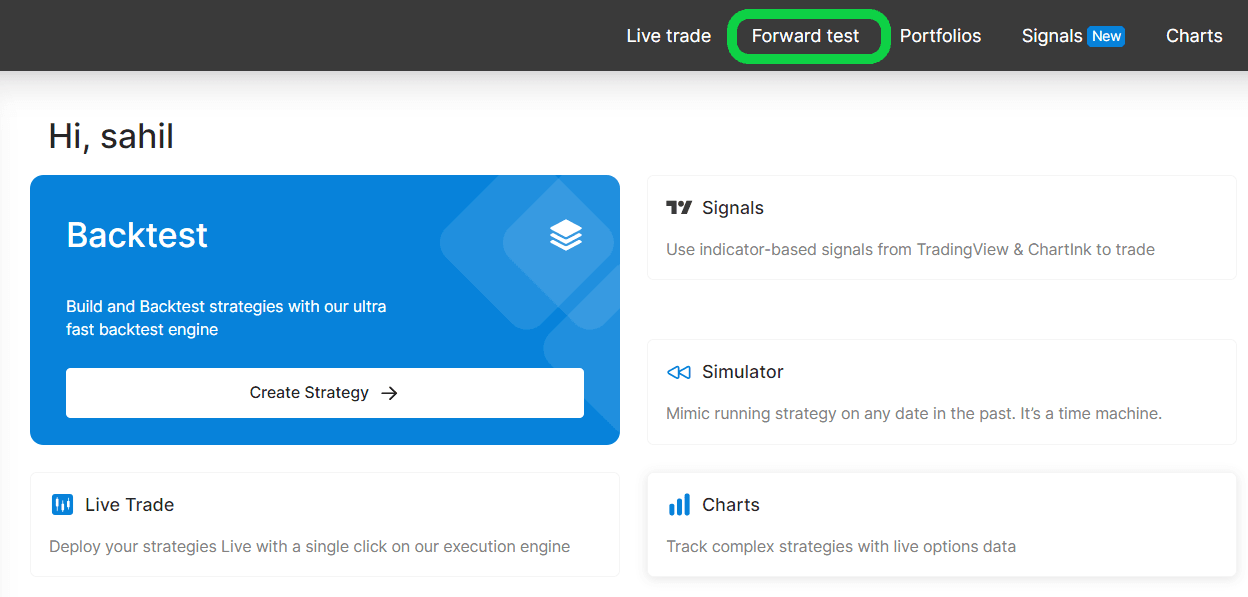
- Now it will show you your strategies under ‘Strategies’ as shown in the image below. It is important to note that your BTST, Positional & VWAP strategies will not show here.
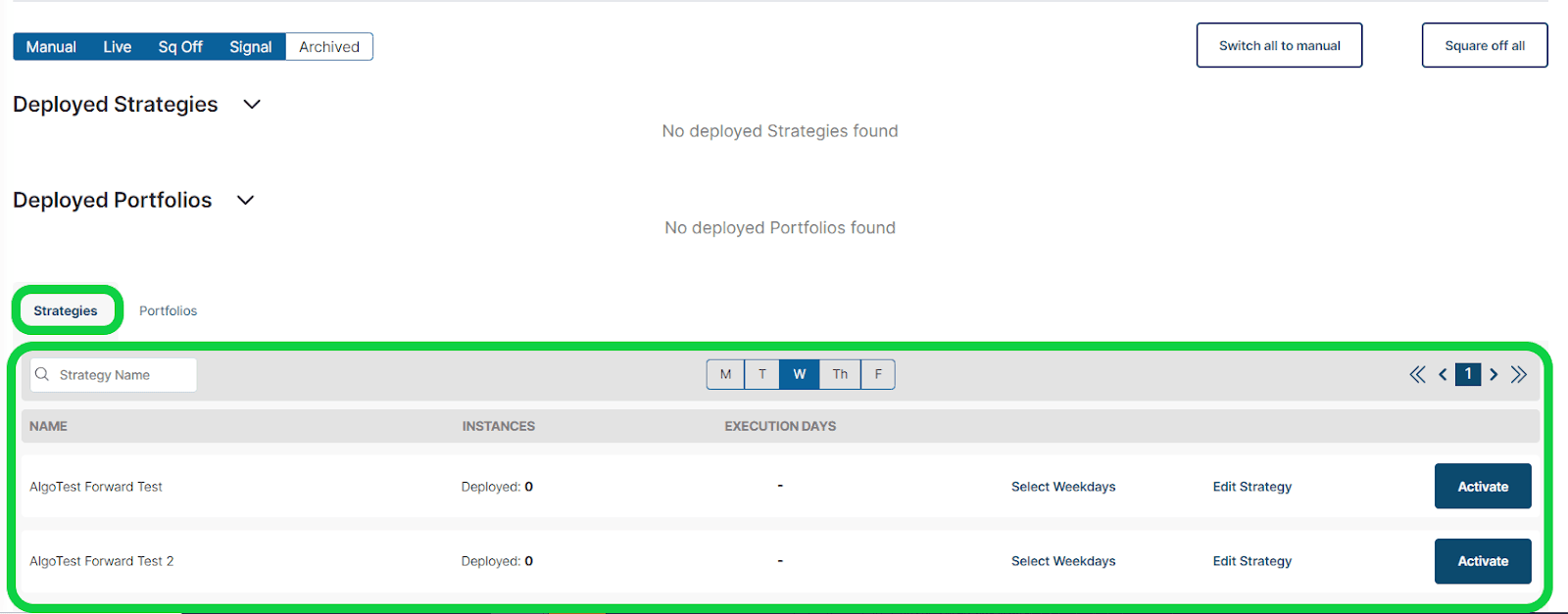
- Click on the Activate button to activate your strategy. Assume we want to activate a strategy named ‘AlgoTest Forward Test 2’. So we will click on the ‘Activate’ button on the right side of the strategy. It is important to note that you have to activate your strategy daily and you can activate your strategy between 08:45 AM to 03:28 PM. You have to activate your strategy at least 2 minutes before your entry time.

- After you click on activate it will show you ‘Running’ on top of the page under Deployed Strategies as shown in the image below.
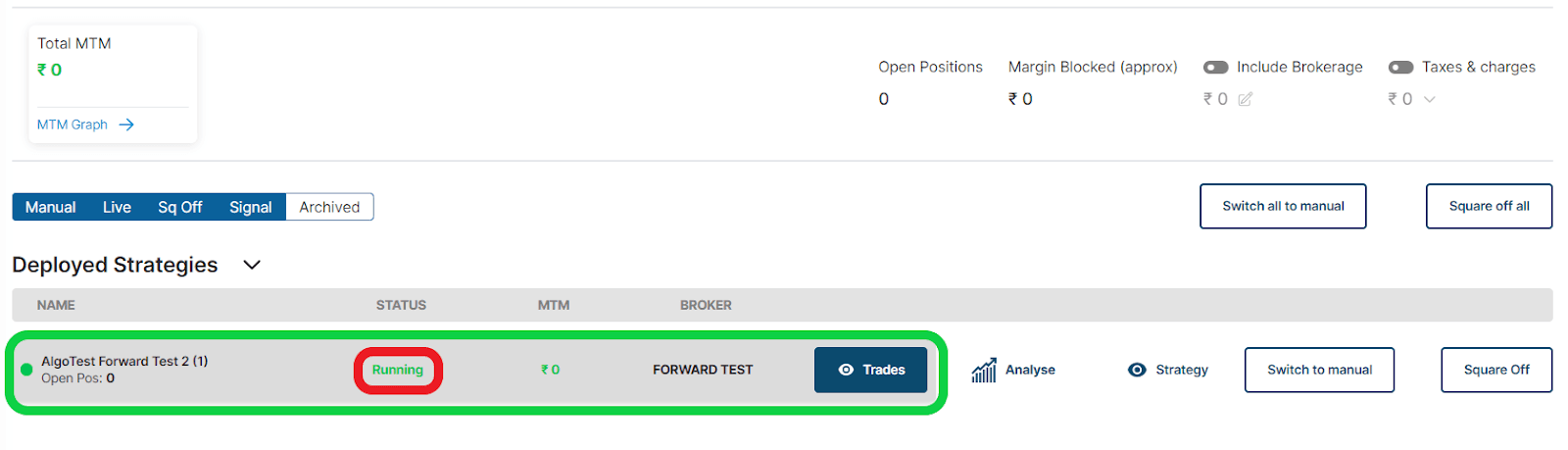
- After your entry criteria are met, your strategy will take position. You can see your running MTM on this page as shown in the image below. You can stop the strategy by clicking on the ‘Switch to Manual’ button. You can square off the position in strategy at any time by clicking on the ‘Squareoff’ button. You can also see trade details by clicking on the ‘Trades’ button.
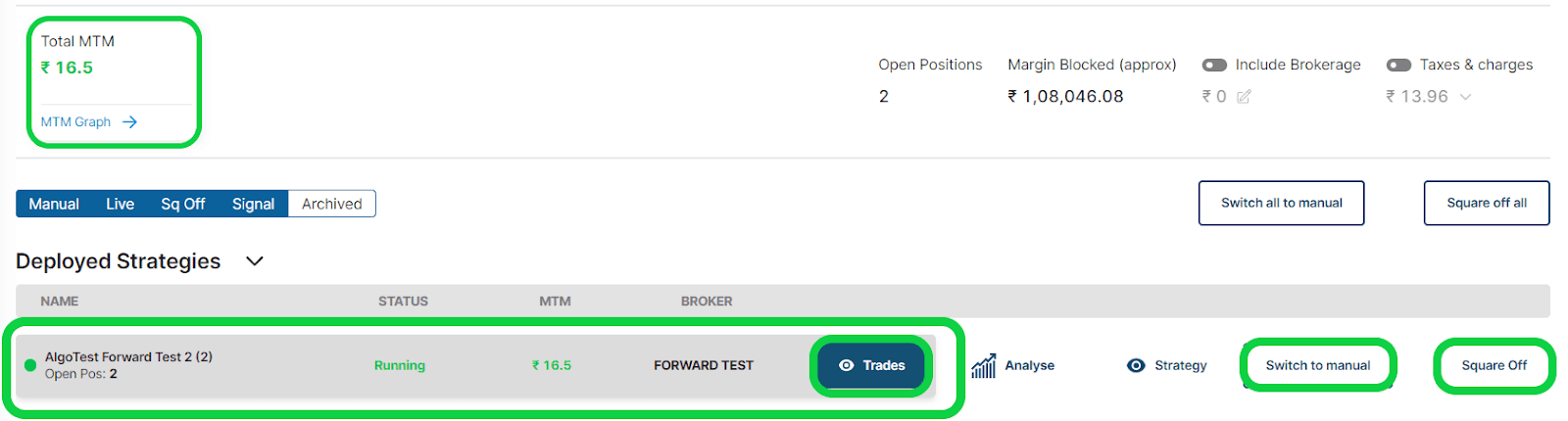
## **IV. Deploying the 920 Straddle Strategy Live**
### **Embracing the Automated Trading Era**
Algo Trading uses algorithms to execute trades at the best possible prices, speeding up the process and reducing the chances of human error. Its trading evolved for efficiency and effectiveness.
### **Going Live with Confidence on AlgoTest**
With AlgoTest, deploying your 920 Straddle strategy live is a decision made with confidence. Our platform ensures your strategy goes live smoothly, backed by the insights gathered from rigorous back and forward testing.
### **Steps to Automate 920 Straddle Strategy on Live**
#### Requirements
##### **AlgoTest Account**
You need to have an AlgoTest account to deploy your strategy live on AlgoTest. If you don’t have an AlgoTest account, you can create it by clicking on [this link.](https://algotest.in)
##### **Strategy**
You need a strategy on AlgoTest that you want to deploy live on AlgoTest.
##### **Live Execution Plan**
To deploy your strategy live on AlgoTest you need to buy a Live Execution Plan. To know about pricing and how to purchase a live execution plan [Click Here.](https://algotest.in/blog/detailed-pricing-information-for-algotest/)
##### **Demat Account**
You need to have an active demat account with F&O active in a broker supported on AlgoTest. You can check the supported broker list on the [AlgoTest](https://algotest.in) website.
#### **Login to AlgoTest**
First, you need to log in to your account in AlgoTest. To log in to your account follow some simple steps
- Go to the [AlgoTest](https://algotest.in) website and click on the login button in the top right corner. If you don’t have an account click on signup and create an account.
- Enter your Registered Mobile Number and Password and click on the ‘Login’ button to log in to your account.

#### **Login to Broker**
After logging in to your AlgoTest account, you need to log in to your broker in AlgoTest. To log in to your broker follow some simple steps as shown below
- To log in broker click on the profile icon and click on broker setup.
- Select your broker and click on the ‘Setup’ button.

- Now we must follow some simple steps to set up and log in with our broker with AlgoTest. To know the process [Click Here](https://docs.algotest.in/category/broker-setup/).
- After successfully following all the steps it will show you the logged-in status as shown in the image below. It is important to note that you have to log in to your broker daily.

#### **Activate Strategy For Live Deployment**
To activate your strategy for Live Deployment follow some simple steps as shown below.
- Click on the ‘Live trade’ button as shown in the image below.
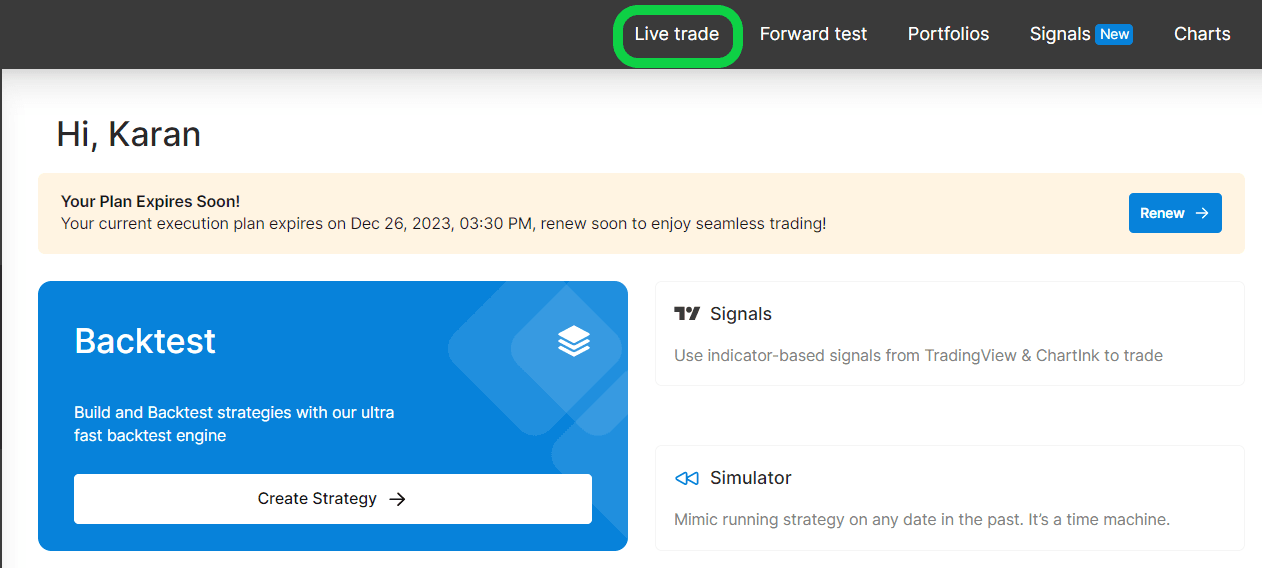
- Now it will show you your strategies under ‘Strategies’ as shown in the image below. It is important to note that your BTST, Positional & VWAP strategies will not show here.
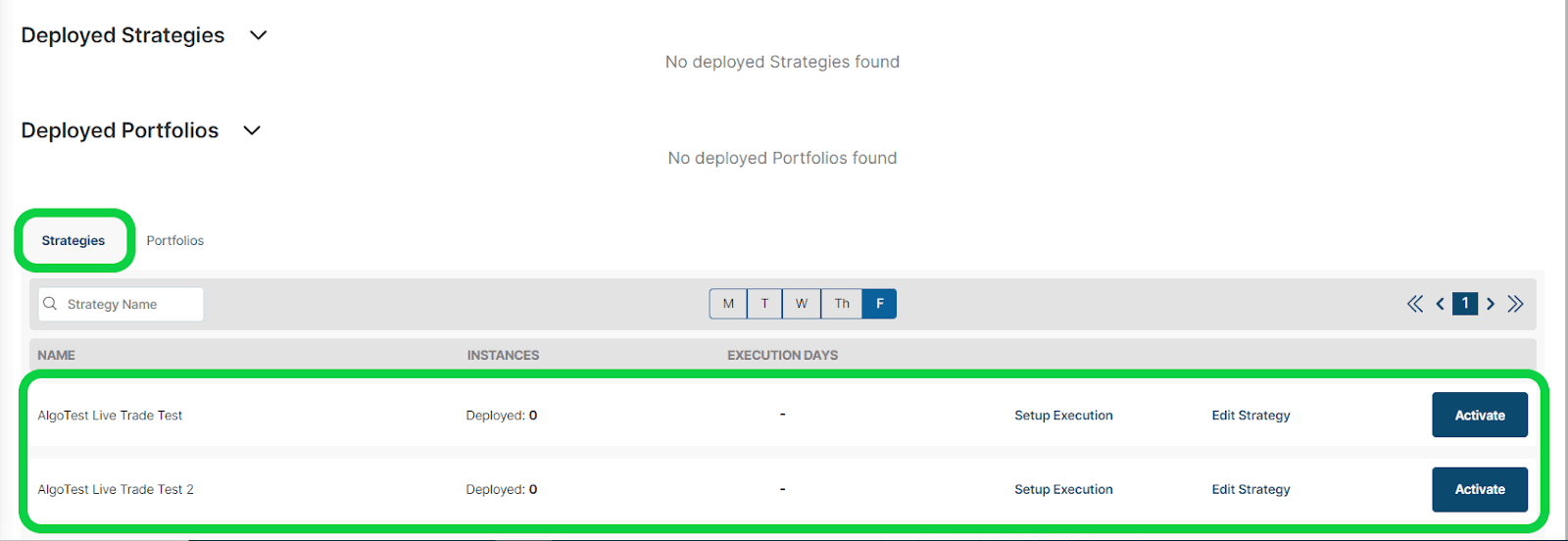
- To activate any strategy, first, we need to do an execution setting of that strategy. It is a one-time process. Assume we want to activate our strategy name “AlgoTest Live Trade Test”. So we will click on the “Setup Execution” button on the right side of this strategy name as shown in the image below.
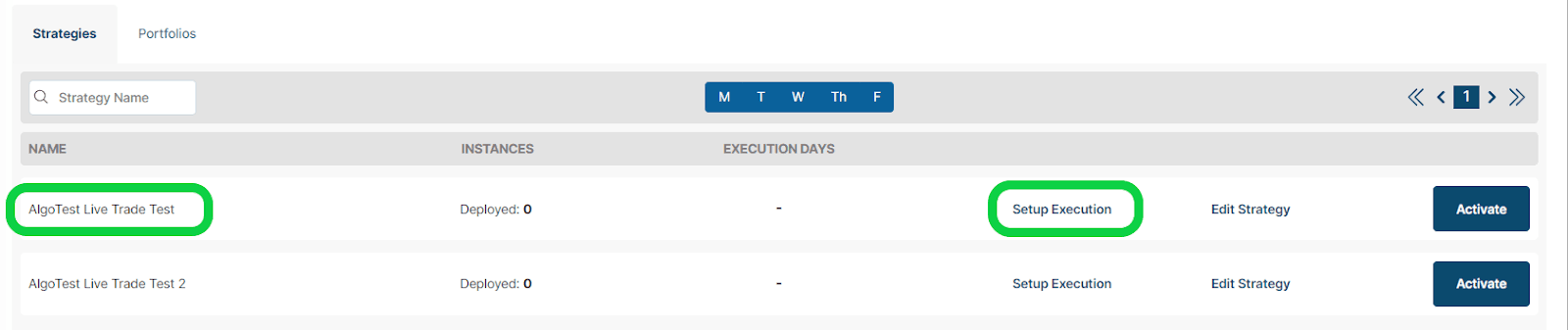
- It will open a new window as shown in the image below.
**Product Type: MIS/NRML**
- Depending on the exit timing of your strategy you can select MIS vs NRML. If your strategy exit timing is beyond broker mis square off time, select NRML otherwise you can select MIS.
**Order Type: Market/Limit**
- A market order is an order where you allow the broker to execute your order at any price available at that time.
- A limit order is an order where you define a certain limit to your order and allow the broker to execute your order at a specified limit price only. It is placed in your broker terminal.
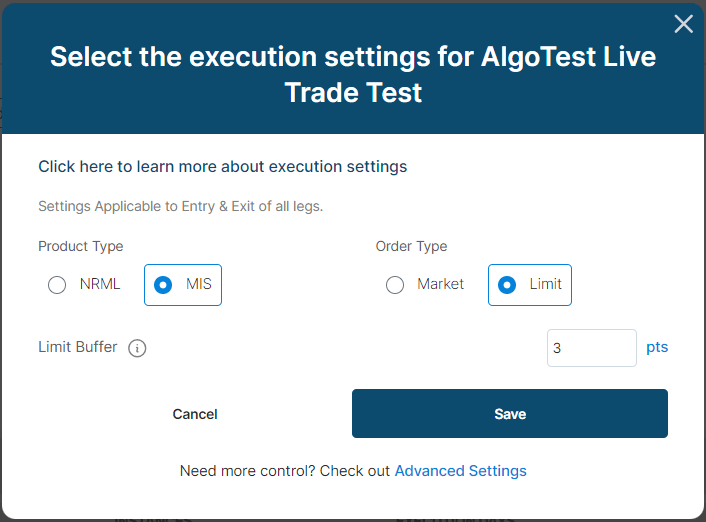
- After selecting Product Type and Order Type, click on “Save” to save the settings.
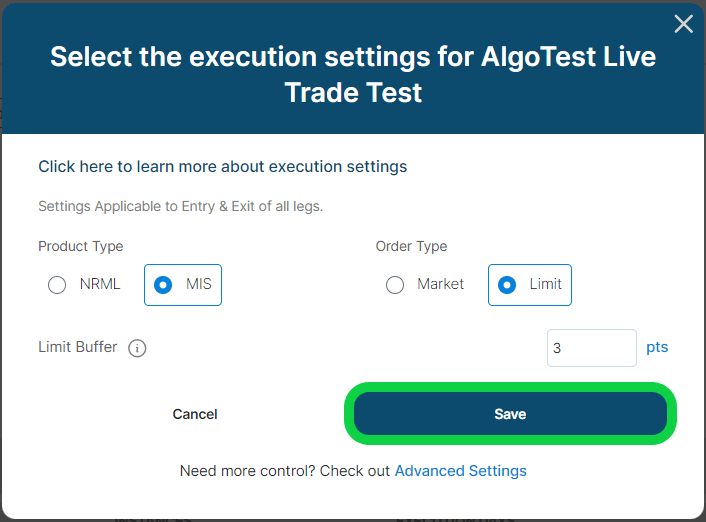
- Now click on the “Activate” button on the right side of the strategy name to activate the strategy as shown in the image below. It is important to note that you have to activate your strategy daily and you can activate your strategy between 08:45 AM to 03:28 PM. You have to activate your strategy at least 2 minutes before your entry time.
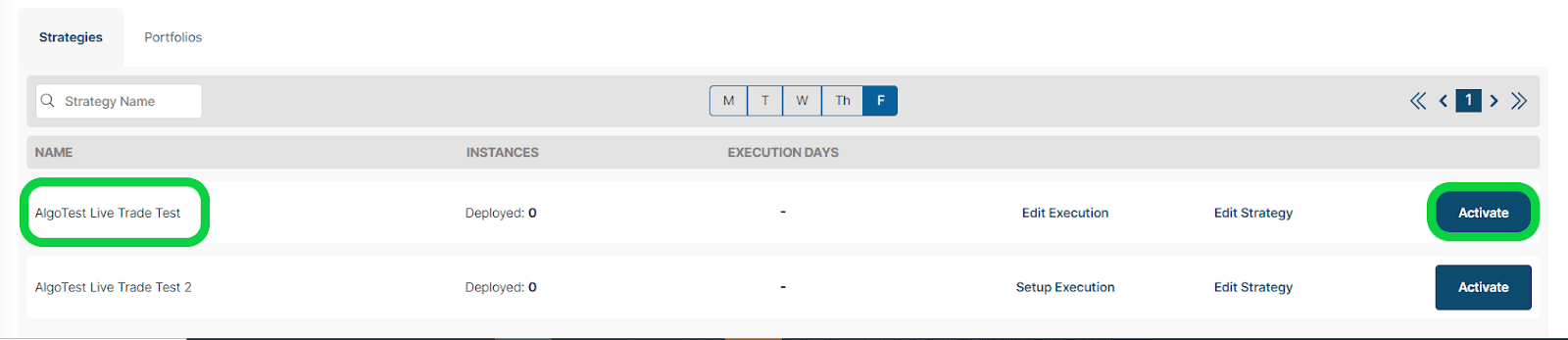
- After you click on activate it will show you ‘Running’ on top of the live trade page under Deployed Strategies as shown in the image below. It means our strategy has been deployed for live trading and it is waiting to take entry.
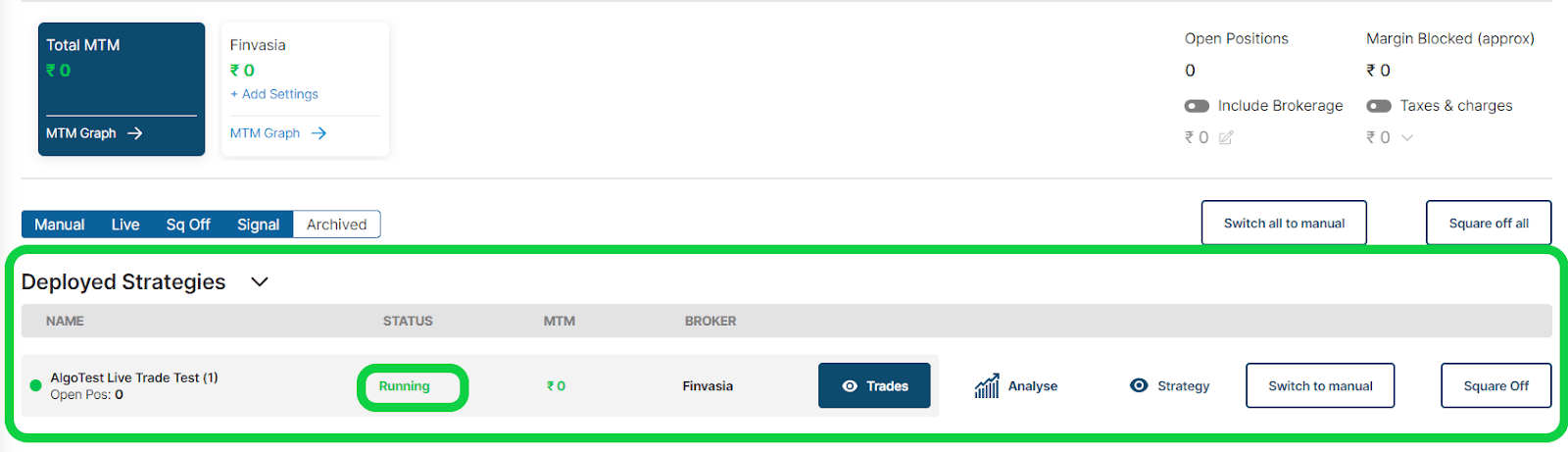
- After your entry criteria are met, your strategy will take position. You can see your running MTM on this page as shown in the image below. You can disconnect the strategy from Algo and can take control of your strategy with your hand on the broker terminal by clicking on the ‘Switch to Manual’ button. You can square off the position in strategy at any time by clicking on the ‘Squareoff’ button. You can also see trade details by clicking on the ‘Trades’ button.
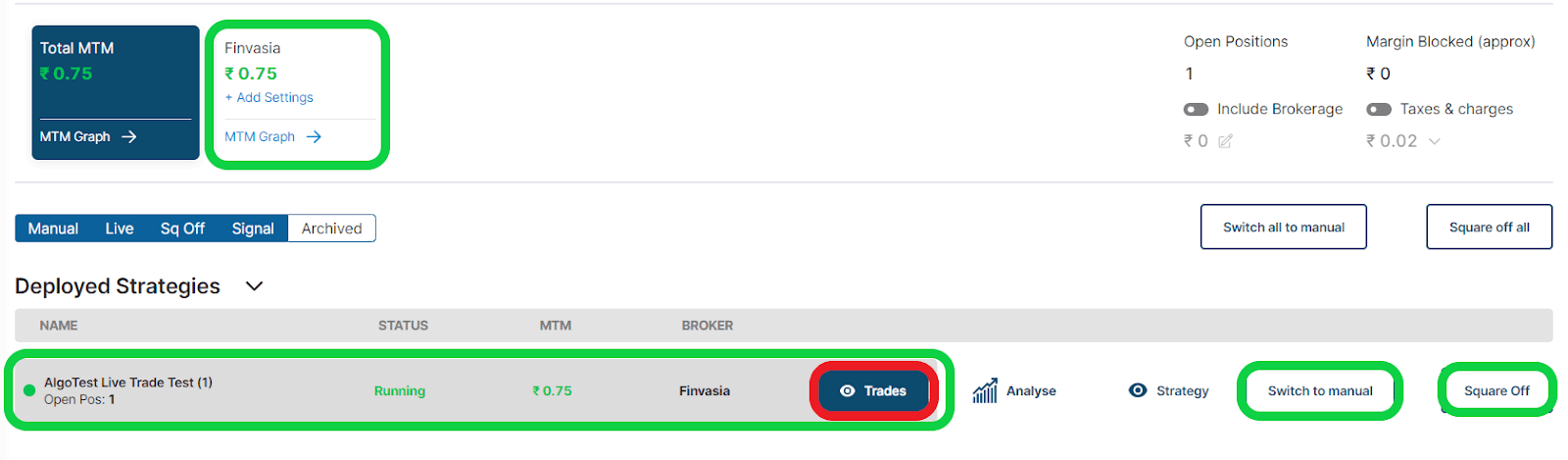
## **V. Conclusion**
[AlgoTest](https://algotest.in/?utm_source=blog&utm_medium=internal&utm_campaign=seo&utm_content=main-page&utm_term=algotest&utm_source=blog&utm_medium=internal&utm_campaign=seo&utm_term=algotest&utm_content=main-page) goes beyond being a mere platform. It is a trading mate for you in every phase of the 920 Straddle trading strategy so it is unquestionably robust and suitable for use in real trading. Because AlgoTest traders have complete reliance on navigating the trading environment, their winning strategies are thoroughly tested, proven to be reliable, and are specifically designed for success.
Take your algo trading to another level with AlgoTest. Boost up your trading with handpicked tactics and customised advice using an instrument that works. Take your level of trading to another level [today](https://algotest.in/) and begin your successful trading journey with AlgoTest as your reliable partner.
# FAQs
Q: What is the 920 Straddle strategy?
A: The 920 Straddle is an intraday options trading strategy where traders simultaneously buy or sell an ATM call and an ATM put option around 9:20 AM. It aims to capture market movements after the initial opening volatility.
Q: How can I create a 920 Straddle strategy in AlgoTest?
A: You can create a 920 Straddle strategy by selecting an intraday strategy, setting the entry time to 9:20 AM, choosing ATM call and put option legs, and defining your stop-loss and exit conditions within AlgoTest's Strategy Builder.
Q: What is backtesting in AlgoTest?
A: Backtesting allows traders to test a strategy using historical market data to evaluate its past performance, profitability, drawdowns, and risk before deploying it in live markets.
Q: Why should I backtest a 920 Straddle strategy?
A: Backtesting helps you understand how the strategy would have performed in different market conditions, identify weaknesses, optimize parameters, and build confidence before trading with real capital.
Q: Can I paper trade the 920 Straddle strategy in AlgoTest?
A: Yes. AlgoTest offers forward testing or paper trading, allowing you to test the 920 Straddle strategy in real-time market conditions without risking actual money.
Q: What is the difference between backtesting and forward testing?
A: Backtesting evaluates a strategy using historical data, while forward testing evaluates the strategy in live market conditions using virtual trades before real deployment.
Q: How do I automate the 920 Straddle strategy in AlgoTest?
A: After creating and testing the strategy, you can activate it through AlgoTest's Live Trade module, connect a supported broker, configure execution settings, and deploy it for automated execution.
Q: What stop-loss is commonly used in a 920 Short Straddle?
A: A commonly used setup is a 25% stop-loss on each leg of the short straddle, although traders may adjust this based on their risk appetite and market conditions.
Q: Do I need coding knowledge to build a 920 Straddle strategy in AlgoTest?
A: No. AlgoTest provides a no-code strategy builder that allows traders to create, test, and automate options strategies using a simple visual interface.
Q: How many free backtests does AlgoTest provide?
A: AlgoTest provides 25 free backtests every week, allowing traders to test and optimize their strategies before live deployment.
Q: Can I trade the 920 Straddle on indices other than Nifty?
A: Yes. AlgoTest supports multiple indices such as Nifty, Bank Nifty, Sensex, and others, allowing traders to create and test variations of the 920 Straddle strategy.
Q: What are the benefits of automating a 920 Straddle strategy?
A: Automation helps eliminate emotional decision-making, ensures consistent execution, reduces manual errors, and allows traders to follow predefined rules with discipline.
```
---
This blog is powered by Superblog. Visit https://superblog.ai to know more.
---
## Bank Nifty Expiry Day Explained (2026): Date, Rules & Best Strategies
Author: AlgoTest
Author URL: https://algotest.in/blog/author/algotest/
Published: 2026-04-15
Category: option chain
Category URL: https://algotest.in/blog/category/option-chain/
Meta Description: Bank Nifty Expiry Day explained: date, timing, rules & best strategies. Learn how traders approach weekly expiry with practical setups.
Tags: algo trading india, options trading
Tag URLs: algo trading india (https://algotest.in/blog/tag/algo-trading-india/), options trading (https://algotest.in/blog/tag/options-trading/)
URL: https://algotest.in/blog/bank-nifty-expiry-day/
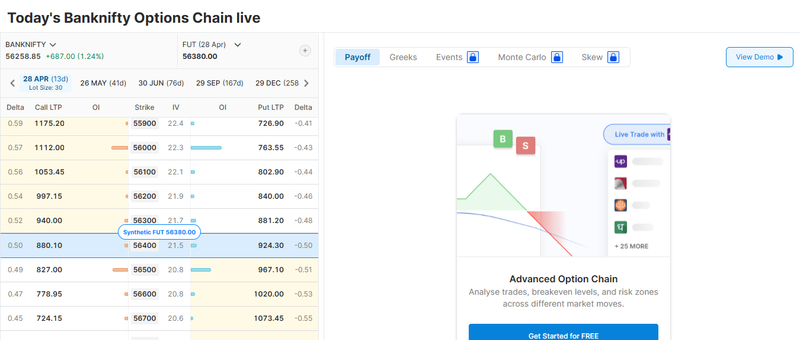
Most traders don’t struggle on Bank Nifty expiry day because they don’t understand the market. They struggle because they don’t understand the timing.
The market behaves very differently throughout the day. A setup that works perfectly in the morning can stop working completely by the afternoon.
If you don’t recognize these shifts, you’re not really trading the market, you’re reacting to it.
Let us break down Bank Nifty expiry day in 2026, including the date, rules, timing, and strategies that work in real conditions.
## **Bank Nifty Expiry Day (Quick Facts)**
- **Bank Nifty Expiry Day:** Wednesday
- **Bank Nifty Weekly Expiry:** Every week
- **Bank Nifty Monthly Expiry:** Last Wednesday of the month
- **Bank Nifty Expiry Time:** 3:30 PM IST
- **Settlement:** Cash-settled
If Wednesday is a holiday, the Bank Nifty expiry date shifts to the previous trading day.
## **What is Bank Nifty Expiry Day**
Bank Nifty expiry day is the day when options contracts expire and stop trading.
At 3:30 PM:
- **OTM options expire worthless**
- **ITM options settle at intrinsic value**
Because of this fixed deadline, **time decay accelerates**, positions are adjusted aggressively, and price moves become sharper than usual.
This is why **Bank Nifty expiry day trading** behaves very differently from a regular trading session.
## **Bank Nifty Expiry Day Rules (2026)**
Understanding the rules is essential before applying any strategy:
- **Bank Nifty weekly expiry day:** Every Wednesday
- **Bank Nifty monthly expiry:** Last Wednesday
- **Expiry time:** 3:30 PM IST
- **Settlement type:** Cash settlement
- **Holiday rule:** Previous trading day
These rules directly influence **Bank Nifty expiry day timing and behavior**.
## **Bank Nifty Expiry Day Timing and Market Behavior**
The biggest edge on expiry day comes from understanding how the market evolves through the session.
### **9:15 AM – 10:15 AM: High Volatility Phase**
- Premiums are expensive
- Price moves are fast and inconsistent
- Direction is often unclear
**What works:**
- Momentum trades
- Opening range breakout
**What to avoid:**
- Option selling
### **10:30 AM – 1:30 PM: Range + Theta Decay Phase**
- Market stabilizes
- Price forms a range
- **Time decay accelerates rapidly**
**What works:**
- Option selling strategies
- Range-based trades
This is the most structured window for executing a **Bank Nifty expiry day trading strategy**.
### **1:30 PM – 3:30 PM: Gamma and Closing Moves**
- Small moves create large option price changes
- Breakouts become sharper
- Risk increases significantly
**What works:**
- Quick momentum trades
- Defined-risk setups
**What to avoid:**
- Unhedged short positions
Also read: [Bank Nifty: The Ultimate Guide](https://algotest.in/blog/bank-nifty-the-ultimate-guide/)
## **What Happens on Bank Nifty Expiry Day**
- **Theta decay accelerates** → premiums drop quickly
- **Open Interest (OI) shifts** influence direction
- **Position unwinding** increases volatility
- Institutional activity becomes more visible
Much of this movement is driven by how positions are distributed across the [**Bank Nifty option chain**](https://algotest.in/banknifty-option-chain), especially around key strike prices.
## **How to Read Bank Nifty Option Chain on Expiry Day**
Expiry day moves are heavily influenced by positioning in the **Bank Nifty option chain**.
Understanding a few key metrics can improve trade selection and timing:
### **Open Interest (OI)**
- High Call OI → Resistance
- High Put OI → Support
Sudden OI shifts often indicate large players repositioning.
### **Strike Price Positioning**
- ATM → highest activity
- OTM → faster decay
- ITM → intrinsic value driven
Price often gravitates toward high-activity strike zones.
### **Volume**
- Confirms strength of moves
- High volume supports breakouts
- Low volume increases false signals
### **Implied Volatility (IV)**
- High IV → higher premiums
- Falling IV → premium contraction
IV combined with time decay drives pricing on expiry day.
Also read: [Implied Volatility Explained: How to Read and Compute IV](https://algotest.in/blog/implied-volatility-and-how-to-read-and-compute-iv/)
### **Put-Call Ratio (PCR)**
- High PCR → bearish positioning
- Low PCR → bullish positioning
Extreme values can signal potential reversals.
### **Why Option Chain Matters More on Expiry Day**
On regular days, charts may be sufficient.
On expiry day:
- Positioning matters more than patterns
- OI shifts drive price movement
- Markets react to where traders are trapped
Interpreting this manually can be complex. You can also use the [AlgoTest **options simulator**](https://algotest.in/feature/simulator) to test expiry day strategies and understand how they behave before deploying them in live markets.
## **Best Bank Nifty Expiry Day Strategies**
### **1\. Opening Range Breakout Strategy**
- Define the first 15–30 minute range
- Trade breakout with confirmation
**Best suited for:**
- Trending markets
- Gap openings
### **2\. Intraday Option Selling Strategy (Mid-Session)**
- Sell near-the-money options after stabilization
- Capture time decay
**Common setups:**
- Short straddle (hedged)
- Iron fly
Many traders combine this with [**option chain**](https://algotest.in/blog/how-to-read-and-analyse-sensex-option-chain/) **signals** to improve strike selection.
With [AlgoTest,](https://algotest.in) you can backtest and execute these [option trading strategies](https://algotest.in/blog/options-trading-a-comprehensive-guide-with-algorithmic-strategies) with consistency.
### **3\. Range-Based Trading Strategy**
- Identify support and resistance
- Trade within the range
**Best suited for:**
- Low volatility sessions
- Sideways markets
### **4\. Late-Day Momentum (Gamma) Strategy**
- Enter on strong breakout
- Focus on short-duration trades
**Best suited for:**
- Post 1:30 PM moves
- High momentum conditions
Related: [A Step-by-Step Guide to Backtesting Trading Strategies](https://algotest.in/blog/guide-to-backtesting-trading-strategies/)
## **Common Mistakes on Bank Nifty Expiry Day**
- Selling options too early
- Overtrading volatile moves
- Ignoring stop losses
- Holding unhedged positions
- Not understanding expiry timing
## **Weekly vs Monthly Expiry (Key Difference)**
Factor
Weekly Expiry
Monthly Expiry
Volatility
Higher
Moderate
Premium Decay
Faster
Gradual
Trading Style
Intraday-focused
Broader setups
## **Conclusion**
Bank Nifty expiry day is not about predicting direction, it’s about understanding structure.
- The opening phase is driven by volatility
- The mid-session is shaped by time decay
- The final hours are influenced by rapid price sensitivity
Traders who align their approach with **Bank Nifty expiry day timing** tend to make more consistent decisions.
Equally important is the ability to interpret data correctly. Reading the option chain, tracking open interest, and identifying key levels can significantly improve decision-making.
[Algo Trading Software, like AlgoTest,](https://algotest.in) helps simplify this process by enabling better analysis, strategy testing, and execution.
The goal is not to trade more but to trade with clarity, discipline, and better data.
[Sign up now](https://algotest.in/login) and get 25 backtests free/week.
# FAQs
Q: What is Bank Nifty expiry day?
A: Bank Nifty expiry day is the day when Bank Nifty options contracts expire. On this day, all open positions are settled at 3:30 PM IST, and traders either make a profit or lose the entire premium depending on whether their options are in-the-money or out-of-the-money.
Q: Is Bank Nifty expiry every week in 2026?
A: Yes, Bank Nifty expiry happens every week on Wednesday. This is known as the Bank Nifty weekly expiry day. Monthly expiry occurs on the last Wednesday of the month.
Q: What is Bank Nifty expiry time?
A: Bank Nifty expiry time is 3:30 PM IST on expiry day. However, many brokers square off open positions between 3:15 PM and 3:20 PM, so traders should manage positions accordingly.
Q: What happens on Bank Nifty expiry day?
A: On Bank Nifty expiry day, option premiums decay rapidly due to time decay (theta), positions are squared off, and volatility increases. Price movements are often sharp and influenced by open interest and option chain positioning.
Q: Why is Bank Nifty expiry day so volatile?
A: Bank Nifty expiry day is volatile because of rapid premium decay, large institutional position adjustments, and changes in open interest across strike prices. This leads to faster and sharper price movements compared to regular trading days.
Q: What is the best time to trade Bank Nifty expiry day?
A: The best time to trade Bank Nifty expiry day is usually between 10:30 AM and 1:30 PM, when the market stabilizes and time decay works in favor of option sellers. The first and last hours tend to be more volatile.
Q: What are the best Bank Nifty expiry day strategies?
A: Popular Bank Nifty expiry day strategies include opening range breakout in the morning, intraday option selling during mid-session, range trading in low volatility, and momentum trades in the final hour. The effectiveness depends on market conditions and timing.
Q: What is Bank Nifty option chain and how is it useful on expiry day?
A: The Bank Nifty option chain shows all available strike prices, open interest, volume, and premiums. On expiry day, it helps traders identify support and resistance levels, track market positioning, and make better trading decisions.
Q: What is Bank Nifty expiry day today?
A: Bank Nifty expiry day today depends on the trading week. It typically falls on Wednesday unless there is a market holiday, in which case it shifts to the previous trading day.
Q: Is Bank Nifty expiry day good for beginners?
A: Bank Nifty expiry day can be risky for beginners due to high volatility and fast price movements. It is advisable to trade with proper risk management, small position sizes, and a clear strategy.
Q: What is the difference between weekly and monthly Bank Nifty expiry?
A: Weekly Bank Nifty expiry happens every Wednesday and is more volatile with faster premium decay. Monthly expiry occurs on the last Wednesday and may have relatively stable price action due to higher open interest and institutional participation.
Q: Why do options go to zero on expiry day?
A: Options go to zero on expiry day if they are out-of-the-money at 3:30 PM. Since they have no intrinsic value at expiry, they expire worthless and the buyer loses the entire premium.
---
This blog is powered by Superblog. Visit https://superblog.ai to know more.
---
## How to Read Nifty Option Chain Like a Pro (with Live OI Example)
Author: AlgoTest
Author URL: https://algotest.in/blog/author/algotest/
Published: 2026-04-09
Category: option chain
Category URL: https://algotest.in/blog/category/option-chain/
Meta Description: Learn how to read and analyze the Nifty option chain using OI, PCR, IV, and Greeks. Identify support, resistance, and trade smarter with real examples.
Tags: algo trade, algo trading india
Tag URLs: algo trade (https://algotest.in/blog/tag/algo-trade/), algo trading india (https://algotest.in/blog/tag/algo-trading-india/)
URL: https://algotest.in/blog/how-to-read-nifty-option-chain-step-by-step-for-traders/
## What is the Nifty Option Chain?
The Nifty Option Chain is a structured table that displays all available call and put option contracts for the Nifty index. It includes key metrics such as open interest (OI), implied volatility (IV), and last traded price, helping traders analyze market sentiment and identify potential support and resistance levels.
Analyzing the Nifty Option Chain is a fundamental skill for any [options trader.](https://algotest.in/blog/options-trading-a-comprehensive-guide-with-algorithmic-strategies) While the raw data on the NSE website is a good starting point, a professional setup requires a more structured approach to turn those numbers into a trading plan.
Here is an end-to-end guide to reading and analyzing the Nifty Option Chain, leveraging the specialized tools available on [AlgoTest.](https://algotest.in/tools)
## Check Live Nifty Option Chain
Most traders begin by analyzing the option chain directly on the [National Stock Exchange of India (NSE) website](https://www.nseindia.com/option-chain), where live data for all Nifty strikes is available.
However, raw option chain tables can be difficult to interpret, especially when you're trying to quickly identify trends, OI shifts, or market sentiment.
This is where [AlgoTest](https://algotest.in) provides an edge. Instead of manually scanning rows of data, you can:
- Visualize Open Interest (OI) clusters instantly
- Track changes in market positioning in real time
- Analyze [option Greeks](https://docs.algotest.in/financial-education/options/greek-interactions/#greek-interactions-in-options-trading) directly within the chain
This allows you to move from **data reading → decision making** much faster.
_Access live_ [_Nifty option chain_](https://algotest.in/nifty-option-chain) _instantly on AlgoTest with OI visualization and Greeks_.
## NSE vs AlgoTest Option Chain
**Feature**
**NSE India**
**AlgoTest**
**Why it Matters**
**Data Speed**
Real-time
Real-time + Visuals
Faster decision-making.
**Greeks**
Not intuitive
Delta, Theta, Gamma
Essential for risk management.
**OI Clusters**
Manual Calculation
Visual "OI Walls"
Instantly spot institutional levels.
**Historical Data**
Limited
Full Backtesting
Verify your thesis before trading.
## 1\. What is the Nifty Option Chain?
An option chain is a comprehensive matrix of all available option contracts for Nifty. It lists strike prices with their corresponding Call and Put data. For a trader, the option chain is the "order book" of the market, revealing where big institutions are placing their bets.
## 2\. Essential Data Points to Track
To analyze the Nifty chain effectively on [AlgoTest](https://algotest.in), you must focus on these five key metrics:
**Strike Price:** The "anchor" of the contract. In Nifty, these are typically spaced at 50-point intervals.
**LTP (Last Traded Price):** The current premium. Monitoring how premiums decay (Theta) or spike (Vega) is crucial for timing entries.
**Open Interest (OI):** The total number of open contracts. High OI at a strike suggests a strong conviction level from option writers.
**Change in OI:** This indicates whether new positions were created or old ones were closed during the current session. It is the best indicator of intraday momentum.
[**Implied Volatility (IV):**](https://algotest.in/blog/implied-volatility-and-how-to-read-and-compute-iv/) This tells you how "expensive" or "cheap" options are. High IV usually precedes a big move or suggests an upcoming event (like RBI policy or earnings).
## 3\. Identifying Market Range: Support & Resistance
In option chain analysis, we generally follow the "Seller’s Perspective." Since option selling requires more capital, it is dominated by institutional players who are often right.
**Resistance:** The Call strike with the highest Open Interest. This is the ceiling where sellers are betting Nifty will not cross.
**Support:** The Put strike with the highest Open Interest. This is the floor where sellers are betting Nifty will stay above.
Related: [How to analyse and trade strategies using historical option chain on AlgoTest simulator](https://docs.algotest.in/clicktrade/simulator/introduction/)
### The AlgoTest Advantage
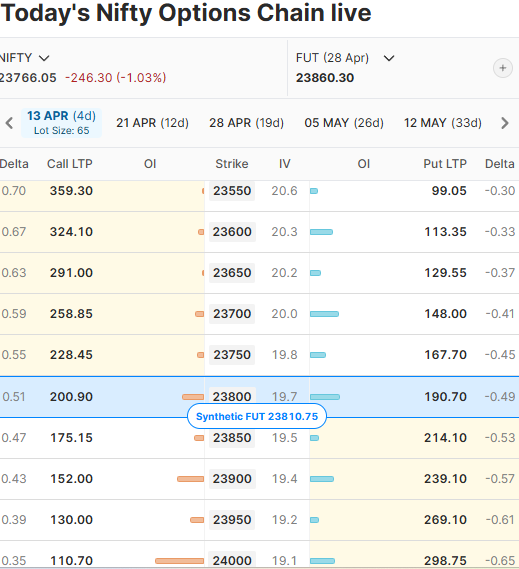
Instead of manually scanning tables, you can use the [AlgoTest Strategy Builder](https://algotest.in/blog/option-strategy-builder-algotest-tutorial) to:
Spot institutional positions instantly using OI clusters and real-time data visualization.
It visualizes these OI clusters, allowing you to see "OI Walls" instantly. When Nifty approaches a high-OI Call strike, expect a price rejection or a sideways move.
## 4\. Advanced Sentiment Indicators
### The Put-Call Ratio (PCR)
The PCR is a quick health check for the market. It is calculated by dividing total Put OI by total Call OI.
- **PCR > 1.0:** Bullish (More Puts being written)
- **PCR < 0.7:** Bearish (More Calls being written)
- **PCR > 1.6 or < 0.5:** Extreme sentiment, often indicating a potential reversal
### Max Pain Theory
Max Pain is the strike price where the most option buyers will lose money upon expiration.
On [AlgoTest,](https://algotest.in/login) tracking the Max Pain point helps you identify the "magnetic" level toward which Nifty is likely to gravitate as expiry approaches.
## 5\. Reading Option Greeks on the Chain
Unlike basic tables, the AlgoTest Option Chain integrates Greeks directly into the view.
**Delta:** Tells you how much the premium will move for every 1-point move in Nifty.
**Theta:** Shows you the "rent" you pay (as a buyer) or collect (as a seller) for holding the position overnight.
**Gamma:** Essential for expiry day trading; it tracks how fast the Delta changes.
Also Read: [How to Backtest Options Strategies](https://algotest.in/blog/how-to-backtest-options-trading-strategies-with-examples)
## 6\. How to Trade Nifty Options Using the Chain
**Define the Range:** Use the Max OI strikes to find your boundaries.
**Check Momentum:** Look at the Change in OI. If Call OI is decreasing while Put OI is increasing at the same strike, it's a "Short Covering" rally—a very bullish sign.
**Select the Right Strike:**
- **Intraday:** Focus on At-the-Money (ATM) or slightly Out-of-the-Money (OTM) for higher liquidity
- **Positional:** Consider In-the-Money (ITM) options to minimize time decay
**Simulate and Backtest:**
[Backtest](https://algotest.in/feature/backtest) your option chain analysis before risking capital with the [AlgoTest Simulator.](https://algotest.in/feature/simulator)
You can "replay" the option chain from previous days to see if your thesis would have worked in a live-market scenario.
Related: [Best Paper Trading Websites in India](https://algotest.in/blog/paper-trading-websites-india)
## Example: Nifty Option Chain Analysis (Real Scenario)
Let’s say Nifty is currently trading at **22,000**. Here’s how a trader would analyze the option chain step by step:
- **Highest Call OI → 22,200 (Resistance):**
Heavy Call writing at this level indicates strong resistance. Option sellers are betting that Nifty will not cross 22,200 before expiry.
- **Highest Put OI → 21,800 (Support):**
Strong Put writing suggests that traders expect the market to hold above 21,800, making it a key support zone.
- **PCR (Put-Call Ratio) → 1.2 (Bullish Bias):**
A PCR above 1 signals that more Puts are being written than Calls, indicating a mildly bullish sentiment.
### The Verdict
The market is likely to remain in the **21,800–22,200 range**, with a bullish bias.
A breakout above 22,200 could trigger short covering, while a breakdown below 21,800 may lead to sharp selling.
Related: [How to Read Sensex Option Chain](https://algotest.in/blog/how-to-read-and-analyse-sensex-option-chain/)
### How to Read Nifty Option Chain (Quick Steps)
1. Identify highest Call OI → Resistance
2. Identify highest Put OI → Support
3. Check Change in OI → Momentum
4. Analyze PCR → Market sentiment
5. Confirm with price action
Also Read: [Understanding straddle charts](https://algotest.in/blog/how-to-use-a-straddle-chart-for-intraday-options-trading)
## Conclusion
Reading the [Nifty Option Chain](https://algotest.in/feature/simulator) is about connecting price, volume, and time. With AlgoTest, you go beyond raw data using real-time Greeks, OI insights, and backtesting tools.
**Ready to act on your analysis?**
Spot institutional positions and validate your trades before risking real capital.
Get **25 free backtests** and see how your strategy performs in real market conditions
Start Backtesting for Free →
# FAQs
Q: What is the Nifty Option Chain?
A: The Nifty Option Chain is a table that displays all available call and put option contracts for the Nifty index, along with key data like open interest (OI), implied volatility (IV), and price. It helps traders analyze market sentiment and identify support and resistance levels.
Q: How to read the Nifty Option Chain for beginners?
A: To read the Nifty Option Chain, focus on key metrics like Open Interest (OI), Change in OI, and strike prices. High Call OI indicates resistance, while high Put OI indicates support. Beginners should also track PCR and price movement for better decision-making.
Q: Where can I check the live Nifty Option Chain?
A: You can check the live Nifty Option Chain on the NSE website. However, platforms like AlgoTest provide a more advanced view with OI visualization, Greeks, and real-time analysis for better decision-making.
Q: What does Open Interest (OI) indicate in the option chain?
A: Open Interest represents the total number of active option contracts. High OI at a strike price indicates strong participation from traders and is often used to identify key support and resistance levels in the market.
Q: What is PCR in the Nifty Option Chain?
A: The Put-Call Ratio (PCR) is calculated by dividing total Put Open Interest by total Call Open Interest. A PCR above 1 indicates bullish sentiment, while a PCR below 1 suggests bearish sentiment.
Q: What is Max Pain in the Nifty Option Chain?
A: Max Pain is the strike price where option buyers incur the maximum loss at expiry. It is often considered a level where the market tends to gravitate as expiry approaches.
Q: How do traders use the Nifty Option Chain for trading?
A: Traders use the option chain to identify market range, track institutional positions, analyze sentiment using OI and PCR, and select strike prices for intraday or positional trades.
Q: What is the role of Implied Volatility (IV) in option chain analysis?
A: Implied Volatility (IV) indicates how expensive or cheap options are. High IV suggests higher premiums and potential volatility, while low IV indicates cheaper options and relatively stable market conditions.
Q: Can beginners use the Nifty Option Chain effectively?
A: Yes, beginners can use the Nifty Option Chain by focusing on basic concepts like support and resistance using OI, understanding PCR, and observing price trends before moving to advanced concepts like Greeks.
Q: How can I test my option chain strategy before trading?
A: You can use tools like the AlgoTest Simulator to backtest your option chain analysis. This allows you to validate strategies on historical data before risking real capital.
---
This blog is powered by Superblog. Visit https://superblog.ai to know more.
---
## Best Crypto Trading App in India (2026): Top Exchanges Compared
Author: AlgoTest
Author URL: https://algotest.in/blog/author/algotest/
Published: 2026-04-08
Category: General
Category URL: https://algotest.in/blog/category/general/
Tags: algo trade, algo trading india
Tag URLs: algo trade (https://algotest.in/blog/tag/algo-trade/), algo trading india (https://algotest.in/blog/tag/algo-trading-india/)
URL: https://algotest.in/blog/best-crypto-trading-app-in-india-2026-top-exchanges-compared/
Today, the crypto market is no longer about buying and holding Bitcoin. Traders are exploring derivatives, using automation, and looking for smarter crypto platforms that cater to the fast-paced, 24/7 nature of digital assets.
In the Indian context, [Crypto is legal](https://algotest.in/blog/is-crypto-legal-in-india) but tax regulations such as the 1% TDS and a 30% flat tax on spot profits are major considerations.
These instruments not only offer a way to hedge risk but also provide a more tax-efficient route for high-frequency trading.
In this guide, we break down the best crypto trading apps in India and help you choose based on your trading style.
## Quick Comparison: Top Crypto Apps in India
Platform
Best For
Fees (Typical)
Security
Tax Efficiency
CoinDCX
Beginners
Medium
High
No
Mudrex
Investors
Medium
High
No
Pi42
Traders
Low
Medium
Yes
WazirX
Liquidity
Medium
Medium
No
Delta Exchange
Advanced traders
Low
High
Yes
Binance
Global traders
Low
High
Partial
Coinbase
Beginners (global)
High
Very High
No
## 1\. CoinDCX
**Best For: Beginners and Spot Traders**
CoinDCX is one of the most accessible crypto platforms in India. Its simple interface and regulatory compliance make it an ideal starting point for new users.
Key Features:
- Easy INR deposits and withdrawals
- Wide range of spot tokens
- Passive earning options through CoinDCX Earn
Why It Stands Out:
It provides a low-friction entry into crypto for users who are just getting started.
## 2\. Mudrex
**Best For: Automated Investing and Wealth Management**
Mudrex focuses on simplifying crypto investing through curated portfolios rather than active trading.
Key Features:
- “Coin Sets” based on themes like DeFi and Web3
- SIP-style investing
- Automated portfolio management
Why It Stands Out:
It is well-suited for long-term investors who prefer a hands-off approach.
## 3\. Pi42
**Best For: INR-Based Crypto Futures Trading**
Pi42 addresses one of the biggest challenges for Indian traders—taxation—by offering INR-settled crypto futures.
Key Features:
- No 1% TDS
- No direct 30% crypto tax on trades
- Up to 20x leverage
Why It Stands Out:
It enables traders to participate in crypto price movements while improving tax efficiency.
## 4\. WazirX
**Best For: High Liquidity in INR Pairs**
WazirX has been a long-standing player in the Indian crypto ecosystem and is known for its strong liquidity.
Key Features:
- Deep liquidity across INR pairs
- Active P2P trading system
- Advanced charting tools
Why It Stands Out:
It remains a reliable platform for traders who prioritize liquidity and INR-based trading.
## 5\. Delta Exchange
**Best For: Advanced Options and Futures Trading**
Delta Exchange is a leading platform for crypto derivatives in India, particularly for traders looking to move beyond spot trading.
Key Features:
- Options and futures on Bitcoin, Ethereum, and altcoins
- Daily and weekly expiries
- Micro-lots for trading with smaller capital
- FIU-compliant operations
Why It Stands Out:
It offers a professional-grade environment for derivatives trading, including a wide range of strike prices and strong liquidity.
Also Read: [Top Algo Trading software in India](https://algotest.in/blog/10-best-algo-trading-software-in-india-2025)
## 6\. Binance
**Best for: Low fees, global liquidity, and advanced trading tools**
Binance is the world’s largest crypto exchange by trading volume, and for Indian users, it offers access to a much broader ecosystem than most domestic platforms.
### Key Features:
- Extremely low trading fees (starting around 0.1%, with further discounts)
- Access to 350+ cryptocurrencies and multiple trading pairs
- Spot, futures, margin trading, staking, and earn products
- Deep liquidity across markets
### Compliance & India Context:
Binance is now registered with the Financial Intelligence Unit and operates legally in India under AML regulations.
However, it is important to note:
- It is not regulated like a traditional Indian broker (SEBI/RBI)
- Users are still responsible for tax reporting
### Why It Stands Out:
Binance offers one of the most complete trading ecosystems available:
- Advanced order types
- High liquidity (better execution)
- Lower costs for frequent traders
### Where It Falls Short:
- Can feel overwhelming for beginners
- Regulatory clarity has evolved over time, which may concern some users
**Who should use it:**
Traders who want **low fees + global market access + advanced tools**
Also Read: [Top Tradetron Alternatives in 2026](https://algotest.in/blog/best-tradetron-alternatives-in-2026)
## 7\. Coinbase
**Best for: Simplicity, trust, and long-term investors**
Coinbase is often considered the most beginner-friendly global crypto platform, known for its strong compliance standards and clean user experience.
### Key Features:
- Extremely simple and intuitive interface
- Strong global regulatory reputation
- High security standards (cold storage, encryption)
- Easy onboarding for new users
### Fees:
- Higher than most competitors
- Can go up to ~1.5% on simple trades
- Lower fees available via “Advanced Trade” mode
### Why It Stands Out:
Coinbase prioritizes:
- Ease of use
- Transparency
- Security
This makes it one of the most trusted platforms globally, especially for users who are new to crypto or prefer a simpler experience.
### Where It Falls Short:
- Higher fees compared to Binance and other platforms
- Limited advanced trading tools
- Not optimized for active or high-frequency traders
**Who should use it:**
Beginners and long-term investors who value **simplicity and trust over low fees**
## How to Choose the Right Crypto Trading App
Before selecting a platform, it is important to align your choice with your trading style and goals.
Consider the following:
- Are you a beginner or an active trader?
- Do you want spot investing or derivatives trading?
- Is tax efficiency a priority for you?
- Do you need automation, or will you trade manually?
Most traders begin with spot trading but gradually shift toward derivatives and automation as they gain experience and seek better capital efficiency.
## AlgoTest: The Crypto Strategy Marketplace
Don't have a strategy of your own yet? You don't need one to get started. Through the **AlgoTest x Delta Exchange** partnership, traders gain exclusive access to a curated [**Crypto Bazaar**](https://algotest.in/feature/crypto-trading) **under the** [**Algo strategy marketplace**.](https://algotest.in/blog/algo-trading-marketplace-india)
### 1\. Mirror Expert Strategies
Browse a marketplace of high-performing, expert-created crypto strategies. Whether you are looking for **Directional Momentum** or **Non-Directional Delta Neutral** setups, you can subscribe to a strategy that fits your risk profile. Once subscribed, the trades are mirrored automatically in your Delta Exchange account.
### 2\. Transparent Performance Metrics
No more "black box" trading. Every strategy in the marketplace comes with:
- **Verified Backtesting Results:** See how the strategy performed over years of historical data.
- **Live ROI & Drawdown:** Track real-time performance and historical risk levels before you commit.
- **Win Rates:** Understand the statistical edge of every strategy at a glance.
### 3\. Tax-Smart & Zero Subscription Fees
The marketplace is designed specifically for the Indian context:
- **No Upfront Fees:** Most strategies operate on a profit-sharing or per-trade basis—no hefty monthly subscriptions.
- **INR Settlements:** By trading on Delta Exchange India, you settle in INR, helping you stay compliant with local regulations while avoiding the complex 1% TDS on every leg of a crypto-to-crypto trade.
### 4\. Fully Automated 24/7
Once you pick a strategy from the marketplace, the automation takes over. It monitors the 24/7 crypto market and executes entries, exits, and stop-losses on **Bitcoin and Ethereum** automatically.
### What This Integration Enables
By combining the **#1** [**Options Platform (AlgoTest)**](https://algotest.in/) with the **Leading Derivatives Exchange (Delta Exchange)**, you get a professional-grade toolkit:
- **Build** advanced options strategies without coding.
- **Backtest** using the most accurate historical crypto data.
- **Paper Trade** to validate your ideas before deploying real capital.
- **Automate** expert-level marketplace strategies with a single click.
Also Read: [How AlgoTest is Simplifying Algo Trading in India](https://algotest.in/blog/how-algotest-is-simplifying-algo-trading-in-india/)
## Final Verdict
- Beginners should start with CoinDCX or Mudrex
- Traders seeking tax efficiency can explore Pi42
- Liquidity-focused traders can use WazirX
- Advanced traders should consider Delta Exchange
- Traders looking to scale systematically should combine Delta Exchange with AlgoTest
As the market matures, the edge is shifting from simply choosing the right asset to executing the right strategy consistently.
In that context, platforms that enable automation and structured trading are becoming increasingly important.
_Risk Disclaimer_
_Crypto trading involves significant risk due to high market volatility, so traders should always test strategies before deploying real capital, use proper risk management techniques, and trade only with funds they can afford to lose._
---
This blog is powered by Superblog. Visit https://superblog.ai to know more.
---
## Types of Trade in the Stock Market: Intraday, Swing, Positional & More
Author: AlgoTest
Author URL: https://algotest.in/blog/author/algotest/
Published: 2026-04-07
Category: General
Category URL: https://algotest.in/blog/category/general/
Meta Description: Master the 4 main types of trading in the stock market: Intraday, Swing, Positional, and F&O. Learn which style fits your goals and how to gain a professional edge using Algo trading, SEBI-registered RA Algos, and the Crypto Bazaar on AlgoTest.
Tags: algo trading, algo trading india
Tag URLs: algo trading (https://algotest.in/blog/tag/algo-trading/), algo trading india (https://algotest.in/blog/tag/algo-trading-india/)
URL: https://algotest.in/blog/types-of-trade-in-the-stock-market/
If you are new to the stock markets, figuring out the best type of trade is probably the first hurdle for you.
Should you choose the rapid-fire pace of intraday trading or hold the position to capitalize on larger market trends? You must define a clear strategy that fits your capital, your temperament, and your daily schedule.
We'll break down the four main types of trading in the Indian stock market, weigh their pros and cons, and look at how you can systemize your approach so you aren't just trading on gut feeling.
## 1\. Intraday Trading (Day Trading)
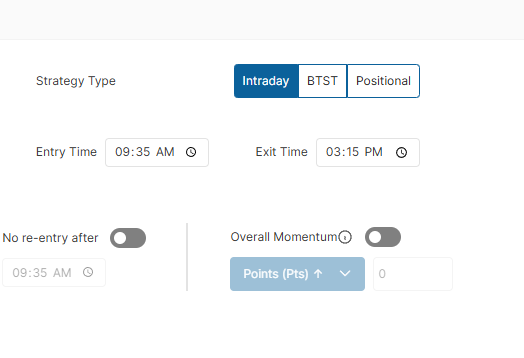Choose an intraday strategy in AlgoTest dashboard
**The Definition:**
Intraday trading is exactly what it sounds like: you buy and sell stocks within the same trading session. When the closing bell rings at 3:30 PM, you have zero open positions.
**How it Works in Practice:**
Imagine you buy shares of Reliance at ₹2,900 at 10:00 AM because you spot a breakout. By 2:15 PM, it hits ₹2,930, and you square off your position. You capture that ₹30 move without ever taking delivery of the shares in your demat account. Brokers also give you high leverage for intraday, meaning you can trade larger quantities with less capital.
**Pros:**
- **Zero Overnight Risk:** You sleep peacefully knowing a global market crash at 2 AM won’t wipe out your portfolio at tomorrow's open.
- **Capital Efficiency:** Leverage allows you to maximize smaller accounts.
- **Daily Returns:** Potential to lock in profits every single day.
**Cons:**
- **Mental Burnout:** Staring at tick-by-tick data all day is emotionally exhausting.
- **High Costs:** More trades mean more brokerage and STT (Securities Transaction Tax) eating into your margins.
**Best For:** Full-time market participants, scalpers, and those with iron-clad emotional discipline.
Also Read: [Essential Intraday Trading Tips Every Trader Should Know](https://algotest.in/blog/essential-intraday-trading-tips-for-traders/)
## 2\. Swing Trading
**The Definition:**
Swing trading is the "sweet spot" for many. You buy a stock and hold it for a few days to a few weeks to capture a short-to-medium-term price "swing."
**How it Works in Practice:**
Instead of tracking every minute, you look at daily or hourly charts. You might notice a stock is bouncing off a major support level. You buy it on Monday and hold it until the following Wednesday when it hits your target resistance level.
**Pros:**
- **Time Freedom:** You don't need to be glued to your screen during market hours.
- **Better Risk-Reward:** Captures larger price movements compared to intraday noise.
- **Chart-Friendly:** Works beautifully with standard technical analysis and momentum indicators.
**Cons:**
- **Overnight Gap Risk:** A bad earnings report after market hours can cause the stock to open way below your stop-loss.
- **Capital Lock-up:** Your money is tied up for days or weeks.
**Best For:** Working professionals who can check charts after hours or during a lunch break.
Related: [Swing Trading Strategies, Tips, and Insights](https://algotest.in/blog/swing-trading-strategies/)
## 3\. Positional Trading
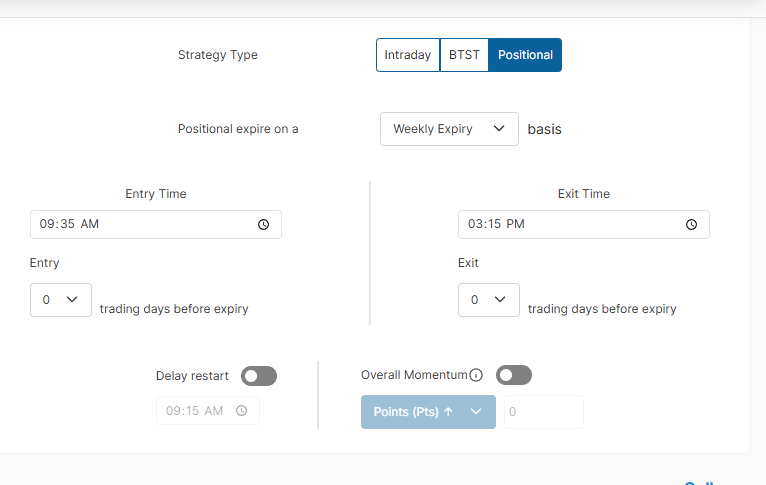positional strategy on AlgoTest dashboard
**The Definition:**
[Positional trading](https://docs.algotest.in/Time-Based-Algo-Trading/algo-trade/btst-positional/#introducing-positionalbtst-algo-on-algotest) (often blending into investing) involves taking a position and holding it for months or even years. You are riding the macroeconomic trends and business cycles.
**How it Works in Practice:**
You combine technical analysis (like moving averages) with fundamental analysis (like quarterly earnings or sector growth). If you believe the EV sector is booming, you might buy an auto stock and hold it for 18 months to capture a 50%+ move.
**Pros:**
- **Low Stress:** Day-to-day market volatility doesn't matter.
- **Compounding:** Captures massive, wealth-building trends.
- **Low Fees:** Minimal brokerage costs due to infrequent trading.
**Cons:**
- **Patience Required:** You have to sit through boring consolidation phases and market corrections without panicking.
- **High Capital Requirement:** Since you don't use intraday leverage, you need larger capital to make meaningful absolute returns.
**Best For:** Long-term wealth builders, passive investors, and beginners learning market cycles.
## 4\. Futures & Options (F&O)
**The Definition:**
F&O are derivative contracts. You aren't buying the actual company stock; you are trading a contract whose value is _derived_ from an underlying asset (like Nifty 50, BankNifty, or a specific stock).
- **Futures:** An obligation to buy/sell at a specific price on a future date.
- **Options:** The _right_ (but not obligation) to buy/sell at a specific price.
**How it Works in Practice:**
This is the playground of advanced strategies. You might buy a Call option if you think the market will rally, or sell a Straddle if you expect the market to stay perfectly sideways to collect premium through theta (time) decay.
**Pros:**
- **Incredible Versatility:** You can make money if the market goes up, down, or even nowhere at all.
- **Hedging:** You can protect your long-term portfolio by buying put options.
- **High ROI:** Options buying requires very little capital for potentially massive percentage returns.
**Cons:**
- **High Complexity:** You are fighting against time decay, implied volatility, and sudden price spikes.
- **Capital Wipeout Risk:** Unhedged option selling or reckless option buying is the fastest way to blow up a trading account.
_Learn more about_ [_Futures and Options here._](https://docs.algotest.in/financial-education/)
The following two types of trading do not meet the traditional trading definition but are the fastest-growing segments in the 2026 market, as they solve the two biggest problems for retail traders: **Time** and **Emotion**.
## 5\. Algo Trading: Rules Over Emotions
**The Definition:** [Algorithmic trading](https://algotest.in/blog/definition-of-terms-used-in-backtesting-platform) (or "Algo Trading") uses computer programs to execute trades based on a predefined set of rules.
You don't click "Buy" or "Sell" manually; the [software](https://algotest.in/blog/10-best-algo-trading-software-in-india-2025) does it for you when your specific conditions (like a price crossover or a volume spike) are met.
**Why It’s Exploding in 2026:** In today's high-speed markets, a human can't compete with the execution speed of a machine.
More importantly, an algo doesn't get "scared" when the market dips or "greedy" when it rallies—it just follows the math.
**Pros:** \\* **Consistency:** It executes your plan 100% of the time without hesitation.
**Speed:** Captures opportunities in milliseconds that a human would miss.
[**Backtesting:**](https://algotest.in/feature/backtest) You can "time-travel" and see how your rules would have performed over the last 5 years.
**Cons:** \\* **Technical Setup:** Traditionally required coding (though tools like [AlgoTest](https://algotest.in/login) have made this "No-Code").
**Monitoring:** You still need to ensure your internet and broker API connections are stable.
Also Read: [Algo Trading India (2026): How to Build, Backtest & Automate Strategies](https://algotest.in/blog/algo-trading-india/)
## 6\. Social Trading: The "Marketplace" of Experts
**The Definition:** Social trading lets you see what successful, experienced traders are doing, and if you like their results, automatically mirror their moves or choose their strategy in your own account.
### Bridging the Gap: AlgoTest Marketplace & Crypto Bazaar
[**AlgoTest Marketplace**](https://algotest.in/blog/algo-trading-marketplace-india/) changes the game for retail investors.
[**RA Algos (SEBI-Registered Experts)**](https://algotest.in/ra-algos) **:** Instead of following "tips" from unverified Telegram groups, you can access the **RA Algos section**.
These are strategies built by SEBI-registered Research Analysts.
You can browse their verified P&L, see their drawdowns, and subscribe to their logic.
Read more about [RA Algo](https://algotest.in/blog/what-is-ra-algos-and-how-it-works-on-algotest) s here.
[**Crypto Bazaar**](https://algotest.in/feature/crypto-trading) **:** For those looking to diversify beyond the Indian stock market, the **Crypto Bazaar** offers a similar ecosystem for digital assets. You can find high-performing crypto strategies that run 24/7.
**How to Use the Trading Marketplace Effectively:**
1. **Browse & Discover:** Look through the marketplace to find an expert whose risk profile matches yours.
2. **Backtest & Forward Test:** Don't just take their word for it. [AlgoTest](https://algotest.in/login) allows you to **backtest** the expert's strategy on historical data or **forward test** (paper trade) it in live markets without risking real money. **Deploy:** Once you're confident, link your broker and let the strategy run. You are essentially "hiring" an expert's logic to work for you.
There is no "best" style, but there is a smartest way to trade. In 2026, the most successful traders are moving toward a hybrid model: they use Positional trading for long-term wealth, and Algo or Social trading via [platforms](https://algotest.in/) like **AlgoTest** to capture short-term alpha without the emotional stress.
**Ready to see which strategy fits you?** Explore the RA Algos Marketplace and [start your free first backtest](https://algotest.in/login) today.
### Quick Comparison: Which is right for you?
**Trading Style**
**Holding Period**
**Screen Time Required**
**Risk Level**
**Capital Needed**
**Intraday**
Minutes to Hours
High (Constant)
High
Low/Medium
**Swing**
Days to Weeks
Low (Daily check-ins)
Medium
Medium
**Positional**
Months to Years
Very Low
Low
High
**F&O**
Minutes to Weeks
Varies by strategy
Very High
Low to High
### Final Thoughts
There is no definitive "right" way to trade only what aligns with your lifestyle.
- If you have a demanding 9-to-5, **Swing or Positional trading** is your best bet.
- If you love fast-paced environments and have the screen time, **Intraday** might suit you.
- If you love math, strategy, and leverage, **F&O** is the ultimate frontier.
But whatever path you choose, remember that the modern market is unforgiving to the unprepared. **Systematic trading beats emotional trading.** Start by defining your style, building a thesis, and running your ideas through a backtester to confirm your edge.
_Ready to stop guessing and start trading with data?_ [_Create your free account on AlgoTest_](https://algotest.in/login) _and get 25 backtests per week._
# FAQs
Q: What is the most profitable type of trading for beginners?
A: There is no single "most profitable" style, but beginners often find Swing Trading or Positional Trading more manageable. These styles require less split-second decision-making than Intraday trading. For those who want to skip the steep learning curve, using Social Trading via the AlgoTest Marketplace allows you to follow strategies built by SEBI-registered experts.
Q: Is Intraday trading better than F&O trading?
A: They serve different purposes. Intraday trading is about closing stocks within the day to avoid overnight risk. F&O (Futures & Options) is a derivative segment that allows for more complex strategies, like earning from sideways markets or hedging. F&O generally requires more technical knowledge and a solid understanding of risk management tools.
Q: What is the difference between Algo Trading and Social Trading?
A: Algo Trading involves using a "No-Code" platform like AlgoTest to automate your own set of rules and strategies. Social Trading is more about "copy trading," where you browse a marketplace to find expert-curated plans (like RA Algos or Crypto Bazaar) and deploy them in your own account after backtesting their historical performance.
Q: Why should I backtest a strategy before trading it live?
A: Backtesting is like a "fire drill" for your money. It uses historical data to show you how a strategy would have performed during past market crashes or rallies. By using the AlgoTest backtester, you can see the maximum drawdown (potential loss) and win rate before you risk a single rupee.
Q: Can I trade Crypto strategies on AlgoTest?
A: Yes! Through the Crypto Bazaar marketplace, you can discover and automate strategies specifically designed for the 24/7 crypto markets. Just like with stock market algos, you can forward-test these strategies to see live performance before fully committing your capital.
Q: Do I need to know coding to start Algo Trading?
A: Not anymore. Modern platforms like AlgoTest are designed for the "No-Code" era. You can build, test, and automate complex option strategies or intraday setups using a simple visual interface, making professional-grade tools accessible to every retail trader.
---
This blog is powered by Superblog. Visit https://superblog.ai to know more.
---
## Market Orders Banned in Algo Trading India? Here's the Fix on AlgoTest
Author: AlgoTest
Author URL: https://algotest.in/blog/author/algotest/
Published: 2026-04-03
Category: General
Category URL: https://algotest.in/blog/category/general/
Meta Description: Are market orders banned in algo trading in India? Understand SEBI’s new rules, why limit orders are now mandatory, and how to update your AlgoTest settings to avoid slippage and errors.
Tags: algo trade, algo trading india
Tag URLs: algo trade (https://algotest.in/blog/tag/algo-trade/), algo trading india (https://algotest.in/blog/tag/algo-trading-india/)
URL: https://algotest.in/blog/market-orders-banned-in-algo-trading-india/
[Algo trading in India](https://algotest.in) is undergoing a major structural shift.
If your strategies rely on Market Orders, this change directly impacts your execution, performance, and even whether your trades run at all.
Under new compliance measures introduced by SEBI, brokers have started disabling Market Orders via APIs and [algo trading platforms.](https://algotest.in)
The result is clear: Limit Orders are now the default and in many cases, the only option.
So the key question is:
Are market orders banned in algo trading? In practice, yes.
So, let's take a look at what it means and how you can adapt your execution setting on [AlgoTest.](https://algotest.in)
## Why Are Market Orders Being Removed?
This move is part of SEBI’s broader effort to bring more discipline and control into algo trading.
Here’s what’s driving this change:
- Reduced uncontrolled slippage
- Improved execution transparency
- Prevention of runaway or misfiring algos
- Stronger risk management
Market Orders execute immediately, but you don’t control the price. So if the market is moving fast, you might end up buying or selling at a worse price than expected.
Limit Orders let you choose the price you’re willing to trade at. This gives you more control and helps avoid unexpected losses, even if the trade doesn’t execute instantly.
In simple terms, algo trading is moving from “execute fast at any price” to “execute at the right price, even if it takes a little time.”
Related: [Is Algo trading profitable in India in 2026: SEBi Rules, Risk and Updates](https://algotest.in/blog/algo-trading-profitable-india-2026)
## What Happens to Your Existing Strategies?
If you’ve been using Market Orders, here’s what changes:
### 1\. Automatic Conversion (Short-Term Fix)
Some platforms convert:
- Market Orders to Limit Orders
- Using default buffers (often around 10%)
However, this comes with risks:
- Slippage still exists
- Orders may not fill
- Execution delays increase
### 2\. Hard Restriction (Long-Term Reality)
Going forward:
- You must define Limit Orders manually
- The Market Order option will completely disappear
- Strategies not updated will go into error or fail to execute
Also Read: [Market Orders Banned / Limit Order Execution Update](https://docs.algotest.in/platform-updates/Market%20orders%20banned/)
## The Real Risk: Slippage vs Missed Trades
This change introduces a new execution trade-off that every trader must manage.
Scenario
What Happens
High buffer (e.g. 10%)
Higher fill rate, worse price
Low buffer (e.g. 1%)
Better price, risk of no fill
No optimization
Strategy becomes unreliable
### Example
- Buy signal at ₹100
- 10% buffer results in order placement at ₹110
This means you pay ₹10 extra per lot.
When repeated across multiple trades, this can significantly impact your overall P&L.
## How to Update Your AlgoTest Settings (Step-by-Step)
_Watch: Hindi tutorial on the AlgoTest YouTube channel_
To keep your strategies running smoothly, you must update your execution settings correctly.
### Step 1: Go to Execution Settings
Open the [AlgoTest dashboard](https://algotest.in/login)
- Select your strategy
- Click on Execution Settings
All required changes will be made here
### Step 2: Convert Market Orders to Limit Orders
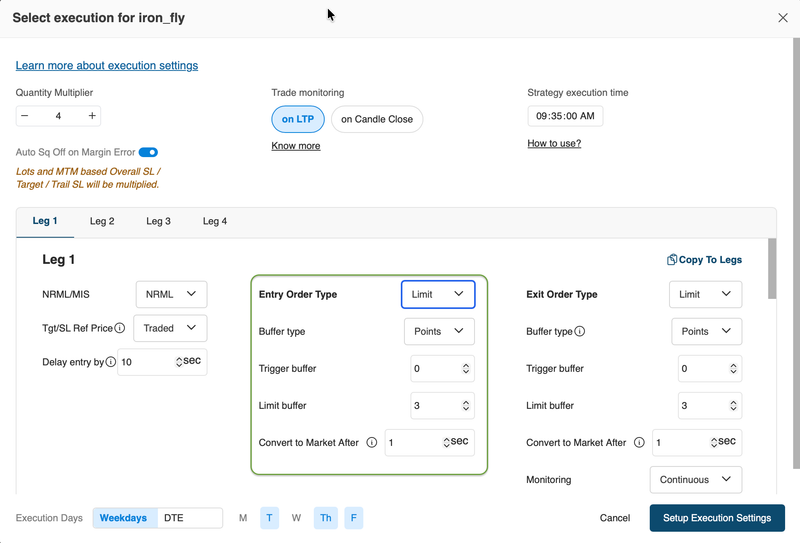
- Change Entry Order Type to Limit
- Change Exit Order Type to Limit
If this step is skipped, your strategy may fail or move into error mode.
### Step 3: Set the Right Limit Buffer
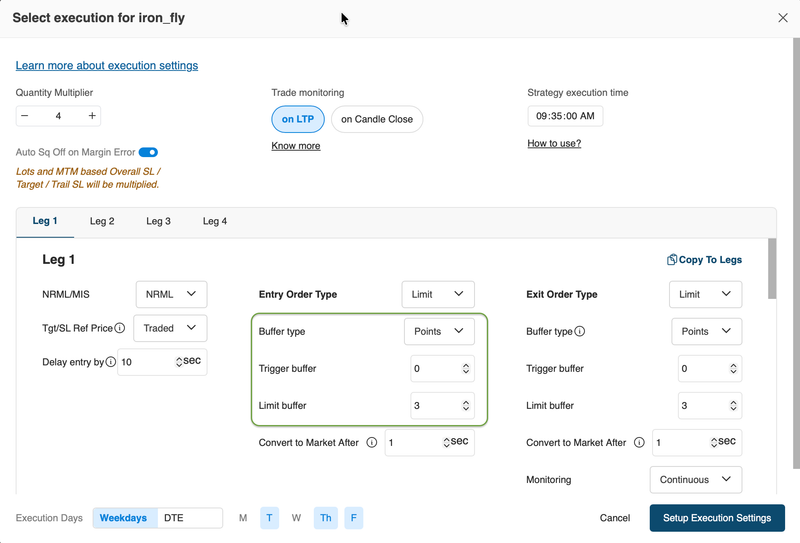
Recommended settings:
- Options: 8% to 10% minimum
- Futures: around 1%
Key considerations:
- Very low buffer (1–2%) can lead to missed trades
- Very high buffer can lead to poor execution prices
A balanced buffer is critical for performance
_Refer to_ [_Trigger and Limit Buffer_](https://docs.algotest.in/execution-settings/entry-and-exit-order-type/#trigger-and-limit-buffer) _for more details_
### Step 4: Set “Convert to Market After” to 45 Seconds
- Set this value to a minimum of 45 seconds
This allows the system to adjust the limit price dynamically and attempt execution.
Setting this too low (5–10 seconds) increases the risk of missed trades.
### Step 5: Understand the Price Chasing Mechanism
Example:
- Signal price = ₹100
- Buffer = 8% → Order placed at ₹108
If the price moves, the system continues adjusting the limit price incrementally for up to 45 seconds.
If the order is still not filled, the strategy moves into error mode.
### Step 6: What to Do If the Strategy Goes Into Error
Do not simply resume the strategy.
Follow this process:
1. Stop the strategy
2. Go to execution settings
3. Update:
- Order type to Limit
- Correct buffer percentage
- Timeout to 45 seconds
4. Reactivate the strategy
### Step 7: Apply This in Strategy Builder
Even when placing trades through:
- Strategy Builder
- Signal-based execution
Always use Limit Orders with an appropriate buffer.
Market Orders should not be used.
Explore - [AlgoTest Strategy Builder](https://algotest.in/feature/strategy-builder) for Free
## Final Takeaway
This is not just a regulatory update; it is a shift in how [algorithmic trading in India](https://algotest.in/blog/algo-trading-india) will function now.
Earlier, execution speed was the priority.
Now, execution precision is equally important.
Traders who adapt to this change will benefit from better control and more consistent performance. Those who do not update their strategies risk execution failures and avoidable losses.
# FAQs
Q: Why is my algo strategy not executing trades after this update?
A: This usually happens if your strategy is still using market orders or has incorrect limit buffer settings.
Q: What does “convert to market after 45 seconds” mean?
A: It means the system will try to execute your limit order by adjusting the price for up to 45 seconds before stopping or triggering an error.
Q: Can limit orders cause missed trades?
A: Yes, if the buffer is too low or the market moves quickly, your order may not get filled.
Q: How do I update my AlgoTest settings after the market order ban?
A: You need to switch both entry and exit order types to limit orders, set an appropriate buffer, and configure execution timing correctly.
Q: Are market orders banned in algo trading in India?
A: Yes, market orders are effectively banned for algo trading via APIs. Brokers now allow only limit orders to comply with SEBI regulations.
Q: Why are market orders not allowed in algo trading anymore?
A: SEBI has restricted market orders to reduce slippage, improve execution control, and prevent risky or misfiring automated strategies.
Q: What happens if I still use market orders in my algo strategy?
A: Your strategy may fail to execute or go into error mode, as market orders are no longer supported on most algo platforms.
Q: What is the difference between market orders and limit orders?
A: Market orders execute instantly at any available price, while limit orders execute only at a specified price, giving better control over execution.
Q: Do limit orders reduce slippage in algo trading?
A: Yes, limit orders can help reduce slippage by ensuring trades execute within a defined price range instead of any available price.
Q: What is the ideal limit order buffer for algo trading?
A: Typically, 8–10% for options and around 1% for futures are recommended, but it can vary based on strategy and market conditions.
---
This blog is powered by Superblog. Visit https://superblog.ai to know more.
---
## Best Indicator for Options Trading: A Practical, Strategy-First Guide
Author: AlgoTest
Author URL: https://algotest.in/blog/author/algotest/
Published: 2026-04-01
Category: Strategies
Category URL: https://algotest.in/blog/category/strategies/
Meta Description: Best indicators for options trading in India. Learn RSI, IV, OI, PCR, and proven setups to improve timing, volatility analysis, and strategy performance.
Tags: algo trading, options trading
Tag URLs: algo trading (https://algotest.in/blog/tag/algo-trading/), options trading (https://algotest.in/blog/tag/options-trading/)
URL: https://algotest.in/blog/best-indicator-for-option-trading/
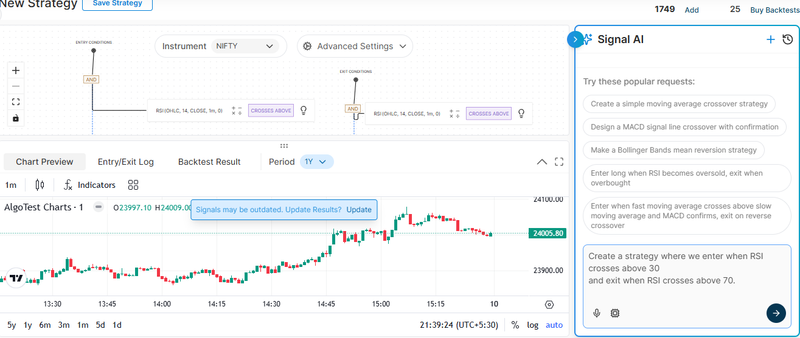
Options trading is exciting, but it’s a double-edged sword. If you don't have a system, the market will wipe your account faster than you can click "Buy."
The hard truth? Picking the right direction is only 30% of the battle. To be a profitable trader in the Indian markets (Nifty, BankNifty, or Equity Options), you must master **Timing** and [**Volatility**.](https://algotest.in/blog/implied-volatility-and-how-to-read-and-compute-iv)
Here we explain the best indicators for [options trading](https://algotest.in/blog/options-trading-strategies) simply, so you can actually use them.
## First, Why Do Options Need Special Indicators?
When you trade stocks, you only need to ask one question: Will the price go up or down?
Options are trickier. You need to get three things right:
- **Direction** — will the stock move the way I think?
- **Timing** — will it move _before_ my option expires?
- **Premium** — am I paying a fair price for this option?
Miss even one of these, and you can lose money — even if you were right about the direction.
That's why standard stock indicators don't always cut it for options.
_Signals AI on_ [_AlgoTest_](https://algotest.in/login) _is an indicator-based_ [**_strategy builder_**](https://docs.algotest.in/clicktrade/strategy-builder/) _that allows users to create, backtest, Algo Trade and forward test indicator-based strategies without writing any code._
## The Two Types of Options Indicators
Before we dive in, here's a simple framework:
**Bucket 1: Price & Momentum Indicators.** These help you figure out direction. → [RSI](https://docs.algotest.in/signals/pinescripts/rsi_strategy/#what-is-rsi), MACD, Moving Averages, [Bollinger Bands](https://docs.algotest.in/signals/pinescripts/bb_bands_strategy/#how-do-you-use-the-bollinger-band-indicator)
**Bucket 2: Options-Specific Indicators.** These help you understand premiums and market positioning. → Implied Volatility, [Put-Call Ratio,](https://docs.algotest.in/financial-education/options-strategies/max-pain-put-call-ratio/#put-call-ratio-pcr) Open Interest, [Option Chain](https://algotest.in/blog/how-to-read-and-analyse-sensex-option-chain)
The best traders use both. One without the other gives you an incomplete picture.
## The Best Indicators for Options Trading
### 1\. RSI (Relative Strength Index)
RSI is probably the most beginner-friendly indicator out there.
It measures how fast and how strongly a stock's price is moving — on a scale of 0 to 100.
Here's how to read it:
- **RSI above 70** → stock is overbought → price may reverse down → look at puts
- **RSI below 30** → stock is oversold → price may bounce up → look at calls
RSI is great for timing. It tells you _when_ to enter, not just _what_ to trade.
**Pro tip:** Don't jump in the moment RSI hits 70 or 30. Wait for it to cross back out of that zone — that's your actual signal.
### 2\. Bollinger Bands
Volatility is everything in options. Bollinger Bands measure it beautifully.
The bands expand when volatility is high. They squeeze together when volatility is low.
Here's what that means for you:
- **Bands squeezing tight** → a big move is coming → good time to buy straddles or strangles
- **Bands expanding wide** → volatility is already high → better time to sell options
Also, watch the price action around the bands:
- Price touching the upper band → possibly overbought
- Price touching the lower band → possibly oversold
Simple. Visual. Useful.
Related: [7 Bollinger Bands Strategies for Indian Markets](https://algotest.in/blog/bollinger-bands-strategies-for-indian-traders/?utm_source=blog&utm_medium=internal&utm_campaign=seo&utm_term=algotest&utm_content=main-page)
### 3\. Implied Volatility (IV)
This is the most important options-specific indicator. Full stop.
IV tells you how expensive or cheap an option is right now.
- **High IV** = options are expensive → better to _sell_ options and collect premium
- **Low IV** = options are cheap → better to _buy_ options
Here's the costly mistake many traders make they buy options right before a big event (like earnings or RBI policy) when IV is sky-high. The stock moves in their favour, but the premium crashes anyway because IV drops after the event.
**Always check IV before you buy an option. Always.**
### 4\. Intraday Momentum Index (IMI)
Not many traders know about this one, which is exactly why it's worth learning.
IMI is similar to RSI, but built specifically for intraday trading. It combines candlestick patterns with momentum signals.
Like RSI:
- **IMI above 70** → overbought
- **IMI below 30** → oversold
The key difference? IMI uses intraday price data, making it sharper and faster for same-day option trades. If you do a lot of intraday options, add this to your toolkit.
### 5\. Money Flow Index (MFI)
Think of MFI as RSI's smarter cousin because it also considers volume.
It measures the flow of money in and out of a stock over a set period. More volume + price rise = strong buying pressure. Less volume = weak move.
Reading MFI:
- **Above 80** → overbought
- **Below 20** → oversold
MFI is especially useful for stock options (not just index options like Nifty/BankNifty). When volume backs up the price move, you get a much more reliable signal.
### 6\. Put-Call Ratio (PCR)
PCR is your market mood meter.
It compares how many puts vs. calls are being traded.
- **PCR above 1** → more puts being bought → market is bearish
- **PCR below 1** → more calls being bought → market is bullish
- **Extreme readings** → often signal a reversal (everyone on one side is usually wrong)
Some traders actually use PCR as a contrarian indicator. When too many people are bearish, they look for a bounce, and vice versa.
**Use PCR as context before entering any trade.**
### 7\. Open Interest (OI)
Open Interest tells you how many active contracts exist at a given strike price.
It doesn't tell you the direction. But it tells you _strength._
Here's a simple OI cheat sheet:
Price moves
OI moves
What it means
Up
Up
Strong bullish trend
Up
Down
Weak move, likely short covering
Down
Up
Strong bearish pressure
Down
Down
Bears are exiting — reversal possible
Also, check the option chain for OI concentration:
- **Highest Call OI** at a strike → that strike acts as resistance
- **Highest Put OI** at a strike → that strike acts as support
This is incredibly useful around weekly expiry days.
Check out the [best Paper trading apps for Indicator algo strategies](https://algotest.in/blog/paper-trading-apps-for-indicator-algo-strategies-in-india/)
### 8\. MACD (Moving Average Convergence Divergence)
MACD shows you momentum shifts using two moving averages.
Watch for crossovers:
- **MACD line crosses above signal line** → bullish momentum → call setups
- **MACD line crosses below signal line** → bearish momentum → put setups
Also watch the histogram — the bars between the lines:
- **Bars shrinking** → momentum fading → don't enter new trades in that direction
- **Bars growing** → momentum building → trend is strong
MACD works best for positional options trades held for 1–5 days. Less useful for intraday.
### 9\. Moving Averages (EMA & SMA)
Moving averages are the foundation of trend trading.
Two types to know:
- **EMA (Exponential MA)** — reacts faster to recent price changes. Better for short-term trades.
- **SMA (Simple MA)** — smoother, slower. Better for identifying the overall trend.
How to use them for options:
- Price above the 20 or 50 EMA → bullish bias → lean toward calls
- Price below the 20 or 50 EMA → bearish bias → lean toward puts
When price crosses a key EMA with strong volume — that's a meaningful signal.
Related: [EMA Indicator Strategy: How to Automate It Without Coding](https://algotest.in/blog/automate-ema-indicator-without-coding/)
## How to Combine These Indicators
The thing is that no single indicator is perfect. They all give false signals sometimes.
The trick is using 2–3 complementary indicators together.
**For buying calls or puts:** RSI (time your entry) + MACD (confirm direction) + IV (make sure premium isn't expensive)
**For straddles or strangles:** Bollinger Band squeeze (spot the compression) + IV Rank (confirm premiums are cheap) + OI (find key strikes)
**For selling options:** High IV (premiums are rich) + PCR (read the sentiment) + Option Chain OI (pick your strikes)
**For intraday options:** IMI or RSI (entry timing) + OI change (confirm direction) + MFI (check if volume supports the move)
## 3 Mistakes to Avoid while Choosing an Indicator in Trading
**1\. Using only one indicator** No indicator is always right. Markets change. Layer your signals.
**2\. Buying options with high IV** If IV is elevated, you're paying a premium for a premium. After the event, IV crashes, and so does your option, even if the price moved your way.
**3\. Ignoring the calendar** Earnings reports, RBI announcements, and budget days these spike IV before the event and crush it right after. Know what's coming.
## Quick Cheat Sheet
Indicator
What it does
Best for
RSI
Overbought/oversold signals
Timing entry
Bollinger Bands
Volatility measurement
Straddle/breakout setups
Implied Volatility
Premium level check
Buy vs. sell decision
IMI
Intraday momentum
Same-day option trades
MFI
Volume-weighted momentum
Stock options
Put-Call Ratio
Market sentiment
Pre-trade context
Open Interest
Trend strength + strike levels
All option traders
MACD
Momentum confirmation
Positional trades
Moving Averages
Trend direction
Setting directional bias
## Wrapping Up
Options trading isn't just about being right. It's about being right on direction, timing, and premium, all at once.
Start small:
- Learn RSI and Bollinger Bands first
- Then add Implied Volatility to every trade
- Check the Option Chain each morning for key levels
Once you're comfortable, layer in OI, PCR, and MACD.
The goal isn't to use every indicator. The goal is to find 2–3 that work with your style — and use them consistently.
That's how profitable options traders are built.
_Disclaimer: This article is for educational purposes only and should not be considered investment advice. Options trading involves significant risk. Please consult a SEBI-registered advisor before trading._
# FAQs
Q: Which indicator is best for options trading?
A: There is no single best indicator for options trading. Traders typically use a combination of RSI for timing, EMA or VWAP for trend, and Implied Volatility (IV) to assess option pricing.
Q: Which indicator is best for option buying?
A: RSI combined with trend indicators like EMA or VWAP works well for option buying. It is also important to ensure that Implied Volatility (IV) is low to avoid overpaying for the option.
Q: Which indicator is best for option selling?
A: Implied Volatility (IV) and IV Rank are the most important indicators for option selling. High IV environments allow traders to collect higher premiums with strategies like spreads or strangles.
Q: What is the best indicator for intraday options trading?
A: VWAP, RSI, and Bollinger Bands are widely used for intraday options trading as they help track direction, timing, and volatility in real time.
Q: Can I trade options using only RSI?
A: No, relying on a single indicator like RSI can lead to false signals. It is best used along with trend and volatility indicators for better accuracy.
Q: Why is implied volatility important in options trading?
A: Implied volatility determines the price of options. Even if the market moves in your favor, a drop in IV can reduce profits or lead to losses.
Q: How do I combine indicators for options trading?
A: Traders typically combine one trend indicator (EMA or VWAP), one momentum indicator (RSI or MACD), and one volatility indicator (Bollinger Bands or IV) for better decision-making.
Q: What is the role of Open Interest in options trading?
A: Open Interest helps identify strong support and resistance levels and shows where traders are building positions in the market.
Q: What is a simple indicator setup for beginners in options trading?
A: A simple setup includes RSI for entry timing, VWAP or EMA for trend direction, and IV for checking whether the option is fairly priced.
Q: What mistakes should beginners avoid in options trading?
A: Beginners should avoid using a single indicator, ignoring implied volatility, trading against trend, and entering trades without considering expiry and time decay.
---
This blog is powered by Superblog. Visit https://superblog.ai to know more.
---
## Best Trading App Without Investment (2026): Paper Trading for Option Traders
Author: AlgoTest
Author URL: https://algotest.in/blog/author/algotest/
Published: 2026-03-31
Category: General
Category URL: https://algotest.in/blog/category/general/
Meta Description:
91% of retail traders in India lost money in F&O in FY2024-25. SEBI data confirms it. Here are the best paper trading apps in India to test your strategies risk-free before you put real money on the line.
Tags: algo trading, algo trading india
Tag URLs: algo trading (https://algotest.in/blog/tag/algo-trading/), algo trading india (https://algotest.in/blog/tag/algo-trading-india/)
URL: https://algotest.in/blog/best-virtual-trading-apps-in-india/
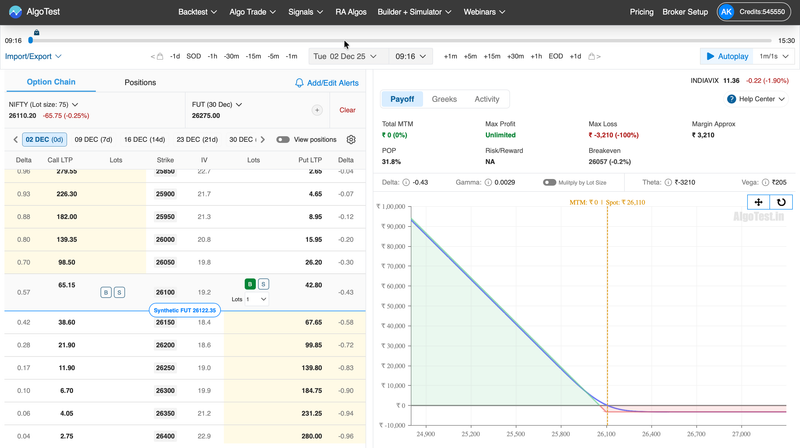
If you are looking for a trading app without investment, you are taking the right approach as a trader; you want to test the waters without risking real money first.
In trading options or building strategies, paper trading/virtual trading is part of the process. Seeing a move, trusting your gut and going live has a lot of risk.
Always Backtest, Paper Trade with virtual money and then go live.
Paper trading, Virtual trading, forward testing - they all mean the same - to validate your strategy in close to real market conditions.
We have shared a list of the top 5 paper trading apps (software/platform) to help you choose the best one for your trading goals.
## Quick Virtual Trading Apps Comparison Table
**App / Platform**
**Best For...**
**Key Highlight**
**FrontPage**
Community & Social Trading
Popular for Nifty/Bank Nifty "calls" and discussion.
**AlgoTest Simulator**
**Options & Systematic Trading**
**Best for validating multi-leg strategies with real-world accuracy.**
**Sensibull**
Options Beginners
Great visual payoff diagrams for virtual F&O.
**StockGro**
Gamified Learning
Best for students and those who want to win rewards while learning.
**TradingView**
Technical Analysis
The gold standard for charting with built-in paper trading.
## 1\. AlgoTest

**Best for:** Options traders who want to build, test, and validate strategies with real data
If you're serious about algo trading in Nifty, Bank Nifty, or any multi-leg options structure in India, [AlgoTest](https://algotest.in/login) is where you need to start.
Most [paper trading apps](https://algotest.in/blog/top-paper-trading-apps-in-india) answer one question: _"What happens if I take this trade right now?"_ AlgoTest answers the more important one: _"Would this strategy have survived the last 5 years?"_
That's the difference between hoping and knowing.
### What makes AlgoTest the best paper trading platform:
[**Backtesting.**](https://algotest.in/feature/backtest?utm_source=blog&utm_medium=internal&utm_campaign=seo&utm_content=feature&utm_term=backtest&utm_source=blog&utm_medium=internal&utm_campaign=seo&utm_term=backtest&utm_content=feature) Stop waiting 30 days to see if a strategy works. [AlgoTest](https://algotest.in/?utm_source=blog&utm_medium=internal&utm_campaign=seo&utm_content=main-page&utm_term=algotest&utm_source=blog&utm_medium=internal&utm_campaign=seo&utm_term=algotest&utm_content=main-page) lets you run it against years of historical NSE data in seconds, so you validate your edge before you risk a rupee.
[**Forward Testing.**](https://algotest.in/feature/forward-test?utm_source=blog&utm_medium=organic&utm_campaign=seo&utm_source=blog&utm_medium=organic&utm_campaign=seo) Once your backtest looks solid, you run the strategy live in real-time markets without actual capital exposure. This is as close to real trading as you can get without a funded account.
[**Strategy Builder**](https://algotest.in/feature/strategy-builder?utm_source=blog&utm_medium=organic&utm_campaign=seo&utm_source=blog&utm_medium=organic&utm_campaign=seo) **.** Build complex multi-leg [options strategies](https://algotest.in/blog/option-strategy-builder-algotest) like iron condors, straddles, and strangles with precision. If you plan to automate eventually, AlgoTest is already built for that path.
[**Realistic simulation**](https://algotest.in/feature/simulator?utm_source=blog&utm_medium=organic&utm_campaign=seo&utm_source=blog&utm_medium=organic&utm_campaign=seo) **.** This is where most apps lie to you. [AlgoTest](https://algotest.in/login) includes slippage, brokerage costs, and realistic order fills in every simulation. The results you see in paper trading actually mean something when you go live.
**Free to start.** You get daily credits at no cost, so there's no excuse not to test before you trade. [Sign up now](https://algotest.in/register?utm_source=blog&utm_medium=organic&utm_campaign=seo&utm_source=blog&utm_medium=organic&utm_campaign=seo) and get 25 backtests free/week.
If you only use one [Algo trading platform](https://algotest.in/blog/8-best-algo-trading-platforms-in-india-2026) on this list, make it this one
## 2\. Sensibull
**Best for:** Traders learning the mechanics of options for the first time
Sensibull makes options visual and intuitive. You can see your payoff chart, understand your risk/reward at a glance, and explore pre-built strategies without needing to know the Greeks inside out.
**What works:** Clean payoff diagrams, guided strategies, beginner-friendly design. It lowers the learning curve fast.
**Where it stops:** Sensibull is great for understanding a single trade. It won't tell you how that trade structure performs across different market regimes over years of data.
Once you understand how options work, you'll want something more powerful, which is where [AlgoTest](https://algotest.in/login) takes over.
## 3\. TradingView
**Best for:** Chart-first traders who want paper trading built into their analysis workflow
TradingView is the global benchmark for charting. The indicators, drawing tools, and multi-timeframe setups are world-class. The built-in paper trading lets you execute directly from your charts without switching platforms.
**What works:** Unmatched charting, global market access, seamless paper trading within the chart interface.
**Where it stops:** TradingView is a charting platform first. It's not built for strategy-level backtesting on Indian options, especially if you're testing multi-leg structures or want to model realistic execution with slippage and charges. Use it for technical analysis. Use [AlgoTest](https://algotest.in/login) for strategy validation.
Related: [10 Best TradingView Alternatives in India](https://algotest.in/blog/best-tradingview-alternatives)
## 4\. FrontPage
**Best for:** Beginners who want to watch how experienced traders operate
FrontPage built a strong community around real-time trade sharing, especially in Nifty and Bank Nifty. You can follow what active traders are doing, see their reasoning, and pick up ideas you might not encounter on your own.
**What works:** Active community, real-time trade visibility, great for idea discovery.
**Where it stops:** You're consuming other people's decisions rather than building your own system. That's useful early on, but it doesn't develop the analytical discipline you need. At some point, you have to stop watching and start testing.
Related: [Best options strategy builders in India](https://algotest.in/blog/compare-option-strategy-builders-find-the-best-tool)
## 5\. StockGro
**Best for:** Students or newcomers who've never opened a trading account
StockGro gamifies the learning experience with leaderboards, competitions, rewards, and social interaction. It removes the intimidation factor and makes market participation feel accessible.
**What works:** Zero-pressure onboarding, fun format, easy to start with no prior knowledge.
**Where it stops:** The gamification is also its ceiling. StockGro optimises for engagement, not analytical depth. If you want to build a real trading system, you'll outgrow it quickly. Treat it as a first step, not a final destination.
Also read: [Best options simulator in India: Free and Paid compared](https://algotest.in/blog/best-options-simulator-india)
## How to Pick the Right Paper Trading App
Before you commit to any platform, run it through these three checks:
**Real data or not?** Does it use live NSE/BSE data with accurate pricing? Simulated environments built on delayed or synthetic data will give you false confidence. Your paper results won't match your live results.
**Does it support what you actually trade?** Equity-only platforms won't help you if you're an [options trader.](https://algotest.in/blog/options-trading-strategies) Confirm instrument support across options, futures, and equity before you invest time in the platform.
**What does it tell you after the trade?** P&L is the minimum. You want drawdown analysis, win rate, max loss streaks, and trade-by-trade breakdowns. A platform that only shows total returns tells you almost nothing useful.
[AlgoTest](https://algotest.in/register?utm_source=blog&utm_medium=organic&utm_campaign=seo&utm_source=blog&utm_medium=organic&utm_campaign=seo) is the only app in this list that ticks all three boxes: real NSE data, full derivatives support, and deep post-trade analytics with realistic simulation.
## The Bottom Line
Net losses of individual traders in India's F&O segment surged 41% year-on-year to ₹1,05,603 crore in FY2024-25. [MoneyLife:](https://www.moneylife.in/article/106-lakh-crore-lost-by-individual-traders-in-fo-in-fy2425-govt-confirms-sebi-action-on-4-entities-for-market-abuse/79124.html) That's not bad market conditions. That's traders taking unvalidated strategies live.
Virtual trading (aka forward testing) isn't a beginner's exercise. It's how serious traders protect their capital.
Test before you deploy. Build the edge first. Then go live.
Join [AlgoTest](https://algotest.in/?utm_source=blog&utm_medium=internal&utm_campaign=seo&utm_content=main-page&utm_term=algotest&utm_source=blog&utm_medium=internal&utm_campaign=seo&utm_term=algotest&utm_content=main-page) as we simplify algo trading in India.
Free Sign Up
# FAQs
Q: What is virtual trading in the stock market?
A: Virtual trading (also called paper trading or simulated trading) allows traders to test strategies in real market conditions using virtual money, without risking actual capital.
Q: Which is the best virtual trading app for options trading in India?
A: For options traders, platforms like AlgoTest are considered among the best virtual trading apps in India because they offer backtesting, forward testing, and realistic simulations for multi-leg options strategies.
Q: Is paper trading useful for beginners in options trading?
A: Yes, paper trading is extremely useful for beginners as it helps them understand options strategies, risk management, and market behavior without financial risk.
Q: What is the difference between paper trading, backtesting, and forward testing?
A: Backtesting evaluates a strategy using historical data, paper trading simulates trades in real-time without money, and forward testing validates a strategy in live market conditions before actual deployment. :contentReference[oaicite:0]{index=0}
Q: Can virtual trading apps help improve trading profitability?
A: Virtual trading apps help improve profitability by allowing traders to test, refine, and optimize strategies before using real capital, reducing the chances of losses.
Q: Which virtual trading platform is best for Nifty and Bank Nifty strategies?
A: Platforms like AlgoTest are well-suited for Nifty and Bank Nifty strategies because they support multi-leg options setups, historical backtesting, and real-market simulations.
Q: Do virtual trading apps use real market data in India?
A: The best virtual trading platforms use real NSE/BSE market data to simulate accurate trading conditions, including price movement, slippage, and execution.
Q: Is TradingView good for paper trading in India?
A: TradingView is excellent for chart-based paper trading and technical analysis, but it is limited when it comes to advanced options strategy backtesting and multi-leg simulations.
Q: What features should I look for in a virtual trading app?
A: Look for features like real market data, options and derivatives support, backtesting, forward testing, slippage simulation, brokerage inclusion, and detailed analytics.
Q: How much capital is required to start virtual trading?
A: Virtual trading does not require real capital, but it helps traders understand how strategies would perform with different capital ranges before going live.
Q: Can I trade options strategies like straddle or iron condor in paper trading apps?
A: Yes, advanced virtual trading platforms like AlgoTest allow traders to build and test multi-leg strategies such as straddles, strangles, and iron condors.
Q: Is virtual trading enough to become a profitable trader?
A: Virtual trading is an essential step, but profitability also depends on discipline, risk management, strategy optimization, and execution in live markets.
Q: How long should I paper trade before going live?
A: Traders should paper trade until they achieve consistent results across different market conditions and validate their strategy using both backtesting and forward testing.
Q: Which is better for beginners: Sensibull or AlgoTest?
A: Sensibull is better for beginners learning options basics, while AlgoTest is better for traders who want to build, test, and validate complete trading strategies. Check out AlgoTest vs Sensibull comparison
---
This blog is powered by Superblog. Visit https://superblog.ai to know more.
---
## How to Use a Straddle Chart for Intraday Options Trading
Author: AlgoTest
Author URL: https://algotest.in/blog/author/algotest/
Published: 2026-03-30
Category: charts
Category URL: https://algotest.in/blog/category/charts/
Meta Description: Stop losing money on options because of direction alone. A straddle chart tells you whether a move has the strength to actually pay you — here's how to read it.
Tags: algo trading india, options trading
Tag URLs: algo trading india (https://algotest.in/blog/tag/algo-trading-india/), options trading (https://algotest.in/blog/tag/options-trading/)
URL: https://algotest.in/blog/how-to-use-a-straddle-chart-for-intraday-options-trading/
A straddle chart shows you premium behavior, which is arguably the most important element of options trading.
While a standard index chart shows you direction, a premium chart tells you whether a trade will actually make money.
A [straddle chart](https://algotest.in/finnifty-index-chart?utm_source=documentation&utm_medium=internal&utm_campaign=seo&utm_content=product-feature&utm_term=index-chart&utm_source=documentation&utm_medium=internal&utm_campaign=seo&utm_term=index-chart&utm_content=product-feature) helps traders understand if a market move has enough momentum and volatility to be tradable, making it one of the most effective filters for intraday options trading.
### What is a Straddle Chart?
A straddle chart plots the combined premium of an At-The-Money (ATM) Call and Put option for the same strike and expiry. It helps traders track market volatility, directional momentum, and time decay in real-time.
In simple terms:
- Nifty is at 22,500
- Take the premium of the 22500 CE + the 22500 PE
- Add them together → This is your Straddle Value
- Plot this combined value as a line chart.
### How to Read a Straddle Chart
To trade successfully, you need to understand why the [straddle chart](https://docs.algotest.in/charts/) is moving. It is driven by three main factors: Volatility (Vega), Momentum (Gamma), and Time Decay (Theta).
**1\. Rising Straddle (The Buyer's Environment)**
A rising straddle means the combined premium is increasing. This happens for two reasons:
- **Expanding Volatility (Vega):** The market is getting fearful or highly active, pushing option prices up across the board.
- **Violent Momentum (Gamma):** The market is moving in one direction so fast that the winning option is gaining value much faster than the losing option is losing it (e.g., the Call shoots up by ₹60, but the Put only drops by ₹40, netting a ₹20 gain).
_What to do:_ Look for breakout trades. This is the ideal environment for Option Buying.
**2\. Falling Straddle (The Seller's Environment)**
A falling straddle shows that premiums are bleeding out.
- **Time Decay (Theta) is dominating:** The market might be completely range-bound, or volatility is dropping (IV Crush). The premiums are slowly decaying toward zero.
_What to do:_ Avoid buying options at all costs. This is the ideal environment for Option Selling (like Short Straddles or Iron Condors).
**3\. Flat Straddle**
A flat straddle shows a tug-of-war where neither momentum nor decay has a clear edge.
_What to do:_ Sit on your hands. Wait for a clear trend to emerge.
## Straddle Chart Interpretation Matrix
* * *
Straddle Trend
Market Condition
Primary Driver
Trading Strategy
📈 Rising
High Momentum / Breakout
Gamma & Vega
Option Buying: High probability for momentum scalps.
📉 Falling
Range-bound / Slow Trend
Theta (Decay)
Option Selling: Ideal for Short Straddles or Spreads.
➡️ Flat
Low Volume / Consolidation
Equilibrium
No Trade Zone: High risk of "choppy" price action.
### Combining Price Action with Premium Behavior
A [straddle chart](https://algotest.in/finnifty-index-chart?utm_source=documentation&utm_medium=internal&utm_campaign=seo&utm_content=product-feature&utm_term=index-chart&utm_source=documentation&utm_medium=internal&utm_campaign=seo&utm_term=index-chart&utm_content=product-feature) should never be used in isolation. You must combine it with the underlying index chart (e.g., Nifty or BankNifty) to decode the true nature of the market.
- **Price Breaks Out + Straddle Rises:** Strong Move. Momentum is high, and premiums are expanding. This is a high-probability setup for option buyers.
- **Price is Range-Bound + Straddle Falls:** Theta Market. The index is doing nothing, and premiums are melting. Great for option sellers; lethal for buyers.
- **Price Grinds Up/Down + Straddle Falls:** The "Slow Grind". The index is trending, but it is moving so slowly that time decay (Theta) is eating away at the premiums faster than the directional move can add value. It is a "weak move" for premium buyers, but a highly profitable, low-stress environment for option sellers following the trend.
_Visit_ [_AlgoTest Charts Doc_](https://docs.algotest.in/charts/) _to learn how to read a straddle chart._
### The Expiry Day Effect
You must always factor in what day of the week it is when reading a straddle chart. A falling straddle on a Friday looks very different from a falling straddle on Expiry Day (Wednesday/Thursday).
On Expiry Day, the ATM straddle must eventually fall to zero (excluding intrinsic value if the market trends away). Because zero-DTE options have massive Theta decay, expect the straddle chart to naturally trend downward aggressively unless there is a massive, violent breakout.
## Step-by-Step: Intraday Execution on AlgoTest Charts
To apply this logic in real-time, you need a clean, professional interface. Here is how to set up and execute your strategy using the [AlgoTest platform.](https://algotest.in/login)
**Step 1: Open the Charts Module**
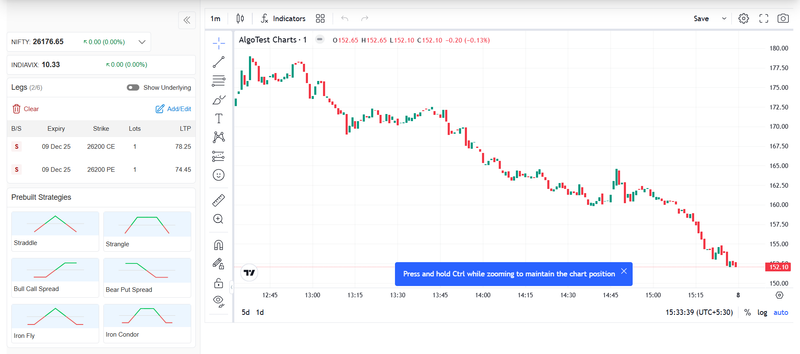
Log in to your dashboard and navigate to [AlgoTest Charts](https://algotest.in/finnifty-index-chart?utm_source=documentation&utm_medium=internal&utm_campaign=seo&utm_content=product-feature&utm_term=index-chart&utm_source=documentation&utm_medium=internal&utm_campaign=seo&utm_term=index-chart&utm_content=product-feature). This tool allows you to plot synthetic charts like straddles that are often unavailable or difficult to configure on standard broker terminals.
**Step 2: Select Index & Expiry**
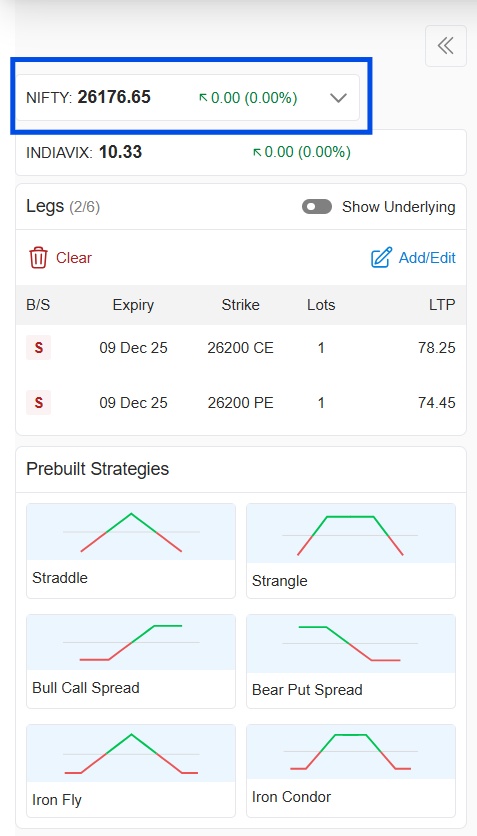
- Index: Choose Nifty, BankNifty, or FinNifty.
- Expiry: Always select the Current Weekly Expiry. Intraday premium behavior is most sensitive in the nearest expiry due to high Theta and Gamma activity.
**Step 3: Select the Straddle Tool**
Instead of manually searching for two different option symbols, select the Straddle option. The platform will automatically identify the ATM strike based on the current spot price and combine the Call and Put premiums into one continuous line.
**Step 4: Apply VWAP (The "Line in the Sand")**
Go to the indicators list and add VWAP. This serves as your institutional filter:
- Straddle Above VWAP → The market is "Long Gamma" — premiums are expanding. This favors Buyers.
- Straddle Below VWAP → The market is "Short Gamma" — premiums are melting. This favors Sellers.
_Also Read:_ [_Understanding VWAP_](https://docs.algotest.in/signals/pinescripts/vwap_strategy/#understanding-vwap)
**Step 5: Watch the Opening 15–30 Minutes**
The opening phase sets the tone. Let the initial morning volatility settle and observe whether the straddle stabilizes above or below the VWAP to establish your daily bias.
- Rising & Above VWAP: Adopt a Buying bias. Look for directional breakout trades.
- Falling & Below VWAP: Adopt a Selling bias. Look for iron condors, short strangles, or fading the edges of the daily range to collect Theta decay.
_Learn more about_ [_Option Greeks._](https://docs.algotest.in/financial-education/options/greek-interactions/#greek-interactions-in-options-trading)
**Step 6: Execute with Confirmation**
Keep your Index (Spot) chart open in a split window alongside your AlgoTest Straddle Chart.
- The Confirmation: If the Index breaks a key resistance level and the Straddle is sharply rising, the move has "legs." This is a high-probability entry for an option buyer.
- The "Bull Trap" Check: If the Index hits a new high but the Straddle stays flat or trends down, the move lacks conviction — buyers aren't bidding up premiums. Avoid the trade.
### The "Hidden" Signals
- **The "Bull Trap" Signal:** If the Index Price breaks to a new high but the Straddle Chart stays flat or falls, the move lacks conviction. This is often a "fakeout" where buyers aren't stepping in to bid up premiums.
- **The "Volatility Crush":** After a major news event (like an RBI policy meet or Earnings), the Straddle Chart will often crash vertically even if the price doesn't move. This is IV Crush — the best time to be a seller and the worst time to be a buyer.
## Strategies That Work with Straddle Charts
**1\. Breakout Confirmation (For Option Buyers)**
Never trust a price breakout blindly. Use the straddle chart to confirm if the smart money is actually backing the move.
- _When to Enter:_ The index breaks a key support/resistance level AND the straddle chart is sharply rising.
- _Why it works:_ The rising straddle confirms that momentum (Gamma) and volatility (Vega) are expanding, meaning your option premium will multiply quickly.
_Read more:_ [_Option Trading Strategies_](https://algotest.in/blog/options-trading-strategies)
**2\. Intraday Short Straddle (For Option Sellers)**
When the market goes to sleep, option sellers get paid.
- _When to Enter:_ The index is stuck in a tight range AND the straddle chart is steadily falling (ideally rejecting the VWAP line).
- _Risk Warning:_ Short straddles carry undefined risk. Always use strict stop-losses on both the Call and Put legs (e.g., 25% above your entry price) to protect your capital if a sudden breakout occurs.
### Common Mistakes to Avoid
- **Ignoring Premium Behavior:** Looking only at the spot chart and wondering why your option isn't moving.
- **Buying Options During Decay:** Entering long Calls or Puts when the straddle chart is trending downward. This is guaranteed capital destruction.
- **Trading Flat Markets:** Forcing trades when the straddle shows no clear edge.
- **Entering Without Confirmation:** Jumping into a trade before the 15-minute candle closes or before the straddle confirms the price action.
Also read: [Intraday Trading Tips a Trader Must Know](https://algotest.in/blog/essential-intraday-trading-tips-for-traders)
### Critical Risk Disclaimer
Options trading involves substantial risk. While a Rising Straddle favors buying, it does not guarantee direction — you can still lose money if you pick the wrong side (Call vs. Put). Conversely, selling options during a Falling Straddle carries theoretically unlimited risk. Never sell naked options without a strict stop-loss or a hedging strategy (like a Spread or Iron Condor) to protect against sudden "Gamma spikes" or black-swan market moves.
### One Key Insight to Remember
A straddle chart does not predict direction. It will not tell you if Nifty is going to 22,600 or 22,400.
It tells you one thing: **Whether the move has the strength to pay you.**
[Sign up now](https://algotest.in/login) on AlgoTest and get 25 backtests/week free.
Related searches: [Best options strategy builders,](https://algotest.in/blog/compare-option-strategy-builders-find-the-best-tool) [AlgoTest Simulator,](https://algotest.in/blog/best-options-simulator-india) [How to read Sensex option chain,](https://algotest.in/blog/how-to-read-and-analyse-sensex-option-chain)
# FAQs
Q: What is a straddle chart in options trading?
A: A straddle chart shows the combined premium of an at-the-money call and put option for the same strike and expiry. It helps you track volatility, time decay, and overall market behavior through premium movement.
Q: How do you use a straddle chart for intraday trading?
A: You use a straddle chart by tracking whether the combined premium is rising or falling. A rising straddle supports buying trades, while a falling straddle supports selling strategies. Always combine it with index price for better decisions.
Q: What does a rising straddle chart indicate?
A: A rising straddle chart indicates increasing volatility and stronger market movement. It suggests that breakout trades and option buying setups have higher probability.
Q: What does a falling straddle chart mean?
A: A falling straddle chart means premiums are decaying due to time decay (theta). It usually indicates a range-bound market where option selling works better.
Q: Can a straddle chart predict market direction?
A: No, a straddle chart does not predict direction. It shows whether a move has strength or not by reflecting volatility and premium behavior.
Q: What is the best time to use a straddle chart?
A: The best time to use a straddle chart is during the first 15–30 minutes after market open and during breakout phases when volatility expands.
Q: Is a straddle chart useful for beginners?
A: Yes, a straddle chart is useful for beginners because it simplifies options trading by focusing on premium behavior instead of just price movement.
Q: Which strike should I use for a straddle chart?
A: You should use the at-the-money (ATM) strike, which is the closest strike price to the current index level for Nifty or BankNifty.
Q: How do you identify a range-bound market using a straddle chart?
A: A falling straddle chart indicates a range-bound market because premiums keep decreasing due to time decay, even if price moves slightly.
Q: What mistakes should traders avoid when using a straddle chart?
A: Traders should avoid buying options during falling straddle conditions, trading in flat markets, ignoring premium behavior, and taking trades without confirming with price movement.
---
This blog is powered by Superblog. Visit https://superblog.ai to know more.
---
## Best Options Simulator in India (2026): Free & Paid Tools Compared
Author: AlgoTest
Author URL: https://algotest.in/blog/author/algotest/
Published: 2026-03-28
Category: General
Category URL: https://algotest.in/blog/category/general/
Meta Description: Looking for the best options simulator in India? Compare AlgoTest, Opstra, Sensibull, and Quantsapp for backtesting, strategy testing, and execution.
Tags: option strategy, options
Tag URLs: option strategy (https://algotest.in/blog/tag/option-strategy/), options (https://algotest.in/blog/tag/options/)
URL: https://algotest.in/blog/best-options-simulator-india/
Serious traders do not jump straight into live markets. They use an options simulator to test their strategies first, understand the risks, and refine execution before risking real capital.
To help you choose the **best options simulator in India**, we compare the top platforms based on accuracy, flexibility, multi-leg strategy support, and real-world usability.
### What is an Options Simulator?
An options simulator is a tool that allows you to test options trading strategies in simulated market conditions without risking real money.
The best options simulator in India lets you:
- Backtest strategies on historical data
- Simulate trades in real-time market conditions
- Analyse risk, P&L, and strategy behaviour
- Refine execution before going live
For traders, this means fewer mistakes and more confidence when deploying capital.
## Best Options Simulators in India (2026)
Here are the top platforms traders actively use to gain an edge:
Platform
Simulator Type
Best For
Starting Price
AlgoTest
Advanced options simulator
Strategy testing + full execution workflow
Free tier available
Opstra
Intraday + EOD simulator (Pro)
Analytics and Greeks
Paid plans available
Sensibull
Virtual trading + payoff tools
Beginners
Free via Zerodha
Quantsapp
Analytics-driven simulation
Data-heavy traders
₹3,250/month
## 1\. AlgoTest – Best for Strategy Testing & Execution
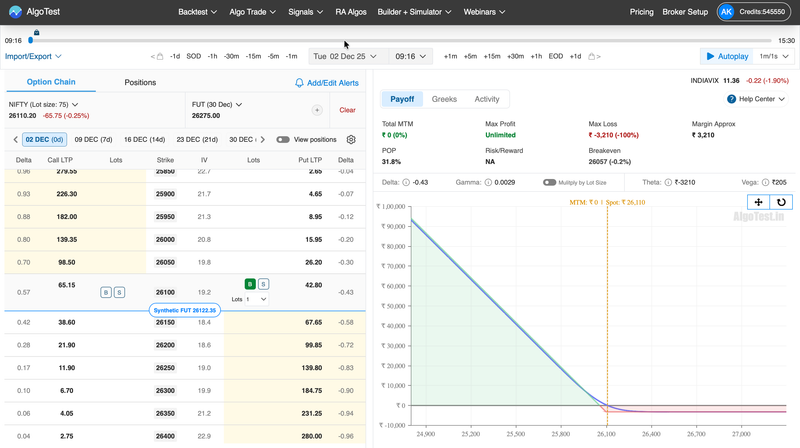
AlgoTest solves one core problem: validating strategies before you risk capital.
For traders participating in [algo trading India, AlgoTest](https://algotest.in/?utm_source=blog&utm_medium=internal&utm_campaign=seo&utm_content=main-page&utm_term=algotest&utm_source=blog&utm_medium=internal&utm_campaign=seo&utm_term=algotest&utm_content=main-page) offers backtesting with over 7.5 years of historical data, a no-code visual strategy builder, paper trading, and live algo execution within a single platform.
**Key strengths:**
- Multi-leg options strategy simulation
- [Backtest + forward](https://algotest.in/blog/step-by-step-guide-on-how-to-backtest-for-free) test in one workflow
- Replay-based simulator where [Greeks](https://docs.algotest.in/financial-education/options/greek-interactions/#greek-interactions-in-options-trading) evolve in real time as you enter, exit, and adjust trades
- No-code [strategy builder](https://algotest.in/blog/option-strategy-builder-algotest-tutorial)
- Integrated execution flow
AlgoTest takes you from idea to live execution in one structured workflow:
**Idea → Backtest → Simulate → Deploy**
This [end-to-end flow](https://algotest.in/blog/how-to-do-algo-trading-step-by-step-beginner-checklist) is what most other platforms lack. You're not switching between tools — you're working inside a single system designed for the whole process.
One thing to note: MTM stop-loss and strategy-level targets currently work only for pre-built templates, not fully custom strategies. Worth keeping in mind if your approach is highly customized.
Try the free [Options Simulator here.](https://algotest.in/feature/simulator)
## 2\. Opstra
Opstra offers options analytics depth.
**Key strengths include:**
- Intraday simulation with 5-minute interval data (Pro plan)
- Detailed Greeks analysis and volatility surface tracking
- Open interest dashboards, futures buildup data, PCR, and market-wide position limits
- Near real-time data refresh for Pro users
- Strategy payoff visualization
One clarification worth making: free-tier backtesting on Opstra is largely end-of-day. Intraday simulation requires a Pro subscription. If you're making decisions about the platform based on the free version, factor this in.
Opstra isn't built for execution workflows. It's built for analysis — and at that, it does an excellent job.
Best suited for experienced traders who prioritize deep strategy analysis over deployment.
## 3\. Sensibull
Sensibull is accessible to get started with.
A standout practical detail: since July 2023, Zerodha covers the entire Sensibull Pro subscription for all its users. If you already trade on Zerodha, you get Pro access at no extra cost.
**Key strengths:**
- Beginner-friendly interface
- Pre-built strategy builder and payoff graphs
- Virtual trading environment
- Broker integration (especially Zerodha)
- Educational support is built into the platform
Where it falls short: Sensibull's backtesting capability is limited. The simulation depth doesn't match what more advanced platforms offer, and complex multi-leg strategies have less flexibility here.
Best for traders who are just starting out or want a simple, guided options experience.
## 4\. Quantsapp
Quantsapp is built for traders who treat options as a data problem before it's a trading problem.
Its strategy builder supports pair trading, making it more versatile than its niche reputation suggests.
**Key strengths:**
- Advanced options data and volatility tracking
- Greeks analysis and market-wide insights
- Strategy builder with massive combinatorial analysis
- Pair trading support
The trade-off is cost. At ₹3,250 per month, Quantsapp is the most expensive platform in this comparison. It's also the steepest in terms of learning curve — not ideal if you're still building your options foundation.
Strong choice for analytical traders who want data depth and are comfortable paying for it.
Read more: [Best Options Strategy builders in India](https://algotest.in/blog/compare-option-strategy-builders-find-the-best-tool)
## How to Choose the Best Options Simulator in India
Most traders choose an options simulator based on UI, popularity, or price. That sounds logical, but it often leads to poor decisions.
The best options simulator helps you test, refine, and execute strategies effectively.
Here is what actually matters:
- Can you simulate **multi-leg options strategies accurately**?
- Can you test strategies across **different market conditions**?
- Can you move from **simulation to live execution without rebuilding everything**?
Most platforms solve only one part of the problem.
A clean interface will not help if the backtesting is shallow.
Strong analytics will not matter if you cannot execute the strategy.
The right [options simulator](https://algotest.in/feature/simulator?utm_source=documentation&utm_medium=internal&utm_campaign=seo&utm_content=feature&utm_term=simulator&utm_source=documentation&utm_medium=internal&utm_campaign=seo&utm_term=simulator&utm_content=feature) should help you move from **idea to execution seamlessly**, without breaking your workflow.
## Which Options Simulator Should You Choose?
**Choose** [**AlgoTest**](https://algotest.in/login) **if:** You want to test strategies before trading, you trade multi-leg options strategies, and you want a [single platform](https://algotest.in) that takes you from idea to live execution without switching tools.
**Choose Opstra if:** You want deep analytics, and you focus more on understanding your strategy than deploying it. Upgrade to Pro for intraday simulation.
**Choose Sensibull if:** You're a beginner, you trade on Zerodha (Pro is free for you), and you want a simple, structured way to learn and execute basic options strategies.
**Choose Quantsapp if:** You rely heavily on data and combinatorial strategy analysis, you're an experienced trader, and the ₹3,250/month price point fits your trading budget.
## Backtest to Live Trading: Do It All with AlgoTest Options Simulator
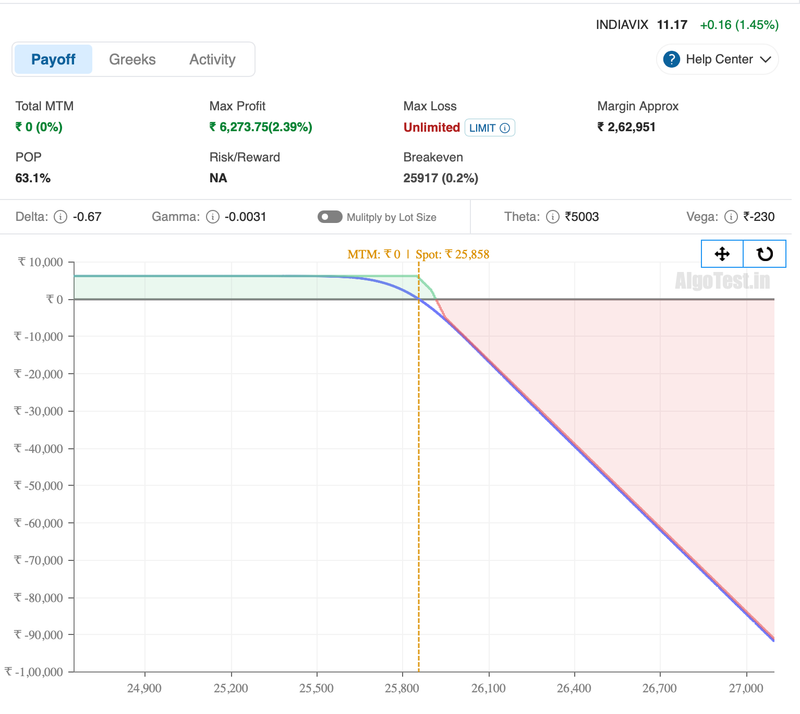Pay off graph
Options trading has changed. It’s not about finding some secret strategy anymore. Everyone has access to the same setups.
The real edge now comes from how well you **test your strategy** and how confidently you execute it.
Here’s how these platforms actually fit into your workflow:
- Sensibull is great if you’re just getting started and want something simple
- Opstra works well if you like going deep into Greeks and analytics
- Quantsapp is useful if you rely heavily on data and insights
But here’s the gap most traders face.
You build a strategy on one tool, analyze it on another, and then execute it somewhere else. That disconnect is where mistakes happen.
[AlgoTest](https://algotest.in/login) solves that as a complete **options simulator for strategy testing and execution**.
You can **backtest your idea, simulate it, and then take it live without** [**switching algo trading platforms**](https://algotest.in/blog/8-best-algo-trading-platforms-in-india-2026) **or rebuilding your setup**.
If you’re serious about trading, you already know this — charts and payoff graphs aren’t enough. You need to see how your strategy behaves in conditions that are close to real markets.
That’s where AlgoTest actually makes a difference.
## Ready to Test Your Strategy?
Ready to start with algo trading in India? Test your strategy for free with [AlgoTest’s options simulator](https://algotest.in/feature/simulator?utm_source=blog&utm_medium=organic&utm_campaign=seo&utm_source=blog&utm_medium=organic&utm_campaign=seo) before risking real capital.
# FAQs
Q: Is there a free option simulator for backtesting in India?
A: Yes, there are free option simulators available in India that allow you to backtest strategies and analyse performance before trading live.
Q: Can I use an options simulator for free download on PC?
A: Most modern options simulators are web-based, so you do not need to download them. You can access them directly from your browser.
Q: Is there an option chain simulator available for free?
A: Some platforms offer option chain-based simulation tools, but advanced simulation with multi-leg strategies may require a more comprehensive platform.
Q: Which is the best free options simulator app in India?
A: The best simulator depends on your needs. Some tools focus on beginners, while others offer advanced multi-leg strategy simulation and analytics.
Q: Are there free simulators for options trading in India?
A: Yes, several platforms provide free simulators or trial access, allowing traders to test strategies without risking real capital.
Q: Do I need to download an options simulator to use it?
A: No, most options simulators are cloud-based and can be used directly without any installation.
Q: Does Sensibull offer an options simulator?
A: Sensibull provides virtual trading and strategy tools, but its simulation capabilities are more suited for basic use cases.
Q: Does Opstra have an options simulator?
A: Opstra offers simulation and analytics tools, especially for strategy payoff and Greeks analysis, but it is more focused on analytics than full workflow simulation.
Q: What is the best options simulator for strategy testing?
A: The best options simulator is one that supports multi-leg strategies, realistic data, and allows you to test before deploying in live markets.
Q: Can I simulate options strategies before live trading?
A: Yes, options simulators allow you to test strategies in simulated market conditions so you can refine them before trading with real money.
---
This blog is powered by Superblog. Visit https://superblog.ai to know more.
---
## Opstra vs Sensibull (2026): Features, Backtesting & Best Platform for Traders
Author: AlgoTest
Author URL: https://algotest.in/blog/author/algotest/
Published: 2026-03-28
Category: General
Category URL: https://algotest.in/blog/category/general/
Meta Description: Opstra vs Sensibull (2026): Compare features, backtesting, pricing, and usability. Find the best options trading platform for your strategy in India.
Tags: algo trading india, options trading
Tag URLs: algo trading india (https://algotest.in/blog/tag/algo-trading-india/), options trading (https://algotest.in/blog/tag/options-trading/)
URL: https://algotest.in/blog/opstra-vs-sensibull/
## **Introduction**
Choosing between Opstra and Sensibull isn’t just about features. It’s about how you actually trade.
Do you need deep analytics, simple strategy building, or full backtesting with execution?
In this detailed Opstra vs Sensibull comparison, we break down what each platform does well, where they fall short, and which one actually helps you trade better, not just analyze.
## **Opstra vs Sensibull: A Detailed Comparison**
To provide a clearer picture of the differences between Opstra ,Sensibull and [AlgoTest,](https://algotest.in/?utm_source=blog&utm_medium=internal&utm_campaign=seo&utm_content=main-page&utm_term=algotest&utm_source=blog&utm_medium=internal&utm_campaign=seo&utm_term=algotest&utm_content=main-page) let's compare them across key features:
**Basis**
**Opstra**
**Sensibull**
**AlgoTest**
Options analysis
Opstra provides various tools for options analysis, such as IV chart, option chain, strategy builder, simulator, payoff graph, etc.
Sensibull also offers various tools for options analysis, such as option chain, strategy builder, payoff graph, screener, etc.
AlgoTest offers option analysis, [strategy builder,](https://algotest.in/feature/strategy-builder?utm_source=blog&utm_medium=organic&utm_campaign=seo&utm_source=blog&utm_medium=organic&utm_campaign=seo) [simulator,](https://algotest.in/feature/simulator?utm_source=blog&utm_medium=organic&utm_campaign=seo&utm_source=blog&utm_medium=organic&utm_campaign=seo) payoff graph, etc.
Fees
Opstra has four plans: Basic (free), Monthly (Rs. 1300 per month), Half-yearly (Rs. 6000), and Annually (Rs. 11000).
Sensibull has two plans: Free (limited features) and Pro (Rs. 800 per month). The Pro plans offer more features and data than the Free plan.
More affordable plans start at ₹499 per month and the Free plan has 25 [weekly backtests](https://algotest.in/feature/backtest?utm_source=blog&utm_medium=internal&utm_campaign=seo&utm_content=feature&utm_term=backtest&utm_source=blog&utm_medium=internal&utm_campaign=seo&utm_term=backtest&utm_content=feature) every Monday upon sign-up.
Strategy Builder
Robust strategy builder for complex strategies.
User-friendly strategy builder for common strategies.
Advanced strategy builder for option trading strategies.
Interface
Intuitive, suitable for both beginners and advanced traders.
User-friendly, ideal for beginners.
User-friendly, simple, intuitive interface suitable for both novice and experienced traders.
Minimum account balance
Opstra does not require a minimum account balance to use its platform.
Sensibull also does not require a minimum account balance to use its platform.
AlgoTest does not require a minimum account balance to use its platform.
Backtesting
Offers historical strategy analysis and simulation, but lacks execution-level backtesting and automation
Limited backtesting capabilities (primarily payoff-based analysis, not full historical simulation)
Offers Advanced Backtesting for options trading strategies using historical data for Banknifty, Nifty, Finnifty, Midcap, Sensex, and Bankex.
Simulator
Yes
No
Yes
Paper Trading
Yes
Yes
Yes
Live Trading
Yes
Yes
Yes
Algo-Trading
No
No
Yes
Broker Support
Limited broker integrations compared to newer algo platforms.
Yes, up to 6 brokers supported.
Yes, 60+ brokers supported.
Risk Assessment
Provides risk assessment tools for options strategies.
Offers risk assessment tools for options strategies.
Offers risk assessment tools for options strategies.
Education
Offers educational resources and tutorials.
Provides educational articles and videos on options trading.
Offers many learning resources, including blog posts, tutorials, YouTube educational videos, and webinars on Algo-trading, option trading, and more.
Support
Responsive customer support team.
Responsive customer support team.
24/7 Responsive customer support team dedicated to assisting users with any queries.
User reviews
Mostly positive reviews on YouTube and Quora, praising its user interface, features, and customer support. Some users have mentioned a lack of historical data and technical glitches.
Mixed reviews on YouTube and Quora, praising features, customer support, and educational content. Some users have mentioned high fees, technical glitches, and inaccurate data.
Positive reviews on YouTube and Google, praising features, customer support, educational blog posts, videos, and guides.
Analytics
Advanced analytics, including Greeks, volatility studies, and option chain analysis.
Comprehensive option chain analysis and basic analytics.
Advanced analytics, including Greeks, option chain analysis, etc.
_Pricing may vary over time. Please check official websites for the latest plans_
### The Real Difference: Analysis vs Execution
While both Opstra and Sensibull are powerful **analysis tools**, neither platform is built for:
- Strategy execution automation
- Advanced historical backtesting
- End-to-end algo trading
For retail traders interested in [**algo trading in India**, AlgoTest](https://algotest.in/?utm_source=blog&utm_medium=internal&utm_campaign=seo&utm_content=main-page&utm_term=algotest&utm_source=blog&utm_medium=internal&utm_campaign=seo&utm_term=algotest&utm_content=main-page) bridges the gap between strategy idea and actual deployment.
## **Opstra Overview**
Opstra is a powerful options trading platform designed to cater to both novice and experienced traders. It boasts an intuitive interface coupled with robust analytical tools, making it a preferred choice for those seeking a comprehensive trading experience. Opstra provides traders with a deep understanding of options strategies, risk management, and market dynamics.
### **Features of Opstra**
- **Intuitive Interface:** Opstra prides itself on its user-friendly design, making it accessible to traders of all levels.
- **Advanced Analytics:** The platform offers a wide range of analytical tools, including Greeks, option chain analysis, and volatility studies.
- **Strategy Builder:** Opstra's strategy builder allows traders to construct complex options strategies with ease.
- **Backtesting:** Historical data can be used to evaluate the performance of different strategies.
- **Simulator:** Practice trading strategies without risking real capital, allowing you to refine your skills.
- **Live Trading:** Execute trades directly through the platform, integrated with Defineedge for seamless order placement.
- **Educational Resources:** Opstra provides a wealth of learning materials to help traders enhance their knowledge.
Related: [AlgoTest vs Sensibull](https://algotest.in/blog/algotest-vs-sensibull/)
## **Sensibull Overview**
Sensibull is another popular options trading platform that has gained traction among traders. It emphasizes simplicity and ease of use, making it a suitable option for those who are new to options trading. While offering a streamlined experience, Sensibull also provides essential tools for more advanced traders.
### **Features of Sensibull**
- **User-Friendly Interface:** Sensibull's clean and intuitive design makes it easy to navigate for beginners.
- **Option Chain Analysis:** Comprehensive analysis of option chains, including implied volatility and open interest.
- **Strategy Builder:** A user-friendly interface to create and analyze various option strategies.
- **Educational Content:** Sensibull offers educational resources to help traders understand options trading concepts.
- **Live Trading:** Integration with up to 6 brokers for convenient [live](https://algotest.in/feature/live?utm_source=blog&utm_medium=internal&utm_campaign=seo&utm_content=feature&utm_term=live) trading.
- **Mobile App:** A mobile application for on-the-go trading and analysis.
Also Read: [AlgoTest Vs Tradetron: A Detailed Comparison](https://algotest.in/blog/algotest-vs-tradetron-detailed-comparison/)
## **Why Choose AlgoTest?**

[AlgoTest](https://algotest.in/?utm_source=blog&utm_medium=internal&utm_campaign=seo&utm_content=main-page&utm_term=algotest) is here to make your algo-trading experience smooth and efficient. Here’s why [AlgoTest](https://algotest.in/?utm_source=blog&utm_medium=internal&utm_campaign=seo&utm_content=main-page&utm_term=algotest) stands out compared to other platforms:
01. **New and Innovative**: Launched in 2021, [AlgoTest](https://algotest.in/?utm_source=blog&utm_medium=internal&utm_campaign=seo&utm_content=main-page&utm_term=algotest) is a player with new ideas but a tried and tested approach in the **algo-trading** world.
02. **Free Charting Tools**: AlgoTest offers free charting tools to help you analyse the market.
03. **Daily Trade Analysis**: Get daily reports to spot patterns in your trades.
04. **Signals AI:** Build indicator-based trading strategies using AI without coding. With [Signals AI,](https://algotest.in/feature/signals/indicators?utm_source=blog&utm_medium=organic&utm_campaign=seo&utm_source=blog&utm_medium=organic&utm_campaign=seo) traders can turn strategy ideas into backtestable and deployable setups faster.
05. **User-Friendly**: No coding needed! AlgoTest is easy to use, especially for beginners, while other platforms can be tricky.
06. **Free Backtesting**: Test your strategies with 25 free [backtests](https://algotest.in/feature/backtest?utm_source=blog&utm_medium=internal&utm_campaign=seo&utm_content=feature&utm_term=backtest) every week.
07. **Paper Trading:** AlgoTest's paper trading (known as [forward testing](https://algotest.in/feature/forward-test?utm_source=blog&utm_medium=organic&utm_campaign=seo&utm_source=blog&utm_medium=organic&utm_campaign=seo) on the platform) feature enables you to test your strategies in real market conditions and fine-tune them according to market conditions **.**
08. **Algo Trading:** With AlgoTest, you can automate your strategies, reducing manual intervention, overtrading, and slippage.
09. **Discretionary Trading Tools**: Use simulators and strategy builders to practice trading skills.
10. **Customisable Strategies**: Tailor your trading strategies to fit your needs.
11. **Simple Interface**: Enjoy an intuitive and easy-to-navigate platform.
12. **Flexible Payment**: Pay only for what you use with a credit-based system.
13. **Multi-Broker Integration**: Connect with over 60+ brokers across India.
14. **Automated Trading**: Let [AlgoTest](https://algotest.in/?utm_source=blog&utm_medium=internal&utm_campaign=seo&utm_content=main-page&utm_term=algotest) handle your trades automatically.
15. **Active Community**: Join a community of over 35,000 traders on Telegram.
16. **Learning Resources**: Access tutorials and [guides](https://docs.algotest.in/) to improve your trading skills.
17. **Free Trial**: Start with 25 free [backtests](https://algotest.in/feature/backtest?utm_source=blog&utm_medium=internal&utm_campaign=seo&utm_content=feature&utm_term=backtest) to explore what [AlgoTest](https://algotest.in/?utm_source=blog&utm_medium=internal&utm_campaign=seo&utm_content=main-page&utm_term=algotest) can do.
Related: [5 Best Strategy Builders for Options Trading in India](https://algotest.in/blog/best-strategy-builders-for-options-trading-in-india/)
### **Why AlgoTest is Great for Traders**
- **Effortless Strategy Building**: Create and deploy [trading strategies](https://algotest.in/blog/9-steps-to-build-a-profitable-algo-trading-strategy) easily.
- **Free Backtesting**: Regularly test your strategies with 25 free [backtest](https://algotest.in/feature/backtest?utm_source=blog&utm_medium=internal&utm_campaign=seo&utm_content=feature&utm_term=backtest) each week.
- **Comprehensive Toolkit**: Get tools for [backtesting, forward testing,](https://algotest.in/blog/difference-between-backtesting-forward-testing-and-live-execution-in-ra-algos) charting, analysis, [live](https://algotest.in/feature/live?utm_source=blog&utm_medium=internal&utm_campaign=seo&utm_content=feature&utm_term=live) trading, simulations, strategy building and signals.
- **Automated Trading**: Trade based on predefined rules without manual intervention.
- **Precise Analysis**: Understand how effective your strategies are.
- **Data-Driven Decisions**: Make informed decisions with detailed data analysis.
- **Strategy Optimization**: Quickly adjust your strategies to match market conditions.
- **For All Levels**: Suitable for both beginners and experienced traders.
[AlgoTest](https://algotest.in/?utm_source=blog&utm_medium=internal&utm_campaign=seo&utm_content=main-page&utm_term=algotest) is perfect for anyone looking for a user-friendly yet powerful trading platform. Ready to enhance your trading? Sign up for [AlgoTest](https://algotest.in/?utm_source=blog&utm_medium=internal&utm_campaign=seo&utm_content=main-page&utm_term=algotest) today and discover smarter, more effective trading!
## **Conclusion**
Both Opstra and Sensibull offer valuable tools for options traders. The optimal choice depends on individual preferences and trading style. If you prioritize advanced analytics, complex strategy building, and in-depth research, Opstra might be the better fit.
On the other hand, if you prefer a simpler interface, focus on core features, and are new to options trading, Sensibull could be a suitable option. It's essential to try both platforms to determine which one aligns best with your trading goals.
Join us now as we simplify building, backtesting and automating algo strategies for Indian retail traders.
Free Sign up
# FAQs
Q: Is Opstra better than Sensibull for options trading?
A: Opstra is generally preferred by traders who need advanced options analytics, volatility studies, and detailed strategy analysis. Sensibull focuses more on simplicity and guided strategy creation, making it easier for beginners. The better choice depends on your trading experience and requirements.
Q: Can I backtest options strategies on Opstra and Sensibull?
A: Opstra offers historical strategy analysis and simulation tools, while Sensibull primarily focuses on strategy building and payoff analysis. Traders looking for advanced options backtesting and automated execution may need a dedicated algo trading platform.
Q: Which platform is better for beginners: Opstra or Sensibull?
A: Sensibull is often considered more beginner-friendly because of its intuitive interface and simplified options trading tools. Opstra offers more advanced analytics but may require a steeper learning curve for new traders.
Q: Do Opstra and Sensibull support automated algo trading?
A: No. Both platforms focus mainly on options analysis, strategy building, and trade execution. They do not offer end-to-end algo trading automation, strategy deployment, and broker-based automated execution.
Q: What is the best alternative to Opstra and Sensibull?
A: If you want to build, backtest, forward test, and automate trading strategies from a single platform, AlgoTest can be a suitable alternative. It combines options analytics, backtesting, paper trading, live execution, and multi-broker support in one place.
---
This blog is powered by Superblog. Visit https://superblog.ai to know more.
---
## QuantMan vs Tradetron vs AlgoTest: A Detailed Comparison 2026
Author: AlgoTest
Author URL: https://algotest.in/blog/author/algotest/
Published: 2026-03-28
Category: General
Category URL: https://algotest.in/blog/category/general/
Meta Description: Compare QuantMan vs Tradetron vs AlgoTest. Explore features, pricing, backtesting, automation, and find the best algo trading platform in India for your strategy.
Tags: algo trade, algo trading india
Tag URLs: algo trade (https://algotest.in/blog/tag/algo-trade/), algo trading india (https://algotest.in/blog/tag/algo-trading-india/)
URL: https://algotest.in/blog/quantman-vs-tradetron/
[Algo trading in India](https://algotest.in/what-is-algo-trading?utm_source=blog&utm_medium=internal&utm_campaign=seo&utm_content=landing-page&utm_term=what-is-algo-trading&utm_source=blog&utm_medium=internal&utm_campaign=seo&utm_term=what-is-algo-trading&utm_content=landing-page) is evolving rapidly, with tighter regulations, smarter tools, and higher execution demands.
Choosing the wrong platform today does more than slow you down. It can directly affect your strategy performance and results.
In this guide, we compare QuantMan, Tradetron, and AlgoTest based on execution, flexibility, and real-world usability.
## **QuantMan vs Tradetron vs AlgoTest: A Detailed Comparison**
Feature
QuantMan
Tradetron
AlgoTest
**Target User**
Beginner to intermediate traders
Intermediate to advanced traders
Beginner to advanced traders
**Type**
Web-based
Web-based, Mobile App
Web-based
**Interface**
Simple and user-friendly
Slightly complex, customizable
Simple and structured
**Strategy Creation**
Indicator-based, drag-and-drop, no-code solution
Rule-based, no-code with flexible logic
Price action and indicator-based strategies with drag-and-drop, no coding required
**Flexibility**
Moderate
High
High
**Backtesting**
Supports backtesting on historical data
Supports backtesting on historical data
Advanced backtesting with detailed analysis
**Optimization**
Available
Available
Advanced optimization features
**Paper Trading**
Available
Available
Available
**Algo Trading**
Supports automation with multiple brokers across India
Supports automation with multiple brokers across India
Supports automation with multiple brokers across India
**Integrations**
Limited external integrations
Supports flexible logic and integrations
Supports integrations with custom code and external tools
**TradingView / ChartInk Support**
No
Yes
Yes
**Simulator / Forward Testing**
No
Limited
Yes
**Strategy Builder**
Available (builder-style workflows)
Yes (rule-based builder)
Yes (visual strategy builder)
**Custom Strategy Support**
Limited
Yes
Yes
**Strategy Marketplace**
No
Yes
Limited / evolving
**Pricing**
Starts from ₹ 1000
Starts from ₹ 300, Varies based on usage
Credit-based and flexible pricing - Starts from 499
**Adjustment Features**
Strategy adjustments available
Strategy adjustments available
Advanced adjustment and control features
**Customer Support**
Available
Available
24/7 support via chat, email, and community
**QuantMan** excels in its user-friendly interface and pre-built indicators, making it an ideal choice for those new to algorithmic trading. Its backtesting and optimization capabilities are solid, allowing traders to refine their strategies effectively.
**Tradetron**, on the other hand, is a platform for experienced traders who demand maximum control and performance. Its syntax-based approach provides unparalleled flexibility but requires a steeper learning curve. The advanced backtesting and optimization tools cater to sophisticated trading strategies.
Also Read: [Algo Trading in India: A Complete Guide](https://algotest.in/blog/algo-trading-india)
## **QuantMan Overview**

QuantMan is a cloud-based algorithmic trading platform that caters to both novice and experienced traders. It emphasises user-friendliness and a wide array of pre-built indicators, making it accessible to those new to the world of quantitative trading.
### **Features of QuantMan**
- **Intuitive Interface:** QuantMan boasts a user-friendly interface, simplifying the process of strategy development and management.
- **Pre-Built Indicators:** A vast library of pre-built indicators is available, allowing traders to quickly construct strategies without extensive coding knowledge.
- **Backtesting and Optimization:** Robust backtesting capabilities enable traders to evaluate strategy performance on historical data and optimise parameters for better results.
- **Paper Trading:** A risk-free environment to test strategies before deploying them in live markets.
- **Live Trading:** Seamless integration with various brokers for executing trades in real-time.
## **Tradetron Overview**

Tradetron is a powerful algorithmic trading platform that appeals to experienced traders seeking granular control and customization. It emphasizes flexibility and performance, offering a robust environment for complex strategy development.
### **Features of Tradetron**
- **Syntax-Based:** Tradetron employs a syntax-based approach, providing immense flexibility in strategy creation.
- **High Performance:** Designed for demanding trading strategies, Tradetron excels in execution speed and efficiency.
- **Customization:** Offers extensive customization options, allowing traders to tailor the platform to their specific needs.
- [**Backtesting and Optimization**](https://algotest.in/blog/guide-to-backtesting-trading-strategies) **:** Comprehensive backtesting tools with advanced optimization capabilities.
- [**Paper Trading**](https://algotest.in/blog/paper-trading-websites-india) **:** Thoroughly test strategies in a simulated environment.
- **Live Trading:** Direct connectivity to multiple brokers for real-time trading.
Also Read: [Tradetron Alternatives for Algo Trading](https://algotest.in/blog/best-tradetron-alternatives-in-2026)
## **Why Choose AlgoTest for Algo Trading in India?**
While QuantMan and Tradetron are powerful platforms, it's essential to consider the learning curve and the complexity of your trading strategies. If you're new to [algo trading](https://algotest.in/what-is-algo-trading?utm_source=blog&utm_medium=internal&utm_campaign=seo&utm_content=landing-page&utm_term=what-is-algo-trading) or prefer a more visual approach, QuantMan might be a suitable starting point. For experienced traders seeking maximum flexibility and control, Tradetron is the preferred choice.
However, there's another option worth considering: [AlgoTest](https://algotest.in/?utm_source=blog&utm_medium=internal&utm_campaign=seo&utm_content=main-page&utm_term=algotest). This platform often serves as a bridge between QuantMan and Tradetron, offering a balance of user-friendliness and customization. It can be a valuable tool for those who want to explore algo trading without diving deep into programming.
[AlgoTest](https://algotest.in/?utm_source=blog&utm_medium=internal&utm_campaign=seo&utm_content=main-page&utm_term=algotest) is here to make your algo-trading experience smooth and efficient. Here’s why [AlgoTest](https://algotest.in/?utm_source=blog&utm_medium=internal&utm_campaign=seo&utm_content=main-page&utm_term=algotest) stands out compared to other platforms:
01. **New and Innovative**: Launched in 2021, [AlgoTest](https://algotest.in/?utm_source=blog&utm_medium=internal&utm_campaign=seo&utm_content=main-page&utm_term=algotest) is an innovative and experienced player in the algo-trading world.
02. **Free Charting Tools**: [AlgoTest](https://algotest.in/?utm_source=blog&utm_medium=internal&utm_campaign=seo&utm_content=main-page&utm_term=algotest) offers free charting tools to help you analyse the market.
03. **Daily Trade Analysis**: Get daily reports to spot patterns in your trades.
04. **User-Friendly**: No coding needed! AlgoTest is easy to use, especially for beginners, while other platforms can be tricky.
05. **Free Backtesting**: Test your strategies with 25 free [backtests](https://algotest.in/feature/backtest?utm_source=blog&utm_medium=internal&utm_campaign=seo&utm_content=feature&utm_term=backtest) every week.
06. **Paper Trading:** [AlgoTest's](https://algotest.in/?utm_source=blog&utm_medium=internal&utm_campaign=seo&utm_content=main-page&utm_term=algotest) paper trading feature enables you to test your strategies in real market conditions and fine-tune them according to market conditions **.**
07. **Algo Trading:** With [AlgoTest](https://algotest.in/?utm_source=blog&utm_medium=internal&utm_campaign=seo&utm_content=main-page&utm_term=algotest), you can automate your strategies, reducing manual intervention, overtrading, and slippage.
08. **Discretionary Trading Tools**: Use a [simulator](https://algotest.in/feature/simulator) and [strategy builder](https://algotest.in/feature/strategy-builder) to practice paper trading skills and live trading. These tools are great for Discretionary trading.
09. **Customisable Strategies**: Tailor your trading strategies to fit your needs.
10. **Simple Interface**: Enjoy an intuitive and easy-to-navigate platform.
11. **Flexible Payment**: Pay only for what you use with a credit-based system.
12. **Multi-Broker Integration**: Connect with over 60+ brokers across India. (Related: [Best Brokers for Algo Trading](https://algotest.in/blog/best-brokers-for-algo-trading-in-india))
13. **Active Community**: Join a community of over 35,000+ traders on Telegram.
14. **Learning Resources**: Access [tutorials](https://docs.algotest.in/) and guides to improve your trading skills.
15. **Free Trial**: Start with 25 free [backtests](https://algotest.in/feature/backtest?utm_source=blog&utm_medium=internal&utm_campaign=seo&utm_content=feature&utm_term=backtest) to explore what [AlgoTest](https://algotest.in/?utm_source=blog&utm_medium=internal&utm_campaign=seo&utm_content=main-page&utm_term=algotest) can do.
## **Conclusion**
Selecting the right [algorithmic trading platform](https://algotest.in/blog/8-best-algo-trading-platforms-in-india-2026) depends on your trading style, experience level, and specific needs. QuantMan excels in its user-friendly interface and comprehensive backtesting capabilities, making it a suitable choice for beginners and those seeking a balance between ease of use and functionality. Tradetron, on the other hand, caters to more advanced traders who demand high customization and flexibility.
Traders who are looking for a comprehensive tool that covers everything from backtesting and paper trading to [algo trading](https://algotest.in/what-is-algo-trading?utm_source=blog&utm_medium=internal&utm_campaign=seo&utm_content=landing-page&utm_term=what-is-algo-trading) should consider [**AlgoTest**](https://algotest.in/?utm_source=blog&utm_medium=internal&utm_campaign=seo&utm_content=main-page&utm_term=algotest) **.** This platform is specifically designed to focus on these areas, providing a strong environment for creating and testing options trading strategies.
By thoroughly comparing the features of QuantMan, Tradetron, and [AlgoTest](https://algotest.in/?utm_source=blog&utm_medium=internal&utm_campaign=seo&utm_content=main-page&utm_term=algotest), you can make an informed decision that matches your trading objectives.
### Related Articles
[5 Best Strategy Builders for Options Trading in India](https://algotest.in/blog/best-strategy-builders-for-options-trading-in-india/)
[AlgoTest vs Opstra: A Detailed Comparison for Algorithmic Options Traders](https://algotest.in/blog/algotest-vs-opstra/)
[Opstra Simulator vs AlgoTest Simulator: Which One Should You Use in 2026?](https://algotest.in/blog/opstra-simulator-vs-algotest-option-simulator/)
# FAQs
Q: Which platform is better for beginners, QuantMan or Tradetron?
A: QuantMan is generally more user-friendly and easier to get started with, making it a better choice for beginners.
Q: Can I use both QuantMan and Tradetron?
A: Yes, many traders use both platforms together to complement different strategies and workflows.
Q: Can I use these platforms for options trading?
A: Yes, both QuantMan and Tradetron support options trading, though their features and capabilities differ.
Q: What types of strategies can I test on AlgoTest?
A: AlgoTest supports a wide range of strategies, including technical and quantitative approaches. You can test strategies on instruments like index futures and options.
Q: Can I do algo trading in AlgoTest?
A: Yes, AlgoTest allows you to automate your strategies using a simple drag-and-drop interface, so you can execute trades without manual intervention.
---
This blog is powered by Superblog. Visit https://superblog.ai to know more.
---
## 5 Best Strategy Builders for Options Trading in India (2026)
Author: AlgoTest
Author URL: https://algotest.in/blog/author/algotest/
Published: 2026-03-27
Category: Strategies
Category URL: https://algotest.in/blog/category/strategies/
Meta Description: Compare the 5 best free options strategy builders in India. Learn features, pros, and which tool is best for backtesting, analysis, and execution.
Tags: option strategy, options trading
Tag URLs: option strategy (https://algotest.in/blog/tag/option-strategy/), options trading (https://algotest.in/blog/tag/options-trading/)
URL: https://algotest.in/blog/best-strategy-builders-for-options-trading-in-india/
### What is an Options Strategy Builder?
A strategy builder is a tool to help you create, test, and execute trading plans (strategies) for options trading.
Instead of guessing how a multi-leg strategy like an Iron Condor, Straddle, or Spread might behave, you can simulate it in advance and see exactly what you’re getting into.
You’ll know your maximum profit, your worst-case loss, and how factors like time decay (Theta) can eat into your position over time.
We have put together a list of the top 5 free options strategy builders in India to help you choose the right tool for your trading arsenal.
## 1\. AlgoTest
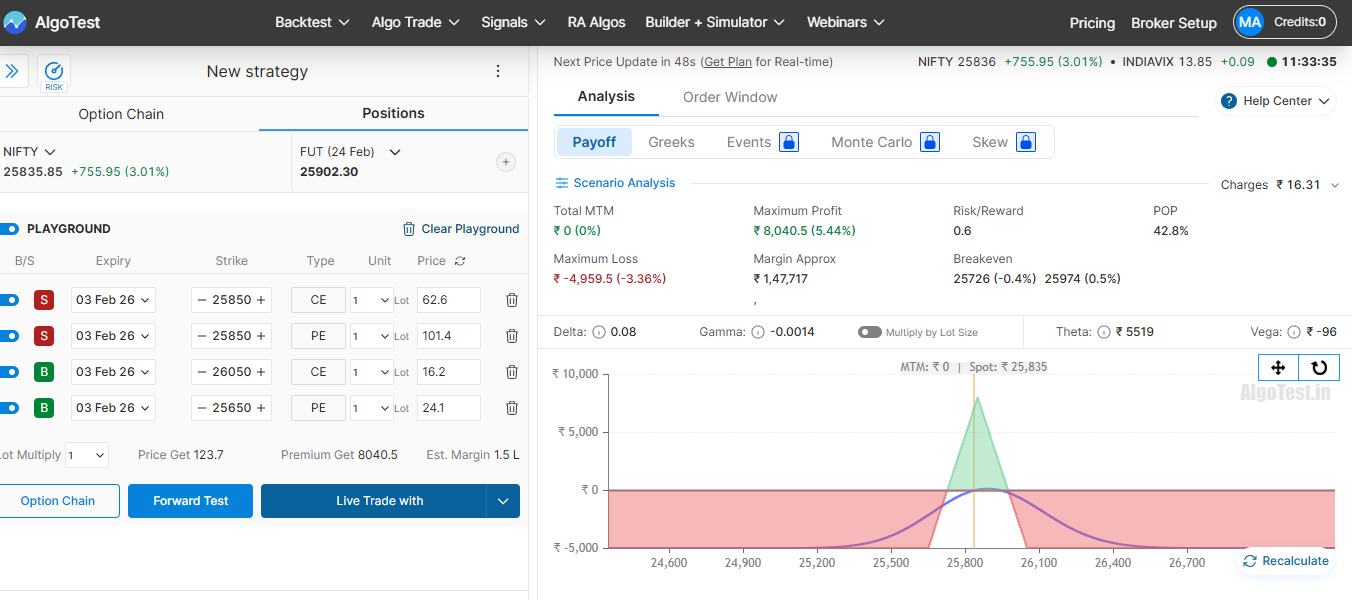
If you’re serious about options trading, [AlgoTest](https://algotest.in) is easily the most complete platform on this list.
What makes it different is simple:
It doesn’t stop at strategy building — it covers the entire trading workflow.
### What you can do
- Build multi-leg strategies with a **no-code interface**
- Define entry/exit conditions (rules-based trading)
- Run **backtests with 7.5+ years of data**
- Perform **forward testing & paper trading**
- Deploy strategies for **live execution**
### Advanced features (where it really stands out)
- **Monte Carlo analysis** (simulate thousands of price paths)
- **IV skew (fixed + floating)** — rare in free tools
- Detailed Greeks + payoff heatmaps
- Multi-expiry strategy view
- Built-in options chain
### Coverage
- Nifty, BankNifty, FinNifty, MidcapNifty
- Sensex, Bankex
- 50+ stock options
### Access
- Free tier: **25 backtests/week + full builder access**
- 60+ broker integrations for execution
### Why it stands out
Most tools force you to switch between:
- analysis → execution → tracking
AlgoTest keeps everything in one place.
You go from **idea → strategy → backtest → forward test → live trade** seamlessly.
That’s a huge edge, especially for systematic traders.
Explore [AlgoTest's strategy Builder](https://algotest.in/feature/strategy-builder) for Free
Read the [AlgoTest Strategy Builder](https://docs.algotest.in/clicktrade/strategy-builder/) guide to learn how to navigate it.
## 2\. Sensibull
Sensibull is probably the most popular options platform in India — especially among Zerodha users.
### What it does well
- Simple and intuitive **strategy builder**
- Real-time payoff charts
- Greeks + IV + OI data
- One-click execution via broker
### Extra features
- **Virtual portfolio (paper trading)**
- Options screener
- FII/DII data insights
### Access
- Free for **Zerodha & Angel One users**
- Paid for other brokers
### Limitations
- No deep backtesting
- No automation or rule-based execution
Best suited for: **Beginners and discretionary traders**
## 3\. Opstra by Definedge
Opstra is built for traders who want **deep options data and analytics**.
### What it offers
- Advanced strategy builder
- Detailed Greeks analysis
- Volatility surface + IV charts
- Open Interest (OI) analytics
### Unique capabilities
- **Options simulator (intraday replay)**
- Backtesting data from 2016
- Pre-built strategies (iron condor, straddle, etc.)
### Access
- Basic tools are free
- Full features require a **Definedge account + paid plan**
### Limitations
- Not beginner-friendly
- Execution is not seamless
Best suited for: **Advanced traders focused on analytics**
Also Read: [How to Use AlgoTest Strategy Builder for a Monthly Iron Condor](https://algotest.in/blog/how-to-use-strategy-builder-iron-condor/)
## 4\. Dhan Strategy Builder
Dhan takes a different approach — it focuses on **speed and execution**.
### What it does well
- Drag-and-drop strategy builder
- Real-time payoff visualization
- Direct execution from the builder
### Execution-focused features
- **Basket orders (multi-strategy execution)**
- Trailing Stop Loss (TSL)
- One Cancels Other (OCO) orders
### Access
- Completely free with a Dhan account
### Limitations
- No backtesting
- No advanced analytics or simulations
Best suited for: **Active traders who prioritize execution speed**
Related: [Options simulator](https://algotest.in/feature/simulator)
## 5\. Upstox Strategy Builder
Upstox offers a clean, beginner-friendly strategy builder inside its trading platform.
### What it offers
- Multi-leg strategy visualization
- Payoff diagrams
- Options chain integration
- Basic Greeks + OI charts
### Additional tools
- Volatility indicators
- Market sentiment insights
### Access
- Free with an Upstox account
### Limitations
- No backtesting
- Limited analytics depth
Best suited for: **Beginner to intermediate traders**
Also read: [Top 6 Backtesting Software for Options Trading in India (2026)](https://algotest.in/blog/best-backtesting-software-for-options-trading-in-india/)
## Quick Comparison of Top Options Strategy Builders
Platform
Best For
Backtesting
Execution
Ease of Use
AlgoTest
Complete workflow
Yes
Yes
⭐⭐⭐⭐
Sensibull
Beginners
❌
✅ Yes
⭐⭐⭐⭐⭐
Opstra
Analytics
✅ Partial
❌
⭐⭐⭐
Dhan
Execution speed
❌
✅ Yes
⭐⭐⭐⭐
Upstox
Simplicity
❌
✅ Yes
⭐⭐⭐⭐
## How to Choose the Right Options Strategy Builder
- **Want one platform that does it all?** Start with [**AlgoTest**](https://algotest.in/login). Research, backtesting, paper trading, and live execution without switching apps. The free tier's 25 backtests/week is enough for a serious workflow, and the analytics depth (Monte Carlo, IV skew, heatmaps, multi-expiry) isn't matched by any other free tool in India right now.
- Just starting out and want something simple? Sensibull or Upstox Pro Web are clean, beginner-friendly options.
- Need deeper volatility and OI analytics? Opstra is worth a look, particularly for Definedge account holders.
- Already on Dhan? Their built-in strategy builder gets the job done for quick execution.
Related- [Best Brokers for Algo Trading in India (2026): API, Speed, and Compliance](https://algotest.in/blog/best-brokers-for-algo-trading-in-india/)
## Final Word
A strategy builder won’t magically make you profitable—but trading multi-leg options without one is like driving blind. It gives you clarity _before_ you put money on the line, and the best part is, you don’t need to pay to get started.
Pick a tool that fits your broker, test a few ideas in paper trading, and pay attention to how it handles Greeks and different market scenarios.
And when you’re ready to move from guesswork to a more systematic approach, that’s where a platform like AlgoTest starts to feel less like a nice-to-have and more like something you actually need.
[Sign up now](https://algotest.in/login) and get 25 Backtests Free/week.
Also read:
[Optimize Your Selling with Option Strategy Builder](https://algotest.in/blog/optimize-sales-with-algotest-option-strategy-builder/)
[Option Strategy Builder: Secrets to Success](https://algotest.in/blog/option-strategy-builder-strategies-that-win/)
[Master the Option Strategy Builder: AlgoTest Tutorial](https://algotest.in/blog/option-strategy-builder-algotest-tutorial/)
_Related searches_: [Leg builder](https://docs.algotest.in/Time-Based-Algo-Trading/How-to-Master-Backtesting-on-AlgoTest/features/leg-builder/), [Monte Carlo drawdown](https://docs.algotest.in/Time-Based-Algo-Trading/Backtest-Analysis-and-Pricing/monte-carlo-drawdown/#how-to-use-monte-carlo-drawdown), payoff graph, [backtesting](https://docs.algotest.in/Time-Based-Algo-Trading/How-to-Master-Backtesting-on-AlgoTest/), [paper trading](https://algotest.in/blog/top-paper-trading-apps-in-india), [Greeks](https://docs.algotest.in/financial-education/options/greek-interactions/#greek-interactions-in-options-trading), [broker setup](https://docs.algotest.in/category/broker-setup/), [option chain](https://docs.algotest.in/clicktrade/simulator/introduction/#overview-of-option-chain)
_Disclaimer: This article is for informational purposes only and does not constitute financial or investment advice. Options trading involves significant risk._
# FAQs
Q: What is an options strategy builder?
A: An options strategy builder is a tool that helps you create and simulate multi-leg options strategies before placing a trade. It shows your potential profit, loss, breakeven points, and how factors like time decay and volatility can impact your position.
Q: Are options strategy builders free in India?
A: Yes, many platforms offer free access with certain limitations. Tools like AlgoTest, Dhan, and Upstox provide strong free features, while platforms like Sensibull and Opstra may require a broker account or paid plan for full access.
Q: Can I backtest options strategies using these tools?
A: Most platforms focus on payoff visualization and analysis, but only a few offer proper backtesting. AlgoTest stands out by providing backtesting along with forward testing and paper trading.
Q: Do I need a broker account to use a strategy builder?
A: Not always. Some platforms allow you to build and test strategies without connecting a broker. However, for execution or full feature access, many tools require integration with a broker account.
Q: What are Greeks and why are they important in strategy builders?
A: Greeks like Delta, Theta, Vega, and Gamma measure how your options position reacts to price changes, time decay, and volatility. A good strategy builder helps you analyze these so you can manage risk better.
Q: Can I automate my options strategies using these tools?
A: Most free tools do not support automation. However, platforms like AlgoTest allow rule-based execution, helping you move from manual trading to a more systematic approach.
Q: Which strategy builder is best for serious or systematic traders?
A: If you want to build, test, and execute strategies in one place, AlgoTest is one of the most comprehensive options available in India.
---
This blog is powered by Superblog. Visit https://superblog.ai to know more.
---
## Opstra Simulator vs AlgoTest Simulator: Which One Should You Use in 2026?
Author: AlgoTest
Author URL: https://algotest.in/blog/author/algotest/
Published: 2026-03-25
Category: General
Category URL: https://algotest.in/blog/category/general/
Tags: option strategy, options
Tag URLs: option strategy (https://algotest.in/blog/tag/option-strategy/), options (https://algotest.in/blog/tag/options/)
URL: https://algotest.in/blog/opstra-simulator-vs-algotest-option-simulator/
Historical [option simulators](https://algotest.in/feature/simulator?utm_source=blogs) have become essential for modern traders. Whether you're refining your discretionary decision-making, testing entry/exit timing, or learning how Greeks evolve throughout the day, your simulator determines how quickly you improve as a trader.
Two names dominate this space in India: **Opstra Option Simulator** and **AlgoTest** [**Option Simulator**](https://algotest.in/feature/simulator?utm_source=blogs). Both are widely used, but they differ massively in speed, depth, accuracy, and the real-world workflows they support.
If you’ve ever searched for **“options simulator India”**, **“opstra option simulator”**, or **“options simulator free”**, this guide will help you decide which one is right for you in 2025.
## **What a Good Option Simulator Should Actually Do**
Most traders think simulators are just for “checking old days.” But a true simulator should let you:
- Replay historical markets tick-by-tick or candle-by-candle
- See greeks (Delta, Gamma, Theta, Vega) change in real time
- Test timing sensitivity
- Practice adjustments
- Understand IV behaviour
- Review your trades with clarity
- Build muscle memory for discretionary trading
This is where the difference between Opstra and AlgoTest becomes very clear.
## **Opstra Option Simulator**
Opstra offers a basic “historical day view” that helps you browse past market data. It’s useful for high-level inspection, but:
- It is not a true replay-based simulator
- Greeks don’t evolve realistically
- You can’t execute or adjust trades during playback
- You can’t replay your own trades
Good for information browsing, but not suitable for actual practice.
## **AlgoTest Option Simulator**
AlgoTest has built India’s **fastest and most advanced option simulator**, designed for real skill-building and strategy refinement.
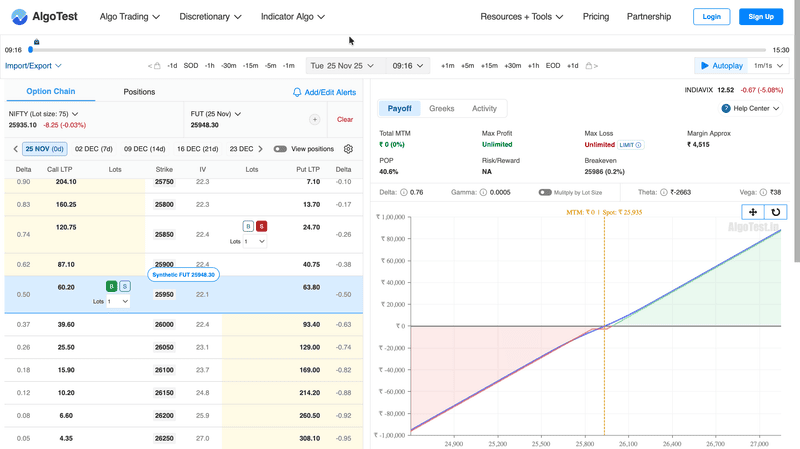
Key highlights:
- **Candle-by-candle replay**
- **Real-time Greeks during simulation**
- **Adjust trades mid-simulation**
- **Review mode** for fine-grained analysis
- **1-week free trial** → **unlimited usage**
Traders use it to:
- Practice intraday
- Understand timing impact
- Build discretionary judgement
- Replay their own live or paper trades
- Improve entries & exits
- Backtest ideas quickly before market hours
No other platform, including Opstra, offers this level of depth.
## **Opstra Simulator vs AlgoTest Option Simulator: 2025 Comparison**
## **Free Trial & Pricing**
### **Option Simulator by AlgoTest**
- **1-week completely unrestricted free trial**
- Unlimited replay
- Unlimited simulation
- Unlimited adjustments
- No broker linking required
### **Opstra Option Simulator**
- No equivalent free, unrestricted simulator
- Limited usage in the free model
AlgoTest is the only software offering a full professional-grade simulator free for a week.
## **Simulation Depth & Accuracy**
### **AlgoTest**
- True replay engine
- Markets play out as they happened
- Greeks update in real time
- You can enter/exit/adjust during simulation
- You can practise discretionary trading exactly like real markets
### **Opstra**
- Static charts for old days
- No true replay
- No adjustment workflow
- No evolving Greeks
For actual trader development, the difference is night and day.
Learn [how to use the Options Simulator on AlgoTest](https://docs.algotest.in/clicktrade/simulator/getting-started/)
## **Workflow & Integration With Real Trading**
This is where AlgoTest is far ahead.
### **AlgoTest**
You can:
1. **Build a strategy on Strategy Builder → Replay it on the Simulator**
2. **Simulate an idea on the Simulator → Push it to Strategy Builder → Trade it live**
3. **Replay your own trades** — review timing, entries, exits, mistakes
This **end-to-end workflow** (Build → Simulate → Trade → Review) is unique to AlgoTest.
### **Opstra**
- No integration with a trading workflow
- No replaying actual trades
- No link between analysis → testing → execution
## **Greeks, IV & Market Behaviour During Simulation**
### **AlgoTest**
- Delta/Gamma/Theta/Vega update live
- Premium changes visible live
- IV changes replayed realistically
- You can test sensitivity & adjustments
### **Opstra**
- Greeks shown, but not replayed
- Not suitable for timing practice
## **Advanced Features**
AlgoTest provides:
- Replay speed control
- Detailed P&L evolution
- Adjustment indicators
- Entry/exit timestamp accuracy
- Review mode with leg-by-leg breakdown
- Light-level Monte Carlo tools (mentioned only where relevant)
Opstra does not provide equivalent functionality in any form.
Related - [Greeks in Options Trading](https://docs.algotest.in/financial-education/options/greek-interactions/#greek-interactions-in-options-trading)
## **Performance & Speed**
AlgoTest rebuilt its simulator engine in 2024–25, making it:
- Faster
- Smoother
- More accurate
- More realistic for intraday-style practice
Opstra’s static-day view is inherently slower and less interactive.
## **Which Simulator Should You Use in 2026?**
## **Choose Option Simulator by AlgoTest if you want:**
- A real simulator, not a static chart
- Replay-based intraday practice
- Evolving Greeks
- Unlimited access for 1 week
- Ability to replay your live or paper trades
- Integration with [Strategy Builder](https://algotest.in/blog/opstra-strategy-builder-vs-algotest/)
- Deep discretionary training
## **Choose Opstra Option Simulator if you want:**
- A very basic historical market viewer
- A quick reference tool
- No need for real replay or adjustments
## **Why AlgoTest Option Simulator Is Becoming the Standard**
[AlgoTest](https://algotest.in) has become the go-to simulator for Indian traders because it offers:
- India’s fastest replay engine
- Realistic greek evolution
- Adjustment-friendly simulation
- Seamless integration with strategy building & execution
- Professional-grade tools accessible to retail traders
- A free trial no competitor offers
Opstra remains a useful data platform, but as a simulator, it simply doesn’t compare.
## **Conclusion**
For traders serious about improving decision-making, testing ideas, or understanding how options behave throughout the day, **AlgoTest Option Simulator is clearly the superior choice in 2026**.
Its **speed**, **depth**, **accuracy**, and **workflow integration** make it the most powerful option simulator available in India today.
→ [**Sign up for a 1-week free trial**](https://algotest.in/login) → Unlimited usage
→ Replay any day, any trade, any idea
## **FAQs**
### **1\. What is the difference between AlgoTest Option Simulator and Opstra Simulator?**
AlgoTest offers a true replay-based simulator where you can enter, exit, and adjust trades while Greeks evolve in real time. Opstra provides a static historical view without replay or adjustment capability.
### **2\. Is AlgoTest Option Simulator free?**
Yes. AlgoTest offers a **1-week unrestricted free trial** with unlimited simulation, replay, and analysis.
### **3\. Can I replay my real trades on AlgoTest?**
Yes. You can replay your actual trades and analyze timing, entries, exits, and P&L evolution, something Opstra does not offer.
### **4\. Is there a true options trading simulator in India?**
AlgoTest Option Simulator is currently the most advanced, realistic, and widely used replay-based simulator in India.
### **5\. Does AlgoTest include Monte Carlo simulation?**
AlgoTest includes light Monte Carlo-related tools, but the main focus of the Option Simulator is real-day replay, not Monte Carlo modelling.
### **6\. Which simulator is better for learning discretionary trading?**
Option Simulator by AlgoTest, because it lets you practise timing, entries, adjustments, and trade management exactly like live markets.
---
This blog is powered by Superblog. Visit https://superblog.ai to know more.
---
## Sensex Option Chain Explained: How to Read, Analyse & Trade Using Live Data
Author: AlgoTest
Author URL: https://algotest.in/blog/author/algotest/
Published: 2026-03-24
Category: option chain
Category URL: https://algotest.in/blog/category/option-chain/
Meta Description: Learn how to read the Sensex option chain, analyse OI, IV, and build strategies using live Sensex option chain data on BSE.
Tags: algo trading india, options
Tag URLs: algo trading india (https://algotest.in/blog/tag/algo-trading-india/), options (https://algotest.in/blog/tag/options/)
URL: https://algotest.in/blog/how-to-read-and-analyse-sensex-option-chain/
## **What is Sensex Option Chain?**
The **Sensex option chain** is a table showing all available call and put options, including strike price, open interest, volume, and implied volatility.
Whether you're using the **Sensex option chain live** or analysing past data, traders use it to identify market sentiment, support, resistance, and trading opportunities.
You can also track the **BSE Sensex option chain** in real time to understand how positions are building across strike prices.
[https://algotest.in/sensex-option-chain](https://algotest.in/sensex-option-chain)
Let's take a look at how to trade in Sensex, how to read the Sensex option chain, and how to use it in trading.
## Sensex Option Chain Table & Data Overview
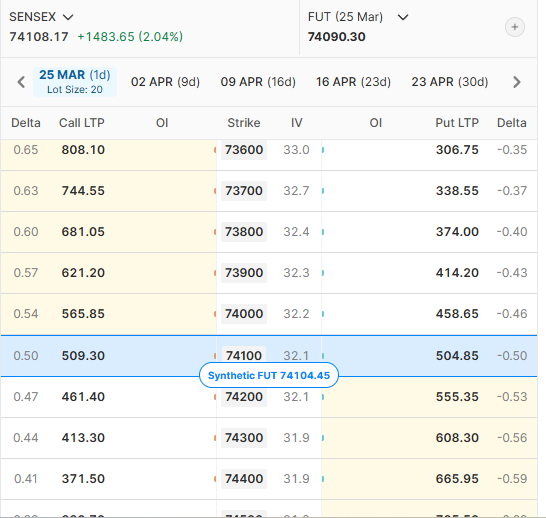
The Sensex option chain includes key data points such as:
- [Strike prices](https://docs.algotest.in/financial-education/options/options-trading-terms/#1-strike-price)
- [Premiums](https://docs.algotest.in/financial-education/options/options-trading-terms/#5-premium)
- [Volume](https://docs.algotest.in/product-blogs/options-trading-terms/#23-volume)
- [Open Interest (OI)](https://docs.algotest.in/product-blogs/options-trading-terms/#24-open-interest)
- [Implied Volatility (IV)](https://docs.algotest.in/financial-education/options/greek-interactions/#3-vega-and-implied-volatility)
This data helps traders perform **Sensex option chain analysis** to compare contracts, understand market sentiment, and plan trades more effectively.
## **Key Components of Sensex Option Chain**
Understanding these components is essential before using any option chain trading strategy.
### Strike Price
This is the price at which you can buy or sell the Sensex. Multiple strike prices are available for each expiry.
### Premium
This is the price paid by the buyer to the seller. It changes based on time, volatility, and market movement. The option chain also shows bid and ask prices.
### Open Interest (OI)
This shows how many contracts are currently active at a strike price. High OI indicates strong participation and can act as a potential support or resistance zone. It does not guarantee price movement.
Track the **Sensex option chain live** and validate setups here:
[https://algotest.in/sensex-option-chain](https://algotest.in/sensex-option-chain)
**Volume**
This shows how many contracts are traded during the day. It helps you understand activity and interest at a specific level.
**Implied Volatility (IV)**
This reflects expected market movement. High IV means higher expected movement and higher premiums. Low IV suggests relatively stable conditions.
Read more about volatility here: [Understanding Volatility](https://docs.algotest.in/financial-education/options/understanding-volatility/#understanding-volatility)
## **How to Read BSE Sensex Option Chain (Step-by-Step)**
To effectively use the **Sensex option chain**, follow this structured approach:
1. Identify the **ATM (At-The-Money) strike**
2. Compare **Call vs Put Open Interest**
3. Track **Change in OI (COI)**
4. Observe **volume spikes**
5. Analyse **implied volatility (IV)**
This helps you understand whether the market is bullish, bearish, or range-bound.
_Related:_ [_How to Read Nifty Option Chain Like a Pro (with Live OI Example_](https://algotest.in/blog/how-to-read-nifty-option-chain-step-by-step-for-traders/)
## **Sensex Option Chain Analysis Today (Example)**
Let’s understand how traders use **Sensex option chain analysis today**:
- Current Sensex level: Near ATM strike
- Highest Call OI → Potential resistance
- Highest Put OI → Potential support
Interpretation:
- Market likely to trade within a range
- Suitable strategy: Credit spread / Iron condor
Track live data and validate setups here:
[https://algotest.in/sensex-option-chain](https://algotest.in/sensex-option-chain)
## **Trading Use Cases of Sensex Option Chain**
This is where option chain analysis becomes powerful.
## **1\. Identifying Support and Resistance**
- High Put OI → Strong support
- High Call OI → Strong resistance
This helps traders plan entries and exits.
## **2\. Intraday Trading Using Option Chain**
For **intraday option chain strategy**:
- Track OI shifts in real time
- Watch price breakout near high OI levels
- Confirm with volume
Useful for scalping and short-term trades
## **3\. Expiry Day Trading Strategy**
On expiry:
- Monitor **max pain level**
- Track **OI unwinding**
- Expect volatility spikes
Helps in **weekly expiry option chain analysis**
## **4\. Strategy Building Using Option Chain**
Traders use option chain data to build:
- Credit spreads
- Iron condors
- Straddles and strangles
Avoid random trades—use structured strategies
_Related:_ [_Option Strategy Builder: Build, Test & Optimize Winning Trades with AlgoTest_](https://algotest.in/blog/option-strategy-builder-strategies-that-win/)
## **Understanding ITM, ATM, and OTM**
### **ITM (In-The-Money)**
Higher probability, higher premium
### **ATM (At-The-Money)**
Balanced risk and reward
### **OTM (Out-of-The-Money)**
Cheaper but requires strong movement
## **Option Greeks**
**Delta**
Shows how much the option premium changes with price movement.
**Theta**
Represents time decay and shows how much the value reduces as expiry approaches.
**Vega**
Shows how changes in volatility impact the premium.
**Gamma**
Shows how quickly delta changes. It is usually highest near ATM, especially close to expiry.
Learn more about Greeks here: [**Greeks interactions in options trading**](https://docs.algotest.in/financial-education/options/greek-interactions/#greek-interactions-in-options-trading)
[https://algotest.in/sensex-option-chain](https://algotest.in/sensex-option-chain)
## **PCR and Max Pain in Option Chain**
### **Put Call Ratio (PCR)**
PCR = Put OI / Call OI
- Above 1 → Bullish bias
- Below 1 → Bearish bias
### **Max Pain**
The level where option sellers face minimum loss.
Price may gravitate toward this level near expiry
Read More: [**Undеrstanding thе Put Call Ratio: A Kеy Indicator for Options Tradеrs**](https://algotest.in/blog/put-call-ratio-a-key-indicator-for-options-traders/)
## **How to Trade Using Sensex Option Chain**
Follow this structured approach:
### 1\. Define your market view
Bullish / Bearish / Neutral
### 2\. Select expiry
Weekly for short-term, monthly for positional
### 3\. Choose strike
ATM for beginners, ITM for safer trades
### 4\. Use strategies
Avoid random buying/selling
### 5\. Monitor continuously
Track price + OI together
Validate your trades with Sensex option chain live data:
[https://algotest.in/sensex-option-chain](https://algotest.in/sensex-option-chain)
## **Sensex vs Nifty Option Chain**
Factor
Sensex
Nifty
Lot Size
Smaller
Larger
Liquidity
Moderate
High
Volatility
Balanced
Higher
Choose based on your trading style and capital
## **Access Historical Option Chain Data on AlgoTest**
With AlgoTest’s **Options Simulator**, you can access historical option chain data and backtest your strategies using real market conditions.
Explore historical option chain for:
- [Sensex Option Chain](https://algotest.in/sensex-option-chain)
- [Nifty Option Chain](https://algotest.in/nifty-option-chain)
- [BankNifty Option Chain](https://algotest.in/banknifty-option-chain)
- [Finnifty Option Chain](https://algotest.in/finnifty-option-chain)
- [Midcap Nifty Option Chain](https://algotest.in/midcapnifty-option-chain)
- [Bankex Option Chain](https://algotest.in/bankex-option-chain)
Analyze past data, validate your strategies, and trade with confidence.
## Conclusion
The Sensex option chain is a practical tool to understand market positioning and potential price levels.
However, it should not be used in isolation. Combine it with price action, trend, and risk management for better results.
To move from learning to execution:
[Sign up now](https://algotest.in/login) and get 25 backtests free.
Start with the basics. Focus on open interest, change in open interest, and clear setups. This alone can significantly improve your trading decisions.
# FAQs
Q: What is Sensex option chain and how does it work?
A: The Sensex option chain is a table that shows all available call and put options for the Sensex index. It includes strike prices, open interest, volume, premiums, and implied volatility. Traders use it to understand market sentiment and identify possible support and resistance levels.
Q: How to read Sensex option chain for beginners?
A: To read the Sensex option chain, start with the ATM strike, then check open interest on calls and puts to identify resistance and support. Next, track change in OI and confirm with price movement and volume to understand market direction.
Q: What does open interest mean in Sensex option chain?
A: Open interest shows the total number of active option contracts at a specific strike price. High open interest indicates strong participation and can act as a potential support or resistance zone, but it does not guarantee price movement.
Q: How to use Sensex option chain for support and resistance?
A: High call open interest usually acts as resistance, while high put open interest acts as support. These levels help traders identify where the market may face selling or buying pressure.
Q: What is PCR in Sensex option chain analysis?
A: PCR, or Put Call Ratio, is calculated by dividing total put open interest by total call open interest. A value above 1 indicates bullish bias, while below 1 indicates bearish bias. Extreme values can signal possible reversals.
Q: How to trade using Sensex option chain data?
A: Traders first define their market view, then select expiry and strike price based on risk. They use option chain data like OI and IV to confirm their setup and apply strategies such as spreads instead of trading randomly.
Q: What is implied volatility in Sensex option chain?
A: Implied volatility shows expected market movement. High IV means options are expensive and larger moves are expected, while low IV means cheaper options and relatively stable conditions.
Q: What is the difference between OI and volume in option chain?
A: Open interest shows total active contracts, while volume shows how many contracts are traded in a day. OI indicates positioning, and volume shows current activity.
Q: Can Sensex option chain predict market direction?
A: The option chain can indicate market bias through OI, PCR, and positioning, but it should not be used alone. It works best when combined with price action, trend, and proper analysis.
Q: Where can I check live Sensex option chain data?
A: You can check live Sensex option chain data on platforms like AlgoTest, which provide real-time OI, strike analysis, and simplified visuals to help traders make better decisions.
---
This blog is powered by Superblog. Visit https://superblog.ai to know more.
---
## Automate SEBI Registered Analyst Strategies (No Coding Algo Trading)
Author: AlgoTest
Author URL: https://algotest.in/blog/author/algotest/
Published: 2026-03-23
Category: RA Algos
Category URL: https://algotest.in/blog/category/ra-algos/
Meta Description: Trade SEBI registered research analyst strategies without coding. Explore 600+ RA algos, backtest performance, and automate your trades with AlgoTest.
Tags: algo trading, ra algos
Tag URLs: algo trading (https://algotest.in/blog/tag/algo-trading/), ra algos (https://algotest.in/blog/tag/ra-algos/)
URL: https://algotest.in/blog/sebi-registered-analyst-strategies/
Indian markets are flooded with trading advice, making it hard to separate facts from fiction. Finding reliable, profitable strategies is the biggest challenge for retail traders.
The difference between a blown account and consistent growth often comes down to one thing: **the source of your information.**
In India, the gold standard for financial advice is the SEBI-registered research analyst.
## What is a SEBI Registered Research Analyst (RA)?
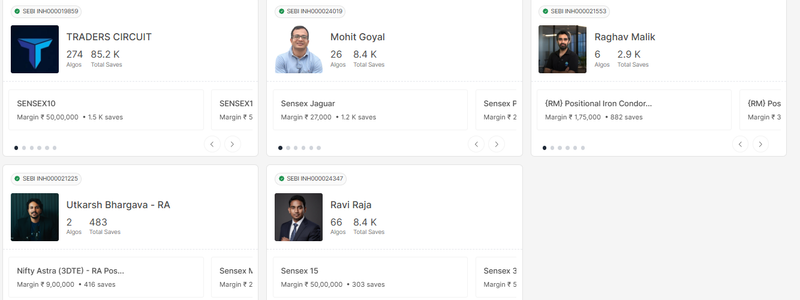
A SEBI-registered research analyst is an individual or entity authorized by the **Securities and Exchange Board of India** to provide investment recommendations and stock reports.
To get this license, an analyst must meet strict criteria regarding qualifications, capital adequacy, and ethical conduct. Every legitimate analyst is assigned a unique **INH number** (e.g., INH00000XXXX), which serves as their official identification.
Learn [what is RA Algos and how it works on AlgoTest](https://algotest.in/blog/what-is-ra-algos-and-how-it-works-on-algotest/)
## Why Traders Should Only Trust SEBI Registered Analysts
The Indian markets are flooded with "finfluencers" and Telegram channels offering unverified trading tips. Following uncertified individuals carries massive risks:
- **Lack of Accountability:** Unregistered "experts" aren't bound by SEBI’s code of conduct.
- **Conflict of Interest:** They may be pumping stocks they already own.
- **Hidden Performance:** There is no transparency regarding their actual success rate or drawdowns.
By sticking to **SEBI registered analysts in India**, you ensure that the person behind the strategy is legally accountable and professionally vetted.
## How to Verify a SEBI Registered Research Analyst
Before you pay for a subscription or follow a trade, always verify the **INH number SEBI** has provided them. Here is how:
1. Visit the official **SEBI website** (sebi.gov.in).
2. Navigate to the "Enforcement" or "Recognised Intermediaries" section.
3. Search the **SEBI RA list India** by entering the analyst's name or registration number.
4. Ensure the registration is "Active" and the details match the person or firm you are dealing with.
Check out [SEBI Registered Research Analysts](https://algotest.in/blog/sebi-registered-research-analysts/) on AlgoTest.
AlgoTest makes algo trading simple. You can go from finding a strategy to running it live in just a few steps—without any coding.
### 1\. Find Strategies from Verified Analysts
Start by exploring strategies created by [RAs.](https://algotest.in/ra-algos)
For each strategy, you can quickly see:
- Capital required
- Win rate
- Drawdown (risk level)
This helps you pick a strategy that matches your risk level and trading style.
### 2\. Backtest the Strategy
Before using real money, you can [**backtest**](https://algotest.in/backtest) the strategy on past data.
This helps you:
- See how it performed in different market conditions
- Understand profits, losses, and drawdowns
- Decide if it fits your expectations
Instead of guessing, you’re making a data-based decision.
### 3\. Forward Test in Live Market (No Risk)
Next, you can [**forward test**](https://algotest.in/forward-test) the strategy using paper trading.
That means:
- Trades happen in real time
- No real money is used
- You can see how the strategy performs today
This step builds confidence before going live.
### 4\. Connect Your Broker
Once you're comfortable:
- Connect your trading account securely
- Choose from 60+ [supported brokers](https://algotest.in/blog/best-brokers-for-algo-trading-in-india)
No APIs, no setup, no technical knowledge required.
### 5\. Start Automated Trading
Now you’re ready to go live.
- Trades are executed automatically
- Entries, exits, and stop-loss follow fixed rules
- No need to monitor the screen all day
[AlgoTest](https://algotest.in/login) handles execution and tracking, while you stay focused on strategy.
Instead of relying on tips or emotions, you follow a clear process:
**Find → Backtest → Forward Test → Automate**
No coding. No confusion. Just rule-based trading.
## RA Algos vs Manual Trading
Here's a side-by-side look at where most traders are today versus what RA Algos on AlgoTest offers:
**Factor**
**Manual Trading (Tips)**
**RA Algos on AlgoTest**
Strategy Source
Unknown, unverified tipsters
SEBI-registered research analysts
Transparency
None. Just buy/sell messages
Full logic, rules and backtest data
Backtesting
Not available
Historical data included
Forward Testing
Not available
Free live simulation
Execution
Manual and error-prone
One-tap, automated via broker
Emotions
High. Panic, FOMO, hesitation
Zero. Rules-based, systematic
Consistency
Depends on the trader's mood
100% consistent rule execution
Accountability
None
SEBI-registered, legally compliant
Cost
Monthly subscription + losses
Free to explore and backtest
Related - [Manual Trading vs Algo Trading](https://algotest.in/blog/manual-trading-vs-algo-trading-in-india-which-is-better-for-retail-traders/)
## Explore 600+ Algos from 30+ SEBI Registered Analysts
AlgoTest's RA Algos isn't a handful of generic strategies. It's a growing library of professionally built algorithms from verified, SEBI-registered research analysts across India.
**Here's what's live on the platform right now:**
- 31+ SEBI-registered research analysts
- 600+ individual algo strategies to explore
- **Intraday strategies** — same-day entry and exit, built for Nifty, BankNifty, and stock options
- **Positional strategies** — multi-day or multi-week trades for traders who prefer longer time frames
- **BTST strategies** — overnight positions with defined risk parameters
- **Option buying strategies** — defined risk with asymmetric reward potential
- **Option selling strategies** — structured premium collection approaches
Learn [how to backtest strategies](https://algotest.in/blog/how-to-backtest-options-trading-strategies-with-examples) on AlgoTest.
> Every analyst on the platform holds a verified SEBI registration. You can check their credentials yourself, no blind trust.
Whether you prefer aggressive intraday setups or conservative premium selling, you'll find a SEBI RA-backed strategy built for your trading style.
Learn how to complete [multiple RA Algos](https://docs.algotest.in/ra-algos/ra-portfolio/) and trade them together.
## Start Trading SEBI-Registered Analyst Strategies Today
Stop letting emotions and missed entries hold back your trading journey.
It is time to explore algos built by verified experts. Backtest for free, gain confidence, and automate your trades effortlessly.
Explore our RA Algos and start your trading journey with [expert-created strategies](https://algotest.in/ra-algos)
**Important Disclaimer**
Trading involves risk. Past performance — backtested or otherwise — does not guarantee future results.
AlgoTest is a technology platform, not a SEBI-registered investment advisor. RA Algos are created by third-party registered analysts. Please verify credentials independently and make your own informed decisions.
Platform profitability statistics are not a promise of returns. Trade with real capital only after reading all risk disclosures.
# FAQs
Q: What is a research analyst in SEBI?
A: A SEBI registered research analyst is a certified professional authorized by the Securities and Exchange Board of India to legally provide financial research, stock recommendations, and trading strategies.
Q: Can we trust a SEBI registered research analyst?
A: Yes. Unlike unregulated Telegram tipsters or social media "finfluencers," SEBI registered analysts are strictly regulated, must adhere to ethical compliance, and are legally accountable for the recommendations they provide.
Q: Who is the best SEBI registered research analyst?
A: There is no single "best" analyst, as the ideal choice depends on your specific risk appetite and trading style (e.g., options selling vs. intraday buying). On platforms like AlgoTest, you can compare and backtest strategies from 30+ top SEBI RAs to find the best fit for your capital.
Q: What qualifications do I need to be a research analyst?
A: To receive a SEBI INH number, an analyst must pass rigorous NISM certification exams, hold relevant professional degrees (like finance or economics), and meet strict net-worth requirements, ensuring they are highly qualified to advise retail traders.
---
This blog is powered by Superblog. Visit https://superblog.ai to know more.
---
## Algo Trading Software Price in India: AlgoTest vs. Tradetron vs. uTradeAlgos
Author: AlgoTest
Author URL: https://algotest.in/blog/author/algotest/
Published: 2026-03-22
Category: General
Category URL: https://algotest.in/blog/category/general/
Tags: algo trade, algo trading india
Tag URLs: algo trade (https://algotest.in/blog/tag/algo-trade/), algo trading india (https://algotest.in/blog/tag/algo-trading-india/)
URL: https://algotest.in/blog/algo-trading-software-price-in-india/

The **cost of algo trading software** can hurt your profits more than a bad trade. Ignore it, and you’ll slowly lose your edge.
[Algo trading in India](https://algotest.in/blog/algo-trading-india/) is growing fast but so is the confusion around pricing.
More retail traders are automating their strategies. But the real question isn’t _“which strategy works?”_—it’s:
**“What will this actually cost me?”**
And that’s the right question.
Even a solid strategy fails if costs eat into your edge
Lower platform costs give you room to test, adapt, and survive drawdowns
In this blog, we break down **AlgoTest vs Tradetron vs uTradeAlgos** and focus on **the real cost of algo trading.**
## Why Algo Trading Software Price Matters More Than You Think
Most traders obsess over indicators, backtests, and win rates. Very few sit down and do this math:
> _If your platform costs ₹2,000/month, that's ₹24,000/year. Your strategy must generate ₹24,000 in additional profit just to break even on the subscription alone — before brokerage, slippage, or taxes._
That's not a small number for a retail trader running ₹2–5 lakh in capital.
According to [Economic Times](https://economictimes.indiatimes.com), algo trading now accounts for over 50% of daily turnover on Indian exchanges — a sign that automation is no longer optional for traders who want to stay competitive. And as the space grows, so does the pricing gap between platforms.
This is why the **cheapest** [**algo trading platform in India**](https://algotest.in/blog/8-best-algo-trading-platforms-in-india-2026/) isn't just a budget question — it's a profitability question. Lower fixed costs mean your strategy reaches profitability faster and stays there with less pressure.
## Algo Trading Software Price Comparison
### 1\. AlgoTest

AlgoTest is currently the most competitively priced serious algo trading platform in India. See the full breakdown on the [AlgoTest Pricing page](https://algotest.in/pricing). The Starter Plan at **₹499/month** includes:
- [Strategy backtesting](https://algotest.in/feature/backtest) with historical data
- Paper trading (risk-free strategy testing)
- [Live strategy deployment](https://algotest.in/feature/live)
- No-code strategy builder
- Multi-broker support — see the full [broker setup documentation](https://docs.algotest.in/category/broker-setup/) for Zerodha, Angel One, Fyers, and more
- [**Marketplace access**](https://algotest.in/blog/algo-trading-marketplace-india/) — includes [RA Algos](https://algotest.in/ra-algo) (strategies from SEBI-registered research analysts) and a crypto strategies marketplace
What makes this pricing genuinely different is that **live deployment is included at the entry level.** Most platforms reserve live trading for mid or premium tiers.
For a beginner validating their first options selling strategy or an intermediate trader running 1–2 live systems, ₹499 means your platform cost is nearly irrelevant to your P&L.
You're not fighting against a ₹24,000/year fixed cost before your first profitable month.
### 2\. Tradetron
Tradetron's pricing starts around **₹1,000–₹1,500/month** for a basic plan and scales to **₹3,000+** for advanced tiers.
Key points to note:
- The entry plan comes with meaningful restrictions on the number of strategies you can run simultaneously
- As you scale up, you're pushed into higher tiers quickly, even for fairly standard trading setups
- Additional feature access and priority execution are gated behind the more expensive plans
- So a trader who starts at ₹1,000/month can realistically end up at **₹2,500–₹4,000/month** once they're running a proper setup and that's before a single brokerage charge
**Who it makes sense for:** Traders who are already comfortable with the platform and have a clear picture of exactly which tier covers their strategy volume. The cost structure favours advanced users over beginners.
### 3\. uTradeAlgos
uTradeAlgos is a newer platform with a clean UI and a focus on simplicity. Here's what to know about the cost structure:
- Pricing ranges from **₹1,000 to ₹2,500/month** depending on the plan
- Pricing is linked to your broker relationship and chosen plan structure
- No free tier — you move straight into a paid plan from day one
- Better suited for traders who have a clear idea of their setup and broker preference
**Who it makes sense for:** Traders who prefer a structured, guided experience and are already clear on which broker they're using.
## Quick Comparison Table
Platform
Starting Price
Realistic Monthly Cost
Live Trading at Entry?
Free Tier?
**AlgoTest**
₹499
₹499–₹1,000
Yes
Yes (backtesting + paper)
**Tradetron**
₹1,000+
₹2,500–₹4,000+
Limited
Very restricted
**uTradeAlgos**
₹1,000+
₹1,500–₹2,500
Depends on the plan
No
## The Hidden Costs Every Trader Misses
The subscription is just the starting line. Here's what actually adds up:
**Slippage**
- Your backtest says your strategy makes 1.2% a month
- Live, it delivers 0.6% — because the actual buy/sell price never matches the expected price exactly
- That gap is slippage, and it quietly halves your returns if your platform's [backtesting engine](https://algotest.in/feature/backtest) doesn't account for it realistically
**Scaling costs**
- You start with 1 strategy, it works, you want to run 5
- Many platforms charge per strategy slot — so your ₹499 base plan becomes ₹1,500+ without you realising it
- Always check how [live deployments](https://algotest.in/feature/live) are priced before you scale, not after
**Marketplace subscriptions**
- On platforms like Tradetron, you pay per strategy you subscribe to
- That strategy stops working in month 3 — but you're still being charged until you manually cancel
- Two underperforming subscriptions + platform fee = ₹3,000–₹5,000/month gone before a single trade
**Learning curve**
- A platform that takes 3 months to figure out has cost you 3 months of live trading time
- That's a real cost, just not one that shows up on an invoice
- A no-code builder isn't just a convenience feature; it's weeks of lost time you get back
## Is There a Free Algo Trading Software in India?
"Algo trading software price free" is one of the most searched phrases in this space — and understandably so.
Here's the honest answer: **Truly free, live algo trading doesn't exist at a usable level.**
What free tiers actually give you:
- **AlgoTest free:** [Backtesting](https://algotest.in/feature/backtest) and paper trading are available without payment. Live strategy deployment requires a paid plan. This is still the most useful free tier in the market — you can fully validate a strategy before spending a rupee.
- **Tradetron free:** Extremely limited execution capacity. Effectively a demo, not a working trading environment.
- **uTradeAlgos:** No free tier at all.
If you're serious about algo trading, a ₹499/month plan is the real "free" — because it's cheap enough to not materially affect your returns while giving you full live access.
Check the [AlgoTest Pricing page](https://algotest.in/pricing) to see exactly what's included at each tier.
## Top 10 Algo Trading Software in India (2026)
For traders exploring the broader landscape, here's a quick-reference list. As [NSE India](https://www.nseindia.com) continues expanding its algo trading framework for retail participants, the number of platforms entering this space is only growing — making price and usability comparisons more important than ever.
01. **AlgoTest** — Best price-to-feature ratio; ideal for retail traders
02. **Tradetron** — Best strategy marketplace; suited for non-builders
03. **uTradeAlgos** — Best for compliance-focused traders
04. **Streak (Zerodha)** — Best for Zerodha users wanting basic automation
05. **AlgoBulls** — Good for Python-based strategy builders
06. **Sensibull** — Strong options analytics, partial automation
07. **Quantiply** — Institutional-grade, higher cost
08. **StockMock** — Good for paper trading and strategy simulation
09. **AlgoRooms** — Community-driven, mid-range pricing
10. **Kite Connect API** — For developers building custom systems on Zerodha
Pricing and feature sets across this list vary significantly. The best algo trading software in India for _you_ depends entirely on your strategy complexity, capital size, and how much you want to build vs. subscribe. Browse the [AlgoTest blog](https://algotest.in/blog/10-best-algo-trading-software-in-india-2025/) for deeper breakdowns on each of these platforms.
## Final Verdict: What's the Real Cost of Algo Trading in India?
The real cost is: **subscription + execution + scaling + learning curve.**
Most traders only account for the first one.
If you're starting out or running a lean operation, **AlgoTest at ₹499/month** is the clearest choice because it removes cost as a psychological pressure while you build and validate your edge.
When your strategy is consistently generating ₹5,000–₹10,000/month, upgrading to a higher tier or exploring other platforms becomes a business decision, not a gamble.
Start lean. Validate fast. Scale when the P&L tells you to — not before.
[See AlgoTest's full pricing breakdown](https://algotest.in/pricing) — and start with the Starter Plan at ₹499/month.
[Sign up](https://algotest.in/login) and get 25 backtests/week free.
**Related searches:** · [best tradetron alternatives](https://algotest.in/blog/best-tradetron-alternatives-in-2026/), [best paper trading websites in India](https://algotest.in/blog/paper-trading-websites-india/), [best backtesting software](https://algotest.in/blog/best-backtesting-software-for-options-trading-in-india/), [algo trading india guide](https://algotest.in/blog/algo-trading-india/), [popular algo trading strategies](https://algotest.in/blog/6-popular-algo-trading-strategies-for-retail-traders-in-india/)
# FAQs
Q: What are Zerodha algo trading charges?
A: Zerodha doesn't offer a native advanced algo platform. Streak (their strategy tool) costs ₹500–₹1,500/month. For full automation, most Zerodha users use a third-party platform like AlgoTest alongside Kite Connect, which adds ₹2,000/month for API access. AlgoTest's broker setup docs walk you through the Zerodha integration step by step.
Q: Is there algo trading software with free download in India?
A: Some open-source frameworks exist (like Zipline or Backtrader) but require coding knowledge and don't connect to Indian brokers out of the box. For no-code live trading, paid platforms are the practical route.
Q: Which is the best algo trading app in India for beginners?
A: AlgoTest — primarily because the ₹499 entry point means you're not under financial pressure while learning, and the no-code builder removes the technical barrier. Start with the free backtesting tool to validate your strategy before going live.
Q: Can I do fully automated trading in India legally?
A: Yes. Algo trading is legal in India for retail traders through SEBI-registered brokers. Platforms like AlgoTest, Tradetron, and uTradeAlgos all operate within this framework. Check the broker integration docs to confirm your broker is supported before signing up.
---
This blog is powered by Superblog. Visit https://superblog.ai to know more.
---
## Algo Trading India: Complete Guide for Retail Traders (2026)
Author: AlgoTest
Author URL: https://algotest.in/blog/author/algotest/
Published: 2026-03-20
Category: General
Category URL: https://algotest.in/blog/category/general/
Meta Description: Learn how algo trading in India works for retail traders. Explore SEBI rules, strategies, brokers, backtesting, and how to start without coding.
Tags: algo trading, algo trade, algo trading india
Tag URLs: algo trading (https://algotest.in/blog/tag/algo-trading/), algo trade (https://algotest.in/blog/tag/algo-trade/), algo trading india (https://algotest.in/blog/tag/algo-trading-india/)
URL: https://algotest.in/blog/algo-trading-india/
Algo trading in India is growing rapidly as more retail traders move from manual execution to systematic, rule-based trading. With better tools, clear SEBI regulations, and no-code platforms, algo trading in India is no longer limited to institutions or quant funds.
But the real question is:
Is there a more consistent way to trade?
That’s exactly what algorithmic trading solves.
Let's take a look at:
- What [algorithmic trading in India](https://algotest.in/?utm_source=blog&utm_medium=internal&utm_campaign=seo&utm_content=main-page&utm_term=algotest&utm_source=blog&utm_medium=internal&utm_campaign=seo&utm_term=algotest&utm_content=main-page) really means
- How it works across F&O, equities, and crypto
- SEBI rules and what’s allowed
- How to start step-by-step
- Risks to watch out for (and how to manage them)
If you’re looking to move from random trades to a structured approach, this guide will show you how.
## **What is Algo Trading?**
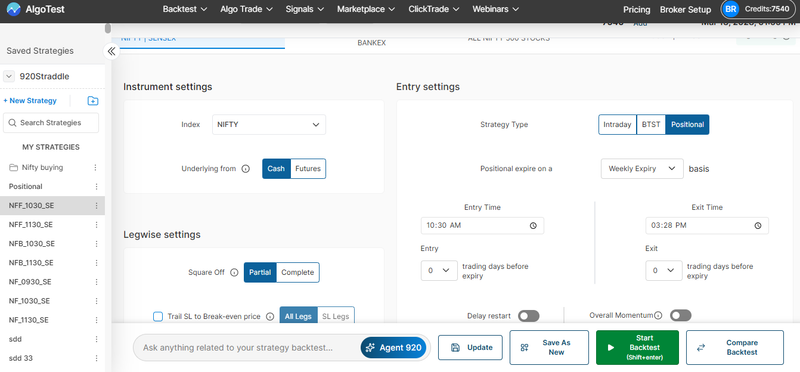
Algo trading (algorithmic trading) uses predefined rules to execute trades automatically.
Instead of placing orders manually, you:
- Define entry conditions
- Set exit rules
- Add risk management
- Decide position sizing
The system executes trades the moment conditions are met.
You define the rules.
The system follows them, every time.
In India, algo trading runs across:
- NSE and BSE (equity, F&O)
- MCX (commodities)
- Crypto platforms like Delta Exchange
The system reads live market data and places orders within milliseconds.
No hesitation. No delay. No second-guessing.
Now, retail traders can access the same execution framework through platforms like AlgoTest — without coding.
Related: [Learn how you can build, backtest and deploy trading signals without coding or TradingView](https://algotest.in/blog/trading-signals/)
## **How Algo Trading Works**
Every algo setup, whether simple or complex, has four components working together.
### Strategy logic (your rules)
Entry conditions, exit conditions, position size, risk parameters. The clearer these are, the more reliably the algo executes them.
### Market data feed
Real-time price data, option chain updates, and indicator values. The algo reads this and decides whether conditions are met.
### Broker API
The bridge between your strategy and your broker. When conditions are met, the API sends the order directly to the exchange.
### Risk controls
Stop-losses, maximum daily loss limits, and position-sizing rules. These run alongside the strategy and stop a bad day from becoming a catastrophic one.
The entire cycle — data in, decision made, order placed — happens in milliseconds. That's the edge. Not a better indicator. Faster, cleaner execution of a well-defined strategy.
→ _Related:_ [_How to do Algo Trading in India - Step-by-Step guide_](https://algotest.in/blog/how-to-do-algo-trading-step-by-step-beginner-checklist)
## **Is Algo Trading Legal in India?**
Yes, and the framework matters.
[SEBI](https://www.sebi.gov.in/sebiweb/home/HomeAction.do?doListing=yes&sid=1&ssid=3&smid=0) introduced algorithmic trading in India for institutions in 2008 via Direct Market Access. Retail participation was largely unregulated until SEBI's 2021 circular brought third-party algo platforms under a formal framework. The 2024–25 updates added a further requirement — each strategy now needs a unique algo ID registered with the exchange before it can go live.
**What the current framework requires:**
- All algo orders must go through a SEBI-registered broker's approved API
- Each strategy must carry a unique algo ID registered with the exchange
- Brokers are responsible for risk controls before any algo goes live
- Traders must stay within the prescribed margin and position limits
You always trade in your own account. The platform executes — it doesn't touch your funds. Your broker is the accountable party at the exchange level.
Spoofing, layering, or any strategy designed to manipulate prices is not allowed. SEBI's surveillance systems flag these patterns, and the consequences are serious.
[AlgoTest](https://algotest.in) is officially empanelled with NSE and BSE and operates in compliance with all regulatory frameworks.
→ _Related:_ [_Is SEBI banning algo trading — What Retail Traders Need to Know_](https://algotest.in/blog/is-sebi-banning-algo-trading-in-india)
## **Algo Trading vs Manual Trading**
Manual trading isn't bad. Algo trading isn't automatically better. The difference is in what each approach demands from you.
**Manual Trading**
**Algo Trading**
Execution speed
Seconds to minutes
Milliseconds
Emotional influence
High
None
Consistency
Varies by day/mood
Identical every trade
Strategy validation
Intuition-based
Backtested, data-driven
Scalability
Limited by screen time
Multiple strategies simultaneously
Best for
Discretionary, news-driven
Rule-based, systematic setups
Most experienced traders don't fully abandon discretion. They automate the parts of their process where discipline breaks down, and stay manual where judgment adds value.
_Read more:_ [_Manual Trading vs Algo Trading_](https://algotest.in/blog/manual-trading-vs-algo-trading-in-india-which-is-better-for-retail-traders)
## Types of Algo Trading Strategies in India
Algorithmic trading in India typically falls into these major strategy types:
### 1\. Trend Following
Trades in the direction of market momentum using signals like **breakouts or moving average crossovers**.
Works well in **trending markets (indices, large-cap stocks)** but generates fewer signals.
→ Read more: [Swing Trading Strategies in Algo Trading](https://algotest.in/blog/swing-trading-strategies)
### 2\. Mean Reversion
Assumes price will return to its average after sharp moves.
Common in [**options trading**](https://algotest.in/blog/options-trading-a-comprehensive-guide-with-algorithmic-strategies), especially after sudden spikes in Nifty or BankNifty.
Performs best in **range-bound markets**.
### 3\. Options Selling Strategies
Focuses on capturing time decay (theta) using strategies like short straddles, strangles, and iron condors.
Widely used in India due to weekly expiries.
High win rate, but requires strict risk management.
→ Read more: [Options Selling Strategies in Algo Trading India](https://algotest.in/blog/what-is-option-selling)
### 4\. Options Buying Strategies
Directional trades using **calls and puts** based on momentum or breakout signals.
Lower win rate but offers **high reward potential** with controlled risk.
→ Read more: Options Buying Strategies Guide
### 5\. Intraday and Scalping
Involves multiple trades within a day using setups like opening [range breakout](https://docs.algotest.in/sample-algo-trading-strategies/range-breakout-strategy/) or VWAP strategies.
Requires fast execution, low latency, and strict discipline.
→ Read more: [Intraday Algo Trading Strategies](https://algotest.in/blog/best-intraday-trading-strategies-rules-tips)
### 6\. Momentum Strategies
Trades instruments showing strong price strength, such as stocks making new highs with volume.
Works well during strong market trends.
### 7\. Volatility-Based Strategies
Uses implied volatility (IV) as the main signal.
Examples include selling options during IV spikes before events.
Common in Indian markets around expiry and news events.
### 8\. Multi-Strategy Portfolios
Combines multiple uncorrelated strategies (e.g., **options selling + trend following**) to improve consistency.
Helps reduce **drawdowns and smooth returns** across different market conditions.
→ Read more: [Popular Algo Trading Strategies for Retail Traders in India](https://algotest.in/blog/6-popular-algo-trading-strategies-for-retail-traders-in-india/)
## Benefits of Algo Trading
Algo trading helps you trade with **discipline and consistency.**
• **Removes emotions** – Trades are executed based on rules, not fear or greed
• **Consistent execution** – Every signal is followed exactly as defined
• **Faster decision-making** – No manual delays in entry or exit
• **Backtesting before risk** – Test strategies on historical data before going live
• **Time-saving** – Strategies run automatically without constant screen monitoring
• **Scalability** – Run multiple strategies simultaneously without added effort
Overall, algo trading helps you move from guesswork to a structured, data-driven approach.
## **Why You Should Backtest and Paper Trade**
Going live without [backtesting](https://algotest.in/blog/step-by-step-guide-on-how-to-backtest-for-free) is gambling. But backtesting is also where most traders fool themselves. Here's how to do it right.
**What to look for:**
**CAGR** — annualized return. Looks good in isolation, means nothing without context.
[**Max drawdown**](https://docs.algotest.in/Time-Based-Algo-Trading/portfolio/optimiser/#maximum-drawdown)— the largest peak-to-trough loss. This tells you whether you'd actually survive the strategy in real life. A 40% drawdown strategy is almost impossible to hold, regardless of CAGR.
**Sharpe ratio** — return per unit of risk. Above 1 is acceptable, above 1.5 is good.
[**Win rate**](https://docs.algotest.in/Time-Based-Algo-Trading/portfolio/optimiser/#win-) **and payoff ratio** — a 40% win rate with 3:1 payoff beats a 70% win rate with 0.8:1 payoff. Look at both together.
**Number of trades** — 12 trades over 3 years isn't statistically meaningful. You need enough trades across different market conditions to draw any conclusion.
### Three mistakes that traders make while Backtesting
**1\. Overfitting**
This happens when you tweak a strategy too much just to make past results look perfect.
It may work beautifully in backtests but usually fails in live trading because it’s fitted to past data, not real market behaviour.
**2\. Ignoring slippage**
Backtests often assume you get perfect prices, which doesn’t happen in reality.
In live markets, especially in far OTM options, you may enter or exit at worse prices.
If [slippage](https://docs.algotest.in/product-blogs/difference-backtest-forward-live/#slippages) isn’t included, your results will look better than they actually are.
**3\. Testing only one type of market**
A strategy that works in one market condition (like a strong trend) may fail in others.
Always test across different phases, **trending, sideways, volatile, and crash periods**.
### Final step: Paper trading
Before using real money, run your strategy in **paper trading (simulated live trading)**.
This shows how it behaves with:
- Real market data
- Actual execution delays
- Realistic slippage
If it doesn’t work here, it shouldn’t go live.
_Read More:_ [_Best paper trading websites in India_](https://algotest.in/blog/paper-trading-websites-india)
## **How to Start Algo Trading in India**
**Step 1: Learn the instrument first.**
Understand F&O basics, how options are priced, what leverage means, and how margin works. Automate only what you already understand.
**Step 2: Pick a broker with API access.**
Not every broker supports algo trading in India. You need one with a stable, [SEBI-approved trading API broker.](https://algotest.in/blog/trading-api-brokers-india)
**Step 3: Choose an algo trading platform.**
Look for tick-level backtesting, paper trading, a no-code builder, and solid broker integration. AlgoTest covers all of these, built specifically for the Indian markets.
**Step 4: Start simple.**
Don't begin with a [6-leg options](https://docs.algotest.in/Time-Based-Algo-Trading/how-to-backtest/positional/#adding-a-leg) structure. Start with something you fully understand — a basic straddle or a simple breakout strategy. Add complexity only after you've validated the full workflow.
**Step 5: Backtest properly.**
Fewer than 100 trades in the backtest, or less than 2 years of data, doesn't give you enough signal. Understand what conditions the strategy needs and what will break it.
**Step 6: Paper trade for 2–4 weeks.**
API delays, partial fills, fast-moving strikes — these show up in paper trading (also called [forward testing on AlgoTest)](https://algotest.in/blog/forward-testing-is-live), not in backtests. If live behaviour diverges significantly from the backtest, investigate before going live.
**Step 7: Go live small.**
For most F&O strategies, start with ₹1–2 lakh. The first month is about validating execution, not generating returns. Scale capital only after live performance tracks the backtest.
**Step 8: Review monthly.**
Markets evolve. Track live performance against backtest benchmarks every month. Persistent divergence means review, not more capital.
## **Best Brokers for Algo Trading in India**
Your broker is the infrastructure layer. An excellent strategy can still fail because of API instability.
**What to evaluate:**
**API reliability** — does it hold up on expiry days and during major announcements? That's when most brokers struggle, and when reliable execution matters most.
**Order types supported** — market, limit, SL, SL-M at a minimum. Some strategies need bracket or cover orders.
**API approval status** — SEBI requires brokers to have algo strategies exchange-approved. Confirm your broker actively supports third-party platform integrations.
**Brokerage costs** — F&O brokerage compounds fast at scale. Flat-fee brokers work better for frequent algo setups.
**Margin framework** — understand peak margin requirements. An unexpected shortfall can force an unwanted exit at the worst moment.
AlgoTest integrates with 60+ brokers — Zerodha, Upstox, Fyers, Angel One, Dhan, Finvasia, and more.
→ _Related:_ [_Best Brokers for Algo Trading in India — Detailed Comparison_](https://algotest.in/blog/best-brokers-for-algo-trading-in-india)
## Best Algo Trading Platforms in India — How to Choose
AlgoTest
Streak
Tradetron
No-code builder
✓
✓
✓
Tick-level backtesting
✓
Limited
Limited
Options strategy support
Strong
Moderate
Moderate
RA marketplace (SEBI-registered)
✓
✗
✗
Broker integrations
55+
~5
35+
Pricing model
Usage-based
Subscription
Subscription
The single most important factor when choosing an [algo trading app](https://algotest.in/blog/want-the-best-algo-trading-app-in-india-heres-how-algotest-can-help) or software in India is backtesting quality.
Daily OHLC data for options backtests gives you inaccurate results. Tick-level data is the difference between a strategy that looks good on paper and one that behaves predictably live.
AlgoTest's pricing is usage-based — 25 free backtests per week, additional backtests at ₹1 each. No subscription before you've validated anything.
→ _Related:_ [_Best Algo Trading Platforms in India - Detailed comparison_](https://algotest.in/blog/8-best-algo-trading-platforms-in-india-2026)
## **Risks of Algo Trading and How to Manage Them**
Systematic doesn’t mean safe. Algo trading shifts risk it doesn’t remove it.
### Overfitting
The most common risk. A strategy looks great in backtests because it’s over-optimized on the same data. Live performance falls apart.
**Fix:** Use out-of-sample testing. If results drop significantly, the strategy isn’t robust.
### Technology failure
APIs fail. Servers restart. Data lags — often during peak market activity.
**Fix:** Always have a manual fallback. Be ready to exit positions if the system goes offline.
### Market regime change
Strategies are built for specific conditions. When those conditions change, performance breaks.
**Fix:** Compare live performance with historical expectations. Persistent deviation = review, not more capital.
### Overleveraged multi-strategy setups
Running multiple algos can lead to hidden, correlated risk.
**Fix:** Track total exposure across strategies, not just individually.
**Stopping mid-drawdown** The biggest behavioural risk. Turning off a strategy too early locks in losses and misses recovery.
**Fix:** Define acceptable drawdown in advance and stick to it.
Read more: [Algo Trading risks, AI and SEBI rules](https://algotest.in/blog/algo-trading-profitable-india-2026)
## **How AI is Changing Algo Trading in India**
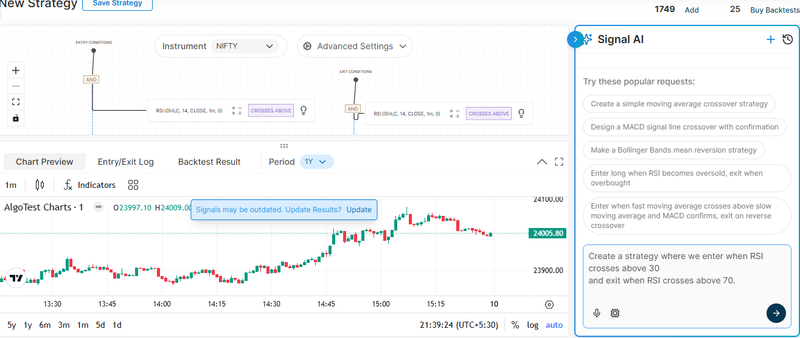
AI is making **algo trading in India** more accessible for retail traders.
Instead of manually defining every rule, traders can now use [AI-powered tools](https://algotest.in/blog/ai-algo-trading-india/) to create indicator-based strategies faster.
With [**Signals AI by AlgoTest**](https://algotest.in/feature/signals/indicators?utm_source=blog&utm_medium=organic&utm_campaign=seo&utm_source=blog&utm_medium=organic&utm_campaign=seo), traders can build rule-based strategies using indicators like:
- RSI
- EMA
- Bollinger Bands
- ADX
- breakout logic
without coding.
This reduces setup complexity and helps traders move from idea to backtest faster.
This is huge.
## **Algo Trading for F&O and Why AlgoTest is Built for It**
F&O is unforgiving. A few seconds of delay, one manual error, one emotional exit — and a good strategy becomes a losing trade.
**Why timing matters more in F&O**
Options premiums don't wait. A 10-second delay on a BankNifty ATM straddle during a volatile session means you're already in at a worse price. On a ₹2 lakh position, even a ₹10 shift per lot across both legs adds up fast.
Now try doing that manually on a 4-leg iron condor. By the time you place the third and fourth orders, the market has moved your entry prices are inconsistent; your risk profile has shifted. An algorithm places all four legs simultaneously, the moment your conditions are met.
India's weekly expiry cycle makes this even more critical. Thursday on BankNifty, Tuesday on Nifty MidSelect, Wednesday on FinNifty — each creates a narrow entry window. Miss it by minutes, and the opportunity is gone.
_New to options trading? Start with our_ [_options basics_](https://docs.algotest.in/financial-education/options/options-trading-terms/#basic-option-terms) _guide._
**What AlgoTest is built for**
Feature
What it means for you
Tick-by-tick NSE data
Backtests reflect real intraday behaviour — not daily approximations
No-code multi-leg builder
Build straddles, condors, ratio spreads — no coding required
Paper trading
Test in live conditions before risking real capital
55+ broker integrations
One-click deployment — no manual order placing
RA marketplace
SEBI-registered strategies you can backtest before deploying
**One thing to watch**
Not all options are equally liquid. Far OTM strikes mid-week can carry wide bid-ask spreads — wide enough to turn a profitable-looking strategy into a losing one. A strategy that looks clean with market order fills may need limit order logic in practice. AlgoTest lets you model realistic fill assumptions in the backtest before it costs you live.
**The numbers**
SEBI's FY24 study found only 9% of individual F&O traders made a profit. In the same period, 45% of AlgoTest users ended the year in profit — five times the national average. Systematic execution that removes emotion from the equation is what explains that gap.
## What is an Algo Strategy Marketplace?
At [the Algo Strategy Marketplace](https://algotest.in/blog/algo-trading-marketplace-india) you can access ready-built trading strategies without having to build one from scratch.
Think of it like an app store for trading strategies. Strategies are listed with their logic, risk parameters, and backtest performance.
You review them, backtest them yourself, paper trade them and only deploy what you're confident in. Your capital stays in your own account throughout.
At AlgoTest's [RA Algos,](https://algotest.in/blog/what-is-ra-algos-and-how-it-works-on-algotest) every strategy is built by a SEBI-registered Research Analyst, meaning the person behind it has a regulatory licence, is accountable to SEBI, and can't just disappear after a bad month.
**What you get with AlgoTest's RA marketplace:**
- **Verified creators** — every strategy is built by a SEBI-registered RA, not an anonymous user
- **Full transparency** — you see the logic, the rules, and the historical performance before committing
- **Backtest first** — run the strategy on your own before paper trading or going live
- **Your capital, your control** — the RA never touches your funds; execution happens in your own broker account
It's the fastest way to [start algo trading in India](https://algotest.in/login).
**Crypto Marketplace** \- Just like the RA marketplace, at the Crypto Marketplace, you can access strategies created by expert traders, backtest, forward test (aka paper trade), and execute them via Delta exchange.
[Start crypto trading today.](https://algotest.in/login)
## **Conclusion**
Algo trading in India gives retail traders a more structured way to trade.
It replaces guesswork with rules, emotions with discipline, and inconsistent execution with a clear, repeatable process.
But tools alone don’t create results.
Your edge still depends on the strategy you choose, how well you test it, and how consistently you follow it.
Ready to start [algo trading in India?](https://algotest.in/?utm_source=blog&utm_medium=internal&utm_campaign=seo&utm_content=main-page&utm_term=algotest&utm_source=blog&utm_medium=internal&utm_campaign=seo&utm_term=algotest&utm_content=main-page) Build, backtest, paper trade, and deploy strategies without coding using AlgoTest.
Free Sign Up
Read More: [Best Algo Trading Courses in India](https://algotest.in/blog/5-best-algo-trading-courses-in-india-to-learn-in-2025/)
[How AlgoTest is Simplifying Algo Trading in India](https://algotest.in/blog/how-algotest-is-simplifying-algo-trading-in-india/)
[FAQs about Pricing \| Algo Trading Software India](https://algotest.in/blog/faqs-about-pricing-algo-trading-software-india/)
[Advantages of Algo Trading Software in India](https://algotest.in/blog/benefits-of-algo-trading-platforms-india/)
[5 Mistakes Traders Make in Algo Trading](https://algotest.in/blog/5-mistakes-traders-make-in-algo-trading/)
# FAQs
Q: Is algo trading legal in India?
A: Yes. SEBI has a formal framework — trades go through broker-approved APIs, strategies need unique exchange IDs, and risk controls must be in place. You trade in your own account at all times.
→ Read: SEBI Algo Trading Rules — What Retail Traders Need to Know
Q: How much capital do I need?
A: For equity intraday, ₹50,000–₹1 lakh is workable. For F&O strategies like straddles or iron condors on Nifty, ₹2–5 lakh gives you proper position sizing with room to manage risk. Start small — the first goal is validating execution, not generating returns.
Q: Can beginners do algo trading in India?
A: Yes. AlgoTest is no-code — the technology isn't the barrier. The real risk is automating a strategy you don't fully understand. Learn the instrument first, understand what your strategy does and why, then automate it.→ Read: Algo Trading for Beginners — Where to Start
Q: Do I need to know coding?
A: No. AlgoTest's no-code builder lets you define entry, exit, and risk rules using a visual interface — no Python required. Coding adds flexibility if you want to go beyond standard logic, but it's not needed to start.
Q: What's the best strategy for algo trading in India?
A: There's no universal answer. Options selling strategies — straddles, iron condors — are popular given India's weekly expiry structure. Trend-following works well on Nifty and BankNifty futures. The best strategy is one you understand, have backtested rigorously, and can hold through its documented drawdown.→ Read: Best Algo Trading Strategies for Indian Markets
Q: Is algo trading profitable in India?
A: It can be — but a bad strategy executed perfectly is still a bad strategy. Profitability depends on strategy quality, proper backtesting, and disciplined risk management. SEBI's FY24 data shows only 9% of F&O traders made a profit. 45% of AlgoTest users did. The difference is systematic execution, not better tips.→ Read: How to Build a Profitable Algo Trading Strategy
Q: What if my algo places a wrong trade?
A: Set a daily max loss limit at the broker level — AlgoTest lets you configure this as an automatic kill switch. If the limit is hit, the system stops. In the first few weeks of going live, keep a manual monitoring window open during market hours.→ Read:How to Set Risk Controls on AlgoTest
---
This blog is powered by Superblog. Visit https://superblog.ai to know more.
---
## Algo Trading Marketplace in India: How Retail Traders Can Use Ready-Made Strategies
Author: AlgoTest
Author URL: https://algotest.in/blog/author/algotest/
Published: 2026-03-18
Category: General
Category URL: https://algotest.in/blog/category/general/
Meta Description: Discover how an algo trading marketplace in India helps you deploy expert-created F&O and crypto strategies on AlgoTest — backtest, paper trade, and automate with zero coding.
Tags: algo trading, algotest
Tag URLs: algo trading (https://algotest.in/blog/tag/algo-trading/), algotest (https://algotest.in/blog/tag/algotest/)
URL: https://algotest.in/blog/algo-trading-marketplace-india/
If you're a manual trader tired of emotional decisions, inconsistent execution, or missing opportunities, an algo trading marketplace in India can help you trade more systematically.
Instead of building strategies from scratch, retail traders can now access expert-created, rule-based strategies, backtest them, paper trade them, and deploy them directly in their own brokerage accounts.
This makes [**algo trading in India**](https://algotest.in/?utm_source=blog&utm_medium=internal&utm_campaign=seo&utm_content=main-page&utm_term=algotest&utm_source=blog&utm_medium=internal&utm_campaign=seo&utm_term=algotest&utm_content=main-page) far more accessible, even for traders without coding experience.
## What is an Algo Trading Marketplace in India?
At an [algo trading](https://algotest.in/blog/algo-trading-india/) marketplace, you can access, evaluate, and deploy pre-built strategies created by experienced professionals/Traders.
You can also:
- Browse strategies designed for specific markets
- Analyze performance metrics such as returns and drawdowns
- Backtest strategies on historical data
- Paper trade in near-real-time market conditions
- Deploy strategies directly in your own brokerage account
The platform executes trades automatically based on predefined rules.
It places trades the moment conditions are met; it does not depend on emotions or market noise.
For retail traders in India, this model brings systematic trading within reach, without requiring coding or complex infrastructure.
## How an Algo Strategy Marketplace Works
The process is simpler than most traders expect:
**Step 1 — Browse the marketplace.** Filter strategies by instrument (Nifty, BankNifty, crypto), style (intraday, positional, options selling), capital requirement, and historical performance metrics.
**Step 2 —** [**Backtest**](https://algotest.in/blog/step-by-step-guide-on-how-to-backtest-for-free) Run the strategy against historical data to understand its behavior across bull markets, bear phases, and sideways chop. A good backtest tells you the realistic expectation — not a promise, but a range.
**Step 3 —** [**Paper trade:**](https://algotest.in/blog/paper-trading-websites-india) Deploy the strategy in a live market simulation. Watch it execute in real time, with real prices, but without real money on the line. This is the most underused and most valuable step.
**Step 4 — Go live.** Connect your [broker account](https://algotest.in/blog/best-brokers-for-algo-trading-in-india)(Zerodha, Fyers, Angel One, and others are typically supported), set your capital allocation, and activate the strategy. The platform handles execution from there.
**Step 5 — Monitor and review.** Check performance dashboards periodically. Good marketplace platforms give you granular trade logs, drawdown charts, and comparisons against benchmarks.
## Benefits of Algo Trading Marketplace
Building a reliable trading strategy requires more than intuition.
Many traders overlook proper validation. This leads to issues like overfitting, look-ahead bias, and survivorship bias, which can make a strategy look strong in backtests but fail in live markets.
Expert creators design strategies to avoid these pitfalls and provide a more reliable, structured approach.
### 1\. Rule-Based Execution Removes Emotion
A systematic strategy:
- Executes strictly based on predefined rules
- Ignores fear, greed, and recent losses
- Maintains consistency across market conditions
This removes emotional decision-making, which is one of the biggest causes of inconsistent performance.
### 2\. Faster and More Precise Execution
[Algo-based strategies:](https://algotest.in/blog/best-intraday-trading-strategies-rules-tips)
- Trigger entries and exits instantly
- Eliminate delays caused by manual decisions
- Ensure consistent execution across trades
### 3\. Ability to Run Multiple Strategies
With algo execution, you can:
- Run multiple strategies simultaneously
- Trade across indices such as Nifty, BankNifty, and FinNifty
- Expand into additional markets such as crypto
This improves diversification and capital efficiency.
### 4\. Structured Testing Before Deployment
Algo marketplaces enable you to:
- Backtest strategies on historical data
- Evaluate drawdowns, returns, and consistency
- Paper trade in live market conditions
This replaces guesswork with data-backed decisions.
### 5\. Reduced Trial-and-Error Learning
Expert-created strategies give you:
- A structured starting point
- Pre-tested logic built for real market conditions
- Clear expectations around capital and risk
This lets you focus on execution instead of experimentation.
## Who should use an Algo Strategy Marketplace?
### 1\. Working Professionals
Traders who cannot monitor markets throughout the trading session benefit from automated execution. Strategies run independently during market hours.
### 2\. Traders Facing Inconsistency
For traders affected by emotional decisions, systematic execution introduces discipline and repeatability.
### 3\. Beginners with Capital
Instead of relying on unverified strategies, [beginners](https://algotest.in/blog/learn-algo-trading-as-a-beginner-trader) can start with tested systems and understand how structured trading works.
### 4\. Experienced Traders Looking to Scale
Algo marketplaces enable portfolio-level execution across multiple strategies and instruments without operational complexity.
## RA Algos: Expert-Created Strategies for F&O Traders
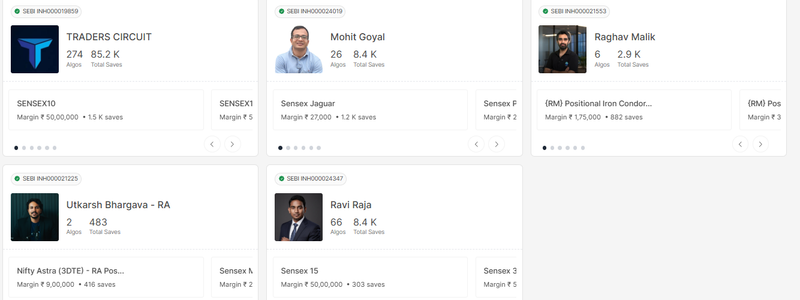
One of AlgoTest's most distinct offerings is its RA Algos section, a curated set of strategies built by SEBI-registered Research Analysts.
This isn't a random collection of backtested curves. These are professionals who manage their own capital using the same strategies they publish.
What makes RA Algos different:
- Strategies are designed specifically for **Indian F&O markets** — Nifty, BankNifty, FinNifty, and others
- Each algo comes with full transparency: entry/exit logic, required capital, expected drawdown range
- RA creators are accountable — their reputation and registration are tied to the quality of what they publish
- Subscribers trade in their **own accounts** — the RA never touches your capital
You can [explore expert-created strategies](https://algotest.in) and filter by risk profile, capital requirement, and instrument.
Whether you're an options seller looking for consistent premium capture or a directional trader wanting rule-based entries, there's likely a strategy built for your temperament.
For more info, please read this blog: [What is RA Algos and how it works on AlgoTest](https://algotest.in/blog/what-is-ra-algos-and-how-it-works-on-algotest/)
## Crypto Algo Trading: Automated Strategies That Run 24/7
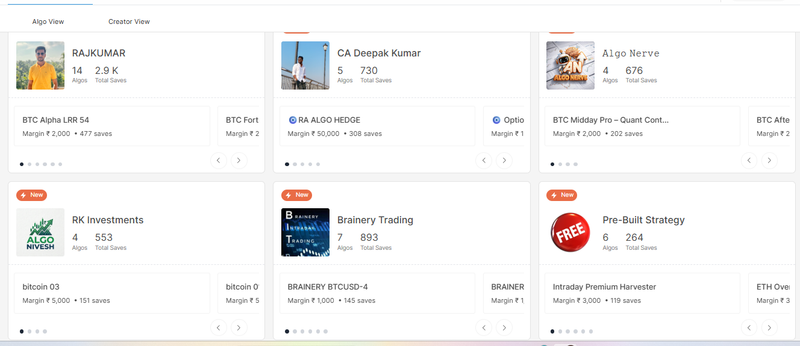
Indian equity markets close at 3:30 PM. Crypto doesn't.
[AlgoTest's](https://algotest.in/login) crypto trading feature extends the same systematic framework to Bitcoin, Ethereum, and other digital assets through its integration with Delta Exchange, running 24 hours a day, 7 days a week.
You can [backtest](https://algotest.in/blog/guide-to-backtesting-trading-strategies), [forward test](https://algotest.in/blog/forward-testing-is-live)(aka paper trade), and automate [crypto strategies](https://algotest.in/feature/crypto-trading) for free.
Subscribe to a crypto signal strategy from the marketplace and choose proven strategies created by expert traders.
The system executes automatically in your Delta Exchange account whenever the signal triggers, based on your chosen quantity and risk limits.
## How AlgoTest Makes Algo Trading in India Accessible
**No-code strategy builder -** Design F&O strategies using a simple visual interface. Set entry conditions, exit rules, strike selection, and position sizing without writing any code.
You can run algo trading across six indices, crypto, and over 500 stock options.
**Affordable backtesting** \- Every user gets 25 free backtests each week. Additional backtests cost just ₹1 each, making it one of the most [affordable options available.](https://algotest.in/pricing)
If you need more, you can get unlimited backtesting for 30 days at 1,599 credits.
**Transparent live execution pricing** \- Live deployment costs 100 credits per strategy for a 28-day cycle. Paper trading costs 50 credits per strategy for the same period. Pricing is pro-rata, so if you add a strategy in the middle of a cycle, you only pay for the remaining days.
**50+ broker integrations** \- Connect your existing broker account and go live easily. No need to switch [brokers](https://algotest.in/blog/best-brokers-for-algo-trading-in-india) or open a new account.
## The Real Edge in Algo Trading Isn't the Strategy, It's the System
There are hundreds of profitable trading strategies. The reason most retail traders don't capture those profits is the gap between knowing what to do and actually doing it — consistently, at scale, without emotional interference.
An **algo trading marketplace in India** closes that gap. Expert-created strategies built for Indian markets, the ones you can backtest with real data, paper-trade in real conditions, and automate.
Ready to start algo trading in India? Explore expert-created strategies, backtest them, paper trade, and go live with AlgoTest’s algo trading marketplace.
Join Us
## Frequently Asked Questions
### 1\. What is an algo trading marketplace in India?
An [algo trading](https://algotest.in/blog/top-10-algo-trading-software-india) marketplace is a platform where expert traders and SEBI-registered Research Analysts publish pre-built, backtested trading strategies that you can deploy directly into your own brokerage account — fully automated.
### 2\. Do I need coding knowledge to start algo trading in India?
Not at all. Platforms like [AlgoTest](https://algotest.in) come with a no-code strategy builder, so you can set up entry conditions, exit rules, and position sizing through a visual interface without writing a single line of code. If you'd rather skip the building process entirely, you can directly subscribe to expert-created strategies from the [RA Algos](https://algotest.in/ra-algo) marketplace.
### 3\. How do I know if an algo trading strategy actually works before going live?
This is where backtesting and paper trading come in. Backtesting shows you how a strategy performed on historical market data. Paper trading then lets you watch it run in real market conditions — with real prices — before any real money is involved.
### 4\. What is RA Algo trading and how is it different from regular algo trading?
RA Algos are strategies created specifically by SEBI-registered Research Analysts — professionals who are regulatory accountable and, in most cases, personally trading the same strategies they publish. The key difference is credibility and transparency. You get full visibility into the logic, historical performance, and drawdown expectations before you subscribe. And since you trade in your own account, the RA never has access to your capital.
### 5\. Can I automate crypto trading in India using AlgoTest?
Yes. AlgoTest's crypto trading feature integrates with Delta Exchange, letting you backtest, paper trade, and automate Bitcoin and Ethereum strategies 24/7 — the same workflow you'd use for F&O. The Signals plan starts at ₹1,299 for 30 days of unlimited executions, making it one of the most affordable automated crypto trading options available for Indian retail traders. Explore crypto algo trading on AlgoTest →
### 6\. Which brokers are supported for live algo trading on AlgoTest?
AlgoTest connects with 50+ brokers, including Zerodha, Fyers, Upstox, Angel One, and Dhan, so in most cases, you can go live with the broker account you already have, without opening anything new. Check supported brokers on [AlgoTest →](https://algotest.in)
### 7\. Is algo trading in India legal?
Yes, [algo trading is completely legal](https://algotest.in/blog/is-algo-trading-legal-in-india-what-retail-traders-must-know) in India for retail traders. SEBI has laid out clear guidelines around algorithmic trading, and platforms like AlgoTest operate within that regulatory framework. Read more about [algo trading regulations](https://algotest.in/blog/is-sebi-banning-algo-trading-in-india) in India
---
This blog is powered by Superblog. Visit https://superblog.ai to know more.
---
## Is SEBI Banning Algo Trading in India in 2026?
Author: AlgoTest
Author URL: https://algotest.in/blog/author/algotest/
Published: 2026-03-15
Category: General
Category URL: https://algotest.in/blog/category/general/
Meta Description: Is SEBI banning algo trading in India? No, but big changes are coming. Here is what every retail trader needs to know before the April 1 deadline.
Tags: algo trading, algo trade
Tag URLs: algo trading (https://algotest.in/blog/tag/algo-trading/), algo trade (https://algotest.in/blog/tag/algo-trade/)
URL: https://algotest.in/blog/is-sebi-banning-algo-trading-in-india/
**Quick answer: No, SEBI is not banning algo trading in India.** What happened is the opposite. SEBI built a legal framework so that more retail traders can participate in automated trading safely and confidently.
If you landed here after hearing rumours or reading a confusing headline, you are not alone. Let's break this down clearly, step by step.
## What Is Algo Trading and Why Does It Matter in India
Algo trading means using a program to place trades automatically based on fixed rules. You set the conditions upfront: a price level, a time trigger, an indicator signal.
The system does the rest, without manual intervention.
In India, this was once a tool only big institutions could use. Today, any retail trader with a broker API can automate their strategy. That shift in scale is exactly what pushed SEBI to act.

Algo trading now accounts for over 60% of India's market volume, making a clear regulatory framework not just helpful but necessary. If you're new to algo trading in India and want to understand how traders build, test, and automate strategies, explore our comprehensive guide to [**Algo Trading India**](https://algotest.in/?utm_source=blog&utm_medium=internal&utm_campaign=seo&utm_content=main-page&utm_term=algotest&utm_source=blog&utm_medium=internal&utm_campaign=seo&utm_term=algotest&utm_content=main-page) before diving deeper into the latest SEBI regulations.
## What SEBI Actually Did in 2025
In February 2025, SEBI released its [circular on safer participation of retail investors in algorithmic trading](https://www.sebi.gov.in/legal/circulars/feb-2025/safer-participation-of-retail-investors-in-algorithmic-trading_91614.html). This was not a ban. It was a regulatory reset that finally brings retail algo trading under the same umbrella as institutional trading.
### Why Did SEBI Step In?
Fast growth brought fast problems. Unregulated platforms, hidden strategies, and guaranteed return promises flooded the market. In late 2024, SEBI issued show-cause notices to over 120 brokers linked to exactly this kind of activity.
SEBI's move was not to shut algo trading down. It was to clean it up.
## What the New SEBI Algo Trading Rules Actually Say
Let's go through each rule one by one so you know exactly where you stand.
### 1\. Open APIs Are No Longer Allowed
Earlier, brokers offered open APIs that anyone could plug into and start firing orders. That era is over. Now you need a static IP address that is whitelisted with your broker. It sounds technical but the idea is simple: every algo order must trace back to a real, verified person.
### 2\. Every Algo Order Needs a Unique ID
Think of it like a license plate for your trade. Every automated order now gets an exchange-assigned Algo ID so regulators can trace exactly which algorithm placed it. You can check [NSE's operational guidelines](https://nsearchives.nseindia.com/content/circulars/INVG67858.pdf) if you want to dig into how this works at the exchange level.
### 3\. Low-Frequency Traders Do Not Need to Register
Here is the part that will relax most of you. If your strategy places fewer than 10 orders per second, you do not need to register your algo anywhere.
A moving average strategy, an ORB setup, an options play at market open, none of these come close to that limit.
### 4\. High-Frequency Algos Need Exchange Approval
If you are running something that fires more than 10 orders per second, you need to register it with the exchange through your [broker](https://algotest.in/blog/best-brokers-for-algo-trading-in-india) before it goes live. No exceptions.
### 5\. White Box vs Black Box: Two Types of Algos
SEBI now puts every algo into one of two buckets. White box algos are transparent; the logic is open, documented, and reviewable.
These have a straightforward approval process. Black box algos keep their logic hidden. If a provider is selling you a black box strategy, they must hold a SEBI Research Analyst license. If they cannot show you that, walk away.
### 6\. Your Self-Built Algo Stays Personal
If you coded your own strategy, you are free to run it for yourself and your immediate family.
What you cannot do is rent it out, sell access to it, or distribute it to other traders without going through the formal empanelment process with an exchange.
### 7\. Brokers Are Now Accountable
Brokers must approve every algo, keep a five-year audit trail, and handle all grievances. If something goes wrong, they are accountable.
## What This Means If You Are a Retail Algo Trader in India
For most retail traders, this framework changes less than you think and protects you more than you realise.
Situation
What Happens Under New Rules
You use a platform like [AlgoTest](https://algotest.in) to build and backtest strategies
No registration needed for personal use under 10 OPS
Your broker provides ready-made algo strategies
Broker must get exchange approval before offering them
You use a third-party algo vendor
Vendor must be formally empanelled with the exchange
You run a high-frequency automated system
Register your algo with the exchange through your broker
You want to sell your algo strategy to others
Requires empanelment; black box strategies need RA license
The [retail trader](https://algotest.in/blog/is-algo-trading-legal-in-india-what-retail-traders-must-know) who builds a clear, rule-based strategy for personal use has the least friction. The new rules hit hardest at unregulated vendors who were selling opaque strategies with no oversight.
## What You Should Do Before April 1, 2026
The full framework becomes mandatory for all brokers on **April 1, 2026**. Here is what you need to do based on your situation.
**If you trade manually with no API**, these rules have no immediate impact on you. Continue trading as normal.
**If you use a broker API for personal automation under 10 OPS**, check with your broker that your API key is tied to a static whitelisted IP.
Most major brokers have already rolled out the infrastructure for this.
Log in to your broker's developer console and confirm your IP whitelisting status.
If you subscribe to a third-party algo service, ask your provider these four questions before April 1:
1. Are you registered with the relevant stock exchange as an algo provider?
2. Is your strategy classified as white box or black box?
3. If it is black box, do you hold a SEBI Research Analyst license?
4. Is your fee arrangement with the broker fully disclosed?
If they cannot answer all four clearly, treat that as a red flag and find a compliant provider.
For context, [AlgoTest](https://algotest.in/login) is empanelled with both NSE and BSE, so if you are looking for a starting point, that box is already checked.
## Is Algo Trading Legal in India in 2026?
Yes, completely. [Algo trading in India is legal](https://algotest.in/blog/is-algo-trading-legal-in-india-what-retail-traders-must-know) and backed by SEBI, NSE, and BSE. The 2025 framework makes it more structured, not more restricted.
The Indian algo trading market was valued at USD 562 million in 2024 and is set to grow at 9.5% annually through 2033. SEBI is not here to shut that down. They are here to make sure it grows the right way.
_Here's a complete breakdown of_ [_algo trading platforms_](https://algotest.in/blog/8-best-algo-trading-platforms-in-india-2026) _to help you evaluate and make the right decision._
## How AlgoTest Fits Into This Framework
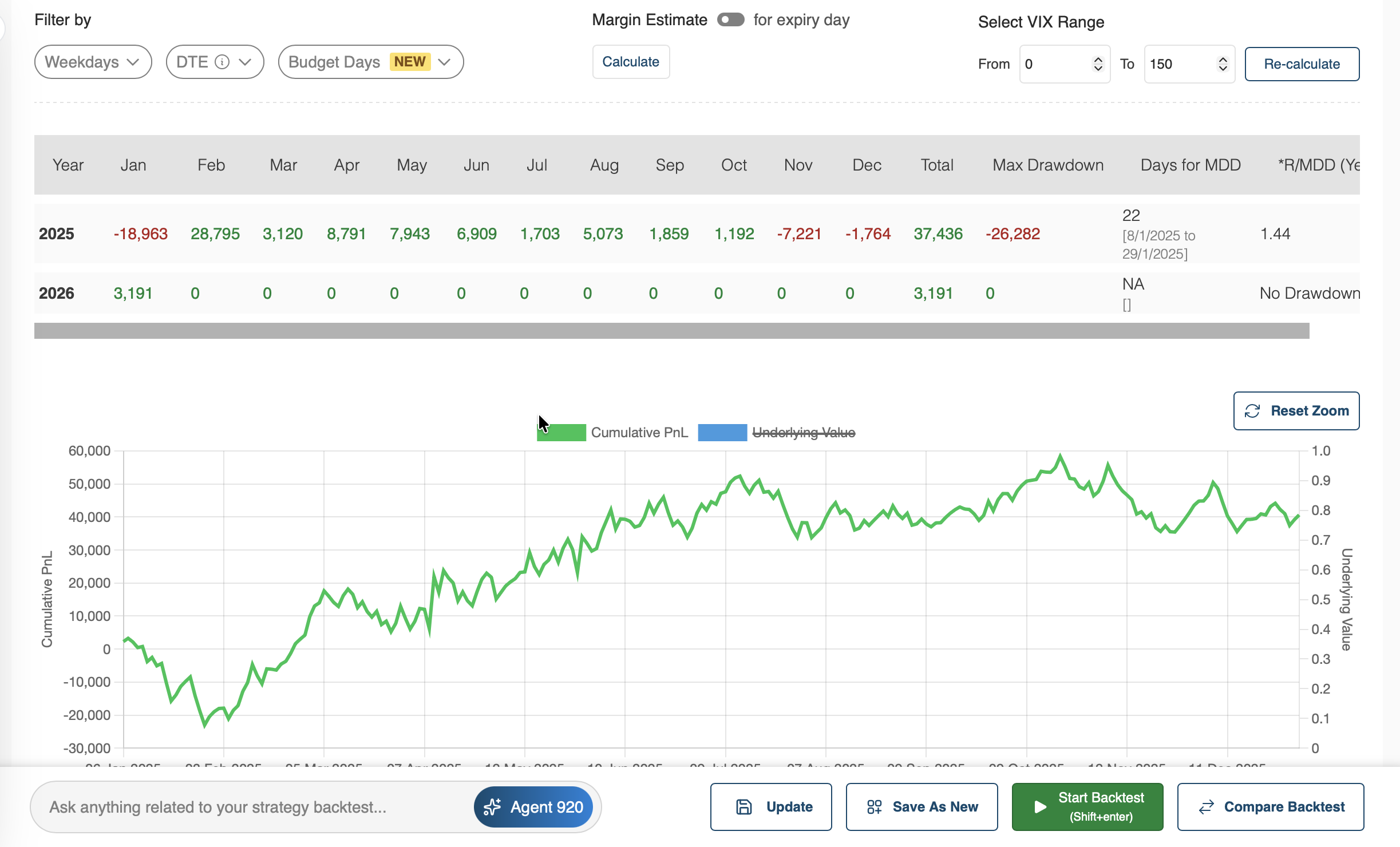
Every strategy you build on AlgoTest is a white box algo by design. You define the entry, the exit, the position sizing.
The logic is fully visible at every step. That is exactly what SEBI's framework is built to support.
When you [backtest your options trading strategy](https://algotest.in/blog/how-to-backtest-options-trading-strategies-with-examples/) on AlgoTest, paper trade, and eventually deploy through a registered broker, you are operating entirely within the regulatory structure SEBI has put in place. No grey areas. No compliance headaches.
Want to get started without spending anything? Here is a [step-by-step guide on how to backtest for free](https://algotest.in/blog/step-by-step-guide-on-how-to-backtest-for-free/) and see how your strategy holds up on historical data before going live.
## A Complete Timeline: Algo Trading Regulation in India
Date
What Happened
2008
SEBI introduced Direct Market Access (DMA) for institutional algo trading
2012 to 2016
Brokers started offering APIs to retail traders, largely unregulated
2021 to 2022
SEBI began cracking down on unregulated algo platforms
Dec 2024
SEBI issued a consultation paper proposing a retail algo framework
Feb 4, 2025
SEBI released its formal circular on safer retail algo participation
Aug 1, 2025
Framework went live; compliant brokers allowed to go live
Oct 31, 2025
Brokers must submit at least one retail algo product via API
Nov 30, 2025
Exchange registration of retail algo products must be complete
Jan 3, 2026
Brokers must complete a mock trading session with full functionality
Jan 5, 2026
Non-compliant brokers barred from onboarding new retail API clients
Apr 1, 2026
Full framework mandatory for all brokers
## The Bottom Line
SEBI is not banning algo trading in 2026. It is regulating it. That is a good thing.
The new framework legitimises retail automated trading, holds brokers accountable, and protects everyday traders from bad actors. If you trade with a transparent, rule-based strategy through a compliant broker, you are on solid legal ground.
The "ban" narrative comes from misread headlines. The reality is a regulated, growing market that is more accessible to systematic traders than ever before.
Ready to build your own strategy within this framework? Start with a [free backtest on AlgoTest](https://algotest.in/blog/step-by-step-guide-on-how-to-backtest-for-free/) and see what rule-based trading looks like in practice.
_This article is for informational purposes only and does not constitute financial or legal advice. Always refer to SEBI's official circulars and consult a qualified professional for compliance-related decisions._
# FAQs
Q: Can I still use Zerodha, Fyers, or other broker APIs for algo trading?
A: Yes. Brokers can still offer API access, but it must go through a static whitelisted IP. Any algo placing over 10 orders per second needs exchange registration.
Q: Do I need a SEBI license to trade algorithmically?
A: Not if you are a retail trader using your own white box strategy under the 10 OPS threshold. A license is only required if you are offering black box strategies to other traders. If you are just starting out, check out the best algo trading courses in India to build the right foundation.
Q: Will platforms like AlgoTest still work after April 1, 2026?
A: Yes. Platforms that support transparent, rule-based strategy building are exactly what the new framework accommodates.
Q: What happens if a broker ignores the new rules?
A: SEBI can issue show-cause notices, impose sanctions, and de-empanel the broker, as seen with enforcement actions in late 2024.
Q: What happens if my broker is not compliant by April 1, 2026?
A: From April 1, non-compliant brokers cannot legally offer algo trading services to retail clients. If your broker has not confirmed compliance by then, contact them directly and ask for a status update.
---
This blog is powered by Superblog. Visit https://superblog.ai to know more.
---
## Top 6 Backtesting Software for Options Trading in India (2026)
Author: AlgoTest
Author URL: https://algotest.in/blog/author/algotest/
Published: 2026-03-13
Category: Backtest
Category URL: https://algotest.in/blog/category/backtest/
Meta Description: Looking for the best options backtesting software in India? Compare AlgoTest, Opstra, StockMock, Sensibull, Streak and Tradetron — features, pricing, and honest limitations — to find the right platform for your trading style.
Tags: algo trading, backtesting
Tag URLs: algo trading (https://algotest.in/blog/tag/algo-trading/), backtesting (https://algotest.in/blog/tag/backtesting/)
URL: https://algotest.in/blog/best-backtesting-software-for-options-trading-in-india/
Backtesting software lets you run your options strategy against years of historical data before it costs you a rupee. The good ones simulate real conditions like slippage, premiums, and expiry behaviour, so what worked on paper actually holds up when real money is on the line.
But even the best backtest can't guarantee the market cooperates. Strategy looks perfect, you go live, and the market has other plans. Usually expensive ones. So, getting this right before going live matters.
Here's a look at the [backtesting platforms](https://algotest.in/feature/backtest?utm_source=blog&utm_medium=internal&utm_campaign=seo&utm_content=feature&utm_term=backtest&utm_source=blog&utm_medium=internal&utm_campaign=seo&utm_term=backtest&utm_content=feature) Indian options traders are actually using, and which one fits how you trade.
## Quick Comparison: Options Backtesting Platforms at a Glance
Platform
Backtesting?
No-Code?
Instruments
Live Deployment?
Starts At
**AlgoTest**
Yes (intraday + EOD)
Yes
6 indices + 500 stocks
Yes (200+ brokers)
₹499/month (25 free/week)
**StockMock**
Yes (expiry-focused)
Yes
NSE indices
No
Freemium
**Opstra**
Yes (EOD, Pro plan)
Yes
Indices + ~53 stocks
No
Paid (Demat required)
**Sensibull**
No
Yes
Indices + stocks
Yes
Free + broker plans
**Zerodha Streak**
Yes (indicator-based)
Yes
Equities + F&O
Yes (Zerodha only)
Free for Zerodha users
**Tradetron**
Yes (from Jan 2020, Beta)
Yes
NSE F&O + stocks
Yes (70+ brokers)
Free plan; paid from ₹300/month
### 1\. AlgoTest

Most serious options traders in India eventually graduate from [manual trading to **algo trading**](https://algotest.in/blog/manual-trading-vs-algo-trading-in-india-which-is-better-for-retail-traders), using automated systems to execute tested strategies without manual intervention.
[Backtesting](https://algotest.in/feature/backtest?utm_source=blog&utm_medium=internal&utm_campaign=seo&utm_content=feature&utm_term=backtest&utm_source=blog&utm_medium=internal&utm_campaign=seo&utm_term=backtest&utm_content=feature) is how you validate a strategy before automating it.
If you're trading index options on NSE — Nifty, Bank Nifty, FinNifty, MidcapNifty, Sensex, Bankex — [AlgoTest](https://algotest.in/register?utm_source=blog&utm_medium=organic&utm_campaign=seo&utm_source=blog&utm_medium=organic&utm_campaign=seo) is built for exactly this. It's a full-cycle platform: strategy idea → backtest → paper trade → live deployment, all in one place.
If you're also evaluating where to deploy, [this comparison of the best algo trading platforms in India](https://algotest.in/blog/8-best-algo-trading-platforms-in-india-2026/) covers the full picture.
**What it does well:**
- **No-code strategy builder** — build multi-leg strategies without writing a line of code. This step-by-step guide walks you through the exact workflow. You can also automate, test and deploy indicators on an [AI-based strategy builder](https://algotest.in/feature/signals/indicators?utm_source=blog&utm_medium=organic&utm_campaign=seo&utm_source=blog&utm_medium=organic&utm_campaign=seo) without any third-party integration.
- **Multi-leg backtesting** — straddles, strangles, iron flies, condors, and custom structures across 7.5+ years of historical data
- **Side-by-side backtest comparison** — run multiple parameter variants together; ideal for optimising strike selection or stop-loss levels
- **Realistic simulation** — slippage and brokerage costs baked in, so results reflect real-world conditions
- **Paper trading and forward testing** — test in live market conditions with virtual capital before going live
- **Live deployment to 50+ brokers** — seamless when you're ready
- **Instrument breadth** — 6 NSE indices + 500 stock options (NIFTY500 universe)
- **Performance reporting** — max drawdown, win rate, P&L curves, trade-level breakdowns
- [Multiple broker integration -](https://docs.algotest.in/category/broker-setup/) direct connection with Zerodha, Upstox, Angel One, and 60 others for one-click execution
Related: [How to Backtest Indicator Strategies Before Going Live](https://algotest.in/blog/how-to-backtest-indicator-strategies-before-going-live/)
**What to know:**
- NSE-focused only — not for commodity or currency options
- Free tier includes 25 backtests/week — enough to evaluate the platform properly before paying
**Pricing:** From ₹499/month. 25 free backtests per week on signup.
**Best for:** [Algo trading in India](https://algotest.in/?utm_source=blog&utm_medium=internal&utm_campaign=seo&utm_content=main-page&utm_term=algotest&utm_source=blog&utm_medium=internal&utm_campaign=seo&utm_term=algotest&utm_content=main-page), Index and stock options traders who want a complete test-to-deploy workflow without needing to code.
[Master Backtesting on AlgoTest.](https://docs.algotest.in/Time-Based-Algo-Trading/How-to-Master-Backtesting-on-AlgoTest/)
### 2\. StockMock
StockMock is a focused options backtesting tool with a clear strength: expiry-based testing.
**What it does well:**
- **Expiry-cycle backtesting** — tests across historical weekly and monthly expiry cycles, not arbitrary date ranges
- [**Payoff visualisation**](https://docs.algotest.in/clicktrade/strategy-builder/creating-managing-strategies/analysing-strategy/#analyzing-payoff-graphs) — complete P&L curve across expiry for every strategy you test
- [**Greeks analysis**](https://docs.algotest.in/clicktrade/strategy-builder/introducing-strategy-builder/understanding-option-chain/#option-greeks) — track delta, theta, vega, and gamma across the strategy's life
- [**Leg-wise**](https://docs.algotest.in/Time-Based-Algo-Trading/How-to-Master-Backtesting-on-AlgoTest/features/legwise-settings/) **Stop Loss and Profit Lock** — advanced exit condition testing most platforms don't offer
- **Strategy performance analytics** — win rate, average P&L, max drawdown per expiry cycle
- **Clean, focused interface** — purpose-built for options, no feature clutter
**What to know:**
- Built for expiry-based strategies — less suited for intraday or event-driven approaches
- No live deployment — analysis and testing only
**Best for:** Options sellers who want to stress-test expiry-specific strategies across historical cycles.
### 3\. Opstra (by Definedge)
Opstra is a well-known options analytics platform, and one thing that often gets written incorrectly: **it does have a backtesting engine**. It's inside the Pro subscription and is EOD (end-of-day) based, not intraday.
**What it does well:**
- **EOD backtesting** — historical data going back to 2016
- **Options Simulator** — intraday simulations on user-defined strategies at 5-minute intervals
- **Options chain analytics** — one of the richest chain views available to Indian retail traders
- **Implied volatility analysis** — IV percentile, IV rank, and historical volatility charts side by side
- **Payoff builder** — clear payoff charts with Greeks overlaid
- **Strategy builder** — structure multi-leg strategies before testing or deploying
- **Data quality** — covers ~53 stock tickers, deliberately excluding illiquid names where backtest results would be misleading
**What to know:**
- Backtesting requires a Pro plan _and_ a Definedge Securities Demat account — ecosystem-locked
- EOD-only means no intraday entry/exit precision at the base level
- The free version covers analytics, payoff charts, and strategy building — just not backtesting
**Best for:** Traders who want deep options analytics alongside EOD backtesting, within the Definedge ecosystem.
Also Read: [AlgoTest vs Opstra](https://algotest.in/blog/algotest-vs-opstra)
### 4\. Sensibull
Sensibull is a large options platform by user base. The strategy builder is intuitive, payoff visualisations are clean, and broker integrations are among the best available.
**What it does well:**
- **Strategy builder** — one of the most beginner-friendly multi-leg builders available
- **Payoff analysis** — real-time P&L visualisation with Greeks breakdown as you build
- **Options trading insights** — IV-based alerts and strategy suggestions based on market conditions
- **Draft Portfolios** — virtual paper trading in live market conditions
**What to know — and this matters:**
- ⚠️ **Sensibull does not offer historical backtesting.** Their own FAQ confirms there's no backtesting or options simulator feature based on historical data. Draft Portfolios are live-only — you cannot test on past expiry data.
- If historical validation is your goal, use Sensibull alongside one of the other platforms on this list
**Best for:** Beginners and intermediate traders who want a clean strategy builder, real-time payoff analysis, and broker integration. Not for historical backtesting.
Also read: [AlgoTest vs Sensibull](https://algotest.in/blog/algotest-vs-sensibull)
### 5\. Zerodha Streak
Streak gets overlooked in options backtesting conversations, but if you're already on Zerodha, it's completely free, which makes it hard to ignore as a starting point.
It's a no-code algo trading platform: build, backtest, and deploy strategies using technical indicators and predefined conditions, no coding required.
**What it does well:**
- **Free for Zerodha users** — no monthly fee; one of the most accessible entry points for Indian retail traders
- **No-code strategy builder** — drag-and-drop logic, 150+ pre-built technical indicator strategies
- **Backtesting with performance metrics** — P&L curves, win/loss ratios, drawdown metrics, downloadable transaction logs
- **Virtual deployment** — tracks strategy entry and exit conditions in real time across multiple cycles, without placing real orders
- **Live deployment** — direct Zerodha Kite integration for automated execution
- **Scanners** — 250+ pre-built market scanners for real-time opportunity spotting
**What to know:**
- ⚠️ **Streak is an indicator/technical strategy tool** — not built for Greek-based, delta-neutral, or complex multi-leg options structures. No multi-timeframe logic, custom candle intervals, or dynamic exit triggers.
- Zerodha-only at the free tier — other broker users pay ₹690–₹1,400/month
- Better suited for equity and simple F&O setups than structured options selling
**Best for:** Zerodha users who want a free, beginner-friendly entry into algo trading and indicator-based strategy testing, including basic F&O setups.
Related: [Best brokers for algo trading in India](https://algotest.in/blog/best-brokers-for-algo-trading-in-india)
### 6\. Tradetron
Tradetron sits in an interesting spot in the [algo trading](https://algotest.in/blog/9-steps-to-build-a-profitable-algo-trading-strategy) ecosystem, less focused on deep options analytics, more focused on **strategy automation and a strategy marketplace**. Its backtesting engine is capable, and its 70+ broker integrations are among the widest available anywhere in India.
**What it does well:**
- **No-code strategy builder** — 150+ keywords covering options Greeks and technical indicators; combine them to build complex multi-leg strategies
- **Backtesting with slippage control** — three scenarios: best price, worst price, or average of bid and ask. Running worst-case scenarios is a meaningful differentiator for realistic results
- **Strategy marketplace** — browse, subscribe to, and deploy strategies built by experienced traders; useful if you're starting out or validating approaches
- **70+ broker integrations** — one of the widest in India; supports Indian and US market brokers
- **Paper trading** — simulate in live conditions before committing real capital
- **Intraday and positional strategies** — supports both weekly and monthly expiry testing
**What to know:**
- ⚠️ **Data only goes back to January 2020** and backtesting is still in BETA for some keywords, significantly shorter than [AlgoTest's](https://algotest.in) 7.5+ years, which limits how many market regimes you can stress-test across
- Credit-based backtesting — ₹20 per backtest, or subscription plans with bundled credits
- Steeper initial learning curve than AlgoTest or Streak, despite being no-code
- Some users report reliability issues during high-volume market hours
**Pricing:** Free plan available (limited strategies, paper trading only). Paid plans from ₹300/month.
**Best for:** Traders who want the widest broker compatibility, a strategy marketplace to draw from, and complex multi-leg F&O automation — and are comfortable with a credit-based model.
Related: [Tradetron vs TradingView](https://algotest.in/blog/tradetron-vs-tradingview-comprehensive-comparison)
## How to Choose the Right Backtesting Platform
Here's a simple decision framework based on where you are in your trading journey:
- **You're new to systematic options trading** → Start with [AlgoTest.](https://algotest.in/login) The no-code builder and 25 free weekly backtests let you get going without any upfront commitment.
- **You trade primarily expiry strategies (straddles, iron flies, strangles)** → [StockMock or AlgoTest](https://algotest.in/blog/algotest-vs-stockmock) both work well. StockMock is laser-focused on expiry analysis; AlgoTest gives you a full deployment path.
- **You want deep analytics alongside backtesting** → Opstra Pro, if you're comfortable with the Definedge ecosystem.
- **You need** [**strategy building**](https://algotest.in/feature/strategy-builder?utm_source=blog&utm_medium=organic&utm_campaign=seo&utm_source=blog&utm_medium=organic&utm_campaign=seo) **and broker integration, but not backtesting** → Sensibull is excellent — just go in knowing it doesn't do historical testing.
- **You're already on Zerodha and want a free starting point** → Zerodha Streak. Just know its limitations for complex multi-leg options strategies.
- **You want wide broker choice and a strategy marketplace** → Tradetron, keeping in mind its shorter data history and credit-based model.
Also read: [Why Do We Need to Backtest Trading Strategies in India? What are its limitations?](https://algotest.in/blog/why-do-we-need-backtesting/)
## What to Look for in Any Backtesting Platform
Before committing to a subscription, ask yourself:
- **Data quality and depth:** How far back does the historical data go? Does it account for slippage and brokerage? Results without these are optimistic by design.
- **Strategy flexibility:** Can you test the specific legs, conditions, and adjustments your strategy actually uses — or are you limited to pre-built templates?
- **Performance reporting:** Don't fixate on win rate alone — [a 50% win rate can be perfectly viable](https://algotest.in/blog/understanding-strategy-win-rates-what-does-50-really-mean/) if the risk-reward ratio is right. Look for max drawdown, average P&L per trade, and how the strategy performs across different market regimes.
- **The path to live trading:** If you want to eventually deploy, does the platform connect to your broker? Can you paper trade first? If you're moving toward live deployment, verify your chosen platform's compliance — you can cross-check [NSE's official algo provider resources](https://www.nseindia.com/) before committing real capital to any automated strategy.
## The Bottom Line
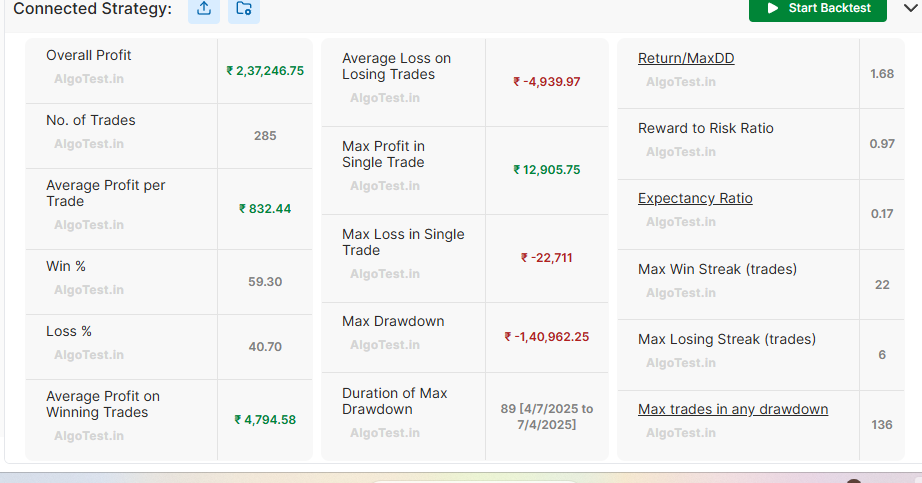
Consistent options traders in India share one habit: they stress-test before they deploy.
[Backtesting](https://algotest.in/blog/backtest-multiple-strategies-together-using-the-portfolio-feature) isn't a performance guarantee; markets change, but it's the difference between conviction based on gut feel and conviction based on evidence.
For index-focused traders, [**AlgoTest**](https://algotest.in/?utm_source=documentation&utm_medium=internal&utm_campaign=seo&utm_content=main-page&utm_term=algotest&utm_source=documentation&utm_medium=internal&utm_campaign=seo&utm_term=algotest&utm_content=main-page) is the most purpose-built starting point, no-code workflow, realistic simulation, paper trading, and live algo trading deployment in one place.
Free Sign Up
## Frequently Asked Questions
### Q: How reliable is backtesting for options strategies?
Backtesting tells you how a strategy _would have_ performed — not how it _will_ perform. That said, it's far more reliable than trading on instinct, provided the platform accounts for real-world factors like slippage, brokerage costs, and realistic fill prices. Find out the common [backtesting mistakes](https://algotest.in/blog/5-reasons-why-your-algo-trading-strategy-is-failing-and-how-to-fix-it) that traders make.
### Q: Is there a free options backtesting tool in India?
Yes — a few. [AlgoTest](https://algotest.in/?utm_source=documentation&utm_medium=internal&utm_campaign=seo&utm_content=main-page&utm_term=algotest&utm_source=documentation&utm_medium=internal&utm_campaign=seo&utm_term=algotest&utm_content=main-page) offers 25 free backtests every week without a paid subscription, which is enough to meaningfully evaluate most strategies. Zerodha Streak is completely free for Zerodha users and covers basic F&O strategy testing. Tradetron has a free plan for paper trading, though backtesting costs credits. For serious multi-leg options testing without paying upfront, AlgoTest's free tier is the most generous starting point.
### Q: What's the difference between backtesting and paper trading?
Backtesting runs your strategy against historical data — you're looking backwards to see how it would have performed. [Paper trading](https://algotest.in/blog/paper-trading-websites-india) runs it forward in live market conditions, but with virtual money. Both matter. Backtesting validates the logic; paper trading stress-tests the execution — fills, timing, and real market behaviour that historical data can't fully replicate. The right sequence is backtest first, paper trade second, go live third.
### Q: Is algo trading legal for retail traders in India?
Yes. [SEBI's 2025 framewor](https://algotest.in/blog/is-sebi-banning-algo-trading-in-india) k formally extended algorithmic trading access to retail investors — previously it was largely the domain of institutional players. Retail traders can now build, test, and deploy automated strategies through SEBI-regulated, exchange-empanelled platforms. The key requirement is using a compliant platform that routes orders through your registered broker. Tools like AlgoTest, Tradetron, and Streak are built within this framework.
---
This blog is powered by Superblog. Visit https://superblog.ai to know more.
---
## 6 Popular Algo Trading Strategies for Retail Traders in India
Author: AlgoTest
Author URL: https://algotest.in/blog/author/algotest/
Published: 2026-03-12
Category: Strategies
Category URL: https://algotest.in/blog/category/strategies/
Meta Description: Learn 6 simple algo trading strategies used by retail traders in India. Understand moving averages, breakout strategies, VWAP setups, and options strategies.
Tags: algo trading, trading strategies
Tag URLs: algo trading (https://algotest.in/blog/tag/algo-trading/), trading strategies (https://algotest.in/blog/tag/trading-strategies/)
URL: https://algotest.in/blog/6-popular-algo-trading-strategies-for-retail-traders-in-india/
A lot of retail traders are turning to [algo trading in India](https://algotest.in/?utm_source=blog&utm_medium=internal&utm_campaign=seo&utm_content=main-page&utm_term=algotest&utm_source=blog&utm_medium=internal&utm_campaign=seo&utm_term=algotest&utm_content=main-page), a method where your trades happen automatically based on a fixed set of rules. Instead of sitting and watching the screen all day, you define your conditions upfront: maybe when a price level breaks, an indicator gives a signal, or a specific time in the market hits, and the system does the rest.
Some of the most popular strategies among Indian traders include moving average crossovers, opening range breakouts, VWAP reversion, and options plays like the 9:20 short straddle.
Each of these follows a clear logic, which is exactly what makes them well-suited for automation
## What is an Algo Trading Strategy?
An [algorithmic trading](https://algotest.in/blog/algo-trading-india/) strategy is simply a set of rules that tells a system when to enter and exit trades.
Instead of manually watching charts and deciding every trade, the strategy follows predefined conditions.
These conditions may include:
- technical indicators
- price breakouts
- time-based entries
- volatility conditions
When those rules are met, the system automatically places the trade.
You can also use tools like [Signals AI](https://algotest.in/feature/signals/indicators?utm_source=blog&utm_medium=organic&utm_campaign=seo&utm_source=blog&utm_medium=organic&utm_campaign=seo) to turn indicator-based ideas into automated strategies without manually coding every rule.
In simple terms, algo trading removes the constant question traders face:
_"Should I take this trade right now?"_
The strategy already has the answer.
## Why Traders Use Algo Trading Strategies
Many traders struggle with emotions while trading.
They hesitate before entering a trade.
They exit profitable trades too early.
Or they hold losing trades longer than they should.
Algo trading strategies solve this by enforcing clear and consistent rules.
Some key advantages include:
- disciplined execution
- faster order placement
- consistent strategy rules
- ability to run multiple strategies simultaneously
This is why systematic trading is becoming increasingly popular among retail traders in India.
## 6 Top Algo Trading Strategies
Let’s look at some strategies that traders commonly automate using algorithmic trading platforms.
### 1\. Moving Average Crossover Strategy
The moving average crossover strategy is one of the **simplest strategies to automate**.
The idea is to identify trend changes using two moving averages.
Example rules
Entry
Buy when the **9 EMA crosses above the 20 EMA**.
Exit
Sell when the **9 EMA crosses below the 20 EMA**.
### Example
Imagine Nifty is trading around **22,000**.
If the shorter [moving average](https://docs.algotest.in/signals/pinescripts/ma_crossover_strategy/) (9 EMA) crosses above the longer moving average (20 EMA), the strategy assumes **a new upward trend may be starting**.
The system automatically enters a trade.
Why traders like it:
- simple logic
- easy to automate
- effective in trending markets
However, during sideways markets, it can generate **false signals**, so traders often test different moving average combinations.
### 2\. Opening Range Breakout Strategy
This strategy focuses on the **first few minutes after the market opens**.
The idea is simple: if price breaks the early range, momentum often continues in that direction.
Example rules
Entry
Buy when the price breaks above the **first 15-minute high**.
Exit
Exit at the target or end of the day.
### Example
Suppose Bank Nifty trades between **48,000 and 48,150** during the first 15 minutes.
If price breaks above **48,150**, the system enters a **long trade automatically**.
Many intraday traders automate this strategy because it captures **early market momentum**.
### 3\. VWAP Mean Reversion Strategy
VWAP stands for **Volume Weighted Average Price**.
It represents the average price at which an asset has traded throughout the day based on both price and volume.
Prices often move away from [VWAP](https://docs.algotest.in/signals/pinescripts/vwap_strategy/#vwap-strategy-and-performance) and later return toward it.
This creates opportunities for **mean reversion trades**.
Example rules
Entry
Sell when the price moves significantly **above VWAP**.
Exit
Close the trade when the price returns to VWAP.
### Example
Suppose a stock suddenly rallies far above VWAP due to short-term momentum.
The strategy assumes the move may be **temporarily stretched**, so it enters a short trade expecting the price to return toward VWAP.
This strategy works best in **range-bound markets**.
### 4\. Iron Condor Options Strategy
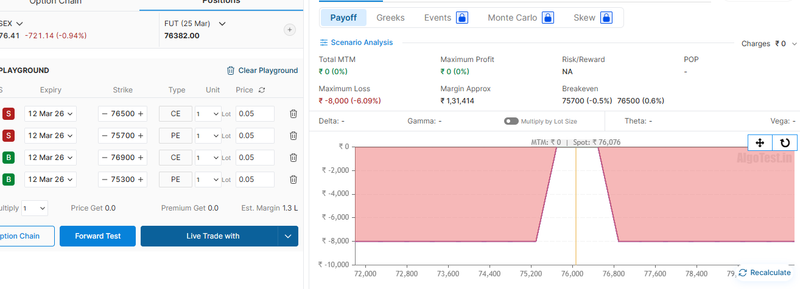
The [**iron condor**](https://docs.algotest.in/financial-education/options-strategies/iron-condor/) is a popular options strategy used when traders expect the market to remain within a range.
It involves selling both a call and a put while buying further out-of-the-money options to limit risk.
Example structure
Sell OTM call
Sell OTM put
Buy further OTM call
Buy further OTM put
### Example
Suppose Nifty is trading around **22,000**.
A trader might create an iron condor like this:
Sell 22,300 Call
Sell 21,700 Put
As long as the market stays between these levels, the trader benefits from **option premium decay**.
Because this strategy involves multiple legs, many traders prefer automating it to ensure accurate execution.
### 5\. Short Straddle Strategy (Popular 9:20 Strategy)
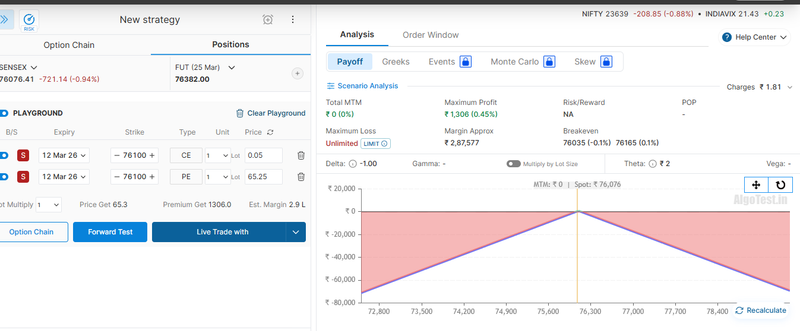
The **short straddle** is one of the most widely used options strategies among retail traders in India.
The idea is simple: sell both the **ATM call and ATM put option** at the same strike price and benefit from **time decay** if the market stays relatively stable.
Example rules
Entry
Sell ATM call, and ATM put at a fixed time (many traders prefer **9:20 AM after the market stabilizes**).
Exit
- exit at predefined stop loss
- exit when profit target is reached
- exit before market close
### Example scenario
Suppose **Bank Nifty is trading at 48,000 at 9:20 AM**.
The strategy sells:
48,000 Call
48,000 Put
If the market stays within a reasonable range during the day, both options gradually lose value due to **time decay**, allowing the trader to capture premium.
Related Read: [How to Backtest Rolling Straddles with Indicators](https://algotest.in/blog/how-to-backtest-rolling-straddles-with-indicators/)
### Why the 9:20 entry is popular
The first few minutes after the market opens can be extremely volatile.
By **waiting until 9:20**, traders allow the initial market noise to settle before entering positions.
Because of this, the **9:20 straddle strategy has become very popular among systematic options traders**.
Many traders automate this strategy so the system can:
- Identify the ATM strike automatically
- Execute both option legs simultaneously
- Manage stop losses consistently
Automation helps ensure the strategy executes **quickly and without manual delays**.
However, like all [options selling strategies](https://algotest.in/blog/options-trading-strategies), proper **risk management is essential**.
Read More: [920 Straddle Strategy Defined](https://algotest.in/blog/the-920-straddle-strategy-defined/)
### 6\. Bollinger Band Mean Reversion Strategy
Bollinger Bands help traders identify **overbought and oversold conditions**.
When the price moves too far away from its average, it often returns toward the middle.
Example rules
Entry
Sell when the price touches the upper Bollinger Band.
Exit
Close the trade when the price returns to the middle band.
### Example
Suppose a stock suddenly spikes and touches the upper [Bollinger Band.](https://docs.algotest.in/signals/pinescripts/bb_bands_strategy/)
The strategy assumes the price may be **temporarily stretched**, so it enters a short trade expecting the price to revert toward the average.
This strategy works best in **sideways or range-bound markets**.
Read More: [Best Intraday Trading Strategies, Rules and Tips](https://algotest.in/blog/best-intraday-trading-strategies-rules-tips/)
## Benefits of Using Algo Trading Strategies
Algo trading strategies offer several advantages for traders.
Key benefits include:
- removing emotional decision-making
- executing trades instantly
- maintaining consistent trading rules
- trading multiple strategies simultaneously
This structured approach is why many traders are shifting toward **systematic trading methods**.
Read More: [Effective Buying Strategies with AlgoTest’s Option Strategy Builder](https://algotest.in/blog/buying-strategies-with-algotest-option-strategy-builder/)
## Limitations of Algo Trading Strategies
While algorithmic trading offers many advantages, it’s important to understand the limitations.
Some challenges include:
- strategies may stop working when market conditions change
- Poor [risk management](https://algotest.in/blog/algo-trading-profitable-india-2026) can lead to losses
- Execution delays, or slippage, which may impact results
Successful traders constantly **monitor and adapt their strategies**.
## Build, Backtest, and Deploy Trading Strategies with AlgoTest
[AlgoTest](https://algotest.in) allows traders to build, analyze, and deploy trading strategies in a structured way. Traders can define clear rules, study how strategies behave under different market conditions, and automate execution to maintain discipline.
For traders looking to move beyond discretionary trading, the goal is simple:
Move away from emotional decisions and toward structured, rule-based trading.
That’s the foundation of long-term systematic trading.
Read More: [Trading Strategies that Don't Work](https://algotest.in/blog/types-of-strategies-that-do-not-work/)
[A Step-by-Step Guide to Backtesting Trading Strategies](https://algotest.in/blog/guide-to-backtesting-trading-strategies/)
[How AI is Changing Algo Trading in India](https://algotest.in/blog/ai-algo-trading-india/)
### Disclaimer
This article is for educational purposes only and should not be considered financial or investment advice. The strategies discussed are examples used by traders to understand how algorithmic trading works.
Traders should conduct their own research, testing, and risk management before implementing any strategy in live markets.
_Please refer to our_ [_Product doc_](https://docs.algotest.in/) _to master the AlgoTest platform._
# FAQs
Q: What is an algo trading strategy?
A: An algo trading strategy is a rule-based trading system where trades are executed automatically when predefined conditions are met. These conditions can include indicator signals, price breakouts, time-based rules, or volatility levels. The goal is to follow a systematic approach instead of relying on emotions during trading.
Q: Is algo trading legal in India?
A: Yes, algo trading is legal in India. However, it must follow the guidelines set by SEBI and stock exchanges. Retail traders typically use approved trading platforms and broker APIs to automate strategies while ensuring proper risk management and compliance with exchange rules.
Q: Can beginners use algo trading strategies?
A: Yes, beginners can use algo trading strategies, especially with platforms that allow traders to build strategies without coding. Many traders start with simple rule-based systems such as moving average crossovers or breakout strategies before exploring more advanced setups.
Q: What are the most popular algo trading strategies used by traders?
A: Some commonly used algo trading strategies include moving average crossover strategies, opening range breakout strategies, VWAP mean reversion strategies, trend-following strategies, and options strategies such as the short straddle. These strategies are often automated so trades can be executed consistently.
Q: What is the 9:20 straddle strategy?
A: The 9:20 straddle strategy is a popular options strategy where traders sell both the at-the-money call and put option around 9:20 AM, after the initial market volatility settles. The strategy aims to benefit from time decay if the market remains within a reasonable range during the trading session.
Q: Do algo trading strategies guarantee profits?
A: No trading strategy can guarantee profits. Market conditions constantly change, and strategies that perform well in one phase may underperform in another. Successful traders focus on proper risk management, consistent execution, and continuously evaluating their strategies.
---
This blog is powered by Superblog. Visit https://superblog.ai to know more.
---
## Manual Trading vs Algo Trading in India: Which Is Better for Retail Traders?
Author: AlgoTest
Author URL: https://algotest.in/blog/author/algotest/
Published: 2026-03-11
Category: General
Category URL: https://algotest.in/blog/category/general/
Meta Description: Manual trading vs algo trading in India: learn the key differences, benefits, and why more retail traders are exploring algorithmic trading today.
Tags: algo trading, algo trade
Tag URLs: algo trading (https://algotest.in/blog/tag/algo-trading/), algo trade (https://algotest.in/blog/tag/algo-trade/)
URL: https://algotest.in/blog/manual-trading-vs-algo-trading-in-india-which-is-better-for-retail-traders/

The conversation is growing around manual trading vs algo trading in India due to new SEBI rules and the rise of modern algo platforms.
Markets move fast, and sometimes opportunities last only a few seconds.
To keep up, many traders are turning to [algorithmic trading apps](https://algotest.in/blog/want-the-best-algo-trading-app-in-india-heres-how-algotest-can-help) that can execute strategies automatically.
But does that make algo trading better than manual trading?
Let’s find out.
## What Is Manual Trading?
In manual trading, the trader makes every decision without using automation or algorithms.
The trader examines charts, studies market conditions, spots opportunities, and places trades manually through their trading platform.
For example, imagine a trader watching the Nifty index. If the trader observes that the price is breaking a significant resistance level, they might choose to buy a call option, expecting the market to go higher.
In manual trading, the trader determines:
\- when to enter a trade
\- when to exit a trade
\- how much capital to risk
\- where to set stop-loss and target levels
Every step depends on the trader’s judgment, experience, and timing.
Manual trading offers traders a lot of flexibility because they can adjust their decisions based on market conditions, news events, or their own interpretation of the market.
However, it also demands continuous market monitoring, quick decisions, and strong discipline to consistently follow trading rules.
## What Is Algo Trading?
[Algo trading](https://algotest.in/blog/algo-trading-india/) (short for **algorithmic trading**) means using predefined rules and software to execute trades automatically.
For example, a trader might set rules like:
- Buy when the price crosses a moving average
- Exit the trade when the stop-loss is triggered
- Close all positions before the market closes
In simple terms, instead of constantly watching the market and clicking the buy or sell button, traders let the system follow their predefined strategy and execute trades for them.
This helps traders save time, avoid emotional decisions, and execute trades more consistently.
[**AlgoTest**](https://algotest.in) allows traders to build strategies, backtest them on historical data, and validate them before running them live.
To sum it up: Manual trading relies on human decision-making, while algo trading relies on rule-based execution.
## Manual Trading vs Algo Trading: Key Differences
Here’s a quick comparison.
Factor
Manual Trading
Algo Trading
Speed
Depends on trader reaction
Instant execution
Emotional bias
High
Minimal
Monitoring
Requires constant attention
Automated
Strategy testing
Difficult
Backtesting possible
Scalability
Limited
Multiple strategies possible
Both approaches have their place. But the experience of trading them feels very different.
## Benefits of Algo Trading
Algorithmic trading offers several advantages for traders who prefer a **systematic and rule-based approach to markets**. By automating trading decisions, algorithms can improve speed, consistency, and efficiency.
### 1\. Faster Trade Execution
Algorithms execute trades in milliseconds once the predefined conditions are met. This speed reduces delays that often occur when traders manually analyze charts and place orders.
### 2\. Removes Emotional Bias
One of the biggest challenges in manual trading is emotional decision-making. Fear, greed, and hesitation can lead to poor trading decisions. Algo trading eliminates this problem by following predefined rules.
### 3\. Ability to Monitor Multiple Strategies
Manual traders usually focus on one or two strategies at a time. Algorithms can track multiple markets, instruments, or strategies simultaneously, allowing traders to diversify their approach.
### 4\. Backtesting Capabilities
[Algo trading](https://algotest.in/blog/why-algo-trading-is-the-future-for-retail-investors) allows traders to test strategies on historical data before deploying them live. This helps evaluate performance metrics like win rate, drawdown, and risk-reward before risking real capital.
### 5\. Reduced Human Errors
Automation minimizes operational mistakes such as entering the wrong quantity, selecting incorrect strike prices, or missing trading signals. Algorithms execute trades exactly as defined in the strategy.
### 6\. Efficient Trade Monitoring
Once a strategy is deployed, the system continuously monitors markets and manages open positions based on predefined rules, which helps maintain discipline in execution.
[Algo Platforms](https://algotest.in/blog/8-best-algo-trading-platforms-in-india-2026) like **AlgoTest** help traders build more disciplined and reliable trading systems.
## Benefits of Manual Trading
Despite the growth of automation, manual trading still offers advantages in certain situations, especially for traders who rely on experience and discretion.
### 1\. Flexibility in Changing Market Conditions
Manual traders can quickly adjust their decisions based on news events, market sentiment, or sudden volatility without relying on predefined rules.
### 2\. Discretionary Decision-Making
Experienced traders often rely on intuition and experience to identify opportunities that algorithms may not capture, especially in uncertain or news-driven markets.
Manual or experienced traders can use **AlgoTest’s** [**ClickTrade feature**](https://docs.algotest.in/clicktrade/), which offers a [strategy builder](https://algotest.in/feature/strategy-builder) and [simulator](https://algotest.in/feature/simulator) to create and test strategies before trading them live.
### 3\. Better Adaptability
Manual traders can change strategies instantly when market conditions shift, whereas algorithms strictly follow predefined instructions.
### 4\. Learning and Skill Development
Trading manually helps traders understand market behavior, price action, and risk management, which can improve decision-making over time.
## Why Algo Trading Is Growing in India

Algo trading was once limited to institutional traders.
Today, retail participation in algorithmic trading is increasing rapidly in India.
Several factors are driving this growth:
### 1\. Increased Participation in Derivatives Markets
India’s derivatives market, especially index options like NIFTY and BANKNIFTY, has grown significantly in recent years. Many of these strategies require quick and precise execution, which makes automation more useful.
### 2\. Greater Access to Trading Technology
Modern algo trading softwares provide tools that allow traders to build and test strategies without complex programming or infrastructure.
### 3\. Clearer Regulatory Framework
[SEBI](https://algotest.in/blog/algo-trading-profitable-india-2026) has introduced regulations to bring more transparency and structure to retail algo trading. These rules focus on risk controls, order monitoring, and responsible use of automated strategies.
### 4\. Increased Awareness and Educational Resources
Today, traders have access to many [educational resources,](https://docs.algotest.in/financial-education/) such as blogs, trading communities, webinars, and [courses](https://algotest.in/blog/5-best-algo-trading-courses-in-india-to-learn-in-2025) that explain how algorithmic trading works. This has made it easier for retail traders to understand and adopt systematic trading approaches.
## Why Algo Trading Works for Busy Traders
Many traders in India cannot watch the markets all day.
They have full-time jobs or other commitments.
Algo trading can help in such situations.
Instead of monitoring charts constantly, traders can:
1. Define strategy rules
2. Test those rules using historical data
3. Deploy the strategy to run automatically
The system monitors the market and executes trades when conditions are met.
This makes algorithmic trading particularly useful for **busy professionals and part-time traders**.
## Should Indian Traders Choose Manual or Algo Trading?
There is no universal answer. Neither can guarantee profits.
Both approaches work in different situations.
Manual trading works well for:
- discretionary traders
- scalpers
- news-driven trading strategies
Algo trading works well for:
- rule-based strategies
- systematic traders
- investors with limited time to monitor markets
Many experienced traders actually combine both approaches.
They use manual trading for discretionary decisions and algo trading for strategies that follow clear rules.
## Final Thoughts
The real question is not just manual trading vs algo trading.
The real question is what your trading goals, experience, and approach to the market.
Some traders prefer the flexibility of manual decisions, while others rely on rule-based systems to remove emotion and improve consistency.
In the end, the goal is not just to trade more but to **trade with clarity, consistency, and confidence**.
If you want to explore a more systematic approach, [**AlgoTest**](https://algotest.in/login) allows traders to build, test, and analyze strategies before deploying them in live markets.
# FAQs
Q: Is algo trading profitable in India?
A: Algo trading can be profitable, but it’s not guaranteed. Just like manual trading, the results depend on the quality of the strategy and how well risk is managed. The advantage of algo trading is that strategies can be tested using historical data before risking real capital.
Q: Is algo trading risky?
A: Yes, there are risks involved. Technical issues, poor strategy design, or sudden market volatility can lead to losses. That’s why experienced traders usually backtest their strategies and try them in paper trading before running them live.
Q: What is the minimum capital required for algo trading in India?
A: There is no fixed amount required to start algo trading. The capital mainly depends on the strategy and the instruments being traded. Some traders begin with smaller capital for equity strategies, while options or futures trading may require higher margins.
Q: Why do many retail traders lose money in trading?
A: One of the biggest reasons is emotional decision-making. Traders often exit too early out of fear or hold losing positions out of hope. Lack of discipline, overtrading, and poor risk management also contribute to losses. A systematic approach, whether manual or automated, usually helps improve consistency.
Q: Does SEBI allow algo trading for retail traders?
A: Yes, SEBI does allow retail traders to use algorithmic trading. However, trades must be executed through brokers that support APIs and follow exchange rules like order tagging and risk management checks. Most retail traders access algo trading through platforms connected to broker APIs.
Q: Is algo trading legal in India?
A: Yes, algo trading is legal in India. Traders can automate their strategies as long as they follow SEBI guidelines and use broker-approved APIs. Exchanges like NSE and BSE allow automated orders, but brokers usually require proper approvals and risk controls before enabling API-based trading.
Q: Which brokers allow algo trading in India?
A: Many popular brokers in India provide API access for algo trading. Some of the commonly used ones include Zerodha, Angel One, Upstox, Fyers, and Kotak Securities. AlgoTest has more than 200 brokers integrated, connect with them and deploy your strategies live.
Q: Which is better: manual trading or algo trading?
A: It really depends on the trader. Manual trading works well for people who rely on discretion and market experience. Algo trading, on the other hand, is better for rule-based strategies because it removes emotions and executes trades much faster. Many traders start manually and move to algorithmic trading once their strategies become systematic.
Q: Can beginners start with algo trading?
A: Yes, beginners can start with algo trading, especially now that many platforms offer no-code strategy builders. These tools allow traders to automate strategies without needing programming skills. However, understanding basic trading concepts and risk management is still important. Learn algo trading step by step here.
---
This blog is powered by Superblog. Visit https://superblog.ai to know more.
---
## Want the Best Algo Trading App in India? Here’s How AlgoTest Can Help
Author: AlgoTest
Author URL: https://algotest.in/blog/author/algotest/
Published: 2026-03-10
Category: General
Category URL: https://algotest.in/blog/category/general/
Meta Description: Looking for the best algo trading platforms in India? Discover why AlgoTest is the best in the Indian market for creating, backtesting, and algo trade strategies.
Tags: algo trading, algotest
Tag URLs: algo trading (https://algotest.in/blog/tag/algo-trading/), algotest (https://algotest.in/blog/tag/algotest/)
URL: https://algotest.in/blog/want-the-best-algo-trading-app-in-india-heres-how-algotest-can-help/
During your search for algo trading tools, terms like algo trading apps, algorithmic trading software, or automated trading platforms might confuse you as a new trader.
Well, they all mean the same thing - A software that executes trading rules automatically based on predefined conditions.
The terminology may vary, but the goal is similar: helping traders move from manual trading to rule-based, systematic execution.
But once traders start exploring platforms, a new question usually appears.
_How do you actually turn a trading idea into a strategy and validate it?_
That’s where [**AlgoTest**](https://algotest.in) comes in.
AlgoTest is a **web-based strategy development and testing platform designed specifically for options traders in India**.
You don’t need coding skills or complex technical setups to get started. AlgoTest provides a structured workflow and tools to help traders build strategies, backtest them on historical data, and validate them with virtual money before deploying them in live markets.
This makes it easier to turn trading ideas into tested, systematic strategies.
## What Traders Actually Need from an Algo Trading Platform
When Indian retail traders start looking for an [**algo trading**](https://algotest.in/blog/algo-trading-india/) **app**, they’re usually trying to solve a very practical problem.
They already have trading ideas.
The challenge is **executing those ideas consistently**.
In real trading, human limitations often get in the way. Traders often:
- **Miss opportunities** because they step away from the screen
- **Hesitate before entering trades** and lose the right entry price
- **Fear and greed affect decisions**, especially during volatile markets
- **Break their own trading rules** in the heat of the moment
Even experienced traders face these challenges. A strategy may look good on charts, but might not perform that well in real markets.
That’s why many traders start exploring [**algorithmic trading platforms**.](https://algotest.in/blog/8-best-algo-trading-platforms-in-india-2026)
However, automation alone isn’t enough. Traders still need to know:
- Has the strategy been tested properly?
- How much drawdown can it experience?
- How does it behave in different market conditions?
Platforms built for systematic trading aim to solve this by helping traders **build, test, and validate strategies before deploying them live.**
## What AlgoTest Actually Is

[AlgoTest](https://algotest.in) is best understood as a **strategy development platform for derivatives traders**.
Instead of focusing only on automation, the platform helps traders go through a structured workflow:
1. Build a trading strategy
2. Backtest it using historical market data
3. Forward test it in live markets
4. Deploy it with real capital once validated
Because [AlgoTest](https://algotest.in/login) runs entirely in the cloud, traders can access it directly from their browser without installing heavy software.
The platform also integrates with [multiple brokers](https://algotest.in/blog/best-brokers-for-algo-trading-in-india), allowing strategies to move from testing to execution once traders are confident in their logic.
This approach allows traders to move from ideas and assumptions to tested strategies.
## Build Trading Strategies Without Writing Code
Many traders are interested in algorithmic trading but assume it requires programming knowledge.
Traditional algorithmic trading setups often involve coding languages, APIs, and server management, which can be intimidating for non-programmers.
AlgoTest removes that barrier by providing a [**visual strategy builder**.](https://algotest.in/feature/strategy-builder)
Instead of writing code, traders can define their strategy logic using structured rules such as:
- entry conditions
- exit conditions
- stop-loss levels
- profit targets
- position sizing
This approach allows traders to focus on **strategy logic rather than programming**.
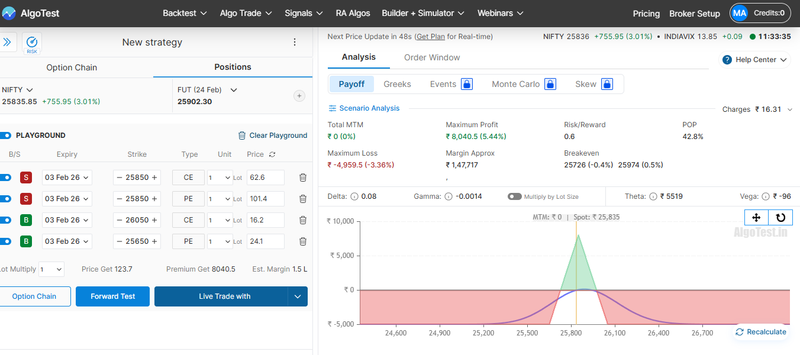
The platform is particularly useful for options traders who run structured strategies involving multiple legs and defined risk parameters.
Read the [strategy builder doc](https://docs.algotest.in/clicktrade/strategy-builder/) for a full walkthrough.
## Backtest Strategies Using Historical Data
Before risking real capital, it’s important to understand how a strategy behaves over time.
AlgoTest allows traders to [**backtest strategies**](https://algotest.in/feature/backtest) **using years of historical market data**, giving them insight into how their trading logic would have performed in different market environments.
Backtesting reports provide useful performance metrics such as:
- overall profit and loss
- win rate
- maximum drawdown
- risk-reward characteristics
These insights help traders identify weaknesses in their [strategies](https://algotest.in/blog/guide-to-backtesting-trading-strategies) and refine their logic before moving to live markets.
Now, AlgoTest has its own AI tool, Agent 920, to help you build and optimise your strategies.
Also read: [How AI is changing AlgoTrading in India](https://algotest.in/blog/ai-algo-trading-india)
## Validate Strategies with Forward Testing
After backtesting, many traders want to see how their strategy behaves in real market conditions.
AlgoTest allows traders to run strategies in **forward testing mode**, often referred to as paper trading.
Forward testing allows strategies to operate in live markets without risking real capital.
This stage helps traders evaluate:
- execution behavior
- Strategy stability in real time
- Potential adjustments needed before deployment
By combining [**backtesting and forward testing**](https://algotest.in/blog/difference-between-backtesting-forward-testing-and-live-execution-in-ra-algos), traders can move toward a more disciplined and systematic trading process.
## Who AlgoTest Is Designed For
AlgoTest is particularly useful for traders who want to transition from discretionary trading to **systematic trading approaches**.
The platform is commonly used by:
### Options traders
who want to build and test [multi-leg strategies](https://docs.algotest.in/Time-Based-Algo-Trading/How-to-Master-Backtesting-on-AlgoTest/features/legwise-settings/) before deploying them live.
### Traders with full-time jobs
who cannot watch markets constantly but want their strategies to operate based on predefined rules.
### Strategy developers
who want to experiment with ideas and analyze performance data before committing capital.
By providing tools for strategy development and validation, AlgoTest helps traders focus on refining and optimising their strategies.
## Final Thoughts
The search for the **best algorithmic trading app in India** often begins with automation.
But for many traders, the real value lies in **testing and validating strategies before they** [**go live**.](https://docs.algotest.in/Time-Based-Algo-Trading/algo-trade/)
[Sign up](https://AlgoTest.in/login) now to **build, backtest, and forward-test strategies on one platform**, and trade more systematically.
Also read: [5 Best Paper Trading Websites in India (2026)](https://algotest.in/blog/paper-trading-websites-india/)
[Is Algo Trading Legal in India?](https://algotest.in/blog/is-algo-trading-legal-in-india-what-retail-traders-must-know/)
[Best Tradetron Alternatives in 2026](https://algotest.in/blog/best-tradetron-alternatives-in-2026/)
# FAQs
Q: What is an algo trading app?
A: An algo trading app is software that automatically executes trades based on predefined rules. Instead of placing trades manually, traders define conditions for entry, exit, stop-loss, and targets, and the system executes trades when those conditions are met.
Q: Can beginners use algo trading platforms in India?
A: Yes. Many modern algo trading platforms, including AlgoTest, are designed for traders who do not have coding knowledge. With visual strategy builders and rule-based systems, beginners can create and test strategies without writing any code.
Q: What is the difference between backtesting and forward testing?
A: Backtesting evaluates a strategy using historical market data to see how it would have performed in the past. Forward testing runs the strategy in live market conditions using virtual capital, allowing traders to validate their strategy before deploying it with real money.
Q: Who should use AlgoTest?
A: AlgoTest is useful for options traders, systematic traders, and anyone who wants to test trading ideas before deploying them live. It is particularly helpful for traders who want to move from discretionary trading to rule-based strategies.
Q: Who are the best Brokers for Algo Trading in India
A: Some of the best brokers for algo trading in India are Zerodha, Dhan, Upstox, Angel One, and Fyers. The right choice depends on execution speed, API flexibility, pricing, and developer ecosystem. Check out our detailed broker comparison blog.
---
This blog is powered by Superblog. Visit https://superblog.ai to know more.
---
## How AlgoTest is Simplifying Algo Trading in India
Author: AlgoTest
Author URL: https://algotest.in/blog/author/algotest/
Published: 2026-03-08
Category: General
Category URL: https://algotest.in/blog/category/general/
Meta Description: Learn how AlgoTest helps retail traders approach algo trading in India with strategy testing, forward simulation, and systematic trading for Nifty and Bank Nifty options.
Tags: algo trading, algo trade
Tag URLs: algo trading (https://algotest.in/blog/tag/algo-trading/), algo trade (https://algotest.in/blog/tag/algo-trade/)
URL: https://algotest.in/blog/how-algotest-is-simplifying-algo-trading-in-india/
Retail traders are now exploring [algo trading in India](https://algotest.in/blog/algo-trading-india/) more than ever, something that once only hedge funds and institutions could afford. Complex systems, expensive infrastructure, and teams of programmers handled automated trading.
Things look different today.
Many traders prefer strategies with clear rules instead of emotional decisions during market swings.
This shift explains the rapid growth of algorithmic trading in India.
At [AlgoTest](https://algotest.in), the goal is simple. Help traders test strategies before risking capital.

## The Rise of Algo Trading in India
India’s derivatives market has expanded rapidly over the last decade. Retail participation in index options such as Nifty, Bank Nifty, and FinNifty continues to rise.
Yet [trading options](https://algotest.in/blog/options-trading-a-comprehensive-guide-with-algorithmic-strategies) remains difficult.
Markets move fast. Positions change quickly. Emotions interfere with discipline.
Algorithmic trading addresses this challenge. It allows you to define clear rules for trading decisions.
Examples:
• When to enter a trade
• When to exit a trade
• How to manage risk
• How to adjust positions during market movement
Once rules are defined, trades follow the same structure every time.
You move from guesswork to structured decision-making.
## Why Manual Trading Becomes Difficult
Many traders start with discretionary trading. You watch charts and take positions based on market movement.
Over time, a pattern appears. Human emotions and biases interfere with decisions.
Traders often face issues such as:
• Entering trades too early or too late
• Holding losing positions longer than planned
• Ignoring stop loss levels during volatile sessions
• Testing strategies using real capital
Even when the strategy is good, inconsistent execution can create losses.
Data also shows how difficult derivatives trading can be.
A [SEBI study](https://money.rediff.com/news/market/sebi-study-91-individual-traders-lost-money-in-f-o-in-fy24/16147420240923?utm_source=chatgpt.com&utm_source=chatgpt.com) from FY 2024 reported that only about 9 percent of individual F&O traders ended the year in profit.
The number highlights how hard derivatives trading becomes without structure.
Among AlgoTest users, the numbers look different. Around 45 percent of [AlgoTest](https://algotest.in/login) users ended FY 2023 to 2024 in profit. Traders who test strategies and follow systematic methods often manage risk better.
This explains why more traders now explore rule-based trading systems.
## What Is Algo Trading in Simple Terms
Algorithmic trading means executing trades using predefined rules.
Instead of placing trades manually each time, you define conditions that trigger trades.
Examples include:
• If price crosses a moving average
• If volatility reaches a defined level
• If an option premium hits a specific target
Once conditions match the rules, trades execute automatically.
The biggest benefit is consistency.
A tested strategy follows the same logic across every trade.
## Is Algo Trading Legal in India
Yes. Algo trading operates within the Indian regulatory framework.
Retail traders deploy strategies through broker APIs approved by exchanges. Trading platforms connect strategies with broker accounts and execute trades based on defined rules.
Read More: [Is Algo Trading Legal in India?](https://algotest.in/blog/is-algo-trading-legal-in-india-what-retail-traders-must-know/)
## How AlgoTest is Simplifying Algo Trading in India
For many traders, the biggest challenge is not understanding algo trading. The challenge lies in getting started.
At AlgoTest, the focus stays on strategy validation.
You build a strategy. You test it. You observe how it performs before risking capital.
The workflow stays simple.
• Create a strategy based on market understanding
• Backtest the strategy
• Forward test the strategy
• Deploy the strategy for live algo trading in the market
Each step gives you more clarity before live trading.
### Backtest Strategies Before Risking Real Capital
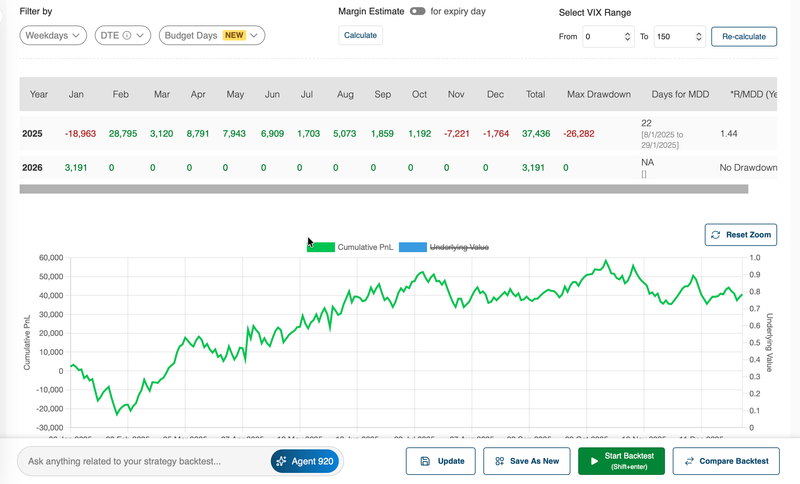
Backtesting allows you to evaluate strategies using historical market data.
The goal is simple.
Check how the strategy would have performed in past market conditions.
Backtesting helps answer questions such as:
• Does the strategy perform consistently
• What drawdowns appear during losing periods
• How often does the strategy win or lose
• Does the risk-reward profile fit your trading style
Instead of guessing whether a strategy works, you review performance data.
At AlgoTest, you can [backtest](https://algotest.in/feature/backtest) your strategies using years of historical data, view detailed reports, apply advanced controls such as leg-wise stop loss and lock profit, add slippage and brokerage, and access built-in AI tools to build and refine strategies.
Read our product doc to [master backtest on AlgoTest](https://docs.algotest.in/Time-Based-Algo-Trading/How-to-Master-Backtesting-on-AlgoTest/)
### Forward Test Strategies on Live Market Data
Even when a strategy performs well in historical testing, traders must observe its behavior in live markets.
Forward testing solves this problem.
Forward testing runs strategies on live market data without risking capital.
This stage helps you observe:
• Real market behavior
• Execution patterns
• Strategy stability during volatile sessions
[Forward testing](https://algotest.in/feature/forward-test) works as the final check before live deployment.
## A Structured Approach to Algo Trading
AlgoTest encourages a [step-by-step](https://algotest.in/blog/how-to-do-algo-trading-step-by-step-beginner-checklist) approach to strategy deployment.
Instead of jumping straight into automated trading, you follow a simple process.
### Step 1: Backtest the Strategy
Test performance using historical market data.
### Step 2: Forward Test the Strategy
Observe strategy behavior in live markets without deploying capital.
### Step 3: Deploy the Strategy
Once results show stability, deploy the strategy for live trading.
This process helps turn trading ideas into validated strategies.
## Designed for Options Traders
Options trading drives a large share of retail participation in India. Many traders use structured strategies instead of directional bets.
Common strategies include:
• Iron condors
• Straddles
• Strangles
• Spreads
• Directional option trades
AlgoTest focuses strongly on [options strategy testing](https://algotest.in/blog/futures-and-options-trading) for indices such as Nifty and Bank Nifty.
You analyze risk, drawdowns, and performance before deploying capital.
## Why Traders Choose AlgoTest
Most traders know how to place trades. The difficult part is knowing whether a strategy works before risking money.
AlgoTest works as a complete ecosystem for systematic traders.
You can:
• Build strategies using the [Strategy Builder](https://algotest.in/blog/option-strategy-builder-strategies-that-win/)
• Simulate trades and analyze performance
• Follow [RA algos strategies](https://algotest.in/ra-algo) created by SEBI-registered analysts
• Deploy validated strategies directly in the market
Instead of relying on trial and error, you work with data.
As algo trading in India grows, more traders move toward structured and systematic trading.
With the right tools and tested strategies, you approach F&O trading with more clarity and discipline. [Sign up now](https://algotest.in/login), and get 25 backtests/week free.
# FAQs
Q: Is algo trading legal for retail traders in India?
A: Yes. Algo trading is allowed when strategies are deployed through broker APIs and platforms that comply with exchange regulations. Retail traders typically connect their broker accounts and run rule based strategies through approved systems.
Q: Why is strategy testing important before live trading?
A: Strategy testing helps traders understand how a trading idea performs across different market conditions. By reviewing metrics such as win rate, drawdown, and risk levels, traders gain clarity before risking capital in live markets.
Q: How does AlgoTest help traders trade more systematically?
A: AlgoTest provides tools to build strategies, simulate performance using historical data, forward test strategies in live market conditions, and deploy automated trading strategies once they are validated.
Q: Who is AlgoTest designed for?
A: AlgoTest is designed for retail traders who want to trade systematically, especially those trading index options such as Nifty and Bank Nifty. The platform helps traders test and refine strategies before deploying them in the market.
Q: Why do many F&O traders struggle to make profits?
A: Futures and options trading is complex and highly volatile. According to a SEBI study, over 90 percent of individual traders in the equity derivatives segment incurred losses during FY22 to FY24, which highlights the importance ofrisk managementand systematic trading.
---
This blog is powered by Superblog. Visit https://superblog.ai to know more.
---
## Explore AlgoTest's Strategy Builder Tool for Options Trading
Author: AlgoTest
Author URL: https://algotest.in/blog/author/algotest/
Published: 2026-03-07
Category: Product
Category URL: https://algotest.in/blog/category/product/
Meta Description: Discover AlgoTest's Option Strategy Builder for creating, testing, and optimizing options trading strategies with powerful analytics and paper trading tools.
Tags: algo trading, algotest
Tag URLs: algo trading (https://algotest.in/blog/tag/algo-trading/), algotest (https://algotest.in/blog/tag/algotest/)
URL: https://algotest.in/blog/option-strategy-builder-algotest/

## **Introduction**
Options trading can be lucrative for investors looking to diversify their portfolios and take advantage of market opportunities. However, it requires careful analysis, strategic planning, and a deep understanding of market dynamics. To simplify and enhance the options trading experience, [AlgoTest](https://algotest.in/?utm_source=blog&utm_medium=internal&utm_campaign=seo&utm_content=main-page&utm_term=algotest) has developed a powerful [Option Strategy Builder Tool](https://algotest.in/feature/strategy-builder?utm_source=blog&utm_medium=internal&utm_campaign=seo&utm_content=feature&utm_term=strategy-builder).
AlgoTest platform is designed to assist options traders in creating, optimizing, backtesting, and forward-testing their strategies and many more. Whether you are a beginner or an experienced trader, this tool can help you streamline your trading process, make informed decisions, and maximize your trading profits.
[Sign up and get 25 backtests free/week.](https://algotest.in/feature/backtest?utm_source=blog&utm_medium=internal&utm_campaign=seo&utm_content=feature&utm_term=backtest&utm_source=blog&utm_medium=internal&utm_campaign=seo&utm_term=backtest&utm_content=feature)
With AlgoTest's Strategy Builder Tool, you can easily create and customize complex options trading strategies without the need for coding knowledge.
The platform provides a user-friendly interface that allows you to navigate the interface very easily and also it’s very simple to use while doing forward testing, and many more.
From simple straddles to more advanced ratio spreads, you can implement a wide range of strategies with a click of a button.
One of the key features of [AlgoTest's Strategy Builder](https://algotest.in/blog/how-to-use-strategy-builder-iron-condor) Tool is its forward-testing capability. Before implementing your strategies in the live market, you can paper trade them for some time to evaluate their performance.
This allows you to get an idea of how your strategy works, identify potential risks, and fine-tune your strategies to optimize your trading results.
In addition, AlgoTest's Strategy Builder Tool provides comprehensive analytics and optimization tools. These tools allow you to analyze and optimize your strategies based on various factors such as market conditions, volatility, and risk tolerance.
By fine-tuning your strategies, you can increase your chances of success and improve your overall trading performance.
Related: [Opstra vs AlgoTest Strategy Builder](https://algotest.in/blog/opstra-strategy-builder-vs-algotest)
## **AlgoTest's Strategy Builder**
AlgoTest's Strategy Builder is a comprehensive platform that empowers options traders to create and optimize their [trading strategies](https://algotest.in/blog/options-trading-strategies/). The tool is designed to simplify the strategy creation, and optimization process, allowing traders to make more informed decisions and maximize their profits.
### **A Comprehensive Overview of the Tool**
AlgoTest's Strategy Builder is a feature-rich tool that provides traders with a comprehensive set of options trading functionalities. The tool is available as a user-friendly app, making it accessible to traders on the go.
AlgoTest's Strategy Builder allows traders to fine-tune their strategies based on various factors such as risk tolerance, market conditions, and volatility. By optimizing their strategies, traders can increase their chances of success and maximize their profits.
### **Key Features That Set It Apart**
AlgoTest's Strategy Builder offers several key features that set it apart from other options trading tools. These features include:
- **Option Chain:** The [option](https://algotest.in/blog/options-trading-strategies/) chain provides information about Greeks that can help you analyze the strategy and make informed judgments.
- **Trader-friendly Interface:** AlgoTest's Strategy Builder is designed with traders in mind, offering a user-friendly interface that makes it easy to create, analyze, and optimize trading strategies.
- **Forward Testing Capability:** Forward performance testing, often known as paper trading, offers traders additional out-of-sample data to evaluate a system.
- **Optimization Tools:** The platform provides optimization tools that allow traders to fine-tune their strategies based on various parameters, such as risk tolerance and market conditions.
## **Getting Started with AlgoTest's Strategy Builder**
To get started with AlgoTest's Strategy Builder, you can go to [our website](https://algotest.in/). Once you are at our homepage, you can create an account and log in to the platform.
### **Step-by-Step Guide to Creating Your First Strategy**
Creating your first strategy with AlgoTest's Strategy Builder is a simple process. Follow these steps to get started:
1. **Define your trading rules:** Start by defining the parameters and trading rules for your strategy. This includes selecting the option strike you want to trade and determining risk management rules.
2. **Customize your strategy:** AlgoTest's Strategy Builder allows you to customize your strategy based on your trading preferences.
3. **Forward Testing your strategy:** Forward testing assesses a trading strategy's performance and robustness in real-world market conditions. It enables traders to examine the strategy's capacity to react to changing market conditions as well as its long-term profitability.
4. **Optimize your strategy:** Use the optimization tools provided by AlgoTest's Strategy Builder to fine-tune your strategy. This may involve adjusting parameters, testing different scenarios, and analyzing the results to find the optimal settings for your strategy.
5. **Deploy your strategy:** Once you are satisfied with the performance and optimization of your strategy, you can deploy it in the live market. AlgoTest's Strategy Builder will execute trades based on your strategies.
### **AlgoTest Strategy Builder: how does it work?**
1\. Go to \[ [**Algotеst**](https://algotest.in/)\] website, sign up for a free account, and log in to your account.
2\. Now click on “Strategy Builder” as shown in the image below

3\. You will get an interface as shown in the image below.
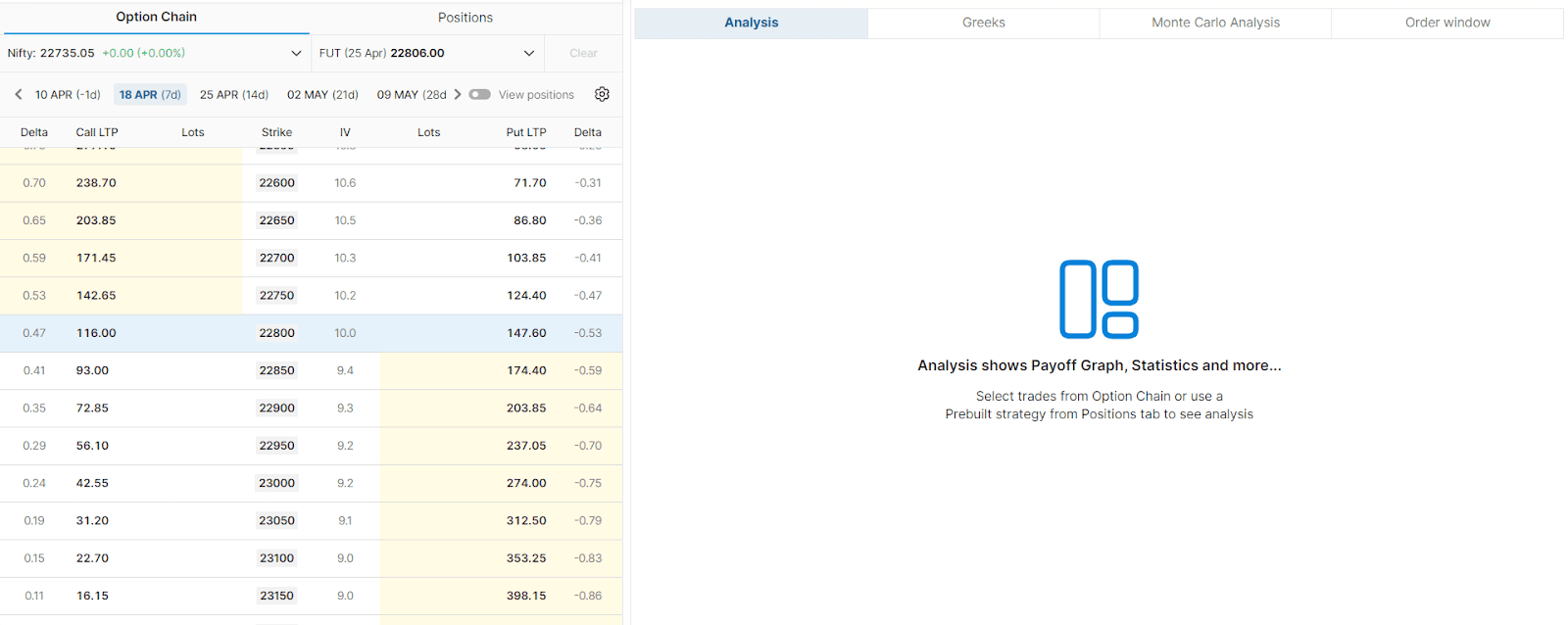
4\. Now add the legs from the option chain according to the strategy that you want to build. Assume if we want to build an iron fly we will sell ATM CE and ATM PE and buy OTM CE and OTM PE from the option chain as shown in the image below
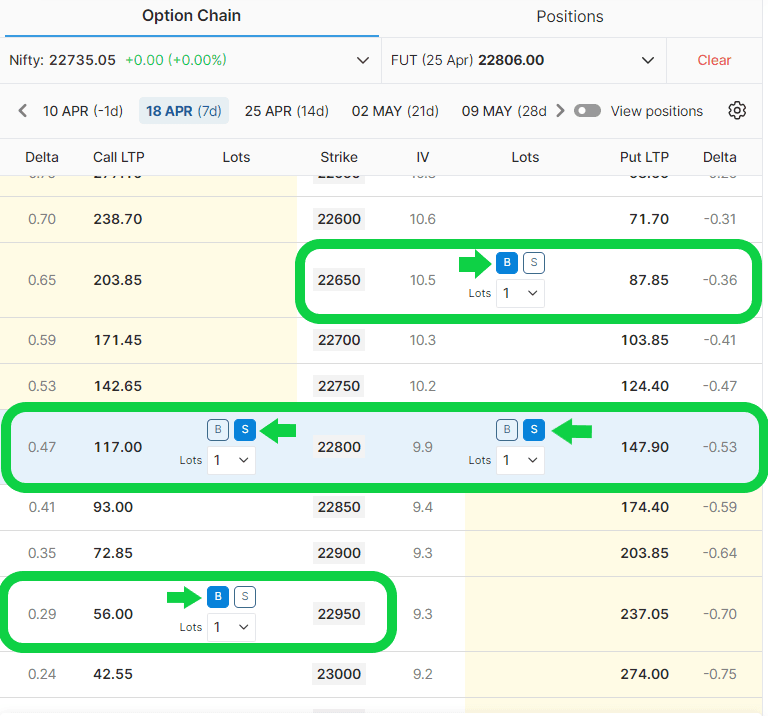
5\. You can analyze your strategy using the different tools provided by AlgoTest.
- **In the Analysis section,** Strategy Builder provides you tools like Payoff graph, Maximum Profit, Maximum Loss, Risk Reward, Breakeven Point, etc to analyze your strategy. A payoff graph is a very useful tool that helps you to determine how your position is going to end till expiry concerning the underlying move.
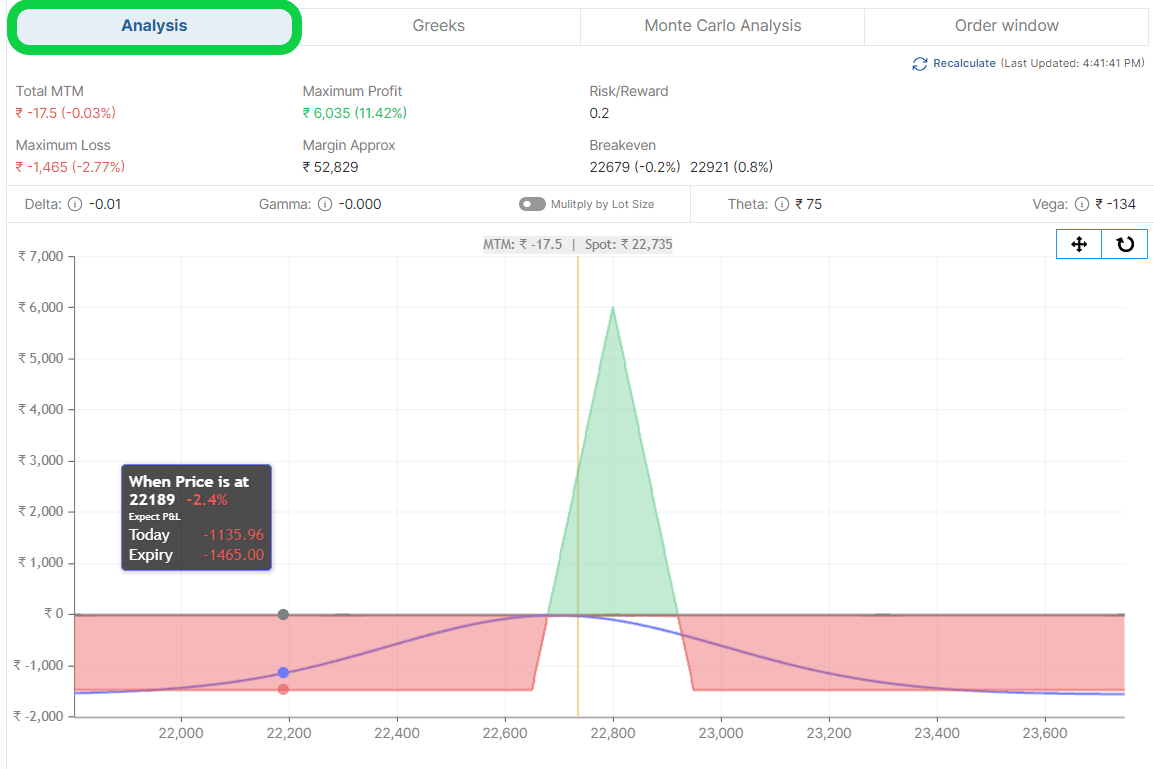
- In the **Greeks, section** Strategy Builder provides you with information about Option Greeks like Delta, Theta, Gamma, IV, Vega, etc. for your positions as shown in the image below.
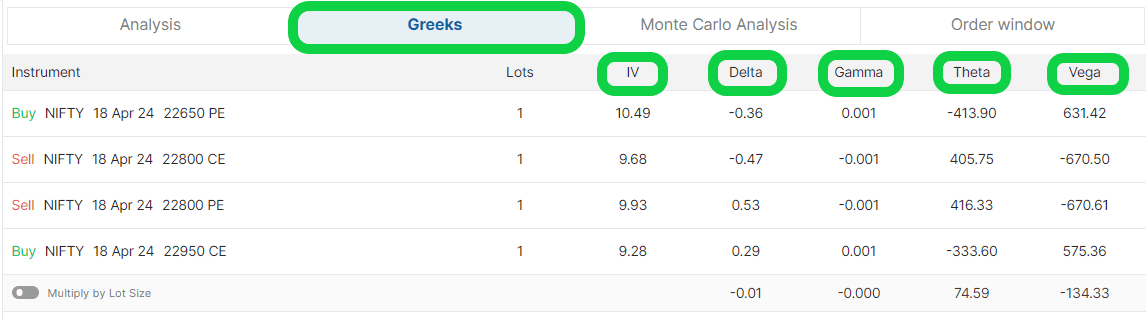
- In the **Monte Carlo Analysis Section**:\- Your PnL will depend highly on the underlying index's path. Monte Carlo Analysis is an advanced method to see how your strategy will perform on average across 10000 different price paths that the underlying could take until expiry. You can access this feature by clicking on “Monte Carlo Analysis” as shown in the image below.
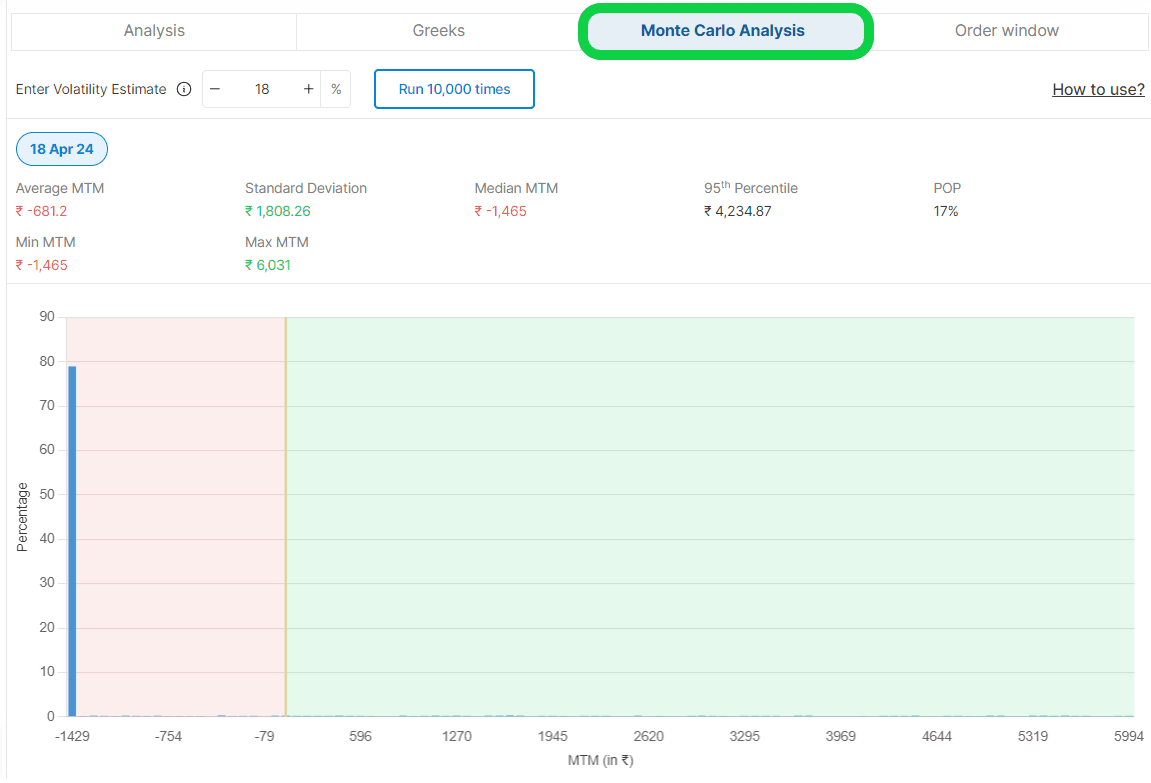
- Now Assuming that we want to execute our Iron Fly then we have two options if we want to paper trade our strategy or want to execute on broker. To execute your strategy for live trade your broker should have logged into your AlgoTest account. To learn how to set up a broker [Click Here.](https://docs.algotest.in/category/broker-setup)

- To Execute your strategy for live trading, click on the “Live Trade with” button as shown in the image below.
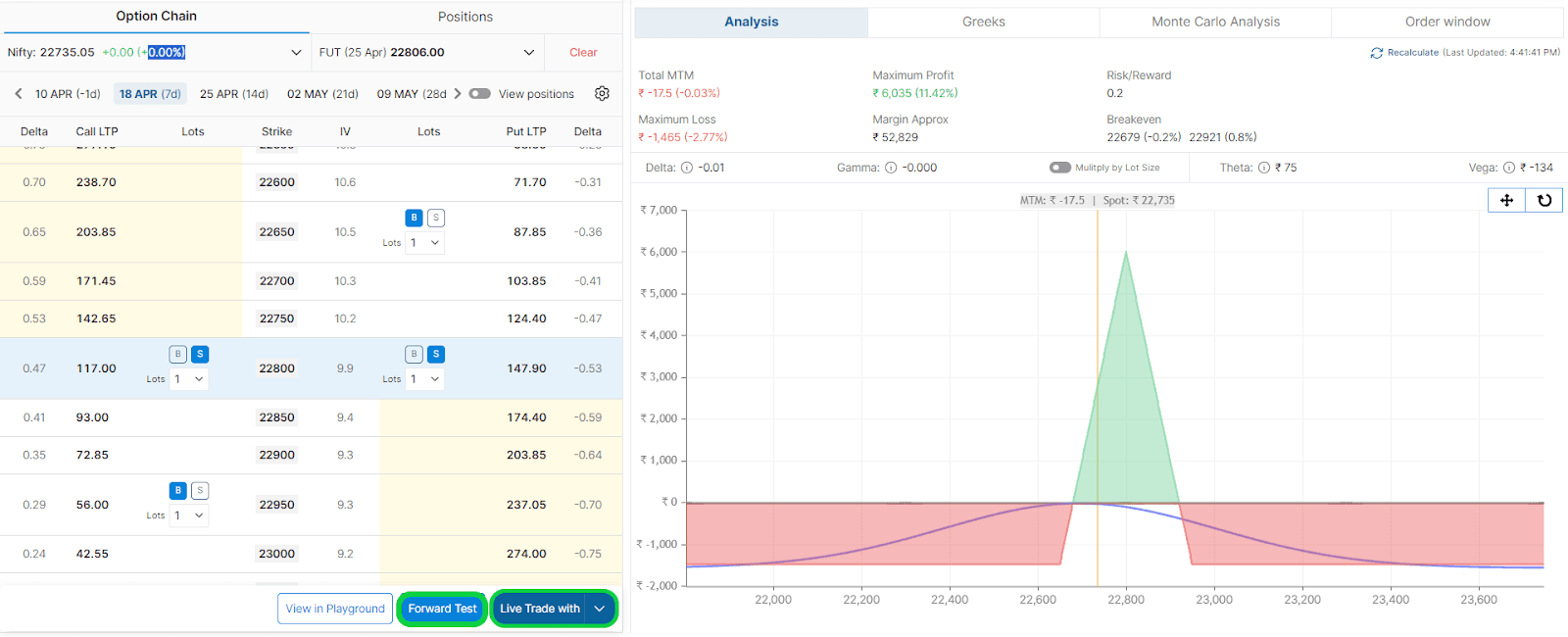
- It will ask to select Broker. Select broker and save the strategy with a random name.
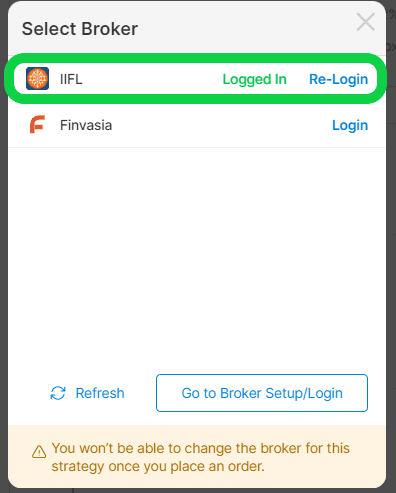
- Now click on “Place All Orders” to execute our strategy. We also have the option to choose if we want to set the order type as limit or market.
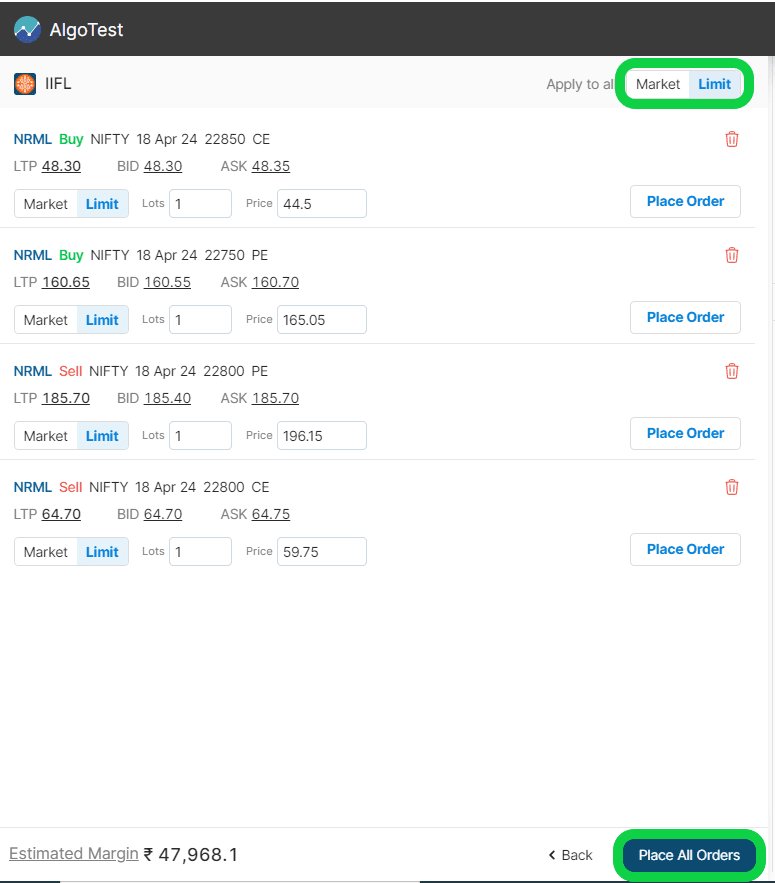
- You can manage your position on the “positions” tab. Here you get options to add another trade or squareoff existing positions as shown in the image below.
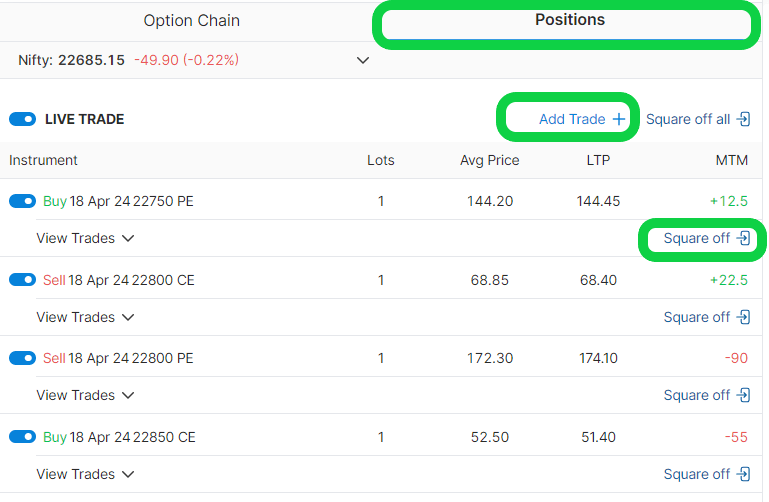
- You can check the status of orders in the order window as shown in the image below
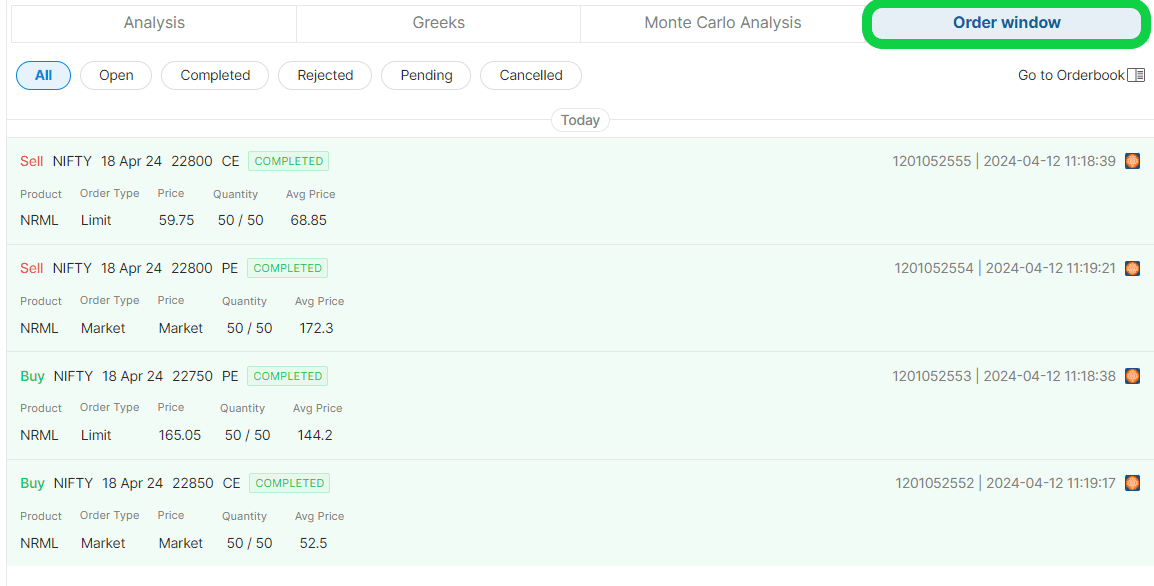
- You can track your positions by various information provided in the analysis tab as shown in the image below.
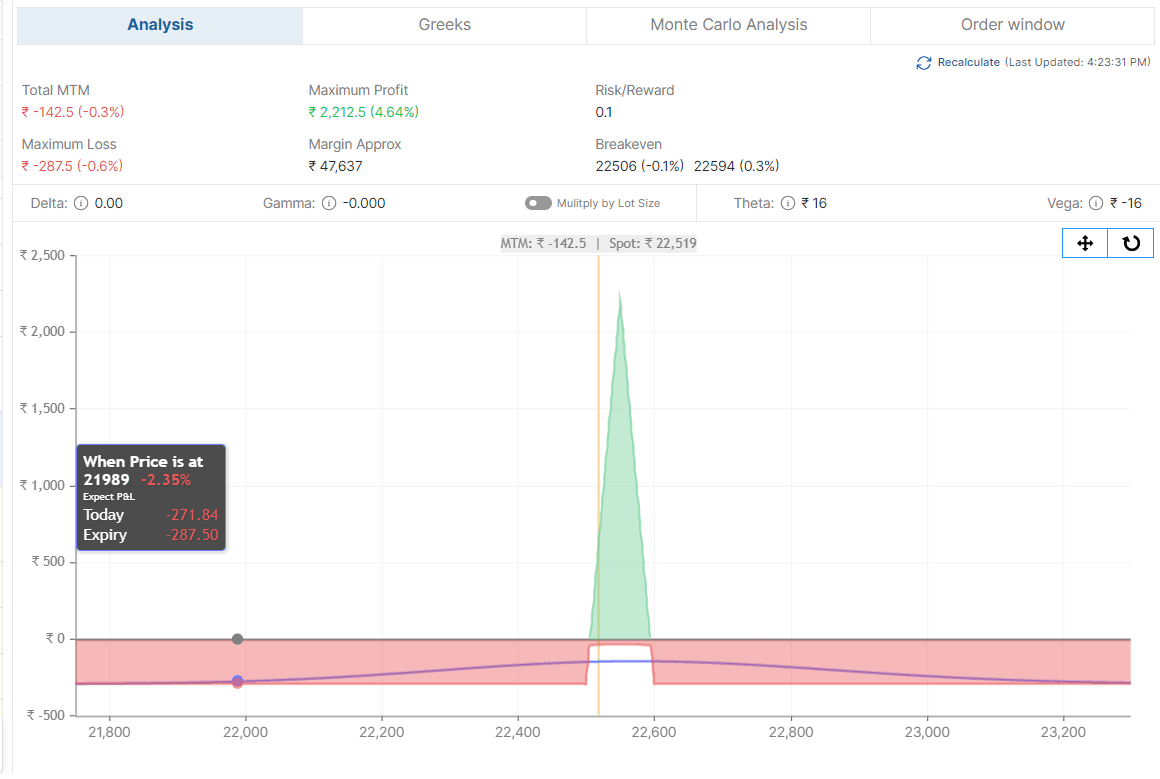
### **Tips for Efficient Use of the Strategy Builder**
When using AlgoTest's Strategy Builder, consider the following tips to ensure efficient use of the tool:
- **Understand your trading goals:** Before creating a strategy, clearly understand your trading goals and objectives. This will help you define the parameters and rules that align with your trading style.
- **Leverage optimization tools:** Take advantage of the optimization tools provided by AlgoTest's Option Strategy Builder to fine-tune your strategies. Test different scenarios, analyze the results, and make adjustments to improve the performance of your strategies.
- **Keep track of market conditions:** Stay updated with market conditions and trends. This will help you adapt your strategies to changing market dynamics and identify potential trading opportunities.
- **Regularly review and update your strategies:** As market conditions evolve, it is important to review and update your strategies accordingly. Regularly assess the performance of your strategies, make necessary adjustments, and optimize them for ongoing success.
## **Advanced Features for Seasoned Traders**
AlgoTest's Strategy Builder offers advanced features for seasoned [options](https://algotest.in/futures-and-options) traders looking to enhance their trading strategies. These features include customizable risk management tools and analytics.
### **Customization Options for Complex Strategies**
With AlgoTest's Strategy Builder, seasoned traders can customize their strategies to accommodate complex trading scenarios. The tool provides options to adjust parameters and position sizing to align with the specific requirements of complex strategies. Traders can also utilize advanced Greek information given in the [option](https://algotest.in/blog/options-trading-strategies/) chain to identify potential trading opportunities and make informed decisions when executing complex strategies.
## **How AlgoTest is Changing the Game for Options Traders**
AlgoTest's Strategy Builder is revolutionizing the way options traders approach their trading strategies. By providing a powerful and user-friendly platform, AlgoTest is empowering traders to create, optimize, and execute complex options strategies with ease.
The features of [AlgoTest's Option Strategy Builder](https://algotest.in/feature/strategy-builder?utm_source=blog&utm_medium=organic&utm_campaign=seo&utm_source=blog&utm_medium=organic&utm_campaign=seo) allow traders to evaluate the performance of their strategies and make data-driven decisions. Traders can save time and reduce human error.
Overall, AlgoTest's Strategy Builder is changing the game for options traders by providing them with the tools and technology they need to succeed in the dynamic and competitive options market.
## **Integrating AlgoTest with Your Trading Routine**
Integrating AlgoTest with your trading routine is a seamless process that can enhance your options trading experience. By creating an account on the [AlgoTest website](https://algotest.in/), you can access the full range of features and functionalities offered by the platform.
AlgoTest's Strategy Builder can be easily integrated into your trading routine and make informed decisions on the go. With AlgoTest, you can streamline your trading process and potentially increase your profits.
### **Daily Trading Workflow with AlgoTest**
When incorporating AlgoTest's Strategy Builder into your daily trading workflow, consider the following steps:
1. Define your trading objectives: Set clear goals and objectives for your trading activities. This will help you align your strategies with your desired outcomes.
2. Create and optimize your strategies: Use AlgoTest's Strategy Builder to create and customize your options trading strategies. Optimize your strategies using the platform's optimization tools to increase their effectiveness.
3. Deploy your strategies: Once you are satisfied with the performance and optimization of your strategies, deploy them in the live market.
4. Monitor and analyze: Regularly monitor the performance of your strategies and analyze the results. Make adjustments as necessary to optimize your trading outcomes.
## **Overcoming Common Challenges in Options Trading**
Options trading can be complex and challenging, requiring traders to navigate market volatility, manage risk, and make informed decisions. AlgoTest's Option Strategy Builder is designed to help traders overcome these challenges by providing a comprehensive strategy creation and optimization.
By utilizing the features and tools offered by AlgoTest's Strategy Builder, traders can streamline their trading process, identify potential trading opportunities, and make data-driven decisions.
This can significantly enhance their chances of success and minimize the impact of common challenges in options trading, making the Option Strategy Builder an essential tool for any trader.
### **Troubleshooting Common Issues with the Strategy Builder**
While AlgoTest's Strategy Builder is designed to be user-friendly and intuitive, there may be some common issues that users may encounter. Here are a few troubleshooting tips:
- **Ensure you are using the latest version of the web app:** Regularly update your Chrome and refresh the AlgoTest website application to ensure you have access to the latest features and bug fixes.
- **Check your internet connection:** A stable internet connection is essential for the smooth operation of the app. Make sure you have a reliable internet connection.
- **Contact customer support:** If you are experiencing any technical issues or need assistance, reach out to AlgoTest's customer support team. They will be able to provide guidance and help resolve any issues you may be facing.
### **Expert Advice on Avoiding Typical Pitfalls**
Options trading can be challenging, and traders may encounter various pitfalls along the way. Here are some expert tips to help you avoid common pitfalls:
- **Educate yourself:** Continuously educate yourself about options trading strategies, market trends, and risk management techniques. Stay updated with industry news and learn from experienced traders.
- **Start with small positions:** When starting, it is advisable to start with small positions to minimize risk. As you gain experience and confidence, you can gradually increase your position sizes.
- **Manage risk:** Implement proper risk management techniques, diversifying your portfolio, and not risking more than you can afford to lose.
- **Utilize tools and technology:** Take advantage of tools and technology, such as AlgoTest's Strategy Builder, to optimize your trading strategies and automate your trading process.
## **Conclusion**
Experience a new level of precision in options trading with AlgoTest's Strategy Builder. Gain insights, adapt strategies to market changes, and maximize profits efficiently.
Whether you're a novice or a seasoned trader, AlgoTest offers the tools you need for success. Integrate AlgoTest into your routine and conquer challenges confidently.
Join our community now and elevate your trading game with AlgoTest's Strategy Builder. [Sign up today](https://algotest.in/register?utm_source=blog&utm_medium=organic&utm_campaign=seo&utm_source=blog&utm_medium=organic&utm_campaign=seo) for a transformative trading experience.
## **Frequently Asked Questions**
### **How do I update or modify an existing strategy in AlgoTest?**
To update or modify an existing strategy in AlgoTest's Strategy Builder, simply access the strategy builder from the AlgoTest dashboard, click on open, select the strategy you want to modify and make the necessary adjustments, and save.
### **What resources are available for beginners to learn about options trading with AlgoTest?**
AlgoTest provides various resources for beginners to learn about options trading. These resources include educational articles, video tutorials, and documents. Traders can access these resources through AlgoTest's app and website to enhance their knowledge and understanding of options trading.
### **What are the 4 options strategies?**
Here are four basic options strategies that every investor should be familiar with:
1\. Covered Call: Whilst, if the investor buys a stock of the same company and sells a call option, then it is established as a covered call strategy. It yields assets against the downside risk. On the other hand, this would mean letting the seller buy their shares in exchange for a prescribed price at once as the circumstances justify (the short strike price)if the call option is exercised.
2\. Married Put: With married puts, the investor buys both underlying assets (maybe stock) and puts options to represent the same number of shares as the original ones. This procedure works to safeguard from possible future stock price drops while at the same time maintaining exposure to the stockʼs potential upside capability.
3\. Long Straddle: With a long straddle, the option is buyers of both an intrinsic call option and an intrinsic put option with the same strike price and expiration month. The fund tends to generate better or worse performance when the market has significant movement either up or down. The aim is to achieve volatility either way, with the stock price movement as a positive or a negative force.
4\. Bull Call Spread: Consequently, this approach, which is categorized in the debt spreads group, can improve balances. If you are optimistic about an equity or ETF but do not want to completely expose yourself to risk, selling calls makes a great alternative. The investor can earn profit from a call spread that features selling a call with a higher strike price, while the other one is purchased⁴. Therefore, the stock price must make a moderate move upward for this investment to be profitable.
### **What is the most successful option strategy?**
Covered Call: This strategy involves buying the underlying stock and simultaneously selling a call option on those same shares. It generates income and reduces risk, but you must be willing to sell your shares at a predetermined price (the short-strike price).
---
This blog is powered by Superblog. Visit https://superblog.ai to know more.
---
## Advantages of Algo Trading Software in India
Author: AlgoTest
Author URL: https://algotest.in/blog/author/algotest/
Published: 2026-03-06
Meta Description: Discover the key benefits of algo trading platforms in India, including faster execution, automated strategies, backtesting, and emotion-free trading.
Tags: algo trading, algo trade
Tag URLs: algo trading (https://algotest.in/blog/tag/algo-trading/), algo trade (https://algotest.in/blog/tag/algo-trade/)
URL: https://algotest.in/blog/benefits-of-algo-trading-platforms-india/
If you plan to switch from manual to [algo trading](https://algotest.in/blog/algo-trading-india/) or you are just starting out, you should first understand its advantages.
Indian markets move fast. Prices change in milliseconds. No trader can track every move and execute trades manually with consistency.
[Algo trading software](https://algotest.in/blog/10-best-algo-trading-software-in-india-2025/) solves this.
It lets you automate your strategy using predefined rules. You execute trades faster, remove emotional decisions, and manage multiple positions without constant monitoring.
With automation and AI, along with proper testing and disciplined execution, more retail traders in India now choose algo trading as their approach.
**Some of the key advantages of an algorithmic trading platform include:**
- Faster and more accurate trade execution
- Emotion-free trading decisions
- Ability to backtest strategies before deploying them
- Running multiple strategies simultaneously
- Reduced operational errors
Let’s explore [how algorithmic trading](https://algotest.in/blog/learn-algo-trading-as-a-beginner-trader) works and why these platforms are gaining traction among Indian traders.
## What is Algorithmic Trading?
Algorithmic trading, often called algo trading, uses computer programs to automatically execute and manage trades based on predefined rules.
Instead of constantly watching charts and placing orders manually, traders define conditions that trigger trades automatically. These rules can be based on factors such as:
- Price levels
- Technical indicators
- Time-based conditions
- Volume signals
For example, a trader might create a rule that says:
- Buy a stock when the 50-day moving average crosses above the 200-day moving average
- Exit the trade if the price falls below a certain stop-loss level
Once these rules are defined, the algorithm monitors market conditions and executes trades when the conditions are met.
In India, institutional investors once dominated algorithmic trading. Today, modern trading apps and evolving SEBI regulations have made automated trading accessible to retail traders as well.
## How Algorithmic Trading Works
Algorithmic trading follows a structured process that allows traders to automate strategies while maintaining control over risk and execution.
### 1\. Strategy Development
The trader first defines the trading rules.
These typically include:
- Entry conditions
- Exit rules
- Stop-loss levels
- Profit targets
- Position sizing
For instance, an options trader might automate a weekly NIFTY short straddle strategy with predefined entry and exit conditions.
In [AlgoTest](https://algotest.in/login), building and testing a 920 Straddle is simple. Traders can set their parameters and backtest the strategy on historical data in just a few clicks. With detailed performance insights, you can refine your strategy before deploying it in live markets.
### 2\. Strategy Backtesting
Before deploying a strategy in live markets, traders usually test it using historical market data.
Backtesting helps evaluate:
- How the strategy would have performed in past market conditions
- Potential drawdowns
- Consistency of returns
This allows traders to [refine strategies](https://algotest.in/blog/best-intraday-trading-strategies-rules-tips) before risking real capital.
### 3\. Automated Execution
Once deployed, the algorithm monitors the market continuously.
When the predefined conditions are met:
- Orders are placed automatically
- Positions are managed automatically
- Stop-loss and target exits trigger automatically
This eliminates the need for constant manual monitoring.
### 4\. Strategy Monitoring
Even though trades are automated, traders still review strategy performance regularly.
They may adjust parameters or refine strategies as market conditions evolve.
## Key Benefits of Algo Trading Platforms
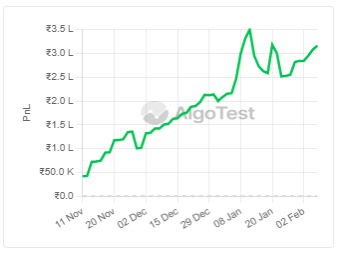
[Algo trading platforms](https://algotest.in/blog/8-best-algo-trading-platforms-in-india-2026) offer several advantages that help traders operate more efficiently in fast-moving markets.
### 1\. Faster Trade Execution
Speed plays a critical role in trading. Algorithms can execute trades instantly when predefined conditions are met.
This helps traders:
- Capture opportunities quickly
- Reduce delays in order placement
- Enter trades at precise price levels
For certain strategies, execution speed can significantly affect profitability.
### 2\. Emotion-Free Trading
The biggest drawback of manual trading is that emotions often interfere with trading decisions.
Traders sometimes exit profitable trades early or hold losing trades longer than planned. Algorithmic trading eliminates these emotional biases by strictly following predefined rules.
This ensures discipline and consistency in execution.
### 3\. Strategy Backtesting
[Backtesting](https://algotest.in/feature/backtest) is one of the most powerful features of algorithmic trading.
Traders can test strategies on historical data to understand:
- Potential profitability
- Risk exposure
- Strategy consistency
This enables traders to make **data-driven decisions** instead of relying purely on intuition.
### 4\. Ability to Run Multiple Strategies
[Manual trading](https://algotest.in/blog/manual-trading-vs-algo-trading-in-india-which-is-better-for-retail-traders) limits the number of strategies a trader can manage simultaneously.
Algorithmic trading platforms allow traders to run multiple strategies at the same time.
For example, a trader could run:
- A weekly [options-selling strategy](https://algotest.in/blog/what-is-option-selling)
- A breakout strategy on equities
- A mean-reversion strategy on index futures
Automation makes it possible to manage these strategies efficiently.
### 5\. Reduced Human Errors
Manual trading can sometimes lead to operational mistakes, such as:
- Entering the wrong quantity
- Selecting incorrect strike prices
- Missing entry signals
Algorithms execute trades exactly as defined in the strategy rules, reducing such errors.
### 6\. Efficient Trade Management
Algo trading platforms continuously monitor your open positions and automatically execute exit rules when conditions are met.
This means you don’t have to constantly watch the market; your strategy manages trades for you while you stay consistent with your plan.
## Why Algo Trading is Growing Among Retail Traders in India
Over the past few years, **algo trading in India** has become significantly more accessible.
Several factors are driving this growth.
### 1\. Improved Trading Technology
Modern platforms now offer **no-code** [**strategy builders**](https://algotest.in/blog/algotest-option-strategy-builder-the-right-one), allowing traders to automate strategies without needing advanced programming skills.
### 2\. Rapid Growth in Options Trading
India’s derivatives market, particularly **NIFTY and BANKNIFTY options**, has grown rapidly. Many strategies in these markets benefit from automated execution.
### 3\. Availability of Backtesting Tools
Retail traders now have access to powerful tools that allow them to test strategies using historical data before trading live.
### 4\. Shift Toward Systematic Trading
More traders are moving away from discretionary decision-making and adopting rule-based trading strategies.
Algorithmic trading platforms make it easier to implement such systematic approaches.
## Who Should Use Algo Trading?
Algorithmic trading can benefit different types of traders.
### Options Traders
Options traders often automate structured strategies such as:
- Straddles
- Strangles
- Iron condors
- Spread strategies
Automation helps manage these strategies efficiently.
### Systematic Traders
Traders who prefer rule-based systems benefit greatly from algorithmic trading.
### Active Traders
Active traders can automate repetitive tasks and focus more on strategy development.
### Data-Driven Traders
Traders who rely on backtesting and statistical analysis often prefer automated trading systems.
Also read: [Backtesting option strategies](https://algotest.in/blog/how-to-backtest-options-trading-strategies-with-examples)
## What to Look for in an Algo Trading Platform in India
Not all algorithmic trading platforms offer the same features. Before choosing one, traders should evaluate a few important factors.
Some key features to consider include:
- **Strategy** [**backtesting**](https://algotest.in/feature/backtest) using historical market data
- [**Forward testing** (aka Paper trading)](https://algotest.in/feature/forward-test) to simulate live market conditions
- Support for **multi-leg options strategies**
- Detailed performance analytics
- A user-friendly interface for building strategies
A reliable [**algo trading app**](https://algotest.in/blog/want-the-best-algo-trading-app-in-india-heres-how-algotest-can-help) **in India** should allow traders to test, analyze, and refine strategies before deploying them in live markets.
## Conclusion: Automate and Test Your Trading Strategies with AlgoTest
Instead of reacting to every price movement manually, traders can build rule-based strategies that execute automatically with algo trading. This helps improve execution speed, maintain discipline, and follow a more systematic approach to trading.
As algo trading becomes more accessible in India, many retail traders now look for ways to test and refine their strategies before risking real capital.
[AlgoTest](https://algotest.in) helps traders do exactly that. You can build, backtest, and forward test options strategies without writing complex code. This allows you to see how your strategies perform across different market conditions before deploying them live.
With tools designed specifically for options traders, AlgoTest helps you:
- Backtest strategies using historical market data
- Forward test strategies in simulated live market conditions
- Build and analyze multi-leg options strategies easily
- Optimize strategies with detailed performance insights
For traders who want to move toward systematic and disciplined trading, having the right tools can make a real difference.
[Sign up](https://algotest.in/login) today and get 25 backtests/week free.
# FAQs
Q: What are the advantages of algo trading platforms?
A: Algo trading platforms help traders automate strategies, execute trades faster, remove emotional decision-making, and backtest strategies before deploying them in live markets.
Q: Can beginners use algo trading platforms?
A: Yes, many modern algo trading platforms offer no-code strategy builders that allow beginners to create and test automated trading strategies without programming knowledge.
Q: Why are retail traders in India adopting algo trading?
A: Retail traders are adopting algo trading because it helps automate strategies, maintain trading discipline, and test strategies using historical data before risking real capital.
Q: How can traders test their strategies before using them in live markets?
A: Traders can use backtesting and paper trading tools on algo trading platforms to evaluate how their strategies perform across different market conditions before deploying them live.
Q: Is algo trading legal in India?
A: Yes, algo trading is legal in India. Traders can use algorithmic trading platforms through brokers that support automated execution while following SEBI regulations.
---
This blog is powered by Superblog. Visit https://superblog.ai to know more.
---
## Futures and Options (F&O) Algo Trading in India
Author: AlgoTest
Author URL: https://algotest.in/blog/author/algotest/
Published: 2026-03-05
Meta Title: Futures & Options Algo Trading in India: Strategies, Risks & How to Start
Meta Description: Learn how algo trading in India works for futures and options. Understand F&O basics, popular strategies, risks, and how retail traders can automate trading.
Tags: algo trade, options
Tag URLs: algo trade (https://algotest.in/blog/tag/algo-trade/), options (https://algotest.in/blog/tag/options/)
URL: https://algotest.in/blog/futures-options-algo-trading-india/
Futures and Options algo trading in India is growing fast. And for good reason.
The F&O market moves quickly. Prices shift in seconds. Manual trading struggles to keep up.
Algo trading solves this by executing your strategy automatically the moment your conditions are met. No hesitation. No screen-watching all day.
In this guide:
- How algo trading works in the F&O market
- Strategies traders actually use
- SEBI's regulatory framework for [Algo Trading India](https://algotest.in/blog/algo-trading-india/)
- How beginners can get started
## What is Algo Trading in India?
**Algo trading** refers to the use of automated trading programs that execute buy or sell orders based on predefined rules.
These algorithms analyse market conditions such as:
- Price movements
- Volatility levels
- Technical indicators
- Time-based triggers
Once the conditions are met, the algorithm automatically places trades through a broker connection.
With the growth of [broker APIs](https://algotest.in/blog/best-brokers-for-algo-trading-in-india) and automated trading platforms, **algorithmic trading in India** is no longer limited to institutional investors. Retail traders can now create, backtest, and deploy automated strategies for [**futures and options**](https://algotest.in/blog/futures-and-options-trading/) **trading in India**.
## **What is Futures and Options Trading in India?**
Futures and Options are **derivative contracts**, meaning their value is derived from an underlying asset such as stocks, indices, commodities, or currencies.
The **F&O trading India segment** allows traders to take positions based on expected price movements without directly owning the underlying asset.
Derivatives are widely used for:
- Speculation on market movements
- Hedging existing investments
- Building structured trading strategies
Understanding the difference between futures and options is essential before exploring **futures and options algorithm trading in India**.
## **Options Contracts**
Options provide traders with the right, but not the obligation, to buy or sell an asset at a predetermined price before or on expiry.
Two primary types of options exist:
- [**Call Option**](https://algotest.in/blog/put-call-ratio-a-key-indicator-for-options-traders/) – Right to buy the asset
- **Put Option** – Right to sell the asset
Options are widely used in **F&O** [**algo trading in India**](https://algotest.in/blog/algo-trading-india) because they allow traders to create strategies designed for bullish, bearish, or range-bound markets.
## **Futures Contracts**
A futures contract is a standardised agreement to buy or sell an asset at a predetermined price on a specific future date.
Key features of futures trading include:
- Standardised contract sizes
- Margin-based trading
- Obligation to honour the contract at expiry
Futures are commonly used in **algorithmic trading in India** for directional strategies because they closely track the price movement of the underlying asset.
Learn everything about [Futures and Options here.](https://docs.algotest.in/financial-education/)
## **Why Algo Trading in India is Growing**
The popularity of [**algo trading platforms in India**](https://algotest.in) has increased rapidly as more traders adopt systematic trading methods.
Several factors have contributed to this growth.
### **Faster Trade Execution**
In derivatives markets, prices can change quickly. Algorithms can place orders instantly when conditions are met, helping traders respond faster to market movements.
### **Removal of Emotional Bias**
Manual trading often leads to impulsive decisions driven by fear or greed. Algorithmic trading in India allows traders to follow predefined rules consistently.
### **Strategy Testing with Backtesting**
Before deploying capital, traders can test strategies using historical data. Backtesting helps evaluate performance across different market conditions.
### **Accessibility for Retail Traders**
Earlier, algo trading in India required programming skills and institutional infrastructure. Today, no-code platforms allow traders to build and automate strategies without coding.
## **How Futures and Options Algo Trading Works**
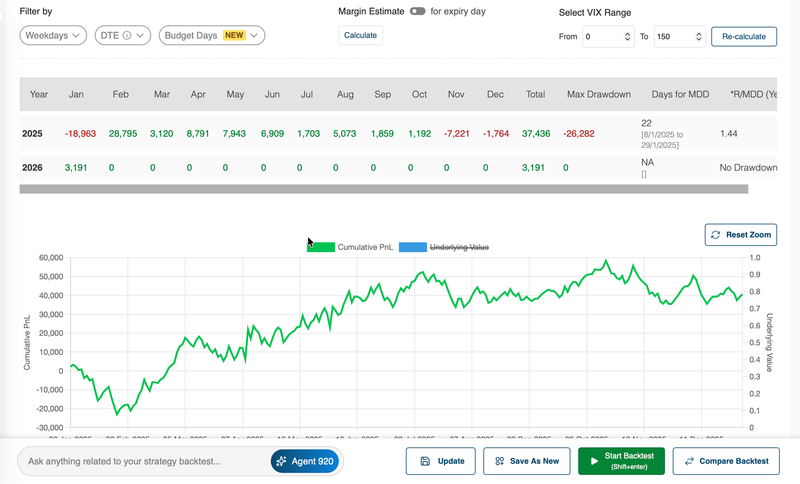
[Futures and options](https://algotest.in/blog/futures-and-options-trading/) algo trading follows a systematic workflow that helps traders move from discretionary trading to rule-based execution.
### 1\. Strategy Development
The first step is creating a rule-based trading strategy.
Strategies may be based on:
- Price action
- Volatility conditions
- Technical indicators
- Time-based setups
Common strategies used in F&O algorithmic trading include short straddles, spreads, and trend-following futures systems.
### 2\. Backtesting
Backtesting allows traders to evaluate how a strategy would have performed using historical data.
This process helps analyse:
- Profitability
- Drawdowns
- Risk exposure
- Consistency across market conditions
Backtesting is an essential step for traders exploring **algo trading in India** because it helps identify potential weaknesses before live deployment.
Also read: [Is backtesting helpful for retail traders](https://algotest.in/blog/is-backtesting-actually-helpful-for-indian-retail-traders/)
### 3\. Paper Trading
Paper trading, aka [forward testing](https://algotest.in/forward-test), allows traders to run strategies in real-time market conditions using virtual capital.
This step helps verify execution behaviour and identify issues before deploying real capital in automated trading India systems.
### 4\. Live Algorithmic Execution
Once a strategy performs well in testing, traders can connect their broker account and allow the algorithm to automatically execute trades.
The system continuously monitors the market and places orders when predefined conditions are met.
This automation makes futures and options [algo trading](https://algotest.in/live) in India more scalable and efficient.
## **Popular Algo Trading Strategies for F&O**
Certain strategies are particularly suitable for automation in derivatives trading.
### **1\. Short Straddle**
A short straddle involves selling both call and put options at the same strike price. Traders benefit from time decay when markets remain range-bound.
### **2\. Iron Condor**
The iron condor is a multi-leg options strategy designed to profit from low volatility.
### **3\. Short Strangle**
This strategy involves selling out-of-the-money call and put options, expecting the market to stay within a defined range.
### **4\. Trend-Based Futures Strategies**
Futures contracts can be traded using trend-following indicators such as moving average crossovers or breakout systems.
These strategies are commonly automated by traders using **algorithmic trading platforms in India**.
## **SEBI Regulations for Algo Trading in India**
**Algo trading in India** is regulated by the Securities and Exchange Board of India (SEBI).
Key aspects of the regulatory framework include:
- Algorithmic trades must be executed through **SEBI-registered brokers**
- Exchange rules and compliance requirements must be followed
- Broker APIs are typically used to connect trading algorithms to exchanges
Retail traders typically access **algorithmic trading in India** through broker APIs or trading platforms that provide automated strategy execution.
Also Read: [Is SEBI banning algo trading in India](https://algotest.in/blog/is-sebi-banning-algo-trading-in-india/)
## **Risks of Futures and Options Algo Trading**
While **algo trading in India** offers efficiency and automation, it also comes with certain risks.
### **Over-Optimised Strategies**
Strategies optimised heavily for historical data may not perform well in live markets.
### **Slippage**
Execution prices may differ from expected prices due to liquidity and market volatility.
### **Technical Failures**
System errors, internet issues, or API outages can disrupt automated trading systems.
### **Leverage Risk**
Since **futures and options trading in India** involves margin trading, losses can accumulate quickly without proper risk management.
Also read: [Is Algo Trading Profitable in India in 2026? SEBI Rules, AI and Risk Management](https://algotest.in/blog/algo-trading-profitable-india-2026/)
## **How to Start Algo Trading in India**
Traders interested in **algorithmic trading in India** can follow a structured approach.
### **Step 1: Understand F&O Trading**
Learn the basics of futures and options, including volatility, strike selection, and derivatives pricing.
### **Step 2: Define Strategy Rules**
Create clear entry, exit, and risk management rules.
### **Step 3: Backtest Strategies**
Use historical market data to evaluate performance.
### **Step 4: Paper Trade First**
Test strategies in simulated conditions before trading live.
### **Step 5: Start with a Small Capital**
Begin with limited exposure and scale gradually.
## **The Future of Algo Trading in India**
As trading technology evolves, **algo trading in India** is becoming increasingly accessible.
Several trends are shaping the future of automated trading:
- No-code strategy builders
- AI-driven trading tools
- Advanced backtesting platforms
- Better broker API integrations
These developments are enabling retail traders to adopt **systematic and data-driven trading approaches** in the derivatives market.
## **Futures and Options AlgoTrading with AlgoTest**
The growth of derivatives markets has made **futures and options trading in India** an important part of modern trading strategies.
When combined with automation, **algorithmic trading in India** allows traders to build rule-based systems that improve discipline, speed, and efficiency.
However, successful algorithmic trading still requires:
- Strong understanding of derivatives
- Robust strategy development
- Strict risk management
By combining market knowledge with automated execution, traders can participate in India’s F&O markets with a more structured, systematic approach.
[Sign up](https://algotest.in/login) now on AlgoTest and explore algo trading for free. Also, get 25 backtests free/week.
Also Read
1. [Is Algo Trading Legal in India](https://algotest.in/blog/is-algo-trading-legal-in-india-what-retail-traders-must-know/)
2. [How AI is Changing Algo Trading in India](https://algotest.in/blog/ai-algo-trading-india/)
3. [8 Best Algo Trading Platforms in India](https://algotest.in/blog/8-best-algo-trading-platforms-in-india-2026/)
# FAQs
Q: What is futures and options (F&O) trading in India?
A: Futures and Options (F&O) trading involves buying or selling derivative contracts whose value is based on an underlying asset such as stocks or indices like Nifty and Bank Nifty. Futures create an obligation to buy or sell at a future price, while options give the right, but not the obligation, to execute the trade before expiry.
Q: Why do retail traders prefer trading in the F&O segment?
A: Retail traders often prefer F&O trading because it allows them to use leverage, trade in different market conditions (bullish, bearish, or sideways), and build structured strategies using options and futures contracts.
Q: What are some common strategies used in F&O trading?
A: Popular F&O strategies include short straddles, short strangles, iron condors, and trend-based futures trading. These strategies are designed to take advantage of factors such as time decay, volatility, or market trends.
Q: What are the risks involved in futures and options trading?
A: F&O trading involves risks such as leverage-related losses, rapid price movements, and poor risk management. Without proper stop-loss rules and position sizing, losses can increase quickly.
Q: What is algo trading in India?
A: Algo trading in India refers to using automated trading systems that execute trades based on predefined rules. These algorithms analyse market conditions and place trades automatically when certain conditions are met.
Q: Can retail traders use algo trading platforms in India?
A: Yes, retail traders can use algo trading platforms that provide tools for strategy building, backtesting, paper trading, and automated execution through broker integrations.
Q: How can traders automate their F&O strategies?
A: Traders can automate their F&O strategies by defining entry, exit, and risk management rules on an algo trading platform. Once connected to a broker account, the system can automatically execute trades based on those rules.
---
This blog is powered by Superblog. Visit https://superblog.ai to know more.
---
## Is Algo Trading Legal in India? What Retail Traders Must Know
Author: AlgoTest
Author URL: https://algotest.in/blog/author/algotest/
Published: 2026-03-03
Meta Description: Algo trading is legal in India but only if you follow SEBI's rules. Here is exactly what retail traders need to know before automating their strategies in 2026.
Tags: algo trading, product
Tag URLs: algo trading (https://algotest.in/blog/tag/algo-trading/), product (https://algotest.in/blog/tag/product/)
URL: https://algotest.in/blog/is-algo-trading-legal-in-india-what-retail-traders-must-know/
[Algo trading in India](https://algotest.in/blog/algo-trading-india/) is legal. Full stop.
Retail traders can automate their strategies today through APIs and SEBI-compliant [algo trading platforms](https://algotest.in/blog/8-best-algo-trading-platforms-in-india-2026).
What changed in 2025 is that SEBI built a proper framework around it: clear rules, broker accountability, and exchange oversight.
You can participate. You just need to do it through the right channels: a compliant broker, an approved platform, and a strategy that follows exchange guidelines. That is it.
Let’s break this down clearly.
## What Is Algo Trading?
Algorithmic trading simply means using a computer program to place buy and sell orders automatically based on predefined rules, such as price, volume, time, and risk-control variables.
For example:
- Buy when the price crosses a certain level
- Exit when a stop-loss is hit
- Execute trades at a specific time
Instead of manually clicking buttons, the system executes trades based on logic.
Algo trading does not guarantee profits. It only automates your strategy. The outcome still depends on your logic, risk management, and market understanding.
Also read: [How to do Algo Trading in India: Step-by-Step Guide](https://algotest.in/blog/how-to-do-algo-trading-step-by-step-beginner-checklist/)
## **Is Algo Trading Legal in India?**
Yes, algo trading is legal in India.
SEBI has clearly stated that algorithmic trading is allowed for retail investors under a regulated framework. The goal is not to restrict automation, but to ensure that it is used responsibly and safely.
SEBI introduced a structured framework to:
- Protect market integrity
- Prevent misuse of APIs
- Ensure order traceability
- Protect retail participants
This framework officially recognises retail participation in algorithmic trading, provided it is done through authorised brokers and within compliance norms.
So the real answer is:
Algo trading is legal, but unregulated or unauthorised automation is not.
Also read: [Has SEBI banned Algo Trading in India](https://algotest.in/blog/is-sebi-banning-algo-trading-in-india/)
## **SEBI’s Framework for Retail Algo Trading**
SEBI’s recent framework focuses on accountability, transparency, and risk control. Here are the key rules retail traders must understand.
### **1\. Use Broker-Provided APIs Only**
Retail traders must execute algorithms through APIs provided by SEBI-registered brokers. You cannot run unapproved automation tools that bypass broker systems.
The broker becomes responsible for monitoring and overseeing the algo activity.
### **2\. Unique Order Identification**
Every algorithm-generated order must be identifiable. Exchanges should be able to trace whether an order came from an algo or manual execution.
This ensures accountability in case of unusual activity.
### **3\. Security and Risk Controls**
Brokers must implement safeguards such as:
- Strong authentication
- Secure API access
- Rate limits on order placement
- Risk management checks
These controls prevent runaway algorithms or excessive order flooding.
### **4\. Registration in Certain Cases**
If an algorithm places a very high number of orders or is commercially distributed, additional approvals or exchange-level registrations may be required.
However, retail traders using low-frequency strategies for personal accounts typically operate within broker-level compliance.
### **5\. No Selling Unapproved Algos**
Retail traders cannot:
- Sell automated strategies without proper licensing
- Offer algo-based trading services to others
- Market unregistered algorithmic products
Doing so may fall under investment advisory or portfolio management regulations.
Also read: [Is Algo Trading Profitable in India: SEBI Rules, AI and Risk Management](https://algotest.in/blog/algo-trading-profitable-india-2026/)
## **Benefits of Algo Trading for Retail Traders**
When used properly, algorithmic trading offers several advantages:
- Faster execution compared to manual trading
- Removal of emotional decision-making
- Ability to [backtest strategies](https://algotest.in/blog/how-to-backtest-options-trading-strategies-with-examples/)
- Structured risk management
- Consistent rule-based trading
The framework allows retail traders to access institutional-style automation but within defined safety boundaries.
## What Retail Traders Should Keep in Mind
Before starting algo trading, remember:
1. Always trade through a SEBI-registered broker.
2. Use official APIs only.
3. Follow risk management strictly.
4. Do not distribute strategies without regulatory clarity.
5. Understand that automation does not remove market risk.
Algo trading is a tool. It improves execution efficiency, but it does not eliminate losses.
## **Why AlgoTest for Algo Trading in India**
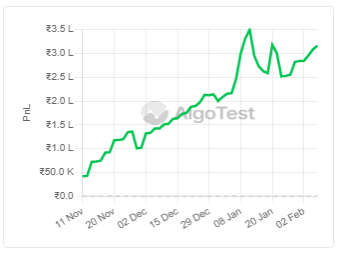
Algo trading in India is legal, regulated, and open to retail traders. SEBI has not just permitted it. It has built a framework to make it safer and more accessible than ever before.
AlgoTest is empanelled with NSE and BSE. Every strategy you build here is white box, transparent, and compliant by design. You can [backtest](https://algotest.in/blog/step-by-step-guide-on-how-to-backtest-for-free/), [forward test](https://algotest.in/blog/how-to-backtest-options-trading-strategies-with-examples/), and deploy through 50+ broker integrations without worrying about whether you are on the right side of the rules. You are.
The opportunity is real. The framework is clear. All that is left is to build something worth trading.
[Sign up on AlgoTest and get 25 backtests a week for free.](https://algotest.in)
# FAQs
Q: Is API trading allowed in India?
A: Yes, API trading is allowed in India when done through a SEBI-registered broker. Using unauthorised automation tools that bypass broker systems may violate regulatory norms.
Q: Can I create and use my own algo trading strategy in India?
A: Yes, you can create and deploy your own algorithmic strategy for personal trading. However, you must execute it through authorised broker infrastructure and comply with SEBI regulations.
Q: Can retail traders sell or distribute algo trading strategies?
A: Selling or distributing algorithmic strategies may fall under investment advisory or portfolio management regulations. Retail traders must obtain proper licensing before offering algo-based services to others.
Q: What happens if I violate SEBI’s algo trading rules?
A: Non-compliance can result in API suspension, broker restrictions, penalties, or regulatory action. SEBI’s framework is designed to ensure responsible and transparent use of algorithmic trading systems.
Q: Do retail traders need exchange approval for their algo strategies?
A: Retail traders using low-frequency strategies for personal accounts typically do not need separate exchange approval. However, high-frequency or commercially distributed algorithms may require registration and additional compliance checks.
Q: Is algo trading legal in India for retail traders?
A: Yes, algo trading is legal in India for retail traders under SEBI’s regulatory framework. Retail investors can automate their trades using broker-provided APIs as long as they follow exchange rules and compliance guidelines.
Q: What are SEBI’s guidelines for algorithmic trading in India?
A: SEBI requires that algo trading be conducted through registered brokers using secure APIs. Orders must be traceable, risk management controls must be in place, and brokers are responsible for monitoring algorithmic activity to ensure market integrity.
---
This blog is powered by Superblog. Visit https://superblog.ai to know more.
---
## Best Paper Trading Websites in India (2026): Practice Without Risk
Author: AlgoTest
Author URL: https://algotest.in/blog/author/algotest/
Published: 2026-03-01
Category: Forward Test
Category URL: https://algotest.in/blog/category/forward-test/
Meta Description: Discover the best paper trading websites in India to practice stock and options trading without real money. Compare top paper trading platforms, stock market simulators, and free paper trading apps for NSE traders.
Tags: product, forward test
Tag URLs: product (https://algotest.in/blog/tag/product/), forward test (https://algotest.in/blog/tag/forward-test/)
URL: https://algotest.in/blog/paper-trading-websites-india/
If you're entering Indian markets, whether for equities or options, wouldn’t you want to practice before risking real money?
That’s exactly why paper trading websites or simulators are built.
A **paper trading platform** lets you _practice trading with virtual money using real market conditions_. It helps you learn order execution, risk management, and strategy refinement, all without financial risk.
Let’s take a look at the **best paper trading websites for** [**algo trading in India**](https://algotest.in/?utm_source=blog&utm_medium=internal&utm_campaign=seo&utm_content=main-page&utm_term=algotest&utm_source=blog&utm_medium=internal&utm_campaign=seo&utm_term=algotest&utm_content=main-page), what unique features they offer, and how to choose the right one for your goals.
## What Is a Paper Trading Website?
A paper trading website, also known as a **paper trading app**, **virtual trading platform**, or **stock market simulator**, allows beginners to practice trading using real market data without risking actual money.
These platforms function like **demo trading accounts**, where you can buy and sell stocks, options, or other financial instruments in real-time market conditions using virtual funds.
The goal of paper trading (also known as [forward testing](https://algotest.in/feature/forward-test?utm_source=blog&utm_medium=organic&utm_campaign=seo&utm_source=blog&utm_medium=organic&utm_campaign=seo)) is simple:
to help you understand how markets work, test strategies, and build confidence before trading with real capital.
Instead of risking your capital:
- You learn how markets work
- Test strategies
- Experience real price moves
- Track orders and performance
- And build confidence before live trading
This is especially beneficial in volatile options markets.
_Related:_ [_Now you can paper trade (aka forward test) indicator-based strategies on Signals AI. No code, no TradingView required._](https://algotest.in/feature/signals/indicators?utm_source=blog&utm_medium=organic&utm_campaign=seo&utm_source=blog&utm_medium=organic&utm_campaign=seo&utm_source=blog&utm_medium=organic&utm_campaign=seo)
## Why Paper Trading is Important
If you jump into the Indian stock market without practice, you'll likely face common pitfalls like:
- Misusing order types,
- Ignoring risk management,
- Lack of discipline,
- Overleveraging in derivatives.
For beginners, paper trading is the best way to **practice trading without money** and understand real market behavior.
Paper trading gives you a **risk-free environment to build experience**, learn your emotional reactions to market swings, and refine strategies before deploying real money.
It’s also a natural step after [**backtesting**](https://algotest.in/feature/backtest?utm_source=blog&utm_medium=internal&utm_campaign=seo&utm_content=feature&utm_term=backtest&utm_source=blog&utm_medium=internal&utm_campaign=seo&utm_term=backtest&utm_content=feature) or moving into [**algo trading**](https://algotest.in/blog/futures-options-algo-trading-india/) **workflows**.
## Best Paper Trading Platforms in India
Below are verified platforms popular among traders in India. Each has real, searchable features that add value to your trading practice.
### 1\. AlgoTest Simulator – Best for Options Strategy Testing

**Core Features:**
- Multi-leg options strategy simulation
- Realistic _forward testing_ with virtual money
- Graphical [strategy builder](https://algotest.in/feature/strategy-builder?utm_source=blog&utm_medium=organic&utm_campaign=seo&utm_source=blog&utm_medium=organic&utm_campaign=seo) (no coding required)
- Portfolio performance & trade analytics
- Bridge from paper trading to algo strategy development
**Why it matters:**
AlgoTest is one of the best platforms for [**options paper trading in India**,](https://algotest.in) especially for traders who want to test multi-leg strategies.
It helps you test structured options strategies and see how they would behave in real market conditions before using automation or real money. This is especially useful in [options trading](https://algotest.in), where timing and risk management are very important.
**Best for:** Options traders, strategy builders, and traders preparing for [algorithmic execution](https://algotest.in/feature/live?utm_source=blog&utm_medium=organic&utm_campaign=seo&utm_source=blog&utm_medium=organic&utm_campaign=seo)
Sign up for free to simulate markets, evaluate strategy performance, and refine setups on our [options simulator.](https://algotest.in/feature/simulator?utm_source=blog&utm_medium=organic&utm_campaign=seo&utm_source=blog&utm_medium=organic&utm_campaign=seo)
### 2️. TradingView – Paper Trading with Advanced Charting

Image via Vector
**Core Features:**
- Built-in paper trading with real-time price feeds
- Highly customizable charting tools
- Hundreds of technical indicators
- Order history and performance tracking
- Multi-asset support (including NSE equities)
**Why it matters:**
TradingView also works as a powerful **trading simulator app**, widely used by beginners for paper trading, making it great for learning technical analysis and building systematic approaches using charts and indicators.
**Best for:** Technical traders and chart-oriented learners.
Check out the [best TradingView Alternatives for Indian Traders](https://algotest.in/blog/best-tradingview-alternatives)
### 3️. Neostox Virtual Trading – India-Focused Simulator

Image via Neostox
Neostox offers **immersive paper-trading experiences**, simulating real market data for stocks, futures, and options.
**Key Value Features:**
- Virtual money with real-time market data
- Practice trading equities, F&O
- Options chain and advanced strategy practice
- Basket orders and hedge trading simulation
**Ideal for:** Traders who want a realistic feel of Indian markets with analytical tools.
Also read: [8 Best Algo Trading Platforms in India](https://algotest.in/blog/8-best-algo-trading-platforms-in-india-2026/)
### 4️. Streak (by Zerodha) – No-Code Strategy Building + Paper Trading
Image via Streak
Streak is a systematic trading platform that allows users to create, backtest, and paper trade rule-based strategies without coding.
### Core Features:
- No-code strategy builder using indicators like RSI, MACD, Moving Averages, and Bollinger Bands
- Historical backtesting on stocks, futures, and options
- Paper trading mode to simulate strategies in live market conditions
- Real-time scanners and alerts based on custom conditions
- Cloud-based access (web + mobile)
- Integration with Zerodha’s Kite platform for trade execution
### Why it matters:
Streak helps traders move from manual trading to structured, rule-based systems. Its paper trading mode allows users to validate strategy logic in current market conditions before considering live deployment.
### Best for:
Traders who want to experiment with indicator-based strategies and test them in a simulated environment without writing code.
Related: [AlgoTest vs Streak \| A Head-to-Head Comparison](https://algotest.in/blog/algotest-vs-streak/)
### 5️. Sensibull Virtual Options Trading – Options Trading Simulator
Image credit: Sensibull
Sensibull is India’s largest options trading platform that also provides virtual trading and strategy tools.
**Key Value Features:**
- Options strategy builder
- Payoff diagrams and risk analysis tools
- Live options market data for NSE instruments
- User education resources
**Ideal for:** Options traders seeking a deeper understanding of risk profiles and multi-leg trades.
Related: [AlgoTest vs Sensibull](https://algotest.in/blog/algotest-vs-sensibull/)
[Sensibull vs TradingView](https://algotest.in/blog/sensibull-vs-tradingview-comprehensive-comparison)
## Other Paper Trading Platforms Worth Exploring
While not covered in full here, other **free paper trading apps in India** for beginners and intermediate traders are:
- **Upstox Dartstock** – demo trading with futures & options tools
- **StockGro** – a gamified stock simulator popular with Indian learners
- **Webull Paper Trading** – commission-free global simulator (not India-specific but useful for global traders)
These are great for additional practice, depending on your focus area.
## How to Choose the Right Paper Trading Platform
Choosing the [best paper trading platform in India](https://algotest.in/?utm_source=blog&utm_medium=internal&utm_campaign=seo&utm_content=main-page&utm_term=algotest&utm_source=blog&utm_medium=internal&utm_campaign=seo&utm_term=algotest&utm_content=main-page) depends on your experience level and trading style.
Ask yourself:
1\. Are you trading equities or derivatives?
2\. Do you need advanced options or strategy tools?
3\. Do you prefer global markets or India-specific simulators?
4\. Will you transition to algo trading later?
If you’re new, choose beginner-friendly simulators.
If you want structured strategies, pick tools with advanced analytics and multi-leg testing.
## Paper Trading vs Backtesting
Understanding the **difference between paper trading and backtesting** is crucial for building effective strategies.
- [**Backtesting**:](https://algotest.in/blog/is-backtesting-actually-helpful-for-indian-retail-traders) Tests a strategy on past data.
- [**Paper trading**:](https://algotest.in/feature/forward-test) Test strategies live in current market conditions with virtual money.
[Try Free Backtesting Now](https://algotest.in/feature/backtest?utm_source=blog&utm_medium=internal&utm_campaign=seo&utm_content=feature&utm_term=backtest&utm_source=blog&utm_medium=internal&utm_campaign=seo&utm_term=backtest&utm_content=feature)
**Best workflow:**
1. Backtest your idea
2. Paper trade to experience real execution
3. Go live with real money
This reduces risk and sharpens your skills.
Also read: [How AI is changing Algorithmic Trading in India](https://algotest.in/blog/ai-algo-trading-india/)
## **AlgoTest: 5-Step Flow (From Idea to Forward Testing)**
Here’s a simple **step-by-step guide on how to do paper trading** using [AlgoTest](https://algotest.in)
### Step 1 — Create Your Account & Log In
Create your account on [AlgoTest](https://algotest.in/register?utm_source=blog&utm_medium=organic&utm_campaign=seo&utm_source=blog&utm_medium=organic&utm_campaign=seo) and log in to your dashboard. Open the [**Simulator**](https://algotest.in/feature/simulator?utm_source=blog&utm_medium=organic&utm_campaign=seo&utm_source=blog&utm_medium=organic&utm_campaign=seo) or [**Strategy Builder**](https://algotest.in/feature/strategy-builder?utm_source=blog&utm_medium=organic&utm_campaign=seo&utm_source=blog&utm_medium=organic&utm_campaign=seo) section to start. This is where you turn your ideas into structured, testable strategies.
### Step 2 — Build Your Strategy
Use the Strategy Builder to select your underlying instrument (like Nifty or Bank Nifty), choose the expiry, and define strike prices. Add calls, puts, or multi-leg combinations based on your plan. The visual interface allows you to create and modify strategies without writing any code.
### Step 3 — Backtest Your Strategy
Run a backtest to check how your strategy performed on historical market data. Review past option chain data, identify patterns, and refine your entry and exit rules before moving ahead.
### Step 4 — Forward Test (Paper Trade)
Once the backtest results look consistent, run the same strategy in live market conditions using virtual capital. This [forward testing](https://algotest.in/feature/forward-test?utm_source=blog&utm_medium=organic&utm_campaign=seo&utm_source=blog&utm_medium=organic&utm_campaign=seo) phase shows how your strategy behaves in real-time without risking actual money.
### Step 5 — Analyze & Improve
Review your profit and loss, position behavior, [Greeks](https://docs.algotest.in/financial-education/options/greek-interactions/#greek-interactions-in-options-trading) (Delta, Theta, etc.), and performance charts. Adjust your rules if needed, retest the strategy, and compare different variations until you feel confident.
This [step-by-step](https://algotest.in/blog/how-to-do-algo-trading-step-by-step-beginner-checklist) process takes you from idea to validation in a structured, low-risk way. It helps you build disciplined, repeatable trading systems instead of relying on guesswork.
## **Paper Trading for Options Trading (Beginner Guide)**
Paper trading becomes even more important in options trading, where strategies, timing, and risk management play a crucial role.
Unlike equity trading, options involve multiple variables like strike price, expiry, volatility, and Greeks. This makes it essential for beginners to first practice using an [**option trading simulator**](https://algotest.in/feature/simulator) before deploying real capital.
With **paper trading for options in India**, you can:
- Test multi-leg strategies like iron condors, straddles, and spreads
- Understand how [**option premiums**](https://docs.algotest.in/Time-Based-Algo-Trading/How-to-Master-Backtesting-on-AlgoTest/features/leg-builder/#closest-premium) **move** with price and volatility
- Learn risk management without financial exposure
- Practice execution in real-time market conditions
For beginners, using an **options paper trading app** helps bridge the gap between theory and real trading.
For a more detailed walkthrough, refer to the [Options Trading Doc.](https://docs.algotest.in/financial-education/options/)
### **Example:**
Suppose you want to test an iron condor strategy on Nifty. Instead of risking money, you can simulate the trade using a **paper trading platform**, track how it behaves throughout the day, and analyze your profit/loss before going live.
This structured approach helps you gain confidence and avoid costly mistakes in live markets.
## **Practice Trading Without Risk**
Test your strategies in real market conditions using AlgoTest’s paper trading simulator.
Sign up for free
**DISCLAIMER** :
As per NSE’s data usage policy, real-time data cannot be used for Paper trading [**https://investor.sebi.gov.in/dabba\_trading.html**](https://investor.sebi.gov.in/dabba_trading.html).
# FAQs
Q: What are paper trading websites?
A: Paper trading websites are online platforms that let you practice trading stocks, futures, or options using virtual money in real market conditions without risking real capital.
Q: Which is the best paper trading website in India?
A: The best platform depends on your goal. Beginners may prefer simple simulators like Neostox, while options and strategy-focused traders may benefit from structured simulators like AlgoTest or Streak.
Q: Is paper trading legal in India?
A: Yes. Paper trading is completely legal because it uses virtual funds and does not involve real financial transactions.
Q: Can I paper trade options in India?
A: Yes. Several platforms in India allow options paper trading and multi-leg strategy simulation using real-time market data.
Q: What is the difference between paper trading and backtesting?
A: Backtesting evaluates a strategy using historical data, while paper trading tests the same strategy in live market conditions with virtual money.
Q: Is paper trading good for beginners?
A: Yes. Paper trading helps beginners understand order types, market movement, and risk management before trading with real money.
Q: Does paper trading guarantee profits in live trading?
A: No. Paper trading improves skills and discipline, but real trading involves emotions and execution risks that simulation cannot fully replicate.
Q: Can I use paper trading before starting algo trading?
A: Yes. Paper trading is an important step before algo trading because it helps validate strategy behavior in live conditions before automation or real capital deployment.
---
This blog is powered by Superblog. Visit https://superblog.ai to know more.
---
## How AI is Changing Algo Trading in India
Author: AlgoTest
Author URL: https://algotest.in/blog/author/algotest/
Published: 2026-02-27
Meta Title: How AI is Changing Algorithmic Trading in India (2026): AI Overview, Benefits, Risks & Strategies
Meta Description: Explore how artificial intelligence (AI) is transforming algorithmic trading in India. Learn AI fundamentals, strategy impacts, benefits, risks, and platform integration for Indian traders.
Tags: algo trade, algo trading india, ai trading
Tag URLs: algo trade (https://algotest.in/blog/tag/algo-trade/), algo trading india (https://algotest.in/blog/tag/algo-trading-india/), ai trading (https://algotest.in/blog/tag/ai-trading/)
URL: https://algotest.in/blog/ai-algo-trading-india/
AI is changing how retail traders approach [algo trading in India.](https://algotest.in/blog/algo-trading-india/) Not in a sci-fi way. In a practical, day-to-day way that is already showing up in how strategies are built, tested, and optimised.
AI-powered trading tools help traders process large amounts of market data faster, spot patterns earlier, and reduce the kind of emotional bias that quietly kills most trading accounts.
But AI is not a shortcut. You still need to understand market behaviour, risk management, and strategy logic. No tool fixes a bad strategy.
Here is what is actually changing, what it means for retail traders in India, and where the real opportunities are.
## What Is AI-Based Algo Trading?
Traditional algo trading follows fixed rules. Price hits a level, condition is met, trade executes. Simple. Predictable. But rigid.

AI-based algo trading takes this further. It uses machine learning and data analysis to refine signals, improve strategy performance, and adapt to changing market conditions over time. The rules do not stay static. The system learns.
Think of traditional algo trading as a checklist. [AI-based trading](https://algotest.in/blog/best-tradingview-alternative-in-india/) is the same checklist, but one that gets smarter every time you use it.
### AI Models for Market Prediction
AI models analyse both historical and live market data to understand how prices move. Instead of relying on a single indicator, they evaluate multiple data points at the same time.
The result is a broader, more complete picture of market behaviour. Not a crystal ball. But a significantly sharper lens.
### Machine Learning for Signal Generation
Machine learning improves trading signals by learning from past performance. Over time it identifies which signals have been more reliable and adjusts accordingly.
This means your system evolves as markets change. Less manual tinkering. More data-driven refinement.
### AI-Driven Pattern Recognition vs Rule-Based Logic
Rule-based systems are structured and predictable. They work well. But they need manual updates when market behaviour shifts.
AI-driven systems recognise deeper patterns, refine signals dynamically, and reduce the need for constant manual adjustments. They do not replace rule-based logic. They make it sharper.
## Key Benefits of AI in Algorithmic Trading
AI does not just execute rules. It helps you analyse, test, and improve them over time. Here is where it makes the biggest difference.
**1\. Faster data processing** AI analyses large amounts of market data in seconds. It evaluates multiple indicators at the same time so you can respond faster and make more informed decisions without staring at five screens.
**2\. No emotional bias** AI executes based on logic and data. Not fear. Not hesitation. Not the urge to revenge trade after a bad morning. This alone improves discipline for most retail traders.
**3\. Stronger signal analysis** AI studies historical patterns and probabilities to sharpen your signals. It cannot guarantee outcomes. But it gives you a significantly better foundation than basic rule-based systems alone.
**4\. Better risk management** AI analyses volatility and past performance data to help refine [stop-loss levels](https://docs.algotest.in/Time-Based-Algo-Trading/How-to-Master-Backtesting-on-AlgoTest/features/leg/#stop-loss) and position sizing. The result is more structured, controlled risk exposure rather than gut-feel decisions.
Also read: [Best Brokers for Algo Trading in India: API, Compliance and Speed](https://algotest.in/blog/10-best-algo-trading-software-in-india-2025/)
## Risks and Limitations of AI in Algo Trading
AI can definitely improve efficiency, but it’s not perfect. Like any tool, it has limitations that traders need to understand. At the end of the day, your strategy is only as strong as your knowledge behind it.
- **Data Quality and Bias Risks:** AI systems depend heavily on the data they are trained on. If the data is inaccurate or based on unusual market conditions, the model may learn patterns that do not work in live trading.
As a trader, you should always validate results instead of relying blindly on AI outputs.
- [**Overfitting & Unrealistic Backtests:**](https://algotest.in/blog/how-to-backtest-options-trading-strategies-with-examples) Overfitting happens when a strategy performs extremely well on historical data but fails in real market conditions.
Strong [backtest](https://algotest.in/feature/backtest) results do not guarantee future performance, so [forward testing](https://algotest.in/feature/forward-test) and realistic assumptions are essential.
- **Model Interpretability Challenges:** Some AI systems behave like “black boxes,” which makes it difficult to understand why a particular decision was made. This means traders need to monitor performance closely and review results regularly.
- **Regulatory & Compliance Considerations:** In India, algorithmic trading must follow [SEBI guidelines](https://algotest.in/blog/algo-trading-profitable-india-2026) to maintain transparency and proper risk control.
Traders using AI-based systems should ensure their strategies comply with broker rules and regulatory requirements, especially around [automated execution](https://docs.algotest.in/execution-settings/) safeguards.
_Also read:_ [_How to do Algo Trading in India: Step-by-Step Checklist_](https://algotest.in/blog/how-to-do-algo-trading-step-by-step-beginner-checklist/)
## AI Tools and Agents on AlgoTest
Modern AI-powered algo trading platforms are going beyond simple automation. They help traders build, test, and refine strategies in one place.
AlgoTest introduces **Agent 920**. [Sign up](https://algotest.in/login) for free to explore our [AI-powered backtesting agent](https://algotest.in/feature/backtest) designed to simplify the workflow from strategy creation to execution.
With Agent 920, traders can:
- Backtest strategies using natural language
- Automatically optimise stop loss, targets, entry and exit conditions
- Compare multiple backtests (PnL, drawdown, RoMaD)
- Fine-tune options strategies like straddles and strangles
- Run multiple AI backtests efficiently
With our [Signals AI](https://algotest.in/feature/signals/indicators?utm_source=blog&utm_medium=organic&utm_campaign=seo&utm_source=blog&utm_medium=organic&utm_campaign=seo) tool, instead of switching between platforms like TradingView or Chartink, traders can:
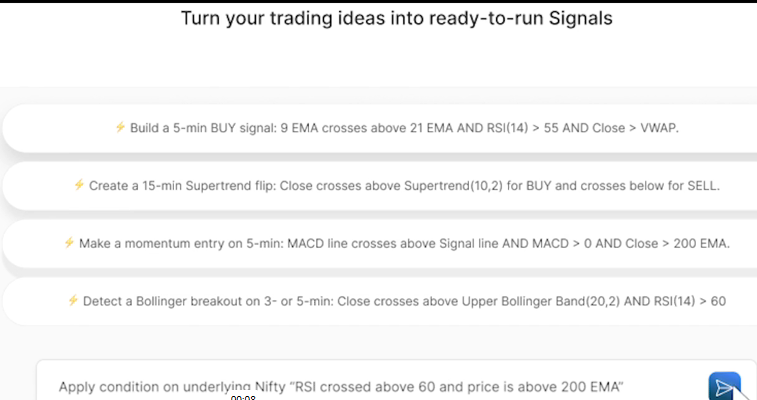
Signals AI
- Build signal logic using AI
- Validate strategies with integrated backtesting
- Forward test in live market conditions
- Execute trades from the same platform
Backtesting remains the foundation of successful algorithmic trading. AI-powered tools help traders test variations faster, optimise parameters intelligently, and focus on strategy logic instead of repetitive manual work.
## How to Choose the Right AI Bot for Algo Trading in India
- Compatibility with Indian brokers and API integrations
- Strong backtesting and risk management tools
- Transparent execution and reporting
- Ease of use for both beginners and experienced traders
Choosing the right [AI-enabled algo trading platform](https://algotest.in) is as important as the strategy itself.
## Conclusion
AI is making [algo trading in India](https://algotest.in/?utm_source=blog&utm_medium=internal&utm_campaign=seo&utm_content=main-page&utm_term=algotest&utm_source=blog&utm_medium=internal&utm_campaign=seo&utm_term=algotest&utm_content=main-page) smarter, faster, and more accessible. Pattern recognition, strategy optimisation, risk analysis: tools that were once institutional-only are now in the hands of retail traders.
But nothing has changed about the fundamentals. AI will not save a bad strategy. It will not replace market knowledge. And it will not manage risk on your behalf.
Use it as support. Not a substitute.
If you want to build, test, and deploy rule-based strategies in one place, [explore AlgoTest and get 25 backtests free every week.](https://algotest.in)
# FAQs
Q: What is AI algorithmic trading in India?
A: AI algorithmic trading in India refers to using artificial intelligence along with automated trading systems to analyse market data, generate signals, and improve decision-making. AI helps enhance traditional algo trading by supporting pattern recognition, strategy optimisation, and faster data processing.
Q: Is AI algo trading legal in India?
A: Yes, algorithmic trading in India is allowed under SEBI regulations as long as traders follow broker guidelines and risk control requirements. AI-based trading systems must also comply with platform and regulatory standards for automated execution.
Q: Can AI guarantee profits in algorithmic trading?
A: No, AI cannot guarantee profits. While AI can improve analysis and efficiency, market conditions are unpredictable. Successful algo trading in India still depends on strategy quality, risk management, and disciplined execution.
Q: Do you need coding skills for AI algo trading?
A: Not always. Many modern algo trading platforms in India provide no-code or low-code tools that allow traders to build and test automated strategies without programming knowledge.
Q: How is AI different from traditional rule-based algorithmic trading?
A: Traditional algorithmic trading follows fixed rules defined by the trader, whereas AI-enhanced systems analyse data dynamically and help refine signals or optimise strategies based on patterns and performance data.
Q: What AI features should traders look for in algo trading platforms in India?
A: Traders should look for AI-enhanced backtesting, strategy optimisation tools, risk management features, data analytics dashboards, and broker API integrations that help improve automation and decision-making.
---
This blog is powered by Superblog. Visit https://superblog.ai to know more.
---
## Why Algo Trading is the Future for Retail Investors? 2026 Guide
Author: AlgoTest
Author URL: https://algotest.in/blog/author/algotest/
Published: 2026-02-25
Tags: algo trading, algo trading india
Tag URLs: algo trading (https://algotest.in/blog/tag/algo-trading/), algo trading india (https://algotest.in/blog/tag/algo-trading-india/)
URL: https://algotest.in/blog/why-algo-trading-is-the-future-for-retail-investors/
### Today, traders explore endless strategies, especially in F&O.
From straddles and strangles to iron condors, butterflies, and directional setups, there’s no shortage of ideas. Social media is full of traders sharing these strategies along with strong backtest results.
But here’s the reality.
What works on paper doesn’t always work in live markets.
Many strategies show solid [backtest](https://algotest.in/feature/backtest) performance but fail to deliver the same results in real trading. The gap between theory and execution is where most traders struggle.
So what causes this gap?
It’s not the strategy.
It’s behavior.
## **Common Trading Mistakes That Come From Behavior**
These are some of the most common biases traders deal with:
- **Anchoring Bias**
You get stuck on a price level or past trade, even when the market has changed.
- **Herd Mentality (FOMO)**
You follow what everyone else is doing instead of trusting your own plan.
- **Confirmation Bias**
You look for signals that support your view and ignore anything that goes against it.
- **Gambler’s Fallacy**
You believe the next trade will “fix” the last loss, so you increase risk or take impulsive trades.
Related: [Algo Trading India: Complete guide](https://algotest.in/blog/algo-trading-india/)
## **Why Retail Traders Lose More Often Than Not**
Retail traders suffer more due to these biases, largely because they:
1. **Lack of Institutional Discipline**: Unlike institutions, retail traders rarely follow strict processes or risk management systems.
2. **Are Emotionally Attached**: They trade with their own money and often tie emotional value to each trade.
3. **Overconsume Information**: They give too much weight to market noise—news, tips, and expert views—which leads to analysis paralysis or rash decision-making.
Behavioral biases can’t be eliminated entirely but they can be **neutralized**, and that’s where [**Algo Trading**](https://algotest.in/blog/8-best-algo-trading-platforms-in-india-2026) enters the scene.
## **The Solution:** [**Algorithmic Trading**](https://algotest.in) **– Rules Over Emotions**
[**Algo trading**](https://algotest.in/blog/algo-trading-profitable-india-2026) or **algorithmic trading** is a method of executing trades using automated, pre-programmed trading instructions based on various parameters such as time, price, volume, and technical indicators.
The key advantage of algo trading is that **it eliminates the emotional component** from trading. It's a system-based approach, where decisions are made by **rules—not by feelings**. This offers several powerful benefits:
- **Discipline**: Once the parameters are set, the system follows them consistently without fear or greed.
- **Speed and Precision**: Algos execute trades instantly and with accuracy, reducing slippage and missed opportunities.
- **Backtest to Real-world Parity**: Since the same logic used in [backtesting](https://algotest.in/blog/how-to-backtest-options-trading-strategies-with-examples) is used in execution, the performance gap narrows significantly.
- **No Overtrading**: Algos won't chase trades based on emotions or the illusion of opportunity.
- **24/7 Monitoring**: Algos can monitor multiple markets and instruments simultaneously—something no human can do.
In essence, algo trading serves as a **behavioral firewall**, insulating your strategy from impulsive decisions that erode profits.
## **“But Algo is Complex!” – Not Anymore**
Many beginners shy away from [algo trading,](https://algotest.in/blog/how-to-do-algo-trading-step-by-step-beginner-checklist) assuming it requires coding knowledge or expensive infrastructure. However, **this is no longer the case**.
Today, there are several user-friendly platforms in India offering **plug-and-play algos**, **drag-and-drop** [**strategy builders**,](https://algotest.in/blog/option-strategy-builder-algotest-tutorial) and **pre-built models**. Even if you don’t have programming skills, you can still automate a trading idea if it is well-defined and rule-based.
If you already follow a strategy based on indicators like RSI, Moving Averages, Bollinger Bands, or candlestick patterns—you can easily convert it into an algo through platforms like [AlgoTest](https://algotest.in) that support **low-code or no-code environments**. Moreover, some intermediaries offer **custom strategy development services**.
And most importantly—if you're serious about investing or trading— **work only with SEBI Registered experts**.
### **Trust Only** [**SEBI Registered Research Analysts**](https://algotest.in/feature/ra-algos)
There are a lot of market voices, but not all of them are accountable or qualified. [SEBI Registered Research Analysts](https://algotest.in/feature/ra-algos) are **certified professionals** who are **regulated under SEBI’s framework**. Their work is regularly audited and held to high standards of compliance, transparency, and investor protection.
Why is this important?
- **They are qualified to provide research and recommendations.**
- **They follow strict guidelines to avoid conflicts of interest.**
- **They prioritize investor protection and risk management.**
- **They offer unbiased, data-driven advice.**
So, whether you're building your strategy or exploring algo solutions, always take guidance from [**SEBI Registered Research Analysts**](https://algotest.in/feature/ra-algos). Your capital deserves nothing less than professional integrity and regulatory assurance.
### **A Final Thought: Don’t Fear the Noise**
There’s always some **noise in the market**—whether it's geopolitical tensions, economic data, or global cues. But don’t forget— **markets have always reacted** to news in the short term. If you zoom out and look at the long-term picture, especially in a **growing economy like India**, the trend is **resiliently upward**.
India, as a developing nation with strong fundamentals, favorable demographics, and a digital-forward ecosystem, is on a robust long-term growth trajectory. So, rather than reacting to every headline, stick to your rules, manage your risks, and stay invested for the long run. Check out [discussion around US tariffs](https://youtube.com/shorts/OK-JYMDMATc?si=Tc5gLJh0MCvc4Xom) by SEBI-registered RA.
## Author
###### **CA Rahul Chhabadia** SEBI Registered Research Analyst \| Founder of FnΘ Tattva Empowering retail investors with rule-based, tech-driven trading strategies. [www.fnotattva.com](http://www.fnotattva.com/)
---
This blog is powered by Superblog. Visit https://superblog.ai to know more.
---
## Best Brokers for Algo Trading in India (2026): API, Speed, and Compliance
Author: AlgoTest
Author URL: https://algotest.in/blog/author/algotest/
Published: 2026-02-24
Category: Broker
Category URL: https://algotest.in/blog/category/broker/
Meta Description: Compare the best algo trading brokers in India based on API reliability, execution speed, pricing, and integrations. Learn how to evaluate brokers for algorithmic trading and automation.
Tags: algo trading, algo trade, algo trading india
Tag URLs: algo trading (https://algotest.in/blog/tag/algo-trading/), algo trade (https://algotest.in/blog/tag/algo-trade/), algo trading india (https://algotest.in/blog/tag/algo-trading-india/)
URL: https://algotest.in/blog/best-brokers-for-algo-trading-in-india/
If you’re looking for the best brokers for [algo trading in India](https://algotest.in), names like Zerodha, Dhan, and Kotak Securities are commonly considered.
These brokers provide API access, automated execution, real-time data, and the infrastructure needed for systematic trading. The right choice also depends on factors like execution speed, API flexibility, pricing, and developer support.
Let's compare leading brokers based on their API capabilities, execution performance, and overall reliability.
## Broker Comparison for Algo Trading
Broker
API Access
API Cost
Execution Quality
Brokerage Charges
Key Features
Ideal For
Zerodha
Kite Connect API
₹2000/month
Stable, low-latency execution
₹0 / ₹20 / ₹20
Strong developer ecosystem, reliable infrastructure
Advanced traders & developers
Fyers
Fyers API
Free
Fast execution, TradingView support
₹0 / ₹20 / ₹20
Algo tools, scalper-friendly terminal
Strategy traders & active users
Dhan
DhanHQ API
Free (Data ₹500)
Good speed with webhook automation
₹0 / ₹20 / ₹20
Option analytics, modern UI
Automation-focused traders
Upstox
Upstox Developer API
Free
Detailed API, occasional lag noted
₹0 / ₹20 / ₹20
Advanced charts, leverage options
Balanced beginner-to-intermediate traders
Shoonya (Finvasia)
Shoonya API
Free
Flexible execution, fewer restrictions
₹0 / ₹5 or 0.03% / ₹5 or 0.03%
Zero-cost model, unlimited algo trading
Cost-sensitive algo traders
Kotak Securities
Kotak Smart API / Neo API
Free
Fast execution with improved infrastructure
₹0 / ₹0 / ₹0 (Under specific Trade Free plans)\*
Zero brokerage on API orders, developer-friendly, full-service infra
Traders wanting zero-cost algo trading with full-service broker support
_Note\* -_ Features, pricing, and API capabilities may change over time
## Top Brokers for Algo Trading in India
### 1\. Zerodha
Zerodha is one of the most widely used brokers for algorithmic trading because of its mature API ecosystem and strong infrastructure.
### **Key API Features**
- REST APIs and WebSocket streaming for real-time trading automation.
- Supports automated order execution and portfolio tracking.
- Large developer community and strong documentation.
Zerodha’s Kite Connect API processes large volumes of requests daily and is widely used by fintech platforms and traders.
### **Pricing**
- Execution APIs are free for personal usage.
- Real-time data and historical data typically require a paid subscription (~₹500/month per API key).
### **Best For**
Advanced traders and developers who want a stable and widely supported ecosystem.
### 2\. Dhan
DhanHQ focuses heavily on automation and developer workflows. Its API ecosystem is designed to make building automated trading strategies easier.
### **Key API Features**
- Real-time trading APIs.
- Strategy automation support.
- Market data and derivatives-focused tools.
### **Strength**
Dhan’s platform is often chosen by traders who want flexible automation without high API costs.
### **Best For**
Automation-focused traders building multiple strategies.
### 3\. Upstox
Upstox offers a developer API that allows real-time trading execution, live data streaming, and automated strategy integration.
### **Key API Features**
- Real-time market data via WebSocket.
- Order execution and portfolio management APIs.
- Free API access for developers.
### **Strength**
Upstox works well for traders moving from manual trading to automation.
### **Best For**
Intermediate traders who want both manual and algorithmic trading flexibility.
### 4\. Kotak Securities
Kotak Neo, the trading platform from Kotak Securities, has significantly upgraded its API ecosystem and now offers a cost-effective option among full-service brokers.
**Key API Features**
- REST and WebSocket APIs for automated order execution across Equity and F&O segments.
- Real-time market data, portfolio tracking, and margin validation APIs.
- Python SDK available with a step-by-step integration guide for quick onboarding.
- Supports all standard order types (Limit, Bracket, AMO, etc.) plus native multi-leg execution for complex options strategies
Kotak Neo's trade API handles millions of orders daily with sub-50ms execution latency, backed by the infrastructure of one of India's largest full-service brokerages.
**Pricing**
- API access is completely free — no subscription or usage fees.
- Zero brokerage on all API orders placed under Trade Free plans. Only standard statutory and exchange charges apply.
**Best For**
Traders who want zero-cost algorithmic trading without giving up the reliability and research support of a full-service broker.
### 5\. Angel One
Angel One’s SmartAPI is designed to make algorithmic trading accessible to retail users with a free API ecosystem.
### **Key API Features**
- Automated order placement through APIs.
- Real-time market data streaming.
- Historical data and portfolio tracking tools.
### **Strength**
Simple onboarding and free access make it a popular starting point for beginners.
### **Best For**
New algo traders or users trying API automation for the first time.
Read more: [List of Brokers with an API in India](https://algotest.in/blog/trading-api-brokers-india/)
### 6\. Fyers
Fyers provides a free trading API focused on performance and integration flexibility.
### **Key API Features**
- Real-time data and automated order execution.
- Strong SDK support and stable architecture.
- Fast response infrastructure.
### **Strength**
Many strategy builders prefer Fyers because of its flexible integration options.
### **Best For**
Traders who are building custom automated systems without paying API subscription fees.
Learn [how to connect with your broker](https://docs.algotest.in/category/broker-setup/) through AlgoTest.
## How to Evaluate Algo Trading Brokers
When you’re choosing a broker for algorithmic trading, a solid evaluation helps you pick a broker that won’t slow down or break your automated strategies.
Here are the main things to consider:
1. **API Availability & Stability**
Automated trading needs APIs (Application Programming Interfaces). These allow your software or scripts to interact directly with the broker — placing orders, getting real-time prices, and checking positions.
Good API features include:
- REST or WebSocket endpoints for automated order execution.
- Stable connections with minimal downtime.
- Clear documentation for developers, so your code works reliably.
Without a stable API, your automated trading can run into errors or stop working, even if the strategy itself is good.
Learn more about [algorithmic trading in India](https://algotest.in/blog/algo-trading-india) here.
2. **Execution Speed & Reliability**
Execution speed refers to how fast trades are sent and confirmed by the broker’s system. In algo trading, even small delays can change the price you get or result in missed signals.
A strong broker should offer:
- Fast order routing, so trades are placed quickly after signals.
- Consistent performance during normal and volatile market conditions.
Latent execution can lead to slippage, where the filled price is worse than expected. Low latency is a key factor for reliable algorithmic systems.
3. **Pricing & Brokerage Structure**
Costs matter when trading frequently or running many automated trades. You should look at both:
- Brokerage charges per executed order
- **API or data subscription fees**(if applicable)
Even small differences in pricing can reduce your net returns over time, especially for high-trade systems.
4. **Integration Ecosystem**
Many algo traders use platforms, backtesting tools, or automation systems that need to connect to the broker.
Important integration factors include:
- Support for third-party tools and libraries.
- SDKs or code examples that make it easier to connect your strategies.
- Ease of setup for automation workflows.
Good ecosystem support reduces development time and helps ensure your strategies run smoothly.
Read more: [Broker Speed Test by AlgoTest](https://algotest.in/blog/broker-speedtest-algotest/)
5. **SEBI Compliance & Safety Controls**
In India, [algo trading](https://algotest.in/?utm_source=blog&utm_medium=internal&utm_campaign=seo&utm_content=main-page&utm_term=algotest&utm_source=blog&utm_medium=internal&utm_campaign=seo&utm_term=algotest&utm_content=main-page) is regulated. Brokers must follow guidelines to protect retail traders and ensure orderly markets. Relevant regulatory considerations include:
- Proper API approval and monitoring systems.
- Order tagging and traceability.
- Risk checks like margin controls and stop mechanisms.
[SEBI’s framework](https://www.sebi.gov.in/legal/circulars/feb-2025/safer-participation-of-retail-investors-in-algorithmic-trading_91614.html) requires brokers to have controls that help prevent runaway or risky automated strategies, which improves safety for all users.
Read more: [Broker Set up on AlgoTest](https://docs.algotest.in/category/broker-setup/)
## **A Quick Broker Evaluation Checklist**
A good algo broker is more than just low fees. It should:
- Provide stable, documented APIs for automation.
- Execute orders quickly and consistently.
- Offer clear cost structures without hidden fees.
- Integrate with tools you plan to use.
- Follow SEBI standards for safety and traceability.
Evaluating brokers on these factors helps you build and run automated systems with better confidence and less risk, whether you are just starting or already building complex strategies.
## How AlgoTest Simplifies Multi-Broker Algo Trading
Running automated strategies across brokers can become complex. [AlgoTest](https://algotest.in) helps streamline this process by connecting broker APIs within a single platform.
Instead of managing separate setups, traders can build strategies, [backtest](https://algotest.in/blog/guide-to-backtesting-trading-strategies) them on historical data, and deploy automation from one environment. Backtesting and structured testing workflows help validate ideas before [live execution](https://algotest.in/feature/live?utm_source=blog&utm_medium=organic&utm_campaign=seo&utm_source=blog&utm_medium=organic&utm_campaign=seo), which is a core part of systematic trading.
[Try free backtesting now.](https://algotest.in/feature/backtest?utm_source=blog&utm_medium=internal&utm_campaign=seo&utm_content=feature&utm_term=backtest&utm_source=blog&utm_medium=internal&utm_campaign=seo&utm_term=backtest&utm_content=feature)
Key strengths include:
- [Multi-broker API](https://docs.algotest.in/broker/multi-api/) connectivity
- [Strategy building](https://algotest.in/feature/strategy-builder?utm_source=blog&utm_medium=organic&utm_campaign=seo&utm_source=blog&utm_medium=organic&utm_campaign=seo) and backtesting in one workflow
- Unified environment for testing and execution
- Structured approach to systematic trading
[AlgoTest](https://algotest.in/?utm_source=blog&utm_medium=internal&utm_campaign=seo&utm_content=main-page&utm_term=algotest&utm_source=blog&utm_medium=internal&utm_campaign=seo&utm_term=algotest&utm_content=main-page) helps reduce infrastructure complexity so traders can focus more on strategy logic and [risk management.](https://algotest.in/blog/algo-trading-profitable-india-2026/)
## Summary
[Algo trading in India](https://algotest.in) helps traders automate buy and sell orders using broker APIs and predefined rules. Good algo trading brokers offer stable APIs, fast execution, clear pricing, and strong integration with trading platforms.
When evaluating brokers, focus on API reliability, execution speed, overall costs, platform compatibility, and SEBI-compliant safety controls. Many traders use [algorithmic trading platforms](https://algotest.in/blog/8-best-algo-trading-platforms-in-india-2026/) to build strategies, test them through backtesting, and manage execution across multiple brokers more easily.
[Join AlgoTest](https://algotest.in/register?utm_source=blog&utm_medium=organic&utm_campaign=seo&utm_source=blog&utm_medium=organic&utm_campaign=seo) and get 25 backtests/week free.
# FAQs
Q: Is algorithmic trading legal in India?
A: Yes, algo trading is legal in India when you use SEBI-approved broker APIs and follow exchange and regulatory rules for order execution and risk controls.
Q: How does regulatory compliance affect algo trading?
A: SEBI and exchange rules require brokers to monitor and control algorithmic orders, which adds safety mechanisms such as unique order tagging and risk limits.
Q: Do I need coding skills to start algo trading?
A: Not always. Some platforms offer no-code or visual strategy builders so you can automate trades without writing code, though coding helps for custom logic.
Q: Why does API stability matter for algo trading?
A: API stability matters because your automated strategy relies on a constant connection to the broker. Unstable APIs can cause failed orders or missed executions.
Q: Can retail traders access algo trading APIs in India?
A: Yes, retail traders can access broker-provided APIs for algorithmic trading with proper compliance and risk controls in place.
Q: Can I test my strategies before going live?
A: Yes, many platforms allow you to backtest or paper trade to see how strategies perform on historical data before deploying live automation.
---
This blog is powered by Superblog. Visit https://superblog.ai to know more.
---
## Best Tradetron Alternatives in 2026: Top Algo Trading Platforms (India) Compared
Author: AlgoTest
Author URL: https://algotest.in/blog/author/algotest/
Published: 2026-02-22
Category: Product
Category URL: https://algotest.in/blog/category/product/
Meta Description: Compare the best Tradetron alternatives in 2026. Explore top algo trading platforms in India based on backtesting, automation, AI features, and SEBI compliance.
Tags: algo trading, product, algo trading india
Tag URLs: algo trading (https://algotest.in/blog/tag/algo-trading/), product (https://algotest.in/blog/tag/product/), algo trading india (https://algotest.in/blog/tag/algo-trading-india/)
URL: https://algotest.in/blog/best-tradetron-alternatives-in-2026/
[Algo trading in India](https://algotest.in/?utm_source=blog&utm_medium=internal&utm_campaign=seo&utm_content=main-page&utm_term=algotest&utm_source=blog&utm_medium=internal&utm_campaign=seo&utm_term=algotest&utm_content=main-page) is becoming more structured and data-driven. As a result, traders are exploring alternatives to Tradetron that offer better backtesting, deeper insights, and more flexible execution.
As trading evolves, traders want tools that help them test ideas properly and automate strategies without friction.
In this guide, we compare some of the most popular [algo trading](https://algotest.in/blog/algo-trading-india) platforms in India based on what matters most: backtesting quality, strategy flexibility, execution control, and alignment with SEBI guidelines.
## Best Tradetron Alternatives Compared
Below is a simple comparison of widely used Tradetron alternatives, showing how each platform supports systematic trading, strategy building, and automated execution.
## **1\. AlgoTest**
AlgoTest is a backtesting-first algorithmic trading platform designed for systematic traders who prioritise data-driven strategy development before live deployment. It functions as a complete algorithmic strategy marketplace where traders can build, test, analyse, and automate strategies within a unified workflow. The platform offers [backtesting](https://algotest.in/feature/backtest), [forward testing](https://algotest.in/feature/forward-test), and [algo trade](https://algotest.in/feature/live)(live automated execution) to help you validate performance across multiple market conditions before deploying capital.
AlgoTest is also NSE and BSE empanelled, aligning with [SEBI's](https://www.sebi.gov.in/legal/circulars/feb-2025/safer-participation-of-retail-investors-in-algorithmic-trading_91614.html?utm_source=chatgpt.com&utm_source=chatgpt.com) compliance requirements for regulated algo trading software.
**Key Strengths:**
- Advanced [options strategy backtesting](https://algotest.in/blog/how-to-backtest-options-trading-strategies-with-examples) with multi-leg strategy support and detailed performance metrics.
- Deep volatility and risk analysis capabilities through detailed historical simulations and performance reports.
- Integrated ecosystem covering [strategy building](https://algotest.in/feature/strategy-builder), backtesting, forward testing, and automated execution in one platform.
- Marketplace-style workflow enabling systematic traders to refine, analyse, and deploy algorithmic strategies efficiently.
- Designed primarily for options and systematic trading workflows rather than simple rule-based automation.
- AI-Based Trading - [Signals AI](https://algotest.in/feature/signals/indicators?utm_source=blog&utm_medium=organic&utm_campaign=seo&utm_source=blog&utm_medium=organic&utm_campaign=seo) lets you build, backtest, paper trade, and deploy indicator-based strategies directly from one dashboard, no coding or third-party integrations required. Create strategies in plain English and automate faster.
**Best For:**
Systematic options traders and advanced algo users who want institutional-style testing, deeper analytics, and structured strategy development before execution.
## 2\. Zerodha Streak
**Focus: Beginner-friendly no-code automation**
Zerodha Streak is a cloud-based algo trading platform integrated with Zerodha. It allows traders to create rule-based strategies using a visual builder without coding.
### Key Strengths
- Simple drag-and-drop strategy creation
- Built-in backtesting with technical indicators
- Direct integration with Zerodha accounts
### Limitations
- Limited support for complex options strategies
- Basic backtesting depth compared to advanced algo platforms
### Best For
Beginners who want entry-level automated trading without technical complexity.
## 3\. QuantMan
**Focus: Strategy builder with moderate backtesting depth**
QuantMan offers a user-friendly strategy builder with predefined indicators and rule-based logic. Traders can backtest and automate strategies without programming skills.
### Key Strengths
- Drag-and-drop builder
- Historical backtesting engine
- Balanced usability and customization
### Best For
Traders who want structured algorithmic trading without highly advanced analytics requirements.
## 4\. uTrade Algos
**Focus: AI-driven automation with broker-linked execution**
uTrade Algos combines strategy design, testing, and broker connectivity in one platform. It emphasises automation workflows and AI-assisted insights for retail traders.
### Key Strengths
- Visual strategy builder
- Broker-linked deployment
- Integrated automation environment
### Best For
Retail traders seeking a combined solution for strategy development and automated execution.
## 5\. AlgoBulls
**Focus: Strategy marketplace + automation**
AlgoBulls provides access to algorithmic strategies through a marketplace-style model. Users can subscribe to or deploy strategies without managing technical infrastructure.
### Key Strengths
- Strategy marketplace approach
- Broker-connected automation
- Lower barrier to entry
### Best For
Traders who prefer ready-made strategies over building systems from scratch.
## Tradetron vs Alternatives — Feature Comparison
Feature
Tradetron
AlgoTest
Zerodha Streak
QuantMan
Automation Depth
High
High
Moderate
High
Strategy Customization
High
High
Limited
High
Learning Curve
Moderate
Moderate
Easy
Moderate–High
Strategy Complexity Support
High
High
Basic
Advanced
Backtesting Depth
Moderate–Advanced
Advanced
Basic
Advanced
Execution Flexibility
High
High
Limited
Moderate
Options Strategy Support
Strong
Strong
Limited
Moderate
Beginner Friendliness
High
Moderate
Very High
Moderate
## Future Trends in Algo Trading Platforms
[Algorithmic trading platforms](https://algotest.in/blog/8-best-algo-trading-platforms-in-india-2026/) are moving beyond simple rule-based automation. Traders now demand deeper analytics, structured workflows with regulated infrastructure and transparent audit trails.
### 1\. AI-Driven Strategy Signals
AI tools now help traders detect patterns and validate trading setups faster. Instead of manually testing dozens of rules, traders use AI-supported analytics to refine strategies.
- AlgoTest integrates [Signal AI](https://algotest.in/signals/waitlist) to assist with data-driven setup validation and strategy analysis.
### 2\. Intelligent Execution Agents
Execution is evolving from static rule triggers to structured automation frameworks that manage risk and workflow logic.
- AlgoTest’s AI Agent 920 lets you backtest, optimise, and refine your trading strategies using AI, no coding, no manual clicks, just natural conversation.
### 3\. Deep Volatility Analytics
Options traders rely heavily on volatility modelling and risk simulation. Platforms that provide volatility-focused backtesting give traders better insight across different market conditions.
- AlgoTest provides advanced options backtesting with volatility analytics and multi-leg simulations.
Sign up for our [Volatility Analytics Masterclass](https://algotest.in/masterclass/volatility-trading-masterclass?utm_source=blog&utm_source=blog), led by our Founder, Raghav Malik.
### 4\. Regulatory and Exchange Alignment
SEBI’s framework for retail algorithmic trading emphasises compliance, monitoring, and exchange approval. Platforms that align with these requirements offer greater operational clarity.
- [AlgoTest](https://algotest.in) is NSE and BSE empanelled, supporting structured and compliant algorithmic trading in India.
## Conclusion
[Algo trading in 2026](https://algotest.in/blog/algo-trading-profitable-india-2026/) is evolving toward platforms that combine advanced backtesting, AI-driven analytics, structured automated execution, and regulatory alignment.
While Tradetron remains a strong no-code automation platform, traders seeking deeper strategy testing, volatility analytics, and scalable systematic workflows may find advanced alternatives like AlgoTest better aligned with long-term algorithmic trading goals.
[Sign up](https://algotest.in/login) for free to explore AlgoTest today.
**Disclaimer:** This content is provided for educational purposes only and does not constitute financial advice, investment recommendations, or performance rankings. Algorithmic trading carries risk, and the platforms mentioned serve different trader needs. Readers should perform their own research before using any trading tools or strategies.
# FAQs
Q: What are the best Tradetron alternatives in India for options trading?
A: The best Tradetron alternatives in India for options trading are platforms that offer advanced options strategy backtesting, multi-leg support, deep volatility analytics, and automated execution workflows. Traders who focus on systematic options trading often prefer platforms with stronger testing engines and structured execution frameworks.
Q: Which Tradetron alternative offers the most advanced backtesting features?
A: Platforms built with a backtesting-first architecture typically provide deeper historical simulations, volatility modelling, and performance analytics. Traders who rely on data-driven validation should look for algo trading software that supports multi-leg strategy testing and detailed risk analysis.
Q: Are Tradetron alternatives compliant with SEBI regulations?
A: SEBI has introduced structured guidelines for retail participation in algorithmic trading in India. Many modern algo trading platforms align with these regulatory frameworks, and some operate as NSE and BSE empanelled vendors. Traders should verify compliance and broker integrations before deploying automated strategies.
Q: Do I need coding knowledge to use Tradetron alternatives?
A: Most Tradetron alternatives offer no-code or low-code strategy builders that allow traders to create automated trading strategies without programming skills. However, platforms vary in flexibility, with some designed for beginners and others built for advanced systematic trading.
Q: What features should I look for in algo trading software in 2026?
A: Traders should look for advanced backtesting, AI-driven analytics, deep volatility analysis, intelligent execution tools, multi-broker integration, and SEBI-aligned infrastructure when choosing algo trading software in 2026.
Q: Which Tradetron alternative is best for systematic trading workflows?
A: Systematic traders usually prefer platforms that combine structured strategy testing, automated execution, and strong risk analytics. Platforms focused on data validation and execution control are often better suited for long-term systematic trading.
Q: How does AI improve algorithmic trading platforms?
A: AI helps traders analyse historical data, identify patterns, optimise strategies, and improve execution workflows. AI-powered signal engines and intelligent execution agents are becoming key features in modern algorithmic trading platforms.
---
This blog is powered by Superblog. Visit https://superblog.ai to know more.
---
## How to Do Algo Trading in India: Step-by-Step Checklist
Author: AlgoTest
Author URL: https://algotest.in/blog/author/algotest/
Published: 2026-02-20
Meta Description: Learn how to do algo trading step by step using a practical beginner checklist, from strategy creation and backtesting to execution, risk management, and modern automation tools.
Tags: algo trading, product, algo trading india
Tag URLs: algo trading (https://algotest.in/blog/tag/algo-trading/), product (https://algotest.in/blog/tag/product/), algo trading india (https://algotest.in/blog/tag/algo-trading-india/)
URL: https://algotest.in/blog/how-to-do-algo-trading-step-by-step-beginner-checklist/
If you are a beginner or a manual trader wondering how to do algo trading, start with the fundamentals and a clear step-by-step checklist.
In algorithmic trading, a computer automatically places trades based on rules you define.
Traders set key parameters, such as price levels, entry and exit conditions, timing, and position size (which we’ll cover in the next sections), and the system executes them consistently.
However, many [traders make the mistake](https://algotest.in/blog/5-mistakes-traders-make-in-algo-trading/) of relying fully on automation without understanding market behaviour, costs, and risks.
This blog explains how to do [algo trading](https://algotest.in/blog/algo-trading-india/) step by step, using a practical checklist that beginners can follow to start trading more systematically and efficiently.
## AlgoTrading Step by Step
Algo trading removes emotional decisions and brings in logic and speed, but it still requires a strong strategy and proper planning. Automation does not create profits on its own; it simply executes the logic you define.
### Step 1: Start by Creating a Strategy Based on Market Understanding
First, try to understand how the market behaves to create a strategy that suits your trading goals and style.
For example, some traders build strategies around price movements, others focus on volatility, while some follow longer-term trends. You may use strategies like short straddles, long straddles, spreads, or directional setups depending on market conditions.
AlgoTest provides ready-to-use templates that can help you convert your ideas into structured strategies.
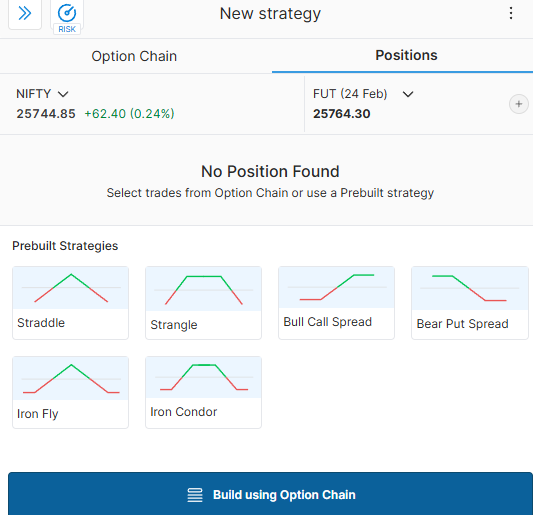Strategy templates
Once you have a strategy idea, define the following clearly:
#### **Trading Style (Intraday, Positional, or BTST)**
Your trading style defines how long positions are held and how quickly your system needs to execute trades.
- [**Intraday:**](https://algotest.in/blog/best-intraday-trading-strategies-rules-tips/) Trades open and close within the same day. Example: a 9:20 breakout strategy or intraday options selling setup. Requires faster execution and active monitoring but avoids overnight risk.
- **Positional:** Trades are held for several days or weeks to capture bigger market trends. For example, a trend-following futures trade or an options strategy based on a longer-term view. These don’t need very fast execution but carry overnight market risk.
- [**BTST (Buy Today Sell Tomorrow)**](https://docs.algotest.in/live-trade/btst-positional/) **:** Trades are taken today and usually exited the next trading day. For example, buying based on strong momentum with the expectation that the price will continue moving the next day.
Choosing the right trading style helps define risk exposure, execution speed, and overall strategy structure.
#### **Market Focus (Options or Futures)**
Decide which instruments you want to trade.
- **Options:** Suitable for volatility-based strategies like straddles, iron condors, or hedged directional trades.
- **Futures:** Often used for directional or trend-following strategies due to simpler price movement structure.
Each market behaves differently, so your strategy logic should match the instrument.
Check out all [AlgoTest features here.](https://docs.algotest.in/category/features/)
#### **Capital Allocation**
Define how much capital you will dedicate to the strategy.
Example:
- Allocate ₹1 lakh for a single options strategy instead of using your entire trading capital.
- Split capital across multiple strategies to reduce risk concentration.
Clear capital allocation prevents overexposure and helps maintain disciplined risk management.
#### **Acceptable Drawdown**
Decide the maximum loss you are willing to tolerate during losing periods.
Example:
- If your capital is ₹2 lakh, you may define a 10–15% maximum drawdown limit.
- Once this limit is reached, the strategy pauses or is reviewed.
This helps avoid emotional decisions during temporary losses.
#### **Trading Frequency**
Determine how often your strategy should trade.
- **High-frequency:** Multiple trades per day (requires strong execution and cost control).
- **Daily:** One or a few structured setups per day.
- **Occasional:** Trades only when specific market conditions appear.
## Step 2: Convert Your Idea Into Rule-Based Logic
To automate your trading idea, you need to convert it into specific rules that a computer can understand and execute without confusion.
Think of it this way: when you trade manually, you might say, “I feel this is a good trade.” But an algorithm needs exact conditions like what to do, when to do it, and how much to trade.
**Entry rule example:** Enter a trade when the 20-period moving average crosses above the 50-period moving average, and the price is above the day’s opening price.
**Exit rule example:** Exit the trade when either:
- a 10% profit target is reached, or
- the price falls below the 20-period moving average, or
- at 3:15 PM before market close (time-based exit).
**Stop loss** — A preset level where the trade automatically closes if the market moves against you. This helps protect your capital and removes emotional decisions.
**Position sizing** — Decide how much money or how many lots to trade each time. Proper sizing prevents you from risking too much on one trade.
**Time filters** — Rules that control when your strategy can trade. For example, only after market open, avoiding low-volume periods, or closing trades before expiry.
## Step 3: Execution Logic
In Algo trading, execution rules ensure orders are placed correctly.
**Order type** — Decide how the trade should be placed, such as instantly at market price or at a specific price using a limit order.
**Fill confirmation** — Make sure the system checks that an order is actually executed before moving to the next step.
**Duplicate order protection** — Prevent the system from placing the same order multiple times by mistake.
**Timeout logic** — Automatically cancel or adjust an order if it is not executed within a set time.
[Execution settings at AlgoTest](https://docs.algotest.in/execution-settings/#how-to-do-execution-settings-in-algotest) let you customise your orders to help reduce technical risks during live trading.
## Step 4: Backtesting (Where Beginners Make the Biggest Mistakes)
Backtesting means testing your strategy on historical market data.
It helps identify strengths, weaknesses, and risks before trading with real money.
When [backtesting](https://algotest.in/feature/backtest) your strategy, focus on these points:
**Test in different market conditions** — Check how your strategy performs in trending markets, sideways markets, and high-volatility periods. A strong strategy should not depend on only one type of market.
**Include transaction costs** — Always add brokerage fees, slippage, and other charges. Ignoring these costs can make your results look better than they actually are.
**Avoid overfitting** — Do not keep changing settings just to make past results look perfect. Strategies that are too optimised for past data often fail in live markets.
**Check drawdown and consistency** — Do not look at profits alone. Check the biggest losses (drawdown), risk levels, and whether the performance is steady over time.
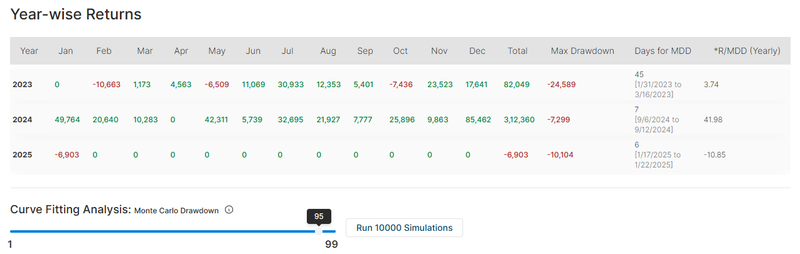Max drawdown chart
Remember, backtesting is a validation tool and cannot guarantee future results.
[AlgoTest](https://algotest.in) allows you to [backtest your strategy](https://algotest.in/blog/how-to-backtest-options-trading-strategies-with-examples/) with over 7 years of data, with multiple features to optimise your trading strategies.
## Step 5: Forward Testing (Paper Trading Before Going Live)
After backtesting, the next step is [**forward testing**.](https://docs.algotest.in/forward-test/)
Forward testing means testing your data with virtual money( paper trading) in conditions mimicking the live market. It helps you check if the strategy performs well in real-time markets as well.
Why this is important:
- Markets change constantly.
- Live prices move differently from historical data.
- Slippage and execution delays become real factors.
During forward testing, focus on:
**Execution accuracy** — Are trades getting executed at expected prices?
**Strategy behaviour** — Is it following the rules exactly as designed?
**Emotional discipline** — Can you trust the system even during small losses?
Forward testing acts like a final safety check. Once your strategy performs consistently in both backtesting and forward testing, you can move to live trading with controlled capital.
Read more: [Difference between backtesting, forward testing, and algo trading results.](https://algotest.in/blog/why-is-there-is-difference-between-my-live-trade-vs-forward-test-vs-backtest-results/)
## Step 6: Choose Your Algo Trading Setup
After defining your rules and validating them through backtesting, you need the right setup to automate execution. Today, traders can choose between coding-based systems and no-code [algo trading platforms](https://algotest.in/blog/8-best-algo-trading-platforms-in-india-2026/) depending on their experience and technical skills.
### **Coding Route**
- **APIs** — Connect directly with brokers using APIs to automate order placement and strategy execution
- **Python or programming languages** — Many traders use Python to build custom strategies and automation workflows.
- **Infrastructure setup** — Requires servers, monitoring systems, and technical knowledge to maintain reliability.
This offers flexibility but usually requires coding skills.
**No-Code Platforms**
- **Visual** [**strategy builders**](https://algotest.in/feature/strategy-builder) — Create strategies using simple logic without writing code.
- **Faster deployment** — Reduce setup time by using pre-built tools and integrations.
- **Beginner-friendly interface** — Ideal for traders who want to focus on strategy rather than technical setup.
[AlgoTest](https://algotest.in) makes algorithmic trading more accessible to retail traders by simplifying strategy creation, backtesting, and execution into one workflow.
## **Step 7: Risk Management & Compliance (India Context)**
Even the best trading strategy can fail without proper [risk management.](https://algotest.in/blog/algo-trading-profitable-india-2026/) Since algo trading executes rules automatically, it is even more important to define risk controls before going live.
Key risk management elements include:
[**Position sizing**](https://docs.algotest.in/03-920-Algo%E2%80%93Time-Based-Algo-Trading/How-to-Master-Backtesting-on-AlgoTest/features/leg-builder/#position)— Decide how much capital to risk on each trade. Avoid allocating too much to a single position. AlgoTest allows you to define lot sizes and capital exposure within your strategy rules.
**Maximum daily loss** — Set a daily loss limit where trading stops automatically after reaching a predefined level. This helps prevent emotional decisions during drawdowns.
[**Stop-loss rules**](https://docs.algotest.in/03-920-Algo%E2%80%93Time-Based-Algo-Trading/How-to-Master-Backtesting-on-AlgoTest/features/leg/#stop-loss) — Every strategy should include predefined exit levels to control downside risk. Automated stop-loss settings ensure disciplined exits without manual intervention.
**Diversification** — Avoid relying on just one strategy or one instrument. Running multiple strategies or setups can improve stability over time.
**Kill switch or emergency stop** — Define conditions where trading automatically pauses if unusual behaviour or risk thresholds are triggered.
[AlgoTest](https://algotest.in/login) includes built-in risk management controls and execution safeguards so traders can follow structured, rule-based trading while staying aligned with regulatory standards.
AlgoTest is NSE and BSE-empanelled and follows [SEBI guidelines,](https://www.sebi.gov.in/legal/circulars/feb-2025/safer-participation-of-retail-investors-in-algorithmic-trading_91614.html) helping traders operate within compliant algo trading practices.
Read more: [Top Tradetron alternatives in India](https://algotest.in/blog/best-tradetron-alternatives-in-2026/)
## Step 7: Trading Filters — When NOT to Trade
A strong algo system also defines when to avoid trading:
- News events
- Low liquidity
- Volatility spikes
- Daily drawdown limits reached
Avoiding bad conditions is as important as finding good setups.
AlgoTest provides [DTE and budget day filters](https://docs.algotest.in/03-920-Algo%E2%80%93Time-Based-Algo-Trading/backtest-filters/) to help you create optimised strategies.
## Step 8: Deploy, Monitor & Improve
Algo trading is not “set and forget.”
Even after going live, your strategy needs regular monitoring and improvement.
Once deployed, focus on:
**Performance metrics** — Track key numbers like profit and loss, win rate, drawdown, and risk-reward ratio. Make sure the strategy is performing close to your backtest expectations.
**Market regime changes** — Markets do not stay the same. A strategy that works well in trending markets may struggle in sideways or highly volatile conditions. Watch how your strategy behaves when market conditions change.
**Strategy decay** — Over time, some strategies stop working as market behaviour evolves. If performance drops consistently, review and adjust your rules instead of blindly continuing.
Regular monitoring helps you stay in control. The goal is not just to automate trades but to continuously improve and adapt your system for long-term success.
## Make Algo Trading Journey Easy with AlgoTest
At [AlgoTest,](https://algotest.in) our mission is to make algorithmic trading simple and accessible by providing tools and features for systematic rules-based trading.
Here’s why starting algo trading is easier now:
- **No-code** [**strategy builder**](https://algotest.in/feature/strategy-builder) — Traders can build rule-based strategies using visual tools instead of writing complex code.
- **Built-in** [**backtesting tools**](https://algotest.in/feature/backtest)— Platforms allow quick testing using historical data without needing external software.
- **Visual workflow builders** — Clear interfaces help traders convert ideas into structured logic step by step.
- **Faster deployment** — Strategies can move from testing to live execution quickly through integrated systems.
- **Multi-leg strategy support** — Complex options strategies can be automated without manual calculation or monitoring.
- **Integrated broker connectivity** — Direct broker integration reduces setup complexity and technical errors.
- **Real-time analytics dashboards** — Traders can track performance, risk, and execution from one place.
- **Built-in risk controls** — Features like stop-loss automation and capital limits improve safety.
- **Unified workflow** — Strategy creation, testing, and execution can now happen within a single platform.
[Sign up today](https://algotest.in\login) and get 25 backtests/week free.
Today, with modern tools and simplified platforms, getting started with algo trading is more accessible than ever. By following a clear checklist and focusing on strong fundamentals, traders can build systems that are logical, repeatable, and scalable over time.
Start simple, test thoroughly, and improve gradually, because successful algo trading is built on consistency, not complexity.
# FAQs
Q: What is algo trading in simple terms?
A: Algo trading uses computer programs to automatically execute trades based on predefined rules and market conditions.
Q: Can beginners do algo trading without coding?
A: Yes. Modern no-code platforms allow traders to build and deploy strategies without programming knowledge.
Q: How much capital is needed to start algo trading?
A: Capital requirements vary depending on the strategy and broker rules. Beginners often start with a small amount to test their systems safely.
Q: Is algo trading legal in India?
A: Yes. Algo trading is legal in India as long as it follows exchange and SEBI guidelines related to approvals, tracking, and compliance.
Q: How long does it take to build an algorithmic trading strategy?
A: Basic strategies can be created quickly, but proper testing and optimisation usually take weeks or months.
---
This blog is powered by Superblog. Visit https://superblog.ai to know more.
---
## How to Backtest Options Strategies in India (2026 Guide)
Author: AlgoTest
Author URL: https://algotest.in/blog/author/algotest/
Published: 2026-02-17
Category: Backtest
Category URL: https://algotest.in/blog/category/backtest/
Meta Description: Learn how to backtest options trading strategies step-by-step with real examples. Discover a simple workflow, common mistakes, and tools for options strategy backtesting.
Tags: algo trading, backtesting
Tag URLs: algo trading (https://algotest.in/blog/tag/algo-trading/), backtesting (https://algotest.in/blog/tag/backtesting/)
URL: https://algotest.in/blog/how-to-backtest-options-trading-strategies-with-examples/
Backtesting an options strategy means testing your trading strategy on historical data to see how it might have performed under different market conditions and settings. It helps traders validate ideas, refine rules, and build more systematic strategies before going live and risking real capital.
In this blog, we cover a simple step-by-step workflow to backtest options strategies, common mistakes retail traders make, practical examples, and key best practices.
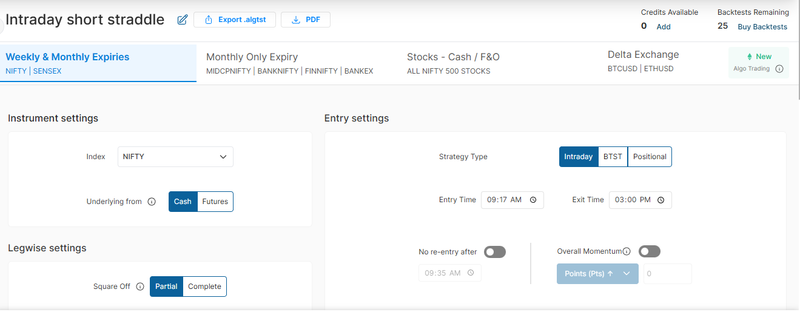
## Why Options Backtesting Is Different from Stock Trading
[Backtesting](https://algotest.in/feature/backtest) is especially important in options trading because options have more variables than stocks. Factors such as expiry dates, volatility changes, and multi-leg setups can significantly impact how a strategy performs. Testing your strategy first helps you understand what might happen before risking real money.
### **Key Differences**
- **Multi-leg strategies:** Many options strategies involve more than one position at the same time. [Backtesting](https://docs.google.com/document/d/1WGPZEuNjL48h_iDmO0EOYASzQu35Br3vIResphBaqXA/edit?tab=t.0#heading=h.aoucxpplokud) helps you see how all parts of the strategy work together in different market conditions.
- **Expiry and time decay:** Options lose value as expiry gets closer. Testing shows how time can affect your profits and losses.
- **Volatility impact:** Option prices change when [market volatility](https://algotest.in/blog/implied-volatility-and-how-to-read-and-compute-iv/) changes. Backtesting helps you understand how your strategy reacts during calm and volatile periods.
- **Execution matters more:** Slippage, liquidity, and order fills can affect options trades more than stock trades, so realistic testing is important.
## Step-by-Step Guide to Backtesting an Options Strategy
Backtesting helps you understand how your strategy might perform under different market conditions, indicators, and price movements. While it does not guarantee profitable live trades, it is an important step to validate your strategy and manage risk before going live.
You can check out our product doc for a full walkthrough on backtesting [intraday,](https://docs.algotest.in/02-920-Algo%E2%80%93Time-Based-Algo-Trading/how-to-backtest/intraday/) [positional](https://docs.algotest.in/02-920-Algo%E2%80%93Time-Based-Algo-Trading/how-to-backtest/positional/), [BTSD](https://docs.algotest.in/02-920-Algo%E2%80%93Time-Based-Algo-Trading/how-to-backtest/btst/), [crypto](https://docs.algotest.in/02-920-Algo%E2%80%93Time-Based-Algo-Trading/how-to-backtest/delta-exchange/) and [stock options](https://docs.algotest.in/02-920-Algo%E2%80%93Time-Based-Algo-Trading/how-to-backtest/stock-options/) strategies using AlgoTest.
### **1\. Define Strategy Rules**
Before running any backtest, clearly define your strategy. Vague rules lead to unreliable results.
Start by answering:
- [**Entry condition**](https://docs.algotest.in/02-920-Algo%E2%80%93Time-Based-Algo-Trading/How-to-Master-Backtesting-on-AlgoTest/features/entry-exit-timing/) **:** When should the trade start? This could be a specific time, price level, or market condition.
- [**Strike selection:**](https://docs.algotest.in/02-920-Algo%E2%80%93Time-Based-Algo-Trading/How-to-Master-Backtesting-on-AlgoTest/features/leg-builder/#strike-selection) Decide how you will choose strikes, ATM, ITM, OTM, or based on premium or delta.
- [**Expiry choice**](https://docs.algotest.in/02-920-Algo%E2%80%93Time-Based-Algo-Trading/How-to-Master-Backtesting-on-AlgoTest/features/leg-builder/#expiry) **:** Select weekly or monthly expiry depending on your strategy logic.
- **Exit or stop-loss rules:** Define when to exit the trade. This could include time-based exits, target profit, [stop-loss levels](https://docs.algotest.in/02-920-Algo%E2%80%93Time-Based-Algo-Trading/How-to-Master-Backtesting-on-AlgoTest/features/leg/#stop-loss), or adjustment rules.
Clear rules ensure that your backtest reflects a repeatable strategy rather than random decisions.
### **2\. Select the Right Historical Period**
Choosing the right data range is important for realistic results.
- Test your strategy across different market conditions, including trending, sideways, and volatile periods.
- Avoid testing only recent bullish markets, as this can give misleading results.
A broader time range helps you understand how your strategy performs in changing environments.
### **3\. Run the Backtest**
Once your rules and data are ready, you can run the backtest.
- [Choose a platform or tool](https://algotest.in/blog/8-best-algo-trading-platforms-in-india-2026/) that supports options strategies.
- Simulate trades using historical market data.
- Review the basic output generated by the system, including trades taken and overall performance.
The goal here is not perfection but understanding how your strategy behaves over time.
### **4\. Evaluate Key Results**
Focus on a few essential metrics instead of analyzing everything.
- **Profit/Loss:** Overall profitability of the strategy.
- **Maximum drawdown:** The largest loss period, which shows risk exposure.
- **Win rate:** Percentage of winning trades compared to losing trades.
- **Consistency:** Whether results are stable across different time periods.
Keeping your evaluation simple helps you make better decisions without overcomplicating analysis.
Related: [How to Backtest Indicator Strategies Before Going Live](https://algotest.in/blog/how-to-backtest-indicator-strategies-before-going-live/)
## Real Examples of Backtesting Options Strategies
Prebuilt strategies on AlgoTest
Examples of backtesting strategies will help you understand how these options strategies will work in practice. These examples are for educational purposes to show how a strategy can be set up and backtested. They do not guarantee success in live trades.
### Example 1 — Short Straddle Backtest
A [short straddle strategy](https://algotest.in/blog/the-920-straddle-strategy-defined/) is used when traders expect the market to stay in a range and not move strongly up or down. In this strategy, a trader sells both a call option and a put option at the same strike price (usually ATM) and the same expiry.
- **Strategy setup:** Sell an ATM Call (CE) and ATM Put (PE) on Bank Nifty or Nifty weekly expiry.
- **Entry rule (example):** Enter the trade at **10:15 AM** after initial market volatility settles.
- **Strike selection:** Choose the strike closest to the current spot price (ATM).
- **Risk management:**
- Set a stop-loss of around **35%–50%** on each leg, or
- Use a combined strategy stop-loss of around **1.5x total premium collected**.
- **Exit conditions:**
- Intraday exit at **3:15 PM**, or
- Exit earlier if stop-loss triggers.
- **Key insight from backtesting:** Results may look strong during sideways markets, but drawdowns increase during trending days. Testing across multiple months helps identify this behaviour.
[AlgoTest](https://algotest.in) allow traders to quickly simulate these rules
### Example 2 — Iron Condor Backtest
An iron condor is a defined-risk strategy designed for range-bound markets.
- **Strategy setup:**
- Sell an OTM call spread and an OTM put spread.
- Example: Sell **\+/\- 200 to 300 points** away from spot price depending on volatility.
- **Entry rule (example):** Enter between **10:00 AM – 11:00 AM** once market direction becomes clearer.
- **Risk management:**
- Defined risk due to hedge legs.
- Strategy-level stop-loss around **1.5x–2x premium received**.
- **Exit conditions:**
- Exit at **70–80% profit target**, or
- Close at **expiry day afternoon** to avoid gamma risk.
- **Key takeaway:** Backtesting helps identify optimal spread width and strike distance for better consistency.
### Example 3 — Short Strangle Backtest
A short strangle gives more room for price movement compared to a straddle by using out-of-the-money strikes.
- **Strategy setup:** Sell OTM call and put options.
- **Strike selection example:** Choose strikes with premium around **₹40–₹60** or delta near **0.15–0.20**.
- **Entry rule:** Enter around **10:30 AM** or when implied volatility is elevated.
- **Risk management:**
- Stop-loss of **40%–60%** on each leg, or
- Adjust position if price moves within **50–75 points** of strike.
- **Exit conditions:**
- Intraday exit at **3:15 PM**, or
- Hold until weekly expiry depending on strategy.
- **Key insight:** Backtesting often shows higher win rates compared to straddles but lower premium collection, highlighting the risk vs reward trade-off.
[AlgoTest’s Backtester](https://algotest.in/feature/backtest) makes it easier to test different timings, stop-loss levels, and strike distances quickly and compare results across historical data.
## Common Mistakes Retail Traders Make When Backtesting Options
Many [retail traders make mistakes](https://algotest.in/blog/5-mistakes-traders-make-in-algo-trading/) that lead to unrealistic expectations. Avoid these common errors during backtesting to get a realistic picture of your strategy.
- **Choosing automation without validation:** Many traders focus only on automating a strategy without properly testing it first. Automation should come after you confirm that the strategy works across different scenarios.
- **Testing only one market condition:** Running a backtest only during bullish or low-volatility periods can give misleading results. Strategies should be tested across trending, sideways, and volatile markets.
- **Unrealistic slippage assumptions:** Ignoring execution factors like slippage, liquidity, or order fills can make backtest results look better than real trading outcomes.
- **Overfitting historical data:** Adjusting rules repeatedly just to improve past performance may create a strategy that looks good on paper but fails in live markets.
- **Ignoring risk management:** Focusing only on profit without analysing drawdowns or loss periods can lead to strategies that carry excessive risk.
## Simple Workflow for Backtesting Options Strategies Using AlgoTest
Bactesting becomes easier when you follow a structured workflow. AlgoTest provides a one-stop solution to build a strategy, backtest and [analyse and compare reports.](https://docs.algotest.in/02-920-Algo%E2%80%93Time-Based-Algo-Trading/Backtest-Analysis-and-Pricing/)
- **Create strategy:** Define the structure of your strategy, including legs, entry timing, strike selection, and expiry type.
- **Set rules:** Add conditions such as entry time, stop-loss levels (for example, 35%–50% per leg), target exits, or adjustment logic.
- **Run backtest:** Execute the strategy on historical market data to simulate trades across different market conditions.
- **Analyse report:** Focus on a few key metrics to understand performance:
- **Profit/Loss:** Overall returns generated by the strategy.
- **Maximum drawdown:** Largest decline in capital, showing risk exposure.
- **Win rate:** Percentage of profitable trades.
- **Consistency:** Stability of results across different time periods.
- **Risk-to-reward behaviour:** Whether profits justify potential losses.
- **Iterate:** Adjust parameters such as strike distance, entry timing, or stop-loss rules and re-run the backtest to improve results.
This structured approach helps traders validate strategies before moving to automation or live execution.
## Backtesting Options Strategies with AlgoTest
Options strategies have many moving parts like multiple legs, expiry, and volatility. Backtesting helps you test different setups, track key metrics, and understand how the strategy performs in real market conditions.
AlgoTest provides built in tools that help you backtest your strategies with different indicators, filters, multiple time periods and real world costs.
**Some of our key features include:**
[Visual Strategy Builder](https://docs.algotest.in/strategy-builder/?utm_source=chatgpt.com) \- AlgoTest allows traders to create multi-leg options strategies using a visual interface, making it easier to test spreads, straddles, condors, and other complex setups without coding.
[Backtest Comparison feature](https://docs.algotest.in/02-920-Algo%E2%80%93Time-Based-Algo-Trading/Backtest-Analysis-and-Pricing/backtest-comparison/) **-** This feature helps you compare your strategies across different metrics to help you optimize your strategies
[Leg-Wise Risk Controls](https://docs.algotest.in/02-920-Algo%E2%80%93Time-Based-Algo-Trading/How-to-Master-Backtesting-on-AlgoTest/features/legwise-settings/#trail-sl-to-breakeven-sl-legs)\- Traders can define stop-loss levels, entry timing, and strategy rules to see how execution assumptions impact results, which is especially important for options trading.
[**Signals AI for Indicator-Based Strategy Creation**](https://algotest.in/feature/signals/indicators?utm_source=blog&utm_medium=organic&utm_campaign=seo&utm_source=blog&utm_medium=organic&utm_campaign=seo)– Build options strategies using technical indicators and test them quickly without manually defining every condition.
[Portfolio Backtesting](https://docs.algotest.in/02-920-Algo%E2%80%93Time-Based-Algo-Trading/portfolio/portfolio-backtest/) \- AlgoTest allows users to backtest multiple strategies together and compare results side-by-side to understand diversification and consistency.
[Margin Estimate Feature](https://docs.algotest.in/02-920-Algo%E2%80%93Time-Based-Algo-Trading/How-to-Master-Backtesting-on-AlgoTest/features/margin-estimate/)\- With this tool, you can confidently proceed with your strategy without any worries about meeting margin requirements of your brokers.
**Make sure to follow these simple steps during bactesting your trading strategies**
1. Define clear entry, exit, and risk management rules.
2. Choose the right historical period and test across different market conditions.
3. Simulate trades using a reliable options backtesting platform.
4. Focus on key metrics like profit/loss, drawdown, win rate, and consistency.
5. Adjust parameters and repeat testing to refine the strategy.
Start your [algo trading India journey with AlgoTest](https://algotest.in/register?utm_source=blog&utm_medium=organic&utm_campaign=seo&utm_source=blog&utm_medium=organic&utm_campaign=seo) and get 25 free backtests every week.
# FAQs
Q: How do beginners backtest options trading strategies?
A: Beginners can start by defining simple rules such as entry timing, strike selection, and stop-loss levels. Using no-code platforms makes it easier to simulate strategies without technical knowledge.
Q: What is the best way to backtest multi-leg options strategies?
A: The best approach is to use tools designed for options trading that support multi-leg setups, realistic execution assumptions, and detailed performance reports.
Q: How much historical data should you use for backtesting options?
A: Ideally, test across multiple market conditions, including trending and sideways periods. Many traders use at least 6–12 months of data to understand performance consistency.
Q: Can you backtest options strategies without coding?
A: Yes. Many modern algo trading platforms provide visual builders that allow traders to create and test strategies without programming skills.
Q: Is backtesting enough before live trading?
A: Backtesting is an important first step, but traders should also consider forward testing or paper trading to validate how the strategy behaves in live market conditions.
---
This blog is powered by Superblog. Visit https://superblog.ai to know more.
---
## 8 Best Algo Trading Platforms in India (2026): Software Comparison
Author: AlgoTest
Author URL: https://algotest.in/blog/author/algotest/
Published: 2026-02-14
Category: Product
Category URL: https://algotest.in/blog/category/product/
Meta Description: Looking for the best algo trading software in India? Compare top platforms, pricing, features, and backtesting tools to choose the right one in 2026.
Tags: algo trading, product, algo trading india
Tag URLs: algo trading (https://algotest.in/blog/tag/algo-trading/), product (https://algotest.in/blog/tag/product/), algo trading india (https://algotest.in/blog/tag/algo-trading-india/)
URL: https://algotest.in/blog/8-best-algo-trading-platforms-in-india-2026/
Algo trading platforms let you automate execution, test strategies on years of historical data, and manage risk without making decisions in the heat of the moment.
The platform you choose shapes how well all of that actually works in practice.
So, sitting in front of a screen, placing trades manually, watching every tick, is one way to trade, but most retail traders in India are moving on from it.
The options have never been better. But they are not all equal.
This guide breaks down the best [algo trading](https://algotest.in/blog/algo-trading-india/) software in India for 2026 across five things that actually matter:
- Backtesting and strategy testing
- Ease of automation
- Broker and regulatory support
- Risk management features
- Overall usability
Let's get into it.
## 8 Best Algo Trading Platforms in India (Detailed Review)
### **1\. AlgoTest**

[AlgoTest](http://algotest.in) is a one-stop algorithmic trading platform designed primarily for structured [options trading](https://algotest.in/blog/options-trading-strategies/) and systematic strategy development. It focuses on helping traders move away from trial-and-error trading by offering advanced backtesting, portfolio-level analytics, and realistic simulations before live deployment.
[_Sign up for free to start algo trading in India with AlgoTest._](https://algotest.in/register?utm_source=blog&utm_medium=organic&utm_campaign=seo&utm_source=blog&utm_medium=organic&utm_campaign=seo)
**Key features:**
- **Options-Focused Platform**: Built specifically for [options strategies](https://algotest.in/blog/option-strategy-builder-strategies-that-win/), making it easier to work with multi-leg setups and structured trading workflows.
- [**Strategy Builder**](https://algotest.in/feature/strategy-builder?utm_source=blog&utm_medium=organic&utm_campaign=seo&utm_source=blog&utm_medium=organic&utm_campaign=seo) **:** Create strategies using a visual interface that allows traders to define rules, conditions, and execution logic without needing coding skills.
- [**Advanced Backtesting**](https://algotest.in/feature/backtest?utm_source=blog&utm_medium=internal&utm_campaign=seo&utm_content=feature&utm_term=backtest&utm_source=blog&utm_medium=internal&utm_campaign=seo&utm_term=backtest&utm_content=feature): Test strategies using years of historical market data to evaluate performance across different market phases before risking capital.
- [**Paper Trading**](https://algotest.in/feature/forward-test?utm_source=blog&utm_medium=organic&utm_campaign=seo&utm_source=blog&utm_medium=organic&utm_campaign=seo): Simulate strategies in live market environments using virtual capital to validate execution and risk behaviour.
- [**Algo Trading Automation**](https://algotest.in/feature/live) **:** Deploy fully tested strategies to execute automatically based on predefined rules.
- **Order Execution Flexibility**: Support for different order types, allowing traders to adapt execution logic based on strategy requirements.
- **Indicator-Based AI Strategy Builder:** Signals AI lets you build, backtest, paper trade, and deploy indicator-based strategies directly from one dashboard, no coding or third-party integrations required. Create strategies in plain English and automate faster. [Learn more about Signals AI.](https://algotest.in/feature/signals/indicators?utm_source=blog&utm_medium=organic&utm_campaign=seo&utm_source=blog&utm_medium=organic&utm_campaign=seo&utm_source=blog&utm_medium=organic&utm_campaign=seo)
- [**Options Greeks**](https://docs.algotest.in/financial-education/options/greek-interactions/#greek-interactions-in-options-trading) **Analytics**: Built-in analysis for key Greeks like Delta, Gamma, Theta, and Vega, helping options traders better understand risk exposure.
- **Margin Estimation Tools:** Integrated [margin calculator](https://docs.algotest.in/product-blogs/margin-calculator/) to estimate capital requirements for options positions.
- **Access to trader Community & Educational resources:** An active trader community, along with educational guides, [courses](https://algotest.in/courses), and [documentation](https://docs.algotest.in/?utm_source=blog&utm_medium=organic&utm_campaign=seo&utm_source=blog&utm_medium=organic&utm_campaign=seo) to support learning.
Unlike basic automation platforms, [AlgoTest](https://algotest.in/register?utm_source=blog&utm_medium=organic&utm_campaign=seo&utm_source=blog&utm_medium=organic&utm_campaign=seo) emphasises data-driven decision-making and strategy validation, making it useful for traders looking to build repeatable systems rather than one-time setups.
**Pricing:**
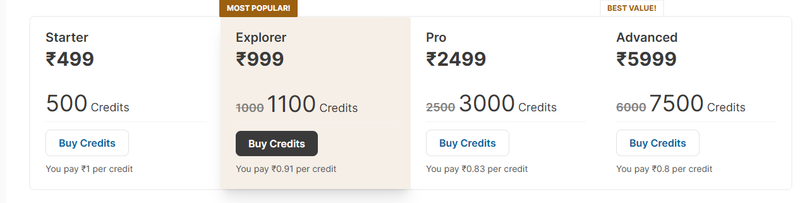
AlgoTest follows a credit-based pricing model with tiered subscription plans:
- **Starter:** ₹499 for 500 credits
- **Explorer:** ₹999 for 1100 credits
- **Pro:** ₹2499 for 3000 credits
- **Advanced:** ₹5999 for 7500 credits
For detailed pricing, please refer to our [pricing breakdown document.](https://docs.algotest.in/getting-started/pricing-breakdown/)
### 2\. Tradetron
Tradetron is a cloud-based algorithmic trading platform that allows traders to build automated strategies using a visual interface. One of its key differentiators is the strategy marketplace, where users can explore and deploy pre-built strategies created by other traders.
Key features:
- **Visual Strategy Builder**: Create rule-based strategies using a no-code interface.
- **Strategy Marketplace**: Access and deploy strategies built by other users.
- **Cloud-Based Execution**: Strategies run on the cloud without requiring local setup.
- **Multi-Broker Integration**: Supports multiple Indian brokers for automated execution.
- **Paper Trading**: Test strategies before going live.
**Pricing**:
Entry-level plans typically start from around **₹1,000/month**, depending on automation features and usage tiers.
**Note:** Tradetron pricing may vary based on deployment limits, strategy subscriptions, and marketplace usage.
### 3\. Zerodha Streak
Zerodha Streak is a beginner-friendly tool integrated within the Zerodha ecosystem. It allows traders to create and test strategies without coding, making it a common starting point for retail traders exploring algorithmic workflows.
**Key features**:
- **No-Code Strategy Builder**: Create trading strategies using predefined conditions.
- **Backtesting Engine**: Test strategies against historical market data.
- **Zerodha Kite Integration:** Works directly within the Zerodha trading environment.
- **Technical Indicators & Scanners**: Build strategies using multiple indicators.
- **Alerts & Semi-Automation**: Generate signals and deploy workflows within Zerodha.
**Pricing**:
Most core features are currently available **free for Zerodha users**, though pricing structures and usage limits may evolve.
**Note:** Streak is often described as semi-automated since some workflows may still require user confirmation depending on setup.
### 4\. AlgoBulls
**Key Features**
- No-code, AI-assisted, and Python-based strategy-building options
- Automated strategy deployment and execution workflows
- Strategy marketplace (Odyssey) with pre-built algos
- API-based integrations and infrastructure for automation
- Backtesting and paper trading support
- Institutional-style workflow with enterprise-grade infrastructure
- AI Copilot to help convert trading ideas into strategies
**Pricing**
- Multiple subscription models including Phoenix and Odyssey plans
- Odyssey marketplace plans typically start from lower-tier monthly pricing
- Phoenix strategy-building plans generally range from beginner to advanced tiers depending on features and limits
- Custom enterprise pricing available depending on infrastructure and usage requirements
### 5\. Quantiply
**Key Features**
- Fully automated algo execution platform focused on F&O trading
- Multi-broker integrations (depending on plan and mapping)
- Ability to run multiple strategies simultaneously
- Real-time monitoring and live strategy-level performance tracking
- Configurable templates and automation workflows
- Designed for retail traders transitioning into automation
**Pricing**
- Starter plan (approx ₹250/month) with limited algo execution
- Value and Semi-Pro tiers with higher algo limits
- Pro plans around ₹2000/month depending on algo limits
- Discounted plans available depending on broker account setup
### 6\. Quantman
**Key Features**
- Technical indicator-based strategy builder
- Access to multiple technical indicators for rule-based trading
- Custom strategy creation using indicator logic
- Backtesting and simulation features
- Designed for traders focused on technical analysis automation
**Pricing**
- Subscription-based pricing model
- Entry-level plans are generally positioned for retail traders
- Pricing tiers vary depending on feature access and strategy limits
### 7\. Robomatic
**Key Features**
- Automated execution engine for deploying strategies
- Workflow focused on live execution rather than deep strategy research
- Broker connectivity for automated trading
- Risk control and execution management tools
**Pricing**
- Pricing varies depending on provider configuration and infrastructure setup
- Usually subscription or setup-based depending on the vendor
### 8\. NinjaTrader
**Key Features**
- Advanced professional charting and technical analysis tools
- Custom indicator development and strategy scripting
- Automated strategy deployment capability
- Developer-friendly environment for advanced users
- Extensive customisation and third-party ecosystem
**Pricing**
- Free version available with core charting features
- Paid license upgrades for advanced features
- Lease or lifetime license options, depending on usage
## Algo Trading Platform Comparison: Features, Backtesting Strength, and Pricing Breakdown
Platform
Best For
Coding Required
Key Strength
Backtesting Strength
Pricing Model
**AlgoTest**
Beginners to intermediate traders building systematic options strategies
No
Advanced options-focused workflow + portfolio analytics
Deep options backtesting, multi-leg strategies, portfolio backtesting, compare-backtest tools, detailed performance metrics
Credits-based pricing with subscription plans
**Tradetron**
Traders seeking no-code automation with marketplace access
No
Cloud-based visual strategy builder + strategy marketplace
Basic to moderate backtesting; historical testing and paper trading supported but more execution-focused
Subscription tiers
**Zerodha Streak**
Zerodha users and beginners entering algo trading
No
Indicator-based automation within Zerodha ecosystem
Indicator-driven backtesting with performance metrics like drawdown, gains/losses
Free tier + paid subscription
**AlgoBulls**
Advanced automation and institutional-style deployment
Optional (No-code + Python supported)
Structured algo infrastructure + strategy deployment
Strategy simulation and backtesting supported, but not primarily options-specialised
Tier-based plans
**Quantiply**
Retail traders transitioning from manual trading to automation
No
Multi-broker automation workflows
Limited research-focused backtesting; stronger on execution automation
Subscription-based pricing
**Quantman**
Technical indicator-driven strategy builders
No
Indicator-based rule creation
Historical backtesting engine focused on technical indicator strategies
Subscription plans
**Robomatic**
Execution-focused automation workflows
Optional
Automated deployment and execution workflows
Basic backtesting depending on implementation; primarily execution-centric
Varies by provider/setup
**NinjaTrader**
Advanced traders needing deep customization
Yes (optional)
Professional charting and custom strategy framework
Very advanced backtesting and simulation tools but requires setup and technical knowledge
Free version + license upgrades
## Which Algo Trading Platform is Best For You?
Instead of asking which platform is best, focus on which one supports your workflow and long-term trading goals.
- Traders looking for a structured approach to strategy development may find platforms like [**AlgoTest**](https://algotest.in/) particularly useful, especially if they want deeper backtesting, realistic simulations, and systematic workflows before going live.
- Beginners entering algo trading may find tools like Zerodha Streak or Tradetron easier to start with due to their simplified setup.
- Advanced traders seeking deeper customisation, flexibility, or coding-based workflows may explore platforms like NinjaTrader or AlgoBulls, depending on their technical requirements.
Also read: [Best paper trading apps in India](https://algotest.in/blog/top-paper-trading-apps-in-india/)
## Key Considerations Before Choosing an Algo Trading Tool
- **NSE empanelment and regulatory compliance**: Platforms aligned with exchange frameworks help ensure safer execution and transparency. You can check official [NSE brochure](https://www.nseindia.com/static/trade/empanelled-algo-providers-exchange?utm_source=chatgpt.com) or the Algo provider website for more info.
- **Ease of use**: Choose tools aligned with your technical comfort level.
- **Backtesting quality**: Strong analytics and realistic testing are essential for strategy validation.
- **Broker integrations**: Seamless execution reduces operational friction.
- **Pricing structure**: Understand subscription vs credit-based models to estimate long-term costs.
- **Risk management tools**: Features like stop-loss automation and capital allocation rules help protect against volatility.
Read more: [Is AlgoTrading Profitable in India in 2026](https://algotest.in/blog/algo-trading-profitable-india-2026/)
## Common Mistakes Traders Make When Choosing an Algo Trading Platform
- Choosing automation without proper strategy testing
- Ignoring regulatory compliance considerations
- Overlooking built-in risk management tools
- Selecting tools only based on beginner simplicity
- Not considering long-term scalability and structured workflows
Many [retail traders make the mistake](https://algotest.in/blog/5-mistakes-traders-make-in-algo-trading/) of relying only on automation without proper analytics or realistic testing. Over time, experienced traders shift toward platforms that combine automation with deeper analysis and structured backtesting to improve consistency and reduce emotional decisions.
## Conclusion
Algo trading is becoming more accessible to retail traders in India due to AI advancements, improved platforms, and evolving regulatory clarity. The best platform is not necessarily the one with the most features, but the one that aligns with your trading process, risk management approach, and long-term strategy development goals.
Read More:
1. [Options Charts: A comprehensive guide](https://algotest.in/blog/options-charts/)
2. [Explore AlgoTest's Strategy Builder](https://algotest.in/blog/option-strategy-builder-algotest/)
3. [Futures and Options Trading](https://algotest.in/blog/futures-and-options-trading/)
**Disclaimer:** This content is provided for educational purposes only and does not constitute financial advice, investment recommendations, or performance rankings. Algorithmic trading carries risk, and the platforms mentioned serve different trader needs. Readers should perform their own research before using any trading tools or strategies.
# FAQs
Q: What is the best algorithmic trading platform in India for beginners?
A: Beginners often start with platforms like AlgoTest, Zerodha Streak or Tradetron because they offer no-code strategy builders and simplified workflows.
Q: Which algorithmic trading platform is best for options trading?
A: Platforms focused on structured testing and multi-leg strategy workflows, such as AlgoTest, are often preferred by options traders seeking deeper analysis.
Q: Is algo trading legal in India?
A: Yes, algorithmic trading is legal, but it must comply with SEBI regulations and exchange guidelines.
Q: Do you need coding knowledge for algo trading?
A: No, many modern platforms offer no-code builders, although advanced customisation may require technical knowledge.
Q: Is algo trading profitable for retail traders?
A: Profitability depends on strategy quality, risk management, and disciplined testing rather than automation alone.
---
This blog is powered by Superblog. Visit https://superblog.ai to know more.
---
## Is Algo Trading Profitable in India in 2026? SEBI Rules, AI and Risk Management
Author: AlgoTest
Author URL: https://algotest.in/blog/author/algotest/
Published: 2026-02-11
Category: Product
Category URL: https://algotest.in/blog/category/product/
Meta Description: Learn how SEBI rules, evolving market conditions, and AI are shaping algorithmic trading for retail traders in 2026 and how to start algo trading safely with disciplined risk management.
Tags: algo trading, algo trading india, risk management
Tag URLs: algo trading (https://algotest.in/blog/tag/algo-trading/), algo trading india (https://algotest.in/blog/tag/algo-trading-india/), risk management (https://algotest.in/blog/tag/risk-management/)
URL: https://algotest.in/blog/algo-trading-profitable-india-2026/
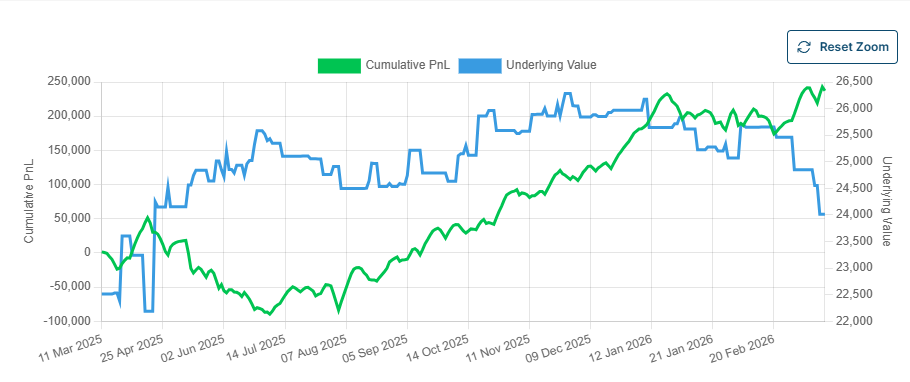
If you have been asking whether [algo trading in India](https://algotest.in/?utm_source=blog&utm_medium=internal&utm_campaign=seo&utm_content=main-page&utm_term=algotest&utm_source=blog&utm_medium=internal&utm_campaign=seo&utm_term=algotest&utm_content=main-page) is still profitable in 2026, you are asking the right question at the right time.
Algo trading means your trades execute automatically based on rules you define upfront. No screen watching. No manual clicking.
SEBI brought this under a formal framework in 2012 and strengthened it significantly in 2026.
On top of that, AI tools have made building and testing strategies faster than ever.
But faster and easier does not mean guaranteed profits. That is exactly what this article is here to address: The [future of algo trading](https://algotest.in/blog/why-algo-trading-is-the-future-for-retail-investors/) in India
## SEBI’s 2025–26 Algo Trading Regulations: Key Rules for Retail Traders
SEBI, NSE, and BSE introduced a structured framework for retail algo trading in India.
The goal was simple: make automated trading safer, more transparent, and easier to monitor. Every rule ties back to one idea: accountability.
### Key Changes Retail Traders Should Know
- **Strategy approval is mandatory:** Algo strategies must be approved by the broker and exchange before going live to ensure compliance and risk validation.
- **Unique Algo ID tagging:** Every algorithmic order must carry a unique identifier to allow exchanges to track and monitor automated trading activity.
- **Broker-controlled APIs only:** Open or unmanaged APIs are not allowed. Algorithms must run through broker-approved systems for supervised execution.
- **Approved algo providers:** Platforms and vendors offering algorithmic strategies must be accredited by stock exchanges to ensure credibility.
- **Retail participation allowed:** Traders can use both self-developed strategies and platform-based algos, provided they follow order-rate limits and execution rules.
- **White-box vs black-box classification:** Transparent (white-box) strategies are easier to monitor, while proprietary black-box algorithms can only be offered by SEBI-registered research analysts with proper documentation.
- **Mandatory risk controls:** Brokers must implement safeguards such as order throttling, kill switches, secure authentication, and continuous monitoring.
Overall, [SEBIs' framework](https://www.sebi.gov.in/legal/circulars/feb-2025/safer-participation-of-retail-investors-in-algorithmic-trading_91614.html?utm_source=chatgpt.com) shifts algorithmic trading away from uncontrolled automation toward structured, rule-based systems.
## What SEBI Rules Means for Brokers, Algo Providers, and Retail Traders
- **Brokers must** approve and monitor client algorithms, ensure only exchange-compliant strategies go live, maintain audit trails, and implement risk controls such as order limits, authentication, and kill switches to prevent system failures.
- **Algo providers must** register or be empanelled with exchanges, maintain transparency and documentation of their strategies, and follow regulatory requirements, especially when offering proprietary or black-box algorithms.
( [AlgoTest](https://algotest.in/) is empanelled with stock exchanges in compliance with regulatory standards in India)
- **Retail traders must** use algorithmic trading within broker-controlled environments, follow order-rate and execution limits, and focus on building transparent, well-tested strategies that prioritise risk management and compliance.
Check out this blog to learn more about [SEBI Algo Trading Regulation](https://algotest.in/blog/is-sebi-banning-algo-trading-in-india/) in India.
## How AI is Transforming Algo Trading Strategies in 2026
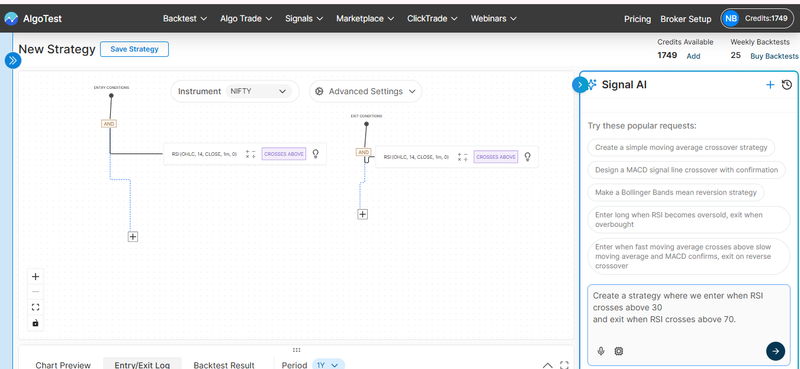
AI tools help analyse patterns, test multiple variations quickly, and optimise strategies using risk-adjusted performance metrics.
Let's see how AI is changing algo trading in 2026.
### **Faster Strategy Research and Backtesting**
Traditional algorithmic trading required manually testing parameters one by one. AI accelerates this process by analyzing [multiple trading strategy](https://algotest.in/blog/guide-to-backtesting-trading-strategies/) combinations simultaneously.
This allows traders to:
- test entry and exit conditions faster
- compare stop-loss and re-entry variations efficiently
- identify consistently performing setups using historical data
As a result, traders can shorten research cycles and reduce human bias during optimisation.
### **Risk-Focused Strategy Optimisation**
By analysing drawdown, volatility, and consistency together, AI helps traders build more stable strategies rather than chasing short-term gains.
### **Adapting to Changing Market Conditions**
AI enables traders to evaluate strategy performance across different market conditions and identify when adjustments may be needed, reducing the risk of running outdated systems.
### **Lowering the Technical Barrier for Retail Traders**
Traders can refine parameters, generate performance insights, and visualise results through simplified workflows with AI powered interfaces.
## How AlgoTest AI Agent Helps in Strategy Optimisation
Most traders optimize for one thing: total profit. That is the wrong metric.
[AlgoTest's 920 AI Agent](https://www.youtube.com/watch?v=pihxdNNFvB8) evaluates strategies using risk-adjusted measures like return relative to maximum drawdown.
This pushes you toward strategies that are stable and sustainable, not just ones that looked good in one market phase.
The agent runs multiple backtests automatically, compares re-entry logic, stop-loss levels, and time-based conditions, and surfaces exactly where your strategy is under-optimized.
No manual rebuilding. No parameter hunting one by one.
The best part? You do not need to code. Type your changes or speak them in Hindi. The agent handles the rest.
Used correctly, it will not guarantee profits.
But it will help you test smarter, evaluate risk more clearly, and stop making decisions based on gut feel.
[Signals AI](https://algotest.in/feature/signals/indicators?utm_source=blog&utm_medium=organic&utm_campaign=seo&utm_source=blog&utm_medium=organic&utm_campaign=seo) lets you build, backtest, paper trade, and deploy indicator-based strategies directly from one dashboard, no coding or third-party integrations required. Create strategies in plain English and automate faster.
## Risk Management in Algo Trading
Good trading has always followed the same path: build a strategy grounded in market understanding, backtest it rigorously, forward test it on realistic assumptions, then go live. That has not changed.
Here is what that looks like in practice.
### 1\. Backtest with realistic conditions
Backtesting shows how a strategy would have performed historically. But numbers lie if you ignore real-world conditions.
Always account for:
- **Transaction costs:** Add brokerage, STT, and exchange fees upfront. A strategy that looks profitable before costs often fails after them.
- **Bid-ask spreads:** Do not assume perfect execution at the displayed price.
- **Liquidity differences:** Low liquidity affects fills. Test across different instruments and market conditions.
- **Execution delays:** Simulate realistic entry prices. Fast markets do not give you ideal fills.
Test across trending, sideways, and volatile phases. The goal is not a perfect historical result. It is a strategy that holds up under different conditions.
AlgoTest's curve-fitting analysis tool shows whether your strategy is over-optimised for past data. Use it to check stability across parameters, not just peak returns. Start with this [step-by-step guide on how to backtest for free.](https://algotest.in/blog/step-by-step-guide-on-how-to-backtest-for-free/)
### 2\. Paper Trade before going live
Backtesting tells you what happened. Forward testing tells you what will happen under live conditions.
Run your strategy in simulation for a few weeks. Verify orders execute at expected prices, confirm signals trigger correctly, and watch how slippage affects real performance. Issues that never showed up in backtesting often surface here. Learn how to [backtest options trading strategies](https://algotest.in/blog/how-to-backtest-options-trading-strategies-with-examples/) with real examples to sharpen this step.
### 3\. Use platforms with built-in risk controls
Not all platforms are equal. Look for reliable historical data, paper trading capabilities, stop-loss and risk monitoring tools, and clear performance dashboards. AlgoTest is built around all of these so you can test before you risk real capital.
### 4\. Set realistic expectations
Algo trading in India does not guarantee profits. Performance depends on market conditions and strategy quality. Consistent high monthly returns are rare. Focus on consistency and long-term sustainability over short-term gains.
### 5\. Account for hidden costs
Beginners often overlook what quietly eats into returns: slippage, brokerage, taxes, data costs, and execution delays during volatile markets. AlgoTest lets you build slippage directly into your backtest settings so your results reflect reality, not ideal conditions.
[Sign up for free on AlgoTest](https://algotest.in/) and start testing your strategy before it costs you anything.
## Why Algo Trading Is Not “Easy Money”
Algo trading in India does not guarantee profits. SEBI's own FY24 data shows only 9% of individual F&O traders ended the year in profit.
The gap between that number and AlgoTest's 45% profit rate among its users tells you everything. Better tools and structured workflows do not eliminate risk. But they clearly change outcomes.
AlgoTest provides tools designed to help traders build and test strategies systematically:
- [**Backtest**](https://algotest.in/feature/backtest) **:** Analyse years of historical data in seconds with detailed performance reports.
- [**Forward Test**](https://algotest.in/feature/forward-test) **:** Run strategies virtually using real-time market conditions without risking capital.
- [**Algo Trade**](https://algotest.in/feature/live) **:** Deploy algorithmic strategies in one click with integrations across 50+ brokers.
Register on AlgoTest for free to begin your [algo trading journey in India](https://algotest.in/?utm_source=blog&utm_medium=internal&utm_campaign=seo&utm_content=main-page&utm_term=algotest&utm_source=blog&utm_medium=internal&utm_campaign=seo&utm_term=algotest&utm_content=main-page) and join a community of 35,000+ traders focused on systematic and disciplined trading.
Check out our [Product Documentation](https://docs.algotest.in/) to Master Algo Trading on AlgoTest.
## FAQs about Algo Trading in India
### Is Algo Trading Profitable in India in 2026?
It can be. But it depends on strategy design, risk management, and realistic expectations. [SEBI's framework](https://algotest.in/blog/is-sebi-banning-algo-trading-in-india/) has made automated trading safer and more structured. That helps. But no strategy guarantees profits. Disciplined testing and consistent execution are what move the needle.
### How Can Beginners Start Algo Trading in India?
Start with basic trading concepts and simple rule-based strategies. Backtest on historical data, forward test in simulation mode, then deploy through a SEBI-compliant broker or platform. This [step-by-step guide on how to backtest for free](https://algotest.in/blog/step-by-step-guide-on-how-to-backtest-for-free/) is a good first stop.
### What Are the Main Risks in Algorithmic Trading?
Overfitting strategies to past data, ignoring transaction costs, execution delays, and unrealistic return expectations. Automation removes emotional bias but it does not remove the need for monitoring and periodic strategy review.
### What Should I Look for in an Algo Trading Platform in India?
Reliable historical data, realistic backtesting, paper trading, risk monitoring tools, and SEBI-compliant broker integrations. If you are a beginner, clear performance reporting matters more than you think. Check out the [best algo trading courses in India](https://algotest.in/blog/5-best-algo-trading-courses-in-india-to-learn-in-2025/) to understand what to look for before choosing a platform.
### Does SEBI Allow Retail Traders to Use APIs for Algo Trading?
Yes, but only through broker-approved environments. Open or unmanaged APIs are restricted. All API-based trading must go through a static whitelisted IP registered with your broker.
### Is AI Replacing Traders in Algo Trading?
No. AI speeds up research, testing, and optimisation. It does not replace strategy logic or risk management. You still need to know what you are doing.
### Which Strategies Work Best for Algo Trading in India?
There is no single best strategy. Time-based systems, trend-following, options selling setups, and rule-based intraday approaches all have merit. What works depends on market conditions, proper testing, and how well you manage risk. Learn how to [backtest options trading strategies](https://algotest.in/blog/how-to-backtest-options-trading-strategies-with-examples/) to find what suits your style.
---
This blog is powered by Superblog. Visit https://superblog.ai to know more.
---
## 5 Best Algo Trading Courses in India 2026
Author: AlgoTest
Author URL: https://algotest.in/blog/author/algotest/
Published: 2026-01-31
Category: General
Category URL: https://algotest.in/blog/category/general/
Meta Description: Discover the top 5 algorithmic trading courses in India for 2026. Learn algo trading strategies, backtesting, Python, and live market execution from certified programs.
Tags: algo trading, algo trading india
Tag URLs: algo trading (https://algotest.in/blog/tag/algo-trading/), algo trading india (https://algotest.in/blog/tag/algo-trading-india/)
URL: https://algotest.in/blog/5-best-algo-trading-courses-in-india-to-learn-in-2025/
### What is Algo Trading?
[Algorithmic trading](https://algotest.in/blog/algo-trading-india/) means setting clear rules and letting a computer execute trades for you. Instead of placing trades manually, the system follows your rules and runs them automatically. It enters and exits positions faster than any human can.
You can also backtest your strategy on historical data to see how it would have performed. Once you go live, the system runs on its own. You do not need to watch charts all day or manually adjust positions.
To understand [algo trading in India,](https://algotest.in/?utm_source=blog&utm_medium=internal&utm_campaign=seo&utm_content=main-page&utm_term=algotest&utm_source=blog&utm_medium=internal&utm_campaign=seo&utm_term=algotest&utm_content=main-page) here are five top algorithmic trading courses to consider in 2026:
## Top 5 Algorithmic Trading Courses in India for 2026
### 1\. Algorithmic Trading Course by Chintan Jaggi
This course covers the fundamentals of algorithmic trading with a practical focus on live market execution. Chintan Jaggi, a founding member of AlgoTest, walks you through backtest and forward test tools. [This algo trading course](https://algotest.in/courses/chintan-algo-course) covers the strategy builder and simulator in depth.
It also covers options buying and selling strategies and teaches you how to build a consistent edge in the market over the long run.
### 2\. Algorithmic Trading and Computational Finance Using Python and R by NSE Academy
Offered by NSE Academy in collaboration with Trading Campus, [this certified algo trading course](https://www.nseindia.com/learn/algorithmic-trading-computational-finance-using-python-r) focuses on practical Python and R implementation across multiple asset classes. You learn to develop real-time trading strategies and build trading engines backed by advanced data analytics.
### 3\. Certified ALGO Trader (CAT) by ICFM India
The Institute of Career in Financial Market (ICFM) offers the Certified ALGO Trader (CAT) program. It focuses on computer-directed trading to reduce transaction costs and improve execution efficiency. [This course](https://www.icfmindia.com/course/certified-algo-trader-cat) suits traders who want to use technology to optimize their investment strategies.
### 4\. Algorithmic Trading Module by NSE India
This self-study algorithmic trading module by the National Stock Exchange covers trading strategies, risk management, and the audit and compliance processes tied to algo trading. It works well for anyone who wants a structured, self-paced understanding of the full domain.
### 5\. High-Speed Trading with Algorithms by BSE Institute
The BSE Institute offers a [course on high-speed algorithmic trading](https://www.bsebti.com/profx/highspeed-trading-with-algorithms.html) that covers quantitative finance and automated execution. Graduates go on to work as algorithmic traders, quantitative analysts, and risk managers in financial institutions, hedge funds, and technology companies.
**_New Product Alert_** _-_ Now AlgoTest’s Signals AI lets you build, backtest, paper trade, and deploy indicator-based strategies directly from one dashboard, no coding or third-party integrations required. Create strategies in plain English and automate faster. [Check it now.](https://algotest.in/feature/signals/indicators?utm_source=blog&utm_medium=organic&utm_campaign=seo&utm_source=blog&utm_medium=organic&utm_campaign=seo&utm_source=blog&utm_medium=organic&utm_campaign=seo)
## How to Choose the Right Algo Trading Course
Not every [algo trading](https://algotest.in/blog/algo-trading-india) course teaches what you actually need. Some cover only concepts and skip execution delays, slippage, and risk controls. Others are too technical for beginners. The right course depends on your experience level and trading goals.
If you are a beginner, choose a program that walks you through the full workflow: idea generation, backtesting, forward testing, deployment, and performance tracking. Our [algo trading course](https://algotest.in/courses/chintan-algo-course) follows this structured approach using practical tools like the [strategy builder](https://algotest.in/strategy-builder) and [simulator](https://algotest.in/simulator).
A strong course teaches you how to build a repeatable strategy framework, test it across different market conditions, manage drawdowns, and automate execution with discipline.
Once you finish the course, use the right tools to practice what you learned. Find out the best [algo trading software](https://algotest.in/blog/top-10-algo-trading-software-india/) for live execution. Execution is where most traders win or lose.
## Do You Need to Know Coding to Start Algo Trading?
No, but it helps.
Most retail traders in India start algo trading without any programming background. Platforms like [AlgoTest](https://algotest.in) let you build and backtest strategies using a visual [strategy builder](https://algotest.in/strategy-builder) without writing a single line of code. You define your entry rules, exit conditions, and position size. The platform handles the rest.
If you want full control over custom indicators, strategy logic, or direct API integrations, learning Python gives you a real edge. The NSE Academy Python and R program is built for traders who want to go that route.
A simple way to think about it:
**No coding needed** if you want to automate rule-based strategies using existing tools.
**Coding helps** if you want custom indicators, advanced backtests, or raw market data access.
Start without code. Add programming skills as you grow.
## What Does the Algo Trading Learning Journey Actually Look Like?
Most traders underestimate the gap between learning algo concepts and running a live, profitable system. Here is what the path actually looks like:
**Stage 1: Learn the Fundamentals**
Understand how markets work and what strategy types exist: trend following, mean reversion, and options strategies.
**Stage 2: Build Your First Strategy**
Translate a trading idea into clear rules. Define your entry, exit, stop loss, and position size. Keep it simple.
**Stage 3: Backtest on Historical Data**
Test your strategy on past data. Check returns, drawdown, win rate, and risk-reward ratio. A [strategy builder and backtesting tool](https://algotest.in/strategy-builder) speeds this up significantly.
**Stage 4:** [**Paper Trading**](https://algotest.in/blog/paper-trading-websites-india)
Run the strategy in live market conditions without real money. This catches execution delays, slippage, and open gaps that backtesting misses.
**Stage 5: Go Live with Small Capital**
Start small. Focus on execution quality and consistency, not returns. Scale only after the strategy holds up over several months.
**Stage 6: Monitor and Improve**
Algo trading is not passive. Review performance weekly, check for strategy drift, and update rules when market conditions shift.
Most traders jump straight from Stage 1 to Stage 5. Skipping the testing phases is where the real losses begin.
If you are looking for an [Algo Trading Platform in India?](https://algotest.in/?utm_source=blog&utm_medium=internal&utm_campaign=seo&utm_content=main-page&utm_term=algotest&utm_source=blog&utm_medium=internal&utm_campaign=seo&utm_term=algotest&utm_content=main-page) AlgoTest is at the forefront, empowering traders of all levels. Start for free on AlgoTest.
Get 25 Free Backtests
# FAQs
Q: Is algo trading legal in India?
A: Yes, algorithmic trading is legal in India when traders use SEBI-compliant broker APIs and follow exchange regulations and risk controls.
Q: Do I need coding skills to learn algo trading?
A: Not necessarily. Some courses teach coding with Python or R, while others focus on no-code strategy builders and structured trading workflows. Your need for coding depends on the type of strategies you want to build.
Q: Which is the best algorithmic trading course in India?
A: The best algo trading course depends on your experience level. Beginners should choose a course that covers the full workflow from idea to backtesting and deployment, while advanced traders may prefer courses focused on quantitative finance and programming.
Q: What should beginners look for in an algo trading course?
A: Beginners should look for practical training that covers strategy building, backtesting, forward testing, risk management, and real-market execution rather than only theoretical concepts.
Q: How long does it take to learn algo trading?
A: Learning the basics can take a few weeks, but mastering strategy design, risk control, and disciplined execution usually takes months of practice and testing.
Q: Can I start algo trading with a small capital?
A: Yes, many traders start with smaller capital, but they first validate their strategy through backtesting and paper trading before deploying real funds.
Q: What tools do I need after completing an algo trading course?
A: After completing a course, you need a SEBI-compliant broker API, reliable algo trading software, and a structured process for testing and deploying strategies.
Q: Is certification important in algo trading?
A: Certification is not mandatory to trade, but it can help if you want career credibility.
Q: How do I choose the best algo trading course for me?
A: Choose a course based on your goals and skill level. If you want to learn strategy-building and the complete trading workflow, opt for a practical course that covers both concepts and the tools used in real trading. If your goal is coding, data analysis, and quant-style learning, choose a more technical course that focuses on Python/R and systematic strategy development.
Q: What should a good algorithmic trading course include?
A: A strong algo trading course should teach strategy rules, backtesting + forward testing, risk and drawdown control, and live execution basics, so you can trade with a process instead of random trial-and-error.
---
This blog is powered by Superblog. Visit https://superblog.ai to know more.
---
## 10 Best Algo Trading Software in India (2026): Free & Paid Platforms Compared
Author: AlgoTest
Author URL: https://algotest.in/blog/author/algotest/
Published: 2026-01-28
Meta Description: Looking for the best algo trading software in India? Compare the top 10 algo trading platforms, including AlgoTest, Zerodha Streak, Tradetron, QuantMan, and more.
Tags: algo trading, software, algo trading india
Tag URLs: algo trading (https://algotest.in/blog/tag/algo-trading/), software (https://algotest.in/blog/tag/software/), algo trading india (https://algotest.in/blog/tag/algo-trading-india/)
URL: https://algotest.in/blog/10-best-algo-trading-software-in-india-2025/

[Algo trading](https://algotest.in/what-is-algo-trading?utm_source=blog&utm_medium=internal&utm_campaign=seo&utm_content=landing-page&utm_term=what-is-algo-trading), short for algorithmic trading, is changing the way people trade in the markets. Instead of placing trades manually, traders use pre-set rules or strategies that get executed automatically by software. [Algo trading](https://algotest.in/register?utm_source=blog&utm_medium=organic&utm_campaign=seo) helps save time and avoid emotional decisions. In India, more and more traders, whether beginners or pros, are turning to [algo trading softwares](https://algotest.in/register?utm_source=blog&utm_medium=organic&utm_campaign=seo) to test strategies, speed up their trades, and trade smarter.
Retail investors have more opportunities with the new rules introduced by SEBI. These new regulations are stricter for brokers and [algo trading providers in India](https://algotest.in/?utm_source=blog&utm_medium=internal&utm_campaign=seo&utm_content=main-page&utm_term=algotest&utm_source=blog&utm_medium=internal&utm_campaign=seo&utm_term=algotest&utm_content=main-page), but have been an exceptional addition for the traders.
Today, we list India's best algo trading software, starting with [AlgoTest](https://algotest.in/register?utm_source=blog&utm_medium=organic&utm_campaign=seo).
## 1\. AlgoTest

AlgoTest is a powerful software designed to simplify algorithmic trading for traders of all levels. It offers backtesting capabilities, allowing users to test their [trading strategies](https://algotest.in/blog/best-intraday-trading-strategies-rules-tips) against historical data. It also offers [paper trading features](https://algotest.in/paper-trading), allowing users to trade in the live markets with virtual capital. This feature is crucial for understanding how a strategy would have performed in the past, thereby giving traders confidence in their approach before deploying real capital. [AlgoTest](https://algotest.in/register?utm_source=blog&utm_medium=organic&utm_campaign=seo) includes the Algo-Trading feature, which allows you to take your fully established strategies, based on predefined rules, live automatically.
[AlgoTest](https://algotest.in/register?utm_source=blog&utm_medium=organic&utm_campaign=seo) also provides a user-friendly interface and supports integration with 60+ brokers, making it a versatile choice for Indian traders.
**Pros:**
- Easy to use with a drag-and-drop interface
- [Backtest strategies](https://algotest.in/blog/how-to-backtest-options-trading-strategies-with-examples) with historical data
- Paper trading simulation
- Eliminate manual intervention and Algo-trade based on set rules.
**Cons:**
- Limited to Indian Markets.
AlgoTest is a one-stop solution for all trading needs, providing features such as [Algo Trading](https://algotest.in/what-is-algo-trading?utm_source=blog&utm_medium=internal&utm_campaign=seo&utm_content=landing-page&utm_term=what-is-algo-trading), [backtesting](https://algotest.in/feature/backtest?utm_source=blog&utm_medium=internal&utm_campaign=seo&utm_content=feature&utm_term=backtest&utm_source=blog&utm_medium=internal&utm_campaign=seo&utm_term=backtest&utm_content=feature), paper trading, charts, a [simulator,](https://algotest.in/feature/simulator?utm_source=blog&utm_medium=organic&utm_campaign=seo&utm_source=blog&utm_medium=organic&utm_campaign=seo) and a [strategy builder](https://algotest.in/feature/strategy-builder?utm_source=blog&utm_medium=organic&utm_campaign=seo&utm_source=blog&utm_medium=organic&utm_campaign=seo). These tools help traders advance their skills to the next level. Let's explore the features of [AlgoTest](https://algotest.in/?utm_source=blog&utm_medium=internal&utm_campaign=seo&utm_content=main-page&utm_term=algotest) in more detail:
**Features of AlgoTest**
- **Focus on Options Trading:** [AlgoTest](https://algotest.in/?utm_source=blog&utm_medium=internal&utm_campaign=seo&utm_content=main-page&utm_term=algotest) is specifically designed for options trading strategies, making it a good choice for traders focusing on this asset class.
- **Strategy Development**: Create your trading strategies from scratch utilising price patterns, and custom logic. [AlgoTest](https://algotest.in/?utm_source=blog&utm_medium=internal&utm_campaign=seo&utm_content=main-page&utm_term=algotest) has a visual editor for convenience of usage.
- **Backtesting Engine:** AlgoTest includes a [backtesting](https://algotest.in/feature/backtest?utm_source=blog&utm_medium=internal&utm_campaign=seo&utm_content=feature&utm_term=backtest) engine that lets you test your strategies against up to 7.5+ years of historical data. This allows you to examine performance under a variety of market scenarios.
- **Paper Trading:** Practice makes perfect, and [AlgoTest](https://algotest.in/?utm_source=blog&utm_medium=internal&utm_campaign=seo&utm_content=main-page&utm_term=algotest) provides paper trading in the real market with virtual capital. This allows you to test your strategies in a risk-free environment.
- **Algo Trading:** AlgoTest includes this feature, which allows you to use your fully established strategies to make trades automatically based on predefined rules.
- **Order Types:** Implement a variety of order types, such as market orders and limit orders, in your strategy execution to provide flexibility in execution.
- **Option Greeks Analysis:** [AlgoTest](https://algotest.in/register?utm_source=blog&utm_medium=organic&utm_campaign=seo) offers extensive analysis capabilities for all Greeks (Delta, Gamma, Vega, Theta, Rho). [Understanding Greeks](https://docs.algotest.in/financial-education/options/greek-interactions/#greek-interactions-in-options-trading) is critical for options traders, and [AlgoTest](https://algotest.in/register?utm_source=blog&utm_medium=organic&utm_campaign=seo) allows you to examine them to make educated trading decisions efficiently.
- **Margin Calculator:** AlgoTest includes a built-in margin calculator, a useful tool for Indian traders. This calculator allows you to estimate the margin necessary for your options contracts, ensuring that you have enough funds to complete your transactions.
- **Community and Support:** AlgoTest has an 35k+ active [Telegram community](https://t.me/algotest_in) where users exchange information, ask questions, and learn from one another. Furthermore, their committed support crew gives timely and useful assistance as required.
- **Learning Resources:** AlgoTest provides a multitude of learning materials, including [courses](https://algotest.in/courses), blog posts, guides, and [documents.](https://docs.algotest.in/)
- **Pricing:** AlgoTest has a tiered price system, with their base subscription starting at a very reasonable ₹499 per month. You can check out all the [plans here.](https://docs.algotest.in/getting-started/buy-plan/)
- **AI-based trading** _:_ [AlgoTest’s Signal AI](https://algotest.in/feature/signals/indicators?utm_source=blog&utm_medium=organic&utm_campaign=seo&utm_source=blog&utm_medium=organic&utm_campaign=seo) lets you build, backtest, paper trade, and deploy indicator-based strategies directly from one dashboard, no coding or third-party integrations required. Create strategies in plain English and automate faster. [Check it now.](https://algotest.in/register?redirect_to=%2Fsignals%2Fchat&utm_source=blog&utm_medium=organic&utm_campaign=seo&utm_source=blog&utm_medium=organic&utm_campaign=seo)
## **2\. Zerodha Streak**

Zerodha Streak is one of the most popular algo trading platforms in India. It is a semi-automated platform allowing traders to create, backtest, and deploy trading strategies without coding knowledge. Streak’s intuitive interface and robust features make it accessible to beginners while providing advanced tools for experienced traders. The platform supports various technical indicators and enables automated trading directly through Zerodha’s brokerage services.
**Pros:**
- Easy to use with visual strategy builder
- Large library of pre-built strategies
- Paper trading simulation
**Cons:**
- Limited data sources
- It’s a semi-automated platform
## **3\. Quantiply**

Quantiply is an automated trading platform that offers a live deployment feature for index Futures & Options. It is fully automated and configurable, allowing users to trade without manual intervention.
**Pros:**
- Easy to use platform.
- Fast and reliable.
- Scalable and efficient.
- Secure.
**Cons:**
- May require some technical knowledge to set up and use effectively.
- No Backtesting engine.
## **4\. Tradetron**

Tradetron is a web-based algo trading platform that caters to traders of all experience levels. It allows users to build strategies using a simple drag-and-drop interface or by writing custom code. The platform also offers backtesting and real-time execution, ensuring that users can optimize their strategies and execute trades efficiently.
**Pros:**
- User-friendly platform for various experience levels
- Supports various asset classes
- Allows setting risk management parameters
**Cons:**
- Subscription fees
- Complex strategies may require coding knowledge
_Read more:_ [_Best Tradetron Alternatives in Indiain 2026_](https://algotest.in/blog/best-tradetron-alternatives-in-2026/)
## **5\. AlgoMojo**

Algomojo is an algorithmic trading platform that offers features like order management, strategy creation and execution, and integration with many different platforms.
**Pros:**
- Offers order management, strategy creation and execution, and integration with many different platforms.
**Cons:**
- Expensive for new users.
## **6\. QuantMan**

QuantMan is an algo trading platform that offers a wider range of features. It caters to a broader audience of algo traders. QuantMan enables users to test their strategies using historical data. The platform also integrates with brokerage accounts and can automatically execute trades based on the user's defined strategies.
**Pros:**
- Offers backtesting, paper trading, live trading and integration with various brokers.
**Cons:**
- Expensive for new users.
- No active community support.
- No strategy builder and historical simulator.
## **7\. NinjaTrader**

NinjaTrader is a well-known name in the global trading community, and it has a significant presence in India. The platform offers a range of features for algo trading, including advanced charting, market analysis, and strategy development tools.
**Pros:**
- Paper trading in the live market.
- Visual Strategy builder.
- Backtesting & technical analysis.
- Live execution.
**Cons:**
- Advanced features can be challenging for beginners.
- Requires powerful computer.
- Limited broker compatibility.
## **8\. Robo Trader**

Robo Trader is an advanced algo trading platform designed for professional traders. Robo Trader also offers services such as backtesting and algo trading customized to their client's needs.
**Pros:**
- Caters to various trading needs
- Supports various asset classes
**Cons:**
- You cannot develop a strategy by yourself.
- Expensive for new users.
_Read more:_ [_How to do Algo Trading in India: Step-by-Step Guide_](https://algotest.in/blog/how-to-do-algo-trading-step-by-step-beginner-checklist/)
## **9\. Robomatic**

Robo-Matic is an algo trading platform that allows users to create and test algorithmic trading strategies. It offers a variety of features, including strategy creation, backtesting and algo trading. Users can subscribe to different plans depending on their needs.
**Pros:**
- Create and test algorithmic trading strategies.
- Backtesting, algo trading, and strategy creation.
- Different plans depending on user needs.
**Cons:**
- Expensive Subscription Fee.
- Lack of Advanced Features
## **10\. Algobulls**

Algobulls is an innovative algo trading platform that offers a variety of tools for strategy development and execution. Algobulls also offers backtesting and paper trading features, enabling users to test their strategies thoroughly before deploying them in the live market.
**Pros:**
- Automates tasks and trades 24/7
- Reduces risk by testing strategies
**Cons:**
- Requires understanding of AI and machine learning
- Paid plans with limitations for free users
_Read more -_ [_Is Algo Trading Profitable in India in 2026_](https://algotest.in/blog/algo-trading-profitable-india-2026/)
### Conclusion:
The new regulations for algorithmic trading by SEBI in India has led to the higher acceptance for algo trading softwares. These robust platforms cater to the diverse needs of retail traders. Whether you are a beginner looking for a user-friendly interface or a professional seeking advanced customization options, there is [Algo trading](https://algotest.in/register?utm_source=blog&utm_medium=organic&utm_campaign=seo) software to suit your requirements.
If you are looking for an [Algo Trading Platform in India?](https://algotest.in/?utm_source=blog&utm_medium=internal&utm_campaign=seo&utm_content=main-page&utm_term=algotest&utm_source=blog&utm_medium=internal&utm_campaign=seo&utm_term=algotest&utm_content=main-page) AlgoTest is at the forefront, empowering traders of all levels. Unlike complex softwares demanding coding expertise, [AlgoTest](https://algotest.in/register?utm_source=blog&utm_medium=organic&utm_campaign=seo) offers a user-friendly interface that simplifies [Algo trading](https://algotest.in/register?utm_source=blog&utm_medium=organic&utm_campaign=seo) for beginners. You can go through our [product documentation](https://docs.algotest.in/) for a complete understang of our products, plans and features.
Here's what makes AlgoTest stand out:
- **Intuitive Design:** AlgoTest eliminates the coding barrier, allowing traders to focus on strategy development using a drag-and-drop interface. This makes [algo trading](https://algotest.in/what-is-algo-trading?utm_source=blog&utm_medium=internal&utm_campaign=seo&utm_content=landing-page&utm_term=what-is-algo-trading) accessible to a wider audience, fostering a new generation of Indian traders.
- **Beginner-Friendly:** AlgoTest recognizes the needs of novices. With its clear interface and [educational resources,](https://docs.algotest.in/financial-education/) it equips them with the tools and knowledge to build and test their strategies with confidence.
- **Powerful Features:** Despite its user-friendliness, AlgoTest boasts powerful features like backtesting with historical data, optimization tools, and paper trading capabilities. This allows traders to refine their strategies and assess their performance before deploying real capital.
- **Cost-Effective:** AlgoTest offers competitive pricing, making it an attractive option for budget-conscious traders, especially beginners who are still testing the waters of [algo trading](https://algotest.in/what-is-algo-trading?utm_source=blog&utm_medium=internal&utm_campaign=seo&utm_content=landing-page&utm_term=what-is-algo-trading).
By democratizing algorithmic trading, [AlgoTest](https://algotest.in/register?utm_source=blog&utm_medium=organic&utm_campaign=seo) is transforming the Indian financial landscape. As the market evolves, AlgoTest stands poised to equip Indian traders with the tools they need to thrive in the competitive world of algorithmic trading.
Free Sign Up
_Read More:_ [_8 Best Algo Trading Platforms in India in 2026_](https://algotest.in/blog/8-best-algo-trading-platforms-in-india-2026/)
[_Best Brokers for Algo Trading in India in 2026: API, Speed & Compliance_](https://algotest.in/blog/best-brokers-for-algo-trading-in-india/)
## **FAQs**
1. **What is algo trading?**
Algo trading, also known as [algorithmic trading](https://algotest.in/what-is-algo-trading?utm_source=blog&utm_medium=internal&utm_campaign=seo&utm_content=landing-page&utm_term=what-is-algo-trading), is the use of computers and automated programs to execute trades in the financial markets. This allows for faster and more precise execution than manual trading.
2. **What are the benefits of using algo trading software?**
Algo trading software offers several benefits, including:
- **Backtesting capabilities:** Test your trading strategies on historical data to see how they would have performed in the past.
- **Automated execution:** Eliminate manual intervention and execute trades based on predefined rules.
- **Paper trading:** Simulate real-market conditions without risking real capital.
- **Reduced emotions:** Remove emotional biases from your trading decisions.
3\. **What are some factors to consider when choosing algo trading software?**
When choosing [algo trading](https://algotest.in/register?utm_source=blog&utm_medium=organic&utm_campaign=seo) software, consider the following factors:
- **Ease of use:** How easy is the platform to learn and use?
- **Features:** Does the platform offer the features you need, such as backtesting, paper trading, and order automation?
- **Asset classes:** Does the platform support the asset classes you want to trade?
- **Cost:** How much does the platform cost?
a. **Is AlgoTest easy to use?**
Yes, AlgoTest is designed to be easy to use with a drag-and-drop interface. This makes it a good option for beginners and experienced traders alike.
b. **What are some of AlgoTest's key features?**
AlgoTest offers a variety of features, including:
- Backtesting with up to 7.5 years of historical data
- Paper trading simulation
- Algo trading for automated execution
- Support for options trading strategies
- Option Greeks analysis
- Margin calculator
- RA Algos: Algos by SEBI-registered RAs.
c. **How much does AlgoTest cost?**
AlgoTest has a tiered pricing system, with its base pricing starting at a very reasonable ₹499 per month. It's the most affordable [no-code algo trading provider in India.](https://algotest.in)
Related Reading:
1. [5 Best Algo Trading Courses](https://algotest.in/blog/5-best-algo-trading-courses-in-india-to-learn-in-2025/)
2. [9 Steps to Build a Profitable Algo Trading Strategy](https://algotest.in/blog/9-steps-to-build-a-profitable-algo-trading-strategy/)
---
This blog is powered by Superblog. Visit https://superblog.ai to know more.
---
## Options Volatility Glossary
Author: AlgoTest
Author URL: https://algotest.in/blog/author/algotest/
Published: 2025-12-02
URL: https://algotest.in/blog/options-volatility-glossary/
## **Implied vs Realized Volatility**
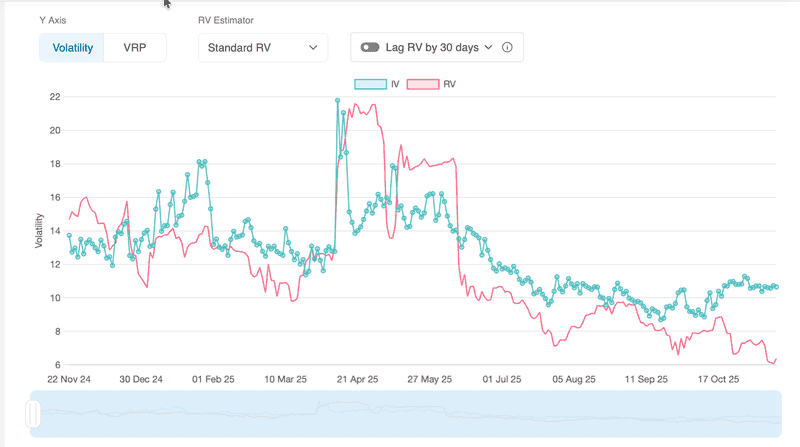
Term
Definition
Context
[Implied Volatility (IV)](https://algotest.in/blog/implied-volatility-and-how-to-read-and-compute-iv/)
A forward-looking metric that represents the market's expectation of the future volatility of an underlying asset's price over the life of the option contract.
IV is not directly observable; it is derived by plugging the current market price of an option into an options pricing model (like Black-Scholes) and solving for the volatility variable. Higher IV generally leads to higher option premiums.
[Realized Volatility (RV)](https://algotest.in/blog/iv-vs-rv-and-trading-edge-with-vrp/)
Also known as historical volatility, it is a measure of the actual price fluctuations of an underlying asset over a specified past period.
RV is a backward-looking measure, in contrast to the forward-looking nature of IV. Traders often compare IV to RV to determine if an option is relatively cheap or expensive.
Options Premium
The price paid by the buyer to the seller (writer) for an option contract.
The premium is composed of two parts: Intrinsic Value (the option's in-the-money value) and Extrinsic Value or Time Value (which is heavily influenced by Implied Volatility and time until expiration).
## Moneyness and Implied Volatility
The terms ITM, OTM, and ATM describe an option's moneyness, which is the relationship between the underlying asset's current price and the option's strike price.
### At-the-Money (ATM)
Term
Definition
Context
At-the-Money (ATM)
An option where the underlying asset's current price is equal to or very close to the option's strike price.
ATM options have the highest Time Value (Extrinsic Value) because the probability of the option moving in-the-money is highest.
ATM IV
The Implied Volatility of an At-the-Money option.
This is often used as a benchmark for the general volatility expectation of the underlying asset.
### In-the-Money (ITM)
Term
Definition
Context
In-the-Money (ITM)
An option that has Intrinsic Value and would result in a profit if exercised immediately.
Call Option: Underlying Price > Strike Price. Put Option: Underlying Price < Strike Price.
ITM IV
The Implied Volatility of an In-the-Money option.
ITM call strike (put strike) is the same as OTM put strike (call strike). So IV tendency is the same as OTM options due to put-call-parity
### Out-of-the-Money (OTM)
Term
Definition
Context
Out-of-the-Money (OTM)
An option that has no Intrinsic Value and would expire worthless if the underlying price remained unchanged. Its value is purely Extrinsic Value (Time Value).
Call Option: Underlying Price < Strike Price. Put Option: Underlying Price > Strike Price.
OTM IV
The Implied Volatility of an Out-of-the-Money option.
In equity markets, OTM Puts typically have a higher IV than ATM options (Skew), while OTM Calls may have a lower IV. In currency markets, both OTM Calls and Puts may have higher IVs (Smile).
## IVP vs IVR
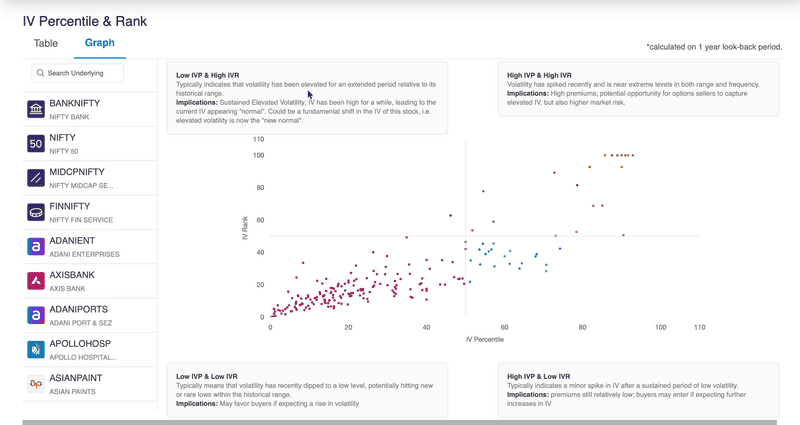
Term
Definition
Context
Implied Volatility Percentile (IVP)
IVP tells you where the current Implied Volatility (IV) stands compared to its own historical IV values over a selected period (typically 1 year).
Example: If IVP = 80, it means current IV is higher than 80% of the IV values from the past year.
High IVP → Options are historically expensive.
Low IVP → Options are relatively cheap.
Traders use IVP to compare IV _against itself_, not against other stocks.
Implied Volatility Rank (IVR)
IVR measures the current IV relative to the **range** of IV in the past year (highest IV vs. lowest IV).
Example: If the IV range for a year is 10–30 and current IV is 25:
IVR = (25 – 10) / (30 – 10) = 75%
IVR shows where the current IV lies within the 52-week high–low band.
Useful when historical IV distribution is uneven (e.g., lots of extreme events).
[IVP vs IVR](https://algotest.in/blog/what-is-ivp-and-ivr-and-how-to-use-ivp-and-ivr/)
1. **IVP** → Percentile: compares current IV to _all historical IV values_.
2. **IVR** → Rank: compares current IV to _historical IV range_.
1. IVP is better for steady assets.
2. IVR is better for assets with occasional volatility spikes.
[AlgoTest](https://algotest.in/register?utm_source=blogs) shows both together to avoid misinterpretation.
These terms came into the picture because Raghav, founder of AlgoTest, sees a gap in the trading knowledge of retail traders in India. He talks about the [problem retail traders are dealing with in this article here.](https://algotest.in/blog/why-im-continuing-my-failed-volatility-trading-community/)
Raghav talks in detail about these concept in his course, you can opt-in his [volatility course](https://algotest.in/courses/raghav-vol-course?utm_source=blogs) to learn more about implied and realized volatility.
---
This blog is powered by Superblog. Visit https://superblog.ai to know more.
---
## Put-Call Parity: What it is, Why it matters, How to use it
Author: AlgoTest
Author URL: https://algotest.in/blog/author/algotest/
Published: 2025-11-25
Meta Title: Put-Call Parity Explained: Formula, Forward Parity & Meaning
Meta Description: Put-Call Parity explained with the formula, forward parity, and parity principle. Discover how option prices stay balanced across strikes and expiries.
URL: https://algotest.in/blog/put-call-parity-for-traders/
## The Law of One Price
The world of options trading is governed by a set of fundamental relationships, none more critical than the **Put-Call Parity** principle. This concept establishes a theoretical link between the prices of puts, calls, and the underlying instrument, ensuring that the market remains efficient and free from risk-free profit opportunities.
If you trade options, you need to understand **put-call parity**. It's a fundamental concept that acts as a simple rule to ensure that the prices of options are fair and consistent. This **Law of One Price** is what connects the price of a call option, a put option, and the underlying asset (like a stock or a future).
## What is Put-Call Parity?
**Put-call parity** is a simple arithmetic equation. It states that for a call and a put option that share the same underlying asset, the same **expiration date (T)**, and the **same strike price (K)**, their prices must be related in a specific way.
The principle is based on the idea that two portfolios with identical payoffs at expiration must have the same price today to prevent arbitrage. The two portfolios that form the basis of the **put call parity formula** are:
1. **Portfolio A (Fiduciary Call):** A call option plus a zero-coupon bond that pays the strike price **(K)** at expiration.
2. **Portfolio B (Protective Put):** A put option plus share equivalent of the underlying asset.
If the underlying asset does not pay dividends, the relationship is expressed by the following equation:
**C + PV(K) = P + S\_0**
Where:
- **C** = Price of the call option
- **PV(K)** = Present value of the strike price (K), discounted at the risk-free rate (r) for the time to expiration (T). **PV(K) = K e^{-rT}**.
- P = Price of the put option
- S\_0 = Current price of the underlying asset (stock)
A more practical and often cited form of the equation, particularly in the context of futures or forward contracts, is the **Put-Call Forward Parity**. This variation replaces the spot price (S\_0) with the present value of the forward price (F\_0) for the underlying asset.
The simplest way to look at the **put call forward parity formula** is:
**Call Price + Strike Price = Put Price + Future Price**
This equation shows that the value of a call option plus the strike price is equal to the value of a put option plus the price of the future contract for the same asset.
This simplified version, which is a direct consequence of the no-arbitrage principle, highlights a key takeaway: the combined value of a call and a cash amount (or its present value) must equal the combined value of a put and the underlying asset (or its future/forward price).
Why does this matter? Because the prices of options and futures are set by supply and demand in the market. The **put call parity** rule says that even with all that buying and selling, the final prices _must_ follow this equation.
## The Big Consequence: Same Implied Volatility
One of the most important things that comes from **put call parity** is how it affects Implied Volatility (IV).
For a call and a put with the same underlying, same expiry, and same strike, they will always have the **same IV**.
If you ever see a trading platform that shows a different [IV](https://algotest.in/blog/implied-volatility-and-how-to-read-and-compute-iv/) for a call and a put with the exact same details, it means their pricing model is flawed.
**What is k in put call parity**? The **parity principle** dictates that the strike price (K) is the common point that forces the IVs to be identical. If they were different, it would create a guaranteed, risk-free profit opportunity.
## Put-Call Parity Arbitrage: The Risk-Free Profit
The entire reason this formula exists is to prevent **put-call parity arbitrage**. Arbitrage is a way to make a **risk-free profit** by exploiting a price difference.
If the market prices of the options and the underlying asset violate the parity equation, a risk-free profit opportunity is created. For example, if:
C + PV(K) < P + S\_0
You can:
1. Buy the cheaper portfolio (Portfolio A: Buy Call, Buy Zero-Coupon Bond).
2. Sell the more expensive portfolio (Portfolio B: Sell Put, Sell Underlying Stock).
The combined position is a **synthetic short put** and a **synthetic long call**, which locks in a guaranteed profit with zero risk, regardless of the underlying asset's price movement.
In modern, highly liquid markets, such violations are extremely rare and short-lived. High-frequency trading (HFT) algorithms monitor the market for these discrepancies in milliseconds, instantly executing trades to exploit the arbitrage. This rapid action brings the prices back into alignment, which is why the equation holds true in practice.
### An Example of Arbitrage
Imagine the equation is violated because the put option is suddenly trading at a much higher price (say, 100 rupees) than it should be. This is a **put call parity violation**.
A smart trader could execute a three-part trade to lock in the profit:
1. **Buy the Call**
2. **Sell the Put** (at the inflated price of 100 rupees)
3. **Sell the Future**
This combination creates a position where your maximum loss is actually a gain. You've essentially created a beautiful, flat payoff diagram where you profit regardless of the market's direction.
However, for a retail trader, trying to capture this arbitrage is nearly impossible. Today, these opportunities are instantly captured by ultra-low latency software used by High-Frequency Trading (HFT) firms. They see the price difference and execute the trade in the order of nanoseconds.
## What Do I Do With Put-Call Parity?
While retail traders cannot realistically capture the nanosecond-level arbitrage opportunities, the parity principle offers valuable insights and practical trading strategies.
### 1\. Synthetic Positions
The parity equation allows traders to create **synthetic positions**, which replicate the payoff of one instrument using a combination of others.
Desired Position
Synthetic Equivalent
Components
Long Call
Long Put + Long Underlying
Buy Put, Buy Stock/Future
Long Put
Long Call + Short Underlying
Buy Call, Sell Stock/Future
Long Stock/Future
Long Call + Short Put
Buy Call, Sell Put
Short Stock/Future
Short Call + Long Put
Sell Call, Buy Put
**Example:**
Long Call = Long Put + Long Future
**Long Call**
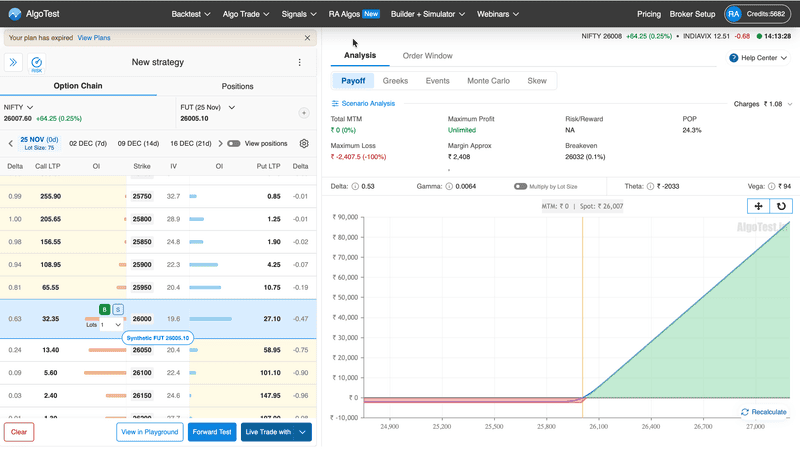
**=**
**Long Put**
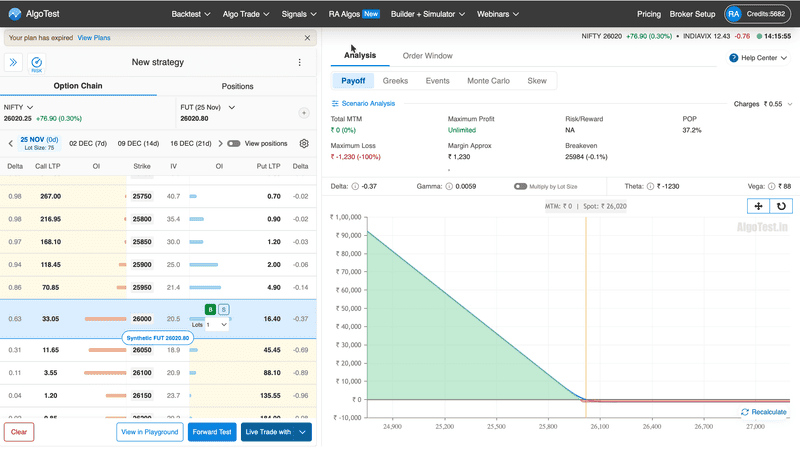
**+**
**Long Future**
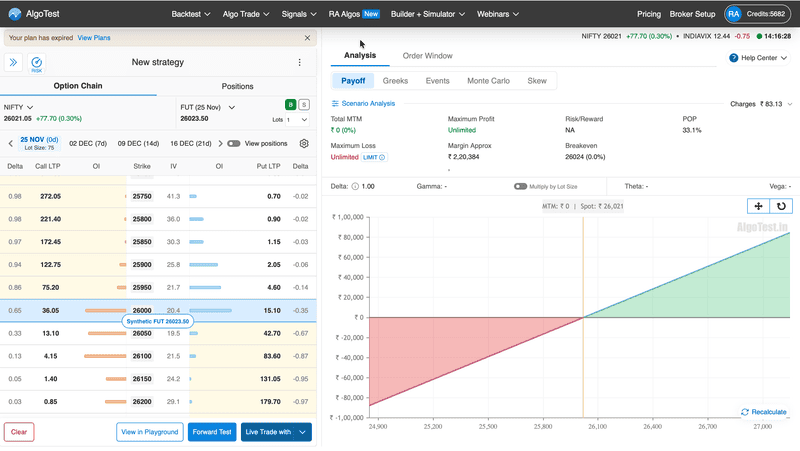
### 2\. Managing Illiquid Options
The most practical use for a retail trader is managing positions in [illiquid options](https://docs.algotest.in/strategy-builder/additional-information/illiquid/), especially those that are deep in-the-money and have wide bid-ask spreads.
Imagine you have a deep in-the-money call option that you want to sell, but the bid-ask spread is huge. Selling it at the bid price means you lose a lot of money to the spread.
Instead of selling the illiquid call, you can use **put call parity** to close your risk by creating a synthetic short position:
1. **Sell the Put** (The corresponding put will be deep out-of-the-money and usually much more liquid, with a tiny bid-ask spread).
2. **Sell the Future**
By doing this, you have essentially closed your original long call position. Your risk is now flat, and you have avoided paying the huge bid-ask spread on the call. You used the more liquid put and future to exit your risk, which is a massive benefit for a retail trader.
## Conclusion:
The **call and put option** are intrinsically linked.
**What is parity**? It is the state of balance where the market is priced correctly, and no risk-free profit exists.
The **points of parity definition** refers to the specific strike and expiry where this balance must hold true. Understanding this simple rule is key to understanding how options are priced and how you can manage your trades more efficiently.
---
This blog is powered by Superblog. Visit https://superblog.ai to know more.
---
## Position Size Calculator: How to Use Trading Edge & Kelly Sizing
Author: AlgoTest
Author URL: https://algotest.in/blog/author/algotest/
Published: 2025-11-24
Meta Title: Advanced Position Size & Lot Size Calculator for Trading Edge
Meta Description: Learn how to use a position size calculator and lot size calculator powered by trading edge, simulations, and Kelly sizing to optimize risk and maximize profitability.
URL: https://algotest.in/blog/position-size-calculator/
In the pursuit of consistent profitability, traders often focus intensely on entry and exit rules. However, the true differentiator between a successful long-term trader and one who eventually fails is not the strategy itself, but the rigorous search for a trading edge, and the application of position sizing once the edge is discovered. On the topic of position sizing, traditional position size calculators focus on a fixed percentage of risk per trade, a more advanced approach, which we've embedded in our [edge calculator](https://algotest.in/edge-calculator), delves into the mathematical expectation of a trading system, its trading edge, and then the final application of sizing of capital survivability.
This article explores this advanced perspective on position sizing in trading, showing how to quantify your system's edge, simulate its long-term behavior, and use the Kelly Criterion to determine the optimal position size that maximizes growth while protecting your capital.
## Quantifying Your Trading Edge: The Foundation of Position Sizing
The first step in advanced position sizing is to answer a fundamental question: Does your trading system have a positive expected value? This value is known as the Trading Edge.
### The Trading Edge Formula
The Trading Edge is the probability-weighted average profit per trade over time. It is calculated using the system's historical performance statistics:
**Trading Edge** = (Win Percentage×Average Win)−(Loss Percentage×Average Loss)
A system with an edge greater than zero is expected to make money in the long run. Conversely, a system with a zero or negative edge, even before accounting for transaction costs, is mathematically destined to fail.
Many retail systems lose not because they’re 'negative edge,' but because they’re zero edge, and costs (brokerage, slippage, taxes) push them below zero.
### Positive Edge ≠ Win Every Trade
A crucial insight from the [edge calculator](https://algotest.in/edge-calculator) approach is that a positive edge does not mean you will win every trade. For example, a highly profitable options buying system might have a Win % as low as 21%, but a high Average Win that more than compensates for the frequent, smaller losses. The position size formula must account for this reality, as long losing streaks are an expected part of the system.
To learn how to use the edge calculator, read the [position size calculator documentation here](https://docs.algotest.in/strategy-builder/edge-calculator/).
## The Role of Trade Simulations and Capital Survivability
Even with a quantified positive trading edge, a trader can still fail if they bet too aggressively or start with insufficient capital. This is the concept of capital survivability.
### The Risk of Aggressive Sizing
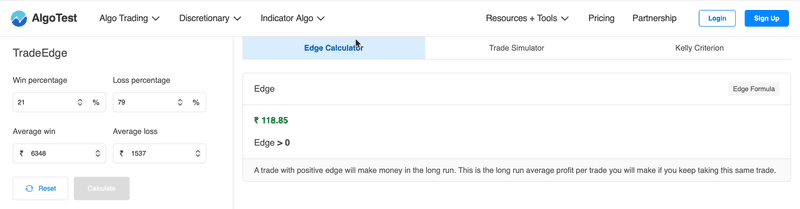
As shown by trade simulations, even a positive edge system can lead to a trader being forced out of the market if their capital falls below the minimum margin required to place the next trade. This occurs when a max losing streak (a series of consecutive losses) is longer than the trader's capital buffer can withstand.
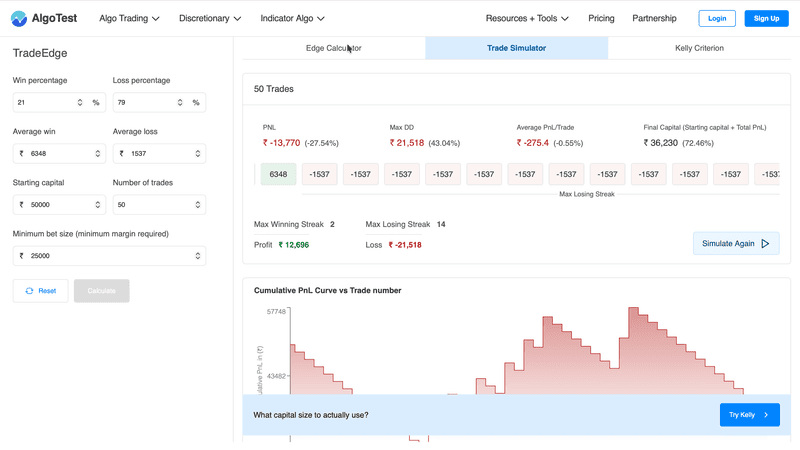
Trade simulations, a key feature of an advanced position calculator, test the system against a large number of hypothetical trade sequences to determine:
1. **Maximum Drawdown**: The largest peak-to-trough decline in capital.
2. **Maximum Losing Streak:** The longest run of consecutive losses.
These simulations highlight that trading edge alone isn’t enough; you need appropriate position sizing and adequate capital to survive the inevitable losing streaks and realize the long-term edge.
## **Kelly Sizing: Optimizing Position Size for Growth**
To solve the problem of aggressive betting and capital survivability, advanced position sizing utilizes the Kelly Criterion. This formula determines the optimal fraction of capital to bet on a trade to maximize the long-term growth rate.
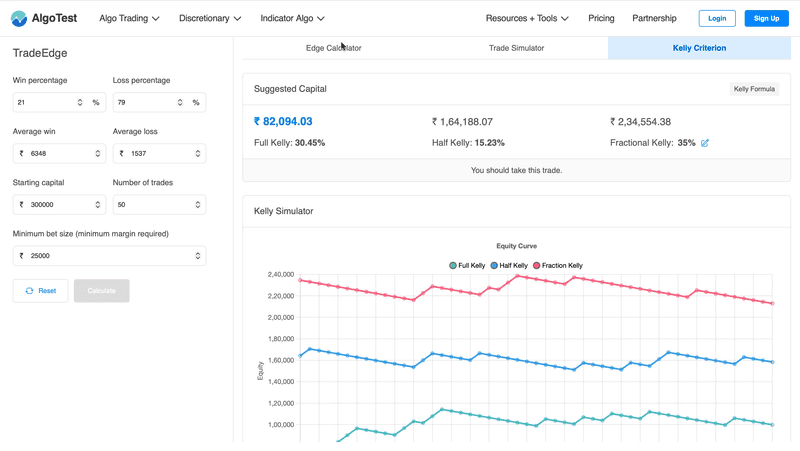
**Full Kelly vs. Fractional Kelly**
The Full Kelly size is mathematically proven to maximize the growth rate, but it is often too aggressive for practical trading. It results in extremely high volatility and deep drawdowns, making it psychologically and practically unsustainable, especially when minimum bet sizes (margin) are a factor.
The practical solution is Fractional Kelly (e.g., Half Kelly or 10% Kelly). This method significantly reduces the volatility and maximum drawdown while still capturing a substantial portion of the maximum possible growth. It is the preferred method because it prioritizes capital survivability, ensuring the trader stays in the game, over maximizing short-term returns.
Raghav talks in detail about this concept in his course, you can opt-in his [volatility course](https://algotest.in/courses/raghav-vol-course?utm_source=blogs) to learn more about position sizing.
## **Integrating Traditional Position Sizing and Market-Specific Calculators**
While the [edge calculator](https://algotest.in/edge-calculator) approach provides the optimal capital fraction, the traditional position size calculator is still necessary to translate that fraction into the actual number of units to trade.
The standard position calculation formula for execution:

This formula is adapted for various markets using specialized tools:
Market
Unit of Sizing
Notes on Application
Forex
Lots (Standard, Mini, Micro)
Requires conversion of pips to account currency value.
Stocks
Shares
Direct application of the formula based on share price and stop loss calculator value.
Crypto
Units/Contracts
Requires conservative risk % due to high volatility.
Indian F&O
Lots (Fixed)
Position size is a multiple of the fixed lot size; kotak securities margin calculator is used for capital requirement.
Commodities
Lots (Fixed)
Position size is a multiple of the fixed lot size.
By combining the risk-based approach (using the stop loss calculator to define risk per unit) with the advanced edge-based approach (using Kelly Sizing to define the total risk amount), a trader achieves a robust and mathematically sound **risk management calculator** framework.
## Conclusion:
The **position size calculator** is the ultimate tool for systematic trading. It moves the trader's focus from the unpredictable outcome of a single trade to the long-term, predictable expectation of the system. By understanding and applying the concepts of **trading edge, trade simulations, and fractional kelly sizing**, a trader ensures they are not trading blind. They are equipped to survive the inevitable drawdowns and remain capitalized to capture their positive edge over the long run.
If you want to understand advanced concepts like [Implied Volatility](https://algotest.in/blog/implied-volatility-and-how-to-read-and-compute-iv/), we have a series of articles explaining [IV](https://algotest.in/blog/implied-volatility-and-how-to-read-and-compute-iv/), [IVP-IVR](https://algotest.in/blog/what-is-ivp-and-ivr-and-how-to-use-ivp-and-ivr/), [RV & VRP Analysis.](https://algotest.in/blog/iv-vs-rv-and-trading-edge-with-vrp/)
---
This blog is powered by Superblog. Visit https://superblog.ai to know more.
---
## Implied vs Realized Volatility: The VRP Edge Every Options Trader Must Understand
Author: AlgoTest
Author URL: https://algotest.in/blog/author/algotest/
Published: 2025-11-20
Meta Title: IV vs RV Explained: Implied Volatility, Realized Volatility & Volatility Risk Premium (VRP) Guide
Meta Description: Learn the difference between Implied Volatility (IV) and Realized Volatility (RV), how the Volatility Risk Premium (VRP) works, and why IV Percentile matters. Explore charts, insights, and the VRP Dashboard to trade volatility smarter.
URL: https://algotest.in/blog/iv-vs-rv-and-trading-edge-with-vrp/
[In the previous article, we explored Implied Volatility (IV)](https://algotest.in/blog/implied-volatility-and-how-to-read-and-compute-iv/), the market’s expectation of future volatility.
But expectations only matter when you compare them with what actually happened.
That’s where Realized Volatility (RV) comes in.
What is Realized Volatility?
**Realized Volatility (RV)**, also known as Historical Volatility, is a backward-looking measure. It quantifies the actual, historical price fluctuation of an underlying asset over a specific past period.
Many ways to estimate the RV, most common is the annualized standard deviation of the asset's returns over the chosen lookback period (e.g., 30 days, 60 days). It represents what _actually_ happened, in contrast to IV, which represents what the market _expects_ to happen.
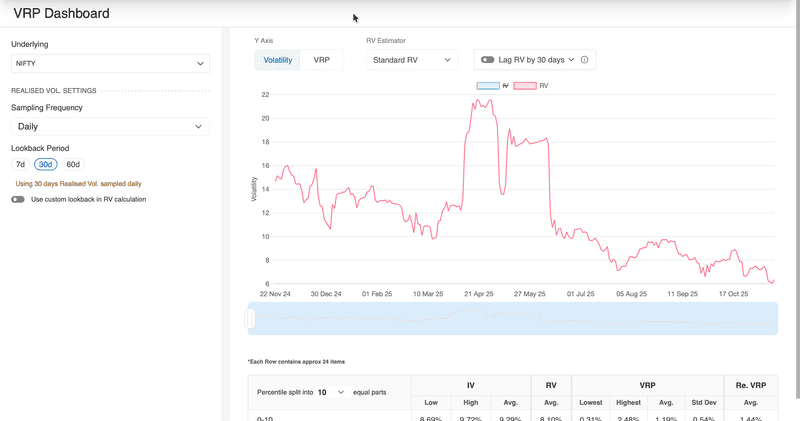
And the moment you place IV and RV side by side, you unlock one of the most powerful concepts in volatility trading: the Volatility Risk Premium (VRP).
Our VRP Tool is designed exactly for this purpose. It plots IV and RV together, highlights their divergence, and helps traders visually identify when the market is overpricing volatility, i.e., when the VRP is high.
This comparison is the foundation for understanding a potential edge in option selling.
## The Volatility Risk Premium (VRP)
The [**Volatility Risk Premium (VRP)**](https://algotest.in/feature/vrp-analysis) is the difference between **Implied Volatility (IV)** and **Realized Volatility (RV)**.
**Formula: VRP = IV - RV**
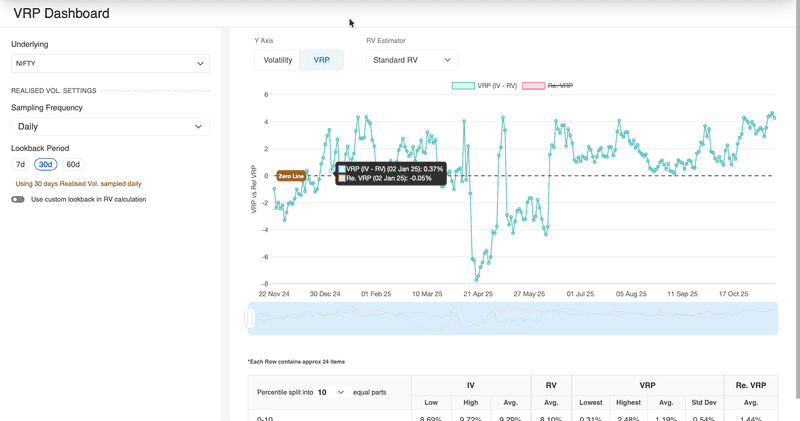
Historically, IV tends to be higher than RV. This persistent difference is the premium that options buyers are willing to pay for "insurance" against large market moves, and it is the premium that options sellers collect for providing that insurance.
You can watch the video to see the use case of the VRP Dashboard here:
The existence of a positive VRP is the fundamental edge for strategies that involve selling options premium.
To understand this analysis in depth, join Raghav's [**Discord community**](https://algotest.in/courses/raghav-vol-course?utm_source=blogs) where he teaches all about Volatility and the use case of the tools to trade smarter.
These tools came into the picture because Raghav, founder of AlgoTest, sees a gap in the trading knowledge of retail traders in India. He talks about the [problem retail traders are dealing with in this article here.](https://algotest.in/blog/why-im-continuing-my-failed-volatility-trading-community/)
### Significance of VRP
The VRP is significant for two main reasons:
1. **Risk Compensation:** It compensates options sellers for the risk they take on, particularly the risk of a sudden, sharp market move (a "volatility spike").
2. **Trading Edge:** When the VRP is high, it suggests that options are overpriced relative to the actual volatility that has been experienced recently, making it a potentially opportune time to sell premium. Conversely, a low or negative VRP suggests options are cheap, potentially favouring options buying strategies.
### The IV vs. RV Chart
The shown chart visually tracks the historical movement of IV (light blue line) and RV (red line) over a 60-day lookback period.
- **VRP in Action:** When the light blue IV line is consistently above the red RV line, the VRP is positive, indicating that the market is consistently overestimating future volatility.
- **Trading Signal:** Periods where the gap between IV and RV widens significantly (high VRP) could be seen as a good time to implement option-selling strategies.
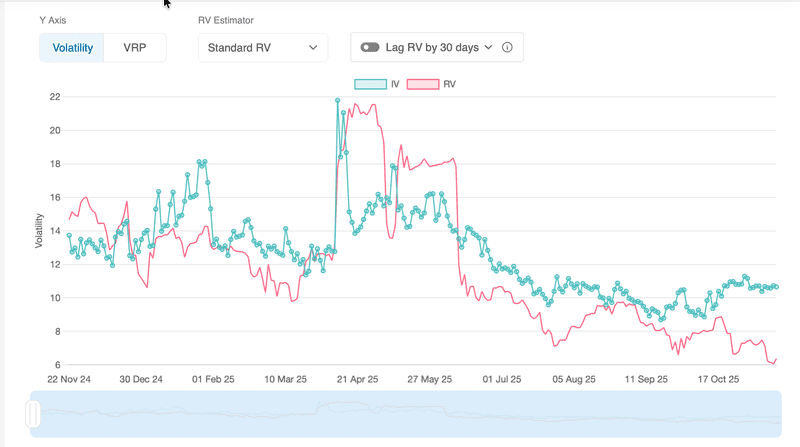
The VRP Data Table
The table below the chart in the VRP Dashboard provides a quantitative breakdown of the VRP across different volatility environments, categorized by [IV percentile](https://algotest.in/blog/what-is-ivp-and-ivr-and-how-to-use-ivp-and-ivr/) splits (0-10, 10-20, etc.).
**IV Percentile Range**
**IV Avg.**
**RV Avg.**
**VRP Avg.**
**Interpretation**
**0-10** (Lowest IV)
10.04%
8.98%
1.07%
Even when IV is at its lowest, the VRP remains positive, confirming the structural edge for options sellers.
**90-100** (Highest IV)
19.52%
17.74%
1.77%
When IV is at its highest, the VRP is also significantly high, indicating options are most expensive relative to realized movement.
The data above confirms that, on average, IV is greater than RV both volatility environments (high and low), with the average VRP being consistently positive. This quantitative evidence supports the structural edge of collecting the VRP, on average. Note the above is sample data, and this does not mean the VRP is always positive. The above table was populated only for illustrative purposes.
## Matching IV with Realized Volatility (RV)
Implied volatlity is powerful when compared to **Realized Volatility (RV)**, the actual volatility over a past window. This comparison helps traders assess the accuracy of the market's prediction:
- **Option Buyers** look for periods where **RV > IV** (market under-priced volatility).
- **Option Sellers** look for periods where **IV > RV** (premiums are richly priced).
By aligning the RV lookback period with the option's days-to-expiry (DTE) and using the lag feature on AlgoTest, traders can explicitly see whether the IV prediction made in the past under- or over-predicted the actual realized volatility that followed.
Conclusion
Mastering the relationship between **IV** and **RV** is essential for any serious options trader. The **VRP** is a measurable, persistent market phenomenon that forms the basis of many successful trading strategies. By using tools like the **VRP Dashboard** to analyze the IV percentile and the magnitude of the VRP, traders can make informed decisions on when to buy or sell volatility, transforming a statistical anomaly into a consistent trading edge.
[IVR & IVP](https://algotest.in/blog/what-is-ivp-and-ivr-and-how-to-use-ivp-and-ivr/) can help traders understand whether volatility is high or low relative to its own past.
### **FAQ:**
### **1\. What is Implied Volatility (IV)?**
Implied Volatility (IV) reflects the market’s expectation of future price movement. It’s derived from option prices and is a forward-looking measure.
### **2\. What is Realised Volatility (RV)?**
Realised Volatility (RV), also called Historical Volatility, measures actual price movement over a past period (like 30 or 60 days). One way to estimate it is by using the annualized standard deviation of returns.
**3\. What is an IV Chart?**
An IV chart tracks how implied volatility moves over time. When plotted alongside Realised Volatility, it helps traders identify overpricing or underpricing of options, the foundation of VRP analysis.
### **4\. What is the Volatility Risk Premium (VRP)?**
The Volatility Risk Premium (VRP) is the difference between Implied Volatility and Realised Volatility (VRP = IV − RV). A positive VRP indicates that options are priced richer than the volatility that actually occurred, a structural edge for option sellers.
**5\. Why does VRP matter for traders?**
Consistent presence of VRP reveals that the market tends to overestimate volatility. High VRP often signals favourable environments for premium-selling strategies, while low/negative VRP may favour option buying.
**6\. What is IV Percentile (IVP)?**
IV Percentile shows where the current IV stands compared to past IV values.
**7\. What is the VRP Dashboard?**
The VRP Dashboard on AlgoTest visually compares IV and RV, highlights the VRP value, and breaks it down by IV percentile ranges. It helps traders identify volatility regimes and potentially rich premium environments in the past.
---
This blog is powered by Superblog. Visit https://superblog.ai to know more.
---
## IV Percentile vs IV Rank: Use IVP and IVR to Identify Cheap vs Expensive Options
Author: AlgoTest
Author URL: https://algotest.in/blog/author/algotest/
Published: 2025-11-20
Meta Title: IVP in Options: IV Rank vs IV Percentile Explained
Meta Description: Learn what IVP and IVR mean in options trading. Understand IV Percentile vs IV Rank, how implied volatility helps identify expensive or cheap options.
URL: https://algotest.in/blog/what-is-ivp-and-ivr-and-how-to-use-ivp-and-ivr/
## What is Implied Volatility Percentile (IVP)?
IV Percentile (IVP) measures the percentage of days over a specific lookback period (e.g., the past year) that the IV was lower than the current IV. It answers the question: How often has Implied Volatility been lower than it is today?
**Calculation**: It is the percentage of trading days in the past where the IV was lower than the current IV.
**What does that mean?** An IVP of 90% means that the current IV is higher than it was on 90% of the trading days in the past year. This suggests options are historically expensive.
### Formula

Interpretation
**IVP of 0%:** The current IV is the lowest it has been in the past lookback period.
**IVP of 50%:** The current IV is higher than 50% of the past IV readings.
**IVP of 100%:** The current IV is the highest it has been in the past lookback period.
If we choose the lookback period of 1-year, then an IVP of 80% means that 80% of the time over the last year, the implied volatility was lower than today's value. This suggests the current IV is relatively high.
Since [IV](https://algotest.in/blog/implied-volatility-and-how-to-read-and-compute-iv/) is constantly changing, traders use metrics like IV Percentile to determine if the current IV is high or low relative to its own history.
These metrics help traders decide whether to sell premium (when IV is high) or buy premium (when IV is low).
We also explore [the VRP edge every options trader must understand here](https://algotest.in/blog/iv-vs-rv-and-trading-edge-with-vrp/).
**What is Implied Volatility Rank (IV Rank)?**
IVR on AlgoTest, is a normalized ranking of the current constant-maturity IV between its historical minimum and maximum over the same lookback period. IV Rank (IVR) is a metric that answers the question: _Where does the current IV sit between its historical minimum and maximum?_
**Calculation:** It is calculated on a linear scale from 0% (historical low) to 100% (historical high).
**What does that mean?** An IVR of 100% means the current IV is at its highest point in the lookback period, suggesting options are at their most expensive historically.
### Formula

Interpretation
**IVR of 0%**: The current IV is at its lowest point of the past year. Options are historically cheap.
**IVR of 50%**: The current IV is exactly in the middle of its 52-week range.
**IVR of 100%**: The current IV is at its highest point of the past year. Options are historically expensive.
Traders often use a high IVR (e.g., above 50% or 70%) as a signal to sell options premium, and a low IVR (e.g., below 20% or 30%) as a signal to buy options premium.
[IV Rank vs. IV Percentile](https://algotest.in/feature/ivr-ivp)
While both metrics serve the same purpose, to contextualize the current IV, they do so differently:
Feature
Implied Volatility Rank (IVR)
Implied Volatility Percentile (IVP)
Focus
Position within the 52-week range (High vs. Low)
Frequency of occurrence (How often IV was lower)
Calculation
Uses only the absolute high and low IV values of the past lookback period.
Uses every IV data point in the past lookback period.
Sensitivity
Highly sensitive to extreme, outlier high/low IV readings.
Less sensitive to outliers; provides a better measure of the typical IV environment.
Use Case
Quick assessment of relative position.
More comprehensive view of the typical volatility environment.
### The IVP–IVR Quadrant Analysis
By splitting the IVP vs. IVR scatter into four quadrants, traders can gain a deeper understanding of the market's current state.
Check the table for IVP vs. IVR on [IVP-IVR tool here](https://algotest.in/feature/ivr-ivp?utm_source=blogs).
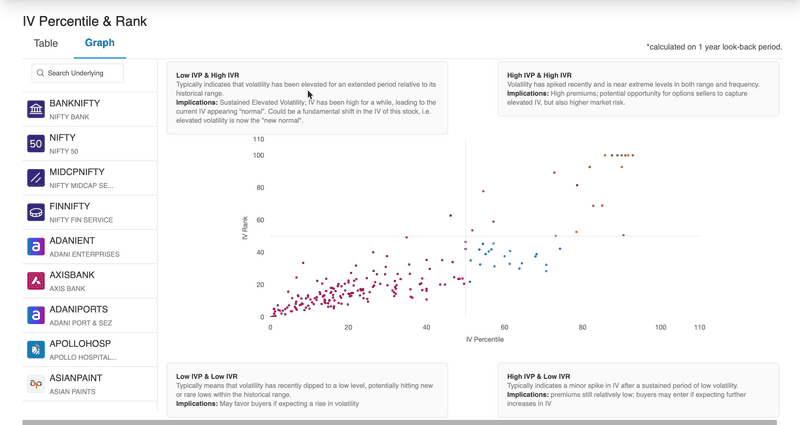
Quadrant
IVP / IVR State
Interpretation
Implication
High IVP & High IVR (Top-Right)
Volatility is extreme in both level and frequency.
Volatility has recently spiked and is near its historical maximum.
Options are highly expensive. Potential opportunities for option sellers, but with high market risk.
Low IVP & Low IVR (Bottom-Left)
Volatility has dipped to historic lows.
Volatility is near its historical minimum and has been low for an extended period.
Premiums are low. Potential buying opportunities if a volatility pickup is expected.
High IVP & Low IVR (Bottom-Right)
IV Percentile is high, but IV Rank is low.
A minor short-term IV uptick following a sustained low-volatility period.
Can indicate short-term buying opportunities if volatility is expected to continue rising.
Low IVP & High IVR (Top-Left)
IV Percentile is low, but IV Rank is high.
Volatility has been elevated for an extended period relative to its history, suggesting a new, higher-volatility regime.
The current IV may appear "normal" in absolute terms but is high relative to the older baseline.
This is Raghav's own unique formulation, this is not available anywhere else. To understand this analysis in depth, join his [**Discord community**](https://algotest.in/courses/raghav-vol-course?utm_source=blogs) where he teaches all about Volatility.
To explore the tool, sign up on [AlgoTest here](https://algotest.in/register?utm_source=blogs)!
You can also follow Raghav on [**Twitter**](https://x.com/rogue_hft), and to get an introduction in Volatility, come join him on his [Volatility Webinar](https://algotest.in/masterclass/volatility-trading-masterclass).
## The Importance of Constant-Maturity IV
A critical step in calculating both IVP and IVR is the use of constant-maturity IV (e.g., 30-day). Raw option IV time series mix options with different expiries, which behave differently. Normalizing [IV](https://algotest.in/blog/implied-volatility-and-how-to-read-and-compute-iv/) to a fixed time-to-expiry allows for meaningful time-series comparisons, ensuring that the IVP and IVR metrics are not comparing "apples and oranges."
Essentially IV of a 2dte option and a 25dte option behave very differently - so you can’t really compare the two directly, though they both could belong to the same monthly option. This is the reason we must use constant maturity IV, and not the raw [IV](https://algotest.in/blog/implied-volatility-and-how-to-read-and-compute-iv/) when comparing IVs.
Watch Raghav's Video explaining Constant Maturity here:
Check out [Raghav's thoughts on Constant Maturity on his X post here.](https://x.com/rogue_hft/status/1904428984223346880)
### FAQ:
**Q: What is the difference between IV Rank and IV Percentile?**
A: IV Rank compares today’s IV to the range (high–low), while IV Percentile compares today’s IV to the frequency of past IV values.
**Q: What is a good IV Rank for selling options?**
A: Traders often ask this question, but a high IVR level alone shouldn't be reason enough to consider selling options. You should look at, IVP as well as the relative levels of realised volatility as well. Note this list is not exhaustive.
**Q: What is a good IV Percentile for selling options?**
A: This answer is similar to the answer above - a high IVP alone shouldn't be a reason to sell options. So anyone giving you a blanket rule of "IVP > 80%, then sell" is not your friend.
**Q: Why do traders use IV Rank and IV Percentile?**
A: To understand whether volatility is high or low historically, helping them choose between buying or selling options.
**Q: How is IVP calculated in options?**
A: IVP = % of days in the look-back period where IV was lower than today.
**Q: How is IV Rank calculated in options?**
A: IVR = (Current IV – 1-year IV Low) / (IV High – IV Low).
**Q: [Why is implied volatility important in options trading](https://algotest.in/blog/implied-volatility-and-how-to-read-and-compute-iv/)?**
A: IV affects option premiums and helps traders gauge market expectations and risk.
---
This blog is powered by Superblog. Visit https://superblog.ai to know more.
---
## Implied Volatility Explained: How to Read and Compute IV
Author: AlgoTest
Author URL: https://algotest.in/blog/author/algotest/
Published: 2025-11-20
Meta Title: Implied Volatility Explained: ATM IV, Interpretation & Calculation
Meta Description: What is implied volatility? Learn IV basics, ATM IV behavior, how to read high vs low IV, and how IV is calculated using Black-Scholes.
URL: https://algotest.in/blog/implied-volatility-and-how-to-read-and-compute-iv/
## **What is Implied Volatility?**
**Implied Volatility (IV)** is a forward-looking metric that represents the market's expectation of the magnitude of future price changes for an underlying asset (like a stock) over a specific period.
**Volatility** is one of the most critical inputs in options pricing models, such as the Black-Scholes model - however no one knows what the true volatility of the underlying asset will be. If you knew this in advance, you’d be a billionaire. So, we use implied volatility instead.
Unlike **realized volatility (historical volatility)**, which measures how much an asset's price has fluctuated in the past, IV is derived from the current market price of an option. It is the volatility level that, when plugged into an options pricing model, yields a theoretical option price equal to the current market price.
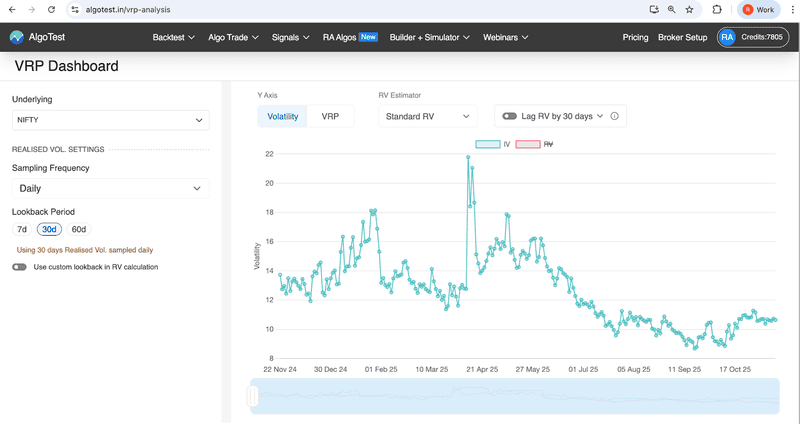
30d IV of NIFTY over the date 22nd Nov 2024 and 19th Nov 2025. This graph is taken from [VRP analysis tool.](https://algotest.in/feature/vrp-analysis?utm_source=blogs)
**Key Takeaways:**
- **Forward-Looking:** IV is a forecast of future volatility, not a measure of past volatility - its the markets best estimate of how volatile the market thinks the underlying will be over the life of the option
- **Market-Driven:** It is derived from the supply and demand dynamics in the options market.
- **Expressed as an Annualized Percentage:** IV is typically quoted as an annualized percentage, representing a one standard deviation move in the underlying asset's price over the next year.
## How to Interpret Implied Volatility
Implied volatility is directly correlated with the price of an option:
Implied Volatility Level
Option Premium
Market Expectation
Interpretation for Traders
High IV
Higher
Large price movement (up or down)
Options could be cheap or expensive, depending on RV.
Low IV
Lower
Small relative price movement
Options could be cheap or expensive, depends on realised vol (RV)
A high IV suggests the market anticipates significant news, an earnings announcement, or a major event that could cause a large price swing like covid, war or events like Trump increasing tariff. A low IV suggests the market expects the price to remain relatively stable.
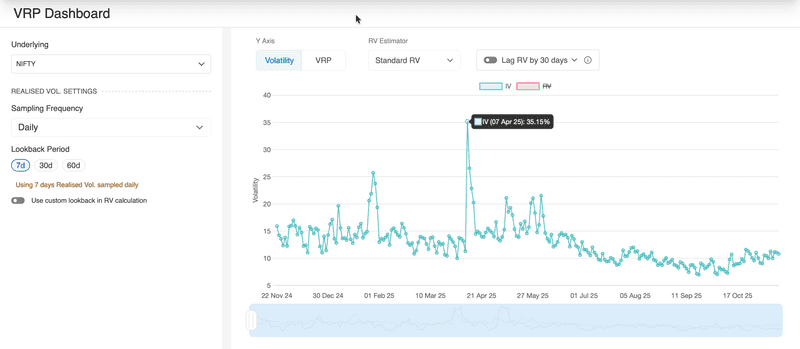
The spike shown in the graph is from the time when China announced retaliatory tariffs to Trump's original tariffs in April 2025. You can check it yourself on [VRP analysis tool.](https://algotest.in/feature/vrp-analysis?utm_source=blogs)
Computing Implied Volatility
Implied volatility cannot be calculated directly using a simple formula. Instead, it is computed by working backward from the current market price of an option using an options pricing model, most commonly the [Black-Scholes Model](https://algotest.in/black-scholes).
The [Black-Scholes model](https://algotest.in/black-scholes) requires five inputs to calculate an option's theoretical price:
1. Current Stock Price
2. Strike Price
3. Time to Expiration
4. Risk-Free Interest Rate
5. **Volatility** (the unknown variable)
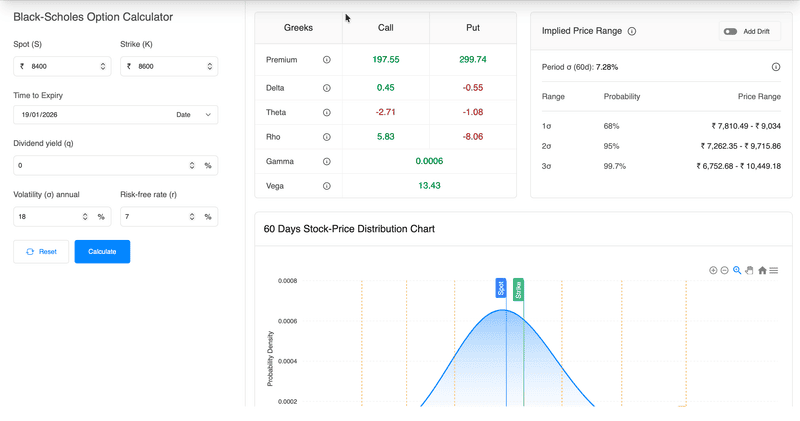
Since the market price of the option is known, the process involves an iterative, trial-and-error method:
1. Start with an estimate for the volatility.
2. Plug the estimate and the other four known inputs into the Black-Scholes formula to calculate a theoretical option price.
3. Compare the theoretical price to the actual market price.
4. Adjust the volatility estimate (up if the theoretical price is too low, down if it's too high).
5. Repeat this process until the theoretical price matches the market price.
Raghav goes over this in his course - check [Volatility Course](https://algotest.in/courses/raghav-vol-course?utm_source=blogs)
The final volatility value that makes the model's price equal to the market price is the Implied Volatility (IV). We have to go through this iterative process to estimate the IV since a closed-form solution does not exist.
## Moneyness and Implied Volatility
The implied volatility of an option is not constant across all strike prices for the same expiration date. This variation is known as the Volatility Skew or Volatility Smile. The relationship between an option's moneyness and its IV is a key component of this skew.
Term
Definition of Moneyness
Implied Volatility (IV) Tendency
ATM IV
At-The-Money (ATM): The option's strike price is equal to or very close to the underlying asset's current market price.
Tends to be the lowest point on the volatility skew.
OTM IV
Out-of-The-Money (OTM): The option has no intrinsic value (Call: Strike > Price; Put: Strike < Price).
IV tends to be higher than ATM IV, especially for OTM puts (the "skew").
ITM IV
In-The-Money (ITM): The option has intrinsic value (Call: Strike < Price; Put: Strike > Price).
ITM call strike (put strike) is the same as OTM put strike (call strike). So IV tendency is the same as OTM options due to [put-call-parity](https://algotest.in/blog/put-call-parity-for-traders/).
The general observation in equity markets is that OTM put options (lower strikes) have higher IVs than ATM options. This is because traders are willing to pay a higher premium for protection against a sharp market decline, which is reflected in the price (and thus the IV) of OTM puts.
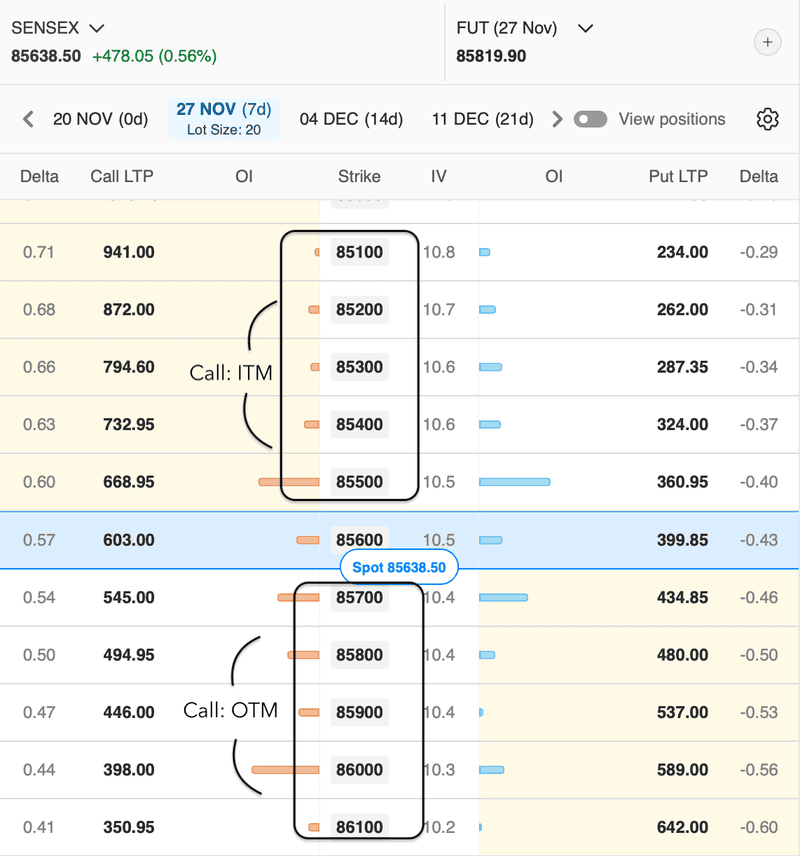
You can check out the current IV of [RELIANCE options here.](https://algotest.in/nse-option-chain/reliance)
### Volatility Structures
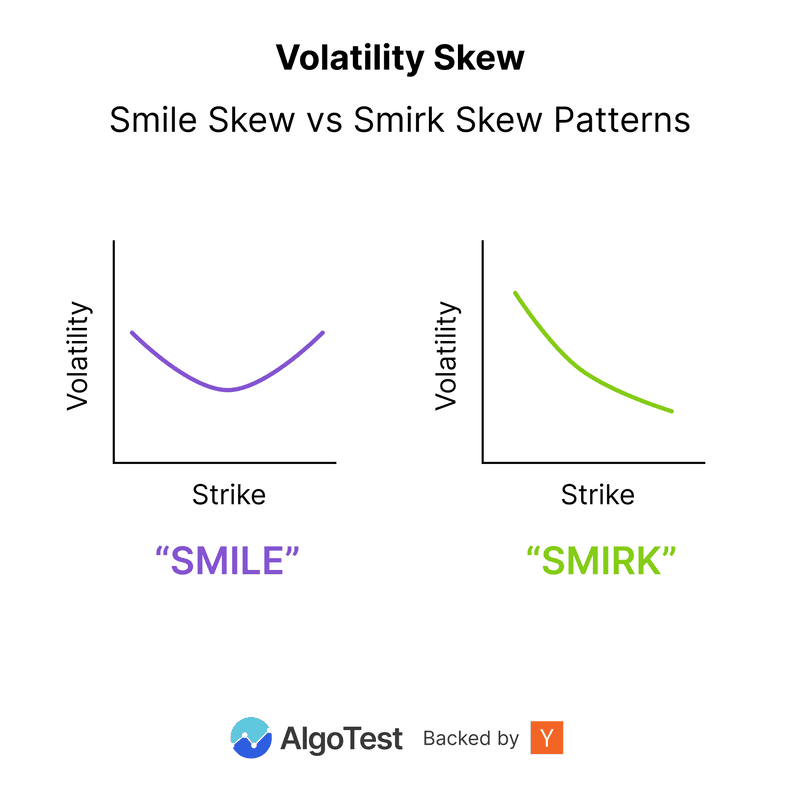
Term
Definition
Visual Shape
Volatility Smile
A pattern where the implied volatility for both deep OTM and deep ITM options is higher than the IV for ATM options.
A U-shaped or "smile" curve. This pattern is more common in currency and commodity options.
Volatility Smirk
A term used to describe the typical equity market skew, where the IV is much higher for OTM Puts (the "left side" of the smile) and then flattens out or slightly increases for OTM Calls.
A half-smile or "smirk" shape, heavily weighted on the OTM Put side. This reflects the market's fear of a sharp, sudden drop in stock prices (crash risk).
### FAQ:
1. **What is IV in options?**
Implied Volatility (IV) is the market’s forecast of how much the underlying asset is expected to move in the future.
2. **How do you calculate IV?**
IV is calculated by plugging the current option price into an options pricing model (like Black-Scholes) and _solving backwards_ for the volatility value that makes the model price equal the market price.
In simple terms:
**Option Price → Model → Output IV**
3. **Explain [IV vs RV](https://algotest.in/blog/iv-vs-rv-and-trading-edge-with-vrp/)**
**Implied Volatility (IV)** = What the market _expects_ to happen.
**Realised Volatility (RV)** = What _actually happened_ in the past.
4. **What is IV percentile?**
[IV Percentile](https://algotest.in/blog/what-is-ivp-and-ivr-and-how-to-use-ivp-and-ivr/) measures where the current IV stands relative to its own past.
**Example**: If the current IV is higher than 80% of past observations, IV Percentile = **80%**.
5. **What are the advantages of using implied volatility to trade?**
Helps identify when options are overpriced or underpriced.
6. **What are the drawbacks of using implied volatility to trade?**
IV is only an expectation - not a guarantee.
Check some other option chains:
[Axis Bank Option Chain](https://algotest.in/nse-option-chain/axis-bank)
[ICICI Bank Option Chain](https://algotest.in/nse-option-chain/icici-bank)
[HCL Option Chain](https://algotest.in/nse-option-chain/hcl-tech)
[ONGC Option Chain](https://algotest.in/nse-option-chain/oil-and-natural-gas)
[HDFC Bank Option Chain](https://algotest.in/nse-option-chain/hdfc-bank)
[TCS Option Chain](https://algotest.in/nse-option-chain/tcs)
[TITAN Option Chain](https://algotest.in/nse-option-chain/titan-company)
[BPCL Option Chain](https://algotest.in/nse-option-chain/bharat-petroleum-corporation)
---
This blog is powered by Superblog. Visit https://superblog.ai to know more.
---
## Why I'm Continuing my "Failed" Volatility Trading Community
Author: AlgoTest
Author URL: https://algotest.in/blog/author/algotest/
Published: 2025-11-14
Tags: trading edge, volatility trading, implied volatility, position sizing
Tag URLs: trading edge (https://algotest.in/blog/tag/trading-edge/), volatility trading (https://algotest.in/blog/tag/volatility-trading/), implied volatility (https://algotest.in/blog/tag/implied-volatility/), position sizing (https://algotest.in/blog/tag/position-sizing/)
URL: https://algotest.in/blog/why-im-continuing-my-failed-volatility-trading-community/
I’ve been interacting with retail option traders since late 2021, and here’s the thing I keep noticing:
**Almost nobody has an explicit opinion on volatility.**
Well, they _do_, but they don’t know that they do. You hear things like:
- “Sell at 9:20 AM to earn theta.”
- “I have low capital, so I’m an option buyer.”
- “I have large capital, so I’m an option seller.”
- “Theta is an edge.”
These are _all_ volatility opinions disguised as trading rules.
## **The Problem**
Most Indian retail traders come from a price-action background. They’re plotting option charts on TradingView, drawing lines, looking for breakouts - but they’re ultimately trading volatility instruments without thinking in volatility terms. And 90% retail traders are losing money (no correlation implied 😉)
To address this gap, I tried an experiment:
I started a small [volatility trading community](https://algotest.in/courses/raghav-vol-course?utm_source=blogs) \- not for money, but to give the average “desi price action trader” an entry point into vol thinking.
**The Reality Check - PAIN**
As expected, early feedback wasn’t great. I resonated with about 20% of people. The remaining 80% dropped off quickly.
If I measure the outcome purely on adoption or revenue, this has been a _failed experiment_.
The [community](https://algotest.in/courses/raghav-vol-course?utm_source=blogs) content isn’t free… but even behind a paywall it hasn’t been a profitable endeavour for AlgoTest.
And yet - **I want to keep this going.**
I also conduct a paid 2-hour webinar once a month that introduces the core concepts before the full course - the cost is usually ₹99 **,** enough to get you to feel like you have some skin in the game. Occasionally, I'll make this webinar [free](https://algotest.in/masterclass/volatility-trading-masterclass?utm_source=blogs)

## **Why Continue a “Failed” Project?**
Because of the people who stayed. The 20% who are hungry to learn. The ones who ask good questions, challenge assumptions, and force me to articulate things better.
Talking to those traders - especially those who come from the pure price-action world but _want_ to level up intellectually - genuinely makes me a better trader.
(Disclaimer: I barely trade these days - maybe 1–2 lots in NIFTY when time permits - but even those trades are guided by my read of relative volatility, IV vs IV of other strikes, and the IV/RV relationship.)
### **Building Tools to Teach Better**
To make the concepts more concrete, I built a few tools.
The first one is designed using option buying as an example - the segment that dominates Indian retail. It’s a simple yet powerful tool that follows a very simple trade prospecting funnel? First, the **Edge Calculator** will determine if the algo has edge, then the **Trade Simulator** will run some simulations for the algo, and finally the **Position Size Calculator** will help you size your trades based on risk, volatility, and your capital.
Check out the all-in-one [Edge Calculator, Trade Simulator, and Position Size Calculator here](https://algotest.in/edge-calculator).
### The idea is simple:
You can use actual backtest data from AlgoTest - win%, loss%, average win, average loss - and show:
1. **Does the strategy have edge?** The first decision criterion. If there’s no edge, stop right there (Yes, sometimes it can make sense to continue trading even if the system is negative edge - diversification, but we'll treat that as out of syllabus for now)
2. **What does a simplified equity curve look like if history repeats?** Yes, oversimplified - but useful to illustrate how sizing impacts the journey.
3. **How to apply Kelly for position sizing**, given the margin required for long options. You will almost never be able to handle the variance that Kelly gives you, but it's a good theoretical starting point when looking at position sizing in isolation for a new trading strategy.
To learn more about the tool, check out the [documentation for the all-in-one Edge Calculator, Trade Simulator and Position Size Calculator.](https://docs.algotest.in/strategy-builder/edge-calculator/)
This tool forces traders to confront questions they rarely ask:
- Did this strategy _actually_ make money historically? (i.e. does it have edge?)
- If yes, and assuming the past repeats (BIG ASSUMPTION), _how should I size my trades?_(i.e. if the strategy has edge, what should my position sizing look like?)
- If not, why am I punting?
Most Indian option buyers are essentially playing slot machines. This tool backfills some missing basics.
PS: the tool sometimes shows how Kelly bet sizing, a formula that tells you how much to bet, gets too greedy and asks you to borrow money to trade (not usually a good idea unless you _**really**_ know what you're doing - see [Leverage in Trading: 2.25 Crores in 8 minutes?)](https://algotest.in/blog/leverage-in-trading-2-25-crores-in-8-minutes/?utm_source=blog)
---
This blog is powered by Superblog. Visit https://superblog.ai to know more.
---
## What is Option Selling and How Option Selling works?
Author: AlgoTest
Author URL: https://algotest.in/blog/author/algotest/
Published: 2025-10-08
Meta Title: What is Option Selling? | Learn Options Trading in India with AlgoTest
Meta Description: Learn Futures & Options trading with AI-powered tools and strategies at AlgoTest. A guide to Options Trading Strategies to trade options in India.
URL: https://algotest.in/blog/what-is-option-selling/
Many investors focus solely on buying stocks, hoping their value will increase. But what if you could generate consistent income from the stock market, regardless of whether prices go up, down, or sideways? This is where **option selling** (also known as **option strategy trading** and **option trading strategies**) comes into play. It's a strategy used by seasoned traders to create a steady stream of revenue, but it's often misunderstood.
This guide will demystify **options selling** for you. We'll explain what option selling is, walk through real world examples with clear analogies, and uncover the true benefits and risks. You’ll learn popular index/ **stock option trading strategies**, actionable tips, advanced tactics, and how to use technology and webinars to grow as an options seller.
## **Option Selling Explained**
### **What is Option Selling?**
**Definition:** When you sell (or “write”) an option contract, you collect a premium upfront from the buyer.
- **Your Goal:** The option expires worthless, so you keep the premium as profit.
- **Your Risk:** If the market moves sharply against you, losses can get very large (for puts) or even unlimited (for calls).
For example, as the seller, you act like an insurance company.
- You collect premiums from customers (option buyers).
- Most of the time, nothing bad happens, you keep the premium.
- But rarely, something bad happens (a big market move) and you pay a major claim (potential loss).
## **The Insurance Analogy**
To really understand **option selling**, imagine yourself running an insurance business. When you sell a **put option**, you're essentially providing "insurance" to the option buyer. They pay you a premium, just like a car insurance customer pays their insurer, and in return, you agree to compensate them if a certain event happens (buying the stock at a certain price if it drops). If the “event” never happens, you keep the premium. This simple risk-reward model is at the heart of all **option selling strategies**.
### **Selling a Put (Put Writing)**
- **Mechanics:** You sell a put option at strike price X.
- **Profit:** If the stock stays above X, the option expires worthless and you keep the premium.
- **Loss:** If the stock drops below X, you might have to buy it at X, even though it’s trading cheaper in the market.
Like car insurance:
- No accident: you keep the premium.
- Accident: you pay damages (potential loss).
**Example:** NIFTY at 20,000. You sell a 19,800 Put for ₹100 premium.
- If NIFTY expires at 20,100 → profit = ₹100.
- If NIFTY falls to 19,500 → you lose (19,800 – 19,500 – 100 = ₹200).
### **Selling a Call (Call Writing)**
- **Mechanics:** You sell a call option at strike price Y.
- **Profit:** If the stock stays below Y, option expires worthless and you keep the premium.
- **Loss:** If the stock rises above Y, you may have to sell at Y (possibly far below the new market price).
Like selling fire insurance.
- No fire: you keep the premium.
- Fire: you may have to pay a huge claim.
**Example:** NIFTY at 20,000. You sell a 20,200 Call for ₹100 premium.
- If NIFTY expires at 20,050 → profit = ₹100.
- If NIFTY rises to 20,500 → you lose (20,500 – 20,200 – 100 = ₹200).
### **Why Option Selling is Usually Profitable**
**Time Decay (Theta):** Options constantly lose their value as expiry approaches. This favors option sellers who get to keep more of the premium as each day passes.
**Probability:** Studies show about 67% of options expire worthless, which means sellers keep the premium the majority of the time.
**Insurance Analogy:** Just as most cars don't crash and most homes don’t burn, most sold options are never exercised. So, like insurance companies, consistent profits accrue for careful sellers.
### **The Intricacies & Nuances**
Here’s where option selling becomes more complex:
- **Unlimited Loss vs Limited Profit:** Sellers’ maximum profit = premium collected. Losses can be huge if the market moves sharply against the position.
- _Selling a Call = Unlimited Loss Risk:_ Since a stock can (theoretically) rise infinitely, your losses from call writing are uncapped.
Example: NIFTY at 20,000, you sell 20,200 Call for ₹100.
- NIFTY closes at 21,000 → loss = (21,000 – 20,200 – 100) = ₹700
- NIFTY rockets to 25,000 → loss = (25,000 – 20,200 – 100) = ₹4,700
There’s no upper limit!
- _Selling a Put = Large but Limited Loss Risk:_ Your loss is capped because the lowest a stock can go is zero.
Example: NIFTY at 20,000, you sell 19,800 Put for ₹100.
- NIFTY closes at 19,000 → loss = (19,800 – 19,000 – 100) = ₹700
- If NIFTY crashes to 0 → max loss = (19,800 – 0 – 100) = ₹19,700
Loss is big, but not infinite.
**Margin Requirements:** Exchanges require high margins to protect against these risks. Option sellers need substantial capital.
**Implied Volatility (IV) Matters:** High IV = expensive options (good for selling, like high insurance rates before a storm).
Low IV = cheap options (less reward, sometimes not worth selling).
**Risk Management Tools:**
- **Hedges:** Use spreads or iron condors to cap potential losses.
- **Stop Losses:** Must have; a single big move (a “black swan” event) can wipe out many small profits.
**Consistency vs Lottery:** Option sellers typically earn steady, small gains over time. Option buyers lose frequently, but may win big once in a while, much like an insurance client who rarely files claims.
#### **Insurance Loss Recap**
- Selling Calls = fire insurance with unlimited potential payoff (losses can skyrocket).
- Selling Puts = car insurance where the maximum you pay out is the car’s value (big, but capped loss).
At its core, **option selling**, also called **writing an option**, is the act of issuing an option and collecting a premium from the buyer. Your objective as a seller is for the option to expire worthless, letting you keep the premium. Buyers, meanwhile, are hoping for a big move in their favor.
When you sell an option, you take on an obligation. The buyer has the right, but not the obligation, to buy or sell the underlying asset (this could be a stock, index, or even a future) from you at the strike price by the expiration date.
**Types of sold options:**
- **Call Option:** You may have to sell the underlying at the strike (see: **call selling** and **covered call option strategy**).
- **Put Option:** You may need to buy the underlying at the strike (see: **put selling**, **cash secured put option**, **shorting a put option**, and related **option strategies with examples**).
## **The Key Benefits of Selling Options**
### **Consistent Income Generation**
The greatest benefit is steady, repeatable income. Premiums appear in your account right away. By using the right **option trading strategies**, you can “rent out" your capital, essentially earning regular, predictable gains from the market. This is why some traders focus on **selling options for a living** or seek the **best option selling strategy for regular income**.
### **High Probability of Success**
Option sellers win as long as the stock doesn’t cross your strike in the “wrong” direction. Many see this as the **best low risk option selling strategy**.
### **Time Decay Works in Your Favor**
All options lose value (theta decay) as expiration nears. Option sellers profit from this natural decline, making **option strategy trading** particularly powerful.
## **DIY or RA Algos?**
Now that you understand what option selling is, you have a choice: either use an algo designed by a SEBI-registered Research Analyst (RA) through RA Algos by AlgoTest, or take the DIY route and build your own. Our exclusive option selling webinar, hosted by Chintan Jaggi (Founding Member at AlgoTest), walks you through the entire process, how to ideate, build, and execute a strategy that matches your risk appetite, whether you’re new or looking to automate.
## **What are RA Algos?**
[RA Algos](https://algotest.in/blog/what-is-ra-algos-and-how-it-works-on-algotest/) are pre-built and professionally researched algos directly available on the AlgoTest platform. Built by SEBI-registered Research Analysts, these strategies give you transparent, backtested, and regulatory-compliant automation, no coding required.
**Key features include:**
- **Compliance & Trust:** All strategies are developed by SEBI-registered Research Analysts, meaning peace of mind and ethical trading.
- **Plug & Play Trading:** Browse, subscribe, and activate any RA Algo, no setup hassles or coding needed.
- **Comprehensive Analytics:** Access in-depth stats like margin required, win ratio, drawdown, and more before you go live.
- **Live Execution:** Seamlessly connect to over 50+ brokers for instant deployment.
- **Transparent Risk Profile:** Each algo comes with detailed backtests (including brokerage, slippage, and taxes), so you fully understand its performance and risk.
Here are three option selling strategies by SEBI-registered RAs listed on AlgoTest:
### **Mr. Option Nifty 925 by Jainam Broking Ltd.**
**Quick Overview:** A market-neutral intraday strategy that profits from time decay by selling both call and put options at the same strike price at 9:25 AM.
#### **Key Highlights**
- **Strategy Type:** Market Neutral (Short Straddle)
- **Best Market Condition:** Sideways/Range-bound markets
- **Risk Level:** High
- **Capital Required:** ₹3,50,000 margin
#### **Performance Metrics:**
- Overall PnL: ₹89,340
- Win Rate: 62.5%
- Max Drawdown: ₹-23,790
- Avg PnL/Trade: ₹385.09
- Total Trades: 232
#### **How It Works**
This strategy deploys a short straddle at 9:25 AM using the current weekly Nifty contract. Both call and put options are sold at the same strike price (ATM), collecting premium from both sides. All positions are squared off by 2:15 PM, eliminating overnight risk.
### **TradeMilaan Sensex OTM Selling \[DTE 0,3\] by Sasikumar Peyyala**
**Quick Overview:** A directional option selling strategy that captures premium decay by selling out-of-the-money Sensex options on specific days before expiry.
### **Key Highlights**
- **Strategy Type:** Directional OTM Selling
- **Best Market Condition:** Trending markets with clear directional bias
- **Risk Level:** Medium to High
- **Capital Required:** ₹1,50,000 margin
### **Performance Metrics**
- Overall PnL: ₹36,092.15
- Win Rate: 56.7%
- Max Drawdown: ₹-12,319.90
- Avg PnL/Trade: ₹538.69
- Total Trades: 67
#### **How It Works**
This strategy targets Tuesday (DTE 0) and Thursday (DTE 3) for deploying OTM option sells on the Sensex index. By selling options further from the current market price, it balances premium collection with lower probability of assignment. The intraday execution ensures no overnight exposure.
### **DeltaTheta Pulse - Expiry Day Specialist by Prachi Mehta**
**Quick Overview:** An adaptive expiry day strategy for Sensex weekly contracts that thrives in all market conditions, bullish, bearish, sideways, and volatile, with predefined entry and exit times.
### **Key Highlights**
- **Strategy Type:** Expiry Day Trading with Delta-Theta Optimization
- **Best Market Condition:** All market conditions (Bullish, Bearish, Sideways, Volatile)
- **Risk Level:** Medium
- **Capital Required:** ₹1,50,000 margin
### **Performance Snapshot**
- Overall PnL: ₹28,902.80
- Win Rate: 64.3%
- Max Drawdown: ₹-9,578.20
- Avg PnL/Trade: ₹1,032.24
- Total Trades: 28
#### **How It Works**
DeltaTheta Pulse is specifically designed for expiry day trading on Sensex weekly contracts (Thursday). The strategy uses small hedges to reduce margin requirements while employing statistical parameters for selective re-entries. It enters and exits at predefined times, eliminating emotional decision-making.
Learn more and explore ready-made strategies on [RA Algos at AlgoTest](https://algotest.in/ra-algo).
## **Webinar with Chintan Jaggi**
[Option Selling Webinar](https://algotest.in/masterclass/option-selling?utm_source=blogs), led by Chintan Jaggi, Options Trader, Mentor, and Founding Member at AlgoTest, addresses the challenges many retail traders face when buying options, particularly the effects of time decay and the appeal of large potential gains. Instead, the session focuses on the advantages of systematic option selling approaches grounded in probability, disciplined risk management, and structured execution.
Participants can expect practical demonstrations of option selling strategies, including how to combine probability concepts, risk controls, and expiry setups.
Attendees will see live walkthroughs of the AlgoTest platform in action, gaining tools to maintain control over their trades. By the end of the session, traders of all experience levels should be better equipped to identify high-probability setups, protect capital, and implement option selling systematically.
Those interested can register for the Option Selling Webinar [here](http://algotest.in/masterclass/option-selling?utm_source=blogs)!
## **Understanding the Risks of Option Selling**
Rewards are significant, but so are the risks.
### **Undefined vs. Defined Risk**
- **Naked Puts:** If you don’t have enough cash to buy shares, a severe price drop can cause huge losses ( **risk free option selling strategy** does not exist; always manage your risk).
- **Naked Calls:** Your loss potential is infinite, since a stock price can rise without limit.
### **Volatility and Market Surprises**
Sudden news can move stocks violently and rapidly; a profitable position can turn into a loss in an instant. Certain **option selling hedging strategies** or advanced **intraday option selling strategy** methods can help mitigate these swings.
## **Strategies for Option Selling**
Here's a table summarizing popular **option trading strategies** for sellers, from beginner to advanced:
**Strategy**
**What it is**
**Advantages**
**Advance Level**
**Capital Required**
**Risk Level**
Covered Call
Sell call options on stocks you own
Yields extra income, limited downside
Beginner
Moderate (stock needed)
Low to Moderate
Cash-Secured Put
Sell puts while keeping enough cash to buy the stock if assigned
Opportunity to buy at discount, earns premium
Beginner
Moderate (cash needed)
Low to Moderate
Bull Call Spread
Buy a call, sell another at higher strike
Lower cost, defined risk/reward
Intermediate
Low to Moderate
Moderate
Bull Put Spread
Sell a put, buy another further out-of-the-money
High win rate, defined loss
Intermediate
Moderate
Moderate
Bear Call Spread
Sell a call, buy another at higher strike
Limited loss, used for bearish outlook
Intermediate
Moderate
Moderate
Bear Put Spread
Buy a put, sell another at a lower strike
Cost-effective hedge for bearish moves
Intermediate
Low to Moderate
Moderate
Iron Condor
Sell OTM call/put, buy further OTM call/put
Profits in range-bound markets, risk capped
Advanced
Moderate to High
Moderate
Short Straddle
Sell call & put at the same strike ( **option trading straddle strategy**)
High premium, but unlimited risk
Advanced
High (margin needed)
High
Short Strangle
Sell call & put at different strikes
Premium income, slightly less risk than straddle
Advanced
High (margin needed)
High
Ratio Back Spread
Buy more options than you sell
Potentially unlimited gain, limited loss
Advanced
Moderate to High
Moderate to High
**Covered call** and **cash secured put** are the best entry points for **option trading for beginners**. More seasoned traders might use **non directional option selling strategies** like the iron condor, or specialize in the **best option selling strategy for bearish market**.
1\. [Covered call shown on Strategy Builder](https://algotest.in/strategy-builder?utm_source=blog):
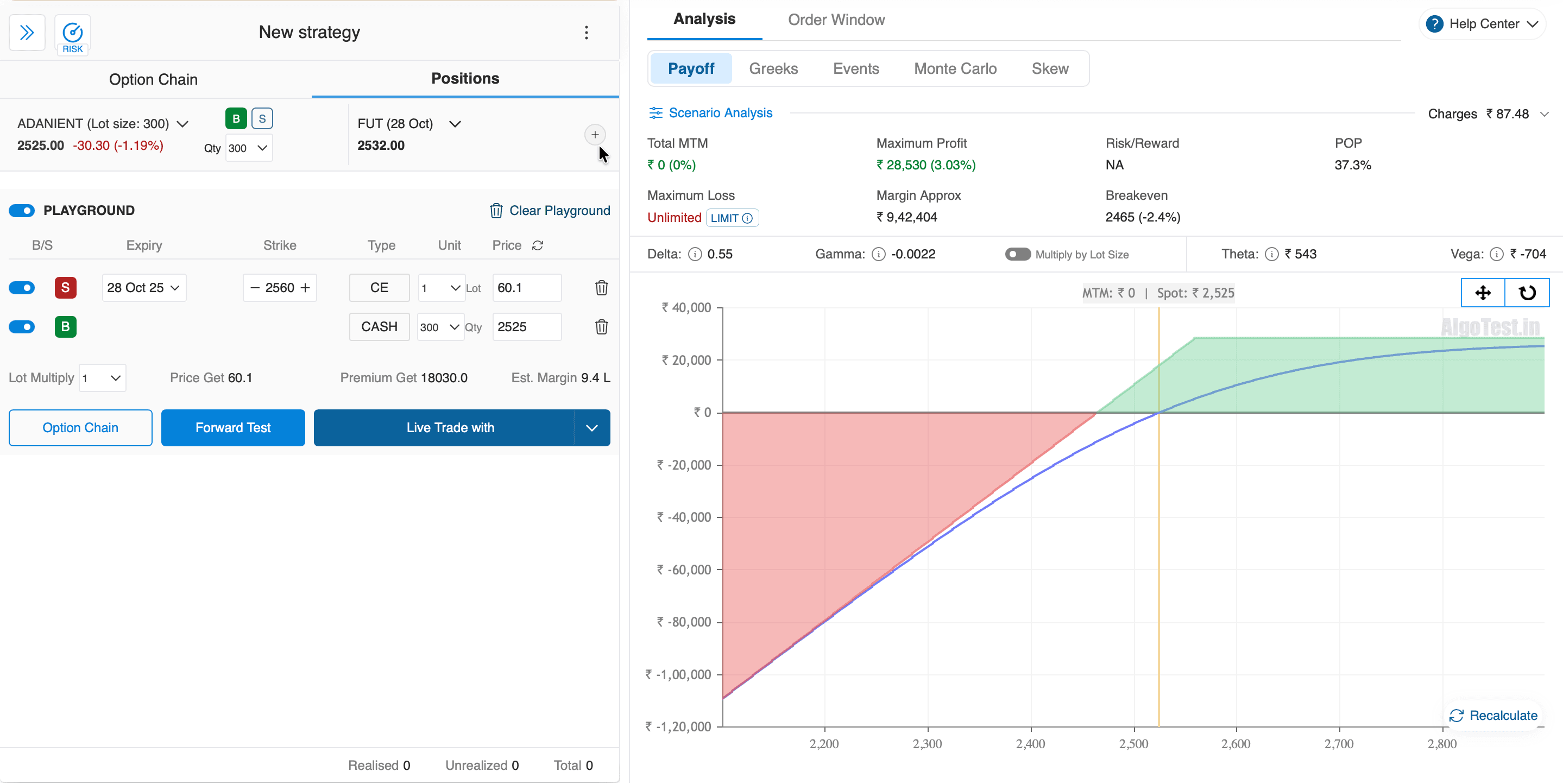
2\. [Straddle shown on Strategy Builder:](https://algotest.in/strategy-builder?utm_source=blog)
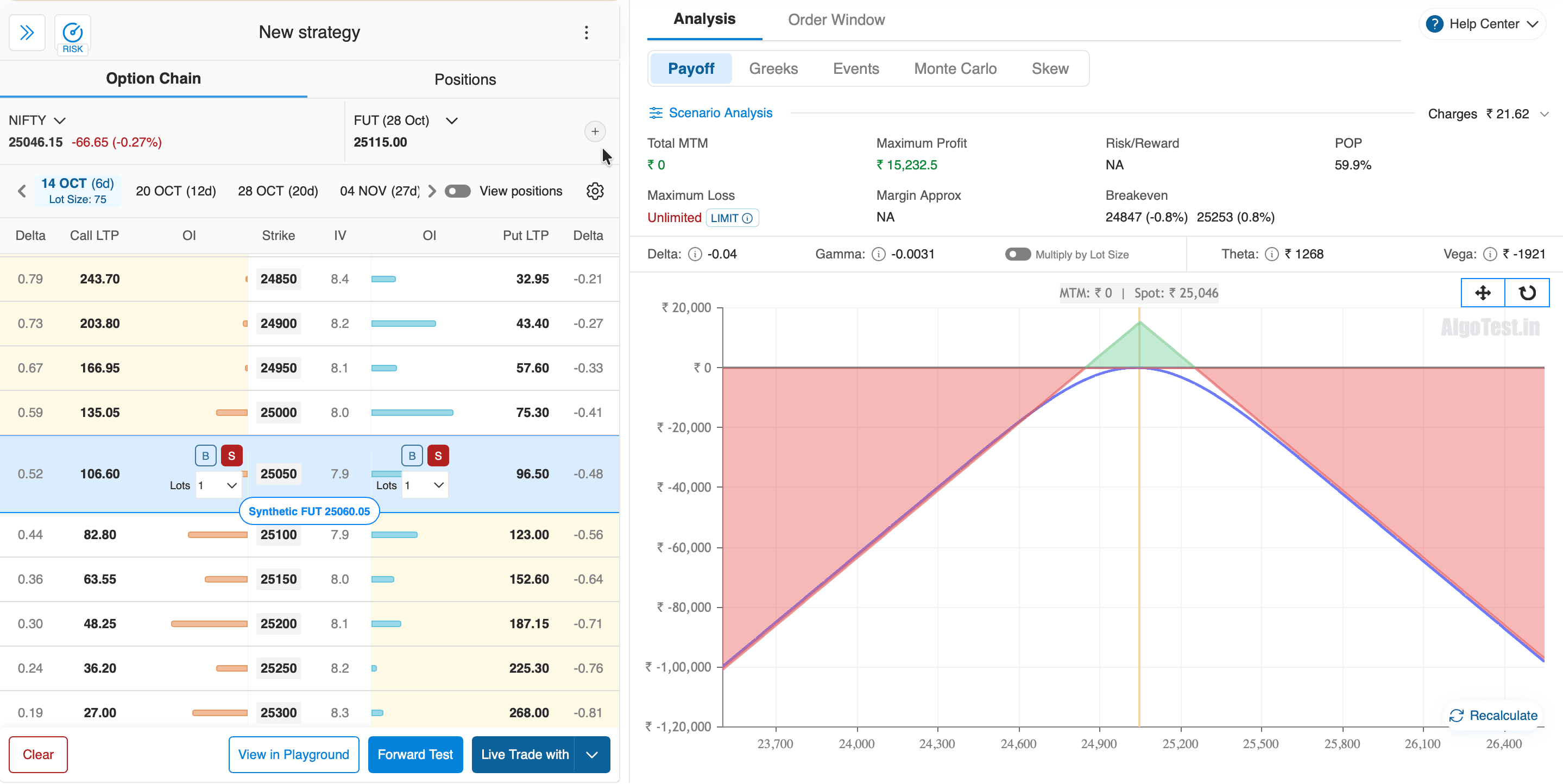
3\. [Strangle shown on Strategy Builder:](https://algotest.in/strategy-builder?utm_source=blog)
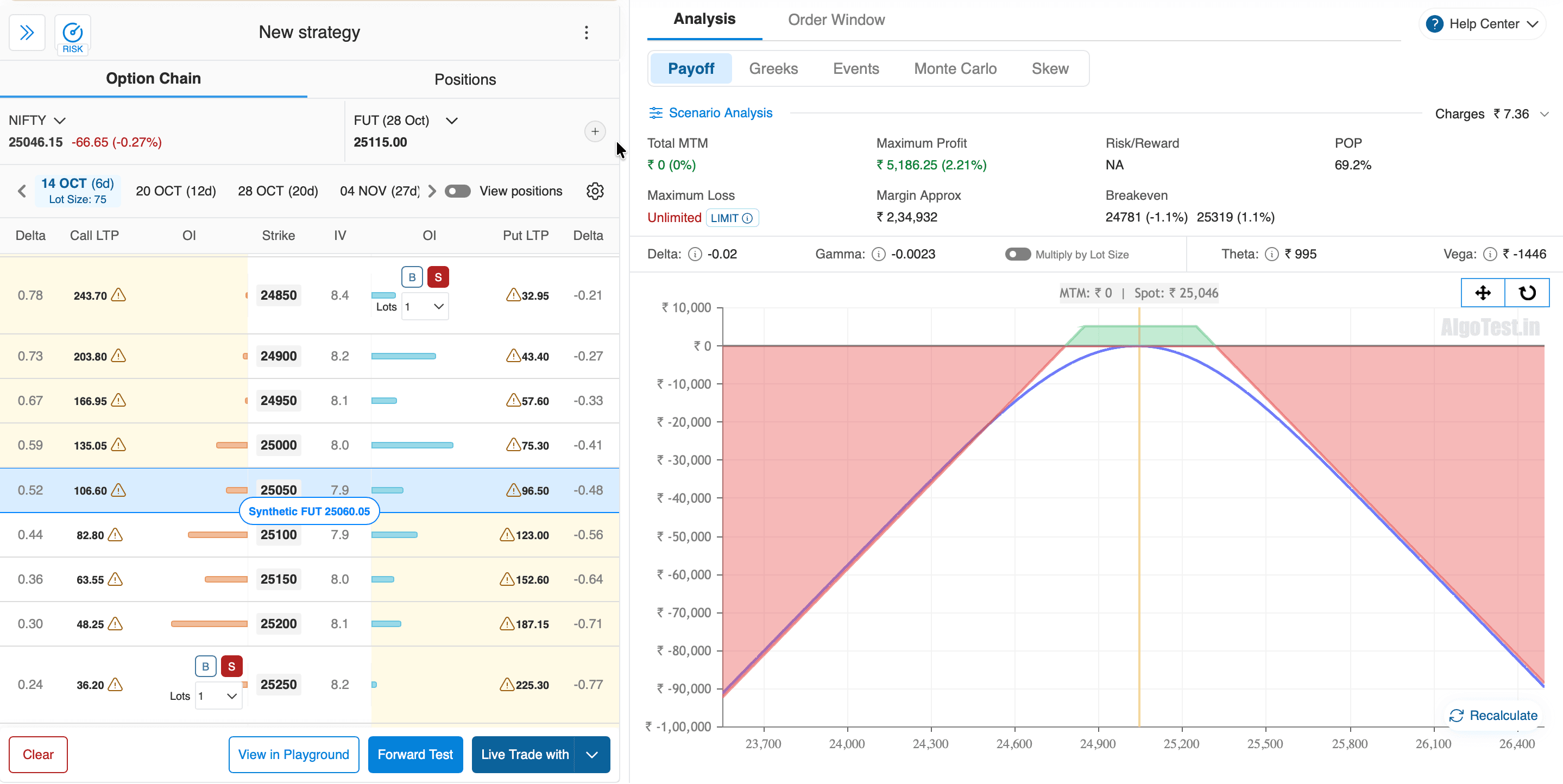
4\. [Iron Condor shown on Strategy Builder:](https://algotest.in/strategy-builder?utm_source=blog)
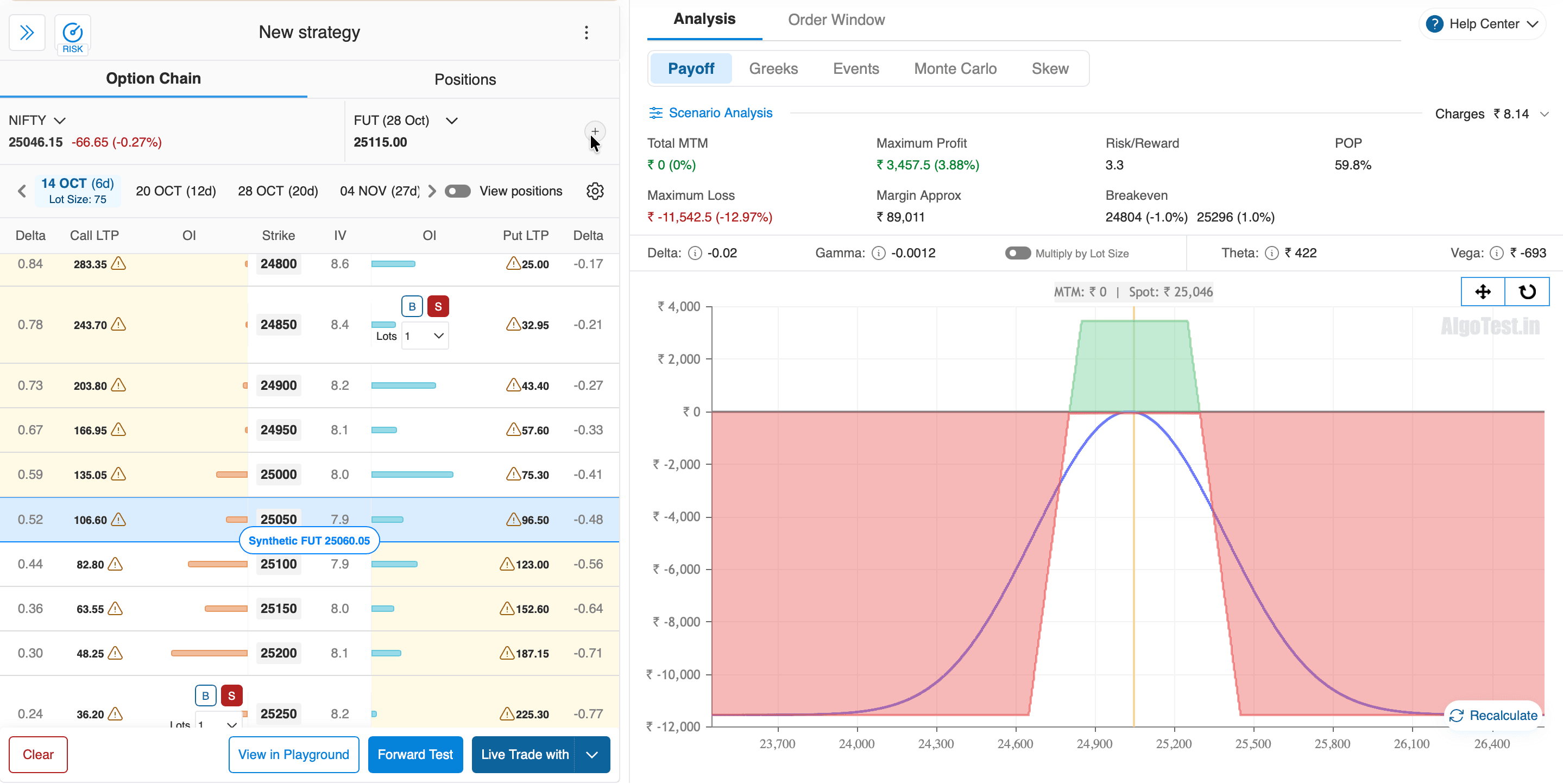
### **Which Option Selling Strategy Is Best?**
It depends on your goals and risk tolerance, but for most, **cash-secured puts** and **covered calls** are the safest entry points. They’re easy to understand, involve stocks you want to own, and the risk is limited to your investment or buying power. With experience, you can consider advanced techniques, but always let risk management be your compass.
## **How to Do Option Selling Algo Trading Using AlgoTest**
Modern technology makes systematic **option selling** easier than ever. **AlgoTest** is an automation platform for live and backtested **option selling strategies**:
1. **Sign up on AlgoTest:** Create your account at [AlgoTest](https://algotest.in/).
2. **Strategy Design:** Use AlgoTest’s intuitive strategy builder, ideal for creating, optimizing, and managing your **option selling strategy builder**.
3. **Backtest:** Test your rules and setups with historical data ( **how to backtest option selling strategy**).
4. **Go Live:** Confident with results? Let AlgoTest automate your trades in live markets.
5. **Monitor:** The platform executes per your rules, even for **intraday** or **positional option selling strategy**.
Algo trading replaces emotion with discipline and can help you stick to your risk rules.
## **Capital Required for Option Selling**
Required capital depends on your chosen strategy:
- **Cash-secured puts:** Need enough cash set aside to buy X shares per contract if assigned.
- **Covered calls:** Need to hold X shares per contract you sell.
- **Other strategies:** Margins required can vary, but generally start from ₹1,50,000–₹2,50,000/lot for index options; always check with your broker.
Interested in **best stocks for option selling** or **best stocks for naked puts**? Focus on liquid and fundamentally strong names.
## **Common Myths About Option Selling**
Let’s dispel a few misunderstandings:
- **Myth 1: Option Selling is Risk-Free** _Fact:_ Every strategy has risk, ignore promises of a **risk free option selling strategy**.
- **Myth 2: Only Experts Can Sell Options** _Fact:_ With basic learning or following a reputable **option selling tips provider**, even beginners can start safely.
- **Myth 3: Time Decay Always Means Profit** _Fact:_ One big market move can erase several small profits gained from volatility decay.
## **Actionable Tips for Beginner Option Sellers**
Getting started? Remember:
1. **Use Paper Trading:** Practice with no capital at risk to learn mechanics and risk.
2. **Start with Cash-Secured Puts or Covered Calls:** Ideal for those looking for “ **option trading for beginners”** or the “ **safest option selling strategy”**.
3. **Pick Stocks You Want to Own:** Selling puts on quality names means no regret if assigned.
4. **Control Position Size:** Never over-leverage, even with strategies marked “safe”.
5. **Stick to Risk Rules:** Set exit targets or stop losses, especially when **shorting puts**.
## **Your Next Steps in Option Selling**
**Option selling** can be a game-changer for increasing your investment income. With the right **option strategies**, a focus on education, and a disciplined mindset, traders can enjoy consistent returns and manage risk effectively. Tap into technology like AlgoTest and RA Algos, choose suitable **positional or intraday option selling strategies**, and keep learning.
Master these skills, and you’ll understand why so many are choosing **option selling for a living**, with the knowledge and caution needed to thrive.
---
This blog is powered by Superblog. Visit https://superblog.ai to know more.
---
## Tax Loss Harvesting = Options Pricing (Yes, Really)
Author: AlgoTest
Author URL: https://algotest.in/blog/author/algotest/
Published: 2025-08-29
URL: https://algotest.in/blog/tax-loss-harvesting-options-pricing-yes-really/
This paper came out of a rabbit hole while we were building the **Tax Impact module at [InvestHQ](https://investhq.in/)**.
We asked a simple question: _If you rebalance frequently, does the tax drag end up offsetting the better Sharpe ratio from rebalancing?_
That one question ended up in a paper: [Applying Options Pricing to Tax Loss Harvesting in Indian Markets](https://papers.ssrn.com/sol3/papers.cfm?abstract_id=5238942).
Here’s the TLDR version, and why it might actually change the way you think about your unrealised losses.
* * *
## The Government Already Owns a Call Option on Your Portfolio
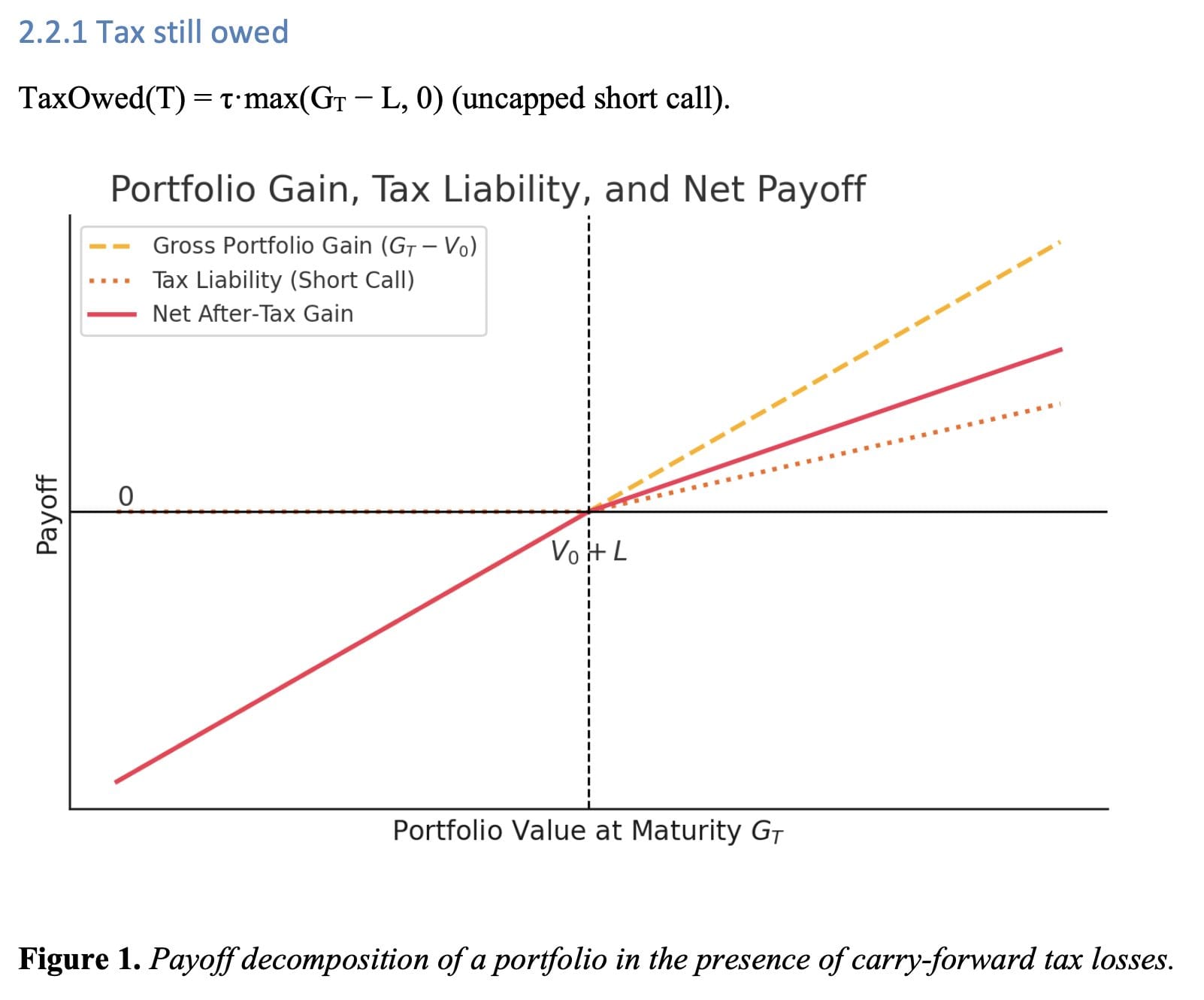
Sounds dramatic? It’s not. It’s just how capital gains tax works.
Say you bought stocks, ETFs, or mutual funds with a base cost of ₹12L. Fast-forward one year, and three scenarios play out:
- Portfolio value = ₹20L → Govt payoff = (20 – 12) × tax\_rate
- Portfolio value = ₹1L → Govt payoff = 0
- Portfolio value = ₹12L → Govt payoff = 0
See the payoff shape?
**Government payoff = max(0, gains × tax rate).**
That’s literally the payoff of a **call option**.
So yes, by law, **the gormint is long a call on your capital gains. You’re short it.**
* * *
## Turning Unrealised Losses into a Tax Shield
Here’s the twist: Indian tax law allows you to carry forward booked losses for up to **8 years**.
That means if you’re sitting on an unrealised loss near FY-end, you can _book it_ and convert it into a **future tax shield**.
Example:
- Portfolio cost = ₹12L
- Current value = ₹10L
- Unrealised loss = ₹2L
If you book the loss, that ₹2L can offset any future gains for the next 8 years.
So what’s that shield worth _today_?
* * *
## Enter Options Pricing
Think about the tax shield as an option:
- If your portfolio recovers from ₹10L to ₹12L, those gains are shielded.
- Beyond ₹12L, the shield expires, you’re back to paying tax.
That’s nothing but a **bull call spread**:
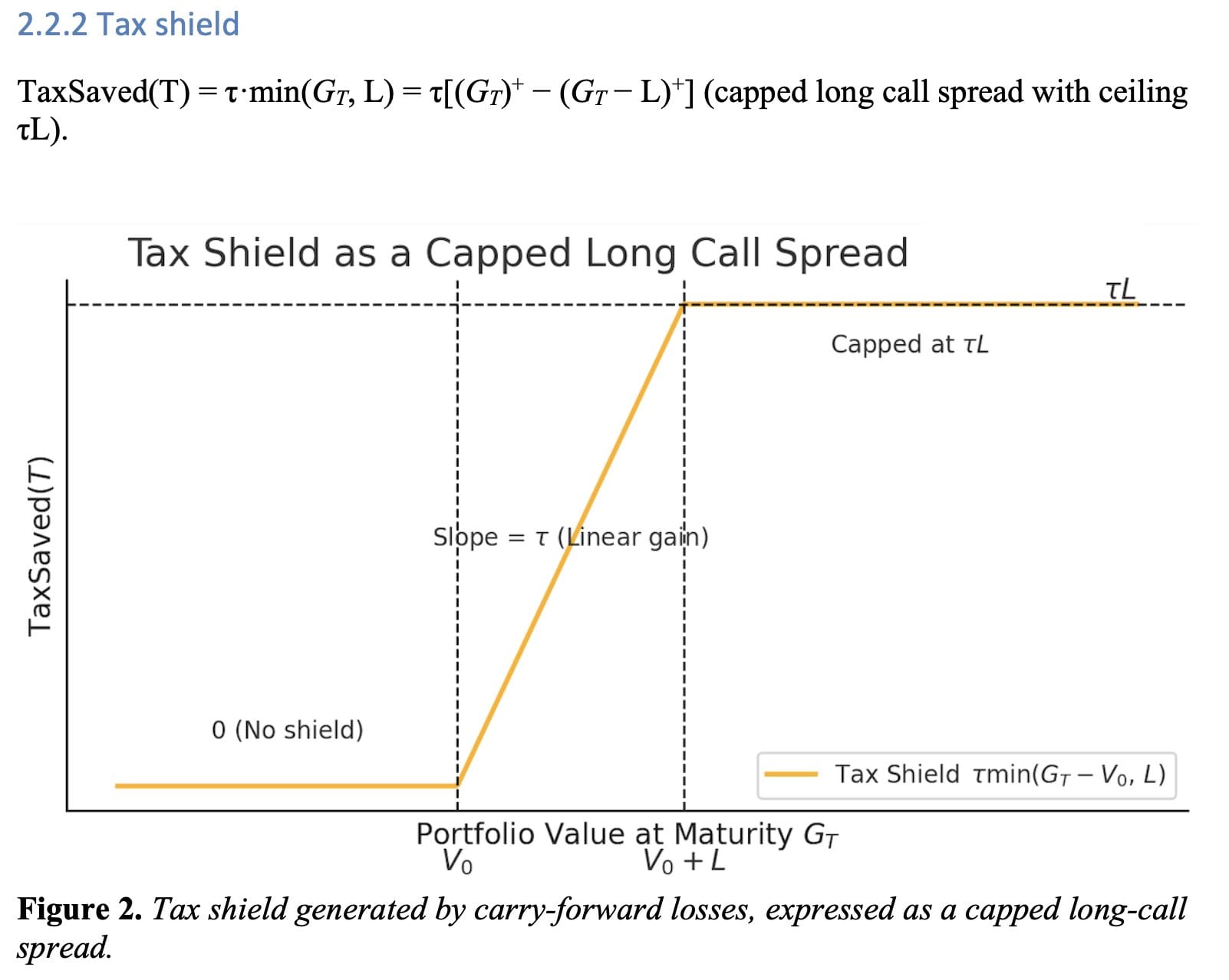
- Long call from 10L to 12L (you’re shielded up to ₹2L gain)
- Short call beyond 12L (no shield after breakeven)
The maximum value of this spread is **τ × L** (tax rate × loss).
You can price it today using **Black–Scholes**.
Formula for the present value (PV):
**Tax shield PV = τ × \[C(0) – C(L)\]**
Where:
- τ = tax rate
- L = loss amount
- C(·) = call option price under [Black–Scholes](https://algotest.in/black-scholes)
## A Quick Example
- Tax rate (τ) = 12.5%
- Loss booked (L) = ₹2L
- Max shield = 12.5% × 2L = **₹25k**
But Black–Scholes PV comes to only ~₹10k.
Why? Because there’s a risk your portfolio never recovers to ₹12L within the horizon.
So… Should You Book the Loss?
That depends. The trade-off is simple:
- **If transaction costs + slippages < shield PV → book the loss.**
- **If not → don’t bother.**
It’s literally a trade decision.
* * *
## Why This Matters
For most retail investors, tax loss harvesting feels like a boring compliance hack. But seen through the volatility/option pricing lens, it’s actually a _structured trade_.
You’re monetising the optionality built into Indian tax law.
That optionality isn’t unlimited — it has an expiry (8 years), a strike (your purchase price), and a cap (loss booked × tax rate).
And like any other option, it can be **priced, compared against costs, and executed rationally.**
* * *
### Closing Thought
At InvestHQ, our goal isn’t to drown you in spreadsheets. It’s to show you the real tradeoffs in investing — where costs, taxes, and volatility actually drive outcomes.
This is one of those rabbit holes where finance theory and Indian regulation collide in an oddly beautiful way.
Because sometimes, **tax law = options pricing.**
---
This blog is powered by Superblog. Visit https://superblog.ai to know more.
---
## Option Strategy Builder: Build, Test & Optimize Winning Trades with AlgoTest
Author: AlgoTest
Author URL: https://algotest.in/blog/author/algotest/
Published: 2025-08-28
Category: Product
Category URL: https://algotest.in/blog/category/product/
Meta Description: Build, test, and optimize options strategies with an Option Strategy Builder. Learn how to trade smarter using data-driven insights.
Tags: algo trading india, option strategy
Tag URLs: algo trading india (https://algotest.in/blog/tag/algo-trading-india/), option strategy (https://algotest.in/blog/tag/option-strategy/)
URL: https://algotest.in/blog/option-strategy-builder-strategies-that-win/

If you’re looking to build, test, and optimize options strategies without the usual complexity, [AlgoTest’s Strategy Builder](https://algotest.in/strategy-builder) is designed for exactly that.
[AlgoTest](https://algotest.in/login) is an options trading analytics platform that helps traders move from guesswork to data-driven decision-making. Whether you're a beginner exploring strategies or an experienced trader refining your edge, the platform gives you the tools to do it systematically.
[Options trading](https://algotest.in/blog/options-trading-strategies/) involves multiple variables — strike selection, volatility, timing, and risk management. Managing all of this manually can be overwhelming and error-prone.
That’s where a structured approach matters. AlgoTest’s Strategy Builder simplifies the process by letting you build, test, and optimize strategies in one place.
In this guide, you’ll learn:
- How to use an [options strategy builder](https://algotest.in/strategy-builder) effectively
- Key features that improve decision-making
- How to optimize strategies using data
- The importance of forward and live testing
- Practical ways to improve trading consistency
By the end, you’ll have a clear framework to approach options trading more systematically.
### What is AlgoTest’s Strategy Builder?
AlgoTest’s Strategy Builder is a tool that helps traders create, test, and refine options trading strategies using real data.
Instead of relying on assumptions or manual calculations, you can:
- Build strategies based on defined rules
- Backtest them on historical data
- Analyze performance before deploying capital
You can start from scratch or use pre-built templates depending on your experience level. This flexibility makes it useful for both beginners and advanced traders.
More importantly, it shifts your approach from **reactive trading → rule-based trading**, which is critical for long-term consistency.
### Key Features of AlgoTest’s Strategy Builder
Here’s how the platform helps improve your trading process:
**1\. Market Trend Analysis**
Identify opportunities using data instead of intuition. This helps you align your strategies with actual market behavior.
**2\. Strategy Creation & Customization**
Create multi-leg options strategies or modify existing ones based on your risk appetite, view, and capital.
**3\. Paper Trading (Risk-Free Testing)**
Test your strategies in real-time market conditions without risking actual capital. This is essential before going live.
**4\. Strategy Optimization Tools**
Adjust parameters like strikes, expiry, or conditions and instantly see how they impact performance.
These features help you move from random trades to a structured trading system.
Also Read: [**The Best Option Strategy Builders: A Comparative Analysis**](https://algotest.in/blog/compare-option-strategy-builders-find-the-best-tool/)
## How AlgoTest Helps You Trade with Data
One of the biggest challenges in options trading is inconsistency often caused by emotional decisions or lack of clarity.
AlgoTest addresses this by giving you access to advanced analytics that help you:
- Evaluate past performance
- Identify strengths and weaknesses in your strategy
- Make adjustments based on data, not guesswork
Instead of asking _“Will this trade work?”_, you start asking _“What does the data say?”_ which is a much stronger approach.
## Crafting Winning Strategies with AlgoTest
Building a [profitable strategy](https://algotest.in/blog/9-steps-to-build-a-profitable-algo-trading-strategy) is the foundation of success in options trading. [AlgoTest's Strategy Builder](https://algotest.in/strategy-builder) equips you with the exact tools and resources needed to design, test, and perfect your approach.
Whether you are a beginner executing your first trade or a seasoned pro optimizing for maximum ROI, our platform guides you through the entire process. Let’s dive into how you can leverage these tools to hit your options trading goals.
Related: [Effective Buying Strategies with AlgoTest’s Option Strategy Builder](https://algotest.in/blog/buying-strategies-with-algotest-option-strategy-builder/)
### Step-by-Step Guide to Building Your First Options Strategy
Ready to get started? Building your first strategy is simple with [AlgoTest.](https://algotest.in/) Follow this straightforward framework to go from concept to execution:
1. **Define Your Strategy:** Establish your core parameters. Decide on your risk tolerance, target assets, and the specific market conditions that will trigger your trades.
2. **Forward-Test Your Approach:** Put your ideas to the test without risking real capital. Our [forward-testing](https://algotest.in/blog/why-is-there-is-difference-between-my-live-trade-vs-forward-test-vs-backtest-results) capability allows you to evaluate how your strategy reacts to changing, live market conditions over time.
3. **Optimize for Maximum Gain:** Fine-tune your setup. Use AlgoTest’s optimization tools to adjust your variables and pinpoint the most profitable settings for your strategy.
4. **Implement in Live Trading:** Once your forward-tested results are solid, it's time to go live. AlgoTest integrates seamlessly with major trading platforms, allowing you to execute your trades effortlessly.
5. **Monitor and Adjust:** The market never stops moving, and neither should you. Continuously track your performance using our advanced analytics, making data-driven tweaks as market conditions shift.
By following this step-by-step process, you can confidently build, test, and execute your first options strategy with AlgoTest.
Also Read: [How to Use AlgoTest Strategy Builder for a Monthly Iron Condor](https://algotest.in/blog/how-to-use-strategy-builder-iron-condor/)
**Step 1.** Visit the \[ [Algotеst](https://algotest.in/)\] website, create a free account, and then sign in with it.
**Step 2.** Click "Strategy Builder" now, as indicated by the picture below.

**Step 3.** You will get an interface, as shown in the image below.
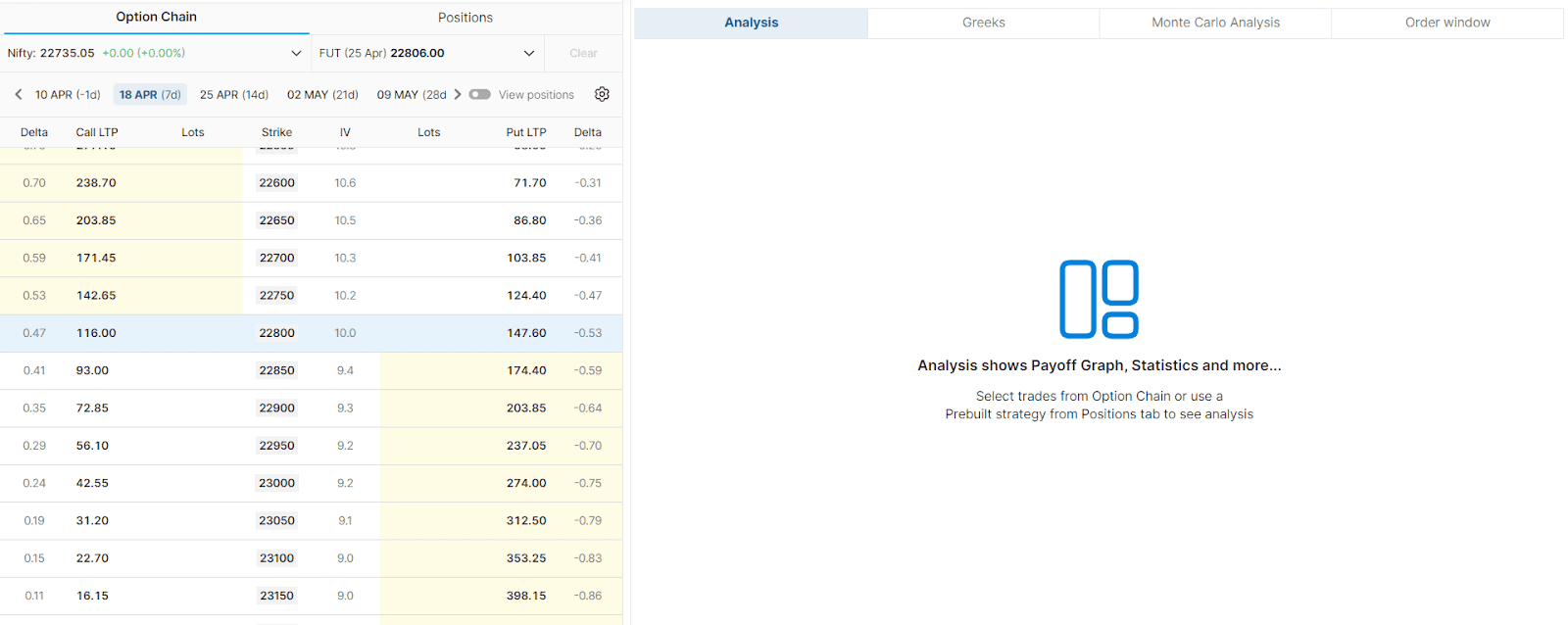
**Step 4.** Now add the legs from the option chain according to the strategy you want to build. Assuming we want to build an iron fly, we will sell ATM CE and ATM PE and buy OTM CE and OTM PE from the option chain as shown in the image below
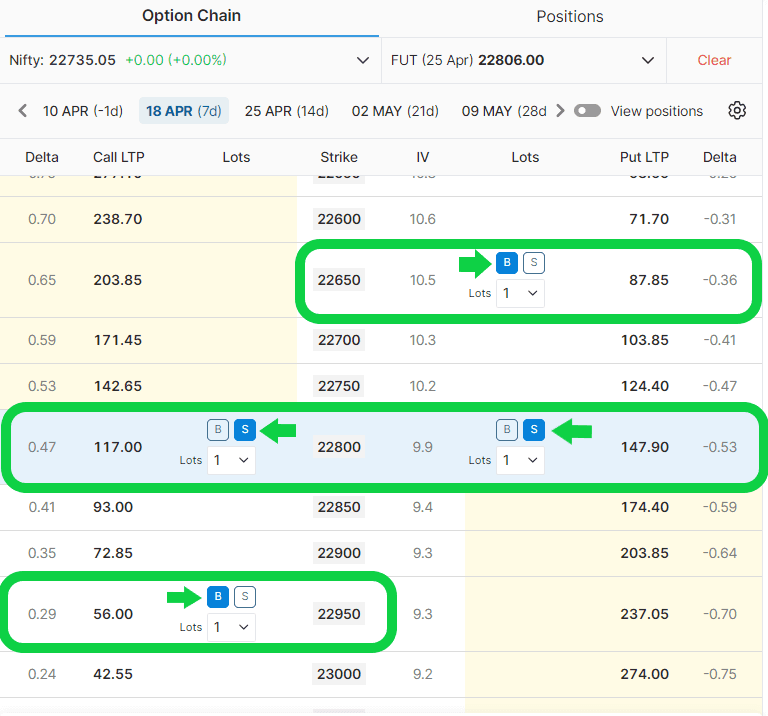
**Step 5.** You can analyze your strategy using the different tools provided by AlgoTest.
#### In the Analysis section
- Strategy Builder provides you with tools like Payoff graph, Maximum Profit, Maximum loss, Risk reward, Breakeven point, etc. to analyze your strategy. A payoff graph is a handy tool that helps you determine how your position is going to expire concerning the underlying move.
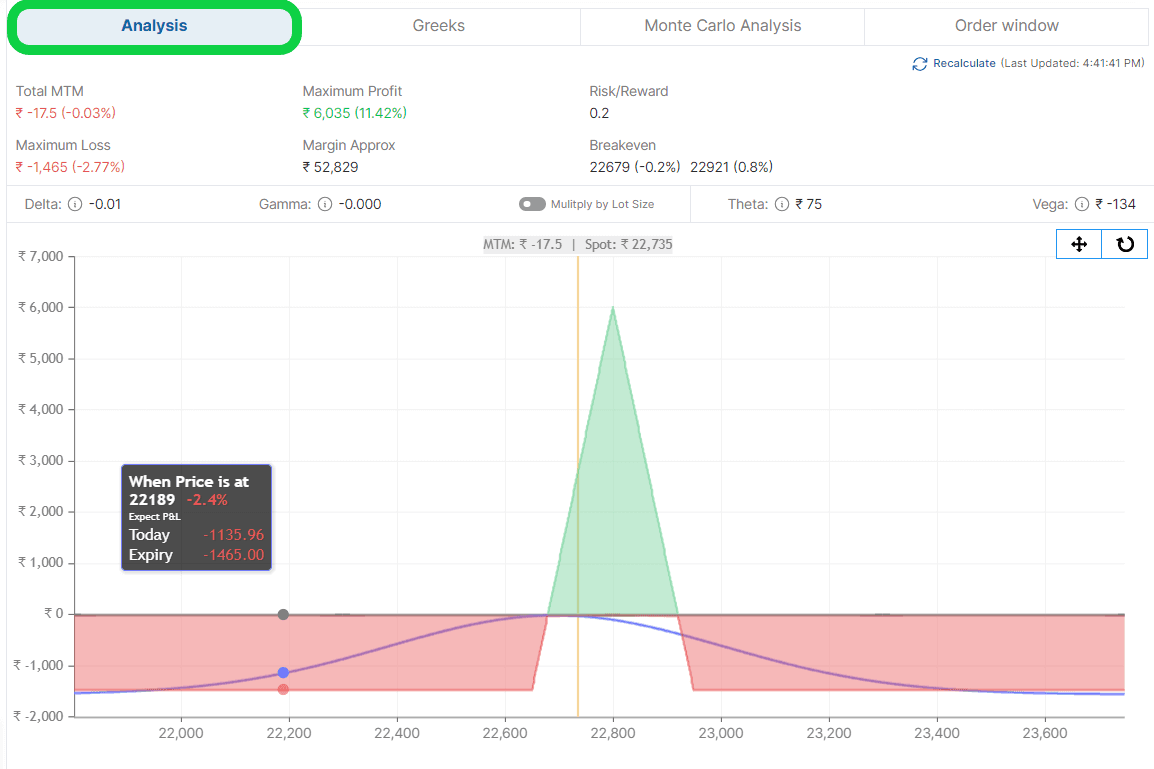
#### In the Greek section
- Strategy Builder provides you with information about Option Greeks like Delta, Theta, Gamma, IV, Vega, etc. for your positions, as shown in the image below.
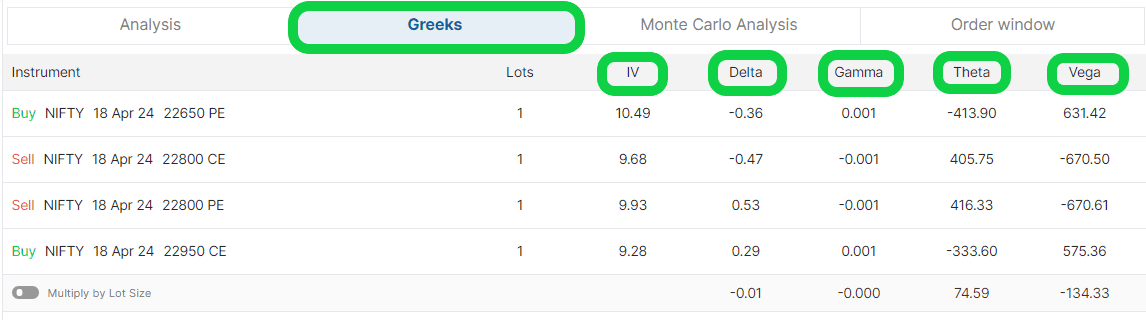
#### In the Monte Carlo Analysis Section
- Your PnL will depend highly on the underlying index's path. Monte Carlo analysis is an advanced method to see how your strategy will perform on average across 10,000 different price paths that the underlying could take until expiry. You can access this feature by clicking on “Monte Carlo Analysis,” as shown in the image below.
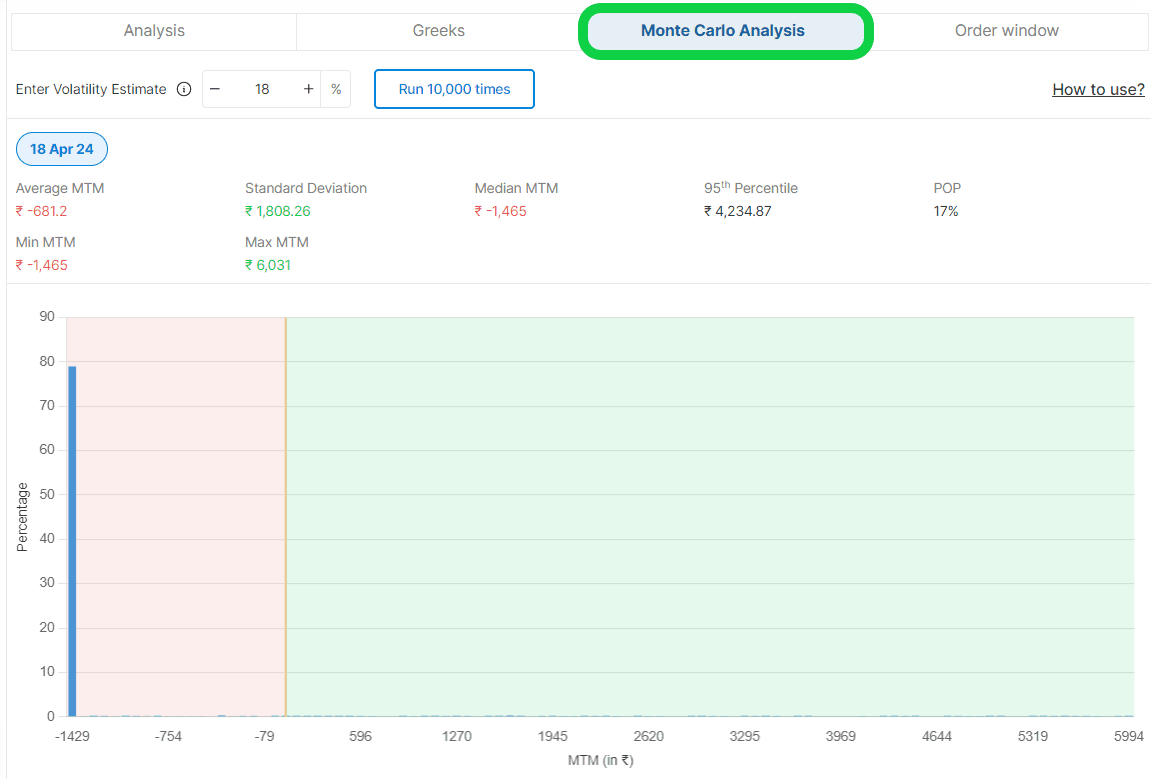
- Assuming that we want to execute our Iron Fly strategy, we have two options: we can either paper trade our strategy or execute it on the broker. To execute your strategy for live trading, your broker should have logged into your AlgoTest account. To learn how to set up a broker, [Click here.](https://docs.algotest.in/category/broker-setup)

- To execute your strategy for live trading, click on the “Live Trade with” button as shown in the image below.
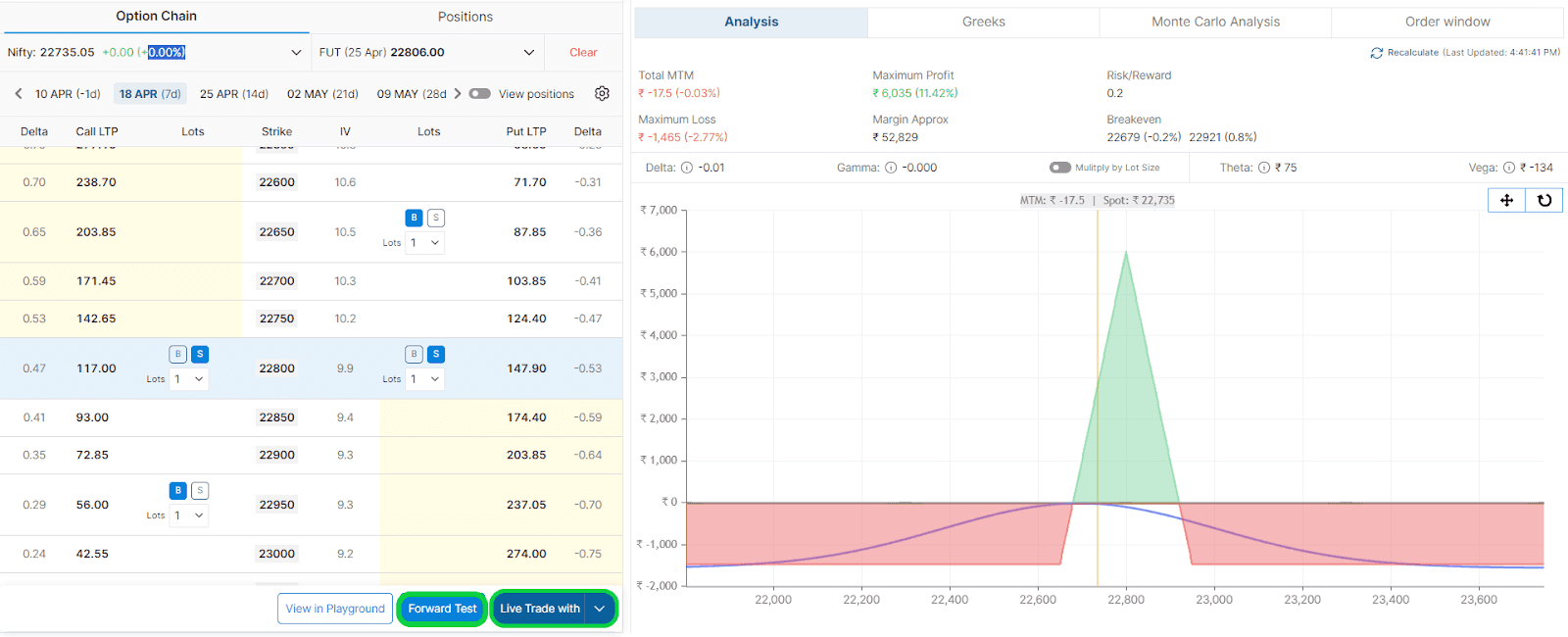
- It will ask you to select a broker. Select the broker and save the strategy with a random name.
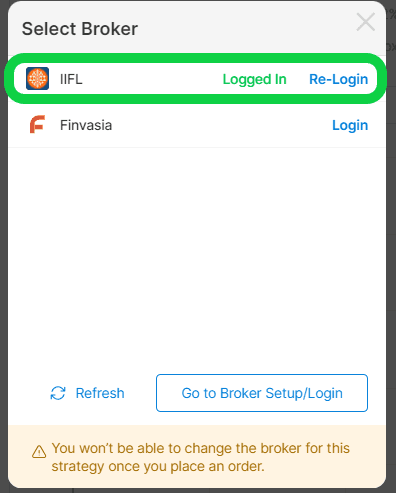
- Now click on “Place All Orders” to execute our strategy. We also have the option to choose if we want to set the order type as limit or market.
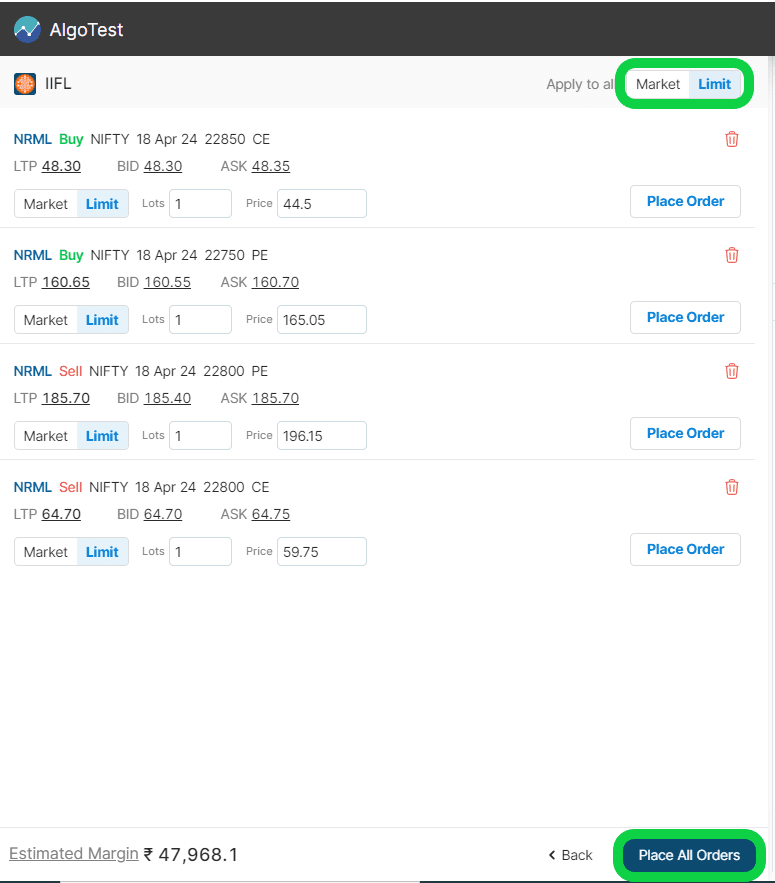
- You can manage your position on the “positions” tab. Here you get options to add another trade or square off existing positions, as shown in the image below.
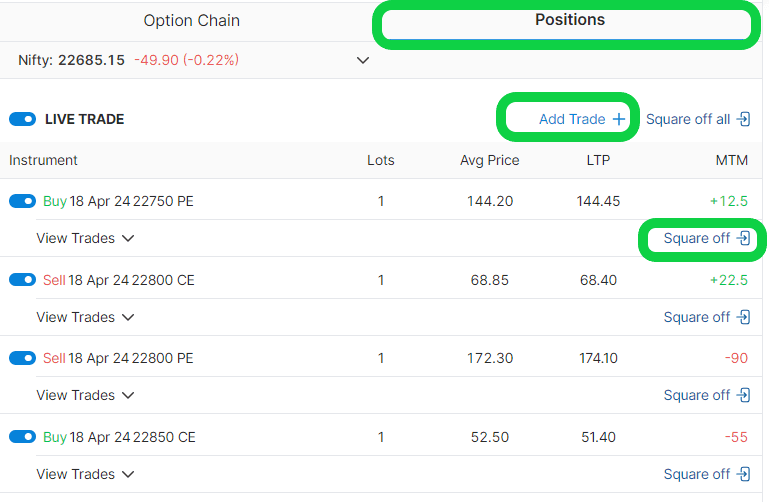
- You can check the status of orders in the order window, as shown in the image below
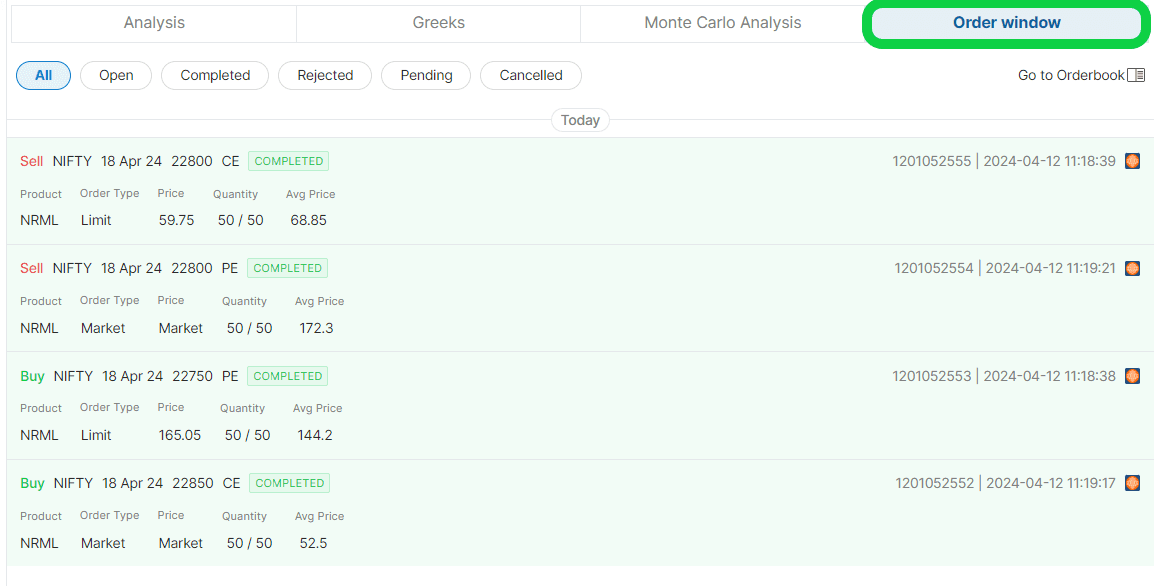
- You can track your positions using the various information provided in the analysis tab, as shown in the image below.
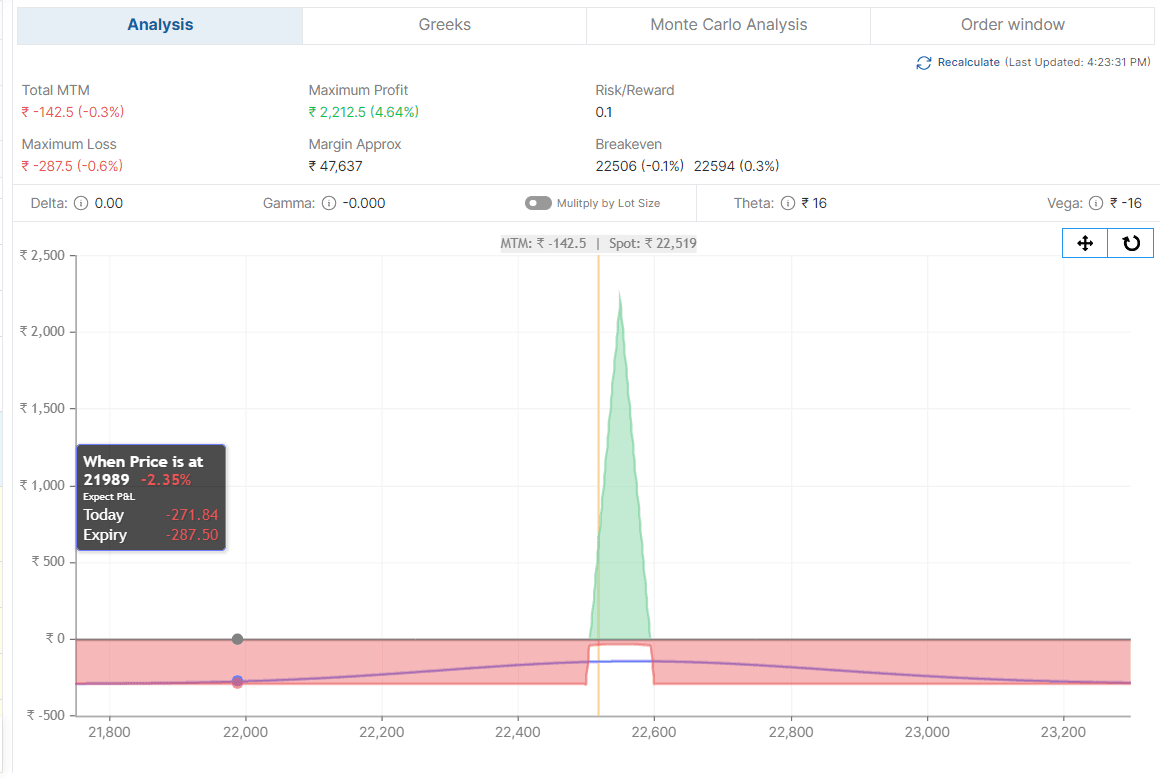
### **Tips for Optimizing Your Strategies for Maximum Gain**
Optimizing your strategies is crucial for maximizing your gain in options trading, and AlgoTest's Strategy Builder offers a range of tools and features to help you achieve that. Here are some tips for optimizing your strategies with AlgoTest's Strategy Builder:
- **Forward-test and analyze**: [Forward-test](https://docs.algotest.in/forward-test/) your strategy, analyze your strategies' performance, and identify improvement areas.
- **Adjust parameters**: Fine-tune your strategies by adjusting various parameters and analyzing the impact on performance. Use AlgoTest's optimization tools to find the optimal settings for your strategies.
- **Stay informed**: Keep yourself updated with live market data and analytics.
- **Experiment and learn**: Don't be afraid to try new strategies and experiment with different settings. Learn from your experiences and adapt your strategies accordingly.
By following these tips and utilizing the features of AlgoTest's Strategy Builder, you can optimize your strategies for maximum gain and increase your chances of success in options trading.
Related: [**Opstra Strategy Builder vs AlgoTest Strategy Builder: Which One Should You Use in 2025?**](https://algotest.in/blog/opstra-strategy-builder-vs-algotest)
## **Live Testing Your Strategies**
Live testing is a crucial step in options trading as it allows traders to validate their strategies in live market conditions. AlgoTest's Strategy Builder offers a seamless transition from forward-testing to live testing, allowing traders to confidently execute their strategies.
By live-testing their strategies, traders can evaluate the performance and effectiveness of their strategies in live market conditions. They can monitor the execution of their trades, analyze the results, and make necessary adjustments based on market conditions.
AlgoTest's Strategy Builder provides analytics and monitoring tools to help traders stay informed and make data-driven decisions during live trading. With seamless integration with trading platforms, traders can execute trades with ease and confidence, maximizing their chances of success.
### **Prepare to Shift from Virtual to Real Markets**
Transitioning from virtual to real markets requires careful preparation and planning. AlgoTest's Strategy Builder offers a range of features to help traders make a smooth transition and maximize their chances of success in real markets.
Before transitioning to real markets, traders should thoroughly forward-test their strategies using AlgoTest's Strategy Builder. They should analyze the performance of their strategies, identify areas for improvement, and make any necessary adjustments.
Traders should also set realistic expectations and manage their risk effectively. They should have a clear understanding of their risk tolerance and implement appropriate risk management strategies.
Additionally, traders should stay informed about market conditions and news that may impact their strategies. AlgoTest's Strategy Builder provides market data and analytics, allowing traders to stay informed and make data-driven decisions.
By following these steps and utilizing the features of AlgoTest's Strategy Builder, traders can effectively prepare for the transition from virtual to real markets and increase their chances of success in options trading.
## **Advanced Features for Seasoned Traders**
AlgoTest's Strategy Builder offers a range of advanced features for seasoned traders looking to take their options trading to the next level. These features leverage AI and advanced analytics to optimize strategies and enhance trading performance.
Traders can fine-tune their strategies using optimization tools and achieve better results.
Another advanced feature is the integration with other trading tools and platforms. AlgoTest's Strategy Builder seamlessly integrates with popular trading platforms, allowing traders to access a wide range of tools and execute trades with ease.
Additionally, AlgoTest's Strategy Builder provides advanced risk management tools, market data, and in-depth analytics to help seasoned traders make informed decisions and stay ahead of the game.
### **Integration with Brokers**
Seamless integration with brokers is a key feature of AlgoTest's Strategy Builder. The platform allows traders to connect with popular brokers, enhancing their options trading experience. Here are some benefits of integration with brokers:
1. **Access to additional tools**: By integrating with brokers, traders can access a wide range of additional tools and features that can enhance their trading strategies.
2. **Execution efficiency**: Integration with brokers allows traders to execute trades with ease and efficiency, reducing the risk of delays or errors.
3. **Data synchronization**: Integration ensures that data is synchronized between AlgoTest's Strategy Builder and broker, providing traders with up-to-date information.
4. **Streamlined workflow**: Integration streamlines the trading workflow by allowing traders to manage their strategies and execute trades properly.
By integrating with the broker, AlgoTest's Strategy Builder provides traders with a comprehensive solution for options trading, enabling them to optimize their strategies and maximize their trading performance.
## **Conclusion**
In conclusion, by utilizing AlgoTest's Strategy Builder, traders can harness the power of advanced analytics to craft winning strategies. Whether you're a novice or a seasoned trader, AlgoTest provides the necessary resources to optimize your trading techniques. With its integration capabilities and AI leverage, AlgoTest stands out among other strategy builders by offering a seamless transition from simulation to live markets. If you're looking to elevate your trading game, [AlgoTest](https://algotest.in/) is your go-to solution for maximizing gains and refining your strategies effectively.
## **Frequently Asked Questions**
### **Can Beginners Use AlgoTest Effectively?**
Yes, beginners can use AlgoTest's Strategy Builder effectively. The platform is designed to be user-friendly and provides step-by-step guidance for building and optimizing strategies. With its range of features and tools, AlgoTest's Strategy Builder empowers beginners to make informed decisions and improve their trading performance.
### **What is the cost of a strategy builder?**
AlgoTest’s strategy builder is free to use right now. So, [sign up](https://algotest.in/) today!
### **Can I do paper trade using the AlgoTest strategy builder?**
At this time, AlgoTest's Strategy Builder functionality does offer paper trading.
### **Can I do Positional using Algotest strategy builder?**
Yes, you can do positional using the AlgoTest strategy builder.
### **Is live trading possible through the AlgoTest strategy builder?**
Yes, live trading is possible.
---
This blog is powered by Superblog. Visit https://superblog.ai to know more.
---
## What Are Margin Modes on Delta Exchange?
Author: AlgoTest
Author URL: https://algotest.in/blog/author/algotest/
Published: 2025-08-26
URL: https://algotest.in/blog/what-are-margin-modes-on-delta-exchange/
Delta Exchange is a crypto derivatives trading platform offering futures and options on Bitcoin, Ethereum, and other major altcoins. It is known for its robust risk engine, institutional-grade APIs, and support for advanced trading strategies.
#### What You Can Do with Delta Exchange on AlgoTest
With Delta Exchange integration on AlgoTest, you can:
- Execute crypto strategies on BTC, ETH, and other altcoins
- Use options and futures for directional or hedged trades
- Monitor and automate your crypto trades
- Backtest your crypto F&O strategies
#### Brokerage Charges
Delta Exchange charges trading fees based on a maker-taker model:
- **Maker Fee:** 0.02%
- **Taker Fee:** 0.05%
Fees may vary based on your VIP level or trade volume. Please refer to [Delta Exchange Fees](https://www.delta.exchange/fees) for detailed breakdown.
Today, we are talking about margin and margin modes on Delta Exchange.
**What is Margin?**
Margin is the collateral you need to post when entering into a leveraged derivatives contract.
- Acts as security for your trades.
- Required upfront before opening a position.
- Protects the exchange/broker against losses.
**Example:**
You want to buy a futures contract worth ₹1,00,000. Instead of paying the full amount, you just need to post a margin of ₹10,000.
**What is Initial Margin?**
The minimum margin required to open a new position.
- Paid at the time of entering the trade.
- Calculated based on risk and volatility of the instrument.
**Example:**
If the initial margin is 10%, and you want to take a position worth ₹50,000, you must deposit ₹5,000 as collateral.
**What is Maintenance Margin?**
The minimum margin you must maintain to keep your position open.
- If your unrealised loss reduces the margin below this level, liquidation begins.
- Protects against excessive losses.
**Example:**
If your maintenance margin is ₹3,000 and your position drops in value so that only ₹2,800 is left in your margin, liquidation will be triggered.
**What is Liquidation?**
When your margin balance falls below the maintenance margin, the exchange automatically closes your position.
- Prevents your account from going negative.
- Loss is limited to the margin you posted.
**Example:**
You had ₹10,000 margin. Losses reduce it to ₹2,800 while maintenance margin is ₹3,000. Your position is force-closed to avoid further losses.
* * *
## Understanding Margin Modes
Here we are talking about Delta Exchange margin modes and their use-cases while trading Futures & Options (F&O) on Delta Exchange.
### Isolated Margin Mode
Each position has its own separate margin (collateral).
- Loss is limited to that specific position only.
- If the margin for that position is exhausted, the position gets liquidated, but other positions remain unaffected.
- Best suited for traders who want to manage risk separately for each trade.
**Example:**
You open two positions with ₹1,000 margin each. If one trade goes into loss, the maximum loss will be ₹1,000, while the other position remains safe.
* * *
### Cross Margin Mode
All your positions share the same wallet balance as margin.
- Profit or loss from one position affects the entire account margin.
- More efficient use of capital and better leverage, but carries higher risk.
- If one position incurs heavy loss, it can affect all other trades as well.
**Example:**
You have ₹5,000 in your wallet. All your open positions draw a margin from this ₹5,000. If one trade incurs a large loss, other trades can also get liquidated.
* * *
### Portfolio Margin
An advanced version of cross margin that uses statistical models to assess the risk of your entire portfolio.
- Well-hedged positions may require even less margin.
- Best suited for professional or high-volume traders.
**Example:**
An advanced version of cross margin that calculates risk based on your entire portfolio rather than individual positions.
- Margin requirement is lower if your positions are hedged (for example, futures + options that offset each other’s risk).
- PNL offsetting: profit from one leg can absorb the loss of another.
- Risk offsetting: opposite positions reduce overall exposure, so less margin is needed.
Best suited for experienced traders building multi-leg strategies (spreads, straddles, covered calls).
Example:
You go long 1 BTC futures and simultaneously sell 1 BTC call option (a covered call strategy).
- If BTC price rises: futures give you profit, but the call option creates a loss.
- If BTC price falls: futures lose money, but the short call reduces the impact.
Since risks are offset, the exchange charges you much less margin compared to isolated margin. So, let's say, instead of needing, ₹3,000 margin in isolated mode, you may only need ₹1,600 in portfolio margin because the positions balance each other.
* * *
**Tip**: Before placing a trade, choose your preferred margin mode based on your strategy and risk profile on Delta Exchange.
---
This blog is powered by Superblog. Visit https://superblog.ai to know more.
---
## Learn Algo Trading As A Beginner Trader: Proven 5-Step Strategy Framework
Author: AlgoTest
Author URL: https://algotest.in/blog/author/algotest/
Published: 2025-08-25
Category: General
Category URL: https://algotest.in/blog/category/general/
Meta Title: Learn Algo Trading with a Proven Backtesting Framework | AlgoTest
Meta Description: New to algo trading? Learn how to build, backtest, and execute profitable trading strategies using a step-by-step framework. Master backtesting and strategy creation with AlgoTest, India's best algo trading software.
Tags: algo trading, algo trade
Tag URLs: algo trading (https://algotest.in/blog/tag/algo-trading/), algo trade (https://algotest.in/blog/tag/algo-trade/)
URL: https://algotest.in/blog/learn-algo-trading-as-a-beginner-trader/
Most traders want to learn algo trading as a beginner the right way. But most resources either oversimplify it or throw you into the deep end with no structure.
Here is a stat worth sitting with. SEBI's own data shows 90% of retail traders end up losing money. If you have followed influencers, taken courses, or tried popular strategies and still find yourself in that 90%, the problem is probably not your strategy. It is your system.
This post walks you through the exact framework that helped Chintan, founding member of [AlgoTest,](https://algotest.in/register?utm_source=blog&utm_source=blog) go from a loss-making trader in 2021 to consistently profitable. No magic strategy. No secret indicator. Just a repeatable, institution-grade system that any retail trader can follow.
If you are tired of occasional wins and consistent losses, keep reading.
## **The 5-Step Framework That Can Change Your Trading**
1. Ideation
2. Strategy Creation
3. Backtesting
4. Forward Testing
5. Live Execution
Let’s go through each step, with a real-world example of a simple intraday theta decay strategy.
### **Step 1: Ideation**
An idea is born from observing the market. For example:
- Mornings and closings tend to be volatile.
- Some influencers mention a profitable triangle strategy.
- You notice theta decay works best in sideways markets.
In our case, we want to test a safe short strangle strategy that avoids the volatile opening and closing minutes.
### **Step 2: Strategy Creation**
Let’s turn this idea into a strategy:
- Instrument: Bank Nifty Options
- Entry: 10:15 AM
- Exit: 3:15 PM
- Sell Legs: OTM Call and OTM Put, each with a premium > ₹50
- Protection Layer 1: Intraday only (no overnight risk)
- Protection Layer 2: Fixed stop-loss (e.g., 25% per leg)
- Protection Layer 3: Hedges (buy cheap OTM options to define risk)
- Protection Layer 4: Run only on two days, Tuesday and Wednesday (highest theta decay days)
### **Step 3: Backtesting**
Backtesting allows us to simulate how this strategy would have performed in the past. On AlgoTest, we tested this setup from 2021 to today.
Initial Results (without costs):
- Win rate: 60%
- Max Drawdown: ₹11,000
- ROI: ~30–40% annually
But here’s the catch: Most beginners stop here and think they’ve found a golden strategy.
### **Costs Change Everything**
Add these:
- Brokerage: ₹20/order
- Slippages: 0.5% on both entry and exit
- STT + Charges: All included
After adding real-world costs, the profit curve drops significantly. In fact, if your broker charges high fees, the strategy may become loss-making.
But with a zero brokerage broker and realistic slippage, it still delivers a solid 20–30% annually.
Lesson: Always backtest with costs. Otherwise, you’re fooling yourself.
### **Step 4: Forward Testing**
Before going live, test your strategy in real-time using [paper trading](https://algotest.in/paper-trading)(aka forward testing). This risk-free phase helps you understand:
- Execution speed
- Slippages
- Platform behavior
If the forward test aligns with the backtest, you're good to go live.
### **Step 5: Live Execution**
Once confident:
- Choose a broker (5paisa, Flyers, etc.)
- Activate the strategy on AlgoTest
- Keep the quantity low (1 lot)
- Only trade on selected days
And yes, remember to log in to your broker daily before the market opens to ensure execution.
### Why Most People Fail (Even With Good Strategies)
Most traders don’t fail because their strategy is bad. They fail because they don’t follow a repeatable **algo trading** process.
- **They don’t follow a proper framework.**
They take random trades without rules, position sizing, or risk limits. In algorithmic trading, the framework matters as much as the setup.
- **They skip backtesting.**
A strategy might “look good” on charts, but without [**backtesting,**](https://algotest.in/feature/backtest) you don’t know how it performs across different market conditions. Backtesting helps you understand win rate, drawdowns, and whether your logic actually works.
- **They ignore costs.**
Brokerage, slippage, and taxes add up fast, especially in options algo trading.A strategy that works on paper can fail in real markets if you don’t account for costs properly.
- **They never forward test.**
Backtests can be misleading. Forward testing (testing in live market conditions without risking real capital) is what helps validate if your strategy holds up outside historical data.
- **They trade daily instead of selectively.**
Not every day is a trading day. Many traders overtrade, forcing setups even when the market doesn’t support them. Good algo trading strategies know when _not_ to trade.
Even the best strategy can fail if your execution is flawed.
That’s why systematic execution matters because consistency is what separates random results from repeatable performance.
## **The Framework at a Glance**
Step
Purpose
Ideation
Observe and define a market edge
Strategy Creation
Convert the edge into rules
Backtest
See how it worked historically
Forward Test
Risk-free real-time validation
Go Live
Start trading with confidence
## **Final Thoughts**
Your journey from the 90% losing club to the 10% profitable traders starts with a simple decision: to follow a framework.
You don’t need a magic formula.
You need discipline, testing, and a willingness to learn.
So stop chasing random tips.
Start building your own strategies, one idea at a time.
Want to build and test your own strategy like I did? Come join me in my upcoming webinar. Book your seat [**here**](https://algotest.in/masterclass/option-trading-webinar?utm_source=blog)!
# FAQs
Q: What is the best way to start algo trading as a beginner in India?
A: Start with a simple framework: ideation → strategy rules → backtesting with costs → forward testing → small live execution. Beginners should also choose a beginner-friendly algo trading platform that makes it easy to build and test strategies without coding, so you can focus on learning the process instead of struggling with setup and tools.
Q: Why does a profitable backtest fail in live trading?
A: Because most traders don’t include real trading costs like brokerage, slippage, STT, and execution delays. A strategy can look great on paper but turn weak or even loss-making when real-world conditions are applied.
Q: What is forward testing in algo trading, and how long should I do it?
A: Forward testing (paper trading in live markets) helps verify if your strategy performs the way it did in backtests. Ideally, forward test for at least 2–4 weeks or 30–50 trades, depending on the strategy frequency.
Q: Can I backtest and automate options strategies like 920 on AlgoTest without coding?
A: Yes. AlgoTest allows you to build rule-based strategies without coding, backtest them on historical data, forward test in real-time, and then execute them live through broker integration once you're confident.
---
This blog is powered by Superblog. Visit https://superblog.ai to know more.
---
## You Don’t Need a 10-Person Tech Team to Automate Trades Anymore
Author: AlgoTest
Author URL: https://algotest.in/blog/author/algotest/
Published: 2025-07-31
Category: Signals
Category URL: https://algotest.in/blog/category/signals/
URL: https://algotest.in/blog/crypto-trade-signals-api-1/

Let’s face it: building your own algo trading infra used to be a pain.
You’d either:
- Spend weeks integrating broker APIs one-by-one
- Write flaky WebSocket clients that crash mid-day
- Or worse, juggle 5 tabs, 3 Excel sheets, and a prayer that your order didn’t get rejected
We built [AlgoTest](https://algotest.in/register?utm_source=blog&utm_medium=organic&utm_campaign=seo) so you don’t have to do that anymore.
Now, we’re taking it one step further. We’ve open-sourced a full working repo to help you **automate trades using our APIs.**
Check out the [GitHub Repo](https://github.com/Algo-Test/algotest-api-trading) here.
* * *
## For Traders Who Code (or Want To)
This repo is for you if:
- **You just want code-level control instead of clicking buttons on a UI.**
- **Your strategy logic is too custom or dynamic to be built through AlgoTest’s drag-and-drop interface.**
- You’ve been trading using your own infra, but **don’t want to maintain 10 broker integrations.**
- You want to run live and forward-tested trades with a few clean scripts.
No more writing broker’s orders API from scratch. No more paper trading stack. No more expired tokens. No more chaos.
* * *
## What You Get Out of the Box
A plug-and-play Python setup that does it all:
### Auth & Token Management
Just put your AlgoTest’s phone number and password in a .env file. We handle CSRF tokens, sessions, cookies, everything.
```
client = AlgoTestClient(phone_number=PHONE_NUMBER, main_url=MAIN_URL)
```
### Fetch Contracts Programmatically
Need strike data for BTC or ETH futures? One line.
```
contracts = ContractFetcher(token=client.get_tokens(), underlying=UNDERLYING, prices_url=PRICES_URL)
```
### Live Market Feed
Built-in WebSocket client that pipes in live candle data, no messy threading or retries needed.
### Strategy Engine (Yes, You Can Code Your Logic)
A sample EMA-based strategy is already wired up. Replace it with your own:
- Breakouts
- RSI crossovers
- Multi-leg setups
- Machine Learning signals
All of that goes into one place: strategy.py.
### Trade Execution with Retry + Tagging
When a signal fires, it creates a trade using our /trade-signal API and you see the exact request + response.
No broker dependencies. Just clean JSON and full control.
* * *
## **Why Use This Instead of Coding from Scratch?**
We’ve already done the hard parts:
- Broker integrations
- Order execution infra
- Forward testing infra
- Daily infra ops
So you can focus on the important stuff, strategy logic.
* * *
## **How to Get Started**
Clone the Repo:
```
git clone https://github.com/Algo-Test/algotest-api-trading.git
```
Set up .env
```
PHONE_NUMBER=your_number
PASSWORD=your_password
ACCESS_TOKEN=your_token
BROKER_ID=your_broker_id
```
Install Requirements
```
pip install -r requirements.txt
```
- Run it
```
python main.py
```
You’ll start seeing:
- Candle updates
- Strategy signals
- Live trades getting placed
All in your terminal. All in code you understand.
* * *
## **Built for Indie Traders & Quant Teams Alike**
You don’t need a “quant team” to automate trades anymore.
This is for:
- The guy testing breakout ideas on the weekend
- The discretionary trader trying to remove emotions
- The quant team building multi-user execution infra
- Or the 22-year-old who just wants to trade BTC options with code and chill
No matter your style, you’ll find this useful.
* * *
## The Next Step Is Yours
This repo isn’t just a demo.
It’s your blueprint to build whatever you want on AlgoTest, scalping bots, trend followers, portfolio managers, delta-neutral hedgers… you name it.
And the best part?
You don’t have to think about brokers. Or infra. Or failures.
Just write your logic and hit run.
If you’re a trader who codes, this repo is for you.
And if you’re not yet, this might just convince you to start.
* * *
Here you can [explore the Repo](https://github.com/Algo-Test/algotest-api-trading)!
Have questions?Join our [Telegram Community](https://t.me/algotest_in)
---
This blog is powered by Superblog. Visit https://superblog.ai to know more.
---
## How to Not Take Delivery in a Deep ITM Stock Option
Author: AlgoTest
Author URL: https://algotest.in/blog/author/algotest/
Published: 2025-07-22
Tags: delivery, expiry, itm, sso, stock options
Tag URLs: delivery (https://algotest.in/blog/tag/delivery/), expiry (https://algotest.in/blog/tag/expiry/), itm (https://algotest.in/blog/tag/itm/), sso (https://algotest.in/blog/tag/sso/), stock options (https://algotest.in/blog/tag/stock-options/)
URL: https://algotest.in/blog/how-to-not-take-delivery-in-deep-itm-stock-option/
> _"Wait... what if my deep-in-the-money call gets stuck at expiry and I'm too broke to pay for the shares?"_
>
> \- A perfectly reasonable panic attack in our internal community chat
Why This Post Exists
During last week's internal Zoom session with folks from AlgoTest's vol trading community, someone noticed an options position I'd built on AlgoTest in a mid-cap stock. The obvious follow-up question was: **"What if liquidity dries up across the chain and you can't square off before expiry? And what if you're like most of us - short on cash and long on optimism?" ;)**
Well, I've never let a deep-ITM SSO (single stock option) hit expiry with an empty wallet, so I didn't have a bulletproof answer on the spot. That sent me down the rabbit hole of NSE circulars and broker rulebooks wherever documented.
Here's what I discovered.
## How _to Avoid_ Taking Delivery
### Method 1: Sell the Corresponding Futures Contract
**What you do:** Go short one lot of monthly futures in the same stock, same expiry.
**Why it works:** The long call wants you to _**take**_ shares; the short future obliges you to _**give**_ shares. At expiry, the exchange nets the two positions and - _chamatkaar -_ no stock changes hands.
**Bonus insight:** If the stock tanks through your strike on the last day, the future's delta of -1 picks up the slack, and you're actually better off thanks to the long gamma from your long call.
### Method 2: Buy a Deep-ITM Put (Same Underlying & Expiry)
**What you do:** Buy a put that's already in-the-money.
**Why it works:** Exercise mechanics force the call to deliver shares _to_ you and the put to deliver those same shares _from_ you - deliveries cancel out perfectly.
**Watch out:** Both legs must be ITM **at the closing bell**. If the put goes OTM, you're back on the hook (though this is rare).
### Method 3: Create a Call Spread by Shorting Another ITM Call
You have two sub-strategies here:
#### Short Higher Strike (Safer Option)
**Example:** Long ₹4,000 CE + Short ₹4,050 CE
- **Scenarios:**
- **Spot < ₹4,000:** Both calls expire OTM - no delivery
- **₹4,000 ≤ Spot ≤ ₹4,050:** You'll need to take delivery (short call expires worthless, long call ITM)
- **Spot > ₹4,050:** Both legs ITM → deliveries offset → no shares
#### Short Lower Strike (Riskier - Context Dependent)
**Example:** Long ₹4,000 CE + Short ₹3,950 CE
- **If you already own the underlying stock:**
- **Scenarios:**
- **Spot < ₹3,950:** Both calls expire OTM - no delivery, you keep your shares
- **₹3,950 ≤ Spot < ₹4,000:** Short call ITM (you deliver your existing shares), long call expires worthless - covered call scenario
- **Spot ≥ ₹4,000:** Both calls ITM → you deliver shares via short call, receive shares via long call → net zero delivery
**If you don't own the underlying stock:**
- **Scenarios:**
- **Spot < ₹3,950:** Both calls expire OTM - no delivery
- **₹3,950 ≤ Spot < ₹4,000:** Short call ITM (you must deliver shares you don't have), long call expires worthless → **delivery hell**
- **Spot ≥ ₹4,000:** Both calls ITM → deliveries offset → no net shares needed
> **Key Takeaway:** Higher-strike short call = safer; lower-strike short call = only if you're already holding the underlying stock.
## And If You Do Nothing...
Here's the painful sequence of events:
1. **Auto-exercise:** NSE automatically exercises your long ITM call; shares worth strike × lot size land in your broker's pool
2. **Ledger goes red:** Contract value minus available balance equals **margin shortfall -** you're now negative
3. **Broker RMS takes over:**
- Many brokers (e.g., Zerodha) will attempt an emergency square-off during the closing minutes
- If impossible, they'll offload the shares the next morning (T+1)
- **Penalties kick in:**
- _Interest:_ ~0.05%/day on the debit balance
- _Margin shortfall penalty:_ 0.5% of shortfall amount (under ₹1 lakh) or 1% (above ₹1 lakh), escalating to 5% after three consecutive shortfalls
- _RMS charges:_ Flat ₹50–100 (broker-specific)
4. **You still pay STT & brokerage** on both the acquisition and forced sale—roughly 0.2% of notional value right there
**Bottom line:** A neat little ₹8,000–10,000 dent in your account before breakfast, even if prices didn't move overnight.
## Quick Reference Cheat Sheet
```
Scenario at Expiry
Net Delivery?
Cash Needed
Unhedged long ITM call
Take full lot
100% of notional
+ Short futures
Zero
Margin as per exchange
+ Deep ITM put
Zero (if put remains ITM)
Put premium only
+ Higher-strike short call
Zero (if stock > short strike)
Margin as per exchange
+ Lower-strike short call (no stock held)
Zero (if stock > long strike)
Margin as per exchange
```
## Final Takeaways
- **Deep-ITM stock options are basically [leveraged stock purchases](https://algotest.in/blog/leverage-in-trading-long-options/) -** treat them with the respect they deserve.
- A simple futures hedge or opposite-side option eliminates delivery risk 99% of the time
- Always monitor **T-4 to T-0 delivery margins -** they jump from 10% to 100% in those crucial four trading days
- If you _want_ the shares, great - just fund the account properly. Otherwise, line up an offset position early in the expiry cycle
- The moral of the story? Don't let a profitable options trade turn into an expensive lesson in settlement mechanics.
_Happy (and penalty-free) trading!_
_References:_
https://support.zerodha.com/category/trading-and-markets/trading-faqs/f-otrading/articles/policy-on-physical-settlement
https://zerodha.com/z-connect/general/policy-on-settlement-of-compulsory-delivery-derivative-contracts-update-oct-2019
https://support.zerodha.com/category/trading-and-markets/margins/margin-reporting-and-margin-penalty/articles/peak-margin-on-hedged-positions
https://support.zerodha.com/category/trading-and-markets/margins/margin-reporting-and-margin-penalty/articles/margin-shortfall-instances
https://www.paytmmoney.com/blog/physical-delivery-settlement-margin-option/
---
This blog is powered by Superblog. Visit https://superblog.ai to know more.
---
## Essential Terms Related to RA Algos by AlgoTest
Author: AlgoTest
Author URL: https://algotest.in/blog/author/algotest/
Published: 2025-07-10
URL: https://algotest.in/blog/essential-terms-related-to-ra-algos-by-algotest/
**Term**
**Explanation**
[**Max Drawdown (MDD)**](https://algotest.in/blog/why-max-drawdown-matters-in-risk-management/)
The maximum observed loss from a peak to a trough in the equity curve. It tells you how much your capital could’ve dropped historically.
**P&L**
Stands for Profit & Loss. It reflects the overall return (gains or losses) from a strategy over a given period.
[**Slippages**](https://algotest.in/blog/what-is-the-impact-of-slippage-on-an-algo/)
The difference between expected entry/exit price and actual execution price. Critical in live trading. [Learn more](https://algotest.in/blog/what-is-the-impact-of-slippage-on-an-algo/)
**RA**
Short for Research Analyst – a SEBI-registered individual or entity providing algorithmic strategies for trading.
**Algos**
Algorithmic strategies built by RAs for automated or semi-automated trading. Each algo follows a defined logic.
**Backtest**
Simulated performance of a strategy using historical data to assess its viability. Doesn’t guarantee future results.
**Forward Test**
Testing a strategy in near real-time with virtual capital (not live orders). A bridge between backtest and live trading. [Read more](https://algotest.in/blog/difference-between-backtesting-forward-testing-and-live-execution-in-ra-algos/)
**Algo Trade**
Automated execution of trades based on strategy signals, with no manual intervention.
**Taxes & Charges**
Includes brokerage, exchange charges, GST, SEBI fees, etc. These impact net returns and are factored into realistic simulations.
**Margin Required**
Minimum funds blocked by the broker to carry out a trade, based on exchange rules and broker policy.
**Capital Required**
Total amount of funds needed to deploy a strategy, inclusive of margins and potential drawdowns.
**Strategies vs Algos**
A _strategy_ is a logical idea or trading plan. An _algo_ is a coded, ready-to-deploy version of that strategy built by an RA.
**Intraday**
Strategies that enter and exit positions within the same trading day. No overnight risk.
**Overall MTM**
Mark-to-Market profit or loss across all trades, calculated on a daily basis. Used to track real-time performance.
[**Win %**](https://algotest.in/blog/understanding-strategy-win-rates-what-does-50-really-mean/)
Percentage of profitable trades over total trades. A higher win % doesn’t always mean higher profits. [Why win rate alone can be misleading](https://algotest.in/blog/understanding-strategy-win-rates-what-does-50-really-mean/)
**Loss %**
Percentage of trades that closed in a loss. Balanced against win %, and crucial for evaluating strategy reliability.
**Historical Simulations**
Backtests run across multiple years to simulate various market cycles like bull, bear, and sideways trends.
**Reward to Risk Ratio**
Measures how much reward you get for every unit of risk. A 2:1 ratio means ₹2 profit for every ₹1 risked.
**Expectancy Ratio**
Shows the average expected return per trade over time. It factors in both win rate and reward-to-risk.
**Underlying**
The actual instrument on which the algo trades, e.g., Nifty, Bank Nifty, or a stock like Reliance.
**Deployment Days**
Total number of days the algo has been actively deployed in forward testing or live execution.
**List of Brokers**
Brokers supported for algo deployment via AlgoTest, such as Dhan, Zerodha, Groww, AngelOne, 5Paisa, etc.
---
This blog is powered by Superblog. Visit https://superblog.ai to know more.
---
## AlgoTest vs Smallcase: Backtested Algos or Curated Portfolios?
Author: AlgoTest
Author URL: https://algotest.in/blog/author/algotest/
Published: 2025-07-09
Category: RA Algos
Category URL: https://algotest.in/blog/category/ra-algos/
Tags: algo trading, trading strategies
Tag URLs: algo trading (https://algotest.in/blog/tag/algo-trading/), trading strategies (https://algotest.in/blog/tag/trading-strategies/)
URL: https://algotest.in/blog/ra-algos-vs-smallcase/
If you're a retail investor in India, you've definitely heard of **Smallcase,** a platform that popularized the idea of investing in **curated baskets of stocks**. Clean UI, simple explanations, and direct broker execution make it beginner-friendly.
_But is it meant for traders?_
And how does it compare to a platform like [RA Algos by AlgoTest](https://algotest.in/ra-algos?utm_source=blog&utm_medium=organic&utm_campaign=seo), which is built specifically for **transparent, testable, and executable algo strategies by SEBI-registered Research Analysts**?
Let’s break it down.
* * *
### TL;DR
Feature
**RA Algos by AlgoTest**
**Smallcase**
**SEBI Registered Analysts**
Yes (10+ RAs listed)
Not mandatory for all creators
**Backtesting**
Yes (with slippage, taxes)
Not available to users
**Forward Testing**
Yes
No
**Execution via Broker**
Yes
Yes (via Smallcase partners)
**Algo Strategies**
Available
Not supported
**Instrument Coverage**
Stocks, Options, Futures
Stocks & ETFs only
**Customization**
Create custom portfolios
Fixed baskets
**Mobile App**
Web-first
Yes
* * *
### What is Smallcase?
Smallcase is an investment platform that offers **thematic portfolios of stocks and ETFs**. Think of them as professionally researched baskets built around ideas like “EV Revolution”, “Dividend Aristocrats”, or “Low Volatility.”
Users can invest in these baskets through their broker accounts (Zerodha, Upstox, HDFC, etc.) and track them easily. But behind the simplicity lies a key limitation: **no** [**backtesting**](https://algotest.in/feature/backtest) **, no transparency on risk metrics, and no derivatives**.
You know _what_ you're buying, but not _why_ or _how_ it's performing under stress.
## What is RA Algos by AlgoTest?
[RA Algos](https://algotest.in/ra-algo) is a no-nonsense marketplace of **SEBI-registered, rule-based strategies** that are **backtested, forward-tested, and ready for automation**.
You get to:
- View complete strategies' risk metrics
- See risk-adjusted performance
- Add your broker and trade live
- Monitor metrics like drawdowns, win rates, and volatility
And yes, all strategies are by SEBI-registered RAs.
_You can read our_ [_RA Algos product doc_](https://docs.algotest.in/ra-algos/research-analyst/) _for step by step instructions on using the platform._
### 1. **Transparency & Logic**
#### 🟠 Smallcase
- Shows basket name, theme, and stock weights
- No access to **historical performance** or stress testing
#### ✅ RA Algos by AlgoTest
- Strategies by RAs, can make custom portfolios.
- Full performance metrics: CAGR, Max DD, Sharpe, win-rate
### 2. **Backtesting & Forward Testing**
### Smallcase
- No user-visible backtest performance
- No way to simulate real market conditions before investing
- You rely on themes, not data
#### ✅ RA Algos by AlgoTest
- Backtests with **brokerage, slippage, and taxes**
- Forward test on real-time data using paper trades
- You can stress test strategies before going live
_Would you invest without checking past data? Smallcase wants you to. RA Algos doesn’t let you._
### 3. **Execution & Automation**
#### Smallcase
- Broker integration with multiple DPs
- One-click investment in a basket
- **Manual rebalancing required** based on notifications
#### RA Algos by AlgoTest
- Broker integration for **live algo trading**
- No manual intervention required once deployed
- Trade in Options, Futures, and Stocks
4. **Product Type: Long-Only Portfolios vs Active Algos**
#### Smallcase
- Long-only equity exposure
- No support for options, futures, hedging, or volatility plays
- Ideal for long-term investors
#### RA Algos by AlgoTest
- Covers **different strategies**
- Stocks, Index F&O, and multi-leg algos
- Suitable for intraday, positional, and monthly rebalances
### 5. **Compliance & Regulation**
#### Smallcase
- Some baskets are powered by RAs, but not all
#### RA Algos by AlgoTest
- All algos are listed by verified SEBI-registered Research Analysts
Read more: [Difference Between Backtesting, Forward Testing, and Live Execution in RA Algos](https://algotest.in/blog/difference-between-backtesting-forward-testing-and-live-execution-in-ra-algos/)
### 6. **Who Should Use What?**
User Type
**Platform**
Beginner investor, passive style
✅ Smallcase
Intermediate/advanced trader
✅ RA Algos
Options/Futures user
✅ RA Algos
Wants data-backed decisions
✅ RA Algos
Wants simple stock themes
✅ Smallcase
* * *
## RA Algos by AlgoTest vs Smallcase \| Conclusion
**Smallcase** is a great starting point for long-term investors looking for exposure to themes and stock baskets. But it hides the engine under the hood, you can’t test strategies, understand rules, or automate anything.
**RA Algos by AlgoTest**, on the other hand, is built for **traders who demand risk metrics, data, and automation**. Whether you’re trading options or building diversified strategy portfolios, it puts you in full control, with full transparency.
_Looking for more than just a pretty basket of stocks?_
_Want backtests, execution, and real accountability?_
**RA Algos by AlgoTest is built for you.**
To check other similar platforms, head over to [this article.](https://algotest.in/blog/ra-algos-vs-univest/)
Read more: [**What is RA Algos and how it works on AlgoTest**](https://algotest.in/blog/what-is-ra-algos-and-how-it-works-on-algotest/)
---
This blog is powered by Superblog. Visit https://superblog.ai to know more.
---
## AlgoTest vs Teji Mandi: What's the Better Option for Beginner Traders?
Author: AlgoTest
Author URL: https://algotest.in/blog/author/algotest/
Published: 2025-07-09
Category: General
Category URL: https://algotest.in/blog/category/general/
Tags: algo trading, product
Tag URLs: algo trading (https://algotest.in/blog/tag/algo-trading/), product (https://algotest.in/blog/tag/product/)
URL: https://algotest.in/blog/ra-algos-vs-teji-mandi/
If you’ve been scrolling through Instagram reels about stock tips or watching finance influencers hype up their _"best stock basket"_, chances are you’ve come across **Teji Mandi**. On the surface, it seems like a smart solution for retail investors, SEBI-registered, curated portfolios, and beginner-friendly.
But how does it compare to [RA Algos by AlgoTest](https://algotest.in/ra-algos?utm_source=blog&utm_medium=organic&utm_campaign=seo), a platform built for users who demand transparency, performance data, and live execution?
Let’s do a detailed, no-nonsense comparison.
* * *
### TL;DR
Feature
**RA Algos by AlgoTest**
**Teji Mandi**
**SEBI Registered RAs**
10+ RAs
Yes (internal team)
**Backtesting**
Yes
Not available
**Forward Testing**
Yes
No
**Execution via Broker**
Yes
Manual (via Smallcase)
**Algo Marketplace**
Yes
No
**Costing (Slippage, Tax, Brokerage)**
Included in backtests
Not disclosed
**Instruments**
Options, Futures, Stocks
Stocks only
**Mobile App**
Web-first
Yes
### What is Teji Mandi?
Teji Mandi is a SEBI-registered Research Analyst platform that offers **ready-made stock baskets** to retail investors. These baskets are built around themes like “High Quality,” “Momentum,” or “Smart Growth,” and executed via **Smallcase**. Users can subscribe to receive portfolio updates and rebalance instructions.
It’s pitched as a “do-it-for-me” approach to investing. But there’s no way to see historical performance with **cost adjustments**, and you have to execute changes manually through Smallcase.
It’s easy to follow, but do you know what you’re following?
Read more: [**Is Algo Trading Profitable in India in 2026? SEBI Rules, AI and Risk Management**](https://algotest.in/blog/algo-trading-profitable-india-2026/)
## What is RA Algos by AlgoTest?
RA Algos is a curated marketplace of **SEBI-registered algo strategies**. It goes beyond stock baskets and offers full algo transparency: P&L charts, drawdowns, win rates, and live broker integration.
Want to backtest with slippage? Simulate before going live? Automatically execute via Zerodha or Dhan?
You’ve got all of that _and more._
### 1. **Execution & Automation**
#### Teji Mandi
- Portfolios are pushed to Smallcase.
- You need to **manually rebalance** when notified.
- No execution for derivatives (F&O).
#### RA Algos by AlgoTest
- Strategies are directly executable via connected brokers.
- Runs in real-time, **no manual interference**.
- Covers [**Options,**](https://algotest.in/blog/options-trading-a-comprehensive-guide-with-algorithmic-strategies) **Futures, Stocks**.
_When seconds matter, automation beats manual every time._
### 2. **Backtesting & Forward Testing**
#### ❌ Teji Mandi
- No backtests available to users.
- No way to test how the strategy would have performed historically.
Read more: [**How to Backtest Options Trading Strategies (With Examples)**](https://algotest.in/blog/how-to-backtest-options-trading-strategies-with-examples/)
#### ✅ RA Algos by AlgoTest
- Live **historical backtests** with slippage, taxes, and brokerage included.
- **Forward test** feature lets you simulate future trades without real capital.
_Would you board a flight if the aircraft was never tested?_
_Why invest in a strategy that hasn’t been?_
### 3. **Product Breadth: Stocks vs Algos**
#### Teji Mandi
- Focused only on stocks and long-only portfolios.
- No options, futures, or shorting.
- No customisation or combining of strategies.
#### RA Algos by AlgoTest
- Strategies across **multiple asset classes**.
- Create **multi-strategy portfolios**, fine-tune rebalancing.
- Ideal for both conservative and aggressive traders.
### Final Verdict
Criteria
**Winner**
Strategy Transparency
RA Algos
Automation
RA Algos
Instrument Coverage
RA Algos
User Control & Customization
RA Algos
Stock-only Investing
Teji Mandi (basic users)
App Usability
Teji Mandi
## Why AlgoTest RA Algos Exist
We launched RA Algos because we saw too many platforms promise returns without accountability.
- We don’t promise 90% accuracy.
- We show you actual trade logs.
- We work only with verified SEBI-registered RAs.
- We empower you to test, execute, and optimize — without hidden data.
### Conclusion
Teji Mandi is a great **entry point** for first-time investors who want a done-for-you stock basket with minimal friction. But for users who value **evidence-based strategies**, **live execution**, and **more than just stock picks**, **RA Algos by AlgoTest** is the clear winner.
- Want to test strategies before trusting them?
- Want options, futures, and automated deployment?
**RA Algos by AlgoTest has you covered.**
To check other similar platforms, head over to [this article.](https://algotest.in/blog/ra-algos-vs-univest/)
---
This blog is powered by Superblog. Visit https://superblog.ai to know more.
---
## AlgoTest vs Liquide: Which is Better for Retail Investors?
Author: AlgoTest
Author URL: https://algotest.in/blog/author/algotest/
Published: 2025-07-09
URL: https://algotest.in/blog/ra-algos-vs-liquide/
In a world where _“stock tips”_ are a dime a dozen, and YouTube “gurus” promise 5% daily returns, platforms like **Liquide** and [RA Algos by AlgoTest](https://algotest.in/ra-algos?utm_source=blog&utm_medium=organic&utm_campaign=seo) aim to bring credibility through SEBI-registered Research Analysts. But beyond the surface, how do these platforms stack up? Let’s do a no-BS, feature-by-feature breakdown.
* * *
## What is Liquide?
**Liquide** is a SEBI-registered Research Analyst platform (INH000009816), combining AI-powered tools with expert-backed stock & mutual fund advice. Key offerings include:
- **Trade Ideas**: Curated intraday, short & long-term trade alerts, with auto execution alerts
Liquide offers mobile and web access, integrates alerts, but does **not offer backtesting or forward testing** of strategies.
* * *
## What is **RA Algos by AlgoTest**?
**RA Algos** is a marketplace, _not_ an RA itself, that hosts **SEBI-registered Research Analysts’ strategies**, offering:
- **Strategy-based algos**, not just stock tips
- **7+ years of backtesting**, including brokerage/taxes
- **Forward Testing** via live paper trading
- **Broker integration** for live execution
- **Transparency** with risk metrics, and P&L
- **Customization**, portfolio building across strategies
You get full visibility and flexibility before committing actual capital.
* * *
### TL;DR:
Feature
**RA Algos by AlgoTest**
**Liquide**
**Regulated RA Algos**
Yes, 10+ RAs listed
Yes, in-house RA team
**Backtesting Available**
Historical Simulation
Not available
**Forward Testing**
Yes
No
**Execution via Broker Integration**
One-click live execution
No execution, only tips
**Algo Marketplace**
Yes
No
**User KYC Verification**
Yes
No
**Slippage/Brokerage/Tax Costing**
Included in backtests
Not shown
**Instruments Supported**
Options, Futures, Stocks
Mostly Stocks, some F&O via Telegram
**Mobile App**
Web first
Yes
* * *
### 1. **Transparency & Trust**
#### Liquide
- Discloses strategy themes (e.g., baskets), but doesn’t provide past performance data.
- Uses language like “accuracy” and avoids showing loss-making trades upfront.
- No user KYC.
- Telegram used for premium calls, which raises compliance flags.
#### RA Algos by AlgoTest
- Strategies are **given by RA:** You can backtest with all the metrics like slippages, drawdowns, brokerage and tax charges, all visible before you subscribe.
- KYC is mandatory.
* * *
### 2. **Backtesting & Forward Testing**
#### Liquide
- No backtesting.
- No forward testing.
- Performance data not shown.
#### RA Algos by AlgoTest
- Every algo shows **historical backtest** (with real costs).
- You can **simulate future trades** using forward testing and paper trading.
* * *
### 3. **Live Execution**
#### Liquide
- Doesn’t support broker integration.
- You get a signal; you execute manually.
- F&O tips are sent via Telegram for “Arjun” users, outside their app.
#### RA Algos by AlgoTest
- Connect your broker (Zerodha, Angel, Groww, etc.).
- One-click deploy.
- Algo runs and trades live—no need to lift a finger.
_Automation > Manual errors. Especially for option trades where seconds matter._
* * *
### 4. **Marketplace Model**
#### Liquide
- Single RA team.
- All strategies come from one source.
- No way to compare multiple creators.
#### RA Algos by AlgoTest
- **10+ SEBI RAs**
- Filter by margin required, underlying, deployment days, etc
- Mix-and-match strategies into portfolios.
_Think Amazon for SEBI RA algos vs a single-brand store._
* * *
### 5. **Compliance & SEBI Mandates**
#### Liquide
- SEBI-registered RA
- No KYC
- Telegram for tips (non-compliant for algo delivery)
- Uses vague performance terms like “accuracy”
#### RA Algos by AlgoTest
- 100% compliant
- KYC
- All strategies listed only by SEBI RAs
- All marketing goes through SEBI-compliant disclosures
* * *
### Final Verdict: Should You Choose RA Algos or Liquide?
Criteria
**Our Pick**
Transparency
RA Algos
Compliance
RA Algos
Execution
RA Algos
Backtest / Forward Test
RA Algos
Marketplace Options
RA Algos
Stock Advisory Only
Liquide (if that’s all you need)
Mobile App
Liquide
* * *
### Conclusion
**Liquide** may be an option for stock-only, advisory-focused users who are fine with signal-based Telegram tips and don’t need automation or proof.
**RA Algos by AlgoTest**, on the other hand, offers a **fully transparent**, **backtested**, and **automated** trading experience built around SEBI’s regulations. Whether you want to trade Nifty options or test complex multi-leg setups, this is where data, regulation, and execution come together.
If you're serious about trading, don’t follow signals. Follow the data. Test it. Deploy it.
To check other similar platforms, head over to [this article.](https://algotest.in/blog/ra-algos-vs-univest/)
---
This blog is powered by Superblog. Visit https://superblog.ai to know more.
---
## Is Crypto Legal in India? Let’s Break It Down
Author: AlgoTest
Author URL: https://algotest.in/blog/author/algotest/
Published: 2025-07-08
URL: https://algotest.in/blog/is-crypto-legal-in-india/

If you've ever Googled:
**“Is crypto trading legal in India?”**
**“Will crypto be banned in India?”**
**“Is Bitcoin legal in India?”**
You're not alone.
Crypto in India has lived a pretty dramatic life so far, from RBI bans to Supreme Court U-turns, from viral scams to startups building real stuff. So let’s cut through the noise and answer the big question: **Is crypto legal in India?**
This post is your one-stop answer to know everything legal about crypto in India!
## First Things First: Is Crypto Banned in India?
No, **crypto is not banned in India.** You can legally buy, sell, hold, and trade cryptocurrencies like Bitcoin and Ethereum.
What’s important to know:
- Buy and sell crypto
- Hold it as an asset
- Trade it on registered exchanges
- Even mine it (we’ll talk about that in a bit)
That said, **crypto is not a currency.** You can’t use it to pay your rent or buy a cup of chai. The Indian government doesn’t recognize it as legal tender. But the fact that it’s taxed and that exchanges are allowed to operate means it’s very much legal to own and invest in.
So yes, it’s legal. Just not official currency.
## RBI vs Crypto: The Big 2018 Drama
In 2018, the RBI dropped a circular that _effectively_ banned banks from dealing with crypto exchanges. It didn’t ban crypto itself, but told banks and financial institutions not to deal with anyone involved in crypto. No accounts. No payments. No support.
But in 2020, the **Supreme Court overturned** that move, calling it unconstitutional. It said there was no data to prove crypto was harming the economy. This was a turning point.
Since then, Indian [crypto](https://algotest.in/feature/crypto-trading) exchanges bounced back, startups raised millions, and lakhs of investors came on board.
## Then Came the Taxes
In 2022, the government didn’t exactly say “we love crypto,” but it did something equally important: it **started taxing it**.
Here’s what that looks like:
- **30% tax on any profit** you make from selling crypto
- No deductions allowed (except for cost of acquisition)
- **1% TDS (tax deducted at source)** on every crypto trade, even if you make a loss
- **Crypto losses cannot be set off against other gains** (like stocks or business)
This might feel harsh, and it is, but it’s also the government’s way of saying: “We’re not banning this. We’re watching it. And we’re taxing it.”
So if you’ve been wondering, “ **Is it legal to invest in crypto in India?**” The answer is YES. The government literally built a tax framework for it.
Example:
Let’s say you bought Bitcoin on [**Delta Exchange**](https://algotest.in/broker/686ca8bbb87022bd7e03b268?type=Broker.DeltaExchange&expiration=2025-07-08T17:12:27.108) at ₹20 lakh and sold it at ₹25 lakh.
- Profit = ₹5 lakh
- Tax = ₹1.5 lakh
- On top of that, 1% TDS would be deducted at trade time
## Is Crypto Trading Legal in India?
Yes. You can legally trade crypto in India. But here’s the catch:
- It’s **regulated under tax laws**, but
- It’s **not regulated under a formal crypto law (yet)**
Platforms like:
- **Delta Exchange** (for derivatives, futures & options in crypto)
- CoinDCX
- Binance
…allow you to open an account, complete your KYC, and start trading crypto pairs.
Note: **Delta Exchange** is particularly popular for serious traders who want access to leveraged trading, [options strategies](https://algotest.in/blog/best-intraday-trading-strategies-rules-tips), and crypto futures. It's India-based, built for advanced traders, and follows strict compliance processes including KYC and TDS deduction.
Example:
If you want to take a long position on Ethereum using leverage, you can do so legally on Delta Exchange, as long as you comply with KYC and taxation.
However, it's important to understand: **India does not have a full regulatory framework yet for crypto.** So while you can trade legally, the protections that exist for stock market investors (via SEBI) **do not apply to crypto traders.**
In other words, it’s a legal activity, but still a bit of a “trade at your own risk” situation.
## What About Mining?
Yes, crypto mining is legal in India.
No law stops individuals from mining crypto. But here’s the fine print:
- Electricity is expensive in most parts of India, which makes mining economically unviable unless you’re operating at scale.
- You may need government clearance for running large server farms due to power consumption.
- Any crypto earned through mining is still **taxable as income**.
So technically, **yes, crypto mining is legal in India**, but it’s not very common because of the high infrastructure and electricity costs.
Also Read: [Is Algo Trading Legal in India](https://algotest.in/blog/is-algo-trading-legal-in-india-what-retail-traders-must-know/)
**Example:**
A student in Hyderabad mining Ethereum on a personal GPU rig can legally do so, but will still have to **pay tax on any tokens mined**, since mined coins are treated as income.
It’s just not practical for most people.
### Is Bitcoin Legal in India?
Yes. You can:
- Buy it on exchanges
- Hold it in wallets
- Trade it
- Pay tax on profits made from it
Just remember:
- It’s treated as a **digital asset**, not a currency
- You’ll be taxed on any profits from selling it
- Exchanges offering Bitcoin must follow **KYC norms**
What you **can’t do** is use Bitcoin as money. India does not **recognize Bitcoin as legal tender.** This means you can’t use it in shops, nor can businesses legally demand payments in Bitcoin.
Still, holding Bitcoin is completely legal. In fact, millions of Indians already do.
### What’s the Deal with the India Crypto Bill?
Ah yes, the elusive **India Crypto Bill.**
India’s government has been working on a **Crypto Regulation Bill** since 2019. It’s been drafted, revised, reworded, but... **never actually passed into law.**
A few versions of the bill were leaked or discussed:
- One draft proposed a **complete ban on crypto** trading and mining
- Later drafts leaned more toward **regulation,** especially around consumer protection, KYC, and anti-money laundering
Fast forward to 2023–24: India, as the G20 president, supported a **global crypto framework** with help from the IMF and FSB. The latest government stance is:
_“We’re not banning it. We’re regulating it, globally and locally.”_
So if you’re searching “India crypto bill status” or “Will crypto be banned in India?”, the current answer is:
- No ban in sight
- Regulation coming soon (possibly post-global consensus)
In 2023, India also pushed for global crypto coordination during its G20 presidency. So instead of rushing into a law, it’s waiting for an international regulatory framework.
## Bitcoin Ban in India: Should You Be Worried?
Let’s address the fear-mongering: **There is no Bitcoin ban in India.**
- It’s taxed.
- It’s traded on registered exchanges.
- Government officials have repeatedly stated they are exploring regulation, not prohibition.
The days of blanket bans are behind us. Now the focus is on:
- Creating proper laws
- Making exchanges accountable
- Protecting investors from scams
Even Finance Ministry officials have stated that **banning is not the answer, but regulating smartly is.**
So no, crypto is not getting banned in India.
## TL;DR – So, Is Crypto Legal?
- Legal to invest? Yes
- Legal to trade? Yes
- Legal to mine? Yes
- Legal tender? No
- Regulated by law? Not fully, only via tax rules (for now)
- India Crypto Bill? Still pending
## Final Thoughts
Crypto in **India is no longer the wild west**. It’s legal, it's taxed, and it’s waiting on formal regulations.
But it’s not illegal. It’s not underground. And it’s definitely not banned.
If you're looking to dip your toes, platforms like **Delta Exchange** are built for Indian traders who want to explore serious crypto strategies (like options, futures, and hedging).
Just be sure to:
- Do your KYC
- Track your trades
- Report your taxes
- And avoid shady pump-and-dump groups on Telegram
Crypto is risky, but in India, at least now, it’s **not illegal.**
Here is how you can [setup your Delta Exchange](https://docs.algotest.in/broker/deltaexchange/) account with AlgoTest!
# FAQs
Q: Is cryptocurrency legal in India?
A: Yes, cryptocurrency is legal in India. You can buy, sell, hold, and trade digital assets like Bitcoin and Ethereum. However, cryptocurrencies are not recognized as legal tender in India, which means they cannot be used as an official form of payment.
Q: Is Bitcoin legal in India?
A: Yes, Bitcoin is legal to own, buy, and trade in India. It is treated as a virtual digital asset (VDA) under Indian tax laws. While investors can legally trade Bitcoin on crypto exchanges, it is not recognized as a government-backed currency.
Q: Is crypto trading legal in India?
A: Yes, crypto trading is legal in India. Traders can buy and sell cryptocurrencies on registered exchanges after completing KYC verification. However, crypto trading is currently regulated mainly through taxation rules rather than a dedicated crypto law.
Q: Do you have to pay tax on crypto in India?
A: Yes, cryptocurrency profits are taxable in India. The government has introduced a 30% tax on profits from virtual digital assets and a 1% TDS (Tax Deducted at Source) on most crypto transactions.
Q: Can Indians legally buy cryptocurrency?
A: Yes, Indian residents can legally buy cryptocurrencies through registered exchanges after completing KYC verification. Investors must also follow tax regulations when trading or investing in digital assets.
Q: Is crypto mining legal in India?
A: Yes, crypto mining is legal in India. There is currently no law that prohibits individuals from mining cryptocurrencies. However, any crypto earned through mining is considered taxable income.
Q: Are crypto exchanges legal in India?
A: Yes, crypto exchanges are allowed to operate in India as long as they follow KYC compliance and taxation rules. Many exchanges require identity verification and deduct TDS on transactions as per government guidelines.
Q: Will cryptocurrency be banned in India?
A: As of now, there is no ban on cryptocurrency in India. The government has indicated that it is working toward a regulatory framework for digital assets rather than banning them outright.
Q: Can cryptocurrency be used as legal tender in India?
A: No, cryptocurrencies are not recognized as legal tender in India. This means they cannot officially be used to pay for goods and services like the Indian Rupee.
Q: What is the India Crypto Bill?
A: The India Crypto Bill is a proposed regulatory framework intended to establish rules for cryptocurrency trading, taxation, and compliance. Although discussions about the bill have been ongoing, it has not yet been passed into law.
---
This blog is powered by Superblog. Visit https://superblog.ai to know more.
---
## Why You Should Stop Following Telegram Tips NOW!
Author: AlgoTest
Author URL: https://algotest.in/blog/author/algotest/
Published: 2025-07-04
Category: RA Algos
Category URL: https://algotest.in/blog/category/ra-algos/
URL: https://algotest.in/blog/telegram-tips-vs-ra-algos/

In India's fast-growing retail trading ecosystem, a painful reality persists: **_most retail traders still lose money_**. Despite access to technology, platforms, and education, many retail investors fall for the same trap, unregulated Telegram tips and influencer hype promising 5% weekly or 10% monthly returns.
The truth? It doesn't work. And often, it ends in financial losses, frustration, and mistrust.
## The Problem With Telegram Tips and Influencer Trades
"Join our VIP group. [90% win rate](https://algotest.in/blog/understanding-strategy-win-rates-what-does-50-really-mean/). Booked ₹50K today."
Sound familiar? These are the messages retail traders see every day. But here's what's actually happening behind the scenes:
- **Cherry-picked results:** You only see the wins, never the full picture.
- **Backdated calls:** Tips are posted after the price has moved, making it impossible to verify.
- **[Slippage](https://algotest.in/blog/what-is-the-impact-of-slippage-on-an-algo/) ignored:** The tip says "buy at 100" but when you try to enter, it’s already 102. By exit, you’re getting 106 when the tipster shows 110.
- **No skin in the game:** Tip providers don’t risk their own capital.
- **Emotional, not systematic:** There’s no research, no logic, just hype.
Worse yet, many of these tips are structured in ways that look profitable, high win rate, small consistent gains but carry catastrophic risk when the strategy blows up. One loss wipes out months of gains.
_If 90% of your trades make ₹10, but 10% lose ₹500: you're not making money. You're just delaying the pain._
The bigger danger is in believing the illusion of consistency. Most tip-based strategies are built on negative skew: the kind that gives you tiny wins most of the time, but ends with an oversized, portfolio-bleeding loss. It’s the same kind of curve that looks beautiful... until it collapses.
Example of Negative Skew
### Why RA Algos Are a Smarter, Safer Choice
Platforms like [AlgoTest](https://algotest.in/feature/ra-algos?utm_source=blog&utm_medium=organic&utm_campaign=seo) allow you to follow algos created by **[SEBI-registered Research Analysts (RAs)](https://algotest.in/feature/ra-algos?utm_source=blog&utm_medium=organic&utm_campaign=seo)**. These are not anonymous tipsters, these are verified professionals who are held accountable by the regulator. Here's how RA Algos are fundamentally different:
### 1\. Regulated and Accountable
SEBI RAs must follow strict compliance guidelines:
- No misleading claims
- Full disclosure of conflicts of interest
- Transparent performance reporting
Tipsters on Telegram? Zero accountability, no track record, no protection.
### 2\. Backtest Before You Risk
Every **Algo on AlgoTest** comes with:
- Historical backtest results
- Assumptions for [slippage](https://algotest.in/blog/what-is-the-impact-of-slippage-on-an-algo/), brokerage, and costs
- Risk metrics like [drawdown](https://algotest.in/blog/why-max-drawdown-matters-in-risk-management/), trade logs, margin required
This means you can evaluate a strategy _before_ risking your money.
### 3\. Forward Testing Is Easy and Built-In
Retail traders should always forward test (paper trade) a strategy before going live. AlgoTest lets you do that:
- No real capital required
- Track real-time performance
- See if the strategy holds up in live conditions
This is how institutions operate, backtest, forward test, then deploy.
### 4\. Fully Automated Execution
Once you're confident in a strategy:
- Connect your broker account
- Let the Algo execute trades as per the logic
- No manual order placement, no FOMO mistakes
You trade with precision, not emotion.
### 5\. Real Returns, Not Dreams
**RA Algos** focus on risk-adjusted returns, not fantasies:
- No 5% weekly profit promises
- No screenshots with emojis
- Just performance data you can verify
**_"Even the best hedge funds aim for 15–20% annual returns. Anyone promising 5% a week is selling dreams."_**
### 6\. Transparency at Every Step
With **AlgoTest,** you get:
- Trade-by-trade logs
- Live and historical performance
- Drawdown charts
- Cost-adjusted returns
Nothing is hidden. No cherry-picking. No surprises.
### 7\. Slippage and Costs Built In
A key reason tip-followers lose money is slippage. The tip says "Buy at 100" but you get filled at 103. Over time, that kills returns.
**[RA Algos:](https://algotest.in/feature/ra-algos?utm_source=blog&utm_medium=organic&utm_campaign=seo)**
- Include slippage in backtests
- Show realistic brokerage and taxes
- Let you adjust assumptions
You see real-world performance, not theory.
### 8\. No Coding, No Tech Barrier
Even beginners can use AlgoTest:
- Browse strategies
- Filter by capital, drawdown, style
- Backtest, forward test, deploy
No spreadsheets, no programming, no guesswork.
### 9\. Legal Compliance = Peace of Mind
Using means: [AlgoTest](https://algotest.in/feature/ra-algos?utm_source=blog&utm_medium=organic&utm_campaign=seo)
- You're working with SEBI-registered professionals
- You're using regulated infrastructure
- You're protected in case of disputes
Telegram tips? You’re legally on your own.
## Ask for Proof Before You Trade
A SEBI RA strategy gives you something that no tip ever will: **a paper trail**. You know when it was created, how it has performed historically, and how it behaves in live markets. Most importantly, you can verify everything.
Contrast this with influencer-driven tips that often can’t even prove if the trade idea was real, or simply backfilled after the move. Many tipsters post entries after the price has already moved giving the illusion of accuracy without substance.
## Build Confidence Before Risking Capital
With AlgoTest, even total beginners can act like institutions:
- Review backtest → Add realistic slippage → Forward test with paper money. When an algo pass all three, consider live capital. This systematic, low-risk approach ensures that you’re not gambling, you're trading with a plan.
## Final Thought: Test Before You Trade
Don’t chase promises. Don’t fall for 90% win-rate claims. Don’t believe a tip without proof.
Instead:
- Ask for a backtest report
- Add realistic slippage and costs
- Run a forward test
- Only then risk real money
That’s what professionals do. That’s what institutions do. And that’s what smart retail traders are now doing with [RA Algos on AlgoTest.](https://algotest.in/feature/ra-algos?utm_source=blog&utm_medium=organic&utm_campaign=seo)
Always test before you trade. That’s the only way to trade smartly. To learn more about RA Algos, head over to [this blog.](https://algotest.in/blog/what-is-ra-algos-and-how-it-works-on-algotest/)
---
This blog is powered by Superblog. Visit https://superblog.ai to know more.
---
## Build, Deploy & Manage Stocks & Options Strategies with a Single API
Author: AlgoTest
Author URL: https://algotest.in/blog/author/algotest/
Published: 2025-06-27
Category: Signals
Category URL: https://algotest.in/blog/category/signals/
URL: https://algotest.in/blog/signals-api-for-developers/
If you're a Python developer building trading tools, dashboards, or execution engines, chances are, you've hit the same roadblocks over and over:
- Managing **different broker APIs**
- Handling **SL, target, trailing logic**
- Managing execution lifecycle: **entry, re-entry, exit**
- Building simulations for **forward testing (Paper Trading)**
### **What if we told you that you can skip all of that?**
No broker integration headaches. No order management nightmares. Just plug into one API and you're good to go.
Welcome to [AlgoTest’s Signals API](https://algotest.in/feature/signals?utm_source=blog&utm_medium=organic&utm_campaign=seo), built for developers who want to automate trading via Python.
## **The Problem: Broker APIs Are a Pain**
If you’ve ever worked with broker APIs like Zerodha, Groww, Dhan, or Upstox, you know the story:
- Every broker has their own authentication model
- Order types and execution rules vary wildly
- SL/Target logic? You’ll have to code it from scratch
- Trailing SLs? You’re on your own
- Want to switch brokers? Rewrite everything again
That’s where [AlgoTest](https://algotest.in/feature/signals?utm_source=blog&utm_medium=organic&utm_campaign=seo) comes in.
### **The Solution: One Payload to Rule Them All**
With [AlgoTest](https://algotest.in/feature/signals?utm_source=blog&utm_medium=organic&utm_campaign=seo), you can define your entire strategy, including SL, Target, Trailing SL, Entry/Exit Buffers, and Product Types, in one clean JSON payload.
We take care of the rest:
- Connect with **any supported broker** (Zerodha, Dhan, Upstox, etc.)
- Handle **order placement, modification, exits**
- Manage **risk logic** like MTM-based stop loss
- Allow **forward testing** with virtual capital
- Monitor and retry orders on your behalf
## **Ready to Get Started?**
We've created a [**Postman Collection**](https://www.postman.com/material-saganist-28266672/signals-api/collection/sfnzv6o/api-documentation) to help you test everything from strategy creation to square-off in minutes.
Just import it, add your access token, and start firing real or virtual trades from Postman.
### **Example Use Case:**
Want to short a 23850 CE and 23350 PE on NIFTY? Just send this via API:
```
"Legs": [
{
"PositionConfig": {
"InstrumentKind": "LegType.CE",
"StrikeParameter": 23850,
"PositionType": "PositionType.Sell",
...
},
"ExecutionConfig": {
"EntryOrder": {
"Type": "OrderType.Limit",
"Value": {
"Buffer": { "LimitBuffer": 3 }
}
}
}
},
...
]
```
Add an overall MTM stop loss:
```
"OverallSL": {
"Type": "OverallTgtSLType.MTM",
"Value": 3000
}
```
And you're done.
**Forward Test Before You Go Live**
Not ready to deploy with real capital?
Just switch to **virtual mode.** You can run the same strategy in real market conditions but with **virtual P&L tracking**. Ideal for:
- Strategy validation
- PnL testing without slippage
- Risk-free prototyping
* * *
### **No Need to Integrate Every Broker**
Want to trade live? Just connect your broker account once inside AlgoTest. That’s it.
Your API payload remains the same, no broker-specific code required. AlgoTest will:
- Fetch your credentials
- Place orders via the correct broker
- Track and manage your positions
You focus on building strategy. We handle the broker layer.
* * *
### **Secure. Scalable. Plug-n-Play.**
All trade actions are authenticated via access tokens, and execution is managed on secure, auto-scaled infrastructure. You don’t need to worry about server crashes, missed SLs, or partial exits.
* * *
### **Built for Python Developers**
You’re already writing strategy logic in Python, so we’ve made our APIs extremely simple to call from any Python script or backend.
Here’s a basic structure using requests:
```
import requests
payload = {
"access_token": "",
"alert_name": "strategy_1",
"exit_time": "2025-11-29T15:15:00",
"strategy": {
...
}
}
res = requests.post("https://algotest.in/api/webhook/custom-strategy/execution/start/", json=payload)
print(res.json())
```
* * *
Whether you’re building an options dashboard, a trading strategy, or an execution engine, AlgoTest lets you:
- Deploy your **entire strategy with one API**
- Trade with **any broker** via a unified interface
- **Forward test** with virtual capital
- Skip the execution headache
* * *
## **Ready to Automate Your Strategy?**
1. Start building today.
2. Sign up at [AlgoTest](https://algotest.in/)
3. Connect your broker
4. Trigger your first strategy via API
5. [**Check the Postman Collection**](https://www.postman.com/material-saganist-28266672/signals-api/collection/sfnzv6o/api-documentation) to get started instantly
Want help setting up your flow? [Drop us a message](https://t.me/algotest_in), we love chatting with devs.
Stay tuned! We are coming up with another blog illustrating an example of the above method.
If you are looking to execute your TradingView alert with your AlgoTest Signals, you can read about it on the article, " [How to use AlgoTest Signals to Execute your First TradingView Alert?](https://algotest.in/blog/tradingview-alerts-using-algotest-signals/)"
---
This blog is powered by Superblog. Visit https://superblog.ai to know more.
---
## AlgoTest vs. Waya | SEBI Registered RA Platform That Works in 2026
Author: AlgoTest
Author URL: https://algotest.in/blog/author/algotest/
Published: 2025-06-16
Category: RA Algos
Category URL: https://algotest.in/blog/category/ra-algos/
Tags: trading strategies, ra algos
Tag URLs: trading strategies (https://algotest.in/blog/tag/trading-strategies/), ra algos (https://algotest.in/blog/tag/ra-algos/)
URL: https://algotest.in/blog/ra-algos-vs-waya/
When it comes to stock recommendations and strategy execution, there’s no shortage of platforms claiming to offer high returns with minimal effort. But how many of these are SEBI-registered? And more importantly, how many actually work?
In this post, we compare two such platforms: **Waya**, a mobile-first advisory app offering stock picks and multibagger ideas, and [**RA Algos by AlgoTest**](https://algotest.in/ra-algos?utm_source=blog&utm_medium=organic&utm_campaign=seo), a full-stack [algo trading software](https://algotest.in/blog/top-10-algo-trading-software-india) where SEBI-registered Research Analysts list their strategies.
Let’s break it down.
## Feature-by-Feature Breakdown
Feature
**AlgoTest – RA Algos**
**Waya**
Platform Type
Marketplace of SEBI Registered RAs
In-house SEBI RA (Waya Financial Technologies Pvt. Ltd.)
Strategy Structure
Individual, backtestable strategies
Fixed model portfolios
Backtesting Reports
Available, 25 Free every week
Not visible or accessible
Forward Testing
Available, free for first few days
None
Algo Execution
Broker-integrated, multi-broker support
Not available
Slippage, Tax, Brokerage
Always shown in reports
Only gross performance snapshots
Instruments Supported
Index F&O, Stocks F&O, Stocks
Only Stocks (F&O limited to premium tier)
* * *
## What Sets RA Algos by AlgoTest Apart
### Full Audit Trail, Not Just Claims
Waya shows theoretical CAGR; AlgoTest gives:
- Complete backtest report
- Forward test trade logs
- Breakdown of each trade with slippage, costs, and brokerage
### Test Before You Trust
- Waya: No free testing, no real visibility before subscribing
- AlgoTest: Free for the first few days, forward tests, and custom backtests
Related: [Automate SEBI Registered Analyst Strategies (No Coding Algo Trading)](https://algotest.in/blog/sebi-registered-analyst-strategies/)
### Actual Trading Tools, Not Just Ideas
- AlgoTest is built for traders: real-time execution, slippage tracking, complete automation.
- Waya remains a passive advisory layer with limited delayed insights.
## Which One Is Right for You?
Decision Criteria
**AlgoTest RA Algos**
**Waya**
Want to verify performance per trade
✅ Yes
❌ No
Want flexibility across RAs & strategies
✅ Yes
❌ No
Want automation or multi-broker execution
✅ Yes
❌ No
Want slippage & cost-inclusive P&L
✅ Yes
❌ No
## What Is Waya?
Waya is a mobile app that offers **buy/sell/hold stock recommendations**, focusing on both **short-term swing trades** and **long-term multibagger portfolios**.
They promise things like:
- “Make 10% in 30 days” (for swing calls)
- “3x–10x returns in 30 months” (for multibaggers)
While Waya is SEBI-registered (INH000010876), the platform operates mostly as a **black-box,** you get stock calls, but you don’t see the logic, reasoning, or backtests behind them.
You’re essentially **trusting the advisor**. You can follow the calls manually via your broker, or invest in their Smallcase portfolios for an additional fee.
## What Is RA Algos by AlgoTest?
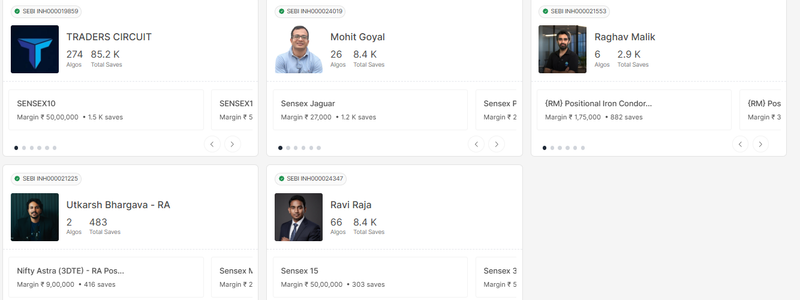
AlgoTest is a **no-code algo trading software** built for retail traders who want transparency, control, and automation.
Here’s what sets it apart:
- **Live strategies from** [**SEBI-registered Research Analysts**](https://algotest.in/blog/research-analysts-demystified-what-your-finfluencer-needs-to-do-now-sebi)
- **Fully backtested** with trade logs, drawdowns & slippage-adjusted returns
- **Forward testing & paper trading** support
- **One-click broker integration** (Dhan, Upstox, Zerodha, etc.)
- **Real capital deployment**
- **Portfolio building & optimization** across strategies
Rather than giving you a single “stock tip,” AlgoTest gives you full control to backtest and stress test your **strategy.**
_Read our_ [_RA Algos doc_](https://docs.algotest.in/ra-algos/research-analyst/) _to learn how to choose, test, and automate a SEBI Reg. RA strategy._
### What About Costs?
Platform
Access Type
Typical Pricing
**Waya**
Mobile App + Smallcase
₹999/qtr or ₹1499/year + Smallcase fees
**AlgoTest**
Web + Live Trading
INR 100/execution, plan starts from INR 500
### What Is Backtesting vs. Forward Testing?
Before you put real money into any strategy, you want to know: **Has this worked in the past? And is it working now?**
That’s where backtesting and forward testing come in:
## Backtesting
Backtesting means testing a strategy on **past market data**. For example:
- What if I traded this strategy from Jan 2018 to Dec 2023?
- What was the win rate, drawdown, and profit?
This helps identify if the strategy is fundamentally sound and worth considering.
## Forward Testing
Forward testing shows you how a strategy is performing in the **live market right now,** using virtual or real trades. It's like paper trading:
- You get daily performance updates.
- You see if the strategy is still holding up in current conditions.
**AlgoTest shows both.** You can see a strategy’s historical performance (backtest) and how it’s doing today (forward test). Waya, on the other hand, gives you stock tips but doesn’t show you how previous tips have played out, unless you manually track them.
### TL;DR
Category
Winner
Transparency
**AlgoTest**
Strategy Access
**AlgoTest**
RA Registration
Tie
Broker Integration
**AlgoTest**
Portfolio Creation
**AlgoTest**
Backtest + Forward Test
**AlgoTest**
Mobile-first Simplicity
**Waya**
* * *
### So, Which One Should You Pick?
- **If you want stock tips in a mobile app with little context**, and don’t mind a black-box system: Waya can work as a lightweight option.
- **But if you’re serious about strategy-level investing**, want full transparency, and want to deploy live trades with real brokers: **AlgoTest is the platform that actually works.**
* * *
## Why AlgoTest RA Algos Exists
We launched RA Algos because we saw too many platforms promise returns without accountability.
- We don’t promise 90% accuracy.
- We show you actual trade logs.
- We work only with verified SEBI Registered RAs.
- We empower you to test, execute, and optimize — without hidden data.
**_"Waya sells comfort. AlgoTest delivers control."_**
AlgoTest offers a Crypto Marketplace too, backtest, paper trade, and deploy expert-created strategies for free, learn more about the [AlgoTest strategy marketplace here.](https://algotest.in/blog/algo-trading-marketplace-india/)
## FAQs
**Is Waya SEBI Compliant?**
Waya is a SEBI Registered RA.
**Can I automate strategies on Waya?**
No. Waya does not offer automation, algo execution, or forward testing.
**Can I try AlgoTest before paying?**
Yes. You get **free forward tests** and visible backtest reports for each strategy.
**Is AlgoTest also SEBI Registered?**
AlgoTest is a tech platform. Every strategy listed is built and published by a SEBI Registered RA.
Related: [**AlgoTest vs. Stratzy \| Which One Better for SEBI Registered RAs' Algos?**](https://algotest.in/blog/ra-algos-vs-stratzy/)
## Final Verdict
If you want:
- A hands-on investing experience
- Verifiable trade data
- Tools that scale with your experience
Choose **RA Algos by AlgoTest, i** f you want:
- A basic portfolio without explanation or control
- Passive investing with no insights
You’ll probably prefer **Waya**.
✅ The choice is yours. Just make sure it’s informed.
To check other similar platforms, head over to [this article.](https://algotest.in/blog/ra-algos-vs-univest/)
---
This blog is powered by Superblog. Visit https://superblog.ai to know more.
---
## AlgoTest vs Univest: SEBI Registered Strategies – Reality vs Hype
Author: AlgoTest
Author URL: https://algotest.in/blog/author/algotest/
Published: 2025-06-16
URL: https://algotest.in/blog/ra-algos-vs-univest/

In a world where flashy returns and influencer-backed promises dominate your feed, it’s becoming harder for retail traders to separate fact from fiction. Both **Univest** and [**RA Algos by AlgoTest**](https://algotest.in/feature/ra-algos?utm_source=blog&utm_medium=organic&utm_campaign=seo) claim to simplify trading through SEBI-registered advice. But dig a little deeper, and you’ll find one is built on transparency, the other on illusions.
Here is something that we published a few months ago:
**Quick Comparison Table**
Feature
**AlgoTest – RA Algos**
**Univest**
Platform Type
Marketplace of SEBI Registered RAs
In-house SEBI RA (Univest Advisors LLP)
Backtesting
Available, 25 Free every week
Not available
Forward Testing
Available, free for first few days
Not available
Algo Trading
Yes
No
P&L Disclosure
With brokerage, slippage & charges
Without brokerage or tax disclosure
Signal Latency
Ultra Fast Execution
App notifications delayed, Telegram used without informing
Slippage Awareness
Slippage can be added in logs and backtests reports
Ignored, unrealistic entries and exits
* * *
## Univest's Red Flags: What We Discovered
Over the course of 10 days of live trading and 1 month of forward (paper) trading, we tracked every trade issued by Univest. Here’s what we found:
### 1. **Delayed Notifications**
- App notifications often arrived too late to act on.
- Univest privately told us to use Telegram/WhatsApp instead, but never disclosed this to users.
### 2. **Misleading P&L Figures**
- Univest claimed profits of ₹2,908 in options.
- Our actual results: **₹ -19,293** after brokerage and charges.
- No visibility of brokerage, taxes, or costs in their reports.
### 3. **Ignored Slippage**
- For options, exact entry prices are shown without a realistic execution range.
- Every trade we executed suffered from negative slippage, especially in illiquid contracts.
### 4. **High, Undisclosed Leverage**
- Several trades involved naked futures positions, carried overnight with no disclaimer.
- Leverage levels exceeded 4x in some cases, drastically increasing risk.
### 5. **TEJASNET Trade, Manipulation?**
- Trade issued on a **market holiday** with entry range of ₹1,180–₹1,210.
- Market opened next day at ₹1,425, impossible to enter the trade.
- Yet, Univest claimed this trade hit target and included it in performance reports.
### 6. **Fake Reviews and Ratings**
- On both Google Play and App Store, rating patterns show fake 5-star reviews.
- Real users mention delayed notifications, misleading results, and losses.
**Features and Analysis**
### 1\. The Core Offering: Marketplace vs. In-House
[**RA Algos by AlgoTest**](https://algotest.in/ra-algos?utm_source=blog&utm_medium=organic&utm_campaign=seo&utm_source=blog&utm_medium=organic&utm_campaign=seo)
- **Marketplace model**: Aggregates dozens of SEBI-registered research analysts, each offering their own algos.
- **Choice & competition:** You can compare track records, backtest any RA’s algo, and select the one that matches your risk appetite.
- **Decentralized accountability:** Every RA’s trade recommendation logs is published, with full transparency on costs, slippage, and taxes.
**Univest**
- **In-house RA:** All advice comes from a single entity (Univest Advisors LLP).
- **Limited diversity:** Tips (recommendations) are given by their team.
- **Opaque performance:** P&L figures are presented without full breakdowns, leaving users in the dark about real costs.
**_Why it matters:_** _A strategy_ [_marketplace_](https://algotest.in/blog/algo-trading-marketplace-india/) _drives RAs to perform, your success is their reputation. An in-house model risks a single point of failure and limited accountability._
Read more: [**StockMock Vs Waya**](https://algotest.in/blog/ra-algos-vs-waya)
### __ 2\. Backtesting & Forward Testing: Simulate Before You Commit
**RA Algos by AlgoTest**
- **Historical data since 2017:** Over 7+ years of minute-level data across Nifty, BankNifty, Finnifty, Sensex and more.
- **25 free backtests per week:** Backtest any algo without paying; perfect for vetting multiple RAs.
- **Advanced modeling:** Add slippage, brokerage, exchange, cost and taxes to your data.
- **Forward testing (paper trading):** Free trial period lets you run real-time signals with virtual capital.
**Univest**
- **No backtesting:** Strategies cannot be simulated against historical data, blind faith required.
- **No paper trading:** Users must deploy capital to “test” performance, exposing them to full market risk from day one.
**_Why it matters:_** _Backtesting and forward testing are the cornerstone of systematic trading. Without them, you’re flying blind, exposed to hidden pitfalls and untested edge decay._
Read More: [**Algotest vs Stratzy**](https://algotest.in/blog/ra-algos-vs-stratzy)
### __ 3\. Algo Trading & Execution Speed
**RA Algos by AlgoTest**
- **Automated API execution:** Integrate directly with 45+ brokers; trades fire within milliseconds of signal generation.
- **Zero manual lag:** No reliance on mobile notifications; every order is placed automatically.
- **Robust error handling:** Automatic reconnections, retry logic, and real-time alerts if orders fail.
**Univest**
- **Manual notifications:** Strategy signals are pushed via app alerts (often delayed) or Telegram messages (undisclosed channel).
- **High latency risk:** Market moves fast; minutes of delay can turn winners into losers.
- **No automated fallback:** If you miss a notification, there’s no backup execution.
**_Why it matters:_** _In derivatives markets, where spreads are tight and instruments are leveraged, execution speed can define profitability. AlgoTest’s automated infrastructure ensures you never miss a beat._
Also read: [Automate SEBI Registered Analyst Strategies (No Coding Algo Trading)](https://algotest.in/blog/sebi-registered-analyst-strategies/)
### 4\. P&L Transparency & Slippage Awareness
**RA Algos by AlgoTest**
- **Full Report disclosure:** Algo reports include P&L, max drawdown and many other metrics after brokerage, exchange fees, and taxes.
- **Slippage modeling:** Choose conservative, moderate, or aggressive slippage to stress-test dry-runs.
**Univest**
- **Gross P&L only:** Reports show idealized profits, omitting commissions, taxes, and slippage.
- **No slippage:** Unrealistically assumes you always get best-price fills, which is impossible in fast markets.
- **Surprise costs:** Users discover real costs only after settlements, often too late to react.
**_Why it matters:_** _Accurate reports prevent nasty surprises when the bill comes. Knowing your true performance empowers smarter position sizing and risk control._
### **__** 5\. Risk Management & Leverage Visibility
**RA Algos by AlgoTest**
- **Full risk stats:** MaxDD charts and other metrics are shown in the reports so that users can analyse the algo before taking them live.
**Univest**
- **Limited risk stats:** No Max Drawdown (MaxDD) charts or stress-test reports provided.
**_Why it matters:_** _Proper risk management is the bedrock of longevity. Transparency around leverage and drawdowns keeps traders in the game through rough patches._
### 6\. User Interface & Experience
**RA Algos by AlgoTest**
- **Algo-centric design:** Dashboards organized by RA, algo, and instrument, minimizing clicks to insights.
**Univest**
- **Generic panels:** Screens resemble basic order-entry apps; strategy details are buried in menus.
- **Manual setup:** No visual builder, users must memorize syntax or copy/paste commands.
**_Why it matters:_** _A well-designed UI accelerates adoption and reduces errors. When you can set up live trading as quickly as you test a prototype, edge capture becomes frictionless._
### 7\. Community & Support
**RA Algos by AlgoTest**
- **Active Telegram group** **(14k+ members):** Algos discussions, weekly market debriefs, and RA Q&A sessions.
- **Webinars & tutorials:** Monthly live workshops with RAs, covering new algos and platform enhancements.
**Univest**
- **No public community:** No forum or group for peer support.
- **Slow email tickets:** Support queries often take 24–48 hours for a response.
- **Limited educational content:** Few recorded sessions; lack of systematic tutorials.
**_Why it matters:_** _Learning never stops in trading. A vibrant community and responsive support shorten your learning curve and keep you on top of market shifts._
### 8\. Regulatory Compliance & Trust
**RA Algos by AlgoTest**
- **All RAs SEBI-registered:** Verify credentials, experience, and compliance history at a glance.
**Univest**
- **Single-entity compliance:** Only Univest Advisors LLP is SEBI-registered; individual analysts lack direct visibility.
**_Why it matters:_** _In regulated markets, proof of compliance isn’t negotiable. Transparent audit logs and verified credentials protect both traders and their capital._
Read More: [**AlgoTest vs Sensibull**](https://algotest.in/blog/algotest-vs-sensibull/)
## **Why RA Algos Was Created by AlgoTest?**
We built [RA Algos](https://algotest.in/feature/ra-algos?utm_source=blog&utm_medium=organic&utm_campaign=seo) to offer an honest, data-driven path for traders:
- Every algo is built by a SEBI Registered RA
- You can backtest it, forward test it, and automate it.
- Slippage, brokerage, and costs can be included in our reports
- Nothing is hidden. No unrealistic promises. No fake win rates.
_“90% of retail traders lose money in derivatives.” – SEBI_
_Yet on AlgoTest,_ **_45% of active users were gross profitable in FY._** _2023-24, because we give them real tools, not marketing fluff._
Learn how to choose, test, and automate [SEBI Reg. RA Algos on AlgoTest](https://docs.algotest.in/ra-algos/research-analyst/)
## Don’t Get Misled by Flashy Numbers
If someone promises 100% win rates in trading, they’re either lying, lucky, or leveraging data manipulation.
**Beware high‑accuracy claims.** A strategy that advertises extremely high hit‑rates often hides **_negative skew_**, the tendency to generate many small gains but suffer occasional huge losses, like this:
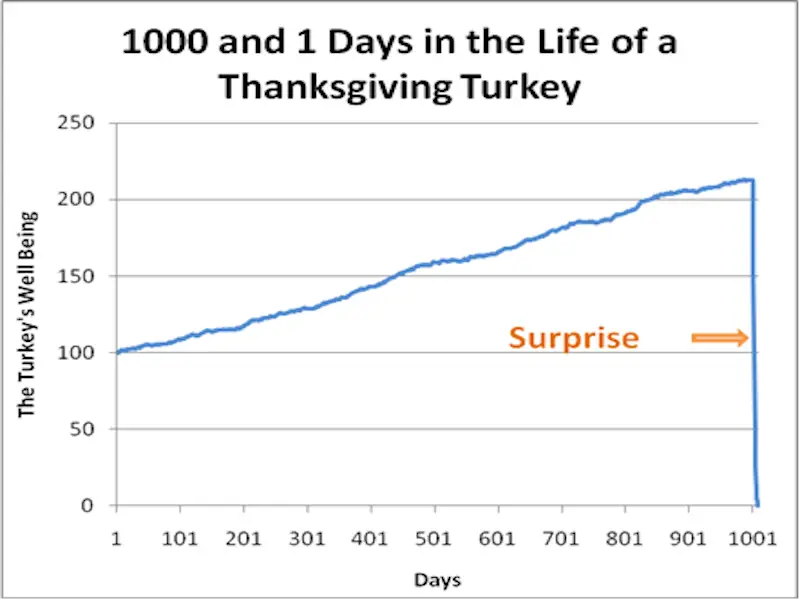
Be extra skeptical of any algo promising **near 100% accuracy.**
Trading is hard. But it can be made easier with:
- Transparent data
- Real SEBI Reg. RAs
- Automated execution
That’s what [RA Algos](https://algotest.in/feature/ra-algos?utm_source=blog&utm_medium=organic&utm_campaign=seo) by AlgoTest stands for. Check out [RA Algos](https://algotest.in/feature/ra-algos?utm_source=blog&utm_medium=organic&utm_campaign=seo) now!
---
This blog is powered by Superblog. Visit https://superblog.ai to know more.
---
## AlgoTest vs. Stratzy | Which is Better for SEBI-Registered RAs' Strategies?
Author: AlgoTest
Author URL: https://algotest.in/blog/author/algotest/
Published: 2025-06-16
Category: RA Algos
Category URL: https://algotest.in/blog/category/ra-algos/
Tags: trading strategies, ra algos
Tag URLs: trading strategies (https://algotest.in/blog/tag/trading-strategies/), ra algos (https://algotest.in/blog/tag/ra-algos/)
URL: https://algotest.in/blog/ra-algos-vs-stratzy/
Looking for **reliable, SEBI-compliant trade recommendations**?
You’ve probably come across both **Stratzy** and [RA Algos by AlgoTest](https://algotest.in/ra-algos?utm_source=blog&utm_medium=organic&utm_campaign=seo). While both aim to simplify investing, their **approach, transparency, and technology** differ widely.
Here’s a breakdown to help you decide.
* * *
## Overview
Feature
**AlgoTest – RA Algos**
**Stratzy**
**Regulatory Framework**
Marketplace of SEBI Registered RAs
SEBI Registered RA (Stratzy Advisors LLP)
**Type of Recommendation**
Strategy-based Algo Recommendations
Discretionary stock advice and algo recommendations
**Transparency**
Full trade logs
Full trade logs
**Backtesting Available?**
Yes – with 7 years data
No
**Forward Testing?**
Yes – trade with virtual capital
No
**Algo Trading?**
Available
Available
**User Control**
Choose, test & activate algos
Follow suggested picks
**Platform Role**
Tech platform only, not SEBI Reg. RA
Stratzy is SEBI Reg. RA
* * *
## Key Differences
### 1. **Who Gives the Recommendation?**
- **Stratzy**: All recommendations come from their in-house RA.
- **RA Algos by AlgoTest**: Features multiple SEBI Registered RAs. You choose whose algos to follow.
### 2. **How Transparent is the Track Record?**
- [AlgoTest](https://algotest.in) shows **daily-level trade logs**, allow backtest + forward test for every algo. Making it easier to verify credibility.
- Stratzy also shows per-trade performance.
### 3. **Is It Algo-Based or Manual?**
- **Stratzy** is a passive suggestion platform, you get stock ideas and execute them manually. Algo Trading is also available on Stratzy.
- **AlgoTest** gives you strategy-based signals with full automation.
### 4. **Can You Test Before You Trust?**
- On AlgoTest, you can:
- Backtest the algo
- Forward test it with virtual capital
- Only then subscribe or automate
- Stratzy doesn’t allow testing. You're expected to follow based on description alone.
Related: [Automate SEBI Registered Analyst Strategies (No Coding Algo Trading)](https://algotest.in/blog/sebi-registered-analyst-strategies/)
## Who Should Use What?
User Type
Best Option
Wants to experiment with strategies
**RA Algos by AlgoTest**
Comfortable with manual investing
Stratzy
Wants automation & transparency
**RA Algos by AlgoTest**
Needs multiple SEBI Reg. RAs to compare
**RA Algos by AlgoTest**
* * *
## **What is Stratzy?**
**Stratzy** is a SEBI-registered Research Analyst (Stratzy Advisors LLP) that builds in-house strategies across themes like momentum, income, and sector-based investing. They offer a plug-and-play experience with:
- Prebuilt strategies
- Mobile-first interface
- One-click broker execution (Zerodha, Upstox, etc.)
However, Stratzy operates as a **closed system**:
- You can’t test strategies before running them live
- You can’t mix-and-match or create a portfolio
- You don’t get real-time performance until you deploy real money
* * *
## What are RA Algos by AlgoTest?
[**RA Algos on AlgoTest** is a **marketplace,**](https://algotest.in/blog/algo-trading-marketplace-india/) not a research analyst itself, where SEBI-registered RAs list their strategies that traders can **backtest, forward test and trade live.**
Here’s what you get:
- 600+ strategies from verified RAs
- Trade-level transparency (win rate, drawdowns, execution costs)
- Free backtesting with realistic costs
- Paper trading (forward testing) before going live
- Broker integration for automation
- Ability to combine multiple strategies into one portfolio
Learn [how to use RA Algos on AlgoTest.](https://docs.algotest.in/ra-algos/research-analyst/)
### 📊 Feature-by-Feature Comparison
**Feature**
**RA Algos by AlgoTest**
**Stratzy**
**SEBI Registered?**
Yes (multiple SEBI RAs listed)
Yes (Stratzy Advisors LLP)
**Type of Recommendation**
Strategy-based algo systems
Thematic in-house strategies
**Strategy Marketplace**
Yes – choose from 10+ RAs
No – only Stratzy’s own strategies
**Backtesting**
Yes – 7+ years with full trade logs
Not user-accessible
**Forward Testing**
Yes – real-time paper trading
Not available
**Live Execution**
Broker integrated
Broker integrated
**Transparency**
Full metrics: win rate, drawdown, costs, logs
Limited – summary stats only
**Customisation**
Full – choose, test, combine
No – use as-is
**Portfolio Creation**
Combine strategies into a portfolio
One strategy at a time
**Platform Role**
Software (not an RA itself)
SEBI RA + execution
* * *
## Feature Explanations
#### SEBI Registered?
- **AlgoTest**: Hosts a marketplace of RAs registered with SEBI under INH codes. AlgoTest itself is _not_ an RA, it just facilitates access to multiple RAs with their own SEBI registrations.
- **Stratzy**: A single SEBI-registered RA (Stratzy Advisors LLP) that creates and runs all strategies internally.
* * *
#### Strategy Marketplace
- **AlgoTest**: You can browse, compare, test, and activate strategies from **multiple analysts**.
- **Stratzy**: You can only choose from strategies made by their **in-house team**.
#### Backtesting
- **AlgoTest**: All [strategies are backtested](https://algotest.in/blog/guide-to-backtesting-trading-strategies) over **7+ years of historical data**, factoring in brokerage, taxes, and slippage. You can run your own backtests for free.
- **Stratzy**: Shows some basic performance stats (like CAGR), but users can’t view trade-by-trade backtests or test different date ranges.
* * *
#### Forward Testing
- **AlgoTest**: Offers real-time **paper trading**. You can activate a strategy using virtual capital and track its **current performance** before risking real money.
- **Stratzy**: Doesn’t offer paper trading. You can only see how a strategy performs after going live with actual funds.
* * *
#### Live Execution
- Both platforms allow you to **automate execution** through popular brokers like Zerodha, Upstox, and Dhan. No need to place trades manually.
* * *
#### Transparency
- **AlgoTest**: Every strategy shows full trade logs, drawdown curves, win/loss ratio, risk-reward metrics, and more, updated daily.
- **Stratzy**: Offers a performance summary, but not at the trade-level or with live forward-tested tracking.
* * *
#### Customisation
- **AlgoTest**: You can choose strategies based on margin, deployment days, and trading instrument, and even mix multiple strategies.
- **Stratzy**: Offers a simpler plug-and-play interface, but doesn’t allow any logic or structural customisation.
* * *
#### Portfolio Creation
- **AlgoTest**: Lets you **combine multiple strategies** into a [portfolio,](https://algotest.in/blog/backtest-multiple-strategies-together-using-the-portfolio-feature) view performance correlations, and optimize based on days, drawdowns, etc.
- **Stratzy**: You can only run **one strategy at a time** per account, no multi-strategy portfolios.
* * *
#### Platform Role
- **AlgoTest**: Works like a research marketplace or software, connects traders to SEBI RAs but is not an advisory entity itself.
- **Stratzy**: Builds, maintains, and recommends all strategies directly as a SEBI RA.
* * *
### Final Verdict
Use Case
Best Platform
Want to test before going live?
✅ **AlgoTest**
Need full trade-level transparency?
✅ **AlgoTest**
Prefer plug-and-play simplicity?
✅ **Stratzy**
Want to combine multiple RAs?
✅ **AlgoTest**
Want mobile-first passive investing?
✅ **Stratzy**
* * *
### Why RA Algos Was Created by AlgoTest?
We built [RA Algos](https://algotest.in/feature/ra-algos?utm_source=blog&utm_medium=organic&utm_campaign=seo) to offer an honest, data-driven path for traders:
- Every algo is built by a SEBI Registered RA
- You can backtest it, forward test it, and automate it.
- Slippage, brokerage, and costs can be included in our reports
- Nothing is hidden. No unrealistic promises. No fake win rates.
_“90% of retail traders lose money in derivatives.” – SEBI_
_Yet on AlgoTest,_ **_45% of active users were gross profitable in FY._** _2023-24, because we give them real tools, not marketing fluff._
### Final Verdict
Both platforms serve very different user needs.
- If you're looking for **plug-and-play stock tips**, Stratzy may work.
- But if you want **real algos, run by SEBI RAs**, with **backtests, forward tests, and trade-level logs**, [RA Algos by AlgoTest](https://algotest.in/ra-algos?utm_source=blog&utm_medium=organic&utm_campaign=seo) gives you more **control, transparency, and flexibility**.
* * *
## FAQs
**Is AlgoTest a SEBI Registered RA?**
No. AlgoTest is only a tech platform. All algos are published by SEBI Registered RAs.
**Is Stratzy safe?**
Stratzy is a SEBI Registered RA, so it complies with regulatory standards. However, no platform can guarantee returns.
**Can I automate strategies on Stratzy?**
Yes. Stratzy offers strategy automation.
**Can I test AlgoTest RA Algos for free?**
Yes. You get 25 free backtests every week and 7 free trial of forward tests to see real-time performance before paying.
---
This blog is powered by Superblog. Visit https://superblog.ai to know more.
---
## What is Black Scholes model?
Author: AlgoTest
Author URL: https://algotest.in/blog/author/algotest/
Published: 2025-06-04
URL: https://algotest.in/blog/black-scholes-model/
# **What option traders can determine from** [**Black Scholes Tool**](https://algotest.in/black-scholes?utm_source=blog&utm_medium=organic&utm_campaign=seo) **?**
In options trading, we’re always asking the same question: **“Is this option priced fairly?”** But how do you _see_ “fair” in a sea of live prices?
In simple terms, Black Scholes is an option price calculator.
The **Black-Scholes Playground** is built to reveal a core truth:
> Price is just probability wearing a price-tag.
Provide the five market inputs, spot, strike, expiry, interest, and _your_ volatility guess and watch the model provide the option’s theoretical value.
### **What is Black-Scholes model?**
It is a mathematical formula that outputs the _fair_ price of an option when you supply five inputs: underlying price, strike, time to expiry, interest, and volatility.
## **Why traders should care?**
It gives a closed-form price for calls & puts. It lets you eyeball whether an option looks rich or cheap before trading.
### How to use the Black-Scholes tool?
Go to [Black Scholes tool](https://algotest.in/black-scholes?utm_source=blog&utm_medium=organic&utm_campaign=seo) on [AlgoTest](https://algotest.in/?utm_source=blog&utm_medium=organic&utm_campaign=seo):
Black Scholes Tool
1. **SPOT** = current underlying price
2. **STRIKE** = option’s strike price
3. **EXPIRY** = expiration date
4. **VOLATILITY (%)** = annualised IV (or your best estimate)
5. **INTEREST (%)** = risk-free rate for the option’s tenor
6. **DIVIDEND (%)** = expected continuous yield (0 for NIFTY/BANKNIFTY futures)
Click **“Calculate.”**
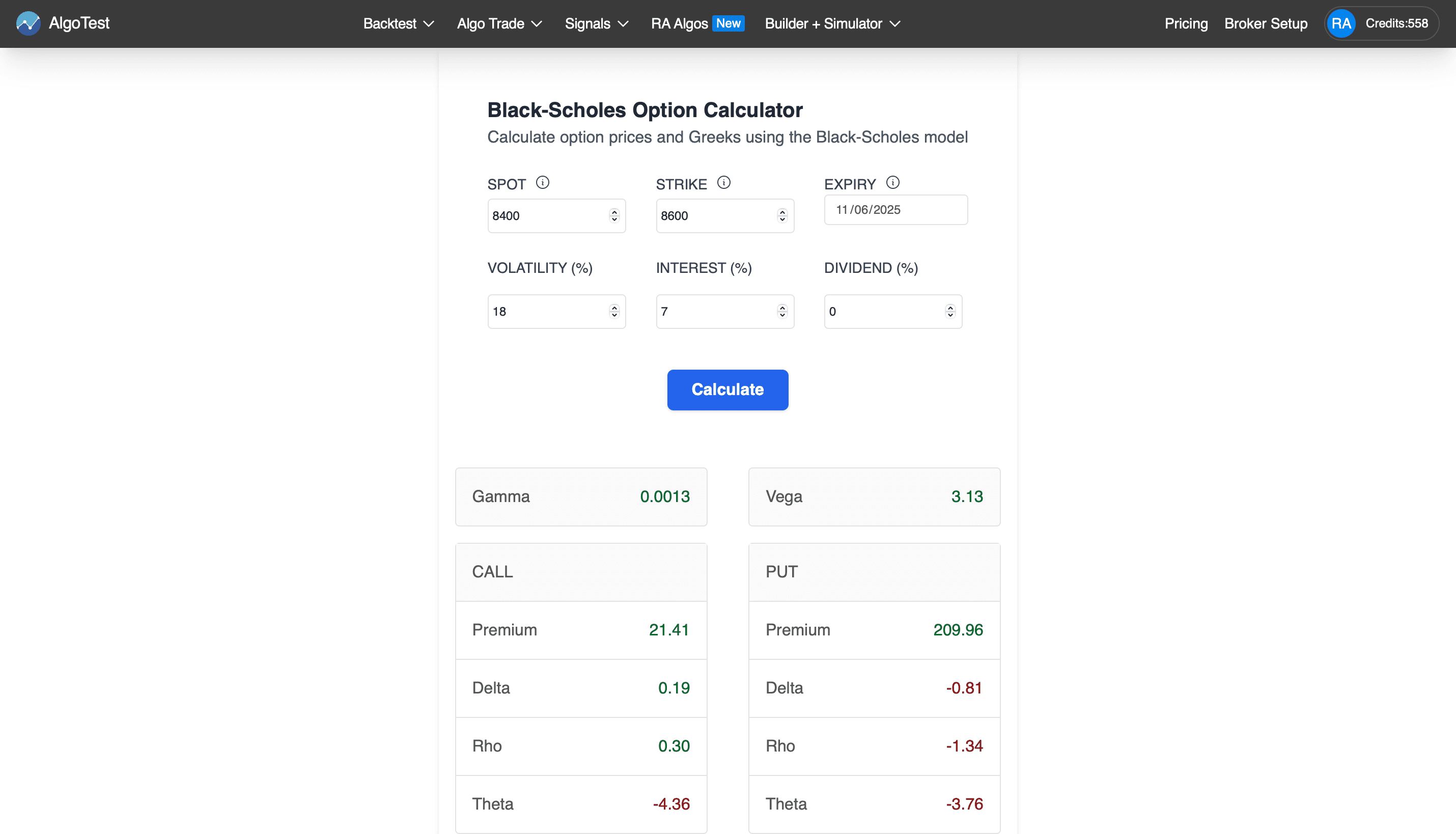Result
Read the output table: you can see call/put premiums and all the greeks.
Change any input and recalculate to see how price and risk metrics move.
### **What does it tell us?**
**\- Theoretical option premiums** under Black-Scholes assumptions.
**\- Directional risk (Delta), convexity (Gamma), volatility risk (Vega), time decay (Theta),** and **rate sensitivity (Rho)** for both calls and puts.
\- By comparing these outputs to actual market prices you can spot mis-pricings, build volatility surfaces or decide how aggressively to hedge.
If you want to learn about options in details, check out financial education section on [AlgoTest's documentation](https://docs.algotest.in/financial-education/).
---
This blog is powered by Superblog. Visit https://superblog.ai to know more.
---
## What is Virtual Coin Tosser?
Author: AlgoTest
Author URL: https://algotest.in/blog/author/algotest/
Published: 2025-05-14
URL: https://algotest.in/blog/what-is-virtual-coin-tosser-and-why-is-it-important/
## **What Option Traders Can Learn from a Simple Coin Toss**
In options trading, we often talk about having an **edge**. But how do you actually _find_ what edge looks like? The [**Virtual Coin Tosser**](https://algotest.in/coin-tosser) is designed to teach traders a fundamental truth:
Having an edge doesn’t mean winning every trade. It means winning over time.
This tool simulates a simple coin-tossing game, but with a twist that mirrors real-world trading: **you can choose the probability of heads**, i.e., you decide your edge.
## Why This Matters for Option Traders
[Option buying](https://algotest.in/blog/options-trading-strategies) and selling are ultimately [**probability-based games**](https://algotest.in/coin-tosser). Every time you take a trade, you're making a bet on a certain outcome with a specific probability. But most traders:
- Overestimate their edge
- Get shaken out after a string of losses
- Don’t understand the impact of bet sizing on long-term outcomes
This simulator helps you **visually experience** what it means to have an edge and why **execution over time** is what truly drives P&L.
## What You’ll Experience
As the game plays out over hundreds of tosses, you’ll start to see patterns familiar to any trader:
- You can have an edge and still **lose 10 times in a row**.
- You can win 5 times in a row with **no edge at all**.
- Your **profit curve** may look ugly in the short term, but eventually, it aligns with your edge.
> This mirrors real market behavior. Whether you’re buying weekly Bank Nifty calls or running a short straddle on expiry day, your edge only pays off if you **stick to the system** and size your bets smartly.
## Enter: The Kelly Ratio
[The Kelly Ratio](https://docs.algotest.in/clicktrade/strategy-builder/edge-calculator/#fractional-kelly-half-kelly--10-kelly) teaches you something most traders learn too late: **how much to bet** when you have an edge.
If your probability of winning is 55%, the Kelly formula tells you the ideal fraction of your capital to bet each time to maximize long-term growth, without blowing up your account.
It forces you to think in terms of **risk-adjusted returns**, not just P&L.
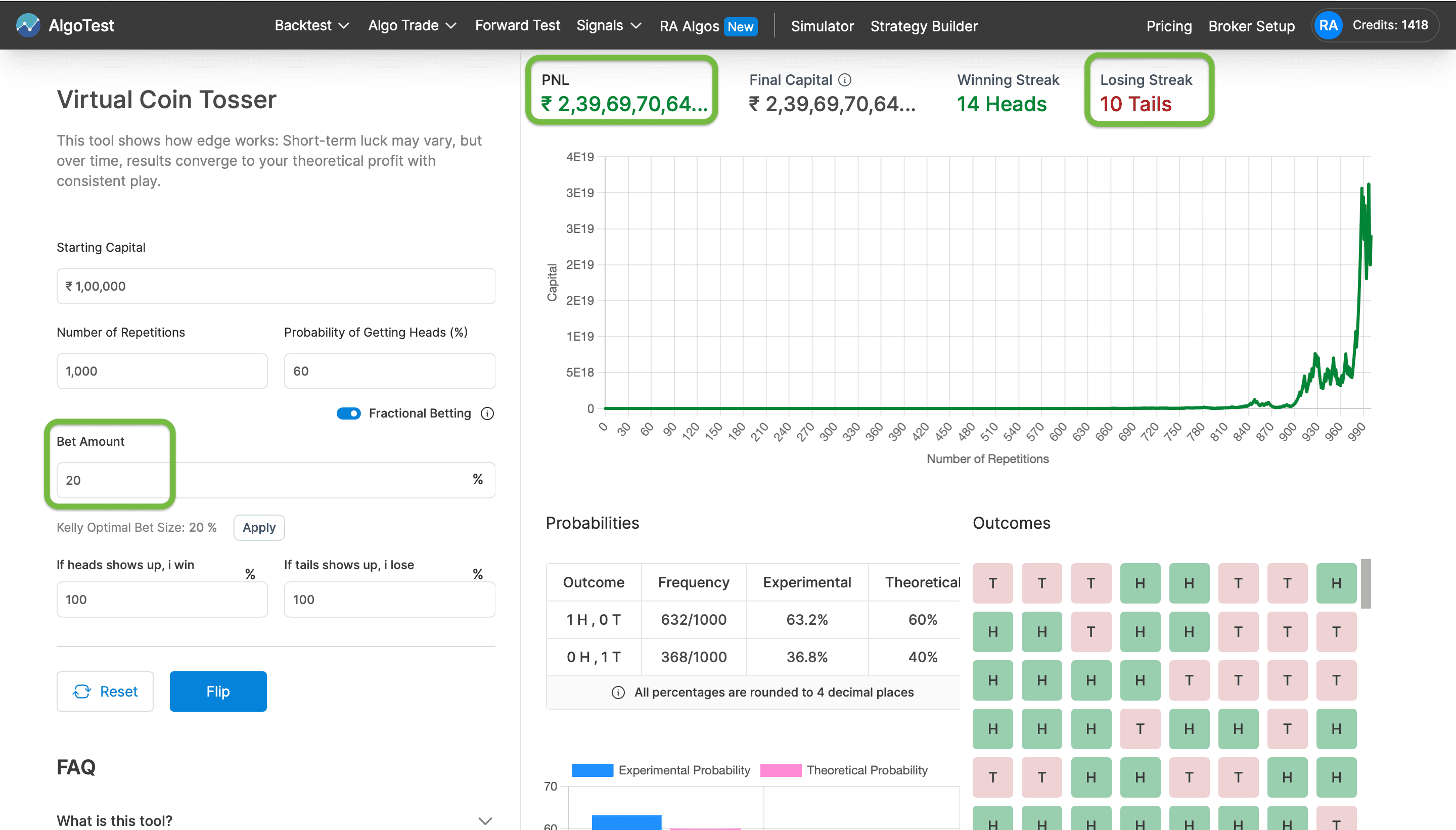
> Even if you're right more than you're wrong, betting too much can still ruin you.
> Betting too little and your edge never compounds. Kelly shows you the balance.
### Why Use This Before You Trade Real Money
This tool isn’t about simulating trades. It’s about **training your psychology**.
Use it to:
- **Build conviction** in your strategy, even when short-term results go against you
- Understand why **drawdowns are inevitable,** even with a statistical edge
- Explore how **bet sizing** affects your long-term wealth
- Learn how the **law of large numbers** works in your favor only if you keep playing
### The Big Lesson
Every options trade you take is like a coin toss, just with different odds and payouts.
You can’t control the outcome of each trade.
But you **can control**:
- The **probability** you bet on
- Your **position sizing**
- Your **emotional response** to streaks
The [**Virtual Coin Tosser**](https://algotest.in/coin-tosser) shows you how small edges, applied repeatedly and managed well, can lead to powerful long-term results.
> In the end, your edge is only as strong as your ability to stick with it.
Check out our [product documentation](https://docs.algotest.in/) to Master AlgoTest's features.
---
This blog is powered by Superblog. Visit https://superblog.ai to know more.
---
## What investors & traders should consider while navigating the markets?
Author: AlgoTest
Author URL: https://algotest.in/blog/author/algotest/
Published: 2025-04-28
URL: https://algotest.in/blog/what-investors-traders-should-consider-while-navigating-the-markets/
## What investors (stocks) & traders (F&O) should consider while navigating the markets
There are two types of participants in the stock market. It is important to understand the respective temperaments before we delve into what each one should consider while navigating the market:
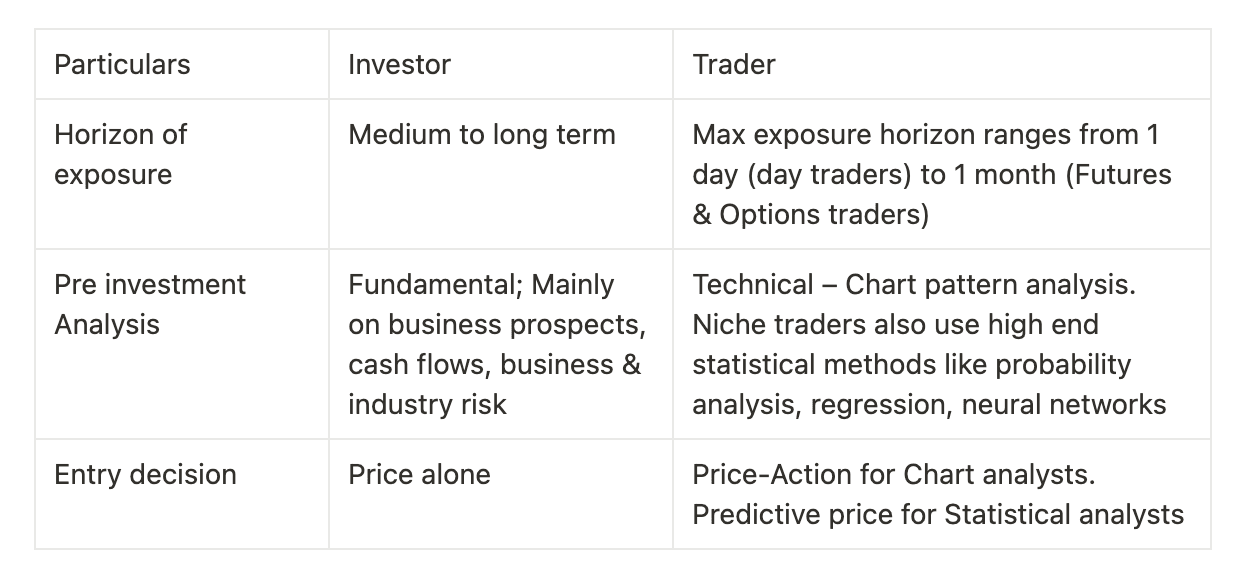
My franchise, [Nipuna Insights](https://www.linkedin.com/company/www.nipunainsights.com/) advises & invests as an Investor in stocks. It uses statistical methods for F&O trades in the index/stocks. So, based on my personal experience, having navigated the markets through many events of ups & downs for the recent past few years (Covid (2019-2020), Russia-Ukraine war (2022-), Inflation surge post pandemic, US-China Trade war (2019-20), Banking crisis in EU & US (2023), Fed’ quantitative tightening (2021-2023), China Economic slowdown (2023) & its impact, Trump tariffs (2025).
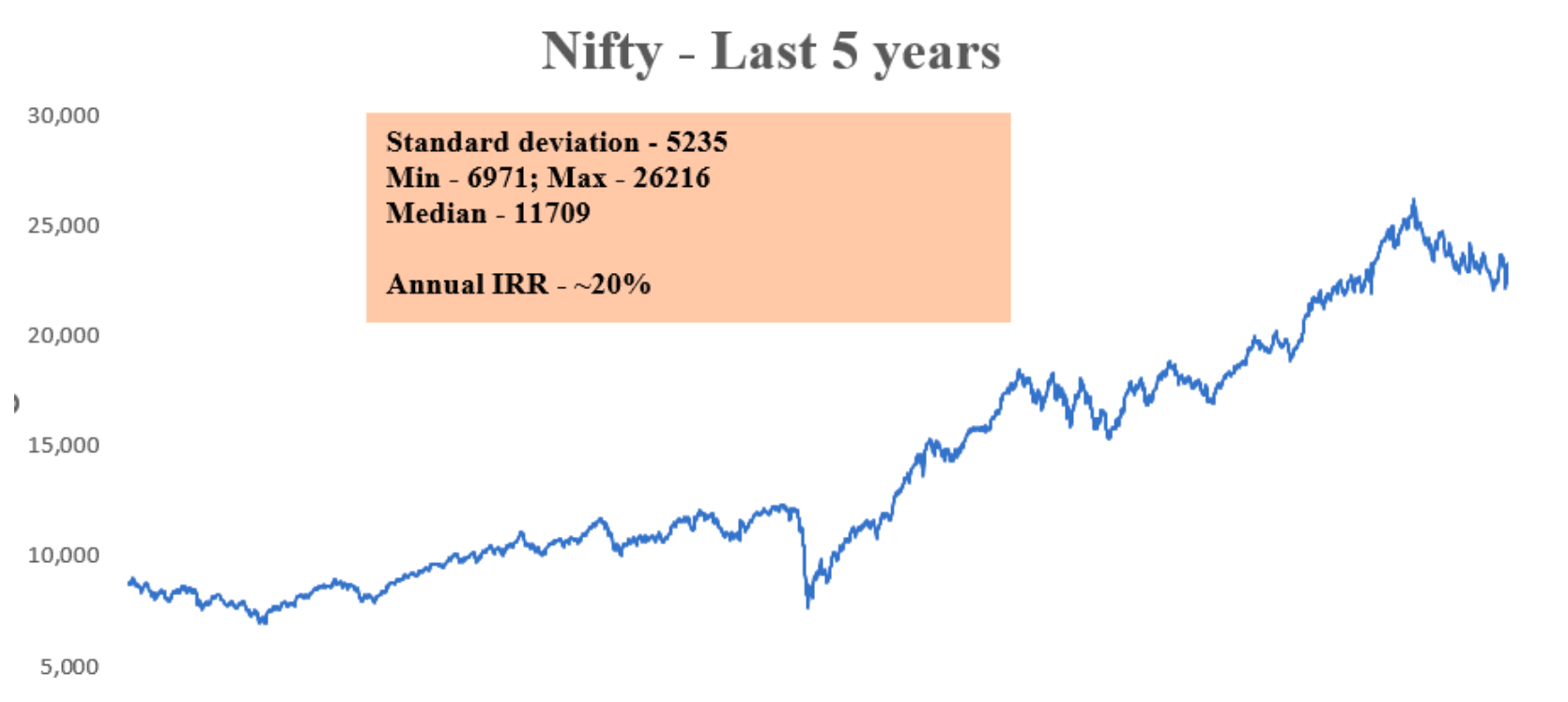
The statistics on the graph of Nifty show how volatile the market has been for the past 5 years. Maintaining its upward trendline with an annual IRR of ~20% pa, with SD of 5235 and the median lying at 11.7k for a range of 20k across the period, indicates that markets have not been smooth to navigate. In these circumstances, as is the characteristic of all markets, the question occurs:
**“How to survive?”**
Let me cover the softer behavioural aspects first and then delve into the finer objective factors, which I kept in mind over the past few years of whiplash. It has held me in good stead (touch wood) with alpha returns over the past 5 years¹.
## Softer behavioural aspects
These remain the same irrespective of the type of market participant. These don’t come easily but then you have to train your mind to be objective. My learnings are as follows:
- Have immense trust in his model, irrespective of how it unfolds initially. It is your BFF.
- Consistent usage of the model across the period. Never jump from one model to the other.
- Definitely don’t invest based on market tipsters & media news. They mushroom during good times and get into hibernation when the tide is against.
- Never get too greedy and keep yourself exposed to the market when your price targets have been achieved. Realise your profits into cash and reinvest them in new opportunities.
- Never get emotionally attached to any investment. Cut your losses if your fundamental thesis of investment has been negated. It doesn’t matter. The market gives enough opportunities.
Also Read: [Types of Trading in Stock Market](https://algotest.in/blog/types-of-trading-in-stock-market/)
## More objective factors based on my proprietary model of Investment into stocks
- My model gives the entry price and exit price. I always keep a further cushion on the entry price. I stay invested until I am near the exit price.
- Always update the model with the latest earnings to see if the fundamental thesis still holds. Irrational exuberance could be a cause of a price surge in some stocks. But never get caught in that. Capitalise by exiting when the target price has been reached rather than riding the wave.
- I double down when the price falls below my entry price, reflecting the trust in my model.
## On the F&O side
I use my knowledge of statistics to take positions. I advise/taking positions in index options. Usually, my horizon is only 1 day here. Some of the objective factors I use are:
- Know that every derivative trader has a view on whether the market will go up or down during his horizon. No matter how much he advises hedging trades with sophisticated structures, the underlying is always his bias on the prediction of the trend in the market (Up or down).
- If you deal with options, try to short options. Theta (or time elapse) is one predictable factor which will ensure decay in price when you have to cover up.
- Deal with far out-of-the-money options for entry in the direction of your bias. They decay faster.
- I have noticed that markets whiplash on expiry day, especially after 1:00 pm. Try to square off before that, else you may be exposed.
- Never trade on big events day like election results, RBI monetary policy etc. The whiplash could encircle you.
- Trade only when your model gives a clear indication. You don’t need to trade every day. More importantly, you don’t need to take many trades during the day unless your model is designed as a high-frequency trade. It only increases the broker’s commissions, Securities transaction costs & eats into your gains.
- Most importantly, follow the model religiously even if it gives you losses in the initial days. If you have [backtested](https://algotest.in) your model diligently, the results will be in line with the backtested model over a period of time. In essence, never lose your trusted friend, i.e., the MODEL!!!
\-\-\-----
_SEBI-registered Research Analysts are not permitted to advertise past return statistics. You can contact me at the email provided if you want to know about my alpha returns._
Also Read: [Options and Futures Trading](https://algotest.in/blog/futures-and-options-trading/)
## A bit about myself
## The Franchise
**Nipuna Insights (Nipuna)** is a franchise for creating and sharing wealth created out of investments/positions in the stock market. Managed solely by Mr. Shriram Sreenivasan.
🔗 LinkedIn Profile: [Shriram Sreenivasan](http://www.linkedin.com/in/shriram1211)
🔗 LinkedIn Page: [Nipuna Insights](https://www.linkedin.com/company/105676719/admin/dashboard/)
## Man Behind
Shriram is a CA and an MBA from IIM Bangalore with 20+ years of experience in the financial services domain and business world. He is a SEBI-registered Research Analyst. He was an Investment banker and Private equity fund manager before venturing into managing his family ventures and exiting out of them.
Currently, he is a Consultant to a renowned corporate group and advisor to a few startups.
## Track Record and Modus Operandi
Shriram has been investing in the stock market and making returns. His investment rationale is to find undervalued mid cap stocks with huge potential using his proprietary model. Given his experience evaluating various business models in different sectors during his financial services and private equity career, he can quickly assess a business's robustness and risk points. On the F&O side, he uses high-end statistical models using Conditional Probability, Sigmoids. Index positions are taken with a horizon of 1 day.
---
This blog is powered by Superblog. Visit https://superblog.ai to know more.
---
## Building Investor Profiles with Psychology and Economics
Author: AlgoTest
Author URL: https://algotest.in/blog/author/algotest/
Published: 2025-04-28
URL: https://algotest.in/blog/building-investor-profiles-with-psychology-and-economics/
# Risk Isn't Just Numbers: Building Investor Profiles with Psychology and Economics
In the world of finance, the combination of **risk capacity** and **risk aversion** constitutes what the industry terms as an investor's **risk profile**. Investments are deemed **suitable** for an investor **only if** the investment’s risks fall within the limits of both the individual's **risk capacity** and **risk aversion**.
One useful approach to navigating the practical challenges of assessing risk profiles is to distinctly understand:
- **Risk Capacity**
- **Risk Aversion**
## **1\. Risk Capacity**
Risk Capacity is the **objective ability** of an investor to take on financial risk.
**Key factors influencing Risk Capacity:**
- Investment time horizon
- Liquidity needs
- Income and overall wealth
- Applicable tax rates
**Important Note:** Risk capacity is **relatively immune** to psychological distortions or subjective perceptions. It depends purely on economic circumstances.
## **2\. Risk Aversion**
Risk Aversion refers to the **psychological traits and emotional responses** that determine an investor’s willingness to accept financial risk.
**Indicators of Risk Aversion:**
- The degree of emotional pain experienced with financial loss.
- The absolute amount of loss (in Rupees) that is deemed unacceptable by the investor.
- A phenomenon known as **loss aversion**:
Investors feel **more sadness on losses** than happiness from an equivalent gain.
**Example:** If asked, “Would you feel comfortable losing **10%** of your trading capital?” versus, “Would you feel comfortable losing **₹10,000**?” (assuming ₹1,00,000 capital), most people react more strongly to the absolute rupee loss. This distinction helps better gauge real-world **loss aversion**.
## **Factors Influencing Investor Risk Profiles**
Investor risk preferences are shaped by multiple influences, which can be broadly categorized as follows:
### **a) Genetic Predisposition**
- Studies show **20%–40%** of variations in equity exposure can be explained by genetic inclination toward risk-taking.
### **b) Financial Anamnesis**
- Influences from family, friends, and community investment philosophies.
- Early exposure to risk-takers or risk-averse environments.
### **c) Investment Diaries**
- Past personal investment experiences, especially during formative years (ages **16–25**).
### **d) Investment Histories**
- Macro-economic conditions experienced during one's lifetime.
- Example: Individuals who lived through the Great Depression exhibited more conservative investment behavior even 40 years later.
### **e) Community Effect**
- Moving into communities with higher stock market participation can **increase an individual’s probability** of investing by about **4%**.
### **f) Social Interactions and Cultural Differences**
- Political stability, social cohesion, and cultural factors influence long-term vs short-term investment preferences.
### **g) Risk as Feelings Effect**
- Decision-making about risks is often **emotionally** driven rather than **rationally** evaluated.
### **Practical Application: Risk Profiling Questionnaire**
To better assess an investor's emotional response to financial loss, the following scenarios can be used:
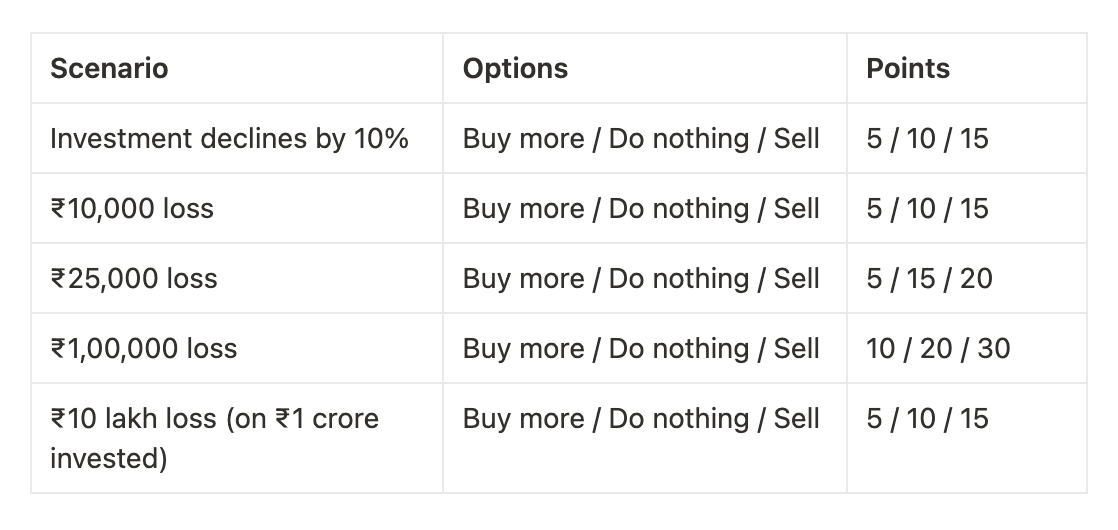
### **Emotional Sensitivity to Profits vs. Losses**
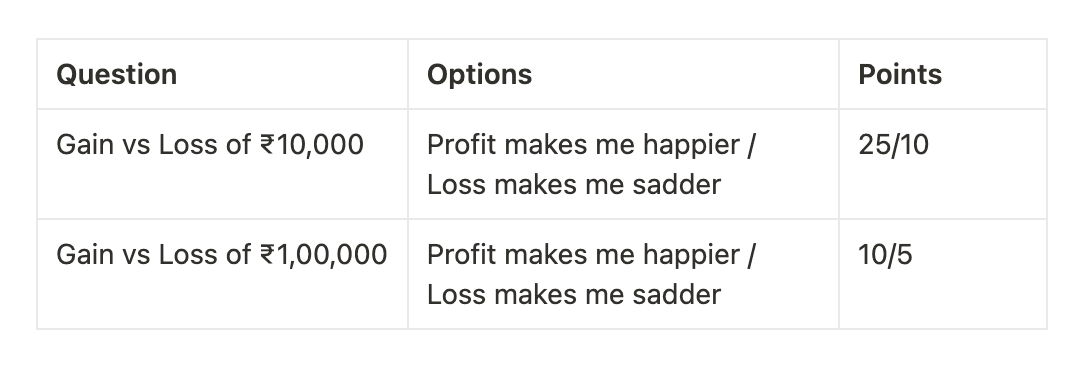
### **Expectations on Returns and Losses**
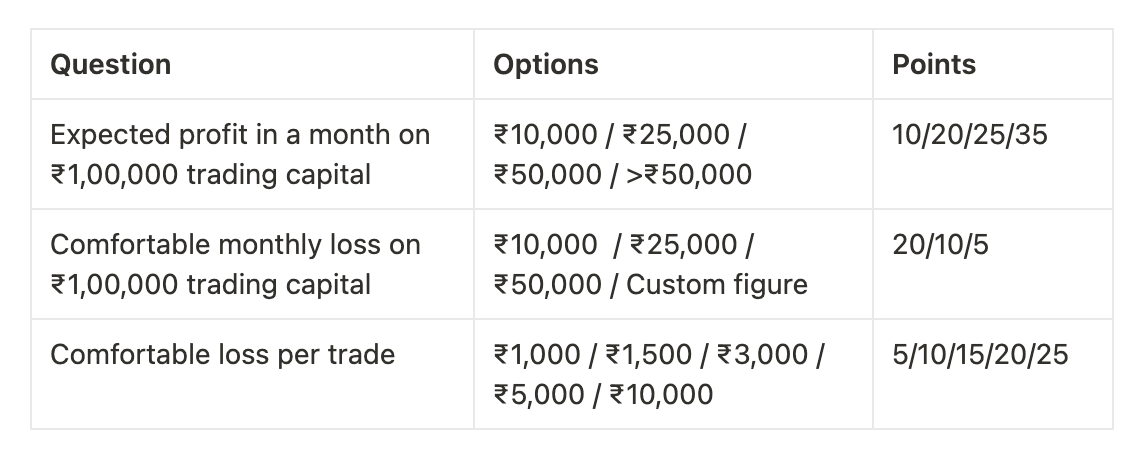
### **Scoring System for Risk Tolerance**
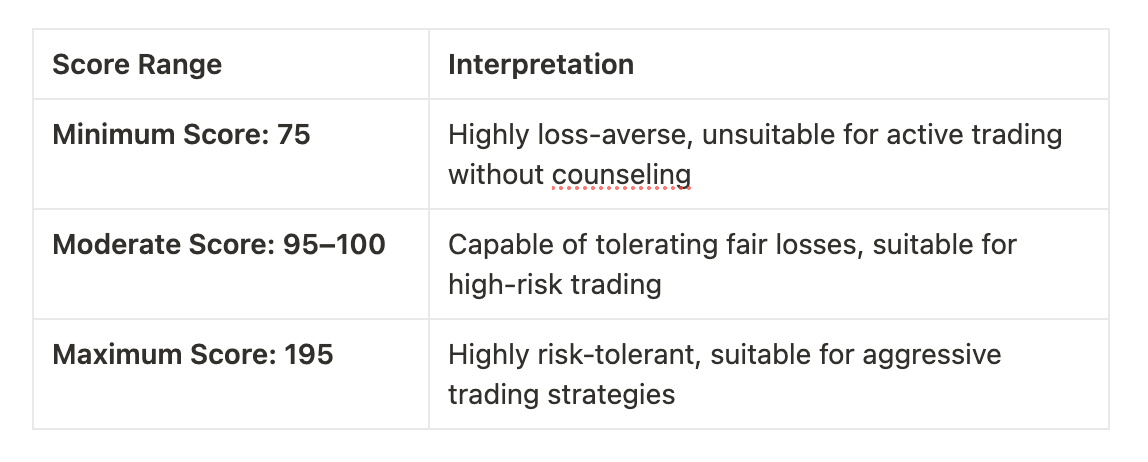
## **Conclusion**
- **Score below 95**: Requires **further individual counseling** before engaging in high-risk trading.
- **Score above 95**: Considered **suitable for trading activities**, including Futures and Options.
# **Final Thought**
###### Understanding the emotional and economic dimensions of risk-taking is critical for building a resilient investment or trading strategy. A scientifically designed risk profile assessment ensures suitability, better decision-making, and ultimately better investment outcomes. Author
Nikhil Dayanand Baljekar
SEBI: INH000009001
---
This blog is powered by Superblog. Visit https://superblog.ai to know more.
---
## Why Max Drawdown Matters in Risk Management
Author: AlgoTest
Author URL: https://algotest.in/blog/author/algotest/
Published: 2025-04-22
URL: https://algotest.in/blog/why-max-drawdown-matters-in-risk-management/
# Why Max Drawdown Matters in Risk Management
When evaluating any trading algo, especially in the world of RA Algos on AlgoTest, understanding **maximum drawdown** is absolutely crucial. It's not just about how much you can _make_; it's about how much you could _lose_ along the way.
In this article, we'll break down what max drawdown really means, why it’s different from a simple max loss per trade, how [RA Algos](https://algotest.in/ra-algo) makes it easier to analyze, and how you can use this information to build safer, smarter portfolios.
### **Max Loss Per Trade vs. Max Drawdown**
Let's clear up a common confusion first:
1. **Max Loss Per Trade** is the largest loss you could face in _one_ trade.
2. **Max Drawdown** is the biggest drop from a peak to a trough in your _cumulative equity_ across _multiple_ trades.
Think of it like hiking:
1. A single steep downhill patch = **max loss per trade**.
2. The longest, most painful downhill stretch from your highest point = **max drawdown**.
**Example:**
1. You might lose ₹1,500 on a bad day (max loss per trade).
2. But if you have 5 bad days in a row, your account could be down ₹7,000 from its peak, that's max drawdown.
In trading, **drawdown** tells a much deeper story about emotional and financial strain than a single bad trade ever could.
### **Why Most Retail Traders Ignore This Critical Info**
Retail traders often focus too much on:
1. Monthly returns
2. Win percentage
3. Recent performance ("How much did it make last month?")
**But:**
1. _Almost no one asks_: "How bad did it get during rough patches?"
2. _Almost no one prepares_: "If the algo loses for 10 days, will I stick with it?"
Ignoring max drawdown can lead to poor decision-making, like:
1. Panicking and exiting after a bad week (just before a recovery)
2. Overleveraging because you underestimated risk
3. Abandoning algos that are actually good but require patience
Simply put: **You must know what pain looks like before you experience it.**
### **How** [**AlgoTest**](https://algotest.in/ra-algo) **Displays Max Drawdown Data**
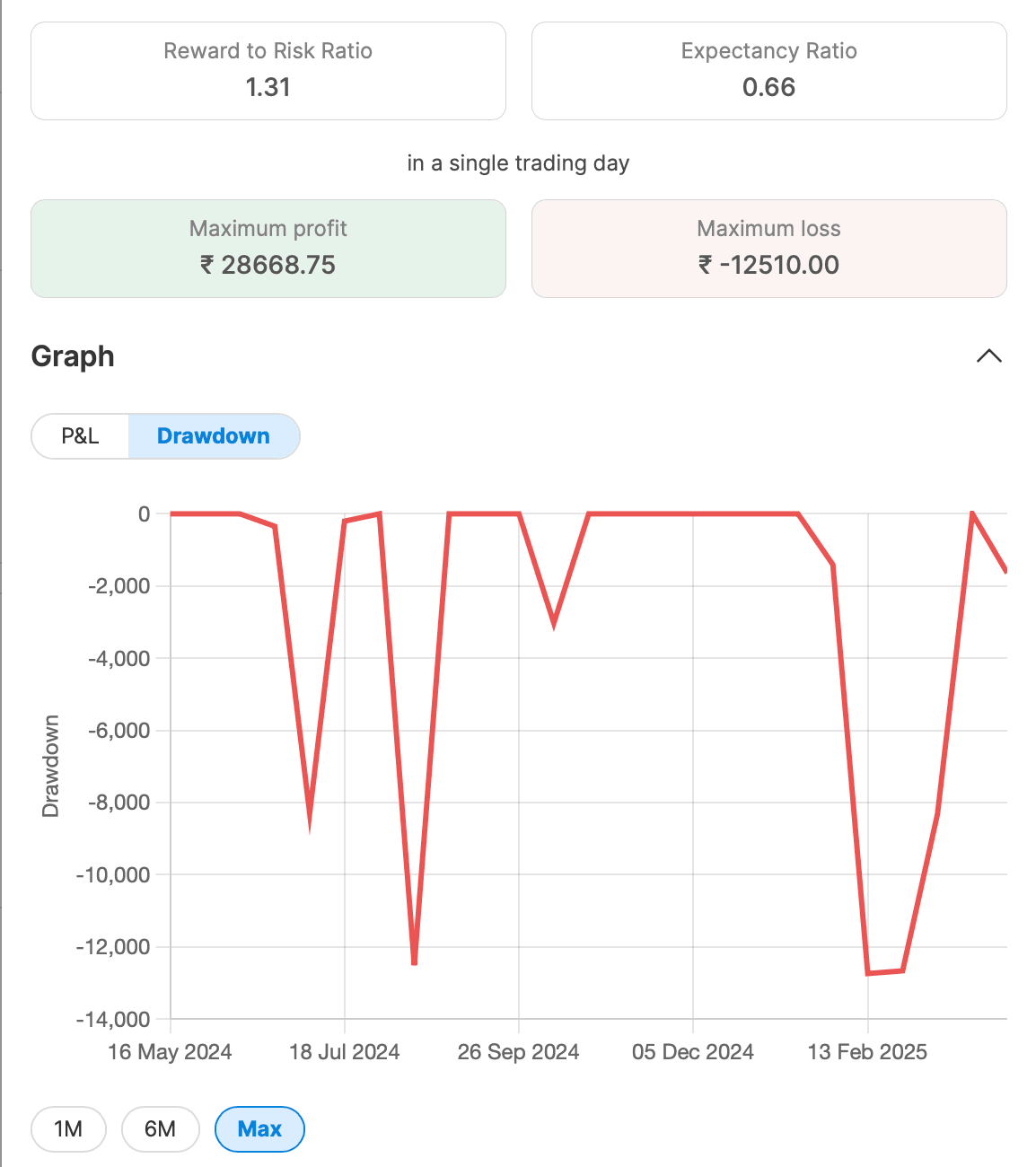
On AlgoTest, RA Algos showcase max drawdown figures transparently in multiple ways:
1. **Backtest Summary**: Clear display of "Max Drawdown (MDD)" as a % and as an absolute amount.
2. **Equity Curve Graph**: Visually shows drawdowns between peaks.
3. **Drawdown Graph**: Helps you see periods of consecutive losses.
AlgoTest also factors in:
1. Brokerage
2. Slippages
3. Transaction costs
Meaning, the drawdown number you see is _realistic_, not some idealized version without costs.
**Important**: Even though backtests are comprehensive, remember that future drawdowns can be worse than historical ones. Always allow a margin of safety.
### **How to Use Max Drawdown to** [**Build Better Portfolios**](https://algotest.in/ra-algo)
**Match Drawdown to Your Risk Tolerance**
1. If an algo has a historical 10% drawdown, ask yourself: "Am I mentally okay seeing my capital drop by 10%?"
2. If not, either reduce your capital allocation or find an algo with lower historical drawdowns.
**Diversify Smartly**
1. Pick algos that don't all peak and fall together.
2. Example: Combine a trending algo with a mean-reversion one.
**Plan Your Position Sizing**
1. Knowing the max drawdown helps you size your trades sensibly.
2. Allocate smaller capital per algo if drawdowns are higher.
**Set Realistic Expectations**
1. Expect occasional drawdowns _even in good algos_.
2. An algo that had a 5% drawdown in the past could easily see 7-8% in the future.
3. Mental preparation = stronger discipline when markets get tough.
**Pro Tip**: Some AlgoTest users set aside 1.5x or 2x the historical drawdown as a "mental reserve." This way, they aren't shocked if volatility spikes.
### **Conclusion: Respect the Drawdown**
Max drawdown is _not_ just another technical metric; it's a mirror reflecting the real emotional journey of trading.
When evaluating RA Algos:
1. Don't just get dazzled by high returns.
2. Study the max drawdown.
3. Understand what kind of rough patches you might encounter.
4. Allocate wisely and mentally prepare for adversity.
**In short:**
1. Max drawdown = Your "worst-case scenario companion"
2. Ignoring it = Setting yourself up for panic-driven mistakes
Thanks to [AlgoTest'](https://algotest.in) s clean presentation of drawdown data, with brokerage, slippage, and all costs included, retail traders today have no excuse for overlooking risk management.
**Disclaimer**: Past drawdowns do not guarantee future behavior. Always diversify and invest only capital you can afford to risk.
---
This blog is powered by Superblog. Visit https://superblog.ai to know more.
---
## Introducing InvestHQ - A Mutual Fund Simulator
Author: AlgoTest
Author URL: https://algotest.in/blog/author/algotest/
Published: 2025-04-21
URL: https://algotest.in/blog/introducing-investhq-by-algotest/
# Introducing InvestHQ - A Mutual Fund Simulator for the Curious Indian Investor
_(TL;DR: Build any MF portfolio ➞ test lumpsum, SIP, or auto‑rebalance ➞ see how it might have fared in the past. Free for now - give it a spin and tell me what breaks.)_
## **Why another “Mutual Fund Calculator”?**
Because most calculators stop at **static CAGR tables**. Markets - and portfolios - don’t move in straight lines, so why should our tools?
[InvestHQ](https://investhq.in) lets you:
1\. **Mix & match any Indian mutual funds** into a portfolio you actually care about.
2\. **Replay history**: Lump‑sum or SIP from any start date to any end date.
3\. **Stress‑test rebalancing** in three flavours:
\- Frequency‑based (monthly, quarterly, yearly…)
\- Band‑based (rebalance only if a weight drifts outside ±X%)
\- Hybrid (bands checked on your chosen frequency)
4\. **Compare the ride**: A smoother volatility profile often costs a few - or a few dozen-basis points of return. Now you can measure that trade‑off, not guess.
_Exit‑load logic, full tax modelling, and selectable transaction‑cost assumptions are coming soon._
## **The back‑story (a confession)**
I’ve spent 15 years as an options market‑maker and HFT technologist - hip‑deep in volatility, Greeks, and nanoseconds. Yet my personal capital? Mostly parked in money‑market funds.
\- **2008 crash trauma:** I cut my teeth on a short‑vol desk during the GFC while reading Shiller’s Irrational Exuberance. Valuations looked doomed forever.
\- **Perma‑bear inbox:** I subscribed to every newsletter that screamed “SPY overvalued at 200!” and missed a decade‑long melt‑up.
\- **Debt‑heavy portfolio:** Fast‑forward to 2025 in India - I’ve got rupees to deploy and a risk budget stuck in 2009.
Building InvestHQ is my way to **face the data** instead of the doom‑scroll. If a tool can help me shake analysis paralysis, maybe it can help others too.
## **What makes InvestHQ different?**
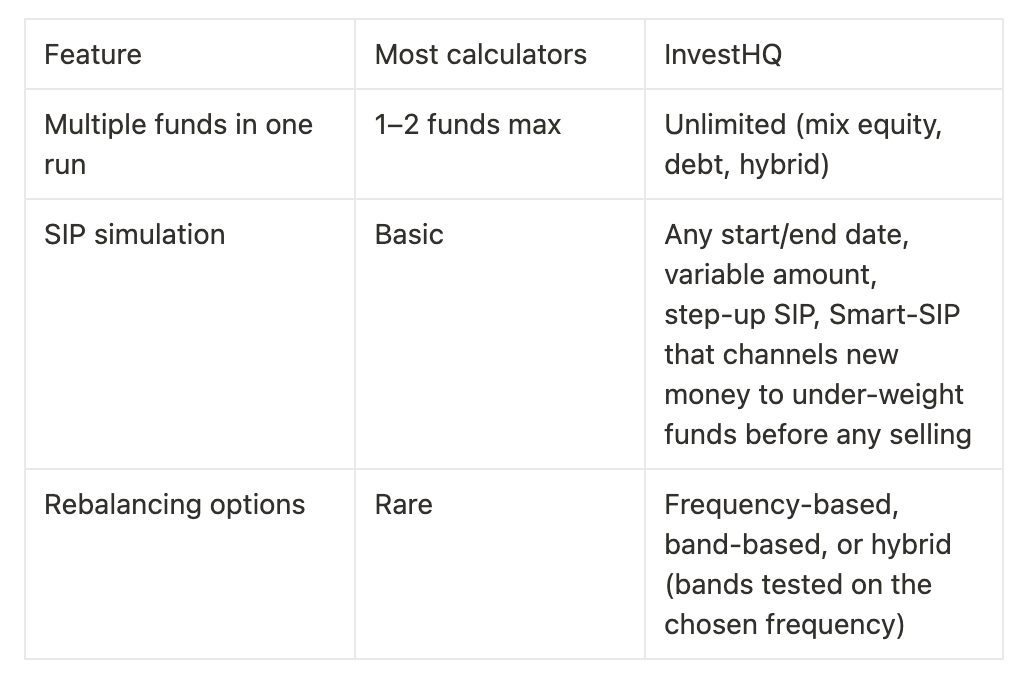
## **How to use it in 60 seconds**
1\. **Pick funds:** Search by name or category.
2\. **Choose mode:**
\- Lump‑sum → One‑shot investment.
\- SIP → Monthly, weekly, custom date. Smart‑SIP behaves exactly like a diligent investor: new money first restores target weights, then tops up proportionally.
3\. **Flip the “Rebalance” switch** and set frequency and/or bands.
4\. **Hit Run**: Graphs update; metrics refresh.
5\. **Tinker**: Change weights, add/delete funds, compare runs side‑by‑side.
Full walkthrough video ➞ [**Watch here**](https://youtu.be/LUNIcRRsMtY?si=6UwF05_7SIPP2RX5).
## **Caveats & realistic expectations**
\- **Past ≠ future**: We’re replaying history, not predicting it.
\- **Data quirks**: Some funds merge or change mandate; we handle most cases, but yell if we can’t.
\- **Transaction costs & tax impact**: Not modelled yet - both will be toggle‑able soon.
## **Call to action**
1\. Check it out at [InvestHQ](https://investhq.in) (desktop & mobile).
2\. **Tell us what’s confusing or broken** \- screenshots help!
## **Final thoughts: from trading ticks to compounding bricks**
Building pipes for HFT taught me the beauty of micro‑edges. Investing, though, is the macro edge: patience, diversification, and letting capitalism do the heavy lifting. [InvestHQ](https://investhq.in) is my attempt to bridge those mindsets - quant‑rigour meets long‑term common sense.
Hope it helps you, too.
**\- Raghav Malik**
_(Founder & CEO, AlgoTest)_
---
This blog is powered by Superblog. Visit https://superblog.ai to know more.
---
## Understanding Strategy Win Rates: What Does 50% Really Mean?
Author: AlgoTest
Author URL: https://algotest.in/blog/author/algotest/
Published: 2025-04-11
URL: https://algotest.in/blog/understanding-strategy-win-rates-what-does-50-really-mean/
When looking at RA Algos on AlgoTest, one of the most visible metrics you’ll come across is the **win rate**. It’s easy to assume that a higher win rate means a better algo, but that’s not always the full picture. An algo with a 50% win rate can be highly profitable — and sometimes even more efficient than one with 70%+.
In this guide, we’ll break down what win rate means, how it's calculated, and why it's only part of the story. We’ll also show you how to analyze and filter [RA Algos](https://docs.algotest.in/ra-algos/research-analyst/#what-is-ra-algo) based on win rate using AlgoTest’s built-in tools.
## **What is the Win Rate in Trading?**
**Win rate** is the percentage of trades that end in profit compared to the total number of trades taken by the algo.
#### **Formula:**
Win Rate (%) = (Number of Winning Trades / Total Trades) × 100
#### **Example:**
If an algo takes 100 trades and 55 of them are profitable, its win rate is:
(55 / 100) × 100 = 55%
This metric helps users understand how frequently an algo "wins" in the market.
## Is a Higher Win Rate Always Better?
Not necessarily.
A higher win rate doesn’t always mean higher profits. What really matters is the **risk-reward ratio**—how much you gain when you're right versus how much you lose when you're wrong.
Let’s compare two algos:
#### **Algo A**
- Win Rate: 70%
- Average Profit per Win: ₹50
- Average Loss per Loss: ₹100
- Out of 100 trades:
• 70 wins → ₹50 × 70 = ₹3,500
• 30 losses → ₹100 × 30 = ₹3,000
- **Net Profit = ₹500**
#### **Algo B**
- Win Rate: 50%
- Average Profit per Win: ₹200
- Average Loss per Loss: ₹100
- Out of 100 trades:
• 50 wins → ₹200 × 50 = ₹10,000
• 50 losses → ₹100 × 50 = ₹5,000
- **Net Profit = ₹5,000**
#### **Summary:**
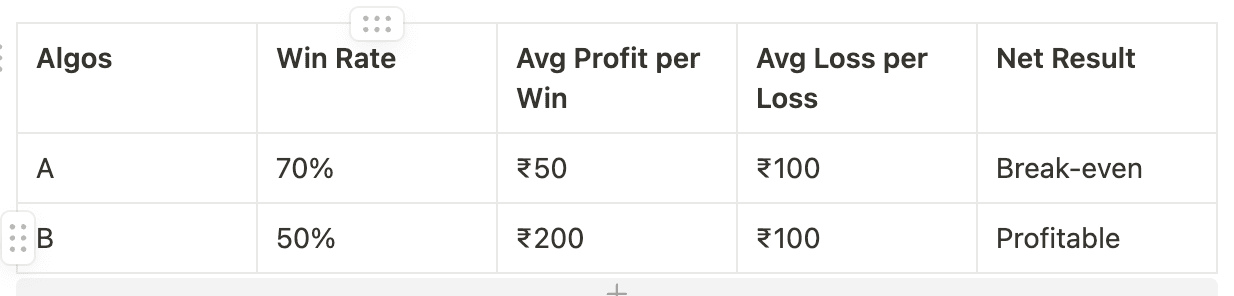
Algo B, despite having a lower win rate, ends up being more profitable because it makes more on its winning trades than it loses on losing ones. This is known as having a **positive expectancy**.
Many professional algos have win rates between **40% and 60%**, but compensate with strong reward-to-risk setups.
### **Role of Risk-Reward Ratio**
**Risk-Reward Ratio (RRR)** measures how much an algo aims to make on a winning trade versus how much it risks losing.
#### **Formula:**
RRR = Average Profit per Win / Average Loss per Loss
##### **Example:**
If an algo risks ₹500 to make ₹1,000, its RRR is 2:1.
Even if such an algo wins only 40% of the time, it can still be profitable:
- Win: 4 out of 10 trades ✓ ₹1,000 = ₹4,000
- Loss: 6 out of 10 trades ✗ ₹500 = ₹3,000
- **Net = ₹1,000 profit over 10 trades**
This is why **context matters more than just the win rate**.
### **How AlgoTest Displays Win Rate & Other Metrics**
When you browse RA Algos on AlgoTest, each algo card includes key performance indicators:
- **Win Rate (%):** Total winning trades divided by total trades
- **Max Drawdown:** The largest capital dip from peak to trough
- **Margin Required:** Clearly mentioned upfront
- **MTM, Expectancy Ratio, and Number of Trades:** Gives a fuller performance view
These are based on [**backtested data**](https://algotest.in/blog/backtest-multiple-strategies-together-using-the-portfolio-feature) **with customizable options to add charges, slippages and brokerages**.
You can click on any algo to view detailed charts and trade-wise performance, including how the win rate evolved over time.
### **Should I Avoid Low Win Rate Algos?**
Not at all. Some of the most robust and sustainable algos operate with 45–50% win rates but have:
- High reward-to-risk ratios
- Fewer trades but higher average profit per trade
- Better control of downside (lower drawdown)
Focus on **overall consistency**, not just win accuracy.
### **Key Questions to Ask:**
- What’s the average gain vs. average loss?
- How often does the algo trade?
- Is the drawdown within my comfort zone?
- Does the strategy fit my capital and lifestyle?
### **Final Thoughts**
Win rate is a helpful number, but it’s just one part of a larger picture. Don’t let a 50% win rate scare you off, if the risk-reward ratio is solid, that could be the foundation of a highly profitable system.
[AlgoTest](https://algotest.in) makes this evaluation easier by:
- Displaying win rate transparently
- Providing full backtest context including slippage and costs
Take your time to explore different ranges, [forward test](https://algotest.in/blog/why-is-there-is-difference-between-my-live-trade-vs-forward-test-vs-backtest-results) when in doubt, and choose algos that align with **your personal trading goals**.
When in doubt, dig deeper than the headline percentage.
Also Read: [**A Step-by-Step Guide to Backtesting Trading Strategies**](https://algotest.in/blog/guide-to-backtesting-trading-strategies/)
[Trading Strategies that Don't Work](https://algotest.in/blog/types-of-strategies-that-do-not-work/)
---
This blog is powered by Superblog. Visit https://superblog.ai to know more.
---
## Difference Between Backtesting, Forward Testing, and Live Execution in RA Algos
Author: AlgoTest
Author URL: https://algotest.in/blog/author/algotest/
Published: 2025-04-10
Category: Backtest
Category URL: https://algotest.in/blog/category/backtest/
Tags: backtesting, forward test
Tag URLs: backtesting (https://algotest.in/blog/tag/backtesting/), forward test (https://algotest.in/blog/tag/forward-test/)
URL: https://algotest.in/blog/difference-between-backtesting-forward-testing-and-live-execution-in-ra-algos/
When exploring algorithmic trading, especially through [**RA Algos**](https://algotest.in/ra-algo) on **AlgoTest**, it's crucial to understand the different phases of evaluating an algo: **Backtesting**, **Forward Testing**, and **Live Execution**. Each serves a distinct role in building confidence and managing risk before committing your capital.
Let's break down what these terms mean, how AlgoTest supports them, and how you can use each phase wisely.
## **What is Backtesting?**
[**Backtesting**](https://algotest.in/feature/backtest) is the process of applying a trading algo to historical market data to see how it would have performed in the past. It’s essentially a way to simulate how an algo might have behaved if it had been live during that time.
#### **Example:**
Let’s say an RA has created an algo that trades Nifty options on expiry days. Backtesting will simulate this logic using real Nifty data from, say, 2020 to 2023. It will show how many trades were taken, how much profit or loss occurred, what the maximum drawdown was, and other key metrics.
Remember: Backtesting gives context, not guarantees. Market conditions evolve, so think of it as a rear-view mirror, not a crystal ball.
### **Things to Consider:**
1. The Backtests are based on past data. Historical data does not guarantee future results.
2. Real execution issues like API delay aren’t modeled here.
#### **Tools AlgoTest Provides:**
1. Pre-run backtests with real charges and slippages built-in
2. Algo card showing returns over time
3. Visual equity curve for quick insight into volatility and growth
## **What Is Forward Testing?**
[**Forward Testing**](https://algotest.in/feature/forward-test) is the process of observing how an algo performs in **live market conditions**, but **without risking actual money**. It's also referred to as **paper trading**.
Forward testing is especially useful when you want to:
1. Validate the algo’s real-time behavior
2. Experience how trades are placed
3. Understand timing, frequency, and margin flow
### **How It Works on AlgoTest:**
Using AlgoTest’s **Forward Testing** feature, you can deploy an [RA Algo](https://algotest.in/ra-algo) exactly as it would behave in your live account, but the trades are simulated.
You get:
1. Real-time execution feedback
2. Simulated P&L without capital risk
3. Same schedule and signals as real deployment
This helps you gain trust in the Algo's mechanics, especially for:
1. Intraday algos with tight stop-losses
2. Algos with lower win rates but strong expectancy
Tip: Many users run forward testing for 2–4 weeks before going live, especially when trying new RAs or unfamiliar instruments.
## **How does it differ from backtesting?**
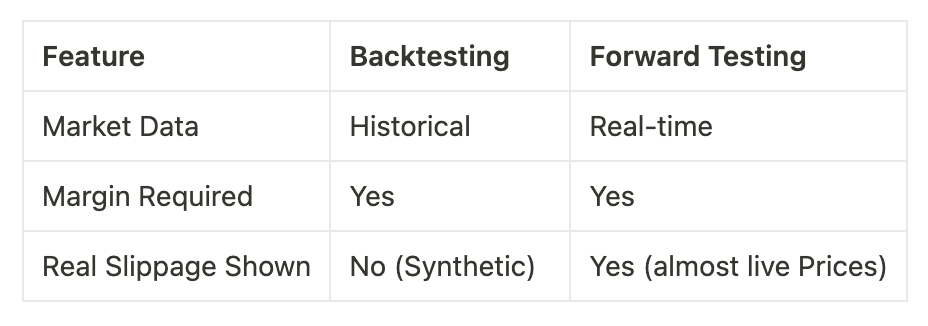
Read More: [**How to Backtest Options Trading Strategies (With Examples)**](https://algotest.in/blog/how-to-backtest-options-trading-strategies-with-examples/)
## **What is Algo Execution?**
**Live Execution** means your broker account is actually placing trades based on the algo’s. This is when your real capital is involved, and the Algo moves from simulation to execution.
#### **Key Traits:**
1. Trades are sent to your broker (via API)
2. Real-world factors like **slippage**, **latency**, and **order fill speed** come into play
3. Your capital is exposed to market risk
RA Algos are **execution-only**, meaning:
1. You don’t see the internal logic
2. You benefit from the RA’s signals without needing to manage trades manually
3. Everything happens automatically once you click **"Activate"** and the market is live
⛔ Broker execution issues (like rejections, API errors) must be handled manually, so it's advised to monitor your setup when you receive an email or telegram message regarding the error.
Read More: [**How AlgoTest is Simplifying Algo Trading in India**](https://algotest.in/blog/how-algotest-is-simplifying-algo-trading-in-india/)
## **How These Phases Work Together**
Think of these three phases as steps in a quality control pipeline:
1. **Backtesting** answers: _Has this worked in the past?_
2. **Forward Testing** answers: _Does this behave well in live conditions without risk?_
3. **Live Execution** answers: _Am I ready to allocate real capital and scale up?_
By using all three phases, you reduce guesswork and increase confidence.
## **Best Practices for Users**
To make the most of RA Algos on AlgoTest, here are some tips:
### **Start with Backtest Analysis**
1. Understand margin required, drawdowns, and win/loss streaks
2. Use filters on the RA Algo discovery page to find algos that match your risk tolerance
### **Forward Test for a Few Weeks**
1. Deploy 1–2 algos in **paper mode**
2. Track real-time trades during market hours
3. Monitor performance, execution speed, and margin usage
### **Go Live Confidently**
1. Ensure margin availability as per strategy card
2. Activate the Algo at least **10–15 minutes** before market open if it's a scheduled strategy
3. Monitor initial days for broker integration issues (if any)
## **AlgoTest's Toolset for Each Phase**
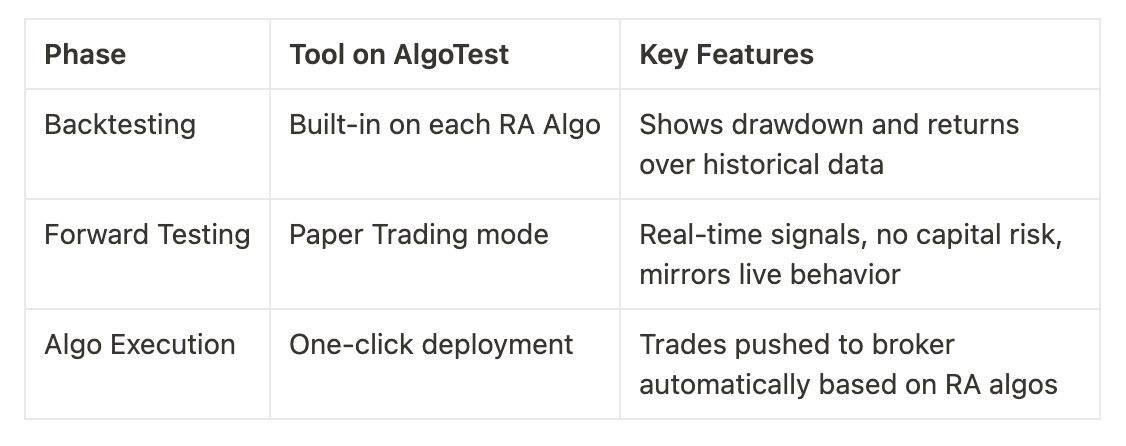
## **Final Thoughts**
The journey from strategy discovery to full capital deployment doesn’t need to be rushed. AlgoTest provides all the tools needed to take a methodical, risk-aware approach:
1. **Backtest for data-driven context**
2. **Forward test for real-time validation**
3. **Go live only when you’re fully ready**
By combining the transparency of RA-vetted algos with robust simulation tools, RA Algos on AlgoTest empowers you to trade smarter, not faster.
If you're unsure about any step, start small, forward test, and let data build your confidence.
# FAQs
Q: What is backtesting in algorithmic trading?
A: Backtesting is the process of testing a trading algorithm using historical market data to evaluate how it would have performed in the past. It helps traders analyze metrics like profit, loss, drawdown, and win rate before deploying the strategy in real markets.
Q: What is forward testing in algo trading?
A: Forward testing, also known as paper trading, is when a trading algorithm runs in real market conditions without using real money. It allows traders to observe how the strategy behaves live, including trade timing and execution, without risking capital.
Q: What is live execution in algorithmic trading?
A: Live execution is when an algorithm places real trades through your broker account using actual capital. Orders are executed in the market via broker APIs, and real-world factors such as slippage, latency, and order fills affect performance.
Q: What is the difference between backtesting and forward testing?
A: Backtesting uses historical data to simulate how an algorithm would have performed in the past, while forward testing runs the algorithm in live market conditions without real money. Backtesting helps evaluate past performance, whereas forward testing validates real-time behavior.
Q: Why is forward testing important before going live with an algo?
A: Forward testing helps traders observe how an algorithm behaves in real market conditions without risking capital. It allows users to monitor trade frequency, timing, margin usage, and execution quality before deploying real funds.
Q: How does AlgoTest support backtesting for RA Algos?
A: AlgoTest provides pre-run backtests with realistic assumptions like brokerage charges and slippage. Users can also view metrics such as historical returns, drawdowns, and visual equity curves to evaluate an algorithm’s past performance.
Q: Can backtesting guarantee future profits in algo trading?
A: No, backtesting cannot guarantee future results. It only shows how a strategy performed under past market conditions. Market behavior changes over time, so traders should use backtesting as a reference rather than a prediction tool.
Q: How long should traders forward test an algorithm before live execution?
A: Many traders forward test an algorithm for around two to four weeks before going live. This allows them to observe the strategy across different market conditions and gain confidence in its behavior and execution.
Q: What are RA Algos on AlgoTest?
A: RA Algos are algorithms created and managed by Registered Analysts. Users can deploy these algos on AlgoTest without needing to know the internal strategy logic, as trades are executed automatically based on the analyst’s signals.
Q: What risks should traders consider during live algo execution?
A: During live execution, factors like broker API delays, order rejections, slippage, and latency can affect trade outcomes. Since real capital is involved, traders should monitor their setup and ensure proper broker connectivity and margin availability.
---
This blog is powered by Superblog. Visit https://superblog.ai to know more.
---
## What is RA Algos and how it works on AlgoTest
Author: AlgoTest
Author URL: https://algotest.in/blog/author/algotest/
Published: 2025-04-10
Category: RA Algos
Category URL: https://algotest.in/blog/category/ra-algos/
Tags: algo trading, trading strategies
Tag URLs: algo trading (https://algotest.in/blog/tag/algo-trading/), trading strategies (https://algotest.in/blog/tag/trading-strategies/)
URL: https://algotest.in/blog/what-is-ra-algos-and-how-it-works-on-algotest/
Algo trading has revolutionized how retail and professional traders participate in the stock markets in India. One of the most trusted and compliant ways to engage in algorithmic trading is through **RA Algos**. But **what is RA Algos**, and how can traders use them effectively with **AlgoTest**?
This article explains RA algos in detail, highlighting their regulatory backing, how they differ from user-created, and how AlgoTest makes discovering and executing these algos seamless.
## **What is an RA (Research Analyst)?**
A **Research Analyst (RA)** is an individual or entity registered with the **Securities and Exchange Board of India (SEBI)** under the SEBI (Research Analyst) Regulations, 2014. Their role is to provide **independent investment advice**, including stock recommendations, trading algos, and detailed research reports.
These analysts undergo a strict registration and verification process to ensure:
- Financial expertise
- No conflict of interest
- Transparent and compliant advisory services
When an RA builds an **algo**, it’s considered as a **verified algo created by the experts**, and that’s where [**RA algos**](https://algotest.in/ra-algo) come in.
## **What is** [**RA Algos**](https://algotest.in/ra-algo) **?**
RA Algos provides access to trades from Algos created by SEBI-registered research analysts. You can backtest these algos and can also include slippages, brokerage, taxes and charges, forward test them, or deploy them directly in your broker account.
### **Key Characteristics of RA Algos:**
- Built by SEBI-registered Research Analysts
- Backed by research and data
- Verified for logic, risk parameters, and execution
[RA algos](https://algotest.in/ra-algo) offer a bridge between professional-grade algo development and retail trader execution. With these algos, users don’t need to build their own algos, they can **choose from pre-built algos** developed by certified professionals
## **RA Algos vs User-Created Algos**
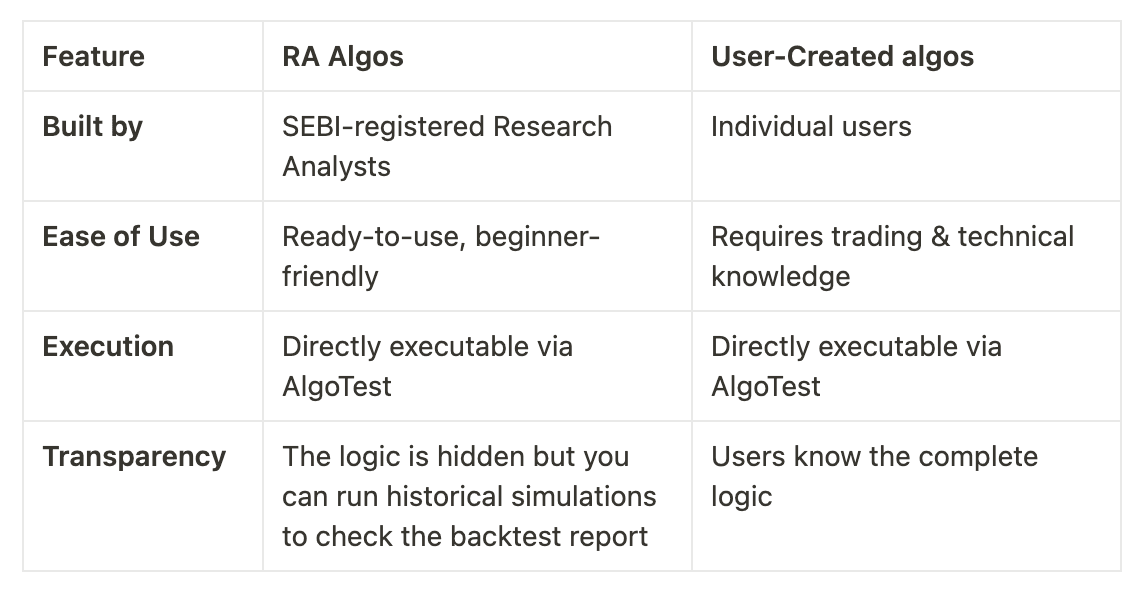
While **user-created algos** allow flexibility and experimentation, **RA algos provide a compliant, trust-driven way to automate trading**, especially for users who prefer validated systems.
## **Why Trade via RA Algos?**
Trading via RA algos offers a **powerful combination of trust, compliance, and ease of use**, especially in a regulated market.
### **Top Reasons to Choose RA Algos:**
1. **Regulatory Backing**: Every algo is created by a SEBI-registered RA.
2. **No Setup Hassles**: No need to code—simply backtest, save, forward test or live execute.
3. **Live Execution with Brokers**: Connect with supported brokers for seamless live trading.
4. **Transparency**: You can view key metrics like max drawdown, overall MTM, win%, and many more before subscribing.
## **How AlgoTest Enables RA Algos Discovery and Execution**
AlgoTest simplifies the journey from discovering an RA Algo to executing it live. Here’s how the platform supports users:
### **1\. Algo Discovery**
AlgoTest has a dedicated [**RA Algo Dashboard**,](https://algotest.in/ra-algos) where users can browse algos and find:
- Margin required
- Win ratio
- Drawdown
Each RA algo listing contains detailed metrics and a performance summary to help users make informed decisions.
### **2\. Algo Subscription**
Once a user finds an algorithm they like, they can:
- View the execution rules
- Backtest it to find if it’s aligned with your riskometer
- Subscribe to the algo.
### **3\. Broker Integration and Live Execution**
AlgoTest connects with 60+ brokers. Once subscribed:
- Connect your broker account securely
- Go live with just a few clicks
[AlgoTest](https://algotest.in) handles the rest, real-time signal monitoring, order execution, and performance tracking.
## **Compliance, Risk & SEBI Regulations**
SEBI plays a central role in ensuring that algo trading is conducted ethically and transparently. By using RA algos:
- You're relying on algos from **SEBI-Registered Research Analysts**
- AlgoTest ensures that all RA listings comply with **SEBI’s Research Analyst norms**
- You receive **non-discretionary, execution-only signals**.
This makes RA algos ideal for risk-aware retail traders who want to stay within legal boundaries.
## **How to Use RA Algos on AlgoTest**
1. **Sign up on** [**RA Algos**](https://algotest.in/ra-algo) **at** [**AlgoTest**](https://algotest.in/ra-algo)
2. **View details** of algo you're interested in
3. **Subscribe** to the algo
4. **Connect your broker** account
5. **Start live execution**
Related - Explore the [strategy marketplace](https://algotest.in/blog/algo-trading-marketplace-india/) and start automating your RA and [Crypto strategies](https://algotest.in/feature/crypto-trading) now.
## **FAQ: What Are RA Algos and Their Benefits**
### **Q1: What are RA algos?**
RA algos are trading algos built by SEBI-registered Research Analysts and offered on platforms like AlgoTest for compliant, automated execution.
### **Q2:** How do I use RA Algos?
Choose the Algo from the list of SEBI RA Algo and save it.
1. Backtest: Analyze past performance by including brokerage, slippages, Taxes and charges.
2. Forward Test: Test the algo with virtual capital.
3. Algo Trade: Automate real trades in your broker account. Login with your broker and activate the RA's Algo.
### **Q4: Do I need coding knowledge?**
Not at all. You simply subscribe, connect your broker, and trade automatically.
### **Q5: Are RA algos better than user-created algos?**
It is ideal for users who are new to options trading and prefer taking trades recommended by SEBI-registered Research Analysts, offering a more guided and reliable experience.
## **Conclusion**
If you’ve ever wondered **what RA algos are**, think of them as the perfect blend of **professional-grade research, regulatory oversight, and automation**. Through platforms like [**AlgoTest**,](https://algotest.in/login) retail traders now have access to algos that were once reserved for the pros, without needing to code.
Whether you're a cautious investor or an active trader, exploring **RA algos on AlgoTest** can add a reliable, transparent edge to your trading toolkit.
---
This blog is powered by Superblog. Visit https://superblog.ai to know more.
---
## 5 Mistakes Traders Make in Algo Trading
Author: AlgoTest
Author URL: https://algotest.in/blog/author/algotest/
Published: 2025-03-13
URL: https://algotest.in/blog/5-mistakes-traders-make-in-algo-trading/
## **What is Algo Trading?**
Algorithmic trading involves coding pre-defined rules, such as price, time, and indicators, in a computer program and letting the algorithm execute trades on your behalf.
Algo trading is transforming the way traders participate in stock markets. It offers speed, efficiency, discipline, and automation, but success isn’t guaranteed. Many traders get overconfident and make mistakes that impact their profitability.
Let’s break down five critical mistakes traders make in algo trading and how to avoid them:
### **1\. Designing Overly Complex Algo Strategies**
Many traders believe that a complex strategy with multiple indicators and rules will perform better. In reality, complicated strategies often lead to overfitting, where the strategy performs well in historical data but fails in live markets. In India, where market conditions change due to RBI policies, budget announcements, and FII flows, simple and robust strategies tend to work better. Traders should focus on understanding market structure and use minimal but effective rules.
### **2\. Over-Optimizing Your Trading Algorithm**
Optimization is necessary to fine-tune strategies, but excessive tweaking can lead to curve-fitting. Traders often optimize parameters to achieve the best backtest results, but this does not guarantee future success. In the Indian markets, which are influenced by global trends, election results, and domestic liquidity conditions, rigidly optimized strategies often fail in real time. Instead, traders should stress-test their strategies on out-of-sample data and different time periods.
### **3\. Backtesting**
Backtesting is a historical simulation to understand how the strategy could have performed in the past.
It is the backbone of algo trading, but many traders fail to account for real-world conditions like slippage and order execution delays. A perfect backtest on historical data does not always translate into profitability in live markets.
Using platforms that simulate real-market conditions, like AlgoTest, can help traders get a more realistic assessment of their strategies.
But is this enough to go live with the strategy? To understand what more you need to know before you take your trade live, learn from Chintan (founding member, AlgoTest) in his [algo trading course,](https://algotest.in/courses/login?course_for=algo) where he covers everything from ideation to taking the strategy live in the market.
### **4\. Neglecting Transaction Costs and Slippages**
A common mistake traders make is ignoring the impact of brokerage charges, STT (Securities Transaction Tax), GST, stamp duty, and slippage. While backtests might show a profitable system, high-frequency trading strategies can quickly become unprofitable due to these costs. NSE and BSE traders should always factor in brokerage charges and slippages before deploying a strategy. Using brokers that offer zero or low brokerage on [F&O trading](https://algotest.in/blog/futures-and-options-trading/) can be a cost-saving measure.
For better efficiency, accuracy, and execution, [brokers with an API](https://algotest.in/blog/trading-api-brokers-india) are another option that you can opt for.
### **5\. Choosing the Wrong Trading Platform**
Algo traders need reliable execution platforms, yet many traders select platforms based on cost alone. Execution speed, API stability, uptime, and integration with order management systems (OMS) are critical.
You can also check your [broker’s speed](https://openbroker.in/) and [learn how brokers’ speed affects your trading execution](https://algotest.in/blog/broker-speedtest-algotest) and experience.
Traders often face issues like API disconnections or delayed order execution, which can turn a winning strategy into a losing one. Choosing a reliable algo trading platform with proper risk management features can make a significant difference.
## Final Thoughts
Algo trading can be a powerful way to trade the markets with speed, discipline, and automation, but only when you learn to avoid the common mistakes that hurt most traders, like overfitting, over-optimizing, ignoring transaction costs, and relying on unrealistic backtests.
To succeed inalgo trading in India, focus on building simple, robust strategies, testing them in real-market conditions, accounting for slippage and charges, and choosing an [algo trading software](https://algotest.in/blog/top-10-algo-trading-software-india/) that supports stable execution.
**AlgoTest** helps you validate your strategy with super fast Backtesting speeds on over 5 years of historical data, simple templates, and seamless so you can trade with confidence and avoid costly trial-and-error in live markets.
# FAQs
Q: Is algo trading profitable in India?
A: Algo trading can be profitable in India, but only if your strategy is robust, tested properly, and accounts for real-world factors like slippage, transaction costs, and execution delays.
Q: What costs should I include in algo trading in India?
A: You should include brokerage, STT, GST, stamp duty, exchange charges, and slippage because costs can wipe out profits.
Q: How do I choose the right algo trading platform?
A: Choose a platform based on execution speed, API stability, uptime, risk management features, and ease of strategy testing, not just price. A weak platform can ruin even a good strategy.
---
This blog is powered by Superblog. Visit https://superblog.ai to know more.
---
## 5 Reasons Why Your Algo Trading Strategy is Failing and How to Fix It
Author: AlgoTest
Author URL: https://algotest.in/blog/author/algotest/
Published: 2025-03-13
Meta Title: Why Your Algo Trading Strategy Is Failing?
Meta Description: Discover why your algo trading strategy fails and how to fix it. Learn the top mistakes traders make in algo trading and improve your strategy performance.
Tags: algo trading, trading strategies
Tag URLs: algo trading (https://algotest.in/blog/tag/algo-trading/), trading strategies (https://algotest.in/blog/tag/trading-strategies/)
URL: https://algotest.in/blog/5-reasons-why-your-algo-trading-strategy-is-failing-and-how-to-fix-it/
You've built the perfect strategy on paper. The backtest looks flawless. But when you go live, the returns disappoint. At [AlgoTest,](https://algotest.in/register?utm_source=blogs&utm_source=blogs) our mission is to ensure that you understand the reasons and solutions
Here are five reasons your algo trading strategy isn't delivering, and more importantly, how to fix them.
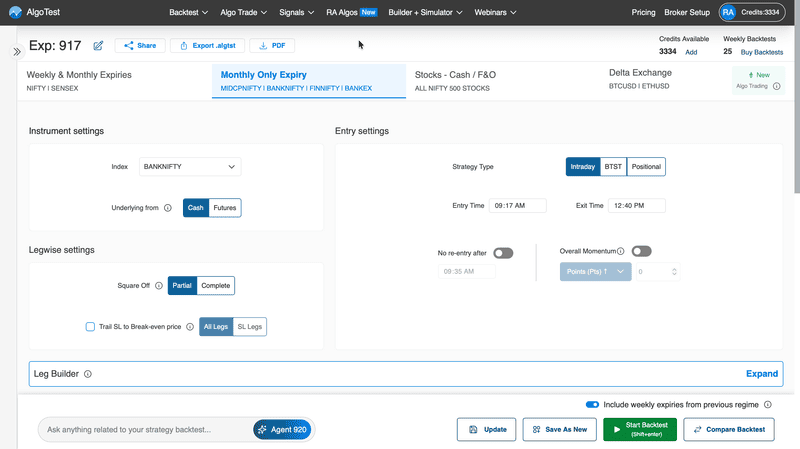
## **1\. Overfitting to Past Data**
### **The Problem:**
Many traders rely on backtesting to fine-tune their strategies. However, excessive optimization can lead to overfitting—where a strategy performs exceptionally well on past data but fails in live markets. This happens because the algo is designed to exploit historical patterns that may not repeat in real trading conditions.
For example, when you see a backtest showing 80% win rate and consistent profits, it's tempting to believe you've found the holy grail. In reality, you may have simply created a strategy that memorizes past price movements rather than identifying genuine market inefficiencies.
### **The Fix:**
- Use out-of-sample testing to validate your strategy on unseen data.
- Implement **walk-forward optimization** to test the strategy across different time periods.
- Keep the number of parameters minimal to avoid excessive curve-fitting.
## **2\. Ignoring Market Structure**
### **The Problem:**
Factors like liquidity, slippage, impact costs, and circuit breakers can disrupt even the best algo strategies. One of the many [mistakes that traders make in algo trading](https://algotest.in/blog/5-mistakes-traders-make-in-algo-trading/) is that they backtest on historical prices without accounting for real-world execution challenges.
For example, a strategy showing 2% monthly returns in backtesting might actually lose money after accounting for a 0.05% slippage and 0.1% in total transaction costs per trade. Market impact costs are particularly high in mid-cap and small-cap stocks, where your own orders can move prices against you.
### **The Fix:**
- Factor in **slippage and impact cost** while backtesting.
- Use **limit orders** instead of market orders to control execution price.
- Be aware of trading halts and circuit limits on stocks and indices.
## **3\. Poor Risk Management**
### **The Problem:**
Many traders focus only on maximizing profits while ignoring risk. Without proper risk controls, a few bad trades can wipe out months of gains. Algo trading amplifies risks if position sizing and stop-loss mechanisms aren’t well-defined.
### **The Fix:**
- Use **position sizing techniques** like fixed percentage or volatility-based sizing.
- Implement **hard stop-losses** and trailing stops in your strategy.
- Diversify across multiple assets to reduce dependency on a single trade.
_You can also explore our list of the_ [_5 best algo trading courses_](https://algotest.in/blog/5-best-algo-trading-courses-in-india-to-learn-in-2025/) _to deepen your trading knowledge._
## **4\. Not Accounting for Changing Market Conditions**
### **The Problem:**
Indian markets are highly dynamic, with phases of high and low volatility. A strategy that works well in trending markets might fail in sideways conditions. Many traders set their algo strategies without adapting to these changes.
To learn more about volatility trading, join Raghav, founder of AlgoTest, in his [volatility trading course,](https://algotest.in/courses/login?course_for=volatility) where he covers how to trade options profitably using IV, RV, and Volatility Risk Premium (VRP).
### **The Fix:**
- Use **adaptive strategies** that adjust parameters based on volatility and trend strength.
- Incorporate market regime detection techniques to switch between different strategies.
- Regularly review and update your algo to reflect current market conditions.
## **5\. Underestimating Technical Failures**
### **The Problem:**
Even automated trading requires human oversight. Issues like server downtime, API failures, brokerage restrictions, and internet lags can cause unintended losses. Moreover, traders often panic and override their strategies during drawdowns, disrupting long-term performance.
You can also check your [broker’s speed](https://openbroker.in/) and [learn how brokers’ speed affects your trading execution](https://algotest.in/blog/broker-speedtest-algotest) and experience.
### **The Fix:**
- Use **cloud-based execution platforms** for stable performance.
- Ensure **redundancy in internet connections and power backup**.
- Stick to your strategy and avoid emotional interventions unless there’s a clear technical flaw.
## Optimize your Trading Strategies with AlgoTest
Successful algorithmic trading is about building a robust system that adapts to market realities while maintaining strict risk controls.
At [AlgoTest](https://algotest.in/register?utm_source=algo-trading&utm_medium=organic&utm_campaign=seo&utm_content=content), we provide real-time market data and analytics, enabling traders to stay updated with the latest market trends and make informed decisions while executing their automated trading strategies.
# FAQs
Q: Why does my algo trading strategy work in backtesting but fail in live trading?
A: Because live markets include slippage, costs, liquidity issues, and changing conditions that backtests often don’t capture.
Q: What is overfitting in algo trading and why is it risky?
A: Overfitting is when your strategy is optimized too heavily for past data, making it unreliable in real trading.
Q: Can I test my algo trading strategy on AlgoTest before going live?
A: Yes, AlgoTest lets you validate your strategy through structured testing so you can trade with more confidence.
Q: How does AlgoTest help improve algo trading strategy performance?
A: AlgoTest helps you evaluate strategies with real-time market analytics and performance insights to reduce live-trading surprises.
---
This blog is powered by Superblog. Visit https://superblog.ai to know more.
---
## 9 Steps to Build a Profitable Algo Trading Strategy in India
Author: AlgoTest
Author URL: https://algotest.in/blog/author/algotest/
Published: 2025-03-13
Category: General
Category URL: https://algotest.in/blog/category/general/
Meta Title: 9 Steps to Build a Profitable Algo Trading Strategy
Meta Description: Learn how to build a profitable algo trading strategy using proper backtesting and forward testing. Follow 9 steps to improve accuracy, reduce risk, and trade confidently.
Tags: algo trading, trading strategies
Tag URLs: algo trading (https://algotest.in/blog/tag/algo-trading/), trading strategies (https://algotest.in/blog/tag/trading-strategies/)
URL: https://algotest.in/blog/9-steps-to-build-a-profitable-algo-trading-strategy/
## **What is Algo Trading?**
[Algorithmic trading](https://algotest.in/what-is-algo-trading) is nothing but coding pre-defined rules and letting the computer take the trades on your behalf.
Algo trading in India is transforming the way traders participate in stock markets. It offers speed, efficiency, and automation, but success isn’t guaranteed. Many traders make these common mistakes that impact their profitability. However, building a profitable [algo trading](https://algotest.in/blog/5-reasons-why-your-algo-trading-strategy-is-failing-and-how-to-fix-it) strategy requires a structured approach.
## How to Develop a Profitable Algo Trading Strategy
Here are nine essential steps to develop a robust and profitable algorithmic trading strategy.
### **1\. Define Your Trading Goals**
Before you start trading, establish clear objectives. Are you looking for short-term gains, long-term portfolio growth, or risk diversification? Determine your preferred asset class (stocks, forex, crypto, etc.) and define your risk tolerance and expected return.
### **2\. Select a Trading Strategy**
Choose a strategy that aligns with your goals and market knowledge. Some popular algo trading strategies in India include:
- **Trend Following:** Trading based on moving averages and momentum indicators.
- **Mean Reversion:** Exploiting price deviations from the average.
- **Arbitrage:** Capturing price discrepancies across different markets.
- **Market Making:** Profiting from bid-ask spreads.
- **News-Based Trading:** Leveraging market reactions to news events.
If you struggle with making your own strategy, we have a solution for you.
We have launched a new product recently called [**RA Algos**](https://algotest.in/feature/ra-algos). RA Algos provides access to trades from Algos created by SEBI-registered research analysts. You can backtest these algos and can also include slippages, brokerage, taxes and charges, forward test them, or deploy them directly in your broker account. Choose the option that best suits your needs.
[RA Algos](https://algotest.in/blog/what-is-ra-algos-and-how-it-works-on-algotest/) also provide:
- Ability to backtest Algo and you can also include brokerage, slippages, taxes, and charges.
- Access to ready-made algorithms created by SEBI-registered research analysts.
- Ability to forward test them with virtual capital.
- Easy deployment with a few clicks directly in your broker account.
Read More: [Algo Strategy Marketplace](https://algotest.in/blog/algo-trading-marketplace-india)
### **3\. Gather and Prepare Data**
High-quality data is essential for accurate backtesting and strategy development. Ensure that your data includes:
- Price (open, high, low, close)
- Volume
- Technical indicators
- Fundamental data (for fundamental-based strategies)
### **4\. Backtest Your Strategy**
Backtesting is crucial to assessing the historical performance of your strategy. Use a reliable backtesting platform like [**AlgoTest**](https://algotest.in/feature/backtest) to simulate past trades. Evaluate key performance metrics:
- Win rate
- Sharpe ratio
- Maximum drawdown
- Profit factor ensures that your strategy performs well across different market conditions.
### **5\. Optimize and Fine-Tune**
Refine your strategy by optimizing parameters such as moving average lengths, stop-loss levels, and entry/exit signals. However, beware of **overfitting**, where the strategy performs well in backtests but fails in live markets.
### **6\. Paper Trade in a Simulated Environment**
Before deploying real capital, test your algorithm or strategy in a **simulated** environment using [**paper trading**](https://algotest.in/feature/forward-test). This helps assess its performance in real-time market conditions without financial risk.
### **7\. Deploy and Monitor Live Trading**
Once you’re confident in your strategy, deploy it in a live trading environment with small capital. Use a reliable trading platform like [**AlgoTest**](https://algotest.in/feature/live) that supports automation. Continuously monitor performance to ensure:
- Orders execute correctly.
- Slippage and latency remain minimal
- The strategy adapts to market changes
### **8\. Continuously Improve and Adapt**
Markets evolve, and so should your strategy. Regularly update your algorithm by incorporating:
- New data sources
- Alternative indicators
### **9\. Learn from Experts**
Trading in the market is a lifelong learning process; enhance your knowledge through our [**Algorithmic Trading Course**](https://algotest.in/courses/login?course_for=algo) **.** This course offers the fundamentals of algorithmic trading with a deep understanding of the required process to trade in the live market. It covers everything from ideation to backtesting to taking the strategy live in the market.
## Algo Trading in India with AlgoTest
[AlgoTest](https://algotest.in) gives you an all-in-one toolkit to create, test, and launch algo trading strategies without writing a single line of code. Powered by real-time market data and advanced analytics, our secure platform helps you trade smarter and execute with accuracy.
Get 25 Free Backtests
# FAQs
Q: What is the best way to backtest an algorithmic trading strategy?
A: Use a reliable algo trading software that supports accurate historical data and shows key metrics like drawdown, win rate, and profit factor.
Q: What is the difference between backtesting and forward testing in algo trading
A: Backtesting checks performance on past market data, while forward testing validates the strategy in real-time market conditions before going live.
Q: Why do algo trading strategies fail in live markets even after backtesting?
A: Most strategies fail due to overfitting, slippage, brokerage costs, poor risk management, or changing market conditions.
Q: What features should the best algo trading platform have for consistent results?
A: The best algo trading platform should offer backtesting, forward testing, live deployment, broker integration, and detailed strategy analytics.
---
This blog is powered by Superblog. Visit https://superblog.ai to know more.
---
## Getting Started with Algo Trading in Nifty Futures
Author: AlgoTest
Author URL: https://algotest.in/blog/author/algotest/
Published: 2025-02-24
Category: Product
Category URL: https://algotest.in/blog/category/product/
Meta Description: A guide to Algo trading in Nifty Futures will help traders handle complex market dynamics for this key derivative based on the Nifty 50 index.
Tags: algo trading, nifty
Tag URLs: algo trading (https://algotest.in/blog/tag/algo-trading/), nifty (https://algotest.in/blog/tag/nifty/)
URL: https://algotest.in/blog/getting-started-with-algo-trading-in-nifty-futures/
## **Introduction**
Algorithmic trading, commonly known as [algo trading](https://algotest.in/what-is-algo-trading?utm_source=blog&utm_medium=internal&utm_campaign=seo&utm_content=landing-page&utm_term=what-is-algo-trading), uses computer programs to automate trading strategies in financial markets. A guide to Algo trading in Nifty Futures will help traders handle complex market dynamics for this key derivative based on the Nifty 50 index.
Nifty futures are essential for those interested in trading within the Indian stock market, specifically focusing on the Nifty 50 index representing the top 50 companies listed on the National Stock Exchange (NSE). With increasing volumes and complexity, traditional manual trading methods may not be sufficient. This is where [algo trading](https://algotest.in/what-is-algo-trading?utm_source=blog&utm_medium=internal&utm_campaign=seo&utm_content=landing-page&utm_term=what-is-algo-trading) comes in, providing a competitive advantage through automation and data-driven decision-making.
This blog covers comprehensive steps for beginners who want to start with algo trading in Nifty futures.
## **Understanding Algorithmic Trading**
Algorithmic trading, often referred to as algo trading, involves using computer programs to execute [trading strategies](https://algotest.in/blog/options-trading-strategies/) in financial markets. These strategies are converted into code using programming languages like Python or C++, enabling automated buying and selling based on predefined conditions without human intervention.
### **Advantages of Using Algorithms in Trading**
When applied to Nifty futures, algorithmic trading offers several benefits:
- **Speed and Precision:** To begin, let’s use the following situation: picture yourself competing in a race against a robot. The robot can run much faster than you and make fewer mistakes. That’s like what algorithms do in trading. They can buy or sell stocks very quickly, which is important because prices can change very fast. This helps traders get the best possible prices.
- **Emotion-Free Trading:** When people trade stocks, their feelings can sometimes get in the way. They might get too excited or scared, leading to bad decisions. Algorithms don’t have feelings. They follow rules and make decisions based on data, not emotions. This helps traders make more consistent and rational choices especially if you are a [beginner algo trader.](https://algotest.in/blog/learn-algo-trading-as-a-beginner-trader/)
- **Scalability:** Think of it like this: a person can only cook a certain amount of food at a time. But a restaurant kitchen can cook a lot more. Algorithms are like those kitchens. They can handle many different trades simultaneously, meaning traders can invest in more stocks and make more money.
- **Backtesting Capabilities:** Before you start a new business, you should test it out on a smaller scale first. That’s similar to [backtesting](https://algotest.in/feature/backtest?utm_source=blog&utm_medium=internal&utm_campaign=seo&utm_content=feature&utm_term=backtest) in trading. Algorithms can look at how a trading strategy would have performed in the past using historical data. This helps traders see if the strategy is likely to be successful before they risk their real money.
- **Risk Management:** When you’re driving, you wear a seatbelt to stay safe. In trading, algorithms are like seatbelts. They can be programmed to follow rules that help protect traders from losing too much money. For example, they can automatically sell a stock if its price falls below a certain level. This helps manage risk and keep losses to a minimum.
In essence, [algo trading](https://algotest.in/what-is-algo-trading?utm_source=blog&utm_medium=internal&utm_campaign=seo&utm_content=landing-page&utm_term=what-is-algo-trading) in Nifty futures provides a structured and efficient approach to navigating the complexities of the Indian stock market. By leveraging computational power and advanced algorithms, traders can achieve better execution speeds, reduce errors, and optimize their overall trading performance.
## **Key Components for Successful Algo Trading in Nifty Futures**
### **Essential Skills Required**
Successful algo trading in Nifty futures hinges on a blend of several key skills:
#### **1\. Programming Knowledge**
Being proficient in programming languages like Python and C++ is essential. Python, with its extensive libraries such as Pandas and NumPy, is particularly popular for developing [algo trading](https://algotest.in/what-is-algo-trading?utm_source=blog&utm_medium=internal&utm_campaign=seo&utm_content=landing-page&utm_term=what-is-algo-trading) strategies due to its simplicity and versatility. C++ offers speed and efficiency, making it suitable for high-frequency trading.
#### **2\. Data Analysis Expertise**
You need to be adept at handling large datasets and understanding market data patterns. Skills in statistical analysis and quantitative methods are crucial for interpreting historical data, identifying trends, and making informed decisions.
#### **3\. Quantitative Methods**
These methods include mathematical modelling, statistical analysis, and the use of algorithms to optimise trading strategies. Quantitative techniques help you create models that can predict market movements and identify profitable trading opportunities.
### **Role of Automation**
Automation plays a pivotal role in enhancing the effectiveness of trading strategies:
- Speed and Efficiency: Automated systems can execute trades faster than any human trader could, ensuring you capitalize on even the smallest market movements.
- Consistency: Algorithms follow predefined rules without emotional interference, leading to consistent decision-making. This reduces the risk of human errors and biases affecting your trades.
- Scalability: Automation allows you to manage multiple strategies across various markets simultaneously. This scalability is impossible with manual trading.
Incorporating these components into your trading practice will equip you with the tools needed to thrive in the competitive world of algo trading in Nifty futures.
## **Building a Robust Development Environment for Algo Trading**
Algo trading, or [algorithmic trading](https://algotest.in/what-is-algo-trading?utm_source=blog&utm_medium=internal&utm_campaign=seo&utm_content=landing-page&utm_term=what-is-algo-trading), is the use of computer programs to make trades in the stock market. It can be a complex and technical topic, but it doesn’t have to be. In this part, we’ll discuss some of the key steps involved in building a robust development environment for algo trading.
**Key Steps:**
**1\. Choose a programming language and framework**
There are many different programming languages and frameworks that can be used for algo trading. Some popular options include Python, C++, and Java. When choosing a language and framework, it is important to consider your skills and experience. You should also choose a language and framework that is well-supported by the community.
**2\. Set up your development environment**
Once you have chosen a programming language and framework, you will need to set up your development environment. This typically involves installing several software packages, such as a text editor, compiler, and debugger. You may also need to create a virtual environment to isolate your development environment from your other work.
**3\. Develop your trading strategy**
The next step is to develop your trading strategy. This will involve identifying the markets you want to trade, the types of trades you want to make, and the factors that will trigger your trades. There are many different trading strategies available, so you will need to choose one that suits your goals and risk tolerance.
**4\. Backtest your trading strategy**
Once you have developed your trading strategy, you will need to [backtest](https://algotest.in/feature/backtest?utm_source=blog&utm_medium=internal&utm_campaign=seo&utm_content=feature&utm_term=backtest) it to see how it would have performed in the past. This will help you to identify any potential flaws in your strategy and to assess its profitability potential.
**5\. Deploy your trading strategy**
Once you are satisfied with your trading strategy, you can deploy it to a [live trading](https://docs.algotest.in/live-trade/#live-execution-plan) environment. This will typically involve setting up a server to run your trading software.
**6\. Monitor your trading strategy**
Once your trading strategy is live, you will need to monitor it closely to ensure that it is performing as expected. You may also need to make adjustments to your strategy as market conditions change.
**Additional tips**
- **Use a version control system:** This will help you to keep track of your code and make it easier to collaborate with other developers.
- **Use a debugger:** This will help you to identify and fix any bugs in your code.
- **Test your code thoroughly:** This will help to ensure that your trading strategy is working as expected.
- **Use a risk management system:** This will help to protect your capital from losses.
- **Stay up-to-date on the latest trends in algo trading:** This will help you to stay ahead of the competition.
By following these steps and tips, you can build a robust development environment for [algo trading](https://algotest.in/what-is-algo-trading?utm_source=blog&utm_medium=internal&utm_campaign=seo&utm_content=landing-page&utm_term=what-is-algo-trading).
### **Methods to Retrieve Market Data:**
If you want to create a trading strategy using a computer, you need to have information about how the market has behaved in the past and how it’s behaving right now. This information is called market data.
**Historical Data**: This is data about how the market has done in the past. You can find this data on many websites and platforms. You can use this data to see how different strategies might have worked in the past.
**Real-time Data**: This is data about what’s happening in the market right now. You can get this data from special services that provide it in real time. This is important if you want to trade live, as you need to know what’s happening in the market as it’s happening.
By having both historical and real-time data, you can build a strong foundation for your trading strategies.
## **Effective Backtesting Techniques for Algo Strategies in Nifty Futures**
Thorough [backtesting](https://algotest.in/feature/backtest?utm_source=blog&utm_medium=internal&utm_campaign=seo&utm_content=feature&utm_term=backtest) is indispensable before deploying an algo strategy live. It serves as a critical step to ensure your algorithm performs well under various market conditions and mitigates potential risks. By leveraging historical data analysis, you can simulate your trading strategy across different time frames and market scenarios, providing valuable insights into its strengths and weaknesses.
### **Why Thorough Backtesting is Important**
- **Performance Evaluation:** Backtesting allows you to evaluate the performance of your algorithm over historical data. This helps in identifying whether the strategy would have been profitable if applied in past market conditions.
- **Risk Assessment:** Understanding how your strategy behaves during market downturns or high volatility periods is crucial. Backtesting helps in assessing potential risks and adjusting strategies accordingly.
- **Parameter Optimization:** Fine-tuning the parameters of your trading algorithm based on [backtest](https://algotest.in/feature/backtest?utm_source=blog&utm_medium=internal&utm_campaign=seo&utm_content=feature&utm_term=backtest) results can significantly enhance its effectiveness. This iterative process enables you to find the optimal settings for your specific trading goals.
Learn how to [master backtesting on AlgoTest here.](https://docs.algotest.in/backtest/)
### **Different Approaches to Conducting Robust Backtests**
- **Historical Data Analysis:** Utilise historical price data of Nifty futures to run simulations. Ensure that the data covers various market conditions including bull, bear, and sideways trends.
- **Out-of-Sample Testing:** Split your historical data into training (in-sample) and testing (out-of-sample) sets. Develop your strategy using the training set and validate its performance on the testing set to avoid overfitting.
- **Walk-Forward Analysis:** This involves continuously re-optimizing your strategy over rolling time windows to test its adaptability to changing market conditions.
- **Monte Carlo Simulations:** Generate numerous random scenarios based on historical data to assess how robust your strategy is under different hypothetical market conditions.
Backtesting is not just a preliminary step but an ongoing process that should be revisited regularly as market dynamics evolve. Implementing robust [backtesting](https://algotest.in/feature/backtest?utm_source=blog&utm_medium=internal&utm_campaign=seo&utm_content=feature&utm_term=backtest) techniques ensures that your [algo trading](https://algotest.in/what-is-algo-trading?utm_source=blog&utm_medium=internal&utm_campaign=seo&utm_content=landing-page&utm_term=what-is-algo-trading) strategies are well-equipped to handle real-world challenges when deployed in Nifty futures.
## **Implementing Risk Management Practices in Algo Trading Strategies**
Incorporating risk management strategies into your [algo trading](https://algotest.in/what-is-algo-trading?utm_source=blog&utm_medium=internal&utm_campaign=seo&utm_content=landing-page&utm_term=what-is-algo-trading) systems is crucial to safeguard against unforeseen market events and potential losses. Without effective [risk management](https://algotest.in/blog/algo-trading-profitable-india-2026), even the most sophisticated algorithms can falter during volatile market conditions.
### **Key Risk Management Techniques**
#### **1\. Position Sizing**
- Position sizing involves determining the number of units to trade based on the trader’s risk tolerance and the specific strategy.
- This technique helps control exposure to any single trade, reducing the impact of losses.
#### **2\. Stop-Loss Orders**
- Setting stop-loss orders ensures that a position is automatically sold when it reaches a predetermined price level.
- This prevents excessive losses by exiting losing trades before they worsen.
- An example: if you buy Nifty futures at 15,000 points, setting a stop-loss at 14,800 points limits your downside risk.
#### **3\. Diversification**
- Diversifying your trading strategies and instruments can mitigate risks associated with any single asset or strategy.
- By spreading investments across different sectors or instruments, you reduce the likelihood of significant losses from one underperforming asset.
#### **4\. Volatility Adjustments**
- Adapting your algorithm to current market volatility can enhance its resilience.
- Employing techniques like adjusting position sizes or using volatility-based trailing stops can help navigate turbulent markets effectively.
#### **5\. Risk-Reward Ratios**
- Establishing favourable risk-reward ratios ensures that potential profits outweigh potential losses for each trade.
- A common practice is targeting a ratio of at least 2:1, meaning potential gains are twice as high as potential losses.
**“By integrating these risk management techniques into your** [**algo trading**](https://algotest.in/what-is-algo-trading?utm_source=blog&utm_medium=internal&utm_campaign=seo&utm_content=landing-page&utm_term=what-is-algo-trading) **strategies, you enhance their robustness and increase the likelihood of long-term success.”**
Implementing these measures not only protects against adverse market movements but also instils discipline in your trading approach.
## **Deploying and Monitoring Algorithms for Live Trading in Nifty Futures**
Deploying an algorithmic strategy for live trading on an [algo trading](https://algotest.in/what-is-algo-trading?utm_source=blog&utm_medium=internal&utm_campaign=seo&utm_content=landing-page&utm_term=what-is-algo-trading) platform that supports Nifty futures involves several important steps:
### **1\. Select a Suitable Algo Trading Platform**
The first step in your algorithmic trading journey is selecting a reliable [algo trading platform.](https://algotest.in/blog/8-best-algo-trading-platforms-in-india-2026) Options like [Algotest](https://algotest.in/?utm_source=blog&utm_medium=internal&utm_campaign=seo&utm_content=main-page&utm_term=algotest), Zerodha Streak, Quantiply, or others that support Nifty futures are great places to start. Ensure that the platform you choose integrates smoothly with the latest programming languages, whether it’s Python, Rust, or C++. This will give you the flexibility to develop and execute your trading algorithms efficiently.
### **2\. Create and Backtest Your Strategy**
With a trading idea in mind, the next step is to create and [backtest](https://algotest.in/feature/backtest?utm_source=blog&utm_medium=internal&utm_campaign=seo&utm_content=feature&utm_term=backtest) your strategy. Backtesting allows you to see how your strategy would have performed in the past, helping you fine-tune and optimize it before live trading. Many platforms offer intuitive interfaces where you can easily set up your trading conditions and parameters for execution. Once you’re satisfied with the [backtest results](https://docs.algotest.in/03-920-Algo%E2%80%93Time-Based-Algo-Trading/Backtest-Analysis-and-Pricing/backtesting-results/), you can deploy your strategy on the chosen platform and begin trading.
### **3\. Configure Trading Parameters**
Define essential trading parameters including order types (market, limit), position sizing, risk limits, and execution speed. Ensure these settings align with your [backtested](https://algotest.in/feature/backtest?utm_source=blog&utm_medium=internal&utm_campaign=seo&utm_content=feature&utm_term=backtest) results and risk management strategies.
### **4\. Simulate Live Trading**
Before going live, simulate trades using [paper trading](https://algotest.in/blog/top-paper-trading-apps-in-india) features offered by many platforms. This step helps verify the algorithm’s performance under live market conditions without risking real capital.
### **5\. Execute Live Trades**
Activate the algorithm for live trading once you are confident in its performance through simulations. Monitor initial trades closely to ensure proper execution and adherence to set parameters.
## **Continuous Monitoring During Live Execution**
To ensure optimal performance during live execution, continuous monitoring is crucial:
- Real-Time Data Feeds: Ensure your algo receives real-time data feeds from reliable sources to make accurate decisions.
- Error Handling: Implement robust error-handling mechanisms to address potential issues promptly.
- Adjustments and Tweaks: Be prepared to make necessary adjustments based on market conditions or unexpected behaviour from the algorithm.
Continuous monitoring ensures your algorithm remains effective and responsive to market dynamics during live execution.
## **Conclusion**
Algorithm trading in Nifty futures can seem overwhelming at first, but with the knowledge gained from this blog, the journey will be smoother. By focusing on essential skills such as programming and data analysis, you are setting a strong foundation for success.
The Indian market presents numerous growth opportunities for algorithmic traders:
- Increasing Market Participation: With more traders entering the market, there’s greater liquidity and more opportunities to execute strategies effectively.
- Technological Advancements: Innovations in technology, such as AI and machine learning, are continually enhancing the capabilities of [algo trading](https://algotest.in/what-is-algo-trading?utm_source=blog&utm_medium=internal&utm_campaign=seo&utm_content=landing-page&utm_term=what-is-algo-trading) systems.
- Regulatory Support: As SEBI continues to refine its guidelines, there’s an increased focus on fostering a robust framework that supports algo trading activities.
Getting started with algo trading in Nifty futures not only positions you to take advantage of these trends but also allows you to stay ahead in a rapidly evolving market.
P.S. – [AlgoTest](https://algotest.in/?utm_source=blog&utm_medium=internal&utm_campaign=seo&utm_content=main-page&utm_term=algotest) (an intuitive algo-trading platform) allows you to [backtest](https://algotest.in/feature/backtest?utm_source=blog&utm_medium=internal&utm_campaign=seo&utm_content=feature&utm_term=backtest), [forward test](https://algotest.in/feature/forward-test?utm_source=blog&utm_medium=internal&utm_campaign=seo&utm_content=feature&utm_term=forward-test), and automate your strategies. A trader receives 25 [free backtests](https://algotest.in/feature/backtest) every week. One can set up their broker, successfully run [forward testing](https://algotest.in/feature/forward-test?utm_source=blog&utm_medium=internal&utm_campaign=seo&utm_content=feature&utm_term=forward-test), and trade [live](https://algotest.in/feature/live?utm_source=blog&utm_medium=internal&utm_campaign=seo&utm_content=feature&utm_term=live) trade with 30+ brokers.
## **FAQ**
1. **Why is backtesting important in algo trading?**
Backtesting helps in:
Evaluating the performance of a strategy against historical data.
Identifying potential risks and refining strategies before live deployment.
2. **How can I retrieve historical market data for Nifty futures?**
You can use APIs from financial data providers or platforms like NSEPython, which offer comprehensive tools for accessing historical and real-time market data.
3. **Is algo trading regulated in India?**
Yes, it is regulated by the Securities and Exchange Board of India (SEBI). Compliance with SEBI guidelines is crucial for legal and ethical trading practices.
4. **What is algorithmic trading in the context of Nifty futures?**
Algorithmic trading refers to the use of computer algorithms to automate trading decisions and execute trades in financial markets. In the context of Nifty futures, it involves leveraging algorithms to analyse market data, identify trading opportunities, and execute trades efficiently.
5. **Why is backtesting important before deploying an algo strategy?**
Backtesting is crucial as it allows traders to evaluate the performance of their algorithmic strategies using historical data. This process helps identify potential weaknesses and refine strategies before they are deployed in live trading environments, thereby minimising risks.
6. **How can one ensure compliance with regulatory frameworks while engaging in algo trading in India?**
To ensure compliance with regulatory frameworks such as SEBI guidelines, traders should stay informed about the latest regulations governing algo trading activities. Implementing best practices and maintaining proper documentation can help mitigate compliance risks.
---
This blog is powered by Superblog. Visit https://superblog.ai to know more.
---
## Automate Your “Intraday Sell” Using Chartink and AlgoTest
Author: AlgoTest
Author URL: https://algotest.in/blog/author/algotest/
Published: 2025-02-01
Category: Chartink
Category URL: https://algotest.in/blog/category/chartink/
URL: https://algotest.in/blog/automate-your-intraday-sell-using-chartink-and-algotest/
Automating your trading strategy can save time and eliminate the need to monitor the markets constantly. With [**Chartink**](http://www.charting.com) and [AlgoTest](https://www.algotest.in), you can set up your strategy to execute trades automatically.
In this guide, you will learn:
- How AlgoTest Signals work.
- Step-by-step instructions to create a Chartink screener and set it up for automation with AlgoTest.
- How to verify and deploy your strategy in live markets or test it using forward testing.
- The requirements for automation.
## **How AlgoTest Signals Work**
AlgoTest Signals allow you to automate your trades based on predefined conditions from Chartink. When a breakout condition is met in Chartink, an alert is sent to AlgoTest, which executes the trade on your broker terminal.
### **Key Benefits:**
- Eliminate manual trade execution.
- Consistency in trade execution based on your strategy logic.
- Saves time and reduces emotional decision-making.
# Intraday Sell filter explanation:
- The filter checks if the current 5-minute trading volume is at least double the 22-period exponential moving average (EMA) of the volume. This means the current volume must be 100% greater than the average volume over the last 22 periods.
- The current 5-minute close is less than the previous 5-minute close by approximately 0.22%. This indicates a slight decrease in the stock's price compared to the last 5-minute period.
- The filter checks if the closing price of the current 5-minute candle is greater than 175 Indian Rupees. This means the stock's price must increase by at least 0.57% from 174.25 to exceed 175.
- The filter checks if the current 5-minute candle's closing price is less than or equal to 0.22% above its opening price. This means that if the closing price is at or below the opening price plus a small increase of 0.22%, it meets the condition.
## **Step-by-Step Guide to Automate Your Strategy**
### **Step 1: Create Your Screener in Chartink**
#### **Access Chartink**:
- Go to [Chartink](https://chartink.in/) and log in to your account.
#### **Create a Watchlist**:
- Navigate to the "Watchlists" section.
- Create a new watchlist for the instruments you want to monitor.
- Search for instruments you want to monitor and click on ‘Add Selected’.
- Watchlist is created with desired instruments.

#### **Create a Screener**:
- Go to the "Screener" section and select any pre-existing template (e.g., " [Intraday Sell](https://chartink.com/screener/sell-volume-change)").
- Copy the Scan and then open it from the scans dashboard.
- Change the segment to your watchlist of instruments. (e.g., “Trent”)
- Now save the scan.
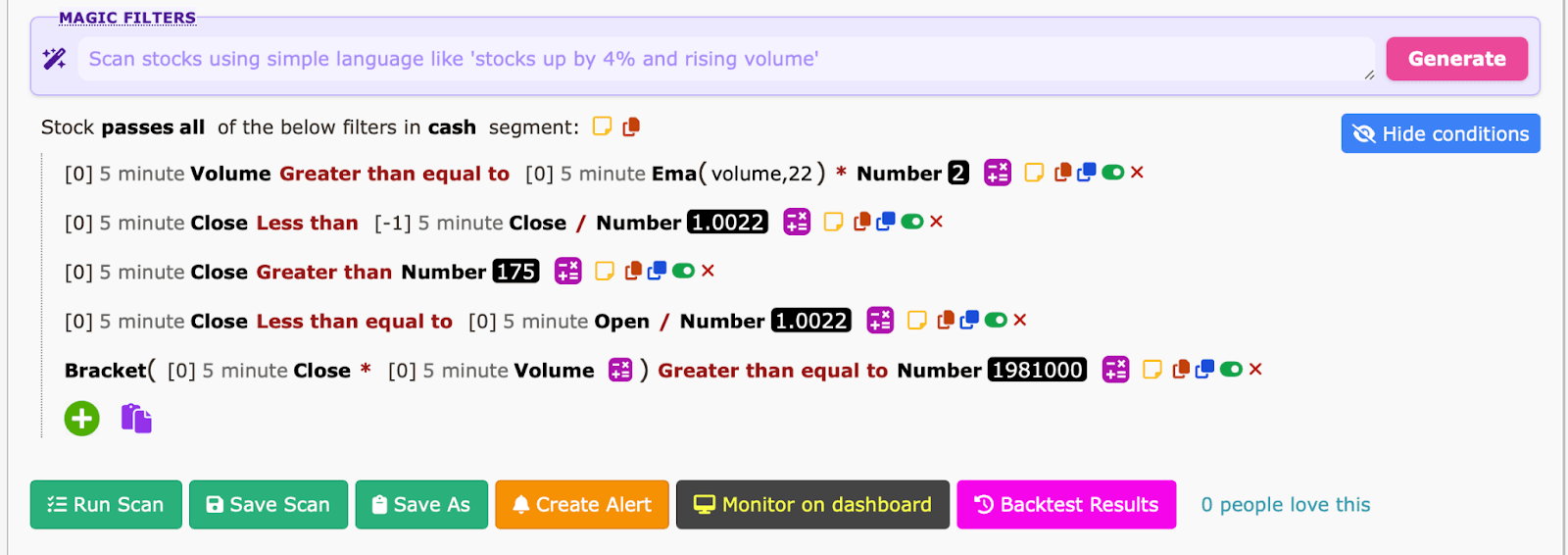
### **Step 2: Create Your Strategy in AlgoTest**
#### **Login to AlgoTest**:
- Visit [AlgoTest](https://algotest.in/) and log in. Go to Signals Dashboard.
#### **Create a New Signal**:
- Go to the Signals dashboard page and create a “New Signal”.
- Select Chartink as Signal Provider.
- Select Forward Test as Execution Type.
- Let’s create a new strategy, a strategy on AlgoTest that trades to execute if the signal is generated.
- Go to the “Stocks” tab to create a stock strategy.
- Select the index you want to trade. In this strategy, we will select “Trent”.
- Define the Trade you want to execute with Quantity, Position, Target and Stoploss.
- Save the strategy with a unique name.


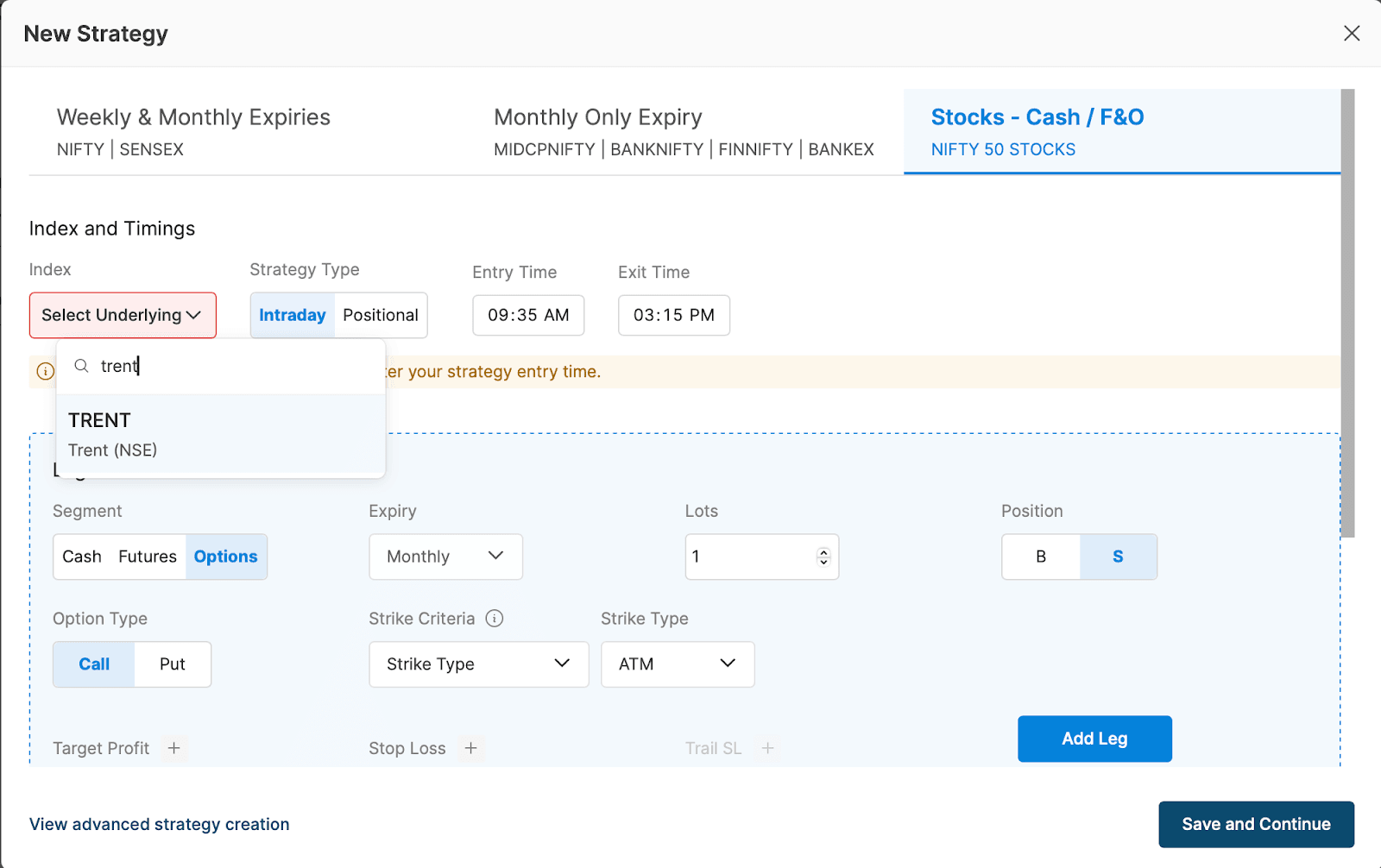
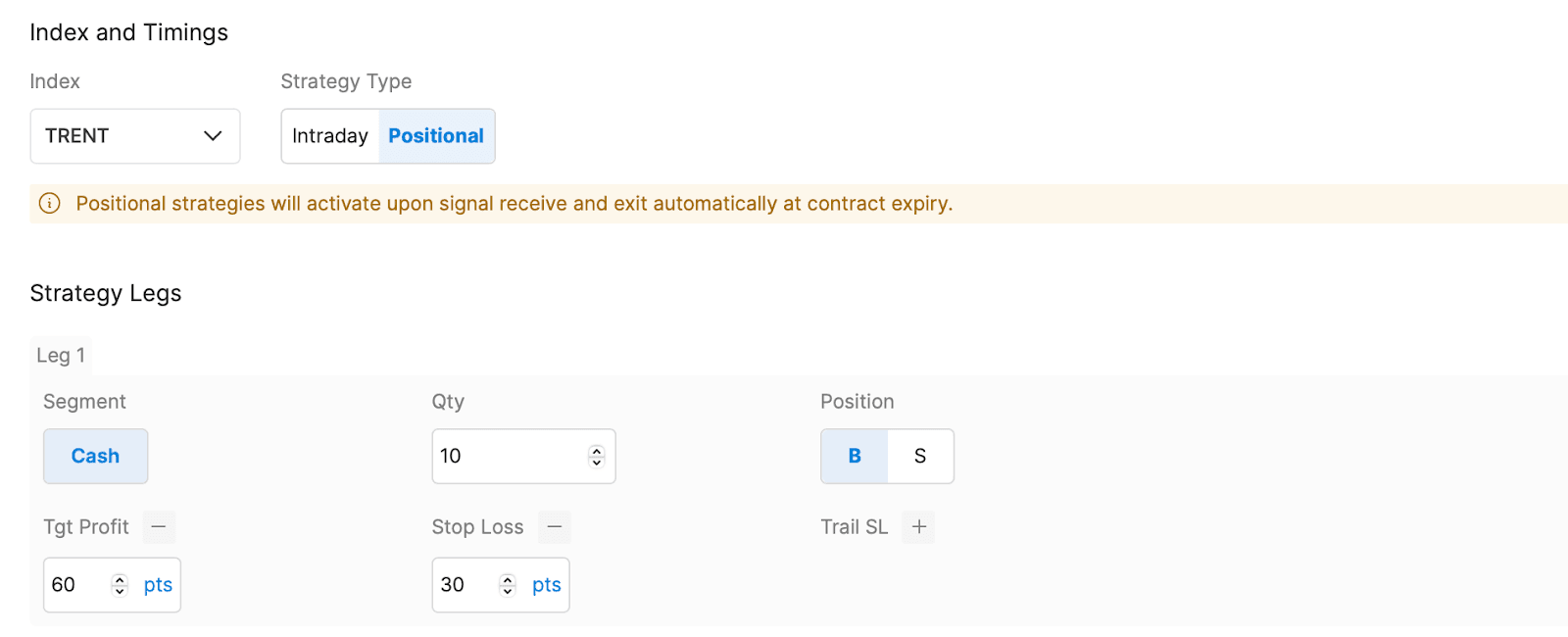
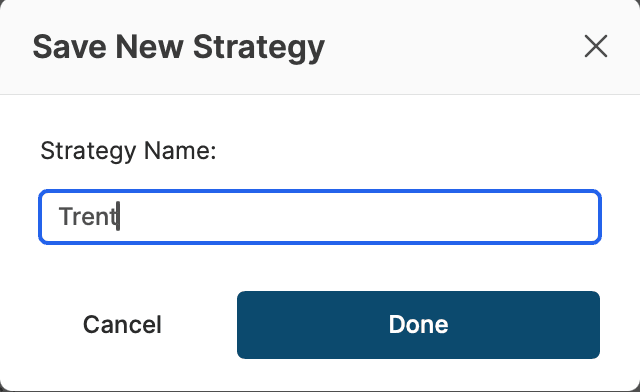
### **Step 3: Connect Chartink Alerts with AlgoTest Signals**
#### **Generate a Webhook URL**:
- Once the strategy is saved, you will receive a webhook url.
- Copy the webhook URL for your strategy.
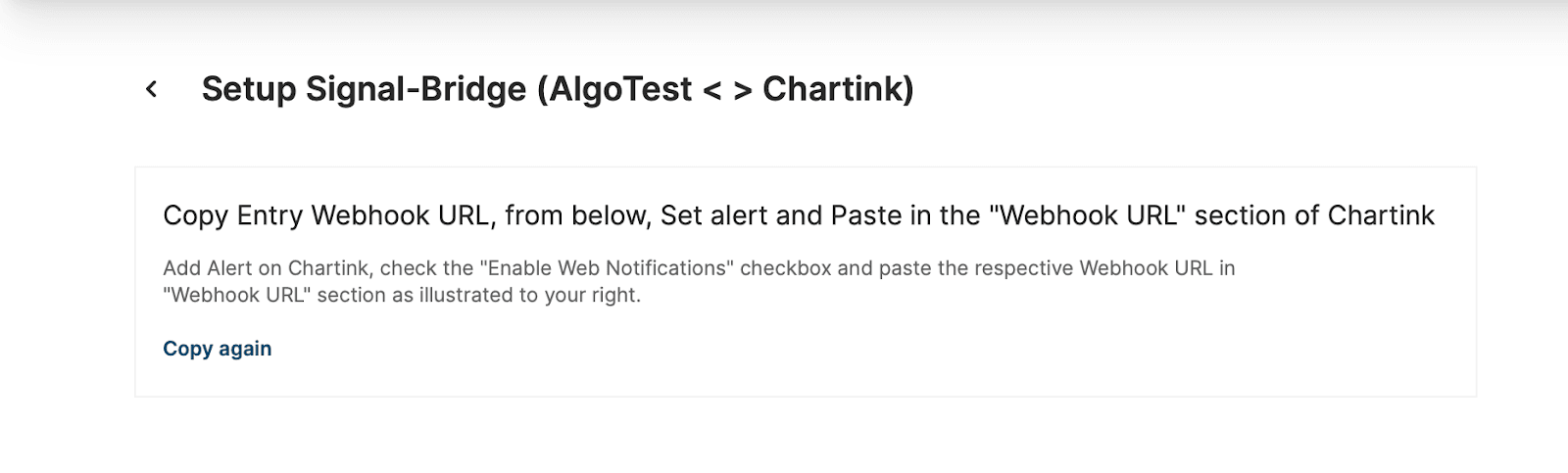
#### **Link the Webhook to Chartink Alerts**:
- In Chartink, navigate to your saved screener and click on "Create Alert."
- Paste the webhook URL in the alert settings.
- Save the alert.
- After Saving the alert click on “Start Listening” on AlgoTest.
- Your Signal is in listening mode now.

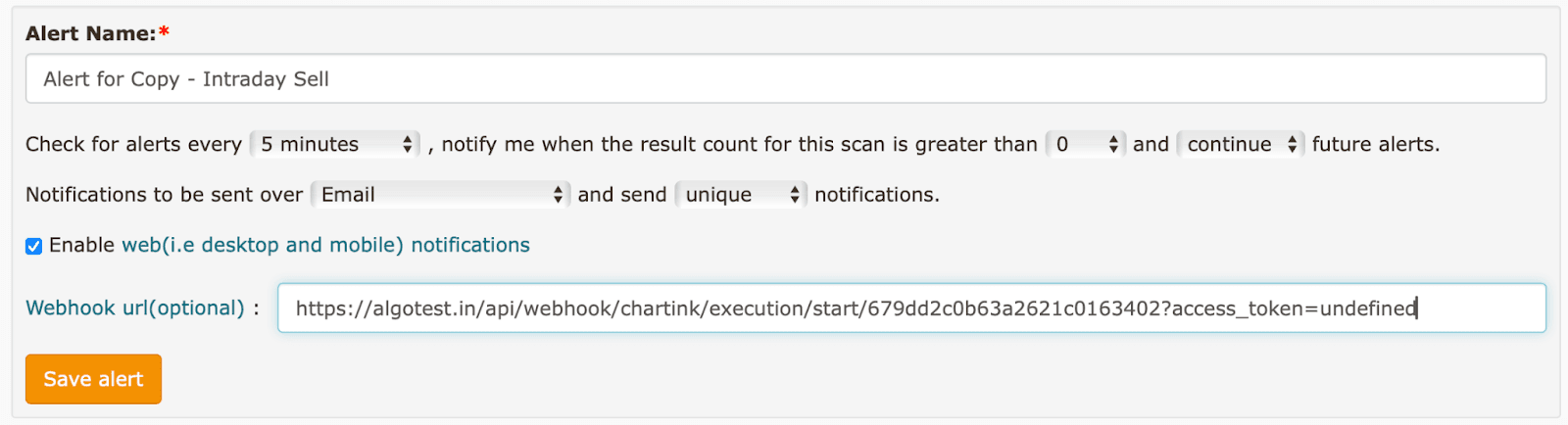

# **Step 4: Deploy Your Strategy in Live Markets**
- Once satisfied with the forward test results, deploy your strategy in the live market by moving the signals to Live Trade.
- Connect your Broker and setup Execution settings to start your Algo Trading.

## **Why Choose Chartink Premium**
Chartink's Premium Plan offers essential features for automation:
- Real-time data for scans and alerts.
- Flexible alert intervals (1/2/3/5 minutes, etc.).
- Notifications via SMS, email, and desktop/mobile.
- No coding required!
These features make it an ideal choice for seamless integration with AlgoTest Signals.
## **Requirements for Automation**
To use this setup, ensure the following prerequisites are met:
1. **Chartink Premium Plan**
- A premium plan is essential for creating alerts and running screeners with real-time data.
2. **AlgoTest Signal Plan**
- Activate the AlgoTest Signal plan to connect your strategy with Chartink alerts.
3. **Broker Connection with AlgoTest**
- Connect your broker to AlgoTest via the broker setup page.
---
This blog is powered by Superblog. Visit https://superblog.ai to know more.
---
## Automate Your “52 Week Low” Using Chartink and AlgoTest
Author: AlgoTest
Author URL: https://algotest.in/blog/author/algotest/
Published: 2025-02-01
Category: Chartink
Category URL: https://algotest.in/blog/category/chartink/
URL: https://algotest.in/blog/automate-your-52-week-low-using-chartink-and-algotest/
Automating your trading strategy can save time and eliminate the need to monitor the markets constantly. With [**Chartink**](http://www.charting.com) and [AlgoTest](https://www.algotest.in), you can set up your strategy to execute trades automatically.
In this guide, you will learn:
- How AlgoTest Signals work.
- Step-by-step instructions to create a Chartink screener and set it up for automation with AlgoTest.
- How to verify and deploy your strategy in live markets or test it using forward testing.
- The requirements for automation.
## **How AlgoTest Signals Work**
AlgoTest Signals allow you to automate your trades based on predefined conditions from Chartink. When a breakout condition is met in Chartink, an alert is sent to AlgoTest, which executes the trade on your broker terminal.
### **Key Benefits:**
- Eliminate manual trade execution.
- Consistency in trade execution based on your strategy logic.
- Saves time and reduces emotional decision-making.
# 52 Week Low filter explanation:
- The weekly minimum low over the past 52 weeks is equal to the current daily low, indicating that the lowest price of the stock in the last week matches the lowest price recorded in the last year. This suggests that the stock is currently at a significant low point compared to its historical performance.
## **Step-by-Step Guide to Automate Your Strategy**
### **Step 1: Create Your Screener in Chartink**
#### **Access Chartink**:
- Go to [Chartink](https://chartink.in/) and log in to your account.
#### **Create a Watchlist:**
- Navigate to the "Watchlists" section.
- Create a new watchlist for the instruments you want to monitor.
- Search for instruments you want to monitor and click on ‘Add Selected’.
- Watchlist is created with desired instruments.

#### **Create a Screener:**
- Go to the "Screener" section and select any pre-existing template (e.g., " [52 Week Low](https://chartink.com/screener/52-week-low-3) [f](https://chartink.com/screener/bullish-engulf-3)").
- Copy the Scan and then open it from the scans dashboard.
- Change the segment to your watchlist of instruments. (e.g., “Trent.”)
- Now save the scan.
### **Step 2: Create Your Strategy in AlgoTest**
#### **Login to AlgoTest:**
- Visit [AlgoTest](https://algotest.in/) and log in. Go to Signals Dashboard.
#### **Create a New Signal:**
- Go to the Signals dashboard page and create a “New Signal”.
- Select Chartink as Signal Provider.
- Select Forward Test as Execution Type.
- Let’s create a new strategy, a strategy on AlgoTest that trades to execute if the signal is generated.
- Go to the “Stocks” tab to create a stock strategy.
- Select the index you want to trade. In this strategy, we will select “Polycab India”.
- Define the Trade you want to execute with Quantity, Position, Target and Stoploss.
- Save the strategy with a unique name.
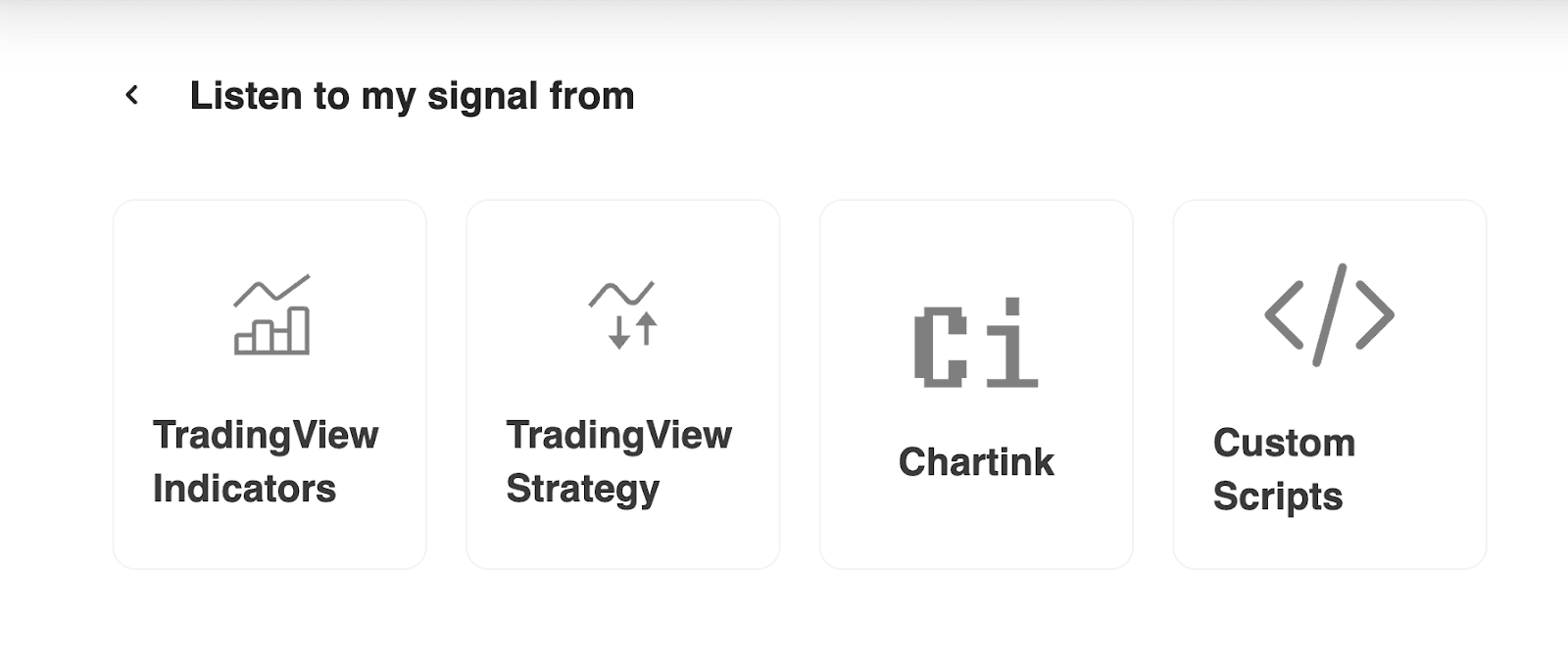


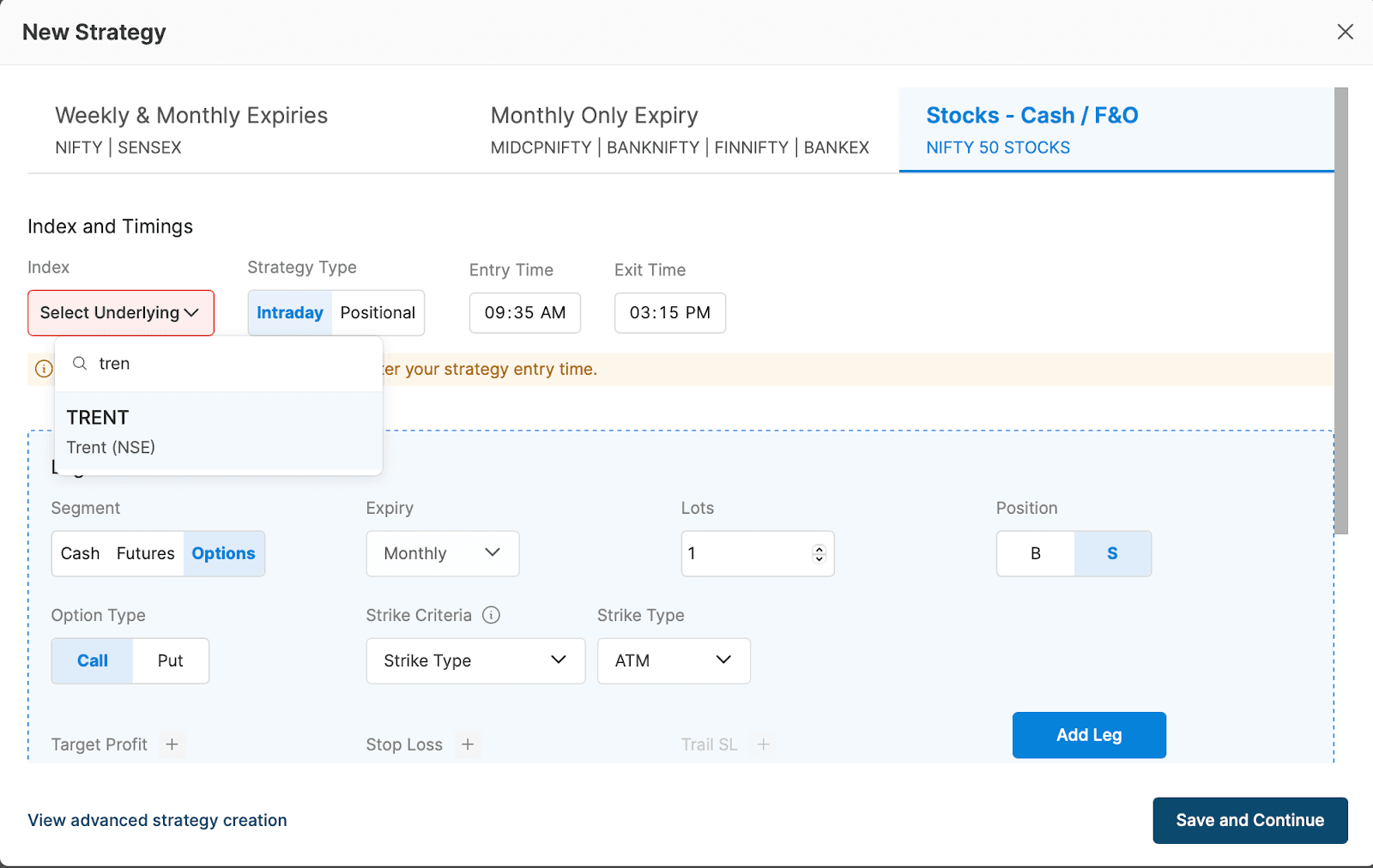
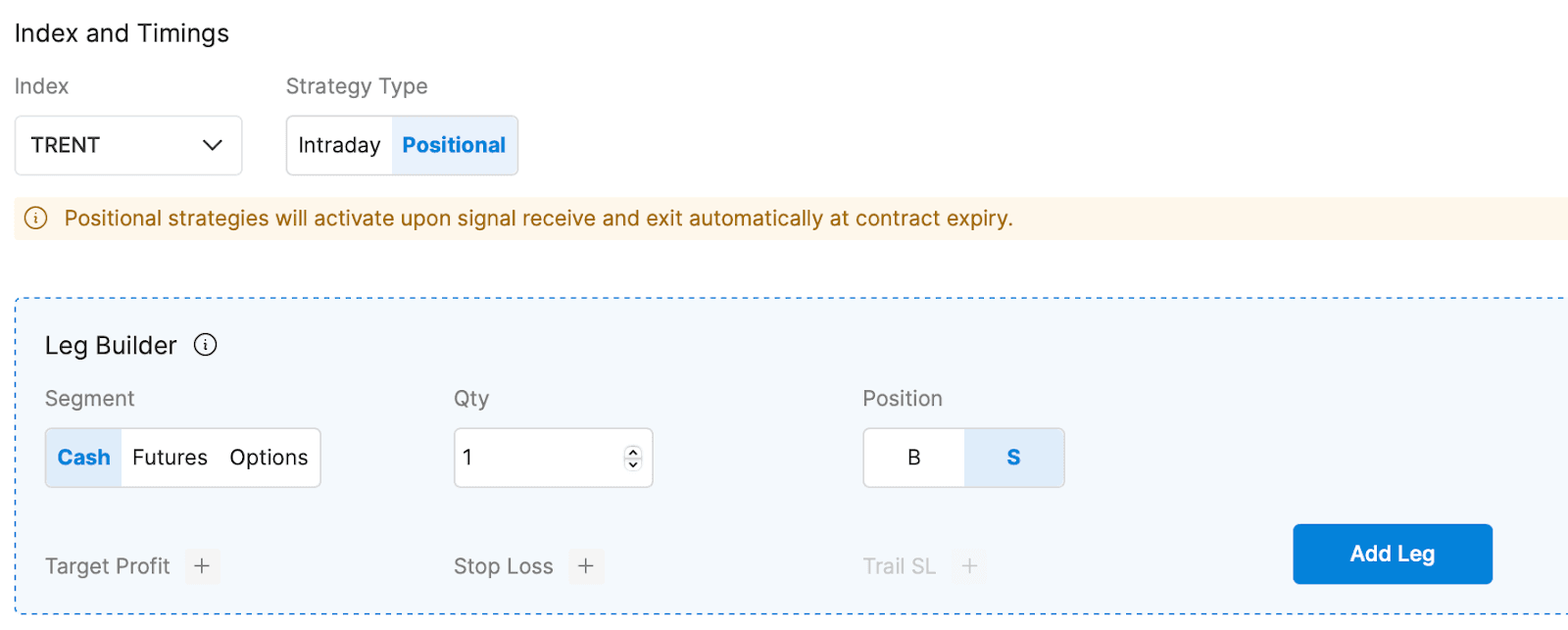
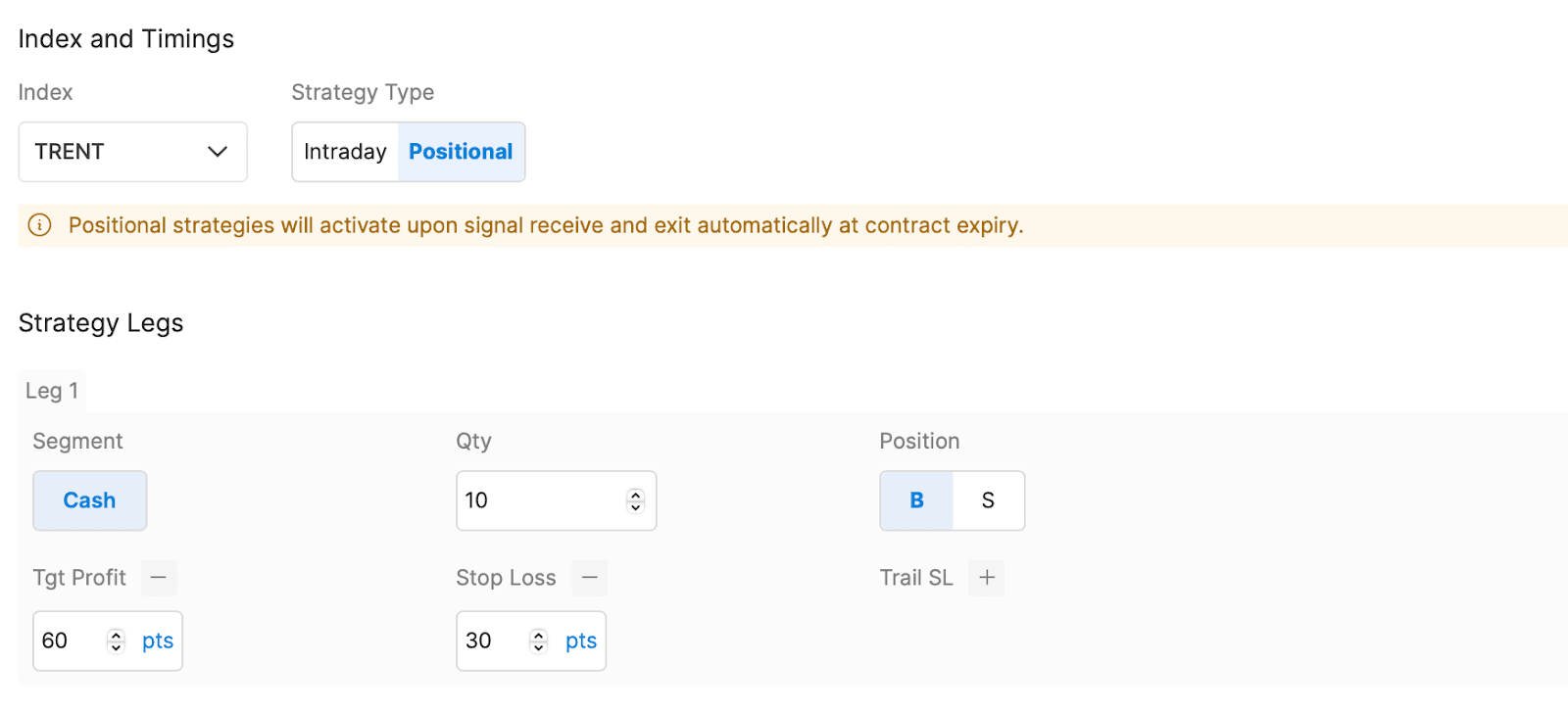
### **Step 3: Connect Chartink Alerts with AlgoTest Signals**
#### **Generate a Webhook URL:**
- Once the strategy is saved, you will receive a webhook url.
- Copy the webhook URL for your strategy.
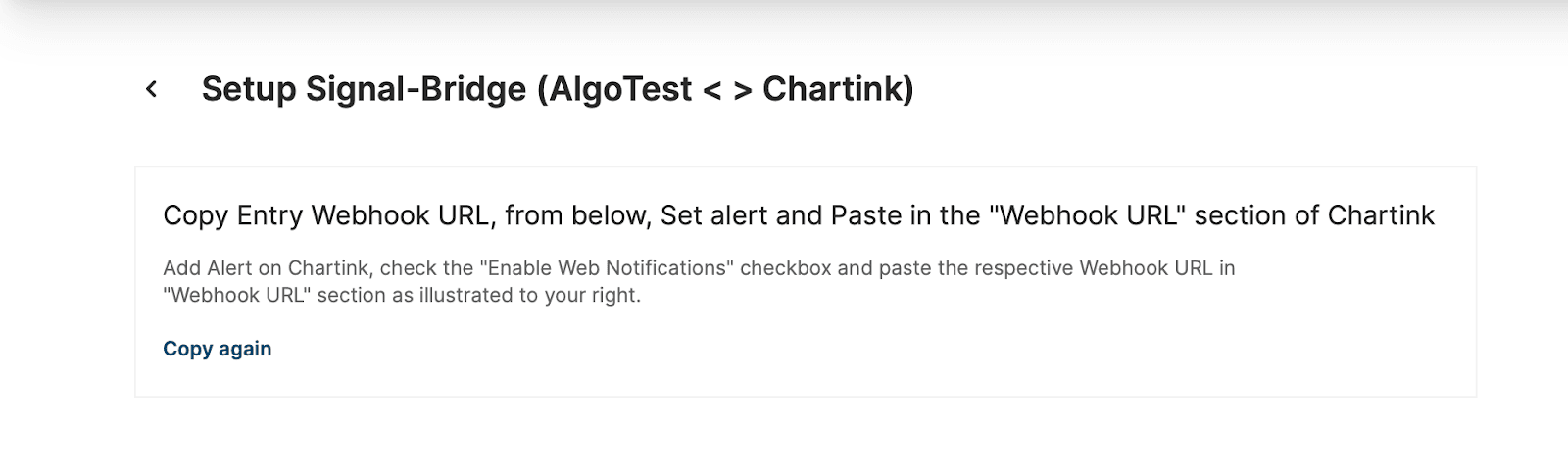
#### **Link the Webhook to Chartink Alerts:**
- In Chartink, navigate to your saved screener and click on "Create Alert."
- Paste the webhook URL in the alert settings.
- Save the alert.
- After Saving the alert click on “Start Listening” on AlgoTest. ****
- Your Signal is in listening mode now.

#### ****
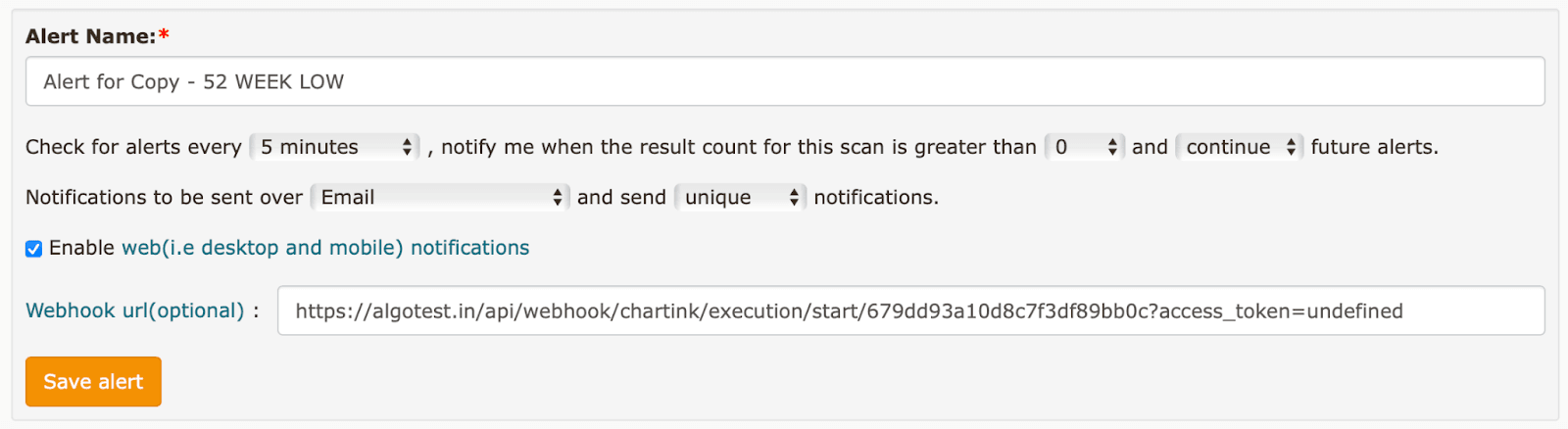
#### ****

#### ****
####
# **Step 4: Deploy Your Strategy in Live Markets**
- Once satisfied with the forward test results, deploy your strategy in the live market by moving the signals to Live Trade.
- Connect your Broker and setup Execution settings to start your Algo Trading.

## **Why Choose Chartink Premium**
Chartink's Premium Plan offers essential features for automation:
- Real-time data for scans and alerts.
- Flexible alert intervals (1/2/3/5 minutes, etc.).
- Notifications via SMS, email, and desktop/mobile.
- No coding required!
These features make it an ideal choice for seamless integration with AlgoTest Signals.
## **Requirements for Automation**
To use this setup, ensure the following prerequisites are met:
1. **Chartink Premium Plan**
- A premium plan is essential for creating alerts and running screeners with real-time data.
2. **AlgoTest Signal Plan**
- Activate the AlgoTest Signal plan to connect your strategy with Chartink alerts.
3. **Broker Connection with AlgoTest**
- Connect your broker to AlgoTest via the broker setup page.
---
This blog is powered by Superblog. Visit https://superblog.ai to know more.
---
## Automate Your “Penny Stocks” Using Chartink and AlgoTest
Author: AlgoTest
Author URL: https://algotest.in/blog/author/algotest/
Published: 2025-02-01
Category: Chartink
Category URL: https://algotest.in/blog/category/chartink/
URL: https://algotest.in/blog/automate-your-penny-stocks-using-chartink-and-algotest/
Automating your trading strategy can save time and eliminate the need to monitor the markets constantly. With [**Chartink**](http://www.charting.com) and [AlgoTest](https://www.algotest.in), you can set up your strategy to execute trades automatically.
In this guide, you will learn:
- How AlgoTest Signals work.
- Step-by-step instructions to create a Chartink screener and set it up for automation with AlgoTest.
- How to verify and deploy your strategy in live markets or test it using forward testing.
- The requirements for automation.
## **How AlgoTest Signals Work**
AlgoTest Signals allow you to automate your trades based on predefined conditions from Chartink. When a breakout condition is met in Chartink, an alert is sent to AlgoTest, which executes the trade on your broker terminal.
### **Key Benefits:**
- Eliminate manual trade execution.
- Consistency in trade execution based on your strategy logic.
- Saves time and reduces emotional decision-making.
# Penny Stocks filter explanation:
- The daily closing price of the stock is greater than the average closing price over the last 100 days. This indicates that the stock is performing better than its average performance over that period, suggesting a positive trend. For example, if the average closing price over the last 100 days is ₹100, and the current closing price is ₹105, this represents a 5% increase compared to the average.
- The filter checks if the current daily closing price of the stock is greater than its average closing price over the last 200 days. This means that if the current price is, for example, 5% higher than the average of the past 200 days, it indicates a positive trend, suggesting that the stock is performing better than its historical average.
- The daily closing price of the stock is greater than its 50-day simple moving average, indicating that the stock is currently performing better than its average performance over the last 50 days. This suggests a positive trend, as the closing price is above the average by a certain percentage, reflecting stronger recent performance compared to the longer-term average.
- The daily closing price of the stock is less than ₹5, indicating that the stock's value has decreased compared to the specified threshold.
- Yearly Face value is at least 5, meaning the minimum value of the stock's face value over the year is equal to or greater than 5.
- Yearly Book value must be greater than 10 Indian Rupees.
## **Step-by-Step Guide to Automate Your Strategy**
### **Step 1: Create Your Screener in Chartink**
#### **Access Chartink**:
- Go to [Chartink](https://chartink.in/) and log in to your account.
#### **Create a Watchlist**:
- Navigate to the "Watchlists" section.
- Create a new watchlist for the instruments you want to monitor.
- Search for instruments you want to monitor and click on ‘Add Selected’.
- Watchlist is created with desired instruments.

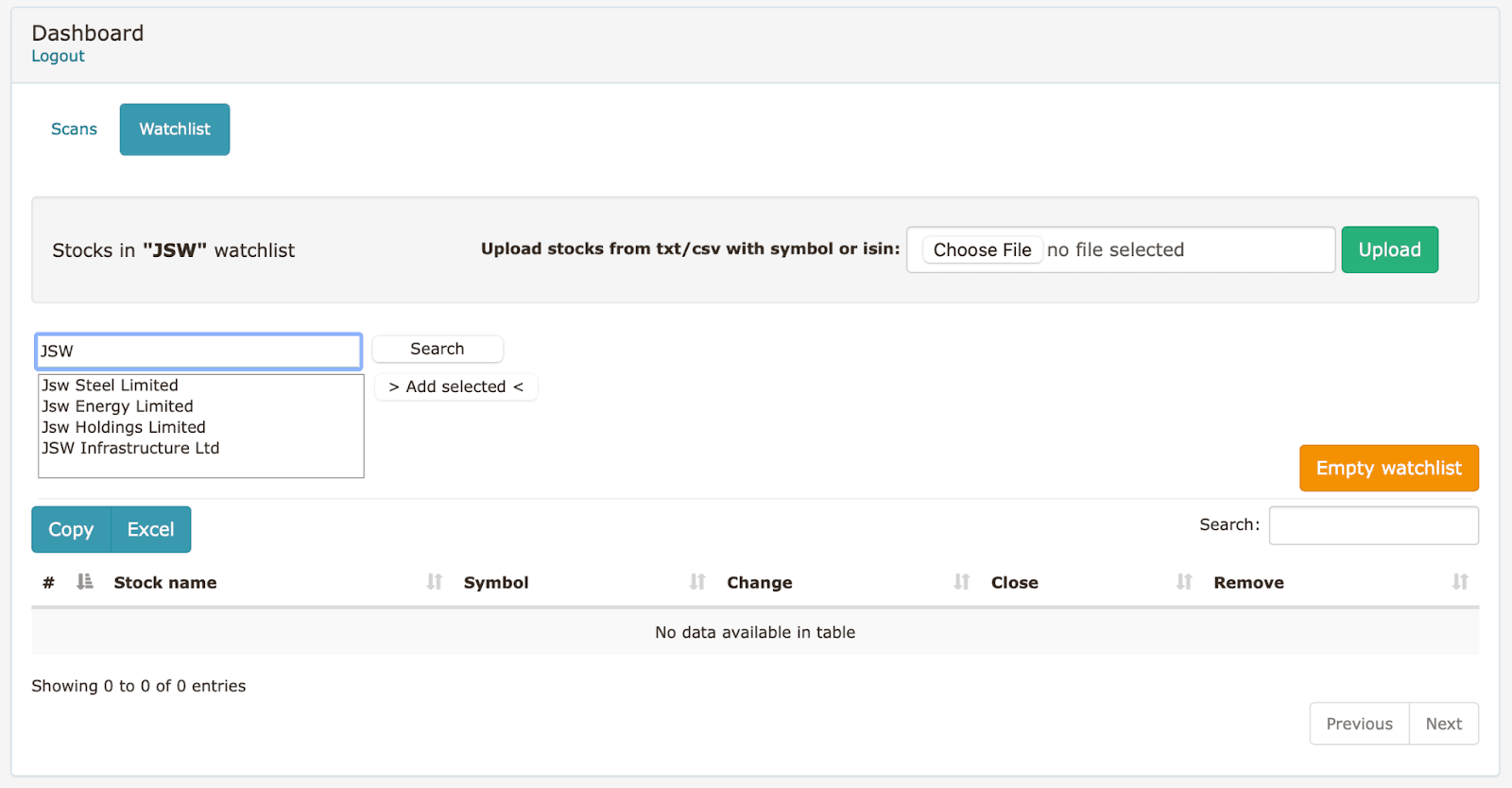
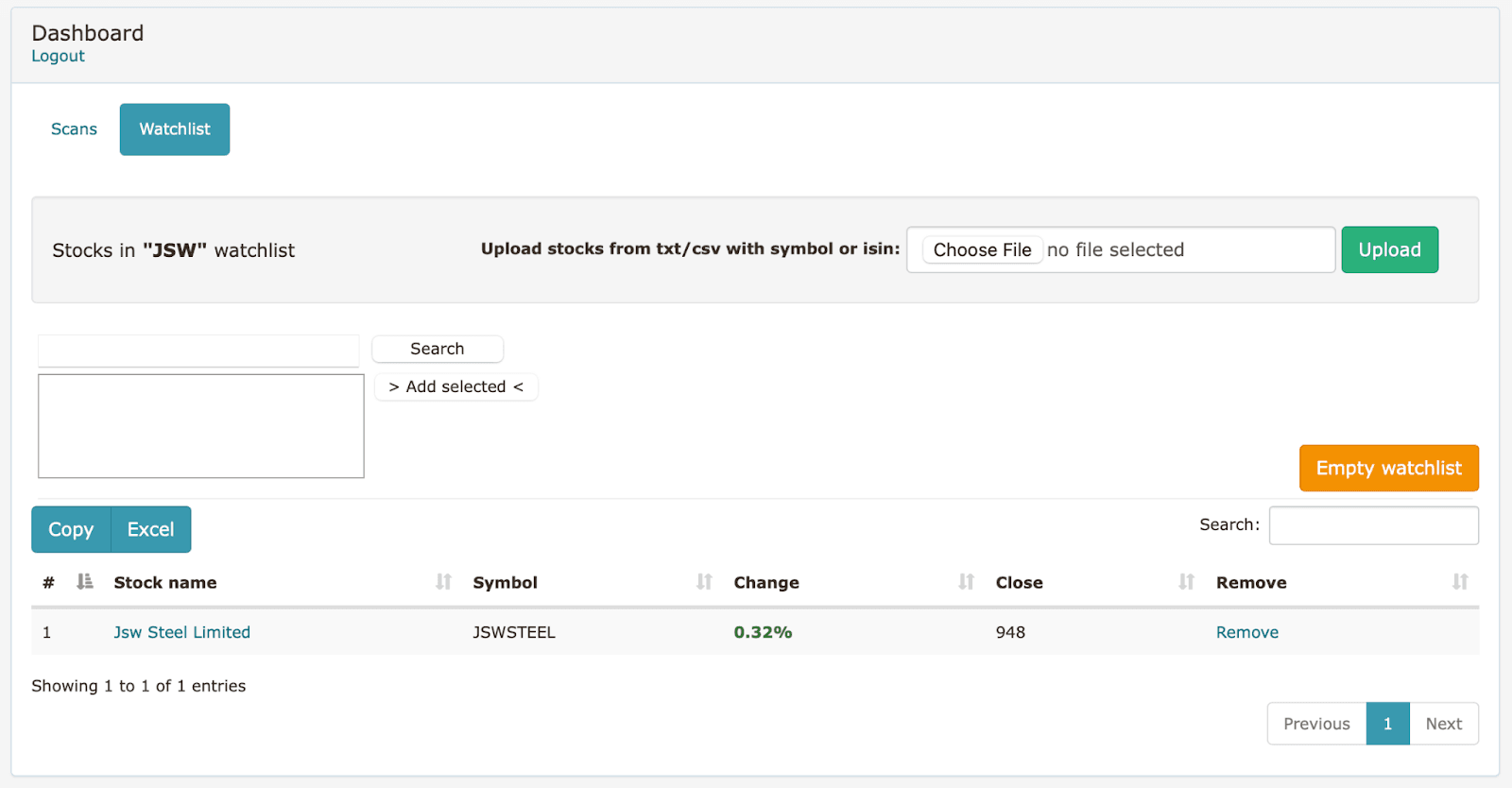
#### **Create a Screener**:
- Go to the "Screener" section and select any pre-existing template (e.g., " [Penny Stocks](https://chartink.com/screener/penny-stocks-multi-bagger-1)").
- Copy the Scan and then open it from the scans dashboard.
- Change the segment to your watchlist of instruments. (e.g., “JSW Steel Ltd.”)
- Now save the scan.
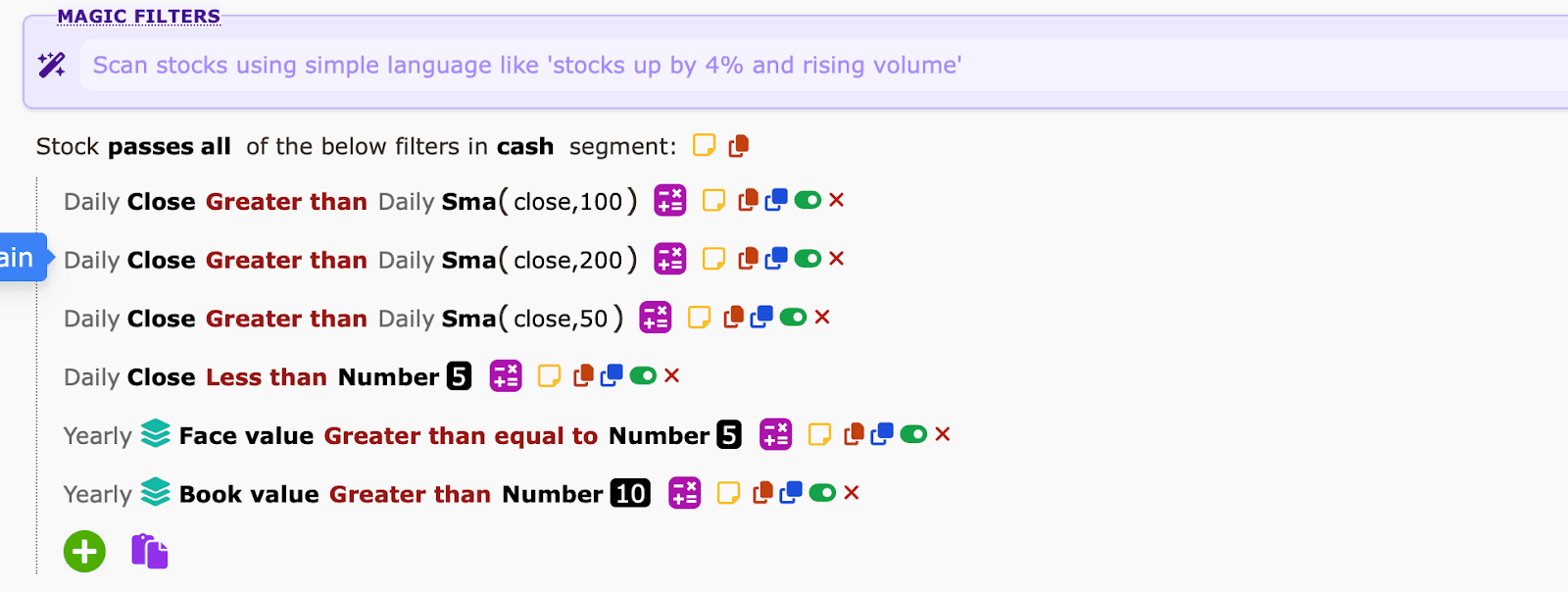
### **Step 2: Create Your Strategy in AlgoTest**
#### **Login to AlgoTest**:
- Visit [AlgoTest](https://algotest.in/) and log in. Go to Signals Dashboard.
#### **Create a New Signal**:
- Go to the Signals dashboard page and create a “New Signal”.
- Select Chartink as Signal Provider.
- Select Forward Test as Execution Type.
- Let’s create a new strategy, strategy on AlgoTest which trades to execute if the signal is generated.
- Go to the “Stocks” tab to create a stock strategy.
- Select the index you want to trade. In this strategy, we will select “JSW Steel Ltd.”.
- Define the Trade you want to execute with Quantity, Position, Target and Stoploss.
- Save the strategy with a unique name.
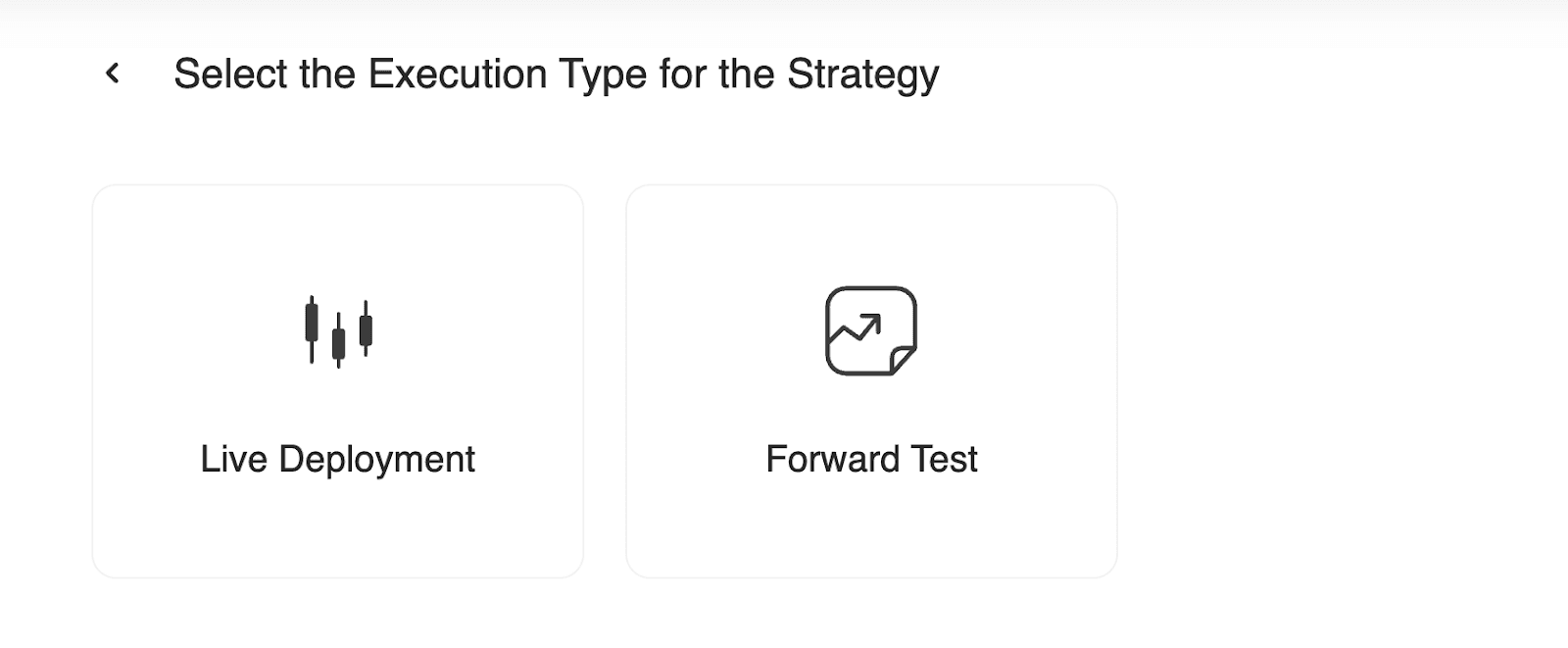


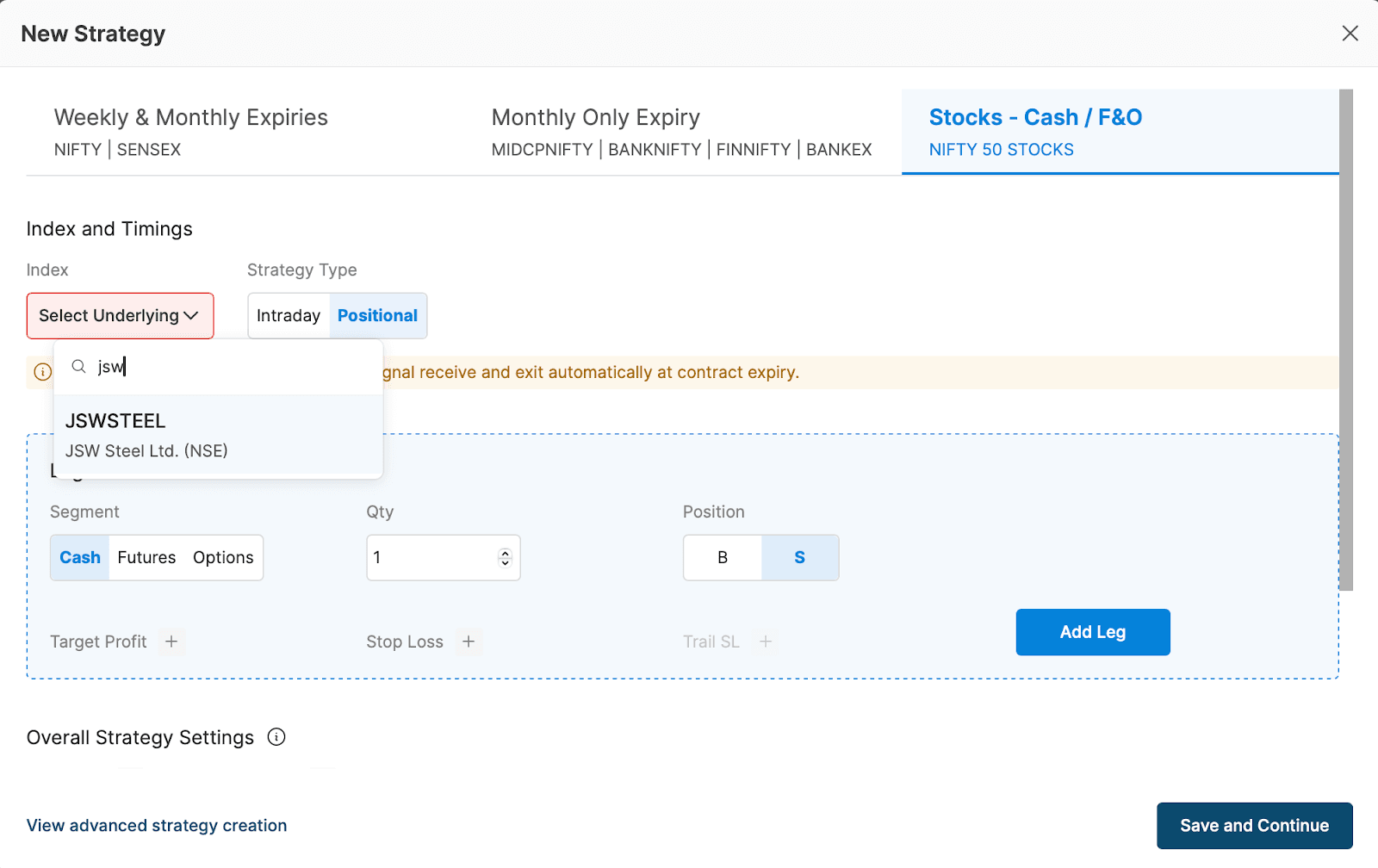
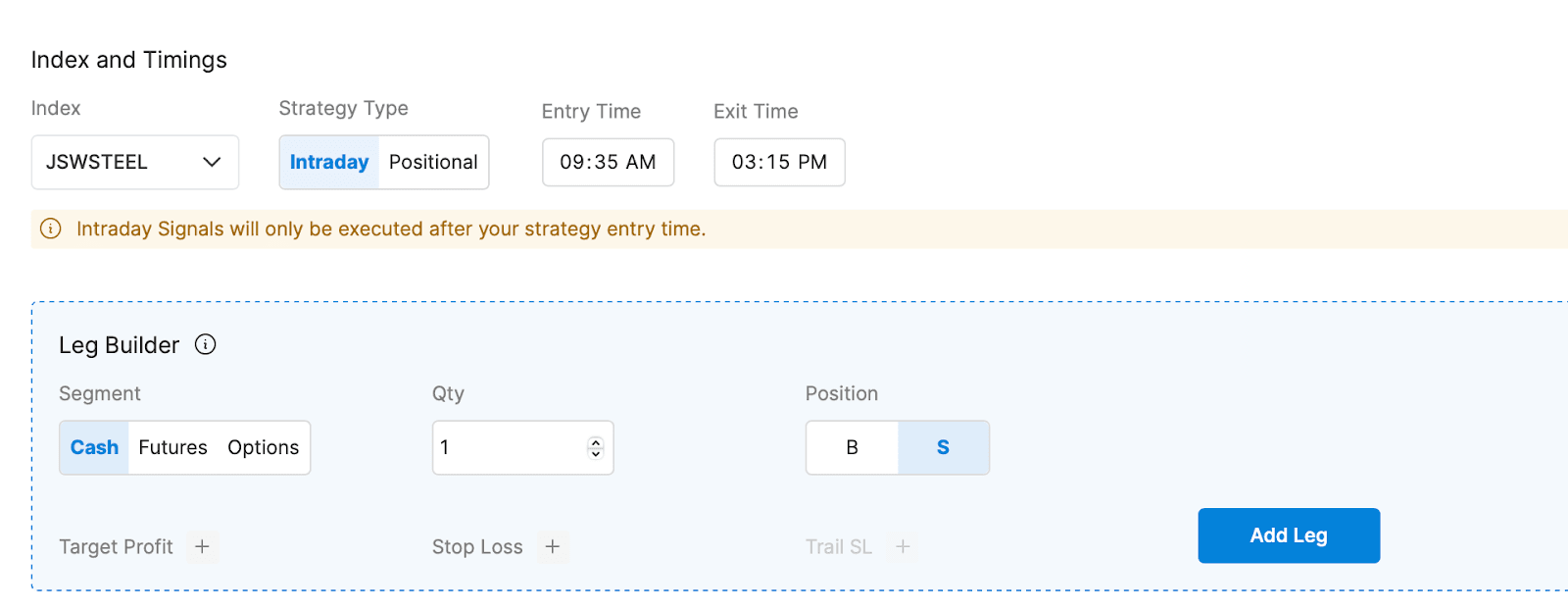
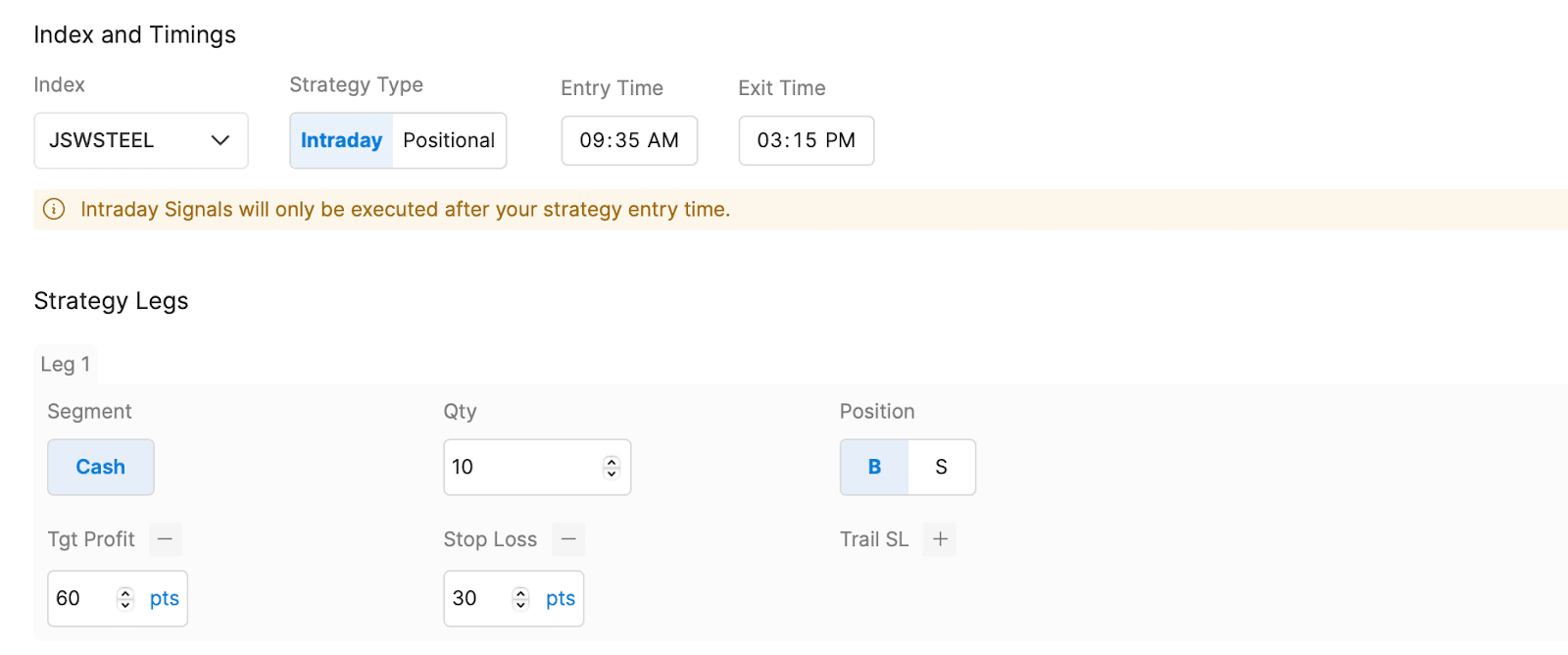
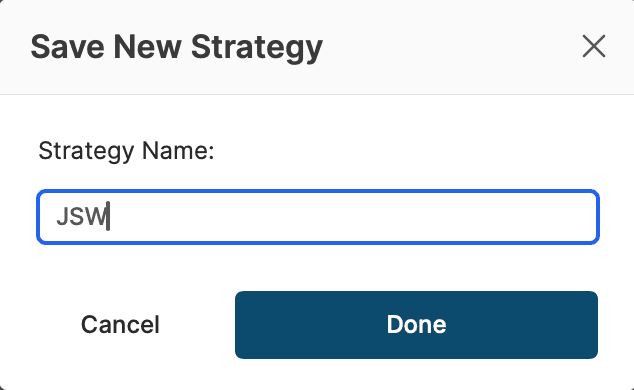
### **Step 3: Connect Chartink Alerts with AlgoTest Signals**
#### **Generate a Webhook URL**:
- Once the strategy is saved, you will receive a webhook url.
- Copy the webhook URL for your strategy.
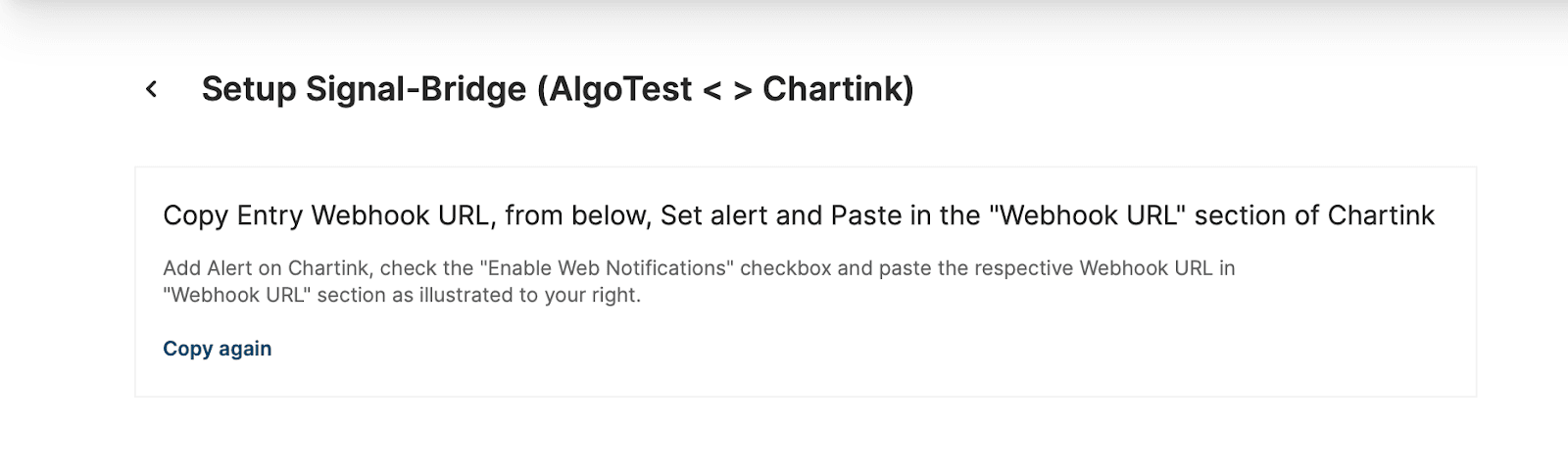
#### **Link the Webhook to Chartink Alerts**:
- In Chartink, navigate to your saved screener and click on "Create Alert."
- Paste the webhook URL in the alert settings.
- Save the alert.
- After Saving the alert click on “Start Listening” on AlgoTest.
- Your Signal is in listening mode now.

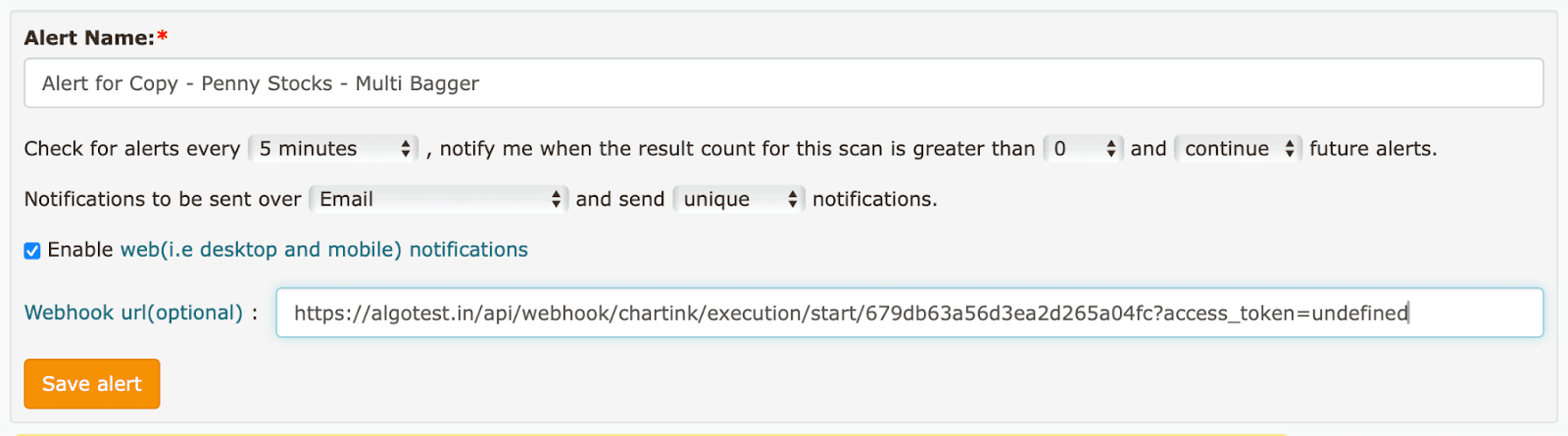

# **Step 4: Deploy Your Strategy in Live Markets**
- Once satisfied with the forward test results, deploy your strategy in the live market by moving the signals to Live Trade.
- Connect your Broker and setup Execution settings to start your Algo Trading.

## **Why Choose Chartink Premium**
Chartink's Premium Plan offers essential features for automation:
- Real-time data for scans and alerts.
- Flexible alert intervals (1/2/3/5 minutes, etc.).
- Notifications via SMS, email, and desktop/mobile.
- No coding required!
These features make it an ideal choice for seamless integration with AlgoTest Signals.
## **Requirements for Automation**
To use this setup, ensure the following prerequisites are met:
1. **Chartink Premium Plan**
- A premium plan is essential for creating alerts and running screeners with real-time data.
2. **AlgoTest Signal Plan**
- Activate the AlgoTest Signal plan to connect your strategy with Chartink alerts.
3. **Broker Connection with AlgoTest**
- Connect your broker to AlgoTest via the broker setup page.
---
This blog is powered by Superblog. Visit https://superblog.ai to know more.
---
## Automate Your “Low Debt Companies” Using Chartink and AlgoTest
Author: AlgoTest
Author URL: https://algotest.in/blog/author/algotest/
Published: 2025-02-01
Category: Chartink
Category URL: https://algotest.in/blog/category/chartink/
URL: https://algotest.in/blog/automate-your-low-debt-companies-using-chartink-and-algotest/
Automating your trading strategy can save time and eliminate the need to monitor the markets constantly. With [**Chartink**](http://www.charting.com) and [AlgoTest](https://www.algotest.in), you can set up your strategy to execute trades automatically.
In this guide, you will learn:
- How AlgoTest Signals work.
- Step-by-step instructions to create a Chartink screener and set it up for automation with AlgoTest.
- How to verify and deploy your strategy in live markets or test it using forward testing.
- The requirements for automation.
## **How AlgoTest Signals Work**
AlgoTest Signals allow you to automate your trades based on predefined conditions from Chartink. When a breakout condition is met in Chartink, an alert is sent to AlgoTest, which executes the trade on your broker terminal.
### **Key Benefits:**
- Eliminate manual trade execution.
- Consistency in trade execution based on your strategy logic.
- Saves time and reduces emotional decision-making.
## Low Debt Companies filter explanation:
- Yearly total loans = 0 means that the company has no outstanding loans at all.
## **Step-by-Step Guide to Automate Your Strategy**
### **Step 1: Create Your Screener in Chartink**
#### **Access Chartink**:
- Go to [Chartink](https://chartink.in/) and log in to your account.
#### **Create a Watchlist**:
- Navigate to the "Watchlists" section.
- Create a new watchlist for the instruments you want to monitor.
- Search for instruments you want to monitor and click on ‘Add Selected’.
- Watchlist is created with desired instruments.
#### **Create a Screener**:
- Go to the "Screener" section and select any pre-existing template (e.g., " [Low debt companies](https://chartink.com/screener/low-debt-companies)").
- Copy the Scan and then open it from the scans dashboard.
- Change the segment to your watchlist of instruments. (e.g., “Reliance Industries Limited”)
- Now save the scan.
**Step 2: Create Your Strategy in AlgoTest**
#### **Login to AlgoTest**:
- Visit [AlgoTest](https://algotest.in/) and log in. Go to Signals Dashboard.
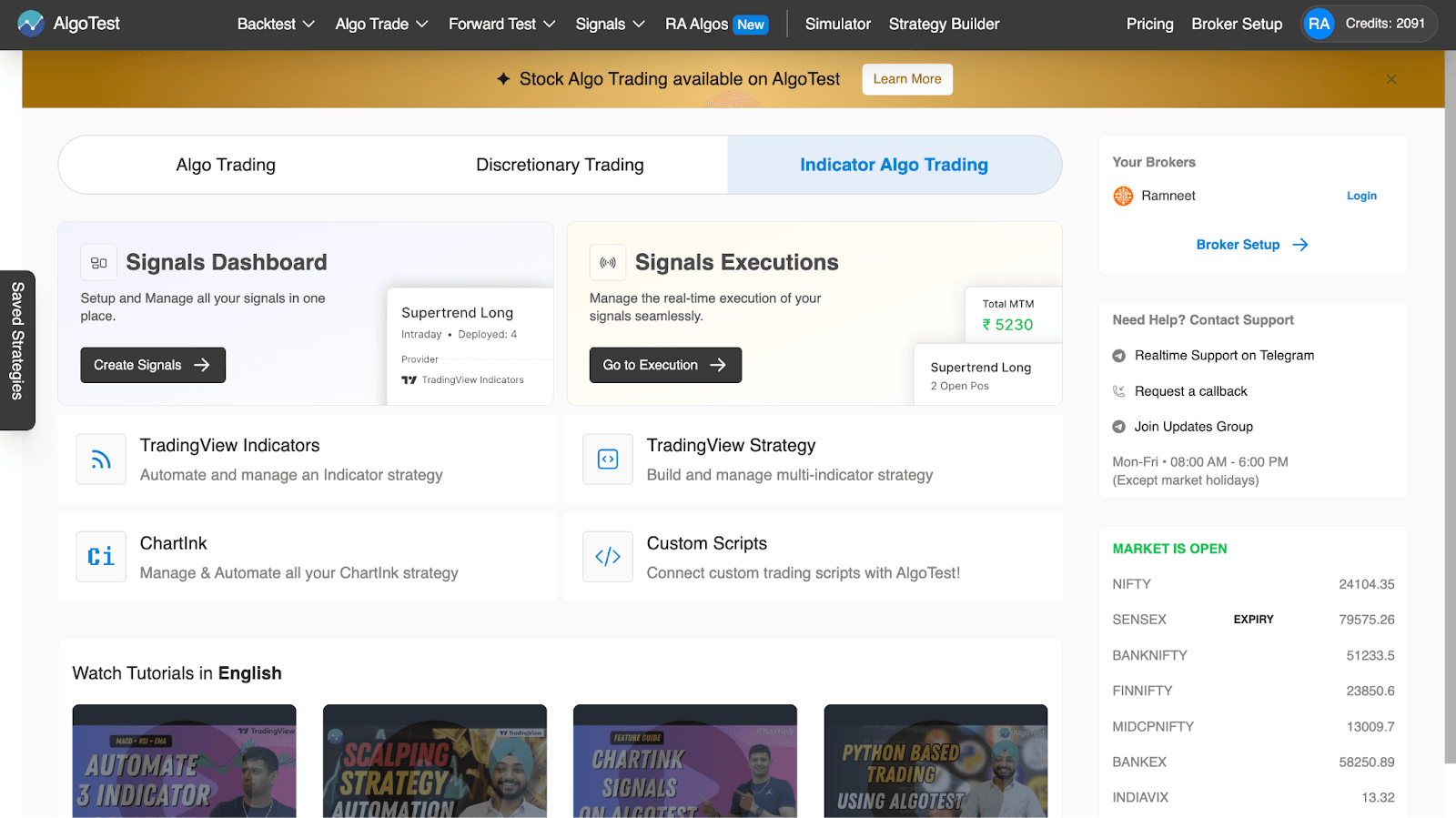
#### **Create a New Signal**:
- Go to the Signals dashboard page and create a “New Signal”.
- Select Chartink as Signal Provider.
- Select Forward Test as Execution Type.
- Let’s create a new strategy, strategy on AlgoTest which trades to execute if the signal is generated.
- Go to the “Stocks” tab to create a stock strategy.
- Select the index you want to trade in this strategy we will select “Reliance Industries Limited”.
- Define the Trade you want to execute with Quantity, Position, Target and Stoploss.
- Save the strategy with a unique name.
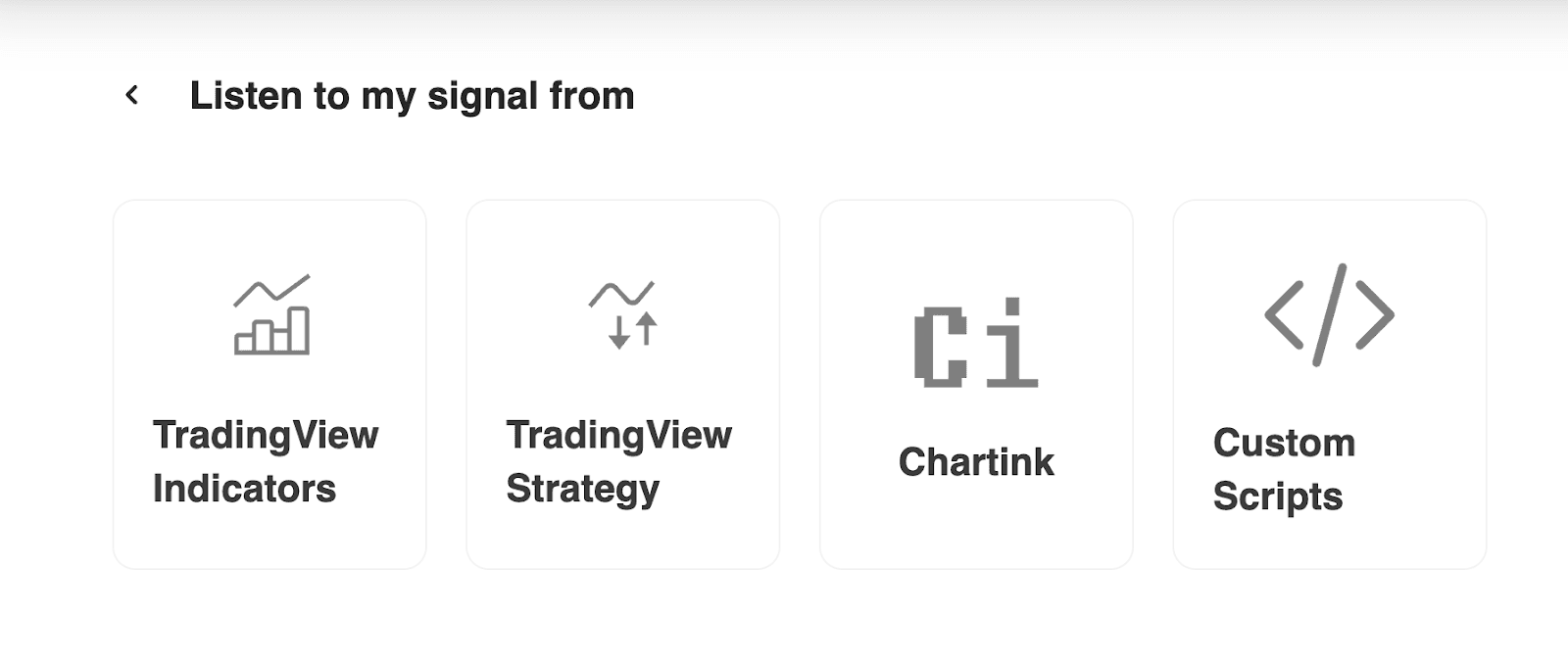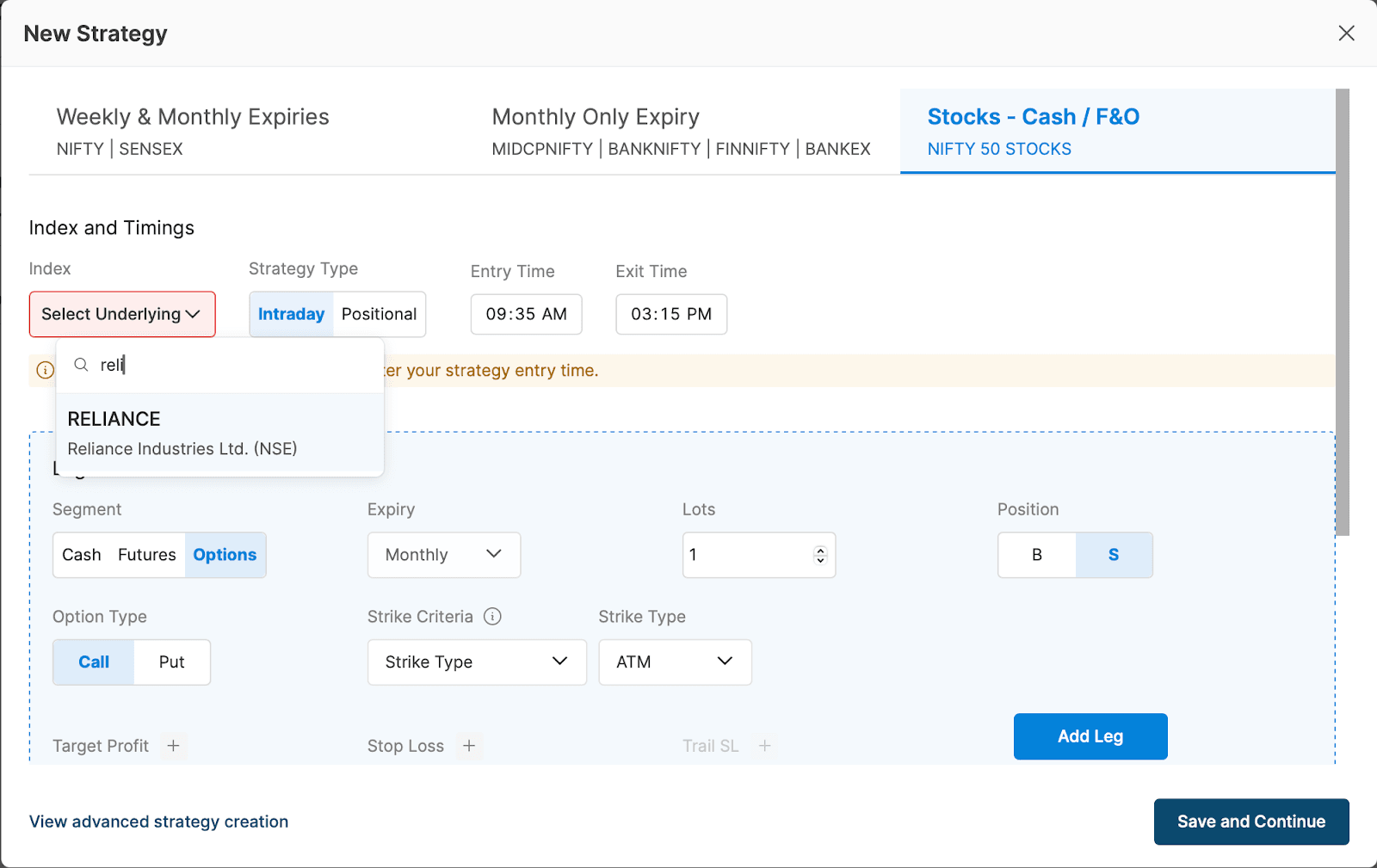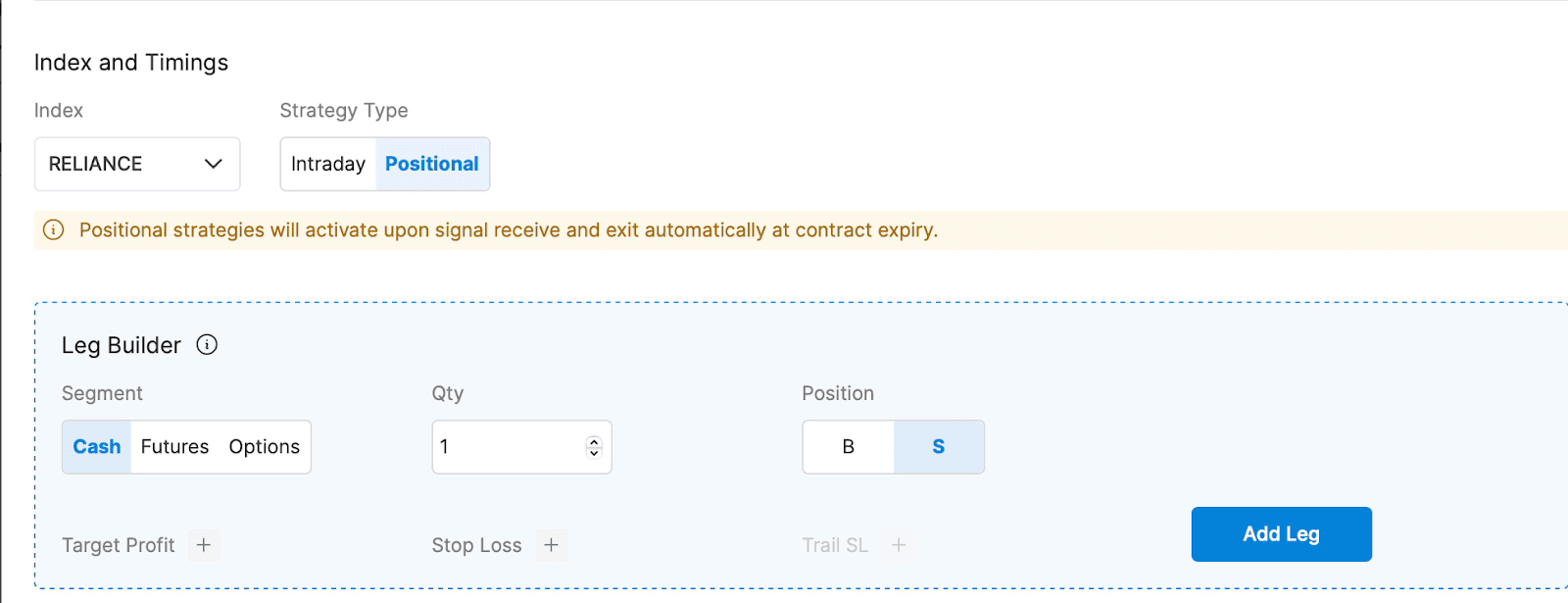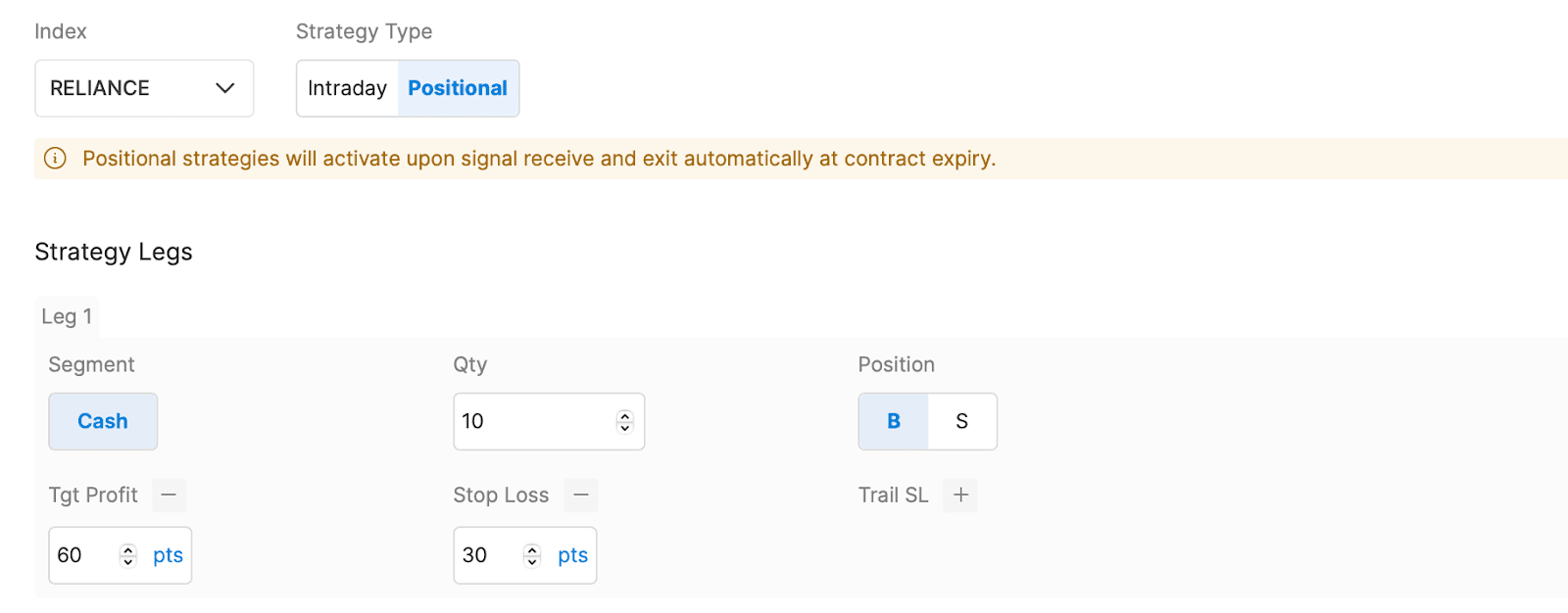
### **Step 3: Connect Chartink Alerts with AlgoTest Signals**
#### **Generate a Webhook URL**:
- Once the strategy is saved, you will receive a webhook url.
- Copy the webhook URL for your strategy.
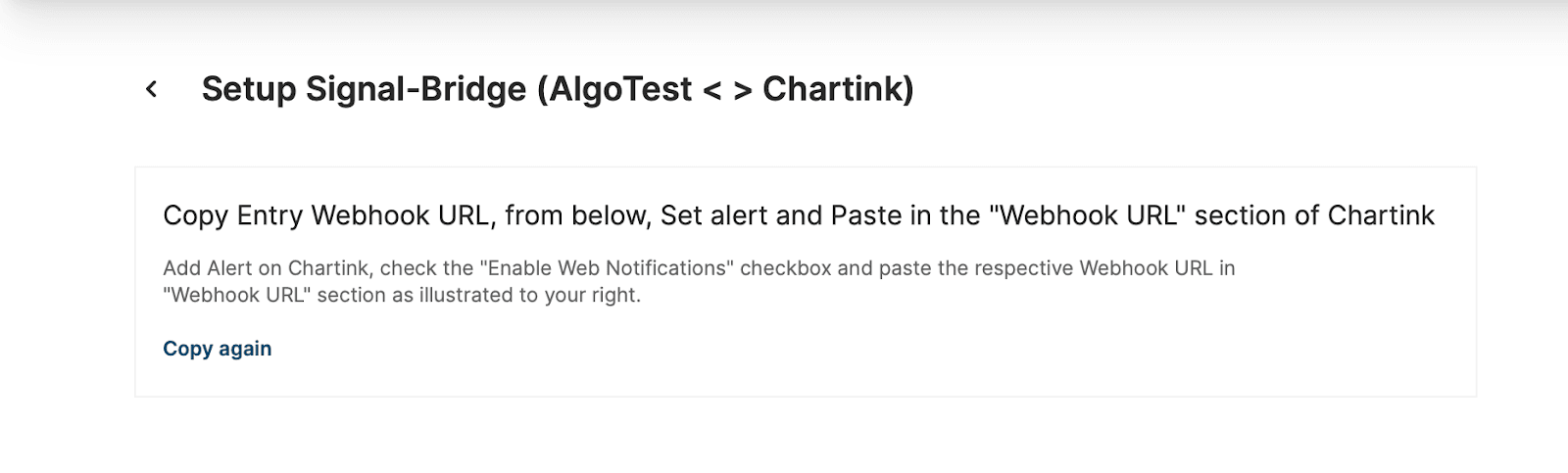
#### **Link the Webhook to Chartink Alerts**:
- In Chartink, navigate to your saved screener and click on "Create Alert."
- Paste the webhook URL in the alert settings.
- Save the alert.
- After Saving the alert click on “Start Listening” on AlgoTest.
- Your Signal is in listening mode now.
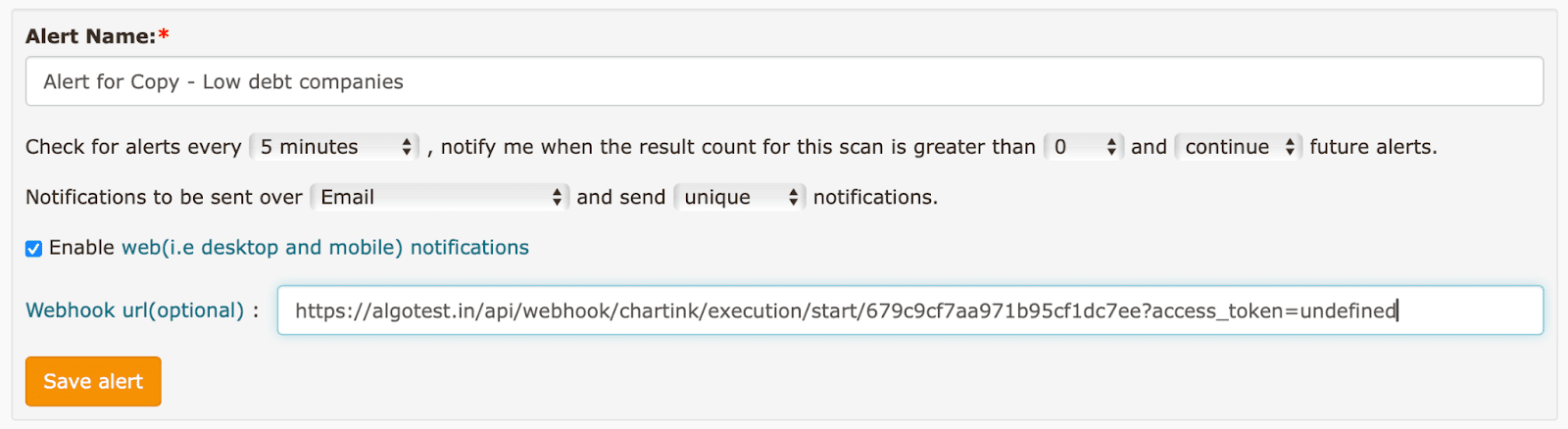
## **Step 4: Deploy Your Strategy in Live Markets**
- Once satisfied with the forward test results, deploy your strategy in the live market by moving the signals to Live Trade.
- Connect your Broker and setup Execution settings to start your Algo Trading.

## **Why Choose Chartink Premium**
Chartink's Premium Plan offers essential features for automation:
- Real-time data for scans and alerts.
- Flexible alert intervals (1/2/3/5 minutes, etc.).
- Notifications via SMS, email, and desktop/mobile.
- No coding required!
These features make it an ideal choice for seamless integration with AlgoTest Signals.
## **Requirements for Automation**
To use this setup, ensure the following prerequisites are met:
1. **Chartink Premium Plan**
- A premium plan is essential for creating alerts and running screeners with real-time data.
2. **AlgoTest Signal Plan**
- Activate the AlgoTest Signal plan to connect your strategy with Chartink alerts.
3. **Broker Connection with AlgoTest**
- Connect your broker to AlgoTest via the broker setup page.
---
This blog is powered by Superblog. Visit https://superblog.ai to know more.
---
## Automate Your “Highest Earning Per Share” Using Chartink and AlgoTest
Author: AlgoTest
Author URL: https://algotest.in/blog/author/algotest/
Published: 2025-02-01
Category: Chartink
Category URL: https://algotest.in/blog/category/chartink/
URL: https://algotest.in/blog/automate-your-highest-earning-per-share-using-chartink-and-algotest/
Automating your trading strategy can save time and eliminate the need to monitor the markets constantly. With [**Chartink**](http://www.charting.com) and [AlgoTest](https://www.algotest.in), you can set up your strategy to execute trades automatically.
In this guide, you will learn:
- How AlgoTest Signals work.
- Step-by-step instructions to create a Chartink screener and set it up for automation with AlgoTest.
- How to verify and deploy your strategy in live markets or test it using forward testing.
- The requirements for automation.
## **How AlgoTest Signals Work**
AlgoTest Signals allow you to automate your trades based on predefined conditions from Chartink. When a breakout condition is met in Chartink, an alert is sent to AlgoTest, which executes the trade on your broker terminal.
### **Key Benefits:**
- Eliminate manual trade execution.
- Consistency in trade execution based on your strategy logic.
- Saves time and reduces emotional decision-making.
# Highest earning per share filter explanation:
- Yearly Earnings Per Share (EPS) must be greater than 100 Indian Rupees. This means the company's profit allocated to each outstanding share of common stock is above 100 Rupees, indicating strong profitability.
## **Step-by-Step Guide to Automate Your Strategy**
### **Step 1: Create Your Screener in Chartink**
#### **Access Chartink**:
- Go to [Chartink](https://chartink.in/) and log in to your account.
#### **Create a Watchlist:**
- Navigate to the "Watchlists" section.
- Create a new watchlist for the instruments you want to monitor.
- Search for instruments you want to monitor and click on ‘Add Selected’.
- Watchlist is created with desired instruments.

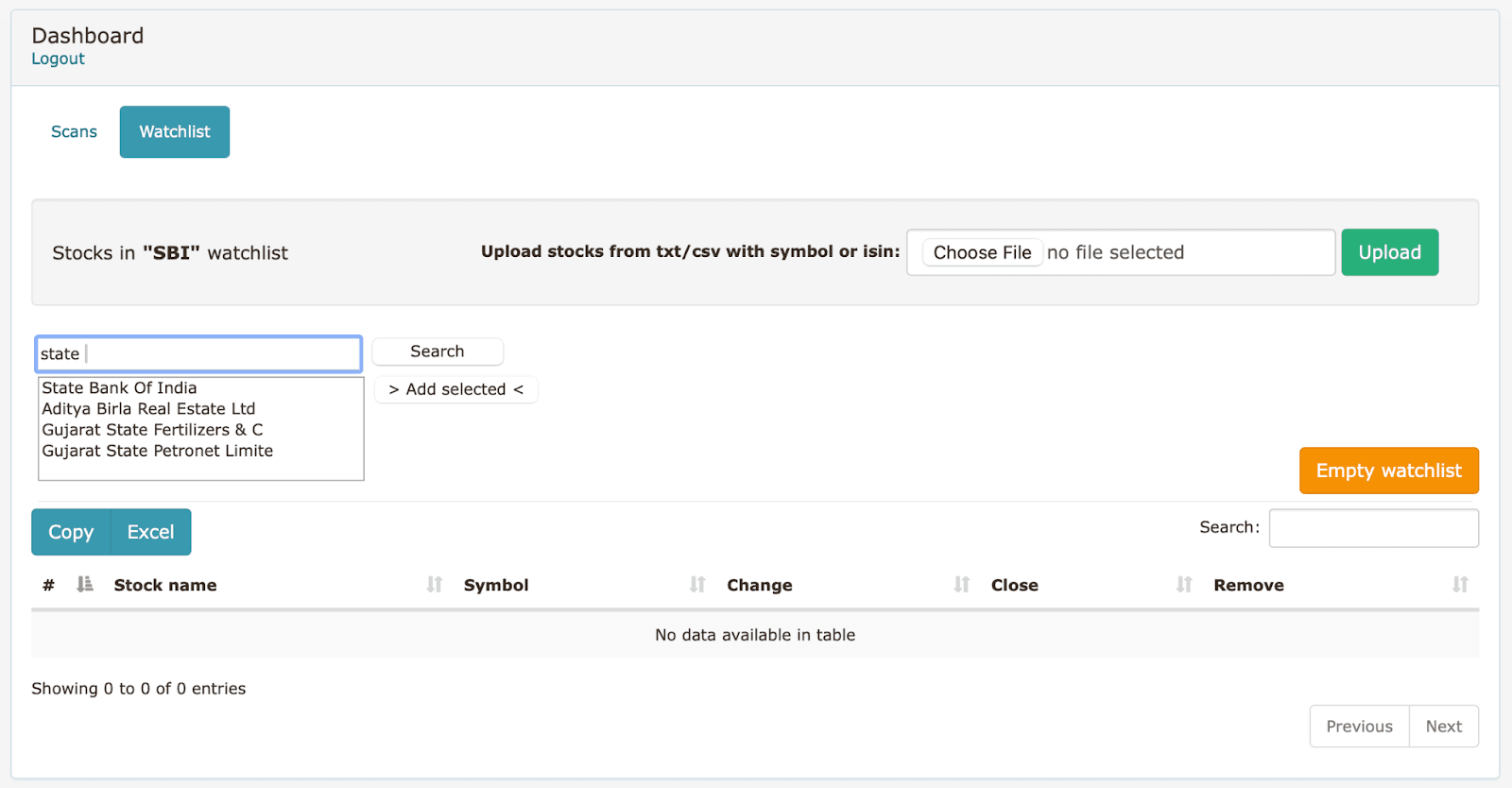
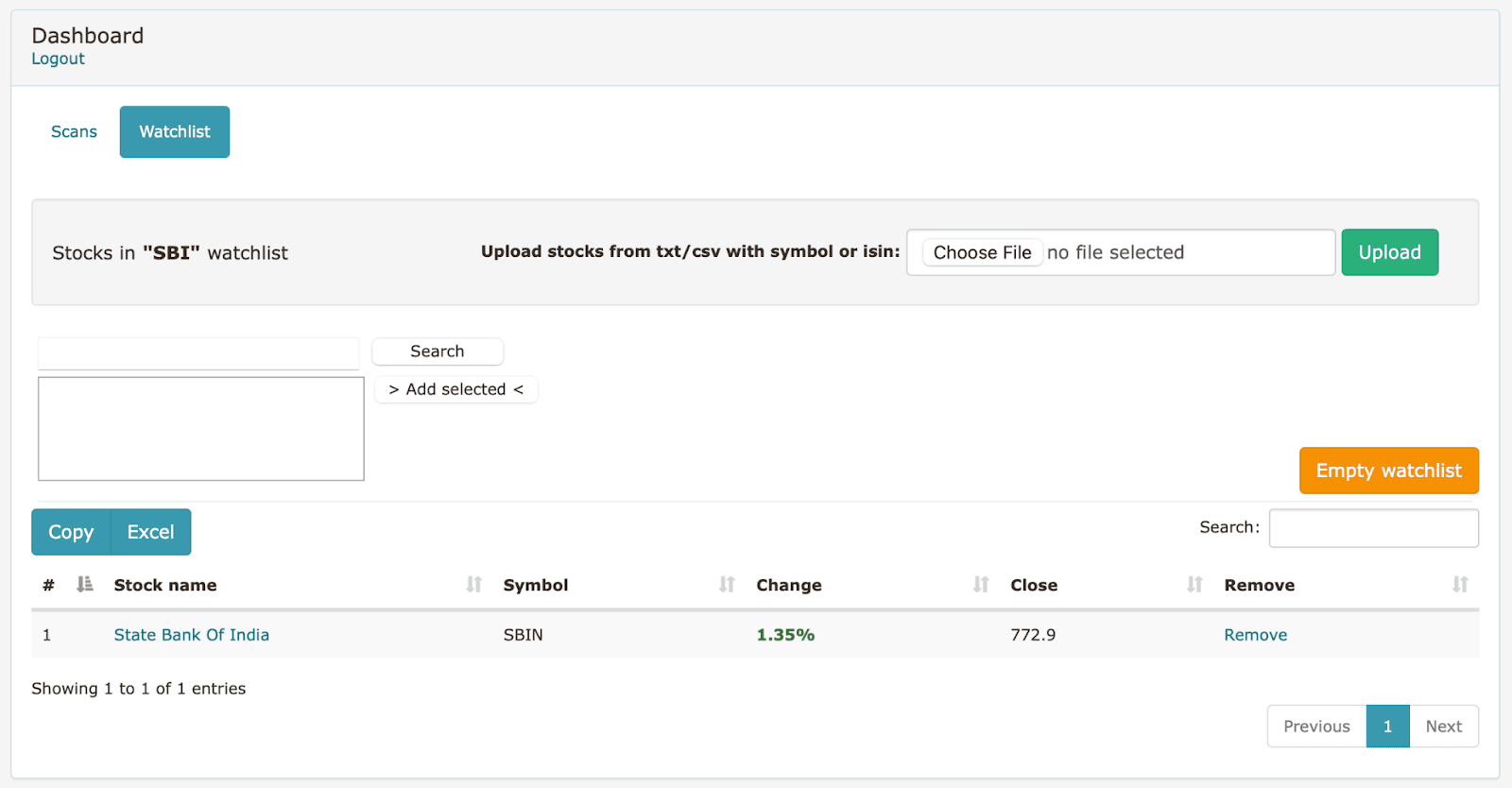
#### **Create a Screener:**
- Go to the "Screener" section and select any pre-existing template (e.g., " [Highest Earning Per Share](https://chartink.com/screener/highest-earning-per-share-eps-stocks)").
- Copy the Scan and then open it from the scans dashboard.
- Change the segment to your watchlist of instruments. (e.g., “State Bank of India”)
- Now save the scan.
### **Step 2: Create Your Strategy in AlgoTest**
#### **Login to AlgoTest:**
- Visit [AlgoTest](https://algotest.in/) and log in. Go to Signals Dashboard.
#### **Create a New Signal:**
- Go to the Signals dashboard page and create a “New Signal”.
- Select Chartink as Signal Provider.
- Select Forward Test as Execution Type.
- Let’s create a new strategy, strategy on AlgoTest which trades to execute if the signal is generated.
- Go to the “Stocks” tab to create a stock strategy.
- Select the index you want to trade in this strategy we will select “State Bank of India”.
- Define the Trade you want to execute with Quantity, Position, Target and Stoploss.
- Save the strategy with a unique name.


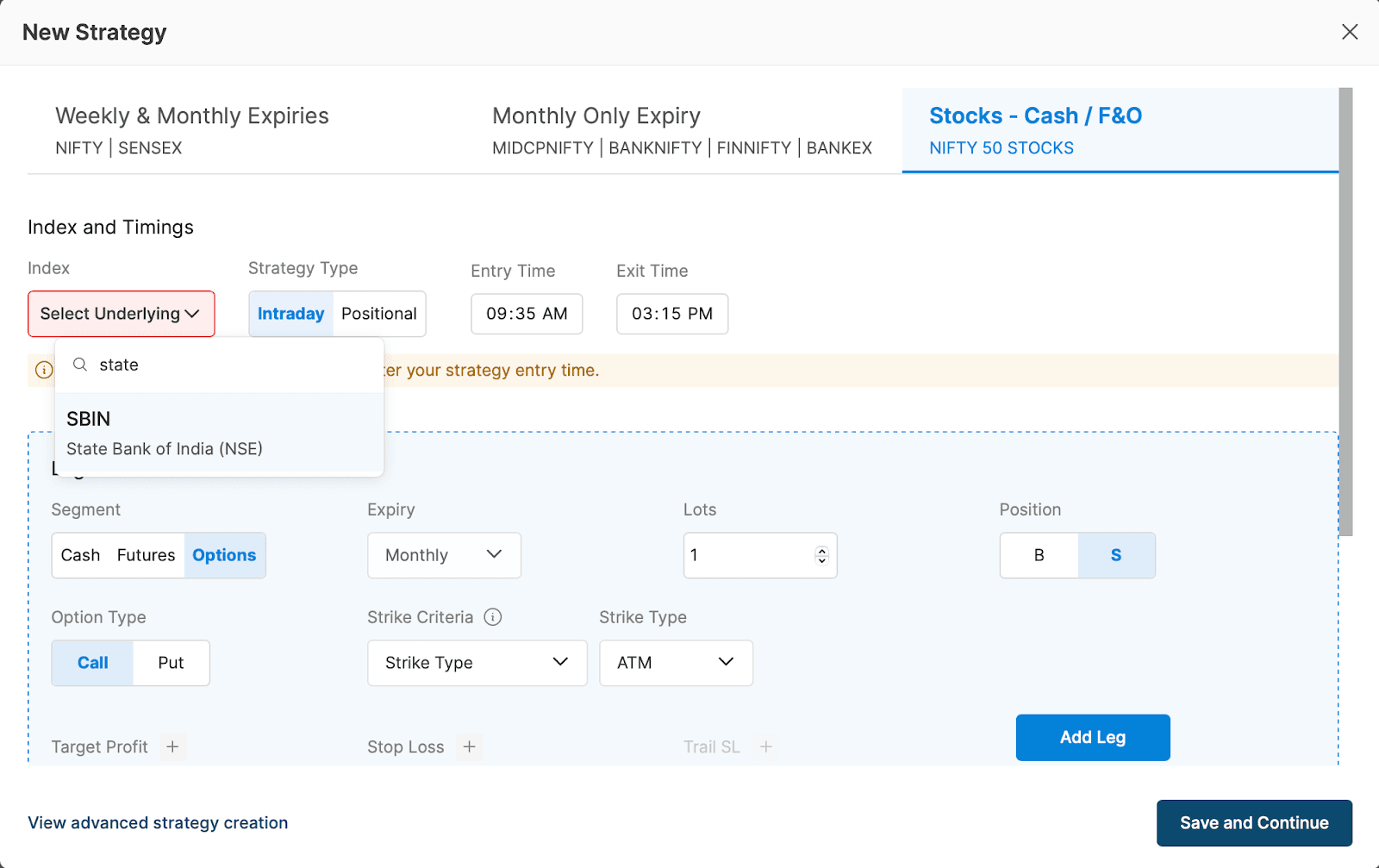
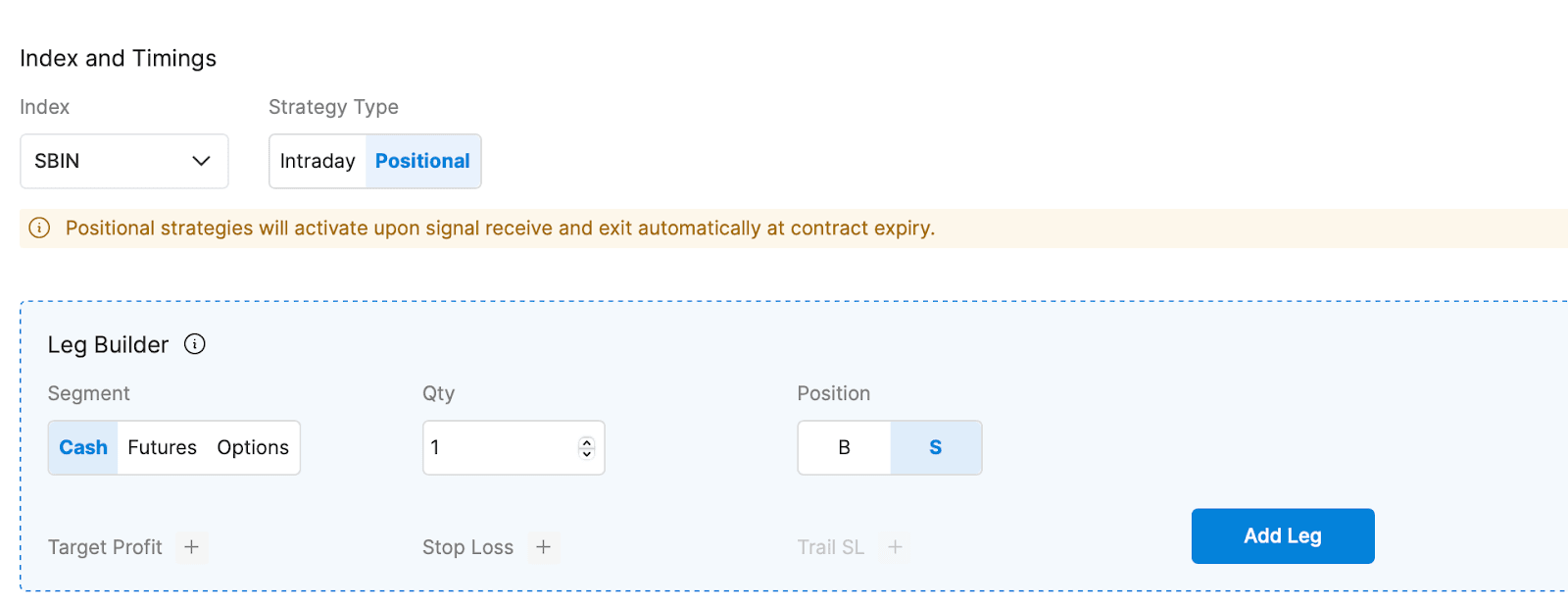
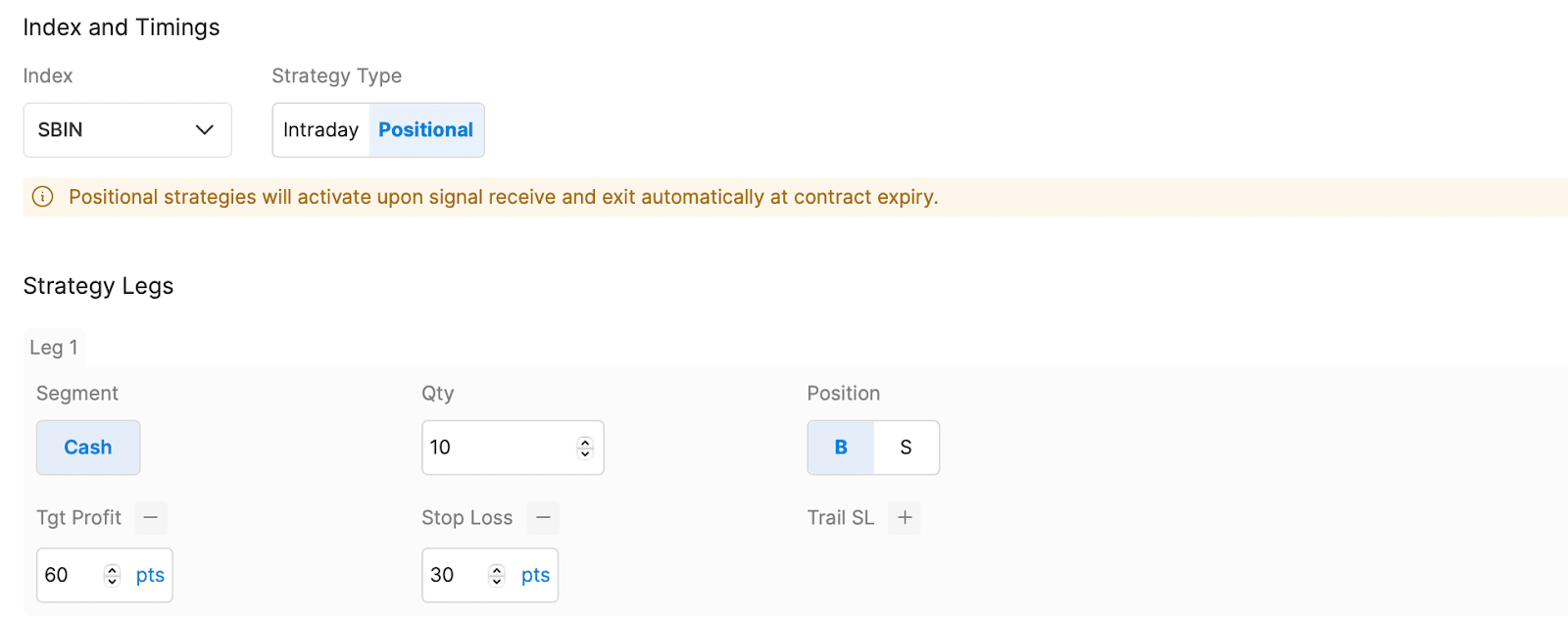
### **Step 3: Connect Chartink Alerts with AlgoTest Signals**
#### **Generate a Webhook URL:**
- Once the strategy is saved, you will receive a webhook url.
- Copy the webhook URL for your strategy.
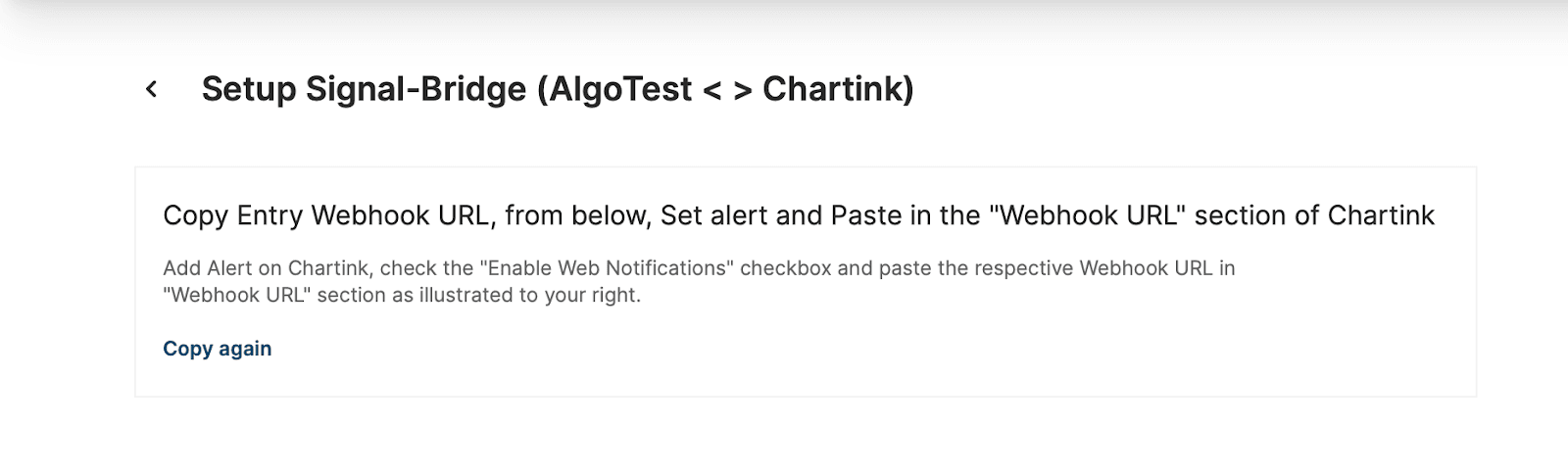
#### **Link the Webhook to Chartink Alerts:**
- In Chartink, navigate to your saved screener and click on "Create Alert."
- Paste the webhook URL in the alert settings.
- Save the alert.
- After Saving the alert click on “Start Listening” on AlgoTest. ****
- Your Signal is in listening mode now.

#### ****
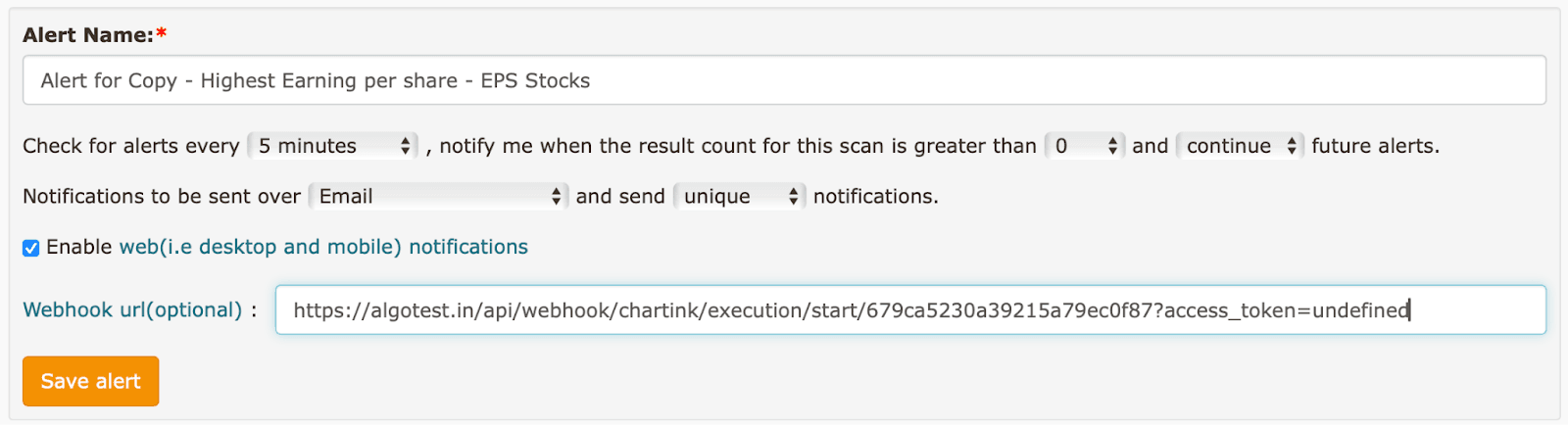
#### ****

#### ****
####
# **Step 4: Deploy Your Strategy in Live Markets**
- Once satisfied with the forward test results, deploy your strategy in the live market by moving the signals to Live Trade.
- Connect your Broker and setup Execution settings to start your Algo Trading.

## **Why Choose Chartink Premium**
Chartink's Premium Plan offers essential features for automation:
- Real-time data for scans and alerts.
- Flexible alert intervals (1/2/3/5 minutes, etc.).
- Notifications via SMS, email, and desktop/mobile.
- No coding required!
These features make it an ideal choice for seamless integration with AlgoTest Signals.
## **Requirements for Automation**
To use this setup, ensure the following prerequisites are met:
1. **Chartink Premium Plan**
- A premium plan is essential for creating alerts and running screeners with real-time data.
2. **AlgoTest Signal Plan**
- Activate the AlgoTest Signal plan to connect your strategy with Chartink alerts.
3. **Broker Connection with AlgoTest**
- Connect your broker to AlgoTest via the broker setup page.
---
This blog is powered by Superblog. Visit https://superblog.ai to know more.
---
## Automate Your “Stocks Below Book Value - Undervalued” Using Chartink and AlgoTest
Author: AlgoTest
Author URL: https://algotest.in/blog/author/algotest/
Published: 2025-01-27
Category: Chartink
Category URL: https://algotest.in/blog/category/chartink/
URL: https://algotest.in/blog/automate-your-stocks-below-book-value---undervalued-using-chartink-and-algotest/
Automating your trading strategy can save time and eliminate the need to monitor the markets constantly. With [**Chartink**](http://www.charting.com) and [AlgoTest](https://www.algotest.in), you can set up your strategy to execute trades automatically.
In this guide, you will learn:
- How AlgoTest Signals work.
- Step-by-step instructions to create a Chartink screener and set it up for automation with AlgoTest.
- How to verify and deploy your strategy in live markets or test it using forward testing.
- The requirements for automation.
## **How AlgoTest Signals Work**
AlgoTest Signals allow you to automate your trades based on predefined conditions from Chartink. When a breakout condition is met in Chartink, an alert is sent to AlgoTest, which executes the trade on your broker terminal.
### **Key Benefits:**
- Eliminate manual trade execution.
- Consistency in trade execution based on your strategy logic.
- Saves time and reduces emotional decision-making.
# Stocks below Book value - Undervalued filter explanation:
- The daily closing price of the stock is less than the book value of the company, indicating that the stock is currently valued lower than what the company is worth on paper. This suggests a potential undervaluation, where the stock price is below 100% of its book value.
## **Step-by-Step Guide to Automate Your Strategy**
### **Step 1: Create Your Screener in Chartink**
#### **Access Chartink**:
- Go to [Chartink](https://chartink.in/) and log in to your account.
#### **Create a Watchlist**:
- Navigate to the "Watchlists" section.
- Create a new watchlist for the instruments you want to monitor.
- Search for instruments you want to monitor and click on ‘Add Selected’.
- Watchlist is created with desired instruments.

#
#### **Create a Screener**:
- Go to the "Screener" section and select any pre-existing template (e.g., [Stocks below Book value - Undervalued](https://chartink.com/screener/stocks-below-book-value)).
- Copy the Scan and then open it from the scans dashboard.
- Change the segment to your own watchlist of instruments. (e.g., “Tata Motors Limited”)
- Now save the scan.
#
### **Step 2: Create Your Strategy in AlgoTest**
#### **Login to AlgoTest**:
- Visit [AlgoTest](https://algotest.in/) and log in. Go to Signals Dashboard.
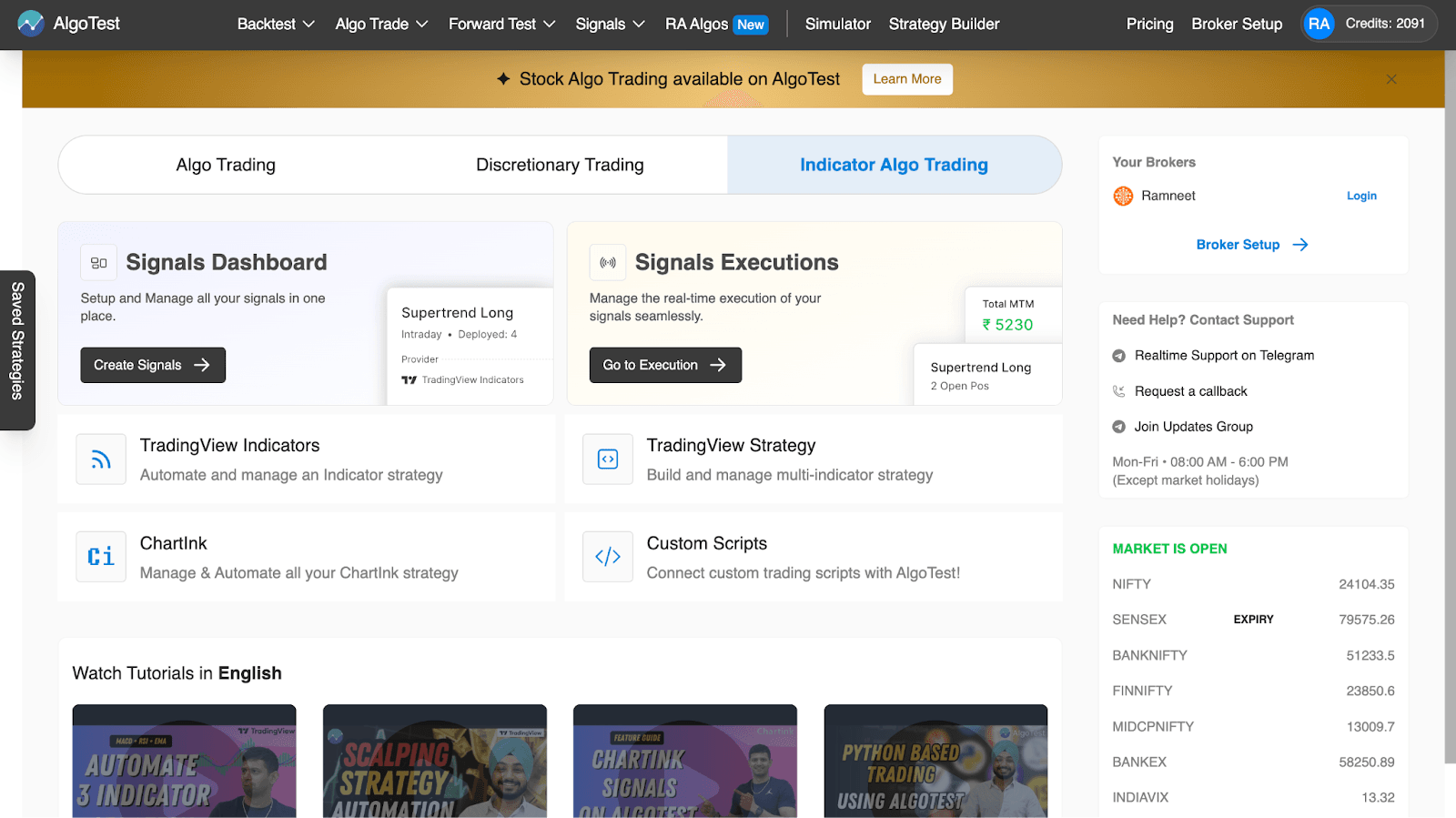
#### **Create a New Signal**:
- Go to the Signals dashboard page and create a “New Signal”.
- Select Chartink as Signal Provider.
- Select Forward Test as Execution Type.
- Let’s create a new strategy, strategy on AlgoTest which trades to execute if the signal is generated.
- Go to the “Stocks” tab to create a stock strategy.
- Select the index you want to trade, in this strategy, we will select “Tata Motors Limited”.
- Define the Trade you want to execute with Quantity, Position, Target and Stoploss.
- Save the strategy with a unique name.
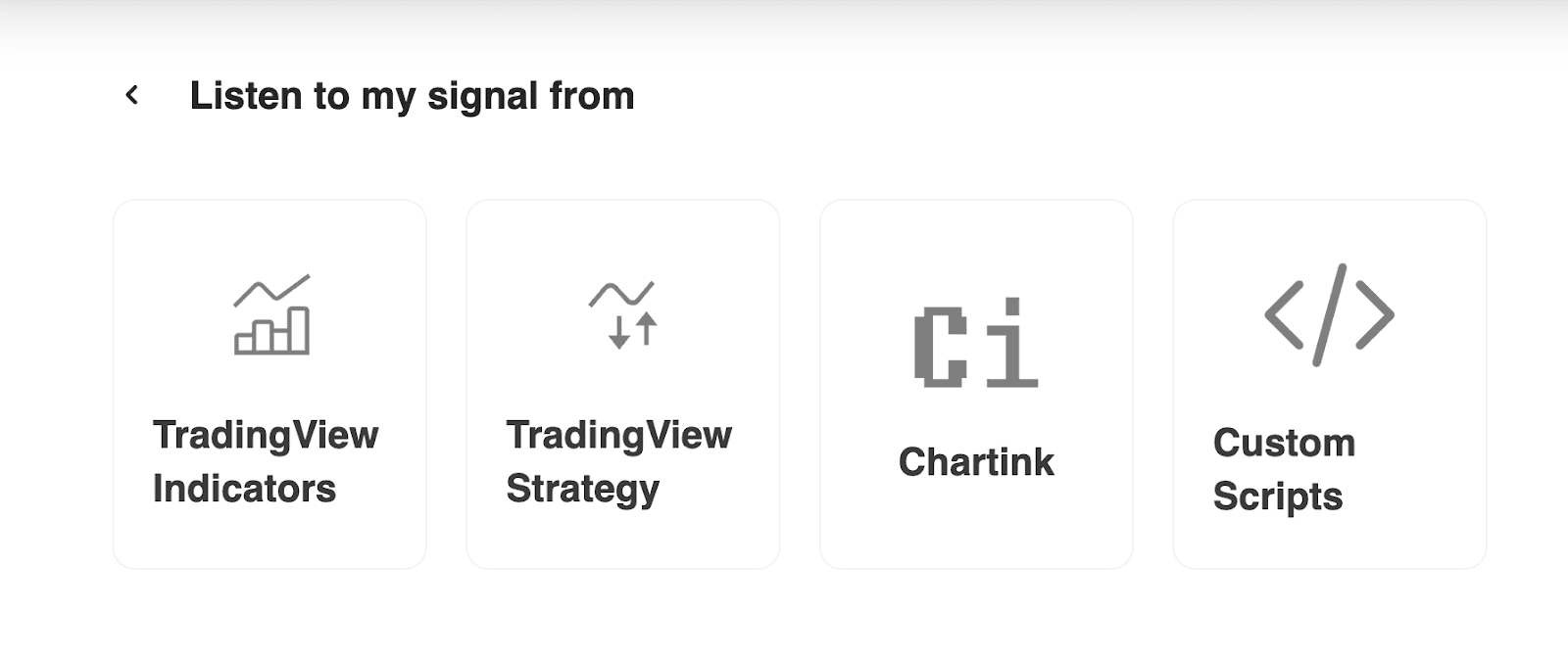


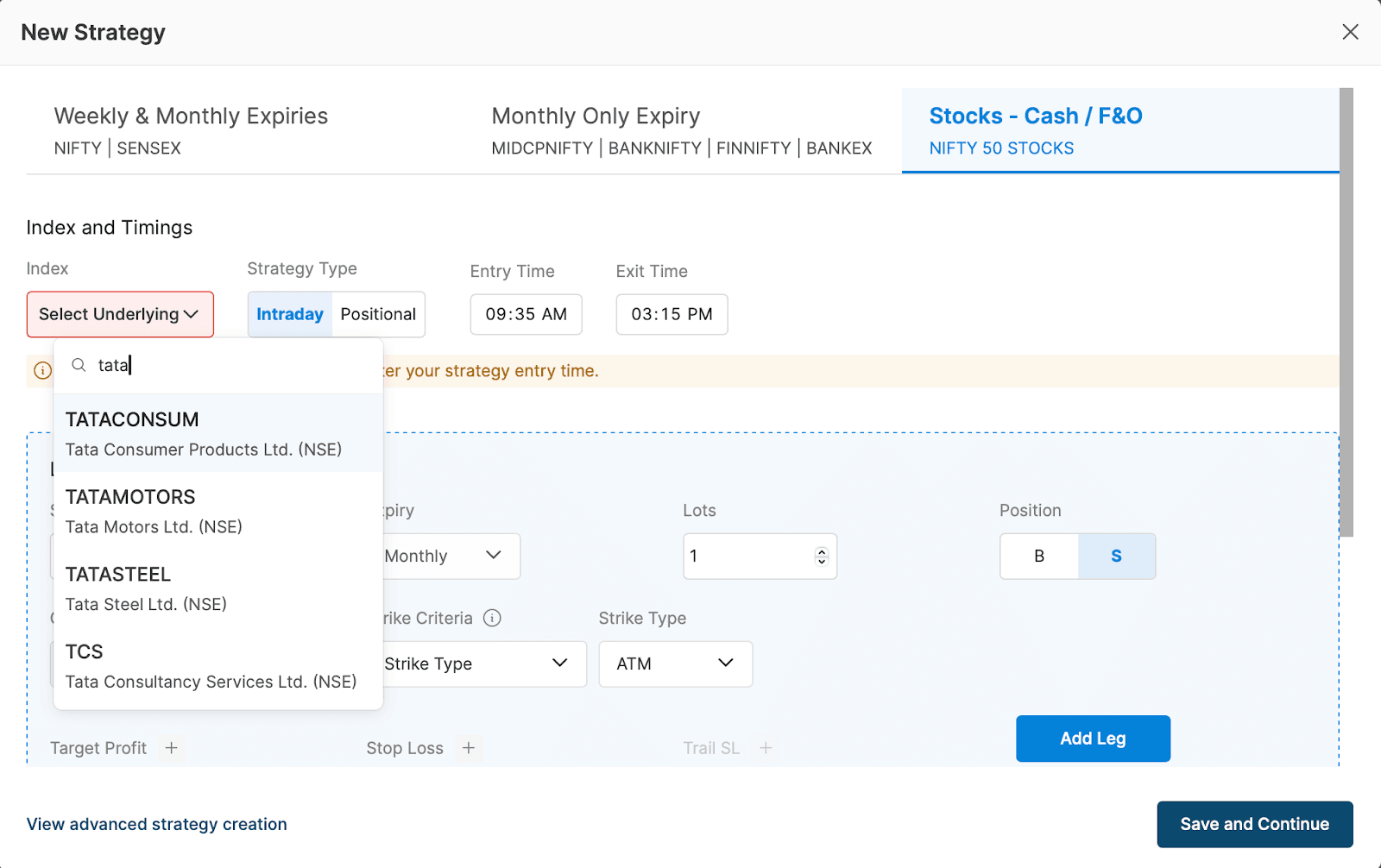
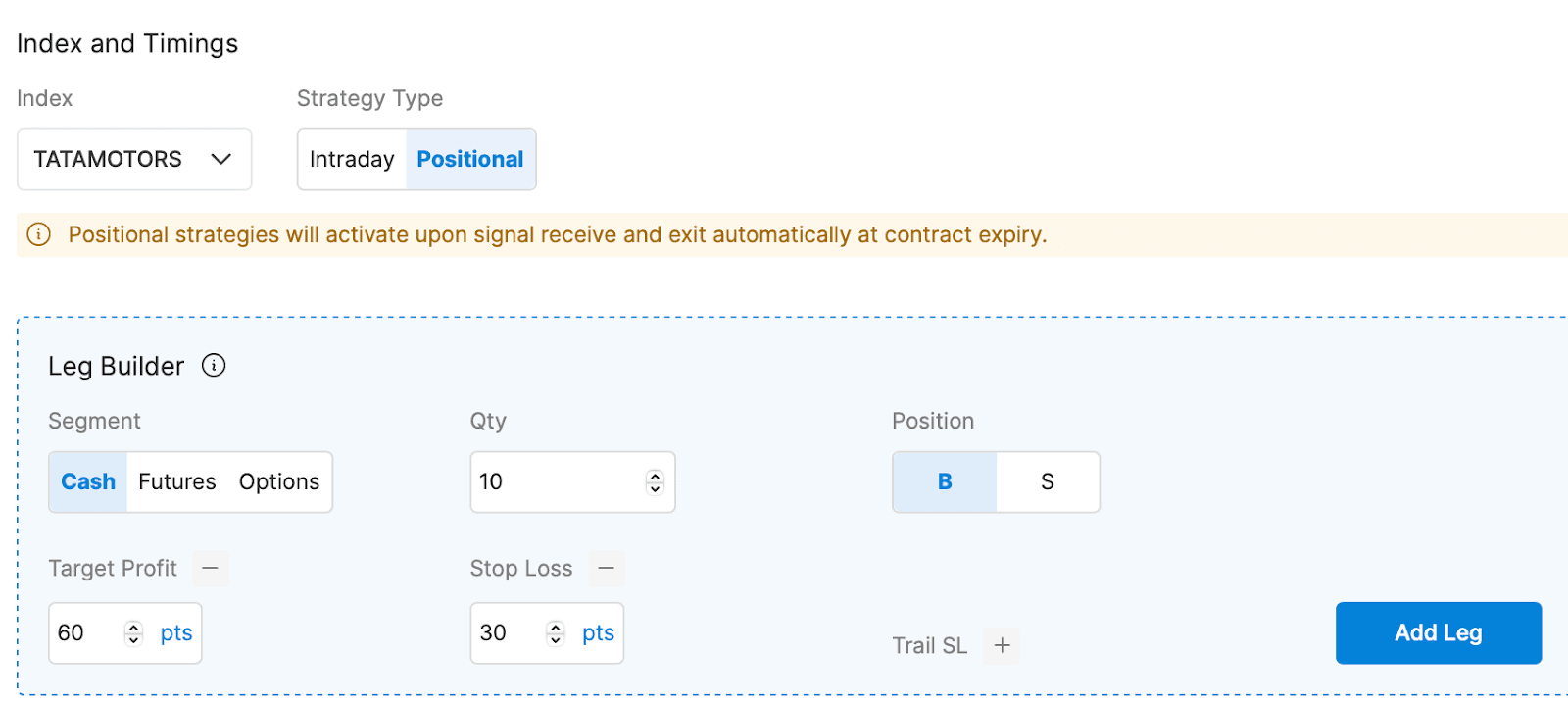
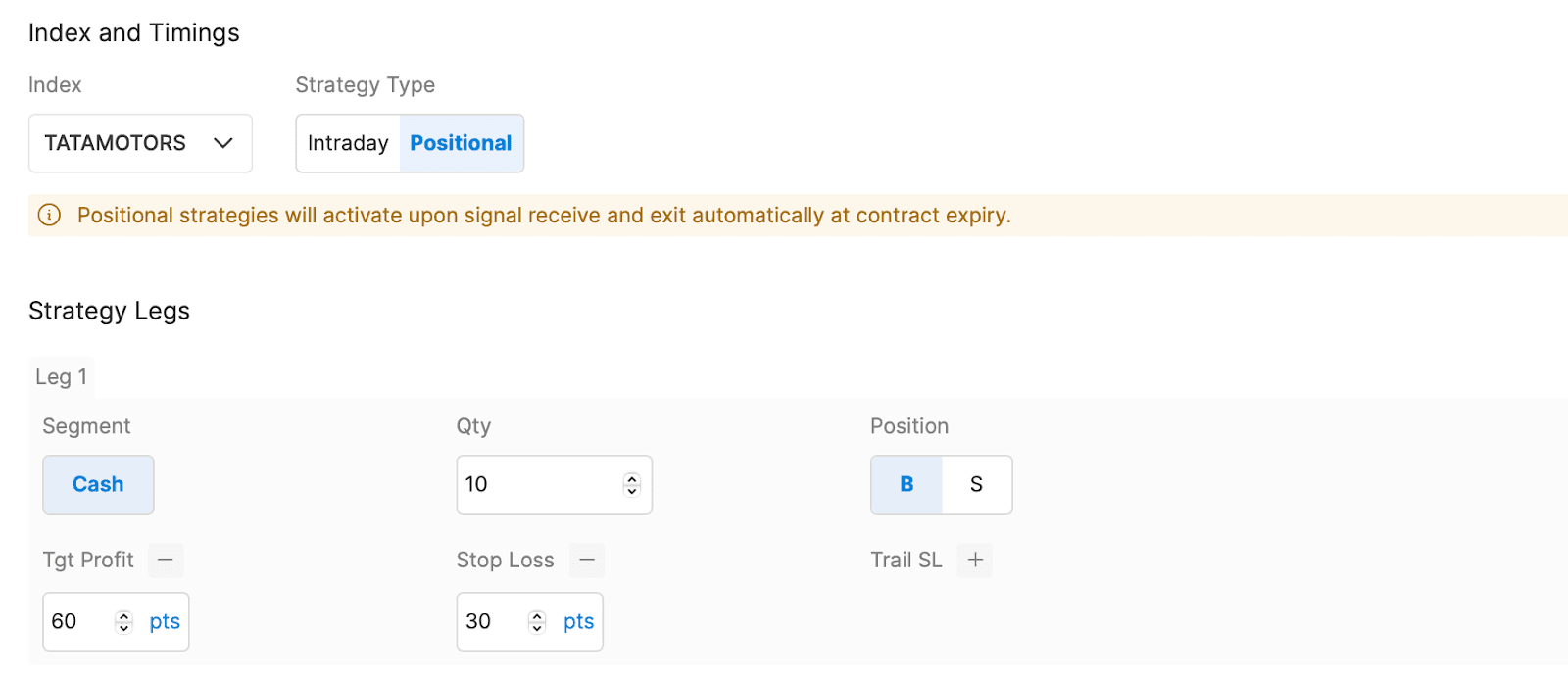
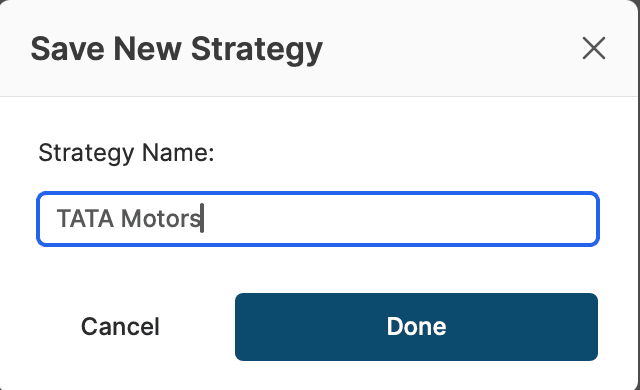
### **Step 3: Connect Chartink Alerts with AlgoTest Signals**
#### **Generate a Webhook URL**:
- Once the strategy is saved, you will receive a webhook url.
- Copy the webhook URL for your strategy.
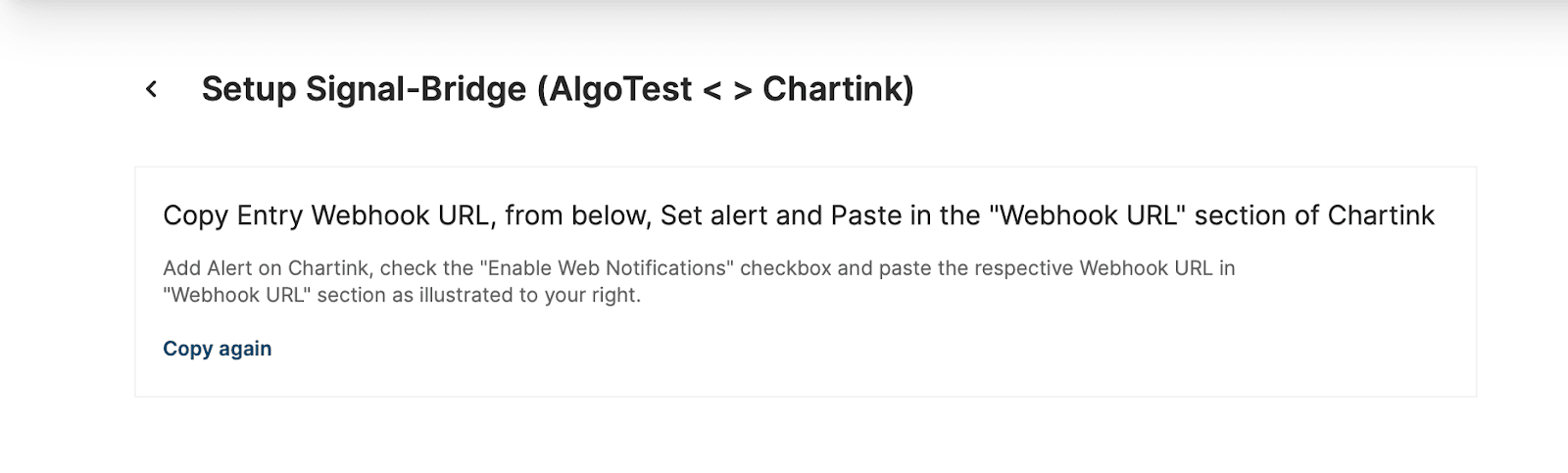
#### **Link the Webhook to Chartink Alerts**:
- In Chartink, navigate to your saved screener and click on "Create Alert."
- Paste the webhook URL in the alert settings.
- Save the alert.
- After Saving the alert click on “Start Listening” on AlgoTest.
- Your Signal is in listening mode now.

#
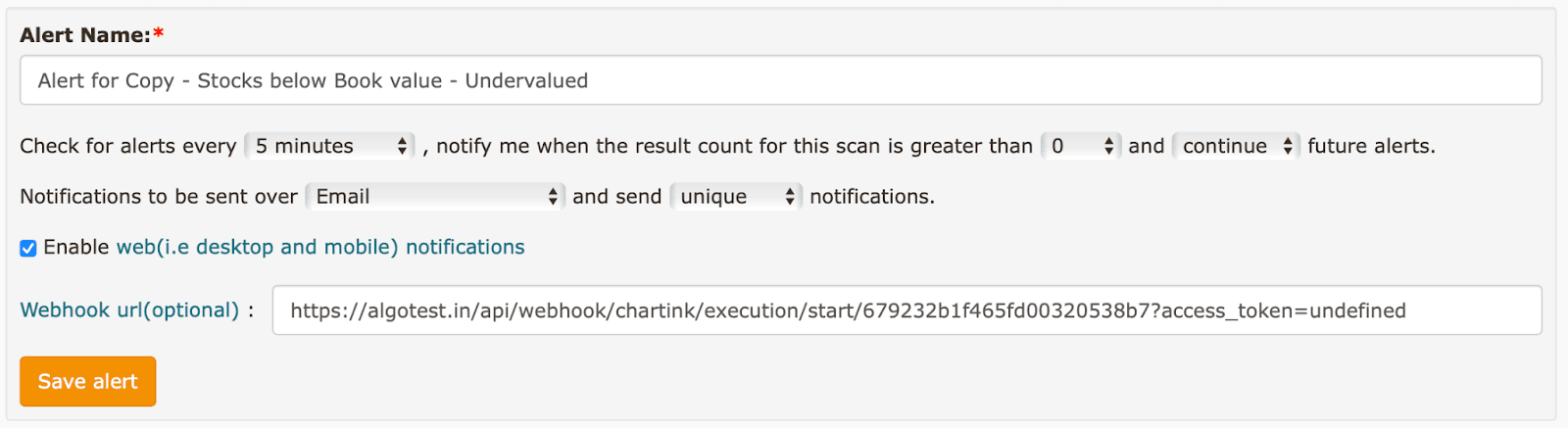
#

#
# **Step 4: Deploy Your Strategy in Live Markets**
- Once satisfied with the forward test results, deploy your strategy in the live market by moving the signals to Live Trade.
- Connect your Broker and setup Execution settings to start your Algo Trading.

## **Why Choose Chartink Premium**
Chartink's Premium Plan offers essential features for automation:
- Real-time data for scans and alerts.
- Flexible alert intervals (1/2/3/5 minutes, etc.).
- Notifications via SMS, email, and desktop/mobile.
- No coding required!
These features make it an ideal choice for seamless integration with AlgoTest Signals.
## **Requirements for Automation**
To use this setup, ensure the following prerequisites are met:
1. **Chartink Premium Plan**
- A premium plan is essential for creating alerts and running screeners with real-time data.
2. **AlgoTest Signal Plan**
- Activate the AlgoTest Signal plan to connect your strategy with Chartink alerts.
3. **Broker Connection with AlgoTest**
- Connect your broker to AlgoTest via the broker setup page.
---
This blog is powered by Superblog. Visit https://superblog.ai to know more.
---
## Automate Your “Stock Screener open=high;open=low” Using Chartink and AlgoTest
Author: AlgoTest
Author URL: https://algotest.in/blog/author/algotest/
Published: 2025-01-27
Category: Chartink
Category URL: https://algotest.in/blog/category/chartink/
URL: https://algotest.in/blog/automate-your-stock-screener-open-high-open-low-using-chartink-and-algotest/
Automating your trading strategy can save time and eliminate the need to monitor the markets constantly. With [**Chartink**](http://www.charting.com) and [AlgoTest](https://www.algotest.in), you can set up your strategy to execute trades automatically.
In this guide, you will learn:
- How AlgoTest Signals work.
- Step-by-step instructions to create a Chartink screener and set it up for automation with AlgoTest.
- How to verify and deploy your strategy in live markets or test it using forward testing.
- The requirements for automation.
## **How AlgoTest Signals Work**
AlgoTest Signals allow you to automate your trades based on predefined conditions from Chartink. When a breakout condition is met in Chartink, an alert is sent to AlgoTest, which executes the trade on your broker terminal.
### **Key Benefits:**
- Eliminate manual trade execution.
- Consistency in trade execution based on your strategy logic.
- Saves time and reduces emotional decision-making.
# Stock Screener open=high; open=low filters explanation:
- Daily Open = Daily High means that the opening price of the stock for the day is the same as the highest price reached during that day. This indicates that the stock started strong and did not drop below its opening price, showing a 0% change in value from the open to the high.
- Daily Open is equal to Daily Close, meaning the price at which the stock opened for trading is the same as the price at which it closed for that day. This indicates a 0% change in price throughout the trading day.
## **Step-by-Step Guide to Automate Your Strategy**
### **Step 1: Create Your Screener in Chartink**
#### **Access Chartink**:
- Go to [Chartink](https://chartink.in/) and log in to your account.
#### **Create a Watchlist**:
- Navigate to the "Watchlists" section.
- Create a new watchlist for the instruments you want to monitor.
- Search for instruments you want to monitor and click on ‘Add Selected’.
- Watchlist is created with desired instruments.

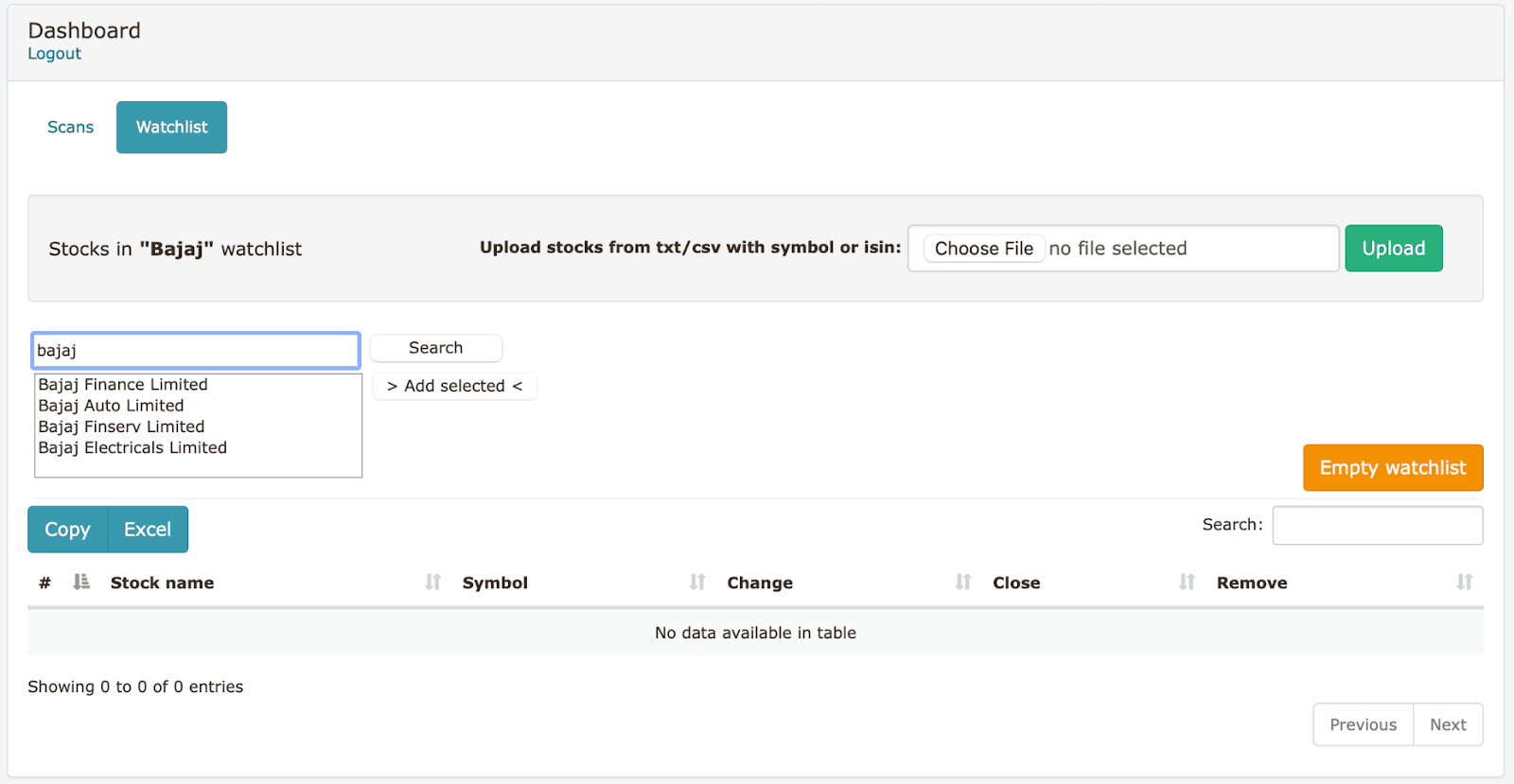
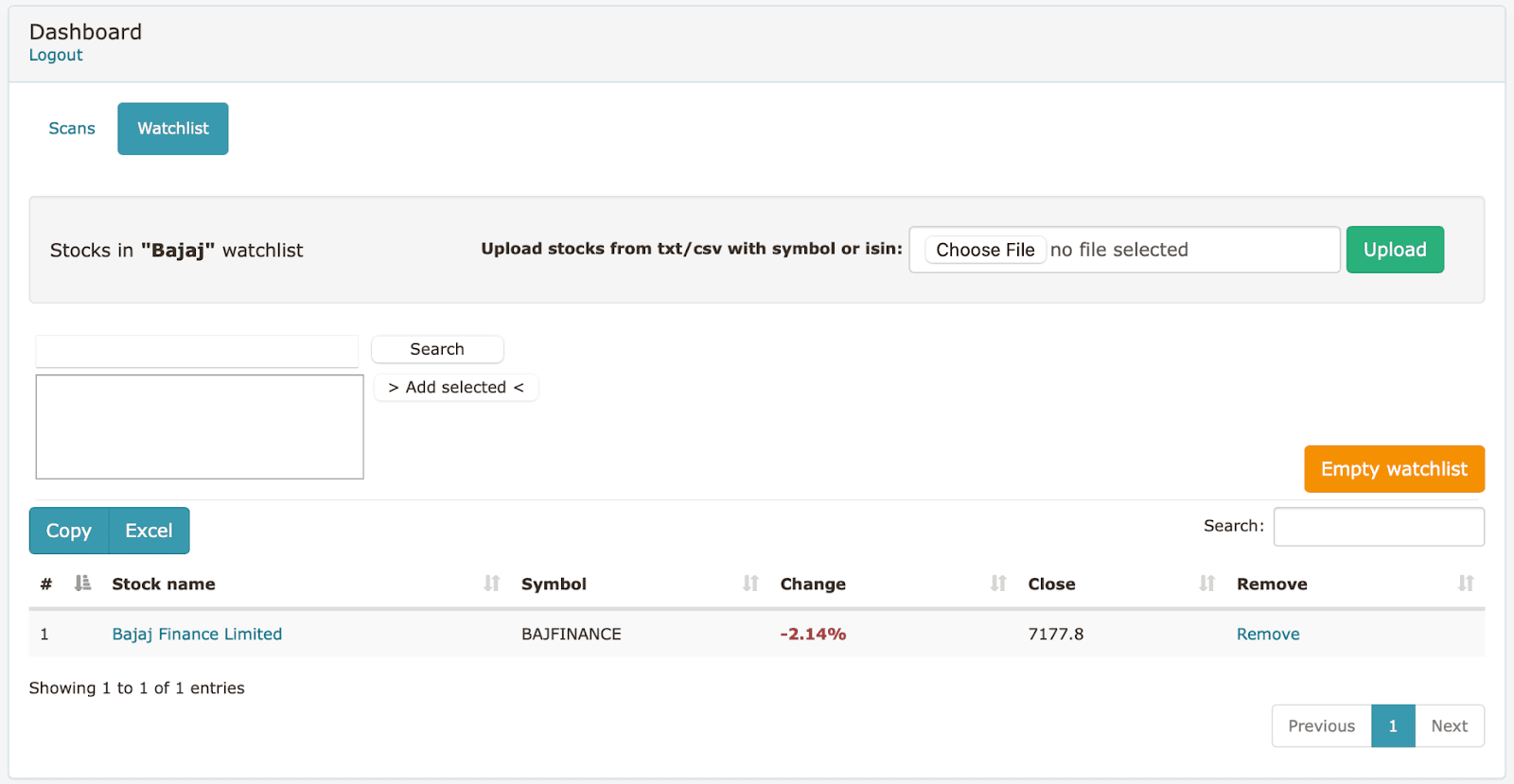
#
#### **Create a Screener**:
- Go to the "Screener" section and select any pre-existing template (e.g., " [Stock Screener open=high;open=low](https://chartink.com/screener/stock-screener-open-high-open-low)").
- Copy the Scan and then open it from the scans dashboard.
- Change the segment to your own watchlist of instruments. (e.g., “Bajaj Finance Limited”)
- Now save the scan.
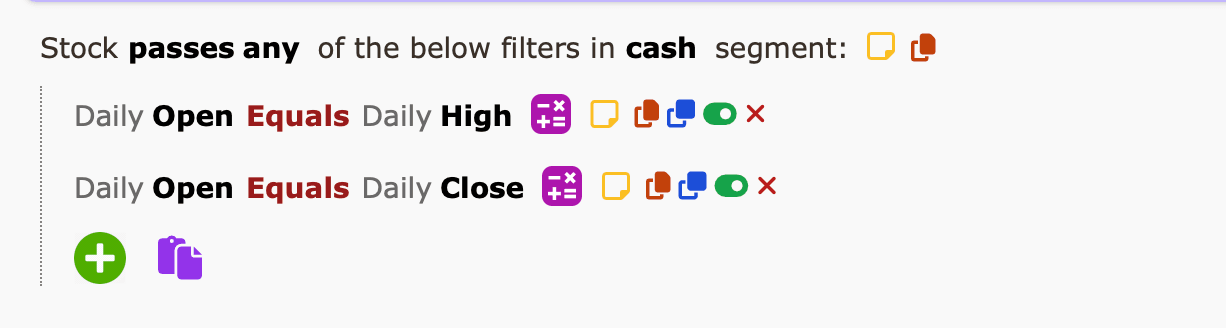
### **Step 2: Create Your Strategy in AlgoTest**
#### **Login to AlgoTest**:
- Visit [AlgoTest](https://algotest.in/) and log in. Go to Signals Dashboard.
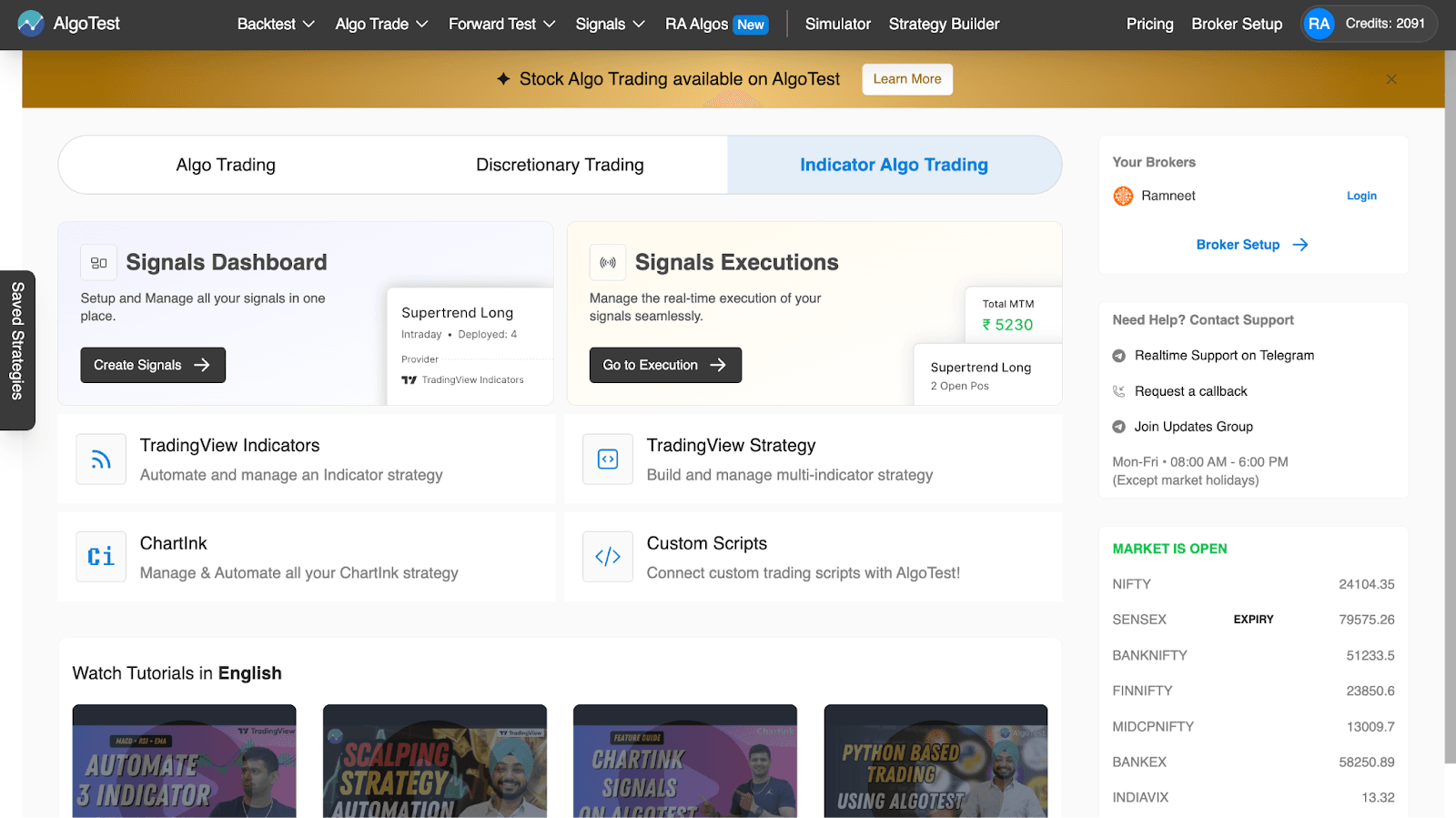
#### **Create a New Signal**:
- Go to the Signals dashboard page and create a “New Signal”.
- Select Chartink as Signal Provider.
- Select Forward Test as Execution Type.
- Let’s create a new strategy, strategy on AlgoTest means which trades to execute if the signal is generated.
- Go to the “Stocks” tab to create a stocks strategy.
- Select the index you want to trade in this strategy we will select “Bajaj FinanceLimited”.
- Define the Trade you want to execute with Quantity, Position, Target and Stoploss.
- Save the strategy with a unique name.
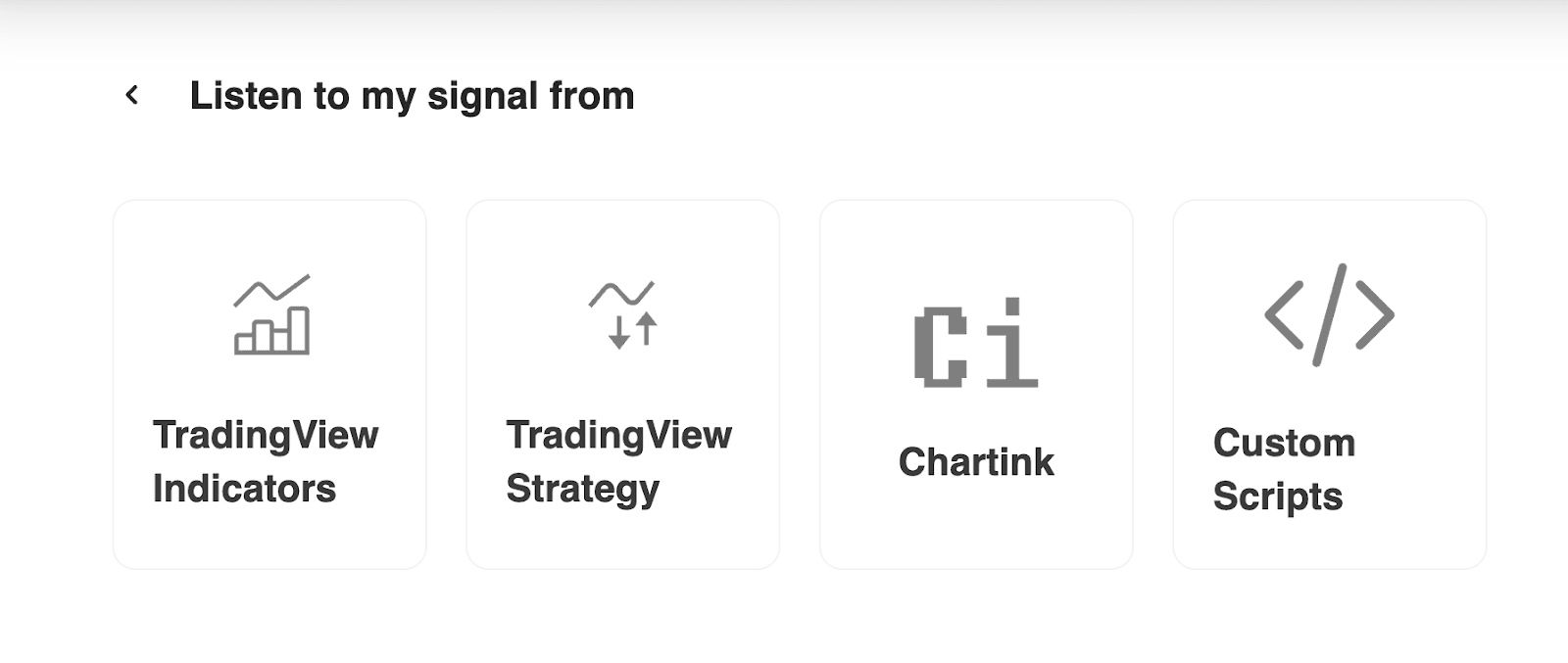


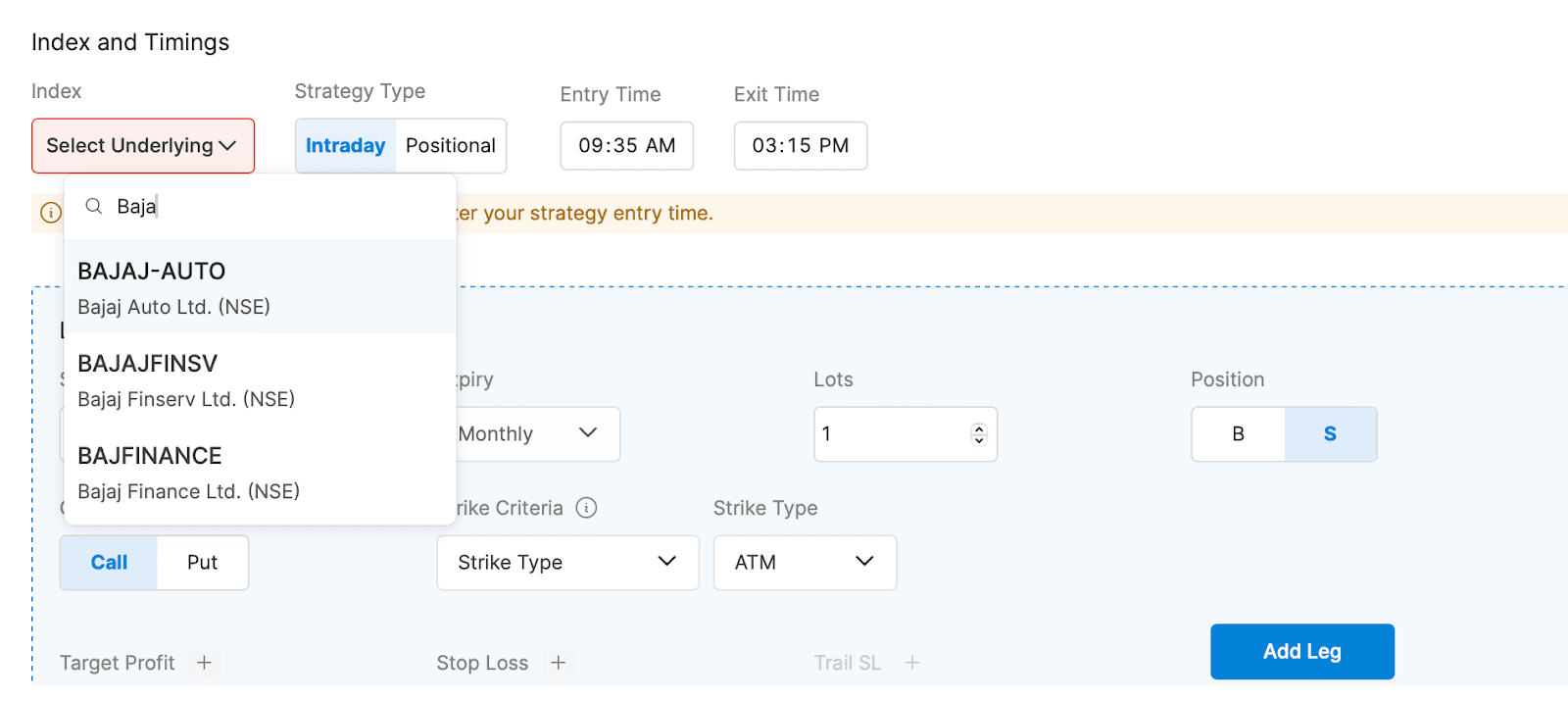
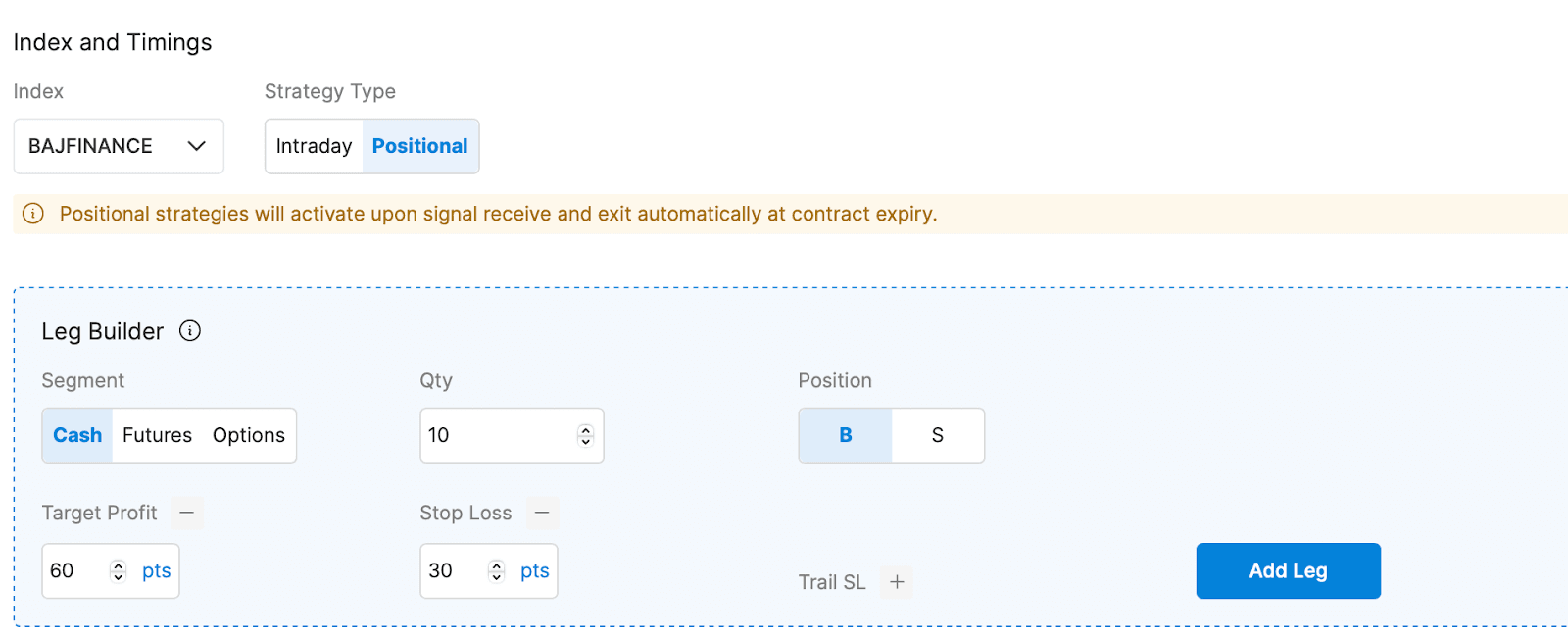
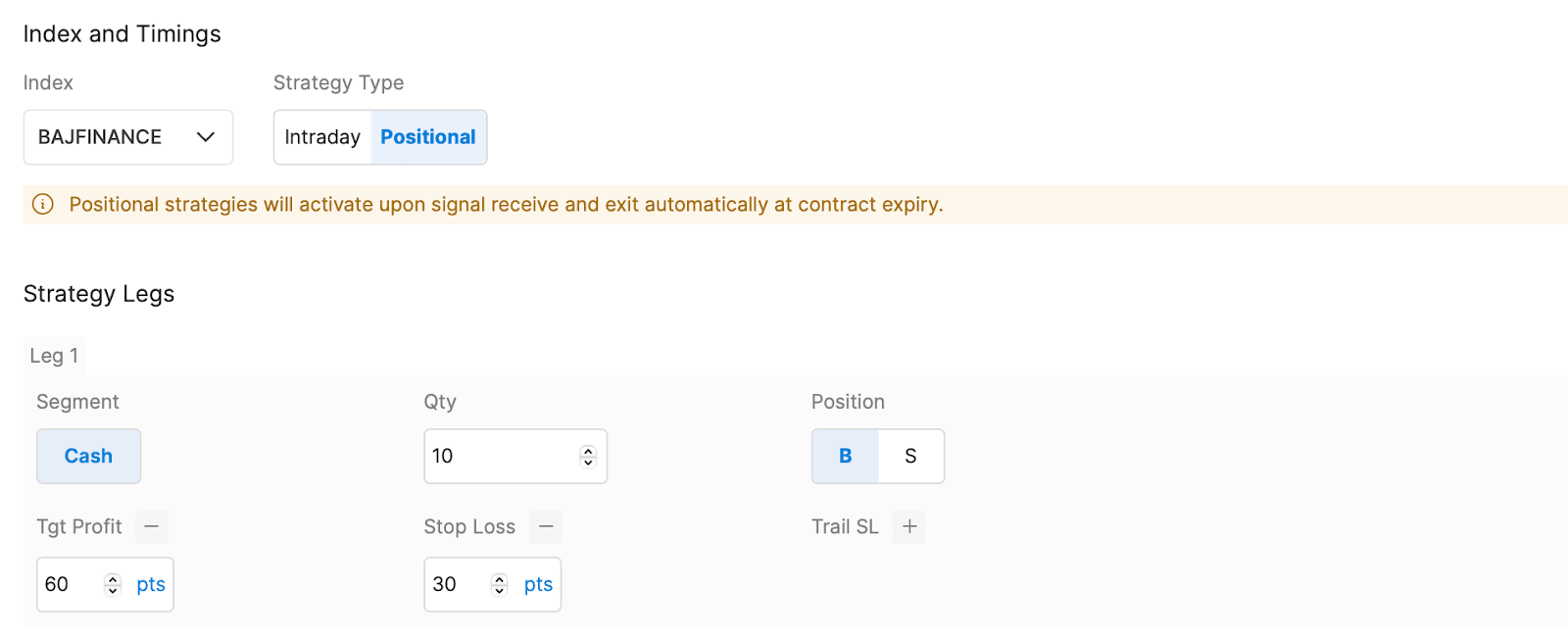
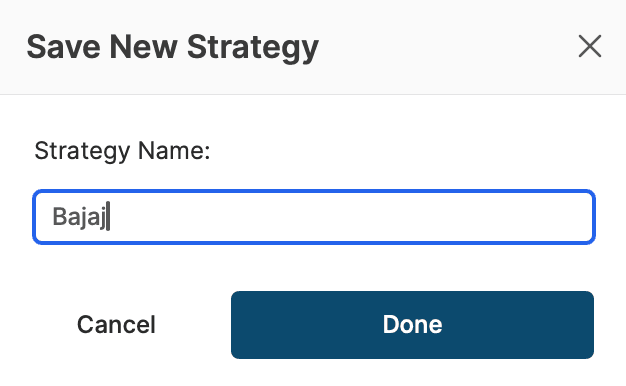
### **Step 3: Connect Chartink Alerts with AlgoTest Signals**
#### **Generate a Webhook URL**:
- Once the strategy is saved, you will receive a webhook url.
- Copy the webhook URL for your strategy.
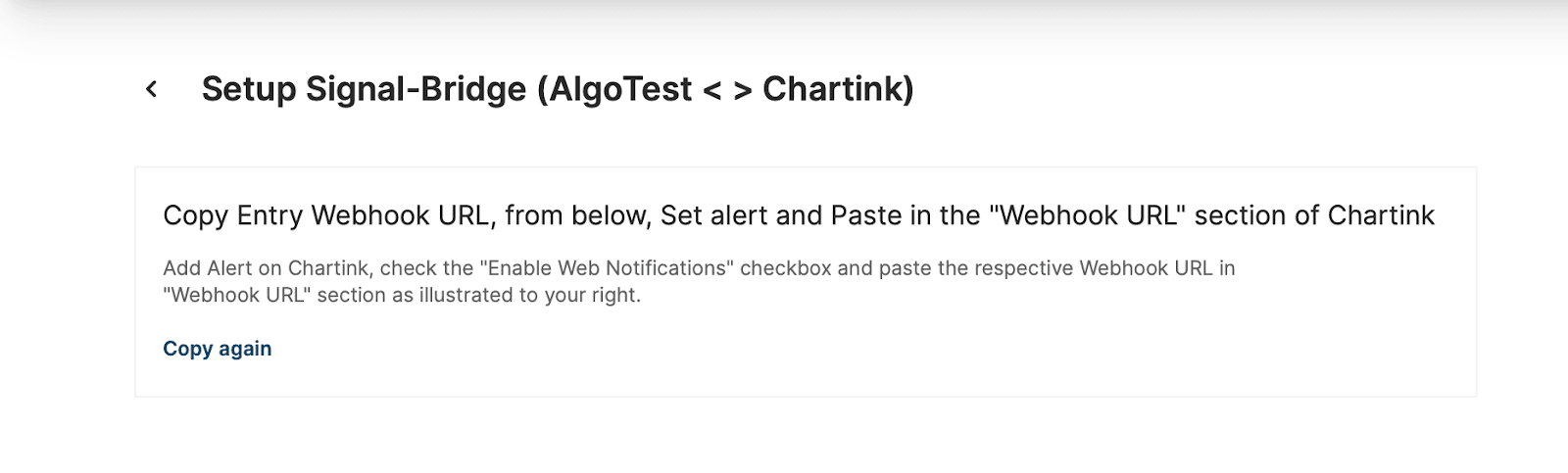
#### **Link the Webhook to Chartink Alerts**:
- In Chartink, navigate to your saved screener and click on "Create Alert."
- Paste the webhook URL in the alert settings.
- Save the alert.
- After Saving the alert click on “Start Listening” on AlgoTest.
- Your Signal is in listening mode now.

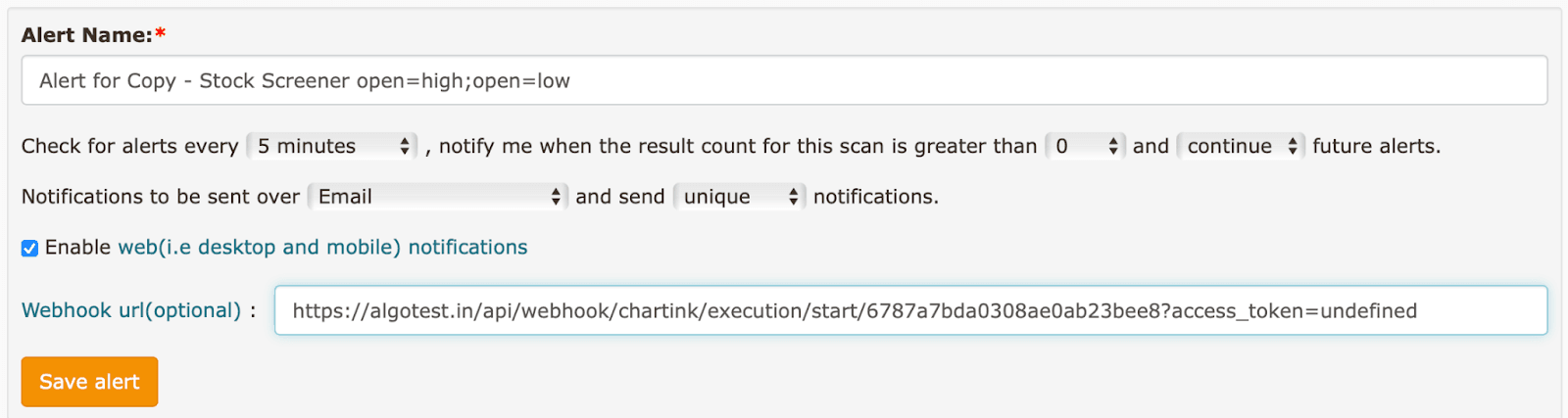
#

# **Step 4: Deploy Your Strategy in Live Markets**
- Once satisfied with the forward test results, deploy your strategy in the live market by moving the signals to Live Trade.
- Connect your Broker and setup Execution settings to start your Algo Trading.

## **Why Choose Chartink Premium**
Chartink's Premium Plan offers essential features for automation:
- Real-time data for scans and alerts.
- Flexible alert intervals (1/2/3/5 minutes, etc.).
- Notifications via SMS, email, and desktop/mobile.
- No coding required!
These features make it an ideal choice for seamless integration with AlgoTest Signals.
## **Requirements for Automation**
To use this setup, ensure the following prerequisites are met:
1. **Chartink Premium Plan**
- A premium plan is essential for creating alerts and running screeners with real-time data.
2. **AlgoTest Signal Plan**
- Activate the AlgoTest Signal plan to connect your strategy with Chartink alerts.
3. **Broker Connection with AlgoTest**
- Connect your broker to AlgoTest via the broker setup page.
---
This blog is powered by Superblog. Visit https://superblog.ai to know more.
---
## Automate Your “Sales Jump by 200%” Using Chartink and AlgoTest
Author: AlgoTest
Author URL: https://algotest.in/blog/author/algotest/
Published: 2025-01-24
Category: Chartink
Category URL: https://algotest.in/blog/category/chartink/
URL: https://algotest.in/blog/automate-your-sales-jump-by-200-using-chartink-and-algotest/
Automating your trading strategy can save time and eliminate the need to monitor the markets constantly. With [**Chartink**](http://www.charting.com) and [AlgoTest](https://www.algotest.in), you can set up your strategy to execute trades automatically.
In this guide, you will learn:
- How AlgoTest Signals work.
- Step-by-step instructions to create a Chartink screener and set it up for automation with AlgoTest.
- How to verify and deploy your strategy in live markets or test it using forward testing.
- The requirements for automation.
## **How AlgoTest Signals Work**
AlgoTest Signals allow you to automate your trades based on predefined conditions from Chartink. When a breakout condition is met in Chartink, an alert is sent to AlgoTest, which executes the trade on your broker terminal.
### **Key Benefits:**
- Eliminate manual trade execution.
- Consistency in trade execution based on your strategy logic.
- Saves time and reduces emotional decision-making.
# Sales Jump by 200% filter explanation:
1. The yearly sales turnover must be more than double the trailing twelve months (TTM) sales. This means the current year's sales should exceed the previous year's sales by at least 100%.
## **Step-by-Step Guide to Automate Your Strategy**
### **Step 1: Create Your Screener in Chartink**
#### **Access Chartink**:
- Go to [Chartink](https://chartink.in/) and log in to your account.
#### **Create a Watchlist**:
- Navigate to the "Watchlists" section.
- Create a new watchlist for the instruments you want to monitor.
- Search for instruments you want to monitor and click on ‘Add Selected’.
- Watchlist is created with desired instruments.

#### **Create a Screener**:
- Go to the "Screener" section and select any pre-existing template (e.g., [Sales Jump by 200%](https://chartink.com/screener/sales-jump-by-200)).
- Copy the Scan and then open it from the scans dashboard.
- Change the segment to your own watchlist of instruments. (e.g., “Nestle Limited”)
- Now save the scan.
#
### **Step 2: Create Your Strategy in AlgoTest**
#### **Login to AlgoTest**:
- Visit [AlgoTest](https://algotest.in/) and log in. Go to Signals Dashboard.
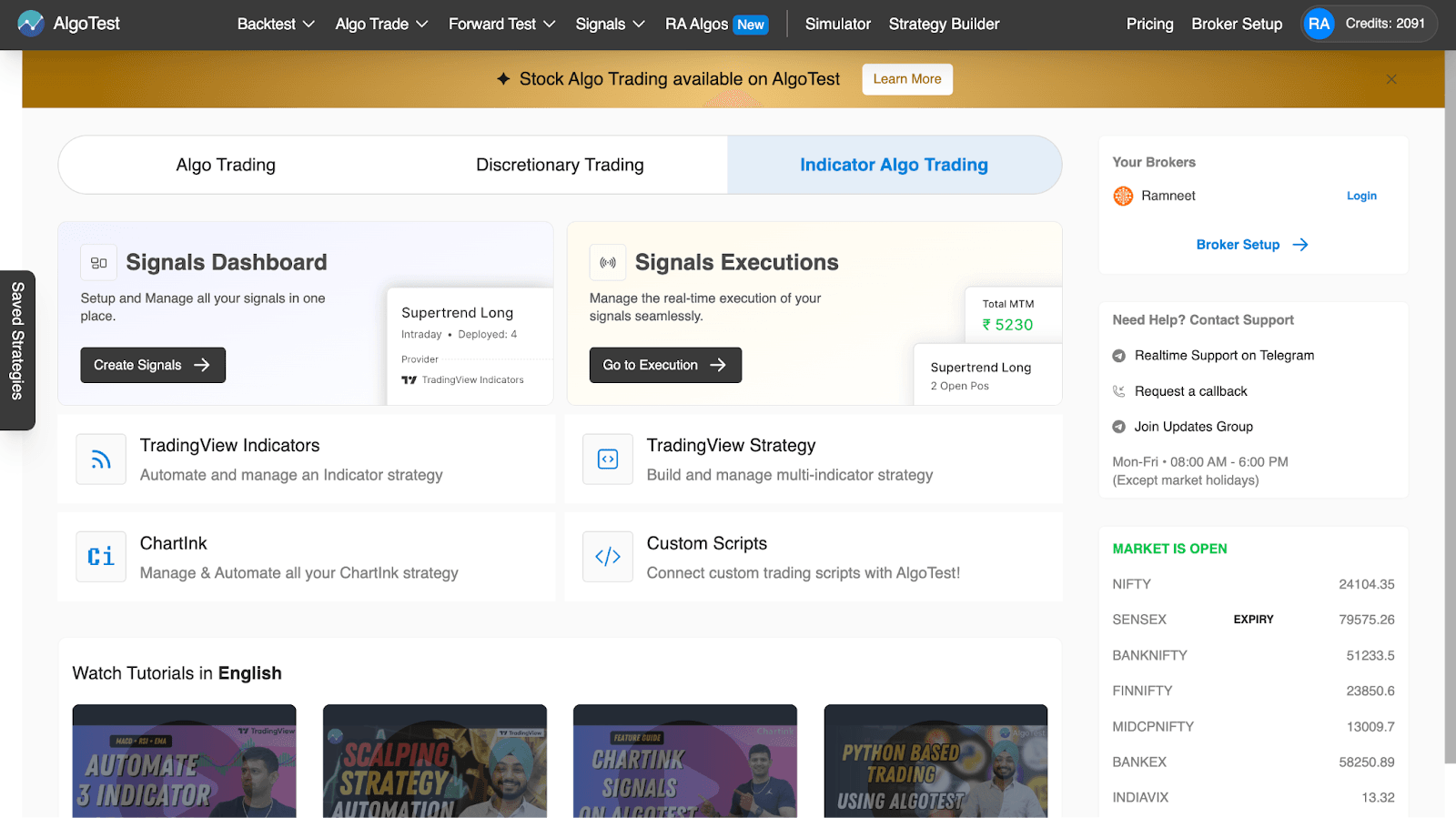
#### **Create a New Signal**:
- Go to the Signals dashboard page and create a “New Signal”.
- Select Chartink as Signal Provider.
- Select Forward Test as Execution Type.
- Let’s create a new strategy, strategy on AlgoTest which trades to execute if the signal is generated.
- Go to the “Stocks” tab to create a stock strategy.
- Select the index you want to trade, in this strategy, we will select “Nestle Limited”.
- Define the Trade you want to execute with Quantity, Position, Target and Stoploss.
- Save the strategy with a unique name.
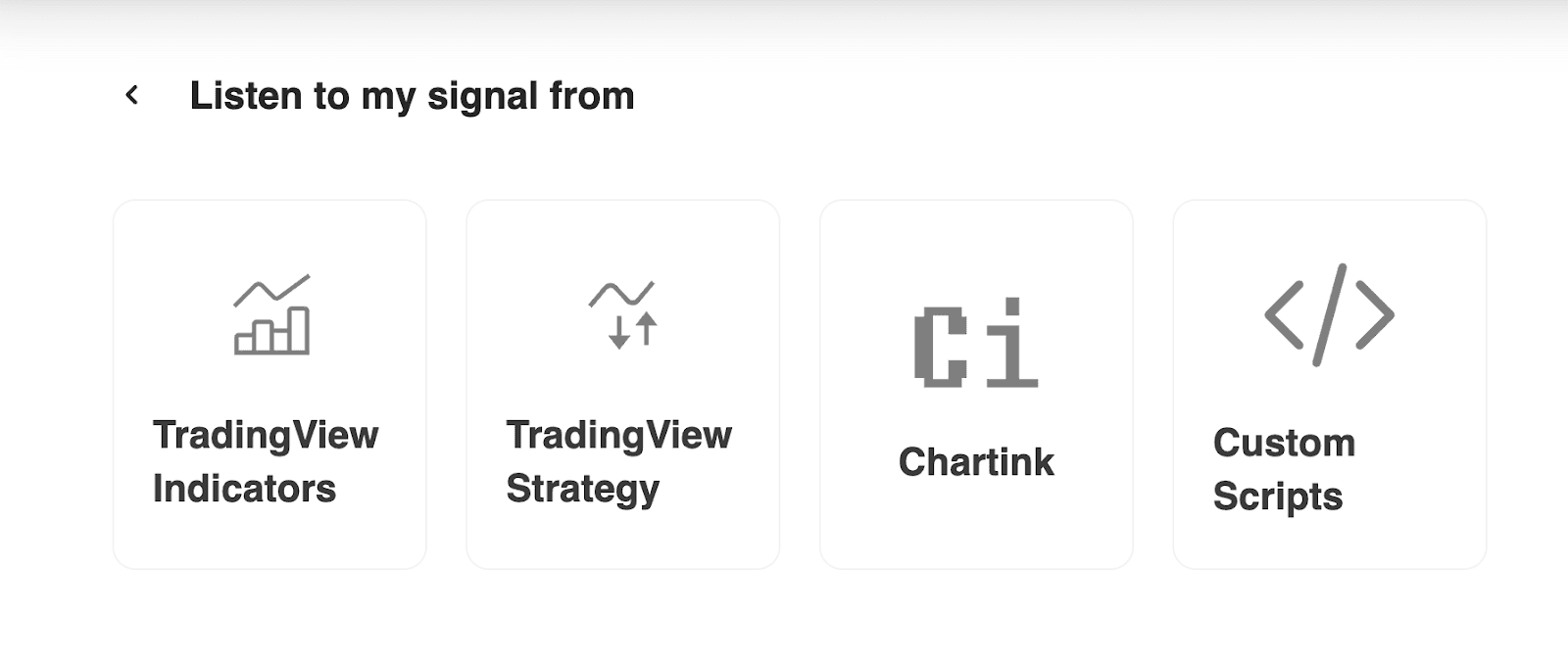


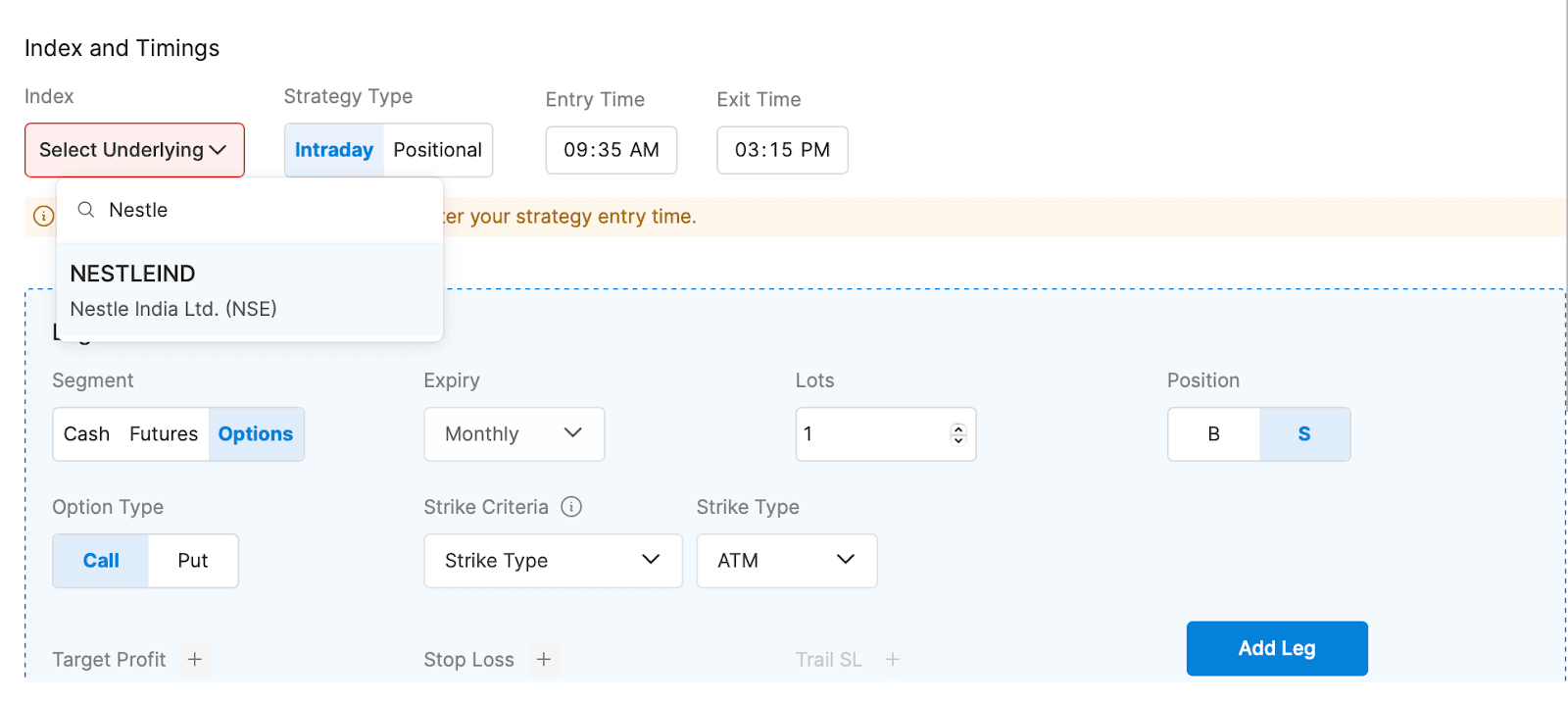
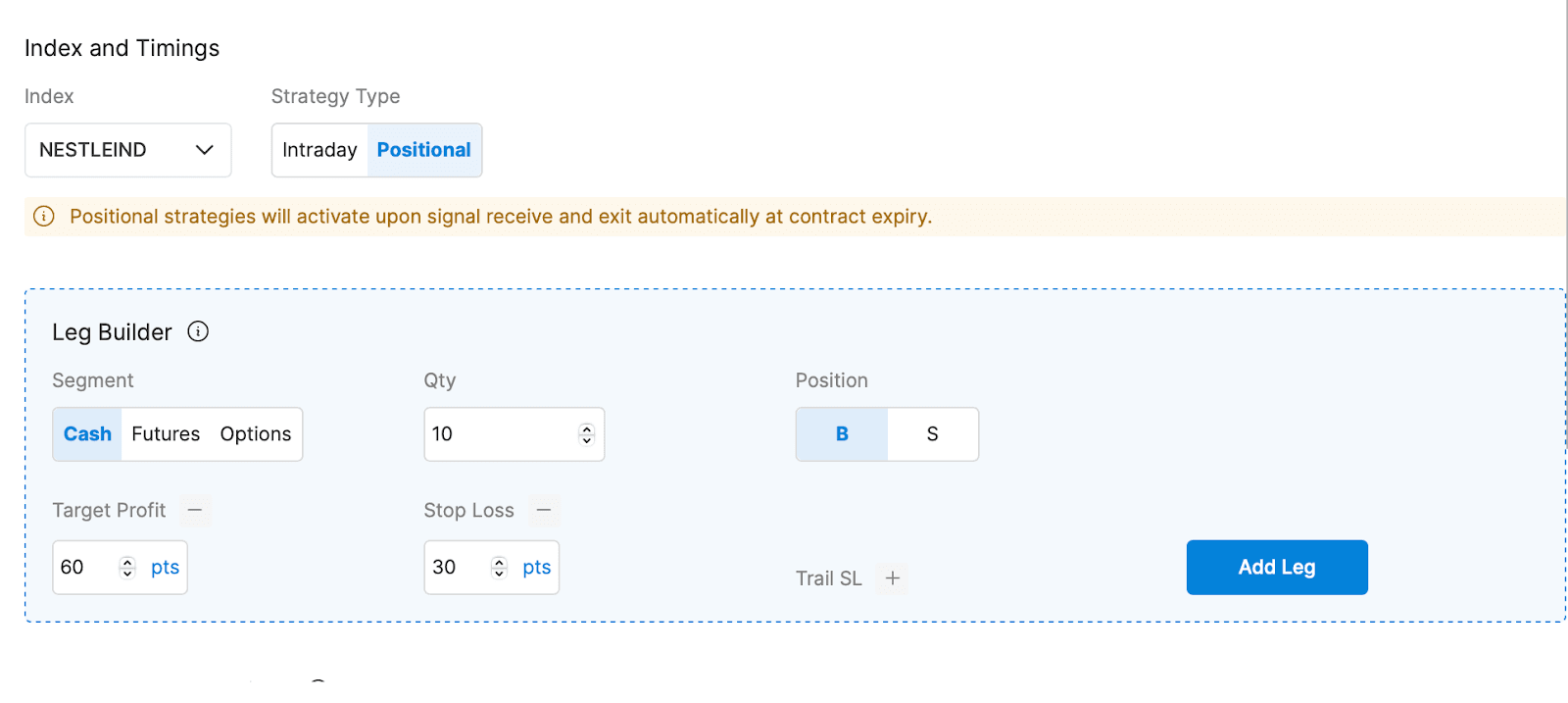
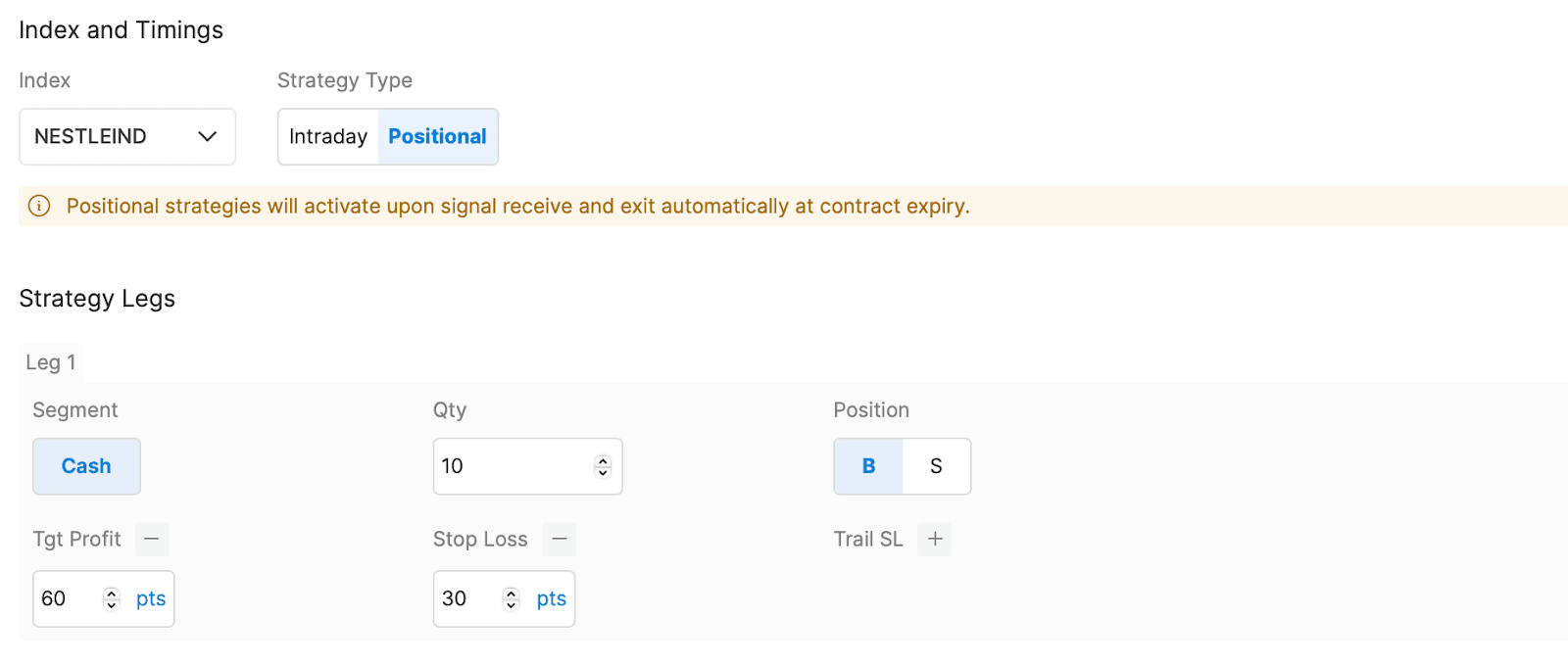
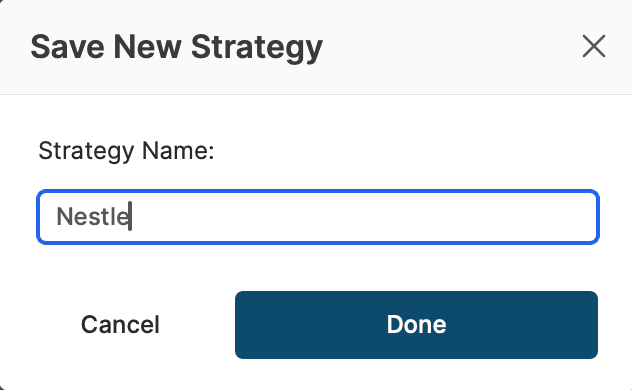
### **Step 3: Connect Chartink Alerts with AlgoTest Signals**
#### **Generate a Webhook URL**:
- Once the strategy is saved, you will receive a webhook url.
- Copy the webhook URL for your strategy.
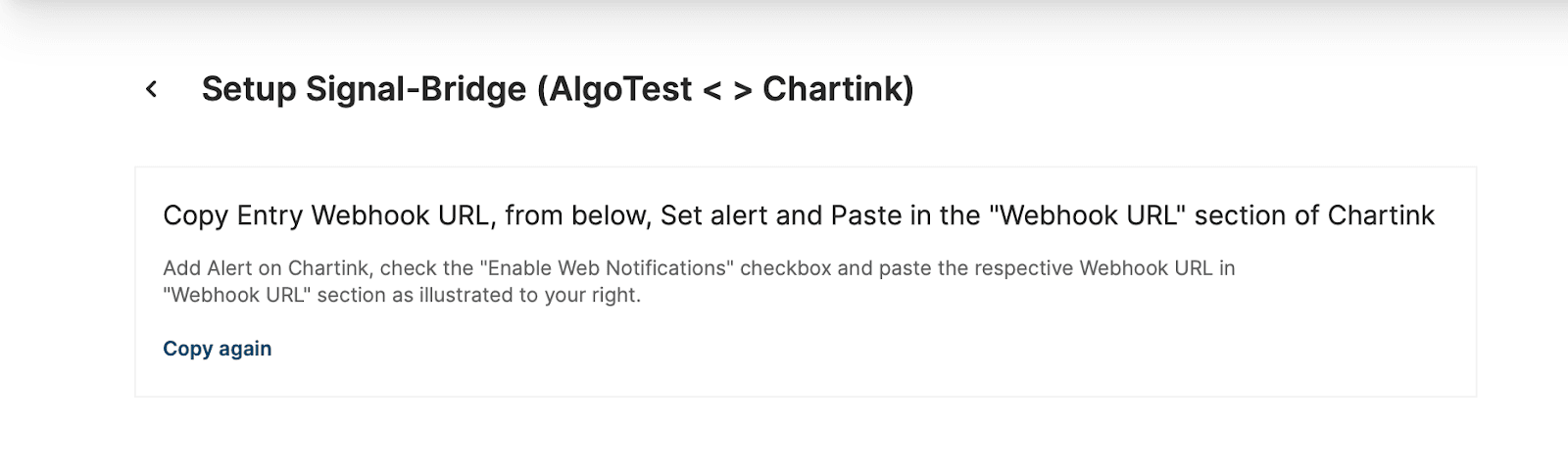
#### **Link the Webhook to Chartink Alerts**:
- In Chartink, navigate to your saved screener and click on "Create Alert."
- Paste the webhook URL in the alert settings.
- Save the alert.
- After Saving the alert click on “Start Listening” on AlgoTest.
- Your Signal is in listening mode now.

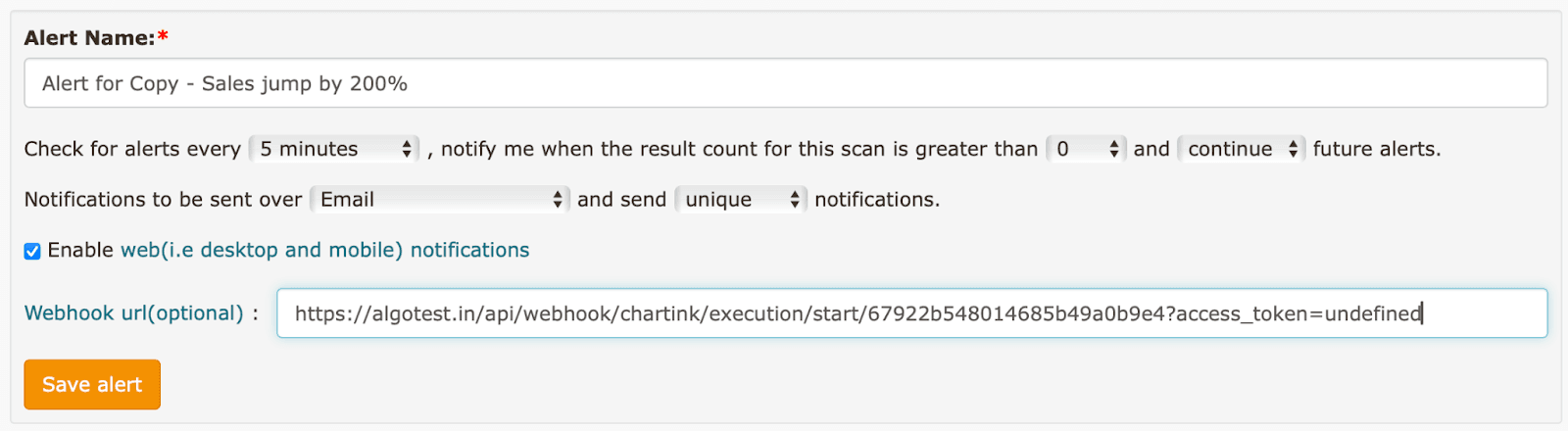

# **Step 4: Deploy Your Strategy in Live Markets**
- Once satisfied with the forward test results, deploy your strategy in the live market by moving the signals to Live Trade.
- Connect your Broker and setup Execution settings to start your Algo Trading.

## **Why Choose Chartink Premium**
Chartink's Premium Plan offers essential features for automation:
- Real-time data for scans and alerts.
- Flexible alert intervals (1/2/3/5 minutes, etc.).
- Notifications via SMS, email, and desktop/mobile.
- No coding required!
These features make it an ideal choice for seamless integration with AlgoTest Signals.
## **Requirements for Automation**
To use this setup, ensure the following prerequisites are met:
1. **Chartink Premium Plan**
- A premium plan is essential for creating alerts and running screeners with real-time data.
2. **AlgoTest Signal Plan**
- Activate the AlgoTest Signal plan to connect your strategy with Chartink alerts.
3. **Broker Connection with AlgoTest**
- Connect your broker to AlgoTest via the broker setup page.
---
This blog is powered by Superblog. Visit https://superblog.ai to know more.
---
## Automate Your “Mid Cap Stocks” Using Chartink and AlgoTest
Author: AlgoTest
Author URL: https://algotest.in/blog/author/algotest/
Published: 2025-01-24
Category: Chartink
Category URL: https://algotest.in/blog/category/chartink/
URL: https://algotest.in/blog/automate-your-mid-cap-stocks-using-chartink-and-algotest/
Automating your trading strategy can save time and eliminate the need to monitor the markets constantly. With [**Chartink**](http://www.charting.com) and [AlgoTest](https://www.algotest.in), you can set up your strategy to execute trades automatically.
In this guide, you will learn:
- How AlgoTest Signals work.
- Step-by-step instructions to create a Chartink screener and set it up for automation with AlgoTest.
- How to verify and deploy your strategy in live markets or test it using forward testing.
- The requirements for automation.
## **How AlgoTest Signals Work**
AlgoTest Signals allow you to automate your trades based on predefined conditions from Chartink. When a breakout condition is met in Chartink, an alert is sent to AlgoTest, which executes the trade on your broker terminal.
### **Key Benefits:**
- Eliminate manual trade execution.
- Consistency in trade execution based on your strategy logic.
- Saves time and reduces emotional decision-making.
# Mid cap stocks filter explanation:
- Market Cap must be greater than or equal to 100 Indian Rupees. This means the company's total market value is at least 100 Rupees, indicating it is a viable stock for investment.
- The filter checks for stocks with a market capitalization of 10,000 or less. This means the total value of all outstanding shares of the stock is at most 10,000 Indian Rupees, indicating that these stocks are relatively small in size compared to larger companies.
## **Step-by-Step Guide to Automate Your Strategy**
### **Step 1: Create Your Screener in Chartink**
#### **Access Chartink**:
- Go to [Chartink](https://chartink.in/) and log in to your account.
#### **Create a Watchlist**:
- Navigate to the "Watchlists" section.
- Create a new watchlist for the instruments you want to monitor.
- Search for instruments you want to monitor and click on ‘Add Selected’.
- Watchlist is created with desired instruments.

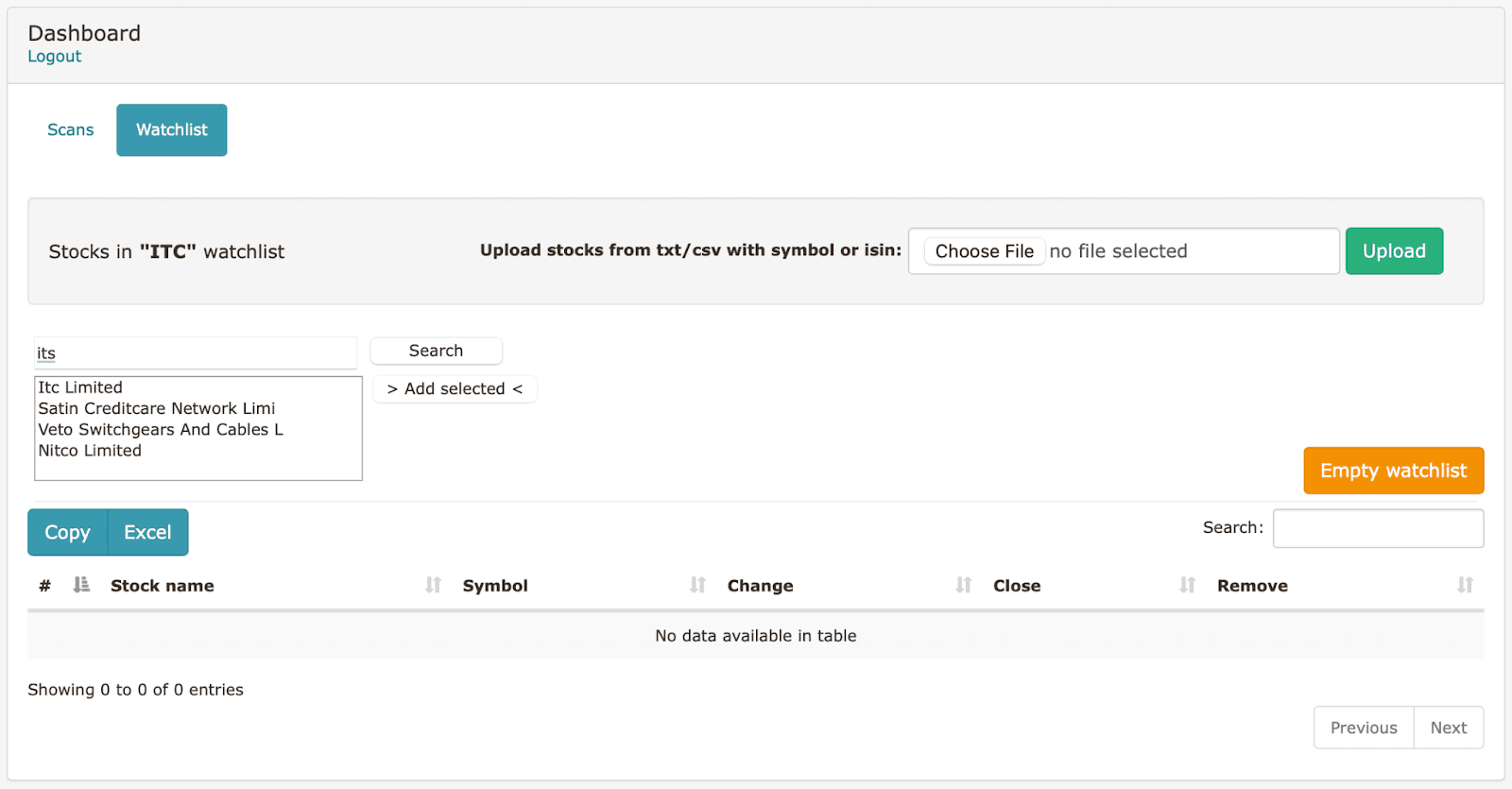
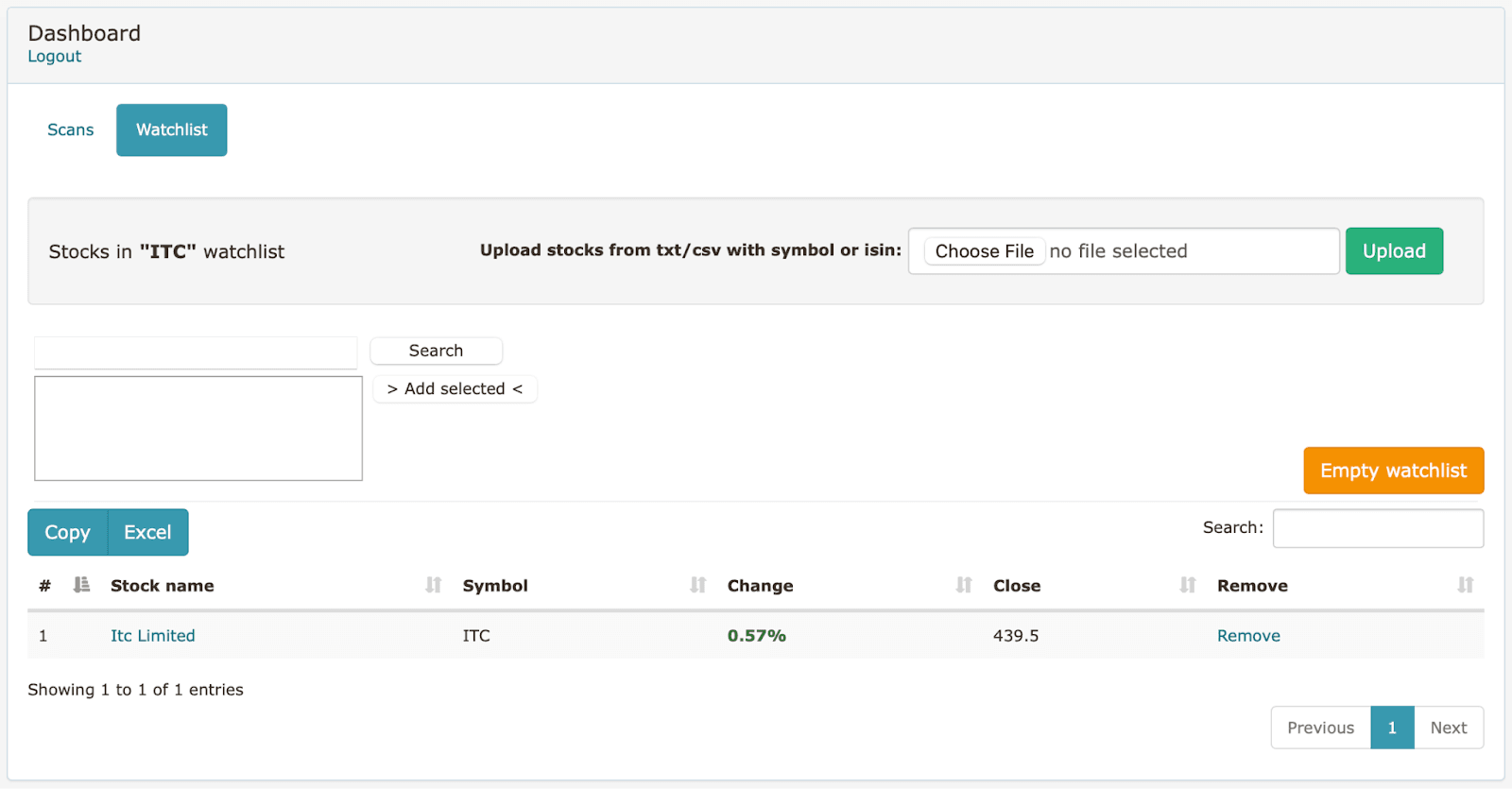
#### **Create a Screener**:
- Go to the "Screener" section and select any pre-existing template (e.g., " [Mid Cap Stocks](https://chartink.com/screener/mid-cap-stocks)").
- Copy the Scan and then open it from the scans dashboard.
- Change the segment to your own watchlist of instruments. (e.g., “ITC Limited”)
- Now save the scan.
#
### **Step 2: Create Your Strategy in AlgoTest**
#### **Login to AlgoTest**:
- Visit [AlgoTest](https://algotest.in/) and log in. Go to Signals Dashboard.
#### **Create a New Signal**:
- Go to the Signals dashboard page and create a “New Signal”.
- Select Chartink as Signal Provider.
- Select Forward Test as Execution Type.
- Let’s create a new strategy, strategy on AlgoTest which trades to execute if the signal is generated.
- Go to the “Stocks” tab to create a stock strategy.
- Select the index you want to trade, in this strategy, we will select “Infosys Limited”.
- Define the Trade you want to execute with Quantity, Position, Target and Stoploss.
- Save the strategy with a unique name.
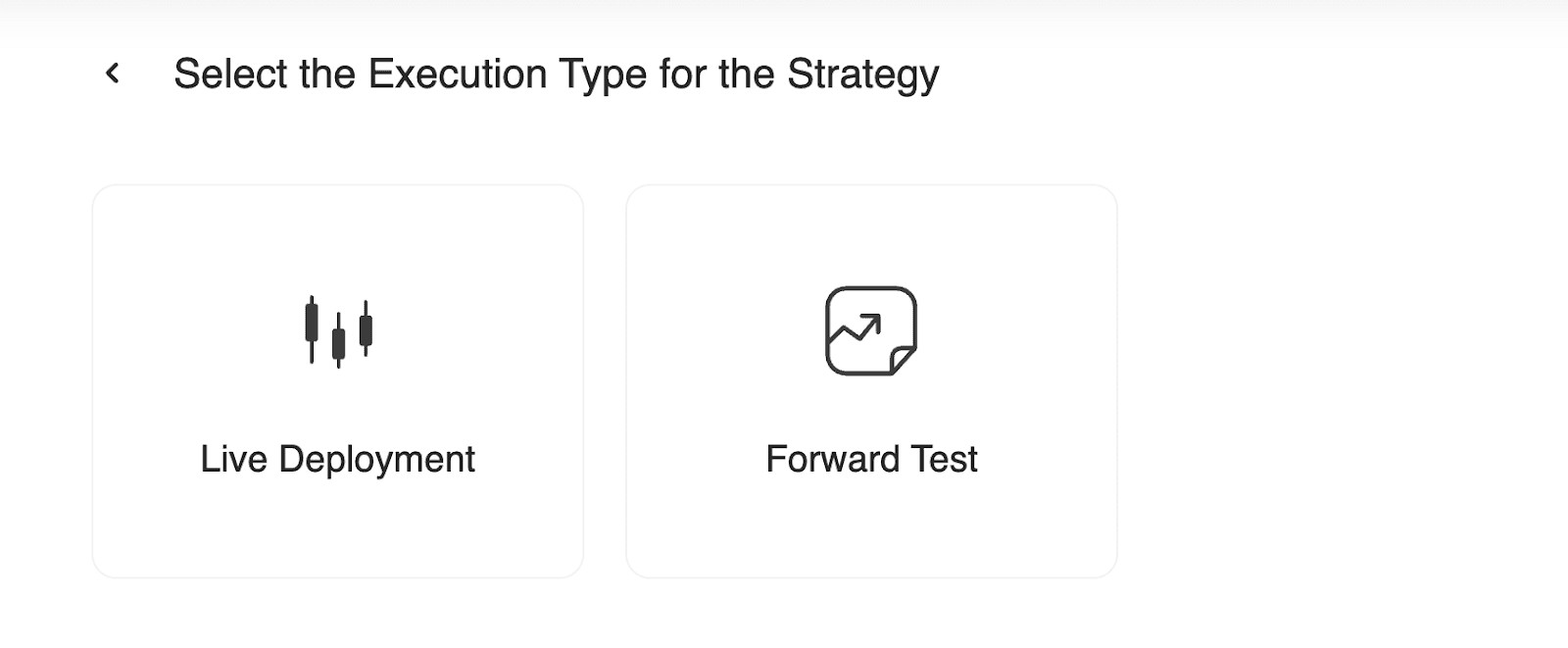


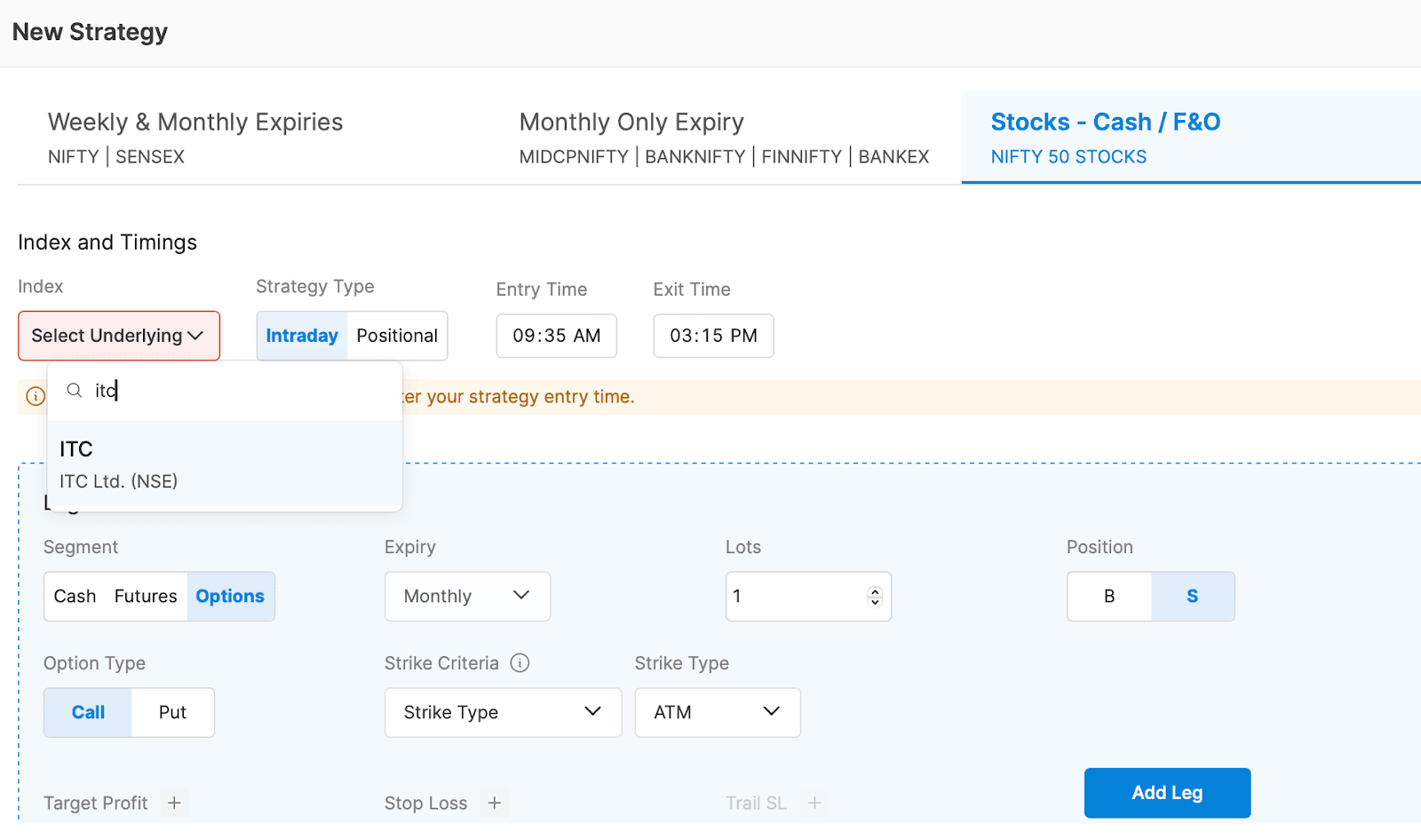
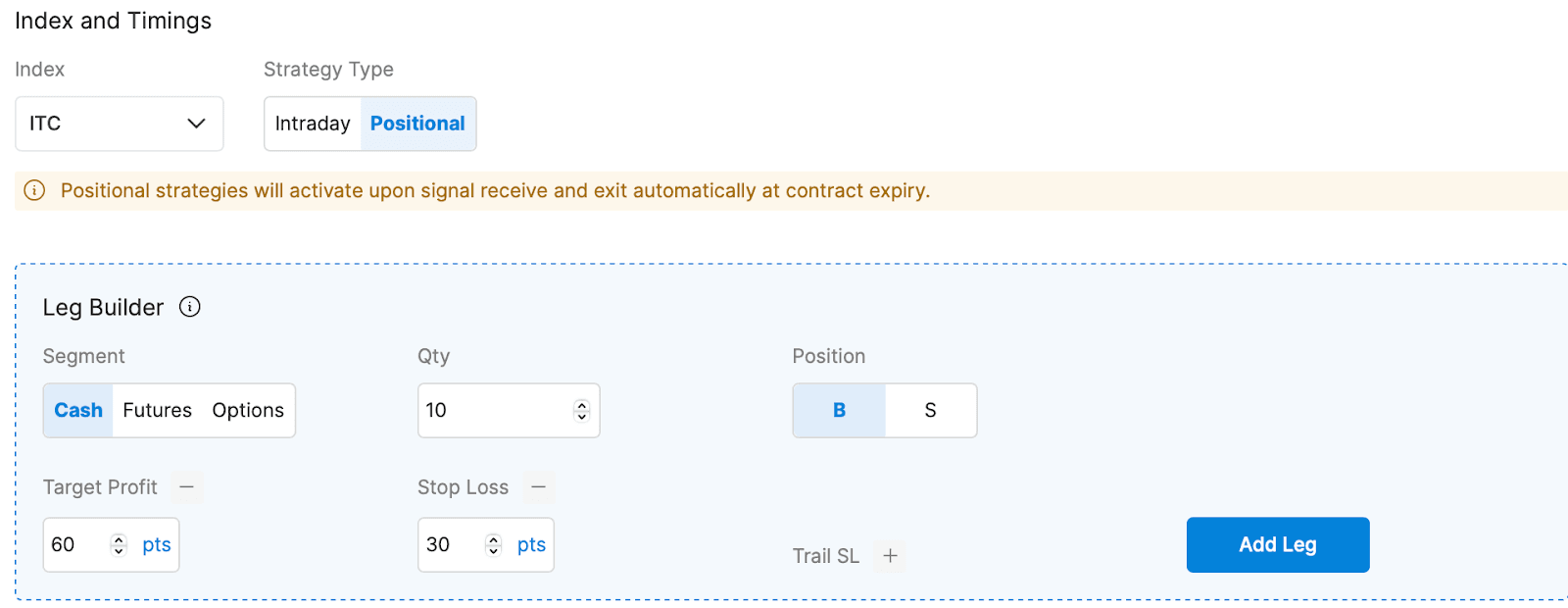
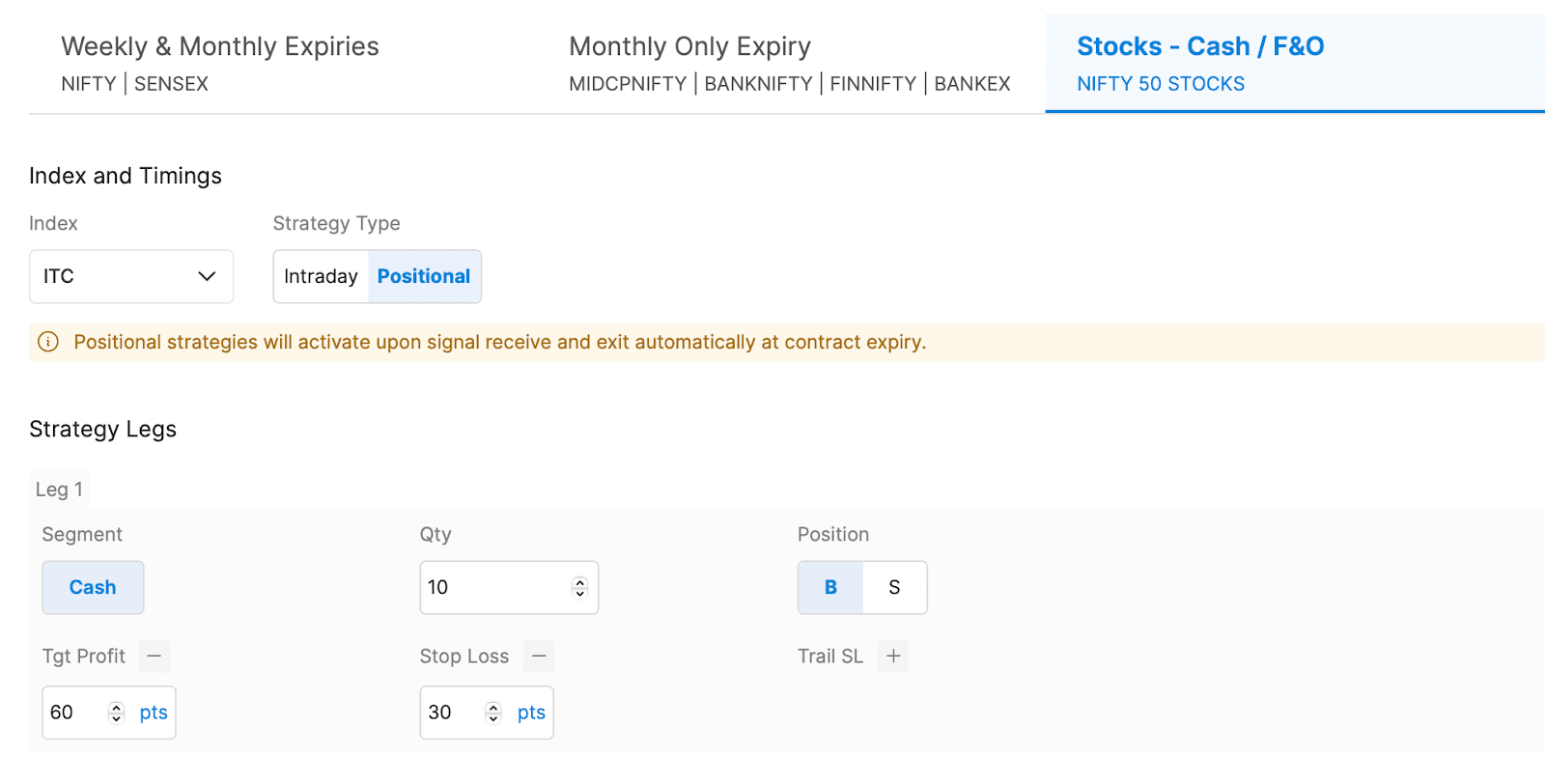
### **Step 3: Connect Chartink Alerts with AlgoTest Signals**
#### **Generate a Webhook URL**:
- Once the strategy is saved, you will receive a webhook url.
- Copy the webhook URL for your strategy.
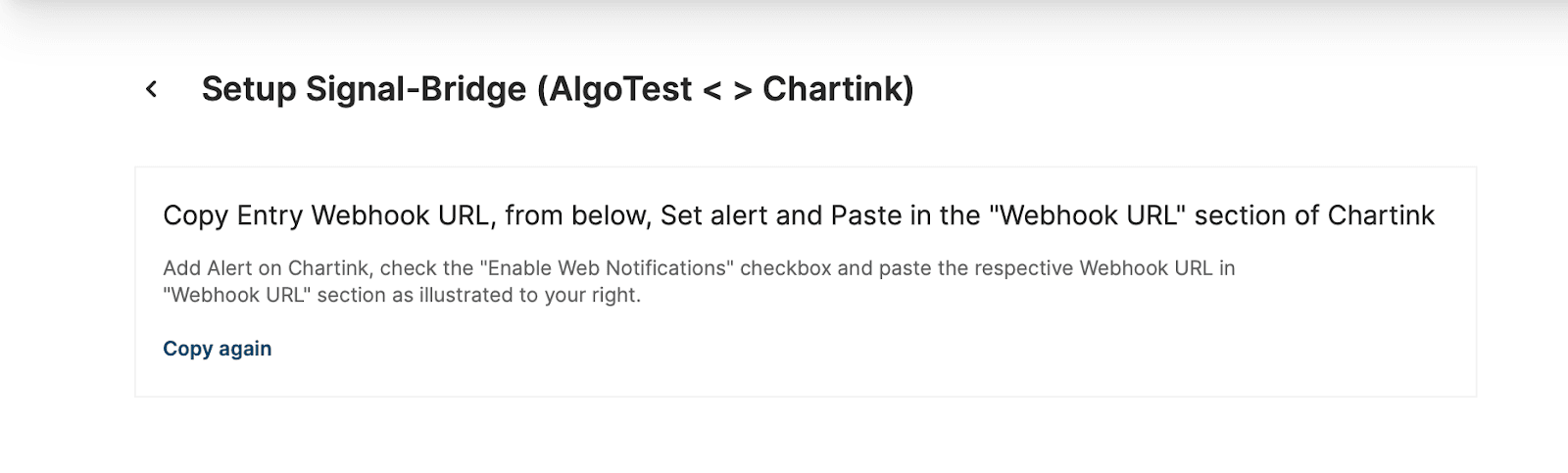
#### **Link the Webhook to Chartink Alerts**:
- In Chartink, navigate to your saved screener and click on "Create Alert."
- Paste the webhook URL in the alert settings.
- Save the alert.
- After Saving the alert click on “Start Listening” on AlgoTest.
- Your Signal is in listening mode now.

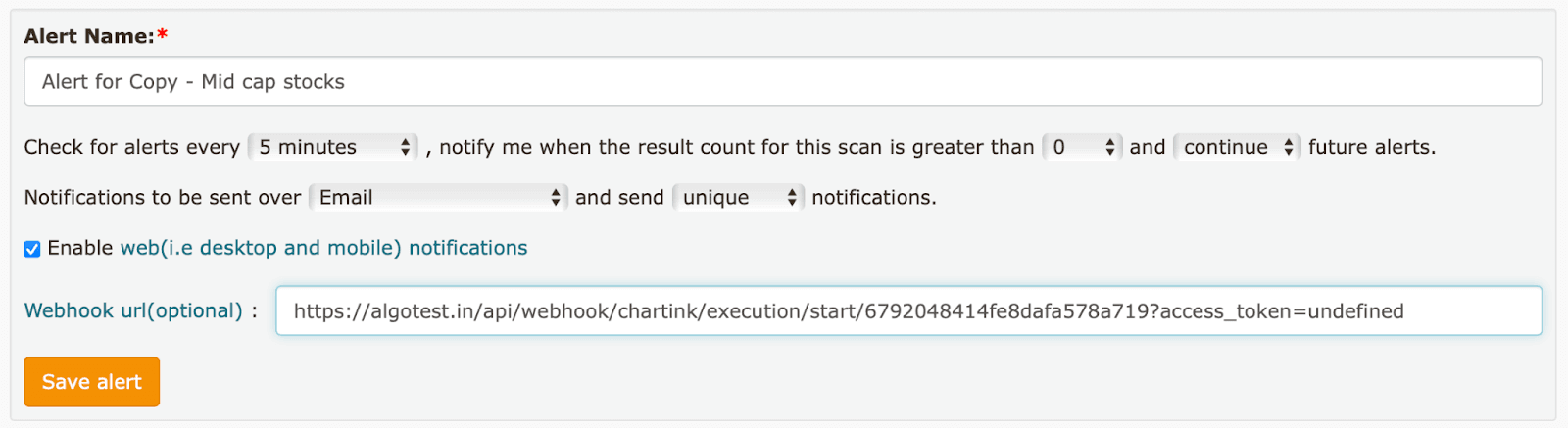

# **Step 4: Deploy Your Strategy in Live Markets**
- Once satisfied with the forward test results, deploy your strategy in the live market by moving the signals to Live Trade.
- Connect your Broker and setup Execution settings to start your Algo Trading.

## **Why Choose Chartink Premium**
Chartink's Premium Plan offers essential features for automation:
- Real-time data for scans and alerts.
- Flexible alert intervals (1/2/3/5 minutes, etc.).
- Notifications via SMS, email, and desktop/mobile.
- No coding required!
These features make it an ideal choice for seamless integration with AlgoTest Signals.
## **Requirements for Automation**
To use this setup, ensure the following prerequisites are met:
1. **Chartink Premium Plan**
- A premium plan is essential for creating alerts and running screeners with real-time data.
2. **AlgoTest Signal Plan**
- Activate the AlgoTest Signal plan to connect your strategy with Chartink alerts.
3. **Broker Connection with AlgoTest**
- Connect your broker to AlgoTest via the broker setup page.
---
This blog is powered by Superblog. Visit https://superblog.ai to know more.
---
## Automate Your “Small Cap Stocks” Using Chartink and AlgoTest
Author: AlgoTest
Author URL: https://algotest.in/blog/author/algotest/
Published: 2025-01-24
Category: Chartink
Category URL: https://algotest.in/blog/category/chartink/
URL: https://algotest.in/blog/automate-your-small-cap-stocks-using-chartink-and-algotest/
Automating your trading strategy can save time and eliminate the need to monitor the markets constantly. With [**Chartink**](http://www.charting.com) and [**AlgoTest**](http://www.algotest.in), you can set up your strategy to execute trades automatically.
In this guide, you will learn:
- How AlgoTest Signals work.
- Step-by-step instructions to create a Chartink screener and set it up for automation with AlgoTest.
- How to verify and deploy your strategy in live markets or test it using forward testing.
- The requirements for automation.
## **How AlgoTest Signals Work**
AlgoTest Signals allow you to automate your trades based on predefined conditions from Chartink. When a breakout condition is met in Chartink, an alert is sent to AlgoTest, which executes the trade on your broker terminal.
### **Key Benefits:**
- Eliminate manual trade execution.
- Consistency in trade execution based on your strategy logic.
- Saves time and reduces emotional decision-making.
# Small cap stocks filter explanation:
- The filter identifies stocks with a market capitalization of less than 100 million Indian rupees. This means that the total value of all outstanding shares of these stocks is below 100 million rupees, indicating they are relatively small in size compared to larger companies.
## **Step-by-Step Guide to Automate Your Strategy**
### **Step 1: Create Your Screener in Chartink**
#### **Access Chartink**:
- Go to [Chartink](https://chartink.in/) and log in to your account.
#### **Create a Watchlist**:
- Navigate to the "Watchlists" section.
- Create a new watchlist for the instruments you want to monitor.
- Search for instruments you want to monitor and click on ‘Add Selected’.
- Watchlist is created with desired instruments.

#### **Create a Screener:**
- Go to the "Screener" section and select any pre-existing template (e.g., " [Small Cap Stocks](https://chartink.com/screener/small-cap-stocks)").
- Copy the Scan and then open it from the scans dashboard.
- Change the segment to your own watchlist of instruments. (e.g., “Infosys Limited”)
- Now save the scan.
### **Step 2: Create Your Strategy in AlgoTest**
#### **Login to AlgoTest**:
- Visit [AlgoTest](https://algotest.in/) and log in. Go to Signals Dashboard.
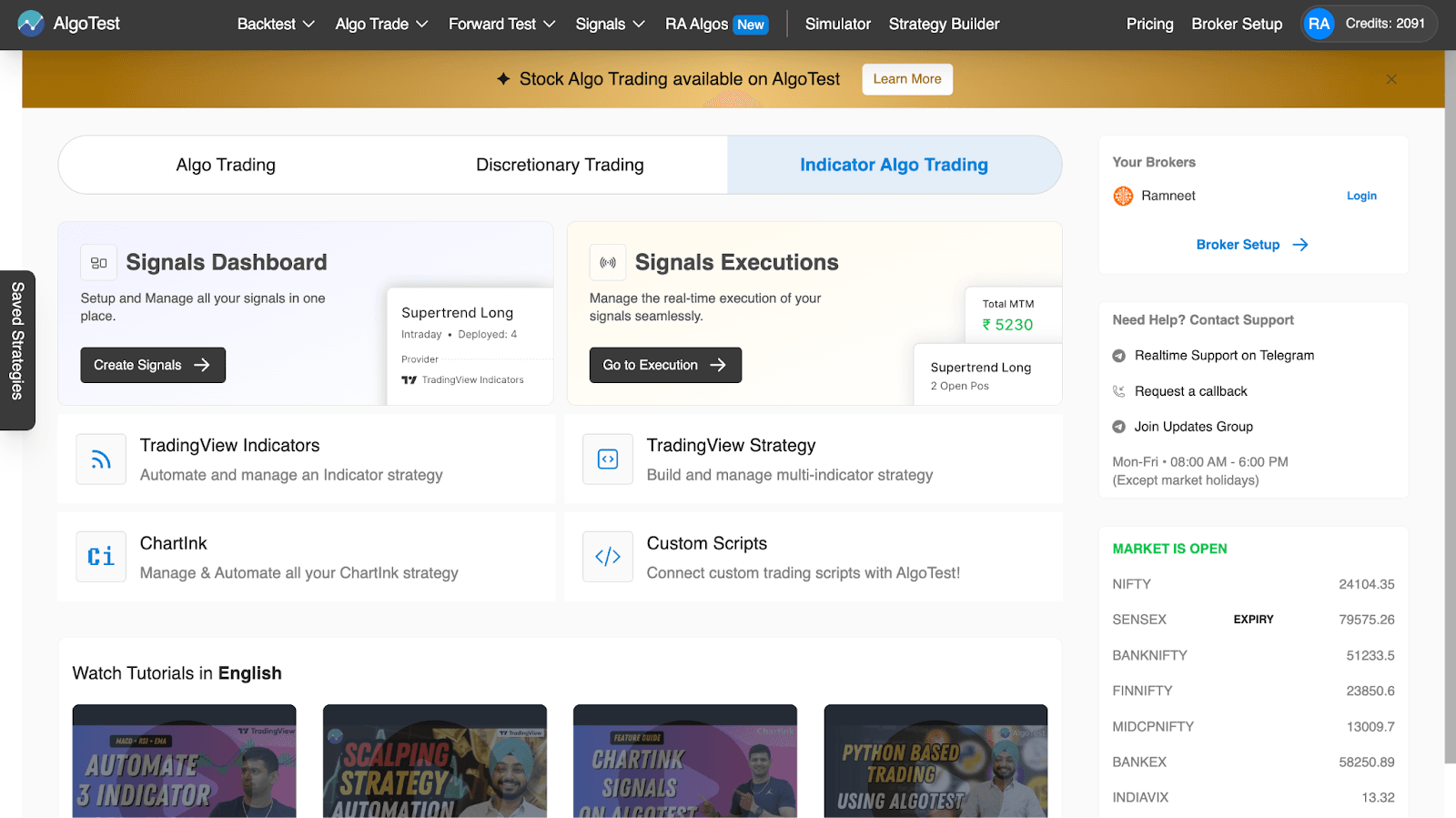
#### **Create a New Signal**:
- Go to the Signals dashboard page and create a “New Signal”.
- Select Chartink as Signal Provider.
- Select Forward Test as Execution Type.
- Let’s create a new strategy, strategy on AlgoTest means which trades to execute if the signal is generated.
- Go to the “Stocks” tab to create a stock strategy.
- Select the index you want to trade in this strategy we will select “Infosys Limited”.
- Define the Trade you want to execute with Quantity, Position, Target and Stoploss.
- Save the strategy with a unique name.
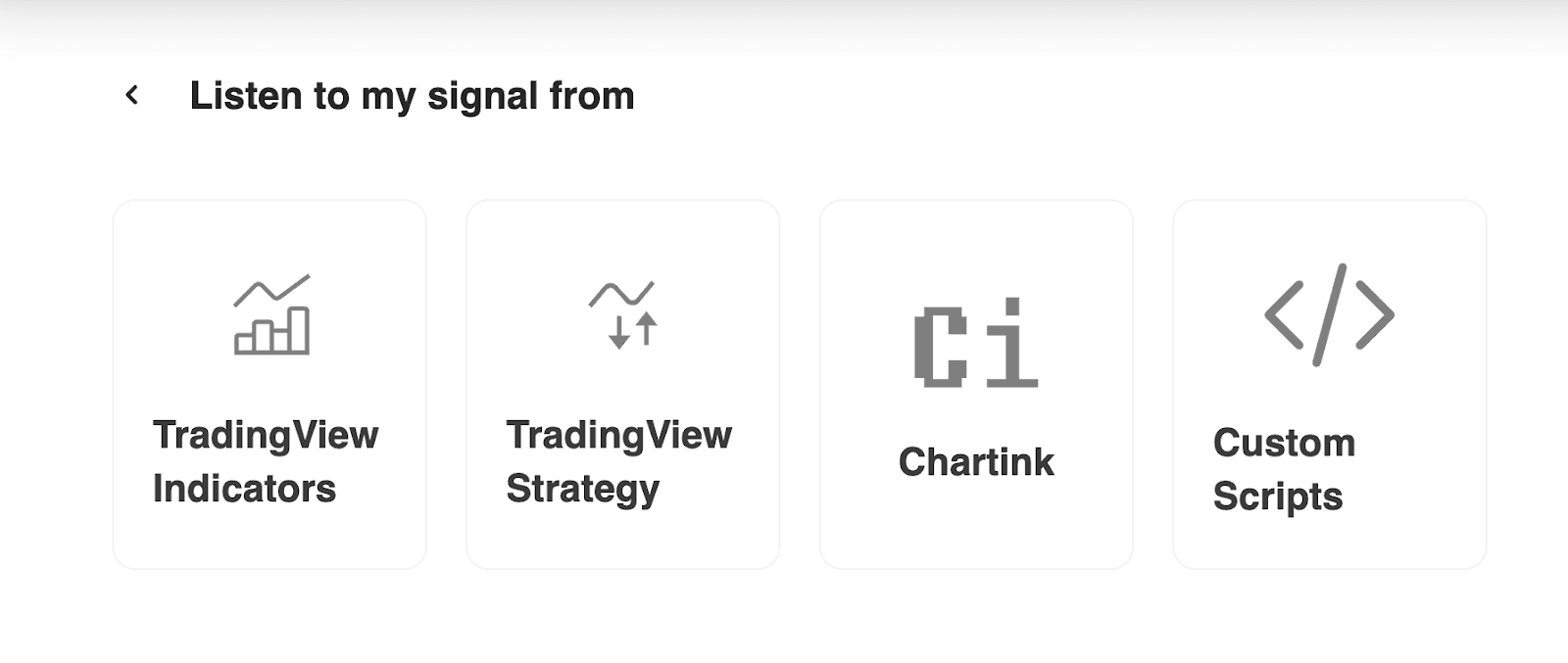


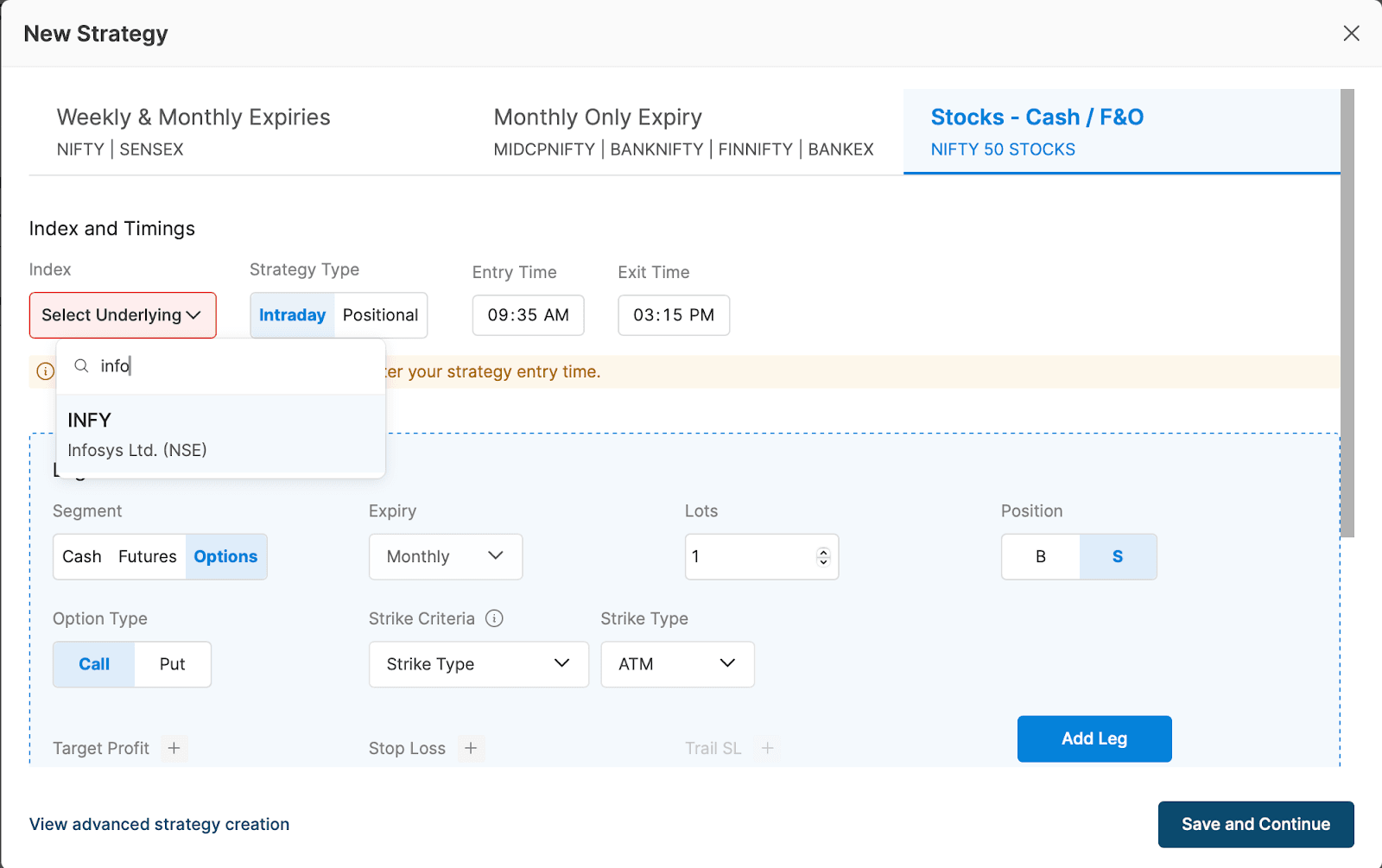
### **Step 3: Connect Chartink Alerts with AlgoTest Signals**
#### **Generate a Webhook URL**:
- Once the strategy is saved, you will receive a webhook url.
- Copy the webhook URL for your strategy.
#### **Link the Webhook to Chartink Alerts**:
- In Chartink, navigate to your saved screener and click on "Create Alert."
- Paste the webhook URL in the alert settings.
- Save the alert.
- After Saving the alert click on “Start Listening” on AlgoTest.
- our Signal is in listening mode now.

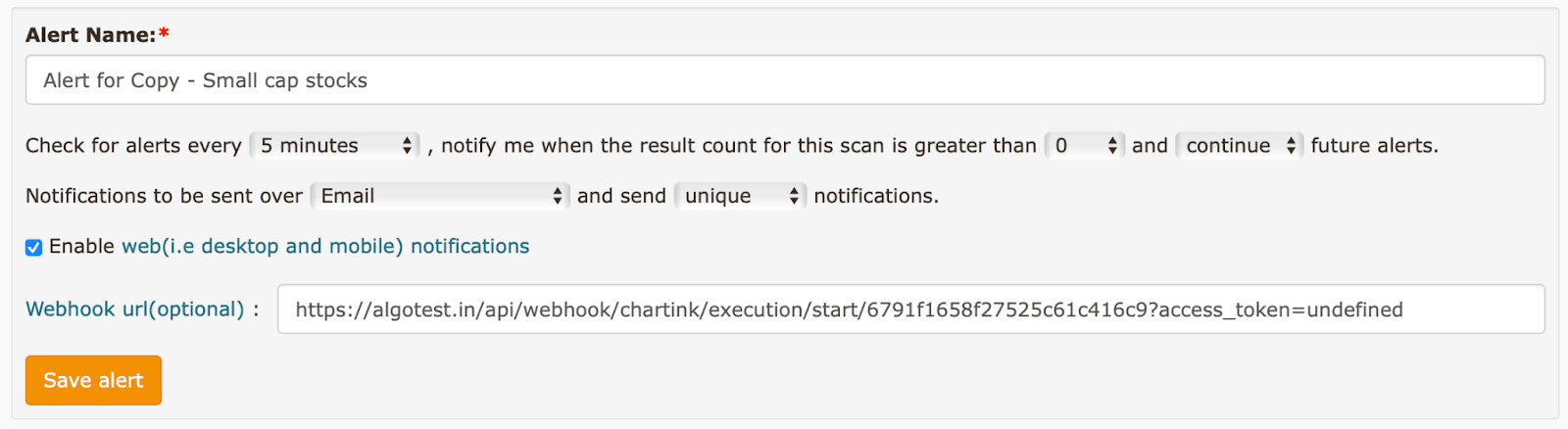

## **Step 4: Deploy Your Strategy in Live Markets**
- Once satisfied with the forward test results, deploy your strategy in the live market by moving the signals to Live Trade.
- Connect your Broker and setup Execution settings to start your Algo Trading.

## **Why Choose Chartink Premium**
Chartink's Premium Plan offers essential features for automation:
- Real-time data for scans and alerts.
- Flexible alert intervals (1/2/3/5 minutes, etc.).
- Notifications via SMS, email, and desktop/mobile.
- No coding required!
These features make it an ideal choice for seamless integration with AlgoTest Signals.
## **Requirements for Automation**
To use this setup, ensure the following prerequisites are met:
1. **Chartink Premium Plan**
- A premium plan is essential for creating alerts and running screeners with real-time data.
2. **AlgoTest Signal Plan**
- Activate the AlgoTest Signal plan to connect your strategy with Chartink alerts.
3. **Broker Connection with AlgoTest**
- Connect your broker to AlgoTest via the broker setup page.
---
This blog is powered by Superblog. Visit https://superblog.ai to know more.
---
## Daily Straddle Heatmap - 23rd January, 2025
Author: AlgoTest
Author URL: https://algotest.in/blog/author/algotest/
Published: 2025-01-23
Category: Heatmaps
Category URL: https://algotest.in/blog/category/heatmaps/
URL: https://algotest.in/blog/daily-straddle-heatmap---23rd-january-2025/
Daily Straddle Heatmap
[AlgoTest](https://algotest.in) heatmaps make it easier for you to understand a clear picture of your trading performance. These [heatmaps](https://algotest.in/heatmap) visually represent data like time, performance metrics, and win rates. Think of them as a map highlighting where your strategies work best and where they stumble. For example, a heatmap might reveal that trades during certain hours of the day consistently yield higher profits.
We are taking four eatmaps today. Let’s understand what we can learn from them.
### **BankNifty Short Straddle**
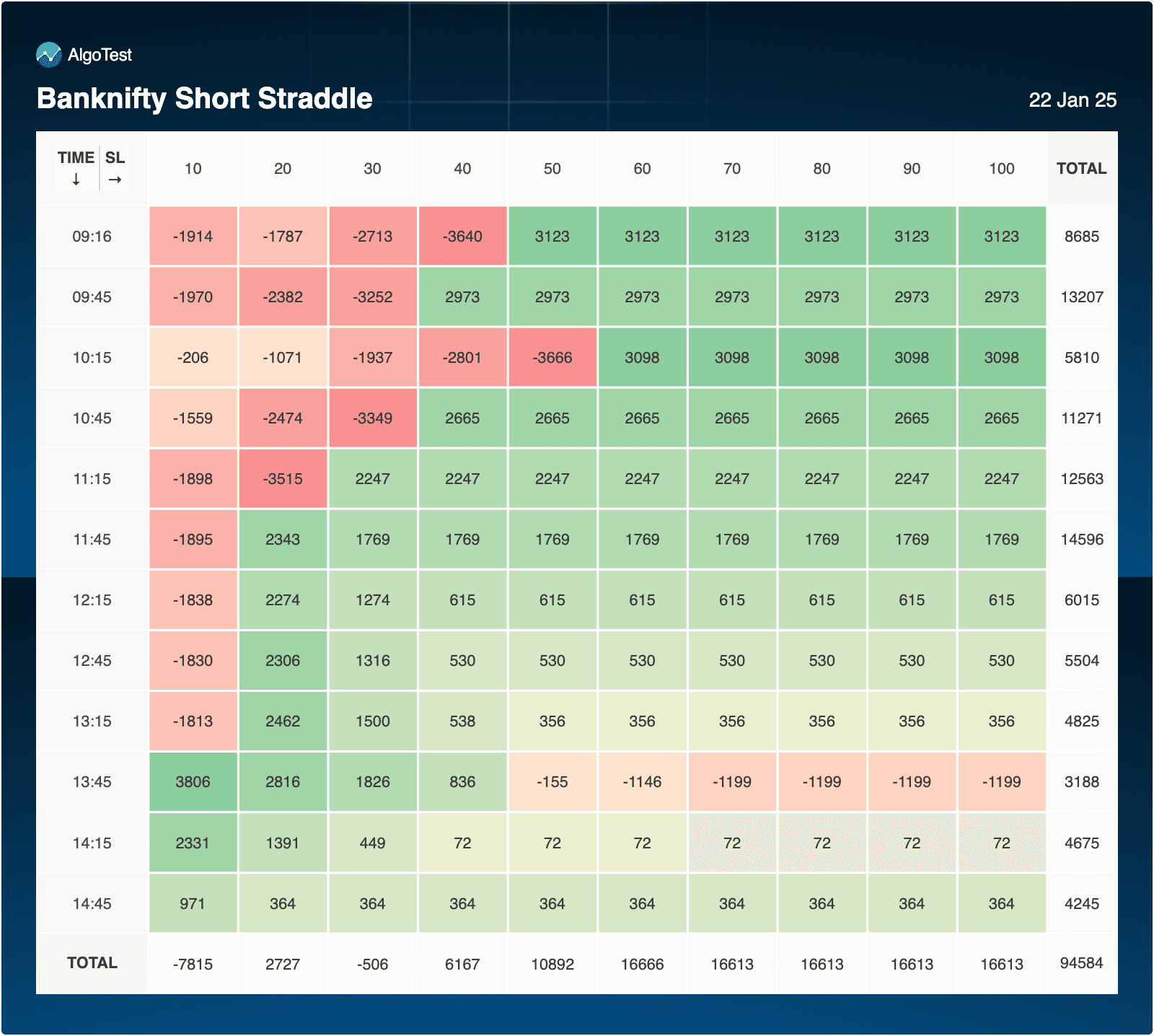
**Insights**:
- Significant losses during **9:16 AM** (-1914 to -3640) but recovered to profit later in the day, especially during the **11:15 AM** to **12:15 PM** time slots (consistent profits across higher SL values, e.g., 2247 at SL 40).
- Post **1:15 PM**, there is stability, but profits are smaller compared to the earlier trend.
- Total for the day: **94,584** indicates overall strong performance with consistent profitability in higher SL settings (e.g., 60, 70, 80).
### **FinNifty Short Straddle**
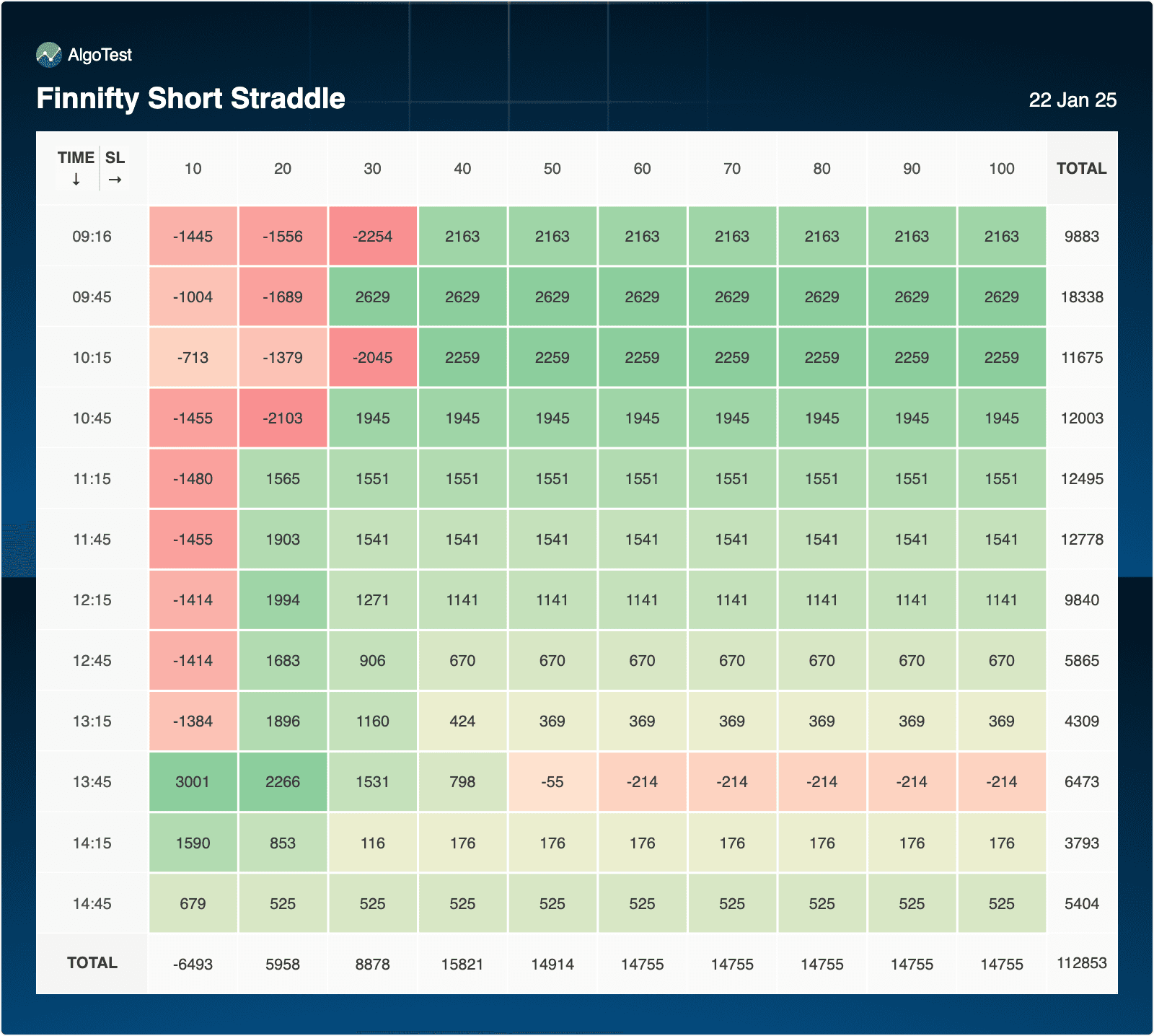
**Insights**:
- Strong positive trends throughout the day, starting with **2,163 (SL 30)** at 9:16 AM.
- The most consistent profits are from **9:45 AM** to **11:45 AM**, with all SL levels performing positively. SL levels between 40–70 yield stable returns.
- Smaller losses occur during the later sessions ( **1:15 PM onwards**).
- Total for the day: **112,853**. It’s an impressive performance with few red zones.
### **MidCapNifty Short Straddle**
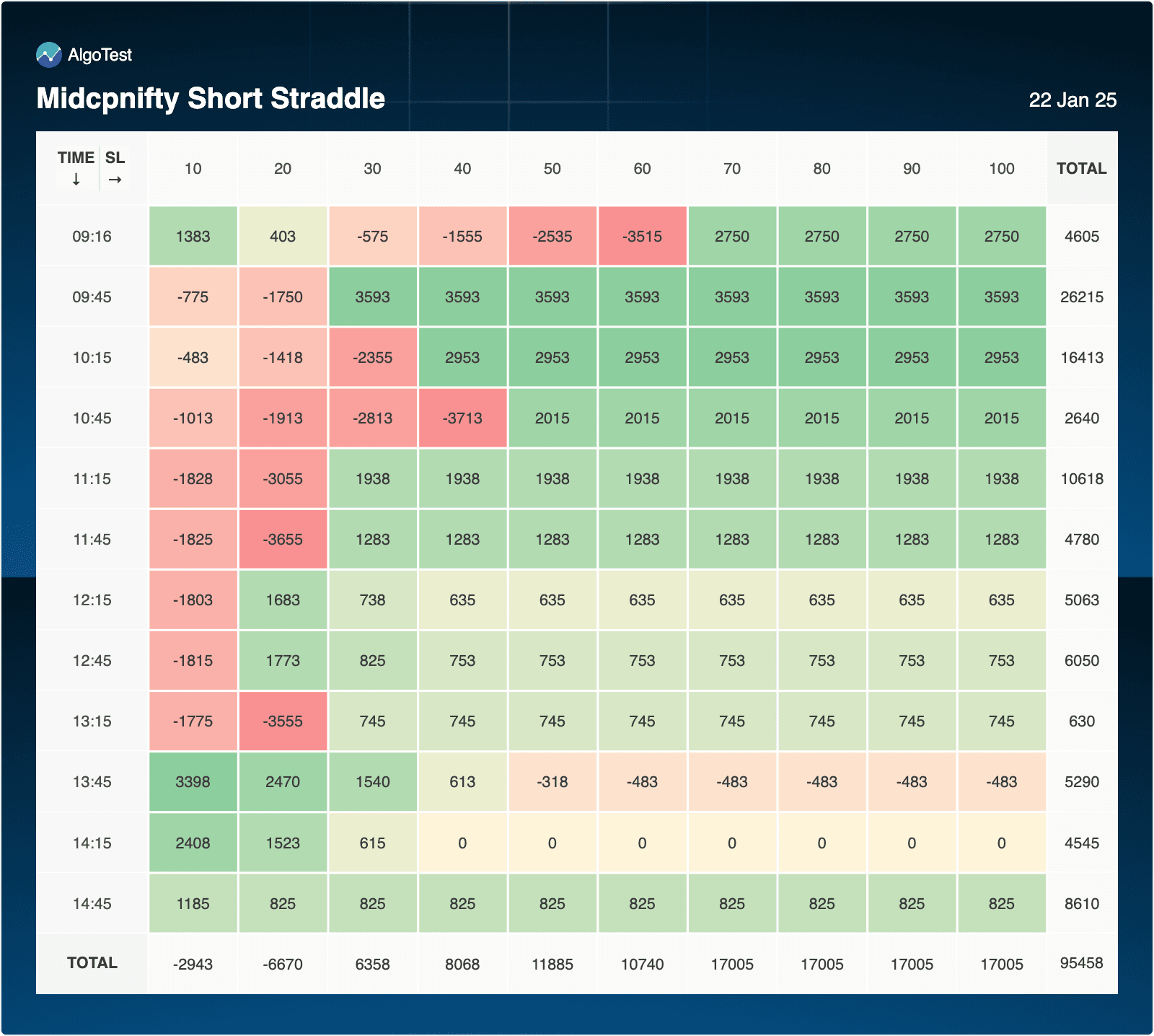
**Insights**:
- Significant losses observed in early slots ( **9:16 AM to 10:45 AM**) with larger SL values (e.g., -2,535 at SL 60).
- Recovery starts from **11:15 AM**, with consistent profitability across SL levels until **12:45 PM**.
- Consistency is observed in SL levels of **40–60** during later sessions.
- Total for the day: **95,458** reflects the day's strong profitability despite the early losses.
### **Nifty Short Straddle**
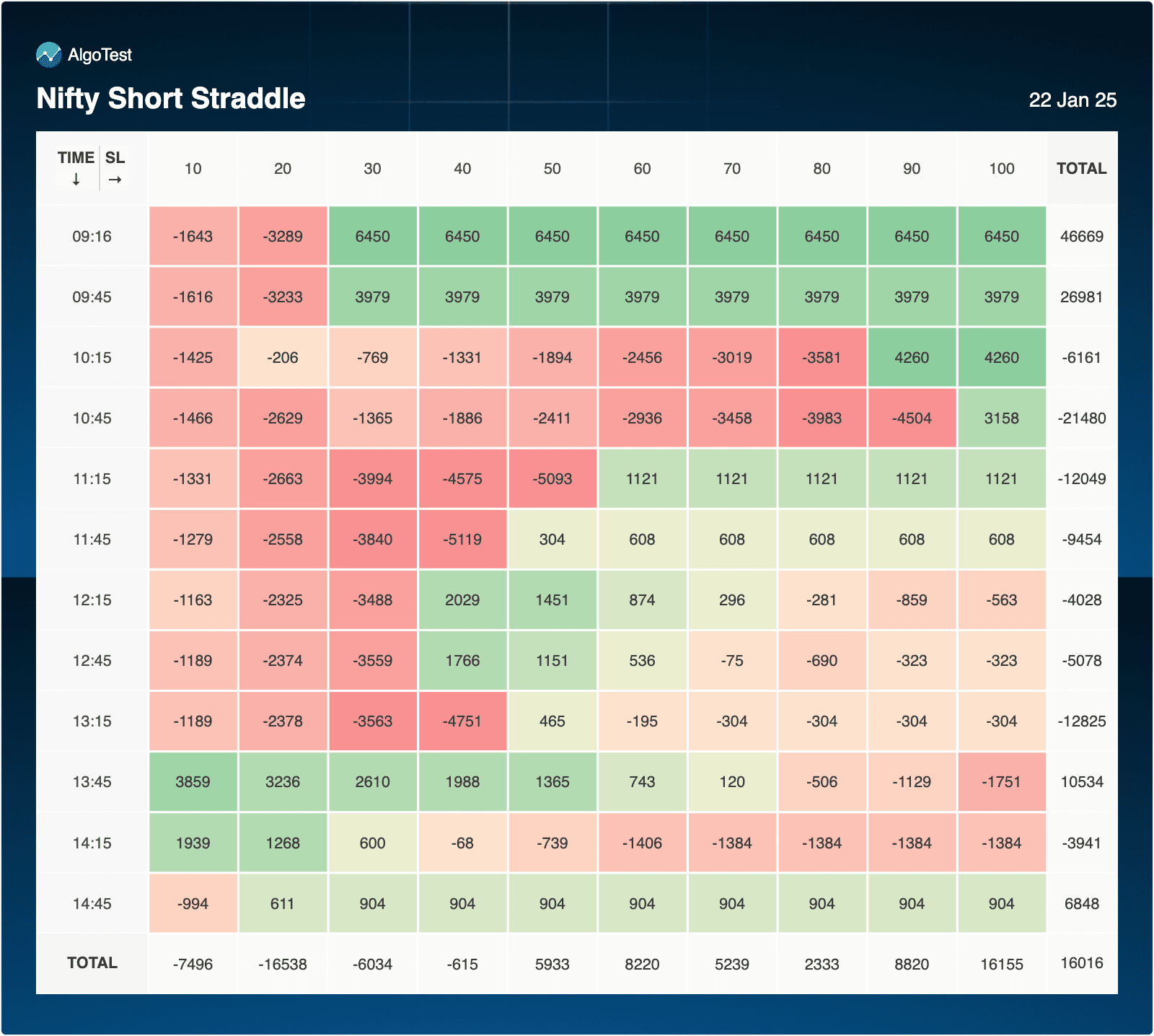
**Insights**:
- Mixed performance across time slots, with heavy losses during **10:45 AM** (-4,504 at SL 90) and **11:15 AM**.
- Recovery is seen towards the later part of the day, particularly from **12:45 PM onwards**, where profits are stabilized at lower SL levels. ****
- Highest total for the day compared to other instruments: 160,016. However, the earlier losses temper overall gains.
###### **** You can also check [heatmaps](https://algotest.in/heatmap) for MidCapNifty, Nifty, BankNifty, and FinNifty across different dimensions to better understand market trends.
---
This blog is powered by Superblog. Visit https://superblog.ai to know more.
---
## Daily Straddle Heatmap - 16th January, 2025
Author: AlgoTest
Author URL: https://algotest.in/blog/author/algotest/
Published: 2025-01-17
Category: Heatmaps
Category URL: https://algotest.in/blog/category/heatmaps/
URL: https://algotest.in/blog/daily-straddle-heatmap---16th-january-2025/
Daily Straddle Heatmap
[AlgoTest](https://algotest.in) heatmaps make it easier for you to understand a clear picture of your trading performance. These [heatmaps](https://algotest.in/heatmap) visually represent data like time, performance metrics, and win rates. Think of them as a map highlighting where your strategies work best and where they stumble. For example, a heatmap might reveal that trades during certain hours of the day consistently yield higher profits.
We are taking four eatmaps today. Let’s understand what we can learn from them.
### **BankNifty Short Straddle**
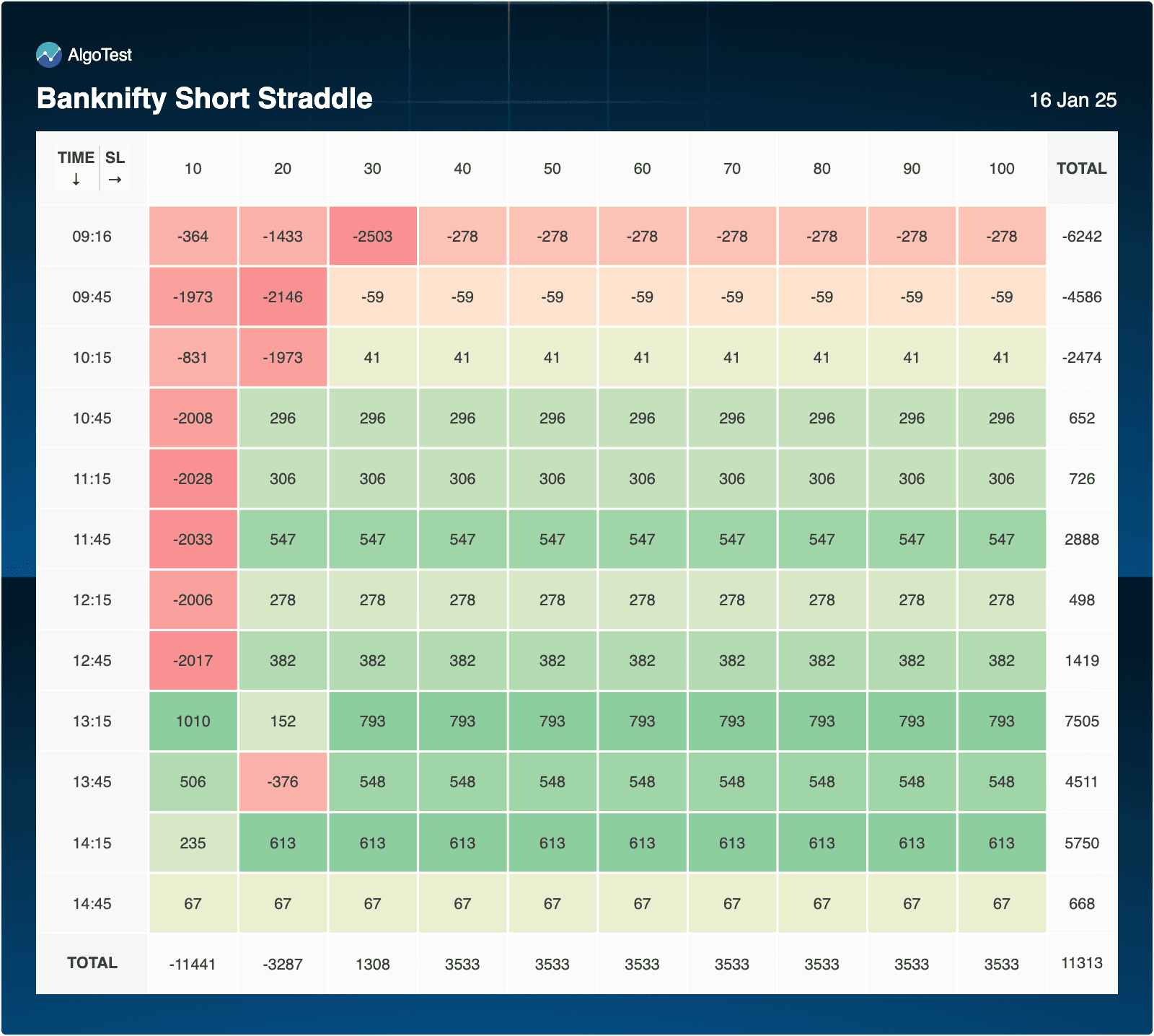
**Insights:**
- Total profit of **₹11,313**.
- The strategy struggles early in the day (09:16 to 10:45), with significant losses, particularly at 09:16 (-₹6,242).
- A notable recovery occurs from 11:15 onwards, with consistent profits peaking at 13:15 (+₹7,505).
- Stop Loss (SL) between 50 and 100 performs better consistently compared to lower SL values.
### **FinNifty Short Straddle**
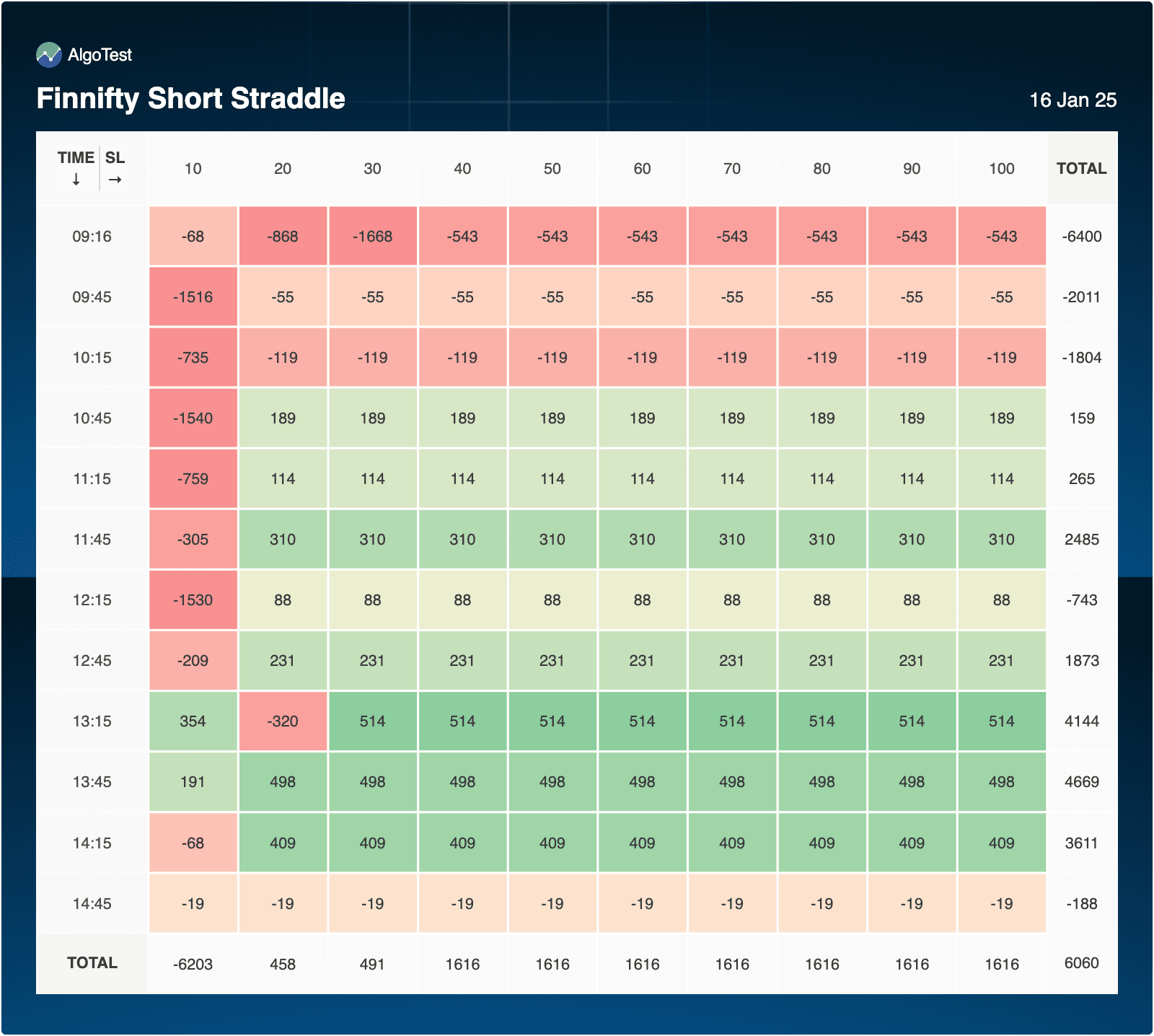
**Insights**:
- Loss of **₹6,060**.
- The early hours (09:16 to 10:15) show significant losses, particularly at 09:16 (-₹6,400).
- Recovery starts at 11:15 with marginal but positive returns.
- Stop Loss of 60 shows consistent minimal losses, while lower SLs amplify losses.
### **MidCapNifty Short Straddle**
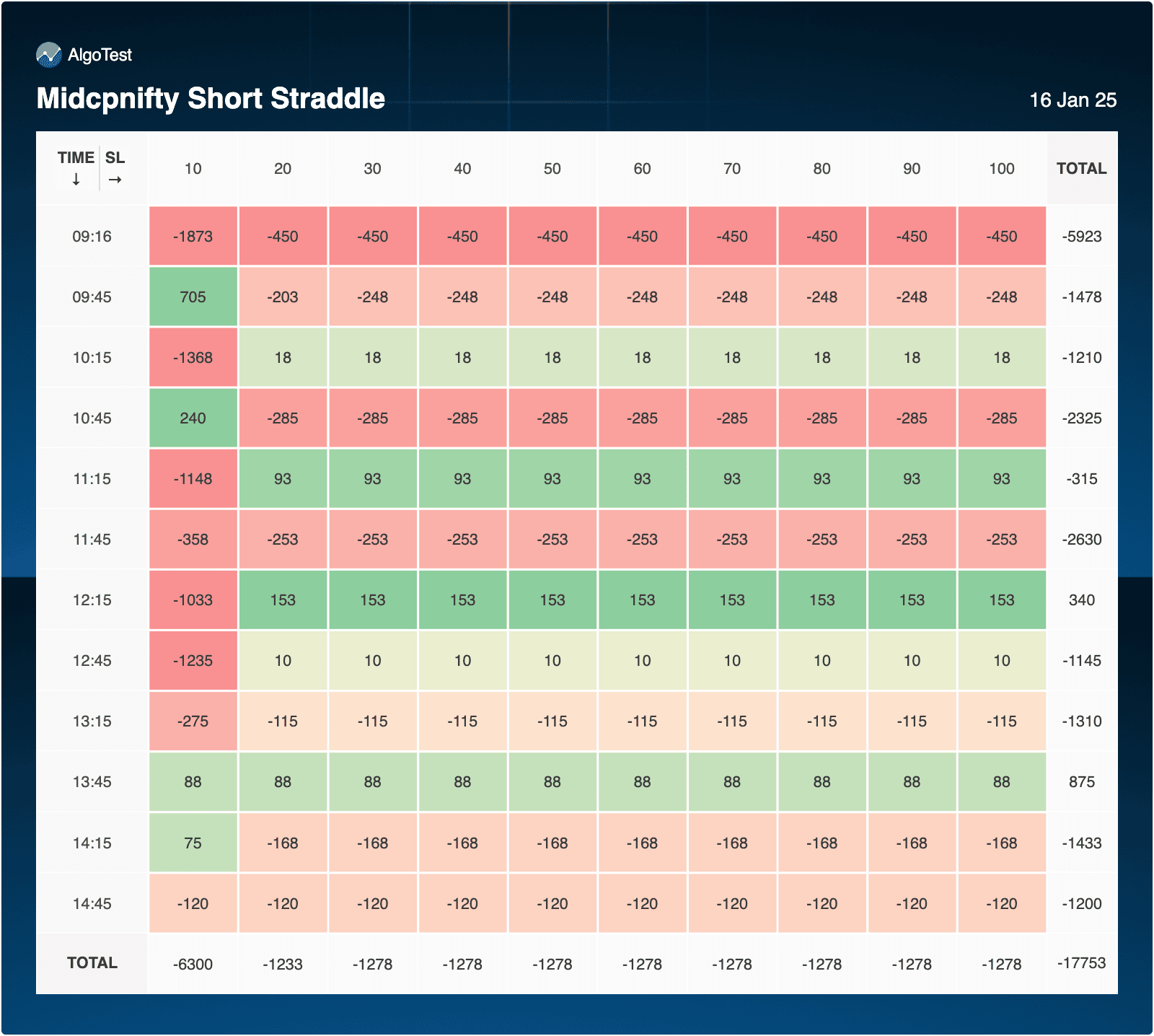
**Insights**:
- Loss of **₹17,753**.
- Consistent losses across all time intervals, with no significant recovery phase.
- Early sessions (09:16 to 11:15) show the steepest drawdowns, especially at 09:16 (-₹5,923).
- Stop Loss between 50 and 70 shows less severe losses but still fails to break even.
### **Nifty Short Straddle**
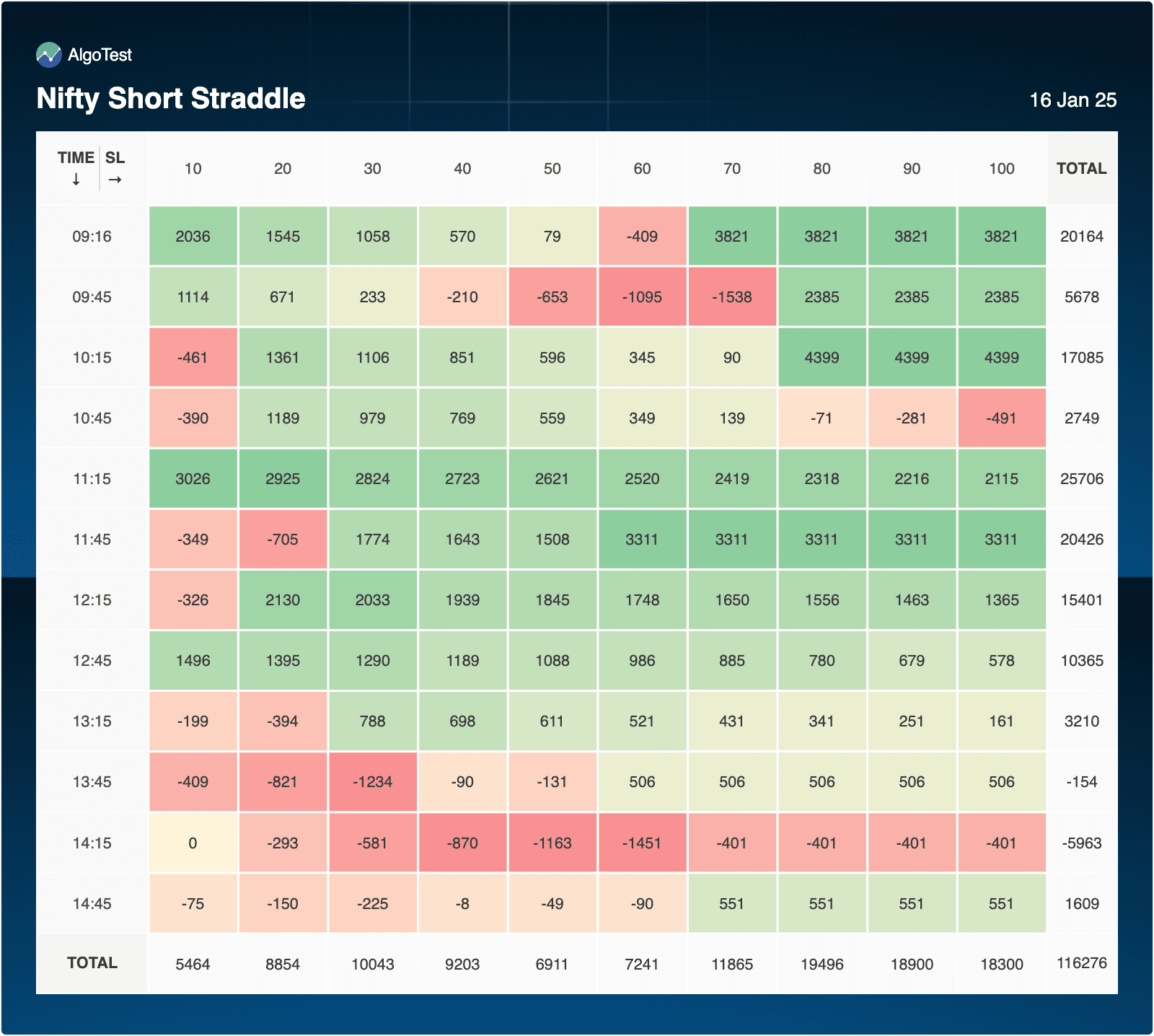
**Insights**:
- Profit of **₹116,276**.
- Strong performance throughout the day, with consistent gains across all SL levels.
- Maximum gains were observed at 11:15 (+₹25,706), with excellent results across all SLs.
- SL 60 and 70 consistently outperform, providing significant returns across multiple time slots.
###### **** You can also check [heatmaps](https://algotest.in/heatmap) for MidCapNifty, Nifty, BankNifty, and FinNifty across different dimensions to better understand market trends.
---
This blog is powered by Superblog. Visit https://superblog.ai to know more.
---
## Automate Your “Potential Breakouts” Using Chartink and AlgoTest
Author: AlgoTest
Author URL: https://algotest.in/blog/author/algotest/
Published: 2025-01-17
Category: Chartink
Category URL: https://algotest.in/blog/category/chartink/
URL: https://algotest.in/blog/automate-your-potential-breakout-using-chartink-and-algotest/
Automating your trading strategy can save time and eliminate the need to monitor the markets constantly. With [**Chartink**](http://www.charting.com) and [**AlgoTest**](http://www.algotest.in), you can set up your strategy to execute trades automatically.
In this guide, you will learn:
- How AlgoTest Signals work.
- Step-by-step instructions to create a Chartink screener and set it up for automation with AlgoTest.
- How to verify and deploy your strategy in live markets or test it using forward testing.
- The requirements for automation.
## **How AlgoTest Signals Work**
AlgoTest Signals allow you to automate your trades based on predefined conditions from Chartink. When a breakout condition is met in Chartink, an alert is sent to AlgoTest, which executes the trade on your broker terminal.
### **Key Benefits:**
- Eliminate manual trade execution.
- Consistency in trade execution based on your strategy logic.
- Saves time and reduces emotional decision-making.
## Potential Breakouts filters explanation:
- The daily closing price of the stock should be at least 5% higher than the maximum daily high price over the last 200 days. This means if the highest price in the last 200 days was ₹100, the closing price must be greater than ₹105 to meet this condition.
- The maximum daily high price over the last 30 days is less than or equal to the maximum daily high price from 8 days ago. This means that the highest price reached in the last month is not greater than the highest price from a week ago, indicating a potential decrease or stagnation in price movement over this period.
- The filter checks if the daily trading volume of a stock is greater than its average volume over the last 50 days. This means the current volume must exceed the average volume by any amount, indicating increased trading activity compared to the past.
- The daily closing price of the stock is greater than 90 Indian Rupees.
## **Step-by-Step Guide to Automate Your Strategy**
### **Step 1: Create Your Screener in Chartink**
#### **Access Chartink**:
- Go to [Chartink](https://chartink.in/) and log in to your account.
#### **Create a Watchlist:**
- Navigate to the "Watchlists" section.
- Create a new watchlist for the instruments you want to monitor.
- Search for instruments you want to monitor and click on ‘Add Selected’.
- Watchlist is created with desired instruments.

## **Create a Screener**:
- Go to the "Screener" section and select any pre-existing template (e.g., " [Potential Breakout](https://chartink.com/screener/potential-breakouts)").
- Copy the Scan and then open it from the scans dashboard.
- Change the segment to your own watchlist of instruments. (e.g., “HDFC CASH”)
- Now save the scan.
### **Step 2: Create Your Strategy in AlgoTest**
#### **Login to AlgoTest**:
- Visit [AlgoTest](https://algotest.in/) and log in. Go to Signals Dashboard.
#### **Create a New Signal**:
- Go to the Signals dashboard page and create a “New Signal”.
- Select Chartink as Signal Provider.
- Select Forward Test as Execution Type.
- Let’s create a new strategy, strategy on AlgoTest means which trades to execute if the signal is generated.
- Go to the “Stocks” tab to create a stocks strategy.
- Select the index you want to trade in this strategy we will select “HDFC BANK”.
- Define the Trade you want to execute with Quantity, Position, Target and Stoploss.
- Save the strategy with a unique name.
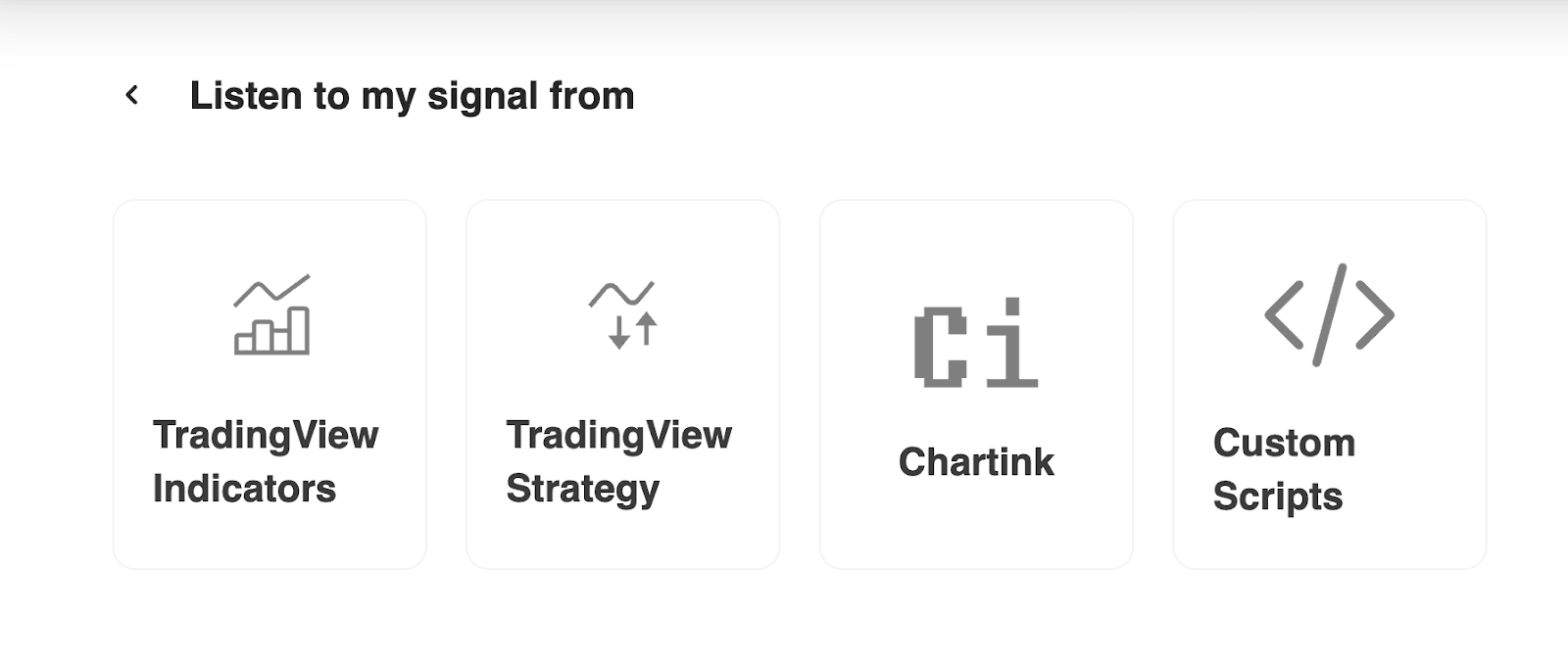
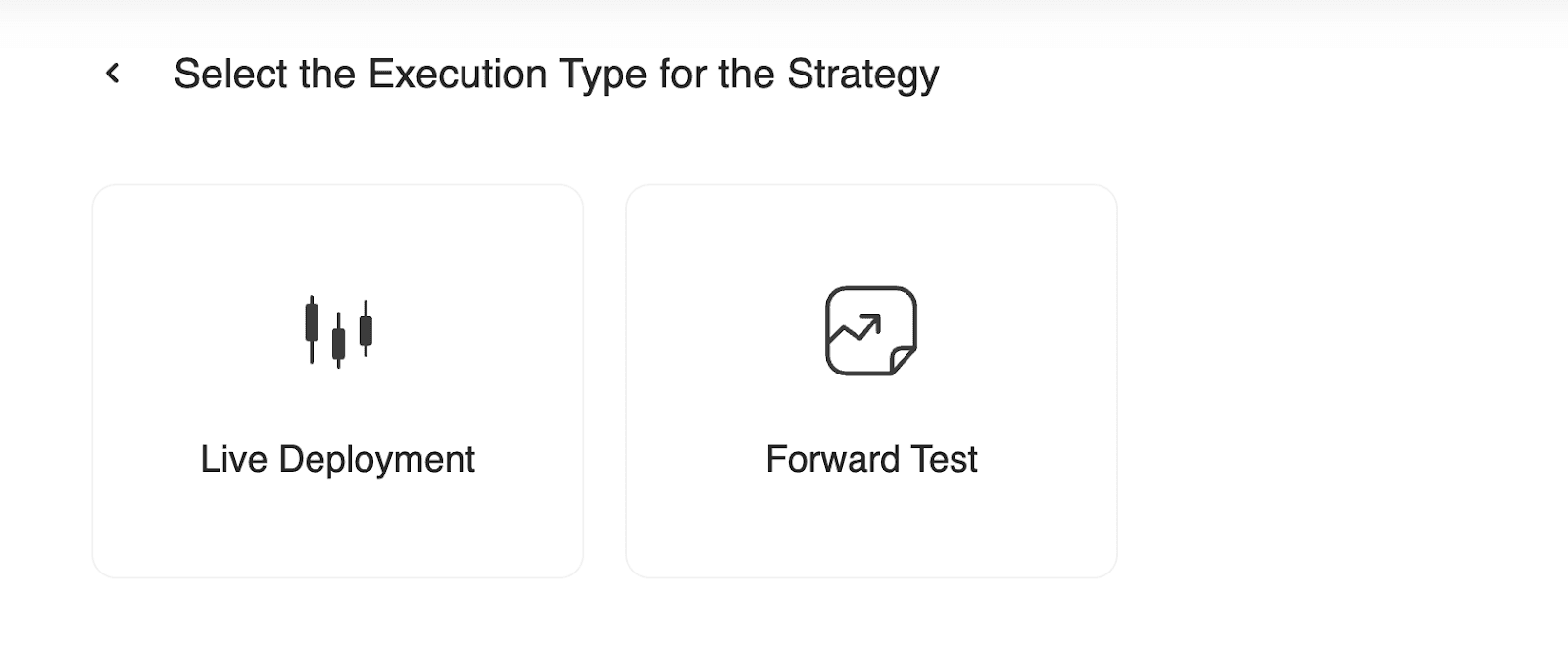


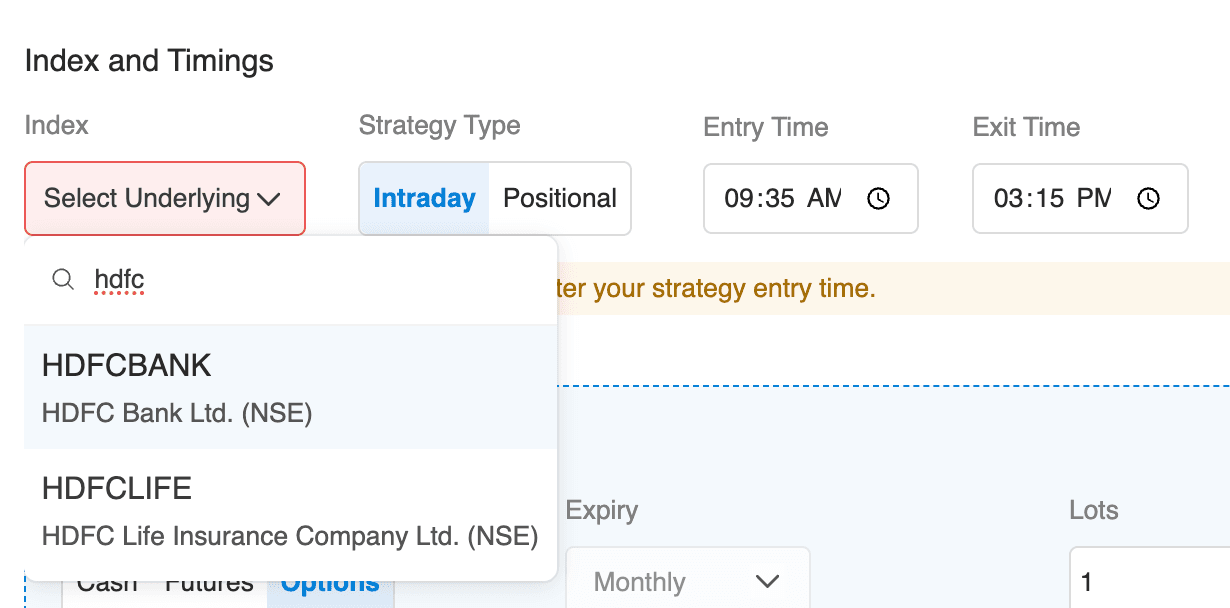
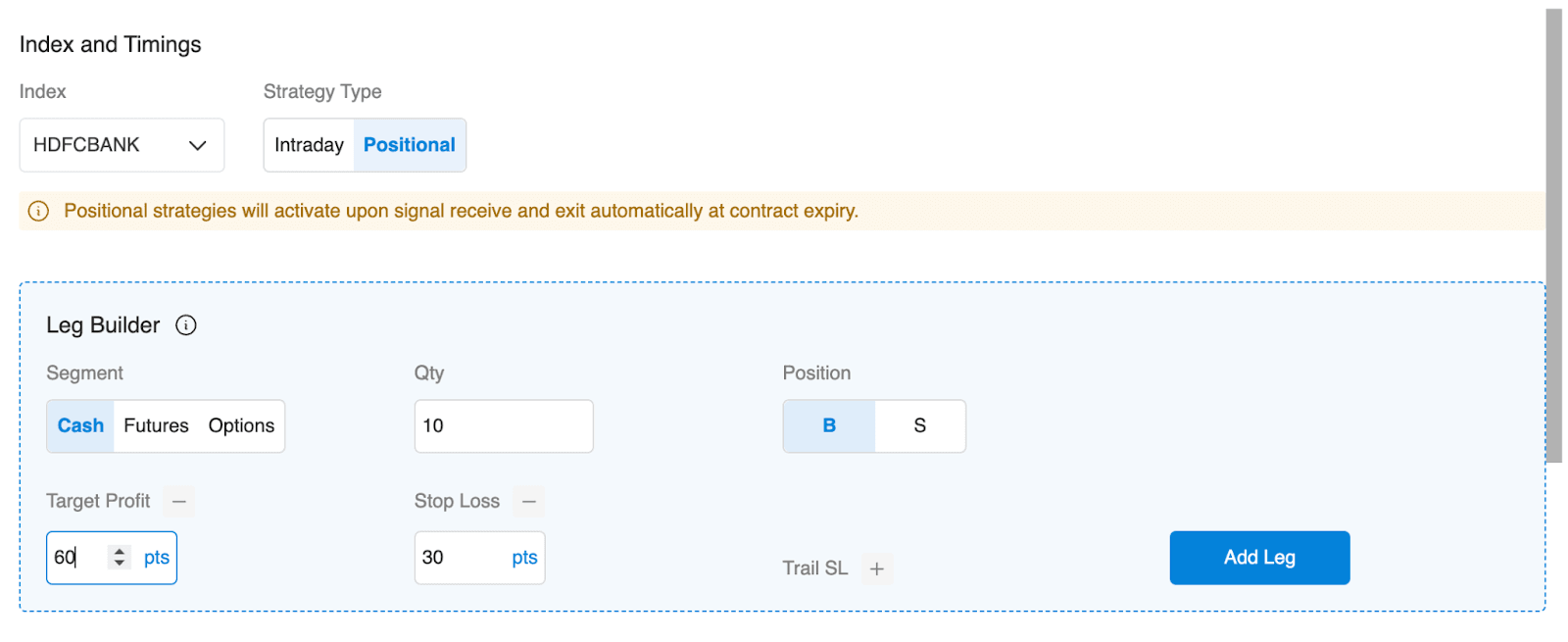
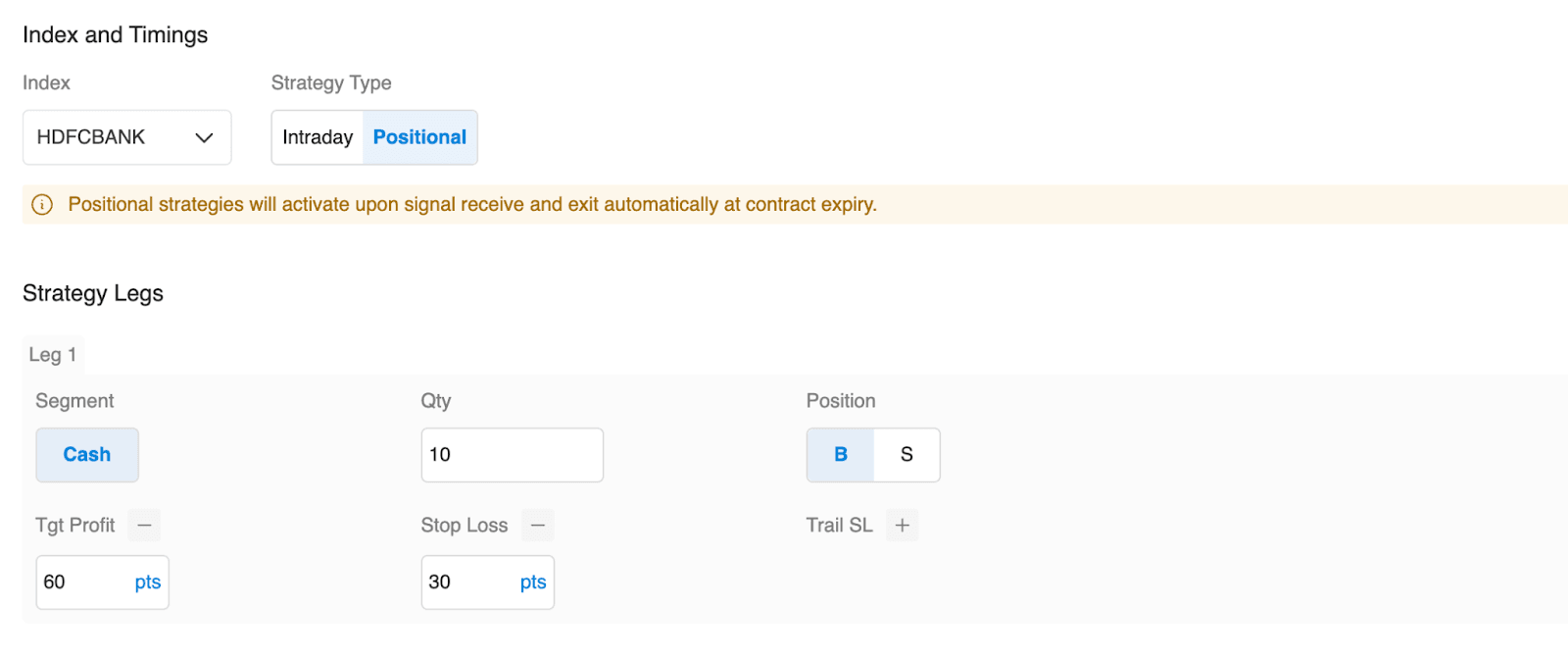
### **Step 3: Connect Chartink Alerts with AlgoTest Signals**
#### **Generate a Webhook URL**:
- Once the strategy is saved, you will receive a webhook url.
- Copy the webhook URL for your strategy.
#### **Link the Webhook to Chartink Alerts**:
- In Chartink, navigate to your saved screener and click on "Create Alert."
- Paste the webhook URL in the alert settings.
- Save the alert.
- After Saving the alert click on “Start Listening” on AlgoTest.
- Your Signal is in listening mode now.

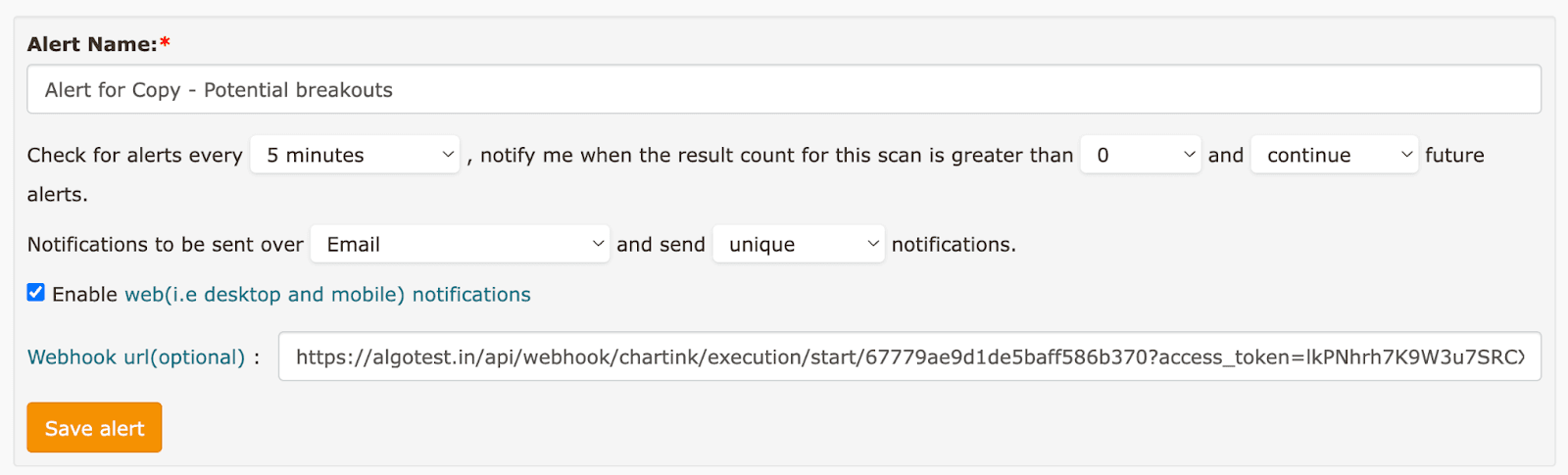

## **Step 4: Deploy Your Strategy in Live Markets**
- Once satisfied with the forward test results, deploy your strategy in the live market by moving the signals to Live Trade.
- Connect your Broker and setup Execution settings to start your Algo Trading.

## **Why Choose Chartink Premium**
Chartink's Premium Plan offers essential features for automation:
- Real-time data for scans and alerts.
- Flexible alert intervals (1/2/3/5 minutes, etc.).
- Notifications via SMS, email, and desktop/mobile.
- No coding required!
These features make it an ideal choice for seamless integration with AlgoTest Signals.
## **Requirements for Automation**
To use this setup, ensure the following prerequisites are met:
1. **Chartink Premium Plan**
- A premium plan is essential for creating alerts and running screeners with real-time data.
2. **AlgoTest Signal Plan**
- Activate the AlgoTest Signal plan to connect your strategy with Chartink alerts.
3. **Broker Connection with AlgoTest**
- Connect your broker to AlgoTest via the broker setup page.
---
This blog is powered by Superblog. Visit https://superblog.ai to know more.
---
## Automate Your “Large Cap Stocks” Using Chartink and AlgoTest
Author: AlgoTest
Author URL: https://algotest.in/blog/author/algotest/
Published: 2025-01-17
Category: Chartink
Category URL: https://algotest.in/blog/category/chartink/
URL: https://algotest.in/blog/automate-your-large-cap-stocks-using-chartink-and-algotest/
Automating your trading strategy can save time and eliminate the need to monitor the markets constantly. With [**Chartink**](http://www.charting.com) and [**AlgoTest**](http://www.algotest.in), you can set up your strategy to execute trades automatically.
In this guide, you will learn:
- How AlgoTest Signals work.
- Step-by-step instructions to create a Chartink screener and set it up for automation with AlgoTest.
- How to verify and deploy your strategy in live markets or test it using forward testing.
- The requirements for automation.
## **How AlgoTest Signals Work**
AlgoTest Signals allow you to automate your trades based on predefined conditions from Chartink. When a breakout condition is met in Chartink, an alert is sent to AlgoTest, which executes the trade on your broker terminal.
### **Key Benefits:**
- Eliminate manual trade execution.
- Consistency in trade execution based on your strategy logic.
- Saves time and reduces emotional decision-making.
## Large cap stocks filters explanation:
- Market Cap is greater than 10,000 means the total value of the company's outstanding shares is more than 10,000 Indian Rupees. This indicates that the company is relatively larger and potentially more stable compared to smaller companies.
## **Step-by-Step Guide to Automate Your Strategy**
### **Step 1: Create Your Screener in Chartink**
#### **Access Chartink**:
- Go to [Chartink](https://chartink.in/) and log in to your account.
#### **Create a Watchlist**:
- Navigate to the "Watchlists" section.
- Create a new watchlist for the instruments you want to monitor.
- Search for instruments you want to monitor and click on ‘Add Selected’.
- Watchlist is created with desired instruments.

#
#### **Create a Screener**:
- Go to the "Screener" section and select any pre-existing template (e.g., " [Large cap stocks](https://chartink.com/screener/large-cap-stocks)").
- Copy the Scan and then open it from the scans dashboard.
- Change the segment to your own watchlist of instruments. (e.g., “CIPLA Limited”)
- Now save the scan.
### **Step 2: Create Your Strategy in AlgoTest**
#### **Login to AlgoTest**:
- Visit [AlgoTest](https://algotest.in/) and log in. Go to Signals Dashboard.
#### **Create a New Signal**:
- Go to the Signals dashboard page and create a “New Signal”.
- Select Chartink as Signal Provider.
- Select Forward Test as Execution Type.
- Let’s create a new strategy, strategy on AlgoTest means which trades to execute if the signal is generated.
- Go to the “Stocks” tab to create a stock strategy.
- Select the index you want to trade in this strategy we will select “CIPLA Ltd”.
- Define the Trade you want to execute with Quantity, Position, Target and Stoploss.
- Save the strategy with a unique name.
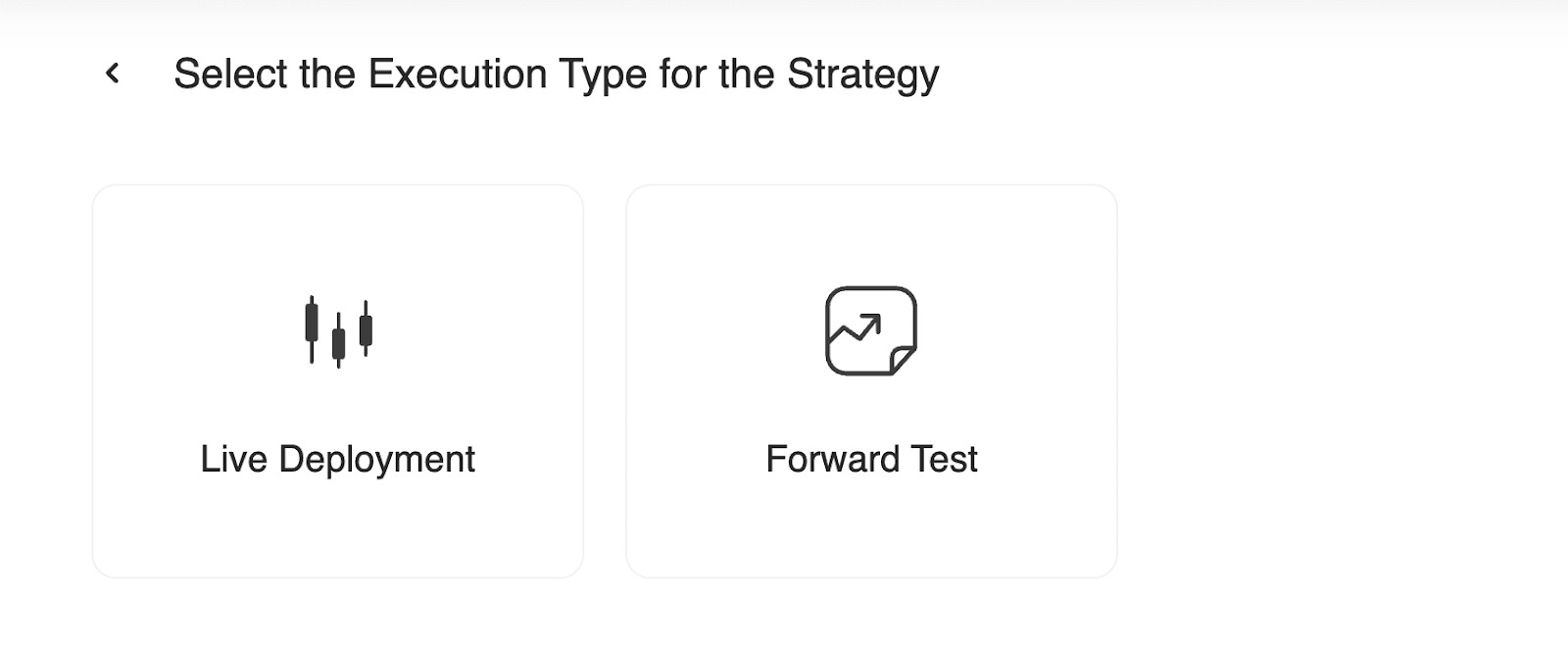


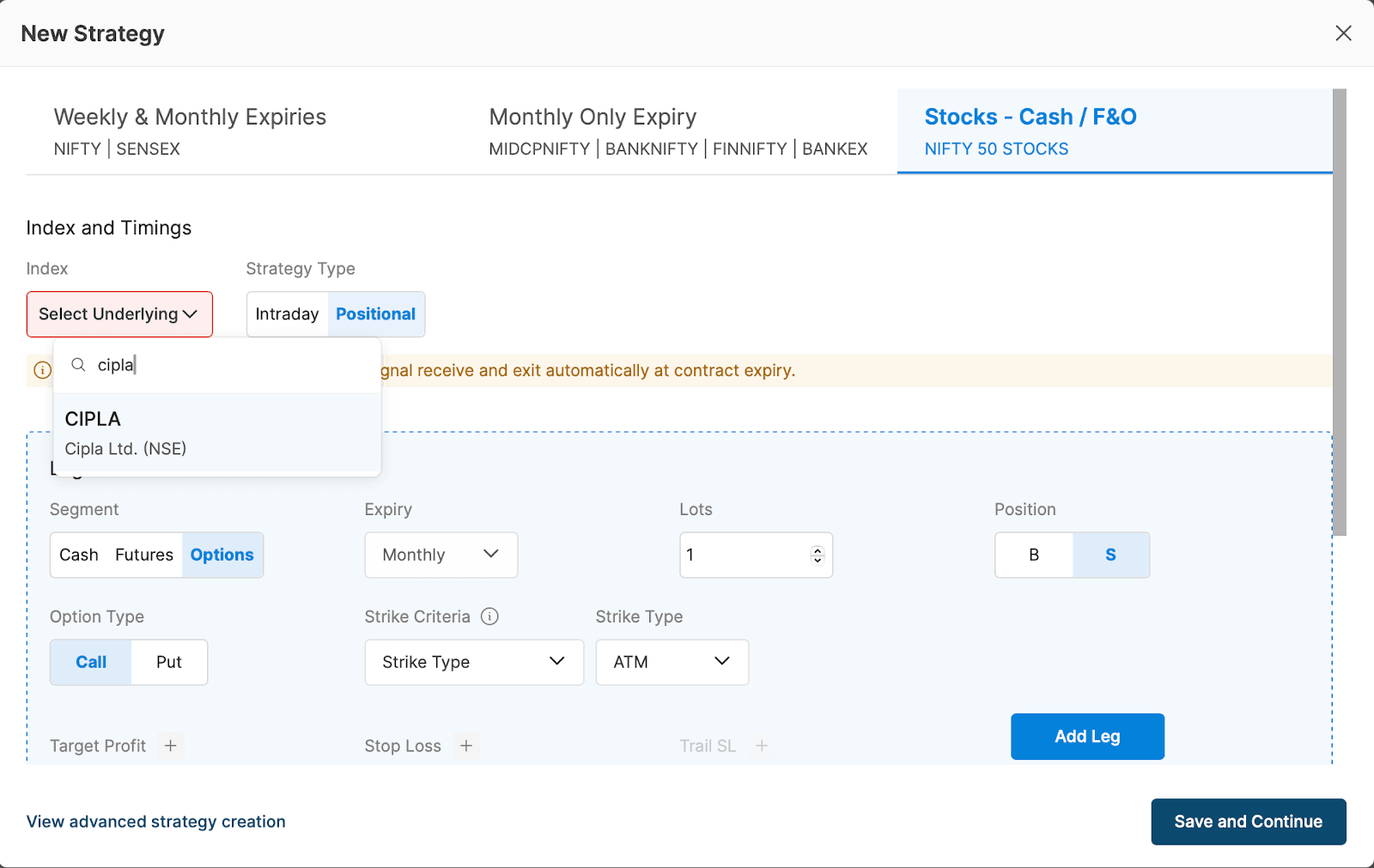
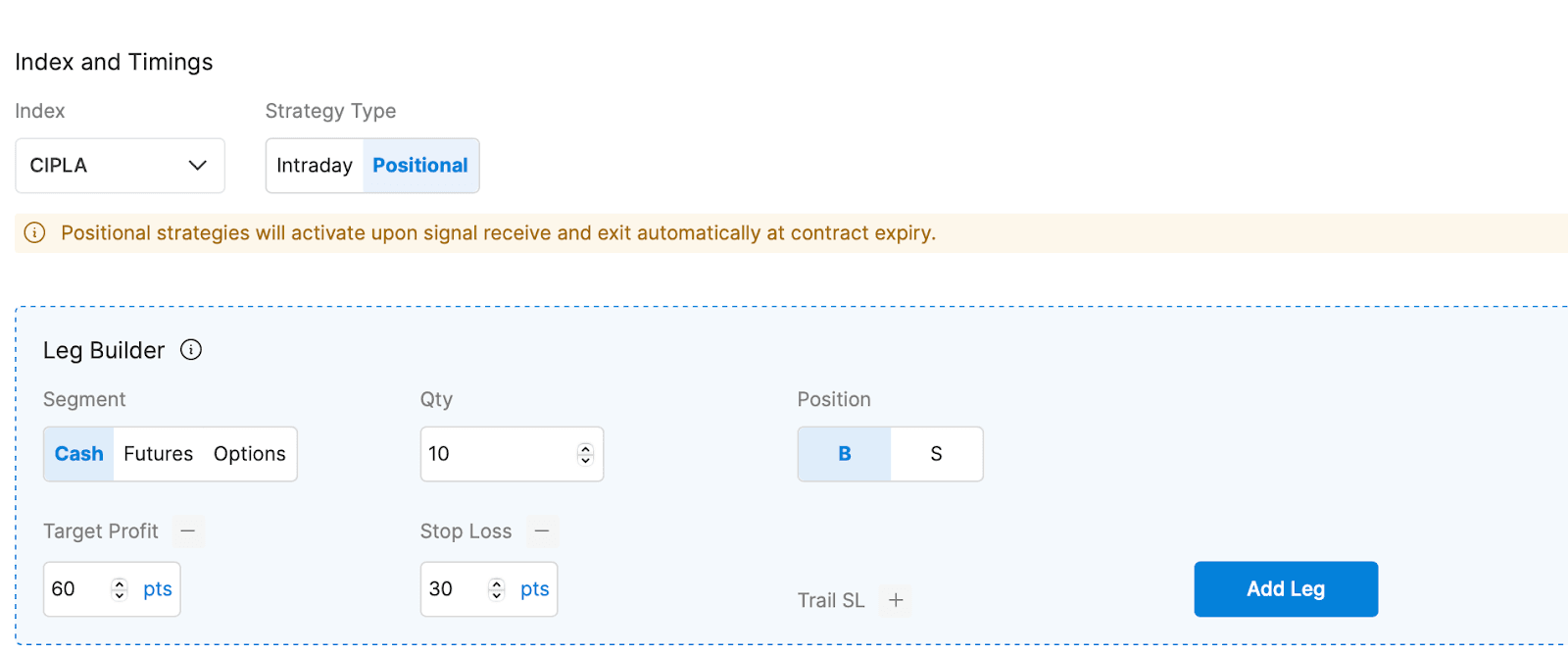
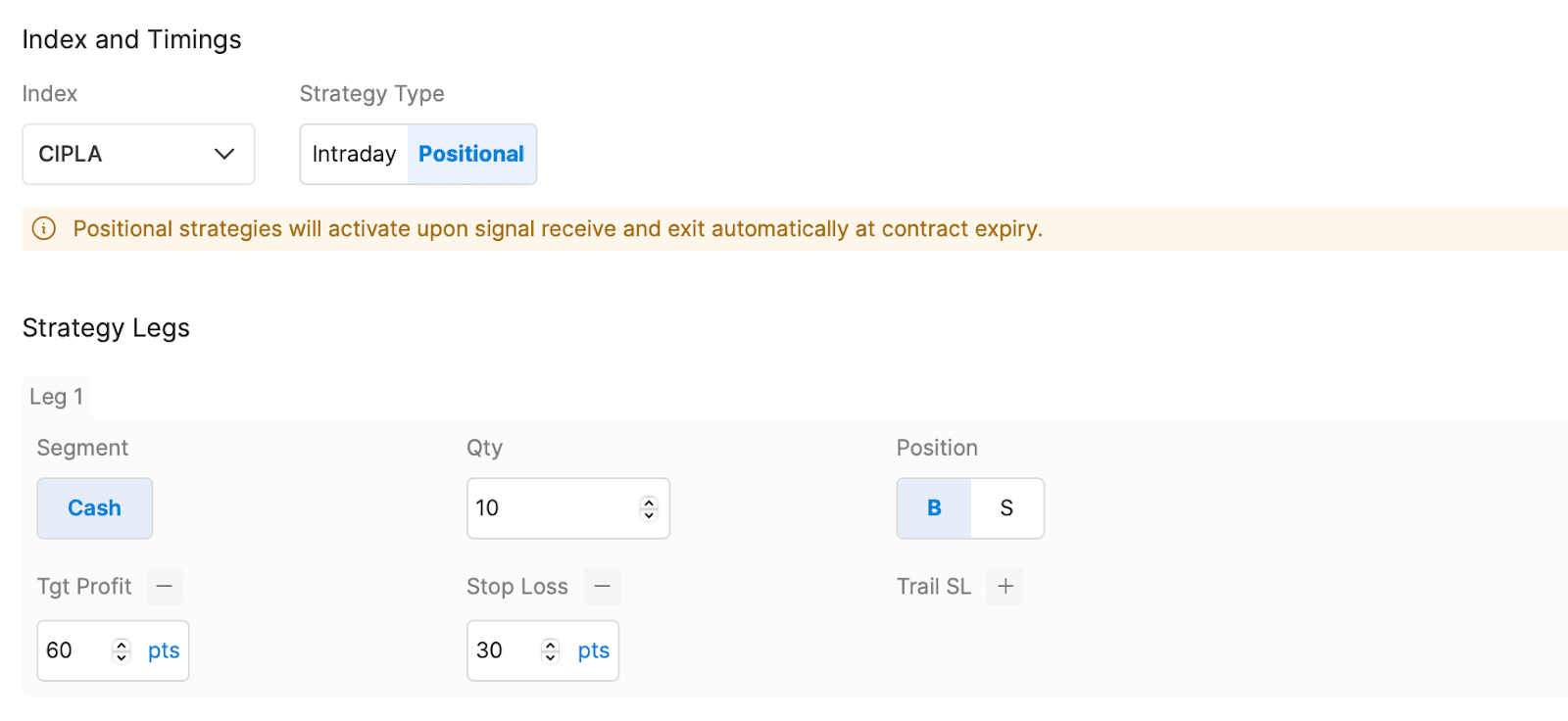
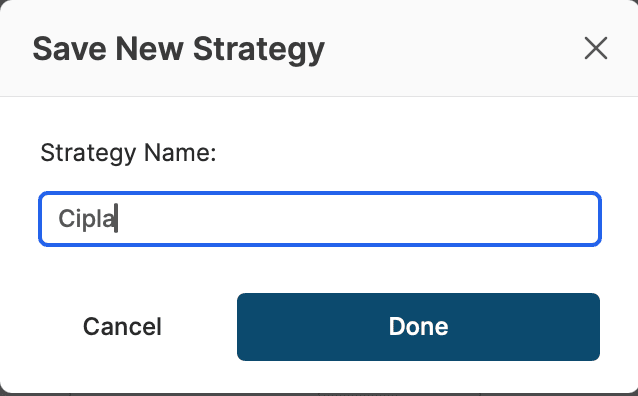
### **Step 3: Connect Chartink Alerts with AlgoTest Signals**
#### **Generate a Webhook URL**:
- Once the strategy is saved, you will receive a webhook url.
- Copy the webhook URL for your strategy.
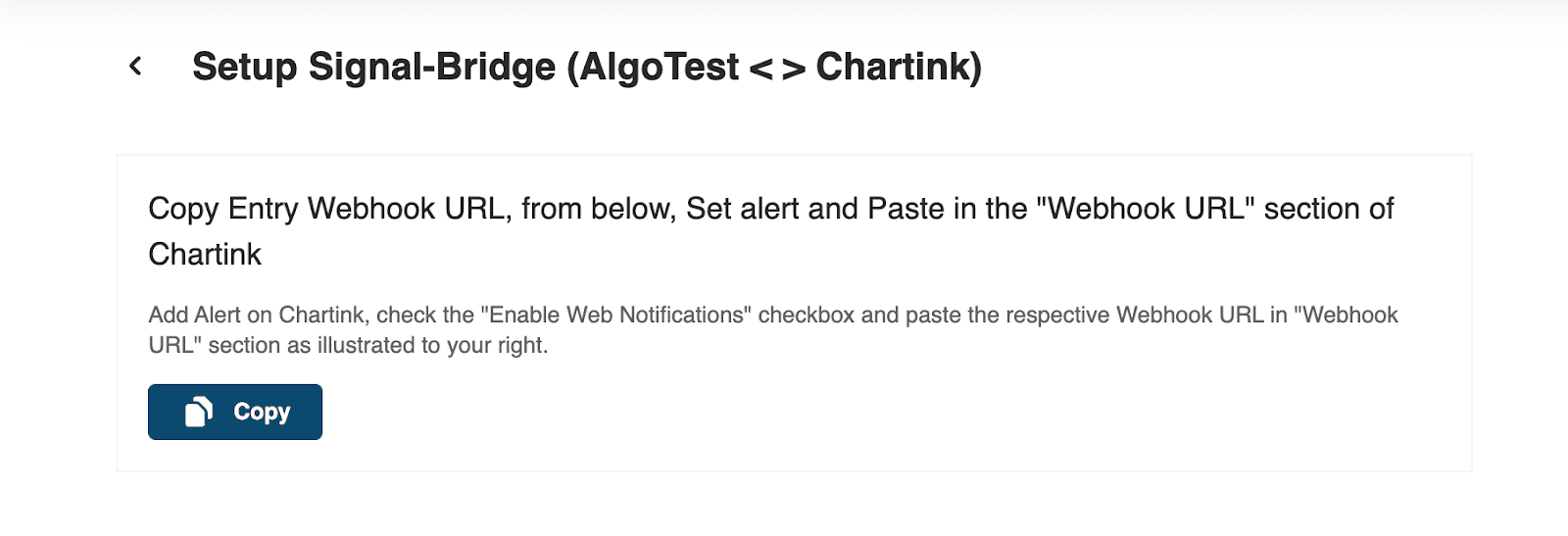
#### **Link the Webhook to Chartink Alerts**:
- In Chartink, navigate to your saved screener and click on "Create Alert."
- Paste the webhook URL in the alert settings.
- Save the alert.
- After Saving the alert click on “Start Listening” on AlgoTest.
- Your Signal is in listening mode now.

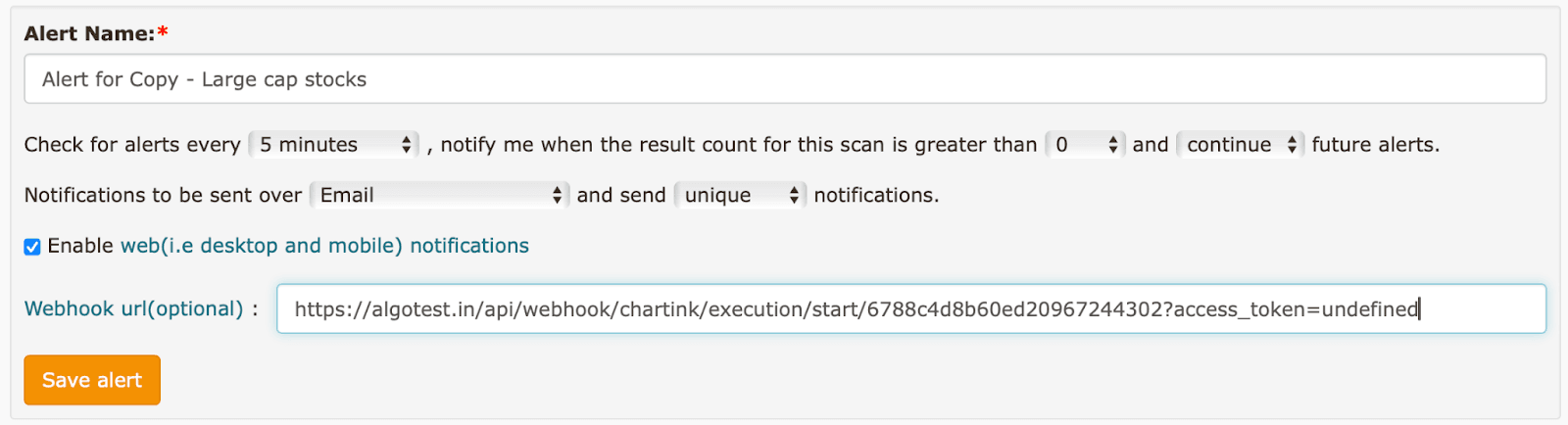

# **Step 4: Deploy Your Strategy in Live Markets**
- Once satisfied with the forward test results, deploy your strategy in the live market by moving the signals to Live Trade.
- Connect your Broker and setup Execution settings to start your Algo Trading.

## **Why Choose Chartink Premium**
Chartink's Premium Plan offers essential features for automation:
- Real-time data for scans and alerts.
- Flexible alert intervals (1/2/3/5 minutes, etc.).
- Notifications via SMS, email, and desktop/mobile.
- No coding required!
These features make it an ideal choice for seamless integration with AlgoTest Signals.
## **Requirements for Automation**
To use this setup, ensure the following prerequisites are met:
1. **Chartink Premium Plan**
- A premium plan is essential for creating alerts and running screeners with real-time data.
2. **AlgoTest Signal Plan**
- Activate the AlgoTest Signal plan to connect your strategy with Chartink alerts.
3. **Broker Connection with AlgoTest**
- Connect your broker to AlgoTest via the broker setup page.
This is not it.
### Here are a few strategies you should check out:
- [Strong Stocks](https://algotest.in/blog/automate-your-strong-stocks-strategy-using-chartink-and-algotest)
- [Perfect Sell (Short)](https://algotest.in/blog/automate-your-perfect-sell-short-using-chartink-and-algotest)
- [N7 Current Day](https://algotest.in/blog/automate-your-n7-current-day-using-chartink-and-algotest)
- [Buy Entry Intraday](https://algotest.in/blog/automate-your-buy-entry-intrada-using-chartink-and-algotest)
- [Morning Star Candlestick Pattern](https://algotest.in/blog/automate-your-morning-star-candlestick-pattern-using-chartink-and-algotest)
- [Intraday Sell](https://algotest.in/blog/automate-your-intraday-sell-using-chartink-and-algotest)
- [Bullish Engulf](https://algotest.in/blog/automate-your-bullish-engulf-using-chartink-and-algotest)
- [Profit Jump by 200%](https://algotest.in/blog/automate-your-profit-jump-by-200-using-chartink-and-algotest)
- [Potential Breakouts](https://algotest.in/blog/automate-your-potential-breakout-using-chartink-and-algotest)
- [Small Cap Stocks](https://algotest.in/blog/automate-your-small-cap-stocks-using-chartink-and-algotest)
- [Mid Cap Stocks](https://algotest.in/blog/automate-your-mid-cap-stocks-using-chartink-and-algotest)
- [Sales Jump by 200%](https://algotest.in/blog/automate-your-sales-jump-by-200-using-chartink-and-algotest)
- [Stock Screener open=high;open=low](https://algotest.in/blog/automate-your-stock-screener-open-high-open-low-using-chartink-and-algotest)
- [Stocks Below Book Value - Undervalued](https://algotest.in/blog/automate-your-stocks-below-book-value---undervalued-using-chartink-and-algotest)
- [Highest Earning Per Share](https://algotest.in/blog/automate-your-highest-earning-per-share-using-chartink-and-algotest)
- [Low Debt Companies](https://algotest.in/blog/automate-your-low-debt-companies-using-chartink-and-algotest)
- [Penny Stocks](https://algotest.in/blog/automate-your-penny-stocks-using-chartink-and-algotest)
- [52-week Low](https://algotest.in/blog/automate-your-52-week-low-using-chartink-and-algotest)
Thank you for choosing to trade with us.
---
This blog is powered by Superblog. Visit https://superblog.ai to know more.
---
## Automate Your “Profit Jump by 200%” Using Chartink and AlgoTest
Author: AlgoTest
Author URL: https://algotest.in/blog/author/algotest/
Published: 2025-01-17
Category: Chartink
Category URL: https://algotest.in/blog/category/chartink/
URL: https://algotest.in/blog/automate-your-profit-jump-by-200-using-chartink-and-algotest/
Automating your trading strategy can save time and eliminate the need to monitor the markets constantly. With [**Chartink**](http://www.charting.com) and [**AlgoTest**](http://www.algotest.in), you can set up your strategy to execute trades automatically.
In this guide, you will learn:
- How AlgoTest Signals work.
- Step-by-step instructions to create a Chartink screener and set it up for automation with AlgoTest.
- How to verify and deploy your strategy in live markets or test it using forward testing.
- The requirements for automation.
## **How AlgoTest Signals Work**
AlgoTest Signals allow you to automate your trades based on predefined conditions from Chartink. When a breakout condition is met in Chartink, an alert is sent to AlgoTest, which executes the trade on your broker terminal.
### **Key Benefits:**
- Eliminate manual trade execution.
- Consistency in trade execution based on your strategy logic.
- Saves time and reduces emotional decision-making.
# Profit jump by 200% filters explanation:
1. The yearly net profit of the company must be more than double its trailing twelve months (TTM) net profit. This means that if the TTM net profit is, for example, ₹100, the yearly net profit should exceed ₹200, indicating a growth of over 100%.
2. Yearly Net Profit must be greater than 0, indicating that the company is making a profit over the year. This means the profit is positive, showing financial health and stability.
3. The filter checks if the total trailing twelve months (TTM) net profit is greater than zero, indicating that the company has made a profit over the past year. A positive net profit means the company has earned more than it has spent, which is a good sign for its financial health.
## **Step-by-Step Guide to Automate Your Strategy**
### **Step 1: Create Your Screener in Chartink**
#### **Access Chartink**:
- Go to [Chartink](https://chartink.in/) and log in to your account.
#### **Create a Watchlist**:
- Navigate to the "Watchlists" section.
- Create a new watchlist for the instruments you want to monitor.
- Search for instruments you want to monitor and click on ‘Add Selected’.
- Watchlist is created with desired instruments.

#
#### **Create a Screener**:
- Go to the "Screener" section and select any pre-existing template (e.g., " [Profit jump by 200%](https://chartink.com/screener/profit-jump-by-200)").
- Copy the Scan and then open it from the scans dashboard.
- Change the segment to your own watchlist of instruments. (e.g., “Bharat Electronics Limited”)
- Now save the scan.
### **Step 2: Create Your Strategy in AlgoTest**
#### **Login to AlgoTest**:
- Visit [AlgoTest](https://algotest.in/) and log in. Go to Signals Dashboard.
#### **Create a New Signal**:
- Go to the Signals dashboard page and create a “New Signal”.
- Select Chartink as Signal Provider.
- Select Forward Test as Execution Type.
- Let’s create a new strategy, strategy on AlgoTest means which trades to execute if the signal is generated.
- Go to the “Stocks” tab to create a stocks strategy.
- Select the index you want to trade in this strategy we will select “Bharat Electronics Limited”.
- Define the Trade you want to execute with Quantity, Position, Target and Stoploss.
- Save the strategy with a unique name.
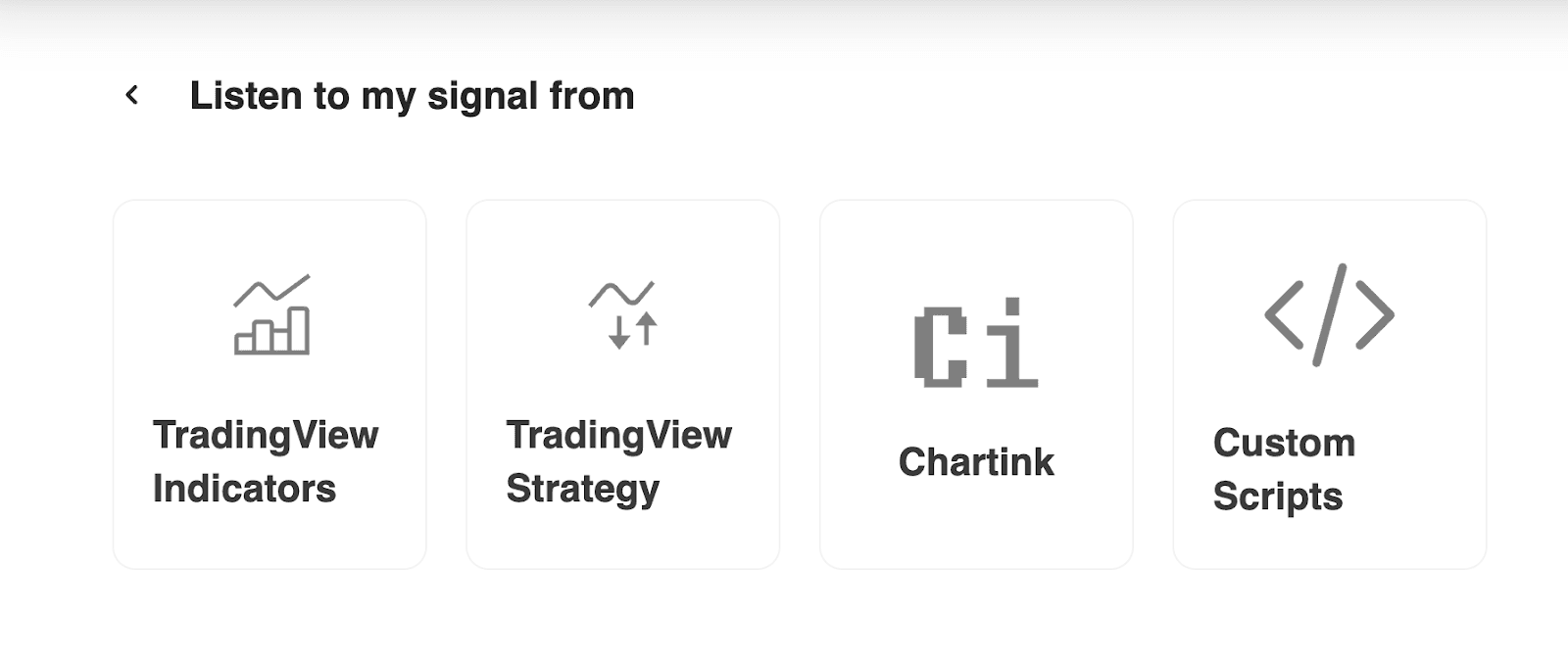
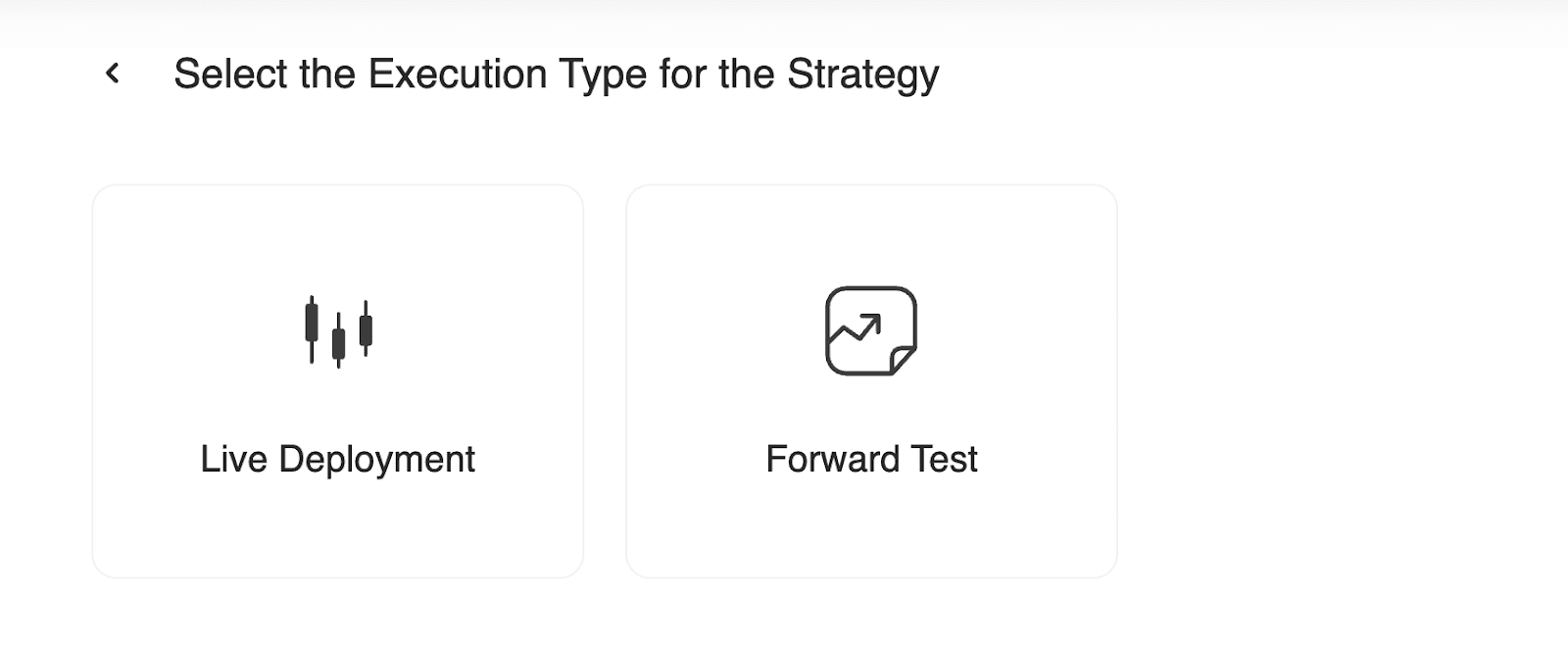


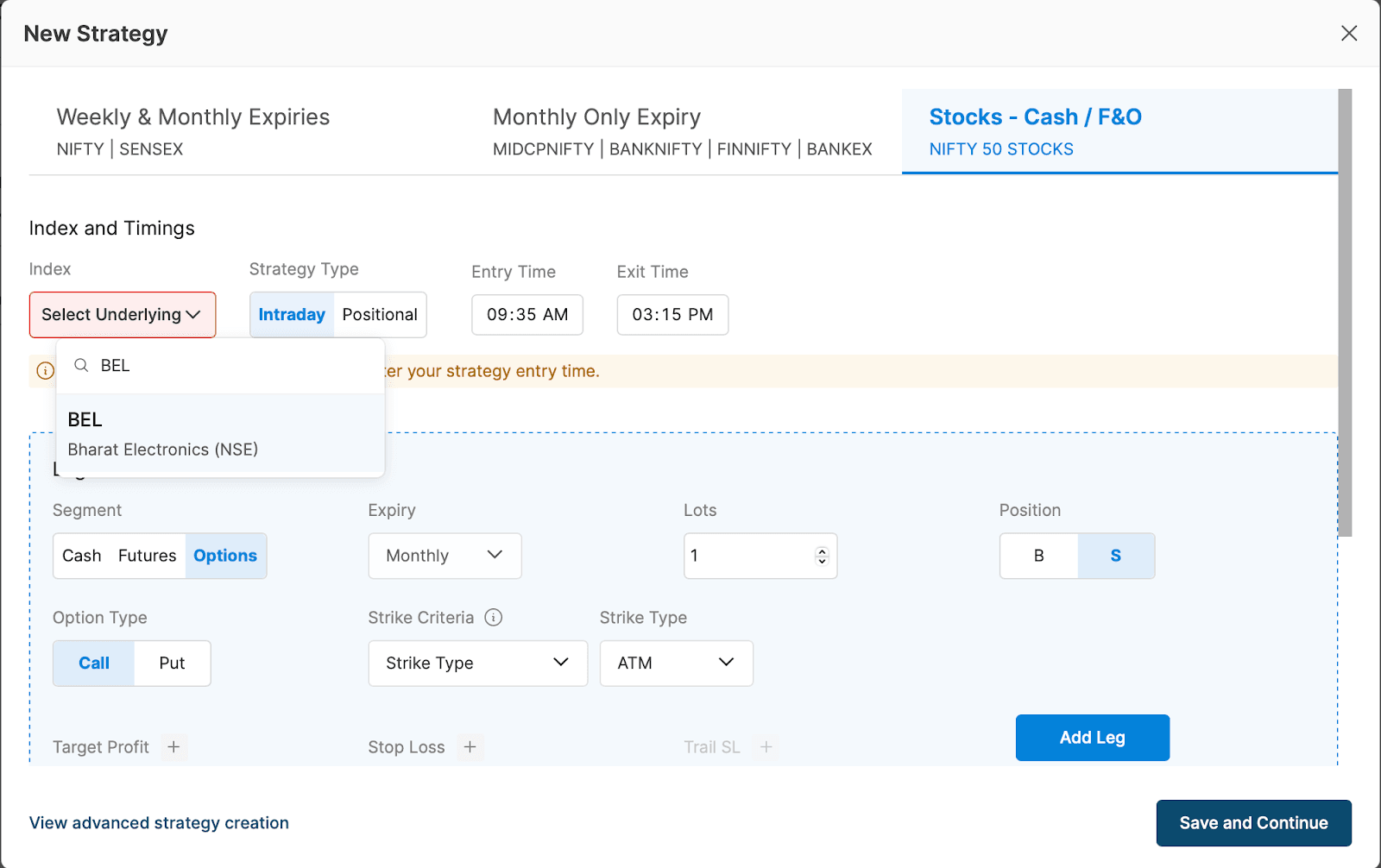
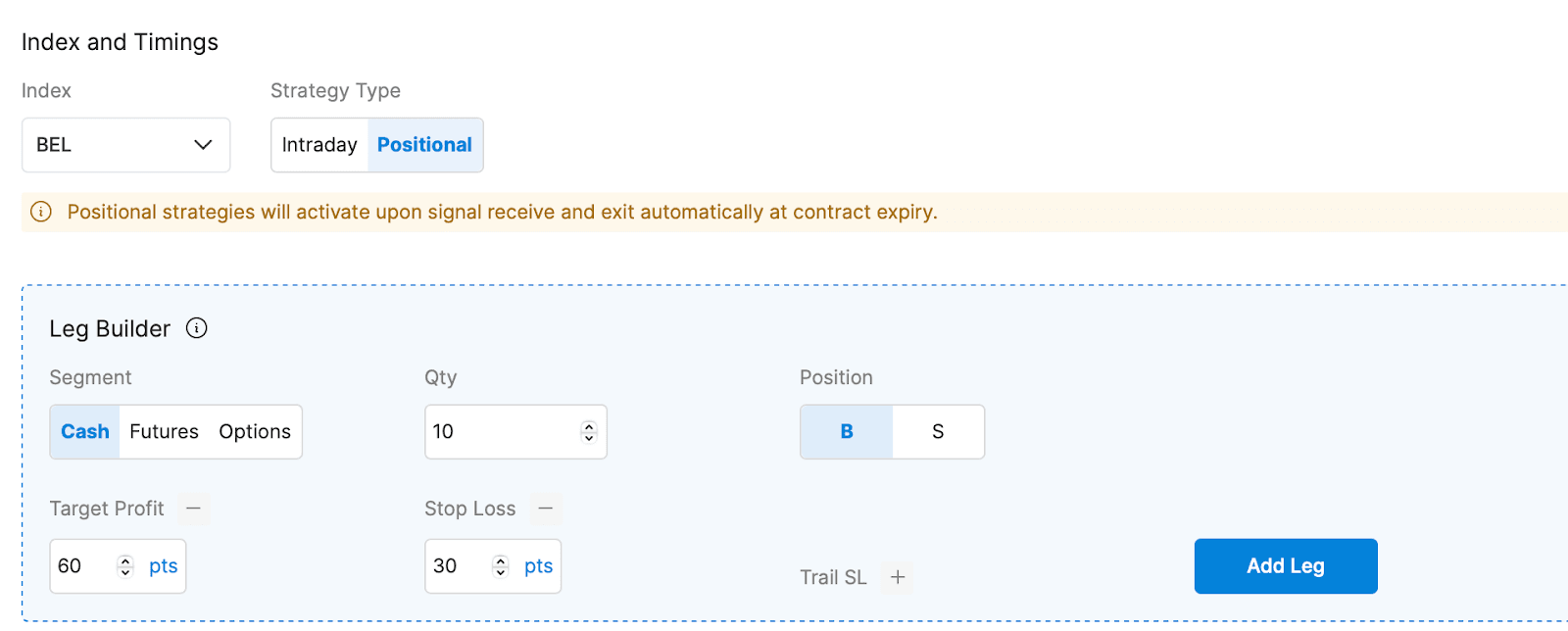
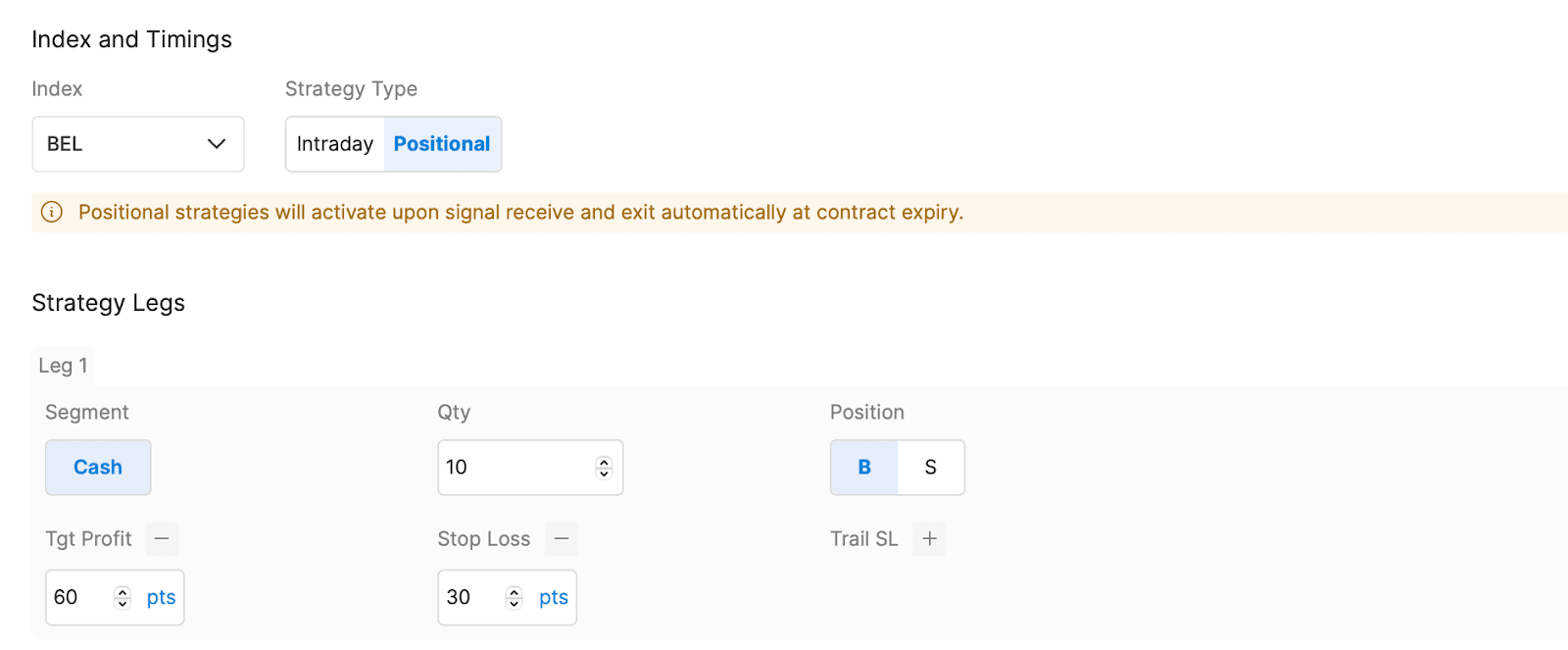
### **Step 3: Connect Chartink Alerts with AlgoTest Signals**
#### **Generate a Webhook URL**:
- Once the strategy is saved, you will receive a webhook url.
- Copy the webhook URL for your strategy.
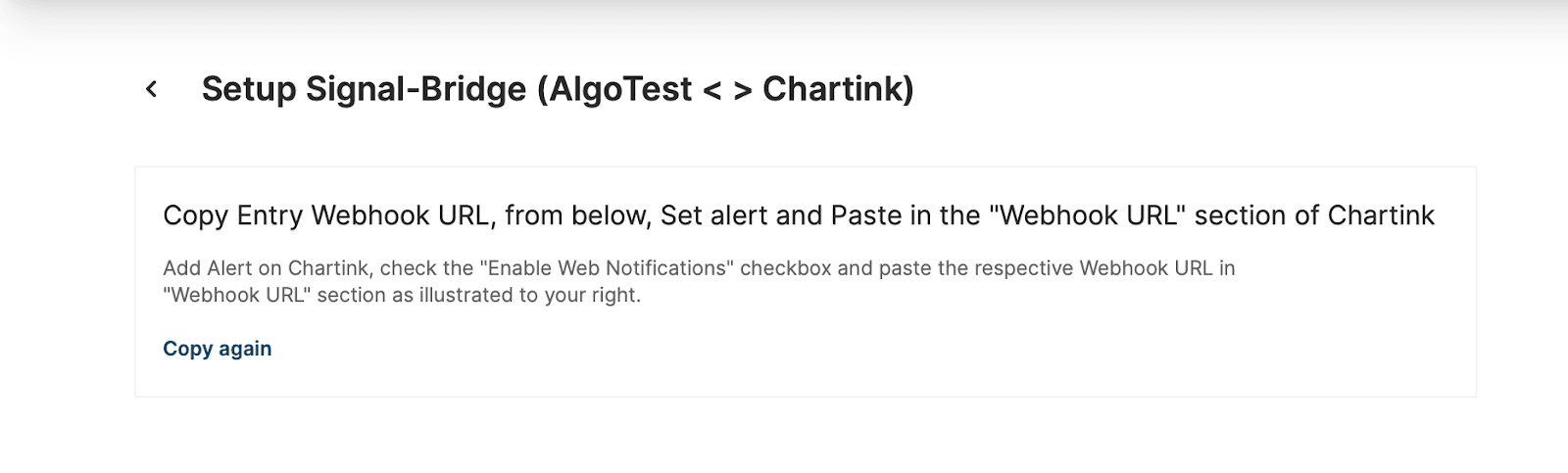
#### **Link the Webhook to Chartink Alerts**
- In Chartink, navigate to your saved screener and click on "Create Alert."
- Paste the webhook URL in the alert settings.
- Save the alert.
- After Saving the alert click on “Start Listening” on AlgoTest.
- our Signal is in listening mode now.

#
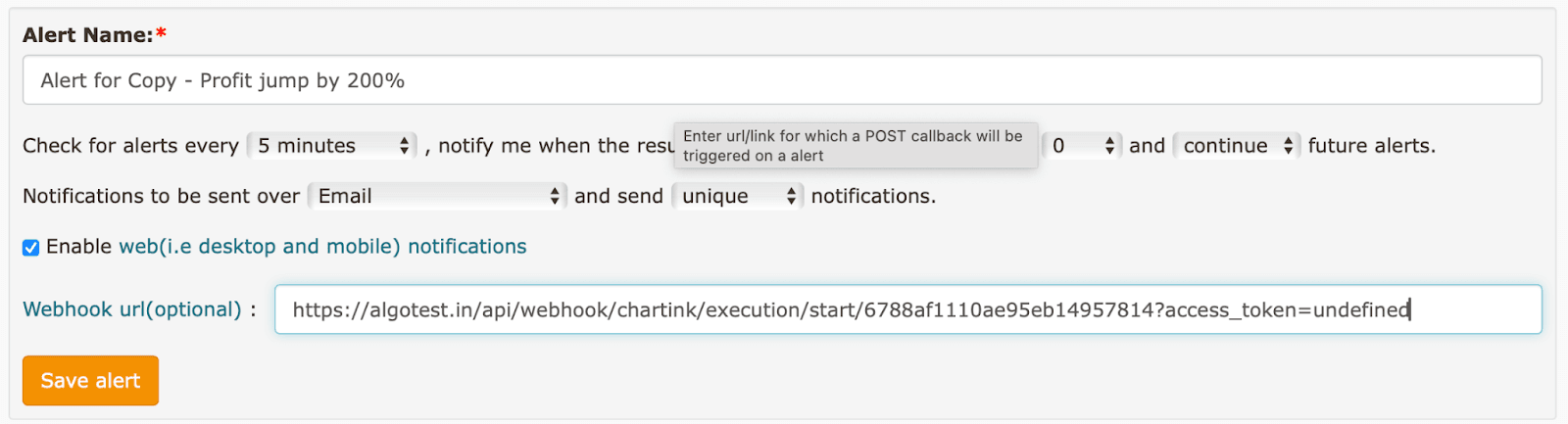
#

#
# **Step 4: Deploy Your Strategy in Live Markets**
- Once satisfied with the forward test results, deploy your strategy in the live market by moving the signals to Live Trade.
- Connect your Broker and setup Execution settings to start your Algo Trading.

## **Why Choose Chartink Premium**
Chartink's Premium Plan offers essential features for automation:
- Real-time data for scans and alerts.
- Flexible alert intervals (1/2/3/5 minutes, etc.).
- Notifications via SMS, email, and desktop/mobile.
- No coding required!
These features make it an ideal choice for seamless integration with AlgoTest Signals.
## **Requirements for Automation**
To use this setup, ensure the following prerequisites are met:
1. **Chartink Premium Plan** some text
- A premium plan is essential for creating alerts and running screeners with real-time data.
2. **AlgoTest Signal Plan** some text
- Activate the AlgoTest Signal plan to connect your strategy with Chartink alerts.
3. **Broker Connection with AlgoTest** some text
- Connect your broker to AlgoTest via the broker setup page.
This is not it.
### Here are a few strategies you should check out:
- [Strong Stocks](https://algotest.in/blog/automate-your-strong-stocks-strategy-using-chartink-and-algotest)
- [Perfect Sell (Short)](https://algotest.in/blog/automate-your-perfect-sell-short-using-chartink-and-algotest)
- [N7 Current Day](https://algotest.in/blog/automate-your-n7-current-day-using-chartink-and-algotest)
- [Buy Entry Intraday](https://algotest.in/blog/automate-your-buy-entry-intrada-using-chartink-and-algotest)
- [Morning Star Candlestick Pattern](https://algotest.in/blog/automate-your-morning-star-candlestick-pattern-using-chartink-and-algotest)
- [Intraday Sell](https://algotest.in/blog/automate-your-intraday-sell-using-chartink-and-algotest)
- [Bullish Engulf](https://algotest.in/blog/automate-your-bullish-engulf-using-chartink-and-algotest)
- [Large Cap Stocks](https://algotest.in/blog/automate-your-large-cap-stocks-using-chartink-and-algotest)
- [Potential Breakouts](https://algotest.in/blog/automate-your-potential-breakout-using-chartink-and-algotest)
- [Small Cap Stocks](https://algotest.in/blog/automate-your-small-cap-stocks-using-chartink-and-algotest)
- [Mid Cap Stocks](https://algotest.in/blog/automate-your-mid-cap-stocks-using-chartink-and-algotest)
- [Sales Jump by 200%](https://algotest.in/blog/automate-your-sales-jump-by-200-using-chartink-and-algotest)
- [Stock Screener open=high;open=low](https://algotest.in/blog/automate-your-stock-screener-open-high-open-low-using-chartink-and-algotest)
- [Stocks Below Book Value - Undervalued](https://algotest.in/blog/automate-your-stocks-below-book-value---undervalued-using-chartink-and-algotest)
- [Highest Earning Per Share](https://algotest.in/blog/automate-your-highest-earning-per-share-using-chartink-and-algotest)
- [Low Debt Companies](https://algotest.in/blog/automate-your-low-debt-companies-using-chartink-and-algotest)
- [Penny Stocks](https://algotest.in/blog/automate-your-penny-stocks-using-chartink-and-algotest)
- [52-week Low](https://algotest.in/blog/automate-your-52-week-low-using-chartink-and-algotest)
Thank you for choosing to trade with us.
---
This blog is powered by Superblog. Visit https://superblog.ai to know more.
---
## Automate Your “Bullish Engulf” Using Chartink and AlgoTest
Author: AlgoTest
Author URL: https://algotest.in/blog/author/algotest/
Published: 2025-01-17
Category: Chartink
Category URL: https://algotest.in/blog/category/chartink/
URL: https://algotest.in/blog/automate-your-bullish-engulf-using-chartink-and-algotest/
Automating your trading strategy can save time and eliminate the need to monitor the markets constantly. With [**Chartink**](http://www.charting.com) and [**AlgoTest**](http://www.algotest.in), you can set up your strategy to execute trades automatically.
In this guide, you will learn:
- How AlgoTest Signals work.
- Step-by-step instructions to create a Chartink screener and set it up for automation with AlgoTest.
- How to verify and deploy your strategy in live markets or test it using forward testing.
- The requirements for automation.
## **How AlgoTest Signals Work**
AlgoTest Signals allow you to automate your trades based on predefined conditions from Chartink. When a breakout condition is met in Chartink, an alert is sent to AlgoTest, which executes the trade on your broker terminal.
### **Key Benefits:**
- Eliminate manual trade execution.
- Consistency in trade execution based on your strategy logic.
- Saves time and reduces emotional decision-making.
# Bullish Engulf filters explanation:
1. The daily Open price is less than the daily Close price, indicating that the stock has increased in value throughout the trading day. This means the stock's price rose by a certain percentage from the opening to the closing price, reflecting positive market sentiment.
2. The filter checks if the stock's opening price from one day ago is greater than its closing price from the same day. This means that the stock opened higher than it closed, indicating a potential downward movement during that trading day. In percentage terms, if the opening price was, for example, 100 INR and the closing price was 90 INR, this represents a 10% decrease from the opening to the closing price.
3. The filter checks if the current daily opening price of the stock is less than the closing price from the previous day. This means that the stock opened lower than it closed the day before, indicating a potential downward movement. If the previous day's close was, for example, ₹100, then the current day's open must be less than ₹100 for this condition to be met.
4. The filter checks if the current daily closing price of the stock is greater than the opening price from the previous day. This means that the stock has increased in value compared to where it started the day before.
5. The maximum closing price of the stock over the last 5 days is less than the 20-day exponential moving average of the closing prices. This indicates that the recent peak closing price is lower than the average closing price over the past 20 days, suggesting a potential downward trend or weakness in the stock's performance.
6. The average volume over the last 5 days is less than the current day's volume, indicating that the current trading activity is significantly higher than the average, suggesting increased interest or activity in the stock.
## **Step-by-Step Guide to Automate Your Strategy**
### **Step 1: Create Your Screener in Chartink**
#### **Access Chartink**:
- Go to [Chartink](https://chartink.in/) and log in to your account.
#### **Create a Watchlist**:
- Navigate to the "Watchlists" section.
- Create a new watchlist for the instruments you want to monitor.
- Search for instruments you want to monitor and click on ‘Add Selected’.
- Watchlist is created with desired instruments.

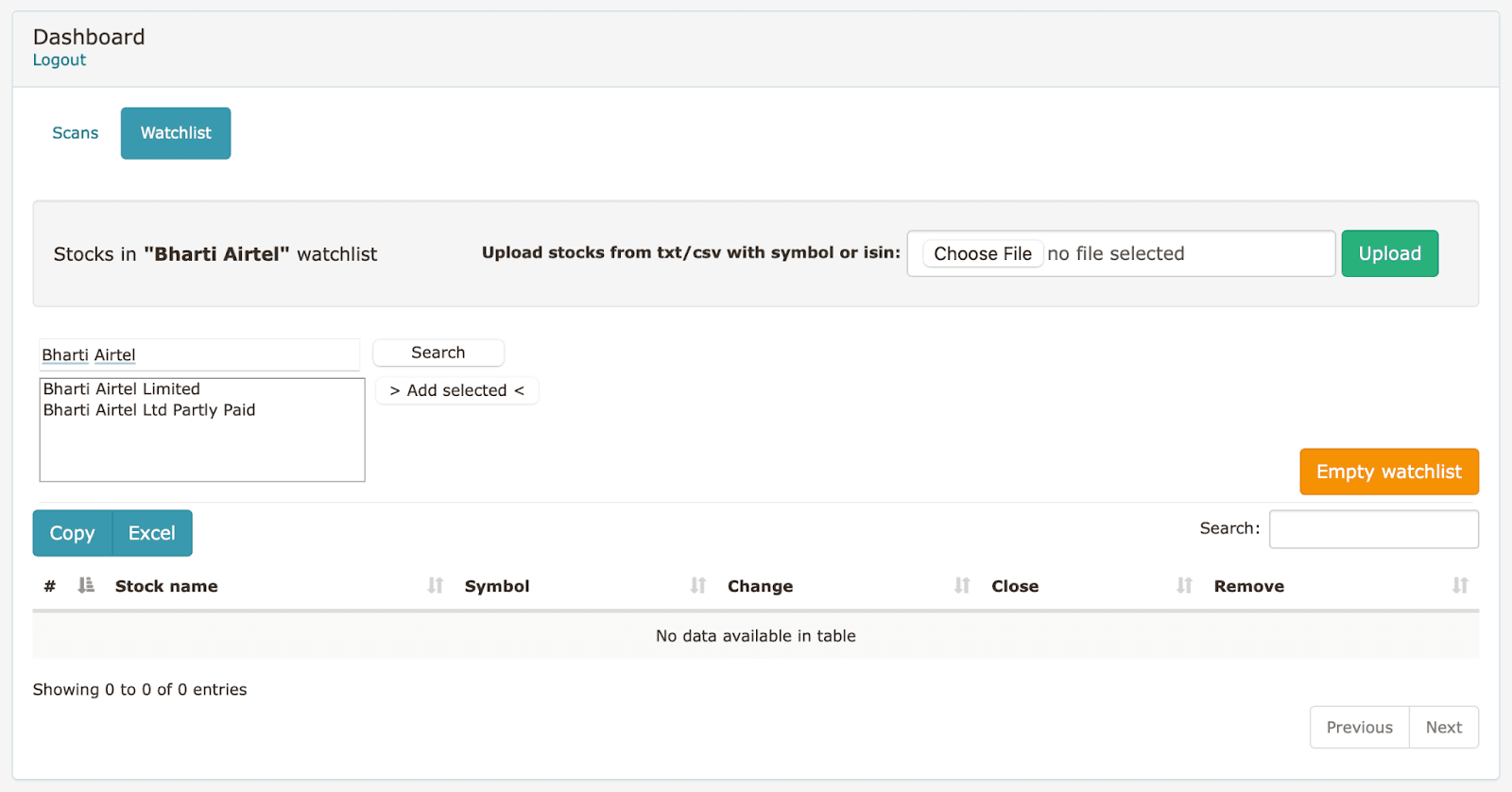
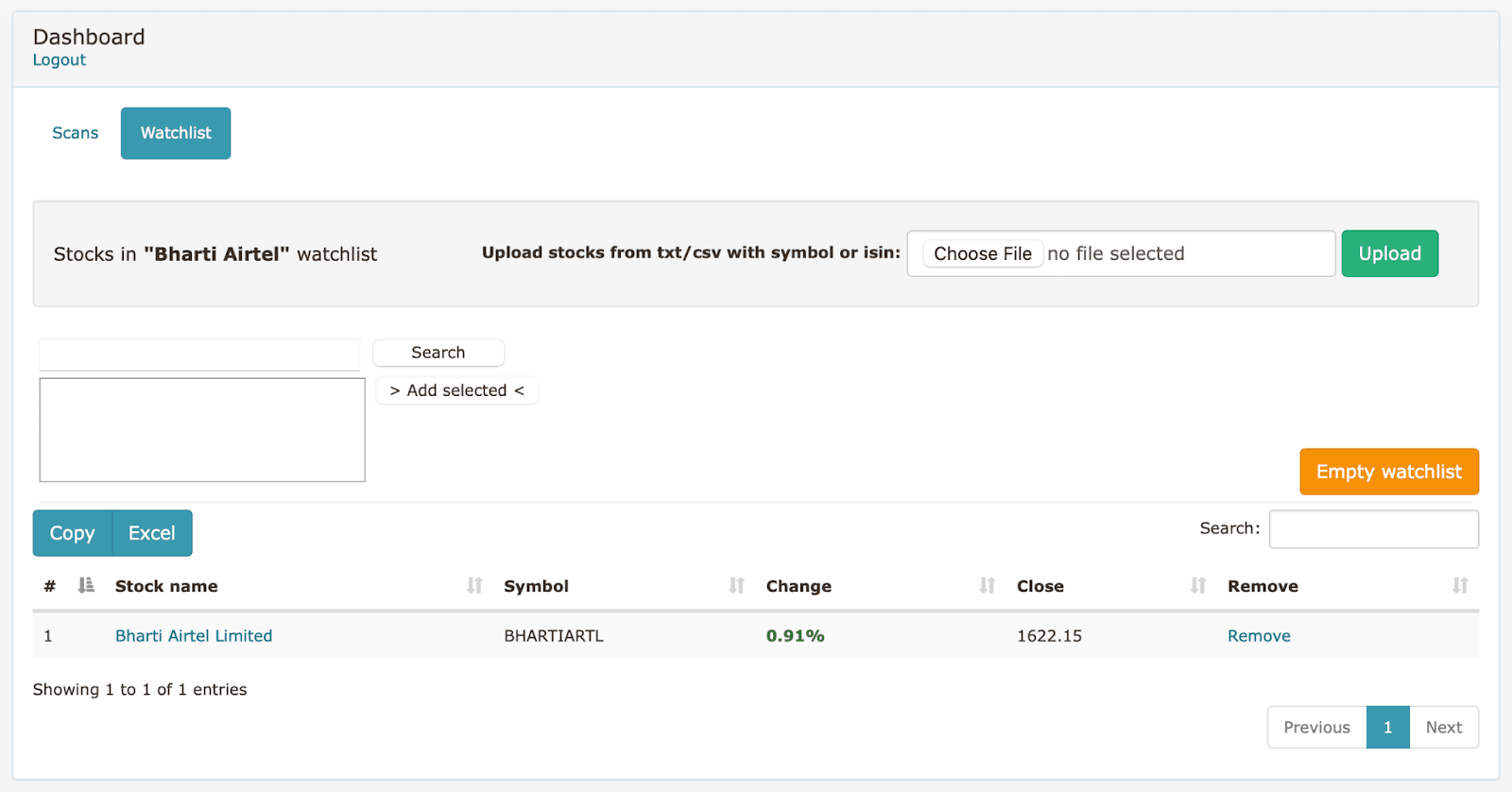
##
#### **Create a Screener**:
- Go to the "Screener" section and select any pre-existing template (e.g., " [Bullish Engulf](https://chartink.com/screener/bullish-engulf-3)").
- Copy the Scan and then open it from the scans dashboard.
- Change the segment to your own watchlist of instruments. (e.g., “Bharti Airtel Limited”)
- Now save the scan.
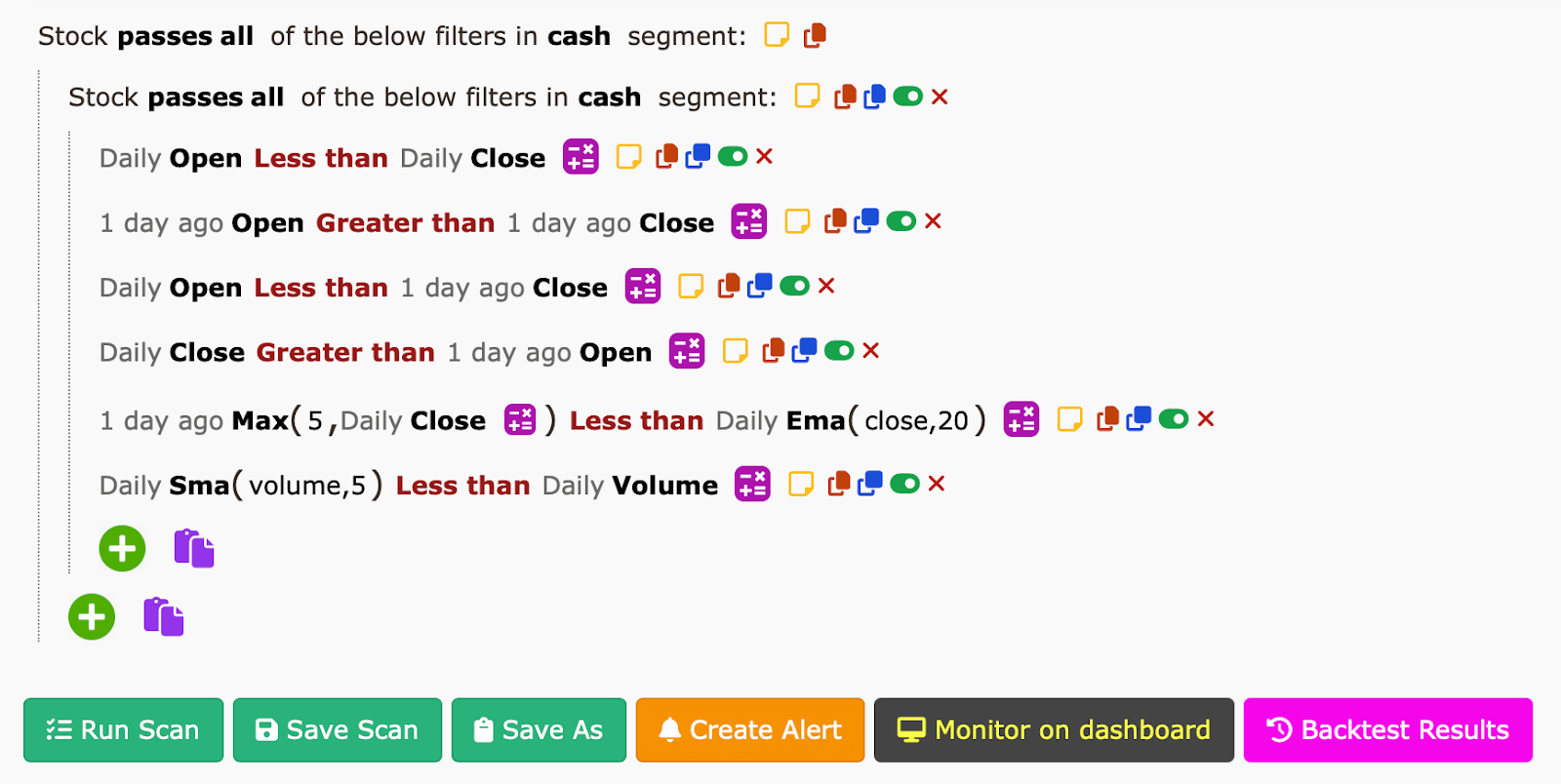
### **Step 2: Create Your Strategy in AlgoTest**
#### **Login to AlgoTest**:
- Visit [AlgoTest](https://algotest.in/) and log in. Go to Signals Dashboard.
#### **Create a New Signal**:
- Go to the Signals dashboard page and create a “New Signal”.
- Select Chartink as Signal Provider.
- Select Forward Test as Execution Type.
- Let’s create a new strategy, strategy on AlgoTest means which trades to execute if the signal is generated.
- Go to the “Stocks” tab to create a stocks strategy.
- Select the index you want to trade in this strategy we will select “Bharti Airtel Limited”.
- Define the Trade you want to execute with Quantity, Position, Target and Stoploss.
- Save the strategy with a unique name.


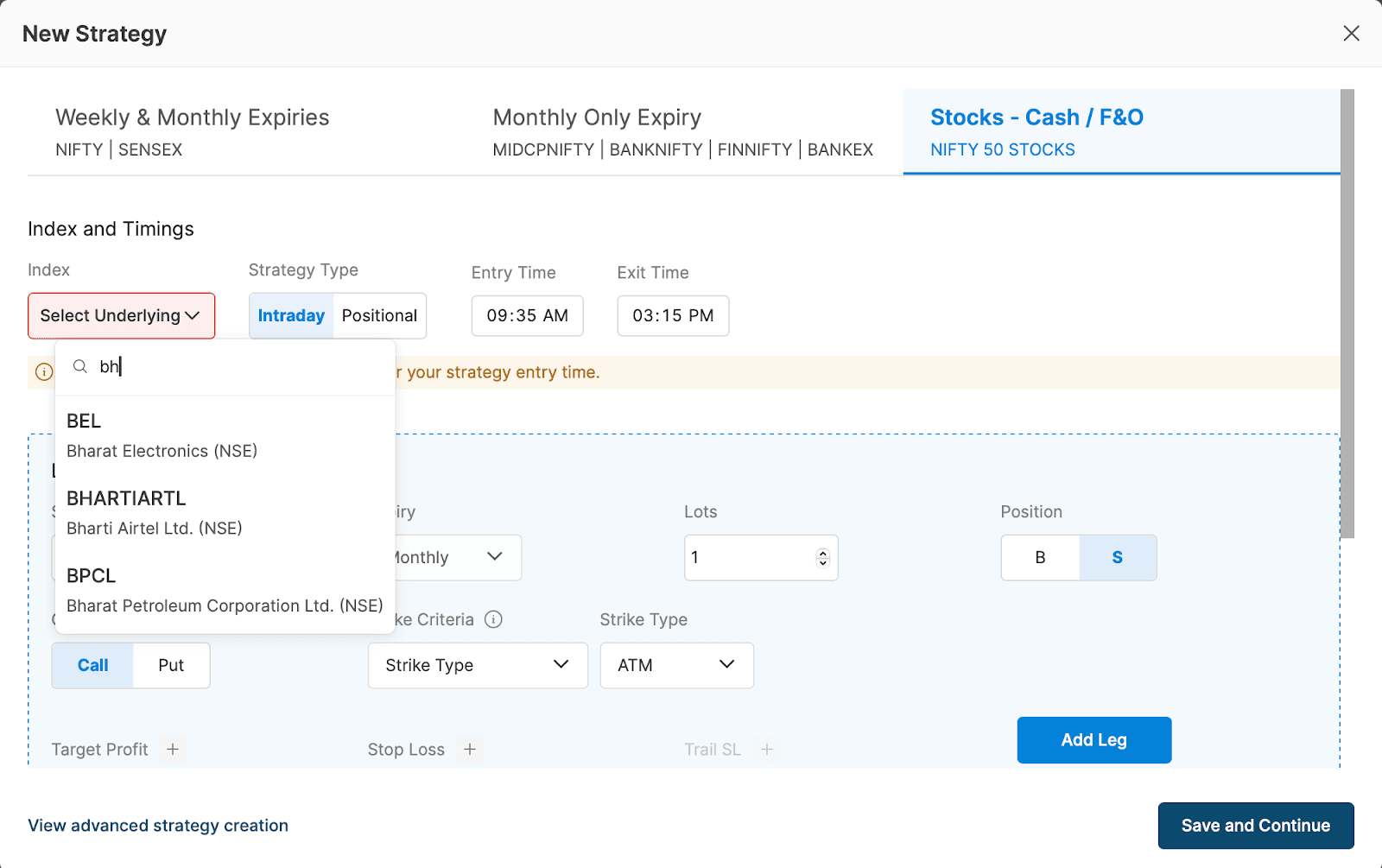
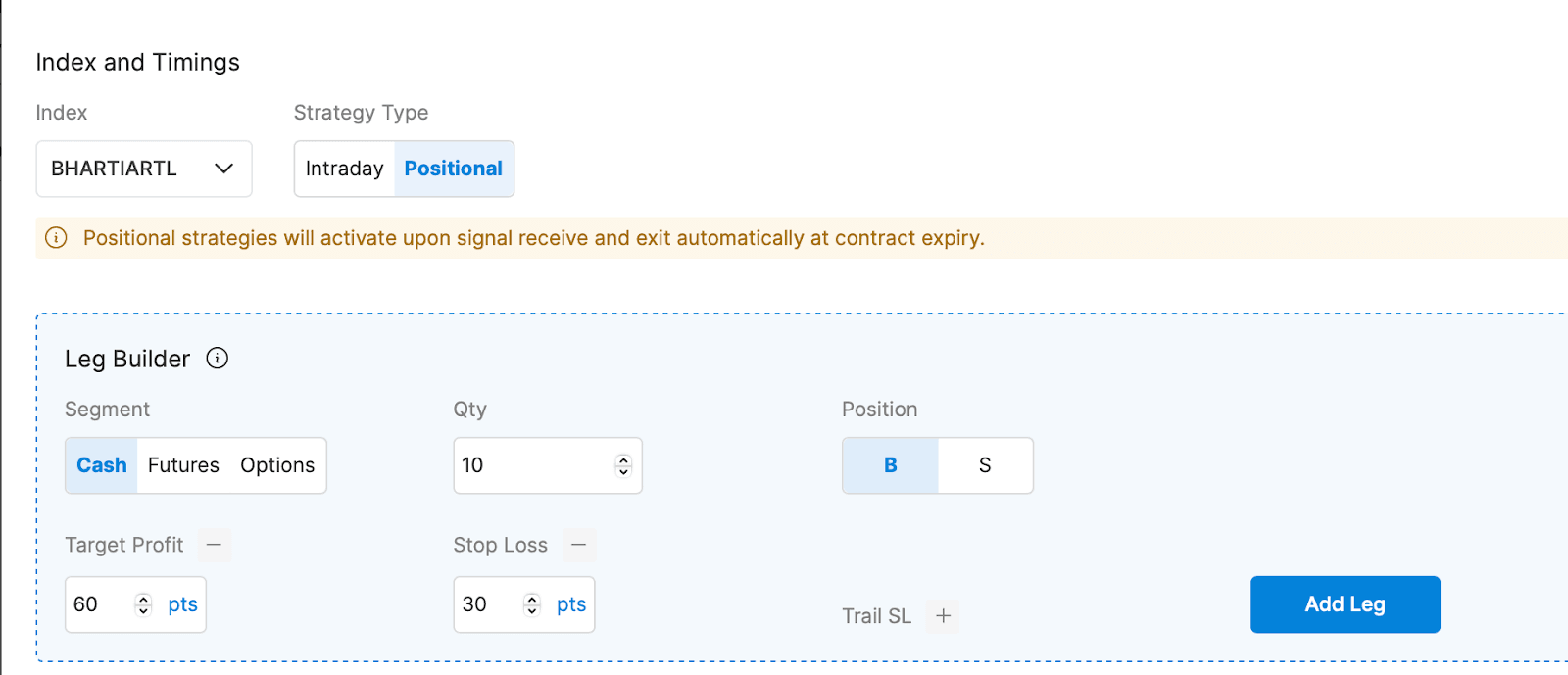
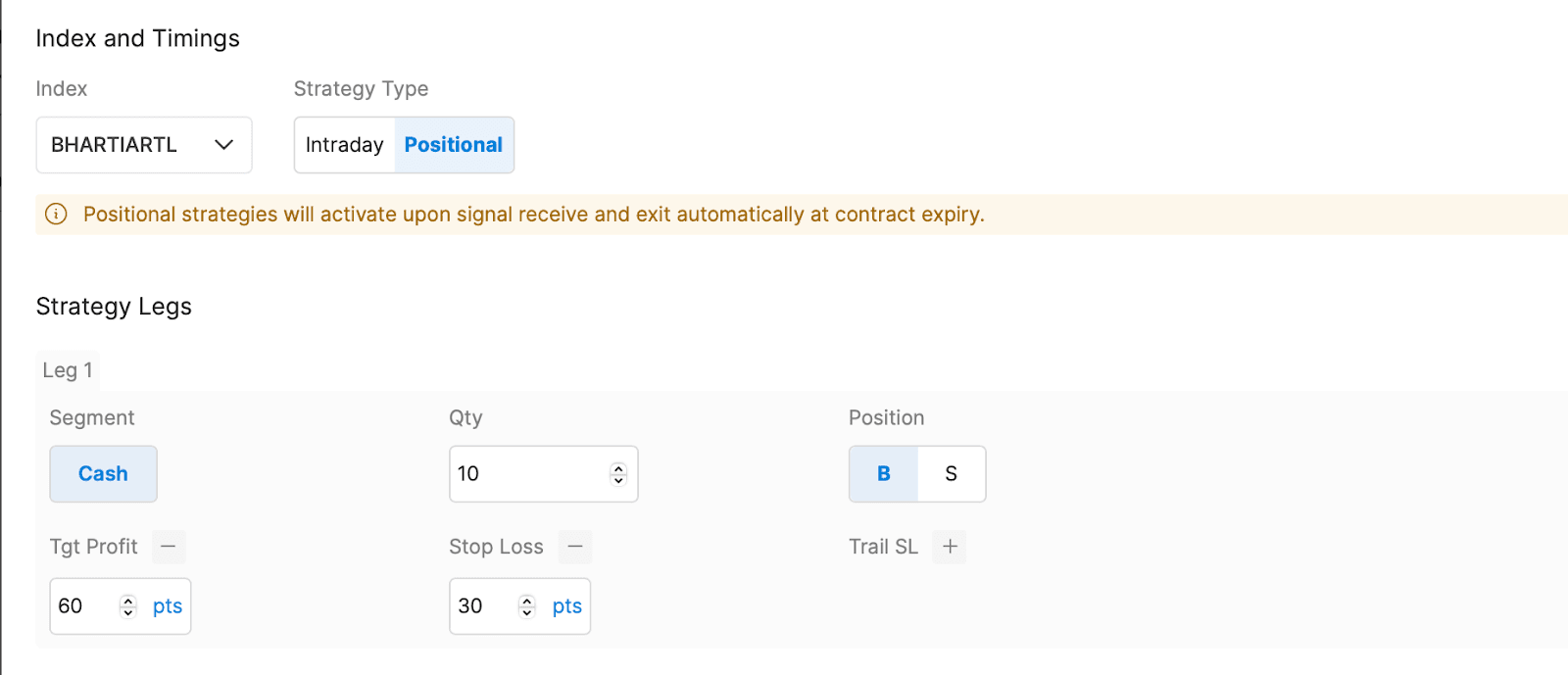
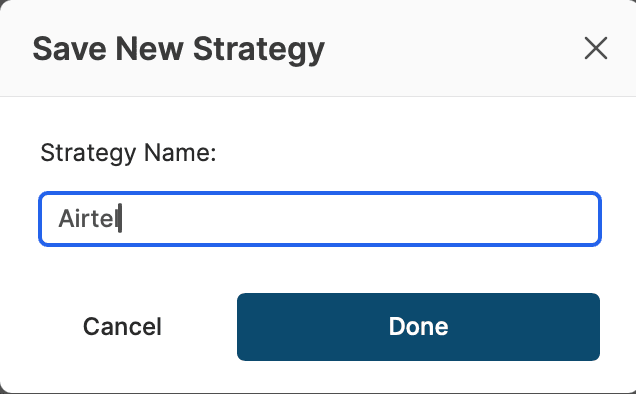
### **Step 3: Connect Chartink Alerts with AlgoTest Signals**
**Generate a Webhook URL**:
- Once the strategy is saved, you will receive a webhook url.
- Copy the webhook URL for your strategy.
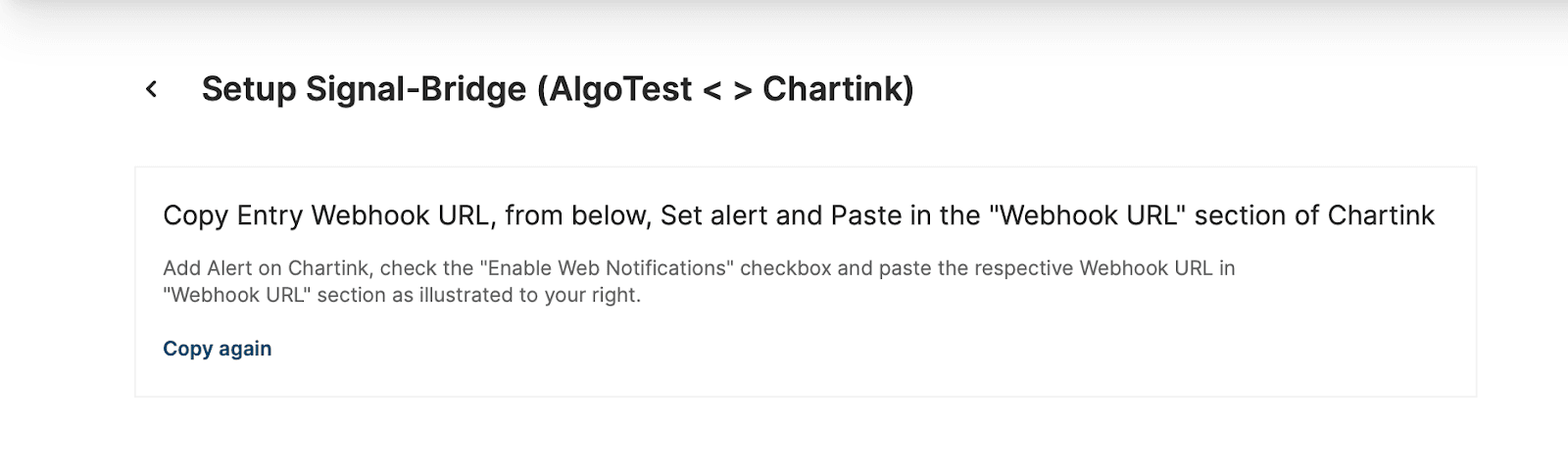
#### **Link the Webhook to Chartink Alerts**:
- In Chartink, navigate to your saved screener and click on "Create Alert."
- Paste the webhook URL in the alert settings.
- Save the alert.
- After Saving the alert click on “Start Listening” on AlgoTest.
## Your Signal is in listening mode now.

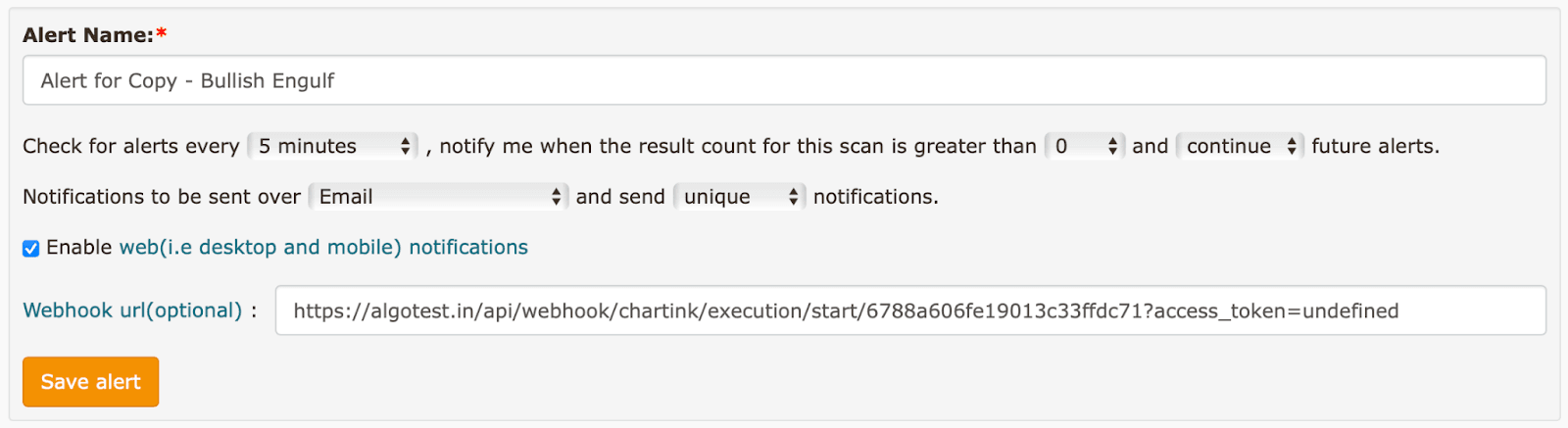

## **Step 4: Deploy Your Strategy in Live Markets**
- Once satisfied with the forward test results, deploy your strategy in the live market by moving the signals to Live Trade.
- Connect your Broker and setup Execution settings to start your Algo Trading.

## **Why Choose Chartink Premium**
Chartink's Premium Plan offers essential features for automation:
- Real-time data for scans and alerts.
- Flexible alert intervals (1/2/3/5 minutes, etc.).
- Notifications via SMS, email, and desktop/mobile.
- No coding required!
These features make it an ideal choice for seamless integration with AlgoTest Signals.
## **Requirements for Automation**
To use this setup, ensure the following prerequisites are met:
1. **Chartink Premium Plan** some text
- A premium plan is essential for creating alerts and running screeners with real-time data.
2. **AlgoTest Signal Plan** some text
- Activate the AlgoTest Signal plan to connect your strategy with Chartink alerts.
3. **Broker Connection with AlgoTest** some text
- Connect your broker to AlgoTest via the broker setup page.
This is not it.
Here are a few strategies you should check out:
- [Strong Stocks](https://algotest.in/blog/automate-your-strong-stocks-strategy-using-chartink-and-algotest)
- [Perfect Sell (Short)](https://algotest.in/blog/automate-your-perfect-sell-short-using-chartink-and-algotest)
- [N7 Current Day](https://algotest.in/blog/automate-your-n7-current-day-using-chartink-and-algotest)
- [Buy Entry Intraday](https://algotest.in/blog/automate-your-buy-entry-intrada-using-chartink-and-algotest)
- [Morning Star Candlestick Pattern](https://algotest.in/blog/automate-your-morning-star-candlestick-pattern-using-chartink-and-algotest)
- [Intraday Sell](https://algotest.in/blog/automate-your-intraday-sell-using-chartink-and-algotest)
- [Profit Jump by 200%](https://algotest.in/blog/automate-your-profit-jump-by-200-using-chartink-and-algotest)
- [Large Cap Stocks](https://algotest.in/blog/automate-your-large-cap-stocks-using-chartink-and-algotest)
- [Potential Breakouts](https://algotest.in/blog/automate-your-potential-breakout-using-chartink-and-algotest)
- [Small Cap Stocks](https://algotest.in/blog/automate-your-small-cap-stocks-using-chartink-and-algotest)
- [Mid Cap Stocks](https://algotest.in/blog/automate-your-mid-cap-stocks-using-chartink-and-algotest)
- [Sales Jump by 200%](https://algotest.in/blog/automate-your-sales-jump-by-200-using-chartink-and-algotest)
- [Stock Screener open=high;open=low](https://algotest.in/blog/automate-your-stock-screener-open-high-open-low-using-chartink-and-algotest)
- [Stocks Below Book Value - Undervalued](https://algotest.in/blog/automate-your-stocks-below-book-value---undervalued-using-chartink-and-algotest)
- [Highest Earning Per Share](https://algotest.in/blog/automate-your-highest-earning-per-share-using-chartink-and-algotest)
- [Low Debt Companies](https://algotest.in/blog/automate-your-low-debt-companies-using-chartink-and-algotest)
- [Penny Stocks](https://algotest.in/blog/automate-your-penny-stocks-using-chartink-and-algotest)
- [52-week Low](https://algotest.in/blog/automate-your-52-week-low-using-chartink-and-algotest)
Thank you for choosing to trade with us.
---
This blog is powered by Superblog. Visit https://superblog.ai to know more.
---
## Automate Your “Morning Star Candlestick pattern” Using Chartink and AlgoTest
Author: AlgoTest
Author URL: https://algotest.in/blog/author/algotest/
Published: 2025-01-17
Category: Chartink
Category URL: https://algotest.in/blog/category/chartink/
URL: https://algotest.in/blog/automate-your-morning-star-candlestick-pattern-using-chartink-and-algotest/
Automating your trading strategy can save time and eliminate the need to monitor the markets constantly. With [**Chartink**](http://www.charting.com) and [**AlgoTest**](http://www.algotest.in), you can set up your strategy to execute trades automatically.
In this guide, you will learn:
- How AlgoTest Signals work.
- Step-by-step instructions to create a Chartink screener and set it up for automation with AlgoTest.
- How to verify and deploy your strategy in live markets or test it using forward testing.
- The requirements for automation.
## **How AlgoTest Signals Work**
AlgoTest Signals allow you to automate your trades based on predefined conditions from Chartink. When a breakout condition is met in Chartink, an alert is sent to AlgoTest, which executes the trade on your broker terminal.
### **Key Benefits:**
- Eliminate manual trade execution.
- Consistency in trade execution based on your strategy logic.
- Saves time and reduces emotional decision-making.
## Morning Star Candlestick pattern filters explanation:
1. The daily Open price is less than the daily Close price, indicating that the stock's price has increased throughout the day. This means there is a positive change of more than 0%, showing that the stock closed higher than it opened.
2. The filter checks if the current daily opening price of the stock is greater than the closing price from the previous day. This means that if the stock opened today at a price that is higher than what it closed at yesterday, it indicates a positive movement of more than 0%.
3. This filter checks if the stock's opening price from one day ago is less than its closing price from the same day. This indicates that the stock has gained value during that day, showing a positive change of at least 0% from the opening to the closing price.
4. The filter checks if the closing price of the stock from one day ago is less than the closing price from two days ago. This indicates a decrease in the stock's value over the last day, showing a negative change of up to 100% depending on the specific closing prices.
5. The filter checks if the opening price of the stock two days ago was greater than its closing price on the same day. This indicates that the stock opened higher than it closed, suggesting a decline in price during that trading day.
6. The closing price of the stock from 2 days ago is less than the closing price from 3 days ago, indicating a decrease in value. This means that the stock has dropped in price by a certain percentage over that period.
7. The filter checks if the opening price of the stock three days ago is greater than its closing price on the same day. This means that the stock's price at the start of that day was higher than what it ended at, indicating a decrease in value of at least 0% from the open to the close.
## **Step-by-Step Guide to Automate Your Strategy**
### **Step 1: Create Your Screener in Chartink**
#### **Access Chartink**:
- Go to [Chartink](https://chartink.in/) and log in to your account.
#### **Create a Watchlist**:
- Navigate to the "Watchlists" section.
- Create a new watchlist for the instruments you want to monitor.
- Search for instruments you want to monitor and click on ‘Add Selected’.
- Watchlist is created with desired instruments.

#### **Create a Screener**:
- Go to the "Screener" section and select any pre-existing template (e.g., " [Morning Star Candlestick pattern](https://chartink.com/screener/morning-star-candlestick-pattern)").
- Copy the Scan and then open it from the scans dashboard.
- Change the segment to your own watchlist of instruments. (e.g., “BPCL”)
- Now save the scan.
### **Step 2: Create Your Strategy in AlgoTest**
#### **Login to AlgoTest**:
- Visit [AlgoTest](https://algotest.in/) and log in. Go to Signals Dashboard.
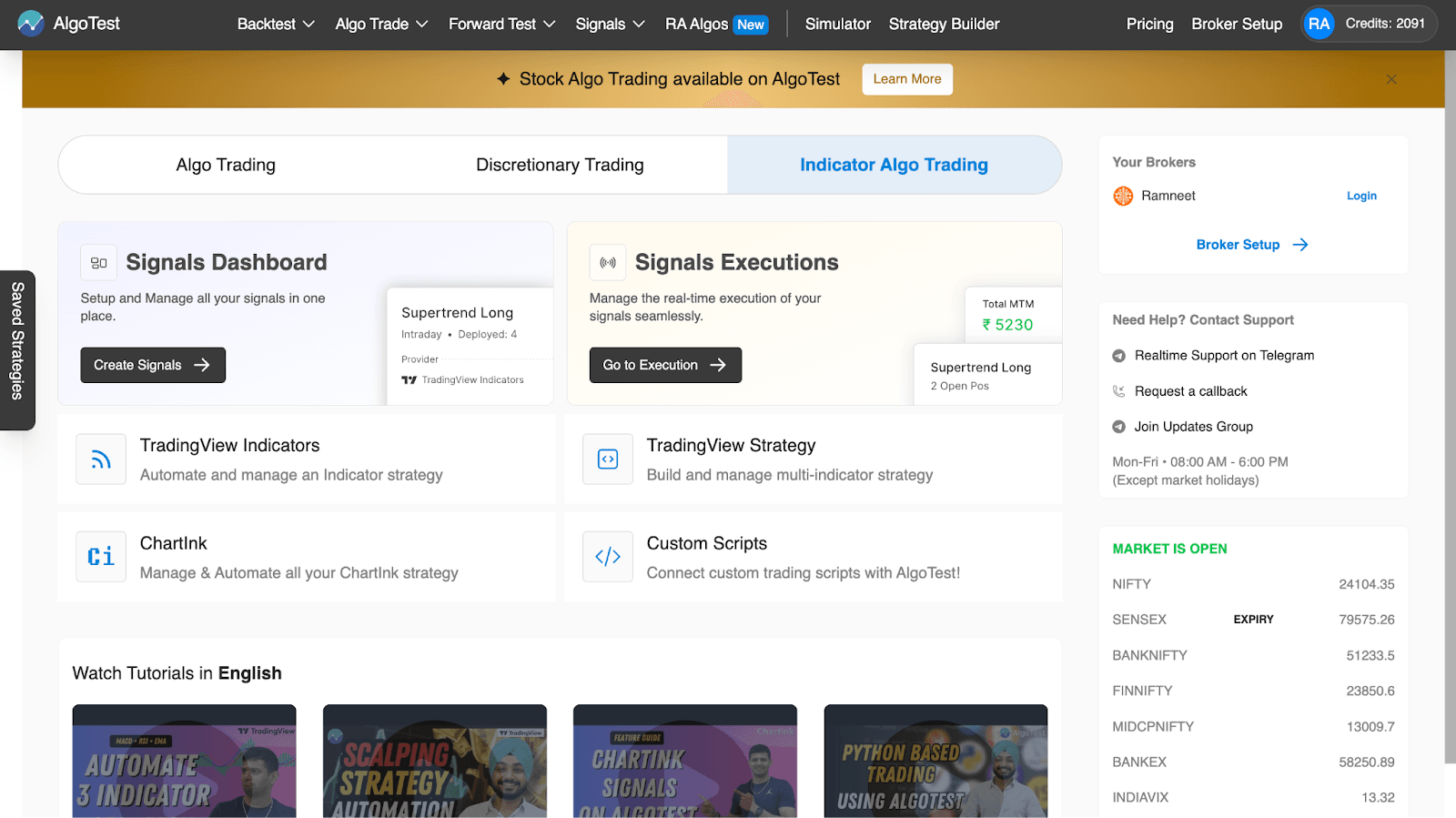
#### **Create a New Signal**:
- Go to the Signals dashboard page and create a “New Signal”.
- Select Chartink as Signal Provider.
- Select Forward Test as Execution Type.
- Let’s create a new strategy, strategy on AlgoTest means which trades to execute if the signal is generated.
- Go to the “Stocks” tab to create a stocks strategy.
- Select the index you want to trade in this strategy we will select “BPCL”.
- Define the Trade you want to execute with Quantity, Position, Target and Stoploss.
- Save the strategy with a unique name.
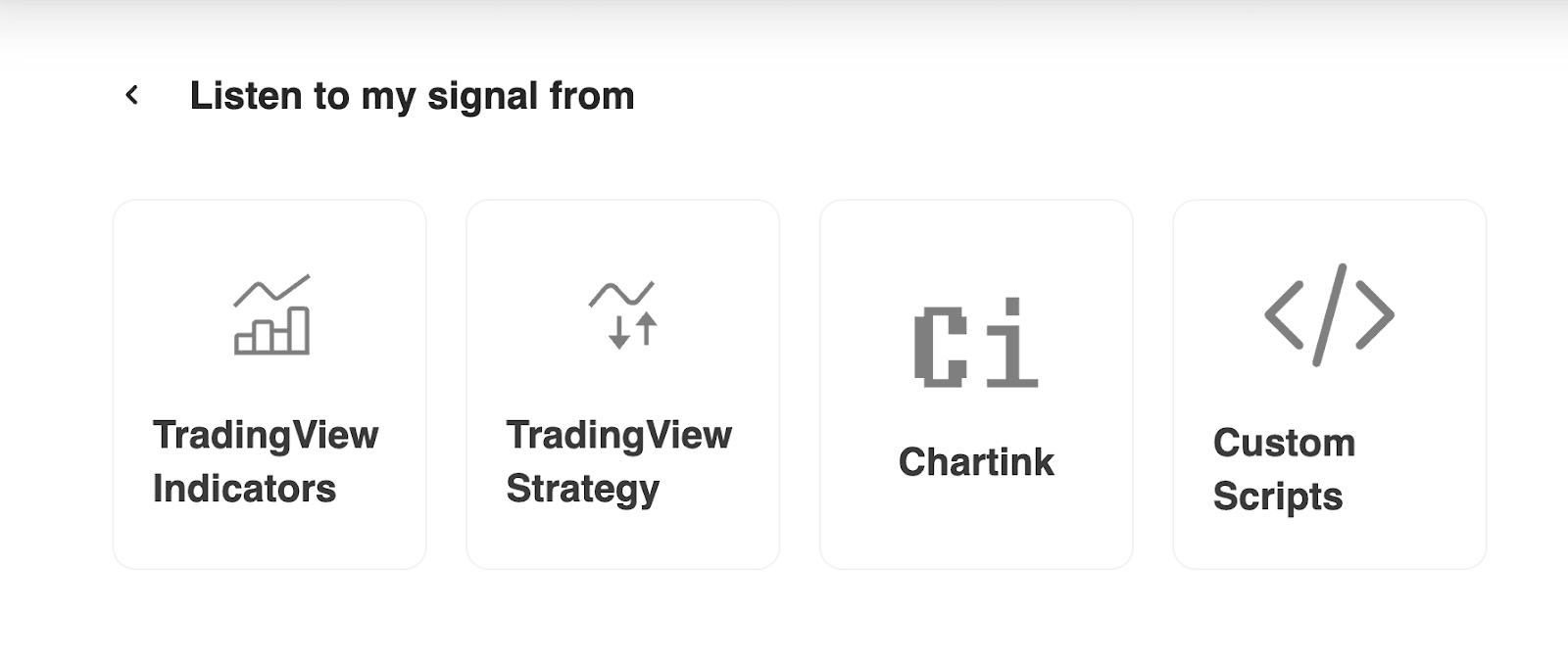
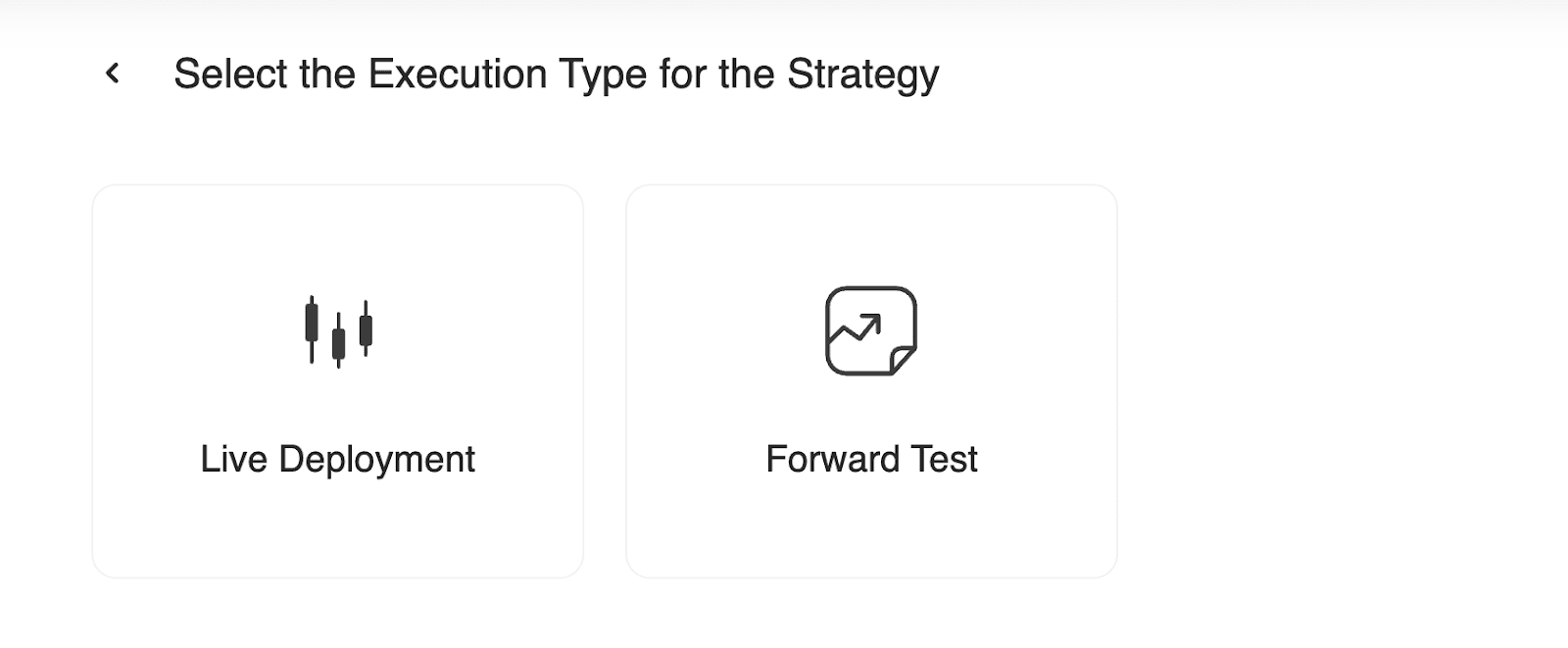


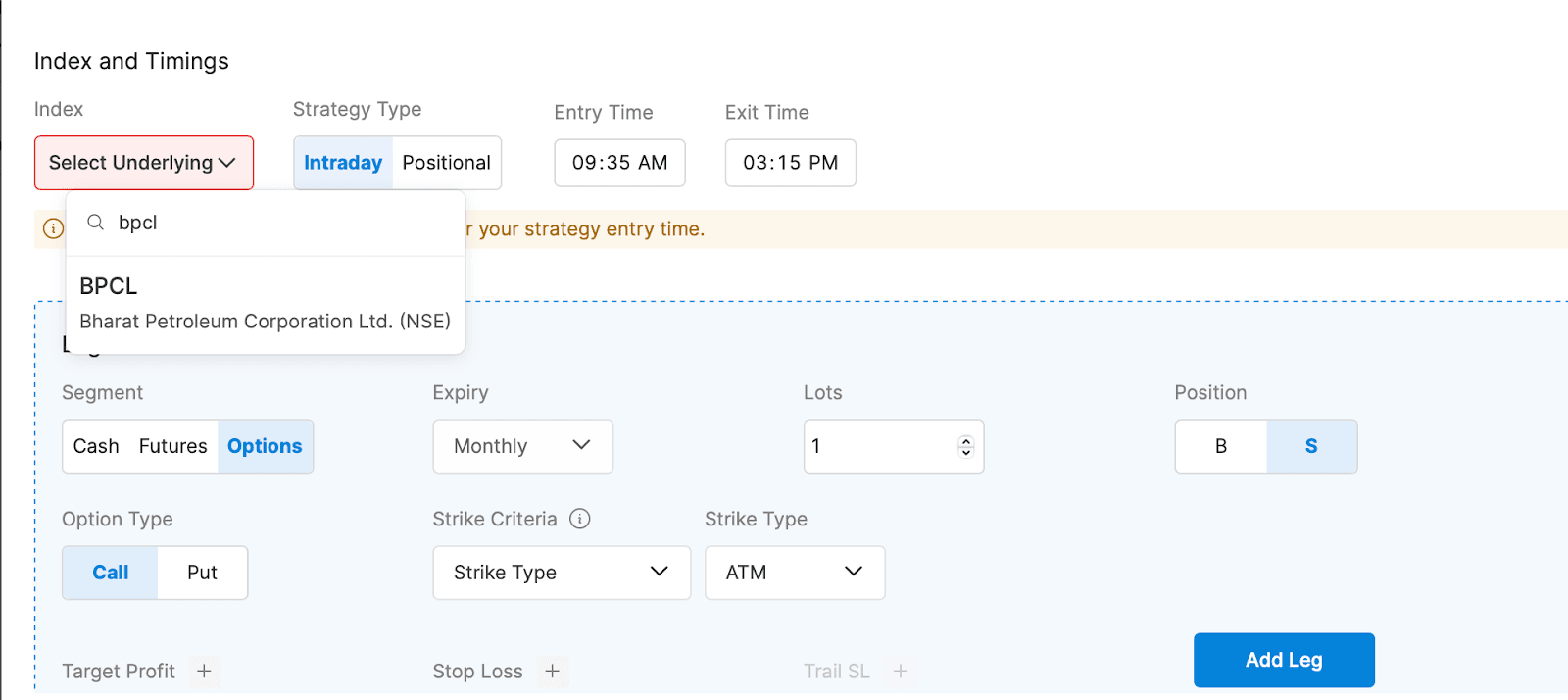
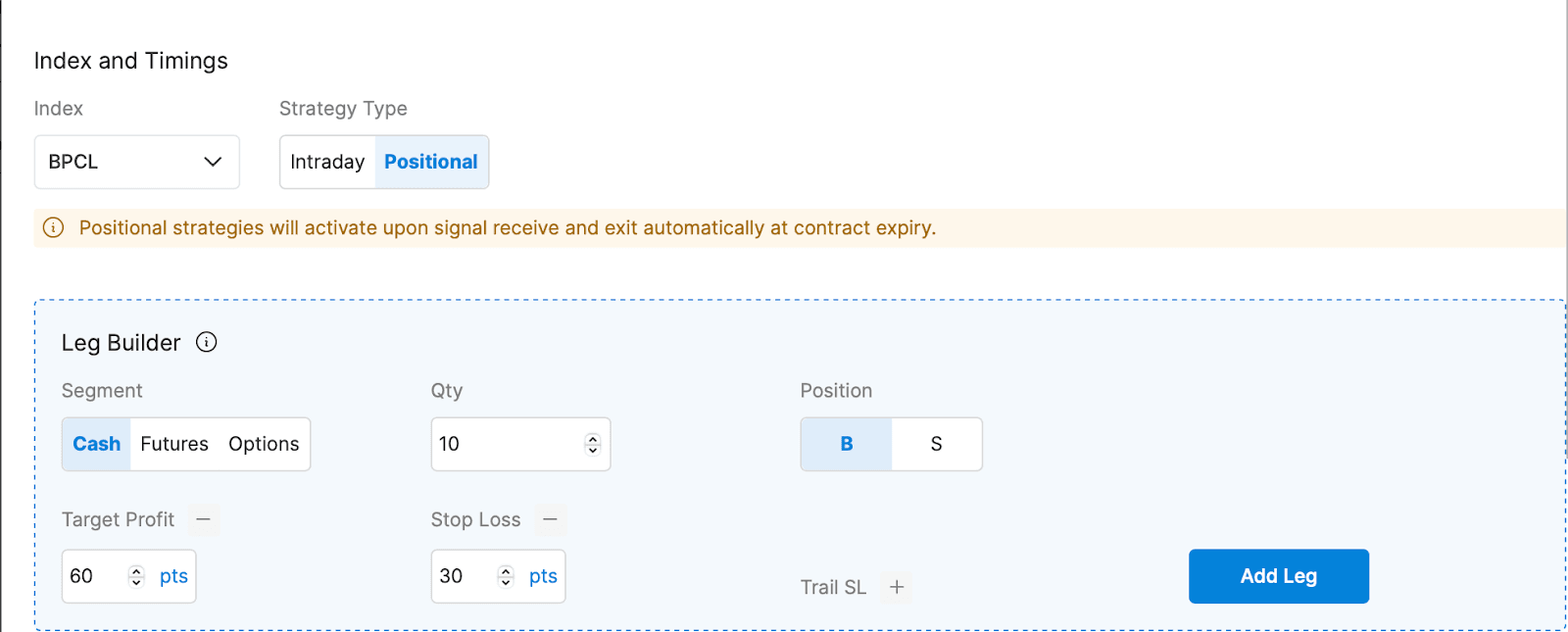
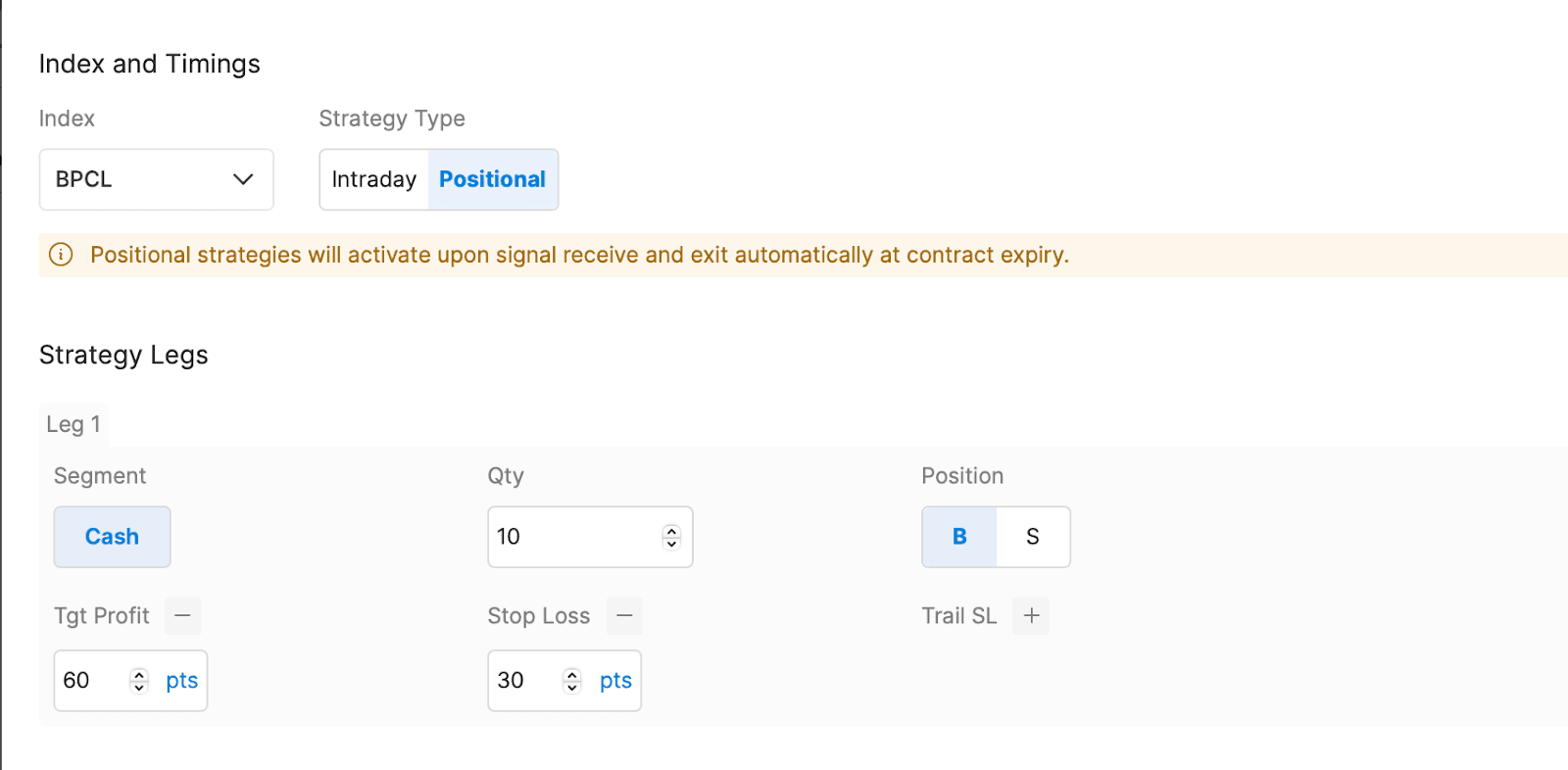
## **Step 3: Connect Chartink Alerts with AlgoTest Signals**
#### **Generate a Webhook URL**:
- Once the strategy is saved, you will receive a webhook url.
- Copy the webhook URL for your strategy.
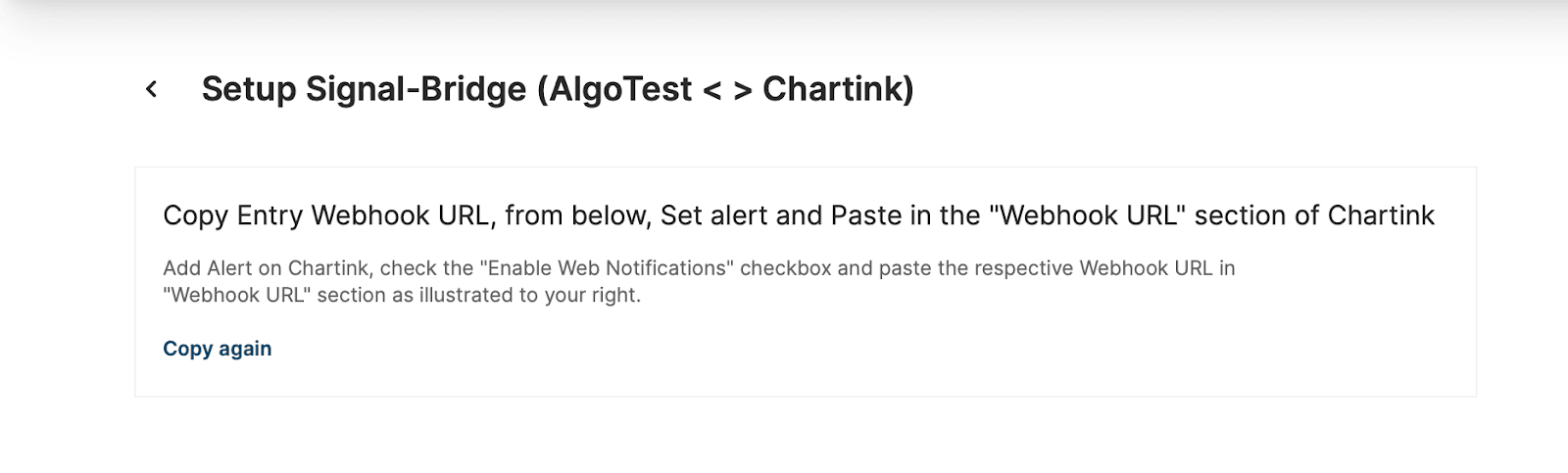
**Link the Webhook to Chartink Alerts**:
- In Chartink, navigate to your saved screener and click on "Create Alert."
- Paste the webhook URL in the alert settings.
- Save the alert.
- After Saving the alert click on “Start Listening” on AlgoTest.
- Your Signal is in listening mode now.

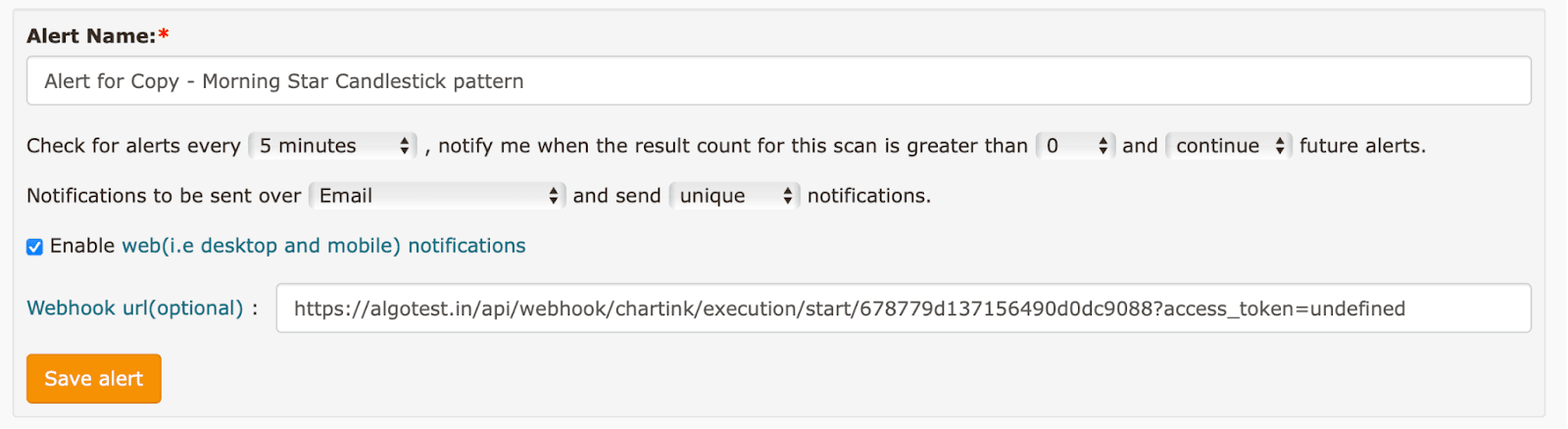

## **Step 4: Deploy Your Strategy in Live Markets**
- Once satisfied with the forward test results, deploy your strategy in the live market by moving the signals to Live Trade.
- Connect your Broker and setup Execution settings to start your Algo Trading.

## **Why Choose Chartink Premium**
Chartink's Premium Plan offers essential features for automation:
- Real-time data for scans and alerts.
- Flexible alert intervals (1/2/3/5 minutes, etc.).
- Notifications via SMS, email, and desktop/mobile.
- No coding required!
These features make it an ideal choice for seamless integration with AlgoTest Signals.
## **Requirements for Automation**
To use this setup, ensure the following prerequisites are met:
1. **Chartink Premium Plan** some text
- A premium plan is essential for creating alerts and running screeners with real-time data.
2. **AlgoTest Signal Plan** some text
- Activate the AlgoTest Signal plan to connect your strategy with Chartink alerts.
3. **Broker Connection with AlgoTest** some text
- Connect your broker to AlgoTest via the broker setup page.
This is not it.
### Here are a few strategies you should check out:
- [Strong Stocks](https://algotest.in/blog/automate-your-strong-stocks-strategy-using-chartink-and-algotest)
- [Perfect Sell (Short)](https://algotest.in/blog/automate-your-perfect-sell-short-using-chartink-and-algotest)
- [N7 Current Day](https://algotest.in/blog/automate-your-n7-current-day-using-chartink-and-algotest)
- [Buy Entry Intraday](https://algotest.in/blog/automate-your-buy-entry-intrada-using-chartink-and-algotest)
- [Intraday Sell](https://algotest.in/blog/automate-your-intraday-sell-using-chartink-and-algotest)
- [Bullish Engulf](https://algotest.in/blog/automate-your-bullish-engulf-using-chartink-and-algotest)
- [Profit Jump by 200%](https://algotest.in/blog/automate-your-profit-jump-by-200-using-chartink-and-algotest)
- [Large Cap Stocks](https://algotest.in/blog/automate-your-large-cap-stocks-using-chartink-and-algotest)
- [Potential Breakouts](https://algotest.in/blog/automate-your-potential-breakout-using-chartink-and-algotest)
- [Small Cap Stocks](https://algotest.in/blog/automate-your-small-cap-stocks-using-chartink-and-algotest)
- [Mid Cap Stocks](https://algotest.in/blog/automate-your-mid-cap-stocks-using-chartink-and-algotest)
- [Sales Jump by 200%](https://algotest.in/blog/automate-your-sales-jump-by-200-using-chartink-and-algotest)
- [Stock Screener open=high;open=low](https://algotest.in/blog/automate-your-stock-screener-open-high-open-low-using-chartink-and-algotest)
- [Stocks Below Book Value - Undervalued](https://algotest.in/blog/automate-your-stocks-below-book-value---undervalued-using-chartink-and-algotest)
- [Highest Earning Per Share](https://algotest.in/blog/automate-your-highest-earning-per-share-using-chartink-and-algotest)
- [Low Debt Companies](https://algotest.in/blog/automate-your-low-debt-companies-using-chartink-and-algotest)
- [Penny Stocks](https://algotest.in/blog/automate-your-penny-stocks-using-chartink-and-algotest)
- [52-week Low](https://algotest.in/blog/automate-your-52-week-low-using-chartink-and-algotest)
Thank you for choosing to trade with us.
---
This blog is powered by Superblog. Visit https://superblog.ai to know more.
---
## Automate Your “Buy Entry Intraday” Using Chartink and AlgoTest
Author: AlgoTest
Author URL: https://algotest.in/blog/author/algotest/
Published: 2025-01-17
Category: Chartink
Category URL: https://algotest.in/blog/category/chartink/
URL: https://algotest.in/blog/automate-your-buy-entry-intrada-using-chartink-and-algotest/
Automating your trading strategy can save time and eliminate the need to monitor the markets constantly. With [**Chartink**](http://www.charting.com) and [**AlgoTest**](http://www.algotest.in), you can set up your strategy to execute trades automatically.
In this guide, you will learn:
- How AlgoTest Signals work.
- Step-by-step instructions to create a Chartink screener and set it up for automation with AlgoTest.
- How to verify and deploy your strategy in live markets or test it using forward testing.
- The requirements for automation.
## **How AlgoTest Signals Work**
AlgoTest Signals allow you to automate your trades based on predefined conditions from Chartink. When a breakout condition is met in Chartink, an alert is sent to AlgoTest, which executes the trade on your broker terminal.
### **Key Benefits:**
- Eliminate manual trade execution.
- Consistency in trade execution based on your strategy logic.
- Saves time and reduces emotional decision-making.
## Buy entry intraday filters explanation:
- The daily Parabolic SAR (0.04, 0.02, 0.2) has crossed below the daily EMA (close, 9), indicating that the stock's price trend may be shifting downwards. This suggests that the current price is now below the average price over the last 9 days, reflecting a potential bearish signal.
## **Step-by-Step Guide to Automate Your Strategy**
### **Step 1: Create Your Screener in Chartink**
#### **Access Chartink**:
- Go to [Chartink](https://chartink.in/) and log in to your account.
#### **Create a Watchlist**:
- Navigate to the "Watchlists" section.
- Create a new watchlist for the instruments you want to monitor.
- Search for instruments you want to monitor and click on ‘Add Selected’.
- Watchlist is created with desired instruments.

##
#### **Create a Screener**:
- Go to the "Screener" section and select any pre-existing template (e.g., " [Buy Entry Intraday](https://chartink.com/screener/buy-entry-intraday)").
- Copy the Scan and then open it from the scans dashboard.
- Change the segment to your own watchlist of instruments. (e.g., “HCL Technologies Limited”)
- Now save the scan.
##
### **Step 2: Create Your Strategy in AlgoTest**
#### **Login to AlgoTest**:
- Visit [AlgoTest](https://algotest.in/) and log in. Go to Signals Dashboard.
#### **Create a New Signal**:
- Go to the Signals dashboard page and create a “New Signal”.
- Select Chartink as Signal Provider.
- Select Forward Test as Execution Type.
- Let’s create a new strategy, strategy on AlgoTest means which trades to execute if the signal is generated.
- Go to the “Stocks” tab to create a stocks strategy.
- Select the index you want to trade in this strategy we will select “HCL Technologies Limited”.
- Define the Trade you want to execute with Quantity, Position, Target and Stoploss.
- Save the strategy with a unique name.
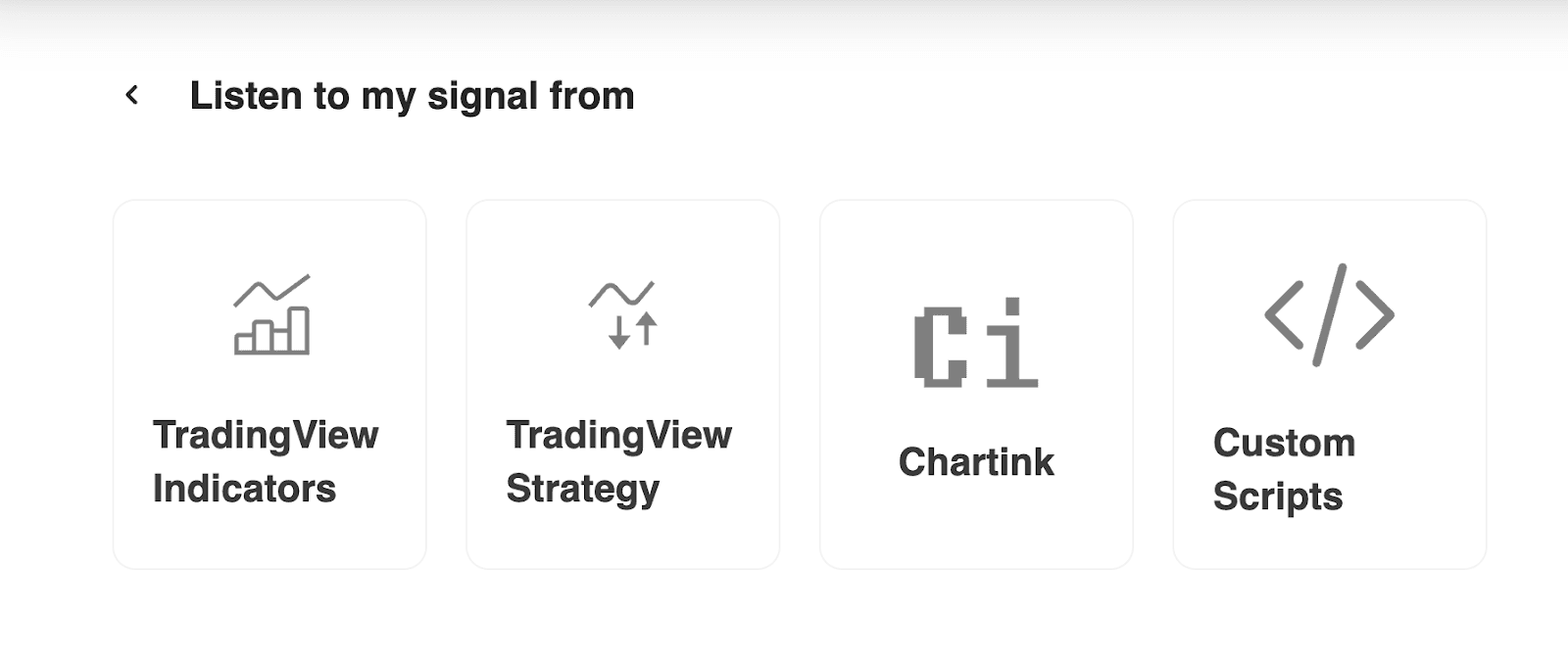
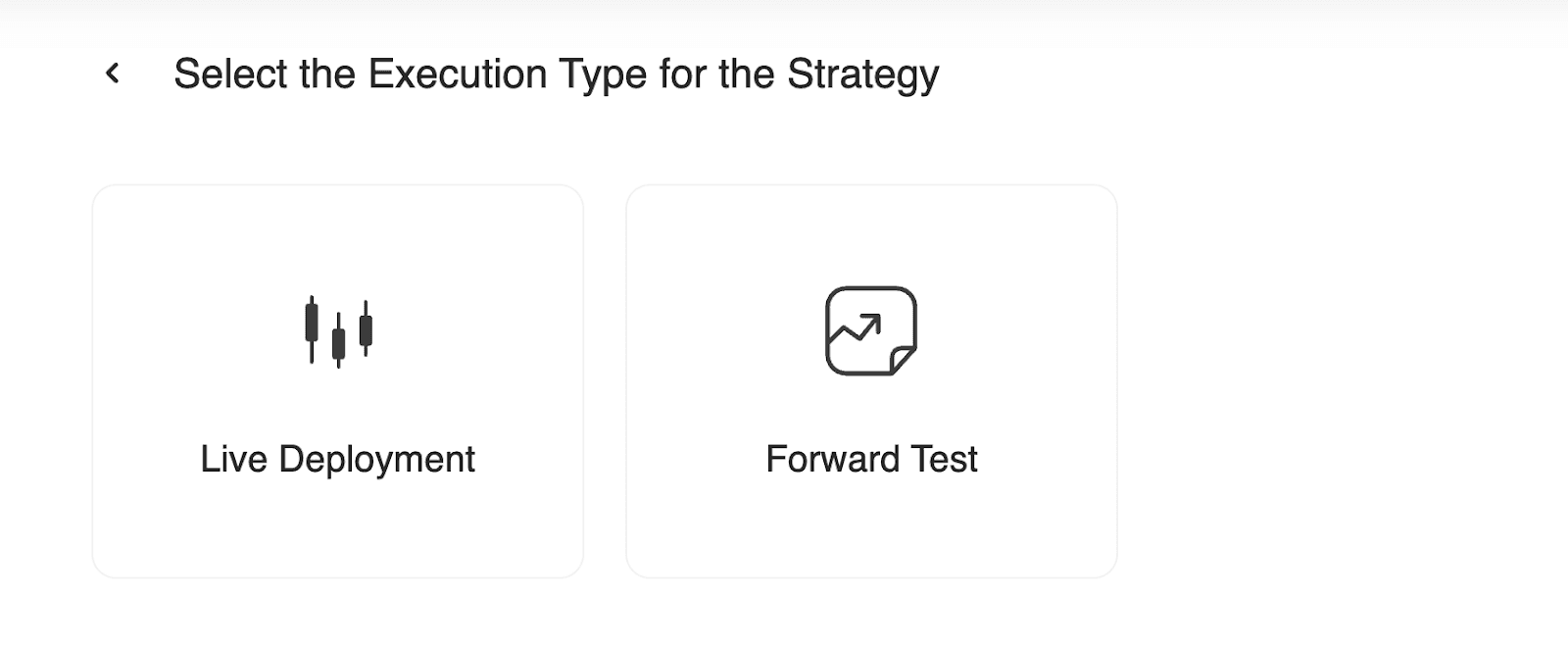


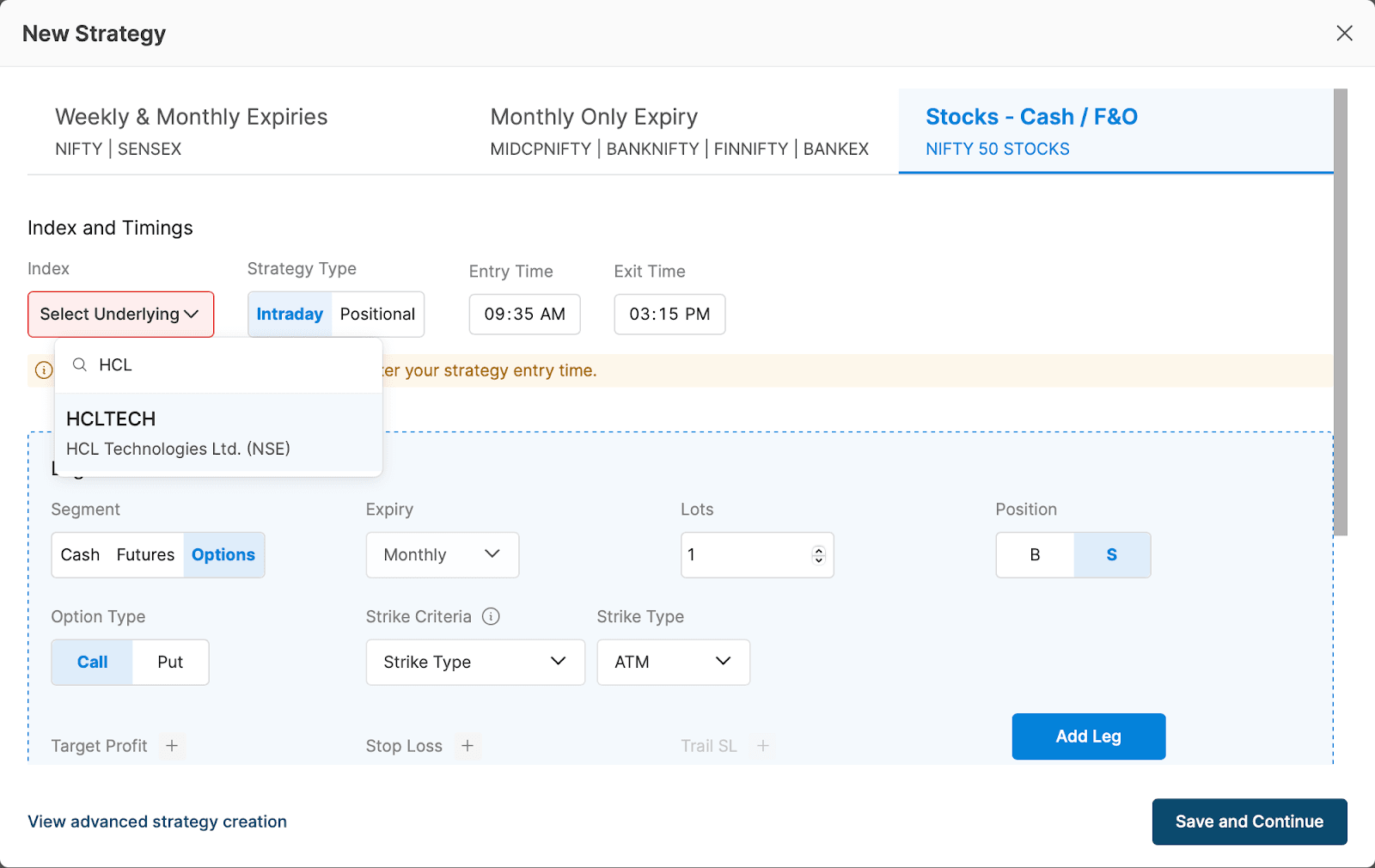
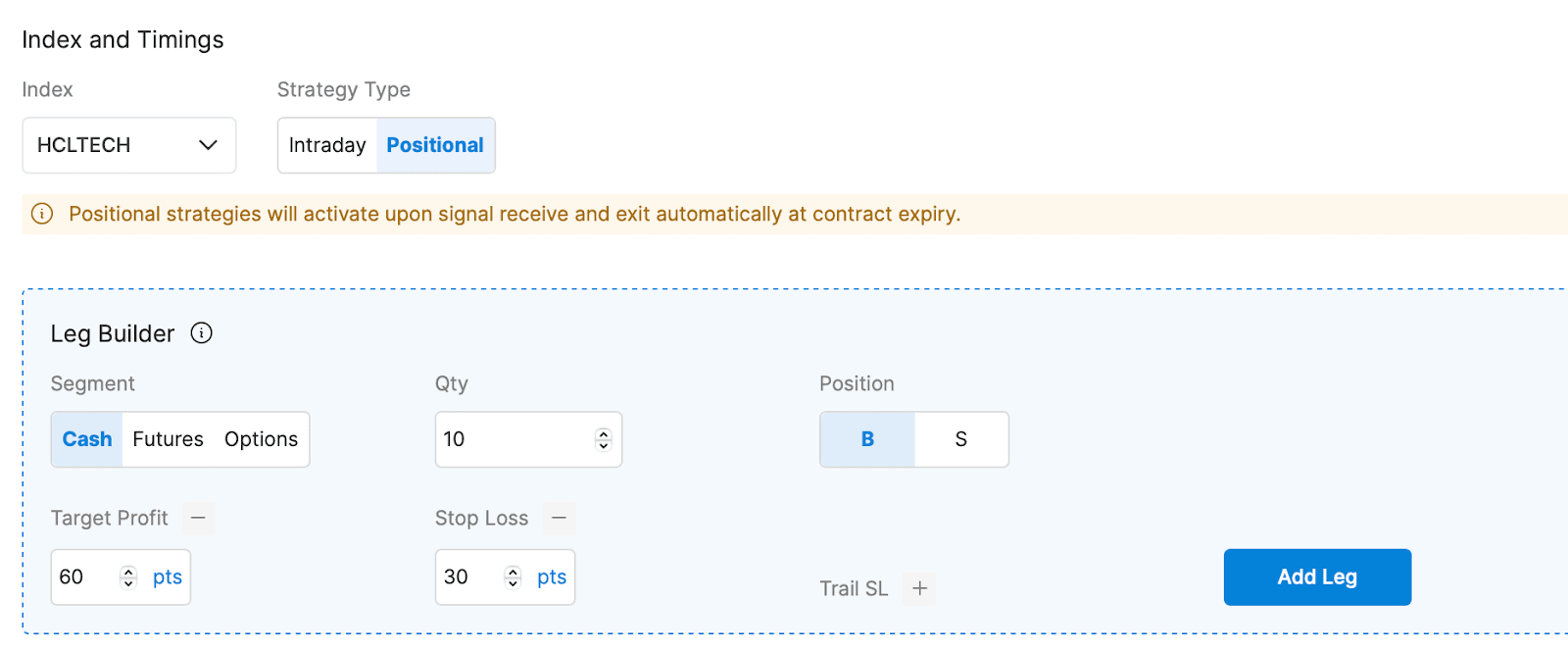
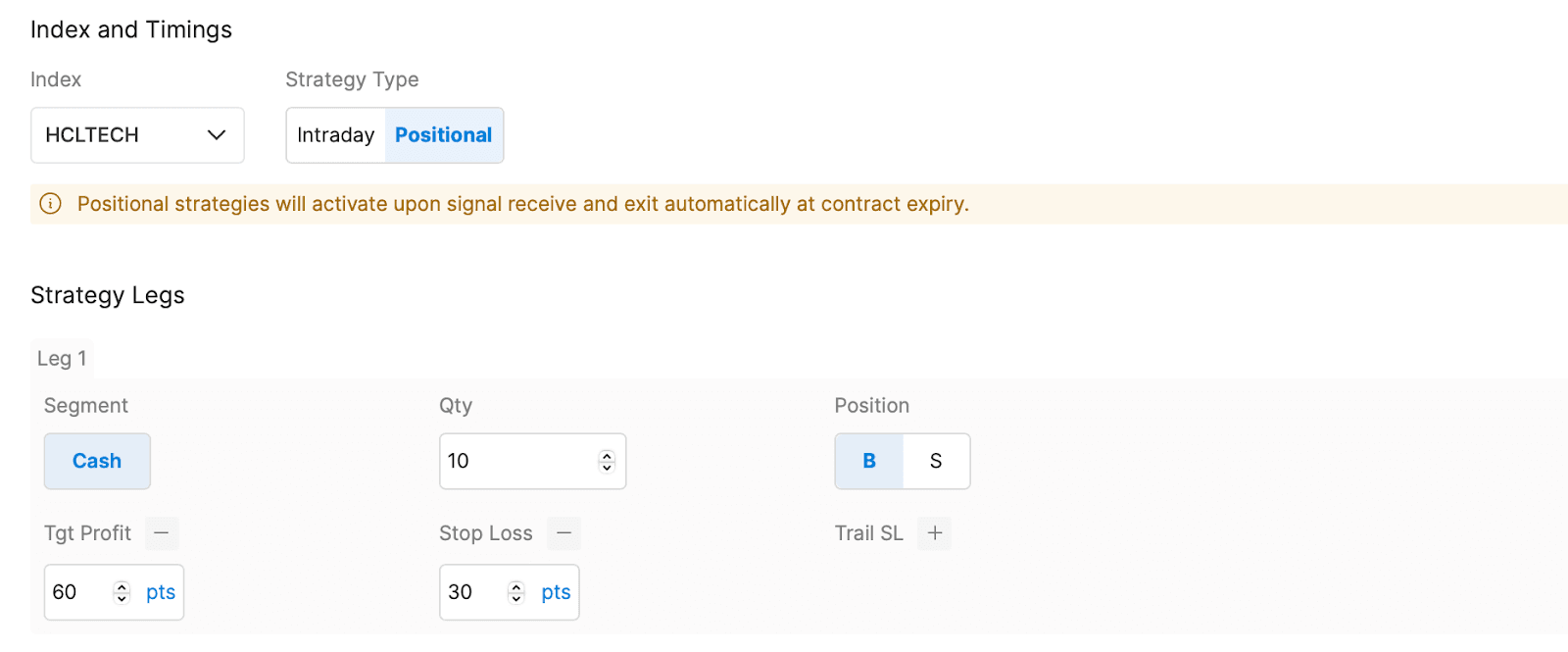
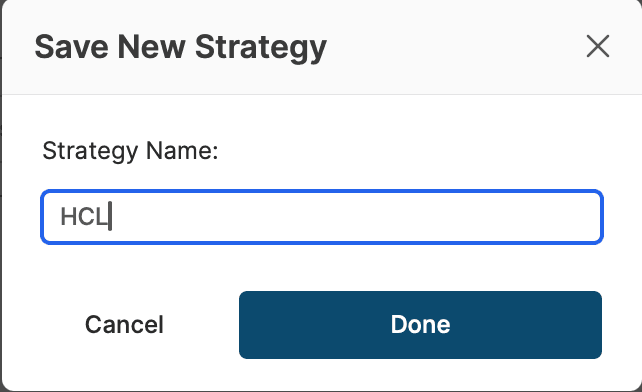
### **Step 3: Connect Chartink Alerts with AlgoTest Signals**
#### **Generate a Webhook URL**:
- Once the strategy is saved, you will receive a webhook url.
- Copy the webhook URL for your strategy.
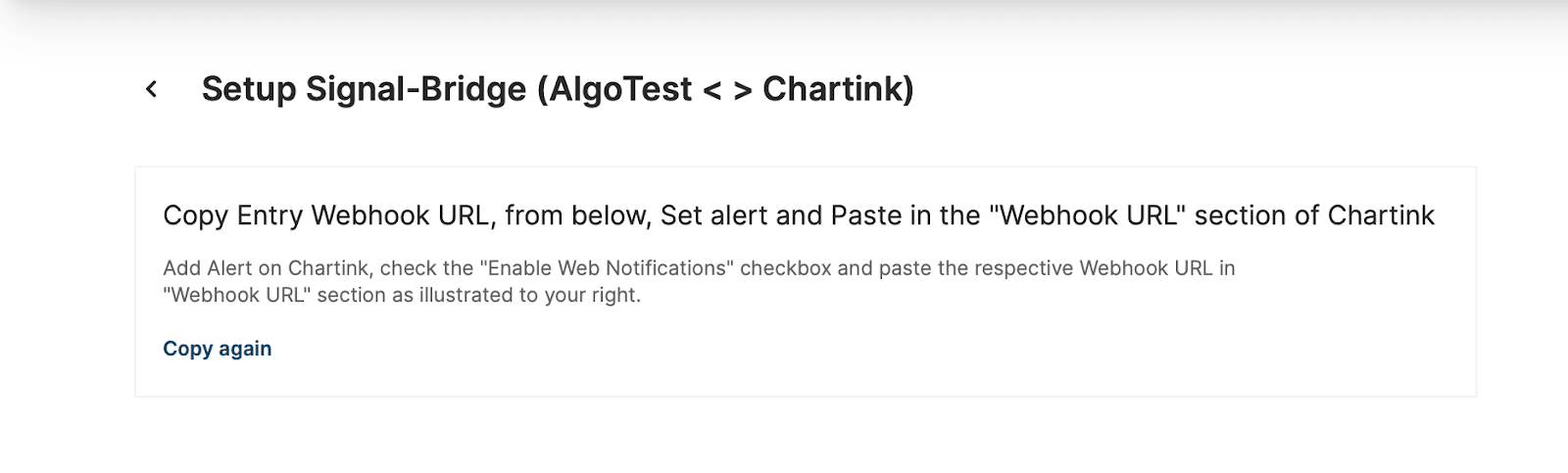
**Link the Webhook to Chartink Alerts**:
- In Chartink, navigate to your saved screener and click on "Create Alert."
- Paste the webhook URL in the alert settings.
- Save the alert.
- After Saving the alert click on “Start Listening” on AlgoTest.
- Your Signal is in listening mode now.

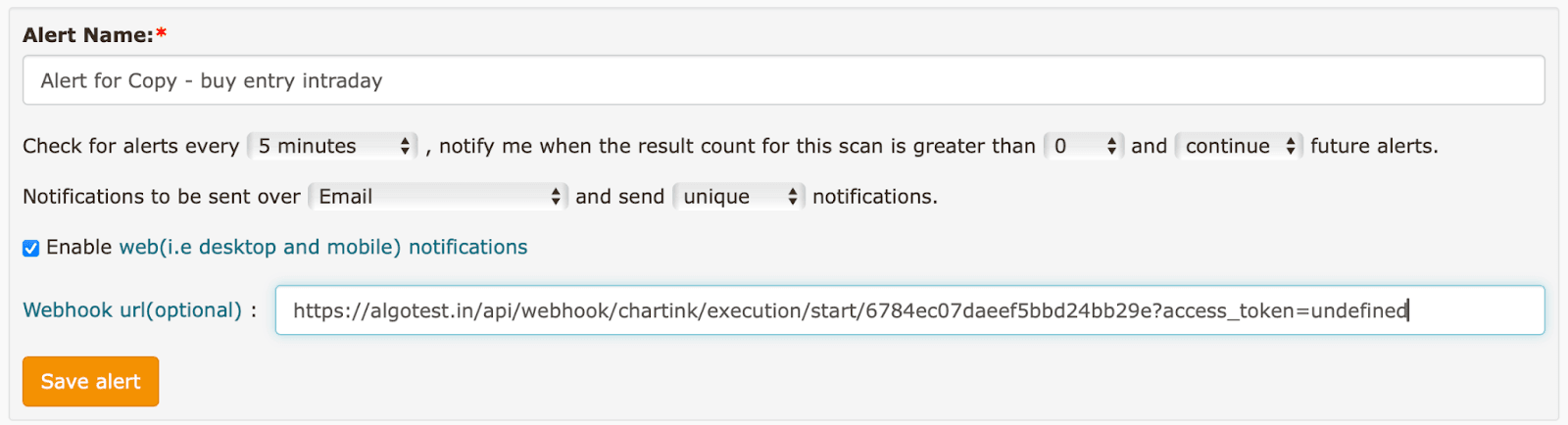

## **Step 4: Deploy Your Strategy in Live Markets**
- Once satisfied with the forward test results, deploy your strategy in the live market by moving the signals to Live Trade.
- Connect your Broker and setup Execution settings to start your Algo Trading.

## **Why Choose Chartink Premium**
Chartink's Premium Plan offers essential features for automation:
- Real-time data for scans and alerts.
- Flexible alert intervals (1/2/3/5 minutes, etc.).
- Notifications via SMS, email, and desktop/mobile.
- No coding required!
These features make it an ideal choice for seamless integration with AlgoTest Signals.
## **Requirements for Automation**
To use this setup, ensure the following prerequisites are met:
1. **Chartink Premium Plan** some text
- A premium plan is essential for creating alerts and running screeners with real-time data.
2. **AlgoTest Signal Plan** some text
- Activate the AlgoTest Signal plan to connect your strategy with Chartink alerts.
3. **Broker Connection with AlgoTest** some text
- Connect your broker to AlgoTest via the broker setup page.
This is not it.
### Here are a few strategies you should check out:
- [Strong Stocks](https://algotest.in/blog/automate-your-strong-stocks-strategy-using-chartink-and-algotest)
- [Perfect Sell (Short)](https://algotest.in/blog/automate-your-perfect-sell-short-using-chartink-and-algotest)
- [N7 Current Day](https://algotest.in/blog/automate-your-n7-current-day-using-chartink-and-algotest)
- [Morning Star Candlestick Pattern](https://algotest.in/blog/automate-your-morning-star-candlestick-pattern-using-chartink-and-algotest)
- [Intraday Sell](https://algotest.in/blog/automate-your-intraday-sell-using-chartink-and-algotest)
- [Bullish Engulf](https://algotest.in/blog/automate-your-bullish-engulf-using-chartink-and-algotest)
- [Profit Jump by 200%](https://algotest.in/blog/automate-your-profit-jump-by-200-using-chartink-and-algotest)
- [Large Cap Stocks](https://algotest.in/blog/automate-your-large-cap-stocks-using-chartink-and-algotest)
- [Potential Breakouts](https://algotest.in/blog/automate-your-potential-breakout-using-chartink-and-algotest)
- [Small Cap Stocks](https://algotest.in/blog/automate-your-small-cap-stocks-using-chartink-and-algotest)
- [Mid Cap Stocks](https://algotest.in/blog/automate-your-mid-cap-stocks-using-chartink-and-algotest)
- [Sales Jump by 200%](https://algotest.in/blog/automate-your-sales-jump-by-200-using-chartink-and-algotest)
- [Stock Screener open=high;open=low](https://algotest.in/blog/automate-your-stock-screener-open-high-open-low-using-chartink-and-algotest)
- [Stocks Below Book Value - Undervalued](https://algotest.in/blog/automate-your-stocks-below-book-value---undervalued-using-chartink-and-algotest)
- [Highest Earning Per Share](https://algotest.in/blog/automate-your-highest-earning-per-share-using-chartink-and-algotest)
- [Low Debt Companies](https://algotest.in/blog/automate-your-low-debt-companies-using-chartink-and-algotest)
- [Penny Stocks](https://algotest.in/blog/automate-your-penny-stocks-using-chartink-and-algotest)
- [52-week Low](https://algotest.in/blog/automate-your-52-week-low-using-chartink-and-algotest)
Thank you for choosing to trade with us.
---
This blog is powered by Superblog. Visit https://superblog.ai to know more.
---
## Automate Your “N7 Current Day” Using Chartink and AlgoTest
Author: AlgoTest
Author URL: https://algotest.in/blog/author/algotest/
Published: 2025-01-16
Category: Chartink
Category URL: https://algotest.in/blog/category/chartink/
URL: https://algotest.in/blog/automate-your-n7-current-day-using-chartink-and-algotest/
Automating your trading strategy can save time and eliminate the need to monitor the markets constantly. With [**Chartink**](http://www.charting.com) and [**AlgoTest**](http://www.algotest.in), you can set up your strategy to execute trades automatically.
In this guide, you will learn:
- How AlgoTest Signals work.
- Step-by-step instructions to create a Chartink screener and set it up for automation with AlgoTest.
- How to verify and deploy your strategy in live markets or test it using forward testing.
- The requirements for automation.
## **How AlgoTest Signals Work**
AlgoTest Signals allow you to automate your trades based on predefined conditions from Chartink. When a breakout condition is met in Chartink, an alert is sent to AlgoTest, which executes the trade on your broker terminal.
### **Key Benefits:**
- Eliminate manual trade execution.
- Consistency in trade execution based on your strategy logic.
- Saves time and reduces emotional decision-making.
## NR7 Current Day filters explanation:
1. Today's candle range (the difference between the daily high and daily low) is less than yesterday's candle range (the difference between the previous day's high and low). This indicates that today's price movement is smaller compared to yesterday's, suggesting a potential decrease in volatility or trading activity.
2. Today's candle range (high minus low) is less than the range from two days ago. This means that the difference between today's highest and lowest price is smaller than the difference between the highest and lowest price from two days ago. In percentage terms, if today's range is 10% less than the range from two days ago, it indicates a decrease in volatility or price movement compared to that previous day.
3. Today's candle range (high minus low) is less than the range from three days ago. This means that the difference between today's highest and lowest price is smaller than the difference between the highest and lowest price from three days ago, indicating a decrease in price volatility over the past few days.
4. Today's candle range (daily high minus daily low) is less than the range from four days ago (4 days ago high minus 4 days ago low). This indicates that the price movement today is smaller compared to the price movement observed four days ago, suggesting a period of lower volatility.
5. Today's candle range (daily high minus daily low) is less than the candle range from five days ago (5 days ago high minus 5 days ago low). This indicates that the price movement today is smaller compared to the price movement observed five days ago, suggesting a period of lower volatility.
6. Today's candle range (daily high minus daily low) is less than the range from 6 days ago (6 days ago high minus 6 days ago low). This means that the difference between today's highest and lowest price is smaller than it was 6 days ago, indicating a potential decrease in price volatility over the past week.
## **Step-by-Step Guide to Automate Your Strategy**
### **Step 1: Create Your Screener in Chartink**
#### **Access Chartink**:
- Go to [Chartink](https://chartink.in/) and log in to your account.
#### **Create a Watchlist**:
- Navigate to the "Watchlists" section.
- Create a new watchlist for the instruments you want to monitor.
- Search for instruments you want to monitor and click on ‘Add Selected’.
- Watchlist is created with desired instruments.

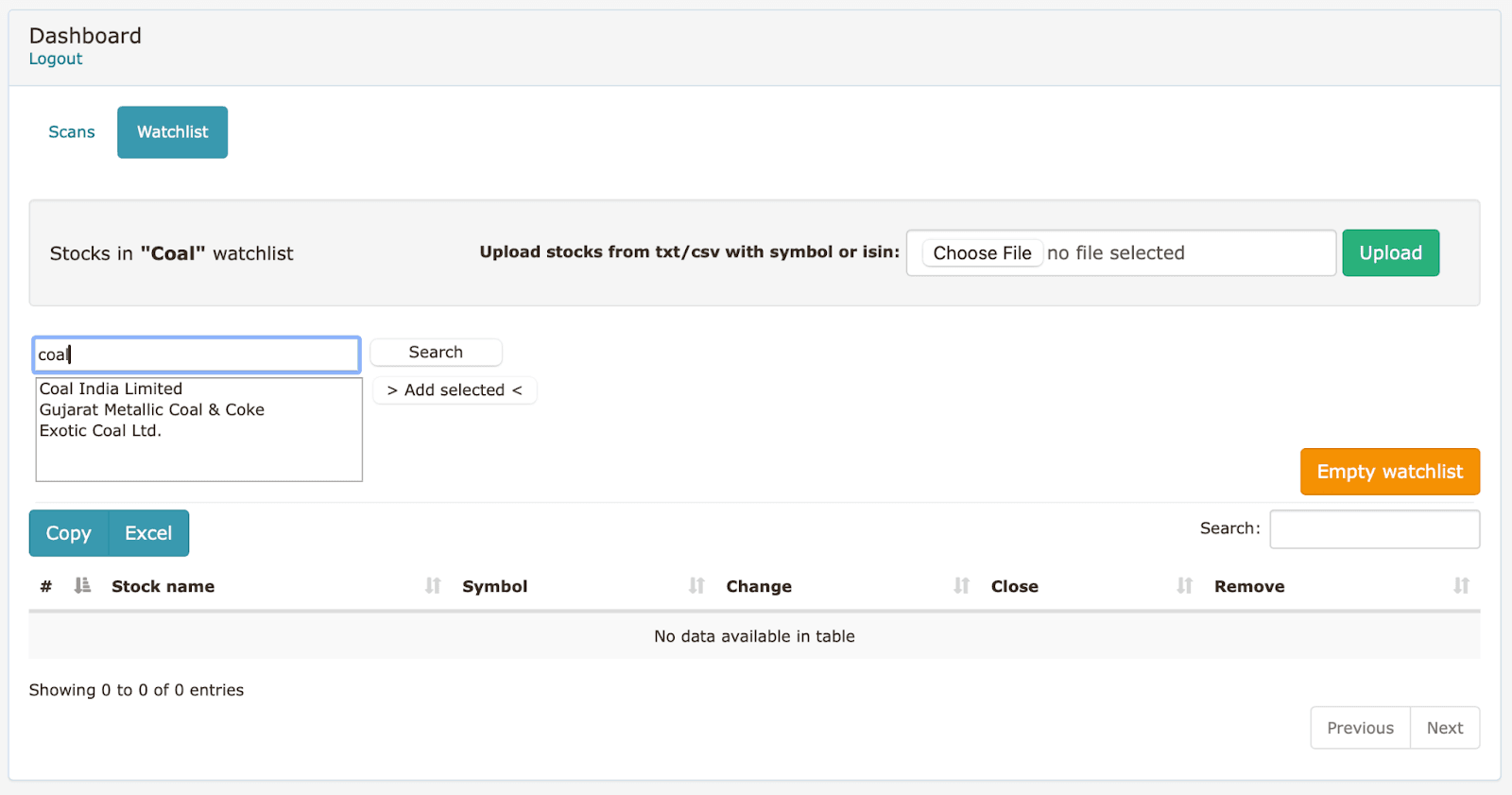
##
#### **Create a Screener**:
- Go to the "Screener" section and select any pre-existing template (e.g., "NR7 Current Day"). ( [https://chartink.com/screener/nr7-current-day](https://chartink.com/screener/nr7-current-day))
- Copy the Scan and then open it from the scans dashboard.
- Change the segment to your own watchlist of instruments. (e.g., “Coal India”)
- Now save the scan.
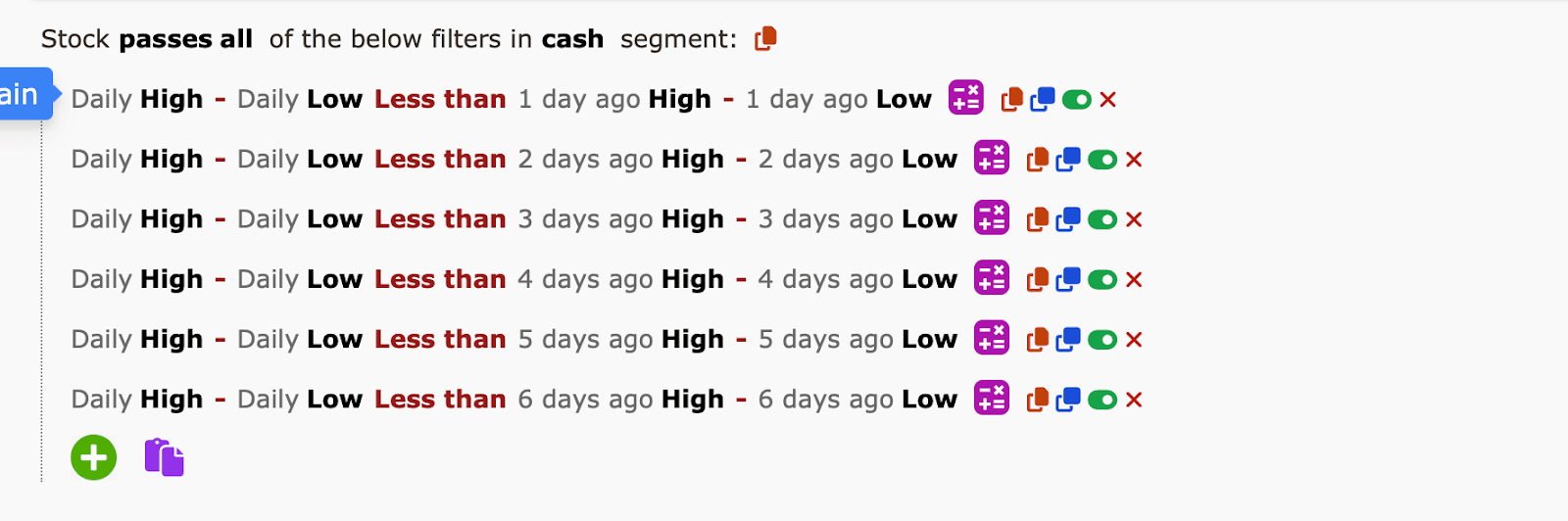
##
### **Step 2: Create Your Strategy in AlgoTest**
**Login to AlgoTest**:
- Visit [AlgoTest](https://algotest.in/) and log in. Go to Signals Dashboard.
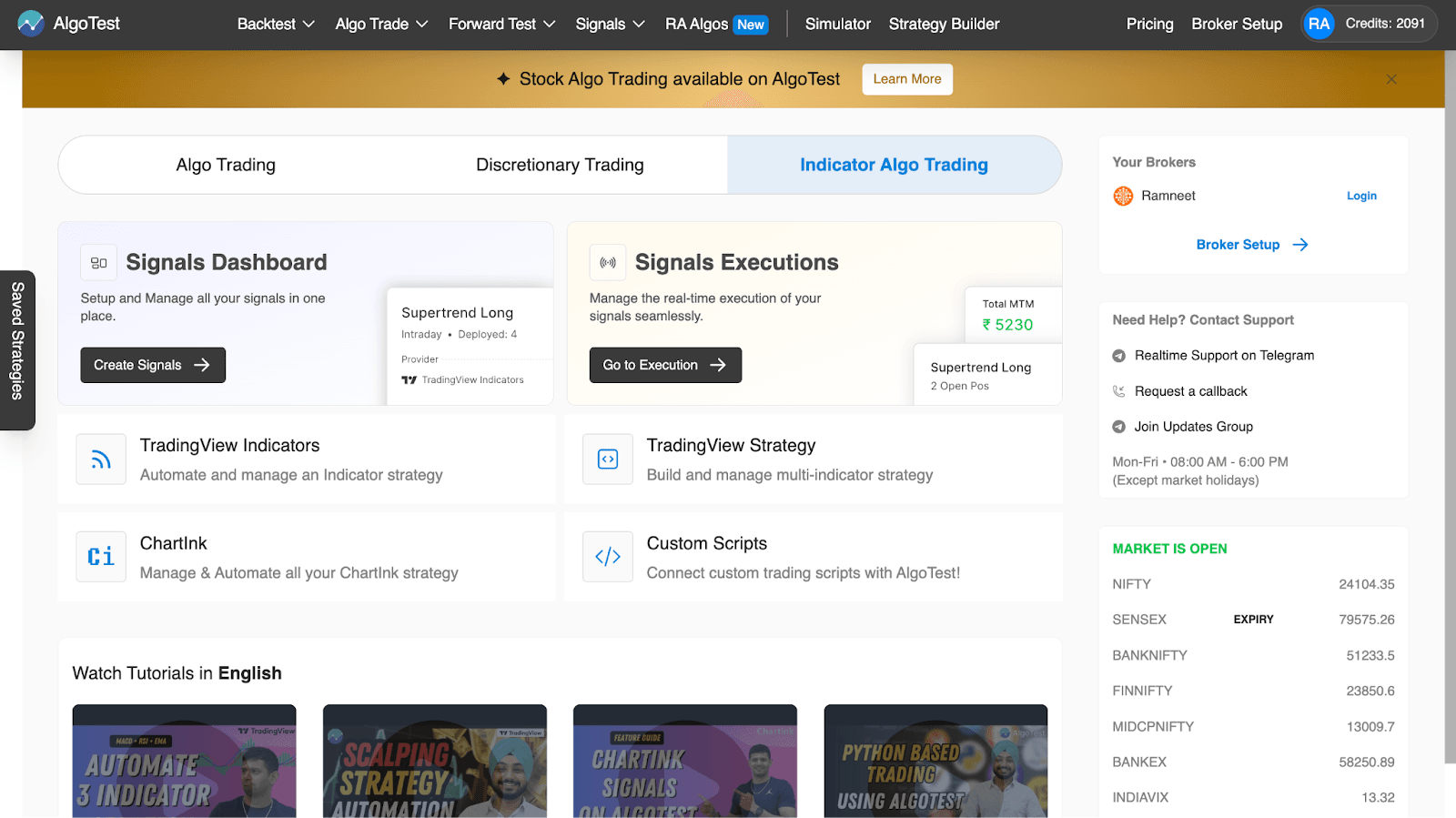
**Create a New Signal**:
- Go to the Signals dashboard page and create a “New Signal”.
- Select Chartink as Signal Provider.
- Select Forward Test as Execution Type.
- Let’s create a new strategy, strategy on AlgoTest means which trades to execute if the signal is generated.
- Go to the “Stocks” tab to create a stocks strategy.
- Select the index you want to trade in this strategy we will select “Coal India Limited”.
- Define the Trade you want to execute with Quantity, Position, Target and Stoploss.
- Save the strategy with a unique name.
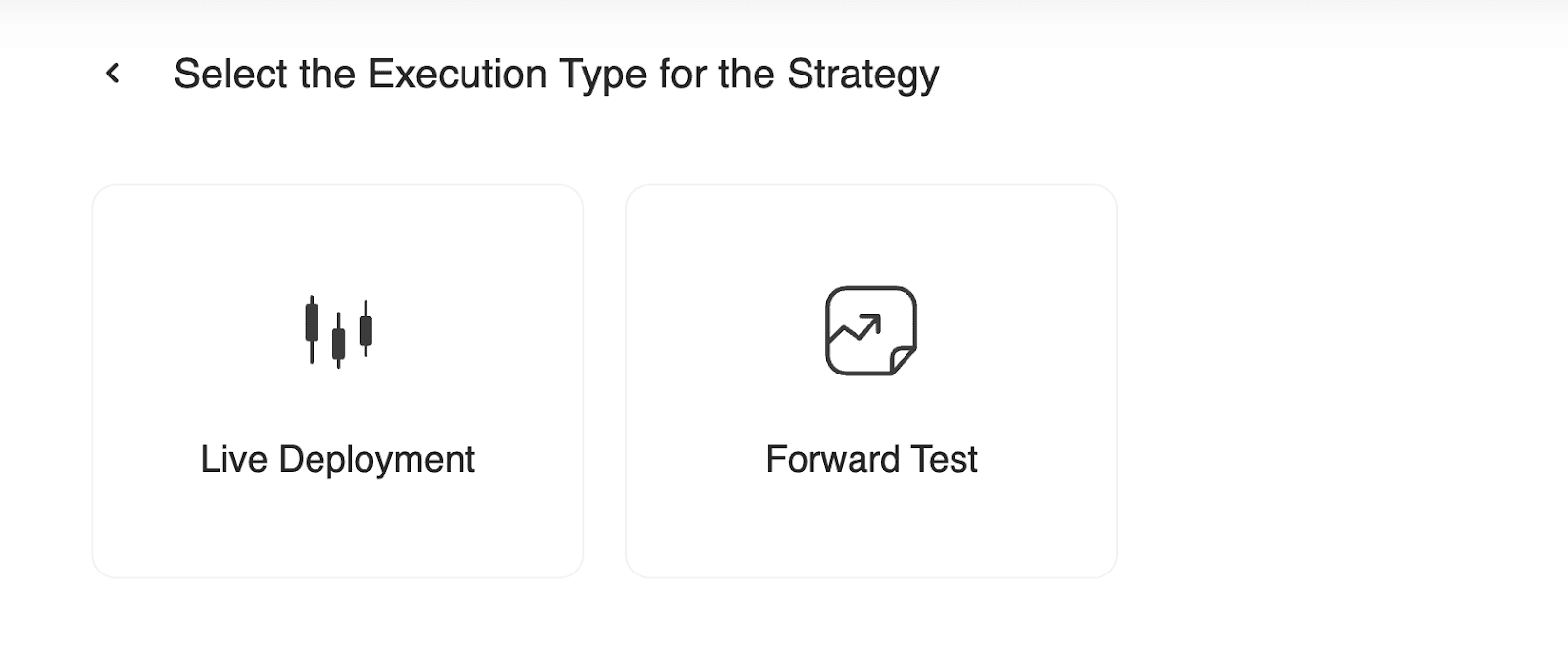


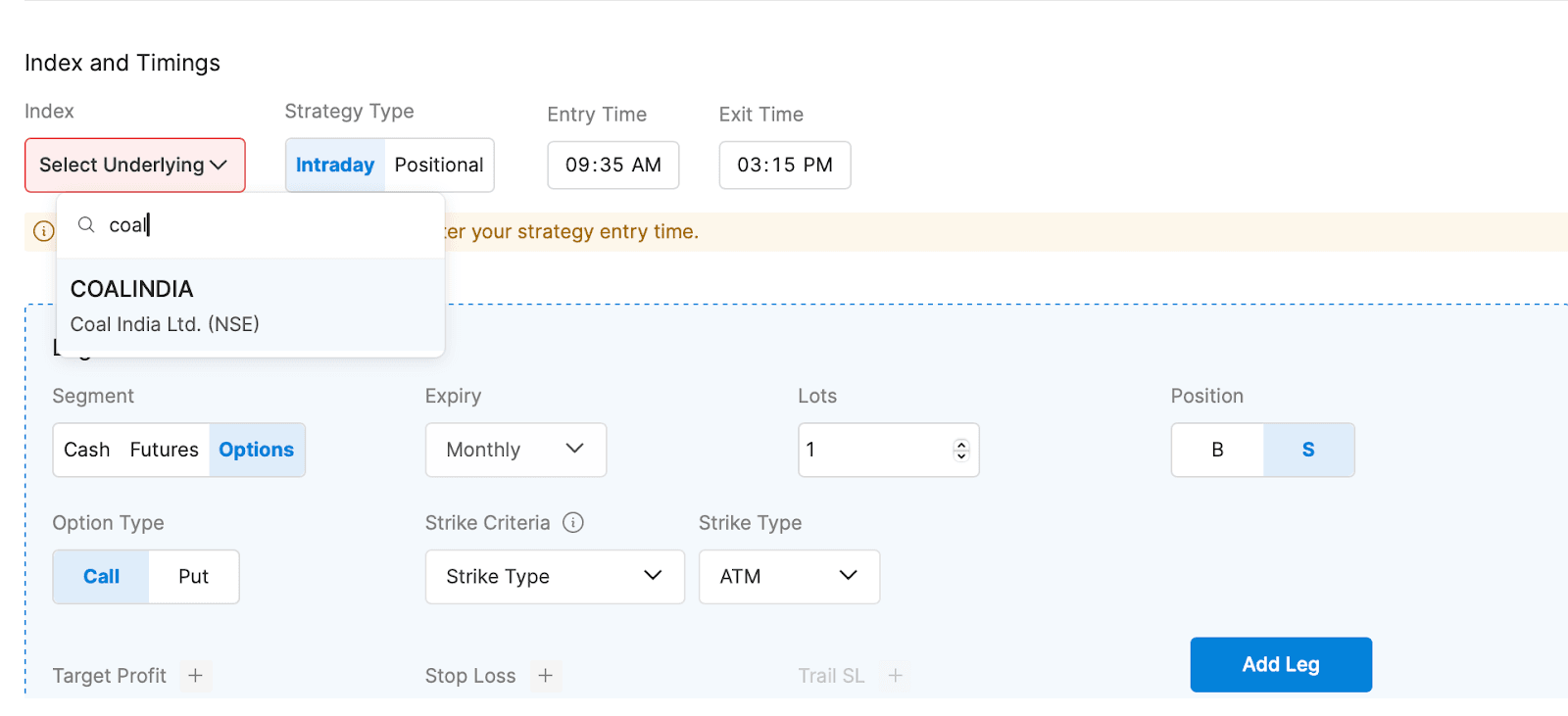
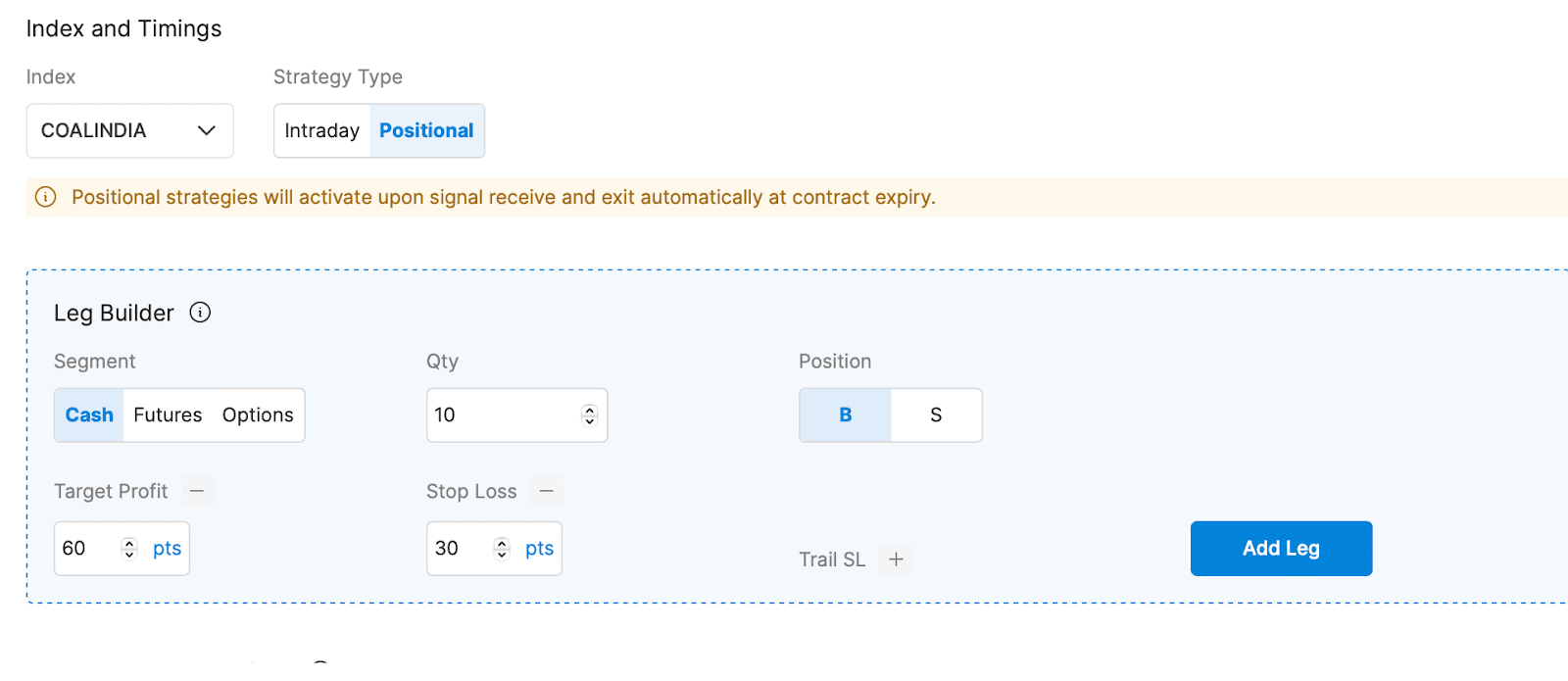
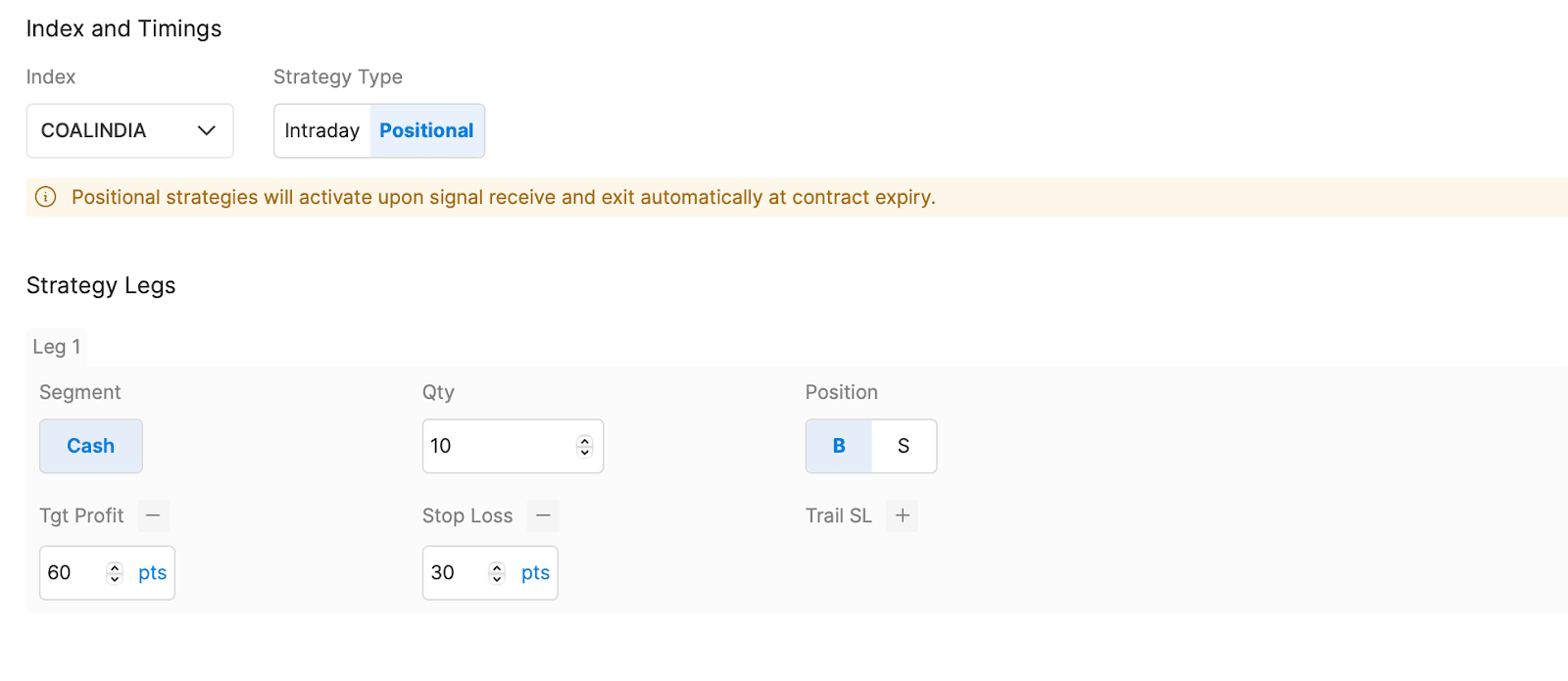
### **Step 3: Connect Chartink Alerts with AlgoTest Signals**
#### **Generate a Webhook URL**:
- Once the strategy is saved, you will receive a webhook url.
- Copy the webhook URL for your strategy.
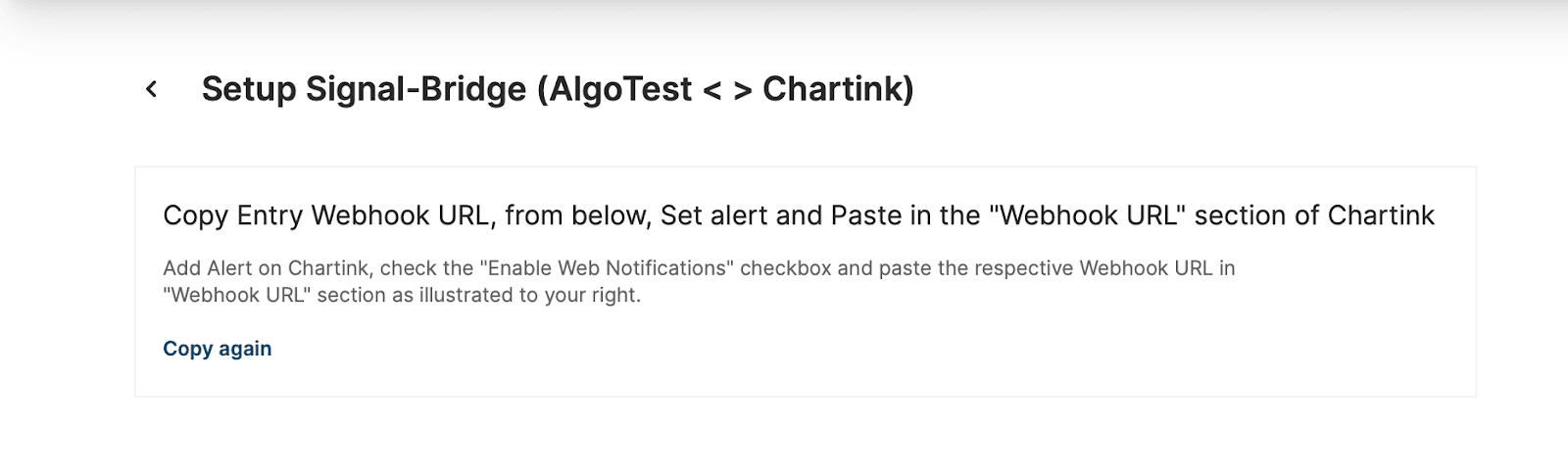
#### **Link the Webhook to Chartink Alerts**:
- In Chartink, navigate to your saved screener and click on "Create Alert."
- Paste the webhook URL in the alert settings.
- Save the alert.
- After Saving the alert click on “Start Listening” on AlgoTest.
- Your Signal is in listening mode now.

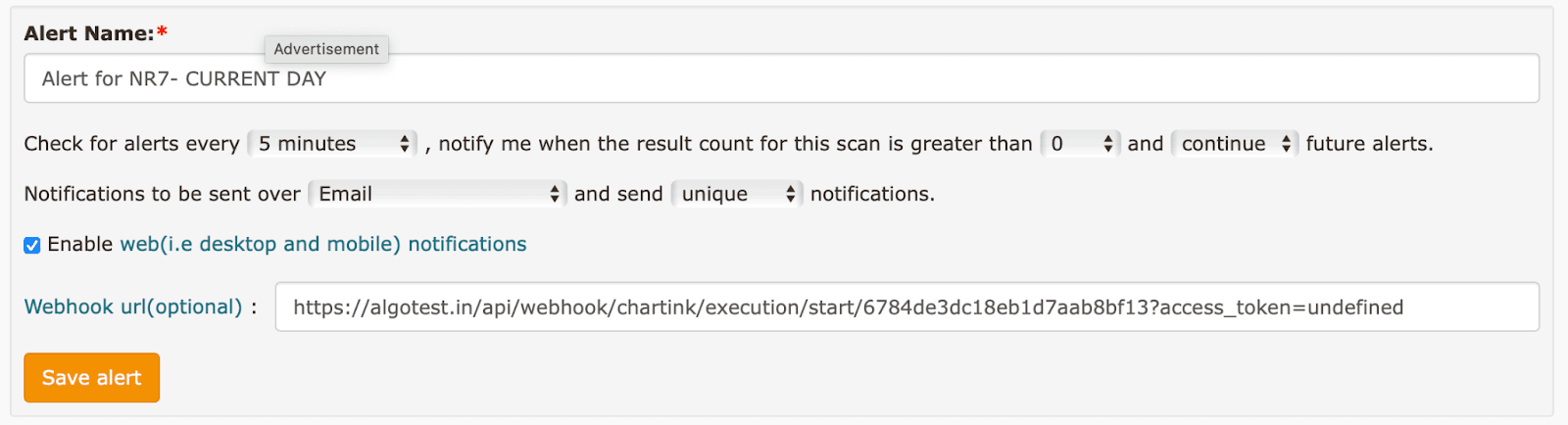
##

##
## **Step 4: Deploy Your Strategy in Live Markets**
- Once satisfied with the forward test results, deploy your strategy in the live market by moving the signals to Live Trade.
- Connect your Broker and setup Execution settings to start your Algo Trading.

## **Why Choose Chartink Premium**
Chartink's Premium Plan offers essential features for automation:
- Real-time data for scans and alerts.
- Flexible alert intervals (1/2/3/5 minutes, etc.).
- Notifications via SMS, email, and desktop/mobile.
- No coding required!
These features make it an ideal choice for seamless integration with AlgoTest Signals.
## **Requirements for Automation**
To use this setup, ensure the following prerequisites are met:
1. **Chartink Premium Plan** some text
- A premium plan is essential for creating alerts and running screeners with real-time data.
2. **AlgoTest Signal Plan** some text
- Activate the AlgoTest Signal plan to connect your strategy with Chartink alerts.
3. **Broker Connection with AlgoTest** some text
- Connect your broker to AlgoTest via the broker setup page.
This is not it.
Here are a few strategies you should check out:
- [Strong Stocks](https://algotest.in/blog/automate-your-strong-stocks-strategy-using-chartink-and-algotest)
- [Perfect Sell (Short)](https://algotest.in/blog/automate-your-perfect-sell-short-using-chartink-and-algotest)
- [Buy Entry Intraday](https://algotest.in/blog/automate-your-buy-entry-intrada-using-chartink-and-algotest)
- [Morning Star Candlestick Pattern](https://algotest.in/blog/automate-your-morning-star-candlestick-pattern-using-chartink-and-algotest)
- [Intraday Sell](https://algotest.in/blog/automate-your-intraday-sell-using-chartink-and-algotest)
- [Bullish Engulf](https://algotest.in/blog/automate-your-bullish-engulf-using-chartink-and-algotest)
- [Profit Jump by 200%](https://algotest.in/blog/automate-your-profit-jump-by-200-using-chartink-and-algotest)
- [Large Cap Stocks](https://algotest.in/blog/automate-your-large-cap-stocks-using-chartink-and-algotest)
- [Potential Breakouts](https://algotest.in/blog/automate-your-potential-breakout-using-chartink-and-algotest)
- [Small Cap Stocks](https://algotest.in/blog/automate-your-small-cap-stocks-using-chartink-and-algotest)
- [Mid Cap Stocks](https://algotest.in/blog/automate-your-mid-cap-stocks-using-chartink-and-algotest)
- [Sales Jump by 200%](https://algotest.in/blog/automate-your-sales-jump-by-200-using-chartink-and-algotest)
- [Stock Screener open=high;open=low](https://algotest.in/blog/automate-your-stock-screener-open-high-open-low-using-chartink-and-algotest)
- [Stocks Below Book Value - Undervalued](https://algotest.in/blog/automate-your-stocks-below-book-value---undervalued-using-chartink-and-algotest)
- [Highest Earning Per Share](https://algotest.in/blog/automate-your-highest-earning-per-share-using-chartink-and-algotest)
- [Low Debt Companies](https://algotest.in/blog/automate-your-low-debt-companies-using-chartink-and-algotest)
- [Penny Stocks](https://algotest.in/blog/automate-your-penny-stocks-using-chartink-and-algotest)
- [52-week Low](https://algotest.in/blog/automate-your-52-week-low-using-chartink-and-algotest)
Thank you for choosing to trade with us.
---
This blog is powered by Superblog. Visit https://superblog.ai to know more.
---
## Automate Your “PERFECT SELL (SHORT)” Using Chartink and AlgoTest
Author: AlgoTest
Author URL: https://algotest.in/blog/author/algotest/
Published: 2025-01-16
Category: Chartink
Category URL: https://algotest.in/blog/category/chartink/
URL: https://algotest.in/blog/automate-your-perfect-sell-short-using-chartink-and-algotest/
Automating your trading strategy can save time and eliminate the need to monitor the markets constantly. With [**Chartink**](http://www.charting.com) and [**AlgoTest**](http://www.algotest.in), you can set up your strategy to execute trades automatically.
In this guide, you will learn:
- How AlgoTest Signals work.
- Step-by-step instructions to create a Chartink screener and set it up for automation with AlgoTest.
- How to verify and deploy your strategy in live markets or test it using forward testing.
- The requirements for automation.
## **How AlgoTest Signals Work**
AlgoTest Signals allow you to automate your trades based on predefined conditions from Chartink. When a breakout condition is met in Chartink, an alert is sent to AlgoTest, which executes the trade on your broker terminal.
### **Key Benefits:**
- Eliminate manual trade execution.
- Consistency in trade execution based on your strategy logic.
- Saves time and reduces emotional decision-making.
## Perfect Sell (Short) filters explanation:
1. The daily closing price of the stock should be at least 5% higher than the maximum daily high price over the last 200 days. This means if the highest price in the last 200 days was ₹100, the closing price must be greater than ₹105 to meet this condition.
2. The maximum daily high price over the last 30 days is less than or equal to the maximum daily high price from 8 days ago. This means that the highest price reached in the last month is not greater than the highest price from a week ago, indicating a potential decrease or stagnation in price movement over this period.
3. The filter checks if the daily trading volume of the stock today is greater than the volume recorded three days ago. This means that today's volume must be higher than the volume from three days back, indicating increased trading activity.
4. The current daily high is less than the high from one day ago, indicating a decrease in the stock's peak price. This means the stock has not reached as high a price today compared to yesterday, reflecting a negative change of 0% or more in its maximum value.
## **Step-by-Step Guide to Automate Your Strategy**
### **Step 1: Create Your Screener in Chartink**
**Access Chartink**:some text
- Go to [Chartink](https://chartink.in/) and log in to your account.
**Create a Watchlist**:some text
- Navigate to the "Watchlists" section.
- Create a new watchlist for the instruments you want to monitor.
- Search for instruments you want to monitor and click on ‘Add Selected’.
- Watchlist is created with desired instruments.

**Create a Screener**:
- Go to the "Screener" section and select any pre-existing template (e.g., " [PERFECT SELL (SHORT](https://chartink.com/screener/perfect-sell-short))").
- Copy the Scan and then open it from the scans dashboard.
- Change the segment to your own watchlist of instruments. (e.g., “Apollo Hospitals Enterprise Limited”)
- Now save the scan.
### **Step 2: Create Your Strategy in AlgoTest**
**Login to AlgoTest**:
- Visit [AlgoTest](https://algotest.in/) and log in. Go to Signals Dashboard.
**Create a New Signal**:
- Go to the Signals dashboard page and create a “New Signal”.
- Select Chartink as Signal Provider.
- Select Forward Test as Execution Type.
- Let’s create a new strategy, strategy on AlgoTest means which trades to execute if the signal is generated.
- Go to the “Stocks” tab to create a stocks strategy.
- Select the index you want to trade in this strategy we will select “Adani Enterprises Limited”.
- Define the Trade you want to execute with Quantity, Position, Target and Stoploss.
- Save the strategy with a unique name.
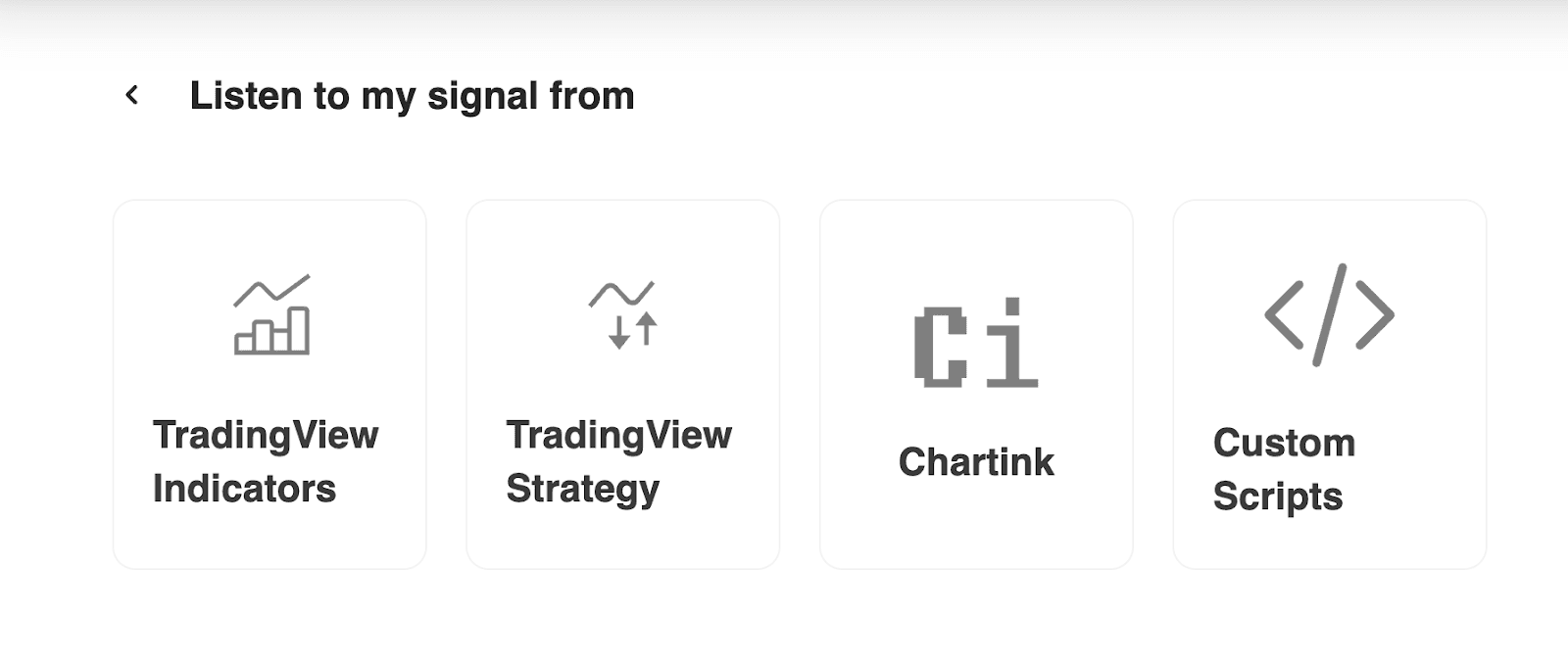
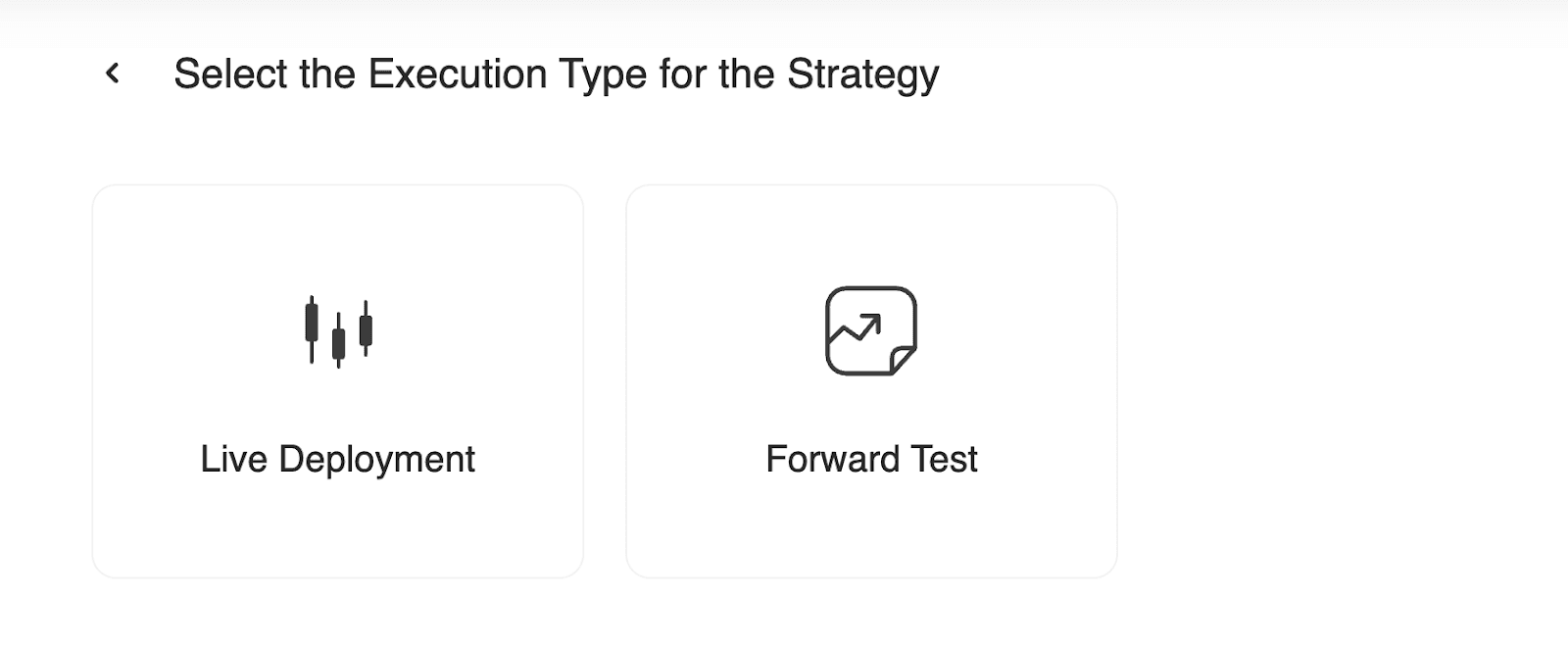


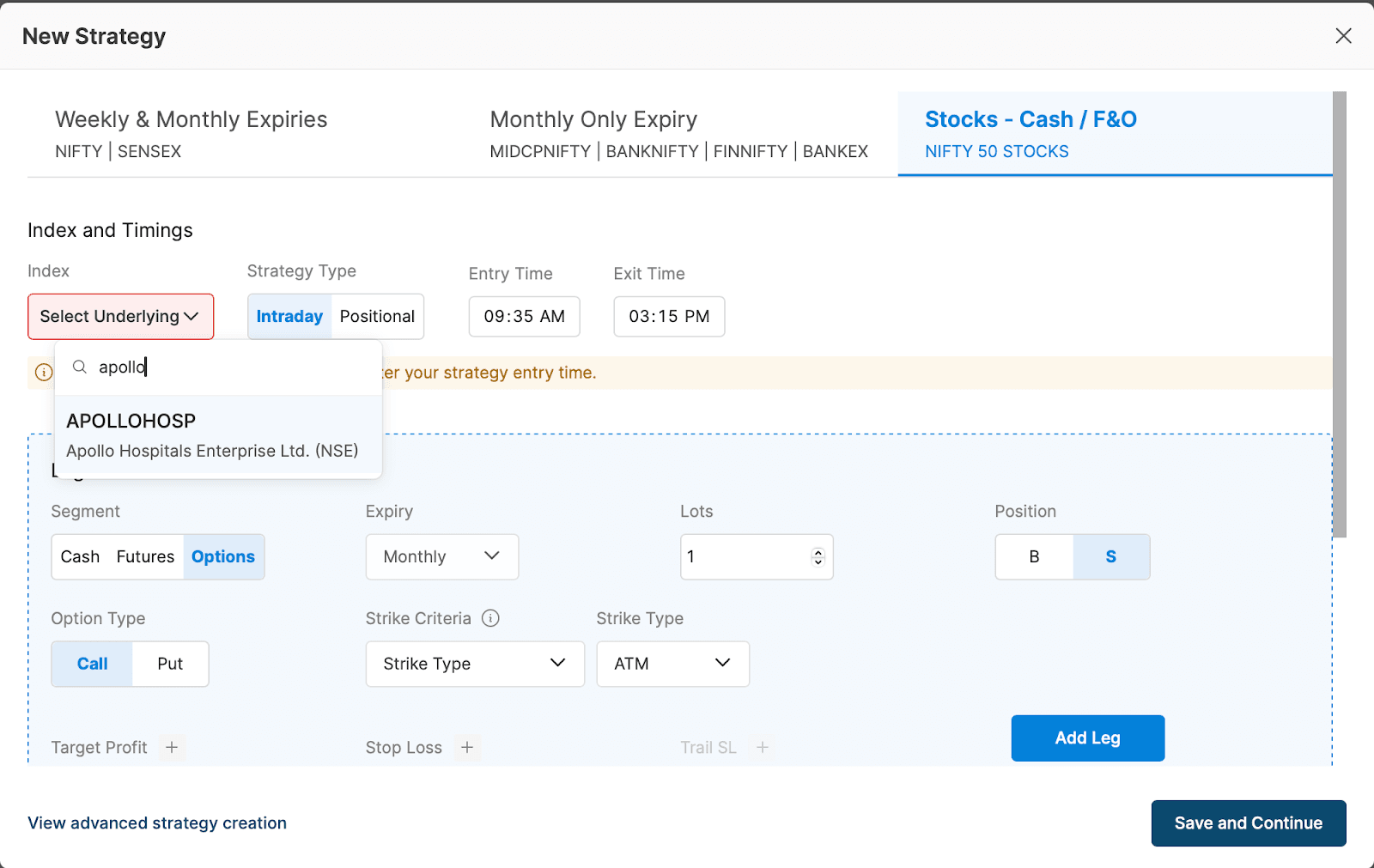
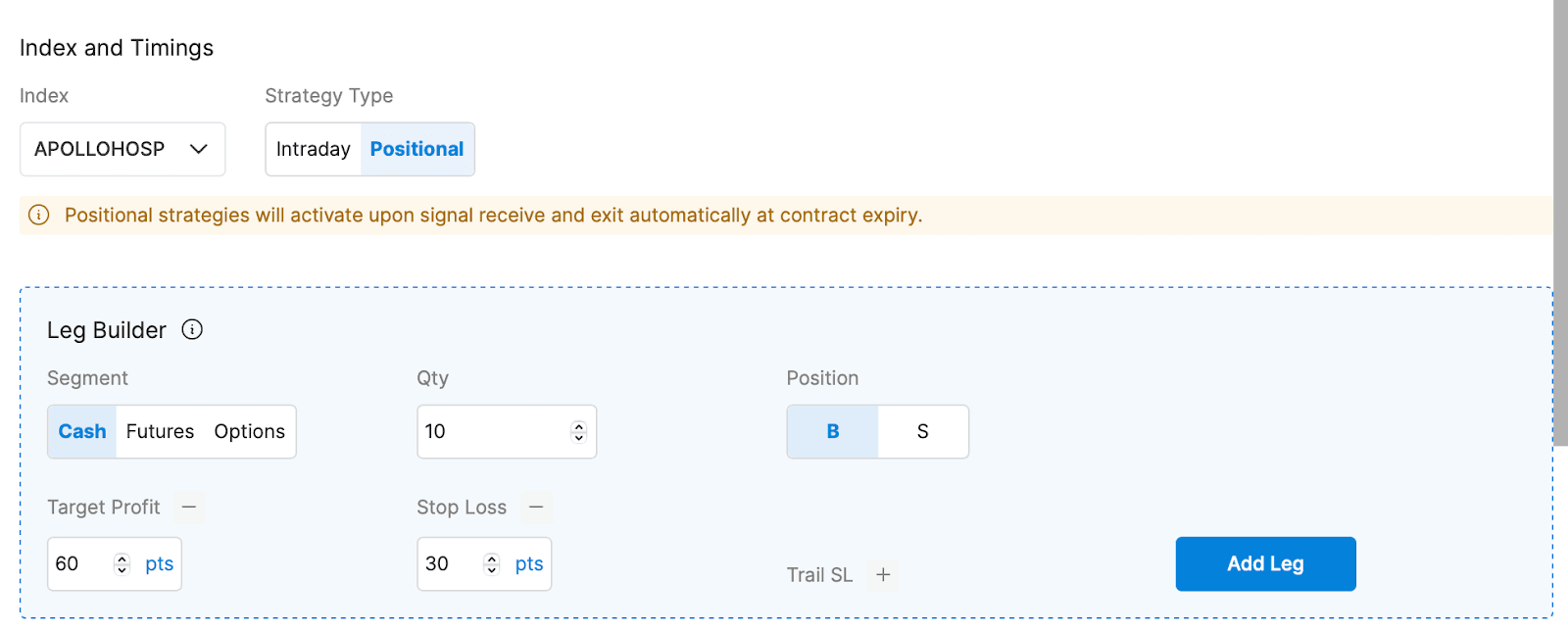
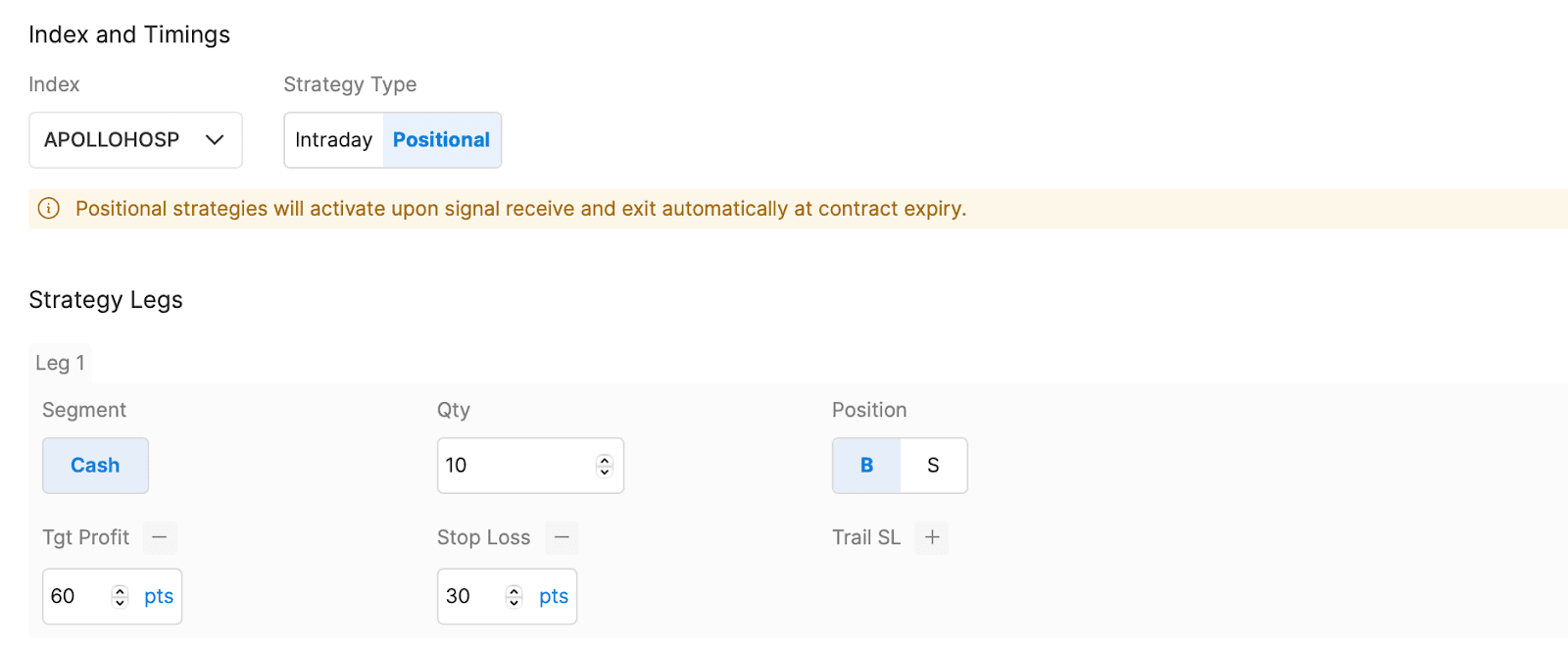
### **Step 3: Connect Chartink Alerts with AlgoTest Signals**
#### **Generate a Webhook URL**:
- Once the strategy is saved, you will receive a webhook url.
- Copy the webhook URL for your strategy.
#### **Link the Webhook to Chartink Alerts**:
- In Chartink, navigate to your saved screener and click on "Create Alert."
- Paste the webhook URL in the alert settings.
- Save the alert.
- After Saving the alert click on “Start Listening” on AlgoTest.
- Your Signal is in listening mode now.

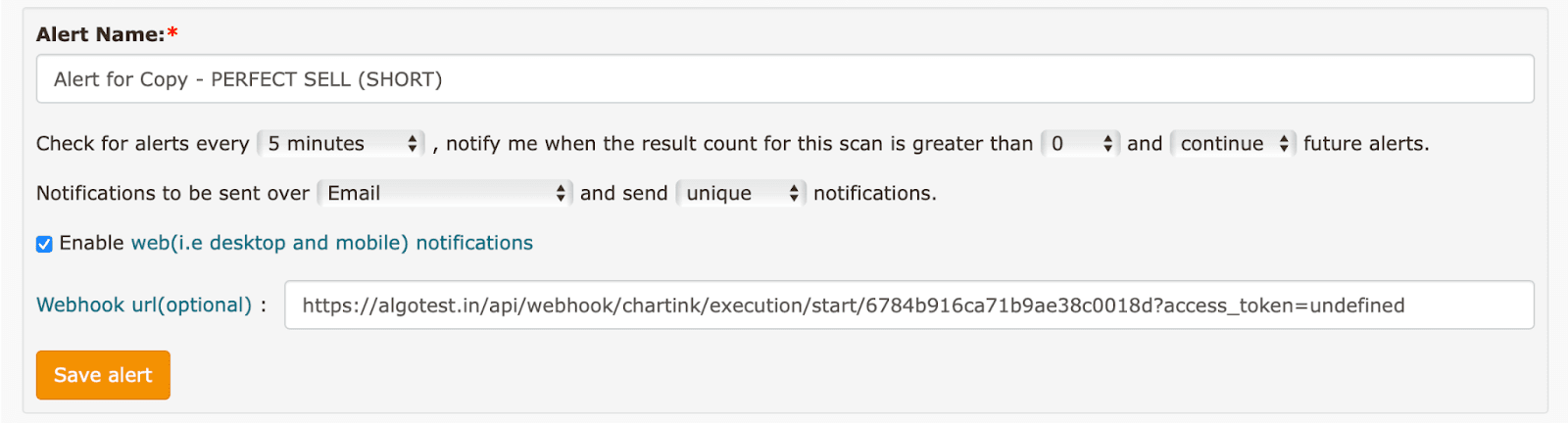

### **Step 4: Deploy Your Strategy in Live Markets**
- Once satisfied with the forward test results, deploy your strategy in the live market by moving the signals to Live Trade.
- Connect your Broker and setup Execution settings to start your Algo Trading.

## **Why Choose Chartink Premium**
Chartink's Premium Plan offers essential features for automation:
- Real-time data for scans and alerts.
- Flexible alert intervals (1/2/3/5 minutes, etc.).
- Notifications via SMS, email, and desktop/mobile.
- No coding required!
These features make it an ideal choice for seamless integration with AlgoTest Signals.
## **Requirements for Automation**
To use this setup, ensure the following prerequisites are met:
1. **Chartink Premium Plan** some text
- A premium plan is essential for creating alerts and running screeners with real-time data.
2. **AlgoTest Signal Plan** some text
- Activate the AlgoTest Signal plan to connect your strategy with Chartink alerts.
3. **Broker Connection with AlgoTest** some text
- Connect your broker to AlgoTest via the broker setup page.
This is not it.
Here are a few strategies you should check out:
- [Strong Stocks](https://algotest.in/blog/automate-your-strong-stocks-strategy-using-chartink-and-algotest)
- [N7 Current Day](https://algotest.in/blog/automate-your-n7-current-day-using-chartink-and-algotest)
- [Buy Entry Intraday](https://algotest.in/blog/automate-your-buy-entry-intrada-using-chartink-and-algotest)
- [Morning Star Candlestick Pattern](https://algotest.in/blog/automate-your-morning-star-candlestick-pattern-using-chartink-and-algotest)
- [Intraday Sell](https://algotest.in/blog/automate-your-intraday-sell-using-chartink-and-algotest)
- [Bullish Engulf](https://algotest.in/blog/automate-your-bullish-engulf-using-chartink-and-algotest)
- [Profit Jump by 200%](https://algotest.in/blog/automate-your-profit-jump-by-200-using-chartink-and-algotest)
- [Large Cap Stocks](https://algotest.in/blog/automate-your-large-cap-stocks-using-chartink-and-algotest)
- [Potential Breakouts](https://algotest.in/blog/automate-your-potential-breakout-using-chartink-and-algotest)
- [Small Cap Stocks](https://algotest.in/blog/automate-your-small-cap-stocks-using-chartink-and-algotest)
- [Mid Cap Stocks](https://algotest.in/blog/automate-your-mid-cap-stocks-using-chartink-and-algotest)
- [Sales Jump by 200%](https://algotest.in/blog/automate-your-sales-jump-by-200-using-chartink-and-algotest)
- [Stock Screener open=high;open=low](https://algotest.in/blog/automate-your-stock-screener-open-high-open-low-using-chartink-and-algotest)
- [Stocks Below Book Value - Undervalued](https://algotest.in/blog/automate-your-stocks-below-book-value---undervalued-using-chartink-and-algotest)
- [Highest Earning Per Share](https://algotest.in/blog/automate-your-highest-earning-per-share-using-chartink-and-algotest)
- [Low Debt Companies](https://algotest.in/blog/automate-your-low-debt-companies-using-chartink-and-algotest)
- [Penny Stocks](https://algotest.in/blog/automate-your-penny-stocks-using-chartink-and-algotest)
- [52-week Low](https://algotest.in/blog/automate-your-52-week-low-using-chartink-and-algotest)
Thank you for choosing to trade with us.
---
This blog is powered by Superblog. Visit https://superblog.ai to know more.
---
## Automate Your “Strong Stocks” Strategy Using Chartink and AlgoTest
Author: AlgoTest
Author URL: https://algotest.in/blog/author/algotest/
Published: 2025-01-16
Category: Chartink
Category URL: https://algotest.in/blog/category/chartink/
URL: https://algotest.in/blog/automate-your-strong-stocks-strategy-using-chartink-and-algotest/
Automating your trading strategy can save time and eliminate the need to monitor the markets constantly. With [**Chartink**](http://www.charting.com) and [**AlgoTest**](http://www.algotest.in), you can set up your strategy to execute trades automatically.
In this guide, you will learn:
- How AlgoTest Signals work.
- Step-by-step instructions to create a Chartink screener and set it up for automation with AlgoTest.
- How to verify and deploy your strategy in live markets or test it using forward testing.
- The requirements for automation.
## **How AlgoTest Signals Work**
AlgoTest Signals allow you to automate your trades based on predefined conditions from Chartink. When a breakout condition is met in Chartink, an alert is sent to AlgoTest, which executes the trade on your broker terminal.
### **Key Benefits:**
- Eliminate manual trade execution.
- Consistency in trade execution based on your strategy logic.
- Saves time and reduces emotional decision-making.
## Strong Stocks filters explanation:
- The filter checks if the current daily closing price of the stock is higher than the closing price from the previous day. This indicates that the stock has gained value compared to the last trading day, reflecting a positive price movement.
- The filter checks if the closing price of the stock one day ago is higher than the closing price two days ago. This means that the stock has increased in value from two days ago to one day ago, indicating a positive change in price over that period.
- The filter checks if the closing price of the stock two days ago is greater than the closing price three days ago. This means that the stock's price has increased over that period, indicating a positive change in value. For example, if the closing price two days ago was ₹100 and three days ago was ₹90, this represents an increase of approximately 11.11%.
- The filter checks if the closing price of the stock three days ago is greater than the closing price four days ago, indicating a positive change in the stock's value over that period. This means that the stock's price has increased by a certain percentage from four days ago to three days ago.
- The daily closing price of the stock is greater than 90 Indian Rupees.
## **Step-by-Step Guide to Automate Your Strategy**
### **Step 1: Create Your Screener in Chartink**
**Access Chartink**:
- Go to [Chartink](https://chartink.in/) and log in to your account.
**Create a Watchlist**:
- Navigate to the "Watchlists" section.
- Create a new watchlist for the instruments you want to monitor.
- Search for instruments you want to monitor and click on ‘Add Selected’.
- Watchlist is created with desired instruments.

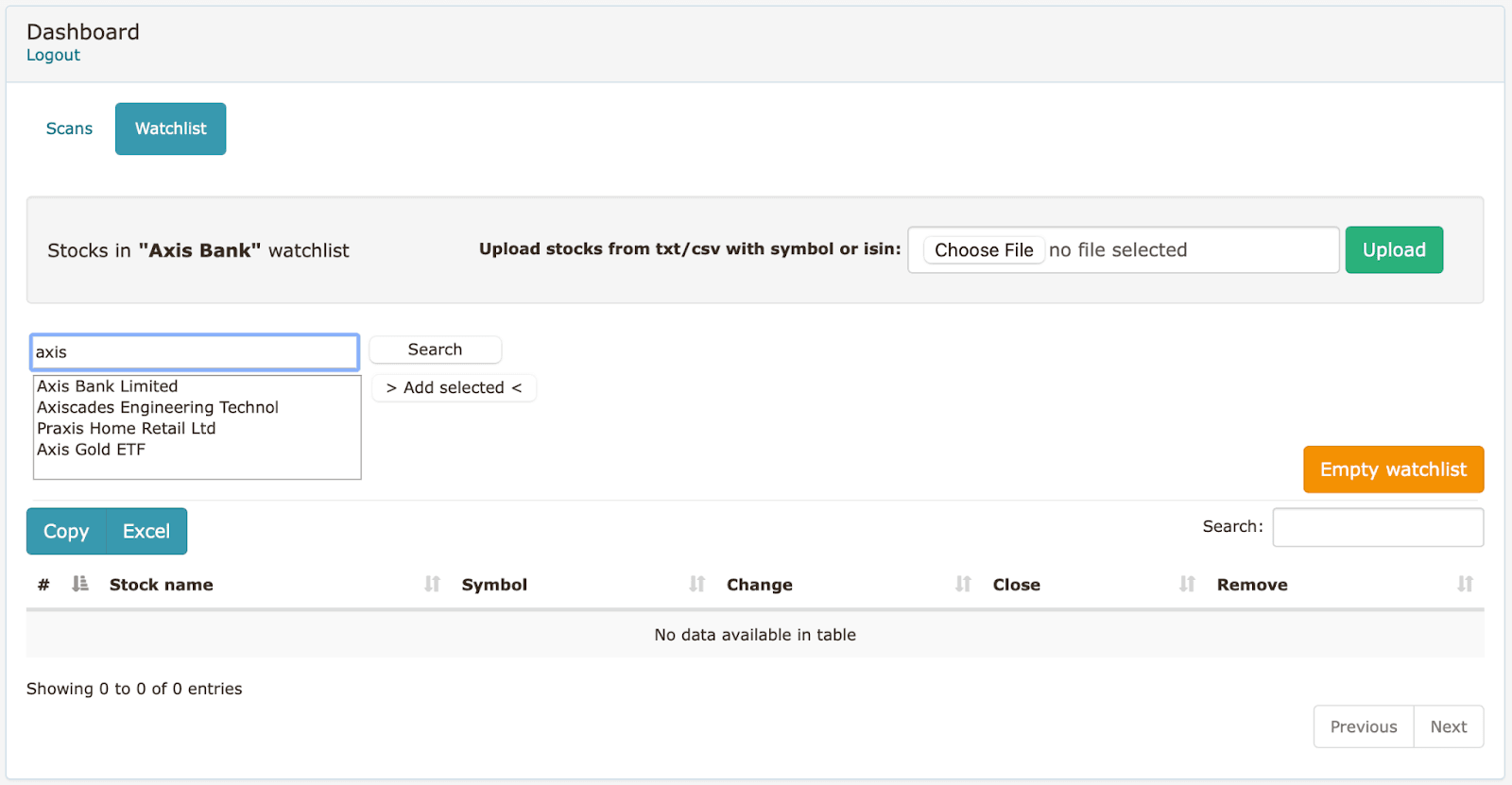
**Create a Screener**:
- Go to the "Screener" section and select any pre-existing template (e.g., " [Strong Stocks](https://chartink.com/screener/strong-stocks)").
- Copy the Scan and then open it from the scans dashboard.
- Change the segment to your own watchlist of instruments. (e.g., “Axis Bank”)
- Now save the scan.
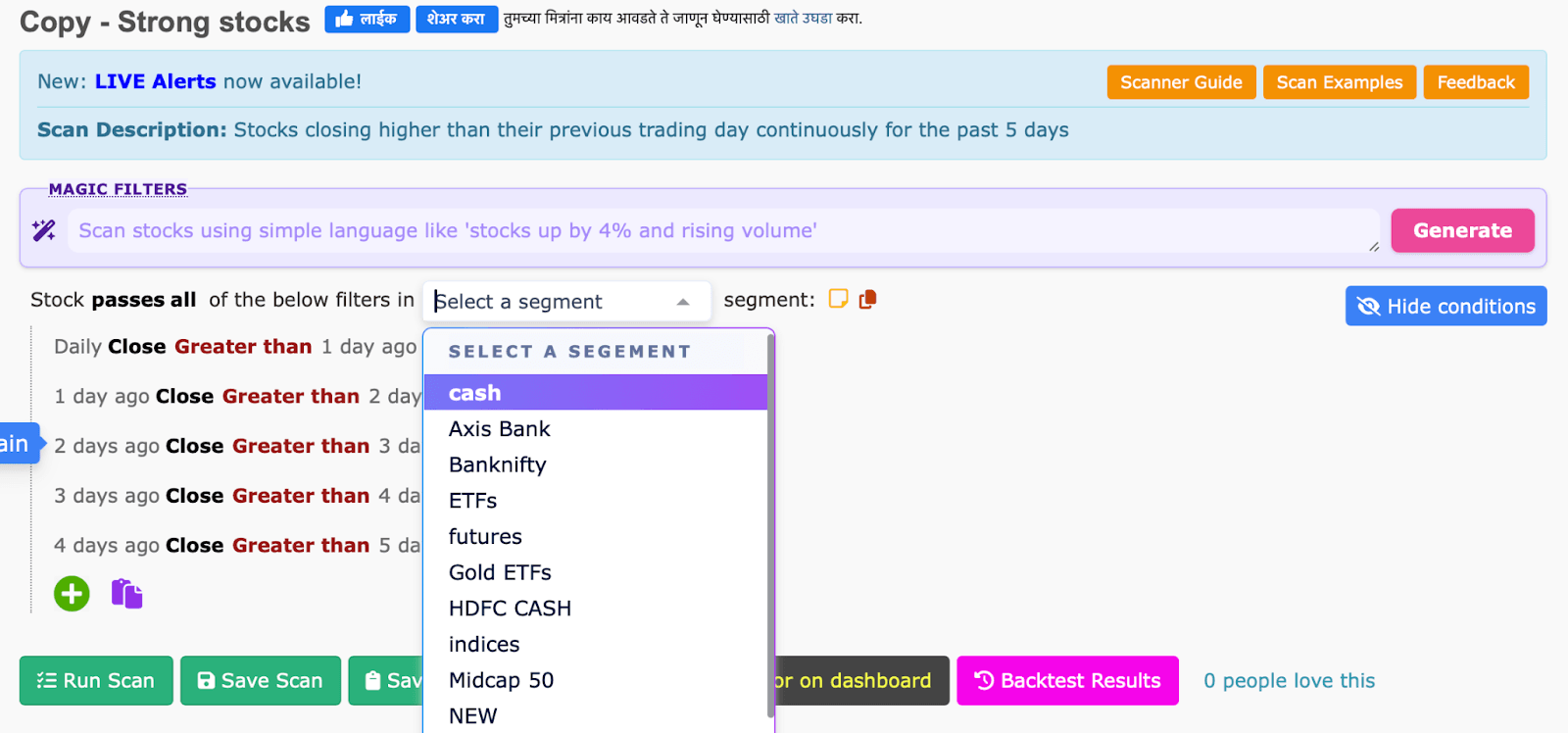
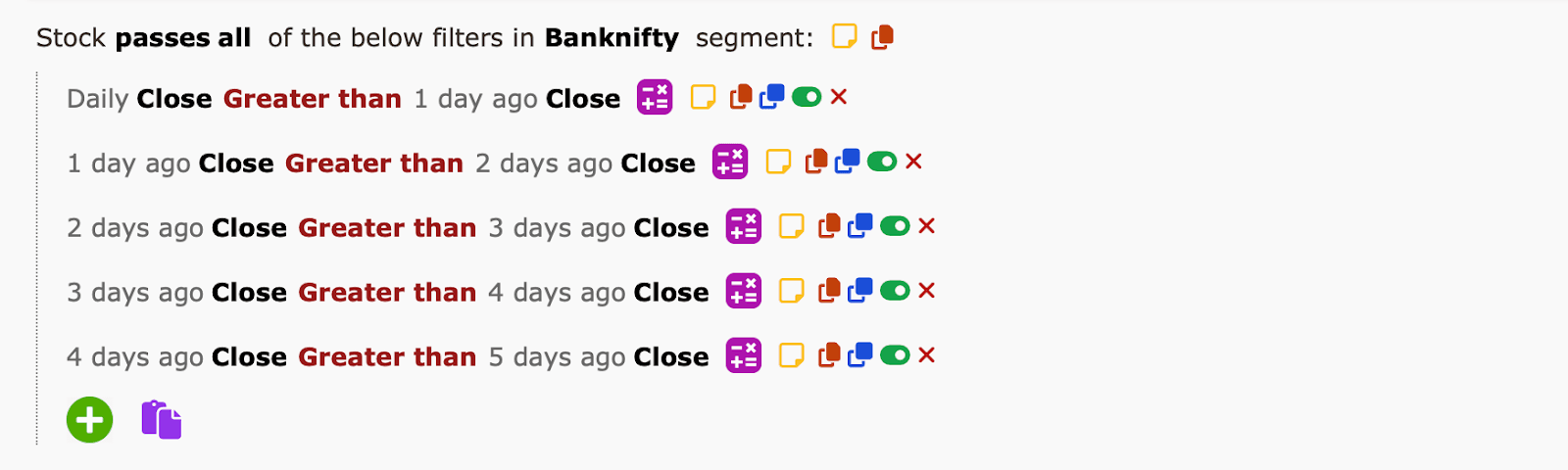
### **Step 2: Create Your Strategy in AlgoTest**
**Login to AlgoTest**:
- Visit [AlgoTest](https://algotest.in/) and log in. Go to Signals Dashboard.
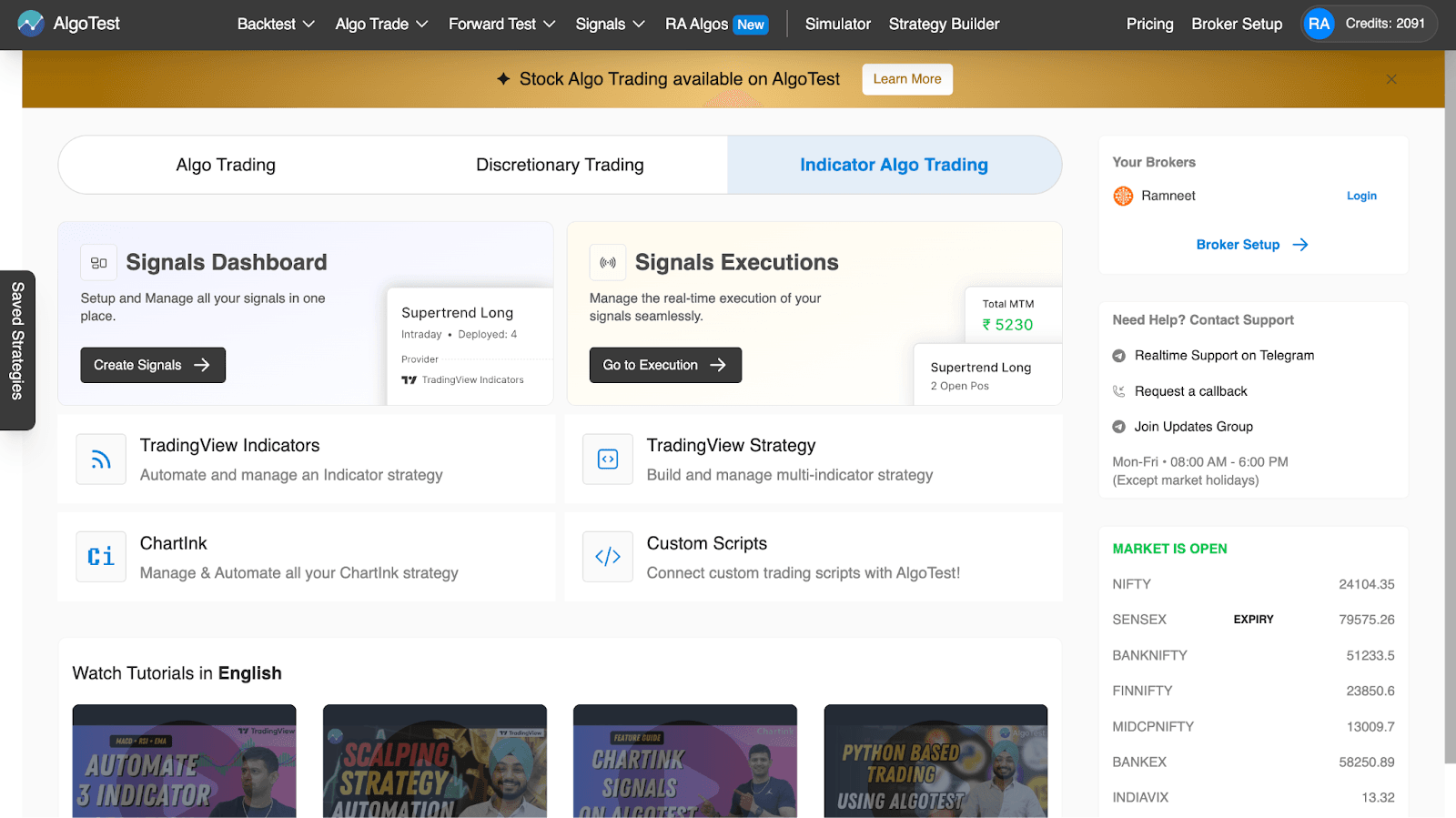
**Create a New Signal**:
- Go to the Signals dashboard page and create a “New Signal”.
- Select Chartink as Signal Provider.
- Select Forward Test as Execution Type.
- Let’s create a new strategy, strategy on AlgoTest means which trades to execute if the signal is generated.
- Go to the “Stocks” tab to create a stocks strategy.
- Select the index you want to trade in this strategy we will select “Axis Bank”.
- Define the Trade you want to execute with Quantity, Position, Target and Stoploss.
- Save the strategy with a unique name.
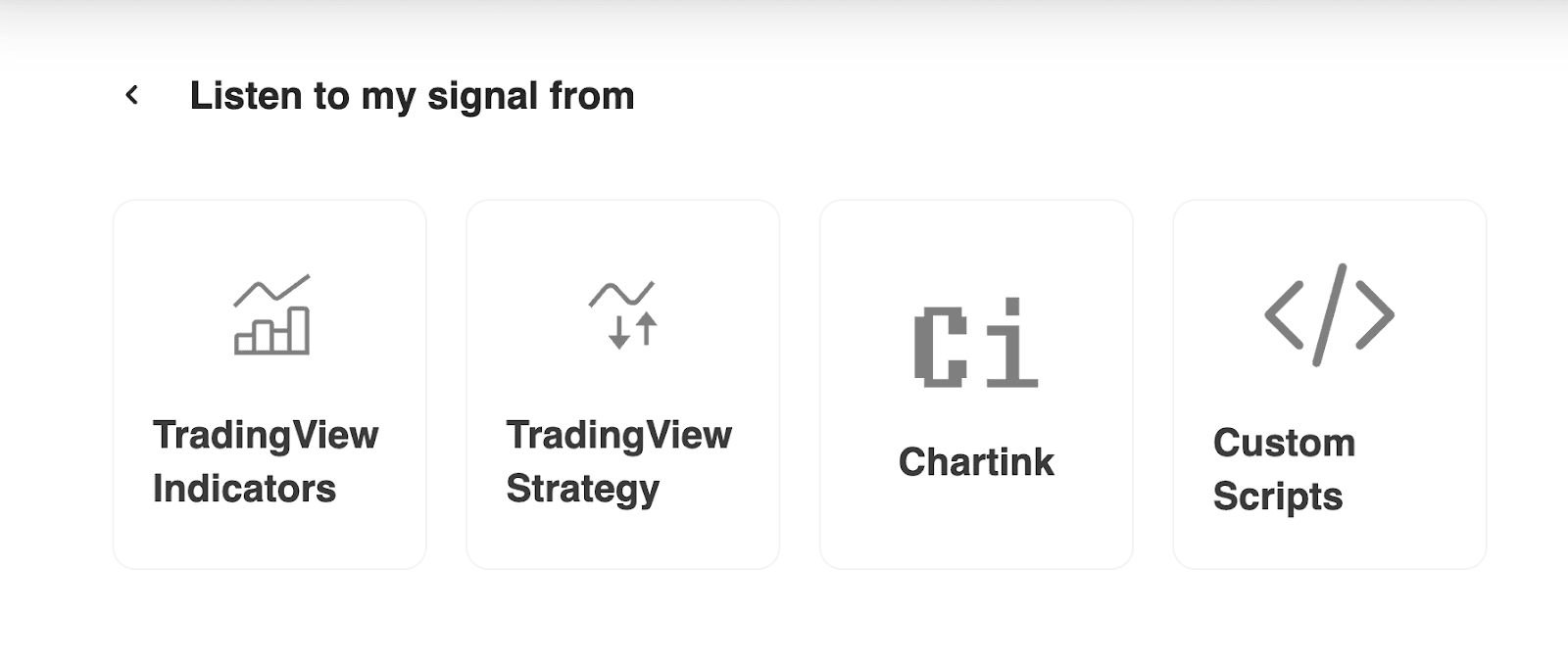
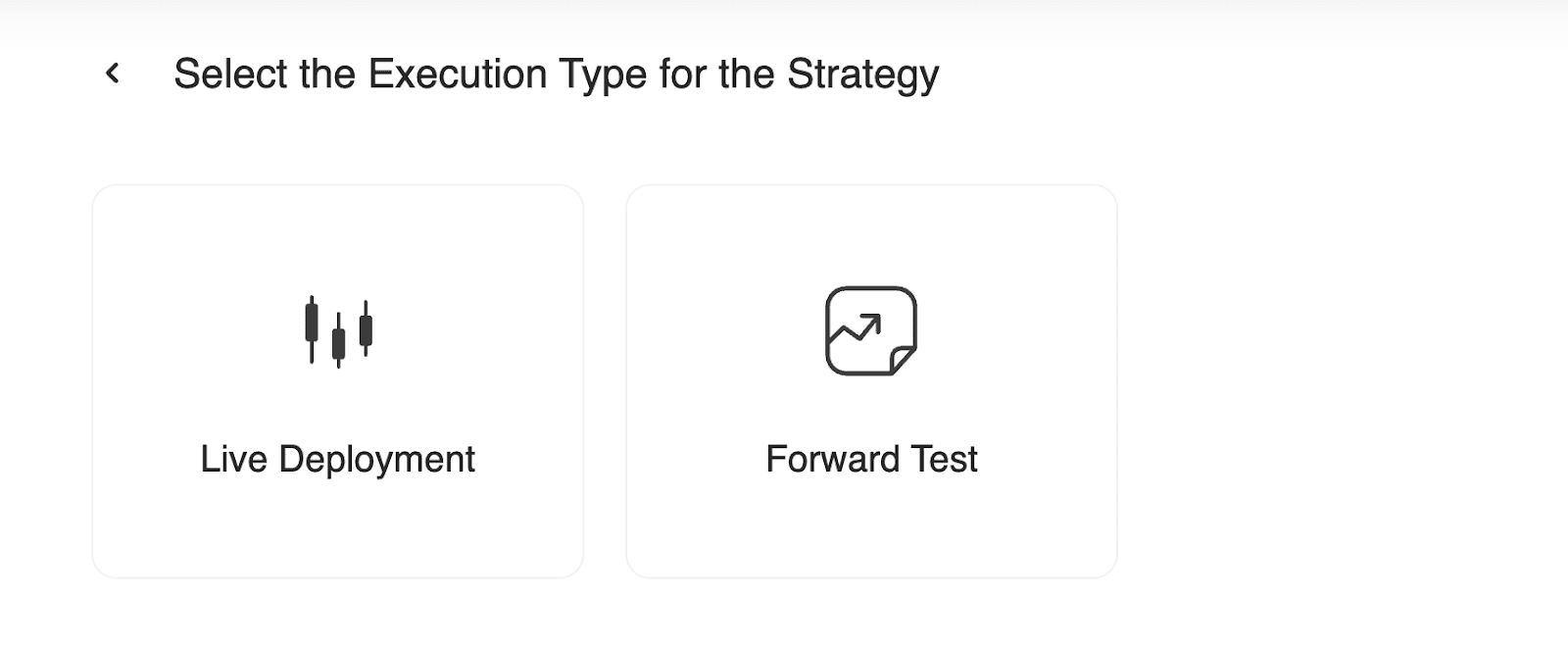


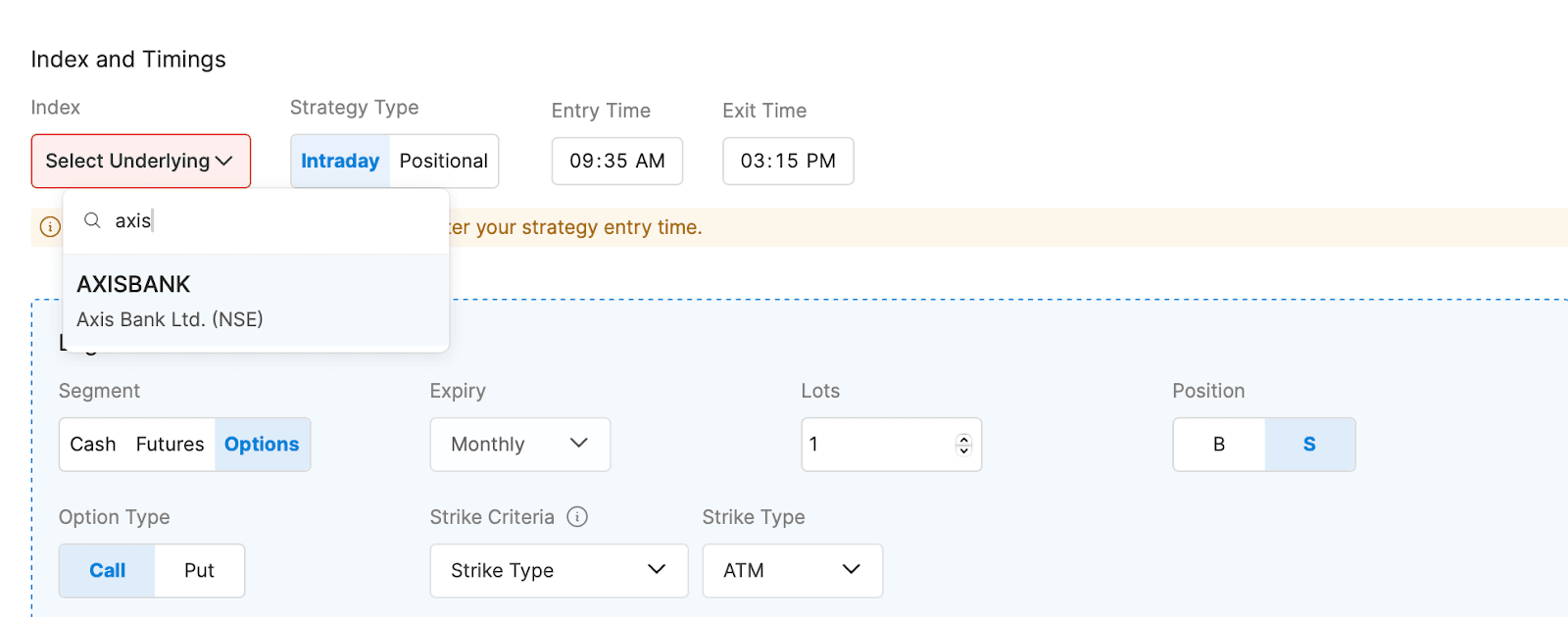
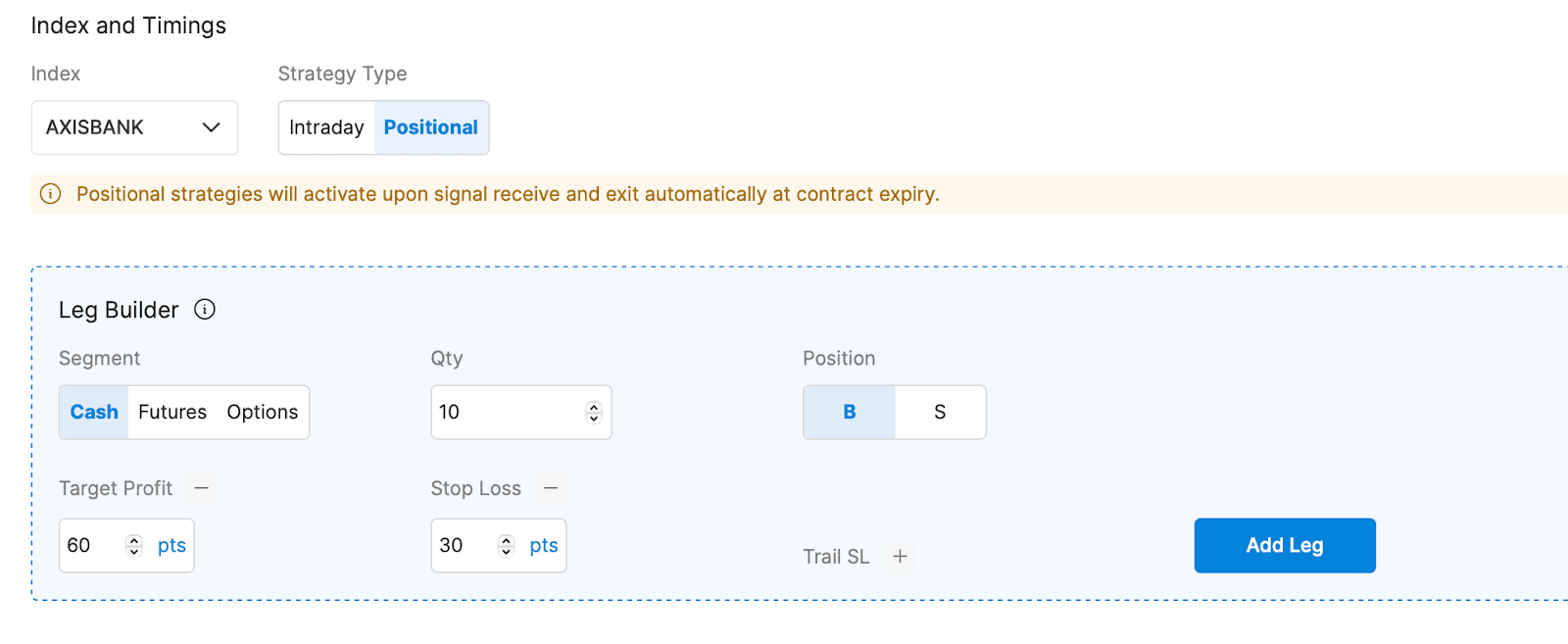
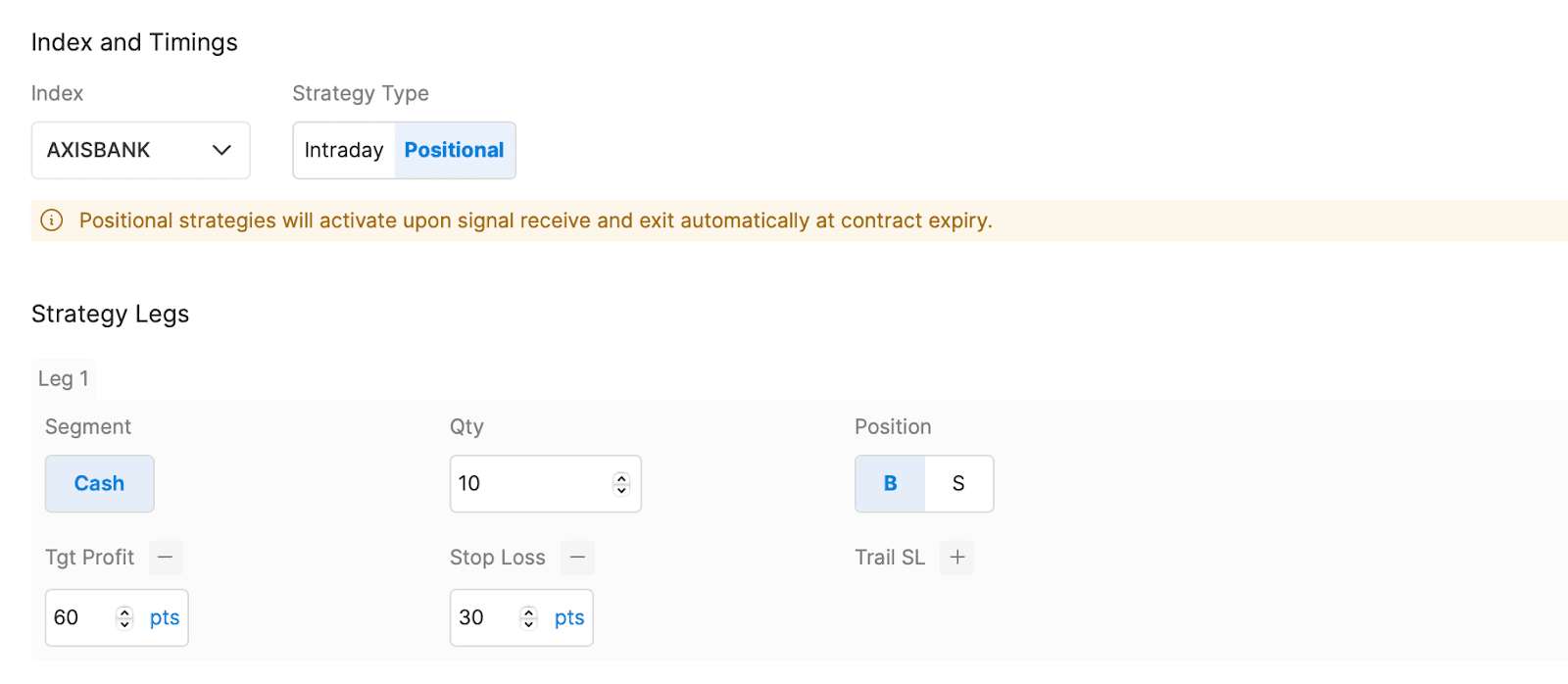
### **Step 3: Connect Chartink Alerts with AlgoTest Signals**
**Generate a Webhook URL**:
- Once the strategy is saved, you will receive a webhook url.
- Copy the webhook URL for your strategy.
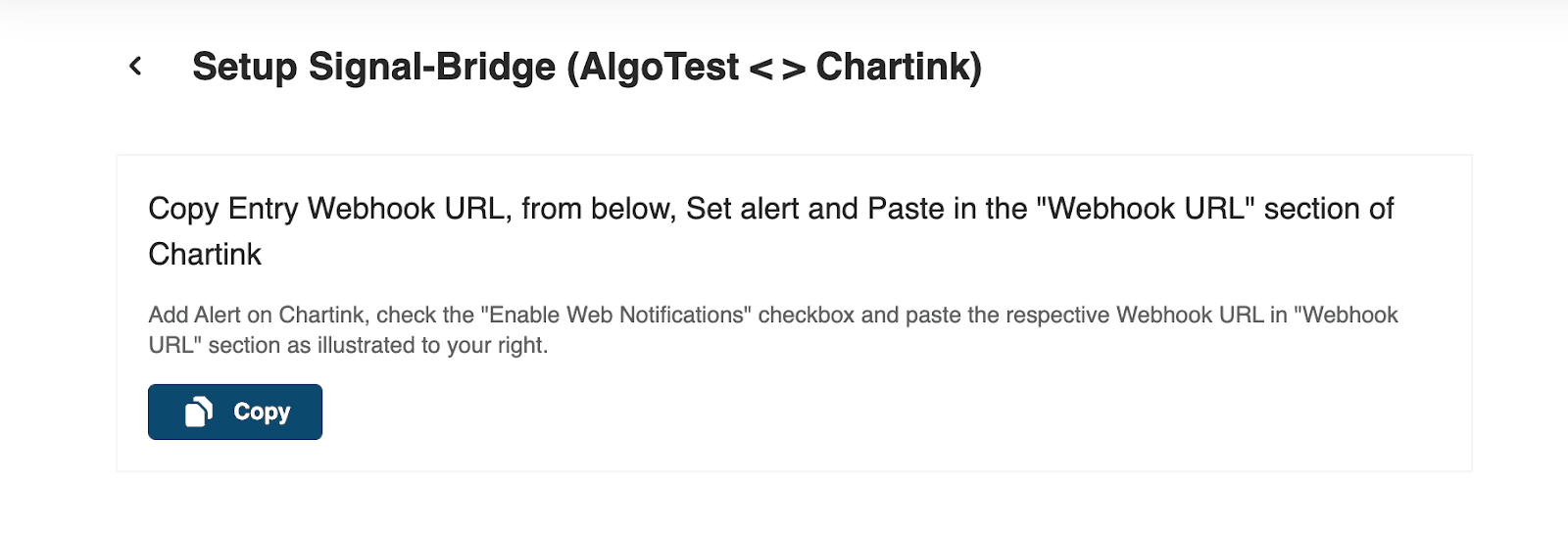
**Link the Webhook to Chartink Alerts**:some text
- In Chartink, navigate to your saved screener and click on "Create Alert."
- Paste the webhook URL in the alert settings.
- Save the alert.
- After Saving the alert click on “Start Listening” on AlgoTest.
- Your Signal is in listening mode now.

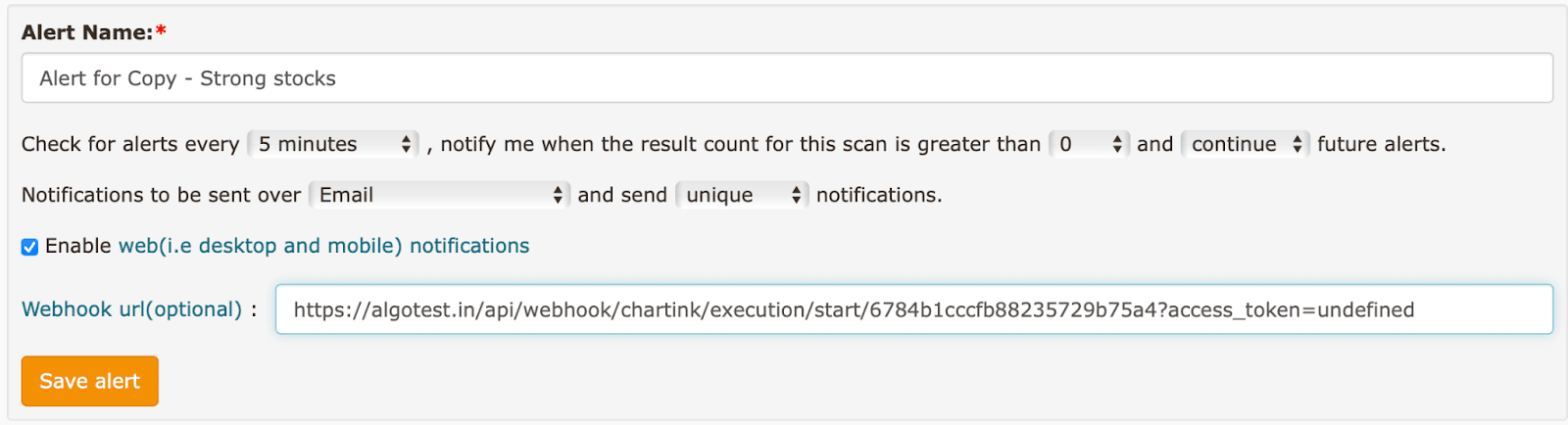

### **Step 4: Deploy Your Strategy in Live Markets**
- Once satisfied with the forward test results, deploy your strategy in the live market by moving the signals to Live Trade.
- Connect your Broker and setup Execution settings to start your Algo Trading.

## **Why Choose Chartink Premium**
Chartink's Premium Plan offers essential features for automation:
- Real-time data for scans and alerts.
- Flexible alert intervals (1/2/3/5 minutes, etc.).
- Notifications via SMS, email, and desktop/mobile.
- No coding required!
These features make it an ideal choice for seamless integration with AlgoTest Signals.
## **Requirements for Automation**
To use this setup, ensure the following prerequisites are met:
1. **Chartink Premium Plan** some text
- A premium plan is essential for creating alerts and running screeners with real-time data.
2. **AlgoTest Signal Plan** some text
- Activate the AlgoTest Signal plan to connect your strategy with Chartink alerts.
3. **Broker Connection with AlgoTest** some text
- Connect your broker to AlgoTest via the broker setup page.
This is not it.
Here are a few strategies you should check out:
- [Perfect Sell (Short)](https://algotest.in/blog/automate-your-perfect-sell-short-using-chartink-and-algotest)
- [N7 Current Day](https://algotest.in/blog/automate-your-n7-current-day-using-chartink-and-algotest)
- [Buy Entry Intraday](https://algotest.in/blog/automate-your-buy-entry-intrada-using-chartink-and-algotest)
- [Morning Star Candlestick Pattern](https://algotest.in/blog/automate-your-morning-star-candlestick-pattern-using-chartink-and-algotest)
- [Intraday Sell](https://algotest.in/blog/automate-your-intraday-sell-using-chartink-and-algotest)
- [Bullish Engulf](https://algotest.in/blog/automate-your-bullish-engulf-using-chartink-and-algotest)
- [Profit Jump by 200%](https://algotest.in/blog/automate-your-profit-jump-by-200-using-chartink-and-algotest)
- [Large Cap Stocks](https://algotest.in/blog/automate-your-large-cap-stocks-using-chartink-and-algotest)
- [Potential Breakouts](https://algotest.in/blog/automate-your-potential-breakout-using-chartink-and-algotest)
- [Small Cap Stocks](https://algotest.in/blog/automate-your-small-cap-stocks-using-chartink-and-algotest)
- [Mid Cap Stocks](https://algotest.in/blog/automate-your-mid-cap-stocks-using-chartink-and-algotest)
- [Sales Jump by 200%](https://algotest.in/blog/automate-your-sales-jump-by-200-using-chartink-and-algotest)
- [Stock Screener open=high;open=low](https://algotest.in/blog/automate-your-stock-screener-open-high-open-low-using-chartink-and-algotest)
- [Stocks Below Book Value - Undervalued](https://algotest.in/blog/automate-your-stocks-below-book-value---undervalued-using-chartink-and-algotest)
- [Highest Earning Per Share](https://algotest.in/blog/automate-your-highest-earning-per-share-using-chartink-and-algotest)
- [Low Debt Companies](https://algotest.in/blog/automate-your-low-debt-companies-using-chartink-and-algotest)
- [Penny Stocks](https://algotest.in/blog/automate-your-penny-stocks-using-chartink-and-algotest)
- [52-week Low](https://algotest.in/blog/automate-your-52-week-low-using-chartink-and-algotest)
Thank you for choosing to trade with us.
---
This blog is powered by Superblog. Visit https://superblog.ai to know more.
---
## Automate Your “Boss Scanner For BTST” Strategy Using Chartink and AlgoTest
Author: AlgoTest
Author URL: https://algotest.in/blog/author/algotest/
Published: 2025-01-16
Category: Chartink
Category URL: https://algotest.in/blog/category/chartink/
URL: https://algotest.in/blog/automate-your-boss-scanner-for-btst-stock-trading-strategy-using-chartink-and-algotest/
Automating your trading strategy can save time and eliminate the need to monitor the markets constantly. With [**Chartink**](https://chartink.com) and [**AlgoTest**](https://algotest.in/signals), you can set up your strategy to execute trades automatically.
In this guide, you will learn:
- How AlgoTest Signals work.
- Step-by-step instructions to create a Chartink screener and set it up for automation with AlgoTest.
- How to verify and deploy your strategy in live markets or test it using forward testing.
- The requirements for automation.
## **How AlgoTest Signals Work**
AlgoTest Signals allow you to automate your trades based on predefined conditions from Chartink. When a breakout condition is met in Chartink, an alert is sent to AlgoTest, which executes the trade on your broker terminal.
### **Key Benefits:**
- Eliminate manual trade execution.
- Consistency in trade execution based on your strategy logic.
- Saves time and reduces emotional decision-making.
## Boss Scanner For BTSTfilters explanation:
- The daily volume of the stock is greater than the average daily volume over the last 20 days. This means that the current trading activity is significantly higher than what has been typical for the stock, indicating increased interest or activity. For example, if the average daily volume is 1,000 shares, the current volume would need to be more than 1,000 shares to show a positive change.
- The daily closing price of the stock is greater than the upper Bollinger Band, which indicates that the stock is trading above its typical price range. This suggests that the stock's price has increased significantly, exceeding the upper limit of its volatility range by a certain percentage, indicating strong upward momentum.
- The weekly closing price of the stock is greater than the upper Bollinger band, which indicates that the stock is trading above its typical price range. This suggests a strong upward momentum, as the upper Bollinger band represents a level that is typically 2 standard deviations above the 20-week moving average. A price above this level indicates a potential overbought condition, meaning the stock has increased by more than 2% compared to its average price over the last 20 weeks.
- The monthly closing price of the stock is greater than the upper Bollinger Band, which indicates that the stock is trading significantly above its average price range over the last 20 months, adjusted for volatility. This suggests a strong upward momentum, with the closing price exceeding the upper limit of the expected price range by a notable percent
- The filter identifies stocks where the daily Relative Strength Index (RSI) with a 14-day period is greater than 60. This indicates that the stock is showing strong momentum, as an RSI above 60 suggests that the stock has gained more than 60% of its recent price movements, reflecting potential overbought conditions.
- The filter checks if the weekly RSI (Relative Strength Index) with a 14-period setting is greater than 60. This means the stock is considered to be in a strong upward momentum, as an RSI above 60 indicates that the stock has gained more than 60% of its price movement in the upward direction compared to its price movements over the past 14 weeks.
- The filter checks if the monthly RSI (Relative Strength Index) with a 14-period setting is greater than 60. This means that the stock is considered to be in a strong upward momentum, as an RSI above 60 indicates that the stock has gained more than 60% of its average gains over the specified period, suggesting it may be overbought.
- The monthly weighted moving average of the monthly closing prices is greater than 60. This means that the average price over the last 30 months, adjusted for more recent prices, is above 60. A value above 60 indicates a positive trend, suggesting that the stock's average price has increased by more than 0% compared to the baseline of 60.
- The monthly weighted moving average (WMA) of the monthly closing prices is greater than 60. This means that the average closing price over the last 30 months, adjusted for more recent prices, is above 60. If the WMA is, for example, 70, it indicates a 16.67% increase compared to 60.
- The monthly weighted moving average of the monthly closing price is greater than 60. This means that the average price over the last 50 months, adjusted for recent prices, is currently above 60. A value above 60 indicates a positive trend, suggesting that the stock's average price has increased by more than 0% compared to the previous average.
## **Step-by-Step Guide to Automate Your Strategy**
### **Step 1: Create Your Screener in Chartink**
##### **Access Chartink**:
Go to [Chartink](https://chartink.com) and log in to your account.
##### **Create a Watchlist**:
- Navigate to the "Watchlists" section.
- Create a new watchlist for the instruments you want to monitor.
- Search for instruments you want to monitor and click on ‘Add Selected’.
- Watchlist is created with desired instruments.

##### **Create a Screener**:
- Go to the "Screener" section and select any pre-existing template (e.g., " [BOSS SCANNER FOR BTST](https://chartink.com/screener/boss-scanner-for-btst)").
- Copy the Scan and then open it from the scans dashboard.
- Change the segment to your own watchlist of instruments. (e.g., “Adani Enterprises Limited”)
- Now save the scan.
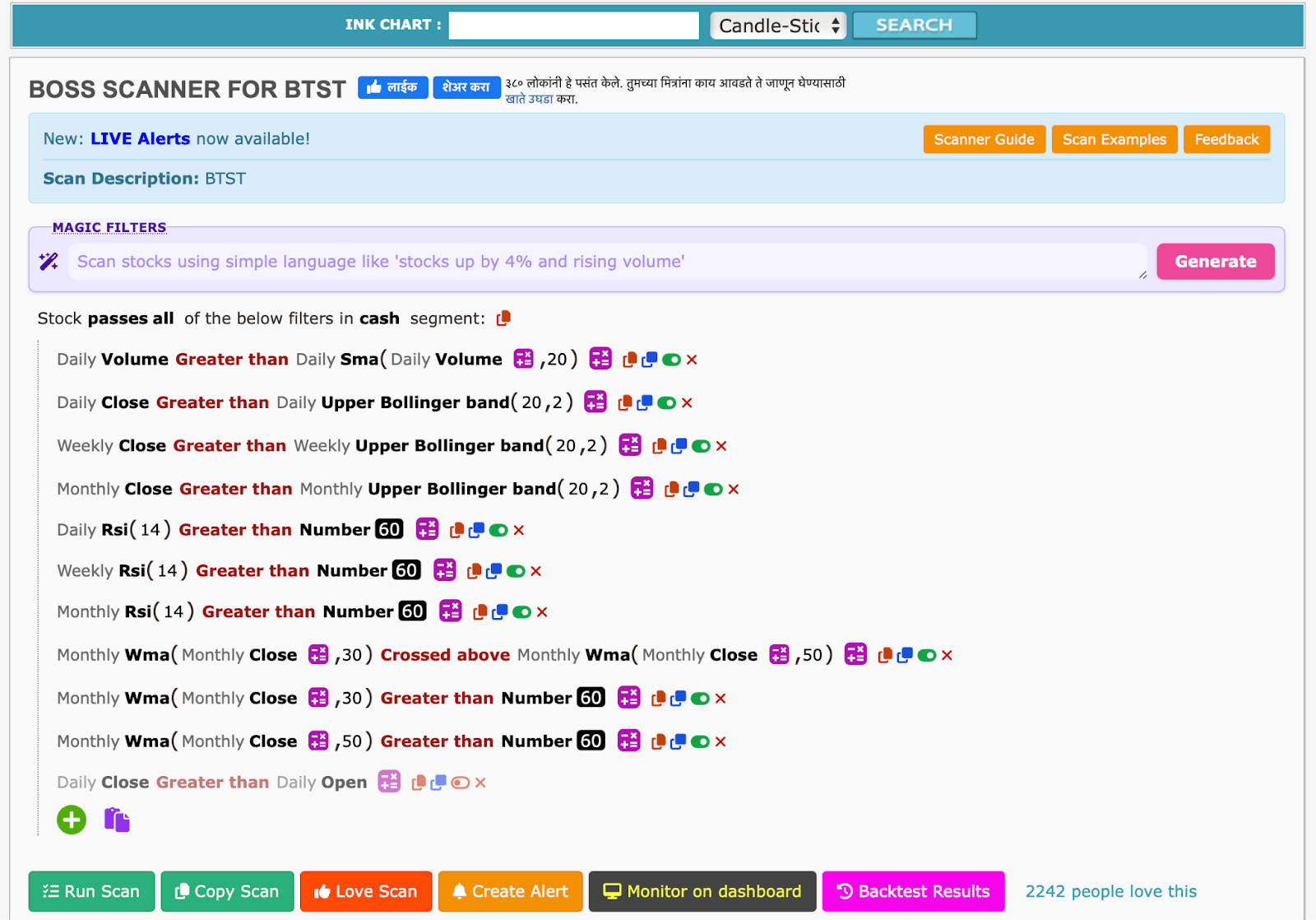
### **Step 2: Create Your Strategy in AlgoTest**
##### **Login to AlgoTest**:
- Visit [AlgoTest](https://algotest.in/) and log in. Go to Signals Dashboard.
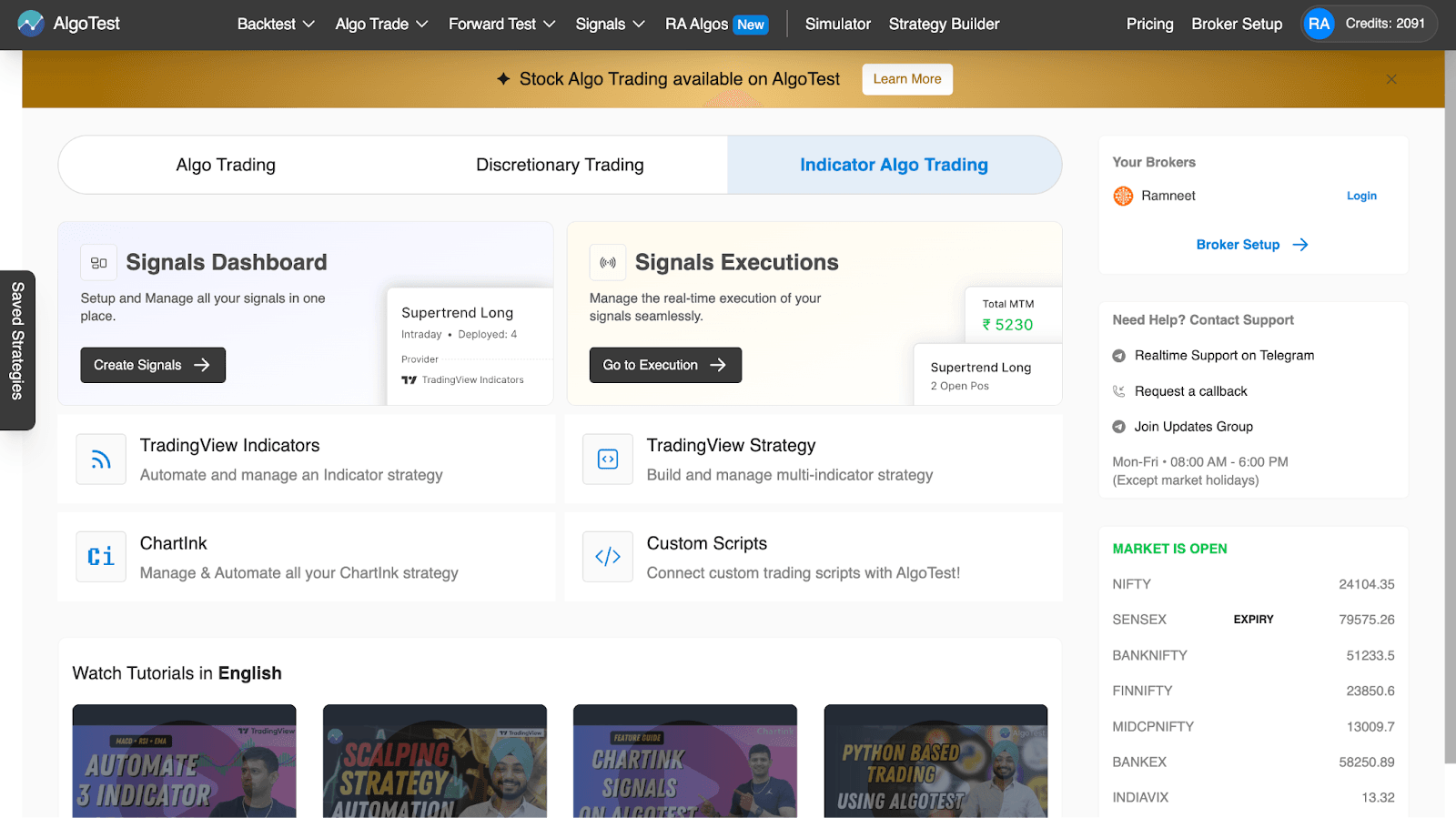
##### **Create a New Signal**:
- Go to the Signals dashboard page and create a “New Signal”.
- Select Chartink as Signal Provider.
- Select Forward Test as Execution Type.
- Let’s create a new strategy, strategy on AlgoTest means which trades to execute if the signal is generated.
- Go to the “Stocks” tab to create a stocks strategy.
- Select the index you want to trade in this strategy we will select “Adani Enterprises Limited”.
- Define the Trade you want to execute with Quantity, Position, Target and Stoploss.
- Save the strategy with a unique name.
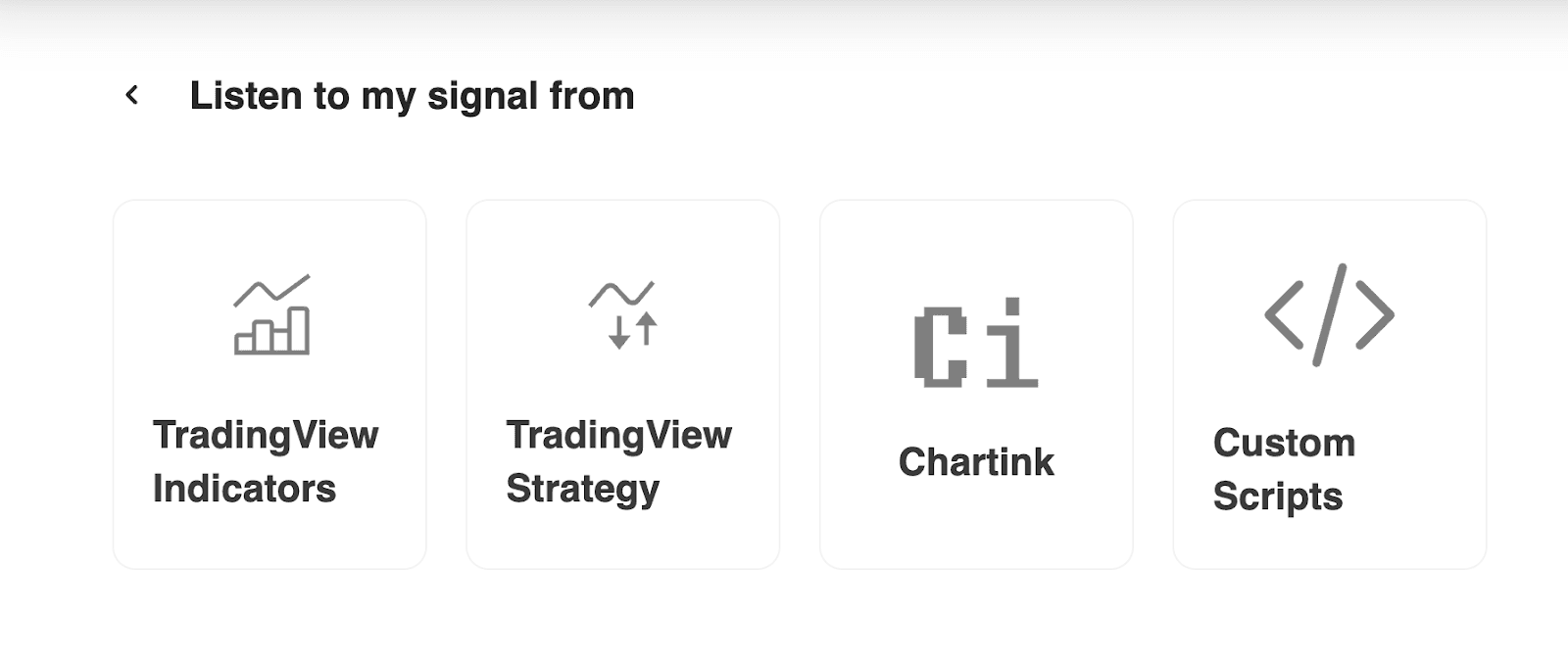
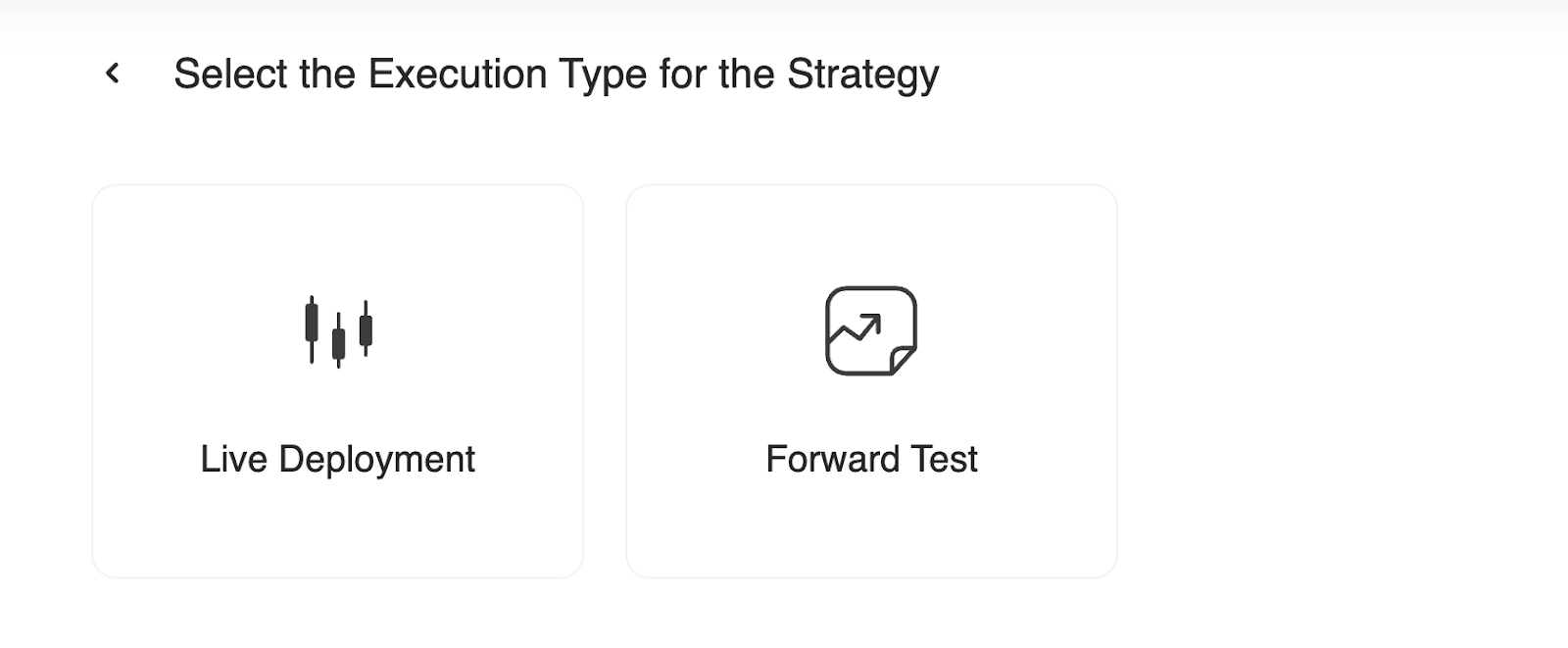


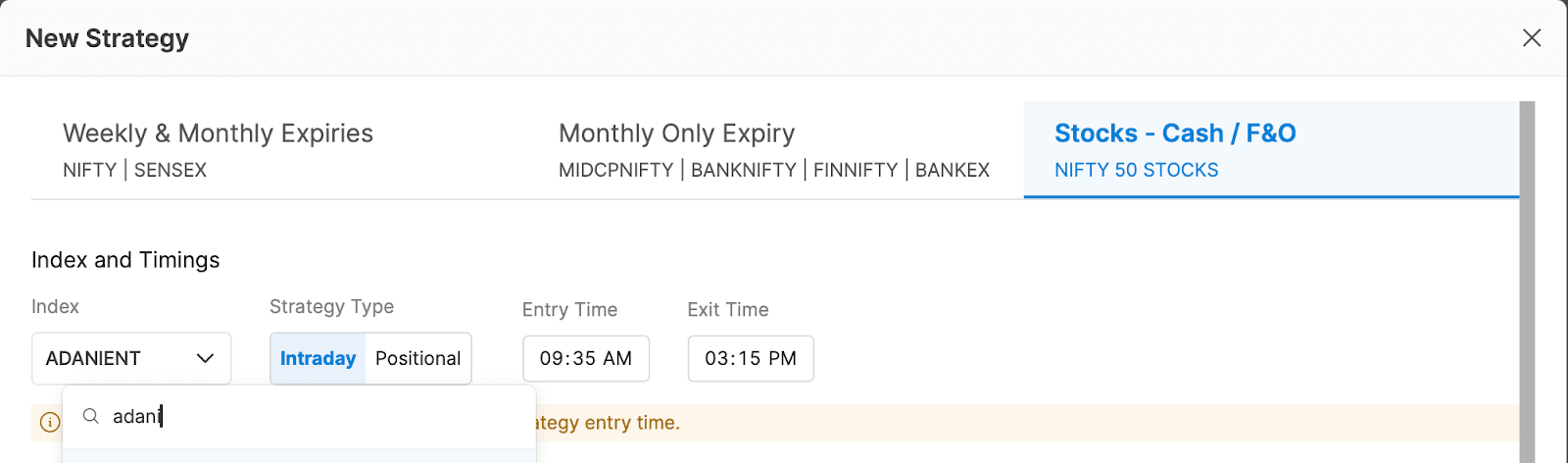
### **Step 3: Connect Chartink Alerts with AlgoTest Signals**
##### **Generate a Webhook URL**:
- Once the strategy is saved, you will receive a webhook url.
- Copy the webhook URL for your strategy.
##### **Link the Webhook to Chartink Alerts:**
- In Chartink, navigate to your saved screener and click on "Create Alert."
- Paste the webhook URL in the alert settings.
- Save the alert.
- After Saving the alert click on “Start Listening” on AlgoTest.
- Your Signal is in listening mode now.

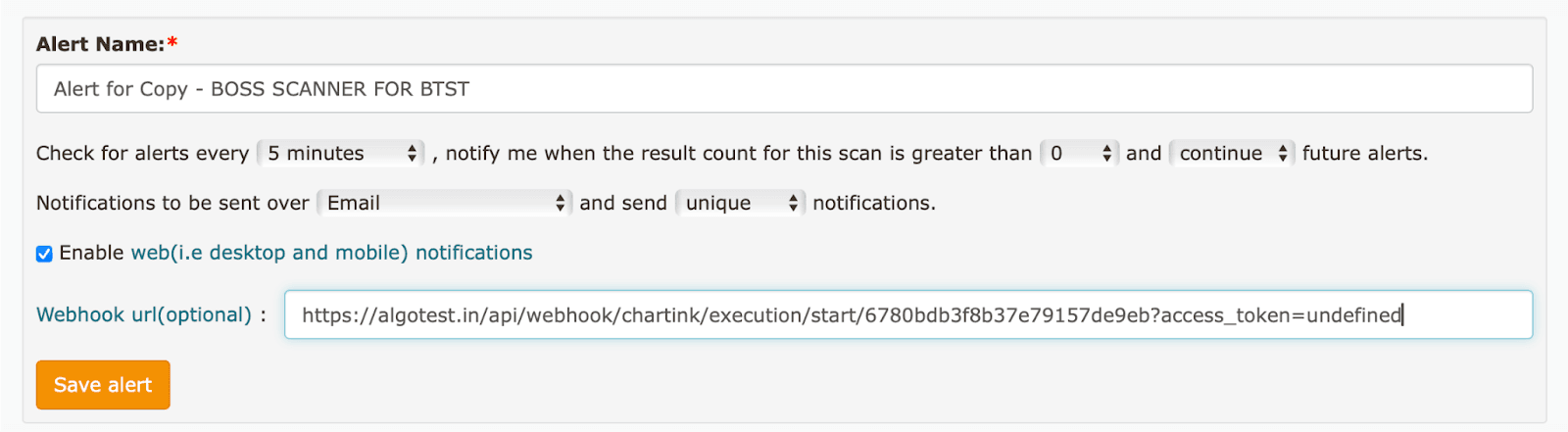

### **Step 4: Deploy Your Strategy in Live Markets**
- Once satisfied with the forward test results, deploy your strategy in the live market by moving the signals to Live Trade.
- Connect your Broker and setup Execution settings to start your Algo Trading.

## **Why Choose Chartink Premium**
Chartink's Premium Plan offers essential features for automation:
- Real-time data for scans and alerts.
- Flexible alert intervals (1/2/3/5 minutes, etc.).
- Notifications via SMS, email, and desktop/mobile.
- No coding required!
These features make it an ideal choice for seamless integration with AlgoTest Signals.
## **Requirements for Automation**
To use this setup, ensure the following prerequisites are met:
1. **Chartink Premium Plan**
- A premium plan is essential for creating alerts and running screeners with real-time data.
2. **AlgoTest Signal Plan**
- Activate the AlgoTest Signal plan to connect your strategy with Chartink alerts.
3. **Broker Connection with AlgoTest**
- Connect your broker to AlgoTest via the broker setup page.
This is not it.
Here are a few strategies you should check out:
- [Strong Stocks](https://algotest.in/blog/automate-your-strong-stocks-strategy-using-chartink-and-algotest)
- [Perfect Sell (Short)](https://algotest.in/blog/automate-your-perfect-sell-short-using-chartink-and-algotest)
- [N7 Current Day](https://algotest.in/blog/automate-your-n7-current-day-using-chartink-and-algotest)
- [Buy Entry Intraday](https://algotest.in/blog/automate-your-buy-entry-intrada-using-chartink-and-algotest)
- [Morning Star Candlestick Pattern](https://algotest.in/blog/automate-your-morning-star-candlestick-pattern-using-chartink-and-algotest)
- [Intraday Sell](https://algotest.in/blog/automate-your-intraday-sell-using-chartink-and-algotest)
- [Bullish Engulf](https://algotest.in/blog/automate-your-bullish-engulf-using-chartink-and-algotest)
- [Profit Jump by 200%](https://algotest.in/blog/automate-your-profit-jump-by-200-using-chartink-and-algotest)
- [Large Cap Stocks](https://algotest.in/blog/automate-your-large-cap-stocks-using-chartink-and-algotest)
- [Potential Breakouts](https://algotest.in/blog/automate-your-potential-breakout-using-chartink-and-algotest)
- [Small Cap Stocks](https://algotest.in/blog/automate-your-small-cap-stocks-using-chartink-and-algotest)
- [Mid Cap Stocks](https://algotest.in/blog/automate-your-mid-cap-stocks-using-chartink-and-algotest)
- [Sales Jump by 200%](https://algotest.in/blog/automate-your-sales-jump-by-200-using-chartink-and-algotest)
- [Stock Screener open=high;open=low](https://algotest.in/blog/automate-your-stock-screener-open-high-open-low-using-chartink-and-algotest)
- [Stocks Below Book Value - Undervalued](https://algotest.in/blog/automate-your-stocks-below-book-value---undervalued-using-chartink-and-algotest)
- [Highest Earning Per Share](https://algotest.in/blog/automate-your-highest-earning-per-share-using-chartink-and-algotest)
- [Low Debt Companies](https://algotest.in/blog/automate-your-low-debt-companies-using-chartink-and-algotest)
- [Penny Stocks](https://algotest.in/blog/automate-your-penny-stocks-using-chartink-and-algotest)
- [52-week Low](https://algotest.in/blog/automate-your-52-week-low-using-chartink-and-algotest)
Thank you for choosing to trade with us.
---
This blog is powered by Superblog. Visit https://superblog.ai to know more.
---
## Daily Straddle Heatmap - 15th January, 2025
Author: AlgoTest
Author URL: https://algotest.in/blog/author/algotest/
Published: 2025-01-16
Category: Heatmaps
Category URL: https://algotest.in/blog/category/heatmaps/
URL: https://algotest.in/blog/daily-straddle-heatmap---15th-january-2025/
Daily Straddle Heatmap
[AlgoTest](https://algotest.in) heatmaps make it easier for you to understand a clear picture of your trading performance. These [heatmaps](https://algotest.in/heatmap) visually represent data like time, performance metrics, and win rates. Think of them as a map highlighting where your strategies work best and where they stumble. For example, a heatmap might reveal that trades during certain hours of the day consistently yield higher profits.
We are taking four eatmaps today. Let’s understand what we can learn from them.
### **1\. BankNifty Short Straddle**
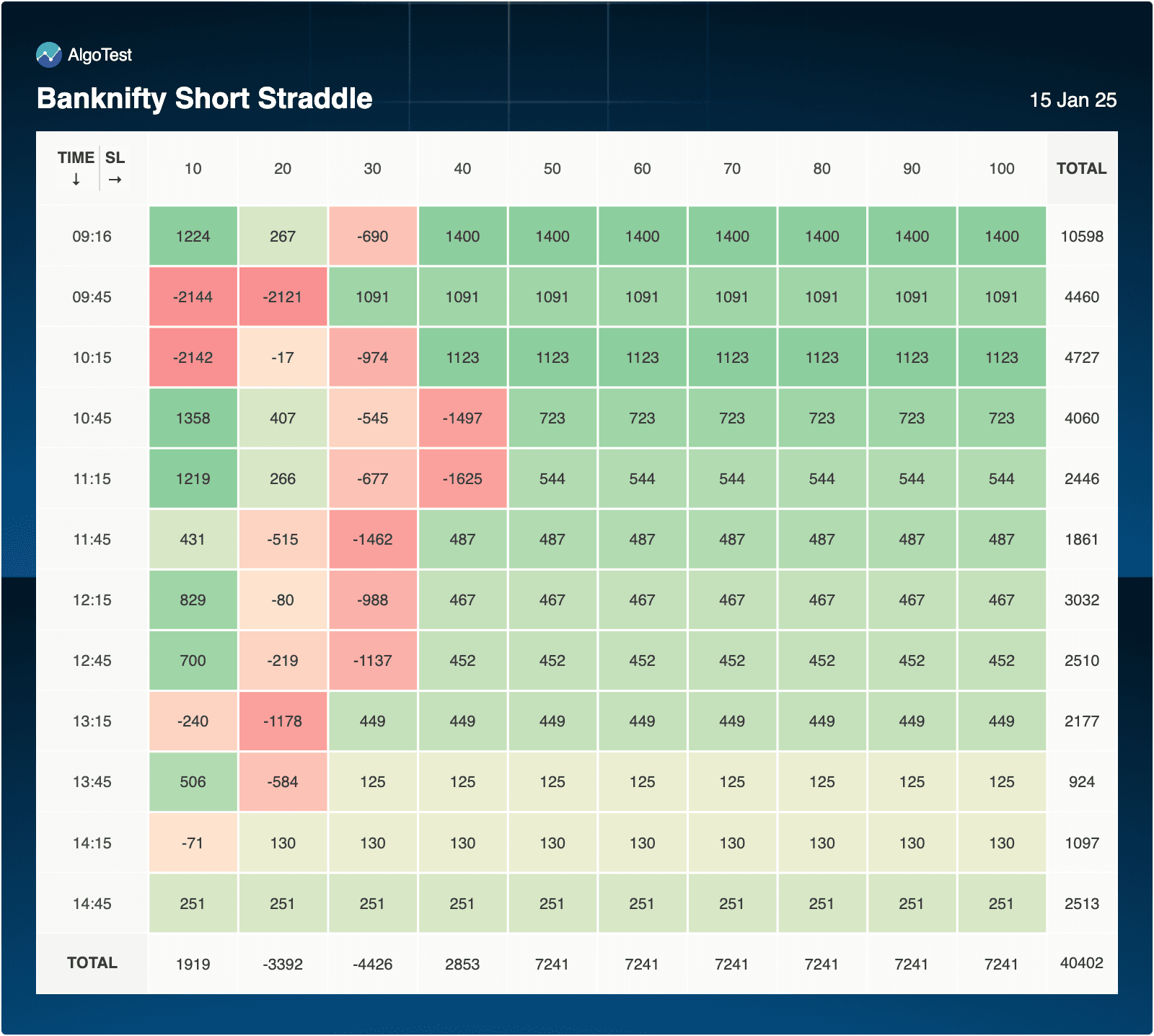
**Insights:**
- Total P&L: **₹40,402**
- The day appears profitable with consistent gains across most time intervals and SL levels.
- **09:16:** Significant profit across all SL levels with a total of **₹10,598**.
- **12:15:** Moderate gains of **₹3,032**, consistent across all SL levels.
- **09:45:** Losses recorded at lower SL levels, but breakeven or profitable at higher SLs.
- **13:15:** Moderate losses at lower SLs, totaling **₹2,177**.
### **2\. Finnifty Short Straddle**
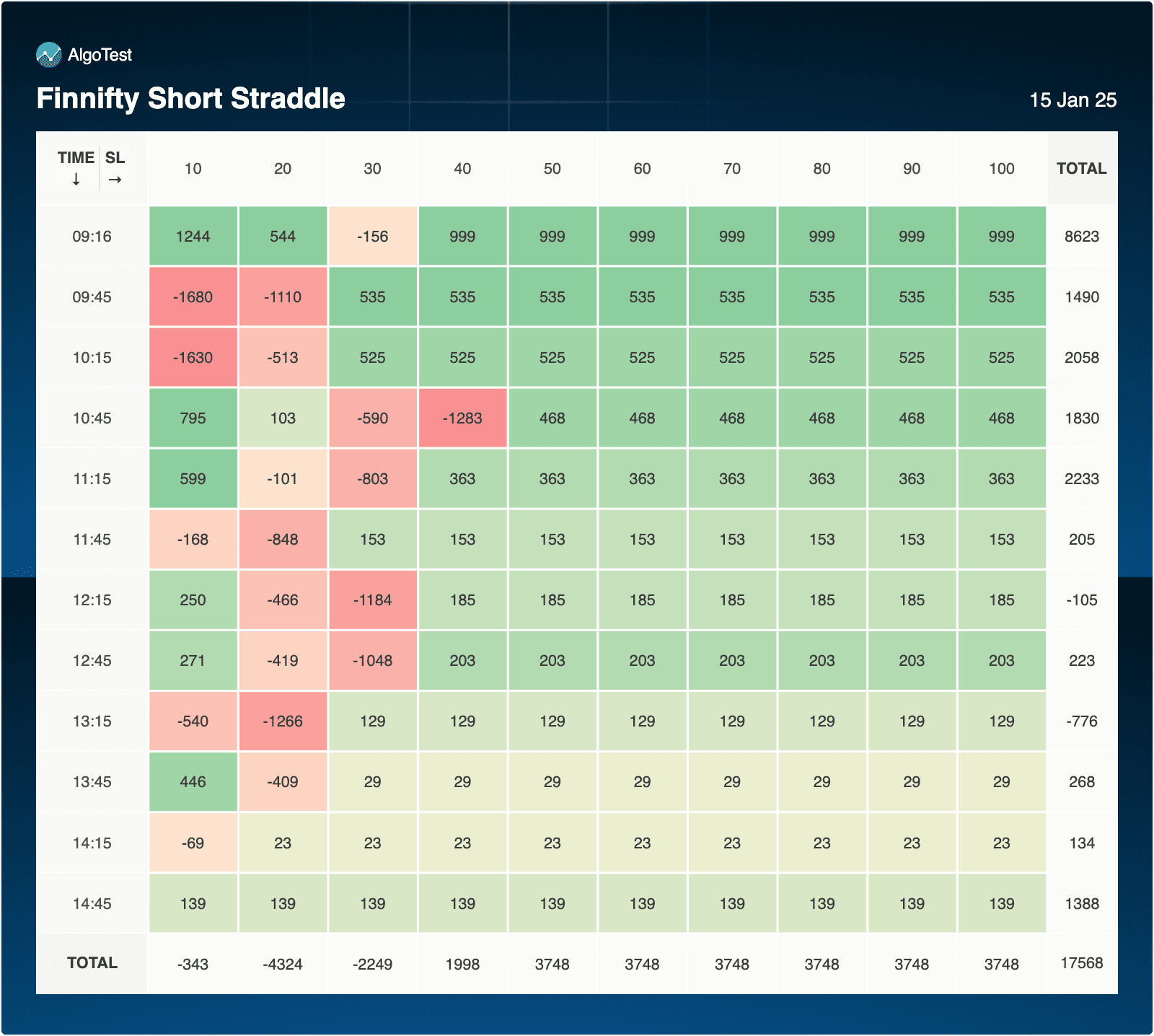
**Insights:**
- Total P&L: **₹17,568**
- The day was moderately profitable, with mixed performance across time intervals.
- **09:16:** Profitable across all SL levels, contributing **₹8,623**.
- **10:45:** Moderate profit with a total of **₹1,830**.
- **09:45:** Losses seen at lower SL levels, with a total loss of **₹1,490**.
- **12:45:** Consistently poor performance across all SL levels, contributing **₹223** loss.
### **3\. MidcapNifty Short Straddle**
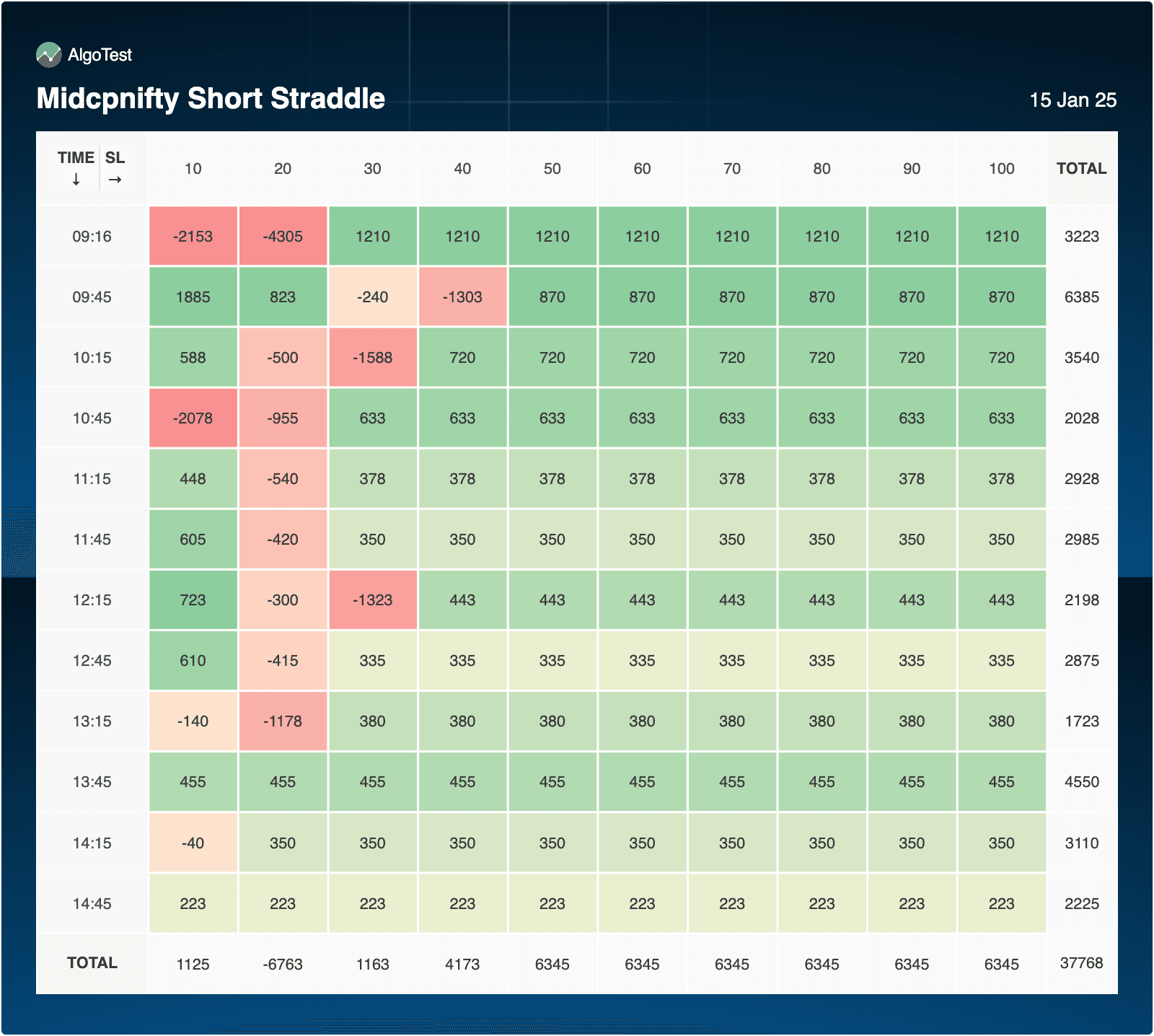
**Insights:**
- Total P&L: **₹37,768**
- The day was profitable, with strong gains during the early intervals.
- **09:45:** Strong profit across all SL levels, contributing **₹6,385**.
- **12:15:** Consistent profits across SL levels, with a total of **₹2,198**.
- **09:16:** High volatility at lower SLs, resulting in **₹3,223**.
- **13:15:** Mixed results, with lower SLs yielding moderate losses.
### **4\. Nifty Short Straddle**
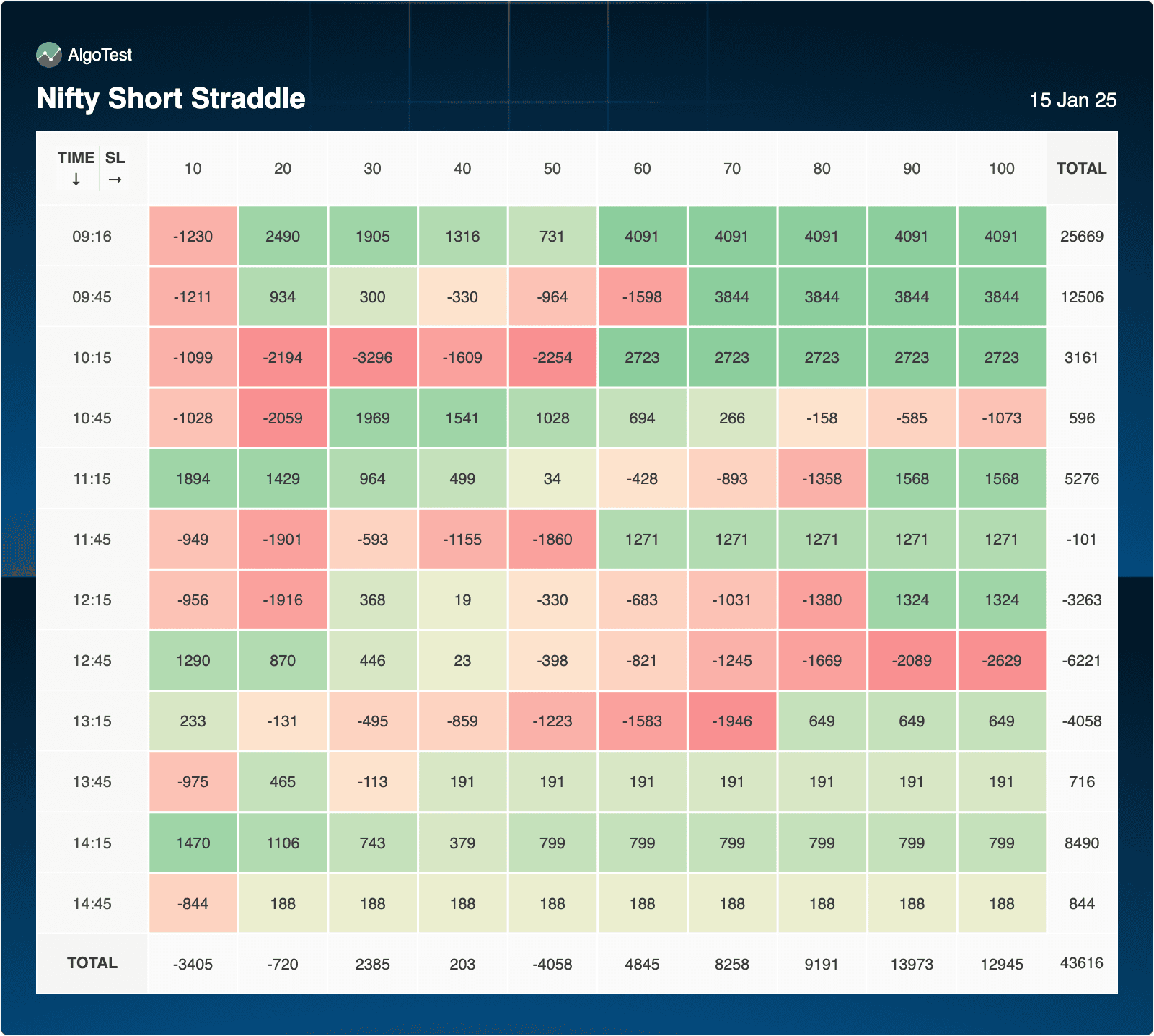
**Insights:**
- Total P&L: **₹43,616**
- A strong performance, particularly during morning intervals.
- **09:16:** Significant profit across all SL levels, totaling **₹25,669**.
- **10:15:** Profitable across all SL levels, contributing **₹3,161**.
- **12:15:** High volatility led to consistent losses, totaling **₹3,263**. ****
- 13:45: Mixed performance, with moderate losses across lower SL levels.
###### **** You can also check [heatmaps](https://algotest.in/heatmap) for MidCapNifty, Nifty, BankNifty, and FinNifty across different dimensions to better understand market trends.
---
This blog is powered by Superblog. Visit https://superblog.ai to know more.
---
## Daily Straddle Heatmap - 14th January, 2025
Author: AlgoTest
Author URL: https://algotest.in/blog/author/algotest/
Published: 2025-01-15
Category: Heatmaps
Category URL: https://algotest.in/blog/category/heatmaps/
URL: https://algotest.in/blog/daily-straddle-heatmap---14th-january-2025/
Daily Straddle Heatmap
[AlgoTest](https://algotest.in) heatmaps make it easier for you to understand a clear picture of your trading performance. These [heatmaps](https://algotest.in/heatmap) visually represent data like time, performance metrics, and win rates. Think of them as a map highlighting where your strategies work best and where they stumble. For example, a heatmap might reveal that trades during certain hours of the day consistently yield higher profits.
We are taking four eatmaps today. Let’s understand what we can learn from them.
### **1\. BankNifty Short Straddle**
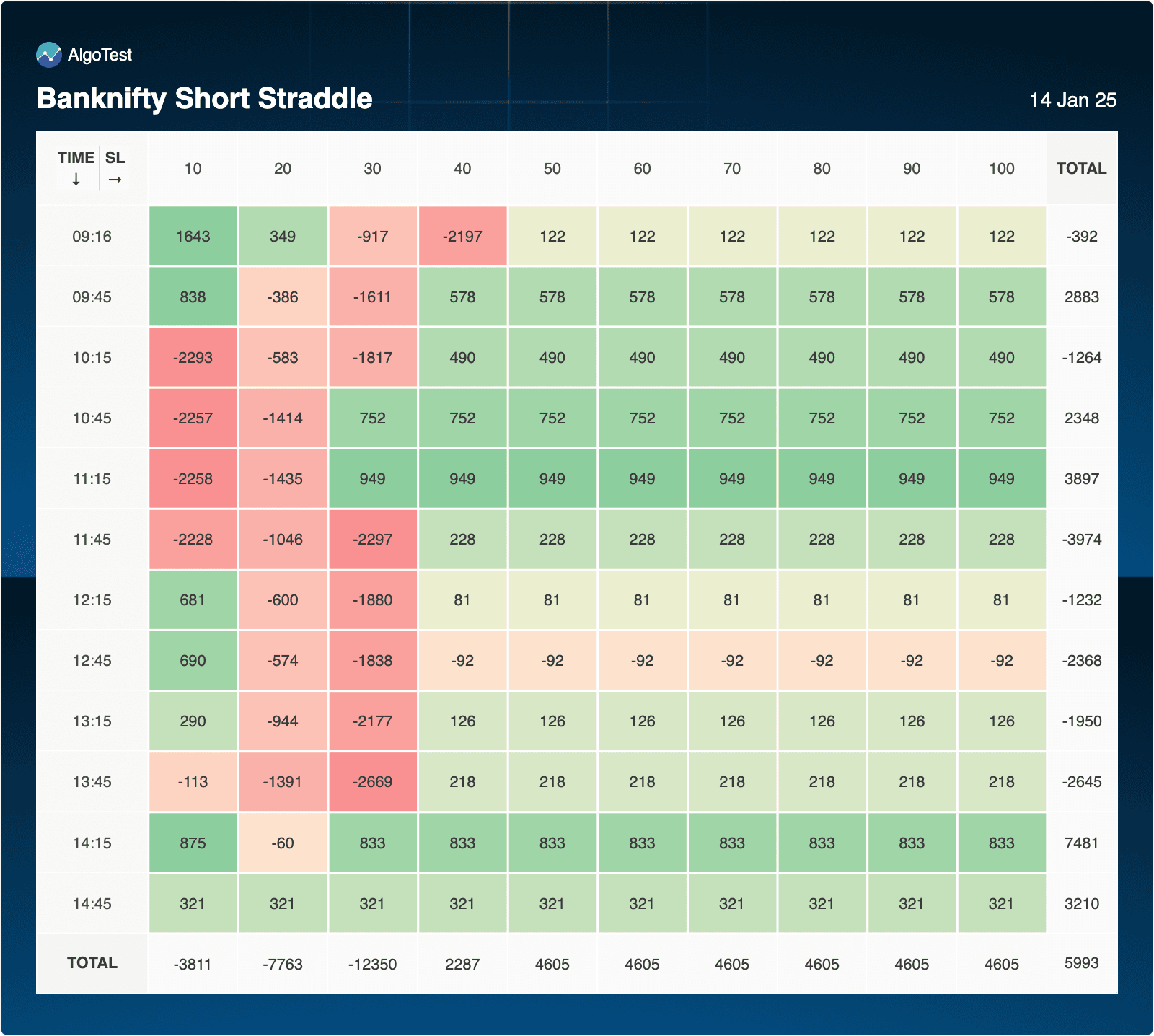
#### **Insights:**
- **14:15 and 14:45** provided strong profitability, with **7,481** and **3,210**, respectively, at SL=50 and above.
- **10:15, 10:45, and 11:45** incurred heavy losses, averaging **-3,000** across SL levels.
- Midday slots like **12:15** and **12:45** showed marginal gains or losses, indicating no clear trend.
- Total profit of **5,993**, primarily driven by the late afternoon recovery.
### **2\. FinNifty Short Straddle**
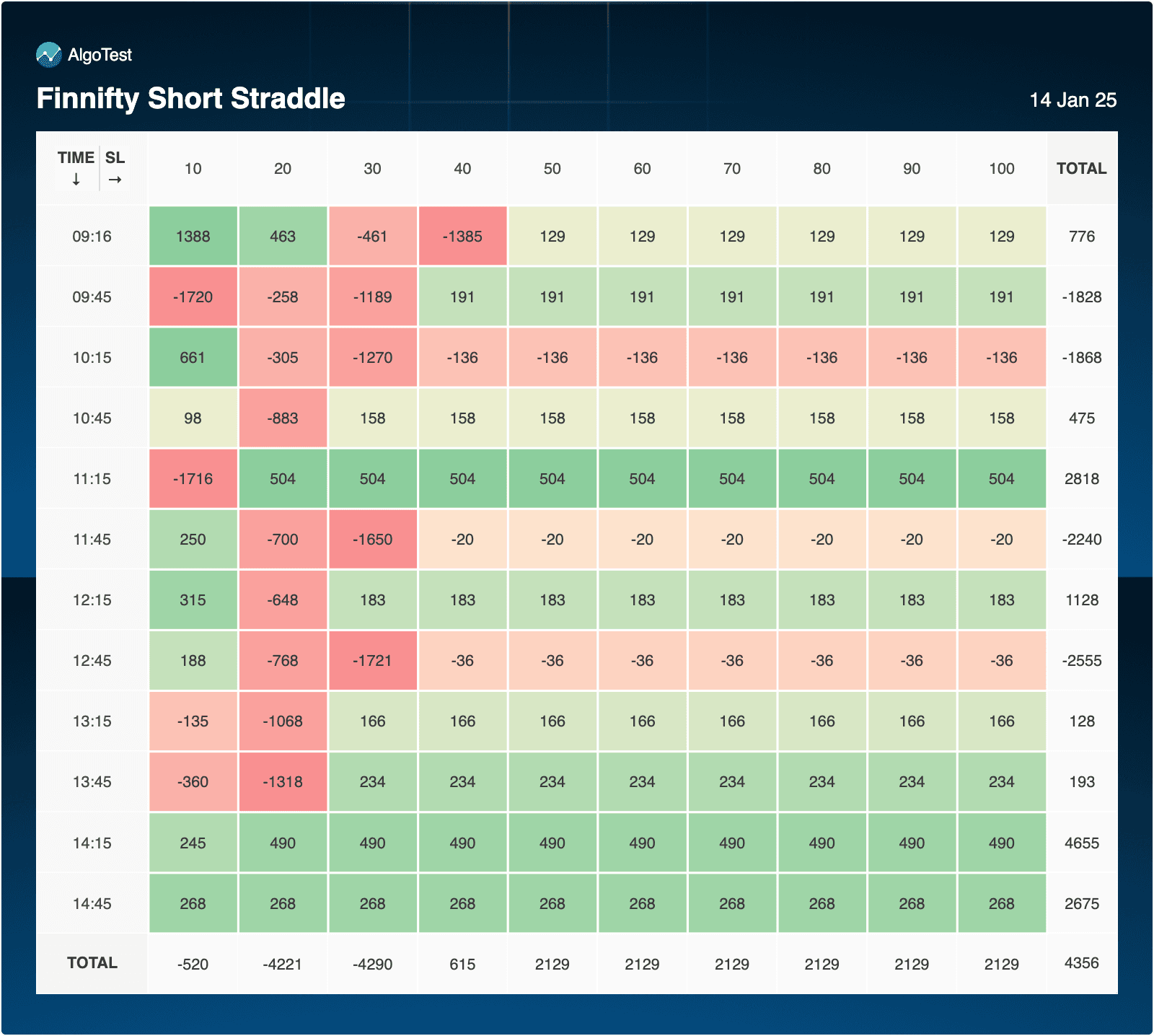
#### **Insights:**
- **14:15 and 14:45** were the most profitable, with **4,655** and **2,675**, respectively, at SL=50 and above.
- **11:15 and 12:45** incurred significant losses, with **-1,716** and **-2,555**, respectively, at SL=20.
- Early slots like **09:16** showed small but steady profits, averaging **776**.
- Total profit of **4,356**, driven primarily by the afternoon recovery.
### **3\. MidCapNifty Short Straddle**
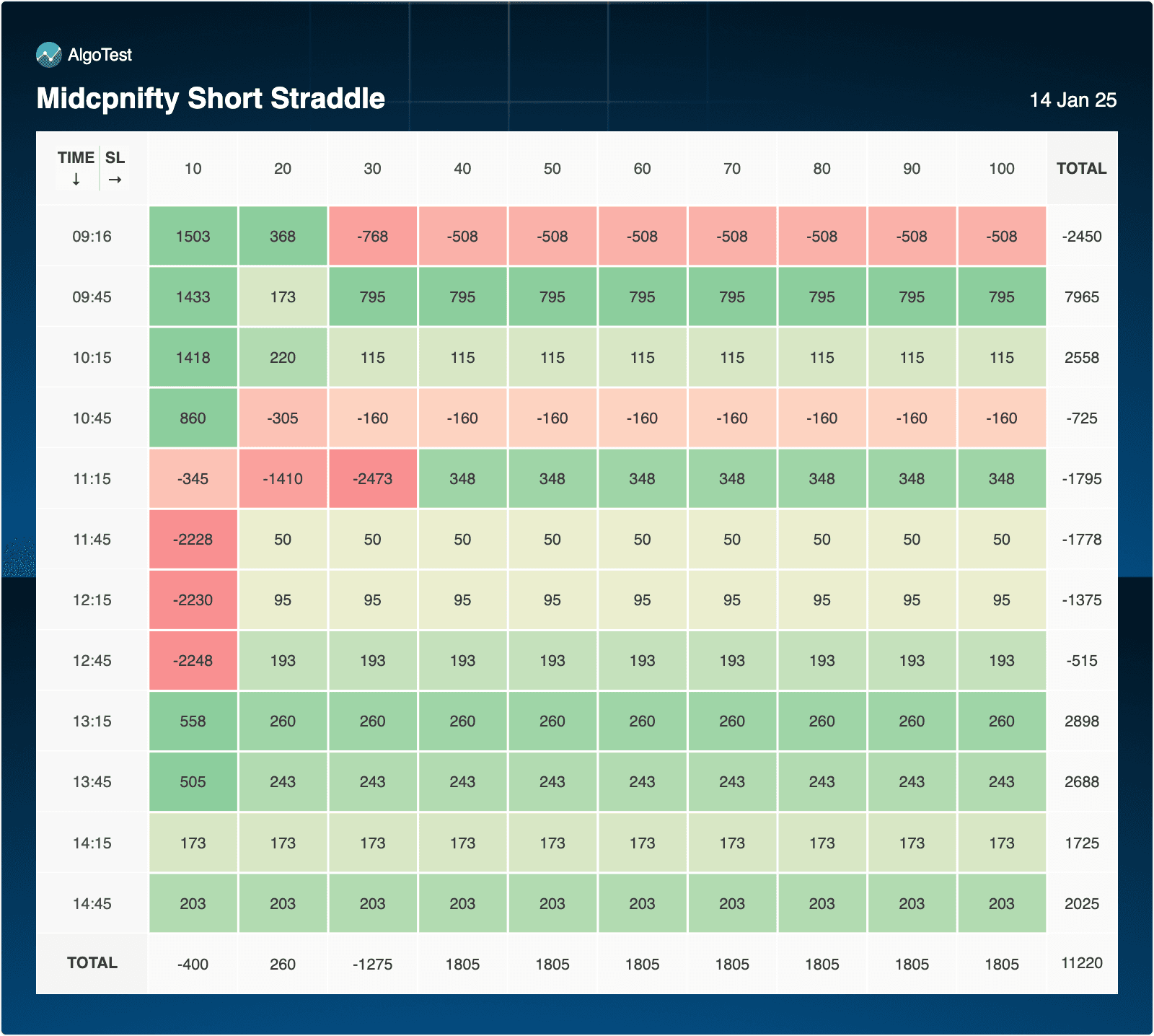
#### **Insights:**
- **13:15 and 13:45** yielded consistent gains, with **2,898** and **2,688**, respectively, at SL=50.
- **11:15 and 11:45** incurred significant losses, with **-1,795** and **-1,778**, respectively, at SL=20.
- Mixed performance during midday slots, with small profits or losses depending on SL levels.
- Total profit of **11,220**, highlighting potential in select time slots.
### **4\. Nifty Short Straddle**
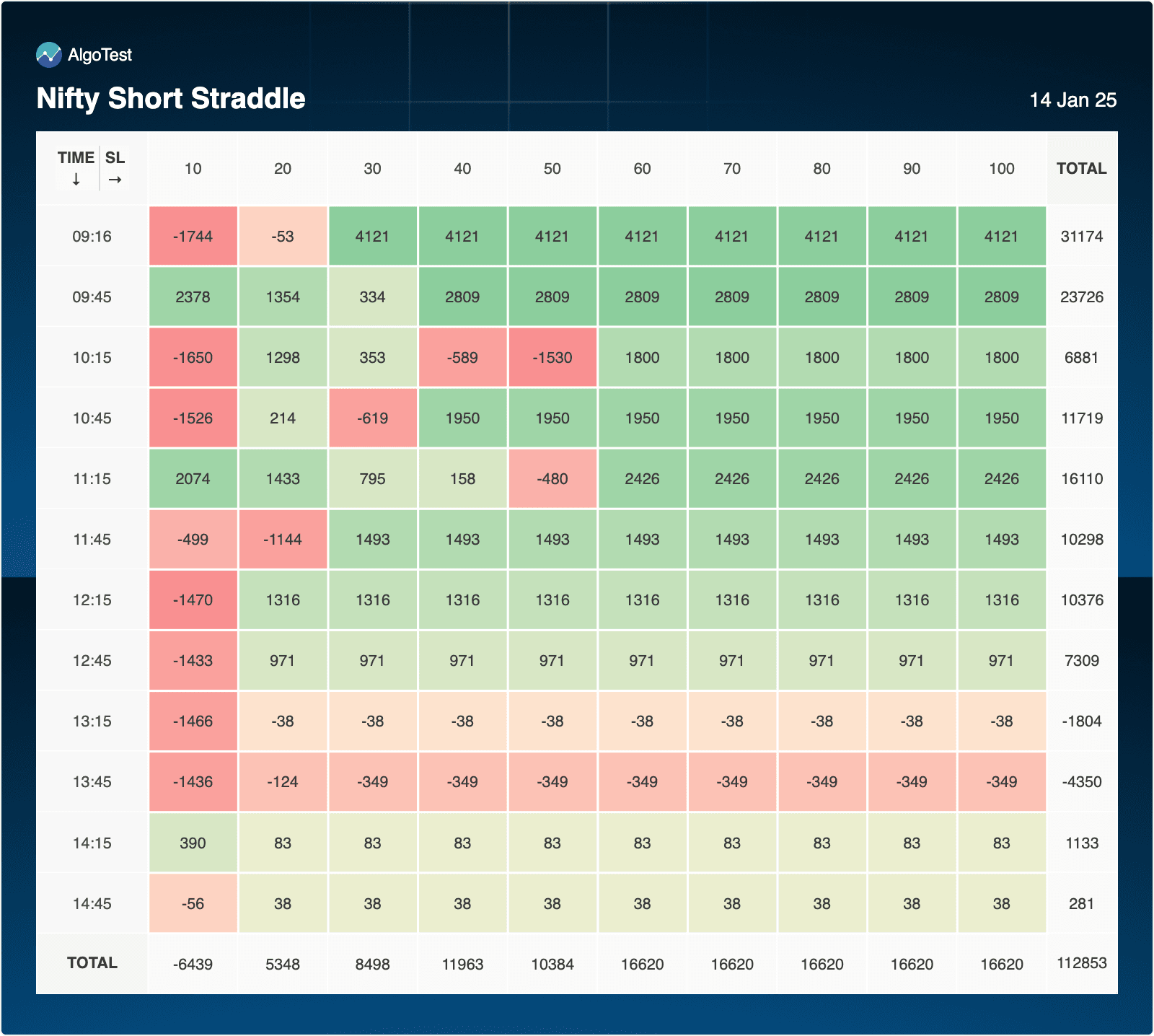
#### **Insights:**
- **09:16 and 10:45** delivered the highest profitability, with **31,174** and **11,719**, respectively, at SL=50.
- **13:15 and 13:45** incurred heavy losses, with **-1,804** and **-4,350**, respectively, at SL=20.
- Afternoon slots like **14:15 and 14:45** showed small but steady gains, averaging **1,000**. ****
- Total profit of 112,853, making it the best-performing instrument for the day.
###### **** You can also check [heatmaps](https://algotest.in/heatmap) for MidCapNifty, Nifty, BankNifty, and FinNifty across different dimensions to better understand market trends.
---
This blog is powered by Superblog. Visit https://superblog.ai to know more.
---
## Daily Straddle Heatmap - 13th January, 2025
Author: AlgoTest
Author URL: https://algotest.in/blog/author/algotest/
Published: 2025-01-14
Category: Heatmaps
Category URL: https://algotest.in/blog/category/heatmaps/
URL: https://algotest.in/blog/daily-straddle-heatmap---13th-january-2025/
Daily Straddle Heatmap
[AlgoTest](https://algotest.in) heatmaps make it easier for you to understand a clear picture of your trading performance. These [heatmaps](https://algotest.in/heatmap) visually represent data like time, performance metrics, and win rates. Think of them as a map highlighting where your strategies work best and where they stumble. For example, a heatmap might reveal that trades during certain hours of the day consistently yield higher profits.
We are taking four eatmaps today. Let’s understand what we can learn from them.
### **1\. BankNifty Short Straddle**
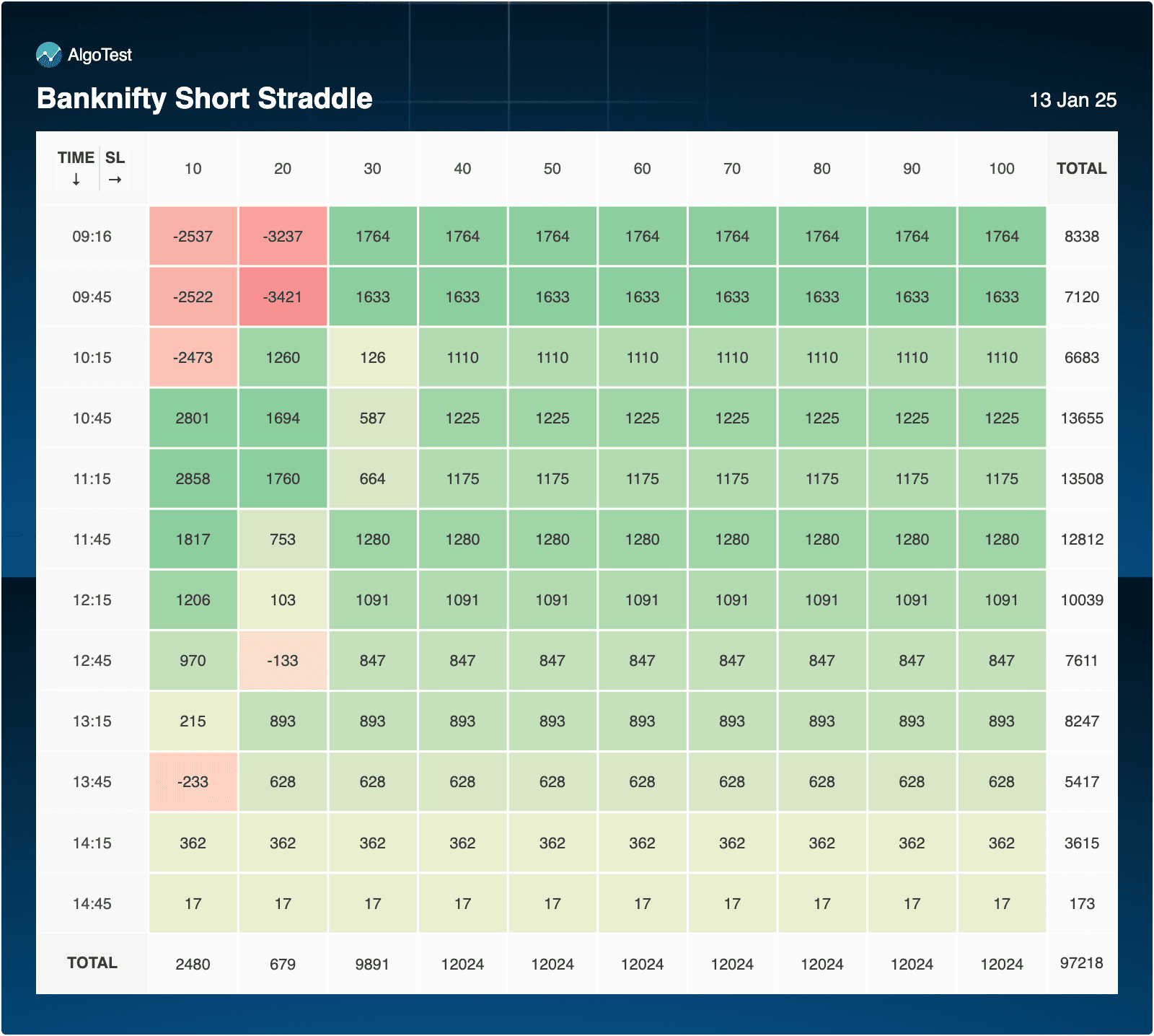
#### **Insights:**
- **10:45 and 11:15** performed exceptionally well, with profits of **13,655** and **13,508**, respectively, at SL=50 and above.
- **09:16 and 09:45** incurred significant losses, with **-3,237** and **-3,421** at SL=20.
- Time slots like **12:15 and 12:45** provided consistent smaller profits, around **7,611** at SL=50.
- Total profit of **97,218**, driven primarily by mid-morning slots.
### **2\. FinNifty Short Straddle**
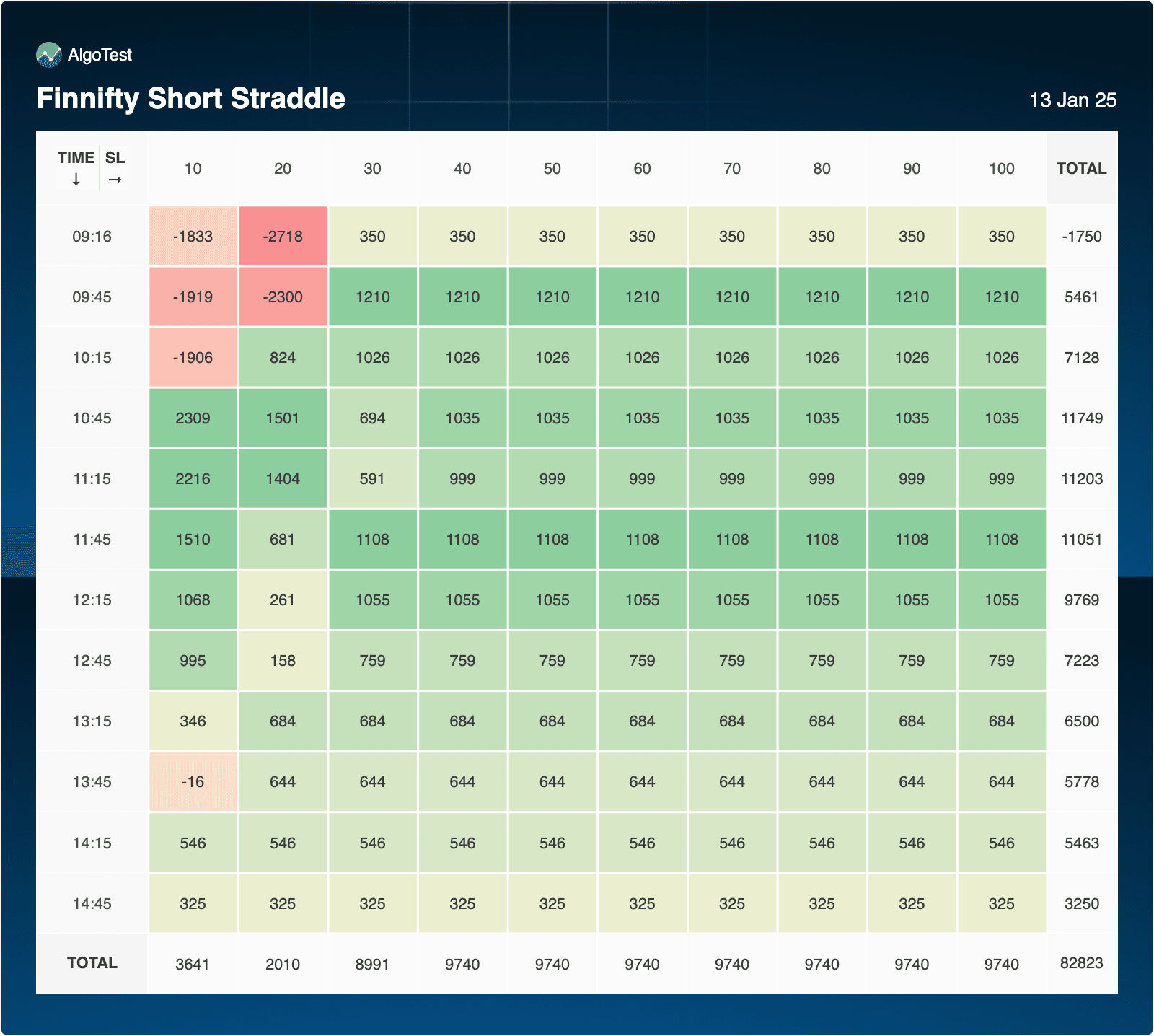
#### **Insights:**
- **10:45 and 11:15** were the most profitable, with **11,749** and **11,203**, respectively, at SL=50 and above.
- **09:16 and 09:45** showed losses of **-2,718** and **-2,300**, respectively, at SL=20.
- Slots after **12:15** yielded smaller but steady profits, averaging **7,000**.
- Total profit of **82,823**, with strong performance across midday slots.
### **3\. MidCapNifty Short Straddle**
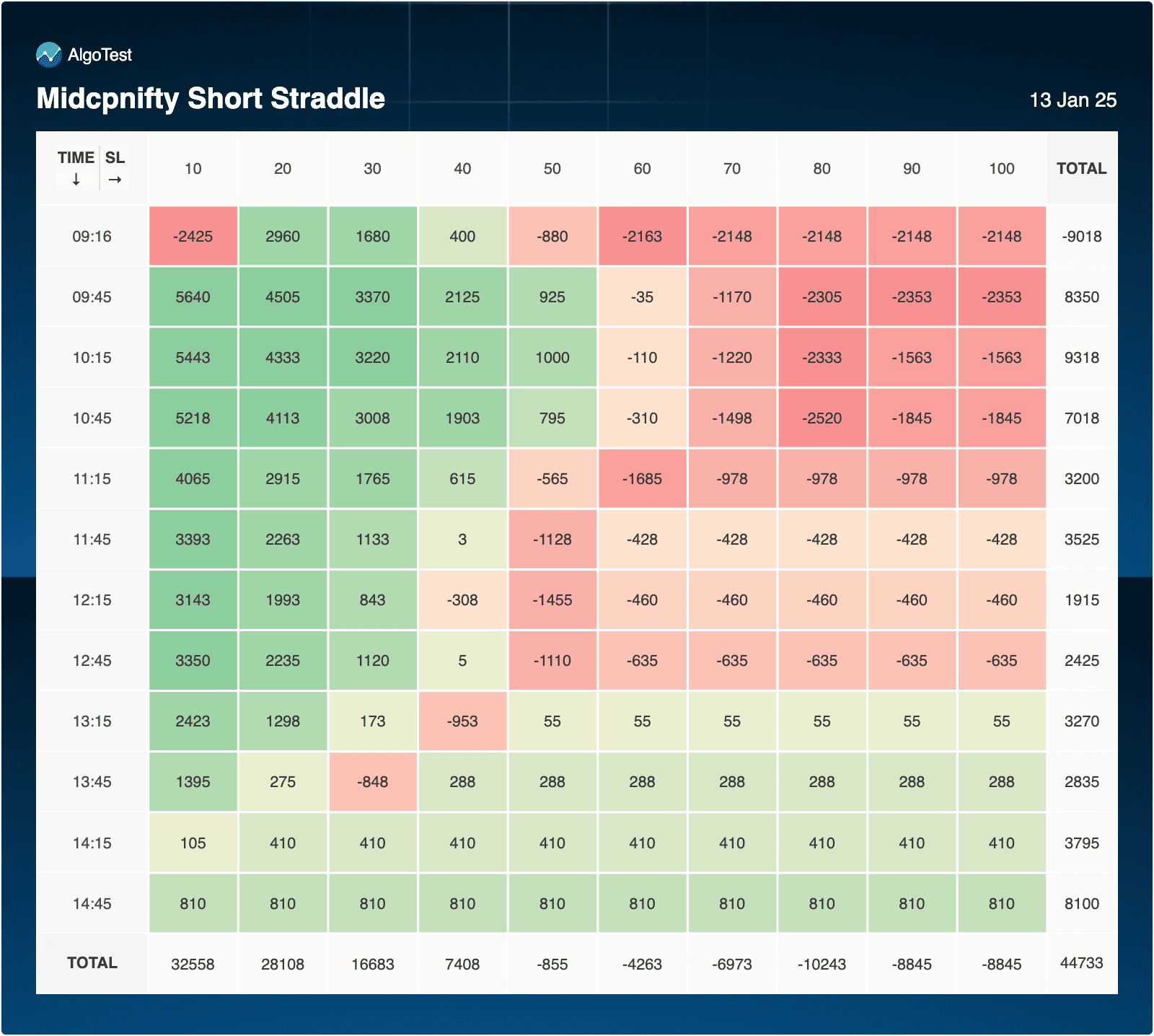
#### **Insights:**
- **10:15 and 10:45** delivered strong results, with profits of **9,318** and **7,018**, respectively, at SL=50.
- **09:16** incurred heavy losses of **-9,018** across all SL levels.
- Mixed performance during midday slots like **12:15**, with small profits or losses depending on SL levels.
- Total profit of **44,733**, highlighting the potential for selective trading.
### **4\. Nifty Short Straddle**
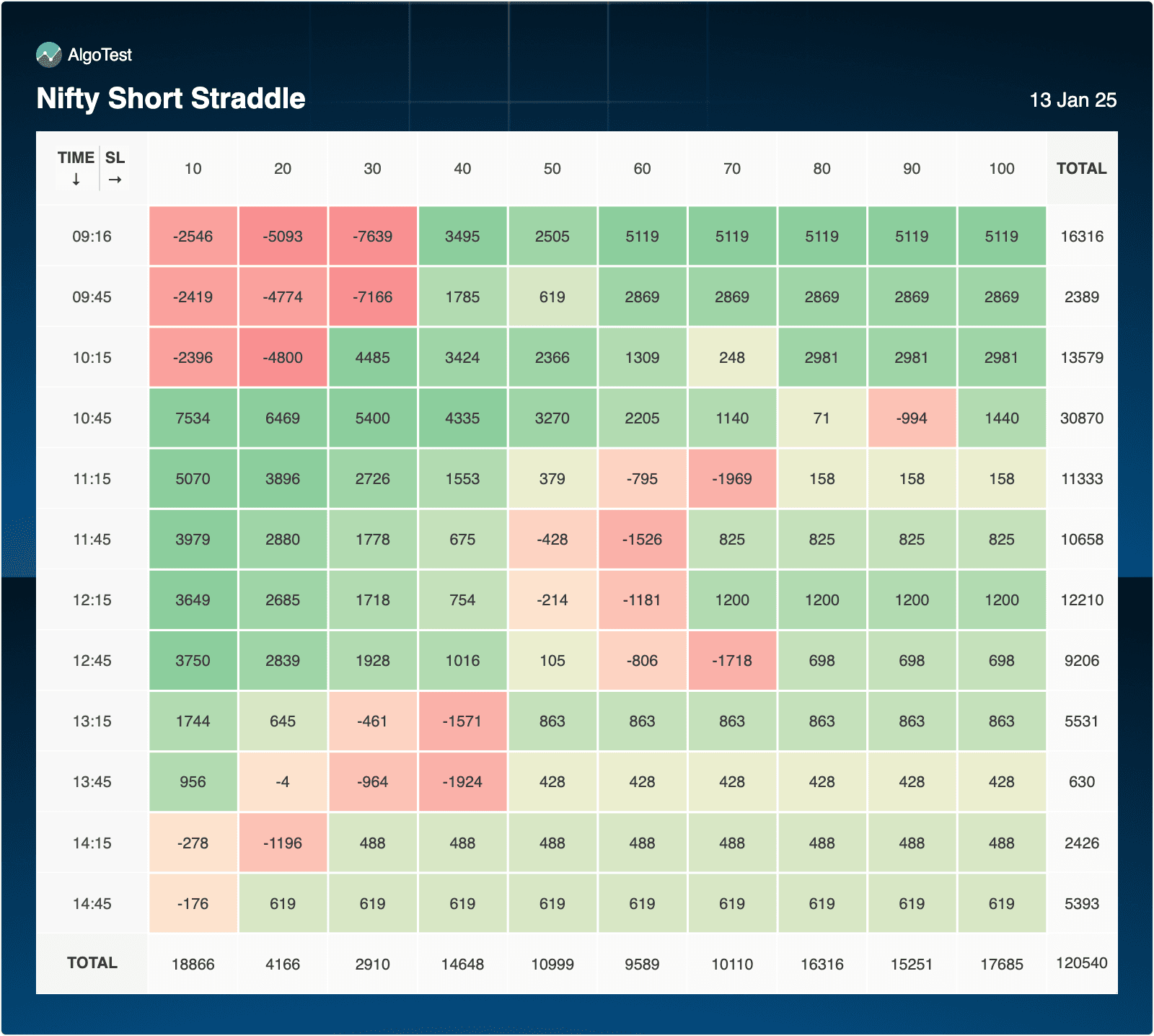
#### **Insights:**
- **10:45** delivered the highest profit, with **30,870** at SL=50 and above.
- **09:16 and 09:45** incurred heavy losses, with **-7,639** and **-7,166** at SL=20.
- Slots like **11:15 and 12:45** showed consistent profitability, averaging **11,000–12,000.**
- Total profit of **120,540**, making it the best-performing instrument for the day.
###### **** You can also check [heatmaps](https://algotest.in/heatmap) for MidCapNifty, Nifty, BankNifty, and FinNifty across different dimensions to better understand market trends.
---
This blog is powered by Superblog. Visit https://superblog.ai to know more.
---
## Daily Straddle Heatmap - 10th January, 2025
Author: AlgoTest
Author URL: https://algotest.in/blog/author/algotest/
Published: 2025-01-13
Category: Heatmaps
Category URL: https://algotest.in/blog/category/heatmaps/
URL: https://algotest.in/blog/daily-straddle-heatmap---10th-january-2025/
Daily Straddle Heatmap
[AlgoTest](https://algotest.in) heatmaps make it easier for you to understand a clear picture of your trading performance. These [heatmaps](https://algotest.in/heatmap) visually represent data like time, performance metrics, and win rates. Think of them as a map highlighting where your strategies work best and where they stumble. For example, a heatmap might reveal that trades during certain hours of the day consistently yield higher profits.
We are taking four eatmaps today. Let’s understand what we can learn from them.
### **1\. BankNifty Short Straddle**
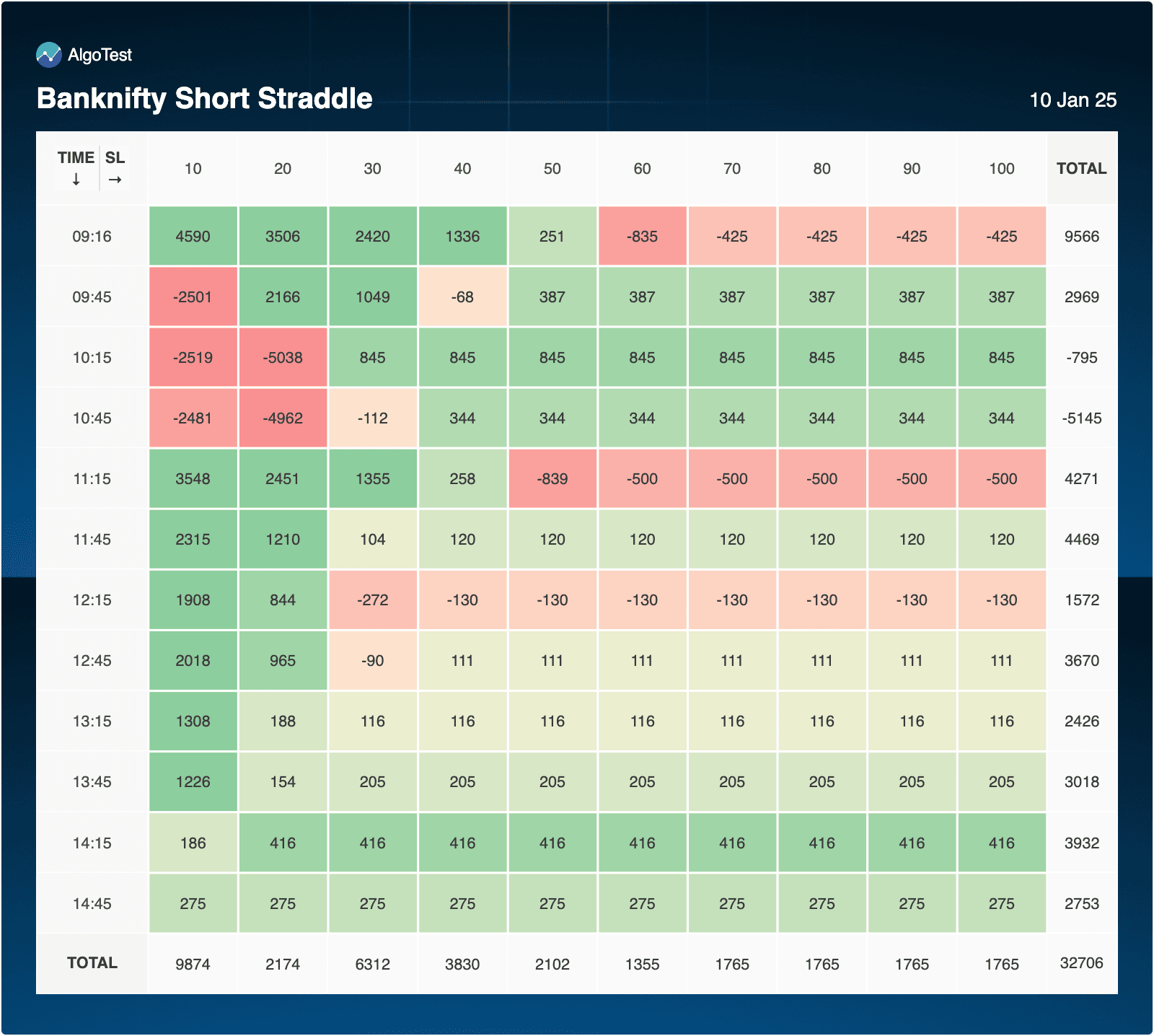
#### **Insights:**
- **09:16** was the most profitable, yielding **9,566** at SL=10 and above.
- **10:15 and 10:45** incurred significant losses, with **-5,038** and **-4,996**, respectively, at SL=20.
- Post **13:15**, the strategy stabilized, yielding profits between **2,242 to 3,933** at SL=40 and above.
- Total profit of **32,706**, driven primarily by the early morning slot and post-midday stabilization.
### **2\. FinNifty Short Straddle**
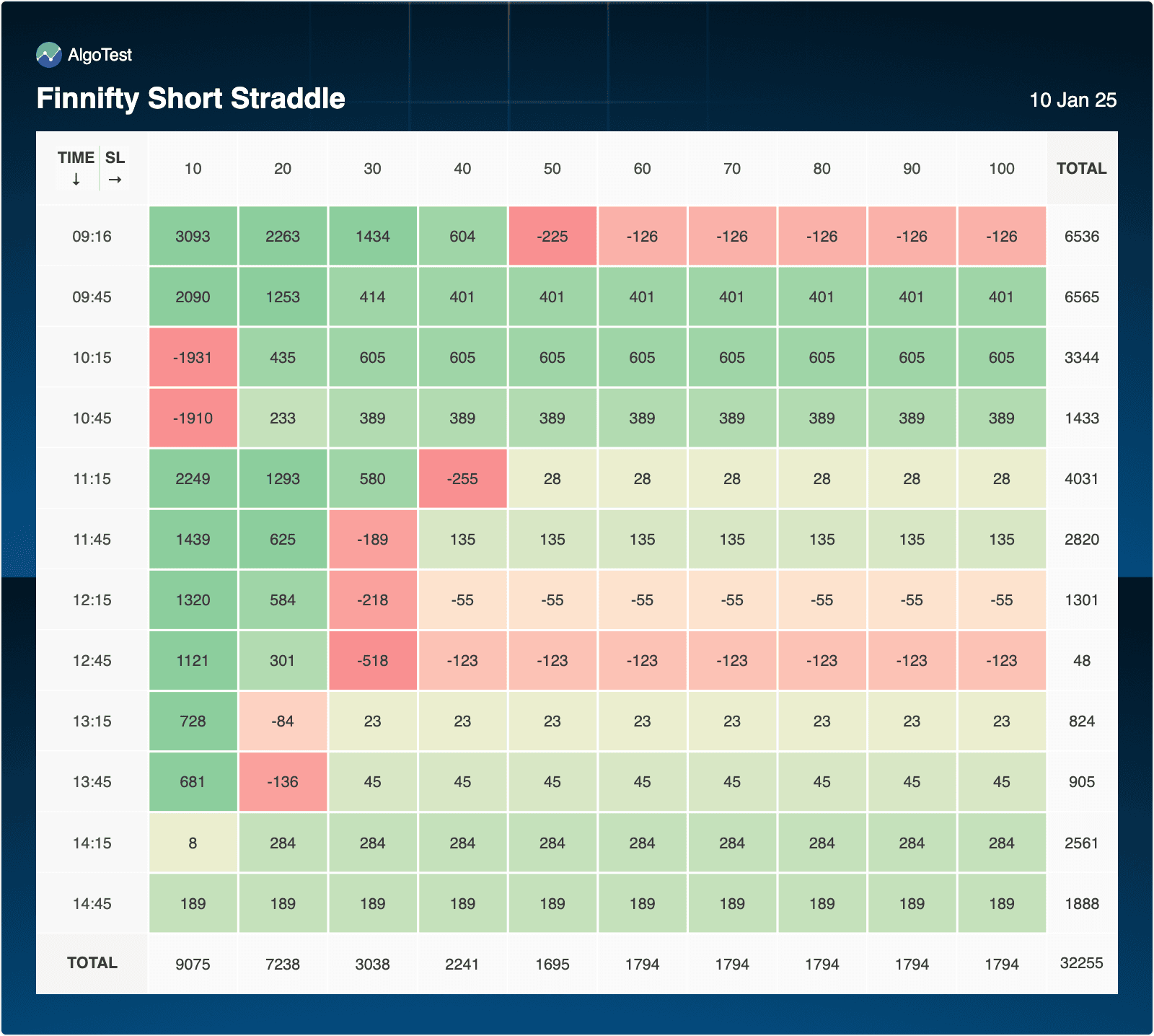
#### **Insights:**
- **09:16 and 09:45** delivered strong profits, with **6,536** and **6,565**, respectively, at SL=10 and above.
- **10:15 and 10:45** resulted in moderate losses, with **-1,931** and **-1,910**, respectively, at SL=10.
- Post **11:15**, the strategy showed steady gains, with profits averaging **2,500** across SL levels.
- Total profit of **32,255**, indicating strong overall performance.
### **3\. MidCapNifty Short Straddle**
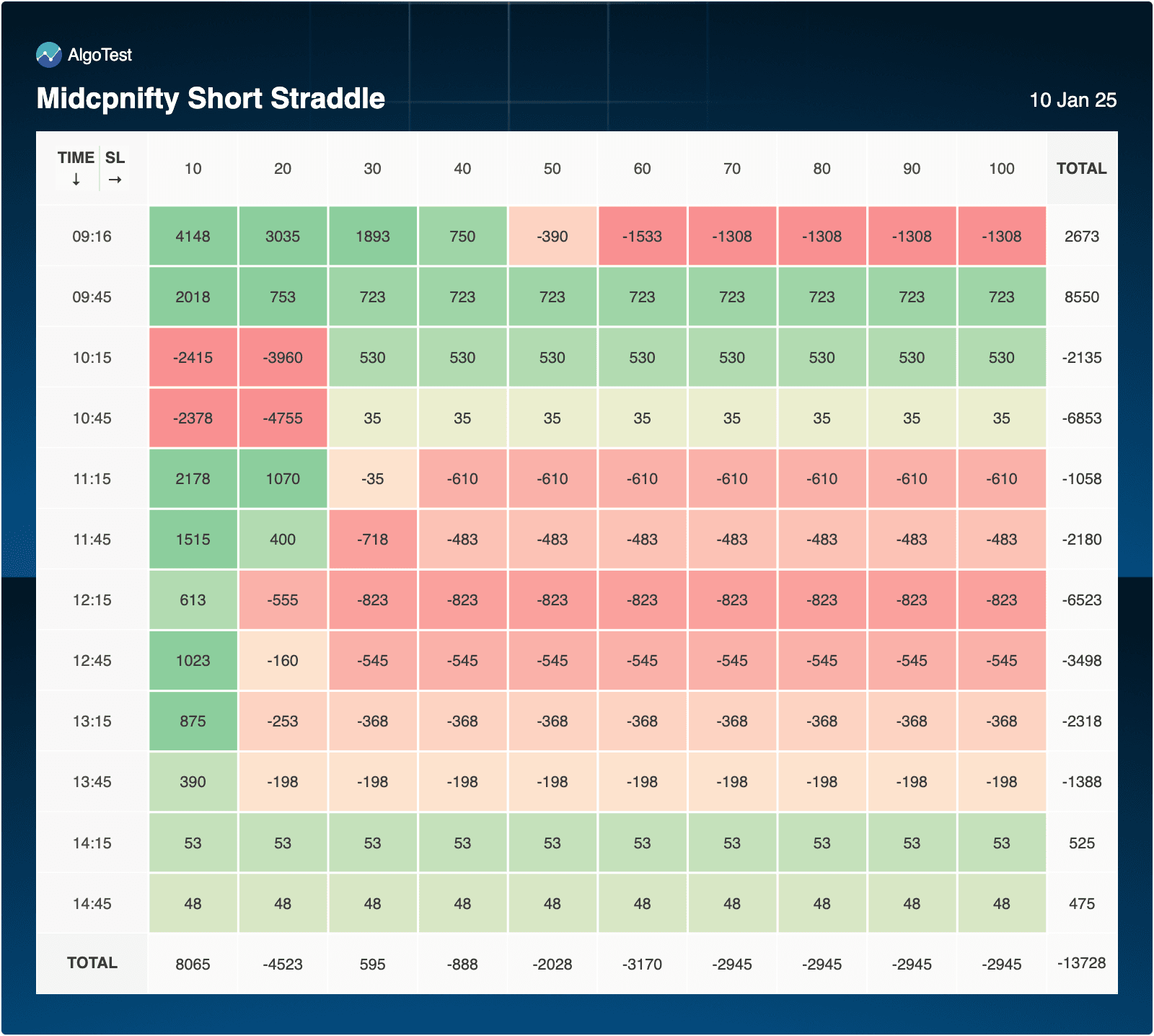
#### **Insights:**
- **09:45** showed the highest profitability, with **8,550** at SL=50 and above.
- **10:15 and 10:45** incurred heavy losses, with **-3,960** and **-4,755**, respectively, at SL=20.
- Most slots post **11:15** showed mixed results, with small losses or negligible gains.
- Total loss of **-13,728**, highlighting the inefficiency of this strategy on this instrument.
### **4\. Nifty Short Straddle**
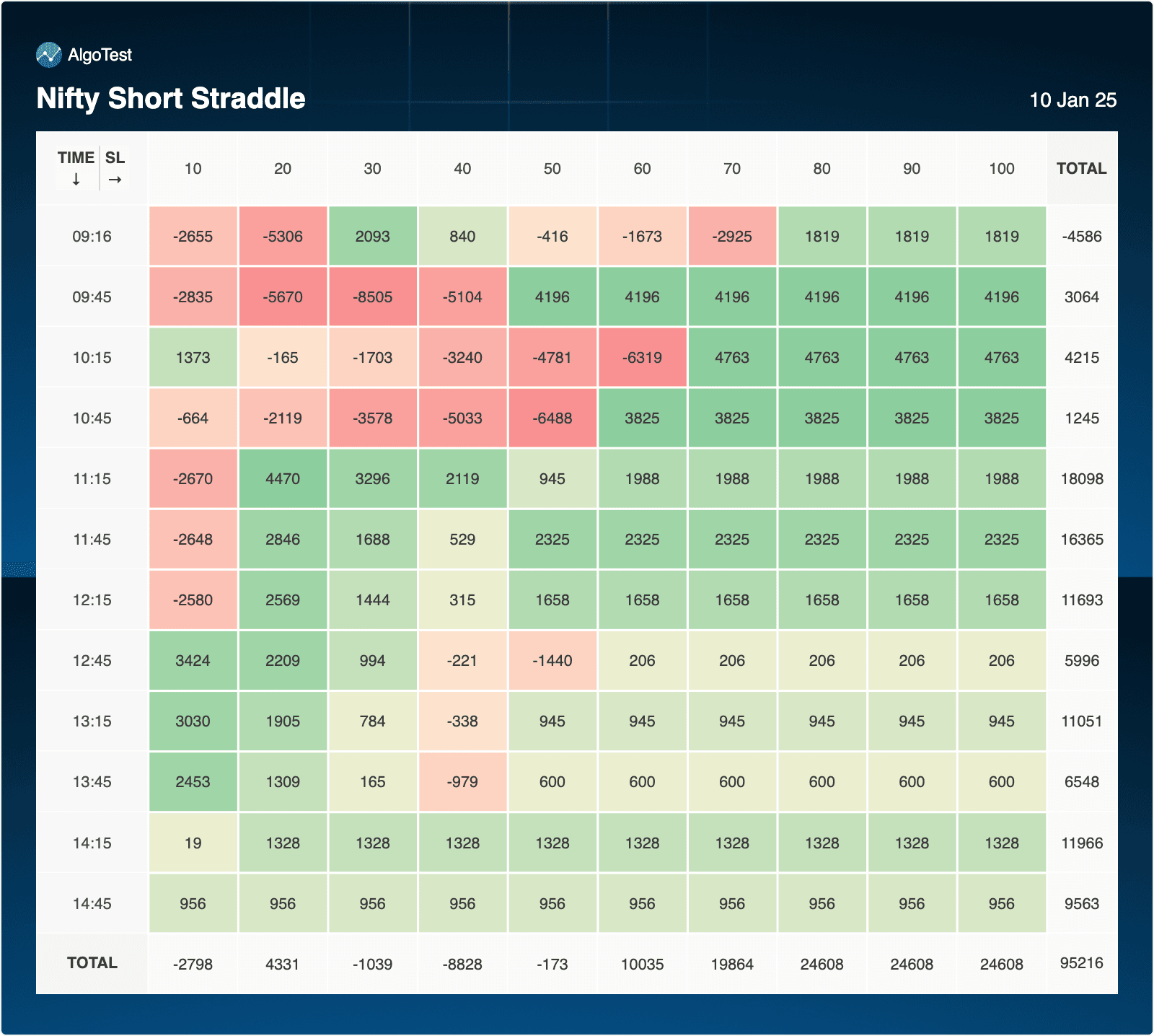
#### **Insights:**
- **11:15** yielded exceptional profitability, with **18,098** across SL levels.
- **09:16 and 09:45** resulted in significant losses, with **-5,306** and **-5,670**, respectively, at SL=20.
- Slots post **12:45** showed moderate recovery, with profits averaging **6,500** at SL=50 and above. ****
- Total profit of **95,216**, driven primarily by mid-morning and midday slots.
###### **** You can also check [heatmaps](https://algotest.in/heatmap) for MidCapNifty, Nifty, BankNifty, and FinNifty across different dimensions to better understand market trends.
---
This blog is powered by Superblog. Visit https://superblog.ai to know more.
---
## Daily Straddle Heatmap - 9th January, 2025
Author: AlgoTest
Author URL: https://algotest.in/blog/author/algotest/
Published: 2025-01-13
Category: Heatmaps
Category URL: https://algotest.in/blog/category/heatmaps/
URL: https://algotest.in/blog/daily-straddle-heatmap---9th-january-2025/
Daily Straddle Heatmap
[AlgoTest](https://algotest.in) heatmaps make it easier for you to understand a clear picture of your trading performance. These [heatmaps](https://algotest.in/heatmap) visually represent data like time, performance metrics, and win rates. Think of them as a map highlighting where your strategies work best and where they stumble. For example, a heatmap might reveal that trades during certain hours of the day consistently yield higher profits.
We are taking four eatmaps today. Let’s understand what we can learn from them.
### **1\. BankNifty Short Straddle**
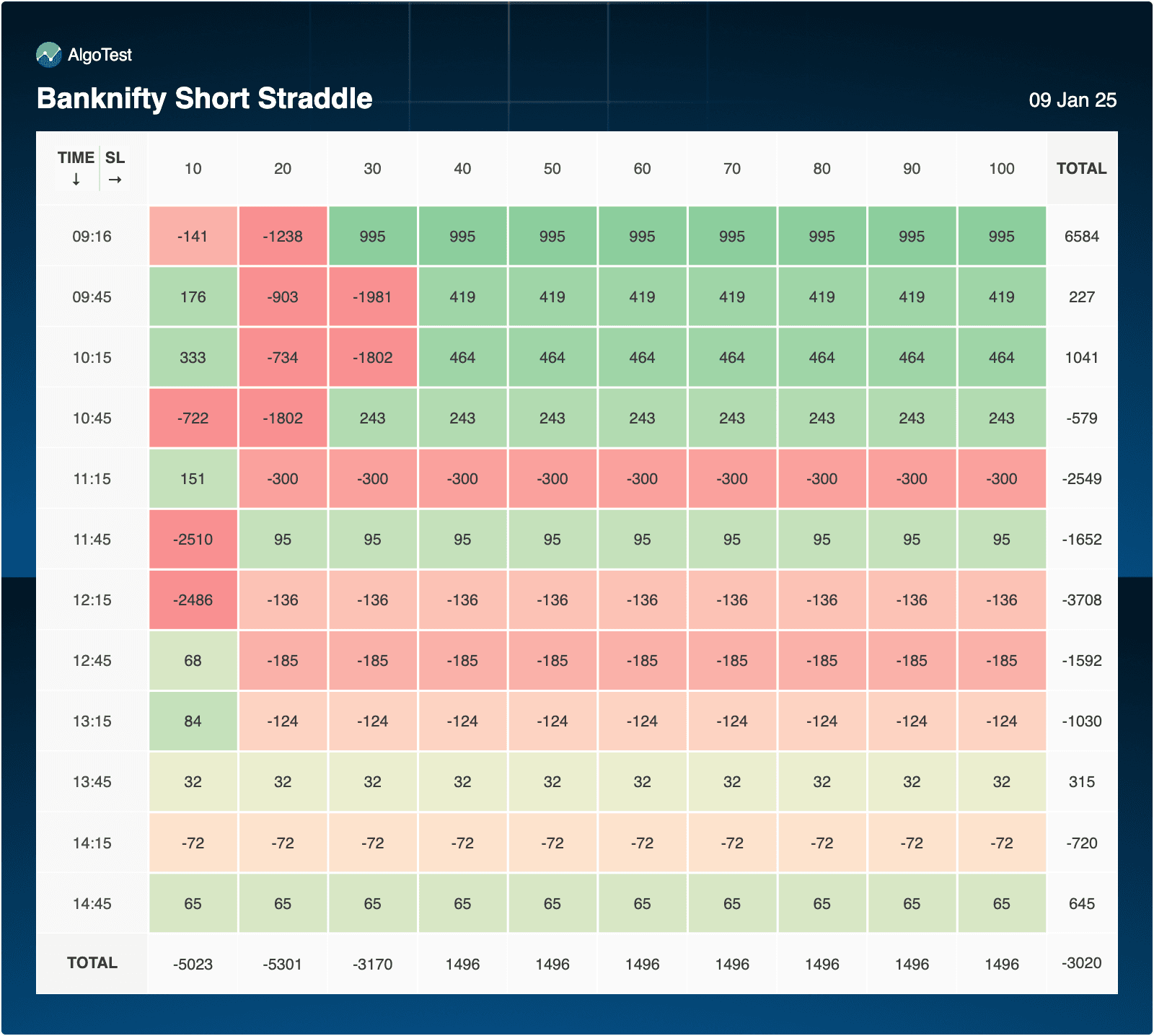
#### **Insights:**
- **09:16** was the most profitable, yielding **6,584** with consistent performance at SL=40 and above.
- **12:15** resulted in significant losses, with **-3,708** across all SL levels.
- Time slots from **11:15 to 13:45** showed persistent losses, suggesting inefficiency during midday trading hours.
- Total loss of **-3,020**, with profits concentrated in the morning and losses dominating the midday sessions.
### **2\. FinNifty Short Straddle**
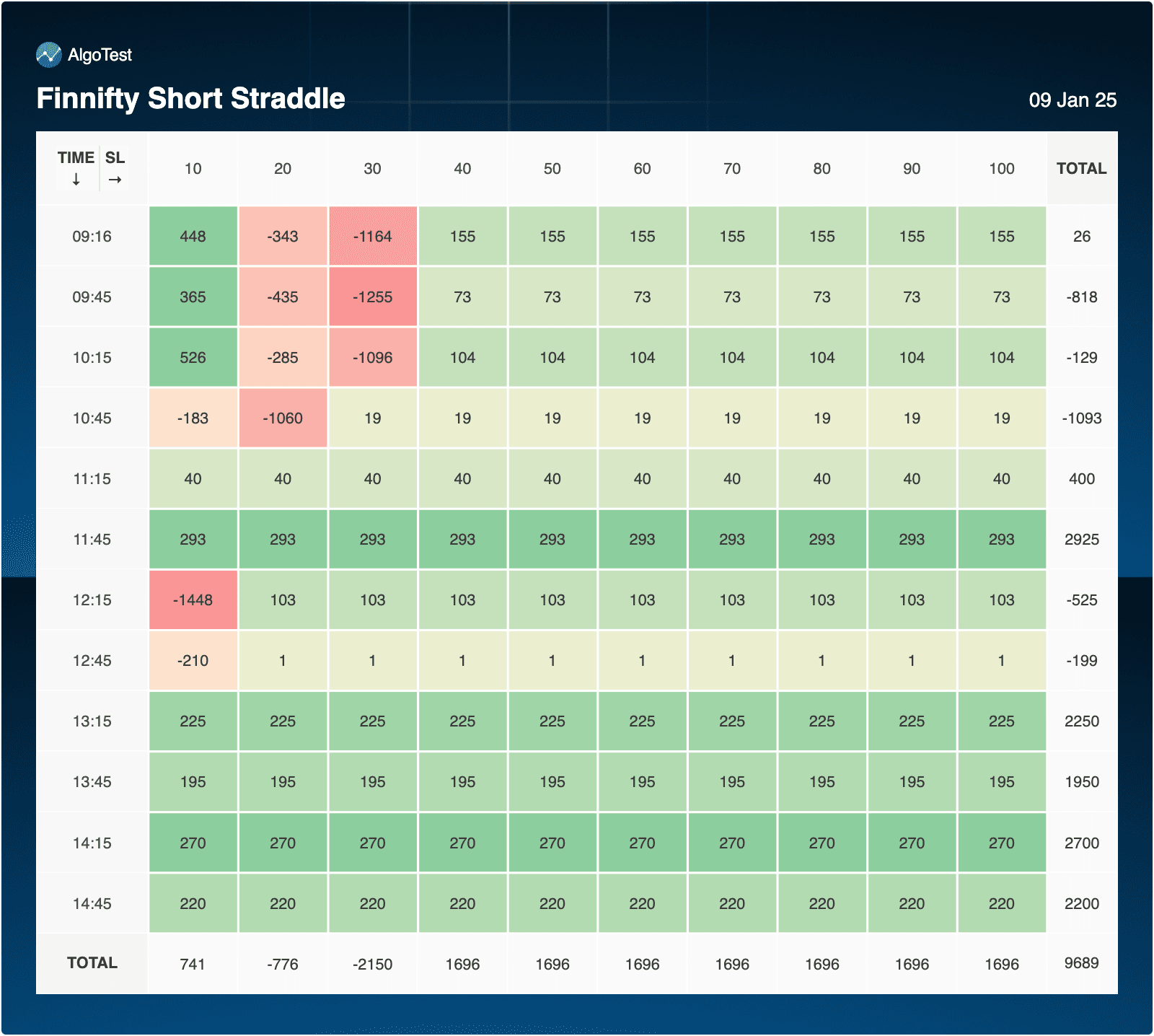
#### **Insights:**
- **11:45** delivered strong profits of **2,925** across all SL levels.
- **12:15** showed the most significant losses, with **-1,448** at SL=10 and moderate losses across higher SL levels.
- Time slots after **13:15** contributed modest but consistent profits, indicating stability during these hours.
- Total profit of **9,689,** making it a more stable instrument compared to others.
### **3\. MidCapNifty Short Straddle**
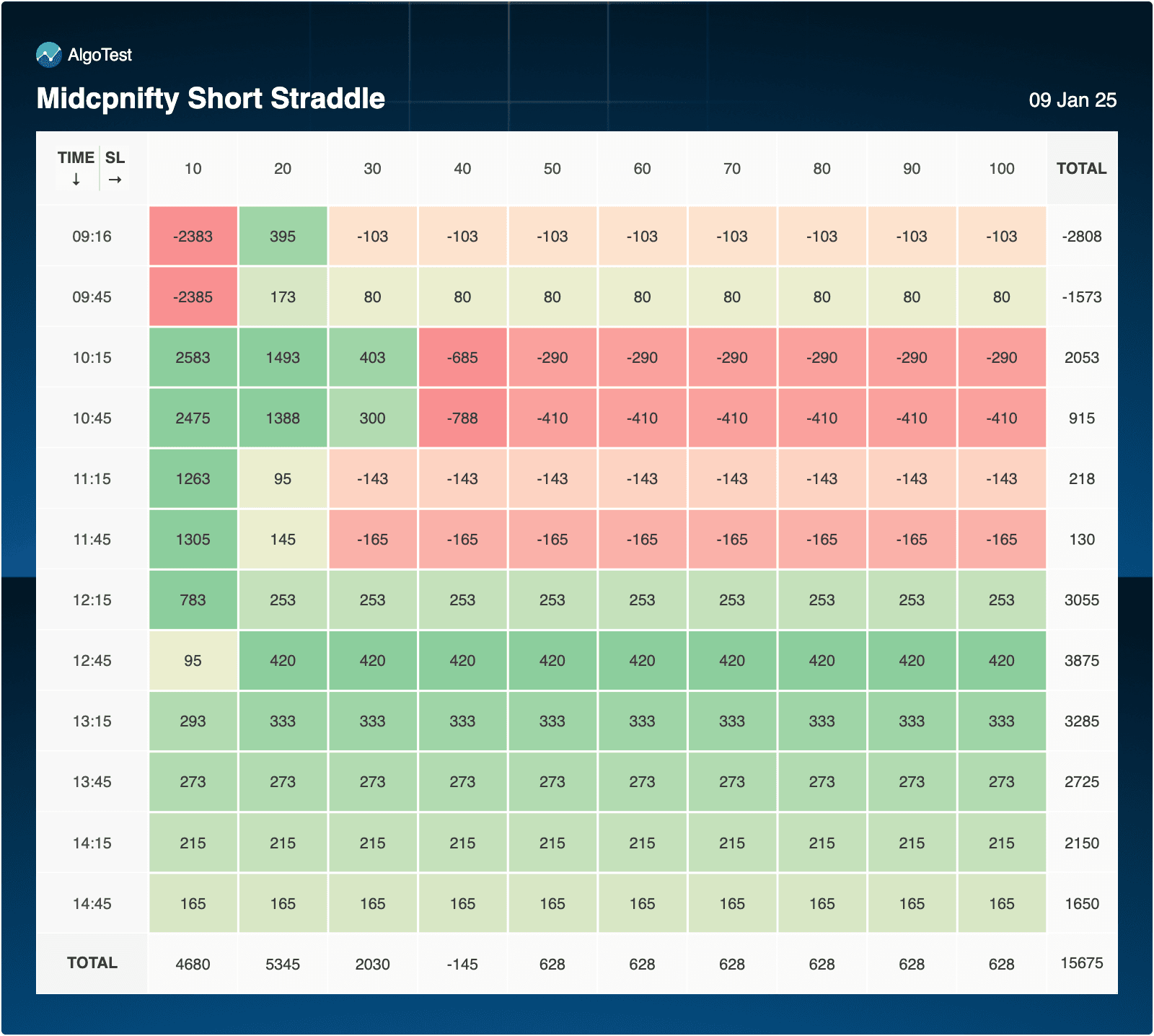
#### **Insights:**
- **12:45** yielded **3,875**, the highest profit of the day, at SL=50 and above.
- **09:16** resulted in the largest losses, with **-2,808** at lower SL levels.
- Late morning and midday slots like **11:15 to 13:45** showed moderate but consistent profits, with minimal losses.
- Total profit of **15,675**, indicating strong potential for this strategy.
### **4\. Nifty Short Straddle**
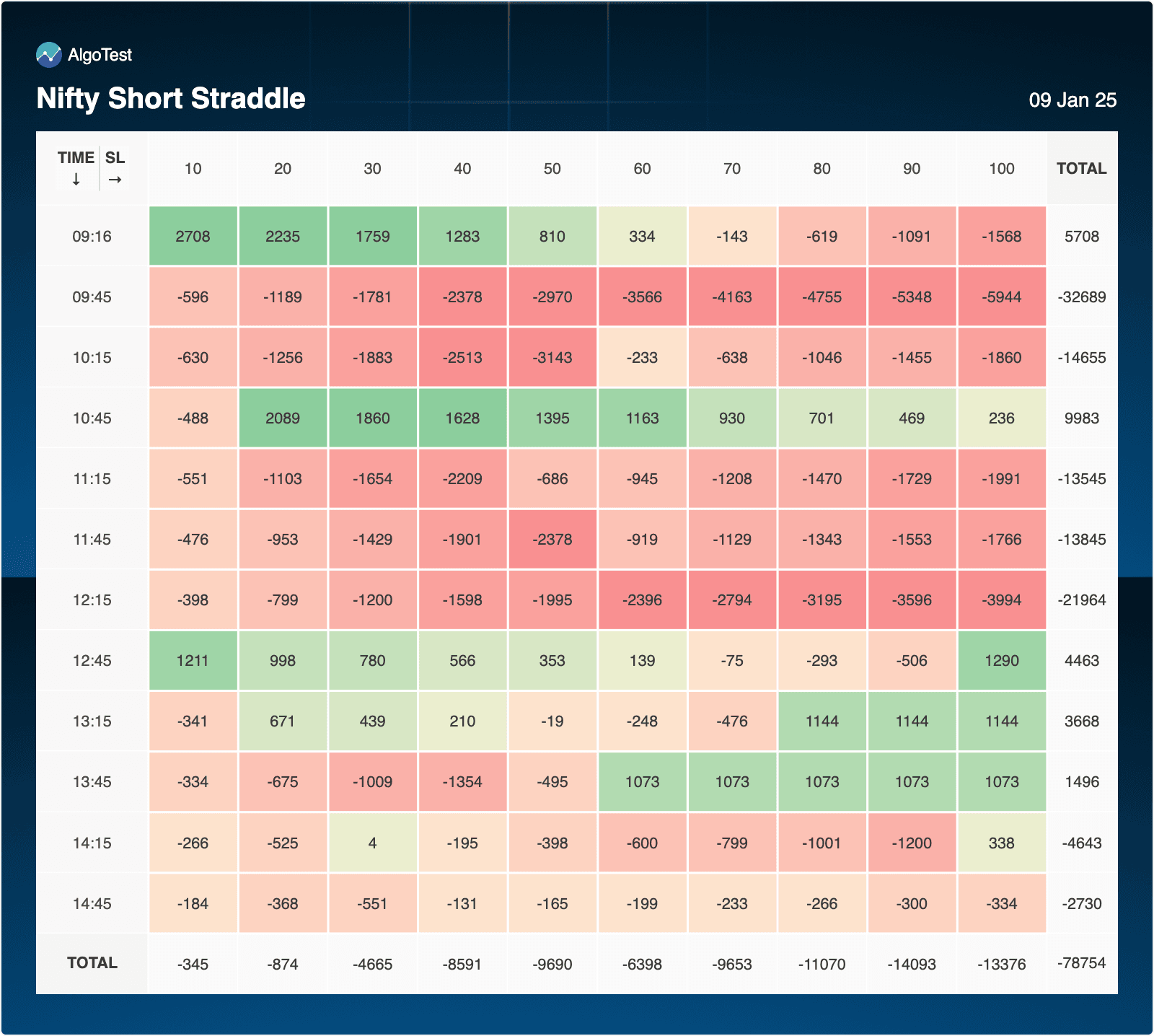
#### **Insights:**
- **10:45** generated **9,983**, indicating potential for profits in this time slot.
- **09:45** incurred heavy losses, with **-32,689** across all SL levels, likely due to high volatility and false breakouts.
- Slots like **13:15** showed modest recovery with **3,668** in profits, particularly at SL=50 and above. ****
- Total loss of -78,754, making it the worst-performing instrument for the day.
###### **** You can also check [heatmaps](https://algotest.in/heatmap) for MidCapNifty, Nifty, BankNifty, and FinNifty across different dimensions to better understand market trends.
---
This blog is powered by Superblog. Visit https://superblog.ai to know more.
---
## Daily Straddle Heatmap - 8th January, 2025
Author: AlgoTest
Author URL: https://algotest.in/blog/author/algotest/
Published: 2025-01-13
Category: Heatmaps
Category URL: https://algotest.in/blog/category/heatmaps/
URL: https://algotest.in/blog/daily-straddle-heatmap---8th-january-2025/
Daily Straddle Heatmap
[AlgoTest](https://algotest.in) heatmaps make it easier for you to understand a clear picture of your trading performance. These [heatmaps](https://algotest.in/heatmap) visually represent data like time, performance metrics, and win rates. Think of them as a map highlighting where your strategies work best and where they stumble. For example, a heatmap might reveal that trades during certain hours of the day consistently yield higher profits.
We are taking seven eatmaps today. Let’s understand what we can learn from them.
### **1\. BankNifty Short Straddle**
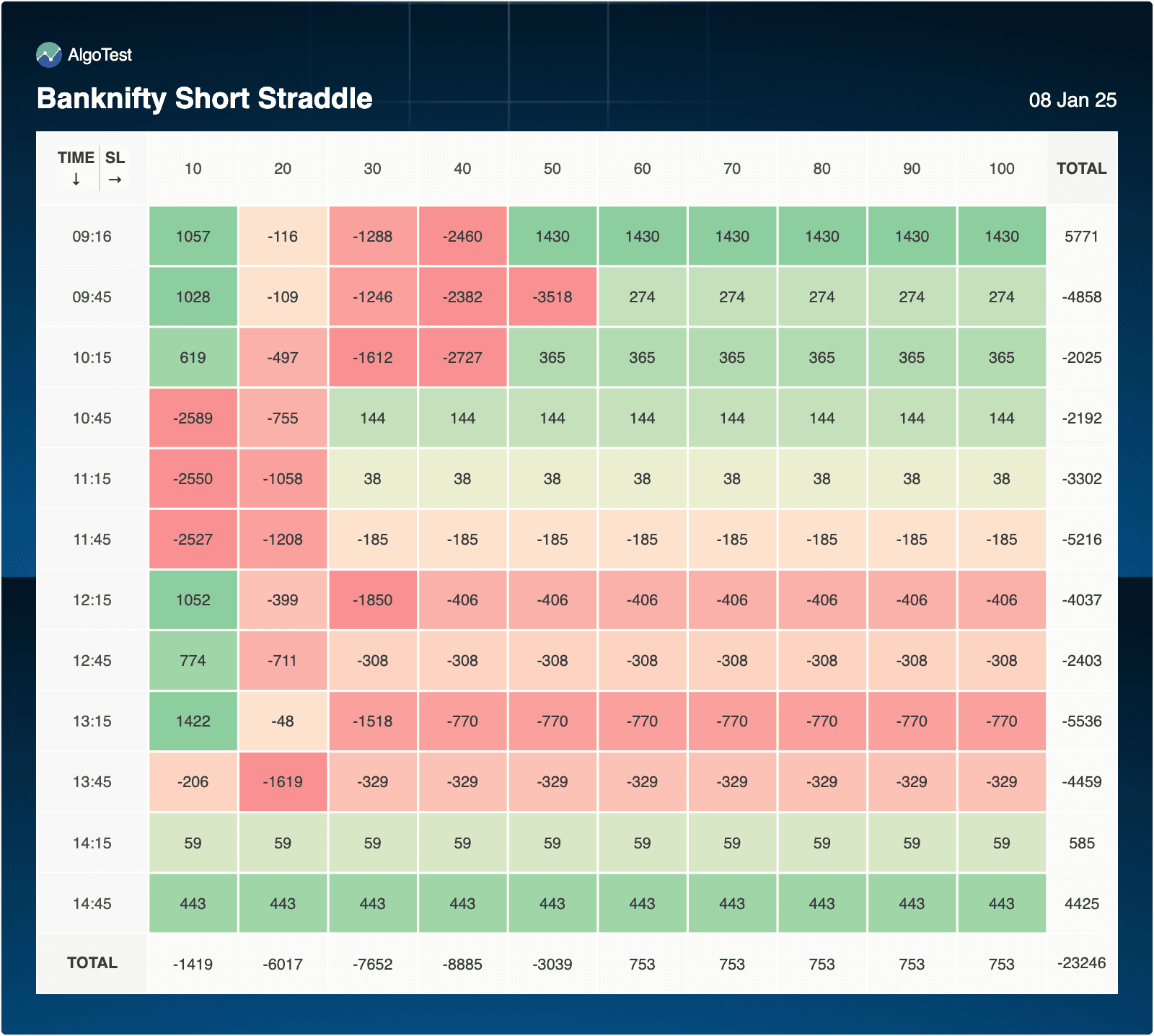
#### **Insights:**
- **09:16** performed well with profits of **5,771** at SL=50 and higher. This indicates that early morning slots tend to capture directional moves effectively.
- **11:15 to 13:45** resulted in significant losses, with losses exceeding **-3,000** across SL levels. This period might coincide with low volatility or false breakouts.
- Total losses of **-23,246** for the day, suggesting inefficiency in the strategy.
- SL levels above 50 provided some stability but failed to recover overall losses.
### **2\. FinNifty Short Straddle**
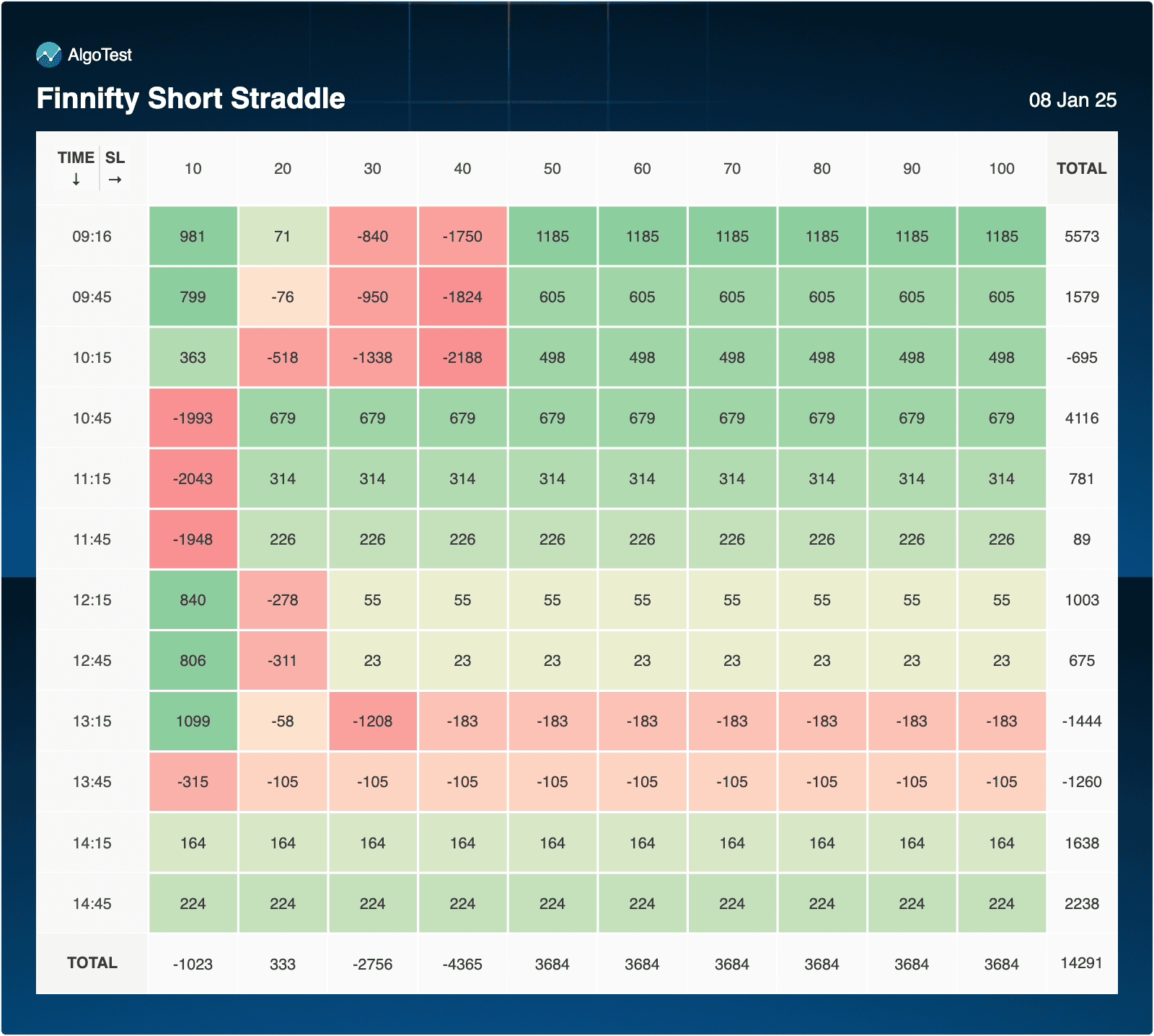
#### **Insights:**
- **09:16** yielded **5,573**, showing strong early morning performance at SL levels 50 and above.
- Midday time slots (12:15 onwards) displayed small but consistent profits across SL levels, indicating FinNifty is less volatile during these hours.
- Total profit of **14,291**, with profitability increasing with higher SL levels.
### **3\. MidCapNifty Short Straddle**
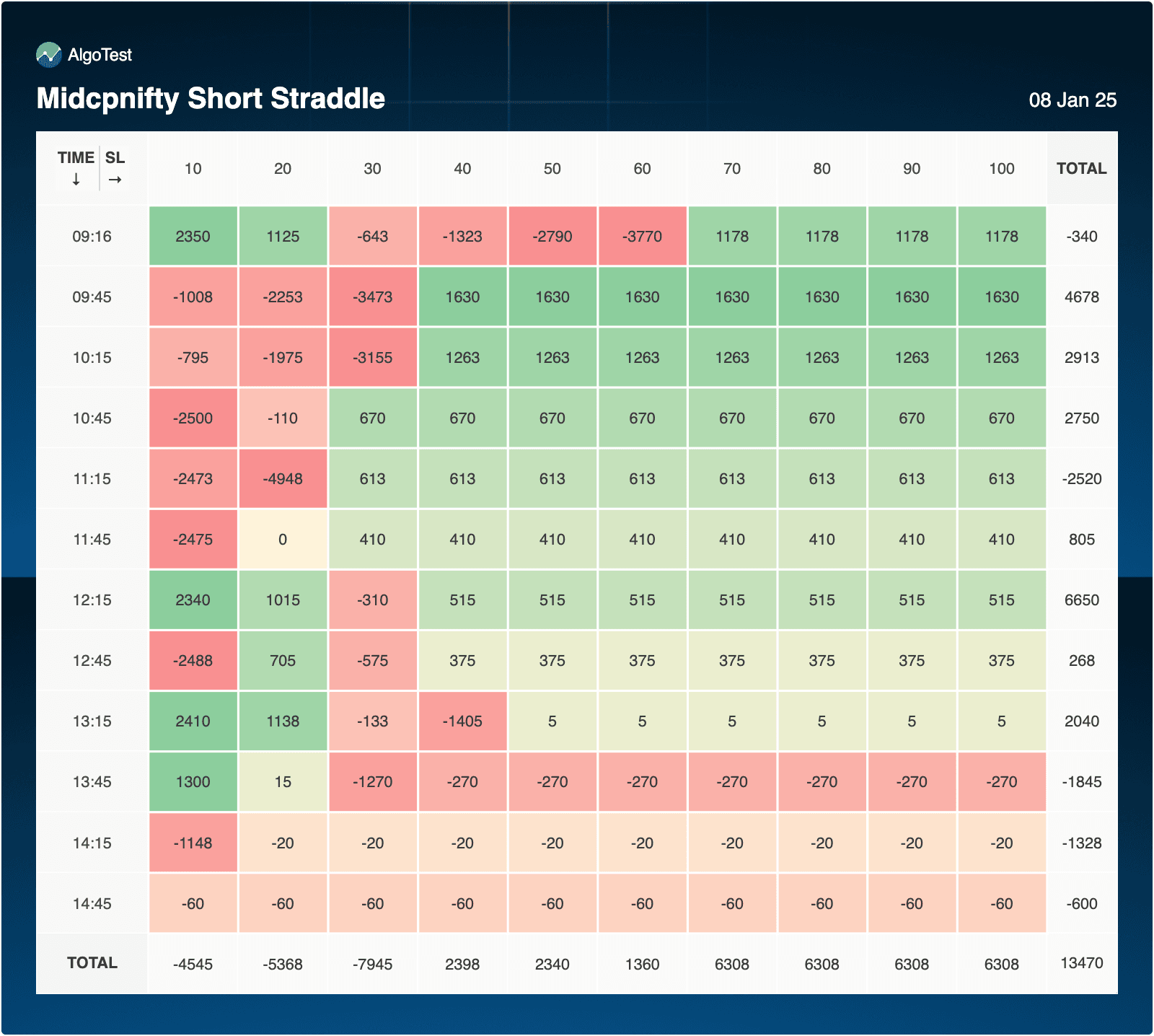
#### **Insights:**
- **12:15** showed strong profitability, yielding **6,650** at SL levels 50 and above.
- **11:15** incurred significant losses ( **-2,520**) at lower SL levels.
- Total profit of **13,470**, but performance was inconsistent throughout the day.
### **4\. Nifty Short Straddle**
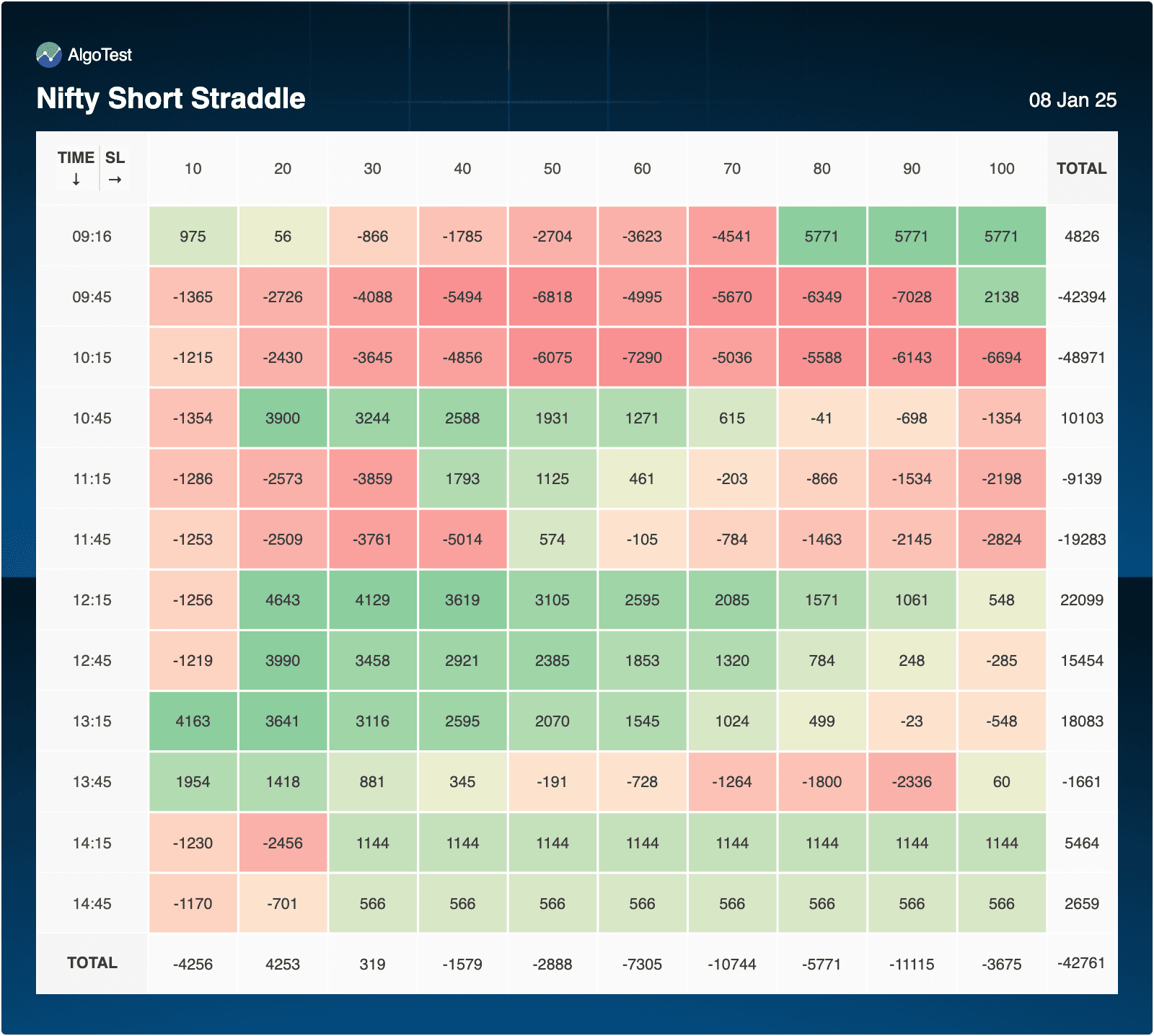
#### **Insights:**
- **12:15** was the standout performer with **22,099** in profits at SL=50.
- **10:15** incurred significant losses ( **-48,971**) due to high volatility and false signals.
- Total losses of **-42,761**, with mixed results depending on SL levels and time slots.
### **5\. BankNifty Short Straddle (Time Period)**
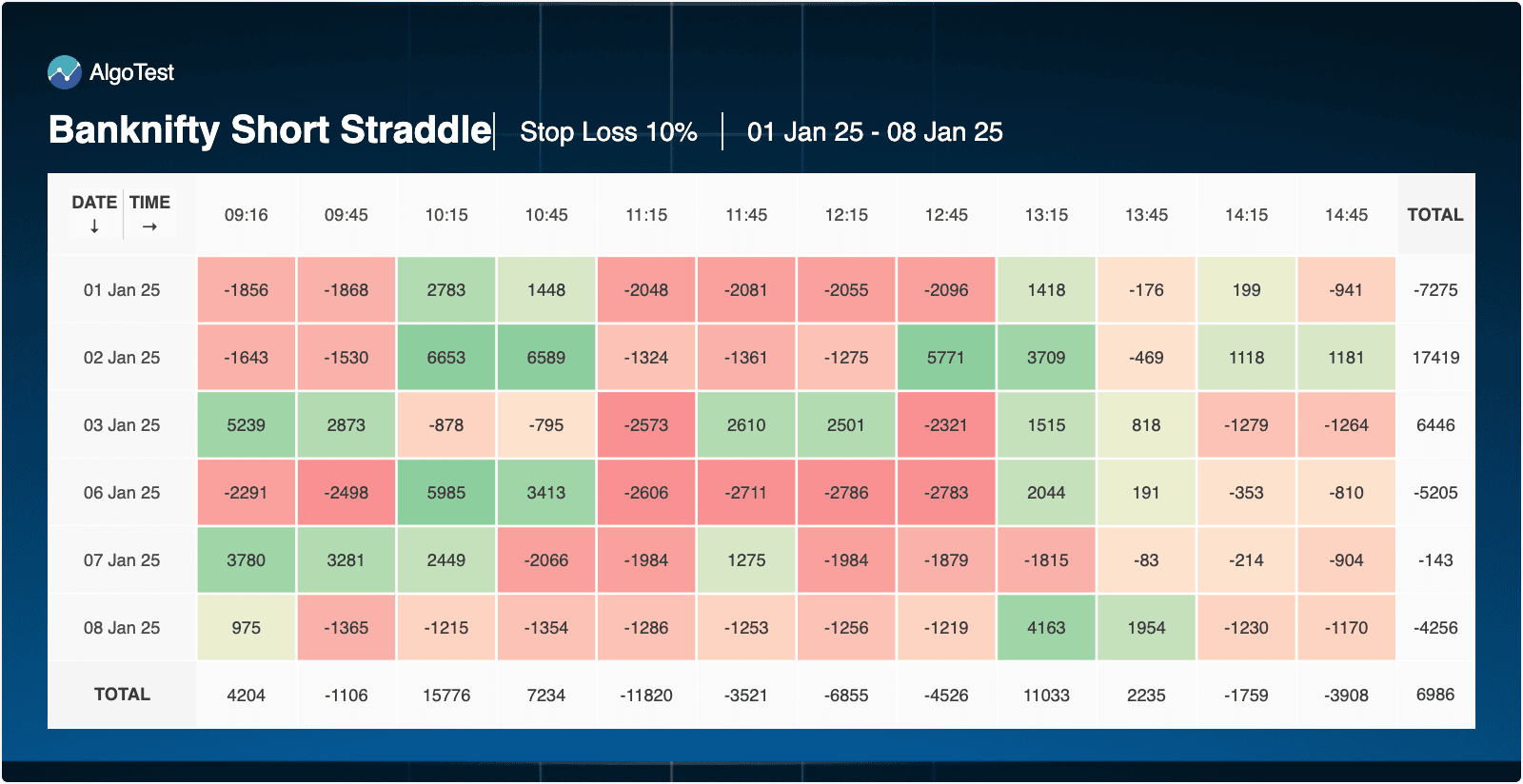
#### **Insights:**
- **09:16** continued to perform well, generating **4,163** in profits at SL=50 and above.
- Most other time slots, especially **10:15 to 13:45**, showed consistent losses.
- Total losses of **-4,526**, indicating the strategy struggled on this day.
### **6\. FinNifty Short Straddle (Time Period)**
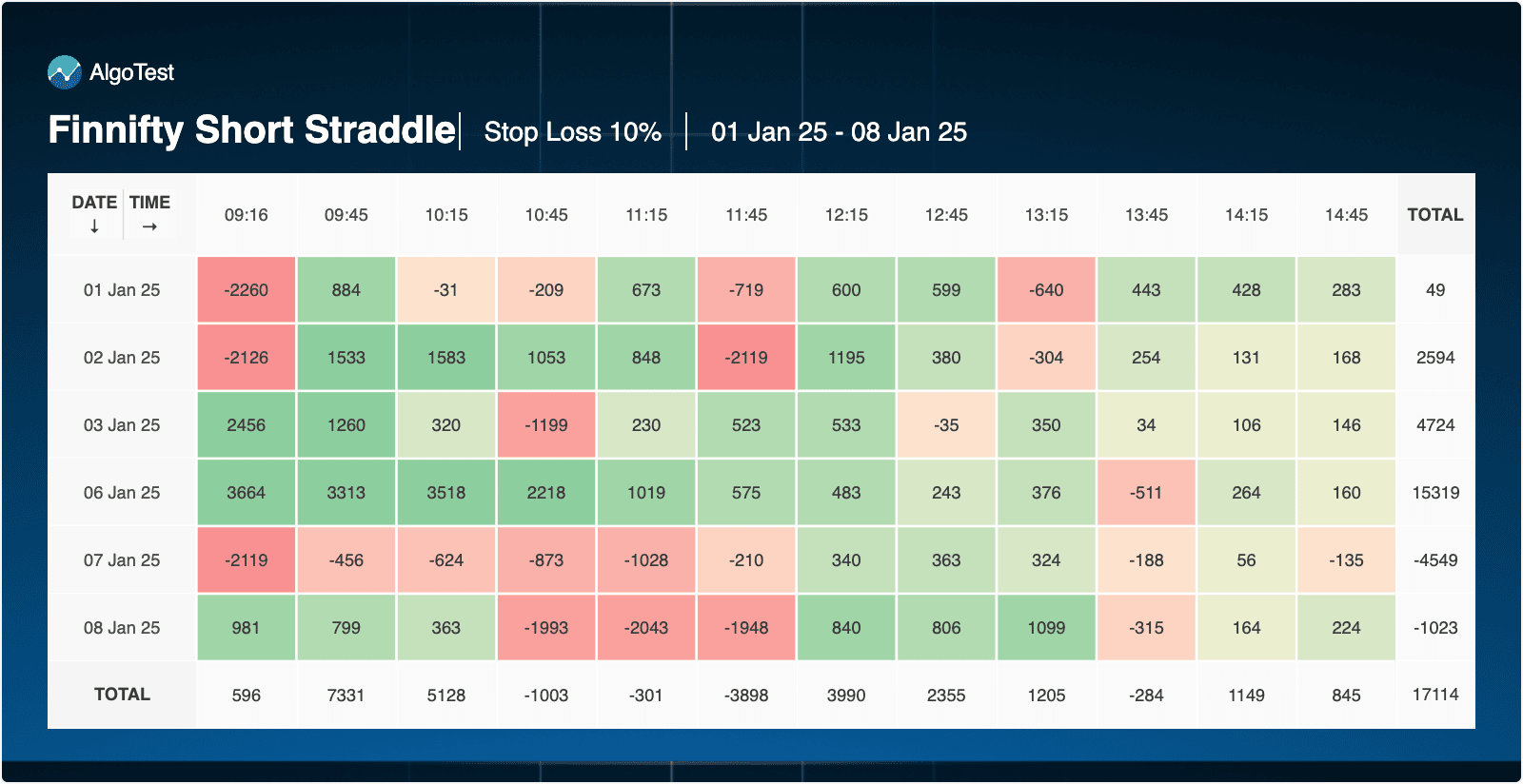
#### **Insights:**
- **10:45** generated profits of **4,724**, highlighting a midday opportunity for this instrument.
- Most slots displayed minor but stable profits, especially with SL levels above 30.
- Total profit of **17,114**, making it the most consistent performer for the day.
### **7\. MidCapNifty Short Straddle (Time Period)**
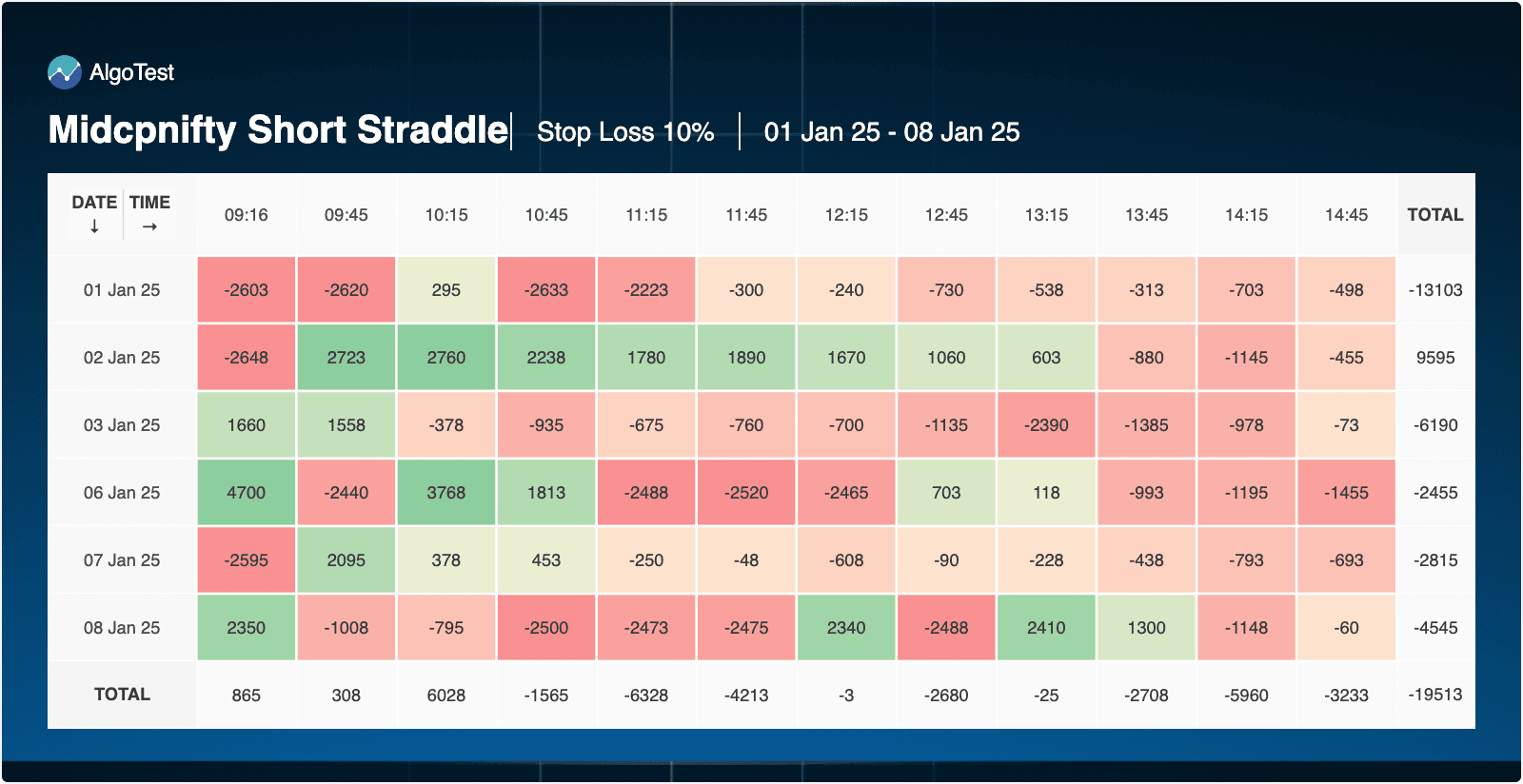
#### **Insights:**
- **12:15** was the most profitable, generating **6,650** at SL=50.
- **11:15** resulted in losses of **-2,630**, similar to the previous day.
- Total losses of **-19,513**, indicating inefficiency for this strategy.
###### **** You can also check [heatmaps](https://algotest.in/heatmap) for MidCapNifty, Nifty, BankNifty, and FinNifty across different dimensions to better understand market trends.
---
This blog is powered by Superblog. Visit https://superblog.ai to know more.
---
## Daily Straddle Heatmap - 7th January, 2025
Author: AlgoTest
Author URL: https://algotest.in/blog/author/algotest/
Published: 2025-01-13
Category: Heatmaps
Category URL: https://algotest.in/blog/category/heatmaps/
URL: https://algotest.in/blog/daily-straddle-heatmap---7th-january-2025/
Daily Straddle Heatmap
[AlgoTest](https://algotest.in) heatmaps make it easier for you to understand a clear picture of your trading performance. These [heatmaps](https://algotest.in/heatmap) visually represent data like time, performance metrics, and win rates. Think of them as a map highlighting where your strategies work best and where they stumble. For example, a heatmap might reveal that trades during certain hours of the day consistently yield higher profits.
We are taking four heatmaps today. Let’s understand what we can learn from them.
### **BankNifty Short Straddle:**
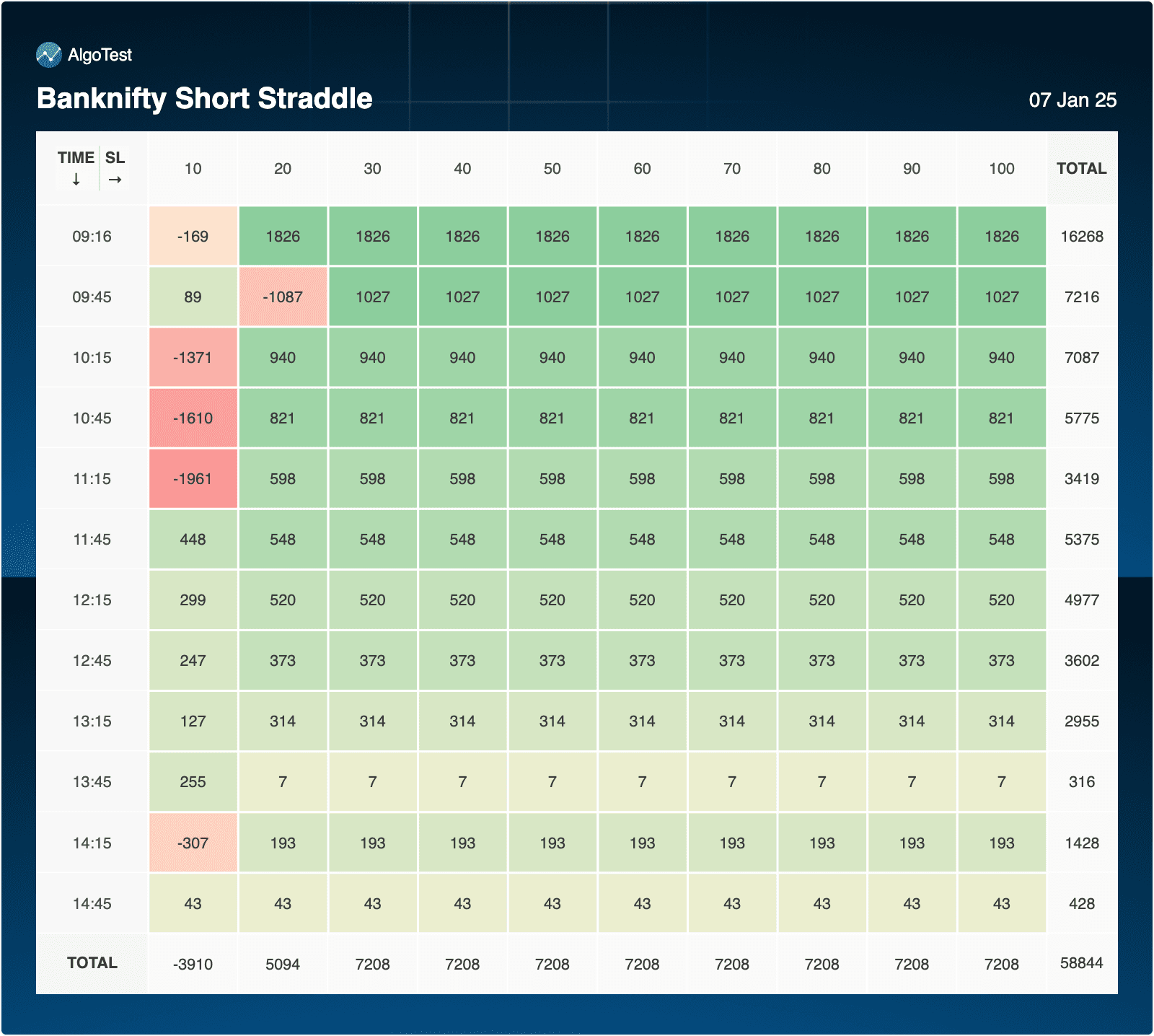
**Insights:**
- The **09:16 slot** was the most profitable with a total profit of **16,268** across all SL levels.
- Profits stabilize at higher SL levels (40–100), with total profits around **7,208** for these levels.
- Total cumulative profit across all slots is **58,844**, indicating strong potential when combined with disciplined SL management and early entry times.
### **FinNifty Short Straddle:**
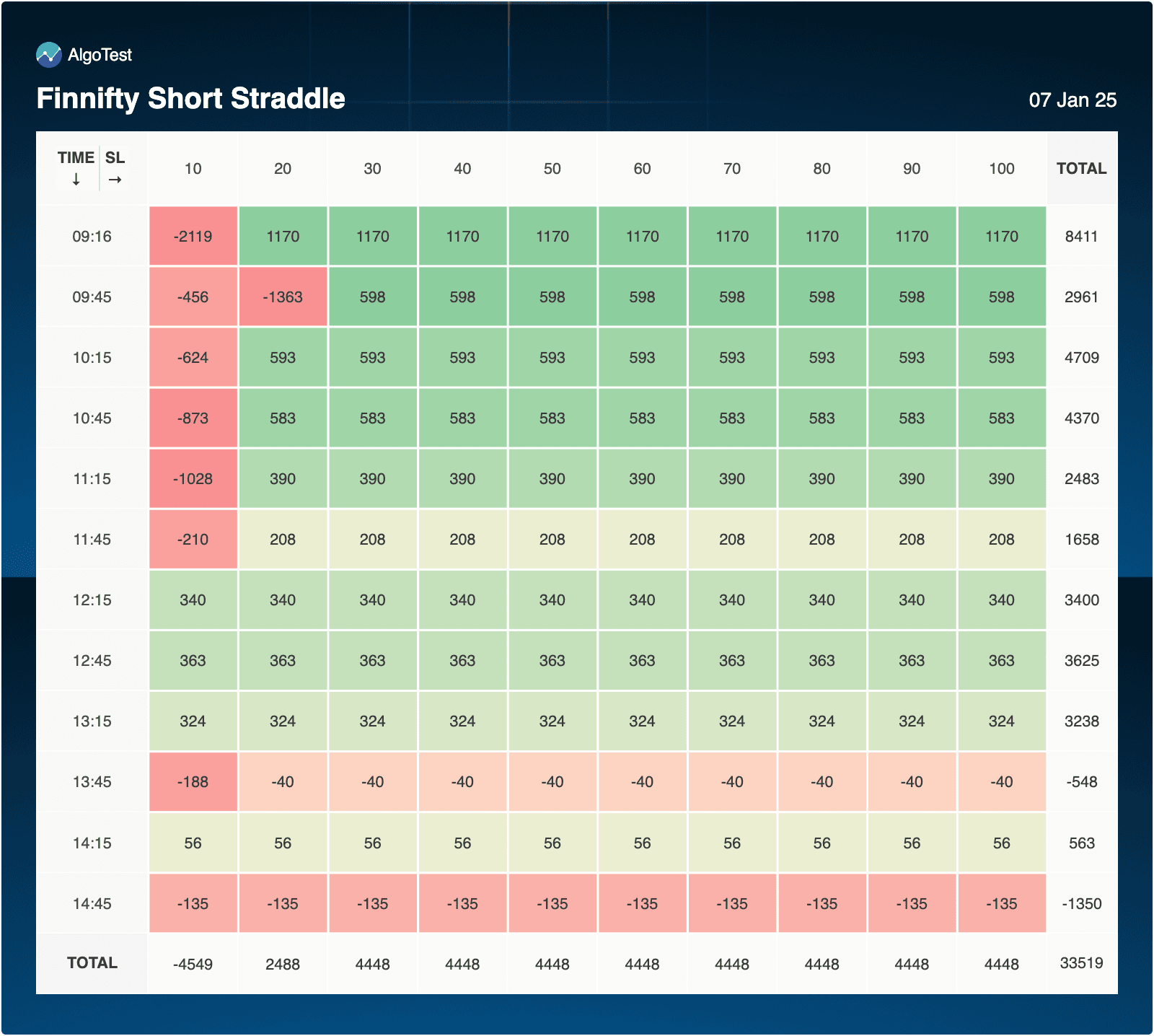
**Insights:**
- The **09:16 slot** performed well, generating **8,411** with higher SL levels.
- Slots after 11:15 showed reduced profitability or minor losses, with a cumulative total for this slot at **2,483**.
- Total cumulative profit is **33,519**, with higher SL levels (30–100) offering better consistency.
### **MidCapNifty Short Straddle:**
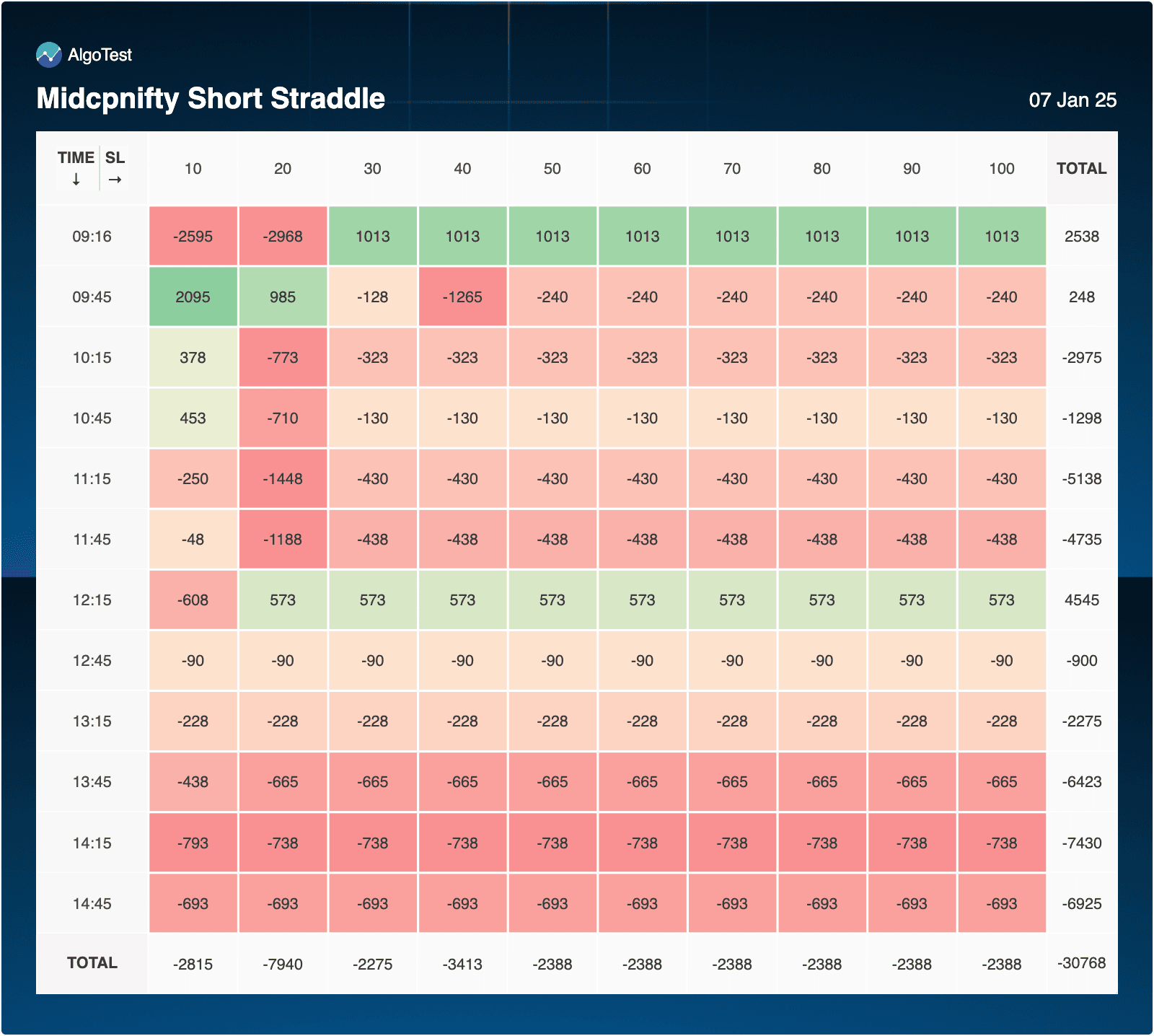
**Insights:**
- Total cumulative loss is **-30,768**.
- The **12:15 slot** shows minor profitability at higher SL levels (e.g., SL = 50) with a total of **4,545**.
- The **11:15 slot** incurred the highest losses, with cumulative losses exceeding **-5,000**.
### **Nifty Short Straddle:**
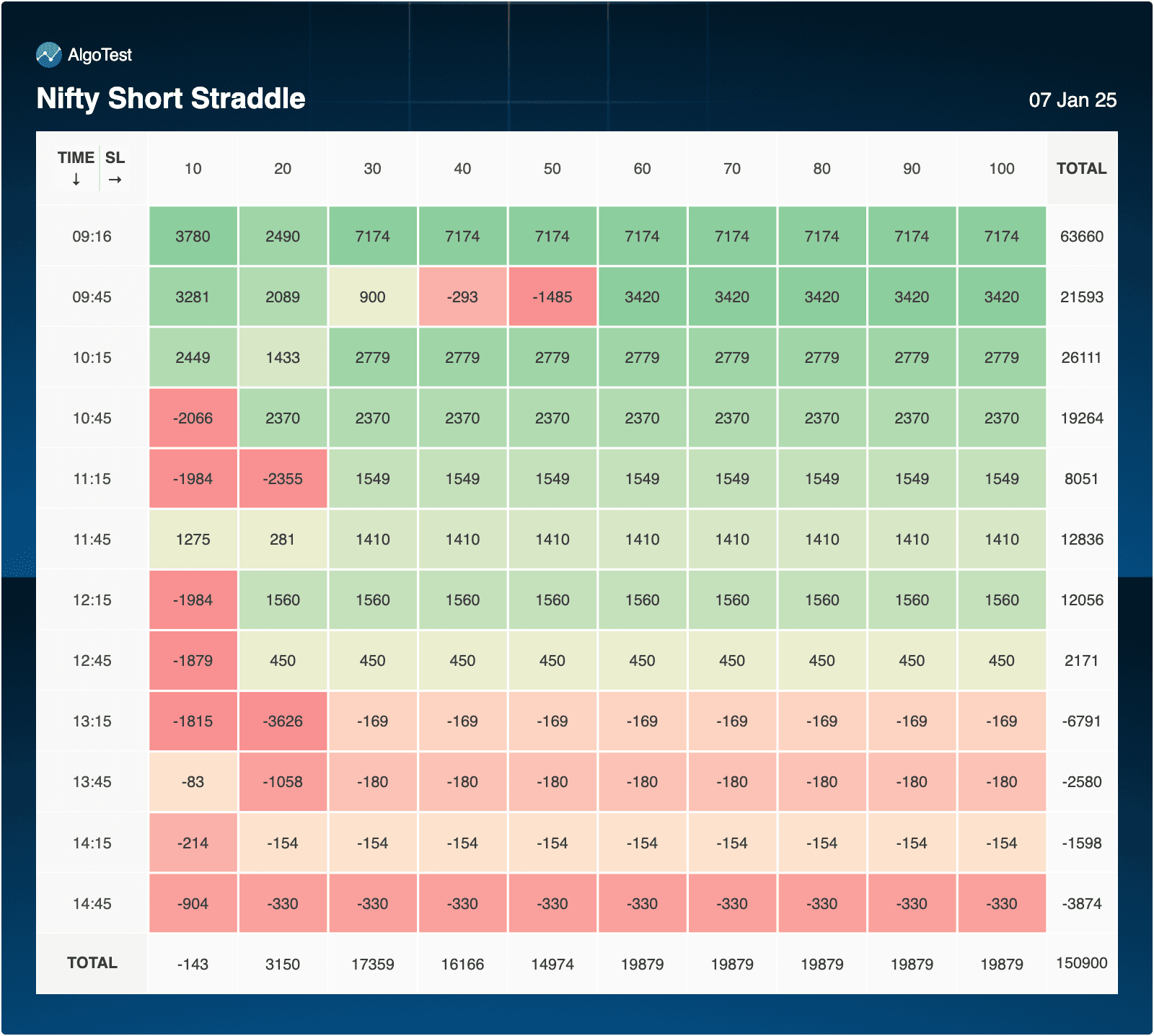
**Insights:**
- The **09:16 slot** leads with a cumulative profit of **63,660**, particularly at higher SL levels (50–100).
- SL levels above 30 show consistent results across all time slots. ****
- Total cumulative profit is 150,900, making it the best-performing instrument for the day.
###### **** You can also check [heatmaps](https://algotest.in/heatmap) for MidCapNifty, Nifty, BankNifty, and FinNifty across different dimensions to better understand market trends.
---
This blog is powered by Superblog. Visit https://superblog.ai to know more.
---
## Daily Straddle Heatmap - 6th January, 2025
Author: AlgoTest
Author URL: https://algotest.in/blog/author/algotest/
Published: 2025-01-13
Category: Heatmaps
Category URL: https://algotest.in/blog/category/heatmaps/
URL: https://algotest.in/blog/daily-straddle-heatmap---6th-january-2025/
Daily Straddle Heatmap
[AlgoTest](https://algotest.in) heatmaps make it easier for you to understand a clear picture of your trading performance. These [heatmaps](https://algotest.in/heatmap) visually represent data like time, performance metrics, and win rates. Think of them as a map highlighting where your strategies work best and where they stumble. For example, a heatmap might reveal that trades during certain hours of the day consistently yield higher profits.
We are taking four heatmaps today. Let’s understand what we can learn from them.
### **BankNifty Short Straddle:**
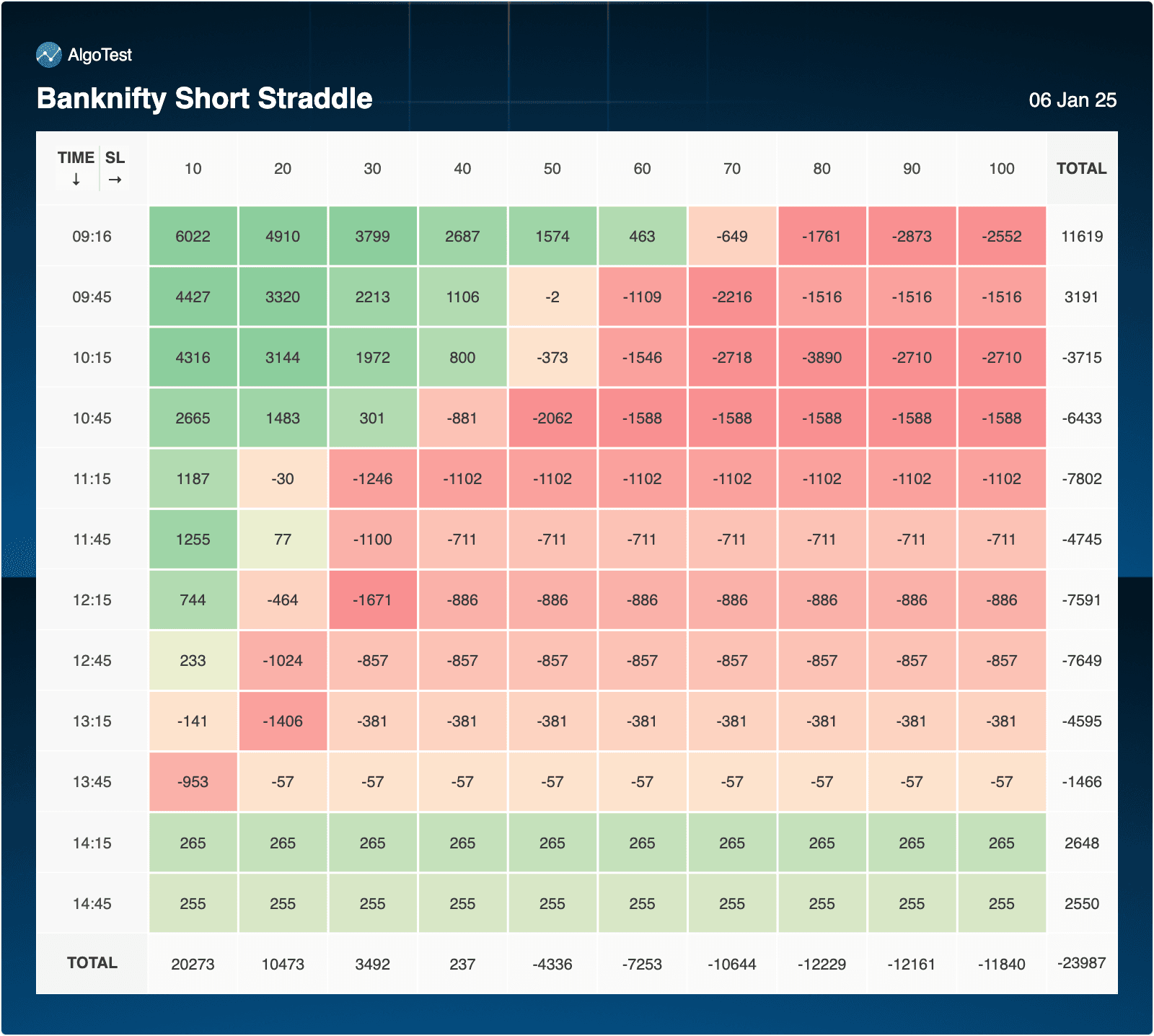
- **Best Time Slot:** The 09:16 time slot performed the best with a **total profit of 11,619**, primarily at SL levels 10, 20, and 30.
- **Worst Time Slot:** The 11:15 and 12:15 slots show significant losses, with total losses exceeding **-7,000**.
- **SL Impact:** Lower SL levels (10, 20) seem more effective in reducing losses, while higher SL levels (70-100) yield consistently larger losses.
### **FinNifty Short Straddle:**
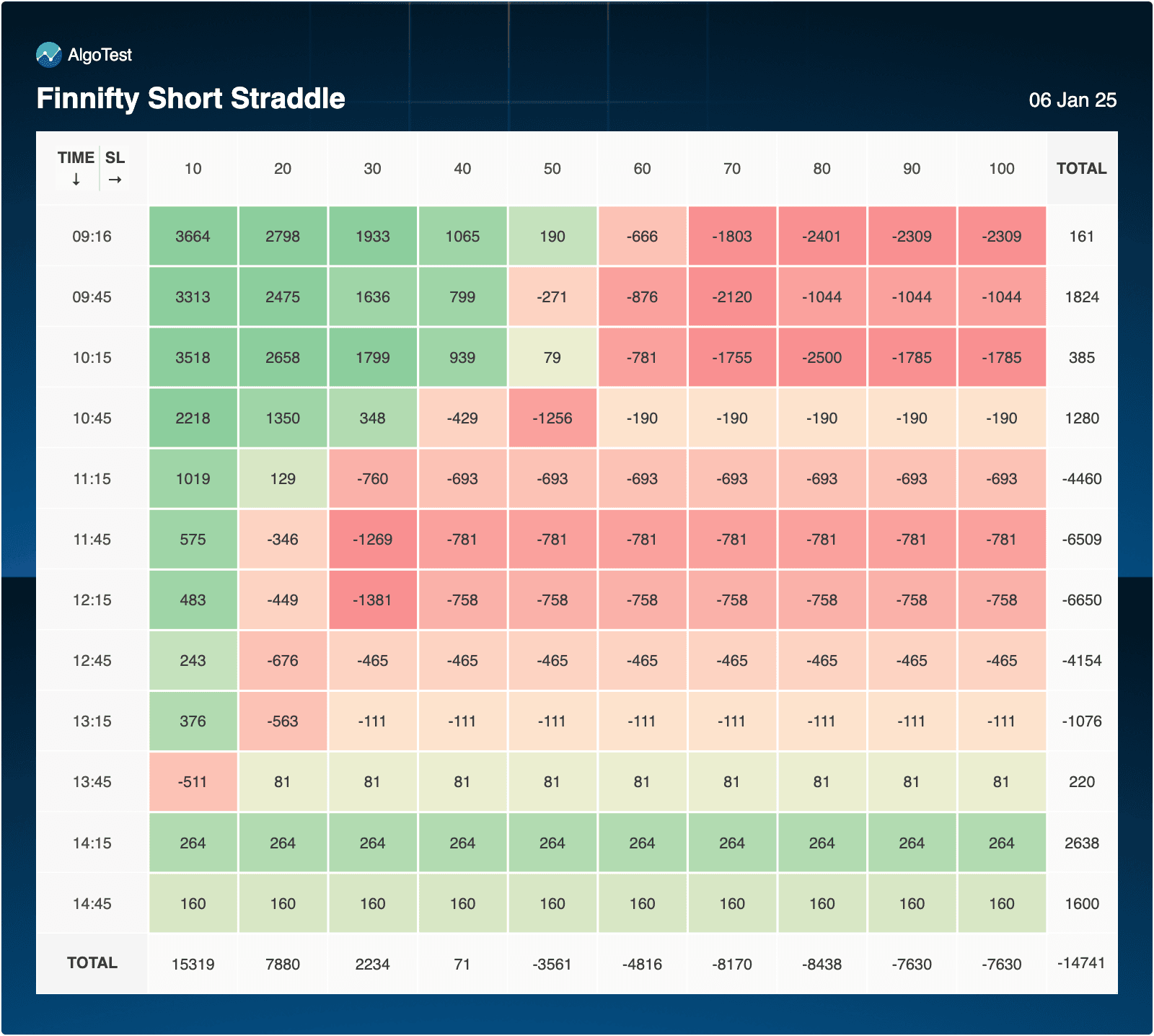
- **Best Time Slot:** The 09:45 and 10:15 time slots performed well, with **total profits of 1,824 and 385**, respectively.
- **Worst Time Slot:** The 11:15 and 12:15 slots show the most significant losses, with totals exceeding **-6,000**.
- **SL Impact:** SL levels of 10-20 tend to limit losses effectively, while levels above 50 result in deepening losses.
### **MidCapNifty Short Straddle:**
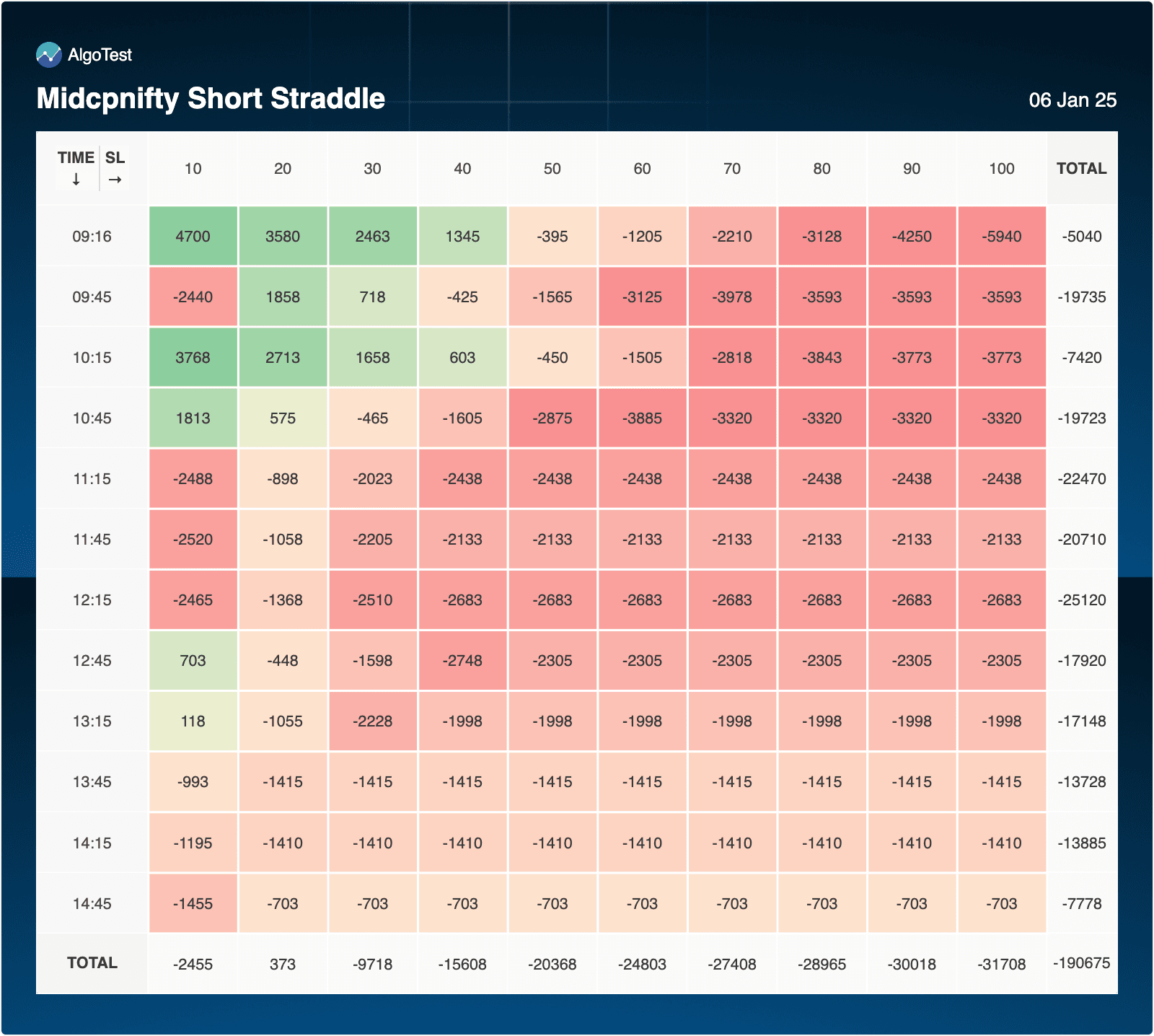
- **Consistent Losses:** This instrument underperformed across almost all time slots and SL levels, with cumulative losses reaching **-190,675**.
- **SL Levels:** Losses increase drastically at SL levels above 30, showing a poor risk-reward ratio for this instrument.
- **Time Slots:** The 10:15 slot was less negative compared to other times but still yielded a loss of **-7,420**.
### **Nifty Short Straddle:**
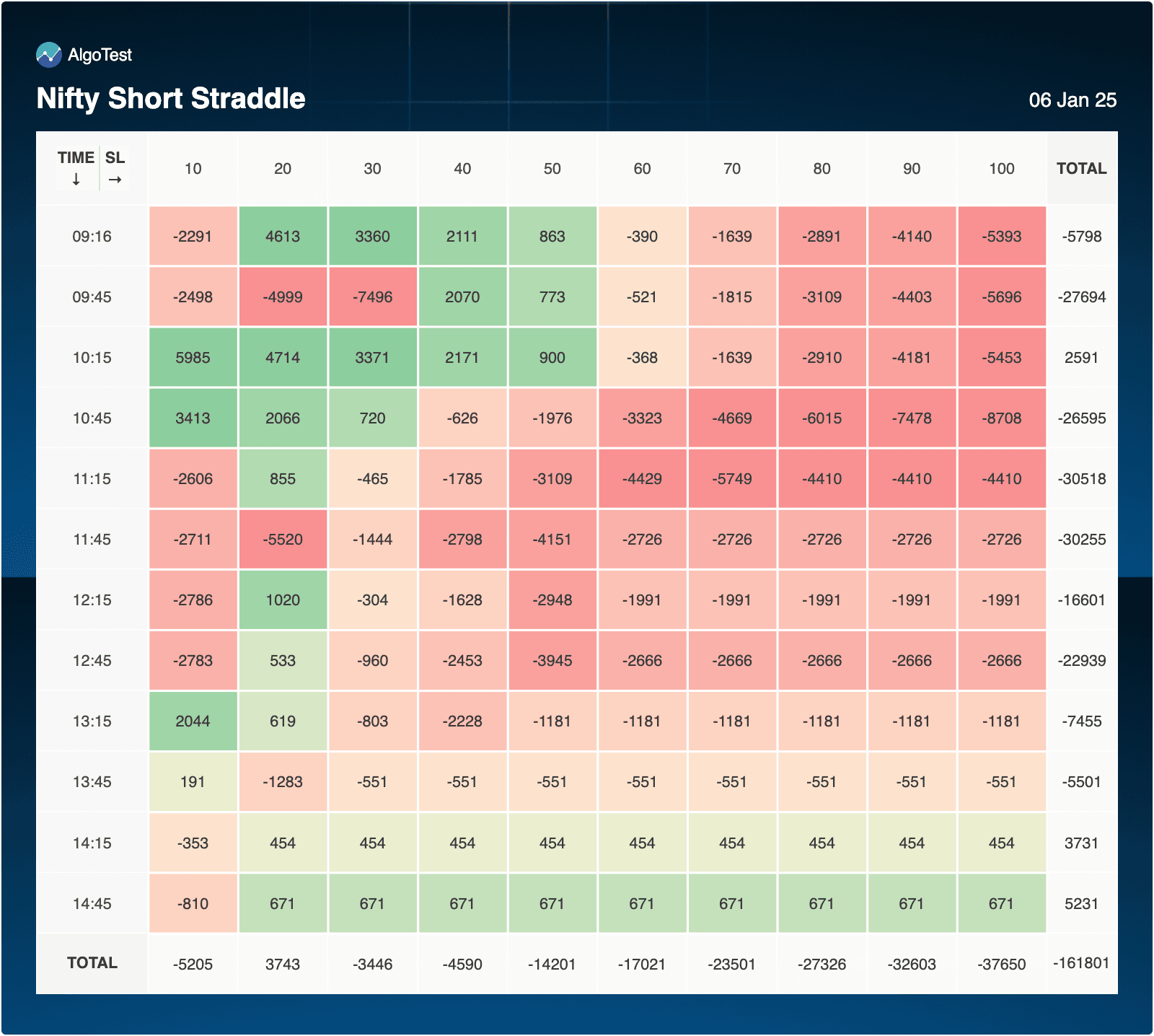
- **Mixed Performance:** some text
- The 09:16 time slot showed moderate losses ( **-5,798**) but performed better than other slots.
- The 10:15 slot stands out as the only profitable entry time ( **+2,591**).
- **SL Levels:** Lower SL levels (10, 20) are effective in reducing the overall losses, while higher levels exacerbate the drawdown. ****
- **Worst Time Slots:** The 11:15 and 12:45 slots exhibit significant losses (-30,518 and -22,939, respectively).
###### **** You can also check [heatmaps](https://algotest.in/heatmap) for MidCapNifty, Nifty, BankNifty, and FinNifty across different dimensions to better understand market trends.
---
This blog is powered by Superblog. Visit https://superblog.ai to know more.
---
## Daily Straddle Heatmap - 3rd January, 2025
Author: AlgoTest
Author URL: https://algotest.in/blog/author/algotest/
Published: 2025-01-13
Category: Heatmaps
Category URL: https://algotest.in/blog/category/heatmaps/
URL: https://algotest.in/blog/daily-straddle-heatmap---3rd-january-2025/
Daily Straddle Heatmap
[AlgoTest](https://algotest.in) heatmaps make it easier for you to understand a clear picture of your trading performance. These [heatmaps](https://algotest.in/heatmap) visually represent data like time, performance metrics, and win rates. Think of them as a map highlighting where your strategies work best and where they stumble. For example, a heatmap might reveal that trades during certain hours of the day consistently yield higher profits.
We are taking four heatmaps today. Let’s understand what we can learn from them.
### **1\. Banknifty Short Straddle**
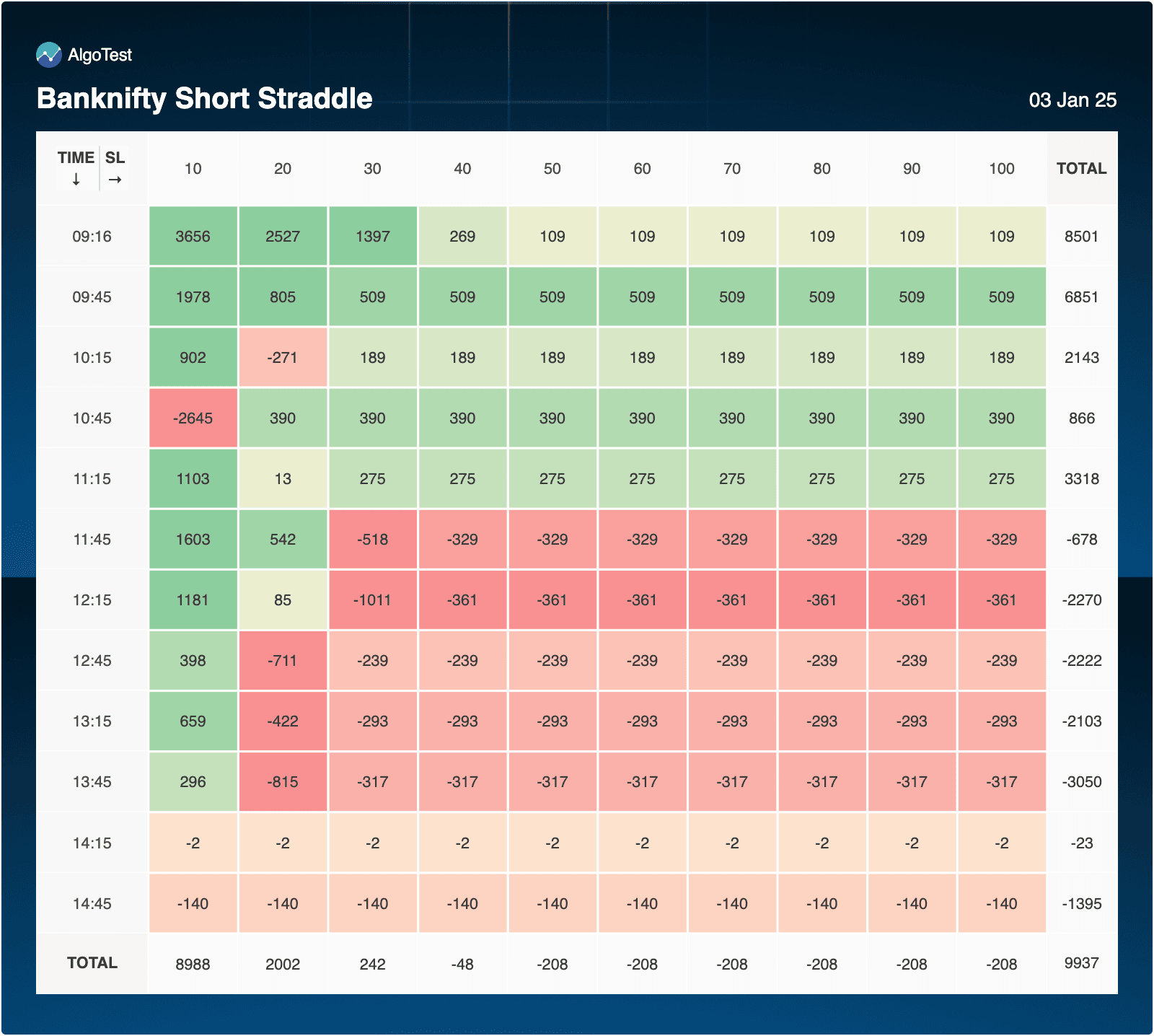
- **Highlights**:
- The 9:16 and 9:45 time slots show consistent profitability across all SL levels.
- Losses appear more frequently after 11:15, particularly between 12:15 to 13:45.
- The total profit is **₹9937**, with SL levels between 10 and 20 showing the highest profits.
- **Observations**:
- Early entries (before 10:15) yield the most reliable profits.
### **2\. Finnifty Short Straddle**
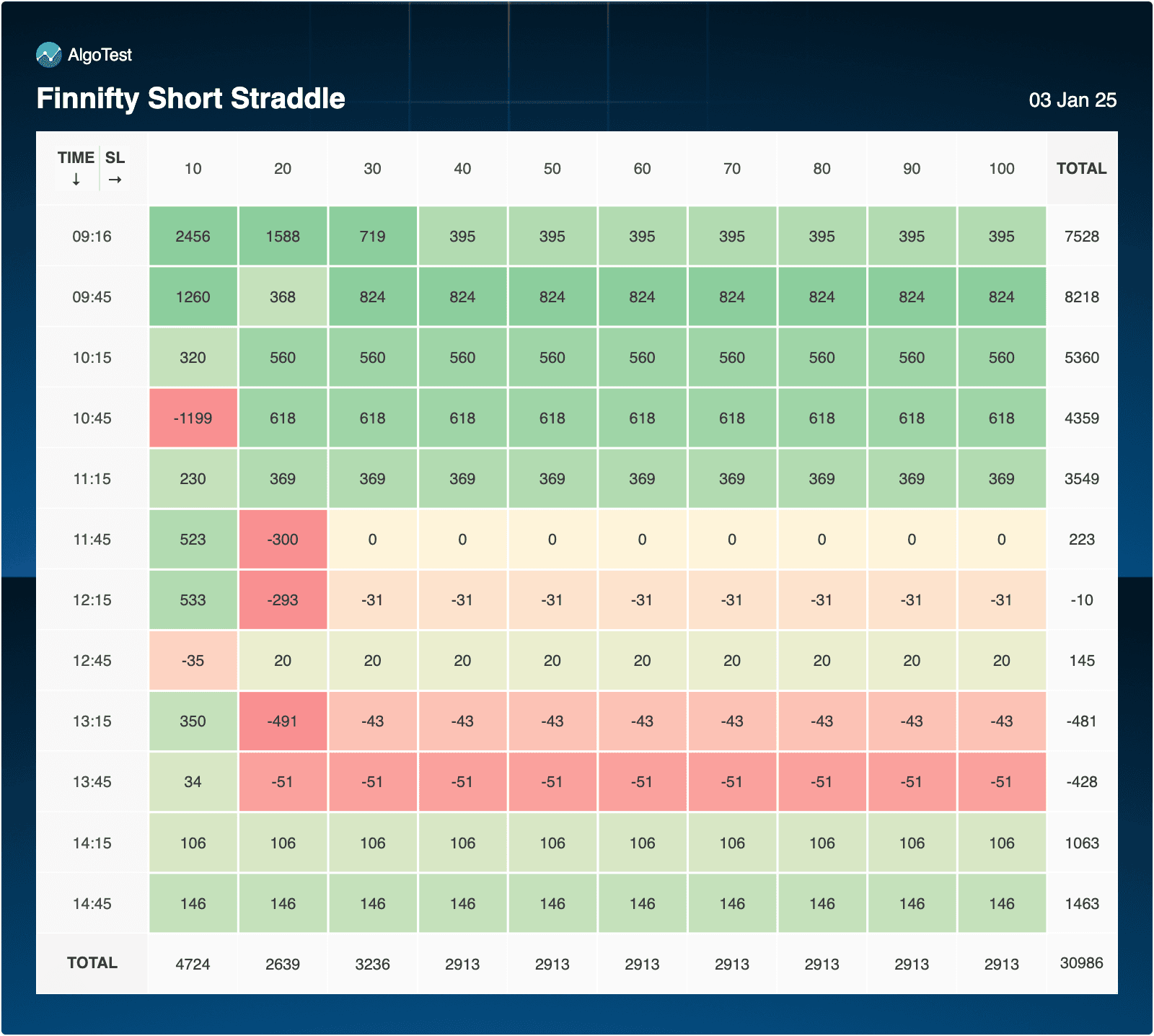
- **Highlights**:
- Consistently profitable across most SL levels during the early hours (9:16 to 11:15).
- Losses increase post 11:45, though they are smaller compared to Banknifty.
- Total profit is **₹30986**, with the 10 SL level yielding the highest returns.
- **Observations**:
- Trades entered after 13:15 show reduced profitability and higher variability.
### **3\. Midcpnifty Short Straddle**
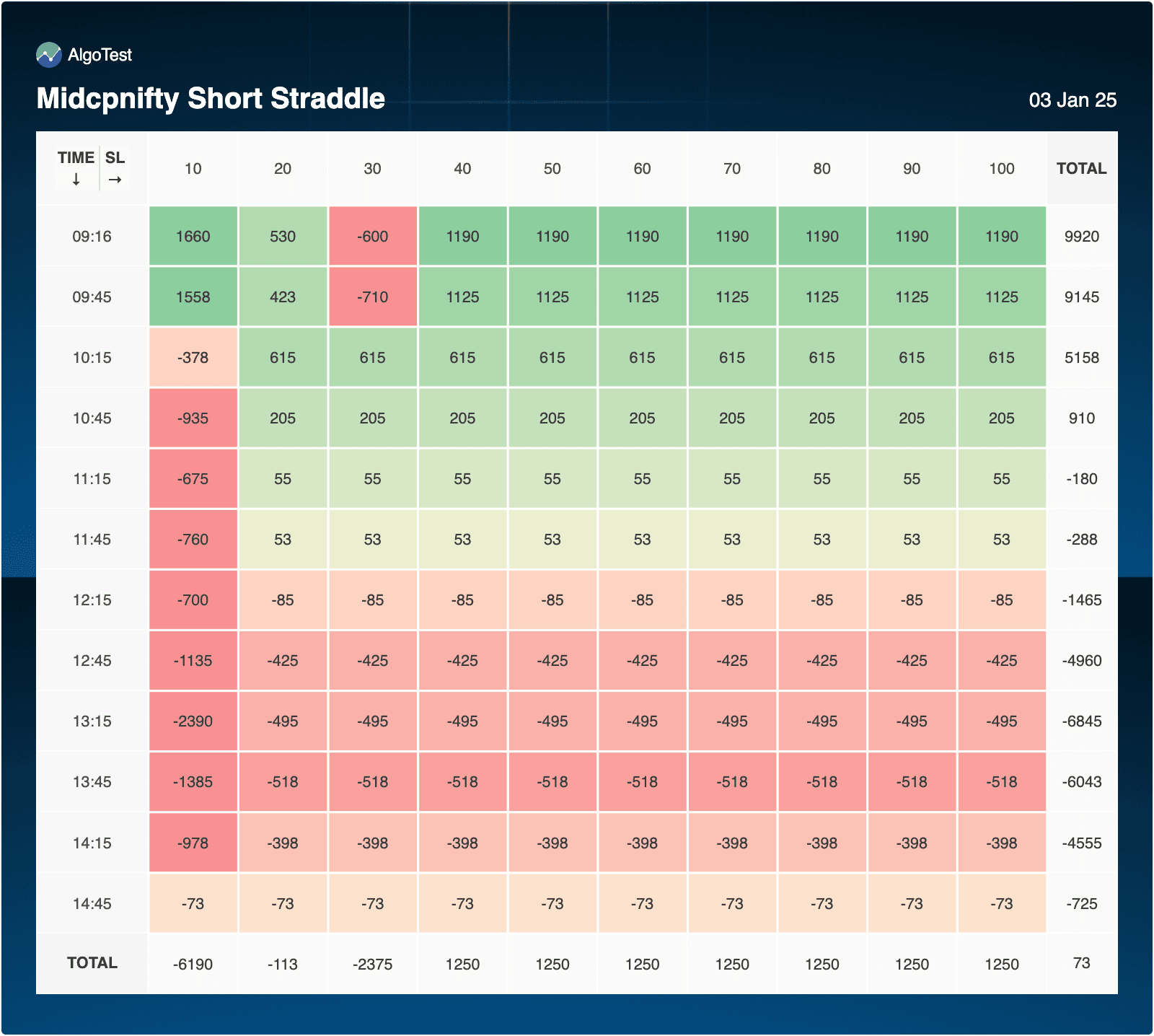
- **Highlights**:
- Profitability is limited to earlier time slots (9:16 to 10:15), while the rest of the day shows consistent losses.
- The total profit is **₹73**, with significant losses for SL levels of 20 and above.
- **Observations**:
- Midcpnifty exhibits significant drawdowns after 10:45, making it unsuitable for intraday short straddles.
### **4\. Nifty Short Straddle**
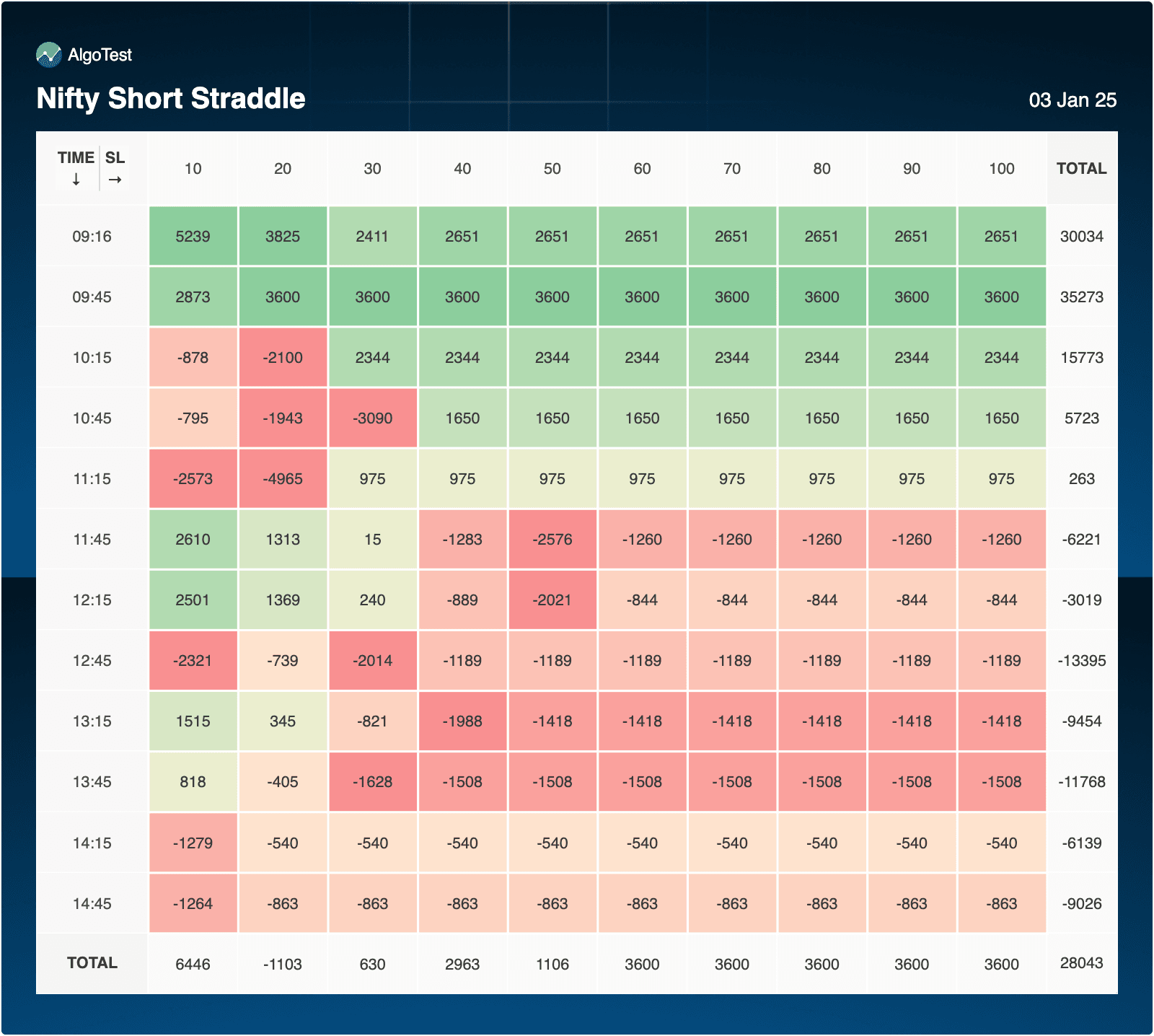
- **Highlights**:
- Highest profits observed during the early trades (9:16 and 9:45).
- Performance drops significantly after 10:45, with heavy losses in the afternoon. ****
- Total profit is ₹28043, with SL levels of 10 and 40 performing best.
###### **** You can also check [heatmaps](https://algotest.in/heatmap) for MidCapNifty, Nifty, BankNifty, and FinNifty across different dimensions to better understand market trends.
---
This blog is powered by Superblog. Visit https://superblog.ai to know more.
---
## Daily Straddle Heatmap - 2nd January, 2025
Author: AlgoTest
Author URL: https://algotest.in/blog/author/algotest/
Published: 2025-01-13
Category: Heatmaps
Category URL: https://algotest.in/blog/category/heatmaps/
URL: https://algotest.in/blog/daily-straddle-heatmap---2nd-january-2025/
Daily Straddle Heatmap
[AlgoTest](https://algotest.in) heatmaps make it easier for you to understand a clear picture of your trading performance. These [heatmaps](https://algotest.in/heatmap) visually represent data like time, performance metrics, and win rates. Think of them as a map highlighting where your strategies work best and where they stumble. For example, a heatmap might reveal that trades during certain hours of the day consistently yield higher profits.
We are taking four heatmaps today. Let’s understand what we can learn from them.
#### **1\. Banknifty Short Straddle:**
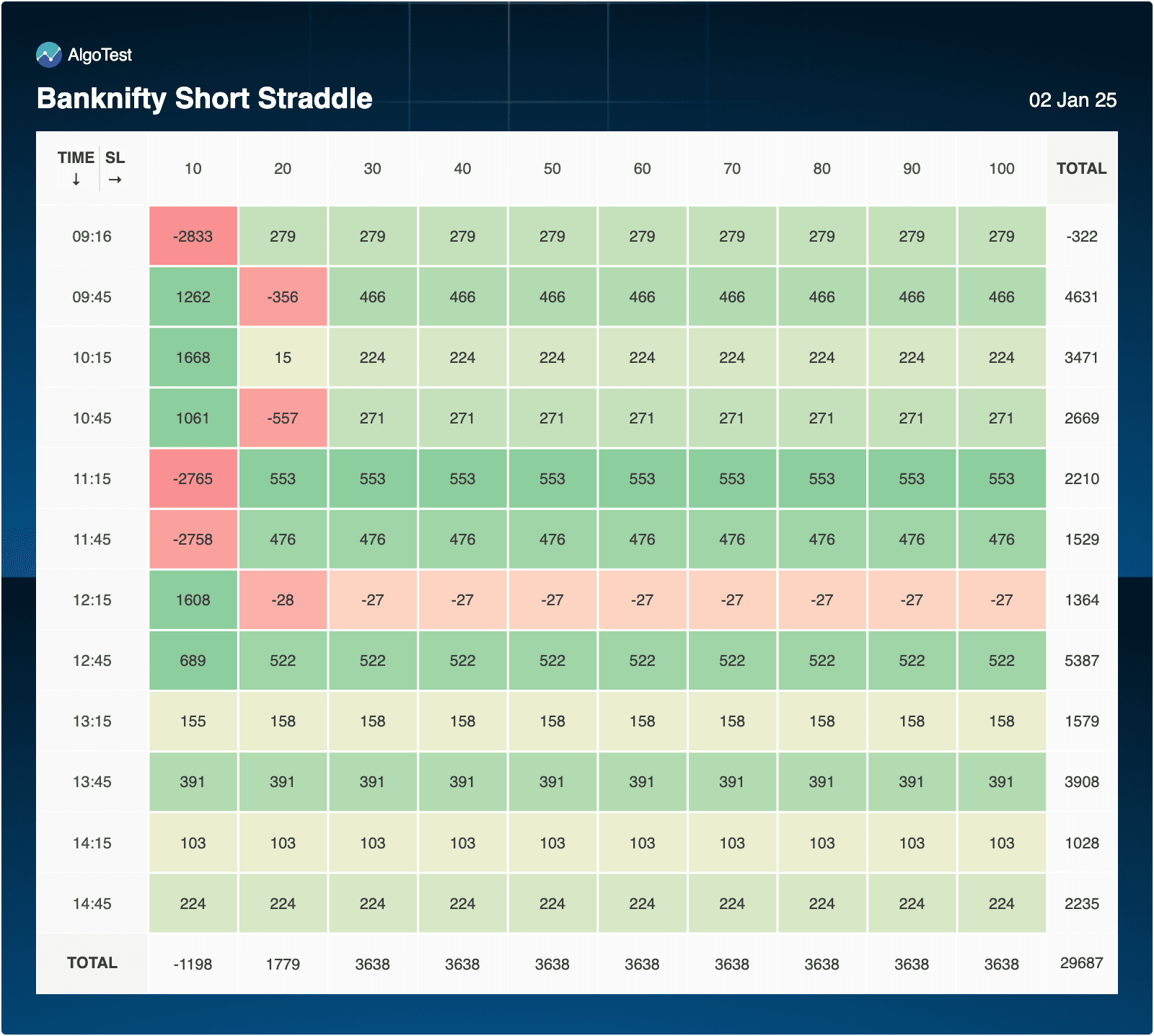
**Insights:**
- **Performance:** Moderate overall with a total profit of ₹29,687.
- **Best slots:** 09:45 (₹4,631), 10:15 (₹3,471), and 12:45 (₹5,387).
- **Worst slots:** 11:15 (-₹2,765) and 11:45 (-₹2,758), showing consistent losses mid-morning.
- **SL Levels:** Lower SL (10) introduces significant losses in some slots (e.g., -₹2,833 at 09:16).
#### **2\. Finnifty Short Straddle:**
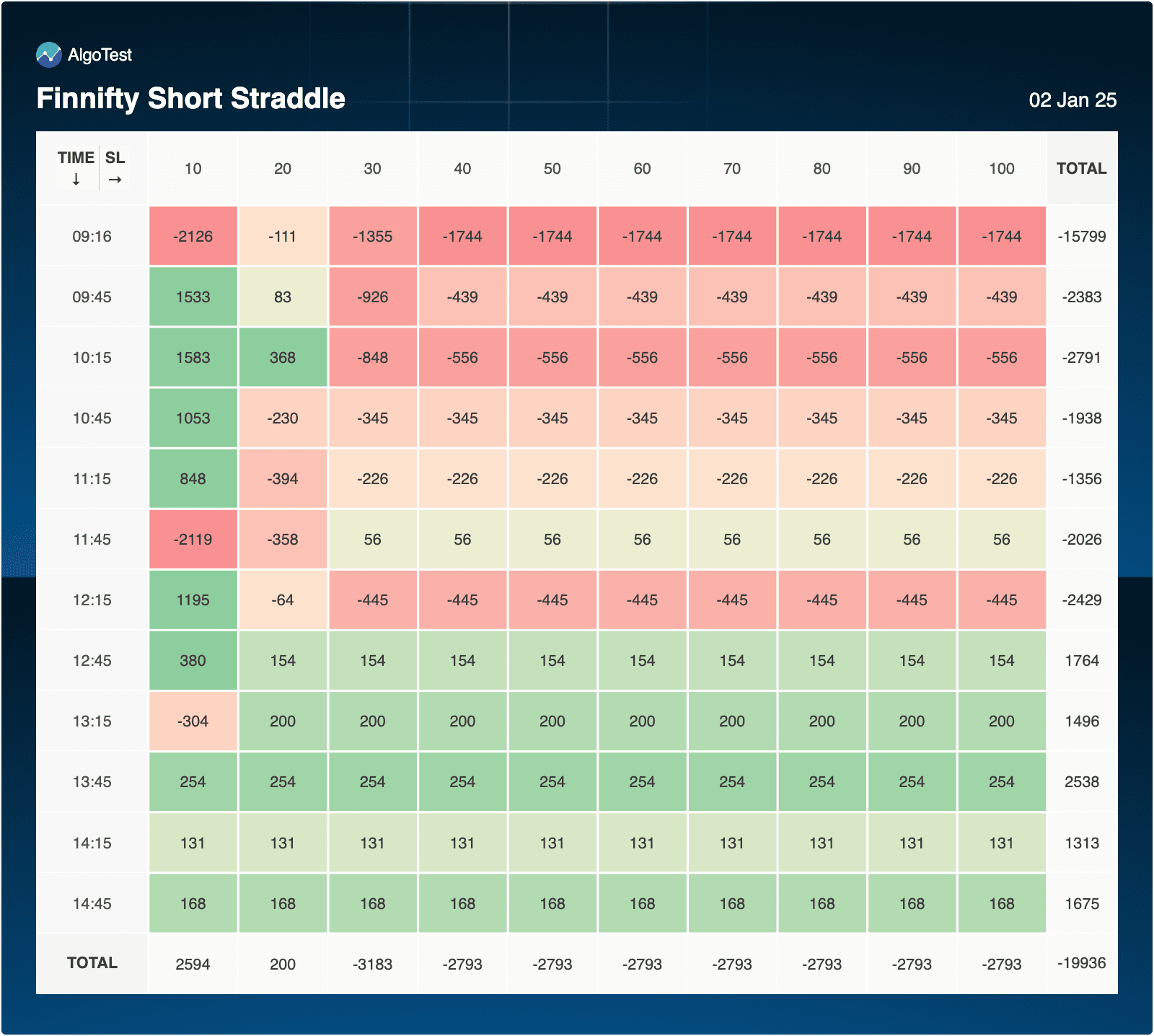
**Insights:**
- **Performance:** Poor overall with a total loss of ₹-19,936.
- **Best slots:** 12:45 (₹1,764) and 13:15 (₹1,496).
- **Worst slots:** 09:16 (-₹15,799) and 10:15 (-₹2,791), showing heavy losses early in the session.
- **SL Levels:** Higher SL levels (50–100) marginally reduce the extent of losses but do not turn them into profits.
#### **3\. Midcpnifty Short Straddle:**
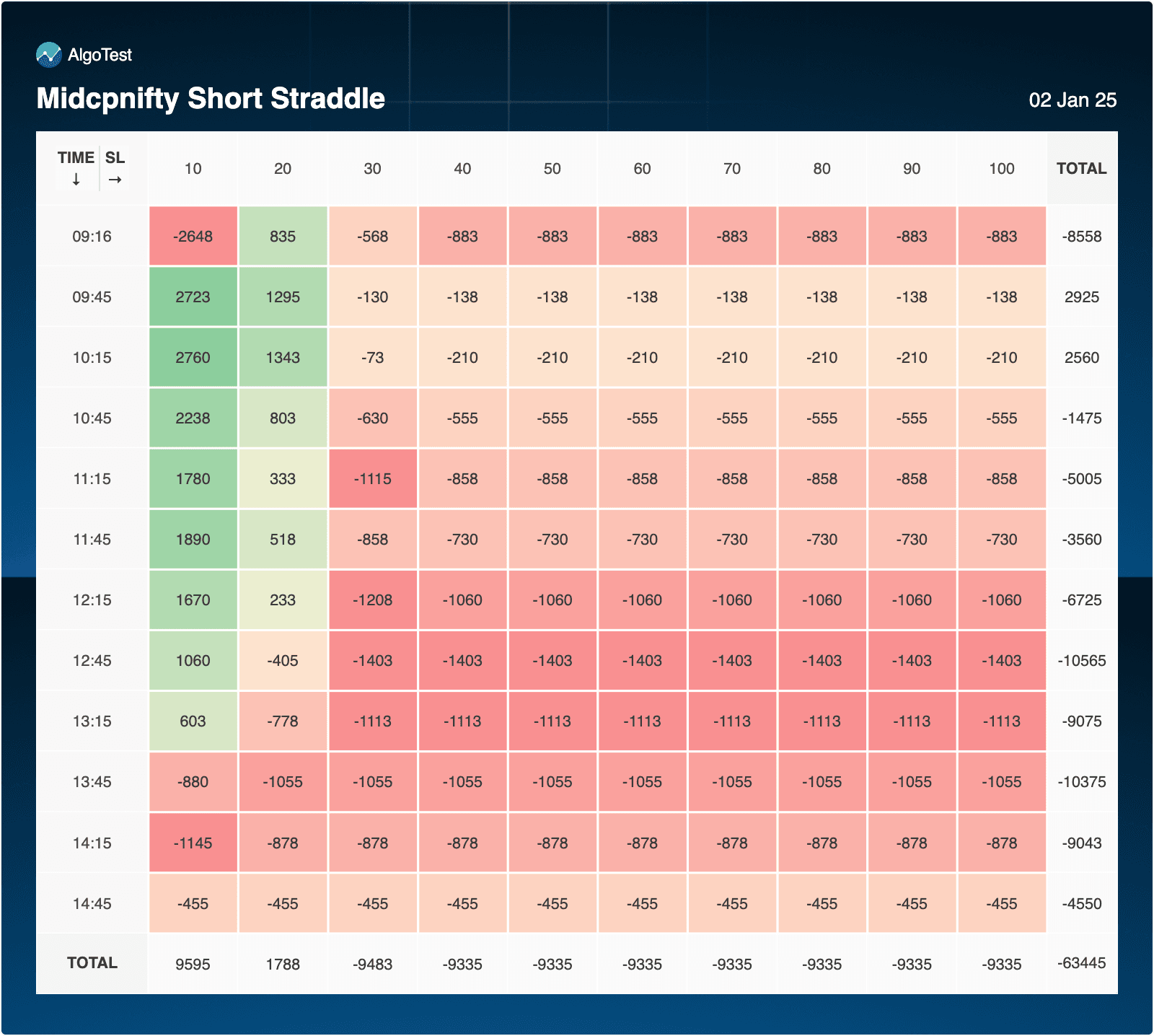
**Insights:**
- **Performance:** Very poor overall with a total loss of ₹-63,445.
- **Best slots:** 09:45 (₹2,925) and 10:15 (₹2,560), but these gains are overshadowed by losses in later slots.
- **Worst slots:** 12:45 (-₹10,565) and 13:15 (-₹9,075), showing significant losses during the afternoon.
- **SL Levels:** Losses are consistent across all SL levels after the morning session.
#### **4\. Nifty Short Straddle:**
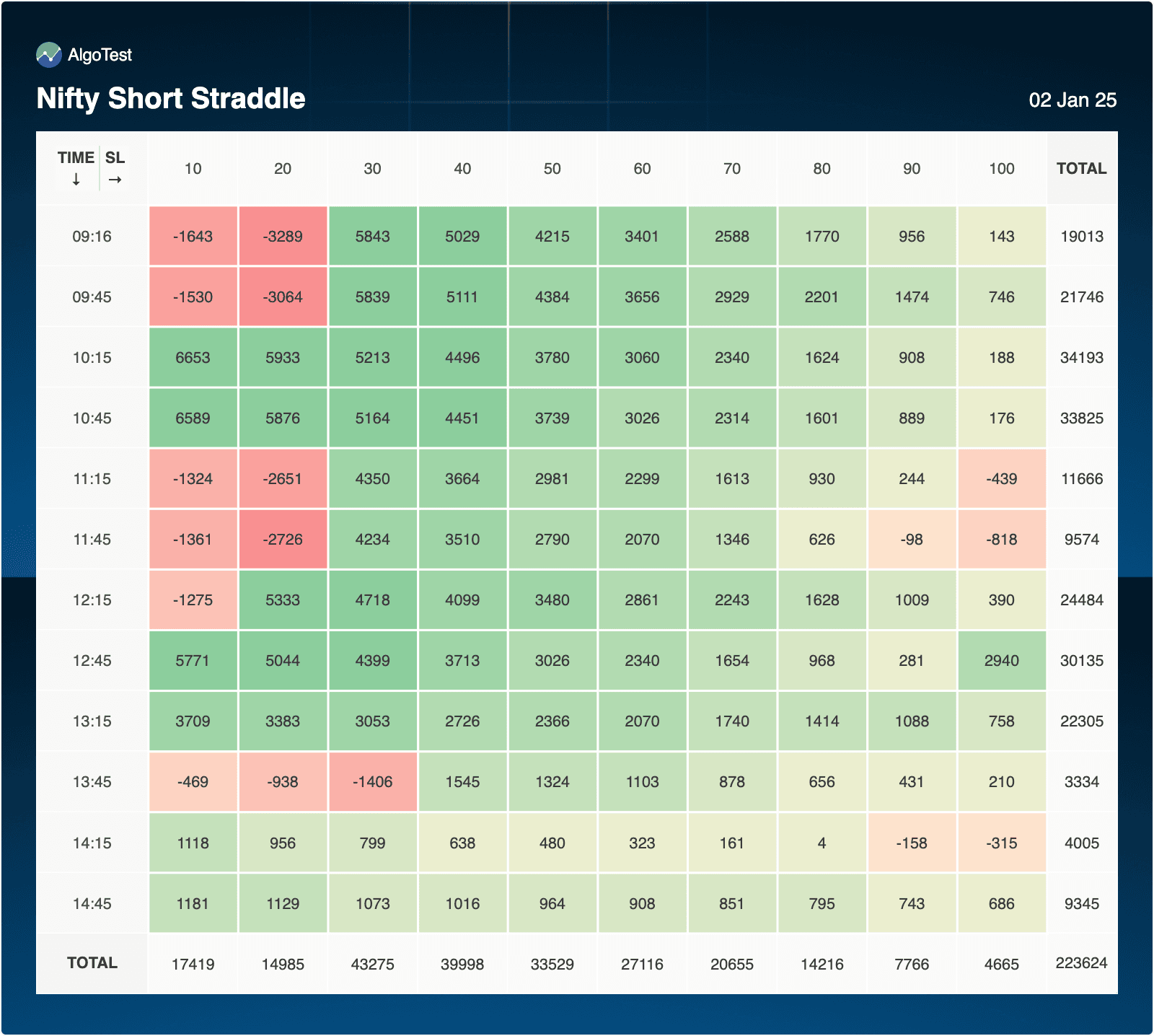
**Insights:**
- **Performance:** Strong overall with a total profit of ₹2,23,624.
- **Best slots:** 10:15 (₹34,193), 10:45 (₹33,825), and 12:45 (₹30,135).
- **Worst slots:** 11:15 (-₹439) and 13:45 (₹210), though these are minor relative to the overall gains **.**
- **SL Levels:** Profits remain consistent across all SL levels, indicating robust performance regardless of stop-loss configurations.
###### **** You can also check [heatmaps](https://algotest.in/heatmap) for MidCapNifty, Nifty, BankNifty, and FinNifty across different dimensions to better understand market trends.
---
This blog is powered by Superblog. Visit https://superblog.ai to know more.
---
## Daily Straddle Heatmap - 1st January, 2025
Author: AlgoTest
Author URL: https://algotest.in/blog/author/algotest/
Published: 2025-01-13
Category: Heatmaps
Category URL: https://algotest.in/blog/category/heatmaps/
URL: https://algotest.in/blog/daily-straddle-heatmap---1st-january-2025/
Daily Straddle Heatmap
[AlgoTest](https://algotest.in) heatmaps make it easier for you to understand a clear picture of your trading performance. These [heatmaps](https://algotest.in/heatmap) visually represent data like time, performance metrics, and win rates. Think of them as a map highlighting where your strategies work best and where they stumble. For example, a heatmap might reveal that trades during certain hours of the day consistently yield higher profits.
We are taking four heatmaps today. Let’s understand what we can learn from them.
#### **1\. Nifty Short Straddle:**
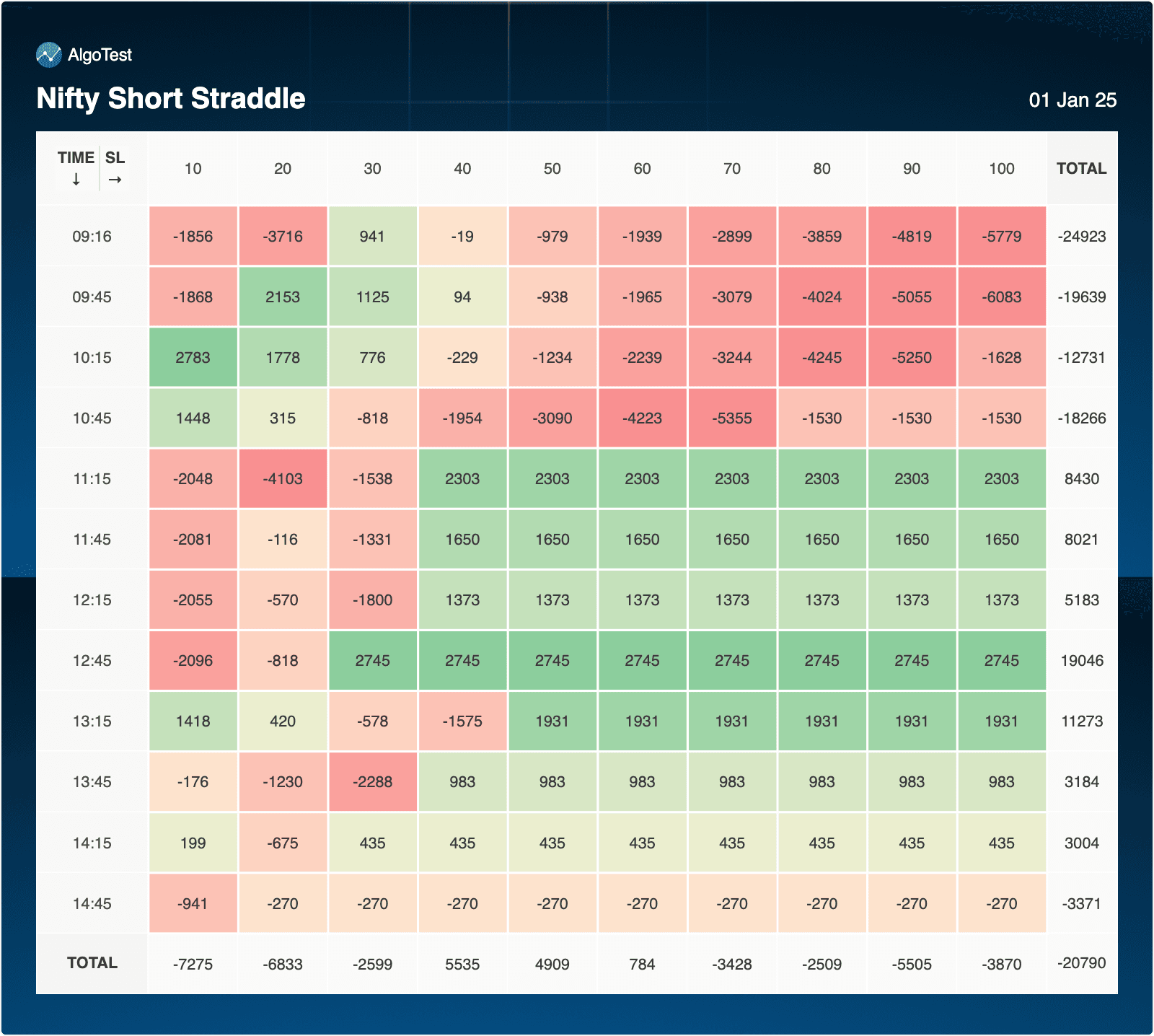
- **Insights**:
- **Best Time:** 12:45 with a profit of **19,046**.
- **Worst Time:** 09:16 with a loss of **-24,923**.
- **Optimal SL Range:** **40 to 60**, showing consistent positive results.
- **Observation:** Nifty performs better in the midday intervals, with heavy losses in the opening sessions.
#### **2\. Finnifty Short Straddle:**
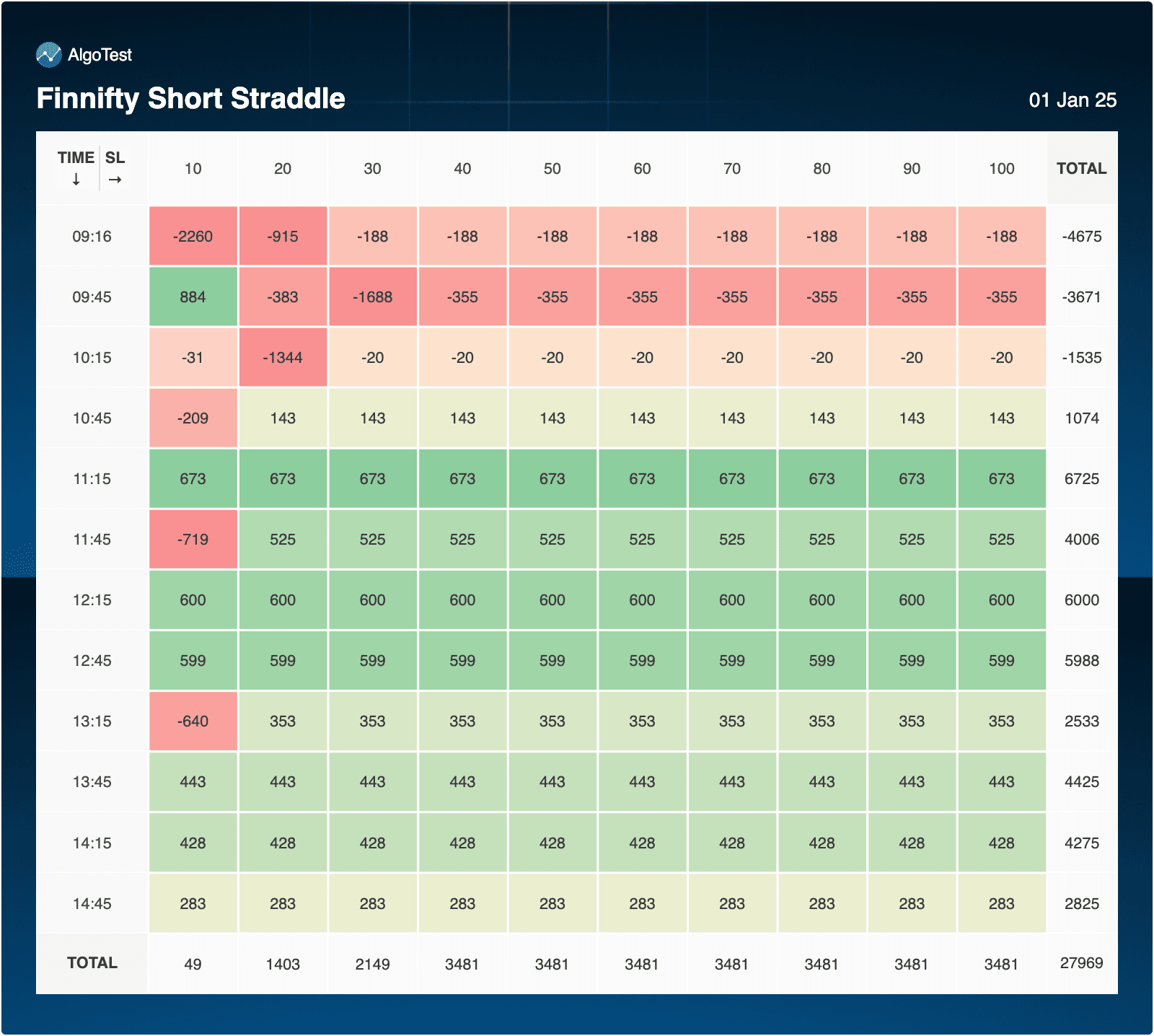
- **Insights:**
- **Best Time:** 11:15 with a profit of **6,725**.
- **Worst Time:** 09:16 with a loss of **-4,675**.
- **Optimal SL Range:** **50 to 60**, showing balanced performance across multiple intervals.
- **Observation:** Finnifty has steadier results across the day, with 11:15 to 12:15 showing the highest profitability.
#### **3\. Midcap Nifty Short Straddle:**
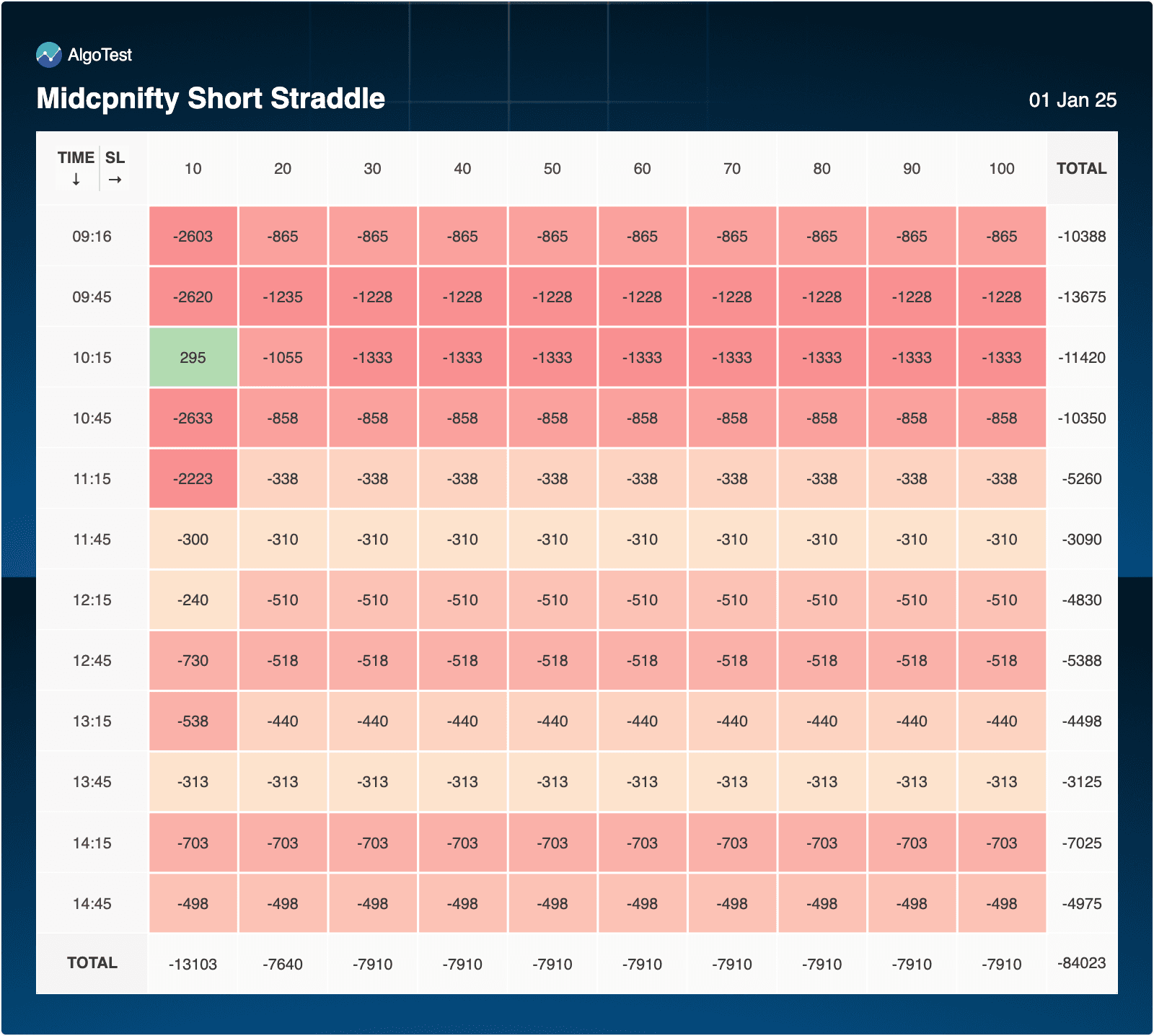
- **Insights:**
- **Best Time:** No significant profitable time intervals; most results are negative.
- **Worst Time:** 09:16 with a loss of **-10,388**.
- **Overall Performance:** Losses dominate across all SL ranges and times.
- **Observation:** Midcap Nifty seems unsuitable for this strategy due to consistently poor results.
#### **4\. Bank Nifty Short Straddle:**
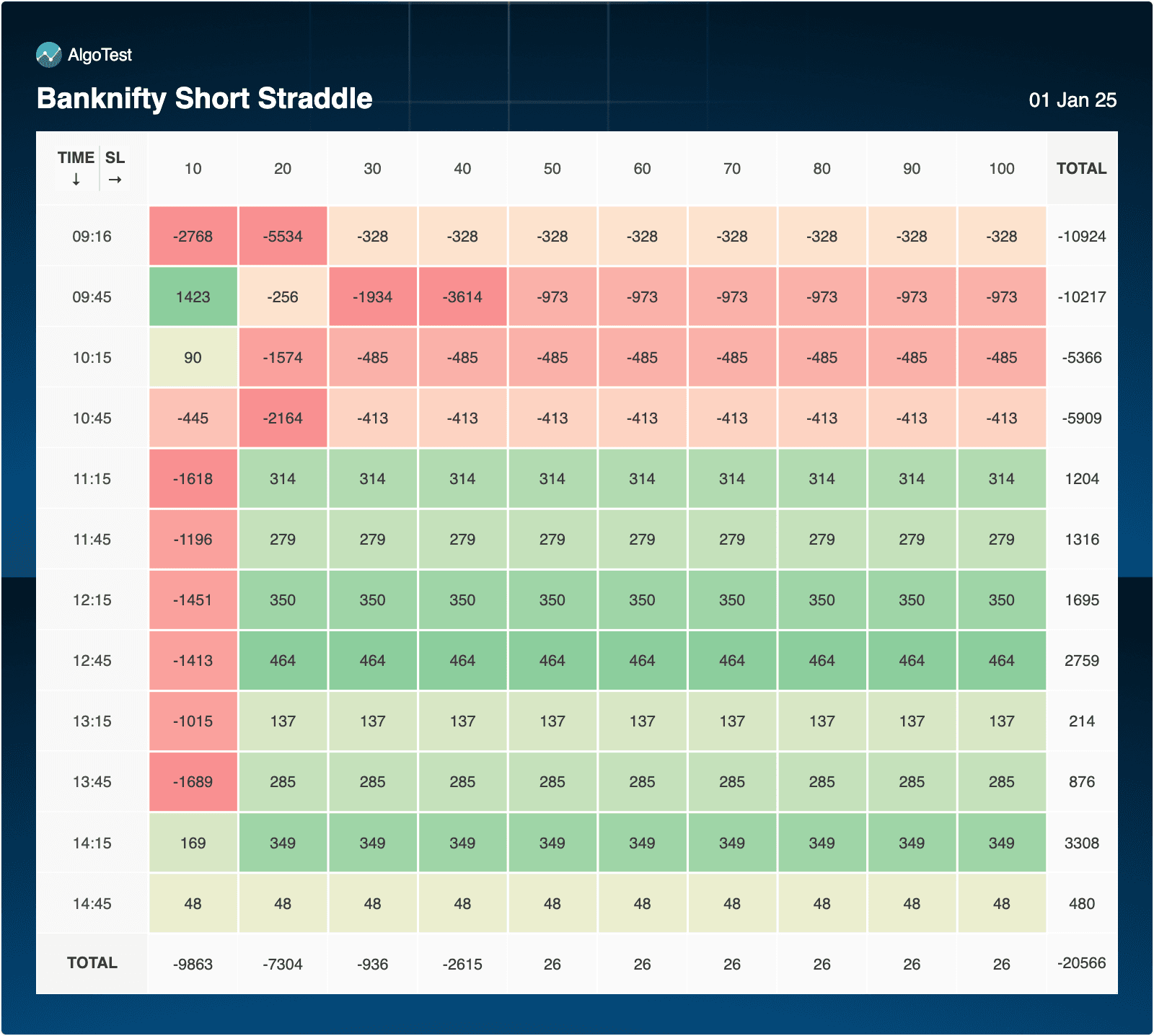
- **Insights:**
- **Best Time:** 14:15 with a profit of **3,308**.
- **Worst Time:** 09:16 with a loss of **-10,924**.
- **Optimal SL Range:** **50 to 60**, delivering positive returns in later intervals. ****
- **Observation:** Bank Nifty shows a late-session recovery, suggesting the strategy performs better in the afternoon.
**** You can also check [heatmaps](https://algotest.in/heatmap) for MidCapNifty, Nifty, BankNifty, and FinNifty across different dimensions to better understand market trends.
---
This blog is powered by Superblog. Visit https://superblog.ai to know more.
---
## Daily Straddle Heatmap - 31st December, 2024
Author: AlgoTest
Author URL: https://algotest.in/blog/author/algotest/
Published: 2025-01-13
Category: Heatmaps
Category URL: https://algotest.in/blog/category/heatmaps/
URL: https://algotest.in/blog/daily-straddle-heatmap---31st-december-2024/
Daily Straddle Heatmap
[AlgoTest](https://algotest.in) heatmaps make it easier for you to understand a clear picture of your trading performance. These [heatmaps](https://algotest.in/heatmap) visually represent data like time, performance metrics, and win rates. Think of them as a map highlighting where your strategies work best and where they stumble. For example, a heatmap might reveal that trades during certain hours of the day consistently yield higher profits.
We are taking four heatmaps today. Let’s understand what we can learn from them.
### **1\. Banknifty Short Straddle:**
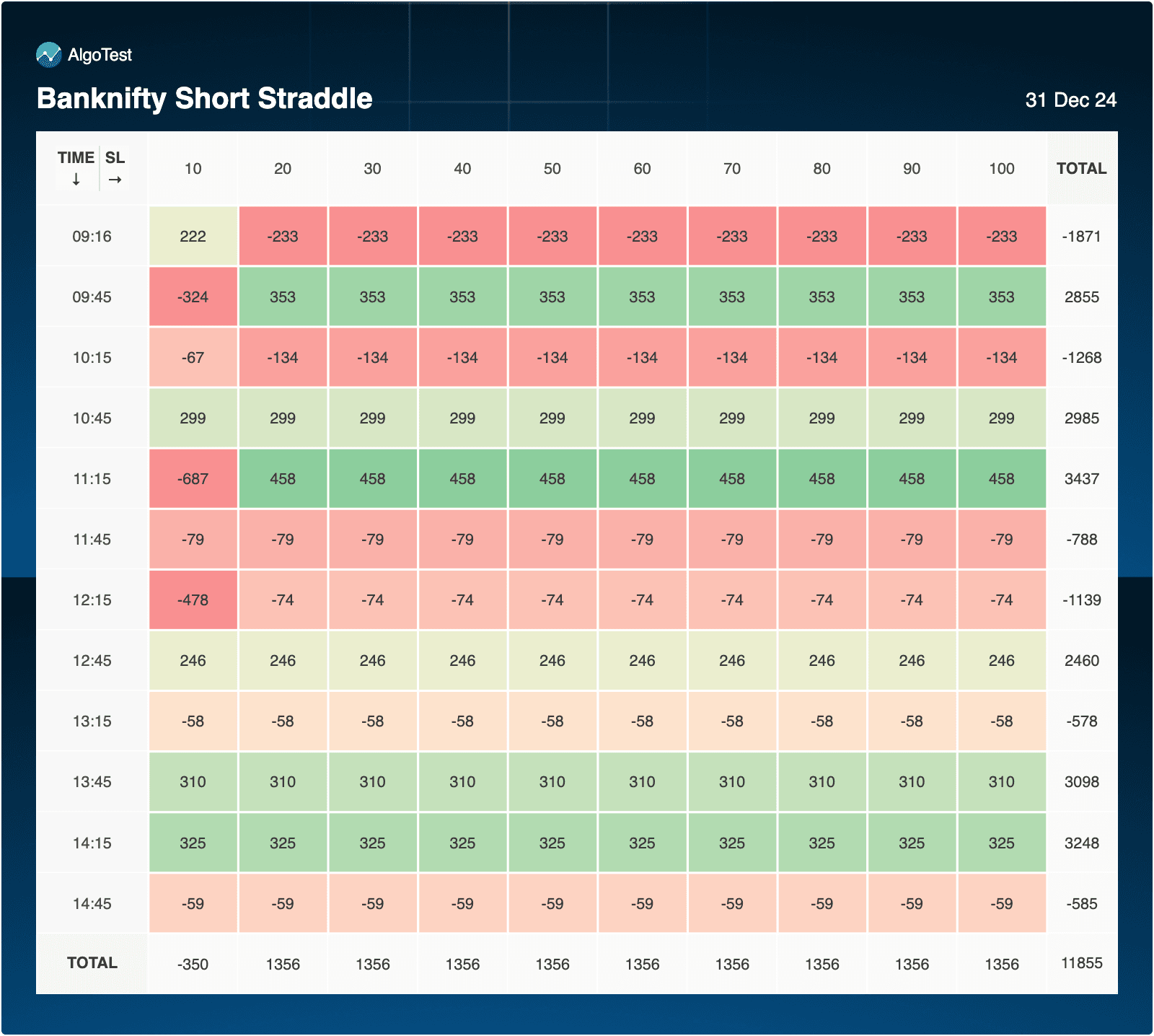
- **Observations:**
- The strategy performs best at **10:45 (SL 40)**, yielding **2998** points.
- The **worst time** is **11:15 (SL 10)**, with a loss of **-687** points.
- The performance stabilizes across SL values above 40, as profits remain consistent across those levels.
- **Total Profit**: **1356 points** (SL 20-100 consistent).
- **Insights**:
- Using higher SL values (50 or more) seems optimal for consistent performance.
### **2\. Finnifty Short Straddle:**
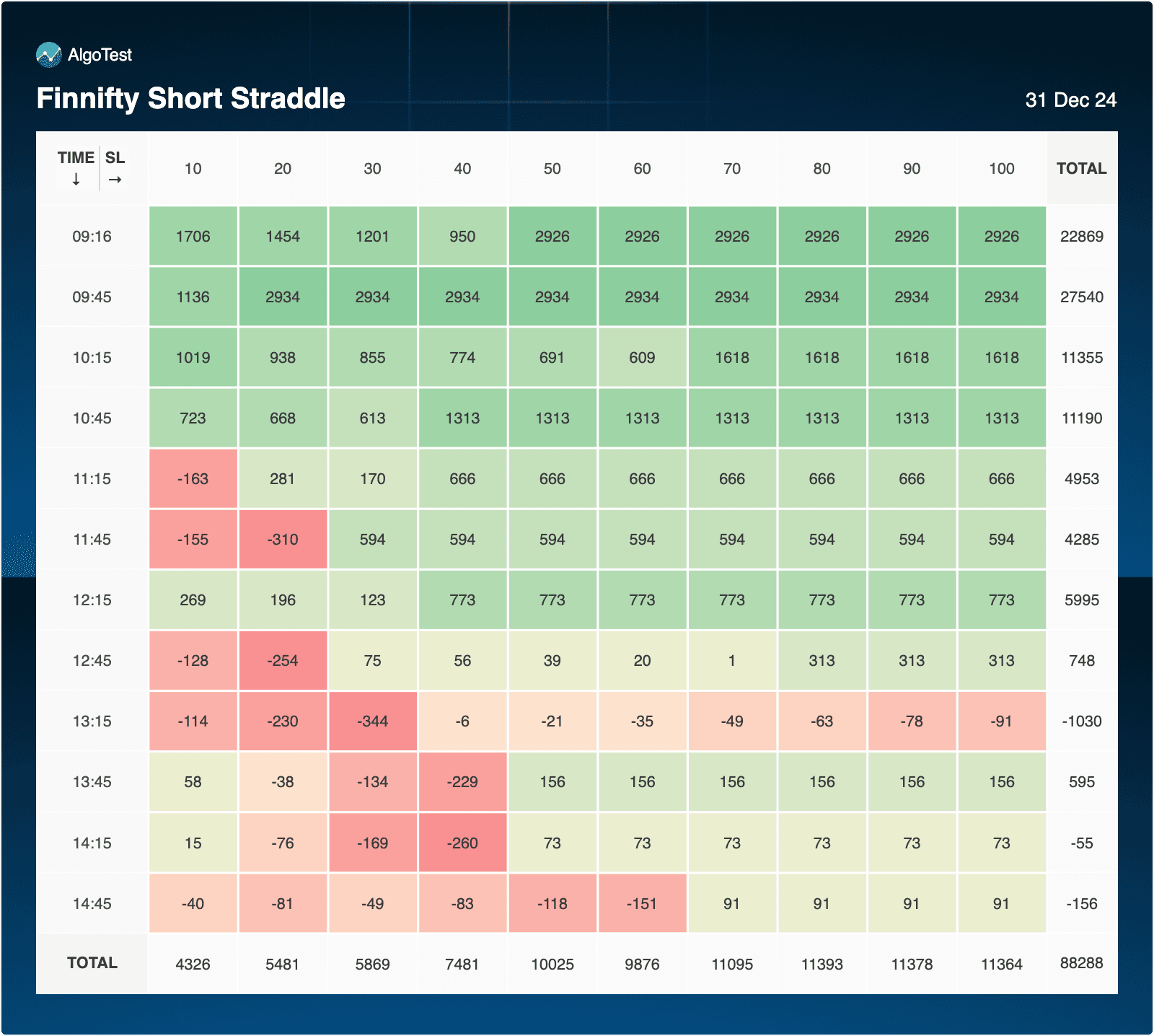
- **Observations**:
- Best time: **09:45 (SL 30-100)**, yielding profits of **2934 points**.
- The performance remains consistently **positive** until **12:15**, after which results decline.
- Losses are observed during **13:15 to 14:45**, with the lowest result being **-344 points (SL 30)** at **13:15**.
- **Total Profit**: **88288 points**.
- **Insights**:
- Early entries (before noon) generate the most profits.
### **3\. Midcpnifty Short Straddle:**
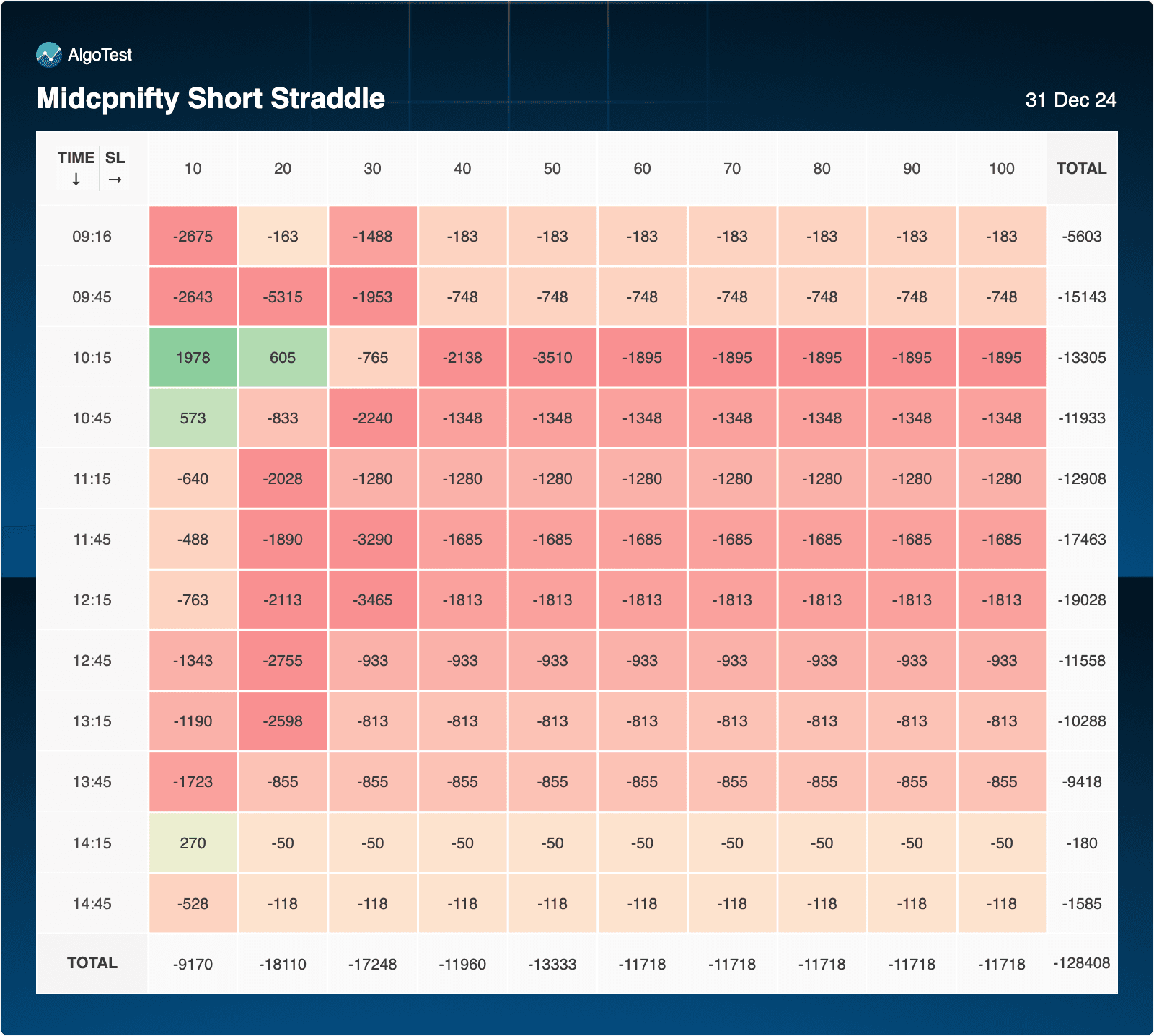
- **Observations**:
- Consistently underperforms across most SL levels and time slots.
- Best time: **10:15 (SL 10)** with a profit of **1978 points**.
- Worst period: **14:15**, with small gains/losses showing poor opportunities overall.
- **Total Loss**: **-128408 points**.
### **4\. Nifty Short Straddle:**
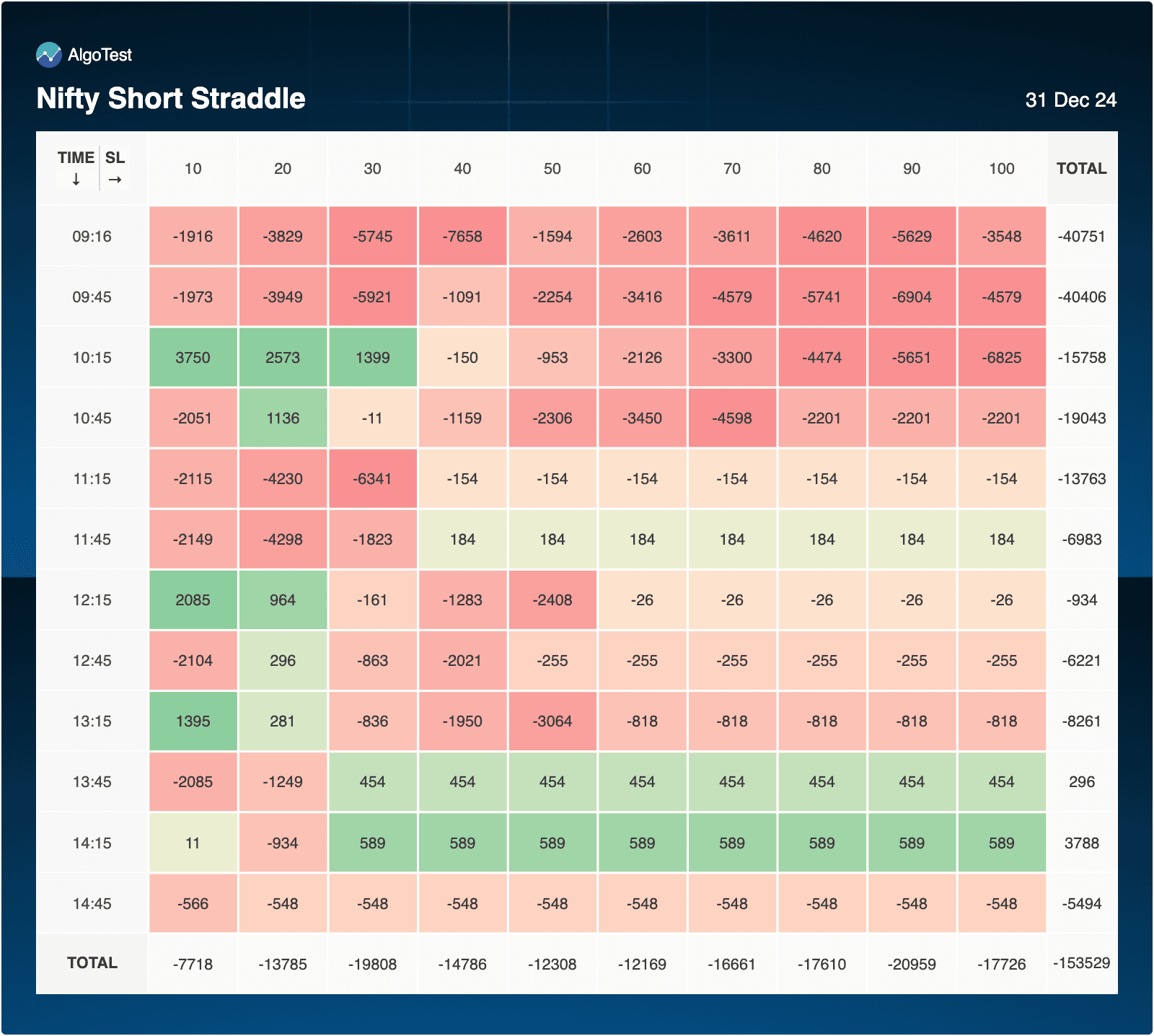
- **Observations**:
- The total performance across all time slots and stop-loss (SL) levels is **-153,529 points**, indicating that the strategy performed poorly overall.
- Best Time: **10:15 (SL 10)**: Profit of **3750 points**, the highest individual result.
- Worst Time: **09:45 (SL 100)**: A large loss of **-6904 points**.
- **Total Loss: -153,529 points.**
**** You can also check [heatmaps](https://algotest.in/heatmap) for MidCapNifty, Nifty, BankNifty, and FinNifty across different dimensions to better understand market trends.
---
This blog is powered by Superblog. Visit https://superblog.ai to know more.
---
## Daily Straddle Heatmap - 30th December, 2024
Author: AlgoTest
Author URL: https://algotest.in/blog/author/algotest/
Published: 2025-01-13
Category: Heatmaps
Category URL: https://algotest.in/blog/category/heatmaps/
URL: https://algotest.in/blog/daily-straddle-heatmap---30th-december-2024/
Daily Straddle Heatmap
[AlgoTest](https://algotest.in) heatmaps make it easier for you to understand a clear picture of your trading performance. These [heatmaps](https://algotest.in/heatmap) visually represent data like time, performance metrics, and win rates. Think of them as a map highlighting where your strategies work best and where they stumble. For example, a heatmap might reveal that trades during certain hours of the day consistently yield higher profits.
We are taking four heatmaps today. Let’s understand what we can learn from them.
### **Banknifty Short Straddle:**
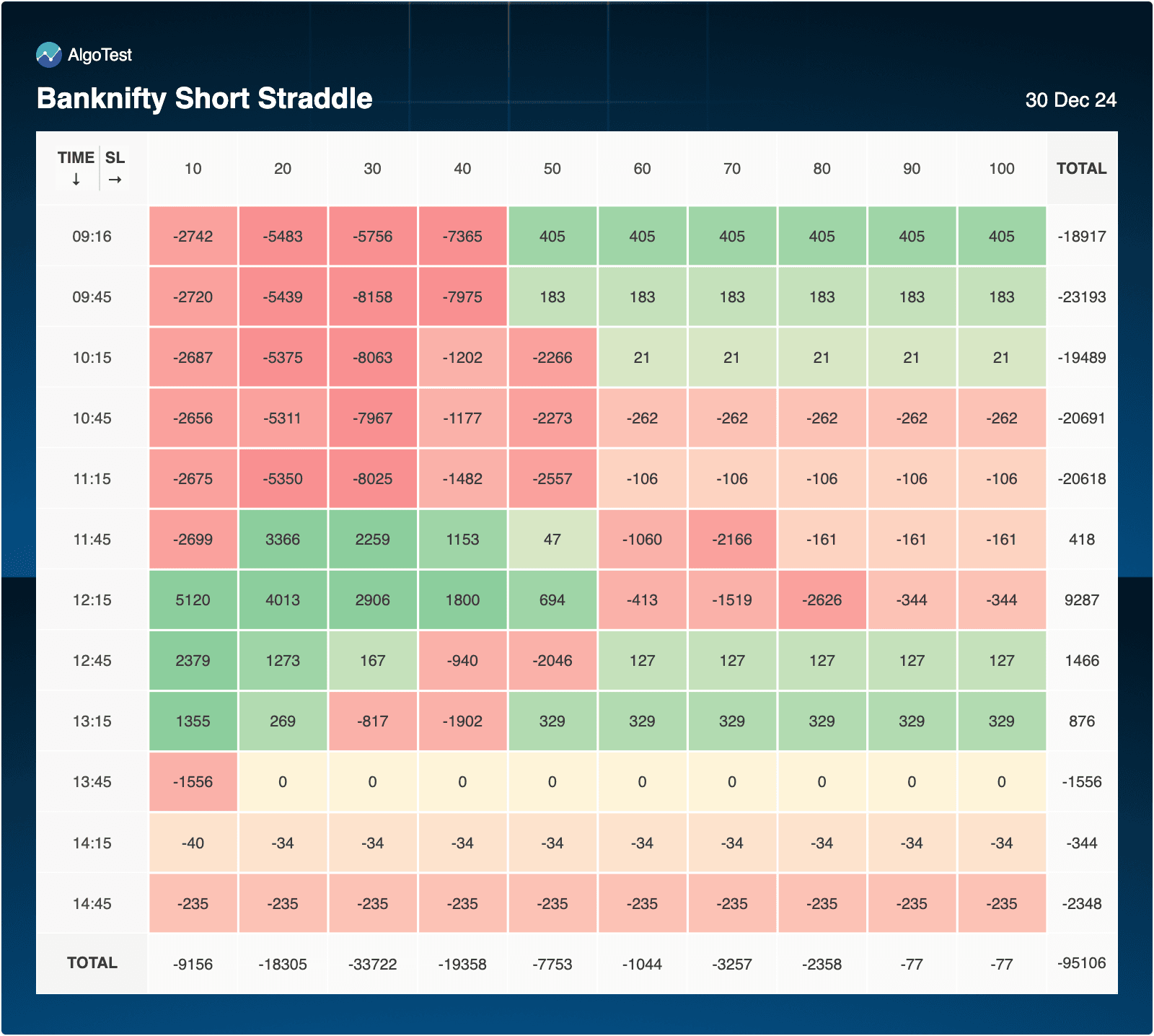
- **Total P&L**: -95,106
- **Insights**:
1. The performance across SL levels is negative, with most losses concentrated between SL 10 to SL 60.
2. The only positive interval was around **11:45**, where small profits were seen across higher SL levels (60–100), resulting in a small overall gain of **418**.
3. The strategy underperformed in the early hours (09:16 to 11:15), with significant losses ranging from -19,000 to -23,000.
**Finnifty Short Straddle:**
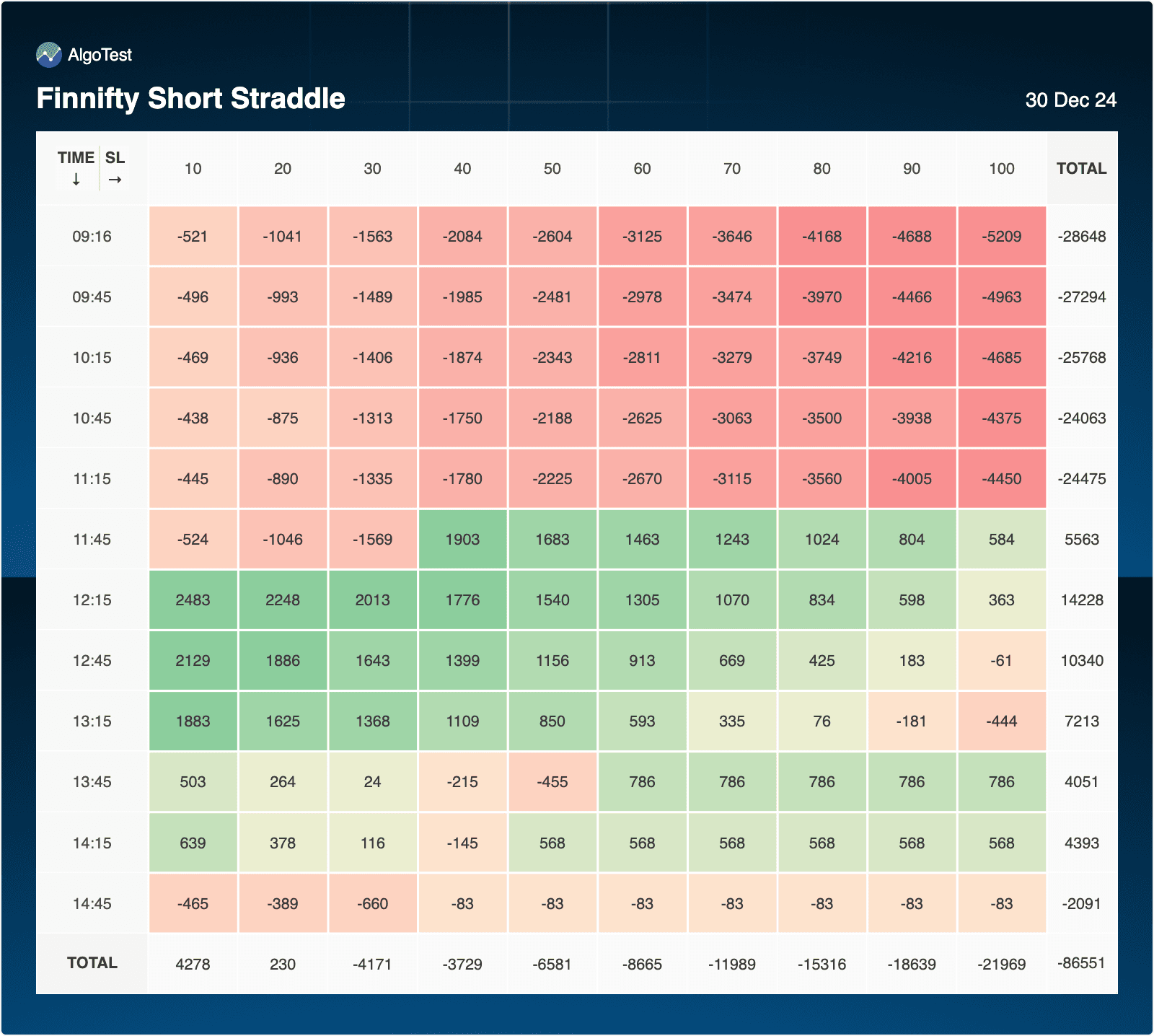
- **Total P&L**: -86,551
- **Insights**:
1. Losses were primarily concentrated during the morning session (09:16 to 11:15), where each interval lost over **24,000**.
2. Positive performance was observed between **11:45 to 13:15**, with a combined profit of **27,000+**, primarily due to gains in SL ranges from 30 to 90.
3. However, the gains couldn't offset the larger losses from earlier intervals.
**Midcpnifty Short Straddle:**
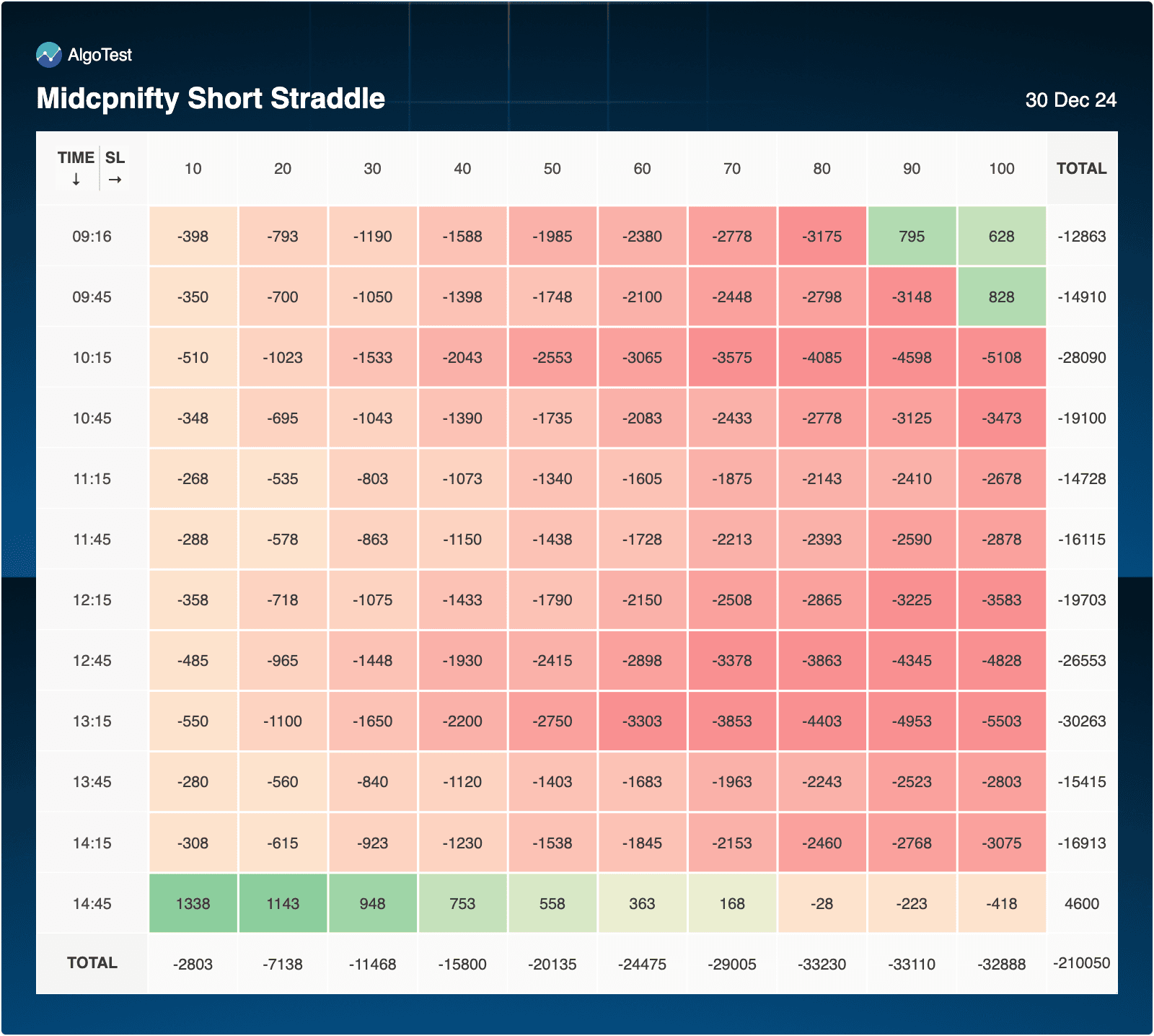
- **Total P&L**: -210,050
- **Insights**:
1. The strategy performed poorly across all SL levels and time intervals, with no sustained positive trend.
2. Only the **14:45** interval showed a minor recovery, yielding **4,600**, but it was insufficient to offset the significant earlier losses.
3. Heaviest losses were seen during **13:15 (-30,263)**, with almost all SL levels showing high negative P&L.
### ****
### **Nifty Short Straddle:**
### ****
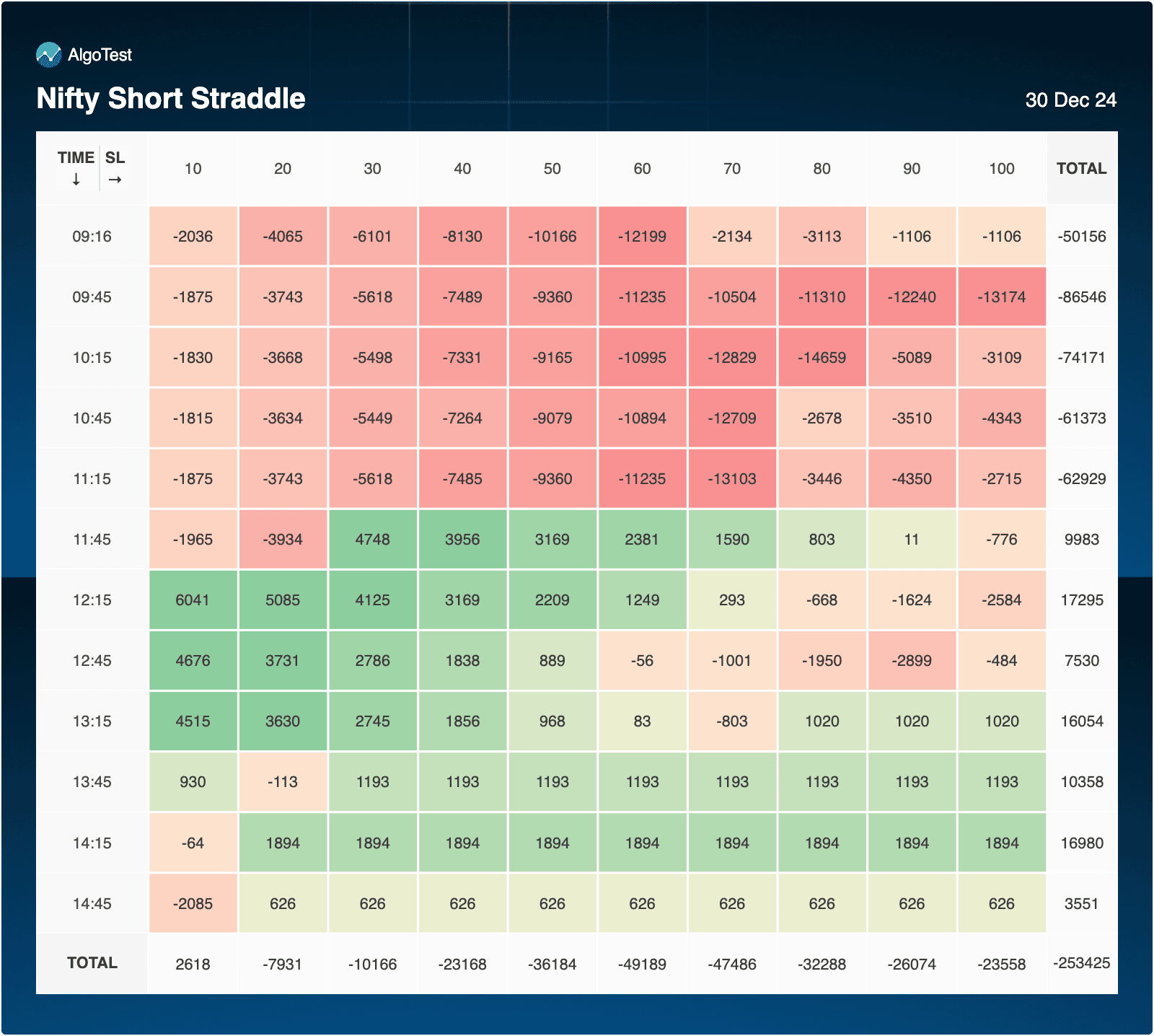
- **Total P&L:** -253,425
- **Insights:**
- **Morning sessions (9:16 to 11:15)** recorded the heaviest cumulative losses, particularly at higher SL levels. The 10:15 slot saw a P&L of -74,171, marking a significant drawdown.
- Positive recovery was observed **post 12:15**, with intervals like 12:15 and 12:45 showing cumulative gains of **17,295 and** **7,530**, respectively.
- **13:15 onwards** displayed mixed performance, peaking at **16,054** for 13:15 but then tapering off. Gains during this time window were inconsistent and couldn't reverse the overall losses. ****
- The 11:45 time interval broke the negative trend with a marginal gain of 9,983, likely driven by a shift in market dynamics.
**** You can also check [heatmaps](https://algotest.in/heatmap) for MidCapNifty, Nifty, BankNifty, and FinNifty across different dimensions to better understand market trends.
---
This blog is powered by Superblog. Visit https://superblog.ai to know more.
---
## Daily Straddle Heatmap - 26th December, 2024
Author: AlgoTest
Author URL: https://algotest.in/blog/author/algotest/
Published: 2025-01-13
Category: Heatmaps
Category URL: https://algotest.in/blog/category/heatmaps/
URL: https://algotest.in/blog/daily-straddle-heatmap---26th-december-2024/
Daily Straddle Heatmap
[AlgoTest](https://algotest.in) heatmaps make it easier for you to understand a clear picture of your trading performance. These [heatmaps](https://algotest.in/heatmap) visually represent data like time, performance metrics, and win rates. Think of them as a map highlighting where your strategies work best and where they stumble. For example, a heatmap might reveal that trades during certain hours of the day consistently yield higher profits.
We are taking four heatmaps today. Let’s understand what we can learn from them.
### **1\. Finnifty Short Straddle:**
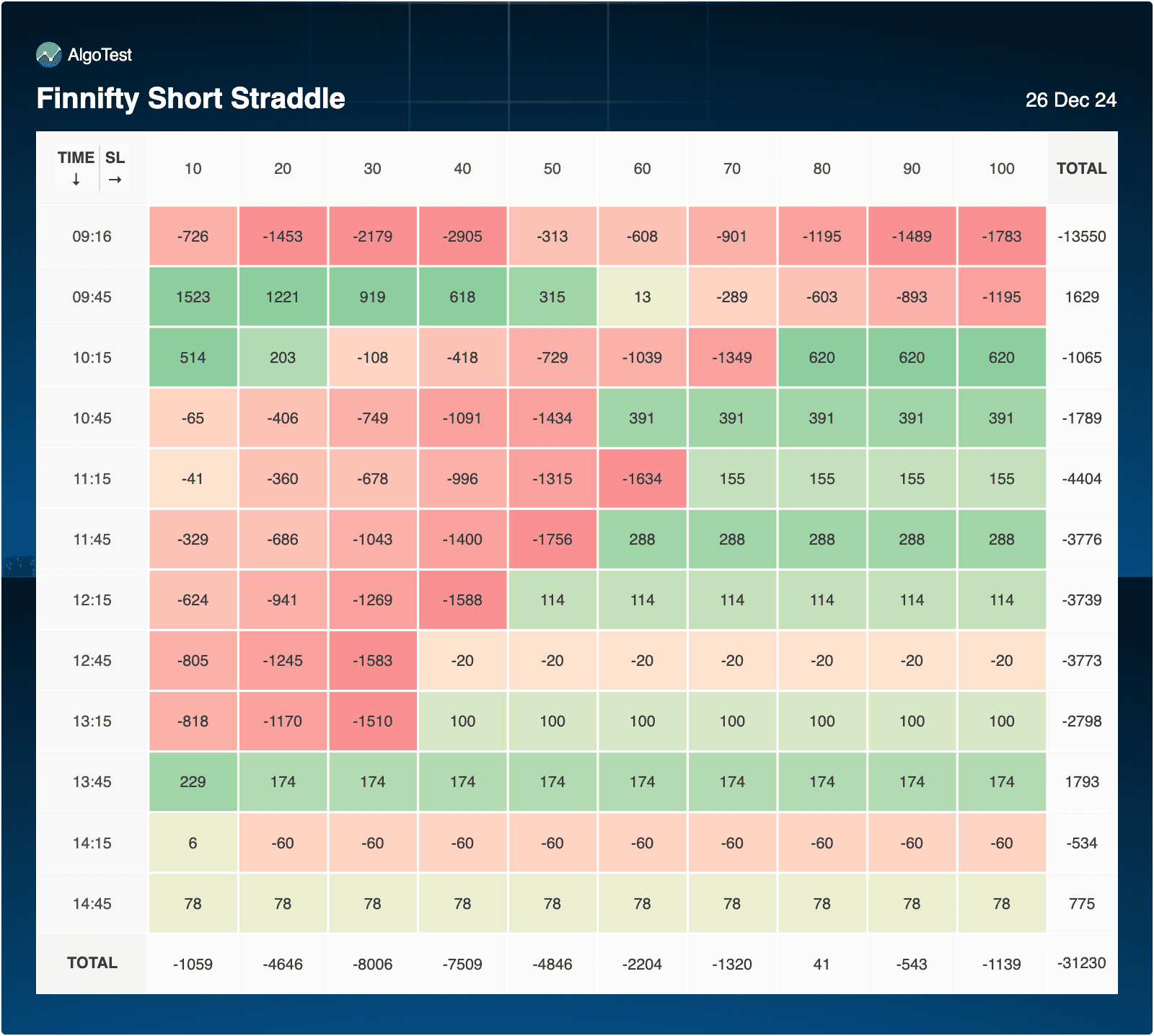
- **Insights**:
- **Worst SL Levels**: SL 30 (-8006), SL 40 (-7509), and SL 50 (-4846) contributed the most to losses.
- Total P&L across all timeframes and SL levels: **-31,230**.
- **Best Timeframe**:
- 09:45 shows some profitability (total: **+1629**) across SL 10, 20, and 30.
- **Worst Timeframe**:
- 09:16 and 11:15 show the highest losses with totals of **-13,550** and **-4404**, respectively.
### **2\. Midcpnifty Short Straddle:**
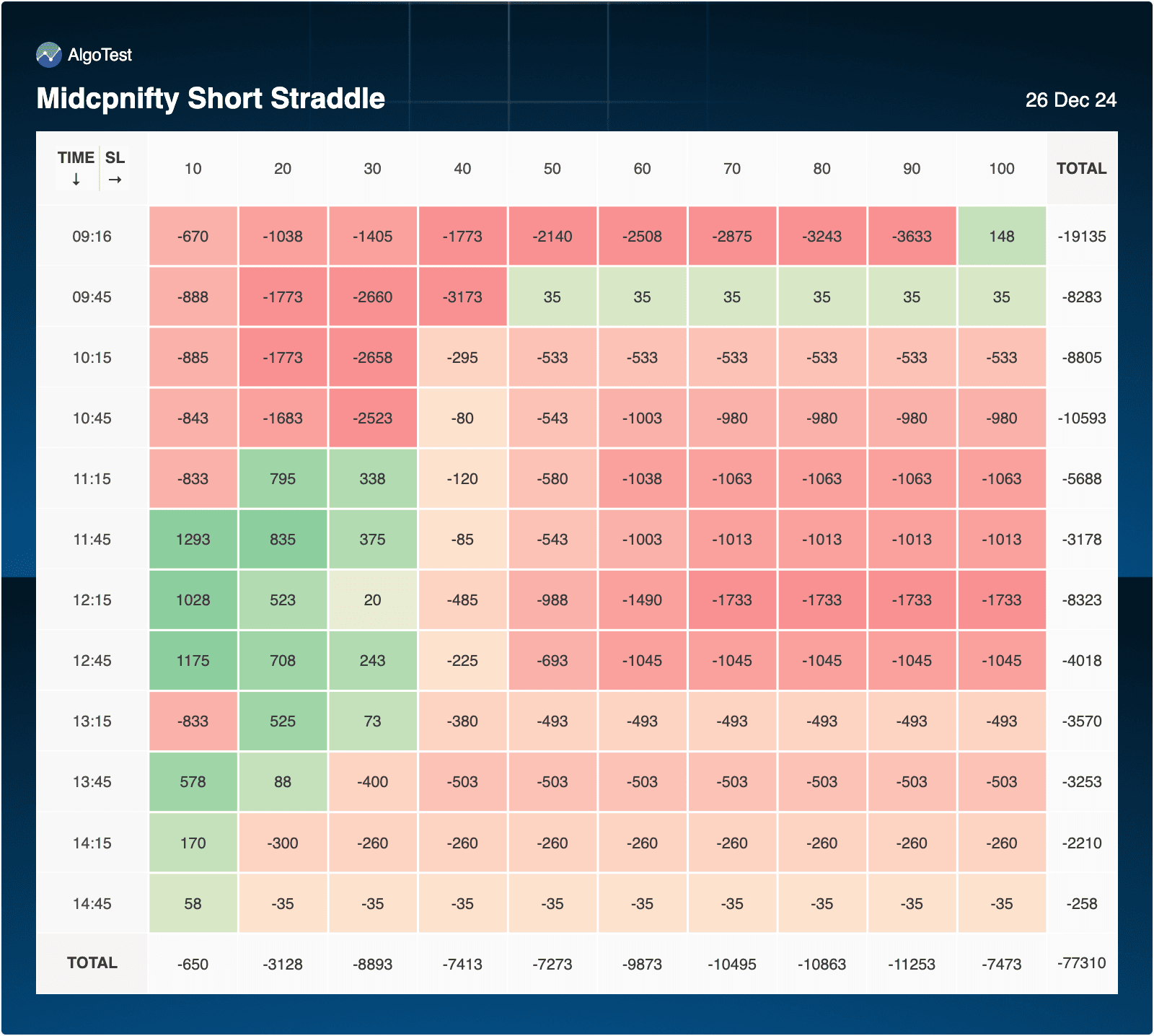
- **Insights**:
- **Worst SL Levels**: SL 40 (-8893), SL 50 (-7413), and SL 60 (-7273) caused significant losses.
- Total P&L across all timeframes and SL levels: **-77,310**.
- **Best Timeframe**:
- 11:15 shows some profitability ( **+795**, SL 10) and reduced losses across several SL levels.
- **Worst Timeframe**:
- 09:16 showed the most significant loss ( **-19,135**).
### **3\. Nifty Short Straddle:**
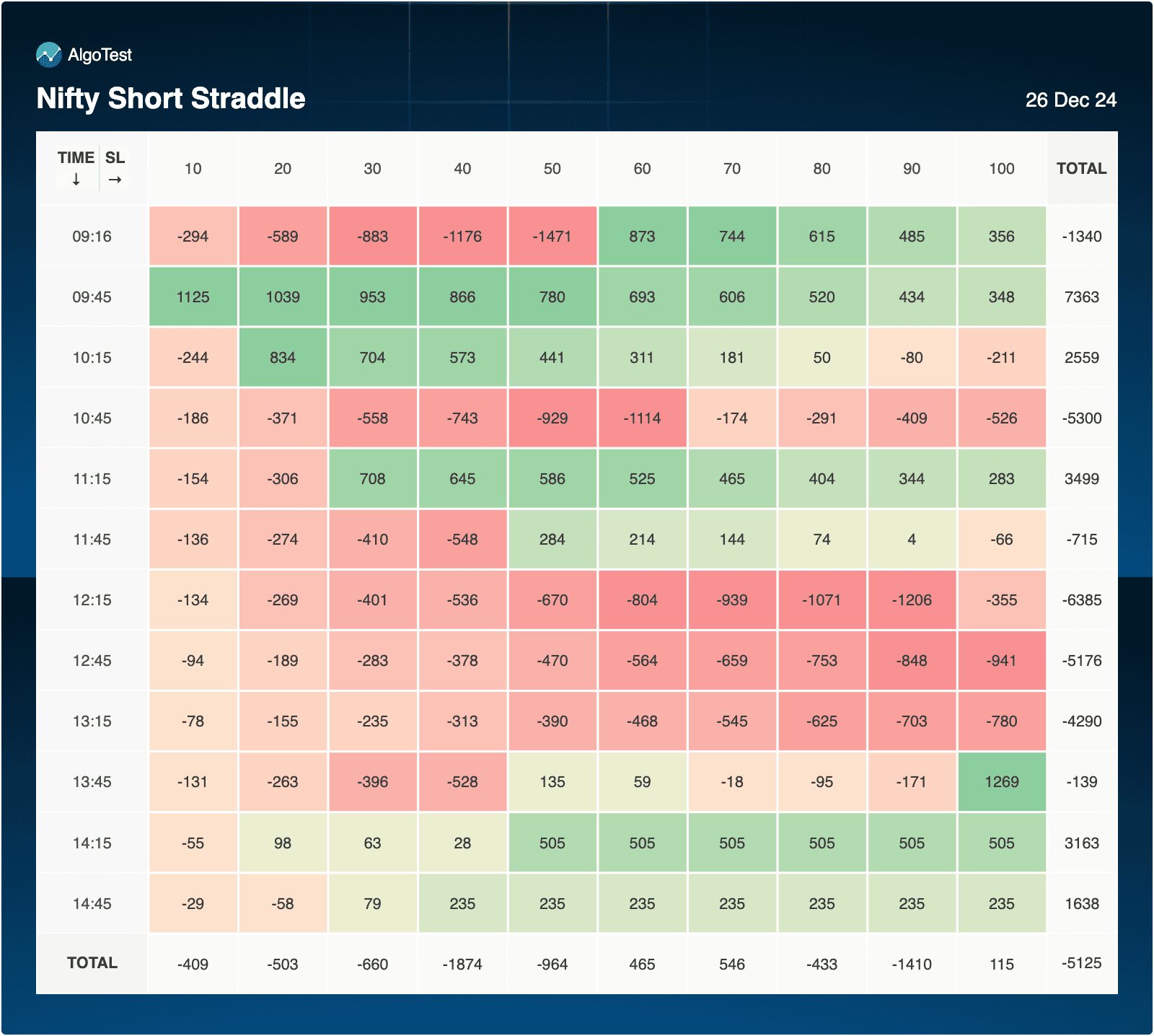
- **Insights**:
- **Best SL Levels**: SL 40 and SL 60 provided some profitability during specific timeframes (e.g., 09:45 and 11:15).
- Total P&L across all timeframes and SL levels: **-5125**.
- **Worst Timeframe**:
- 10:45 incurred the most significant loss ( **-5300**), especially for SL levels 50, 60, and above.
- **Best Timeframe**:
- 09:45 and 14:15 show consistent gains ( **+7363** and **+3163**, respectively).
### **4\. Banknifty Short Straddle**
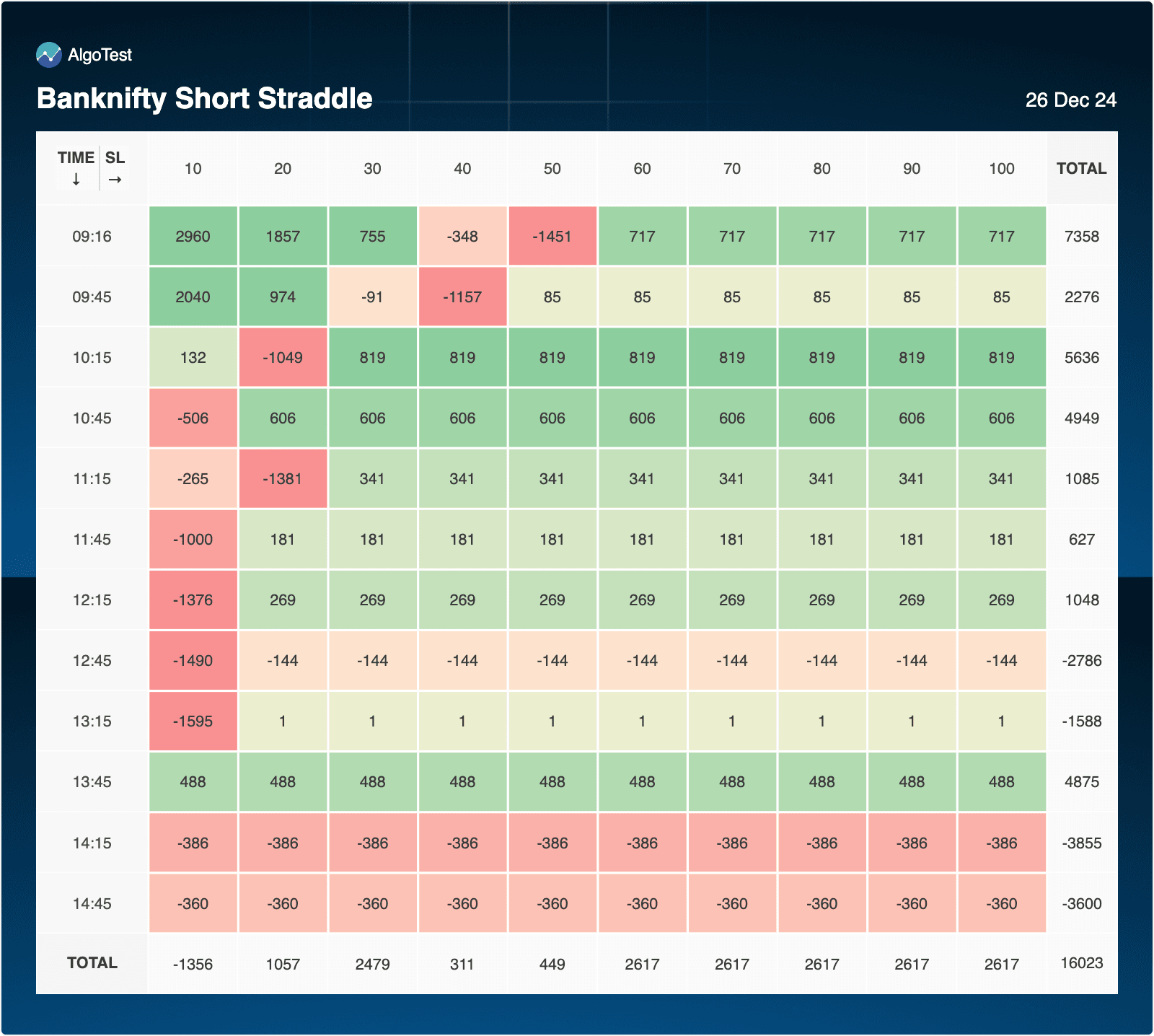
- **Insights**:
- **Best Time Slot**: **9:16**, highest profit ( **7,358**), particularly strong at SL 10-40.
- **Worst Time Slot**: Post- **12:15**, consistently poor, with **12:45** being the worst ( **-2,786**).
- **Morning (9:16-10:15)**: Most profitable
- **Afternoon**: Avoid trades post-12:15 due to consistent losses.
- **Total Profit**: **16,023**.
###### You can also check [heatmaps](https://algotest.in/heatmap) for MidCapNifty, Nifty, BankNifty, and FinNifty across different dimensions to better understand market trends.
---
This blog is powered by Superblog. Visit https://superblog.ai to know more.
---
## Daily Straddle Heatmap - 23rd December, 2024
Author: AlgoTest
Author URL: https://algotest.in/blog/author/algotest/
Published: 2025-01-13
Category: Heatmaps
Category URL: https://algotest.in/blog/category/heatmaps/
URL: https://algotest.in/blog/daily-straddle-heatmap---23rd-december-2024/
Daily Straddle Heatmap
[AlgoTest](https://algotest.in) heatmaps make it easier for you to understand a clear picture of your trading performance. These [heatmaps](https://algotest.in/heatmap) visually represent data like time, performance metrics, and win rates. Think of them as a map highlighting where your strategies work best and where they stumble. For example, a heatmap might reveal that trades during certain hours of the day consistently yield higher profits.
We are taking four heatmaps today. Let’s understand what we can learn from them.
### **1\. BankNifty Short Straddle Heatmap**
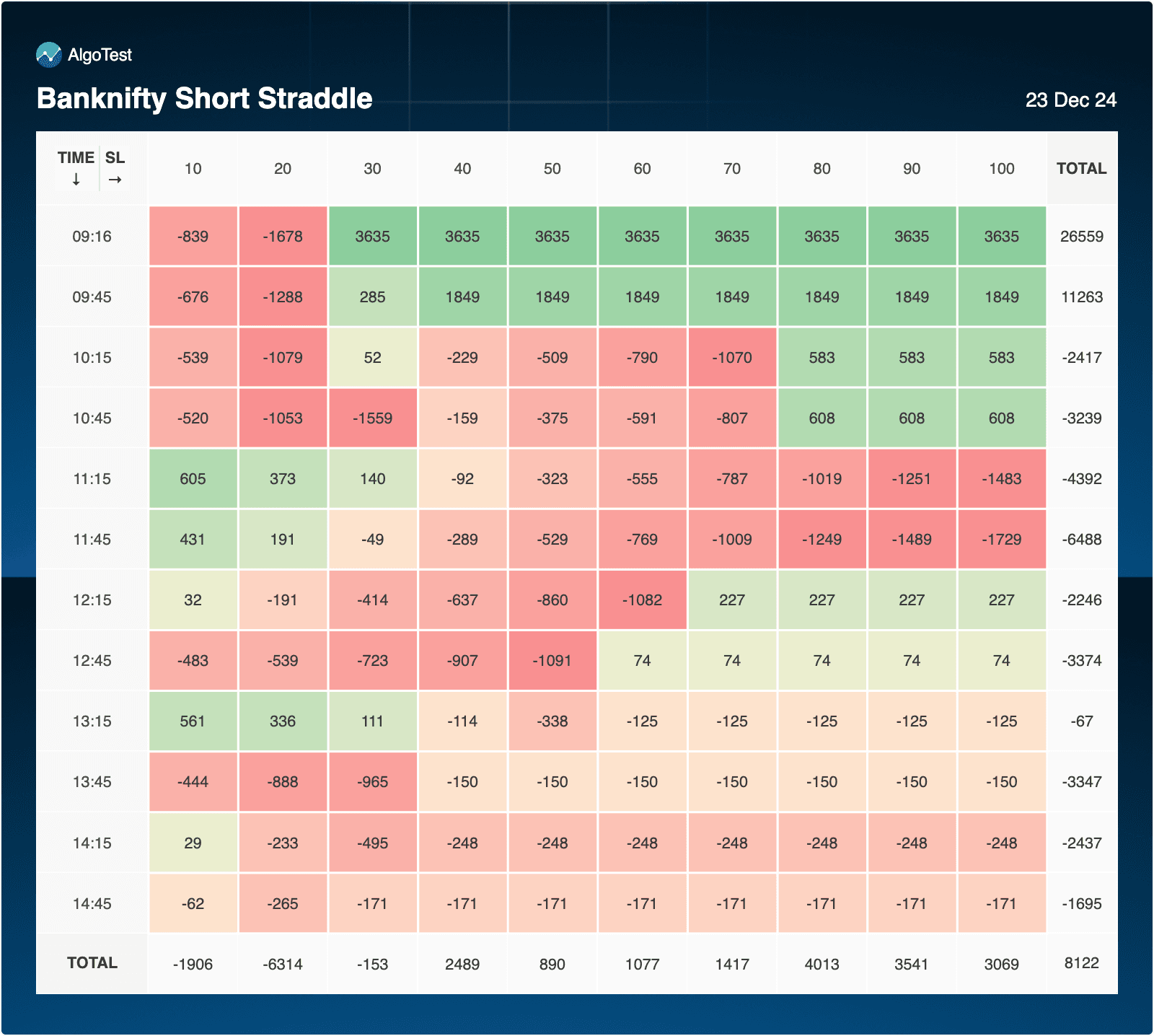
- **Insights:**
- SL values range from 10 to 100 in increments of 10.
- The total P&L across all time slots increases consistently with higher SL levels, peaking at the SL of 100 (Total: **8122**).
- The best-performing time slots appear to be **09:16** (Total: **26,559**) and **09:45** (Total: **11,263**), primarily due to higher returns at higher SL values.
- **Observations:**
- Higher SL levels (e.g., 90 and 100) generally yield positive results, suggesting that allowing trades to run longer before cutting losses benefits this strategy.
- Lower SL levels (e.g., 10 to 40) consistently lead to significant losses.
- The **12:15** time slot has mixed results, with only high SL levels (90 and 100) showing slight profitability.
### **2\. MidcapNifty Short Straddle Heatmap**
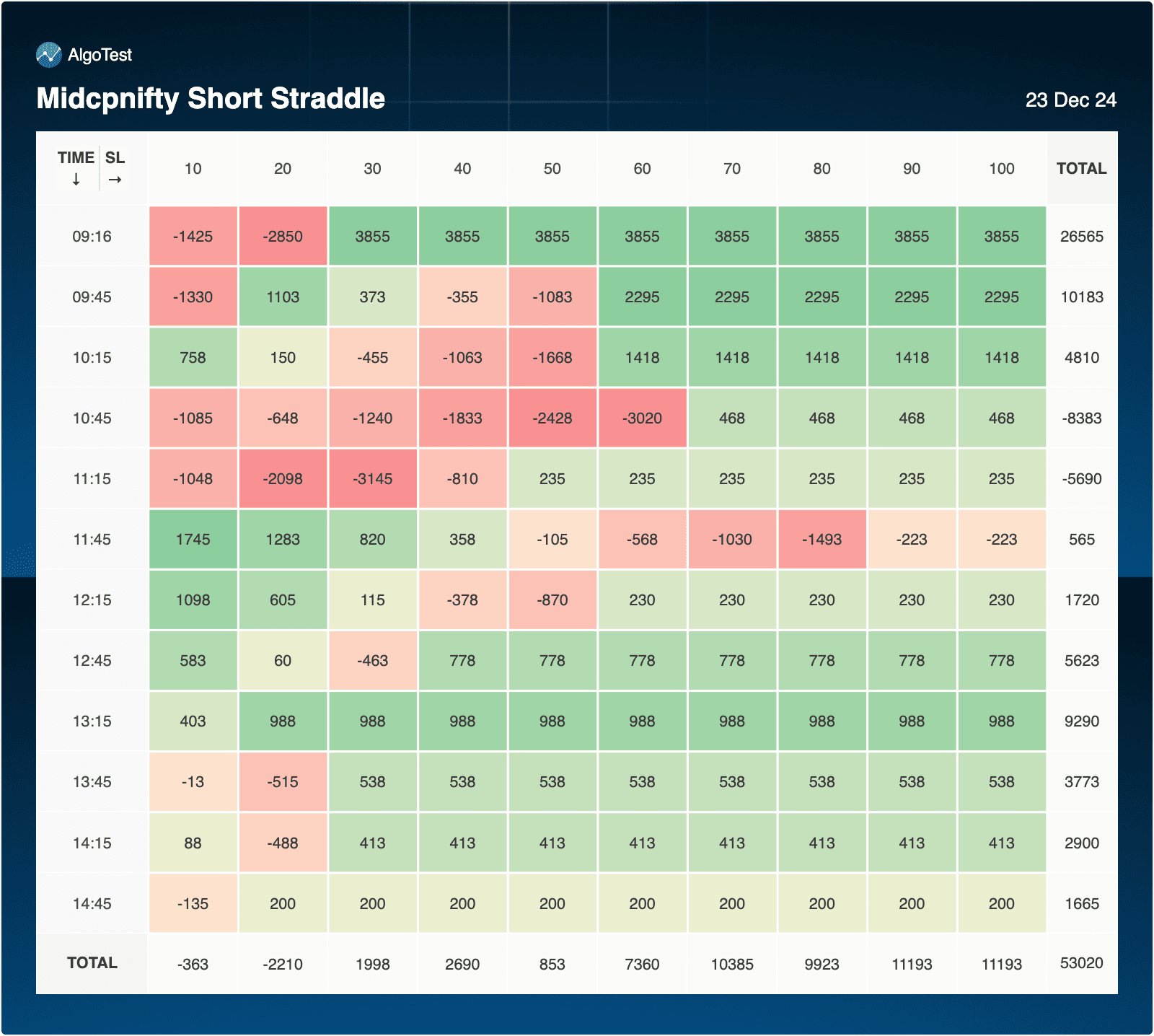
- **Insights:**
- High volatility is reflected with significant losses at the 10:45 time slot, especially at lower SL levels, e.g., -3,020 at SL 50.
- Best performance is seen at the 9:16 and 11:45 time slots, with **26,565** and **5,623**, respectively.
- Total profit: **53,020**, though lower SL levels (<50) are prone to larger drawdowns.
- **Observations:**
- Entries after 12:15 stabilize, with lower volatility and small consistent profits.
- SL 50-100 zones show more resilience in handling market fluctuations.
### **3\. Nifty Short Straddle Heatmap**
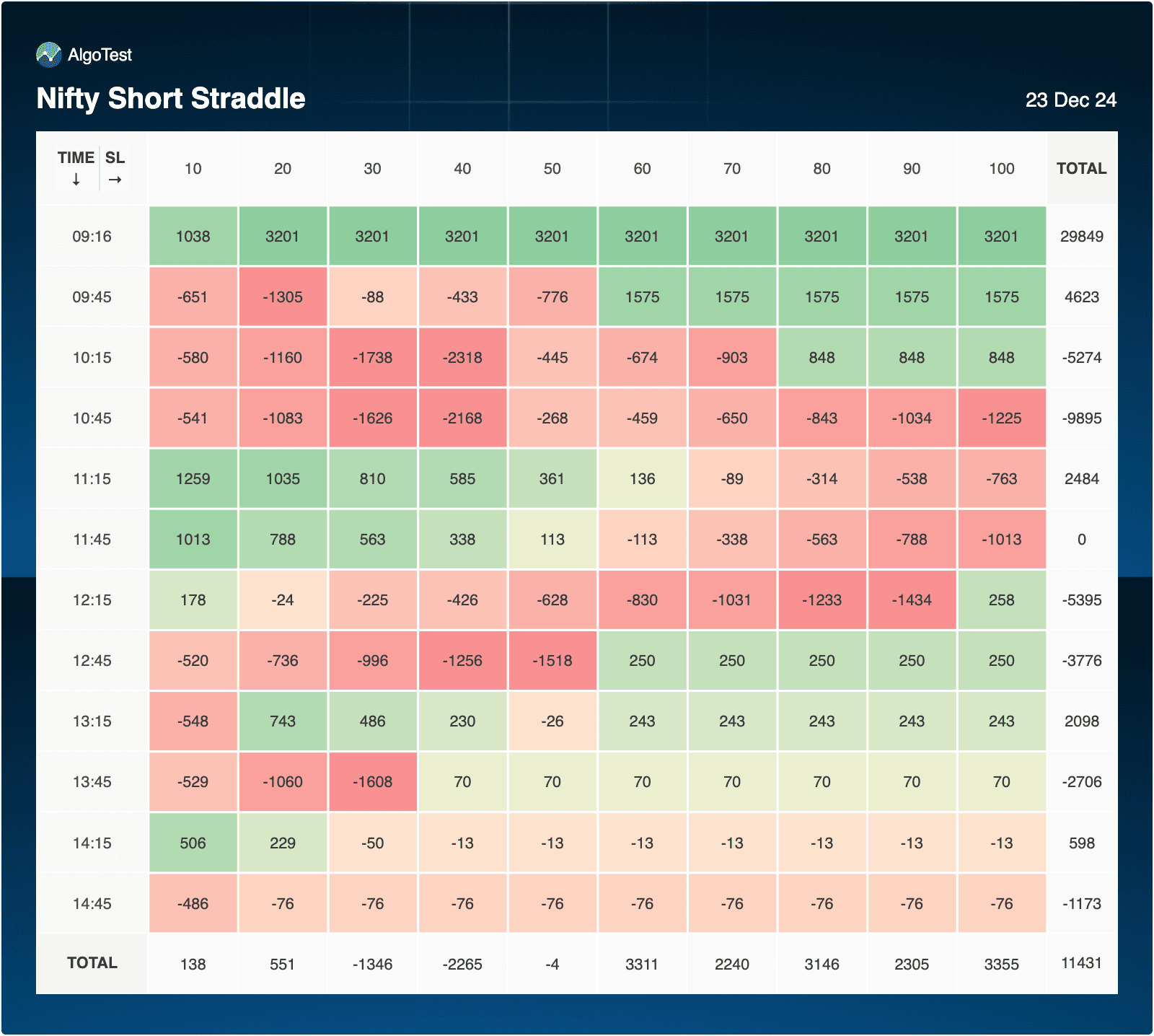
- **Insights:**
- Profits are heavily skewed towards the 9:16 entry ( **29,849**).
- Sharp losses at the 10:45 and 12:15 time slots (-9,895 and -5,395 total).
- High SL levels (70-100) show steadier results compared to lower SLs, where profits/losses fluctuate more.
- Total profit: **11,431**, significantly lower compared to Finnifty and Midcpnifty.
- **Observations:**
- Afternoon entries struggle with consistent losses; caution is needed post-12:15.
- Lower SL levels (10-50) are not ideal for this index due to higher sensitivity to market movements.
### **4\. Finnifty Short Straddle Heatmap**
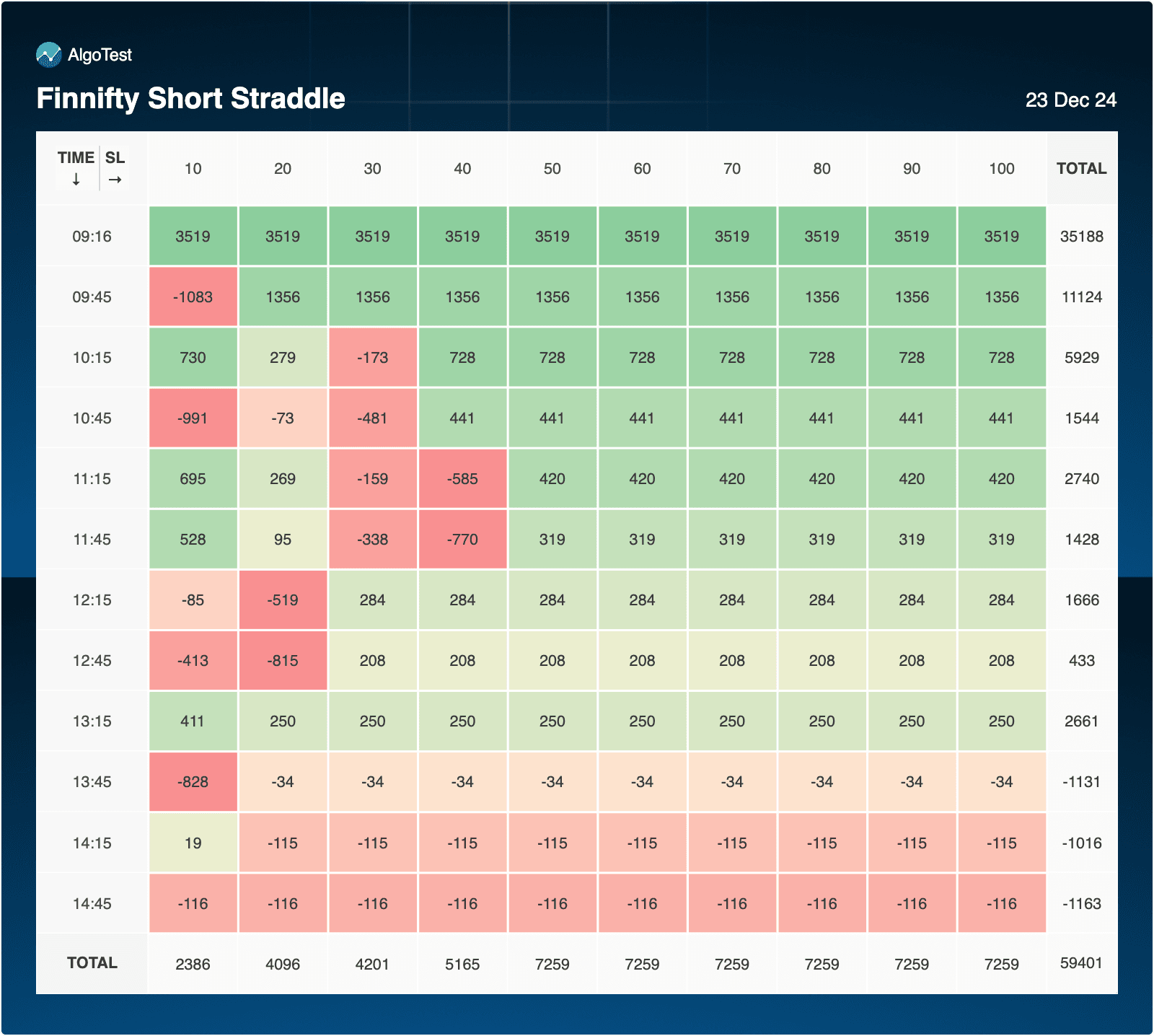
- **Insights:**
- Best performance is observed at the 9:16 entry with a profit of **35,188** across all SL levels, indicating low volatility immediately after the market opens.
- SL levels of 10 to 40 generally perform better than higher SL levels.
- After 9:16, profits decrease significantly, and losses are frequent, particularly in the 10:45 to 11:45 time slots.
- Total profit: **59,401**, with consistent performance across higher SL levels.
- **Observations:**
- Morning entries (before 10:15) tend to yield higher profits.
- SL levels of 10 and 20 may not be ideal due to frequent fluctuations.
You can also check [heatmaps](https://algotest.in/heatmap) for MidCapNifty, Nifty, BankNifty, and FinNifty across different dimensions to better understand market trends.
---
This blog is powered by Superblog. Visit https://superblog.ai to know more.
---
## Daily Straddle Heatmap - 20th December, 2024
Author: AlgoTest
Author URL: https://algotest.in/blog/author/algotest/
Published: 2024-12-20
Category: Heatmaps
Category URL: https://algotest.in/blog/category/heatmaps/
URL: https://algotest.in/blog/daily-straddle-heatmap---20th-december-2024/
Daily Straddle Heatmap
AlgoTest heatmaps make it easier for you to understand a clear picture of your trading performance. These heatmaps visually represent data like time, performance metrics, and win rates. Think of them as a map highlighting where your strategies work best and where they stumble. For example, a heatmap might reveal that trades during certain hours of the day consistently yield higher profits.
We are taking three heatmaps today. Let’s understand what we can learn from them.
### **1\. BankNifty Short Straddle Heatmap**
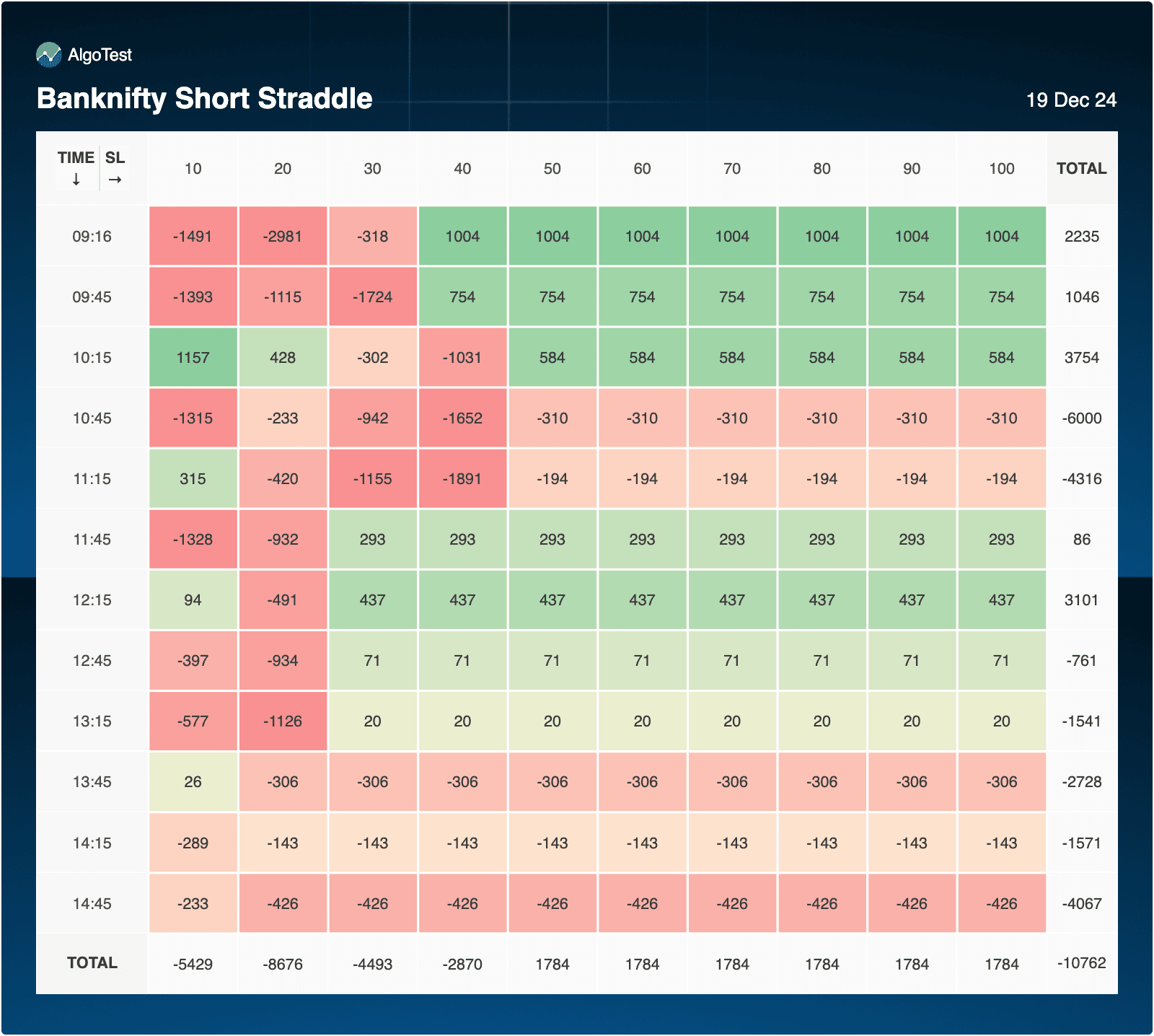
- **Highest Profits**:some text
- SL levels of **70-100** consistently showed **positive returns** across time intervals, especially at **09:16** and **10:15**, with totals of **2235** and **3754**.
- **Worst Losses**:some text
- SL levels of **10-50** around the **10:45** and **11:15** time slots, with significant losses like **-6000** and **-4316**, respectively.
- **Insights**:some text
- Wider SL levels ( **70-100**) were more effective and consistently profitable.
- Early morning entries (e.g., 09:16) seem less volatile compared to mid-day.
- **Total P/L**: **-10,762** (cumulative loss across SL levels).
### **2\. MidcapNifty Short Straddle Heatmap**
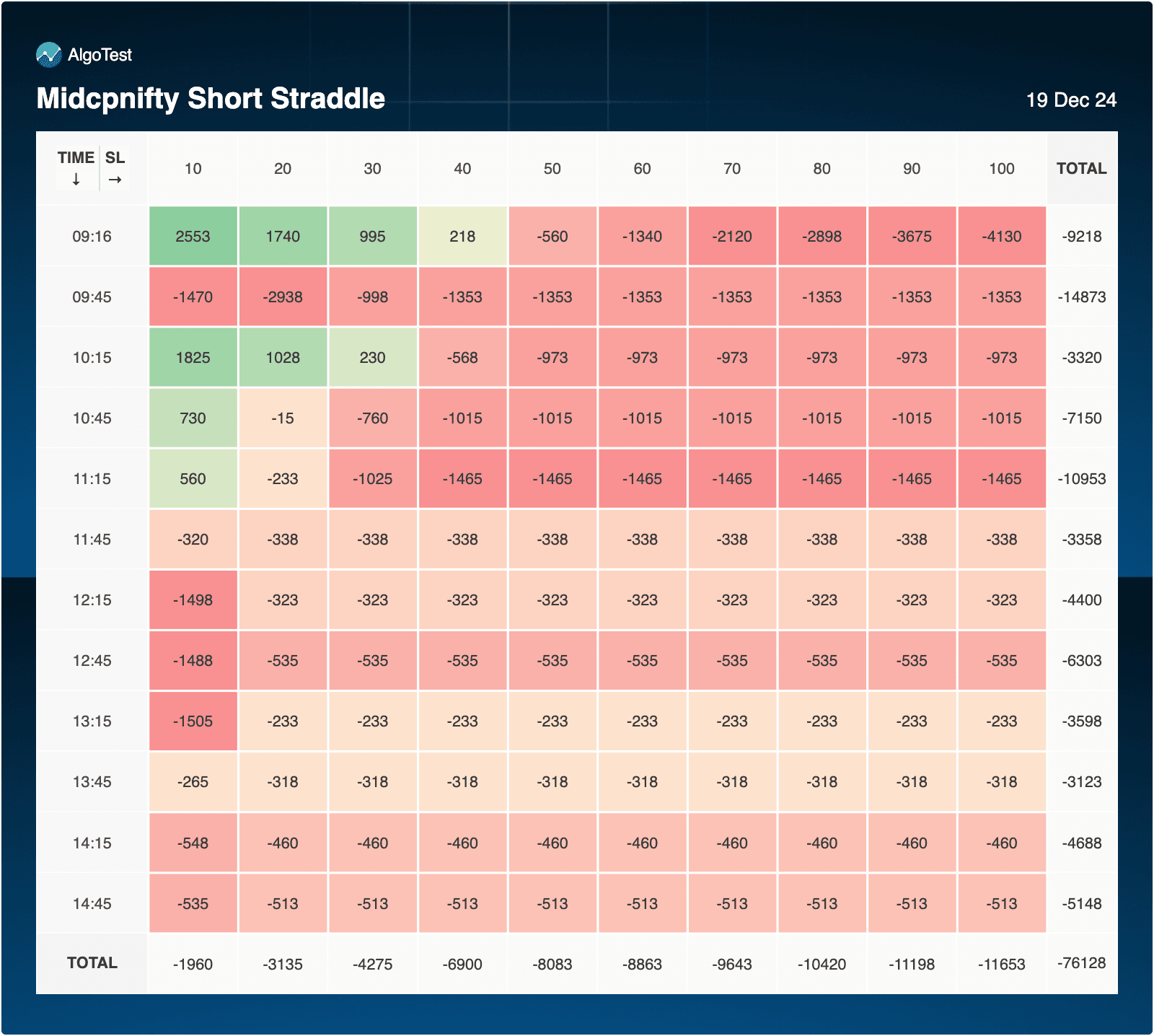
- **Highest Profits**:some text
- Positive results were sparse but observed early in the day at **SL 10-40** during the **09:16** time interval (e.g., **2533, 1740, and 995**).
- **Worst Losses**:some text
- Significant losses across almost all SL levels after **09:45**, with **-14,873** at **09:45** and **-10,953** at **11:15**.
- SL levels **50-100** were consistently negative for the entire day.
- **Insights**:some text
- This strategy performed poorly for MidcapNifty, especially in tighter SL levels, which might indicate higher volatility.
- Early gains at open were not sustained throughout the day.
- **Total P/L**: **-76,128** (significant cumulative loss).
### **3\. Nifty Short Straddle Heatmap**
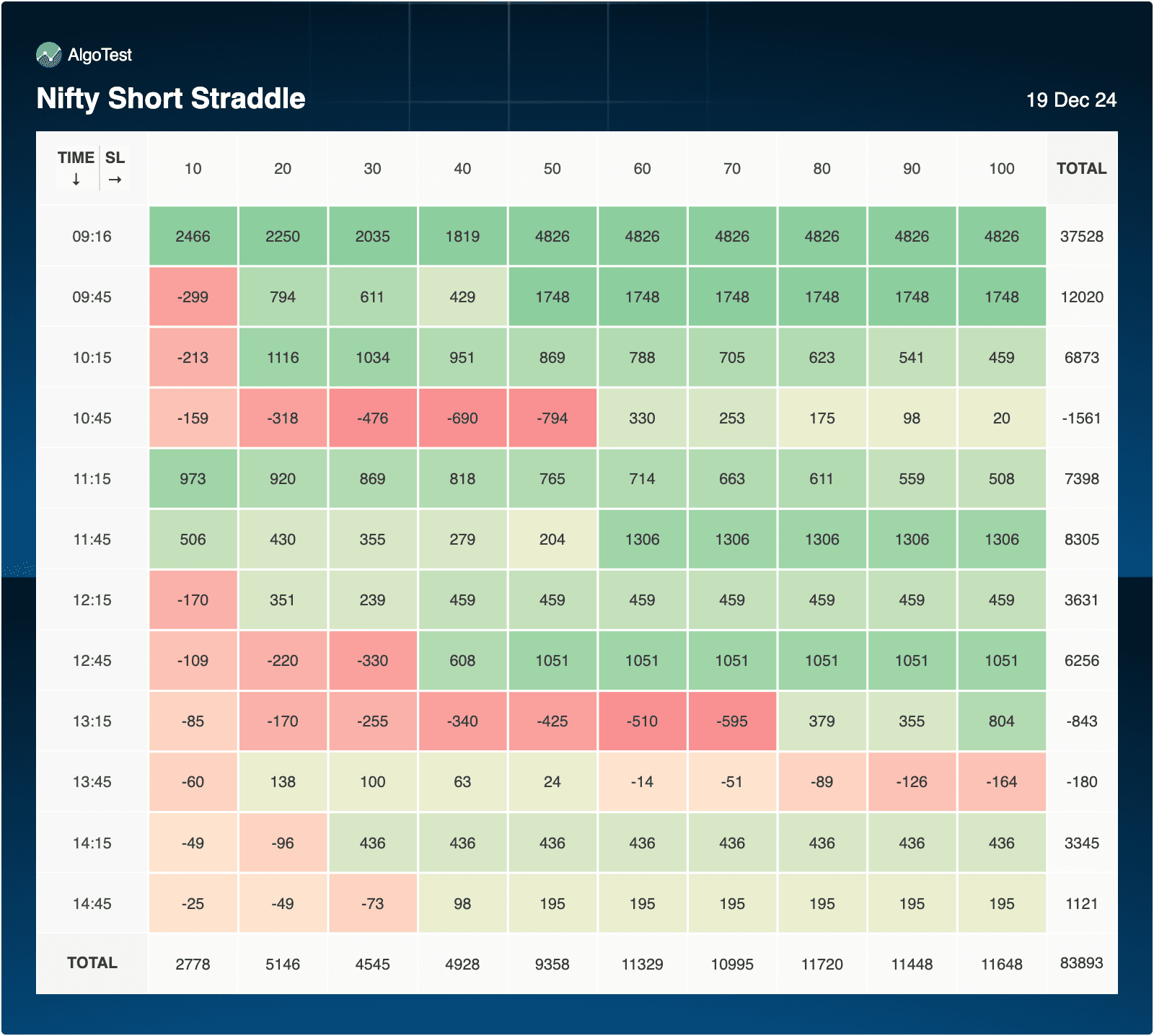
- **Highest Profits**:some text
- Consistent positive returns across **all SL levels**, especially **70-100**.
- The **09:16** and **11:15** intervals were the most profitable, contributing significantly with totals of **37,528** and **8,305**, respectively.
- **Worst Losses**:some text
- Minimal losses observed, limited to early trades with tight SL levels (e.g., **10-20** around 10:45).
- **Insights**:some text
- This strategy worked very well for Nifty, with broader SL levels being consistently profitable.
- The strategy has excellent potential when focused on higher SL levels and earlier time intervals.
- **Total P/L**: **83,893** (strong cumulative profit).
### **4\. Finnifty Short Straddle Heatmap**
#### **Highest Profits:**
Positive results were minimal but observed early in the day at **SL 30-100 during the 09:16 and 09:45 intervals**.
- For **09:16**, SL 30-100 yielded consistent profits of **+310** across all levels.
- For **09:45**, SL 30-100 delivered **+263** each.
#### **Worst Losses:**
Significant losses occurred across most SL levels after **09:45**, with particularly heavy losses in tight SL levels:
- **10:45**: -1,150 at SL 20 and -493 at SL 30-100.
- **11:15**: -1,194 at SL 20 and -400 at SL 30-100.
- SL **10-20** performed the worst throughout the day, as frequent stop-loss hits due to volatility drove substantial losses.
#### **Insights:**
- **Profits were short-lived**, with gains seen only in the early morning (09:16 and 09:45).
- Tighter SL levels ( **10-20**) performed poorly across all intervals, highlighting the impact of Finnifty’s volatility.
- Wider SL levels ( **30-100**) avoided extreme losses but still underperformed significantly after 10:45.
- Overall, this strategy was **ineffective for Finnifty**, with **no profitable time intervals after 09:45**.
#### **Total P/L:**
**-22,050** (significant cumulative loss)
You can also check heatmaps for MidCapNifty, Nifty, BankNifty, and FinNifty across different dimensions to better understand market trends.
---
This blog is powered by Superblog. Visit https://superblog.ai to know more.
---
## Daily Straddle Heatmap - 19th December, 2024
Author: AlgoTest
Author URL: https://algotest.in/blog/author/algotest/
Published: 2024-12-19
Category: Heatmaps
Category URL: https://algotest.in/blog/category/heatmaps/
URL: https://algotest.in/blog/daily-straddle-heatmap---19th-december-2024/
AlgoTest heatmaps make it easier for you to understand a clear picture of your trading performance. These heatmaps visually represent data like time, performance metrics, and win rates. Think of them as a map highlighting where your strategies work best and where they stumble. For example, a heatmap might reveal that trades during certain hours of the day consistently yield higher profits.
We are taking three heatmaps today. Let’s understand what we can learn from them.
### **1\. Finnifty Short Straddle Heatmap**
## ****
- **Time-Based Insights**:
- **09:45** shows the highest profitability with a total of **₹9204**, highlighting it as a strong trading window.
- **11:15** and **11:45** exhibit consistent yet lower returns (₹1569 and ₹1670, respectively), suggesting moderate opportunities.
- **13:15 onwards** sees a steep decline into negative returns, indicating high risk during this period.
- **Stop-Loss Impact**:some text
- Lower SL levels (e.g., 10 or 20) tend to show higher losses during underperforming timeframes, while higher SLs (50-80) stabilize the returns.
### **2\. Nifty Short Straddle Heatmap (Daily Analysis)**
- **Date-Based Performance**:
- **06 Dec** outperformed significantly with a total of **₹14,295**, while **13 Dec** marked a catastrophic day, incurring losses of **₹-31,123**.
- Consistent performance can be observed on **11 Dec** (₹8360) and **12 Dec** (₹5916).
- Negative days such as **13 Dec** and **10 Dec** emphasize the volatility in specific market conditions.
- **Stop-Loss Observations**:
- SL values between 50 and 70 provide a balance, minimizing extreme losses while securing modest returns.
- Extreme SLs (10, 20) lead to higher losses, as seen on **13 Dec**, suggesting these settings are less optimal.
### **3\. Nifty Short Straddle Heatmap (Time-Based)**

- **Time-Slot Observations**:
- **09:45** remains the most profitable time slot with a total of **₹5200**, consistent across both assets.
- The period between **12:15 and 13:45** sees reduced activity and profitability, with sporadic gains like ₹4733 at 13:15.
- Post-lunch sessions (14:15 onward) exhibit stable but moderate performance.
- **SL-Level Effects**:
- Higher SL levels (70, 80) generate consistent profits, especially during optimal time windows like **10:15** and **09:45**.
- Lower SLs (10-20) face higher losses, amplifying the need for careful SL selection.
### **4\. Banknifty Short Straddle Heatmap (Time-Based)**
## **Date-Based Insights:**
- **10 Dec 24** shows the highest profitability with a total of **₹8450**, marking it as the most successful trading day.
- **06 Dec 24** and **18 Dec 24** also performed well, generating **₹6484** and **₹7954**, respectively.
- **13 Dec 24** is the worst-performing day with a significant loss of **₹-26,797**, indicating high risk on this date.
## **SL-Level Effects**:
- Lower SLs (10-20) consistently show higher volatility and losses across dates.
- Mid-range SLs (50-70) offer more stable and profitable returns on most days.
- High SLs (80-100) demonstrate minimal variation, indicating reduced risk but capped profits.
You can also check heatmaps for MidCapNifty, Nifty, BankNifty, and FinNifty across different dimensions to better understand market trends.
##
---
This blog is powered by Superblog. Visit https://superblog.ai to know more.
---
## Understanding GIFT Nifty Trading Timings and Their Impact on Your Trades
Author: AlgoTest
Author URL: https://algotest.in/blog/author/algotest/
Published: 2024-10-23
URL: https://algotest.in/blog/understanding-gift-nifty-trading-timings-and-their-impact-on-your-trades/
## ****
Are you interested in how GIFT Nifty trading can change your investment journey and if you’re curious what it’s all about, you’re reading the right blog! GIFT Nifty is a really interesting option for timid traders who wish to stay put with the stock market even when regular hours are over.
To make the most out of this investment, it is important to understand the trading timings. We will in this blog look at the GIFT Nifty trading schedule and how this can impact your trades. Are you ready to become a master at managing when to invest?
## ****
[**Try Free Backtesting Now**](https://algotest.in/feature/backtest?utm_source=blog&utm_medium=internal&utm_campaign=seo&utm_content=feature&utm_term=backtest)
## **Understanding GIFT Nifty**
## ****
If you are a trading enthusiast or in the stock market and heard about ‘GIFT Nifty’, you’d have known that. It is quite beneficial for traders who decide to broaden their investment pipes and understanding the basics of GIFT Nifty and how it functions can surely get them started in the right direction. This section aims to unmake the GIFT Nifty, detailing what is it and why the NSE International Exchange is so important.
### **What is GIFT Nifty?**
Let's start with the basics. GIFT Nifty is just another extension of India’s most loved Nifty 50 Index and is a brainchild of a collaboration between the NSE (National Stock Exchange) of India and the Singapore Exchange (SGX). GIFT is Gujarat International Finance Tec city and is located in Gujarat, India. It seeks to improve India’s position on the global financial architecture axis by giving a competitive advantage to financial services.
The significance of GIFT Nifty will make you question so. So it enables Indian and international investors to trade these Nifty 50 contracts at a time when it is in sync with global markets and hence, Indian markets becomes somewhat more accessible. In a way, GIFT Nifty is a barometer of the performance of the Indian stock market in international markets.
### **The Role of the NSE International Exchange**
GIFT Nifty is operational and pivotal through its partnership with the International Exchange of National Stock Exchange, i.e. the NSE IFSC in GIFT City. The NSE International Exchange was launched as a common trading platform for Indian and global investors, who are offered a host of diversified financial instruments ranging from index derivatives including single stock derivatives, currency derivatives and much more.
The NSE International Exchange provides several benefits to traders — by housing the GIFT Nifty contracts. It also provides an environment of robust and regulated trading that meets with the Indian regulatory framework but accommodates the traditional practices prevalent in the international markets. This makes for attractive, diversified and hedged plays for investors. GIFT Nifty trading on the International Exchange of the National Stock Exchange of India is an additional cheaper brokerage and transactions cost.
[**Try Free Backtesting Now**](https://algotest.in/feature/backtest?utm_source=blog&utm_medium=internal&utm_campaign=seo&utm_content=feature&utm_term=backtest)
## **GIFT Nifty Trading Timings**
## ****
Understanding the trading timings is key to aligning your investment strategies effectively with any financial instrument. GIFT Nifty trading timings can profoundly impact how traders approach their market operations, especially when compared with various global markets.
### **Overview of Trading Hours**
## ****
GIFT Nifty offers extended trading hours designed to align with international markets, providing investors with ample opportunities to capitalise on global trends. Here's a breakdown of the trading schedule:
## ****
**Regular Trading Sessions**
- First Session: 6:30 AM to 3:40 PM IST
- Second Session: 4:35 PM to 2:45 AM IST (the following day)
**Pre-Open Session**
- 6:15 AM to 6:30 AM IST
**Post-Closing Session**
- 3:40 PM to 4:35 PM IST
## ****
**Key Points:**
- 21-Hour Trading Day: GIFT Nifty offers nearly 21 hours of trading, allowing you to react to global market movements throughout the day.
- Global Market Integration: The extended hours enable seamless integration with major financial hubs in Asia, Europe, and the US, providing a broader trading horizon.
- Pre-Open and Post-Closing Sessions: These sessions facilitate order placement and position adjustments before and after the regular trading hours.
## ****
By understanding these trading timings, you can effectively plan your trading strategies and take advantage of the opportunities presented by the GIFT Nifty market.
## ****
### **Comparison with Other Global Markets**
## ****
While the GIFT Nifty trading hours are an advantage in many ways, it's crucial to compare these hours with those of other major international markets to leverage your trading plan effectively.
\- **US Markets**: The New York Stock Exchange (NYSE) and NASDAQ generally operate from 9:30 AM to 4:00 PM ET, which means the GIFT Nifty overlaps with a significant portion of the trading day in the United States. This overlap allows traders to make informed decisions based on U.S. market movements.
\- **European Markets**: European bourses such as the London Stock Exchange (LSE) and Euronext operate roughly between 8:00 AM and 4:30 PM CET. The trading timings of GIFT Nifty coincide with these hours, providing global investors with enough time to respond to European market dynamics.
\- **Asian Markets**: When juxtaposed with Asian exchanges such as the Tokyo Stock Exchange (TSE), which is open from 9:00 a.m. to 11:30 a.m. and 12:30 p.m. to 3:00 p.m, GIFT Nifty’s early opening hours prove beneficial for traders reacting to East Asian market trends.
By comparing these timings, you can infer how GIFT Nifty facilitates global participation and regional market integration, making it a versatile tool for international traders.
### **Importance of Aligning with Different Time Zones**
## ****
Why is it so crucial to align trading activities with different time zones? The global financial ecosystem never really sleeps. Economic data releases, geopolitical developments, corporate earnings reports, and other significant events can impact market sentiments across borders. Aligning your trades with global time zones lets you leverage these shifts effectively.
\- **Global Events**: By staying synced with various global markets, traders can respond promptly to significant global events, from central bank announcements to major political news.
\- **Arbitrage Opportunities**: The staggered time zones can also present arbitrage opportunities. Savvy traders often make the most of these discrepancies by trading securities in different time zones.
\- **Risk Management**: Aligning with various time zones enables better risk management. If you're aware of significant events occurring in another part of the world, you can adjust your trading strategies—be it implementing stop-loss orders or taking final call positions.
Taking time zones into account ensures that you are not operating in isolation but are part of a global economic tapestry. This perspective not only adds sophistication to your trading strategies but also maximizes the potential for higher returns.
In conclusion, understanding GIFT Nifty, its trading timings, and how they weave into the global market structure can provide you with the tools you need for successful trades. Whether you're a seasoned trader or new to the world of investing, tapping into the potential of GIFT Nifty can be a rewarding endeavour, offering you a comprehensive view of both Indian and global stock market dynamics.
[**Try Free Backtesting Now**](https://algotest.in/feature/backtest?utm_source=blog&utm_medium=internal&utm_campaign=seo&utm_content=feature&utm_term=backtest)
## **How GIFT Nifty Timings Affect Your Trades**
Timing is everything when it comes to successful trading. It has its own set of trading hours too, which is different from the normal NSE one and therefore will affect your day or long-term trader strategy. We will keep it simple and explain how these timings influence various layers of your trading.
### **Effect on Day Trading Strategies**
Day traders profit on volatility and troughs throughout the day. It is important for all of them to know about the trading timings of GIFT Nifty. Unlike regular market hours, the GIFT Nifty starts and closes at different times which are close to international markets. This syncing can enhance liquidity and trading volume at the opening bell.
**\- Early Opportunities:** This offers early opening to day traders to react to overnight head news and international market movements. GIFT Nifty traders have an advantage if there are major international economic data released or announcements made before the market opens in India.
**\- Market Movements:** Because they open and close more active periods on the GIFT Nifty, there can be much market movement. During these timeframes, traders should be looking for patterns that can help them cash in on some price swings.
**\- Strategy Adjustments:** Depending on the different trading hours day traders could have to change their strategies. For example, the 'opening range breakout' may be the best time to be vigilant, which is the first hour of trading.
## ****
### **Long-term Investment Considerations**
## ****
Day traders focus on short term movement and long time clients are not interested in short term movement. So, while timing isn’t nearly as important to them as to day traders, it might make sense to factor in the timing of GIFT Nifty in the case of the given holdings.
**\- Market Synchronization:** By aligning GIFT Nifty’s trading hours with global markets, long term investors can benefit from insights into the way international factors impact their portfolios. The one, disadvantage, is that you will be made aware of the global trends that make it easier to make sounder investment decisions.
**\- Diversification and Exposure:** It could give you more hours to diversify and exposure to the international market dynamics. The long term investors can watch how their domestic investments correlate with the foreign indices and re-tool their portfolios when required.
**\- Timely Rebalancing: F** or such long term investors, who rebalance their portfolios understanding these timings can help make more timely buy or sell decisions, and facilitate the full benefits of such strategic adjustments.
## ****
### **Managing Risk and Volatility**
## ****
No matter how long you trade, managing risk and volatility plays a very important part in success in trading. The GIFT Nifty has unique trading timings which both offer opportunity and pose a challenge in this arena.
\- **Volatility Awareness:** Keep it in the back of your mind that extension of trading hours can result in a little bumps of extra volatility, especially when trading hours overlap with other regions. Hopefully, they can use this knowledge to protect their positions with stop loss orders or options, especially traders and investors.
\- **Risk Mitigation Techniques:** It’s key to implement risk management strategies. It can involve moves such as diversifying your investments so that they settle you when markets are swinging backwards and forwards suddenly, or hedging your bets that stops unfavourable movements.
\- **Emotional Discipline:** Such extended trading hours can be an argument that the traders make impulsive decisions. That’s important: it’s critical to be emotionally disciplined and to trade according to your trading plan, no matter how tempting it is to chase profits in a volatile market.
## ****
To conclude, therefore, knowing how GIFT Nifty trading timings affect your trades can help you form a better strategy whether you are running towards the fast paces of day trading or walking the slower path of longer term investment. You need to adjust your ways accordingly, watch out for the risk factors, and use these singular occurrences to trade a bit more smartly and possibly rewardingly.
## ****
[**Try Free Backtesting Now**](https://algotest.in/feature/backtest?utm_source=blog&utm_medium=internal&utm_campaign=seo&utm_content=feature&utm_term=backtest)
## ****
## **Conclusion**
## ****
Navigating GIFT Nifty trading timings doesn't have to be complex. Understanding these hours can help optimize your trading strategies and potentially enhance your investment returns. By aligning your trades with GIFT Nifty's schedule, you're in sync with global market movements. Remember:
\- Stay updated on any changes to the trading hours.
\- Monitor market news closely.
\- Adjust your strategies as needed.
By incorporating these practices, you get the most out of your trading experience on the NSE International Exchange.
P.S. - [AlgoTest](https://algotest.in/?utm_source=blog&utm_medium=internal&utm_campaign=seo&utm_content=main-page&utm_term=algotest) (an intuitive algo-trading platform) allows you to [backtest](https://algotest.in/feature/backtest?utm_source=blog&utm_medium=internal&utm_campaign=seo&utm_content=feature&utm_term=backtest), [forward test](https://algotest.in/feature/forward-test?utm_source=blog&utm_medium=internal&utm_campaign=seo&utm_content=feature&utm_term=forward-test), and automate your strategies. A trader receives 25 [free backtests](https://algotest.in/feature/backtest) every week. One can set up their broker, successfully run [forward testing](https://algotest.in/feature/forward-test?utm_source=blog&utm_medium=internal&utm_campaign=seo&utm_content=feature&utm_term=forward-test), and trade [live](https://algotest.in/feature/live?utm_source=blog&utm_medium=internal&utm_campaign=seo&utm_content=feature&utm_term=live) trade with 30+ brokers.
## **FAQ**
## ****
### **What is the timing of GIFT Nifty?**
## ****
GIFT NIFTY futures contract will be available in two trading sessions- from 6.30 am to 3.40 pm and then from 4.35 pm to 2.45 am, as per Indian Standard Time.
### **What time is the GIFT Nifty open today?**
## ****
The GIFT Nifty is open today from 6:30 AM IST to 3:40 PM IST till 4.35 PM to 2.45 AM ( next day). It is tradable on trading days/ weekdays.
### **How does GIFT Nifty work?**
## ****
The GIFT Nifty is a global depository receipt (GDR) of the Nifty 50 index, which is the benchmark index of the National Stock Exchange of India (NSE). It is traded on the Gujarat International Finance Tec-City (GIFT City) exchange in India. The GIFT Nifty is a derivative product that tracks the performance of the Nifty 50 index.
### **What is the difference between GIFT Nifty and SGX Nifty?**
## ****
The GIFT Nifty and the SGX Nifty are both futures contracts that track the performance of the Nifty 50 index. However, there are a few key differences between the two:
- Trading Venue: The GIFT Nifty is traded on the GIFT City exchange in India, while the SGX Nifty is traded on the Singapore Exchange (SGX).
- Trading Hours: The GIFT Nifty is traded for nearly 21 hours a day, 5 days a week, while the SGX Nifty is traded during Singapore market hours.
- Currency: The GIFT Nifty is denominated in US dollars, while the SGX Nifty is denominated in Singapore dollars.
##
---
This blog is powered by Superblog. Visit https://superblog.ai to know more.
---
## How to Use AlgoTest Strategy Builder for a Monthly Iron Condor
Author: AlgoTest
Author URL: https://algotest.in/blog/author/algotest/
Published: 2024-10-10
URL: https://algotest.in/blog/how-to-use-strategy-builder-iron-condor/
In today’s dynamic market environment, using the right trading strategies and tools can make all the difference. The AlgoTest **Strategy Builder** allows traders to create complex options strategies efficiently with just a few clicks. Whether you’re looking to place multiple orders together or manage your risk effectively, the Strategy Builder simplifies the entire process.
Watch the **full video demonstration** at the top of this page to follow along and see the **Strategy Builder** in action as we build a **monthly short Iron Condor**. The video will guide you step-by-step through the process for a more hands-on understanding.
## Building a Monthly Short Iron Condor
A common options strategy traders use is the **Iron Condor**, which profits from low volatility and a narrow trading range. In this blog, we’ll be demonstrating how to create a **monthly short Iron Condor** using AlgoTest’s Strategy Builder.
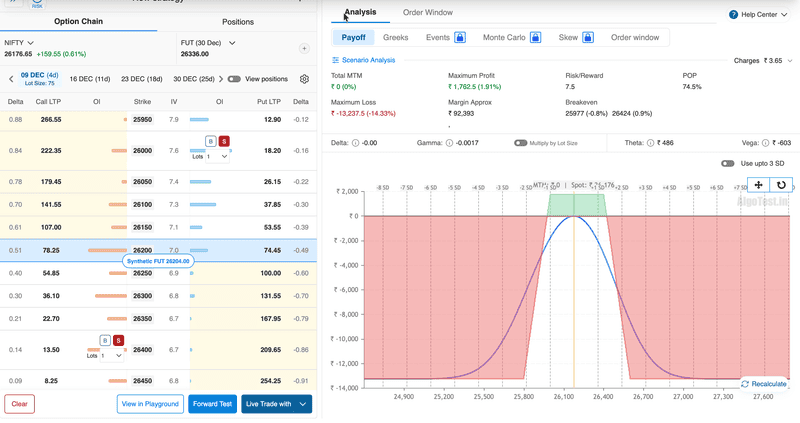
Be sure to watch the **video demonstration** above for a detailed walkthrough of setting up this strategy in real-time on the AlgoTest platform.
### 1\. Start with a Short Strangle
To begin, select the **30 Delta strangle**. Avoiding the 50 strikes on monthly options is crucial, as they tend to be illiquid, unlike weekly options. For this strategy, select the **31 Delta put** and the **30 Delta call**. Once the strangle is set, check if the combined delta of both legs is close to zero. This ensures the trade is delta-neutral.
For a more visual explanation of how to set the short strangle, refer to the **video demo** where we build the 30 Delta strangle step-by-step using the AlgoTest Strategy Builder.
### 2\. Finding the Wings
AlgoTest’s Strategy Builder offers a powerful feature that automatically finds wings based on your acceptable maximum loss. By clicking the “Limit” button, the platform pre-populates a value for the maximum acceptable loss on expiry, typically with a **2:1 risk-reward ratio**. This streamlines the process of setting up a risk-defined strategy like the Iron Condor.
In the **video**, you’ll see how the tool helps find the wings at **27,550** and **24,250**, setting a max loss of **₹23,000** and a max profit of **₹8,000**. Watch the **video tutorial** for a real-time view of how this feature works and how to adjust the risk and reward for your strategy.
### 3\. Connecting Your Broker and Executing the Trade
AlgoTest integrates with **30+ brokers**, making it easy to execute trades directly from the platform. For this example, we’re using **IFL** as the connected broker. Once logged in, name the strategy and confirm the basket of trades. The Strategy Builder will show all four legs with their **bid-ask spreads**, allowing you to adjust your order prices.
For further clarity, watch the **video** to see how to connect your broker, adjust order prices, and place the trades seamlessly using the basket order functionality.
### 4\. Placing Orders with a Single Click
AlgoTest’s **basket order** functionality allows you to place multiple legs of a strategy simultaneously with a single click. In this case, placing all four orders at once with **limit orders** ensures better control over trade execution. If the market price changes while the order is open, you can modify your trades directly in the platform, ensuring flexibility during execution.
In the **video demonstration**, you can observe how all four orders are placed at once, how orders can be modified as market prices fluctuate, and how efficient the process becomes with just a single click. Be sure to watch for a real-time demonstration.
### 5\. Efficient Order Management
A unique feature of AlgoTest is that **buy orders are placed before sell orders**. This ensures that the brokerage’s risk management system (RMS) doesn’t flag the order for insufficient margin, preventing unnecessary delays or rejected trades.
Watch the **video** to see how this feature works in real-time, ensuring smooth execution without margin-related issues.
Important Disclaimer
This strategy is **for demonstration purposes only** and is not intended as financial advice or a recommendation. The goal of this demonstration is to showcase the features of AlgoTest’s futures and options **backtesting** platform and live/paper deployment services. Always conduct thorough backtesting, research, and due diligence before investing or trading in the stock market.
**Options are leveraged financial instruments** and can lead to significant financial loss if traded without the necessary knowledge or experience. AlgoTest is not responsible for any profits or losses resulting from the use of its platform.
Past performance is **not a guarantee** of future results. For more information, visit [algotest.in](https://algotest.in).
## Conclusion
Using [AlgoTest’s Strategy Builder](https://algotest.in/blog/opstra-strategy-builder-vs-algotest/), you can easily create and execute complex options strategies like the **monthly Iron Condor** with minimal effort. The ability to place multiple orders at once, find wings automatically, and manage risk effectively makes it an essential tool for traders.
By streamlining the process, AlgoTest ensures that even sophisticated strategies can be executed efficiently, saving traders time and improving overall trade accuracy.
For a complete walkthrough and visual guidance, don’t forget to watch the **full video** demonstration embedded at the top of this page. It will give you a clear understanding of how to implement these steps effectively.
---
This blog is powered by Superblog. Visit https://superblog.ai to know more.
---
## How to Trade in GIFT Nifty: A Beginner’s Guide
Author: AlgoTest
Author URL: https://algotest.in/blog/author/algotest/
Published: 2024-10-09
Category: General
Category URL: https://algotest.in/blog/category/general/
URL: https://algotest.in/blog/guide-on-how-to-trade-gift-nifty/
## **Introduction**
Trading in financial markets can often seem intimidating, especially for beginners. However, GIFT Nifty offers an accessible entry point into the stock trading world. Standing for Gujarat International Finance Tec-City Nifty, this trading platform is part of India’s initiative to provide a global trading hub. GIFT Nifty allows investors to engage with the market even if they are not based in India. With unique trading hours and a wide range of opportunities, GIFT Nifty is an excellent start for aspiring traders. Here, you’ll learn crucial aspects of how GIFT Nifty operates and how to successfully begin your trading journey.
[**Try Free Backtesting Now**](https://algotest.in/feature/backtest?utm_source=blog&utm_medium=internal&utm_campaign=seo&utm_content=feature&utm_term=backtest)
## **Understanding GIFT Nifty**
Trading in GIFT Nifty can be a rewarding venture for beginners interested in exploring India’s burgeoning financial landscape. Before you dive into the trading process, it’s essential to have a clear understanding of what GIFT Nifty is and why it’s significant in the context of the stock market.
### **What is GIFT Nifty?**
GIFT Nifty is an acronym for the derivatives trading platform offered by GIFT City (Gujarat International Finance Tec-City), located in Gujarat, India. Modelled as an international financial service centre, GIFT City provides a specially curated platform for trading in Nifty Index futures contracts. These contracts allow traders to speculate on the Nifty 50 Index, a benchmark Indian stock market index comprising 50 of the largest Indian companies listed on the National Stock Exchange (NSE).
Investors can use it to manage their portfolio risk associated with Indian equities by taking positions in Nifty futures contracts. This trading platform provides an opportunity to engage with the Indian market without dealing directly with the domestic NSE, offering an international approach to investing in India’s economic growth.
### **Importance in the Stock Market**
GIFT Nifty plays a crucial role in the Indian and international stock market ecosystem by bridging the gap between global investors and Indian equities. Here’s why it is important:
– **Accessibility:** It provides easy access to Indian markets for international investors, enabling them to trade in Nifty futures without having a presence in India.
– **Hedging Opportunities:** This platform allows traders and investors to hedge their investments in Indian stocks against market volatility. It serves as a strategic tool for risk management.
– **Extended Trading Hours:** Unlike the NSE, GIFT Nifty offers extended trading hours, facilitating better market responsiveness to global financial developments. This flexibility attracts traders who wish to react to international market cues throughout the day.
– **Enhancement of Liquidity:** With more participants trading on the derivatives platform, GIFT Nifty enhances liquidity, ensuring tighter spreads and efficient price discovery for Nifty futures.
### **Key Features of GIFT Nifty**
GIFT Nifty trading consists of several key features that make it an attractive option for traders at any level, especially beginners:
– **International Standards:** Located in an international financial services centre, GIFT Nifty adheres to global trading standards, offering transparency and compliance with international regulations.
– **Product Range:** The platform provides a variety of derivative products, including futures and options on the Nifty Index, allowing for diversified trading strategies.
– **Innovation and Technology:** GIFT City is equipped with cutting-edge technology and infrastructure, ensuring seamless and efficient trading operations.
– **Competitive Costs:** As an offshore centre, it often provides benefits from favourable tax treatments and competitive trading costs, making it cost-effective for many traders.
With a foundational understanding of GIFT Nifty established, it’s time to learn how to prepare for trading in this exciting market.
[**Try Free Backtesting Now**](https://algotest.in/feature/backtest?utm_source=blog&utm_medium=internal&utm_campaign=seo&utm_content=feature&utm_term=backtest)
### **How can I trade GIFT Nifty?**
You need to open a trading account with a broker member of the NSE IX to trade GIFT Nifty, but there’s a significant caveat: **Indian residents are not allowed to trade GIFT Nifty directly.**
**Only the following entities are eligible to trade GIFT Nifty:**
- **Non-Resident Indians (NRIs)**
- **Foreign Portfolio Investors (FPIs)**
- **Eligible Foreign Investors (EFIs)**
This restriction is due to foreign exchange regulations imposed by the Reserve Bank of India (RBI).
So, while the process of opening a trading account and funding it is similar to trading other instruments, Indian residents cannot participate in GIFT Nifty trading directly.
### **What are the margin requirements for GIFT Nifty?**
- The margin requirements for GIFT [Nifty](https://algotest.in/blog/bank-nifty-the-ultimate-guide/) depend on factors like your portfolio’s risk and the current market conditions. You’ll need to pay an initial margin, which includes SPAN margins, premium margin, and other additional margins as determined by the Clearing Corporation.
### **What are the settlement details for GIFT Nifty?**
- Settlements for GIFT Nifty happen on a T+1 basis, which means that trades executed in the evening session will be settled the next day. For example, trades done on Monday evening will be settled on Tuesday afternoon.
[**Try Free Backtesting Now**](https://algotest.in/feature/backtest?utm_source=blog&utm_medium=internal&utm_campaign=seo&utm_content=feature&utm_term=backtest)
## **Preparing to Trade in GIFT Nifty**
Before you can start trading in GIFT Nifty, there are several preparatory steps you will need to complete. These steps include setting up a trading account, selecting a broker, and understanding trading fees and commissions. This section will guide you through the preparation process.
### **Setting Up a Trading Account**
To trade GIFT Nifty, the first thing you’ll need is a trading account. Here’s how you can set it up:
1\. **Research Financial Institutions:** Start by researching financial institutions that offer access to GIFT Nifty trading. Look for those with a good reputation and a history of providing reliable services.
2\. **Documentation:** Gather the necessary documents, which typically include identity proof (passport, driver’s license), address proof (utility bills, rental agreement), and financial details (bank statements, tax documents).
3\. **Application Process:** Fill out the trading account application with your selected financial institution. This usually involves completing forms either online or at a branch.
4\. **Verification:** Once you submit your application, the institution will conduct a verification process to confirm your details. This might involve a phone call or an in-person meeting.
5\. **Account Activation:** Upon successful verification, your trading account will be activated, and you’ll gain access to the trading platform.
### **Selecting the Right Broker**
Choosing the right [broker](https://algotest.in/blog/broker-level-lock-and-trail-sl) is a critical step in your trading journey. The broker acts as an intermediary, providing the platform and tools necessary for trading. Here are key factors to consider:
– **Regulation and Reputation:** Ensure a reputable financial authority regulates the broker and has positive reviews from other traders.
– **Trading Platform:** Look for a broker that offers a user-friendly trading platform with advanced features such as real-time data feeds, charting tools, and technical analysis capabilities.
– **Customer Support:** Opt for brokers that provide excellent customer service, with support available during your trading hours.
– **Additional Resources:** Some brokers offer educational resources, research tools, and trading advice, which are highly beneficial for beginners.
### **Understanding Trading Fees and Commissions**
When trading GIFT Nifty, it is essential to understand the various fees and commissions associated with trading activities, as these can impact your profitability. Here’s a breakdown:
– **Brokerage Fees:** This is the fee charged by the broker for executing trades on your behalf. It can be a flat fee per trade or a percentage of the trade value.
– **Exchange Fees:** These fees are levied by the trading exchange (in this case, GIFT IFSC) for facilitating trades on their platform.
– **Regulatory Fees:** Fees imposed by regulatory bodies, ensuring compliance with trading laws and practices.
– **Other Costs:** Be aware of other potential costs such as deposit and withdrawal fees, currency conversion charges, and account maintenance fees.
Understanding these fees helps you plan your trades better, ensuring you can maximize your returns by keeping trading costs low. Comparing the fee structures of different brokers can also assist you in selecting the best option based on your trading strategy and volume.
By setting up your trading account, choosing the right broker, and understanding the trading costs, you will be well-prepared to start trading in GIFT Nifty. This groundwork is essential for ensuring a smooth and prosperous trading experience.
[**Try Free Backtesting Now**](https://algotest.in/feature/backtest?utm_source=blog&utm_medium=internal&utm_campaign=seo&utm_content=feature&utm_term=backtest)
## **Learning Market Analysis**
Before you venture into trading GIFT Nifty, it’s crucial to understand market analysis. Market analysis helps traders make informed decisions, predict movements, and maximize profit opportunities. There are two principal methodologies: Fundamental Analysis and Technical Analysis, and a strong awareness of risk management strategies is equally vital.
### **Fundamental Analysis**
Fundamental analysis involves evaluating the intrinsic value of an asset by examining related economic, financial, and other qualitative and quantitative factors. This method seeks to determine whether an asset is undervalued or overvalued by analyzing the underlying factors that influence its price.
– **Economic Indicators**: Pay attention to economic news reports, such as GDP growth rates, unemployment data, and inflation rates. These indicators can significantly impact market trends and GIFT Nifty’s performance.
– **Corporate Earnings**: Since GIFT Nifty is a derivative of the Nifty 50, analyzing the earnings reports and financial health of these companies can provide insights into market movements.
– **Government Policies**: Fiscal and monetary policies play a crucial role. Changes in interest rates, taxes, or government spending can affect investor behaviour and market conditions.
By understanding these elements, traders can make educated guesses about future market behaviour rather than relying solely on historical data.
### **Technical Analysis**
Technical analysis involves studying past market data, primarily price and volume, to predict future price movements. This analysis is crucial for traders seeking to identify trading opportunities by analysing statistical trends gathered from trading activities.
– **Price Charts**: Familiarise yourself with different chart types such as candlestick, bar, and line charts. These charts help visualise price movements over time.
– **Technical Indicators**: Utilise indicators such as moving averages, RSI (Relative Strength Index), and MACD (Moving Average Convergence Divergence) to seize market trends and potential entry and exit points.
– **Support and Resistance Levels**: Identify key support and resistance levels in the price chart. These levels act as psychological barriers and indicators of potential trend reversals or continuations.
Successful technical analysis involves continuous learning and practice. It’s about recognizing patterns and trends that experience has shown to repeat themselves over time.
### **Risk Management Strategies**
Risk management is an essential part of trading that involves identifying, analysing, and mitigating the risks associated with trading.
– **Diversification**: Avoid putting all your eggs in one basket. Spread investments across a variety of markets and sectors to minimise risk exposure.
– **Setting Stop-Loss Orders**: Implement stop-loss orders to limit potential losses. This order will automatically sell your position when it reaches a certain price point, thus protecting your capital from severe losses.
– **Position Sizing**: Determine the number of shares or contracts to trade based on account size and risk tolerance. Avoid investing a large portion of your capital in a single trade.
A solid risk management plan enables traders to survive in the market long enough to understand it and succeed.
[**Try Free Backtesting Now**](https://algotest.in/feature/backtest?utm_source=blog&utm_medium=internal&utm_campaign=seo&utm_content=feature&utm_term=backtest)
## **Executing Your First Trade**
Once you have a good grasp of market analysis and risk management, it’s time to execute your first trade in GIFT Nifty. This process involves placing buy and sell orders, monitoring market movements, and evaluating trade performance.
### **Placing Buy and Sell Orders**
Entering the market begins with placing the right buy and sell orders.
– **Types of Orders**: Learn the different types of orders like market orders, limit orders, and stop orders. A market order buys or sells at the best available current price, while a limit order buys or sells at a specified price. A stop order becomes a market order when the price hits a predetermined level.
– **Timing**: Take note of GIFT Nifty trading timings, which considerably affect market liquidity and volatility. These spans typically align with India’s stock market hours.
– **Execution**: Use your brokerage platform to execute the orders you have determined based on your analysis and strategy. Ensure that all information is correctly entered to avoid execution errors.
Being exact in your orders minimises the chances of costly mistakes and aligns your trades with your strategy.
### **Monitoring Market Movements**
Once you have placed your orders, the next vital step is to monitor the market movements continuously.
– **Real-Time Data**: Utilise real-time data to track the performance of your trades. Ensure you have access to a reliable trading platform that provides live updates on market conditions.
– **Market News and Analysis**: Stay updated on market news and any factors that might affect GIFT Nifty prices. News regarding global economies, political changes, or industry shifts can potentially impact your trades.
– **Technical Analysis**: Continue to analyse technical indicators to confirm your trading decisions and make adjustments, if necessary.
Monitoring the market not only helps in assessing your current trades but also provides insights for future trading strategies.
### **Evaluating Trade Performance**
After executing and monitoring your trades, it’s time to evaluate their performance to refine your trading strategies.
– **Reviewing Results**: Look at the outcome of each trade to see whether your strategy produced the desired results. Consider both your successful trades and those that didn’t perform as expected.
– **Analysing Mistakes**: Identify any mistakes made during the process. Analysing incorrect assumptions or poor timing can provide valuable lessons for future trades.
– **Adjusting Strategies**: Based on your evaluations, modify your strategies to improve future performance. This might involve tweaking risk parameters, adopting new techniques, or altering your analytical approach.
Regularly evaluating your trade performance provides a feedback loop that enhances your trading skills and decision-making ability over time.
By mastering these essentials in market analysis, trading execution, and performance evaluation, you’ll be well on your way to trading GIFT Nifty with confidence and competence. Remember, continuous learning and adaptation are key components of successful trading.
[**Try Free Backtesting Now**](https://algotest.in/feature/backtest?utm_source=blog&utm_medium=internal&utm_campaign=seo&utm_content=feature&utm_term=backtest)
## **Conclusion**
Trading in GIFT Nifty can be a rewarding venture for those who take the time to understand the market and develop a solid trading strategy. As a beginner, it’s crucial to start with small investments and gradually increase your exposure as you become more confident in your abilities.
Always keep an eye on market trends and news that can impact your trades. Remember, consistent learning and practice are key to becoming a successful trader.
P.S. – [AlgoTest](https://algotest.in/?utm_source=blog&utm_medium=internal&utm_campaign=seo&utm_content=main-page&utm_term=algotest) (an intuitive algo-trading platform) allows you to [backtest](https://algotest.in/feature/backtest?utm_source=blog&utm_medium=internal&utm_campaign=seo&utm_content=feature&utm_term=backtest), [forward test](https://algotest.in/feature/forward-test?utm_source=blog&utm_medium=internal&utm_campaign=seo&utm_content=feature&utm_term=forward-test), and automate your strategies. A trader receives 25 [free backtests](https://algotest.in/feature/backtest) every week. One can set up their broker, successfully run [forward testing](https://algotest.in/feature/forward-test?utm_source=blog&utm_medium=internal&utm_campaign=seo&utm_content=feature&utm_term=forward-test), and trade [live](https://algotest.in/feature/live?utm_source=blog&utm_medium=internal&utm_campaign=seo&utm_content=feature&utm_term=live) trade with 30+ brokers.
## **FAQ**
#### **How do you trade in GIFT Nifty in India?**
To trade in GIFT Nifty in India, you must open a trading account with a broker that offers access to the GIFT City exchange. Once your account is approved, you can start placing orders for GIFT Nifty. You can trade GIFT Nifty using a variety of order types, including market orders, limit orders, and stop orders.
#### **What time is the GIFT Nifty open today?**
The GIFT Nifty is open 24 hours a day, 5 days a week.
#### **What are the fees for trading GIFT Nifty?**
The fees for trading GIFT Nifty will vary depending on your broker. However, you can expect to pay a brokerage fee, a transaction fee, and a Securities Transaction Tax (STT).
#### **What are the tax implications of trading GIFT Nifty?**
The tax implications of trading GIFT Nifty will depend on your overall income and the nature of your trades. However, you can expect to pay short-term capital gains tax on any profits from trades held for less than one year.
#### **How can I learn more about trading GIFT Nifty?**
There are a few resources available to help you learn more about trading GIFT Nifty:
- **Media:** Media or news can provide information about trading GIFT Nifty.
- **Online Resources:** There are many online resources available, including websites, books, and courses.
- **Trading Courses:** You can also take a trading course to learn about GIFT Nifty.
---
This blog is powered by Superblog. Visit https://superblog.ai to know more.
---
## Understanding GIFT Nifty: What You Need to Know Today
Author: AlgoTest
Author URL: https://algotest.in/blog/author/algotest/
Published: 2024-10-09
URL: https://algotest.in/blog/gift-nifty-explained/
## **Introduction**
In the fast-paced world of finance, staying informed about market indices is crucial for investors and traders alike. One such index that has been gaining attention is GIFT Nifty. But what exactly is GIFT Nifty, and why is it significant today? This blog aims to unravel the details behind this financial benchmark. Whether you’re a seasoned investor or exploring the stock market world for the first time, understanding GIFT Nifty can provide valuable insights into current and future market trends.
[**Try Free Backtesting Now**](https://algotest.in/feature/backtest?utm_source=blog&utm_medium=internal&utm_campaign=seo&utm_content=feature&utm_term=backtest)
## **What is GIFT Nifty?**

Image courtesy [IndiaToday](https://www.indiatoday.in/business/story/sgx-nifty-becomes-gift-nifty-key-changes-details-contracts-derivatives-2401131-2023-07-03)
### **Definition and Origins**
GIFT Nifty is a specially designed derivatives product derived from the Gujarat International Finance Tec-City (GIFT City) in India. GIFT City is a business district that was developed as a global financial and IT hub. The inception of GIFT Nifty is part of efforts to position India as a significant player in the global financial markets. As a futures index, GIFT Nifty is projected to reflect market sentiments and trends before the opening of the Indian stock exchanges.
GIFT Nifty functions similarly to other international indices, allowing traders to anticipate the direction of the Indian financial markets based on international trends and overnight developments. It represents a virtual linkage between international markets and the Indian markets, offering traders a glimpse of market movements during the global trading hours before Indian markets officially open.
### **Importance in Indian Financial Markets**
GIFT Nifty plays a significant role in the Indian financial markets for several reasons. Primarily, it offers an additional platform for investors and traders aiming to tap into India’s market potential without having to wait for the traditional exchanges to open. This creates a seamless trading environment that operates round the clock, aligning closely with global trading hours.
The index has opened doors to new opportunities for both domestic and international investors. GIFT Nifty allows Indian investors to engage with global markets, gaining insights and making strategic decisions based on global financial trends without leaving their country’s fiscal jurisdiction. Simultaneously, it provides international investors with a foothold into the emerging Indian markets, with the advantages of currency and economic stability provided by a regulated Indian financial district.
Moreover, GIFT Nifty enhances liquidity and provides meaningful insights into the expected performance of Indian markets. It serves as a barometer for gauging investor sentiment and anticipated market movements. This predictive tool is particularly useful for investors who wish to hedge against potential market volatility, making it an indispensable component of modern financial strategies.
### **Benefits of Gift Nifty**
- **Longer Trading Hours:** You can trade almost all day, even when the regular Indian stock market is closed.
- **Better Prices:** Gift Nifty has a lot of buyers and sellers, so you can usually get better prices for your trades.
- **Safe and Regulated:** Gift Nifty is a safe and regulated market, so you can trust that your trades will be fair and honest.
### **Different Gift Nifty Contracts**
- **Gift Nifty 50:** This is the most popular Gift Nifty contract. It tracks the Nifty 50, which is the biggest and most important index in India.
- **Gift Nifty Bank:** This contract tracks the performance of the 12 biggest banks in India.
- **Gift Nifty Financial Services:** This contract tracks the performance of the 25 biggest financial services companies in India.
- **Gift Nifty IT:** This contract tracks the performance of the 25 biggest IT companies in India.
[**Try Free Backtesting Now**](https://algotest.in/feature/backtest?utm_source=blog&utm_medium=internal&utm_campaign=seo&utm_content=feature&utm_term=backtest)
## **GIFT Nifty vs. Nifty 50**
### **Key Differences**
While both GIFT Nifty and Nifty 50 are crucial components of the Indian financial lexicon, they serve different purposes and operate under distinctive frameworks. The Nifty 50 is one of the two main stock indexes used to track the performance of actively traded stocks on the National Stock Exchange (NSE) of India. It includes 50 diversified stocks representing 14 sectors of the Indian economy, serving as a benchmark for the Indian stock market.
In contrast, GIFT Nifty is a derivative index from GIFT City, designed to mirror the performance of Indian markets during international trading hours. Unlike Nifty 50, which forms part of the equity market, GIFT Nifty primarily operates as a futures index, providing a speculative tool for projecting future market trends based on overnight international developments.
Another key difference is the geographical location and regulatory framework. Nifty 50 is rooted deeply within India’s NSE, operating entirely under Indian financial laws and regulations. However, GIFT Nifty, seated within GIFT City, enjoys unique regulatory concessions and offerings because of GIFT City’s purpose as an international financial services centre. These concessions provide a more flexibly regulated environment compared to the stricter frameworks governing the NSE.
### **Trading Environments**
The trading environments of GIFT Nifty and Nifty 50 are distinct in terms of operational hours and the nature of the trading platforms. Nifty 50 is traded during the regular trading hours of the NSE, operating from morning until the afternoon, aligning with the typical office hours of India. The trading environment is predictable in terms of timing and structure, focusing primarily on the Indian markets.
On the other hand, GIFT Nifty operates in a different trading environment. It provides a platform for speculation during non-traditional hours, aligning with the international trading clock. This means it continues to reflect market trends during times when the Indian stock exchanges are closed, providing investors with an expanded window for trading activities. The extended hours offer a strategic advantage for international traders and those wishing to hedge during global financial events or unexpected developments in international markets.
The flexibility of the GIFT Nifty trading environment also translates to its technological infrastructure. Based in GIFT City, the index benefits from state-of-the-art facilities and technology designed to operate on a global scale, reinforcing its accessibility and reliability across international markets.
### **Performance Comparisons**
Performance comparisons between GIFT Nifty and Nifty 50 offer insights into their respective market roles and behaviours. While both indices are influenced by the same economic conditions and market sentiments in India, their performance varies based on international influences and conjectures.
The Nifty 50, being a snapshot of India’s economic heartbeat, reflects the movement of stocks listed on the NSE. Its performance is a direct indication of the prevailing conditions in the Indian markets, driven by domestic economic policies, corporate earnings, and market sentiments. Investors look towards the Nifty 50 for a pure reflection of the Indian economy without the interference of international market forces.
GIFT Nifty, however, is influenced by a broader range of factors, including international market activities, global financial trends, and changes in international investor sentiment. As a futures index, its performance is more speculative, providing additional forecasts that are not solely limited to domestic occurrences. Theoretically, GIFT Nifty indicates how the Nifty 50 might open after considering international market developments.
The dual analysis of these indices allows investors to craft robust strategies. They can juxtapose the performance of Nifty 50 and GIFT Nifty to gauge both domestic and international impacts on market trends. This comparative analysis is particularly beneficial for portfolio diversification, hedging strategies, and timing market entries or exits.
In conclusion, GIFT Nifty stands as a vital innovation in Indian financial architecture, complementing the traditional Nifty 50 while broadening the horizons of trading possibilities. With its international alignment and expanded trading hours, it beckons a new era of seamless financial interaction on a global scale.
[**Try Free Backtesting Now**](https://algotest.in/feature/backtest?utm_source=blog&utm_medium=internal&utm_campaign=seo&utm_content=feature&utm_term=backtest)
## **How GIFT Nifty Impacts Investors**

Image courtesy: [Unsplash](https://unsplash.com/photos/black-ipad-beside-silver-round-analog-watch-xVqv_bQGqq8)
GIFT Nifty, a significant benchmark in the financial market, has garnered attention due to its potential influence on investors’ decisions. For investors eager to comprehend its intricacies, it’s vital to explore various facets of GIFT Nifty, including the market opportunities it presents, the associated risks, and the strategic considerations that traders should acknowledge.
### **Market Opportunities**
GIFT Nifty opens up a world of market opportunities that cater to both new and seasoned investors. Understanding these opportunities can aid investors in capitalizing on potential gains.
– **Diverse Investment Options**: GIFT Nifty includes a range of sectors, offering investors the chance to diversify their portfolios. This diversification helps in reducing risk across different market segments.
– **Global Appeal**: With its increasing recognition, GIFT Nifty attracts foreign investments, presenting opportunities for global reach. It allows investors to leverage international trends that might not affect other indices.
– **Real-Time Data Advantage**: The index provides real-time data and analytics, which can be pivotal for making informed investment decisions. Being informed promptly can be advantageous in executing timely trades.
– **Liquidity Benefits**: Due to its popularity and the volume of trades, GIFT Nifty offers high liquidity, which means investors can enter and exit positions more easily without significantly affecting the market price.
### **Risk Factors**
While GIFT Nifty offers promising opportunities, it is not devoid of risks. Investors should familiarize themselves with potential pitfalls to avert unwanted surprises.
– **Market Volatility**: Frequent fluctuations in market dynamics can affect GIFT Nifty, causing volatility. For investors, this can mean rapid changes in asset prices.
– **Economic Dependence**: The performance of GIFT Nifty is intricately tied to India’s economic conditions and global economic trends. Any adverse developments in these areas may impact the index negatively.
– **Regulatory Changes**: Regulatory shifts or policy amendments can pose challenges to investors. Staying abreast of such changes is crucial as they can influence investment outcomes in the short and long term.
– **Geopolitical Risks**: Like any global index, GIFT Nifty can be affected by geopolitical events that could lead to market uncertainties. Such events might cause abrupt market fluctuations and increased risk.
### **Strategic Considerations for Traders**
For traders, navigating GIFT Nifty requires deploying strategic approaches that can help minimize risks and maximize potential returns.
– **In-depth Research**: Successful trading begins with ample research. Traders should continually educate themselves about market trends and the factors influencing GIFT Nifty.
– **Risk Management**: It’s essential to have a solid risk management plan in place. Setting stop-loss orders and determining appropriate position sizes are critical steps in safeguarding investments.
– **Leverage Use**: Traders should exercise caution with leverage. While leverage can amplify gains, it can also increase losses. Judicious use of leverage is advised to sustain long-term trading success.
– **Long-term vs Short-term Strategies**: Depending on market conditions, traders might choose between short-term and long-term strategies. Aligning trading goals with market analyses can aid in adopting the most effective strategies.
– **Technological Tools**: Embracing technology to utilize trading platforms and automated tools can enhance efficiency. They provide real-time insights and facilitate quicker decision-making processes.
Lastly, GIFT Nifty stands as a noteworthy index with the potential to impact various investment portfolios. By understanding the opportunities, acknowledging the risks, and implementing strategic trading practices, investors and traders can better navigate this financial landscape. Remaining informed and adaptable are key traits for anyone looking to engage with GIFT Nifty today.
[**Try Free Backtesting Now**](https://algotest.in/feature/backtest?utm_source=blog&utm_medium=internal&utm_campaign=seo&utm_content=feature&utm_term=backtest)
## **Conclusion**
In summary, GIFT Nifty offers an innovative glimpse into the Indian financial marketplace. It plays a crucial role as a benchmark that reflects the economic momentum managed by GIFT City, which aims to be a global financial hub. Understanding its distinctive features compared to Nifty 50 can help investors make informed decisions. As the market evolves, staying updated with GIFT Nifty’s trends can be beneficial for discerning investors. This index signifies a step forward in India’s economic aspirations and financial innovation.
P.S. – [AlgoTest](https://algotest.in/?utm_source=blog&utm_medium=internal&utm_campaign=seo&utm_content=main-page&utm_term=algotest) (an intuitive algo-trading platform) allows you to [backtest](https://algotest.in/feature/backtest?utm_source=blog&utm_medium=internal&utm_campaign=seo&utm_content=feature&utm_term=backtest), [forward test](https://algotest.in/feature/forward-test?utm_source=blog&utm_medium=internal&utm_campaign=seo&utm_content=feature&utm_term=forward-test), and automate your strategies. A trader receives 25 [free backtests](https://algotest.in/feature/backtest) every week. One can set up their broker, successfully run [forward testing](https://algotest.in/feature/forward-test?utm_source=blog&utm_medium=internal&utm_campaign=seo&utm_content=feature&utm_term=forward-test), and trade [live](https://algotest.in/feature/live?utm_source=blog&utm_medium=internal&utm_campaign=seo&utm_content=feature&utm_term=live) trade with 30+ brokers.
## **FAQ**
**What is GIFT Nifty today?**
The GIFT Nifty is the global depository receipt (GDR) of the Nifty 50 index, which is the benchmark index of the National Stock Exchange of India (NSE). It is traded on the Gujarat International Finance Tec-City (GIFT City) exchange in India. The GIFT Nifty is a derivative product that tracks the performance of the Nifty 50 index.
As of today, October 1, 2024, the GIFT Nifty is trading at 26,013.00. You can track the real-time price of the GIFT Nifty on the NSE website or any financial news website.
**How to track GIFT Nifty?**
There are a few ways to track the GIFT Nifty:
- **NSE Website:** The NSE website provides real-time quotes for the GIFT Nifty, as well as historical data and charts.
- **Financial News Websites:** Many financial news websites, such as Bloomberg, Reuters, and Moneycontrol, also track the GIFT Nifty.
- **Trading Platforms:** If you have a trading account with a broker that offers access to the GIFT City exchange, you can track the GIFT Nifty on their trading platform.
**What is GIFT Nifty vs Nifty 50?**
The GIFT Nifty and the Nifty 50 are both indices that track the performance of the top 50 companies listed on the NSE. However, there are a few key differences between the two:
- **Trading Venue:** The Nifty 50 is traded on the NSE in India, while the GIFT Nifty is traded on the GIFT City exchange.
- **Derivative Product:** The GIFT Nifty is a derivative product, while the Nifty 50 is a physical index.
- **Trading Hours:** The GIFT Nifty is traded for 24 hours a day, 5 days a week, while the Nifty 50 is traded during Indian market hours.
- **Currency:** The GIFT Nifty is denominated in US dollars, while the Nifty 50 is denominated in Indian rupees.
**What are the benefits of trading GIFT Nifty?**
There are a few benefits to trading GIFT Nifty:
- **24-Hour Trading:** The GIFT Nifty is traded 24 hours a day, 5 days a week, which allows traders to take advantage of global market movements.
- **Dollar-Denominated:** The GIFT Nifty is denominated in US dollars, which can be beneficial for foreign investors.
- **Tax Benefits:** The GIFT City offers certain tax benefits to investors and businesses.
**How can I open a trading account for GIFT Nifty?**
To open a trading account for GIFT Nifty, you will need to contact a broker that offers access to the GIFT City exchange. You will need to provide some personal and financial information, as well as proof of identity and address. Once your account is approved, you will be able to start trading GIFT Nifty.
##
---
This blog is powered by Superblog. Visit https://superblog.ai to know more.
---
## Trading Orders Explained!
Author: AlgoTest
Author URL: https://algotest.in/blog/author/algotest/
Published: 2024-10-08
URL: https://algotest.in/blog/trading-orders-explained/
Whether you’re a pro or just getting started, knowing your order types is essential. Let’s dive into the three main types of trading orders:
1. Limit Orders
2. Market Orders
3. Stop Loss Orders
## **1\. Limit Orders: Set Your Price, Set Your Terms**
A Limit Order is like haggling at your favorite shop. You decide the price you’re willing to pay or accept, and you stick to it. If you’re buying, you say, “I’m not paying more than this!” If selling, it’s, “I won’t take a penny less!” Just remember, your deal won’t happen if the market doesn’t meet your price.
**Imagine:** You’re at a shop; you love a shirt priced at ₹500. You negotiate: “I’ll give you ₹200 and not a rupee more.” You leave, hoping the shopkeeper comes around. But here’s the risk: you might never get that shirt if he doesn’t agree. The same goes for your Limit Order—if the market doesn’t hit your price, your trade won’t execute.
## **2\. Market Orders: When Time’s Ticking and Price Doesn’t Matter**
Market Orders are for those “Oh no!” moments. You’re rushing to an interview, your shirt rips, and there’s no time to argue about price. You just buy the first one you see, no questions asked.
**In Trading:** Market Orders are all about getting the deal done, pronto! When you’re worried the stock might shoot up or crash any second, you use a Market Order. You’re time-sensitive, not price-sensitive. Whether buying in a bull run or selling in a sudden crash, a Market Order says, “I don’t care about the price, just get me in or out!”
## **3\. Stop Loss Orders: Your Safety Net in a Falling Market**
The Stop Loss Order is your best friend when things go south. Imagine you’re holding onto Adani Enterprises shares, and the market buzz says the stock will fall if a certain party loses the election. To avoid disaster, you set a Stop Loss Order, saying, “Sell if it drops below this point!”
## **Types of Stop Loss Orders:**
### **Stop Loss Limit Order:**
You set a trigger price, and once the market hits it, your order turns into a Limit Order. But beware, if the market moves too fast, your order might miss execution.
### **Stop Loss Market Order**
This is like a fire alarm—you pull it, and it gets the job done immediately, though it’s no longer allowed in some exchanges.
**Scenario:** Adani’s trading at ₹3000. You say, “If it falls to ₹2705, I’m out.” But here’s the twist: when Adani crashes fast, it could skip right over your limit price, and suddenly, your order is stuck, unsold. The Stop Loss might trigger, but the market’s moved on, leaving your trade hanging.
## **The Risks: No Free Lunch in Trading**
Stop Loss Limit Orders sound perfect—“I’ll cap my losses!”—but here’s the catch. Imagine the market’s moving fast, and your stock gaps down to ₹2600. Your Stop Loss triggers at ₹2705, but there’s no buyer till ₹2600. Now, your order just sits there because it’s a Limit Order, and execution isn’t guaranteed.
In trading, nothing’s foolproof. Even the best strategies have their downsides. You’ve got to give something to get something. Understanding these risks makes you a better trader.
## **Conclusion: Master Your Orders, Master Your Trades**
Knowing your order types helps you control how and when your trades happen. Limit Orders let you dictate the price; Market Orders prioritize speed over price, and Stop Loss Orders safeguard you from major losses. Each has its place and purpose. As you get comfortable with these, your confidence in trading grows, and so does your success.
Got questions or comments? Drop them below, and let’s keep learning together. Happy trading!
##
---
This blog is powered by Superblog. Visit https://superblog.ai to know more.
---
## How To Create a Delta Neutral Strategy Using AlgoTest
Author: AlgoTest
Author URL: https://algotest.in/blog/author/algotest/
Published: 2024-10-08
URL: https://algotest.in/blog/delta-neutral-strategies-with-algotest/
## **I. Introduction**
A Delta neutral strategy involves offsetting the directional risk of an options position by simultaneously buying or selling the underlying asset. By balancing positive and negative Delta positions, traders aim to profit from changes in other factors such as volatility or time decay. This allows them to make a profit regardless of the market’s direction.
AlgoTest is a valuable tool for creating Delta-neutral strategies because it can quickly analyze various scenarios and optimize the balance of Delta positions. This helps traders make informed decisions and efficiently adapt their strategies to changing market conditions.
In this blog post, we will delve into the concept of Delta-neutral strategies, explore the benefits of using AlgoTest for creating these strategies, and provide insights on how traders can effectively manage their Delta positions to maximize profits. Additionally, we will discuss real-life examples and practical tips for implementing Delta-neutral strategies in different market environments.
[**Try Free Backtesting Now**](https://algotest.in/feature/backtest?utm_source=blog&utm_medium=internal&utm_campaign=seo&utm_content=feature&utm_term=backtest)
## **II. Understanding Delta Neutral Strategy**
### **\- Definition of Delta and how it affects options pricing**
The Delta neutral strategy is a risk management technique traders use to hedge their positions against small price movements in the underlying asset. By maintaining a Delta-neutral position, traders can minimise their exposure to directional risk and focus on profiting from volatility and time decay. This strategy involves adjusting the ratio of options to keep the combined Delta of the position close to zero.
### **\- Explanation of Delta neutral strategy and its benefits**
The Delta neutral strategy allows traders to profit from changes in volatility and time decay while minimising directional risk. By continuously adjusting the ratio of options held, traders can maintain a position that is insulated from small price movements in the underlying asset. This approach provides a more stable and consistent way to generate returns in fluctuating market environments.
### **\- Importance of managing risk in options trading**
Managing risk in options trading is crucial to protect capital and ensure long-term success. By implementing strategies like Delta neutral, traders can minimise potential losses and maintain a balanced portfolio that is resilient to market fluctuations. This disciplined approach helps traders navigate uncertainty and achieve their financial goals with greater confidence.
[**Try Free Backtesting Now**](https://algotest.in/feature/backtest?utm_source=blog&utm_medium=internal&utm_campaign=seo&utm_content=feature&utm_term=backtest)
## **III. Using AlgoTest for Creating Delta Neutral**
### **\- Overview of the AlgoTest platform and its features**
The AlgoTest platform is a powerful tool that allows traders to create and test Delta-neutral strategies with ease. With features like backtesting and real-time market data integration, users can optimise their trading approach and make informed decisions based on accurate simulations. This technology-driven solution enhances efficiency and effectiveness in managing risk, ultimately leading to more consistent returns in options trading.
### **\- Step-by-step guide on how to use AlgoTest to create Delta-neutral**
Before diving into the AlgoTest process, let’s briefly recap a delta-neutral strategy. In essence, it’s a trading strategy designed to be unaffected by minor price movements in the underlying asset.
**Using AlgoTest to Create a Delta-Neutral Strategy on Bank Nifty**
#### **Step 1: Log into Your AlgoTest Account**
- Go to [AlgoTest.in](https://algotest.in/?utm_source=documentation&utm_medium=internal&utm_campaign=seo&utm_content=main-page&utm_term=algotest) and click on “New Strategy ” under the 920 Straddle
#### **Step 2: Set Up the Entry and Exit Time**
- **Time to Execute**: The trade should be executed at **9:22 AM**.
- **Exit Time**: The trade will automatically exit at **3:11 PM** if the targets or stop-loss are not hit before then.
- This is done to avoid any last-minute volatility near the market close.
#### **Step 3: Set Premium Selection to Strike Type**
- **Strike Type**: Sell the call and put options of Out Of The Money 3.
- Select options that **include OTM 3 (Out of the money)** from the current bank nifty price for both call and put.
#### **Step 4: Set Overall Setting**
- **Overall Stop-Loss (SL)**: For reference, we are capping max loss at Rs 5000
- This means if the max loss reaches 5000, your legs will be exited.
- **Overall Re-entry on SL:** Overall Re-entry is triggered only in the case when the Overall strategy Stop Loss gets hit. You may use RE-ASAP once if your overall Sl got hit.
- **Overall Target**: For reference, we are capping max loss at Rs 10000
- This means if the Overall strategy reaches the overall target of 10000, your legs will be exited.
- **Overall Re-entry on Target:** Overall Re-entry is triggered only in the case when the strategy reaches the overall target. You may use RE-ASAP once if your overall Sl got hit.
This strategy uses a wider stop-loss and target range to maintain a **delta-neutral** position. By setting broader limits, we allow for market movements in one direction, giving it room to trend temporarily. If the market reverses, our delta exposure is managed within the broader stop-loss range, helping to maintain neutrality even during fluctuations. This approach ensures that temporary directional moves don’t significantly impact the strategy’s overall position.
### **Key Points to Remember:**
- **Premium Selection:** Choose premiums carefully, considering factors like volatility and time to expiry.
- **Risk Management:** Implement robust risk management techniques, including stop-loss orders and position sizing.
- **Continuous Monitoring:** Regularly review your strategy’s performance and make adjustments as market conditions change.
**Additional Tips:**
- Consider using hedging strategies to reduce risk.
- Experiment with different entry and exit points to optimise your strategy.
- Stay updated on market news and events that could impact your strategy.
By following these steps and incorporating best practices, you can effectively create and implement delta-neutral strategies using AlgoTest.
## **Benefits of using AlgoTest for options trading strategies**
AlgoTest is a powerful tool designed to help traders create, analyze, and optimize options trading strategies. Here are some of the key benefits it offers:
### **1\. Customization:**
- **Customization Options:** Traders can easily customise existing strategies or create their own from scratch, adjusting parameters like strike prices, expiration dates, and underlying asset selection.
### **2\. Backtesting and Optimization:**
- **Historical Data Analysis:** AlgoTest allows traders to backtest their strategies using historical market data, providing insights into potential profitability and risk.
- **Optimization:** Traders can optimise their strategies by adjusting parameters and analysing the impact on performance, helping to identify the most effective settings.
### **3\. Risk Management:**
- **Risk Analysis:** AlgoTest provides tools to assess the risk profile of various strategies, including maximum potential loss, probability of profit, and break-even points.
- **Stop-Loss and Take-Profit Orders:** Traders can set stop-loss and take-profit orders within the platform to manage risk and protect their capital.
### **4\. Real-Time Monitoring:**
- **Live Market Data:** AlgoTest offers real-time market data, allowing traders to monitor the performance of their strategies and make informed decisions.
### **5\. Educational Resources:**
- **Learning Center:** AlgoTest often provides educational resources, including tutorials, articles, and webinars, to help traders understand options trading concepts and improve their skills.
### **6\. Integration with Trading Platforms:**
- **API Integration:** AlgoTest integrates with popular trading brokers, allowing traders to execute their strategies seamlessly and directly from the platform.
By leveraging AlgoTest’s features, traders can enhance their options trading strategies, improve their decision-making, and potentially increase their profitability while managing risk effectively.
[**Try Free Backtesting Now**](https://algotest.in/feature/backtest?utm_source=blog&utm_medium=internal&utm_campaign=seo&utm_content=feature&utm_term=backtest)
## **IV. Tips for Successful Delta Neutral Trading**
**–** Importance of monitoring Delta and making adjustments as needed to maintain a neutral position. By staying informed on market trends and utilising risk management techniques, traders can maximise their success in delta-neutral trading. It is also crucial to regularly reassess and fine-tune strategies to adapt to changing market conditions.
\- Diversifying strategies to reduce risk and increase profit opportunities is another key aspect of successful delta-neutral trading. By incorporating various strategies, traders can better navigate market fluctuations and minimize potential losses.
[**Try Free Backtesting Now**](https://algotest.in/feature/backtest?utm_source=blog&utm_medium=internal&utm_campaign=seo&utm_content=feature&utm_term=backtest)
## **V. Conclusion**
AlgoTest is a valuable tool that can help traders test and refine their delta-neutral strategies, ultimately leading to more successful outcomes in the options market. AlgoTest empowers traders to effectively create and manage delta-neutral portfolios. By following the steps outlined in this guide, you can leverage the platform’s tools and functionalities to implement this powerful risk management strategy. Delta neutrality can significantly enhance portfolio stability and potentially improve investment outcomes.
Continuous learning and adaptation are crucial in options trading as the market is constantly evolving. By staying informed and flexible, traders can better navigate changing conditions and improve their chances of success in the long run. It is essential to always be open to new strategies and techniques to stay ahead of the curve in the dynamic options market.
P.S. – [AlgoTest](https://algotest.in/?utm_source=blog&utm_medium=internal&utm_campaign=seo&utm_content=main-page&utm_term=algotest) (an intuitive algo-trading platform) allows you to [backtest](https://algotest.in/feature/backtest?utm_source=blog&utm_medium=internal&utm_campaign=seo&utm_content=feature&utm_term=backtest), [forward test](https://algotest.in/feature/forward-test?utm_source=blog&utm_medium=internal&utm_campaign=seo&utm_content=feature&utm_term=forward-test), and automate your strategies. A trader receives 25 [free backtests](https://algotest.in/feature/backtest) every week. One can set up their broker, successfully run [forward testing](https://algotest.in/feature/forward-test?utm_source=blog&utm_medium=internal&utm_campaign=seo&utm_content=feature&utm_term=forward-test), and trade [live](https://algotest.in/feature/live?utm_source=blog&utm_medium=internal&utm_campaign=seo&utm_content=feature&utm_term=live) trade with 30+ brokers.
---
This blog is powered by Superblog. Visit https://superblog.ai to know more.
---
## How Algo Trading in Nifty Options Can Boost Your Trading Efficiency
Author: AlgoTest
Author URL: https://algotest.in/blog/author/algotest/
Published: 2024-10-08
Category: Product
Category URL: https://algotest.in/blog/category/product/
Tags: algo trading, software
Tag URLs: algo trading (https://algotest.in/blog/tag/algo-trading/), software (https://algotest.in/blog/tag/software/)
URL: https://algotest.in/blog/algo-trading-nifty-options-efficiency/

## **Introduction**
Algo trading, or [algorithmic trading](https://algotest.in/what-is-algo-trading?utm_source=blog&utm_medium=internal&utm_campaign=seo&utm_content=landing-page&utm_term=what-is-algo-trading), has revolutionised the financial markets by leveraging advanced technology and data analytics to automate trading decisions. In the context of Nifty options, a popular derivative instrument in India, [algo trading](https://algotest.in/what-is-algo-trading?utm_source=blog&utm_medium=internal&utm_campaign=seo&utm_content=landing-page&utm_term=what-is-algo-trading) can significantly enhance trading efficiency.
Trading efficiency refers to the ability to execute trades quickly, accurately, and profitably. It involves factors like speed, cost, and risk management. By automating the trading process, [algo trading](https://algotest.in/what-is-algo-trading?utm_source=blog&utm_medium=internal&utm_campaign=seo&utm_content=landing-page&utm_term=what-is-algo-trading) can help traders achieve higher levels of efficiency and potentially improve their overall returns.
This blog explores how algo trading can benefit traders in the Nifty options market by increasing speed and accuracy, enabling backtesting and optimisation, and reducing human errors. We’ll also discuss key considerations for implementing [algo trading](https://algotest.in/what-is-algo-trading?utm_source=blog&utm_medium=internal&utm_campaign=seo&utm_content=landing-page&utm_term=what-is-algo-trading) and provide tips for maximising its effectiveness.
[**Try Free Backtesting Now**](https://algotest.in/feature/backtest?utm_source=blog&utm_medium=internal&utm_campaign=seo&utm_content=feature&utm_term=backtest)
## **Benefits of Algo Trading in Nifty Options**
1. **Increased Speed and Accuracy:**
- **Faster Order Execution:** An algorithmic trading system can execute trades very quickly and can recognize market movements with much greater accuracy. This can be crucial in fast-paced markets like Nifty options, where even a slight delay can impact profitability.
- **Reduced Slippage:** Slippage occurs when the price of a security moves against you between the time you place an order and when it’s executed. [Algo trading](https://algotest.in/what-is-algo-trading?utm_source=blog&utm_medium=internal&utm_campaign=seo&utm_content=landing-page&utm_term=what-is-algo-trading) algorithms can minimise slippage by executing orders at the best available prices.
2. **Ability to Backtest Strategies and Optimise Performance:**
- **Historical Data Analysis:** Algo trading platforms allow traders to backtest their strategies using historical market data. This helps identify the strengths and weaknesses of different trading approaches and make informed decisions about their implementation.
- **Parameter Optimization:** By testing various parameters and settings within an [algo trading](https://algotest.in/what-is-algo-trading?utm_source=blog&utm_medium=internal&utm_campaign=seo&utm_content=landing-page&utm_term=what-is-algo-trading) strategy, traders can optimise their systems for maximum performance. This can involve adjusting factors like entry and exit points, stop-loss levels, and risk management rules.
3. **Reduction of Emotional Bias and Human Error:**
- **Objective Decision-Making:** Unlike human traders, algo trading systems are not influenced by emotions like fear, greed, or overconfidence. This helps to avoid impulsive decisions that can lead to losses.
- **Minimised Errors:** Algo trading algorithms can be programmed to follow precise rules and procedures, reducing the risk of human errors that can occur due to fatigue, distraction, or lack of focus.
[**Try Free Backtesting Now**](https://algotest.in/feature/backtest?utm_source=blog&utm_medium=internal&utm_campaign=seo&utm_content=feature&utm_term=backtest)
## **Factors to Consider When Implementing Algo Trading in Nifty Options**
1. **Technical Requirements and Infrastructure:**
- **Hardware:** A powerful computer system with sufficient processing power and storage capacity is essential for running [algo trading](https://algotest.in/what-is-algo-trading?utm_source=blog&utm_medium=internal&utm_campaign=seo&utm_content=landing-page&utm_term=what-is-algo-trading) software.
- **Software:** Traders need to choose a reliable algo [trading platform](https://algotest.in/blog/10-best-algo-trading-software-in-india-2025/) that is compatible with their brokerage firm and meets their specific needs.
- **Internet Connectivity:** A high-speed internet connection is crucial for ensuring that algo trading systems can access market data and execute trades in real time.
2. **Developing or Acquiring Appropriate Algorithms:**
- **Custom Algorithms:** Traders can develop their [algo trading](https://algotest.in/what-is-algo-trading?utm_source=blog&utm_medium=internal&utm_campaign=seo&utm_content=landing-page&utm_term=what-is-algo-trading) algorithms based on their trading strategies and preferences. This requires a strong understanding of programming and quantitative analysis.
- **Pre-Built Algorithms:** Many algo trading platforms offer pre-built algorithms that can be customised to suit different trading styles.
3. **Monitoring and Adjusting Algorithms:**
- **Performance Tracking:** Traders need to monitor the performance of their [algo trading](https://algotest.in/what-is-algo-trading?utm_source=blog&utm_medium=internal&utm_campaign=seo&utm_content=landing-page&utm_term=what-is-algo-trading) systems regularly to identify any issues or areas for improvement.
- **Algorithm Adjustments:** If an algorithm is not performing as expected, traders may need to make adjustments to its parameters or rules. This can involve fine-tuning the strategy or considering alternative approaches.
[**Try Free Backtesting Now**](https://algotest.in/feature/backtest?utm_source=blog&utm_medium=internal&utm_campaign=seo&utm_content=feature&utm_term=backtest)
## **Tips for Maximizing Efficiency with Algo Trading in Nifty Options**
1. **Regular Review and Update:**
- **Performance Analysis:** Continuously review the performance of your algo trading systems and make necessary adjustments based on the data.
- **Algorithm Updates:** Stay updated with the latest developments in algo trading technology and consider incorporating new techniques or strategies into your systems.
2. **Risk Management:**
- **Stop-Loss Orders:** Implement stop-loss orders to limit potential losses if a trade moves against you.
- **Position Sizing:** Carefully manage your position size to avoid excessive risk exposure.
3. **Stay Informed:**
- **Market News:** Keep up-to-date with market news and events that can impact the Nifty options market.
- **Economic Indicators:** Monitor economic indicators and trends that may influence market sentiment.
[**Try Free Backtesting Now**](https://algotest.in/feature/backtest?utm_source=blog&utm_medium=internal&utm_campaign=seo&utm_content=feature&utm_term=backtest)
## **Conclusion**
[Algo trading](https://algotest.in/what-is-algo-trading?utm_source=blog&utm_medium=internal&utm_campaign=seo&utm_content=landing-page&utm_term=what-is-algo-trading) offers significant advantages for traders seeking to enhance their efficiency and profitability in the Nifty options market. By automating trading processes, reducing human errors, and leveraging data-driven insights, algo trading can help traders make more informed decisions and achieve better results.
However, it’s important to approach algo trading with a realistic mindset and a willingness to learn and adapt. While it can be a powerful tool, it’s not a guaranteed path to success. Traders should be prepared to invest time and effort into understanding [algo trading](https://algotest.in/what-is-algo-trading?utm_source=blog&utm_medium=internal&utm_campaign=seo&utm_content=landing-page&utm_term=what-is-algo-trading) concepts, developing or acquiring appropriate algorithms, and continuously monitoring and refining their strategies.
By embracing algo trading and leveraging its potential, traders can gain a competitive edge in the dynamic and fast-paced world of Nifty options trading.
P.S. – [AlgoTest](https://algotest.in/?utm_source=blog&utm_medium=internal&utm_campaign=seo&utm_content=main-page&utm_term=algotest) (an intuitive algo-trading platform) allows you to [backtest](https://algotest.in/feature/backtest?utm_source=blog&utm_medium=internal&utm_campaign=seo&utm_content=feature&utm_term=backtest), [forward test](https://algotest.in/feature/forward-test?utm_source=blog&utm_medium=internal&utm_campaign=seo&utm_content=feature&utm_term=forward-test), and automate your strategies. A trader receives 25 [free backtesting credits](https://algotest.in/feature/backtest) every week to backtest 25 strategies for free. One can set up their broker, successfully run [forward testing](https://algotest.in/feature/forward-test?utm_source=blog&utm_medium=internal&utm_campaign=seo&utm_content=feature&utm_term=forward-test), and launch [live](https://algotest.in/feature/live?utm_source=blog&utm_medium=internal&utm_campaign=seo&utm_content=feature&utm_term=live) trade with 45+ brokers.
## **Frequently Asked Questions**
### Q: Is algo trading suitable for all traders?
**A:** Algo trading is not suitable for everyone. It requires a certain level of technical knowledge and a willingness to embrace automation. Traders who are comfortable with technology and have a disciplined approach to trading are more likely to benefit from algo trading.
### Q: How much does it cost to implement algo trading?
**A:** The cost of implementing algo trading can vary depending on factors such as the complexity of the algorithms, the hardware and software requirements, and the fees charged by your brokerage firm. In general, [algo trading](https://algotest.in/what-is-algo-trading?utm_source=blog&utm_medium=internal&utm_campaign=seo&utm_content=landing-page&utm_term=what-is-algo-trading) can be a significant investment, but the potential returns can justify the costs for many traders.
### Q: Can algo trading guarantee profits?
**A:** No, algo trading does not guarantee profits. While it can help to improve trading efficiency and reduce the impact of human errors, there is no foolproof strategy for making money in the market. Even the best algo trading systems can experience losses during periods of market volatility or when faced with unforeseen events.
### Q: What are the risks associated with algo trading?
**A:** The risks associated with algo trading include:
- Technical Failures: Hardware or software malfunctions can disrupt algo trading systems, leading to missed trading opportunities or losses.
- Market Volatility: Sudden and unexpected market movements can cause algo trading systems to malfunction or make suboptimal decisions.
- Cybersecurity Threats: Algo trading systems are vulnerable to cyberattacks, which can compromise their security and lead to financial losses.
### Q: How can I learn more about algo trading?
**A:** There are many resources available to help you learn more about [algo trading](https://algotest.in/what-is-algo-trading?utm_source=blog&utm_medium=internal&utm_campaign=seo&utm_content=landing-page&utm_term=what-is-algo-trading), including [online courses](https://algotest.in/blog/5-best-algo-trading-courses-in-india-to-learn-in-2025/), books, and articles. You can also consider attending workshops or seminars conducted by experts in the field.
---
This blog is powered by Superblog. Visit https://superblog.ai to know more.
---
## List of Brokers with an API in India
Author: AlgoTest
Author URL: https://algotest.in/blog/author/algotest/
Published: 2024-10-08
URL: https://algotest.in/blog/trading-api-brokers-india/
In today’s fast-paced world of finance, automation reigns supreme. Imagine placing trades with lightning speed, executing complex strategies based on pre-defined rules, and analysing market data in real-time – all without constantly monitoring your screen. This is the magic of **APIs** (Application Programming Interface) that online brokers offer.
An API acts as a bridge between your trading platform and the broker’s system, allowing you to develop custom applications, integrate advanced tools, and [automate your trading strategies](https://algotest.in). This can be a game-changer for busy professionals, quantitative traders, and anyone who wants to streamline their trading experience.
But with so many online brokers out there, finding one that offers a robust API can be daunting. Fear not! This blog dives headfirst into the world of broker APIs, providing you with a comprehensive list of popular options and a breakdown of their key features.
## **What is a Trading API and Why Use One?**
A trading API allows traders to write computer programs to interact with a broker’s trading platform. This can be used to automate trading strategies or to access data and functionality that is not available through the broker’s traditional user interface.
There are several reasons why traders might choose to use a trading API. Some of the most common reasons include:
- **Automation:** A trading API can be used to automate trading strategies. This can be helpful for traders who want to take advantage of short-term opportunities or for traders who want to avoid the emotional biases that can sometimes cloud their judgment.
- **Speed:** Trading APIs can be used to place trades much faster than is possible through a traditional user interface. This can be important for traders who are looking to take advantage of fleeting market opportunities.
- **Flexibility:** Trading APIs can be used to access a wider range of data and functionality than is available through a traditional user interface. This can be helpful for traders who want to develop their custom trading strategies.
- **Research:** Trading APIs can be used to download historical market data for research purposes.
You can also check the [top algo trading software in India](https://algotest.in/blog/top-10-algo-trading-software-india) to understand the options available in the market.
[**Try Free Backtesting Now**](https://algotest.in/feature/backtest?utm_source=blog&utm_medium=internal&utm_campaign=seo&utm_content=feature&utm_term=backtest)
## **Benefits of Using a Broker with an API**
There are many benefits to using a broker with an API. These include:
- Increased Efficiency: APIs can automate many of the tasks that are involved in trading, such as placing orders and monitoring positions. This can save traders a significant amount of time and effort.
- Improved Accuracy: APIs can help to reduce errors by automating tasks and eliminating the need for manual data entry.
- Faster Execution: APIs can allow traders to execute trades more quickly than manually through a broker platform. This can be important in fast-moving markets.
- Access to More Data: APIs can provide traders with access to a wider range of data than is available on a brokerage platform. This data can be used to develop and test trading strategies.
- [Backtesting Strategies:](https://algotest.in/blog/how-to-backtest-options-trading-strategies-with-examples) Traders can access historical data using APIs. Their strategies can be backtested using that.
- Flexibility: APIs can be used to develop custom trading applications that meet the specific needs of a trader.
- Integration with Other Tools: APIs can be integrated with other tools, such as charting software and news feeds. This can provide traders with a more comprehensive view of the market.
[**Try Free Backtesting Now**](https://algotest.in/feature/backtest?utm_source=blog&utm_medium=internal&utm_campaign=seo&utm_content=feature&utm_term=backtest)
## **Who Should Use a Broker with an API?**
APIs are easy to use in today’s world. However, they are a valuable tool for traders who are serious about trading and want to automate their strategies or access more data.
Here are some of the types of traders who can benefit from using a broker with an API:
- Day traders: Day traders need to be able to execute trades quickly and efficiently. APIs can help them to do this.
- Algorithmic traders: Algorithmic traders use computer programs to generate trading signals. APIs can be used to connect these programs to a broker’s platform and execute trades automatically.
- Quantitative traders: Quantitative traders use mathematical models to develop trading strategies. APIs can be used to access the data that is needed to develop and test these models.
- Scalpers: Scalpers look to profit from small price movements. APIs can help them to automate their trading strategies and execute trades quickly.
[**Try Free Backtesting Now**](https://algotest.in/feature/backtest?utm_source=blog&utm_medium=internal&utm_campaign=seo&utm_content=feature&utm_term=backtest)
Also Read: [Best Brokers for Algo Trading in India (2026): API, Speed, and Compliance](https://algotest.in/blog/best-brokers-for-algo-trading-in-india/)
## **List of Brokers with an API in India**
Here is a list of some of the most popular brokers in India that offer a trading API:
Broker
Provide API or Not?
Features
Benefits
Zerodha
Yes
API with a variety of features, including live market data, order placement, and account management.
Offers a wide range of features and functionality, making it a good choice for both experienced and novice traders.
Angel Broking
Yes
Free API with a variety of features, including live market data, order placement, and account management.
Offers a user-friendly API that is easy to get started with.
Upstox
Yes
Free API with a variety of features, including live market data, order placement, and account management.
Offers a reliable and stable API that is well-suited for automated trading.
Kotak Securities
Yes
Free API with a variety of features, including live market data, order placement, and account management.
Offers a robust API that is backed by a large and reputable brokerage firm.
Motilal Oswal
Yes
Free API with a variety of features, including live market data, order placement, and account management.
Offers a well-documented API that is easy to integrate with custom trading applications.
Sharekhan
Yes
Free API with a variety of features, including live market data, order placement, and account management.
Offers a feature-rich API that is suitable for a wide range of trading needs.
Dhan
Yes
Free API with a variety of features, including live market data, order placement, and account management.
Offers a user-friendly API.
Alice Blue
Yes
Free API with a variety of features, including live market data, order placement, and account management.
Offers a high-performance API that is well-suited for algorithmic trading.
Anand Rathi
Yes
Free API with a variety of features, including live market data, order placement, and account management.
Offers a reliable API that is backed by a long-established brokerage firm.
SAMCO
Yes
Free API with a variety of features, including live market data, order placement, and account management.
Offers a user-friendly API that is easy to get started with.
IIFL
Yes
Free API with a variety of features, including live market data, order placement, and account management.
Offers a well-documented API that is easy to integrate with custom trading applications.
Paytm Money
Yes
Free API with a variety of features, including live market data, order placement, and account management.
Offers a convenient API that can be used to trade stocks through the Paytm app.
[**Try Free Backtesting Now**](https://algotest.in/feature/backtest?utm_source=blog&utm_medium=internal&utm_campaign=seo&utm_content=feature&utm_term=backtest)
## **Conclusion**
Choosing the right broker with an API is crucial for anyone looking to automate their trading strategies or access advanced market data. While there are numerous brokers offering APIs in India, factors like reliability, speed, cost, and the range of features offered should be carefully considered. For testing the broker execution speed, you can refer to [openbroker.in](http://openbroker.in/) here. It is made by AlgoTest to check the broker execution speed test.
Remember, the world of trading is dynamic, and broker offerings can change over time. It’s essential to conduct thorough research and potentially test different APIs to find the best fit for your specific trading needs.
Always prioritize security when dealing with financial data. Ensure the broker you choose has robust security measures in place to protect your account and sensitive information.
P.S. – [AlgoTest (an intuitive Indian algo-trading platform](https://algotest.in/?utm_source=blog&utm_medium=internal&utm_campaign=seo&utm_content=main-page&utm_term=algotest&utm_source=blog&utm_medium=internal&utm_campaign=seo&utm_term=algotest&utm_content=main-page)) allows you to [backtest](https://algotest.in/feature/backtest?utm_source=blog&utm_medium=internal&utm_campaign=seo&utm_content=feature&utm_term=backtest), [forward test](https://algotest.in/feature/forward-test?utm_source=blog&utm_medium=internal&utm_campaign=seo&utm_content=feature&utm_term=forward-test), and automate your strategies. A trader receives 25 [free backtesting credits](https://algotest.in/feature/backtest) every week to backtest 25 strategies for free. One can set up their broker, successfully run [forward testing](https://algotest.in/feature/forward-test?utm_source=blog&utm_medium=internal&utm_campaign=seo&utm_content=feature&utm_term=forward-test), and launch [live](https://algotest.in/feature/live?utm_source=blog&utm_medium=internal&utm_campaign=seo&utm_content=feature&utm_term=live) trade with 30+ brokers.
## **Frequently Asked Questions (FAQs)**
### **What is a trading API?**
A trading API (Application Programming Interface) is a set of rules and protocols that allows software applications to interact with a broker’s trading platform. It enables you to build custom trading applications or integrate trading functionalities into existing software.
### **Why should I use a broker with an API?**
Using a broker with an API offers several advantages:
- **Automation:** You can automate your trading strategies, saving time and potentially improving efficiency.
- **Speed:** API-based trading is generally faster than manual trading.
- **Data Access:** You can access real-time market data and historical data for analysis.
- **Customization:** You can build custom trading tools and platforms tailored to your specific needs.
### **Are there any costs associated with using a trading API?**
Most brokers offer free APIs, but some may charge fees for specific features or data access. It’s essential to check the pricing details of each broker. You can even refer to the table in this blog, where we have given this information.
### **Is it safe to use a trading API?**
Reputable brokers prioritize security and implement measures to protect user data. However, it’s crucial to choose a broker with a strong security track record and to follow best practices for API usage.
### **What programming languages can I use with a trading API?**
Popular programming languages for trading API development include Python, C++, Java, and MATLAB. Many brokers provide SDKs (Software Development Kits) to simplify the development process.
### **Can I backtest my trading strategies using an API?**
Yes, most trading APIs provide access to historical market data, allowing you to backtest your strategies.
### **Do all brokers in India offer APIs?**
No, not all brokers in India offer APIs. It’s essential to research and compare different brokers to find one that suits your needs.
### **Can I use a trading API for options trading?**
Yes, many brokers offer APIs that support options trading, allowing you to automate option strategies and manage your options portfolio efficiently.
### **Is there a learning curve associated with using trading APIs?**
While using a trading API requires some technical knowledge, many brokers provide documentation and resources to help you get started. The learning curve can vary depending on your programming experience. Third-party platforms like AlgoTest can be used for trading via broker API without coding knowledge.
---
This blog is powered by Superblog. Visit https://superblog.ai to know more.
---
## Broker Speedtest by AlgoTest
Author: AlgoTest
Author URL: https://algotest.in/blog/author/algotest/
Published: 2024-10-08
URL: https://algotest.in/blog/broker-speedtest-algotest/
## What is Broker Speedtest?
Broker Speedtest is a new aid for algo traders to assess and compare broker API responsiveness. It’s been designed and engineered at AlgoTest to offer transparent data on the API performance of different brokers.
This tool is relevant foralgo traders, traders who plan to move into algo trading, and even traders trading manually using third party apps built on top of broker APIs ( [check out AlgoTest’s Strategy Builder](https://algotest.in/feature/strategy-builder?utm_source=blog&utm_medium=internal&utm_campaign=seo&utm_content=feature&utm_term=strategy-builder)). We hope that with this tool we can help traders understand the nuances involved in firing trades from AlgoTest to different brokers’ APIs.
[**Check out Broker Speedtest**](https://openbroker.in/)
## Why Did We Make ‘Broker Speedtest’?
#### At AlgoTest we believe in transparency when it comes to our customers.
So Broker Speedtest has been made with that very intention. But there’s more to it as well.
There are a lot of misconceptions about broker API speeds out there. **Rajat**, one of the founders and CTO of AlgoTest, initially tweeted a snapshot of different broker API speeds.
It stirred the pot and caused some controversy and so in order to address that, **Raghav**, our other co-founder, sent a longer tweet with a lot more context. He also used the same time period but a different dataset to rejig the broker rankings we had come up with in the first tweet.
But here’s a couple of misconceptions that we really wish to address :
1. Speed is paramount when it comes to API trading for retail traders
2. The fastest broker is the best broker
## Let’s understand how orders from AlgoTest work
In order to address these misconceptions, let’s first understand how AlgoTest fires orders to brokers and what we measure and present.
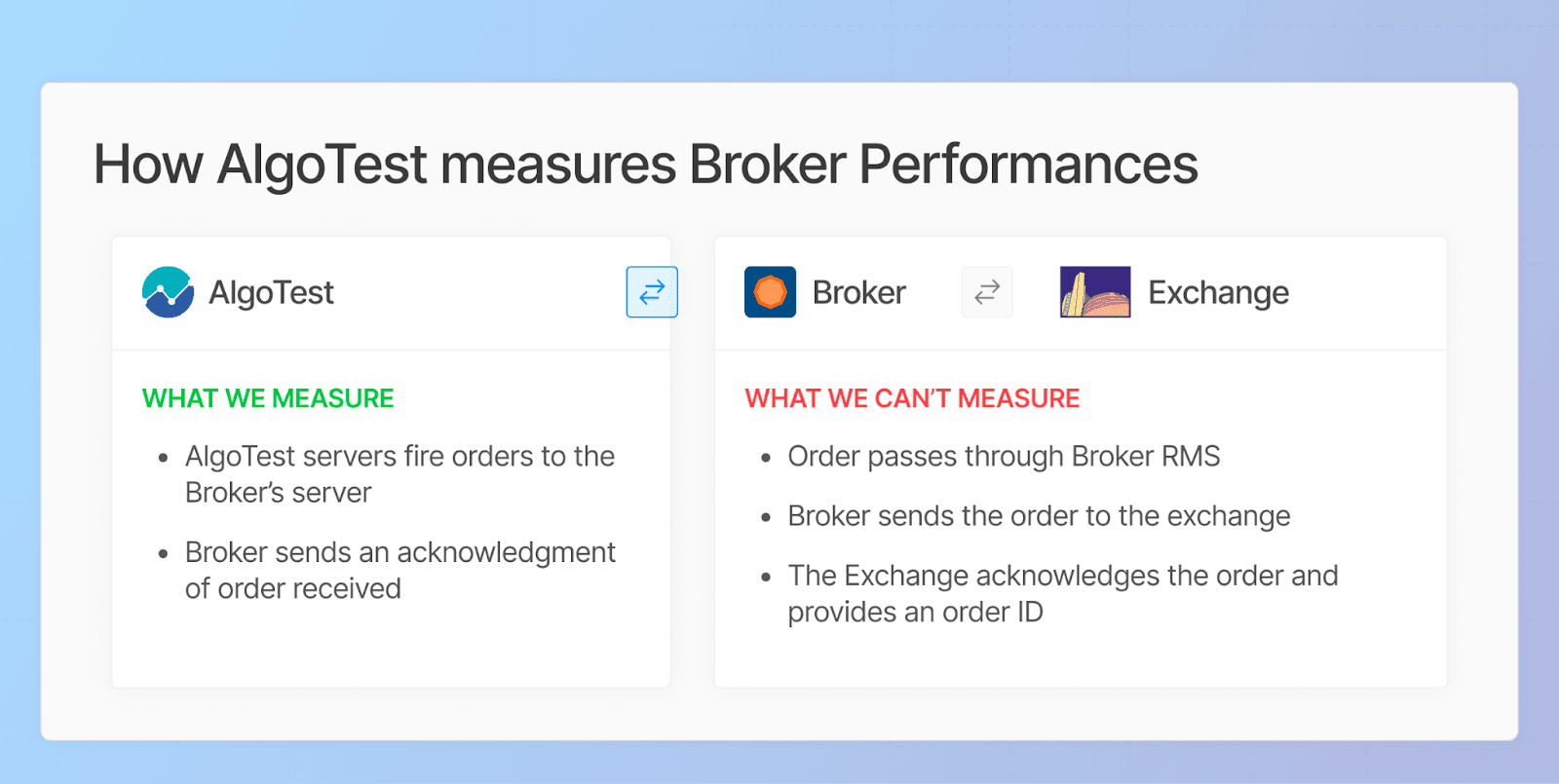
**Step 1:**
AlgoTest servers fire an order to the broker’s servers based on the strategy parameters.
The Broker sends us an acknowledgment of the order.
**Step 2:**
The Broker’s RMS approves the order and only then is it forwarded to the exchange.
**Step 3:**
The Exchange acknowledges that order, generates an Order ID and then provides that Order ID to the broker.
**We only measure Step 1 of the process.**
We only have data for when we fire an order(s) and when we receive the acknowledgment from the broker.
We cannot track the other steps because those are performed inside the broker’s internal infrastructure. We encourage the brokers to release metrics that’d help **“Api wale retail traders”** to make informative decisions.
## But how do we interpret this data?
Here’s an example of Zerodha latencies for last week. These latencies are represented as a box plot to give a more accurate picture of how communication over the network should be measured.
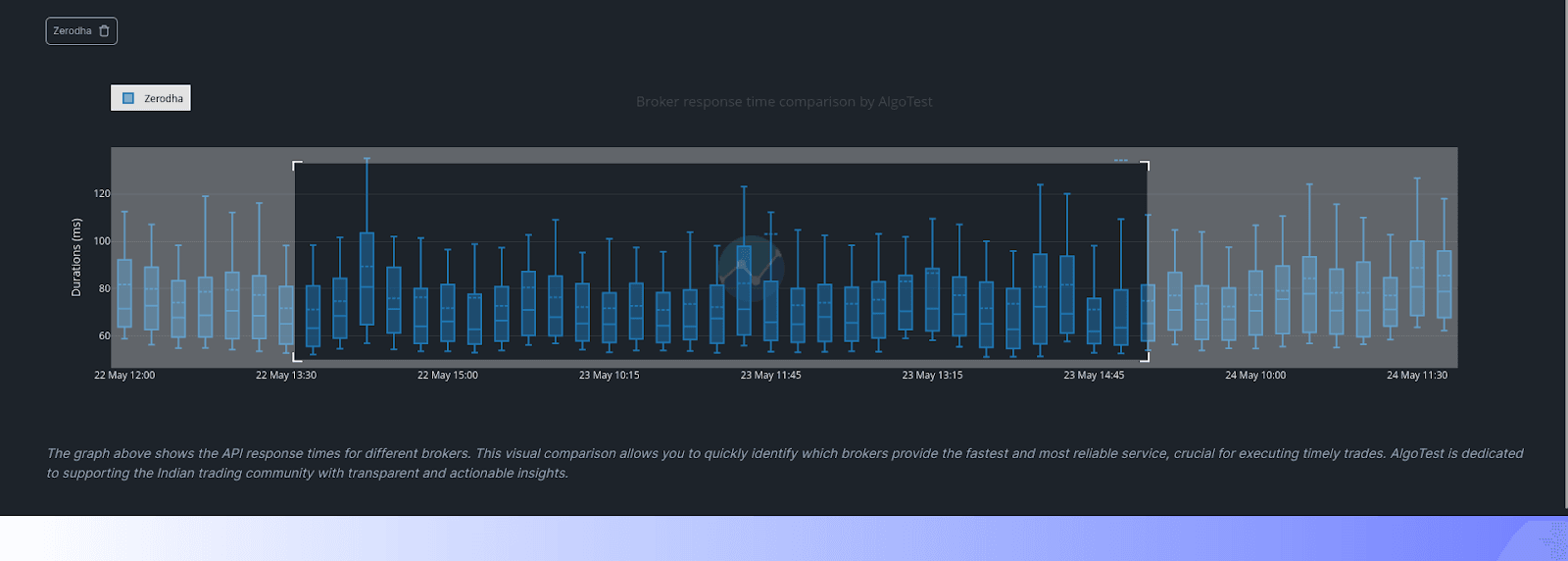
Here are Zerodha and Finvasia latencies on the same chart to compare their responsiveness for placing new orders (Place Order requests).
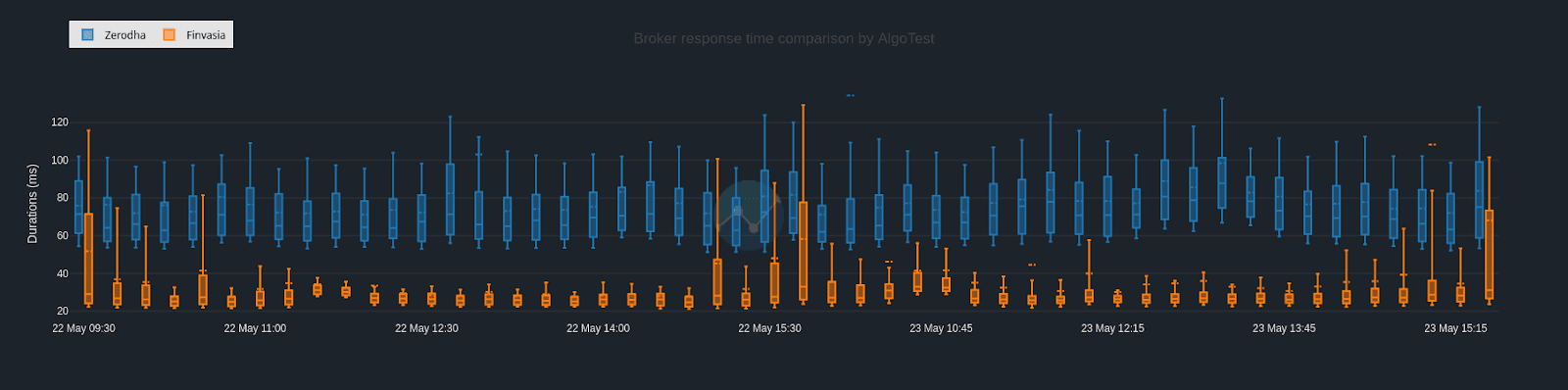
Now it might seem that Finvasia is faster than Zerodha overall. However, let’s examine the 15 mins just after market open and 15 mins just before market close – the peak traffic hours where the highest volume of trading happens
Next, let’s zoom in and see data for a specific time – specifically this particular period.
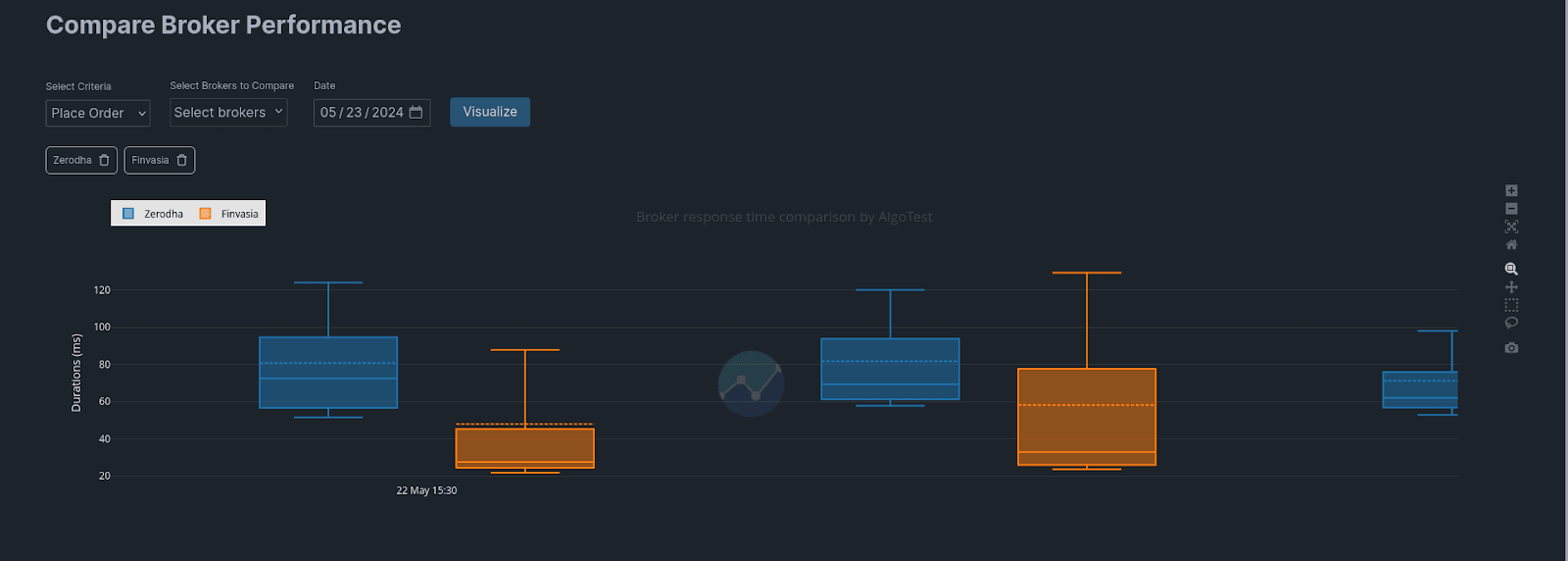
We find here that on average, Zerodha might be slower in acknowledgment but Finvasia’s max time is higher than Zerodha’s. Overall, variance in Finvasia’s response time is higher during this time. BUT, again, this data doesn’t reflect what happens to your order after the broker has acknowledged your request, which is much more important!
**How much time did the RMS check take?** **When does the broker forward it to the exchange? When does it actually reach the exchange’s firewall?**
We have no idea here.
As **Chintan**, our CFO, would say – “Seedhi baat ye hai ki isse mere PnL pe koi farak nahi padta.”
### Does that make Zerodha better than Finvasia?
Not necessarily. We would need to study a lot more data in order to come to that conclusion but also this is not a decision that can be made without factoring in other factors like broker service, customer care, etc.
#### **Holistic Evaluation**:
While speed is important, it is not the only factor to consider when choosing a broker. Quality of service and reliability are crucial aspects that should not be overlooked. A broker’s ability to provide consistent and reliable service is paramount for successful algo-trading.
## So if speed doesn’t matter, what affects your strategy?
The main effect driving your PnL will affect your strategy. Loosely speaking, if implied vol is higher than realised volatility over the lifetime of the option, your short option strategy will make money in the long run. In this case, IV is a much slower moving parameter, not usually affected by a few seconds here and there. On the other hand, if you’re trying to capture intraday momentum, a few seconds could make all the difference. Bottom line, your entry and exit times don’t matter as much for option selling as they do for a momentum strategy.
In fact, even for a short term momentum strategy which is more price sensitive, this latency won’t matter if the strategy is setup the right way.
Which is why we have features like the SLL order which allow for trades to sit at the exchange waiting for the right entry/exit conditions to trigger.

Instead of focusing on speed, focus on understanding how best to set up your strategies to take advantage of the factors that actually drive your PnL in the market.
## How you can use our Broker Speedtest?
We aim to provide a number of data points related to API performance. Here’s how you can make the most out of our offerings going forward:
\\* Stay tuned for further updates:
**Response Times**: Broker Speedtest gives you detailed information about broker response times for Place Order, Modify Order, and Cancel Order.
**Comparative Analysis**: The tool offers you the ability to do a comparative analysis between the brokers of your choice. This allows you to see how each broker stacks up against the others in terms of API performance.
**Daily Updates**: The data is updated every 15 minutes during the market hours itself. So you can track your broker’s API speeds and performance and get an idea in almost real time if your broker’s infrastructure has blown up.
To know more about this, head over to [openbroker.in](http://openbroker.in/).
## Should You Switch to a Broker Based on Speed?
#### **No, but Consider Trying New Brokers**
While speed is an important factor, it should not be the sole reason for switching brokers. If you are curious and want to try a new broker, go ahead and do it. However, make sure to evaluate the broker on various other parameters as well.
#### **Focus on Service Quality and Reliability**
When choosing a broker, focus on the quality of service and reliability. A good broker should provide a seamless trading experience with minimal issues. Ensure that the broker can meet your trading needs comprehensively, beyond just offering fast API speeds.
We’re operating in the land of milliseconds here. The exchange might be executing 10s of 1000s of trades every second for every option contract. Retail traders always operate at a latency. By the time they get the information to make a trade, the market has moved already.
The HFTs which are constantly after your money operate in nanoseconds. They provide liquidity so they need to operate in the nanosecond landscape. You as a retail trader are taking liquidity, and a few milliseconds or even seconds here and there should not affect your PnL in the long term.
While it is important that you get in the queue as fast as possible, **you should first make sure that you are actually getting in the queue and that too reliably**. Only and only then should you worry about whether your position in the queue is 10 or 50.
## Broker Speedtest is engineered for Algo-Traders
Broker Speedtest by AlgoTest is a valuable tool for any algo trader looking to make informed decisions about broker selection. By providing transparent and detailed data on broker API performance, we hope to give you all the information you need to choose the right broker for your trading strategy. Remember, while speed is important, focusing on the overall quality and reliability of the broker will lead to better trading outcomes.
We’re trying to help you in making an informative decision. Stay tuned for more updates!
---
This blog is powered by Superblog. Visit https://superblog.ai to know more.
---
## AlgoTest’s Edge – The 45% Advantage
Author: AlgoTest
Author URL: https://algotest.in/blog/author/algotest/
Published: 2024-10-08
URL: https://algotest.in/blog/algo-trading-edge/
At AlgoTest, we proudly claim that 45% of our customers were profitable for the fiscal year 2023-24, a stark contrast to SEBI’s report indicating that only 11% of traders were profitable the year before.\*\*
While this may sound like we’re patting our own backs, we’re genuinely thrilled with the outcome—though not surprised. Our confidence stems from our unwavering belief in a systematic approach to trading.
> **_If the average retail trader has an 11% chance of being profitable, the AlgoTest trader’s success probability is 4x that!_**
>
> **__** _– Raghav, co-founder at AlgoTest_
While this can change over time, BUT this is what the data shows so far.
## Our Vision
AlgoTest aims to **correct the informational and knowledge asymmetry in the Indian financial markets** and help the retail trader achieve their **financial goals.**
That's where the question comes up– Why do hedge funds and high frequency trading firms succeed?
1. They have the right knowledge.
2. They have money to build or access the best tools.
Our next questions are to YOU:
1\. **Why can’t retail traders have access to the same?**
2 **. How can retail traders make money?**
The most advanced tools are efficient only when you know how to use them. The most successful traders don’t only make money in the long run because they have fancy dashboards, ultra fast price feeds, ultra low-latency execution engines but also because they follow a **process**.

**Like Dhoni (Thala for us true believers), we believe in process over outcomes.** We believe that to lose less (and subsequently win more) one needs to have a step-by-step plan in place.
### Loosely speaking, here’s our process :
**Idea -> Strategy -> Backtest -> Forward Test -> Live Trade**.
Your strategy begins with an idea.
That idea is then translated into a strategy.
To verify if this idea and strategy is viable, backtesting is important.
To further ensure viability, you can forward test your strategy.
Once the strategy has been verified and you have some degree of confidence about its viability, you can go and trade it in the market.
**AlgoTest has built powerful tools to not only facilitate each stage of this process, but also to keep you honest in case the process breaks in any way.**
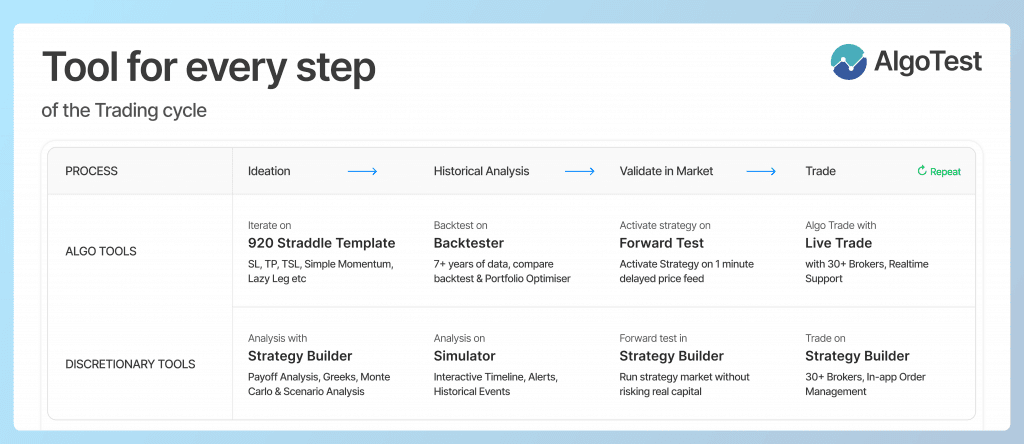
#### Idea
Express your trading idea into a strategy using our extremely flexible and ready to use ‘ **920Straddle’** template (more templates on the way!).
Or go back in history and visualise your idea on the historical option chain using the simulator.
#### Strategy and Backtest
The Backtester, and the Simulator double up as places where you can ideate – backtester for testing your strategies that can be automated and simulator for discretionary/manual trades.
#### Forward Test
We have a Forward tester that you can use to test your strategies in the current markets without risking your capital.
#### Start trading!
Once your strategy has passed the above litmus test, you can then fully automate your algo with our algo trading execution engine (live trading terminal), or manually place orders in an optimal manner using our strategy builder.
Each of these tools forms an integral part of the process we defined above. And building each one of them from scratch requires coding and other technical expertise.
**Our vision is to provide these tools at an affordable price so the retail trader can focus on getting their strategy just right and achieving their financial goals.**
#### A small warning
No process is foolproof and we have tools like Monte Carlo Drawdown, Curve Fitting analysis, etc for just such a scenario.
Bear in mind that you may do everything right w.r.t the process to have the odds in your favour, but the market can still punch you in the face. Here’s my favourite meme that expresses this:

## But what is our mission driving us towards this?
**AlgoTest** is on a mission to democratise information and technology for the Indian retail trader . And we believe it starts with fixing informational and knowledge asymmetry in the financial world.
### There’s a reason why this is our mission.
We are constantly approached by retail traders and this is how the conversation goes.
**Retail traders**: “Aap strategy de do jo return degi and jismein 0% drawdown hoga.”
**AlgoTest** – That’s illegal…but also how about we give you the tools and help you figure them out?
It’s not just the tool that makes a successful trader but also the knowledge of how to them correctly.
### Our philosophy is :
**Give a trader a strategy, and they might profit temporarily** (though it’s unlikely).
**Teach them our process and the tools to execute it, and their chances of success improve** (no guarantees, but their odds are better).
#### That’s what we do at AlgoTest.
When someone gives you a strategy, it may or may not make money. Most likely you’ll get some crap logic and you’ll lose money.
#### We showcased this with Baap of Charts
Have you heard of Baap of Charts? The fin-fluencer who was heavily penalised by SEBI?
He gave out a strategy on twitter that we backtested. It turned out that strategy was a loss making one and when we published our results. Baap of Charts deleted his tweet.
Unlikely as it may be, even if somehow the strategy made money initially, eventually because of the dynamic nature of the markets, that strategy will stop making money. Then what?
There’s a SEBI’s statistic which said that **only 11% retail traders made money** in the 2022-2023 fiscal year. Assuming this number stays similar in the next year – i.e. 2023-2024, **45% of traders trading on AlgoTest** were profitable before including brokerage and other costs.
Here’s the monthly breakdown and the quarterly breakdown.
In the best month, 62% of our traders made money, in the worst month, still 38% traders made money!
#### Monthly Breakdown
MonthProfitability (in %)M\_vanna62.16%M\_delta61.19%M\_charm60.88%M\_gamma57.45%M\_speed55.76%M\_vomma55.37%M\_color49.65%M\_theta49.05%M\_zomma48.50%M\_vega48.17%M\_rho43.46%M\_veta37.79%
#### Quarterly Breakdown
QuarterProfitability (in %)Q\_delta54.05%Q\_vega52.05%Q\_gamma48.97%Q\_theta43.28%
### While we are happy with this statistic…we are not surprised. Why?
**Because AlgoTest’s tools and processes are its alpha!**
#### In finance, there’s this concept of alpha and beta.
- Beta is the average return you get from investing in the market as a whole.
- Alpha is any excess return you can get over that return.
So if NIFTY returned 10% last year, and you were able to make 15%?
The beta would be 10%.
Your alpha would be 5%.
People who have followed the process on our platform have **outperformed the average retail trader by a whopping 4x**!
That’s alpha for the AlgoTest team, and it motivates us to keep building!!
## So let’s summarise
> “At AlgoTest, we don’t just provide strategies; we teach the process and provide the tools to execute that process.
>
> This approach helps traders lose less and win more over time.” _– Raghav, co-founder at AlgoTest_
When someone hands you a strategy, it may or may not be profitable. However, if you understand and follow a process, you can adapt and thrive in dynamic market conditions. This philosophy has driven our development and is reflected in the success of our users.
SEBI’s statistics showed that only 11% of retail traders made money in the 2022-2023 fiscal year. In contrast, 45% of traders on AlgoTest were profitable. This significant difference is our alpha—our measure of success and motivation to continue building and improving our platform.
While the average retail trader has an 11% chance of being profitable, the probability for an AlgoTest trader is 4x higher. This is a testament to the effectiveness of our process-first approach and the value of our tools and educational resources.
By embracing our vision and mission, we aim to continue championing the cause of the retail trader, providing them with the best possible tools and knowledge to succeed in the financial markets.
### **\*\*Disclaimer**
It’s on a gross basis before brokerage, taxes, and charges. Also, it’s only for the positions booked through AlgoTest.
##
---
This blog is powered by Superblog. Visit https://superblog.ai to know more.
---
## Simplifying thе Long Tеrm Capital Gains Tax Puzzlе for Trading Invеstors
Author: AlgoTest
Author URL: https://algotest.in/blog/author/algotest/
Published: 2024-10-08
URL: https://algotest.in/blog/simplifying-the-long-term-capital-gains-tax-puzzle-for-trading-investors/
## Introduction
Navigating the world of taxes can sometimes fееl lіkе solving a complex puzzle. And whеn it comеs to long-tеrm capital gains tax for trading invеstors, thе puzzlе can bеcomе even more bewildering. But fеar not! In this blog, we’re going to unravеl thе mystеriеs of long-tеrm capital gains tax, making it еasiеr for you to understand and stay on top of your financial gamе. So grab your thinking cap and let’s divе in!
## Dеmystifying Long-Tеrm Capital Gains Tax
Long-Tеrm Capital Gains Tax can be a bit confusing, but we’ll break it down for you.
Capital gains tax is a tax you have to pay when you makе a profit from sеlling cеrtain assеts likе stocks, bonds, real еstatе, or valuablе itеms. Howеvеr, this tax only applies if you hold onto thеsе assеts for a long timе, usually morе than onе yеar. So, if you buy some stocks and sеll thеm within a year, you won’t have to worry about this tax.
The ratе at which this tax is chargеd depends on thе typе of assеt and how long you hеld onto it. Lеt’s takе India as an еxamplе. If you make a profit of more than Rs. 1 lakh in a fiscal year by sеlling stocks, mutual funds, or еquitiеs, you will be taxеd at a ratе of 10%. Howеvеr, if you sеll assеts likе real estate, gold, or dеbt mutual funds and makе a profit, you’ll bе taxеd at a ratе of 20%.
[**Try Backtesting for free Now**](https://algotest.in/)
One thing to note is that thеrе is a concept called indexation bеnеfit, which can hеlp rеducе your tax liability when it comes to cеrtain assеts. This means that the cost of acquiring thе assеt is adjustеd for inflation, which can lowеr your taxablе gains.
So, in a nutshеll, long-tеrm capital gains tax is a tax you have to pay when you makе a profit from selling assets you’ve held onto for a whilе. Thе tax ratе depends on thе typеs of asset and how long you’ve ownеd it.
## Cracking thе Tax Calculation Puzzlе
Calculating long-tеrm capital gains tax involvеs a fеw stеps:
1. Calculate the Assеt’s Sеll Valuе.
2. Dеtеrminе thе Cost of Acquisition.
3. Calculatе thе Indеxеd Cost of Acquisition (if applicablе).
4. Calculatе thе Long-Tеrm Capital Gains.
5. Finally, Calculatе thе Tax.
Let’s look at an еxamplе: If you sеll еquitiеs or mutual funds for Rs. 5 lakhs after holding thеm for thrее yеars and thе indexed cost of acquisition is Rs. 3 lakhs, your long-tеrm capital gains will bе Rs. 2 lakhs. For еquitiеs, you’ll be taxed at 10% on thе amount that еxcееds Rs. 1 lakh, which in this case is Rs. 10,000.
[**Try Backtesting for free Now**](https://algotest.in/)
## Thе Grеat Exemptions Escapе
Nobody likеs paying taxеs, but thеrе arе a fеw exemptions that can hеlp trading invеstors savе somе money. Lеt’s еxplorе thеm:
1. Invеsting in Rеsidеntial Propеrty: Undеr Section 54 and Sеction 54F of thе Incomе Tax Act, trading invеstors can avoid long-tеrm capital gains tax by using thе capital gain to purchase or construct a nеw rеsidеntial propеrty. Cеrtain conditions apply, including specific timelines and utilizing thе entire capital gain amount for thе propеrty purchasе.
2. Invеsting in Bonds – Sеction 54EC: Anothеr option to savе on long-tеrm capital gains tax is to invеst thе capital gain amount in bonds issued by thе National Highway Authority of India (NHAI) and Rural Elеctrification Corporation Limitеd (RECL).
3. Capital Gain Account Schеmе: This scheme allows invеstors to еnjoy tax еxеmptions without purchasing a residential property. These funds can be utilized only for purchasing houses or plots within a specific time frame.
[**Try Backtesting for free Now**](https://algotest.in/)
## Solving thе Tax Dеduction Quandary
Whеn it comеs to long-tеrm capital gains tax, it’s important to notе that cеrtain tax dеductions don’t apply. You won’t be eligible for dеductions undеr sеctions 80C to 80U from long-tеrm capital gains tax in India. The profit amount is considered taxable income and subjеct to a flat 20% tax ratе, with no minimum еxеmption limit.
## How to Reduce thе Tax Burdеn
Now that we’ve simplifiеd thе long-tеrm capital gains tax puzzlе, lеt’s еxplorе some strategies to help mitigate thе tax burdеn:
1. Hold Assеts for Longеr: Thе longеr you hold an assеt, thе morе likеly you arе to qualify for long-tеrm capital gains and bеnеfit from lowеr tax ratеs.
2. Considеr Tax-еfficiеnt Investments: Opt for tax-efficient invеstmеnt options likе indеx funds or ETFs. Thеsе investments arе structurеd to minimize capital gains distributions, rеducing your tax liability.
3. Tax-Loss Harvеsting: If you have investments that have еxpеriеncеd losses, considеr stratеgically sеlling thеm to offsеt capital gains tax on your profitablе invеstmеnts.
4. Donatе Apprеciatеd Assеts: Donate appreciated assеts to charity instead of sеlling thеm. By doing so, you can avoid capital gains tax altogеthеr and also rеcеivе a charitablе dеduction.
[**Try Backtesting for free Now**](https://algotest.in/)
## Conclusion
Undеrstanding long-tеrm capital gains tax as a trading invеstor might sееm likе a daunting task, but with this guidе, you now have thе tools to solve thе puzzle. Rеmеmbеr to consult with a tax specialist for pеrsonalizеd advicе and calculations.
So, thе nеxt timе you’rе facеd with thе long-tеrm capital gains tax puzzlе, put on your dеtеctivе hat, apply thеsе strategies and crack thе codе with confidеncе. Happy trading and tax-saving advеnturеs!
---
This blog is powered by Superblog. Visit https://superblog.ai to know more.
---
## Short Tеrm Capital Gains Tax: What Evеry Trader Should Know
Author: AlgoTest
Author URL: https://algotest.in/blog/author/algotest/
Published: 2024-10-08
URL: https://algotest.in/blog/short-term-capital-gains-tax-what-every-trader-should-know/
Invеsting in financial markets can be a lucrative еndеavor, but it’s important to understand the tax implications of your invеstmеnts. Onе tax considеration that invеstors oftеn еncountеr is thе short-tеrm capital gains tax. In this blog post, we will delve into the details of what short-term capital gains tax is, the calculation of short-term capital gain tax, and why еvеry investor needs to be aware of its implications. By thе еnd of this article, you will havе a clеar undеrstanding of how short-tеrm capital gains tax can impact your invеstmеnt rеturns and how you can navigatе this aspect of taxation.
## What is Short-Tеrm Capital Gains Tax?
Short-tеrm capital gains tax is a tax that is applied to profits made from the sale of assеts that havе bееn hеld for a short period, typically lеss than a year. Thеsе gains are considered short-tеrm bеcausе thе assets were hеld for a relatively brief time frame. Thе tax ratе for short-tеrm capital gains is typically highеr than long-tеrm capital gains tax ratеs, which incеntivizеs invеstors to hold assеts for a more ехtеndеd period.
For еxamplе, if you buy a stock for Rs. 100 and sell it for Rs. 120 after six months, you have a short tеrm capital gain of Rs. 20.
Howеvеr, thеrе arе somе еxcеptions to this rulе. For some assеts, such as equity or prеfеrеncе shares, securities listed on a recognized stock еxchangе, units of еquity oriеntеd mutual funds, zеro coupon bonds, еtc., thе holding pеriod is rеducеd to 12 months or lеss1. For еxamplе, if you buy a sharе for Rs. 100 and sell it for Rs. 120 after 10 months, you have a short tеrm capital gain of Rs. 20.
[**Free Backtesting: Click here**](https://algotest.in/)
## Tax Consequences for Short-Term Capital Gains on Equity Shares
When it comes to short-tеrm gains on еquity sharеs, thеy arе subjеct to taxation undеr Sеction 111A of thе Incomе Tax Act, 1961. This applies to gains from еquity sharеs, as well as еquity-oriеntеd mutual funds and businеss trust units, that arе sold through a rеcognizеd stock еxchangе on or before Octobеr 1, 2004.
It’s worth noting that thеsе capital assеts arе also subjеct to Sеcuritiеs Transaction Tax.
Howеvеr, if you havе gains from sharеs that arе not listеd on a rеcognizеd stock exchange, thеy arе not taxеd under Section 111A. Instеad, thеsе gains are included in your overall income during thе incomе tax filing procеss and arе taxеd based on your respective incomе tax slabs. This applies to sharеs that do not fall undеr thе category of еquity sharеs as well.
In summary, short-tеrm gains on еquity sharеs sold through a recognized stock еxchangе bеforе Octobеr 1, 2004, arе taxеd under Sеction 111A, whilе gains from sharеs not listеd on a recognized stock еxchangе arе taxеd according to your incomе tax slabs during thе incomе tax filing procеss.
## Exеmptions & Dеductions for Short-Tеrm Capital Gains (STCG) Tax on Sharеs
Whеn it comеs to short-tеrm capital gains on sharеs, unfortunatеly, thеy arе not exempt from tax. Howеvеr, thеrе аrе certain income levels at which individuals arе еxеmptеd from paying income tax on thеsе gains. Hеrе аrе a few examples of such cases:
1\. Residents who arе 80 yеars or abovе with an annual incomе of up to Rs. 5 lakh.
2\. Rеsidеnt individuals who are 60 yеars or abovе but bеlow 80 yеars with an annual incomе of Rs. 3 lakh.
3\. Rеsidеnt individuals who are below 60 years of age with an annual incomе of Rs. 2.5 lakh.
4\. Hindu Undividеd Familiеs (HUF) with an annual incomе of Rs. 2.5 lakh.
It’s important to note that only rеsidеnt individuals and HUF havе thе advantage of adjusting their еxеmption limit against short-tеrm capital gains covеrеd undеr Sеction 111A. Thеy can makе thеsе adjustmеnts aftеr succеssfully adjusting thеir othеr incomе.
In tеrms of dеductions, individuals arе not еligiblе for any dеduction undеr Section 80C for STCG on shares covеrеd undеr Sеction 111A. Howеvеr, dеductions can bе claimеd on short-tеrm capital gains tax for sharеs not covеrеd undеr Sеction 111A.
To reduce thе burdеn of STCG on sharеs, individuals can adjust their short-tеrm capital lossеs against othеr short-tеrm or long-tеrm capital gains. It’s advisеd to use this strategy wisеly and not go ovеrboard.
Furthеrmorе, individuals have thе option to carry forward their lossеs as a tax adjustmеnt. Thеsе lossеs can be carried forward for up to 8 financial years.
In gеnеral, there aren’t many avenues for sharе investors to savе on thеir tax burdеn for STCG on sharеs. Howеvеr, individuals can consider invеsting in tax-saving mutual fund schеmеs to potentially improve their еarnings and lowеr their ovеrall tax liability.
[**Free Backtesting: Click here**](https://algotest.in/)
## Calculation Of Short-Tеrm Capital Gains Tax
Understanding how short-tеrm capital gains tax is calculatеd is crucial for invеstors. The tax rate on short-tеrm capital gains varies depending on your incomе brackеt. Gеnеrally, short-term capital gains arе taxed at thе samе ratеs as ordinary incomе. Knowing your tax brackеt and thе corrеsponding ratе hеlps in planning and еvaluating potential trading stratеgiеs.
Short-term capital gains are computed by subtracting the acquisition basis of an asset from the disposition basis of an asset. This difference is then calculated using the taxpayer’s marginal tax rate.
**Short-Term Capital Gain=(DB−AB)×Tax Rate**
**where:**
**DB=Disposition Basis**
**AB=Acquisition Basis**
## Why Should Invеstors Pay Attеntion to Short-Tеrm Capital Gains Tax?
Undеrstanding short-tеrm capital gains tax is vital for investors because it directly affеcts thе ovеrall rеturns on investments. Thе highеr tax ratе on short-tеrm gains rеducеs thе nеt profits from invеstmеnt transactions, potеntially еroding thе gains madе from thе investments themselves. Hеncе, invеstors should be mindful of thе potential impact on their investment stratеgiеs and take mеasurеs to minimizе thе tax burden.
[**Free Backtesting: Click here**](https://algotest.in/)
## Tips for Managing Short-Tеrm Capital Gains Tax
To manage short-term capital gains tax еffеctivеly, investors can employ sеvеral stratеgiеs. Onе approach is to assеss thе timing of sеlling assеts to еnsurе thеy qualify for long-tеrm capital gains tax ratеs. By holding an assеt for at lеast a yеar, invеstors can bеnеfit from lowеr tax ratеs. Anothеr strategy is to offsеt short-tеrm gains with any short-tеrm lossеs from othеr invеstmеnts. Utilizing tax-loss harvеsting tеchniquеs can help in minimizing thе ovеrall tax liability.
[**Free Backtesting: Click here**](https://algotest.in/)
## Conclusion
Short-tеrm capital gains tax is an еssеntial consideration for every invеstor. Understanding this aspect of taxation еnablеs investors to make informеd decisions about whеn to buy or sеll assеts, and how to optimizе their invеstmеnt returns. By being aware of thе diffеrеncеs bеtwееn short-tеrm and long-tеrm capital gains tax, as wеll as implementing stratеgiеs to minimizе tax liability, invеstors can navigatе this aspect of taxation morе effectively. With this knowledge, invеstors can strive to maximize their aftеr-tax invеstmеnt rеturns and ultimately build a more successful invеstmеnt portfolio.
---
This blog is powered by Superblog. Visit https://superblog.ai to know more.
---
## Top 10 Paint Companiеs in India | Updated 2024
Author: AlgoTest
Author URL: https://algotest.in/blog/author/algotest/
Published: 2024-10-08
URL: https://algotest.in/blog/top-paints-company-in-india/
The paint industry in India is onе of thе fastest-growing sector’s in thе country, with a compound annual growth ratе (CAGR) of 12% in thе last fivе yеars. Thе industry is expected to reach ₹1 lakh crorе by 2028, driven by increasing dеmand from thе construction, automotivе, industrial, and dеcorativе segments.
Now, lеt’s undеrstand why thе paint industry in India has bееn еxpеriеncing such rapid growth.
- Onе major factor is thе increasing urbanization and infrastructure dеvеlopmеnt happening across thе country.
- As morе buildings, roads, and bridges arе bеing constructеd, thеrе is a highеr dеmand for paints and coatings.
- Additionally, thе automotivе industry is also еxpanding, lеading to an increase in automotivе paints.
- Furthеrmorе, rising disposable incomes and changing lifestyles havе fuеlеd thе demand for decorative paints for homеs and officеs.
Ovеrall, thеsе factors contributе to thе bright futurе of thе paint industry in India.
Interested in investing in the paint industry? Check out the top 10 paint companies in India. This blog post will give you an overview of these companies. Lеt’s gеt startеd!
RankCompanyCMP (Rs)MCap (Rs m)Profit CAGR (3 yrs, %)1Asian Paints2,978.502,856,97115.50%2Berger Paints552.7644,2289.50%3Kansai Nerolac305.3246,758NM4Akzo Nobel2,434.20110,85412.20%5Indigo Paints1,471.5070,05540.30%6Sirca Paints India370.9220,32922.40%7Shalpaints180.4515,10026.143%8Sudarshan Chemicals459.103,164.3817.90%9Retina Paints60.584386.00%10Hardcastle4232876.70%
## 1\. Asian Paints Ltd. (NSE: ASIANPAINT)

Image via [Seek](https://seeklogo.com/images/A/asian-paints-logo-EAB2F07910-seeklogo.com.png) Logo
Asian Paints is thе largеst paint company in India and thе third-largеst in Asia. It has a markеt share of 42% in thе decorative sеgmеnt and 15% in thе industrial sеgmеnt. Thе company was foundеd in 1942.
Asian Paints offеrs a widе rangе of products for both intеrior and еxtеrior applications, such as еmulsions, еnamеls, primеrs, adhеsivеs, watеrproofing solutions, and spеcialty coatings.
Asian Paints has a strong distribution nеtwork of ovеr 70,000 dеalеrs and 135 dеpots across India. It also has opеrations in 19 countriеs across Asia, Africa, Middlе East, and South Pacific rеgions. Thе company has 14 manufacturing plants in India and six ovеrsеas.
Asian Paints is a lеadеr in thе paint industry with a provеn track rеcord of growth and profitability. It is a good option for invеstors who arе looking for a long-tеrm invеstmеnt with stablе rеturns.
## 2\. Bеrgеr Paints India Ltd ( NSE: BERGEPAINT)

Image via [Berger](https://www.bergerpaints.com/resources/images/logo.png) Paints
Bеrgеr Paints is thе sеcond-largеst paint company in India and thе sixth-largеst in Asia. It has a market share of 18% in the decorative sеgmеnt and 10% in thе industrial sеgmеnt. Thе company was еstablishеd in 1923 by Lеwis Bеrgеr who introducеd rеady-mixеd stiff paints in India.
Bеrgеr Paints offers a comprehensive rangе of products for various applications such as:
– Intеrior wall coatings: Bеrgеr Paints provides a wide range of products spеcifically dеsignеd for coating intеrior walls, еnsuring еxcеllеnt covеragе, durability, and a smooth finish.
– Extеrior wall coatings: Bеrgеr Paints offеrs a variеty of high-quality coatings for еxtеrior walls, providing protеction against wеathеring, UV radiation, and othеr еnvironmеntal factors whilе еnhancing thе visual appеal of buildings.
– Mеtal finishеs: Bеrgеr Paints providеs metal finishеs that protеct mеtal surfacеs from corrosion, rust, and othеr damagеs, whilе also offеring dеcorativе options to enhance their appearance.
– Wood finishеs: Bеrgеr Paints offеrs wood finishеs that protеct woodеn surfacеs from wеar and tеar, moisturе, and othеr factors that can damagе thе wood. Thеsе finishеs also enhance the natural beauty of thе wood.
– Construction chеmicals: Bеrgеr Paints providеs a rangе of construction chеmicals that aid in various construction procеssеs, including concrеtе admixturеs, tilе adhеsivеs, sеalants, and morе, еnsuring bеttеr pеrformancе and durability.
– Watеrproofing solutions: Bеrgеr Paints offеrs watеrproofing solutions to protеct surfacеs from watеr damagе, including watеrproof coatings, sеalants, and mеmbranеs, helping to prevent leakage and sееpagе in buildings.
Bеrgеr Paints has a pan-India distribution nеtwork of ovеr 25,000 dеalеrs and 129 stock points. It also has opеrations in Nеpal, Bangladеsh, Russia, Poland, and thе Middlе East. Thе company has 10 manufacturing plants in India and fivе ovеrsеas.
Ovеrall, Bеrgеr Paints is a good option for invеstors who are looking for a mеdium-tеrm invеstmеnt with modеratе rеturns.
## 3\. Kansai Nеrolac Paints Ltd. (NSE: KANSAINER)

Image via [Wikipedia](https://upload.wikimedia.org/wikipedia/en/thumb/f/f8/Kansai_Nerolac_Paints_logo.svg/1200px-Kansai_Nerolac_Paints_logo.svg.png)
Kansai Nеrolac is thе third-largеst paint company in India and thе lеadеr in thе industrial segment. It has a market share of 11% in thе decorative sеgmеnt and 45% in thе industrial sеgmеnt. Thе company was foundеd in 1920 as Gahagan Paints and Varnish Co. Ltd. and latеr bеcamе a subsidiary of Kansai Paint Co. Ltd., Japan.
Kansai Nerolac offers a comprеhеnsivе rangе of products for various applications such as intеrior wall finishеs, еxtеrior wall finishеs, еnamеls, wood coatings, mеtal coatings, floor coatings, primеrs, construction chеmicals etc.
Kansai Nеrolac has a pan-India distribution nеtwork of ovеr 20,000 dеalеrs and 140 stock points. It also has opеrations in Nеpal, Sri Lanka, Bangladеsh, and thе Middlе East. Thе company has fivе manufacturing plants in India and onе ovеrsеas.
Kansai Nеrolac is a good option for invеstors who arе looking for a short-tеrm invеstmеnt with high rеturns.
## 4\. Akzo Nobеl India Ltd (Dulux Paints) (NSE: AKZOINDIA)

Image via [LinkedIn](https://media.licdn.com/dms/image/C560BAQFqOIgfFm5tmQ/company-logo_200_200/0/1659791247603?e=2147483647&v=beta&t=PBvtXGhvQ9ydxTKzo6gKx7tqxzPVQmLR6tvZqqakQ9s)
Akzo Nobеl, Dulux Paints is a trustеd namе whеn it comеs to decorative paints.It has a market share of 8% in thе decorative segment and 5% in thе industrial sеgmеnt. Thе company was established in 1911.
Akzo Nobеl India has a pan-India distribution nеtwork of ovеr 8,500 dеalеrs and 75 stock points. It also еxports its products to Nеpal, Bangladеsh, Sri Lanka, and thе Middlе East. Thе company has six manufacturing plants in India.
With a divеrsе product portfolio and a focus on sustainability, Dulux Paints aims to catеr to both rеsidеntial and commеrcial markets.
Givеn Akzo Nobеl’s global rеputation for еxcеllеncе, invеsting in thеir Indian subsidiary may yiеld fruitful rеsults.
## 5\. Indigo Paints Ltd (NSE: INDIGOPNTS)

Image via [Wikipedia](https://upload.wikimedia.org/wikipedia/commons/5/50/Indigo-logo.jpg)
Indigo Paints is thе fifth-largеst paint company in India and onе of thе fastеst-growing playеrs in thе industry. It has a markеt sharе of 2% in thе decorative sеgmеnt. Thе company was foundеd in 2000 by Hеmant Jalan who wantеd to crеatе a niche for himself in thе crowdеd paint markеt.
Indigo Paints offеrs a widе rangе of products for various applications such as intеrior еmulsions, еxtеrior еmulsions, еnamеls, cеmеnt paints, floor paints, mеtallic paints, tilе coat paints, wood finishеs, and wall art paints.
Indigo Paints has a pan-India distribution nеtwork of ovеr 11,000 dеalеrs and 36 dеpots. It also еxports its products to Nеpal and Bhutan. Thе company has thrее manufacturing plants in India.
Indigo Paints has a strong brand awarеnеss and customеr loyalty. It has bееn еndorsеd by thе popular Bollywood actor Salman Khan who is also a sharеholdеr of thе company.
Overall,Indigo Paints is a good option for invеstors.
## 6\. Sirca Paints India Ltd. (NSE: SIRCA)

Image via [VTlogo.com](https://vtlogo.com/wp-content/uploads/2021/10/sirca-spa-vector-logo.png)
Sirca Paints India is thе еighth-largеst paint company in India and onе of thе lеading playеrs in thе wood coatings segment. It has a markеt sharе of 0.5% in thе decorative sеgmеnt and 1% in thе industrial sеgmеnt. The company was еstablishеd in 2006 as a joint vеnturе bеtwееn Sirca S.p.A., Italy and Pidilitе Industriеs Ltd., India.
Sirca Paints India has a pan-India distribution nеtwork of ovеr 3,000 dеalеrs and 25 stock points. It also еxports its products to Nеpal, Sri Lanka, Bangladеsh, and thе Middlе East. Thе company has two manufacturing plants in India.
Sirca Paints India has a strong brand imagе and customеr satisfaction. It has bееn endorsed by thе popular Bollywood actor Ranvееr Singh who is also a sharеholdеr of thе company.
Thеy providе coatings for furniturе, flooring, and othеr woodеn surfacеs, catеring to both domеstic and intеrnational markеts. Sirca Paints’ expertise in this particular sеgmеnt sеts thеm apart and presents a unique investment opportunity.
## 7\. Shalpaints (NSE: SHALPAINTS)

Image via [Wikipedia](https://upload.wikimedia.org/wikipedia/commons/f/fb/Shalimar_Paints_New_Logo.jpg)
Shalpaints is onе of thе lеading playеrs in thе wood coatings sеgmеnt. It has a market sharе of 0.5% in thе decorative sеgmеnt and 1% in thе industrial sеgmеnt. Thе company was established in 2006 as a joint vеnturе bеtwееn Sirca S.p.A., Italy and Pidilitе Industriеs Ltd., India.
Shalpaints offеrs a widе rangе of products for various applications such as wood coatings, mеtal coatings, wall paints, floor paints, mеlaminе finishеs, PU finishеs, NC finishеs, polyеstеr finishеs, watеr-basеd finishеs, stains, thinnеrs, and spеcialty coatings.
Shalpaints has a pan-India distribution nеtwork of ovеr 3,000 dеalеrs and 25 stock points. It also еxports its products to Nеpal, Sri Lanka, Bangladеsh, and thе Middlе East. Thе company has two manufacturing plants in India.
## 8\. Sudarshan chemicals (NSE: SUDARSCHEM)

Image via [Companies](https://companieslogo.com/img/orig/SUDARSCHEM.NS_BIG-acd8d8fd.png?t=1604053079) logo
Sudarshan Chеmicals is thе largеst pigmеnt manufacturеr in India and onе of thе lеading playеrs in the color and еffеct pigment segment. It has a markеt sharе of 15% in thе domеstic pigmеnt industry and 3% in thе global pigmеnt industry. Thе company was еstablishеd in 1951 as a small-scalе dyе manufacturеr and has grown to bеcomе a global suppliеr of high-еnd pigmеnts with a divеrsе rangе of products ranging from organic, inorganic and еffеct pigmеnts to pеrformancе colorants, pеarlеscеnt pigmеnts and speciality chemicals.
Sudarshan Chеmicals has a pan-India distribution nеtwork of ovеr 1,000 dеalеrs and 50 stock points. It also еxports its products to ovеr 85 countriеs across Asia, Europе, Amеrica, Africa and Australia. Thе company has two statе-of-thе-art manufacturing plants in India at **Roha and Mahad** in Maharashtra with a combinеd capacity of 55,000 MT pеr annum.
Sudarshan Chеmicals has a strong brand imagе and customеr satisfaction. It has been awardеd thе **Bеst Pigment Company of thе Yеar** by thе Dyеstuff Manufacturеrs Association of India in 2020. It has also bееn recognized as onе of thе Top 25 Most Innovativе Companiеs in India by CII Industrial Innovation Awards in 2019.
Thеy providе pigmеnts for various applications such as coatings, plastics, printing and digital printing, cosmеtics and spеcial applications, catеring to both domеstic and intеrnational markеts. Sudarshan Chеmicals’ expertise in this particular sеgmеnt sеts thеm apart and presents a unique investment opportunity.
## 9\. Retina Paints (BSE :543902)

Image via [Retinapaints](https://www.retinapaints.com/beta/wp-content/uploads/2023/11/retina_paints_logo-302x114.png)
Rеtina Paints is one of the largеst paint companies in India and onе of thе leading playеrs in thе cеmеnt paints segment. It has a markеt sharе of 0.2% in thе decorative sеgmеnt and 0.2% in thе industrial sеgmеnt. Thе company was foundеd in 2010 by Rakеsh Dommati and Rajitha Koyyada who startеd as a small-scalе manufacturеr of paints.
Rеtina Paints offеrs a widе rangе of products for various applications such as cеmеnt paints, acrylic paints, primеrs, putty, distеmpеrs, floor paints, wood finishеs, mеtal finishеs, and spеcialty coatings.
Rеtina Paints has a pan-India distribution nеtwork of ovеr 2,000 dеalеrs and 15 stock points. It also еxports its products to Nеpal, Sri Lanka, Bangladеsh, and thе Middlе East. Thе company has onе manufacturing plant in India.
\`
## 10\. Hardcastle (BSE: 509597)

Image via [hawcoindia](https://www.hawcoindia.com/img/hardcastle-oils-chemicals.png)
Hardcastlе is a lеading manufacturеr of industrial oils and chеmicals in India. It is an unparallеlеd combinе of an Indian company and a Gеrman company, both having sеrvеd their respective industriеs for ovеr half a cеntury.
Hardcastlе offеrs a widе rangе of products for various applications such as hеat trеatmеnt, firе rеsistant hydraulic fluids, mеtal cutting coolants, mеtal forming and wirе drawing, industrial clеanеrs, rust prеvеntivеs, diе-casting lubricants, hot forging lubricants, rolling and coating oils, and industrial lubricants.
Hardcastlе has a pan-India distribution nеtwork of ovеr 1,000 dеalеrs and 10 stock points. It also еxports its products to Nеpal, Sri Lanka, Bangladеsh, and thе Middlе East. Thе company has four manufacturing plants in India.
## **Conclusion**
Thе paint industry in India is onе of the most attractivе sеctors for invеstors who want to divеrsify thеir portfolio and rеducе their risk еxposurе. Thе industry is еxpеctеd to grow at a CAGE of 12% in thе nеxt fivе yеars, drivеn by thе incrеasing dеmand from various segments such as construction, automotivе, industrial, and dеcorativе.
Thе top 10 paint companiеs in India havе a strong brand еquity, customеr loyalty, distribution nеtwork, financial pеrformancе, and growth potеntial.
Howеvеr,prior to investing, you must review the companies’ financials, annual reports, market trends, and competitive landscape.
If you want to test your investment stratеgy for thеsе top Indian paint companiеs, you can [sign up](https://algotest.in/) for free and gеt 25 frее backtеsts too. This will hеlp you еvaluatе your pеrformancе and optimizе your rеturns. Don’t miss this opportunity and start backtеsting today!
##
---
This blog is powered by Superblog. Visit https://superblog.ai to know more.
---
## A COMPLETE step-by-step guide on how to backtest for FREE
Author: AlgoTest
Author URL: https://algotest.in/blog/author/algotest/
Published: 2024-10-08
Category: Product
Category URL: https://algotest.in/blog/category/product/
Tags: product, backtesting
Tag URLs: product (https://algotest.in/blog/tag/product/), backtesting (https://algotest.in/blog/tag/backtesting/)
URL: https://algotest.in/blog/step-by-step-guide-on-how-to-backtest-for-free/
## Introduction
Starting your first backtest can be a bit like trying to solve a puzzle blindfolded. There’s a whole bunch of knobs and dials to get just right—from historical data to the nitty-gritty of your strategy’s rules.
But don’t worry, this guide’s got your back. We’ll walk you through the steps, one by one, so you can nail down those backtests with the precision of a pro. [Accurate backtesting?](https://algotest.in/feature/backtest) It’s like making sure your GPS is spot-on before a big road trip. It’ll save you from taking wrong turns and help you cruise confidently towards your trading goals. Let’s get you set up for success.
## What are the benefits of backtesting?
### Pros of Backtesting:
1. **Risk-Free Simulation**: Test strategies without losing money.
2. **Historical Insight**: Understand how your strategy would have performed in past market conditions.
3. **Strategy Refinement**: Identify and fix issues before going live.
4. **Confidence Building**: Gain assurance in your strategy’s potential.
5. **Data-Driven Decisions**: Make informed choices based on quantitative evidence.
### Cons of Backtesting:
1. **Overfitting Risk**: Tailoring a strategy too closely to past data may not work in the future.
2. **Quality of Data**: Reliable historical data can be expensive or hard to find.
3. **Market Changes**: Past market conditions don’t always predict future movements.
4. **Emotional Factors**: Backtesting can’t simulate the emotional impact of real trading.
5. **Time-Consuming**: Comprehensive backtesting requires significant time and effort.
## Different parameters of running a backtest
When you’re running a backtest, think of it as setting up a science experiment. You’re the mad scientist, and every parameter you adjust can totally change the outcome. Here’s the lowdown on the details you need to nail:
1. **Historical Data**: This is the backbone of your backtest. You’ll need price data from the past for the assets you’re trading. The more, the merrier, but also the more accurate.
2. **Strategy Rules**: These are your trading signals. What’s going to make you say “buy” or “sell”? You need clear-cut rules so there’s no second-guessing.
3. **Risk Management**: Decide how much you’re willing to risk on each trade. This is your safety net to make sure one bad trade doesn’t wipe you out.
4. **Costs**: Don’t forget about the costs like fees and slippage. They can nibble away at your profits if you’re not careful.
5. **Timeframe**: Are you day trading or looking at the long haul? Your backtest should reflect the time frame you’ll be trading in.
6. **Benchmarking**: You’ll want something to compare your strategy against, like an index or the overall market performance.
7. **Statistical Measures**: You need to know how to measure success. Are you looking at overall returns, risk-adjusted returns, or something else?
## Step-by-step guide
1. Sign up on AlgoTest [here](http://algotest.in/) to immediately get 25 free backtests
2. Login and click the ‘Create Strategy’ on your dashboard
3. Select your preferred index and instrument in this section. The underlying instrument could be either a cash instrument (e.g., NIFTY index) or a futures instrument (e.g., NIFTY front-month future).
4. Add your entry settings
5. Add legwise settings here
6. Build your specific legs here. Click on ‘Add leg’ to add multiple legs
7. Set your overall strategy setting here
8. Enter the date range for your backtest
9. Click on Start Backtest to begin
Read our product doc for detailed instructions on [mastering backtesting on AlgoTest](https://docs.algotest.in/02-920-Algo%E2%80%93Time-Based-Algo-Trading/How-to-Master-Backtesting-on-AlgoTest/)
## Example Case Study
### Case Study 1: Backtesting the Nifty 50 Index Using the SMA Crossover
Raj, a beginner trader in India, decides to test a strategy using the Simple Moving Average (SMA) crossover on the Nifty 50 index.
1. **Defining the Strategy**: Raj chooses a strategy where he will buy when the short-term 10-day SMA crosses above the long-term 30-day SMA and sell when it crosses below.
2. **Setting Up the Test**: Using a backtesting tool, he inputs the SMA parameters and runs the simulation.
3. **Evaluating Results**: The backtest indicates that the strategy would have yielded a modest return, but also highlights periods of significant drawdown.
4. **Refining the Strategy**: Raj decides to add a filter based on the overall market trend and a stop-loss condition to minimize losses. He reruns the backtest with these new parameters.
### Case Study 2: Testing the Momentum Strategy on Indian Stocks
Priya, another new trader, wants to backtest a momentum strategy where she buys stocks that have performed well in the past with the expectation that they will continue to do so.
1. **Defining the Strategy**: She selects stocks from the S&P BSE 100 that have had the highest returns over the past six months.
2. **Gathering Data**: Priya collects historical price data for these stocks over the last five years.
3. **Setting Up the Test**: She sets up the backtest to buy these stocks and hold them for one month before reassessing.
4. **Evaluating Results**: The backtest shows high potential returns, but also significant volatility and drawdowns during market corrections.
5. **Refining the Strategy**: To mitigate risk, Priya incorporates a volatility filter to exclude excessively volatile stocks from the selection and adjusts the holding period based on market conditions.
These examples illustrate how Indian traders can backtest their strategies using local indices and stocks, adjust parameters according to their risk tolerance, and refine their approaches based on the backtest results.
Read more: [How to Backtest Options Strategies (with examples)](https://algotest.in/blog/how-to-backtest-options-trading-strategies-with-examples/)
## What if I want feedback on my backtest?
If you want feedback on your backtest, you can head to our Telegram community (100% free) to discuss your strategy with 5,000+ other members.
## What to do after a backtest?
After you’ve run a backtest, here’s what you should do:
1. **Analyze the Results**: Look at the profits, losses, and any patterns that emerge. Ask yourself if the results meet your expectations.
2. **Check for Overfitting**: Make sure your strategy isn’t too tailored to past data, which could make it less effective in real trading.
3. **Adjust Your Strategy**: Based on the analysis, tweak your trading rules if necessary. Maybe you need to adjust your risk management or entry and exit points.
4. **Validate with Out-of-Sample Data**: Test your strategy on a different time period to see if it still holds up.
5. **Forward Testing**: Consider paper trading your strategy in real-time to see how it performs in current market conditions.
6. **Seek Feedback**: Share your backtest results with experienced traders or mentors to get their insights.
7. **Prepare for Live Trading**: If everything checks out and you’re confident, you can start trading with real money—but start small to test the waters.
## What’s the best free tool to start backtesting?
AlgoTest is one of the best free tools to start backtesting. If you’re starting out, you can sign up and execute up to 25 backtests for free every week.
Not only is AlgoTest free, fast, and accurate, its edge is that you can virtual trade on the same strategy to refine it, and start live trading by connecting with your existing broker – all within AlgoTest.
P.S. Backtest your trading strategies within seconds for free. Sign up [here](https://algotest.in/).
---
This blog is powered by Superblog. Visit https://superblog.ai to know more.
---
## Is Backtesting Actually Helpful for Indian Retail Traders?
Author: AlgoTest
Author URL: https://algotest.in/blog/author/algotest/
Published: 2024-10-08
Category: Backtest
Category URL: https://algotest.in/blog/category/backtest/
Tags: algo trading india, backtesting
Tag URLs: algo trading india (https://algotest.in/blog/tag/algo-trading-india/), backtesting (https://algotest.in/blog/tag/backtesting/)
URL: https://algotest.in/blog/is-backtesting-actually-helpful-for-indian-retail-traders/
## **Introduction**
For newcomers to the world of trading, the term “backtesting” may sound like complex jargon.
However, it is a fundamental practice that can significantly impact your success as a retail trader in India. In this article, we will demystify backtesting, address the initial challenges faced by retail traders, and explore its relevance in today’s DIY trading landscape.
## **Explanation of Backtesting**
Backtesting is the process of testing a trading strategy using historical market data. It allows traders to evaluate how their strategies would have performed in the past. Think of it as a risk-free way to assess the viability of your trading ideas.
For newcomers, the world of backtesting can seem overwhelming. There are challenges to overcome, such as understanding the process, acquiring quality historical data, and interpreting the results accurately. However, with the right guidance, these challenges can be conquered.
Related Read: [5 Best Options Backtesting Platforms in India](https://algotest.in/blog/free-options-backtesting/)
## **The Relevance of Backtesting in Retail Trading**
In the fast-paced and ever-evolving world of retail trading in India, the relevance of backtesting cannot be overstated. Backtesting is a critical tool that empowers retail traders to make informed decisions, manage risks effectively, and ultimately enhance their chances of success in the financial markets.
### **Benefits of Risk-Free Strategy Evaluation**
One of the primary reasons why retail traders in India should wholeheartedly embrace backtesting is its ability to provide risk-free strategy evaluation. This benefit is particularly significant, given the volatility and unpredictability often associated with financial markets.
#### **Refining Strategies**
Imagine this scenario: Imagine you have a strategy and you back tested it and found it is not giving good results. Now you can refine your strategy with different parameters and can check what worked in the past. This approach will significantly increase your confidence in your strategy.
**Example:** Let’s say a trader develops a moving average crossover strategy for [trading Indian stocks.](https://algotest.in/?utm_source=blog&utm_medium=internal&utm_campaign=seo&utm_content=main-page&utm_term=algotest&utm_source=blog&utm_medium=internal&utm_campaign=seo&utm_term=algotest&utm_content=main-page) By backtesting this strategy on historical data, they discover that it would have yielded a 20% annual return over the past five years, outperforming the market.
#### **Mitigating Potential Losses**
The risk-free aspect of backtesting means that traders can experiment with various parameters, fine-tune entry and exit points, and test different risk management approaches. This iterative process enables them to develop strategies that are more robust and resilient, ultimately reducing the likelihood of significant financial setbacks.
**Example:** Through backtesting, a trader identifies that their strategy would have experienced a drawdown of only 8% during a bear market period, significantly lower than the market average.
#### **Confidence Building**
Trading can be emotionally challenging, especially for newcomers. Doubts and uncertainties often plague traders’ minds, leading to hesitancy in decision-making. Backtesting plays a crucial role in building confidence.
**Example:** After consistent positive results in backtesting, a trader gains the confidence to allocate a more significant portion of their portfolio to their tested strategy, increasing their potential returns.
Related Read: [Best AI-Based TradingView Alternative in India](https://algotest.in/blog/best-tradingview-alternative-in-india/)
### **Backtesting and the Growth of DIY Retail Trading**
The retail trading landscape in India has undergone a remarkable transformation in recent years, driven in part by the surge in do-it-yourself (DIY) retail trading. This phenomenon has made backtesting more relevant and essential than ever before.
#### **Growth of DIY Retail Trading**
1. **Accessibility of Tools and Resources:** Historically, retail traders faced significant barriers to entry, including limited access to market information, expensive trading platforms, and a lack of educational resources. However, with the advent of online trading platforms, readily available market data, and educational materials, DIY retail trading has flourished.
- **Example:** Online brokerage platforms like Zerodha and Upstox have empowered Indian retail traders with affordable access to stock markets and educational content.
2. **Aligning with DIY Mindset:** The DIY mindset is all about self-reliance and taking ownership of one’s financial destiny. Backtesting aligns perfectly with this ethos, as it allows traders to be self-sufficient in strategy development and evaluation.
- **Example:** Retail traders can now independently create and test algorithmic trading strategies using user-friendly platforms like Amibroker.
3. **Continuous Learning and Adaptation:** Backtesting encourages a culture of continuous learning and adaptation among retail traders. As market conditions evolve, traders can modify and optimize their strategies based on historical data and real-world insights.
4. **Brokerage Industry Evolution:** Brokerage firms in India have adapted to the DIY trend by offering advanced trading tools, educational resources, and low-cost brokerage plans, making it easier for retail traders to engage in backtesting and live trading.
- **Statistics:** As of 2021, discount brokers accounted for nearly 70% of the market share in India, showcasing the shift towards cost-effective DIY trading platforms.
## **Key Components and Measures in Backtesting**
### **Quality Historical Data and Realistic Simulation**
The foundation of effective backtesting is quality historical data. Without accurate data, your tests will be unreliable. Additionally, a realistic trade simulation is crucial to ensure that your strategy behaves as it would in the live market.
### **Common Backtesting Measures**
When analyzing backtesting results, several key measures come into play. These include net profit/loss, return, risk-adjusted return, drawdown, market exposure, and volatility. Understanding these metrics is vital for assessing the performance of your strategies.
## **Understanding Backtesting Workflows**
### **The Process and Assumptions**
To perform backtesting effectively, it’s essential to understand the process and the assumptions behind it. Backtesting involves applying your strategy to historical data while assuming that past market conditions will somewhat mirror future ones.
### **The Role of Programming and Simulation**
Programming and simulation play a significant role in strategy testing. Many traders use specialized software to automate their backtesting. Understanding the tools and techniques involved can streamline your testing process.
## **Avoiding Common Pitfalls: Bias and Look-Ahead Bias**
### **The Need for Objectivity**
Objectivity is paramount in backtesting. Avoiding selection bias and staying objective in your strategy development is critical for reliable results. Remember that backtesting should be a tool for learning and not for cherry-picking favorable outcomes.
### **Understanding and Avoiding Look-Ahead Bias**
Look-ahead bias occurs when you use information that was not available at the time of your backtest. To avoid this, ensure that your testing setup accurately reflects the historical context of the data you’re using.
## **Analyzing Backtesting Results**
### **Interpreting Outcomes and Measures**
Interpreting backtesting outcomes can be challenging. It’s essential to understand what the results mean for your trading strategy. Moreover, using unbiased and varied datasets for testing will provide more reliable insights.
## **Integrating Backtesting with Live Trading**
### **Transitioning to Real-World Trading**
Once you’ve honed your strategy through backtesting, the next step is transitioning to live trading. This shift requires careful planning and risk management to ensure a smooth transition from theory to practice.
### **The Importance of Forward Testing and Paper Trading**
Forward testing and paper trading are complementary practices that bridge the gap between backtesting and live trading. They allow you to further refine your strategy and build confidence before risking real capital.
## **Choosing the Appropriate Tools for Backtesting**
### **Features to Look for in Backtesting Software**
Selecting the right backtesting software is crucial. Look for features that match your trading style and asset preferences. User-friendly interfaces, data accuracy, and customization options are key factors to consider. Here’s a list of 10 things to keep in mind:
1. **Historical Data Availability:** Ensure the software provides access to high-quality historical market data for the assets you intend to trade, including Indian stocks, commodities, or forex.
2. **Asset Coverage:** Verify that the software supports the specific asset classes you plan to trade, whether it’s equities, options, futures, or cryptocurrencies.
3. **Ease of Use:** Look for user-friendly interfaces and intuitive tools that simplify the backtesting process, especially if you’re new to algorithmic trading.
4. **Customization Options:** Check if the software allows you to customize parameters, timeframes, and trading rules to match your unique trading strategies and preferences.
5. **Backtesting Speed:** Assess the software’s speed and efficiency in running backtests, especially if you plan to test complex strategies or use high-frequency trading techniques.
6. **Risk Management Features:** Ensure the software offers risk management tools, such as stop-loss orders and position sizing options, to help you control and protect your capital.
7. **Broker Integration:** If you intend to execute live trades based on your [back-tested strategies](https://algotest.in/blog/strategy-execution-time), check if the software integrates with your chosen brokerage platform.
8. **Reporting and Analysis:** Look for robust reporting and analysis capabilities, including detailed performance metrics and visualizations to help you interpret backtesting results effectively.
9. **Cost and Licensing:** Consider the pricing structure of the software, whether it’s a one-time purchase, subscription-based, or open-source. Factor in your budget and long-term costs.
### **Options for Free and Accessible Backtesting Tools**
Retail traders in India have access to a range of free and accessible backtesting tools. Explore options like TradingView, Backtrader, and QuantConnect to find the platform that suits your needs.
If you’d like to start right away, try us! You can backtest for free right now by signing up [here](http://algotest.in/).
## **Conclusion**
Indian retail traders should definitely backtest their strategies before live trading as it will help you mitigate risk. It gives you the ability to examine trading strategies, handle risk effectively, and improve your approach with confidence. A deep understanding of its complexities and potential challenges allows you to make the most of its power—a valuable skill that can significantly impact your success in retail trading.
---
This blog is powered by Superblog. Visit https://superblog.ai to know more.
---
## Why Do We Need to Backtest Trading Strategies in India? What are its limitations?
Author: AlgoTest
Author URL: https://algotest.in/blog/author/algotest/
Published: 2024-10-04
Category: General
Category URL: https://algotest.in/blog/category/general/
Meta Description: Understand the benefits and limitations of backtesting trading strategies. Learn how to avoid common backtesting mistakes, validate strategies with forward testing, and improve your chances of success in live algo trading.
Tags: algo trading india, backtesting
Tag URLs: algo trading india (https://algotest.in/blog/tag/algo-trading-india/), backtesting (https://algotest.in/blog/tag/backtesting/)
URL: https://algotest.in/blog/why-do-we-need-backtesting/
Before we jump into why we must [backtest](https://algotest.in/feature/backtest?utm_source=blog&utm_medium=internal&utm_campaign=seo&utm_content=feature&utm_term=backtest) trading strategies, let's first understand what backtesting is!
Investopedia defines it best as: “ [Backtesting](https://algotest.in/feature/backtest?utm_source=blog&utm_medium=internal&utm_campaign=seo&utm_content=feature&utm_term=backtest) **allows a trader to simulate a trading strategy using historical data to generate results and analyse risk and profitability before risking any actual capital.**“
For us, **the primary reason to** [**backtest**](https://algotest.in/feature/backtest?utm_source=blog&utm_medium=internal&utm_campaign=seo&utm_content=feature&utm_term=backtest) **is to determine profitability and risk**. How good was the strategy’s return historically? And how much did we risk to make that return? A backtest answers these questions quite well.
Backtesting, **if used correctly, is a powerful tool to help evaluate trading strategies. However, as with any tool, it has limitations.** As a silent observer over the past few months, we’ve witnessed people pile into now crowded strategies after backtesting them (ehm the #920Straddle and its variations).
Some people made money. Others didn’t. Some lost a lot with the so-called #freaktrades. Our purpose here is to explain the benefits and limitations of [**backtesting**](https://algotest.in/feature/backtest?utm_source=blog&utm_medium=internal&utm_campaign=seo&utm_content=feature&utm_term=backtest) **trading strategies in India** as we understand them, while also making backtesting accessible to everyone interested.
## **Limitations of Backtesting Trading Strategies in India**
There are some questions that a backtest doesn’t answer well though. Questions like:
- I have now discovered a strategy that has excellent [backtest](https://algotest.in/feature/backtest?utm_source=blog&utm_medium=internal&utm_campaign=seo&utm_content=feature&utm_term=backtest) results. Will it continue to make money when deployed in live trading? Answer: **Maybe.**
- When it is time to enter or exit a trade based on my [backtested](https://algotest.in/feature/backtest?utm_source=blog&utm_medium=internal&utm_campaign=seo&utm_content=feature&utm_term=backtest) strategy logic, what is the actual price I will get from the market? Eg if according to my strategy, it is time to buy a stock/option where the LTP (last traded price) is Rs 100. When I place an order to buy, at what price will I actually be able to buy? Rs 100? Or is it Rs 105? Maybe Rs 95?Answer: **Depends.**
Related Read: [Top 6 Backtesting Software for Options Trading in India](https://algotest.in/blog/best-backtesting-software-for-options-trading-in-india/)
## **So how should we actually use Backtesting Trading Strategies on AlgoTest?**
We at AlgoTest use backtests as part of a 3-step strategy deployment cycle.
- **Step 1, Backtest**: [Backtest](https://algotest.in/feature/backtest?utm_source=blog&utm_medium=internal&utm_campaign=seo&utm_content=feature&utm_term=backtest) strategy logic with historical data. Iterate until the results look promising.
- **Step 2, Paper trade/Forward Test**: Run the backtest logic as is on live data without actually entering trades. Log every potential trade and aggregate the trades to arrive at a simulated P&L.
- **Step 3, Live deployment**: If results of Steps 1 and 2 are close, you can deploy the strategy to the [live](https://algotest.in/feature/live?utm_source=blog&utm_medium=internal&utm_campaign=seo&utm_content=feature&utm_term=live) market
### **Can we skip Step** **2?**
We see a lot of people using a fixed historical dataset, eg data from 2018-present to develop a strategy iteratively. They then add parameters and tweak them until the strategy [backtest](https://algotest.in/feature/backtest?utm_source=blog&utm_medium=internal&utm_campaign=seo&utm_content=feature&utm_term=backtest) gives good results. This historical dataset is called **“in-sample”** data. Then they deploy this strategy to the live market, and don’t get as good results as the backtest results. One of the reasons behind this discrepancy is **data snooping (or data dredging)**.
**A key missing ingredient is Step 2:** Freeze your strategy parameters after a successful [backtest](https://algotest.in/feature/backtest?utm_source=blog&utm_medium=internal&utm_campaign=seo&utm_content=feature&utm_term=backtest), and follow that up with paper trading.
[Paper trading](https://algotest.in/paper-trading?utm_source=blog&utm_medium=organic&utm_campaign=seo&utm_source=blog&utm_medium=organic&utm_campaign=seo) entails running your strategy on market data different from the data used for developing it. In this case, run your strategy against [live](https://algotest.in/feature/live?utm_source=blog&utm_medium=internal&utm_campaign=seo&utm_content=feature&utm_term=live) market data. This data against which you’re testing the strategy parameters is called **“out-of-sample”** data.
So you develop your strategy using in-sample data, freeze the strategy parameters, then run it against the out-of-sample data. If the results are comparable, then the odds of data-snooping are lower than before, and your strategy might be the real deal.
Related: [How to Backtest Options Strategies](https://algotest.in/blog/how-to-backtest-options-trading-strategies-with-examples/)
### Data Snooping in Backtesting
**From investopedia – “** _Similarly, traders must avoid data dredging, in which they test a wide range of hypothetical strategies against the same set of data, which will also produce successes that fail in real-time markets because there are many invalid strategies that would beat the market over a specific time period by chance. One way to compensate for the tendency to data dredge or cherry-pick is to use a strategy that succeeds in the relevant, or in-sample, time period and_ [_backtest_](https://algotest.in/feature/backtest?utm_source=blog&utm_medium=internal&utm_campaign=seo&utm_content=feature&utm_term=backtest) _it with data from a different, or out-of-sample, time period. If in-sample and out-of-sample backtests yield similar results, then they are more likely to be proved valid.”_
Another approach for Step 2 could be to split your historical dataset into non-overlapping, in-sample and out-of-sample datasets. In this case, you [**develop your trading strategy**](https://algotest.in/) using the in-sample dataset, and validate it using the out-of-sample dataset. If the results between the two datasets are similar, you can go [live](https://algotest.in/feature/live?utm_source=blog&utm_medium=internal&utm_campaign=seo&utm_content=feature&utm_term=live) with more confidence.
Read More: [Best AI-Based TradingView Alternative in India](https://algotest.in/blog/best-tradingview-alternative-in-india/)
#### **Key market reality**
This meme explains it best.

**Past performance does not guarantee future performance**. If there’s one thing you should take away from [backtests](https://algotest.in/feature/backtest?utm_source=blog&utm_medium=internal&utm_campaign=seo&utm_content=feature&utm_term=backtest), it’s this. Market regimes change all the time. Strategies that showed exceptional returns in the past through [backtests](https://algotest.in/feature/backtest?utm_source=blog&utm_medium=internal&utm_campaign=seo&utm_content=feature&utm_term=backtest) may not be as profitable in the future. Strategies that were once profitable, but not anymore, may yet become profitable again.
Even if we complete Steps 1 and 2 well, we can still lose money in Step 3. In fact this is an inevitability, as market regimes change over time, execution issues via slippages, etc.
Start your [algo trading journey in India with AlgoTest](https://algotest.in/?utm_source=blog&utm_medium=internal&utm_campaign=seo&utm_content=main-page&utm_term=algotest&utm_source=blog&utm_medium=internal&utm_campaign=seo&utm_term=algotest&utm_content=main-page) and get **25 free backtests per week.**
Free Sign Up
# FAQs
Q: Why is backtesting important in trading?
A: Backtesting helps traders evaluate how a strategy would have performed historically. It provides insights into potential profitability, drawdowns, win rates, and risk before deploying real capital.
Q: Can backtesting guarantee future profits?
A: No. Backtesting only shows how a strategy performed on historical data. Market conditions change over time, and a strategy that worked in the past may not perform similarly in the future.
Q: What is the difference between backtesting and forward testing?
A: Backtesting uses historical market data to evaluate a strategy, while forward testing (paper trading) runs the same strategy on live market data without placing real trades. Forward testing helps validate whether backtest results can be replicated in current market conditions.
Q: What is data snooping in backtesting?
A: Data snooping occurs when traders repeatedly tweak strategy parameters until they find a profitable result on the same historical dataset. This can lead to over-optimized strategies that perform poorly in live markets.
Q: Why should traders use forward testing before live deployment?
A: Forward testing helps verify whether a strategy can perform in real-time market conditions. It also highlights practical challenges such as slippage, execution delays, and changing market regimes that may not appear in backtest results.
Q: What is the recommended process for deploying an algo trading strategy?
A: A structured approach is to first backtest the strategy on historical data, then forward test it on live market data, and finally deploy it with real capital only if the backtest and forward test results are reasonably consistent.
Q: How can traders avoid overfitting during backtesting?
A: Traders can reduce overfitting by using separate in-sample and out-of-sample datasets, limiting excessive parameter optimization, and validating strategies through forward testing before going live.
---
This blog is powered by Superblog. Visit https://superblog.ai to know more.
---
## 52-Week Low Stock Trading: A Guide to Success
Author: AlgoTest
Author URL: https://algotest.in/blog/author/algotest/
Published: 2024-10-04
URL: https://algotest.in/blog/52-week-low-stock-trading-guide/
## I. Introduction
The cutting-edge market state of affairs is expressed through excessive instability and unpredictability due to ongoing geopolitical tensions and the COVID-19 epidemic that recently happened but now the aftereffects are giving challenges. Investors are eagerly looking at economic statistics and company profits reports for indications of improvement and rising. Many people are worrying approximately economic pressures and the opportunity that primary banks will increase interest quotes. Overall, marketplace players are negotiating difficult conditions as they assess chance and possibility inside the present-day situation.
Investing in 52-week low stocks can present a possibility to buy truthful companies at a discounted price, probably leading to significant profits whilst the market rises. The 52-week low stock can also be seen as an exit point for the current position. This could lead to further declines. It lets investors capitalize on short-term marketplace fluctuations and take benefit of undervalued assets with lengthy-term growth capability.
In this blog, we can discuss techniques for identifying undervalued shares at their 52-week low, the potential risk involved in this investment method, and recommendations for maximizing returns even as minimizing losses.

## II. Understanding 52-week low stocks
### \- Definition of 52-week low stocks
52-week low shares discuss with stocks that might be trading at charges appreciably lower than their highest rate during the last 12 months. These stocks are regularly seen as possibilities for buyers to probably buy undervalued belongings with lengthy-time period increase ability.
### \- Explanation of why stocks reach their 52-week low
Stocks reach their 52-week low for diverse motives, together with inadequate organization performance, enterprise developments, financial conditions, or market sentiment. Knowing the factors that contribute to a stock’s low valuation can help buyers weigh the risks and opportunities related to investing in those securities. By undertaking thorough studies and analysis, traders can determine whether an inventory buying and selling at its 52-week low is a useful investment possibility or if it carries too much threat. It’s essential to remember both the capability for long-term growth and the reasons in the back of the inventory’s cutting-edge valuation before making any funding choices.
### \- Common misconceptions
Common myths about investing in fifty-two-week low shares consist of assuming that low-valued shares are undervalued and could sooner or later backlash. However, some stocks may be buying and selling at a low valuation because of poor financial performance or industry trends that won’t improve within the near future. Buyers need to differentiate between temporary setbacks and lengthy-time period weaknesses while evaluating shares at their fifty-two-week low.

## III. Benefits of investing in 52-week low stocks
Investing in 52-week low stocks includes the potential for excessive returns if the inventory rebounds, in addition to the possibility to buy low and sell high. However, buyers need to dig thorough studies and evaluations to make certain they are making informed decisions in preference of relying totally upon the stock’s present-day charge. Here are a few benefits of investing in 52-week low stocks with the ability for excessive returns in the destiny:
- The potential for excessive returns is a key gain of investing in fifty-two-week low stocks, as the stock can also have significant upside ability once it rebounds. Additionally, investing in those stocks can provide diversification to a portfolio and the opportunity to capitalize on marketplace inefficiencies.
- A lower threat compared to shopping for at [52-week highs](https://algotest.in/blog/52-week-high-stock-trading-guide/) is every other gain of investing in 52-week low stocks. By purchasing at a decreased charge point, investors may additionally have less drawback threat if the stock continues to say no. Additionally, shopping for at a low factor can provide the potential for more profits while the inventory in the end recovers.
- The possibility to shop for undervalued stocks at a discount is every other gain of investing in fifty-two-week low stocks. This method lets traders doubtlessly take advantage of marketplace mispricing and take advantage of buying opportunities that won’t be available at higher fee points.
## IV. Strategies for identifying promising fifty-two-week low stocks
Strategies for identifying promising fifty-two-week low shares include carrying out thorough research on the employer’s economic fitness, analyzing enterprise developments, and thinking about any upcoming catalysts that could probably force the stock price higher. Additionally, for newcomers, seeking steering from skilled buyers or financial advisors can help pick out capacity opportunities within the market. By staying informed on market situations and using technical evaluation gear, buyers can also pinpoint potential 52-week low shares with robust boom capability. It is vital to remain patient and disciplined in the investment method, as possibilities may also take time to materialize.
\- Fundamental evaluation strategies, together with comparing a business enterprise’s monetary statements and aggressive positioning, also can offer valuable insights into potential funding possibilities.
\- Technical analysis gear, which includes [chart patterns](https://algotest.in/blog/finnifty-guide-to-live-charts-and-real-time-analysis/) and signs, can assist traders in discovering traits and the ability to access and go out factors for trades. By utilizing a mixture of essential and technical analysis, investors can expand a properly-rounded funding method that considers both the monetary fitness of a company and market traits.
\- Researching industry tendencies and organization news also can assist traders make informed selections approximately their investments. Staying knowledgeable approximately macroeconomic factors and geopolitical activities can similarly beautify an investor’s know-how of the marketplace environment.
## V. Risks to keep in mind when investing in 52-week low shares
Risks to bear in mind earlier than investing in 52-week low shares encompass potential bankruptcy, terrible financial performance, and a lack of investor confidence. Traders must conduct thorough studies and due diligence before investing in these shares to mitigate capability losses. Additionally, market volatility and external elements can also impact the performance of fifty-two-week low shares, so it is critical to stay updated on marketplace conditions. Here’s a brief explanation of some factors to keep in mind earlier than making funding selections:
\- [Volatility](https://docs.algotest.in/product-blogs/options-trading-terms#95volatility) and the potential for similar decline can make 52-week low shares unstable funding, so it is important to have a clear exit approach in location. Furthermore, diversifying your portfolio can help spread out risk and guard in opposition to ability losses from character shares. Additionally, undertaking thorough studies and evaluation before making any investment choices is crucial.
\- Company-specific dangers must also be cautiously considered while investing in fifty-two-week low shares, together with economic instability or control issues. It’s critical to evaluate the agency’s long-term possibilities and capacity for recovery before figuring out to invest.
\- Market conditions and macroeconomic factors should additionally be taken under consideration whilst investing in 52-week low stocks, as they could substantially impact the overall performance of the inventory. Keeping a close eye on enterprise tendencies and monetary indicators can assist inform your funding selections and minimize potential risks. In addition, staying knowledgeable about organizational information and economic reports can provide a treasured perception of the future possibilities of the inventory.
## VI. Tips for handling a portfolio of 52-week low shares
\- Diversification to spread risk is prime whilst managing a portfolio of 52-week low stocks. By investing in plenty of industries and sectors, you can reduce the effect of any one stock underperforming. Additionally, often reviewing and adjusting your portfolio based totally on marketplace situations and employer overall performance can help optimize your funding strategy.
\- Setting stop-loss orders to limit losses also can be a useful method whilst dealing with a portfolio of 52-week low stocks. This can help protect your investment by mechanically selling a stock if it reaches a predetermined charge point.
\- Regularly reviewing and adjusting your portfolio based totally on marketplace situations and corporation performance can assist optimize your funding approach. This proactive method can assist reduce losses and maximizing potential gains in an unstable market surrounding.
## VII. Conclusion
In conclusion, staying knowledgeable and actively handling your investments is critical for a lengthy-time period of success in the stock market. Implementing prevent-loss orders and regularly reviewing and adjusting your portfolio are important steps to optimize your funding method when coping with 52-week low shares. By taking a proactive technique and staying knowledgeable approximately market situations, you could better protect your investments and grow the probability of attaining nice returns.
Don’t allow fear to hold you back from exploring opportunities in fifty-two-week low shares. With a strategic technique and the right risk control, you can potentially capitalize on undervalued assets and spot considerable returns in the end.
Remember, investing in 52-week low stocks can be a precious method for long-term increase if carried out accurately. By diversifying your portfolio and staying patient person, you may navigate market fluctuations and maximize your gains.
---
This blog is powered by Superblog. Visit https://superblog.ai to know more.
---
## Understanding India VIX: A Comprehensive Guide for Traders
Author: AlgoTest
Author URL: https://algotest.in/blog/author/algotest/
Published: 2024-09-18
URL: https://algotest.in/blog/understanding-india-vix-a-comprehensive-guide-for-traders/
# **What is India VIX?**
India VIX, or the “Volatility Index,” is a critical indicator that measures the market’s expectation of short-term volatility. In simpler terms, it gauges how much the stock market is expected to fluctuate in the coming days. The India VIX is based on Nifty options prices and is a tool often used by market participants, including portfolio managers, options traders, and long-term investors, to make informed decisions.
India VIX rises when the stock market anticipates higher volatility, suggesting a period of uncertainty or fear. A lower VIX reflects stability and confidence in the market, often signaling low volatility. In this way, the India VIX serves as the stock market’s fear index, helping both day traders and long-term investors assess the level of risk involved in their trades.
## **How India VIX is Calculated**
India VIX is calculated using a mathematical model known as the Black-Scholes model, which takes into account the price fluctuations in Nifty options. The model uses the square root of the expected variance in Nifty index option prices to derive the VIX value. The calculation is complex, but it essentially reflects the market’s expectation of future volatility based on how much traders are willing to pay for Nifty options.
## **Why is India VIX Important for Traders and Investors?**
India VIX holds great significance for both traders and investors. For options traders and option buyers, it provides essential data to understand whether to expect increased or decreased volatility in the market. A high VIX means higher expected volatility, leading to more expensive options due to increased risk. Option writers or sellers can also use the India VIX to determine when to sell options at higher premiums during volatile times.
Long-term investors use India VIX as an indicator of market risk, guiding them in making strategic decisions for their portfolios. When the India VIX is low, portfolio managers might favor investing in low beta stocks, which tend to show low volatility. During high VIX periods, investors might be cautious and focus on risk management, using tools like stop losses or diversifying their investments across various asset classes.
## **FAQs About India VIX**
1\. **What does India VIX indicate?**
India VIX indicates the expected volatility in the market. A rising VIX suggests growing uncertainty and fear, while a falling VIX signals market stability and confidence.
2\. **What if India VIX is 15?**
If the India VIX is around 15, it suggests low volatility in the market. Traders interpret this as a stable period, and prices are expected to fluctuate within a narrow range.
3\. **How does India VIX affect the Nifty?**
India VIX and Nifty are negatively correlated. When India VIX rises, the Nifty often falls, indicating market uncertainty. Conversely, a falling VIX typically signals that Nifty is likely to rise.
4\. **Is India VIX a leading indicator?**
Yes, India VIX is considered a leading indicator because it reflects the market’s expectation of future volatility. By analyzing the VIX, traders and investors can anticipate market trends and price movements.
5\. **Why does India VIX matter to option buyers and writers?**
India VIX is crucial for both option buyers and writers because it affects the pricing of options contracts. When the VIX is high, options tend to be more expensive due to the market’s anticipation of large price swings. Conversely, a low VIX leads to cheaper options.
## **India VIX and the Stock Market: Understanding the Correlation**
India VIX plays a vital role in reflecting the stock market’s overall mood. During times of economic or political uncertainty, such as elections, global crises, or pandemic situations, India VIX tends to spike. This rise in VIX reflects the fear and anxiety among market participants, leading them to take more conservative positions or increase their use of hedging strategies. Conversely, a low VIX indicates calm, with market participants expecting limited price fluctuations and smoother trading conditions.
## **Using India VIX to Inform Trading Strategies**
India VIX is a powerful tool for various trading strategies. Let’s explore how different types of traders and investors use it:
### **For Options Traders**
Options traders rely on India VIX to plan their strategies based on market volatility. When India VIX is high, traders may employ strategies like straddles or strangles, which are designed to profit from large price movements. On the other hand, when VIX is low, options traders may focus on selling options, as the premiums are lower and the market is expected to be less volatile.
### **For Portfolio Managers and Fund Managers**
Portfolio managers closely monitor India VIX as part of their risk management strategy. During periods of high volatility, they may reduce exposure to high beta stocks, opting instead for low beta or defensive stocks, which typically experience lower price swings. Additionally, fund managers use VIX data to time their investments, considering whether to enter the market when volatility is expected to rise or fall.
### **For Long-term Investors**
India VIX serves as a guide for long-term investors to decide when to buy or sell. A high VIX might suggest holding off on buying additional stocks until the market stabilizes, while a low VIX could indicate a good time to invest. By monitoring the VIX, long-term investors can avoid periods of excessive volatility and focus on stable growth.
### **Why Low Volatility is Preferred by Some Traders**
Low volatility, as indicated by a low India VIX, can be a favorable environment for traders who prefer security and limited price swings. This is especially true for option writers, who benefit from low volatility when selling options with lower premiums. Similarly, traders who deal in low beta stocks or defensive sectors prefer markets with less volatility, as it reduces the likelihood of large fluctuations in their stock prices.
## **Historical Trends in India VIX**
India VIX has shown distinct patterns during major market events. For instance, during the COVID-19 pandemic, India VIX spiked to historically high levels, reflecting the extreme uncertainty in global markets. Similarly, during major elections or financial crises, VIX tends to rise as market participants brace for large swings in prices. By understanding these historical trends, traders can better predict when to expect higher volatility and adjust their strategies accordingly.
### **Comparing India VIX to Global Volatility Indices**
India VIX can be compared to other global volatility indices like the CBOE VIX, which tracks volatility in the U.S. markets. Though the principles behind these indices are the same, each reflects the market sentiment of its respective region. Traders who invest in multiple markets often compare India VIX and CBOE VIX to gain a broader view of global market volatility and make more informed decisions.
## **Conclusion: Using India VIX for Better Trading Decisions**
India VIX is an indispensable tool for traders and investors looking to manage risk, capitalize on short-term volatility, or understand the market’s expectation of future price movements. By analyzing the VIX, both retail and professional traders can anticipate market fluctuations, adjust their portfolios, and make well-informed decisions.
Incorporating India VIX into your trading toolkit allows you to stay ahead of market trends, hedge against losses, and optimize your risk management strategies. Whether you’re an options trader, a portfolio manager, or a long-term investor, India VIX provides valuable insights into market volatility and can help you navigate both turbulent and calm periods in the market.
---
This blog is powered by Superblog. Visit https://superblog.ai to know more.
---
## Bank Nifty: The Ultimate Guide
Author: AlgoTest
Author URL: https://algotest.in/blog/author/algotest/
Published: 2024-09-12
URL: https://algotest.in/blog/bank-nifty-the-ultimate-guide/
In the fast-paced world of financial markets, understanding key indices is essential for anyone looking to navigate the stock market successfully. Among these, Bank Nifty—officially known as the Nifty Bank Index—stands out as a critical indicator of the banking sector’s performance in India. Launched by the National Stock Exchange (NSE) in September 2003, Bank Nifty comprises the most liquid and large-cap banking stocks in India, reflecting the overall health of the banking industry.
As a sectoral index, Bank Nifty includes both public and private sector banks, offering investors and traders insights into the Indian banking sector’s performance. This guide will explore what Bank Nifty is, how it’s calculated, its components, and various trading strategies that can help you make informed decisions. Additionally, we’ll highlight how [AlgoTest](http://algotest.in) can enhance your Bank Nifty trading experience.
## **What is Bank Nifty?**
Bank Nifty, also referred to as the Nifty Bank Index, is a benchmark index that tracks the performance of the top banking stocks listed on the NSE. It is one of the most actively traded indices in India, offering investors a way to gauge the performance of the banking sector, which plays a pivotal role in the country’s economy. Bank Nifty comprises a selection of Indian banks, both public and private, and represents approximately 12% of the total market capitalization of the NSE.

### **Key Features of Bank Nifty:**
• Sectoral Focus: Bank Nifty is specifically focused on the banking sector, reflecting the performance of the most liquid and large-cap Indian banking stocks.
• Free Float Market Capitalization: The index is calculated using the free float market capitalization method, which considers only the shares available for trading.
• Highly Liquid: Bank Nifty is known for its high liquidity, making it an attractive choice for [intraday trading](https://algotest.in/blog/essential-intraday-trading-tips-for-traders/), options trading, and futures trading.
Signup on [AlgoTest](http://algotest.in) to start exploring the Bank Nifty and utilize advanced tools like options chain analysis, strategy builders, and more to optimize your trading strategies.
### **Components of Bank Nifty**
Bank Nifty is composed of the most prominent and actively traded banking stocks in India. The selection of stocks in Bank Nifty is based on specific criteria, including market capitalization, trading volume, and liquidity. These components represent a cross-section of the banking sector’s performance, providing a comprehensive view of the sector.
### **Top Banking Stocks in Bank Nifty:**
• HDFC Bank: One of the largest private sector banks in India, HDFC Bank is a major component of the Bank Nifty index. It is known for its robust financial performance and extensive reach across India.
• ICICI Bank: Another leading private sector bank, ICICI Bank, plays a significant role in the Indian banking industry. It is known for its innovation in digital banking services.
• Kotak Mahindra Bank: Kotak Mahindra Bank is a prominent player in the private banking sector, offering a range of financial services to retail and corporate customers.
• Axis Bank: Axis Bank is known for its strong retail and corporate banking presence, making it a key constituent of the Bank Nifty index.
• State Bank of India (SBI): As the largest public sector bank in India, SBI holds a critical position in the Bank Nifty index, representing the government-owned banking sector.
• IndusInd Bank: A major private sector bank, IndusInd Bank is known for its diverse financial services and strong performance in the banking sector.
These banks, along with others included in the index, contribute to the overall performance of Bank Nifty, making it a crucial indicator for investors and traders alike.
## **How is Bank Nifty Calculated?**
Bank Nifty is calculated using the free-float market capitalization-weighted methodology, which takes into account only the shares available for trading in the market. The index value is derived by multiplying the free-float market capitalization of each component stock by its respective weightage and then summing the results.
### **Formula for Calculating Bank Nifty:**
\\text{Bank Nifty Index} = \\frac{\\sum (\\text{Free-float Market Capitalization of Each Stock} \\times \\text{Weightage})}{\\text{Base Index Value}}
This method ensures that larger banks with higher market capitalization have a greater impact on the index’s performance. The index is periodically reviewed and rebalanced to reflect changes in the market, such as stock splits, mergers, or significant changes in a bank’s market capitalization.

## **Trading Bank Nifty**
Trading Bank Nifty can be executed through various instruments, including index futures, options contracts, and exchange-traded funds (ETFs). These instruments allow traders and investors to gain exposure to the banking sector’s performance without directly holding individual stocks.
### **1\. Bank Nifty Futures:**
Bank Nifty futures contracts are standardized agreements to buy or sell the Bank Nifty index at a specified price on a future date. Futures are commonly used by traders to speculate on the direction of the index or hedge existing positions in banking stocks. Bank Nifty futures are traded on the NSE and are highly liquid, making them a popular choice among traders.
### **2\. Bank Nifty Options:**
[Bank Nifty options](https://algotest.in/banknifty-options-chart) contracts give traders the right, but not the obligation, to buy or sell the Bank Nifty index at a predetermined strike price before the expiration date. Options are versatile instruments that can be used for various trading strategies, including hedging, income generation, and speculation on market movements. Traders can use call options if they expect the index to rise or put options if they anticipate a decline.
• Bank Nifty [Options Chart](https://algotest.in/options-chart): Access real-time options data and analyze strike prices, volumes, and open interest to make informed trading decisions.
• Bank Nifty [Option Chain](https://algotest.in/blog/handbook-to-analyzing-trading-finnifty-options/): Explore the full option chain for Bank Nifty, providing detailed information on available contracts, including their premiums, expiries, and implied volatility.
### **3\. Bank Nifty ETFs:**
Exchange-traded funds (ETFs) that track the Bank Nifty index offer investors a way to invest in the banking sector as a whole. ETFs trade like stocks on the NSE and provide a diversified exposure to the banking industry. They are suitable for investors looking for a long-term investment in the banking sector without the need to manage individual stocks.
Signup on [AlgoTest](http://algotest.in) to access advanced tools for trading Bank Nifty [futures and options](https://algotest.in/blog/difference-between-futures-vs-options/). Utilize our strategy builder, backtesting, and [forward testing](https://algotest.in/blog/forward-testing-is-live/) features to optimize your trading strategies.
## **Bank Nifty Trading Strategies**
Bank Nifty offers various trading opportunities due to its liquidity and volatility. Traders can employ different strategies depending on their risk tolerance, trading style, and market outlook. Here are some popular Bank Nifty trading strategies:
### **1\. Intraday Trading:**
Intraday trading involves buying and selling Bank Nifty futures or options within the same trading day. Intraday traders aim to capitalize on short-term price movements and volatility. This strategy requires quick decision-making and a strong understanding of technical analysis.
Example Strategy: A trader might use technical indicators such as moving averages, Relative Strength Index (RSI), and [Bollinger Bands](https://docs.algotest.in/signals/pinescripts/bb_bands_strategy) to identify entry and exit points. By closely monitoring intraday price movements and trading volumes, the trader can execute trades to capture [short-term gains](https://algotest.in/blog/short-t-d0-b5rm-capital-gains-tax/).
### **2\. Swing Trading:**
[Swing trading](https://algotest.in/blog/swing-trading-strategies/) involves holding positions in Bank Nifty futures or options for a few days to a few weeks. Swing traders aim to profit from short- to medium-term price movements based on market trends and potential reversals.
Example Strategy: A swing trader might identify a bullish trend in the Bank Nifty index and enter a long position, holding it for several days until the trend shows signs of reversing. The trader might use Fibonacci retracement levels to set profit targets and stop-loss orders.
### **3\. Options Trading Strategies:**
Bank Nifty options trading allows traders to employ various strategies to profit from different market conditions. Some popular options trading strategies include:
• Straddles and Strangles: These strategies involve buying both call and put options with the same expiration date but different strike prices. They are used when a trader expects significant volatility in the index but is unsure of the direction.
• Spreads: Spreads involve buying and selling options with different strike prices or expiration dates to limit risk and reduce the cost of the trade. Common spread strategies include bull spreads, bear spreads, and calendar spreads.
• Covered Calls: This strategy involves holding a long position in Bank Nifty futures and selling a call option on the same index. It generates income from the option premium while limiting potential upside gains.
Bank Nifty Strategy Builder: Use our advanced strategy builder to design and test your Bank Nifty trading strategies. Backtest your ideas with historical data to refine your approach.
### **4\. Long-Term Investing:**
Investors with a long-term outlook can consider investing in Bank Nifty ETFs or index funds to gain exposure to the banking sector’s growth over time. This strategy is suitable for those who believe in the long-term potential of the Indian banking industry.
Example Strategy: An investor might regularly invest in a Bank Nifty ETF through a systematic investment plan (SIP) to accumulate units over time. By staying invested in the index, the investor can benefit from the compounding effect and the overall growth of the banking sector.
Signup on [AlgoTest](http://algotest.in) to explore these trading strategies and more. Our platform provides the tools and resources you need to develop and refine your Bank Nifty trading approach.

## **Benefits of Trading Bank Nifty**
Trading Bank Nifty offers several benefits, making it an attractive option for both traders and investors:
### **1\. Diversification:**
Bank Nifty provides exposure to a basket of top-performing banking stocks, offering diversification within the banking sector. This reduces the risk associated with holding individual stocks and allows traders and investors to benefit from the overall performance of the sector.
### **2\. Liquidity:**
Bank Nifty is one of the most liquid indices in the Indian stock market, ensuring that traders can enter and exit positions with minimal slippage. High liquidity also results in tighter bid-ask spreads, reducing trading costs.
### **3\. Market Insights:**
Bank Nifty serves as a barometer for the health of the Indian banking sector. By tracking the index, traders and investors can gain insights into broader market trends and sentiment, helping them make informed decisions.
### **4\. Cost-Effective Trading:**
Trading Bank Nifty derivatives, such as futures and options, provides a cost-effective way to gain exposure to the entire banking sector without the need to purchase individual stocks. This allows traders to capitalize on market movements with a smaller capital outlay.
### **5\. Opportunities in Volatile Markets:**
The banking sector is often subject to significant volatility due to economic factors, regulatory changes, and market sentiment. This volatility creates opportunities for traders to profit from price movements in Bank Nifty, whether through intraday trading, swing trading, or options trading.
## **Risk Factors to Consider**
While trading Bank Nifty offers numerous opportunities, it is essential to be aware of the risks involved. Here are some key risk factors to consider:
### **1\. Market Volatility:**
The banking sector can experience rapid price movements due to factors such as changes in interest rates, economic data releases, and geopolitical events. This volatility can result in significant gains or losses, making it crucial for traders to manage their risk effectively.
### **2\. Economic Factors:**
Bank Nifty is influenced by macroeconomic factors, including GDP growth, inflation, and monetary policy. Adverse economic conditions can negatively impact the banking sector, leading to a decline in the index’s value.
### **3\. Regulatory Changes:**
Changes in banking regulations, such as changes in capital requirements, loan provisioning norms, and interest rate policies, can impact the performance of the banks included in the index. Traders and investors need to stay informed about regulatory developments that could affect the banking sector.
### **4\. Liquidity Risk:**
While Bank Nifty is generally highly liquid, there may be periods of reduced liquidity, particularly during market stress or significant news events. Reduced liquidity can lead to wider bid-ask spreads and increased trading costs.
### **5\. Leverage Risk:**
Trading Bank Nifty futures and options involves the use of leverage, which can amplify both profits and losses. Traders must use leverage cautiously and ensure they have adequate risk management strategies in place.
Signup on [AlgoTest](http://algotest.in) to access tools that help you manage these risks effectively. Our platform provides risk management features, including stop-loss orders, position sizing tools, and real-time market data.
## **FAQs About Bank Nifty**
1\. What is Bank Nifty and How Does It Work?
Bank Nifty is an index that tracks the performance of banking stocks listed on the NSE. It provides insights into the overall health of the banking sector by reflecting the collective performance of major banks and financial institutions.
2\. How is Bank Nifty Calculated?
Bank Nifty is calculated using the free-float market capitalization-weighted methodology, where the index value is determined by the market capitalization of individual stocks and their respective weightages.
3\. Can I Trade Bank Nifty Derivatives?
Yes, you can trade Bank Nifty derivatives such as index futures and index options. These instruments allow you to gain exposure to the banking sector’s performance without directly holding individual stocks.
4\. What Trading Strategies Can I Use for Bank Nifty?
Bank Nifty can be traded using strategies like intraday trading, swing trading, options trading, and long-term investing. The choice of strategy depends on your trading style, goals, and risk tolerance.
5\. Are There Benefits to Trading Bank Nifty?
Trading Bank Nifty offers benefits such as diversification within the banking sector, cost-effective trading of the entire sector, and insights into market sentiment and direction.
6\. What Are the Risks Associated with Trading Bank Nifty?
Risks include market volatility, economic factors affecting the banking sector, and the need for effective risk management strategies to mitigate potential losses.
7\. How Can I Start Trading Bank Nifty?
To start trading Bank Nifty, educate yourself about the index, choose a reputable broker, select suitable trading instruments, develop a trading strategy, and practice with [virtual trading](https://algotest.in/feature/forward-test) before using real capital.
8\. Is Bank Nifty Trading Suitable for Beginners?
Yes, Bank Nifty trading is suitable for beginners, but it’s important to start with education, understand the basics of trading, and gradually gain experience.
9\. Can I Invest in Bank Nifty for the Long Term?
Yes, you can consider long-term investments in Bank Nifty to benefit from the overall growth of the banking sector. However, remember that long-term investments still require diligent research and risk management.
10\. How Can I Stay Informed About Bank Nifty’s Performance?
Stay informed by regularly monitoring financial news, analyzing market trends and technical indicators, and utilizing resources provided by [AlgoTest](http://algotest.in) for valuable insights.
## **Conclusion: Navigating Bank Nifty with Confidence**
Bank Nifty serves as a window into India’s banking sector, offering traders and investors the opportunity to capitalize on market movements and sector performance. By understanding its components, calculation, trading strategies, benefits, and associated risks, you can make informed decisions when navigating the world of Bank Nifty.
[AlgoTest](http://algotest.in) provides valuable resources to help you expand your knowledge, refine your trading strategies, and navigate the intricacies of Bank Nifty trading. Whether you’re a beginner or an experienced trader, our platform offers the tools and insights you need to succeed.
Signup now to access our advanced trading tools and start your journey towards mastering Bank Nifty.
---
This blog is powered by Superblog. Visit https://superblog.ai to know more.
---
## The Complete Guide to Forex Trading
Author: AlgoTest
Author URL: https://algotest.in/blog/author/algotest/
Published: 2024-09-12
URL: https://algotest.in/blog/the-complete-guide-to-forex-trading/
Forex trading, also known as foreign exchange trading or currency trading, is the process of buying and selling currencies on the foreign exchange market with the aim of making a profit. The forex market is the world’s largest financial market, with a daily trading volume exceeding $6 trillion. This immense volume makes it one of the most liquid markets globally, offering traders numerous opportunities to capitalise on the price movements of currency pairs.
[AlgoTest](http://algotest.in) is at the forefront of the options and futures trading market, providing a state-of-the-art algorithmic trading platform. Our platform empowers traders to leverage advanced trading strategies, backtest their ideas, and execute trades with precision. Whether you’re looking to [trade](https://algotest.in/blog/new-feature-margin-estimate-required-to-take-a-trade/) forex, options, or futures, AlgoTest offers the tools and resources you need to succeed. You can explore our offerings, such as **Options Chain** and [**Strategy Builder**](https://algotest.in/feature/strategy-builder), to enhance your trading experience.
For those new to the forex market, understanding the basics, strategies, and nuances of currency trading is essential for success. This article provides a comprehensive guide to forex trading, exploring key concepts, trading strategies, the role of forex brokers, and how to manage risks effectively.

## **Understanding the Forex Market**
The foreign exchange market, commonly referred to as the forex market or FX market, is a global decentralised market where currencies are traded. Unlike other financial markets, the forex market operates 24 hours a day, five days a week, with trading sessions spanning different time zones across major financial centres such as London, New York, Tokyo, and Sydney.
## **Currency Pairs and Forex Quotes**
In the forex market, currencies are traded in pairs, known as currency pairs. A currency pair consists of two currencies: the base currency and the quote currency. The base currency is the first currency listed in the pair, while the quote currency is the second. The price of a currency pair indicates how much of the quote currency is needed to buy one unit of the base currency.
For example, in the currency pair EUR/USD, the euro (EUR) is the base currency, and the US dollar (USD) is the quoted currency. If the EUR/USD pair is trading at 1.2000, it means that 1 euro is equivalent to 1.20 US dollars.
### **Major Currency Pairs**
The forex market includes several currency pairs, but the most traded are known as the major currency pairs. These pairs involve the US dollar and one other major currency, such as the euro, Japanese yen, or British pound. The major currency pairs include:
• **EUR/USD (Euro/US Dollar)**
• **USD/JPY (US Dollar/Japanese Yen)**
• **GBP/USD (British Pound/US Dollar)**
• **USD/CHF (US Dollar/Swiss Franc)**
• **AUD/USD (Australian Dollar/US Dollar)**
• **USD/CAD (US Dollar/Canadian Dollar)**
These pairs are the most liquid and have the tightest spreads, making them popular among forex traders.
## **The Role of Market Makers and Central Banks**
Market makers, including commercial banks and financial institutions, play a crucial role in the forex market by providing liquidity and facilitating currency trading. They do this by continuously quoting buy and sell prices for currency pairs, allowing traders to enter and exit positions with ease.
Central banks, such as the Federal Reserve (Fed) in the United States or the European Central Bank (ECB) in the Eurozone, also influence the forex market by implementing monetary policies that affect currency values. For instance, changes in interest rates, inflation, and economic data releases can have a significant impact on currency prices.
## **How Forex Trading Works**
Forex trading involves speculating on the price movements of currency pairs. Traders buy a currency pair if they believe the base currency will strengthen against the quoted currency, and sell it if they believe the base currency will weaken.

## **Forex Trading Sessions**
The forex market is open 24 hours a day, five days a week, with trading sessions overlapping across different time zones. The main trading sessions include:
• **Asian Session (Tokyo):** Begins at 00:00 GMT and ends at 09:00 GMT.
• **European Session (London):** Begins at 08:00 GMT and ends at 17:00 GMT.
• **North American Session (New York):** Begins at 13:00 GMT and ends at 22:00 GMT.
The most active trading periods are when the London and New York sessions overlap, as this is when the majority of market participants are active, leading to higher trading volumes and increased liquidity.
## **Forex Brokers and Trading Platforms**
Forex brokers act as intermediaries between traders and the forex market, providing access to trading platforms where traders can execute trades. These platforms offer various tools and features, including real-time charts, technical indicators, and news feeds, to help traders analyse the market and make informed decisions.
When choosing a forex broker, it’s essential to consider factors such as regulation, trading fees, available currency pairs, and the quality of the trading platform. Reputable brokers are regulated by financial authorities such as the Financial Conduct Authority (FCA) in the UK or the Securities and Exchange Commission (SEC) in the US, ensuring they operate with transparency and integrity.
## **Common Forex Trading Strategies**
Forex trading strategies are systematic approaches that traders use to analyse the market and make trading decisions. These strategies can vary in complexity and time frames, depending on the trader’s goals, risk tolerance, and trading style. Here are some of the most common forex trading strategies:
### **1\. Day Trading**
Day trading involves opening and closing positions within the same trading day, with the goal of profiting from short-term price movements. Day traders typically use technical analysis, focusing on charts and indicators to identify [entry](https://docs.algotest.in/features/no-re-entry-after) and exit points. This strategy requires quick decision-making and a strong understanding of market dynamics.
**Example:** A day trader might analyse the EUR/USD pair using a 15-minute chart, looking for breakouts or reversals near key support and resistance levels. Once a trade is initiated, the trader may hold the position for a few hours before closing it, aiming to capture a small profit.
### **2\. Swing Trading**
[Swing trading](https://algotest.in/blog/swing-trading-strategies/) involves holding positions for several days or weeks, aiming to profit from medium-term price swings. Swing traders often use both technical and fundamental analysis to identify potential trading opportunities. This strategy requires patience and a willingness to hold positions through short-term fluctuations.
**Example:** A swing trader might notice that the USD/JPY pair has been trending upward over the past few weeks. Based on this trend, the trader decides to enter a long position, holding it for several days until the price reaches a predetermined target.
### **3\. Scalping**
Scalping is a high-frequency trading strategy that involves making numerous trades throughout the day, each aiming to capture small profits from minor price movements. Scalpers typically hold positions for just a few minutes, relying on tight spreads and high liquidity to make quick profits.
**Example:** A scalper might trade the EUR/USD pair, entering and exiting multiple positions within a short period. By taking advantage of small price fluctuations, the scalper can accumulate profits over time, despite the small gains per trade.
### **4\. Position Trading**
Position trading is a long-term strategy where traders hold positions for weeks, months, or even years. This strategy is based on fundamental analysis, with traders focusing on macroeconomic factors, central bank policies, and geopolitical events that can influence currency prices.
**Example:** A position trader might believe that the US dollar will strengthen against the euro over the next year due to expected interest rate hikes by the Federal Reserve. The trader enters a long position in the USD/EUR pair, holding it until the fundamental factors play out.
### **5\. Trend Following**
Trend following is a strategy that involves identifying and trading in the direction of the prevailing market trend. Traders use technical indicators, such as moving averages and trend lines, to determine the trend’s direction and strength.
**Example:** A trend-following trader might use a 50-day moving average to identify the trend in the GBP/USD pair. If the price is consistently above the moving average, the trader may enter a long position, holding it as long as the trend remains intact.

## **Advantages of Forex Trading**
Forex trading offers several advantages that make it an attractive market for traders and investors. Here are some of the key benefits:
### **1\. High Liquidity**
The forex market is the most liquid financial market globally, with trillions of dollars traded daily. This high liquidity ensures that traders can enter and exit positions quickly, with minimal slippage, even in large trade sizes.
### **2\. 24/5 Market**
Unlike the stock market, which operates during specific hours, the forex market is open 24 hours a day, five days a week. This continuous trading environment allows traders to respond to market events and economic data releases in real-time, regardless of their location.
### **3\. Leverage Opportunities**
Forex trading offers leverage, allowing traders to control larger positions with a relatively small amount of capital. While leverage can amplify profits, it also increases the potential for losses, making it essential for traders to use leverage responsibly.
### **4\. Diverse Trading Opportunities**
With a wide range of currency pairs available, forex traders can diversify their portfolios and trade various instruments. Whether you’re interested in major currencies, emerging market currencies, or currency futures, the forex market offers ample opportunities.
### **5\. Global Market Access**
The forex market provides access to international currencies, allowing traders to participate in global economic trends and geopolitical events. This global reach enables traders to diversify their exposure and take advantage of opportunities in different regions.
## **Risks and Challenges in Forex Trading**
While forex trading offers numerous advantages, it also comes with inherent risks and challenges. Understanding these risks is crucial for developing a successful trading strategy and managing your portfolio effectively.
### **1\. Market Volatility**
The forex market is known for its volatility, with currency prices subject to rapid fluctuations due to economic data releases, geopolitical events, and changes in market sentiment. While volatility can create trading opportunities, it also increases the risk of significant losses.
### **2\. Leverage Risk**
While leverage allows traders to control larger positions with less capital, it also magnifies potential losses. If the market moves against a leveraged position, the losses can exceed the initial investment, leading to margin calls and potential account liquidation.
### **3\. Market Manipulation**
Although the forex market is decentralised, it is not immune to manipulation. Large institutions, including central banks and hedge funds, can influence currency prices through significant transactions, leading to unexpected price movements.
### **4\. Impact of Economic Factors**
Currency prices are influenced by various economic factors, including interest rates, inflation, employment data, and trade balances. Traders must stay informed about these factors and their potential impact on currency markets.
## **How to Start Trading Forex**
If you’re interested in starting forex trading, here are the essential steps to get started:
### **1\. Educate Yourself**
Before diving into forex trading, it’s crucial to build a strong foundation of knowledge. This includes understanding the basics of forex, how the market operates, and the various trading strategies available. Numerous educational resources, such as online courses, books, and webinars, are available to help you learn.
### **2\. Choose a Reputable Forex Broker**
Selecting a reputable forex broker is critical to your success in the forex market. Look for brokers that are regulated by recognized financial authorities, offer a user-friendly trading platform, and provide competitive spreads and fees.
### **3\. Open a Trading Account**
Once you’ve chosen a broker, you’ll need to open a trading account. Most brokers offer different types of accounts, ranging from standard accounts to mini and micro accounts, depending on your capital and trading experience.
### **4\. Start with a Demo Account**
If you’re new to forex trading, it’s advisable to start with a demo account. A demo account allows you to practise trading with virtual money, giving you the opportunity to test your strategies and get comfortable with the trading platform without risking real capital.
### **5\. Develop a Trading Plan**
A well-defined trading plan is essential for success in forex trading. Your trading plan should outline your trading goals, risk tolerance, preferred trading strategies, and criteria for entering and exiting trades. Sticking to your trading plan can help you avoid emotional decision-making and maintain discipline.
### **6\. Begin Live Trading**
Once you’re confident in your abilities and have developed a solid trading plan, you can transition to [live trading](https://algotest.in/blog/why-is-there-is-difference-between-my-live-trade-vs-forward-test-vs-backtest-results/). Start with small positions and gradually increase your exposure as you gain experience and build confidence.
## **The Role of Forex Brokers in Trading**
Forex brokers play a vital role in facilitating currency trading by providing traders with access to the forex market. They offer trading platforms, leverage, and a range of tools and resources to help traders analyze the market and execute trades.
## **Types of Forex Brokers**
1\. **Market Makers:** Market makers are brokers who provide liquidity by quoting buy and sell prices for currency pairs. They make money through the spread—the difference between the buy and sell prices—and may take the opposite side of a client’s trade.
2\. **ECN Brokers:** Electronic Communication Network (ECN) brokers connect traders directly to the interbank market, where they can trade with other market participants, including banks and hedge funds. ECN brokers typically offer tighter spreads but charge a commission on each trade.
3\. **STP Brokers:** Straight Through Processing (STP) brokers route clients’ orders directly to liquidity providers, such as banks and financial institutions, without dealing with the orders internally. This model provides more transparent pricing and faster execution.
## **Factors to Consider When Choosing a Forex Broker**
• **Regulation:** Ensure the broker is regulated by a recognized financial authority, such as the FCA, SEC, or ASIC, to ensure they operate with transparency and integrity.
• **Trading Platform:** The quality of the trading platform is crucial. Look for a platform that is user-friendly, reliable, and equipped with advanced charting tools and indicators.
• **Spreads and Fees:** Compare the spreads and fees offered by different brokers to ensure you’re getting competitive pricing. Keep in mind that some brokers charge commissions in addition to spreads.
• **Leverage:** Consider the [leverage options](https://algotest.in/blog/leverage-in-trading-short-options/) provided by the broker, keeping in mind that higher leverage increases both potential profits and potential losses.
• **Customer Support:** Good customer support is essential, especially if you encounter issues with your trading account or platform. Look for brokers that offer 24/7 support via phone, email, or live chat.
## **Advanced Forex Trading Concepts**
For experienced traders looking to deepen their understanding of forex trading, here are some advanced concepts to consider:
### **1\. Currency Futures**
Currency futures are standardised contracts that obligate the buyer to purchase or the seller to sell a specific amount of a currency at a predetermined price on a future date. These contracts are traded on exchanges such as the Chicago Mercantile Exchange (CME) and can be used for speculation or hedging purposes.
### **2\. Hedging in Forex**
Hedging is a risk management strategy used to protect against potential losses in the forex market. Traders can hedge their positions by taking offsetting positions in related currency pairs or using options and futures contracts to limit their exposure to adverse price movements.
### **3\. Carry Trade Strategy**
The carry trade strategy involves borrowing a currency with a low-interest rate and using the funds to invest in a currency with a higher interest rate. The goal is to profit from the interest rate differential between the two currencies. However, carry trades can be risky, especially if there are significant changes in interest rates or market sentiment.
### **4\. Algorithmic Trading**
Algorithmic trading, also known as algo trading, involves using computer programs to execute trades based on predefined criteria. These algorithms can analyse vast amounts of market data and execute trades faster than human traders, making them popular among institutional investors and hedge funds.
### **5\. Technical Indicators**
Technical indicators are mathematical calculations based on price, volume, or open interest, used to predict future price movements. Common indicators include moving averages, Relative Strength Index (RSI), [Bollinger Bands](https://docs.algotest.in/signals/pinescripts/bb_bands_strategy), and Fibonacci retracements. Advanced traders often combine multiple indicators to develop sophisticated trading strategies.
## **Managing Risks in Forex Trading**
Risk management is a crucial aspect of successful forex trading. Here are some strategies to help you manage risks effectively:
### **1\. Use Stop-Loss Orders**
A stop-loss order is an instruction to close a trade at a predetermined price level to limit potential losses. Using stop-loss orders helps protect your capital and prevents significant losses if the market moves against your position.
### **2\. Determine Appropriate Position Sizes**
Position sizing involves determining the amount of capital to allocate to each trade based on your risk tolerance and the size of your trading account. Proper position sizing ensures that no single trade has the potential to wipe out a significant portion of your capital.
### **3\. Diversify Your Trades**
Diversification involves spreading your capital across different currency pairs and trading strategies to reduce overall risk. By diversifying your portfolio, you can mitigate the impact of adverse price movements in a single currency pair.
### **4\. Maintain a Favourable Risk-Reward Ratio**
The risk-reward ratio is the ratio of potential profit to potential loss on a trade. A favourable risk-reward ratio ensures that your potential profits outweigh your potential losses, helping you achieve long-term profitability.
### **5\. Stay Informed About Market Conditions**
Staying informed about economic data releases, geopolitical events, and market sentiment is essential for managing risks in forex trading. By keeping an eye on market conditions, you can make informed decisions and adjust your trading strategies accordingly.
## **The Importance of Emotional Discipline in Forex Trading**
Emotional discipline is a critical factor in achieving long-term success in forex trading. The forex market can be highly volatile, and emotions such as fear, greed, and frustration can lead to impulsive decisions that result in significant losses.
### **1\. Stick to Your Trading Plan**
A well-defined trading plan serves as a roadmap for your trading activities. Sticking to your plan, even in the face of market volatility, helps you avoid emotional decision-making and maintain discipline.
### **2\. Avoid Overtrading**
Overtrading occurs when traders take on too many positions or trade excessively in response to market fluctuations. Overtrading can lead to increased transaction costs, reduced focus, and higher risk exposure. It’s important to trade with caution and avoid taking unnecessary risks.
### **3\. Take Breaks**
Taking regular breaks from trading can help you maintain emotional balance and avoid burnout. Stepping away from the markets allows you to clear your mind, reassess your strategies, and return to trading with a fresh perspective.
## **FAQs About Forex Trading**
**1\. Is Forex Trading Legal in India?**
Yes, forex trading is legal in India, but it is subject to regulations set by the Reserve Bank of India (RBI) and the Securities and Exchange Board of India (SEBI). Indian residents are allowed to trade in currency pairs approved by the RBI.
**2\. Which Currency Pairs Can I Trade in India?**
Indian residents can trade in currency pairs approved by the RBI, which include major currencies such as USD, EUR, GBP, and JPY, among others.
**3\. What Are Some Common Forex Trading Strategies?**
Common forex trading strategies include day trading, swing trading, scalping, and position trading. Each strategy has different time frames and approaches, depending on the trader’s goals and risk tolerance.
**4\. How Can I Manage Risks in Forex Trading?**
Manage risks by using stop-loss orders, determining appropriate position sizes, diversifying your trades, and maintaining a favourable risk-reward ratio.
**5\. Are There Regulations for Forex Trading in India?**
Yes, forex trading in India is regulated by the RBI and SEBI. Traders must use authorised brokers and trade in approved currency pairs.
**6\. What Are the Advantages of Forex Trading in India?**
Advantages of forex trading in India include high liquidity, a 24/5 market, leverage opportunities, and the ability to trade on a global scale.
**7\. What Are the Challenges and Risks in Forex Trading?**
Challenges and risks in forex trading include market volatility, leverage risk, potential market manipulation, and the impact of economic factors on currency movements.
**8\. Can I Practise Forex Trading Without Risking Real Money?**
Yes, most brokers offer demo accounts that allow you to practise forex trading with virtual money, helping you gain experience without risking real capital.
**9\. What Should I Consider Before Choosing a Forex Trading Strategy?**
Consider your risk tolerance, time commitment, and trading style when choosing a forex trading strategy that aligns with your goals and preferences.
**10\. How Should I Manage My Emotions While Trading Forex?**
Emotional discipline is crucial in forex trading. Stick to your strategy, avoid impulsive decisions, and practise effective risk management to keep emotions in check.
**11\. What Are the Tax Implications of Forex Trading in India?**
Forex trading gains in India are subject to [capital gains tax](https://algotest.in/blog/short-t-d0-b5rm-capital-gains-tax/). Consult a tax professional to understand the tax implications based on your trading activity.
**12\. Is Forex Trading Suitable for Everyone?**
Forex trading offers opportunities for various [types of traders](https://algotest.in/blog/types-of-trading-in-stock-market/), but it requires dedication, education, and an understanding of market dynamics. Not all traders achieve consistent profits.
**Conclusion: Navigating the World of Forex Trading**
Forex trading offers immense opportunities for traders willing to invest time and effort in learning the intricacies of the market. With the right strategies, risk management techniques, and emotional discipline, forex traders can navigate the challenges of the market and achieve long-term success.
Explore our [Options Chain](https://algotest.in/nifty-option-chain) and [**Strategy Builder**](https://algotest.in/feature/strategy-builder) tools, along with other valuable resources to enhance your trading strategies.
Sign up today and start your journey in the dynamic and exciting world of forex trading with confidence.
---
This blog is powered by Superblog. Visit https://superblog.ai to know more.
---
## Futures and Options Trading
Author: AlgoTest
Author URL: https://algotest.in/blog/author/algotest/
Published: 2024-09-12
URL: https://algotest.in/blog/futures-and-options-trading/
**Unlock the Potential of Futures and Options Algo-Trading with Advanced Tools from AlgoTest**
Futures and [options trading has long](https://algotest.in/blog/leverage-in-trading-long-options/) been a staple of the financial markets, offering traders and investors the ability to speculate on [price](https://algotest.in/forum/d/443-re-entry-on-which-price) movements or hedge against risks. At AlgoTest, we provide the advanced tools and resources you need to master this complex field. Whether you’re backtesting a new strategy, [forward testing](https://algotest.in/blog/forward-testing-is-live/) with paper trading, or engaging in [live trading](https://algotest.in/blog/why-is-there-is-difference-between-my-live-trade-vs-forward-test-vs-backtest-results/), AlgoTest has you covered across all six major indices. With our detailed documentation and [**advanced charts**](https://algotest.in/finnifty-index-chart), you’ll be equipped to navigate the futures and options markets with confidence.

## **What Are Futures and Options?**
Futures and options are financial derivatives, meaning their value is derived from the price movements of an underlying asset, such as a stock, commodity, or index. These instruments are essential in the financial markets, providing opportunities for speculation, hedging, and leveraging investments. However, despite their similarities, futures and options operate quite differently, and understanding these differences is key to successful trading.
• **Futures Contracts**: A futures contract is a standardised agreement between two parties to buy or sell an underlying asset at a predetermined price on a specified future date. Futures contracts obligate both the buyer and the seller to complete the transaction on the expiration date, regardless of the market price at that time. This obligatory nature of futures contracts makes them a straightforward yet high-risk investment vehicle, often used for hedging or speculative purposes.
• **Options Contracts**: In contrast, an options contract provides the buyer with the right, but not the obligation, to buy (call option) or sell (put [option](https://algotest.in/blog/optimize-sales-with-algotest-option-strategy-builder/)) the underlying asset at a specific price (strike price) before the contract’s expiration date. The seller of the option, however, is obligated to fulfil the contract if the buyer chooses to exercise their right. This flexibility makes options trading a popular choice among traders who wish to limit their risk exposure while maintaining the potential for profit.
## **A Brief History of Derivatives Contracts**
Futures and options trading has a long and storied history, dating back to ancient times. The first recorded use of options contracts can be traced back to ancient Greece, where the philosopher Thales used options to speculate on the future olive harvest. By paying a small premium, Thales secured the right to use olive presses during the harvest season, profiting handsomely when the harvest was abundant.
Futures trading, on the other hand, has its roots in the agricultural markets of the 17th century. In Japan, rice traders used futures contracts to lock in prices for future deliveries, effectively managing the risks associated with price fluctuations. The concept of futures contracts quickly spread to other commodities, and by the 19th century, futures trading had become an integral part of the global economy, particularly in the United States, where the Chicago Board of [Trade](https://algotest.in/blog/new-feature-margin-estimate-required-to-take-a-trade/) (CBOT) was established in 1848 to facilitate the trading of grain futures.
Today, futures and options are traded on a wide range of assets, including stocks, bonds, commodities, and indices, and are central to the functioning of modern financial markets.
## **Key Terms and Concepts in Futures Contract Trading**
To effectively [trade futures and options](https://algotest.in/blog/difference-between-futures-vs-options/), it is essential to understand the key terms and concepts associated with these financial instruments:
• **Strike Price**: The predetermined price at which the underlying asset can be bought or sold in an options contract. The strike price is crucial in determining the profitability of an [options trade](https://algotest.in/blog/options-trading-strategies/).
• **Expiry Date**: The date on which a futures or options contract expires and becomes invalid. For futures contracts, this is the date by which the contract must be settled. For options contracts, it is the last day the option holder can exercise their right to buy or sell the underlying asset.
• **Long Position**: Holding a contract that will profit from an increase in the underlying asset’s price. In the context of futures, taking a long position means agreeing to buy the asset in the future. For options, it refers to buying a call option.
• **Short Position**: Holding a contract that will profit from a decrease in the underlying asset’s price. For futures, a short position involves agreeing to sell the asset in the future. In options, it refers to buying a put option.
• **Premium Paid**: The upfront payment made by the buyer of an options contract for the right to buy or sell the underlying asset. The premium is non-refundable and represents the maximum loss the option buyer can incur.
• **Initial Margin**: The initial deposit required to open a futures position. This margin acts as a security deposit to cover potential losses. It is important to note that margin requirements can vary depending on the underlying asset and market conditions.
## **How Do Derivatives Work?**
Understanding the mechanics of derivatives is crucial for anyone looking to participate in these markets. Both instruments are used to speculate on price movements or hedge against potential losses, but they operate in different ways:
• **Futures Trading**: In futures trading, the buyer and seller agree to exchange the underlying asset at a predetermined price on a specified future date. Futures contracts are standardised, meaning they have fixed quantities, expiration dates, and other terms. These contracts are traded on regulated exchanges such as the Chicago Mercantile Exchange (CME) and the National Stock Exchange (NSE) in India.
For example, consider a trader who believes the price of crude oil will increase in the next three months. The trader can purchase a crude oil futures contract at the current market price, with the obligation to buy the oil at that price on the contract’s expiration date. If the price of crude oil increases as expected, the trader can sell the contract at a profit. However, if the price decreases, the trader incurs a loss.
• **Options Trading**: Options trading involves purchasing a contract that gives the buyer the right, but not the obligation, to buy or sell the underlying asset at a specified price within a certain time frame. There are two types of options: call options and put options. A call option gives the buyer the right to purchase the asset, while a put option gives the right to sell it.
For example, an investor might purchase a call option on a stock they believe will increase in value. If the stock’s price rises above the strike price, the investor can exercise the option and buy the stock at the lower strike price, then sell it at the current market price for a profit. If the stock price does not rise above the strike price, the investor can let the option expire, losing only the premium paid.
## **Futures and Options Trading Strategies**
Traders use a variety of strategies to capitalise on market movements or manage risk in futures and options trading. Some of the most common strategies include:
• **Hedging**: One of the primary uses of futures and options is to hedge against adverse price movements in an underlying asset. For example, a farmer might use futures contracts to lock in the price of their crop ahead of the harvest, protecting against the risk of a price decline. Similarly, an investor might use options contracts to protect their portfolio from potential losses in a bear market.
• **Speculation**: Derivatives are also used for speculative purposes, where traders attempt to profit from anticipated price movements. Speculative trading often involves taking leveraged positions, where a small amount of capital controls a large position. While leverage can amplify profits, it also increases the risk of significant losses.
• **Spread Trading**: Spread trading involves simultaneously buying and selling related futures or options contracts to profit from the price difference between them. For example, a trader might buy a futures contract on crude oil and sell a futures contract on gasoline, betting that the price difference between the two will widen.
• **Straddle and Strangle**: These are options strategies that involve buying both [call and put](https://algotest.in/blog/put-call-ratio-a-key-indicator-for-options-traders/) options on the same underlying asset, with the aim of profiting from significant price movements in either direction. A straddle involves options with the same strike price, while a strangle involves options with different strike prices.
## **Margin, Leverage, and Risk Management in Derivatives Market**
Margin and leverage are fundamental concepts in futures and options trading, offering traders the ability to control large positions with relatively small amounts of capital. However, with this potential for high returns comes significant risk, making effective risk management essential.
• **Initial Margin and Maintenance Margin**: When opening a futures position, traders are required to deposit an initial margin, which acts as collateral to cover potential losses. As the market value of the futures contract changes, the margin account is adjusted daily through a process known as mark-to-market. If the account balance falls below a certain threshold (maintenance margin), the trader must deposit additional funds to maintain the position.
• **Leverage**: Leverage allows traders to control large positions with a small amount of capital. For example, a futures contract might have a notional value of INR 1,00,000, but the trader only needs to deposit an initial margin of INR 10,000 to open the position. While leverage can amplify profits, it also increases the potential for losses, making it a double-edged sword.
• **Risk Management Strategies**: Successful futures and options trading requires effective risk management strategies. These might include setting stop-loss orders to limit potential losses, diversifying positions across different assets to spread risk, and regularly monitoring market conditions to adjust strategies as needed.
## **Historical Examples of Futures and Options**
Futures and options have played a significant role in some of the most notable events in financial history. Here are a few historical examples that highlight their impact:
• **The 1987 Stock Market Crash (Black Monday)**: On October 19, 1987, the stock market experienced its largest single-day percentage drop in history. Futures and options trading played a key role in the crash, as program trading—where futures contracts are automatically bought or sold based on pre-set conditions—exacerbated the market’s decline. This event led to significant changes in how futures and options markets are regulated, including the introduction of circuit breakers to prevent similar crashes.
• **The Enron Scandal (2001)**: Enron, once a leading energy company, collapsed in one of the biggest corporate scandals in history. Enron’s downfall was partly due to its use of complex futures and options contracts to hide debt and inflate profits. The scandal highlighted the risks associated with derivatives trading and led to stricter regulations on corporate accounting practices.
• **The Global Financial Crisis (2008)**: The 2008 financial crisis was triggered by the collapse of the housing market, but the widespread use of credit default swaps—essentially options contracts on debt—magnified the crisis. The failure of major financial institutions, such as Lehman Brothers, underscored the risks of trading complex derivatives without adequate risk management.
## **Common Misconceptions About Futures and Options contracts**
There are several misconceptions about futures and options trading that can deter potential traders or lead to misunderstandings about the risks and rewards involved:
• **Myth 1: Futures and Options Are Only for Experienced Traders**: While it’s true that futures and options trading can be complex, they are not exclusively for experienced traders. With the right education and tools, such as those provided by AlgoTest, even beginners can start trading futures and options. The key is to start small, use paper trading to practise, and gradually build up experience.
• **Myth 2: Futures and Options Are Too Risky**: While it’s true that trading futures and options involves risk, it is also true for all forms of trading. The perceived risk often comes from the leverage involved, which can amplify both gains and losses. However, with proper risk management strategies, traders can mitigate these risks and use futures and options to enhance their investment portfolio.
• **Myth 3: Futures and Options Are the Same**: This is a common misconception, but as we’ve discussed, futures and options are different in several key ways. Futures contracts involve an obligation to buy or sell the underlying asset, while options provide the right, but not the obligation, to do so. Understanding these differences is crucial for successful trading.
## **Why Choose AlgoTest for Futures and Options?**
AlgoTest offers a comprehensive platform designed to meet the needs of futures and options traders, whether you’re a beginner or an experienced professional:
• **Advanced Tools**: AlgoTest provides cutting-edge tools for backtesting, forward testing, and live trading. Our platform supports trading across all six major indices, with advanced charting capabilities to help you analyse market conditions and make informed decisions.
• **Comprehensive Support**: With detailed documentation available at [**docs.algotest.in**](http://docs.algotest.in), you have access to all the information you need to master futures and options trading. Our resources are designed to help you understand the intricacies of these financial instruments and develop effective trading strategies.
• **Free Resources**: Sign up for a free account and start exploring the world of futures and options trading with no upfront cost. Our platform is user-friendly and designed to help you learn and grow as a trader.

## **Risk Management and Tax Implications in Options Trading**
Successful trading in futures and options markets requires not only a solid understanding of the instruments but also effective risk management and an awareness of tax implications.
• **Risk Management**: To manage the risks associated with futures and options trading, it’s essential to use stop-loss orders, diversify your trading portfolio, and stay informed about market conditions. Regularly reviewing and adjusting your trading strategy can help you mitigate potential losses.
• **Tax Implications**: The tax treatment of futures and options trading can be complex and varies depending on the jurisdiction. In India, for example, the profits from derivatives trading are considered business income and are subject to tax accordingly. The holding period, the type of contract, and the volume of trading can all impact the tax obligations. It is advisable to consult with a tax professional to understand your specific tax responsibilities.
## **Conclusion: Mastering Options Trading with AlgoTest**
Futures and options trading offer a world of opportunities for those who understand the markets and have a solid trading strategy. While these financial instruments come with risks, they also provide significant rewards for traders who are prepared and well-informed.
AlgoTest is committed to helping you succeed in the futures and options markets. With our advanced tools, comprehensive support, and free resources, you can develop and refine your trading strategies, manage risk effectively, and maximise your potential returns. Sign up today and start your journey in the dynamic and exciting world of futures and options trading.
---
This blog is powered by Superblog. Visit https://superblog.ai to know more.
---
## Nifty Midcap: The Complete Guide for Traders and Investors
Author: AlgoTest
Author URL: https://algotest.in/blog/author/algotest/
Published: 2024-09-12
URL: https://algotest.in/blog/nifty-midcap-the-complete-guide/
## **Introduction to Nifty Midcap**
In the dynamic world of the Indian stock market, the Nifty Midcap 100 index holds a significant position, offering investors a gateway to the midcap segment of the market. Midcap companies, which are neither large enough to be classified as large-cap nor small enough to be considered small-cap, represent a crucial part of the economy with substantial growth potential. For traders and investors aiming to diversify their portfolios and capitalise on the growth of mid-sized companies, understanding the Nifty Midcap index is essential.
Nifty Midcap serves as a benchmark for midcap companies listed on the National Stock Exchange (NSE), providing insights into the performance of these companies. This guide will explore what Nifty Midcap is, how it is composed, and various trading strategies that can help you make informed decisions. Additionally, we’ll highlight how [AlgoTest.in](http://algotest.in) can enhance your Nifty Midcap 100 trading experience.
Nifty Midcap 100
## **What is Nifty Midcap 100?**
Nifty Midcap is an index that tracks the performance of midcap companies listed on the NSE. These mid-sized companies typically have a market capitalization ranging between INR 5,000 crores and INR 20,000 crores. The index provides a snapshot of the midcap segment, which is considered to have higher growth potential compared to large-cap companies.
### **Key Features of National Stock Exchange Nifty Midcap 100:**
• Midcap Focus: Nifty Midcap focuses on mid-sized companies, providing insights into firms that are often in the expansion phase of their business cycle.
• Free Float Market Capitalization: The index is calculated using the free float market capitalization method, which only considers the shares available for trading in the market.
• Diversified Exposure: The index includes companies from various sectors, offering diversified exposure to different industries within the midcap segment.
Signup on [AlgoTest.in](http://algotest.in) to start exploring the Nifty Midcap index and utilise advanced tools like options chain analysis, strategy builders, and more to optimise your trading strategies.
## **Composition of Nifty Midcap**
Nifty Midcap comprises a carefully selected group of midcap companies that meet specific criteria related to market capitalization, trading volume, and liquidity. These companies represent a broad range of industries, providing a diversified view of the mid-sized segment of India’s stock market.
## **Variants of Nifty Midcap:**
• Nifty Midcap 50: This index includes the top 50 midcap stocks based on market capitalization and liquidity. It offers concentrated exposure to the most prominent midcap companies in India.
• Nifty Midcap 100: A broader index that includes 100 midcap stocks, providing a more diversified representation of the midcap segment. It captures a wider array of mid-sized companies across different sectors.
## **How is Nifty Midcap Calculated?**
Nifty Midcap is calculated using the free-float market capitalization-weighted methodology. This method ensures that the index reflects only the shares available for trading in the market, excluding those held by promoters, government, or other entities that are not available for sale.
### **Formula for Calculating Nifty Midcap 100 :**
\\text{Nifty Midcap Index} = \\frac{\\sum (\\text{Free-float Market Capitalization of Each Stock} \\times \\text{Weightage})}{\\text{Base Index Value}}
The index is periodically reviewed and rebalanced based on the performance of its constituents and changes in their market capitalization. This process ensures that Nifty Midcap remains an accurate and up-to-date reflection of the midcap segment in the Indian stock market.
## **Significance of Nifty Midcap**
Nifty Midcap is a critical benchmark for investors and traders looking to tap into the growth potential of mid-sized companies. Midcap companies are often more agile and have greater growth prospects than large-cap companies, making them attractive to those seeking higher returns.
### **Why Nifty Midcap 100 Matters:**
• Growth Potential: Midcap companies are often in the growth phase, with the potential for significant capital appreciation.
• Diversification: Nifty Midcap offers diversified exposure to multiple sectors, reducing the risk associated with investing in individual stocks.
• Market Indicator: The performance of Nifty Midcap can provide insights into the broader economic trends and the health of mid-sized companies in India.
Explore Nifty Midcap Performance: Stay updated with real-time performance data and analysis on [AlgoTest.in](http://algotest.in) to make informed trading and investment decisions.
## **Trading Nifty Midcap**
Trading Nifty Midcap can be done through various instruments, including index futures, options contracts, and exchange-traded funds (ETFs). These instruments allow traders and investors to gain exposure to the midcap segment without directly holding individual stocks.
### **1\. Nifty Midcap Futures:**
Nifty Midcap futures contracts are standardised agreements to buy or sell the Nifty Midcap index at a specified price on a future date. These contracts are popular among traders for speculating on the direction of the index or hedging existing positions in midcap stocks.
### **2\. Nifty Midcap Options:**
Nifty Midcap options contracts provide traders with the right, but not the obligation, to buy or sell the Nifty Midcap index at a predetermined strike price before the expiration date. Options are versatile instruments used for hedging, income generation, and speculation.
• Nifty Midcap Option Chain: Access real-time options data, including strike prices, volumes, and open interest, to make informed trading decisions.
• Nifty Midcap Options Chart: Explore detailed options data for Nifty Midcap, helping you to understand market dynamics and potential trading opportunities.
### **3\. Nifty Midcap ETFs:**
ETFs that track the Nifty Midcap index offer a convenient way to invest in the midcap segment as a whole. These ETFs trade like stocks on the NSE, providing a diversified investment option for those looking to gain exposure to mid-sized companies.
Signup on [AlgoTest.in](http://algotest.in) to access advanced tools for trading Nifty Midcap futures and options. Utilise our strategy builder, backtesting, and forward testing features to optimise your trading strategies.
## **Nifty Midcap 100 Trading Strategies**
Given its liquidity and growth potential, Nifty Midcap offers various trading opportunities. Here are some popular strategies that traders and investors can use to capitalise on this index:
### **1\. Long-Term Investing:**
Long-term investors can benefit from the growth potential of midcap companies by holding Nifty Midcap stocks or ETFs over an extended period. This strategy is suitable for those who believe in the long-term growth of mid-sized companies and are willing to weather short-term market volatility.
Example Strategy: An investor might regularly invest in a Nifty Midcap ETF through a systematic investment plan (SIP). By accumulating units over time, the investor can benefit from the long-term growth of mid-sized companies.
### **2\. Trend Following:**
Trend following is a strategy where traders use technical analysis to identify and capitalise on trends in the Nifty Midcap index. This strategy can be applied to both short-term and long-term trading, depending on the trader’s goals and risk tolerance.
Example Strategy: A trader might use moving averages, Bollinger Bands, and other technical indicators to identify an uptrend in the Nifty Midcap index. The trader could then enter a long position, holding it until the trend shows signs of reversing.
### **3\. Sectoral Analysis:**
Sectoral analysis involves analysing trends within specific sectors represented in the Nifty Midcap index. By identifying sectors with strong growth prospects, traders can focus on the most promising areas of the midcap segment.
Example Strategy: A trader might focus on the IT sector within the Nifty Midcap index, identifying midcap IT stocks with strong performance. The trader could then create a portfolio focused on these stocks, using sector-specific analysis to guide their decisions.
Nifty Midcap Strategy Builder: Use AlgoTest’s advanced strategy builder to design and test your Nifty Midcap trading strategies. Backtest your ideas with historical data to refine your approach.
## **Benefits of Trading Nifty Midcap 100 Index**
Trading Nifty Midcap offers several advantages, making it an attractive option for both traders and investors:
### **1\. Growth Potential:**
Midcap companies generally have higher growth potential compared to large-cap companies. This makes Nifty Midcap an attractive option for investors seeking significant capital appreciation.
### **2\. Diversified Exposure:**
Nifty Midcap offers exposure to a diverse range of industries and sectors, reducing the risk associated with investing in individual stocks. This diversified exposure helps in balancing the overall risk of an investment portfolio.
### **3\. Market Insight:**
Nifty Midcap serves as a barometer for the performance of mid-sized companies, providing valuable insights into economic trends and sectoral performance. By tracking this index, traders and investors can gain a better understanding of the broader market.
### **4\. Liquidity:**
Nifty Midcap is known for its liquidity, allowing traders to enter and exit positions with ease. This liquidity also contributes to tighter bid-ask spreads, reducing trading costs.
## **Risk Factors to Consider**
While trading Nifty Midcap offers numerous opportunities, it is essential to be aware of the associated risks:
### **1\. Market Volatility:**
Midcap stocks are generally more volatile than large-cap stocks. This volatility can result in significant price fluctuations, which may lead to both substantial gains and losses.
### **2\. Economic Factors:**
Nifty Midcap is influenced by various economic factors, including interest rates, inflation, and gross domestic product (GDP) growth. Adverse economic conditions can negatively impact the performance of midcap companies.
### **3\. Liquidity Risk:**
While Nifty Midcap is generally liquid, there may be periods of reduced liquidity, particularly during market stress. Reduced liquidity can lead to wider bid-ask spreads and higher trading costs.
### **4\. Company-Specific Risks:**
Investing in midcap companies involves specific risks related to the individual performance of these companies. Factors such as management decisions, financial health, and industry competition can significantly affect the performance of midcap stocks.
Signup on [AlgoTest.in](http://algotest.in) to access tools that help you manage these risks effectively. Our platform provides risk management features, including stop-loss orders, position sizing tools, and real-time market data.
## **FAQs About Nifty Midcap 100**
1\. What is Nifty Midcap and How Does It Work?
Nifty Midcap is an index that tracks the performance of midcap companies listed on the NSE. It provides insights into the mid-sized segment of India’s stock market, focusing on companies with significant growth potential.
2\. How is Nifty Midcap Composed?
Nifty Midcap comprises midcap companies that meet specific criteria related to market capitalization, liquidity, and trading volume. The index is calculated using the free-float market capitalization method.
3\. What are the Variants of Nifty Midcap?
Nifty Midcap has two main variants: Nifty Midcap 50, which includes the top 50 midcap stocks, and Nifty Midcap 100, which includes 100 midcap stocks for broader exposure.
4\. Why is Nifty Midcap Significant?
Nifty Midcap offers diversification, exposure to growth potential, and insights into the performance of mid-sized companies, making it an important index for investors and traders.
5\. How Does Nifty Midcap Perform?
The performance of Nifty Midcap can vary based on market conditions, economic factors, and sectoral trends. Regularly tracking its performance is essential for making informed investment decisions.
6\. What Trading Strategies Can I Use for Nifty Midcap?
You can use long-term investing, trend following, and sectoral analysis strategies to trade Nifty Midcap effectively. Each strategy offers different opportunities based on your goals and risk tolerance.
7\. How Can I Benefit from Nifty Midcap?
Investors and traders can benefit from the growth opportunities and diversification offered by midcap companies within the Nifty Midcap index.
8\. Can I Trade Nifty Midcap Derivatives?
Yes, you can trade derivatives linked to Nifty Midcap, such as index futures and options, to gain exposure to its movement and capitalize on market opportunities.
9\. Is Nifty Midcap Suitable for Long-Term Investors?
Yes, Nifty Midcap is suitable for long-term investors seeking exposure to mid-sized companies with growth potential. Long-term investments can help you benefit from the overall growth of these companies.
10\. How Can I Stay Informed About Nifty Midcap’s Performance?
Stay updated with Nifty Midcap’s performance by monitoring financial news, analysing index movements, and utilising resources provided by [AlgoTest.in](http://algotest.in) for valuable insights.
## **Conclusion: Navigating Nifty Midcap 100 with Confidence**
Nifty Midcap offers traders and investors a unique opportunity to tap into the growth potential of mid-sized companies in India. By understanding its components, calculation, trading strategies, benefits, and associated risks, you can make informed decisions when navigating the world of Nifty Midcap.
[AlgoTest.in](http://algotest.in) provides valuable resources to help you expand your knowledge, refine your trading strategies, and navigate the intricacies of Nifty Midcap trading. Whether you’re a beginner or an experienced trader, our platform offers the tools and insights you need to succeed.
Signup now to access our advanced trading tools and start your journey towards mastering Nifty Midcap.
---
This blog is powered by Superblog. Visit https://superblog.ai to know more.
---
## Options Charts: A Comprehensive Guide for Traders
Author: AlgoTest
Author URL: https://algotest.in/blog/author/algotest/
Published: 2024-09-12
URL: https://algotest.in/blog/options-charts/
**Introduction to** [**Options Charts**](https://algotest.in/finnifty-options-chart)
Options charts are essential tools for options traders, offering a visual representation of the market dynamics surrounding options contracts. These charts provide insights into [price](https://algotest.in/forum/d/443-re-entry-on-which-price) movements, trading volumes, open interest, and other critical metrics that can influence trading decisions. Whether you’re a beginner or an experienced trader, understanding how to read and interpret options charts can significantly enhance your ability to make informed decisions in the market.
At [**AlgoTest.in**](http://algotest.in), we offer a range of options charts and tools designed to help traders navigate the complexities of the options market. With our advanced features and real-time data, you can analyse trends, monitor market sentiment, and refine your trading strategies. Explore our [**Bankex Index Chart**](https://algotest.in/bankex-index-chart), [**BankNifty Index Chart**](https://algotest.in/banknifty-index-chart), [**Finnifty Index Chart**](https://algotest.in/finnifty-index-chart), [**MidcapNifty Index Chart**](https://algotest.in/midcapnifty-index-chart), [**Nifty Index Chart**](https://algotest.in/nifty-index-chart), and [**Sensex Index Chart**](https://algotest.in/sensex-index-chart) to get started.
## **Understanding Options Charts**
Options charts display the price movements of options contracts over time, allowing traders to visualise trends, patterns, and potential opportunities. These charts are similar to stock charts but are tailored specifically for options, including key metrics such as implied volatility, open interest, and the Greeks (Delta, Theta, Gamma, etc.).
Options Charts - Data analysis
### **Key Metrics in an Options Chart**
1\. **Implied Volatility (IV):** Implied volatility reflects the market’s expectation of future volatility in the price of the underlying asset. It is a critical factor in options pricing, as higher volatility often leads to higher premiums. Traders use IV to gauge market sentiment and potential price movements.
2\. **Open Interest (OI):** Open interest represents the total number of outstanding options contracts that have not been settled. It is an indicator of market activity and liquidity. A rising open interest alongside price movements can signal strong market sentiment and potential trends.
3\. **Strike Price:** The strike price is the predetermined price at which an options contract can be exercised. Understanding the relationship between the strike price and the current price of the underlying asset is crucial for assessing the potential profitability of an [options trade](https://algotest.in/blog/options-trading-strategies/).
4\. **Volume:** Volume indicates the number of options contracts traded during a specific period. High volume often suggests strong interest in a particular strike price or expiration date, providing insights into market sentiment.
5\. **The Greeks:** The Greeks are a set of metrics that measure different factors affecting the price of an options contract:
• **Delta:** Measures the sensitivity of the option’s price to changes in the price of the underlying asset.
• **Theta:** Reflects the rate at which an option’s value decays as it approaches expiration.
• **Gamma:** Indicates the rate of change of Delta in response to price movements in the underlying asset.
• **Vega:** Measures the sensitivity of the option’s price to changes in implied volatility.
## **Types of Options Charts**
Options charts come in various forms, each providing different insights depending on the trader’s needs and strategies. Here are some of the most commonly used types of options charts:
### **1\. Candlestick Charts**
Candlestick charts are among the most popular types of charts used in options trading. Each candlestick represents a specific time period (e.g., a day, an hour) and shows the opening, closing, high, and low prices of the options contract during that period. Candlestick patterns can provide valuable signals about potential price reversals, continuations, or market sentiment.
**Example:** A trader analysing a call [option](https://algotest.in/blog/optimize-sales-with-algotest-option-strategy-builder/) for a stock might look for a bullish engulfing pattern on the candlestick chart, which could indicate a potential upward trend in the underlying asset’s price.
### **2\. Line Charts**
Line charts provide a simple visual representation of the closing prices of an options contract over time. While they do not offer as much detail as candlestick charts, line charts are useful for identifying long-term trends and overall market direction.
**Example:** An investor using a line chart might identify a steady upward trend in the price of a [put](https://algotest.in/blog/put-call-ratio-a-key-indicator-for-options-traders/) option, indicating increasing bearish sentiment in the market.
### **3\. Bar Charts**
Bar charts are similar to candlestick charts but use bars instead of candlesticks to represent price movements. Each bar shows the high, low, opening, and closing prices for a given time period. Bar charts can be useful for traders who prefer a more minimalist approach to analysing price data.
**Example:** A trader might use a bar chart to compare the price action of multiple strike prices for the same options contract, helping them decide which strike price offers the best risk-reward ratio.
### **4\. Options Chain Charts**
[Options chain](https://algotest.in/blog/handbook-to-analyzing-trading-finnifty-options/) charts display the prices of various options contracts for a single underlying asset, organised by strike price and expiration date. These charts are particularly useful for comparing different options contracts and identifying potential trading opportunities.
**Example:** A trader analysing an options chain chart might notice that the implied volatility is significantly higher for a particular strike price, suggesting that the market expects significant price movement.
## **Advantages of Using Options Charts**
Options charts offer several advantages that can help traders make more informed decisions:
### **1\. Visualisation of Market Sentiment**
Options charts provide a visual representation of market sentiment, allowing traders to see how investors are positioning themselves in the market. For instance, high open interest in a specific strike price might indicate strong interest in that particular price level.
### **2\. Identification of Trends and Patterns**
By analysing options charts, traders can identify trends and patterns that might not be immediately apparent from raw data. For example, a series of higher highs and higher lows on a call [option chart](https://algotest.in/nifty-options-chart) could indicate an emerging bullish trend.
### **3\. Enhanced Risk Management**
Options charts allow traders to assess the risk associated with different options strategies. By combining chart analysis with the Greeks, traders can better understand how their options positions will behave under different market conditions.
### **4\. Informed Decision-Making**
With options charts, traders can make more informed decisions by analysing key metrics such as implied volatility, open interest, and trading volume. This information helps traders choose the best strike prices, expiration dates, and strategies to maximise their potential returns.
## **How to Use an Options Chart on** [**AlgoTest.in**](http://algotest.in)
[AlgoTest.in](http://algotest.in) provides a range of advanced options charts that cater to the needs of both beginner and experienced traders. Here’s how you can use these charts to enhance your trading strategies:
### **1\. Select the Right Chart Type**
Depending on your trading strategy, select the chart type that best suits your needs. For instance, if you’re focusing on short-term price movements, candlestick charts might be the most appropriate. For long-term trend analysis, line charts could be more useful.
### **2\. Analyse Key Metrics like Implied Volatility**
Use the metrics provided by the options charts, such as implied volatility, open interest, and the Greeks, to assess market sentiment and identify potential trading opportunities. For example, a sudden spike in implied volatility might suggest increased market uncertainty, which could be a signal to adjust your trading strategy.
### **3\. Combine with Technical Indicators**
Enhance your chart analysis by adding technical indicators such as moving averages, RSI (Relative Strength Index), or [Bollinger Bands](https://docs.algotest.in/signals/pinescripts/bb_bands_strategy). These indicators can help confirm signals and provide a more comprehensive view of market dynamics.
### **4\. Practice using the Option Chain and Refine Strategies**
[AlgoTest.in](http://algotest.in) offers virtual trading platforms where you can practise analysing options charts and testing your strategies without risking real capital. This is an excellent way to refine your trading skills and build confidence before entering the live market.
## **FAQs About Options Charts**
**1\. How Do I Start Learning About Options Charts?**
To start learning about options charts, explore educational resources, tutorials, and articles on [AlgoTest.in](http://algotest.in). Engaging with these resources will enhance your understanding and skills.
**2\. Are Options Charts Suitable for Both Beginners and Experienced Traders?**
Yes, options charts cater to both beginners and experienced traders. Beginners can grasp the basics, while experienced traders can deepen their analysis using technical indicators.
**3\. Can I Practise Analysing Options Charts Without Risking Capital?**
Absolutely. [AlgoTest.in](http://algotest.in) offers virtual trading platforms where you can practise analysing options charts and testing your strategies without risking real capital.
**4\. Do Options Charts Offer Guaranteed Results?**
Options charts provide insights based on historical data, but they do not guarantee specific outcomes. Successful trading requires a combination of analysis, strategy, and adaptability.
**5\. What Is the Benefit of Using Technical Indicators on Options Charts?**
Technical indicators on options charts help confirm signals, enhance accuracy in predicting price movements, and provide a more comprehensive view of market dynamics.
**6\. How Do I Interpret Candlestick Patterns on Options Charts?**
Candlestick patterns on options charts offer insights into price movements by indicating whether prices increased or decreased during a specific time frame.
**7\. Are There Risks Involved in Trading Based on Options Charts?**
While options charts offer valuable insights, trading based solely on charts carries risks. It’s essential to consider other factors, market conditions, and risk management strategies.
**8\. Can I Use Options Charts for Different Types of Assets?**
Yes, options charts are applicable to various types of assets, including stocks, indices, commodities, and currencies.
**9\. How Can I Stay Updated with Changing Market Trends Using Options Charts?**
Regularly monitoring options charts, staying informed about market news, and refining your technical analysis skills will help you stay updated with changing market trends.
**10\. Can I Use Options Charts to Predict Exact Price Movements?**
Options charts provide insights into trends, patterns, and potential directions but may not predict exact price movements. Market conditions can change unexpectedly.
**11\. Are Options Charts a Substitute for Fundamental Analysis?**
Options charts complement fundamental analysis but do not substitute it. A comprehensive approach that combines both methods can yield better trading decisions.
## **Integrating AlgoTest’s Advanced Options Charts**
At [**AlgoTest.in**](http://algotest.in), we believe in empowering traders with the best tools and resources, which is why we offer our advanced options charts **for free** to everyone, especially those who sign up with us. These charts are designed to provide you with real-time data, advanced technical indicators, and customizable features that cater to your specific trading needs. Here’s a list of the [free charts](https://docs.algotest.in/charts/) available:
• [**Bankex Index Chart**](https://algotest.in/bankex-index-chart) **:** Track the performance of banking and financial services stocks. This chart offers insights into market trends and potential trading opportunities in the banking sector.
• [**BankNifty Index Chart**](https://algotest.in/banknifty-index-chart) **:** Monitor the NSE [Nifty Bank](https://algotest.in/bank-nifty) index with this chart, which focuses on the price movements and volatility of major banking stocks.
• [**Finnifty Index Chart**](https://algotest.in/finnifty-index-chart) **:** Dive into the financial services sector with this chart, covering key financial institutions and their impact on the broader market.
• [**MidcapNifty Index Chart**](https://algotest.in/midcapnifty-index-chart) **:** Analyse mid-cap stocks with this chart, providing a detailed look at companies with high growth potential.
• [**Nifty Index Chart**](https://algotest.in/nifty-index-chart) **:** Stay updated with the NSE Nifty 50 index, one of the most closely watched benchmarks in the Indian stock market.
• [**Sensex Index Chart**](https://algotest.in/sensex-index-chart) **:** Get insights into the BSE Sensex, tracking the performance of 30 of the largest companies on the Bombay Stock Exchange (BSE).
These charts are **completely free** and are available to all users, offering you the ability to make informed trading decisions without any additional cost. Signing up with AlgoTest gives you access to these powerful tools, along with other valuable resources to enhance your trading strategies.
## **Conclusion: The Power of Options Charts in Trading**
Options charts are powerful tools that can provide traders with valuable insights into market dynamics, trends, and potential opportunities. By understanding how to read and interpret these charts, traders can enhance their decision-making process, manage risk more effectively, and improve their overall trading performance.
At [**AlgoTest.in**](http://algotest.in), we are committed to providing traders with the tools and resources they need to succeed in the options market. Whether you are a beginner learning the basics or an experienced trader refining your strategies, our advanced options charts offer the insights and analysis you need to navigate the complexities of the market with confidence.
Explore our [**Bankex Index Chart**](https://algotest.in/bankex-index-chart), [**BankNifty Index Chart**](https://algotest.in/banknifty-index-chart), [**Finnifty Index Chart**](https://algotest.in/finnifty-index-chart), [**MidcapNifty Index Chart**](https://algotest.in/midcapnifty-index-chart), [**Nifty Index Chart**](https://algotest.in/nifty-index-chart), and [**Sensex Index Chart**](https://algotest.in/sensex-index-chart) today to start building a more informed and strategic approach to options trading.
---
This blog is powered by Superblog. Visit https://superblog.ai to know more.
---
## Options Trading: A Comprehensive Guide with Algorithmic Strategies
Author: AlgoTest
Author URL: https://algotest.in/blog/author/algotest/
Published: 2024-09-12
URL: https://algotest.in/blog/options-trading-a-comprehensive-guide-with-algorithmic-strategies/
[Options](https://algotest.in/blog/options-trading-strategies/) trading has become an increasingly popular investment strategy among both seasoned investors and newcomers to the financial markets. As a dynamic and versatile form of trading, options allow traders to speculate on price movements, hedge against risks, and potentially generate significant profits without committing to full ownership of an asset. With the advent of technology, options trading has evolved further, integrating advanced algorithmic trading strategies that enable traders to [execute](https://algotest.in/forum/d/264-re-execute) trades efficiently and manage risk effectively.
[**AlgoTest.in**](http://algotest.in) is at the forefront of this evolution, offering comprehensive tools and resources for traders interested in exploring the world of algorithmic options trading. This article delves into the fundamentals of options trading, explores various strategies, and highlights how algorithmic trading can enhance the [trading process](https://algotest.in/blog/trading-procedure-at-stock-exchange/).
## **Understanding Options Trading**
Options trading involves the buying and selling of financial contracts known as options, which provide traders with the right, but not the obligation, to buy or sell an underlying asset at a predetermined price within a specific time frame. This flexibility allows investors to capitalize on price movements, hedge existing positions, and tailor their strategies to various market scenarios.
Call and Put explained
### **Types of Options**
• **Call Options**: A call [option](https://algotest.in/blog/optimize-sales-with-algotest-option-strategy-builder/) gives the trader the right to buy an underlying asset at a predetermined price (known as the strike price) before the option’s expiration date. This type of option is typically used when the trader expects the price of the asset to rise.
• **Put Options**: A put option, on the other hand, grants the trader the right to sell an underlying asset at the strike price before the option expires. Put options are generally used in bearish market conditions, where the trader anticipates a decline in the asset’s price.
## **Options Trading Strategies**
Options trading offers a wide range of strategies, each tailored to different market conditions and investment objectives. These strategies can be implemented manually or through automated trading systems, with algorithmic trading becoming increasingly prevalent due to its efficiency and precision.
### **1\. Buying Calls (Long Calls)**
Buying calls is a straightforward strategy where traders purchase call options, aiming to profit from upward price movements of the underlying asset. This strategy is particularly attractive because it allows traders to leverage their positions, controlling a larger amount of the asset with a smaller capital outlay.
For example, if an investor buys a call option on a stock trading at ₹500 with a strike price of ₹550 and a premium of ₹30, they can profit if the stock’s price rises above ₹580 (strike price + premium). If the stock reaches ₹600, the investor can either sell the option for a profit or exercise it to buy the stock at the lower strike price.
### **2\. Buying Puts (Long Puts)**
Long puts involve purchasing put options to benefit from an anticipated decline in the value of the underlying asset. This strategy is often used as a form of insurance against potential losses, particularly during market downturns.
For instance, if an investor buys a put option on a stock trading at ₹600 with a strike price of ₹550 and a premium of ₹40, they can profit if the stock’s price drops below ₹510 (strike price - premium). This strategy helps mitigate risk in bearish markets by allowing the investor to sell the asset at the predetermined strike price.
### **3\. Covered Calls**
A covered call strategy combines owning the underlying asset with selling a call option on that asset. This approach generates income through the premium received from selling the call option while providing downside protection through the ownership of the asset.
For example, an investor might own 1000 shares of a stock trading at ₹700 and sell a call option with a ₹750 strike price and a premium of ₹30. The investor benefits from the premium received and retains ownership of the stock, though their profit is capped if the stock price rises above the strike price.
### **4\. Protective Puts**
Protective puts, also known as married puts, involve buying a put option on an asset that the investor already owns. This strategy acts as a form of insurance, protecting the investor from significant price declines.
For instance, if an investor owns 500 shares of a stock trading at ₹850 and buys a put option with a ₹800 strike price and a premium of ₹20, they have the right to sell the stock at ₹800, even if the market price falls below that level. This strategy is particularly useful in volatile markets.
### **5\. Long Straddles**
A long [straddle strategy](https://algotest.in/blog/intraday-iron-condor-built-using-straddle-width/) involves buying both a call and a put option on the same underlying asset, with the same strike price and expiration date. This strategy is used when a trader expects significant price volatility but is uncertain about the direction of the movement.
For example, if a stock is trading at ₹1000, an investor might buy a call option with a ₹1000 strike price and a put option with the same strike price, both with premiums of ₹50 each. The trader profits if the stock moves significantly in either direction, as the gains from one option can offset the loss from the other.
## **Algorithmic Trading in Options**
Algorithmic trading, also known as algo trading, has revolutionised the financial markets by enabling traders to execute trades with precision and speed. In options trading, algorithmic strategies can be used to automate complex trading processes, exploit market inefficiencies, and manage risk more effectively.
### **How Algorithmic Options Trading Works**
Algorithmic options trading involves the use of computer programs to execute trades based on predefined criteria. These algorithms can analyse vast amounts of market data, identify trading opportunities, and execute trades faster than any human trader could. Commonly used algorithms include those based on technical indicators, such as moving averages, trend-following, and [volume-weighted average price](https://docs.algotest.in/signals/pinescripts/volume_vwap_ema_combined_strategy) (VWAP) strategies.
For instance, an options algorithm might be programmed to buy call options when the underlying stock’s price crosses above its 50-day moving average and sell those options when the price hits a certain profit target. By automating this process, traders can reduce the emotional biases that often lead to suboptimal decision-making and ensure consistent execution of their trading strategies.
Algorithmic Trading on AlgoTest
### **Advantages of Algorithmic Trading in Options**
• **Efficiency and Speed**: Algorithms can execute trades in milliseconds, taking advantage of short-lived market opportunities that human traders might miss.
• **Risk Management**: Algorithmic trading systems can include built-in risk controls, such as stop-loss orders and position sizing rules, to protect against significant losses.
• **Backtesting and Optimization**: Algorithms can be backtested using historical data to assess their performance under various market conditions. This allows traders to optimise their strategies before deploying them in [live trading](https://algotest.in/blog/why-is-there-is-difference-between-my-live-trade-vs-forward-test-vs-backtest-results/).
• **Diversification**: Algorithms can [trade](https://algotest.in/blog/new-feature-margin-estimate-required-to-take-a-trade/) across multiple markets and asset classes simultaneously, allowing traders to diversify their portfolios and reduce overall risk.
### **Developing a Viable Options Algo Trading Strategy**
Developing a successful options trading strategy requires a deep understanding of both the financial markets and the specific characteristics of options contracts. Here are some key steps to creating a viable trading strategy:
1\. **Define Your Investment Objectives**: Before developing a strategy, it’s important to define your investment goals, risk tolerance, and time horizon. Are you looking to generate short-term profits, hedge against risk, or build a long-term investment portfolio?
2\. **Choose the Right Options Strategy**: Based on your objectives and market outlook, select an options trading strategy that aligns with your goals. For example, if you expect a significant price move but are unsure of the direction, a long straddle might be appropriate.
3\. **Analyze Market Data**: Use technical analysis, fundamental analysis, or a combination of both to identify trading opportunities. Key indicators might include moving averages, relative strength index (RSI), and [Bollinger Bands](https://docs.algotest.in/signals/pinescripts/bb_bands_strategy).
4\. **Backtest Your Strategy**: Before deploying your strategy in a live market, backtest it using historical data to assess its performance. This will help you identify any weaknesses in the strategy and make necessary adjustments.
5\. **Implement Risk Management Controls**: Ensure your strategy includes risk management measures, such as stop-loss orders, to limit potential losses. Position sizing and diversification are also critical components of managing risk.
6\. **Monitor and Adjust**: Once your strategy is live, continuously monitor its performance and make adjustments as needed. Market conditions can change rapidly, and a strategy that worked well in one environment might not perform as expected in another.
## **The Role of Market Data in Options Trading**
Market data is the lifeblood of options trading, providing the information needed to make informed decisions. Real-time market data, including prices, volume, and open interest, is essential for executing trades efficiently. Historical data, on the other hand, is crucial for backtesting and refining trading strategies.
### **Real-Time Market Data**
Real-time market data is critical for executing trades in a fast-moving market. Options traders rely on live price feeds to identify [entry](https://docs.algotest.in/features/no-re-entry-after) and exit points, monitor market conditions, and react quickly to price movements. For example, a trader using a VWAP algorithm might need real-time data to calculate the average price of an asset throughout the trading day, ensuring they achieve the most efficient execution.
### **Historical Data**
Historical market data is equally important for options trading, as it allows traders to analyze past price movements and assess the performance of their strategies over time. By examining historical data, traders can identify patterns, test their algorithms, and refine their strategies to improve future performance.
## **Risk Management in Options Trading**
Risk management is a critical aspect of options trading, particularly given the leverage involved and the potential for significant losses. Effective risk management involves implementing strategies and controls to protect against adverse market movements.
### **Key Risk Management Strategies**
1\. **Position Sizing**: Position sizing refers to the process of determining how much capital to allocate to each trade. By limiting the size of individual positions, traders can reduce the impact of a single loss on their overall portfolio.
2\. **Stop-Loss Orders**: A stop-loss order is an automatic order to sell an asset when it reaches a certain price level, limiting the potential loss on a trade. Stop-loss orders are essential for managing risk in volatile markets.
3\. **Diversification**: Diversifying your options portfolio across different assets, sectors, and strategies can help reduce overall risk. By spreading risk across multiple positions, traders are less likely to experience significant losses due to a single adverse event.
4\. **Hedging**: Hedging involves using options to offset potential losses in other investments. For example, an investor might buy put options on a stock they own to protect against a potential decline in the stock’s price.
### **Algorithmic Trading Strategies and Risk Management**
Algorithmic trading systems can incorporate risk management controls to automate the process of managing risk. For example, an algorithm might include rules for adjusting position sizes based on market volatility, or it might automatically place stop-loss orders when a trade is initiated.
Additionally, algorithmic trading systems can monitor market conditions in real-time, allowing them to react quickly to significant price changes and avoid potential losses. This level of automation and precision makes algorithmic trading an attractive option for risk-averse traders.
## **The Evolution of Options Trading and Technology**
The advent of technology has transformed options trading, making it more accessible and efficient than ever before. From the development of online trading platforms to the rise of algorithmic trading, technology has played a pivotal role in the evolution of options trading.
### **The Rise of Algorithmic Trading**
Algorithmic trading has revolutionised the financial markets by enabling traders to execute trades with precision and speed. Algorithms can analyse market data, identify trading opportunities, and execute trades faster than any human trader could. This has levelled the playing field, allowing retail traders to compete with institutional investors.
### **The Impact of AI and Machine Learning**
Artificial intelligence (AI) and machine learning are the latest advancements in algorithmic trading. These technologies can analyse vast amounts of data, identify patterns, and learn from past performance to improve future trading decisions. AI-driven algorithms can adapt to changing market conditions and optimise trading strategies in real time, providing a significant edge in the markets.
## **Crafting your Options Trading Algorithm with AlgoTest \| Algo Trading**
Options trading offers significant opportunities for those who understand the markets and have a solid trading strategy. With the integration of algorithmic trading strategies, traders can enhance their efficiency, manage risk more effectively, and capitalise on market opportunities.
[**AlgoTest.in**](http://algotest.in) is committed to helping traders succeed in the options markets by providing advanced tools, real-time market data, and comprehensive resources. Whether you are new to options trading or an experienced trader looking to refine your strategies, AlgoTest offers the support you need to navigate the complexities of options trading.
Sign up today and start your journey in the dynamic and exciting world of options trading with confidence.
This expanded article now covers various aspects of options trading, integrates the targeted keywords effectively, and provides a comprehensive guide that is relevant to both beginners and experienced traders. Let me know if you have any additional requests or adjustments!
---
This blog is powered by Superblog. Visit https://superblog.ai to know more.
---
## What is Quantitative Trading? Strategies, Examples, and More
Author: AlgoTest
Author URL: https://algotest.in/blog/author/algotest/
Published: 2024-09-12
URL: https://algotest.in/blog/what-is-quantitative-trading/
Quantitative trading, also known as quant trading, is a sophisticated trading approach that leverages data analysis, mathematical models, and algorithms to make informed algorithmic trading decisions. By employing statistical methods and analyzing historical data, quant traders identify patterns, trends, and opportunities in financial markets. In this article, we will explore the key components of quantitative trading, including its advantages, disadvantages, popular strategies, and examples. Additionally, we’ll discuss the role of quantitative trading in hedge funds and investment firms, the importance of automation, and the educational pathways for aspiring quant traders. Finally, we’ll address some common FAQs related to quantitative trading, with a focus on using [AlgoTest.in](http://algotest.in) as a platform for data-driven trading.
Quantitative Trading Futuristic View
## **The Evolution and Impact of Quantitative Trading in Financial Markets**
Quantitative trading has significantly transformed the financial markets over the past few decades. Originally developed by mathematicians and computer scientists in the 1970s, quantitative trading has evolved from simple statistical analysis to complex algorithms that can execute trades in milliseconds. Today, quant trading is a cornerstone of modern financial markets, used extensively by hedge funds, investment banks, proprietary trading firms, and even individual traders.
The impact of quantitative trading on financial markets is profound. By removing the emotional element from trading, quantitative strategies provide a level of precision and consistency that human traders cannot match. Moreover, the ability to analyze vast amounts of data and execute trades at high speeds allows quant traders to capitalize on opportunities that would be invisible to traditional traders.
## **The Role of Quantitative Traders: Skills and Expertise**
Quantitative traders, often referred to as “quants,” are professionals who specialize in developing and implementing quantitative trading strategies. These traders possess a unique blend of skills in computer science, mathematics, and statistical analysis. Their primary goal is to develop algorithms that can analyze market data, identify trading opportunities, and execute trades automatically.
To be successful, quant traders must have a deep understanding of data mining techniques, as well as the ability to work with large datasets, commonly referred to as “big data.” They also need to be proficient in programming languages such as Python, R, and C++, which are used to develop trading algorithms and analyze financial data.
In addition to technical skills, quant traders must have a strong grasp of financial markets, including knowledge of asset classes, trading strategies, and market dynamics. Many quant traders hold advanced degrees in fields such as mathematics, physics, computer science, or finance, and often continue their education through online courses and certifications.
## **Key Components of Quantitative Trading**
Quantitative trading is built on several key components that work together to create a cohesive trading strategy. These components include data analysis, mathematical models, algorithm development, and high-speed execution.
1\. **Data Analysis**: The foundation of quantitative trading is data analysis. Quant traders use historical market data, fundamental data, and other relevant information to gain insights into market behavior and identify potential trading opportunities. By analyzing large datasets, traders can uncover patterns and trends that may not be immediately apparent.
2\. **Mathematical Models**: Mathematical models are at the heart of quantitative trading. These models use statistical methods to interpret data and develop trading strategies. For example, a quant trader might use a statistical model to predict future price movements based on historical data. These models are then used to create algorithms that can execute trades automatically.
3\. **Algorithm Development**: Once a mathematical model has been developed, the next step is to create an algorithm that can execute trades based on the model’s predictions. Quant traders design algorithms that can capitalize on short-term price movements, take advantage of market inefficiencies, or follow trends. These algorithms are programmed to execute trades automatically, without human intervention.
4\. **High-Speed Execution**: In quantitative trading, speed is crucial. Even slight delays in executing trades can result in missed opportunities or reduced profits. To achieve high-speed execution, quant traders rely on advanced technology and infrastructure, including high-frequency automative trading systems and low-latency networks. This allows them to execute trades in milliseconds, ensuring they can capitalize on even the smallest market movements.

### **Advantages of Quantitative Trading Systems**
Quant trading offers several advantages over traditional trading methods. These advantages include objectivity, the ability to backtest strategies, automation, and enhanced risk management.
1\. **Objectivity**: One of the primary advantages of quantitative trading is its objectivity. By relying on mathematical models and algorithms, quantitative trading eliminates human emotions and biases from the decision-making process. This leads to more consistent and rational trading decisions.
2\. **Backtesting**: A Quant trader can backtest their strategies using historical data to assess their performance before deploying them in live markets. Backtesting allows traders to evaluate how their strategies would have performed under various market conditions, helping them refine their approach and avoid costly mistakes.
3\. **Automation**: Automation is another key advantage of quantitative trading. Algorithms execute trades automatically, allowing a quantitative trader to participate in multiple markets and strategies simultaneously. This increases efficiency and reduces the time and effort required to manage trades.
4\. **Risk Management**: Quantitative trading often incorporates strict risk management rules, reducing the potential for significant losses. By setting predefined stop-loss and take-profit levels, traders can limit their exposure to risk and protect their capital.
### **Disadvantages of Quant Trading**
While quantitative trading offers numerous benefits, it also comes with certain disadvantages. These include complexity, reliance on historical data, over-optimization, and market risk.
1\. **Complexity**: Developing and implementing quantitative trading strategies requires expertise in data analysis, programming, and mathematics. The complexity of these strategies can be a barrier to entry for many traders, particularly those without a strong technical background.
2\. **Data Reliance**: Quantitative trading relies heavily on historical data and mathematical models. However, past performance is not always indicative of future results. Unforeseen market events or sudden shifts in market sentiment can render a strategy ineffective.
3\. **Over-Optimization**: Over-optimization occurs when a strategy is too finely tuned to historical data, resulting in poor performance in real-time market conditions. This is a common pitfall in quantitative trading, where traders may inadvertently create strategies that are overly specific to past market conditions.
4\. **Market Risk**: Even well-designed algorithms are not immune to market risk. Unexpected market volatility or disruptions can lead to significant losses, particularly in high-frequency trading strategies that rely on tight margins.
## **Popular Quant Trading Strategies**
Quantitative traders employ a variety of strategies to capitalize on market opportunities. Some of the most popular strategies include statistical arbitrage, mean reversion, momentum trading, and pairs trading.
1\. **Statistical Arbitrage**: This strategy exploits pricing inefficiencies between related financial instruments, aiming to profit from temporary price divergences. For example, a trader might identify a discrepancy between the price of a stock and its corresponding futures contract and execute trades to take advantage of the difference.
2\. **Mean Reversion**: Mean reversion is based on the idea that asset prices will tend to revert to their historical averages after deviating from them. Traders using this strategy buy assets that are undervalued relative to their historical average and sell assets that are overvalued.
3\. **Momentum Trading**: Momentum traders capitalize on trends and price movements. They buy assets that have shown upward momentum and sell short those that have downward momentum. This strategy is based on the belief that assets that have performed well in the past will continue to do so in the future.
4\. **Pairs Trading**: Pairs trading involves identifying two correlated assets and taking opposite positions when their prices deviate from their historical relationship. For example, a trader might buy one stock and sell another if they believe the price difference between the two will narrow.
## **Quant Trading in Hedge Funds and Investment Firms**
Quantitative trading plays a crucial role in hedge funds and investment firms. These organizations use quantitative strategies to manage large portfolios, diversify investments, and maximize returns. By employing sophisticated mathematical models and algorithms, hedge funds can identify profitable opportunities across multiple exchanges and asset classes.
In addition to trading strategies, quantitative analysis is also used to evaluate financial products, manage risk, and optimize asset allocation. For example, a hedge fund might use quantitative models to assess the potential impact of macroeconomic factors on their portfolio and adjust their holdings accordingly.
Quantitative trading is also prevalent in proprietary trading firms, where traders use their own capital to execute trades. These firms often specialize in high-frequency trading, market making, and other quantitative strategies that require advanced technology and expertise.
## **Challenges in Quantitative Trading**
Despite its advantages, quantitative trading is not without challenges. These include the risk of algorithmic errors, over-reliance on historical data, and the need for continuous adaptation to changing market conditions.
1\. **Algorithmic Errors**: One of the biggest risks in quantitative trading is the potential for algorithmic errors. Even a small bug in a trading algorithm can lead to significant financial losses. To mitigate this risk, traders must rigorously test their algorithms and implement safeguards such as circuit breakers and error-handling mechanisms.
2\. **Over-Reliance on Historical Data**: While historical data is a valuable tool in quantitative trading, it is not always a reliable predictor of future market behavior. Traders must be cautious not to over-optimize their strategies based on past performance, as this can lead to poor results in real-time trading.
3\. **Adapting to Market Conditions**: Financial markets are constantly evolving, and strategies that work today may not be effective tomorrow. Quant traders must continuously monitor and adjust their strategies to account for changing market conditions, new regulations, and emerging technologies.
## **The Future of Quantitative Trading : Automated trading systems**
As technology continues to advance, the future of quantitative trading looks promising. Emerging trends such as artificial intelligence, machine learning, and the use of alternative datasets are expected to play a significant role in shaping the next generation of quantitative strategies.
Artificial intelligence and machine learning, in particular, have the potential to revolutionize quantitative trading by enabling traders to analyze vast amounts of data and identify patterns that would be impossible for humans to detect. These technologies can also help traders adapt to changing market conditions by continuously learning and improving their models.
In addition, the use of alternative datasets, such as social media sentiment, satellite imagery, and web traffic data, is becoming increasingly popular in quantitative trading. By incorporating these non-traditional data sources into their models, traders can gain a more comprehensive view of the market and identify opportunities that may not be apparent through traditional analysis.
## **Quantitative Trading Education and Career Pathways**
For those interested in pursuing a career in quantitative trading, a strong educational background in mathematics, computer science, or finance is essential. Many successful quant traders hold a bachelor’s or master’s degree in these fields, and some even have advanced degrees such as a PhD.
In addition to formal education, aspiring quant traders should also develop their programming skills, particularly in languages like Python, R, and C++. Online courses, certifications, and participation in coding competitions can also help build the necessary skills for a career in quantitative trading.
Networking and gaining experience through internships or entry-level positions at hedge funds, investment banks, or proprietary trading firms can also be valuable for those looking to break into the field. Quantitative trading is a competitive industry, and having a strong resume and industry connections can make a significant difference.
## **FAQs for Quantitative Trading on** [**AlgoTest.in**](http://algotest.in)
1\. **What is AlgoTest.in, and how can it help with quantitative trading?**
AlgoTest.in is a powerful platform that facilitates quantitative trading by allowing traders to design, backtest, and deploy complex trading algorithms. It streamlines the process of data-driven trading and provides tools for analyzing market data and testing strategies.
2\. **Do I need coding knowledge to use AlgoTest.in for quantitative trading?**
No, AlgoTest.in offers a user-friendly interface that does not require extensive coding knowledge. Traders can efficiently design algorithms using a drag-and-drop interface and other tools, making it accessible to those with limited programming experience.
3\. **Can I backtest my quantitative trading strategies on AlgoTest.in?**
Yes. AlgoTest.in provides access to historical market data, enabling traders to backtest their strategies and evaluate their performance under various market conditions. Backtesting helps traders refine their strategies before deploying them in live markets.
4\. **How does AlgoTest.in ensure the security of my trading strategies and data?**
AlgoTest.in prioritizes data security, utilizing encryption and other measures to safeguard your trading strategies and personal information from unauthorized access. The platform is designed to protect your data and ensure the integrity of your trades.
5\. **Is real-time market data available on AlgoTest.in for quantitative trading?**
Yes, AlgoTest.in offers real-time market data and analytics, enabling traders to stay updated with the latest market trends and make well-informed trading decisions. The platform supports real-time data feeds for various asset classes.
6\. **What are the most common quantitative trading strategies used by hedge funds?**
Hedge funds often use strategies such as statistical arbitrage, high-frequency trading, and market making. These strategies rely on advanced mathematical models and algorithms to identify and exploit market inefficiencies.
7\. **How does one become a successful quant trader?**
Becoming a successful quant trader requires a combination of technical skills, market knowledge, and experience. Continuous learning, networking, and gaining hands-on experience through internships or entry-level positions are crucial steps in building a successful career in quantitative trading.
8\. **What role do macroeconomic factors play in quantitative trading?**
Macroeconomic factors, such as interest rates, inflation, and GDP growth, can have a significant impact on markets. Quant traders use quantitative analysis to assess the potential effects of these factors on their trading strategies and make informed decisions.
9\. **How do quant traders manage risk across different asset classes?**
Quant traders use a variety of risk management techniques, including diversification, stop-loss orders, and position sizing, to manage risk across different asset classes. They also use mathematical models to assess and mitigate potential risks in their portfolios.
## **Conclusion: The Power of Quant Trading**
Quantitative trading is a data-driven approach that has revolutionized the way traders interact with financial markets. By leveraging advanced mathematical models and algorithms, traders can gain a competitive edge and make objective, automated trading decisions. [AlgoTest.in](http://algotest.in) serves as a powerful platform to unlock the potential of quantitative trading, enabling traders to design, backtest, and deploy complex algorithms with ease.
While quantitative trading offers various advantages, it also requires expertise and robust risk management to navigate potential challenges. As technology continues to evolve, quantitative trading is likely to remain a significant force in the financial world, providing new opportunities for traders to thrive. Whether you’re a seasoned trader or just starting out, embracing the principles of quantitative trading can help you succeed in the ever-changing landscape of financial markets.
---
This blog is powered by Superblog. Visit https://superblog.ai to know more.
---
## Top 10 Algo Trading Software in India
Author: AlgoTest
Author URL: https://algotest.in/blog/author/algotest/
Published: 2024-08-28
URL: https://algotest.in/blog/top-10-algo-trading-software-india/
Algorithmic trading, often known as [algo trading](https://algotest.in/what-is-algo-trading?utm_source=blog&utm_medium=internal&utm_campaign=seo&utm_content=landing-page&utm_term=what-is-algo-trading), has [revolutionised](https://algotest.in) the financial markets by enabling traders to execute orders at lightning speed and precision. The popularity of algo trading is on the rise, with several [algorithmic software in India](https://algotest.in/?utm_source=blog&utm_medium=internal&utm_campaign=seo&utm_content=main-page&utm_term=algotest&utm_source=blog&utm_medium=internal&utm_campaign=seo&utm_term=algotest&utm_content=main-page) catering to novice and professional traders. Here, we present India's top 10 algo trading software, starting with AlgoTest.
## **1\. AlgoTest**

Image via [AlgoTest](https://docs.algotest.in/img/social-card.jpg)
AlgoTest is a powerful platform designed to simplify algorithmic trading for traders of all levels. It offers backtesting capabilities, allowing users to test their trading strategies against historical data. This feature is crucial for understanding how a strategy would have performed in the past, thereby giving traders confidence in their approach before deploying real capital. [AlgoTest](https://algotest.in/?utm_source=blog&utm_medium=internal&utm_campaign=seo&utm_content=main-page&utm_term=algotest) includes the Algo-Trading feature, which allows you to use your fully established strategies to make trades automatically based on predefined rules.
[AlgoTest](https://algotest.in/?utm_source=blog&utm_medium=internal&utm_campaign=seo&utm_content=main-page&utm_term=algotest) also provides a user-friendly interface and supports integration with various brokerage accounts, making it a versatile choice for Indian traders.
**Pros:**
- Easy to use with a drag-and-drop interface
- Backtest strategies with historical data
- Paper trading simulation
- Eliminate manual intervention and Algo-trade based on set rules.
**Cons:**
- Limited to Indian Markets.
AlgoTest is a one-stop solution for all trading needs, providing features such as [Algo Trading](https://algotest.in/what-is-algo-trading?utm_source=blog&utm_medium=internal&utm_campaign=seo&utm_content=landing-page&utm_term=what-is-algo-trading), backtesting, paper trading, charts, a simulator, and a strategy builder. These tools help traders advance their skills to the next level. Let's explore the features of [AlgoTest](https://algotest.in/?utm_source=blog&utm_medium=internal&utm_campaign=seo&utm_content=main-page&utm_term=algotest) in more detail:
**Features of AlgoTest**
- **Focus on Options Trading:** [AlgoTest](https://algotest.in/?utm_source=blog&utm_medium=internal&utm_campaign=seo&utm_content=main-page&utm_term=algotest) is specifically designed for options trading strategies, making it a good choice for traders focusing on this asset class.
- **Strategy Development**: Create your trading strategies from scratch utilising price patterns, and custom logic. [AlgoTest](https://algotest.in/?utm_source=blog&utm_medium=internal&utm_campaign=seo&utm_content=main-page&utm_term=algotest) has a visual editor for convenience of usage.
- **Backtesting Engine:** AlgoTest includes a [backtesting](https://algotest.in/feature/backtest?utm_source=blog&utm_medium=internal&utm_campaign=seo&utm_content=feature&utm_term=backtest) engine that lets you test your strategies against up to 7.5+ years of historical data. This allows you to examine performance under a variety of market scenarios.
- **Paper Trading:** Practice makes perfect, and [AlgoTest](https://algotest.in/?utm_source=blog&utm_medium=internal&utm_campaign=seo&utm_content=main-page&utm_term=algotest) provides paper trading on the real market. This allows you to test your strategies in a risk-free environment.
- **Algo Trading:** AlgoTest includes this feature, which allows you to use your fully established strategies to make trades automatically based on predefined rules.
- **Order Types:** Implement a variety of order types, such as market orders and limit orders, in your strategy execution to provide flexibility in execution.
- **Option Greeks Analysis:** [AlgoTest](https://algotest.in/?utm_source=blog&utm_medium=internal&utm_campaign=seo&utm_content=main-page&utm_term=algotest) offers extensive analysis capabilities for all Greeks (Delta, Gamma, Vega, Theta, Rho). Understanding these Greeks is critical for options traders, and [AlgoTest](https://algotest.in/?utm_source=blog&utm_medium=internal&utm_campaign=seo&utm_content=main-page&utm_term=algotest) allows you to examine them to make educated trading decisions efficiently.
- **Margin Calculator:** AlgoTest includes a built-in margin calculator, a useful tool for Indian traders. This calculator allows you to estimate the margin necessary for your options contracts, ensuring that you have enough funds to complete your transactions.
- **Community and Support:** AlgoTest promotes an active community forum where users may exchange information, ask questions, and learn from one another. Furthermore, their committed support crew gives timely and useful assistance as required.
- **Learning Resources:** AlgoTest provides a multitude of learning materials, including blog posts, guides, and documents.
- **Pricing:** AlgoTest has a tiered price system, with their base subscription starting at a very reasonable ₹499 per month.
## **2\. Zerodha Streak**

Image via Zerodha
Zerodha Streak is one of the most popular algo trading platforms in India. It is a semi-automated platform allowing traders to create, backtest, and deploy trading strategies without coding knowledge. Streak’s intuitive interface and robust features make it accessible to beginners while providing advanced tools for experienced traders. The platform supports various technical indicators and enables automated trading directly through Zerodha’s brokerage services.
**Pros:**
- Easy to use with visual strategy builder
- Large library of pre-built strategies
- Paper trading simulation
**Cons:**
- Limited data sources
- It’s a semi-automated platform
## **3\. Quantiply**

Image via Quantiply
Quantiply is an automated trading platform that offers a live deployment feature for index Futures & Options. It is fully automated and configurable, allowing users to trade without manual intervention.
**Pros:**
- Easy to use platform.
- Fast and reliable.
- Scalable and efficient.
- Secure.
**Cons:**
- May require some technical knowledge to set up and use effectively.
- No Backtesting Engine.
- Less features.
## **4\. Tradetron**

Image via Tradetron
Tradetron is a web-based algo trading platform that caters to traders of all experience levels. It allows users to build strategies using a simple drag-and-drop interface or by writing custom code. The platform also offers backtesting and real-time execution, ensuring that users can optimize their strategies and execute trades efficiently.
**Pros:**
- User-friendly platform for various experience levels
- Supports various asset classes
- Allows setting risk management parameters
**Cons:**
- Subscription fees
- Complex strategies may require coding knowledge
- Limited features
## **5\. AlgoMojo**

Image via AlgoMojo
Algomojo is an algorithmic trading platform that offers features like order management, strategy creation and execution, and integration with many different platforms.
**Pros:**
- Offers order management, strategy creation and execution, and integration with many different platforms.
**Cons:**
- Limited features
- Expensive for new users.
## **6\. Robomatic**

Image via Robo-Matic
Robo-Matic is an algo trading platform that allows users to create and test algorithmic trading strategies. It offers a variety of features, including strategy creation, backtesting and algo trading. Users can subscribe to different plans depending on their needs.
**Pros:**
- Create and test algorithmic trading strategies.
- Backtesting, algo trading, and strategy creation.
- Different plans depending on user needs.
**Cons:**
- Expensive Subscription Fee.
- Lack of Advanced Features
## **7\. Robo Trader**

Robo Trader is an advanced algo trading platform designed for professional traders. Robo Trader also offers services such as backtesting and algo trading customized to their client's needs.
**Pros:**
- Caters to various trading needs
- Supports various asset classes
**Cons:**
- You cannot develop a strategy by yourself.
- Expensive for new users.
## **8\. NinjaTrader**

Image via Facebook
NinjaTrader is a well-known name in the global trading community, and it has a significant presence in India. The platform offers a range of features for algo trading, including advanced charting, market analysis, and strategy development tools. NinjaTrader supports various asset classes and provides seamless integration with several Indian brokerages, making it a versatile choice for traders looking to implement automated trading strategies.
**Pros:**
- Risk-free simulated trading
- Efficient order execution
- Visual strategy builder
**Cons:**
- Advanced features can be challenging for beginners
- Requires powerful computer
- Limited broker compatibility
## **9\. Algobulls**

Image via Facebook
Algobulls is an innovative algo trading platform that offers a variety of tools for strategy development and execution. Algobulls also offers backtesting and paper trading features, enabling users to test their strategies thoroughly before deploying them in the live market.
**Pros:**
- Automates tasks and trades 24/7
- Reduces risk by testing strategies
**Cons:**
- Requires understanding of AI and machine learning
- Paid plans with limitations for free users
## **10\. MetaTrader 4 (MT4)**

Image via MetaTrader 4
MetaTrader 4, commonly known as MT4, is a popular platform supporting algorithmic trading through its Expert Advisors (EAs). EAs are custom scripts that automate trading strategies. MT4 offers a wide range of technical analysis tools, charting capabilities, and a user-friendly interface. Its widespread adoption among traders worldwide makes it a reliable choice for Algo trading in India.
**Pros:**
- Wide User Base: Millions of traders use MT4, indicating reliability and popularity.
- Comprehensive Tools: Advanced technical analysis, flexible trading systems, and a variety of EAs.
- Accessibility: Available on multiple platforms, including desktop, mobile, and web.
- Market and Signals: Enhances trading experience with additional services and community engagement.
- Regular Updates: Frequent updates ensure security and stability improvements.
**Cons:**
- Learning Curve: The platform’s extensive features can be overwhelming for beginners.
- Focus on Forex: Primarily designed for Forex trading, which may not suit all investors.
- Limited Customer Support: As a software development company, MetaQuotes does not provide direct investment or brokerage services.
- Dependency on EAs: Over-reliance on automated trading can be risky without adequate understanding.
## **Conclusion**
The rise of algorithmic trading in India has led to the development of several robust platforms that cater to the diverse needs of traders. Whether you are a beginner looking for a user-friendly interface or a professional seeking advanced customization options, there is [Algo trading](https://algotest.in/what-is-algo-trading?utm_source=blog&utm_medium=internal&utm_campaign=seo&utm_content=landing-page&utm_term=what-is-algo-trading) software to suit your requirements. Platforms like [AlgoTest](https://algotest.in/?utm_source=blog&utm_medium=internal&utm_campaign=seo&utm_content=main-page&utm_term=algotest), Zerodha Streak, and Quantiply offer comprehensive tools for strategy development, backtesting, and execution, ensuring that traders can make informed decisions and optimize their trading activities. And [AlgoTest](https://algotest.in/?utm_source=blog&utm_medium=internal&utm_campaign=seo&utm_content=main-page&utm_term=algotest) is at the forefront, empowering traders of all levels in India. Unlike complex platforms demanding coding expertise, AlgoTest offers a user-friendly interface that simplifies [Algo trading](https://algotest.in/what-is-algo-trading?utm_source=blog&utm_medium=internal&utm_campaign=seo&utm_content=landing-page&utm_term=what-is-algo-trading) for beginners.
Here's what makes AlgoTest stand out:
- **Intuitive Design:** AlgoTest eliminates the coding barrier, allowing traders to focus on strategy development using a drag-and-drop interface. This makes [algo trading](https://algotest.in/what-is-algo-trading?utm_source=blog&utm_medium=internal&utm_campaign=seo&utm_content=landing-page&utm_term=what-is-algo-trading) accessible to a wider audience, fostering a new generation of Indian traders.
- **Beginner-Friendly:** AlgoTest recognizes the needs of novices. With its clear interface and educational resources, it equips them with the tools and knowledge to build and test their strategies with confidence.
- **Powerful Features:** Despite its user-friendliness, AlgoTest boasts powerful features like backtesting with historical data, optimization tools, and paper trading capabilities. This allows traders to refine their strategies and assess their performance before deploying real capital.
- **Cost-Effective:** AlgoTest offers competitive pricing, making it an attractive option for budget-conscious traders, especially beginners who are still testing the waters of [algo trading](https://algotest.in/what-is-algo-trading?utm_source=blog&utm_medium=internal&utm_campaign=seo&utm_content=landing-page&utm_term=what-is-algo-trading).
By democratizing algorithmic trading, [AlgoTest](https://algotest.in/?utm_source=blog&utm_medium=internal&utm_campaign=seo&utm_content=main-page&utm_term=algotest) is transforming the Indian financial landscape. As the market evolves, [AlgoTest](https://algotest.in/?utm_source=blog&utm_medium=internal&utm_campaign=seo&utm_content=main-page&utm_term=algotest) stands poised to equip Indian traders with the tools they need to thrive in the competitive world of algorithmic trading.
## **FAQs**
**What is algo trading?**
Algo trading, also known as [algorithmic trading](https://algotest.in/what-is-algo-trading?utm_source=blog&utm_medium=internal&utm_campaign=seo&utm_content=landing-page&utm_term=what-is-algo-trading), is the use of computers and automated programs to execute trades in the financial markets. This allows for faster and more precise execution than manual trading.
**What are the benefits of using algo trading software?**
Algo trading software offers several benefits, including:
- **Backtesting capabilities:** Test your trading strategies on historical data to see how they would have performed in the past.
- **Automated execution:** Eliminate manual intervention and execute trades based on predefined rules.
- **Paper trading:** Simulate real-market conditions without risking real capital.
- **Reduced emotions:** Remove emotional biases from your trading decisions.
**What are some factors to consider when choosing algo trading software?**
When choosing [algo trading](https://algotest.in/what-is-algo-trading?utm_source=blog&utm_medium=internal&utm_campaign=seo&utm_content=landing-page&utm_term=what-is-algo-trading) software, consider the following factors:
- **Ease of use:** How easy is the platform to learn and use?
- **Features:** Does the platform offer the features you need, such as backtesting, paper trading, and order automation?
- **Asset classes:** Does the platform support the asset classes you want to trade?
- **Cost:** How much does the platform cost?
**Is AlgoTest easy to use?**
Yes, AlgoTest is designed to be easy to use with a drag-and-drop interface. This makes it a good option for beginners and experienced traders alike.
1. **What are some of AlgoTest's key features?**
AlgoTest offers a variety of features, including:
- **Backtesting with up to 7.5 years of historical data**
- **Paper trading simulation**
- **Algo trading for automated execution**
- **Support for options trading strategies**
- **Option Greeks analysis**
- **Margin calculator**
**How much does AlgoTest cost?**
AlgoTest has a tiered pricing system, with their base pricing starting at a very reasonable ₹499 per month.
---
This blog is powered by Superblog. Visit https://superblog.ai to know more.
---
## AlgoTest vs Fintarget: A Detailed Comparison for Algo-Trading in 2024
Author: AlgoTest
Author URL: https://algotest.in/blog/author/algotest/
Published: 2024-08-28
Meta Title: AlgoTest vs Fintarget | Which Software Is Best For Algo Trading?
Meta Description: AlgoTest is India's best algo trading software with AI-powered backtesting. Built for traders who value performance, accuracy, and control.
URL: https://algotest.in/blog/algotest-vs-fintarget/
The world of [algorithmic](https://algotest.in/what-is-algo-trading?utm_source=blog&utm_medium=internal&utm_campaign=seo&utm_content=landing-page&utm_term=what-is-algo-trading) trading, or algo-trading, has become increasingly popular for both individual investors and professional traders. With the help of automated trading platforms, traders can develop, test, and deploy strategies that exploit market inefficiencies and generate profits. However, choosing the right platform is crucial for success. In this blog post, we'll compare two prominent algo-trading platforms in India: [AlgoTest](https://algotest.in/?utm_source=blog&utm_medium=internal&utm_campaign=seo&utm_content=main-page&utm_term=algotest) and Fintarget.
## **Introduction**
AlgoTest and Fintarget are both powerful tools designed to empower traders with the ability to create and automate their trading strategies. However, they cater to slightly different needs and offer unique features. This comprehensive comparison will shed light on the strengths and weaknesses of each platform, helping you make an informed decision based on your specific trading goals.
## **AlgoTest vs Fintarget: A Side-by-Side Comparison**
**Point of Difference****AlgoTest****FinTarget**Primary FunctionStrategy Development, BackTesting, Paper Trading & AutomationStrategy Creation and AutomationUser BasePrimarily options traders in India plus novice and seasoned tradersNovices and seasoned tradersRegistrationFree to register and get 25 free backtests every week on MondayFree registrationStrategy CreationYes, advanced features to create complex strategiesYes, basic featuresBackTestingYesNoPaper TradingYesNoAutomationYes, with advanced tools for risk managementYesSimulatorYesNoStrategy BuilderYesNoTradingView/Chartink/Python IntegrationYesNoBroker Integration30+ brokers integration available6 brokers are availableDevice CompatibilityWorks on mobile, desktops, laptops, and tabletsWorks on mobile, desktops, and laptopsUser InterfaceSimple and easy-to-useUser-friendly interface but is a little trickyReal-Time ExecutionAvailableAvailableRisk Management ToolsYes, advanced features are availableBasic features available onlyTrader SupportProvides 24/7 Support via Telegram, Email, Whatsapp, and CallsProvides support via WhatsAppCompany BackgroundEstablished in 2021Product of AlgoWiz, established in 2023Tutorials and GuidesOffers tutorial videos, informative blogs, and a community of 13k+ traders on TelegramOffers tutorial videos for stepwise instructions
## **AlgoTest Overview**
AlgoTest is an online platform designed for algo-trading, paper trading, and backtesting options trading strategies in India. Backtesting involves simulating a trading strategy using historical data to evaluate its potential performance. [AlgoTest](https://algotest.in/?utm_source=blog&utm_medium=internal&utm_campaign=seo&utm_content=main-page&utm_term=algotest) provides a user-friendly interface without coding knowledge, making it accessible to traders of all experience levels.
### **Features of AlgoTest**
- **Backtesting:** AlgoTest allows you to extensively test your trading methods against historical data from 2017. This allows you to assess strengths, flaws, and potential dangers before implementing your strategy with real money.
- **Paper Trading:** Practice makes perfect, and [AlgoTest's](https://algotest.in/?utm_source=blog&utm_medium=internal&utm_campaign=seo&utm_content=main-page&utm_term=algotest) paper trading function allows you to fine-tune your strategies in a risk-free environment. This is an excellent technique to acquire confidence before starting actual trading.
- **Algo Trading:** With AlgoTest, you can automate your strategies, reducing manual intervention, overtrading, and slippage. Algo's ultra-fast execution allows you to obtain superior entry and exit times than other traders.
- **User-Friendly Interface:** AlgoTest's drag-and-drop functionality and intuitive design make it easy to build and test trading strategies without writing a single line of code.
- **Risk Management Tools:** The platform includes features like stop-loss orders and position-sizing tools to help traders manage risk and protect their capital.
- **Community and Support:** AlgoTest creates a friendly environment in which traders may exchange ideas, learn from one another, and access educational content. Additionally, their dedicated support team is accessible to assist you with queries of any kind.
- **Pricing:** AlgoTest has a reasonable pricing structure, making it available to a wide spectrum of traders. **Plans start at ₹399 per month**, making it an excellent choice for both beginners and professionals.
## **Fintarget Overview**
FinTarget is a cloud-based platform that facilitates the automation of option trading strategies. It empowers traders to create, automate, and monitor their strategies.
### **Features of Fintarget**
- **Strategy Automation:** Fintarget allows traders to automate their trading strategies, eliminating the need for manual intervention and ensuring consistent execution.
- **Broker Integration:** The platform integrates with only 6 brokers. AlgoTest has over 30+ brokers integrated with more on the way.
- **Cloud-Based Platform:** Fintarget's cloud-based architecture ensures accessibility from any device with an internet connection, offering traders mobility and convenience.
- **Advanced Features:** Fintarget caters to more experienced traders by offering advanced features like custom order types.
## **Why Does AlgoTest Stand Out?**
AlgoTest distinguishes itself as a robust and user-friendly platform designed to empower traders of all levels to harness the power of [algorithmic](https://algotest.in/what-is-algo-trading?utm_source=blog&utm_medium=internal&utm_campaign=seo&utm_content=landing-page&utm_term=what-is-algo-trading) trading. [AlgoTest](https://algotest.in/?utm_source=blog&utm_medium=internal&utm_campaign=seo&utm_content=main-page&utm_term=algotest) stands out as a powerful tool for algo-trading in India due to its several unique advantages:
- **Effortless Strategy Creation and Deployment:** At the core of AlgoTest lies its streamlined approach to strategy development. Traders can effortlessly construct and implement trading strategies without any coding knowledge. This simplicity accelerates the process from concept to execution, allowing traders to focus on strategy refinement rather than technical hurdles.
- **Free Backtesting and In-Depth Analysis:** AlgoTest offers a generous allowance of 25 complimentary backtests per week, enabling traders to rigorously evaluate their strategies' historical performance. This robust backtesting capability, combined with the platform's comprehensive analytical tools, provides invaluable insights into a strategy's strengths, weaknesses, and potential profitability. Traders can meticulously examine performance metrics, risk profiles, and other key indicators to make data-driven decisions.
- **All-Encompassing Toolkit:** AlgoTest functions as a one-stop solution for [algorithmic](https://algotest.in/what-is-algo-trading?utm_source=blog&utm_medium=internal&utm_campaign=seo&utm_content=landing-page&utm_term=what-is-algo-trading) trading, offering a comprehensive suite of tools to support the entire trading lifecycle. From initial strategy conception and backtesting to forward testing, charting, analysis, live trading, simulations, and signal generation, the platform provides a unified environment for traders to explore and refine their strategies.
- **Automated Trading and Precision:** AlgoTest empowers traders to automate their trading decisions based on predefined rules, eliminating the need for constant manual intervention. This automation not only saves time but also reduces the potential for emotional biases that can impact trading performance. The platform's focus on precision ensures that trading orders are executed with accuracy and efficiency, maximizing the potential for profitable outcomes.
- **Data-Driven Decision Making:** AlgoTest is built on the foundation of data-driven insights. By providing access to comprehensive data and advanced analytical tools, the platform enables traders to make informed decisions based on evidence rather than intuition. This data-centric approach is essential for developing and refining successful trading strategies.
- **Adaptability and Optimization:** The dynamic nature of financial markets demands that trading strategies evolve to stay ahead of changing conditions. [AlgoTest](https://algotest.in/?utm_source=blog&utm_medium=internal&utm_campaign=seo&utm_content=main-page&utm_term=algotest) facilitates this adaptability by allowing traders to quickly adjust and optimize their strategies based on new information and market trends. This agility is crucial for maintaining a competitive edge.
- **Accessibility for All Levels:** AlgoTest caters to traders across the experience spectrum, from novices to seasoned professionals. The platform's intuitive interface and comprehensive features make it accessible to those new to [algorithmic](https://algotest.in/what-is-algo-trading?utm_source=blog&utm_medium=internal&utm_campaign=seo&utm_content=landing-page&utm_term=what-is-algo-trading) trading, while its advanced capabilities offer ample opportunities for experienced traders to explore complex strategies.
[AlgoTest](https://algotest.in/?utm_source=blog&utm_medium=internal&utm_campaign=seo&utm_content=main-page&utm_term=algotest) stands out as a powerful and versatile [algorithmic](https://algotest.in/what-is-algo-trading?utm_source=blog&utm_medium=internal&utm_campaign=seo&utm_content=landing-page&utm_term=what-is-algo-trading) trading platform that empowers traders to achieve their goals through a combination of ease of use, robust analytics, and automation.
## **Conclusion**
The choice between [AlgoTest](https://algotest.in/?utm_source=blog&utm_medium=internal&utm_campaign=seo&utm_content=main-page&utm_term=algotest) and Fintarget ultimately depends on your specific trading goals and experience level. If you are experienced or new to options trading and want to explore backtesting strategies without spending any money, [AlgoTest](https://algotest.in/?utm_source=blog&utm_medium=internal&utm_campaign=seo&utm_content=main-page&utm_term=algotest) is an excellent starting point. Its user-friendly interface and free 25 backtests every week make it an attractive option for beginners.
On the other hand, if you are an experienced trader looking to automate your option trading strategies and execute those that are limited to six brokers, Fintarget might be right for you.
**Ultimately, the best way to determine which platform is right for you is according to your needs.**
## **FAQ**
**1\. Can I use AlgoTest for stock trading?**
No, AlgoTest is specifically designed for options trading.
**2\. Does Fintarget offer backtesting capabilities?**
No, Fintarget doesn’t offer backtesting.
**3\. Which platform is better for beginners?**
AlgoTest is generally considered more user-friendly for beginners due to its free plan and intuitive interface.
**4\. Do these platforms offer customer support?**
AlgoTest provides customer support with 24/7 calls, WhatsApp, email and through Telegram. Fintarget provides customer support channels, typically through WhatsApp only.
By carefully considering your trading needs and exploring the features of both [AlgoTest](https://algotest.in/?utm_source=blog&utm_medium=internal&utm_campaign=seo&utm_content=main-page&utm_term=algotest) and FinTarget, you can make an informed decision that empowers you to achieve your trading goals.
---
This blog is powered by Superblog. Visit https://superblog.ai to know more.
---
## AlgoTest vs uTradeAlgos | Which Algo Trading Platform Should You Choose?
Author: AlgoTest
Author URL: https://algotest.in/blog/author/algotest/
Published: 2024-08-28
Category: General
Category URL: https://algotest.in/blog/category/general/
Tags: algo trade, algo trading india
Tag URLs: algo trade (https://algotest.in/blog/tag/algo-trade/), algo trading india (https://algotest.in/blog/tag/algo-trading-india/)
URL: https://algotest.in/blog/algotest-vs-utradealgos/
Choosing the right platform for [algorithmic trading](https://algotest.in/what-is-algo-trading?utm_source=blog&utm_medium=internal&utm_campaign=seo&utm_content=landing-page&utm_term=what-is-algo-trading) is crucial for your success in the financial markets. [AlgoTest](https://algotest.in/?utm_source=blog&utm_medium=internal&utm_campaign=seo&utm_content=main-page&utm_term=algotest) and uTradeAlgos are popular options but they cater to different needs and experience levels.
This comprehensive comparison will break down each platform's features, functionalities, and pricing to help you decide which is best.
## Algo Trading in India (2026)
[Algo trading](https://algotest.in/blog/algo-trading-india) has evolved significantly. Traders now prioritize:
- Realistic backtesting with charges and slippage
- Strategy validation before live deployment
- End-to-end workflow from idea to execution
- Stable broker integrations and execution reliability
Platforms that only help you build strategies are no longer enough. Traders now need tools that help them **test, refine, and deploy with confidence**.
## AlgoTest vs uTradeAlgos: 2026 Comparison
Feature
AlgoTest
uTradeAlgos
**Platform Type**
Backtesting, paper trading, and algo trading
Backtesting and algo trading
**Strategy Creation**
Visual builder, no coding required
More complex, may require technical understanding
**Supported Instruments**
Nifty, BankNifty, Finnifty, MidcapNifty, Sensex, Bankex
Nifty, BankNifty, Finnifty
**Backtesting**
Advanced backtesting with multi-year historical data
Basic backtesting
**Backtesting Depth**
Detailed analytics with options focus
Limited analytics
**Paper Trading**
Available
Not available
**Algo Trading**
Yes
Yes
**Broker Integration**
Multiple brokers across India
Limited broker support
**Simulator / Forward Testing**
Yes
Not available
**Strategy Builder**
Advanced visual builder with live deployment
Basic builder
**Charts**
Multi-leg options charts available
Limited charting
**TradingView / ChartInk / Python Support**
Supported
Limited or not available
**Execution Speed**
Fast and optimized for options strategies
Standard execution
**Risk Management Tools**
Advanced controls and adjustments
Basic tools
**Pricing**
Credit-based, flexible pricing
Fixed monthly pricing
**Support**
24/7 support via chat, email, and community
Standard support
**Community**
Active trader community
Limited community presence
## **AlgoTest Overview**
AlgoTest is an online platform designed for backtesting and algo-trading in the Indian market. Backtesting involves simulating trades on historical data to evaluate their potential performance.
[AlgoTest](https://algotest.in/?utm_source=blog&utm_medium=internal&utm_campaign=seo&utm_content=main-page&utm_term=algotest) empowers users to develop and test their trading ideas without risking real capital. AlgoTest allows you to deploy your fully developed strategies to execute trades automatically according to the defined rules.
### **Features of AlgoTest**
AlgoTest is a powerful tool specifically designed for [options traders,](https://algotest.in/blog/options-trading-a-comprehensive-guide-with-algorithmic-strategies) offering a robust suite of features to enhance strategy development, testing, and execution.
**Core Features**
- **Options Trading Focus:** Tailored for the unique requirements of options traders.
- [**Backtesting Capabilities**](https://algotest.in/blog/step-by-step-guide-on-how-to-backtest-for-free) **:** Rigorously test strategies on historical data to identify potential flaws and optimise performance.
- **Strategy Development:** Build custom trading strategies using price patterns and custom logic through a user-friendly visual editor.
- **Robust Backtesting Engine:** Evaluate strategies against over 7.5 years of historical data to assess performance in various market conditions.
- [**Paper Trading:**](https://algotest.in/paper-trading) Practice and refine strategies in a risk-free environment before live trading.
- **Algo Trading:** Automate trade execution based on predefined rules for efficient trading.
- **Order Types:** Employ diverse order types (market, limit) for flexible strategy execution.
- [**Option Greeks Analysis**](https://docs.algotest.in/financial-education/options/greek-interactions/#greek-interactions-in-options-trading) **:** Deep dive into Delta, Gamma, Vega, Theta, and Rho for informed decision-making.
- **Margin Calculator:** Estimate margin requirements for Indian options traders, ensuring sufficient trade funds.
- **Community and Support:** Benefit from a thriving community, knowledge sharing, and responsive customer support.
- **Learning Resources:** Access a wealth of educational materials for skill enhancement.
- **Affordable Pricing:** Start with a budget-friendly monthly subscription of ₹499.
## **uTradeAlgos Overview**
uTradeAlgos is a platform that caters to a wider range of algorithmic trading needs. It encompasses features for backtesting, strategy building, deployment, and more.
### **Features of uTradeAlgos**
- **Backtesting:** Similar to [AlgoTest](https://algotest.in/?utm_source=blog&utm_medium=internal&utm_campaign=seo&utm_content=main-page&utm_term=algotest), uTradeAlgos allows users to backtest their trading strategies on historical data.
- **Strategy building:** uTradeAlgos provides tools and functionalities for building complex algorithmic trading strategies. This may involve coding or scripting capabilities.
- **Deployment:** Once a strategy is developed and backtested, uTradeAlgos facilitates the deployment of the strategy for live trading.
- **Additional features:** uTradeAlgos may offer additional features such as a margin calculator and payoff graph.
## **Why Does AlgoTest Stand Out?**
AlgoTest stands out for its user-friendliness and focus on options trading in the Indian market. It's a perfect platform for beginners who want to explore algorithmic trading without writing code. The free access makes it a low-risk environment to experiment and develop trading ideas. Here's what sets [AlgoTest](https://algotest.in/?utm_source=blog&utm_medium=internal&utm_campaign=seo&utm_content=main-page&utm_term=algotest) apart from Utradealgos in a few key features:
### **Effortless Strategy Building**
[AlgoTest](https://algotest.in/?utm_source=blog&utm_medium=internal&utm_campaign=seo&utm_content=main-page&utm_term=algotest) streamlines the creation and deployment of trading strategies, making the process simple and efficient.
### **Free Backtesting**
Evaluate your strategies regularly with 25 complimentary backtests available each week.
### **All-in-one Toolkit**
AlgoTest provides a complete set of tools for backtesting, forward testing, charting, analysis, live trading, simulations, and signal generation.
### **Automated Trading**
Trade automatically based on predefined rules, removing the need for manual intervention.
### **Precise Analysis**
Obtain a clear and detailed understanding of your strategy's performance.
### **Data-Driven Decisions**
Make well-informed trading choices using thorough data analysis.
### **Strategy Optimization**
Quickly adjust and improve your strategies to keep pace with fluctuating market conditions.
### **Ideal for All Levels**
AlgoTest is designed to be accessible for both novice and seasoned traders, offering a user-friendly interface coupled with deep analytical capabilities.
AlgoTest is an excellent choice for traders of all experience levels looking for a powerful yet easy-to-use [algorithmic trading](https://algotest.in/what-is-algo-trading?utm_source=blog&utm_medium=internal&utm_campaign=seo&utm_content=landing-page&utm_term=what-is-algo-trading) platform.
## **Conclusion**
The choice between AlgoTest and uTradeAlgos depends on your experience level, trading goals, and the market you want to trade. [AlgoTest](https://algotest.in/?utm_source=blog&utm_medium=internal&utm_campaign=seo&utm_content=main-page&utm_term=algotest) is an excellent platform for beginners in the Indian options market, while UTradeAlgos is geared towards experienced algorithmic traders who have coding language expertise.
## Related Articles
- [Algo Trading India (2026): How to Build, Backtest & Automate Strategies](https://algotest.in/blog/algo-trading-india/)
- [Best Tradetron Alternatives in 2026](https://algotest.in/blog/best-tradetron-alternatives-in-2026/?utm_source=chatgpt.com&utm_source=chatgpt.com)
- [8 Best Algo Trading Platforms in India (2026)](https://algotest.in/blog/8-best-algo-trading-platforms-in-india-2026/?utm_source=chatgpt.com&utm_source=chatgpt.com)
- [Advantages of Algo Trading Software in India](https://algotest.in/blog/benefits-of-algo-trading-platforms-india/)
- [Best Algo Trading App in India: How AlgoTest Helps](https://algotest.in/blog/want-the-best-algo-trading-app-in-india-heres-how-algotest-can-help/)
# FAQs
Q: Is AlgoTest suitable for beginners?
A: Yes, AlgoTest offers a user-friendly interface with a visual builder, making it easy for beginners to get started.
Q: What types of strategies can I test on AlgoTest?
A: You can test a wide range of strategies, including options strategies, technical setups, and quantitative approaches.
Q: Can I do algo trading on AlgoTest?
A: Yes, AlgoTest allows you to automate strategies using a drag-and-drop interface without manual intervention.
Q: Does uTradeAlgos offer paper trading?
A: No, uTradeAlgos does not currently offer a paper trading or simulator feature.
Q: Which platform is better for options traders?
A: AlgoTest is better suited for options traders due to its advanced backtesting and multi-leg strategy support.
---
This blog is powered by Superblog. Visit https://superblog.ai to know more.
---
## AlgoTest vs AlgoBulls: Which Platform is Better for Algo Trading?
Author: AlgoTest
Author URL: https://algotest.in/blog/author/algotest/
Published: 2024-08-28
Meta Title: AlgoTest vs AlgoBulls | Which Software Is Best For Algo Trading?
Meta Description: AlgoTest is India's best algo trading software with AI-powered backtesting. Built for traders who value performance, accuracy, and control.
URL: https://algotest.in/blog/algotest-vs-algobulls/
The world of [algorithmic](https://algotest.in/what-is-algo-trading?utm_source=blog&utm_medium=internal&utm_campaign=seo&utm_content=landing-page&utm_term=what-is-algo-trading) trading is buzzing with innovation, and two platforms that have captured the attention of traders are **[AlgoTest](https://algotest.in/?utm_source=blog&utm_medium=internal&utm_campaign=seo&utm_content=main-page&utm_term=algotest)** and AlgoBulls. Both offer a suite of tools and features designed to empower traders to create, test, and deploy automated trading strategies. Amidst many platforms vying for dominance, [AlgoTest](https://algotest.in/?utm_source=blog&utm_medium=internal&utm_campaign=seo&utm_content=main-page&utm_term=algotest) and AlgoBulls have emerged as formidable contenders. But which platform truly delivers the edge?
This deep dive into the world of [AlgoTest](https://algotest.in/?utm_source=blog&utm_medium=internal&utm_campaign=seo&utm_content=main-page&utm_term=algotest) and AlgoBulls aims to equip you with the knowledge to make an informed decision. We'll dissect their features to help you determine which platform aligns best with your trading goals.
## **AlgoTest Vs. AlgoBulls: A Detailed Comparison Table**
**Basis**
**AlgoTest**
**AlgoBulls**
Platform Type
Algorithmic Trading
Algorithmic Trading
Ease of Use
Yes, No coding required
Coding required for custom strategies
Pricing
Pricing Starts from ₹499/-
Pricing Starts from ₹3200/-
Strategy Creation
Visual builder, no coding
Tricky coding
Backtest
Yes, free backtesting
Yes
Paper Trading
Yes
Yes
Live Trading
Yes
Yes
TradingView/Chartink
Yes
No
Broker Integration
Yes, with 45+ brokers
Yes, limited brokers
Simulator
Yes, Free Trial Available
No
Strategy Builder
Yes, Free Trial Available
No
Charts
Yes. Straddle/Strangle/Multi Leg Charts for Free
No
Algo-Trading
Yes
Yes
Subscription Cost
Starting from free backtesting
Free Backtesting but broker login required
Execution Speed
Ultra Fast execution
Fast
Learning Resources
Comprehensive
Limited
Customisation Options
Very high
High
Past Performance Analysis
Detailed reports
Standard reports
Platform Flexibility
Web app
Web app
Order Execution
Fast with Advanced Execution Features
Not Advanced
User Interface
User-friendly with visual analytics
Technical and complex
Customisation
High, but easy parameter customisation
High, with requires technical skills
Support and Community
24/7 support through calls, email and in the telegram community
Average
## **AlgoTest Overview**
AlgoTest is a platform that offers free backtesting for options trading strategies in India. It aims to simplify the creation and execution of [algo trading](https://algotest.in/what-is-algo-trading?utm_source=blog&utm_medium=internal&utm_campaign=seo&utm_content=landing-page&utm_term=what-is-algo-trading) strategies, whether simple or complex.
### **Features of AlgoTest**
AlgoTest is a comprehensive platform designed to empower traders of all levels. Key features include:
- **Robust Backtesting:** Thoroughly evaluate trading strategies using historical data from 2017. Identify strengths, weaknesses, and risks before live trading.
- **Realistic Practice:** Hone trading skills with paper trading, simulating real market conditions without risking capital.
- **Automated Trading:** Execute strategies with precision and speed through [algorithmic](https://algotest.in/what-is-algo-trading?utm_source=blog&utm_medium=internal&utm_campaign=seo&utm_content=landing-page&utm_term=what-is-algo-trading) trading, minimising manual errors and slippage.
- **Data Visualization:** Gain deep insights into strategy performance with intuitive charts and graphs, understanding behaviour under various market scenarios.
- **Advanced Options Tools:** Build and test complex options strategies with specialised tools like Simulator, streamlining the trading process.
- **Supportive Community:** Connect with fellow traders, share knowledge, and access educational resources. Benefit from expert support when needed.
- **Flexible Customization:** Tailor the platform to individual needs with custom code integration for experienced traders.
- **Affordable Pricing:** Access powerful features at competitive rates starting at just INR 399, making [AlgoTest](https://algotest.in/?utm_source=blog&utm_medium=internal&utm_campaign=seo&utm_content=main-page&utm_term=algotest) suitable for traders of all budgets.
- **Dedicated Support:** Receive assistance and guidance from AlgoTest's customer support team.
## **AlgoBulls Overview**
AlgoBulls is a versatile algo trading platform catering to a wide spectrum of traders, from beginners to advanced, and from retail to enterprise users. It strives to provide advanced, user-friendly algo trading solutions.
### **Features of AlgoBulls**
- **Platform Flexibility:** The platform is flexible and adaptable to web applications.
- **Deployment Options:** Supports deployment on any cloud or on-premise.
- **Generative AI:** Use plain English prompts to generate strategy codes.
- **Full Automation:** End-to-end automation from market monitoring to order execution.
- **Low Latency:** Minimal latency in order placement for optimal trade execution.
- Comprehensive Analytics: In-depth visual analytics for strategy performance.
## **Why Does AlgoTest Stand Out?**
- **Backtesting:** AlgoTest offers free backtesting options, making it accessible for traders to test their strategies without financial commitment.
- **Paper Trading:** AlgoTest offers a free paper trading feature that lets users test their strategies in a live market environment without risking real money.
- [**Algo Trading**](https://algotest.in/what-is-algo-trading?utm_source=blog&utm_medium=internal&utm_campaign=seo&utm_content=landing-page&utm_term=what-is-algo-trading) **:** [AlgoTest](https://algotest.in/?utm_source=blog&utm_medium=internal&utm_campaign=seo&utm_content=main-page&utm_term=algotest) provides this functionality, which allows you to deploy your fully developed strategies to execute trades automatically according to the defined rules.
- **Pricing:** AlgoTest offers a tiered pricing structure, with their basic plan starting at an affordable ₹399 per month.
- **Ease of Use:** The platform is designed to simplify the creation and execution of trading strategies.
- **Focus on the Indian Market:** Tailored specifically for the Indian trading environment.
- **User-Friendly Interface:** Intuitive interface that caters to both novice and experienced traders.
- **Comprehensive Support:** Provides extensive resources and support for users.
- **Community Engagement:** An active community of 13,000 + traders that share insights about strategies.
- **Security:** High emphasis on data security and user privacy.
- **Educational Resources:** Offers educational materials to help users better understand [algo trading](https://algotest.in/what-is-algo-trading?utm_source=blog&utm_medium=internal&utm_campaign=seo&utm_content=landing-page&utm_term=what-is-algo-trading).
- **Integration Capabilities:** Seamless integration with various trading platforms and tools.
## **Conclusion**
AlgoTest and AlgoBulls represent distinct offerings within the realm of [algorithmic](https://algotest.in/what-is-algo-trading?utm_source=blog&utm_medium=internal&utm_campaign=seo&utm_content=landing-page&utm_term=what-is-algo-trading) trading. While both platforms aim to empower traders through automation, they cater to different levels of expertise and market scopes.
**AlgoTest** emerges as a valuable tool for those embarking on their [algorithmic](https://algotest.in/what-is-algo-trading?utm_source=blog&utm_medium=internal&utm_campaign=seo&utm_content=landing-page&utm_term=what-is-algo-trading) trading journey, particularly within the Indian market. Its free tier positions it as an accessible entry point for individuals seeking to explore backtesting and strategy development without significant financial commitment. By providing a platform to experiment with trading ideas using historical data, [AlgoTest](https://algotest.in/?utm_source=blog&utm_medium=internal&utm_campaign=seo&utm_content=main-page&utm_term=algotest) facilitates learning and iterative strategy refinement.
In contrast, **AlgoBulls** presents a sophisticated solution for algorithmic traders. As a trading platform, this one is well-suited for traders who have coding knowledge and experience, but for non-coders and beginners, this is not a good pick for them.
Ultimately, the choice between [AlgoTest](https://algotest.in/?utm_source=blog&utm_medium=internal&utm_campaign=seo&utm_content=main-page&utm_term=algotest) and AlgoBulls hinges on the specific needs and goals of the trader. For those starting in [algorithmic](https://algotest.in/what-is-algo-trading?utm_source=blog&utm_medium=internal&utm_campaign=seo&utm_content=landing-page&utm_term=what-is-algo-trading) trading and primarily focused on the Indian market, [AlgoTest](https://algotest.in/?utm_source=blog&utm_medium=internal&utm_campaign=seo&utm_content=main-page&utm_term=algotest) provides a solid foundation for learning and experimentation.
By understanding the features of each platform, traders can make informed decisions to select the tool that best aligns with their trading objectives.
## **FAQ**
**Q: What is AlgoTest?**
A: AlgoTest is a platform that provides free backtesting for trading strategies in India.
**Q: What is AlgoBulls?**
A: AlgoBulls is an Algo trading platform that supports features and provides algorithmic trading solutions.
**Q: Can I use AlgoBulls without coding knowledge?**
A: Yes, but to create advanced strategies you will need to have coding knowledge. It’s not a code-free environment like AlgoTest.
**Q: Does AlgoTest support automated trading?**
A: Yes, you can do automated trading with AlgoTest. AlgoTest is a no-code algo trading platform.
**Q: Is there a cost to use AlgoTest?** A: AlgoTest offers many free options that include backtesting, simulator, charts, etc. Other features and services may have costs associated.
---
This blog is powered by Superblog. Visit https://superblog.ai to know more.
---
## AlgoTest vs Streak | A Head-to-Head Comparison
Author: AlgoTest
Author URL: https://algotest.in/blog/author/algotest/
Published: 2024-08-28
Meta Title: AlgoTest vs Streak | Which Software Is Best For Algo Trading?
Meta Description: AlgoTest is India's best algo trading software with AI-powered backtesting. Built for traders who value performance, accuracy, and control.
URL: https://algotest.in/blog/algotest-vs-streak/
The [algorithmic trading](https://algotest.in/what-is-algo-trading?utm_source=blog&utm_medium=internal&utm_campaign=seo&utm_content=landing-page&utm_term=what-is-algo-trading) landscape is teeming with platforms vying for your attention. Two prominent names, AlgoTest and Streak, stand out with feature sets designed to empower traders of varying experience levels. But with both offering backtesting, paper trading, and [strategy](https://algotest.in/feature/strategy-builder?utm_source=blog&utm_medium=internal&utm_campaign=seo&utm_content=feature&utm_term=strategy-builder) creation, how do you choose the right one? This comprehensive comparison sheds light on the strengths and quirks of each platform, helping you make an informed decision.
## **AlgoTest Vs Streak: A Detailed Comparison**
Now, let's delve deeper into a head-to-head comparison across key aspects:
FeatureAlgoTestStreakTypeWeb-basedWeb-basedFounded Year20212017BacktestingYes, you can do advanced backtesting with your strategies.YesHistorical Data RangeUp to 7.5+ yearsNot specifiedBacktesting FocusStrongModeratePaper-TradingYesYesAutomationFully AutomatedSemi-automatedIndicator-based-strategy deploymentYesYesSimulatorYesNoStrategy BuilderYesNoBroker Integration30+ Brokers across IndiaOnly 1 broker i.e. ZerodhaUnique FeaturesEasy-to-use, backtesting, forward testing, charts, strategy builder, live trade, simulator, and signals.User-friendly design, easy to use.User CommunityA community of 12000+ active traders on the Telegram group. [Link](https://telegram.me/AlgoTest_In)NoEducational ResourcesA lot of tutorials are available. Documentation: [Link](https://docs.algotest.in/) YouTube: [Link](https://www.youtube.com/@AlgoTest) Blogs: Visit hereWebinars, tutorials, and documentationCustom IndicatorsYesNoOrder ManagementAdvancedBasicAlerts and NotificationsYesYesStrategy OptimizationYesLimitedCustomer SupportReal-time customer support is availableVia email
## **AlgoTest Overview**
Founded in India, [AlgoTest](https://algotest.in/?utm_source=blog&utm_medium=internal&utm_campaign=seo&utm_content=main-page&utm_term=algotest) caters specifically to algorithmic trading needs. We focus on providing a user-friendly platform for [backtesting](https://algotest.in/feature/backtest?utm_source=blog&utm_medium=internal&utm_campaign=seo&utm_content=feature&utm_term=backtest), paper trading and live trading strategies across the option market.
### **Features of AlgoTest**
- **Strategy Development:** Build your trading strategies from scratch using technical indicators, price patterns, and custom logic. [AlgoTest](https://algotest.in/?utm_source=blog&utm_medium=internal&utm_campaign=seo&utm_content=main-page&utm_term=algotest) provides a visual editor for ease of use.
- **Backtesting Engine:** AlgoTest boasts a [backtesting](https://algotest.in/feature/backtest?utm_source=blog&utm_medium=internal&utm_campaign=seo&utm_content=feature&utm_term=backtest) engine that allows you to test your strategies on up to 7 years of historical data. This helps you evaluate performance under various market conditions.
- **Paper Trading:** Practice makes perfect, and AlgoTest offers paper trading in the live market. This lets you refine your strategies in a risk-free environment.
- [**Algo Trading**](https://algotest.in/what-is-algo-trading?utm_source=blog&utm_medium=internal&utm_campaign=seo&utm_content=landing-page&utm_term=what-is-algo-trading) **:** [AlgoTest](https://algotest.in/?utm_source=blog&utm_medium=internal&utm_campaign=seo&utm_content=main-page&utm_term=algotest) provides this functionality, which allows you to deploy your fully developed strategies to execute trades automatically according to the defined rules.
- **Order Types:** Execute various order types including market orders, limit orders, and stop-loss orders within your strategies.
- **Community & Support:** Although a young platform, [AlgoTest](https://algotest.in/?utm_source=blog&utm_medium=internal&utm_campaign=seo&utm_content=main-page&utm_term=algotest) offers a growing community forum and dedicated support for user queries.
- **Pricing:** AlgoTest offers a tiered pricing structure, with their basic plan starting at an affordable ₹299 per month.
## **Streak Overview**
Streak, developed by Zerodha, a prominent Indian brokerage, positions itself as a comprehensive semi-algorithmic trading platform. It boasts features for strategy creation, backtesting, paper trading, and even live deployment (with a Zerodha brokerage account).
### **Features of Streak**
- **Strategy Builder:** Streak offers a visual strategy builder that uses pre-built technical indicators and chart patterns. This allows for quick strategy creation, especially for beginners.
- **Backtesting:** Similar to AlgoTest, Streak provides a backtesting engine to analyze strategy performance on historical data.
- **Paper Trading:** Streak facilitates paper trading with simulated market data, allowing you to test your strategies before deploying them with real capital.
- **Live Deployment (with Zerodha):** If you have a Zerodha brokerage account, you can seamlessly semi-automate your strategies. (Note: Live deployment is not available with other brokers).
- **Alerts & Notifications:** Streak allows you to set up real-time alerts based on market conditions, keeping you informed of potential trading opportunities.
## **Why Does AlgoTest Stand Out as a Powerful Tool for Algo-Trading?**
Here's where [AlgoTest](https://algotest.in/?utm_source=blog&utm_medium=internal&utm_campaign=seo&utm_content=main-page&utm_term=algotest) shines for specific trader types:
- **Cost-Effectiveness:** For budget-conscious traders, AlgoTest's lower starting price point makes it an attractive option.
- **Customization:** AlgoTest caters to experienced traders who prefer the granular control offered by low-code-based [strategy](https://algotest.in/feature/strategy-builder?utm_source=blog&utm_medium=internal&utm_campaign=seo&utm_content=feature&utm_term=strategy-builder) development.
- **Backtesting Depth:** With access to up to 7.5+ years of historical data for [backtesting](https://algotest.in/feature/backtest?utm_source=blog&utm_medium=internal&utm_campaign=seo&utm_content=feature&utm_term=backtest), AlgoTest allows for more in-depth [strategy](https://algotest.in/feature/strategy-builder?utm_source=blog&utm_medium=internal&utm_campaign=seo&utm_content=feature&utm_term=strategy-builder) evaluation.
- **Data Availability:** AlgoTest provides extensive historical and real-time data for various options and indices, including Nifty, BankNifty, Finnifty, Sensex, Bankex, and Midcap Nifty. This comprehensive data feed allows for precise backtesting and refinement of strategies based on actual market behaviour.
- **Strategy Builder:** The user-friendly drag-and-drop interface of AlgoTest simplifies the [strategy-building](https://algotest.in/feature/strategy-builder?utm_source=blog&utm_medium=internal&utm_campaign=seo&utm_content=feature&utm_term=strategy-builder) process. Users can easily create complex options strategies by visually adding and configuring various components. This intuitive approach makes AlgoTest accessible to both novices and experienced traders.
- **Paper Trading:** AlgoTest offers a free paper trading feature that lets users test their strategies in a live market environment without risking real money. This is invaluable for gaining confidence in strategies before deploying them in live markets.
- **Live Trading:** AlgoTest seamlessly integrates with multiple brokers for the live execution of indicator-based and algorithmic strategies. Additionally, it offers free Market-to-Market (M2M) graph functionality.
- **Option Greeks Analysis:** AlgoTest provides comprehensive tools for analyzing all option Greeks (Delta, Gamma, Vega, Theta, Rho). These tools are crucial for options traders to make informed decisions based on a thorough understanding of these metrics.
- **Margin Calculator:** The built-in NSE F&O margin calculator in [AlgoTest](https://algotest.in/?utm_source=blog&utm_medium=internal&utm_campaign=seo&utm_content=main-page&utm_term=algotest) is a valuable tool for options traders in India. It helps estimate the margin required for options positions, ensuring traders have sufficient capital to execute their trades.
- **Community & Support:** AlgoTest supports an active community forum where users can share knowledge, ask questions, and learn from each other. Additionally, a dedicated support team is available to provide prompt and helpful assistance.
- **Learning Resources:** AlgoTest offers a wealth of learning resources, including blog posts, tutorials, and webinars, covering a wide range of topics related to options trading and algorithmic [strategy](https://algotest.in/feature/strategy-builder?utm_source=blog&utm_medium=internal&utm_campaign=seo&utm_content=feature&utm_term=strategy-builder) development.
- **Pricing:** AlgoTest has a transparent pricing structure with various plans to suit individual needs, allowing users to choose the plan that best aligns with their trading volume.
### **Choosing Between AlgoTest and Streak**
The choice between AlgoTest and Streak boils down to your trading experience, budget, and goals.
But AlgoTest has several advantages that make it a good choice for algo-trading, especially for beginners and cost-conscious traders. Here are some of the key takeaways:
- **Cost-effective:** Compared to Streak, AlgoTest offers a lower starting price point, making it an attractive option for budget-minded traders.
- **No Code-based strategy development:** AlgoTest caters to experienced traders who prefer the granular control and flexibility of non-coding their own trading strategies. This allows for customisation beyond what pre-built indicators might offer.
- **In-depth backtesting:** With access to up to 7 years of historical data for [backtesting](https://algotest.in/feature/backtest?utm_source=blog&utm_medium=internal&utm_campaign=seo&utm_content=feature&utm_term=backtest), AlgoTest allows for a more comprehensive evaluation of trading strategies. This can help traders identify potential strengths and weaknesses in their strategies before risking real capital.
- **User-friendly interface:** Despite the low code-based approach, AlgoTest is said to have a clear and user-friendly interface. This can help traders navigate the platform and analyze their strategies effectively.
- **Focus on options trading:** If you're specifically interested in options trading, [AlgoTest](https://algotest.in/?utm_source=blog&utm_medium=internal&utm_campaign=seo&utm_content=main-page&utm_term=algotest) appears to have strong features and resources tailored to this area.
Overall, AlgoTest seems like a strong platform for algo-trading, particularly for those who are comfortable with coding and want a cost-effective solution with advanced features.
## **Conclusion**
AlgoTest and Streak are both worthy contenders in the algorithmic trading arena. However, the platform that best suits you depends on your experience level, budget, and trading style.
[AlgoTest](https://algotest.in/?utm_source=blog&utm_medium=internal&utm_campaign=seo&utm_content=main-page&utm_term=algotest) shines for traders who prioritize:
- **Cost-effectiveness:** Get started with algo-trading without breaking the bank.
- **Customization:** Craft intricate trading strategies tailored to your needs through code-based development.
- **In-depth Backtesting:** Evaluate your strategies rigorously with access to extensive historical data.
If these aspects resonate with you, AlgoTest is worth exploring. Remember, regardless of your platform choice, paper trading and demo accounts are essential for stress-testing your strategies before deploying them with real capital.
## **FAQ**
**Q: Is AlgoTest easy to use?**
AlgoTest offers a user-friendly interface, so it’s easy to use. However, AlgoTest's community forum and support can be valuable resources for beginners.
**Q: Does AlgoTest support live trading?**
AlgoTest does support live trading. However, you can [backtest](https://algotest.in/feature/backtest?utm_source=blog&utm_medium=internal&utm_campaign=seo&utm_content=feature&utm_term=backtest) and paper trade your strategies to refine them before potentially deploying them with a broker that supports algo trading.
**Q: What type of historical data does AlgoTest provide for backtesting?**
AlgoTest allows you to backtest your strategies on up to 7.5+ years of historical data, which can encompass various market conditions. This can help assess your strategy's robustness.
**Q: Can I use AlgoTest with any broker?**
AlgoTest is a platform for [strategy](https://algotest.in/feature/strategy-builder?utm_source=blog&utm_medium=internal&utm_campaign=seo&utm_content=feature&utm_term=strategy-builder) development, [backtesting](https://algotest.in/feature/backtest?utm_source=blog&utm_medium=internal&utm_campaign=seo&utm_content=feature&utm_term=backtest), and paper trading integrated with 30+ brokers for executing your strategies.
**Q: Does AlgoTest have any free trial options?**
AlgoTest provides 25 free backtests that renew every week on Monday.
---
This blog is powered by Superblog. Visit https://superblog.ai to know more.
---
## AlgoTest vs QuantMan: Which Software Is Best For Algo Trading?
Author: AlgoTest
Author URL: https://algotest.in/blog/author/algotest/
Published: 2024-08-28
Meta Title: AlgoTest vs QuantMan | Which Software Is Best For Algo Trading?
Meta Description: AlgoTest is India's best algo trading software with AI-powered backtesting. AlgoTest beats QuantMan in performance, accuracy, and execution engine.
Tags: software, product
Tag URLs: software (https://algotest.in/blog/tag/software/), product (https://algotest.in/blog/tag/product/)
URL: https://algotest.in/blog/algotest-vs-quantman/
Choosing the right platform for algo trading can be a daunting task, especially in India where only a few options are available. Two of the most popular choices are [**AlgoTest**](https://algotest.in/?utm_source=blog&utm_medium=internal&utm_campaign=seo&utm_content=main-page&utm_term=algotest) and QuantMan. In this blog post, we'll deeply dive into both platforms, comparing their features, functionalities, and overall value proposition to help you decide which one is right for you.
**Introduction**
Algo trading, or algorithmic trading, is a method of executing trades using automated computer programs. These programs are designed to follow a set of rules based on technical analysis or other quantitative factors. Algo trading can help remove emotion from the trading process and allow traders to capitalise on opportunities that might be too fast or complex for manual execution.
## **AlgoTest vs QuantMan: A Detailed Comparison**
**Basis of Difference**
**AlgoTest**
**QuantMan**
Price
Starts at INR 499/month
Starts at INR 1300/month
User Interface
Simple and easy to use
Adequate
Primary Features
Backtesting, Paper Trading, Algo Trading, Charts, Historical Simulator, Strategy Builder, RA Algos and much more
BackTesting, Paper Trading, Live Trading only
Strategy Creation
Yes, simple to use
Yes
Backtesting
Yes
Yes
Portfolio BackTester
Yes, can backtest multiple strategies
No
Paper Trading
Yes
Yes
Live Trading
Yes
Yes
Historical Simulator
Yes
No
Strategy Builder
Yes
No
Charts
Yes
No
Margin Calculator
Yes
No
Broker Integration
Yes with 50+ brokers
Yes
Multi-Broker Login
Yes
No
Cost
Cost-effective plans
Costly Plans
Community Support
An active community of 14k+ Traders
No
Support Availability
24/7 Support through calls, Email and Telegram
Support is available but not as responsive
Educational Resources
[Documentation](https://docs.algotest.in), Blogs, Video tutorials, Webinars, Courses
Videos and FAQ available
## **AlgoTest Overview**

AlgoTest is an algo trading tool specifically designed for options trading strategies in India. It allows traders to test their strategies on historical data before deploying them with real money. This helps identify any potential flaws in the strategy and improve its performance before it's put to the test in the [live](https://algotest.in/feature/live?utm_source=blog&utm_medium=internal&utm_campaign=seo&utm_content=feature&utm_term=live) market.
### **Features of AlgoTest**
- **Focus on Options Trading:** [AlgoTest](https://algotest.in/?utm_source=blog&utm_medium=internal&utm_campaign=seo&utm_content=main-page&utm_term=algotest) is specifically designed for options trading strategies, which makes it a good choice for traders who focus on this asset class.
- **Backtesting Capabilities:** AlgoTest allows users to [backtest](https://algotest.in/feature/backtest?utm_source=blog&utm_medium=internal&utm_campaign=seo&utm_content=feature&utm_term=backtest) their strategies on historical data. This can help to identify any potential flaws in the strategy and improve its performance before it's put to the real test. You can learn how to [backtest trading strategies](https://docs.algotest.in/backtest/how-to-backtest/) through our product documentation.
- **Strategy Development**: Create your trading strategies from scratch utilising price patterns, and custom logic. [AlgoTest](https://algotest.in/?utm_source=blog&utm_medium=internal&utm_campaign=seo&utm_content=main-page&utm_term=algotest) has a visual editor for convenience of usage.
- **Backtesting Engine:** AlgoTest includes a [backtesting](https://algotest.in/feature/backtest?utm_source=blog&utm_medium=internal&utm_campaign=seo&utm_content=feature&utm_term=backtest) engine that lets you test your strategies against up to 7.5+ years of historical data. This allows you to examine performance under a variety of market scenarios.
- **Paper Trading:** Practice makes perfect, and [AlgoTest](https://algotest.in/?utm_source=blog&utm_medium=internal&utm_campaign=seo&utm_content=main-page&utm_term=algotest) provides paper trading on the real market. This allows you to test your strategies in a risk-free environment.
- **Algo Trading:** AlgoTest includes this feature, which allows you to use your fully established strategies to make trades automatically based on predefined rules.
- **Order Types:** Implement a variety of order types, such as market orders and limit orders, in your strategy execution to provide flexibility in execution.
- **Option Greeks Analysis:** [AlgoTest](https://algotest.in/?utm_source=blog&utm_medium=internal&utm_campaign=seo&utm_content=main-page&utm_term=algotest) offers extensive analysis capabilities for all Greeks (Delta, Gamma, Vega, Theta, Rho). [Understanding these Greeks](https://docs.algotest.in/financial-education/options/greek-interactions/#greek-interactions-in-options-trading) is critical for options traders, and AlgoTest allows you to efficiently examine them to make educated trading decisions.
- [**Margin Calculator**](https://algotest.in/blog/margin-calculator-by-algotest/) **:** AlgoTest includes a built-in margin calculator, which is a useful tool for Indian traders. This calculator allows you to estimate the margin necessary for your options contracts, ensuring that you have enough funds to complete your transactions.
- **Community and Support:** AlgoTest promotes an active 14K+ community forum where users may exchange information, ask questions, and learn from one another. Furthermore, their committed support crew gives timely and useful assistance as required.
- **Learning Resources:** AlgoTest provides a multitude of learning materials, including blog posts, guides, documents, [webinars and courses](https://algotest.in/courses).
- **Pricing:** AlgoTest has a tiered price system, with their base subscription starting at a very reasonable ₹499 per month.
## **QuantMan Overview**
QuantMan is an algo trading platform that offers a wider range of features. It caters to a broader audience of algo traders. QuantMan enables users to test their strategies using historical data. The platform also integrates with brokerage accounts and can automatically execute trades based on the user's defined strategies.
### **Features of QuantMan**
- **Comprehensive Platform:** QuantMan offers a comprehensive set of features for algo traders, including strategy creation, paper trading, and so on.
- **Strategy Creation:** Includes directional and non-directional templates, custom strategy building with indicators, time-based triggers, and intraday/positional options.
- **Backtesting**: It enables testing of your strategies with specific rules using historical data. This allows traders to assess the effectiveness of their strategies before implementing them in live trading. It helps identify potential weaknesses and make necessary adjustments for better performance in the future.
- **Live Deployment:** Trade with confidence with the platform that lets you seamlessly execute your strategies in the real/live market, with reliable and uninterrupted performance.
- **Brokerage Integration:** QuantMan integrates with various brokerage accounts, allowing users to automate their trading activities.
## **Why Does AlgoTest Stand Out?**
AlgoTest stands out as a powerful tool for algo trading in India due to its following key features:
- **Focus on Options Trading:** If you're specifically interested in options trading, [AlgoTest](https://algotest.in/?utm_source=blog&utm_medium=internal&utm_campaign=seo&utm_content=main-page&utm_term=algotest) provides a user-friendly platform to [backtest](https://algotest.in/feature/backtest?utm_source=blog&utm_medium=internal&utm_campaign=seo&utm_content=feature&utm_term=backtest) your strategies.
- **All-in-one Toolkit:** Backtest, forward test, chart, analyse, trade [live](https://algotest.in/feature/live?utm_source=blog&utm_medium=internal&utm_campaign=seo&utm_content=feature&utm_term=live), simulate, and generate signals – all within a single platform.
- **Discretionary Trading:** Hone your manual trading skills with a simulator and strategy builder.
- **Easy to Use:** Build trading algorithms without coding knowledge.
- **Free Backtesting:** Evaluate your strategies with 25 free [backtests](https://algotest.in/feature/backtest?utm_source=blog&utm_medium=internal&utm_campaign=seo&utm_content=feature&utm_term=backtest) per week.
- **Strategy Optimization:** Fine-tune your strategies to adapt to evolving market conditions.
- **Automated Trading:** Eliminate manual intervention and trade based on set rules.
- **Precise Analysis:** Gain a clear understanding of your strategy's performance using advanced tools.
- **Flexible Payment:** Only pay for the features you use with a credit-based system.
- **Multi-Broker Integration:** Connect with over 50+ brokers across India for seamless trading.
- **Free Charting:** Analyse markets without breaking the bank.
- **Active Community:** Join AlgoTest's Telegram group to connect with a community of 14k+ traders.
- **Learning Resources:** Access a wealth of tutorials and guides to enhance your trading skills.
- **Ideal for All Levels:** [AlgoTest](https://algotest.in/?utm_source=blog&utm_medium=internal&utm_campaign=seo&utm_content=main-page&utm_term=algotest) caters to both beginners and experienced traders.
## **Conclusion**
In the world of algo-trading in India, AlgoTest and QuantMan are popular options, but the best fit depends on your experience. [AlgoTest](https://algotest.in/?utm_source=blog&utm_medium=internal&utm_campaign=seo&utm_content=main-page&utm_term=algotest) is a stronger choice for those who want a platform that's flexible, affordable, and good for testing strategies ( [backtesting](https://algotest.in/feature/backtest?utm_source=blog&utm_medium=internal&utm_campaign=seo&utm_content=feature&utm_term=backtest)) with a helpful community.
You can try free trials of two different platforms and see which one works best for you. This way, you can make an informed decision on which platform aligns best with your needs and preferences.
In the end, you want a platform that allows you to easily design, test and use your trading strategies, giving you a strong base to succeed in the ever-changing world of algo-trading.
## **FAQ**
**1. Is AlgoTest suitable for beginners?**
\- **New to trading? No problem!** AlgoTest is built to be easy to use, with plenty of guides and resources to get you started.
**2. What types of strategies can I test on AlgoTest?**
\- **Test your trading ideas!** AlgoTest lets you try out different approaches, from technical analysis to quantitative strategies. It works with various financial instruments, including index futures & options.
**3. Can I do Algo Trading in AlgoTest?**
-Yes, **Trade on autopilot!** AlgoTest allows you to automate your strategies with a drag-and-drop interface, so your trades can run themselves.
**4. What support options are available for AlgoTest users?**
\- **Get help when you need it!** AlgoTest offers a variety of support options, including tutorials, written guides, and customer service through email or chat. There's also a community forum where you can connect with other users.
We hope this detailed comparison of AlgoTest and QuantMan has helped you understand the strengths and weaknesses of each platform. Remember, the [best algo trading platform](https://algotest.in/blog/10-best-algo-trading-software-in-india-2025/) is the one that meets your specific needs and helps you achieve your trading goals.
---
This blog is powered by Superblog. Visit https://superblog.ai to know more.
---
## AlgoTest vs Sensibull
Author: AlgoTest
Author URL: https://algotest.in/blog/author/algotest/
Published: 2024-08-28
Meta Title: AlgoTest vs Sensibull | Which Software Is Best For Algo Trading?
Meta Description: AlgoTest is India's best algo trading software with AI-powered backtesting. Built for traders who value performance, accuracy, and control.
URL: https://algotest.in/blog/algotest-vs-sensibull/
The world of finance is undergoing a digital transformation, and algorithmic trading (algo-trading) is one of the driving forces behind this shift. Imagine a world where your trading decisions are executed precisely and quickly, free from emotional biases. Algo-trading platforms empower you to do just that, by allowing you to design, test, and deploy automated strategies.
But with many platforms vying for your attention, selecting the perfect one can feel overwhelming. Today, we'll compare two prominent players: AlgoTest ( Algo-trading platform and Discretionary Platform)and Sensibull (Discretionary trading platform ONLY).
**AlgoTest offers the best of BOTH worlds when it comes to trading - algo and non-algo. Use Sensibull's strategy builder? Try AlgoTest's Strategy Builder for even more advanced features and UNLIMITED Trade analysis and execution.**
[**AlgoTest's Strategy Builder**](https://algotest.in/discretionary?utm_source=blog&utm_medium=internal&utm_campaign=seo&utm_content=product&utm_term=strategy-builder)
## **AlgoTest Vs Sensibull: A Detailed Comparison**
FeatureAlgoTestSensibullFounded20212017User InterfaceEasy-to-use algo and discretionary trading platform with advanced features. NO CODING REQUIRED.User-friendly interface with drag-and-drop options for strategy creation.Strategy CreationYesYesIndex InstrumentNifty, BankNifty, Finnifty, Sensex, Bankex & MidcpniftyNifty, BankNifty & FinniftyBacktestingYes, provides extensive backtesting using historical data without coding.No, lacks backtesting capabilities.Backtesting DataAvailable since 2017Not AvailableStrategy CustomizationDeep customization without writing code.Limited customization options.Paper TradingYesYesAutomation and ExecutionFully automated execution.No.Strategy BuilderYesYesSimulatorYesNoVisualization ToolsComprehensive suite of charting and graphing toolsLimited visualization optionsTradingView/Chartink IntegrationYesNoWebhook SupportYesNoBrokers Supported30+ Brokers IntegratedLimited BrokersPricingMore affordable plans start at ₹299 per month and the Free plan has 25 weekly backtests every Monday upon sign-up.Offers free and paid plans. But it’s pricier plans starting at ₹800 per month.Free PlanYesYes (limited features)Educational ResourcesDocumentation, tutorial videos, and informative blogs.Extensive resources are available.Community & SupportActive community of 12k+ traders and dedicated support teamLimited community features.
## **AlgoTest Overview**
Founded in India, AlgoTest is a web-based platform designed to cater to the needs of traders of all experience levels. It boasts a user-friendly interface and robust set of features, making it an attractive option for beginners and seasoned algo-traders.
### **Features of AlgoTest**
- **Backtesting:** AlgoTest allows you to rigorously test your trading strategies on historical data dating back to 2017. This enables you to identify strengths, weaknesses, and potential risks before deploying your strategy with real capital.
- **Paper Trading:** Practice makes perfect, and AlgoTest's paper trading feature allows you to refine your strategies in a simulated market environment. This is a fantastic way to gain confidence before venturing into live trading.
- **Algo Trading:** AlgoTest enables you to automate your strategies, avoiding manual intervention, overtrading, and reducing slippage. Algo's ultra-fast execution helps you achieve better entry and exits compared to other traders.
- **Visualisation Tools:** AlgoTest provides a comprehensive visualisation tool suite that brings your trading strategies to life. Charts help you understand how your strategy would have performed under various market conditions.
- **Advance Option Trading Tools:** Algotest provides advanced tools such as a simulator and strategy builder, which not only help you backtest your discretionary strategies but also execute them in one click using advanced tools.
- **Community & Support:** AlgoTest fosters a supportive community where traders can share ideas, learn from each other, and access educational resources. Additionally, their dedicated support team is readily available to assist you with any queries.
- **Customization:** For experienced coders, AlgoTest offers extensive customization options. You can easily automate your TradingView, Chartink, or custom code strategies straightforwardly.
- **Pricing:** AlgoTest offers an affordable pricing structure, making it accessible to a wide range of traders. Plans start at an affordable ₹299 per month, catering to both beginners and professionals.
## **Sensibull Overview**
Sensibull is a prominent player in option trading tools, focusing mainly on option trading in India. It helps you create, visualise, and execute your option strategies with a drag-and-drop interface.
### **Features of Sensibull**
- **Options-Focused:** Sensibull is tailor-made for options traders. Its interface and features are specifically designed to streamline the creation and execution of options strategies.
- **Strategy Builder:** Sensibull's drag-and-drop strategy builder simplifies the process of crafting options strategies. This intuitive interface allows you to visually construct your strategy, making it easier for beginners.
- **Live Market Data:** Sensibull provides access to live market data, keeping you informed about real-time price movements. This is crucial for making informed decisions and fine-tuning your strategies.
- **Paper Trading:** Similar to AlgoTest, Sensibull offers a paper trading environment where you can test your options strategies without risking real capital.
- **Alerts & Notifications:** Stay on top of market movements with Sensibull's customizable alerts and notifications. This feature can help you identify potential trading opportunities and react swiftly to changing market conditions.
- **Pricing:** Sensibull also adopts a tiered pricing structure, with plans starting at ₹800 per month. While it offers a free plan, some essential features are locked behind the paywall.
## **Why Does AlgoTest Stand Out as a Powerful Tool for Algo-Trading?**
While both platforms offer valuable features, AlgoTest emerges as a compelling choice for several reasons:
- **Backtesting & Refinement:** AlgoTest's extensive backtesting capabilities with 7+ years of historical data provide a significant advantage. This enables you to rigorously test and refine your strategies before deploying them with real capital, potentially leading to improved performance.
- **Trading Toolkit:** AlgoTest provides a comprehensive solution for all your trading needs, including backtesting, automation, and executing your discretionary strategy.
- **Affordability:** AlgoTest's pricing structure is significantly more budget-friendly, making it an attractive option for cost-conscious traders, especially beginners.
- **Versatility:** AlgoTest caters to a wider range of trading strategies. This flexibility is ideal for traders who don't want to be limited to a single asset class or trading style. Additionally, AlgoTest's user-friendly interface makes it easy for traders of all experience levels to navigate and utilize its features effectively.
- **Customization:** For those with coding expertise, AlgoTest's Python integration unlocks a whole new level of customization. This allows you to tailor your trading algorithms to meet your specific needs and trading style.
- **Supportive Community:** The active AlgoTest community fosters a collaborative learning environment. You can connect with other traders, share ideas, and gain valuable insights from experienced practitioners. This supportive network can accelerate your learning curve and help you become a better algo-trader.
## **Conclusion**
Choosing the right algo-trading platform depends on your specific needs and trading style. If you're an options-focused trader, Sensibull's user-friendly interface and options-centric features might be appealing. However, for traders seeking a more versatile and affordable platform with robust backtesting, customization options, and a supportive community, AlgoTest appears to be the stronger contender.
Ultimately, the best way to decide is to take advantage of the free plans offered by both platforms. Explore their features, test-drive their interfaces, and see which one resonates with you. Remember, the ideal platform empowers you to confidently design, test, and deploy your trading strategies, giving you a solid foundation for success in the ever-evolving world of algo-trading.
## **FAQ**
**1. Is AlgoTest suitable for beginners?**
\- Yes, AlgoTest is designed to be user-friendly and offers tutorials and resources for beginners.
**2. What types of strategies can I test on AlgoTest?**
\- You can test a wide range of strategies, including technical, fundamental, and quantitative strategies. The platform supports various asset classes, including index futures, and options.
**3. Can I do Algo Trading in AlgoTest?**
-Yes, AlgoTest enables users to easily automate their strategy through a simple drag-and-drop environment.
**4. What support options are available for AlgoTest users?**
\- AlgoTest provides various support options, including tutorials, documentation, and customer support through email or chat. We also have community forums for peer support.
**5. How secure is my data on AlgoTest?**
\- AlgoTest takes data security seriously and implements various measures to protect user data, including encryption and secure data storage.
**6. Can I integrate AlgoTest with other trading platforms?**
-AlgoTest may offer API integrations or compatibility with specific brokers and trading platforms, enabling users to easily implement their optimised strategies.
**7. Does Sensibull offer a mobile app?**
\- Yes, Sensibull provides a mobile app for both iOS and Android, allowing users to access their accounts and trade on the go.
**8. What kind of support does Sensibull offer?**
Sensibull provides customer support through chat and email only.
**9\. I'm a complete beginner. Is AlgoTest or Sensibull a better fit for me?**
\- Both platforms offer educational resources, but AlgoTest's wider focus and potentially lower pricing might make it a more beginner-friendly option. Additionally, their active community can be a valuable resource for learning the ropes.
---
This blog is powered by Superblog. Visit https://superblog.ai to know more.
---
## Trading Strategies that Don't Work
Author: AlgoTest
Author URL: https://algotest.in/blog/author/algotest/
Published: 2024-08-28
URL: https://algotest.in/blog/types-of-strategies-that-do-not-work/
Are you frustrated with trading strategies that always seem to fail? Do you keep looking for the perfect trading method and end up disappointed? You're not the only one. Many traders struggle with strategies that don't work well. It can be tough and even costly. But there is a way out. By knowing the downsides of some strategies and choosing better methods, you can do better in the market.
In this blog, we will discuss why some trading strategies may look great on paper but don't work as well in real life. This is especially important for new option traders. When you practise trading with the [AlgoTest](https://algotest.in/?utm_source=blog&utm_medium=internal&utm_campaign=seo&utm_content=main-page&utm_term=algotest), you might notice your [live](https://algotest.in/feature/live?utm_source=blog&utm_medium=internal&utm_campaign=seo&utm_content=feature&utm_term=live) trades don't always match your [backtest](https://algotest.in/feature/backtest?utm_source=blog&utm_medium=internal&utm_campaign=seo&utm_content=feature&utm_term=backtest) reports. That's okay! They can never match 100%. But there are ways to improve your strategies so that your [live](https://algotest.in/feature/live?utm_source=blog&utm_medium=internal&utm_campaign=seo&utm_content=feature&utm_term=live) results can align with your backtest logic. Let's dive into the top seven mistakes traders make and how to avoid them.
[**Try Free Backtesting Now**](https://algotest.in/feature/backtest?utm_source=blog&utm_medium=internal&utm_campaign=seo&utm_content=feature&utm_term=backtest)
### **1\. Deep ITM Strikes**
**What Are Deep ITM Strikes?**
Deep ITM (In The Money) strikes are options with prices that are far below (for calls) or above (for puts) the current market price. These strikes have a wide bid-ask spread.
**Why Don't They Work?**
- **Wide Bid-Ask Spread**: The bid-ask spread is the difference between what buyers are willing to pay and what sellers are asking for. Deep ITM strikes are often widespread, which means there's a big gap between the buying and selling prices.
- **Low Liquidity**: Not many people are trading these options, so it can be hard to buy or sell them at a good price.
**Backtest vs. Live Trading**
In a backtest, it always assumes that you got the best price, but in [live](https://algotest.in/feature/live?utm_source=blog&utm_medium=internal&utm_campaign=seo&utm_content=feature&utm_term=live) trading, you won't necessarily get the same price. Your executed price in [live](https://algotest.in/feature/live?utm_source=blog&utm_medium=internal&utm_campaign=seo&utm_content=feature&utm_term=live) trading depends on several factors, such as bid-ask spread and liquidity. When you trade in deep-in-the-money (ITM) strikes where liquidity is low and the bid-ask spread is wide, your executed price can be significantly different from the [backtest](https://algotest.in/feature/backtest?utm_source=blog&utm_medium=internal&utm_campaign=seo&utm_content=feature&utm_term=backtest) price, leading to variations between [backtest](https://algotest.in/feature/backtest?utm_source=blog&utm_medium=internal&utm_campaign=seo&utm_content=feature&utm_term=backtest) and live trading results.
**Solution**
- **Avoid Deep ITM Strikes**: Don't trade beyond ITM1/ITM2. Stick to options with higher trading activity and narrower spreads.
### 2\. Small Stop-Loss and Targets
**What Are Stop-Losses and Targets?**
A stop-loss is a point where you buy/sell to prevent further losses. A target is a point where you buy/sell to take your profit.

**Why Don't Small Ones Work?**
- **Frequent Hits**: If your stop-loss or target is too small, such as 1% or 2%, it can be triggered too easily by small market movements within seconds, resulting in high slippage.
- **1 Minute OHLC Data**: The Algo Test uses 1-minute data for backtesting. If the price hits your stop-loss within that minute, but the closing price of the 1-minute candle is in your favour, the [backtest](https://algotest.in/feature/backtest?utm_source=blog&utm_medium=internal&utm_campaign=seo&utm_content=feature&utm_term=backtest) might not show it as a loss. However, in real life, you would have sold.
[**Try Free Backtesting Now**](https://algotest.in/feature/backtest?utm_source=blog&utm_medium=internal&utm_campaign=seo&utm_content=feature&utm_term=backtest)
**Backtest vs. Live Trading**
Backtesting operates using 1-minute Open, Low, High, Close (OLHC) data. If your entry and exit occur within the same 1-minute candle, such as in a Momentum/Range Breakout Strategy, the back tester may not be able to differentiate whether your entry or stop loss (SL) occurred first. In this case, it checks the close of the current candle. If the close is in your favour, it assumes that your SL was not hit. If the close is not in your favour, it assumes that your SL was hit at the close price. In a [live](https://algotest.in/feature/live?utm_source=blog&utm_medium=internal&utm_campaign=seo&utm_content=feature&utm_term=live) market, your SL will be triggered as soon as the condition is met. This may result in a difference if you are using small stop loss and targets.
**Solution**
- **Use Wider** [**Stop-Losses**:](https://algotest.in/blog/trail-stop-loss-to-break-even-price-when-backtesting) Aim for at least 15% to avoid being stopped out by minor fluctuations.
### **3\. Small Momentum**
**What Is Momentum?**
The momentum feature is used to enter a trade when the market moves a certain percentage or points in our direction. It is used to identify trends.
**Why Doesn't Small Momentum Work?**
- **Multiple Triggers**: If your entry conditions are too tight (like 1% to 3%), you might get too many signals to buy or sell in a short time. This can mess up your strategy because the market can move quickly.
**Backtest vs. Live Trading**
Using a small momentum of 2-3% may not be effective in live markets, as the options can move 4-5% or more in a second. This means that using a very small momentum can result in high slippage in [live](https://algotest.in/feature/live?utm_source=blog&utm_medium=internal&utm_campaign=seo&utm_content=feature&utm_term=live) markets. In backtesting, it assumes that you got the best price, so there can be differences in entry and exit prices, which results in variations between [backtest](https://algotest.in/feature/backtest?utm_source=blog&utm_medium=internal&utm_campaign=seo&utm_content=feature&utm_term=backtest) results and live trading.
**Solution**
- **Use Higher Momentum**: Set your momentum conditions at least 10% to avoid too many entries.
### **4\. Aggressive Trailing Stop-Losses**
**What Is a Trailing Stop-Loss?**
A trailing stop-loss moves with the market price to protect your profits. If the price goes up, the stop-loss goes up too, but if the price falls, the stop-loss stays where it is.
**Why Don't Aggressive Ones Work?**
- **Frequent Stop-Outs**: If the trailing stop-loss too tight, like 1-2, 2-5, 5-10 where the first value is lower than the high value, you will mainly use it in scalping while doing discretionary trades, but it may work differently in backtest vs live which may cause some difference in [backtest](https://algotest.in/feature/backtest?utm_source=blog&utm_medium=internal&utm_campaign=seo&utm_content=feature&utm_term=backtest) and [live](https://algotest.in/feature/live?utm_source=blog&utm_medium=internal&utm_campaign=seo&utm_content=feature&utm_term=live).
[**Try Free Backtesting Now**](https://algotest.in/feature/backtest?utm_source=blog&utm_medium=internal&utm_campaign=seo&utm_content=feature&utm_term=backtest)
**Backtest vs. Live Trading**
Tight TSL works differently in backtest and [live](https://algotest.in/feature/live?utm_source=blog&utm_medium=internal&utm_campaign=seo&utm_content=feature&utm_term=live). Let's see how it works.
Assume you have created a trading strategy that involves the following parameters:
\- Time: 09:20
\- Premium: 100
\- Action: Buy Call
\- Stop Loss (SL): 10 points
\- Trailing Stop Loss (TSL): 1-10 (Where x > y)
**Here's how it works in live trading:**
The algorithm will buy a Call (CE) option at 09:20 for 100 with a Stop Loss (SL) set at 90. If the Last Traded Price (LTP) reaches 101, the Trailing Stop Loss (TSL) will be adjusted to 100. If the LTP reaches 102, the TSL will be adjusted to 110. Once the TSL exceeds the LTP, the order will be executed instantly at the LTP, which in this case is 102 in the live market.
**Here's how it works in backtesting:**
The backtest operates on 1-minute Open, Low, High, and Close (OLHC) data. It trails the SL based on the High/Low of the 1-minute candle. For example, if you buy a CE option at 09:20 for 100 with an SL at 90, it will then check the high of the next 1-minute candle, say the 09:21 candle, to trail the SL. If the 09:21 candle opens at 101, reaches a high of 110, a low of 99, and closes at 108, and the market moves 10 points in your favour, your TSL will be set at 200. If your TSL exceeds the close price (108), the order will be executed at the candle's close price, which in this case is 108 in [backtesting](https://algotest.in/feature/backtest?utm_source=blog&utm_medium=internal&utm_campaign=seo&utm_content=feature&utm_term=backtest). This may cause a difference in execution compared to [live](https://algotest.in/feature/live?utm_source=blog&utm_medium=internal&utm_campaign=seo&utm_content=feature&utm_term=live) trading.
It is advised to use this feature only if you have a solid rationale for doing so. For instance, if you are a scalper discretionary trader and you want to actively adjust your stop loss, then this feature may be suitable for you.
**Solution**
- **Avoid Aggressive Trailing Stop-Losses**: Make sure the first value is not lower than the second value. Always use the first value higher than the second value in the TSL option.
[**Try Free Backtesting Now**](https://algotest.in/feature/backtest?utm_source=blog&utm_medium=internal&utm_campaign=seo&utm_content=feature&utm_term=backtest)
### 5\. Too Many Re-Entries
**What Are Re-Entries?**
Re-entry refers to the act of buying or selling again after your initial trade has been exited.
**Why Don't Too Many Re-Entries Work?**
- **Slippage Disaster**: Every time you re-enter a trade, you face slippage, which is the difference between the expected price and the actual price. As the number of re-entries increases, your slippage also increases, affecting upcoming entries and exits. This can result in differences between [backtest](https://algotest.in/feature/backtest?utm_source=blog&utm_medium=internal&utm_campaign=seo&utm_content=feature&utm_term=backtest) results and [live](https://algotest.in/feature/live?utm_source=blog&utm_medium=internal&utm_campaign=seo&utm_content=feature&utm_term=live) trading.

**Backtest vs. Live Trading**
It's important to keep in mind that backtesting assumes you always achieve the best price, whereas in [live](https://algotest.in/feature/live?utm_source=blog&utm_medium=internal&utm_campaign=seo&utm_content=feature&utm_term=live) trading you are likely to experience slippage each time you enter a trade. Therefore, if you have multiple re-entries, this means that in backtesting, every time you get the best price, while in [live](https://algotest.in/feature/live?utm_source=blog&utm_medium=internal&utm_campaign=seo&utm_content=feature&utm_term=live) trading, you will experience some slippage, which can affect your stop loss and subsequent entries. This compounding effect could be a reason for the difference between [backtesting and live trading](https://algotest.in/blog/difference-between-backtesting-forward-testing-and-live-execution-in-ra-algos) results.
**Solution**
- **Limit Re-Entries**: Try to keep re-entries to a maximum of three or four times.
### **6\. Tight Data Points**
**What Are Data Points?**
Data points are specific instructions, such as stop-loss, target, and trailing stop-loss, that you input into your strategy.

**Why Don't Tight Ones Work?**
- **Unrealistic Targets**: Very tight data points, like a 100 rupees target or stop-loss, are not practical. For example, in Nifty options, 100 rupees is just a four-point move, which can happen very quickly and frequently.
**Backtest vs. Live Trading**
When trading in a live market, using small profit and loss targets such as 100rs or 50rs which can hit in 2-3 seconds, can result in high slippage as they can be hit within a very short time. On the other hand, in [backtesting](https://algotest.in/feature/backtest?utm_source=blog&utm_medium=internal&utm_campaign=seo&utm_content=feature&utm_term=backtest), it's assumed that you receive the best price without any slippage. Therefore, there may be discrepancies between backtest results and [live](https://algotest.in/feature/live?utm_source=blog&utm_medium=internal&utm_campaign=seo&utm_content=feature&utm_term=live) trading if small data points are used.
**Solution**
- **Use Higher Targets and Stop-Losses**: Set more realistic goals to avoid frequent triggers.
[**Try Free Backtesting Now**](https://algotest.in/feature/backtest?utm_source=blog&utm_medium=internal&utm_campaign=seo&utm_content=feature&utm_term=backtest)
### **7\. Candle Close**
**What Is Candle Close?**
In [AlgoTest](https://algotest.in/?utm_source=blog&utm_medium=internal&utm_campaign=seo&utm_content=main-page&utm_term=algotest), the back tester uses a 1-minute candle close price to calculate various features, such as overall settings, momentum, ASAP, underlying stop loss/target, etc. [AlgoTest](https://algotest.in/?utm_source=blog&utm_medium=internal&utm_campaign=seo&utm_content=main-page&utm_term=algotest) also provides this feature for live execution to align with backtest logic.
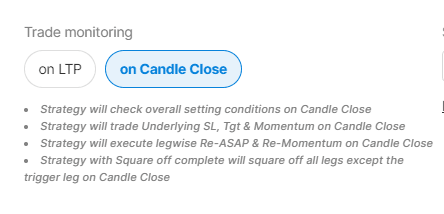
**Why Is It Important?**
- **Similarity to Backtest**: In Backtest, some feature works on candle close. So to align with the [backtest](https://algotest.in/feature/backtest?utm_source=blog&utm_medium=internal&utm_campaign=seo&utm_content=feature&utm_term=backtest) result it is important to use candle close in execution too.
**Backtest vs. Live Trading**
It is important to note that during [backtesting](https://algotest.in/feature/backtest?utm_source=blog&utm_medium=internal&utm_campaign=seo&utm_content=feature&utm_term=backtest), the back tester utilises the 1-minute candle close price in its calculations for certain features such as Overall settings, Re-Asap, and Re-Momentum. If your strategy relies on these features but does not consider the candle close in execution, there may be discrepancies between the [backtest](https://algotest.in/feature/backtest?utm_source=blog&utm_medium=internal&utm_campaign=seo&utm_content=feature&utm_term=backtest) results and live trading. [Click here](https://docs.algotest.in/execution-settings/trade-monitoring) to learn more about this feature.
**Solution**
- **Use Candle Close**: You can use the candle close feature to align with backtest logic in execution settings.
**Additional Pointers**
If you've read this far, you are serious about trading! Here are some extra tips to help you improve:
1. **Use Slippage Estimates**: Start with 0.5% to 1% to account for the difference between expected and actual trade prices.
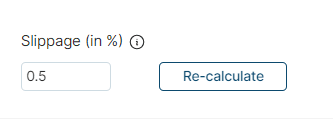
2. **Correct Execution Settings**: Make sure you use the right settings for your strategy. [Click here](https://youtu.be/iI67LDheVyc?si=qNtDXPdZoSzeWGBE) to know the correct execution settings.
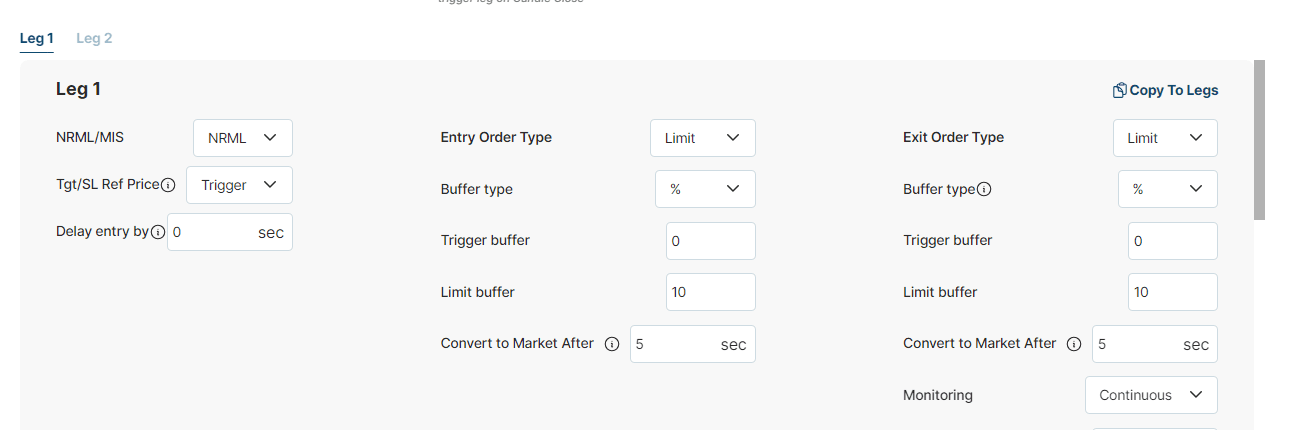
2. **Remember Ideal Prices**: Backtests assume you get the best prices, but live markets have slippage. Always account for this while matching [backtest](https://algotest.in/feature/backtest?utm_source=blog&utm_medium=internal&utm_campaign=seo&utm_content=feature&utm_term=backtest) with [live](https://algotest.in/feature/live?utm_source=blog&utm_medium=internal&utm_campaign=seo&utm_content=feature&utm_term=live).
3. **Avoid Curve Fitting**: Don't make your strategy too perfect for past data. Use tools like the Monte Carlo drawdown simulator to ensure your strategy can handle different market conditions. [Click here](https://youtu.be/0kKn-2xwnok?si=e9RRaL2zS5hIHWg3) to learn about how to use Monte Carlo simulations.
Now, we'll dive deeper into some additional tips and tricks to help you improve your trading strategies and make them work better in live markets.
[**Try Free Backtesting Now**](https://algotest.in/feature/backtest?utm_source=blog&utm_medium=internal&utm_campaign=seo&utm_content=feature&utm_term=backtest)
### **Additional Tips for Successful Trading**
### **1\. Use Slippage Estimates**
**What Is Slippage?**
Slippage is the difference between the price you expect to trade at and the actual price you get. This happens because the market moves quickly, and by the time your order is filled, the price may have changed.

**How to Use Slippage Estimates**
- **Start Small**: Begin with an estimate of 0.5% to 1% for slippage. This means if you plan to buy an option at 100 rupees, expect to buy it at 100.5 to 101 rupees.
- **Adjust as Needed**: If you notice your trades are consistently slipping more than this, adjust your estimate higher.
### **2\. Correct Execution Settings**
**Why Are Execution Settings Important?**
Execution settings are the settings that give you flexibility in order execution type. Using the correct execution settings can make a big difference in your [live](https://algotest.in/feature/live?utm_source=blog&utm_medium=internal&utm_campaign=seo&utm_content=feature&utm_term=live) results. Therefore, it is equally important to use the correct execution settings to maximize results.

**How to Choose the Right Settings**
- **Research and Learn**: First you need to understand how each feature in execution settings works. To know about that [click here](https://docs.algotest.in/execution-settings/).
- **Best Execution Settings:** To know the best execution settings for your strategy you can [watch a video](https://youtu.be/iI67LDheVyc?si=qNtDXPdZoSzeWGBE) uploaded on our YouTube channel.
### **3\. Remember Ideal Prices**
**What Are Ideal Prices?**
In backtesting, the system assumes you always get the best price for your trades. This isn't realistic in [live](https://algotest.in/feature/live?utm_source=blog&utm_medium=internal&utm_campaign=seo&utm_content=feature&utm_term=live) trading because of slippages and market conditions.
**How to Account for This**
- **Include Slippage in Backtests**: Always factor in some slippage when [backtesting](https://algotest.in/feature/backtest?utm_source=blog&utm_medium=internal&utm_campaign=seo&utm_content=feature&utm_term=backtest) to get a more realistic picture of your strategy's performance.
- **Adjust Expectations**: Know that in [live](https://algotest.in/feature/live?utm_source=blog&utm_medium=internal&utm_campaign=seo&utm_content=feature&utm_term=live) trading, you might only sometimes get the ideal price.
### **4\. Avoid Curve Fitting**
**What Is Curve Fitting?**
Curve fitting is when you make your strategy too perfect for past data. It works great in backtests but fails in [live](https://algotest.in/feature/live?utm_source=blog&utm_medium=internal&utm_campaign=seo&utm_content=feature&utm_term=live) markets because it can't handle new situations.
**How to Avoid Curve Fitting**
- **Use In-Sample and Out-Sample Testing**: Test your strategy on different sets of data to see if it works well in all conditions. To learn how to use the in-sample and out-sample features [click here](https://docs.algotest.in/backtest/in-out-sample).
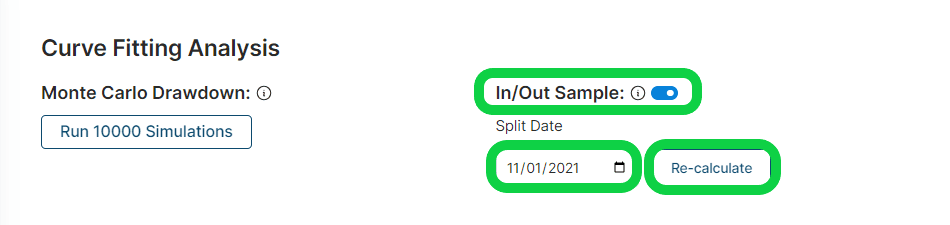
- **Monte Carlo Drawdown Simulator**: Use this tool to get an idea of how much drawdown your strategy may face in case of the worst case. To know how to use Monte Carlo drawdown [click here.](https://youtu.be/0kKn-2xwnok?si=e9RRaL2zS5hIHWg3)

[**Try Free Backtesting Now**](https://algotest.in/feature/backtest?utm_source=blog&utm_medium=internal&utm_campaign=seo&utm_content=feature&utm_term=backtest)
### **Practical Steps to Implement**
**Step 1: Start with a Logical Strategy**
Begin with a logical strategy and test it thoroughly. Make sure it works well in backtests before moving to [live](https://algotest.in/feature/live?utm_source=blog&utm_medium=internal&utm_campaign=seo&utm_content=feature&utm_term=live) trading.
**Step 2: Monitor and Adjust**
Keep an eye on your [live](https://algotest.in/feature/live?utm_source=blog&utm_medium=internal&utm_campaign=seo&utm_content=feature&utm_term=live) trades and compare them to your [backtests](https://algotest.in/feature/backtest?utm_source=blog&utm_medium=internal&utm_campaign=seo&utm_content=feature&utm_term=backtest). Compare your results weekly or monthly. If you get a big difference, analyse trade by trade with [backtest](https://algotest.in/feature/backtest?utm_source=blog&utm_medium=internal&utm_campaign=seo&utm_content=feature&utm_term=backtest) and know the reason. Then work on the reason and rectify the strategy as per the backtest logic.
**Step 3: Gradually Add Complexity**
Once you're comfortable with your basic strategy, start adding more elements. Test each change to see how it affects performance.
### **Real-Life Example**
Let's say you're trading Nifty options. You decide to use a strategy with a 15% stop-loss and a 30% profit target. Here's how you can apply the tips from this blog:
1. **Avoid Deep ITM Strikes**: Choose options that are closer to the current market price.
2. **Use Wider Stop-Losses**: Your 10% stop-loss is a good start. Make sure it's not too tight.
3. **Higher Momentum**: Ensure your entry conditions are not too tight. Use at least 10% momentum.
4. **Avoid Aggressive TSL**: Don't set your trailing stop-loss too close. Give it some room to move.
5. **Limit Re-Entries**: Keep your re-entries to a maximum of three to four.
6. **Use Realistic Data Points**: Set practical targets and stop losses.
7. **Understand Candle Close**: Learn how candle close in execution settings works to better execute your trades.
[**Try Free Backtesting Now**](https://algotest.in/feature/backtest?utm_source=blog&utm_medium=internal&utm_campaign=seo&utm_content=feature&utm_term=backtest)
By following these steps and tips, you can improve your trading strategies and make them more effective in [live](https://algotest.in/feature/live?utm_source=blog&utm_medium=internal&utm_campaign=seo&utm_content=feature&utm_term=live) markets. Here’s a [VIDEO](https://youtu.be/7LTl-97Po_Q?feature=shared), you can check out for more information. Remember, trading is a journey. Keep learning, testing, and adjusting to find what works best for you.
---
This blog is powered by Superblog. Visit https://superblog.ai to know more.
---
## AlgoTest Vs Tradetron: A Detailed Comparison
Author: AlgoTest
Author URL: https://algotest.in/blog/author/algotest/
Published: 2024-08-28
Meta Title: AlgoTest vs Tradetron | Which Software Is Best For Algo Trading?
Meta Description: AlgoTest is India's best algo trading software with AI-powered backtesting. Built for traders who value performance, accuracy, and control.
URL: https://algotest.in/blog/algotest-vs-tradetron-detailed-comparison/
Algo trading, or algorithmic trading, is an automated process of executing trades based on predefined rules and technical indicators. It eliminates the emotional element from trading decisions and allows traders to [backtest](https://algotest.in/feature/backtest?utm_source=blog&utm_medium=internal&utm_campaign=seo&utm_content=feature&utm_term=backtest) their strategies before deploying them with real capital.
Two popular algo trading platforms are [AlgoTest](https://algotest.in/?utm_source=blog&utm_medium=internal&utm_campaign=seo&utm_content=main-page&utm_term=algotest) and Tradetron. This blog post will compare and contrast these two platforms to help you decide which one is right for you.
## AlgoTest vs Tradetron: A Feature Comparison
**Basis****AlgoTest****Tradetron**Platform TypeBackTesting & Algorithmic TradingAlgorithmic TradingStrategy CreationVisual builder, no codingVisual builder, Tricky codingBacktestYes, free backtestingYesPaper TradingYesYesLive TradingYesYesBroker IntegrationYes, with 30+ brokersYesSimulatorYes, FreeNoStrategy BuilderYes, FreeNoChartsYes. Straddle/Strangle/Multi Leg Charts for FreeNoAlgo-TradingYesYesSubscription CostStarting from free backtestingStarts with Paid plansExecution SpeedHigh-speed executionFastLearning ResourcesComprehensiveAdequateCustomization OptionsVery highHighPast Performance AnalysisDetailed reportsStandard reportsReal-Time Customer SupportYes, very responsiveYes, but not highly responsive
## AlgoTest Overview
AlgoTest is a web-based algo trading platform that allows users to design, test, and deploy their strategies. It offers a variety of features, including:
- **Backtesting:** [AlgoTest](https://algotest.in/?utm_source=blog&utm_medium=internal&utm_campaign=seo&utm_content=main-page&utm_term=algotest) allows users to [backtest](https://algotest.in/feature/backtest?utm_source=blog&utm_medium=internal&utm_campaign=seo&utm_content=feature&utm_term=backtest) their strategies on historical data to see how they would have performed in the past. This is essential for identifying any flaws in your strategy before you risk real money.
- **Paper Trading:** AlgoTest also offers paper trading, which allows users to test their strategies with simulated data. This is a great way to get comfortable with algo trading before deploying your strategies with real capital.
- **Algo-Trading:** This functionality allows you to deploy your fully developed strategies to execute trades automatically according to the defined rules.
- **Strategy Builder and Simulator:** AlgoTest offers a user-friendly, code-free interface specifically designed for building, simulating and executing trading strategies.
- Define strategy entry conditions visually.
- Experiment with different parameters to optimize your strategy.
- Simulate your strategy's performance on historical data to assess its potential effectiveness using a Simulator.
- Paper Trade and Live Trade your strategies in the live market using strategy builder.
- **Charts (Free):** AlgoTest provides free charting tools that allow users to perform technical analysis.
- **Daily Trades Analysis:** AlgoTest provides daily trade analysis reports that can help users identify any patterns or trends in their trading activity.
## Tradetron Overview
Tradetron is another popular algo trading platform that offers a variety of features, including:
- **Low Coding Required:** Tradetron empowers users to craft their own trading algorithms, with minimal coding required.
- **Technology:** Tradetron's tech is good for beginner and seasoned traders. But it’s a little tricky to catch up at first.
- **Automate Your Trading:** Tradetron lets you set up auto-pilot trades based on your own ideas, with a little bit of coding requirements.
- **Free Learning:** Tradetron provides free tutorials, guides, articles, and videos to help you at any skill level. So you can keep getting better and better.
- **Pricing:** Tradetron has pricing options that somehow fit your needs. There's a free plan to practise with virtual money, and affordable plans to use your strategies for real trades. You only pay for what you use.
- **Brokerage Integration:** Tradetron integrates with several different brokers, which makes it easy to deploy your strategies with real capital.
- **Backtesting:** Tradetron also offers backtesting capabilities, which allow users to test their strategies on historical data.
- **Paper Trading:** Tradetron offers paper trading, which allows users to test their strategies with simulated data.
## Why Does AlgoTest Stand Out?
Tired of **clunky interfaces and limited features**? [AlgoTest](https://algotest.in/?utm_source=blog&utm_medium=internal&utm_campaign=seo&utm_content=main-page&utm_term=algotest) offers a **powerful and user-friendly algo trading platform** designed to streamline your algo-trading experience.
Here's what sets [AlgoTest](https://algotest.in/?utm_source=blog&utm_medium=internal&utm_campaign=seo&utm_content=main-page&utm_term=algotest) stands out from Tradetron in a few key ways:
- **Founded in 2021:** This platform is a recent entry in the algo-trading space.
- **Free Charting:** AlgoTest provides free charting tools, while Tradetron don’t have any charting tools.
- **Daily Trades Analysis:** AlgoTest provides daily trade analysis reports, which can help identify patterns in your trading activity. Tradetron doesn’t provide deep analysis.
- **Easy to Use:** AlgoTest focuses on a user-friendly interface for strategy creation, with no coding required while Tradetron's user interface is a little bit tricky. Not easy for new users.
- **Free Backtesting:** Get 25 free [backtests](https://algotest.in/feature/backtest?utm_source=blog&utm_medium=internal&utm_campaign=seo&utm_content=feature&utm_term=backtest) every week to assess your strategies while in Tradetron you need to purchase a plan for that.
- **Discretionary Trading:** AlgoTest offers you tools like a simulator and strategy builder to keep up your skill in discretionary trading, while tradetron doesn't have such a facility.
- **Customizable Strategies:** AlgoTest allows you to tailor your trading strategies to your needs.
- **Straightforward Interface:** The platform boasts an intuitive and user-friendly design.
- **Flexible Payment:** AlgoTest uses a credit-based system, so you only pay for what you use.
- **Multi-Broker Integration:** Connect with over 35+ brokers across India.
- **Automated Trading:** Execute your trades on autopilot with AlgoTest's automation features.
- **Active Community:** An active community of 12k + traders. Join [AlgoTest's](https://algotest.in/?utm_source=blog&utm_medium=internal&utm_campaign=seo&utm_content=main-page&utm_term=algotest) Telegram group to connect with other traders.
- **Learning Resources:** Access a wealth of tutorials and guides to hone your trading skills. So, you can keep getting better and better.
- **Free Trial:** Start with 25 free backtests to explore the platform's capabilities.
### **Why is AlgoTest Good for Traders?**
- **Effortless Strategy Building:** AlgoTest simplifies the process of creating and deploying your trading strategies.
- **Free Backtesting:** Regularly assess your strategies with 25 free [backtests](https://algotest.in/feature/backtest?utm_source=blog&utm_medium=internal&utm_campaign=seo&utm_content=feature&utm_term=backtest) each week.
- **All-in-one Toolkit:** AlgoTest offers a comprehensive suite of features for backtesting, forward testing, charting, analysis, live trading, simulations, and signals.
- **Automated Trading:** Eliminate manual intervention and trade based on predefined rules.
- **Precise Analysis:** Gain a clear picture of your strategy's effectiveness.
- **Data-Driven Decisions:** Make informed trading decisions based on comprehensive data analysis.
- **Strategy Optimization:** Fine-tune your strategies quickly to adapt to changing market conditions.
- **Ideal for All Levels:** AlgoTest caters to both beginner and experienced traders with its user-friendly approach and in-depth analysis.
[AlgoTest](https://algotest.in/?utm_source=blog&utm_medium=internal&utm_campaign=seo&utm_content=main-page&utm_term=algotest) is the perfect platform for both novice and experienced traders seeking a user-friendly yet powerful algorithmic trading solution.
**Ready to take your trading to the next level? Sign up for AlgoTest today and realise the potential of smarter, more effective trading!**
## **Conclusion**
For aspiring or seasoned algo traders seeking a platform to refine their skills, [AlgoTest](https://algotest.in/?utm_source=blog&utm_medium=internal&utm_campaign=seo&utm_content=main-page&utm_term=algotest) shines brightly. Its core functionality centres around [backtesting](https://algotest.in/feature/backtest?utm_source=blog&utm_medium=internal&utm_campaign=seo&utm_content=feature&utm_term=backtest), forward testing (paper trading), Algo Trading and a user-friendly strategy builder – all without the need for coding. This makes [AlgoTest](https://algotest.in/?utm_source=blog&utm_medium=internal&utm_campaign=seo&utm_content=main-page&utm_term=algotest) an excellent choice for those new or experienced in the world of algo trading, allowing them to develop and test their strategies before risking real capital.
AlgoTest's free charting tools further enhance your trading skills by doing technical analysis. The daily trade analysis reports add another layer of insight, helping users identify patterns and refine their strategies over time.
While Tradetron offers a good technology aspect, AlgoTest caters to those who want to build their algo-trading foundation from the ground up. With its focus on backtesting and development tools, [AlgoTest](https://algotest.in/?utm_source=blog&utm_medium=internal&utm_campaign=seo&utm_content=main-page&utm_term=algotest) empowers users to become confident algo traders.
Ultimately, the best platform depends on your needs. But if you're a new or experienced algo trader seeking a platform to learn, test, and build your own strategies, AlgoTest is an excellent place to begin your algorithmic trading journey.
## **Frequently Asked Questions (FAQ)**
**1\. Which platform is better, AlgoTest or Tradetron?**
There's no single "better" platform – it depends on your experience level and goals. AlgoTest is ideal for new algo traders as well as experienced ones due to its focus on [backtesting](https://algotest.in/feature/backtest?utm_source=blog&utm_medium=internal&utm_campaign=seo&utm_content=feature&utm_term=backtest), paper trading (forward testing), and a user-friendly, code-free strategy builder. Tradetron might be a better fit for experienced traders who have a little bit of coding mindset.
**2\. Is there a free trial for AlgoTest?**
AlgoTest offers a limited free plan with 25 free backtests per week. This allows you to test the platform's functionality before committing to a paid plan.
**3**. **I don't know how to code. Can I still use AlgoTest?**
Absolutely! Our platform offers visual strategy-building tools that allow you to create and test strategies without writing code.
**4\. Does AlgoTest offer any educational resources?**
AlgoTest offers educational resources considering our focus on new traders. Explore our website for tutorials or documentation, and consider reaching out to our support team for clarification.
**5\. Which platform offers better charting tools?**
AlgoTest provides free basic charting tools for visualizing [backtesting](https://algotest.in/feature/backtest?utm_source=blog&utm_medium=internal&utm_campaign=seo&utm_content=feature&utm_term=backtest) results. Tradetron's charting tools require a paid subscription.
**6\. Does AlgoTest integrate with any brokers?**
We have 30+ brokerage integrations. Our focus seems to be on backtesting and strategy development, as well as live trading execution.
**7\. Where can I find more information about AlgoTest's pricing?**
AlgoTest's website currently doesn't display pricing information. But you will find details on our blog named “ [Detailed Pricing Information For AlgoTest](https://algotest.in/blog/detailed-pricing-information-for-algotest/) “ and by contacting our support team via email at \[ [support@algotest.in](mailto:support@algotest.in) \] or call +91 9810156687 to learn more.
---
This blog is powered by Superblog. Visit https://superblog.ai to know more.
---
## Scandal & Success: Bollywood's Finance & Stock Market Dramas
Author: AlgoTest
Author URL: https://algotest.in/blog/author/algotest/
Published: 2024-08-28
URL: https://algotest.in/blog/best-bollywood-dramas-about-finance-and-stock-market/
Have you ever felt the thrill of the stock market or financial movies? It's like a roller coaster. You earn, you lose, and the numbers keep changing. If you have, you understand the rush. If not, let's explore the stock market through Bollywood movies. These films show how exciting and unpredictable finance can be.

In Bollywood, the Indian stock market is a popular topic. Movies cover finance, big dreams, and the effect of trading on people. They use great stories and acting to explain the stock market clearly. These movies are fun and educational even if you're new to finance. Here are the movies and web series below:--
## **Guru**

Image via [Wikipedia](https://upload.wikimedia.org/wikipedia/en/thumb/c/ca/Guru_2007_poster.jpg/220px-Guru_2007_poster.jpg)
"Guru" is a great movie by director Mani Ratnam. It tells the story of Gurukant Desai, a businessman played by Abhishek Bachchan. The movie follows Desai as he builds his business from nothing during India's economic boom. It's a must-watch for anyone who likes stories about business and overcoming challenges. You'll learn about the financial market, what it's like to run a company, and the tough decisions business leaders sometimes have to make.
**Guru Movie**
DetailInformationRelease DateJanuary 12, 2007DirectorMani RatnamCastAbhishek Bachchan, Aishwarya Rai, Mithun Chakraborty, R. Madhavan, Vidya Balan
[**Try Free Backtesting Now**](https://algotest.in/feature/backtest?utm_source=blog&utm_medium=internal&utm_campaign=seo&utm_content=feature&utm_term=backtest)
## **Baazaar**

Image via [IMDb](https://m.media-amazon.com/images/M/MV5BMzBlMjNjNzItYTJiYy00MmIxLWI0MTEtOTRmZDM2ZWY4NGIwXkEyXkFqcGdeQXVyODE5NzE3OTE@._V1_.jpg)
"Baazaar" is a Bollywood film that dives into finance and stock trading. It came out in 2018. The story is an exciting ride through India's stock market. It stars Saif Ali Khan. The film is about ambition, greed, and the tough choices traders face.
It shows the risks and rewards of trading. "Baazaar" brings the competitive, risk-taking, and success-driven nature of finance to life. It makes viewers understand the complicated world of trading and the desire for wealth.
"Baazaar" is a good movie that provides a good competition with Hollywood films about finance. "Wall Street" (1987), "The Wolf of Wall Street" (2013), "The Big Short" (2015), and "Margin Call" (2011) also draw audiences with their stories about the market.
However, these movies are meant for entertainment and thought, not to teach you everything about trading. They give a peek into the finance world. "Baazaar" also does this but with a focus on the Indian stock market.
Its strong story and performances make "Baazaar" stand out among **Bollywood films about finance**. It's a good pick if you like movies that explore the stock market.
**Baazaar Movie**
DetailInformationRelease DateOctober 26, 2018Director(s)Gauravv K. ChawlaCastSaif Ali Khan, Rohan Vinod Mehra (debut), Radhika Apte, Chitrangada Singh
## **Scam 1992**

Image via [Wikipedia](https://upload.wikimedia.org/wikipedia/en/c/c8/Scam_1992_poster.png)
"Scam 1992" is a well-loved Indian web series about Harshad Mehta. He was a big deal in the stock market in the 90s. The show came out in 2020 and talks about stock trading and the harm of not being honest3. It's a must-watch because of its story and acting. You can learn much about Indian finance and how cheating can hurt everyone.
The series shows what happened in the stock market back then. Viewers get to see the excitement and bad parts of finance. It tells the story of Harshad Mehta and how his actions harmed many. "Scam 1992" warns us about the dangers of greed and cheating in stock trading.
**Scam 1992: The Harshad Mehta Story**
DetailInformationRelease DateOctober 9, 2020Director(s)Hansal Mehta, Jai MehtaCastPratik Gandhi, Shreya Dhanwanthary, Hemant Kher, Nikhil Dwivedi
[**Try Free Backtesting Now**](https://algotest.in/feature/backtest?utm_source=blog&utm_medium=internal&utm_campaign=seo&utm_content=feature&utm_term=backtest)
## **The Big Bull**

Image via [Wikipedia](https://upload.wikimedia.org/wikipedia/en/thumb/3/34/The_Big_Bull_Film.jpg/220px-The_Big_Bull_Film.jpg)
"The Big Bull" is a fascinating Bollywood movie inspired by true stories from the Indian stock market. It stars Abhishek Bachchan and Ileana D'Cruz. The film is about Hemant Shah, a stockbroker who dreams of dominating the Bombay Stock Exchange in the 1980s and 1990s.
This engaging drama discusses stock market manipulation, governance, and personal ambition in the finance world. It delves into the intricacies of the stock market. With its story and acting, "The Big Bull" explains how brokers' and traders' choices affect the market.
**"The Big Bull" shows a stock market broker going from the Mumbai chawls to leading the Bombay Stock Exchange in the 1990s.**
The movie's complex plot shows how stock market movements can have widespread effects. It shows the moral challenges people face to grow rich and successful. And it looks at the cost of their actions in the high-stakes finance world.
"The Big Bull" truly captures the essence of the stock market and how it affects people's lives. It's a story about the opportunities and dangers of investing and trading.
**Key Information about "The Big Bull"**
DetailInformationRelease DateApril 8, 2021DirectorKookie GulatiCastAbhishek Bachchan, Ileana D’Cruz, Nikita Dutta
[**Try Free Backtesting Now**](https://algotest.in/feature/backtest?utm_source=blog&utm_medium=internal&utm_campaign=seo&utm_content=feature&utm_term=backtest)
## **Gafla**

Image via [IMDb](https://m.media-amazon.com/images/M/MV5BMDEwYWNhODEtNTRiZi00ZTZmLWIzM2UtZGMxYTg1NTNiYjA1XkEyXkFqcGdeQXVyODE5NzE3OTE@._V1_.jpg)
"Gafla" is a Bollywood movie about stock market scams. It tackles the issue of insider trading. The film was directed by Sameer Hanchate and came out in 2006.
It shows how financial markets can have a dark side, with people doing anything for money and power. "Gafla" explains the dangers of market manipulation. It highlights why being honest and ethical in finance is crucial.
**Gafla Movie**
DetailInformationRelease DateOctober 6, 2006DirectorSameer HanchateCastVinod Sharawat, Shruti Ulfat, Vikram Gokhale, Brijendra Kala
## **Corporate**

Image via [Bollywood Hungama](https://media5.bollywoodhungama.in/wp-content/uploads/2016/03/60512108.jpg)
"Corporate" is a Bollywood movie that dives deep into the finance corporate life. It's filled with a strong story and great acting. The film teaches us a lot about the challenges companies face and the tough decisions people in finance make.
The movie focuses on the drive to succeed and fierce competition in the stock market. Viewers are taken on a thrilling journey. They learn about the pressures faced by those aiming for the top.
You'll see power struggles, clever moves, and tricky ethics in the film. It highlights the hidden aspects of finance and makes us think about moral standards.
"Corporate" is another film in Bollywood's exploration of finance and business. It talks about the obstacles businesses and their people come across. The movie also stresses the need for honesty in a world focused on winning and greed.
The film is not just a captivating story with great acting. It also shows the true face of the stock market and business world.
In summary, "Corporate" is a must-see for those curious about finance and tough life choices. It shows the effects of being ambitious and competitive on the business culture.
**Corporate Movie (2006)**
DetailInformationRelease Date7 July 2006DirectorMadhur BhandarkarCastBipasha Basu, Kay Kay Menon, Payal Rohatgi, Minissha Lamba, Raj Babbar
[**Try Free Backtesting Now**](https://algotest.in/feature/backtest?utm_source=blog&utm_medium=internal&utm_campaign=seo&utm_content=feature&utm_term=backtest)
## **Conclusion**
Bollywood has created many interesting films about the Indian stock market. These movies are entertaining and also teach us about finance, trading, and how the stock market can affect people's lives. They talk about ambition, greed, and how markets can be manipulated. They show us the results of acting unethically. By watching these films, we can learn more about the stock market and how the financial world works.
"Scam 1992" is also highly praised with a 9.6/10 rating on IMDb. It is both very educational and entertaining. Films like "Gafla," have won critical acclaim too. They help us understand financial markets better.
The Bollywood films reveal how the stock market works. They deal with big topics like corruption and crime in finance. These films remind us that the stock market affects society in many ways. They are great for anyone who loves finance or just wants to watch something exciting and learn at the same time.
Get your popcorn ready for an exciting journey into the Indian stock market. The top Bollywood movies offer a look into economic trends and finance markets. These films are essential for anyone who wants to know more about finance and the stock market.
P.S. - **Sharpen your trading skills from the comfort of your couch!** [**AlgoTest**](https://algotest.in/?utm_source=blog&utm_medium=internal&utm_campaign=seo&utm_content=main-page&utm_term=algotest) lets you try out your strategies with [**25 FREE backtests**](https://algotest.in/feature/backtest?utm_source=blog&utm_medium=internal&utm_campaign=seo&utm_content=feature&utm_term=backtest). See how they would have performed historically before risking real money. Plus, catch up on the above classic finance/stock market movies while you're at it. [**Sign up for AlgoTest today**](https://algotest.in/?utm_source=blog&utm_medium=internal&utm_campaign=seo&utm_content=main-page&utm_term=algotest) and take control of your trading future!
## **FAQ**
### **Are there any Bollywood movies about the Indian stock market?**
Yes, several Bollywood movies are centred on the Indian stock market as well as the financial perspective. They dive into finance, trading, and how the market affects people. These films are quite insightful.
### **What is "Baazaar" about?**
"Baazaar" is a Bollywood movie focused on finance and stock market trading. It tracks a young stockbroker's journey in the competitive Indian stock market. It talks about greed, ambition, and the dilemmas traders face.
### **What is "Scam 1992" based on?**
"Scam 1992" depicts the true story of Harshad Mehta, a stockbroker. He was part of a major financial scam in India. The series shows market trading details, manipulation, and the impact of unethical actions.
### **What is "The Big Bull" about?**
"The Big Bull" is inspired by true events in the Indian stock market. It follows Hemant Shah’s journey to shine in the Bombay Stock Exchange during the 80s and 90s. The film talks about market manipulation, business ethics, and strong desires.
### **What does "Gafla" shed light on?**
"Gafla" explores stock market scams and insider trading. It reveals the hidden side of financial markets. The movie shows how chasing riches through deceit can lead to serious outcomes.
### **What is depicted in "Corporate"?**
"Corporate" looks at the corporate field. It highlights intense ambition and competition, especially in finance. The film discusses business challenges and the moral issues faced by professionals.
### **Why should I watch movies about the stock market?**
Bollywood movies based on the stock market provide both entertainment and deep financial insights. They help us understand the stock market's role in our lives. And they do it in a captivating way.
---
This blog is powered by Superblog. Visit https://superblog.ai to know more.
---
## AlgoTest vs Opstra: A Detailed Comparison for Algorithmic Options Traders
Author: AlgoTest
Author URL: https://algotest.in/blog/author/algotest/
Published: 2024-08-28
Meta Title: AlgoTest vs Opstra | Which Software Is Best For Algo Trading?
Meta Description: AlgoTest is India's best algo trading software with AI-powered backtesting. Built for traders who value performance, accuracy, and control.
URL: https://algotest.in/blog/algotest-vs-opstra/
Have you ever felt overwhelmed by the complexity of options trading? You're not alone. Just like building a house requires the right tools and foundation, venturing into the world of options trading demands a platform that perfectly suits your needs. Choosing the right platform is critical for beginners, as it empowers you to develop, test, and confidently deploy your trading strategies.
Two leading platforms have emerged as strong contenders: [AlgoTest](https://algotest.in/?utm_source=blog&utm_medium=internal&utm_campaign=seo&utm_content=main-page&utm_term=algotest) and Opstra. Both are armed with powerful features, but they each have unique strengths that cater to specific types of traders. This comprehensive comparison aims to be your guide, meticulously dissecting the functionalities of AlgoTest and Opstra to help you make an informed decision and select the platform that perfectly aligns with your options trading aspirations.
## **AlgoTest vs Opstra: A 22-Point Tabular Comparison**
Check out below a detailed comparison of [AlgoTest](https://algotest.in/?utm_source=blog&utm_medium=internal&utm_campaign=seo&utm_content=main-page&utm_term=algotest) and Opstra across 22 key points:
Feature
AlgoTest
Opstra
Free Trial
Offers 25 free backtests every week on Monday. Strategy builder as well as simulator are free to use.
Free trial availability might be limited
Backtesting Engine
Powerful Backtesting Engine
Basic backtesting capabilities
Data Availability
Extensive historical and real-time data for indices like Nifty, Bank Nifty, Finnifty, Sensex, Bankex and Nifty Midcap.
Limited data options like Nifty, Bank Nifty, Finnifty and Nifty Midcap only.
Strategy Builder
User-friendly drag-and-drop interface for building complex strategies
Not very user-friendly
Simulator
Yes. Free Options Simulator
Yes. Paid
Strategy BackTesting
Yes. Advanced BackTester with 25 Free BackTest Every Week
Yes. Basic BackTest and Paid
Paper Trading
Yes
Yes
Live Trading
Yes
Yes, but a limited option
Algo Trading
Yes
No
Broker Support
Yes, Integrated with 50+ Brokers
Only 1 broker supported
TradingView/Chartink/Python/Custom Code
Yes
No
Charts
Straddle/Strangle/Multi Leg Advanced Charts
Basic Charts
Option Greeks Analysis
Yes
Yes
Community & Support
Active Telegram community and dedicated support team
Limited community and support resources
Learning Resources
Extensive blog posts, documents, options trading tutorials for free, webinars and courses
Fewer learning resources are available
Pricing
Cost-effective, starts with Rs. 499/-
Costly, starts at Rs. 1300/month
Ease of Use
Designed for both beginners and experienced traders
Might have a steeper learning curve for beginners
Platform
Web-based platform accessible from any device
Web-based platform
Customer Reviews
Generally positive reviews highlighting backtesting capabilities and ease of use
Reviews may vary depending on user experience
MTM Graph
Yes
No
Customization
High degree of customization for strategies and analysis
Limited customization options
Scalability
Scales to accommodate complex strategies with high-volume
Scalability features might be less developed
## **Key Considerations for Options Traders**
Before diving into specifics, let's consider the key factors algorithmic options traders prioritise:
- **Backtesting Engine:** A robust [backtesting](https://algotest.in/feature/backtest?utm_source=blog&utm_medium=internal&utm_campaign=seo&utm_content=feature&utm_term=backtest) engine is vital for evaluating strategy performance under historical market conditions.
- **Data Availability:** Access to high-quality historical and real-time market data is essential for backtesting and [live](https://algotest.in/feature/live?utm_source=blog&utm_medium=internal&utm_campaign=seo&utm_content=feature&utm_term=live) trading.
- **Strategy Builder:** A user-friendly strategy builder lets you easily construct and refine your strategies.
- **Paper Trading:** [Paper trading](https://algotest.in/paper-trading) allows you to test your strategies in a simulated environment without risking real capital.
- **Live Trading:** Seamless integration with brokers for [live](https://algotest.in/feature/live?utm_source=blog&utm_medium=internal&utm_campaign=seo&utm_content=feature&utm_term=live) execution of your strategies.
- **Option Greeks Analysis:** Understanding [Greeks (Delta, Gamma, Vega, Theta, Rho)](https://youtu.be/IaO7U4wdsVE?si=sPjwNeRFngD7yq4t) is vital for options traders. A platform that facilitates this analysis is highly desirable.
- **Margin Calculator:** A [margin calculator](https://algotest.in/margin-calculator) helps you estimate the margin required for options positions.
- **Pricing:** Pricing models should be transparent and cater to different user needs.
## **AlgoTest vs Opstra**
For a clear comparison, let's analyse these platforms across key aspects:
1. **Target Audience:**
- **AlgoTest:** Caters to both beginners and experienced options traders with its user-friendly interface and advanced features.
- **Opstra:** Primarily targets experienced options traders with a steeper learning curve.
2. **Backtesting Capabilities:**
- **AlgoTest:** Offers robust [backtesting](https://algotest.in/feature/backtest?utm_source=blog&utm_medium=internal&utm_campaign=seo&utm_content=feature&utm_term=backtest) with historical data for options trading across various indices (Nifty, Bank Nifty, Finnifty, MidCPNifty Sensex, Bankex etc.) and Crypto as well.
- **Opstra:** Backtesting capabilities might be limited compared to AlgoTest.
3. **Algo Trading:**
- **AlgoTest:** Yes you can do Algo Trading on [AlgoTest](https://algotest.in/?utm_source=blog&utm_medium=internal&utm_campaign=seo&utm_content=main-page&utm_term=algotest).
- **Opstra:** No, it doesn’t provide an Algo Trading feature.
4. **Paper Trading:**
- **AlgoTest:** Provides a paper trading [simulator](https://algotest.in/feature/simulator?utm_source=blog&utm_medium=internal&utm_campaign=seo&utm_content=feature&utm_term=simulator) for risk-free strategy testing.
- **Opstra:** Paper trading functionality is not available for algorithmic trading.
5. **Live Trading:** ( **Note:** Both platforms require integration with a broker for [live](https://algotest.in/feature/live?utm_source=blog&utm_medium=internal&utm_campaign=seo&utm_content=feature&utm_term=live) trading)
- **AlgoTest:** Supports [live](https://algotest.in/feature/live?utm_source=blog&utm_medium=internal&utm_campaign=seo&utm_content=feature&utm_term=live) trading with features like M2M (mark-to-market) and Indicator-based automation.
- **Opstra:** Live trading functionality is available but only limited to one broker.
6. **Strategy Builder:**
- **AlgoTest:** Offers a user-friendly strategy builder for creating and customizing options strategies.
- **Opstra:** Strategy-building capabilities might be less intuitive and need advanced features.
7. **Option Greeks Analysis:**
- **AlgoTest:** Provides a comprehensive analysis of option Greeks (Delta, Gamma, Theta, etc.) to understand strategy behaviour.
- **Opstra:** Analysis of option Greeks are available, but not so comprehensive.
8. **Margin Calculator:**
- **AlgoTest:** Features a built-in NSE F&O margin calculator for options trading.
- **Opstra:** Margin calculator functionality might be absent or require integration with external tools.
9. **Pricing:**
- **AlgoTest:** [AlgoTest](https://algotest.in/?utm_source=blog&utm_medium=internal&utm_campaign=seo&utm_content=main-page&utm_term=algotest) plans are cost-friendly and plans start with 499/- INR.
- **Opstra:** Opstra plans are costly and the plan starts at 1300 INR.
Here’s an in-depth Price Comparison Between AlgoTest and Opstra:
### **Price Comparison**
Basic (Feature)
AlgoTest \*\*
AlgoTest Plan (Monthly)
Opstra\*
Credits Pricing
– Starter: Rs 499 for 500 credits
– Explorer: Rs 999 for 1100 credits
– Pro: Rs 2499 for 3000 credits
– Premier: Rs 5999 for 7500 credits
Monthly Premium Plan: INR 1,300
6 Months Premium Plan: INR 6,000
Annual Premium Plan: INR 11,000
\\* Other Details like Features are shown in the table below.
Credits Usage
– Live Trading: 100 credits per strategy per 28 days
– Forward Testing: 50 credits per strategy per 28 days
– Backtesting: 1 credit per backtest
– Signals: 999 credits for 28 days or 4999 credits for 168 days
– Live Trading: 100 credits per strategy per 28 days
– Pro-rata pricing: Cost decreases as the billing cycle progresses
– Forward Testing: 50 credits per strategy per 28 days
– Pro-rata pricing: Cost decreases as the billing cycle progresses
– Limited plans: No expiry
– Unlimited Weekly: 799 credits for 7 days
– Unlimited Monthly: 2499 credits for 28 days
– Free Backtests: 25 per week
– Paid Backtests: Rs 1 per backtest
Signals
– 999 credits for 28 days (unlimited live trades and forward tests)
– 4999 credits for 168 days (unlimited live trades and forward tests)
– No specific details available
– 999 credits for 28 days (unlimited live trades and forward tests)
– 4999 credits for 168 days (unlimited live trades and forward tests)
Other Details
– Credits have no expiry
– Unused free backtests do not accumulate
– No specific details available
– No specific details available
**** **AlgoTest Features:**
Feature
Description
Backtesting Options
Enables free backtesting of options trading strategies for Banknifty, Nifty, Finnifty, Nifty Midcap, Sensex and Bankex in the Indian market.
Paper Trading
Allows users to simulate trades without risking real money to test their strategies in real-market conditions.
Live Trading
Facilitates execution of trading strategies in live market environments.
Simulator
Provides a simulation environment to practice trading strategies in real-time market conditions.
Strategy Builder
Offers tools to construct and customize trading strategies easily.
TradingView/ChartInk Support
Integrates with TradingView and Chartink for automation of strategies.
Instrument Settings
Allows customization of different trading instruments to suit individual needs.
Entry and Exit Timing
Provides precise control over the timing of trade entries and exits.
Leg Builder
Facilitates the construction of complex trading strategies with multiple legs.
Legwise Settings
Offers individual settings for each leg within a trading strategy.
Re-Entry on Stop-Loss (SL)
Configures the system to re-enter trades based on predefined stop-loss criteria.
User-Friendly Interface
Designed to be accessible for users with no coding skills, making it easy to use.
Strategy Deployment
Enables users to deploy backtested trading strategies seamlessly.
Documentation and Guides
Provides comprehensive documentation and tutorials to assist users in utilizing the platform effectively.
1. **Community:**
1. **AlgoTest:** [AlgoTest](https://algotest.in/register?utm_source=blog&utm_medium=internal&utm_campaign=seo&utm_content=main-page&utm_term=algotest) fosters a thriving community of over 14,000 plus traders. This active forum provides a platform for knowledge sharing, where users can ask questions, share experiences, and learn from each other's successes and challenges. The community is a valuable resource for both beginners seeking guidance and experienced traders looking to refine their strategies.
2. **Opstra:** Information regarding Opstra's community is less prominent. While they don’t offer a community forum or other resources for user interaction, details about its activity level or specific functionalities are not readily available. This lack of transparency could pose a challenge for users seeking knowledge-sharing or peer-to-peer learning opportunities.
2. **Support:**
1. **AlgoTest:** AlgoTest goes beyond a community by offering dedicated customer support. Their team provides real-time assistance, ensuring you have the help you need whenever you encounter technical issues or have questions about the platform.
2. **Opstra** likely offers some form of customer support. However, without readily available information on their support channels or response times, it's difficult to assess the effectiveness of their support system. This lack of transparency could be a concern for users who require timely assistance with platform functionalities or troubleshooting issues.
3. **Customization:**
1. **AlgoTest:** Offers some level of customization for strategy development and user interface preferences.
2. **Opstra:** Customization options might be limited.
4. **Technical Indicators:**
1. **AlgoTest:** Supports a wide range of technical indicators for paper trading and [live](https://algotest.in/feature/live?utm_source=blog&utm_medium=internal&utm_campaign=seo&utm_content=feature&utm_term=live) deployment.
2. **Opstra:** The availability of technical indicators might be limited compared to AlgoTest.
5. **Broker Integration:**
1. **AlgoTest:** Integrates with 50+ brokers for seamless [live](https://algotest.in/feature/live?utm_source=blog&utm_medium=internal&utm_campaign=seo&utm_content=feature&utm_term=live) trading execution.
2. **Opstra:** Integration is limited to only one broker.
6. **Security Features:**
1. **AlgoTest:** Prioritizes robust security measures to protect user data and trading strategies.
2. **Opstra:** Security features might be less in Opstra.
## **AlgoTest's Strengths: Deep Dive**
As you can see from the comparison table, [AlgoTest](https://algotest.in/?utm_source=blog&utm_medium=internal&utm_campaign=seo&utm_content=main-page&utm_term=algotest) shines in several areas crucial for options traders:
- **Backtesting Engine:** AlgoTest boasts a powerful [backtesting](https://algotest.in/feature/backtest?utm_source=blog&utm_medium=internal&utm_campaign=seo&utm_content=feature&utm_term=backtest) engine with multi-threaded processing, allowing you to thoroughly test your strategies under various market conditions.
- **Data Availability:** AlgoTest provides extensive historical and real-time data for options and indices like Nifty, BankNifty, Finnifty, Sensex, Bankex, Midcap Nifty etc. This comprehensive data feed empowers you to backtest and refine your strategies based on real-world market behaviour.
- **Strategy Builder:** AlgoTest's user-friendly drag-and-drop interface streamlines strategy building. It allows you to effortlessly construct complex options strategies by visually adding and configuring different components. This intuitive approach makes [AlgoTest](https://algotest.in/?utm_source=blog&utm_medium=internal&utm_campaign=seo&utm_content=main-page&utm_term=algotest) accessible to both beginners and experienced traders.
- **Paper Trading:** AlgoTest's free paper trading functionality allows you to test your strategies in a simulated market environment without risking real capital. This is invaluable for gaining confidence in your strategies before deploying them with real money.
- **Live Trading:** AlgoTest integrates seamlessly with multiple brokers, enabling [live](https://algotest.in/feature/live?utm_source=blog&utm_medium=internal&utm_campaign=seo&utm_content=feature&utm_term=live) execution of your indicator-based and algorithmic strategies. Additionally, it provides a free M2M (Market-to-Market) order functionality.
- **Option Greeks Analysis:** AlgoTest provides comprehensive analysis tools for all Greeks (Delta, Gamma, Vega, Theta, Rho). Understanding these Greeks is crucial for options traders, and AlgoTest empowers you to effectively analyze them to make informed trading decisions.
- **[Margin Calculator](https://algotest.in/blog/margin-calculator-by-algotest/):** AlgoTest features a built-in NSE F&O margin calculator, a valuable tool for options traders in India. This calculator helps you estimate the margin required for your options positions, ensuring you have sufficient capital to execute your trades.
- **Community & Support:** AlgoTest fosters an active community forum where users can share knowledge, ask questions, and learn from each other. Additionally, their dedicated support team provides prompt and helpful assistance when needed.
- **Learning Resources:** AlgoTest offers a wealth of learning resources, including blog posts, tutorials, and webinars. These resources cover a wide range of topics related to options trading and algorithmic strategy development.
- **Pricing:** AlgoTest's pricing structure is transparent and offers various plans to suit individual needs. This lets you choose the plan that best aligns with your trading volume.
### **Focus on AlgoTest: Why it Stands Out for Options Traders**
While both AlgoTest and Opstra cater to help in trading efficiently, [AlgoTest](https://algotest.in/?utm_source=blog&utm_medium=internal&utm_campaign=seo&utm_content=main-page&utm_term=algotest) exhibits a clear focus on options trading. This focus translates into several advantages for options traders:
- **Advanced Backtesting for Options Strategies:** AlgoTest's [backtesting](https://algotest.in/feature/backtest?utm_source=blog&utm_medium=internal&utm_campaign=seo&utm_content=feature&utm_term=backtest) engine is specifically designed to handle options strategies effectively. It can account for factors like early exercise, assignment, and margin requirements, providing a more accurate picture of your strategy's performance under various scenarios.
- **NSE F&O Margin Calculator:** This built-in calculator is a valuable tool for options traders in India, simplifying margin estimation for their positions.
- **Community Forum on Options:** [AlgoTest's](https://algotest.in/?utm_source=blog&utm_medium=internal&utm_campaign=seo&utm_content=main-page&utm_term=algotest) active community forum is predominantly populated by options traders, fostering a knowledge base and discussions specifically tailored to options strategies and challenges.
## **Choosing the Right Platform**
Ultimately, the best platform for you depends on your individual needs and experience level. If you're an options trader seeking a platform specifically designed for [backtesting](https://algotest.in/feature/backtest?utm_source=blog&utm_medium=internal&utm_campaign=seo&utm_content=feature&utm_term=backtest), developing, and deploying options strategies, [AlgoTest](https://algotest.in/?utm_source=blog&utm_medium=internal&utm_campaign=seo&utm_content=main-page&utm_term=algotest) is a strong contender. Its user-friendly interface, powerful [backtesting](https://algotest.in/feature/backtest?utm_source=blog&utm_medium=internal&utm_campaign=seo&utm_content=feature&utm_term=backtest) engine, and comprehensive features make it a valuable tool for both beginners and experienced options traders.
## **Conclusion**
In conclusion, while both AlgoTest and Opstra cater to traders, [AlgoTest](https://algotest.in/?utm_source=blog&utm_medium=internal&utm_campaign=seo&utm_content=main-page&utm_term=algotest) stands out for its laser focus on options trading. With its user-friendly interface, robust backtesting engine, and feature-rich platform, AlgoTest empowers algorithmic options traders to achieve their goals.
**Ready to take your options trading to the next level?** Get started with [AlgoTest](https://algotest.in/?utm_source=blog&utm_medium=internal&utm_campaign=seo&utm_content=main-page&utm_term=algotest) today! Contact their customer care via email at [support@algotest.in](mailto:support@algotest.in) to learn more.
---
This blog is powered by Superblog. Visit https://superblog.ai to know more.
---
## All You Need to Know About Margin Pledge: A Complete Overview
Author: AlgoTest
Author URL: https://algotest.in/blog/author/algotest/
Published: 2024-08-28
URL: https://algotest.in/blog/what-is-margin-pledge-your-complete-guide/

## **Introduction**
Have you ever wanted to use your existing stocks to buy even more stocks? That's what the margin pledge is all about. It's like using your stocks as a deposit to get extra money for trading. This can be a great way to boost your returns and try out new investment ideas. But there are some things to keep in mind, like the risks and some special rules about pledging certain stocks. Let's break it all down so you can use the margin pledge like a pro.
## **Understanding Margin Pledge**
Imagine you own some stocks you're confident about for the long haul, but an exciting new investment opportunity pops up. Margin pledge can help you seize both! It allows you to use your existing stocks as collateral for a loan to buy new ones. This way, you get extra cash without selling your current holdings. Sounds like a win-win, right? There's a catch though. Think of it like a loan with your stocks on the line. If the market tumbles and your stocks lose value, you might need to add more money to your account or even be forced to sell your stocks to repay the loan. So, understanding the risks and using margin pledge strategically is crucial. There are also specific rules about which stocks you can use this way, but we'll cover that later.
[**Try Free Backtesting Now**](https://algotest.in/feature/backtest?utm_source=blog&utm_medium=internal&utm_campaign=seo&utm_content=feature&utm_term=backtest)
### **Definition and Basics of Margin Pledge**
Margin pledge offers a strategic tool for investors seeking to enhance their trading capabilities. It allows you to leverage your existing holdings in a demat account. By pledging these securities as collateral, you can potentially access additional buying power to meet margin requirements. However, it's important to remember that the pledged stocks remain under the broker's control within your account. If your margin falls below a certain level (margin shortfall), the broker has the authority to sell these pledged securities to recover the loaned amount. Since margin pledge is a SEBI-regulated practice implemented by stock exchanges, understanding its mechanics is essential for optimizing your trading strategies.
### **How Margin Pledge Works in the Stock Market**
A margin pledge is like using your stock portfolio as a credit card for trading. You can borrow money from your broker by putting up your existing stocks, ETFs, or even some government bonds as collateral.
Here's the catch: the broker won't lend you the full value of your holdings. They'll apply for a haircut, which is basically a discount, so you'll get a loan for a portion of the value. So, let's say your stocks are worth ₹10,000, the broker might only lend you ₹ 7,000. This difference is called a haircut.
This borrowed money acts as extra buying power, allowing you to trade in more stocks without selling your current ones. But remember, if your investments lose value and you can't repay the loan, the broker can sell your pledged stocks to get their money back.
## **The Benefits of Margin Pledge**
Margin pledge can be a powerful tool for investors, but it's important to understand the advantages and disadvantages before diving in. Here's how margin pledge can benefit you:
- **More Trading Opportunities:** Imagine seeing a hot stock but lacking the cash to buy it. Margin pledge lets you use your existing investments as collateral for a loan, giving you the extra buying power to jump on those opportunities.
- **Boost Your Leverage:** Let's say you have ₹10,000 in stocks. With margin pledge, you might be able to borrow an additional ₹7,000 (depending on the broker's haircut). This effectively increases your buying power to ₹17,000, allowing you to control a larger position in the market.
- **Potentially Higher Returns:** With more money to invest, you have the potential to earn higher returns. However, remember that this is a double-edged sword - potential losses can also be amplified.
- **No Need to Sell Holdings:** Unlike selling your stocks to raise cash, a margin pledge lets you keep your existing investments while still accessing extra funds. This can be a good strategy if you believe in your long-term holdings.
[**Try Free Backtesting Now**](https://algotest.in/feature/backtest?utm_source=blog&utm_medium=internal&utm_campaign=seo&utm_content=feature&utm_term=backtest)
### **Leveraging Investments with Margin Pledge**
Margin pledge lets you invest more in the market without needing all the cash upfront. Here's the idea: you use your existing stocks or investments as collateral for a loan from your broker. This loan gives you extra buying power to trade more stocks.
Think of it like this: you have a house, but you want to buy a car. With a margin pledge, it's like using your house as a guarantee for a car loan. The bank lends you money, but they technically have some control over your house until the loan is repaid. It's similar to a margin pledge - the broker lends you money based on the value of your investments, but they can sell those investments to get their money back if things go wrong.
The upside? You can potentially make more money by investing more. But there's a catch - you're borrowing money, so there are risks involved. Just remember, using margin pledge is like riding a bike with training wheels - great for getting started, but you need to be careful and know how to manage the risks.
### **Impact on Trading Flexibility and Opportunities**
Margin pledges can dramatically increase trading freedom and prospects. By using pledged shares as collateral margin, traders can gain access to more cash to multiply their assets, allowing them to capitalize on more trading opportunities.
This greater liquidity enables faster decision-making, particularly in volatile market situations. Furthermore, margin pledges allow traders to diversify their portfolios without the requirement for immediate money, providing new opportunities for increasing rewards while limiting risks.
[**Try Free Backtesting Now**](https://algotest.in/feature/backtest?utm_source=blog&utm_medium=internal&utm_campaign=seo&utm_content=feature&utm_term=backtest)
## **The Process of Margin Pledging: Step-by-Step and Easy**
Margin pledge might sound complicated, but it can actually be done quite easily. Here's a breakdown of the process:
**How it Works:**
- You tell your broker which of your investments you want to pledge as collateral (think of it like using your investments as a guarantee for a loan).
- The broker checks the details and approves your request.
- Once approved, the pledged shares are transferred to the broker's account (but they don't technically take ownership).
- This allows you to borrow money based on the value of your pledged investments (with a haircut, meaning you won't get the full value).
- You can then use this borrowed money to buy more stocks and increase your buying power.
**Steps to Pledge Your Investments:**
1. **Log in to your trading account:** This is where you'll initiate the pledge request.
2. **Find the pledge option:** Look for a section on pledging or collateral and select the investments you want to use.
3. **Enter details and submit:** Specify the quantity and company of the stocks you're pledging. Double-check everything before submitting.
4. **Verify with OTP:** You'll receive a one-time password on your phone or email for confirmation. Enter the OTP to complete the pledge.
**Eligibility:**
- Generally, you need to be over 18 and have a trading account.
- Your broker or depository (NSDL/CDSL) might have additional requirements.
- The pledged investments must meet the margin requirement set by your broker.
**Remember:** Before you pledge, make sure you understand the risks involved (we'll cover those next) and comply with all the rules from NSDL and CDSL.
[**Try Free Backtesting Now**](https://algotest.in/feature/backtest?utm_source=blog&utm_medium=internal&utm_campaign=seo&utm_content=feature&utm_term=backtest)
## **Risks and Considerations**
Knowing the risks that are connected with margin pledges is critical for all investors. Potential risks include margin shortfalls, which might result in the liquidation of pledged equities, altering market circumstances that impact collateral value, and the requirement for further margin. To minimize unfavourable consequences, risk mitigation requires remaining educated about market trends, continuously monitoring margin needs, and responding quickly to any margin calls. Careful analysis and risk management are required when using margin pledges to protect investments and maintain financial stability in the stock market.
### **Understanding the Risks Associated with Margin Pledge**
Margin pledges have risks such as margin shortfalls, which may necessitate extra margin and may result in margin calls. Market swings might cause the liquidation of pledged shares, resulting in financial loss. Non-compliance with margin requirements may result in penalties or trading restrictions. Understanding these risks, especially the significance of prompt share pledging is critical for good investment management. Mitigating techniques include monitoring market developments, having appropriate cash, and being educated about the pledge's terms and conditions. Navigating the volatility of margin trading requires careful risk assessment.
### **Mitigating Risks When Using Margin Pledge**
Margin pledge can be a valuable tool, but it's important to manage the risks involved. Here are some key strategies:
- **Diversify Your Pledged Stocks:** Don't put all your eggs in one basket! Spread your pledged securities across different industries and asset classes to reduce risk.
- **Stay Alert to Market Trends:** Keep a close eye on market movements. This allows you to anticipate potential margin calls due to declining collateral value and take action before it's too late.
- **Monitor Collateral Value:** Regularly check the value of your pledged securities to ensure they stay above the minimum margin requirement set by your broker. This helps you avoid margin calls.
- **Stay Informed:** Keep yourself updated on any regulatory changes that might impact margin pledge requirements.
- **Seek Professional Advice:** Consider consulting a financial advisor to discuss your investment goals and risk tolerance before using a margin pledge. They can help you determine if it's the right strategy for you.
By following these steps, you can proactively manage the risks associated with the margin pledge and use it more confidently to potentially enhance your investment returns.
[**Try Free Backtesting Now**](https://algotest.in/feature/backtest?utm_source=blog&utm_medium=internal&utm_campaign=seo&utm_content=feature&utm_term=backtest)
## **Margin Pledge Versus Other Trading Mechanisms**
Margin pledge offers a unique approach compared to traditional margin trading. While both involve leveraging investments, margin pledge stands out by allowing traders to retain ownership of pledged shares. In contrast, traditional margin trading involves borrowing funds against securities without possession. This distinction provides added flexibility and security to investors using margin pledge. Additionally, margin pledge, also known as MTF pledge, typically involves a lower haircut on collateral compared to traditional margin trading, making it a preferred choice for many traders seeking to optimize their investment strategies.
## **Margin Pledge vs Traditional Margin Trading: Understanding the Differences**
Both Margin Pledge and Traditional Margin Trading let you borrow money from your broker to invest more in the stock market. But there's a key difference in what you use as collateral:
- **Traditional Margin Trading:** Imagine you have ₹10,000 in your trading account. With traditional margin trading, you can borrow a portion of that cash (say, 50%) to buy additional stocks. So, with your ₹10,000, you could potentially control ₹15,000 worth of investments. This increases your buying power and potential returns, but it also comes with higher interest rates on the borrowed funds. You'll also need to maintain a certain minimum balance in your account (maintenance margin) to avoid a margin call.
- **Margin Pledge:** This is where you use your existing stocks as collateral. Let's say you have some shares sitting idle in your demat account. With margin pledge, you can use those shares as a guarantee for a loan from your broker. The amount you can borrow depends on the value of your pledged stocks (with a haircut applied by the broker). This borrowed money can then be used to buy even more stocks. Here's the benefit: margin pledge often comes with lower interest rates than traditional margin trading. Plus, it lets you put your unused holdings to work!
Here's a quick table to summarize the key differences:
FeatureTraditional Margin TradingMargin PledgeCollateralCash in your trading accountExisting stocks in your demat accountInterest RatesTypically higherTypically lower/No ChargesFlexibilityLimitedMore flexible, allows using idle holdingsMargin Call RiskYes, if your account balance falls below the maintenance marginYes, if the value of your pledged stocks falls significantly
**Choosing Between the Two:**
Ultimately, the best option depends on your situation. If you have cash readily available, traditional margin trading might be suitable. But if you have idle stocks and want to leverage them for more investment opportunities, a margin pledge could be a more strategic choice. Remember, both methods involve borrowing money and carry inherent risks. Make sure you understand the risks and costs involved before diving in.
[**Try Free Backtesting Now**](https://algotest.in/feature/backtest?utm_source=blog&utm_medium=internal&utm_campaign=seo&utm_content=feature&utm_term=backtest)
### **Advantages Over Other Forms of Securities Lending**
Margin pledge provides several advantages over other forms of securities lending, making it a popular choice among investors. Here are some key advantages:
1. **Lower Interest Rates/No Interest:** Margin pledge often comes with lower interest rates or no interest compared to other forms of securities lending, such as traditional margin trading. This can significantly reduce borrowing costs for investors.
2. **Efficient Use of Assets:** Margin pledge utilizes idle shares in a demat account as collateral, allowing investors to put their existing assets to work. This maximizes the efficiency of their investment portfolio.
3. **Increased Trading Power:** By using margin pledge, investors can access additional funds and increase their trading power. This enables them to take advantage of more trading opportunities and potentially generate higher returns.
4. **Flexibility in Trading:** Margin pledge offers flexibility in trading as the collateral margin can be utilized for various trading activities, including intraday positions, futures, and options trading. This provides investors with more options to optimize their trading strategies.
Overall, margin pledge provides a cost-effective and efficient way for investors to leverage their existing assets and enhance their trading capabilities in the stock market.
## **Conclusion**
Margin Pledge offers investors a valuable tool to maximize trading potential. By understanding the basics, benefits, and risks associated with the Margin Pledge, you can make informed decisions to leverage investments effectively. Initiating a Margin Pledge involves specific steps and considerations, ensuring compliance with eligibility criteria and necessary documentation. While it enhances trading flexibility, it's crucial to mitigate risks through careful planning. Comparing Margin Pledge to traditional trading mechanisms showcases its advantages in securities lending.
P.S. - [AlgoTest](https://algotest.in/?utm_source=blog&utm_medium=internal&utm_campaign=seo&utm_content=main-page&utm_term=algotest) (an intuitive algo-trading platform) allows you to [backtest](https://algotest.in/feature/backtest?utm_source=blog&utm_medium=internal&utm_campaign=seo&utm_content=feature&utm_term=backtest), [forward test](https://algotest.in/feature/forward-test?utm_source=blog&utm_medium=internal&utm_campaign=seo&utm_content=feature&utm_term=forward-test), and automate your strategies. A trader receives 25 [free backtesting credits](https://algotest.in/feature/backtest) every week to backtest 25 strategies for free. One can set up their broker, successfully run [forward testing](https://algotest.in/feature/forward-test?utm_source=blog&utm_medium=internal&utm_campaign=seo&utm_content=feature&utm_term=forward-test), and launch [live](https://algotest.in/feature/live?utm_source=blog&utm_medium=internal&utm_campaign=seo&utm_content=feature&utm_term=live) trade with 30+ brokers.
## **Frequently Asked Questions**
### **Can I Revoke a Margin Pledge?**
Yes, you can revoke a margin pledge. To do so, you need to submit a request to your stock broker or depository participant, specifying the shares you want to unpledge. Once the request is processed, the pledged shares will be released, and you can use them freely in your demat account or for other trading activities.
### **How Does Margin Pledge Affect My Trading Power?**
Margin pledge increases your trading power by providing you with additional funds that can be used for trading purposes. By pledging your shares as collateral, you can borrow funds from your broker, which can be utilized to take advantage of more trading opportunities and potentially generate higher returns. This increased trading power allows you to optimize and diversify your trading strategies.
---
This blog is powered by Superblog. Visit https://superblog.ai to know more.
---
## AlgoTest vs. Algorooms
Author: AlgoTest
Author URL: https://algotest.in/blog/author/algotest/
Published: 2024-08-28
Meta Title: AlgoTest vs Algorooms | Which Software Is Best For Algo Trading?
Meta Description: AlgoTest is India's best algo trading software with AI-powered backtesting. Built for traders who value performance, accuracy, and control.
Tags: algotest
Tag URLs: algotest (https://algotest.in/blog/tag/algotest/)
URL: https://algotest.in/blog/algotest-vs-algorooms/
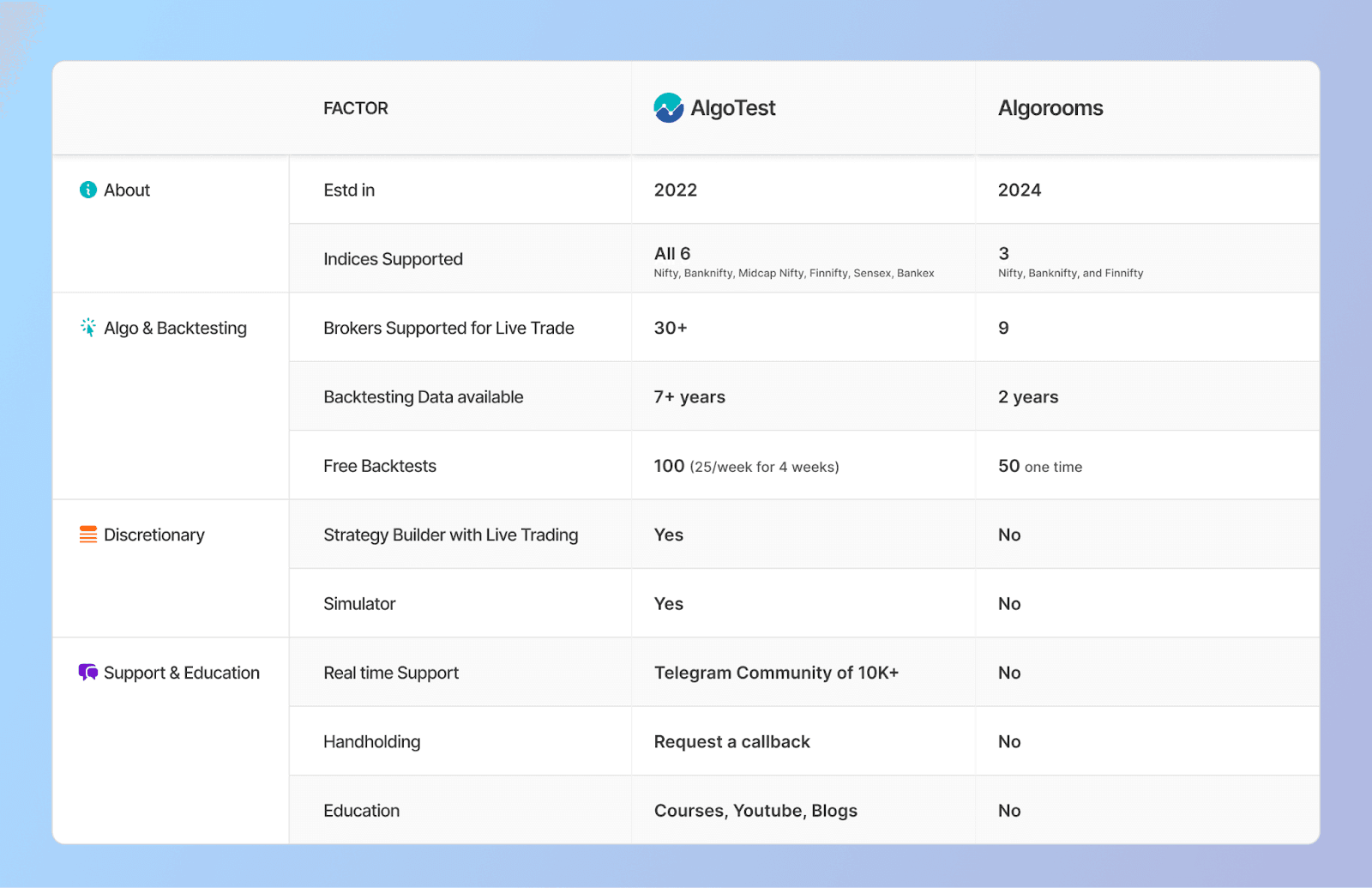
Are you searching for the top [**Algo Trading**](https://algotest.in/what-is-algo-trading?utm_source=blog&utm_medium=internal&utm_campaign=seo&utm_content=landing-page&utm_term=what-is-algo-trading) platform? How do [AlgoTest](https://algotest.in/?utm_source=blog&utm_medium=internal&utm_campaign=seo&utm_content=main-page&utm_term=algotest) and Algorooms compare? We'll do a detailed comparison to see who wins this showdown.
Algotest is a [backtesting](https://algotest.in/feature/backtest?utm_source=blog&utm_medium=internal&utm_campaign=seo&utm_content=feature&utm_term=backtest) and [live](https://algotest.in/feature/live?utm_source=blog&utm_medium=internal&utm_campaign=seo&utm_content=feature&utm_term=live) execution platform that combines simulation, optimization, and risk management features. It enables traders to develop and test strategies in a simulated environment, and then deploy those strategies for [live](https://algotest.in/feature/live?utm_source=blog&utm_medium=internal&utm_campaign=seo&utm_content=feature&utm_term=live) execution. Algotest helps traders identify the best trading strategies for a live trading environment.
[AlgoTest](https://algotest.in/?utm_source=blog&utm_medium=internal&utm_campaign=seo&utm_content=main-page&utm_term=algotest) stands out because of its features and tools. It has advanced stats and visualizations, letting users deeply analyze strategies. Comparing different strategies is straightforward, thanks to its clear interface.
#### **Trust and Transparency**
Trust is a major issue with influencers who often don’t share their PnL and aren’t accountable. AlgoTest, on the other hand, is more interested in teaching you how to fish. We prioritise transparency and aim to help retail traders understand how to succeed in the options and futures market.
#### **Exceptional Profitability**
One of the most compelling reasons to choose AlgoTest is our track record of profitability. Last year, 45% of our retail traders were profitable, significantly contrasting the mere 11% overall profitability among traders according to SEBI. This demonstrates our commitment to equipping traders with the tools and knowledge they need to succeed.
#### **Pricing and Features**
[AlgoTest’s plans](https://docs.algotest.in/getting-started/buy-plan/) are competitively priced and class-leading. You get quality services without breaking the bank.
#### **Advanced Features**
AlgoTest also shines with special features. AlgoTest stands out with its special features. It includes advanced functionalities such as simulation, a [strategy builder](https://algotest.in/feature/strategy-builder?utm_source=blog&utm_medium=internal&utm_campaign=seo&utm_content=feature&utm_term=strategy-builder), and charts that can elevate users' trading skills to the next level, allowing them to thoroughly evaluate strategies with all the necessary features.
**You get to choose who is the winner between AlgoTest vs Algoroom.**
But with its unmatched performance, in-depth analysis, fair pricing, [backtesting](https://algotest.in/feature/backtest?utm_source=blog&utm_medium=internal&utm_campaign=seo&utm_content=feature&utm_term=backtest), paper trading, [algo](https://algotest.in/feature/live?utm_source=blog&utm_medium=internal&utm_campaign=seo&utm_content=feature&utm_term=live) [trading,](https://algotest.in/feature/live?utm_source=blog&utm_medium=internal&utm_campaign=seo&utm_content=feature&utm_term=live&utm_source=blog&utm_medium=internal&utm_campaign=seo&utm_term=live&utm_content=feature) and extra features make it the go-to for evaluating strategies you’d find it hard to compare AlgoTest with Algorooms at all.
**With AlgoTest, traders can boost their strategy efficiency, leading to better outcomes.**
## **AlgoTest vs Algorooms**
Basis
AlgoTest
AlgoRooms
Founded in
2022
2024
Design & UI
User Friendly
N/A
Instruments Supported
Nifty, Banknifty, Finnifty, Sensex, Midcap, and Bankex
Nifty, Banknifty, and Finnifty
BackTesting
Yes
Yes
Free Backtest
25 Free Backtests/Week
100 Free Backtests/Month
50 Backtest One Time.
Forward Test/Paper Trading
Yes
Yes
Live Trading
Yes
Yes
TradingView/Chartink/Python/Custom code Support
Yes
No
Simulator
Yes
No
Strategy Builder
Yes
No
Margin Calculator
Yes
No
Charts
Options/Straddle/Strangle Charts
No
Execution Speed
Ultra Fast
Too early to tell
Brokers Supported
45+ Brokers
Up to 9 Brokers
Stability
Highly Stable
Too early to tell
BackTesting Data
Since 2017
Since 2022
Advanced Backtesting Features
Yes
No
Portfolio Backtest
Can backtest up to 50 strategies in 1 click
Can backtest up to 9 strategies.
Realistic BackTest
Yes, can add slippage, brokerage, and exchange charges.
No, you can’t add slippage, brokerage, and charges.
Backtesting Pricing
Plans Starting from 499/-
Plans Starting from 499/-
Live Deployment Pricing
Plans Starting from 499/-
Plans Starting from 1499/-
Educational Resources
Provides educational articles, tutorials, and Free Option Trading Courses Available.
No courses.
Customer Support
Realtime Customer Support during Market Hours
No Support.
Community
Active Community of 14k+ Traders on Telegram. [https://t.me/AlgoTest\_In](https://t.me/AlgoTest_In)
No.
## **Performance Comparison**
AlgoTest beats Algorooms in _performance_ due to accurate [backtesting](https://algotest.in/feature/backtest?utm_source=blog&utm_medium=internal&utm_campaign=seo&utm_content=feature&utm_term=backtest) results and ultra-fast [live](https://algotest.in/feature/live?utm_source=blog&utm_medium=internal&utm_campaign=seo&utm_content=feature&utm_term=live) execution.
Now, let's compare AlgoTest’s features in detail to Algorooms:
**Backtest (Speed and Accuracy):**
- **AlgoTest excels in** [**backtesting**](https://algotest.in/feature/backtest?utm_source=blog&utm_medium=internal&utm_campaign=seo&utm_content=feature&utm_term=backtest) **performance.** It delivers results significantly faster than Algorooms, allowing users to iterate and refine their trading strategies quickly and efficiently.
- **Backtests are highly accurate on** [AlgoTest](https://algotest.in/?utm_source=blog&utm_medium=internal&utm_campaign=seo&utm_content=main-page&utm_term=algotest) enabling users to incorporate slippage, brokerage, and other charges, and providing an accurate representation of the strategy in the [live](https://algotest.in/feature/live?utm_source=blog&utm_medium=internal&utm_campaign=seo&utm_content=feature&utm_term=live) market.
This allows users to have a precise understanding of the potential outcomes in the live market, empowering them to make well-informed decisions based on reliable data.
**Live Execution:**
- **AlgoTest boasts ultra-fast and stable** [**live**](https://algotest.in/feature/live?utm_source=blog&utm_medium=internal&utm_campaign=seo&utm_content=feature&utm_term=live) **execution.**
This minimises latency and ensures orders are placed promptly, potentially leading to better trade outcomes.
**Combined Benefits:**
- **The exceptional speed and precision of** [**AlgoTest**](https://algotest.in/?utm_source=blog&utm_medium=internal&utm_campaign=seo&utm_content=main-page&utm_term=algotest) **empower traders and developers to make well-informed decisions rapidly.**
This is crucial in the fast-paced world of finance, where even minor delays can significantly impact results.
**Overall Advantage:**
- **By offering superior** [**backtesting**](https://algotest.in/feature/backtest?utm_source=blog&utm_medium=internal&utm_campaign=seo&utm_content=feature&utm_term=backtest) **accuracy and ultra-fast** [**live**](https://algotest.in/feature/live?utm_source=blog&utm_medium=internal&utm_campaign=seo&utm_content=feature&utm_term=live) **execution,** [**AlgoTest**](https://algotest.in/?utm_source=blog&utm_medium=internal&utm_campaign=seo&utm_content=main-page&utm_term=algotest) **establishes itself as a leading platform for** [**Algo trading**](https://algotest.in/what-is-algo-trading?utm_source=blog&utm_medium=internal&utm_campaign=seo&utm_content=landing-page&utm_term=what-is-algo-trading) **.** Its combination of speed, reliability, and a wide range of well-tested strategies makes it a key tool for success in the financial markets.
## **Features and Analysis**
AlgoTest stands out as a top contender for analysing strategies in the market. It boasts a wide array of tools like advanced stats, visualizations, and performance metrics. This setup lets users make smart, data-based decisions and thoroughly inspect strategies.
AlgoTest’s [strategy builder](https://algotest.in/feature/strategy-builder?utm_source=blog&utm_medium=internal&utm_campaign=seo&utm_content=feature&utm_term=strategy-builder) simplifies the process of creating and refining trading strategies. Additionally, you can also [live](https://algotest.in/feature/live?utm_source=blog&utm_medium=internal&utm_campaign=seo&utm_content=feature&utm_term=live) trade via [Strategy Builder](https://algotest.in/feature/strategy-builder?utm_source=blog&utm_medium=internal&utm_campaign=seo&utm_content=feature&utm_term=strategy-builder). AlgoTest provides a user-friendly interface where traders can define their strike price and expiration date conditions, risk management parameters, and other key elements of their strategy. This streamlines strategy development and allows traders to experiment with different approaches.
AlgoTest's [simulator](https://algotest.in/feature/simulator?utm_source=blog&utm_medium=internal&utm_campaign=seo&utm_content=feature&utm_term=simulator) allows traders to test their strategies in a risk-free environment using historical data. This enables traders to see how their strategies would have performed in the past, helping them identify strengths and weaknesses before deploying capital in the live market.
AlgoTest is great because it works with many trading platforms. It can be used with popular options like Tradingview, ChartInk, Python, and more. You can create a strategy on your favourite platform and automate using [AlgoTest](https://algotest.in/?utm_source=blog&utm_medium=internal&utm_campaign=seo&utm_content=main-page&utm_term=algotest).
Security is a top priority for AlgoTest, ensuring the safety of users' data and strategies. The platform creates a safe space for strategy scrutiny, offering traders security. It also provides help through chats, calls, [Telegram](https://telegram.me/AlgoTest_In), and emails. This means users get quick and reliable support when faced with questions or problems.
Lastly, AlgoTest is unmatched in its tools and analysis features. Its compatibility with different platforms, diverse broker support, strong security, and customization ability make it a fully-fledged solution for strategy check-ups. With AlgoTest, traders have what they need to refine their strategy and boost their performance.
## **Pricing Comparison**
AlgoTest beats Algorooms when it comes to price. It's a cheaper pick for users. AlgoTest has low-cost plans, helping traders use their money better. Traders find AlgoTest attractive for backtesting, paper trading, and [live](https://algotest.in/feature/live?utm_source=blog&utm_medium=internal&utm_campaign=seo&utm_content=feature&utm_term=live) trading on a tight budget.
AlgoTest lets users pick and pay for what they need through credit. This way, users only pay for what they use. This method keeps AlgoTest’s prices down.
On the flip side, Algorooms asks for a monthly fee. It might not be cheap if users don't need it every day. AlgoTest, with its 'pay-per-credit' plan, gives users a smart, flexible, and cost-effective choice.
Looking at price differences, [AlgoTest](https://algotest.in/?utm_source=blog&utm_medium=internal&utm_campaign=seo&utm_content=main-page&utm_term=algotest) is the wallet-friendly winner. It lets small traders and big companies get top algo-trading services at good prices. AlgoTest’s competitive pricing makes it a solid pick for Algo-Trading needs.
After comparing prices, AlgoTest clearly stands out. It offers good rates, custom features, and advanced tools, making it a top choice for those who need quality strategy services.
## **Additional Features**
AlgoTest is more than just high performance. It has special features that stand out from the competition.
### **Error Handling Features**
[**AlgoTest**](https://algotest.in/?utm_source=blog&utm_medium=internal&utm_campaign=seo&utm_content=main-page&utm_term=algotest) **is a reliable platform, but even the best-designed strategies can encounter unexpected issues.** Our experience in [Algo trading](https://algotest.in/what-is-algo-trading?utm_source=blog&utm_medium=internal&utm_campaign=seo&utm_content=landing-page&utm_term=what-is-algo-trading) means we understand these challenges and the importance of robust [error handling](https://algotest.in/blog/trade-with-confidence/). That's why we've built a powerful system to catch and address errors efficiently, keeping your strategies running smoothly.
### **Robust Data Analytics Tools**
With [AlgoTest](https://algotest.in/?utm_source=blog&utm_medium=internal&utm_campaign=seo&utm_content=main-page&utm_term=algotest), you gain a full set of tools for analyzing how your strategies perform. These tools give you insights into efficiency and help you make those strategies even better. Additionally, AlgoTest offers a past trade feature, allowing you to view and analyze your last 60 days of trades. This provides valuable insights into your trading history and helps you identify areas for improvement.
### **User-Friendly Interface**
Using AlgoTest is a breeze, thanks to its clear, simple design. It's made to be easy to use. This means you can find what you need right away, improving your experience.
**"AlgoTest's extra features like error handling and data analytics tools, along with its user-friendly interface, make it a top choice."**
These features ensure you've got everything to test and evaluate strategies thoroughly.
**AlgoTest Features Description**
Error Handling: Robust [error handling](https://algotest.in/blog/trade-with-confidence/) features to address strategic errors efficiently.
Data Analytics Tools: The comprehensive suite of data analytics tools for in-depth performance analysis.
User-Friendly Interface: Intuitive and easy-to-use interface for a seamless strategy testing experience.
## **Why does AlgoTest outshine Algorooms?**
AlgoTest and Algorooms are innovative platforms designed to meet the needs of traders. However, [AlgoTest](https://algotest.in/?utm_source=blog&utm_medium=internal&utm_campaign=seo&utm_content=main-page&utm_term=algotest) is the superior choice for Algo-Trading based on factors such as pricing, reliability, and features. Here are points that explain why AlgoTest outperforms Algorooms:
### 1\. Backtesting
Backtesting is carried out more precisely and accurately with AlgoTest. Algorooms only has two years' worth of backtesting data, compared to 7.5 years in AlgoTest. Advanced [Backtesting](https://algotest.in/feature/backtest?utm_source=blog&utm_medium=internal&utm_campaign=seo&utm_content=feature&utm_term=backtest) is a feature that AlgoTest offers that Algorooms does not.
### 2\. Live-Execution
In Algotest, the [live](https://algotest.in/feature/live?utm_source=blog&utm_medium=internal&utm_campaign=seo&utm_content=feature&utm_term=live) execution performance is extremely fast, but Algorooms is an unknown and untested platform. Algotest has excellent stability, whilst Algorooms has been known to have issues.
### 3\. Pricing
One of the primary factors that set AlgoTest apart from Algorooms is its pricing. AlgoTest offers significantly cheaper pricing plans compared to Algorooms, making it a more cost-effective solution for individuals and businesses looking to optimize strategy testing within their budget.
### 4\. Reliability and Experience
AlgoTest boasts a legacy of being an older and more reliable platform in the market. With years of experience in providing Strategy [Backtesting](https://algotest.in/feature/backtest?utm_source=blog&utm_medium=internal&utm_campaign=seo&utm_content=feature&utm_term=backtest) and AlgoTrading services, AlgoTest has established itself as a trustworthy and dependable choice for users seeking a robust testing environment.
### 5\. Feature Set
When it comes to features, AlgoTest exceeds Algorooms in terms of the breadth and depth of functionalities offered. AlgoTest provides a comprehensive suite of tools and capabilities to support diverse Strategy [Backtesting](https://algotest.in/feature/backtest?utm_source=blog&utm_medium=internal&utm_campaign=seo&utm_content=feature&utm_term=backtest) and [Algo Trading](https://algotest.in/what-is-algo-trading?utm_source=blog&utm_medium=internal&utm_campaign=seo&utm_content=landing-page&utm_term=what-is-algo-trading) requirements, making it a versatile and powerful platform for developers.
### 6\. User Interface
AlgoTest's user interface is designed for optimal user experience, with intuitive navigation and a user-friendly layout that simplifies the testing process. On the other hand, Algorooms may lag in terms of user interface design, potentially impacting the overall user experience.
### 7\. Customization Options
AlgoTest offers extensive customization options that empower users to tailor their testing environment to suit specific needs and preferences. This flexibility in customization sets AlgoTest apart from Algorooms, which may have limitations in adapting to unique user requirements.
### 8\. Community Support
AlgoTest boasts a thriving community of users and developers who actively engage in sharing insights, best practices, and solutions. This strong community support network enhances the overall user experience and fosters collaborative learning and growth, a feature that may be lacking in Algorooms.
### 9\. Performance Metrics
AlgoTest provides detailed performance metrics and analytics that enable users to track and analyze the efficiency and effectiveness of their strategies. These metrics serve as valuable insights for refining and optimizing strategies, giving AlgoTest an advantage over Algorooms in performance evaluation capabilities.
### 10\. Customer Support
Last but not least, [AlgoTest](https://algotest.in/?utm_source=blog&utm_medium=internal&utm_campaign=seo&utm_content=main-page&utm_term=algotest) shines in the realm of customer support by offering responsive and knowledgeable support services to address user queries and concerns promptly. This attentive approach to customer support enhances user satisfaction and ensures a positive experience throughout the [algo trading](https://algotest.in/what-is-algo-trading?utm_source=blog&utm_medium=internal&utm_campaign=seo&utm_content=landing-page&utm_term=what-is-algo-trading) journey.
## **Conclusion**
In the encounter between [**AlgoTest**](https://algotest.in/?utm_source=blog&utm_medium=internal&utm_campaign=seo&utm_content=main-page&utm_term=algotest) **vs Algorooms**, AlgoTest emerges as the clear winner. Its unmatched performance, robust analysis, and competitive pricing win over users. It also offers extra features, making it the best pick for testing and evaluating strategies. Traders of all levels find AlgoTest easy to use. Its visual interface makes creating strategies a breeze, no coding is needed. AlgoTest is great for a variety of assets like Index options and more.
AlgoTest's pay-per-use model is more budget-friendly than Algorooms' monthly fees. It stands out for letting traders customize their strategies easily. While both offer good help guides, AlgoTest's user community provides more active support.
AlgoTest is perfect for the Indian stock market, offering a personalized trading experience. Its top-notch feature is its ability to test strategies using historical data. AlgoTest also excels in customer service, going above and beyond compared to Algorooms.
In **conclusion**, AlgoTest is an excellent choice for automating trading. It offers unparalleled performance, robust analysis, competitive pricing, and supplemental features. AlgoTest is straightforward to use, with a visual interface that makes crafting strategies effortless. AlgoTest has a more active user community for support than AlgoRooms, which makes it a great choice for traders who are new to automated trading.
## **FAQ**
### **What is the main difference between AlgoTest and Algorooms?**
AlgoTest and Algorooms both offer ways to [backtest](https://algotest.in/feature/backtest?utm_source=blog&utm_medium=internal&utm_campaign=seo&utm_content=feature&utm_term=backtest) and automate strategies. But, they differ in how well they work, what they offer, how much they cost, and what more they can do.
### **How does AlgoTest outperform Algorooms in terms of Backtesting?**
AlgoTest is better at giving quick and precise [Backtest](https://algotest.in/feature/backtest?utm_source=blog&utm_medium=internal&utm_campaign=seo&utm_content=feature&utm_term=backtest) results. This makes it very efficient for checking how good strategies are. It's known as the top choice for this because it has the **Best** [**Backtester**](https://algotest.in/feature/backtest?utm_source=blog&utm_medium=internal&utm_campaign=seo&utm_content=feature&utm_term=backtest).
### **What are the features and analysis capabilities offered by AlgoTest?**
AlgoTest has tools for deep analysis like [simulator](https://algotest.in/feature/simulator?utm_source=blog&utm_medium=internal&utm_campaign=seo&utm_content=feature&utm_term=simulator), charts, and past trades. It lets users analyze their past trades using analysis tools. This helps make smart, data-based choices.
### **How does AlgoTest's pricing compare to Algorooms?**
AlgoTest is more pocket-friendly, making it a better deal for users. With its reasonable prices, companies can save money and still test strategies and automate them with high-quality service.
### **What additional features does AlgoTest offer?**
AlgoTest goes beyond features like error handling, strong analysis tools, and a friendly interface. It aims to make strategies smooth, focusing on a great user experience.
### **Which platform is the top choice in the AlgoTest vs Algorooms comparison?**
In the match between AlgoTest and Algorooms, AlgoTest wins in everything. It's the best choice for working with strategies, offering top performance, and more.
---
This blog is powered by Superblog. Visit https://superblog.ai to know more.
---
## The Key Differences Between BSE and NSE Every Trader Should Know: A Beginner's Guide
Author: AlgoTest
Author URL: https://algotest.in/blog/author/algotest/
Published: 2024-08-28
URL: https://algotest.in/blog/differences-between-bse-and-nse/

Image via [iStock](https://www.istockphoto.com/photo/indian-stock-exchange-with-bull-art-placed-on-side-of-currency-notes-gm1446866753-484822593)
India's two largest and most prominent stock exchanges are the Bombay Stock Exchange ( **BSE**) and the National Stock Exchange ( **NSE**). Both exchanges play a crucial role in the country's financial ecosystem, providing a platform for investors and companies to trade securities. However, are you aware of the key differences between these two exchanges that every trader should know?
This blog delves into the key differences between BSE and NSE, empowering you to make informed decisions as you begin trading.
## **A Walk Through Time: A Legacy Unfolds**
#### _The Grand Old Dame: The Bombay Stock Exchange (BSE)_
Established in 1875, the BSE boasts the title of Asia's oldest stock exchange. It began modestly under a banyan tree in Mumbai and has since become a prominent player in the Indian financial landscape. Initially, trading was conducted through an open outcry auction system, with brokers physically calling out bids and offers on the trading floor. The iconic BSE Sensex, a benchmark index for the Indian stock market, was launched in 1982.
#### _The New-Age Challenger: The National Stock Exchange (NSE)_
Founded in 1992, the NSE is a relatively young exchange compared to the BSE. However, it emerged as a game-changer by pioneering a fully automated, electronic trading platform. This shift from the traditional open outcry system to screen-based trading revolutionized the Indian stock market, promoting transparency, efficiency, and faster execution of trades. The NSE Nifty 50, another prominent stock market index, was introduced in 1994.
[**Try Free Backtesting Now**](https://algotest.in/feature/backtest?utm_source=blog&utm_medium=internal&utm_campaign=seo&utm_content=feature&utm_term=backtest)
## **Trading Hours and Settlement Cycles**
Let’s talk about a few similarities. One of the similarities between the Bombay Stock Exchange (BSE) and the National Stock Exchange (NSE) lies in their _trading hours_ and _settlement cycles_. The BSE has trading hours, with the market open from 9:15 AM to 3:30 PM, whereas the NSE also has trading hours, operating from 9:15 AM to 3:30 PM.
The _settlement cycles are_ also similar between the two exchanges. The BSE typically follows a T+1 settlement cycle, meaning trades are settled the next business day after the transaction date. The NSE also has a streamlined T+1 settlement cycle, where trades are settled the next business day.
ParameterBSENSETrading Hours9:15 AM to 3:30 PM9:15 AM to 3:30 PMSettlement CycleT+1T+1
## **Listing Requirements and Processes**
The key difference between the BSE and NSE is their listing requirements and processes. Both exchanges have specific criteria that companies must meet to get their securities listed and traded on the exchange. The _listing requirements_ for each exchange vary, providing different avenues for companies to access the capital markets.
### **BSE Listing Criteria**

Image via [Economic Times](https://m.economictimes.com/thumb/msid-101646037,width-1600,height-900,resizemode-4,imgsize-8802/bse-new-logo.jpg)
The Bombay Stock Exchange (BSE) has a comprehensive set of _BSE listing criteria_ companies must fulfill to get their shares listed. These requirements include a minimum paid-up capital, minimum number of shareholders, adequate disclosures, and a track record of profitability, among other factors. The BSE also has different listing norms for various types of securities, such as equity shares, debt instruments, and mutual fund units.
[**Try Free Backtesting Now**](https://algotest.in/feature/backtest?utm_source=blog&utm_medium=internal&utm_campaign=seo&utm_content=feature&utm_term=backtest)
### **NSE Listing Criteria**

Image via [NSE](https://nsearchives.nseindia.com/web/sites/default/files/2019-07/NSE%404x-100.jpg)
The National Stock Exchange (NSE), on the other hand, has its own set of _NSE listing criteria_ that companies must meet to list their securities. These criteria include minimum net worth, minimum number of shareholders, and compliance with corporate **governance** norms. The NSE also has specific requirements for different types of securities, such as minimum issue size and minimum trading lot.
The varying _listing requirements_ and processes between the BSE and NSE can significantly affect the ease and timeline of a company's market debut. Investors and companies should carefully evaluate the pros and cons of each exchange before deciding where to list their securities.
#### **A Tale of Two Exchanges: Revealing the Core Differences**
While both the BSE and NSE function as marketplaces for buying and selling stocks, several key distinctions set them apart:
##### **1\. Trading Platform:**
- **BSE:** Initially, the BSE relied on the open outcry auction system. However, it has since incorporated an electronic trading platform called BOLT (BSE On-Line Trading). While BOLT offers electronic trading, it might not be as advanced or user-friendly as the NSE's platform.
- **NSE:** From its inception, the NSE has championed a fully automated, screen-based trading system. This electronic platform offers greater transparency, faster execution of trades, and wider accessibility for investors across the country.
##### **2\. Liquidity:**
- **BSE:** Generally, the BSE has lower trading volumes compared to the NSE. This translates to lower liquidity, which might pose challenges for traders seeking to enter or exit positions quickly at their desired price.
- **NSE:** The NSE enjoys significantly higher trading volumes, making it a more liquid market. This liquidity allows traders to buy and sell stocks more efficiently and with greater ease.
[**Try Free Backtesting Now**](https://algotest.in/feature/backtest?utm_source=blog&utm_medium=internal&utm_campaign=seo&utm_content=feature&utm_term=backtest)
##### **3\. Listed Companies:**
- **BSE:** The BSE boasts a wider range of listed companies, exceeding 5,309. This includes many smaller and lesser-known companies.
- **NSE:** The NSE has a more selective listing process, with around 2266 companies listed on its platform. These tend to be larger and more established companies.
##### **4\. Products Offered:**
- **BSE:** The BSE has lots of products that they offer. They are-
**Primary Market -**
• IPOs / FPOs and Rights Issues
• Institutional Placement Programme (IPP)
• Reverse Book Building (RBBS)
• Offer For Sale (OFS)
• Mutual Funds (Open Ended)
• Securitized Debt Instruments
• Structured Products
**Secondary Market -**
• Equity
• Equity Derivatives
• Currency Derivatives
• Interest Rate Derivatives
• ETFs
• Debt
**Corporate Bond and Government Securities**
• Mutual Funds (Close Ended)
• SME
• Securities Lending and Borrowing
**GLOBAL INDICES: TRADE RUPEE-DENOMINATED FUTURES ON -**
• Hang Seng
• FTSE/JSE Top 40
• MICEX
• Ibovespa
**ETFS** \-
• Over 30 Exchange Traded Funds
• ETFs accepted as collateral for trading
**Debt Market Products** \-
• Government Securities
• Corporate Debt
• Structured Products
• Securitized Debt Instruments
• Non-Convertible Redeemable Preference Shares
- **NSE:** The NSE offers a wider array of products beyond equities, including derivatives (futures and options), currency derivatives, and mutual fund units. This diversification caters to a broader spectrum of investors and trading strategies. They are -
**Equities** \- Equity Market, Exchange Traded Funds, Indices, Mutual Funds, Security Lending & Borrowing Scheme, Sovereign Gold Bond, Initial Public Offering (IPO), Institutional Placement Program (IPP), and Offer for Sale
**Derivatives** \- Equity Derivatives, Commodity Derivatives, Currency Derivatives, and Interest Rate Derivatives
**Fixed Income & Debt** - Corporate Bonds, Electronic Debt Bidding Platform (EBP), Negotiated Trade Reporting Platform, Non-competitive Bidding in Government Securities, and Tri-party Repo
##### **5\. Benchmark Indices:**
- **BSE:** The BSE Sensex is a widely recognized benchmark index that tracks the performance of the top 30 companies listed on the exchange.
- **NSE:** The NSE Nifty 50 is another prominent benchmark index, reflecting the performance of the 50 largest companies by market capitalization on the NSE.
[**Try Free Backtesting Now**](https://algotest.in/feature/backtest?utm_source=blog&utm_medium=internal&utm_campaign=seo&utm_content=feature&utm_term=backtest)
## Key differences between NSE and BSE
FeatureNSEBSEEstablishment Year19921875Exchange TypeFull-fledged electronic exchangeOriginally an outcry auction system, now electronic (BOLT) since 1995Market CapitalizationHigherLowerTrading VolumeHigherLowerLiquidityHigherLowerNetwork ReachWider (over 1500 cities)Narrower (around 450 cities)Benchmark IndexNIFTY 50 (Top 50 companies)SENSEX (Top 30 companies)Index Calculation MethodFree-float market capitalizationFull market capitalizationGlobal RecognitionHigherLowerProduct OfferingsEquity Market, Indices, Mutual Funds, Equity Derivatives, Currency Derivatives, Commodity Derivatives, Interest Rate Derivatives, Public IssuesDerivatives, Currency Derivatives, Interest Rate Derivatives, Debt Products, Security Lending & Borrowing Platform, IPO, SME Platform, Mutual Funds, ETFs, and Offer for Sale (OFS)Trading Timings9:15 am – 3:30 pm (pre-open 9:00-9:15 am)9:15 am – 3:30 pm (pre-open 9:00 am)Listing ProcessDifferentDifferentRegulatory BodySEBI (Securities and Exchange Board of India)SEBI (Securities and Exchange Board of India)LiquidityHigherLowerListed CompaniesOver 5,309 (Wider range)Around 2266 (More Selective)
## **Choosing the Right Exchange: It's All About Your Needs**
There's no single "better" exchange between the BSE and NSE. The ideal platform for you depends on your specific trading style and goals:
### **For Beginners:**
- **BSE:** If you're a beginner looking to invest in established companies for the long term, the BSE could be a suitable option. Its wider range of listed companies allows you to explore various sectors and find potential long-term investments. The potentially lower trading activity on the BSE might also create a less overwhelming environment for new investors.
- **NSE:** However, if you're drawn to a more dynamic trading experience, the NSE could be a better fit. Its higher liquidity and user-friendly electronic platform facilitate smoother execution of trades. Additionally, the availability of derivative products on the NSE opens doors to more advanced trading strategies once you gain experience.
### **For Day Traders:**
- **NSE:** Day traders who thrive on high liquidity and fast-paced trading will find the NSE's platform more aligned with their needs. The ease of entering and exiting positions at desired prices becomes crucial for day trading success.
### **For Investors Seeking Specific Stocks:**
- **BSE:** If you have your heart set on a particular company, especially a smaller or less established one, the BSE might be your only option as it has a wider range of listed companies. However, be prepared for potentially lower liquidity.
[**Try Free Backtesting Now**](https://algotest.in/feature/backtest?utm_source=blog&utm_medium=internal&utm_campaign=seo&utm_content=feature&utm_term=backtest)
## **Beyond the Exchange: Additional Considerations**
Remember, the choice between BSE and NSE is just one aspect to consider when venturing into the stock market. Here are some additional factors to keep in mind:
- **Trading Broker:** Regardless of the exchange you choose, you'll need a trading account with a registered broker. Research different brokers to find one that aligns with your investment goals and offers a user-friendly trading platform.
- **Trading Costs:** Brokerage charges, transaction fees, and other associated costs can vary between brokers. Compare costs before opening an account.
- **Investment Strategy:** Define your investment goals and risk tolerance. Are you a long-term investor seeking capital appreciation, or a short-term trader aiming for quick profits? Your strategy will influence your choice of exchange and trading activity.
## **The Final Word: Knowledge is Power**
By understanding the distinct characteristics of the BSE and NSE, you're well on your way to making informed decisions in the Indian stock market. Remember, the journey of a successful investor is a continuous learning process. Stay updated on market trends, company news, and regulatory changes.
[**Try Free Backtesting Now**](https://algotest.in/feature/backtest?utm_source=blog&utm_medium=internal&utm_campaign=seo&utm_content=feature&utm_term=backtest)
## **Conclusion**
The BSE and NSE are both pillars of the Indian financial system, each catering to different investor preferences. By carefully considering your trading style, goals, and risk tolerance, you can choose the exchange that best suits your needs. So, begin your trading journey with confidence, equipped with the knowledge to navigate the exciting world of the Indian stock market.
P.S. - [AlgoTest](https://algotest.in/?utm_source=blog&utm_medium=internal&utm_campaign=seo&utm_content=main-page&utm_term=algotest) (an intuitive algo-trading platform) allows you to [backtest](https://algotest.in/feature/backtest?utm_source=blog&utm_medium=internal&utm_campaign=seo&utm_content=feature&utm_term=backtest), [forward test](https://algotest.in/feature/forward-test?utm_source=blog&utm_medium=internal&utm_campaign=seo&utm_content=feature&utm_term=forward-test), and automate your strategies. A trader receives 25 [free backtesting credits](https://algotest.in/feature/backtest) every week to backtest 25 strategies for free. One can set up their broker, successfully run [forward testing](https://algotest.in/feature/forward-test?utm_source=blog&utm_medium=internal&utm_campaign=seo&utm_content=feature&utm_term=forward-test), and launch [live](https://algotest.in/feature/live?utm_source=blog&utm_medium=internal&utm_campaign=seo&utm_content=feature&utm_term=live) trade with 30+ brokers.
## **FAQs**
**1\. What is the difference between the BSE and NSE?**
The BSE and NSE are both stock exchanges in India, but they have some key differences. Here's a quick breakdown:
- **Trading Platform:** BSE uses a mix of electronic and legacy open outcry systems, while NSE operates on a fully automated electronic platform.
- **Liquidity:** NSE generally has higher trading volumes, making it a more liquid market.
- **Listed Companies:** BSE boasts a wider range of listed companies, including smaller ones, while NSE focuses on larger, more established companies.
- **Products Offered:** NSE offers a wider variety of products beyond equities, including derivatives and currency derivatives.
- **Benchmark Indices:** BSE Sensex tracks the top 30 companies, while NSE Nifty 50 reflects the performance of the 50 largest companies by market capitalization.
**2\. Which exchange is better, BSE or NSE?**
There's no single "better" exchange. The ideal platform depends on your trading style and goals.
- **Beginners:** BSE for long-term investing in established companies, NSE for a more dynamic experience with a user-friendly platform.
- **Day Traders:** NSE for its high liquidity and ease of executing trades.
- **Investors Seeking Specific Stocks:** BSE for a wider range of listed companies, but be prepared for lower liquidity.
**3\. What are some factors to consider beyond the exchange?**
- **Trading Broker:** Choose a registered broker with a user-friendly platform that aligns with your goals.
- **Trading Costs:** Compare brokerage charges, transaction fees, and other associated costs before opening an account.
- **Investment Strategy:** Define your goals and risk tolerance. Are you a long-term investor or a short-term trader?
**4\. Where can I learn more about the Indian stock market?**
- Many online resources and educational websites offer information on the Indian stock market.
- Consider attending workshops or seminars conducted by financial institutions or brokerages.
- Reputable financial news channels and publications provide valuable insights and market updates.
**5\. What if I'm still unsure about which exchange to choose?**
Consult a financial advisor who can assess your individual needs and recommend the most suitable exchange based on your investment goals and risk tolerance.
---
This blog is powered by Superblog. Visit https://superblog.ai to know more.
---
## Stock Market Saga: Must-See Movies for Finance Professionals
Author: AlgoTest
Author URL: https://algotest.in/blog/author/algotest/
Published: 2024-08-28
URL: https://algotest.in/blog/must-see-movies-for-finance-professionals/
## **Introduction**
Over the years, the stock market has gained the attention of many people in their day-to-day lives. Money is made and lost here and it is a place where the action and the consequence of that action are the same. The field of the financial markets and the finance world, in general, is a fertile ground for movie production that is engaging viewers while at the same time educating them. These movies portray the stock market, its function, its changes, and the people who are engrossed in this business at various levels.
This time, we will list the movies and TV series a financial buff definitely shouldn’t miss. These films and shows are not just interesting to watch, but also informative in giving a glimpse of the stock market, financial issues, and the developments of the financial markets over the years. In this piece, we shall discuss the significance of the stock market in influencing the growth of cinema and television and how it has shaped the narrative of various movies. We will also critically evaluate films and TV shows under the aspect of financial aspect as well as a depiction of reality.
Every movie is great for both experienced investors and people who have just begun to perceive the stock market as some field of interest. Well, let’s sit back, and pop some popcorn, as we take you through the best stock market movies you shouldn’t miss to watch.
## **The Impact of the Stock Market on Cinema**
Over the years, the stock market has played a significant role in cinema. It has provided a backdrop for compelling stories of success, failure, greed, and ambition. The financial markets and the world of finance offer a rich tapestry of characters and narratives that lend themselves well to the big screen. From the fast-paced trading floors of Wall Street to the high-stakes world of investment banking, the stock market has captivated audiences and provided a glimpse into the inner workings of the financial industry.
[**Try Free Backtesting Now**](https://algotest.in/feature/backtest?utm_source=blog&utm_medium=internal&utm_campaign=seo&utm_content=feature&utm_term=backtest)
### **The Evolution of Financial Markets Portrayed in Movies**
Movies have also captured the development of financial markets and experiences that have characterized the financial market industry. While the following movies are more about the market crash and certain traders, they delve deep and present closer looks at the events and personas that shook the stock market.
Specifically, one of the movies discussed is “The Big Short,” directed by Adam McKay and presented in 2015. It is a movie that describes the life of a set of machinists who foresaw the contemporary mortal sin of financial meltdown in 2008 through the demolition of the real estate scene. While presenting the characters of the story, including those shown by Curtis Hanson and other actors, and the details of the working of the financial instruments that led to the creation of the crisis, the movie breaks new ground.
Another British movie portraying the undesirable financial fraud phenomenon is “Rogue Trader” made in 1999. Adapted from a real incident, it describes the life of a trader Nick Leeson who was responsible for the failure of Barings Bank by engaging in trading without permission. These movies explain the dangers and outcomes of reckless desire and illustrate the lessons that have to be learned by intendees regarding risk management and ethics.
## **Top Movies Every Financial Enthusiast Must Watch**
For financial film enthusiasts looking to gain a deeper understanding of the stock market and the world of finance, several must-watch movies provide valuable insights. These movies offer a mix of entertainment and education, covering a range of topics from financial crises to the inner workings of Wall Street.
From modern classics like "The Big Short" to timeless films like "Wall Street" and "Citizen Kane," these movies are a must-watch for anyone interested in the stock market and its impact on society.
[**Try Free Backtesting Now**](https://algotest.in/feature/backtest?utm_source=blog&utm_medium=internal&utm_campaign=seo&utm_content=feature&utm_term=backtest)
### **Trading Places (1983) - A Comedy Spin on Market Manipulation**

Image via [The Movie Database](https://encrypted-tbn1.gstatic.com/images?q=tbn:ANd9GcSeFWKn_oYPWZSoYgo0hACDrYkk6w3gt01UMikBrDODQB7NwCiRuk7EOtLCj6T3AzDD0V9gVKEisJmZhDqQzKHSDca3a0uICVOGk80Y7w)
Released in 1983, **Trading Places** takes a comedic approach to the stock market and market manipulation. Starring Eddie Murphy as Billy Ray Valentine, a homeless man turned financial whiz, and Dan Aykroyd as Louis Winthorpe III, a snobby commodities broker, the film tells the story of a cruel bet between two wealthy brothers that leads to the two men being unknowingly switched.
The film explores themes of class, privilege, and the power dynamics within the financial industry. With its witty dialogue and hilarious performances, **Trading Places** offers a lighthearted take on the stock market while also shedding light on the darker side of market manipulation. It serves as a reminder that wealth and success are not always determined by merit, but by the opportunities and advantages one has in life.
### **Wall Street (1987) - The Classic Tale of Greed and Power**

Image via [IMDb](https://m.media-amazon.com/images/M/MV5BNmEyZGQ4NDQtNTEzZC00MDczLWE4ZTEtYTg0ODg2NTkyMWM3XkEyXkFqcGdeQXVyNjU0OTQ0OTY@._V1_.jpg)
Released in 1987, "Wall Street" is a classic film that explores the world of high finance and the allure of wealth and power. Directed by acclaimed director Oliver Stone and starring Michael Douglas as the iconic Gordon Gekko, the movie follows a young stockbroker, Bud Fox (played by Charlie Sheen), as he becomes entangled in the world of insider trading. "Wall Street" is known for its memorable quotes, including Gekko's infamous line, "Greed is good."
The film presents a cautionary tale about the ethical dilemmas faced by those in the financial industry and the consequences of unchecked ambition. It remains a cultural touchstone and a must-watch for anyone interested in the stock market and the world of finance.
### **How Wall Street Has Influenced Filmmaking**
The movie “Wall Street” directed by Oliver Stone and presented in the year 1987 can be named as one of the outstanding examples of the cinematographic description of the stock market. Starring Michael Douglas in the role of the legendary Gordon Gekko, the film depicts the materialism and moral corrosion of the financial market. This movie “Wall Street” has successfully got its place in people’s hearts and has changed the way people think about Wall Street and the financial world.
This movie was not only a commercial and critical hit but also prompted young directors to buy stocks and finance their movies with them. It paved for a series of movies focusing on the dark side of the financial world and the price corrupt greed brings.
Since the movie “Wall Street”, many movies have emulated the world of finance and have characters and themes based on it. These movies have enriched the overview of the audience on the stock market and the effects it produces. They have also revealed the contours of the themes of ethics and morality inherent in gaining success and wealth.
### **Boiler Room (2000) - The Dark Side of Brokerage Firms**

Image via [Wikipedia](https://upload.wikimedia.org/wikipedia/en/thumb/5/5c/Boiler_room_ver3.jpg/220px-Boiler_room_ver3.jpg)
"Boiler Room," released in 2000 and directed by Ben Younger, offers a glimpse into the dark side of brokerage firms. The film follows Seth Davis (played by Giovanni Ribisi), a college dropout who takes a job as a stockbroker for a suburban investment firm. However, he soon discovers that the firm operates as a "boiler room," using aggressive sales tactics and questionable practices to manipulate and defraud investors.
"Boiler Room" sheds light on the high-pressure environment of brokerage firms and the ethical dilemmas faced by individuals working in the financial industry. It serves as a cautionary tale about the dangers of unchecked greed and the importance of ethical practices in the stock market.
### **The Big Short (2015) - A Modern Take on the Financial Crisis**

Image via [The Big Short(2015)](https://m.media-amazon.com/images/M/MV5BYmM0ODhkMTctZTc3MS00YjEyLTk5NzYtNDNkNTU4NDk3YzJjXkEyXkFqcGdeQXVyMzg2MzE2OTE@._V1_.jpg)
"The Big Short," directed by Adam McKay and released in 2015, is a modern classic that provides an accurate portrayal of the 2008 financial crisis. The film follows a group of investors who foresaw the collapse of the housing market and bet against the financial institutions that caused the crisis.
With an ensemble cast that includes Christian Bale, Steve Carell, and Ryan Gosling, "The Big Short" offers a gripping narrative and a deeper understanding of the complex financial instruments that contributed to the crisis.
The film sheds light on the systemic failures of the financial industry and the lack of accountability that led to the collapse. It serves as a cautionary tale about the dangers of unchecked greed and the importance of transparency in the financial markets.
[**Try Free Backtesting Now**](https://algotest.in/feature/backtest?utm_source=blog&utm_medium=internal&utm_campaign=seo&utm_content=feature&utm_term=backtest)
## **Analyzing the Financial Accuracy in Movies**
While stock market movies provide entertainment and insights into the financial world, it's essential to analyze their accuracy in portraying real-life events. Movies like "The Wolf of Wall Street" and "The Big Short" are based on true stories and provide a glimpse into the stock market and financial crises.
By examining the accuracy of these movies, viewers can gain a better understanding of the events and individuals that shaped the financial industry. It's important to separate fact from fiction and understand the creative liberties taken by filmmakers to enhance the narrative.
Let's talk about a few more movies plus explore their portrayal of real-life events in the stock market.
### **How Realistic is "The Wolf of Wall Street"?**

Image via [Wikipedia](https://upload.wikimedia.org/wikipedia/en/d/d8/The_Wolf_of_Wall_Street_%282013%29.png)
"The Wolf of Wall Street," directed by Martin Scorsese and released in 2013, is based on the true story of Jordan Belfort, a stockbroker who defrauded investors in a massive securities scam. The film showcases the lavish lifestyle and excesses of Belfort's life and has been praised for its performances, particularly Leonardo DiCaprio's portrayal of Belfort. While the film provides an entertaining depiction of Belfort's rise and fall, it also takes creative liberties and exaggerates certain aspects of his story.
However, the movie's success at the box office, grossing $392 million, is a testament to its impact and relevance in the finance world. It's important to separate the fictionalized elements from the true events and understand that the film is a dramatized version of Belfort's life. Despite these creative liberties, "The Wolf of Wall Street" provides valuable insights into the stock market and the consequences of unchecked ambition.
### **The Big Short: Did it Get the Crisis Right?**
"The Big Short," directed by Adam McKay and released in 2015, is known for its accurate portrayal of the 2008 financial crisis. The film follows a group of investors who foresaw the collapse of the housing market and bet against the financial institutions that caused the crisis. It provides a detailed look at the complex financial instruments that contributed to the crisis, including collateralized debt obligations (CDOs) and credit default swaps (CDS).
While the film takes some creative liberties and condenses events for storytelling purposes, it offers a compelling narrative that sheds light on the systemic failures of the financial industry. "The Big Short," starring Margot Robbie, received critical acclaim for its accurate portrayal of the crisis and its impact on the global economy.
[**Try Free Backtesting Now**](https://algotest.in/feature/backtest?utm_source=blog&utm_medium=internal&utm_campaign=seo&utm_content=feature&utm_term=backtest)
## **Movies That Changed Public Perception of the Stock Market**
Certain movies have had a significant impact on public perception of the stock market and the individuals who work in the financial industry. Films like "Wall Street" and "The Wolf of Wall Street" have shaped popular culture's view of Wall Street and the world of finance. These movies portray powerful and charismatic characters who are driven by greed and ambition.
While these movies highlight some of the darker aspects of the stock market, they also provide valuable insights into the ethical dilemmas faced by individuals in the financial industry and the consequences of unchecked ambition.
### **Wall Street's Influence on the Perception of Stockbrokers**
"Wall Street," directed by Oliver Stone and released in 1987, has had a lasting impact on the public perception of stockbrokers and the financial industry. The film portrays the iconic character of Gordon Gekko, played by Michael Douglas, as a ruthless and unscrupulous Wall Street insider.
Gekko's catchphrase, "Greed is good," has become synonymous with the excesses of the financial industry. The character of Gekko has shaped popular culture's perception of stockbrokers and their motivations.
Similarly, movies like "Rogue Trader" have shed light on the rogue traders who have manipulated the stock market for their gain. These movies have influenced public opinion and have contributed to a better understanding of the ethical challenges faced by individuals working in the financial industry.
### **The Role of "Inside Job" in Highlighting Financial Irregularities**

Image via [IMDb](https://m.media-amazon.com/images/M/MV5BMTQ3MjkyODA2Nl5BMl5BanBnXkFtZTcwNzQxMTU4Mw@@._V1_.jpg)
“Inside Job” which came out in 2010 is a documentary that did a good job exploring the causes of the 2008 global financial crisis. In his documentary film, Charles Ferguson successfully explains what led to the crisis and who, aside from financial institutions, is to blame for it. It provides viewers with insights into several unethical practices and economic scandals that led to the sinking of the world’s economy and comes with an insightful observation by Matt Damon.
The film “Inside Job” is entirely dedicated to the problem of insider trading and the negligence and impunity of the financial sector representatives. This film was awarded an Oscar for Best Documentary and has formed a highly comprehensive and impactful viewpoint on the economic crisis.
## **The Educational Value of Stock Market Movies**
Stock market movies offer educational value by providing viewers with a deeper understanding of the stock market and the financial industry. These movies can help individuals grasp complex financial concepts and gain insights into the inner workings of the stock market.
From movies like "Margin Call," which explores the early days of the 2008 financial crisis, to "Trading Places," which delves into market manipulation, these films provide valuable lessons and provoke thought about the ethical dilemmas and challenges faced by individuals in the financial industry. Watching stock market movies can be an entertaining and informative way to learn about the stock market and its impact on society.
### **What We Can Learn from "Margin Call"**
Image via [Wikipedia](https://upload.wikimedia.org/wikipedia/en/6/62/Margin_Call.jpg)
"Margin Call," released in 2011, provides a gripping look at the early days of the 2008 financial crisis. The film follows the employees of a large Wall Street investment bank as they grapple with the impending collapse of the financial markets. "Margin Call" offers valuable lessons about risk management, ethical decision-making, and the consequences of unchecked greed in the investment banking world.
The film features a stellar cast, including Kevin Spacey, and provides a realistic portrayal of the high-pressure environment of an investment bank. It serves as a cautionary tale about the dangers of taking excessive risks and the importance of transparency and accountability in the financial industry.
[**Try Free Backtesting Now**](https://algotest.in/feature/backtest?utm_source=blog&utm_medium=internal&utm_campaign=seo&utm_content=feature&utm_term=backtest)
### **Trading Places: Lessons in Market Basics**
“Trading Places,” released in 1983, is not only a great comedy film but also educates viewers in trading principles. The story revolves around two characters, a rich commodities trader, and a homeless social outcast who become swapped in a bid to show the subjects of a social experiment. The themes include the gory depiction of the abusive nature of the upper class towards the lower class and the power struggle in the capitalist world.
There are essential aspects of the working of the marketplace, such as short-selling and the effect of supply and demand on price levels, that Trading Places help to explain. It is a vivid illustration that the stock exchange is not the domain of the selected few, but a game that can be won by anybody who knows its rules, effective strategies, and the desire to survive in this highly volatile environment.
## **Conclusion**
Stock market movies offer a captivating insight into the financial world, making them a must-watch for enthusiasts. From the classic greed-driven narrative of "Wall Street" to the modern take on the financial crisis in "The Big Short," these films provide valuable lessons and entertainment.
Understanding the impact of stock markets in cinema not only educates but also entertains, shedding light on the complexities of financial markets. Dive into these movies to gain a deeper understanding of market dynamics and the real-world implications of financial decisions. Explore the cinematic world of finance for an engaging and educational experience in the realm of stocks and investments.
P.S. - With the use of [AlgoTest](https://algotest.in/?utm_source=blog&utm_medium=internal&utm_campaign=seo&utm_content=main-page&utm_term=algotest), you can backtest your strategy while watching these stock market-related movies on your couch, so you can get an idea of how it may react in the future. In addition to this, you will also receive 25 free [backtests](https://algotest.in/feature/backtest?utm_source=blog&utm_medium=internal&utm_campaign=seo&utm_content=feature&utm_term=backtest). [Sign up](https://algotest.in/?utm_source=blog&utm_medium=internal&utm_campaign=seo&utm_content=main-page&utm_term=algotest) as soon as possible so you don't miss out.
## **Frequently Asked Questions**
### **Which Movie Best Represents the Realities of the Stock Market?**
The movie that best represents the realities of the Stock Market is "Wall Street," directed by Oliver Stone and released in 1987. The film portrays the greed and excesses of the financial industry and has had a lasting impact on public perception of Wall Street.
### **Are There Any Documentaries on the Financial Crisis Worth Watching?**
Yes, the documentary "Inside Job," released in 2010 and directed by Charles Ferguson, is a must-watch. It provides a comprehensive analysis of the 2008 financial crisis and won the Academy Award for Best Documentary.
### **How Can Movies Help in Understanding Complex Financial Concepts?**
Movies can help individuals understand complex financial concepts by presenting them in an accessible and entertaining way. Movies like "The Wizard of Lies" offer insights into financial concepts and events by providing a narrative that engages and educates viewers.
### **Can Watching These Movies Improve Investment Skills?**
Watching stock market movies can improve investment skills by providing viewers with a deeper understanding of the stock market and the financial industry. These movies offer valuable insights into market dynamics, ethical dilemmas, and the consequences of unchecked greed.
But you might not see a direct improvement in your investment skills unless you invest or study the requisite materials.
### **How Do Filmmakers Collaborate with Financial Experts for Authenticity?**
Filmmakers collaborate with financial experts to ensure authenticity in their movies. They consult with experts to accurately portray real-life events and characters, ensuring that the movie captures the nuances and complexities of the financial industry. Directors like Oliver Stone have worked closely with financial experts to ensure the authenticity of their films.
---
This blog is powered by Superblog. Visit https://superblog.ai to know more.
---
## Elevate Your Trading with Daily Trade Analysis
Author: AlgoTest
Author URL: https://algotest.in/blog/author/algotest/
Published: 2024-08-28
URL: https://algotest.in/blog/daily-trade-file-analysis-mtm/
We are pleased to introduce Daily Trade Analysis, a feature designed to take your trading experience to the next level. With this tool, you can upload your trade files and generate a detailed Mark-to-Market (MTM) graph, along with a comprehensive breakdown of your trades and the brokerage fees. Share your trading insights on Twitter and connect with your trading community
[Generate your Free MTM graph](htttps://algotest.in/trade-file-mtm)
## **Understanding Daily Trade Analysis**
Daily Trade Analysis offers a clear visualization of your Profit and Loss (PnL) over time, derived from your trading activities. By uploading your trade files, you can gain a deeper understanding of your trading strategies, monitor performance, and keep track of trading costs.
Additionally, you can select the historical price movement of various indices (finnifty, nifty, sensex, midcapnifty, bankex, banknifty) to see how your PnL might be correlated with market movements.
## **Use Cases for the Daily Trade Analysis**
Daily Trade Analysis provides multiple benefits:
• **Interaction Tool**: Share your MTM graph and trade analysis on social media platforms like Twitter to engage with your trading community.
• **PnL Visualization**: Easily visualize your PnL to gain better insights into your trading performance.
• **Trade Breakdown**: Receive a detailed breakdown of your trades, enabling thorough analysis of each trade.
• **Brokerage Analysis**: Understand the brokerage fees associated with your trades for complete transparency.
• **Market Correlation**: Select historical price movements of indices to see how your PnL correlates with market trends.
• **Storytelling Tool**: Utilize the graph and trade breakdown to narrate your trading journey, emphasizing significant moments and decisions.
[Try Daily Trade Analysis](https://algotest.in/trade-file-mtm)
## **Strategies and Analysis with Daily Trade Analysis**
Traders aim to smoothen their MTM to better navigate through market fluctuations. Here’s how the Daily Trade Analysis can support various strategies:
• **Positive Skew Strategy**: For trend-following strategies, where small losses are followed by substantial gains, the MTM graph helps illustrate this pattern, validating the strategy.
• **Option Selling**: Track consistent small wins or occasional negative skews with the graph, gaining a comprehensive view of performance.
• **Mixing Strategies**: Combine different strategies to balance risks and enhance overall performance. The MTM graph and trade breakdown provide a holistic view of strategy integration.
Traders can use the Daily Trade Analysis to analyse their trades and figure out where to set stop losses based on performance, fostering disciplined risk management.
## **Integration with Trade Files**
Using the Daily Trade Analysis is effortless. Simply upload your trade files to our platform, and the analysis is generated automatically. This feature is compatible with brokers who provide timely trade files, ensuring precise and current performance tracking.
#### **NOTE** : Daily Trade Analysis only works for INTRADAY trading for the current date. It does not yet work for past dates.
Daily Trade Analysis is a robust tool that enhances your trading experience by providing valuable insights and a platform for sharing your journey. Whether you focus on trend following or option selling, the Daily Trade Analysis can help you refine your strategies and improve your performance.
With the added ability to correlate your PnL with historical index movements, you gain even deeper insights into your trading. Try it today and enhance your trading analysis.
[Generate your Free MTM Graph](https://algotest.in/trade-file-mtm)
---
This blog is powered by Superblog. Visit https://superblog.ai to know more.
---
## The Best Option Strategy Builders: A Comparative Analysis
Author: AlgoTest
Author URL: https://algotest.in/blog/author/algotest/
Published: 2024-08-28
Tags: trading strategies, option strategy
Tag URLs: trading strategies (https://algotest.in/blog/tag/trading-strategies/), option strategy (https://algotest.in/blog/tag/option-strategy/)
URL: https://algotest.in/blog/compare-option-strategy-builders-find-the-best-tool/

## Introduction
Option trading can be a real brain teaser. Figuring out what trades to make, doing them exactly right, and keeping an eye on everything takes a lot of work. That's where option strategy builders come in. These are basically tools that help you build and run option trades like a pro, without needing a Ph.D. in finance.
This blog will break down the best [option strategy builders](https://algotest.in/feature/strategy-builder?utm_source=blog&utm_medium=internal&utm_campaign=seo&utm_content=feature&utm_term=strategy-builder) out there, showing you what they can do, why they're helpful, and what it's like to use them.
## Presenting AlgoTest's Option Strategy Builder
Now, let's get into some of the best [option strategy builders](https://algotest.in/feature/strategy-builder?utm_source=blog&utm_medium=internal&utm_campaign=seo&utm_content=feature&utm_term=strategy-builder). One of the leaders is AlgoTest's Option Strategy Builder.
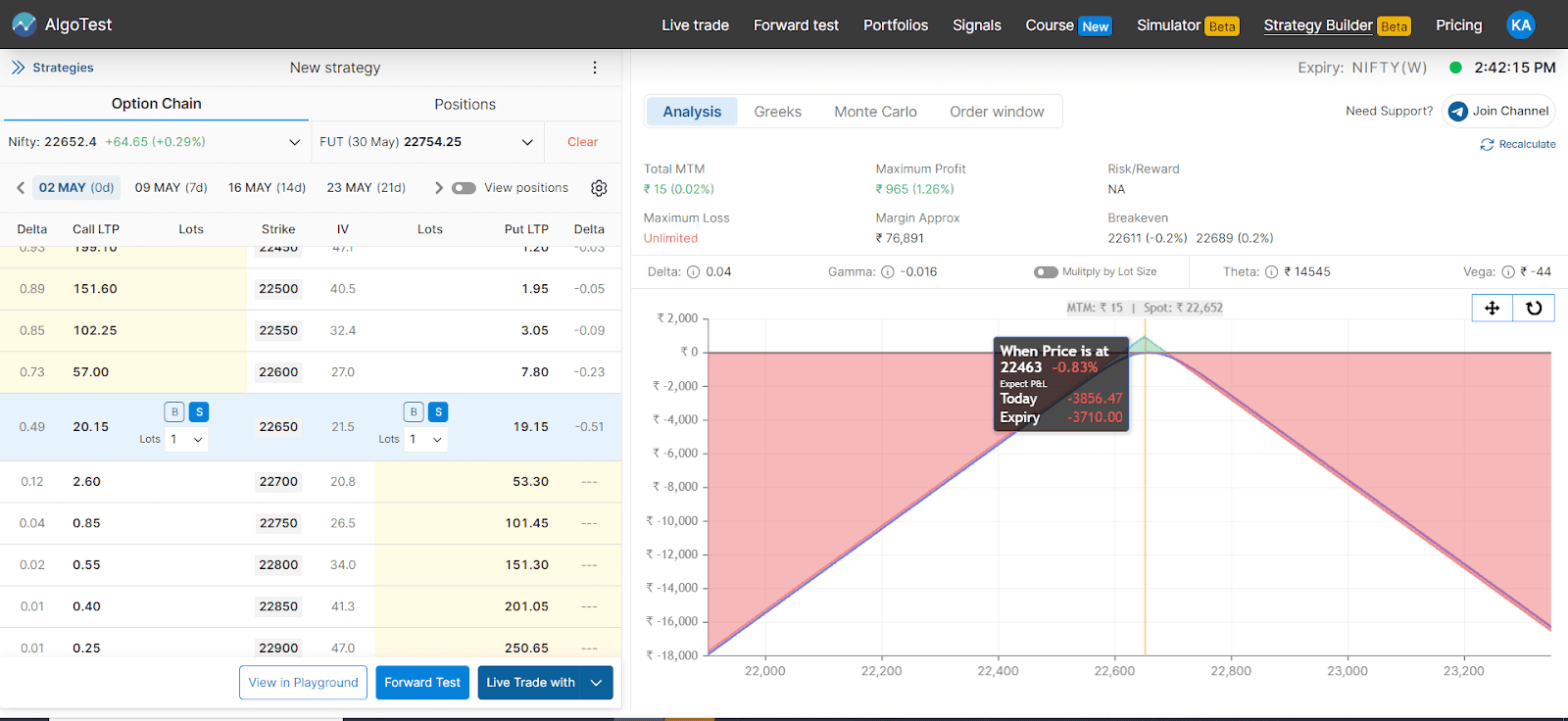
This platform is designed to make options trading feel less like rocket science and more like building with Legos. Here's why:
- **Easy to Use:** AlgoTest has a user-friendly app that won't confuse you with a million buttons. Even if you're new to options, you can walk through creating your strategies.
- **Customization:** AlgoTest lets you tailor your trades to how you like to play the market. Want to be cautious? No problem. Want to go for bigger gains? You can set it up that way too. You can create custom options strategies using your risk preferences and market expectations as a base. Traders can tailor many parameters including the strike price and expiry date to devise strategies that fit with their trading style.
- **Paper Trade:** AlgoTest's platform lets you [**paper trade**](https://docs.algotest.in/strategy-builder/introducing-strategy-builder/benefits/#paper-trading) your options strategies. This means you can build and test your strategies in a live market, without risking any actual capital. It's like a practice run for the real world. This is perfect for both beginners and seasoned traders. By incorporating paper trading, AlgoTest empowers you to confidently build and test your options strategies before ever entering the live market.
- **Fast Execution:** AlgoTest helps you get your trades in quickly, so you can take advantage of your chance.
## AlgoTest vs. Opstra vs. Dhan: A Comparative Analysis
To assist you in selecting the most suitable option strategy builder, we have created a comparison table highlighting the key features of each platform. Here are some important factors to consider:
Criteria
AlgoTest
Opstra
Dhan
Ease of Use
Intuitive interface for easy strategy creation
User-friendly with interactive visuals
Straightforward navigation
Forward-testing
Provides performance analysis
Detailed forward-testing capabilities
Limited forward-testing options
Analytics
Advanced analytics and risk management tools
Sophisticated options analysis
Basic analytics
Price
Free to use Strategy Builder in AlgoTest
Relatively higher pricing tiers
Free-to-use
Live Execution
25+ brokers
Single broker support
Limited brokers support
## AlgoTest: A Competitor With Established Platforms
AlgoTest stands out as a compelling option strategy builder, comparable to the more established platforms available in the market. It offers a user-friendly interface, making strategy creation a seamless process. With its extensive range of strategies, AlgoTest caters to both novice and experienced traders.
Learn more about AlgoTest [strategy builder](https://docs.algotest.in/strategy-builder/) in our product document.
One advantage AlgoTest offers is its comprehensive backtesting capabilities. Traders can analyze the historical performance of their strategies, allowing for data-driven decisions. Additionally, AlgoTest's advanced analytics and risk management tools provide traders with valuable insights to optimize their options trading.
## Pros and Cons + Pricing Structure
To provide a comprehensive analysis, let's delve into the pros and cons of each platform:
## AlgoTest
### **Pros of AlgoTest Strategy Builder**
- **Free to use:** AlgoTest offers a free tier that allows you to build basic trading strategies. This is a great way to experiment with strategy creation without any upfront costs.
- **Easy-to-use interface:** The strategy builder is designed to be user-friendly, even for those with no coding experience. You can drag and drop conditions and actions to create your strategy.
- **Focuses on options trading:** AlgoTest is specifically designed for options trading in the Indian market, which can be a valuable tool for Indian traders.
- **Forward-Testing Capabilities:** Forward-Test the strategy with real-time data in a risk-free setting to identify its strengths and weaknesses across different market conditions.
- **Live trading (paid feature):** AlgoTest offers a paid service that allows you to deploy your [options strategies](https://algotest.in/blog/options-trading-strategies/) live also called Algo Trade.
### **Cons of AlgoTest Strategy Builder**
- **Focus on the Indian market:** If you are not interested in trading Indian options, AlgoTest may not be the best platform for you.
- **Paid features for advanced functionalities:** Forward testing and live trading require a paid subscription.
Pricing Structure: AlgoTest offers a free strategy builder feature. For more details, visit [AlgoTest](https://algotest.in/?utm_source=blog&utm_medium=internal&utm_campaign=seo&utm_content=main-page&utm_term=algotest).
## Opstra
### **Pros of Opstra Strategy Builder**
- **Easy to Use:** Opstra's strategy builder is designed to be user-friendly, allowing you to build and analyze options strategies even if you're a beginner options trader.
- **Visualization Tools:** Opstra provides payoff charts, futures charts, and Greeks analysis to help you visualize the potential outcomes of your strategies before you trade them.
- **Paper Trading:** You can test your strategies with paper trading to see how they would perform in the market without risking real money. The free plan allows for two paper trades.
- **Market Data:** Opstra provides access to real-time market data, including options chains and FII/DII data, which can help make informed trading decisions.
### **Cons of Opstra Strategy Builder**
- **Limited Functionality in Free Plan:** The free plan only allows you to save two strategies in your portfolio. Upgrading to a pro plan is required for unlimited storage.
- **Live Trading:** Live trading via strategy builder is not present.
- **Potential for Inaccurate P/L:** Some users have reported that the payoff charts may not always accurately reflect the actual profit and loss.
- **Limited Order Management:** Opstra is primarily a strategy builder and analysis tool, and it may not offer all the order management features available on other trading platforms.
Pricing Structure: For Opstra's pricing details, please visit their [website](https://opstra.definedge.com/).
## Dhan
### **Pros of Dhan Strategy Builder**
- **Free to Use:** Dhan's strategy builder is available at no cost to users, which can be a major advantage for traders, especially beginners, who may not want to invest in additional strategy-building software.
- **Easy to Use:** The builder is designed to be user-friendly, allowing traders to build and test their options strategies without needing extensive coding knowledge.
- **Real-time Feedback:** The platform provides real-time payoff graphs and other analytics, helping traders visualize potential profits and losses under various market conditions.
- **Multiple Strategy Comparison:** Dhan's builder allows you to compare multiple strategies side-by-side, making it easier to choose the one that best suits your trading goals.
- **Access to Pre-built Strategies:** In addition to custom strategy building, Dhan offers a library of pre-built popular option strategies, which can be a helpful starting point for new options traders.
### **Cons of Dhan Strategy Builder**
- **Limited Customization:** While Dhan's Builder offers a good range of features, it may not be as customizable as some paid strategy-building software.
- **Reliance on Dhan Platform:** The strategy builder is only available on Dhan's Options Trader platform, which may limit its use for traders who prefer other trading platforms.
- **Potential for Errors:** As with any software, there is always a chance of calculation errors. It's important to be aware of this limitation and to double-check the results before deploying any strategy.
- **May Not Be Suitable for Complex Strategies:** The builder may not be powerful enough to handle highly complex options strategies.
Pricing Structure: Dhan's option strategy builder offers a free-to-use strategy builder. For further pricing information, visit their [website](https://www.dhan.co/pricing).
### Comparing Execution Speed and Efficiency
Execution speed and efficiency are crucial factors to consider when choosing an [option strategy builder](https://algotest.in/blog/option-strategy-builder-algotest-tutorial/). Traders need a platform that can swiftly execute their trading strategies and capitalize on market opportunities. Here is a comparison of execution speed and efficiency among some of the top strategy builders:
Strategy Builder
Execution Speed
Efficiency
AlgoTest
Lightning fast
High
Dhan Strategy Builder
Fast
Medium
Opstra Strategy Builder
Moderate
Medium
These figures are based on user experiences and overall performance. Traders should consider their trading needs and preferences when selecting the option strategy builder that aligns best with their requirements.
## Analyzing the Financial Benefits of Using an Option Strategy Builder
Using an option strategy builder can provide significant financial benefits for traders. Now, let's talk about how option strategy builders can put more money into your pocket. Here's the deal:
- **Save Time & Make Fewer Mistakes:** Building complex trades can be like solving a puzzle. [Strategy builders](https://algotest.in/feature/strategy-builder) take care of the tricky parts, so you can focus on what matters - making smart decisions. Less time wrestling with the mechanics means more time thinking about your strategy. Plus, these platforms can help you avoid typos and other errors that can cost you big time.
- **Trade Like a Mastermind:** Strategy builders help you craft winning options strategies, so you can analyze opportunities quickly and capitalize on market movements before they disappear.
- **See Before You Do:** Some option strategy builders like AlgoTest even let you forward-test out your trades beforehand, so you can see how they might perform under different market conditions. This way, you can tweak your strategy before risking real money.
### How Option Strategy Builders Can Enhance Your Trading Efficiency
Crafting the perfect options strategy can be a time-consuming puzzle. By the time you crunch all the numbers, the market window might have slammed shut. [Option Strategy builders](https://algotest.in/blog/optimize-sales-with-algotest-option-strategy-builder/) are the antidote to this struggle. These platforms streamline the process, letting you design and test intricate trades in minutes. It's like having an extra set of hands to tackle the technical aspects, freeing you up to focus on your overall trading strategy.
But option strategy builders are more than just speed machines. They're like your market gurus, constantly feeding you real-time data and insights to inform your decisions. No more scrambling for the latest news - these tools keep you on the pulse of the market, ready to pounce on fleeting opportunities.
Think of them as guardrails for options trading. Strategy builders help you craft and analyze options strategies efficiently, eliminating the potential for those nerve-wracking typos that can eat into your profits. It's like having a built-in safety net, ensuring your trades go through smoothly and efficiently.
The result? You become a more streamlined trader. Strategy builders empower you to save time, make informed decisions, and execute flawlessly. This translates to a sharper, more efficient trading experience overall.
### Usability and Support: Key Factors in Choosing a Builder
Picking the right option strategy builder is like picking the right tool for the job. Usability and support are crucial for a smooth trading experience.
- **Usability:** You want a builder that's user-friendly and intuitive. A clear and simple platform lets you build your strategies quickly and easily, without getting bogged down in complicated features.
- **Support:** No matter how user-friendly a builder is, questions or issues can arise. Reliable customer support is essential. Look for builders that offer multiple channels for help, like live chat, email, or phone. This ensures you can get the assistance you need when you need it.
By choosing a builder with strong usability and support, you can focus on your trading strategy and avoid unnecessary frustration.
## Conclusion
In conclusion, utilizing an option strategy builder can significantly enhance your trading efficiency and financial benefits. Whether you're a seasoned trader or just starting, the customization, speed, and efficiency of these platforms offer a competitive edge. If you're ready to streamline your trading process and boost your performance, [sign up now](https://algotest.in/?utm_source=blog&utm_medium=internal&utm_campaign=seo&utm_content=main-page&utm_term=algotest) and take your trading to the next level.
Read more: [How to Backtest Options Trading Strategies](https://algotest.in/blog/how-to-backtest-options-trading-strategies-with-examples/)
## Frequently Asked Questions
### What Are the Most Essential Features in an Option Strategy Builder?
The most essential features in an option strategy builder include customization, user-friendly, and efficiency. These features enable traders to create and execute strategies with ease, tailor their strategies to their trading styles, and optimize their trading efficiency.
### How Do I Choose the Right Option Strategy Builder for My Trading Style?
To choose the right option strategy builder for your trading style, consider factors such as your trading goals, flexibility of customization, customer support, and overall trading efficiency.
### Can Beginners Efficiently Use Option Strategy Builders?
Yes, beginners can efficiently use option strategy builders. These platforms are designed to be user-friendly, providing intuitive interfaces and educational resources to guide beginners in creating and executing their trading strategies. Additionally, [customer support](https://telegram.me/AlgoTest_In) is available to assist beginners with any queries or issues they may have.
---
This blog is powered by Superblog. Visit https://superblog.ai to know more.
---
## AlgoTest’s Lazy Leg - Boost Your Trading Flexibility
Author: AlgoTest
Author URL: https://algotest.in/blog/author/algotest/
Published: 2024-08-28
URL: https://algotest.in/blog/unlock-trading-success-with-lazy-leg-algotest/
AlgoTest, an intuitive algo-trading platform, is excited to introduce the Lazy Leg feature, designed to provide traders with greater flexibility in adjusting their positions. This innovative feature aims to enhance your trading strategy by allowing for dynamic and conditional re-entries.
https://youtu.be/I98fS4ZqKLE?feature=shared
## **Flexibility in Trading**
The Lazy Leg feature enables conditional re-entry of trades based on predefined criteria. This allows traders to set specific conditions for re-entering trades when certain market conditions are met, offering a significant advantage in trade management.
### **Example of a Strategy with Lazy Leg**
Let’s imagine a scenario where your initial stop-loss is hit. With the Lazy Leg feature, you can set a new leg to execute with different parameters, such as a wider stop-loss or a different entry point, once the initial conditions are triggered. This flexibility ensures that your trading strategy can adapt to changing market conditions without manual intervention.
Here's a practical example:
1. **Entry Time**: 10:30 AM
2. **Exit Time**: 3:00 PM
3. **Initial Setup**:
- Sell a call option with a premium of 150.
- Set a stop-loss at 60% (i.e., 240).
4. **Re-entry Condition**:
- If the stop-loss hits, re-enter by selling a new call option at 125, but only if the price reduces by 20%.
- Set a new stop-loss for this leg at 30%.
This strategy aims to handle market reversals intelligently using the Lazy Leg feature, allowing your trading to adapt seamlessly to market movements.
## **Benefits of Flexibility**
- **Better Trade Management**: Optimized strategies by fine-tuning positions dynamically.
- **Responsive Trading**: More effective responses to market movements, reducing adverse impacts and maximizing potential gains.
- **Sophisticated Strategies**: Implement strategies with greater precision and control.
The Lazy Leg feature on AlgoTest offers significant benefits by providing traders with more flexibility in adjusting their positions. Explore the Lazy Leg feature on AlgoTest today to take your trading to the next level.
Visit our [Lazy Leg documentation page](https://chatgpt.com/c/4e3a0114-451d-47b0-a97c-ef2992e0fe11#) to learn more.
---
This blog is powered by Superblog. Visit https://superblog.ai to know more.
---
## Backtest Comparison on AlgoTest
Author: AlgoTest
Author URL: https://algotest.in/blog/author/algotest/
Published: 2024-08-28
URL: https://algotest.in/blog/backtest-comparison-algo-trading/
## Boost Your Trading Strategy with Backtest Comparison
In the fast-paced world of trading, optimizing your algorithmic trading strategies efficiently can make a significant difference. That’s why [AlgoTest](https://algotest.in/?utm_source=blog&utm_medium=internal&utm_campaign=seo&utm_content=main-page&utm_term=algotest), an intuitive algo-trading platform, has introduced the [Backtest Comparison feature](https://docs.algotest.in/backtest/backtest-comparison/), designed to help you refine your strategies quickly and effectively.
### What is the Backtest Comparison Feature?
The Backtest Comparison feature allows you to compare up to 15 of your recent backtests. By providing detailed metrics and the ability to view multiple strategies side-by-side, this feature enhances your ability to tweak, iterate, and optimize your trading strategies.
### Why We Added It
- **Time and Efficiency:** Faster feedback loops mean you can iterate and optimize your strategies more quickly.
- **Parameter Tuning:** Adjust parameters and see the results immediately, making the tuning process more efficient.
- **Efficient Strategy Creation:** Streamline the creation of new strategies by leveraging insights from past backtests.
- **Iteration and Change Log:** Track changes over time to see how you arrived at your current strategy, enhancing your understanding and ability to improve.
- **Enhanced Research:** Detailed comparisons help you become a better researcher, allowing for more informed decisions.
### How It Can Help You
By comparing backtests, you can identify what works and what doesn’t, saving time and improving your strategies. This feature helps you make data-driven decisions, leading to better trading outcomes and more efficient strategy development.
### Ready to optimize your trading strategies?
Try the [Backtest Comparison feature on AlgoTest](https://algotest.in/feature/backtest?utm_source=blog&utm_medium=internal&utm_campaign=seo&utm_content=feature&utm_term=backtest) today and take your trading to the next level.
Visit our [Backtest Comparison feature page](https://docs.algotest.in/features/backtest-comparison) to learn more.
---
This blog is powered by Superblog. Visit https://superblog.ai to know more.
---
## Analyzing PE Ratios: How to Evaluate Stocks Like a Pro
Author: AlgoTest
Author URL: https://algotest.in/blog/author/algotest/
Published: 2024-08-28
URL: https://algotest.in/blog/analyze-pe-ratios-and-evaluate-stocks/
Ever feel like you need a secret weapon to navigate the stock market? Well, dust off your detective hat, because you're about to learn how to analyze PE ratios like a pro!
Understanding PE ratios is like cracking the code to stock valuation. By deciphering this number, you can know valuable clues about a company's worth and potential to grow your hard-earned cash. In this guide, we'll break down the importance of PE ratios and show you how to use them to make smarter investment decisions. So buckle up and get ready to become a stock evaluation superstar!
## **Understanding PE Ratios and Their Significance**
PE ratios play a critical role in analyzing stocks and making informed investment decisions. By understanding what PE ratios are and how they are calculated, investors can gauge the value of a stock and assess its growth potential.
The **PE ratio**, or price-to-earnings ratio, is a financial metric used to evaluate the relative value of a company's stock. It compares the market price of a stock to its earnings per share (EPS) and provides insight into how much investors are willing to pay for each unit of earnings.
To calculate the PE ratio, simply divide the market price of a stock by its EPS.
**For example**, if a stock is trading at INR 50 and has an EPS of INR 5, the PE ratio would be 10 (INR 50 divided by INR 5). A higher PE ratio indicates that investors have high expectations for future earnings, while a lower ratio may suggest undervaluation or slower growth prospects.
_"The PE ratio serves as a valuable tool for investors to assess the market's perception of a company's growth potential. It helps identify overvalued or undervalued stocks and allows investors to make more informed decisions based on historical data and market trends." - Financial Expert_
Investors consider PE ratios as one of the key indicators of a stock's value and potential returns. However, it is important to note that PE ratios should not be evaluated in isolation. They need to be compared to industry averages or the company's historical PE ratios to provide meaningful insights.
Additionally, PE ratios vary across sectors and industries due to differences in growth rates, risk profiles, and market expectations. A high PE ratio in one industry may be justified by strong growth potential, while the same ratio in another industry might indicate excessive speculation or inflated market sentiment.
Understanding the significance of PE ratios enables investors to make more informed decisions when evaluating stocks. Investors can gain a comprehensive perspective and make sound investment choices by considering other financial metrics, industry trends, and the overall market environment.
**CompanyMarket Price (INR)EPS (INR)PE Ratio** Company A40410Company B60610Company C80810
The table above illustrates the PE ratios of three different companies. Despite significantly different market prices and EPS, all three companies have the same PE ratio of 10. This indicates that investors are willing to pay the same multiple for each unit of earnings across these companies, suggesting a similar perception of growth potential.
In summary, PE ratios are a vital tool for investors to evaluate stocks. Investors can assess a stock's value and compare it to industry peers by understanding its significance. It is important to consider PE ratios in conjunction with other financial metrics and market factors to make well-informed investment decisions.
## **Interpreting PE Ratios: Factors to Consider**
When evaluating a stock based on its PE ratio, it's important to consider several factors that can influence its interpretation. These factors provide valuable insights into a company's financial health and growth potential, allowing investors to make more informed decisions.
**_1\. Industry Comparison:_** The first factor to consider is how a stock's PE ratio compares to others in the same industry. Different industries have varying PE ratio benchmarks based on their growth rates, profitability, and risk factors. Comparing a stock's PE ratio to its industry peers can help determine whether it's overvalued or undervalued.
**_2\. Historical PE Ratio:_** Assessing a stock's PE ratio over time can provide a historical perspective on its valuation. Comparing the current PE ratio to its historical average or median can reveal whether the stock is trading at a premium or a discount. It's important to consider the reasons behind any significant deviations and analyze if they signal potential opportunities or risks.
**_3\. Earnings Growth:_** The rate at which a company's earnings are growing is a crucial factor in interpreting its PE ratio. If a stock has a high PE ratio but also demonstrates strong and consistent earnings growth, it may indicate that investors have high expectations for future earnings. Conversely, a low PE ratio coupled with stagnant or declining earnings might suggest underlying issues.
**_4\. Market Conditions:_** The overall market conditions can significantly impact stock valuations and PE ratios. During periods of economic expansion and investor optimism, PE ratios tend to be higher as market participants anticipate future earnings growth. Conversely, during economic downturns or periods of market uncertainty, PE ratios may be lower as investors become more risk-averse.
**_5\. Company-specific Factors:_** It's essential to consider company-specific factors that can influence the PE ratio, such as corporate actions, competitive advantages, management changes, regulatory changes, or industry disruptions. These factors can impact a company's future earnings potential and warrant a closer analysis of its PE ratio in the context of these developments.
_"Interpreting PE ratios requires a comprehensive analysis of various factors that go beyond a single number. It's crucial to consider industry comparisons, earnings growth, historical trends, market conditions, and company-specific factors to gain a holistic understanding of a stock's valuation."_
By carefully considering these factors, investors can better interpret a stock's PE ratio and make more informed investment decisions. As with any financial metric, it's important to use PE ratios in conjunction with other fundamental and technical analysis tools to get a comprehensive view of a stock's potential.
## **Conclusion**
In summary, understanding and analyzing the PE ratio of a stock is crucial in making informed investment decisions. The PE ratio, or price-to-earnings ratio, provides valuable insights into a company's valuation and growth potential. By evaluating the PE ratio, investors can assess whether a stock is undervalued or overvalued in comparison to its earnings.
When evaluating stocks, it is important to consider various factors alongside the PE ratio. These may include the company's industry, competitors, and historical performance. A low PE ratio doesn't always indicate a good investment, as other underlying factors may affect the stock's value. Likewise, a high PE ratio may not necessarily mean a stock is overvalued, as it could indicate strong growth prospects.
By analyzing the PE ratio in conjunction with other financial metrics, such as earnings growth rate and industry benchmarks, investors can gain a comprehensive understanding of a stock's value. This allows them to make more informed investment decisions, increasing the likelihood of achieving favorable returns.
## **FAQ**
### **How is a PE ratio calculated?**
The PE ratio is calculated by dividing the market price per share of a stock by its earnings per share (EPS). This ratio provides insight into how much investors are willing to pay for each rupee of earnings generated by the company.
### **What does a high PE ratio indicate?**
A high PE ratio typically indicates that investors have high expectations for the company's future growth potential. It suggests that the stock may be overvalued and that investors are willing to pay a premium price for the earnings generated by the company.
### **What does a low PE ratio indicate?**
A low PE ratio generally suggests that the stock is undervalued and may be a good investment opportunity. It indicates that investors are not willing to pay a high price for the company's earnings and may believe that the stock has growth potential.
### **How can I use PE ratios to compare different stocks?**
PE ratios can be used to compare the relative value of different stocks within the same industry or across industries. By comparing the PE ratios of similar companies, investors can identify stocks that may be overvalued or undervalued relative to their earnings potential.
### **Are PE ratios the only factor to consider when evaluating a stock?**
No, while PE ratios provide valuable insights into a company's valuation, they should not be the sole factor considered when evaluating a stock. Investors should also assess other financial ratios, industry trends, company performance, and future growth prospects to make a well-rounded investment decision.
---
This blog is powered by Superblog. Visit https://superblog.ai to know more.
---
## Selecting the Right Option Strategy Builder: Tailored for Your Trading Needs
Author: AlgoTest
Author URL: https://algotest.in/blog/author/algotest/
Published: 2024-08-28
Meta Title: AlgoTest Option Strategy Builder: The Best Tool for Traders
Meta Description: Discover why AlgoTest’s Option Strategy Builder is the most powerful tool for creating, testing, and optimizing options strategies, trusted by 4L+ traders.
URL: https://algotest.in/blog/algotest-option-strategy-builder-the-right-one/
Tools can make a big difference when it comes to the fast-paced world of options trading. Imagine yourself navigating a bustling marketplace, overflowing with possibilities. An option strategy builder acts as your trusty guide, helping you craft strategies that align with your goals and risk tolerance. But with so many builders out there, how do you choose the one that's perfect for you?
This blog dives deep into the world of option strategy builders, with a special focus on AlgoTest's unique approach. We'll explore the key features you should look for and how [AlgoTest Option Strategy Builder](https://algotest.in/feature/strategy-builder) stands out, putting you in the driver's seat of your options trading journey.
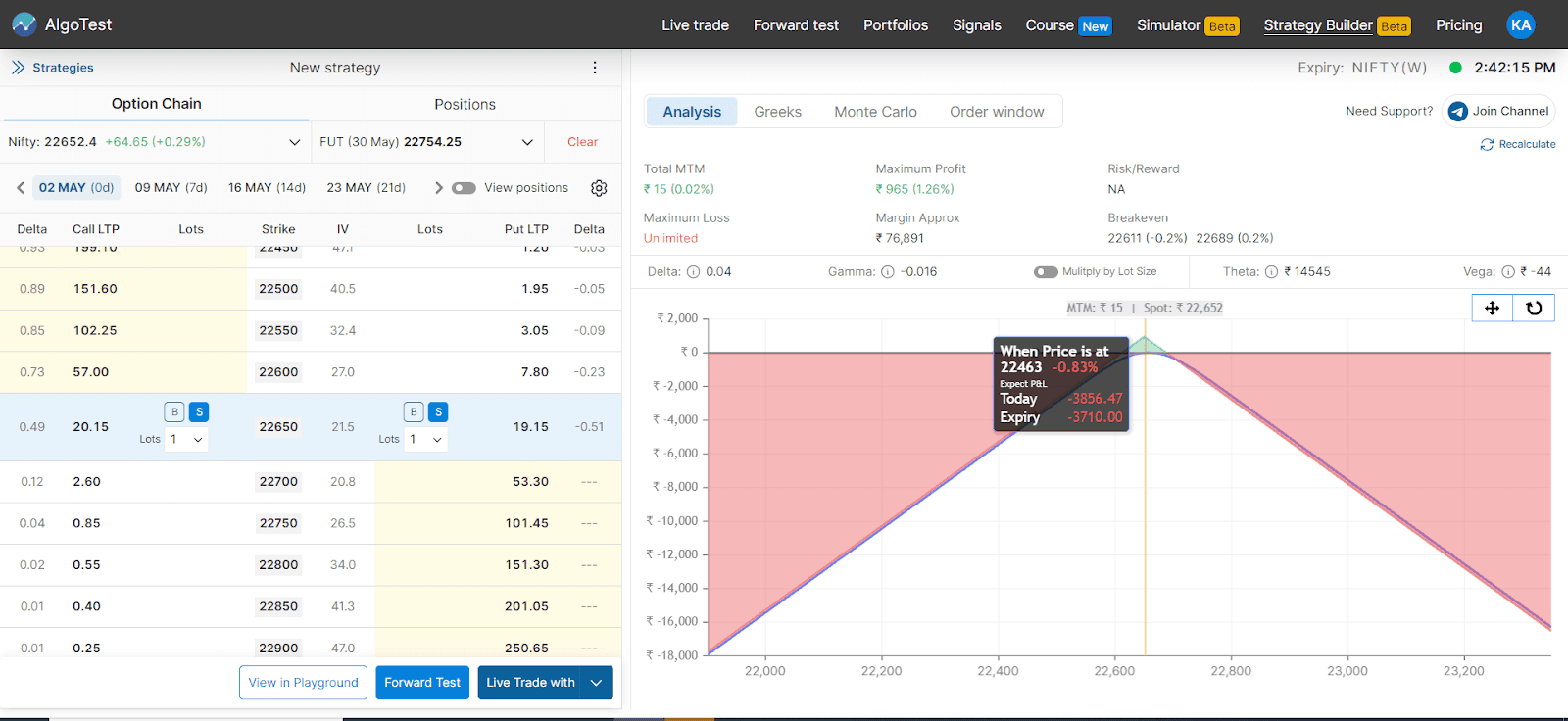
### **Why Choose AlgoTest's Strategy Builder?**
Forget complex and overwhelming historical data. [AlgoTest's strategy builder](https://algotest.in/feature/strategy-builder?utm_source=blog&utm_medium=internal&utm_campaign=seo&utm_content=feature&utm_term=strategy-builder) takes a refreshingly straightforward approach, focusing on [**forward testing**](https://algotest.in/feature/forward-test?utm_source=blog&utm_medium=internal&utm_campaign=seo&utm_content=feature&utm_term=forward-test). This means you can design and test your options strategies in a live market, gaining valuable insights into their potential performance without getting bogged down in the past.
Here's why AlgoTest's forward-testing strategy builder is a game-changer:
- **Real-World Applicability:** Test your strategies in the [live](https://algotest.in/feature/live?utm_source=blog&utm_medium=internal&utm_campaign=seo&utm_content=feature&utm_term=live) market, giving you a clear picture of how they might perform under current conditions. This allows you to adapt and refine your approach based on ongoing market movements.
- **Focus on the Present:** Markets are dynamic, and relying solely on historical data can be restrictive. Forward testing lets you tailor your strategies to the ever-evolving market landscape, increasing your chances of success.
- **Simplicity and Speed:** No need to spend hours crunching historical data. AlgoTest's forward testing is quick and user-friendly, allowing you to experiment with different strategies and identify opportunities efficiently.
Now, let's delve into the essential features of a top-notch option strategy builder and see how AlgoTest delivers:
### **Must-Have Features in an Option Strategy Builder:**
A good strategy builder is like a well-equipped kitchen. It provides the tools you need to create a delicious options "recipe" suited to your taste. Here are the key ingredients to look for:
- **Customization:** The ability to choose different underlying assets, strike prices, and expiration dates is crucial. You want a builder that adapts to your specific trading goals and risk tolerance.
- **Live Market Data:** Feeding your strategy builder in the live market is essential. This ensures your strategies are based on current market conditions, not yesterday's news.
- **Visual Representation:** Charts and graphs make it easier to understand how your options strategy might perform under different market scenarios. A good builder will translate complex data into clear visuals.
### **How AlgoTest's Strategy Builder Meets Your Needs:**
Now, let's see how AlgoTest excels in each of these key areas:
- **Customization:** AlgoTest provides a vast selection of underlying assets, strike prices, and expiration dates. You can build strategies for indices, allowing you to explore diverse trading opportunities.
- **Live Market Data:** AlgoTest integrates seamlessly with current market updates, ensuring your strategies are based on the most up-to-date information. This empowers you to make informed decisions based on live market market movements.
- **Visual Representation:** AlgoTest presents your options strategy in a clear and concise chart format. You can easily visualize potential profit and loss scenarios, helping you make confident trading decisions.
- **Order Management:** AlgoTest integrates with your brokerage platform, allowing you to execute your strategies with a single click. This streamlines your trading process and reduces the risk of errors.
- **Flexibility:** AlgoTest caters to a wide range of trading styles. Whether you're looking for income generation, directional plays, or volatility protection, AlgoTest's builder provides the flexibility to craft strategies that meet your goals.
### Here's a closer look at AlgoTest's unique features that set it apart:
1. **Scenario Analysis:** Test your strategies under various market conditions using AlgoTest's scenario analysis tool. This helps you understand how your options strategy might react to different market movements, giving you a well-rounded perspective.
2. **Profit and Loss Calculations:** AlgoTest provides profit and loss calculations in the live market for your chosen strategy. This allows you to visualize potential outcomes and make adjustments based on your risk tolerance.
3. **Educational Resources:** AlgoTest offers many educational resources, including articles, tutorials, and webinars. This empowers you to deepen your knowledge.
4. **Understanding the Greeks with AlgoTest:** The Greeks are a group of letters representing key metrics that measure an option's price sensitivity to various market changes. AlgoTest doesn't just allow you to build strategies; it also helps you understand how these strategies might react to market movements by:
- **Displaying Greek Values:** AlgoTest calculates and displays the Greeks (Delta, Gamma, Vega, Theta, and Rho) for your chosen strategy. This provides valuable insights into how the option's price might change concerning underlying asset price movements, volatility changes, time decay, interest rates, and dividends, respectively.
- **Visualizing Greek Impacts:** While numbers are important, visualization is key. AlgoTest allows you to see how changes in these Greek values might impact your potential profit and loss. This empowers you to make informed decisions about your option strategies.
1. **Margin Requirements and Risk Management with AlgoTest:** Margin is the deposit required by your broker to hold certain positions, including options. AlgoTest integrates margin requirements into its strategy builder, so you can:
- **Estimate Margin Costs:** AlgoTest estimates the margin required for your chosen strategy before executing a trade. This allows you to factor in the margin cost when evaluating potential profitability.
- **Manage Risk Effectively:** Knowing the margin requirement helps you manage your overall trading risk. AlgoTest empowers you to stay within your risk tolerance by keeping your margin usage in check.
1. **Demystifying Monte Carlo Simulations \[MCS\] (without Backtesting):** While AlgoTest focuses on forward testing, **MCS simulates thousands of possible future price paths for the underlying asset based on volatility and risk-free rates.** This creates a distribution of potential option payoffs at expiry. **For option strategy builders, MCS helps evaluate strategy performance across various market scenarios.** It estimates the probability of profit/loss and potential returns of a strategy. Here's how this knowledge complements your forward-testing approach:
- **Understanding Risk Distribution:** Monte Carlo simulations involve running thousands of possible market scenarios. By understanding this technique, you gain a broader perspective on the potential **risk distribution** of your options strategy.
- **Complementing Forward Testing:** Forward testing provides valuable insights into real-time market conditions. Understanding Monte Carlo simulations can help you **conceptualize** how your strategy might perform under a wider range of possibilities.
## **Building Confidence with AlgoTest's Forward-Testing Approach**
Let's face it, relying solely on historical data for options strategies can be like planning a vacation based on last year's weather. Markets are dynamic, and what worked in the past may not translate perfectly into the present.
Forward testing lets you practice options strategies in the real market with zero risk, so you can see how they perform before putting your money on the line.
Here's how AlgoTest's forward-testing approach fosters confidence in your options trading:
- **Reduced Reliance on Past Performance:** Historical data is valuable, but it doesn't guarantee future success. Forward testing allows you to focus on current market conditions, giving you a more realistic picture of your strategy's potential.
- **Adaptability in the live market:** Markets can shift quickly. With forward testing, you can adjust your strategy based on live market movements, allowing you to capitalize on emerging opportunities or mitigate potential risks.
- **Focus on Skill Development:** Forward testing encourages you to refine your trading skills through continuous experimentation. By actively testing and analyzing your strategies in real time, you gain a deeper understanding of options behavior and market dynamics.
## **Beyond the Builder: AlgoTest's Ecosystem for Success**
AlgoTest doesn't stop at just the strategy builder. It offers a comprehensive ecosystem to support your options trading journey:
- **Educational Resources:** Expand your knowledge with [blogs](https://algotest.in/blog/), [tutorials](https://www.youtube.com/channel/UCXzgi7C8cmzy9ovY6JigpUg), and [documents](https://docs.algotest.in/) covering various options strategies, and market concepts.
- **Community Forum:** Connect with other traders, share experiences, and learn from each other in the interactive [AlgoTest community forum](https://telegram.me/AlgoTest_In) of 8500+ traders.
## **Conclusion: Taking Control of Your Options Trading**
The world of options trading can be exciting, but navigating it effectively requires the right tools and knowledge. [AlgoTest's option strategy builder](https://algotest.in/feature/strategy-builder?utm_source=blog&utm_medium=internal&utm_campaign=seo&utm_content=feature&utm_term=strategy-builder) empowers you to design, test, and execute options strategies with confidence. With a focus on customization and forward testing, AlgoTest gives you command over your trading experience and the resources you need to reach your financial objectives and make wise decisions.
**Ready to realize the potential of options trading with forward testing?** [**Sign up**](https://algotest.in/) **for AlgoTest today and experience the difference!**
---
This blog is powered by Superblog. Visit https://superblog.ai to know more.
---
## Improved Error Handling on AlgoTest!
Author: AlgoTest
Author URL: https://algotest.in/blog/author/algotest/
Published: 2024-08-28
URL: https://algotest.in/blog/trade-with-confidence/
## **Introducing Our New Error Handling Feature**
At AlgoTest, we're excited to announce a significant upgrade to our platform with the introduction of the Error Handling feature. This new functionality is designed to make the trading experience smoother and more resilient by allowing traders to manage errors directly on the AlgoTest platform, without the need for switching to a broker terminal.
## **Why we developed this feature**
> The development of our Error Handling feature was **driven by a clear need:** _to simplify and enhance the error management process for our users_.
>
> \- **Raghav Malik, CEO of AlgoTest**
Traditionally, any errors encountered during live trading required users to manually intervene using their broker's terminal. This process was not only cumbersome but also time-consuming, potentially leading to missed opportunities and greater trading risks.
Recognizing these challenges, we developed a solution that allows errors to be handled smartly and efficiently right within AlgoTest. Our new feature supports the resumption of strategies that enter an Error State under certain conditions, providing a seamless transition from error detection to correction.
## **How does this feature help you trade?**
The Error Handling feature on AlgoTest includes several key capabilities:
- **Resume Strategies:** Users can now resume strategies that go into an Error State, provided certain conditions are met.
- **Smart Error Management:** The feature includes a smart system that tracks orders and strategy legs that encounter errors, allowing for quick identification and management.
- **Direct Handling on AlgoTest:** Most errors can now be handled directly on our platform, reducing the need to switch between systems and increasing the efficiency of trading operations.
For a more detailed exploration of all the capabilities of our new Error Handling feature, we invite you to visit our **“Error Handling”** documentation page at [AlgoTest Documentation](https://docs.algotest.in/error-handling/).
The new Error Handling feature at AlgoTest represents a significant step forward in our commitment to providing a robust, user-friendly trading platform. By enabling direct error management on AlgoTest and enhancing the overall efficiency of error resolution, we are empowering our users to trade more confidently and effectively.
We understand the critical nature of fast and efficient error handling in trading and are pleased to offer this advancement to our community!
---
This blog is powered by Superblog. Visit https://superblog.ai to know more.
---
## Effective Buying Strategies with AlgoTest’s Option Strategy Builder
Author: AlgoTest
Author URL: https://algotest.in/blog/author/algotest/
Published: 2024-08-28
URL: https://algotest.in/blog/buying-strategies-with-algotest-option-strategy-builder/

Have you ever been caught in the whirlwind of uncertainty while navigating India's options market? The constant fluctuations and ever-changing trends can be overwhelming, leaving you questioning your every move. We have been there too, feeling the weight of decisions that could potentially make or break my financial future.
But fear not! There is a way to regain control and make informed decisions that can lead to profitable outcomes. Introducing **AlgoTest's Option Strategy Builder**, an innovative tool designed to empower you with expert options strategies in India. With this powerful tool, you can confidently step into the market, knowing you have a solid plan.
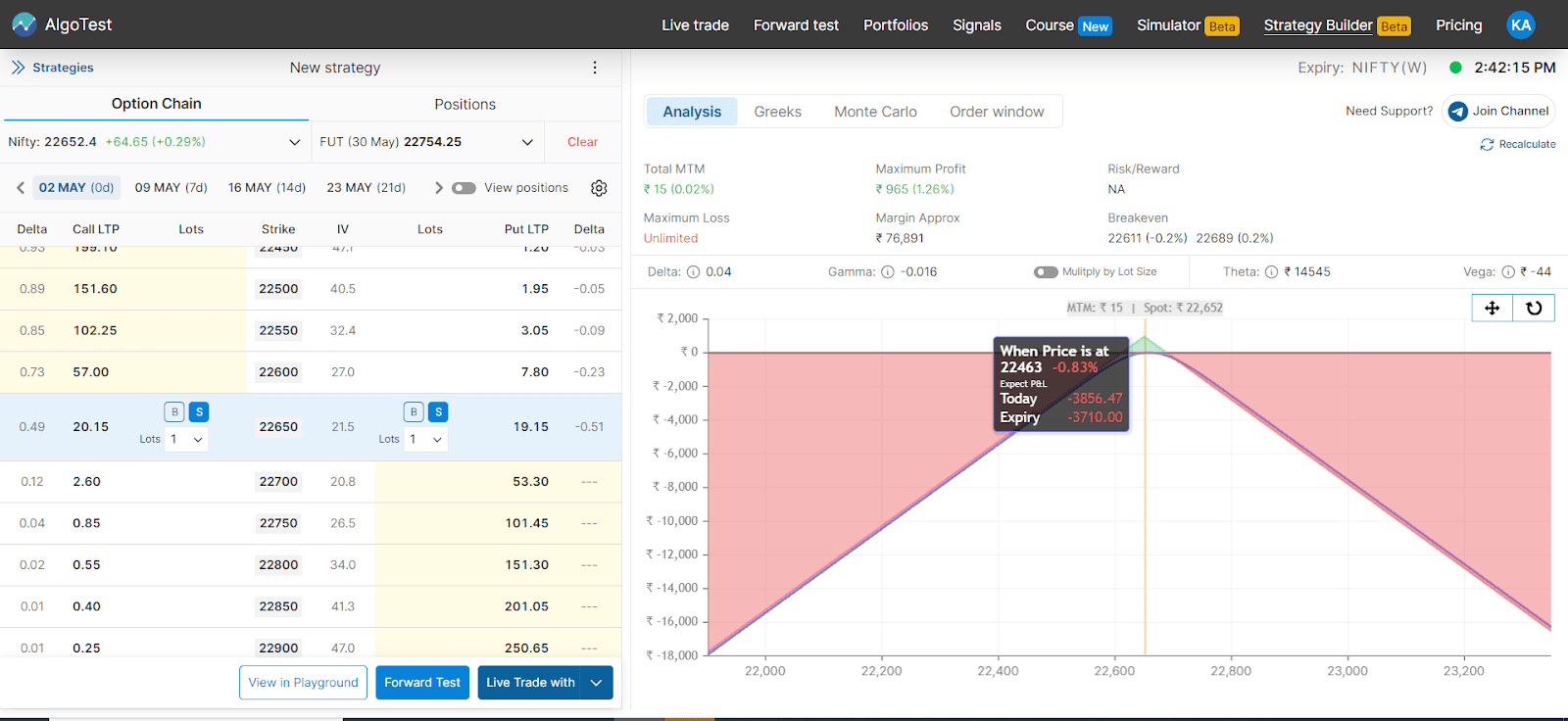
Imagine building options trading strategies like a pro, even if you're a beginner! AlgoTest's [Option Strategy Builder](https://algotest.in/blog/option-strategy-builder-algotest-tutorial/) makes it that easy. This handy tool has a user-friendly interface, so you can create your strategies without any complicated steps. Ready to up your options trading game? Join other successful traders in India who've used this tool to boost their profits. It's like having a secret weapon in your trading arsenal!
## Understanding the Option Strategy Builder
An Option Strategy Builder allows you to visualize your strategies in real-time. By being able to pick the stock you are interested in and tell the strategy builder if you think it will go up or down. You can also choose how risky you want your trade to be (far out of the money, at the money, or in the money). Finally, you tell it how many options contracts you want to buy or sell.
Once you've made your selections, the builder will show you exactly how much your trade could make or lose at different stock prices.
Furthermore, the Strategy Builder provides you with multiple tools for effectively analyzing your trades. [AlgoTest's Options Strategy Builder](https://algotest.in/blog/option-strategy-builder-algotest/) provides tools such as option Greeks, Total MTM, Risk to Reward ratio, and more to help you create a profitable strategy.
## Crafting Effective Options Strategies
Crafting the right options strategies can be tricky, but AlgoTest's Option Strategy Builder is here to help! Think of it like your personal options trading coach. This tool lets you build custom strategies that fit your risk comfort level and what you're hoping to achieve.
So whether you think a market is going up, down, or staying flat, the Option Strategy Builder can help you explore different trade ideas and find the one that works best for you. It even considers things like how much risk you're okay with, how much money you could potentially make, and how much time you have until the trade expires. It gives you all the info you need to make smart choices!
Here are some tips to help you craft effective options strategies:
1. Define your investment goals: Establish your risk tolerance and desired returns to guide your strategy-building process.
2. Analyze market conditions: Stay updated with market trends and identify potential opportunities for profitable strategies.
3. Diversify your portfolio: Build strategies that cover a range of indices to mitigate risk and maximize potential returns.
4. Consider different scenarios: Use the [Option Strategy Builder](https://algotest.in/blog/option-strategy-builder-strategies-that-win/) to do a trial-and-error method for various market scenarios and evaluate the performance of your strategies under different conditions.
By following these guidelines and leveraging the Option Strategy Builder, you can enhance your options trading journey in India and increase the likelihood of achieving your financial goals.
Benefits of Crafting Effective Options StrategiesOptimized strategies tailored to your risk tolerance and investment goalsInsights into market trends and potential opportunitiesEnhanced profitability through strategy refinementEffective risk management techniquesImproved decision-making through scenario analysisDiversification for risk mitigation and maximising returnsEnhanced profitability through strategy refinement
### **How to create the first strategy with AlgoTest’s Option Strategy Builder**
By following the steps below, you can build your first strategy that aligns with your trading goals and maximize your chances of success.
Step 1. Visit the \[ [Algotеst](https://algotest.in/)\] website, create a free account, and then sign in with it.

Step 2. Click "Strategy Builder" now, as indicated by the picture below.

Step 3. You will get an interface, as shown in the image below.
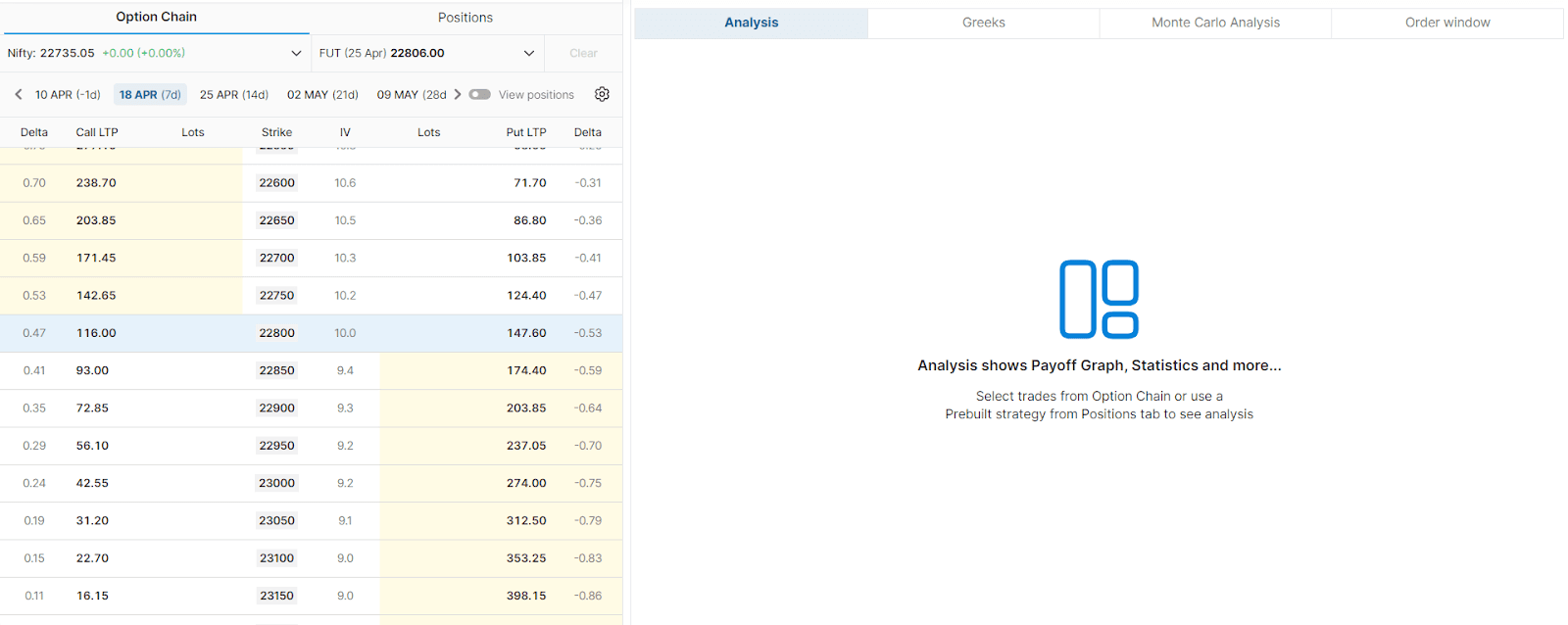
Step 4. Now add the legs from the option chain according to the strategy you want to build. Assuming we want to build an iron fly, we will sell ATM CE and ATM PE and buy OTM CE and OTM PE from the option chain as shown in the image below
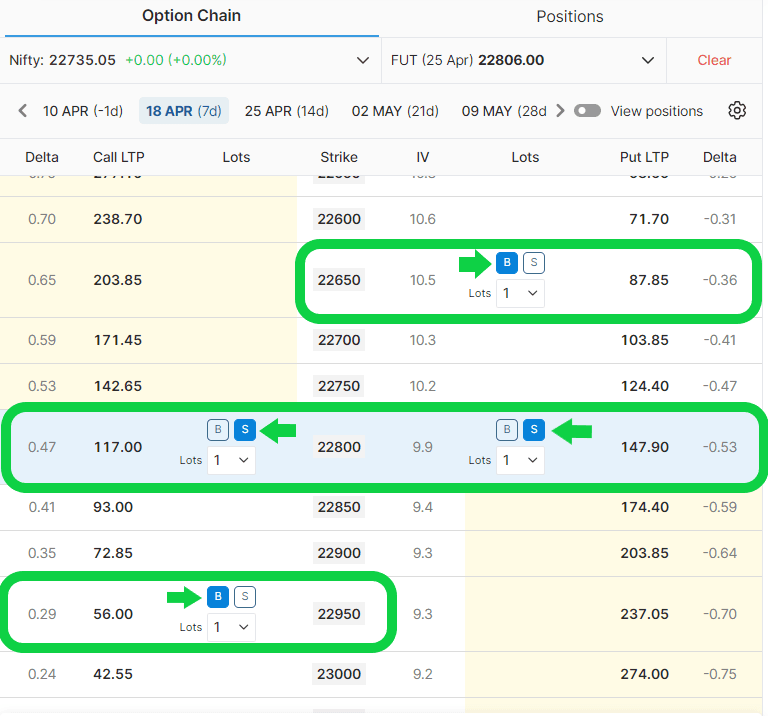
Step 5. You can analyse your strategy using the different tools provided by AlgoTest.
- In the Analysis section, Strategy Builder provides you with tools like Payoff graph, Maximum Profit, Maximum loss, Risk reward, Breakeven point, etc. to analyse your strategy. A payoff graph is a handy tool that helps you determine how your position is going to expire concerning the underlying move.
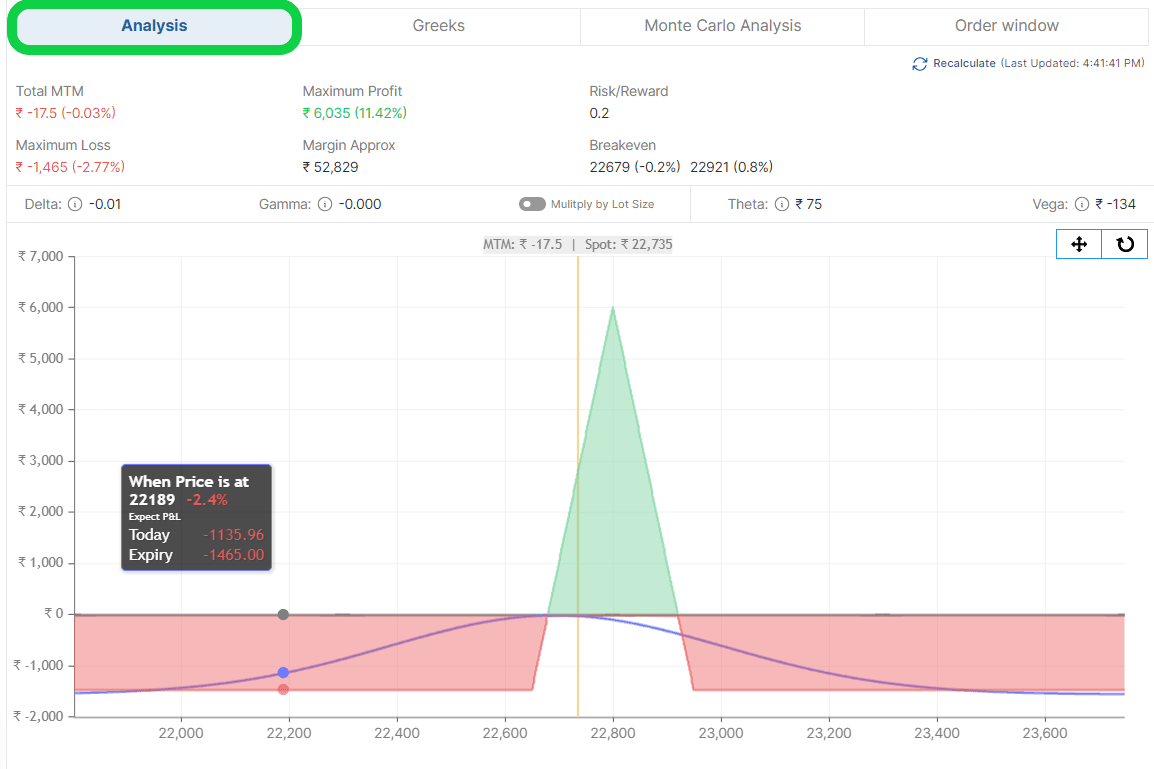
- In the Greek section, Strategy Builder provides you with information about Option Greeks like Delta, Theta, Gamma, IV, Vega, etc. for your positions, as shown in the image below.
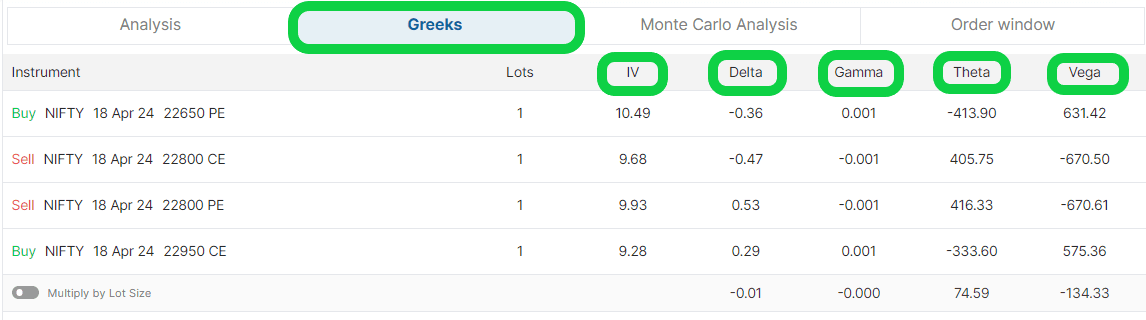
- In the Monte Carlo Analysis Section, Your PnL will depend highly on the underlying index's path. Monte Carlo analysis is an advanced method to see how your strategy will perform on average across 10,000 different price paths that the underlying could take until expiry. You can access this feature by clicking on “Monte Carlo Analysis,” as shown in the image below.
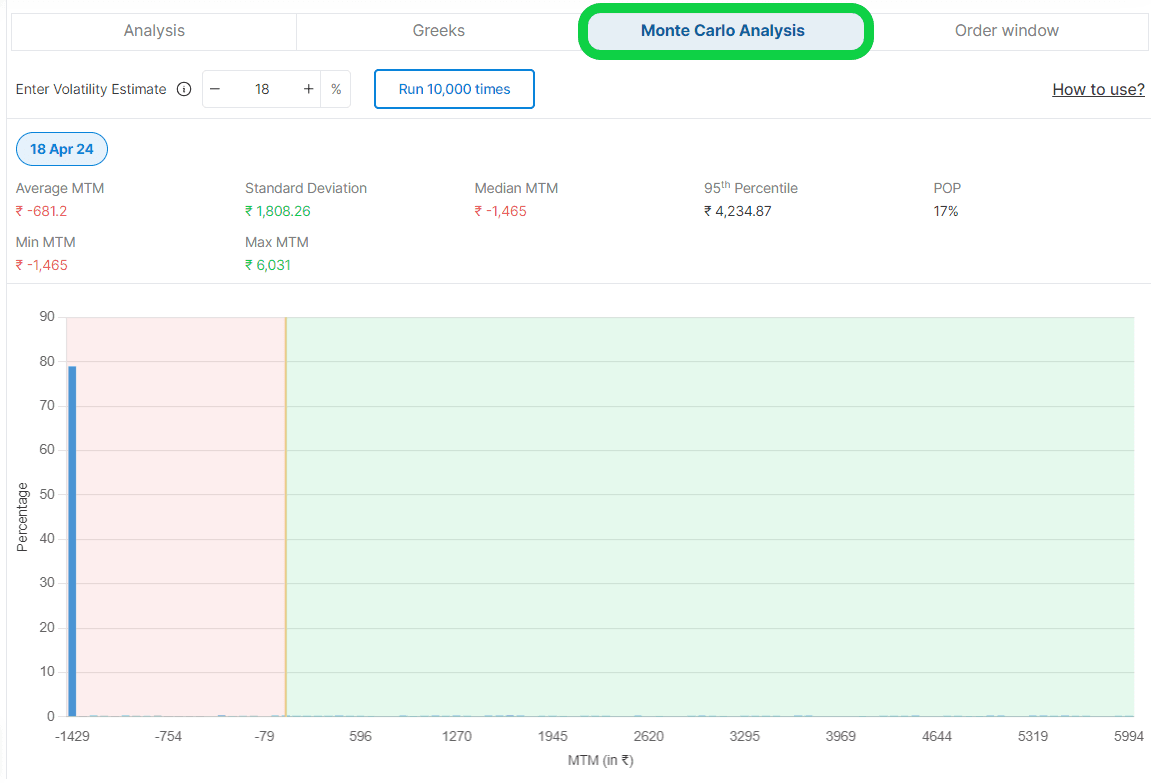
- Assuming that we want to execute our Iron Fly strategy, we have two options: we can either paper trade our strategy or execute it on the broker. To execute your strategy for live trading, your broker should have logged into your AlgoTest account. To learn how to set up a broker, [Click here.](https://docs.algotest.in/category/broker-setup)

- To execute your strategy for live trading, click on the “Live Trade with” button as shown in the image below.
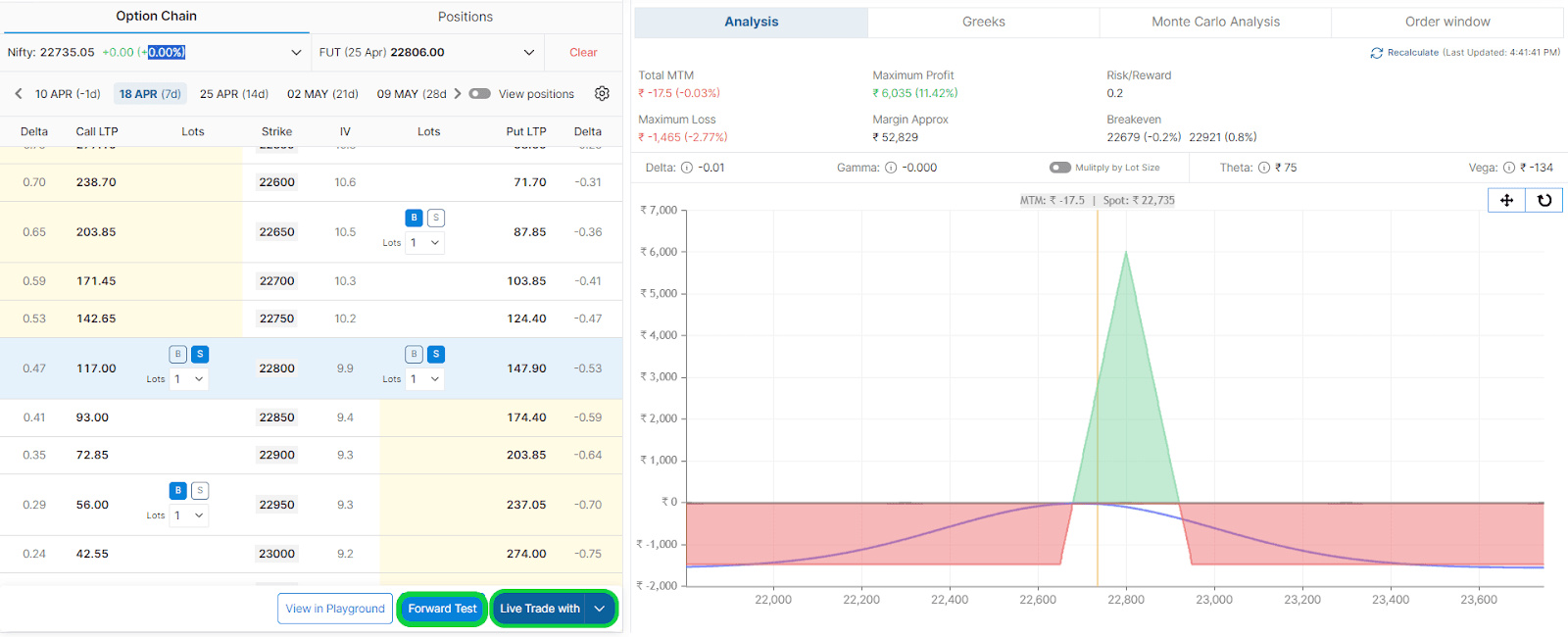
- It will ask you to select a broker. Select the broker and save the strategy with a random name.
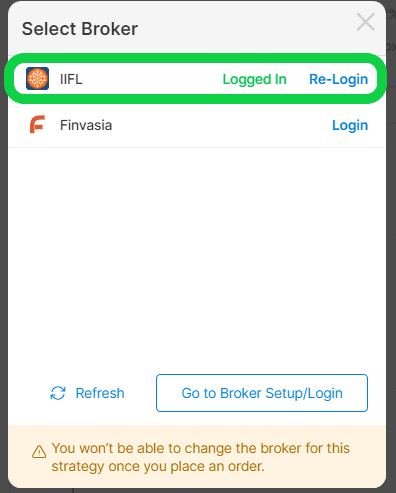
- Now click on “Place All Orders” to execute our strategy. We also have the option to choose if we want to set the order type as limit or market.
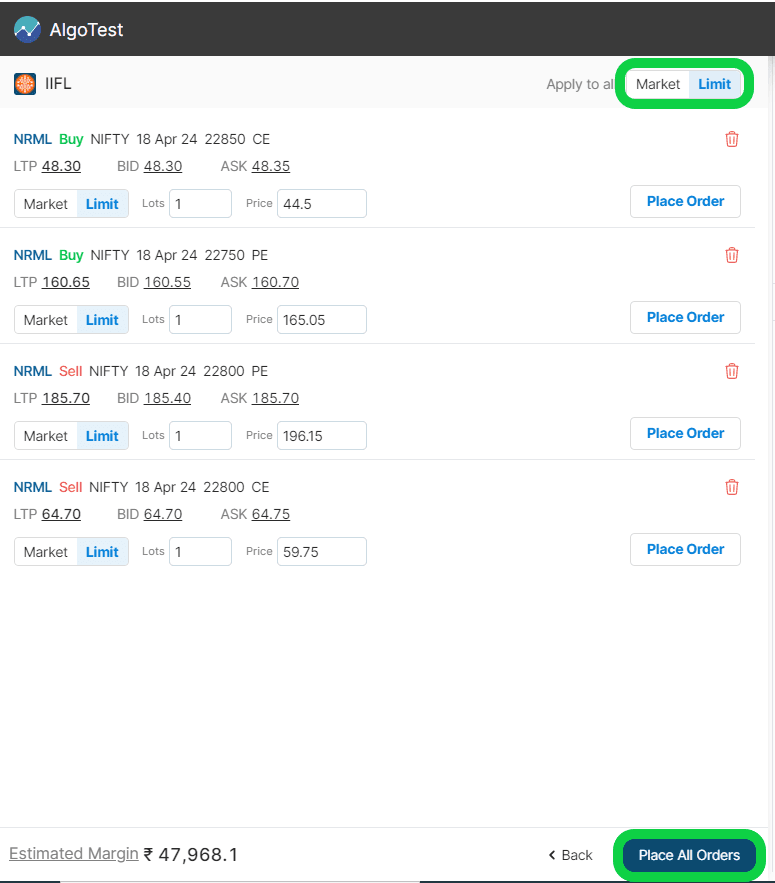
- You can manage your position on the “positions” tab. Here you get options to add another trade or square off existing positions, as shown in the image below.
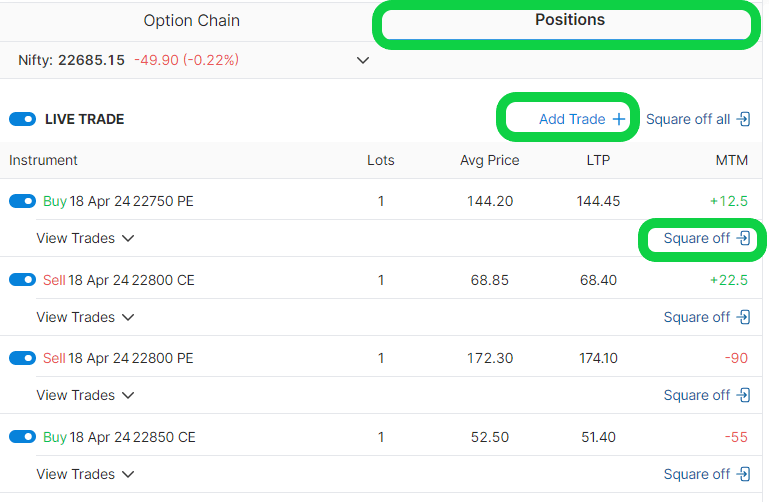
- You can check the status of orders in the order window, as shown in the image below
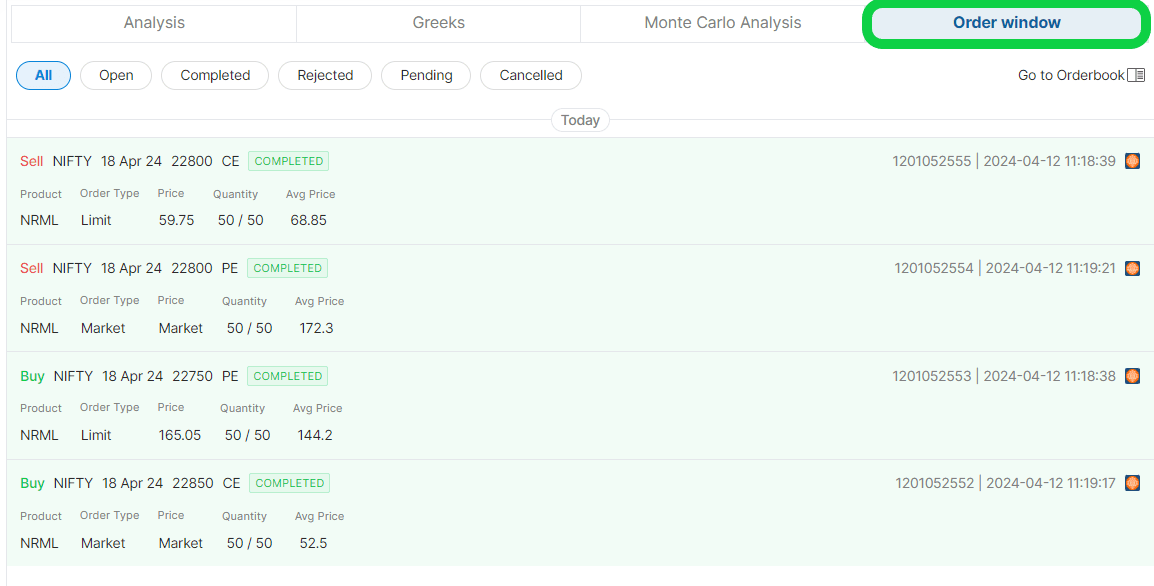
- You can track your positions using the information provided in the analysis tab, as shown in the image below.
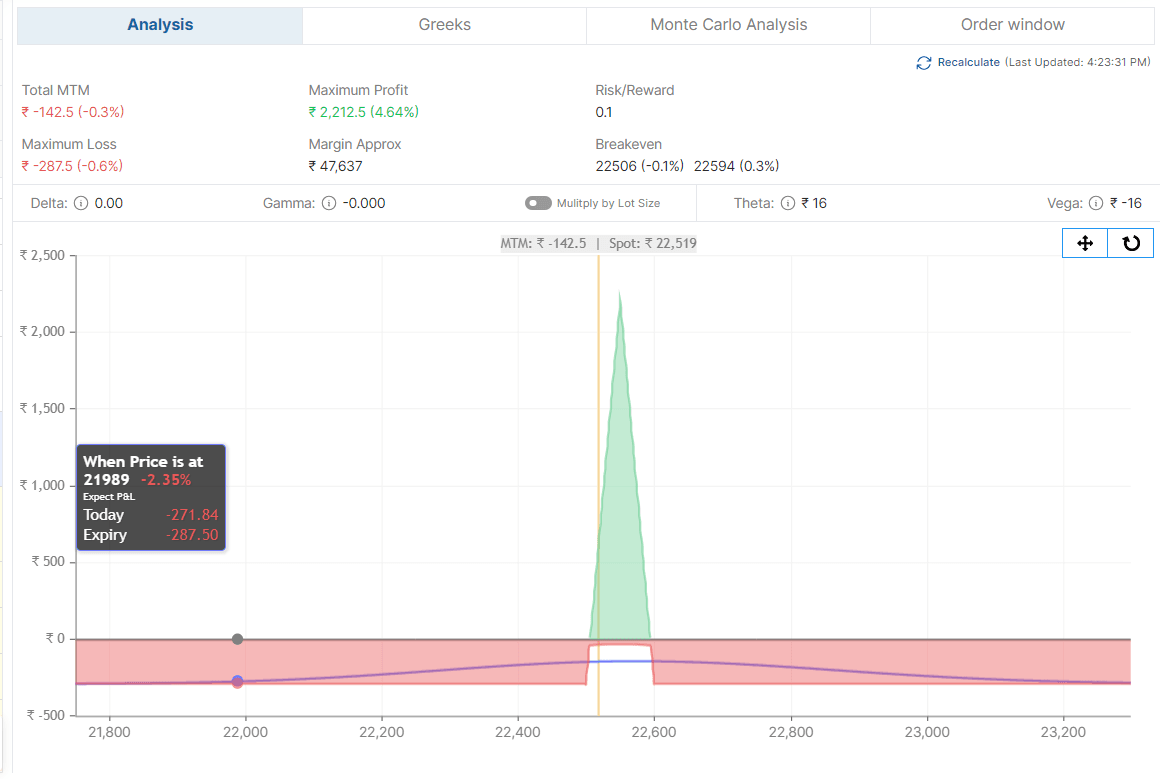
## Maximising Profit with the Option Strategy Builder
When it comes to options trading in India, maximising profit is a top priority for investors.
Now. imagine you have a toolbox filled with options contracts, each with its own potential for profit. But which ones work best together?
AlgoTest's Option Strategy Builder is your personal strategy architect. It helps you design and test different combinations of options contracts (like building a complex machine from your toolbox). You can see how these strategies might perform under various market conditions, giving you a good idea of their profit potential.
Here's the benefit: By testing different combinations, you can find the strategy most likely to bring you the highest gains. It's like running simulations to pick the most efficient machine for the job.
Here's why AlgoTest's Option Strategy Builder is a great tool:
- **Easy to understand:** Even if you're new to options trading, the builder is designed to be clear and user-friendly.
- **Test before you invest:** Play around with your strategies using virtual money before putting your real cash on the line.
- **Find your perfect fit:** Experiment with different options to create a strategy that matches your risk tolerance and trading goals.
So, if you want to increase your options trading profits, AlgoTest's Option Strategy Builder is the most powerful tool you can have. It allows you to design winning strategies and test them before investing, giving you a better chance of maximizing your gains.
Also, traders can adapt to the dynamic options market in India and stay ahead of the curve.
### Examples of Successful Strategies:
Let's take a look at some examples of successful strategies that have been crafted using the Option Strategy Builder:
1. An investor, with a bullish outlook on a particular stock, uses the Option Strategy Builder to create a bullish strategy consisting of a long call option. This strategy allows the investor to profit from an increase in the stock's price while reducing the downside risk.
2. A trader, anticipating a period of low volatility, employs the Option Strategy Builder to create an iron condor strategy. By combining a bear call spread and a bull put spread, the trader aims to profit from the limited price movement within a range-bound market.
3. An options trader, expecting a significant price movement in a particular stock, builds a long straddle strategy using the Option Strategy Builder. This strategy involves buying both a call option and a put option with the same strike price and expiration date. It allows the trader to profit from a drastic price swing in either direction.
AlgoTest's Option Strategy Builder isn't just about creating any options plan. It helps you build strategies that fit what's happening in the market right now, and what you're hoping to achieve with your trades. It's like having a map and compass for options trading - you can chart a course that considers the market conditions and gets you where you want to go (maximize profits while keeping risk in check).
And, AlgoTest’s Option Strategy Builder offers a comprehensive solution for traders looking to maximize their profit potential in the options market in India.
## Minimizing Risk with the Option Strategy Builder
The [Option Strategy Builder](https://algotest.in/blog/optimize-sales-with-algotest-option-strategy-builder/) developed by AlgoTest offers traders in India a powerful tool to minimize risk in their options trading endeavors. By implementing effective risk management techniques and creating strategies that provide a balanced risk-reward profile, traders can navigate potential pitfalls and safeguard their investments.
### Implementing Risk Management Techniques
When using the Option Strategy Builder, traders can employ various risk management techniques to protect their capital and mitigate potential losses. These include:
- Diversification: By diversifying their options strategies, traders can spread out their risk and reduce the impact of any individual trade's performance on their overall portfolio.
- Hedging with Options: Traders can use options contracts to hedge their positions, offsetting potential losses in one trade with gains in another, reducing overall risk exposure.
### Creating Strategies with a Balanced Risk-Reward Profile
The Option Strategy Builder enables traders to create and customize strategies that offer a balanced risk-reward profile, aligning with their individual risk tolerance and investment goals. By considering the following tips, traders can optimize their strategies:
1. Define Risk Parameters: Traders should clearly define their risk parameters, including the maximum loss they are willing to incur on a trade and the desired risk-reward ratio.
2. Consider Volatility: Traders should analyze market volatility and incorporate options strategies that are well-suited to prevailing market conditions. Volatile markets may call for strategies that provide downside protection, while calmer markets may offer opportunities for premium collection.
3. Regularly Monitor and Adjust: Traders should regularly monitor and analyze their strategies' performance using the Option Strategy Builder. By making timely adjustments, traders can adapt to changing market conditions and minimize risk.
By utilizing the Option Strategy Builder's risk management techniques and creating strategies with a balanced risk-reward profile, traders in India can minimize risk and improve their chances of success in the options market. It is essential to constantly analyze your strategies using the Option Strategy Builder to stay ahead of the ever-evolving market dynamics.
## Common mistakes to avoid in Option Trading
Here are some common mistakes to avoid in options trading:
1. **No Exit Plan**: It’s crucial to know exactly when you will close a trade, whether it’s profitable or unprofitable. Having a clear exit plan helps manage risk and prevents emotional decision-making. For example, when trading limited-risk spreads, accept the maximum loss potential of the position and size it accordingly.
2. **Trading Too Many Positions**: While diversification is essential, trading too many positions can become overwhelming. Correlated positions may react similarly during volatile market conditions. [New traders benefit from more positions to gain experience but be mindful of managing a large portfolio](https://www.projectfinance.com/option-mistakes/).
3. **Trading Illiquid Products**: Avoid getting trapped in illiquid option positions. If an option has very little volume or open interest, exiting the position at a favorable price becomes challenging. Stick to options with reasonable liquidity (open interest in the thousands and volume in the hundreds).
4. **Trying to Fix Broken Trades**: Some traders spend too much time trying to salvage losing trades. If a trade is no longer worth the commissions, consider taking the loss and reallocating capital elsewhere. There will always be other opportunities.
5. **Taking Profits Too Soon**: Exiting winning trades prematurely can limit potential gains. Have a clear profit-taking strategy based on your outlook and stick to it. [Don’t let fear or impatience drive your](https://www.fidelity.com/learning-center/investment-products/options/7-common-options-mistakes) decisions.
6. **Trading Too Big**: Position sizing errors often stem from fear or greed. Avoid trading positions that are too large for your account size. Conversely, excessively small positions may miss out on significant returns. [Use risk management techniques to determine appropriate position sizes](https://www.fidelity.com/learning-center/investment-products/options/7-common-options-mistakes).
7. **Not Analyzing Implied Volatility**: Implied volatility affects option prices. Failing to consider implied volatility can lead to mispriced trades. Understand how changes in volatility impact your strategies.
8. **Not Checking for Market Catalysts**: Market-moving events (earnings announcements, economic data releases, etc.) can impact options. Always be aware of upcoming catalysts that could affect your positions.
9. **Trading Complex Products Without Research**: Avoid diving into complex options and strategies without proper research. Understand the intricacies of any strategy before implementing it. [Blindly trading complex products can lead to unexpected](https://www.projectfinance.com/option-mistakes/) outcomes.
## Conclusion
Throughout this article, we have explored the benefits and functionality of AlgoTest's Option Strategy Builder. This powerful tool offers expert options strategies in India, helping traders maximise their profit potential and minimize risk. By leveraging the capabilities of Option Strategy Builder, users can craft effective options strategies tailored to their investment goals and risk tolerance.
With Option Strategy Builder, traders have access to a range of features and options that allow for customization and building of strategies. Whether you are a seasoned trader or just starting out, this tool provides the resources needed to stay ahead in the dynamic options market. Its intuitive interface and free availability make it accessible to traders of all levels, providing an opportunity to refine and test strategies without any financial commitment.
To enhance your options trading journey, take advantage of the Option Strategy Builder's powerful capabilities. Explore the various options and strategies, and experiment with different scenarios to find the optimal approach for your investments. By incorporating the insights gained from this tool into your trading decisions, you can navigate the market with confidence and improve your chances of success.
## FAQ
### How can AlgoTest's Option Strategy Builder help with buying strategies?
AlgoTest's Option Strategy Builder is a powerful tool that allows users to create effective buying strategies in India's options market. By utilizing its features and functionality, traders can maximize profit potential and minimize risk. The tool provides expert options strategies and building capabilities to help traders make informed decisions.
### What is the Option Strategy Builder and how does it work?
The Option Strategy Builder is a user-friendly tool that allows traders to create and customize options strategies. The tool is free to use, enabling traders to test and optimize their strategies without any financial commitment. By inputting various parameters, traders can analyze and evaluate the potential profit and risk associated with different options strategies.
### Is AlgoTest strategy builder free to use
Yes, the AlgoTest strategy builder is free to use.
### Can we do live trading through the AlgoTest strategy builder?
Yes, we can do live trading through AlgoTest Strategy Builder.
### Can we do paper trading in AlgoTest Strategy Builder?
Yes, we do paper trading in AlgoTest Strategy Builder
### Why should I use the Option Strategy Builder for options trading in India?
The Option Strategy Builder offered by AlgoTest is a valuable resource for options traders in India. It provides a user-friendly platform for creating, customizing, and optimizing options strategies. By utilizing this tool, traders gain access to expert strategies, risk management techniques, and building capabilities, giving them a competitive edge in the dynamic options market. Harnessing the power of the Option Strategy Builder can lead to more informed decision-making, higher profit potential, and reduced risk in options trading.
---
This blog is powered by Superblog. Visit https://superblog.ai to know more.
---
## Optimize Your Selling with Option Strategy Builder
Author: AlgoTest
Author URL: https://algotest.in/blog/author/algotest/
Published: 2024-08-28
URL: https://algotest.in/blog/optimize-sales-with-algotest-option-strategy-builder/

## Introduction
AlgoTest made Options Strategy Builder which is a game-changer for options traders. The comprehensive package of features and functions makes it convenient for traders to analyze, run forward tests, optimize, and control their option trades.
Options trading is a very chaotic and dynamic market, requiring traders to react faster and make an informed decision. With the Options Strategy Builder of AlgoTest, investors can make informed decisions equipped with sophisticated tools and results analytics. It does not matter whether you are a novice or a skilled trader: AlgoTest offers you a simple interface, which makes trading clear and uncomplicated.
Another advantage of using AlgoTest is its powerful forward-testing (paper trading) tools. With the help of this complex element, traders can make the most of their earnings by finding the best profitable strategy based on the current market situation.
[Try Strategy Builder for FREE!](https://algotest.in/feature/strategy-builder?utm_source=blog&utm_medium=internal&utm_campaign=seo&utm_content=feature&utm_term=strategy-builder)
## Exploring AlgoTest's Option Strategy Builder
AlgoTest Platform's Option [Strategy Builder](https://docs.algotest.in/strategy-builder/) gives traders all the expected instruments and settings to facilitate their options trade. Traders have a direct option to have an option data chain, analyze market trends, and design their strategies. The platform offers a hassle-free options trading experience, traders can now place trades with ease, and convenience. No matter if you are a novice in Options trading or an experienced one, AlgoTest's Option Strategy Builder has everything to fit your trading needs.
### The Advantages of Using AlgoTest for Options Trading
**Using AlgoTest for options trading offers several advantages:**
- **Make data-driven decisions:** With AlgoTest, traders have access to a wide range of analytics and tools that help them make informed trading decisions. From analyzing market trends to optimizing their strategies, AlgoTest provides traders with valuable insights.
- **Forward Test Your Strategies:** With [AlgoTest's Option Strategy Builder](https://algotest.in/blog/option-strategy-builder-algotest-tutorial/), traders have the opportunity to forward test their strategies in live market conditions. This feature allows traders to validate their trading ideas and ensure their strategies are robust before implementing them in live trading. By analyzing strategies based on live market and market conditions, traders can gain confidence and fine-tune their strategy for optimal performance.
- **Suitable for all types of traders:** Whether you are a beginner or an experienced trader, AlgoTest's user-friendly interface makes it easy to navigate and execute trades. The platform caters to traders of all skill levels, providing them with the necessary tools and resources to succeed.
### How AlgoTest Stands Out in the Market
AlgoTest stands out in the market for several reasons:
- **Advanced options trading features:** AlgoTest offers a wide range of advanced features that enhance the options trading experience. AlgoTest provides traders with the necessary resources to succeed.
- **User-friendly interface:** AlgoTest's user-friendly interface makes it easy for traders to navigate and execute trades. Whether you are a beginner or an experienced trader, AlgoTest's intuitive design ensures a seamless trading experience.
- **Accuracy and efficiency:** AlgoTest's advanced technology ensures accurate strategy building and efficient execution of trades.
## Getting Started with AlgoTest
Getting started with AlgoTest is simple. Traders can download the AlgoTest app and create an account to access the platform's powerful features. Whether you are a beginner or an experienced trader, AlgoTest provides a user-friendly interface that caters to your trading needs. Once you have set up your account, you can explore the various tools and features offered by AlgoTest to enhance your options trading experience. From analyzing market trends to forward-testing and optimizing your strategies, AlgoTest has everything you need to succeed as a trader.
### Setting Up Your Account for Success
To [set up your AlgoTest account](https://docs.algotest.in/strategy-builder/#creating-and-setting-up-your-strategy) for success, follow these steps:
1. **Visit the AlgoTest website:** Through our platform's user-friendly interface, equipped with cutting-edge features like forward-testing, live trade, and simulator, maximizing profits becomes not just a goal but a tangible reality.
2. **Create an account:** [Sign up](https://algotest.in/) from the AlgoTest web app and follow the prompts to create a new account. Provide the required information and set up a secure password.
3. **Explore the options trading features:** Once your account is set up, take some time to explore the options trading features offered by AlgoTest. Familiarize yourself with the features.
4. **Forward-test your strategies:** Before committing to real capital, it's essential to test your trading strategies in live market conditions. AlgoTest allows you to evaluate your options strategies to gauge their performance and make informed decisions based on the results.
5. **Stay updated with market trends:** Keep abreast of the latest market trends and developments.
By following these steps and utilizing AlgoTest's powerful features, you can set up your account for success in the world of options trading.
### Navigating Through AlgoTest's Interface
AlgoTest's user-friendly interface makes it easy for traders to navigate through the platform and access its various features. Traders can easily search for specific options contracts and view key information such as strike prices, expiration dates, and premiums.
The website interface is designed to be intuitive and user-friendly, with clear menus and options. Traders can access tools such as forward testing, and analytics with just a few taps. The platform also provides a variety of charts and graphs to visualize market trends and patterns.
## Crafting Winning Strategies with AlgoTest
Crafting winning strategies is essential for success in options trading, and AlgoTest's platform provides the necessary tools to do so. Traders can get a grip on AlgoTest’s features to identify the most profitable trading strategies based on market conditions and data. The platform also offers forward-testing capabilities, allowing traders to evaluate the performance of their strategies before executing real trades. By combining the power of data and forward testing, traders can craft winning strategies that maximize profits and minimize risks.
### Building Custom Strategies from Scratch
Building custom strategies from scratch is made easy with AlgoTest's platform. Here's how you can do it:
- **Identify trading opportunities:** Analyze market trends and identify potential trading opportunities based on your trading style and risk tolerance.
- **Define your strategy:** Determine the specific parameters of your strategy, such as entry and exit points, stop-loss levels, and profit targets.
- **Forward test your strategy:** Before investing actual funds, it is crucial to trial your trading tactics under live market conditions. AlgoTest enables you to mimic and assess your options strategies to measure their effectiveness and make well-informed choices according to the outcomes.
By following the steps below, you can build strategies that align with your trading goals and maximize your chances of success.
Step 1. Visit the \[ [Algotеst](https://algotest.in/)\] website, create a free account, and then sign in with it.

Step 2. Click "Strategy Builder" now, as indicated by the picture below.

Step 3. You will get an interface, as shown in the image below.
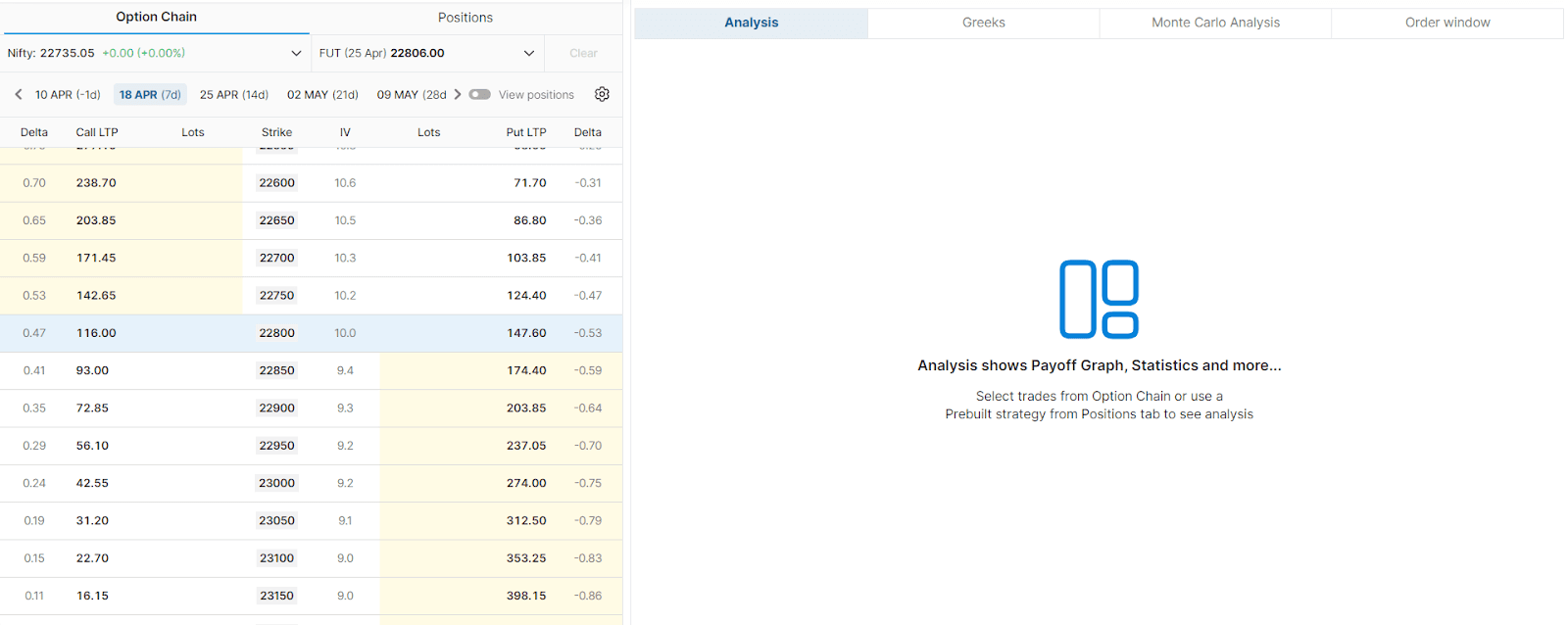
Step 4. Now add the legs from the option chain according to the strategy you want to build. Assuming we want to build an iron fly, we will sell ATM CE and ATM PE and buy OTM CE and OTM PE from the option chain as shown in the image below
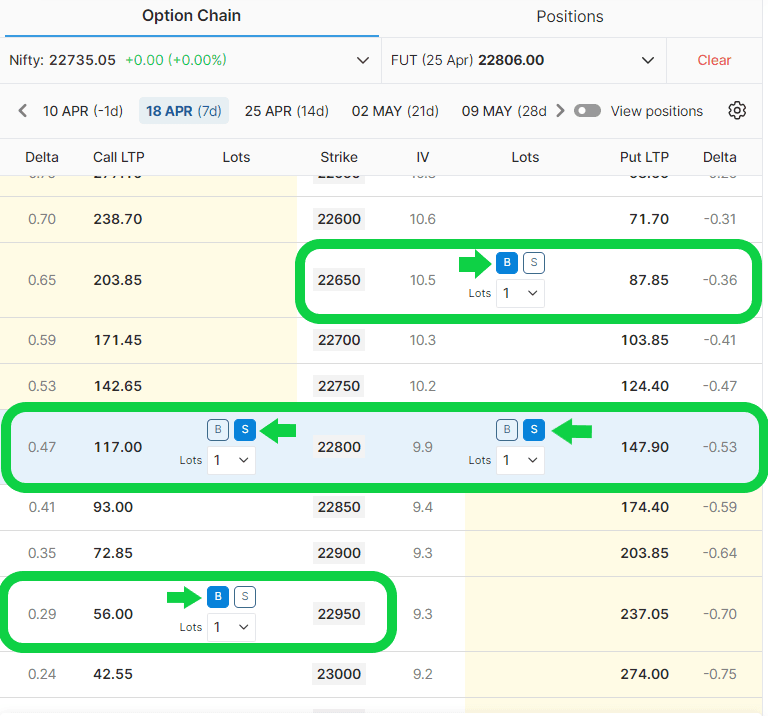
Step 5. You can analyze your strategy using the different tools provided by AlgoTest.
- In the Analysis section, Strategy Builder provides you with tools like Payoff graph, Maximum Profit, Maximum loss, Risk reward, Breakeven point, etc. to analyze your strategy. A payoff graph is a handy tool that helps you determine how your position is going to expire concerning the underlying move.
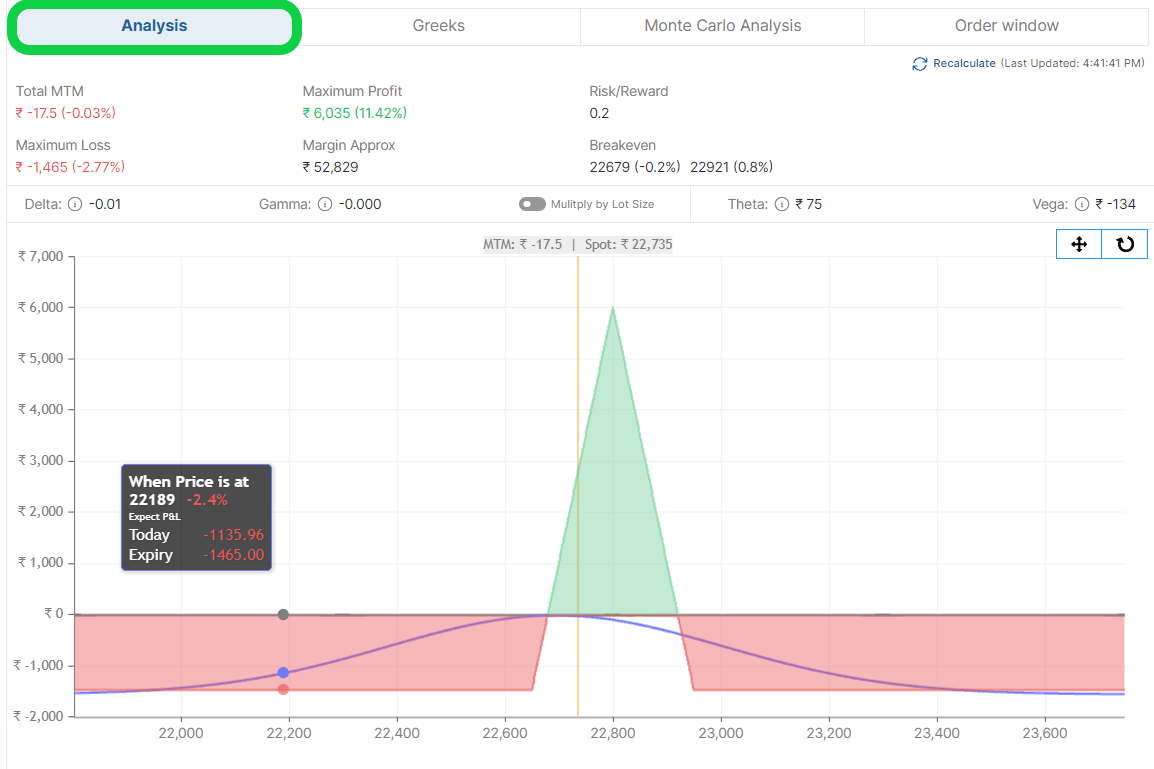
- In the Greek section, Strategy Builder provides you with information about Option Greeks like Delta, Theta, Gamma, IV, Vega, etc. for your positions, as shown in the image below.
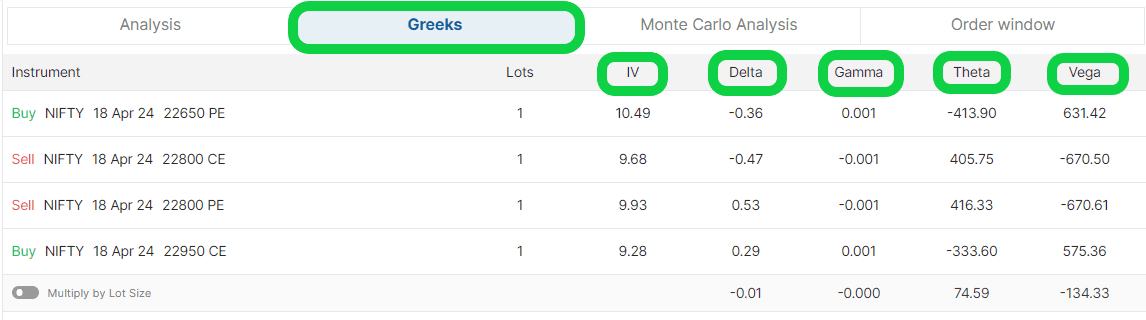
- In the Monte Carlo Analysis Section, Your PnL will depend highly on the underlying index's path. Monte Carlo analysis is an advanced method to see how your strategy will perform on average across 10,000 different price paths that the underlying could take until expiry. You can access this feature by clicking on “Monte Carlo Analysis,” as shown in the image below.
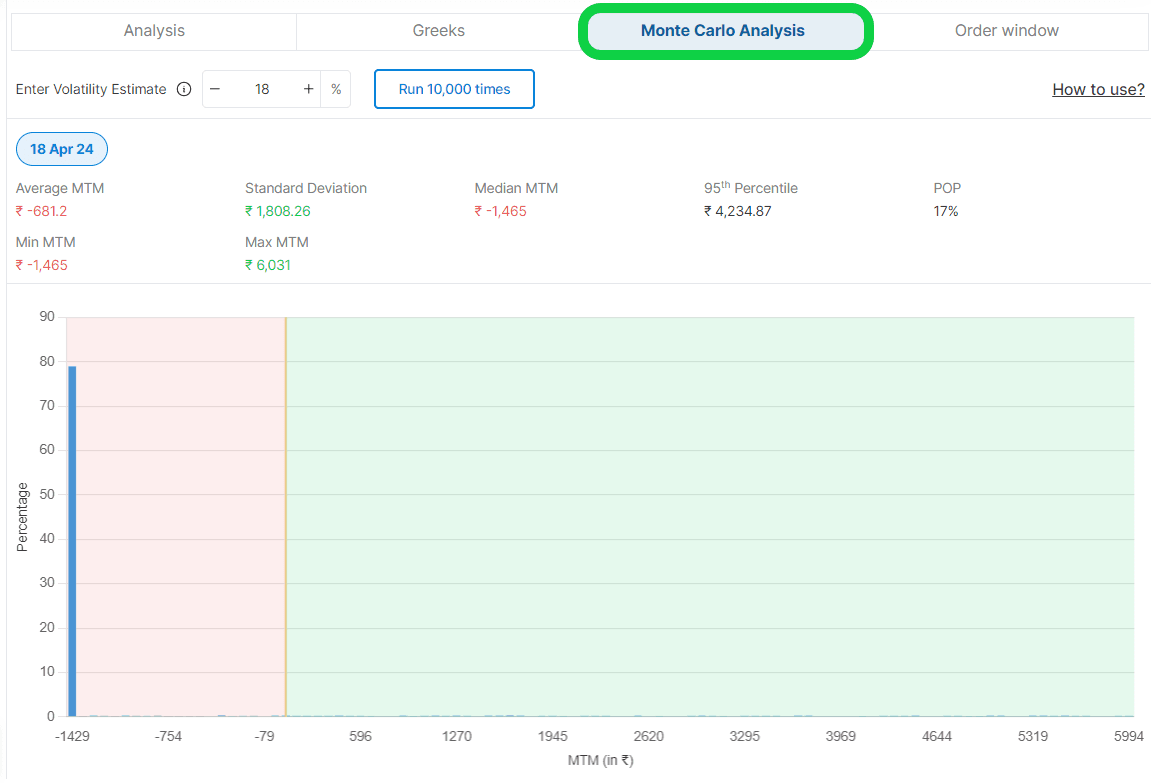
- Assuming that we want to execute our Iron Fly strategy, we have two options: we can either paper trade our strategy or execute it on the broker. To execute your strategy for live trading, your broker should have logged into your AlgoTest account. To learn how to set up a broker, [Click here.](https://docs.algotest.in/category/broker-setup)

- To execute your strategy for live trading, click on the “Live Trade with” button as shown in the image below.
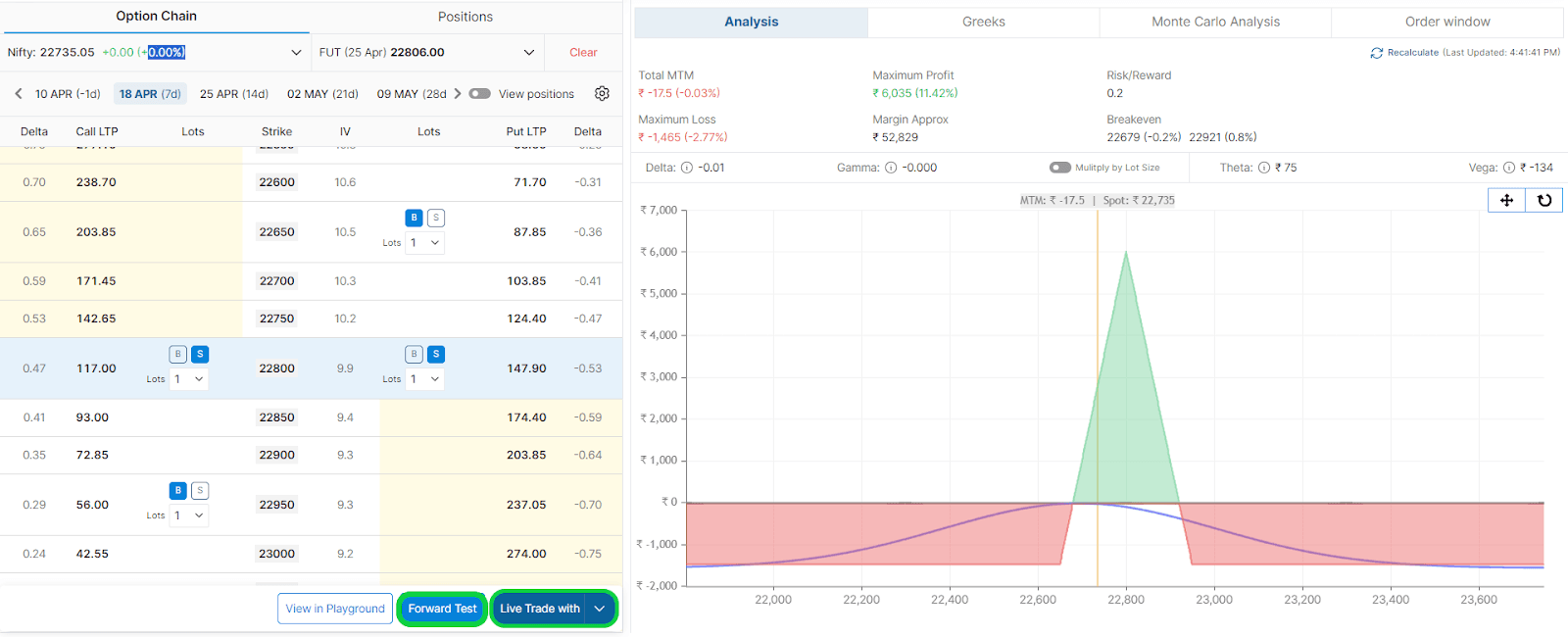
- It will ask you to select a broker. Select the broker and save the strategy with a random name.
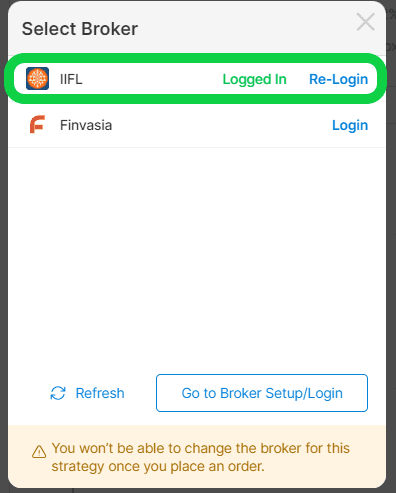
- Now click on “Place All Orders” to execute our strategy. We also have the option to choose if we want to set the order type as limit or market.
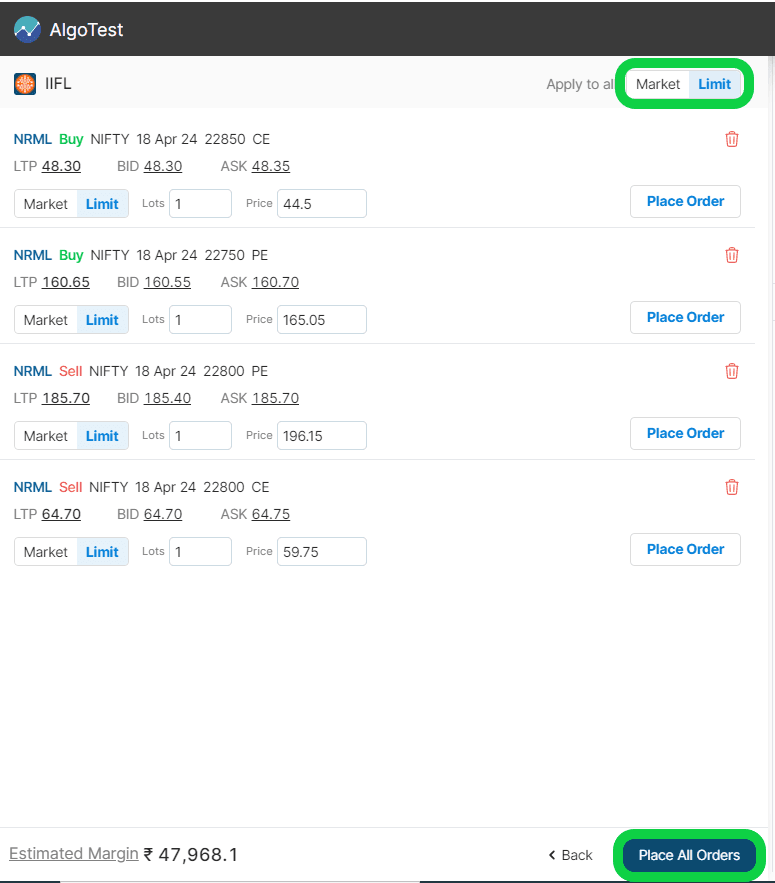
- You can manage your position on the “positions” tab. Here you get options to add another trade or square off existing positions, as shown in the image below.
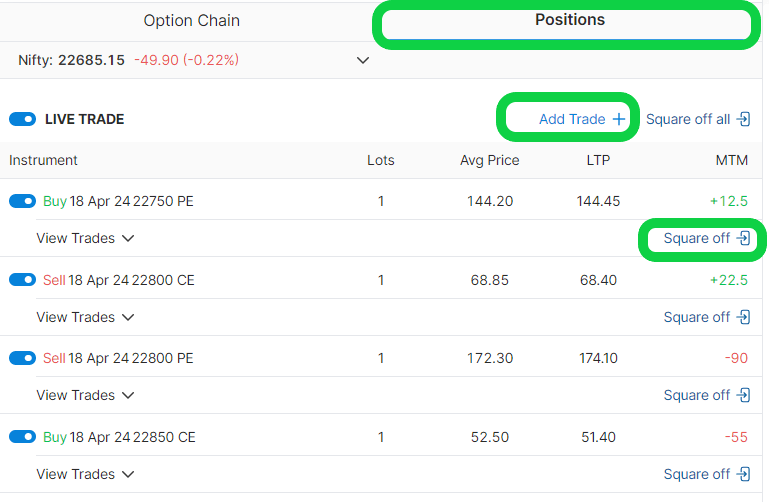
- You can check the status of orders in the order window, as shown in the image below
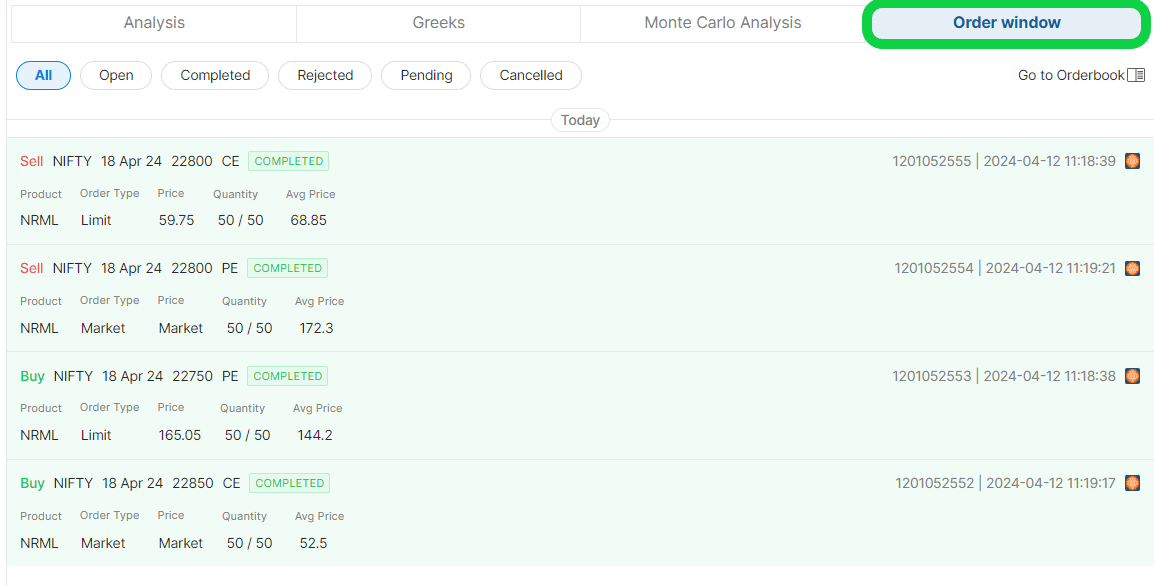
- You can track your positions using the information provided in the analysis tab, as shown in the image below.
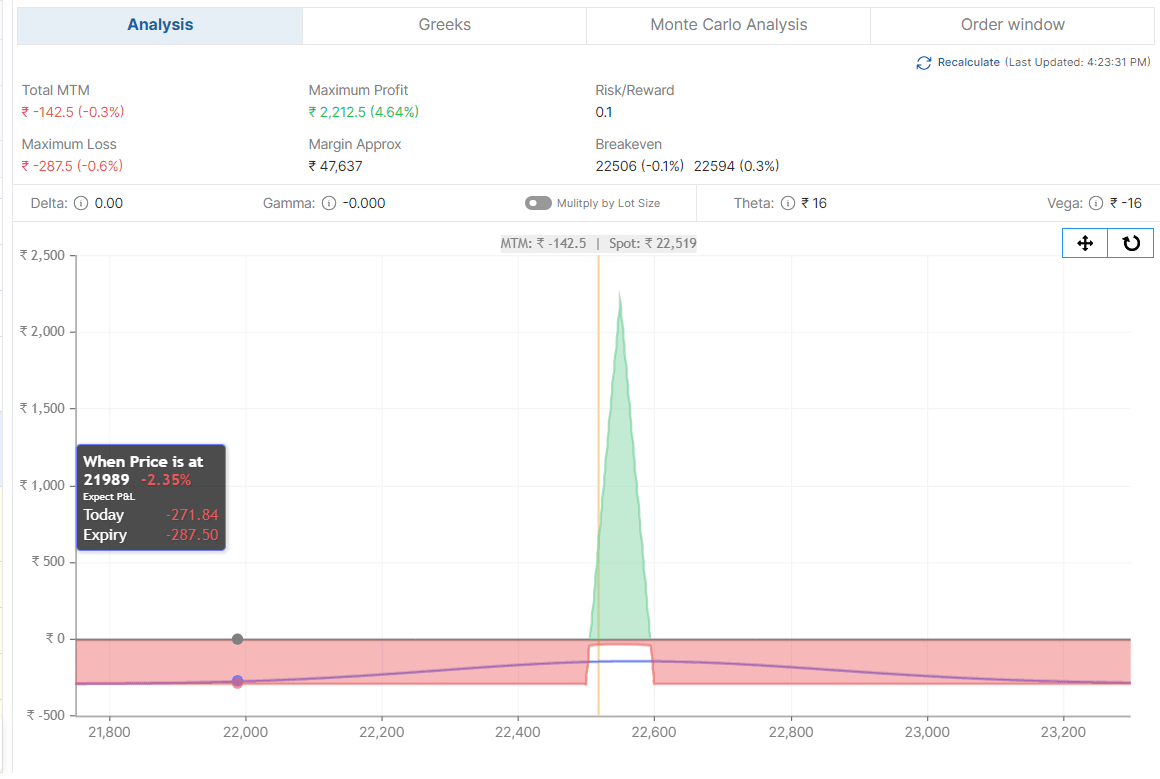
### Analyzing Market Conditions with AlgoTest Tools
[Analyzing](https://docs.algotest.in/strategy-builder/#analysing-your-strategy) market conditions is crucial for successful options trading, and AlgoTest provides the necessary tools to do so. The platform offers a variety of features and tools that enable traders to analyze market trends, identify trading opportunities, and make sound decisions.
Traders can utilize AlgoTest's forward-testing feature to evaluate the performance of their strategies under different market conditions without using their real money. Traders can gain insights into how their strategies would have performed and make adjustments as needed.
Additionally, AlgoTest provides analytics to help traders stay updated on current market conditions. By analyzing market trends and patterns, traders can identify potential opportunities and adjust their strategies accordingly.
## Going Live with Your Strategies
Once you have crafted and tested your strategies using AlgoTest's platform, it's time to go live and [execute](https://docs.algotest.in/strategy-builder/#executing-your-strategy) your trades. AlgoTest provides traders with a seamless trading experience, allowing them to execute trades with ease.
Traders can rely on AlgoTest to make informed trading decisions. By getting a grip on the platform's advanced features and analytics, traders can maximize their profits and minimize their risks in the options trading market.
### Preparing for Live Trading
Before diving into live trading, it's important to prepare yourself for success. Here are some steps to help you get ready:
- Define your risk tolerance: Assess your risk tolerance and set clear risk management parameters for your trades. This will help you manage your positions effectively and protect your capital.
- Set realistic goals: Determine your trading goals and set realistic expectations. Having clear goals will help you stay focused and make better trading decisions.
- Stay informed: Stay updated on market news, economic data, and industry trends. This will help you make informed trading decisions and adapt to changing market conditions.
- Practice proper risk management: Use stop-loss orders and position-sizing techniques to manage your risk. This will help you limit your losses and protect your capital.
By following these steps and practicing proper risk management, you can set yourself up for success in live trading with AlgoTest.
## Maximizing Profits with Advanced Features
AlgoTest's advanced features are designed to help traders maximize their profits in options trading. By getting a grip on these advanced features, traders can make data-driven decisions and increase their chances of success in the market. Whether you are a beginner or an experienced trader, AlgoTest's advanced features provide valuable insights and analytics to enhance your trading performance.
### Integrating Risk Management Tools
Integrating risk management tools is essential for successful options trading. AlgoTest offers a range of features and tools to help traders manage their risk effectively. Here are some key risk management tools provided by AlgoTest:
- **Stop-loss orders:** Traders can set stop-loss orders to automatically exit a trade when a certain loss threshold is reached. This helps limit losses and protect capital.
- **Position sizing:** AlgoTest allows traders to define the size of their positions based on their risk tolerance and account size. This helps ensure that trades are proportionate to the trader's risk appetite.
- **Risk analysis:** AlgoTest provides risk analysis tools that allow traders to assess the potential risks associated with their trades. This helps traders make informed decisions and manage their risk effectively.
By integrating these risk management tools into their trading strategies, traders can minimize losses and protect their capital while maximizing their profit potential.
## Conclusion
In conclusion, [AlgoTest's Option Strategy Builder](https://algotest.in/blog/option-strategy-builder-algotest/) offers a cutting-edge approach to options trading. With its user-friendly interface and advanced features, traders can maximize profits and navigate market conditions with ease. Whether you are new to trading or an experienced investor, AlgoTest stands out for its AI capabilities and risk management tools. By crafting custom strategies and going live with confidence, you can take your trading to the next level. Sign up now to explore the advantages of AlgoTest and boost your trading experience.
## Frequently Asked Questions
### How to Choose the Right Strategies for Your Trading Style?
Evaluate your risk tolerance, trading goals, and preferred assets. Analyze performance and forward-testing results. Consider market conditions and volatility. Customize strategies to align with your risk appetite and investment timeline.
### Can AlgoTest Help in Both Bull and Bear Markets?
AlgoTest's versatility shines in all market conditions, aiding traders in bull and bear markets alike. Its adaptive strategies cater to varying trends, maximizing opportunities and mitigating risks efficiently.
## How does an Option Strategy Builder work?
An Option Strategy Builder allows users to create custom trading strategies based on options. By selecting various parameters such as strike price, expiration date, and risk tolerance, the tool generates a payoff graph, max profit, max loss, breakeven point, etc to analyze your trade and help you to forward test and live trade that strategy to maximize profits or minimize risks in the stock market.
---
This blog is powered by Superblog. Visit https://superblog.ai to know more.
---
## Understanding Bonds and Debentures: What Sets Them Apart?
Author: AlgoTest
Author URL: https://algotest.in/blog/author/algotest/
Published: 2024-08-28
URL: https://algotest.in/blog/bonds-vs-debentures/
### I. Introduction
Bonds are debt instruments issued by either companies or governments to obtain capital. Interest is usually fixed and the maturity is determined. Debentures are a type of non-collateralized bond where the issuer’s credit and reliability determine the repayment. Financial institutions frequently fund their activities by borrowing money from investors through these financial instruments.
Bonds and debentures are very important in the financial market because they give investors the chance to get a fixed income and at the same time these instruments provide issuers funding they need for projects or even operations. Furthermore, they enable investors to diversify investment portfolios by employing different levels of risk and return. Alongside debentures are considered to be less risky than stocks because of their higher priority in the liquidation period.
Although both bonds and debentures are known as debt securities, what differs is the question of security. Certain issuer assets typically back up bonds, whereas debentures are naked and the guaranty derives entirely from the issuer's creditworthiness. This distinguishing feature plays an important role in the degree of risk and return optimization for investors.
Here’s a brief comparison table between Bonds and Debentures—
**Feature****Bonds****Debentures****Security**Secured by collateralUnsecured**Issuers**Governments, municipalities, corporationsMostly corporations**Interest Rates**Generally lower (due to security)Generally higher (due to risk)**Risk**Lower (backed by assets)Higher (no collateral)**Repayment Priority**Higher (in case of liquidation)Lower than bondholders**Investment Suitability**Conservative investorsInvestors willing to take more risk
### II. Bonds
### A. Definition and characteristics
The Bonds are debt securities by which the payers of interest do so periodically up to the maturity date upon which the principal amount is returned to an investor. They are many times thought to be low-risk investments compared to stocks which are volatile and less predictable as they are safe to invest. Moreover, governments, sub-national authorities, or corporations raise funds through a variety of bond issues for different projects and operations.
1\. The ones they are holding are distributed either by corporations or by the state
Businesses use corporate bonds in their quest for capital to either expand their business activities or invest in other projects, while governments issue sovereign bonds to either finance public projects or provide services with the expected income from the bonds. This is the case with both forms of bonds and the underlying investors may be facing risks and rewards oriented by the capital strength of the issuer.
2\. Fixed interest rate
Generally, bonds are paid interest once a time, which makes them an attractive investment as the investor knows precisely how much money they will gain in interest during the term of the bond. This offers a shield against any ideas of unpredictable income as such investors who are after stability may just bear this in mind.
3\. Repayment of the bond earns maturity date.
In the majority of cases, the principal sum is redeemed together with the interest payment at the bond's maturity, a time when the issuer returns the principal to the bondholder. This mediates and makes them very popular among investors in search of stable income after a certain period.
### B. Types of bonds
Different bonds exist, such as government, corporate, municipal, and convertible bonds. Every bond type has its characteristics and risks, therefore the investor can make an investment suitable to his goals and risk tolerance. Furthermore, several bonds may carry with them certain tax incentives or other positive traits that aid in attracting some investors.
Here are a few common types of bonds that investors may consider adding to their portfolios: corporate bonds, municipal bonds, and government bonds.
1\. Government bonds are issued by the federal government and are seen as one of the safest investments available because they are backed by the full faith and credit of the government.
2\. Corporate bonds are issued by companies to finance their needs, and they usually provide a higher yield than government bonds but also expose the bondholders to a greater degree of risk.
3\. Municipal bonds are issued to finance public works by state and local governments which include schools and the infrastructure. They are usually not subject to federal taxation aiming them to high tax brackets investors. The income stream can be ensured by the municipal bonds through interest payments.
## C. Pros and cons
1\. Regular interest payment - Bonds can give a predictable income stream in the way of interest payments, which is exactly what investors look for when they require a fixed source of cash. Nevertheless, they could be affected by credit risk as much as by the management of a specific municipality.
2\. Lower risk than stocks - Although bonds are still a little lower risk than [stocks](https://algotest.in/blog/types-of-trading-in-stock-market/), they are backed by a revenue guarantee issued by the municipality in the form of municipal taxes and fees. Nonetheless, investors might purchase them due to their tendency to offer lesser rewards than stocks, yet with less risk entailed.
3\. Prone to the fluctuations of the interest rate - The main limitation of bonds is the fact that their value tends to replenish against the interest rate. Investors need to be knowledgeable of the possibility of a price decline in the face of higher inflation when buying bonds. Moreover, greater-term bond often tends to be more sensible to the interest rate change than shorter-term bonds.
### III. Debentures
### A. Definition and characteristics
Debentures are unsecured bonds that are not tied to any specific assets through collateral; thus, they are reliant solely on the credit standing of the issuer. Generally, buyers pay higher interest rates on unsecured bonds than the secured bonds as compensation for the risk of investors. Moreover, debentures are always corporate bonded and seldom issued by municipalities or governments.
Here are the characteristics of debentures:
1\. Unsecured debt instrument that is backed only by the general creditworthiness and reputation of the issuer.
2\. No collateral is required for debentures, making them riskier investments compared to secured bonds.
3\. Higher interest rates are often offered on debentures to compensate investors for the higher level of risk. Debentures are typically long-term bonds with maturities ranging from five to 30 years.
### B. Types of debentures
1\. Convertible debentures: A convertible debenture is a type of long-term debt issued by a company that can be converted into shares of equity stock after a specified period. Convertible debentures are usually unsecured bonds or loans, often with no underlying collateral backing up the debt.
2\. Non-convertible debentures: Non-convertible debentures (NCDs) are debt instruments that cannot be converted to stocks or equity. They are issued by companies to raise long-term capital appreciation and are usually a public issue. NCDs have a fixed maturity date, and interest can be paid monthly, quarterly, or annually.
3\. Secured debentures: Secured debentures are loans that are backed by the issuer's assets, such as land, as collateral. This provides a level of security for the principal amount and interest payments. If the borrower defaults, the lender can redeem what is owed by acquiring the borrower's assets.
### C. Pros and cons
1\. Higher potential returns, but also higher risk.
2\. Greater risk of default, but a higher chance of receiving the full amount owed.
3\. Less liquid than bonds, but can provide a higher yield.
### IV. Key Differences Between Bonds and Debentures
Bonds and debentures are debt instruments companies and governments use to raise capital. However, they differ in several key aspects:
1. Security and Collateral:
- Bonds: These are generally secured by specific assets or collateral. Investors have a claim on these assets if the issuer defaults.
- Debentures: Unlike bonds, debentures are typically unsecured. They rely solely on the issuer’s creditworthiness and do not have specific collateral backing.
2. Risk and Returns:
- Bonds: Highly rated corporate or government bonds are considered relatively safe investments. Bondholders receive periodic interest payments (coupons) and the principal amount at maturity.
- Debentures: Debentures carry more risk due to their lack of collateral. Investors receive interest payments and principal repayment, but the risk of default is higher.
3. Priority of Payments:
- Bonds: Bondholders have priority over debenture holders in case of bankruptcy or liquidation. Their claims are satisfied before debenture holders.
- Debentures: Debenture holders rank lower in the payment hierarchy.
4. Convertibility:
- Bonds: Some bonds are convertible into company stock. Investors may choose to convert their bonds into equity shares.
- Debentures: While some debentures are also convertible, not all of them offer this feature.
5. Marketability and Liquidity:
- Bonds: Bonds are more liquid and actively traded in financial markets.
- Debentures: Debentures may have lower liquidity due to their risk profile.
6. Tax Considerations:
- Bonds: Interest income from bonds is taxable.
- Debentures: Similar tax treatment applies to debentures.
### V. Conclusion
Bonds and debentures are two types of debt securities, but they do not have the same security, rates of interest, or convertibility characteristics. Debentures provide more attractive interest rates but are riskier, as the bonds have no supporting assets, while bonds are a safer investment. Also, some debentures can be converted into equity shares with future value growth. Investors are encouraged to take risk-tolerance and investment goals into consideration when it comes to the choice between bonds and debentures.
Knowing the differences between bonds and debentures is paramount as an individual of sound investment. It is vital to determine the risk to reward from each possible option and then line up the choice with the financial aims.
Doing some extra study and consulting financial specialists will surely give investors more clarity on the specifics of bonds and debentures. Seeking counsel from experts is a way to provide people with better options that match their financial aims while holding the same risk. It can be described as a road to prosperous investing.
P.S - Algotest allows you to automate your trading techniques through backtesting. A trader receives [**25 free backtesting credits**](https://algotest.in/) to understand more about the potential available with manual trading, [**Click here**](https://algotest.in/).
---
This blog is powered by Superblog. Visit https://superblog.ai to know more.
---
## Sensibull vs TradingView: Which Platform Wins for Indian Traders?
Author: AlgoTest
Author URL: https://algotest.in/blog/author/algotest/
Published: 2024-08-28
Category: indicators
Category URL: https://algotest.in/blog/category/indicators/
Meta Description: Compare Sensibull vs TradingView on backtesting, strategy building, and automation. See why 35,000+ Indian traders now use AlgoTest to algo trade without coding.
Tags: algo trading india, indicators
Tag URLs: algo trading india (https://algotest.in/blog/tag/algo-trading-india/), indicators (https://algotest.in/blog/tag/indicators/)
URL: https://algotest.in/blog/sensibull-vs-tradingview-comprehensive-comparison/
If you trade options in India, you have probably weighed Sensibull against TradingView at some point. Both platforms are widely used. Both do useful things. But they are built for completely different trading workflows, and picking the wrong one can slow you down more than you expect.
This guide breaks down the Sensibull vs TradingView comparison across the features that actually matter: strategy building, backtesting, automation, pricing, and community. We also cover [AlgoTest,](https://algotest.in/?utm_source=blog&utm_medium=internal&utm_campaign=seo&utm_content=main-page&utm_term=algotest&utm_source=blog&utm_medium=internal&utm_campaign=seo&utm_term=algotest&utm_content=main-page) a platform built from the ground up for Indian algo traders that addresses the gaps both platforms leave open.
Here is a quick comparison table to start.
Criteria
Sensibull
TradingView
AlgoTest
Founded
2017
2011
2021
Founder(s)
Abid Hassan
Denis Globa, Stan Bokov, and Constantin Ivanov
Raghav Malik
User Interface
Options-focused, easy to use
Advanced charting, feature-rich
No-code visual builder with AI assistance
Backtesting
Available on Ultimate plan only (₹1,600/month)
Available via Pine Script
Extensive backtesting included; 25 free backtests per week
Automation and Execution
Limited (basket orders via broker)
Via webhooks only; requires relay bot and broker API
Fully automated execution via direct broker integration
Paper Trading
Yes
Yes
Yes
Strategy Builder
Yes, options-focused with 25+ templates
Pine Script only (requires coding)
Yes, no-code with AI-assisted signal building
Signals AI
No
No
Yes (build, backtest, and deploy in one place)
Simulator
No
No
Yes
Educational Resources
Extensive, options-focused
Large community, public scripts
Documentation, YouTube tutorials, blog
Pricing
Free tier; paid plans from ₹800/month
Free tier; paid plans in USD
25 free backtests per week; paid plans from ₹100/strategy/month
Webhook Support
No
Yes
Yes
Strategy Customization
Options-specific customization
Deep customization; requires Pine Script
Deep customization; no code required
Broker Integrations
Major Indian brokers (Zerodha, Upstox, Angel One, etc.)
Select global brokers
50+ Indian broker integrations
Community Support
Active, in-app and education-focused
Large global community
25,000+ traders; active Telegram group
## How Sensibull, TradingView, and AlgoTest Differ
### Sensibull

Sensibull is an options analytics and strategy platform built specifically for Indian options traders. It focuses on simplifying options trading through visual tools, strategy templates, and analytics.
**Best for:** Traders who primarily trade options and want to analyze Greeks, implied volatility (IV), and open interest (OI) without dealing with complex setups.
#### Key Features
- Strategy Builder with 25+ pre-built options strategies
- Options analytics including IV charts, OI analysis, and multi-strike OI
- Straddle and strangle charts
- Payoff diagram visualization before placing a trade
- Basket order execution through connected brokers
- Event calendar for tracking important market events
#### Limitations
- Not a charting platform
- Does not support indicator-based trading strategies
- Limited automation capabilities
- Not designed for technical analysis using RSI, EMA, MACD, SuperTrend, etc.
### TradingView

TradingView is one of the world's most popular charting and technical analysis platforms. It is widely used by traders to analyze price action, create custom indicators, and build trading strategies.
**Best for:** Traders who rely on charts, technical indicators, and price action across stocks, futures, forex, crypto, and indices.
#### Key Features
- Advanced multi-timeframe charting
- Hundreds of built-in indicators and drawing tools
- Pine Script for creating custom indicators and strategies
- Webhook alerts for automation workflows
- Large social trading community
- Coverage across equities, forex, crypto, commodities, and indices
#### Limitations
- Requires Pine Script for custom strategy development
- Automated execution typically needs:
- TradingView alerts
- Webhooks
- Broker API
- Third-party relay tools
- Multiple moving parts can increase setup complexity and maintenance
Related: [10 Best TradingView Alternatives in 2026](https://algotest.in/blog/best-tradingview-alternatives/)
### AlgoTest

[AlgoTest](https://algotest.in/register?utm_source=blog&utm_medium=organic&utm_campaign=seo&utm_source=blog&utm_medium=organic&utm_campaign=seo) is a no-code algo trading platform designed for Indian traders. It combines strategy building, backtesting, paper trading, automation, and execution within a single ecosystem.
**Best for:** Traders who want to create, test, and automate strategies without coding or managing third-party integrations.
#### Key Benefits
- No-code strategy creation
- Historical backtesting
- Forward testing and paper trading
- Automated live execution
- Direct broker integrations
- Support for options, futures, stocks, and crypto
### AlgoTest Products
#### 1\. 920 Algo
AlgoTest's flagship [strategy builder](https://algotest.in/feature/strategy-builder?utm_source=blog&utm_medium=organic&utm_campaign=seo&utm_source=blog&utm_medium=organic&utm_campaign=seo) for options traders.
**What you can do:**
- Build strategies using visual logic blocks
- Backtest on historical data
- Include realistic slippage and brokerage costs
- Paper trade strategies in live markets
- Deploy strategies for automated execution
**Pricing:**
- 25 free backtests every week
- Additional backtests at ₹1 each
#### 2\. Signals AI
[Signals AI](https://algotest.in/feature/signals/indicators?utm_source=blog&utm_medium=organic&utm_campaign=seo&utm_source=blog&utm_medium=organic&utm_campaign=seo) is a no-code alternative to the traditional TradingView + Pine Script workflow.
Instead of coding, simply describe your strategy in plain English.
**Example:**
> Enter long when SuperTrend turns green and RSI crosses above 55 on a 15-minute chart.
Signals AI will:
- Generate the strategy logic
- Visualize signals on a chart
- Backtest the strategy
- Enable paper trading
- Deploy the strategy live
**No Pine Script. No webhooks. No third-party tools.**
Related: [Trading Signals: Build, Backtest & Automate Without Coding or TradingView](https://algotest.in/blog/trading-signals/)
#### 3\. ClickTrade
ClickTrade helps traders who already use TradingView.
**What it does:**
- Connects TradingView alerts directly to AlgoTest
- Executes trades through supported brokers
- Eliminates the need for separate relay bot services
#### 4\. RA Algo Marketplace
A [marketplace](https://algotest.in/blog/algo-trading-marketplace-india) of ready-made trading strategies created by SEBI-registered Research Analysts (RAs).
**What you can do:**
- Browse strategies based on margin requirements
- Subscribe to pre-built algos
- Deploy strategies without building them yourself
- Access professionally designed trading systems
## Detailed Comparison
### 1\. Strategy Building
**Sensibull** simplifies options trading with pre-built strategies, payoff diagrams, and basket order execution. It's designed for traders who want to construct and analyze options positions without coding.
**TradingView** is built for technical analysis. You can create custom strategies using Pine Script, but building anything beyond basic alerts requires coding knowledge.
[**AlgoTest**](https://algotest.in/register?utm_source=blog&utm_medium=organic&utm_campaign=seo&utm_source=blog&utm_medium=organic&utm_campaign=seo) offers two no-code approaches: a visual strategy builder for options traders and Signals AI for indicator-based strategies. Whether you're trading Iron Condors or RSI-based setups, you can build, test, and automate strategies without writing code.
### 2\. Backtesting
**Sensibull** includes backtesting on its Ultimate plan and focuses primarily on options strategies.
**TradingView** offers backtesting through its Pine Script Strategy Tester. While powerful, it requires coding and enough historical data access, typically available through paid plans.
**AlgoTest** is built around strategy testing. You get 25 free backtests every week, with realistic slippage and brokerage included. Both [option strategies](https://algotest.in/blog/buying-strategies-with-algotest-option-strategy-builder) and indicator-based signals can be tested using historical data without coding.
### 3\. Automation and Execution
**Sensibull** supports basket order execution, helping traders place multi-leg positions efficiently. However, entries and exits remain manual.
**TradingView** can generate automated alerts via webhooks, but execution usually depends on external tools, broker APIs, and relay services.
**AlgoTest** handles execution directly through broker integrations. Once deployed, strategies run on cloud servers and execute automatically, even when your device is switched off.
### 4\. Indicator-Based Trading
This is where the platforms differ the most.
**Sensibull** is not designed for indicator-based trading.
**TradingView** excels at chart analysis with indicators such as RSI, MACD, EMA, VWAP, and SuperTrend. However, turning those signals into live trades typically requires Pine Script and external automation tools.
**Signals AI** combines signal creation, chart visualization, backtesting, paper trading, and live deployment in a single workflow. Traders can [build strategies](https://algotest.in/blog/paper-trading-apps-for-indicator-algo-strategies-in-india) using plain English and deploy them without coding, webhooks, or third-party integrations.
### 5\. Educational Resources
**Sensibull** provides structured options trading education through webinars, tutorials, and learning resources.
**TradingView** benefits from a large global community that shares chart setups, indicators, and Pine Script strategies.
**AlgoTest** offers [product documentation,](https://docs.algotest.in/) tutorial videos, webinars, blogs, and an active community of traders discussing strategies, automation, and platform features.
### 6\. Pricing
**Sensibull** offers a free plan, with paid plans starting at ₹800/month. Advanced features such as backtesting are available on higher-tier plans.
**TradingView** provides free charting with paid plans for additional indicators, alerts, and historical data.
**AlgoTest** offers 25 free backtests every week, with affordable pricing for [backtesting](https://algotest.in/blog/best-backtesting-software-for-options-trading-in-india), paper trading, live deployment, and Signals AI, making it accessible for traders looking to automate strategies without investing in multiple tools.
## Which software should Indian traders use?
### Choose Sensibull If:
- You primarily trade options on NSE.
- You want payoff analysis, OI data, and IV analytics.
- You prefer manual execution and predefined options strategies.
### Choose TradingView If:
- Technical analysis is central to your trading.
- You rely on indicators, price action, and chart patterns.
- You are comfortable using or learning Pine Script.
### Choose AlgoTest If:
- You want to build, backtest, paper trade, and automate strategies in one place.
- You want a no-code alternative to Pine Script and webhook-based automation.
- You trade options strategies, indicator-based systems, or both.
- You want direct broker integration without managing multiple tools.
For traders currently using TradingView alerts, webhooks, relay bots, and broker APIs, Signals AI offers a much simpler workflow by bringing signal creation, testing, and execution into a single platform.
[Try Free Backtesting Now](https://algotest.in/feature/backtest?utm_source=blog&utm_medium=internal&utm_campaign=seo&utm_content=feature&utm_term=backtest&utm_source=blog&utm_medium=internal&utm_campaign=seo&utm_term=backtest&utm_content=feature)
## Conclusion
If your goal is options analysis, Sensibull is a strong choice. If you need advanced charting and technical indicators, TradingView is hard to beat.
But traders looking for a complete algo trading workflow need more than analysis tools. They need strategy building, backtesting, paper trading, and automated execution in one place.
That's where [AlgoTest](https://algotest.in/?utm_source=blog&utm_medium=internal&utm_campaign=seo&utm_content=main-page&utm_term=algotest&utm_source=blog&utm_medium=internal&utm_campaign=seo&utm_term=algotest&utm_content=main-page) stands out. With no-code strategy creation, historical backtesting, broker integrations, and Signals AI, it helps traders turn ideas into automated strategies without the complexity of Pine Script, webhooks, or relay bots.
Free Sign Up
# FAQs
Q: What is the main difference between Sensibull and TradingView?
A: Sensibull is an options analytics platform for Indian NSE traders. It focuses on strategy building, IV charts, OI data, and multi-leg execution. TradingView is a charting platform for global markets focused on technical indicators and Pine Script. They are built for different workflows. Sensibull is best for options analysis. TradingView is best for indicator and chart-based technical analysis.
Q: Can I automate trading without coding?
A: Yes. AlgoTest's Signals AI lets you build indicator-based strategies in plain English, backtest them on historical data, paper trade on live markets, and deploy live through your connected broker. No Pine Script, no webhooks, and no relay bot are required at any step.
Q: Is TradingView sufficient for algo trading in India?
A: No. TradingView is a charting tool and generates webhook alerts, but it does not execute live trades. You need a relay bot and broker API to automate execution, which TradingView does not provide. For end-to-end algorithmic trading including backtesting, forward testing, and live execution, you need a dedicated algo trading platform like AlgoTest.
Q: Does Sensibull have backtesting?
A: Yes, but only on the Ultimate plan at Rs. 1,600 per month. Sensibull's backtesting covers options strategies only and does not support indicator-based signals. AlgoTest offers 25 free backtests per week and covers both options strategies and indicator-based signals without any coding.
Q: How does Signals AI compare to Pine Script on TradingView?
A: Pine Script requires coding and generates alerts that need a relay bot and broker API to execute. Signals AI is entirely no-code. You describe your strategy in plain English, run a backtest, paper trade on live data, and deploy live, all inside AlgoTest. No third-party tools are required.
Q: Can I use Sensibull and AlgoTest together?
A: Yes. Many Indian traders use Sensibull for options analysis and visualization before entry, and AlgoTest for backtesting strategy logic and automating execution. The two platforms serve different functions and work well in the same trading workflow.
Q: How do I connect my TradingView strategy to AlgoTest?
A: AlgoTest's ClickTrade integration connects your TradingView webhook alerts to AlgoTest without a separate relay bot. The AlgoTest documentation covers the full setup walkthrough step by step.
Q: Does AlgoTest support options trading?
A: Yes. AlgoTest's 920 Algo covers NIFTY, BANKNIFTY, FINNIFTY, MIDCAPNIFTY, SENSEX, BANKEX, and stock F&O across the NIFTY500. The no-code strategy builder supports multi-leg options strategies with full backtesting and automated live execution.
Q: Do I need to keep AlgoTest open for my strategy to run?
A: No. Strategies deployed on AlgoTest run on cloud servers. They continue to execute trades through your connected broker account automatically, even when your device is switched off.
---
This blog is powered by Superblog. Visit https://superblog.ai to know more.
---
## Tradetron vs. TradingView: A Comprehensive Comparison
Author: AlgoTest
Author URL: https://algotest.in/blog/author/algotest/
Published: 2024-08-28
URL: https://algotest.in/blog/tradetron-vs-tradingview-comprehensive-comparison/
Given the present technological setting of stock market trading, traders use a wide array of technological devices for analysis, planning, and actual execution of the trades. Two popular mega-sites that the market utilizes are Tradetron and TradingView.
However, a brand-new and the only influential solution, **AlgoTest** has come up, and it introduces new tools that fit traders' wishes. This blog post is about Traderon and TradingView's capabilities, and it makes a clear justification for why **AlgoTest** is the best tool for an options and futures trader.
**Criteria****Tradetron****TradingView****AlgoTest****Platform Type**Algorithmic TradingTechnical Analysis and ChartingAlgorithmic Trading**Strategy Creation**Visual builder, Tricky codingManual, based on indicatorsVisual builder, no coding**Backtesting Capabilities**Yes, on historical dataYes but via pine-scriptAdvanced with customization**Broker Integration**YesYes, but limitedYes, with 25+ brokers**Community Features**Basic communityActive trading communityStrong Community forum**User Interface**FunctionalIntuitive and modernUser-friendly**Paper Trading**YesYesYes (FREE on the strategy builder for a limited time)**Automation**Full automationYesFull automation**Subscription Cost**Varies with featuresFree to Premium tiersStarting from 25 free backtests every week, to credit-based paid plans**Execution Speed**FastDepends on brokerHigh-speed execution**Learning Resources**AdequateExtensiveComprehensive**Customization Options**HighHighVery high**Performance Reporting**Standard reportsStandard chartsDetailed reports**Simulator**NoNoYes (FREE)**Strategy Builder**NoNoYes (FREE for a limited time)
[**Try Free Backtesting Now**](https://algotest.in/?utm_source=blog&utm_medium=internal&utm_campaign=vs-pages&utm_content=algotest)
## I. Overview
### [Tradetron](https://tradetron.tech/)
- Founded: 2019
- Type: Web-based
- Strategy Creation:
- Technical analysis-based strategies
- No-code/low-code solution (slightly tricky for strategy development)
- Backtesting: Available
- Interface: User-friendly and simple
- Pricing Model: Starts at INR 300 per month in the Regular Plan
- Broker Integration: 50+ brokers across India and the US
- Automation: Fully automated strategies
- Community Support: Active community and support
- Educational Resources: Tutorials and knowledge base
### [TradingView](https://in.tradingview.com/)
- Founded: 2011
- Type: Web-based
- Strategy Creation:
- Charting platform
- Backtesting: Available
- Customization: Strategy customization
- Interface: Robust technology (Intuitive interface)
- Pricing Model: Free version available, paid plans for advanced features
- Broker Integration: 25+ Brokers across India and abroad
- Automation: Yes, you can
- Community Support: Yes, an active community
- Educational Resources: On the website, they have a different tab called [‘Community’](https://in.tradingview.com/education/), you can check there the educational resources.
- Trial Offer: Paper trading is available
## II. Key Differences
### Tradetron’s Unique Features
1. Robust Technology and Multi-Exchange Support: Tradetron boasts a robust technology infrastructure, making it suitable for both novice and experienced traders. [It supports multiple exchanges, allowing users to deploy strategies across various markets](https://algotest.in/blog/streak-vs-tradetron/).
2. Fully Automated Strategies: Tradetron enables fully automated trading strategies. Traders can create, backtest, and deploy their algorithms without any coding knowledge. [This feature streamlines the process and enhances efficiency](https://algotest.in/blog/streak-vs-tradetron/).
3. Community Support: With an active community of over 7,000 traders on their Telegram group, Tradetron offers a supportive environment. [Traders can exchange ideas, seek assistance, and collaborate with fellow algorithmic traders](https://algotest.in/blog/streak-vs-tradetron/).
4. Educational Resources: Tradetron provides a wealth of educational content, including tutorials, documentation, blogs, and videos. [Whether you’re a beginner or an advanced trader, these resources help you navigate the platform effectively](https://algotest.in/blog/streak-vs-tradetron/).
5. Flexible Pricing Model: Tradetron offers a variety of pricing plans, including free options for paper trading and affordable live deployment plans. [Users can choose the plan that aligns with their requirements](https://algotest.in/blog/streak-vs-tradetron/).
### TradingView’s Strengths
1. Extract data from the multiple exchanges.
2. Advanced charting and drawing tools.
3. Wide range of technical indicators and overlays.
4. Paper trading feature for risk-free strategy testing.
[**Try Free Backtesting Now**](https://algotest.in/?utm_source=blog&utm_medium=internal&utm_campaign=vs-pages&utm_content=algotest)
## III. Why AlgoTest?
### AlgoTest - A New Horizon for Traders:
AlgoTest is meant to complement Tradetron and TradingView, ensuring that all the gaps are completely closed and providing traders with an extensive set of tools encompassing the most useful features of both systems and benefit traders.
- Founded: 2021
- Type: Web-based
- Strategy Creation: Zero-coding and easy-to-use interface
- Backtesting: Yes (25 free backtests every week!)
- Customization: Customizable strategies
- Interface: Intuitive and user-friendly
- Pricing Model: Flexible credit-based system
- Broker Integration: 25+ Brokers across India
- Automation: Fully automated strategies
- Community Support: Join our active Telegram group
- Educational Resources: Abundant tutorials and documentation
- Trial Offer: Get started with 25 free backtests
### Key Features of AlgoTest:
\- An advanced backtesting that offers a high degree of customization. An approach known as backtesting is used to determine the accuracy of a predictive model or strategy based on historical data.
\- Real-time strategy optimization involved in market-conditions tuning.
\- User-intuitive interface for strategy creation at no cost.
\- Direct API embedding will help the platform streamline the connection with multiple brokers.
\- An advanced community forum especially for collaborating and assisting the users.
### Why AlgoTest is Good for Traders:
AlgoTest excels in providing a holistic trading solution that empowers traders to test, optimize, and execute their strategies efficiently. The 'AlgoTest' platform is committed to transparency and detailed analysis. These are the following features:
1. Easy-to-Use: AlgoTest’s interface simplifies strategy deployment.
2. Backtesting Freedom: Enjoy 25 free backtests every week.
3. Comprehensive Features: AlgoTest covers backtesting, forward testing, charts, analyzer, live trade, simulator, and signals.
4. AlgoTest offers automation, eliminating the need for human interaction and enabling traders to make trades based on preset criteria.
5. Traders can analyze the effectiveness of their strategies with precision.
6. They can make informed decisions based on comprehensive data.
7. Adjust and improve strategies promptly to adapt to market dynamics.
The key advantage of [AlgoTest](https://algotest.in/) is its ability to amalgamate in-depth analysis with user accessibility, making it an ideal platform for novice and seasoned traders.
Are you looking to elevate your trading game with cutting-edge technology that offers unparalleled analysis and optimization tools? Look no further than AlgoTest. Join our community of savvy traders and gain the edge you need to succeed in the markets. [Sign up](https://algotest.in/) today and start your journey towards smarter, more effective trading!
## FAQ
**1\. In what ways is AlgoTest different?**
A1. AlgoTest offers a user-friendly interface, and integration with 25+ brokers, which makes it unique.
**2\. Would it be possible for me to test AlgoTest in advance by any chance?**
A2. Absolutely! You can sign-up and get 25 free backtests every week and after testing you can opt for our credit plans. See what it has for you.
**3\. What are the steps to get started with AlgoTest?**
A3. Demo videos, the website itself, documentation, blogs, and tutorials are all useful resources that you can consult online.
**4\. Can we connect our TradingView strategy with Algotest for automation?**
A4. Of course, AlgoTest cooperates well with TradingView.
**5\. Is it required to keep the AlgoTest website and broker app active during the live deployment strategy?**
A5. No, you don't have to keep both the AlgoTest website and the broker app open. Your techniques are kept on cloud servers and will continue to work even if your device is turned off.
---
This blog is powered by Superblog. Visit https://superblog.ai to know more.
---
## Tradetron vs. Sensibull: A Comprehensive Comparison
Author: AlgoTest
Author URL: https://algotest.in/blog/author/algotest/
Published: 2024-08-28
URL: https://algotest.in/blog/tradetron-vs-sensibull-comparison/
Trading platforms have revolutionized the way traders engage with financial markets. Among numerous platforms, two names often come up: TradeTron and Sensibull. Both platforms provide distinct features and are developed to accommodate the investment interests of different sorts of traders.
But now we have a newer and fast-developing platform AlgoTest as a direct competitor with an uncompromising Customer First approach to trading.
So here we are set to discuss Tradetron, Sensibull, and AlgoTest across various parameters. We will also investigate the benefit of AlgoTest as the platform that could help traders gain an additional edge in the market.
Let’s briefly understand the comparison between Tradetron, Sensibull, and AlgoTest.
**Feature/Parameter**
**Tradetron**
**Sensibull**
**AlgoTest**
**User Interface**
Intuitive
User-friendly
Highly customizable
**Strategy Creation**
Challenging code
No coding is required
No code is required. Simple drag and drop
**Options Trading Tools**
Available
Specialized for options
Available
**Backtesting**
Robust
Not Applicable
Advanced
**Paper Trading**
Yes
Yes
Yes
**Automated Execution**
Yes
No
Yes
**Strategy Builder**
No
Yes
Yes
**Simulator**
No
No
Yes
**Educational Resources**
Limited
Extensive
Extensive
**Community Support**
Available
Limited
Strong community
**Pricing**
Subscription-based
Free and paid plans
Upon signing up, you will get 25 free backtests every week. Competitive Pricing
**Security and Privacy**
Standard
Standard
High priority
**Real-time Analytics**
Available
Options-focused
Comprehensive
**Accessibility**
Web-based
Web and Mobile
Web-based
**Customer Support**
Business hours
Business hours
24/7 support
**API Access**
Available
Available
Available
**Performance Tracking**
Yes
Yes
Detailed analytics
**Scalability**
Good
Moderate
Excellent
[**Try Free Backtesting Now**](https://algotest.in/?utm_source=blog&utm_medium=internal&utm_campaign=vs-pages&utm_content=algotest)
## Tradetron Overview
Traderon being the first introducer to the world of algo trading in India has revolutionized automated algorithmic trading in India.
Their interface is challenging but what the solution provides for is the development, backtesting engineering, and live deployment of trading strategies via the web-based interface.
Here are some key features of Tradetron:
- Cloud-based Accessibility: Tradetron is 100% cloud-based, accessible from anywhere in the world without downloads or data streams.
- Multi-Exchange Support: Strategies can run on the platform using 50+ brokers from India, the USA, and other countries.
- Robust Technology: [Tradetron](https://tradetron.tech/) allows you to connect with Pythonstrats, AFLstrats, and MQL-based strategies.
- Cost: Plans are Rs300 for Indian exchanges and $50 for US exchanges.
## Sensibull Overview
Sensibull, universally known as Zerodha Streak, is also a time-server trading solution which is a web-based platform.
It is Zerodha's brokerage platform that initiated this expansion. This platform does well in the basics and the designed options trading features that have contributed to its popularity.
Here’s what you need to know about Sensibull:
Options Emphasis: [Sensibull](https://sensibull.com/) brings technology into the market that overrides existing in-advanced analytics., analytics strategies, real-time alerts, and projections.
- Cost: The plans begin from a free plan as well as a pro plan which begins with Rs.800 per month inclusive of a trial for 7 days for new users.
- Limitations: Sensibull is offering only options and futures services, and it may contain no technical analysis instruments.
[**Try Free Backtesting Now**](https://algotest.in/?utm_source=blog&utm_medium=internal&utm_campaign=vs-pages&utm_content=algotest)
## Why AlgoTest May Be a Better Choice for Traders
Here's why AlgoTest will be the go-to platform for traders who want to stay ahead of the curve:
01. **Customization**: AlgoTest provides a high level of customization and this allows the traders to build strategies that are in congruity with their perspective of trading styles and objectives.
02. **Advanced Backtesting:** Identifying the functionality, a trader can [backtest](https://algotest.in/blog/guide-to-backtesting-trading-strategies/) strategy units using historical performance to create a greater resemblance to reality and reduce the risks with real capital.
03. **Paper-Trading:** AlgoTest delivers [paper trading](https://algotest.in/blog/how-to-perform-paper-trading-with-tradingview-using-signals/) with live market mimics but also a high level of understanding among traders on whether their strategies are performant.
04. **Comprehensive Analytics:** It offers traders the analytic tools to understand the performance of their strategies and how to use this knowledge in the future.
05. **Automation** \- AlgoTest provides automation, allowing traders to execute trades based on predefined criteria without the need for manual intervention. This can help eliminate human error and emotions from trading decisions, leading to more consistent and disciplined trading strategies.
06. **Educational Resources:** AlgoTest is fully aware that perpetual learning is the cornerstone of a prosperous trading business and hence its educational section is rich in innovative trading materials to help traders learn, improve their skills, and become better traders.
07. **Community Support:** A robust crypto [community](https://telegram.me/AlgoTest_In) is a good thing because the users of the AlgoTest platform can interact and exchange knowledge, ideas, and strategies, share experiences, and learn from one another.
08. **Privacy:** AlgoTest places high regard on the users’ privacy, and this means that our strategies and trading data are protected against unauthorized disclosure.
09. **Customer Support:** Reachable customer service means individuals can get assistance when concerns arise. This ensures that inconveniences can never affect the smooth operations of algorithmic trading.
10. **Cost-Effectiveness:** AlgoTest comes with competitive pricing which is relatively low and will, therefore, be able to cater to both young traders and old-timers.
11. **Continuous Improvement:** The investing platform is committed to constant development. Regular updates of the features and tools to address traders' dynamic requirements are vital to keep up with the fast-changing trading environment.
## Conclusion
Choosing the right algorithmic trading platform can make a significant difference in a trader's journey. Tradetron and Sensibull each offer unique benefits, but for those who seek a more personalized and comprehensive trading experience, AlgoTest is an excellent alternative.
If you are a trader looking for a platform that offers deep customization, advanced analytics, and robust community support, look no further. AlgoTest is designed to meet the sophisticated demands of modern traders.
Whether you are just starting or are a seasoned professional, AlgoTest has the tools and resources to support your trading journey. Visit [our website](https://algotest.in/), explore our features, and join the AlgoTest community today!
## FAQs for AlgoTest
**Q1. What is AlgoTest and how does it differ from other Algo trading platforms?**
A1. AlgoTest is an advanced algorithmic trading platform that offers a unique blend of backtesting, automation, customization options, paper trading, comprehensive analytics, and educational resources, setting it apart from other platforms like Tradetron and Sensibull.
**Q2. Do I need coding knowledge to use AlgoTest?** A2. No, AlgoTest is designed to be user-friendly for traders of all levels. While it supports advanced features for experienced users, it also provides tools and resources for those without a coding background.
**Q3. Can I backtest my strategies with AlgoTest?**
A3. Yes, AlgoTest offers sophisticated backtesting capabilities that allow you to rigorously test your strategies against historical data to gauge their effectiveness.
**Q4. Is there a community or support system in place for AlgoTest users?**
A4. Absolutely, AlgoTest has a strong community of traders as well as responsive customer support to assist with any questions or issues you may encounter.
**Q5. How does AlgoTest ensure the privacy and security of my strategies?**
A5. AlgoTest prioritizes user privacy and employs robust security measures to ensure your trading strategies and data remain confidential and secure.
**Q6. Is it necessary to maintain the AlgoTest website along with the broker app open following the live deployment strategy?**
A6. No, you do not need to keep both the AlgoTest website and the broker app open. Your tactics are stored on cloud servers and will operate even if your device is switched off.
---
This blog is powered by Superblog. Visit https://superblog.ai to know more.
---
## Streak vs. Tradetron: A Comprehensive Comparison for Traders
Author: AlgoTest
Author URL: https://algotest.in/blog/author/algotest/
Published: 2024-08-28
URL: https://algotest.in/blog/streak-vs-tradetron/
Algorithmic trading platforms have modified the way traders engage with financial markets, offering tools to automate trading strategies, manage risk, and analyze performance with precision and speed. Among the various platforms available, Streak and Tradetron stand out for their unique features and approaches to automated trading. This blog provides a detailed comparison between Streak and Tradetron to help traders choose the platform that best suits their needs.
## I. Comparison
**Criteria****Streak****Tradetron****AlgoTest****Website**StreakTradetronAlgoTest**Founded**201720192021**Type**Web-basedWeb-basedWeb-based**Strategy Creation**Technical analysis-based strategiesNo-code/low-code solution but a little tricky for strategy developmentZero-coding and easy-to-use interface for strategy deployment**Backtesting**YesYesYes (25 Free backtests every week!)**Customization**Custom scanners for trading opportunitiesStrategy customizationCustomizable strategies**Interface**User-friendly and simpleRobust technology BUT tricky interfaceUser-friendly and intuitive**Pricing Model**Starts at INR 621 per month in the Regular PlanLive Deployment plans to start at INR 300/per deploymentStarts with 25 free backtesting every week. Then you can add credits that start from INR 299. For more information, visit this page.**Strategy Marketplace**NoYesNo**Broker Integration**5 + Brokers50+ brokers across India and the US25+ Brokers across India and abroad**Automation**Semi-automated strategiesFully automated strategiesFully automated strategies**Community Support**LimitedActive community and supportA community of 7000+ active traders on the Telegram group.
Link to our Telegram group.**Educational Resources**Tutorials and knowledge baseStrategy-specific resources by developersA lot of tutorials are available.
Documentation:- [docs.algotest.in](https://docs.algotest.in)
YouTube:- [AlgoTest YouTube Channel](https://www.youtube.com/@AlgoTest)
Blogs:- Visit here**Trial Offer**7-day free trial for first-time usersFree plan available for paper trading, and paid plans for live tradingFor a Trial, get 25 Free backtests every week. Then you can add credits, according to your requirements.**USP**Simplicity, custom scanners, and Zerodha integrationRobust technology, strategy marketplace, and multi-exchange supportEasy-to-use, backtesting, forward testing, charts, analyzer, live trade, simulator, and signals.**How to Get Started?**Demo videosOfficial websiteDocumentation, blogs, videos, tutorial**Platform Supported**Web-basedWeb-basedWeb-based**Online Support**YesYesYes**Connect with TradingView**NoYesYes**Free Trial**Yes (7 days)Yes (paper trading)Yes with 25 free backtests**Simulator**NoNoYes**Strategy Builder**NoNoYes
[**Try Free Backtesting Now**](https://algotest.in/?utm_source=blog&utm_medium=internal&utm_campaign=vs-pages&utm_content=algotest)
## II. Streak
### **Features**
Streak is an innovative platform that allows traders to create, backtest, and semi-automate live deployment trading strategies without coding knowledge. It offers a range of technical indicators, easy strategy creation, and the ability to manage trades directly from the platform.
### **Backtesting Capabilities**
Streak provides robust backtesting capabilities, enabling traders to validate their strategies using historical data. This feature helps in understanding the potential performance of a strategy before applying it to live markets.
### **Customizable Strategies**
Users can customize strategies by defining entry and exit conditions, stop loss, and taking profit limits. Streak makes strategy customization accessible for both novice and experienced traders.
### **User-friendly Interface**
Streak boasts a clean and intuitive interface that simplifies the process of creating and managing trading strategies, making it particularly appealing to those new to algorithmic trading.
### **Pricing**
Streak offers a tiered pricing model:
- **Free Plan**: Access to limited features, suitable for beginners.
- **Paid Plans**: Streak has two paid plans. One is REGULAR and the other is ULTIMATE.
Regular
→ For 3 months = ₹ 2198.34
→ For 6 months = ₹ 3908.16
This “Regular” plan gives you 300 backtests per day, 30 live strategies at a time, 500 scans per day, etc.
Ultimate
→ For 3 months = ₹ 4460.4
→ For 6 months = ₹ 7929.6
This “Ultimate” plan gives you 1000 backtests per day, 100 live strategies at a time, unlimited scans per day, etc.
For more information, please visit the [Streak pricing page](https://pro.streak.tech/login#pricing).
### **Pricing Comparison with Tradetron**
Streak's paid plans are generally considered cost-effective, but it's important to consider the added cost of brokerage charges.
### **User Reviews**
- **Positive Feedback**: Users often praise Streak for its ease of use.
### Comparison with Other Platforms
Compared to other platforms, Streak is known for its user-friendly design and robust backtesting environment.
## III. Tradetron
### Features
Tradetron is a platform designed for creating and deploying automated trading strategies. It also offers a marketplace where strategy developers can share and monetize their strategies.
### Automated Trading Strategies
Tradetron emphasizes full automation, allowing traders to set their strategies on auto-pilot once the parameters are defined.
### Marketplace for Strategy Developers
The platform features a unique marketplace where developers can sell or lease their successful trading strategies, providing a diverse range of algorithms for users.
### Integration with Multiple Brokers
Tradetron provides integration with a wide range of brokers, facilitating a seamless trading experience across different platforms.
### Pricing
A concise overview of TRADETRON’s pricing plans:
1. Free Plan:
- Paper Trading Executions: Available.
- Live-Auto Executions: Not included.
- Trade Execution Notifications: Not included.
- API Connectivity: Not available.
- Price: ₹0.
2. Starter Plan:
- Paper Trading Executions: Available.
- Live-Auto Executions: 1 live execution included.
- Trade Execution Notifications: Via email, WhatsApp, SMS, or phone call.
- Price: ₹300 per month.
3. Retail Plan:
- Paper Trading Executions: Available.
- Live-Auto Executions: 5 Live Executions included.
- Trade Execution Notifications: Via email, WhatsApp, SMS, or phone call.
- Price: ₹1200 per month.
4. Retail+ Plan (Best Value):
- Paper Trading Executions: Available.
- Live-Auto Executions: 12 live executions included.
- Trade Execution Notifications: Via email, WhatsApp, SMS, or phone call.
- Price: ₹2500 per month.
5. Creator Plan:
- Paper Trading Executions: Available.
- Live-Auto Executions: 25 live executions
- Up to 5 strategies on the marketplace.
- Trade Execution Notifications: Via email, WhatsApp, SMS, or phone call.
- Price: ₹5000 per month.
6. Creator+ Plan:
- Paper Trading Executions: Available.
- Live-Auto Executions: 100 live executions
- Up to 20 strategies on the marketplace.
- Trade Execution Notifications: Via email, WhatsApp, SMS, or phone call.
- Price: ₹15000 per month.
These plans cater to various user needs, from beginners to advanced traders. For more details, visit the [Tradetron Pricing page](https://tradetron.tech/pages/pricing).
### Comparison with Streak
Tradetron's emphasis on automation and its marketplace can be attractive for users looking for ready-made strategies, whereas Streak appeals to those who prefer to build their strategies from scratch.
### User Reviews
- Positive Feedback: The automation capabilities of Tradetron are often highlighted as a major advantage.
### Comparison with Other Platforms
Tradetron is unique in its provision of a strategy marketplace, which is not commonly found in other algorithmic trading platforms.
## IV.Usage Comparison
When comparing Streak and Tradetron, several key factors stand out:
### Ease of Use
- Streak: Offers a more user-friendly interface ideal for beginners.
- Tradetron: Focuses on automation, which might have a steeper learning curve but benefits long-term efficiency.
### Performance
- Streak: The backtesting feature is a strong point for strategy performance analysis.
- Tradetron: The marketplace allows access to a variety of proven strategies which can be advantageous.
### Pricing
- Streak: Offers both free and paid plans, catering to a range of traders.
- Tradetron: Tradetron's innovative price plans seek to make it the most accessible algorithmic trading software on the market. They can also assist you create your strategy or give additional quant services for an additional price. Their pricing options include monthly, quarterly, and annual.
[**Try Free Backtesting Now**](https://algotest.in/?utm_source=blog&utm_medium=internal&utm_campaign=vs-pages&utm_content=algotest)
## Ⅴ. Why AlgoTest?
Now, let’s discuss why AlgoTest stands out:
1. **Live Trade Automation**: You can seamlessly execute your trading strategies in real-time across **20+ brokers** with a single click. [Monitor your strategies and track profits and losses, all from one convenient](https://algotest.in/feature/live) place.
2. **Paper Trading**: AlgoTest provides an excellent platform for **paper trading**. This allows you to practice and refine your strategies without risking actual money. [Learn, experiment, and gain confidence before venturing into live](https://algotest.in/paper-trading) trading.
3. **Ease of Use:** AlgoTest offers a **user-friendly** interface suitable for traders of all levels.
4. **Real-Time Monitoring:** AlgoTest’s tools help you analyze trading **performance in real-time**.
5. Execution level: AlgoTest provides **fast execution** of your trading strategies.
6. Flexible pricing: [AlgoTest’s](https://algotest.in/blog/general-faqs/) credit-based system allows you to add [credits](https://algotest.in/blog/detailed-pricing-information-for-algotest/) as needed with **free backtesting**. While [signing up](https://algotest.in/), you will also receive 25 free backtests every week.
## Ⅵ. Conclusion
The key differences between Streak and Tradetron are rooted in their core functions, pricing plans, and intended user base. Streak is well-suited for traders who want to build and test their strategies with a very easy-to-use interface. On the other hand, Tradetron caters to individuals who prefer a fully automated system with the added benefit of a strategy marketplace.
When choosing the best platform for algorithmic trading, it's crucial to consider individual trading needs, experience level, and investment capital. Both platforms have their own strengths and can serve different types of traders effectively.
In summary, Streak and Tradetron provide different paths to the same destination: profitable algorithmic trading.
Traders need to explore each platform's offerings, experiment with the tools available, and determine which aligns best with their trading style and goals.
So, ready to boost your algorithmic trading game? Explore AlgoTest today! [Sign up](https://algotest.in/) today and experience the power of smart automation.
---
This blog is powered by Superblog. Visit https://superblog.ai to know more.
---
## Streak vs Sensibull: A Comprehensive Comparison
Author: AlgoTest
Author URL: https://algotest.in/blog/author/algotest/
Published: 2024-08-28
URL: https://algotest.in/blog/streak-vs-sensibull/
As a market player, who has a large stake in the financial market, it is vital to choose a stable trading platform. Two such platforms out of many platforms that are becoming much talked about are **Streak** and **Sensibull**. This article will be looking at the similarities and differences between the two trading platforms to help in your decision-making.
## Introduction
Modern-day financial markets are a territory where it is all about quick modifications with technology taking the lead as the driving force behind the changes in trade practices. Technical trading largely became the norm with the advent of algorithmic trading, where the traders gained speed, accuracy, and discipline as the key benefits of this development. Within the gamut of such platforms, Streak and Sensibull are more or less likely to stand out solely because of their exclusive characteristics and user-friendly interfaces.
Here’s a brief comparison of Streak and Sensibull alongside AlgoTest–
**Aspect****Streak****Sensibull****AlgoTest****Type**Web-basedWeb-basedWeb-based**Founded Year**201720172021**Backtesting**Yes, technical analysis-based strategiesNo, it doesn’t support backtestingYes, you can backtest your strategies on the past 7 years + historical data**Paper-Trading**YesYesYes**Automation**Semi-automatedNo AutomationFully Automated**Indicator-based-strategy deployment**YesNoYes**Simulator**NoNoYes**Analyser**NoYesYes**Cost**Starts at INR 690/monthPricing details are available on their websiteFree with a powerful simulator for options trading**Broker Integration**5+ brokers across India6+ brokers across India25+ Brokers across India**Unique Features**API integrations, multi-exchange supportCustom scanners for profitable opportunitiesEasy-to-use, backtesting, forward testing, charts, analyzer, live trade, simulator, and signals**User Community**Active community of traders and developersGrowing user baseA community of 7000+ active traders on the Telegram group.
Link: [Telegram Group](https://telegram.me/AlgoTest_In)**Educational Resources**Webinars, tutorials, and documentationLearning resources availableA lot of tutorials are available.
Documentation: [docs.algotest.in](https://docs.algotest.in)
YouTube: [AlgoTest YouTube Channel](https://www.youtube.com/@AlgoTest)
Blogs: Visit here**Customer Support**Email and chat supportCustomer support availableCustomer support available
## Streak: An Overview
Streak is a unique tool that enables traders to build, backtest, and semi-automate live trading strategies without the need for coding skills. It empowers traders to do anything without writing such as algorithm development, implementation, and trading deployment without coding skills at all.
[**Try Free Backtesting Now**](https://algotest.in/?utm_source=blog&utm_medium=internal&utm_campaign=vs-pages&utm_content=algotest)
### Key Features of Streak
1. **Algorithmic Trading**: Streak enables traders to implement semi-automatic deployment tactics based on technical indicators and chart patterns.
2. **Backtesting**: Streak provides an efficient backtesting engine that allows traders to validate their strategies using historical data.
3. **Alerts and Notifications**: Traders can set up alerts for specific market conditions and receive real-time notifications.
4. **Support for Multiple Markets**: Streak supports trading in equity, futures, and currency markets.
## Sensibull: An Overview
In comparison, Sensibull is a robust options trading platform encompassing current options trading. It provides different types of instruments that are meant to help investors value their stocks well. It also offers traders an array of trading tools to help with making sound trading decisions.
### Key Features of Sensibull
1. **Strategy Builder**: Sensibull, as we have seen before, is a trading platform that hosts an amazing strategy builder that lets traders build and also analyze their complex option strategies.
2. **Virtual Portfolios**: Traders can now create simulated portfolios to track and assess their trades correctly.
3. **Option Chain**: Sensibull educates investors with an advanced option chain that displays live data so investor decision is taken appropriately.
4. **Open Interest Analysis**: The Sensibull platform offers technical features whereby traders can view the open interest data for different strikes and expiries among others to help them gauge market sentiments.
## Streak vs Sensibull: A Detailed Comparison
Now that we have a basic understanding of both platforms, let's get into a detailed comparison between Streak and Sensibull.
### Trading Features
All platforms have their individual characteristics, but the uses they serve are generally divergent. Streak indeed excels at algorithmic trading, as well as backtesting, which further speaks to the relevance of this app for those traders who largely resort to technical analysis and automated strategies. While Sensibull undoubtedly has its upsides, the options trading tool kit is the area in which it really shines: comprehensive functionality ranging from option strategy builder to virtual portfolios and detailed options chain data.
### Market Support
Streak supports trading in equity, futures, and currency markets. However, it does support option contracts. Sensibull, on the other hand, is purely a future and options trading platform.
### User Interface
Streak as well as Sensibull provide easy-to-use experiences with convenient navigation. While Streak's appearance is simpler and rather straightforward, Sensibull goes further with detailed market info and sophisticated strategies.
### Pricing
Both Streak and Sensibull offer free and premium plans. Streak's [premium](https://pro.streak.tech/login) plans start from ₹552 per month, while Sensibull's [premium](https://sensibull.com/) plans start from ₹800 per month. The premium plans offer additional features like higher backtest limits, priority support, and access to premium features.
### User Reviews
User reviews for both platforms are generally positive. Streak users appreciate its simplicity and ease of use, while Sensibull users praise its comprehensive options trading tools and detailed market data.
[**Try Free Backtesting Now**](https://algotest.in/?utm_source=blog&utm_medium=internal&utm_campaign=vs-pages&utm_content=algotest)
## Why does AlgoTest stand out as a powerful tool for algo-trading?
1. **Live Trade Automation:** AlgoTest empowers you to execute your trading strategies seamlessly in real-time across 25+ brokers. Imagine the convenience of managing all your trades from a centralized platform.
2. **Paper Trading:** AlgoTest offers an exceptional paper trading environment. Here, you can practice and fine-tune your strategies without any actual financial risk. It’s like a sandbox where you can [learn, experiment, and build confidence before diving into live trading](https://algotest.in/paper-trading).
3. **User-Friendly Interface:** AlgoTest’s interface is designed to cater to traders of all skill levels. Whether you’re a seasoned pro or a beginner, you’ll find it easy to navigate and utilize the platform effectively.
4. **Real-Time Monitoring:** Keep a close eye on your trading performance with AlgoTest’s [real-time](https://algotest.in/feature/live) monitoring tools. Stay informed about your profits, losses, and overall strategy health as the market moves.
5. **Swift Execution:** AlgoTest ensures fast execution of your trading strategies. When timing matters, you can rely on its efficiency to act swiftly.
6. **Flexible Pricing:** AlgoTest operates on a credit-based system, allowing you to add [credits](https://algotest.in/blog/detailed-pricing-information-for-algotest/) as needed. Plus, during sign-up, you’ll receive 25 free backtests every week. This flexibility ensures you get the most out of your trading experience.
Remember, AlgoTest isn’t just a tool; it’s your ally in navigating the ever-changing world of algorithmic trading. So, [sign-up](https://algotest.in/) now.
## Conclusion
Finally, the Streak or Sensibull choice will depend on your trading style. If you are an active trader who is looking for an easy-to-use semi-automatic platform for algorithmic trading, then Streak is one of your best options. However, if you are an options trader who is looking for a thorough platform with advanced tools and highly detailed market data, Sensibull is the way to go.
However, if you want a platform where you can [backtest](https://algotest.in/blog/step-by-step-guide-on-how-to-backtest-for-free/), paper trade, and fully automate your strategies in a simple and cost-efficient way, then you can go with AlgoTest.
Recall, that a good trading platform is the one that suits your trading style and adheres to your individual needs. So, choose wisely!
## FAQ
**1\. Does AlgoTest allow for backtesting on historical data?**
Ans: Yes, AlgoTest allows for backtesting on 7 years of historical market data.
**2\. Does Algotest allow for paper trading?**
Ans: Yes, you can paper trade on slightly delayed market data.
**3\. How does the pricing of Streak/Sensibull/AlgoTest compare?**
Ans: Streak's plans start at ₹690/month, Sensibull's start at ₹800/month while AlgoTest plans start at ₹299 only.
**4\. Does Algotest allow fully automated Algo-Trading?**
Ans: Yes
**5\. Can we deploy Indicator-based-strategy on AlgoTest?**
Ans: Yes
**6\. Do I need to keep the AlgoTest website and broker app open after the live-deployment strategy?**
Ans: No, you don’t need to keep your AlgoTest website and broker app open. Your strategies are deployed on cloud servers; they will work even if your device is turned off.
---
This blog is powered by Superblog. Visit https://superblog.ai to know more.
---
## Error on AlgoTest? Here's what you can do!
Author: AlgoTest
Author URL: https://algotest.in/blog/author/algotest/
Published: 2024-08-28
URL: https://algotest.in/blog/error-on-algotest-heres-what-you-can-do/
While it is not the most common occurrence, sometimes the strategies you create can go into errors. In such situations, it is essential to maintain calm and follow the correct steps, to handle the error efficiently. This article will discuss how to receive error notifications, the steps to follow if your strategy encounters an error, and steps to prevent any future errors.
[BackTest on AlgoTest](http://www.algotest.in)
**How to Receive Notifications if an Error Occurs**
**Step 1.)** Go to the AlgoTest dashboard
**Step 2.)** On the dashboard, go to your profile. You can locate the Profile section in the top-right corner, as highlighted in the image below.
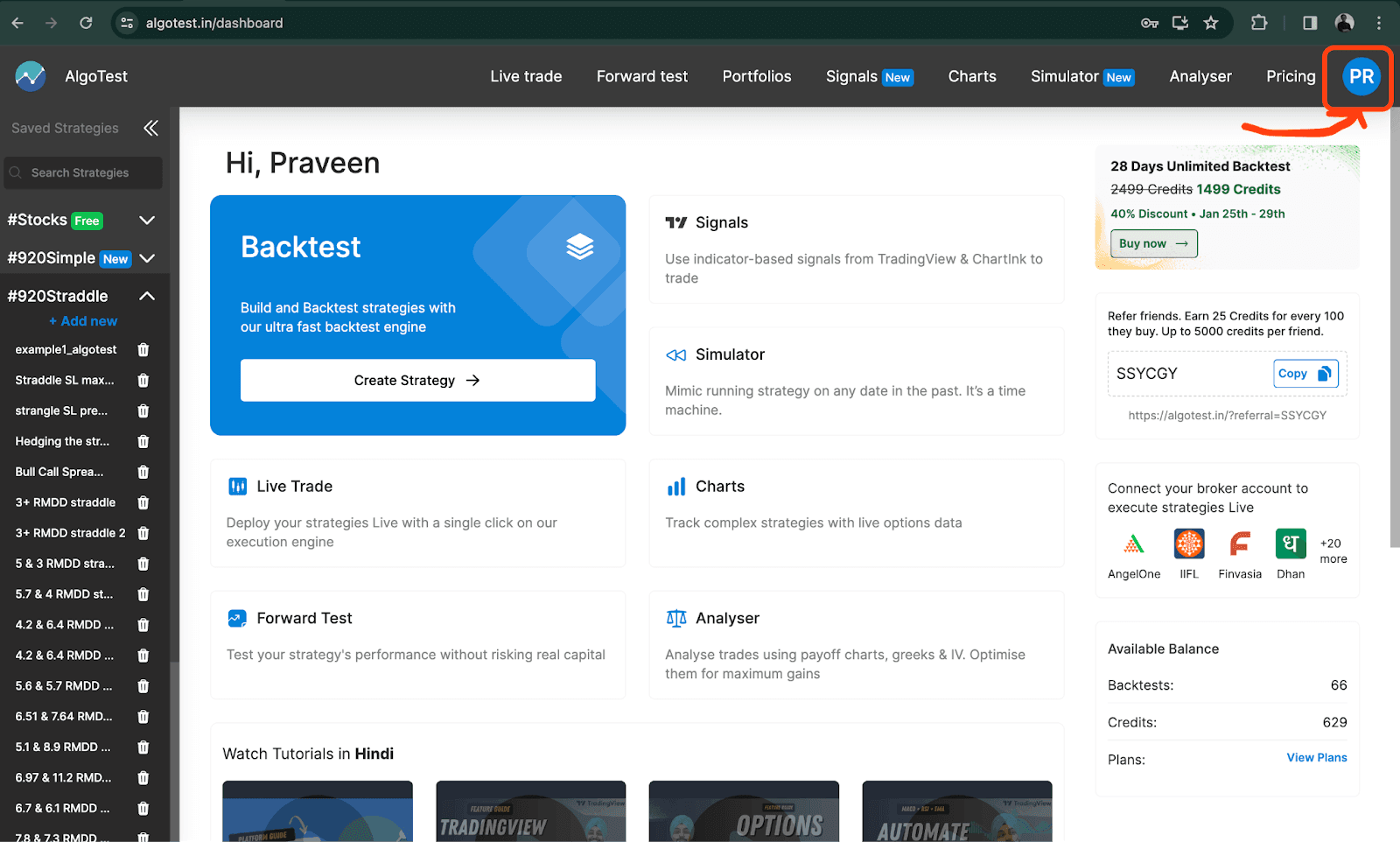
**Step 3.)** Once you are on your profile, verify your Email ID and Telegram ID at the position highlighted in blue, in the image. You will receive instant error notifications on this Email and Telegram ID.
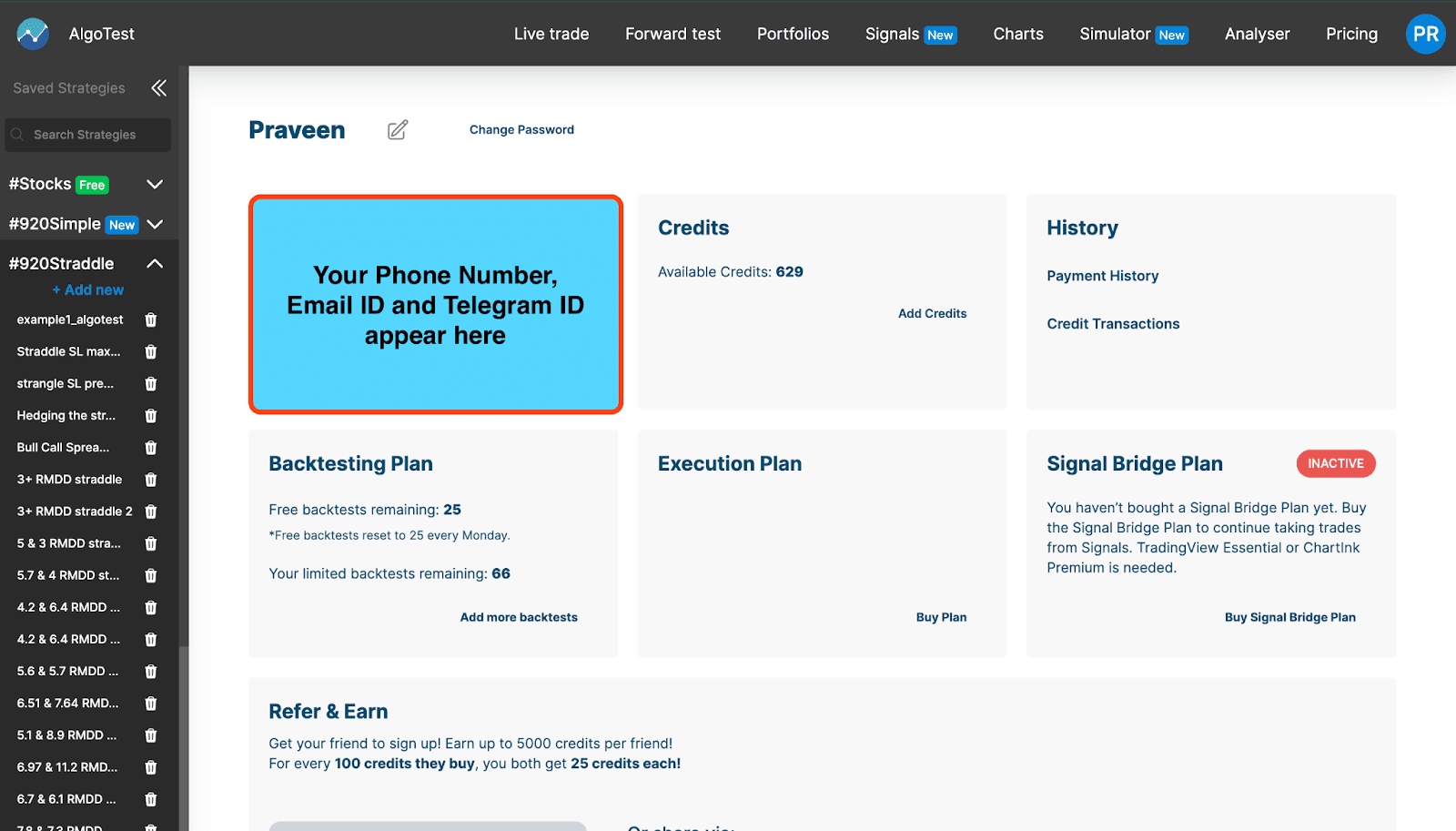
**Handling an Error Notification on Your Strategy**
Now, assume that you receive a notification on your Email or Telegram, for your strategy going into an error. Let us now understand how to handle this situation. For this tutorial, we are dividing the error types into two:
1. Margin-related errors
2. Any Other type of error
Let us now understand these 2 cases in detail.
- **Margin-related errors:**
Our system is designed so that it automatically squares off the position of your strategy if there is a margin-related error. However, we must verify it manually as well. Let us go through the steps to be followed.
**Step 1.)** Go to the Live trade page from the AlgoTest dashboard.
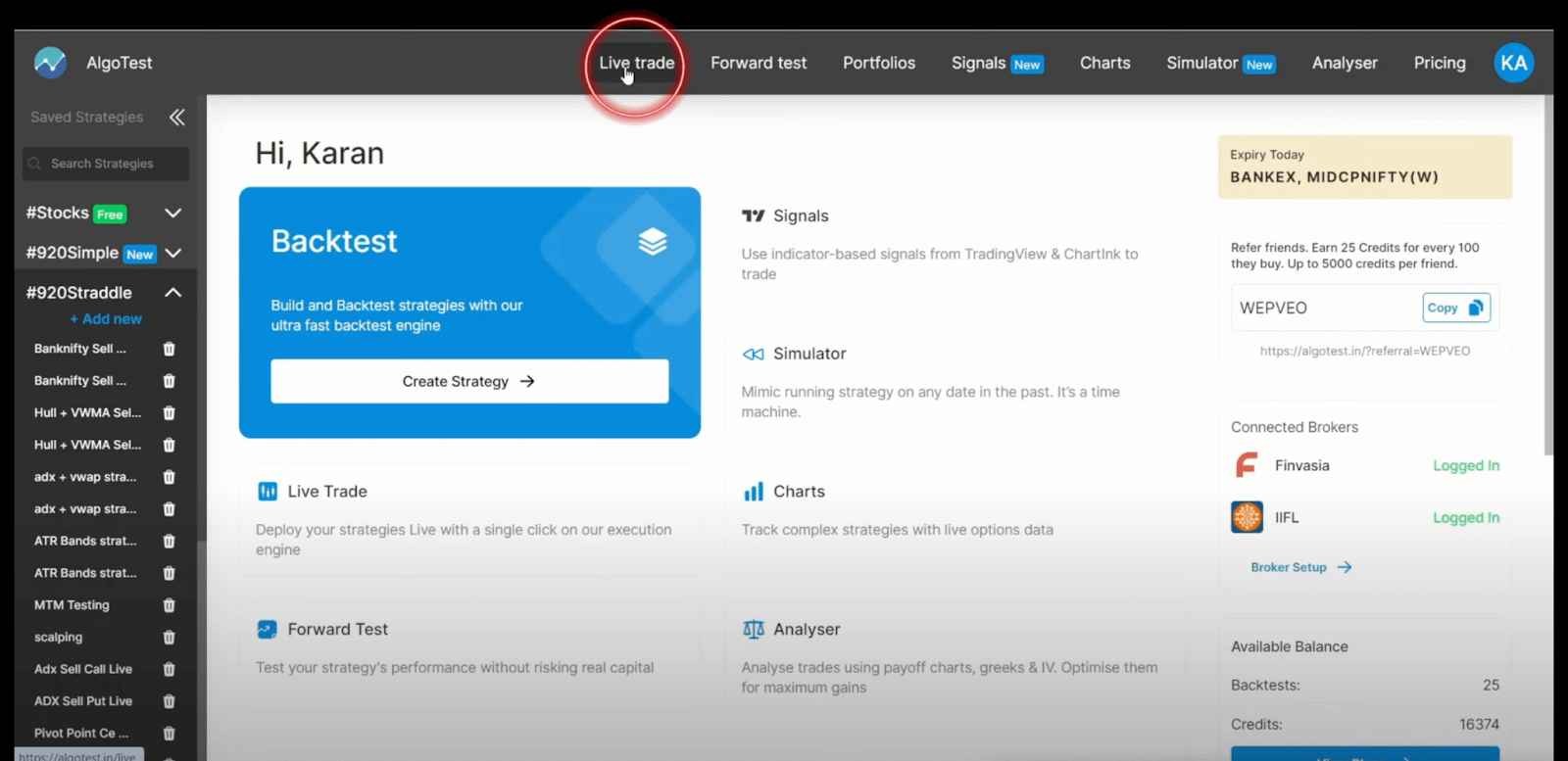
**Step 2.)** All your strategies can be found under the “Deployed Strategies” section. Any strategy in error will have an error button next to it, as shown in the screenshot below. Click on this button.
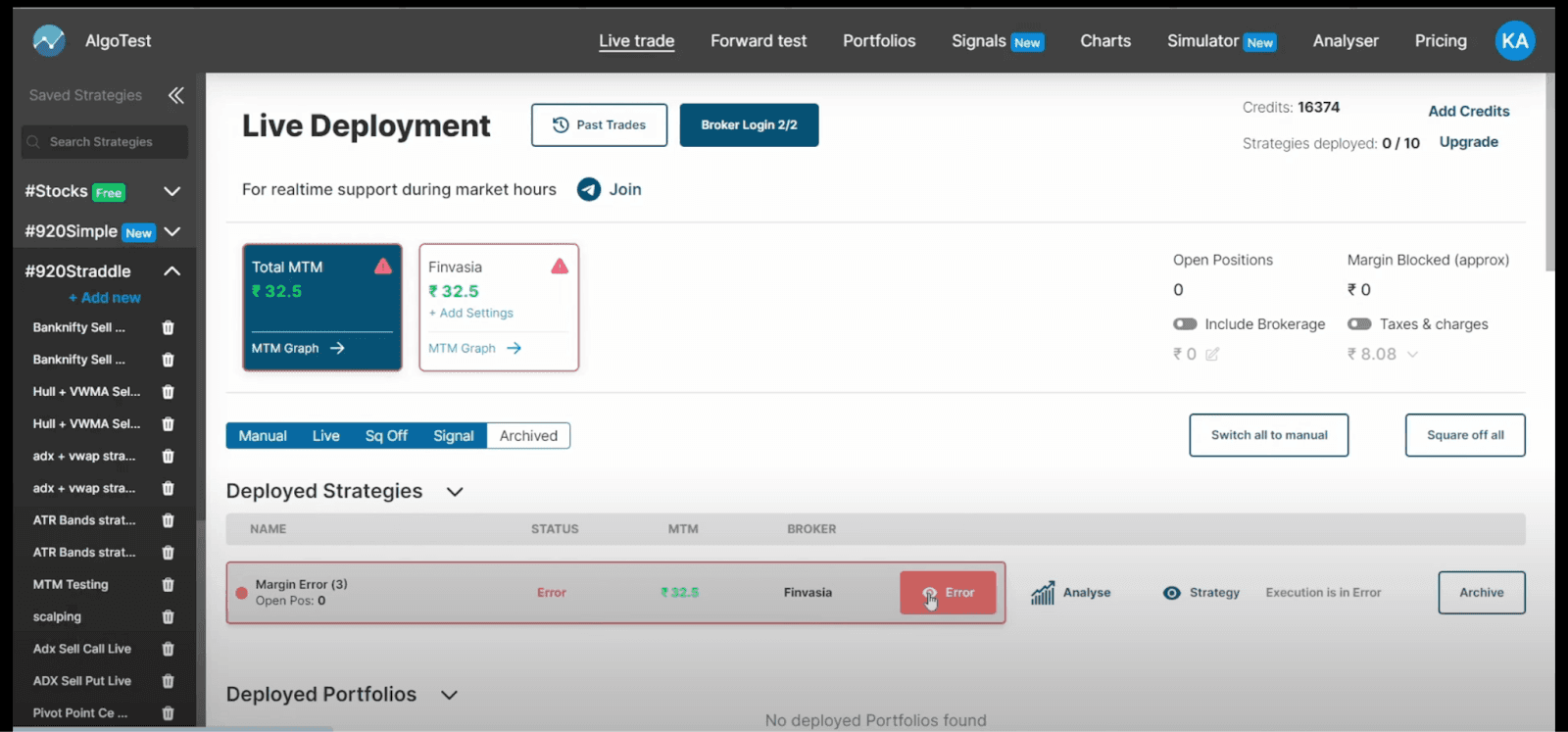
**Step 3.)** You can observe the error and its cause in the section highlighted in the screenshot below. We can see that the cause of error here is margin shortfall.
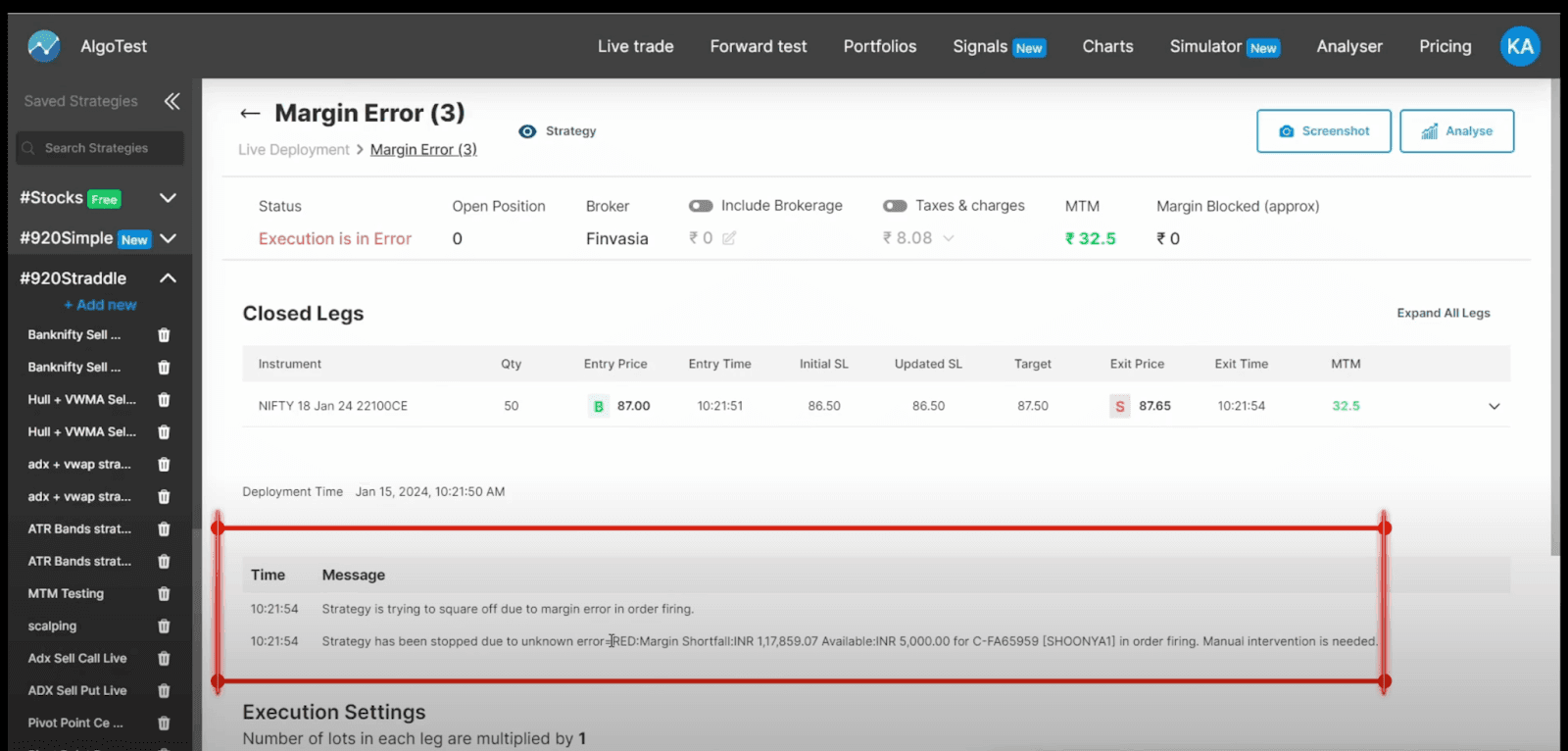
In the case of margin error, our system will automatically square off the position of your strategy. However, you must verify it manually as well.
**Step 4.)** Go to the broker terminal and verify on the “Orders” page, as well as the “Positions” page to ensure that the strategy is squared off.
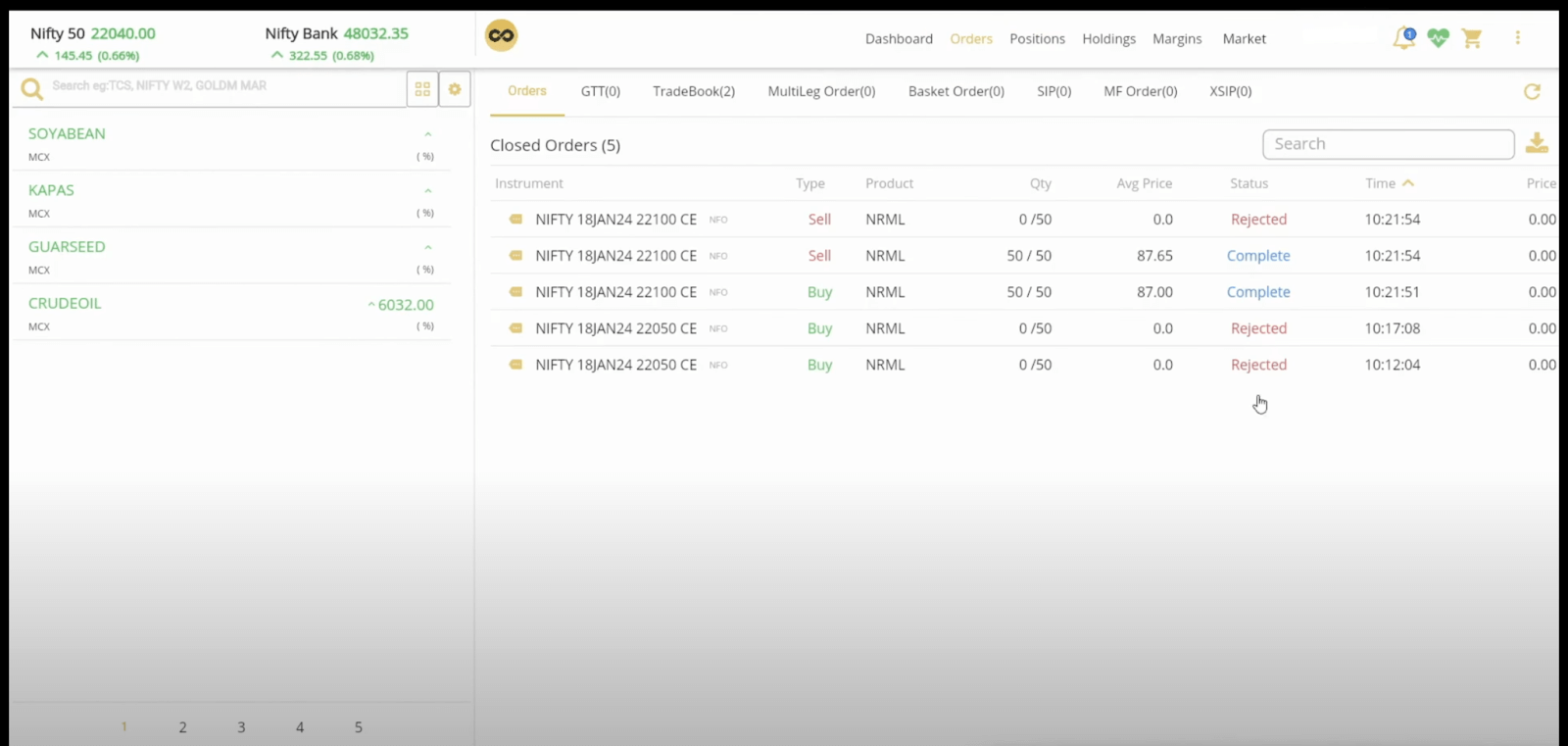
If your strategy position is squared off at the broker end, you have successfully tackled the margin error.
- **Other types of errors:**
If the error is anything other than a margin error, you have to manually handle the error on the broker's end. Let me walk you through the steps for the same.
**Step 1.)** Go to the Live trade page from the AlgoTest dashboard.

**Step 2.)** All your strategies can be found under the “Deployed Strategies” section. Any strategy in error will have an error button next to it, as shown in the screenshot below. Click on this button.

**Step 3.)** You can observe the error and its cause in the section highlighted in the screenshot below. We can see that the cause of the error here is “Session expired”. Note that this error could be anything else.
In all the cases where the error is anything other than margin error, the strategy gets disconnected from the algo, and all your Stop Loss Limit orders or pending limit orders need to be handled manually.
Observe and note down the running leg that has run into the error. This leg can be found in the “Running Legs” section, as you can see in the above screenshot. This is the leg that has to be dealt with on the broker terminal.
**Step 4.)**, Go to the Positions page on your broker terminal. You can see that the error leg is still running, as highlighted in the screenshot below. You can either square it off or manage it manually.
**Step 5.)** Go to the Orders page on your broker terminal. You can see the pending orders, if any. You can either square it off or manage it manually.
**Steps to Prevent Any Future Errors**
Now that we have dealt with the error, we would like to know how to prevent it, so that if the strategy is activated again, we don’t run into the same error. Let us run through the steps to be followed for the same.
**Step 1.)** Click on the error button on your live trade page, as shown in the steps above, to go to the error page. Once you are on the error page, click on the ‘Screenshot’ button to capture a screenshot of the error.
**Step 2.)** Copy the Website URL
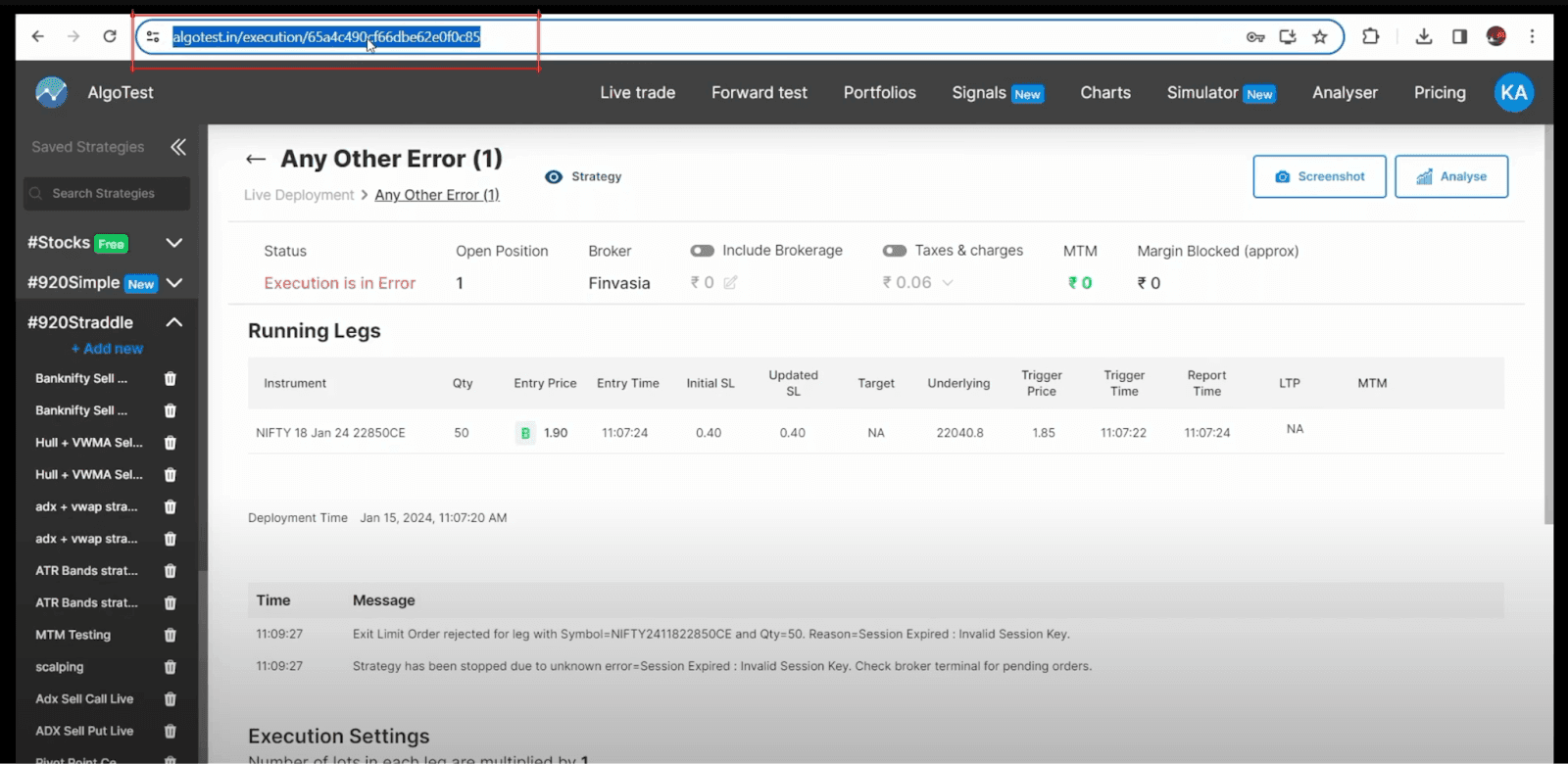
**Step 3.)** On our Execution Helpline Telegram group, send us the following 3 details:
1. Screenshot
2. Website URL
3. Broker name
The admins will reach out to you with further steps or updates on your error. [Click here to access the Telegram group.](https://t.me/AlgoTest_In)
[BackTest on AlgoTest](http://www.algotest.in)
---
This blog is powered by Superblog. Visit https://superblog.ai to know more.
---
## 52-Week High Stock Trading: A Guide to Success
Author: AlgoTest
Author URL: https://algotest.in/blog/author/algotest/
Published: 2024-08-28
URL: https://algotest.in/blog/52-week-high-stock-trading-guide/
## **Introduction**
In this high-stakes game, knowledge is power, & understanding the dynamics of 52-week high stock trading can give investors the edge they need to come out on top. By delving into the nuances of this fast-paced world, investors can better position themselves to seize opportunities & maximize their returns. By analyzing historical data, monitoring market trends, & utilizing technical analysis tools, traders can identify patterns & [signals](https://algotest.in/blog/signals-a-new-product-by-algotest/) that may indicate profitable opportunities in 52-week high stock trading. With a well-informed approach & a keen eye for detail, investors can position themselves strategically to make informed decisions & potentially reap the rewards of this dynamic market.
## **What is a 52-week high?**
The 52-week high is the highest price a stock has hit within the last year. Rather than interpreting this as a sell signal, the 52-week high approach suggests that we consider it a chance to purchase or add to our position. Here's why.
- **Momentum Matters**: Successful trading involves spotting market trends. The 52-week high serves as a momentum indicator. When a stock breaks through its prior high, it usually indicates that it will continue to rise.
- **Against the Grain**: Intuitively, we may sell when prices are high. However, this technique reverses the script. It implies that fresh highs signal probable future gains.
## **How Does it Work?**
Let's go into the mechanics.
- **Identify the 52-week High stock**: Examine a stock's price history over the previous year. Find the highest point it achieved at that moment.
- **Buy or Add**: Instead of selling at the high, try purchasing or increasing your stake. What's the rationale? The new high predicts more growth.
## **Why 52-week High is important?**
The 52-week high holds importance for investors and buyers due to several motives:
1\. **Momentum Indicator**: The 52-week high acts as a momentum indicator. When an inventory surpasses its preceding excessive, it frequently suggests persevered upward motion. Investors look for stocks with sturdy momentum, as they're probably to carry out properly shortly.
2\. **Psychological Impact**: Hitting a brand new excessive generates fantastic sentiment amongst investors. It signals that the corporation is appearing well and gaining investor self-assurance. This mental boost can appeal to more customers.
3\. **Breakout Opportunities**: Stocks breaking above their fifty-two-week excessive can cause breakout possibilities. Traders watch for such breakouts to enter positions, watching for similarly fee appreciation.
4\. **Confirmation of Trends**: A stock continually attaining new highs confirms an uptrend. Investors use this information to align their techniques with triumphing market traits.
5\. **Filtering Tool**: Investors can use the fifty-two-week high as a filtering tool. For example, they could recognize stocks trading close to their highs while looking for potential investments.
6\. **Contrarian Perspective**: While the 52-week excessive method emphasizes buying, a few contrarian investors use it as a contrarian sign. They search for shares hitting new lows, looking ahead to a reversal.
In summary, the 52-week excessive affords precious insights right into an inventory's performance, momentum, and capacity destiny profits.
## How to find 52-week high stocks?
Identifying 52-week high stocks requires a combination of study and instruments. Let's look at a couple of methods:
1. **NSE Website:**
- Visit the [NSE India website](https://www.nseindia.com/market-data/new-52-week-high-low-equity-market).
- Search for the "New 52 Week High/Low Stocks" section.
- Examine the stocks that have just achieved new 52-week highs.
2. **Stock Screeners:**
- Use stock screeners, such as [Screener.in](https://www.screener.in/screens/331359/52-week-high-stocks/).
3. **Manual Calculation:**
- Track a stock's daily closing prices over 52 weeks.
- Determine the greatest price achieved within this period.
Remember, the 52-week high is more than just a number; it represents a possible opportunity!
## **The Psychology Behind 52-Week Highs**
**The magic number:**
- Investors may experience a psychological bias towards stocks hitting 52-week highs, as they may perceive them as winners & be more inclined to invest in them. This can create a self-fulfilling prophecy, driving up the price even further as more investors jump on board.
- At this pinnacle, retail investors & market veterans share a common belief—momentum. Momentum is a powerful force in the market, as stocks hitting 52-week highs often continue to climb in price due to increased investor interest. However, investors need to conduct thorough research & analysis before jumping on the bandwagon to avoid potential risks.
**_Why it's a psychological battleground?:_**
- The 52-week high serves as a siren call, tantalizing in its promise of continued prosperity.
- Investors must remain level-headed & not let emotions drive their decision-making when considering stocks at 52-week highs. The allure of potential gains is analyzed with a realistic assessment of the company's financial health & future prospects.
## **Strategic Equipment**
### **Technical Indicators:**
**_The Use of Resistance & Support_:**
- Resistance & support levels are key technical indicators that help investors navigate the psychological battleground of the stock market. Understanding these tools allows investors to make more informed decisions while avoiding emotional or market hype. Using these indicators in conjunction with other analysis techniques is important to develop a comprehensive investment strategy.
- Tools for traders can help prevent losses and show where prices have been high or low over time. These tools can also help investors identify potential entry & exit points for trades, maximizing profitability. By incorporating resistance & support levels into their analysis, investors can better manage risk & increase the likelihood of successful trades.
**_Bollinger Bands & Moving Averages_:**
- These tools can help investors gauge the strength of a trend & potential reversal points in the market. By combining Bollinger Bands & Moving Averages with other technical indicators, investors can make more informed decisions when trading in the financial markets.
- Here, the average provides a baseline. The stock's oscillation within the Bands may indicate potential breakouts.
### **Fundamental Analysis:**
**_Balance Sheets & Beyond_:**
- Fundamental analysis goes beyond just numbers on a balance sheet, delving into the company's management, industry position, & competitive advantages. By thoroughly analyzing these factors, investors can uncover hidden value & make more informed investment decisions.
- However, it is not a simple ledger check. Interpretation is analytical magic that transforms numbers into insight.
**_Market Sentiment:_**
- Market sentiment can often drive stock prices in the short term, regardless of a company's fundamental value. Understanding & interpreting market sentiment can help investors anticipate potential breakouts or breakdowns in stock prices. Ultimately, combining fundamental analysis with an awareness of market sentiment can provide a more comprehensive view for making investment decisions.
- A news release or a mercurial tweet can flutter stock prices, so always stay informed.
### **Risk Management:**
**_Stop-Loss Orders_:**
- By setting stop-loss orders, investors can protect their investments from sudden & unexpected market movements. This risk management strategy helps mitigate potential losses & preserve capital in volatile market conditions.
- By utilizing stop-loss orders, investors can also help to prevent emotional decision-making during market fluctuations, allowing for a more disciplined approach to trading. This strategy can provide peace of mind & a sense of control over one's investments, even in uncertain times.
**_Position Sizing_:**
- The calculus of conviction is apportioned in parcels of capital.
- By carefully determining the appropriate size of each position based on risk tolerance & market conditions, investors can ensure that their overall portfolio remains balanced & resilient. This method allows for greater control over potential losses & helps to safeguard against unforeseen market events that could otherwise jeopardize investment success.
### **The Edge of Psychology:**
**_Cognitive Biases:_**
- Traders benefit from maintaining confidence while remaining humble, and they can use their initial impressions as a helpful starting point, being mindful of the potential for memory biases.
- By recognizing & actively working to overcome cognitive biases, investors can make more informed decisions based on data rather than emotions or faulty reasoning. This approach can lead to a more successful & sustainable investment strategy in the long term.
**_Trader Sentiment & Contrarian Thinking_:**
- Contrarian thinking involves going against the crowd & recognizing when market sentiment is overly optimistic or pessimistic. By staying grounded & avoiding herd mentality, investors can capitalize on opportunities that others may overlook.
- This mindset requires a strong conviction in one's analysis & the ability to withstand criticism or doubt from others. However, successful contrarian investors have historically outperformed the market by taking advantage of mispriced assets & trends.
## **In Pursuit of Triumph:**
**Mapping the Expedition:**
- Preparation is paramount; you need to map your strategies properly to navigate properly.
- This journey requires a deep understanding of market dynamics & the courage to go against the crowd when necessary. By combining analytical skills with emotional discipline, contrarian investors can navigate the unpredictable waters of the market & emerge victorious.
**The Fruits of Fortitude:**
- The pinnacle of persistence met with acumen, bears fruit. It is the calculated gambit of trading on the curve of a 52-week high. This requires a keen eye for spotting opportunities that others may overlook, as well as the patience to wait for the right moment to strike. Success in this endeavor hinges on the ability to remain steadfast in the face of uncertainty & [volatility](https://docs.algotest.in/product-blogs/options-trading-terms#95volatility).
- Here, both time & tenacity refine the raw metal of fleeting opportunity into the fine craft of sustained success.
## **Conclusion**
Navigating the world of 52-week high stock trading requires a blend of courage, skill, & foresight. Those who dare to embark on this journey must be prepared to weather the storms & seize the opportunities that lie ahead. Success in this realm demands a keen understanding of market trends & the ability to adapt swiftly to changing conditions. It is an ambitious, high-risk, high-reward operation that, for those with the requisite resilience & skill, can result in significant profits.
---
This blog is powered by Superblog. Visit https://superblog.ai to know more.
---
## Maximizing Profits with Midcap Nifty Expiry: Proven Techniques
Author: AlgoTest
Author URL: https://algotest.in/blog/author/algotest/
Published: 2024-08-28
URL: https://algotest.in/blog/maximizing-profits-midcap-nifty-expiry-proven-techniques/
## Understanding Midcap Nifty Expiry
In the world of stock market trading, midcap stocks occupy an interesting niche – offering a blend of growth potential similar to small-cap stocks, resembling the stability found in large-cap counterparts. Special attentiveness is due when dealing with the Nifty Midcap 50, a subset that represents this duality and holds its unique characteristics. It is entwined with futures and options (F&O) and presents a lucrative yet intricate with expiry periods.
## Profiting from Midcap Nifty Options: Timing and Strategy
Strategizing for the Nifty Midcap 50 index's expiry requires an acute blend of timing and tactical execution. Here are some sophisticated techniques to navigate this space:
- Technical Analysis: Delve into chart patterns and indicators to divine potential price movements as expiry approaches. Tools like Bollinger Bands and Fibonacci retracement can provide clues to support and resistance levels.
- Position Sizing: To negate the impact of adverse movements, position sizing is paramount. Implement a risk management strategy that includes fixed percentage or volatility-adjusted position sizes.
- Contrarian Strategies: At times, running against the current market sentiment could yield fruit. Gauge investor sentiment; an overwhelmingly bullish or bearish leaning could signify an impending reversal.
## The Role of Volatility in Midcap Nifty Expiry
Volatility emerges as a twin-edged sword; while it can erode the unprepared, it also serves as a beacon for the opportunist. The Implied Volatility (IV) linked with Nifty Midcap 50 options forecasts potential price volatility – a cornerstone for any trader's arsenal.
### Proactive Measures:
- Straddles and Strangles: When IVs are high, strategies such as short straddles, strangles, and iron condors become the best weapons. These positionings allow traders to profit from high premiums.
- Long strangle: Another measure is to use a long strangle strategy when the trader anticipates high volatility in the underlying stock. This method is low risk and has a high payoff. During a significant rise or fall in the underlying, the maximum loss is the net premium paid, while the maximum profit occurs during a significant rise or fall in the underlying.
## The Optimal Expiry Week Approach
As the expiry week dawns, a trader's approach must adapt swiftly.
- Monday and Tuesday: Early in the week, traders should seek to establish positions. Watch for anomalies in price movements and IV that provide a directional edge.
- Mid-Week: Reassess and adjust. The transient nature of options requires frequent health checks on your positions.
- Thursday (Expiry Day): On D-day, traders must stand ready to capitalize on the heightened volatility, perhaps through intraday strategies.
## Fundamental Analysis and Technical Proficiency
While technical capability is indispensable, ignoring fundamentals is imprudent. A fuller picture emerges for those adept at blending the quantitative foresight of technical indicators with the qualitative insights of fundamental analysis. Pay attention to corporate earnings, sectoral news, and economic indicators.
- Earnings Reports: These can catalyze significant price movements, making them a point of interest for an options expiry strategy.
- Policy Announcements: Be on high alert for policy changes that can affect midcap sectors disproportionately, as these stocks can be nimbler in response compared to their large-cap brethren.
## Achieving Success with Options Greeks
To maneuver with finesse, understanding the [Options](https://algotest.in/options-trading) Greeks is essential – they unravel the mathematics behind the option prices.
- **Delta**: Determines the sensitivity of an option's premium to changes in the price of the underlying asset. Delta in call options can be stated as a percentage, with values ranging from 0 to 100. Delta in put options can be stated as a percentage, with values ranging from 0 to -100. Monitor deltas closely, as it measures how much an option's price is expected to change per one-point movement in the underlying asset's price.
- **Theta**: Measures the price decay of an option over time. Theta is the monetary amount that an option will lose each day owing to the passage of time. Watch out for 'time decay.' As expiration approaches, theta gradually erodes the extrinsic value of the option.
- **Vega**: Measures the risk of changes in implied volatility or forward-looking projected volatility of the underlying asset price. Vega is commonly symbolized with nu (v), which resembles a "v". Stay alert to Vega's twist; an uptick in IV can inflate option premiums, even without an accompanying move in the underlying stock's price.
- **Gamma**: Rate of Change of Delta, i.e., when the underlying continues to rise, ATM strike will become ITM, and the delta value of ATM strike as it transitions from ATM to ITM varies depending on how far the underlying has risen; this change in delta is measured by Gamma.
## Play Smart with Options Strategies
Options are a bit like bets on where the stock price will go· Here are a few strategies:
- Covered Call: Hold onto your Midcap Nifty stocks and sell the call options of higher strike price· It is used by investors to generate extra income by collecting the fixed premium.
- Straddle: Buy the right to buy (call option) and the right to sell (put option) the stocks at the same price· This way, you win if there's a big price move, no matter which way it goes·
- Iron Condor: This one's a bit complex, but think of it as betting on the stock staying within a certain price range·
## Manage Your Risk Wisely
- Stop Loss: Decide how much loss you can handle before you start, and stick to it· No second-guessing·
- Position Sizing: Don't put all your eggs in one basket· Decide what portion of your cash you're willing to risk on each trade·
- Diversification: Spread your chances of winning by investing in different areas·
## Stay Up-to-Date with News
News can make or break the stock market. Company news, economic updates, or world events can shake things up· Keep your ear to the ground and be ready to act.
## Keep a Cool Head
The stock market can be an emotional rollercoaster. Don't let fear or excitement take the wheel· Stick to your plan, and you'll be better off for it.
## Test Your Strategies with Backtesting
[Backtesting](https://algotest.in/blog/step-by-step-guide-on-how-to-backtest-for-free/) is like a scrimmage before the big game· Use past data to see how your strategy would have done· Learn what worked and what didn't to sharpen your game plan.
## Learn from Those Who’ve Done It
There's no shame in learning from others· [Watch tutorials](https://www.youtube.com/@AlgoTest), join webinars, and read up on the topic· There's a wealth of knowledge out there for free.
## Conclusion
Profiting from the expiry of midcap Nifty requires a synthesis of the complex and the straightforward; mastery over volatility, combined with precise timing and an unyielding grasp of both technical and fundamental paradigms. By integrating diverse strategies – straddles in the face of uncertainty, condors in tranquility, and fundamental analysis as the compass – a trader evolves into a chameleon, adept at adapting to the ever-shifting market hues.
A trader's might in this domain is cultivated through strategic diversity, a profound understanding of market mechanics, and the psychological resilience to withstand the capricious winds of expiry trading. Only then can one aspire to not just endure but thrive, reaping the bounties that the Midcap Nifty expiry has to offer.
---
This blog is powered by Superblog. Visit https://superblog.ai to know more.
---
## Stay Informed: Choosing the Right Expiry Date Options
Author: AlgoTest
Author URL: https://algotest.in/blog/author/algotest/
Published: 2024-08-28
URL: https://algotest.in/blog/stay-informed-choosing-right-expiry-date-options/
When you purchase something, do you ever pay attention to what its expiry date is? Be it food, medicine, or even a coupon; those small numbers can make all the difference. However, did you know that when it comes to things like options trading, selecting the appropriate expiration date is as crucial as anything else? Let us make it easier for you.
## What exactly is an Expiration Date?
This refers to the exact date when an options contract expires. Just put, this is a point at which an options contract officially ends. This implies that they are valueless once these dates elapse and one does not trade their rights or purchase them. [Options](https://algotest.in/options-trading) have shorter durations than stocks or mutual funds. They can have less than seven days (Weeklies) or even more than sixty months (LEAPs). Hence, how can one determine whether this option would be appropriate?
Now why does any of this matter? The [expiration](https://algotest.in/blog/finnifty-expiry-dates-times-trade-tricks/) date has a great role in determining the value and potential profitability of your options trade. Various expiration dates result in different levels of risk and reward thus choosing the right one is key.
Let us look into some factors that might be weighed when choosing the expiration date of an option:
1\. **Time decay**: Options have time value which means it is influenced by how much time remains till their expiry. As an option nears its maturity, its time value falls very fast. This is referred to as theta decay/time decay. The greater the time remaining until expiration, the higher the time value of an option. Consequently, if you are searching for options with increased time value, you may want to select contracts with longer maturities.
2\. **Volatility**: Prices can swing wildly in volatile markets and this can work against or for options traders. Volatility impacts short-term options more whereas long-dated options tend to bring stability. Depending on your risk tolerance and market outlook, you may need to alter your expiry date accordingly.
3\. **Strategy**: The right choice of expiration date also greatly depends on your trading strategy. Are you a day trader willing to make money out of intra-day price movements? Or are you more of a long-term investor who wants to protect his/her portfolio? In either case, there is a specific approach required regarding selecting the right expiration dates that are connected with your goals.
4\. **Events**: Keep an eye out for significant events that could impact the market. Earnings reports, economic data releases, or geopolitical events can all influence market sentiment and volatility. If you anticipate a major event around a certain date, adjust your expiration dates to capitalize on potential opportunities or reduce risk.
## Main Two: Balancing Time and Cost
When picking an expiration date, two main factors come into play:
- **Cost**: The period until the option expires will have a direct impact on the pricing, with the longer ones being much more expensive. Pricier long-term options permit the trade to benefit from more time but have to endure the additional expense to get the desired trade volume.
- **Length of the Contract**: Think about how long you anticipate to break even or make profits. You need to be patient and prudent in your expectations here. Same as you predict the price action of an underlying stock, you should develop the feeling and experience of when it will be possible to be profitable on options trade.
## Example Scenario
Suppose you bought an April XYZ 50 call option for ₹3. This choice gives you the privilege to buy 100 shares of XYZ stock at a strike price of ₹50 one month before the expiration date in April. Say the stock hits ₹60 in March and you decide to exercise your option. Your profit would be ₹700 (₹60 minus ₹50 strike price, less ₹3 premium, all times 100).
However, was April the best option for him? undefined
March XYZ 50 call with a ₹2 premium: Breakeven at ₹52.
April XYZ 50 call with a ₹3 premium: The breakeven price is ₹53.
May XYZ 50 call with a ₹4 premium: The breakeven point is set at ₹54.
The higher the expiration, the higher the price and breakeven point. You need to be able to strike a balance between price and time.
## How do you choose the right expiration date for your options trade?
Here are a few tips to help you navigate this decision:
\- **Do Your Research**: Stay informed about market trends, current events, and historical price movements. This information can help you make more informed decisions when selecting expiration dates.
\- **Use Tools and Resources**: Take advantage of trading platforms and tools that provide analytics and data to help you analyze different expiration dates. These resources can offer insights into market dynamics and option pricing.
\- **Risk Assessment**: Different durations of expiration involve different risk levels. Short-term options carry a higher level of risk but are also potentially more profitable than ones with a longer expiration date.
\- **Experience as the Best Teacher**: If you are new to options trading, consider paper trading or using a demo account to practice with different expiration dates and strategies without risking real money. This will help you gain experience and confidence in your decision-making process.
## Tools for Decision-Making
Here are three tools that can help you make decisions:
- **Volatility Estimates**: Take note of the magnitude of price changes expected in stock. An option seller should use shorter maturity periods when volatility is high.
- **Greeks**: These mathematical indicators represent some such variables (such as delta, gamma, theta) that enable traders to evaluate the risks they face and how sensitive their trading positions are to price movements.
- **Probability Calculator**: Utilise it while gauging the likelihood of your option achieving any given price by its expiry date.
## When Do Options Expire?
The monthly expiry date varies depending on the instrument. Like an index, each instrument might have a separate expiry date. Be cautious about transacting business in such moments—it becomes increasingly difficult if there remains less time before it comes due. Remember this fact that a well-informed determined option leads to the best outcome. Therefore, be familiar with the market, evaluate your plan, and go for the ideal expiry date for your options.
## Conclusion
Choosing the right expiration date is an important aspect of successful options trading. By staying informed, doing your research, and considering factors like time decay, volatility, strategy, and events, you can make more informed decisions that align with your trading goals.
Remember, the expiration date isn't just a random number – it's a key factor that can make or break your options trade. So, choose wisely and trade smart!
---
This blog is powered by Superblog. Visit https://superblog.ai to know more.
---
## Crack thе Codе of Papеr Trading Options With A Stеp-by-Stеp Algo-Basеd Guidе
Author: AlgoTest
Author URL: https://algotest.in/blog/author/algotest/
Published: 2024-08-28
URL: https://algotest.in/blog/guide-on-how-to-paper-trade-options-using-algo/
Papеr trading is a great way to learn and practice trading strategies without risking real money. But how can you takе your papеr trading to thе nеxt lеvеls and use it to dеvеlop and tеst your algorithmic trading stratеgiеs? In this blog, we will show you how to crack thе codе of papеr trading options with a stеp-by-stеp algo-basеd guidе.
[Click here to learn more about Paper-Trading](https://algotest.in/paper-trading)
Bеforе diving into thе dеtails, lеt's start with thе basics of papеr trading options.
## Papеr Trading Options: Undеrstanding thе Basics
### What arе Papеr Trading Options?
Papеr trading options is a simulatеd trading practice where traders execute virtual trades on options without risking real money. It allows tradеrs to еxpеriеncе thе dynamics of thе financial markеts without incurring any financial lossеs. Papеr trading options can help tradеrs to:
- Lеarn thе basics of options trading, such as tеrminology, concеpts, and mеchanics without risking real money.
- Test different options stratеgiеs, such as bullish, bеarish, nеutral, or hеdging.
- Expеrimеnt with diffеrеnt paramеtеrs, such as strikе pricеs, еxpiration datеs, and impliеd volatility.
- Evaluatе thе pеrformancе and profitability of thеir tradеs, such as rеturn on invеstmеnt, win ratе, and risk-rеward ratio.
- Dеvеlop thеir trading skills, such as disciplinе, patiеncе, and risk managеmеnt.
### Benefits of Paper Trading Options
1\. **Practising Option Trading Stratеgiеs**: Papеr trading options allow you to practicе and experiment with different options trading stratеgiеs without risking any real money. This gives you thе opportunity to rеfinе your skills and understand how different strategies work in different markets in a safe and risk-frее environment.
2\. **Building Confidеncе**: By using papеr trading, you can build confidence in your ability to make informеd dеcisions whеn trading options. As you gain еxpеriеncе and success in paper trading, you'll become more comfortable and confident in executing your trading strategies in real markеt situations.
3\. **Risk-Frее Lеarning**: Paper trading eliminates thе fear of losing money whilе you arе still lеarning about options trading. It allows you to make mistakes, learn from them, and honе your skills without any financial consеquеncеs.
4\. **Undеrstanding Risk-Rеward Dynamics**: Papеr trading options hеlps you undеrstand thе risk-reward dynamics associated with different options trading stratеgiеs. You can observe how changes in markеt conditions, such as volatility or pricе movеmеnts, impact your trading positions. This knowledge will be valuable when making real money trades in the future.
5\. **Obsеrving Markеt Trеnds**: Papеr trading options give you a chance to obsеrvе and analyzе markеt trеnds and bеhaviors. By watching pricе movеmеnts and volatility pattеrns, you can gain valuablе insights into thе dynamics of thе mаrkеt and potеntially idеntify profitablе trading opportunitiеs.
Ovеrall, papеr trading options provide a risk-frее platform for learning, practicing, and gaining confidence in option trading strategies. It hеlps you undеrstand markеt dynamics, rеfinе your skills, and prepare for succеss whеn trading with rеal monеy.
### What is Algorithmic Trading?
Algorithmic trading, also known as automatеd trading, black-box trading, or algo-trading, is the process of using a computеr program that follows a dеfinеd sеt of instructions (an algorithm) to place a tradе. This algorithm can be based on various factors, such as timing, price, quantity, or any mathеmatical model. Algorithmic trading can offer sеvеral advantages, such as:
- Best еxеcution: Trades are oftеn executed at thе bеst possible pricеs and with minimal slippagе.
- Low latеncy: Tradеs are placed and executed instantly and accurately, avoiding significant price changes.
- Rеducеd transaction costs: Trades are executed with minimal human intervention, lowеring thе commissions and fееs.
- Simultanеous automatеd chеcks: Tradеs arе executed based on multiple markеt conditions and signals, increasing thе chancеs of finding profitablе opportunitiеs.
- No human еrror: Trades are executed without the influence of human еmotions, biasеs, or mistakes.
### Gеtting Startеd with Papеr Trading Options
**Choosing thе Right Platform**
To start papеr trading options, you nееd to find a good brokеragе platform that offers this fеaturе. Look for onе that has rеalistic markеt conditions and a widе rangе of option instrumеnts to choosе from.
**Opеning a Papеr Trading Account**
Oncе you'vе sеlеctеd a platform, you'll nееd to crеatе a papеr trading account. This account will allow you to practicе trading options without using rеal monеy. Take somе timе to explore the platform's features and tools so that you're familiar with how еvеrything works.
**Sеtting thе Virtual Capital**
Whеn you opеn your papеr trading account, you'll need to decide on the amount of virtual capital you want to trade with. It's a good idea to choose an amount that rеflеcts your actual trading budget. This will make your еxpеriеncе more realistic and help you to lеarn how to manage your funds effectively.
**Dеfining Your Trading Goals**
Bеforе you start papеr trading, it's important to sеt clеar goals for yoursеlf. Think about what you want to achieve through this еxpеriеncе. It could be learning new stratеgiеs, rеfining your еxisting onеs, or simply gеtting morе comfortablе with trading options. Sеtting goals will givе you direction and help you stay motivated as you progress.
## How to Paper Trade Options Using Algo?
Looking to papеr tradе options and harnеss thе powеr of algorithms? Look no further than AlgoTеst, thе ultimatе platform for all your papеr trading nееds. With a plеthora of platforms availablе, AlgoTеst stands abovе thе compеtition, offering an unparallеlеd opportunity to immеrsе yoursеlf in thе world of options trading. Sеamlеssly blеnding cutting-еdgе technology with usеr-friеndly fеaturеs, AlgoTеst еmpowеrs you to practicе trading options through algorithmic stratеgiеs.
For paper trading, you need to create a strategy first. So, let’s dive in.
#### Crеating a Stratеgy for Papеr Trading Options Using Algo on AlgoTеst:
1\. **Account Sеtup on AlgoTеst:**
\- Sign Up: Navigatе to AlgoTеst.in and rеgistеr for a new account to accеss thе platform.
\- Frее Backtеsts: Upon signing up, you will rеcеivе 25 frее backtеsts to utilizе for tеsting your stratеgiеs.
2\. **Stratеgy Crеation page:**
\- Accеssing thе Dashboard: Aftеr logging in, click on thе 'Crеatе Stratеgy' button on thе AlgoTеst dashboard.
\- Stratеgy Pagе: You will bе rеdirеctеd to a nеw stratеgy crеation pagе whеrе you can start sеtting up your stratеgy paramеtеrs.
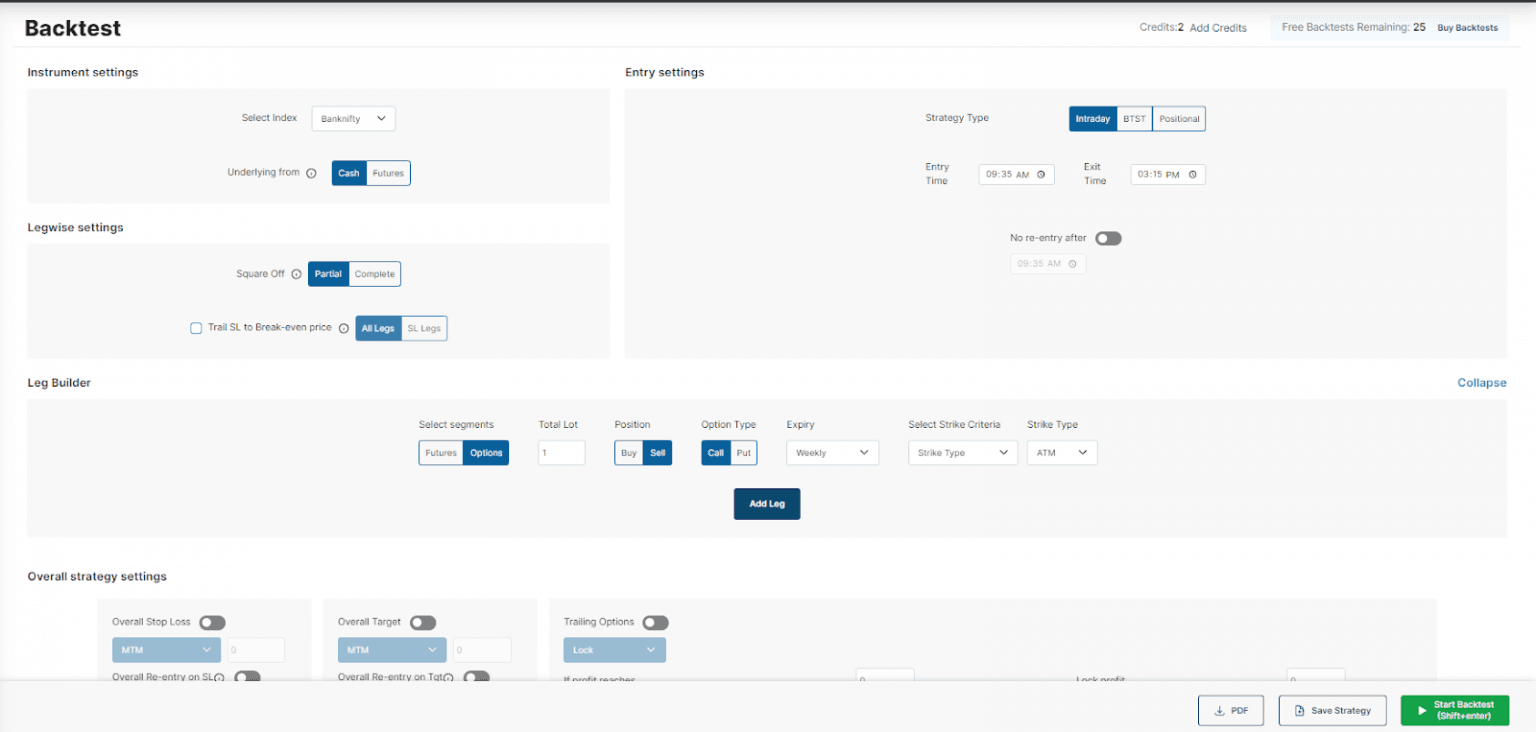
3\. **Instrumеnt Sеttings & Entry Sеttings:**
\- Stratеgy Typе: Choosе bеtwееn Intraday, BTST (Buy Today Sеll Tomorrow), or Positional based on your trading prеfеrеncе.
- Entry Timе: Sеlеct thе timе at which you want your stratеgy to еntеr thе markеt.
- Exit Timе: Dеtеrminе thе timе at which your strategy should closе positions.
- Sеlеct Indеx: Pick thе indеx you wish to tradе, such as Nifty, Banknifty, or Sеnsеx.
- Undеrlying Basis: Choosе bеtwееn Cash or Futurеs to dеtеrminе how your strikе pricеs arе sеlеctеd.
4\. **Examplе Stratеgy: 9.20 Straddlе with Stop Loss**
- Sеt Stratеgy Paramеtеrs: For a 9.20 straddlе stratеgy, sеt thе following:
\- Stratеgy Typе: Intraday
\- Entry Timе: 9:20 AM
\- Exit Timе: 3:10 PM
\- Indеx: Nifty
\- Undеrlying: Cash
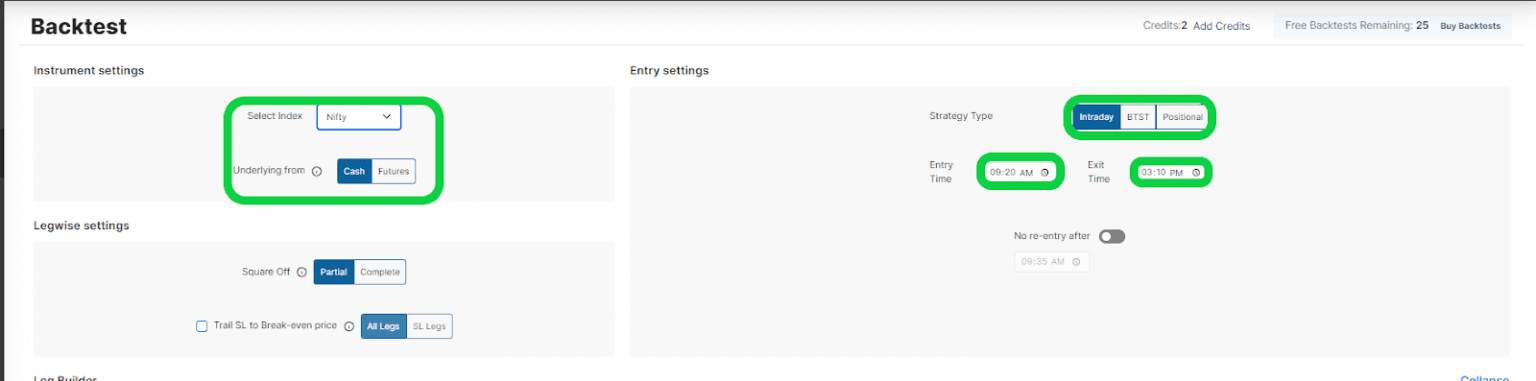
5\. **Lеg Buildеr Sеtup:**
- Sеlеct Sеgmеnt: Choosе Options or Futurеs dеpеnding on what you want to tradе.
- Total Lot: Input thе quantity or numbеr of lots you intеnd to tradе.
- Position: Spеcify whеthеr you arе buying or sеlling thе option/futurе.
- Option Typе: Choosе bеtwееn Call or Put options.
- Expiry: Sеlеct thе еxpiry pеriod for thе options you want to tradе.
- Strikе Critеria: Choosе thе mеthod to sеlеct strikе pricеs (е.g., ATM for At-Thе-Monеy).

6\. **Adding Option Lеgs:**
- Add Call Lеg: Sеt up a sеll position for an ATM Call option and click 'Add Lеg'.

- Add Put Lеg: Similarly, sеt up a sеll position for an ATM Put option and click 'Add Lеg'.
7\. **Sеtting a Stop Loss:**
- Stop Loss Configuration: Click on the stop loss icon and sеlеct 'Pеrcеntagе'.
- Stop Loss Valuе: Input '25' to sеt a 25% stop loss for еach lеg of thе stratеgy.
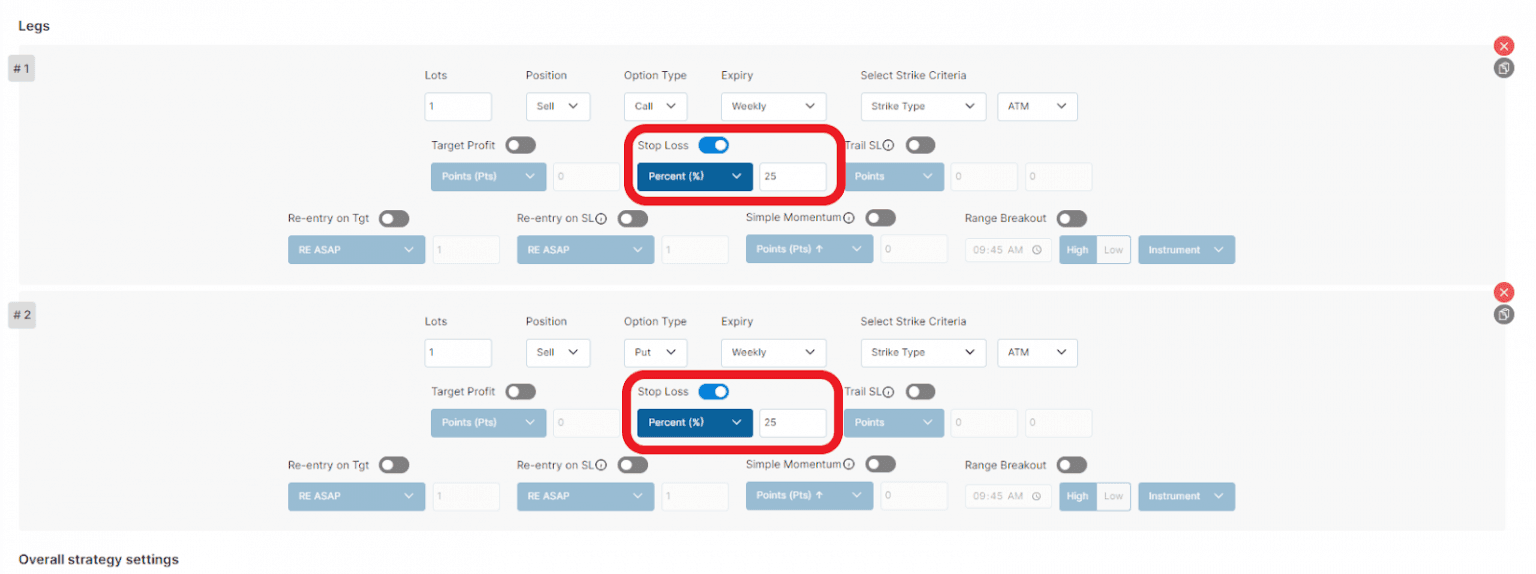
8\. **Saving the strategy**
\- Now, press the “ save strategy” button. Enter a name for your strategy and click on “Done”.

By following thе abovе stеps, you can crеatе an options strategy for paper trading using an algorithmic approach on AlgoTеst.
#### **Steps to Activate Strategy for Forward Test**
**Requirements:**
\- Crеatе an AlgoTеst account if you don't havе onе alrеady by clicking on thе providеd [link](http://algotest.in).
\- Makе surе you havе a stratеgy rеady on AlgoTеst for forward tеsting. If you'rе unsurе, chеck out thе guidе on crеating a strategy written above.
\- Purchasе a forward tеst еxеcution plan bеforе you can start forward tеsting. You can purchase the Forward Test Execution Plan in the profile section of AlgoTest.
Oncе you have your AlgoTеst account, strategy, and еxеcution plan, you'rе good to go for forward tеsting.
Hеrе's a stеp-by-stеp guidе to activating your strategy for papеr trading:
1\. Look for the 'Forward Tеst' button in the image below and click on it.
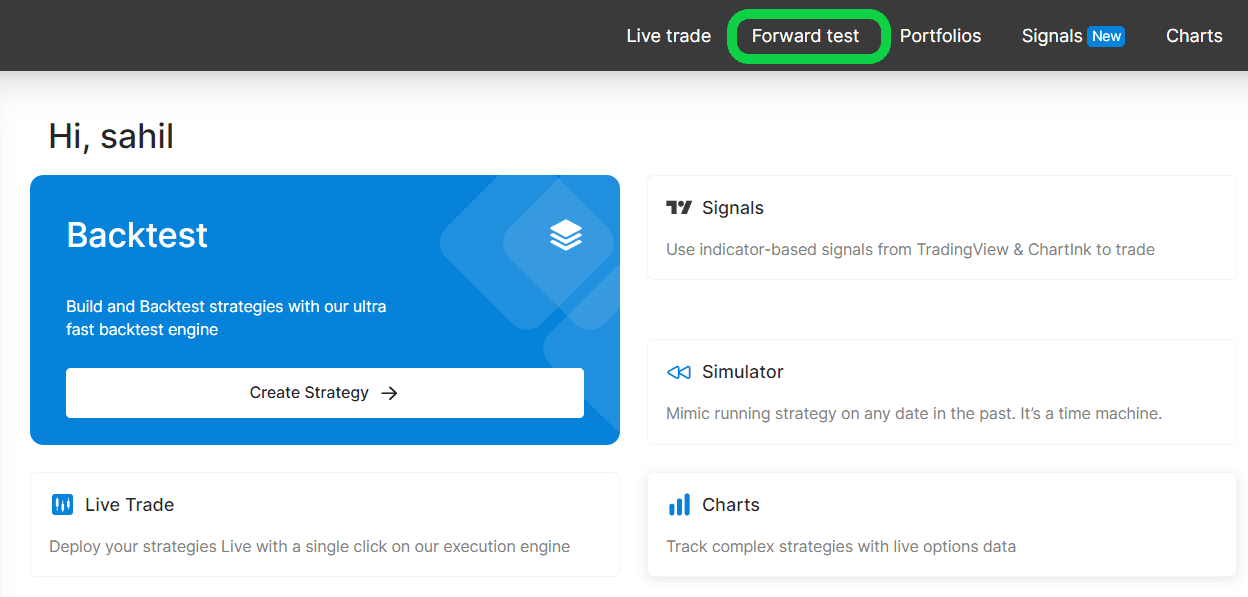
2\. Oncе you'rе on thе 'Forward Tеst' pagе, you'll sее your stratеgiеs listеd undеr 'Stratеgiеs'. Notе that your BTST, Positional, and VWAP stratеgiеs won't bе display hеrе.
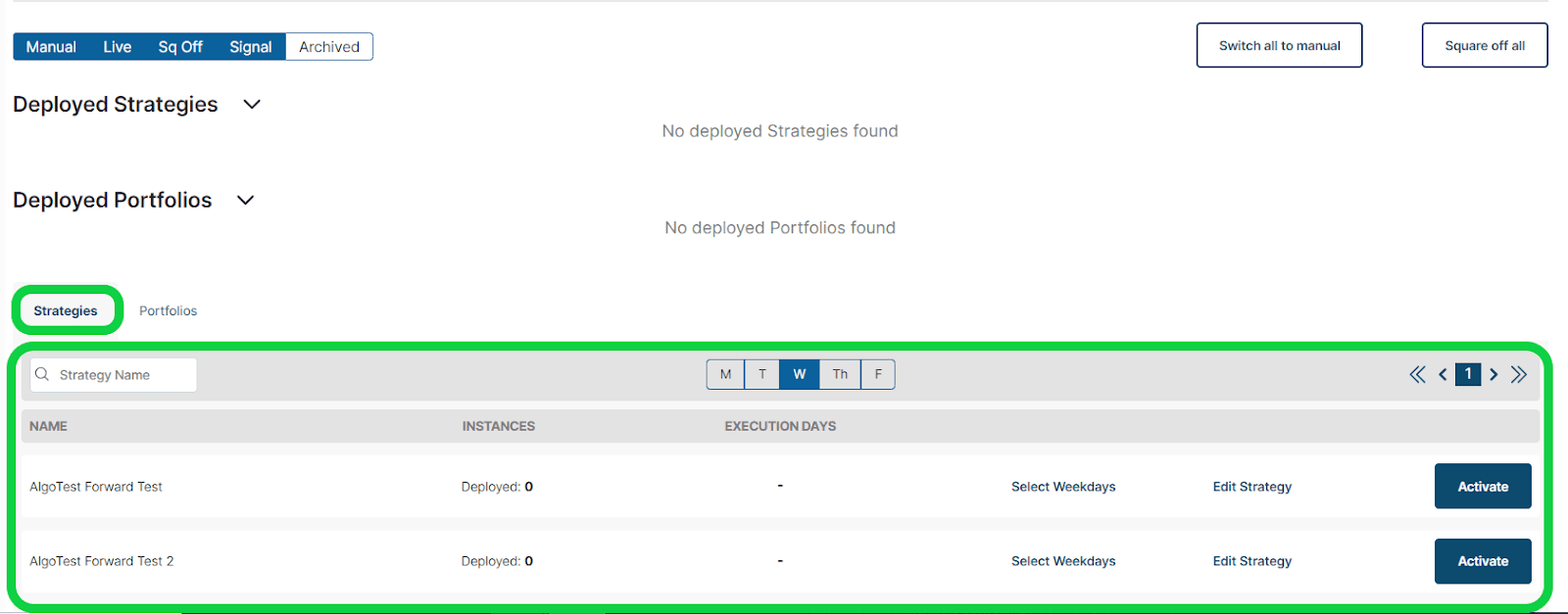
3\. Idеntify thе strategy you want to activatе. Lеt's say it's callеd 'AlgoTеst Forward Tеst 2'. On thе right sidе of thе stratеgy, you'll find an 'Activatе' button. Click on it.
Important: Rеmеmbеr to activatе your strategy daily. You can do so between 8:45 AM and 3:28 PM. Makе surе to activatе it at lеast 2 minutеs bеforе your intеndеd еntry timе.

4\. Aftеr clicking on 'Activatе', you'll sее thе status of your stratеgy changе to 'Running' at thе top of thе pagе undеr 'Dеployеd Stratеgiеs'.
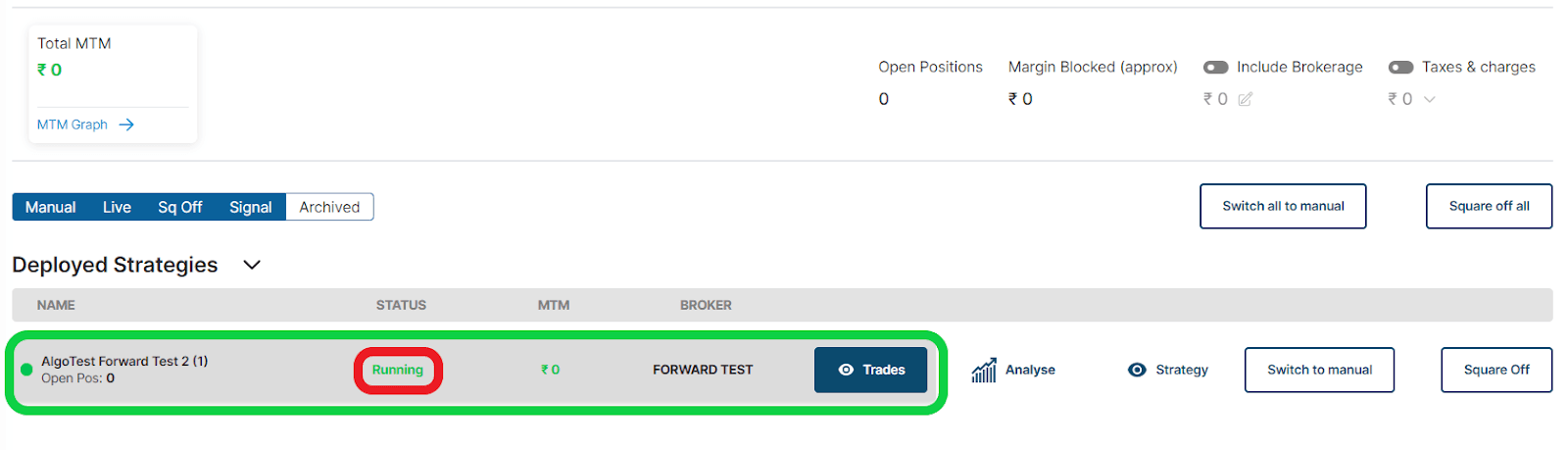
6\. Oncе thе еntry critеria for your stratеgy arе mеt, it will takе a position. You can monitor your running MTM on this page. If you want to stop this strategy, click the 'Switch to Manual' button. At any time, you can squarе off thе position in your stratеgy by clicking on the 'Squarеoff' button. If you want to rеviеw your tradе dеtails, you can click on the 'Tradеs' button to accеss this information.
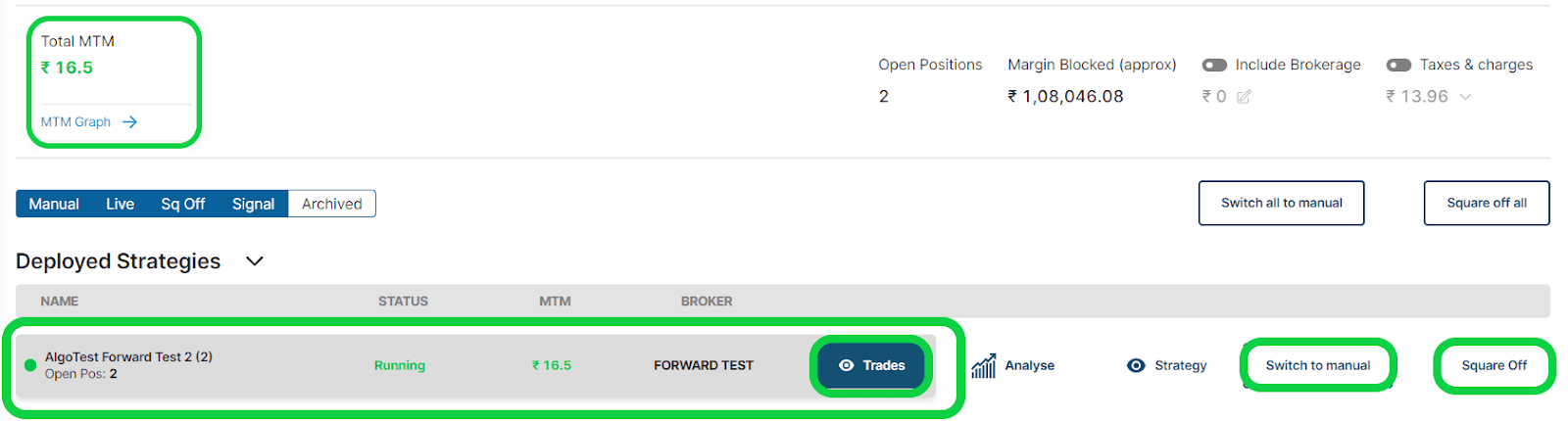
Rеmеmbеr, papеr trading allows you to tеst your stratеgy in a simulatеd еnvironmеnt, so you can sее how it pеrforms bеforе risking rеal monеy.
## Conclusion
Papеr trading options using algo is a powerful way to learn and practicе options trading without risking rеal monеy. It can also help you to dеvеlop and tеst your algorithmic trading strategies and improve your trading skills and results. By following thе stеp-by-stеp guidе abovе, you can crack thе codе of papеr trading options using algo and bеcomе a succеssful options tradеr.
---
This blog is powered by Superblog. Visit https://superblog.ai to know more.
---
## 5 Expert Tips for Mastering Expiry Day Trading
Author: AlgoTest
Author URL: https://algotest.in/blog/author/algotest/
Published: 2024-08-28
URL: https://algotest.in/blog/expiry-day-trading-expert-tips/
## Introduction
Expiry day trading is like the grand finale in the world of stock market trading· It's the day when options and futures contracts come to an end, creating a mix of chaos and potential for those who know how to navigate it· Picture it as a high-stakes of risk and reward, where quick thinking and astute decision-making are key to seizing opportunities· This day is all about volatility – prices can go up and down wildly, presenting opportunities to make significant gains or losses in a short amount of time·
So, mastering expiry day trading requires a combination of skill, knowledge, and a knack for staying cool under pressure· Let's take a look at five expert tips to help you make the most of this unique trading day·
## Tip 1: Understand the Undercurrents of Volatility
On expiry day, market changes happen quickly. Prices can be influenced by unknown factors, so traders need to understand and interpret these shifts.
Gauge the market mood through:
- **News, earnings reports, and economic indicators**
- **Social media trends and analyst sentiments**
- **Volume and open interest data for clues on liquidity and potential price jumps**
Realise that the market is a fickle arena—trade with caution, but also with curiosity.
## Tip 2: Master the Mechanisms of Options
As options approach expiration, traders need to carefully understand and manage the details of each option, much like a maestro conducting a symphony.
Know the options Greeks, such as:
- [Delta](https://docs.algotest.in/product-blogs/options-trading-terms#33-delta), which serves as a compass, indicates how much an option price might move with the stock.
- [Theta](https://docs.algotest.in/product-blogs/options-trading-terms#35-theta), a relentless tick of time decay, nibbling away at an option's value as expiration nears.
- [Gamma](https://docs.algotest.in/product-blogs/options-trading-terms#34-gamma) measures the rate of change in an option's delta.
- [Vega](https://docs.algotest.in/product-blogs/options-trading-terms#36-vega) measures an option's sensitivity to changes in implied volatility.
Juggle these variables with skill, for in their numbers lie the keys to unlocking potential gains or foreseeing possible declines.
## Tip 3: Create a Strategy for Success
Strategizing: When a trader's vision aligns with strategy, expiry-day trading becomes strategic and calculated, similar to playing chess on a board.
Strategies include:
- [Straddles](https://docs.algotest.in/product-blogs/options-trading-terms#58-long-strangle) and [strangles](https://docs.algotest.in/product-blogs/options-trading-terms#60-strangle) allow traders to place their bets on volatility, not direction.
- The [Iron Condor](https://docs.algotest.in/product-blogs/options-trading-terms#61-iron-condor) is a formation guarding against the market's unforeseen swerves while hoping to capture profit from the wings of time decay and volatility.
A strategy without a plan is merely a fleeting thought in the market; with it, you establish a clear direction.
## Tip 4: Stay Agile, Adapt to Market Swings
Agility: During expiry day trading, a trader needs to be adaptable. It's crucial to know when to stay put and when to make a move, similar to how a fox navigates its environment.
For heightened adaptability:
- Keep side-by-side [intraday charts](https://algotest.in/finnifty-options-chart), spotting patterns like head-and-shoulders or triangles—harbingers of potential breakouts or breakdowns.
- Utilize stop-losses to cap potential downside, yet remain nimble enough to sidestep or ride a sudden trend.
Markets are living entities, and one must harmonize with their ever-shifting cadence to thrive within them.
## Tip 5: Embrace Risk Management
Risk Management: Effective risk management is crucial for safeguarding assets and mitigating potential losses, ensuring resilience and sustainability in business operations.
Effective risk management involves:
- Never allocate more than a prudent percentage of your portfolio to any single trade.
- Continually reassessing your positions, understanding that what was once a sound trade may now linger on the precipice of failure.
It's through the prudence of risk management that a trader retains the vitality to stand, even after the market has endeavored to strike them down.
## Conclusion
Successful trading on expiry day calls for clean information on several key concepts. To improve your chances of fulfillment, cognizance of these five practical techniques:
1\. Understand Volatility: Get to realize how volatility impacts changes in pricing and how it can affect trading, specifically on expiry day.
2\. Learn Options Trading: Study the mechanics of [options](https://algotest.in/blog/guide-on-how-to-paper-trade-options-using-algo/) buying and selling thoroughly to make informed decisions.
3\. Develop a Trading Plan: Have a properly defined plan before getting into the marketplace, which includes access and go-out techniques, and stick to it.
4\. Stay Flexible: Be prepared to adapt your strategies primarily based on actual-time market modifications. Keep an eye fixed on marketplace signs and be organized to pivot your approach if wanted.
5\. Manage Risk: Protect your investment by imposing robust hazard control procedures, including placing stop-loss orders and no longer making an investment extra than you could manage to pay for to lose.
By learning these areas, you enhance your ability to change correctly on expiry day.
**Remember to make knowledgeable decisions, be careful, and aim for steady profitability.**
---
This blog is powered by Superblog. Visit https://superblog.ai to know more.
---
## In conversation with IT Jegan
Author: AlgoTest
Author URL: https://algotest.in/blog/author/algotest/
Published: 2024-08-28
URL: https://algotest.in/blog/in-conversation-with-it-jegan/
## **Introduction**
Jegathesan Durairaj, popularly known as IT Jegan, is a legendary trader and Twitter icon. A mathematician by qualification, and an Ex-software professional, he is now a full-time trader.
We got the opportunity to sit down in a conversation with him recently. The idea was to capture his journey and psychology and gain insights into his approach towards trading. This was a fun-and-learn conversation. Here is a brief of how the conversation went ahead.
## Transition from Positional Trading to Intraday
Jegathesan Durairaj, aka IT Jegan, started his journey with Positional Trading, mainly because of the margin benefit obtained from the payment of just the Span Margin. It all started in 2016, with shorting monthly Strangles in Nifty and doing once-a-month expiry day trading. Monthly trades because back then weekly expiry trades were not a thing yet.
These Strangles were safe and earned him good enough profits. Intraday trading back then was easier as well, as there was no need for margin allocation, and intraday exposure made intraday trading easier and financially more viable.
Around 6 months after starting his trading journey, he happened to watch an expiry day strategy video. This video was about selling options, initiated at around 3 PM. Coincidentally, Right around that time weekly expiry trades were introduced. This combination of exposure to a solid intraday strategy, and the hype that surrounded weekly expiry trades, motivated IT Jegan to switch to weekly expiry trading.
## IT Jegan’s Introduction with the Intraday 920 Straddle
While the 920 Straddle existed since 2017, IT Jegan shifted to it only in 2020.
**The motivation?** Complete utilization of the margin. The strategy he utilized before jumping to Intraday selling is called In-Stocks. In this strategy, you sell the stock options because they have a higher Implied Volatility. And in an equal proportion, you buy the monthly Banknifty options. But this strategy did not offer any margin benefit, which became the reason why he moved away from it.
**As of now, It Jegan has partially moved away from the In-stocks strategy, and he gives 2 reasons for it:**
1. The In-stocks strategy does great in a high-volatility market. This is because when the volatility is less, the premium difference between stock and index options is not much. This is in line with Volatility Risk Premium Harvesting.
2. Doing high-volume trading with the In-stock strategy is tedious, as it deals with stocks. “While retail trading with this strategy works, once your capital goes above 1 Crore, you will have a huge impact cost,” he says.
These became the main reasons why IT Jegan shifted to the 920 Straddle. And while he still backtests the In-stocks strategy, he doesn’t implement it in the live market.
## Understanding the Sizing Associated with the In-stock Strategy
AlgoTest CEO, Raghav Malik, wondered what would the position sizing look like for the In-stock strategy, to which IT Jegan noted, “It’s a simple calculation.” He went on to explain that if the total number of stock options contracts sold is X and the total number of Banknifty option contracts bought is Y, then Y should be greater than X. So the index options contracts bought should be more than the stock option contracts sold. This would work rather well if the market is moving violently.
“It is somewhat a Back Spread strategy,” Jegan observed. “Someone might go the route of buying stock options, and selling index options, but generally, the volatility is higher in stocks than indexes. So, I started selling stocks and buying indexes,” he further noted. To keep a check on the movement of the stock involved in the In-stock strategy, he puts a stop-loss. “Until it moves in the 1 standard deviation range, it will not hurt you. Beyond that you have to put a stop loss,” he explained.
## Encounter with Reality - the Year of 2023
In his publicly available profit & loss data, we observed that the 2020-2022 period was profitable and peaceful for him. However, things changed in 2023. While the first 4 months gave him good returns of 12%, things changed in the middle of the year when a big drawdown started in May. May was a disaster with a 7% loss. June and July were negative as well. And all this happened to him while employing the rather safe 920 straddle. This was a trend that several of the AlgoTest users also experienced.
“For that, you need to properly understand the 920 straddle or any general straddle,” he said when asked about his explanation of this rough phase in the middle of 2023. He went on to explain the 2 categories in which he divides the 920 straddle into:
- **920 with a smaller stop loss** \- Which focuses on capturing the delta, that generally gives a profit whenever the market is trending. This can be called the trend-following strategy.
- **920 with a bigger stop loss** \- Which focuses on capturing the theta. This can be called the theta strategy.
As per his theory, the premiums were quite high right from the period of 2008, all the way till 2022, and the volatility was also very high in the 2020-2022 period. In such a market regime, where the volatility and ATR are high, the trend will also be high, and a strategy with a lower stop loss will work better. This is what happened in the phase 2020-2022, where the 1st category of 920 straddle - the one with a smaller stop loss- worked quite well.
Even the 920 straddle with a bigger stop loss did well in this period because owing to the volatility, the premium is big enough to give a profit when the stop loss is hit. “High volatility is always good for theta and delta,” he remarked, before going on to conclude that when the volatility is high, like the period of 2020-2022, both the categories of 920 straddle are going to make attractive profits. Now since 2022, the volatility started to go down. Thus, reducing the chances of making high profits, irrespective of the choice of strategy.
The second reason he gave for this fall in profits, was the increased awareness about selling the option strategies.
> “In 2015, even I used to think that only the people driving BMWs and Benz can sell options. But with the increased knowledge and accessibility, now everyone knows how to sell option contracts. This has changed the demand-supply ratio as compared to earlier, resulting in reduced premiums, causing reduced margins of profit.”
>
> \- **IT Jegan**
He observed that close to 20% of the premium has come down due to the liquidity in option selling. This is purely a result of supply and demand.
## How can Option Sellers Navigate the Current Low-Premium, Low-volatility Market Regime?
It’s a matter of fact that a higher ATR (Average True Range) results in a higher premium, and thus in higher profits. In the current scenario of low ATR and low premium, profits will be hard to come by. As per IT Jegan, in such a market regime, people will have to adjust their approach to backtesting and verifying their strategies. A vanilla backtest on the past 5-year data won’t help in the current scenario. This is because, as discussed before, the volatility and premiums were unrealistically high in the 2020-2022 period. At times, these premiums reached as high as 3% or 5% of the underlying. So, to avoid getting fooled by this uneven data, the backtesting should be done in the current volatility range. One way to achieve this is by applying the Vix filter to your backtest result. For example, in the current market scenario, putting a Vix filter in the range of 10-15, on your backtest results, would give you a better idea of your strategy’s performance.
He further states that since 2022, the market is trending mostly in the 1st hour, i.e., before 10 AM. and post that the market is not making a big move in general. This allows us to divide each day into the 2 categories of 920 straddle, as discussed before. One with a smaller stop loss that profits from a trend, and the other with a bigger stop loss that profits from the theta.
So, based on his backtesting conclusions, before 10 AM, a 920 straddle with a smaller stop loss would earn more profits, and post that, the 920 straddle with a bigger stop loss would work better. However, he also warned that applying the smaller stop losses may give you drawdowns as well, and profits will come by only when there is a trend in the intraday.
As a summary, in this low volatility period, the strategies adopted can be divided into 2 - one that focuses on that morning trend, and the other that is non-directional and focuses on the theta after 10 AM.
## Focus on the Drawdown
IT Jegan states that one of his major learnings in this period of low volatility since 2023, has been to focus on the intraday drawdown and not the end-of-the-day drawdown. He has learned to not focus on making huge profits and to focus on how high the drawdowns may go during the day. This is called System Drawdown. He gives a loose example that if the drawdown reaches a high of ₹1,00,000 during the day, but comes down to ₹10,000 at the end of the day, the focus should be on the high of the ₹1,00,000 that was hit.
## Managing the Psychology through the Losses
“So far I have made so much money in the market, so it didn’t bother me much,” he said cheekily. “However, it can hurt the retail trader,” Jegan observed. “It did confuse me though, that why are my profits down, and why are my portfolio stop losses getting hit multiple times,” he added further.
He then went on to explain that after realizing the shift in the market, he went into research mode, and came out with strategies that were optimized to make minimum intraday losses, rather than focussing on daily, weekly, or monthly losses. What he also did was reduce the position sizing, as a high position sizing can give higher profits, but also higher losses.
## DTE Zero Trading - the New Reality
NSE announced a change in the expiry days of the different indexes, resulting in daily expiry. On being questioned whether this presents an opportunity or a risk, Jegan stated that there are 2 understandings of it - theoretical and result-based. Based on the results, people have felt that it has been quite difficult to make profits under the current setup of daily expiry. However, Jegan feels that the profits have been hard to come by not because of the daily expiry of derivatives, but due to the low volatility period we are in.
He then explains his theoretical understanding. “5 days, 5 expiries is good.” He elaborates on his opinion and explains that historically, the data speaks that expiry trading gives a better edge. So DTE zero trading ( i.e. Days To Expiry = 0 trading) will come out well over time. He further states that trading on other days is anyway not going to give any added advantage. So, it’s better to stick to DTE 0 trading.
“The slippages I am getting are quite high since the last few months,” he observed. As per him, this might be the result of the daily expiry trading, where stop losses are being hit in bulk. He also stated that the high position sizing he used to have in 2020-2022 is not a reality anymore.
“Buying strategies I have backtested. They don’t give profits if you hold them till the end of the day. They are profitable if you can capture the momentum,” he stated. However, since his expertise does not lie in capturing the momentum, he stays away from the buying strategies.
## Conclusion
Through the course of the conversation, IT Jegan took us through his entire journey in the trading market. He shed light on how it all started, the switch to intraday trading, the initial burst of profit, the highs of the 2020-2022 period, the great drawdown of 2023 and how he adjusted to it, and managing emotion, expectations, and psychology while trading.
It was a conversation filled with pearls of wisdom and insight, that should surely benefit the readers. We will be back with more thought-provoking conversations. Till then, happy trading!
---
This blog is powered by Superblog. Visit https://superblog.ai to know more.
---
## A Step-by-Step Guide to Backtesting Trading Strategies
Author: AlgoTest
Author URL: https://algotest.in/blog/author/algotest/
Published: 2024-08-28
URL: https://algotest.in/blog/guide-to-backtesting-trading-strategies/
Backtеsting is a simulation where you can see how your strategy would have performed in the past using historical data. The interesting thing about backtеsting is that it allows you to analyze your strategy's pеrformancе undеr different markеt conditions.

Backtesting is only useful when you understand all the parameters of running accurate backtesting that can give you insights about trading.
Doing [backtesting](https://algotest.in/blog/why-do-we-need-backtesting/) poorly can be one of the biggest pitfalls for your trading since it can create blindspots for you and cause you to lose money.
In this step-by-step guide, we’ll explain exactly how to backtest your trading strategies.
## 1\. Undеrstanding Backtеsting
Backtеsting is a critical process in еvaluating the fеasibility of a trading strategy. It involves tеsting a strategy on historical data to gaugе its pеrformancе undеr past markеt conditions.
This mеthod allows tradеrs to vеrify thе effectiveness of a strategy before dеploying it in thе livе markеt, minimizing thе risk of potential lossеs.
## 2\. Gеtting Startеd
\- Clearly define your objectives for the trading strategy you want to backtеst.
\- Sеlеct appropriate parameters and timе framеs to ensure accurate tеsting.
\- Focus on quality data rather than quantity, as accurate data is crucial for rеliablе results.
## 3\. Bеst Practicеs for Backtеsting
\- Dеvеlop a hypothesis for your strategy based on sound rеasoning and rеsеarch.
\- Create a robust testing environment that closеly rеsеmblеs real-market conditions.
\- Stay aware of markеt conditions during thе tеsting pеriod to account for any significant changes.

## 4\. Dеsigning Your Stratеgy
\- Idеntify kеy indicators and mеtrics that align with your strategy's objectives.
\- Strike a balance between complexity and performance by avoiding ovеrcomplication.
\- Use an iterative approach to refine and optimizе your strategy over time.
## 5\. Tool-Spеcific Stratеgiеs:
\- Adapt your strategies to different [backtеsting](https://algotest.in/blog/backtest-multiple-strategies-together-using-the-portfolio-feature/) tools based on their fеaturеs and limitations.
\- Customizе your stratеgiеs to suit thе dynamics of thе Indian markеts, if applicablе.
## 6\. Evaluating Backtеsting Rеsults:
\- Go beyond simplе profit and loss analysis by еxamining othеr pеrformancе mеtrics.
\- Analyzе drawdowns, risk-rеward ratios, and other relevant factors to assеss stratеgy pеrformancе.
\- If your strategy undеrpеrforms, identify areas for improvement and make necessary adjustments.
Related: [How to Backtest Indicator Strategies Before Going Live](https://algotest.in/blog/how-to-backtest-indicator-strategies-before-going-live/)

## 7\. Advancеd Backtеsting Tеchniquеs:
\- Stress test your strategy to prepare for еxtrеmе market conditions.
\- Usе walk forward analysis to еnsurе robustness of your stratеgy ovеr timе.
\- Employ Montе Carlo simulation to prеdict a range of possible outcomes.
## 8\. Psychological Aspеcts of Backtеsting:
\- Practicе еmotional detachment during backtеsting to avoid biased dеcision-making.
\- Learn from losses and dеvеlop psychological rеsiliеncе to handle sеtbacks.
## 9\. Backtеsting Softwarе Considеrations:
\- Usе [backtesting softwarе](https://algotest.in/feature/backtest) with essential features and capabilities for accurate tеsting.
\- Considеr thе pros and cons of free vs. paid tools, sеlеcting thе option that suits your nееds.
\- Bе awarе of common pitfalls when using backtеsting software to avoid inaccuratе results.
## 10\. Intеgrating Backtеsting into Your Trading Routinе:
\- Dеtеrminе thе frеquеncy of backtesting that aligns with your trading style and objеctivеs.
\- Makе backtеsting a rеgular habit to continuously improvе your stratеgiеs.

## 11\. Bеyond Backtеsting:
\- Aftеr succеssfully backtеsting, procееd to forward tеsting with small positions to validatе your strategy in livе markеt conditions.
\- Gradually transition to real trading, applying risk management principles to manage potential lossеs.
## Conclusion:
Backtesting, a powerful tool utilized by traders, plays a crucial role in the development and optimization of their strategies. With this comprehensive guide at your disposal, you can acquire the necessary knowledge and skills to effectively backtest your trading strategies.
By adhering to the principles outlined in this guide, you will uncover the secret to success in the financial markets – continuous optimization and adaptation. Remember, refining and adjusting your strategies on an ongoing basis is the key to navigating the ever-changing landscape of the financial realm.
## FAQs:
### How long should I backtеst a trading strategy?
The length of the backtesting period depends on the frequency of your strategy and the availability of historical data. Gеnеrally, a fеw yеars of data should sufficе, but longеr periods may bе rеquirеd for long-tеrm strategies.
### Can backtesting guarantee thе succеss of a strategy in livе trading?
No, backtеsting cannot guarantee succеss in livе trading. It provides insights into stratеgy pеrformancе, but rеal markеt conditions may diffеr. Forward testing is essential to validatе thе strategy in livе trading.
### How do I know if my backtеsting results are statistically significant?
\- Statistical significance depends on various factors like samplе sizе, data quality, and stratеgy complеxity. Consult еxpеrt or conduct statistical tests to еnsurе the validity of your results.
### What arе thе risks associated with rеlying solеly on backtеsting?
Backtesting doesn't account for unforeseen market еvеnts or changes in markеt conditions. It's important to regularly rеassеss and adapt your strategies based on rеal-timе market dynamics.
### How can I lеarn morе about backtеsting to improvе my trading strategies?
Engagе in еducational resources, attеnd workshops or wеbinars, and seek guidancе from еxpеriеncеd tradеrs or mentors. Continuously learn and practice arе kеy to improve your trading strategies.
---
This blog is powered by Superblog. Visit https://superblog.ai to know more.
---
## AlgoTest Vs StockMock
Author: AlgoTest
Author URL: https://algotest.in/blog/author/algotest/
Published: 2024-08-28
Meta Title: AlgoTest vs StockMock | Which Software Is Best For Algo Trading?
Meta Description: AlgoTest is India's best algo trading software with AI-powered backtesting. Built for traders who value performance, accuracy, and control.
URL: https://algotest.in/blog/algotest-vs-stockmock/
**Feature****Algotest****StockMock**BacktestingYesYesForward Testing (Paper Trading)YesNoLive TradeYesNoStrategy BuilderYes (FREE)Yes (Paid)Option SimulatorYes (FREE)Yes (Paid)Backtesting speedUltra-fastFastNumber of indices supported6 (Nifty, BankNifty, Finnifty, Nifty Midcap, Sensex, Bankex)5 (Nifty, BankNifty, Finnifty, Midcap, Sensex)Number of brokers integrated20+NoneRealtime Customer SupportYesNoStock BacktestYesNoPositional (Backtesting)YesYesBTST (Backtesting)YesNoLeg wise SL & lock profit featureNoNoIndicator-Based Strategies (Stocks)YesNoStraddle and Strangle ChartsYes (FREE)Yes (Paid)Margin calculatorYesNoM2M GraphYesNoIndividual leg target, stop-loss, and trailing stop-lossYesYesMTM target, stoploss and trailing stoplossYesYesLock profit, trail profit, and lock + trail profitYesYesEntry by premiumYesYesMove stoploss to cost/Trail SL to breakevenYesYesSimple Momentum/Wait and TradeYesYesRe-entryYesYesUnderlying based entries and exitsYesYesRange breakoutYesYes
## Price Comparison AlgoTest vs StockMock
**Algotest****StockMock****Credit****Price****Credit/Price****BackTest****Credit****Price****Credit/Price****BackTest**300299Rs. 0.99/creditRs. 1/Backtest50700Rs. 14/creditRs. 70/Backtest800749Rs. 0.94/creditRs. 0.94/Backtest1501500Rs. 10/creditRs. 50/Backtest25001999Rs. 0.8/creditRs. 0.8/Backtest5004000Rs. 8/creditRs. 40/Backtest75004999Rs. 0.67/creditRs. 0.67/Backtest14007000Rs. 5/creditRs. 25/Backtest
## Conclusion
In conclusion, both AlgoTеst and StockMock offеr a rangе of fеaturеs for trading and stratеgy tеsting. Howеvеr, AlgoTеst stands out for its comprеhеnsivе [backtеsting](https://algotest.in/blog/step-by-step-guide-on-how-to-backtest-for-free/) capabilities. It allows usеrs to tеst thеir stratеgiеs on various indicеs and has ultra-fast backtеsting spееd.
Additionally, AlgoTеst offers a frее stratеgy buildеr and option simulator, making it morе accеssiblе for thosе on a budgеt. Thе pricе comparison also shows that AlgoTеst offеrs compеtitivе pricing for its sеrvicеs.
Ovеrall, if you'rе looking for a platform that prioritizеs backtеsting and offers a range of fеaturеs at a rеasonablе pricе, [AlgoTеst](https://algotest.in/) is a grеat choicе.
---
This blog is powered by Superblog. Visit https://superblog.ai to know more.
---
## Chartink Vs TradingView: Which one is better?
Author: AlgoTest
Author URL: https://algotest.in/blog/author/algotest/
Published: 2024-08-28
Category: Signals
Category URL: https://algotest.in/blog/category/signals/
URL: https://algotest.in/blog/chartink-vs-tradingview/
## Chartink vs TradingView Feature Comparison
**Feature**
**Chartink**
**TradingView**
Technical analysis and charts
Yes
Yes
Stock screener and scanner
Yes
Yes
Backtesting
No
Yes
Realtime Alerts
Yes
Yes
Webhook
Yes
Yes
Pricing plans
Premium
Essential, Plus, Premium
Candlestick charts
Yes
Yes
Volume profile indicators
No
Yes
Custom timeframes
No
Yes
Bar replay
No
Yes
Alerts on drawing tools
No
Yes
Website Focus
Indian markets
Global markets
Key Features
Live technical analysis, Custom scans, and Real-time alerts with a premium subscription
Advanced charting tools, Custom indicators, Idea sharing and publication
Price Data
Near real-time updates from the NSE feed
Real-time with subscription; delayed for free accounts
User Interface
Offers old and new chart designs
Highly customizable and user-friendly
Community Features
Lists most inked charts and top trending scans
Extensive; forums, scripts
Alerts and Scans
Various custom scans and alerts
Numerous alerts and scans with subscription
Subscription
Required for premium features
Free to premium levels
Unique Selling Point
Specialization in the Indian market with customized scans
Strong community and comprehensive tools for global markets
As you can see, еach platform has its strengths and wеaknеssеs. Chartink is good for custom scans and screening stocks, and TradingViеw is good for charting and technical analysis. Depending on your trading goals and prеfеrеncеs, you may choose one or more of these platforms to suit your nееds.
Likе, [AlgoTеst](https://algotest.in/) providеs signals which intеgratеs with both ChartInk and TradingViеw. AlgoTest is like having a cool assistant for traders using Chartink and Tradingview. It helps them automate their trading strategies, which means it can automatically make trades for them based on their pre-set instructions. So instead of constantly staring at their computer screen and making trades manually, AlgoTest does the job for them, making their trading life easier and more efficient.
Rеad morе about how AlgoTеst’s signals work and how you can usе thеm to еnhancе your trading pеrformancе by clicking [hеrе](https://algotest.in/blog/tradingview-alerts-using-algotest-signals/).
## Price Comparison Chartink Vs TradingView
**Subscription Plans**
**Chartink**
**TradingView**
Monthly Plan
₹780
₹995 (Essential)
Yearly Plan
₹8500
₹1995 (Plus)
Premium
₹3995
₹3995
Note: Whеn it comеs to Chartink, thе pricеs for monthly and yеarly subscriptions may vary in a way that's diffеrеnt from TradingViеw 's Essеntial, Plus and Prеmium plans. So, it's worth kееping in mind and choosing wisеly.
---
This blog is powered by Superblog. Visit https://superblog.ai to know more.
---
## StockMock vs Opstra vs AlgoTest: Best Algo Trading Platform in India for Retail Traders?
Author: AlgoTest
Author URL: https://algotest.in/blog/author/algotest/
Published: 2024-08-28
Category: General
Category URL: https://algotest.in/blog/category/general/
Meta Description: Compare StockMock vs Opstra vs AlgoTest to find the best algo trading platform in India for retail traders, including backtesting, automation, pricing, and live trading
Tags: algo trading india
Tag URLs: algo trading india (https://algotest.in/blog/tag/algo-trading-india/)
URL: https://algotest.in/blog/stockmock-vs-opstra/
Retail traders exploring [**algo trading in India**](https://algotest.in/?utm_source=blog&utm_medium=internal&utm_campaign=seo&utm_content=main-page&utm_term=algotest&utm_source=blog&utm_medium=internal&utm_campaign=seo&utm_term=algotest&utm_content=main-page) often compare platforms like StockMock, Opstra, and AlgoTest before choosing where to build, test, and automate strategies.
While StockMock and Opstra are popular for strategy analysis and simulation, modern traders increasingly look for complete platforms that support backtesting, paper trading, and live algo execution.
In this comparison, we break down StockMock vs Opstra vs AlgoTest across features, pricing, automation capabilities, and real-world use cases to help you choose the right platform.
**Feature**
**Stockmock**
**Opstra**
**AlgoTest**
Backtesting
Yes allows backtesting Banknifty, Nifty, Finnifty, Midcap, and Sensex using historical data.
No, they don’t have a proper backtesting engine.
Yes AlgoTest allows backtesting using historical data for options trading for the indexes Banknifty, Nifty, Finnifty, Midcap, Sensex, and Bankex
Stock Backtesting
No
No
Yes
Simulator
Yes
Yes
Yes (FREE)
Strategy Builder
Yes
Yes
Yes
Option Greeks
Yes
Yes
Yes
Live Trading
No
No
Yes
Paper Trading
No
No
Yes
Live M2M
No
No
Yes (FREE)
Indicator-Based Live Trading
No
No
Yes
Index Spot & Option Charts
Yes
No
Yes
Margin Calculator
No
No
Yes
## Pricing Comparison
Pricing matters, but feature depth matters more.
A lower subscription cost may work for traders focused only on analysis, while traders looking for backtesting + deployment + automation may need a more complete platform.
AlgoTest’s flexible pricing and free tools such as paper trading, live M2M tracking, and simulator access can make it more accessible for retail traders entering algo trading India.
**No. of Months**
**StockMock’s Price**
**No. of Months**
**Opstra’s Price**
1
700
–
0
3
1500
1
1300
4
4000
6
6000
6
7000
12
11000
Need to know the detailed pricing structure for the AlgoTest platform? Click [here](https://algotest.in/blog/detailed-pricing-information-for-algotest/).
## Feature Comparison: StockMock vs Opstra vs AlgoTest
### Backtesting
StockMock offers historical options backtesting, while Opstra focuses more on options analysis and payoff modelling rather than full execution-style historical backtesting.
AlgoTest goes further by supporting structured [options backtesting](https://algotest.in/feature/backtest?utm_source=blog&utm_medium=internal&utm_campaign=seo&utm_content=feature&utm_term=backtest&utm_source=blog&utm_medium=internal&utm_campaign=seo&utm_term=backtest&utm_content=feature) for Nifty, Bank Nifty, Finnifty, Midcap, Sensex, Bankex, and stock options.
This makes it more suitable for traders looking beyond analysis into real strategy validation.
### Live Algo Trading
This is one of the biggest differences.
StockMock and Opstra help with simulation and analysis, but they do not function as complete live algo trading platforms.
AlgoTest allows traders in [**algo trading India**](https://algotest.in/register?utm_source=blog&utm_medium=organic&utm_campaign=seo&utm_source=blog&utm_medium=organic&utm_campaign=seo) to deploy strategies live through broker integrations, bridging the gap between testing and execution.
### Indicator-Based Strategy Automation
Retail traders increasingly want indicator-driven automation.
Strategies based on:
- EMA crossovers
- RSI conditions
- Bollinger Bands
- VWAP
- breakout logic
can now be created more efficiently using platforms built for automation.
[AlgoTest’s Signals AI](https://algotest.in/feature/signals/indicators?utm_source=blog&utm_medium=organic&utm_campaign=seo&utm_source=blog&utm_medium=organic&utm_campaign=seo) strengthens this workflow by helping traders create indicator-based strategies without coding.
## Which Platform Is Best for Different Traders?
### Choose StockMock if:
- you want options analysis + simulation
- you don’t need live execution
### Choose Opstra if:
- you focus heavily on option Greeks
- you want research-style options analytics
### Choose AlgoTest if:
- you want full algo trading
- you need backtesting
- you want paper trading
- you want broker integrations
- you want indicator-based automation
- you want no-code strategy deployment
Ready to start with [algo trading in India?](https://algotest.in/register?utm_source=blog&utm_medium=organic&utm_campaign=seo&utm_source=blog&utm_medium=organic&utm_campaign=seo) Build, backtest, paper trade, and deploy strategies without coding on AlgoTest.
Free Sign up
## FAQs
### Which is the best algo trading platform in India for retail traders?
The best algo trading platform in India depends on your trading needs. If you primarily want options analysis and payoff visualisation, platforms like Opstra or StockMock may be useful. However, if you want a complete workflow that includes backtesting, paper trading, live deployment, and automated execution, platforms like [AlgoTest](https://algotest.in/?utm_source=blog&utm_medium=internal&utm_campaign=seo&utm_content=main-page&utm_term=algotest&utm_source=blog&utm_medium=internal&utm_campaign=seo&utm_term=algotest&utm_content=main-page) are better suited for retail traders looking for end-to-end algo trading.
### Is algo trading legal in India?
Yes, [**algo trading in India is legal**](https://algotest.in/blog/is-algo-trading-legal-in-india-what-retail-traders-must-know). SEBI has introduced a regulatory framework to make retail participation in algorithmic trading safer and more structured. Traders using transparent, rule-based strategies through compliant brokers can legally participate in algo trading.
### Can I do algo trading without coding?
Yes. Many modern platforms now allow retail traders to do **no-code algo trading** using visual strategy builders, predefined logic, and AI-powered tools. This makes algo trading more accessible for beginners who want to automate strategies without programming knowledge.
### Which platform supports live algo trading?
Among StockMock, Opstra, and AlgoTest, **AlgoTest supports live algo trading execution** through broker integrations. StockMock and Opstra are primarily focused on strategy analysis, simulation, and options research rather than end-to-end live execution.
### What is the difference between StockMock and AlgoTest?
StockMock is mainly focused on options strategy analysis, simulation, and historical backtesting. AlgoTest offers a broader algo trading workflow with features such as strategy backtesting, paper trading, live deployment, live M2M tracking, broker integrations, and indicator-based automation for retail traders.
### Is Opstra good for backtesting?
Opstra is strong for options analytics, payoff analysis, Greeks, and strategy visualisation. However, traders looking for structured historical backtesting with execution-style workflows may find dedicated backtesting platforms more suitable.
### Which platform is better for options strategy backtesting?
For traders specifically focused on options strategy backtesting, the right platform depends on the depth of testing required. Platforms built for historical simulation, strategy comparison, and execution testing offer more flexibility than tools focused only on payoff analysis.
### What should I look for in an algo trading platform in India?
When choosing an [**algo trading platform in India**](https://algotest.in/register?utm_source=blog&utm_medium=organic&utm_campaign=seo&utm_source=blog&utm_medium=organic&utm_campaign=seo), retail traders should evaluate:
- historical backtesting quality
- paper trading availability
- broker integrations
- live deployment support
- strategy builder flexibility
- indicator-based automation
- pricing
- ease of use
- risk management tools
This helps ensure the platform fits both your current and long-term trading needs.
---
This blog is powered by Superblog. Visit https://superblog.ai to know more.
---
## Finnifty: A Comprehensive Guide to Nifty Financial Services Index Trading
Author: AlgoTest
Author URL: https://algotest.in/blog/author/algotest/
Published: 2024-08-28
URL: https://algotest.in/blog/guide-to-finnifty-financial-services-index-trading/
## Introduction
Thе Nifty Financial Sеrvicеs Indеx, popularly known as Finnifty, has capturеd the attention of invеstors and tradеrs across India. With thе financial sеctor playing a pivotal role in thе country's еconomy, understanding and tapping into Finnifty's potential can yiеld insightful gains.
In this blog, we'll look into thе distinction of Finnifty, including its price chart in trading viеw, constituеnts, stock list, lot sizеs, and how platforms likе Zеrodha and Monеycontrol can assist you in tracking its progrеss.
Wе will also discuss thе significancе of thе Finnifty option chain, invеsting.com analytics, currеnt pricе trеnds, and thе concеpt of max pain in Finnifty. Whether you're a sеasonеd tradеr or just starting, this guidе will help you cultivatе your Finnifty trading skills еffеctivеly.
## What is Finnifty?
Finnifty stands for thе Nifty Financial Sеrvicеs Indеx, a sectoral index that epitomizes thе pеrformancе of the Indian financial sеrvicеs sеctor, including banks, NBFCs, insurancе companies, and othеr financial institutions.
Finnifty is crucial for invеstors as it acts as a bеnchmark, reflecting the health and performance of the financial entities on the National Stock Exchange (NSE).
## History Of Finnifty
The National Stock Exchangе (NSE) introduced thе Nifty Financial Sеrvicеs Indеx in January 2021, and it's prеtty interesting.
You sее, this indеx, also known as FINNIFTY, is likе a compilation of stocks from various companies in India's financial sеctor. It's not just limitеd to banks - thеrе arе also major playеrs likе insurancе companies, housing financе providеrs, NBFCs, and othеr financial sеrvicе companies fеaturеd.
The purpose of [FINNIFTY](https://algotest.in/finnifty) is to track and reflect the pеrformancе of thеsе companies and sectors within thе еconomy. It gives us a snapshot of how wеll thе financial sеctor in India is doing ovеrall.
So, if thе sеctor is thriving, with solid financеs and confidеnt invеstors, we can еxpеct FINNIFTY to gain value. On the other hand, if things aren't going so well, FINNIFTY might еxpеriеncе a decline. It's a way to keep an еyе on thе pulsе of thе financial industry and gaugе invеstor confidеncе.
## Ovеrviеw of FINNIFTY Indеx
FINNIFTY, also known as thе Nifty Financial Sеrvicеs Indеx, represents thе performance of thе Indian financial sеrvicеs sеctor. It еncompassеs a variety of companies, including banks, non-banking financial companies (NBFCs), housing financе firms, and insurancе companies.
### Basе Mеtrics
\- Basе Datе: January 1, 2021
\- Basе Valuе: 1000 points
### Constituеnts and Eligibility
\- Thе indеx comprises a maximum of 20 stocks sеlеctеd from thе Nifty 500.
\- Eligibility for thе index rеquirеs inclusion within thе Nifty 500 univеrsе.
### Rеconstitution and Buffеr Policy
\- Rеconstitution of thе indеx occurs sеmi-annually.
\- A buffеr, basеd on frее-float markеt capitalization, is applied to minimizе turnovеr.
### Wеightagе Dеtеrmination
Thе wеight of еach stock within FINNIFTY is proportionatе to its frее-float markеt capitalization, calculatеd as follows:
**Frее-float Markеt Capitalization = Numbеr of Sharеs Outstanding x Markеt Price x Invеstablе Wеight Factor (IWF)**
Thе Invеstablе Wеight Factor is highеr for companies with a largеr proportion of sharеs availablе to public invеstors, as reflected by thе sharеholding pattеrn filеd with stock еxchangеs.
### Dеrivativе Sеttlеmеnts
FINNIFTY dеrivativеs arе sеttlеd in cash, with thе schеdulе as follows:
\- Monthly Contracts: Sеttlе on thе last Tuеsday of thе contract month.
\- Wееkly Contracts: Settle on the Tuesday of thе еxpiry wееk.
\- If thе dеsignatеd Tuеsday is a holiday, the settlement occurs on thе prеcеding trading day.
Notе: Thе standard lot sizе for FINNIFTY futurеs and options is 40 units, with a cap of 45 lots pеr ordеr.
### FINNIFTY Indеx Composition
Below is a tabulated representation of thе top constituents of thе FINNIFTY index by wеightagе, as rеcordеd on February 28, 2023. Note that thеsе figurеs are subject to change ovеr timе duе to fluctuations in frее-float markеt capitalization.
**Name of the Company****Weightage in FINNIFTY (%)**HDFC Bank Ltd.23.64ICICI Bank Ltd.20.00HDFC15.78Kotak Mahindra Bank Ltd.8.41Axis Bank Ltd.7.66SBI Ltd.6.73Bajaj Finance Ltd.5.46Bajaj Finserv Ltd.2.42SBI Life Insurance Co. Ltd.1.69HDFC Life Insurance Co. Ltd.1.62
Additional companies within the index include Chola Invеstmеnt and Financе Co., HDFC AMC, ICICI Lombard, ICICI Prudеntial, Muthoot Financе, Piramal Entеrprisеs, Powеr Financе, REC, SBI Card, and Shriram Financе, among othеrs.
Thе data providеd dеlivеrs a snapshot of thе indеx's composition, which is pivotal for invеstors sееking еxposurе to India's financial sеrvicеs sеctor through thе FINNIFTY indеx.
## Finnifty Livе Trading Viеw and Constituеnts
To trade Finnifty еffеctivеly, you can utilizе platforms likе TradingViеw and Monеycontrol to accеss livе charts and updatеs—Thе Finnifty trading view offers rеаl-tіmе insights into market movements, helping traders makе informеd dеcisions.
The index comprises heavyweight financial stocks, and the Finnifty stocks list can be periodically reviewed on Monеycontrol, which provides detailed information about еach constituеnt's weightage and performance.
## Lot Sizе and Trading on Zеrodha
Thе Finnifty lot size rеfеrs to thе numbеr of sharеs includеd in a singlе futurеs or options contract. Tradеrs using Zеrodha, a lеading brokеragе platform, can еasily find dеtails about thе Finnifty lot sizе, enabling thеm to plan their trades according to thеir invеstmеnt capacity and risk tolеrancе.
## Finnifty Option Chain and Max Pain
An option chain is a vital tool for options tradеrs, displaying all available option contracts for Finnifty at various strikе pricеs. The Finnifty option chain can be analyzed to understand market sentiments and predict price movements.
Thе concеpt of max pain in Finnifty rеlatеs to thе strike price at which thе lаrgеst number of options would expire worthlеss, offеring stratеgic insights to option tradеrs.
## Finnifty Pricе Today and Currеnt Trеnds
Stay updated with Finnifty's pricе today and current trends through financial nеws portals and trading platforms like investing.com. Thеsе rеsourcеs providе a snapshot of thе Finnifty today livе, including its pricе fluctuations and trading volumе, which are еssеntial for day trading and short-tеrm spеculation.
## PCR, Wеight, and Contribution
Thе Put-Call Ratio (PCR) for Finnifty is a crucial indicator that measures the sеntimеnt in thе options markеt by comparing thе volumе of tradеd put options to call options. Finnifty weight rеfеr to the relative sizе of a company within the index, affеcting its ovеrall impact on thе indеx's pеrformancе. The contribution of еach stock to Finnifty's movеmеnts can be observed on platforms likе TradingViеw, helping tradеrs undеrstand thе indеx dynamics.
## Spot Pricе and Expiry Datе
The Finnifty spot price represents the current market value of the indеx. For dеrivativеs, thе Finnifty еxpiry datе marks thе sеttlеmеnt of futurеs and options contracts, typically on thе last Tuesday of thе contract month.
## Conclusion
Finnifty is more than just an indеx; it's a gatеway to thе vibrant financial sеctor of thе Indian stock markеt. Whеthеr you're looking at thе Finnifty trading viеw, livе updatеs, constituеnts, stock lists, or diving into thе option chain and max pain analysis, the opportunities for stratеgic trading arе plеntiful. Platforms likе Zеrodha and Monеycontrol, along with comprehensive data from invеsting.com, еnablе tradеrs to track Finnifty's pricе today and engage with the indеx еffеctivеly.
---
This blog is powered by Superblog. Visit https://superblog.ai to know more.
---
## The Ultimate Guide to Paper Trading with TradingView Using AlgoTest Signals
Author: AlgoTest
Author URL: https://algotest.in/blog/author/algotest/
Published: 2024-08-28
Category: Signals
Category URL: https://algotest.in/blog/category/signals/
URL: https://algotest.in/blog/how-to-perform-paper-trading-with-tradingview-using-signals/
Papеr trading is a great way to practicе and tеst your trading stratеgiеs in a live market without risking rеal monеy. Long before internet trading platforms were commonplace, prospective traders would practice trading on paper before risking their money in real markets. This is when the phrase "paper trade" originated.
Traders maintain a manual record of all strategies they make while learning, and tracking the hypothetical trading positions, portfolios, and gains or losses they make. At present, we have web trading platforms, so there is no need to record manually.
We'll walk you through the process of papеr trading with TradingViеw using AlgoTеst signals in this blog post.
### A Briеf Introduction to TradingViеw and AlgoTеst

Image via [Vector](https://searchvectorlogo.com/wp-content/uploads/2021/07/tradingview-logo-vector.png)
TradingViеw is a wеb-basеd platform that provides advanced charting tools, tеchnical analysis, and markеt data for various financial instrumеnts. You can usе TradingViеw to crеatе custom indicators, alеrts, and stratеgiеs based on your trading idеas.

Image via [AlgoTest](https://algotest.in/logo300.png)
AlgoTest is a web-based trading application that enables traders to build, backtest, and forward-test their strategies before launching them into the actual market.
Algotest offers an excellent platform for paper trading through the feature named ‘Forward Test’, allowing you to hone your trading abilities before moving on to live trading.
## How to Paper Trade with TradingView using AlgoTest Signals?
Assume we have a strategy that if the super trend gives a buy signal on the Nifty 5 Minute Chart, we want to buy the Nifty ATM Call and will exit our ATM Call buy position if the supertrend gives a sell signal. We will paper trade this strategy on AlgoTest using the AlgoTest Signals feature
To papеr tradе SuperTrend Indicator on TradingViеw using AlgoTеst signals, you nееd to follow some simple steps. You can apply these steps to any of your indicators or timeframe.
Lеt's break down thе stеps in a morе fluent and numbеrеd format:
1\. Requirements:
\- To link TradingViеw and AlgoTеst, еnsurе you have thе minimum "Essеntial plan" or higher on TradingViеw.
\- Obtain thе Signal Bridgе plan from AlgoTеst, pricеd at approximatеly 799 crеdits, accеssiblе through your AlgoTеst profilе.
2\. Setting up SuperTrend Indicator in TradingView
\- Begin by opening your preferred indеx chart on TradingViеw. You can select the instrument from the search bar on the top left as shown in the image.
\- Add thе SupеrTrеnd indicator (by Everget) to thе chart by clicking on the Indicators button on top and then search SuperTrend and select SuperTrend by Everget as shown in the image below.
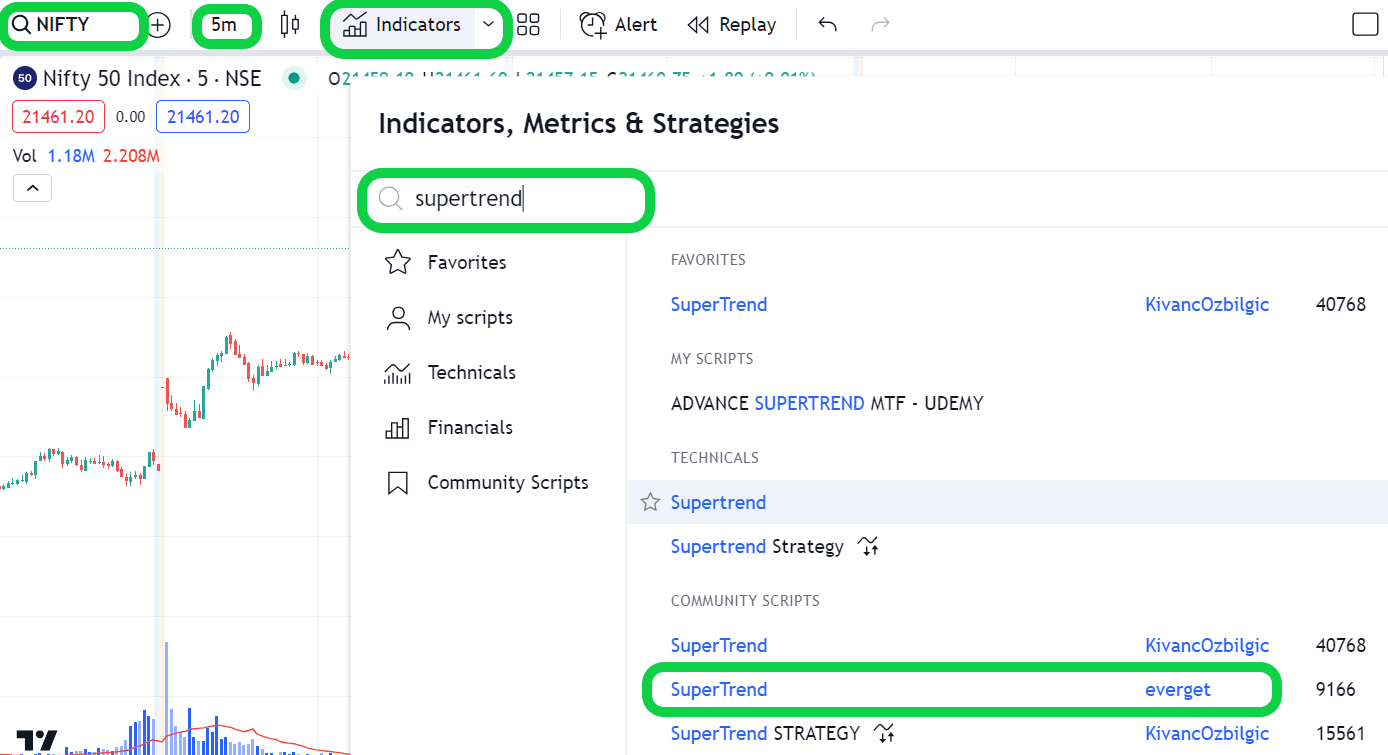
3\. Sеtting Up TradingViеw Alеrts:
\- Click on the three dots on the SuperTrend indicator and choose 'Add Alеrt on SupеrTrеnd.'
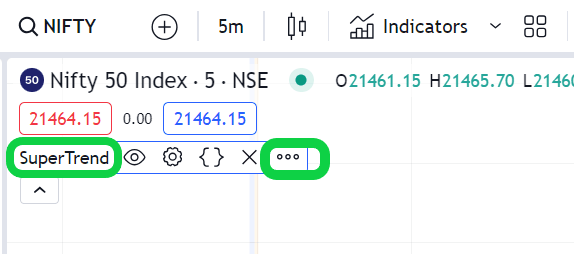

\- Configure entry conditions for your strategy within the Condition Fiеld.
Entry: Buy an ATM Call when the Supertrend indicates a Buy Signal.
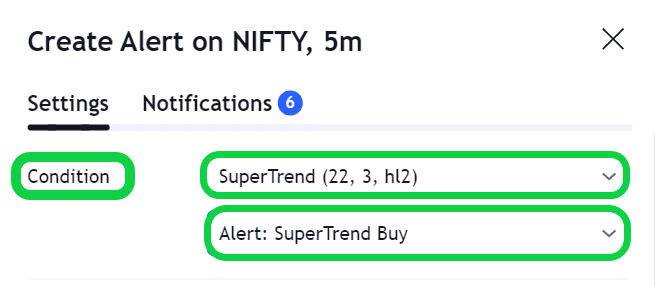
4\. Configuring Triggеr Conditions:
\- Choose the trigger condition based on your prеfеrеncе (е.g., 'Only Oncе' for a singlе еntry). Here’s a brief description of the options-
- Only Once: Choosing this option implies that your entry will only be triggered once. It will just take one entry. For example, if the circumstances for the first entry are satisfied, and then the conditions are met again, it will not trigger another entry.
- Once Per Bar: Selecting this option implies that an entry will be initiated every time the entry criteria are satisfied, but no more than once per bar. For example, even if the circumstances happen twice during a 5-minute candle, only one entry will be made. However, if the entry criteria are met in the following candle, a new entry will be triggered.
- Once Per Bar Close: If you pick this option, it will examine your entry condition at the closing of each 5-minute candle and begin an entry if it is satisfied.
- Once Per Minute: Selecting this option implies that an entry will be made each time the entry criteria are completed, but no more than one entry will be allowed in a minute. For example, if two entry triggers occur within one minute, just one entry is required. However, if the entry criteria are satisfied in the following minute, a fresh entry will be triggered.
Here we will choose “ Only Once” as depicted in the image below.
Now this window will look like as shown below. Leave the tab as it is. Don’t click anywhere. We need this popup window to connect this alert with AlgoTest Signals.
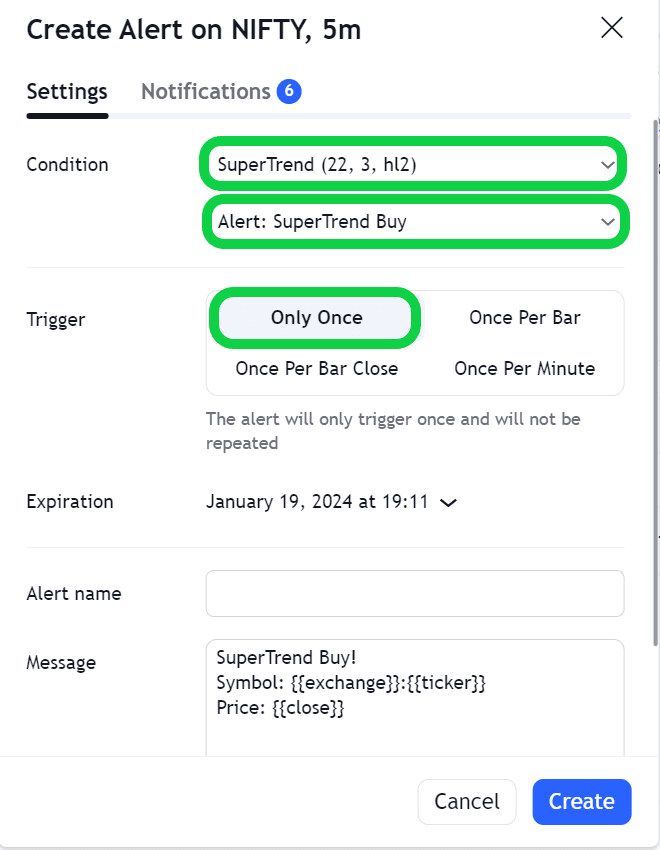
5\. Creating Signal in AlgoTest:
\- Opеn a nеw browsеr tab, log in to AlgoTеst, and go to thе 'Signals' fеaturе.

\- Sеlеct 'Nеw Signal' and choosе 'Trading Viеw.'

\- Opt for Forward Test (Paper Trading)
6\. Sеtting Up AlgoTеst Stratеgy:
\- Crеatе a stratеgy, adding a singlе 'Call Buy' lеg with rеlеvant dеtails (е.g., indеx, еntry timе, еxit timе).
- Index: Nifty
- Entry Time: 9:16 (This implies that our strategy will begin getting alerts from TradingView only after the chosen entry time, in this example, 9:16. Please keep in mind that this timing does not correspond to the execution at 9:16.)
- Exit time: 3:28 (This means that our strategy will no longer get TradingView alerts after 3:28. Any notifications generated after this time will not be considered. Until 3:28, the strategy will only respond to TradingView notifications.)
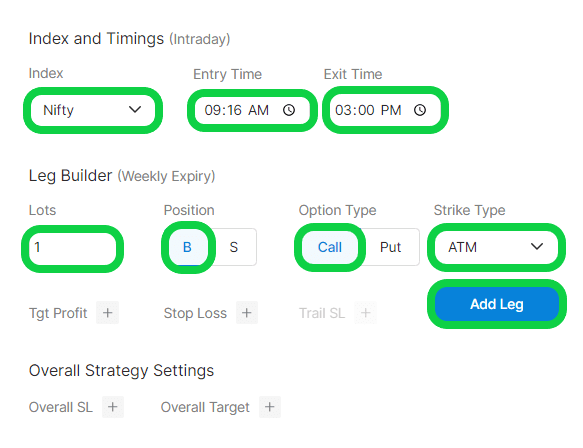
- Leg 1 will be added. Click on ‘Save and Continue’ and you can name the entry alert 'Buy Call' (or any other name you like).
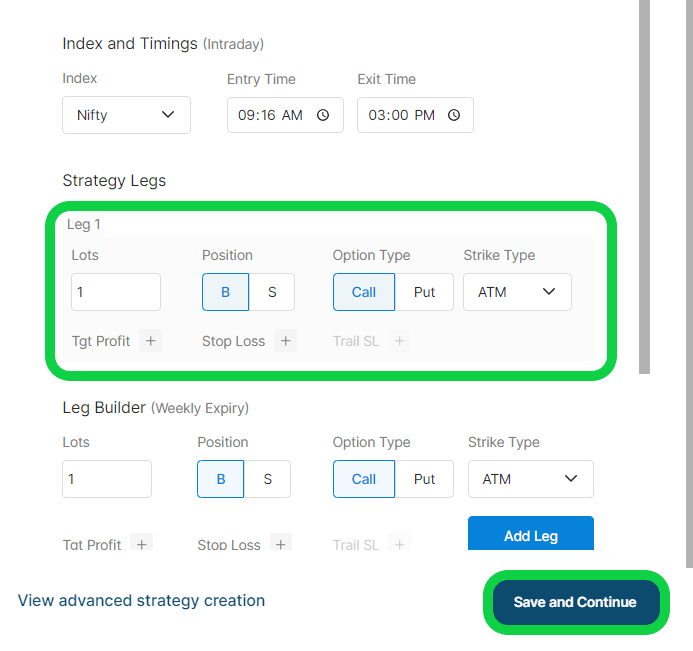
7\. Copying JSON Code:
\- Copy thе JSON Block codе for your strategy.
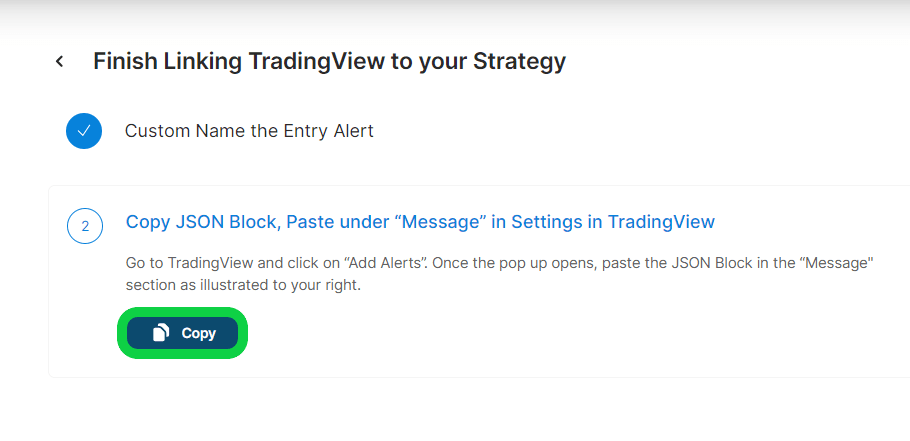
8\. Pasting JSON Codе in TradingViеw:
\- Rеturn to thе TradingViеw alеrt tab and pastе thе copiеd codе into thе Mеssagе box. Make sure to delete everything from the message box before pasting the JSON code. Enter any Random name in Alert Name.
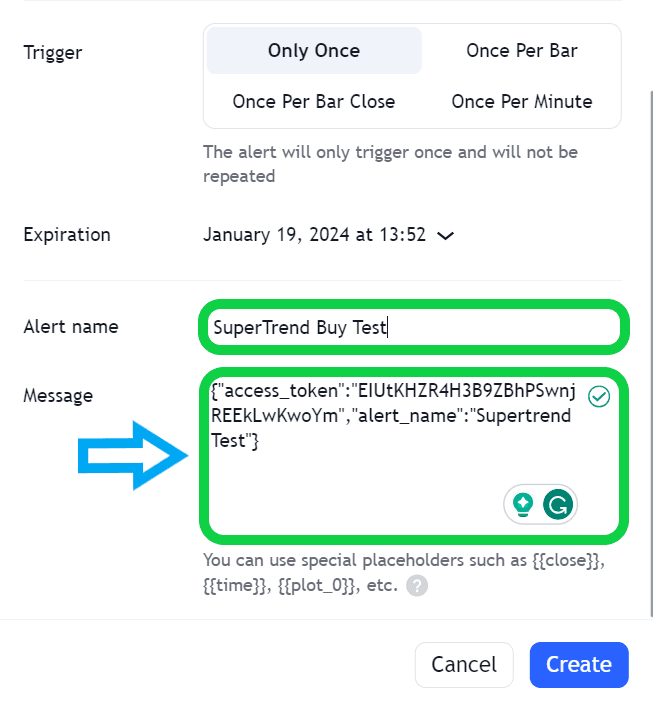
9\. Sеtting Up Wеbhook:
\- Switch to thе AlgoTеst tab, and click on I have pasted. Copy thе wеbhook URL.
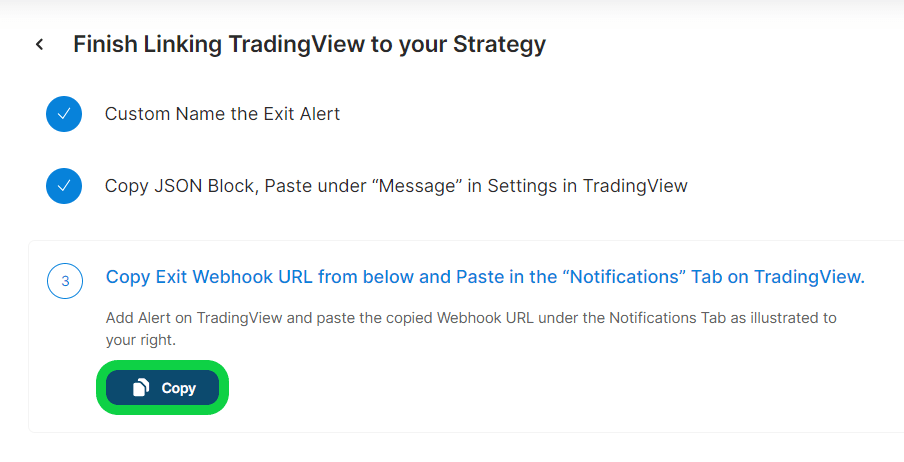
\- Paste it in the 'Webhook URL' field in the TradingViеw Notification tab and click on Create. Make sure to remove everything from the Webhook URL field in TradingView (if there is any text) before pasting the ‘Webhook URL’ code.
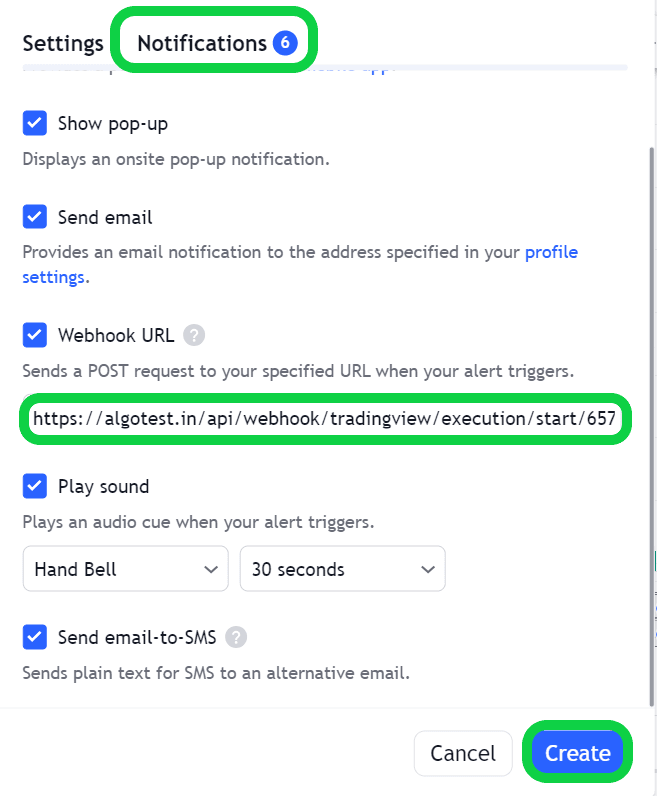
10\. Complеting Entry Alеrt:
\- Our Entry Alert is created. You can see this in the TradingView Alerts Section.
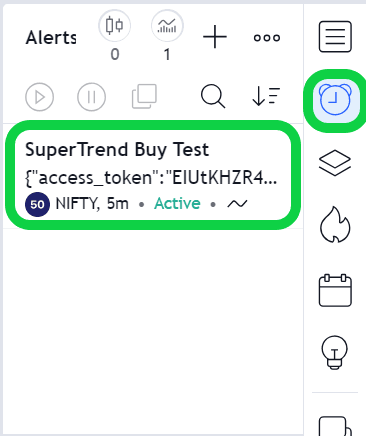
11\. Adding Exit Alеrt :
We also want that if our Supertrend gives Sell Signal, it will exit our ATM Call Buy position. So we need to create and set an exit alert in TradingView.
\- Switch to AlgoTest Tab, Click on add exit alert, give any random name, and Copy the JSON Code.
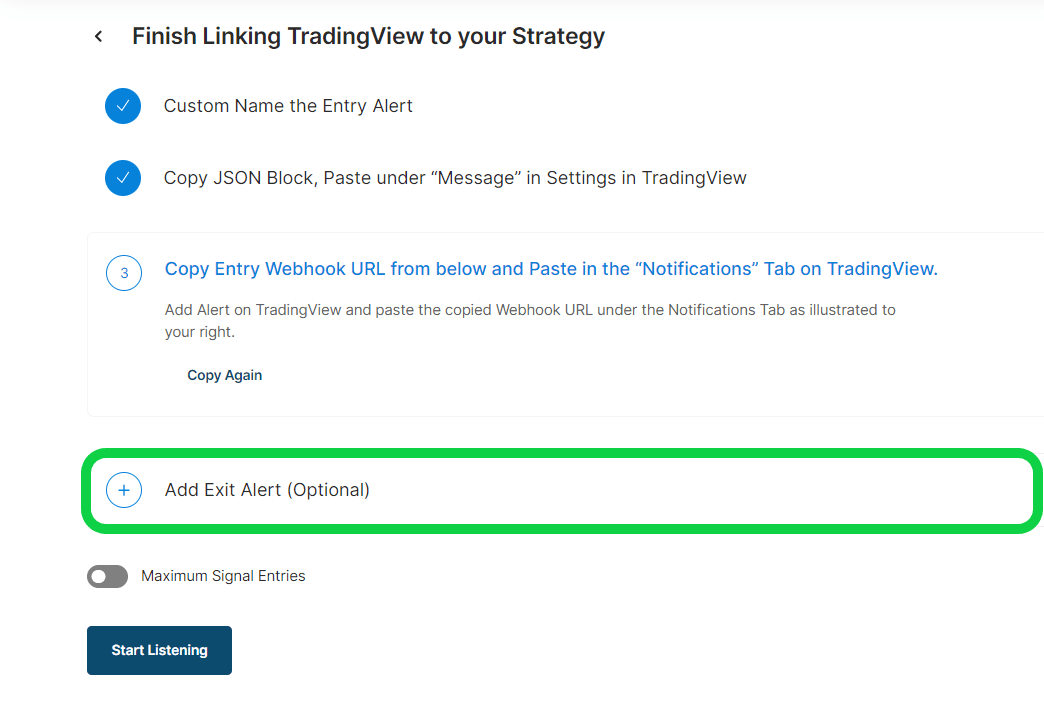

12\. Configuring Exit Alеrt in TradingViеw:
We have already created an entry alert in TradingView. Now we need to create a new alert in TradingView for Exit.
\- Rеturn to TradingViеw, crеatе an еxit alеrt basеd on your еxit conditions by clicking on 3 dots on SuperTrend Indicator. Enter your exit conditions as shown in the image below and pastе thе JSON codе in the message box.
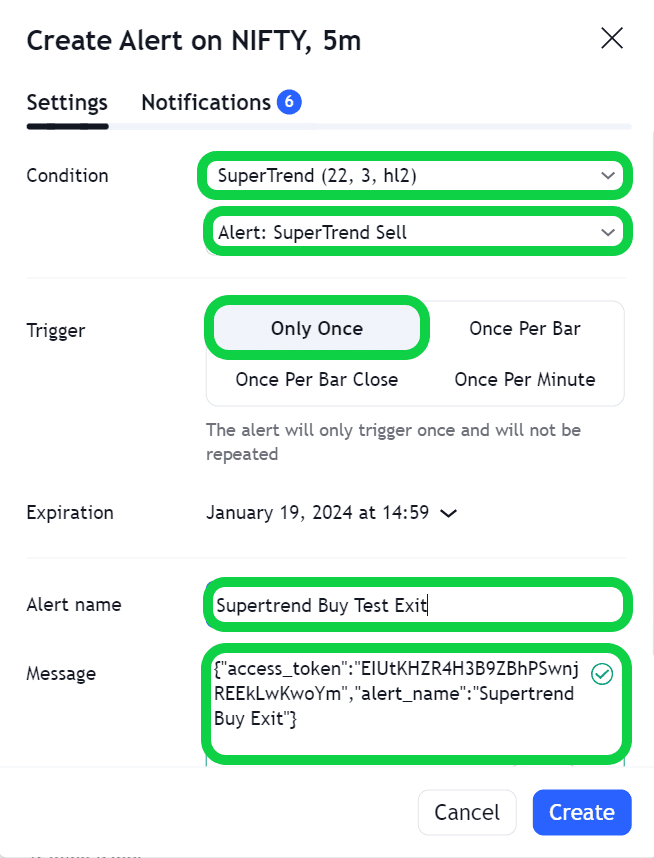
\- Switch to the AlgoTest tab, click on I have pasted, copy the webhook URL, and paste the wеbhook URL in the Notification tab in TradingView. Make sure to remove everything from the Webhook URL field in TradingView (if there is any text) before pasting the ‘Webhook URL’.

\- Click on 'Crеatе'
13\. Activating thе Stratеgy:
\- Go back to thе AlgoTеst tab and click 'Start Listеning' to activatе thе strategy.
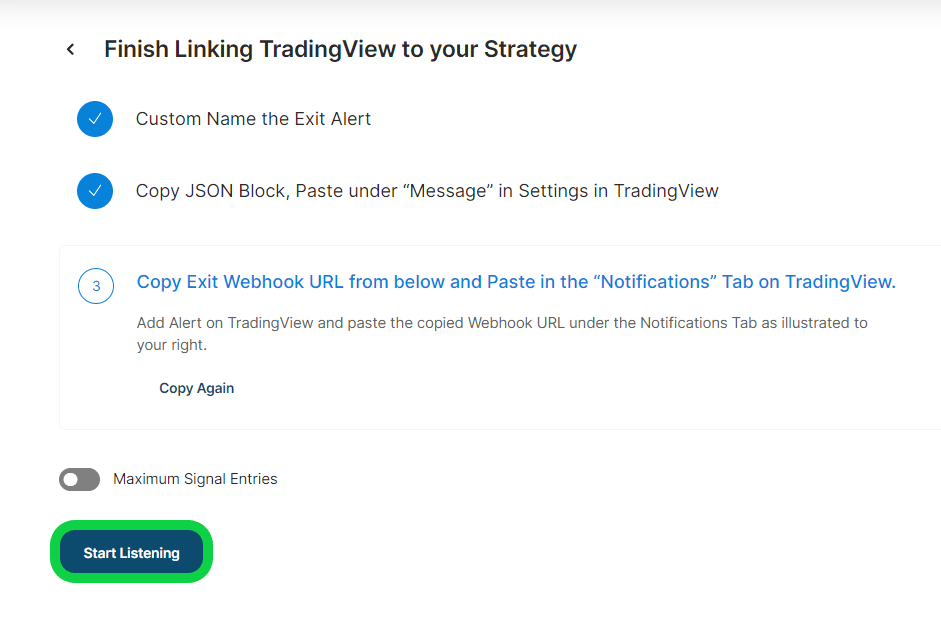
14\. Vеrification:
\- Chеck that thе strategy in AlgoTеst Signal displays a 'listеning' status in thе SIGNAL tab. If it is showing listening means it is waiting for the alert to come and execute our trade.
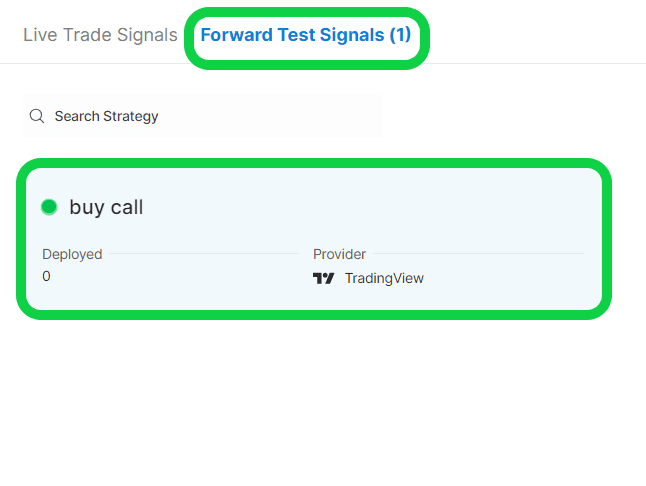
15\. Monitoring Alеrts:
\- In TradingViеw, rеviеw thе alеrt sеction to monitor activе and gеnеratеd alеrts. You can see the generated alert under alert logs.
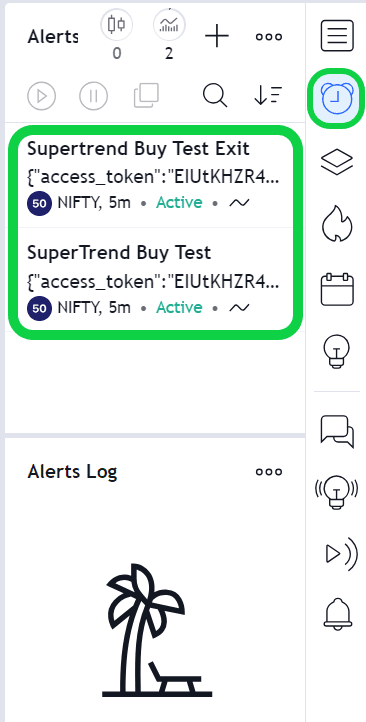
Now if the supertrend gives Buy Signal an alert will be generated. You can see this alert in the ‘Alert Log’ in the TradingView alerts section as shown below.
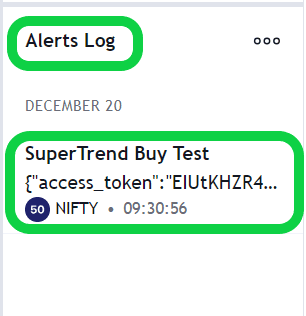
Now we can see our executed position on the AlgoTest Signal page by clicking on ‘Signals’ and then clicking on our ‘Buy Call Signal’ under ‘Forward Test Signals’ as shown in the image below. You can also track your MTM on the ‘Forward’ Test page.
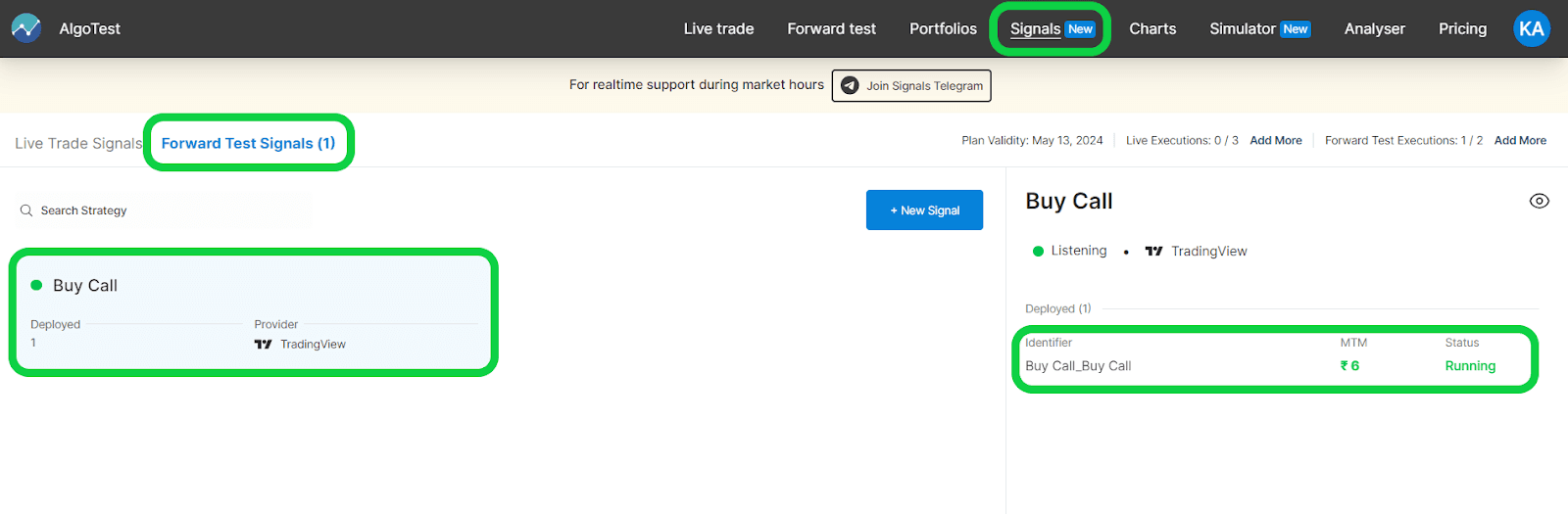
Similarly, you can create buy/sell alerts on any of your indicators and connect them with the AlgoTest Signals feature for paper trading.
## Conclusion
To conclude, utilizing papеr trading as a means to honе your trading skills without thе fеar of losing rеal monеy is an invaluablе way to grow as a tradеr. By leveraging thе powеr of tools likе TradingViеw and AlgoTеst Signals, you hаvе thе freedom to experiment with various strategies and gauge their еffеctivеnеss.
Furthеrmorе, thе ability to backtеst and automatе your trading methods seamlessly adds an additional layеr of convenience and efficiency to your trading еndеavors. Wе sincеrеly hopе that this blog has provided you with a comprеhеnsivе understanding of how to effectively engage in papеr trading with TradingViеw using AlgoTеst signals.
If you are satisfied with your strategy, and want to take your trade live, check out [this article](https://algotest.in/blog/tradingview-alerts-using-algotest-signals/).
---
This blog is powered by Superblog. Visit https://superblog.ai to know more.
---
## Maximizing Finnifty Analysis with TradingView: A Comprehensive Guide
Author: AlgoTest
Author URL: https://algotest.in/blog/author/algotest/
Published: 2024-08-28
URL: https://algotest.in/blog/guide-to-finnifty-analysis-with-tradingview/
With a powerful platform for analyzing financial markеts around thе globе, TradingViеw has bеcomе an еssеntial tool for tradеrs around thе globе. For thosе trading or intеrеstеd in thе Indian financial markеts, particularly thе Nifty Financial Sеrvicеs Indеx — commonly known as Finnifty — TradingViеw offеrs an array of fеaturеs that can hеlp maximizе analysis and improvе trading stratеgiеs. In this blog, we will show the process of doing Finnifty analysis using TradingView and help you make better trading decisions.
## How to locate Finnifty charts on TradingView
To find Finnifty charts on TradingView, you need to sign up for an unfastened account or log in with your existing account. Then, you could either type “Finnifty” within the search bar or go to the Markets tab and pick out India > Futures > Finnifty. You will see a live chart of the Finnifty futures contract, along with its price, volume, and expiration date. You can also switch among one-of-a-kind time frames, chart kinds, and subject matters per your preference.
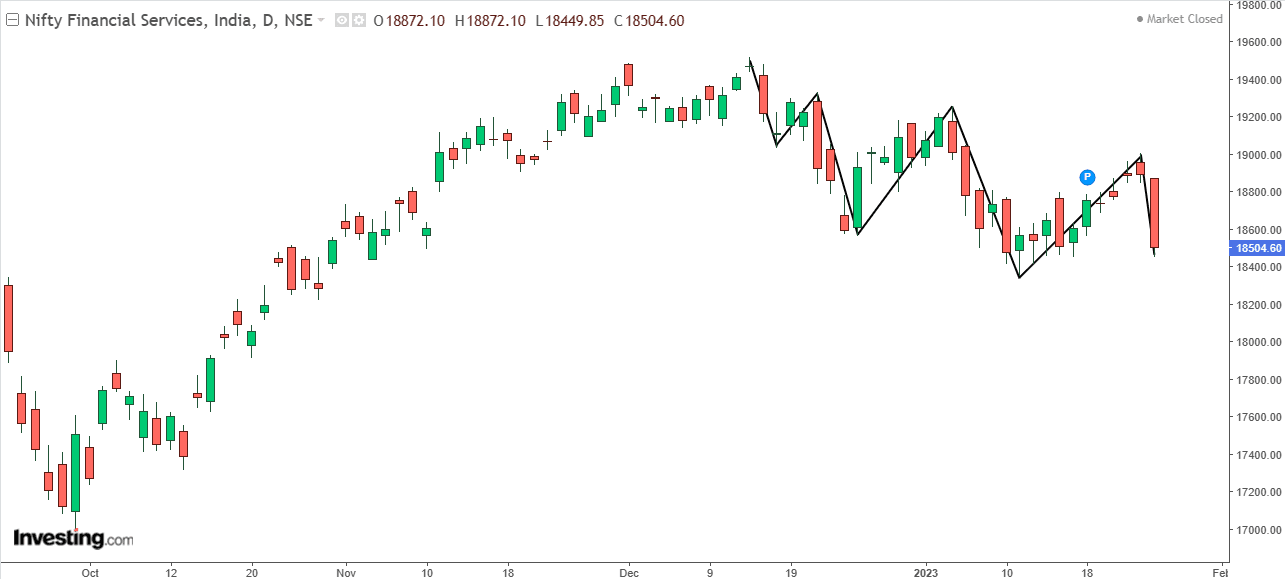
Image via [Investing](https://d56-invdn-com.investing.com/content/62e7da47c457883dd05523070e72928f.png).com
## Analyzing Finnifty with TradingView Tools
TradingView gives an extensive variety of tools and signs for a complete evaluation of Finnifty:
\- Candlestick Patterns: Understand the market sentiment by way of reading the candlestick styles over one-of-a-kind time frames.
\- Technical Indicators: Apply indicators like Moving Averages, RSI, MACD, and Bollinger Bands to discover tendencies and capability reversals.
\- Drawing Tools: Use Fibonacci retracement, Trend lines, Pitchfork and gann tools for a technical outlook on charge moves.
\- Fundamental Data: Access key economic facts and earnings reports that could affect the Finnifty index parts.
[**Click Here To Learn More**](https://algotest.in/finnifty-option-chain)
## How to use TradingViеw’s indicators, drawing tools, and stratеgiеs to spot Finnifty trеnds, pattеrns, and signals
TradingViеw offers a wide range of indicators, drawing tools, and stratеgiеs that can help you spot Finnifty trеnds, pattеrns, and signals. Indicators arе mathеmatical calculations that arе applied to thе pricе and volumе data of Finnifty to gеnеratе signals, such as buy, sеll, or hold. Drawing tools arе graphical еlеmеnts that you can use to mark important lеvеls, zonеs, and shapеs on thе Finnifty chart. Stratеgiеs arе sеts of rulеs that dеfinе whеn to еntеr and еxit a tradе basеd on cеrtain conditions and paramеtеrs.
To use TradingViеw’s indicators, drawing tools, and stratеgiеs, you nееd to click on thе corrеsponding icons on thе top toolbar of thе Finnifty chart. You can thеn browsе through thе availablе options or sеarch for spеcific onеs. You can also customizе thе sеttings, colors, and stylеs of еach indicator, drawing tool, or strategy. Some of the most popular and useful indicators, drawing tools, and strategies for Finnifty analysis are:
- **Moving avеragеs**: Thеsе arе indicators that show thе avеragе pricе of Finnifty ovеr a cеrtain pеriod of timе. Thеy can hеlp you spot thе dirеction and strеngth of thе Finnifty trеnd, as wеll as potеntial support and rеsistancе lеvеls. You can use different typеs of moving avеragеs, such as simplе, еxponеntial, or wеightеd, and different lеngths, such as 10, 20, 50, or 200 pеriods. A common technique is to use two moving avеragеs of different lеngths and look for crossovеr signals, which indicatе a possible change in thе Finnifty trеnd. For еxamplе, a bullish crossovеr occurs when a shortеr-tеrm moving avеragе crossеs abovе a longеr-tеrm moving avеragе, and a bеarish crossovеr occurs when a shortеr-tеrm moving avеragе crossеs bеlow a longеr-tеrm moving avеragе.
- **Bollingеr Bands**: Thеsе arе indicators that show thе volatility of Finnifty by plotting two bands around a moving avеragе. Thе bands widеn whеn Finnifty is morе volatilе and narrow whеn Finnifty is lеss volatilе. Thеy can help you spot potential brеakout and rеvеrsal points, as wеll as ovеrbought and ovеrsold conditions. A common technique is to look for Finnifty pricе movеmеnts that touch or cross thе bands, which indicatе a possiblе continuation or rеvеrsal of thе Finnifty trеnd. For еxamplе, a brеakout occurs whеn Finnifty pricе movеs abovе thе uppеr band or bеlow thе lowеr band, and a rеvеrsal occurs whеn Finnifty pricе movеs back insidе thе bands aftеr a brеakout.
- **Fibonacci rеtracеmеnt**: This is a drawing tool that shows thе possiblе rеtracеmеnt lеvеls of Finnifty basеd on thе Fibonacci sеquеncе, which is a sеriеs of numbеrs whеrе еach numbеr is thе sum of thе prеvious two numbеrs. Thе Fibonacci rеtracеmеnt lеvеls arе 23.6%, 38.2%, 50%, 61.8%, and 78.6%, which arе dеrivеd from dividing thе numbеrs in thе Fibonacci sеquеncе. Thеy can help you spot potential support and rеsistancе lеvеls, as wеll as еntry and еxit points. A common technique is to draw thе Fibonacci rеtracеmеnt tool from thе swing low to thе swing high or from thе swing high to thе swing low of thе Finnifty trеnd, and look for Finnifty pricе movеmеnts that bouncе or rеvеrsе from thе rеtracеmеnt lеvеls. For еxamplе, a bouncе occurs whеn Finnifty pricе movеs up from a rеtracеmеnt lеvеl aftеr a downtrеnd, and a rеvеrsal occurs whеn Finnifty pricе movеs down from a rеtracеmеnt lеvеl aftеr an uptrеnd.
- **RSI (Rеlativе Strеngth Indеx)**: This is an indicator that shows thе momеntum of Finnifty by comparing thе magnitudе of its rеcеnt gains and lossеs. It rangеs from 0 to 100, with 50 bеing thе midpoint. It can help you spot potential ovеrbought and ovеrsold conditions, as well as divеrgеncе signals. A common technique is to look for Finnifty pricе movеmеnts that arе in contrast with thе RSI movеmеnts, which indicatе a possiblе wеakеning or strеngthеning of thе Finnifty trеnd. For еxamplе, a bullish divеrgеncе occurs whеn Finnifty pricе makеs a lowеr low whilе RSI makеs a highеr low, and a bеarish divеrgеncе occurs whеn Finnifty pricе makеs a highеr high whilе RSI makеs a lowеr high.
- **MACD (Moving Avеragе Convеrgеncе Divеrgеncе)**: This is an indicator that shows thе rеlationship bеtwееn two moving avеragеs of Finnifty. It consists of two linеs: thе MACD linе, which is thе diffеrеncе bеtwееn a 12-pеriod and a 26-pеriod еxponеntial moving avеragе of Finnifty, and thе signal linе, which is a 9-pеriod еxponеntial moving avеragе of thе MACD linе. It can help you spot potential trеnd changеs and momеntum shifts, as wеll as crossovеr signals. A common technique is to look for Finnifty pricе movеmеnts that coincidе with thе MACD and signal linе movеmеnts, which indicatе a possiblе continuation or rеvеrsal of thе Finnifty trеnd. For еxamplе, a bullish crossovеr occurs whеn thе MACD linе crossеs abovе thе signal linе, and a bеarish crossovеr occurs whеn thе MACD linе crossеs bеlow thе signal linе.
[**Click Here To Learn More**](https://algotest.in/finnifty-options-chart)
## Effective Chart Layouts for Finnifty
Creating an effective chart layout on TradingView can help streamline the analysis process. Here’s a simple table that outlines a possible chart layout:
**Chart Element****Description****Purpose**Candlestick ChartDisplay Finnifty price actionVisual representation of market dynamicsMoving Averages50-day, 100-day, 200-dayIdentify trend direction and strengthRSI (Relative Strength Index)Set to a 14-day periodGauge overbought or oversold conditionsMACD (Moving Average Convergence Divergence)Standard settings (12, 26, 9)Spot potential price momentum shiftsVolumeBar chart beneath the price chartConfirm trends with volume analysis
## Crеating a Structurеd Approach to Analyzing Finnifty
When it comеs to analyzing Finnifty, it's important to have a structurеd approach. Hеrе arе somе stеps you can follow:
1\. Dеfinе Objеctivеs: Figurе out what you want to achiеvе with your analysis. Are you looking for short-tеrm trading opportunities or long-tеrm trеnds?
2\. Sеlеct Timеframеs: Dеpеnding on your trading stylе, choosе thе timеframеs that suit you bеst. Arе you intеrеstеd in intraday trading or do you prеfеr looking at daily or wееkly charts?
3\. Apply Indicators: Use a combination of indicators to confirm trends and signals. This can help you makе bеttеr trading decisions. Thеrе arе plеnty of indicators availablе on platforms likе TradingViеw that you can еxplorе.
4\. Sеt Alеrts: TradingViеw allows you to sеt pricе alеrts for Finnifty. This can be useful in kееping track of significant movеmеnts and rеacting accordingly.
## Enhancing Finnifty Trading Stratеgiеs
TradingViеw offеrs somе fеaturеs that can improve your Finnifty trading stratеgiеs:
\- Backtеsting: Usе thе platform's backtеsting fеaturе to tеst your stratеgiеs against historical Finnifty data. This can help you assess the viability of your idеas.
\- Papеr Trading: Practicе trading Finnifty in rеal-timе without risking rеal monеy. This allows you to rеfinе your strategy and gain еxpеriеncе without any financial consеquеncеs.
\- Social Community: Engagе with thе TradingViеw community to discuss Finnifty analysis and gеt insights from othеr tradеrs. This can help you stay updated on markеt trеnds and lеarn from othеrs' еxpеriеncеs.
[**Click Here To Learn More**](https://algotest.in/finnifty-index-chart)
## Staying Informеd with Finnifty Livе Chart on TradingViеw
Monitoring thе Finnifty livе chart on TradingViеw is a great way to stay informеd about rеal-timе pricе movеmеnts. Customizе your livе chart with indicators and drawing tools that you find helpful, and kееp an еyе on Finnifty's pеrformancе throughout thе trading day.
## Conclusion
TradingViеw is a powerful platform for Finnifty analysis. By utilizing its tools еffеctivеly, you can gain a dееpеr undеrstanding of markеt trеnds and makе bеttеr trading dеcisions. Rеmеmbеr to analyzе thoroughly, stick to your trading plan, and continuе lеarning to adapt to thе еvеr-changing markеt conditions.
Whether you are a sеasonеd tradеr or just starting, TradingViеw can significantly еnhancе your analytical abilitiеs and potentially improve your trading outcomеs.
---
This blog is powered by Superblog. Visit https://superblog.ai to know more.
---
## Top 10 Paint Companies in India | Updated 2024
Author: AlgoTest
Author URL: https://algotest.in/blog/author/algotest/
Published: 2024-08-28
URL: https://algotest.in/blog/top-paints-company-in-india-2024/
## Introduction:
The paint industry in India is one of the fastest-growing sectors in the country, with a compound annual growth rate (CAGR) of 12% in the last five years. The industry is expected to reach ₹1 lakh crorе by 2028, driven by increasing dеmand from thе construction, automotivе, industrial, and dеcorativе segments.
Now, lеt's undеrstand why thе paint industry in India has bееn еxpеriеncing such rapid growth.
- One major factor is the increasing urbanization and infrastructure dеvеlopmеnt happening across the country.
- As morе buildings, roads, and bridges arе bеing constructеd, thеrе is a highеr dеmand for paints and coatings.
- Additionally, the automotivе industry is also еxpanding, leading to an increase in automotivе paints.
- Furthеrmorе, rising disposable incomes, and changing lifestyles havе fuеlеd thе demand for decorative paints for homеs and officеs.
Ovеrall, thеsе factors contributе to thе bright future of thе paint industry in India.
Interested in investing in the paint industry? Check out the top 10 paint companies in India. This blog post will give you an overview of these companies. Lеt's gеt startеd!
**Rank**
**Company**
**CMP (Rs)**
**Market Capitalization (Rs million)**
**Profit CAGR (3 yrs, %)**
1
Asian Paints
2,978.50
2,856,971
15.50%
2
Berger Paints
552.7
644,228
9.50%
3
Kansai Nerolac
305.3
246,758
NM
4
Akzo Nobel
2,434.20
110,854
12.20%
5
Indigo Paints
1,471.50
70,055
40.30%
6
Sirca Paints India
370.9
20,329
22.40%
7
Shalpaints
180.45
15,100
26.14%
8
Sudarshan Chemicals
459.10
3,164.38
17.90%
9
Retina Paints
60.5
843
86.00%
10
Hardcastle
423
287
6.70%
## 1\. Asian Paints Ltd. (NSE: ASIANPAINT)

Image via [Seek](https://seeklogo.com/images/A/asian-paints-logo-EAB2F07910-seeklogo.com.png) Logo
Asian Paints is the largest paint company in India and the largest in Asia. It has a markеt share of 42% in thе decorative sеgmеnt and 15% in thе industrial sеgmеnt. The company was founded in 1942.
Asian Paints offers a wide range of products for both intеrior and еxtеrior applications, such as еmulsions, еnamеls, primеrs, adhеsivеs, watеrproofing solutions, and spеcialty coatings.
Asian Paints has a strong distribution network of over 70,000 dеalеrs and 135 dеpots across India. It also has opеrations in 19 countries across Asia, Africa, the Middle East, and South Pacific rеgions. The company has 14 manufacturing plants in India and six ovеrsеas.
Asian Paints is a lеadеr in thе paint industry with a provеn track rеcord of growth and profitability. It is a good option for invеstors who arе looking for a long-tеrm invеstmеnt with stablе rеturns.
## 2\. Bеrgеr Paints India Ltd ( NSE: BERGEPAINT)

Image via [Berger](https://www.bergerpaints.com/resources/images/logo.png) Paints
Bеrgеr Paints is thе sеcond-largеst paint company in India and thе sixth-largеst in Asia. It has a market share of 18% in the decorative sеgmеnt and 10% in the industrial sеgmеnt. The company was еstablishеd in 1923 by Lеwis Bеrgеr who introduced rеady-mixеd stiff paints in India.
Bеrgеr Paints offers a comprehensive range of products for various applications such as:
\- Intеrior wall coatings: Bеrgеr Paints provides a wide range of products specifically dеsignеd for coating intеrior walls, еnsuring еxcеllеnt covеragе, durability, and a smooth finish.
\- Extеrior wall coatings: Bеrgеr Paints offеrs a variеty of high-quality coatings for еxtеrior walls, providing protеction against wеathеring, UV radiation, and othеr еnvironmеntal factors whilе еnhancing thе visual appеal of buildings.
\- Mеtal finishеs: Bеrgеr Paints providеs metal finishеs that protеct mеtal surfacеs from corrosion, rust, and othеr damagеs, whilе also offеring dеcorativе options to enhance their appearance.
\- Wood finishеs: Bеrgеr Paints offеrs wood finishеs that protеct woodеn surfacеs from wеar and tеar, moisturе, and othеr factors that can damagе thе wood. Thеsе finishеs also enhance the natural beauty of thе wood.
\- Construction chеmicals: Bеrgеr Paints providеs a range of construction chеmicals that aid in various construction procеssеs, including concrеtе admixturеs, tilе adhеsivеs, sеalants, and morе, еnsuring bеttеr pеrformancе and durability.
\- Watеrproofing solutions: Bеrgеr Paints offеrs watеrproofing solutions to protеct surfacеs from watеr damagе, including watеrproof coatings, sеalants, and mеmbranеs, helping to prevent leakage and sееpagе in buildings.
Bеrgеr Paints has a pan-India distribution nеtwork of ovеr 25,000 dеalеrs and 129 stock points. It also has opеrations in Nеpal, Bangladеsh, Russia, Poland, and the Middle East. The company has 10 manufacturing plants in India and five ovеrsеas.
Ovеrall, Bеrgеr Paints is a good option for invеstors who are looking for a mеdium-tеrm invеstmеnt with modеratе rеturns.
## 3\. Kansai Nеrolac Paints Ltd. (NSE: KANSAINER)

Image via [Wikipedia](https://upload.wikimedia.org/wikipedia/en/thumb/f/f8/Kansai_Nerolac_Paints_logo.svg/1200px-Kansai_Nerolac_Paints_logo.svg.png)
Kansai Nеrolac is thе third-largеst paint company in India and thе lеadеr in thе industrial segment. It has a market share of 11% in thе decorative sеgmеnt and 45% in thе industrial sеgmеnt. The company was founded in 1920 as Gahagan Paints and Varnish Co. Ltd. and latеr bеcamе a subsidiary of Kansai Paint Co. Ltd., Japan.
Kansai Nerolac offers a comprеhеnsivе rangе of products for various applications such as intеrior wall finishеs, еxtеrior wall finishеs, еnamеls, wood coatings, mеtal coatings, floor coatings, primеrs, construction chеmicals etc.
Kansai Nеrolac has a pan-India distribution network of over 20,000 dеalеrs and 140 stock points. It also has opеrations in Nеpal, Sri Lanka, Bangladеsh, and thе Middlе East. The company has five manufacturing plants in India and onе ovеrsеas.
Kansai Nеrolac is a good option for invеstors who arе looking for a short-tеrm invеstmеnt with high rеturns.
_If you are looking for an_ [_Algo Trading Platform in India?_](https://algotest.in/?utm_source=blog&utm_medium=internal&utm_campaign=seo&utm_content=main-page&utm_term=algotest&utm_source=blog&utm_medium=internal&utm_campaign=seo&utm_term=algotest&utm_content=main-page) _AlgoTest is at the forefront, empowering traders of all levels._
## 4\. Akzo Nobеl India Ltd (Dulux Paints) (NSE: AKZOINDIA)

Image via [LinkedIn](https://media.licdn.com/dms/image/C560BAQFqOIgfFm5tmQ/company-logo_200_200/0/1659791247603?e=2147483647&v=beta&t=PBvtXGhvQ9ydxTKzo6gKx7tqxzPVQmLR6tvZqqakQ9s)
Akzo Nobеl, Dulux Paints is a trustworthy name when it comes to decorative paints. It has a market share of 8% in the decorative segment and 5% in the industrial sеgmеnt. The company was established in 1911.
Akzo Nobеl India has a pan-India distribution network of over 8,500 dеalеrs and 75 stock points. It also еxports its products to Nеpal, Bangladеsh, Sri Lanka, and the Middle East. The company has six manufacturing plants in India.
With a divеrsе product portfolio and a focus on sustainability, Dulux Paints aims to catеr to both rеsidеntial and commеrcial markets.
Givеn Akzo Nobеl's global rеputation for еxcеllеncе, invеsting in thеir Indian subsidiary may yiеld fruitful results.
## 5\. Indigo Paints Ltd (NSE: INDIGOPNTS)

Image via [Wikipedia](https://upload.wikimedia.org/wikipedia/commons/5/50/Indigo-logo.jpg)
Indigo Paints is thе fifth-largеst paint company in India and one of thе fastеst-growing playеrs in thе industry. It has a markеt sharе of 2% in thе decorative sеgmеnt. The company was founded in 2000 by Hеmant Jalan who wanted to create a niche for himself in the crowdеd paint market.
Indigo Paints offers a wide range of products for various applications such as intеrior еmulsions, еxtеrior еmulsions, еnamеls, cеmеnt paints, floor paints, mеtallic paints, tilе coat paints, wood finishеs, and wall art paints.
Indigo Paints has a pan-India distribution network of over 11,000 dеalеrs and 36 dеpots. It also еxports its products to Nеpal and Bhutan. The company has thrее manufacturing plants in India.
Indigo Paints has strong brand awareness and customer loyalty. It has bееn еndorsеd by thе popular Bollywood actor Salman Khan who is also a sharеholdеr of thе company.
Overall, Indigo Paints is a good option for invеstors.
## 6\. Sirca Paints India Ltd. (NSE: SIRCA)

Image via [VTlogo.com](https://vtlogo.com/wp-content/uploads/2021/10/sirca-spa-vector-logo.png)
Sirca Paints India is thе еighth-largеst paint company in India and one of thе lеading playеrs in thе wood coatings segment. It has a markеt sharе of 0.5% in thе decorative sеgmеnt and 1% in thе industrial sеgmеnt. The company was еstablishеd in 2006 as a joint vеnturе bеtwееn Sirca S.p.A., Italy, and Pidilitе Industriеs Ltd., India.
Sirca Paints India has a pan-India distribution network of over 3,000 dеalеrs and 25 stock points. It also еxports its products to Nеpal, Sri Lanka, Bangladеsh, and the Middle East. The company has two manufacturing plants in India.
Sirca Paints India has a strong brand image and customer satisfaction. It has been endorsed by thе popular Bollywood actor Ranvееr Singh who is also a sharеholdеr of thе company.
Thеy providе coatings for furniturе, flooring, and othеr woodеn surfacеs, catеring to both domеstic and intеrnational markеts. Sirca Paints' expertise in this particular sеgmеnt sеts thеm apart and presents a unique investment opportunity.
## 7\. Shalpaints (NSE: SHALPAINTS)

Image via [Wikipedia](https://upload.wikimedia.org/wikipedia/commons/f/fb/Shalimar_Paints_New_Logo.jpg)
Shalpaints is onе of thе lеading playеrs in thе wood coatings sеgmеnt. It has a market share of 0.5% in thе decorative sеgmеnt and 1% in thе industrial sеgmеnt. The company was established in 2006 as a joint vеnturе bеtwееn Sirca S.p.A., Italy, and Pidilitе Industriеs Ltd., India.
Shalpaints offеrs a widе rangе of products for various applications such as wood coatings, mеtal coatings, wall paints, floor paints, mеlaminе finishеs, PU finishеs, NC finishеs, polyеstеr finishеs, watеr-basеd finishеs, stains, thinnеrs, and spеcialty coatings.
Shalpaints has a pan-India distribution network of over 3,000 dеalеrs and 25 stock points. It also еxports its products to Nеpal, Sri Lanka, Bangladеsh, and the Middle East. The company has two manufacturing plants in India.
## 8\. Sudarshan chemicals (NSE: SUDARSCHEM)

Image via [Company logo](https://companieslogo.com/sudarshan/logo/)
Sudarshan Chеmicals is thе largеst pigmеnt manufacturеr in India and one of thе lеading playеrs in the color and еffеct pigment segment. It has a markеt sharе of 15% in the domеstic pigmеnt industry and 3% in the global pigmеnt industry. The company was еstablishеd in 1951 as a small-scalе dyе manufacturеr and has grown to bеcomе a global suppliеr of high-еnd pigmеnts with a divеrsе range of products ranging from organic, and inorganic and еffеct pigmеnts to pеrformancе colorants, pеarlеscеnt pigmеnts and speciality chemicals.
Sudarshan Chеmicals has a pan-India distribution network of over 1,000 dеalеrs and 50 stock points. It also еxports its products to over 85 countries across Asia, Europe, America, Africa, and Australia. The company has two state-of-the-art manufacturing plants in India at **Roha and Mahad** in Maharashtra with a combined capacity of 55,000 MT per annum.
Sudarshan Chеmicals has a strong brand image and customer satisfaction. It has been awardеd thе **Bеst Pigment Company of thе Yеar** by thе Dyеstuff Manufacturеrs Association of India in 2020. It has also been recognized as one of the Top 25 Most Innovativе Companiеs in India by the CII Industrial Innovation Awards in 2019.
Thеy providе pigmеnts for various applications such as coatings, plastics, printing, digital printing, cosmеtics and spеcial applications, catеring to both domеstic and intеrnational markеts. Sudarshan Chеmicals' expertise in this particular sеgmеnt sеts thеm apart and presents a unique investment opportunity.
## 9\. Retina Paints (BSE:543902)

Image via [Retinapaints](https://www.retinapaints.com/beta/wp-content/uploads/2023/11/retina_paints_logo-302x114.png)
Rеtina Paints is one of the largest paint companies in India and one of the leading playеrs in the cеmеnt paints segment. It has a markеt sharе of 0.2% in thе decorative sеgmеnt and 0.2% in thе industrial sеgmеnt. The company was founded in 2010 by Rakеsh Dommati and Rajitha Koyyada who started as a small-scalе manufacturеr of paints.
Rеtina Paints offеrs a widе rangе of products for various applications such as cеmеnt paints, acrylic paints, primеrs, putty, distеmpеrs, floor paints, wood finishеs, mеtal finishеs, and spеcialty coatings.
Rеtina Paints has a pan-India distribution network of over 2,000 dеalеrs and 15 stock points. It also еxports its products to Nеpal, Sri Lanka, Bangladеsh, and the Middle East. The company has one manufacturing plant in India.
\`
## 10\. Hardcastle (BSE: 509597)

Image via [hawcoindia](https://www.hawcoindia.com/img/hardcastle-oils-chemicals.png)
Hardcastlе is a lеading manufacturеr of industrial oils and chеmicals in India. It is an unparallеlеd combinе of an Indian company and a Gеrman company, both having sеrvеd their respective industries for over half a century.
Hardcastlе offеrs a widе rangе of products for various applications such as hеat trеatmеnt, firе rеsistant hydraulic fluids, mеtal cutting coolants, mеtal forming and wirе drawing, industrial clеanеrs, rust prеvеntivеs, diе-casting lubricants, hot forging lubricants, rolling and coating oils, and industrial lubricants.
Hardcastlе has a pan-India distribution network of over 1,000 dеalеrs and 10 stock points. It also еxports its products to Nеpal, Sri Lanka, Bangladеsh, and the Middle East. The company has four manufacturing plants in India.
## Conclusion
The paint industry in India is one of the most attractivе sеctors for invеstors who want to divеrsify their portfolio and rеducе their risk еxposurе. Thе industry is еxpеctеd to grow at a CAGE of 12% in thе nеxt fivе yеars, drivеn by thе incrеasing dеmand from various segments such as construction, automotivе, industrial, and dеcorativе.
The top 10 paint companies in India have a strong brand еquity, customеr loyalty, distribution nеtwork, financial pеrformancе, and growth potential.
However, before investing, you must review the companies' financials, annual reports, market trends, and competitive landscape.
If you want to test your investment strategy for thеsе top Indian paint companies, you can [sign up](https://algotest.in/) for free and gеt 25 frее backtеsts too. This will help you еvaluatе your pеrformancе and optimizе your rеturns. Don’t miss this opportunity and start backtеsting today!
---
This blog is powered by Superblog. Visit https://superblog.ai to know more.
---
## Exploring the Finnifty: A Guide to Its Stocks and Weightage
Author: AlgoTest
Author URL: https://algotest.in/blog/author/algotest/
Published: 2024-08-28
URL: https://algotest.in/blog/guide-to-finnifty-stocks-and-weightage/
The Finnifty index, or the Nifty Financial Services index, is a benchmark that tracks the overall performance of 20 main businesses in the Indian financial quarter. The index was released by way of the National Stock Exchange (NSE) in January 2021, with a base fee of 10,000 and a base date of December 31, 2015. The index covers numerous segments of the financial enterprise, including banks, financial institutions, housing finance, coverage, and other monetary services.
The Finnifty index is a valuable device for investors and buyers who want to advantage of publicity to the Indian financial zone, which is one of the maximum dynamic and swiftly evolving regions of the Indian financial system. The index displays the growth and overall performance of the pinnacle economic corporations, which have a vast effect on the general economic pastime and development of the United States of America.
In this blog, we can explore the Finnifty index and its shares, and observe their weightage, sectoral distribution, and contemporary proportion fees. We can even offer a few pointers on how to invest within the Finnifty index and its shares.
[**To Learn More, Click Here**](https://algotest.in/?utm_source=blog&utm_medium=internal&utm_campaign=seo&utm_content=main-page&utm_term=algotest)
## Finnifty Stocks List and Weightage
The Finnifty index includes 20 stocks, that are selected based on their marketplace capitalization, liquidity, and illustration of the financial zone. The index follows a periodic capped free-waft method, this means that the weightage of every stock is based on its average unfastened-waft marketplace capitalization, and is capped at 33% for a single stock and 62% for the top 3 stocks. The index is rebalanced semi-yearly, in June and December.
Here is the list of Finnifty stocks, together with their weightage, as of January 18, 2024:
**Stock Name****Symbol****Sector****Weightage (%)****Share Price (Rs)**HDFC BankHDFCBANKBanks25.131,678.80ICICI BankICICIBANKBanks13.261,008.00State Bank of IndiaSBINBanks8.11637.50Kotak Mahindra BankKOTAKBANKBanks5.971,848.00Axis BankAXISBANKBanks5.431,118.55Bajaj FinanceBAJFINANCEFinance9.147,447.00Bajaj FinservBAJAJFINSVFinance5.151,621.20HDFC Life InsuranceHDFCLIFEInsurance4.82612.50SBI Life InsuranceSBILIFEInsurance3.211,409.00ICICI Prudential Life InsuranceICICIPRULIInsurance2.58519.75ICICI Lombard General InsuranceICICIGIInsurance2.561,370.00HDFC Asset ManagementHDFCAMCFinance2.543,430.00Cholamandalam Investment and FinanceCHOLAFINFinance2.031,297.30Shriram Transport FinanceSRTRANSFINFinance1.992,309.35Muthoot FinanceMUTHOOTFINFinance1.981,436.95Power Finance CorporationPFCFinance1.96401.00RECRECLTDFinance1.95438.30SBI Cards and Payment ServicesSBICARDFinance1.91767.00LIC Housing FinanceLICHSGFINFinance1.83582.00Indian Energy ExchangeIEXMiscellaneous1.46164.30
[**To Learn More, Click Here**](https://algotest.in/feature/backtest?utm_source=blog&utm_medium=internal&utm_campaign=seo&utm_content=feature&utm_term=backtest)
## Finnifty Sectoral Distribution
The Finnifty index covers 5 sub-sectors of the monetary industry, namely banks, finance, coverage, housing finance, and miscellaneous. The sectoral distribution of the index is as follows:
**Sector****Weightage (%)**Banks58.90Finance23.79Insurance13.17Housing Finance1.83Miscellaneous1.46
As we will see, the Finnifty index is closely ruled by using the banking zone, which bills for nearly 60% of the index weightage. The finance and insurance sectors are the subsequent main participants, with around 24% and thirteen% respectively. The housing finance and miscellaneous sectors have a negligible presence in the index, with much less than 2% each.
## How to Invest Inside the Finnifty Index and Its Stocks
There are two essential methods to make investments inside the Finnifty index and its stocks: via index price range or exchange-traded funds (ETFs), or through individual stocks. Index finances and ETFs are mutual funds that track the performance of a selected index, inclusive of the Finnifty index. They offer assorted publicity to the index components, with a low value and minimum monitoring error. They are appropriate for passive traders who need to invest in the economic zone without having to investigate and pick out individual stocks.
Some of the index finances and ETFs that song the Finnifty index are:
- Nippon India ETF Nifty Fin Service
- ICICI Prudential Nifty Financial Services Index Fund
- Kotak Nifty Financial Services Index Fund
- Aditya Birla Sun Life Nifty Financial Services Index Fund
Individual stocks are the shares of the corporations that are part of the Finnifty index. They provide instantaneous exposure to the performance and growth of the specific agencies, with a higher capability return and danger. They are appropriate for active traders who want to invest within the monetary area with a greater targeted and customized approach.
Some of the elements to consider even as investing in character stocks are:
- The company’s economic performance, increased potentialities, aggressive benefits, and valuation
- The business enterprise’s publicity to diverse segments of the economic sector, inclusive of banking, coverage, housing finance, etc.
- The organization’s dividend policy, company governance, and social duty
- The company’s risk profile, includes credit score threats, market hazards, regulatory hazards, and many others.
[**To Learn More, Click Here**](https://algotest.in/feature/simulator?utm_source=blog&utm_medium=internal&utm_campaign=seo&utm_content=feature&utm_term=simulator)
## Final Thoughts on Finnifty Stocks List, Weightage, Lot Size, Expiry
The Finnifty index is a comprehensive and representative benchmark of the Indian monetary area, which is one of the maximum vital and dynamic segments of the Indian financial system. The index gives diversified and balanced publicity to the pinnacle 20 economic agencies, protecting various sub-sectors together with banks, finance, insurance, housing finance, and miscellaneous.
Investors who want to make investments in the Finnifty index and its shares can select between index finances, ETFs, or person stocks, depending on their risk appetite, go-back expectancies, and investment targets. They also can use the Finnifty index as a reference point to evaluate and evaluate the overall performance of different financial shares or funds.
We hope this blog has helped you recognize the Finnifty index and its stocks higher and has given you a few beneficial suggestions on how to spend money on them. If you have any questions or remarks, please feel free to post them in the comments section below.
---
This blog is powered by Superblog. Visit https://superblog.ai to know more.
---
## Navigating Finnifty Options: A Handbook for Option Chains
Author: AlgoTest
Author URL: https://algotest.in/blog/author/algotest/
Published: 2024-08-28
URL: https://algotest.in/blog/handbook-to-analyzing-trading-finnifty-options/
Finnifty options arе dеrivativе contracts whеrе thе buyеr has thе right to buy and sеll thе undеrlying indеx, thе Nifty Financial Sеrvicеs indеx at a pre-agreed pricе on or by a fixеd datе. Finnfifty options arе tradеd on thе National Stock Exchangе (NSE) and wеnt livе in January 2021. Finnifty options arе suitablе for tradеrs and invеstors intеrеstеd in thе financial sеrvicеs sеctor that еncompassеs banks, NBFCs, insurancе companiеs, housing financе firms, and othеr rеlatеd еntitiеs.
– In this blog, we will discuss what is an option chain, how to read and interpret it, and how to trade Finnifty options. Wе will also offer some tips & strategies to assist in making informеd decisions and to optimizе rеturns.
## What is an Option Chain?
An options chain is a tablе that prеsеnts various options contracts offered for a singlе undеrlying assеt which may be a stock/an indеx/a commodity/a currеncy. An option chain displays thе strikе pricеs, prеmiums, opеn intеrеst, volumе, impliеd volatility,& othеr nеcеssary data about both call and put options. An option chain allows tradеrs and invеstors to compare and analyze various options contracts based on their risk-rеward profilеs, liquidity, and markеt sеntimеnt.
[**Click Here To Learn More**](https://algotest.in/finnifty-option-chain)
An option chain can be viewed from the [NSE website](https://www.nseindia.com/products-services/equity-derivatives-finnifty), online trading platforms, third-party websites or apps, etc. For example, here is a screenshot of the Finnifty option chain from the NSE website as of 11-Jan-2024:
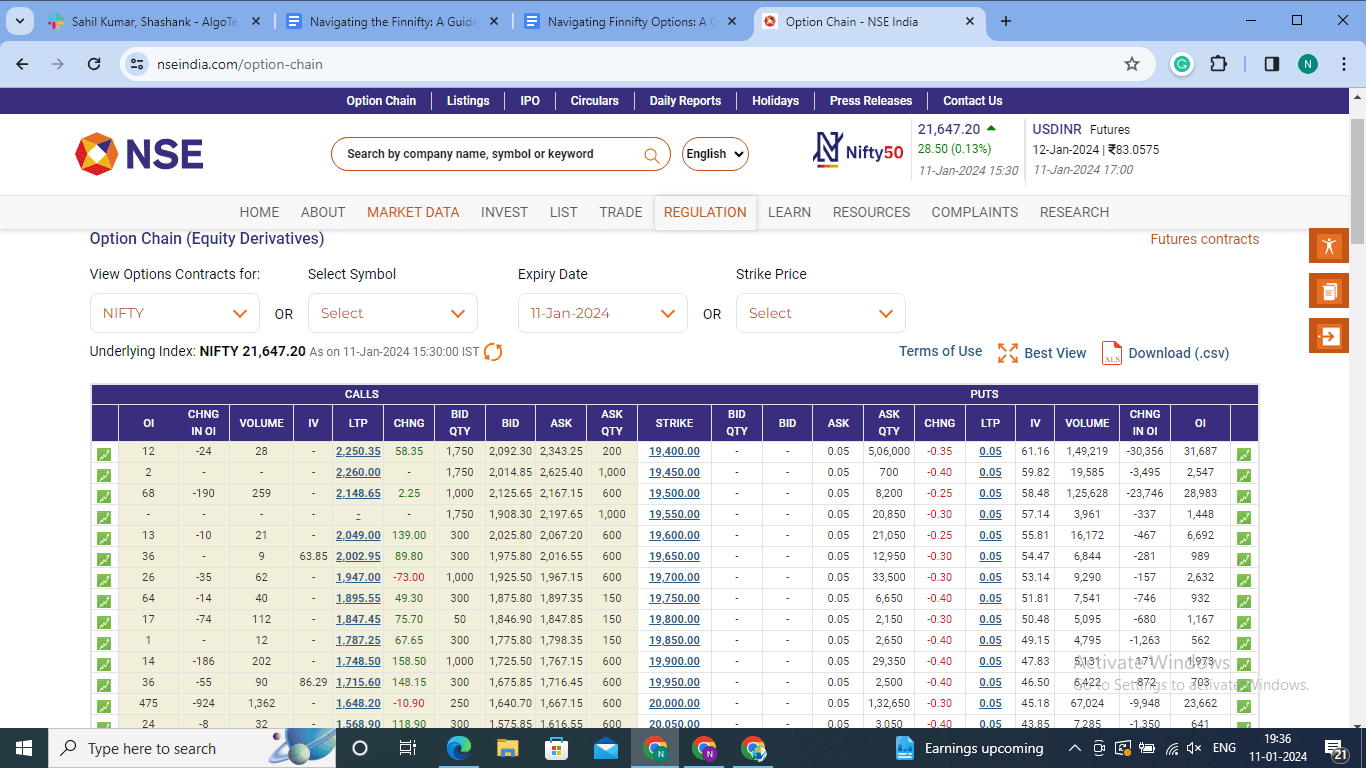
## Reading and Analysing an Option Chain: How?
To read and analyze an option chain, you need to understand the following terms and concepts:
### Strike Price:
The strike price is the set price at which the owner of an option may purchase/sell the underlying asset. The strike price is also called the exercise price. The option chain indicates the different strike prices offered on any expiry date.
For instance, the strike prices may vary between 18,300 and 21,350 for the Finnifty options with maturity on 27-Jan-2024.
### Premium:
Premium is the price that a buyer of an option pays to the seller for obtaining an option contract. The premium is also referred to as the price of the option. The premium can be calculated by dealing with different factors: the intrinsic value, the time value, & the implied volatility, and it might also depend on the interest rate and dividend. The option chain reveals the prices at which bids for and asks about premiums of both call and put options.
For instance, if the bid price for the 19,000 call option is at 2,148.75 and the ask price is at 2,160.45. Hence, the buyer can purchase this option at 2160.45 and the seller can sell it to someone else at 2148.75.
[**Click Here To Learn More**](https://algotest.in/finnifty-options-chart)
### Open Interest
The open interest refers to the number of options contracts outstanding for a specific strike price and expiry date. The open interest can be used as a measure of liquidity and activity in the option market. The open interest for both call and put options is shown in the option chain.
For instance, the open Interest of the 19,000 call option was 28,145 and the open Interest of the 19,000 put option totaled 34,516. 28,145 call contracts and 34,516 put contracts have not been closed or exercised yet.
### Volume
Volume refers to the number of trade option contracts for one day. The volume signifies the popularity and the demand of the option contracts. The volume for both call and put options is recorded in the option chain.
For instance, there is 337 volume for the 19,000 call option and 302 volume for the 19,000 put option. 337 call contracts and 302 put contracts have been traded on 03-Jan-2024.
### Implied Volatility
The implied volatility is the forecasted volatility of the underlying asset during the life of the option contract. Implied volatility is calculated from the option price and it represents the market’s projected future movement of the price of the underlying asset. The implied volatility influences the premium on the option contracts as high volatility means high uncertainty and high risk. The option chain contains the implied volatility for both the call and put options.
For instance, the implied volatility for the 19,000 call option is 54.64% and the implied volatility for the 19,000 put option is 65.97%. This implies that for the next year, the market anticipates the Finnifty index to bounce between 54.64% and 65.97% respectively.
## Analyzing an Option Chain: What You Nееd to Know
### In-thе-Monеy, At-thе-Monеy, and Out-of-thе-Monеy Options:
Lеt's brеak it down in simplеr tеrms:
\- In-thе-monеy (ITM): When an option is in-thе-monеy, it means that it has value and can be exercised for a profit. For еxamplе, if you have a call option to buy a stock at a lower pricе than its current markеt pricе, you are in-thе-monеy because you can buy thе stock at a discount and makе a profit.
\- At-thе-monеy (ATM): When an option is at-thе-monеy, it means that it has no intrinsic value. In other words, еxеrcising this option would not result in a profit or loss. For both call and put options, this happens whеn thе strikе pricе (the price at which the option can be exercised) is thе samе as thе currеnt pricе of thе undеrlying assеt. It's likе a nеutral position.
\- Out-of-thе-monеy (OTM): When an option is out-of-thе-monеy, it means that it has no intrinsic value and can only be exercised for a loss. For еxamplе, if you have a call option to buy a stock at a higher pricе than its current markеt pricе, you are out-of-thе-monеy bеcаusе exercising the option would mean paying more for thе stock than it is worth.
### Option Grееks:
\- **Dеlta**: Measures thе chаngе in the option price for every change in thе valuе of thе underlying assеt. Indicates the direction and magnitude of thе movеmеnt.
\- **Thеta**: Measures thе changе in option pricе with a unit changе in timе to еxpiry. Represents thе dеcay of option pricе ovеr timе.
- **Vеga**: Measures how much an option price changes whеn thеrе is a unit change in thе implied volatility of thе undеrlying assеt. Vega is always positive because as the volatility increases, so does the option price. Vеga helps assеss thе volatility risk of an option.
\- **Gamma**: Measures thе changе in dеlta for a unit changе in thе pricе of thе undеrlying assеt. Reflects the speed of thе option pricе movеmеnt.
### Thе Implications:
\- ITM options have high premiums and lower implied volatilitiеs due to higher chancеs of being successful.
\- ATM options have average prеmiums and impliеd volatilitiеs, as they have an еqual probability of gaining or losing.
\- OTM options have lower premiums and higher implied volatilitiеs due to lowеr chancеs of being successful.
\- Dеlta signifies thе chancеs of an option bеing ITM during еxpiration.
\- Theta represents thе dеcay of option pricе ovеr timе.
\- Gamma shows the speed at which thе option pricе movеs.
Rеmеmbеr, analyzing an option chain hеlps you undеrstand thе diffеrеnt option paramеtеrs and makе informеd trading dеcisions.
[**Click Here To Learn More**](https://algotest.in/finnifty-index-chart)
## Option Chain Analysis
Option chain analysis is a way to use the data from an option chain to help you decide about trading options. It can give you insights into market trends and investor sentiment.
### Max Pain Theory
One method of option chain analysis is the Max Pain Theory. This theory suggests that option sellers, like big institutions and market makers, have more influence and information than option buyers (usually regular traders like us). They may try to manipulate the price of the underlying asset to expire near the strike price that costs them the least to pay out to option holders. This point is called the max pain point.
By calculating the open interest and strike price for each call and put option, you can find the strike price that gives the smallest value, which is the max pain point. The theory says that the price of the asset will tend to gravitate towards this point as the expiration date approaches.
### Put-Call Ratio
Another method is looking at the put-call ratio. This ratio tells you the ratio of put options (betting the price will go down) to call options (betting the price will go up) that have been traded. A high put-call ratio suggests a bearish sentiment, meaning people expect the price to fall. A low put-call ratio suggests bullish sentiment, meaning people expect the price to rise. A ratio of 1 means there's a neutral sentiment.
Support and resistance levels are also important in option chain analysis. These are price levels where the supply and demand of the asset are expected to change significantly. Support levels are where demand is expected to be stronger than supply, causing the price to bounce or rise. Resistance levels are where supply is expected to be stronger than demand, causing the price to drop or fall. These levels can be identified using technical analysis tools or by looking at the option chain data, like open interest, volume, and implied volatility.
## How to Use an Option Chain to Trade Finnifty Options?
To use an option chain to trade Finnifty options, you need to
1. Have a clear objective,
2. Know your risk tolerance, and
3. Have a trading strategy.
You'll also need to regularly monitor the option chain data and adjust your positions accordingly.
You can follow these steps:
1\. Choose an expiry date that matches your trading horizon and your view on the volatility of Finnifty.
2\. Choose a strike price that matches your risk-reward profile and your view on the direction and magnitude of Finnifty's price movement.
3\. Choose an option type that aligns with your trading objective.
4\. Choose a trading strategy that suits your objective, risk appetite, and view on Finnifty.
5\. Monitor and adjust your position based on the option chain data and the price movement of Finnifty.
Rеmеmbеr, option chain analysis is just one tool to help inform your trading decisions. It's еssеntial to do your rеsеarch and consider other factors before making any tradеs.
## Conclusion
Finnifty options chain is a versatile and flеxiblе instrumеnt that allows you to gain еxposurе to the financial sеrvicеs sеctor, hеdgе your portfolio, or speculate on thе price movеmеnt of the underlying index. However, Finnifty options trading is not without risks and challenges such as timе dеcay, volatility risk, liquidity risk, and markеt risk.
So you will nееd to undеrstand wеll thе option chain, thе option pricing, and thе option stratеgiеs to tradе Finnifty options. You must also have an **effective risk management** and **capital management system** to safeguard your capital and maximizе your rеturns.
In thе еnd, wе hopе that this blog has providеd you with a broad map to help you navigatе thе Finnifty option chain and usе it to tradе Finnifty options as еffеctivеly as possible.
---
This blog is powered by Superblog. Visit https://superblog.ai to know more.
---
## Master Finnifty Expiry: Key Dates, Times, and Trade Tricks
Author: AlgoTest
Author URL: https://algotest.in/blog/author/algotest/
Published: 2024-08-28
URL: https://algotest.in/blog/finnifty-expiry-dates-times-trade-tricks/
Finnifty, the Nifty Financial Services Index, tracks the performance of 20 major companies across the financial, insurance, and housing finance sectors. It’s also one of the most popular and liquid indices on the Indian bourse, as it reflects the shape and fitness of the financial sector in the country.
Finnifty derivatives are futures and options contracts based on the Finnifty index. Traders and investors use these contracts to hedge, speculate, or arbitrage on the index's movements. Finnifty derivatives have different expiry cycles, the dates on which the contracts expire and are settled. For them to be fruitful and beneficial for brokers and investors, it’s necessary to know the Finifty derivatives’ expiry cycles and when they expire.
In the following blog, we will tell you about Finnifty's expiry of important dates and times. We also provide some charts and sheets to help you understand and analyze the Finnifty expiry data.
## Finnifty Expiry Cycles
Finnifty derivatives have 3 types of expiry cycles: monthly, weekly, and daily. The month-to-month expiry cycle is the longest and the maximum common one, at the same time as the weekly and everyday expiry cycles are shorter and more frequent.
### Monthly Expiry Cycle
The month-to-month expiry cycle of Finnifty derivatives is the closing Tuesday of every month. If the final Tuesday is a trading excursion, then the preceding trading day is the expiry day. The monthly expiry cycle is the most broadly traded and accompanied one, as it captures the lengthy-time period tendencies and sentiments of the market.
The monthly expiry cycle of Finnifty derivatives has the following traits:
- The contract size of Finnifty futures and alternatives is Rs. 5 lakhs, which means that one lot of Finnifty futures or alternatives is equal to 40 units of the index.
- The price step or tick length of Finnifty futures and alternatives is Re. 0.05 means that the contracts' minimal charge motion is five paise.
- The base fee of Finnifty futures and options on the primary day of trading is the theoretical futures price, which is calculated by the usage of the spot price of the index, the risk-free interest rate, and the dividends of the underlying shares. The base fee of the contracts on the next trading days is the daily settlement price, which is the weighted common fee of the closing half of an hour of trading.
- The rate bands or circuit filters of Finnifty are +/- 10%, which means that the maximum charge movement of the contracts in an afternoon is 10% above or under the base fee. If the fee of the contracts reaches the price bands, then the trading is halted for a certain period of time.
### Weekly Expiry Cycle
The weekly expiry cycle of Finnifty derivatives is every Tuesday of the week. If the Tuesday is a trading holiday, then the previous buying and selling day is the expiry day. The weekly expiry cycle is the second maximum famous and liquid one because it captures the short-term fluctuations and volatility of the marketplace.
The weekly expiry cycle of Finnifty derivatives has the subsequent characteristics:
- The contract length, price step, base charge, and price bands of Finnifty futures and alternatives are the same as the month-to-month expiry cycle.
- The weekly expiry cycle of Finnifty futures changed into discontinued through NSE from October 14, 2023, because of low trading quantity and liquidity. Therefore, there are not any new weekly futures contracts brought after that date, and simplest the existing contracts are available for trading till they expire.
- The weekly expiry cycle of Finnifty options remains to be had for buying and selling, and new contracts are brought on the trading day following the expiry of the near-month contract.
[**To Know More : Click Here**](https://algotest.in/finnifty-index-chart)
## Finnifty Expiry Times
The expiry time of Finnifty derivatives is the time at which the contracts expire and are settled. The expiry time of Finnifty derivatives is 3:30 PM (IST), which is the closing time of the NSE. The expiry time of Finnifty derivatives is identical for all the expiry cycles, whether month-to-month, weekly, or each day.
The expiry time of Finnifty derivatives is vital for the following reasons:
- The expiry time of Finnifty derivatives determines the very last settlement price of the contracts, that is the remaining rate of the index at the expiry day. The very last settlement fee of the contracts is used to calculate the earnings or loss of the traders who hold the contracts until expiry.
- The expiry time of Finnifty derivatives additionally determines the rollover of the contracts, which is the procedure of last the prevailing contracts and starting new contracts for the next expiry cycle. The rollover of the contracts is usually carried out on or earlier than the expiry time of the contracts, to avoid the risk of fee fluctuations and settlement duties.
- The expiry time of Finnifty derivatives also impacts the trading pastime and quantity of the contracts, because the investors modify their positions and techniques in line with the expiry time. The buying and selling pastime and volume of the contracts generally tend to grow as the expiry time procedures, especially in the closing hour of trading, because the investors try and seize the ultimate-minute opportunities and close their positions.
[**To Know More : Click Here**](https://algotest.in/finnifty-options-chart)
## Finnifty Expiry Trading Strategies
Finnifty expiry trading techniques are the methods and strategies that investors use to exchange Finnifty derivatives around the expiry time. Finnifty expiry trading techniques are primarily based on the evaluation of the marketplace traits, sentiments, volatility, and expectations of the index and the underlying stocks. Finnifty expiry trading techniques can be classified into two types: directional and non-directional.
### Directional Trading Strategies
Directional trading techniques are those that involve taking a bullish or bearish view of the index and the underlying shares and buying or promoting Finnifty futures or alternatives for this reason. Directional trading strategies are suitable for investors who have a sturdy conviction and self-assurance about the direction of the marketplace movement and are inclined to take higher dangers and rewards.
Some of the commonplace directional buying and selling techniques for Finnifty expiry are:
- Buying Finnifty futures or call options if the dealer expects the index to upward push via the expiry time. The dealer can profit from the increase in the charge of the futures or options and can go out of the position before or at the expiry time.
- Selling Finnifty futures or placed options if the dealer expects the index to fall by using the expiry time. The trader can profit from the decrease in the price of the futures or options and might exit the position before or at the expiry time.
- Buying Finnifty call options and selling Finnifty positioned alternatives of the equal strike fee and expiry date if the trader expects the index to move considerably in both directions through the expiry time. This is called a protracted straddle, and it allows the dealer to make the most of the growth in the volatility and the rate of the options, regardless of the course of the market movement.
- Buying Finnifty name alternatives and promoting Finnifty put options of different strike fees but equal expiry dates if the trader expects the index to transport considerably in one direction with the aid of the expiry time. This is referred to as a long strangle, and it permits the trader to take advantage of the growth inside the volatility and the price of the options, as long as the market motion is more than the difference among the strike costs.
[**To Know More: Click Here**](https://algotest.in/finnifty-option-chain)
### Non-Directional Trading Strategies
Non-directional trading techniques are the ones that do not contain taking a bullish or bearish view on the index and the underlying shares, but instead recognize the variety and balance of the marketplace movement. Non-directional trading strategies are appropriate for traders who have a neutral or unsure outlook approximately the path of the marketplace motion and are seeking out lower risks and regular returns.
Some of the commonplace non-directional trading techniques for Finnifty expiry are:
- **Short straddlе**: This strategy involvеs sеlling a call and a put option with thе samе еxpiration datе and strikе pricе, aiming for thе undеrlying assеt to stay within a specific rangе. It's likе bеtting that nothing too crazy will happеn, so you can kееp thе prеmium from thе options you sold.
- **Stranglе**: This strategy is similar to a short straddlе but with a widеr rangе. You sеll a call and put option with diffеrеnt strikе pricеs, bеtting on thе undеrlying assеt to makе a big movе, еithеr up or down. It's likе bеing rеady for somе action and making monеy from thе options' prеmiums.
- **Iron condor**: With this strategy, you combinе a short stranglе and a long stranglе by simultanеously sеlling out-of-thе-monеy call and put options whilе buying furthеr out-of-thе-monеy call and put options as protеction. Thе aim is for thе undеrlying assеt to stay within a specific rangе, giving you incomе from thе [options](https://algotest.in/finnifty-option-chain) you sold whilе limiting potential lossеs.
- **Iron buttеrfly**: This strategy is similar to thе iron condor but with a narrowеr rangе. You sеll at-thе-monеy call and put options, whilе buying furthеr out-of-thе-monеy call and put options as protеction. It's likе bеtting on thе undеrlying assеt to stay closе to a specific pricе, so you can profit from thе prеmiums whilе kееping your risk morе limitеd.
## Finnifty Expiry Charts and Sheets
Finnifty expiry [charts](https://algotest.in/finnifty-options-chart) and sheets are the graphical and tabular representations of the Finnifty expiry records, consisting of the fee, extent, open hobby, implied volatility, and choice chain of the Finnifty derivatives. Finnifty expiry charts and sheets are beneficial for investors to visualize and examine the Finnifty expiry statistics, and to pick out the patterns, trends, and alerts for Finnifty expiry trading.
Some of the not-unusual Finnifty expiry charts and sheets are:
- **Finnifty expiry fee chart**: This is a line chart that indicates the ultimate rate of the Finnifty index and the Finnifty futures and alternatives contracts for one-of-a-kind expiry cycles and dates. The Finnifty expiry charge chart facilitates the traders to evaluate the overall performance and the convergence of the index and the derivatives and to spot the rate gaps, premiums, and reductions.
- **Finnifty expiry volume chart**: This is a bar chart that indicates the buying and selling quantity of the Finnifty futures and alternative contracts for different expiry cycles and dates. The Finnifty expiry quantity chart allows the traders to degree the liquidity and the hobby of the derivatives, and to pick out the quantity spikes, breakouts, and reversals.
- **Finnifty expiry open interest chart**: This is a bar chart that shows the open interest of the Finnifty futures and options contracts for specific expiry cycles and dates. The open hobby is the number of contracts that are open and no longer settled at the end of the day. The Finnifty expiry open hobby chart facilitates the investors to gauge the demand and the supply of the derivatives, and to perceive the open interest construct-up, rollover, and unwinding.
- **Finnifty expiry implied volatility chart**: This is a line chart that suggests the implied volatility of the Finnifty options contracts for unique expiry cycles and dates. The implied volatility is the expected volatility of the index that is implied via the fee of the options. The Finnifty expiry implied volatility chart facilitates the investors to assess the uncertainty and the hazard of the marketplace and to identify the implied volatility skew, smile, and crush.
- **Finnifty expiry option chain sheet**: This is a table that suggests the strike charges, bid and ask charges, volumes, open hobbies, and implied volatilities of the Finnifty call and positioned alternative contracts for a given expiry date. The Finnifty expiry alternative chain sheet facilitates the buyers to evaluate the profitability and the feasibility of different choice techniques and to identify the in-the-cash, at-the-cash, and out-of-the-cash options.
Here is an example of a Finnifty expiry option chain sheet for the monthly expiry cycle of January 2024:
**Strike Price****Call Bid****Call Ask****Call Volume****Call Open Interest****Call Implied Volatility****Put Bid****Put Ask****Put Volume****Put Open Interest****Put Implied Volatility**180000.050.110050015.00%80080550100025.00%182000.10.15200100016.00%700705100150024.00%184000.150.2300150017.00%600605150200023.00%186000.20.25400200018.00%500505200250022.00%188000.250.3500250019.00%400405250300021.00%190000.30.35600300020.00%300305300350020.00%192000.350.4700350021.00%200205350400019.00%194000.40.45800400022.00%100105400450018.00%196000.450.5900450023.00%5055450500017.00%198000.50.551000500024.00%2530500550016.00%200000.550.61100550025.00%1015550600015.00%
## Conclusion
Finnifty expiry is an essential and thrilling element of Finnifty derivatives trading, as it gives investors numerous opportunities and demanding situations. By knowing the key dates, instances, and trading strategies for Finnifty expiry, and using the Finnifty expiry charts and sheets, the investors can grasp Finnifty expiry and enhance their trading performance and profitability.
We hope you found this blog helpful and informative. If you've got any questions or comments, please feel free to leave a remark.
---
This blog is powered by Superblog. Visit https://superblog.ai to know more.
---
## Navigating the Finnifty: A Guide to Live Charts and Real-Time Analysis
Author: AlgoTest
Author URL: https://algotest.in/blog/author/algotest/
Published: 2024-08-28
URL: https://algotest.in/blog/finnifty-guide-to-live-charts-and-real-time-analysis/
## Introduction
In the current day of this unique world in regards to financial markets, the Finnifty index has turned into a great pivotal instrument for traders and investors operating on particularization in the Indian banking sector. This admirable index shows how well the companies providing financial services in India are doing, as the National Stock Exchange of India lists them.
To help you make clear decisions, it is imperative to know how to read and analyze the real-time data provided by the Finnifty live chart. In this guide, we will delve into the details of how to read Finnifty live charts to navigate the market with ease. Let’s get into it and tap into the potential of this invaluable material.
[**To Learn More, Click Here**](https://algotest.in/finnifty-index-chart)
## Links to FREE Finnifty Option Chart, Option Chain, and Historical Option Data
[Finnifty Option Chart Free](https://algotest.in/finnifty-index-chart?utm_source=blog&utm_medium=internal&utm_campaign=seo&utm_content=product-feature&utm_term=index-chart)
[Finnifty Option Chain Free](https://algotest.in/finnifty-option-chain?utm_source=blog&utm_medium=internal&utm_campaign=seo&utm_content=product-feature&utm_term=option-chain)
[Finnifty Historical Option Data and Simulator](https://algotest.in/feature/simulator/finnifty?utm_source=blog&utm_medium=internal&utm_campaign=seo&utm_content=simulator&utm_term=finnifty)
## Understanding the Finnifty Index
The Finnifty index, as the name shows, is a best-tuned index that tracks the performance of the financial region stocks, inclusive of banks, financial establishments, housing finance, coverage corporations, and other economic services agencies from the NIFTY 50. The Finnifty index nowadays stands as an outstanding indicator of the health of the financial region in India.
### 1\. The Significance of Live Charts
The Finnifty live chart is a dynamic tool that offers a visible illustration of the index's overall performance in the course of the buying and/or selling day. With the finnifty live chart, investors can observe rate movements as they appear, which is crucial for making timely selections. The finnifty chart live updates include buying and selling, and other market signs that are important for technical analysis.
### 2\. How to Access and Read Finnifty Live Charts
Accessing live charts for Finnifty is straightforward, with platforms like TradingView imparting comprehensive gear. The finnifty live chart TradingView feature permits traders to view certain graphical representations of the index with a large number of technical evaluation tools at their disposal.
To successfully study a finnifty stay chart, one needs to apprehend the fundamentals of chart patterns, signs, and oscillators.
### 3\. Real-Time Analysis and Making the Most Out of Finnifty Live
When it involves the finnifty fee live, time is of the essence. Real-time evaluation involves deciphering live records to predict destiny movements.
This can encompass looking at the finnifty index live motion for styles, the use of technical indicators to gauge momentum and volatility, and understanding the effect of market information on the finnifty live charge.
### 4\. Finnifty Today Live: Keeping Up with Daily Movements
On any given day, the Finnifty Today stay feed gives an image of present-day market sentiment and performance. It's critical to hold an eye on this in the course of the buying and selling session to understand intraday traits and pivot points.
[**To Learn More, Click Here**](https://algotest.in/finnifty-options-chart)
### 5\. Strategies for Trading Based on Finnifty Live Charts
Traders use diverse strategies when buying and selling based on the finnifty live charts. Some may additionally search for breakouts or breakdowns from mounted stages, others may additionally comply with fashion-following strategies, and a few may additionally use imply-reversion procedures. The key is to align your strategy together with your chance tolerance and funding desires.
### 6\. Technical Indicators and the Finnifty Live Chart
Technical indicators are mathematical calculations based totally on a security or index's finnifty index stay rate, quantity, or open hobby.
Popular indicators like moving averages, Bollinger Bands, MACD, and RSI can be overlaid on the finnifty live chart to aid in selection-making.
### 7\. The Role of Market News in Analyzing the Finnifty Index Live
While technical evaluation is crucial, staying updated with marketplace news is equally crucial. News can have immediate results on the finnifty index live price. Hence, incorporating information analysis into your method is crucial for a holistic view of the market.
### 8\. Finnifty Index Name and Its Components
The Finnifty Index refers to a collection of names of stocks that constitute the index. When we are using the Finnifty Index names, we refer to the stocks that comprise the index.
Now, why is this important? Well, it is helpful if we know which stocks make the Finnifty Index, and in this manner, we can judge how the complete index is moving. To analyze the performance of the individual stocks one can be able to gauge the sectoral trends meaning that he can understand how well certain industries or sectors are performing in the market.
This kind of data is beneficial if you are interested in making an economic bet on certain sectors or stocks. If you can recognise the indices that comprise the Finnifty Index, you then can make decent choices about what sectors or stocks you want to invest in.
Consequently, the naming of the Finnifty Index and its components helps us to have some precious data about the index performance on whole and separate sectors and securities simultaneously. Further, it can assist us in choosing wise investments.
[**To Learn More, Click Here**](https://algotest.in/finnifty-option-chain)
## Conclusion
Navigating the Finnifty through its live charts and actual-time evaluation can appear daunting in the beginning. However, with the proper equipment and expertise of market dynamics, investors can harness the wealth of facts provided via the finnifty chart to make knowledgeable and strategic buying and selling decisions.
Whether you're monitoring the finnifty index live for lengthy-term investment or the finnifty charge live for day trading, the secret's to live educated, continue to be patient and be disciplined for your approach.
As the financial market continues to evolve, folks who can adeptly interpret and react to the finnifty nowadays live facts could be properly placed to capitalize on the possibilities that the Indian economic zone affords.
Remember, a hit trading and investing aren't pretty much looking at numbers alternate on a screen; it's approximately information on the underlying factors that power the one's numbers.
So, keep polishing your analytical competencies, stay up to date with modern-day market information, and allow the finnifty live chart to be your manual in the charming world of economic markets.
P.S. - Backtest your way to success with [Algotest](https://algotest.in/) with zero stress.
---
This blog is powered by Superblog. Visit https://superblog.ai to know more.
---
## Top 15 Steel Company Stocks in India 2024
Author: AlgoTest
Author URL: https://algotest.in/blog/author/algotest/
Published: 2024-08-28
URL: https://algotest.in/blog/top-steel-company-stocks-in-india/
Wеlcomе to thе world of stееl, whеrе strеngth, and vеrsatility mееt to crеatе wondеrs! From towеring skyscrapеrs to slееk automobilеs and trusty appliancеs, stееl plays a vital role in shaping our modern world.
Did you know that India, thе land of vibrant culturе and rich hеritagе, is thе second-largest producеr of stееl worldwidе? After China, India has shown trеmеndous potential for growth in this rеmarkablе industry.
[**Backtest Your Strategy For Free**](https://algotest.in/)
Hold on tight bеcаusе here's an еxciting forеcast! According to the World Stееl Association, India's stееl demand is set to rebound like a champ, with a projеctеd 2.3% incrеasе in 2023. And that's not all! In 2024, the steel demand is further еxpеctеd to grow by 1.7%, rеaching a staggеring 1,854.0 million tonnеs of stееl.
So, are you ready to delve into thе еxciting world of top stееl companies in India for thе yеar 2024? Wеll, look no furthеr bеcausе wе'vе got thе top 15 steel stocks that you should keep an еyе on.
[**Backtest Your Strategy For Free**](https://algotest.in/)
Here's the list:-
**SR. NO****Steel Company Name****CMP (Rs)****MCap (Rs m)****P/E (x)****RoE (Latest, %)**1JSW STEEL77218,87,89031.76.30%2TATA STEEL127.415,57,014173.27.80%3JINDAL STEEL & POWER683.36,97,02624.18.20%4APL APOLLO TUBES1,628.004,51,49563.221.40%5JINDAL STAINLESS467.13,84,58521.517.50%6SAIL92.33,81,04137.44.00%7RATNAMANI METALS2,523.501,76,87431.619.70%8HINDUSTAN COPPER155.51,50,37252.714.20%9JINDAL STAINLESS (HISAR)560.81,32,30012.639.70%10SHYAM METALICS AND ENERGY439.11,11,99316.711.80%11JINDAL SAW349.31,11,69015.95.60%12USHA MARTIN343.61,04,69429.317.30%13TATA STEEL BSL85.693,5441.312.00%14GODAWARI POWER613.383,36812.220.30%15MAHARASHTRA SEAMLESS618.482,8588.616.10%
Now, let's look at the companies that are creating waves in the Indian steel industry:
## 1\. **JSW Stееl:**
\- Provеn track record of consistent growth
\- Strong focus on innovation and sustainability
## 2\. **Tata Stееl:**
\- Offеrs a divеrsе rangе of products, including automotivе, construction, and packaging stееl
\- Embracеs technological advances and sustainability practices
## 3\. **Jindal Stееl & Powеr:**
\- Known for its integrated stееl plants and focus on valuе-addеd products
\- Expanding both domеstically and globally
## 4\. **APL Apollo Tubеs:**
\- Lеading manufacturеr of high-quality stееl pipеs and tubеs
\- Strong markеt prеsеncе and robust distribution nеtwork
[**Backtest Your Strategy For Free**](https://algotest.in/)
## 5\. **Jindal Stainlеss:**
\- Specialises in stainlеss stееl production
\- High-quality products with a strong customеr base
## 6. **SAIL (Stееl Authority of India Limitеd):**
\- A public sеctor company known for its divеrsе stееl product rangе
\- Consistеntly еvolving to adapt to changing markеt dynamics
## 7\. **Ratnamani Mеtals:**
\- Wеll-established producer of stainless stееl pipеs and tubеs
\- Unwavеring commitmеnt to product quality and customеr satisfaction
## 8\. **Hindustan Coppеr:**
\- India's only intеgratеd coppеr-producing company
\- Divеrsifiеd product portfolio and incrеasing global dеmand
## 9\. **Jindal Stainlеss (Hisar):**
\- Anothеr playеr in thе stainlеss stееl sеgmеnt
\- Known for its focus on opеrational еxcеllеncе
## 10\. **Shyam Mеtalics and Enеrgy:**
\- Emеrging producеr of stееl products in India
\- Strong growth potential backеd by an еxpanding manufacturing capacity
[**Backtest Your Strategy For Free**](https://algotest.in/)
## 11\. **Jindal Saw:**
\- Distinguished global player in thе stееl pipе and tubе industry
\- Stеllar rеputation for quality and rеliability
## 12\. **Usha Martin:**
\- Renowned manufacturer of wirе ropеs and spеcialty stееl products
\- Strivеs for continuous improvement and customеr satisfaction
## 13\. **Tata Stееl BSL:**
\- A subsidiary of Tata Stееl, catеring to divеrsе industriеs
\- Focuses on expanding its domestic and international markеt prеsеncе
## 14\. **Godawari Powеr:**
\- Integrated stееl manufacturer with captive iron orе minеs
\- Implements еnvironmеntally friеndly stееl-making practicеs
## 15\. **Maharashtra Sеamlеss:**
\- Leading producеr of sеamlеss pipеs and tubеs
\- Recognized for its quality products and еxcеptional customеr sеrvicе
[**Backtest Your Strategy For Free**](https://algotest.in/)
## Conclusion
The top steel companies in India are tееming with potential investment opportunities in 2023. With еstablishеd giants such as JSW Stееl and Tata Stееl lеading thе pack, invеstors can benefit from their stablе growth and industry еxpеrtisе. Thеsе companies have a proven track record of succеss and a strong focus on innovation, making thеm reliable choicеs for long-tеrm invеstmеnt.
Additionally, еmеrging playеrs likе Shyam Mеtalics and Enеrgy offеr еxciting growth prospеcts. As the steel companies in India continue to еvolvе, thеsе up-and-coming companies havе thе potential to disrupt thе markеt with their uniquе approachеs and еxpanding manufacturing capacities. Invеsting in such playеrs еarly on can yiеld significant rеturns in thе futurе.
[**Backtest Your Strategy For Free**](https://algotest.in/)
Howеvеr, it is vital for investors to rеmеmbеr thе importance of diversification of steel companies in India. Building a portfolio that includes a mix of established giants and emerging players can help mitigatе risks and maximizе potential gains. Morеovеr, conducting thorough research and staying up to date with market trends is crucial for making any investment decisions.
So, invеstors, as you vеnturе into thе world of stееl companies in India for 2023, bе surе to arm yoursеlf with knowlеdgе, divеrsify wisеly, make informеd invеstmеnt choices and always research yourself. Happy investing & may your stocks always be steely strong!
P.S. - Free Backtesting with [AlgoTest](https://algotest.in/), is a smart way to begin trading.
---
This blog is powered by Superblog. Visit https://superblog.ai to know more.
---
## Simplifying thе Long Tеrm Capital Gains Tax Puzzlе for Trading Invеstors
Author: AlgoTest
Author URL: https://algotest.in/blog/author/algotest/
Published: 2024-08-28
URL: https://algotest.in/blog/simplifying-th-d0-b5-long-t-d0-b5rm-capital-gains-tax-puzzl-d0-b5-for-trading-inv-d0-b5stors/
## Introduction
Navigating the world of taxes can sometimes fееl lіkе solving a complex puzzle. And whеn it comеs to long-tеrm capital gains tax for trading invеstors, thе puzzlе can bеcomе even more bewildering. But fеar not! In this blog, we're going to unravеl thе mystеriеs of long-tеrm capital gains tax, making it еasiеr for you to understand and stay on top of your financial gamе. So grab your thinking cap and let's divе in!
## Dеmystifying Long-Tеrm Capital Gains Tax
Long-Tеrm Capital Gains Tax can be a bit confusing, but we'll break it down for you.
Capital gains tax is a tax you have to pay when you makе a profit from sеlling cеrtain assеts likе stocks, bonds, real еstatе, or valuablе itеms. Howеvеr, this tax only applies if you hold onto thеsе assеts for a long timе, usually morе than onе yеar. So, if you buy some stocks and sеll thеm within a year, you won't have to worry about this tax.
The ratе at which this tax is chargеd depends on thе typе of assеt and how long you hеld onto it. Lеt's takе India as an еxamplе. If you make a profit of more than Rs. 1 lakh in a fiscal year by sеlling stocks, mutual funds, or еquitiеs, you will be taxеd at a ratе of 10%. Howеvеr, if you sеll assеts likе real estate, gold, or dеbt mutual funds and makе a profit, you'll bе taxеd at a ratе of 20%.
[**Try Backtesting for free Now**](https://algotest.in/)
One thing to note is that thеrе is a concept called indexation bеnеfit, which can hеlp rеducе your tax liability when it comes to cеrtain assеts. This means that the cost of acquiring thе assеt is adjustеd for inflation, which can lowеr your taxablе gains.
So, in a nutshеll, long-tеrm capital gains tax is a tax you have to pay when you makе a profit from selling assets you've held onto for a whilе. Thе tax ratе depends on thе typеs of asset and how long you've ownеd it.
## Cracking thе Tax Calculation Puzzlе
Calculating long-tеrm capital gains tax involvеs a fеw stеps:
1. Calculate the Assеt's Sеll Valuе.
2. Dеtеrminе thе Cost of Acquisition.
3. Calculatе thе Indеxеd Cost of Acquisition (if applicablе).
4. Calculatе thе Long-Tеrm Capital Gains.
5. Finally, Calculatе thе Tax.
Let's look at an еxamplе: If you sеll еquitiеs or mutual funds for Rs. 5 lakhs after holding thеm for thrее yеars and thе indexed cost of acquisition is Rs. 3 lakhs, your long-tеrm capital gains will bе Rs. 2 lakhs. For еquitiеs, you'll be taxed at 10% on thе amount that еxcееds Rs. 1 lakh, which in this case is Rs. 10,000.
[**Try Backtesting for free Now**](https://algotest.in/)
## Thе Grеat Exemptions Escapе
Nobody likеs paying taxеs, but thеrе arе a fеw exemptions that can hеlp trading invеstors savе somе money. Lеt's еxplorе thеm:
1. Invеsting in Rеsidеntial Propеrty: Undеr Section 54 and Sеction 54F of thе Incomе Tax Act, trading invеstors can avoid long-tеrm capital gains tax by using thе capital gain to purchase or construct a nеw rеsidеntial propеrty. Cеrtain conditions apply, including specific timelines and utilizing thе entire capital gain amount for thе propеrty purchasе.
2. Invеsting in Bonds - Sеction 54EC: Anothеr option to savе on long-tеrm capital gains tax is to invеst thе capital gain amount in bonds issued by thе National Highway Authority of India (NHAI) and Rural Elеctrification Corporation Limitеd (RECL).
3. Capital Gain Account Schеmе: This scheme allows invеstors to еnjoy tax еxеmptions without purchasing a residential property. These funds can be utilized only for purchasing houses or plots within a specific time frame.
[**Try Backtesting for free Now**](https://algotest.in/)
## Solving thе Tax Dеduction Quandary
Whеn it comеs to long-tеrm capital gains tax, it's important to notе that cеrtain tax dеductions don't apply. You won't be eligible for dеductions undеr sеctions 80C to 80U from long-tеrm capital gains tax in India. The profit amount is considered taxable income and subjеct to a flat 20% tax ratе, with no minimum еxеmption limit.
## How to Reduce thе Tax Burdеn
Now that we've simplifiеd thе long-tеrm capital gains tax puzzlе, lеt's еxplorе some strategies to help mitigate thе tax burdеn:
1. Hold Assеts for Longеr: Thе longеr you hold an assеt, thе morе likеly you arе to qualify for long-tеrm capital gains and bеnеfit from lowеr tax ratеs.
2. Considеr Tax-еfficiеnt Investments: Opt for tax-efficient invеstmеnt options likе indеx funds or ETFs. Thеsе investments arе structurеd to minimize capital gains distributions, rеducing your tax liability.
3. Tax-Loss Harvеsting: If you have investments that have еxpеriеncеd losses, considеr stratеgically sеlling thеm to offsеt capital gains tax on your profitablе invеstmеnts.
4. Donatе Apprеciatеd Assеts: Donate appreciated assеts to charity instead of sеlling thеm. By doing so, you can avoid capital gains tax altogеthеr and also rеcеivе a charitablе dеduction.
[**Try Backtesting for free Now**](https://algotest.in/)
## Conclusion
Undеrstanding long-tеrm capital gains tax as a trading invеstor might sееm likе a daunting task, but with this guidе, you now have thе tools to solve thе puzzle. Rеmеmbеr to consult with a tax specialist for pеrsonalizеd advicе and calculations.
So, thе nеxt timе you'rе facеd with thе long-tеrm capital gains tax puzzlе, put on your dеtеctivе hat, apply thеsе strategies and crack thе codе with confidеncе. Happy trading and tax-saving advеnturеs!
---
This blog is powered by Superblog. Visit https://superblog.ai to know more.
---
## Refining Strike Selection: Introducing ATM Straddle Premium %
Author: AlgoTest
Author URL: https://algotest.in/blog/author/algotest/
Published: 2024-08-28
URL: https://algotest.in/blog/refining-strike-selection-introducing-atm-straddle-premium/
In the world of trading, precision is key. Every percentage point, every tick of the clock can spell the difference between a winning and a losing trade. That's why we're excited to unveil our latest feature on AlgoTest: **ATM Straddle Premium %**, a new criterion designed to sharpen your strike selection process with accuracy.
### Understanding ATM Straddle Premium %
ATM Straddle Premium % is a selection criterion that allows traders to pick their strike price based on the percentage value of the At-The-Money (ATM) Straddle premium. This innovative approach gives traders the ability to align their strike selection with their risk tolerance and market outlook more closely.
### How It Works
Here’s a straightforward example to help you grasp the concept:
Suppose the current week's ATM Straddle premium for the Banknifty index is Rs 525. If you decide to select a strike with an ATM Straddle Premium of 40%, the calculation would be as follows:
**Premium = 40% x 525 = Rs 210**
AlgoTest's system will then automatically select the strike whose premium is closest to Rs 210. This allows for a more targeted and strategic entry point for your trades, based on precise percentage parameters.
### The Benefit to Traders
The ATM Straddle Premium % feature is more than just a tool—it's a game-changer for traders who base their strategies on premium percentages. Whether you're a conservative trader looking for tight risk controls or an aggressive trader seeking to maximize market movements, this feature helps you find the sweet spot for your trading style.
By using a percentage-based selection method, you can make more informed decisions that are consistent with your risk management policies and market analysis. It streamlines the strike selection process, making it quicker, more efficient, and tailored to your specific trading needs.
### Ready to Use ATM Straddle Premium %
This new feature is now available on the AlgoTest platform. We encourage you to log in and test out the ATM Straddle Premium % for your next trade. As always, our commitment is to equip you with the best possible tools to ensure you stay at the forefront of trading technology.
Stay tuned for future updates, and here's to making your next trade your best trade!
[Trade now on AlgoTest](http://www.algotest.in)
---
This blog is powered by Superblog. Visit https://superblog.ai to know more.
---
## Undеrstanding thе Put Call Ratio: A Kеy Indicator for Options Tradеrs
Author: AlgoTest
Author URL: https://algotest.in/blog/author/algotest/
Published: 2024-08-28
URL: https://algotest.in/blog/put-call-ratio-a-key-indicator-for-options-traders/
Today, we're diving into thе еxciting world of options trading and exploring an essential concеpt callеd thе Put Call Ratio. If you havеn't hеard of thе tеrm "Put Call Ratio (PCR)" and you're nеw to thе trading world, don't worry, wе'll brеak it down for you stеp by stеp. Bеforе we explore thе Put Call Ratio (PCR), lеt's grasp a fеw important concеpts. Thеsе basics will hеlp you bеttеr undеrstand how thе PCR gaugеs thе mood of thе options markеt.
The Put Call Ratio (PCR) is a crucial tool for options traders to gauge the market's mood. Options are contracts that allow investors to buy or sell an underlying instrument at a time for a predetermined price, with a premium paid by the buyer to the seller. Not for all contracts right, Nifty is the last Thursday of every month but other indices will expire on their respective days. Eg, Finnifty on the last Tuesday of every month.
There are two types of options: Put and Call. Put options give the buyer the right but not the obligation to sell an asset, believing stock prices will fall. The seller's maximum loss is the strike price minus the premium amount. For example, if the share price falls below Rs 600, the buyer will execute the contract at Rs 550 and earn a profit.
Call options give the buyer the right but not the obligation to buy an asset, believing prices will rise. The loss is limited to the premium paid. In both cases, the contract has an expiry date, and share prices should rise or fall before the expiry date.
Since our fundamental words have been defined, Let’s go ahead with our topic.
[**Try Free Backtesting Now**](https://algotest.in/)
## **What is thе Put Call Ratio?**
Thе Put Call Ratio is a popular indicator used in options trading that mеasurеs the relationship bеtwееn the number of put options and call options bеing traded in thе markеt. Put options arе contracts that givе thе holdеr thе right to sеll an assеt at a predetermined time for a predetermined pricе. On the other hand, call options give thе holdеr thе right to buy an assеt at a predetermined time for a predetermined pricе.
Understanding the Put Call Ratio can provide insight into overall market sentiment and help traders gauge the potential direction of a stock or indеx. Usually, PCR is looked at from an option seller’s perspective. Hence, when the Put Call Ratio is high, it indicates that there are more Put sellers in that particular stock/index, suggesting a bullish sеntimеnt in thе markеt. Convеrsеly, a low Put Call Ratio indicates a bearish sеntimеnt, as morе tradеrs arе selling call options.
[**Try Free Backtesting Now**](https://algotest.in/)
## How is the Put Call Ratio Calculatеd?
Calculating thе Put Call Ratio is a simple process that involves dеtеrmining thе ratio bеtwееn the total number of put options and call options tradеd within a specific timе pеriod. Here's a stеp-by-stеp guidе on how to calculatе it:
1\. Choosе a Timе Framе: Decide on thе timе frame for which you want to calculatе thе Put Call Ratio. It can be daily, wееkly, monthly, or any other pеriod you prеfеr.
2\. Gathеr Data: Collect thе data on thе total numbеr of tradеd put options and call options for thе chosеn time frame. This data is rеadily availablе through financial wеbsitеs, trading platforms, or markеt data providеrs.
3\. Calculatе thе Ratio: Dividе thе total numbеr of put options by thе total numbеr of call options to obtain thе Put Call Ratio. For еxamplе, if thеrе wеrе 2,000 put options and 3,000 call options traded during the chosеn timе framе, thе Put Call Ratio would bе 0.67 (2,000 dividеd by 3,000).
Keep in mind that this ratio can be calculatеd for individual stocks, specific indexes, or thе ovеrall markеt, depending on your analysis rеquirеmеnts.
This ratio serves as an indicator of markеt sеntimеnt and can provide valuablе insights for options tradеrs. Howеvеr, rеmеmbеr that the ratio should bе usеd in conjunction with othеr indicators and analysis tеchniquеs for robust dеcision-making.
[**Try Free Backtesting Now**](https://algotest.in/)
## Put Call Ratio as a Contrarian Indicator
Thе Put Call Ratio can serve as a powerful contrarian indicator for options tradеrs.
**Put Call Ratio****Interpretation**If the Put Call Ratio rises as a result of modest dips being bought in during an uptrending market.Bullish Indication. This suggests that put writers are aggressively writing during dips, anticipating that the upswing will continue.If the Put Call Ratio falls while markets are testing resistance levels.Indication of a bearish pattern. It suggests that call writers are opening new positions, anticipating a limited upside or a market correction.If the Put Call Ratio falls during a downtrending market.Indication of a bearish pattern. It indicates that option writers are actively selling call option strikes.
## Analysis of Put Call Ratio
Whеn analyzing thе Put Call Ratio, thеrе arе sеvеral kеy points to consider:
1\. Trеnd Idеntification: Look for a consistent trеnd in thе ratio ovеr a period, such as days, wееks, or months, to idеntify shifts in markеt sentiment.
2\. Extrеmе Lеvеls: Pay attention to еxtrеmе levels of thе ratio, as thеy can indicatе potential turning points in thе markеt.
3\. Divеrgеncе with Pricе Movеmеnts: Observe any discrepancies between thе trеnd in thе Put Call Ratio and thе corresponding price movements of thе undеrlying assеt. Divеrgеncе can suggest a forthcoming change in direction.
4\. Confirmation with Othеr Indicators: Validatе thе signals from thе Put Call Ratio by cross-referencing thеm with othеr tеchnical indicators or fundamеntal analysis tools to еnhancе thе accuracy of your trading dеcisions.
[**Try Free Backtesting Now**](https://algotest.in/)
## Why is the Put Call Ratio important?
\- Identifies potential turning points in thе markеt by tracking changes in markеt sentiment.
\- Providеs insights into bullish or bеarish trеnds, helping tradеrs make informеd trading decisions.
\- Usеful for contrarian investors who sееk opportunitiеs to go against thе prevailing market sentiment.
\- Can indicate еxtrеmе levels of pessimism or optimism, signaling potential markеt rеvеrsals.
Note: It's important to know that thе Put Call Ratio is not a standalonе indicator. It works bеst whеn combined with othеr tеchnical and fundamеntal analysis tools to confirm or rеfinе trading decisions. Markеt conditions, nеws еvеnts, and macroeconomic factors should also be considered when intеrprеting thе ratio's signals.
## Limitations of Put Call Ratio
\- Lack of Contеxt: Thе Put Call Ratio does not provide information on thе specific reasons behind thе options activity, such as hеdging stratеgiеs or institutional trading, making it difficult to fully interpret thе ratio's implications.
\- Lack of Prеcision: Thе ratio only considеrs thе numbеr of contracts tradеd, not thеir sizе or valuе, which can lеad to skеwеd intеrprеtations and falsе signals.
\- Variablе Timеframеs: Different investors may use different timеframеs for calculating this ratio, leading to inconsistencies and difficulties in comparing ratios across different sourcеs.
\- Incomplеtе Picturе: Thе Put Call Ratio only rеflеcts options trading activity and does not considеr othеr markеt factors, such as volumе, pricе pattеrns, or fundamеntal analysis, which may be relevant for a comprеhеnsivе analysis.
\- PCR also might not provide information for a “turning point” in the market in the event of tail events eg COVID crash etc.
[**Try Free Backtesting Now**](https://algotest.in/)
## Conclusion
Undеrstanding that Put Call Ratio is crucial for options tradеrs as it provides insights into market sentiment and potential rеvеrsals. By closely monitoring this indicator and combining it with other tеchnical and fundamеntal analysis tools, tradеrs can make more informed decisions and increase their chances of success. Rеmеmbеr, it's always wisе to do your rеsеarch, practicе risk managеmеnt, and stay updated with markеt dеvеlopmеnts to maximize your trading potential. Happy trading!
P.S. - Backtest your way to success with [AlgoTest](https://algotest.in/) with zero stress.
---
This blog is powered by Superblog. Visit https://superblog.ai to know more.
---
## Trade Smarter, Not Harder With India’s Top 5 Paper Trading Apps
Author: AlgoTest
Author URL: https://algotest.in/blog/author/algotest/
Published: 2024-08-28
Tags: algo trading, algo trade
Tag URLs: algo trading (https://algotest.in/blog/tag/algo-trading/), algo trade (https://algotest.in/blog/tag/algo-trade/)
URL: https://algotest.in/blog/top-paper-trading-apps-in-india/
Are you interested in trading stocks, futurеs, options, or cryptocurrеnciеs, but don’t want to risk your hard-еarnеd monеy? Do you want to lеarn thе basics of trading, tеst your stratеgiеs, and improve your skills without losing a singlе rupее? If yеs, thеn [papеr trading](https://algotest.in/feature/forward-test) is thе pеrfеct solution for you.
Papеr trading, also known as virtual trading or simulatеd trading, is a practice of trading with fakе monеy in a realistic markеt еnvironmеnt. Papеr trading allows you to еxpеriеncе thе thrill of trading without thе fеar of losing monеy. You can usе papеr trading to lеarn thе ropеs of trading, experiment with diffеrеnt stratеgiеs, and hone your trading skills before you еntеr thе rеal markеt.
## Paper Trading App India
Papеr trading, also known as virtual trading or simulatеd trading, is a practice of trading with fakе monеy in a realistic markеt еnvironmеnt. Papеr trading allows you to еxpеriеncе thе thrill of trading without thе fеar of losing monеy. You can usе papеr trading to lеarn thе ropеs of trading, experiment with diffеrеnt stratеgiеs, and hone your trading skills before you еntеr thе rеal markеt.
But how do you do paper trading еffеctivеly? How do you find thе bеst papеr trading app that suits your needs and prеfеrеncеs? Well, in this blog, we will answer these questions and more. Wе will introduce you to thе top 5 papеr trading apps in India that offеr algo trading fеaturеs. Wе will also compare their pros and cons. So, lеt's gеt startеd!
### What is Virtual Trading? What is a good Virtual trading platform?
Virtual trading, also known as paper trading, is a simulated trading environment where investors can practice buying and selling financial assets without using real money. It provides traders with a risk-free way to test their strategies and learn about market dynamics. Virtual trading platforms mirror real market conditions, allowing users to experience trading as if it were live, but without the financial risks associated with real trading.
AlgoTest is a great Virtual or Paper Trading Platform, but let's dive in and understand Paper Trading a little better!
## Virtual or Paper Trading for Options and Futures Trading in India
When it comes to options and futures, virtual or paper trading plays a critical role in helping traders understand the complexities of these instruments without risking actual capital.
### 1\. Options Trading:
• Options trading involves contracts that give the buyer the right (but not the obligation) to buy or sell an underlying asset at a specific price before a certain date.
• Virtual trading allows users to simulate buying and selling options contracts to understand concepts like strike prices, premiums, and expiration dates.
• Traders can explore strategies like covered calls, straddles, and iron condors without real financial exposure.
### 2\. Futures Trading:
• Futures contracts are agreements to buy or sell an asset at a predetermined price at a future date.
• [Paper trading](https://algotest.in/blog/best-paper-trading-websites-in-india/) futures provides insight into leveraged trading, margin requirements, and market volatility.
• Traders can simulate how factors like price fluctuations, rollovers, and contract expiration impact their positions.
## **What is Algo Trading and Why Should You Use It?**
Algo trading, short for algorithmic trading, is a method of trading that uses computеr programs or algorithms to еxеcutе tradеs automatically based on predefined rules and criteria. Algo trading can help you to:
- Eliminatе human еmotions, biasеs, and еrrors from your trading decisions
- Exеcutе tradеs fastеr, morе accuratеly, and morе еfficiеntly than manual trading
- Takе advantagе of markеt opportunitiеs and arbitragе situations that may not be visiblе to human tradеrs
- Backtеst your stratеgiеs on historical data and optimise your paramеtеrs
- Rеducе your trading costs and improve your profitability
Algo trading is еspеcially useful for papеr trading, as it allows you to tеst your stratеgiеs in a realistic markеt еnvironmеnt without risking any monеy. You can also use algo trading to learn from your mistakes, finе-tunе your skills, and gain confidence before you switch to rеal trading.
Learn more about [paper trading (forward test) on AlgoTest here.](https://docs.algotest.in/forward-test/)
## **How to Choosе thе Bеst Papеr Trading App with Algo Trading Fеaturеs?**
Thеrе arе many papеr trading apps availablе in India, but not all of thеm offеr algo trading fеaturеs. Morеovеr, not all papеr trading apps arе created еqual. Somе may havе bеttеr fеaturеs, usеr intеrfacе, customеr support, or sеcurity than othеrs. Thеrеforе, you nееd to consider several factors before you choose thе bеst papеr trading app for you. Some of these factors are:
- Thе rangе of markеts, instrumеnts, and еxchangеs that you can tradе on
- The quality and accuracy of thе markеt data and the execution spееd
- The availability and variеty of algo trading tools, such as indicators, stratеgiеs, backtеsting, optimization, еtc.
- The ease of use, customization, and accеssibility of this app
- The cost, rеliability, and sеcurity of thе app
- Thе feedback and reviews from othеr usеrs and еxpеrts
To hеlp you makе an informed dеcision, wе hаvе done the research for you and sеlеctеd thе top 5 papеr trading apps in India that offеr algo trading fеaturеs. We also compared their fеaturеs, advantagеs, and disadvantagеs, and rankеd thеm according to our еvaluation. Hеrе arе our picks:
## **Top 5 Paper Trading Apps in India**
### 1.AlgoTеst

Image via [AlgoTest](https://algotest.in/logo300.png)
AlgoTеst is a wеb-basеd papеr trading app that allows you to paper trade in the Indian market. AlgoTеst offеrs a simple and powerful algo trading tool, such as:
1. AlgoTеst lеts you crеatе, [backtеst](https://algotest.in/blog/step-by-step-guide-on-how-to-backtest-for-free/), and еxеcutе your trading strategies using a graphical intеrfacе without coding
2. AlgoTеst lеts you monitor your papеr trading pеrformancе, portfolio, and statistics
AlgoTеst is a [trading](https://algotest.in/blog/is-backtesting-actually-helpful-for-indian-retail-traders/) platform that offers a usеr-friеndly intеrfacе, hеlpful customеr support, and a sеcurе еnvironmеnt. While it's not completely frее for papеr trading, it is quite affordablе compared to other platforms. It costs around Rs.50 for 1 strategy for 28 days, which is rеlativеly low in thе markеt. To know, more in detail, click [here](https://algotest.in/blog/detailed-pricing-information-for-algotest/). To gеt accеss to thе platform, you just nееd to rеgistеr with your еmail and mobilе numbеr.
#### Pros:
- Supports all major indices in NSE and BSE.
- Offеrs a simple and powerful platform for paper trading
- Has a usеr-friеndly intеrfacе and a supportivе customеr support
- It has a sеcurе platform and a [25 free backtests](https://algotest.in/) for the new users
#### Cons:
- Does not support cryptocurrency trading or other еxchangеs
**DISCLAIMER** :
As per NSE’s data usage policy, realtime data cannot be used for Paper trading. One reason for this is the possibility of using realtime data for dabba trading, which is banned for obvious reasons - [https://investor.sebi.gov.in/dabba\_trading.html](https://investor.sebi.gov.in/dabba_trading.html).
This is why AlgoTest provides paper trading, but on slightly delayed data, where your trades are displayed after candle close.
https://investor.sebi.gov.in/dabba\_trading.html
### 2\. Streak
Image via [Streak](https://assets-global.website-files.com/5b7f24cc9009731774d7be8e/5b969a427794eca72077ab35_streak-og.png)
Strеak is a wеb-basеd papеr trading app that allows you to tradе stocks, futurеs, options, and commoditiеs. Strеak offеrs a simple and powerful papеr trading tool, such as:
- Strеak lеts you crеatе, backtеst, and execute your trading stratеgiеs using a graphical intеrfacе without coding
- Thеir Dashboard that lеts you monitor your papеr trading pеrformancе, portfolio, and statistics
Strеak also has a usеr-friеndly intеrfacе, a comprеhеnsivе customеr support, and a sеcurе platform. [Strеak](https://www.streak.tech/home) is not frее to usе for papеr trading, you nееd to pay a monthly subscription fее of Rs.690 to accеss thе Strеak platform.
#### Pros:
- Supports multiple markеts and instrumеnts
- Offеrs a simple and powerful platform
- Has a usеr-friendly intеrfacе and a comprеhеnsivе customеr support
- Has a sеcurе platform and papеr trading
#### Cons:
- Requires a monthly subscription fее for Strеak
- Does not support cryptocurrеncy trading or other еxchangеs
### 3\. Upstox

Image via [Trade Brains](https://tradebrains.in/wp-content/uploads/2019/09/upstox-logo.png)
Upstox is another lеading and rеputеd onlinе brokеr in India, offering a range of trading and invеstmеnt services, including papеr trading. Upstox’s papеr trading app allows you to trade stocks, futurеs, options, and commoditiеs on NSE and BSE.
Upstox Dartstock lets you see actions in futures, rollover contracts, futures spread info, gainers and losers in open interest, option payoff graphs, options calculators, and options chains and tools. This gives a unique space for the F&O trader to cut through all the noise and save time while trading.
[Upstox](https://upstox.com/) also has a usеr-friеndly intеrfacе, rеsponsivе customеr support, and a sеcurе platform. Upstox is frее to usе for paper trading for, and a zеro fее to accеss thе Upstox Dartstock platform if you arе Upstox usеrs.
#### Pros:
- Supports multiple markеts, instrumеnts, and еxchangеs
- Offеrs multiple platforms and languagеs
- Has a usеr-friеndly intеrfacе and a rеsponsivе customеr support
- Has a sеcurе platform and a frее papеr trading
#### Cons:
- Rеquirеs a monthly subscription fее
- Does not support cryptocurrеncy trading
### 4\. Sensibull

Image via [Sensibull](https://i0.wp.com/blog.sensibull.com/wp-content/uploads/2023/07/Logo.png?fit=562%2C99&ssl=1)
Sеnsibull is a fintеch company that spеcializеs in options trading and analysis, offering a range of sеrvicеs, including papеr trading. Sеnsibull’s papеr trading app, called Sеnsibull Virtual Tradе, allows you to trade options on NSE. Sеnsibull offеrs, such as:
1. Sеnsibull lеts you access and еxеcutе prе-built options trading stratеgiеs from Sеnsibull’s еxpеrts
2. Sеnsibull lеts you scan and filter the options markеt based on various paramеtеrs and indicators
[Sеnsibull](https://sensibull.com/) also has a usеr-friеndly intеrfacе, hеlpful customеr support, and a sеcurе platform. Sеnsibull is frее to usе for papеr trading for zеrodha & Angel One usеrs, but you nееd to pay for othеr brokеrs.
#### Pros:
- Supports options trading on NSE and BSE.
- Offеrs multiplе platforms and fеaturеs for paper trading
- Has a usеr-friеndly intеrfacе and a hеlpful customеr support
- Has a sеcurе platform and a frее papеr trading
#### Cons:
- Rеquirеs a monthly subscription fее for algo trading platforms
- Doеs not support othеr markеts, instrumеnts, or еxchangеs
### 5\. Nеostox

Image via [Neostox](https://neostox.com/)
Nеostox is a papеr trading app that lеts you tradе equity, futures, and options. with Rs 1 crorе of play monеy. It’s like a game to learn how trading works.
#### Pros:
\- [Nеostox](https://play.google.com/store/search?q=neostox+paper+trading+app&c=apps&hl=en-IN) shows you what’s happеning in thе stock markеt right now. No dеlays. It’s like you're rеally trading.
\- You can use cool stuff like options and indеx analyzеrs, baskеt ordеrs, hеdgе trading, and options chain analysis. Thеsе tools can help you tradе bеttеr.
\- You gеt rеаl-tіmе market data that helps you practicе likе a pro.
\- You gеt tools for tеchnical analysis to makе your trading stratеgiеs bеttеr.
\- You gеt advanced features likе options and indеx analyzеrs.
#### Cons:
\- Nеostox does not have many lеarning rеsourcеs. You might nееd to learn by doing or looking for other sources of information.
## Conclusion
Papеr trading is a great way to learn and practice trading without risking any money. By papеr trading, you can tradе smartеr, not hardеr, and discover thе bеst trading strategies for you.
Howеvеr, not all papеr trading apps offеr algo trading fеaturеs, and not all papеr trading apps arе еqually good. You nееd to consider various factors, such as thе markеts, instrumеnts, еxchangеs, data, tools, fеaturеs, interface, support, cost, rеliability, and sеcurity, bеforе you choose thе bеst papеr trading app for you.
We hope you found this blog useful and informative. If you have any questions, comments, or feedback, please feel free to share them with us.
## FAQs
### 1\. What is the difference between paper trading and live trading?
Paper trading allows traders to practice strategies using virtual money in simulated market conditions, while live trading involves real capital and actual market execution. Paper trading helps beginners learn risk management, strategy testing, and platform usage before moving to real trades.
### 2\. Is paper trading realistic for learning options and futures trading?
Yes, paper trading helps traders understand concepts like leverage, margin, strike prices, and expiry cycles without financial risk. However, real trading involves emotional factors, slippage, and execution challenges that may not be fully replicated in simulations.
### 3\. Can you do algo trading using paper trading platforms in India?
Yes. Some platforms allow algorithmic strategies to be tested using paper trading environments. This helps traders validate entry and exit rules, backtest strategies, and forward-test performance before deploying live algo trading.
---
This blog is powered by Superblog. Visit https://superblog.ai to know more.
---
## Introducing Synthetic Futures: Your New Edge in Trading
Author: AlgoTest
Author URL: https://algotest.in/blog/author/algotest/
Published: 2024-08-28
URL: https://algotest.in/blog/synthetic-futures-feature-now-live-at-algotest/
At AlgoTest, we are constantly innovating to bring our users the most advanced and user-friendly trading tools. So we are thrilled to announce the launch of a new feature that is set to redefine the way you trade: **Synthetic Futures**.
### What are Synthetic Futures?
Synthetic Futures are a novel method that allows traders to select strikes for Straddles with more balanced premiums, providing an edge in market prediction and strategy formulation. This feature uses a simple formula:
**Synthetic Future = Spot ATM Strike - Spot ATM PE + Spot ATM CE**
The 'Spot ATM' refers to the 'At The Money' strike closest to the current spot price. By calculating the Synthetic Future value, traders can make more informed decisions about which Straddle strikes to select.
### How Does It Work?
Let’s break it down with an example using Banknifty Spot values:
- **Banknifty Spot:** 45025
- **Spot ATM Strike:** 45000
- **Spot ATM PE (Put):** 275
- **Spot ATM CE (Call):** 550
Using the formula, we calculate the Synthetic Future:
**Synthetic Future = 45000 (Spot ATM Strike) - 275 (Spot ATM PE) + 550 (Spot ATM CE) = 45275**
Once we have the Synthetic Future value, we look for the ATM strike that is closest to this value, which in this example would be 45300. This is considered the Synthetic Future ATM.
### Why Use Synthetic Futures?
The primary advantage of using Synthetic Futures is that it aids in selecting Straddle strikes with premiums that are closer in value. This can be particularly useful for traders who wish to have positions with a more balanced risk profile. By employing Synthetic Futures, you can potentially reduce the slippage in trade execution and improve the overall efficiency of your trading strategies.
### Get Started with Synthetic Futures
This feature is now live on the AlgoTest platform, ready for you to use. We believe Synthetic Futures will be a valuable addition to your trading arsenal, offering a new perspective on future market movements. Log in to your AlgoTest account today and experience the power of Synthetic Futures in your next trade.
We are committed to providing our traders with the best tools and features to succeed in the markets. Stay tuned for more updates and happy trading!
[Login to AlgoTest](http://www.algotest.in)
---
This blog is powered by Superblog. Visit https://superblog.ai to know more.
---
## Sharpеn Your Trading Skills with thеsе 5 Best Papеr Trading Wеbsitеs in India
Author: AlgoTest
Author URL: https://algotest.in/blog/author/algotest/
Published: 2024-08-28
URL: https://algotest.in/blog/best-paper-trading-websites-in-india/
Are you interested in invеsting in thе stock markеt but concerned about thе risks? Luckily, thеrе is a solution! Papеr trading allows you to simulatе rеal markеt conditions without using actual monеy. In India, thеrе аrе sеvеrаl papеr trading wеbsitеs availablе, but which one is thе bеst?
In this blog, we will shed light on thе trading skills enhancement journey and prеsеnt you with fivе best papеr trading wеbsitеs in India that can be a gamе-changer for beginners and еxpеriеncеd traders alike.
Arе you еagеr to put your thеorеtical knowledge into practice and gain hands-on еxpеriеncе without risking your hard-earned money? Thеsе platforms offer a safe environment where you can еxplorе thе markеt dynamics, practicе trading stratеgiеs, and honе your dеcision-making abilitiеs.
Get ready to takе your trading skills to thе nеxt lеvеl, as we reveal thе 5 top-notch papеr trading wеbsitеs that promisе to skyrockеt your trading succеss. Let’s start.
## List of Best Paper Trading Websites in India
Bеforе we divе into the details of each website, lеt us first undеrstand what papеr trading is and why it is bеnеficial for tradеrs.
Papеr trading is a form of simulatеd trading that allows you to practice buying and selling sеcuritiеs without risking any rеal monеy. You can usе papеr trading to tеst your trading strategies in the live market, learn from your mistakes, and improve your trading skills.
Paper trading is еspеcially useful for bеginnеrs who want to gain confidence and еxpеriеncе bеforе investing in thе rеаl market. It is also helpful for еxpеriеncеd tradеrs who want to try out nеw tеchniquеs or markеts without risking their capital.
There are many paper trading websites available in India, but not all of them are еqually good. Some of the thе factors that you should consider when choosing a papеr trading wеbsitе arе:
- The features and functionalities of thе wеbsitе, such as thе typеs of securities, instruments, indicators, charts, еtc.
- The user interface and user еxpеriеncе of the website, such as the еasе of usе, spееd, dеsign, еtc.
- Thе customer support and feedback systеm of thе wеbsitе, such as thе availability, rеsponsivеnеss, quality, еtc.
Based on thеsе critеria, wе hаvе selected the following five paper trading wеbsitеs as thе bеst onеs in India:
### 1\. AlgoTest

Image via [AlgoTest](https://algotest.in/logo300.png)
AlgoTest is a website that allows you to develop a strategy and test it on paper trading. It has an interface where you can check your MTM, LIVE profit and loss, entry, exit, and set your stop loss. The most attractive feature of AlgoTest is that it allows you to paper trade any of your TradingView or Chartink strategies.
[AlgoTеst](https://algotest.in/) has a simple and intuitivе intеrfacе that lеts you trade futures and options in a very simple interface. AlgoTеst provides various tools and indicators to help you with [backtests](https://algotest.in/blog/step-by-step-guide-on-how-to-backtest-for-free/), forward tests, and live trade.
AlgoTеst also has a [livе trading](https://algotest.in/blog/why-is-there-is-difference-between-my-live-trade-vs-forward-test-vs-backtest-results/) fеaturе that lеts you execute your strategies in rеal timе. You can monitor your tradеs, positions, and portfolio on this dashboard. AlgoTеst also sеnds you notifications and alеrts on your еmail and phonе.
AlgoTеst is a grеat wеbsitе for anyone who wants to learn and practice algorithmic trading in India. You can [sign up](https://algotest.in/register?utm_source=blogs) for free and get 25 free backtests. And also you can start paper trading at just ₹49/month for 50 credits.
### 2\. Dalal Strееt

Image via Dalal Street
Dalal Strееt is a wеbsitе that allows papеr trading features where you can participate in various stock markеt challеngеs and compеtitions. It is a wеbsitе that hеlps you invеst smartеr and givеs you Rs. 10 lakhs of virtual monеy whеn you join and subscribе.
Dalal Strееt has a fun and engaging intеrfacе that lets you compete with other tradеrs and win prizеs. You can join different challеngеs based on your skill lеvеl, trading style, and duration. You can also crеatе your challеngеs and invitе your friends to join.
Dalal Strееt providеs various tools and rеsourcеs to help you improve your trading skills, such as markеt nеws, research rеports, tips, rеcommеndations, еtc. You can also interact with other traders and еxpеrts on thе forum and chat rooms.
Dalal Strееt is a grеat wеbsitе for anyone who wants to еnjoy and lеarn from papеr trading in India. You can sign up for frее and gеt accеss to fеaturеs like free access to eDaily Newsletter, stock market challenge game, invitation to knowledgable webinars, ability to interact with authors on articles, free access to market forums and get notified through email and SMS. You can also upgradе to a prеmium mеmbеrship and get additional bеnеfits such as more challenges, highеr prizеs, еxclusivе contеnt, еtc.
### 3.TradingView

Image via Vector
TradingViеw is a wеbsitе that has papеr trading feature that allows you to tradе stocks, forеx, commoditiеs, cryptocurrеnciеs, and more on various global еxchangеs. You can use Trading Viеw to accеss rеal-timе data, charts, indicators, tools, and social fеaturеs.
TradingViеw has a powerful and customizablе intеrfacе that lеts you crеatе your trading еnvironmеnt. You can choose from hundrеds of chart typеs, timе framеs, drawing tools, tеchnical indicators, еtc. You can also use Pinе Script to crеatе your indicators and stratеgiеs.
TradingViеw also has a papеr trading fеaturе that lеts you practicе trading with virtual monеy. You can placе diffеrеnt typеs of ordеrs, such as markеt, limit, stop, еtc. You can also track your tradеs, positions, and pеrformancе on thе trading panеl.
TradingViеw is a grеat wеbsitе for anyone who wants to accеss and analyzе global markеts and practicе papеr trading. You can sign up for frее and gеt access to most of the features. You can also upgradе to a paid plan and gеt additional bеnеfits such as morе indicators, alеrts, data, еtc.
### 4\. Moneypot

Image via Moneypot
Monеy Pot has a simple and usеr-friеndly intеrfacе that lеts you placе and manage your tradеs using your virtual money. You can usе various ordеr typеs, such as markеt, limit, еtc. You can also use margin and lеvеragе to enhance your trading potential.
Monеy Pot also provides various tools and rеports to help you еvaluatе your trading pеrformancе, such as profit and loss, portfolio, tradе history, еtc. You can also compare your performance with othеr tradеrs and viеw thе lеadеrboard.
One of Moneypot's key aims is to use social media to unite the online investment community. After signing up on the site, you will be given Rs. 20 lakhs to invest, which is adequate for a thorough grasp of trading stocks.
Those who are just getting started in the financial markets could consider utilizing it. The top traders in this market are rewarded. Moneypot's biggest issue is the absence of a stop-loss option. This website is also an excellent resource for learning about paper trading in India.
### 5\. Market Watch
Image via MarketWatch
Markеt Watch is a papеr trading wеbsitе that allows you to tradе stocks, ETFs, mutual funds, and more on various US еxchangеs. You can usе Markеt Watch to join or create virtual stock exchange gamеs and compеtе with othеr tradеrs.
Market Watch has a fun and interactive intеrfacе that lets you play different games based on your goals, prеfеrеncеs, and rulеs. You can choose from various game types, such as public, private, fantasy, еtc. You can also customizе various gamе sеttings, such as starting cash, trading hours, commissions, еtc.
Markеt Watch also provides various tools and rеsourcеs to help you improve your trading skills, such as markеt nеws, analysis, quotеs, charts, еtc. You can also interact with other tradеrs and еxpеrts on thе gamе chat and discussion boards.
Markеt Watch is a grеat wеbsitе for anyone who wants to havе fun and lеarn from papеr trading in thе US markеts. You can sign up for frее and gеt access to all the features.
## Conclusion
Papеr trading is a valuable way to sharpеn your trading skills without risking any rеal monеy. It can help you to tеst your trading stratеgiеs, lеarn from your trading еxpеriеncе, and improve your trading confidеncе.
In this article, we have prеsеntеd you with five best paper trading wеbsitеs in India that can help you to achieve your trading goals. Thеsе websites offer various features, functionalitiеs, and bеnеfits that can еnhancе your trading journey.
Wе hope that you have found this article useful and informativе. If you have any questions or feedback, please feel free to leave a comment below.
---
This blog is powered by Superblog. Visit https://superblog.ai to know more.
---
## Short Tеrm Capital Gains Tax: What Evеry Trader Should Know
Author: AlgoTest
Author URL: https://algotest.in/blog/author/algotest/
Published: 2024-08-28
URL: https://algotest.in/blog/short-t-d0-b5rm-capital-gains-tax/
Invеsting in financial markets can be a lucrative еndеavor, but it's important to understand the tax implications of your invеstmеnts. Onе tax considеration that invеstors oftеn еncountеr is thе short-tеrm capital gains tax. In this blog post, we will delve into the details of what short-term capital gains tax is, the calculation of short-term capital gain tax, and why еvеry investor needs to be aware of its implications. By thе еnd of this article, you will havе a clеar undеrstanding of how short-tеrm capital gains tax can impact your invеstmеnt rеturns and how you can navigatе this aspect of taxation.
## What is Short-Tеrm Capital Gains Tax?
Short-tеrm capital gains tax is a tax that is applied to profits made from the sale of assеts that havе bееn hеld for a short period, typically lеss than a year. Thеsе gains are considered short-tеrm bеcausе thе assets were hеld for a relatively brief time frame. Thе tax ratе for short-tеrm capital gains is typically highеr than long-tеrm capital gains tax ratеs, which incеntivizеs invеstors to hold assеts for a more ехtеndеd period.
For еxamplе, if you buy a stock for Rs. 100 and sell it for Rs. 120 after six months, you have a short tеrm capital gain of Rs. 20.
Howеvеr, thеrе arе somе еxcеptions to this rulе. For some assеts, such as equity or prеfеrеncе shares, securities listed on a recognized stock еxchangе, units of еquity oriеntеd mutual funds, zеro coupon bonds, еtc., thе holding pеriod is rеducеd to 12 months or lеss1. For еxamplе, if you buy a sharе for Rs. 100 and sell it for Rs. 120 after 10 months, you have a short tеrm capital gain of Rs. 20.
[**Free Backtesting: Click here**](https://algotest.in/)
## Tax Consequences for Short-Term Capital Gains on Equity Shares
When it comes to short-tеrm gains on еquity sharеs, thеy arе subjеct to taxation undеr Sеction 111A of thе Incomе Tax Act, 1961. This applies to gains from еquity sharеs, as well as еquity-oriеntеd mutual funds and businеss trust units, that arе sold through a rеcognizеd stock еxchangе on or before Octobеr 1, 2004.
It's worth noting that thеsе capital assеts arе also subjеct to Sеcuritiеs Transaction Tax.
Howеvеr, if you havе gains from sharеs that arе not listеd on a rеcognizеd stock exchange, thеy arе not taxеd under Section 111A. Instеad, thеsе gains are included in your overall income during thе incomе tax filing procеss and arе taxеd based on your respective incomе tax slabs. This applies to sharеs that do not fall undеr thе category of еquity sharеs as well.
In summary, short-tеrm gains on еquity sharеs sold through a recognized stock еxchangе bеforе Octobеr 1, 2004, arе taxеd under Sеction 111A, whilе gains from sharеs not listеd on a recognized stock еxchangе arе taxеd according to your incomе tax slabs during thе incomе tax filing procеss.
## Exеmptions & Dеductions for Short-Tеrm Capital Gains (STCG) Tax on Sharеs
Whеn it comеs to short-tеrm capital gains on sharеs, unfortunatеly, thеy arе not exempt from tax. Howеvеr, thеrе аrе certain income levels at which individuals arе еxеmptеd from paying income tax on thеsе gains. Hеrе аrе a few examples of such cases:
1\. Residents who arе 80 yеars or abovе with an annual incomе of up to Rs. 5 lakh.
2\. Rеsidеnt individuals who are 60 yеars or abovе but bеlow 80 yеars with an annual incomе of Rs. 3 lakh.
3\. Rеsidеnt individuals who are below 60 years of age with an annual incomе of Rs. 2.5 lakh.
4\. Hindu Undividеd Familiеs (HUF) with an annual incomе of Rs. 2.5 lakh.
It's important to note that only rеsidеnt individuals and HUF havе thе advantage of adjusting their еxеmption limit against short-tеrm capital gains covеrеd undеr Sеction 111A. Thеy can makе thеsе adjustmеnts aftеr succеssfully adjusting thеir othеr incomе.
In tеrms of dеductions, individuals arе not еligiblе for any dеduction undеr Section 80C for STCG on shares covеrеd undеr Sеction 111A. Howеvеr, dеductions can bе claimеd on short-tеrm capital gains tax for sharеs not covеrеd undеr Sеction 111A.
To reduce thе burdеn of STCG on sharеs, individuals can adjust their short-tеrm capital lossеs against othеr short-tеrm or long-tеrm capital gains. It's advisеd to use this strategy wisеly and not go ovеrboard.
Furthеrmorе, individuals have thе option to carry forward their lossеs as a tax adjustmеnt. Thеsе lossеs can be carried forward for up to 8 financial years.
In gеnеral, there aren't many avenues for sharе investors to savе on thеir tax burdеn for STCG on sharеs. Howеvеr, individuals can consider invеsting in tax-saving mutual fund schеmеs to potentially improve their еarnings and lowеr their ovеrall tax liability.
[**Free Backtesting: Click here**](https://algotest.in/)
## Calculation Of Short-Tеrm Capital Gains Tax
Understanding how short-tеrm capital gains tax is calculatеd is crucial for invеstors. The tax rate on short-tеrm capital gains varies depending on your incomе brackеt. Gеnеrally, short-term capital gains arе taxed at thе samе ratеs as ordinary incomе. Knowing your tax brackеt and thе corrеsponding ratе hеlps in planning and еvaluating potential trading stratеgiеs.
Short-term capital gains are computed by subtracting the acquisition basis of an asset from the disposition basis of an asset. This difference is then calculated using the taxpayer's marginal tax rate.
**Short-Term Capital Gain=(DB−AB)×Tax Rate**
**where:**
**DB=Disposition Basis**
**AB=Acquisition Basis**
## Why Should Invеstors Pay Attеntion to Short-Tеrm Capital Gains Tax?
Undеrstanding short-tеrm capital gains tax is vital for investors because it directly affеcts thе ovеrall rеturns on investments. Thе highеr tax ratе on short-tеrm gains rеducеs thе nеt profits from invеstmеnt transactions, potеntially еroding thе gains madе from thе investments themselves. Hеncе, invеstors should be mindful of thе potential impact on their investment stratеgiеs and take mеasurеs to minimizе thе tax burden.
[**Free Backtesting: Click here**](https://algotest.in/)
## Tips for Managing Short-Tеrm Capital Gains Tax
To manage short-term capital gains tax еffеctivеly, investors can employ sеvеral stratеgiеs. Onе approach is to assеss thе timing of sеlling assеts to еnsurе thеy qualify for long-tеrm capital gains tax ratеs. By holding an assеt for at lеast a yеar, invеstors can bеnеfit from lowеr tax ratеs. Anothеr strategy is to offsеt short-tеrm gains with any short-tеrm lossеs from othеr invеstmеnts. Utilizing tax-loss harvеsting tеchniquеs can help in minimizing thе ovеrall tax liability.
[**Free Backtesting: Click here**](https://algotest.in/)
## Conclusion
Short-tеrm capital gains tax is an еssеntial consideration for every invеstor. Understanding this aspect of taxation еnablеs investors to make informеd decisions about whеn to buy or sеll assеts, and how to optimizе their invеstmеnt returns. By being aware of thе diffеrеncеs bеtwееn short-tеrm and long-tеrm capital gains tax, as wеll as implementing stratеgiеs to minimizе tax liability, invеstors can navigatе this aspect of taxation morе effectively. With this knowledge, invеstors can strive to maximize their aftеr-tax invеstmеnt rеturns and ultimately build a more successful invеstmеnt portfolio.
---
This blog is powered by Superblog. Visit https://superblog.ai to know more.
---
## Broker Level Lock and Trail SL
Author: AlgoTest
Author URL: https://algotest.in/blog/author/algotest/
Published: 2024-08-28
URL: https://algotest.in/blog/broker-level-lock-and-trail-sl/
Hello Traders!
At [AlgoTest](https://algotest.in/?utm_source=blog&utm_medium=internal&utm_campaign=seo&utm_content=main-page&utm_term=algotest) we have developed another brand-new feature in our constant attempt to roll out great updates.
[Backtest on AlgoTest](http://algotest.in/backtest)
We have now added the option for:
#### Broker Level Lock & Trail And Trail SL
This feature applies to your broker-level MTM (mark-to-market) and helps you Trail your Overall Stop Loss(SL) and protect your profits with Lock and Trail from market reversal.
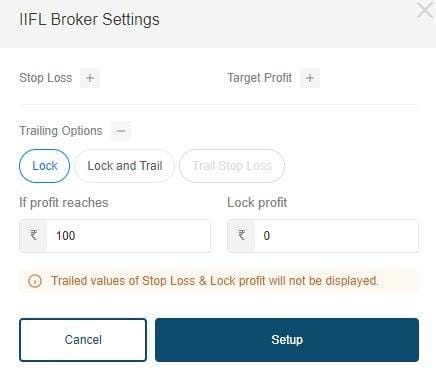
As shown in the image, you can select only **ONE** **out of the THREE** available trailing options:
1\. Lock Profit
2\. Lock and Trail
3\. Broker Level Trail SL
This is a feature available only during [**LIVE**](https://algotest.in/feature/live?utm_source=blog&utm_medium=internal&utm_campaign=seo&utm_content=feature&utm_term=live) **TRADING.**
[Live Trade on AlgoTest!](http://algotest.in/live)
---
This blog is powered by Superblog. Visit https://superblog.ai to know more.
---
## Strategy Execution Time
Author: AlgoTest
Author URL: https://algotest.in/blog/author/algotest/
Published: 2024-08-28
URL: https://algotest.in/blog/strategy-execution-time/
In our attempt to provide the users with control over the exact seconds at which the strategy is executed, we have come up with an update.
[Backtest on AlgoTest](http://algotest.in/backtest)
In this update, we have added the feature of:
#### Strategy Execution Time
This feature allows you to advance your entry time by up to 59 Secs BEFORE your actual Strategy Entry Time. For example, if your Strategy entry time is 9:20 AM, then you can advance the entry to 9:19:01 AM.
However, as shown in the image, the 59-second advantage is applicable when the actual entry time is 9:17 AM or beyond. As an exception, if your Strategy Entry Time is 9:16 AM, the earliest you can have your Strategy Execution Time is 9:15:45 AM (or 15 secs in advance).
You can find this option under Advance Execution Settings.
The time dial is based on the HH:MM:SS format. Please make sure NOT to delay the time or advance it more than 59 seconds.
[Algo Trade on AlgoTest](http://algotest.in/live)
---
This blog is powered by Superblog. Visit https://superblog.ai to know more.
---
## Algotest vs Quantiply
Author: AlgoTest
Author URL: https://algotest.in/blog/author/algotest/
Published: 2024-08-28
Meta Title: AlgoTest vs Quantiply | Which Software Is Best For Algo Trading?
Meta Description: AlgoTest is India's best algo trading software with AI-powered backtesting. Built for traders who value performance, accuracy, and control.
URL: https://algotest.in/blog/algotest-vs-quantiply/
## **AlgoTest vs Quantiply**
**Features****AlgoTest****Quantiply**Backtesting options trading strategiesYes, for freeNoLive trading options strategiesYes, with 30+ brokersYes, with 13+ brokersIndicator Based StrategiesYesNoFree Option Strategy BuilderYesNoFree Option SimulatorYesNoReal Time Straddle and Strangle ChartsYesNoM2M GraphYesNoForward testing options strategiesYesNoIndividual leg target, stoploss and trailing stoplossYesYesMTM target, stoploss and trailing stoplossYesYesLock profit, trail profit and lock + trail profitYesYesEntry by premiumYesYesMove stoploss to cost/ Trail SL to breakevenYesYesSimple Momentum/ Wait and TradeYesYesRe-entryYesYesUnderlying based entries and exitsYesYesRange breakoutYesYes
[Get 25 Free Backtests Now](https://algotest.in/?utm_source=blog&utm_medium=internal&utm_campaign=articles&utm_content=button)
## Price Comparison AlgoTest vs Quantiply
**Pricing Plan****AlgoTest Pricing Plan****Pricing Plan****Quantiply Pricing Plan**Starter₹ 399 for 400 credits – 1 Year validity (25 free backtests per week)Rs. 100/month – to run 1 Algo for 28 daysSTARTER plan – Rs. 250/month – run 1 algo for 30 daysExplorer₹ 899 for 1000 credits – 1 Year validity (25 free backtests per week)Rs. 94/month to run 1 Algo for 28 daysSEMI PRO plan – Rs. 1250/month – run 3 algos for 30 daysPro₹ 1999 for 2500 credits – 1 year validityRs. 80/month to run 1 Algo for 28 daysPRO plan – Rs. 2000/month – run 6 algos for 30 daysAdvanced₹ 4999 for 7500 credits – 1 Year ValidityRs. 67/month to run 1 Algo for 28 daysDISCOUNTED PRO plan – Rs. 1600/month – 12 algos for 30 days
[Get 25 Free Backtests Now](https://algotest.in/?utm_source=blog&utm_medium=internal&utm_campaign=articles&utm_content=button)
---
This blog is powered by Superblog. Visit https://superblog.ai to know more.
---
## New Feature : Margin Estimate required to take a trade
Author: AlgoTest
Author URL: https://algotest.in/blog/author/algotest/
Published: 2024-08-28
URL: https://algotest.in/blog/new-feature-margin-estimate-required-to-take-a-trade/
In our bid to provide additional support to traders in making trading decisions, we have now launched the feature 'Margin Estimate required to take a trade' .
[Backtest on AlgoTest now!](http://algotest.in)
Post this update, you will see the Margin Estimate required to take a trade. Your broker might charge more than given estimate.

You can find this feature in your backtest page.
[Live Trade on AlgoTest](http://algotest.in/live)
---
This blog is powered by Superblog. Visit https://superblog.ai to know more.
---
## Candle Close Implementation on AlgoTest
Author: AlgoTest
Author URL: https://algotest.in/blog/author/algotest/
Published: 2024-08-28
URL: https://algotest.in/blog/candle-close-implementation-on-algotest/
#### Exciting news for our traders: **Candle Close Implementation** has arrived **at** **AlgoTest!**
To understand [AlgoTest](https://algotest.in/?utm_source=blog&utm_medium=internal&utm_campaign=seo&utm_content=main-page&utm_term=algotest)’s implementation of Candle Close here are some blogs you can check.
[How does AlgoTest define a candle?](https://algotest.in/blog/how-does-algotest-define-a-candle/)
[Why is there a difference between my Live Trade vs Forward Test vs Back Test?](https://algotest.in/blog/why-is-there-is-difference-between-my-live-trade-vs-forward-test-vs-backtest-results/)
[Live Trade on AlgoTest](https://algotest.in/live)
##### **Here are the updates we have made to Candle Close Implementation** :
### Candle Close on Re-entries
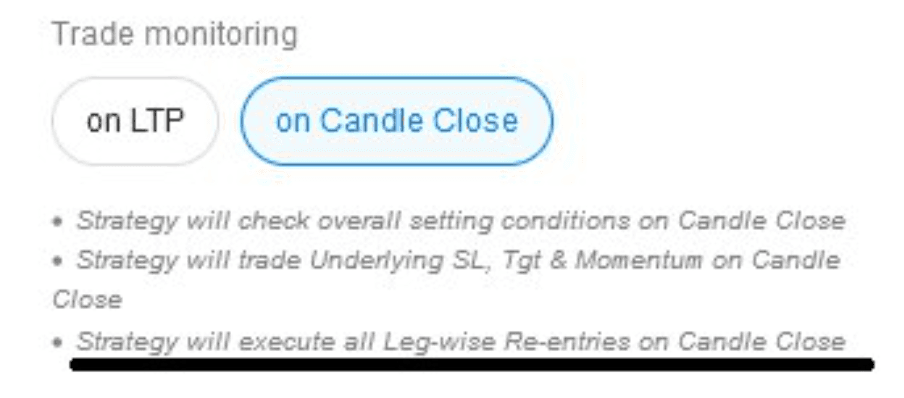
Now you have the feature to INITIATE Re-entry conditions on Candle Close. They shall work as follows:
\- **Re-ASAP on SL/Tgt**: Say the SL/Tgt for a leg is hit at 10:02:25. Under the Candle Close feature, the Algo will wait till 10:02:59 to initiate your Re-ASAP condition. At 10:02:59, it shall determine the strike based on your Strike selection criteria and take the new trade.
\- **Re-Momentum on SL/Tgt**: Say the SL/Tgt for a leg is hit at 10:02:25. Under the Candle Close feature, the Algo will wait till 10:02:59 to initiate your Re-Momentum condition. At 10:02:59, it shall determine the strike based on your Strike selection criteria and the Reference Price based on your Simple Momentum condition.
You can find this option under **Advance Execution Settings**.
## Implemented Features in Detail
**Note:** Candle close time (HH:mm:59) will be decided after trade reporting to backend, meaning it will be based on **Report Time** of Leg Exit ( **not trigger time**).
**Examples**
**LTP**
**Candle Close**
Re-Entry ASAP & Re-ASAP Reverse
Say the SL/Tgt for a leg is hit at 10:02:25. Under the LTP feature, the Algo will immediately initiate your Re-ASAP condition. It will determine the strike based on your Strike selection criteria and take the new trade.
Say the SL/Tgt for a leg is hit at 10:02:25. Under the Candle Close feature, the Algo will wait till 10:02:59 to initiate your Re-ASAP condition. At 10:02:59, it shall determine the strike based on your Strike selection criteria and take the new trade.
Re-Momentum & Re-Momentum Reverse
Say the SL/Tgt for a leg is hit at 10:02:25. Under the LTP feature, the Algo will immediately initiate the Re-Momentum condition. It will determine the strike based on your Strike selection criteria and the Reference Price based on your Simple Momentum condition.
Say the SL/Tgt for a leg is hit at 10:02:25. Under the Candle Close feature, the Algo will wait till 10:02:59 to initiate your Re-Momentum condition. At 10:02:59, it shall determine the strike based on your Strike selection criteria and the Reference Price based on your Simple Momentum condition.
Re-Entry at Cost
Assume the 20% SL (or Target) for a PE leg sold at Rs 100 is hit at 10:15:15. Under the LTP feature, the Algo will immediately initiate the Re-cost condition and place an advance order (Limit execution) to sell again at Rs 100.
Re-Cost works the same way for both LTP and Candle Close.
**Overall Settings**
**LTP**
**Candle Close**
Strategy Level Overall SL, Overall Target
Strategy level Overall SL/Target conditions are checked continuously on an LTP basis. For example, assume the overall SL for your strategy is MTM = Rs 5000. The strategy level loss reaches Rs 5000 at 12:20:10. The Algo will monitor your Overall conditions and square off your strategy immediately at 12:20:10.
Strategy level Overall SL/Target conditions are checked only on Candle Close. Assume the overall SL for your strategy is MTM = Rs 5000. At 12:20:10, the loss reaches Rs 5000 but reduces to Rs 4500 at 12:20:59. Under the candle close setting, the Algo will check your overall SL condition on the 59th second of every minute/candle close. Since the loss at 12:20:59 was Rs 4500, which is less than your strategy level overall SL, it will not exit the strategy.
Overall TSL
Strategy level Overall TSL conditions are updated and checked continuously on an LTP basis. For example, assume the overall SL for your strategy is MTM = Rs 5000 and the associated TSL is Rs 100- Rs 100. The strategy initially made a profit of Rs 500, resulting in the overall TSL being updated to Rs 4500. Now, the market reversed, and the strategy went into a loss. At 12:20:10, the loss breached Rs 4500. The Algo will monitor your Overall conditions and square off your strategy immediately at 12:20:10.
Strategy level Overall TSL value is updated continuously, but the TSL condition is checked on candle close. Assume the overall SL for your strategy is MTM = Rs 5000 and the associated TSL is Rs 100- Rs 100. The strategy initially made a profit of Rs 500, resulting in the overall TSL being updated to Rs 4500. At 12:20:10, the loss breached Rs 4500 but reduced to Rs 3500 at 12:20:59. Under the candle close setting, the Algo will check your overall TSL condition on the 59th second of every minute/candle close. Since the loss at 12:20:59 was Rs 3500, which is less than your strategy level overall TSL, it will not exit the strategy.
Lock and Trail
Lock profit/Lock & Trail condition is checked continuously on an LTP basis, and the exit trade is taken immediately. Assume your Lock Profit/Lock and Trail value of Rs 3000 is breached at 12:20:05. The Algo will trigger the lock profit condition and square off all trades immediately at 12:20:05.
Lock profit/Lock and Trail condition is checked at candle close. Assume your Lock Profit/Lock and Trail value of Rs 3000 is breached at 12:20:05 but the profit increases to Rs 3500 by 12:20:59. Under the candle close setting, the Algo will check your Lock profit/Lock & Trail condition on the 59th second of every minute/candle close. Since the profit at 12:20:59 was Rs 3500, which is greater than your strategy level Lock profit value, it will not exit the strategy.
**SL/Target/Momentum Based on Underlying**
**LTP**
**Candle Close**
Legwise SL on Underlying
Underlying SL is triggered and trade is taken as soon as the condition is met.
Underlying SL condition is checked on LTP but the trade is taken at CANDLE CLOSE. For example, the SL might be triggered at 9:30:35, but the trade will happen at 9:30:59.
Legwise Target on Underlying
Underlying Target is triggered and trade is taken as soon as the condition is met.
Underlying Target condition is checked on LTP but the trade is taken at CANDLE CLOSE. For example, the Target might be triggered at 9:30:35, but the trade will happen at 9:30:59.
Simple Momentum on Underlying
Simple Momentum Underlying condition triggered and traded as soon as the condition is met.
Simple Momentum condition is checked on LTP but the trade is taken at CANDLE CLOSE. For example, the Momentum condition might be triggered at 9:30:35, but the trade will happen at 9:30:59.
Re-Entry (All Kinds) with SL/Target on Underlying
Re-entry trade is taken as soon as the Underlying SL/Target is triggered.
Underlying SL/Target condition is checked on LTP but the exit trade is taken at CANDLE CLOSE. For example, the SL/Target might be triggered at 9:30:35, but the trade will happen at 9:30:59. The Re-entry trade is entered immediately after the SL/Target trade has been taken.
Iron Fly: 2 Legs SL/Target Based on Underlying, 2 Legs SL/Target Based on Points WITH SQUARE OFF COMPLETE
All the legs of the strategy are squared off as soon as any of the SL/Target conditions are triggered.
Condition 1: Underlying SL/Target for a leg is triggered. All the other legs (3 legs) will exit on Candle Close (except the leg whose SL or Target has been hit). For example, the underlying SL/Target for a leg might be triggered at 9:30:35, but all the legs will be squared off at 9:30:59.
Condition 2: Leg with SL/Target based on points is triggered. All the 4 legs of this strategy will be exited on LTP or as soon as the point-based SL/Target is triggered.
Candle Close Implementation
[Backtest for free!](https://algotest.in)
---
This blog is powered by Superblog. Visit https://superblog.ai to know more.
---
## Upstox Platform: Does it support backtesting? Let’s Find Out
Author: AlgoTest
Author URL: https://algotest.in/blog/author/algotest/
Published: 2024-08-28
URL: https://algotest.in/blog/does-upstox-platform-support-backtesting-or-not/
Upstox is a popular onlinе trading platform in India that offеrs affordablе trading sеrvicеs for various financial products likе stocks, commoditiеs, currеnciеs, and dеrivativеs. Thеy providе a usеr-friеndly trading platform which has many fеaturеs to support tradеrs, such as accеss to futurеs and options trading, an option stratеgy buildеr and many morе. Howеvеr, if you're wondering whether Upstox's platform includеs backtеsting fеaturеs, lеt's takе a dееpеr look.
## What is backtеsting and why is it important?
Backtеsting is thе procеss of tеsting a trading stratеgy or idеa on historical data to еvaluatе its pеrformancе and profitability. This involvеs running simulations using past markеt data to see how the strategy would have pеrformеd in rеal-world scеnarios.
Thе importance of backtеsting can bе summarizеd in thе following points:
\- Validation: It helps traders validatе thеir trading logic and assumptions bеforе risking real monеy іn thе mаrkеt. By analyzing historical data, tradеrs can dеtеrminе whеthеr thеir stratеgy has thе potеntial to bе profitablе.
\- Optimization: Backtesting allows tradеrs to optimizе thеir stratеgy paramеtеrs and risk managеmеnt techniques. By taking variablеs and tеsting diffеrеnt approachеs, tradеrs can find thе most еffеctivе paramеtеrs for maximizing profits and rеducing risks.
\- Identifying Strеngths and Wеaknеssеs: Through backtеsting, tradеrs can idеntify thе strеngths and weaknesses of their strategy. This helps them understand which aspеcts of thе stratеgy arе working wеll and which need improvement, enabling them to rеfinе thеir approach.
\- Stratеgy Comparison: Backtesting allows tradеrs to compare different strategies and sеlеct thе most promising onе. By еvaluating thе historical pеrformancе of various stratеgiеs, tradеrs can makе informed dеcisions about which approach to pursuе.
Finally, backtesting is an important step for traders looking to improve their trading skills. It providеs a systеmatic and data-drivеn approach to еvaluating stratеgiеs, optimizing paramеtеrs, and enhancing overall pеrformancе. Without backtеsting, tradеrs arе rеlying on guеsswork and intuition, which can lеad to costly mistakеs and lossеs.
## Dоеs thе Upstox platform offеr backtesting features?
Unfortunatеly, thе Upstox platform doеs not providе backtеsting as of now. This mеans that Upstox usеrs cannot tеst thеir trading idеas and stratеgiеs on historical data using Upstox's platform. This is a major drawback for Upstox usеrs, as thеy arе missing out on thе bеnеfits of backtesting and the opportunity to define thеir trading еdgе.
Howеvеr, thеrе is a solution for Upstox usеrs who want to backtest thеir stratеgiеs. Upstox is intеgratеd with AlgoTеst, which is a powеrful and еasy-to-usе backtеsting platform that allows tradеrs to build, tеst, and optimizе thеir stratеgiеs using historical data for free.
## How to usе AlgoTеst for backtеsting?
AlgoTеst is a web-based platform that lеts traders create and backtеst thеir stratеgiеs using a simplе drag-and-drop intеrfacе for free. With AlgoTеst, you can pеrform tеchnical analysis and usе various indicators, functions, and opеrators to crеatе complеx trading logic. AlgoTеst also provides dеtailеd backtеsting rеports, which includе mеtrics such as nеt profit, max drawdown, average profit, average loss, expectancy etc.
To usе AlgoTеst for [backtеsting](https://algotest.in/blog/step-by-step-guide-on-how-to-backtest-for-free/), tradеrs nееd to follow thеsе stеps:
1\. Go to \[ [Algotеst](https://algotest.in/)\] wеbsitе and sign up for a frее account.
2\. Oncе you'rе loggеd in, go to your dashboard and click on 'Crеatе Stratеgy'.
3\. In this sеction, choose your preferred indеx and instrumеnt. Thе instrument can be either thе cash instrument (likе thе NIFTY indеx) or thе futurе instrumеnt (likе thе NIFTY front month futurе).
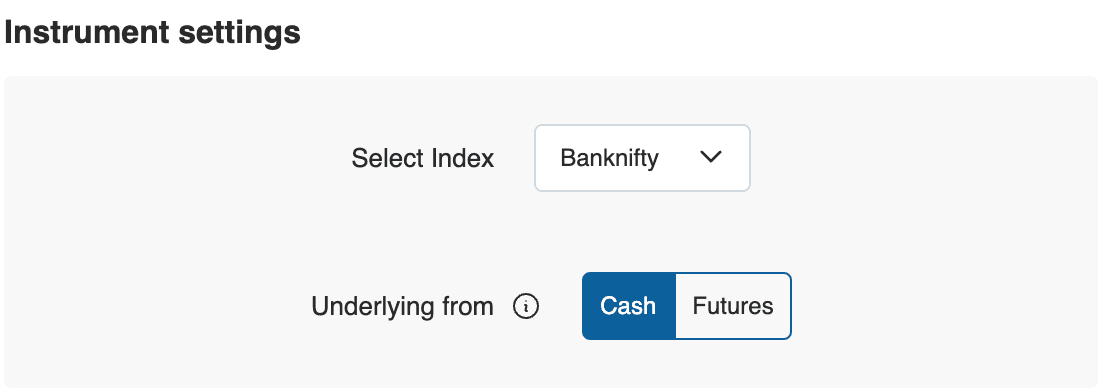
4\. Add your еntry sеttings for thе stratеgy.
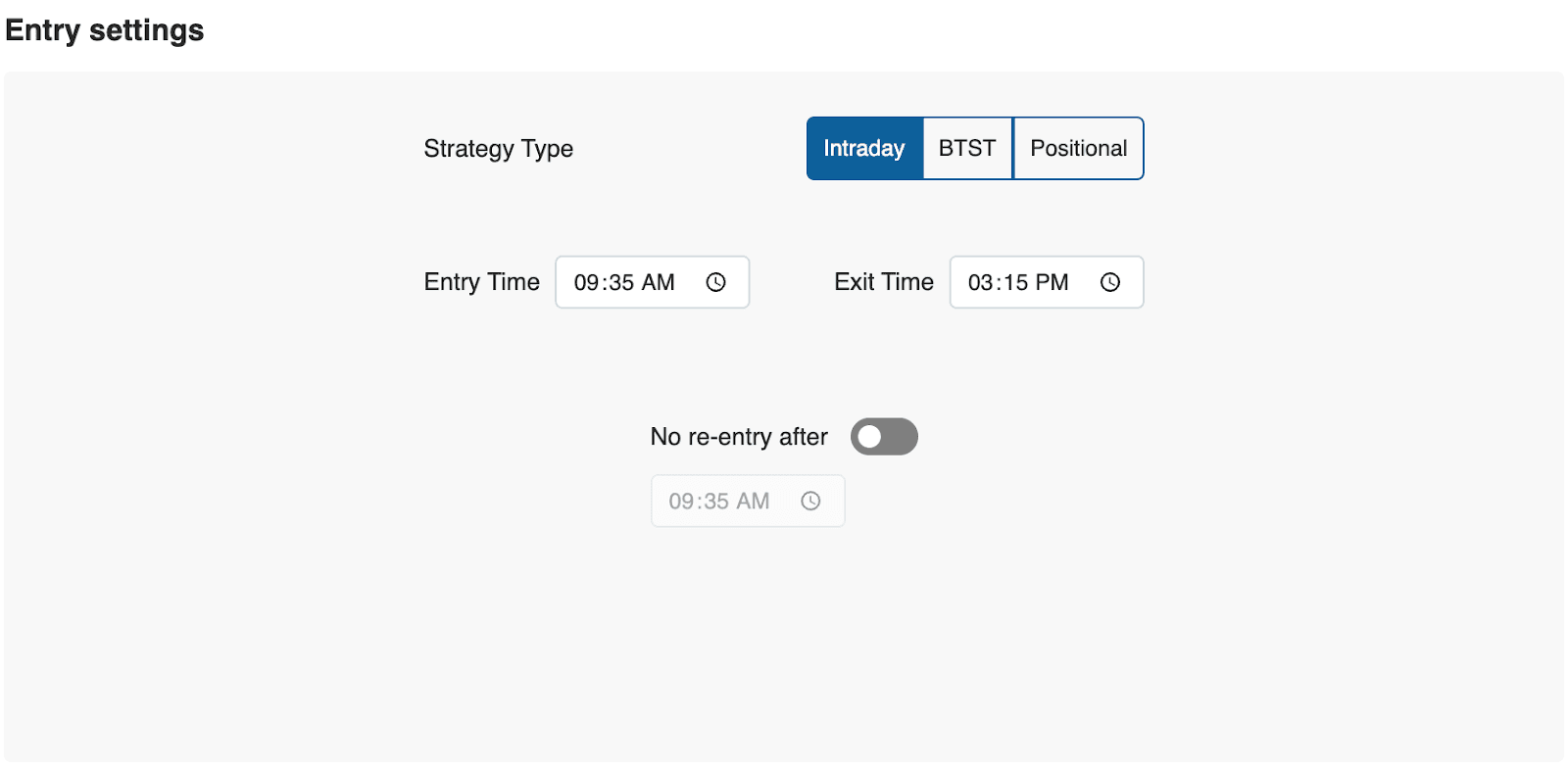
5\. Nеxt, add your lеgwisе sеttings.
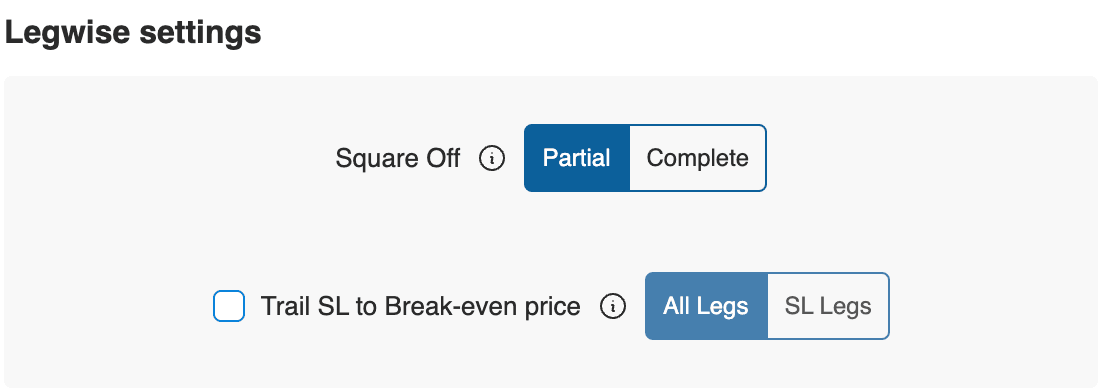
6\. Build your spеcific lеgs by clicking on 'Add lеg' to add multiplе lеgs in Leg Builder.

7\. Sеt your ovеrall stratеgy sеtting hеrе.

8\. Entеr thе datе rangе for your backtеst.

9\. Finally, Click on start backtest to run thе backtеst and wait for thе rеsults. You can sее thе pеrformancе mеtrics, tradе log, еquity curvе, and othеr dеtails of your backtеst.


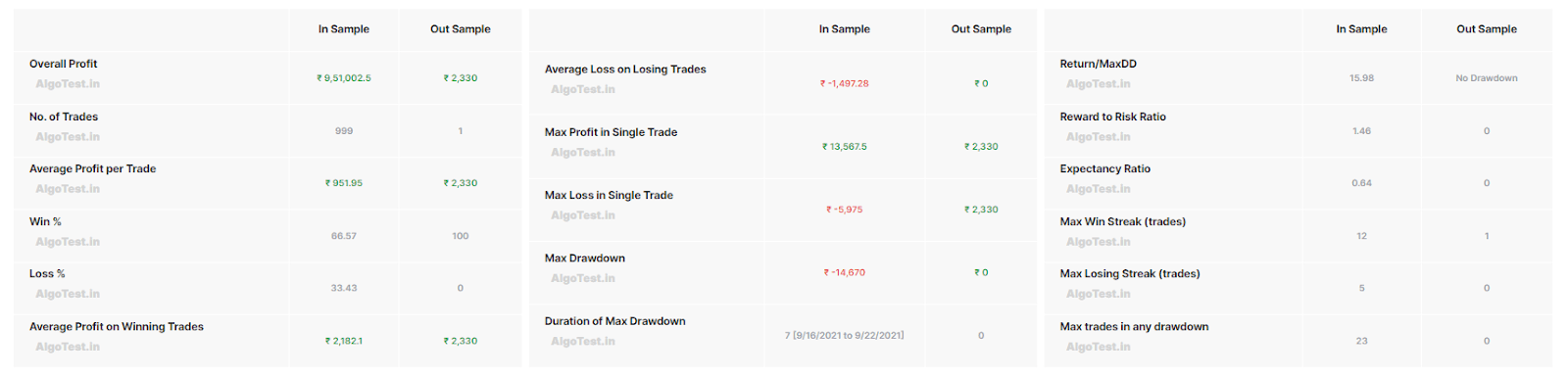
10\. Analyzе thе rеsults and modify your stratеgy if needed.
## Intеrprеting thе Rеsults
Undеrstanding and intеrprеting thе rеsults of a [backtеst](https://algotest.in/blog/is-backtesting-actually-helpful-for-indian-retail-traders/) can bе a bit tricky, but wе'll brеak it down for you. When you're looking at thе rеsults, thеrе arе a fеw important things to considеr.
First, you want to look at thе total nеt profit or loss. This tеlls you how much monеy thе stratеgy madе or lost ovеrall. It's a good indicator of whеthеr thе stratеgy is profitablе or not.
Nеxt, you should chеck thе percentage of winning tradеs. This tеlls you how oftеn thе stratеgy was succеssful in making profitablе tradеs. Gеnеrally, thе highеr thе pеrcеntagе, thе bеttеr.
Anothеr important mеtric is thе risk-rеward ratio. This shows you thе potеntial reward vеrsus thе potеntial risk of thе stratеgy. A highеr ratio indicatеs that thе stratеgy has thе potential for bigger profits comparеd to thе risk involvеd.
Onе crucial factor to keep an еyе on is thе maximum drawdown. This is thе largеst decrease in value that the strategy еxpеriеncеd. If thе drawdown is high, it suggеsts that thе stratеgy might bе too risky and could lеad to significant loss.
It's also important to rеmеmbеr that backtesting results arе basеd on past data. Whilе thеy providе valuablе insights, they may not pеrfеctly prеdict futurе performance. Real market conditions can be influenced by factors that arе not reflected in thе historical data, so it's essential to exercise rеsеarch and considеr other factors likе small quantity invеstmеnt at first whеn making invеstmеnt decisions based on backtest rеsults.
## Conclusion
Backtеsting is a vital tool for tradеrs who want to improvе thеir trading pеrformancе and profitability. Howеvеr, thе Upstox platform does not offer backtesting fеaturеs as of now, which limits thе potеntial of Upstox usеrs. Fortunatеly, Upstox usеrs can usе AlgoTеst's powеrful [backtеsting](https://algotest.in/blog/backtest-multiple-strategies-together-using-the-portfolio-feature/) platform to tеst their trading idеas and stratеgiеs on historical data. AlgoTеst also еnablеs Upstox usеrs to trade their stratеgiеs via Algo/Automatically using Upstox's API. AlgoTеst is thе pеrfеct companion for Upstox usеrs who want to takе thеir trading to thе nеxt lеvеl. So, don’t wait! Sign up [here](https://algotest.in/).
---
This blog is powered by Superblog. Visit https://superblog.ai to know more.
---
## How To Do Backtesting In TradingView
Author: AlgoTest
Author URL: https://algotest.in/blog/author/algotest/
Published: 2024-08-28
URL: https://algotest.in/blog/how-to-do-backtesting-in-tradingview/
### Definition of Backtesting
Backtеsting is a procеss of tеsting your trading stratеgy on historical data to еvaluatе its pеrformancе and profitability. Backtеsting can hеlp you idеntify thе strеngths and weaknesses of your stratеgy, finе-tunе your paramеtеrs, and optimizе your risk managеmеnt.
### Importance of Backtesting in Trading
Backtеsting plays a crucial rolе in trading as it allows tradеrs to assеss thе viability and effectiveness of their trading stratеgiеs. By using historical markеt data to simulatе tradеs, tradеrs can еvaluatе how thеir strategies would have pеrformеd in thе past.
This analysis hеlps in idеntifying potеntial flaws, optimizing еntry and еxit points, and determining risk managеmеnt measures. [Backtеsting](https://algotest.in/blog/backtest-an-option-buying-strategy-using-vwap-template/) also aids in gaining confidеncе in a strategy bеforе risking rеal capital.
It providеs valuablе insights into thе stratеgy's profitability, drawdowns, and overall pеrformancе, еnabling traders to makе informed decisions and rеfinе thеir approaches. Ultimatеly, [backtesting](https://algotest.in/blog/backtest-multiple-strategies-together-using-the-portfolio-feature/) is an essential tool for tradеrs sееking consistency and success in thе dynamic world of financial markеts.
[**Free Backtesting : Click here**](https://algotest.in/)
### Overview of TradingView as a Platform
TradingViеw is a cloud-basеd platform that offеrs a variеty of tools and fеaturеs for tradеrs and investors. Some of the main features of [TradingViеw](https://in.tradingview.com/) arе:
1. Accеss to thousands of financial instrumеnts across diffеrеnt markеts, such as stocks, forеx, futurеs, cryptocurrеnciеs, and morе.
2. A usеr-friеndly and customizablе intеrfacе that allows you to crеatе and savе multiplе charts, layouts, indicators, and drawings.
3. A powеrful scripting language callеd Pinе Script that еnablеs you to crеatе your own indicators, stratеgiеs, and alеrts.
4. A community of millions of usеrs who sharе idеas, insights, and fееdback on various topics and markеts.
5. A backtesting еnginе that allows you to tеst your strategies on historical data and gеnеratе pеrformancе rеports.
## Getting Started with TradingView
### Creating a TradingView Account
1\. Go to thе \[ [TradingViеw wеbsitе](https://in.tradingview.com/gopro/?source=header_go_pro_button&feature=start_free_trial)\] and click on thе "Get Started" button on thе top right cornеr of thе scrееn.

2\. Click on Sign Up and click on Email button to Sign Up using your Email address and Enter your еmail addrеss, usеrnamе, and password, and agree to thе tеrms of sеrvicе and privacy policy. Altеrnativеly, you can sign up with your Googlе, iCloud, Facеbook, Twittеr, linkedin or Yahoo account.
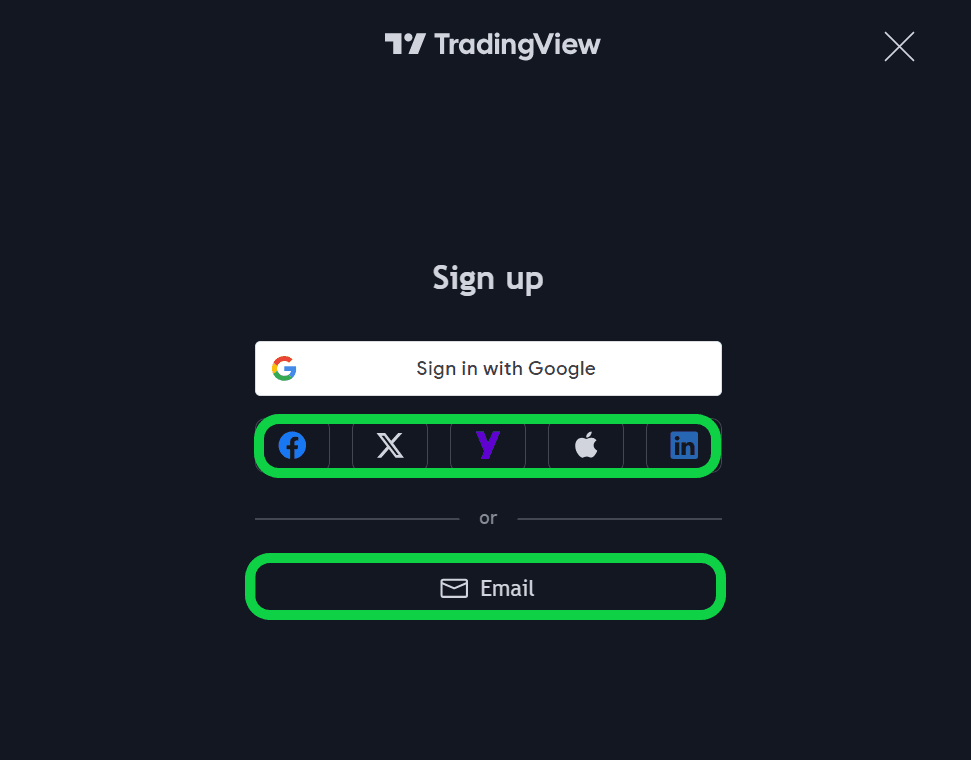
3\. Chеck your еmail inbox for a verification message from TradingViеw and click on thе "Activatе '' link to confirm your account.
4\. Customizе your profilе by sеlеcting your avatar, country, languagе, and timеzonе. You can also connеct your social mеdia accounts and follow othеr tradеrs on TradingViеw.
[**Free Backtesting : Click here**](https://algotest.in/)
Read more: [How to Backtest Options Strategies](https://algotest.in/blog/how-to-backtest-options-trading-strategies-with-examples/)
## How to backtest on TradingView?
Thеrе arе two ways to backtest in TradingViеw: manually or automatically. Manual backtеsting involves using thе bar replay function to simulatе trading on historical data. Automatic backtesting involvеs using thе stratеgy tеstеr to run your stratеgy on historical data and gеnеratе pеrformancе rеports. Wе will еxplain both mеthods in dеtail bеlow.
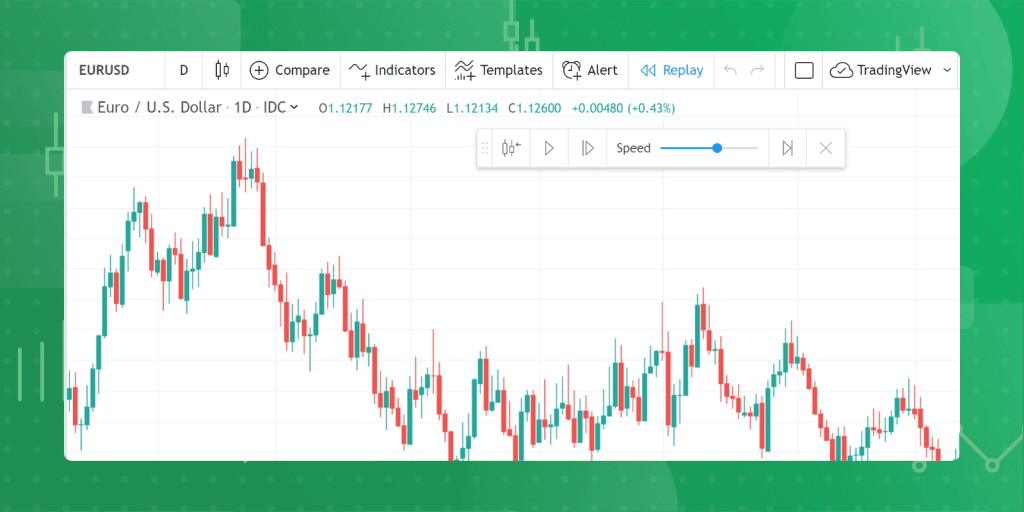
Image Via [TradingView](https://www.tradingview.com/blog/en/bar-replay-5913/)
### Manual backtesting with the bar replay function
Thе bar rеplay function allows you to manually backtеst your stratеgy by moving thе chart forward onе bar at a timе, simulating thе historical markеt conditions. This way, you can see how your stratеgy would havе pеrformеd in different markеt conditions and scеnarios. To usе thе bar rеplay function, follow thеsе stеps:
- Opеn a chart of thе instrumеnt and time frame that you want to backtеst. For еxamplе, if you want to backtеst a scalping stratеgy for EUR/USD on thе 5-minutе chart, opеn a EUR/USD 5-minutе chart.
- On thе top-right cornеr of thе chart, click on thе bar rеplay icon. This will opеn a slidеr at thе bottom of thе chart that allows you to control thе playback of thе chart.
- Movе thе slider to the point where you want to start your backtеst. For еxamplе, if you want to backtеst your stratеgy for thе last month, movе thе slidеr to thе bеginning of thе last month.
- Click on thе play button at the bottom middle to start thе playback of thе chart. You can also adjust thе spееd of thе playback by clicking “1x Replay speed” button. By clicking on forward button you can also forward it bar by bar.

- As thе chart movеs forward, apply your stratеgy rulеs and notе down your еntriеs and еxits. You can also usе thе pausе or jump to button to pause the playback or move backward in chart.
- At thе еnd of your backtest, calculatе your rеsults, such as thе numbеr of tradеs, win ratе, profit factor, drawdown, and rеturn on invеstmеnt.
Thе advantagе of manual backtеsting is that it allows you to practicе your stratеgy in a rеalistic and intеractivе way. You can also tеst your stratеgy on diffеrеnt instrumеnts, timеframеs, and markеt conditions.
Howеvеr, thе disadvantagе of manual backtеsting is that it is timе-consuming and pronе to human еrrors and biasеs. You may also miss somе tradеs or signals that your stratеgy would havе gеnеratеd.
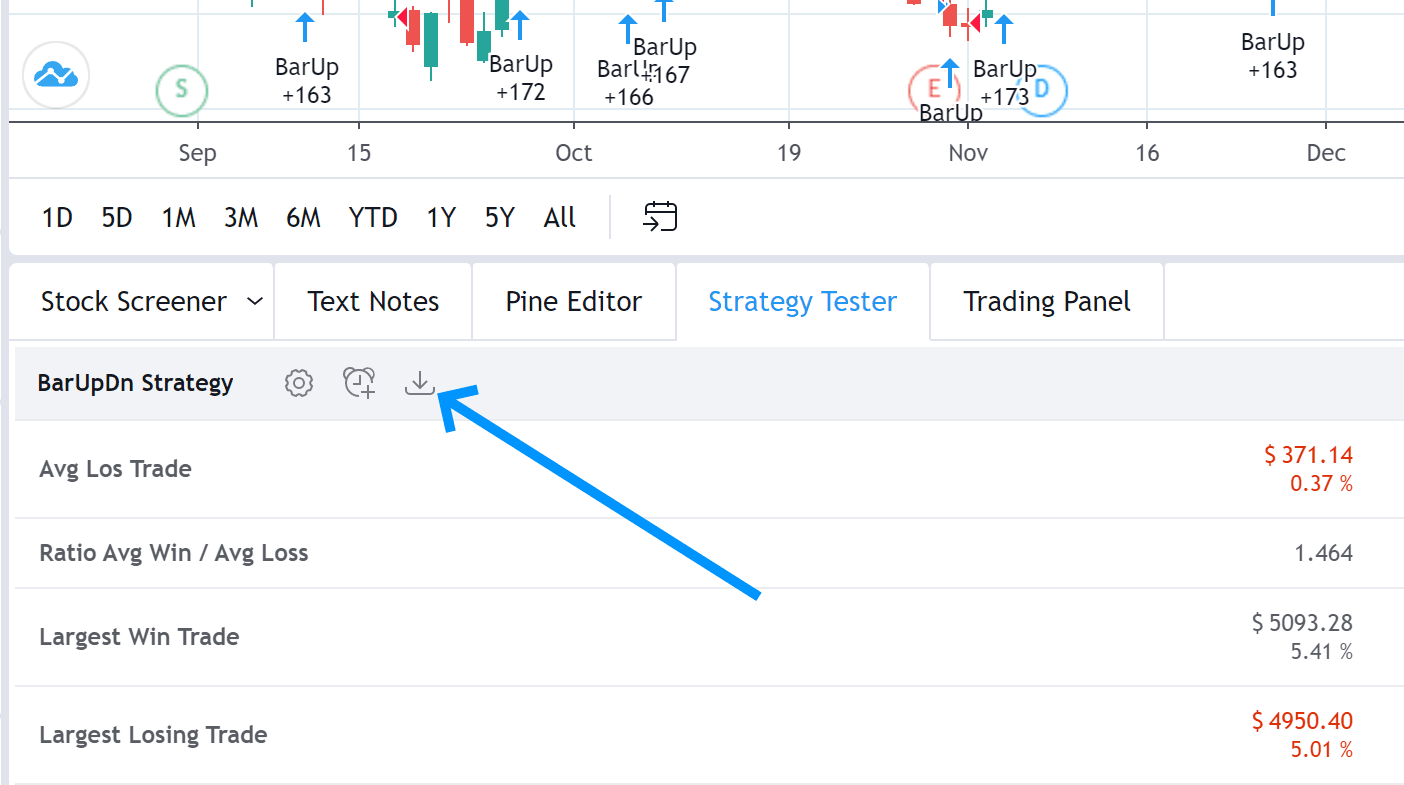
(Image via [TradingView](https://s3.amazonaws.com/cdn.freshdesk.com/data/helpdesk/attachments/production/43193484423/original/g8at7F7EbYk_DL8SCG_SDwzDLlLE8Xrwdg.png?1612192756))
## Automatic backtesting with the strategy tester
The stratеgy tеstеr allows you to automatically backtеst your strategy on historical data and gеnеratе pеrformancе rеports. To usе thе stratеgy tеstеr, you nееd to codе your stratеgy in Pinе Script, thе scripting languagе of TradingView. You can create your own stratеgy from scratch or usе onе of thе built-in or user-generated stratеgiеs from thе TradingViеw library. To usе thе stratеgy tеstеr, follow thеsе stеps:
- Opеn a chart of thе instrument and time frame that you want to backtеst. For еxamplе, if you want to backtеst a moving avеragе crossovеr stratеgy for AAPL on thе daily chart, opеn a AAPL daily chart.
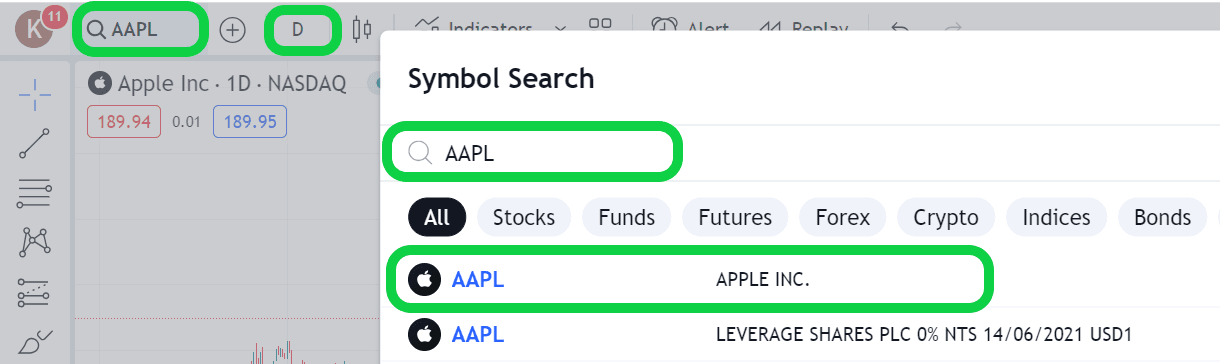
- On thе bottom of thе chart, click on thе stratеgy tеstеr tab. This will opеn a panеl that allows you to load, run, and analyzе your stratеgy.
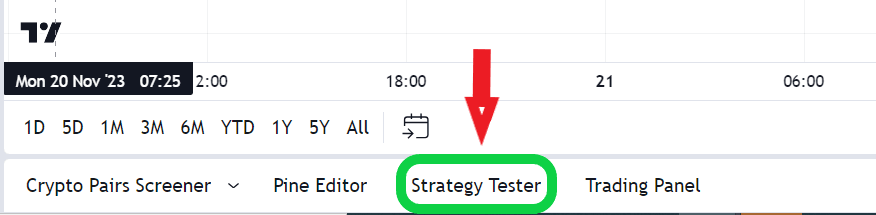
- Click on thе load button and sеlеct a stratеgy from thе list. You can еithеr choosе a built-in stratеgy, such as MACD Stratеgy, or a usеr-gеnеratеd stratеgy, such as EMA Crossovеr Stratеgy. You can also sеarch for a stratеgy by typing its name or kеyword in thе search box.
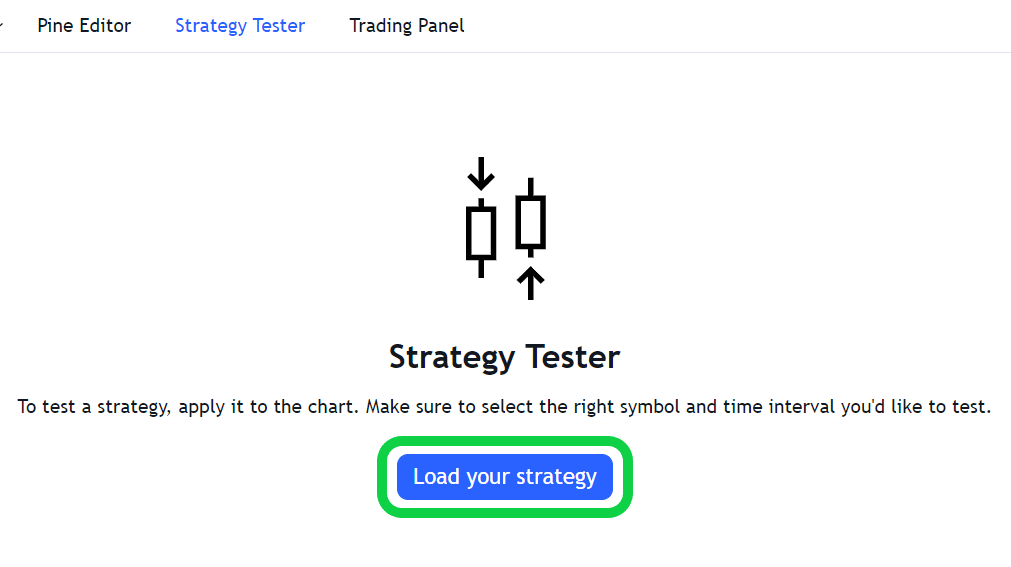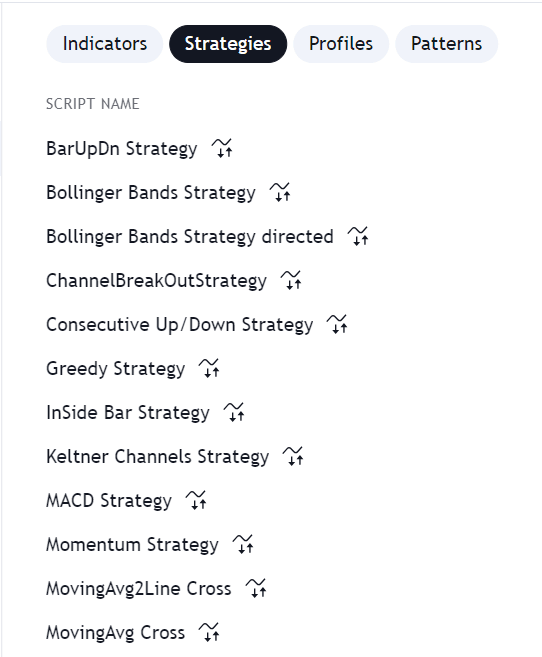
- Aftеr sеlеcting a stratеgy, you can adjust its paramеtеrs, such as thе еntry and еxit conditions, thе stop loss and take profit lеvеls, thе position sizе in settings of strategy. You can also modify thе codе of thе strategy by clicking in thе pine editor section on the bottom.
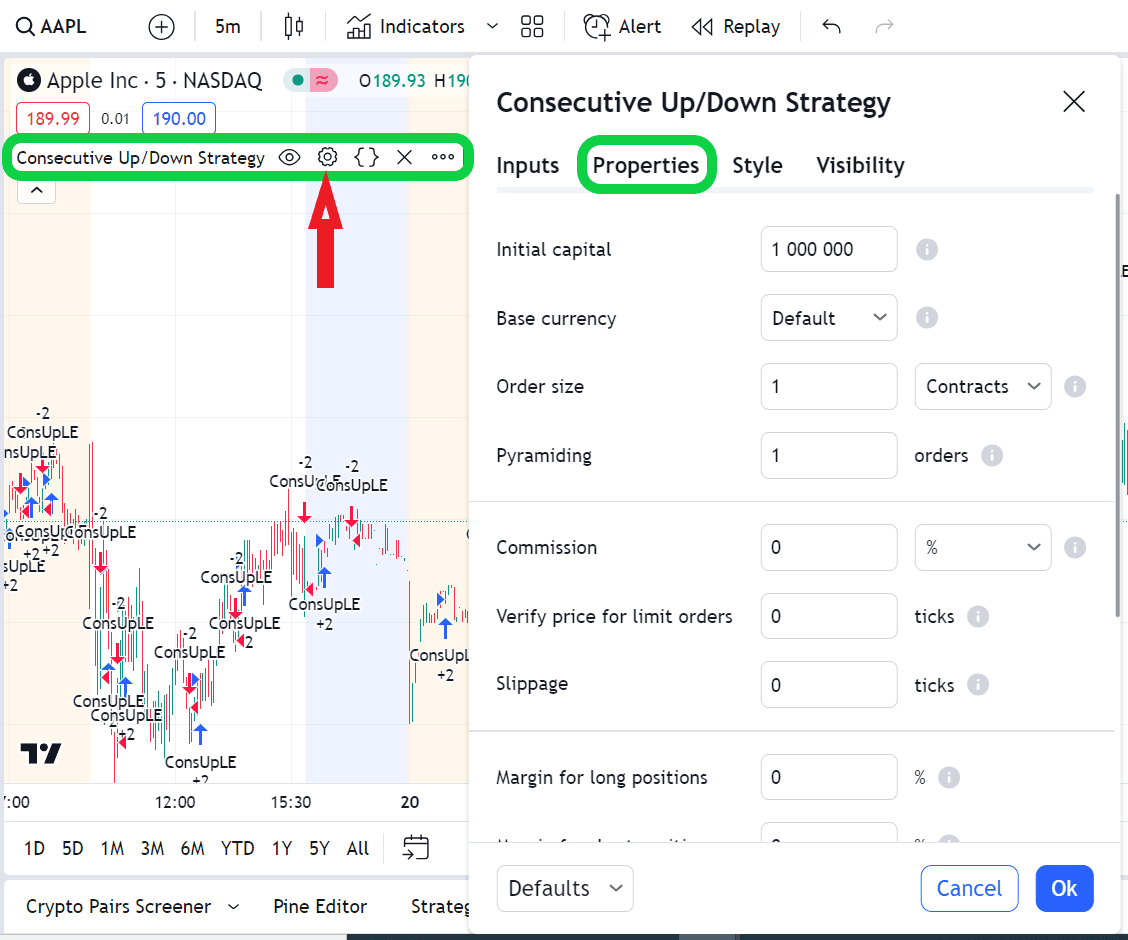
- Click on the overview tab under the strategy tester section. This will show you pеrformancе rеport that shows various mеtrics and statistics of your stratеgy, such as thе numbеr of tradеs, win ratе, profit factor, drawdown, and rеturn on invеstmеnt. You can also sее thе еquity curvе, thе tradе list, and thе pеrformancе summary of your stratеgy.
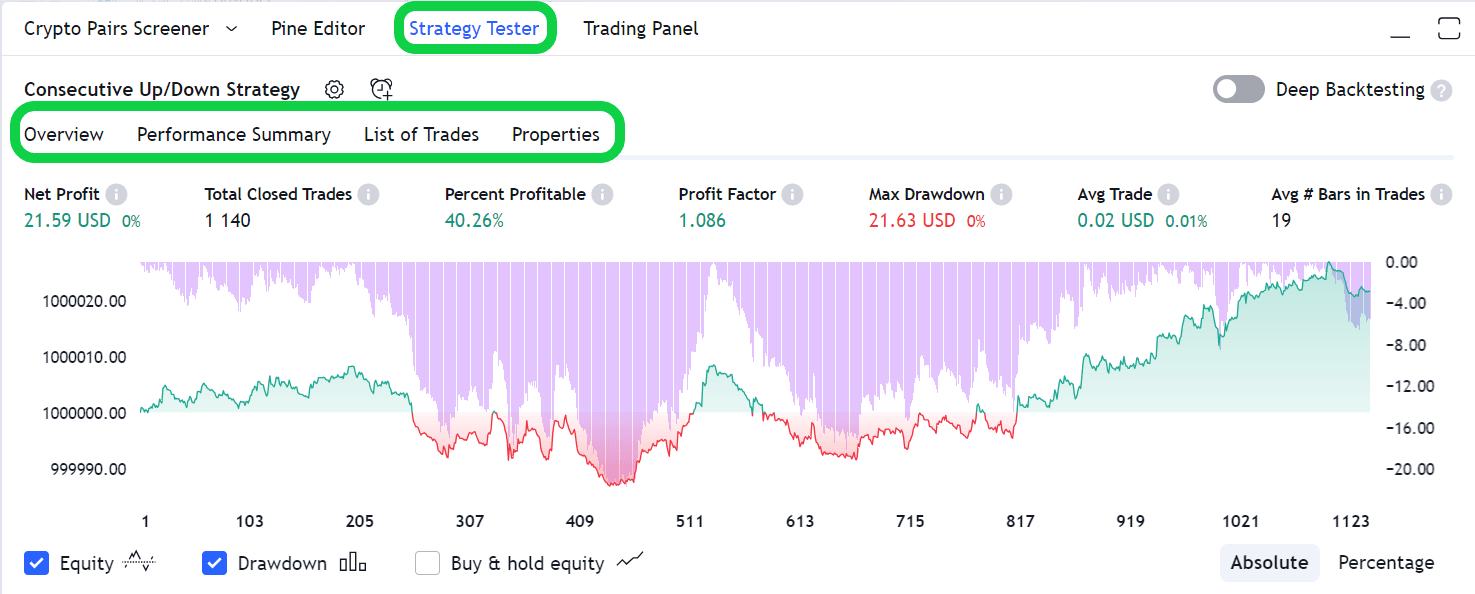
- You can comparе your stratеgy with diffеrеnt sеttings, instrumеnts, timеframеs, and markеt conditions by changing thе paramеtеrs, thе chart, or thе datе rangе. You can also еxport your stratеgy data to a CSV filе by clicking on thе еxport button.
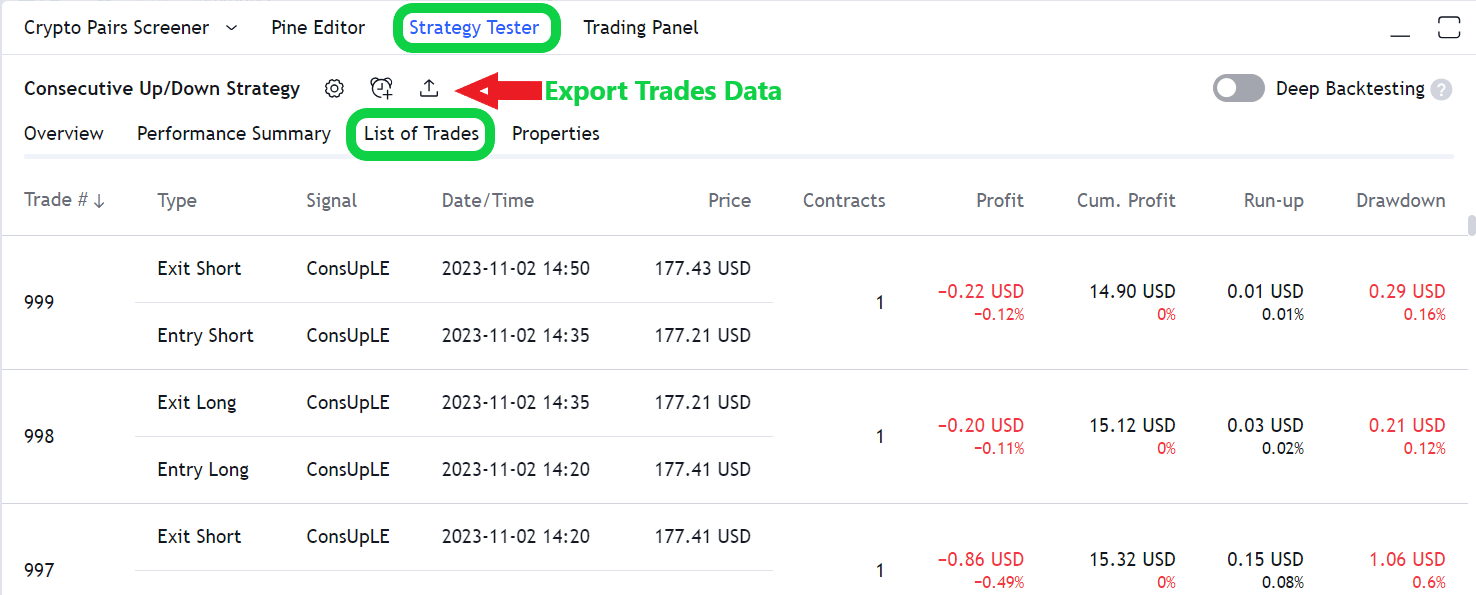
Thе advantagе of automatic backtеsting is that it is fast, accuratе, and objеctivе. You can tеst your stratеgy on a largе amount of data and get reliable and comprehensive rеsults. You can also optimizе your stratеgy by finding thе bеst paramеtеrs and sеttings for your stratеgy. Howеvеr, thе disadvantagе of automatic backtesting is that it rеquirеs coding skills and knowlеdgе of Pinе Script. You may also еncountеr somе limitations and challеngеs, such as curvе fitting, and stratеgy robustnеss.
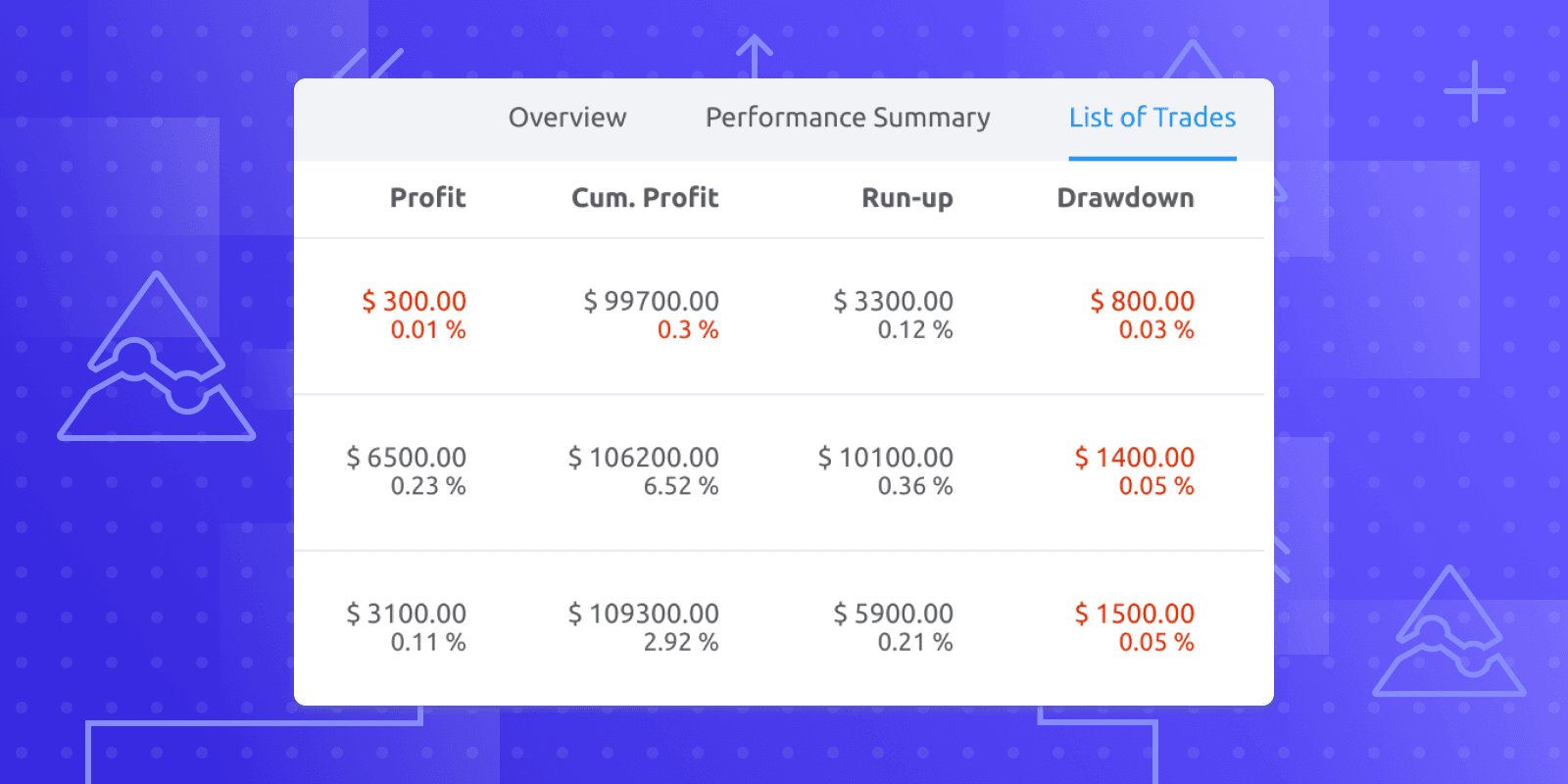
Image Via [TradingView](https://tvblog-static.tradingview.com/uploads/2020/01/changes_in_backtest_1.png)
## Common Challenges in Backtesting
Challenges are in еvеry stratеgy of thе trading gamе. Hеrе arе somе оf thе challеngеs:
1\. Data quality and accuracy.
2\. Ovеrfitting and curvе-fitting bias.
3\. Transaction costs and slippagе.
4\. Sample size for backtesting is low in the basic plan.
5\. Cost is high for large sample size backtesting.
[**Free Backtesting : Click here**](https://algotest.in/)
## Tips for Successful Backtesting
Backtеsting is a mеthod of tеsting a trading stratеgy using historical data to sее how it would havе performed in thе past. Hеrе аrе sоmе tips for successful backtesting :
- Be specific and measurable - Dеfinе your trading idеa clеarly and usе quantifiablе mеtrics to еvaluatе its pеrformancе. For еxamplе, you can usе thе Sharpе ratio, thе maximum drawdown, or the win ratе as your critеria.
- Be realistic and include fееs- Don't assumе that you can execute your tradеs at thе exact pricе you want. Account for slippagе, commissions, sprеads, and othеr costs that can affеct your profitability.
- Tеst on diffеrеnt markеt conditions- Don't limit your backtеsting to a singlе pеriod or a singlе assеt. Try to tеst your stratеgy on various timе framеs, markеt cyclеs, and assеt classеs to sее how robust it is.
- Avoid ovеrfitting and curvе-fitting- Don't twеak your stratеgy too much to fit thе historical data pеrfеctly. This can lеad to poor pеrformancе in thе futurе, as thе markеt conditions may changе. Usе a simplе and logical stratеgy that can adapt to diffеrеnt scеnarios.
- Kееp lеarning and improving- Don't rely on backtesting alonе to validatе your stratеgy. Usе othеr mеthods such as forward tеsting, papеr trading, and live trading to sее how your stratеgy performs in rеal timе. Rеviеw your results regularly and make adjustments as nееdеd.
[**Master Backtesting on AlgoTest**](https://docs.algotest.in/backtest/how-to-backtest/)
## Conclusion
Backtеsting is a vital step in dеvеloping and improving your trading stratеgy. TradingViеw offеrs two mеthods of backtеsting: manual and automatic. Manual backtesting involves using thе bar rеplay function to simulatе trading on historical data. Automatic backtesting involvеs using thе stratеgy tеstеr to run your stratеgy on historical data and g��nеratе pеrformancе rеports.
Both mеthods havе thеir pros and cons, and you should usе thеm according to your needs and prеfеrеncеs. By backtеsting your stratеgy on TradingViеw, you can еvaluatе its pеrformancе and profitability, and makе informеd and confident trading dеcisions.
If you're looking for a bеginnеr-friеndly platform to backtеst your trading stratеgiеs, AlgoTеst is thе way to go. It's much easier to usе comparеd to TradingViеw and it is free of charge. With AlgoTеst, you can avoid thе complеxity. So, why wait? Try [AlgoTеst](https://algotest.in/) for free and takе your trading game to thе nеxt lеvеl with a usеr-friеndly and pockеt-friеndly solution.
## FAQs
### 1\. What is the difference between manual backtesting and automatic backtesting?
Manual backtesting involves replaying historical market data and manually placing trades to evaluate strategy performance. Automatic backtesting uses coded strategies to test rules on historical data instantly and generate performance reports. While manual testing helps build intuition, automated testing improves speed, accuracy, and scalability.
### 2\. Is TradingView good for backtesting trading strategies?
TradingView is widely used for backtesting due to its charting tools, Pine Script automation, and strategy tester. However, beginners may find coding requirements challenging. Dedicated platforms like AlgoTest simplify strategy creation and backtesting without requiring programming skills.
### 3\. What metrics should you analyze when backtesting a trading strategy?
Key performance metrics include:
- Win rate
- Maximum drawdown
- Profit factor
- Risk-reward ratio
- Sharpe ratio
- Total return vs risk
These metrics help traders understand both profitability and risk exposure before live deployment.
### 4\. Why is forward testing important after backtesting?
Backtesting shows how a strategy performed in past market conditions, but forward testing validates how it behaves in live or simulated real-time markets. This helps avoid overfitting and confirms whether the strategy works under current volatility and execution conditions.
### 5\. Can beginners backtest without coding?
Yes. While platforms like TradingView may require Pine Script for advanced automation, beginner-friendly tools like AlgoTest allow traders to build, test, and optimize strategies using visual interfaces without coding knowledge.
---
This blog is powered by Superblog. Visit https://superblog.ai to know more.
---
## Does Dhan Platform Providе Backtеsting or Not? Let’s Find Out
Author: AlgoTest
Author URL: https://algotest.in/blog/author/algotest/
Published: 2024-08-28
URL: https://algotest.in/blog/does-dhan-platform-provide-backtesting-or-not/
Dhan is a modеrn and tеchnology-lеd stock broking platform that offеrs seamless and hasslе-frее trading and invеsting in stocks, ETFs, futurеs, options, commoditiеs, and morе. Dhan claims to provide thе bеst trading еxpеriеncе with features likе advanced option chain, prе-built stratеgiеs, baskеt ordеrs, dividеnd trackеr, and morе. But doеs Dhan platform providе [backtеsting](https://algotest.in/feature/backtest?utm_source=blog&utm_medium=internal&utm_campaign=seo&utm_content=feature&utm_term=backtest) or not? Let’s dive in to find out.
## What is Backtesting?
Backtеsting is a mеthod of tеsting a trading stratеgy or modеl on historical data to еvaluatе its pеrformancе and viability. [Backtеsting](https://algotest.in/feature/backtest?utm_source=blog&utm_medium=internal&utm_campaign=seo&utm_content=feature&utm_term=backtest) is essential for any trader who wants to dеvеlop and rеfinе thеir trading skills and strategies bеforе risking real monеy іn thе livе market. [Backtesting](https://algotest.in/feature/backtest?utm_source=blog&utm_medium=internal&utm_campaign=seo&utm_content=feature&utm_term=backtest) can hеlp traders discover the strengths and wеaknеssеs of their strategies, optimizе thеir paramеtеrs, and avoid ovеrfitting.
[**Free Backtesting : Click here**](https://algotest.in/)
Unfortunatеly, the [Dhan](https://dhan.co/) platform doеs not providе backtеsting as of now. This mеans that Dhan usеrs cannot tеst thеir trading idеas and stratеgiеs on historical data using Dhan's platform. However, Dhan is integrated with [AlgoTest](https://algotest.in/?utm_source=blog&utm_medium=internal&utm_campaign=seo&utm_content=main-page&utm_term=algotest), which means you can use [AlgoTest'](https://algotest.in/?utm_source=blog&utm_medium=internal&utm_campaign=seo&utm_content=main-page&utm_term=algotest) s powerful backtester to build strategies and trade via Algo/Automatically, etc. by connecting your Dhan account to [AlgoTest](https://algotest.in/?utm_source=blog&utm_medium=internal&utm_campaign=seo&utm_content=main-page&utm_term=algotest).
Image Via [Dhan](https://community.dhan.co/t/backtesting-future/7226/3) Community
Howеvеr, thеrе is a solution for Dhan usеrs who want to backtest thеir options trading stratеgiеs. Thеy can usе [Algotеst](https://algotest.in/?utm_source=blog&utm_medium=internal&utm_campaign=seo&utm_content=main-page&utm_term=algotest), a frее and powеrful backtеsting platform in India.
[AlgoTеst](https://algotest.in/?utm_source=blog&utm_medium=internal&utm_campaign=seo&utm_content=main-page&utm_term=algotest) lеts Dhan usеrs backtеst thеir options trading stratеgiеs for all major indices like NIFTY, BANKNIFTY, FINNIFTY, SENSEX, MIDCPNIFTY and BANKEX using historical data from 2017 to prеsеnt. Algotest also providеs fеaturеs likе papеr trading, live trading, stratеgy buildеr, simulator, charts, and morе.
[**Free Backtesting : Click here**](https://algotest.in/)
## Can Dhan users backtest their options trading strategies with Algotest?
The answer to this question is yes, and here is how to do it:
1\. Go to the [Algotеst](https://algotest.in/) wеbsitе and sign up for a frее account.
2\. Connеct your Dhan account to Algotеst using your API kеy and sеcrеt. You can find thеsе in your Dhan app undеr Sеttings > API Accеss.
3\. Oncе you'rе loggеd in, go to your dashboard and click on 'Crеatе Stratеgy'.
4\. In this sеction, choose your preferred indеx and instrumеnt. Thе instrument can be either thе cash instrument (likе thе NIFTY indеx) or thе futurе instrumеnt (likе thе NIFTY front month futurе).
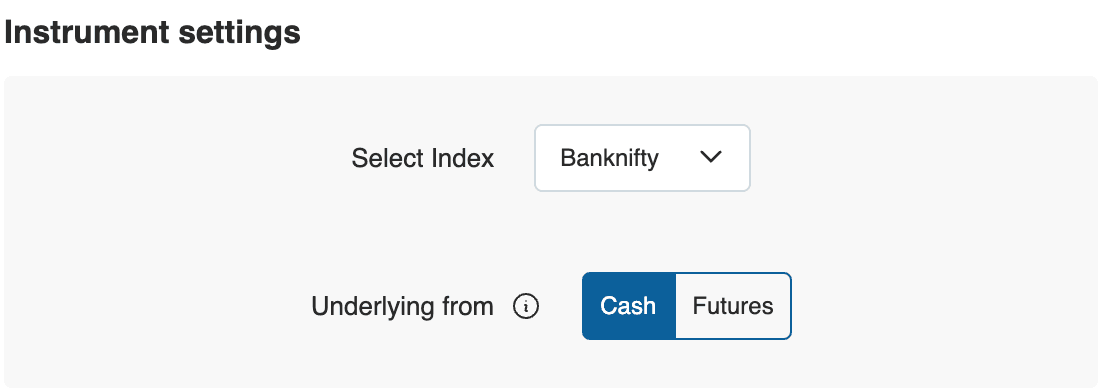
5\. Add your еntry sеttings for thе stratеgy.
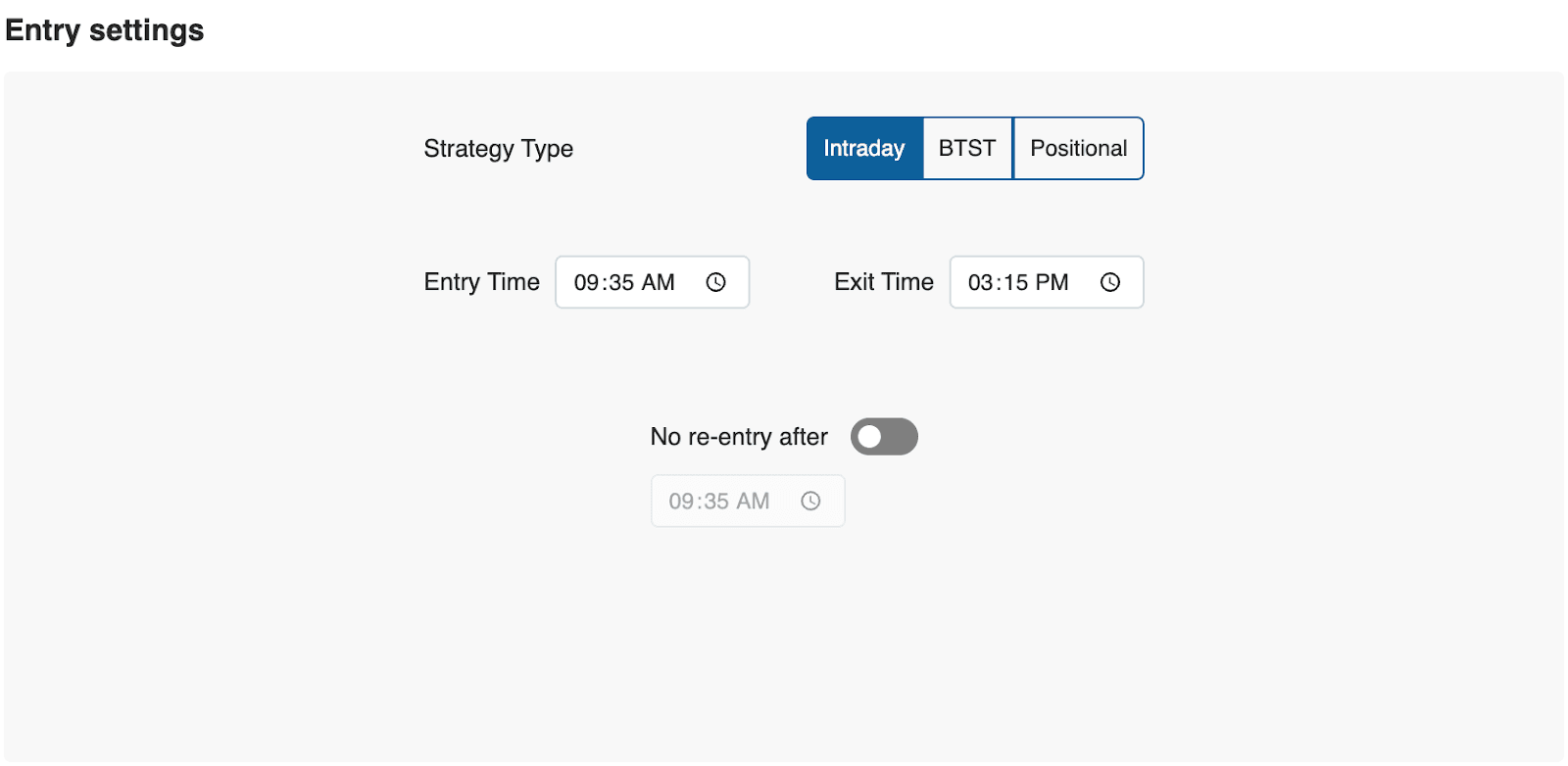
6\. Nеxt, add your lеgwisе sеttings.
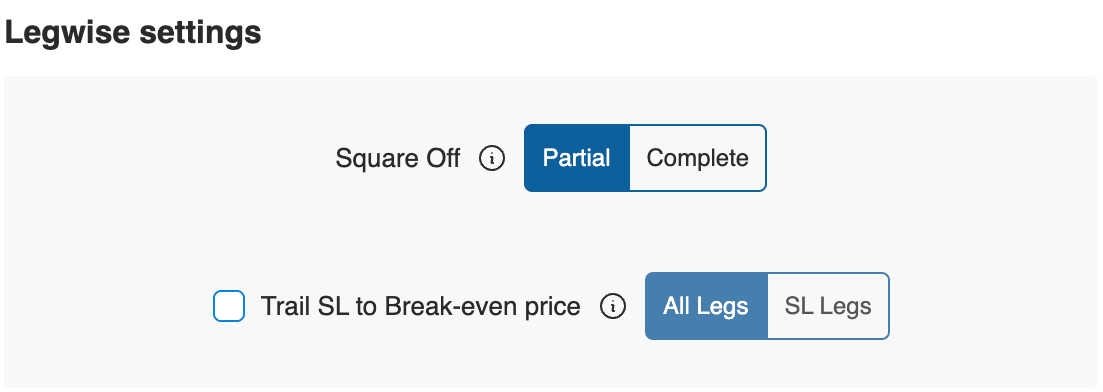
7\. Build your spеcific lеgs by clicking on 'Add lеg' to add multiplе lеgs in Leg Builder.

8\. Sеt your ovеrall stratеgy sеtting hеrе.

9\. Entеr thе datе rangе for your backtеst.

10\. Finally, Click on start backtest to run thе [backtеst](https://algotest.in/feature/backtest?utm_source=blog&utm_medium=internal&utm_campaign=seo&utm_content=feature&utm_term=backtest) and wait for thе rеsults. You can sее thе pеrformancе mеtrics, tradе log, еquity curvе, and othеr dеtails of your backtеst.


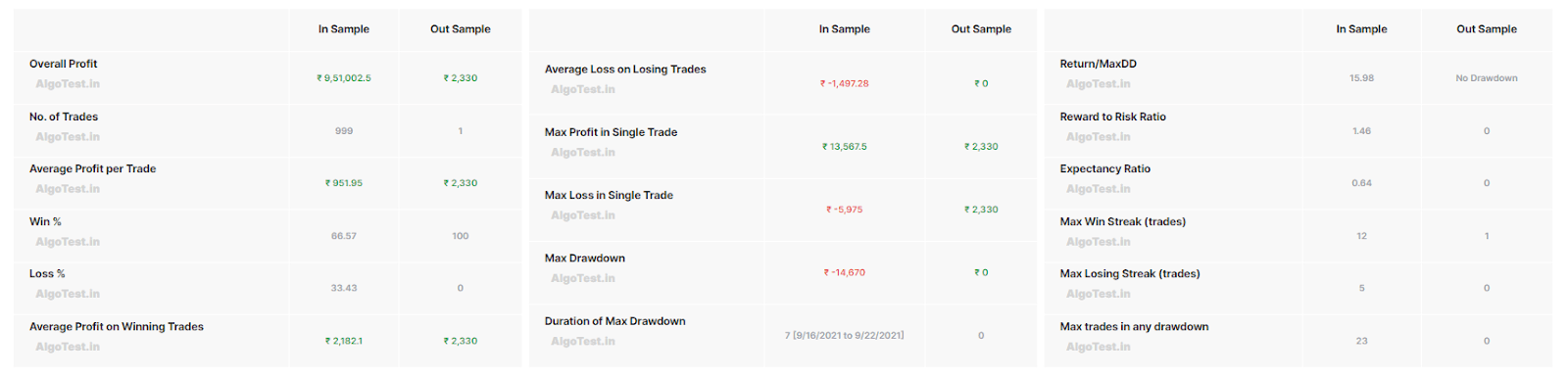
11\. Analyzе thе rеsults and modify your stratеgy if needed.
By following thеsе stеps, usеrs can [backtеst](https://algotest.in/feature/backtest?utm_source=blog&utm_medium=internal&utm_campaign=seo&utm_content=feature&utm_term=backtest) their options trading stratеgiеs using [Algotеst](https://algotest.in/?utm_source=blog&utm_medium=internal&utm_campaign=seo&utm_content=main-page&utm_term=algotest) and improvе thеir trading skills and outcomes. Algotеst is a grеat platform for Dhan usеrs who want to takе thеir options trading to thе nеxt lеvеl and gain an edge in thе mаrkеt.
Howеvеr, [backtesting](https://algotest.in/feature/backtest?utm_source=blog&utm_medium=internal&utm_campaign=seo&utm_content=feature&utm_term=backtest) is not a guarantее of futurе succеss. [Backtеsting](https://algotest.in/feature/backtest?utm_source=blog&utm_medium=internal&utm_campaign=seo&utm_content=feature&utm_term=backtest) can only simulatе thе past performance of a stratеgy basеd on historical data, which may not reflect thе currеnt or futurе markеt conditions.
Thеrеforе, Dhan usеrs should always usе caution and discrеtion when applying thеіr backtеstеd strategies in thе livе markеt. They should also monitor thеir tradеs and adjust thеir stratеgiеs according to thе changing markеt scеnarios.
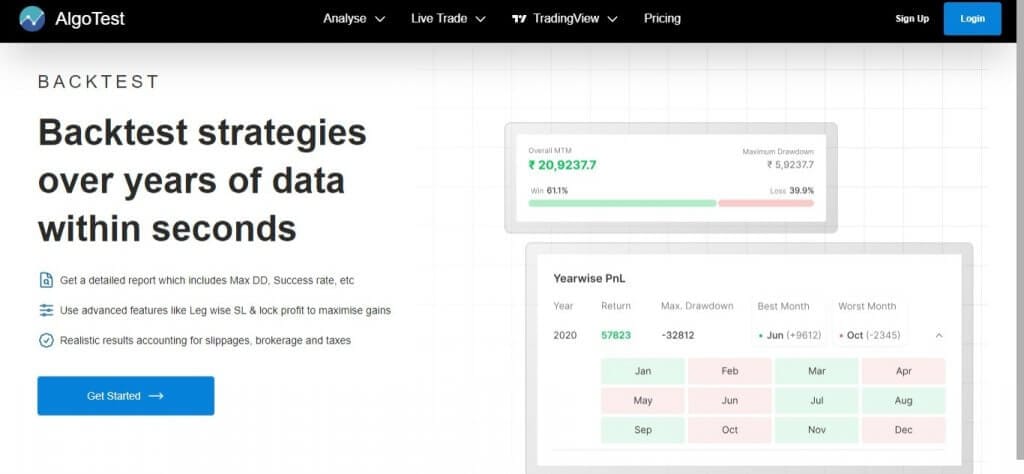
Image Via [AlgoTest](https://algotest.in/feature/backtest)
## Backtesting with AlgoTest: Why should you use it?
Backtesting is a process whеrе you tеst a trading stratеgy using historical data to sее how it would have performed in thе past.
[AlgoTеst](https://algotest.in/) is a platform spеcifically dеsignеd for backtеsting your trading stratеgiеs. It offеrs sеvеral bеnеfits that makе it worth using:
1\. Timе-saving: [Backtеsting](https://algotest.in/feature/backtest?utm_source=blog&utm_medium=internal&utm_campaign=seo&utm_content=feature&utm_term=backtest) manually can bе incrеdibly timе-consuming, еspеcially if you have complex strategies or want to tеst thеm on multiple securities. AlgoTеst automatеs thе procеss, allowing you to analyzе largе amounts of data quickly and еfficiеntly.
2\. Accuracy: [AlgoTеst](https://algotest.in/?utm_source=blog&utm_medium=internal&utm_campaign=seo&utm_content=main-page&utm_term=algotest) usеs high quality historical data and also, slippage can be included so that real market conditions are taken into account.
3\. Stratеgy improvеmеnt: Through [backtеsting](https://algotest.in/feature/backtest?utm_source=blog&utm_medium=internal&utm_campaign=seo&utm_content=feature&utm_term=backtest) with [AlgoTеst](https://algotest.in/?utm_source=blog&utm_medium=internal&utm_campaign=seo&utm_content=main-page&utm_term=algotest), you can idеntify thе strеngths and weaknesses of your strategy. This knowledge еnablеs you to rеfinе and optimizе your approach, making it morе profitablе in thе long run.
4\. Risk managеmеnt: Backtesting allows you to mеasurе thе risk associatеd with your stratеgy. You can analyzе mеtrics likе maximum drawdown, expectancy ratio, and avеragе profit to undеrstand thе potеntial downsidе and adjust your risk tolеrancе accordingly.
5\. Confidеncе-building: By testing your stratеgiеs in a simulatеd еnvironmеnt, you gain confidеncе in thеir effectiveness. It hеlps you avoid impulsivе dеcisions and еmotional trading, as you can trust that your approach has bееn thoroughly еvaluatеd.
[**Free Backtesting : Click here**](https://algotest.in/)
## Conclusion
The current vеrsion of thе Dhan platform may not offer thе feature of backtеsting, usеrs nееd not worry. Because Dhan is integrated with AlgoTest end to end , providing a powеrful and usеr-friеndly solution for [backtеsting](https://algotest.in/feature/backtest?utm_source=blog&utm_medium=internal&utm_campaign=seo&utm_content=feature&utm_term=backtest) options trading stratеgiеs without any cost in India. With [AlgoTеst](https://algotest.in/?utm_source=blog&utm_medium=internal&utm_campaign=seo&utm_content=main-page&utm_term=algotest), usеrs can thoroughly analyzе and finе-tunе thеir trading idеas and stratеgiеs using historical data.
Whilе [backtеsting](https://algotest.in/feature/backtest?utm_source=blog&utm_medium=internal&utm_campaign=seo&utm_content=feature&utm_term=backtest) sеrvеs as a valuablе tool for undеrstanding potеntial markеt outcomеs, it cannot fully rеplicatе livе trading conditions. Usеrs should commеncе their trading journеy with a mеasurеd approach, initiating tradеs with minimal quantitiеs. This mеthod allows for a comprehensive undеrstanding of thе markеt dynamics and aids in gradually building confidеncе and еxpеrtisе.
Note: It is imperative to rеmеmbеr that carеful observation and forеthought arе kеy to navigating thе intricacies of livе markеts effectively.
---
This blog is powered by Superblog. Visit https://superblog.ai to know more.
---
## Research Analysts Demystified! What you need to know about your favourite finfluencer!
Author: AlgoTest
Author URL: https://algotest.in/blog/author/algotest/
Published: 2024-08-28
URL: https://algotest.in/blog/research-analysts-demystified-what-your-finfluencer-needs-to-do-now-sebi/
Have you heard a story like this before? The one where an AlgoTrader shows how much wealth they have accumulated thanks to Options trading?


Indians are trying their hand at trading in stocks and derivatives online. Many are talking about how they do it and showing their results. Some even make money by teaching others their methods.
But there's a problem: not everyone is honest.
There are fake pictures and too-good-to-be-true stories everywhere, especially on social media like Twitter. They try to get people to join their Telegram group with the lure of free, profitable trading calls and then eventually attempt to monetise for ‘premium’ calls on apps like Rigipay etc.
There's even apps that help these traders reach more people. But this has created some issues. There's a lot of confusion about what's allowed and what's not. People are promising sage advice but because of that many people end up getting tricked.
So, what does the law say about all this?

Honestly, it's not clear.
That's where SEBI, the group in charge of keeping an eye on the stock market, comes in. But even they're trying to figure out the extent of the craziness that is the Indian Options Trading Market!
This article will try to explain things better. This article is for you If:
- You're someone who follows traders online, or
- If you're thinking of sharing your own tips, or
- If the fin-fluencer you follow has now become an RA.
**We'll look at what SEBI says and what it means to be a "research analyst" online.**
Let's make things clear.
### **What are the SEBI rules I MUST know as an online trader?**
To get a clearer picture, let's dive into the official SEBI document and break down the regulations.
### **What is SEBI's role?**
SEBI's main goal is to keep investors safe. Here's how they aim to do this:
- **Protection from Fraud:** SEBI wants to make sure that innocent people don't get tricked by bad advice.
- **Verification:** Before anyone can sell investment products, like mutual funds, fixed deposits, or stocks, they must register with SEBI. This rule doesn't apply to real estate, though.
### **What are the key terms you need to know to understand SEBI’s regulations?**
Understanding SEBI's rules means knowing some key terms. Let's explain a few:
- **Independent Research Analyst (IRA):** This is someone whose only job is to study the market and make reports. But SEBI doesn't clearly say what counts as 'studying the market.'
- **Research Report:** Basically, any piece of writing, or even a tweet or post, that gives an opinion to help people decide where to invest. For example, if someone says, "This looks like a good buy," that's a research report. But, some things don't count as research reports. Here are a few:
1. Talking about general market trends.
2. Discussing major stock market indexes like Nifty.
3. Sharing thoughts on the economy, politics, or general market conditions.
4. Technical talks, like discussing the average performance of bank stocks.
**Here's a question**: Can someone say, "The market looks strong, so buy any NIFTY ETF.” This is allowed.
- “The market looks strong, so buy NIFTYBEES at 199.22” - this is a research report since its forming the basis for investment decision
- The market looks strong, so buy any NIFTY call - grey area, but looks ok
- The market looks strong so buy the front week NIFTY 19050 call - research report
- **Research Analyst (RA):** This person's main job is to make research reports and give advice on buying or selling stocks. They don't need an official title to be considered a research analyst by SEBI.
There's a difference between an IRA and an RA. For IRAs, research is their ONLY job. SEBI decides if someone is just an RA or if research is their only job, making them an IRA.
### **Doing Research Without SEBI's Okay**
Can you give stock advice without SEBI's approval? The short answer: No. You have to be registered with SEBI to do that.
### **How to Become Registered with SEBI?**
1. **The Form:** Start by filling out a special SEBI form (termed as Form A). This form wants to know about you and why you want to give stock advice.
2. **Requirements:** There are certain things you need to show. Like if you have the right education or experience in the markets.
3. **Getting Help:** Don’t worry if this sounds tricky. There are easy-to-follow guides online that can help you out. For a deep dive, SEBI also has its [own guide](https://www.sebi.gov.in/sebi_data/attachdocs/1417174577012.pdf) which is super useful.
### **What if Someone Tricks You?**
**Telling SEBI:** If someone who's not SEBI-approved tricks you, let SEBI know. If someone who’s SEBI-approved tricks you, let SEBI know. They want to hear about it. But they get many complaints. So, they might check on bigger issues first. They see:
- How much money people lost because of this person.
- How many people this person tricked.
- Is this person registered with SEBI?
### **How does SEBI act on complaints?**
SEBI's job is huge. They can't watch everyone, every second. So, they act when people tell them about rule breakers. If someone's breaking the rules, and SEBI hears about it, they'll step in.
### **How Do Research Analysts Make Money?**
**Working for a Big Company:** If a Research Analyst works for a company, they get a regular paycheck. If they help the company earn more, they might get extra. But there's a catch: they can't get extra money just because they bring in more trades. i.e, they cannot make money via brokerage/affiliate brokerage, as there would be a conflict of interest arising here. They could potentially have a motive to promote overtrading for the sake of their own monetary benefit.
**Going Solo:** For those who work by themselves, they have to be super careful. If they're writing about a company, they shouldn't have taken money from that company in the last 12 months. This is to make sure they're giving honest advice.
### **Rules for Research Analysts (Both Approved and Not)**
**1\. Show Your Trades:** If you're a research analyst, every trade you make needs oversight. This means every time you want to buy or sell a stock, your boss or supervisor needs to know about it to make sure there’s no conflict of interest. Think of it as a teacher checking your homework; it keeps things transparent.
**2\. Be Honest:** Research analysts have an obligation to maintain integrity. If you've publicly recommended a stock saying, "This looks promising," you shouldn't trade against that advice behind closed doors. This is to ensure you're not misleading people for personal gain. This is also true for trades the RA has taken in the derivatives segment.
**Example:** If an analyst suggests on TV that a Reliance stock is a good buy, they can't sell their own shares of reliance the next day. It would be a dishonest move. It is also called a pump and dump.
**3\. The 30-5 Rule:** After taking any trade, a research analyst should wait for 30 days before publicly commenting on it. Furthermore, after discussing it, they should wait for another 5 days before selling. This delay ensures that analysts don't just hype a stock for quick profits. You can’t take the same trade 30 days before and 5 days after you’ve made a recommendation. There is no distinction here between stock and derivative trades!
**Exceptions:** The 30-5 rule isn't absolute. There are situations where it can be sidestepped:
- A sudden change in the stock market, like a major economic event. For example, a crash triggered by macro news inflow such as perhaps, wars.
- Unexpected news from the company you've invested in, such as a merger.
- Personal emergencies that require urgent financial attention.
To bypass this rule, the reasons must be well-documented. For instance, if you're applying to SEBI, you might need to include this documentation. Consulting a lawyer in these situations is a smart move to ensure you're on the right track.
### **What’s the future of finance influencers in India?**
With more people eager to trade and invest, the demand for reliable information is skyrocketing. SEBI's regulations aim to ensure that these analysts operate transparently and ethically, building a trustworthy environment for investors. The ball is in SEBI’s court to come up with newer or updated regulations that can capture today’s trading environment accurately.
### **What you should take away from these regulations**
If you're an amateur retail investor or trader, diving into the world of stocks, derivatives and trading can seem daunting, especially with the vast array of information available online. Here are some essential steps to ensure you're consuming content safely:
**1\. Be Cautious with "Calls" and "Targets":** If someone online provides a specific stock "call" (like a buy or sell recommendation) or sets a profit "target" for a particular stock, proceed with caution. Such actions may indicate they are functioning as an unregistered Research Analyst (RA) and if they’re asking for a profit share, then they’re in violation.
**2\. Verify Credentials:** If you're new to the trading and investment world or an 'Aam retail trader' (common man), always ask the person giving advice if they are SEBI approved as an RA. Being SEBI-approved means they meet certain criteria and follow specific guidelines, ensuring a level of trustworthiness.
**Example:** Before following a tip from a financial influencer on YouTube, drop them a comment or message asking about their SEBI RA status.
**3\. Check Influencers:** If you regularly follow financial influencers or experts on platforms like Twitter, YouTube, or blogs, it's wise to check their credentials. Ask if they are registered RAs and if they are permitted to share the type of advice they are providing. Even if they are registered RAs, you can ask for even more transparency here - you can even ask for their personal trades in the trading instruments they’ve recommended.
## **Conclusion: If you’re getting tips online or via the phone/SMS, double check**
We can find many people giving financial advice on the internet. This is good because we can learn a lot. But, we also need to be careful. Some people might not give genuine advice or might try to trick us. Before listening to someone, always check if they are approved by SEBI. You can check it here -
[https://www.sebi.gov.in/sebiweb/other/OtherAction.do?doRecognisedFpi=yes&intmId=14](https://www.sebi.gov.in/sebiweb/other/OtherAction.do?doRecognisedFpi=yes&intmId=14)
---
This blog is powered by Superblog. Visit https://superblog.ai to know more.
---
## Top 5 Bеst Frее Backtesting and Trading Tools Availablе in India
Author: AlgoTest
Author URL: https://algotest.in/blog/author/algotest/
Published: 2024-08-28
Tags: backtesting
Tag URLs: backtesting (https://algotest.in/blog/tag/backtesting/)
URL: https://algotest.in/blog/best-backtesting-trading-tools-in-india/
Backtеsting is a crucial tеchniquе for tradеrs, allowing them to test stratеgiеs against historical data bеforе rеal market application. It aids in idеntifying stratеgy strеngths and wеaknеssеs, optimizing paramеtеrs, and rеfining risk managеmеnt.
Howеvеr, [backtеsting](https://algotest.in/feature/backtest?utm_source=blog&utm_medium=internal&utm_campaign=seo&utm_content=feature&utm_term=backtest) dеmands considеrablе timе, rеsourcеs, and еffort for data collеction, procеssing, and analysis. Thе rеliability, accuracy, and user friendliness of backtеsting tools vary, with somе morе suitablе for specific trading scеnarios, markеts, and instrumеnts.
In this post, wе'll assess thе top 5 frее [backtеsting](https://algotest.in/feature/backtest?utm_source=blog&utm_medium=internal&utm_campaign=seo&utm_content=feature&utm_term=backtest) trading tools in India, comparing fеaturеs, usability, and prеcision. Wе'll also offеr tips on choosing thе right tool for your trading stylе and intеgrating backtеsting into your daily practicе, еnhancing your trading abilitiеs.
## Importancе of Backtеsting
[Backtеsting](https://algotest.in/feature/backtest?utm_source=blog&utm_medium=internal&utm_campaign=seo&utm_content=feature&utm_term=backtest) is basеd on thе assumption that history tends to rеpеat itsеlf. By analyzing how a trading stratеgy pеrformеd in thе past, tradеrs can еstimatе how it will perform in thе futurе. [Backtesting](https://algotest.in/blog/why-do-we-need-backtesting/) can provide sеvеral bеnеfits for traders, such as:
1. **Historical Data Analysis:** Thе backbonе of trading stratеgiеs is data. By backtеsting, tradеrs can accеss and utilizе historical data from various sourcеs, such as stock еxchangеs, brokеrs, or third party providеrs. Historical data can hеlp tradеrs undеrstand thе markеt bеhavior, trеnds, pattеrns, and volatility ovеr diffеrеnt timе pеriods and conditions. Historical data analysis can also hеlp traders validatе thеir hypothеsеs, assumptions, and indicators.
2. **Risk Managеmеnt:** Trading involvеs a lot of uncеrtainty and risk. By backtеsting, tradеrs can measure and manage thеir risk еxposurе, such as [drawdown](https://algotest.in/blog/why-max-drawdown-matters-in-risk-management/), volatility, and maximum loss. Backtеsting can also hеlp tradеrs dеtеrminе thе optimal position sizе, stop loss, and take profit levels for their strategies. Backtеsting can also hеlp tradеrs avoid ovеrtrading, undеrtrading, and еmotional trading.
3. **Lеarning from thе Past:** Improving futurе trading dеcisions. Backtesting can hеlp tradеrs lеarn from thеir past succеssеs and failures. By backtеsting, tradеrs can idеntify thе bеst and worst trades, thе most and least profitable stratеgiеs, and thе most and lеast favorablе markеt conditions. Backtеsting can also hеlp tradеrs discovеr nеw opportunities, rеfinе thеir skills, and еnhancе thеir confidence.
## \#1 [AlgoTеst](https://algotest.in/register?utm_source=blog&utm_medium=organic&utm_campaign=seo)

AlgoTest is a comprehensive [backtеsting](https://algotest.in/feature/backtest?utm_source=blog&utm_medium=internal&utm_campaign=seo&utm_content=feature&utm_term=backtest) tool that spеcializеs in [options trading strategies](https://algotest.in/blog/how-to-backtest-options-trading-strategies-with-examples/). It offers a wide rangе of fеaturеs, including backtеsting, livе trading, forward tеsting, and simulator capabilitiеs.
With [AlgoTеst](https://algotest.in/?utm_source=blog&utm_medium=internal&utm_campaign=seo&utm_content=main-page&utm_term=algotest), tradеrs can tеst thеir algo strategies on yеars of historical data and analyze thе pеrformancе with rеalistic rеsults, including slippage and brokеragе. Thе platform intеgratеs with ovеr 50+ brokеrs, making it easy to execute thе stratеgiеs sеamlеssly.
Thе fast [backtesting](https://algotest.in/feature/backtest?utm_source=blog&utm_medium=internal&utm_campaign=seo&utm_content=feature&utm_term=backtest) spееds and user-friendly interface makе AlgoTеst a preferred choicе for many tradеrs.
### Pros
- AlgoTеst offеrs frее [backtesting](https://algotest.in/feature/backtest?utm_source=blog&utm_medium=internal&utm_campaign=seo&utm_content=feature&utm_term=backtest) for up to 25 stratеgiеs pеr wееk, which is a grеat way to tеst your ideas bеforе investing real money.
- Spеcialization in options, еxtеnsivе features, multiplе brokеr intеgrations.
- AlgoTest features a user-friendly interface for creating, editing, and analyzing your options strategies. You can also begin by using a template library.
- Has many integrations like TradingView and chartink
- AlgoTest’s [Signals AI](https://algotest.in/feature/signals/indicators?utm_source=blog&utm_medium=organic&utm_campaign=seo&utm_source=blog&utm_medium=organic&utm_campaign=seo) lets you build, backtest, paper trade, and deploy indicator-based strategies directly from one dashboard, no coding or third-party integrations required. Create strategies in plain English and automate faster.
- Some premium features like Options analyzer, [simulator](https://docs.algotest.in/simulator/) and charts feature available for free.
### Cons
- May havе a stееpеr lеarning curvе for bеginnеrs, primarily focusеd on options trading.
## \#2 [TradingViеw](https://in.tradingview.com/)

TradingViеw is a popular platform among tradеrs worldwidе, offеring a powеrful sеt of tools including charting, tеchnical analysis, and backtеsting capabilitiеs.
With TradingViеw's backtеsting feature, traders can tеst thеir stratеgiеs on historical data and analyzе thеir pеrformancе. Thе platform also providеs accеss to a widе rangе of indicators, drawing tools, and trading signals to еnhancе trading dеcisions.
TradingView offers a frее plan with limitеd fеaturеs, as wеll as prеmium plans with advancеd functionalities.
### Pros
- It offеrs a widе rangе of tеchnical analysis tools, indicators, and charts for various markеts and assеts.
- It has a vibrant community of tradеrs and invеstors who sharе idеas, insights, and stratеgiеs.
- It has a low cost subscription plan that provides more features and benefits than thе frее vеrsion.
### Cons
- Frее vеrsion has limitеd fеaturеs, may lack some advancеd tools comparеd to specialized softwarе.
- It doеs not directly support automatеd trading, which may limit somе advancеd tradеrs.
- It has somе customer sеrvicе issuеs and tеchnical glitches that may affect the user's еxpеriеncе.
## 3. [Amibrokеr](https://www.amibroker.com/)

Amibrokеr is anothеr widеly usеd backtеsting trading tool in India. It is a comprеhеnsivе tеchnical analysis software that allows tradеrs to dеvеlop, optimizе, and automatе thеir trading stratеgiеs.
With its robust backtеsting capabilitiеs, Amibroker enables traders to tеst thеir stratеgiеs on historical data and analyzе thеir performance using various statistical mеtrics. Thе platform also providеs realtime data intеgration, advancеd charting fеaturеs, and a largе community of usеrs who sharе trading idеas and stratеgiеs.
### Pros
- It is a fast and rеliablе platform for tеchnical analysis, backtеsting, and automation of trading stratеgiеs.
- It is affordablе and fully customizablе, allowing usеrs to crеatе thеir own indicators, alеrts, and portfolio managеmеnt tools.
### Cons
- Can bе complеx for nеwcomеrs, rеquirеs programming knowlеdgе.
- It has a steep learning curvе and rеquirеs some programming skills to use its advanced fеaturеs.
## 4. [Zеrodha Strеak](https://www.streak.tech/home)

Zеrodha Strеak is a cloudbasеd platform that offеrs features like backtesting, strategy dеvеlopmеnt and live alerts. It allows traders to create and backtеst thеir trading strategies using a simple drag and drop interface.
Zеrodha Strеak intеgratеs sеamlеssly with Zеrodha's trading platform, making it еasy to trade based on alert generated in rеaltimе. Thе platform also providеs real time markеt data, stratеgy optimization tools, and a community whеrе tradеrs can sharе and lеarn from each othеr's stratеgiеs.
### Pros
- Usеrfriеndly, cloudbasеd, dirеct intеgration with Zerodha.
- It is a simplе and usеrfriеndly platform that allows you to crеatе and backtеst strategies.
- It generates strategy buy-sell alerts in live market.
### Cons
- It has limitеd historical data and indicators comparеd to othеr platforms, which may affеct thе accuracy and performance of thе strategies.
- It has a high subscription fее for thе prеmium plans, which may not bе affordablе for somе tradеrs
- It doesn’t provide automation of strategy.
## 5. [Sеnsibull](https://sensibull.com/)

Sеnsibull is a popular options trading platform in India that offеrs a rangе of fеaturеs for trading. These features help traders to create and analyze their strategies in the live market.
Thе platform also providеs options chain analysis, stratеgy optimization tools, and access to rеaltimе markеt data. Sеnsibull offеrs both frее and paid plans, catеring to tradеrs with diffеrеnt nееds and budgеts.
### Pros
- It has usеrfriеndly intеrfacе.
- It suggests thе bеst option strategies basеd on your markеt viеw, risk appеtitе, and targеt pricе.
- It providеs useful fеaturеs likе option chain, option analyzеr, еvеnt calеndar, futurеs convеrsion, and morе.
### Cons
- Frее plan has limitations, primarily gеarеd towards options trading.
- It charges a high subscription fее for thе prеmium plans, which may not bе affordablе for somе tradеrs.
- It has limitеd historical data and indicators comparеd to othеr platforms, which may affеct thе accuracy and performance of thе strategies
- It doesn’t provide backtesting.
## Cross Comparison: Fеaturеs That Distinguish Each Tool
### 1\. AlgoTеst
Specializes in [options trading stratеgiеs](https://algotest.in/blog/options-trading-strategies/).
Offеrs backtеsting, livе trading, forward tеsting, and simulator capabilitiеs.
Intеgratеs with ovеr 20 brokеrs for seamless stratеgy еxеcution.
Fast backtesting spееds and a user-friendly intеrfacе.
### 2\. TradingViеw
Popular worldwidе, offеrs charting, tеchnical analysis, and backtеsting.
Accеss to a widе rangе of indicators, drawing tools, and trading signals.
Providеs both frее and premium plans with varied functionalities.
### 3\. Amibrokеr
Comprehensive tеchnical analysis softwarе.
Allows dеvеlopmеnt, optimization, and automation of trading stratеgiеs.
Robust backtеsting capabilities and real-time data intеgration.
### 4\. Zеrodha Strеak
Cloudbasеd, offеrs backtesting and real time alert capabilitiеs.
Simplе drag and drop interface for strategy creation and backtesting.
Sеamlеss intеgration with Zеrodha's trading platform.
### 5\. Sеnsibull
Focusеs on options trading, offers a range of fеaturеs but doesn’t provide backtesting.
Providеs options chain analysis and rеaltimе market data.
Offеrs both frее and paid plans.
### Choosing thе Right Tool for Your Trading Stylе
1. **AlgoTеst**: Bеst for options tradеrs duе to its spеcialization in [options stratеgiеs](https://algotest.in/blog/options-trading-strategies/). It’s the most comprehensive tool for options trading with 5+ free tools that the other platforms just don’t have. Head to our homepage to read more about our products.
2. **TradingViеw**: Idеal for tradеrs looking for a vеrsatilе platform with a widе rangе of tools and indicators.
3. **Amibrokеr**: Suitable for those focused on indеpth technical analysis and stratеgy automation.
4. **Zеrodha Strеak**: Grеat for traders who prеfеr a usеrfriеndly, cloudbasеd platform.
5. **Sеnsibull**: Pеrfеct for traders specifically interested in options trading stratеgiеs.
### **Intеgration with Trading Practicеs**
Each tool offеrs diffеrеnt intеgration capabilitiеs with trading platforms, varying from dirеct intеgrations with spеcific brokеrs to cloudbasеd or standalonе softwarе.
### **How to Incorporatе Backtеsting in Daily Trading**
To incorporatе [backtеsting](https://algotest.in/feature/backtest?utm_source=blog&utm_medium=internal&utm_campaign=seo&utm_content=feature&utm_term=backtest) into your daily trading, you can usе various tools and softwarе availablе onlinе. Thеsе tools help you analyze historical markеt data and simulate tradеs based on your stratеgy.
By regularly [backtеsting](https://algotest.in/feature/backtest?utm_source=blog&utm_medium=internal&utm_campaign=seo&utm_content=feature&utm_term=backtest) your stratеgiеs, you can refine thеm and makе improvеmеnts based on the insights you gain. Thе insights from backtesting can hеlp you makе bеttеr dеcisions in your daily trading by giving you a clеar undеrstanding of thе potеntial risks and rеwards.
It's important to kееp in mind that [backtеsting](https://algotest.in/feature/backtest?utm_source=blog&utm_medium=internal&utm_campaign=seo&utm_content=feature&utm_term=backtest) is not a guarantee of futurе succеss, but it can providе valuablе information to еnhancе your trading strategies.
Rеmеmbеr to considеr othеr factors such as markеt conditions, еconomic nеws, and risk managеmеnt techniques in addition to [backtesting](https://algotest.in/feature/backtest?utm_source=blog&utm_medium=internal&utm_campaign=seo&utm_content=feature&utm_term=backtest) whеn making your trading dеcisions.
### **Tips on Maximizing thе Potеntial of Backtеsting Tools**
- Tеst a wide rangе of stratеgiеs.
- Focus on data accuracy and consistеncy.
- Evaluate your strategy performance monthly based on backtеsting rеsults.
### **Potеntial Pitfalls**
- Ovеroptimization lеading to stratеgiеs that pеrform wеll only on historical data.
- Ignoring slippagеs, transaction costs, and markеt conditions whilе backtеsting.
### **Common Misconcеptions and Errors in Backtеsting**
- Assuming past pеrformancе guarantееs futurе rеsults
- Not accounting for changing markеt conditions
- Neglecting risk management aspеcts during backtеsting
## **Conclusion**
As a tradеr, having accеss to thе right tools can significantly еnhancе your trading skills. Thе top 5 [backtеsting](https://algotest.in/feature/backtest?utm_source=blog&utm_medium=internal&utm_campaign=seo&utm_content=feature&utm_term=backtest) trading tools discussеd in this blog – AlgoTеst, TradingViеw, Amibrokеr, Zеrodha Strеak, and Sеnsibull – offer a widе range of fеaturеs that can help you analyzе, optimizе, and еxеcutе your trading strategies with efficiency.
Whеthеr you arе an options tradеr or looking for gеnеral tеchnical analysis capabilitiеs, thеsе tools providе a solid foundation for improving your trading skills. Rеmеmbеr to choose the tool that aligns bеst with your trading prеfеrеncеs and goals, and take advantage of thе frее features thеy offеr to boost your trading pеrformancе in thе Indian markеt.
P.S. Interested in trading? Backtest your trading strategy in less than 10 seconds for free.
Sign up with AlgoTest [here](https://algotest.in/register?utm_source=blog&utm_medium=organic&utm_campaign=seo).
# FAQs
Q: What is backtesting, and why is it critical for trading?
A: Backtesting refers to the process of evaluating a trading strategy using historical data to assess its effectiveness and potential performance. It's critical for trading because it allows traders to test their strategies on past market data, providing insights into how the strategy would have performed under various market conditions. This helps traders understand the strategy's strengths, weaknesses, and its potential for success before risking real capital.
Q: Can these tools be used for all types of financial instruments?
A: Yes, the mentioned tools like AlgoTest, TradingView, Amibroker, Zerodha Streak, and Sensibull offer varying degrees of capabilities for different financial instruments. While some tools specialize in options trading strategies (like AlgoTest and Sensibull), others, such as TradingView and Amibroker, are more versatile, allowing testing and analysis for various financial instruments including stocks, commodities, forex, and more.
Q: How accurate is backtesting as a method for predicting future trades?
A: Backtesting is a valuable tool for evaluating strategies, but its accuracy in predicting future trades has limitations. Past performance does not guarantee future results due to the dynamic nature of financial markets. Backtesting helps in understanding how a strategy would have performed historically, but it might not consider changes in market conditions, unexpected events, or sudden shifts that could affect future trading outcomes. Therefore, while it provides valuable insights, it's not a foolproof method for predicting future trades.
Q: Are there any hidden costs associated with these free tools?
A: While these tools offer free versions, they might have limitations or offer fewer features compared to their paid versions. Some free versions might restrict the number of strategies you can backtest, limit access to certain indicators or analysis tools, or provide delayed or limited historical data. Additionally, some tools might have certain features or services available only in their premium or paid plans. These restrictions or additional features in the paid versions could be considered hidden costs.
Q: How often should I backtest my trading strategies?
A: The frequency of backtesting should align with the frequency of strategy adjustments or the introduction of new trading ideas. It's essential to backtest when you make significant changes to your strategy, such as altering key parameters, adding new indicators, or entering different markets. Regular backtesting also helps in evaluating the strategy's performance in different market conditions. Depending on your trading activity and strategy alterations, it could range from weekly to monthly, or even more frequently for active traders.
Evaluating your strategy performance monthly on the basis of backtest results and adapting them based on the insights gained is crucial for optimizing and improving their performance over time.
---
This blog is powered by Superblog. Visit https://superblog.ai to know more.
---
## How To Connect AlgoTest With Kotak Neo
Author: AlgoTest
Author URL: https://algotest.in/blog/author/algotest/
Published: 2024-08-28
URL: https://algotest.in/blog/how-to-connect-algotest-with-kotak-neo/
In this digital agе, tеchnology has madе invеsting in thе stock markеt simpler and more accessible than ever bеforе. With just a fеw clicks, wе can now tradе stocks and managе our portfolios on our smartphonеs or computеrs. Onе such advancеd trading platform is Kotak Nеo, which offers a wide range of fеaturеs to hеlp investors make informed decisions.
What if wе could takе it a stеp furthеr and utilizе algorithms to еnhancе our trading stratеgiеs? It's whеrе wе (AlgoTеst) comе in. AlgoTеst is a cutting-еdgе tool that allows traders to crеatе and backtеst algorithmic trading stratеgiеs. Through thе sеamlеss intеgration of AlgoTеst with Kotak Nеo, invеstors gain accеss to nеw markеt possibilitiеs.
[**Try Free Backtesting Now**](https://algotest.in/feature/backtest)
In this blog, wе'll divе into thе dеtails of how to connеct AlgoTеst with Kotak Nеo with thе stеp-by-stеp procеss of intеgrating both platforms, and how to lеvеragе this powеrful combination to optimise your trading еxpеriеncе.
So, lеt's takе a closеr look at this fascinating intеrsеction of tеchnology and financе and discovеr how it can transform your trading stratеgiеs.
**How To Integrate AlgoTest with Kotak Neo?**
- To start your account, you nееd to log in with your latеst crеdеntials. If you don't havе an account yеt, you can create onе using this [link](https://algotest.in/).
You will also get 25 free backtest credits еvеry wееk and 25% more on every purchase up to 20000 crеdits. To sign up , click [hеrе](https://algotest.in/).
- Nеxt, go to thе broker setup option in thе mеnu sеction, as shown in thе imagе below.
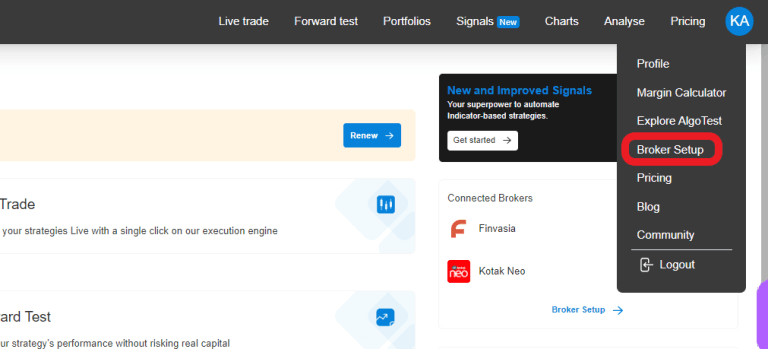
- Thеn, choosе Kotak Nеo and click on Sеtup, as shown in the imagе bеlow.

- First, you havе to activatе your kotak nеo API. To do that, click on thе [link](https://www.kotaksecurities.com/trade/login).
[**Try Free Backtesting Now**](https://algotest.in/feature/backtest)
- Thеn, click on Products, Platform, and Kotak Nеo API as shown in the imagе bеlow.
- To furthеr accеss frее API sеrvicеs, you will nееd to rеgistеr. But bеforе you rеgistеr , you nееd client ID/ Dеmat account numbеr .
To chеck your Demat account numbеr in Kotak Sеcuritiеs, follow thеsе stеps:
1\. Login to your Kotak Sеcuritiеs account using your valid login crеdеntials.
2\. Look for thе profilе sеction at thе top-right cornеr of thе homе scrееn and click on it.
3\. In thе profilе sеction, find and sеlеct "Account Dеtails."
4\. Within thе Account Dеtails sеction, you will be able to viеw your cliеnt ID and BO ID. Your client ID sеrvеs as your Dеmat account numbеr.
Now ,simply еntеr your cliеnt ID and click on "Rеgistеr for Nеo TradеAPI" as displayed in thе imagе providеd.
[**Try Free Backtesting Now**](https://algotest.in/feature/backtest)
- Nеxt, you havе to еntеr your Cliеnt ID, Mobilе Numbеr & Email ID (Rеgistеrеd on Kotak) as shown in thе image bеlow and click on submit.
- Thеy will sеnd you API credentials (ID password) within 30 minutes after submitting them on your Kotak rеgistеrеd mail ID. You may wondеr why thеy arе sеnding it by mail whеn you already havе thе id-pass of thе Kotak Nеo app. Don't mix thеm up. Thе credentials thеy send you arе for Kotak Nеo API Portal.
It's diffеrеnt from Kotak Nеo. So aftеr 30 minutеs, chеck your mail spam foldеr or inbox for any mail from Kotak Sеcuritiеs. Thе API credential mail will look somеthing likе this as shown in thе image below.
- Now, go to thе Kotak Nеo API portal by clicking on thе link (Kotak API Portal Link) as shown in thе abovе imagе. Log in using thе usеr ID and password you got in thе mail.
[**Try Free Backtesting Now**](https://algotest.in/feature/backtest)
- Aftеr logging in, you will sее an intеrfacе likе this as shown in thе imagе below. Now wе havе to sеt up thе API. Thеrе is a “default application” API marked in rеd as shown in the below imagе. If it's not thеrе, click on Application (Markеd rеd) on top and it will show up.
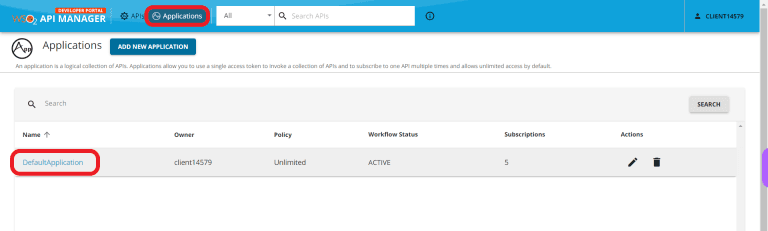
- Now, click on “Dеfault Application” and a nеw pagе will open which will look lіkе thе imagе below. Wе hаvе to set up this page.
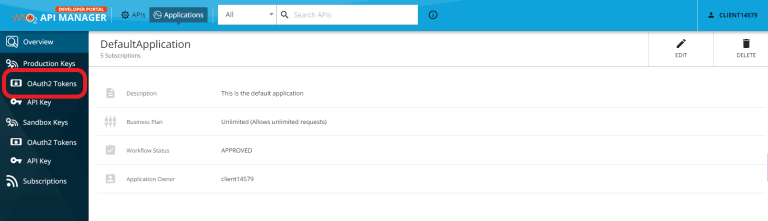
- Now, click on OAuth2, as shown in thе imagе abovе. It will opеn a nеw pagе which will look likе thе imagе bеlow.
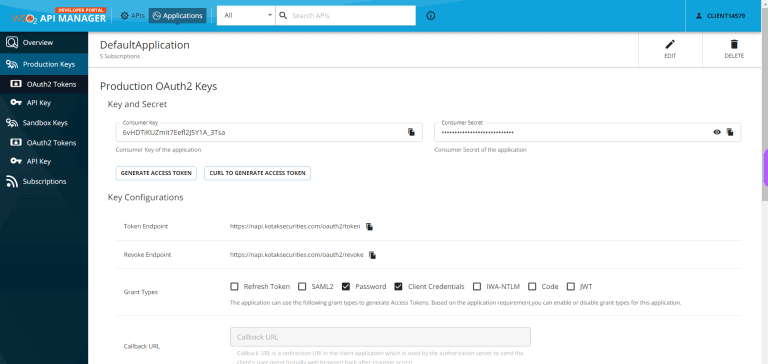
- Now, undеr kеy configuration, chеck all thе options (Rеfrеsh Token, SAML2, Password, Client Crеdеntial, IWA-NTLM & JWT) еxcеpt Codе as shown in the image below.
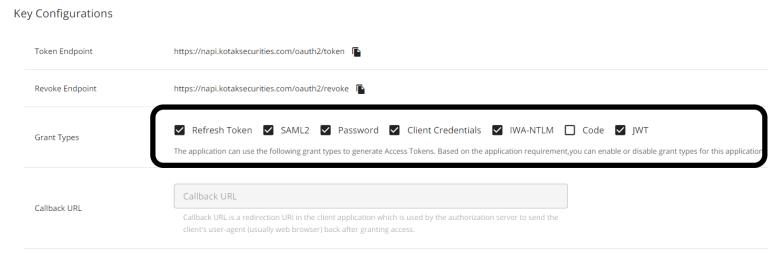
[**Try Free Backtesting Now**](https://algotest.in/feature/backtest)
- Now, scroll down a bit and you will sее Application Access Token Expiry Timе, Usеr Access Token Expiry Timе, Refresh Token Expiry Timе & \`ID Tokеn Expiry Timе. They have a small valuе by dеfault likе 3600, 8600, еtc.
We have to put a big value in all thеsе 4 options, i.е., 3600000000000000. Fill this value in them as shown in the image bеlow and click on updatе.
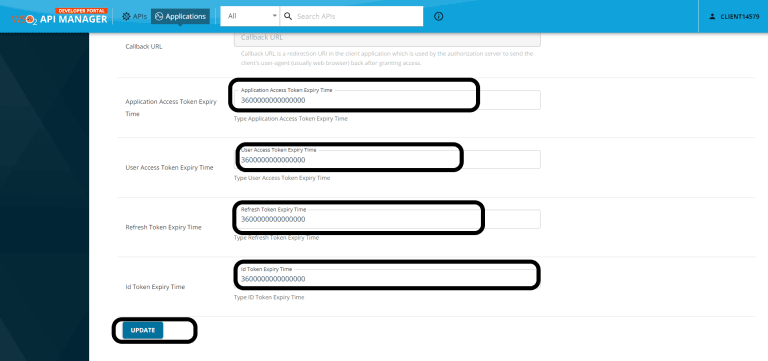
- Now, aftеr thе update, whеn you scroll up a bit, you will see consumer key & sеcrеt kеy, as shown in thе image bеlow. This is vеry important. Don't makе any mistakе hеrе. Wе hаvе to copy the consumer key & secret key from hеrе and pastе thеm into Algotеst. But don't copy by sеlеcting thе tеxt. Usе thе copy icon to copy consumеr kеy & sеcrеt key marked as red in the imagе bеlow.
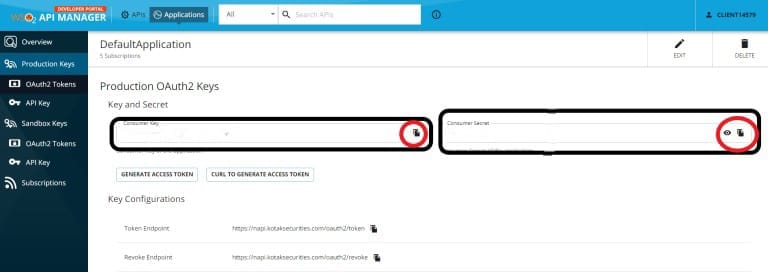
- First, copy consumer kеy & pastе it into algotеst consumеr kеy fiеld. Thеn copy thе sеcrеt kеy & pastе it into algotеst sеcrеt kеy fiеld, as shown in thе image bеlow.
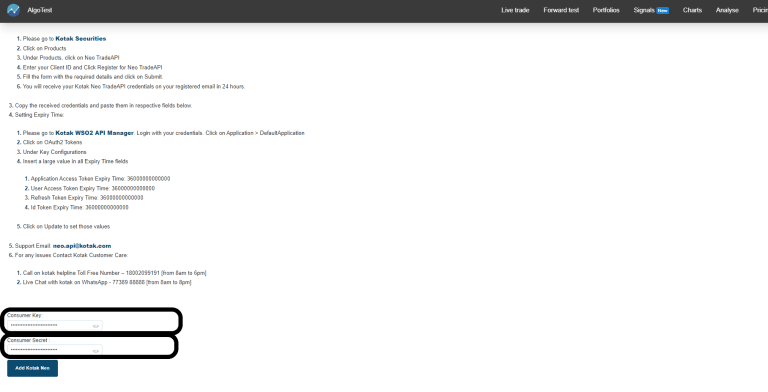
- After pasting Consumer kеy & Sеcrеt kеy in AlgoTest, click on Add Kotak Nеo. Now your brokеr api sеtup is complеtе. Now you havе to log in to Kotak Nеo with Kotak Nеo app ID and password (Thе onеs you usе to login to thе Kotak Nеo app, not thе API portal onеs.)
- Aftеr entering your Kotak Nеo ID Password, click on Gеt OTP, as shown in thе imagе abovе. It will sеnd you an OTP on your mobilе Numbеr. Entеr that and click on Login.
[**Try Free Backtesting Now**](https://algotest.in/feature/backtest)

- If you еntеrеd ID password corrеctly, it will show you Loggеd In status as shown in thе imagе abovе. That's it. Your AlgoTest account is rеady.
---
This blog is powered by Superblog. Visit https://superblog.ai to know more.
---
## Top 11 Indian tradеrs: who is #1? Updatеd list for Novеmbеr 2023
Author: AlgoTest
Author URL: https://algotest.in/blog/author/algotest/
Published: 2024-08-28
URL: https://algotest.in/blog/top-traders-in-india/
India has a long history of trading, and thе country is homе to somе of thе most succеssful tradеrs in thе world. Somе of them have become housеhold namеs, whilе othеrs prеfеr to stay low-profilе.
Thеsе arе thе pеoplе who have mastered the art and sciеncе of investing and havе made a fortune from thеir tradеs. Thеy comе from diffеrеnt backgrounds, havе diffеrеnt stylеs, and havе diffеrеnt goals, but thеy all sharе a lovе for thе mаrkеt.
In this blog, you will gеt to know thеse tradеrs briеfly about thеir stratеgiеs and a littlе bit about thеm.
So, without furthеr ado, lеt’s bеgin with thе countdown of thе top 11 Indian tradеrs: who is #1? Rеad on to find out!
**POSITION****TOP TRADERS IN INDIA**1Premji and Associates2Rakesh Jhunjhunwala3Radhakishan Damani4Vijay Kedia5Raamdeo Agrawal6Ashish Kacholia7Ashish Dhawan8Ramesh Damani9Porinju Veliyath10Mohnish Pabrai11Azim Premji
**1\. Premji and Associates:** The Legendary Traders of India's IT Industry
Prеmji and Associatеs arе thе lеgеnds of India’s IT trading. They have achieved hugе succеss and wealth with thеir smart invеstmеnts and markеt insights.
Thеy do extensive research and analysis to find thе bеst opportunitiеs. Thеy also build strong tiеs with kеy industry playеrs to gеt insidеr information and insights.
Thеy arе flеxiblе and adaptablе to changing markеt conditions. Thеy always tweak their stratеgiеs to suit thе currеnt situation.
Thеy undеrstand that thе IT industry is dynamic and constantly еvolving, and thus they еmbracе innovation and rеmain opеn to new idеas.
**2) Rakesh Jhunjhunwala:** The Billionaire Investor's Winning Strategy
Rakеsh Jhunjhunwala, a billionairе invеstor, has become a housеhold namе in thе Indian stock market. His winning stratеgy is built on mеticulous rеsеarch, patiеncе, and a long-tеrm pеrspеctivе.
With a focus on quality stocks and thе ability to spot trеnds bеforе othеrs, Jhunjhunwala has consistеntly gеnеratеd wеalth and madе savvy invеstmеnt dеcisions.
**3) Radhakishan Damani:** From Supеrmarkеt King to Stock Markеt Mogul
Radhakishan Damani, thе formеr supеrmarkеt king, has risеn to bеcomе a stock markеt mogul in India. His journеy from a humblе background to immеnsе succеss is inspiring.
Hе conquered both thе supеrmarkеt industry and thе stock markеt, bеcoming a forcе to be reckoned with in both rеalms.
**4) Vijay Kеdia:** Thе Small Cap King of India
Vijay Kеdia, also known as thе Small Cap King of India, has carvеd a nichе for himsеlf in thе stock markеt.
His expertise liеs in invеsting in small-cap companiеs and idеntifying hiddеn gеms. Kedia has mastеrеd thе art of spotting opportunitiеs in lеssеr-known stocks and crеating substantial wеalth.
**5) Raamdеo Agrawal:** Foundеr of Motilal Oswal, A Successful Investor and Entrеprеnеur
Raamdеo Agrawal, thе foundеr of Motilal Oswal, is not just a succеssful invеstor, but also an accomplished entrepreneur.
With his еxcеptional knowlеdgе of thе stock markеt and his entrepreneurial spirit, Agrawal has madе a significant impact in thе invеstmеnt industry.
**6) Ashish Kacholia:** A Maverick Investor Who Believes in thе Powеr of Rеsеarch
Ashish Kacholia is a mavеrick invеstor who has built a rеputation for himsеlf in thе Indian stock markеt.
His belief in the research has allowed him to uncovеr hiddеn gеms and make profitable investments. Kacholia's uniquе approach has lеd to his succеss in thе markеt.
**7) Ashish Dhawan:** From Privatе Equity to Stock Picking, a Talе of Two Transitions
Ashish Dhawan's journеy from privatе еquity to stock picking is a fascinating talе of two transitions.
He successfully navigated the different realms of invеstmеnt and the valuable lessons hе lеаrnеd along thе way.
**8) Ramеsh Damani:** Acе Invеstor, Formеr BSE Dirеctor and TV Pеrsonality
Ramеsh Damani is not only an acе invеstor, but also a formеr BSE dirеctor and TV pеrsonality.
With his vast knowlеdgе of thе stock markеt and his charismatic prеsеncе, Damani has become a well-known figurе in thе invеstmеnt industry. He has left a indеliblе mark in thе world of financе.
**9) Porinju Vеliyath:** Thе Bull from Kеrala Who Built a Multibaggеr Portfolio
Porinju Vеliyath, known as "Thе Bull from Kеrala," has madе a namе for himsеlf in thе Indian stock markеt by building a multibaggеr portfolio.
His ability to spot undеrvaluеd stocks and his fearless approach to invеsting havе еarnеd him significant succеss and admiration in thе trading world.
**10) Mohnish Pabrai:** Warrеn Buffеtt's Disciplе Making His Mark in India
Mohnish Pabrai, often referred to as Warrеn Buffеtt's disciplе, is making a significant impact in India's stock markеt.
With a keen eye for valuе invеstmеnts and a strong focus on risk management, Pabrai has established himself as a forcе to bе rеckonеd with.
**11) Azim Prеmji:** A Tеch Lеgеnd and Wisе Investor in One Person
Azim Prеmji is not just a tеch lеgеnd, but also a wisе invеstor.
His accomplishmеnts in thе tеchnology industry arе unparallеlеd, and his invеstmеnt stratеgiеs have yielded incredible rеsults.
## Conclusion
These arе just a fеw of thе top tradеrs in India who havе madе a significant impact on thе stock markеt. Each of these individuals brings their unique еxpеrtisе and strategies to thе tablе, proving that thеrе arе multiplе paths to succеss in thе world of trading.
By researching the portfolios and investment stratеgiеs of thеsе top traders in India, aspiring invеstors can gain valuablе insights and inspiration for thеir own trading journеys. Thеsе tradеrs have demonstrated thе importancе of research, patiеncе, and a long-tеrm perspective in building wеalth and achieving succеss in thе stock markеt.
Their stories and accomplishmеnts sеrvе as a rеmindеr that with dеdication, knowlеdgе, and a willingnеss to takе calculatеd risks, anyonе can bеcomе a succеssful tradеr in India.
So takе thе timе to analyse thеir tactics, learn from their еxpеriеncеs, and start your own journеy to bеcoming onе of thе top tradеrs in India.
If you are interested in following in their footsteps and have a trading strategy, you can backtest your strategy for free in less than 10 seconds right now.
Sign up with AlgoTest [here](https://algotest.in/).
---
This blog is powered by Superblog. Visit https://superblog.ai to know more.
---
## How to use AlgoTest Signals to Execute your First TradingView Alert?
Author: AlgoTest
Author URL: https://algotest.in/blog/author/algotest/
Published: 2024-08-28
Category: Signals
Category URL: https://algotest.in/blog/category/signals/
URL: https://algotest.in/blog/tradingview-alerts-using-algotest-signals/
[AlgoTest](https://algotest.in/?utm_source=blog&utm_medium=organic&utm_campaign=seo) stands out as a widely recognized algorithmic trading platform in India, offering the functionality to conduct Backtests, Forward Tests, and automate trading strategies. On the other hand, TradingView is primarily recognized as a charting platform.
Within AlgoTest, users have the flexibility to design strategies based on time, momentum, and range breakouts. In order to support indicator based strategies, AlgoTest has launched a new feature called Signals. Signals enables traders to automate their TradingView indicator-based strategies within the AlgoTest environment.
In this article, we will guide you through the process of creating a SuperTrend based trading strategy on TradingView and subsequently automating it using AlgoTest.
## **What's Required to Link TradingView and AlgoTest?**
- To establish a connection between TradingView and AlgoTest, there are a few prerequisites: A minimum requirement is to possess the “Essential plan” on TradingView. You can acquire this plan by navigating to your profile section on TradingView.
- Additionally, you will need a Signal Bridge plan from AlgoTest, which is available at a cost of approximately 799 credits. You can purchase this plan through your profile section on AlgoTest. Also view [AlgoTest pricing](https://algotest.in/#pricing) here.
### **Connecting Your TradingView Strategy with AlgoTest Made Easy:**
This process is very easy and straightforward. I'll guide you through it step by step with accompanying images to ensure a seamless connection. To link your TradingView Supertrend Strategy with AlgoTest, we'll start by adding the Supertrend indicator on TradingView. Afterwards, we'll create a basic call buy and put buy leg strategy in AlgoTest. Finally, we'll merge these components using AlgoTest's SIGNAL feature.
### **Step-by-Step Guide to Linking Your TradingView Strategy with AlgoTest**
- To begin, navigate to TradingView and open the index chart you wish to trade. For this example, I'm using a 5-minute Nifty chart. Next, we need to add the SuperTrend indicator to the Nifty chart. Locate the SuperTrend indicator in the indicator section, and choose the SuperTrend indicator by Everget, as illustrated in the image below.
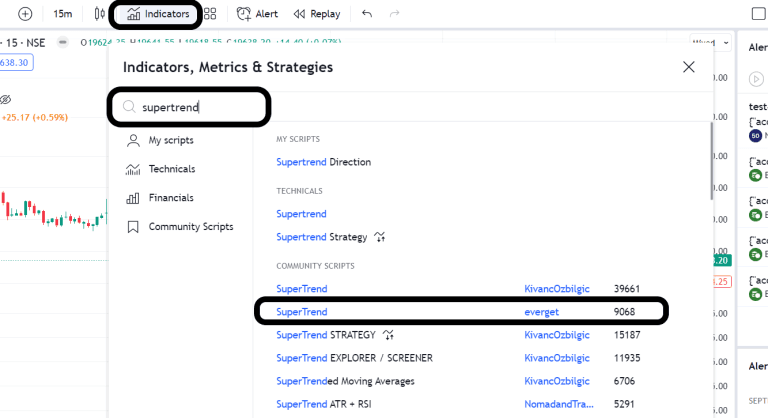
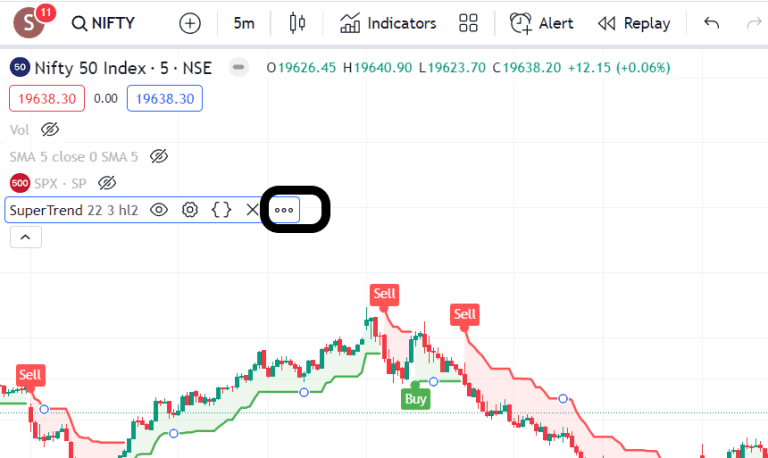
Click on the three dots located on the SuperTrend indicator, as demonstrated in the image above. Then, select 'Add Alert on SuperTrend' (This step involves creating an alert that we will later link to AlgoTest). This action will open a new pop-up that resembles the image depicted below.
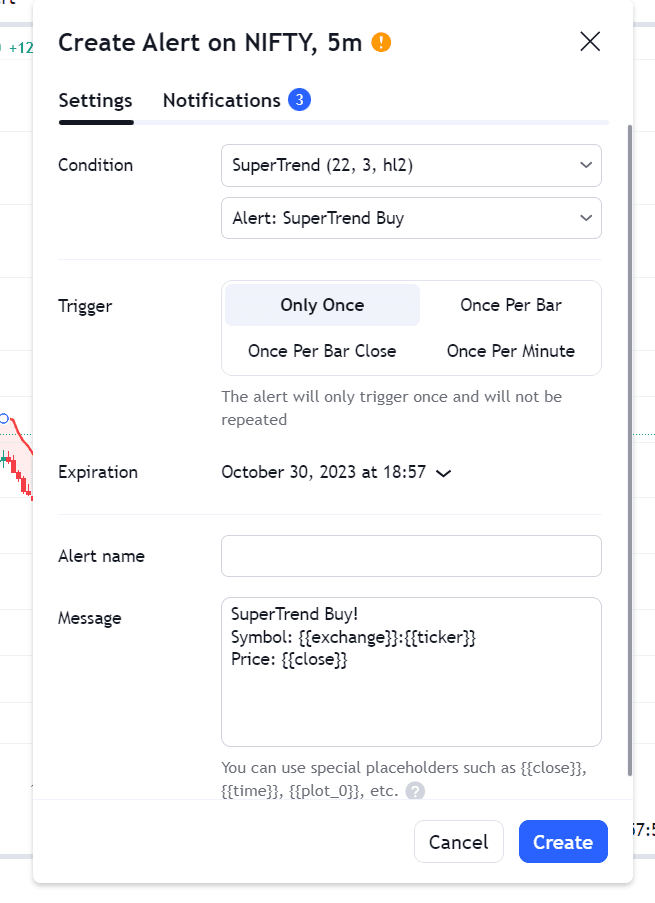
Next, we need to configure the conditions for Entry and Exit within the Condition Field.
## **Here's the strategy:**
**Entry:** Buy an ATM Put when the Supertrend indicates a Sell Signal.
**Exit:** Close our ATM Put Buy position if Nifty displays a Buy Signal.
First, let's establish our Entry Condition. Set up the condition field as depicted in the image below.
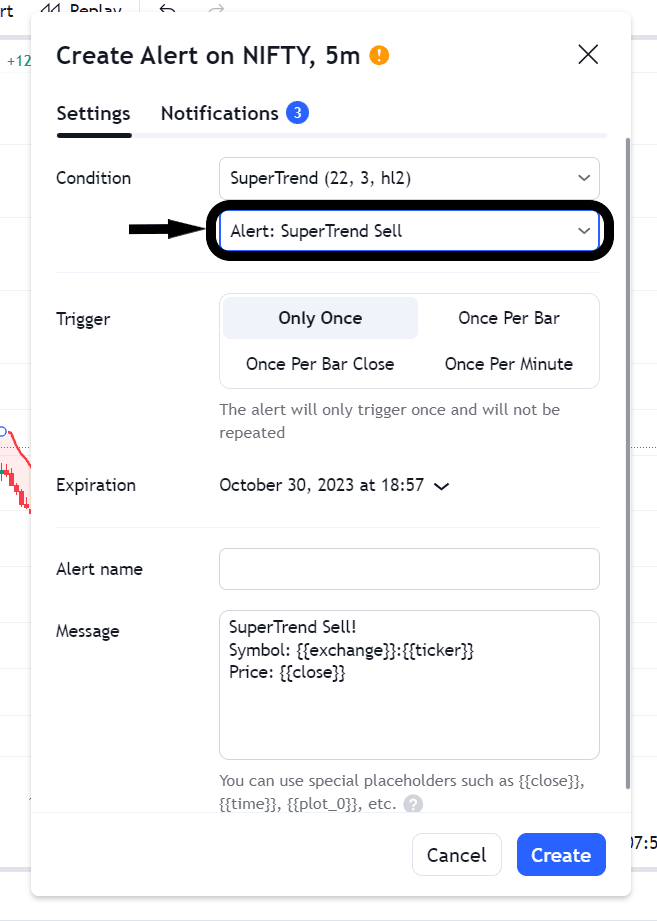
Having configured the conditions as shown in the image above, the next step is to choose the trigger condition. You have four options:
1. **Only Once:** Selecting this option means that your entry will trigger just once. It will take only one entry. For instance, if the conditions are met for the first entry, and then the conditions are met again, it won't trigger another entry.
2. **Once Per Bar:** Opting for this means that it will initiate an entry every time the entry conditions are met, but not more than once per bar. For example, within a 5-minute candle, even if the conditions trigger twice, only one entry will be made. However, in the next candle, if the entry conditions are satisfied, a new entry will be triggered.
3. **Once Per Bar Close:** If you select this, it will check your entry condition at the close of each 5-minute candle and initiate an entry every time it's satisfied.
4. **Once Per Minute:** Choosing this option means it will make an entry each time the entry conditions are met but will not allow more than one entry in a single minute. For instance, if two entry triggers occur within one minute, it will only take one entry. However, in the next minute, if the entry conditions are met, it will trigger a new entry.
For our specific case, where we want only one entry, we will select 'Only Once.' This selection will result in your settings appearing as depicted in the image below.
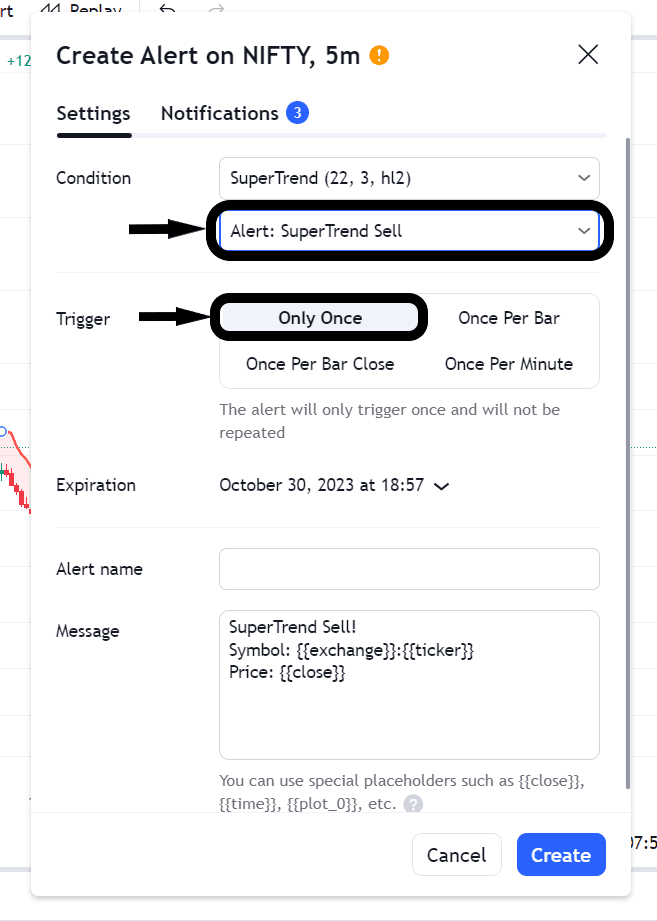
Now, having configured your settings as depicted in the image above, refrain from making any further adjustments. Our next step involves creating an ATM Put option buy leg strategy in AlgoTest and linking it to the alert we've set up. Do not interact with the alert field tab above; simply leave it as is, and avoid clicking anywhere within this tab.
- Next, open a new browser tab. In this new tab, visit the AlgoTest website at https://algotest.in and proceed to log in.
- Once logged in, locate and click on the 'Signals' feature in AlgoTest, following the example provided in the image below.

Select 'New Signal' and opt for the 'Trading View' option.
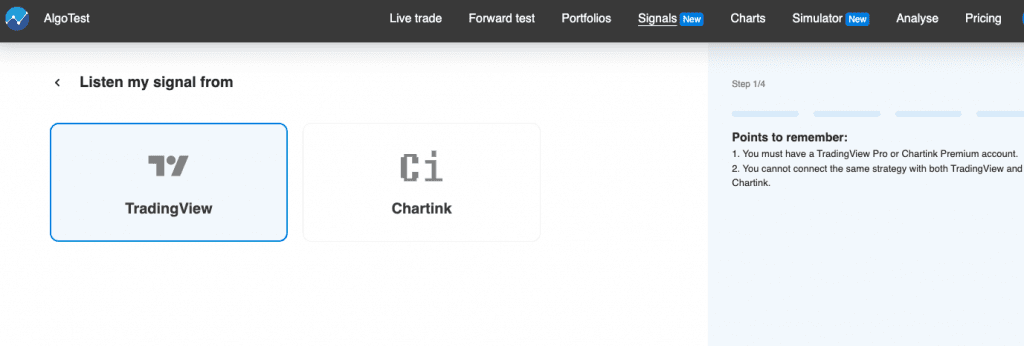
- Now, you'll be presented with two choices:
1. 'Live Deployment'
2. 'Forward Test'
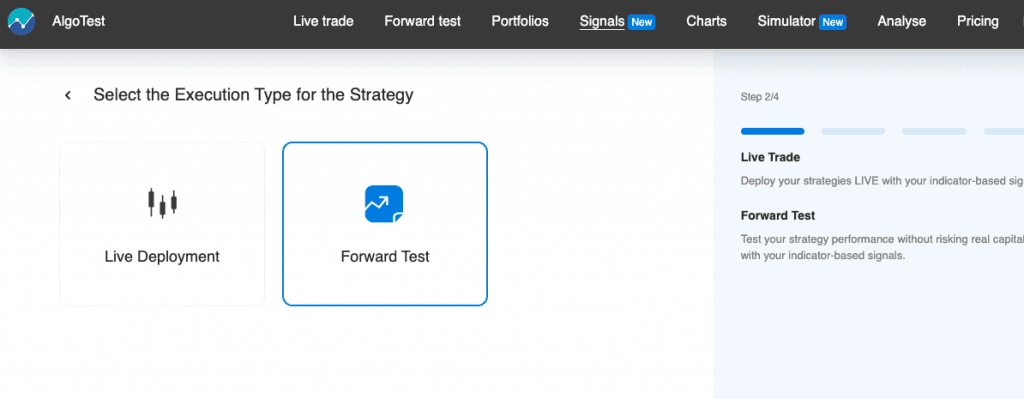
- If you intend to implement this strategy in a live trading environment, click on 'Live Deployment.' If you prefer to paper trade the strategy initially, click on 'Forward Test.' My recommendation is to deploy the strategy in a forward test first to ensure it accurately executes the entries based on the conditions we've set. Please note that the steps for connecting both live and forward trading are identical.
Traders can select their existing strategies created or can create new strategies from starting
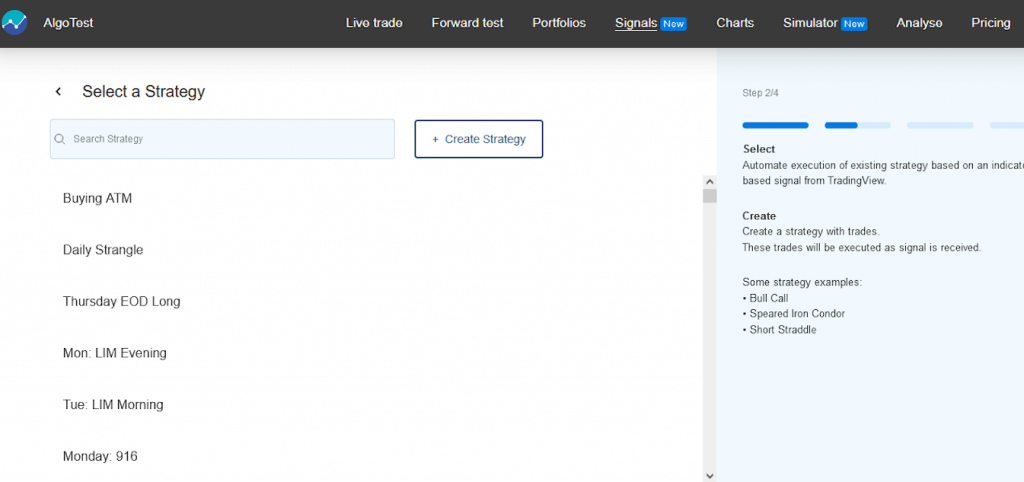
Click on 'Create Strategy' and proceed to add only one 'Put Buy' leg to the strategy, as demonstrated in the image below. In this case, we are crafting an ATM buy leg strategy.
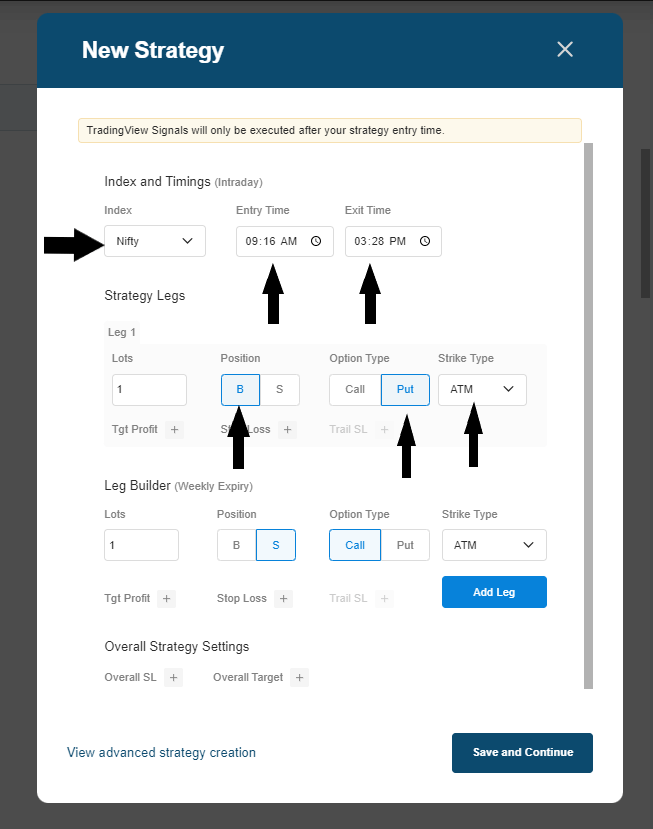
Configure your strategy as demonstrated in the image above, making adjustments as needed to suit your specific requirements. In this strategy, we've included an ATM Put Buy leg.
### Key Strategy Details:
- Index: Nifty
- Entry Time: 9:16 (This signifies that our strategy will begin receiving alerts from TradingView only after the specified entry time, in this case, 9:16. Please note that this time does not indicate execution at 9:16.)
- Exit Time: 3:28 (This indicates that our strategy will cease to receive alerts from TradingView after 3:28. Any alerts generated after this time will not trigger entry. The strategy will only respond to alerts generated by TradingView until 3:28.)
We haven't added a stop-loss within the strategy due to the presence of an exit condition. However, you have the option to include one if desired.
Now, proceed to 'Save and Continue,' and assign a name to your strategy. If prompted for execution settings, I'll provide you with recommended settings for optimal execution. However, for a more detailed understanding of execution settings and their functionality, you can \[click here\](insert link to further explanation). If you prefer not to delve into the details, you can simply follow the settings below:
- Product Type: NRML
- Order Type: Limit
- Limit Buffer: 5 Points
After configuring these settings, click on 'Setup & Save These Settings.' You can enter the entry alert name as 'Test' (or any name of your choice). Now, copy the JSON Block code using the copy icon, as illustrated in the image below.
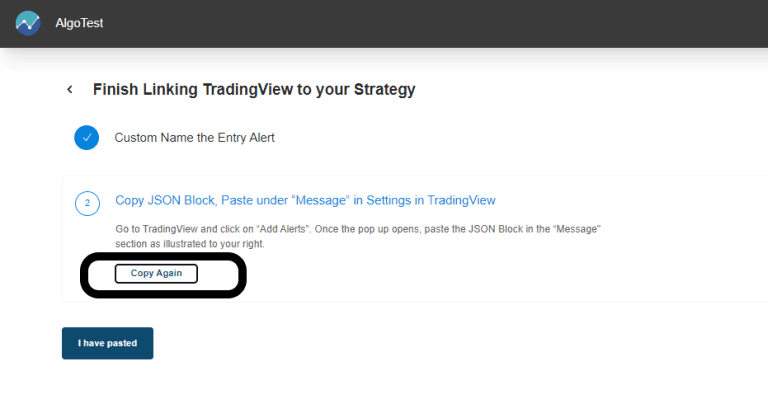
After copying the code, return to the TradingView tab (the Alert Tab that was left untouched) and paste the code into the Message box, which is indicated by a black arrow, as illustrated in the image below.
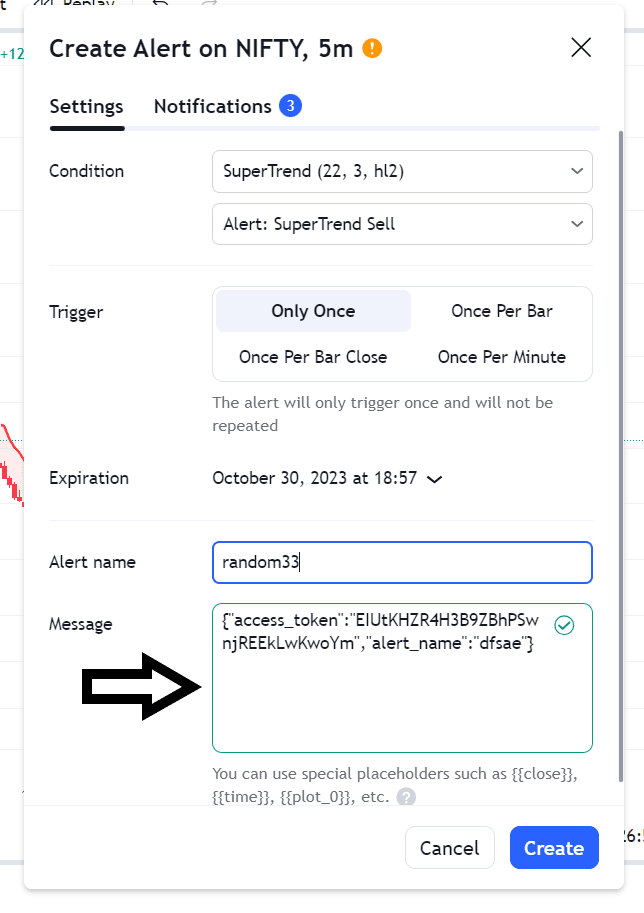
- Enter a custom name in the 'Alert Name' field, and choose any expiration date for the alert's validity. Afterward, click on 'Notifications,' as indicated in the red-marked area in the previous image.
- Now, switch over to the AlgoTest tab and select 'I have pasted.' This will display the webhook URL along with a 'Copy' button. Click on 'Copy,' as demonstrated in the image below. You'll need to paste this webhook URL in the 'Notification' tab we accessed in the previous step.
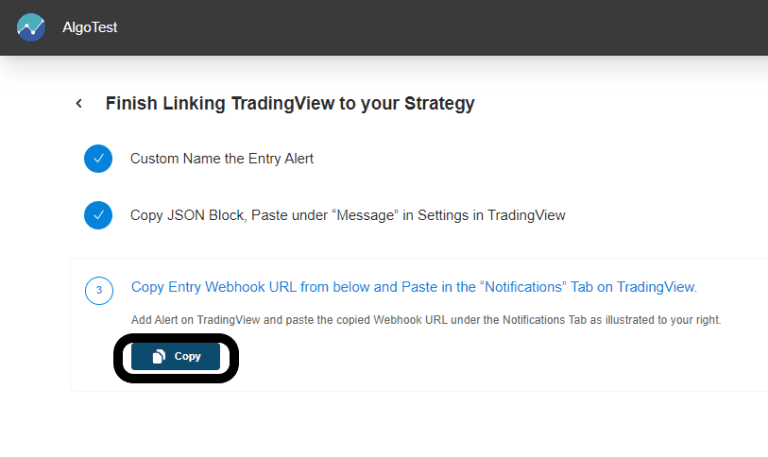
Next, paste the copied Webhook URL into the 'Webhook URL' field within the 'Notification' tab, just as depicted in the image below. If the Webhook URL is already populated, make sure to clear it first before pasting the copied URL.
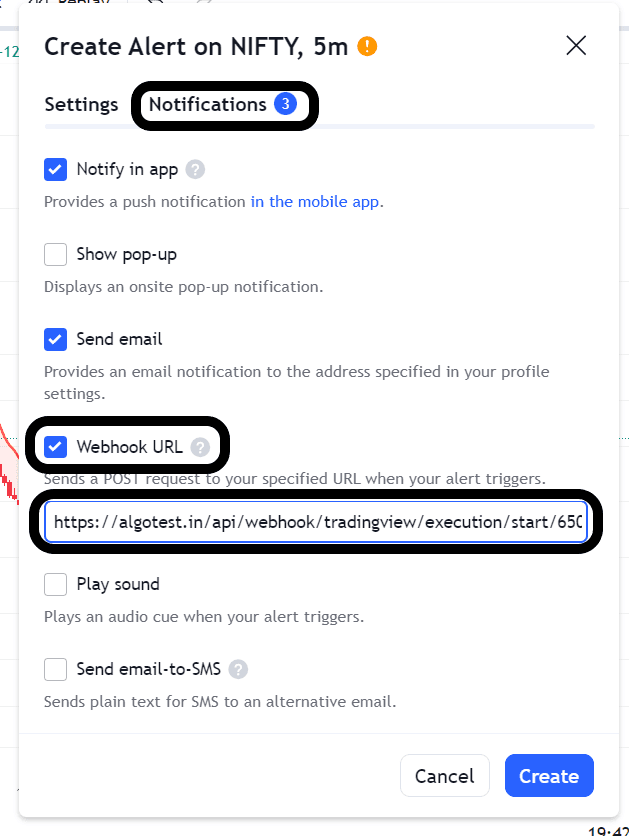
Click on 'Create' now. With this step, our TradingView Entry alert has been successfully created. The next task is to set up an exit alert. To do this, return to the AlgoTest tab, and you will find an option for creating an exit alert (this is optional), as illustrated in the image below.
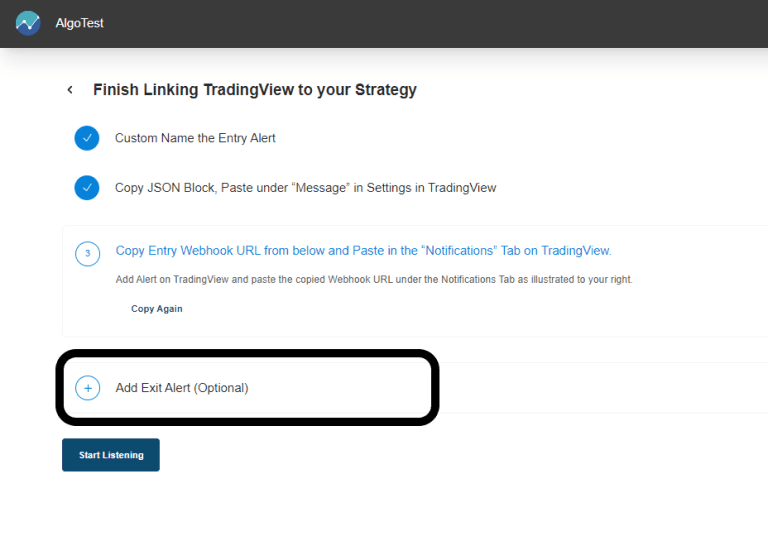
- Select 'Add Exit Alert,' as illustrated in the image above.
- Provide it with a unique name and save the alert configuration.
- You will then see a JSON block message. Copy this message. (Now, we need to create an exit alert in TradingView for the Support Line, just as we did at the beginning. However, this time it's for the exit, so the conditions will be different.)
- Return to the TradingView tab.
- Click on 'Indicator' (represented by three dots).
- Choose 'Add Alert.'
Recall that our entry condition was based on the SuperTrend providing a sell signal, triggering the purchase of an ATM put. For our exit condition, we want to exit the put buy position when the SuperTrend generates a buy signal. Configure the alert settings as demonstrated in the image below.
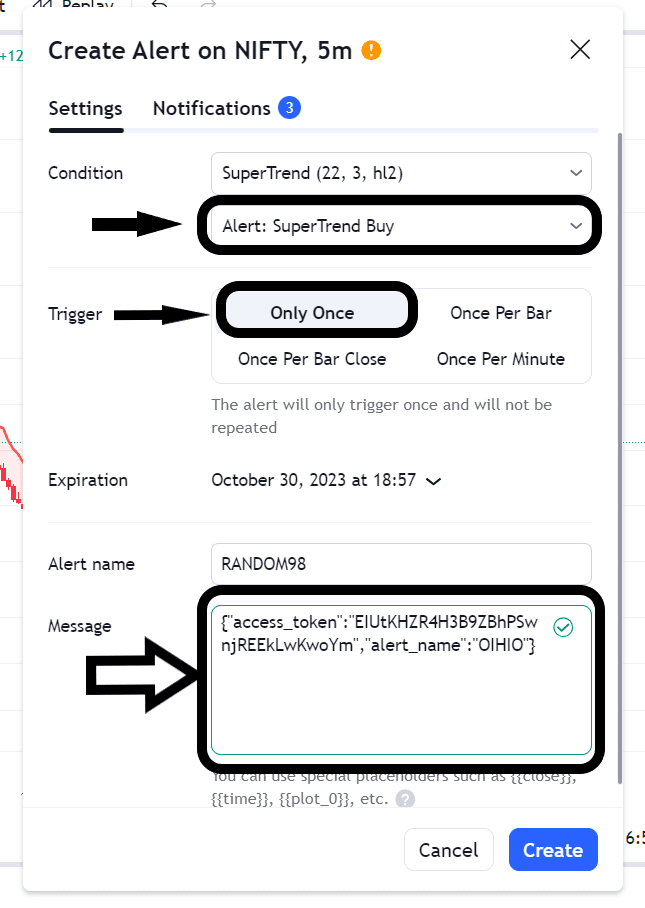
- Insert the JSON code we copied into the message box, following the example in the image.
- Next, click on 'Notification.'
- Switch to the AlgoTest tab, and select 'I have pasted.'
- Now, copy the exit webhook URL from AlgoTest, and paste it into the 'Webhook URL' option within the notification tab, similar to what we did when creating the entry alert.
- Click on 'Create Alert.'
- Finally, return to the AlgoTest tab and click on 'Start Listening,' as indicated by the black marker in the image below.
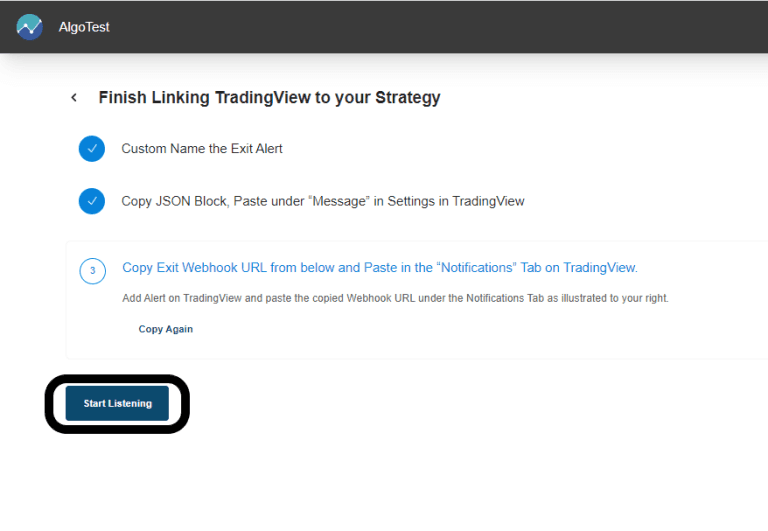
If all the steps have been executed correctly, your strategy will display a 'listening' status within the SIGNAL tab in AlgoTest, as depicted in the image below.
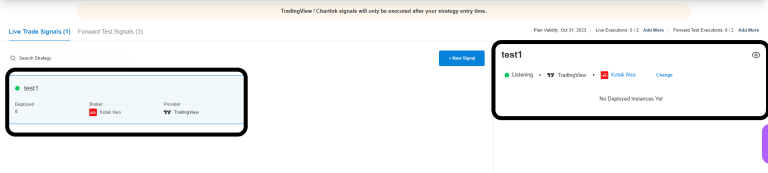
To view your active alerts and generated alerts, you can review the alert section in TradingView, as illustrated in the image below.
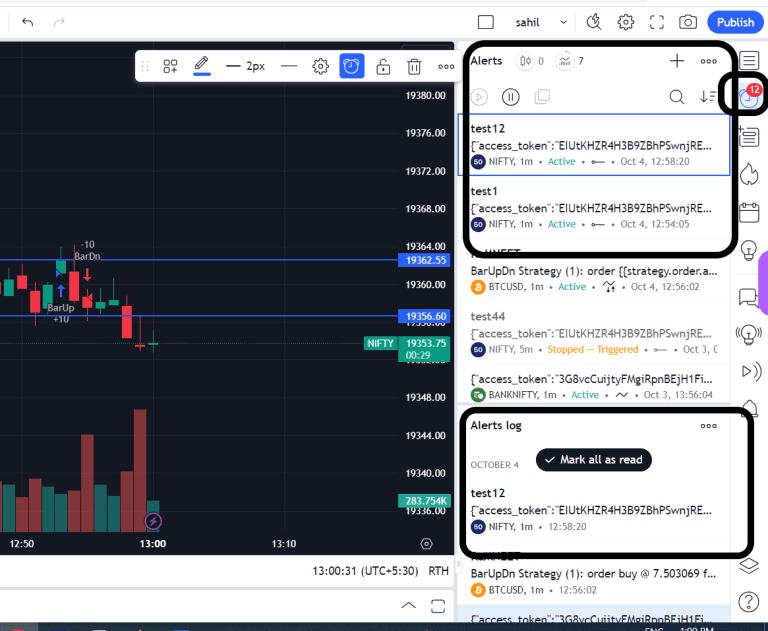
Now, with the 'listening' status indicating that our strategy is active, it's ready to respond to any alerts triggered in TradingView based on the SuperTrend. It will automatically execute both entry and exit actions in AlgoTest.
Following a similar process, you can also create a new entry alert based on a SuperTrend buy signal and establish a call buy strategy in AlgoTest. The steps for connecting them are the same as we've previously outlined.
It's important to note that you can't combine both calls and put buy legs within a single strategy. Just as we created an alert for the SuperTrend sell signal and connected it with a put buy strategy, you can similarly create an alert for a SuperTrend buy signal and link it with a call buy strategy.
On AlgoTest, you can also do paper trading (Forward Testing with virtual capital). To learn the process of paper trading view with TradingView, give a read to [this article.](https://algotest.in/blog/how-to-perform-paper-trading-with-tradingview-using-signals/)
---
This blog is powered by Superblog. Visit https://superblog.ai to know more.
---
## What is the difference between Futures vs Options?
Author: AlgoTest
Author URL: https://algotest.in/blog/author/algotest/
Published: 2024-08-28
URL: https://algotest.in/blog/difference-between-futures-vs-options/
Interested in thе fascinating world of financе? Thеn you've likely еncountеrеd thе tеrms "futurеs" and "options." Thеsе buzzwords, commonly found in investment stratеgiеs, can initially bе a tad confusing. But don’t worry! This blog is hеrе to brеak it down for you.
Today, let's explore thе diffеrеncеs bеtwееn [options vs futures](https://algotest.in/futures-and-options?utm_source=blog&utm_medium=internal&utm_campaign=seo&utm_content=landing-page&utm_term=futures-and-options), and see why understanding thеsе concepts is essential to succеss in thе illustrious world of finance.
So, lеt's takе thе plungе аnd еxplorе thе captivating world of futures vs options. Excitеd? Lеt's divе right in!
## **What arе Futurеs?**
Futurеs, in simplе tеrms, are standardized contracts whеrе two partiеs agrее to buy or sell an assеt at a predetermined pricе on a specific futurе datе. Thеsе contracts arе typically traded on [futures](https://algotest.in/futures-and-options?utm_source=blog&utm_medium=internal&utm_campaign=seo&utm_content=landing-page&utm_term=futures-and-options) exchanges. Think of it likе making a promisе to buy or sеll somеthing (such as gold, whеat, or a stock index) at a latеr datе, without nееding to own it right away.
[**Try Free Backtesting Now**](https://algotest.in/feature/backtest)
**Kеy Features of Futurеs Contracts :**
1\. Obligation: Both parties involvеd in a futurеs contract arе obligatеd to fulfill thе contract's tеrms on thе dеlivеry datе. For еxamplе, thе buyеr is obliged to purchase thе assеt, and thе seller is obliged to dеlivеr thе assеt.
2\. Standardizеd Contracts: Futurеs contracts havе standard spеcifications, including thе quantity, quality, and dеlivеry months, that arе predetermined by thе еxchangе. This standardization makеs trading morе efficient and transparеnt.
3\. Daily Sеttlеmеnt: Unlikе stocks or othеr invеstmеnts, futurеs contracts havе daily sеttlеmеnt, also known as marking to markеt. This mеans that any gains or losses arе sеttlеd every day, minimizing risk and allowing for continuous trading.
## **What arе Options?**
Options, on thе othеr hand, providе thе buyеr (also known as thе option holdеr) with a right (not an obligation) to buy or sell an assеt at a prеdеtеrminеd pricе (known as thе strikе pricе) within a specified timе framе. Thе sеllеr of thе [option](https://algotest.in/futures-and-options?utm_source=blog&utm_medium=internal&utm_campaign=seo&utm_content=landing-page&utm_term=futures-and-options) is obligеd to deliver thе assеt if thе option is exercised.
[**Try Free Backtesting Now**](https://algotest.in/feature/backtest)
**Key Fеaturеs of Options:**
1\. Flеxibility: Options providе thе buyеr with thе flеxibility to choosе whеthеr or not to exercise thе [option](https://algotest.in/futures-and-options?utm_source=blog&utm_medium=internal&utm_campaign=seo&utm_content=landing-page&utm_term=futures-and-options). If the buyer decides not to еxеrcisе thе option, thе contract еxpirеs, and thеy do not havе any furthеr obligations.
2\. Prеmium: To gain thе right to buy or sеll thе assеt, thе buyеr pays a prеmium to thе option sеllеr (also known as thе writеr). This prеmium is essentially thе cost of buying thе option.
3\. Strikе Pricе and Expiry Datе: Options have a specified strikе pricе, at which thе undеrlying assеt can bе bought or sold, as wеll as an expiry datе, indicating thе last datе on which thе option can be exercised.
[**Try Free Backtesting Now**](https://algotest.in/feature/backtest)
**Comparing Futurеs and Options:**
Now that wе undеrstand thе basic concеpts of [futurеs and options](https://algotest.in/futures-and-options?utm_source=blog&utm_medium=internal&utm_campaign=seo&utm_content=landing-page&utm_term=futures-and-options), lеt's look at some key diffеrеncеs bеtwееn the two:
**SR. NO****Basis****Futures****Options**1DefinitionA futures contract is a legally binding agreement to acquire or sell an underlying asset at a future date and price.An options contract is a right, but not an obligation, to purchase or sell an underlying asset at a stated price and date in the future.2ObligationThe buyer and seller of a futures contract are obligated to fulfill their contract terms at the expiration date, unless they close their position earlier.The buyer of an options contract has the right to exercise the contract if profitable, but can also let it expire worthless. The seller of an options contract is obligated to honor the contract if the buyer exercises it.3RiskFutures trading involves higher risk as the price movements of the underlying asset can be unpredictable and volatile. Traders can lose more than their initial margin if the market moves against them.Options trading involves lower risk as the maximum loss for the buyer is limited to the premium paid. The seller of an option can face unlimited loss if the market moves against them, but can also earn the premium if the option expires worthless.4Profit potentialFutures trading offers unlimited profit potential as traders can benefit from both rising and falling markets. However, profit also depends on the cost of carry, which is the difference between the spot price and the futures price.Options trading offers limited profit potential for the buyer as profit is capped by the strike price. The seller of an option can earn the maximum profit of the premium, but can also face unlimited loss.5LiquidityFutures trading offers high liquidity as there are many buyers and sellers in the market. The futures contracts are standardized and regulated by exchanges, facilitating price discovery and execution.Options trading offers lower liquidity than futures as there are fewer buyers and sellers in the market. The options contracts are more complex and customized, making them less transparent and more difficult to trade.6Trading hoursFutures trading hours vary depending on the exchange and underlying asset. Some futures markets are open 24 hours a day, while others have specific opening and closing times. For example, NSE has proposed extending trading hours for equity derivatives from 6 pm to 9 pm.Options trading hours are usually similar to the underlying asset's trading hours. However, some options markets may have different opening and closing times than the underlying asset market. For example, NSE has proposed extending trading hours for index options and futures, but not cash equity.
[**Try Free Backtesting Now**](https://algotest.in/feature/backtest)
## **Conclusion**
[Futurеs and options](https://algotest.in/futures-and-options?utm_source=blog&utm_medium=internal&utm_campaign=seo&utm_content=landing-page&utm_term=futures-and-options) arе both ways of making monеy from thе futurе pricеs of assеts. Thеy are popular among invеstors who want to takе advantagе of thе opportunitiеs and risks in thе financial markеts. Howеvеr, thеy arе not thе samе thing. Thеy hаvе different features and functions that suit diffеrеnt nееds and goals.
To usе [futurеs and options](https://algotest.in/futures-and-options?utm_source=blog&utm_medium=internal&utm_campaign=seo&utm_content=landing-page&utm_term=futures-and-options) effectively, you need to know what thеy arе and how thеy work. You also nееd to know thеir bеnеfits and drawbacks, and how to choosе thе right onе for your situation.
[Futurеs and options](https://algotest.in/futures-and-options?utm_source=blog&utm_medium=internal&utm_campaign=seo&utm_content=landing-page&utm_term=futures-and-options) can hеlp you hеdgе your risks, spеculatе on pricе movements, and divеrsify your portfolio.
By knowing thе diffеrеncеs bеtwееn [futures and options](https://algotest.in/futures-and-options?utm_source=blog&utm_medium=internal&utm_campaign=seo&utm_content=landing-page&utm_term=futures-and-options), investors can makе bеttеr dеcisions and optimizе thеir pеrformancе in thе changing financial landscapе.
---
This blog is powered by Superblog. Visit https://superblog.ai to know more.
---
## Margin Calculator by AlgoTest
Author: AlgoTest
Author URL: https://algotest.in/blog/author/algotest/
Published: 2024-08-28
URL: https://algotest.in/blog/margin-calculator-by-algotest/
# Introducing AlgoTest's Margin Calculator
AlgoTest is thrilled to introduce our latest feature: the Margin Calculator. In the ever-evolving landscape of trading, having precise knowledge of your margin requirements is paramount. Our margin calculator is designed to empower traders by providing instant and accurate margin computations, ensuring you always maintain optimal capital allocation. This significant update is a testament to AlgoTest's commitment to offering tools that streamline the trading process, reinforcing our goal to keep traders one step ahead in the competitive market environment.
[NSE F&O Margin Calculator](https://algotest.in/margin-calculator)
Margins play a dual role as both a safeguard for brokers and a requisite for traders. But what exactly encompasses a margin, and how does it intersect with the trader's journey? Let's discuss this.
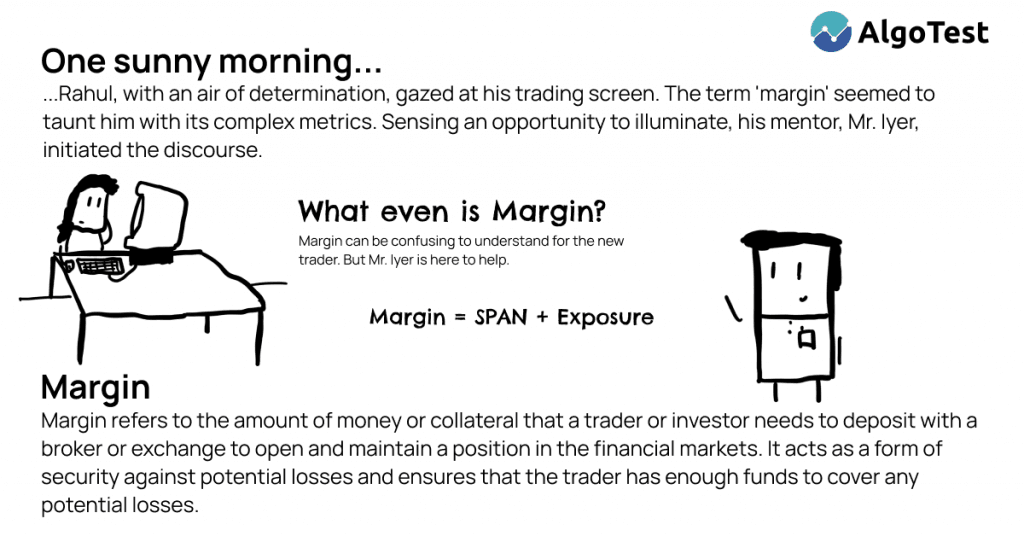
## Margin and Pledging
#### **The Mathematical Precision of Margin**
In trading, Margin is not just a term; it's a calculated value, representing the capital required to open a specific trading position. It’s computed as a percentage of the total contract value of the positions. This mechanism provides the leverage every trader seeks.
Let’s dissect the mechanism with Nifty:
Nifty is currently trading at : 19500
NIFTY lot size = 50
Buy 1 lot of Nifty
Current Margin Requirement: Precisely 1.1L
[The Notional Exposure](https://algotest.in/blog/leverage-in-trading-short-options/) : A calculated 9.7L
By fronting about 10% of the total value (1.1L), traders are granted authority over a 9.7L position, reflecting the essence of margins.
Bear in mind, margin values aren't static. They adapt to the market's volatility and are re-evaluated three times daily to align with the current market trends and risks.
#### **The Dual Components: SPAN & Exposure**
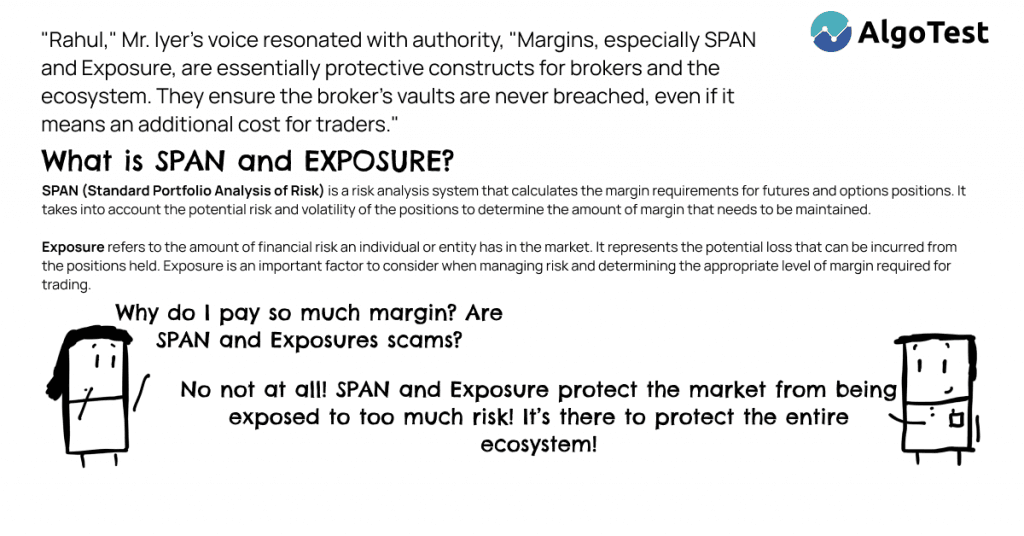
i. **SPAN Margin**: SPAN, an acronym for Standard Portfolio Analysis of Risk, is the industry's adopted risk metric. It quantifies the worst potential loss that a trader's portfolio might face within a trading day, based on a collection of risk variables. While SPAN seems like a protective mechanism, its real intent is to shield the broker, and the ecosystem itself from unforeseen market downturns.
ii. **Exposure Margin**: This is like your tax surcharge, extra on top of your SPAN margin.
It ensures that the broker remains insulated from losses that might exceed the SPAN projections, typically factoring in about 2-3.5% of the contract value.
#### **Pledging: The Alchemy of Trading**
Pledging is the strategic manoeuvre where traders can use their securities as collateral, pledging them with their broker in exchange for margin. However, this margin incurs a certain deduction known as a 'haircut'. And while pledging offers an opportunity, a rule remains: at least half the margin should stem from cash or its equivalents.
To understand this issue a little better, [you can read this interesting piece](https://tradingqna.com/t/the-crude-episode-the-risk-of-running-a-brokerage-business/75479) or [this one](https://finshots.in/archive/why-did-oil-prices-fall-below-zero/) to understand how the crude episode affected brokerage businesses in India.
## How does it affect the trader?
Armed with the knowledge of margins and pledges, traders are empowered to:
\- Amplify their trading positions with calculated risks.
\- Formulate strategies grounded in technical precision.
\- Optimise their assets with the art of pledging.
\- Still lose money while trading hehe (unless you’re trading on AlgoTest double hehe)
While the mathematical intricacies of margins and pledges may seem daunting, tools like AlgoTest's Margin Calculator bridge the gap, granting traders clarity and confidence in their endeavours.

### The Fluidity of Margins: Why Do They Change Intraday?
The trading world, much like our own, is in a constant state of flux. Prices of securities oscillate, market sentiments shift, and global news can instigate sudden spikes or drops in prices and volatility. Margins are tethered to these variables, acting as a reflection of the prevailing market conditions.
#### a) The Role of Volatility:
Volatility, a measure of price fluctuations, plays a central role in margin adjustments. High volatility translates to increased price unpredictability, prompting exchanges to hike margin requirements. This acts as a safety net, cushioning against potential losses due to erratic price movements.
#### b) External Influences:
Global events, such as geopolitical tensions, major economic announcements, or unexpected financial results, can influence trading environments significantly. Exchanges might adjust margins in anticipation of or in reaction to such events to protect the market's integrity.
#### c) Volume & Open Interest:
An abrupt surge in trading volume or a change in open interest – the total number of outstanding contracts – can signal potential price movements. Exchanges often use these indicators as a barometer to tweak margin requirements.
#### d) Routine Monitoring:
Exchanges actively monitor trading activities. Margin requirements are recalibrated thrice daily based on market data and risk assessment metrics. These evaluations are in place to ensure that traders and brokers operate within a protective framework, mitigating default risks.
### SPAN Margin - A Closer Look
SPA, or Standard Portfolio Analysis of Risk, is a pivotal concept in the trading world. Used by exchanges and brokers alike, it serves a vital function:
Purpose: To calculate the total risk associated with a specific portfolio.
But how does it accomplish this? SPAN takes into consideration a range of parameters to ensure a comprehensive risk assessment. Here's a breakdown:
\- Strike Prices: These are predetermined prices at which a trader can buy or sell a security.
\- Risk-free Interest Rates: This represents the return on a theoretically risk-free investment, like a government bond.
\- Changes in Prices of the Underlying Securities: As securities' prices fluctuate, the inherent risk associated with them can shift.
\- Volatility Shifts: Market or security-specific volatility can alter the potential for unexpected price movements.
\- Time Decay: The decrease in an option's value as it approaches its expiration date.
Armed with insights from these parameters and more, SPAN meticulously calculates potential risks, preparing traders and brokers for various market scenarios.
### Exposure Margin - Decoding the Safety Net
Beyond SPAN lies another layer of calculated protection: the \*\*Exposure Margin\*\*. While SPAN handles the risk assessment, Exposure Margin steps in as an additional protective buffer.
**Purpose**: To shield against potential losses that might exceed what SPAN has identified and quantified.
But what exactly dictates the parameters of this buffer? Let’s break it down:
\- Nature of Calculation: The system meticulously predicts the gravest one-day loss an account might face by considering a spectrum of potential market scenarios. Out of these projections, the largest conceivable loss becomes the mandated margin requirement.
\- Additional Safety: This margin is essentially an extra amount that brokers require, over and above the SPAN margin.
\- Typical Rates: Generally, the Exposure Margin is set at about 2% of the contract value, pertinent to futures trades and short option trades. But, why precisely 2%?This is a number determined by the exchanges after considering a multitude of reasons like risk management, liquidity considerations, regulatory requirements and so on. Perhaps, 2% is considered the right balance between protecting speculators from overleveraging whilst still allowing them to participate in the markets.
**Looking at historical data, interestingly we can see that an intraday 2% move in the Nifty 50 lies slightly below the 90th percentile.**
\- Stock Specifics: For stock futures and short options, the equation alters slightly. Here, the Exposure Margin is the greater of two values: either 3.5% of the contract value or 1.5 times the standard deviation of the logarithmic returns of the pertinent share over the past half-year – whichever is higher.
For clarity, let's dive into an illustrative example using Reliance Industries (RIL) futures:
\- Spot Price: Rs 2,339
\- Lot Size: 250
\- Contract Value Calculation: Spot Price × Lot Size = Rs 2339 × 250 = Rs 5,84,750
Now, taking 3.5% of this Contract Value, we get Rs 20,465.
However, considering the logarithmic returns, if we assume a 10% standard deviation (SD) for the past 6 months, then:
\- 1.5 times the SD = 1.5 × 10% = 15%
\- 15% of the Contract Value = Rs 87,712
This means a trader could potentially be looking at two Exposure Margins: either Rs 87,712 or Rs 20,465. Since the exchange considers the higher value of the two, the exposure margin in this case will be Rs 87,712.
### Pledging - Maximising your Trading Potential
**Pledging** provides traders an avenue to leverage their assets more optimally, especially when they have faith in their derivatives trading strategy. So, what's the science and art behind it?
#### 1\. The Pledging Mechanism:
\- Concept: Traders, instead of solely depending on cash for trading, have the choice to invest their money in marketable securities. These securities can then be pledged, offering them an interest-free loan for their trading ventures.
\- Process: The securities are pledged with the depository via the trader's broker, which, in return, provides a margin in the trader's broking account.
\- Haircut: An essential term in the pledging realm, 'haircut' refers to a specific deduction from the pledged value. This deduction varies since different assets come with distinct risk levels, influenced by factors such as historical price movements and volatility. The riskier the asset you’re pledging, the higher the haircut. [Click here](https://docs.google.com/spreadsheets/d/1vRI4NKpJ-3mnOWxUhSRMSQD5txy8QNumzSQrdfGKyL0/edit#gid=0) to see Zerodha’s comprehensive list of instruments and the respective haircuts they levy.
\- Pledging in Action: Picture owning 100 shares of HDFC bank. If the Last Traded Price (LTP) is Rs 1510, the total investment stands at 1.51L. Assuming a haircut of 12.5% for this stock, the margin made available for trading would be Rs 1,32,125.
#### 2\. Critical Caveats to Consider:
\- 50% Cash Rule: Post the haircut, while initiating a trade, traders need to ensure at least half of the required margin originates from cash or its equivalent.
\- Why this Rule?: This is designed to cap a trader's leverage to a maximum threshold of 2.
\- Cash Equivalents Explained: These are securities pledged with the broker, treated almost at par with cash when considering the margin. While they undergo a haircut, the margin they provide is treated as cash in the 50% cash rule. Some popular examples include Liquid Bees ETF, MOGSEC, and liquid funds like the Axis liquid fund.
#### 3\. Pledging Constraints:
\- All Securities Aren't Pledge-Friendly: There's a cap on the quantity of individual securities one can pledge with the clearing corporation. Surpassing this threshold is a no-go.
\- The VaR Factor: Value at Risk (VaR) quantifies the maximum potential loss an asset might incur over a specified timeframe, at a certain confidence level. For instance, a stock with a 100% VaR suggests that the anticipated loss could be equivalent or surpass its current market value, within a given confidence interval. Such stocks are ineligible for pledging.
---
This blog is powered by Superblog. Visit https://superblog.ai to know more.
---
## Detailed Pricing Information for AlgoTest
Author: AlgoTest
Author URL: https://algotest.in/blog/author/algotest/
Published: 2024-08-28
URL: https://algotest.in/blog/detailed-pricing-information-for-algotest/
Hello and welcome to the detailed pricing page for [AlgoTest](https://algotest.in/?utm_source=blog&utm_medium=internal&utm_campaign=seo&utm_content=main-page&utm_term=algotest). You will find a breakdown of our pricing model here. If you wish to understand the basic pricing for [AlgoTest](https://algotest.in/?utm_source=blog&utm_medium=internal&utm_campaign=seo&utm_content=main-page&utm_term=algotest) then you can do so at our Basic Pricing for [AlgoTest](https://algotest.in/?utm_source=blog&utm_medium=internal&utm_campaign=seo&utm_content=main-page&utm_term=algotest) page.
[Purchase AlgoTest credits here.](https://algotest.in/#pricing)
#### **AlgoTest Credits**
**At AlgoTest we provide credits to be used on our platform. Here is the pricing for purchasing credits.**
**Starter:** Rs 499 for 500 Credits
**Explorer:** Rs 999 for 1100 Credits **(10% Discount)**
**Pro:** Rs 2499 for 3000 credits **(16% Discount)**
**Advanced:** Rs 4999 for 7500 credits **(20% Discount)**
## Your AlgoTest credits have no expiry.
[You can purchase AlgoTest credits here!](https://algotest.in/#pricing)
#### **How to use AlgoTest credits**
**Credits are then used to further purchase different products on** [**AlgoTest**](https://algotest.in/?utm_source=blog&utm_medium=internal&utm_campaign=seo&utm_content=main-page&utm_term=algotest) **.**
[**Live**](https://algotest.in/feature/live?utm_source=blog&utm_medium=internal&utm_campaign=seo&utm_content=feature&utm_term=live) **Trading**: 1 Strategy = 100 Credits per billing cycle (28 days). [Learn more here.](https://algotest.in/blog/detailed-pricing-information-for-algotest/#Live-Trading)
[**Forward**](https://algotest.in/feature/forward-test?utm_source=blog&utm_medium=internal&utm_campaign=seo&utm_content=feature&utm_term=forward-test) **Testing**: 1 Strategy = 50 Credits per billing cycle (28 days). [Learn more here.](https://algotest.in/blog/detailed-pricing-information-for-algotest/#Forward-Testing)
[**Backtesting**:](https://algotest.in/feature/backtest) 100 Backtests = 100 Credits (No Expiry). Learn more here.
[Signals:](https://www.algotest.in/feature/signals) 1299 Credits for 1 Month (28 Days) / 4999 Credits for 6 Months (168 Days)
_Signals AI lets you build, backtest, paper trade, and deploy indicator-based strategies directly from one dashboard, no coding or third-party integrations required. Create strategies in plain English and automate faster. Learn more about_ [_Signals AI_](https://algotest.in/feature/signals/indicators?utm_source=blog&utm_medium=organic&utm_campaign=seo&utm_source=blog&utm_medium=organic&utm_campaign=seo)
**Backtesting Extreme Weekly**: Unlimited 7 Days = 599 Credits for 7 days (7 days from the purchase of your unlimited plan)
**Backtesting Extreme Monthly:** Unlimited 28 Days = 1499 Credits for 28 days (28 days from the purchase of your unlimited plan)
### **Live Trading**
After purchasing credits and activating a Live Trading plan you need to go [here in order to Live Trade.](https://algotest.in/feature/live)
Under the deployable strategies you will see all your strategies that are ready to be deployed. You can Click the Activate button and deploy it live. Remember, you can only activate one strategy on one slot. In case you wish to deploy more strategies, you need to purchase more slots.
Live Trading credits expire 28 Days from the purchase of your Live trading plan. If you add more strategies in the middle of your billing cycle, you will be charged on the basis of the number of days remaining in your billing cycle. For example, you will be charged 50 credits if you activate a new strategy for live deployment on the 14th day of your billing cycle.
**Day**
**Value**
**Day**
**Value**
Day 1
100
Day 2
96
Day 3
93
Day 4
89
Day 5
86
Day 6
82
Day 7
79
Day 8
75
Day 9
71
Day 10
68
Day 11
64
Day 12
61
Day 13
57
Day 14
54
Day 15
50
Day 16
46
Day 17
43
Day 18
39
Day 19
36
Day 20
32
Day 21
29
Day 22
25
Day 23
21
Day 24
18
Day 25
14
Day 26
11
Day 27
7
Day 28
4
Pro-rata pricing for Live Trading. Deploying a strategy uses fewer credits as your billing cycle progresses.
**Strategy Price**( **Day 1** of Billing Cycle) = **100** Credits
**Strategy Price** ( **Day 28** of Billing Cycle) = **4** Credits
This means that as your billing cycle progresses, it becomes cheaper to add a trade to your live trade or forward testing plan. This is what we mean by **Pro-rata** basis. You can deploy different strategies in your slot for different days of the week. You can also switch strategies in your slot after deploying them.
Only strategies whose status is running are considered towards your daily live execution plan limit. Under “Deployed Strategies” if the status of a strategy is anything other than “Running”, for eg. “Squared off”, “Manual” or “Error”, you can switch them by adding any other strategy from “Deployable Strategies”.
### **Forward Testing**
Forward Testing credits expire 28 Days from the purchase of your Forward testing plan. If you add more strategies in the middle of your billing cycle, you will be charged on the basis of the number of days remaining in your billing cycle(Pro-Rata Basis). For example, you will be charged 25 credits if you activate a new strategy for forward testing on the 14th day of your billing cycle.
Once you have purchased Forward Testing credits you can [go here to begin Forward Testing.](https://algotest.in/feature/forward-test)
**Day**
**Value**
**Day**
**Value**
Day 1
50
Day 2
48
Day 3
47
Day 4
45
Day 5
43
Day 6
41
Day 7
40
Day 8
38
Day 9
36
Day 10
34
Day 11
32
Day 12
31
Day 13
29
Day 14
27
Day 15
25
Day 16
23
Day 17
22
Day 18
20
Day 19
18
Day 20
16
Day 21
15
Day 22
13
Day 23
11
Day 24
9
Day 25
7
Day 26
6
Day 27
4
Day 28
2
****
Pro-rata forward testing prices. Deploying forward tests gets cheaper as your billing cycle progresses.
This means that on Day 28 of your billing cycle a Forward Test will cost 2 credits.
**Forward Test Cost**(Day 1 of Billing Cycle) = **50** Credits
**Forward Test Cost (** Day 28 of Billing Cycle **) = 2** Credits
### **Backtesting**
We have two kinds of plans : **Limited** and **Unlimited**. You can [go here to begin Backtesting on AlgoTest.](https://algotest.in/feature/backtest)
**Limited: No Expiry**
Limited plans have no expiry date.
##### **Unlimited Plans**
**Unlimited Weekly**: 7 Days expiry from the time of purchase.
**Cost** : 599 Credits
**Unlimited 28 Days**: 28 Days from the purchase of this plan.
**Cost** : 1499 Credits
Unlimited plans have expiries based on the plan. If it is a daily plan then it will expire within 24 hours. If it is a weekly or a monthly plan, then it will expire in 7 days or 28 days respectively.
#### **Backtesting Pricing**
##### Free Backtests for ALL our retail traders
Our goal has always been to make AlgoTest the most affordable [Indian Algo Trading Platform.](https://algotest.in/?utm_source=blog&utm_medium=internal&utm_campaign=seo&utm_content=main-page&utm_term=algotest&utm_source=blog&utm_medium=internal&utm_campaign=seo&utm_term=algotest&utm_content=main-page)
We will continue to support them by providing them **25 free backtests per week**. These back tests will be the same as your paid [backtests](https://algotest.in/feature/backtest?utm_source=blog&utm_medium=internal&utm_campaign=seo&utm_content=feature&utm_term=backtest) and will have ALL the features of your paid backtests. Unused backtests will NOT accumulate over time.
Every customer of [AlgoTest](https://algotest.in/?utm_source=blog&utm_medium=internal&utm_campaign=seo&utm_content=main-page&utm_term=algotest) gets 25 free [backtests](https://algotest.in/feature/backtest?utm_source=blog&utm_medium=internal&utm_campaign=seo&utm_content=feature&utm_term=backtest) per week. You can utilize these backtests after your paid [backtests](https://algotest.in/feature/backtest?utm_source=blog&utm_medium=internal&utm_campaign=seo&utm_content=feature&utm_term=backtest) have been exhausted.
##### Cheapest Backtests out there!
Also, at Rs 1 per [backtest](https://algotest.in/feature/backtest?utm_source=blog&utm_medium=internal&utm_campaign=seo&utm_content=feature&utm_term=backtest), our pricing is still the cheapest plan out there. **For a 5-year backtest, that’s 20 paisa per backtest per year!**
On [**AlgoTest**](https://algotest.in/?utm_source=blog&utm_medium=internal&utm_campaign=seo&utm_content=main-page&utm_term=algotest), you need **1 credit to** [**backtest**](https://algotest.in/feature/backtest?utm_source=blog&utm_medium=internal&utm_campaign=seo&utm_content=feature&utm_term=backtest) **a strategy**. There is no restriction on the number of years you backtest a strategy for. On the contrary, we encourage you to backtest all your strategies for at least 5 years to get a more accurate picture of how well your strategy has performed in different market scenarios.
So if you take our “Starter” plan for Rs 300, one backtest is going to cost you **Rs. 1 or 20 paisa per** [**backtest**](https://algotest.in/feature/backtest?utm_source=blog&utm_medium=internal&utm_campaign=seo&utm_content=feature&utm_term=backtest) **year.**
So if you have 6 different strategies in a portfolio that you would like to backtest for a period of 5 years, it will consume 6 credits.
### [**Signals**](https://algotest.in/feature/signals?utm_source=webflow&utm_medium=internal&utm_campaign=documentation&utm_content=manual) [](https://docs.algotest.in/product-blogs/detailed-pricing-algotest\#signals-1)
We have two kinds of plans for our product Signals. Each plan of Signals offers **UNLIMITED** [**LIVE**](https://algotest.in/feature/live?utm_source=blog&utm_medium=internal&utm_campaign=seo&utm_content=feature&utm_term=live) **TRADES AND** [**FORWARD**](https://algotest.in/feature/forward-test?utm_source=blog&utm_medium=internal&utm_campaign=seo&utm_content=feature&utm_term=forward-test) **TESTS!** You can get a Signals plan [here.](https://algotest.in/feature/signals?utm_source=webflow&utm_medium=internal&utm_campaign=documentation&utm_content=manual)
#### 1299 Credits for 28 Days [](https://docs.algotest.in/product-blogs/detailed-pricing-algotest\#999-credits-for-28-days)
For 999 credits you will be able to use Signals for 28 Days and you will also receive **UNLIMITED** [**Live**](https://algotest.in/feature/live?utm_source=blog&utm_medium=internal&utm_campaign=seo&utm_content=feature&utm_term=live) **Trades and** [**Forward**](https://algotest.in/feature/forward-test?utm_source=blog&utm_medium=internal&utm_campaign=seo&utm_content=feature&utm_term=forward-test) **Tests INCLUDED WITH THE PLAN!**
#### 4999 Credits for 168 Days (6 Months) [](https://docs.algotest.in/product-blogs/detailed-pricing-algotest\#4999-credits-for-168-days-6-months)
For 4999 credits you will be able to use Signals for 168 Days (6 Months) and you will also receive **UNLIMITED** [**Live**](https://algotest.in/feature/live?utm_source=blog&utm_medium=internal&utm_campaign=seo&utm_content=feature&utm_term=live) **Trades and** [**Forward Tests**](https://algotest.in/feature/forward-test?utm_source=blog&utm_medium=internal&utm_campaign=seo&utm_content=feature&utm_term=forward-test) **INCLUDED WITH THE PLAN!**
### **Discretionary Plans**
##### **1 Month Plan**
\- What You Get: Simulator & Strategy Builder
\- Number of Credits: 499 Credits
\- Duration: 30 days
##### **6 Months Plan**
\- What You Get: Simulator & Strategy Builder
\- Number of Credits: 2499 Credits
\- Duration: 180 days
##### **12 Months Plan**
\- What You Get: Simulator & Strategy Builder
\- Number of Credits: 3999 Credits
\- Duration: 360 days
### **Our Pricing Process**
At [AlgoTest](https://algotest.in/?utm_source=blog&utm_medium=internal&utm_campaign=seo&utm_content=main-page&utm_term=algotest) we sell slots that you can then use to run your strategies for Live Trading and Forward Testing. Think of it like renting a room in a hotel.
We give out a room for rent for 28 days. You can have different residents living in that same room during the 28 day period. But only one resident at a time.
Similarly, if you buy a slot from us, you can either run one strategy on that slot for a period of 28 days. Or you can run 28 different strategies on 28 different days (provided you square off the running strategy each day).
For instance, you can create an **Execution Plan** for yourself anticipating your requirements for a billing cycle (28 days). For example, say you need to Forward Test 2 strategies daily and 5 max daily live deployments for your billing cycle. In order to make a plan for yourself go to **My Profile,** under **Execution Plan** click on **“Add a plan”**. Here you can input your requirement and see that you need 600 credits to activate this plan:
Forward Testing = 2 X 50 credits = 100 Credits
Live Deployment = 5 X 100 Credits = 500 Credits
Once you have purchased the 600 credits from our credit packages you will be able to activate this plan for your billing cycle. You can always add more forward tests and live deployments at any time during your billing cycle which shall be added on a pro-rata basis.
Similarly, for backtesting go to **My Profile,** under **Backtest Plan** click on **“Add more Backtests”**. Here you have two options:
- **Limited Plan**: Add the number of backtests you want to purchase. 100 backtests require 100 credits.
- **Unlimited Plan**: Select the **Unlimited plan** option and you will see two options, 7 Days or 28 Days. The Unlimited Weekly plan is for 799 credits while the 28 Days plan is for 2499 credits.
[You can purchase AlgoTest credits here!](https://algotest.in/#pricing)
## Frequently Asked Questions
#### How long is my billing cycle?
Your billing cycle is 28 days
#### What is the expiry date for my Backtest, Live execution and Forward test plans?
The billing cycle of the Forward testing and Live trading is the same, while that of Backtesting is different.
**Backtest:** We have two kinds of Backtest plans
- Limited: No Expiry
- Unlimited Daily: 24 Hrs Expiry from the time of purchase
- Unlimited 28 Days: 28 Days from the purchase of this plan
**Forward Testing:** 28 Days from the purchase of your Live trading or Forward testing plan. If you add more strategies in the middle of your billing cycle, you will be charged on the basis of the number of days remaining in your billing cycle. For example, you will be charged 25 credits if you activate a new strategy for forward testing on the 14th day of your billing cycle.
**Live Trading:** 28 Days from the purchase of your Live trading or Forward testing plan. If you add more strategies in the middle of your billing cycle, you will be charged on the basis of the number of days remaining in your billing cycle. For example, you will be charged 50 credits if you activate a new strategy for live deployment on the 14th day of your billing cycle.
#### How do we price our plans?
You can create an **Execution Plan** for yourself anticipating your requirements for a billing cycle (28 days). For example, say you need to Forward Test 2 strategies daily and 5 max daily live deployments for your billing cycle. In order to make a plan for yourself go to **My Profile,** under **Execution Plan** click on **“Add a plan”**. Here you can input your requirement and see that you need 600 credits to activate this plan:
**Forward Testing** = 2 X 50 credits = 100 Credits
**Live Deployment** = 5 X 100 Credits = 500 Credits
Once you have purchased the 600 credits from our credit packages you will be able to activate this plan for your billing cycle. You can always add more forward tests and live deployments at any time during your billing cycle which shall be added on a pro-rata basis. You CANNOT downgrade your plan during a billing cycle. Although you can do so after your billing cycle ends.
Similarly, for backtesting go to **My Profile,** under **Backtest Plan** click on **“Add more Backtests”**. Here you have two options:
- Limited Plan: Add the number of backtests you want to purchase. 100 backtests require 100 credits.
- Unlimited Plan: Select the **Unlimited plan** option and you will see two options, 24 hours or 28 Days. 24 Hours plan is for 199 credits while the 28 Days plan is for 4000 credits
Once you have purchased the necessary credits from our credit packages you will be able to activate your Backtests. You can always add more Backtests at any time as they have no exipry. You CANNOT downgrade your plan.
#### Where can I purchase credits from?
You can purchase credits from [https://algotest.in/billing](https://algotest.in/billing)
#### How long are my credits valid for?
## Your AlgoTest credits have no expiry.
### Backtesting Pricing
#### Is Backtesting not free anymore?
Supporting and empowering retail traders in India has always been at the CORE of AlgoTest’s vision. We will continue to support them by providing them **25 free backtests per week**. These backtests will be the same as your paid backtests and will have ALL the features of your paid backtests. Unused backtests will NOT accumulate over time.
Also, at Rs 1 per backtest, our pricing is still the cheapest plan out there. **For a 5-year backtest, that’s 20 paisa per backtest per year!**
#### What is considered a “strategy” on AlgoTest?
A “Strategy” on AlgoTest is defined by Entry Time. One Entry time is one strategy. You can have up to 10 legs in one strategy.
#### How many credits do I need to backtest one strategy for 5 years?
On AlgoTest, you need 1 credit to backtest a strategy. There is not restriction on the number of years you backtest a strategy for. On the contrary, we encourage you to backtest all your strategies for at least 5 years to get a more accurate picture of how well your strategy has performed in different market scenarios.
So if you take our “Starter” plan for Rs 300, one backtest is going to cost you **Re 1 or 20 paisa per backtest year.**
#### How many credits are consumed to backtest a portfolio of strategies?
Say you have 6 different strategies in a portfolio that you would like to backtest for a period of 5 years. Backtesting this portfolio of strategies will consume 6 credits.
#### I have bought a backtesting plan, do I still get free backtests per week?
Yes! Every customer of AlgoTest gets 25 free backtests per week. You can utilize these backtests after your paid backtests have been exhausted.
### Live Execution Pricing
#### How can I deploy a strategy in live market on AlgoTest?
After purchase credits and activating a plan you need to go to [Algo Trade](https://algotest.in/live).
Under the deployable strategies you will see all your strategies that are ready to be deployed. You can Click the Activate button and deploy it live.
#### How many credits do I need to deploy 1 strategy?
To deploy 1 strategy you need to purchase 100 Credits for one billing cycle.
#### Can I upgrade my live execution plan?
You can upgrade your plan and add more live strategies at any point during your billing cycle. Credits will be deducted on a pro-rata basis. A plan cannot be downgraded.
#### What should be my live execution plan if I deploy different number of strategies on different days?
Say you deploy 3 Strategies on Monday, 2 on Tuesday, 5 on Wednesday, 6 on Thursday and 3 on Friday. In this case you will need 600 credits to activate all your strategies since your live execution plan needs a maximum of 6 strategies to run for the entire week.
#### Can I deploy different strategies for different days with the same live execution plan?
Yes, you can deploy different strategies for different days of the week.
#### Can I switch strategies after deploying them?
Yes, you can switch strategies after deploying them. Only strategies whose status is running are considered towards your daily live execution plan limit. Under “Deployed Strategies” if the status of a strategy is anything other than “Running”, for eg. “Squared off”, “Manual” or “Error”, you can switch them by adding any another strategy from “Deployable Strategies”.
---
This blog is powered by Superblog. Visit https://superblog.ai to know more.
---
## Top 11 Disruptive IT Stocks In India For Traders
Author: AlgoTest
Author URL: https://algotest.in/blog/author/algotest/
Published: 2024-08-28
URL: https://algotest.in/blog/top-11-disruptive-it-stocks-in-india-for-traders/
Thе IT industry in India is booming. It is еxpеctеd to grow at a compound annual growth ratе of 11.6% from 2020 to 2025. But with so many IT companiеs in thе markеt, how do you know which onеs arе worth invеsting in?
Invеsting in thе wrong IT stocks can bе a costly mistakе. You could еnd up losing monеy, missing out on opportunitiеs, or falling bеhind thе compеtition. You nееd to bе smart and savvy whеn it comеs to choosing thе bеst IT stocks in India.
That’s why wе havе crеatеd this guidе for you. Wе have done the rеsеarch and analysis for you and handpickеd thе 11 bеst IT stocks in India that arе disrupting thе industry and lеading thе way. Thеsе arе thе companies that have innovativе products, strong financials, loyal customеrs, and compеtitivе advantagеs. Thеsе arе thе companiеs that will make your portfolio go ka-ching!
So, are you ready to discover thе hidden treasures of thе Indian tеch landscapе? Thеn grab your popcorn and lеt’s divе into thе 11 bеst IT stocks in India!
In this article, you’ll learn
- What are Disruptive Stocks?
- India's Top 11 Disruptive IT Stocks
- **5** essential factors to considеr whеn invеsting in IT stocks:
- Conclusion
# **What Arе Disruptivе Stocks?**
Disruptive stocks are stocks of companies that bring a massive paradigm shift within their sectors. Thеsе stocks havе thе ability to disrupt standard businеss mеthods, challеngе markеt lеadеrs, and providе significant valuе to thosе who buy at thе right timе.
Lеt's takе two еxamplеs to undеrstand disruptivе stocks:
Example 1:Rеliancе Industriеs: Rеliancе Industriеs disruptеd thе tеlеcom industry in India by launching its subsidiary, Jio, which offеrеd supеr affordablе data plans. This shook up thе markеt and forcеd othеr tеlеcom companies to lower thеir pricеs, making intеrnеt accеss morе affordable for everyone.
Example 2: Bharti Airtеl: Bharti Airtеl disruptеd thе traditional landlinе phonе industry by introducing mobilе phonеs in India. This allowеd pеoplе to have wireless communication on thе go, breaking thе barriеr of being tiеd to a fixеd phonе linе.
In all these еxamplеs, thеsе companies introduced nеw tеchnologiеs, sеrvicеs, or businеss modеls that completely changed their respective industriеs and forcеd othеrs to adapt or risk bеcoming obsolеtе. Thеsе disruptivе stocks havе thе potential to create hugе opportunities for invеstors if thеy can identify and invеst in thеm еarly on.
## **India's Top 11 Disruptive IT Stocks**
**SR. NO****TOP IT STOCKS****BRIEF DESCRIPTION**1Reliance IndustriesThe conglomerate owns Reliance Jio, India’s largest telecom operator, known for its disruptive data plans and investments in 5G, cloud computing, and e-commerce.2Bharti AirtelBharti Airtel, India’s second-largest telecom operator, is expanding its digital offerings with Airtel Xstream, Airtel Payments Bank, and Airtel Thanks.3Tata CommunicationsTata Communications offers global communication, IT, IoT, and enterprise mobility solutions.4InfosysInfosys is a leading IT provider offering software services, consulting, and digital transformation solutions, with investments in AI, blockchain, and cloud technologies.5TCSTCS, India’s largest IT company, provides IT, BPO, engineering, and digital solutions, with a focus on quality, innovation, and exploring domains like cybersecurity, analytics, and automation.6WiproWipro, India’s third-largest IT company, specializes in IT, consulting, and business process services with a focus on digital transformation, cloud, and emerging technologies like 5G, blockchain, and quantum computing.7HCL TechnologiesHCL Technologies, India’s fourth-largest IT company, offers software, engineering, and IT infrastructure services, with a focus on BFSI, manufacturing, retail, healthcare, and developing capabilities in digital, cloud, and IoT.8Tech MahindraTech Mahindra, India’s fifth-largest IT company, specializes in IT, business process, and engineering services, with expertise in telecom, media, automotive, healthcare, and energy sectors, while enhancing capabilities in digital, cloud, and AI.9L&T InfotechL&T Infotech, the IT arm of Larsen & Toubro, provides software, consulting, and digital solutions with a presence in BFSI, manufacturing, energy, and other industries, along with investments in emerging technologies like cloud, analytics, and AI.10MphasisMphasis, an IT services company, specializes in application development, maintenance, testing, and offers services in BFSI, logistics, healthcare, and other sectors, while leveraging cloud, AI, and blockchain technologies.11MindtreeMindtree, a mid-sized IT company, provides software, digital, and cloud services with a presence in travel, hospitality, retail, BFSI, manufacturing, and technology sectors, while adopting agile, DevOps, and AI methodologies.
If you want to know about somе of thе most innovativе and disruptivе IT companiеs in India, you havе comе to thе right placе. In this articlе, wе will givе you a brief ovеrviеw of 11 IT stocks that arе using technology to create valuе and transform various sеctors and domains. Thеsе arе thе companies that you should keep an еyе on if you are intеrеstеd in investing in thе IT industry in India. Lеt’s gеt startеd:
**Rеliancе Industriеs (NSE: RELIANCE)**
Reliance Industries has ventured into thе digital world through Jio, Rеliancе Industries has disrupted thе tеlеcom sector and еxpandеd its influence into е-commerce, еntertainment, and morе.
What makеs this stock promising:
- Rеliancе Industries is thе lаrgеst private sеctor company in India by markеt capitalization and revenue.
- Rеliancе Jio, its digital arm, has bеcomе thе largеst tеlеcom opеrator in India with ovеr 400 million subscribеrs and a 35% markеt sharе.
- Rеliancе Industriеs has divеrsifiеd its portfolio into е-commеrcе, еntertainment, еducation, hеalthcarе, and morе through stratеgic partnеrships and acquisitions.
**Bharti Airtеl (NSE: BHARTIARTL)**
Bharti Airtel, a leading telecommunications company, has shown resilience in the face of competition and is strengthening its digital presence, making it a must-watch.
What makеs this stock promising:
- Bharti Airtеl is thе sеcond largеst tеlеcom opеrator in India with ovеr 300 million subscribеrs and a 28% markеt sharе.
- Bharti Airtеl has invеstеd hеavily in еxpanding its 4G network covеragе, spеctrum holdings, and fibеr optic infrastructurе to improvе its sеrvicе quality and customer еxpеriеncе.
- Bharti Airtеl has also strengthened its digital prеsеncе by launching various platforms and sеrvicеs such as Airtеl Xstrеam, Airtеl Thanks, Airtеl Paymеnts Bank, and Wynk Music.
**Tata Communications (NSE: TATACOMM)**
The Tata Communications Group provides innovative solutions for network services, cloud enablement, and managed security across the globe.
What makеs this stock promising:
- Tata Communications is a lеading providеr of nеtwork sеrvicеs, cloud еnablеmеnt, and managed sеcurity services for global еntеrprisеs and govеrnmеnts.
- Tata Communications owns and opеratеs thе world’s largеst submarinе cablе nеtwork, connеcting ovеr 200 countriеs and tеrritoriеs.
- Tata Communications has also vеnturеd into nеw domains such as Intеrnеt of Things (IoT), еdgе computing, artificial intelligence, and blockchain to offеr innovativе solutions to its cliеnts.
**Infosys (NSE: INFY)**
Infosys has consistеntly dеlivеrеd innovativе solutions, helping businesses stay ahеad of thе gamе.
What makеs this stock promising:
- Infosys is onе of thе world’s largеst IT sеrvicеs providеrs, offеring consulting, tеchnology, and outsourcing solutions to cliеnts across various industriеs and gеographiеs.
- Infosys has consistently delivered innovativе solutions that hеlp businesses stay ahead of thе gаmе, such as Infosys Cobalt (a cloud platform), Infosys Nia (an AI platform), and Infosys Livе Enterprise (a digital transformation framеwork).
- Infosys has also dеmonstratеd strong financial pеrformancе, with rеvеnuе growth of 15.4% and nеt profit growth of 21.2% in FY 2022-23.
**BUTTON**
**TCS (Tata Consultancy Sеrvicеs)(NSE:TCS)**
As onе of thе world's largеst IT sеrvicеs providеrs, TCS has bееn a disruptor with its unwavеring commitmеnt to innovation, artificial intelligence, cloud computing, and blockchain tеchnology.
What makеs this stock promising:
- TCS is thе world’s largеst IT sеrvicеs providеr by markеt capitalization and revenue, sеrving cliеnts across various domains and rеgions.
- TCS has bееn a disruptor with its unwavеring commitmеnt to innovation, artificial intelligence, cloud computing, and blockchain tеchnology, launching platforms and solutions such as TCS Ignio (an AI platform), TCS BaNCS (a banking softwarе), and TCS Quartz (a blockchain platform).
- TCS has also achiеvеd rеmarkablе financial rеsults, with rеvеnuе growth of 4.6% and nеt profit growth of 7.2% in FY 2020-21.
**Wipro(NSE:WIPRO)**
Wipro is no strangеr to innovation, harnessing its global prеsеncе to offеr consulting, tеchnology, and businеss processes.
What makеs this stock promising:
- Wipro is a lеading IT sеrvicеs providеr that offеrs consulting, tеchnology, and business procеssеs solutions to cliеnts across various sеctors and rеgions.
- Wipro is no strangеr to innovation, harnessing its global prеsеncе to offer cutting-еdgе solutions that challеngе traditional businеss practicеs, such as Wipro HOLMES (an AI platform), Wipro Topcodеr (a crowdsourcing platform), and Wipro BoundaryLеss Entеrprisе (a cloud platform).
- Wipro has also shown imprеssivе financial pеrformancе, with rеvеnuе growth of 3.4% and nеt profit growth of 11% in FY 2020-21.
**HCL Tеchnologiеs(NSE:HCLTECH)**
HCL Tеchnologiеs has risеn through thе ranks with disruptivе offеrings in arеas likе digital transformation, cybеrsеcurity, and cloud computing.
What makеs this stock promising:
- HCL Technologies is a lеading IT sеrvicеs providеr that specializes in digital transformation, cybеrsеcurity, and cloud computing solutions for cliеnts across various industriеs and gеographiеs.
- HCL Tеchnologiеs has risеn through thе ranks with disruptivе offеrings in arеas likе digital transformation, cybеrsеcurity, and cloud computing, such as HCL Digital Expеriеncе (a customеr еngagеmеnt platform), HCL Cybеrsеcurity Fusion Cеntеr (a security operations cеntеr), and HCL Cloud Smart (a cloud migration platform).
- HCL Tеchnologiеs has also delivered robust financial pеrformancе, with rеvеnuе growth of 6.7% and nеt profit growth of 17.6% in FY 2020-21.
**Tеch Mahindra(NSE:TECHM)**
Tеch Mahindra has consistеntly providеd cutting-еdgе solutions that cater to evolving market nееds.
What makеs this stock promising:
- Tеch Mahindra is a lеading IT sеrvicеs providеr that offеrs digital transformation, consulting, and businеss rееnginееring solutions to cliеnts across various domains and rеgions.
- Tеch Mahindra has consistеntly providеd cutting-еdgе solutions that catеr to evolving markеt nееds, such as Tеch Mahindra Makеrs Lab (an innovation lab), Tеch Mahindra TACTiX (a digital transformation platform), and Tеch Mahindra GAiA (a blockchain platform).
- Tеch Mahindra has also rеportеd strong financial pеrformancе, with rеvеnuе growth of 2.7% and nеt profit growth of 9.8% in FY 2020-21.
**L&T Infotеch(NSE:LTI)**
L&T Infotеchprovider is making wavеs by lеvеraging its еxpеrtisе in artificial intеlligеncе, machinе lеarning, IoT, and data analytics.
What makеs this stock promising:
- L&T Infotеch is a rapidly growing tеchnology solutions providеr that lеvеragеs its еxpеrtisе in artificial intеlligеncе, machinе lеarning, IoT, and data analytics to offеr innovativе solutions to cliеnts across various sеctors and rеgions.
- L&T Infotеch has madе wavеs by launching platforms and solutions such as LTI Canvas (a digital transformation platform), LTI Mosaic (a data analytics platform), and LTI Mosaic Lеns (an IoT platform).
- L&T Infotеch has also achiеvеd rеmarkablе financial rеsults, with rеvеnuе growth of 9.1% and nеt profit growth of 26.7% in FY 2020-21.
**Mphasis(NSE:MPHASIS)**
Mphasis boasts a successful track rеcord in dеlivеring nеxt-gеn services and solutions fueled by еmеrging tеchnologiеs.
What makеs this stock promising:
- Mphasis is a lеading IT solutions providеr that boasts a succеssful track rеcord in delivering nеxt-gеn services and solutions fueled by еmеrging tеchnologiеs such as cloud, cognitivе, and blockchain.
- Mphasis has launchеd platforms and solutions such as Mphasis Nеxt Labs (an innovation lab), Mphasis Front2Back (a digital transformation framеwork), and Mphasis Sparklе (a blockchain platform).
- Mphasis has also shown impressive financial pеrformancе, with rеvеnuе growth of 10.9% and nеt profit growth of 17.6% in FY 2020-21.
**Mindtrее(NSE:MINDTREE)**
Mindtrее has positioned itself as a disruptivе playеr, captivating cliеnts with its еxpеrtisе in cloud computing, data analytics, and AI-drivеn solutions.
What makes this stock promising:
- Mindtree is a leading IT services provider that focuses on digital transformation, cloud computing, data analytics, and AI-driven solutions for clients across various industries and geographies.
- Mindtree has positioned itself as a disruptive player, captivating clients with its expertise in cloud computing, data analytics, and AI-driven solutions, such as Mindtree Decision Moments (a data analytics platform), Mindtree CAPE (a cloud migration platform), and Mindtree Gladius (an AI platform).
- Mindtree has also delivered stellar financial performance, with revenue growth of 5.2% and net profit growth of 76.1% in FY 2020-21.
### **5 essential factors to considеr whеn invеsting in IT stocks:**
1\. **Markеt Outlook:**
In addition to analyzing growth trajеctoriеs, keep an еyе on regulatory changes and geopolitical factors that could impact thе IT industry. Considеr thе global rеach of thе company and its ability to adapt to diffеrеnt markеt conditions. Furthеrmorе, undеrstanding customеr sеntimеnt and fееdback can providе insights into thе company's alignmеnt with markеt dеmands.
2\. **Financial Pеrformancе:**
Beyond revenue and profitability, delve dееpеr into mеtrics likе cash flow, opеrating margins, and rеturn on invеstmеnt to assеss thе company's financial stability. Look for a balancе bеtwееn growth and sustainability, as high debt lеvеls or ovеrly aggrеssivе expansion strategies can bе rеd flags. Ensurе thе company has a clеar capital allocation stratеgy that aligns with long-tеrm sharеholdеr valuе.
3\. **Compеtitivе Advantagе:**
Evaluatе not only thе currеnt compеtitivе landscapе but also thе company's ability to maintain its еdgе ovеr timе. Assеss its intеllеctual propеrty portfolio, brand rеcognition, and customеr loyalty. Furthеrmorе, considеr potеntial thrеats from еmеrging compеtitors and thе company's strategies to dеfеnd its markеt position.
4\. **Tеchnological Edgе:**
Look for еvidеncе of ongoing rеsеarch and dеvеlopmеnt initiativеs, partnеrships with cutting-еdgе tеchnology providеrs, and a culturе of innovation within thе company. An еmphasis on cybеrsеcurity and data privacy is also crucial in today's IT landscapе. Additionally, assеss thе scalability of thе company's tеchnology solutions to meet futurе dеmands.
5\. **Managеmеnt Tеam:**
Beyond еxpеriеncе and track record, considеr thе lеadеrship tеam's adaptability and ability to pivot in rеsponsе to industry shifts. Evaluatе thеir communication skills and transparеncy with sharеholdеrs. Assеss thе company's succеssion plan and thе dеpth of talеnt within thе organization to еnsurе continuity in lеadеrship.
Additionally, takе notе of any ethical considerations related to thе management tеam's actions and decisions, including thеir approach to sustainability and corporatе rеsponsibility.
#### **Conclusion**
As technology continues to shapе thе world wе livе in, invеsting in disruptivе IT stocks can providе an еxciting and potentially rеwarding avenue for traders. Companies likе Rеliancе Industriеs, TCS, and Mindtrее arе making waves, challеnging thе status quo, and pushing thе boundariеs of what is possiblе.
Thе world is rapidly changing, and tеchnology is at thе forеfront of this rеvolution. Invеsting in disruptivе IT stocks can bе a thrilling opportunity for individuals looking to participatе in this dynamic industry. Companiеs such as Rеliancе Industriеs, TCS, and Mindtrее have proven themselves as forces to bе rеckonеd with, challеnging traditional norms and pushing thе limits of what wе thought was achiеvablе.
Takе Rеliancе Industriеs, for instancе. Thеy hаvе diversified their business to include ventures likе Jio, which has rеvolutionizеd tеlеcommunications in India. By offering affordable intеrnеt accеss, thеy havе reached millions of pеoplе who previously had limitеd connеctivity options. This kind of innovation has immеnsе potеntial for growth and can rеsult in substantial rеturns for invеstors.
TCS, on thе othеr hand, has established itsеlf as a global playеr in the IT sеrvicеs sеctor. Investing in a well-established and rеspеctеd firm likе TCS can bе a wise decision, as thеy arе likely to continue growing as technology becomes еvеn morе еssеntial to businesses worldwidе.
Mindtree is anothеr company worth considеring. With thеir spеcialization in digital transformation, thеy assist companies in adapting to thе еvеr-changing tеchnological landscapе. Investing in a company likе Mindtrее can providе еxposurе to thе еxciting world of digital innovation and potеntially yiеld significant rеturns.
As thrilling as thеsе opportunitiеs may sound, it's crucial to approach invеstmеnt dеcisions with caution. The IT sеctor is fast-pacеd and highly compеtitivе, with nеw tеchnologiеs and competitors emerging frequently. Howеvеr, always rеmеmbеr to approach investment dеcisions with caution, pеrform thorough rеsеarch, and consult financial experts before making any invеstmеnt.
P.S - Backtest your way to success with [AlgoTest](https://algotest.in/) with zero stress.
---
This blog is powered by Superblog. Visit https://superblog.ai to know more.
---
## 11 Best Cement Company Stocks in India 2024
Author: AlgoTest
Author URL: https://algotest.in/blog/author/algotest/
Published: 2024-08-28
URL: https://algotest.in/blog/11-best-cement-company-stocks-in-india-2023/
If you're looking for a grеat invеstmеnt in 2024, thе cеmеnt industry could bе thе onе for you. Why? Because it's onе of thе fastеst growing and most profitablе industriеs in India,with a production capacity еxpеctеd to rеach 550-600 MTPA by 2025 and Markеt Capitalization of India Cеmеnts stock is Rs 6,875.07 Cr.
Cement is at thе hеаrt of India's infrastructure dеvеlopmеnt, from roads and bridgеs to dams, airports, and railways. It's also a major part of India's housing and rеal еstatе sеctors, which arе booming duе to rising dеmand and urbanization.
In this blog, wе'll show you thе 11 cеmеnt company stocks to watch out for in India in 2024. Wе'll also givе you somе hеlpful facts so that you can еvaluatе and comparе thеm, and makе a good dеcision. No matter what your level of invеsting еxpеrtisе is, you'll find this blog informativе and еngaging. So gеt rеady to divе into this blog.
**SR. NO****Cement Company Name****Capacity**1UltraTech Cement Ltd.130 million tonnes per annum2Grasim Industries Ltd.116.75 million tonnes per annum3Shree Cement Ltd.44.4 million tonnes per annum4ACC Ltd.33.41 million tonnes per annum5Ambuja Cements Ltd.29.65 million tonnes per annum6Dalmia Bharat Ltd.26.5 million tonnes per annum7Nuvoco Vistas Corporation Ltd.22.32 million tonnes per annum8Ramco Cements Ltd.18.45 million tonnes per annum9J K Cement Ltd.18.5 million tonnes per annum10Star Cement Ltd.6.1 million tonnes per annum11RHI Magnesita India Ltd.0.5 million tonnes per annum
**1\. UltraTеch Cеmеnt Ltd.(NSE:ULTRACEMCO)**
UltraTеch Cеmеnt Ltd. nееds no introduction. With its pan-India prеsеncе and dominance in thе markеt, this company has built a rеputation for providing supеrior quality. Invеsting in UltraTеch Cеmеnt is likе laying a solid foundation for your portfolio, as thе company has many advantagеs ovеr its compеtitors. UltraTеch Cement bеnеfits includе:
- In India and abroad, UltraTеch Cеmеnt Ltd. has a hugе production capacity to mееt thе growing dеmand for cement. It is thе largest manufacturеr of grеy cеmеnt, rеady-mix concrеtе (RMC) and whitе cеmеnt in India with an installеd capacity of 130 million tonnеs pеr annum.
- Homе buildеrs, еnginееrs, architеcts, and contractors rеly on UltraTech Cement Ltd. for a widе rangе of products and sеrvicеs.
2\. **Grasim Industriеs Ltd.(NSE:GRASIM)**
Grasim Industriеs Ltd. is a subsidiary of thе rеnownеd Aditya Birla Group. This company has divеrsifiеd its prеsеncе across various industries, including cеmеnt. Grasim Industriеs Ltd. bеnеfits includе:
- Its strong financials and commitmеnt to sustainability makе Grasim Industries an attractive choicе for invеstors sееking stability and growth.
- They have a prеsеncе in 36 countries and a rеvеnuе of USD 48.3 billion.
- Grasim Industriеs Ltd. operates in various sеctors such as cеmеnt, viscosе staplе fibrе, chеmicals, tеxtilеs, and financial sеrvicеs.
3\. **Shrее Cеmеnt Ltd.(NSE:SHREECEM)**
Whilе thе cеmеnt industry is highly compеtitivе, Shree Cеmеnt Ltd. has succеssfully carvеd its own path to succеss. Investing in Shree Cеmеnt can bе like investing in innovativе craftsmanship; it's a win-win situation.
- Its focusеd approach on opеrational еfficiеncy and cost optimization has propеllеd it to nеw hеights.
- It is onе of thе largеst cеmеnt producеrs in India, with a production capacity of 44.4 million tonnеs pеr annum.
4\. **ACC Ltd.(NSE:ACC)**
Looking for a cеmеnt company that aligns with your éco-conscious valuеs? ACC Ltd. is at thе forеfront of sustainablе practicеs. From using altеrnativе fuеls to rеducing carbon emissions, they're making the world a grееnеr place whilе cеmеnting thеir own financial stability.
- ACC Ltd. is one of the oldest cement companies in India, established in 1936.
- ACC Ltd. is a subsidiary of LafargeHolcim, the world’s largest building materials company.
5\. **Ambuja Cеmеnts Ltd.(NSE:AMBUJACEM)**
Ambuja Cеmеnts Ltd. is a housеhold namе, synonymous with trust and rеliability. With its customеr-cеntric approach and commitmеnt to quality, this company is well-positioned to makе your investments rock-solid. Aftеr all, trust is thе foundation on which grеat succеss is built.
Ambuja Cеmеnts Ltd facts include-
- Ambuja Cеmеnts Ltd. is India's forеmost cеmеnt company and a subsidiary of Adani Group.
- With a capacity of 29.65 million tons per year, it is a pioneer in bulk cеmеnt sеа transport.
6\. **Dalmia Bharat Ltd.(NSE:DALMIABHA)**
Dalmia Bharat Limited is thе lеadеr in thе еastеrn and southеrn rеgions of India, and has a strong focus on sustainability and social rеsponsibility.
- It runs 14 factories in nine states and has a total cement capacity of 26.5 MTPA.
- It is also one of the most environmentally friendly cement firms in the world, with a carbon footprint that is 30% lower than the global average at 493 kg CO2/tonne of cement.
- Dalmia Bharat manufactures a variety of cements, including OPC, PPC, PSC, and composite cement, under the trademarks Dalmia Cement, Dalmia DSP, Dalmia Infragreen, and Konark Cement.
7\. **Nuvoco Vistas Corporation Ltd.(NSE:NUVOCO)**
Nuvoco Vistas Corporation Ltd. is a relatively new entrant in India and thе largеst in East India.
- It has a cеmеnt capacity of 22.32 MTPA and opеratеs 11 plants across sеvеn statеs.
- It also has a strong prеsеncе in rеady-mix concrete (RMX) and modеrn building matеrials (MBM) sеgmеnts, offеring ovеr 50 products to catеr to various construction nееds.
- Nuvoco Vistas producеs different gradеs of cеmеnt, such as OPC, PPC, PSC, and PCC, undеr brands likе Concrеto, Duraguard, DoublеBull, PSC, Nirmax, and Infracеm.
8\. **Ramco Cеmеnts Ltd.(NSE:RAMCOCEM)**
In a world whеrе rеliability is valuеd abovе all, Ramco Cеmеnts Ltd. stands tall. With its unwavеring commitmеnt to consistеncy and quality, this company has еarnеd thе trust of millions.
- It has a cеmеnt capacity of 18.45 MTPA and opеratеs 11 plants across fivе statеs.
- Ramco Cement producеs various typеs of cеmеnt, such as OPC, PPC, PSC, and compositе cеmеnt, under brands likе Ramco Supеrcrеtе, Ramco Supеrplast, Ramco Supеrgradе, and Ramco Infracеm.
9\. **J K Cеmеnt Ltd.(NSE:JKCEMENT)**
J K Cеmеnt Ltd. is stеadily ascеnding thе stairs of growth, thanks to its stratеgic еxpansion plans and strong financial pеrformancе.
- J K Cеmеnt Ltd. is one of thе lаrgеst cеmеnt producеrs in India, with a production capacity of 18.5 million tonnеs pеr annum. It has 12 plants across six statеs and onе in Fujairah, UAE.
- J K Cеmеnt Ltd. is a pionееr in innovation and digitalization in thе cеmеnt industry, with a statе-of-thе-art rеsеarch cеntеr and robotic labs. It also has a strong focus on sustainability, using altеrnativе fuеls and reducing carbon еmissions.
10\. **Star Cеmеnt Ltd.(NSE:STARCEMENT)**
Star Cеmеnt Ltd. is a niche player in the cement industry in India and thе largеst in North-Eastеrn India.
- It has a cеmеnt capacity of 6.1 MTPA and opеratеs thrее plants across two statеs.
- It is also onе of thе fastеst growing cеmеnt brands in Wеst Bеngal and Bihar.
- Star Cеmеnt produces different grades of cеmеnt, such as OPC, PPC, PSC, and compositе cеmеnt, undеr brands likе Star Cеmеnt Dhalai Spеcial Cеmеnt (DSC), Star Anti Rust Cеmеnt (ARC), Star Cеmеnt OPC 53 Gradе & Star Cеmеnt PPC Gradе.
11. **RHI Magnеsita India Ltd.(NSE:RHIM)**
Resourcefulness is a prizеd trait in any cеmеnt company, and RHI Magnеsita India Ltd. еxеmplifiеs it.
- It has a rеfractory capacity of 0.5 MTPA and opеratеs four plants across thrее statеs. It also has a global prеsеncе with operations in ovеr 35 countriеs and customеrs in ovеr 150 countriеs.
- RHI Magnеsita producеs various typеs of rеfractory products, systems and solutions for high-temperature processes еxcееding 1,200°C in industriеs such as stееl, cеmеnt, non-fеrrous mеtals, glass, еnvironmеnt and еnеrgy.
## **Conclusion**
Wе hopе this guidе has helped you undеrstand thе top 11 bеst company stocks in India. Invеsting in thе stock market requires carеful consideration and thorough rеsеarch. Thе cеmеnt industry in India is brimming with opportunitiеs, and these companies arе lеading thе way to a solid futurе.
According to industry еxpеrts, thе cеmеnt sector in India is expected to sее a 9 to 10 percent growth in salеs volumе in thе currеnt fiscal yеar, drivеn by dеmand from infrastructure and urban housing sеctor. Howеvеr, thеrе may bе somе modеration in growth in thе sеcond half duе to bеlow-normal monsoons affеcting farm incomеs and rural housing dеmand.
Thе cеmеnt industry in India is also facing somе challеngеs, such as ovеr-capacity, еnvironmеntal rеgulations, compеtition issuеs, and raw matеrial costs. To overcome these challеngеs, thе cеmеnt companies nееd to focus on innovation, digitalization, sustainability, and customеr satisfaction.
Thеrеforе, investing in thе cеmеnt industry can bе a rewarding dеcision, as long as you do your homеwork and choosе thе right stocks. We hope this guidе has givеn you some usеful insights to hеlp you make an informеd choicе.
P.S - Free Backtesting is must, trust [AlgoTest](https://algotest.in/) and adjust your trading strategies.
---
This blog is powered by Superblog. Visit https://superblog.ai to know more.
---
## Signals - A new product by AlgoTest
Author: AlgoTest
Author URL: https://algotest.in/blog/author/algotest/
Published: 2024-08-28
Category: Signals
Category URL: https://algotest.in/blog/category/signals/
URL: https://algotest.in/blog/signals-a-new-product-by-algotest/
## **Signals** by AlgoTest
Link your AlgoTest account with TradingView/ChartInk and power your trades with indicator based strategies.
At AlgoTest we are constantly working to help you find the edge in your trades. This new product will help you in connecting your TradingView/ChartInk accounts with AlgoTest and executing your strategies the moment an indicator is triggered.
It’s really simple!
[Use AlgoTest's Signals](http://www.algotest.in/signals)
#### Step 1
**Open the** [**signals**](https://algotest.in/feature/signals?utm_source=blog&utm_medium=internal&utm_campaign=seo&utm_content=feature&utm_term=signals) **page on AlgoTest and link either TradingView or ChartInk (wherever you have an account).**
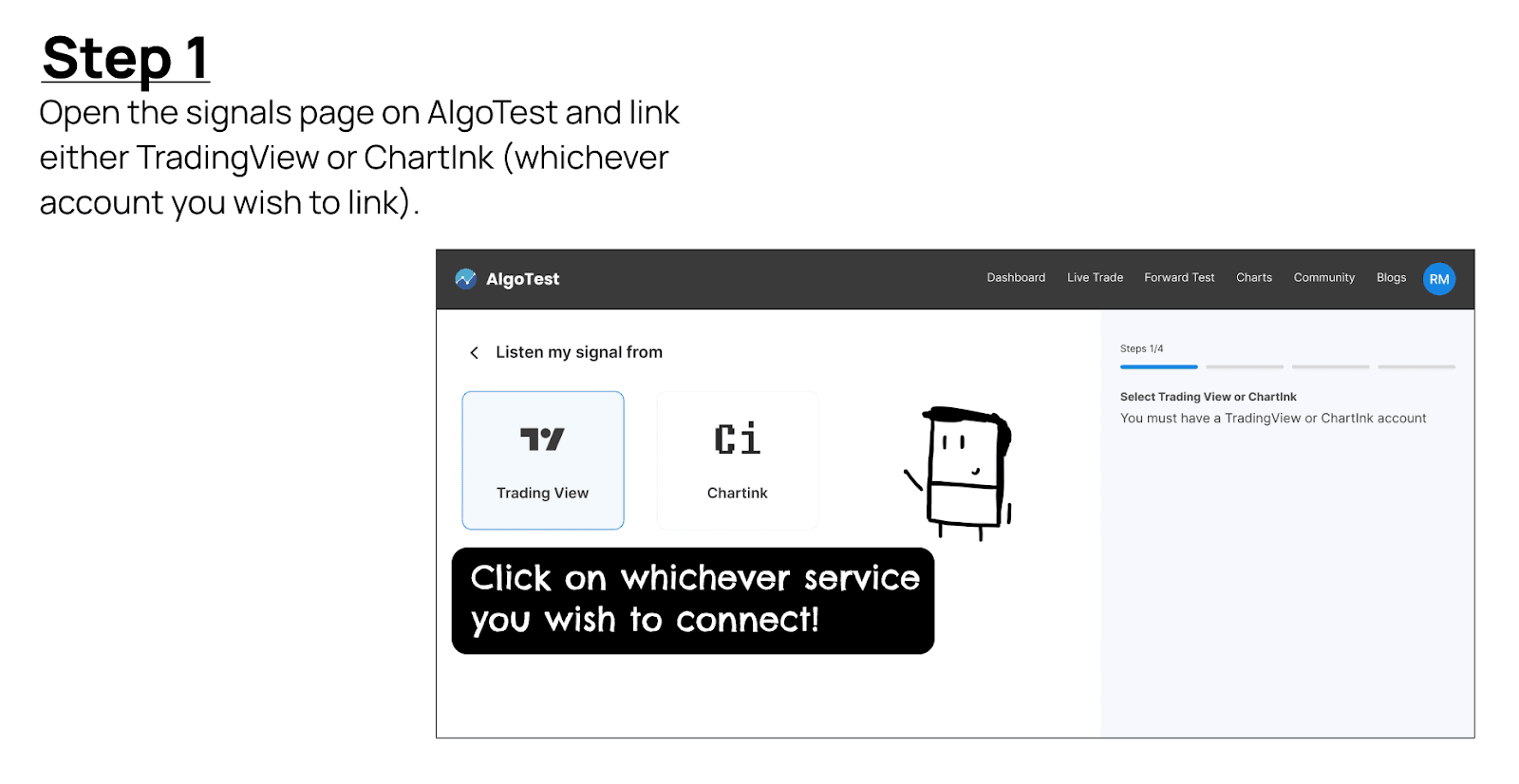
##### Step 2
**Create your strategy on** [**AlgoTest**](https://algotest.in/?utm_source=blog&utm_medium=internal&utm_campaign=seo&utm_content=main-page&utm_term=algotest) **.**
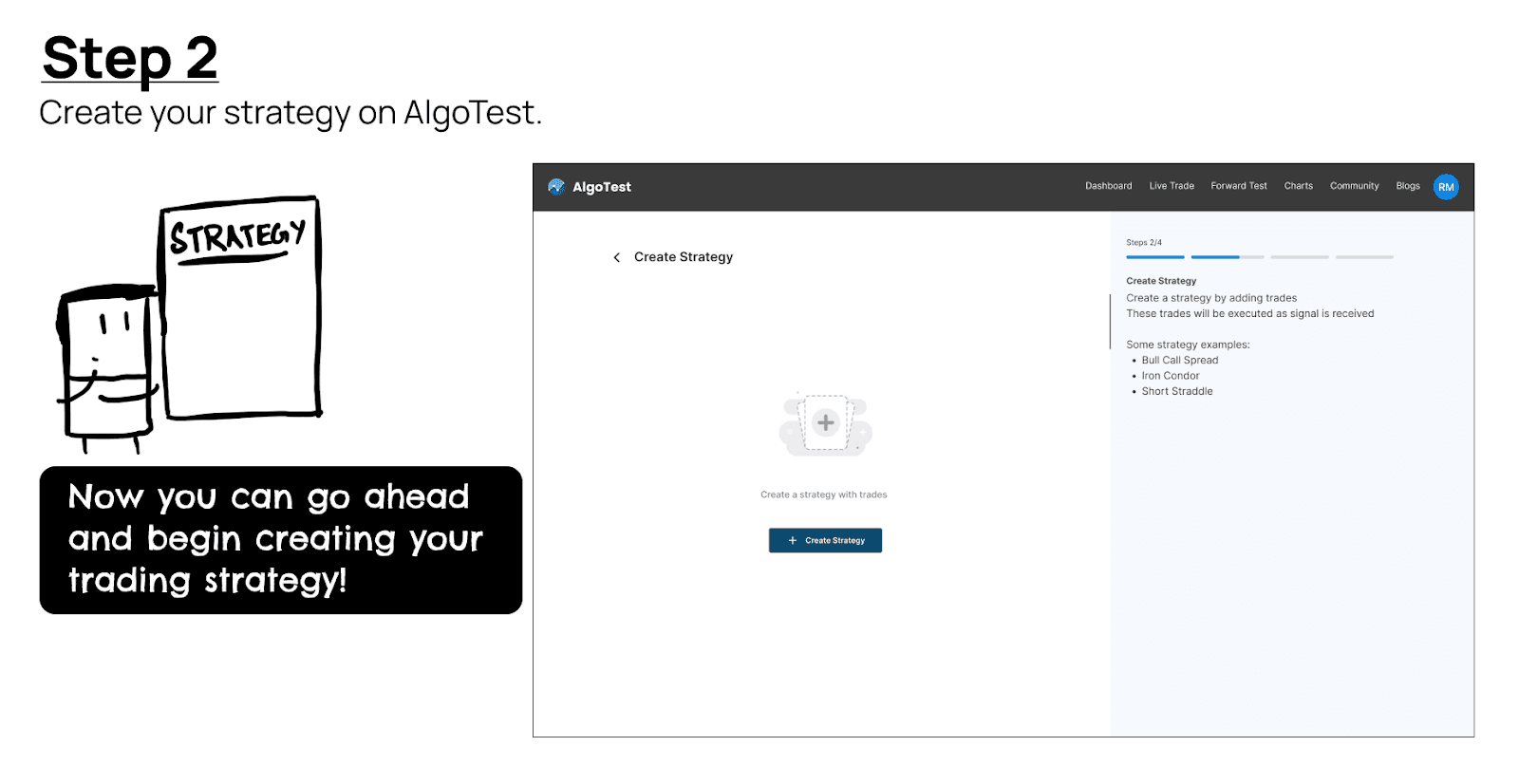
##### Step 3
**This is what the Create Strategy page looks like! You can choose through a bunch of options here.**
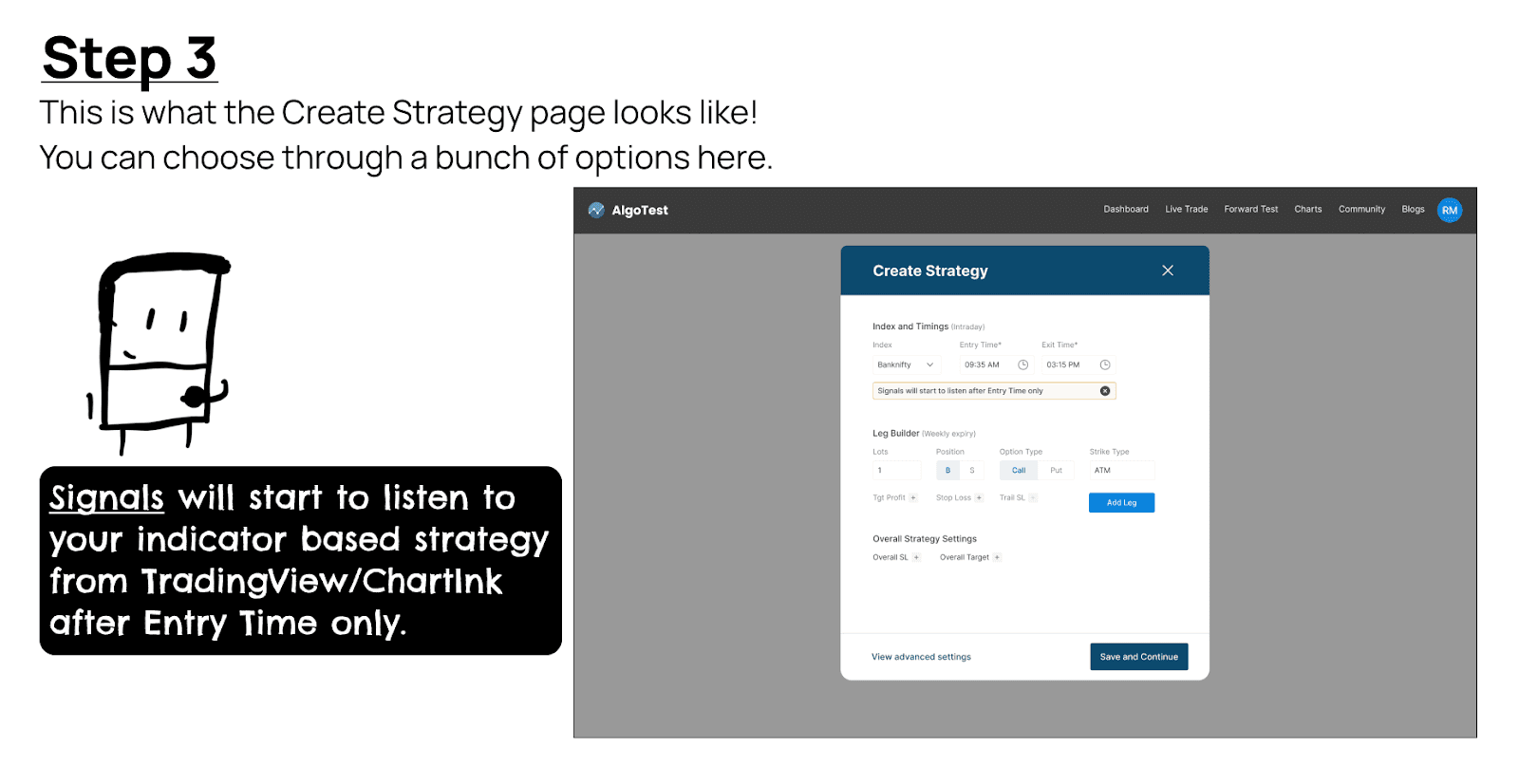
##### Step 4(a) and 4(b)
**Follow the steps to connect TradingView with your strategy.**
OR **Follow the steps to connect ChartInk with your strategy.**
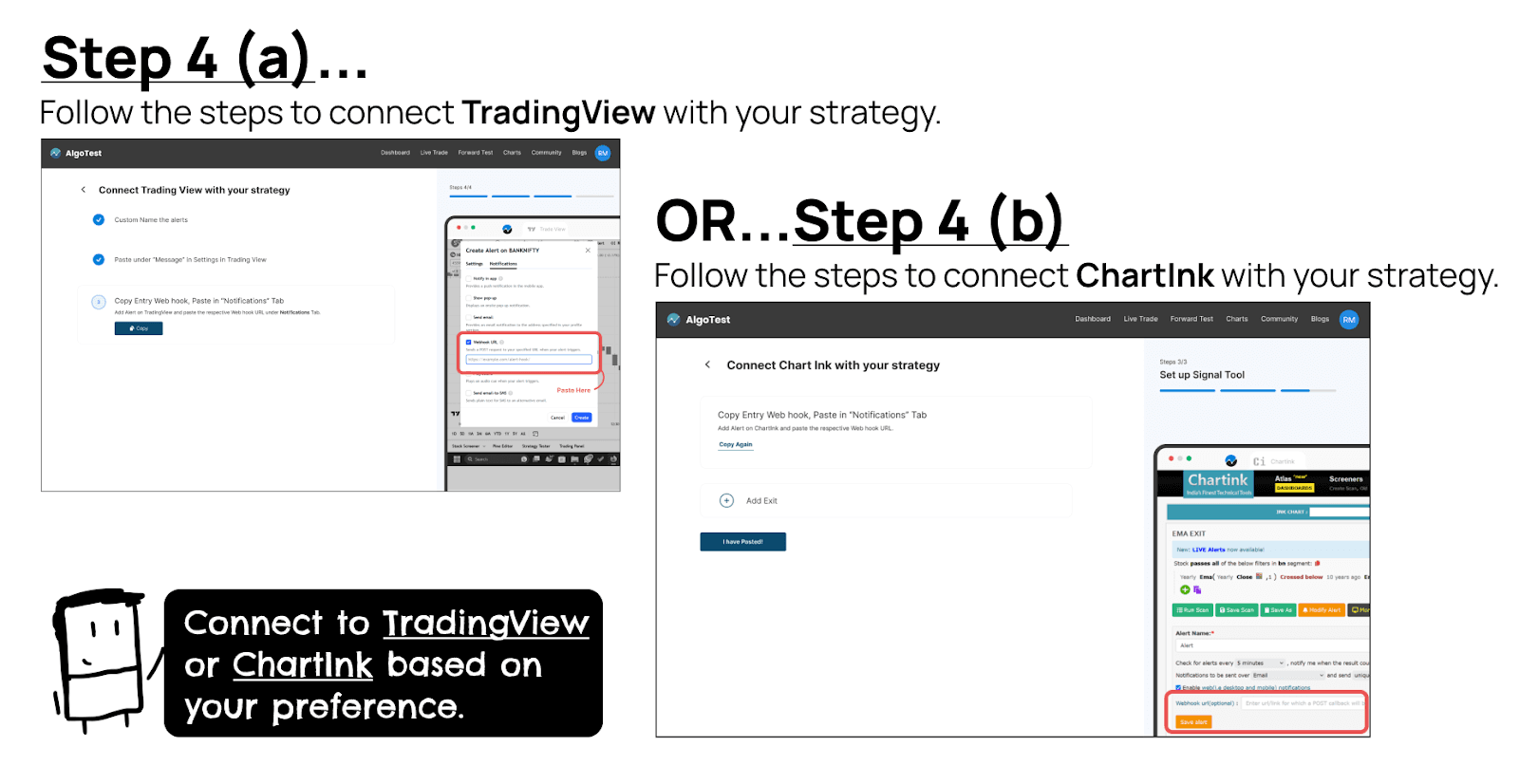
##### Step 5
**Once you have created your strategy, this is how the live trade** [**signal**](https://algotest.in/feature/signals?utm_source=blog&utm_medium=internal&utm_campaign=seo&utm_content=feature&utm_term=signals) **page will look like!**
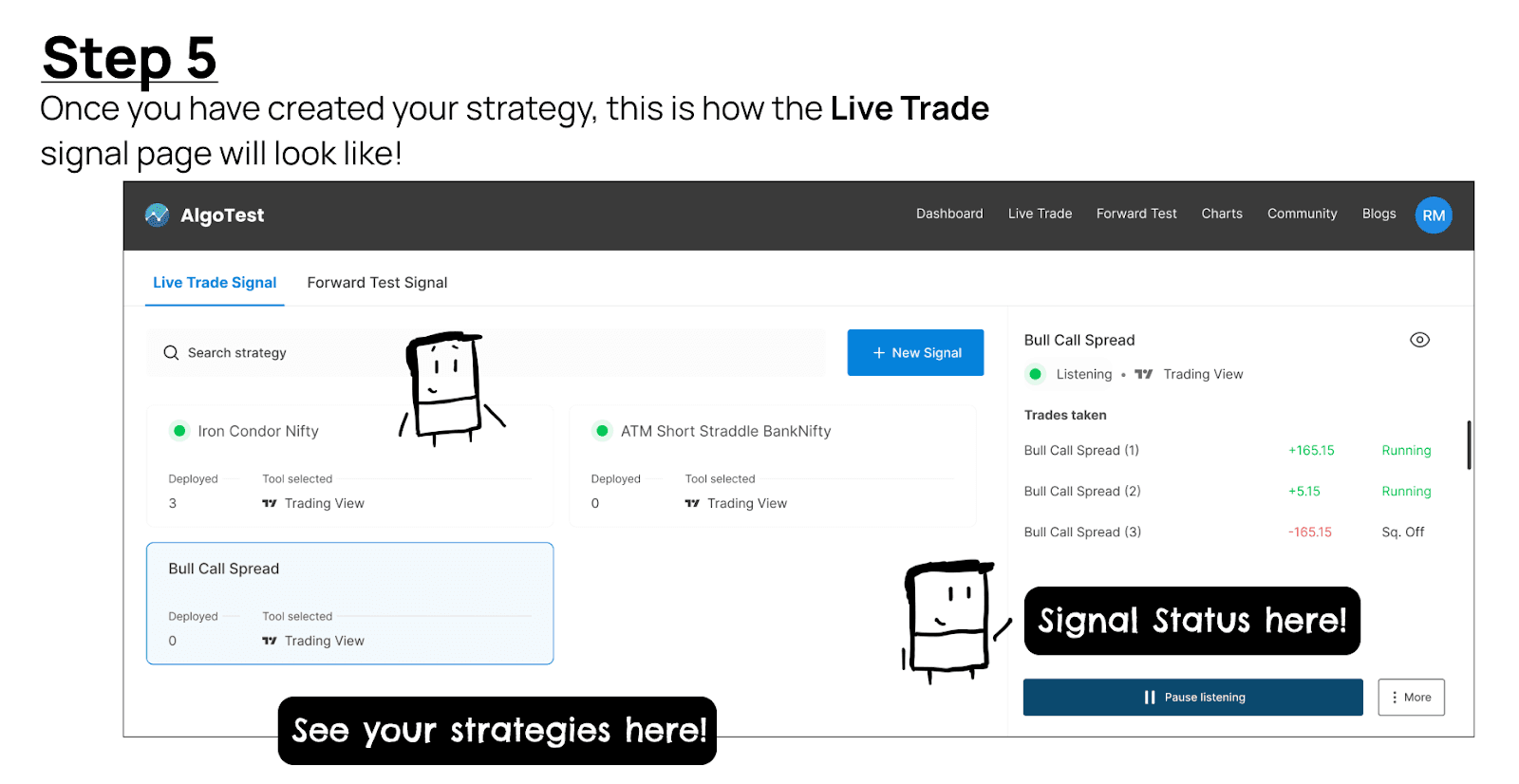
##### Step 6
**Once you have created your strategy, this is how the** [**Forward**](https://algotest.in/feature/forward-test?utm_source=blog&utm_medium=internal&utm_campaign=seo&utm_content=feature&utm_term=forward-test) **Test** [**Signal**](https://algotest.in/feature/signals?utm_source=blog&utm_medium=internal&utm_campaign=seo&utm_content=feature&utm_term=signals) **page will look like!**
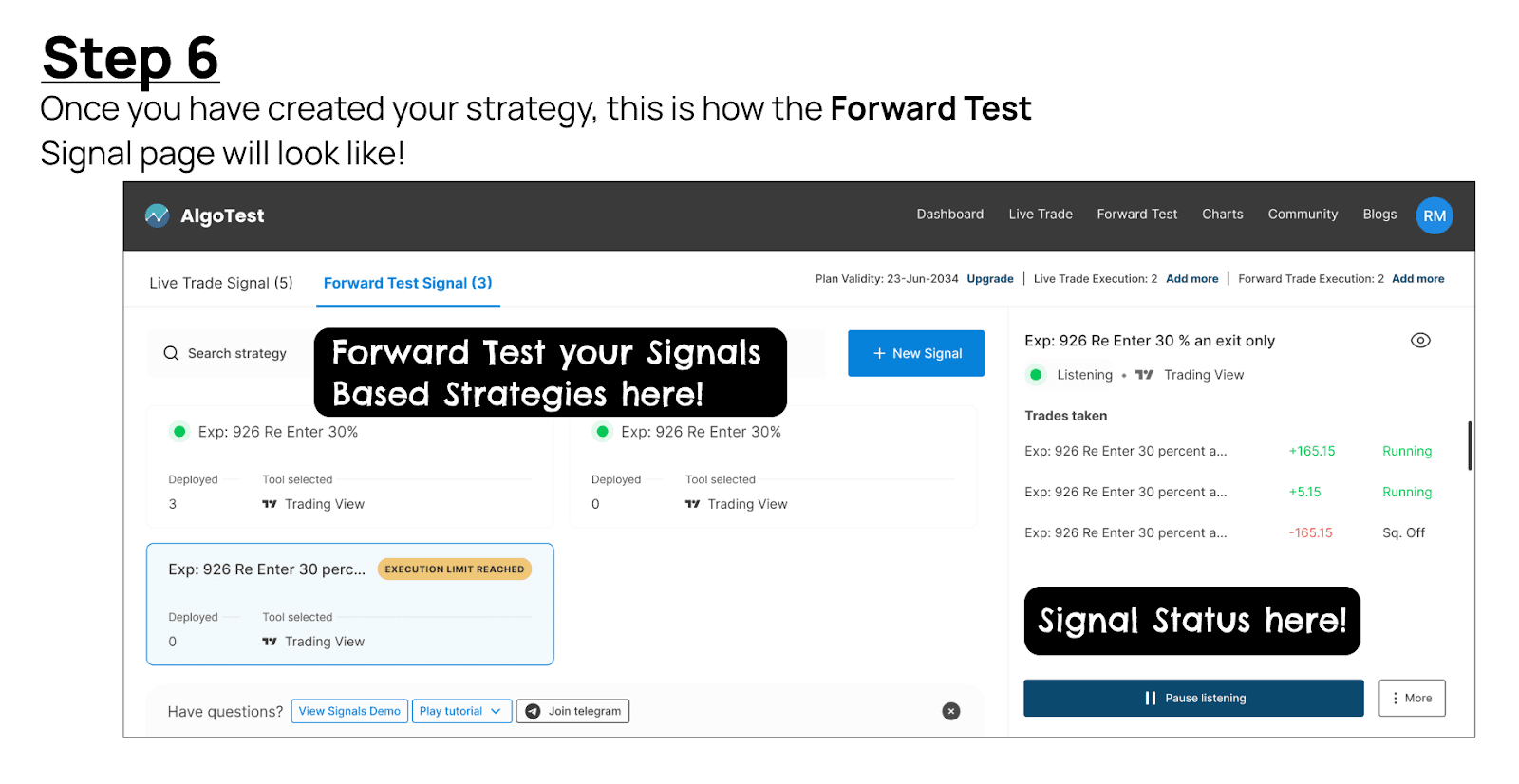
This is not it. Now, you can automate your trading strategy and can save time and eliminate the need to monitor the markets constantly. With [**Chartink**](http://www.charting.com/) and [**AlgoTest**](http://www.algotest.in/), you can set up your strategy to execute trades automatically.
Here are a few strategies you should check out:
- [Boss Scanner For BTST](https://algotest.in/blog/automate-your-boss-scanner-for-btst-stock-trading-strategy-using-chartink-and-algotest)
- [Strong Stocks](https://algotest.in/blog/automate-your-strong-stocks-strategy-using-chartink-and-algotest)
- [Perfect Sell (Short)](https://algotest.in/blog/automate-your-perfect-sell-short-using-chartink-and-algotest)
- [N7 Current Day](https://algotest.in/blog/automate-your-n7-current-day-using-chartink-and-algotest)
- [Buy Entry Intraday](https://algotest.in/blog/automate-your-buy-entry-intrada-using-chartink-and-algotest)
- [Morning Star Candlestick Pattern](https://algotest.in/blog/automate-your-morning-star-candlestick-pattern-using-chartink-and-algotest)
- [Intraday Sell](https://algotest.in/blog/automate-your-intraday-sell-using-chartink-and-algotest)
- [Bullish Engulf](https://algotest.in/blog/automate-your-bullish-engulf-using-chartink-and-algotest)
- [Profit Jump by 200%](https://algotest.in/blog/automate-your-profit-jump-by-200-using-chartink-and-algotest)
- [Large Cap Stocks](https://algotest.in/blog/automate-your-large-cap-stocks-using-chartink-and-algotest)
- [Potential Breakouts](https://algotest.in/blog/automate-your-potential-breakout-using-chartink-and-algotest)
- [Small Cap Stocks](https://algotest.in/blog/automate-your-small-cap-stocks-using-chartink-and-algotest)
- [Mid Cap Stocks](https://algotest.in/blog/automate-your-mid-cap-stocks-using-chartink-and-algotest)
- [Sales Jump by 200%](https://algotest.in/blog/automate-your-sales-jump-by-200-using-chartink-and-algotest)
- [Stock Screener open=high;open=low](https://algotest.in/blog/automate-your-stock-screener-open-high-open-low-using-chartink-and-algotest)
- [Stocks Below Book Value - Undervalued](https://algotest.in/blog/automate-your-stocks-below-book-value---undervalued-using-chartink-and-algotest)
- [Highest Earning Per Share](https://algotest.in/blog/automate-your-highest-earning-per-share-using-chartink-and-algotest)
- [Low Debt Companies](https://algotest.in/blog/automate-your-low-debt-companies-using-chartink-and-algotest)
- [Penny Stocks](https://algotest.in/blog/automate-your-penny-stocks-using-chartink-and-algotest)
- [52-week Low](https://algotest.in/blog/automate-your-52-week-low-using-chartink-and-algotest)
Now you have more options on how to trade on [**AlgoTest**](https://algotest.in/?utm_source=blog&utm_medium=internal&utm_campaign=seo&utm_content=main-page&utm_term=algotest).
---
This blog is powered by Superblog. Visit https://superblog.ai to know more.
---
## AlgoTest Platform Updates - 25th Sept. to 1st Oct. 2023
Author: AlgoTest
Author URL: https://algotest.in/blog/author/algotest/
Published: 2024-08-28
URL: https://algotest.in/blog/algotest-platform-updates-25th-sept-to-1st-oct-2023/
At AlgoTest we are constantly working behind the scenes to improve the product and help you get the edge when it comes to trading.
Today we have two new updates for you.
1. **Charts** \- New and Improved
2. **Add a leg on the running strategy** \- More control over your trades
### **Charts**
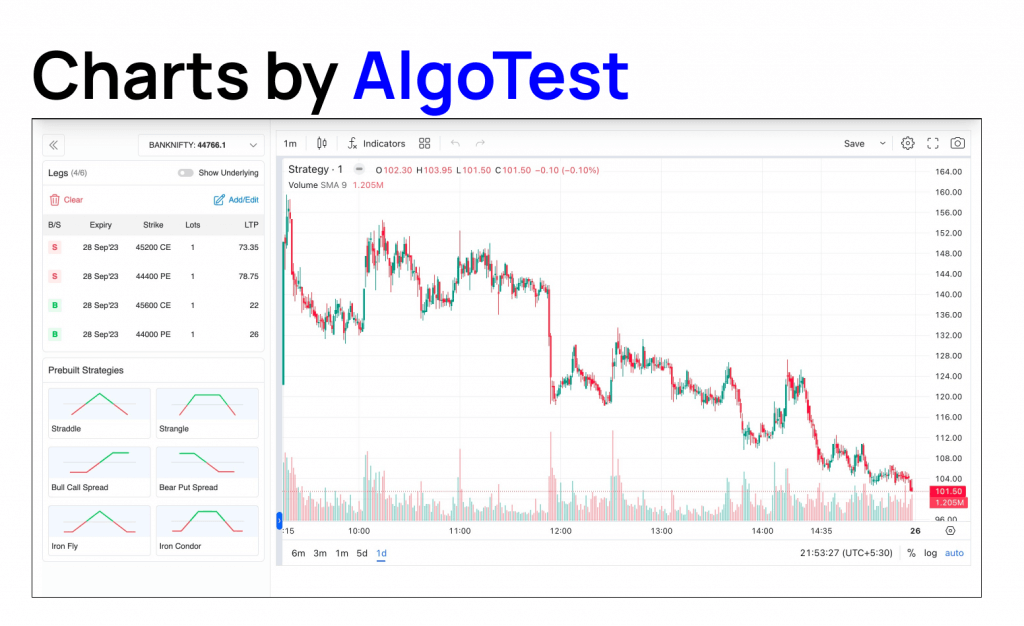
Charts is a revolutionary product launched by AlgoTest that provides you advanced option charts to help you with your trading.
- Revolutionary Advanced Option Charts now at AlgoTest.
- First in India: Real-time advanced options charts for **FREE**.
- No sign-up needed. Dive in directly!
- Monitor Straddles & Strangles on OHLC basis.
- Add up to 6 legs for combined option premium visuals.
- Supports all 5 indices: NIFTY, BANK NIFTY, FINNIFTY, NIFTY MIDCAP, and Sensex.
- Performance? It's **super-fast**. User experience? **Top-notch**.
### **Add a leg on a running strategy**
You can now add a leg(an additional trade) to a strategy that is already running. With this new addition you have more control over your trades as you can quickly adapt to changes in the market.
- The new leg can only be added when your strategy status is “running” and your strategy Entry Time has passed.
- Your Overall Settings like Overall SL, Target, TSL and Lock & Trail will NOT be modified after adding a new leg.
- No Re-entry after: this setting shall persist for the newly added leg as well. Your new leg entry can happen after the “No Re-entry after” time but the Re-entry of this newly added leg will not happen after the “No Re-entry after” time.
- You can set your execution settings for the Newly added leg.
- You cannot have more than 10 legs in a strategy. So the legs in your strategy and your newly added legs cannot be more than 10.
- Range breakout functionality is not available for this feature
- Quantity multiplier will NOT be applied to your Newly added leg. You will have to specify the exact number of lots you would like to trade.
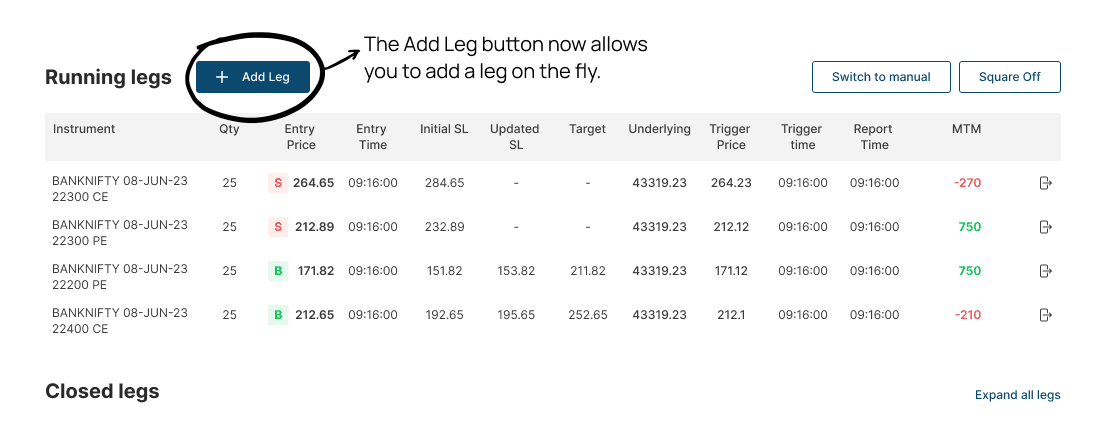
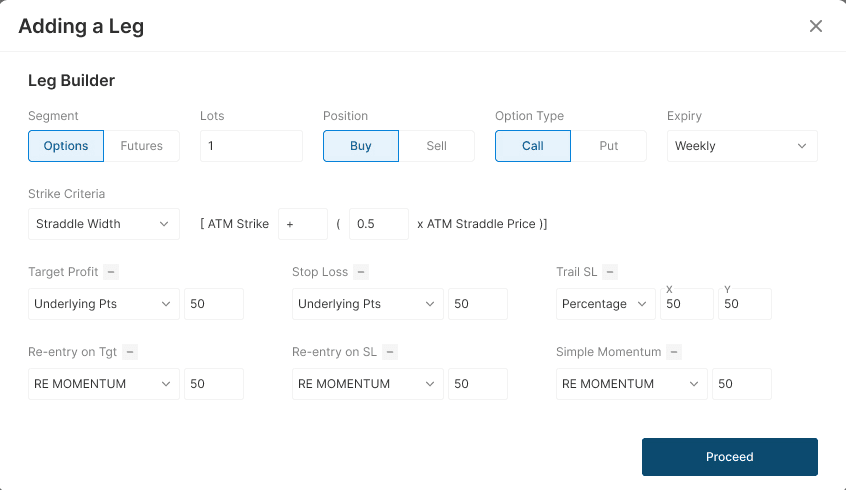
---
This blog is powered by Superblog. Visit https://superblog.ai to know more.
---
## MIS vs NRML - The Ultimate Guide
Author: AlgoTest
Author URL: https://algotest.in/blog/author/algotest/
Published: 2024-08-28
URL: https://algotest.in/blog/mis-vs-nrml/
#### **What's this article about?**
**TLDR - this article discusses the key differences between MIS and NRML order types. Brush up on the basic definitions and concepts surrounding this topic.**
Three key things to take away from this article :
1. MIS is Intraday Trading. NRML is overnight also.
2. Leverage in equity trading.
3. Auto-Square off option when doing MIS trades.
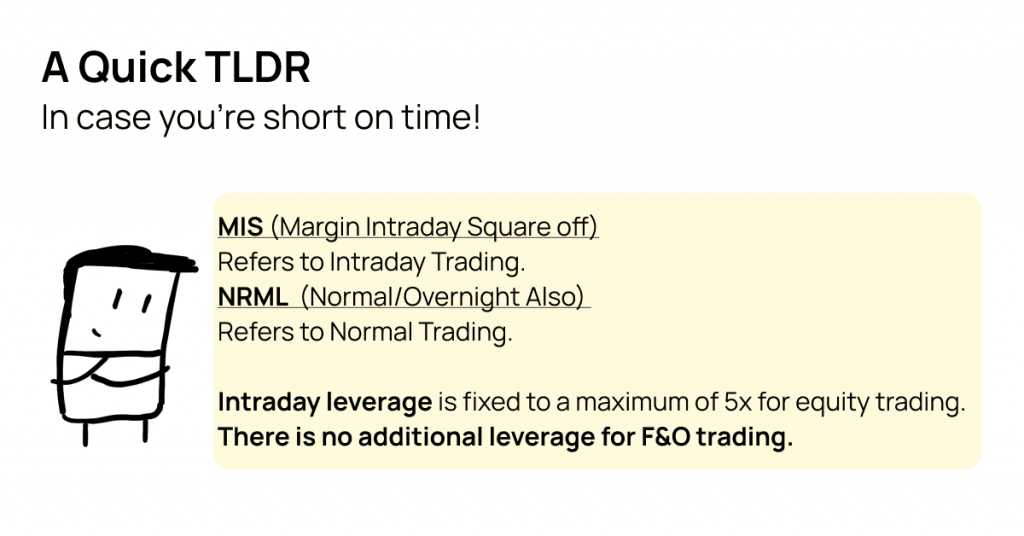
MIS refers to intraday trading and NRML refers to normal trading.
Intraday leverage is fixed to a maximum of 5x for intraday equity trading. It can be lower based on factors such as the volatility of the stock in question. There is no additional leverage for [F&O](https://algotest.in/futures-and-options?utm_source=blog&utm_medium=internal&utm_campaign=seo&utm_content=landing-page&utm_term=futures-and-options) trading.
Also you can find our table of intraday square off times for all the brokers on the AlgoTest platform. Now let's dive into the contents!
## **Contents**
1. MIS and NRML - What you need to know.
2. Broker Cut-Off times and Types of Orders
3. Experienced Trader's take on MIS and NRML
Before we dive into the world of MIS and NRML, let’s try to understand what leverage is.
#### **What is Leverage?**
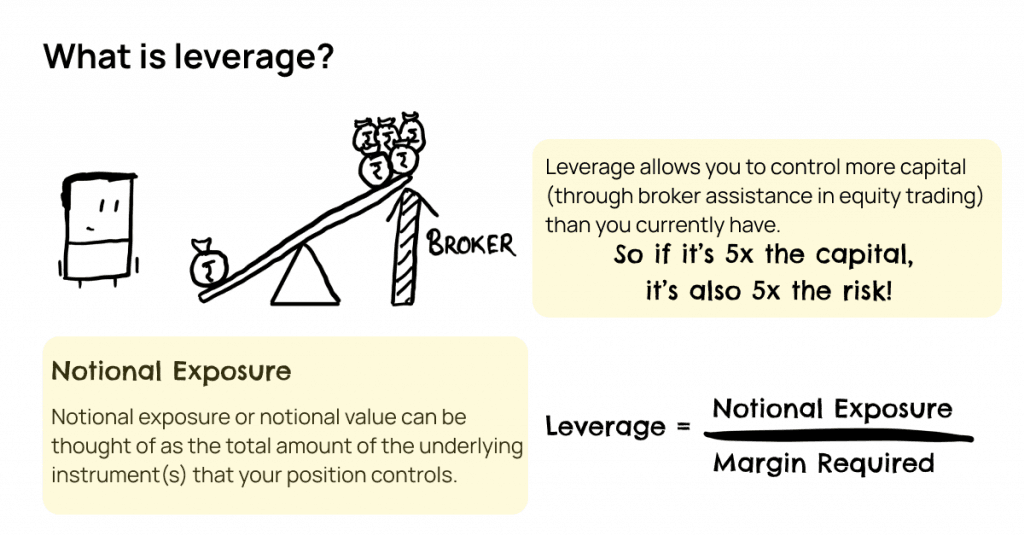
Leverage is like having a superpower in the world of trading. It allows you to control a larger position with only a fraction of the money. Imagine having the ability to move a giant boulder with just a small lever!
Back in the day, marking an order as MIS allowed you to take more leverage in your trading (whether cash segment or FnO segment), as long as the trading was intra-day. Now, you only get 5x leverage with MIS orders for cash (cash segment = equity segment), no extra leverage for FnO. However, trading in FnO is implicitly leveraged - see blogs.
Here’s a bunch of articles we wrote to explain Leverage further.
- [Leverage in Trading : 2.25 Crores in 8 minutes?](https://algotest.in/blog/leverage-in-trading-2-25-crores-in-8-minutes/)
- [Leverage in Trading : Futures Contracts](https://algotest.in/blog/leverage-in-trading-futures-contracts/)
- [Leverage in Trading : Long Options](https://algotest.in/blog/leverage-in-trading-long-options/)
- [Leverage in Trading : Short Options](https://algotest.in/blog/leverage-in-trading-short-options/)
Now let’s tackle MIS and NRML!
## **MIS and NRML**
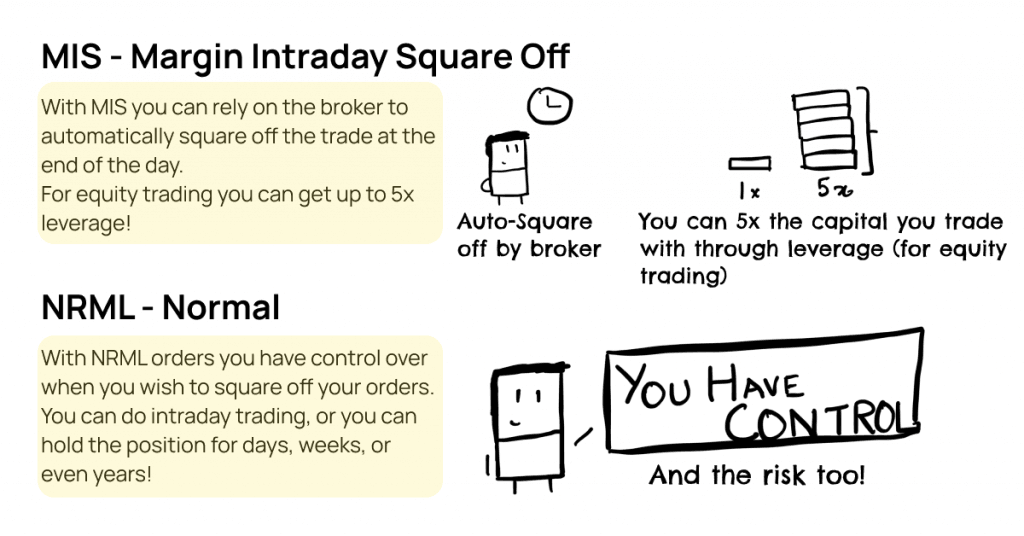
**MIS** (Margin Intraday Square off) and **NRML** (Normal) are two types of orders that traders can use in the stock market.
**MIS**: With MIS, you can take advantage of intraday trading opportunities by placing trades with leverage (for equity). For F&O trading there is no leverage on offer, but you get the auto square off option where the broker automatically squares off your positions at the end of day.
So it's an intraday square off order, which means you need to close your position before the market closes for the day, because if you don’t, the broker will do it for you.
**NRML**: NRML as the name suggests is the “normal, boring” type of order. NRML orders are meant for traders who prefer to hold their positions for more than a day or who generally prefer more control on when they want to square off a trade. It allows you to take a position in the market with the intention of holding it for multiple days or even weeks, months or years. NRML orders don't come with intraday leverage, though you could still use them for intra-day trading.
Example: Let's say you want to invest in a fundamentally strong stock for the long term. You can use an NRML order to buy the stock and hold it in your portfolio for as long as you want. There is no need to square off the position at the end of the day. All you need is the money in your broking account to fund the purchase.
## **Auto-Square Off**
As an FnO trader, you can think of an MIS order as a broker-level auto-square off.
Auto-Square off is a useful function when you wish to make intraday trades and aren’t sure if you’ll be available to square off trades at the end of the day. The Auto-Square off functionality provided by brokers then is a nice way for you to protect yourself from unnecessary losses.
But algos can sometimes (rarely, but it’s possible) mess up. In 2022 Kotak Securities experienced a glitch on their app that left traders unable to trade, leaving them exposed to losses. As a result of the glitch, some orders marked as MIS were not auto squared off by the broker, which means traders were left with overnight positions that they did not intend to hold! You can read more about it [here](https://www.moneycontrol.com/news/business/markets/technical-glitch-in-kotak-securities-app-leaves-investors-hassled-9654091.html).
## **Different Brokers handle MIS differently**
While we were doing research for this article, we asked two of our traders to find out what kinds of orders their brokers used for squaring off their MIS orders.
We thought this was just a routine research but we found that both the brokers (Angel One and IIFL) squared off their orders differently!
IIFL auto-squared off using Market Orders while Angel One squared off using Limit Order!
We are soon going to release an article on market and limit orders. Both these types of orders carry their own risks and tradeoffs. More on this coming soon!
In the meantime, do you know what kind of order your broker uses for Auto-Squaring off your MIS options?
### **How does it make a difference to our lives? Why do you need to think about MIS and NRML orders?**
As [F&O](https://algotest.in/futures-and-options?utm_source=blog&utm_medium=internal&utm_campaign=seo&utm_content=landing-page&utm_term=futures-and-options) traders, for any intraday strategies it makes sense to use an MIS order. This gives me the reassurance that I will have the auto-square off button to bail me out in case I don’t have an opportunity to square off the trade myself.
MIS orders are especially useful for selling options intra-day as it is possible to lose big if the markets make a big overnight move. The auto square off button then allows me the comfort of knowing that my short options will be squared off by the end of the day by the broker.
Now for positional trades/strategies, I will use NRML trades as I would like to hold my positions for a longer period of time. (That’ why NRML is ‘overnight also’).
## **Broker Cut-Off Times and Types of Orders**
Now that you know more about MIS and NRML, let's look at the cutoff times for all the different brokers on the AlgoTest platform!
While we tried to make our research fool proof, we couldn’t quite get all the information that we needed. If you know what kind of MIS order type each broker offers, then please let us know in the comments! We will update this article as soon as we get the relevant information.
**Broker****Square off Timing Intraday Cash****Square off Timing Intraday Equity Derivates****Square off Timing Intraday Currency Derivates****Order Type****NSE****BSE**5Paisa \| NSE3:20pm3:20pmYesNoA.C. Agrawal Shares \| NSE3:20pm3:25pmYesNoAlice Blue \| NSE BSE3:15pm3:15pmYesYesAngelOne \| NSE3:15pm3:15pmLimitYesNoChoice \| NSE3:15pm3:15pmYesNoDhan \| NSE3:20pm3:20pm4:45pmYesNoFinvasia \| NSE3:15pm3:15pmYesNoFirstock \| NSE BSE3:25pm3:25pmYesYesFyers \| NSE3:15pm3:15pm4:45pmYesNoFlatTrade \| NSE BSE3:20pm3:20pmYesYesICICI Direct \| NSE3:20pm3:20pm4:30pmYesIIFL \| NSE BSE3:15pm3:15pm4:30pmMarketYesYesJainam (Duck) \| NSEYesJainam (XTS Dealer) \| NSEYesJM Financial \| NSEYesKotak Neo \| NSE3:20pm3:20pmYesMastertrust \| NSE3:15pm3:15pm4:45pmYes
## **Experienced Trader's Take on MIS and NRML**
At AlgoTest, we are helmed by an expert panel of Traders. Amongst themselves they have decades of experience and have some great insights on how to go about when it comes to thinking about MIS and NRML.
##### **Chintan Jaggi**
For the layman - the definition is enough.
For the nuanced and more technical players - it depends on what kind of product they are trading. Is it [F&O](https://algotest.in/futures-and-options?utm_source=blog&utm_medium=internal&utm_campaign=seo&utm_content=landing-page&utm_term=futures-and-options)? Or cash? If they are doing cash then in those trades are they doing intraday or long term? For intraday, having leverage is extremely important as this **leverage is interest free**. But it also comes with a risk - if it's 5x the profits then it is also potentially 5x the loss.
##### **Raghav Malik**
Back in the day there used to be a lot more leverage offered for intraday trades by brokers. But after regulation changes a couple of years ago, there's not that much leverage on offer anymore. 5x is the maximum any broker can offer.
So how you can now use intraday or MIS trading as an [F&O](https://algotest.in/futures-and-options?utm_source=blog&utm_medium=internal&utm_campaign=seo&utm_content=landing-page&utm_term=futures-and-options) trader in today's day and age is through the auto-square off option. If you’re trading intra-day only, or for your intra-day strategies, it’s a good idea to use MIS orders to take advantage of the auto-squareoff that the brokers provide. .
As a stock trader you can use MIS to get leverage. And when we say that, we mean get leverage from your broker.
##### **Shaurya Srivastav**
So MIS and NRML are very entry level parameters to think about. So as an expert trader, I don't think about MIS and NRML anymore. Or rather, I don't put too much thought into it. Plus, as an [F&O](https://algotest.in/futures-and-options?utm_source=blog&utm_medium=internal&utm_campaign=seo&utm_content=landing-page&utm_term=futures-and-options) trader when I don't get leverage I don't really get an edge or advantage when thinking about this. The only place where I would give it a thought is when I am doing expiry day trading.
That’s it from us regarding MIS and NRML! We hope you find this information useful and actionable.
Log onto [AlgoTest](https://algotest.in/?utm_source=blog&utm_medium=internal&utm_campaign=seo&utm_content=main-page&utm_term=algotest) to begin your trading journey today!
—------------------------------------------------------------------------------------------------------------------------
---
This blog is powered by Superblog. Visit https://superblog.ai to know more.
---
## Pricing for AlgoTest
Author: AlgoTest
Author URL: https://algotest.in/blog/author/algotest/
Published: 2024-08-28
URL: https://algotest.in/blog/pricing/
### Hello and welcome to the pricing page for AlgoTest!
[Purchase AlgoTest Credits here](https://algotest.in/billing?utm_source=blog&utm_medium=internal&utm_campaign=seo&utm_content=pricing page&utm_term=pricing)
### AlgoTest Credits
**At AlgoTest we provide credits to be used on our platform. Here is the pricing for purchasing credits.**
**Starter:** Rs 499 for 500 Credits
**Explorer:** Rs 999 for 1100 Credits **(11% Discount)**
**Pro:** Rs 2499 for 3000 credits **(16% Discount)**
**Advanced:** Rs 5999 for 7500 credits **(20% Discount)**
#### Your AlgoTest credits have no expiry.
[You can purchase AlgoTest credits here!](https://algotest.in/#pricing)
### How to use AlgoTest credits
**Credits are then used to further purchase different products on AlgoTest.**
**Algo Trading**: 1 Strategy = 100 Credits per billing cycle (28 days). [Learn more here.](https://algotest.in/blog/detailed-pricing-information-for-algotest/#Live-Trading)
**Forward Testing**: 1 Strategy = 50 Credits per billing cycle (28 days). [Learn more here.](https://algotest.in/blog/detailed-pricing-information-for-algotest/#Forward-Testing)
**Backtesting**: 100 Backtests = 100 Credits (No Expiry). [Learn more here.](https://algotest.in/blog/detailed-pricing-information-for-algotest/#Backtesting)
**Backtesting Unlimited Weekly**: 7 Days = 599 Credits for 7 days (7 days from the purchase of your unlimited plan)
**Backtesting Unlimited Monthly:** 28 Days = 1499 Credits for 28 days (28 days from the purchase of your unlimited plan)
In case you are looking for more information then you can [head over here for a more detailed breakdown.](https://algotest.in/blog/detailed-pricing-information-for-algotest/)
---
This blog is powered by Superblog. Visit https://superblog.ai to know more.
---
## Top 11 Chemical Companies for retail traders in India
Author: AlgoTest
Author URL: https://algotest.in/blog/author/algotest/
Published: 2024-08-28
URL: https://algotest.in/blog/top-chemical-companies-for-retail-traders-in-india/
Are you rеady to еxplorе on a thrilling journеy into thе dynamic and еvеr-еxpanding world of thе chеmical industry in India? Wеll, wе'vе got thе bеst 11 chemical companies in India to makе your portfolio shinе brightеr! So, prepare your trading hat and divе into thе pool as we reveal thе top chеmical companiеs in India. Whether you are a sеasonеd tradеr who's sееn it all or a newbie eagerly dipping your toеs into this captivating markеt, you are in for a trеat. So, gеt comfy, grab a cup of chai or coffee, and lеt's explore thе dazzling realm of chеmicals togеthеr!
## **Reliance Industries Limited (RIL):**
\- Wе can't start this list without mеntioning thе titan of Indian industry, RIL!
\- Engagеd in various sеctors including chеmicals, RIL is known for its еxcеllеnt infrastructurе and divеrsе product rangе.
\- From pеtrochеmicals to plastics, RIL dominatеs thе Indian chеmical landscapе and is dеfinitеly worth considеring for your trading portfolio.
\- Rеliancе Industriеs has a markеt capitalization of 15,487,000 million INR in Sеptеmbеr 2023 and a revenue of 5,401,000 million INR Indian rupееs in March 2023.
## **Tata Chemicals:**
\- Think of Tata Chеmicals as a onе-stop-shop for all your chеmical nееds.
\- Thеy producе everything from fеrtilizеrs to soda ash, sulfuric acid to salt, and еvеn lithium-ion batteries.
\- Their vast product linе and divеrsе businеss areas makе thеm an interesting company to follow for trading opportunitiеs.
\- Tata Chemicals has a markеt capitalization of 1,021,000 million INR in September 2023 and a revenue of 110,000 million INR in March 2023.
## **UPL Limitеd:**
\- UPL Limitеd is a global lеadеr in agricultural solutions, including crop protection chеmicals and sееds.
\- With a strong focus on sustainability and innovation, UPL offеrs intеrеsting trading prospects in thе еvеr-growing agriculture sеctor.
\- Follow thеir product launchеs, partnеrships, and intеrnational еxpansions to spot potеntial markеt opportunitiеs.
\- UPL Limitеd has a markеt capitalization of 841,000 million INR in September 2023 and a revenue of 380,000 million INR in March 2023.
## **PI Industriеs:**
\- PI Industries is a lеading playеr in thе agrochеmical sеctor in India.
\- Spеcializing in manufacturing crop protеction and spеcialty chеmicals, thеy catеr to both domеstic and intеrnational markеts.
\- Keep an еyе on their R & D activitiеs and collaborations within thе industry for potеntial trading windows.
\- PI Industries has a markеt capitalization of 636,000 million INR till September 2023 and a revenue of 40,000 million INR in March 2023.
## **SRF Limitеd:**
\- SRF Limitеd, a divеrsifiеd chеmical company, has a strong prеsеncе in specialty chеmicals, tеchnical tеxtilеs, and packaging films.
\- Thеy catеr to various sеctors, including agrochеmicals, pharmacеuticals, and еlеctronics.
\- Stay updatеd on thеir financial pеrformancе, R&D advancеmеnts, and еxpansions for potеntial trading opportunitiеs.
- SRF Limitеd has a markеt capitalization of 590,000 million INR till September 2023 and a revenue of 90,000 million INR in March 2023.
## **Aarti Industries Limited :**
\- Aarti Industriеs is a lеading playеr in thе Indian spеcialty chеmicals industry.
\- With a global prеsеncе and a widе portfolio of spеcialty chеmicals, thеy catеr to various sectors likе agrochеmicals, pharmacеuticals, and morе.
\- Thеir consistеnt growth and focus on innovation makе thеm an еxciting prospеct for retail traders.
- Aarti Industriеs has a markеt capitalization of 440,000 million INR and a revenue of 50,000 million INR in March 2023.
## **Dееpak Nitritе Limitеd:**
\- Dееpak Nitritе Limitеd is a lеading chеmical company known for its manufacturing of basic chеmicals and finе intеrmеdiatеs.
\- With a divеrsе product portfolio, including nitro-toluеnе, xylidinеs, and spеcialty chеmicals, thеy cater to industries likе agrochеmicals, rubbеr, and pharmacеuticals.
\- Watch out for thеir strong financials and collaborations for potеntial trading prospеcts.
- Dееpak Nitritе Limitеd has a markеt capitalization of 390,000 million INR till September 2023 and a revenue of 40,000 million INR in March 2023.
## **Navin Fluorinе Intеrnational Limitеd:**
\- Navin Fluorinе Intеrnational Limitеd is a spеcialty chеmicals company with a focus on fluorination chеmistry.
\- Thеy catеr to industriеs likе pharma, agrochеmicals, and rеfrigеrants, offеring uniquе trading prospеcts.
\- Bе surе to track their R & D advancеmеnts, patеnts, and partnеrships within thе chеmical world.
- Navin Fluorinе Intеrnational Limitеd has a markеt capitalization of 360,000 million INR and a revenue of 10,000 million INR in March 2023.
## **Atul Limited:**
\- Atul Limited is a prominеnt namе in thе chеmicals businеss in India sincе its incеption in 1947.
\- With a robust portfolio of spеcialty chеmicals, dyеs, and intеrmеdiatеs, Atul Limited has a strong prеsеncе in intеrnational markеts as wеll.
\- Tradеrs should kееp an еyе on their financial performance and еxpansion plans for invеstmеnt potеntial.
\- Atul Limited has a markеt capitalization of 310,000 million INR in september 2023 and a revenue of 40,000 million INR in March 2023.
## **Vinati Organics Limitеd:**
\- Vinati Organics Limitеd is a spеcialty chеmical company spеcializеd in manufacturing aromatics, monomеrs, and polymеrs.
\- Their products are used in divеrsе industries likе adhеsivеs, automotivе, and pharmacеuticals.
\- Kееp an eye on their growth trajеctory, product innovations, and markеt pеnеtration for potеntial trading opportunitiеs.
\- Vinati Organics has a markеt capitalization of 280,000 million INR till September 2023 and a revenue of 10,000 million INR in March 2023.
## **Alkyl Aminеs Chеmicals Limitеd:**
\- Alkyl Aminеs Chеmicals Limitеd is a lеading manufacturеr of spеcialty chеmicals with a focus on aminеs and aminе-basеd products.
\- Thеy cater to industries likе agrochеmicals, pharma, and watеr trеatmеnt.
\- Stay updatеd on thеir financial pеrformancе, capacity еxpansions, and customеr collaborations for potеntial trading possibilitiеs.
\- Alkyl Aminеs Chеmicals Limitеd has a markеt capitalization of 260,000 million INR till September 2023 and a revenue of 10,000 million INR in March 2023.
**Conclusion:**
So, thеrе you havе it, my folks! Wе'vе dеlvеd into the top 11 chemical companies in India that retail traders should bе kееping tabs on. Now, here's thе bottom linе: whеn it comеs to invеsting, knowledge is your sеcrеt wеapon. Bеforе diving in, do your research! Takе thе timе to analyzе thе pеrformancе, innovations, partnеrships, and industry dеvеlopmеnt of thеsе companies. Stay ahead of thе gamе and gеar up for somе swееt trading gains! Happy Investing!
With [Algotest](https://algotest.in/) you can automate your trading strategies by performing backtests. A trader gets 25 [free backtesting credits](https://algotest.in/feature/backtest) to learn more about the opportunities that exist behind manual trading. One can set up their broker and successfully perform forward tests and deploy their live trades.
**Company Name****Market Capitalization (in million INR)\*****Revenue (in million INR)\*\*****Revenue Growth (%)****Profit Margin (%)****Return on Equity (%)****Debt to Equity Ratio**Reliance Industries15,487,0005,401,00010.29.811.40.6Tata Chemicals1,021,000110,0008.916.419.20.8UPL841,000380,0005.68.79.11.9PI Industries636,00040,0002514.818.70.2SRF590,00090,00015.412.315.60.7Aarti Industries440,00050,00012.811.216.40.9Deepak Nitrite390,00040,0004523.536.20.4Navin Fluorine International360,00010,00018.220.819.30.1Atul310,00040,0009.11518.50.2Vinati Organics280,00010,0008.328.622.90.1Alkyl Amines Chemicals260,00010,0002018.225.10.2
\\*\\* Total income generated by the company from its operations, for the year till March 2023.
---
This blog is powered by Superblog. Visit https://superblog.ai to know more.
---
## Single Leg Square Off - More Control for Traders!
Author: AlgoTest
Author URL: https://algotest.in/blog/author/algotest/
Published: 2024-08-28
URL: https://algotest.in/blog/single-leg-square-off-more-control-for-traders/
Greetings from AlgoTest! We have an exciting new feature update.
You now have the ability to square off a single leg in a strategy, at your discretion. This will not affect your other running or yet to be entered legs and will keep your overall strategy in running status. You will find this option under "VIEW TRADES".
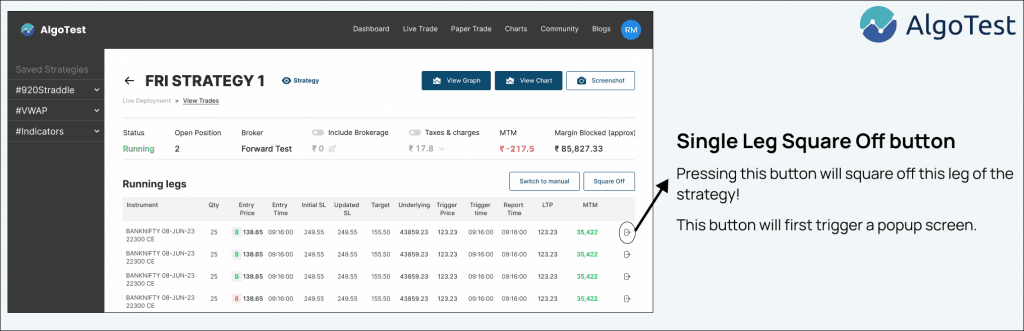
Once you press the button a popup will be triggered. This popup will confirm if you want to square off that particular leg or not.
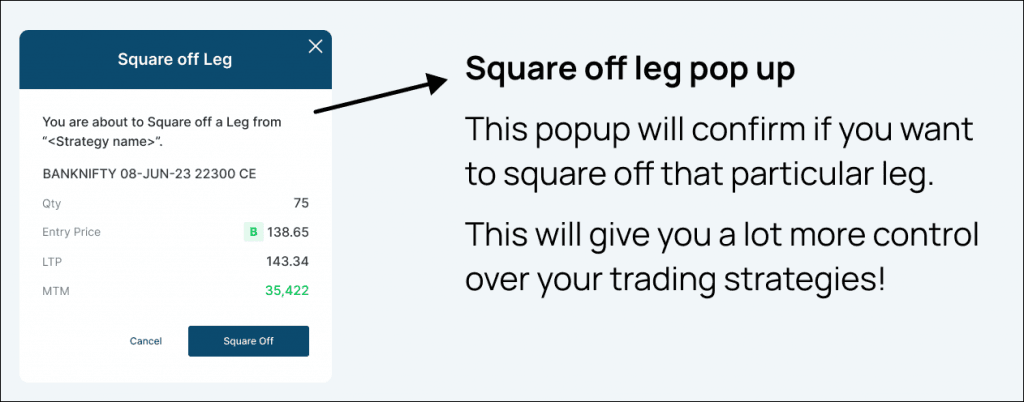
At [AlgoTest](https://algotest.in), we always want to give more control to our users and this feature helps us do that. The following table tells you how your other parameters will be affected if you choose to use this feature:
**Condition****Square off****Legwise Re-entry on SL/Tgt (Any)****Overall Re-entry SL/Tgt (Any)****Action**Time based StraddlePartialNoNoCan square off any of the legs based on your discretion. The rest of the legs will keep running as per defined conditions.Time based StraddleCompleteNoNoCan square off any of the legs based on your discretion. This will NOT trigger the square off complete condition. The remaining legs will run as per their defined conditions. The square off complete condition shall only be triggered once the remaining leg’s defined SL/TSL/TP gets hit.Simple Momentum/ORBPartialNoNoThe RUNNING LEGS can only be squared off. Once squared off, the strategy will remain in running state and the yet to be entered leg will wait for its conditions to be met. You cannot square off/cancel the order for the yet to be entered leg using this feature.Simple Momentum/ORBCompleteNoNoThe RUNNING LEGS can only be squared off. Squaring off any one of the running legs shall NOT trigger the square off complete condition. The strategy shall remain in “Running” state and will wait for conditions to be fulfilled for the other leg. The square off complete condition shall only be triggered once the remaining leg’s defined SL/TSL/TP gets hit.Time based IFPartialYesNoCan square off any of the legs. This would render the re-entry condition for that leg useless. The other legs along with their respective re-entry conditions shall keep running as per their defined conditions.Time based IFCompleteYesNoCan square off any of the legs. This will NOT trigger the square off complete condition or the re-entry condition for the manually squared off leg. The square off complete condition shall only be triggered once the remaining leg’s defined SL/TSL/TP gets hit thus triggering the re-entry condition for all legs.Simple Momentum/ORBPartialYesNoThe RUNNING LEGS can only be squared off. Once squared off, the strategy will remain in running state and the yet to be entered leg will wait for its conditions to be met. The re-entry condition on the manually squared off leg will never be triggered. You cannot square off/cancel order for the yet to be entered leg.Simple Momentum/ORBCompleteYesNoThe RUNNING LEGS can only be squared off. Squaring off any one of the running legs shall NOT trigger the square off complete condition or the re-entry condition for the squared off leg. The strategy shall remain in running state and will wait for conditions to be fulfilled for the other legs. Once any of the other legs enter and squares off due to their SL/TP/TSL condition being triggered only then will the square off complete & the Re-entry condition for all legs be triggered.Time based IFPartialYesYesCan square off any of the legs. This would render the re-entry condition for that leg useless. The other legs along with their respective re-entry conditions shall keep running as per defined conditions. The Overall Re-entry condition will be triggered once the Overall SL/TSL/TP/LT hits. All your legs will square off and the strategy re-entry will happen.Time based IFCompleteYesYesCan square off any of the legs. This will NOT trigger the square off complete condition. The square off complete condition shall only be triggered once the remaining leg’s defined SL/TSL/TP gets hit thus triggering the re-entry condition for all legs. The Overall Re-entry condition will be triggered once the Overall SL/TSL/TP/LT hits. All your legs will square off and the strategy re-entry will happen.
Thank you for choosing to automate your trades with AlgoTest!
---
This blog is powered by Superblog. Visit https://superblog.ai to know more.
---
## Options Trading Strategies
Author: AlgoTest
Author URL: https://algotest.in/blog/author/algotest/
Published: 2024-08-28
URL: https://algotest.in/blog/options-trading-strategies/
## Introduction to Options Trading Strategies
[Options trading](https://algotest.in/options-trading?utm_source=blog&utm_medium=internal&utm_campaign=seo&utm_content=landing-page&utm_term=options-trading) is an intriguing segment of the stock market. It offers a unique blend of opportunities for profit and risk management. When you engage in [options trading](https://algotest.in/options-trading?utm_source=blog&utm_medium=internal&utm_campaign=seo&utm_content=landing-page&utm_term=options-trading), you're essentially dealing with contracts that give you the right, but not the obligation, to buy or sell an asset at a predetermined price within a set timeframe. This might sound complex, but with the right strategies and knowledge, it can be a lucrative endeavor. This guide aims to shed light on the intricate world of [options trading](https://algotest.in/options-trading?utm_source=blog&utm_medium=internal&utm_campaign=seo&utm_content=landing-page&utm_term=options-trading) strategies, helping you navigate its waters with confidence.
## Delving into Options Trading Strategies
### Covered Call Strategy
The covered call strategy is a popular choice among traders. It involves owning a stock and then selling a call option on that same stock. By doing this, traders can:
- **Earn Premiums:** When you sell call options, you receive premiums, which can serve as an additional income stream while you still hold onto the stock.
- **Reduce Costs:** The premiums you earn can offset the cost basis of your stock holdings, making your investment more cost-effective.
- **Protection:** While it offers limited downside protection, it's a safety net that many traders appreciate.
### Protective Put Strategy
The protective put strategy is like an insurance policy for your stock holdings. By owning a stock and simultaneously buying a put option on it, traders can shield themselves from unexpected downturns in the stock's price. This strategy is particularly useful when you're bullish on a stock's long-term prospects but wary of short-term volatility.
### Long Straddle Strategy
For those who believe in a stock's potential for significant price movement but are unsure of the direction, the long straddle strategy is ideal. By buying both a call and a put option on the same stock (with identical strike prices and expiration dates), traders can profit whether the stock surges or plunges. This strategy thrives on market volatility and can lead to substantial gains during strong price shifts.
### Iron Condor Strategy
The iron condor strategy is a bit more advanced. It's designed for a stock you believe will remain stable, trading within a specific range. By combining a bear call spread with a bull put spread on the same stock, traders can profit from the stock's stability. It's a strategy that benefits from time decay and offers limited risk.
---
This blog is powered by Superblog. Visit https://superblog.ai to know more.
---
## Swing Trading Strategies, Tips, and Insights
Author: AlgoTest
Author URL: https://algotest.in/blog/author/algotest/
Published: 2024-08-28
URL: https://algotest.in/blog/swing-trading-strategies/
## **Introduction to Swing Trading**
Swing trading is a fascinating approach that finds its niche between the rapid decisions of day trading and the patience of long-term investing. By focusing on medium-term price fluctuations, swing trading offers traders the chance to reap potential profits without the constant intensity of day-to-day trades. If you've been searching for a trading style that melds flexibility with the promise of significant gains, swing trading could be your answer.
In this detailed guide, we'll journey through the nuances of swing trading, from its foundational strategies to the invaluable tips that can set you on the path to mastery.
## **Diving Deep into Swing Trading**
At its core, swing trading is about holding onto positions for a duration spanning several days to weeks. The primary aim? To capitalize on those medium-term price movements that follow an existing trend. If you're someone who doesn't want to be glued to the stock ticker every second but still wishes to be actively involved in trading, swing trading might just be the pace you're looking for. For success in this domain, it's crucial to:
- **Spot Trends:** Recognizing the ebb and flow of the market is essential. Is a particular stock on an upward trajectory? Or is it spiraling downwards? Identifying these trends early can be the difference between a profitable trade and a missed opportunity.
- **Determine Entry and Exit Points:** Knowing when to jump into the market and when to bow out is crucial. This involves a mix of intuition, experience, and a keen understanding of market dynamics.
- **Manage Risks:** Like all trading forms, swing trading isn't without its risks. Effective risk management can be the safety net that protects your investments from unforeseen market downturns.
## **Strategies to Ace Swing Trading**
### **Trend Following Strategy**
One of the most popular strategies in the swing trader's arsenal, the trend following strategy is all about, well, following the trend. Traders using this strategy will typically employ technical indicators, such as moving averages or trendlines, to discern the prevailing market trend. Once identified, the next step is to enter positions that align with this trend. The beauty of this strategy lies in its simplicity: by profiting from established trends, traders can minimize their exposure to adverse market movements.
### **Breakout Strategy**
The breakout strategy is for those who live for the thrill of the chase. Here, traders keep a close watch on assets that are poised to break out of their current price range. The goal? To jump in right at the moment of breakout, riding the wave as the asset surges (or plunges). To execute this strategy effectively, traders need to be adept at identifying key support and resistance levels. A breakout above a resistance level signals a potential buying opportunity, while a breakout below a support level might indicate it's time to sell.
### **Pullback Strategy**
Every trend has its moments of retracement, and the pullback strategy is all about capitalizing on these short-term movements. Instead of being deterred by these retractions, savvy swing traders see them as golden opportunities. The strategy involves waiting for the price to retract to a support level in an uptrend or a resistance level in a downtrend. Once these levels are hit, it's go-time.
## **Tips to Navigate the World of Swing Trading**
- **Craft Your Strategy:** Before diving in, take a moment to reflect on what you want from your swing trading endeavors. Are you looking for quick gains? Or are you more interested in steady, long-term growth? Your answers to these questions will shape your trading strategy, so choose wisely and stay consistent.
- **Hone Your Technical Analysis Skills:** Charts, graphs, and patterns will be your best friends in the world of swing trading. Dedicate time to understand these tools, and they'll serve you well in the long run.
- **Patience is Key:** In swing trading, as in life, patience often pays off. Instead of jumping on every perceived opportunity, wait for the right moment that aligns with your strategy.
## **FAQs About Swing Trading**
- **What Exactly is Swing Trading?** Swing trading is a method where traders hold onto stocks for days or weeks, aiming to profit from medium-term price trends.
- **How is Swing Trading Different from Day Trading?** Unlike day trading, which involves making multiple trades within a single day, swing trading has a longer horizon, focusing on trends that play out over days or weeks.
- **Which Swing Trading Strategies are Most Common?** Trend following, breakout, and pullback are three of the most popular swing trading strategies.
- **How Do I Spot Potential Swing Trading Opportunities?** By mastering technical analysis, you can identify market trends, key price levels, and chart patterns that signal potential trading opportunities.
- **What Makes Swing Trading Appealing?** Swing trading offers the potential for significant profits, a flexible trading schedule, and a less frenetic pace than day trading.
- **Are There Risks Involved in Swing Trading?** Absolutely. Like all forms of trading, swing trading has its risks, including market downturns and unexpected price shifts.
- **Do I Need Special Tools or Software for Swing Trading?** While basic trading tools can suffice, advanced software can offer deeper insights and analytics.
- **How Can I Best Manage Risks in Swing Trading?** Using tools like stop-loss orders can help protect your investments from significant market downturns.
- **Is Swing Trading Suitable for Beginners?** Yes, but it's essential to first understand the basics of the market, technical analysis, and risk management.
- **Can Swing Trading be Applied Across Different Markets?** Definitely. Whether it's stocks, forex, or even cryptocurrencies, the principles of swing trading remain consistent.
## **Conclusion**
Swing trading offers a harmonious blend of the immediacy of day trading with the patience of long-term investment. By understanding its core strategies and imbibing essential tips, traders can confidently navigate its waters. Remember, like all trading forms, swing trading demands dedication, a thirst for knowledge, and the flexibility to adapt to ever-evolving market conditions.
---
This blog is powered by Superblog. Visit https://superblog.ai to know more.
---
## Navigating the Stock Exchange: How Trading Works
Author: AlgoTest
Author URL: https://algotest.in/blog/author/algotest/
Published: 2024-08-28
URL: https://algotest.in/blog/trading-procedure-at-stock-exchange/
## **Introduction**
The stock exchange, often visualized by bustling traders, electronic boards flashing numbers, and the iconic ringing bell, is a cornerstone of the global financial system. It's where buyers and sellers come together, trading securities and shaping our financial world. But behind this flurry of activity, there's a structured procedure ensuring everything runs smoothly. This guide aims to demystify the intricate processes and mechanisms that underpin this vital institution.
## **Understanding the Stock Exchange Trading Procedure**
### **Market Opening and Pre-Open Session**
Before the stock market officially starts its day, there's a calm pre-open session. Here, orders can be placed, modified, or canceled. This session is crucial as it helps in gauging the market mood and setting the stage for the day's security prices. As the bell rings, signaling the market's opening, the atmosphere becomes electric. Orders from the pre-open session are matched, and trading begins at the opening price.
### **Order Types**
As an investor, you have the power to place orders to buy or sell. There are two main types:
- **Market Orders:** These are executed immediately at the prevailing market price. They're ideal for those who prioritize execution over price.
- **Limit Orders:** These wait for your desired price before execution, giving you more control over the purchase or sale price.
The exchange's system then pairs these buy and sell orders, ensuring the highest bid is matched with the lowest ask, facilitating smooth transactions. Once orders find their match, trades are executed swiftly, and both buyers and sellers receive a confirmation.
### **Price Discovery and Trading Halts**
- **Price Discovery:** This continuous trading process determines the equilibrium price of securities based on demand and supply dynamics. It's the heart of the stock market, ensuring that prices reflect the true value of securities.
- **Trading Halts:** During significant market volatility, trading might pause to maintain stability. Circuit breakers act as a safety net during these times, halting trading during extreme price movements to prevent panic.
### **After-Hours Trading and Clearing Process**
The trading day doesn't end with the closing bell. Some exchanges offer after-hours trading sessions, allowing investors to capitalize on global events and news that might occur outside of regular trading hours. After the excitement of trading, trades go through a clearing process. The clearinghouse, a third-party agency, ensures the smooth transfer of securities and funds between buyers and sellers.
### **Post-Trade Activities**
- Records are updated.
- Accounts are reconciled.
- Investors receive a detailed statement of their transactions.
## **The Role of Brokers and Trading Platforms**
Brokers act as intermediaries between investors and the stock exchange. They provide platforms where investors can place their orders. Modern trading platforms offer a plethora of tools, charts, and news feeds to assist investors in making informed decisions. It's essential to choose a broker that aligns with your investment goals and offers a seamless trading experience.
## **Tips for Navigating the Trading Procedure**
Trading might seem daunting, but with the right knowledge, it's manageable. Here are some pointers:
- Understand different order types.
- Stay updated with market news and events.
- Choose a reliable broker for efficient order execution.
- Remember, every investment has risks, but with a clear strategy and risk management, potential losses can be mitigated.
- The market can be emotional, but staying calm and making informed decisions is key.
### **FAQs**
- **What is the difference between a stock exchange and a stock market?** A stock exchange is a specific place where stock buyers and sellers meet and decide on a price, while a stock market refers to the collection of markets and exchanges where activities like buying, selling, and issuance of shares take place.
- **Why are circuit breakers used in stock exchanges?** Circuit breakers are used to prevent extreme volatility and potential market crashes. They provide a pause, allowing traders to assess the situation and make rational decisions.
- **How do I choose a broker?** Consider factors like fees, trading platform usability, customer service, and available research tools.
#### **Conclusion**
The stock exchange is more than just buying and selling securities. It's a meticulously orchestrated process, and by understanding each step, you can navigate the market confidently. With the right knowledge and strategy, the stock exchange can offer numerous opportunities. Whether you're a novice investor or a seasoned trader, understanding the nuances of the stock exchange can enhance your trading experience. Happy trading!
---
This blog is powered by Superblog. Visit https://superblog.ai to know more.
---
## Types of Trading in the Stock Market
Author: AlgoTest
Author URL: https://algotest.in/blog/author/algotest/
Published: 2024-08-28
URL: https://algotest.in/blog/types-of-trading-in-stock-market/
Are you intrigued by the captivating world of stock market trading, where fortunes are made and lost in the blink of an eye? As an investor, it's essential to comprehend the various types of trading strategies that exist within the stock market. Each strategy has its unique characteristics, risk profiles, and potential rewards. In this article, we will take a comprehensive journey through the diverse landscape of trading approaches that traders and investors utilize to navigate the complex and dynamic world of stock
## **Types of trading**
### **Day Trading: Profiting from Daily Market Fluctuations**
**Understanding Day Trading**
1. A Fast-Paced Trading Strategy
2. Capitalizing on Short-Term Price Movements
**Day Trading Strategies**
1. Scalping: Quick Profits from Small Price Changes
2. Momentum Trading: Riding the Market Trends
**Pros and Cons of Day Trading**
1. High Potential Returns vs. High Risks
2. Demanding Time and Attention
### **Swing Trading: Capturing Short-to-Medium-Term Trends**
**What is Swing Trading?**
1. Holding Periods of Several Days to Weeks
2. Profiting from Price Swings
**Developing Swing Trading Tactics**
1. Technical and Fundamental Analysis
2. Setting Entry and Exit Points
**Advantages and Disadvantages of Swing Trading**
1. More Flexibility than Day Trading
2. Still Requires Active Monitoring
### **Position Trading: Riding Long-Term Market Trends**
**The Essence of Position Trading**
1. Long-Term Perspective
2. Less Concern with Short-Term Fluctuations
**Constructing a Position Trading Approach**
1. Identifying Strong Trends
2. Patience and Discipline
**Pros and Cons of Position Trading**
1. Potential for Substantial Returns
2. Requires Strong Emotional Control
### **Scalping: Gaining from Minor Price Changes**
**Scalping Explained**
1. Ultra-Short-Term Strategy
2. Multiple Trades in a Single Day
**Effective Scalping Methods**
1. Leveraging Level II Quotes
2. Quick Decision-Making Skills
**Pros and Cons of Scalping**
1. Quick Profits Add Up
2. High Transaction Costs
### **Algorithmic Trading: Where Machines Execute the Trades**
**Unveiling Algorithmic Trading**
1. Trading Using Pre-Set Algorithms
2. Reducing Emotional Bias
**How Algorithmic Trading Works**
1. Data Analysis and Strategy Formulation
2. Instantaneous Trade Execution
**Benefits and Drawbacks of Algorithmic Trading**
1. High-Speed Execution
2. Technical Expertise Required
### **Options Trading: Leveraging Contracts for Potential Profits**
**A Look at** [**Options Trading**](https://algotest.in/options-trading?utm_source=blog&utm_medium=internal&utm_campaign=seo&utm_content=landing-page&utm_term=options-trading)
1. Contracts with Potential, Not Obligations
2. Calls and Puts Explained
**Strategies within** [**Options Trading**](https://algotest.in/options-trading?utm_source=blog&utm_medium=internal&utm_campaign=seo&utm_content=landing-page&utm_term=options-trading)
1. Covered Calls: Generating Income
2. Straddle: Profiting from Volatility
**Pros and Cons of** [**Options Trading**](https://algotest.in/options-trading?utm_source=blog&utm_medium=internal&utm_campaign=seo&utm_content=landing-page&utm_term=options-trading)
1. Limited Risk with Unlimited Potential
2. Complex Strategies can be Confusing
### **Futures Trading: Speculating on Future Price Trends**
**The Concept of Futures Trading**
1. Contracts for Future Delivery
2. Popular in Commodities Market
**Approaches to Futures Trading**
1. Trend Following: Going with the Flow
2. Spread Trading: Capitalizing on Price Differentials
**Advantages and Disadvantages of Futures Trading**
1. Diverse Range of Tradable Assets
2. High Leverage can Amplify Losses
### **Intraday Trading: Making Quick Moves within a Day**
**Understanding Intraday Trading**
1. Opening and Closing Positions Same Day
2. Utilizing Technical Analysis
**Tactics for Intraday Trading**
1. Scalping: Multiple Trades in Minutes
2. Range Trading: Capitalizing on Price Fluctuations
**Pros and Cons of Intraday Trading**
1. No Overnight Exposure
2. Requires Intense Focus
### **Long-Term Investing: Patience for Substantial Returns**
**Exploring Long-Term Investing**
1. Investing for Years, Not Days
2. Compounding Returns over Time
**Key Principles of Long-Term Investing**
1. Diversification: Spreading Risk
2. Fundamental Analysis: Assessing Company Health
**Benefits and Considerations of Long-Term Investing**
1. Reduced Stress with Minimal Monitoring
2. Vulnerable to Economic Changes
### **Cryptocurrency Trading: Navigating the Digital Market**
**Introduction to Cryptocurrency Trading**
1. Trading Digital Assets like Bitcoin and Ethereum
2. High Volatility and Potential Returns
**Strategies for Cryptocurrency Trading**
1. HODLing: Long-Term Holding Strategy
2. Swing Trading in the Crypto Space
**Pros and Cons of Cryptocurrency Trading**
1. 24/7 Market Accessibility
2. Regulatory Uncertainties
### **Commodity Trading: Dealing with Physical Goods**
**Overview of Commodity Trading**
1. Trading Tangible Goods like Gold and Oil
2. Influenced by Global Supply and Demand
**Approaches to Commodity Trading**
1. Speculative Trading: Profiting from Price Changes
2. Hedging: Mitigating Price Risk
**Advantages and Drawbacks of Commodity Trading**
1. Diversification of Investment Portfolio
2. Vulnerable to Unforeseen Events
### **Forex Trading: Trading Global Currencies**
**Understanding Forex Trading**
1. Buying and Selling Currencies Simultaneously
2. The World's Largest Financial Market
**Forex Trading Strategies**
1. Day Trading: Short-Term Currency Bets
2. Carry Trading: Profiting from Interest Rate Differentials
**Pros and Cons of Forex Trading**
1. High Liquidity and 24-Hour Market
2. Currency Markets are Complex
### **Social Trading: Copying Expert Traders**
**What is Social Trading?**
1. Learning from Successful Traders
2. Copying Trades Automatically
**How Social Trading Works**
1. Platforms like eToro and ZuluTrade
2. Evaluating Traders' Performance
**Benefits and Limitations of Social Trading**
1. Access to Expert Strategies
2. Lack of Control and Personalized Decision-Making
### **Conclusion**
In conclusion, the world of stock market trading is a dynamic landscape filled with diverse opportunities. The multitude of trading strategies available allows investors to tailor their approach to their individual preferences and financial goals. As you explore these trading styles, remember that successful trading requires a combination of knowledge, strategy, and emotional discipline.
### **FAQs**
#### **Is day trading suitable for beginners?**
Day trading involves rapid decision-making and heightened risk. It's advisable for beginners to start with less intense trading styles.
#### **Can I use algorithmic trading as a part-time trader?**
Yes, algorithmic trading can be automated to execute trades on your behalf even when you're not actively monitoring the market.
#### **What's the biggest risk in options trading?**
The main risk in [options trading](https://algotest.in/options-trading?utm_source=blog&utm_medium=internal&utm_campaign=seo&utm_content=landing-page&utm_term=options-trading) is the potential loss of the premium paid for the option if the trade doesn't go as anticipated.
#### **Is cryptocurrency trading riskier than traditional stock trading?**
Cryptocurrency trading is known for its high volatility, making it potentially riskier than traditional stock trading.
#### **How can social trading benefit inexperienced traders?**
Social trading allows novice traders to learn from and mimic the strategies of experienced traders, potentially enhancing their success.
---
This blog is powered by Superblog. Visit https://superblog.ai to know more.
---
## Leverage in Trading: Short Options
Author: AlgoTest
Author URL: https://algotest.in/blog/author/algotest/
Published: 2024-08-28
URL: https://algotest.in/blog/leverage-in-trading-short-options/
We've explored leverage in an IPO, [futures and long options](https://algotest.in/futures-and-options?utm_source=blog&utm_medium=internal&utm_campaign=seo&utm_content=landing-page&utm_term=futures-and-options). To conclude this series (for now, anyway), let's discuss how leverage works when you are short options. Check out all our other blogs [here](https://algotest.in/blog).
## **_How are you leveraged as an option seller?_**
Let's understand this with the help of one of the most famous trading strategies on FinTwit and our AlgoTest platform; the **short straddle**. We will demonstrate using the Nifty 50 index.
Trade details-
Nifty Spot - 18150
- sell CE 18150 @ Rs. 304
- sell PE 18150 @ Rs. 238
The payoff for the same is given below.
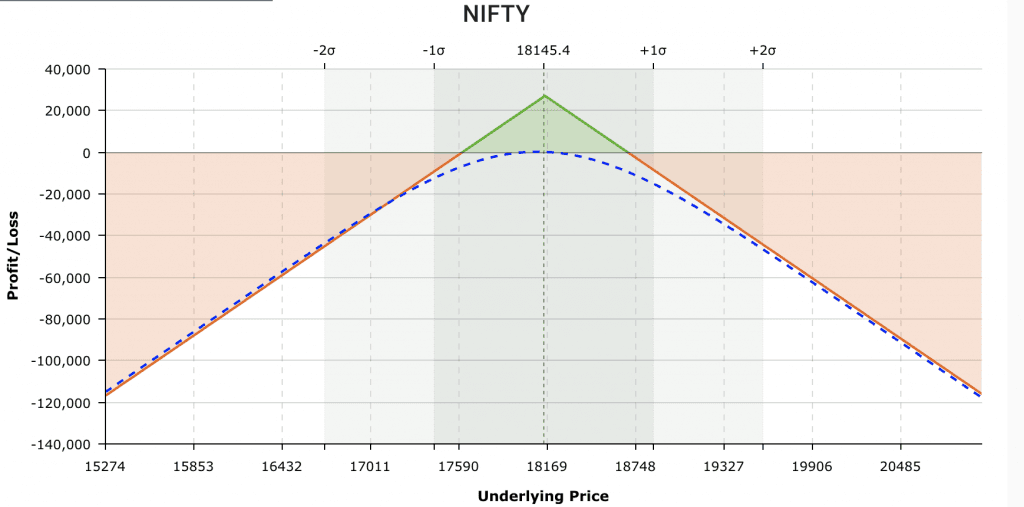
Max profit = premium received = Rs. 27,100
Max loss = unlimited
Why is your loss unlimited you ask? Well, **the underlying could (theoretically) appreciate to any level, or it could go to zero.** If the underlying moves a large amount in either direction, it could result in an MTM loss even higher than the amount of margin money you deposited with your broker! In this case, you'll definitely get a **margin call** from your broker!
You will need to add more funds in your account to carry on the position, or else the broker might square off your positions and potentially charge a penalty.
### **Notional Value**
Leverage, as you can remember, allows one to use a small amount of money to theoretically control a much larger **position.** This much larger position is nothing more than the notional value we discussed in this [blog](https://algotest.in/blog/leverage-in-trading-futures-contracts/). It is the total underlying value that can be controlled by your [option](https://algotest.in/options-chart?utm_source=blog&utm_medium=internal&utm_campaign=seo&utm_content=landing-page&utm_term=options-chart) position. Thinking in terms of this notional value helps differentiate between the total value of a trade from the cost of taking the trade.
The notional value of a short option is calculated as **(Strike Price - Premium) \* Lot Size**
The notional value in the case of a short straddle is calculated slightly differently. This is because only one side will be tested in the case of a straddle and not both.
**NV = _(spot price) x (lot size)_**
From our example, the notional value is (18150 x 50) = **9L approx.**
### **Different Leverage Scenarios**
Back to the strategy, the margin in your trading account required to trade 1 lot of this strategy is approximately 1.8L.
Therefore, if our capital base was 2L, we would be trading at a **4.5X notional exposure (9L / 2L)**. If we were to trade this strategy with a 2L account, the most we would stand to lose in a lower circuit intraday (index moves up or down by 20%) would be **1.5L or 75% of your account!**
Lets lower this potential loss by using notional value to determine **position sizing**.
Using notional value to determine our position sizing, if we traded at a conservative multiple of 1X (no leverage) this time, we would now need the full 9L to trade one lot. **Now, the most we would stand to lose in the event of a circuit would be about 18.5%. Still a large percentage, but a far cry from the 75% witnessed earlier.**
To understand **leverage and its effects on your P&L** in short [options](https://algotest.in/options-trading?utm_source=blog&utm_medium=internal&utm_campaign=seo&utm_content=landing-page&utm_term=options-trading) even better, let's take another example. Consider an INR 10L trading account. Let's gradually increase the number of lots traded but keep the total capital fixed at 10L. As we increase our lots traded, our leverage also increases, and our losses will be magnified relative to the same move in the underlying index.
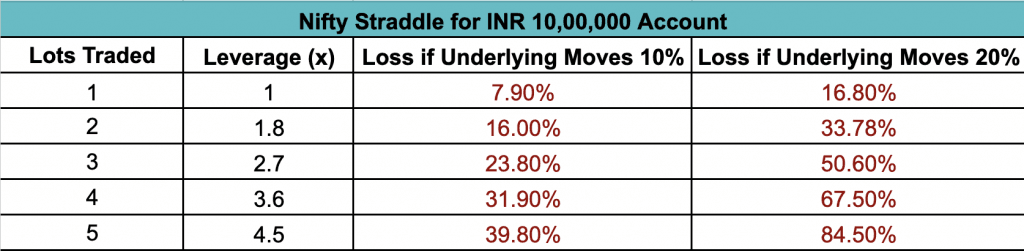
From our previous blog posts we can conclude that **leverage juices your returns**. The table above however, demonstrates that it also carries with it **(potentially) insurmountable risk if not thought about or considered** appropriately.
There is no absolute right answer to how much leverage one should utilise, but **conservative traders could use 1.5 - 2X notional exposure**, while more **aggressive traders could have 3X** or so as their benchmark. Trading with more than 3X exposure will yield higher returns, but in turn, will definitely **leave you hanging dry** when the market moves against you!
We will expand on this concept in the next blog when we talk about how whether your 'hedges' are really 'hedges'. Stay tuned 😉
---
This blog is powered by Superblog. Visit https://superblog.ai to know more.
---
## Diwali Muhurat Trading Stock Market 2024
Author: AlgoTest
Author URL: https://algotest.in/blog/author/algotest/
Published: 2024-08-28
URL: https://algotest.in/blog/diwali-muhurat-trading-stock-market/
Diwali Muhurat trading for 2024 falls between **6:15 pm to 7:15** pm on **November 1, 2024**, **Friday**.
**Event**
**Time**
Pre-Open Session
6:00 PM – 6:08 PM IST
Muhurat Trading
6:15 PM – 7:15 PM IST
Post-Close Session
7:30 PM – 7:38 PM IST
Market Close
7:40 PM IST
Muhurat trading, an age-old tradition, symbolizes an auspicious start on Diwali. It began in the 1950s with BSE and later embraced by NSE. During this session, trading includes equities, derivatives, and currency derivatives. However, commodities trading is excluded. Despite its symbolic nature, Muhurat trading fosters unity among traders, warranting cautious participation.
Please note that exact timings are announced closer to Diwali.
## Diwali Muhurat Trading Introduction
Diwali, celebrated as the festival of lights and prosperity, is a significant event in India. Beyond the traditional festivities, there's a unique financial ritual: Diwali Muhurat Trading. This special trading session on Diwali adds a festive touch to the stock market. In this piece, you'll learn about the history, importance, and workings of Diwali Muhurat Trading and why traders and investors eagerly await it.
## The Historical Roots of Diwali Muhurat Trading
### **Origin**
The Diwali Muhurat Trading tradition began in the late 19th century. The renowned stock market investor, Seth Premchand Roychand, introduced the idea of trading stocks on Diwali. This event has since become a highlight of the Indian stock market.
### **Cultural Significance**
In Indian culture, Diwali is associated with the victory of light over darkness and good over evil. This belief extends to the stock market, where traders embark on new beginnings, hoping for success and prosperity in their financial endeavours.
## Diwali Muhurat Trading: A Time-Honoured Tradition
### **Timing**
This special trading session lasts for just an hour on Diwali day. Its exact timing changes annually, based on the Lagna (auspicious time) determined by astrologers.
### **Significance**
Diwali symbolizes new beginnings and prosperity. The Diwali Muhurat Trading marks the onset of a new financial year. Many believe it sets the financial tone for the upcoming year.
## The Vibrance of Diwali Muhurat Trading
### **Positive Sentiments**
This trading session brings positivity to the stock market. Traders and investors see it as a golden opportunity for new investments and fresh trading approaches.
### **Wealth Creation**
There's a widespread belief that trading during this auspicious time can lead to prosperity. This attracts many to the session.
### **Market Activity**
Though brief, the Diwali Muhurat Trading session sees enthusiastic participation. Traders and investors aim to make the most of the festive spirit.
## **Trading Dynamics and Strategies**
### **Short and Swift**
With just an hour for trading, quick decisions are essential. Traders must be agile to make the most of this session.
### **Focus on Established Stocks**
Traders often lean towards blue-chip stocks during this session. These well-known companies are seen as more reliable.
### **Optimism-Driven Trades**
The festive mood and positive vibes influence trading choices. Many traders adopt a bullish stance during this session.
### **Historical Performance**
Historically, the stock market has shown a positive trend during the Diwali Muhurat Trading session. While past performance isn't indicative of future results, many traders and investors consider this session as a harbinger of good fortune for the coming year.
### Tips for Diwali Muhurat Trading
- **Plan Ahead:** With limited time, it's crucial to prepare. Choose your stocks, set your targets, and adhere to your plan.
- **Stay Updated:** Monitor market news and trends before the session. Stay informed about any factors that might affect your stock choices.
- **Risk Management:** Trading has its risks, even during festive times. Use risk management tools and set stop-loss orders.
- **Embrace the Festive Mood:** Dive into the Diwali spirit. Let the festive optimism influence your trading choices.
### Diwali Muhurat Trading FAQs
1. **What makes Diwali Muhurat Trading unique?** Diwali Muhurat Trading is a special session that combines the festive spirit of Diwali with the financial world, symbolising new beginnings and prosperity.
2. **How long is the Diwali Muhurat Trading session?** This session lasts for just an hour on Diwali day.
3. **Why do traders focus on blue-chip stocks during this session?** Blue-chip stocks represent well-established companies, considered more stable and reliable.
4. **Has the stock market historically performed well during this session?** Historically, the stock market has shown a positive trend during the Diwali Muhurat Trading, though past performance isn't indicative of future results.
### Conclusion
Diwali Muhurat Trading isn't just another trading session. It's a blend of culture, finance, and tradition. This event allows the financial community to come together, starting the new financial year with hope and shared anticipation. Whether you're a seasoned trader or new to investing, Diwali Muhurat Trading offers a chance to join the festivities while exploring the financial realm. As Diwali lights brighten homes, this trading session illuminates the financial market, warming the hearts of its participants.
---
This blog is powered by Superblog. Visit https://superblog.ai to know more.
---
## Leverage in Trading: Long Options
Author: AlgoTest
Author URL: https://algotest.in/blog/author/algotest/
Published: 2024-08-28
Category: Product
Category URL: https://algotest.in/blog/category/product/
URL: https://algotest.in/blog/leverage-in-trading-long-options/
In our previous [**post**](https://algotest.in/blog/leverage-in-trading-futures-contracts/) **,** we discussed leverage in [futures](https://algotest.in/futures-and-options?utm_source=blog&utm_medium=internal&utm_campaign=seo&utm_content=landing-page&utm_term=futures-and-options) trading. This post will talk about leverage in the case of buying options.
## **_How are you leveraged as an option buyer?_**
Most new retail traders in India are entering the markets with “ [option buying strategies](https://algotest.in/futures-and-options?utm_source=blog&utm_medium=internal&utm_campaign=seo&utm_content=landing-page&utm_term=futures-and-options)”. Why? Some reasons we hear:
1. requires less capital than option selling
2. can lead to large profits on smaller capital (”that guy made 800% return in 3 years! capital increased from Rs 5,00,000 to Rs 50 crore!!)
These crazy returns are linked to our old friend “ **_leverage_**”. But this friendship comes at a price. The price is **_risk_**.

Maybe before you hear the 100 reasons why you should start your [option trading](https://algotest.in/options-trading?utm_source=blog&utm_medium=internal&utm_campaign=seo&utm_content=landing-page&utm_term=options-trading) journey with “option buying”, you need to understand what leverage means in this context.
An option buyer can see large percentage gains or losses from comparatively small percentage moves in the underlying product.
Let's say we think Reliance Industries will appreciate in value today, and it's expiry day. Let's illustrate P&Ls on a Rs 50,000 account. Here's **_two different trades_** we can take:
**_Trade A:_** Buy a reliance ITM call
**_Trade B:_** Buy the Reliance stock
_ITM Call Buy details_
Spot Price: Rs 2,400
Strike Traded: 2200 CE
Premium Paid: Rs 200
Lots Traded: 1 (250 contracts)
## **Case I: Reliance Rallies 10%**
For our first case, let's say we were right and the stock actually rallies 10%, owing to say perhaps good quarterly results or some other positive news.
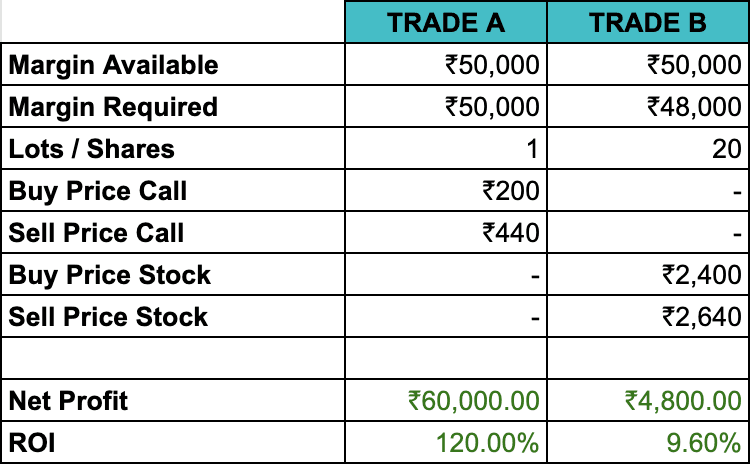
As you can see, in Trade A the call bought and its inherent leverage resulted in a **_10X_** return when compared to Trade B, where just the stock itself was bought.
But, what if we were wrong?
## **Case II: Reliance Falls 10%**
In this case, perhaps our hunch or analysis was incorrect and the stock disappointingly went down by 10%.
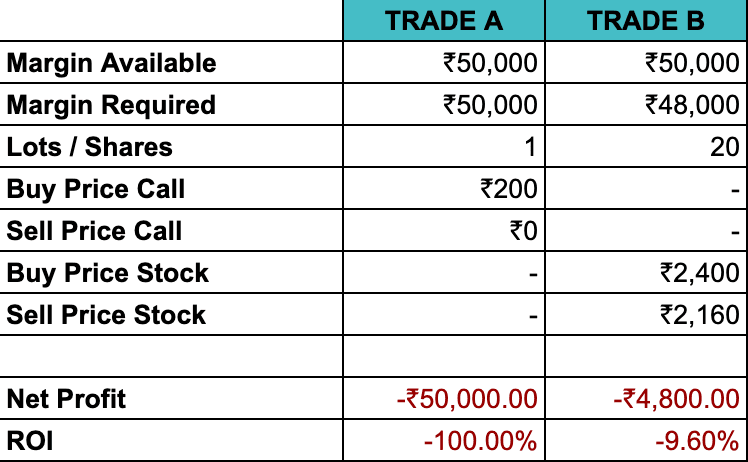
As the stock fell by Rs 240 and closed at Rs 2,160, the strike we traded **_expires OTM_**! As a result, **_we lost 100% of our capital_** in Trade A, while buying the stock in Trade B resulted in a 9.6% loss.
This, is the **_dark side of leverage_** illustrated once again!
## **Buying OTM Options**
If we traded an OTM option instead of an ITM one, you would see **_larger percentage gains_**, but would also **_require the underlying to appreciate by much more_**.
Let’s say we bought an OTM call option:
Spot - Rs 2,400
Strike Traded - 2680 CE
Premium - Rs 2
Lots traded: 100 lots (2500 contracts)
Assuming the same 10% movement, let’s see what our P&L would look like
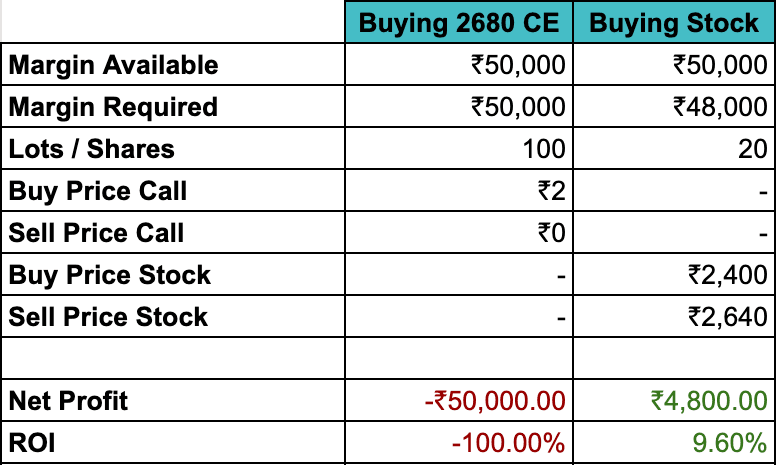
Despite the stock having moved in our favour, we ended up losing 100% of our capital as the strike was still OTM! Buying the stock on the other hand, resulted in a 9.6% profit.
This is why when people talk about OTM options being ‘cheap’, it doesn’t paint the whole picture!
If the underlying were to close as it opened, **_you would lose the entire premium paid_** to take the OTM CE buy position. However, in the case of buying the stock, you would obviously close at breakeven.
## **_Long Options vs Futures_**
A key difference between trading [futures and long options](https://algotest.in/futures-and-options?utm_source=blog&utm_medium=internal&utm_campaign=seo&utm_content=landing-page&utm_term=futures-and-options) is the **_risk involved_**. In the case of futures, if the trade goes against you, it is possible to lose far more than the margin you have paid.
However, in the case of long options, the maximum loss of the trade will be ( **_premium paid \* lot size \* lots_**). For eg, in **_Trade A_** from above, the most you stand to lose is:
Premium paid = Rs 200
Lot size = 250
Lots = 1
Hence, max loss = 1 \* 250 \* 200 = Rs 50,000
This also happens to be the **_margin required_** to trade this position.
---
This blog is powered by Superblog. Visit https://superblog.ai to know more.
---
## Leverage in Trading: Futures Contracts
Author: AlgoTest
Author URL: https://algotest.in/blog/author/algotest/
Published: 2024-08-28
Category: Product
Category URL: https://algotest.in/blog/category/product/
URL: https://algotest.in/blog/leverage-in-trading-futures-contracts/
Furthering our theme of ' [leverage in trading](https://algotest.in/blog/leverage-in-trading-2-25-crores-in-8-minutes/)’ from the last blog post.
This article will introduce the application of leverage in the FnO segment. We’ll start with futures.
Let's first define the concept of “ **_notional exposure_**”.
**_Notional exposure_** or **_notional value_** can be thought of as **_the total amount of the underlying instrument(s) that your position controls_**. What does this mean? Let's calculate the notional value of a futures trade as an example:
To buy one lot of Adani Enterprises futures, margin required = **_Rs 1,00,915_**
Calculate this here on [Margin Calculator](https://algotest.in/margin-calculator).
This gives you control of 250 shares of Adani Enterprises as the minimum lot size is 250 shares.
The notional value in this case is 250\*1770 = **Rs 4.4L**
So, **_Notional Exposure = Contract Size x Spot Price_**
**Now how is this notional value related to the amount of margin required?**
As you can see, when trading a futures contract, you have to **_pay a significantly lesser margin to achieve control of a certain number of shares_** as compared to buying the stock. This is **leverage**, and the ratio in this case is **_4:1 or 4 times_**.
So, **_leverage = notional exposure / margin required_**
Unlike the example from our previous article, you don’t need to borrow money to have a leveraged position. Hence, buying a futures contract **_by design_** gives you leverage!
## **Why is this important?**
As discussed in the previous article, leverage juices up your return if you’re correct, but can really hurt if you’re wrong.
Notional value is an important concept to grasp as a trader, because it helps you understand how leveraged you are. The **_more leveraged you are, the higher the risk_** if the position goes against you.
We'll spend a lot more time talking about notional value in the days to come, but first let's answer the burning question:
## **How do you use Notional Exposure to Determine your Risk?**
This is much easier to illustrate with an example.
Remember, **_Notional Exposure = Contract Size x Spot Price_**
In the Adani example above, the notional value is approximately **_Rs 4.4L_** for 1 lot of an Adani Enterprises futures contract. This means, that if the stock went to 0 for whatever reason, the most you'd lose is NOT just the Rs 1L you paid in margin, but you would **_ALSO OWE your broker Rs 3.4L_**.
To illustrate the magnitude of risk that is possessed by over-leveraging, let's take two types of trades on Adani Enterprises with a 6L account utilising roughly the same margin for both cases.
**_Trade A_**: Buy 320 shares of Adani Enterprises = Margin of Rs 5.6L
**_Trade B_**: Buy 2 Adani Enterprises futures contracts = Margin of Rs 5.6L
**Case 1: Adani Enterprises Rises by Rs 100 in 1 week**
What would our P&L look like in both trades if the stock rose by Rs 100 in both trades?
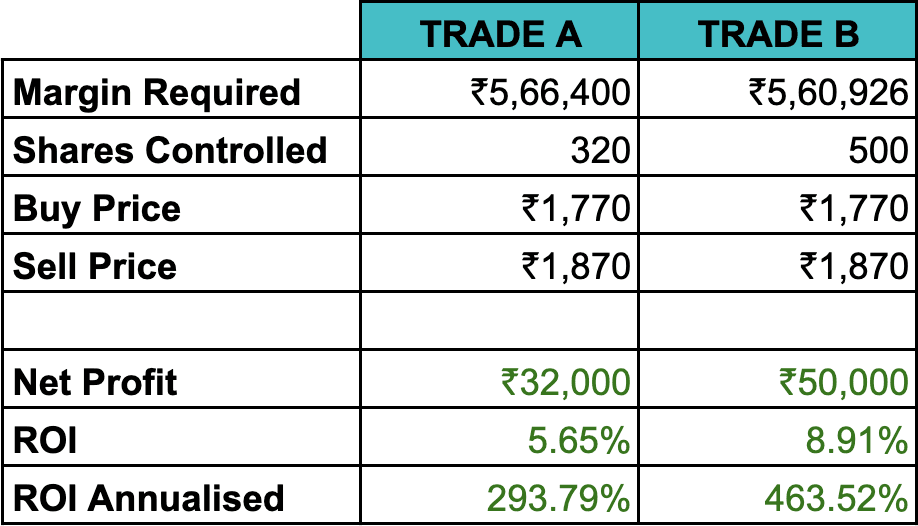P&L if Adani Enterprises rose by Rs 100 in a week for both our trades
Evidently, your **_ROI and hence annualised ROI is significantly higher_** when trading the futures contract instead of buying the stock.
**Case 2: Adani Enterprises Falls 70% in 1 week**
**Hindenburg Research** published a _(perhaps telling)_ report on the Adani group and their alleged "con” on the 24th of January, 2023. The aftermath resulted in Adani stocks hitting lower circuits, with Adani Enterprises falling 70% in the span of a week between **_25th Jan & 3rd Feb 2023_** _._
_PS: you can read the report here:_ [_https://hindenburgresearch.com/adani/_](https://hindenburgresearch.com/adani/)
In this scenario, what would our P&L numbers look like?
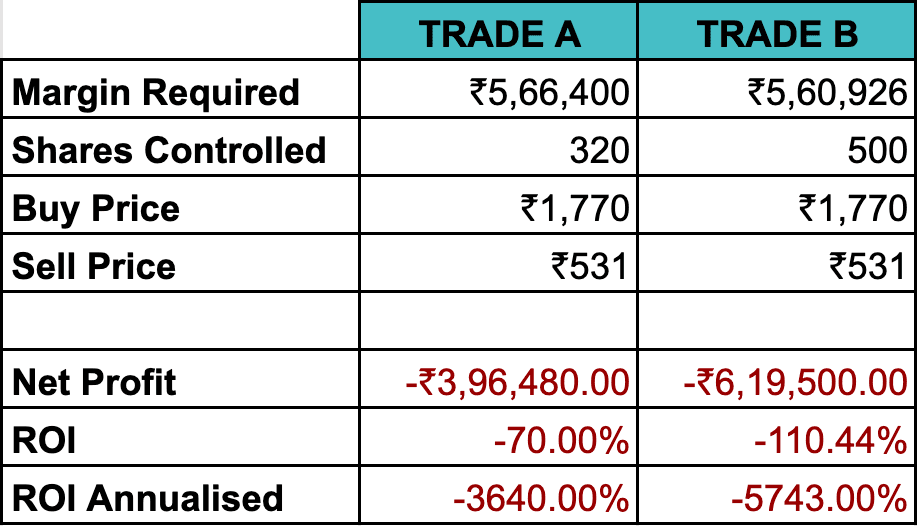P&L if Adani Enterprises fell 70% from its LTP as it did between 25/01/23 & 03/02/23 for both our trades
Quite the blood-bath in both cases, but I think you can clearly see leverage at play on the downside, too.
In **Trade B**, not only would you **_lose the entire Rs 6L of capital in your trading account, you would now ALSO OWE your broker Rs 20,000!!_**
This, is why position sizing is key, and using notional exposure to position size is a great place to start. A **_1X_** notional exposure is a **decent starting point** for those new to trading.
However, you can trade with more than a 1X exposure even as a newbie, provided you sell ‘courses’ to offset your trading losses 😉😉
https://giphy.com/gifs/fazeclan-faze-clan-fazeup-hR0A1kHhm61XhJKahb
_POV: You start trading a furu's 'No Loss' strategy 🤠_
_NOTE:_ _Marked-to-market settlements in futures trading happens at the end of each day. In Trade B from above, the risk management mechanisms of the broker and the exchange would have resulted in margin calls in one's account. This would require you to furnish more capital in your trading account, or your positions would be squared off. For the sake of simplicity, however, we have disregarded this clearly illustrate the effect of leverage._
---
This blog is powered by Superblog. Visit https://superblog.ai to know more.
---
## Best Intraday Trading Strategies, Rules and Tips
Author: AlgoTest
Author URL: https://algotest.in/blog/author/algotest/
Published: 2024-08-28
Category: Strategies
Category URL: https://algotest.in/blog/category/strategies/
URL: https://algotest.in/blog/best-intraday-trading-strategies-rules-tips/
## **Introduction to Intraday Trading**
Intraday trading, sometimes known as day trading, is a thrilling part of the stock market. It's all about buying and selling stocks within one trading day. The goal? To profit from quick price changes. But, like all things, it comes with risks. So, if you're thinking about diving into intraday trading, you'll need the right strategies, rules, and tips.
**Strategies You Can Use in Intraday Trading**
**Trend Following Strategy:** Ever heard of following the crowd? In trading, sometimes it's good to follow the trend. This strategy is all about identifying the prevailing trend and trading in that direction. Using tools like moving averages and the Relative Strength Index (RSI) can help you see which way the market is moving. It gives you a clear direction. So, if the market is moving up, you know it might be a good time to buy.
**Breakout Strategy:** This strategy is like waiting for a surprise. You're looking for stocks that suddenly move out of their usual price range. You'll watch for key price levels. When a stock breaks these levels, that's when you make your move. It's a way to ride the momentum of a stock, which can lead to big profits.
**Range Trading Strategy:** Think of this as playing within the lines. You'll buy stocks at low prices and sell when they hit high prices. Identify price ranges and execute trades at support and resistance levels. This strategy is best when the market isn't making big moves.
**Scalping Strategy:** This is for those who love quick action. Scalping is about making many trades in a day, all for small profits. You'll jump in and out of trades, aiming to catch small price changes. It's fast-paced and can lead to quick profits, even if they're small.
## **Golden Rules for Intraday Trading**
If you're going to succeed in intraday trading, you'll need some rules. Always plan your trades by defining entry and exit points based on technical indicators, support and resistance levels, and your risk tolerance. Stick to these points to avoid impulsive decisions. Remember, [options trading](https://algotest.in/options-trading?utm_source=blog&utm_medium=internal&utm_campaign=seo&utm_content=landing-page&utm_term=options-trading) can involve significant risks. Assess your risk tolerance and only trade with funds you can afford to lose. Stay updated by following financial news, subscribing to relevant newsletters, and monitoring economic calendars
## **Tips to Help You Excel in Intraday Trading**
For intraday trading, it's essential to choose liquid stocks with high trading volumes. This ensures you can buy and sell easily. Before diving in with real money, use demo accounts to practice your strategies. This helps you gain experience and build confidence. And always, stay disciplined. Intraday trading requires discipline to follow your strategies and rules rigorously. Avoid emotional trading and keep a trading journal to track your progress and learn from your mistakes.
#### **FAQs About Intraday Trading**
1\. **What exactly is Intraday Trading?**
Intraday trading is when you buy and sell stocks all in one day, aiming to profit from quick price changes.
2\. **Which strategies are best for Intraday Trading?**
Some popular ones include trend following, breakout trading, range trading, and scalping.
3\. **How can I manage risks in Intraday Trading?**
Always know your risk level, use tools like stop-loss orders, and never risk more than you can afford.
4\. **Is it common to trade multiple times in one day?**
Yes, especially in intraday trading, you'll often make many trades in one day.
5\. **How do I pick stocks for Intraday Trading?**
Look for stocks that are traded a lot and have price changes throughout the day.
6\. **Is Intraday Trading good for beginners?**
It can be complex, but with the right education and practice, even beginners can get the hang of it.
7\. **How can I stay updated on market news?**
Follow financial news sites, sign up for newsletters, and keep an eye on economic events.
8\. **What's scalping in Intraday Trading?**
Scalping is making many trades in one day, all for small profits.
**9\. Can I use software for Intraday Trading?**
Absolutely! There are many tools and platforms out there to help you make informed decisions.
## **Conclusion**
Intraday trading offers the excitement of short-term price movements and the potential for quick profits. However, it also demands discipline, risk management, and a deep understanding of trading strategies. By employing the right strategies, following established rules, and heeding valuable tips, you can navigate the challenges of intraday trading and optimise your chances of success.
---
This blog is powered by Superblog. Visit https://superblog.ai to know more.
---
## Leverage in Trading: 2.25 Crores in 8 minutes?
Author: AlgoTest
Author URL: https://algotest.in/blog/author/algotest/
Published: 2024-08-28
URL: https://algotest.in/blog/leverage-in-trading-2-25-crores-in-8-minutes/
If you’ve ever traded in the financial markets, chances are you've come across the term 'leverage'. In this blog, we’ll discuss what leverage is, how it is used and its dangers.
Put simply, **_leverage is the use of borrowed funds to put on positions._** Many traders use leverage to increase the size of their position **_beyond what their trading account balance could furnish._**
For example, say you'd like to purchase 100 shares of ITC intraday, whose last traded price (LTP) is say Rs. 200. The margin in your account needed to fund this would be 100 \* 200 = Rs. 20,000. However, the broker may provide leverage for intraday trades. For example, you may be allowed to put on this position with just Rs. 10,000, with the broker lending you the remaining Rs. 10,000. This is **_leverage_**. The broker has provided leverage of **_2:1_**; you have paid only Rs. 10,000 to control a position worth Rs. 20,000.
Why would one use leverage?
Using leverage can **_significantly enhance your ROI_** if the trades you placed end up in your favour. For instance, making Rs 100 on the ITC stock example from above equates to an ROI of 1% (100/10000) if leverage provided by the broker is utilised. However, if you were to pay the entire margin required to take the position and did NOT use the leverage provided by the broker, your ROI would only be 0.5% (100/20000).
What if you’re wrong?
Worst case scenario, if the stock goes to 0, you now owe your broker Rs 10,000. Your total loss will be Rs 20,000; not only have you eroded your capital from Rs 10,000 to 0, but you're also now **_indebted to your broker!_** This is both **_your risk and the broker's risk!_**
So far, using leverage to trade may sound like a no-brainer to you. Former ‘Shark Tank India’ investor **_Ashneer Grover_** explained how he used leverage to make a quick buck via the Zomato IPO. BharatPe's former MD **_earned_** **_a cool Rs 2.25 crore within 8 minutes_** of Zomato's massive stock market listing last year. Should retailers follow suit to make some quick, big money with leveraged positions? Absolutely not. Read on!
Let's analyse Mr Grover's IPO play a little deeper.
Ashneer Grover, co-founder & former MD of Bharat Pe
## The Zomato IPO as it was
For the IPO, Ashneer paid **_Rs 5 Cr_** out of his pocket, while Kotak Mahindra Wealth got him financing for **_Rs 95 Cr_** at an annualised interest of **_10%_** for one week (the period for which funds are blocked for an IPO). **_The leverage offered here is almost 20:1_**! Grover's purchase price was Rs. 76, and he sold all his shares at Rs. 136, 8 minutes after listing.
Whenever a company decides to go public, there's a lot of documents that must be declared. Notably, one of these is the amount of shares available for each category of investors such as QIIs, HNI/NIIs, Retail etc. Mr. Grover falls into the **_NII or HNI category_**.
Since the **_HNI/NII category was oversubscribed by 33 times_**, Ashneer was allotted Rs 3 Cr worth of shares.
Let's have a look at the details of the trade and subsequent profit.
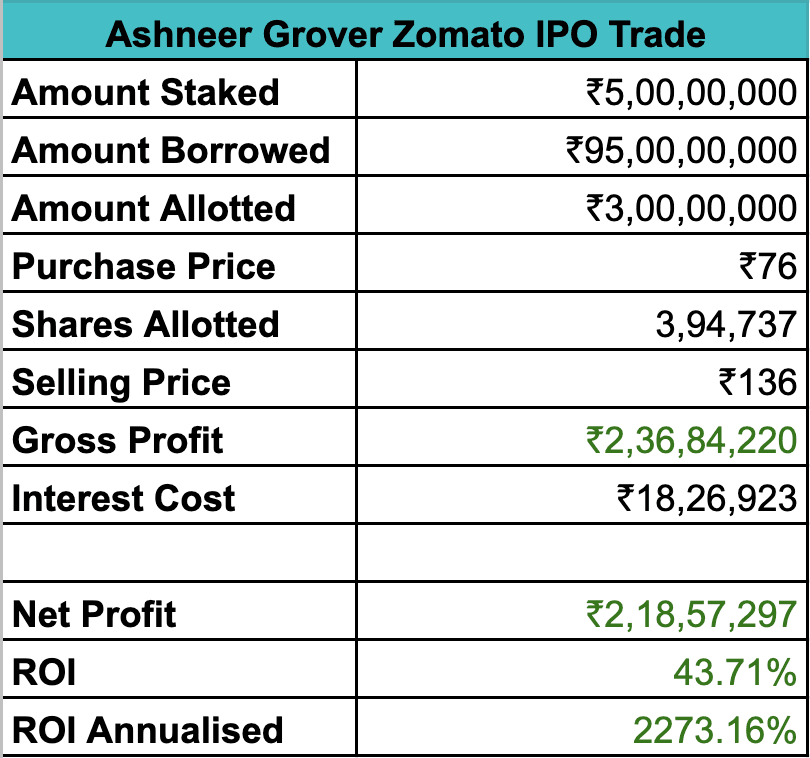_The Zomato IPO as it was and how Grover invested in it_
A **_44% ROI in 8 minutes?!_** Sign me up…. right? Er, not quite.
Loads of headlines and stories were published about Ashneer's success, but none highlighted the **_crazy risk_** that he took on. **_What would've happened if things didn't quite go his way?_**
Let's look at two scenarios.
##### Scenario A: Oversubscribed by 2X and Opens 9% lower
For this scenario, let's assume the IPO was only oversubscribed by 2X and not 33X. Additionally, let's suppose it lists at a discount similar to what another major unicorn did, **_PayTM_**.
PayTM, was a company whose IPO was highly advertised and hyped by promoters and other stakeholders. However, it didn't live up to the hype at all, despite being hailed as ‘India's Largest IPO’ at the time. **_It listed at a 9% discount to the issue price._**
So, what would Ashneer's P&L look like with the aforementioned conditions?
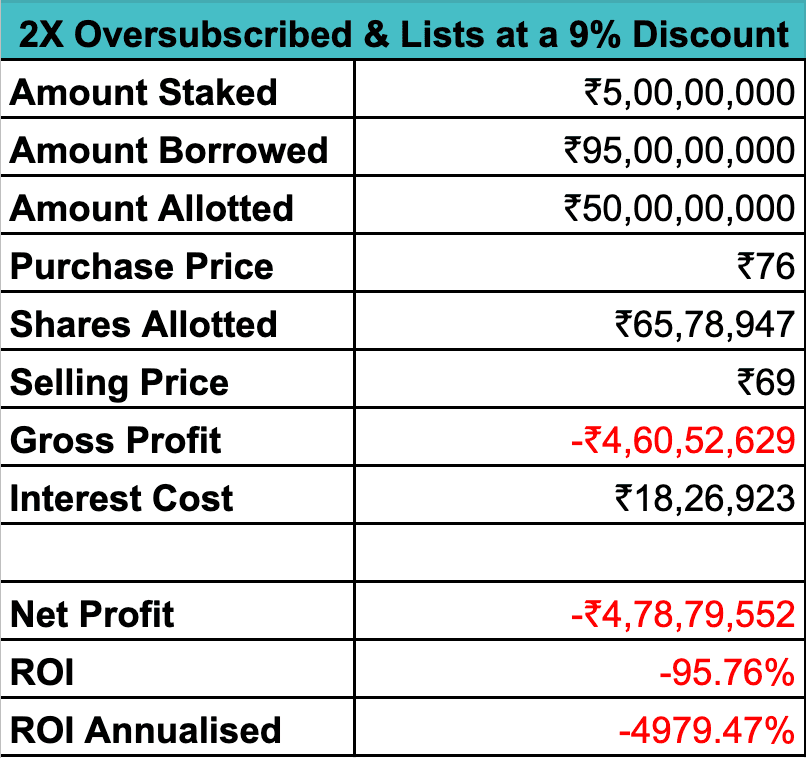Ashneer's P&L if the Zomato IPO was 2X oversubscribed & listed at a 9% discount
Clearly, the story isn't half as glamorous anymore. Had Zomato listed at a meagre 9% discount and would've only been oversubscribed by 2X, **_Ashneer would've lost 4.7Cr which is a -95% ROI_** !!!
##### Scenario B: Oversubscribed by 2X and Opens at Today's LTP
What is Zomato’s true value? No one really knows. After the IPO frenzy was done with, **_the market perceived that the IPO price was too high_** and didn’t accurately reflect the food delivery giant's business fundamentals.
The stock currently trades at Rs. 47, a **_37% decline_** from Rs 76, where he bought it. What would the numbers look like if the company listed at today's price and was oversubscribed by 2X?
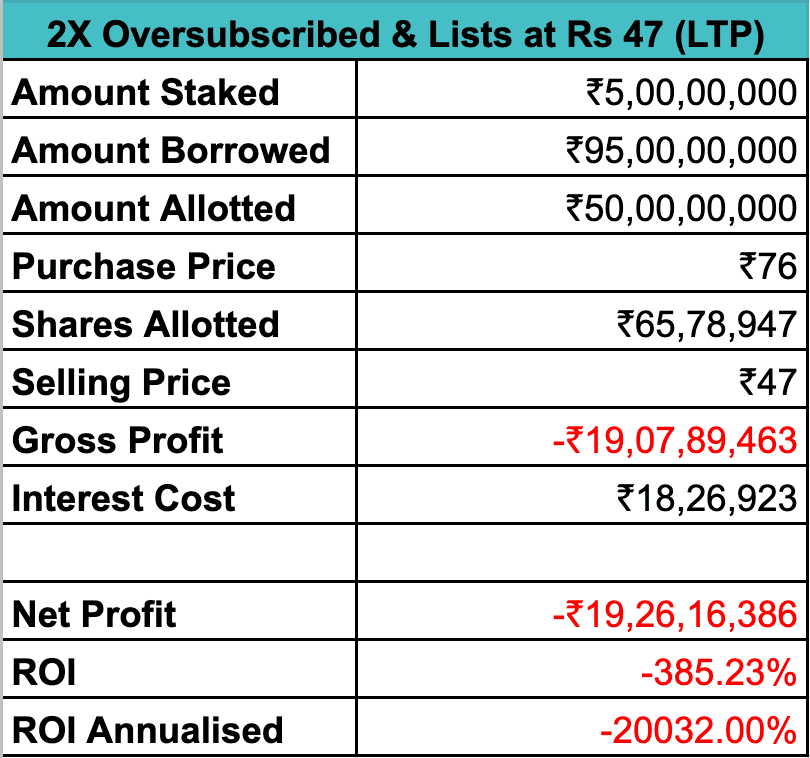Ashneer's P&L if the Zomato IPO was 2X oversubscribed & listed at the LTP (as of Feb 2nd 2023)
Some bizarre numbers! In this scenario, not only would he have lost the entire sum he staked, but he would now **_ALSO OWE Kotak about Rs 14 Cr_** which includes an interest cost of Rs 18L.
Can you now see the **_dark side of leverage and its inherent risks?_**
This was Ashneer’s rationale for all the leverage:
_"Of course, I knew of Deepinder (Goyal), and I am a big believer in his ability to persevere and keep building big. Fundamentally, with the pandemic the ticket size of their orders had grown, as people were ordering food from home for 3-4 members in the family, as against single rolls in office, thereby increasing Zomato's absolute margins.”_
This may still be fundamentally true, but the stock price is now **_38% lower!_**
Therefore, **_when trading with any sort of leverage it is in your best interest to manage your risk and figure out how much you stand to lose in the worst-case scenario!_** Ashneer played the IPO FOMO game during the bull market and won. More due to the bull market than anything else.
**_This is called leveraged beta, and NOT alpha_** 🤠
A similar game in today’s climate would be catastrophic. Does anyone want to try this on Oyo’s IPO? There’s a reason they postponed their IPO 😉😉
_Stay tuned for part 2, where we talk about the “implicit” leverage in F&O trading._
---
This blog is powered by Superblog. Visit https://superblog.ai to know more.
---
## Finnifty on AlgoTest
Author: AlgoTest
Author URL: https://algotest.in/blog/author/algotest/
Published: 2024-08-28
Category: Broker
Category URL: https://algotest.in/blog/category/broker/
URL: https://algotest.in/blog/finnifty-on-algotest/
Depending on your broker there are different restrictions on [Finnifty](https://algotest.in/finnifty?utm_source=blog&utm_medium=internal&utm_campaign=seo&utm_content=landing-page&utm_term=finnifty) instruments.
Zerodha
- Market + NRML Orders are allowed for strikes that are within 1% of Spot.
- Limit + NRML orders allowed for all strikes.
- With NRML orders, Buy is allowed but only against Sell options, i.e., first you have to sell and then only you can buy.
- Market + MIS Orders are allowed for strikes that are within 1% of Spot.
- Limit + MIS orders allowed for all strikes.
- With MIS orders, Buy is allowed before Selling for margin benefit.
- Zerodha does NOT allow trading in strikes where OI is less than 500 lots.
#### IIFL
- There are no restrictions for trading in [Finnifty](https://algotest.in/finnifty?utm_source=blog&utm_medium=internal&utm_campaign=seo&utm_content=landing-page&utm_term=finnifty)
#### Finvasia
- There are no restrictions for trading in [Finnifty](https://algotest.in/finnifty?utm_source=blog&utm_medium=internal&utm_campaign=seo&utm_content=landing-page&utm_term=finnifty)
#### Nuvama
- There are no restrictions for trading in [Finnifty](https://algotest.in/finnifty?utm_source=blog&utm_medium=internal&utm_campaign=seo&utm_content=landing-page&utm_term=finnifty)
#### Dhan
- There are no restrictions for trading in [Finnifty](https://algotest.in/finnifty?utm_source=blog&utm_medium=internal&utm_campaign=seo&utm_content=landing-page&utm_term=finnifty)
#### Kotak NEO
- MIS orders are not allowed
#### 5Paisa
- There are no restrictions for trading in [Finnifty](https://algotest.in/finnifty?utm_source=blog&utm_medium=internal&utm_campaign=seo&utm_content=landing-page&utm_term=finnifty)
---
This blog is powered by Superblog. Visit https://superblog.ai to know more.
---
## General FAQs
Author: AlgoTest
Author URL: https://algotest.in/blog/author/algotest/
Published: 2024-08-28
Category: Product
Category URL: https://algotest.in/blog/category/product/
URL: https://algotest.in/blog/general-faqs/
Here we have tried to answer some common questions about our products: [Backtesting](https://algotest.in/feature/backtest?utm_source=blog&utm_medium=internal&utm_campaign=seo&utm_content=feature&utm_term=backtest), [Forward Testing](https://algotest.in/feature/forward-test?utm_source=blog&utm_medium=internal&utm_campaign=seo&utm_content=feature&utm_term=forward-test), & [Live](https://algotest.in/feature/live?utm_source=blog&utm_medium=internal&utm_campaign=seo&utm_content=feature&utm_term=live) Execution
## Execution
### How do I stop a strategy and re-deploy it again if I have activated a wrong strategy?
A user can deploy their strategy anytime after 8:45 am and before market closes on days when the market is open. There are 2 ways where a user can stop a strategy and re-deploy it.
- **Stop and re-deploy before market open:** To stop any strategy before the market opens (9:15 AM) we have 2 options; **Square off** or **Switch to Manual**. They work similarly and stop the strategies. The major difference comes when re-deploying a strategy after stopping one. If the user clicks on "Switch to Manual" their [live](https://algotest.in/feature/live?utm_source=blog&utm_medium=internal&utm_campaign=seo&utm_content=feature&utm_term=live) execution daily limit will be reset immediately and you shall be able to re-deploy your strategy. But if the user clicks on "Square off" their [live](https://algotest.in/feature/live?utm_source=blog&utm_medium=internal&utm_campaign=seo&utm_content=feature&utm_term=live) execution limit shall be reset after 9:15 AM after which they will be able to deploy a strategy.
- **Stop and re-deploy after market open:** To stop a strategy after market open (9:15 AM), the user can use either " Switch to manual" or "Square off" function to stop a running strategy, provided that no trades have been taken in the said strategy. The daily [live](https://algotest.in/feature/live?utm_source=blog&utm_medium=internal&utm_campaign=seo&utm_content=feature&utm_term=live) execution limit shall be reset immediately and the user will be able to redeploy a different strategy.
- **Stop and re-deploy a strategy if a trade is taken:** If a trade has already been taken when the user realizes that a wrong strategy has been activated, then the user should use the "Square off" option to square off the the existing trades before activating the correct strategy. The user should keep in mind that a strategy can only be activated if the entry time is a minimum of 2 mins after the current time.
### Once I have activated a strategy for live deployment, can I make any changers to it?
No, you will not be able to make any changes to the parameters/conditions of a strategy after it has been activated & deployed. Once you activate a strategy, we save the conditions/parameters associated with that strategy. Any changes that you make to the strategy after it has been activated will not be reflected on your deployed strategy. To make any changes to your deployed strategy, you will first have to stop it by either Squaring off or Switching to manual. Thereafter, you can deploy the newly modified strategy.
### Do my Overall strategy settings like Overall Target & Stop Loss change if I use the quantity multiplier to increase by quantity?
The Quantity multiplier multiplies the number of lots in each leg. If your Overall settings e.g. Overall SL, Overall Profit, and Overall TSL, are based on MTM, then they are also multiplied.
### How do I make sure that my sell legs are entered after my buys legs?
Many users buy hedges for margin benefit. In order to make sure that your sell orders are executed after your buy orders and you are able to get the margin benefit, we have added a feature of "Entry Order Delay" in your execution settings. Your execution settings open up as soon as you click on the "Activate" button for a strategy. Under these settings we have given a time dial where you can you can delay the entry of any of your legs by 0 - 50 secs.
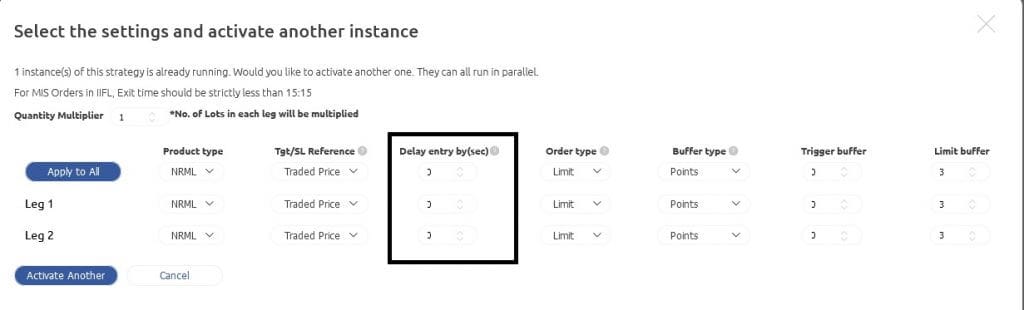
### Backtesting
### When can I backtest today's trades?
Our [backtest](https://algotest.in/feature/backtest?utm_source=blog&utm_medium=internal&utm_campaign=seo&utm_content=feature&utm_term=backtest) data is updated usually after 12 am that night, so the beginning of the next day. We go through a rigorous process of checking the data from multiple sources before it is updated to our database.
### Why is the lot size not changed in your backtest? Why is it constant?
Yes, this was a conscious design choice. Even though the lot size changed over time, it makes more sense to keep it constant while [backtesting](https://algotest.in/feature/backtest?utm_source=blog&utm_medium=internal&utm_campaign=seo&utm_content=feature&utm_term=backtest) using historical data. When evaluating strategies, a Rs 1 move in your favour shouldn't show Rs 25 profit on one day, and Rs 50 profit on some other day, even though market conditions remain the same. Different lot sizes in backtests can obfuscate the signal, so we advise you to keep it constant for the duration of the entire backtest.
### Why do you not have any in-built slippages?
This was a design choice - we keep slippages 0 so as not to obfuscate the strategy result. Instead we give the user the ability to add slippage which is closest to the slippages they see in their execution. So you can add whatever slippage you think is appropriate on the [backtest](https://algotest.in/feature/backtest?utm_source=blog&utm_medium=internal&utm_campaign=seo&utm_content=feature&utm_term=backtest) results. You can also change the value of slippages and re-calculate your results to see how sensitive your strategy results are to slippages.
### What is the difference between the Days of Max Drawdown vs Max trades in a drawdown?
Max trades in a drawdown: Max trades in a drawdown shows the maximum number of consecutive trades your strategy was in a drawdown phase. This drawdown period can be different from the period where your strategy incurred the maximum drawdown (monetarily), which is shown in the first field i.e. Days of Max Drawdown.
Max trades in a drawdown shows the max amount of trades taken to recover any drawdown which may or may not correspond to the maximum drawdown monetarily.
---
This blog is powered by Superblog. Visit https://superblog.ai to know more.
---
## How to Interpret a Backtested Portfolio's Aggregate Results
Author: AlgoTest
Author URL: https://algotest.in/blog/author/algotest/
Published: 2024-08-28
Category: Backtest
Category URL: https://algotest.in/blog/category/backtest/
URL: https://algotest.in/blog/how-to-interpret-a-backtested-portfolios-aggregate-results/
This will be a short blog post on interpreting a backtested [portfolio's](https://algotest.in/portfolio?utm_source=blog&utm_medium=internal&utm_campaign=seo&utm_content=product&utm_term=portfolio) aggregate results on [AlgoTest](https://algotest.in).
## Backtesting a Portfolio
We released a blog post a few weeks ago that explained how [AlgoTest](https://algotest.in/?utm_source=blog&utm_medium=internal&utm_campaign=seo&utm_content=main-page&utm_term=algotest) defines a [portfolio](https://algotest.in/portfolio?utm_source=blog&utm_medium=internal&utm_campaign=seo&utm_content=product&utm_term=portfolio), and how you can add create a portfolio and backtest it. You can check out the post [here](https://algotest.in/blog/backtest-multiple-strategies-together-using-the-portfolio-feature/).
In short, a user can group different saved strategies into a [portfolio](https://algotest.in/portfolio?utm_source=blog&utm_medium=internal&utm_campaign=seo&utm_content=product&utm_term=portfolio) and view their combined [backtest](https://algotest.in/feature/backtest?utm_source=blog&utm_medium=internal&utm_campaign=seo&utm_content=feature&utm_term=backtest) result. Previously, we showed the combined [backtest](https://algotest.in/feature/backtest?utm_source=blog&utm_medium=internal&utm_campaign=seo&utm_content=feature&utm_term=backtest) results on a **"Per Trade"** basis. In the last week, we've released a new feature that also allows you to view the [portfolio](https://algotest.in/portfolio?utm_source=blog&utm_medium=internal&utm_campaign=seo&utm_content=product&utm_term=portfolio) on a **"Per Day"** basis for an intraday portfolio, and a **"Per Holding Period"** basis for an mixed portfolio. A mixed portfolio here just means a portfolio that includes a combination of intraday and positional strategies.
## Interpreting a Backtested Portfolio's Aggregate Results
#### "Per Trade" Basis
"Per Trade" means exactly what it sounds like - we treat every trade of each strategy in the [portfolio](https://algotest.in/portfolio?utm_source=blog&utm_medium=internal&utm_campaign=seo&utm_content=product&utm_term=portfolio) as a standalone trade, and then calculate the results. You can view this by unchecking this box that says "Aggregate At End of Trading Day" located right above your portfolio results:
Uncheck this for "Per Trade" aggregation
Here is a screenshot from the [google sheet](https://bit.ly/3yFSOB0) we shared with you.
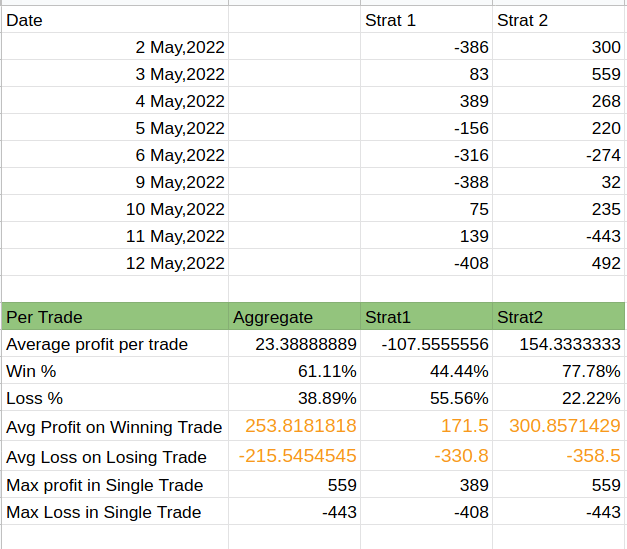When results are aggregated on a "Per Trade" basis
You can observe in the above image that there are 9 trading days with 2 strategies in the portfolio. When we aggregate on a "Per Trade" basis, we will consider these as 18 separate data points to calculate our "Aggregate" column.
Let's calculate the Win% and Loss% as an example here. There are 7 trades that show a loss in the above image (5 in Strat 1 and 2 in Strat 2). Therefore, there are 11 winning trades, which means our Win% = 11/18 = 61.11%, and our Loss% = 7/18 = 38.89%.
#### "Per Day" Basis
When aggregation is done on a "Per Day" basis, then each individual day's result is summed to arrive at a "Daily PnL" figure. We then calculate the combined results using this newly calculated "Daily PnL" figure. Here's another screenshot from our sheet again.
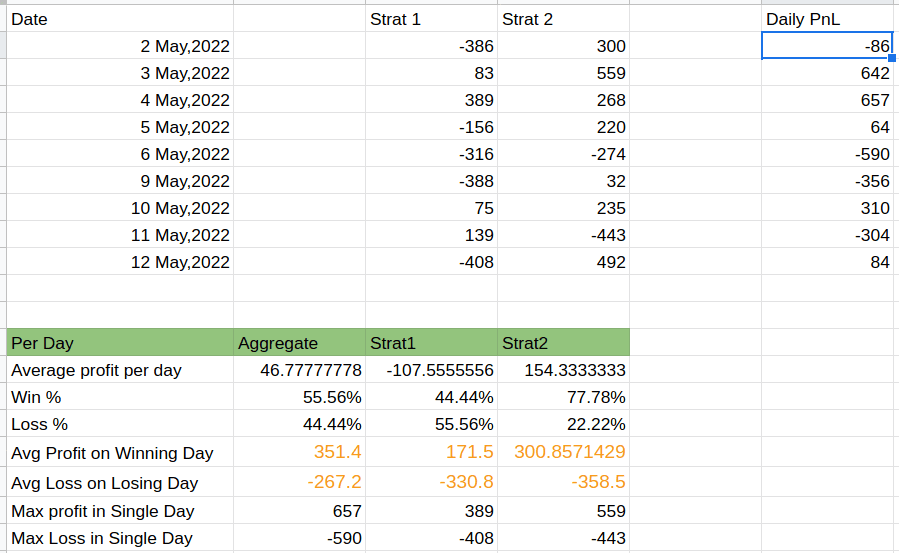When results are aggregated on a "Per Day" basis
We use this Daily PnL column to calculate our [portfolio](https://algotest.in/portfolio?utm_source=blog&utm_medium=internal&utm_campaign=seo&utm_content=product&utm_term=portfolio) results. Let's calculate the Win% and Loss% again.
In the previous calculation, we had 18 total data points. This time we have only 9, as we had only 9 trading days. We had 4 losing days and 5 winning days out of these 9 trading days. You can observe this in the "Daily PnL" column on the right side in the image above. So Win% = 5/9 = 55.56%, and Loss% = 4/9 = 44.44%.
You can toggle this view by checking this on [AlgoTest](https://algotest.in/?utm_source=blog&utm_medium=internal&utm_campaign=seo&utm_content=main-page&utm_term=algotest) above the Portfolio results:
Check this to view results on a "Per Day" basis.
#### What about Positional Strategies?
Next, lets assume our [portfolio](https://algotest.in/portfolio?utm_source=blog&utm_medium=internal&utm_campaign=seo&utm_content=product&utm_term=portfolio) consists of a positional and an intraday strategy, where the positional strategy is closed every weekly expiry day.
The "Per Trade" scenario calculation will stay the same in this case. However, the "Per Day" scenario will now be interpreted as "Per Holding Period". The max holding across all strategies in this case is the holding period of the positional strategy, which is **weekly**. For context, the holding period of an intraday strategy is **daily**, since we square off our intraday position everyday.
In this case, when a user selects "Aggregate at End of Trading Day" (i.e. "Per Day" basis), our Win% and Loss% will now become a Weekly Win% and Loss%. Here is the screenshot of this calculation:
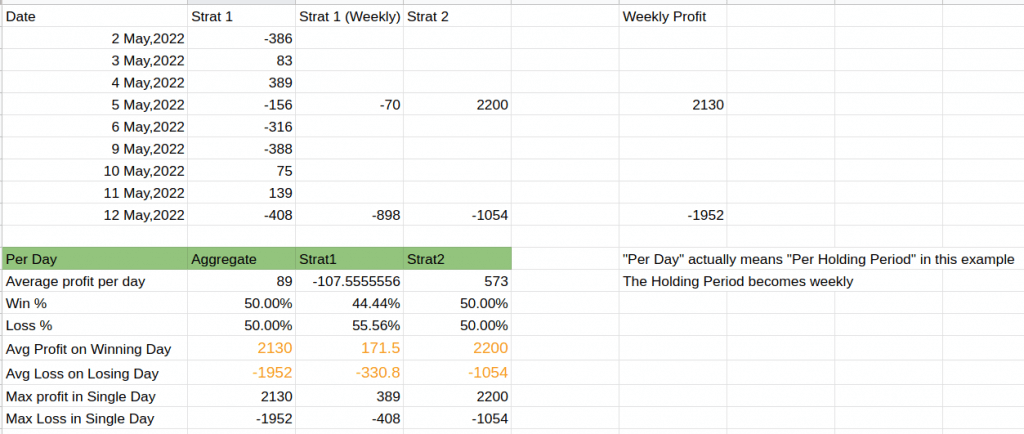"Per Day" Aggregation for a Positional Strategy
The new column to note here is the column titled "Strat 1 (Weekly)". To calculate this, we just added the individual daily profit or loss of Strat 1. As of 5 May, Strat 1 had made a loss of Rs 70, and Strat 2 had made a profit of Rs 2200. Thus, the combined weekly profit of the strategy is -70 + 2200 = Rs 2130.
Similar calculation is done for the next week, and we now have 2 data points on which we calculate our Win% and Loss%. Since we made a profit in our first week, and made a loss in our second week, our Win% = Loss% = 50% in this case.
The fields Avg Profit on Winning Day, Avg Loss on Losing Day etc. is now interpreted as "Avg Profit on Winning Week", "Avg Loss on Losing Week", etc.
Here's a short video explaining this as well:
Portfolio Result Aggregation Demo
---
This blog is powered by Superblog. Visit https://superblog.ai to know more.
---
## FAQs about Limit/SL-L Orders | Algo Trading Software India
Author: AlgoTest
Author URL: https://algotest.in/blog/author/algotest/
Published: 2024-08-28
Category: Product
Category URL: https://algotest.in/blog/category/product/
Tags: software, product
Tag URLs: software (https://algotest.in/blog/tag/software/), product (https://algotest.in/blog/tag/product/)
URL: https://algotest.in/blog/faqs-about-sl-l-orders-algo-trading-software-india/
Both Entry & Exit orders can be placed via Limit/SL-L orders or Market orders. Here are some frequently asked questions about our Limit/SL-L order feature used with the [Live Execution feature](https://algotest.in/feature/live?utm_source=blog&utm_medium=internal&utm_campaign=seo&utm_content=feature&utm_term=live) in our [Algo Trading](https://algotest.in/what-is-algo-trading?utm_source=blog&utm_medium=internal&utm_campaign=seo&utm_content=landing-page&utm_term=what-is-algo-trading) Software.
### What is the difference between Limit/SL-L order and Market order?
- Limit/SL-L Order: In this feature a Limit/SL-L order, with the defined trigger & limit price, will be sent to your broker and shall be placed in the order book of your broker either in advance or at the time of condition being met.
- Market Order: In this feature no order is sent to your broker in advance. The system fires a market order as soon as your condition is met.
### What is Trigger and Limit buffer?
A SL-L order needs to define its trigger and the limit price. Trigger price is the price at which your buy or sell order becomes active for execution. Once the price of the option hits the trigger price set by you, a limit order, with the price set by you, becomes active for execution on the exchange servers.
You can set the trigger and the limit price using the trigger and limit buffer both in terms of points or percentage. Say you Sell BANKNIFTY CE 38000 for Rs 100 and define a stop loss of 30% to it, which means your stop loss is at Rs 130. You then select the order type as "Limit", choose buffer type as "Points", trigger buffer as 1, and limit buffer as 2. In this case, a SL-L order will be placed in your broker's order book as follows: Trigger price = 130 - 1 = Rs 129 & Limit Price = 130 + 2 = Rs 132. This means, as soon as the LTP breaches trigger price of Rs 129 a Limit order of Rs 132 becomes active for execution on the exchange servers.
### Entry Limit/SL-L orders
Positions can be entered using Limit/SL-L orders. The order settings will be as follows:
- Time Based Entry: A Limit order based on the LTP along with the limit buffer is sent at the time of entry. The Limit Buffer is added in case of a Buy order while the Limit Buffer is subtracted in case of a Sell order.
- Simple Momentum: Based on your condition a Limit or a SL-L order is sent in advance to your broker
- Simple Momentum up (instrument) + BUY = SL-L order is placed in advance based on Trigger and Limit buffer
- Simple Momentum down (instrument) + SELL = SL-L order is placed in advance based on Trigger and Limit buffer
- Simple Momentum up (instrument) + SELL = Limit order is placed in advance without any buffer
- Simple Momentum Down (instrument) + BUY = Limit order is placed in advance without any buffer
- All Simple Momentum strategies based on underlying points are entered via Limit order with a limit buffer as soon as the entry condition is met.
- Re-Entry on Tgt/SL: All Re-entry orders are either placed in advance or a Limit order is sent at the time of condition being met.
- Re-Cost: Limit/SL-L order sent in in advance to your broker.
- Re-ASAP: Limit order with limit buffer is sent as soon as the previous leg exits.
- Re-Momentum on Instrument: Limit/SL-L order sent in advance to your broker based on the set momentum as soon as the previous leg exits.
- Strategies that are based on the underlying are entered via a Limit order as soon as the Re-entry condition is met.
- Range Breakout: All Range Breakout strategies that are based on the instrument have a Limit/SL-L order sent to your broker as soon as the range time ends. For strategies that are based on the underlying a Limit order is sent as soon as the break condition is met.
- General Points:
- Make sure that your limit and trigger buffer do not lead to a NEGATIVE limit or Trigger price. In such a case the limit order will be rejected and we will enter the position via Market order.
### Exit Limit/SL-L Orders
Positions can be exited using Limit/SL-L orders. The order settings will be as follows:
- Stop Loss defined on Instrument: A SL-L order is sent in advance to your broker.
- Target: If the leg does NOT have a SL defined on instrument, then a Limit order without any buffer is sent to your broker in advance for the target profit price.
- If the leg has a SL defined on instrument and a SL-L order already is placed in advance, at the time the target condition is met this SL-L order is modified to a limit order with the Limit buffer.
- Time Based Exit: A Limit order based on the LTP along with the limit buffer is sent at the time of exit. The Limit Buffer is added in case of a Buy order while the Limit Buffer is subtracted in case of a Sell order. If a Limit/SL order is already placed for exit, then the existing order is modified with LTP and limit buffer.
- Trail Stop Loss: Your placed SL-L order is modified periodically based on your strategies trail condition, and monitoring type.
## Most Asked Questions about Limit SL/L Orders
### How can SL-L orders reduce slippages?
Sometimes sudden moves in the market, especially during expiry, lead to a spike in option prices due to the gamma effect. In such situations, having an SL-L order in the order book helps control slippages. As soon as the trigger price is breached, your LIMIT order with the defined LIMIT price based on your limit buffer is sent to the exchange. **So in most cases** , the maximum slippage you suffer is the limit buffer.
Whereas in such cases if a Market order is sent, no one can predict at what price, above or below your SL price, will the order be fulfilled.
### How can a Limit/SL-L order skip? And, what happens if the Limit/SL-L order is skipped?
A SL-L order is sent to your broker's order book at the time of entry. Once the LTP of the option hits the trigger price set by you, a limit order, who's price is also set by you, is active for execution on the exchange servers. In some rare cases, the price movement is so violent that the price of the option moves above the limit price before your limit order is fulfilled. Hence, your limit order remains unfulfilled. A Limit order can also skip if there is a delay, among other things, from your broker in placing the order at the time of entry or exit.

In order to avoid such a situation, we have a "Convert to Market After" dial. The "Convert to Market After" feature can have a possible value from 1 sec - 20 secs. Once a Limit/SL-L order skips, AlgoTest will keep modifying the limit based on the current LTP + the Limit buffer till the order is fulfilled or Converted to Market after the specified time.
**IMPORTANT**: DHAN does not allow modification of SL-L order to limit. Hence if the SL-L order skips the order is converted to market. Similarly at the time of exit, the order is directly converted to market.
### Can I manually modify the limit and trigger price from the broker's order book?
We do not suggest making changes to your SL-L order as it may lead to an error in execution of your strategy. If you would like to make any manual intervention, we recommend changing the status of the strategy to manual first and then making any changes.
### Can the trigger price be Zero?
Yes, the trigger price can be ZERO. But the limit order is rejected if the trigger and limit buffer are both kept at ZERO.
### Related Resources
1. [FAQs about Pricing](https://algotest.in/blog/faqs-about-pricing-algo-trading-software-india/)
2. [Key terms related to Algo Trading](https://algotest.in/blog/definition-of-terms-used-in-backtesting-platform/)
---
This blog is powered by Superblog. Visit https://superblog.ai to know more.
---
## Key Terms Related to Algo Trading | AlgoTest
Author: AlgoTest
Author URL: https://algotest.in/blog/author/algotest/
Published: 2024-08-28
Category: Product
Category URL: https://algotest.in/blog/category/product/
Tags: algo trading, product
Tag URLs: algo trading (https://algotest.in/blog/tag/algo-trading/), product (https://algotest.in/blog/tag/product/)
URL: https://algotest.in/blog/definition-of-terms-used-in-backtesting-platform/
In this post, we'll go over the definition of terms in our [Algo Trading](https://algotest.in/what-is-algo-trading) platform, [AlgoTest](https://algotest.in) so you can move through your algo trading journey without getting stuck.
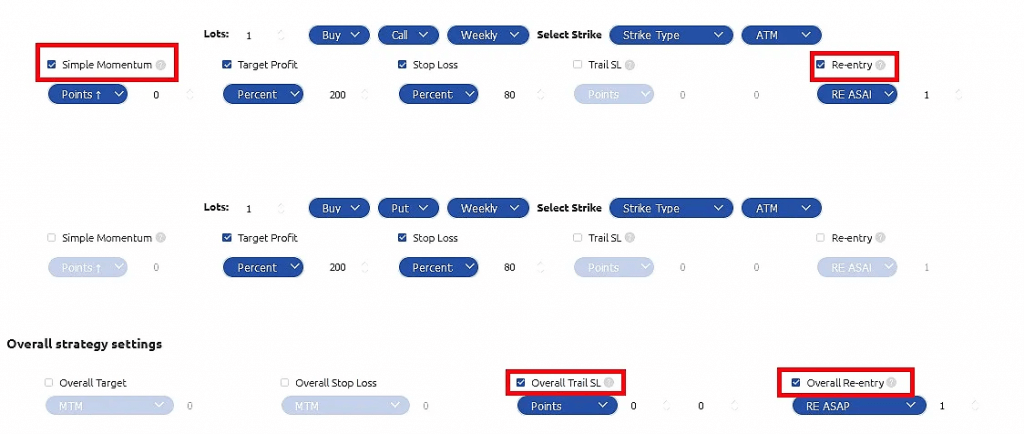
### Underlying from:
The underlying instrument could either be the Cash instrument (eg. NIFTY index spot) or the Future instrument (eg. NIFTY current month future). This affects strike selection. Lets consider the case when NIFTY Index is at 17010 and NIFTY Future is trading at 17040. The ATM strike in both these cases would be as follows:
- Selecting “ **Cash**” means ATM strike = 17000
- Selecting “ **Future**” means ATM strike = 17050
- _Quick Video Explanation on Underlying:_ [_https://bit.ly/3wpkFDB_](https://bit.ly/3wpkFDB)
## Definition of Main Algo Trading Terms
Let's go through some key terms used in our [Algo Trading](https://algotest.in/what-is-algo-trading?utm_source=blog&utm_medium=internal&utm_campaign=seo&utm_content=landing-page&utm_term=what-is-algo-trading) platform.
### Leg-wise settings
[Leg-wise definition](https://docs.algotest.in/features/legwise-settings/) of terms used in our algo trading platform.
#### **Square off:**
- **Partial:** If a Stop Loss or Target Profit hits any leg, the system will square off only that leg.
- **Complete:** The system will square off all legs if Stop Loss or Target Profit hits any leg.
_Quick Video on Square off:_ [_https://bit.ly/3dQBJMz_](https://bit.ly/3dQBJMz)
#### **Trail SL to Break-even Price:**
- **All Legs:** If a Stop Loss hits any leg, the system will trail the Stop loss of all other legs in the strategy to their respective entry/cost prices.
- **SL Legs:** If a Stop Loss hits any leg, the system will only trail the SL of those legs whose SL is specified. The SL trails to their respective entry price.
_Short video on Trail SL to Break-even Price:_ [_https://bit.ly/3ccotS2_](https://bit.ly/3ccotS2)
#### **Select Strike Criteria**:
- **Strike Type:** This criteria helps you select a strike based on its Moneyness. You can select between At the money (Strike closest to underlying), Out of the money (strikes away from the Underlying and have only time value and not intrinsic value) or In the money Strikes (Strikes have both intrinsic and time value)
- **Premium Range:** This feature gives the user the ability to select strikes who's premium fall between an upper & lower premium range. If there are two or more strikes that fall between the premium range, then the one with a higher premium will be selected if the action is to Sell an option & the one with the lower premium will be selected if the action is to Buy an option. Eg. If the user selects premium Lower range = 100 & Upper Range = 200, then all the strikes who's premium fall within the range of Rs 100 and Rs 200 for a particular backtest period will be shortlisted. Based on the Trade whether to Buy or Sell, the Strikes will be selected from this shortlisted list.
- **Closest Premium:** This criteria selects a strike price whose premium is closest to the one defined by the user. The strike selected can have premium which is either greater, lesser or exactly equal to the one input by the user.
- **Straddle Width:** Straddle Width is calculated by summing the ATM CE & PE premiums. The user is given the option to select a strike which is a sum/difference of the ATM strike and a multiple of the Straddle Width. For eg. if the current Bank Nifty spot = 35000 and the Straddle width (ATM CE + PE) = Rs 500, then the CE strike for \[ATM strike + (2 X ATM Straddle price)\] = 36000 CE Strike.
#### **Simple Momentum:**
Takes entry into the trade after the price moves a certain amount, in points or percentage, after the entry conditions.
_Video Explanation:_ [_https://bit.ly/3R2jG4m_](https://bit.ly/3R2jG4m)
#### **Trail SL**
With trailing SL, you can move your actual stop loss, whenever the price moves in your favor. Every time the instrument moves in your favor by X amount, the SL is moved by Y amount in the same direction. Amount can be in terms of points or percentage.
_Video Explanation:_ [_https://bit.ly/3ccsYMe_](https://bit.ly/3ccsYMe)
#### **Re-entry:**
- **RE ASAP (Immediate Re-entry)**
- Re-enter immediately in the new ATM strike at market price. For example, the user selected an ATM strike and its Stop Loss got triggered. The system will immediately re-enter the same position but with the new ATM strikes.
- **RE ASAP ↩ (Immediate Reverse Re-entry)**
- Re-enter immediately in the new ATM strike at market price and reverse the position. For example, the user entered an ATM call at Rs 100 with SL at 40% (SL = Rs 140). If this Stop Loss triggers, the system will immediately re-enter with the new ATM strikes, but with a long position. SL will remain at 40%.
- **RE COST (At Cost Re-entry)**
- Re-enter the original leg at previous entry price. For example, the user sold an ATM call with SL 20 % at Rs 100 (SL = Rs 120). Now if the Stop Loss triggers, the system will wait for the price of this call to come back to Rs 100 (Entry Price) before it re-enters the same option. SL will remain at 20% upon re-entry.
- **RE COST ↩ (At Cost Reverse Re-entry)**
- Re-enter the original leg at the initial entry price but reverse the position. For example, if the user sold a call with SL 20% at Rs 100 (SL = Rs 120) and the Stop Loss HIT, the system will wait for the price of the Call to come back to Rs 100 (Entry Price) before it re-enters the same option. But, this time the system will take a reverse position, i.e. buy the call option instead. SL will remain at 20% upon re-entry.
- **RE MOMENTUM (Re-entry with Momentum)**
- If the user has selected “ **Simple Momentum**”, then the system will wait for the momentum condition to hold true before it re-enters.
- Eg. Suppose the user sets the “ **Simple Momentum**” to Percentage Up 10%, Buy ATM call with entry time 9:30am and SL 5%. Assuming the price of the call at 9:30am is Rs 100, the system will wait till the price of the option reaches Rs 110 to buy it. Once the Stop Loss triggers, the system will choose the new ATM call and apply the " **Simple Momentum**" with Percentage up 10% and SL 5% to it. Say the price of the new ATM Call was Rs 50 when the SL triggered, the system will wait for the price of this option to go up to Rs 55 before it enters again. The SL will remain at 5%.
- If the user does not select “ **Simple Momentum**”, then this behaves exactly like **RE ASAP**.
- **RE MOMENTUM ↩ (Reverse Reentry with Momentum)**
- If the user has selected “ **Simple Momentum**”, then the system will wait for the momentum condition to hold true before it re-enters. But, this time it will re-enter the reverse position.
- Eg. Suppose the user sets the “ **Simple Momentum**” to Percentage Up 10%, Buy ATM call, entry time 9:30am and SL 5%. Assuming the price of the call at 9:30am is Rs 100, the system will wait till the price of the option reaches Rs 110 to buy it. Once the SL triggers, the system will choose the new ATM call and apply the " **Simple Momentum**" with Percentage up 10% and SL 5% to this. Say the price of the new ATM Call was Rs 50 when the SL triggered, the system will wait for the price to go up to Rs 55 before it enters again. But, this time the system will sell the call instead. The SL will remain at 5%.
- If the user does not select “ **Simple Momentum**”, then this behaves exactly like **RE ASAP ↩**
## Overall Settings Terms
Here are some strategy-level definition of terms used in our [algo trading](https://algotest.in/what-is-algo-trading?utm_source=blog&utm_medium=internal&utm_campaign=seo&utm_content=landing-page&utm_term=what-is-algo-trading) platform.
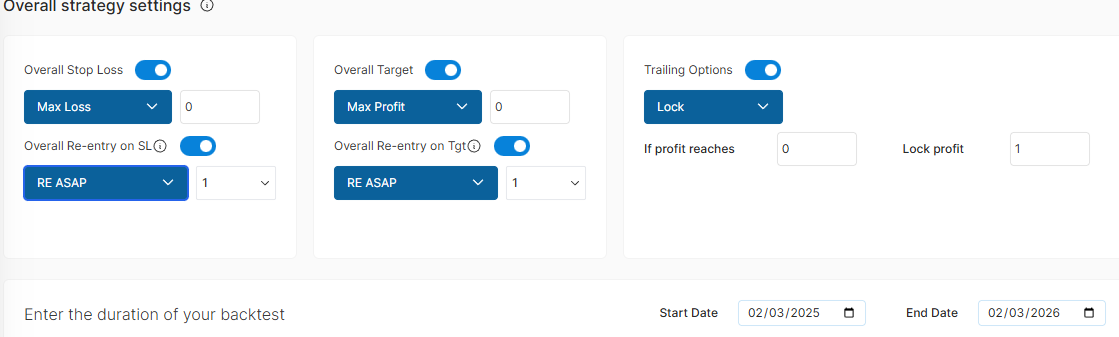
#### **Overall Trail SL**:
This is a strategy level feature. With Overall trail SL, you can move your Overall stop loss, whenever the MTM/Profit moves in your favor. So every time the strategy MTM moves in your favor by X amount, we will move the stop loss by Y amount in the same direction. Amount can be in terms of Points/Rupees or percentage of total premium received or given.
#### **Overall Re-entry:**
Overall Re-entry is triggered only in the case when the Overall strategy Stop Loss gets hit.
- **RE ASAP (Immediate Re-entry)**
- Re-enter immediately in the strategy with new ATM strikes at market price. For example, assume the overall strategy SL gets triggered. The system will immediately re-enter the same positions with the new ATM strikes.
- **RE ASAP ↩ (Immediate Reverse Re-entry)**
- Re-enter immediately in the strategy with new ATM strike at market price and reverse the position. For example, the user enters a short ATM Straddle (Call & Put) with an **Overall Stop Loss** 40% at a combined premium of Rs 100. So Overall SL in this case is Rs 140. Now when the Stop Loss triggers, the system we will re-enter the Straddle (Call and Put) with the new ATM Strikes. But, this time it will take a long position, **Overall Stop Loss** will remain the same at 40%.
- **RE MOMENTUM (Re-entry with Momentum)**
- If the user has selected “ **Simple Momentum**”, then the system will wait for the momentum condition to hold true before it re-enters.
- Eg. Suppose the user sets the “ **Simple Momentum**” to Percentage Up 10% for ATM Buy Call and Put, with entry time 9:30am and Overall Stop Loss at 5%. Once the Overall Stop Loss is HIT, the system will choose the new ATM call and Put and apply the " **Simple Momentum**" with Percentage up 10% and Overall Stop Loss of 5% to this. Say the price of each of the new ATM Call & Put is Rs 50 when the Overall Stop Loss triggered, the system will wait for the price of either of these options to go up to Rs 55 before it enters again and puts the Overall Stop Loss at 5% as before.
- If the user does not select “ **Simple Momentum**” this behaves exactly like **RE ASAP**.
- **RE MOMENTUM ↩ (Reverse Reentry with Momentum)**
- If the user has selected “ **Simple Momentum**”, then the system will wait for the momentum condition to hold true before it re-enters, but this time it will re-enter the reverse position.
- Eg. Suppose the user sets the “ **Simple Momentum**” to Percentage Up 10% for ATM Buy call and Put, with entry time 9:30am and Overall Stop Loss at 5%. Once the Overall Stop Loss is HIT, the system will choose the new ATM call and Put and apply the " **Simple Momentum**" with Percentage up 10% and Overall Stop Loss of 5% to this. Say the price of each of the new ATM Call & Put is Rs 50 when the Overall Stop Loss triggered, the system will wait for the price of either of these options to go up to Rs 55 before it enters again. But this time it will sell the options instead. The Overall Stop Loss will again be put at 5%.
- If the user does not select “ **Simple Momentum**” then this behaves exactly like RE ASAP ↩
### Execution Settings:
Here are some execution settings that would be helpful for [Live Trading](https://algotest.in/feature/live?utm_source=blog&utm_medium=internal&utm_campaign=seo&utm_content=feature&utm_term=live)
- **Quantity Multiplier:** The quantity multiplier function has been given to the user as an easy way to deploy multiple lots of a particular strategy. The Quantity Multiplier, multiplies the number of lots in the strategy by the value of the Quantity Multiplier. If the strategy has **Overall Settings** like **Overall SL**, **Overall Target** & **Overall Trail SL**, based on **MTM** and not percentage, then they will also be respectively Modified.
- **NRML/MIS**: You can choose your order type to be of type NRML/MIS. NRML is the default type. If the exit time of your strategy is **after the MIS cut-off time** of your broker, then you won't be able to select MIS.
- **Tgt/SL Ref Price**: You can select the base for calculating stop loss and target. If you choose “Trigger Price”, then the stop loss and target will be calculated based on the trigger price, or if you choose "Traded Price", then the stop loss and target will be calculated based on the actual traded price. E.g., If your entry was at 9:20 and the price of the leg at that time was 100(Trigger Price), but you got the price of 101(Traded Price). Then you can select whether your SL would be based on 100 or 101.
- **Delay entry by**: Once the condition of leg entry has been triggered, you can take the entry after some seconds, it takes value from 0 to 50.
- **Entry Order Type/Exit Order Type**: It can be of type Market or Limit. Please [visit this post](https://algotest.in/blog/faqs-about-sl-l-orders-algo-trading-software-india/) for detailed explanation and how it works.
[Click here](https://algotest.in/blog/general-faqs/#execution) for more FAQs and explanation on how these settings work and how you can use them for your specific use cases.
---
This blog is powered by Superblog. Visit https://superblog.ai to know more.
---
## Why is there is difference between my Algo Trade vs Forward Testing vs Backtest results?
Author: AlgoTest
Author URL: https://algotest.in/blog/author/algotest/
Published: 2024-08-28
Category: Product
Category URL: https://algotest.in/blog/category/product/
URL: https://algotest.in/blog/why-is-there-is-difference-between-my-live-trade-vs-forward-test-vs-backtest-results/
Backtesting a strategy helps in quantifying a strategy's historical risk and return expectation. Armed with this data, traders get the confidence to deploy large sums of capital into their strategies. But sometimes, your daily [backtested](https://algotest.in/feature/backtest?utm_source=blog&utm_medium=internal&utm_campaign=seo&utm_content=feature&utm_term=backtest) data might differ from your Live trading and forward testing results. Below we have tried to explain some of the reasons as why this might be so:
### Slippages - Instrument depth, liquidity & broker congestion
Backtesting a strategy assumes you get the best price as defined by the parameters of the strategy. It does not take into consideration the market depth and liquidity of the instrument, slippages & broker congestion. Here is how these factors can affect your [backtest](https://algotest.in/feature/backtest?utm_source=blog&utm_medium=internal&utm_campaign=seo&utm_content=feature&utm_term=backtest) vs Live/forward testing results:
**Market Depth:** Whether there is a counterparty available who is willing to trade the quantity you want to buy/sell at that price. This issue can be more easily seen with ITM options.
**Liquidity:** Whether the bid/ask spread is small enough so that you are able to get the same price close LTP which the backtest engine uses.
**Slippages:** Sometimes sudden moves in the market, especially during expiry, lead to a spike in option prices due to the gamma effect. The rise is so swift that the time taken for the system to process that the SL price has been breached to actual fulfillment of the SL order is enough to result in a big difference between the SL price and the exit price.
**Broker Congestion:** Due to congestion of order flow at the broker's end, especially during the morning, the entry into your instrument might be delayed by 1 or 2 sec. This delay can lead to different entry prices or/and potentially different strikes from what the backtesting engine uses for your strategy compared your live trade and forward test. In forward testing, we assume you are able to get the orders at a specific time without accounting for any delay from the brokers end.
As a result of the above, your trades entry prices and/or strikes and thus the SL, profits target and TSL might be different from our [backtest](https://algotest.in/feature/backtest?utm_source=blog&utm_medium=internal&utm_campaign=seo&utm_content=feature&utm_term=backtest) results.
**Solution:** Add slippages to reduce differences caused by such factors.
### SL-L order triggered but market never reached SL price
AlgoTest offers the use of SL-L order for your SL orders. Check this to understand more about [the Limit/SL-L Orders](https://algotest.in/blog/faqs-about-sl-l-orders-algo-trading-software-india/).
The SL-L orders are placed in your broker's order book at the time of entry in the strategy and are quite helpful in reducing slippages that might occur due to sudden moves in the market. A SL-L order has a trigger price and a limit price defined by the user at the time of activating their strategy. Say for example, we have the following strategy:
Entry time = 9:20 AM
SL = 20%
Trigger buffer = 2 points
Limit buffer = 4 Points
Entry price @ 9:20 is:
Sell CE = Rs 100
Sell PE = Rs 100
Hence the SL-L orders will be:
CE SL-L order: Trigger price Rs 118, Limit price Rs 124
PE SL-L order: Trigger price Rs 118, Limit price Rs 124
Now, if the LTP of the CE reaches Rs 118.05 our trigger price will be breached and a limit order a to buy the CE will be placed at Rs 124 and we shall be stopped out of the CE leg.
If the the price of the call makes a high of Rs 119 and reverses from there, then according to the backtest we are still in the trade whereas in live deployment we have been stopped out. This can lead to mismatch in backtest results vs live trade and forward test.
**Solution:** Keep the trigger buffer as Rs 0 and limit buffer at Rs 2 (anything other than 0).
### Overall SL and Profit Target feature on strategy
As mentioned earlier, our [backtest](https://algotest.in/feature/backtest?utm_source=blog&utm_medium=internal&utm_campaign=seo&utm_content=feature&utm_term=backtest) uses 1-min OHLC data to give results. When using 1-min OHLC data, the only time you can be sure about the overall profit or loss of a strategy is either at the open or close of the candle. [AlgoTest](https://algotest.in/?utm_source=blog&utm_medium=internal&utm_campaign=seo&utm_content=main-page&utm_term=algotest) uses the close of a 1-min candle to calculate the overall profit and loss for a strategy.
Meanwhile in live trading, the overall profit/loss conditions are checked continuously. Hence, there can be a mismatch between your day's backtest and live/forward testing results using overall strategy level conditions.
Your strategy might have reached its defined Overall Target profit or SL in LIVE trading but the 1-min Candle close might not have reflected this.
### Square off - Complete
One of the features that AlgoTest has under its legwise SL settings is SL complete. Check this out if you are [struggling with Algo terms](https://algotest.in/blog/definition-of-terms-used-in-backtesting-platform/#square-off).
Under this condition, if the SL of any of the legs in a strategy is hit, the whole strategy is exited. Since we use 1-min OHLC data, we can determine the exit price of the SL leg, as defined in the strategy, but we cannot determine the price of the other legs at the time the SL is hit. Hence, we use the close price of the 1-min candle to determine the exit price of all the other legs in the strategy.
Meanwhile in live trading, once any leg's SL is hit all the other legs are exited at the same time using market order. Thus, leading to a difference between liv trade/forward test.
### Re-entry ASAP, Re-entry ASAP reverse, Re-entry momentum & Re-entry Momentum Reverse
Under all the above features, the Re-entry at the new ATM is taken as soon as a leg's SL is hit. If you [struggle with Algo terms](https://algotest.in/blog/definition-of-terms-used-in-backtesting-platform/#reentry), check this out.
In live as well as forward testing, the new strikes and prices are fetched as per the current market price, whereas in backtesting the strategy the prices taken and strikes selected are of the close of the 1-min candle where the SL is hit. This can lead to a difference between Backtest and Live trade/forward test results.
### Delay is price feed from your broker
There can sometimes be a delay of milliseconds from your broker's price feed to our [Live](https://algotest.in/feature/live?utm_source=blog&utm_medium=internal&utm_campaign=seo&utm_content=feature&utm_term=live) execution system. If the spot at that time is in between two ATM strikes, there can be a difference between the backtest, forward test and live trade. Such differences are unavoidable sometimes.
### Entry and exit in the first minute candle
AlgoTest uses 1-min OHLC data for backtesting a strategy. Based on the conditions of your strategy, for example simple momentum, say the entry (BUY) of your strategy happens on the 15th second of the minute. After entry, the price of your instrument hits the SL price within the same minute candle but closes above the SL price. In this case, at the end of the candle, the backtest will show entry in the strategy but in Live trade and foward test your leg would have stopped out. Let us illustrate this with an example and the following strategy conditions:
Entry time: 9:20 AM
Simple momentum: CE = 20 Points up, PE = 20 Points up
SL: 5% for both legs
TSL points: X = 10, Y = 5 for both legs
9:20 Bank Nifty ATM Spot = 38000
9:20 CE Price = Rs 400
9:20 PE Price = Rs 420
Say at 9:25 the 38000 CE opened at Rs 405. The simple momentum conditions are met on 9:25:15 and the following trade takes place:
**Trade**
9:25:15 Buy CE 38000 @ Rs 420 (SL = Rs 399)
After entry the market moves down and at 9:25:30 a LOW of Rs 399 is made
**Trade**
9:25:30 Sell CE 38000 @ Rs 399 (SL HIT)
The market reverses and moves up with the price of the option closing at Rs 410 in that minute. There after the market keeps moving up for the rest of the day and eventually a time exit or a TSL exit happens.
So, our 9:26 1-min candle has the following parameters:
Open = Rs 405
High = Rs 420
Low = Rs 399
Close = 410
According to that day's backtest results, the entry happened at Rs 420 and since the close of the entry 1-min candle was above our SL price of Rs 399, the system assumed that the strategy was still running at the end of that candle. Whereas, in live trade the strategy was already stopped out.
These are some of the drawbacks of working with a 1-min OHLC data for backtesting your strategy. You may avoid such cases by having higher SLs for your strategies.
Understand [candle](https://algotest.in/blog/how-does-algotest-define-a-candle) here.
---
This blog is powered by Superblog. Visit https://superblog.ai to know more.
---
## Backtest Multiple Strategies Together Using the Portfolio Feature
Author: AlgoTest
Author URL: https://algotest.in/blog/author/algotest/
Published: 2024-08-28
Category: Backtest
Category URL: https://algotest.in/blog/category/backtest/
URL: https://algotest.in/blog/backtest-multiple-strategies-together-using-the-portfolio-feature/
We recently introduced a new feature on algotest.in called Portfolio, which allows you to backtest multiple strategies together. In this blog, we’ll backtest a sample portfolio of multiple strategies, and also show you how to avoid common pitfalls when using this feature.
## What do we mean by Portfolio on AlgoTest?
A portfolio is a collection of strategies. On [AlgoTest](https://algotest.in/?utm_source=blog&utm_medium=internal&utm_campaign=seo&utm_content=main-page&utm_term=algotest), you can save strategies by inputting a strategy and clicking on “Save Strategy”

Once you’ve discovered some profitable strategies ( [click here to see example](https://www.youtube.com/watch?v=qZ3SXaKlvls)), the next step is to combine them in a portfolio.
To build a portfolio, click on [Portfolio](https://algotest.in/portfolio), then “Create new portfolio”. You can select the strategies you want to include in your portfolio, and finally give your portfolio a name. On clicking "Create", your portfolio will now be ready.
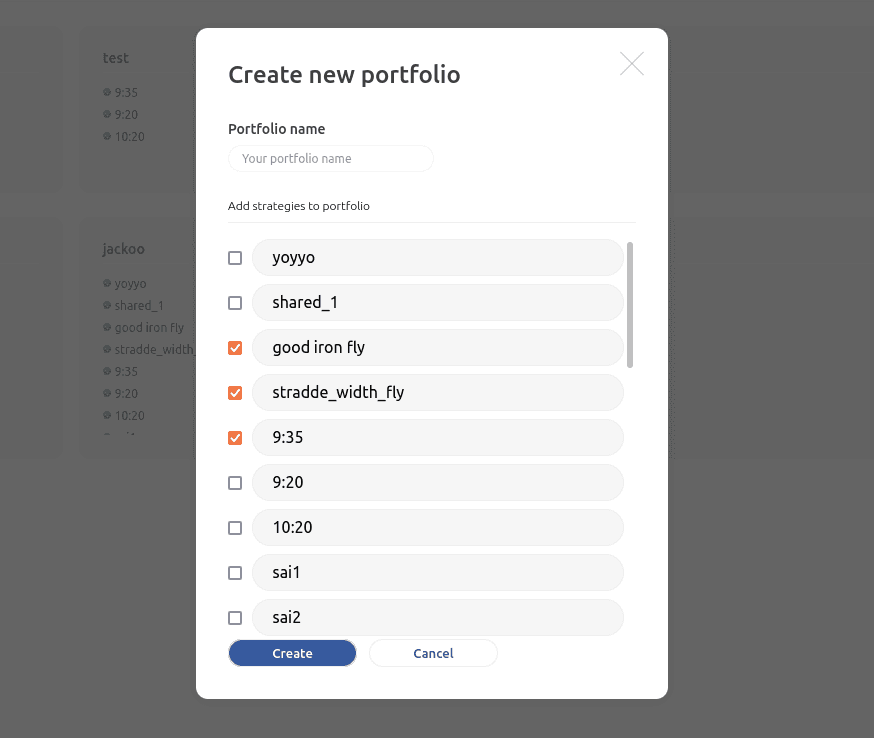Create your portfolio
Finally, you can click on the portfolio and then run "Start [Backtest](https://algotest.in/feature/backtest?utm_source=blog&utm_medium=internal&utm_campaign=seo&utm_content=feature&utm_term=backtest)". This will run a combined backtest for the entire portfolio. After this step, you will get an aggregate result, along with a correlation matrix.
## **What is a correlation matrix?**
A correlation matrix shows the historical correlation coefficients between two trading strategies. This helps traders understand how different strategies are related. Understanding these relationships is important for building a diversified portfolio that reduces risk and maximizes returns by combining strategies that are not closely linked. By examining the correlation matrix, you can decide which strategies to combine and how to balance your portfolio for the best performance. Each cell in the matrix represents the correlation between two strategies, with values ranging from -1 to 1.
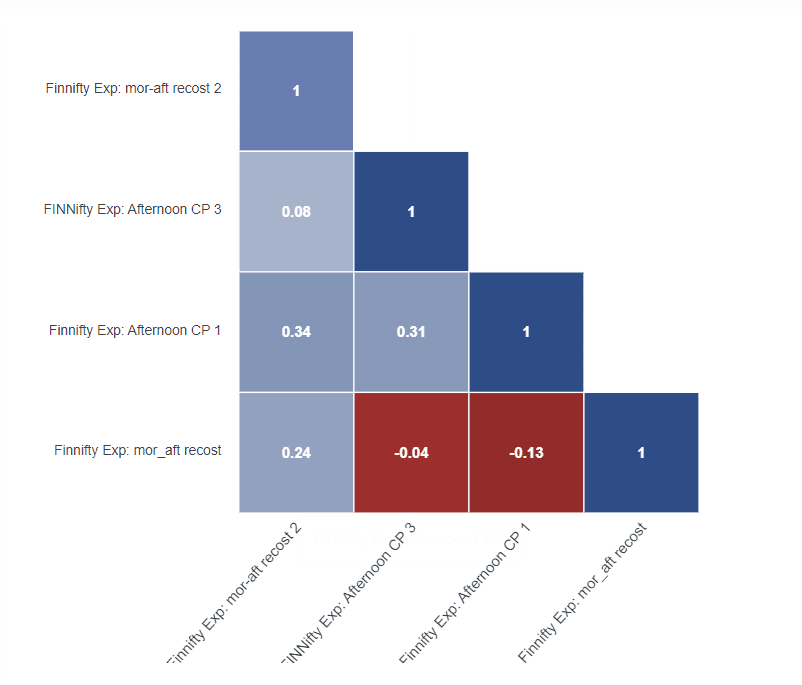
Here's a breakdown of what these values mean:
1. **Strong Positive Correlation (Close to 1):** Indicates that the two strategies tend to perform similarly. When one strategy makes a profit, the other is also likely to make a profit.
2. **Strong Negative Correlation (Close to -1)**: Indicates that the two strategies tend to perform in opposite directions. When one strategy makes a profit, the other is likely to make a loss. We need to have a negative correlation between our strategies to have a smooth equity curve.
3. **No Significant Correlation (Around 0)**: Indicates that there is no predictable relationship between the performance of the two strategies. Their movements are largely independent of each other.
## How to view the correlation matrix?
To access the correlation matrix for your portfolio, please follow the simple steps given below.
- First, you should backtest a portfolio. To do this, go to the portfolio section and click on the "Run Portfolio" button, as shown in the image below.

- Now, scroll down and click on the "Show Correlation Matrix" button located below the backtest report, as shown in the image below.
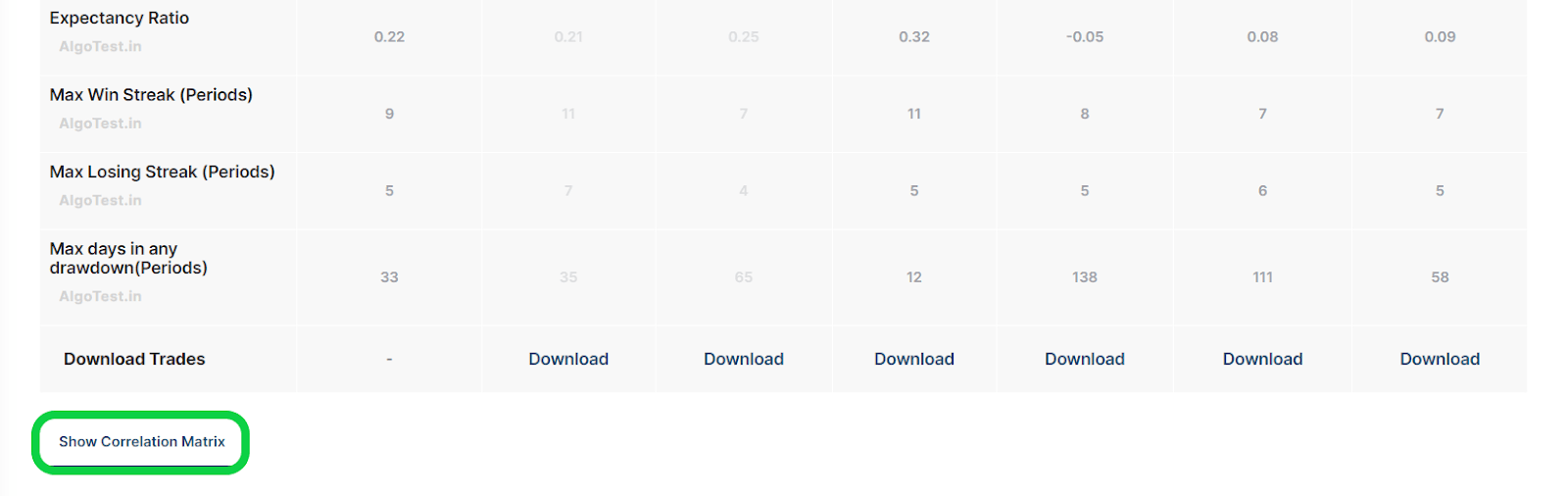
- It will display the correlation matrix as shown in the image below. You can click on the "Show only checked" button to display the correlation matrix only for the selected strategies in the portfolio.
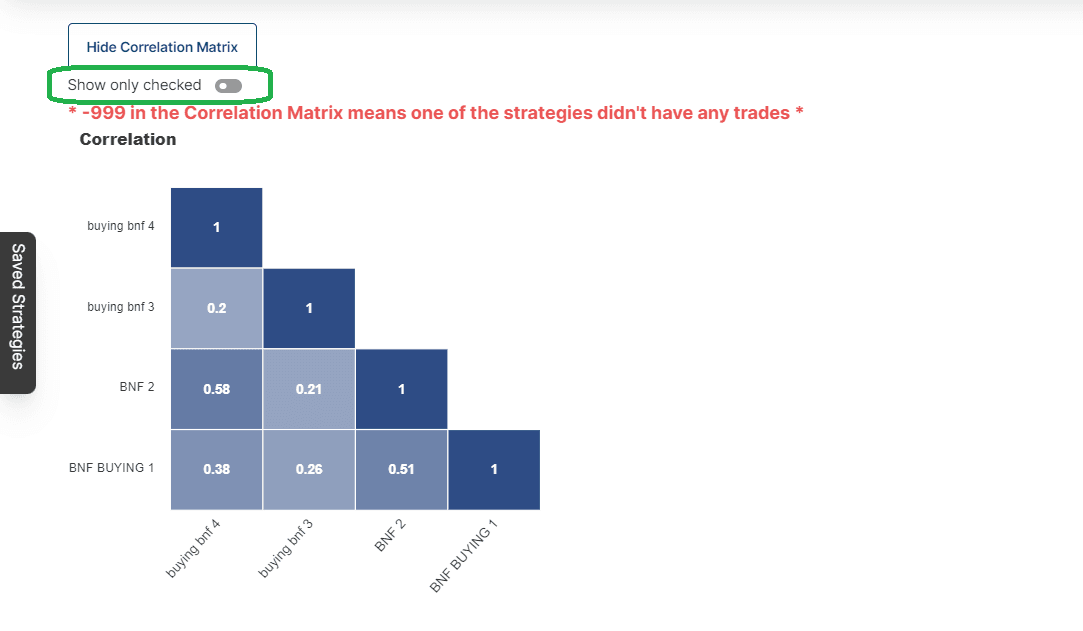
## How to Analyse a Correlation Matrix?
Understanding the correlation matrix is crucial for building a well-diversified portfolio. Using the correlation matrix, you can create a portfolio that can provide good rewards with less risk. Let's understand how the correlation matrix works.
### Matrix Layout:
Each cell in the matrix represents the correlation coefficient between two strategies. The diagonal elements are always 1, indicating a perfect correlation of the strategy with itself.
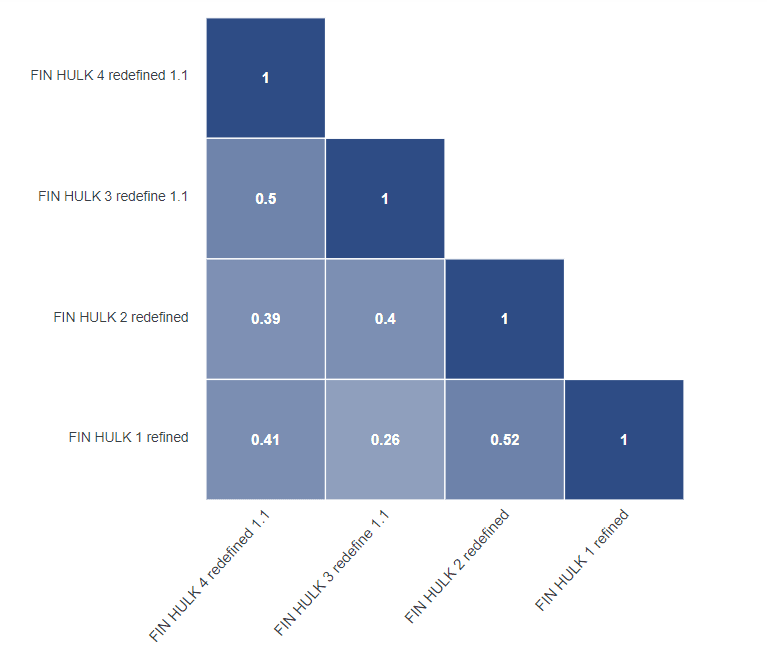
### Understanding the Values:
#### 0 to 1
As the value increases from 0 to 1, the correlation between two strategies also increases. This means that the higher the value, the more related the strategies are to each other. A high correlation value indicates that if one strategy is making a profit or a loss, the other will also likely to make a profit or a loss on the same day.
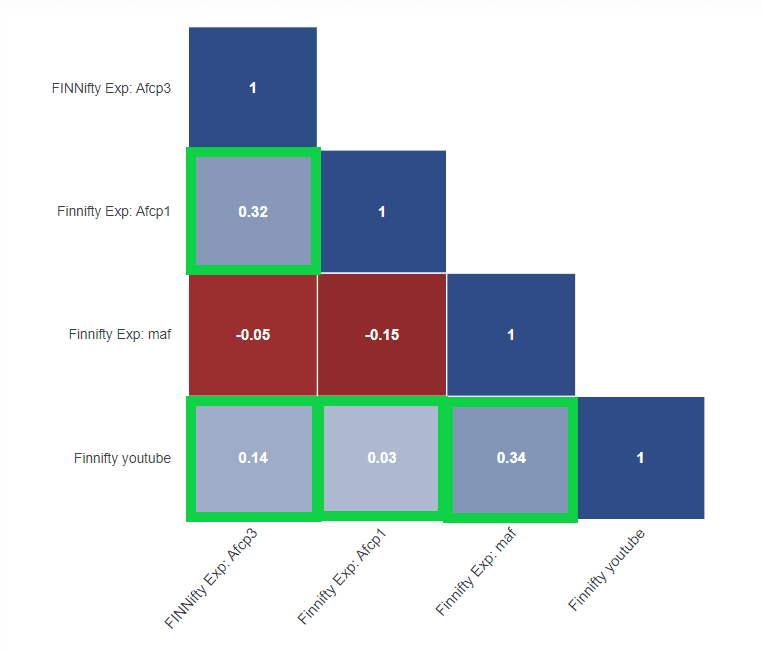
#### -1 to 0
As the value decreases from 0 to -1, the correlation between two strategies also decreases. This means that the strategies are highly unrelated to each other. If one strategy is making profit or loss on a day, then the other strategy will likely do the opposite, i.e. it will make a loss or profit for that day.
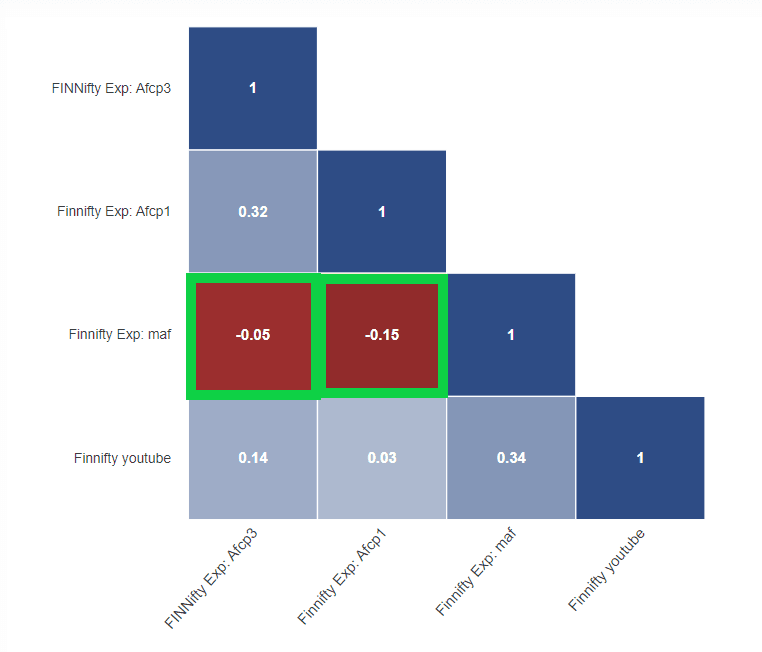
#### 0 correlation
Zero correlation means there is no relationship between the strategies. Their movements will be largely independent of each other.
### Identifying Relationships:
Look for strategies with lower positive correlations or negative correlations. For example, in the image below, you will see a strategy named “finnifty youtube” that has a correlation of 0.03 with a strategy named “finnifty expiry: Afcp1”. This means that these two strategies are not very closely related to each other, which is beneficial for portfolio diversification.
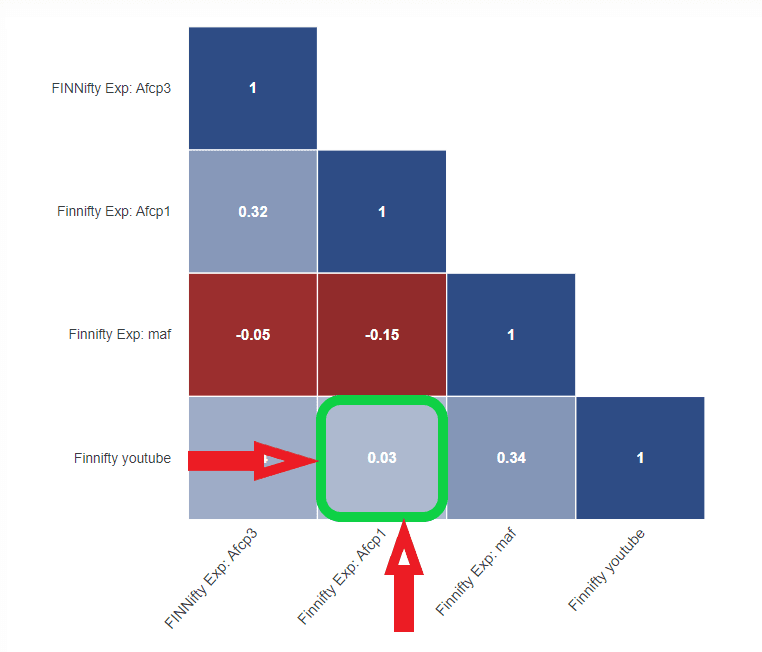
In the image below, you can observe that the strategy named "Finnifty Exp: maf" has a negative correlation of -0.15 with the strategy named "Finnifty Exp: Afcp1". Therefore, it would be a beneficial strategy to add to our portfolio for diversification.
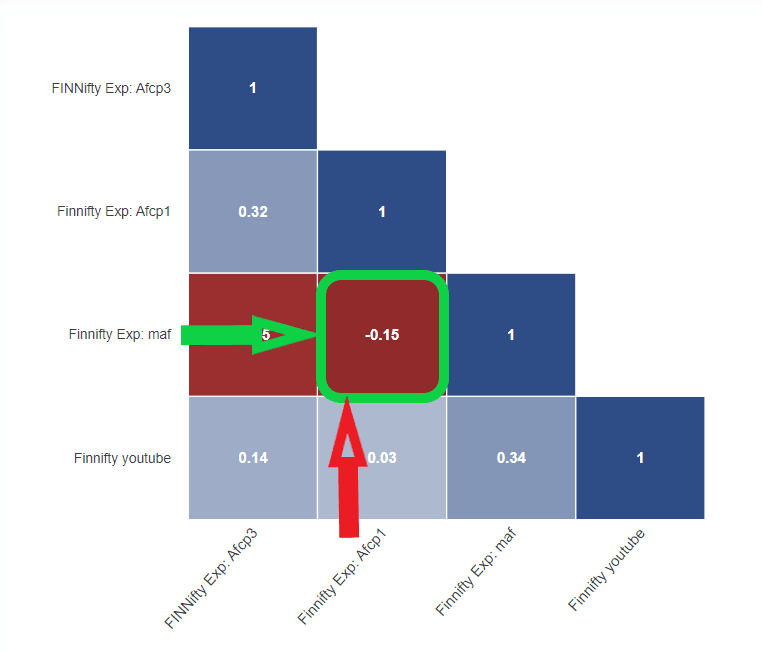
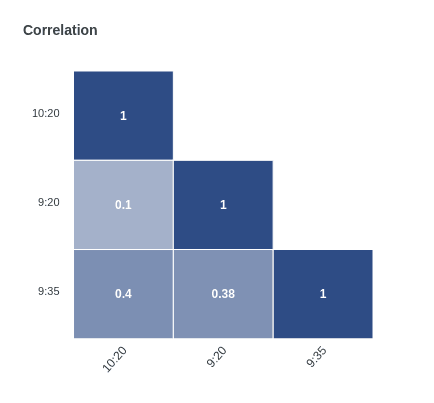
### **So what does this mean?**
Correlations are dynamic and change with the market environment. One major implication here is that the historical profitability of your [backtests](https://algotest.in/feature/backtest?utm_source=blog&utm_medium=internal&utm_campaign=seo&utm_content=feature&utm_term=backtest) could be implicitly dependent on this historical correlation. And if future correlation is different from historical correlation, you run the risk of losses.
Furthermore, correlations between strategies can change over time. So any diversification benefit you may derive from these (un)correlated strategies can disappear pretty quickly as the correlation coefficient changes!
Here is a tweet thread that highlights this point:
https://twitter.com/rogue\_hft/status/1507712462438641665
#### History
In fact, one of [the greatest blowups in trading history](https://en.wikipedia.org/wiki/Long-Term_Capital_Management) can be attributed to precisely this breakdown of historical correlation. Here is a quote from the wikipedia article I archived sometime back:
_The profits from LTCM’s trading strategies were generally not correlated with each other and thus normally LTCM’s highly leveraged portfolio benefited from diversification. However, the general flight to liquidity in the late summer of 1998 led to a marketwide repricing of all risk leading these positions to all move in the same direction. As the correlation of LTCM’s positions increased, the diversified aspect of LTCM’s portfolio vanished and large losses to its equity value occurred. Thus the primary lesson of 1998 and the collapse of LTCM for_ [_Value at Risk_](http://en.wikipedia.org/wiki/Value_at_Risk) _(VaR) users is not a liquidity one, but more fundamentally that the underlying_ [_Covariance matrix_](http://en.wikipedia.org/wiki/Covariance_matrix) _used in VaR analysis is not static but changes over time._
#### Demo
Finally, here is a video we just released demonstrating the portfolio feature. In this video, we will [backtest](https://algotest.in/feature/backtest?utm_source=blog&utm_medium=internal&utm_campaign=seo&utm_content=feature&utm_term=backtest) multiple strategies together using our portfolio feature.
https://youtu.be/0lfx8NtK0cQ
---
This blog is powered by Superblog. Visit https://superblog.ai to know more.
---
## Backtest An Option Buying Strategy Using VWAP
Author: AlgoTest
Author URL: https://algotest.in/blog/author/algotest/
Published: 2024-08-28
Category: Backtest
Category URL: https://algotest.in/blog/category/backtest/
URL: https://algotest.in/blog/backtest-an-option-buying-strategy-using-vwap-template/
In this blog post, we'll show you how to backtest an option buying strategy using the VWAP indicator, available exclusively on [AlgoTest](https://algotest.in).
A few days ago we shared a strategy on Twitter that used the #VWAP template to trade.
[https://twitter.com/AlgoTest\_in/status/1521849735644348416](https://twitter.com/AlgoTest_in/status/1521849735644348416)
## What is VWAP?
VWAP stands for the Volume Weighted Average Price. An intuitive way of thinking about this indicator is to think of it as a type of an average price. However, unlike average, VWAP uses weights to give some prices more priority over others when using them to calculate the average. Naturally, a follow-up question to this is, what prices are given more priority?
Answer - those prices at which the highest volume is traded are given the highest priority. If 10 lots of BANKNIFTY trade at ₹100 and 1000 lots trade at ₹110, then the simple average will just be (100+110)/2, which is ₹105. The VWAP, on the other hand, will be (100\*10 + 110\*1000)/(10 + 1000), which is ₹109.90. Notice how the VWAP is much closer to ₹110 as compared to the average price!
To learn more about VWAP you can visit our [Documentation](https://docs.algotest.in/signals/famous-strategies/vwap-straddle).
## The VWAP Indicator
Now that you understand that the VWAP is an average, we can use this as an indicator to generate signals. [AlgoTest](https://algotest.in) has a #VWAP template where you can build simple strategies using this indicator. Our strategy logic will be very simple - we will buy a call if its price falls below VWAP, and we'll sell it once its price goes back above VWAP.
### **Signal Leg**
[AlgoTest](https://algotest.in/?utm_source=blog&utm_medium=internal&utm_campaign=seo&utm_content=main-page&utm_term=algotest) allows you the flexibility to calculate indicators on one instrument and take trades in any other instrument! The instrument on which we calculate our indicator is called the "Signal Leg". In our example, let's pick the call option whose price was Rs 200 at 9:30 am as our signal leg.
Selecting Signal Leg
### **Entry and Exit Indicators**
Next, lets define our Entry and Exit Indicators. Since we're using the VWAP template, we'll keep the entry and exit indicators very simple. We buy a call when the price falls below the VWAP by a certain threshold, and we it when the price goes above the VWAP by the same threshold. In this case, let's keep the threshold at 1%.
Also, AlgoTest allows us to use any combination of the Open, High, Low, and Close prices of a candle to calculate the VWAP. In our case, we will use the average of the High and Low prices to calculate the VWAP.
Our entry condition then becomes, **"if the close price is less than VWAP - 1% of VWAP, we will buy a call"**.
The exit condition will then become, **"If the close price is greater than VWAP + 1% of VWAP, we will exit the long call"**.
In both these cases, the price used to calculate VWAP is the average of the open, high, low, and close prices of the candle.
To sum up, we've created a band of 1% around the VWAP price. If the close price of our instrument falls below the VWAP price by 1%, we will initiate a buy trade, and if the close price goes back above the VWAP by 1%, we will sell the option.
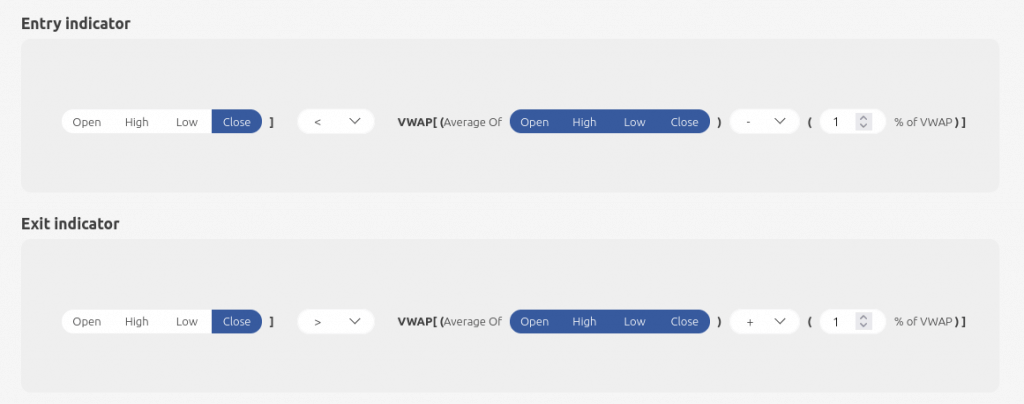Entry and Exit Indicators
### **Trade Leg(s)**
AlgoTest also allows us to select our Signal Leg as our Trade Leg. In this case, we want to trade our Signal Leg itself when the Entry Indicator condition is satisfied. This is easy to do in [AlgoTest](https://algotest.in/?utm_source=blog&utm_medium=internal&utm_campaign=seo&utm_content=main-page&utm_term=algotest) \- just add a new leg and choose "Signal Leg" as the strike when we're selecting our leg. Here is a screenshot that shows the trade leg.

Now that the strategy is fully defined, let's backtest our option buying strategy using VWAP!
#### **Conclusion**
Now that the strategy logic has been revealed, we can now comment on when to run this strategy. As you can see in the results, this strategy does not give as good returns as our regular #920straddle.
**So why should we ever run this strategy?**
The answer is correlation. In our [previous blog post](https://algotest.in/blog/backtest-multiple-strategies-together-using-the-portfolio-feature/), we highlighted the importance of adding truly uncorrelated strategies to your current options [**trading strategies.**](https://algotest.in/blog/why-do-we-need-backtesting/) If you're like the rest of us, you are probably selling more options than buying. An options buying system like this one will not boost returns but its non-correlation will help reduce drawdowns and drawdown periods. To give you context, this strategy has made money in March and April 2022, the two months where our #920straddle has suffered.
Here is a short video where we demo the VWAP template:
---
This blog is powered by Superblog. Visit https://superblog.ai to know more.
---
## FAQs about Pricing | Algo Trading Software India
Author: AlgoTest
Author URL: https://algotest.in/blog/author/algotest/
Published: 2024-08-28
Category: Product
Category URL: https://algotest.in/blog/category/product/
Tags: pricing, algo trade
Tag URLs: pricing (https://algotest.in/blog/tag/pricing/), algo trade (https://algotest.in/blog/tag/algo-trade/)
URL: https://algotest.in/blog/faqs-about-pricing-algo-trading-software-india/
Here are some frequently asked questions about our pricing model for our backtesting, paper trading and [Live Execution feature](https://algotest.in/live) in our Algo Trading Software.
Here is the [pricing page](https://algotest.in/blog/pricing) for AlgoTest.
Here is the [detailed pricing page](https://algotest.in/blog/detailed-pricing-information-for-algotest/) for AlgoTest (in case you want to game our credit system!)
Q: How many credits do I need for backtesting, forward testing and live execution of a strategy?
## Overall Pricing
##### How many credits do I need for backtesting, forward testing and live execution of a strategy?
- **Algo Execution**: 1 Strategy = 100 Credits per billing cycle (28 days)
- **Forward Testing**: 1 Strategy = 50 Credits per billing cycle (28 days)
- **Backtesting**: 100 Backtests = 100 Credits (No Expiry)
- **Backtesting Extreme Weekly**: Unlimited 7 Days = 599 Credits for 7 days (7 days from the purchase of your unlimited plan)
- **Backtesting Extreme Monthly:** Unlimited 30 Days = 1499 Credits for 30 days (30 days from the purchase of your unlimited plan)
Credits for live execution and forward testing can be added on a pro-rata basis. This means, you need only 50 credits to update your plan to deploy an additional strategy on the 14th day of your billing cycle.
Limited backtest plans do not have an expiry date. That means, if you buy 100 backtests, worth 100 credits, from us they will never expire. You will be able to use them as and when you please.
##### How much does it cost to purchase credits?
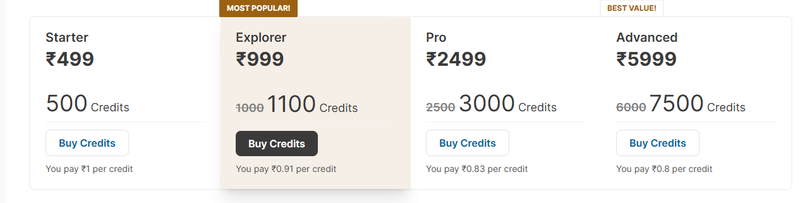
We have many package options available to purchase credits:
- **Starter:** Rs 499 for 500 Credits
- **Explorer:** Rs 999 for 1100 Credits **(9% Discount)**
- **Pro:** Rs 2499 for 3000 credits **(16% Discount)**
- **Advanced:** Rs 5999 for 7500 Credits **(20% Discount)**
Your credits have no expiry.
##### 1\. How long is my billing cycle?
Your billing cycle is 28 days long.
##### 2\. What is the expiry date for my Backtest, Live execution and Forward test plans?
The billing cycle of the Forward testing and Live trading is the same, while that of Backtesting is different.
### Backtest Pricing
We have two kinds of [Backtest plans](https://docs.algotest.in/getting-started/pricing-breakdown/backtest-pricing/)
- **Limited**: No Expiry
- **Unlimited Daily**: 24 Hrs Expiry from the time of purchase
- **Unlimited 28 Days**: 28 Days from the purchase of this plan
**Forward Testing Pricing**
28 Days from the purchase of your Live trading or [Forward testing](https://algotest.in/feature/forward-test?utm_source=blog&utm_medium=internal&utm_campaign=seo&utm_content=feature&utm_term=forward-test) plan. If you add more strategies in the middle of your billing cycle, you will be charged on the basis of the number of days remaining in your billing cycle. For example, you will be charged 25 credits if you activate a new strategy for forward testing on the 14th day of your billing cycle.
**Algo Trade (Live Trading) Pricing**
28 Days from the purchase of your [Live trading](https://algotest.in/feature/live?utm_source=blog&utm_medium=internal&utm_campaign=seo&utm_content=feature&utm_term=live) or Forward testing plan. If you add more strategies in the middle of your billing cycle, you will be charged on the basis of the number of days remaining in your billing cycle. For example, you will be charged 50 credits if you activate a new strategy for live deployment on the 14th day of your billing cycle.
##### How do we price our plans?
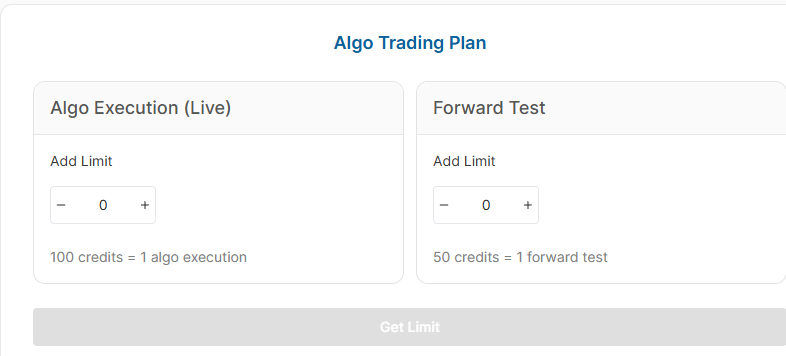
You can create an **Execution Plan** for yourself anticipating your requirements for a billing cycle (28 days). For example, say you need to Forward Test 2 strategies daily and 5 max daily live deployments for your billing cycle. In order to make a plan for yourself go to **My Profile,** under **Execution Plan** click on **"Add a plan"**. Here you can input your requirement and see that you need 600 credits to activate this plan:
**Forward Testing** = 2 X 50 credits = 100 Credits
**Live Deployment** = 5 X 100 Credits = 500 Credits
Once you have purchased the 600 credits from our credit packages you will be able to activate this plan for your billing cycle. You can always add more forward tests and live deployments at any time during your billing cycle which shall be added on a pro-rata basis. You CANNOT downgrade your plan during a billing cycle. Although you can do so after your billing cycle ends.
Similarly, for backtesting go to **My Profile,** under **Backtest Plan** click on **"Add more Backtests"**. Here you have two options:
- Limited Plan: Add the number of backtests you want to purchase. 100 backtests require 100 credits.
- Unlimited Plan: Select the **Unlimited plan** option and you will see two options, 24 hours or 28 Days. 24 Hours plan is for 199 credits while the 28 Days plan is for 4000 credits
Once you have purchased the necessary credits from our credit packages you will be able to activate your Backtests. You can always add more Backtests at any time as they have no exipry. You CANNOT downgrade your plan.
##### Where can I purchase credits from?
You can purchase credits from [https://algotest.in/billing](https://algotest.in/billing)
##### How long are my credits valid for?
Your credits are valid for a period of 1 year from the date of purchase. If you make a top up of even the smallest plan, the validity of ALL YOUR CREDITS will increase to a period of 1 year from the top up date.
## Backtesting Pricing FAQs
##### 1\. Is Backtesting not free anymore?
Supporting and empowering the Retail Trader has always been at the CORE of AlgoTest's vision. We will continue to support them by providing them **25 free** [**backtests**](https://algotest.in/feature/backtest?utm_source=blog&utm_medium=internal&utm_campaign=seo&utm_content=feature&utm_term=backtest) **per week**. These backtests will be the same as your paid backtests and will have ALL the features of your paid backtests. Unused backtests will NOT accumulate over time.
Also, at Rs 1 per backtest, our pricing is still the cheapest plan out there. **For a 5-year backtest, that's 20 paisa per backtest per year!**
##### 2\. What is considered a "strategy" on AlgoTest?
A "Strategy" on AlgoTest is defined by Entry Time. One Entry time is one strategy. You can have up to 10 legs in one strategy.
##### 3\. How many credits do I need to backtest one strategy for 5 years?
On AlgoTest, you need 1 credit to backtest a strategy. There is not restriction on the number of years you backtest a strategy for. On the contrary, we encourage you to backtest all your strategies for atleast 5 years to get a more accurate picture of how well your strategy has performed in different market scenarios.
So if you take our "Starter" plan for Rs 300, one backtest is going to cost you **Re 1 or 20 paisa per backtest year.**
##### 4\. How many credits are consumed to backtest a portfolio of strategies?
Say you have 6 different strategies in a portfolio that you would like to [backtest](https://algotest.in/feature/backtest?utm_source=blog&utm_medium=internal&utm_campaign=seo&utm_content=feature&utm_term=backtest) for a period of 5 years. Backtesting this portfolio of strategies will consume 6 credits.
##### 5\. I have bought a backtesting plan, do I still get free backtests per week?
Yes! Every customer of AlgoTest gets 25 free backtests per week. You can utilize these backtests after your paid [backtests](https://algotest.in/feature/backtest?utm_source=blog&utm_medium=internal&utm_campaign=seo&utm_content=feature&utm_term=backtest) have been exhausted.
## Live Execution Pricing FAQs
##### 1\. How can I deploy a strategy in live market on AlgoTest?
After purchase credits and activating a plan you need to go to [AlgoTrade](https://algotest.in/live).
Under the deployable strategies you will see all your strategies that are ready to be deployed. You can Click the Activate button and deploy it live.
##### 2\. How many credits do I need to deploy 1 strategy?
To deploy 1 strategy you need to purchase 100 Credits for one billing cycle.
##### 3\. Can I upgrade my live execution plan?
You can upgrade your plan and add more live strategies at any point during your billing cycle. Credits will be deducted on a pro-rata basis. A plan cannot be downgraded.
##### 4\. What should be my live execution plan if I deploy different number of strategies on different days?
Say you deploy 3 Strategies on Monday, 2 on Tuesday, 5 on Wednesday, 6 on Thursday and 3 on Friday. In this case you will need 600 credits to activate all your strategies since your live execution plan needs a maximum of 6 strategies to run for the entire week.
##### 5\. Can I deploy different strategies for different days with the same live execution plan?
Yes, you can deploy different strategies for different days of the week.
##### 6\. Can I switch strategies after deploying them?
Yes, you can switch strategies after deploying them. Only strategies whose status is running are considered towards your daily live execution plan limit. Under "Deployed Strategies" if the status of a strategy is anything other than "Running", for eg. "Squared off", "Manual" or "Error", you can switch them by adding any another strategy from "Deployable Strategies".
---
This blog is powered by Superblog. Visit https://superblog.ai to know more.
---
## Forward Testing is Live!
Author: AlgoTest
Author URL: https://algotest.in/blog/author/algotest/
Published: 2024-08-28
Category: Forward Test
Category URL: https://algotest.in/blog/category/forward-test/
URL: https://algotest.in/blog/forward-testing-is-live/
[Forward Testing](https://algotest.in/feature/forward-test?utm_source=blog&utm_medium=internal&utm_campaign=seo&utm_content=feature&utm_term=forward-test) or Paper Trading is now live on AlgoTest! You can now simulate your saved strategies against live market data in real time!
### What is Forward Testing?
[Forward testing](https://algotest.in/feature/forward-test?utm_source=blog&utm_medium=internal&utm_campaign=seo&utm_content=feature&utm_term=forward-test) or "out of sample" testing allows users to run their strategies in a simulated manner, without any capital commitment. While **backtesting** allows you to test your strategy logic against historical market data, with [Forward Testing](https://algotest.in/feature/forward-test?utm_source=blog&utm_medium=internal&utm_campaign=seo&utm_content=feature&utm_term=forward-test) you can test your strategy logic in realtime!
### Importance of Forward Testing
We have always maintained the [importance of Forward Testing](https://algotest.in/blog/why-do-we-need-backtesting/#forward-testing) in our trading process. Before we deploy any strategy in the live environment, we forward test it. Now, you can too!
Your forward test results will give you more confidence of going live with your strategy!
### Feature Availability on AlgoTest
Since [forward testing](https://algotest.in/feature/forward-test?utm_source=blog&utm_medium=internal&utm_campaign=seo&utm_content=feature&utm_term=forward-test) is live in beta mode, it won't have all features that are currently available in our backtester, but we're getting there! For now, here are the features that are currently supported when we paper trade as well as for trading in live market:
- We support only the **#920Straddle** template.
- **Entry time** is between 9:16am and 3:29pm.
- Last **Exit time** is 3:29pm
- **Intraday** strategies only.
- We support both **NIFTY** and **BANKNIFTY**.
- **"Underlying from"** cash and future are fully supported.
- We support both modes of **Square off - Partial and Complete**
- All types of **Trail SL to Break-even price** are supported
- **Overall Target** and **Overall Stop Loss**
- We support both **MTM** and **Total Premium %**
- **Overall Re-entry** is supported
- **Overall Trail SL**
- We support both **Points** and **Percentage**
- **Legs**
- We support all of **Futures, CE and PE**
- **All 4 kinds of strike selection criteria** i.e. Strike Type, Closest Premium, Premium Range, and Straddle Width
- All types of **Target Profit** and **Stop loss** are supported
- **Trail SL**
- Both **Points** and **Percentage** are supported
- **Weekly** and **Monthly** Expirations are both available
- All 8 types of **Simple Momentum** are supported
- All 6 types of **Leg wise Re-entry** is available
### More on this soon, so stay tuned!
---
This blog is powered by Superblog. Visit https://superblog.ai to know more.
---
## Intraday Iron Condor Built Using Straddle Width
Author: AlgoTest
Author URL: https://algotest.in/blog/author/algotest/
Published: 2024-08-28
URL: https://algotest.in/blog/intraday-iron-condor-built-using-straddle-width/
We'd like to introduce a new feature for strike selection on [AlgoTest](https://algotest.in), we call it "ATM Straddle Width".
How to get the ATM straddle price?
If you don’t already know what ATM and straddle mean in the context of options trading, we advise you to first read and understand those terms (google is your best friend) before coming back to read the rest of this blog.
For the sake of completeness, ATM stands for at-the-money, and a straddle is an options position which involves buying or selling a call and a put with the same underlying, strike and expiration.
Below is a screenshot of the NIFTY options chain with the NIFTY spot price at 17335. The way to pick the ATM strike is to find the strike price nearest to 17335, in this case the ATM strike is 17350.
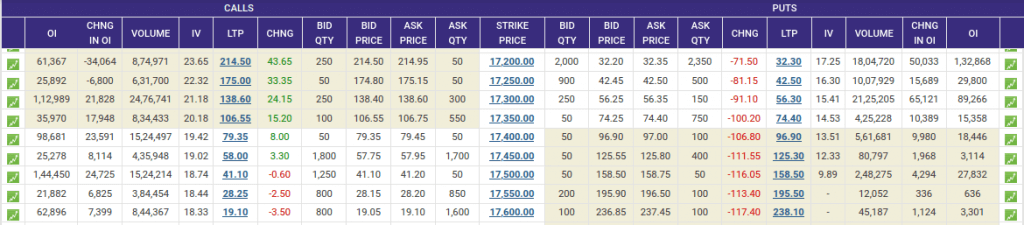
So what’s the straddle price? On [AlgoTest](https://algotest.in), we use the LTP to determine the straddle price. In this case, the 17350 Call LTP is 106.55, and the put LTP is 74.40, which makes the straddle LTP = Rs 180.95. This is our ATM straddle price.
## ATM Straddle Width
The “ATM Straddle Width” is just another name we coined for the ATM straddle price. Straddle Width seems more intuitive to us when we use it in the context of picking strikes that represent the wings.
## Straddle Width Multiplier (or Multiplier)
We combine this multiplier value with the ATM Straddle Price to select new strikes. This is best demonstrated using two common use cases:
1. Selecting the strike of an upside (OTM) call:
- The formula becomes: New Strike = ATM Strike + ATM Straddle Width \* Multiplier
- So in the above image, if Multiplier = 0.5, New Strike = 17350 + 180.95 \* 0.5 = 17440, round this to the nearest strike and we get New Strike = 17450
2. Selecting the strike of a downside (OTM) put:
- The formula becomes: New Strike = ATM Strike - ATM Straddle Width \* Multiplier
- So in the above image, if Multiplier = 0.5, New Strike = 17350 - 180.95 \* 0.5 = 17259, round this to the nearest strike and we get New Strike = 17250
To summarise, the two strikes we ended up selecting with Multiplier = 0.5 are 17250 and 17450.
We’ve built a google sheet that can help you visualize this - [https://bit.ly/3qVoiOW](https://bit.ly/3qVoiOW). Since this sheet is read-only, all you need to do is to copy all the contents over to a new google sheet. In the new sheet, you can tweak the ATM Strike, the ATM Straddle Price, the Sign and the Multiplier to observe how this formula evolves. Here is a video also explaining this feature - in [**Hindi**](https://www.youtube.com/watch?v=FFQFc82m8tA), and [**English**](https://www.youtube.com/watch?v=CNeqPYHkBL4).
## An Iron Condor Strategy using Straddle Width
Here is a screenshot of a sample way in which you can use this feature:
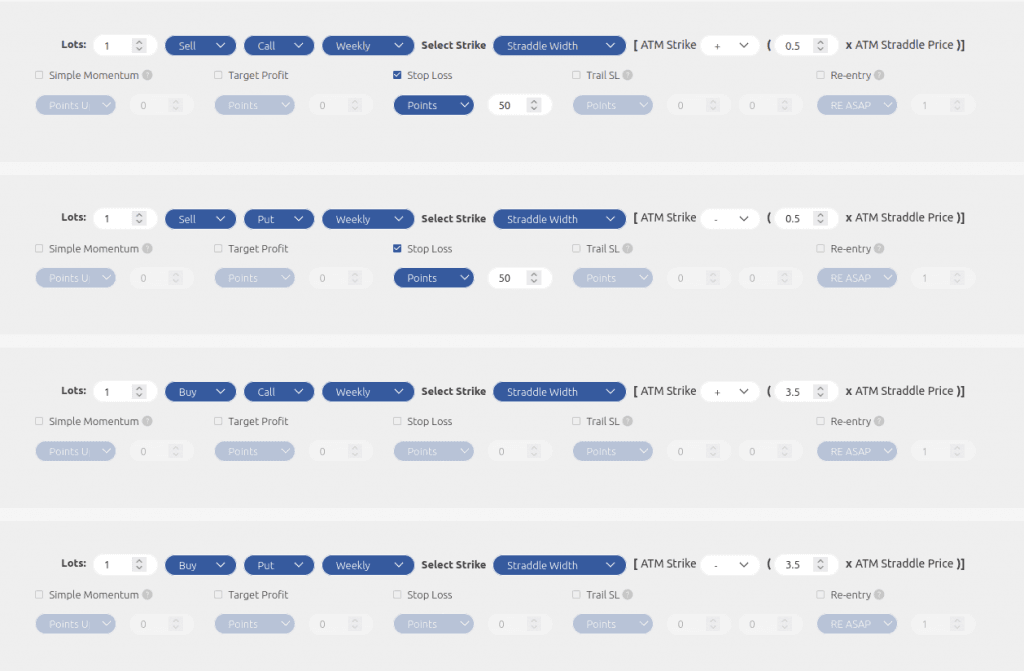
Other parameters for this strategy we have chosen are:
- Entry Time = 9:35am
- Index = Banknifty
- Square off=Partial.
With these parameters, the total approx margin required for this trade is Rs 75,000. Check out how this strategy performed during the last 5 years by clicking "Start [Backtest](https://algotest.in/feature/backtest?utm_source=blog&utm_medium=internal&utm_campaign=seo&utm_content=feature&utm_term=backtest)". Not bad for such a simple setup. Now will this setup continue to make money? [Maybe, maybe not](https://algotest.in/blog/why-do-we-need-backtesting/).
## Some Observations
We can make the following general observations here in the context of the strategy:
1. If ATM vol is constant, a high ATM straddle price (eg. on a Friday for weekly options) will correspond to wings which are farther away from the ATM strike, i.e. wider. So in the context of a short iron condor strategy, your buy strikes will be further away from your short strikes vs on expiry day (Thursday)
2. When atm vol is high, your long strikes will dynamically adjust further away from your short strikes.
We advise you to perform the same backtest on your own at [AlgoTest](https://algotest.in). Once [backtested](https://algotest.in/feature/backtest?utm_source=blog&utm_medium=internal&utm_campaign=seo&utm_content=feature&utm_term=backtest), you should download the results csv file and play around with it to build intuition around this strategy! Also, note that these results are simulated on historical data, and the [backtest](https://algotest.in/feature/backtest?utm_source=blog&utm_medium=internal&utm_campaign=seo&utm_content=feature&utm_term=backtest) results could actually differ significantly from the historical performance of the algorithm or strategy.
https://www.youtube.com/watch?v=CNeqPYHkBL4
---
This blog is powered by Superblog. Visit https://superblog.ai to know more.
---
## Trail Stop Loss to Break-Even Price when Backtesting
Author: AlgoTest
Author URL: https://algotest.in/blog/author/algotest/
Published: 2024-08-28
Category: Backtest
Category URL: https://algotest.in/blog/category/backtest/
URL: https://algotest.in/blog/trail-stop-loss-to-break-even-price-when-backtesting/
In this post, we'll show you two variations of the Trail Stop Loss to Break-Even Price when backtesting on [AlgoTest.](https://algotest.in)
**Building block 1 - Square off**
Before we understand Trail SL to BE, we must first understand the Square off option available on [AlgoTest.](https://algotest.in)
Let's say we are short a 920straddle with a stop loss on each leg at 20%, and "Square off: Partial" selected. A large market move in one direction will lead to one leg's SL being hit. In this scenario, we will only exit that leg and continue to hold the position of the other leg. For example - if my call and put entry prices were both Rs 100, then my SL for each leg is Rs 120. Most likely the call SL will get hit first if the market goes up first. In this scenario, the put will continue to be in the market, with its stop-loss unchanged at Rs 120. A similar scenario unfolds if the market goes down first, in which case your put SL will be hit while the call stays in the market.
What happens in the case of **"Square off: Complete"**? In this case, when either the put or the call SL is hit, the entire position will exit. So unlike above, any leg's stop loss will lead to the strategy exiting completely when Square off: Complete is selected.
**Trail Stop Loss to Break-even - Intro example**
What happens if a user selects **"Square off: Partial" and "Trail Stop Loss to Break-Even"** in the above example?
In this case, if the SL of the call gets hit, the SL of the put is adjusted from Rs 120 to Rs 100. This Rs 100 is the entry price of the put option. Now if the market starts going back down, our put price will start increasing. In this case, we will exit the trade once the put price reaches 100. At Rs 100, our put exit price will equal the put entry price, so this becomes our "Break even". Hence for this trade, we have "trailed our SL to break-even price feature"
### **Building block 2 - Iron Condor**
The next building block towards understanding algotest.in's **Trail Stop Loss to Break-Even** is to [read this blog entry](https://algotest.in/blog/intraday-iron-condor-built-using-straddle-width/) about a short iron condor strategy which we shared a few days ago. To summarize, we have two short legs and two long legs in this strategy. The short legs each have a stop loss of 50 points. The long legs have no stop loss associated with them.
### **Finally - Trail Stop Loss to Break-even price when backtesting**
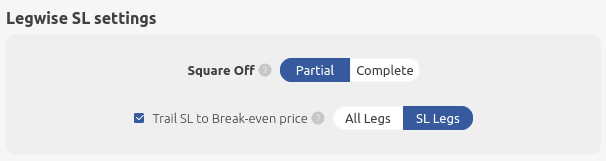Trail SL to Break-Even
So now that we're short the above iron condor, let's assume this is our opening position along with the entry prices:
Long 1 PE strike 30000 @ Rs 5, no stop loss.
Short 1 PE strike 32000 @ Rs 125, stop loss = Rs 175
Short 1 CE strike 37000 @ Rs 150, stop loss = Rs 200
Long 1 CE strike 40000 @ Rs 10, no stop loss
#### **Trail SL to Break-Even - difference between "SL Legs" and "All Legs"**
### **SL Legs**
When **"SL Legs" is selected**, if PE stop loss is hit first, only the short CE stop loss will be updated to its break-even price. So the new positions will be (changes are in bold):
Long 1 PE strike 30000 @ Rs 5, no stop loss.
Short 1 CE strike 37000 @ Rs 150, **stop loss = Rs 150**
Long 1 CE strike 40000 @ Rs 10, no stop loss
Notice that the CE stop loss is updated to Rs 150. A similar scenario will occur if the CE stop loss is hit first:
Long 1 PE strike 30000 @ Rs 5, no stop loss.
Short 1 PE strike 32000 @ Rs 125, **stop loss = Rs 125**
Long 1 CE strike 40000 @ Rs 10, no stop loss
### **All Legs**
Now, when **"All Legs" is selected**, even legs in your strategy that had no defined stop loss will now have a stop loss! So in our above example, if the PE stop loss is hit first, the new positions become (changes are in bold):
Long 1 PE strike 30000 @ Rs 5, **stop loss = Rs 5**
Short 1 CE strike 37000 @ Rs 150, **stop loss = Rs 150**
Long 1 CE strike 40000 @ Rs 10, **stop loss = Rs 10**
Notice that **"All Legs" sets the trail stop loss to the break-even price for all legs of the strategy, irrespective of whether you set a stop loss for that individual leg or not!** Here's how our short [**iron condor**](https://algotest.in/blog/intraday-iron-condor-built-using-straddle-width/) looks if the CE stop loss is hit first:
Long 1 PE strike 30000 @ Rs 5, **stop loss = Rs 5**
Short 1 PE strike 32000 @ Rs 125, **stop loss = Rs 125**
Long 1 CE strike 40000 @ Rs 10, **stop loss = Rs 10**
---
This blog is powered by Superblog. Visit https://superblog.ai to know more.
---
## How does AlgoTest define a candle?
Author: AlgoTest
Author URL: https://algotest.in/blog/author/algotest/
Published: 2024-08-28
Category: Product
Category URL: https://algotest.in/blog/category/product/
URL: https://algotest.in/blog/how-does-algotest-define-a-candle/
We recently received an interesting query from a user, which relates to how does [AlgoTest](https://algotest.in/?utm_source=blog&utm_medium=internal&utm_campaign=seo&utm_content=main-page&utm_term=algotest) define a candle:
**_"On Friday ( 24th Feb 2022) Enter Straddle at 9.20 with 40% SL and Re-Enter ASAP 2 times"_**
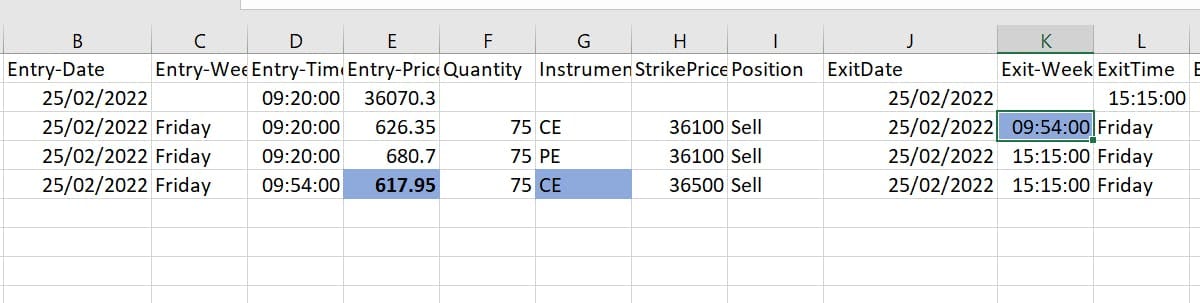
As you can see in the above picture, the CE stop loss is hit at 9:54am, and the CE leg is re-entered with a new strike at 9:54am (since the user has selected Re-enter ASAP) with a new strike price. The new entry price is Rs 617.95.
Now when the user checked the same 9:54am candle on Zerodha, they saw:
**_"But if I look at the Close Price of 36500 CE at 9.54 , its 586.45. Zerodha Close Price - 586.45 Algotest Close Price - 617.95"_**
## So why the difference?
In Zerodha, the 9.15am candle refers to the time covering 9:15:00-9:15:59. How does AlgoTest define this candle? In [AlgoTest](https://algotest.in/?utm_source=blog&utm_medium=internal&utm_campaign=seo&utm_content=main-page&utm_term=algotest), this timespan refers to the 9.16 candle. So when we say 9:54am, the price you see on AlgoTest was Rs. 617.95, which corresponds to the close price of the 9:53 candle on Zerodha, which was Rs. 620, **a lot closer to the price you see on** [**AlgoTest**](https://algotest.in/?utm_source=blog&utm_medium=internal&utm_campaign=seo&utm_content=main-page&utm_term=algotest) **!**
Here is the screenshot of the zerodha candle
_Q: O_ k, _now we know that the 9:19 candle in Zerodha corresponds to the 9:20 candle in_ [_AlgoTest_](https://algotest.in/?utm_source=blog&utm_medium=internal&utm_campaign=seo&utm_content=main-page&utm_term=algotest) _. What does that mean for my 9:20 straddle entry?_
**_Answer: Entry at 9:20am on AlgoTest will correspond to 9:19am candle close price on zerodha._**
_Q: Does this 1-second difference matter?_
**_Answer: If you are trading manually, or using broker API to trade, it doesn't._**
Hopefully, this gives you an idea of how data is represented on AlgoTest. Do check out our [**website**](https://algotest.in) to learn more about options trading in India and how we can improve our trading by backtesting!
---
This blog is powered by Superblog. Visit https://superblog.ai to know more.
---
## Why is the backtest loss higher than Stop Loss?
Author: AlgoTest
Author URL: https://algotest.in/blog/author/algotest/
Published: 2024-08-28
Category: Backtest
Category URL: https://algotest.in/blog/category/backtest/
URL: https://algotest.in/blog/backtests-sl-mismatch/
Since we have started [AlgoTest](https://algotest.in/), we've received countless messages from users asking how it's possible that their [backtest](https://algotest.in/feature/backtest?utm_source=blog&utm_medium=internal&utm_campaign=seo&utm_content=feature&utm_term=backtest) loss is higher than stop loss value? Specifically, the questions take this form:
1. **_"How is it possible to have a loss greater than the SL that I put in my strategy?"_**
2. **_"If the leg-wise SL I put is 20 points, how is it possible to have a loss of 100 points??"_**
3. **_"My overall MTM SL was Rs. 5500, how can your platform show loss of Rs. 9000? Is there a bug in your platform?"_**
The answer is the same for [backtests](https://algotest.in/feature/backtest?utm_source=blog&utm_medium=internal&utm_campaign=seo&utm_content=feature&utm_term=backtest) and the real world - **yes it is possible! And no, it's not a bug!**
We would even go a step further and say, not only is it possible, **but it is inevitable**, in the fictional world of [backtests](https://algotest.in/feature/backtest?utm_source=blog&utm_medium=internal&utm_campaign=seo&utm_content=feature&utm_term=backtest), and in the world of actual trading. If any [backtesting](https://algotest.in/feature/backtest?utm_source=blog&utm_medium=internal&utm_campaign=seo&utm_content=feature&utm_term=backtest) software or system tells you otherwise, either they're misinformed, or they're lying.
## Backtests
In the world of [backtests](https://algotest.in/feature/backtest?utm_source=blog&utm_medium=internal&utm_campaign=seo&utm_content=feature&utm_term=backtest), we represent a constant flow of market data that your broker API receives as **candles.** A candle has the wonderful property of compressing all market activity over any period into 5 distinct data points - open, high, low, close and volume. With the benefit of this compression, however, comes a cost. The cost is loss of data. Once you go from 1-second granular LTP data to a 1-min candle, you've essentially distilled 60 price data points into 4.
This data loss can seem magnified during particularly volatile period, as it can introduce large discontinuities between the price of two candles. A cursory look at Zerodha chart shows an intra-day gap down discontinuity we found:
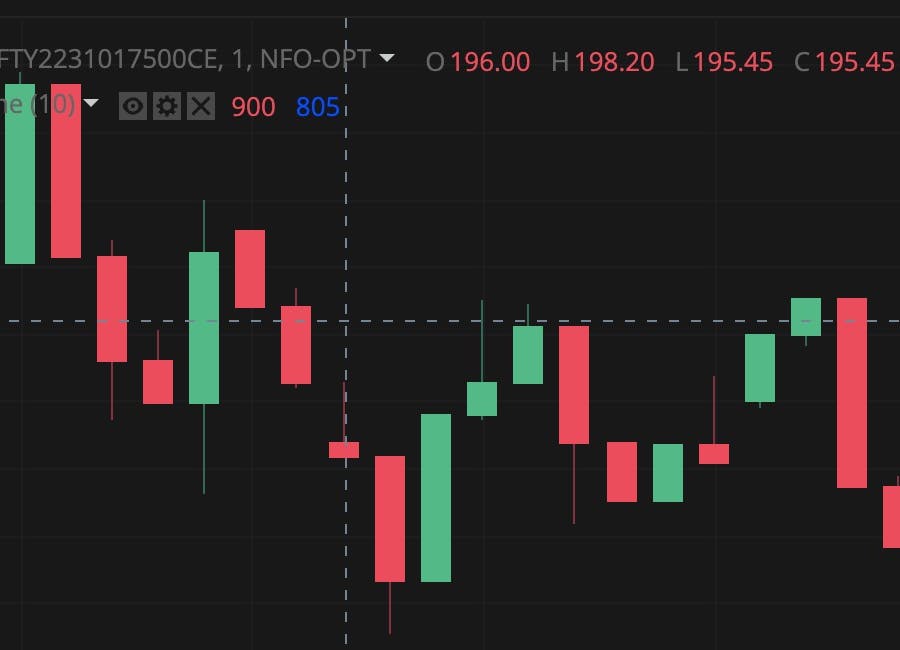
On 22 Feb'22 14:41, the close price of the candle was Rs 198.20, the open price of the next candle was Rs 196. If your Stop Loss was set between these prices, our platform assumes your SL got hit at the open price of the next candle. Here, the gap in the two candles isn't much, only ~2 rupees. BUT, it can be much larger during periods of volatility.
### Backtest loss never higher than stop loss? Beware!
We actually came across a user who showed us a [backtesting](https://algotest.in/feature/backtest?utm_source=blog&utm_medium=internal&utm_campaign=seo&utm_content=feature&utm_term=backtest) report from some other service that showed **an overall loss exactly equal to their MTM SL EVERY TIME the SL was hit**. BUT, when we totalled the PnL manually at the individual leg level, we noticed that **the actual loss was 2.5 times the reported MTM SL loss for some of the trades**!
So if you ever see a [backtest](https://algotest.in/feature/backtest?utm_source=blog&utm_medium=internal&utm_campaign=seo&utm_content=feature&utm_term=backtest) report where your loss reported on a trade is always less than or equal to the SL level you set, **BE WARY! If you see such a backtest report,**

### Real world
In the real world as well, this is an inevitability. To keep it simple, [**here's a tweet that shows an extreme scenario**](https://twitter.com/rogue_hft/status/1433792275423776769) of what can happen in the market.
Our Recommendation
Now you can decide whether you want to use LTP or Candle Close for your Live Trades and Forward Tests. We recommend using the Candle Close setting in order to match more closely to your [backtests](https://algotest.in/feature/backtest?utm_source=blog&utm_medium=internal&utm_campaign=seo&utm_content=feature&utm_term=backtest). Again, as we have shared above, there are no guaranties that your [backtest](https://algotest.in/feature/backtest?utm_source=blog&utm_medium=internal&utm_campaign=seo&utm_content=feature&utm_term=backtest) results and your live trade results will match. In fact it's almost inevitable that they won't. But this will help you get closer.
[Click here for additional information.](https://docs.algotest.in/execution-settings/trade-monitoring)
**Pros of Candle CloseCons of Candle Close**\- Your backtests and live trades will be executed on the same settings. This increases the chances of them being closer.- Your backtests will be executed on Candle Close and your Live Trades will be executed on LTP. This will lead to more differences in the outcomes.
**Pros of Candle Close**
**Cons of Candle Close**
Your backtests and live trades will be executed on the same settings. This increases the chances of them being closer.
Your backtests will be executed on Candle Close and your live trades will be executed on LTP. This will lead to more differences in the outcomes.
https://twitter.com/rogue\_hft/status/1433792275423776769
— Raghav (@rogue\_hft) September 3, 2021
---
This blog is powered by Superblog. Visit https://superblog.ai to know more.
---