Bank Nifty options expire on the last Tuesday of the expiry month. If that day is a trading holiday, expiry moves to the previous trading day. In 2026, Bank Nifty has monthly and quarterly options; weekly contracts are no longer available.
On expiry day, the time remaining, index movements and changes in volatility can quickly affect option premiums. A morning setup may need reassessment later in the session, especially as settlement approaches.
This guide covers Bank Nifty expiry dates in 2026, trading hours, settlement rules and strategies for different market conditions, including the risks to check before placing a trade.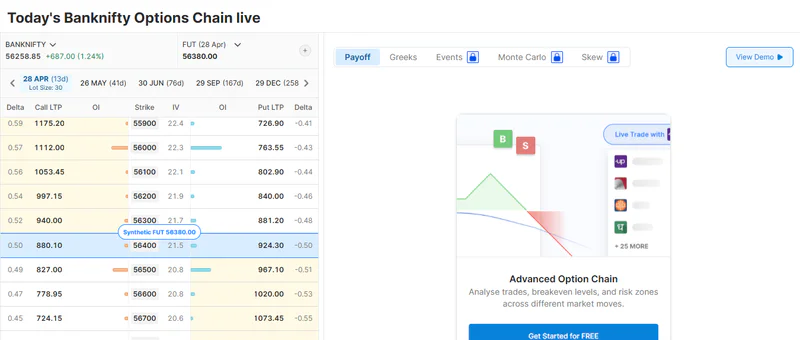
Bank Nifty Expiry Day (Quick Facts)
Bank Nifty Expiry Day (Quick Facts)
Bank Nifty Expiry Day: Tuesday (monthly only)
Bank Nifty Weekly Expiry: Discontinued since November 2024
Bank Nifty Monthly Expiry: Last Tuesday of the month
Bank Nifty Expiry Time: 3:30 PM IST
Settlement: Cash-settled
If the last Tuesday is a holiday, the Bank Nifty expiry date shifts to the previous trading day.
Also Read: Nifty Expiry Day: 7 Rules every option trader should follow
What is Bank Nifty Expiry Day
Bank Nifty expiry day is the day when options contracts expire and stop trading.
At 3:30 PM:
OTM options expire worthless
ITM options settle at intrinsic value
Because of this fixed deadline, time decay accelerates, positions are adjusted aggressively, and price moves become sharper than usual.
This is why Bank Nifty expiry day trading behaves very differently from a regular trading session.
Bank Nifty Expiry Day Rules (2026)
Understanding the rules is essential before applying any strategy:
Bank Nifty weekly expiry: Discontinued (SEBI's November 2024 rule limits each exchange to one weekly index expiry; NSE kept it on Nifty only)
Bank Nifty monthly expiry: Last Tuesday of the month
Expiry time: 3:30 PM IST
Settlement type: Cash settlement
Holiday rule: Previous trading day
These rules directly influence Bank Nifty expiry day timing and behavior.
Bank Nifty Expiry Day Timing and Market Behavior
The biggest edge on expiry day comes from understanding how the market evolves through the session.
9:15 AM – 10:15 AM: High Volatility Phase
Premiums are expensive
Price moves are fast and inconsistent
Direction is often unclear
What works:
Momentum trades
Opening range breakout
What to avoid:
Option selling
10:30 AM – 1:30 PM: Range + Theta Decay Phase
Market stabilizes
Price forms a range
Time decay accelerates rapidly
What works:
Option selling strategies
Range-based trades
This is the most structured window for executing a Bank Nifty expiry day trading strategy.
1:30 PM – 3:30 PM: Gamma and Closing Moves
Small moves create large option price changes
Breakouts become sharper
Risk increases significantly
What works:
Quick momentum trades
Defined-risk setups
What to avoid:
Unhedged short positions
Also read: Bank Nifty: The Ultimate Guide
What Happens on Bank Nifty Expiry Day
Theta decay accelerates → premiums drop quickly
Open Interest (OI) shifts influence direction
Position unwinding increases volatility
Institutional activity becomes more visible
Much of this movement is driven by how positions are distributed across the Bank Nifty option chain, especially around key strike prices.
Looking for the Sensex expiry schedule instead? Read our guide to Sensex expiry day for the latest weekly expiry information, trading considerations and strategies.
How to Read Bank Nifty Option Chain on Expiry Day
Expiry day moves are heavily influenced by positioning in the Bank Nifty option chain.
Understanding a few key metrics can improve trade selection and timing:
Open Interest (OI)
High Call OI → Resistance
High Put OI → Support
Sudden OI shifts often indicate large players repositioning.
Strike Price Positioning
ATM → highest activity
OTM → faster decay
ITM → intrinsic value driven
Price often gravitates toward high-activity strike zones.
Volume
Confirms strength of moves
High volume supports breakouts
Low volume increases false signals
Implied Volatility (IV)
High IV → higher premiums
Falling IV → premium contraction
IV combined with time decay drives pricing on expiry day.
Also read: Implied Volatility Explained: How to Read and Compute IV
Put-Call Ratio (PCR)
High PCR → bearish positioning
Low PCR → bullish positioning
Extreme values can signal potential reversals.
Why Option Chain Matters More on Expiry Day
On regular days, charts may be sufficient.
On expiry day:
Positioning matters more than patterns
OI shifts drive price movement
Markets react to where traders are trapped
Interpreting this manually can be complex. You can also use the AlgoTest options simulatorto test expiry day strategies and understand how they behave before deploying them in live markets.
Best Bank Nifty Expiry Day Strategies
1. Opening Range Breakout Strategy
Define the first 15–30 minute range
Trade breakout with confirmation
Best suited for:
Trending markets
Gap openings
2. Intraday Option Selling Strategy (Mid-Session)
Sell near-the-money options after stabilization
Capture time decay
Common setups:
Short straddle (hedged)
Iron fly
Many traders combine this withoption chain signals to improve strike selection.
With AlgoTest, you can backtest and execute these option trading strategies with consistency.
3. Range-Based Trading Strategy
Identify support and resistance
Trade within the range
Best suited for:
Low volatility sessions
Sideways markets
4. Late-Day Momentum (Gamma) Strategy
Enter on strong breakout
Focus on short-duration trades
Best suited for:
Post 1:30 PM moves
High momentum conditions
Related: A Step-by-Step Guide to Backtesting Trading Strategies
Common Mistakes on Bank Nifty Expiry Day
Selling options too early
Overtrading volatile moves
Ignoring stop losses
Holding unhedged positions
Not understanding expiry timing
Nifty Weekly vs Bank Nifty Monthly Expiry (Key Difference)
Conclusion
Bank Nifty expiry day is not about predicting direction, it’s about understanding structure.
The opening phase is driven by volatility
The mid-session is shaped by time decay
The final hours are influenced by rapid price sensitivity
Traders who align their approach with Bank Nifty expiry day timing tend to make more consistent decisions.
Equally important is the ability to interpret data correctly. Reading the option chain, tracking open interest, and identifying key levels can significantly improve decision-making.
Algo Trading Software, like AlgoTest, helps simplify this process by enabling better analysis, strategy testing, and execution.
The goal is not to trade more but to trade with clarity, discipline, and better data.
Sign up now and get 25 free backtests per week.
Additional Resources
🛠️ Trading Tools